Reading view

Sem-terra plantam 5 mil mudas na semana do Meio Ambiente

Logo Agência Brasil

O Movimento dos Trabalhadores Rurais Sem Terra (MST) mobilizou, nos últimos dias, cerca de 10 mil pessoas, em 15 estados brasileiros, onde realizou uma série de atividades de defesa do meio ambiente, com críticas ao agronegócio.

Segundo a organização, os sem-terra plantaram mais de 5 mil mudas e semearam cerca de 30 toneladas de sementes em Alagoas, Bahia, Goiás, Maranhão, Mato Grosso, Mato Grosso do Sul, Minas Gerais, Paraíba, Paraná, Piauí, Rio de Janeiro, Rio Grande do Sul, Rondônia, São Paulo e Sergipe.

Notícias relacionadas:

A iniciativa faz parte da Jornada Nacional em Defesa da Natureza e seus Povos, que começou na última segunda-feira (1°) e termina neste domingo (7), marcando a Semana Mundial do Meio Ambiente.

Este ano, a jornada teve como lema o mote “combater o agronegócio é cuidar da natureza!” e serve como plataforma para o MST defender a reforma agrária “como solução para o avanço dos cuidados com o meio ambiente”.

Ao mesmo tempo, a organização denuncia o que classifica como “crimes ambientais do agro-hidro-minero-negócio” e os “que exploram os bens comuns da natureza em larga escala”, em um momento em que, na avaliação do movimento, “o agronegócio aprova leis que aumentam a destruição ambiental”.

Incinerador

Neste sábado (6), em São Paulo, o MST promoveu um ato contra a instalação de um incinerador no bairro de Perus, na zona noroeste da capital paulista. Além dos sem-terra, a manifestação reuniu moradores da região, ambientalistas e integrantes de outras organizações sociais.

O incinerador integra o chamado EcoParque Bandeirantes, que a prefeitura de São Paulo pretende instalar no antigo Aterro Sanitário Bandeirantes, em parceria com uma empresa privada.  

O aterro funcionou por 28 anos e teve suas operações encerradas em 2007. Desde então, consta da lista de Áreas Contaminadas em Processo de Remediação (ACRe), da Companhia Ambiental do Estado de São Paulo (Cetesb).

Além do incinerador, o projeto do EcoParque prevê um biodigestor, uma unidade de compostagem, outra de biossecagem, e uma central mecanizada de triagem de resíduos. E, segundo a prefeitura, visa a “otimização da reciclagem dos resíduos sólidos urbanos, a agregação de valor aos diversos subprodutos gerados, a geração de energia com baixa emissão de GEE e a redução dos volumes destinados à disposição final em aterros.

No entanto, de acordo com o MST, o projeto contraria os interesses de diferentes segmentos sociais que coabitam o bairro de Perus e região, incluindo indígenas que vivem no Pico do Jaraguá, próximo ao antigo aterro sanitário.

“O projeto de instalação do Incinerador em Perus mostra qual é o projeto da burguesia e do agronegócio para o Brasil: para a periferia, para o povo pobre, para os camponeses, para a classe trabalhadora é sempre a poluição, os detritos. Para deixar bonita a área da burguesia, empurram para nós os detritos”, criticou, em nota, Luciano Carvalho, da direção estadual do movimento.

  •  

Massive Roman Defensive Wall Unearthed at Ancient Amathous in Cyprus

Collapse layer east of the Late Roman wall
Collapse layer east of the Late Roman wall. Credit: Department of Antiquities, Cyprus

Archaeologists in Cyprus have uncovered a massive Late Roman wall at the ancient city of Amathous that may have formed part of a defensive system protecting the summit of the acropolis.

The structure, discovered on the site’s Western Terrace, offers new evidence of efforts to fortify one of the island’s most important ancient urban centers during the Late Roman period.

Details of the defensive wall

The wall reaches up to 2 meters (6.6 feet) in thickness and was built using large limestone ashlar blocks, smaller stones, and clay mortar. Excavation evidence shows that it underwent at least two construction phases, suggesting it remained an important feature of the acropolis over time.

Researchers also uncovered a floor surface associated with the wall, fallen architectural blocks, roof tiles, and mudbrick fragments from a collapsed structure. Together, the finds provide new insight into construction methods and defensive planning at Amathous during the final centuries of Roman rule.

The discoveries were made during the second excavation season of the French Archaeological Mission of Amathous, held from March 30 to April 24, 2026. The project is directed by Dr. Anna Cannavo and focuses on the Western Terrace of the Acropolis.

Expanded excavations reveal a substantial wall

The wall was first identified during excavations in 2025 following a geophysical survey conducted in 2024. During the 2026 season, archaeologists expanded Trench 1 and uncovered a much larger section of the structure.

The wall runs parallel to the natural edge of the terrace, with its southern section turning slightly toward the west. Its eastern face was constructed from large limestone ashlar blocks, while the interior was packed with smaller rough stones bonded with clay.

Researchers identified evidence for at least two building phases. The original wall measured about 135 centimeters (4.4 feet) in thickness. It was later strengthened by adding a second row of limestone blocks and filling the space between the two walls with stone rubble.

Foundations and associated floor date to the Late Roman period

A small trench excavated along the eastern side of the wall exposed its foundations and revealed a floor directly connected to the structure. Part of the floor was paved with reused roof tiles laid over a gravel bedding.

Excavation evidence indicates that both the wall and the floor date to the Late Roman period. East of the structure, archaeologists uncovered destruction deposits containing fallen ashlar blocks, roof tiles, and mudbrick fragments from the building’s upper portions.

Findings highlight the strategic importance of the Acropolis

Iron Age terracotta figurines and pottery
Iron Age terracotta figurines and pottery. Credit: Department of Antiquities, Cyprus

A second excavation area, known as Trench 3, was opened at the northern end of the terrace. Although no architectural remains were found there, archaeologists recovered a rich collection of Iron Age artifacts, indicating earlier activity in the area.

Researchers believe the newly discovered wall formed part of a defensive system protecting the summit of the acropolis and the basilica that had replaced the sanctuary of Aphrodite, one of the most important religious centers in ancient Cyprus.

Future excavations will investigate the full extent of the fortification and determine whether the Late Roman remains were built over earlier structures, helping researchers better understand the long-term development of Amathous.

  •  

Guto Miguel faz história e conquista título juvenil de Roland Garros

O goiano Guto Miguel, de 17 anos, venceu o americano Michael Antonius por 2 sets a 0 (6/3 e 6/4) na manhã deste sábado (6) e conquistou o título do juvenil em Roland Garros.

Esse é o primeiro título do Brasil na chave simples masculina da categoria. Edison Mandarino (1959), Thomaz Koch (1962 e 1963) e Luís Felipe Tavares (1967) tinham as melhores campanhas do país na competição, todos com vice-campeonatos. Gustavo Kuerten, o Guga, foi campeão em 1994, mas na chave de duplas.

Liderança do ranking mundial juvenil

A campanha histórica em Paris também rende a Guto a liderança do ranking mundial juvenil. Com a classificação para a final e a derrota do norte-americano Keaton Hance nas semifinais, o brasileiro garantiu matematicamente o posto de número 1 do mundo.

Com pelo menos 700 pontos somados em Roland Garros, Guto alcançará 2.927 pontos no ranking da ITF, superando seus principais concorrentes. O atual líder, o búlgaro Ivan Ivanov, não disputou o torneio e perderá pontos referentes à campanha do ano passado.

Guto passa a integrar uma lista extremamente restrita de brasileiros que chegaram ao topo do ranking juvenil mundial, ao lado de Tiago Fernandes (2010), Orlando Luz (2015) e João Fonseca (2023).

Como foi o jogo

Guto e Antonius fizeram um início de primeiro set muito forte, com ambos confirmando seus saques com facilidade. No entanto, no terceiro saque de Antonius, Miguel conseguiu dois slices sem resposta e conseguiu a quebra.

No nono game do primeiro set, Guto Miguel vencia por 5 a 3 e Antonius sacava para se manter vivo no jogo. O americano salvou quatro set points, mas na quinta chance que teve Guto não perdoou e venceu o primeiro set por 6 a 3.

O tenista brasileiro começou sacando no primeiro game do segundo set e teve que salvar um break point logo no início. Guto imprimiu seu ritmo e conseguiu uma nova quebra em Antonius e teve a possibilidade de sacar para confirmar a vitória, mas foi quebrado.

O set ficou 5 a 4 para o brasileiro, com Antonius no saque. O americano cometeu uma dupla falta, um erro não forçado e deixou Guto com a chance de título. Antonius evitou a primeira chance de título brasileiro, mas na segunda vantagem para Guto acabou jogando a bola na rede. 6 a 4 para o brasileiro.

A partida teve 1h15 de duração, e Guto teve muitos lances de destaque. O único erro foi ser quebrado quando teve a oportunidade de sacar para o título, mas a resposta foi muito rápida e ele conquistou o título inédito. (UOL/FOLHAPRESS)

The post Guto Miguel faz história e conquista título juvenil de Roland Garros appeared first on Diário da Manhã - O Jornal do leitor Inteligente.

  •  

Ancient Greek Scientist Erasistratus Was the King’s Lie Detector

Erasistratus
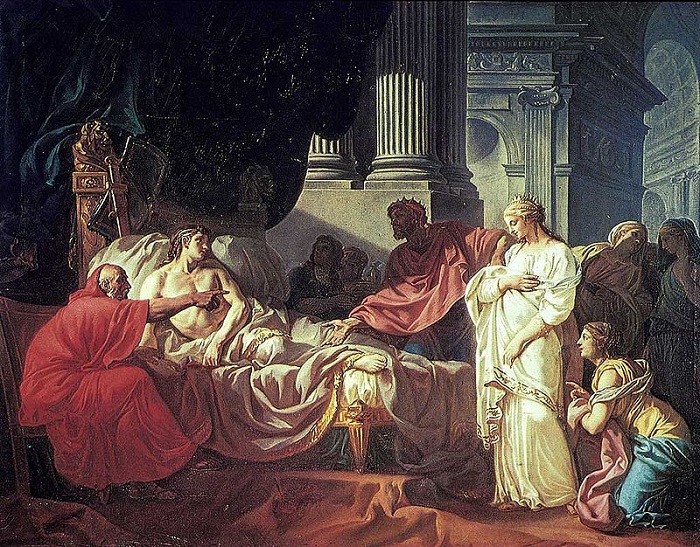
Erasistratus discovers the cause of the illness of Antiochus. Painting by Jacques-Louis David. Public Domain

Ancient Greek scientist Erasistratus (300-250 B.C.) is credited with being among the first human lie detectors. He devised a specific technique to read a person’s physical response so as to spot when an individual was lying.

While in Alexandria, Egypt, he is said to have proven Prince Antiochus was desperately in love with his father’s new wife, Stratonice. He noted how his pulse increased significantly whenever the queen’s name was mentioned, despite his insistence that he did not have the hots for his stepmother.

Love-struck, he fell ill with passion and chose to pine away in silence. The physicians were unable to discover the cause and nature of his disease.

Erasistratus himself was at a loss at first, until, finding nothing amiss about his body, he began to suspect that it must be the man’s mind that was diseased and that he might perhaps be in love.

Erasistratus confirmed his conjecture when he observed that the skin of Antiochus grew hotter, his color deeper, and his pulse quicker whenever Stratonice came near him, while none of these symptoms occurred on any other occasion.

The Greek physician eventually told the father, King Seleucus, that his son’s disease was incurable, for he was in love with the monarch’s wife and that he chose to die rather than to disclose his secret.

According to the anecdote, Seleucus not only gave up Stratonice, but also resigned to his son several provinces of his empire.

Erasistratus founded school of anatomy in Alexandria

Erasistratus, along with fellow physician Herophilus, founded a school of anatomy in Alexandria where they carried out anatomical research.

He is credited for his description of the valves of the heart. He also concluded that the heart was not the center of sensations. Instead, he said, it functioned as a pump. He was among the first to distinguish between veins and arteries, believing that arteries were full of air and carried the “animal spirit” (pneuma).

Together with Herophilus, he is credited by historians as the potential founder of neuroscience due to his acknowledgment of nerves and their roles in motor control through the brain and skeletal muscles.

Furthermore, Erasistratus is seen as one of the first physicians/scientists to conduct recorded dissections and potential vivisections alongside Herophilus.

The two physicians were said by several Roman authors, notably, Augustine, Celsus, and Tertullian, to have performed controversial vivisections on criminals to study the anatomy and possible physiology of human organs while they were in Alexandria.

Related: Ancient Library of Alexandria One of Greatest Treasures of Mankind

  •  

Ctesibius: The Ancient Greek Tech Genius You’ve Never Heard Of

Ctesibius
A digital representation of Ctesibius. Credit: Greek Reporter archive

Ever found yourself scratching your head, wondering if aside from legendary philosophers and epic poets there were also any “tech gurus” in ancient Greece? When the conversation turns to Greek scientific minds, one might think of figures like Archimedes and Euclid and rightly so. However, there’s a name that truly deserves a much brighter spotlight—that of Ctesibius.

Ctesibius was a true genius of Hellenistic Alexandria, who, quite literally, set the wheels (and yes, the water organ, or hydraulis!) in motion. Due to his brilliant mind, he laid down fundamental principles for technologies that, believe it or not, continue to shape our everyday world to this very day.

Ctesibius was one of ancient Greece’s greatest innovators

Born into the vibrant, intellectual epicenter of Alexandria during the Ptolemaic era, Ctesibius became a hands-on inventor, driven by an almost insatiable curiosity to truly understand and harness the raw power of the natural world.

Imagine at a time when entire civilizations relied on human muscle and simple machines, seeing someone create music from water or build a clock accurate for two thousand years. The sheer innovative audacity of Ctesibius was difficult to fathom.

Of course, at a time of wizards, this wasn’t a magic trick but the real, unadulterated brilliance of the mind of this Greek man. His groundbreaking contributions to pneumatics, the study of compressed air, and hydraulics, the science of liquids in motion, were utterly revolutionary for their time, making Ctesibius the “father of pneumatics.”

Just think about the fact that long before your car tires ever saw a pump or your pneumatic drill came to life, Ctesibius meticulously explored the very principles that made these tools possible. It’s a bit humbling, isn’t it, how many unsung heroes from antiquity have genuinely shaped the modern world we so often take for granted?

Reconstruction of the ancient Greek hydraulis, the first keyboard instrument, displayed at the Kotsanas Museum of Ancient Greek Technology in Athens, displaying its pipes, water basin, and control mechanisms.
Reconstruction of the ancient hydraulis on display at the Kotsanas Museum in Athens. Credit: Aga39memnon, Wikimedia Commons, CC BY 4.0.

From melodic water organs to clocks

Among Ctesibius’ most well-known creations was the hydraulis, a genuinely revolutionary water organ. This was, quite simply, the world’s very first keyboard instrument. What an astonishing feat of engineering from over two millennia ago! It ingeniously utilized water pressure to guarantee a completely constant supply of air to its pipes, producing a sound that was remarkably stable and resonant. Imagine the awe of ancient audiences in hearing such a complex, melodic instrument for the absolute first time. It must have felt like nothing short of a miracle.

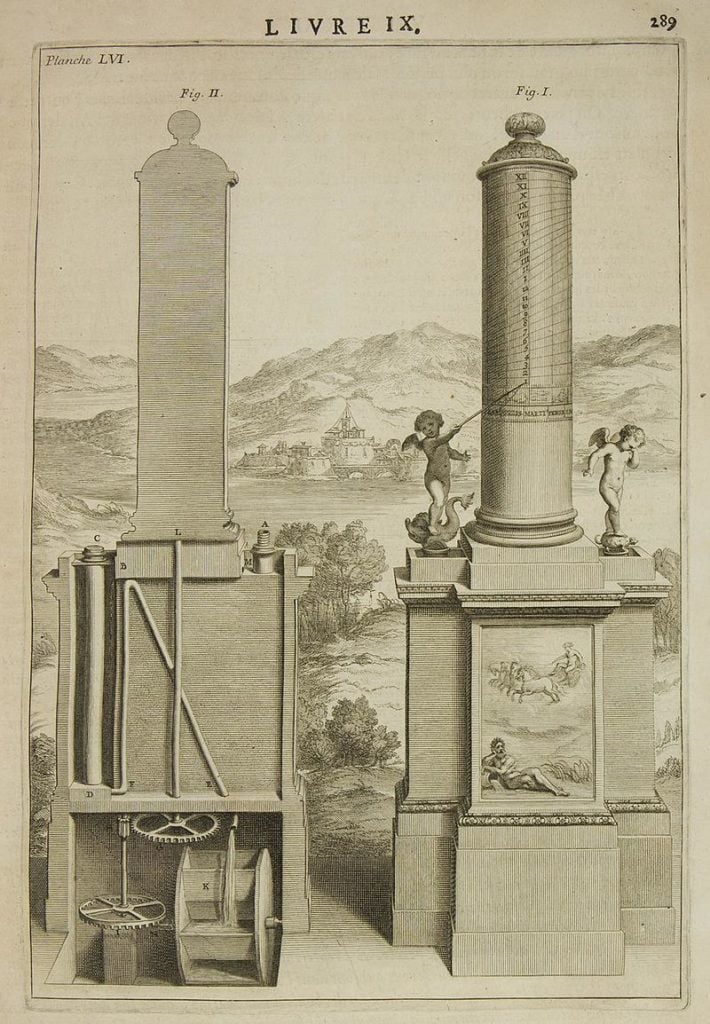
Beyond the enchanting music, Ctesibius’ improvements to the clepsydra, or water clock, were equally impressive. Prior to this tech guru, water clocks were notoriously imprecise. He revolutionized them through innovative mechanisms for regulating water flow and added an indicator system that provided unprecedented accuracy.

For over 1,800 years, his water clocks were the absolute gold standard in timekeeping. In other words, the pinpoint accuracy of your smartphone’s clock owes an indirect yet profoundly deep debt to a man who lived centuries before the mere concept of electricity was even a thing.

ancient greek inventions
Ctesibius’ water clock, the first alarm clock ever, as depicted by an architect in the 17th century. Credit: Wikimedia Commons, Public domain

Ctesibius’ impact on our world

While Ctesibius himself may not have managed to become one of ancient Greece’s top names, his principles and inventions survived the test of time. They influenced later Roman and Arab engineers and eventually powered the European Renaissance. The very force pump he designed, for instance, is a direct progenitor of modern pumping systems, absolutely essential for everything from our city water supplies to the fire engines we rely on to keep us safe on a daily basis.

His profound understanding of the properties of air-laid processes set the foundation for all future pneumatic applications which today power everything from colossal industrial machinery to delicate medical devices. Hence, next time you hear the satisfying whoosh of a bus door, the gentle hiss of an automated machine, or simply admire the quiet precision of a modern watch, take a moment to think back to Ctesibius, the ancient Greek tech genius.

  •  

Top Mythological Sites in Greece

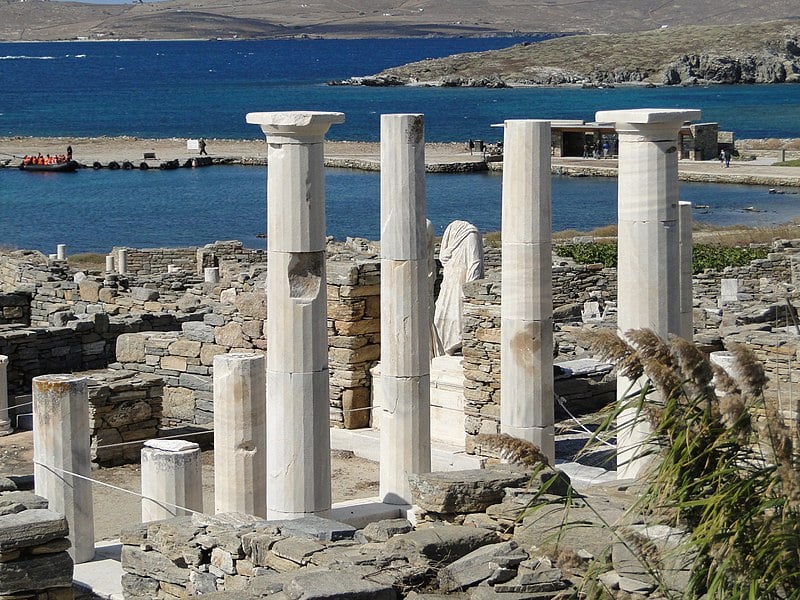
House of Cleopatra, Greece
Mythological sites in Greece. Credit: Bernard Gagnon / Wikimedia Commons/CC BY-SA 3.0

There is something about Greece that sets it apart from many other holiday destinations across the globe; its mythological sites.

Many ancient societies had different beliefs and myths, but none are more prominent in modern-day life than that of the Greeks. Their creatures have become legends, their tales inspiration for great fiction and their gods immortalized through the continued retelling of their conquests and trials.

Delos: an ancient mythological site in Greece

Matched only by the Acropolis of Athens, Greek mythological site the ruins on the island of Delos are an unmissable location for anybody interested in ancient Greek culture. One of the best-preserved examples of an ancient Greek civilization, the island is completely unblemished by modern architecture and as such, allows its visitors to delve deep into history.

However, it is not just a site of great historical importance, but a mythological one too. It was on this island that both gods Artemis and Apollo are said to have been born. As a result, the island became a sacred place. Sanctuaries and temples sprung up across its hillsides as people from across Greece came to the island’s shores to worship the deities.

Greek Mythological sites
Throne room of the Minoan Palace in Knossos, Crete Credit: Annatsach – Wikimedia Commons / CC BY-SA 4.0

The Labyrinth, a famous site in Greek mythology

One of the most famous and exciting stories of Greek mythology is the tale of Minos, Theseus and the Minotaur. Minos was a powerful king, ruler of Crete and the son of Zeus, but after he betrayed Poseidon, he was cursed to raise a son with the body of a man and the head of a bull. Using this curse to his advantage, however, Minos built the fabled Labyrinth and trapped the Minotaur within it. He would then send victims to their deaths until Theseus, prince of Athens, ventured into the Labyrinth and slayed the beast.

While there are no Minotaur bones for you to see, there are two possible Labyrinths to explore. First is the likely home of King Minos, and therefore the most plausible home for the labyrinth, Kommos. Located along the southern coast of the island, Kommos is a great place to visit, with spectacular ancient ruins and beautiful ocean views.

However, if you venture deep enough into the ruins of this ancient city, you will find many maze-like corridors and walkways that may have been the Minotaur’s home; or at least the inspiration for its tale. However, just down the road you will also find Gortyn, a site of great archaeological importance to Crete and another suspected home of the Labyrinth. Further away from Minos’ home, these ruins bear a much similar resemblance to the maze of mythology. Perhaps then, it is best to visit both Greek mythological sites and decide for yourself.

The Island of Ithaca: an ancient Greek site and holiday destination

olive
An olive tree on Ithaca that is thought to be 1,500 years old. Credit: Wikimedia Commons

Ithaca, a well-known Greek mythological site for a holiday destination, is a place with a very interesting mythological past. Most notably, it was home to the legendary trickster Odysseus, the island’s greatest king and the brains behind the trojan horse.

Odysseus was also the protagonist of Homer’s “Odyssey.” His decade-long struggle to return home after the war is the source of many of the most enduring Greek myths.

The famous Cave of Zeus on the Greek island of Crete

Greek Mythological sites
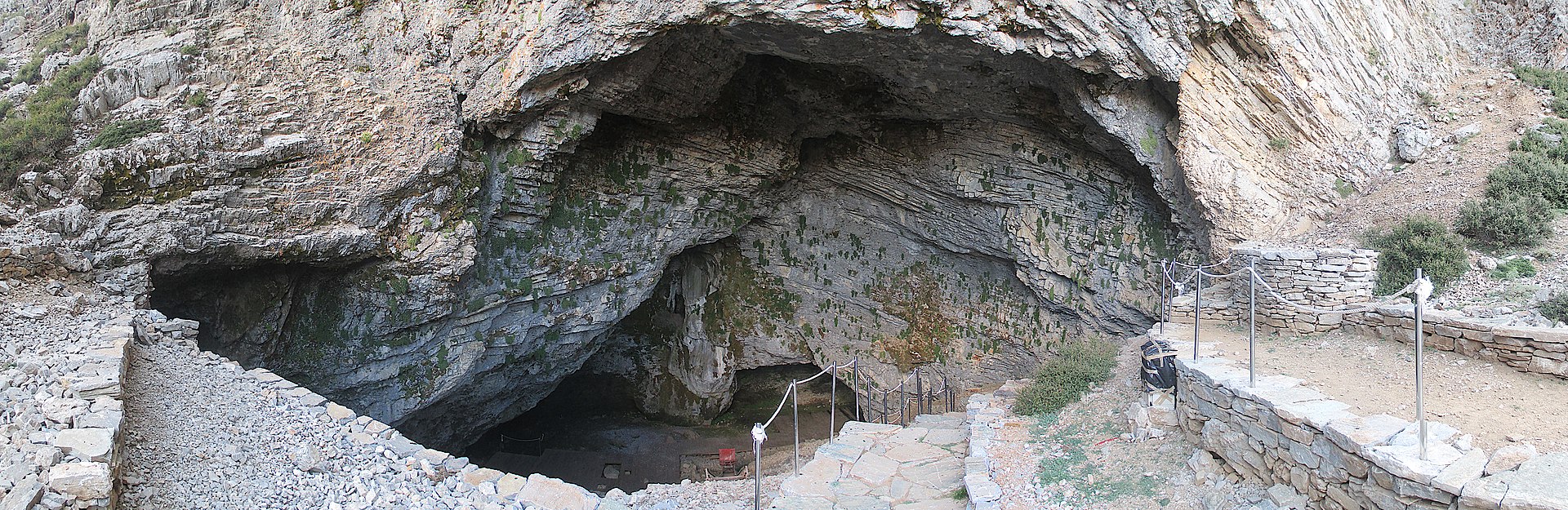
Cave of Zeus in Crete, Greece Credit: Tomisti / Wikimedia Commons / CC BY-SA 4.0

Hidden away on the island of Crete is an extraordinary piece of Greek mythological history. Within a cave beneath Mount Ida, it is said that the King of Gods, Zeus, was born and raised.

The Cave of Zeus is a beautiful location, with one entrance leading into a network of caves filled with stunning rock formations and underground pools. It does indeed seem a fitting place for the beginnings of the greatest god Greek mythology has ever known. However, it was not by choice he was raised here but by necessity.

His father, the titan Cronus, was set on devouring all of his progeny to ensure that they could never contest his power. However, unbeknownst to Cronus, Zeus’ mother, Rhea, hid him within the cave so one day he could return to overthrow his tyrannical father; which, according to legend, he did.

Mount Olympus: Home of the Greek gods

Greek Mythological sites
Mount Olympus. Credit: Maylett/ Wikimedia Commons / CC BY-SA 3.0

Along the eastern coast of the Greek mainland, you will find one of the most well-known natural landmarks in the world; Mount Olympus. This legendary and iconic Greek mythological site is an awe-inspiring sight, however, there is more to it than meets the eye.

In Greek mythology, Olympus was created after the gods defeated the titans in the battle of Titanomachy; otherwise known as the War of the Titans. Atop its peak they then built the Pantheon, where Zeus sat upon his throne as King of Gods and the rest of the deities would convene to discuss matters of the world below and survey the world of men.

Seeing all these incredible mythological sites can be tricky, unless you charter a course aboard Deep Blue Yachting’s luxury sailing boat, the Glaros. It is a private vessel, you can set your own course and visit every site on this list, all in one trip.

By Cliff Blaylock

  •  

Stoicism: The Greatest Quotes of Ancient Greek Philosophers

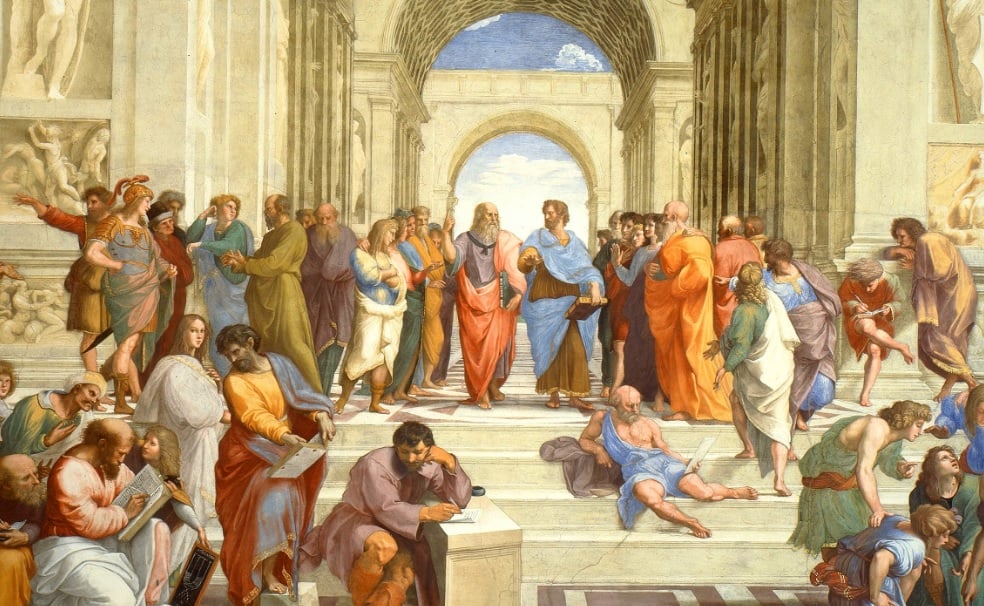
The school of Athens, painting
Stoicism was one of ancient Greece’s philosophical movements founded by Zeno of Citium in Athens in the early 3rd century BC. Credit: Public domain

Stoicism, was one of ancient Greece’s philosophical movements founded by Zeno of Citium in Athens in the early 3rd century BC.

Stoicism is a philosophy of personal ethics informed by its system of logic and its views on the natural world. For the Stoic, virtue alone is sufficient for human happiness.

For Stoics, emotions like fear, envy, passionate love were merely false judgements and the sage, a person who had attained moral and intellectual perfection, would not be touched by them.

It is a philosophy of life where the individual maximizes positive emotions, reduces negative emotions, and helps him or herself hone their virtues of character.

The name derives from the porch (stoa poikile) in the Agora at Athens decorated with mural paintings, where the members of the school congregated, and their lectures were held.

Birth of Stoicism, one of ancient Greece’s philosophical movements

The philosophy of Stoicism was originally known as “Zenonism” after the founder, Zeno of Citium.

Zeno ended up in Athens after his ship wrecked near the city. He was not a philosopher, but he turned his misfortune into an opportunity by studying all the philosophical resources available in the city.

He sat in on lectures from the other schools of philosophy (e.g., Cynicism, Epicureanism) and eventually started his own.

However, the Stoics did not believe that the founders were perfectly wise. In order to avoid their philosophy becoming a cult of personality, they chose to name it Stoicism after the place they were meeting, the stoa poikile of the Agora.

Zeno’s ideas developed from those of the Cynics, whose founding father, Antisthenes, had been a disciple of Socrates. Zeno’s most influential follower was Chrysippus, who was responsible for molding what is now called Stoicism.

Other prominent Stoics included Cleanthes of Assos, Panaetius of Rhodes, Aristo of Chios, Posidonius of Apameia, Diodotus, and others.

Later, Seneca, Epictetus, and Roman emperor Marcus Aurelius ushered Stoicism to the Roman world. The philosophy flourished until the 3rd century AD.

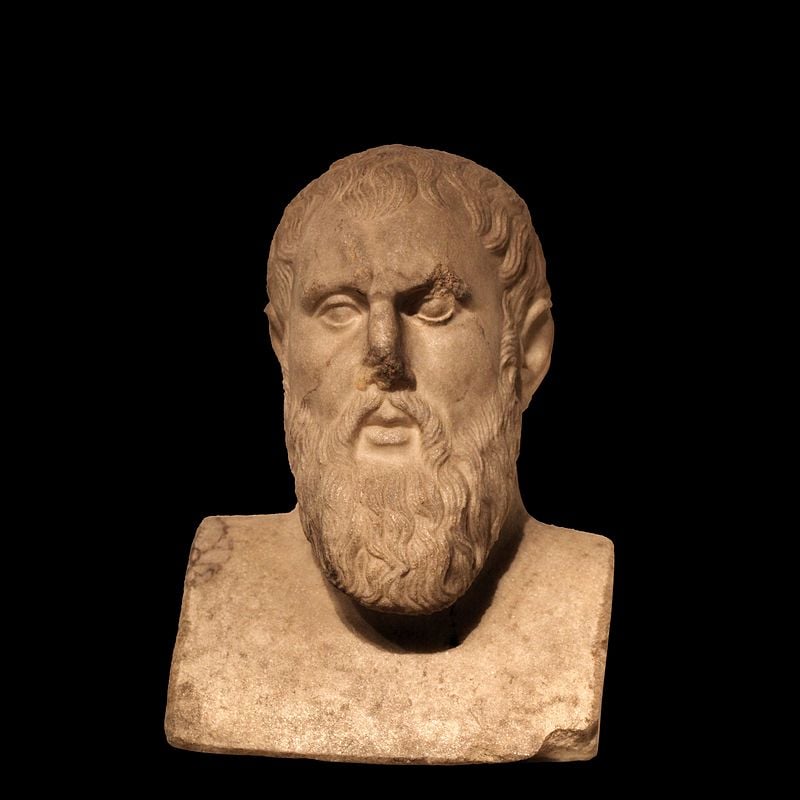
but of Zeno of Citium, a philosopher of Ancient Greece and the creator of Stoicism
A bust of ancient Greece’s philosopher Zeno of Citium, the creator of stoicism. Credit: Rama/Wikimedia Commons/ Gallo-Roman Museum of Lyon

Stoic Philosophy

According to Stoicism, the path to eudaimonia (happiness) is embracing and accepting the moment as it presents itself by not allowing oneself to be controlled by the desire for pleasure or by the fear of pain.

The Stoic must use his or her mind to understand the world and to do one’s part in nature’s plan by working together and treating others fairly and justly.

The Stoics are especially known for the teaching “virtue is the only good” and that people must lead a virtuous life to be accomplished and complete human beings.

External things—such as health, wealth, and pleasure—are not good or bad in and of themselves but have value as “material for virtue to act upon.”

The Stoics also held that certain destructive emotions, such as fear or jealousy, resulted from errors of judgment, and they believed people should aim to maintain a prohairesis (will) that is “in accordance with nature.”

To live a good life, a person had to understand the rules of the natural order, Stoics believed, since everything was rooted in nature.

For many Stoics, virtue is sufficient for happiness. Thus, a sage would be emotionally resilient to misfortune and would therefore be considered truly free.

According to Stoics, people don’t truly have control over many things and situations in life. Therefore, they believe that worrying about things outside of their control is unproductive, or even irrational for a person who wants to attain tranquility and happiness.

Stoics differentiate between what is and what is not under human control and do not waste energy and thoughts over uncontrollable adverse events.

Where many people worry endlessly about things out of their control, the Stoics believe they should expend their energy in thinking of creative solutions to problems, rather than the issues themselves.

Stoicism is not about having a set of beliefs or ethical claims. It is not a school of philosophy that is separate from everyday life.

The stoic must continuously practice and train (“askesis”). Stoic philosophical and spiritual practices include logic, Socratic dialogue and self-dialogue.

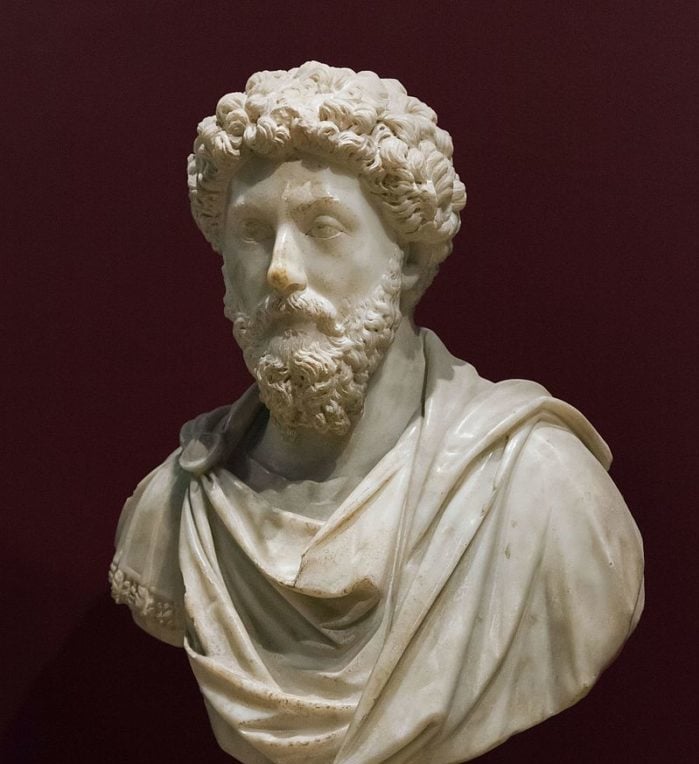
Bust of Roman emperor Marcus Aurelius who was also a stoic philosopher
Roman emperor and philosopher Marcus Aurelius. Credit: Eric Gaba/Wikipedia

Influence of Stoicism on Christianity

The virtuous life of the Stoic has resemblances to a life led by a good Christian. Stoic writings such as “Meditations,” by Marcus Aurelius, have been highly regarded by many Christians throughout the centuries.

The Greek term for word is logos. The Greek philosopher Heraclitus used logos (the word) to explain what he saw as the universal force of reason that governed everything.

In the 5th century BC, Heraclitus said that all things happen according to the Logos. The Stoics also believed in the Logos, along with the notions of conscience and virtue.

A few centuries later, Greek-speaking Jews came to view the Logos as a force sent by God. In the Gospel of John, Jesus is referred to as the Word — “and the Word of God was made flesh and dwelt among men.”

The apostle Paul is known to have met with Stoics during his stay in Athens. In his letters, Paul reflected on his knowledge of Stoic philosophy, using Stoic terms and metaphors to assist new converts in their understanding of Christianity.

Both Stoicism and Christianity teach a person the importance of training their mind and body to be disciplined.

Both encourage the elimination of passions and inferior emotions, such as lust and envy, from one’s life, so that the higher possibilities of one’s humanity can be awakened and developed.

“If you want to be perfect, go, sell your possessions and give to the poor, and you will have treasure in heaven,” Jesus preached.

Similarly, as Seneca wrote, “We must give up many things to which we are addicted, considering them to be good.”

The Eastern Orthodox Church and Oriental Orthodox Church accept the Stoic ideal of dispassion to this day, as do ascetics all over the world.

Stoicism today

Daily Stoic, How to be a Stoic, The Modern Times Stoic, Modern Stoicism, Traditional Stoicism: these are only a handful of the websites that hail the importance of—even the need for—Stoicism in the 21st century.

Is it possible, though, for today’s man to embrace a philosophy that teaches indifference to material things and possessions in a ruthlessly material world?

An intellectual and popular movement called Modern Stoicism began at the end of the 20th century which is aimed at reviving the practice of Stoicism.

However, before that, Stoic philosophy served as the original philosophical inspiration for modern cognitive psychotherapy, particularly as mediated by Dr. Albert Ellis’ Rational-Emotive Behavior Therapy (REBT), the major precursor of Cognitive Behavioral Therapy (CBT).

In the original cognitive therapy treatment manual for depression by Aaron T. Beck et al., it is stated, “The philosophical origins of cognitive therapy can be traced back to the Stoic philosophers.”

A well-known quotation from the “Enchiridion” of Epictetus was taught to most clients during the initial session by Ellis and his followers: “It’s not the events that upset us, but our judgments about the events.”

This subsequently became a common element in the socialization phase of many other approaches to CBT.

Ryan Holiday’s The Obstacle is the Way; Stoicism—A Stoic Approach to Modern Life, by Tom Miles; Modern Stoicism, by Steve Brooks; and Modern Stoicism—How to Be a Stoic in the 21st Century, by Stephen Ryan are some of the books on Stoicism that have been published recently.

Famous Stoic quotes

“The happiness of your life depends upon the quality of your thoughts.”

“Luck is what happens when preparation meets opportunity.”

“You have power over your mind—not outside events. Realize this, and you will find strength.”

“It is not death that a man should fear, but he should fear never beginning to live.”

“Think of yourself as dead. You have lived your life. Now take what’s left and live it properly.”

“To live a good life; we all have the potential for it, if we learn to be indifferent to what makes no difference.”

“Death smiles at us all, but all a man can do is smile back.”

“Accept whatever comes to you woven in the pattern of your destiny, for what could more aptly fit your needs?”

“The object of life is not to be on the side of the majority, but to escape finding oneself in the ranks of the insane.”

“The best revenge is not to be like your enemy.”

“Very little is needed to make a happy life; it is all within yourself, in your way of thinking.”

“Loss is nothing else but change, and change is nature’s delight.”

“It is not because things are difficult that we don’t dare; it is because we do not dare that things are difficult.”

“A gem cannot be polished without friction, nor a man perfected without trials.”

“The bravest sight in the world is to see a man struggling against adversity.”

“Throw me to the wolves and I will return leading the pack.”

“Life is never incomplete if it is an honorable one. At whatever point you leave life, if you leave it in the right way, it is whole.”

“Man is affected not by events, but by the view he takes of them.”

“Sometimes even to live is an act of courage.”

“If you really want to escape the things that harass you, what you’re needing is not to be in a different place but to be a different person.”

“He suffers more than necessary, who suffers before it is necessary.”

“It is not the man who has too little, but the man who craves more, that is poor.”

“If a man knows not to which port he sails, no wind is favorable.”

“If you want to improve, be content to be foolish and stupid.”

“The world turns aside to let any man pass who knows where he is going.”

“Seek not the good in eternal things, seek it in yourselves.”

“It is the nature of the wise to resist pleasures, but the foolish to be a slave to them.”

“No man is free who is not a master of himself.”

“It is impossible to begin to learn that which one thinks one already knows.”

“Never depend on the admiration of others. There is no strength in it. Personal merit cannot be derived from an external source.”

  •  

The New School investigates student leaders who voted to strip Hillel of funding over genocide complicity

Pro-Palestinian protesters confront supporters of Israel outside The New School in lower Manhattan as tensions over the war in Gaza continue on campuses and inside of colleges and universities throughout the city on May 02, 2024 in New York City. Photo by Spencer Platt/Getty Images

This story originally appeared in Prism on June 04, 2026.

When members of The New School’s Student Senate were faced with a report detailing how Hillel International was providing material and logistical support to Israel’s atrocities in Gaza, they voted on May 1 to cut all ties with their campus chapter of the national Jewish college network and to strip its funding. The student leaders hoped the school’s administration would go on to investigate Hillel’s presence on its New York City campus. 

Instead, after an intense pressure campaign by pro-Israel groups, advocates, and elected representatives, the university’s administration is now investigating the student senators who voted to cut ties with Hillel. 

“We were hoping that the university would act on the the evidence provided by the Student Senate report about Hillel’s complicity in genocide. They are investigating us instead,” said Ryder Glickman, who is chair of The New School Student Senate and helped produce the report.  

The Student Senate acted upon the recommendations of the Registered Student Organizations (RSO) Compliance Committee, which presented a comprehensive report about the ways in which Hillel had assisted the Israeli military during its ongoing genocide in Gaza. 

The report found that students from The New School and a host of other New York City-based schools volunteered at the Israeli military’s Hatzerim Air Force Base in January 2024, as part of the Hillel on Base program. “Our students are packaging a days worth of rations to our soldiers,” stated an Instagram story by Hillel at Baruch College, the umbrella organization of Hillel at The New School, alongside a photo from the airbase, according to the report. 

The Hatzerim airbase reportedly has been used by the Israeli Air Force for hundreds of airstrikes in Gaza, with F-15s from the base dropping bombs in civilian areas. 

In the days following the publication of the report and the Student Senate vote to terminate funding to The New School’s Hillel, the university’s administration acted swiftly to discredit the findings.

“To avoid any misunderstanding, the University Student Senate does not have the authority to determine official status, funding eligibility, or the recognition of RSOs. Our Hillel chapter remains, as it always has been, in good standing, eligible for funding, and supporting Jewish life at The New School,” said an schoolwide email sent to from the university signed by President Joel Towers, Provost Richard Kessler, and Vice Provost Robert Mack. 

“By distorting a qualified student organization and characterizing it as something it is not,” the statement continued, “the [University Student Senate] is using its platform to target fellow students in a misguided attempt to hold those students responsible for the acts of governments.”

On May 3, two days after the vote, Ilya Bratman, the executive director of Hillel at Baruch College, wrote in an email to Towers and other members of The New School’s leadership that the Student Senate’s actions were “a direct attack on Jewish students.” Bratman bcc’d the Student Senate email address, and members shared the email with Prism.

“We hope to meet with you in the coming days so that you can hear directly from the students affected by this action, and so that we can better understand the university’s plan of action moving forward. The [University Student Senate] has shown no indication that it intends to step back from these egregious and deeply troubling actions,” Bratman wrote. 

The New School administration and Hillel at Baruch College did not respond to Prism’s inquiry about whether university leadership and Hillel officials had the meeting. 

Days later, on May 8, Glickman received an email, viewed by Prism, from The New School’s office of Student Equity, Accessibility & Title IX. The email said that the school was investigating him for an allegation that the Student Senate’s decision to cut ties with Hillel was in “potential violation of Title VI of the Civil Rights Act of 1964 on the basis of race, color, or national origin in any program or activity receiving federal financial assistance.” The administration later clarified to Glickman that the university is investigating all student senators involved in the vote. 

External pushback

The university launched its investigation into student senators following a string of social media activity by pro-Israel groups, advocates, media, and elected representatives attacking the report. 

Glickman was called a “virulent anti-Israel activist” in an X post by Canary Mission, the secretive group notorious for doxing and targeting pro-Palestinian activists. 

A string of articles by pro-Israel publications, including The New York Post and The Times of Israel, reported on The New School administration rejecting the Student Senate vote while omitting the details and evidence found by the RSO about Hillel’s ties with the Israeli military. 

Two New York members of Congress took to social media to denounce the report. Rep. Dan Goldman—who recently marched in New York’s Israel Day parade featuring Israeli cabinet ministers who are wanted by the International Criminal Court for war crimes or have made genocidal statements about Palestinians—said the students were engaged in “hateful and vile antisemitism.” Rep. Ritchie Torres also condemned the vote, calling it “shameful” and “discrimination against Jewish individuals and institutions.” Goldman and Torres are heavily backed by the American Israel Public Affairs Committee. 

“The fact that there was such open repression and universal condemnation of the report shows that the administration’s response was coordinated with Zionist organizations accusing us of antisemitism,” Glickman told Prism. “This is extremely worrying when we made a very basic case about international law.” 

Students volunteering with the Israeli military

Hillel at Baruch, which organized trips to Israel, acts as an umbrella organization for chapters in multiple New York schools in addition to The New School, including Fordham University, John Jay College, and City College. 

“Volunteer on an IDF (Israeli Defense Force) base in Southern Israel, wear IDF uniform, give back to the community on base, and explore Israel!” reads a description about the program on Hillel at Baruch’s website.

The 38-page report by the RSO compliance committee found that Hillel at Baruch organized several trips between May 2022 and January 2025 for students to volunteer at multiple Israeli army and air force bases. Hillel International also operates the Onward Israel program which organizes internship trips for American students to Israel and facilitates volunteering opportunities within the Israeli military.

The report further found that in July 2024, another post from Hillel at Baruch and New School Hillel’s Instagram account said, “Tonight, some of our onward students had the incredible opportunity to volunteer at the Tze’elim army base, where they helped prepare a barbecue for over 700 soldiers from the Oketz, Kfir, Golani and Handasa units in the IDF.” 

Soldiers of the Golani Brigade’s 631st Reconnaissance Battalion were behind the March 24, 2025, killing of 15 Palestinian emergency responders that included Red Crescent ambulance workers in Rafah, according to an investigation by Haaretz

In May 2024, a BBC analysis found that 11 soldiers of the Kfir brigade were responsible for posting photos and videos of Palestinian prisoners being abused.

By registering for the Hillel on Base program, participants also automatically register for the Volunteers for Israel (VFI) program, the report found.  

“VFI is the ONLY organization that creates opportunities for American students to volunteer in Israel on IDF bases,” says a description of the program, which includes activities such as packing medical supplies and repairing machinery and equipment for military units. 

The VFI program is run by Sar-El, an Israeli volunteer nonprofit organization under the direction of the Israeli Logistics Corps, a support branch of the Israeli military, establishing direct collaboration between Hillel and the Israeli government, according to the report. 

“I am nauseated by the fact that I have classmates who have provided direct material and logistical support to genocide,” Glickman said.

According to official sources, over 75,000 Palestinians, including over 35,000 women, children, and the elderly have been killed by the Israeli military since Oct. 7, 2023—which the United Nations Human Rights CouncilAmnesty International, and multiple Israeli human rights groups have concluded constitutes a genocide. Experts have estimated the actual death toll could be much higher.

A week after The New School vote, the student leadership of the Hillel chapter of Middlebury College, Vermont, voted to change its name to the Jewish Association at Middlebury, after growing demand from its members to disaffiliate from Hillel International and its activities, according to reporting by the school’s newspaper.

Editorial Team:
Sahar Fatima, Lead Editor
Lara Witt, Top Editor
Rashmee Kumar, Copy Editor

  •  

Calendario Serie A 2026/27: l’Inter fa l’esordio con il Monza. Alla terza il big match con il Napoli e Juventus-Milan

È stato svelato oggi, a Parma, il calendario della Serie A 2026/27, con la prima giornata prevista per il weekend del 22-23 agosto 2026. Una stagione – quella scorsa – che ha visto il trionfo dell’Inter di circa un mese fa, Milan e Juventus fuori dalla Champions (dove invece ci sarà il Como per la prima volta), le retrocessioni di Pisa, Verona e Cremonese, le promozioni dalla Serie B di Venezia, Frosinone e Monza. Tante le novità per il prossimo anno. Intanto, la più sostanziale riguarda l’accorpamento delle finestre Fifa di settembre e ottobre in un’unica sosta con 4 date per le nazionali. Il campionato infatti si interromperà consecutivamente domenica 27 settembre e domenica 4 ottobre 2026.

Giornata 1

  • Atalanta-Sassuolo
  • Bologna-Lazio
  • Frosinone-Juventus
  • Genoa-Napoli
  • Inter-Monza
  • Parma-Cagliari
  • Roma-Fiorentina
  • Torino-Milan
  • Udinese-Como
  • Venezia-Lecce

Giornata 2

  • Atalanta-Bologna
  • Cagliari-Inter
  • Fiorentina-Frosinone
  • Juventus-Parma
  • Lazio-Genoa
  • Lecce-Roma
  • Milan-Venezia
  • Monza-Udinese
  • Napoli-Como
  • Sassuolo-Torino.

Giornata 3

  • Bologna-Sassuolo
  • Cagliari-Lecce
  • Fiorentina-Torino
  • Frosinone-Venezia
  • Genoa-Como
  • Inter-Napoli
  • Juventus-Milan
  • Parma-Monza
  • Roma-Atalanta
  • Udinese-Lazio

Giornata 4

  • Atalanta-Cagliari
  • Como-Parma
  • Genoa-Frosinone
  • Inter-Udinese
  • Lazio-Milan
  • Lecce-Monza
  • Napoli-Bologna
  • Sassuolo-Juventus
  • Torino-Roma
  • Venezia-Fiorentina

Giornata 5

  • Bologna-Torino
  • Fiorentina-Napoli
  • Frosinone-Como
  • Juventus-Atalanta
  • Milan-Lecce
  • Monza-Sassuolo
  • Parma-Genoa
  • Roma-Inter
  • Udinese-Cagliari
  • Venezia-Lazio

Giornata 6

  • Atalanta-Venezia
  • Cagliari-Juventus
  • Como-Roma
  • Genoa-Fiorentina
  • Inter-Parma
  • Lazio-Monza
  • Lecce-Bologna
  • Napoli-Frosinone
  • Sassuolo-Milan
  • Torino-Udinese

Giornata 7

  • Bologna-Inter
  • Fiorentina-Como
  • Frosinone-Sassuolo
  • Juventus-Lazio
  • Milan-Atalanta
  • Monza-Cagliari
  • Parma-Torino
  • Roma-Genoa
  • Udinese-Lecce
  • Venezia-Napoli

Giornata 8

  • Atalanta-Frosinone
  • Cagliari-Bologna
  • Como-Sassuolo
  • Genoa-Venezia
  • Inter-Fiorentina
  • Lazio-Parma
  • Lecce-Juventus
  • Napoli-Roma
  • Torino-Monza
  • Udinese-Milan

Giornata 9

  • Fiorentina-Atalanta
  • Frosinone-Lecce
  • Genoa-Juventus
  • Milan-Bologna
  • Monza-Napoli
  • Parma-Udinese
  • Roma-Cagliari
  • Sassuolo-Lazio
  • Torino-Como
  • Venezia-Inter

Giornata 10

  • Atalanta-Parma
  • Bologna-Monza
  • Como-Venezia
  • Frosinone-Torino
  • Juventus-Napoli
  • Lazio-Cagliari
  • Lecce-Genoa
  • Milan-Inter
  • Sassuolo-Fiorentina
  • Udinese-Roma

Giornata 11

  • Cagliari-Frosinone
  • Fiorentina-Juventus
  • Genoa-Milan
  • Inter-Como
  • Monza-Atalanta
  • Napoli-Lazio
  • Parma-Bologna
  • Roma-Sassuolo
  • Torino-Lecce
  • Venezia-Udinese

Giornata 12

  • Atalanta-Inter
  • Bologna-Udinese
  • Como-Cagliari
  • Juventus-Venezia
  • Lazio-Lecce
  • Milan-Frosinone
  • Monza-Fiorentina
  • Napoli-Torino
  • Parma-Roma
  • Sassuolo-Genoa

Giornata 13

  • Cagliari-Milan
  • Como-Juventus
  • Frosinone-Parma
  • Inter-Genoa
  • Lecce-Atalanta
  • Roma-Monza
  • Sassuolo-Napoli
  • Torino-Lazio
  • Udinese-Fiorentina
  • Venezia-Bologna

Giornata 14

  • Bologna-Roma
  • Fiorentina-Cagliari
  • Frosinone-Inter
  • Genoa-Torino
  • Juventus-Udinese
  • Lazio-Atalanta
  • Milan-Parma
  • Monza-Como
  • Napoli-Lecce
  • Venezia-Sassuolo

Giornata 15

  • Atalanta-Genoa
  • Cagliari-Venezia
  • Como-Bologna
  • Inter-Torino
  • Juventus-Monza
  • Lazio-Roma
  • Lecce-Sassuolo
  • Napoli-Milan
  • Parma-Fiorentina
  • Udinese-Frosinone

Giornata 16

  • Atalanta-Napoli
  • Fiorentina-Bologna
  • Frosinone-Lazio
  • Genoa-Udinese
  • Lecce-Inter
  • Milan-Como
  • Roma-Juventus
  • Sassuolo-Parma
  • Torino-Cagliari
  • Venezia-Monza

Giornata 17

  • Bologna-Juventus
  • Cagliari-Genoa
  • Como-Lecce
  • Fiorentina-Lazio
  • Inter-Sassuolo
  • Monza-Milan
  • Parma-Napoli
  • Roma-Frosinone
  • Torino-Venezia
  • Udinese-Atalanta

Giornata 18

  • Atalanta-Como
  • Frosinone-Bologna
  • Genoa-Monza
  • Juventus-Torino
  • Lazio-Inter
  • Lecce-Parma
  • Milan-Fiorentina
  • Napoli-Cagliari
  • Sassuolo-Udinese
  • Venezia-Roma

Giornata 19

  • Bologna-Genoa
  • Cagliari-Sassuolo
  • Como-Lazio
  • Fiorentina-Lecce
  • Inter-Juventus
  • Monza-Frosinone
  • Parma-Venezia
  • Roma-Milan
  • Torino-Atalanta
  • Udinese-Napoli

Giornata 20

  • Atalanta-Roma
  • Cagliari-Como
  • Juventus-Genoa
  • Lazio-Bologna
  • Lecce-Udinese
  • Milan-Torino
  • Napoli-Fiorentina
  • Parma-Inter
  • Sassuolo-Monza
  • Venezia-Frosinone

Giornata 21

  • Bologna-Atalanta
  • Como-Napoli
  • Fiorentina-Sassuolo
  • Frosinone-Milan
  • Genoa-Parma
  • Inter-Venezia
  • Juventus-Cagliari
  • Lecce-Torino
  • Monza-Lazio
  • Roma-Udinese

Giornata 22

  • Atalanta-Fiorentina
  • Cagliari-Parma
  • Genoa-Lecce
  • Lazio-Venezia
  • Milan-Juventus
  • Monza-Roma
  • Napoli-Inter
  • Sassuolo-Como
  • Torino-Frosinone
  • Udinese-Bologna

Giornata 23

  • Atalanta-Lazio
  • Bologna-Milan
  • Como-Monza
  • Fiorentina-Udinese
  • Inter-Cagliari
  • Juventus-Sassuolo
  • Lecce-Napoli
  • Parma-Frosinone
  • Roma-Torino
  • Venezia-Genoa

Giornata 24

  • Bologna-Como
  • Cagliari-Lazio
  • Genoa-Atalanta
  • Frosinone-Fiorentina
  • Inter-Milan
  • Monza-Lecce
  • Napoli-Juventus
  • Roma-Parma
  • Torino-Sassuolo
  • Udinese-Venezia

Giornata 25

  • Atalanta-Monza
  • Como-Torino
  • Fiorentina-Inter
  • Juventus-Bologna
  • Lazio-Napoli
  • Lecce-Frosinone
  • Milan-Genoa
  • Sassuolo-Roma
  • Udinese-Parma
  • Venezia-Cagliari

Giornata 26

  • Bologna-Lecce
  • Cagliari-Udinese
  • Como-Milan
  • Frosinone-Napoli
  • Genoa-Lazio
  • Inter-Atalanta
  • Monza-Juventus
  • Parma-Sassuolo
  • Roma-Venezia
  • Torino-Fiorentina

Giornata 27

  • Atalanta-Torino
  • Fiorentina-Venezia
  • Juventus-Roma
  • Lazio-Frosinone
  • Lecce-Como
  • Milan-Cagliari
  • Monza-Genoa
  • Napoli-Parma
  • Sassuolo-Bologna
  • Udinese-Inter

Giornata 28

  • Bologna-Napoli
  • Cagliari-Fiorentina
  • Como-Udinese
  • Frosinone-Monza
  • Genoa-Roma
  • Lazio-Juventus
  • Milan-Sassuolo
  • Parma-Lecce
  • Torino-Inter
  • Udinese-Atalanta

Giornata 29

  • Atalanta-Milan
  • Fiorentina-Genoa
  • Inter-Frosinone
  • Juventus-Como
  • Monza-Bologna
  • Napoli-Venezia
  • Parma-Lazio
  • Roma-Lecce
  • Sassuolo-Cagliari
  • Udinese-Torino

Giornata 30

  • Cagliari-Napoli
  • Como-Fiorentina
  • Frosinone-Udinese
  • Lecce-Lazio
  • Genoa-Inter
  • Milan-Monza
  • Roma-Bologna
  • Sassuolo-Atalanta
  • Torino-Juventus
  • Venezia-Parma

Giornata 31

  • Bologna-Venezia
  • Cagliari-Atalanta
  • Fiorentina-Milan
  • Frosinone-Genoa
  • Inter-Roma
  • Juventus-Lecce
  • Lazio-Torino
  • Napoli-Sassuolo
  • Parma-Como
  • Udinese-Monza

Giornata 32

  • Bologna-Cagliari
  • Atalanta-Udinese
  • Como-Frosinone
  • Fiorentina-Parma
  • Milan-Napoli
  • Monza-Inter
  • Roma-Lazio
  • Sassuolo-Lecce
  • Torino-Genoa
  • Venezia-Juventus

Giornata 33

  • Cagliari-Monza
  • Frosinone-Roma
  • Genoa-Sassuolo
  • Inter-Bologna
  • Juventus-Fiorentina
  • Lazio-Como
  • Lecce-Milan
  • Napoli-Udinese
  • Parma-Atalanta
  • Venezia-Torino

Giornata 34

  • Atalanta-Juventus
  • Bologna-Fiorentina
  • Como-Inter
  • Lecce-Cagliari
  • Milan-Lazio
  • Monza-Venezia
  • Roma-Napoli
  • Sassuolo-Frosinone
  • Torino-Parma
  • Udinese-Genoa

Giornata 35

  • Fiorentina-Roma
  • Frosinone-Atalanta
  • Genoa-Cagliari
  • Inter-Lecce
  • Lazio-Sassuolo
  • Napoli-Monza
  • Parma-Milan
  • Torino-Bologna
  • Udinese-Juventus
  • Venezia-Como

Giornata 36

  • Bologna-Frosinone
  • Cagliari-Torino
  • Como-Atalanta
  • Lazio-Udinese
  • Lecce-Fiorentina
  • Juventus-Inter
  • Lecce-Fiorentina
  • Milan-Roma
  • Monza-Parma
  • Napoli-Genoa
  • Sassuolo-Venezia

Giornata 37

  • Atalanta-Lecce
  • Fiorentina-Monza
  • Frosinone-Cagliari
  • Genoa-Bologna
  • Inter-Lazio
  • Parma-Juventus
  • Roma-Como
  • Torino-Napoli
  • Udinese-Sassuolo
  • Venezia-Milan

Giornata 38

  • Bologna-Parma
  • Cagliari-Roma
  • Como-Genoa
  • Juventus-Frosinone
  • Lazio-Fiorentina
  • Lecce-Venezia
  • Milan-Udinese
  • Monza-Torino
  • Napoli-Atalanta
  • Sassuolo-Inter

L'articolo Calendario Serie A 2026/27: l’Inter fa l’esordio con il Monza. Alla terza il big match con il Napoli e Juventus-Milan proviene da Il Fatto Quotidiano.

  •  

As ebola virus spreads, we see the terrifying effects of Trump dismantling USAID

Healthcare workers put on personal protective equipment (PPE) in the dressing area under the supervision of specialists before going to examine patients in the isolation ward during their shift at the Ebola Treatment Center (ETC) following its rehabilitation by Doctors Without Borders (MSF) in Munigi on June 2, 2026. Photo by Jospin Mwisha / AFP via Getty Images

This article was originally published by Truthout on June 04, 2026. It is shared here under a  Creative Commons (CC BY-NC-ND 4.0) license.

In 2018, when the Democratic Republic of the Congo (DRC) experienced a severe Ebola outbreak, more than 30 experts from the Centers for Disease Control and Prevention (CDC), close to 20 disaster-response specialists from the U.S. Agency for International Development (USAID), and 120 additional USAID staff were on the ground attempting to manage the outbreak, according to estimates from Friends of USAID, an advocacy organization mainly made up of ex-USAID staffers. With that level of staffing in 2018, by and large, they succeeded in limiting the extent to which the disease spread.

This year, as a particularly virulent strain of the Ebola virus — the Bundibugyo strain, against which there is no approved vaccine and for which there are no medicinal cures — runs rampant in the Democratic Republic of the Congo, Friends of USAID estimate there is only one CDC staffer on the ground there, along with five additional State Department personnel. There are of course no USAID workers present, since the Trump administration dismantled USAID during the purges led by the so-called “Department of Government Efficiency” (DOGE) in 2025, summarily firing local health care contractors around the world, including in countries with extreme poverty rates such as the Democratic Republic of the Congo.

In addition, since Donald Trump signed an executive order pulling the U.S. out of the World Health Organization in early 2025 — a pullout that was completed in January of this year — CDC experts are no longer allowed to communicate with World Health Organization personnel. And despite a waiver having been granted for Ebola-related correspondence, in practice there has been a significant breakdown in communication between the two agencies over the past year — a breakdown promoted by the Trump administration, which recently sent out an email reminder to CDC staff not to correspond with the World Health Organization.

The consequences have already been devastating. In past Ebola outbreaks, even before mass testing of disease victims got underway, the CDC and USAID were able to tell when an epidemic was picking up steam based on on-the-ground medical observations and data about excess mortality figures. And, in response, they were able to position medical resources effectively.

In the current outbreak, the decimated remnants of the CDC were caught unawares, only finding out about the outbreak once hundreds, and possibly thousands, of people had already been infected — thus making it far more likely that this outbreak will prove particularly difficult to corral.

Because so many experts have been fired over the past 16 months, and because political overseers have been limiting what the remaining scientists can say and write, “the CDC is not really functional anymore,” Angela Rasmussen, professor of virology at the University of Saskatchewan in Canada, told Truthout. Rasmussen, who also serves as science chair for the Save America Movement, a nonpartisan organization that works to stop ongoing assaults on public health, added that the administration was no longer bothering to consult remaining CDC experts when making policy to respond to the outbreak. “It used to be an evidence-driven process and now it’s a political-driven process,” Rasmussen said.

“I equate it to having the mayor’s office taking on a fire without having a fire department or a fire hose,” Demetre Daskalakis, former director of the CDC’s National Center for Immunization and Respiratory Diseases, told Truthout. Daskalakis, who resigned last August because he was so concerned about the direction that the Department of Health and Human Services was taking under Robert F. Kennedy Jr.’s leadership, says that when faced with grave public health challenges, the administration is simply resorting to “a lot of posturing, with, I think, bad consequences.”

I equate it to having the mayor’s office taking on a fire without having a fire department or a fire hose.

Faced with the twin public health emergencies of the Ebola virus outbreak in the Democratic Republic of the Congo and Uganda, alongside the hantavirus outbreak on a cruise ship from which people disembarked to the four corners of the Earth, the Trump administration’s response has been, at best, ad hoc. Instead of implementing expert-driven protocols, it has leaned on its nativist instincts to simply attempt to lock the virus out. That attempt proved a colossal failure during the early days of the COVID-19 pandemic. And, according to Rasmussen and Daskalakis, the signs are not auspicious for it being a successful strategy against the global health crises of 2026.

For U.S. residents exposed to hantavirus, the Trump administration has ordered mandatory 42-day quarantines in a secure facility in Omaha, Nebraska — despite the fact that experts say the virus doesn’t spread easily and that home quarantine would be just as effective. For U.S. residents exposed to the Ebola virus in Africa, the response has been to refuse them entry back into the United States and to instead have them isolated and, if need be, treated in Kenya — a situation that Rasmussen and other experts say makes little sense given the huge investments made over the past decade in secure biocontainment units in the U.S. “They’re throwing evidence-based risk assessment out the window, and are trampling people’s 14th Amendment rights,” Rasmussen told Truthout. “If we’re going to take Americans’ freedom away, there should be a real basis for that — and there’s not.”

It took so long for the CDC to say anything about hantavirus or to hear from the DRC about Ebola. Relationships that took decades to build have simply disappeared.

Telling people in the U.S. that if they get exposed to the Ebola virus, they won’t be allowed back into their home country for months is, experts believe, a surefire way to discourage U.S. doctors and public health professionals from heading to Africa to try to contain the outbreak. In other words, it is a strategy all but guaranteed to make a bad situation worse.

At the same time, African victims of the disease, who could certainly benefit from access to the treatment center being established in Kenya, are being deliberately excluded from it. “There’s an equity issue,” Daskalakis says of this policy. This, too, will end up hurting public health, as the Ebola patients denied access to the Kenyan facility will, in all likelihood, end up spreading the disease further in their communities or in poorly resourced medical facilities to which some eventually may turn.

Aryn Backus, a CDC employee who has been on administrative leave for more than a year since her job was targeted by DOGE, and who is now deputy executive director of the National Public Health Coalition, told Truthout that the ham-handed U.S. response to the outbreak overseas makes it more likely that the disease will ultimately find its way to the United States. “Diseases don’t understand borders,” she said. And, without detailed international coordination, the likelihood of their spreading far and wide grows.

“We are seemingly not at the table anymore,” Daskalakis added, as he detailed the myriad ways that the U.S.’s role as global public health leader has been corroded. “It took so long for the CDC to say anything about hantavirus or to hear from the DRC about Ebola. Relationships that took decades to build have simply disappeared.”

  •  

Vai haver uma visita especial às obras nas Ruínas Romanas de Milreu

As Ruínas Romanas de Milreu, monumento afeto ao Património Cultural, promovem, no dia 12 de junho, às 10h00, uma visita aos trabalhos arqueológicos que estão em curso no monumento, no âmbito das Jornadas Europeias de Arqueologia.

Este ano, o tema das jornadas é “Arqueologia a Acontecer”.

«Seguindo a temática proposta pelo Institut National de Recherches Archéologiques Préventives (Inrap), a atividade será dedicada à arqueologia preventiva e ao seu papel na proteção, salvaguarda e valorização do Património Arqueológico», explica o instituto Património Cultural.

As Ruínas Romanas de Milreu estão temporariamente encerradas ao público devido à execução da empreitada de “Requalificação do Centro Interpretativo e Outros Trabalhos”, desenvolvida no âmbito do Plano de Recuperação e Resiliência (PRR).

Esta visita constituirá, por isso, uma oportunidade para conhecer de perto os trabalhos em curso. 

Os participantes têm de acompanhar o grupo durante toda a visita, não sendo permitido circular livremente pela área da obra.

Devem usar calçado raso, fechado e confortável e respeitar todas as orientações de segurança no espaço da obra, incluindo o uso obrigatória do equipamento de proteção individual fornecido (capacete e colete).

O conteúdo Vai haver uma visita especial às obras nas Ruínas Romanas de Milreu aparece primeiro em Sul Informação.

  •  

Quad and AUKUS: New Gambit and Underwater Drones

The Quadrilateral Security Dialogue (Quad) and AUKUS have yet again unveiled a flawed strategy for influence in the Pacific. Both security alliances are ambitious and are planning to invest more in aggressive capabilities. These days, the West is meticulously taking calculated strategic initiatives, especially in the Asia Pacific region, to build alliances, groups, and security […]
  •  

T-Mobile US turns to AI to tackle event congestion

T-Mobile US unveiled an AI-enhanced network optimisation capability aimed at keeping customers connected during high-density events including at packed stadiums, festival grounds and in post-concert taxi queues.

The mobile operator’s Dynamic CX is built on its self-organising network (SON) platform, which is also used to allocate network resources during natural disasters.

Operators have been using centralised self-organising network (C-SON) tools since 2010. In 2015, machine learning algorithms were introduced and blended with SON algorithms, which led to the first iteration of AI-for-RAN.

It is another feature built on the operator’s nationwide 5G-Advanced network which sits on its standalone 5G architecture.

Dynamic CX’s AI-driven automation adapts to network conditions in near real time, marking a meaningful step beyond traditional SON optimisation, which has historically been more reactive in nature.

The AI-enabled network optimisation capability continuously monitors and tunes network performance.

Dynamic CX scans publicly available event information, schedules and online activity to identify upcoming mass gatherings before they happen, allowing the network to begin preparing capacity adjustments in advance rather than scrambling to react once congestion hits.

Once an event is underway, Dynamic CX shifts into continuous monitoring mode, tracking how demand evolves as crowds move, stream and share throughout venues and surrounding areas.

T-Mobile is positioning the launch ahead of the FIFA World Cup, which starts this month and uses 11 US host cities. It is expected to draw millions of international visitors over several weeks.

CTO John Saw framed Dynamic CX as part of a longer arc of event-readiness investment to improve customer experience.

T-Mobile pointed to broader World Cup operational preparations including coordination with public safety agencies, staged deployable network assets and heightened cybersecurity posture across event-related infrastructure.

The post T-Mobile US turns to AI to tackle event congestion appeared first on Mobile World Live.

  •  

How Ancient Greek Astronomers Spotted Uranus Without Knowing It

Uranus' biggest moons may have hidden oceans located deep beneath their icy crusts
Ancient Greek astronomers likely observed Uranus as a star, but limited tools and geocentric views kept them from recognizing it as a planet. Credit: NASA/JPL / Wikimedia Commons / Public Domain

While Uranus was officially discovered as a planet by the astronomer William Herschel in 1781 using a telescope, some ancient Greek astronomers, such as Hipparchus, may have observed Uranus—but only as a fixed star rather than as a planet.

Uranus, the seventh planet from the Sun, is unique in that it is barely visible to the naked eye, appearing as a faint, star-like point in the night sky.

Hipparchus and the catalog of stars

Hipparchus (2nd century BC), among the greatest ancient Greek astronomers, compiled one of the earliest known star catalogs. He meticulously recorded the positions of about 850 stars, significantly advancing observational astronomy. The fact that Uranus was likely observed and recorded by Hipparchus, even if only as a faint star, is a major contribution to the history of astronomy. It is proof of the remarkable precision and thoroughness of ancient astronomers in mapping the night sky.

Because Uranus moves especially slowly across the celestial sphere, its motion was imperceptible to naked-eye observers over short periods. Thus, Hipparchus correctly classified it as a fixed star rather than a planet. From the perspective of ancient Greek astronomy—which was strictly geocentric and based on Earth-centered celestial spheres—this classification was logically consistent. Uranus does not revolve around the Earth in a way that is observable to the naked eye. Therefore, ancient astronomers had no reason to consider it a “wanderer” or planet.

The classical planets of Greek astronomy

Many ancient Greek astronomers were influenced by philosophers such as Aristotle and astronomers like Hipparchus and, later on, Ptolemy. They identified five planets visible to the naked eye: Mercury, Venus, Mars, Jupiter, and Saturn. Along with the Sun and Moon, these made up the seven classical celestial bodies known as “planets” (meaning “wanderers”).

Uranus, being dim and slow-moving, did not appear among these and was therefore excluded from the traditional geocentric cosmology, which placed Earth at the center, surrounded by the concentric spheres of the other celestial bodies.

Claudius Ptolemy (2nd century AD), the eminent Greco-Roman astronomer and mathematician, authored the Almagest, a comprehensive treatise on astronomy that shaped scientific thought for over a millennium. Ptolemy’s planetary system included the Moon, Mercury, Venus, the Sun, Mars, Jupiter, and Saturn.

Although Ptolemy compiled an extensive star catalog and developed sophisticated mathematical models for planetary motions, there is no mention of Uranus as a planet or wanderer. It likely appeared in his star catalog simply as an unremarkable star without recognition of its planetary nature.

Image of the Milky Way
The Milky Way. Credit: ESA/ Hubble & NASA, D. Jones, A. Riess et al / Flickr / CC BY 2.0

Mythology and  astral symbolism

In Greek mythology, Uranus was the primordial sky god, father of the Titans. While the planet got its name from this mythological figure, ancient Greeks did not associate the myth with any observable celestial body beyond the known planets of the time.

The naming of the planet Uranus centuries later reflected a mythological heritage, but ancient astronomy itself made no link between the myth and an actual astral element. The likelihood that Hipparchus observed Uranus as a star highlights the exceptional skill of ancient astronomers in mapping the heavens.

Yet their classification of Uranus as a fixed star rather than a planet was entirely consistent with the contemporary geocentric framework that dominated ancient Greek astronomy. Since Uranus does not visibly orbit Earth, it did not meet the criteria of a “wandering star” or planet from their perspective.

Ptolemy’s Almagest and the classical planetary model included only the five planets visible to the naked eye, omitting Uranus altogether. Ancient Greek astronomers made impressively advanced discoveries for their time. However, the observational technology and conceptual frameworks available to them ultimately limited their progress.

The eventual recognition of Uranus as a planet in the 18th century dramatically expanded the known solar system and challenged the classical view inherited from antiquity.

  •  

Marcha para Jesus reúne multidão em ruas de SP com Flávio Bolsonaro, Tarcísio e Messias no mesmo trio

A 34ª Marcha para Jesus reúne milhares de fiéis nas ruas de São Paulo nesta quinta-feira (04/06). O evento religioso começou às 10h da manhã, com uma caminhada que partiu das estações Luz e Tiradentes, na região central. O destino é a Praça Heróis da Força Expedicionária Brasileira (FEB), na zona norte.

O evento é organizado pelo apóstolo Estevam Hernandes, líder da igreja Renascer em Cristo. O tema do ano é: “Todo joelho se dobrará e toda língua confessará que Jesus é o Senhor”, trecho da carta de Filipenses, capítulo 2, versículo 10.

O evento religioso assume contornos políticos ao receber personalidades da direita brasileira e nomes ligados ao governo federal, como o ministro da AGU, Jorge Messias. No mesmo trio elétrico estavam Flávio Bolsonaro (PL) e Tarcísio de Freitas (Republicanos).

O ministro destacou que compareceu à manifestação a pedido de Lula. “O presidente me pediu pra vir trazer o abraço dele a todos os irmãos. E ele me pediu uma coisa: ‘Messias, vá à marcha para louvar e adorar. A marcha não é lugar de comício, a marcha é lugar de louvor e adoração a Deus’”, acrescentou.

Flávio tentou ser comedido na possibilidade de politizar a agenda. Disse que o evento é uma resposta ao “mundo do mal”, que estaria no comando do governo brasileiro. “Vamos orar pelo nosso Brasil. Essa guerra é espiritual e hoje é a maior resposta que nós podemos dar ao mundo do mal, que vai ser expulso do governo desse Brasil esse ano”, disse.

A programação musical traz Thalles Roberto (14h25), André & Felipe (15h), Eli Soares (15h25), Jefferson & Suellen (16h), Ton Carfi (17h), Maria Marçal (18h45), Renascer Praise (19h20), Anderson Freire (19h55) e Gabriela Rocha (20h30).

The post Marcha para Jesus reúne multidão em ruas de SP com Flávio Bolsonaro, Tarcísio e Messias no mesmo trio appeared first on Diário da Manhã - O Jornal do leitor Inteligente.

  •  

Voters in California city become first in US to approve permanent ban on data centers

Signs of protest pepper front yards in a nearby residential neighborhood in Monterey Park, CA on Wednesday, April 1, 2026. Robert Gauthier/Los Angeles Times via Getty Images
Common Dreams Logo

This story originally appeared in Common Dreams on June 04, 2026. It is shared here under a Creative Commons (CC BY-NC-ND 3.0) license.

Voters in Monterey Park, California on Tuesday overwhelmingly approved a permanent ban on data centers within city limits, becoming the first city in the US to prohibit the power-hungry facilities via a ballot initiative.

In total, the anti-data center resolution passed with 86% voter support, with only 14% of voters opposed. The resolution’s text said that a ban was necessary to “protect air quality, drinking water resources, and public health” and “prevent impacts to electricity and water rates.”

Steven Kung, a leader of the local initiative, told ABC 7 Eyewitness News that the result was “a landslide victory.”

Kung listed multiple reasons why residents in the city resoundingly rejected building data centers in their community.

“The noise pollution, the air pollution, the rise in the electricity rates,” he said, “the deal just didn’t make sense and it doesn’t make sense for most, if not all, cities data centers go to.”

In an interview with Politico, Monterey Park Mayor Elizabeth Yang predicted that her city would be far from the last to pass data center bans, noting data center projects have spurred protests across the country.

“A lot of the other cities that are facing data center proposals are going to follow suit,” said Yang. “There’s [a] bad reputation across the board, across the country, from other data centers that have been built in neighborhoods.”

Monterey Park city councilmember Jose Sanchez expressed a similar sentiment, telling The Guardian that he hoped his city would become a inspiration to others.

“We hope that other communities will use the model set by residents here in Monterey Park,” said Sanchez, “as inspiration to stop data centers from encroaching in their backyard.”

Data centers have become political lightning rods in recent months, as residents across the country object to their massive resource consumption, which is leading to a major spike in utility bills, as well as the noise pollution they generate.

Sen. Bernie Sanders (I-Vt.) and Rep. Alexandria Ocasio-Cortez (D-NY) earlier this year introduced a bill that would impose a nationwide moratorium on AI data center construction “until strong national safeguards are in place to protect workers, consumers, and communities, defend privacy and civil rights, and ensure these technologies do not harm our environment.”

poll released on Wednesday by Public First showed US residents more opposed to data center construction than any nation in the world, with just 26% of Americans registering support for building more data centers.

This opposition isn’t merely abstract, as it has caused major headaches for Big Tech firms that have been scrambling to increase their AI models’ compute power.

As The Financial Times reported on Thursday, “dozens of projects collectively worth at least $156 billion have been blocked or stalled since 2025” thanks to local opposition to their development.

  •  

Fired and Jailed: Attacks on free speech under Trump

A view of signs left by demonstrators protesting the suspension of the "Jimmy Kimmel Live!" show outside the El Capitan Entertainment Centre where the show is performed in Hollywood on September 18, 2025, in Los Angeles, California. Photo by Mario Tama/Getty Images.
Transcript

MICHAEL FOX:  OK. One, two. OK. Yeah, we’re good. All right, I will start it off.

MARC STEINER:  OK, you want to start it off? Oh yeah. Then I’ll throw this out.

MICHAEL FOX:  Yeah, exactly.

MARC STEINER:  All right.

SPEAKER 1 [CLIP]:  …Under arrest.

SPEAKER 2 [CLIP]:  Turn around, turn around, turn around. Turn around [crosstalk].

SPEAKER 3 [CLIP]:  OK, let’s not — OK, OK. He’s not resisting.

SPEAKER 2 [CLIP]:  Stop resisting, stop resisting.

MICHAEL FOX:  Mahmoud Khalil was detained and arrested on March 8, 2025, outside of his Manhattan apartment. It’s a chilling video. Plainclothes agents are there. They refuse to give their names. He’s handcuffed and shoved into the back of a car. His wife, eight months pregnant, watches and tries to understand what’s happening. 

This is not a scene from some dark chapter of a distant past filled with black and white photos of bygone dictatorships. This happened here in the United States of America. Mahmoud Khalil is a graduate student from Columbia University. He led protests in 2024 against Israel’s US-backed occupation of Palestine and the genocide there. 

But speaking out today has a high price. Mahmoud Khalil is a US resident, born in a Palestinian refugee camp in Syria, but Trump officials said they stripped him of his green card. They held him for months at an ICE jail in Louisiana, far from his home in New York, far from his wife and newborn son.

He was finally released after 100 days in prison and widespread condemnation, just one highly visible victim of so many attacks on free speech in the United States today. And it’s getting worse.

MARC STEINER:  This is The Battle for Free Speech, a new multipart narrative podcast series brought to you by The Real News. We’re your hosts. I’m Marc Steiner.

MICHAEL FOX:  And I’m Michael Fox. Over the coming weeks, we’re going to take you on a journey to understand the important role free speech has played in US history.

MARC STEINER:  From the abolitionist movement and the Civil Rights organizing to the threats facing free speech today and how battles are being waged over free speech at home and abroad. 

Today, we want to set the scene by beginning in the present. We met a pretty disturbing assault on First Amendment rights here in the United States. Mike is taking lead in reporting here, so why don’t you take off?

MICHAEL FOX:  Excellent, Marc. Thank you so much. So I wanted to start off today. I’ve been speaking to a lot of people in recent weeks, victims and lawyers about this current moment and the attacks on free speech rights. It’s harrowing hearing their stories, but also the context of looking at where we are today. And I wanted to kick us off with a conversation I had with a woman named Lisa Femia.

LISA FEMIA:  I am a staff attorney at the Electronic Frontier Foundation, which is a nonprofit dedicated to protecting civil liberties and civil rights online and in the face of new and emerging technologies.

MICHAEL FOX:  And she’s been looking at all of this stuff, and in particular the Trump crackdown on noncitizens, residents within the United States, stripping them of their visas, the same thing we saw with Mahmoud Khalil.

Just for context, she said that obviously we’ve seen this increasing attack on free speech rights in recent years, but this massive uptick within Trump’s second administration, and that’s not a surprise to anyone. 

But she in particular underscored this question of Trump targeting noncitizens, visa holders, and how they’re clearly trying to censor and deport noncitizens for speaking out, particularly around the question of Palestine.

LISA FEMIA:  Yeah. I mean, in terms of specific numbers, it’s broad reaching because you have both people who have been arrested, been deported, had other negative actions taken against them, and some of them have been quite public, like Mahmoud Khalil, for example. But then you also have the mass chilling effect that happens for everybody’s speech.

MICHAEL FOX:  So, her organization has launched a lawsuit with the support of three different unions.

LISA FEMIA:  United Auto Workers, Communication Workers of America, and American Federation of Teachers.

MICHAEL FOX:  And what’s interesting here is that it’s specifically looking at the administration’s social media surveillance program against noncitizens.

LISA FEMIA:  And they each surveyed their members before we filed about how has this surveillance program affected your activity online and your willingness to express yourself? And overwhelming amounts of members said, yes, I have changed my behavior, especially the noncitizen members, but citizen members as well. Of the respondents aware of the surveillance program of the UAW, 85% of the visa holders said that they had changed their activity online, including just eliminating their presence online entirely.

MICHAEL FOX:  So, what does that mean? That means that, in some cases, they’ve just gotten offline altogether. They’ve deleted accounts. In other cases, they’ve changed the way they communicate online, what they post, what they don’t post, who they communicate with, who they retweet, how they talk about things. And this is interesting because oftentimes we hear about the high-profile cases and the situations which we’re going to dig into today, but this looks at the minutia of what happens when you’re censoring people, when you’re attempting to deport people or lock them up, when you’re firing teachers.

LISA FEMIA:  And I think maybe some people hear this and like, OK, but that’s just online speech. But you have to remember how much speech happens online now, how much political organizing happens online now. For the unions, how much labor organizing and being able to literally just communicate with their members happens online now. And people are just shutting down. They’re just locking down and keeping quiet because they’re scared. So, it’s almost hard to measure the effect of this because there’s so many people that are chilled even if they haven’t had a direct action against them yet.

MICHAEL FOX:  And what that means is then what we see online and what we see, the speech that becomes online and the speech that’s allowed to remain the way it is or becomes even more viral or becomes even more outspoken are those people who are in support of Donald Trump and far-right policies. And the other speech, say it’s in defense of Palestine or speaking out about Trump’s policies, becomes minimized because people are afraid to speak out. That’s literally what this one lawsuit is talking about. I just thought that was so fascinating because it’s not something that we’re hearing at all. It’s just this unprecedented moment that we’re seeing in the United States right now.

MARC STEINER:  I’m a huge student of what happened in Germany in World War II in the Third Reich. I’ve covered it a lot, done podcasts about the history, and it feels as if we are in 1930, as an analogous period, where the authoritarian forces of the right are really gaining strength. They have their figurehead at the top in Donald Trump, and he is mouthing the words that they want him to say so they can begin this authoritarian push in America to shut opposition down, to shut voices down, to kill the independent press, and to bring everybody in line to where they want to take America. 

I think we are in the most dangerous place we’ve been in the history of this country, unless you happen to be Indigenous or Black and living in the 19th century, even the 20th century in this country. 

I think that we can take lessons from Reconstruction. The lessons when there was this huge gasp of fresh air and people believing in freedom and building a new kind of democracy that was absolutely crushed by the forces in Washington, DC, and former Confederates that killed the rights of Black people in America and changed America for the next 90 years, became an oppressive nation for Black people in this country, and Indigenous and other people.

And what we’re facing now is broader, even. We’re facing a threat to the democracy that we have, and we’re facing a threat to freedom in general, and it’s building slowly. As a father and a grandfather and a great-grandfather, I am absolutely worried for all of my children and their friends and their peers and what they’re going to face because I see the right growing in power and I see the oppositional forces in absolute disarray. I don’t want to go down that rabbit hole now. I just wanted to lay that out, but I think we’re in a very dangerous moment.

MICHAEL FOX:  Yeah. You know what’s fascinating, Marc, is obviously I agree with you and I see the question of free speech and I think that’s why this podcast that we’re embarking on is so important, because it’s almost as if this is the canary in the coal mine in a lot of ways with people being silenced, with people being fired, with people being deported for speaking out and the increasing attacks on this.

MARC STEINER:  For context, just to put it in everybody’s head who’s listening right now, because we take for granted the founding documents of our country — And those founding documents, yes, they were written by a slave owner, no question. He wrote them for white people, but they’re universal in terms of what they mean. And let me just read for all of us what the First Amendment says:

The First Amendment guarantees freedoms concerning religion, expression, assembly, and the right to petition. It forbids Congress from promoting one religion over others and also restricting an individual’s religious practices. It guarantees freedom of expression by prohibiting Congress from restricting the press and the rights of individuals to speak freely. It also guarantees the right of citizens to assemble peaceably and to petition their government. Our democracy has flaws, but it has helped make the democracy we have what it is. The right to speak your mind, say what you want, assemble and fight for your rights, assemble to protest is fundamental to this country. That’s what they’re eroding. That’s what they want to take away. That’s my fear.

MICHAEL FOX:  It’s a perfect segue into this next world I want to take you. Because one of the places they have been most trying to silence people from speaking out and from standing up is around Palestine. And so I spoke recently with a woman named Corinna Mullin. She is a professor at CUNY, the City University of New York, or at least she was.

CORINNA MULLIN:  I’ve been teaching at CUNY for eight years, and also I teach about Palestine. I teach about settler colonialism. I teach about US imperialism. And the two Title VI investigations I was subjected to had to do with false accusations of antisemitism. And the university, rather than defend me from these accusations — And not only that, from the doxxing — And instead of defending us, they have contributed to it. They’ve thrown us under the bus.

MICHAEL FOX:  She is currently a member of the Fired Four. So, she and three colleagues were all fired for very similar situations. They all were very active in the pro-Palestine movement on campus. They were all very active [in] standing up and defending students and speaking out, and all four of them were fired.

CORINNA MULLIN:  In our cases of the Fired Four, we haven’t actually been given the reason for our firing. There’s almost no due process and very little in terms of contractual protections because we’re all adjuncts, and we could be fired for any reason or no reason at all. What we share in common is that we have all been outspoken in solidarity with Palestine in contesting the genocide and in challenging also the role of our institution in its complicity, its collusion with that genocide through its investments and contracts with companies that benefit from settler colonialism, war, and genocide.

MICHAEL FOX:  Now, they’ve had a big campaign to try and get them reinstated by the union, which has been really pushing this, which is exciting and important, but her situation and her case I think is so… it’s just one case of so many that we’ve seen around the country. So, both of those investigations against her were found to be unsubstantiated, but regardless, she talks about how her academic freedom was undermined.

CORINNA MULLIN:  Because when I am in class and I’m teaching a course on the politics of the Middle East, for example, and I’m talking about [Palestine] because I can’t teach a course on the politics of the Middle East without talking about the history of settler colonialism in Palestine, then of course that’s in the back of my head. There’s always going to be this fear that there might be another investigation despite the fact that these two investigations have been found to be unsubstantiated. So there’s that. 

The fact that the university allows for what is really a form of harassment, and many of these students might even be paid by Zionist organizations. They might have their own political agenda. So, to allow that to take place already and to pursue these investigations itself is a form of violation of academic freedom

MICHAEL FOX:  Again, the teachers union has stood up. Many students have defended her, and, in fact, the union president himself has called this a McCarthyite political purge.

SPEAKER 4 [CLIP]:  So we will not allow for these disingenuous McCarthy-like attacks on higher education. We will not allow it on CUNY. We will fight for the professors, for the students, for the people that make CUNY great every step of the way.

MICHAEL FOX:  And I think that connection to the past, to McCarthy, to remembering what has happened in the past when people stood up or spoke out, and what’s happening now clearly on university campuses. I mean, that’s like the big image around the country where people are being purged, where people are being attacked and undermined, and people are being fired or silenced.

CORINNA MULLIN:  And it’s only escalated since Trump has come to power. And now with the congressional hearings, for example, there’s the congressional hearing on higher education, so-called claims of antisemitism in higher education, which really are just conflating anti-Zionism and antisemitism.

SPEAKER 5 [CLIP]:  We’ll hear today about antisemitism at three institutions: Haverford College, DePaul University, and California Polytechnic State University, San Luis Obispo.

CORINNA MULLIN:  That all of this has really escalated and pushed the administration or emboldened the administration to really crack down on academic freedom and the rights of students to organize and speak out against settler colonialism and genocide on campus.

MICHAEL FOX:  It’s a really concerning and terrifying moment that I know I haven’t seen in my lifetime. Marc, have you ever seen something like this at this level?

MARC STEINER:  At this level, I mean… I grew up in the shadow of HUAC, the House Un-American Activities Committee.

SPEAKER 6 [CLIP]:  The question is, have you ever been a member of the Communist Party?

SPEAKER 7 [CLIP]:  I’m framing my answer in the only way in which any American citizen can frame his —

SPEAKER 6 [CLIP]:  Then you deny it —

SPEAKER 7 [CLIP]:  Which invades his absolutely…

MARC STEINER:  Family, friends, and some of my peers, a couple of my closest friends, their parents were dragged before HUAC for being allegedly communists or having been a member of the Communist Party, being active in trade unions, being active in progressive politics. And so that period was a very frightening moment. 

That period, and as I said, that and the end of Reconstruction are emblematic of what we face today, but it’s even more serious because I think the power of the right, the authoritarian nature of the power of the right is in ascendancy in some ways because the opposition is in disarray. I don’t mean to sound as if I think it’s all over. It’s not. But I’m saying that we’re facing a threat that authoritarianism will mask itself as freedom and take hold of the country.

MICHAEL FOX:  Marc, have you met or do you know many individuals who have seen, have been the victims of this backlash either at university campuses or elsewhere around the country?

MARC STEINER:  There are people I know who I’ve talked to around the country who are feeling immense pressure. Where we broadcast from in Maryland, we live in a state that has a pretty powerful progressive movement inside the Democratic Party and outside. And I think that’s a little different here. But around the country, there are people that are just terrified to open their mouths, to say anything. I think we take these things for granted because we live here and we think it’s inviolable. Nothing can stop it.

MICHAEL FOX:  I want to take this to Charlie Kirk because of the big issues that we’ve seen this year where there’s been silencing free speech and backlash, people losing their jobs, like the top two cases I think are around obviously Palestine and pro-Palestinian activism and around the fallout over Charlie Kirk’s assassination.

So, just for context here, for those who are listening, remember, Charlie Kirk was a right-wing political activist. He was the founder of the conservative organization Turning Point USA. He did these tours on college campuses across the United States, and he had very radical extreme views. Hateful views, many would say.

CHARLIE KIRK [CLIP]:  Strong men built the West and won the wars and built the building that we’re in right now. And without strong men, then you all of a sudden see civilization unfold upon itself, and we’re seeing that happen in real time.

MICHAEL FOX:  And he was killed on Sept. 10, 2025, literally while he was speaking out in public, while he was doing one of these tours on a university campus. And I feel like in so many ways that upended so many things. 

A, it’s so important to say, and it’s so defining for free speech. It’s so important to say, first off, there’s no excuse for violence like this. There’s none. It has to be denounced from every place, particularly in a podcast about free speech where the whole idea is everyone has the right to speak their minds. Everyone has their right to speak. 

But what we saw in the backlash against those commenting on Charlie Kirk’s murder has been really shocking. The highest profile case, Marc, was clearly the whole firing and scandal and then rehiring of the comedian Jimmy Kimmel.

JIMMY KIMMEL [CLIP]:  Thank you. Anyway, as I was saying before I was interrupted [audience laughs], if you’re just joining us, we are preempting your regularly scheduled encore episode of Celebrity Family Feud [audience laughs] to bring you this special report. I’m happy to be here tonight with you all [audience cheers]…

MICHAEL FOX:  Did you watch this unfold? Did you follow Jimmy Kimmel’s work?

MARC STEINER:  I don’t follow religiously, but when this happened, I took a deep dive, yes.

MICHAEL FOX:  What did you find? Tell me about what did you see happening there?

MARC STEINER:  Given everything that’s coming out of the Trump administration, I think it was a fear among the people who own some huge broadcast stations that they were going to be attacked. They were going to be investigated. They were going to have their licenses removed. I think that Jimmy Kimmel was a test to see how far they could go in stopping freedom of speech in our country. It didn’t work, but it doesn’t mean it won’t work. It was a test run. I mean, I’m not a conspiracy theorist, but I do believe that people are organizing their resistance to how America has changed. And Jimmy Kimmel was a test run. I see him as a test run.

MICHAEL FOX:  It’s interesting how other comedians have spoken out, obviously clearly in defense of Jimmy Kimmel in the days and the weeks afterwards.

NEWS REPORT 1 [CLIP]:  Late night hosts are coming to Jimmy Kimmel’s defense tonight.

NEWS REPORT 2 [CLIP]:  In fact, both Stephen Colbert and John Stewart unloaded tonight on ABC’s decision to suspend Kimmel’s show, and both claim it’s part of a campaign by President Trump to limit free speech and silence his critics.

JON STEWART [CLIP]:  We have another fun, hilarious… administration-compliant show.

STEPHEN COLBERT [CLIP]:  Well, you know what my community values are, Buster? Freedom of speech [audience cheers].

MICHAEL FOX:  Obviously, it wasn’t just Jimmy Kimmel. Hundreds of people have lost their jobs: university professors, federal employees, private business, mostly for what they posted online or what they spoke out against, but clearly the backlash was shocking. 

So, I wanted to understand this from behind the scenes, what was happening with Jimmy Kimmel, but was always happening in the wake of Charlie Kirk. And so, recently I went to the offices of FIRE in Washington, DC. Do you know this organization? It’s the Foundation for Individual Rights and Expression. It’s a free speech organization in downtown DC, big office. I was impressed by the amount of staffers and people who are there. And they’re doing incredible work all in defense of free speech today. So, I met with staff attorney David Rubin.

DAVID RUBIN:  I work on the litigation team, so we’re filing lawsuits in court and challenging speech-restrictive statutes and stuff like that. And then we also have a ton of other really smart lawyers who work here and nonlawyers who are doing a lot of different kind of advocacy work.

MICHAEL FOX:  And he has this really interesting background, Marc, because his background is actually in comedy.

DAVID RUBIN:  And so before law school, I worked in Los Angeles in the business of standup comedy for four or five years. I worked for Budd Friedman, who founded the Hollywood Improv and discovered Rodney Dangerfield, Bette Midler. And Lenny Bruce used to go there. But anyways, I have this longstanding love of comedy.

MICHAEL FOX:  So of course, the connection to Jimmy Kimmel and comedy in the United States historically today was really interesting to talk with him about that. Because he told me he only did stand-up a couple of times. It wasn’t really his thing [Steiner laughs]. But he worked in the stand-up world in Los Angeles for several years before becoming an attorney. And that’s really his passion. People like Lenny Bruce or George Carlin, which for him are like the exemplification of free speech.

DAVID RUBIN:  Comedy has a big role in First Amendment protection and just in building a free speech culture, like George Carlin and the seven dirty words and all that.

GEORGE CARLIN [CLIP]:  Nobody even tells you when you’re a kid what the words are that you’re supposed to avoid. You have to say them to find out which ones they are. Shit [smack]! Oh, fuck [audience laughs]! That’s two!

MICHAEL FOX:  For him, these folks exemplify what free speech should be, because you’re up there on stage and you’re making your own critique of the reality in the United States, whatever that might be, and it’s your freedom to be able to speak out in public or make jokes in public about this. So, that was like one just fascinating anecdote of speaking with David. 

Did you follow these people like Lenny Bruce or George Carlin or some of these other comedians?

MARC STEINER:  All my life, Richard Pryor, all of them. They pushed humor to the cutting edge of America, almost at the abyss, and they were funny. But to some people, they were really dangerous and they had to be stopped. And they used sometimes not just their politics, but also the sexual content was too much for uprighteous Americans to take, at least some of them. It’s not surprising comedians, people in the creative world, are among the first to be attacked. It happened in Nazi Germany and it’s happening here.

MICHAEL FOX:  Yeah. So the main reason I actually went to speak with David was about this very specific case in Tennessee. Have you heard about the case of Larry Bushart Jr.?

MARC STEINER:  No. Tell us, what’s the case?

MICHAEL FOX:  OK. So it’s wild and it’s shocking because it’s one of those situations that just got to this extreme that it’s hard to even believe it’s happened within the United States.

DAVID RUBIN:  It was a speech chilling environment. It was a very crazy time for a week or two, but this happened in the late stage of that big wave.

MICHAEL FOX:  So, Larry Bushart Jr., he’s a retired police officer and sheriff’s deputy for 24 years. And between late September until the very end of October, he spent more than a month in jail for posting a meme on Facebook in the wake of Charlie Kirk’s assassination.

MARC STEINER:  Oh, yes. Right.

MICHAEL FOX:  So, this story first went viral over The Intercept. FIRE was following it closely as well as David Rubin. Bushart Jr. was vocal on Facebook about Donald Trump, has been for a very long time. He called Trump and his supporters a cult. He was active online after Kirk’s killing about why he shouldn’t be praised, basically saying, look, we can’t praise this guy. And he was very active particularly on Facebook, but it was one meme in particular that got him in trouble.

DAVID RUBIN:  It’s just a picture of then-President Trump saying, after a shooting at an Iowa high school named Perry High School, after a shooting there, the day after he said, we’re all going to have to get over this, something to that effect, with the obvious implication that it meant perhaps we might be being a little hypocritical here where if we have to get over it the day after a bunch of kids get killed, and we’re still firing people nine days later because they say something bad about this one person.

MICHAEL FOX:  Underneath this quote were the words “Donald Trump on Perry High School mass shooting one day after.” And in the image that Bushart Jr. posted on Facebook, he wrote “seems relevant today.” So that was it. 

But the posts caught the attention of Perry County Sheriff. And that night at almost midnight, four officers came to his door, to the door of Bushart Jr. They had a warrant, they handcuffed him, and drove him to jail. And this video was released by The Intercept showing him as he’s arriving at the jail. An officer reads the warrant.

POLICE OFFICER [CLIP]:  Threatening mass violence at a school.

LARRY BUSHART JR. [CLIP]:  At a school?

POLICE OFFICER [CLIP]:  It’s referring to a school. I have no idea [crosstalk].

LARRY BUSHART JR. [CLIP]:  [Inaudible].

POLICE OFFICER [CLIP]:  That’s what they’ve called us for. And I ain’t getting to it.

LARRY BUSHART JR. [CLIP]:  I played on Facebook. I threatened no one. I know you don’t give a —

DAVID RUBIN:  They arrested him and charged him with making a threat of mass violence on a school, which is like a class E felony or something like that. So they put him in jail. The judge set a $2 million bond, which is pretty insanely high for any crime.

MICHAEL FOX:  So, essentially the sheriff said that people could read Bushart Jr.’s post as a possible future threat on a local school. And it’s just this shocking moment in America where someone can go to jail for more than 30 days for posting a meme on Facebook. I mean, it’s like we’ve reached another level. And it was so shocking that The Intercept, when it published this article on Oct. 23 and then there was clearly a backlash, and the charges were finally dropped in the very end of October, and he was released from jail the following week after Oct. 23.

DAVID RUBIN:  So they dropped the charges, and now he’s free.

SPEAKER 8 [CLIP]:  How do you feel right now?

LARRY BUSHART JR. [CLIP]:  Thanks to all and any supporters out there, and very happy to be going home. I didn’t seek to be a media sensation, but here we are. But that’s about all I can say right now.

MICHAEL FOX:  And the folks at FIRE believe it was in large part due to the pressure, both the media pressure from continued reporting on this case, but also the reality that there was nothing to stand on. It’s just somebody posting a meme.

Have we ever seen anything at this level before?

DAVID RUBIN:  I have not seen anything like this.

MICHAEL FOX:  This is the new world order almost that we’ve entered. Had you ever heard of anything like this before, Marc?

MARC STEINER:  I mean, not since I was really young during the Red Scare of the ’50s. When people I know whose parents were fired from their jobs, whether they were airline mechanics or physicians or whatever, they were teachers, were being fired here in Baltimore. And the only thing that stopped it was the end of McCarthy and, oddly enough, the beginning of Eisenhower began to change what was happening. 

But I think that we are facing something, that a similar moment is happening now, and I think that it’s creeping. This is not something that is overt and in your face every day, but it’s undermining our educational institutions. It’s undermining our freedoms, and it’s seeping in with the power of the right taking over the country.

So, I think it’s almost like, again, if you go back — And I don’t deal with hyperbole — But if you go back to 1931 Germany and study how slowly it moved and what it did, who they went after, the same process is happening now in this country. We’re on a cusp. 

Look, our broadcast, where we are now, The Real News, places like this, this is under threat, and I think that’ll be the first line. So, I think that one of the most important parts for me in doing this work with you at this moment is beginning to really sound the alarm, but also talk about people who are standing up to it and how you organize and fight against it.

MICHAEL FOX:  Well, we’ll get to organizing and fighting against it. We will get there, folks.

So, when I spoke with David, part of my question for him was what do we know about what’s behind the scenes about these situations? So we know that, for instance, hundreds of people have lost their jobs or faced backlash for their response to the Charlie Kirk assassination. We know that nearly 300 people have been investigated at the Pentagon. So, Pentagon employees who were investigated for their own response or their own views. We know that [the] State Department revoked the visas of several people who spoke out against Kirk. 

And Marc, did you follow this at all? It’s really crazy because they’re totally blatant where the State Department is actually retweeting tweets by people, other things that people have posted online, and it basically says, don’t like it? Visa revoked. It’s almost like this viral amusing joke meme, but they’re actually responding to what people have posted online in response to Kirk.

And we know that at least six people have lost their visas this way. Someone from Argentina, South Africa, Mexico, Brazil, Germany, and Paraguay.

MARC STEINER:  And they’ve been shipped out.

MICHAEL FOX:  I don’t know the… but that’s what at least the State Department said online.

SPEAKER 9 [CLIP]:  I’m sure we should not be giving visas to people who are going to come to the United States and do things like celebrate the murder, the execution, the assassination of a political figure. We should not. And if they’re already here, we should be revoking their visa.

MICHAEL FOX:  So, I wanted to understand what’s behind the scenes here. How are people being targeted? And this is something we don’t hear a lot about in the news. We hear a lot about this professor was fired or [these] other people [are] trying to create a lawsuit to get their jobs back, or these other people from these different employment were fired for this, but we don’t necessarily understand what the minutia is behind this that’s driving these firings, because they’re not by accident. 

And in many cases, they’re these coordinated campaigns. I’m not saying nationally coordinated, but it’s a process that is actually happening and coordinated so that people then get to a place in which they are fired or so that powerful people take these decisions. 

So, this is what I sat down, part of what I sat down with David Rubin about, and I really wanted to understand what was actually happening, how were people being targeted.

And David Rubin said, no, this isn’t by accident.

DAVID RUBIN:  I would say there is a campaign, or many multiple smaller campaigns, certain influencers like Libs of TikTok or like Scott Pressler or like Robby Starbuck. If you look at them, they were crowdsourcing comments from people that they disagreed with that said something about Charlie Kirk, and then all their followers were going and tweeting to that person’s boss and saying, oh, you employ this person? You should fire him. You have to fire him.

MICHAEL FOX:  And he explained to me that this is very much a coordinated campaign, which he called it a heckler’s veto. Do you know this term?

MARC STEINER:  Yes, go ahead.

MICHAEL FOX:  So, it’s basically the idea that individuals who aren’t directly impacted by these professors, so they’re not necessarily the professor’s students. It might be a student or another student, but it’s usually individuals that have nothing to do with that local situation who then find something online, or they find a tweet online from these professors, and then they start to push it out virally and promote this to then more powerful people. Then it gets picked up by viral right-wing or conservative influencers, usually on Twitter but sometimes elsewhere like Libs of TikTok and other things. 

And this is how many of these firings have actually happened, where we’ve seen this coordinated campaign against left individuals speaking out in the wake of Kirk’s assassination or standing up in defense of Palestine

DAVID RUBIN:  And that’s one area in First Amendment law that needs to be addressed is this heckler’s veto that happens when politically interested but otherwise diffuse groups get really interested and keyed in on something. And if a teacher says something and their students’ parents have a problem with it, maybe that’s one thing. But if some random right-wing or whatever, left-wing podcaster and all their fans don’t like it, and then they send a bunch of emails and make a bunch of calls to the school, that is very anti-free speech culture.

MICHAEL FOX:  I think it’s interesting that, for instance, Charlie Kirk’s own group that he founded, Turning Point USA, has its own professor watch lists. So, these are professors, left and progressive professors. Some of these individuals who were then pointed out, detailed online, and then the campaigns raised for their firing are individuals who are on this Turning Point USA watch list.

SPEAKER 10 [CLIP]:  Turning Point USA leaders continue to publish an online database of university professors they say advance leftist propaganda in the classroom.

DAVID RUBIN:  I fear that this is the start of some kind of new wave of political violence on college campuses and that folks, for instance, on the professor watch list could be targeted as well.

MICHAEL FOX:  And it’s important to point out that there isn’t just one group that’s doing this. It’s being pushed by many different groups, by many different far-right social media influencers, but it is happening, and it’s in many ways coordinated. 

So here’s one very, very specific example, Marc, that I’m going to take you to Clemson University for a second.

MARC STEINER:  OK.

MICHAEL FOX:  I spoke with Allen Chaney.

ALLEN CHANEY:  I’m the legal director at the ACLU of South Carolina.

MICHAEL FOX:  And they’ve been very focused on this one case around a professor named Joshua Bregy. Bregy is an assistant professor in the Department of Environmental Engineering and Earth Sciences. And then following Charlie Kirk’s murder, he reposted a friend’s post on Facebook.

ALLEN CHANEY:  That was vehemently nonviolent but, at the same time, pointed out the conflict between, on the one hand, the insistent lack of empathy by Mr. Kirk, and on the other hand, the militant demand for empathy by Mr. Kirk’s supporters in the wake of his death.

MICHAEL FOX:  What’s interesting about this case is that it’s so benign. The post first denounces Kirk’s assassination and clearly the violence. It expresses grief for Kirk’s friends and family, but it also points out the hypocrisy of Kirk’s own violent discourse, which is something we’ve seen a lot online by people in the response, right?

MARC STEINER:  Right.

MICHAEL FOX:  And so the post said, in one quote, “It sounds to me like karma is sometimes swift and ironic. As Kirk said, play certain games, win certain prizes.” And that’s probably the most demonizing phrase in the post.

ALLEN CHANEY:  Now, immediately after Dr. Bregy posted that on Facebook, nothing happened. Dr. Bregy does not have a particularly large Facebook profile. He’s a climate scientist, not a huge online presence really at all. And as news was starting to break about some of the retaliation against folks for their speech, Dr. Bregy went ahead and made his post private just in an abundance of caution. 

A few hours after that happened, Clemson College Republicans, which is an on-campus student group, reposted a portion of Dr. Bregy’s Facebook post, describing it as a now-deleted post, along with some old profile pictures of his, one of which had a “climate change is real” sign, and the other one which had a Black Lives Matter banner, and tagged Libs of TikTok as well as some other political profiles and demanded that Clemson fire him.

MICHAEL FOX:  So, this then makes its way all the way up to the South Carolina State House Rep. Thomas Beach, who also adds fuel to the campaign. Before you know it, it’s powerful elected representatives who are lobbying leaders at Clemson University.

ALLEN CHANEY:  That’s exactly right. And so, the Clemson College Republicans’ post and their tagging of Libs of TikTok is really what ignited this social media firestorm that was directed at Dr. Bregy, as well as one other Clemson professor, and then really at Clemson itself. 

And so you see some posts like — Give me a second, I can pull them up. So you see folks like Rep. Thomas Beach, who’s there in the Pickens area reposting the Clemson College Republicans’ post and saying, “Another leftist indoctrinator has been identified in the Clemson faculty. This is whose salary your dollars are paying for. We can do better. Take action, fire these radicals.” And when that doesn’t work, the threats become increasingly more explicit and they become more official as well. 

And so you no longer just have fringe Freedom Caucus folks like April Kromer and Thomas Beach and Jordan Pace. You see a letter from the speaker of the House, the president of the Senate on official General Assembly letterhead going to the Clemson University decision makers saying, your funding depends on you making the quote “right decision” here, and encouraging them to take decisive action.

And so, there was really no question that lawmakers were giving Clemson an ultimatum — Fire these professors, or we’re going to pull your funding.

MICHAEL FOX:  So, it’s this fluid, sometimes clear, sometimes unclear campaign whereby certain local groups, in some cases it might be the local university Republicans group, and in other cases it might be other groups online, who find these or who are actively looking for these types of posts and then making it, building a whole campaign. Then it’s getting pushed by social media influencers online to powerful right-wing or conservative Republican leaders who are then lobbying those schools or offices or businesses or whatever it might be to get these people fired.

ALLEN CHANEY:  But over the course of five days, you see the coercive tactics of lawmakers really start to erode Clemson’s commitment to the First Amendment. And then about five days later, before Dr. Breggie showed up to teach his first class after the Facebook post, he was fired. He was dismissed for cause and in a manner that really directly conflicts with Clemson’s own faculty manual.

MICHAEL FOX:  So it’s this fascinating thing that’s actually happening against left and progressive in particular professors, but also we’ve seen this elsewhere, singled out by these smaller groups. And what’s interesting is that in a lot of cases, like for instance this one, not necessarily did Professor Bregy do anything. He didn’t post. He reposted somebody else’s post that really wasn’t that damning. But the fact that he’s a professor that is probably on their watch list already, that is left a progressive, he’s a climate scientist in the environmental department, which is clearly proenvironment and whatnot. And so this is an individual they had clearly pointed out as someone they want to get removed. 

And this is like the epitome of what the heckler’s veto is. None of Professor Bregy’s… His students stood beside him. They stood up for him. The union stood up for him. His colleagues at Clemson University stood up in defense, and most of this campaign against him was from groups or individuals from outside Clemson University who have a clear political plan to try and get him fired or removed because of his views.

And what does this do? Again, it goes back to what we were talking [about] at the very beginning, Marc, where it’s not just the individual who has spoken up or spoken out or has posted something online, but it creates this chilling effect throughout the university and throughout other places where people are afraid to speak out. People are afraid to speak out against Trump, against the Trump administration, against other issues because they think, well, I might be next.

ALLEN CHANEY:  The disruption is not internal to these universities or colleges, nor is it organic. It’s manufactured. So, we see a coordinated effort to identify people within academia who made posts about Charlie Kirk that could be used as ammunition to push the universities to fire these people, not really for their comments about Charlie Kirk. 

I mean, you see it in my case where it’s really more about the Black Lives Matter and the climate science is real positions, and the Charlie Kirk comment is just the mechanism by which they can push their agenda into the universities and push out people who carry views that they don’t like anymore. 

And so it was political opportunism of the most discouraging sort where you have a national tragedy — Regardless of how you feel about Charlie Kirk and his views, the idea that someone was gunned down at a public event because of those views should be frightening to all of us — But then to in the hours following that, see an opportunity and seize on an opportunity to, because of public employees’ views, drive them out of the public workforce.

MICHAEL FOX:  And that’s the goal, really. The bottom line is to take out these professors, but also to create this chilling effect around speech so that people are not as vocal online and that people restrict their speech. We saw it from what I mentioned [at] the very beginning of that one situation of this one survey of individuals who were visa holders where 85% had changed their habits online. But I’m sure that if we were to look at some sort of other survey or other analysis that I don’t have in front of me, but if there was something like that done, we would see a huge difference in how people are interacting online over social media and what they are posting, what people are afraid to post, and how that’s impacting academic freedom at universities.

MARC STEINER:  And I think that one of the things we have to take into account here are the people who are in power in Washington now. When you look at Vance, Hegseth, Rubio, as much as some people who are liberal on the left don’t want to admit it, these are really, really brilliant men who are highly organized, and that’s what’s pushing this right-wing takeover of everything going on and the killing of free speech. I think that that is something that really has to be delved into deeply to understand who these people are and the powers behind the throne, what policies they’re putting in place, how they support what’s going on in these universities. I think that people have to connect these dots to understand what we’re up against and what we’re facing. 

As I said earlier, I think this is the most dangerous moment in American history in a long time. And I think what you just described is the tip of the iceberg, and it’s going to get deeper and more intense over the next several years in this administration. 

And in a pure political sense, one of the things that I’ve been reading a lot about, writing about, and thinking about how to produce is how weak the opposition is, how disorganized the opposition is, how there’s no game plan among people on the left or about Democrats about how to confront this and stop it. 

And I think that what you were just describing, again, if you go back to the 1930s and the early part of this in this country in the 1910s and the 1930s in Germany, this is how it began. You target what would be a weak link: universities. You target to begin the process, and that’s what we’re witnessing. That’s why what you just described is really critically important to understand in the context of how the right pushes power.

MICHAEL FOX:  Two things I want to say that I think are a little hopeful within this context, particularly —

MARC STEINER:  I didn’t mean to be so Mister Negative [laughs].

MICHAEL FOX:  No, of course. So first off, the ACLU has this case.

ALLEN CHANEY:  Yeah, we filed a complaint, and shortly thereafter we filed a motion for a preliminary injunction which asked the court to rule that we are likely to prevail on the merits of our First Amendment claim and to order Clemson to reinstate Dr. Bregy as faculty, put him back on the payroll, remove any adverse employment findings, and treat him as if he’s not done anything wrong, which we don’t think he’s done anything wrong, and we think that the First Amendment agrees with us.

MICHAEL FOX:  The timeline is slow. I asked them about the timeline. They said, well, we wish it was faster. I wish I could define the timeline, but it’s happening, and that’s what’s important. And that lawsuits like this are happening and pushing back around the country. 

I thought it was really interesting because I’ve been Googling this in recent days, and if you Google for “Charlie Kirk firing,” if you Google those words right now, it’s article after article of people pushing back, of lawsuits against universities, against school districts, of lawyers picking up people’s cases of trying to get people rehired. I think it’s really hopeful that if you had Googled the same thing just a couple months ago, then you would’ve seen story after story of people being fired, and now you’re seeing story after story of people of fighting back and trying to be rehired because they’re standing up for their free speech rights.

So I think that’s one thing that is really, really key. There’s a couple of the things that… Like I mentioned, Marc, I’ve been speaking to a lot of people in recent days and one of the things that was that almost everyone told me was that yes, of course, cancel culture happens on both the right and the left, and that’s what we’ve seen in recent administrations in recent years, but that this, what we’re seeing now is a whole new level and that things are bad and getting worse. Like you’ve mentioned McCarthyism, and the McCarthyist moment is the closest reference that almost all these people, all these different staff attorneys and victims and any people that I’ve been speaking with, this is like the main moment that so many of them reference of being particularly a US reference of where we are now and what this looks like.

JOSEPH MCCARTHY [CLIP]:  One communist on the faculty of one university is one communist too many. One communist among the American advisors at Yalta was one communist too many. And even if there were only one communist in the State Department, even if there were only one communist in the State Department, there would still be one communist too many.

MICHAEL FOX:  And Marc, I wanted to come back to Lisa Femia just for a second — Remember, she’s from EFF, this free speech rights organization out in the Bay Area — Because I asked her one specific thing about our definition of free speech because for me, I’ve for a long time felt like we’re seeing an attempt to redefine free speech in America where it’s not just your right to say anything you want, where it’s clearly not right now your right to protest because we’ve seen these attacks against pro-Palestinian protests, and obviously Trump is calling out the National Guard against protests and things. 

So, clearly there’s this push to try and almost redefine what we understand as free speech. And I think Trump’s first day in office was a really clear moment in defining that. This is when he signed his executive order, which was called “Restoring freedom of speech and ending federal censorship.” He spoke about this in his inauguration.

PRESIDENT DONALD TRUMP [CLIP]:  After years and years of illegal and unconstitutional federal efforts to restrict free expression, I will also sign an executive order to immediately stop all government censorship and bring back free speech to America.

LISA FEMIA:  Yeah. I think that there was a moment where you saw Trump and allies make these free speech arguments in a way that meant free speech for them, but not necessarily for people they disagreed with. I think in that early executive order on free speech, you could tell it wasn’t, for a variety of reasons, you could probably tell this wasn’t like a fully thought out full protection of free speech because it talked only about speech from the previous administration as if this hasn’t been a push and pull in American history since the founding. 

But recently, I’m not even sure, I think the administration in some ways has dropped the guise and has talked about speech in a way that is now categorizing speech they don’t like as potential domestic terrorism or threats trying to push speech into national security area, which is sort of an easier area of the law for the administration to get away with what it wants to. 

And I’m not sure I’m even seeing the administration talk about speech in the way that it did even last year anymore. And you see this with even Trump discussing his executive order on flag burning.

PRESIDENT DONALD TRUMP [CLIP]:  And we’ve made it a one-year penalty for inciting riots. We took the freedom of speech away because that’s been through the courts and the court said you have freedom of speech. But what has happened is when they burn a flag, it agitates and you end up with riots. So we’re going on that basis. We’re looking at it from not from the freedom of speech, which I always felt strongly about but never passed the courts.

LISA FEMIA:  It’s like, maybe we don’t need free speech. I think the tone has shifted, and we’ve almost moved beyond some of the ideas that they were expressing before into a new area where they treat speech that is against their policies or their administration as a direct threat to the United States.

MICHAEL FOX:  Lisa’s quote on this, what she said to me, I think, was just so powerful. She’s like, we’re at a whole new level. It’s not just about the discourse or justification of free speech for my people, not for your people. It’s now just an open attack on free speech itself, and Trump feels like he doesn’t even have to [pay] lip service to it.

LISA FEMIA:  It’s a concerning shift. I’ve found it troubling, to say the least.

MARC STEINER:  Right. No, I think that first of all, the whole burning of the American flag, A, it is against the law, and you can use that law to attack people, arrest them, and go after them. It hasn’t been done in a long time. It was done in the ’60s, and I had friends of mine who were arrested for burning a flag in protest in this country. Then when you add that to this administration’s Orwellian speak about free speech, they’re at the doorstep. 

I think that as I said earlier, Trump is a figurehead. He’s not the danger. He’s an idiot, but he’s surrounded by brilliant minds who are organizing this push. I’m spelling it like the German push takeover of this country. I think that one of the things that’s really important for this particular series we’re doing, and for all of us to do, is to begin to bring it to light, to bring the stories to light so people know what’s happening around this country at this moment that no one sees.

Because the stories you just told, the examples you gave, most people aren’t thinking about them because they’re tucked away. They’re not in front of you. I think that it has to be exposed and we have to raise the alarm and talk to people who are fighting and organizing against it.

MICHAEL FOX:  So, Marc, we did that recording quite a few months ago, and since then there’s been quite a few updates, and I want to run through some of these things because it’s important for several reasons. First off, according to a Reuters investigation from November 2025, roughly 600 people were fired, disciplined, investigated, or suspended due to online posts following Charlie Kirk’s murder. 600. In fact, they compared it to an ideological purge. But many of those victims have been pushing back and it has made a difference.

SPEAKER 11 [CLIP]:  So didn’t you see this? A professor who was fired over a social media post about the killing of Charlie Kirk is now being reinstated…

SPEAKER 12 [CLIP]:  Newark six, a FWC biologist will receive hundreds of thousands of dollars in settlement money after she was punished for sharing a social media post about Charlie Kirk’s death…

[Several clips overlap]

MICHAEL FOX:  So, if you remember Joshua Bregy, he’s the professor from Clemson University. He was fired on Sept. 26. He sued the university through the ACLU, saying that his termination was a violation of the First Amendment. And then in early January, he settled with Clemson University. They agreed to rescind his termination, pay his salary and benefits throughout the original term of his employment. He didn’t teach this last semester, but he received payment. He agreed to drop his lawsuit and resign from his position as of May 15, just last month. And the Clemson provost also agreed to provide letters of recommendation. 

Allen Chaney, who I interviewed, he’s the legal director of the ACLU in South Carolina. He said, “We’re honored to represent Dr. Bregy and to reach an agreement that restores his employment.” So good news, clearly, in the case of Joshua Bregy because he pushed back and fought for it. 

Also in January in New York, the movement to reinstate the Fired Four at CUNY, the City University of New York, was partially successful. So, the university found that three of the four adjuncts were once again eligible for employment at Brooklyn College. And that includes Corinna Mullin. She was one of the professors I spoke with at the beginning of this episode. She too was reinstated. They’re still fighting, however, to get the last of the Fired Four reinstated. 

And the last person that I wanted to bring in here an update was about Larry Bushart Jr. Marc, I don’t know if you remember, he was the retired policeman from Tennessee who was jailed for 37 days for posting a Trump meme on Facebook following Kirk’s killing. So, he settled, again in May, an “unlawful incarceration” lawsuit for $835,000.

So, these are all really hopeful steps. You also have the former Columbia University student Mahmoud Khalil. He’s free. He’s not in jail, but of course he’s battling in the courts to remain free. 

I guess the overall vision here, Marc, is just the simple fact that organizing, fighting, pushing back can make a difference. And I think that’s just such an important theme to end up on here is that despite the attacks on free speech that are clearly happening throughout the United States that are being pushed by the Trump administration, what you have and what we’ve seen over the last six, seven, eight months are people standing up, people fighting back. And of course, not in all cases, but in many cases they’re being successful, and their rights are being defended.

MARC STEINER:  I’m glad you let all that out. I think that it’s really incredibly important for people to understand that it’s not just about people limiting our free speech. It’s about the struggle to fight for free speech and people standing up to it and not letting that go, and the bravery of people to lose their livelihood, to lose the life that they created because they stood up for free speech. It’s the most fundamental right in this country to stand up and be heard, to say what you believe and not be afraid that the law is going to come against you because you did. 

And I think that the more examples that we can give as in these podcasts that we do to tell the stories of people fighting for their free speech, that where it’s under attack, where it’s won, it’s fight back, or important for people to learn and understand, to keep that in front, because most people don’t see it because it’s not there. But the people you describe, their voices have to be heard. Their stories have to be heard because you’re next. Your name won’t be known, but you’re next if you don’t stand up.

MICHAEL FOX:  Hi, folks. Thanks for listening. We are so excited to have this series up and running. We’ve been working on it for a year.

MARC STEINER:  And next week we look back into the past at how free speech battles of the past help define the abolitionist and civil rights movements and what they mean today. That’s the next time on The Battle for Free Speech.

MICHAEL FOX:  If you enjoyed today’s podcast and you liked this series, please do us a favor, go to your podcasting app and give us a like, follow, a subscribe, or tell a friend about it and leave us a comment or a review. It really helps to spread the word about the show and the state of free speech in the United States today. 

Also, please make sure to sign up for The Real News Network’s newsletter so you never miss an episode. You can find that at therealnews.com or you can click on the links in the show notes. 

If you’d like to find out more about the stories we talked about today in this episode, we’ve added some links also in the show notes. The Battle for Free Speech is a production of The Real News. Thanks for listening. See you next time.

Mahmoud Khalil was detained and arrested at his Manhattan apartment. The video is chilling. Plainclothes agents are there. They refuse to give their names. He’s handcuffed and shoved into the back of a car. His wife — eight months pregnant — watches and tries to understand what’s happening.

This is not a scene from some dark chapter of a distant past filled with black-and-white photos of bygone dictatorships. This happened here, in the United States of America, in 2025.

In this podcast series, in the lead-up to the country’s 250th anniversary, journalists Michael Fox and Marc Steiner look at the battle for our free speech rights today, and attacks on people speaking out in the United States.

Hosted by Michael Fox and Marc Steiner. Theme music by Michael Fox, Jordan Klein, and Daniel Nuñez. Other music from Blue Dot Sessions and Epidemic Sound. Production and sound design by Michael Fox and Stephen Frank. Editorial support by Kayla Rivara and Heather Gies. Research by Ben Schweiger.

Guests: 

Resources: 

  •  

‘Huge win for the Constitution’ as House finally passes Iran war powers resolution

A group of National Guardsmen walk past the Win Without War Billboard Truck displaying the message "No War With Iran" in front of the U.S. Capitol on State Of The Union Day on February 24, 2026 in Washington, DC. Photo by Jemal Countess/Getty Images for Win Without War
Common Dreams Logo

This story originally appeared in Common Dreams on June 03, 2026. It is shared here under a Creative Commons (CC BY-NC-ND 3.0) license.

Raucous applause erupted in the House of Representatives on Wednesday after US lawmakers passed a war powers resolution aimed at ending Donald Trump’s illegal war of choice against Iran—although skeptics cautioned that the measure will likely have little impact on the actions of a president who has habitually shown utter contempt for the rule of law.

House lawmakers voted 215-208, with 7 legislators not voting, in favor of H.Con.Res.86, introduced in April by Rep. Gregory Meeks (D-NY) and cosponsored by Reps. James Himes (D-Conn.), Adam Smith (D-Wash.), Gabe Amo (D-RI), Maggie Goodlander (D-NH), and Thomas Massie (R-Ky.).

Every Democrat present voted for the resolution, while three Republicans—Reps. Tom Barrett (Mich.), Warren Davidson (Ohio), and Brian Fitzpatrick (Pa.)—broke ranks with their GOP colleagues and joined Massie in voting to approve the measure, which directs Trump to “remove United States armed forces from hostilities with Iran.”

Cheers in the House as the war powers resolution passes pic.twitter.com/nRL3eGm0Zr

— Acyn (@Acyn) June 3, 2026

“We are trapped in a war that won’t end because an incompetent president launched it thinking of only his own ego while failing to prepare for the consequences,” Meeks, the ranking member on the House Foreign Affairs Committee, said during floor debate ahead of Wednesday’s vote. “Diplomacy is the only exit from this, not more bombing, not more bluster.”

The War Powers Resolution of 1973—also known as the War Powers Act—requires the president to notify Congress within 48 hours of committing troops to military action and limiting such action to 60 days, with a 30-day withdrawal period, unless lawmakers declare war or issue an authorization for the use of military force.

It’s been 95 days since the US and Israel launched their war on Iran, which followed last summer’s separate bombing campaigns by both allies. Since then, more than 3,400 Iranians—many of them civilians—have been killed and over 26,000 others wounded by airstrikes, while Iranian counterattacks have killed 13 US troops, 26 Israelis, and over 20 people in Gulf Arab states aligned with the US.

House lawmakers had tried and failed to pass Iran war powers resolutions on three previous occasions. Last month, after four US Senate Republicans helped Democrats advance one of the resolutions, GOP leadership in the House canceled two subsequent votes on the measure.

“Since President Trump’s illegal war of choice on Iran began, I have been extremely clear over and over again that Congress alone has the power to declare war,” Rep. Pramila Jayapal (D-Wash.)—who did not vote Wednesday because she was in India due to a family health emergency—said in a statement. “This war has had disastrous effects for the American people and for the world in the nearly 100 days since Trump began it without congressional approval.”

Jayapal continued:

“Waged with absolutely no imminent threat and no endgame, this war has already killed 13 US service members and injured many more; killed thousands of civilians in Iran and Lebanon, and displaced millions more; wasted billions in US taxpayer dollars that should have been spent on lowering healthcare and housing costs for Americans; and all while causing gas prices and grocery costs to skyrocket.

“The simple truth is that the American people are paying the price for Trump’s lawlessness,” Jayapal added. “Every day that this war continues is a violation of our Constitution.”

The House just passed the Iran War Powers Resolution 215 to 208. We should have done it 2 months ago when @RepThomasMassie and I proposed it. But now we are finally closer to bringing this disastrous war to an end. pic.twitter.com/sFJbUvMqxV

— Rep. Ro Khanna (@RepRoKhanna) June 3, 2026

Rep. Yvette Clarke (D-NY) asserted that “our victory—while monumental—does not change the truth that this war never should have began, and never would have began, had the president not disgraced America and our laws to ensure that it did.”

Rep. Mark Pocan (D-Wis.) said on social media: “The American people are tired of presidents abusing their power by spending billions of our taxpayer dollars on unnecessary wars. I urge the Senate to quickly pass this bill to end Trump’s illegal war in Iran.”

Civil society groups opposed to the war applauded Wednesday’s vote, which Medea Benjamin, co-founder of the peace group CodePink, called a “total rebuke of Trump.”

People power works. ✊

The House just passed a War Powers Resolution opposing Trump’s unauthorized war with Iran. A major rebuke to another endless war fought without congressional approval.

This victory didn’t happen by accident. It happened because people across the country… pic.twitter.com/bZ5b0RBoT3

— CODEPINK (@codepink) June 3, 2026

“After 95 days of illegal war, Congress is finally enacting the will of the people, who overwhelmingly oppose President Trump’s disastrous war on Iran,” Eric Eikenberry, government relations director at Win Without War, said in a statement.

“While congressional action is welcome, it is woefully late. Congress should not have taken over three months to pass a resolution that would force Trump to end this war,” he continued. “Their delay has left millions of people struggling amidst unnecessary, unacceptable human and economic consequences.”

“Lawmakers who’ve placed their loyalty to Trump over acting to determine when and whether the United States goes to war have failed both their constituents and their constitutional duty,” Eikenberry added.

At long last, Congress has remembered its constitutional duty in matters of war and peace. It is good news for our Constitution that both chambers have now voted to invoke the War Powers Resolution and halt Trump's reckless, illegal, and unconstitutional war against Iran. https://t.co/2lTIgBuLcD

— Defending Rights & Dissent (@RightsDissent) June 3, 2026

Naveed Shah, political director of the veterans’ group Common Defense, said following the vote, “Veterans understand the costs of war better than most Americans, which is why we commend the Republicans who joined Democrats on this vote and showed the kind of courage and independence this moment demands.”

“This was an important step toward ending a dangerous war and ensuring that the American people have a voice through their elected representatives,” Shah added. “It is long past time to put guardrails on this brazen president, who launched us into an illegal war with Iran.”

Alix Fraser, vice president of advocacy at Issue One, a group dedicated to reducing the role of money in politics, said in a statement that “today’s vote is a huge win for the Constitution and for the American people.”

“The House finally had the political willpower to stand up to the president’s unconstitutional war,” Fraser added. “Americans should celebrate this massive victory, but have every right to feel frustrated that it took this long for Congress to work on behalf of the people. That must change. Our democracy will not survive if Congress fails to uphold its responsibility to check executive power at this critical juncture.”

“Every day that this war continues is a violation of our Constitution.”

Some observers noted that Wednesday’s vote is likely to be largely symbolic, pointing to Trump’s veto—and the Senate’s failure to overturn it—of a 2019 bipartisan war powers resolution directing him to end US military support for the Saudi-led war in Yemen.

Still, lawmakers and advocates urged the Senate to pass the Iran resolution to uphold the rule of law and force Trump’s hand.

“Ending this war is a moral imperative,” said Rep. Don Beyer (D-Va.).

Rep. Ayanna Pressley (D-Mass.) implored upper chamber lawmakers to “immediately follow suit and act to end this war.”

Rep. Melanie Stansbury (D-NM) posted on Bluesky: “Now it’s time to pass the Senate. The power to declare war has been with Congress. Now let’s get it done and end this war!”

Benjamin said: “Now it’s time for the Senate to act. Let’s keep the pressure on and send this resolution to Trump’s desk. No more illegal wars. No more blank checks for militarism.”

  •  

T-Mobile US expands globally with India tech hub

T-Mobile US officially opened a global capability centre (GCC) in Hyderabad, India, with plans to hire around 1,000 staff by 2027, its first such facility outside of its home market.

The Indian government stated T-Mobile, through its TMUS Global Solutions Technology subsidiary, opened a site spanning 250,000 square feet in the city, which is situated in the state of Telangana.

It will operate as a strategic innovation hub within its global network, focusing on software engineering, DevOps, product development, cloud technologies, AI, data analytics, cybersecurity and next-generation digital solutions.

Posting on X, minister for IT Sridhar Duddilla said T-Mobile’s GCC represented another significant milestone in Telangana’s growth as a technology and innovation destination.

“The decision by T-Mobile to expand its presence here reflects the confidence that global companies have in Telangana’s talent, business-friendly environment, and strong digital infrastructure.”

Chandra Gupta, VP IT operations at TMUS Global Solutions, added the company decided to locate the facility in Hyderabad as it offers “a combination of technology talent and an established innovation ecosystem aligned with the company’s long-term goals”.

The Economic Times of India reported the company has already onboarded more than 500 people at the facility,

According to Reuters, India’s GCCs have evolved from low-cost outsourcing hubs to offices for global companies, supporting parent companies in several functions.

The post T-Mobile US expands globally with India tech hub appeared first on Mobile World Live.

  •  

“Anche se la Rai ha dei muri enormi, io non ho paura e voglio superarli. Ho scartato Annalisa a Sanremo”: Amadeus torna dopo 2 anni. Fiorello scherza: “A settembre torni qui?”

Giornata storica per Amadeus e la Rai. L’ex conduttore di punta di Rai Uno, ora in forze a Warner Bros. Discovery con qualche incursione ad “Amici di Maria De Filippi” su Canale 5, è tornato dopo due anni nell’azienda di Stato, grazie all’amico Fiorello. Lo showman siciliano, infatti, ha accolto a braccia aperte Amadeus durante la penultima puntata de “La Pennicanza”, in onda su Rai Radio2 oggi 4 giugno.

“Amadeus non so se arriva, ogni volta che viene si lamenta del traffico”, sono le prima parole di Fiorello ad apertura di puntata. Ma poi manda in onda il filmato dell’arrivo di Amadeus in guardiola in Via Asiago, dove deve consegnare i documenti prima di entrare. Ma c’è qualche intoppo tecnico di troppo. Così Fiorello decide di raggiungere l’amico che si presenta con un “pass giornaliero valido fino alle 14:30”, ossia fino al termine de “La Pennicanza”.

L’inizio è esplosivo con Amadeus che canta in playback il singolo “Saltellare”, inciso dal conduttore insieme a “I Ragazzi Della Curva” nel 1991. Fiorello rivela: “L’ho cantato io un pezzo, mentre lui (Amadeus, ndr) intascava i soldi del diritto d’autore”.

Momento di commozione per Amadeus, al termine della clip che riassume i cinque anni del Festival di Sanremo da lui diretti e condotti, assieme all’amico di sempre. Fiorello chiede al suo ospite: “Ti manca Sanremo? Lo rifaresti?”. La risposta: “Sanremo non si rifiuta mai. Noi l’abbiamo vissuto con divertimento vero e grande gioia. Sai che amo le canzoni, in cinque anni ho ascoltato circa cinquemila canzoni”. Sempre a proposito di Sanremo Amadeus ripercorre con il conduttore del programma radiofonico i cantanti che sono stati scartati.

“Benji e Fede non li ho mai scartati – ha affermato -. Aspetta dicono due volte sono scartati due volte? Poi Massimo Ranieri non è stato mai scartato . Annalisa il primo anno (il brano era “Bellissima”, ndr). Emma mai scartata. Ma tieni presente che io ascoltavo le canzoni, quindi cercavo di prendere canzoni che pensavo potessero funzionare perché se prendi un cantante con una canzone che non funziona fai un danno al cantante e al Festival”.

Fiorello ad Amadeus: “Ti manca Sanremo? Lo rifaresti?”. Amadeus: “Sanremo non si rifiuta mai. Noi l’abbiamo vissuto con divertimento vero e grande gioia. Sai che amo le canzoni, in cinque anni ho ascoltato circa cinquemila canzoni

Fiorello poi rincara: “Quali sono i cantanti su cui tu hai puntato, mentre gli altri ti dicevano che era meglio lasciar stare. E alla fine i risultati ti hanno dato ragione”. Amadeus risponde: “Beh, visto che c’è Massimo Martelli che era l’autore della musica con me, abbiamo investito, diciamo così, su due nomi giovani Tananai e Olly“.

Poi Fiorello e Amadeus hanno cantato una irresistibile versione rivisitata di “Non amarmi” che però contiene anche un messaggio “in codice” per la Rai. “Anche se la Rai ha dei muri enormi, io non ho paura e voglio superarli”. Infine un “qui pro quo” nato durante una frase di Amadeus che, rivolgendosi a Fiorello, commentava delle istanze civili e sociali portate avanti durante la “Pennicanza”: “Chissà a settembre cosa potrai combinare qui”. L’amico sente: “Chissà a settembre cosa potrei combinare qui? Ma allora torni!”. Applausi e risate.

L'articolo “Anche se la Rai ha dei muri enormi, io non ho paura e voglio superarli. Ho scartato Annalisa a Sanremo”: Amadeus torna dopo 2 anni. Fiorello scherza: “A settembre torni qui?” proviene da Il Fatto Quotidiano.

  •  
❌