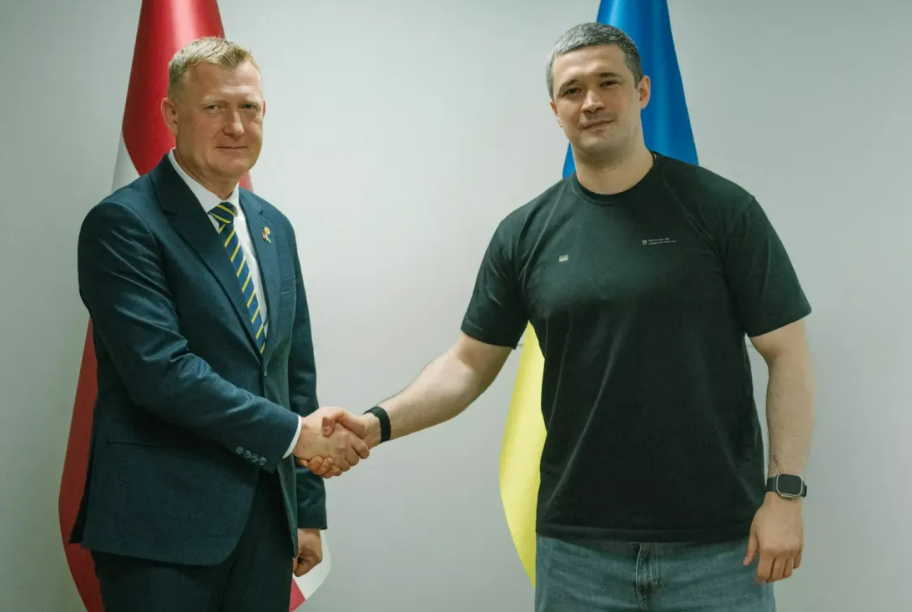
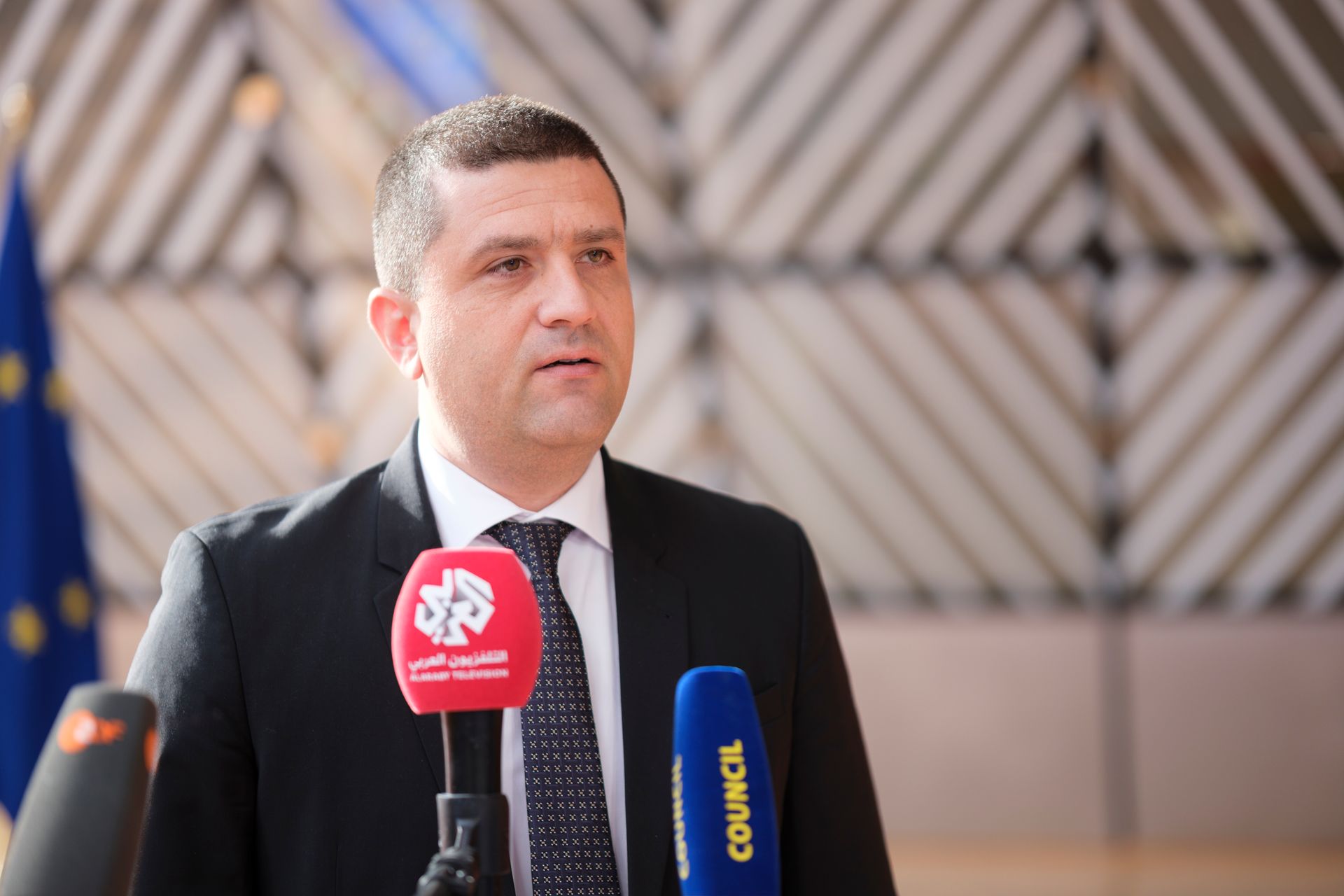
Ukrainian and Latvian defense ministers named specific categories of unmanned systems that will move between the two countries under the Drone Deal, Ukraine's defense minister Mykhailo Fedorov said on 13 June.
Latvia will supply Ukraine with anti-drone systems of Latvian manufacture. Ukraine will supply Latvia with strike drones, ground robotic complexes, and maritime drones, following a Kyiv meeting between Fedorov and Latvian defense minister Raivis Melnis.
The exchange formalizes what until now ran one way. Latvia has been a heavyweight donor of drones and equipment since 2022, pledging 10 million euros to joint defense manufacturing in 2025 alone.
Today's agreement makes Ukraine a supplier to a NATO member for the first time under this format.
"Ukrainian technologies and combat experience help partners adapt faster to the challenges of modern warfare," Fedorov wrote on Telegram, "while support from allies makes it possible to scale solutions that have already proven effective on the battlefield."
The meeting is Melnis's first foreign trip as defense minister. He took office on 28 May after his predecessor Andris Sprūds resigned over a 7 May Ukrainian drone crash near Latvia's Rēzekne oil storage facility — an incident that brought down Prime Minister Evika Siliņa's government.
Before his appointment, Melnis served as the Latvian defense ministry's representative at the embassy in Kyiv.
In a separate meeting on the same visit, Melnis told President Volodymyr Zelenskyy: "We have supported Ukraine and continue to support it with training and our expertise since the very beginning. And now we are asking Ukraine to support us, because there is only one country in the world who knows how to fight Russia, how to stop Russia."
What the Drone Deal opens
The 9 June Drone Deal, signed in Tallinn between Zelenskyy and Latvia's new Prime Minister Andris Kulbergs at the Nordic-Baltic Eight summit, is the sixth bilateral framework Ukraine has concluded under this format.
At the signing, Zelenskyy offered Ukrainian counter-drone experts to Baltic states facing repeated drone incursions. The Fedorov-Melnis meeting gives that offer operational content.
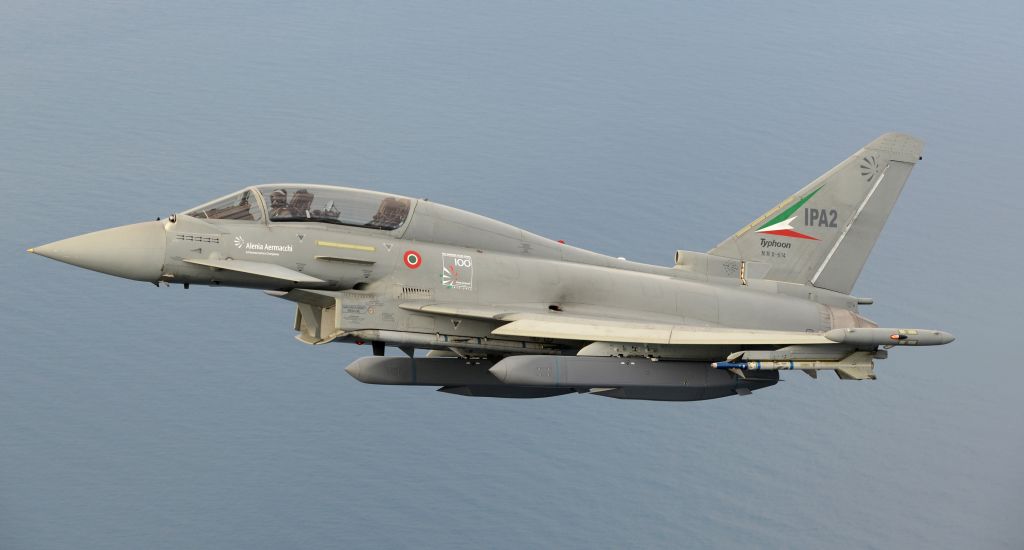
Latvia has spent recent months as the country most exposed to drone spillover from Russia's war on Ukraine. French NATO fighters shot down a drone over eastern Latvia on 8 June — the first NATO intercept on Latvian soil.
Latvia's military chief Kaspars Pudāns warned on 4 June that Russia could exploit its drone manufacturing edge to attack the Baltics by 2028.
Fedorov did not specify volumes, timelines, or financial terms.
European missile systems manufacturer MBDA and Ukrainian defense company Ukrainian Armor have signed a memorandum of understanding to explore joint development of deep-strike systems and counter-unmanned aerial systems (C-UAS), marking a new phase of industrial cooperation linked to the war in Ukraine, MBDA announced on 10 June.
MBDA expands cooperation with Ukraine’s defense industry
MBDA is one of Europe’s leading defense firms specializing in guided missile systems across air, land, and naval domains. It is also the maker of the Storm Shadow / SCALP-EG cruise missile, which has been supplied to Ukraine by European partners for long-range strike missions.
Ukrainian Armor is a domestic Ukrainian defense manufacturer involved in producing armored vehicles, artillery systems, ammunition, and unmanned platforms, and has expanded significantly since the start of Russia’s full-scale invasion.
Cooperation to focus on long-range strike systems and counter-drone technologies
The agreement sets out a framework for long-term cooperation, including joint development projects, technology exchange, and potential co-production initiatives, with the possibility of establishing a future joint venture.
The focus is on two priority areas: “deep strike” capabilities for long-range precision attacks, and counter-unmanned aerial systems designed to detect and neutralize drones, which have become central to battlefield dynamics in Ukraine.
Ukraine to strengthen domestic defense production with European expertise
MBDA said the partnership is intended to help strengthen Ukraine’s independent industrial capacity, while leveraging European experience in advanced missile and air defense systems. Ukrainian Armor will contribute production capability and operational experience across armored vehicles, munitions, and unmanned systems developed under wartime conditions.
Both sides said the cooperation aims to combine European technological expertise with Ukrainian battlefield-driven innovation, creating a framework for deeper defense-industrial integration.
O impedimento do uso da Starlink pela Rússia tem permitido ataques de drones ucranianos e recuperação de território. No Dia Nacional, Putin afirmou que rede de satélites russa está a ser ampliada.
O impedimento do uso da Starlink pela Rússia tem permitido ataques de drones ucranianos e recuperação de território. No Dia Nacional, Putin afirmou que rede de satélites russa está a ser ampliada.
Ukraine’s Ministry of Defense (MoD) says artificial intelligence is increasingly integrated into so-called “middle strike” systems, enabling long-range drones to operate in heavily contested electronic warfare environments and strike targets at operational depth.
Officials say the systems are part of a broader program aimed at disrupting Russian logistics and supply chains, with Ukraine reporting a sharp increase in strikes on transport routes, depots, command posts, and equipment concentrations in recent months.
The MoD explains that the use of AI is intended to overcome two key constraints in this operational zone: heavy electronic warfare interference that disrupts satellite navigation, and dense air defense coverage that limits predictable flight paths.
AI takes over control at target approach phase
According to the ministry, AI systems are not active throughout the entire mission. Drones are initially flown under operator control, but once they reach a designated target grid, onboard systems take over navigation and targeting.
At that stage, onboard computers and optical sensors begin real-time analysis of the surrounding area, switching from manual guidance to autonomous control for the final approach.
Visual navigation without GPS using terrain matching
The ministry says drones equipped with AI systems are able to operate without reliable satellite navigation by using onboard cameras and computer vision models.
These systems continuously scan terrain features such as roads, rivers, and landscape contours, and compare them against preloaded high-resolution satellite imagery.
This allows the drone to determine its position based on visual correlation rather than GPS signals, which are often degraded or spoofed by electronic warfare.
Automated target recognition and terminal strike adjustment
In the terminal phase, AI systems analyze live video feeds to identify military equipment based on trained visual patterns. The system is designed to distinguish between different types of targets and automatically assign a tracking marker once a valid target is recognized.
Once a target is locked, the AI adjusts flight controls in real time to guide the drone into a final dive trajectory.
The ministry also says the system can reduce misidentification risks by distinguishing between real equipment and decoys using multiple indicators, including geometry, surface texture, and thermal signatures.
Russian forces are increasingly trying to counter these AI-assisted drone targeting systems using methods such as painting military vehicles with high-contrast zebra-like stripes. Experts say the markings are designed to confuse computer vision models trained to identify standard vehicle shapes and camouflage patterns.
Russian military vehicle with zebra-like paint patterns in an attempt to disrupt AI-assisted drone targeting systems. Photo from social media, via RFE/RL.
Route planning shaped by electronic warfare conditions
The MoD says AI is also used before launch to optimize flight paths. Planning systems incorporate intelligence on Russian air defense and electronic warfare deployments, selecting routes that minimize exposure.
This includes analysis of radar coverage, identification of terrain masking opportunities, and the use of blind spots in air defense systems. The goal, according to officials, is to ensure drones can reach operational depth targets despite dense electronic warfare and interception layers.
“Logistics Lockdown” program and expanded strike depth
Ukraine says these systems are being deployed as part of a wider “Logistics Lockdown” program aimed at increasing pressure on Russian military supply chains.
Officials say “middle strike” operations are now being scaled to target Russian logistics, infrastructure, and military assets at distances of up to 200 kilometers behind the front line.
The MoD says the approach is designed to combine intelligence, long-range strike capability, and automation to increase the tempo and effectiveness of attacks on Russia’s rear support systems.
Procuradores especiais consideraram que a tentativa de Yoon de "criar condições de guerra" através do envio de drones tinha prejudicado a segurança do Estado, aumentando as tensões entre os países.
Procuradores especiais consideraram que a tentativa de Yoon de "criar condições de guerra" através do envio de drones tinha prejudicado a segurança do Estado, aumentando as tensões entre os países.
Moscú, 12 jun (Prensa Latina) Tres personas resultaron heridas tras un ataque masivo de vehículos aéreos no tripulados de ataque ucranianos en la república rusa de Tartarstán, informó hoy el jefe de la región, Rustam Minijánov.
Só nos primeiros 40 dias de guerra, o Irão lançou mais de 4.600 ataques de drones contra os países seus vizinhos. Até há relativamente pouco tempo, os seis países que integram o Conselho de Cooperação do Golfo (CGG) tinham como certo que a sua defesa estava assegurada pelos Estados Unidos, mas tudo mudou desde 28 de fevereiro, com o Irão a lançar ataques sem parar e com os países obrigados a defenderem-se sozinhos. É neste cenário que cresce a procura por drones portugueses por parte dos países do Golfo Pérsico. É verdade que o interesse já existia antes, mas a guerra no Médio Oriente só veio acelerar o desejo pelas aeronaves não-tripuladas com selo português.
“Ainda antes desta guerra, estivemos no Dubai em novembro onde a presença de várias empresas portuguesas, tanto na área de drones como na área de sistemas de comunicação, como na área de software e de estruturas. Já olhavam para este mercado com especial apetite”, disse ao Jornal Económico o presidente do AED Cluster Portugal, que junta as empresas da indústria de defesa nacional, José Neves.
“Naturalmente, o cenário neste momento faz com que os países nessa zona do globo tenham uma urgência maior na aquisição de produtos”, afirmou, apontando que Portugal já tem “produtos desenvolvidos e testados em cenário operacional”, segundo o líder da AED, apontando que os drones reúnem maior interesse.
Uma das empresas que tem feito o seu caminho no Golfo Pérsico é a Beyond Vision que produz drones na sua fábrica em Alverca. A companhia está agora a desenvolver um sistema que vai permitir aos seus drones neutralizar drones Shahed, produzidos no Irão, mas usados também pelos russos. Já tinha registado várias vendas no Médio Oriente, no setor civil, mas o foco agora é “no setor da defesa, muito pelo que se está a passar com o Irão”.
“Os países do Médio Oriente não estavam programados para a necessidade de terem armamento ou proteção para os níveis de que realmente necessitavam. Este evento foi um ‘abre-olhos’. Estavam muito focados no turismo e outras áreas. Claramente mudaram o foco para a defesa. Os drones, pela exposição que estão a ter na Ucrânia, são um dos equipamentos mais procurados. Temos tido vários pedidos dos diferentes países do Médio Oriente”, disse o presidente da empresa Dário Pedro.
Também a portuguesa produtora de drones Tekever tem vendido para esta região, com a procura a vir de trás. “A realidade e os dados mostram que essa procura um bocadinho generalizada cresceu em quase todos os grandes blocos. Desde o continente americano, de norte a sul, ao asiático, ao Médio Oriente. Temos processos de venda em países do MédioOriente, como em muitos outros países”, disse ao JE Pedro Petiz, diretor de desenvolvimento estratégico da Tekever.
O mais recente unicórnio português (com valorização nos mil milhões de dólares) destaca que só trabalha com mercados “alinhados com a estratégia europeia e da NATO. Depois temos outro tipo de países que, não sendo da NATO, estão tipicamente alinhados”, com a empresa a notar “mais procura” nestes mercados, o que muitas vezes passa por “parcerias locais”.
Olhando especificamente para a Arábia Saudita, um empresário português no país dá o seu testemunho sobre a forma como os drones portugueses são vistos neste mercado. “No World Defense Show, que aconteceu em Fevereiro, a AICEP fez um excelente trabalho porque juntou uma série de empresas num stand único e para além disso vimos stands de empresas portuguesas como a Tekever e Beyond Vision. Este World Defense Show teve um impacto enorme porque há um enorme interesse em tudo o que é defesa”, disse ao JE a partir de Riade Guy de Sousa, diretor-geral da Asasat, companhia de desenvolvimento imobiliário. O empresário dá o exemplo do Public Invesment Fund (PIF), o megafundo público saudita que mudou a sua estratégia para apostar mais numa “série de indústrias e cadeias de valor em todos os sectores. Existe a necessidade de tirar a dependência da economia dos combustíveis fósseis. Creio que haverá interesses exploratórios da Arábia Saudita, através destas instituições, em variadíssimas empresas portuguesas”, afirma.
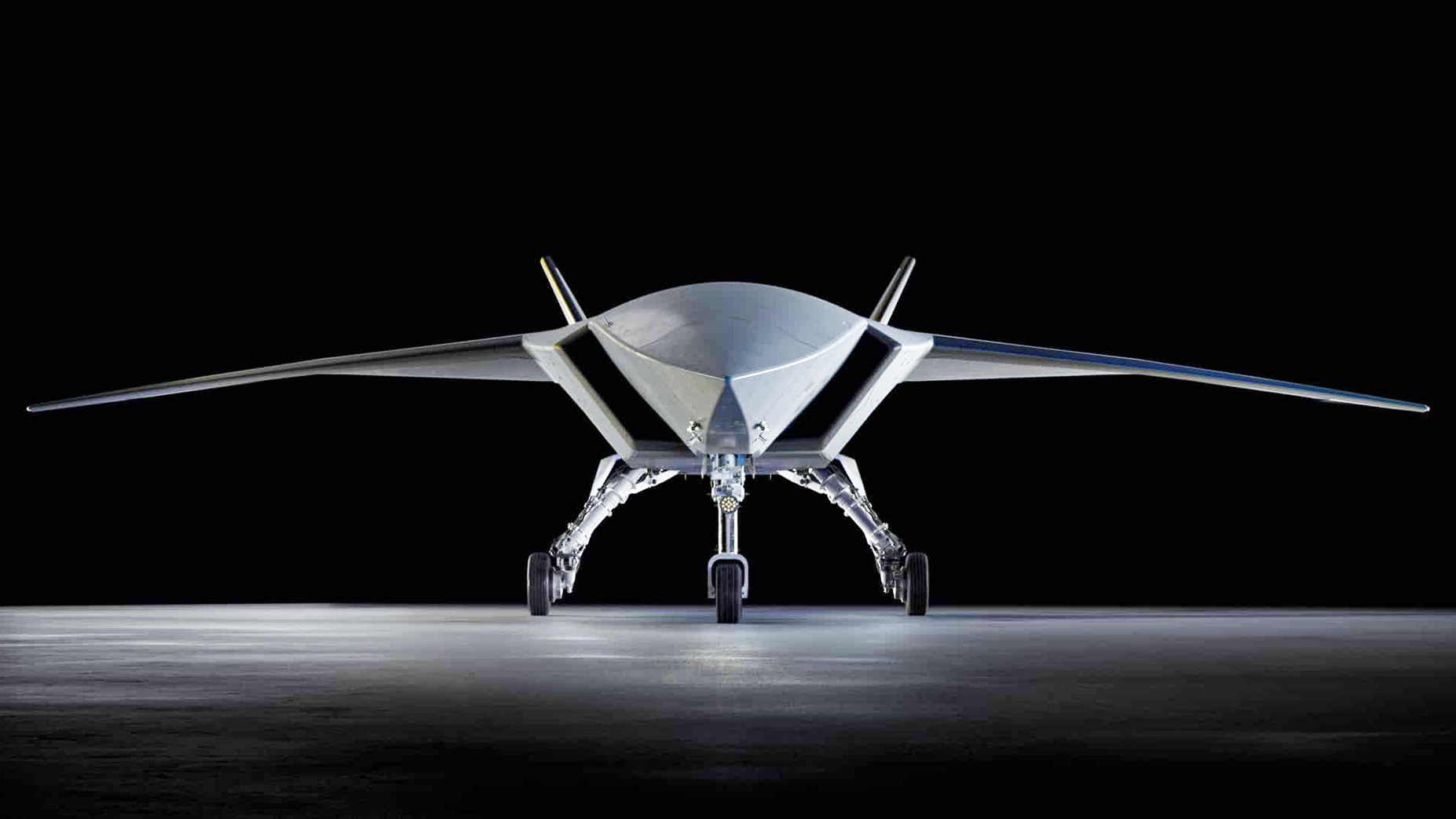
Boeing has provided details of the latest iteration of its MQ-28 Ghost Bat collaborative combat aircraft (CCA). Already, the Ghost Bat was the most mature known CCA, but the enhanced version of the drone, the Block 3, has various new features. These include a larger wing and a pair of internal weapons bays, which means it can carry munitions without diminishing its low-observable characteristics.
The MQ-28 Block 3 was revealed today at the ILA Berlin airshow, taking place this week in the German capital. The unveiling was conducted by officials from both Boeing Australia and Germany’s Rheinmetall. The German firm is partnered with Boeing to offer the drone to the German military, as well as to tap into the potentially very lucrative European CCA market.
>25% larger wing Increased fuel and payload capacity Beyond Line of Sight capability Internal weapons stations for greater mission configurability
MQ-28 Ghost Bat enhancements deliver flexibility, range and capacity advancements.
“This is the aircraft that we are offering to Germany,” MQ-28 Global Program Director, Glen Ferguson, said at the rollout. “This is the third iteration of design now, and we are on point to build out first [Block 3] aircraft next year.”
The previous Block 1 and Block 2 variants have completed more than 150 test sorties in Australia and the United States.
Australia has already acquired eight Block 1 MQ-28s, which are configured as pre-production prototypes.
The first nine Block 2 drones, now in production, are seen as a pathway to an operational capability, which is fully realized in the Block 3.
An MQ-28A Ghost Bat taxis prior to flight at Woomera, South Australia, in September 2025. Australian Department of Defense
The Block 3 aircraft features a wing that is 25 percent larger, combined with a thrust increase from 10,000 pounds to 12,000 pounds. It’s not immediately clear how that thrust increase will be achieved, but coupled with greater wing area, it will confer an increased payload capability. This translates into an additional 2,000 pounds of fuel, stores, and mission payloads.
“That additional capacity gives operators freedom to balance payload and endurance to configure for the mission at hand, whether that means carrying extra fuel for longer-range operations, increasing weapons carriage, or any combination of both,” Ferguson said.
The latest iteration of the drone also adds beyond-line-of-sight (BLOS) control. Introduction of BLOS communication links means the MQ-28 can be operated at unlimited standoff distances, whether from a ground station, a naval vessel, or a crewed aircraft. With its range of over 2,000 nautical miles, adding BLOS to the drone also ensures that it can conduct independent operations when not controlled by a crewed aircraft, which was always envisioned as a potential role for Ghost Bat. Having a SATCOM option also opens up better resiliency for control in electronic warfare combat environments.
“Inclusion of features such as BLOS capability is a direct result of our learnings to date along with feedback from air forces as they understand more about the role and integration of CCAs into joint force operations,” Ferguson explained.
As for the critical internal weapons bays, these are added within each side of the slab-side fuselage, shown in a video released by Boeing.
A screencap from a Boeing video showing a CG version of the Block 3 drone with one weapons bay open, to reveal SDBs. Boeing screencap
Each bay can carry a single AIM-120 Advanced Medium-Range Air-to-Air Missile (AMRAAM) or two Small Diameter Bomb (SDB) precision-guided munitions. These can comprise either the GBU-39/B SDB I or the GBU-53 SDB II, also known as StormBreaker. The Ghost Bat is the first CCA we have seen capable of carrying AIM-120s internally, a significant development in itself. The option for internal stores carriage is also a huge deal at this point, with Boeing having recently validated its radar cross-section (RCS), proving that the CCA is harder to detect and better able to operate in contested environments.
Elevation, or pitch, is one angle engineers analyze to validate MQ-28’s radar detectability inside Boeing’s test chamber. Other positions used in radar cross-section testing include azimuth (measure from nose to tail) and roll (rotation around the aircraft). Above left: Views of MQ-28 on the flight line. Boeing
“The combination of a highly capable platform, stealth features and advanced autonomy provides unprecedented ability for air forces to extend their mission effectiveness and operational flexibility,” said Brad Thompson, director for Phantom Works Australia, after the completion of the RCS trials.
The drone also has provision for three external weapons stations. At least one of these has already been tested, during an end-to-end engagement in which a target drone was brought down by an AMRAAM. The air-to-air role is notably relevant since the drone is also envisaged as a force-protection asset, to defend airborne early warning aircraft and tankers, etc, as well as working with fighter aircraft. Combined with more thrust and larger wings, the external pylons would appear to open up the possibility of flying with as many as five AMRAAMs, and at least four, or with a mixed load of air-to-air and air-to-ground weapons.
An AIM-120 is launched from an MQ-28A Ghost Bat during Trial Kareela at RAAF Base Woomera, South Australia. Australian Department of Defense
For Block 3, Boeing is also known to be working on three or four alternative sensor payloads. Integration of these would be facilitated by the fact that the entire nose can be swapped out to accommodate different payloads.
A quartet of MQ-28s, the two in the middle having IRST sensors on top of their noses. Boeing
Bringing the MQ-28 Block 3 from Australia to Berlin reflects the relationship between Boeing Australia and Rheinmetall and the fact that the German Air Force — the Luftwaffe — is being pitched to for its CCA requirement.
“At the moment, we are still in negotiations with the German government, but if they want to have the plane by 2029, my expectation is that by at least next year, we have to go into the final stage of negotiating the contract,” Rheinmetall CEO Armin Papperger told Breaking Defense.
In expectation of a German CCA requirement, the ILA Berlin airshow featured a heavy presence of combat drones.
Also making its public debut was a full-scale model of the Airbus U760 Ravenstorm, a combat drone designed to operate alongside fighter aircraft in air-to-air combat, strike missions, and electronic warfare roles. The new uncrewed aircraft is part of a revamped drone portfolio from the company, and you can read more about it here.
A rendering of the U760 Ravenstorm. Airbus
As well as Ravenstorm, Airbus is also offering a Europeanized version of the stealthy XQ-58A Valkyrie, which is apparently being pitched as a lower-cost aircraft and one that offers the option of runway-independent operations.
From the United States, General Atomics Aeronautical Systems presented a full-size model of a drone from its Gambit family, with the company also confirming that it has been in talks with Germany regarding its CCA requirements.
8. General Atomics Aeronautical Systems is here as well, with a full-sized version of a drone from its Gambit family, one of two unmanned aircraft selected through the first increment of the US Air Force’s own CCA program. pic.twitter.com/8sEnDuUidr
— Elisabeth Gosselin-Malo (@elisabethmalom1) June 10, 2026
Meanwhile, German firm Helsing revealed a new version of its CA-1 Europa drone — which looks remarkably similar to Ghost Bat. The CA-1EA (for Electronic Attack) follows the CA-1KA (Kinetic Attack) and reflects the high priority Germany attaches to its need for a CCA to accompany its forthcoming Eurofighter EK electronic warfare jets, as well as other combat aircraft.
Helsing says the CA-1KA is planned to begin flight testing early next year. To get around issues of testing this class of drone in European airspace, the first flying prototype will feature a cockpit for a safety pilot.
Even if the MQ-28 Ghost Bat loses out in Germany, in the face of stiff competition, the Block 3 version already has the support of Australia, which also wants to upgrade earlier aircraft to the same standard.
“These features, developed in partnership with the Royal Australian Air Force, will be progressively released to the fleet through a spiral upgrade program, and are available to interested allied countries,” Ferguson said.
The Boeing official added that the MQ-28 will be in service with the Royal Australian Air Force in 2028, and he is “fairly certain that it will be the first operational CCA anywhere in the world.”
When Boeing and Rheinmetall announced their strategic partnership back in March of this year, they said that the MQ-28 could be provided to the German Armed Forces by 2029.
It should also be noted that Boeing is now conducting test flights of the Ghost Bat from the U.S. Navy’s base in Point Mugu, California. The company says its main goals in doing this are to demonstrate the maturity of the design and promote export sales, but the trials could well also point to potential U.S. military interest.
A lot could change before then, and it is unclear to what degree Germany’s CCA requirements have been defined, while any procurement will also have to navigate decision-makers in the government.
In the meantime, the MQ-28 Ghost Bat continues to evolve. The unveiling of the Block 3 version today underscores how rapidly the collaborative combat aircraft market is maturing.
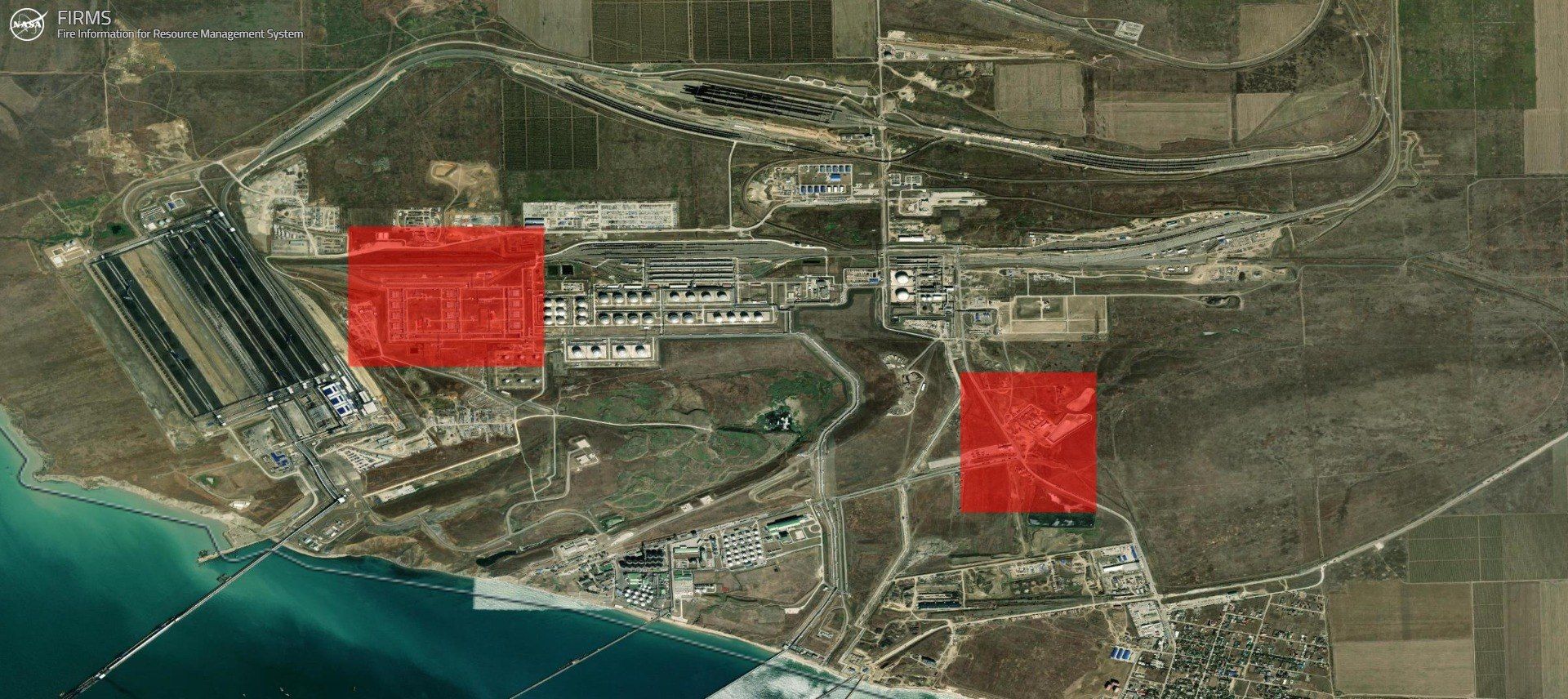
The comments come as Ukraine has intensified its campaign against Russian logistics routes and military infrastructure connecting occupied Crimea to Russian-controlled territory.
Ukraine currently maintains a 1.5-to-1 advantage over Russian forces in the use of FPV drones, with the gap continuing to widen in recent months, Commander-in-Chief Oleksandr Syrskyi said.
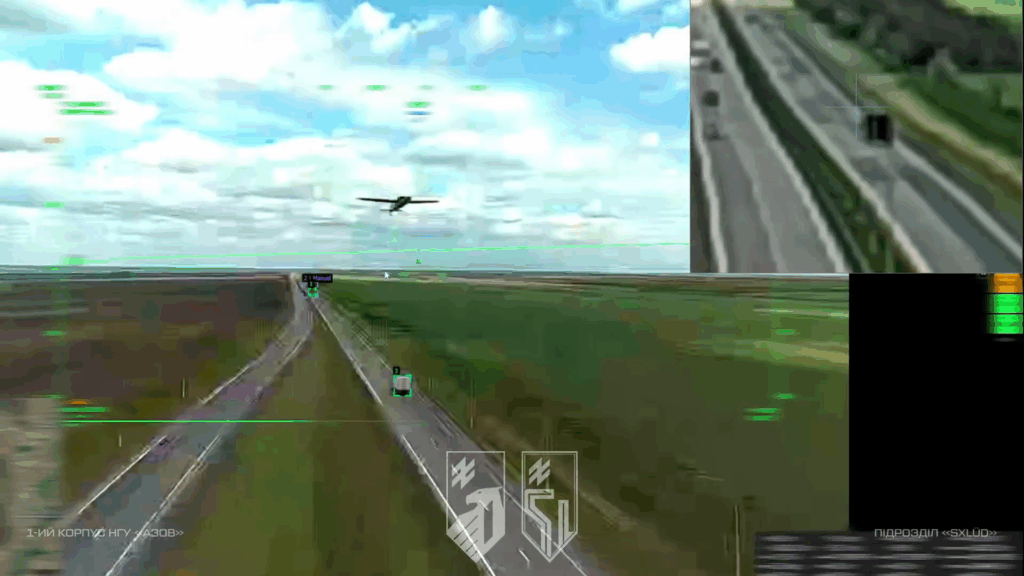
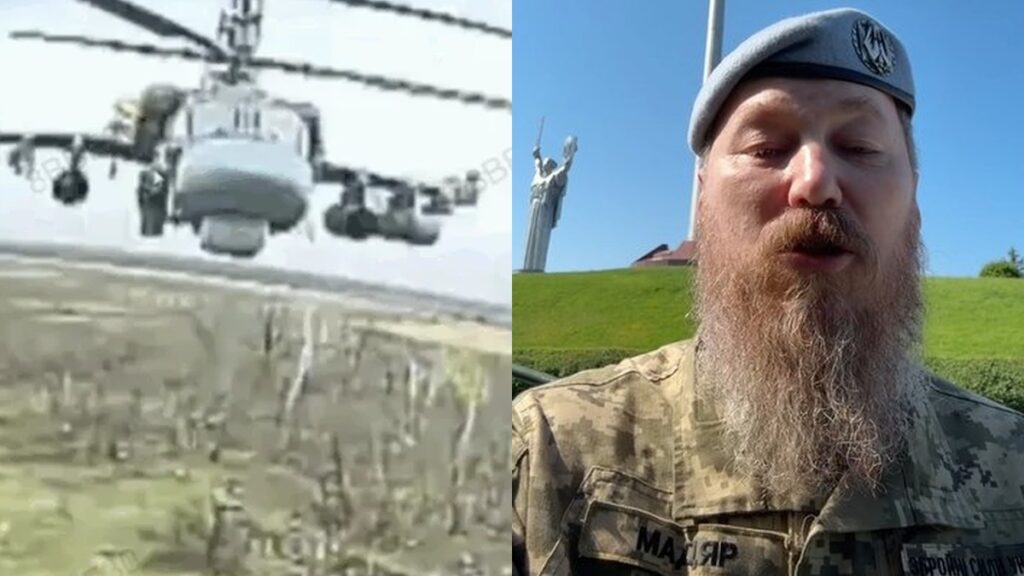
Major Robert "Madiar" Brovdi marked Ukraine's first official Day of Unmanned Systems Forces on 11 June 2026 with a single number. His drone branch claims 102,000 Russian soldiers killed or wounded over twelve months, alongside 360,000 enemy targets hit and 1.7 million combat sorties flown, the commander said in a Telegram address.
The number translates four years of homemade weaponry into industrial output. By Brovdi's own reckoning, drones from his Unmanned Systems Forces (SBS) now account for one in every three Russian soldiers falling on the battlefield, and at a unit cost he prices in hundreds of dollars apiece.
"We exchange the plastic and metal of a drone worth a few hundred dollars for the carcass of an occupier. And that is the best exchange rate in the world," Brovdi said.
"Birds changed both plan and course"
Brovdi narrated the four-year arc of Ukrainian drone warfare in a single Telegram thread. In 2022, he said, the starting slogan was "artillery, shovel, drone" to locate, correct, hide. Then, in spring 2022, he taped a grenade to a commercial quadcopter and pushed video of the drop to social media.
"No weapon in human history has evolved so quickly. A wedding drone, no joke, performed well at the front, fundamentally and forever changing world doctrine," he revealed.
The unit he founded that month — Madiar's Birds — has since grown from platoon to brigade to a separate branch of the armed forces. The 414th brigade tripled in size in late 2024. On 3 June 2025, President Volodymyr Zelenskyy made Brovdi commander of the entire SBS, replacing Colonel Vadym Sukharevskyi.
Four targets, 2,000 kilometers deep
Madiar listed four target priorities for the year ahead: enemy manpower, sources of war financing, weapons production, and Russian air defense. The branch's reach now extends from frontline FPV strikes to deep-strike platforms confirmed beyond 1,700 kilometers inside Russia.
"The birds changed both the plan and the course," Madiar said.
Art-collecting commander
Russian state TV calls him a "terrorist." A Russian court sentenced him in absentia to life in prison in March 2026 on charges of organizing a terrorist attack. Russian prosecutors have filed 46 counts against him in total.
The Center for European Policy Analysis calls him "a bearded talisman of Ukraine's defense" — a "swashbuckling, plain-spoken" commander whose journey ran from "besuited grain trader" to the top of the world's first dedicated drone branch.
Madiar's biography reads like Carpathian Tony Stark's: an ethnic Hungarian from Uzhhorod who ran one of Ukraine's largest grain traders, served on the Zakarpattia Regional Council from 2010 to 2015, and funded contemporary Ukrainian art through his BrovdiArt Foundation before walking into a recruitment office at the start of the full-scale war.
He closed his anniversary speech in his usual register: "And now to work, ladies and gentlemen, at all available depths, across all the hated enemy. The way we know how, with what we have, where we are."
In an operation that will likely be studied for years, Ukraine used dozens of internet-connected drones, launched from trucks inside Russia, to destroy strategic Russian aircraft. The drones took off from Russian soil, but they were guided by operators located deep within Ukraine. Operation Spiderweb demonstrated something that should alarm every Western capital: The precision strike…
In an operation that will likely be studied for years, Ukraine used dozens of internet-connected drones, launched from trucks inside Russia, to destroy strategic Russian aircraft. The drones took off from Russian soil, but they were guided by operators located deep within Ukraine. Operation Spiderweb demonstrated something that should alarm every Western capital: The precision strike…
“Experimentámos”. Há dois anos, foi realizado um teste com drones totalmente autónomos programados para destruir tudo o que encontrassem numa determinada área. Segundo diz uma figura de topo da indústria de defesa ucraniana, há baixas confirmadas. Drones totalmente autónomos, sem supervisão humana, mataram soldados no campo de batalha pela primeira vez. A revelação, feita à New Scientist por uma figura de topo da indústria de defesa ucraniana, marca um momento decisivo na história da guerra. O teste envolveu 10 drones “Terminator” controlados por inteligência artificial, que foram usados na linha da frente da guerra na Ucrânia. Dois soldados russos foram
 Login
Login