Normal view

Ukraine is droning Russian ships. The goal: to create supply bottlenecks on land.

9 June 2026 at 15:03

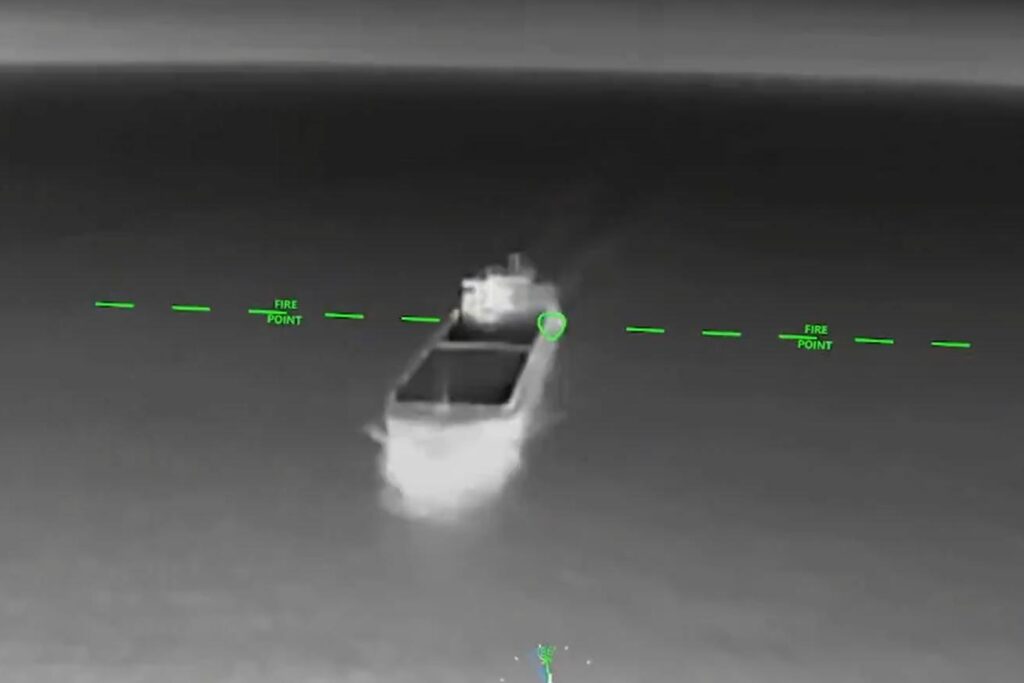
An FP-1 barrels toward a Russian ship.

  • Ukraine's drone campaign targeting Russian logistics is moving to sea
  • Ships carry supplies between Russia and occupied southern Ukraine
  • Striking the ships can force more supplies to move over land in vulnerable trucks

One-way attack drones from Ukraine's Unmanned Systems Forces struck five Russian cargo ships on the Sea of Azov on 5 June.

The strikes, which left at least one ship a burned-out hulk, are a kind of corollary to Ukraine's escalating campaign of middle-distance strikes on Russian supply lines on land in occupied territories. Aiming to weaken Russian regiments before they can attack across the disputed gray zone, Kyiv's drone units aren't only hitting trucks and vans on land—they're also hitting ships at sea.

"There's a method to the madness here," Ukraine Control Map explained. "Take out the ships, force Russia to use more trucks, more logistic bottlenecks." Then hammer the bottlenecks with drones.

The ultimate goal is to make it more difficult for the Kremlin to resupply and reinforce its 700,000 troops in occupied Ukraine. It's cheaper and easier to defeat an attack before it even begins by starving the attacking troops of food, fuel, batteries, ammunition and other vital supplies.

The ships the USF hit with Fire Point FP-1 drones on 5 June were spread out across a wide area. They were in occupied Mariupol and Berdiansk and along the coast of occupied Ukraine — the same Berdiansk port where Ukrainian drones struck a Russian munitions cargo ship on consecutive nights at the start of June.

What they had in common was their disguise. Civilian-owned but allegedly illegally working on behalf of sanctioned Russian entities, the ships sail without obvious markings or easily tracked radio transponders. There could be scores of such ships plying the Black Sea on Russia's behalf every day.

Two of the ships hit on 5 June, the dry cargo vessels Natra and Zirkon, were inbound from Türkiye to Rostov-on-Don when Ukrainian drones struck them in Taganrog Bay—empty, heading to load grain at a port Western governments and Ukraine identify as a transit hub for grain looted from occupied Ukrainian territory. Five Azerbaijani crew members on private contracts were killed and three wounded, Azerbaijan's foreign ministry said. Brovdi didn't address the deaths.

Telling apart a ship hauling Russian military fuel from a ship empty and heading to pick up looted grain is the kind of distinction that's hard to make from a drone's-eye view.

Ships that can haul thousands of tons of supplies every trip are much more efficient than trucks that can haul just a few tons apiece. Cargo ships can't deliver supplies to inland forces, of course, but they can move cargo between ports in southern Russia and ports in occupied Ukraine, bringing that cargo as close as possible to the gray zone before trucks must take over the shipping effort.

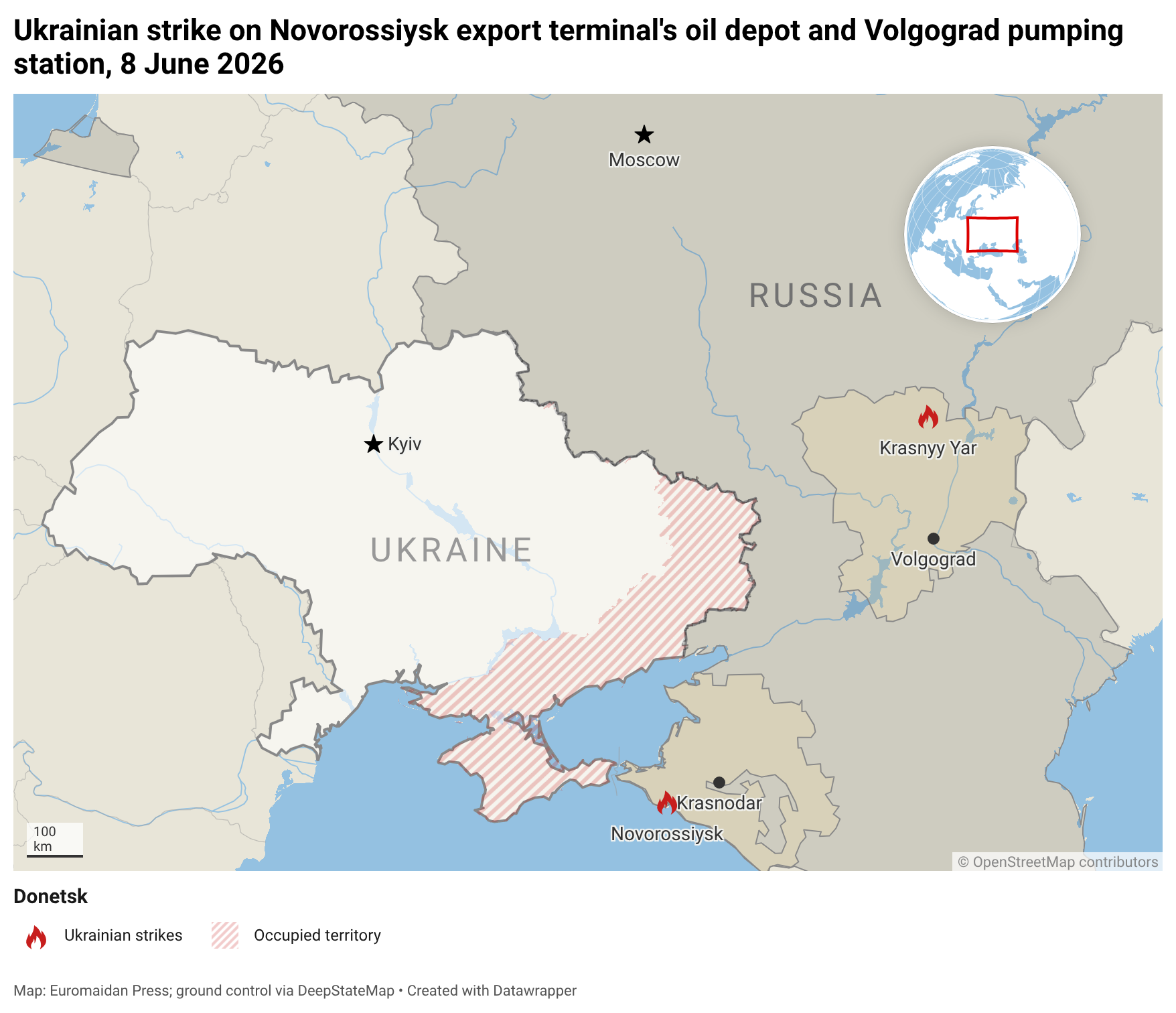
ukraine's drones now strike ports in occupied Ukraine
Map: Euromaidan Press

A thick-skinned ship is a tougher target than a thin-skinned truck, of course. But Ukraine's FP-1 drones carry a 100-kg blast-fragmentation warhead, with a TNT main charge boosted by the more powerful OKFOL explosive. The combination throws fragments outward and starts fires inside the target—the same mechanism that left the corvette Boikiy burning for hours at Kronstadt on 3 June.

🚢🔥 The destroyed cargo ship CIRCON (IMO 8887519), targeted by Ukraine’s Unmanned Systems Forces in the Sea of Azov several days ago. https://t.co/0Xpc3K9XXf pic.twitter.com/KI1PCzsjKf

— Special Kherson Cat 🐈🇺🇦 (@bayraktar_1love) June 8, 2026

Sitting duck trucks

Russia's thousands of military supply trucks are already squarely in the crosshairs of Ukrainian drone units. Since launching their coordinated counterlogistics campaign this spring, the Ukrainians have increased their monthly truck strikes nearly tenfold, from around 60 per month to nearly 500, as per the Ukrainian general staff.

But a comprehensive assault on Russian logistics requires raids on sea traffic, as well. That effort may have begun in earnest on 5 June. "Cargo ships and tankers with their names painted over by Black Sea looters and their transponders switched off, used for the quiet theft of Ukrainian grain and the transport of military cargo and fuel, can no longer count on either long service lives or uninterrupted schedules," the 414th Unmanned Strike Aviation Brigade crowed.

If they can disable enough ships, the Ukrainian drone teams may compel Russian logisticians to shift more supplies by land. To reach Russian regiments in southern and eastern Ukraine, those supplies normally travel east to west along the M-14 highway that runs close and parallel to the Black Sea coast.

That highway and connecting roads have become a kill zone for Russian trucks as more FP-1, FP-2, Hornet and Bulava drones take to the sky, increasingly unbothered by Russia's collapsing air defense network. Ukrainian industry now churns out tens of thousands of middle-strike drones every month, some for as cheaply as a few thousand dollars apiece.

The Russians are trying to find alternate routes that avoid the most heavily droned roads, but once a truck gets close to its destination, it has no choice but to follow a dwindling number of paths. Ukrainian intelligence knows where the Russians' main divisional bases are; they know the trucks must eventually turn into these bases. The near approaches are now becoming kill zones alongside the M-14 and other main roads.

It'll take many more strikes on Russian ships to seriously dent the sea logistics and force more supplies onto land routes. But the effort is underway. "The occupier's smuggling logistics must be stopped," the 414th Unmanned Strike Aviation Brigade explained.

A Russian truck under drone attack near Chernihivka.
Explore further

Russia keeps four field armies fed through three southern towns. Ukraine’s drones just arrived.

Russian crude reaches the sea through tunnels under a mountain ridge—and Ukraine hit the storage end near Novorossiysk

8 June 2026 at 12:12

russian crude reaches sea through tunnels under mountain ridge—and ukraine hit storage end near novorossiysk · post smoke fire rise over after ukrainian drone strike grushovaya oil depot krasnodar krai

Ukrainian drones set a major oil depot ablaze near the Russian Black Sea port of Novorossiysk overnight on 7-8 June 2026, in a strike confirmed by Ukraine's Unmanned Systems Forces (SBS). Residents reported a string of blasts and heavy smoke over the Grushovaya storage site, which feeds Russia's busiest oil-export port. Ukrainian forces hit two more targets in southern Russia the same night.

Ukraine has spent the past year pushing its deep-strike campaign further into Russia, hunting the refineries, pipelines, and export ports that turn crude into the cash funding the invasion. Each hit on this Black Sea network forces costly repairs and brief loading halts, and steady Ukrainian success deep in Russia's rear, alongside a steadier front, is shifting how the West reads the war.

Drones spark a blaze at Novorossiysk's oil hub

The strike came before dawn. Residents of Novorossiysk, in Russia's Krasnodar Krai, reported about 50 blasts, then heavy smoke over the Grushovaya oil depot. Operators of the SBS's 1st Separate Center, working with Special Operations Forces (SSO) and other units, confirmed the hit. Ukraine's General Staff also confirmed the strike and said a fire broke out, with damage still being assessed. Russian officials claimed no one was hurt.

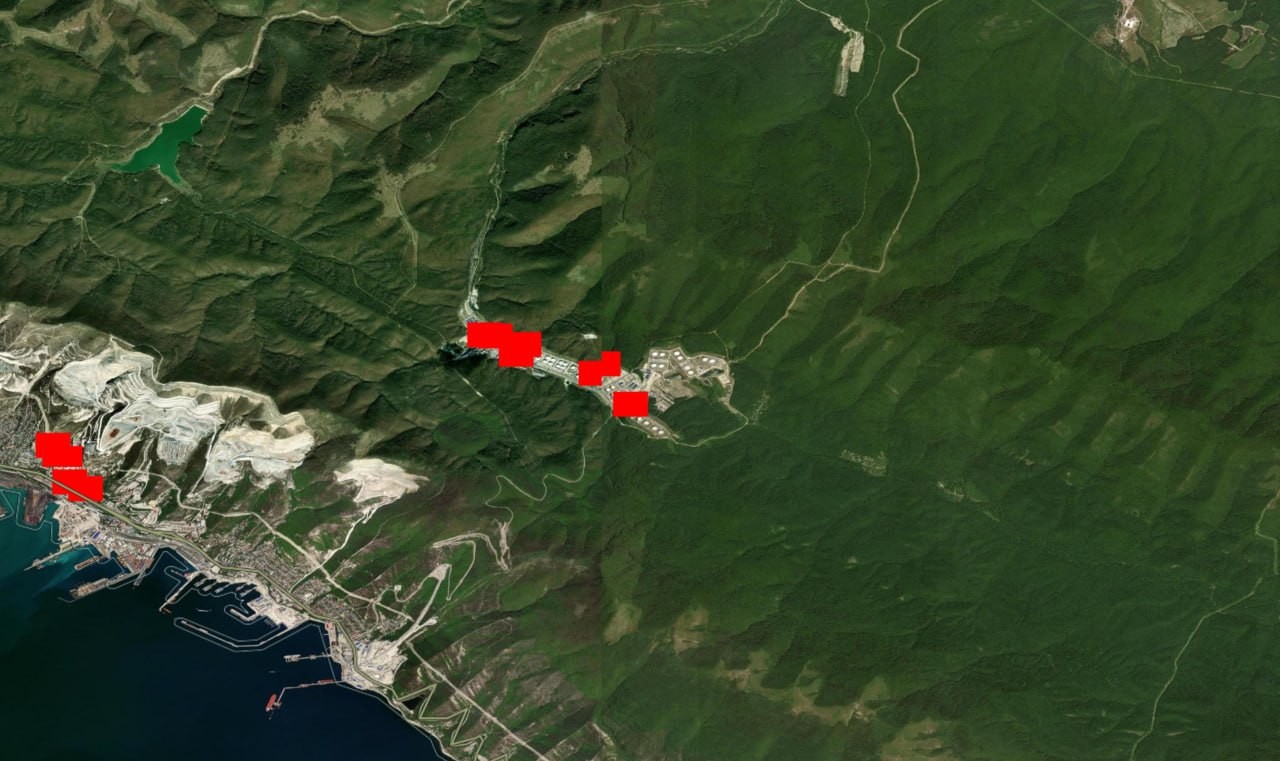
russian crude reaches sea through tunnels under mountain ridge—and ukraine hit storage end near novorossiysk · post nasa firms satellite data fire hotspots (the red squares top right) grushovaya oil
NASA FIRMS satellite data showing fire hotspots (the red squares, the cluster to the right) at the Grushovaya oil depot near Novorossiysk, 8 June 2026. Map: NASA FIRMS

NASA's FIRMS satellite service detected abnormal heat at the site at 02:48 on 8 June. Ukrainian Telegram channel Exilenova+ began reporting the attack around 3 a.m., posting photos and videos of fire in the mountains above the city. OSINT Telegram channel Falcon insight pinpointed the location. Russian news Telegram channel ASTRA confirmed the burning tank farm from eyewitness footage shot about 11 km away.

A fuel storage depot is burning in Novorossiysk, Russia, after a drone strike hit the tank farm overnight

Novorossiysk is one of Russia's most strategically important Black Sea ports, handling a significant share of Russian oil exports
🎥 Supernova pic.twitter.com/d2ab4SSuH0

— Euromaidan Press (@EuromaidanPress) June 8, 2026

What the Grushovaya depot feeds

The Grushovaya site is a transshipment depot for the Sheskharis terminal. Chernomortransneft runs it, under Russia's state pipeline monopoly Transneft. It sits in the Grushovaya Balka tract beyond the Markotkh Ridge, about 12 km from Novorossiysk. The tank farm holds more than 1.2 million m³ of fuel across dozens of tanks, on a site of about 212 hectares. SBS called it one of the largest oil-product stores in the Caucasus.

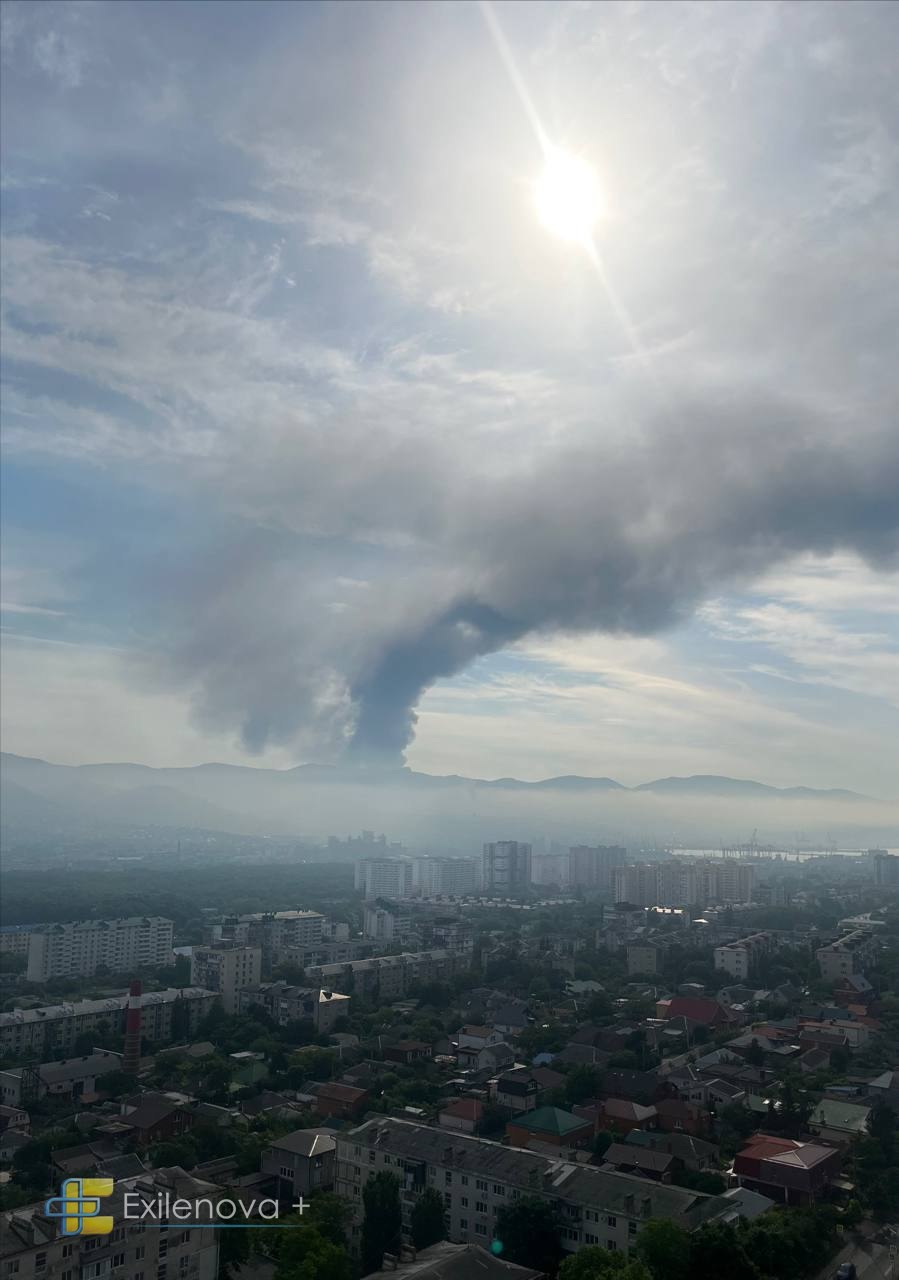
russian crude reaches sea through tunnels under mountain ridge—and ukraine hit storage end near novorossiysk · post smoke burning grushovaya oil depot drifts over after ukrainian drone strike 8 2026
Smoke from the burning Grushovaya oil depot drifts over Novorossiysk after the Ukrainian drone strike, 8 June 2026. Photo: Exilenova+

Novorossiysk is southern Russia's biggest oil-export hub, the Moscow Times reported. The port ships up to 700,000 barrels a day, and its terminals moved 19.8 million tonnes of oil products in 2025. That trade feeds Russia's budget, which bankrolls the war on Ukraine. The port has become a recurring target in Ukraine's strikes on Russia's Black Sea oil logistics.

Volgograd and a coastal radar also hit

The same night, Ukraine's General Staff said its forces struck the Krasny Yar oil-pumping station in Volgograd Oblast, where a fire broke out. Volgograd governor Andrei Bocharov claimed the blaze came from falling drone debris at the Zhirnovsk pumping station and was quickly put out, the Moscow Times reported. Ukrainian forces also hit a Russian radar station near Kabardinka in Krasnodar Krai, according to the General Staff.

Ukrainian drones struck Russia's Baltic Fleet base at Kronstadt near St. Petersburg overnight, flying nearly 1,000 km. Source: Zelenskiy
Explore further

Kronstadt, Russia’s major naval Base after Black Sea Fleet losses, gets hit by Ukrainian drones (VIDEO)

Not the first strike on Novorossiysk's oil chain

Ukrainian forces have hit this infrastructure before. Ukrainian defense outlet Militarnyi reported that drones struck the Grushovaya depot on 23 May 2026, when fire spread across much of the site. Strike drones also hit the Sheskharis terminal on 6 April, damaging oil-metering systems and shut-off valves at the loading berths. ASTRA said the wider complex was attacked in early March, early April, and on 22 May.

❌