Normal view

Levissi: The Ghost Village in Turkey Once Home to 10,000 Greeks

13 June 2026 at 11:01
Levissi: The Abandoned Greek Village
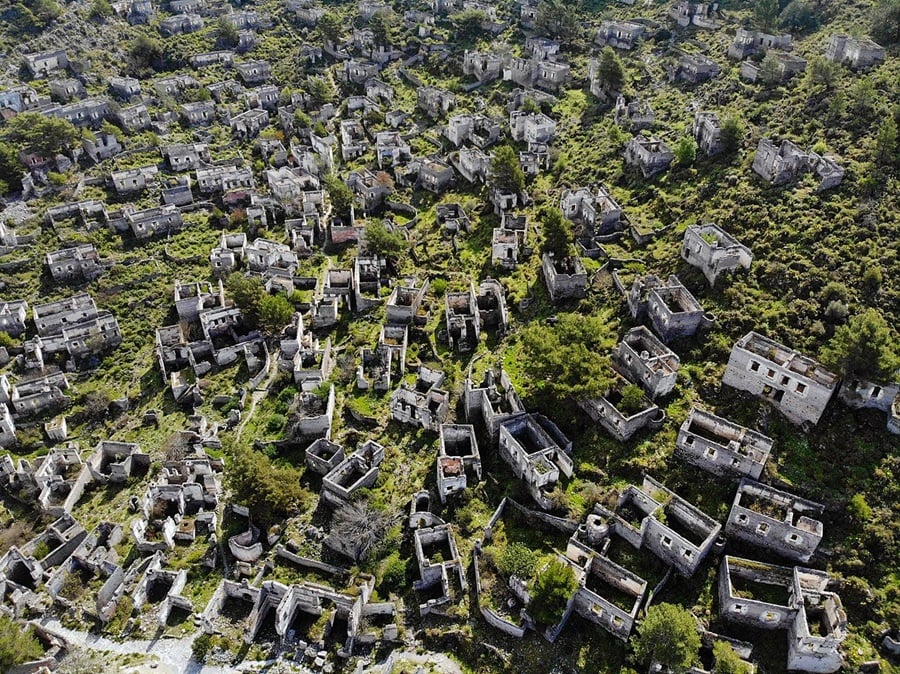
Greeks of the 5,000-year-old village were ethnically cleansed and then forcibly expelled in 1922. Credit: Wikitestaccountlogin, CC BY-SA 4.0/Wikipedia

The ghost village of Levissi (known today as Kayaköy) was once a bustling Greek village on the slopes of a hill in the district of Fethiye, Turkey.

It was practically right across from the island of Rhodes.

Greeks of the 5,000-year-old village were ethnically cleansed and then forcibly expelled in 1922, causing 10,000 people to leave behind the land of their heritage.

It was anciently known in Greek as Karmylessos. In late antiquity, the inhabitants of the region had become Christian, and, following the East-West Schism with the Church of Rome in 1054 AD, they came to be called Greek Orthodox Christians.

These Greek-speaking Christian subjects and their Turkish-speaking Muslim Ottoman rulers lived in relative harmony from the end of the turbulent Ottoman conquest of the region in the 14th century until the early 20th century.

The massacres of Greeks and other Christian minorities in the Ottoman Empire during World War I (1914–1918) led to the almost total depopulation of the town’s 6,500 Greek inhabitants by 1918. These former inhabitants were deprived of their properties and became refugees in Greece, or they died in Ottoman forced labor battalions.

Following the Greco-Turkish War of 1919–1922 and the subsequent Treaty of Lausanne in 1923, the town’s Greek Orthodox residents were exiled.

Levissi: The Abandoned Greek Village
A panoramic photo of the abandoned village. Credit: Darwinek, CC BY-SA 3.0/Wikipedia

Greek ghost town

Since then, the homes have remained vacant, left to decay after being further damaged by a huge earthquake in 1957.

Houses and churches in the area have been used for summer festivals. However, plans to lease the area and auction it off for commercial interests have caused local Turks as well as Greeks with roots in the area to protest. They are worried that the investors could further ruin the authenticity of the area.

Levissi: The Abandoned Greek Village
An abandoned church. Credit: Orderinchaos , CC BY-SA 3.0/Wikipedia

The ghost town, now preserved as a museum village, consists of hundreds of rundown but still mostly standing Greek-style houses and churches that cover a small mountainside and serve as a stopping place for tourists visiting Fethiye and nearby Ölüdeniz.

The village is now empty except for tour groups and roadside vendors selling handmade goods. There are a few houses which have been restored and are currently occupied.

American filmmaker Joerg Schodl set out to document what is left of the ghost town in his documentary, “Ghosts of Levissi.”

Schodl tells the tale of the small Greek community in Asia Minor that was torn apart during the final days of the Ottoman Empire. It focuses on the disappearance of the population practically overnight thanks to campaigns, designed to scare Greeks from Levissi and nearby Macri (known as Fethiye), including offensives by Turks. The site Greek Genocide reports that women were raped and their clothes and shoes taken from them.

When making the film, Schodl had the help of members of the Greek community in Melbourne, Adelaide, Sydney, Perth and Brisbane and he was able to find thirteen descendants of Levissi families.

More descendants were found in Toronto, Rhodes, London, Athens and Istanbul.

The 72 Breads of Ancient Greece You’ve Never Heard Of

13 June 2026 at 09:01
ancient Greek bread
Ancient Greek woman taking bread out of the oven. Terracotta figure . 5th century BCE found in Tanagra. Exhibited at the Louvre Museum. Credit: Marie-Lan Nguyen CC BY 2.5

The ancient Greeks used to make a wide variety of breads, as they considered it to be of great importance in their eating habits.

Wheat, considered a gift from the goddess Demeter, was highly valued by the Greeks, who particularly preferred the hulled varieties. Barley, however, thrived in larger regions of mainland Greece. The varieties of wheat and barley with hulls had to be dried to separate the grain before they could be ground. Most Greeks, however, even in areas where wheat cultivation was economically unprofitable, were fond of wheat bread.

Bread made from hulled barley and porridge formed the basis of the ancient Greeks’ diet. The bread was enriched with olive oil and flavored with herbs, spices or honey.

Athenian bread was renowned for its excellent quality and was a source of pride for the Athenians, who imported wheat as the soil of Attica was unsuitable for its cultivation. Thearion, an Athenian of the 5th century BCE, had the honor of being considered the inventor of bakery ovens, and probably of the first bakeries.

Plato mentions Thearion the baker as one of the three people who “were the best caretakers of the human body.” The other two were Mithaecus, a Sicilian, the first known cookbook writer, and Sarambus, a famous wine maker.

The ancient Greeks showed great ingenuity and skill in the art of baking. Athenaeus cites many serious studies on the subject and lists over seventy different types of bread.

Breads were distinguished according to the grain used in their preparation: wheat, rye, millet and spelt. The last three were used only out of necessity, as everyone preferred wheat.

There was bread made from various types of flour: white bread made from finely sifted flour, black bread made from wholemeal flour, which was healthier. Nevertheless, ancient Greeks preferred white bread, because they considered it more refined and better tasting.

Bread was leavened with or without yeast and could be differentiated according to the baking method: oven bread, bread baked on embers or in a pan over the fire into which they put a filling and then dipped it in wine. Delicious, if we believe the praises of the poets: “bread spread from embers, a soft and delightful combination.” Also, some baked the dough on a spit.

The various liquids, fats and spices added to the flour could vary the density and taste of the bread. Wine, milk, cheese and honey, separately or combined in some way, as liquids, oil, ghee or lard as fats, but also poppy seeds, sesame and linseed are most often mentioned as spices.

Finally, the bread would be filled with various types of cheese, raisins and other nuts, sweet or savory ingredients. The bread was often served as a plate, on which meat or fish was placed.

Bread history and stories

The staples of the ancient Greeks were bread, vegetables, cheese and olives. In the Mycenaean era, each house made its own bread and was equipped with its own hand-operated mill which turned wheat into flour.

Bread was kneaded and baked in homes, seasoned with sea salt for better taste.

In the Great Dionysia festivals, participants brought with them baskets containing wine, water and bread, which was needed for the sacrificial offerings. Ancient texts show that the Greeks offered bread to the gods, which they called the Gods’ Breads (Θειαγόνους Άρτους).

In the temple of Demeter in Eleusis, during the Thesmophoria feast, a large loaf of bread was offered to the goddess. The festival got its name Megalartia (meaning large bread) from the bread offering.

There was fierce competition among ancient Greek cities for which one produced the best bread. Athens boasted of Thearion, its best baker, whose name was found in the writings of many authors.

At weddings in ancient Macedonia, the bride’s parents cut the bread in two and the future husband tasted both portions. The custom was followed at the wedding of Alexander the Great to Roxane.

In ancient times, Cyprus was one of the granaries of the Greek world. According to Pliny, the wheat of Cyprus produced a famous brownish-yellow bread.

According to Diogenes Laertius, the smell of fresh, warm bread kept the wise man Democritus alive for three days so that his sister could take part in the Thesmophoria festival, in honor of Demeter. Thus, Democritus “hosted death in his house for three days and treated him to fresh, warm bread.”

Hippocrates mentions various types of bread made from wheat flour, sifted or not, with or without leaven, with bran, with bulgur, with honey and cheese, oil, poppy seeds and sesame seeds.

In the German Bread Museum in the city of Ulm, the most beautiful exhibits are four Greek figurines with female figures from the 5th century BCE, originating from Boeotia. The figurines depict the grinding of wheat in a mortar, the shaping of dough, the baking of bread, and the loaves ready for sale and eating.

In Rome, bread became popular and in 500 BCE, when the well-off Romans insisted on expensive white bread. Bread also played an important role in Roman weddings. In ancient Roman wedding ceremonies, the two families that were joining ate bread together.

Types of ancient Greek breads

There were at least 72 types of ancient Greek breads, named after the added ingredients used or the kneading, preparation method or baking procedure. Several of them are still made today in slight variations.

Alifatitis (Αλιφατίτης): a well-known bread made with added oil. It also contained animal fats. Similar to today’s puff pastry made with butter, a bread recipe of the ancient Greeks according to Larousse Gastronomique encyclopedia.

Artolaganon or laganon (Αρτολάγανον or λάγανον): a flavored bread with the dough rolled out thinly like a small pita and fried in oil. Artolaganon was the ancestor of today’s lagana which Greeks eat on Clean Monday. It was made with good quality flour.

Atabyritis (Αταβυρίτης): a round-shaped bread of the ancient Greeks that had a lot of crumb, and was particularly nutritious and fattening.

Vlomiaios bread (Βλωμιαίος άρτος): a ​​bread with notches to make it easier to divide into pieces. Vlomiaios bread was usually octavlomos, that is, divided into eight pieces (vlomos: a small piece of bread).

Egrides (Εγκρίδες): made with soft dough like pancakes that was dipped in oil and honey.

Thridakini (Θριδακίνη): bread with the dough mixed with wild lettuce.

Plytos or Vasinias (Πλυτός or Βασυνίας): boiled bread. When boiled, it floats in the water. It is made in Crete (boiled buns) and is the ancestor of the Jewish bagel. There are mentions  of this bread offering to goddess Iris on Delos island.

Krivanitis (Κριβανίτης): bread baked in a krivanos, that is, in a mobile clay oven.

Obelias (Οβελίας): it got this name because it was baked in special molds, the “obelisks” (spits) and because it was sold for an obol (όβολο), a small value coin.

Chondritis (Χονδρίτης): bread made from coarsely ground cereals.

Paxamas (Παξαμάς): a type of hard rusk. The name belongs to the baker (Paxamos) who had introduced it. The rusk was baked twice.

Plakountas (Πλακοῦς): was a sweet that had similarities to the modern cheesecake-type dessert. The sweet consisted of several layers of dough filled with honey and soft cheese. Its main ingredients were flour, cheese and honey. The dough of the plakountas was enriched with milk, fat, herbs and spices.

Pyritis bread (Πυρίτης): hulled wheat bread, from the ancient Greek word πυρός meaning the heart of the wheat seed.

Streptikios (Στρεπτίκιος): bread kneaded with milk, oil and honey. It was prepared by twisting the dough with the shape of the Easter tsoureki.

The Julius Caesar and Cleopatra’s Love Affair Revisited

By: guest
13 June 2026 at 02:02
Julius Caesar and Cleopatra's love affair
Caesar giving Cleopatra the Throne of Egypt. Public Domain

The Greek queen of Egypt Cleopatra is associated with a very public love affair with Roman leader Julius Caesar apart from her glamorous beauty routines, deadly snake bites, and lavish banquets. But their “situationship” was complex, according to two historians.

By Charlotte Dunn and Jayne Knight

This doomed romance ended abruptly in 44 BC when Caesar was quite literally stabbed in the back (and from all sides) by his enemies in Rome. And she pretty soon hooked up with one of his closest allies.

When Caesar met Cleopatra, he was 52 and had a wife back in Rome. But something about the 21-year-old Cleopatra caught his eye.

Perhaps it was her charming banter and impressive mind. The ancient author Plutarch reports Cleopatra was an irresistible conversation partner, and fluent in nine languages.

Things really got started when Caesar got involved in a family feud involving Cleopatra and her royal relatives.

Cleopatra came from a long line of dramatic and ruthless kings and queens, which we now call the Ptolemies.

The Ptolemies had ruled Egypt since about 305 or 304 BC. They didn’t always get along but they were very close. As in, genetically close.

The Ptolemies had practiced brother-sister marriages (and other in-the-family marriages as well) for several generations.

According to this tradition, Cleopatra was probably married to her ten-year-old brother Ptolemy XIII when their father died and they became co-rulers of Egypt.

Cleopatra pursued Julius Caesar

Cleopatra VII
Left: a Roman sculpture of Cleopatra VII wearing a royal diadem, mid-1st century BC (around the time of her visits to Rome in 46–44 BC). Right: A posthumous painted portrait of Cleopatra VII of Ptolemaic Egypt from Roman Herculaneum, made during the 1st century AD. Credit: Louis le Grand / Public domain / Wikimedia Commons (right) / Ángel M / Public Domain / Wikimedia Commons

So in pursuing Caesar, you might say Cleopatra was going against the family trend by dating outside her siblings.

Cleopatra’s union with her little brother was not a happy one: the young Ptolemy, alongside his advisors, had managed to run Cleopatra out of Egypt, wanting to rule the kingdom without her interfering.

While Cleopatra was busy raising an army to reclaim her place on the throne, Caesar arrived at the royal palace at Alexandria in 48 BC.

Caesar had his own political woes. He was in the middle of a civil war and was pursuing his rival Gnaeus Pompey (also known as Pompey the Great) after defeating his army in Greece.

Ptolemy, completely misreading the situation, greeted Caesar with a gruesome and unexpected gift: Pompey’s severed head.

Outraged and disgusted, Caesar demanded Cleopatra and her brother reconcile, but Cleopatra had other plans.

Plutarch says she hid herself in a bed sack and got smuggled into the palace to meet and charm Caesar.

Was it true love?

The young Cleopatra was ambitious, and there’s no denying a connection with Caesar was politically advantageous.

Caesar also had plenty of other affairs, including one with another queen, Eunoë of Mauretania.

But there may well have been a true connection with Cleopatra. Caesar, after all, was also very well educated and ruthlessly ambitious, and the ancient author Suetonius states Cleopatra was Caesar’s most passionate love affair.

But whatever sparks flew, Cleopatra couldn’t fully escape her family responsibilities.

Caesar put her back on the throne but arranged for her to marry her youngest brother, Ptolemy XIV after her previous brother-husband (Ptolemy XIII) drowned.

Nothing spells romance like your lover ordering you to marry your 12-year-old brother, but Cleopatra needed Caesar’s help to secure her position on the throne.

Being older and ambitious, she seemingly had no trouble taking the lead in running their kingdom, pushing Ptolemy XIV to one side.

Cleopatra
Cleopatra is famed for her lovers, but beyond romantic interests, these were important political allies. Credit: Lawrence Alma Tadema / Public Domain / Wikimedia Commons

Cleopatra and Julius Caesar take a luxurious cruise down the Nile

Some sources say Cleopatra and Caesar celebrated their success at smoothing things over in Alexandria by taking a luxurious cruise down the Nile, accompanied by 400 ships.

This promoted their partnership and alliance, and by this time there was something else to celebrate: Cleopatra was pregnant with Caesar’s son, something she wanted to advertise as the future of her dynasty.

Cleopatra and Caesar’s son was nicknamed Caesarion, meaning “little Caesar”, although he is also known as Ptolemy Caesar or Ptolemy XV.

Caesarion’s existence was a bit of a problem. Caesar probably acknowledged the boy as his son, but Roman law did not, because Roman men were not allowed to marry foreign women.

There was also of course the matter that Caesar was still married at the time, to a Roman woman named Calpurnia.

The fiercely republican Romans of this era did not have much love for monarchy, and Caesar’s dalliance with Cleopatra probably made his fellow Romans even more suspicious about his own grand plans.

When in Rome

Despite many Romans disapproving of the relationship, the Egyptian queen spent about 18 months living on Caesar’s estate in Rome.

While there, Caesar seems to have done nothing to dispel the rumours about his situationship with Cleopatra, and he may have even dedicated a golden statue of Cleopatra as Venus in the temple of Venus Genetrix.

The famous orator Cicero was not impressed, writing in a letter to a friend “reginam odi” or “I hate the queen.”

After Caesar’s assassination, Cleopatra returned to Egypt.

But she soon began a love affair with Marc Antony, Caesar’s right-hand man and would-be successor to his power, if 19-year-old Octavian (who would eventually become the first emperor Augustus) had not been named heir in Caesar’s will.

Antony and Cleopatra’s relationship flourished but ended in tragedy when Octavian’s political rivalry with Antony intensified, and Octavian used their relationship as fuel for anti-Antony propaganda.

The lovers were eventually pursued and defeated by Octavian’s forces. Both took their own lives – he stabbed himself with a sword and she, according to one version of the tale, by compelling a snake to bite her.

Charlotte Dunn is a Lecturer in Classics, the University of Tasmania

Jayne Knight is a Senior Lecturer in Classics, the University of Tasmania

The article was published in The Conversation and is republished under a Creative Commons License

DNA From 2,300-Year-Old Etruscan Grape Seeds Reveals Origins of Modern Wine

12 June 2026 at 22:01
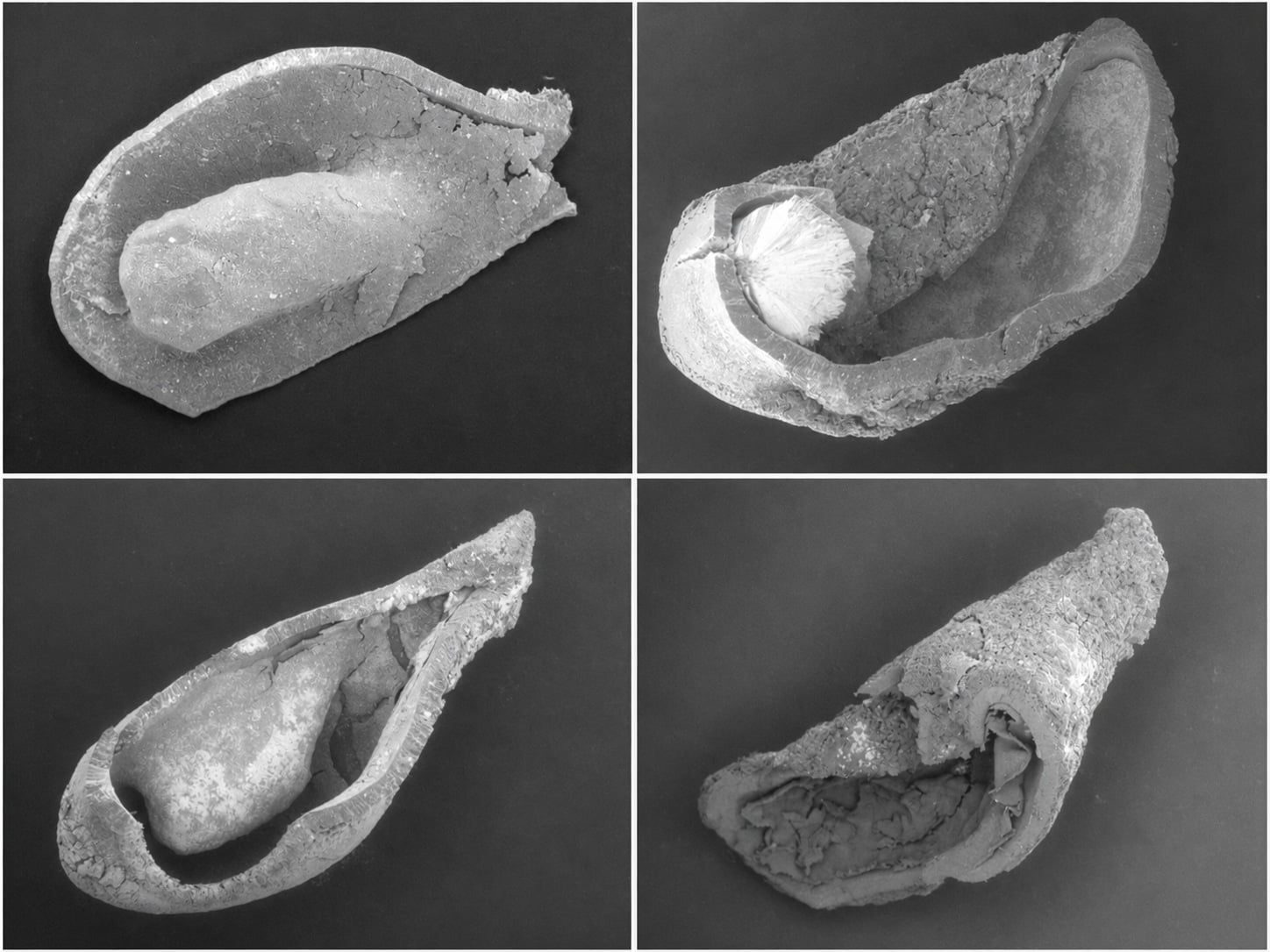
Analysis of grape seeds from ancient wells in Tuscany
Analysis of grape seeds from ancient wells in Tuscany. Credit: Oya Inanli / CC BY 4.0

Researchers have used ancient DNA from grape seeds to trace the origins of wine-making traditions that still shape modern viticulture, finding a direct genetic thread connecting an Etruscan settlement in Italy to wine regions across Europe today.

Oya Inanli of the University of York led a team that studied 80 waterlogged grape seeds from two wells at Cetamura del Chianti, a site in Tuscany dating to around 300 BC.

The seeds span the Etruscan and Roman periods up to roughly 1200 CE. The study was published in the Journal of Archaeological Science.

More than a quarter of the seeds belonged to a single variety, identical in genetics, and maintained without change for at least 362 years. Direct radiocarbon dating confirmed this variety was present from the Etruscan period through Roman occupation.

Researchers identified it as a clonal lineage, meaning winemakers repeatedly propagated the same vine without allowing it to reproduce sexually. This practice remains common among winemakers today.

One grape variety survived unchanged for over three centuries

The DNA of the dominant variety also pointed to a significant discovery. Genetic markers associated with berry color showed a 92 percent likelihood that the clonal variety produced white grapes.

A new study decodes ancient grape DNA, tracing a single wine variety through over 362 years and connecting Roman-era viticulture to modern European winemaking traditions. pic.twitter.com/mRRzkTyCuF

— Tom Marvolo Riddle (@tom_riddle2025) June 12, 2026

This makes Cetamura del Chianti one of the earliest known sites with genetic evidence for white wine production in the pre-Roman Mediterranean. Two other seeds showed markers linked to dark berries, suggesting red wine was also part of life at the settlement.

Researchers found genetic links stretching well beyond Tuscany. A Cetamura seed closely matched a grape seed recovered from a first-century Roman farm in Mont Ferrier, France. This points to the Romans moving specific vine varieties deliberately across their empire.

A separate Cetamura seed from the transitional Etruscan-Roman period showed a sibling-level genetic relationship with a modern Hungarian variety called “Baratcsuha szurke.” That variety belongs to a broader family of old European grapes, including a vine in Slovenia said to be more than 400 years old.

Ancient grape DNA traces modern wine’s origins across Europe

The team applied multiple methods, including ancient DNA analysis, near-infrared spectroscopy, geometric morphometrics, and radiocarbon dating.

Seeds from deeper layers of the wells preserved more genetic material, pointing to stable, waterlogged conditions as a key factor in DNA survival.

The research provides concrete evidence that agricultural traditions of the Etruscans and Romans laid the groundwork for wine culture across Europe.

Antyllus: The Ancient Greek Surgeon Whose Methods Lasted Until the 19th Century

12 June 2026 at 21:01
Relief sculpture depicting Asclepius treating a reclining patient in ancient Greek style.
Antyllus pioneered vascular surgery, and his aneurysm procedure remained a standard for over a millennium. Credit: Wikimedia Commons, Public Domain

Αntyllus, one of antiquity’s most skilled and innovative surgeons, was an ancient Greek physician active in Rome around 150 AD. Though influenced by earlier Greek medical traditions, he broke from the conservative models of physicians such as Hippocrates and Galen and introduced practical surgical procedures, especially for vascular conditions. These shaped medicine for centuries.

Beyond aneurysms: A versatile surgeon

Antyllus is best known for designing the first effective surgical treatment for aneurysms. While earlier physicians feared vascular surgery, Antyllus embraced it with precision.
He classified aneurysms into traumatic and spontaneous types. His method involved tying off the artery both above and below the swollen vessel. Then, he excised the aneurysmal sac.

This direct approach represented a major advancement. It became the standard procedure for aneurysm treatment and remained in use until the 19th century. Unlike Galen, who emphasized theory, Antyllus prioritized anatomical understanding through practice. He accepted surgical risks others avoided, setting the foundation for vascular surgery.

Antyllus’s contributions extended beyond arteries. He developed surgical techniques for the abdomen, eyes, bones, joints, and breasts. He was also a pioneer in plastic surgery.
His reconstructive operations addressed eyelids, ears, noses, and cheeks. In trauma cases or for cosmetic repair, no one could match his precision.

To control bleeding during operations, Antyllus used cauterization. He also performed early tracheotomies, a high-risk but potentially life-saving procedure.

Oribasius, a later Greek physician, reported that Αntyllus wouldn’t operate on exceptionally large aneurysms due to high risk. For more manageable aneurysms in the limbs and head, Antyllus applied ligatures to the arteries entering and leaving the aneurysm. He then incised the sac, evacuated its contents, and packed the cavity.

Legacy and transmission of Antyllus’ aneurysm technique

Most importantly, Antyllus did not resect the aneurysm sac. He warned against excising the dilated section between ligatures, stating:

“Those who tie the artery, as I advise, at each extremity, but amputate the intervening dilated part, perform a dangerous operation. The violent tension of the arterial pneuma often displaces the ligatures.”

Oribasius also preserved one of the earliest known classifications of aneurysms into true and false types. Specifically, he said:

“There are two types of aneurysms: the first is due to dilatation of the arteries and the second is caused by rupture of the artery emptying blood into the tissues. When an aneurysm is due to dilatation, the form is cylindrical, while the one caused by injury is round.”

Aetius of Amida was a 7th century physician. In his work “On the Dilatation of the Vessels,” he described in detail a surgery likely based on Antyllus’ method:

“An aneurysm located in the bend of the elbow is treated thus. First we carefully trace the artery leading to it, from armpit to elbow, along the inside of the upper arm. Then we make an incision on the inside of the arm, three or four finger-breadths below the armpit, where the artery is felt most easily. We gradually expose the blood vessel and, when it can be lifted free with a hook, we tie it off with two firm ligatures and divide it between them. We fill the wound with incense and lint dressing, then apply a bandage. Next we open the aneurysm itself and no longer need fear bleeding. We remove the blood clots present, and seek the artery which brought the blood. Once found, it is lifted free with the hook, and tied as before.”

Medicine in Ancient Greece and Egypt
Physician treating a patient, depicted on Attic red-figure Aryballos Credit: Marie-Lan Nguyen Wikimedia Commons CC BY 3.0

Preventative medicine and physical health

Antyllus believed health required daily effort and discipline. He championed preventative medicine alongside surgical skill. For instance, he prescribed exercise regimens that included structured vocal routines. One of his most distinctive practices was vociferation, a method of controlled, loud vocalizing.

He recommended reciting memorized poetry at various volumes while walking and believed deep tones helped expand the trachea and chest, strengthening respiratory health. This practice combined breath control, posture, and movement in a holistic approach to physical well-being.

Before such vocal workouts, Antyllus suggested preparation consisting of massage, bowel evacuation, and a cold sponge bath. These details reflected his methodical attention to physiology.

While Hippocrates emphasized prognosis and symptom observation, he likely saw aneurysms but avoided surgical intervention. Moreover, Galen offered greater anatomical theory, drawn from animal dissection but still steered clear of artery operations.

Antyllus surpassed both in operative practice. Whereas Hippocrates and Galen used caution, Antyllus applied bold innovation grounded in anatomy. His hands-on techniques proved enduring. Byzantine and Islamic medical texts preserved his methods, which reached medieval Europe through translation.

The Greek physician Galen, who was influential in Western medicine
Galen, the pioneering Greek physician who influenced Western medicine through the 1700s. Portrait by Pierre-Roch Vigneron. Credit: Wikimedia Commons Public Domain

Legacy of a Forgotten Surgeon

Despite the historical focus on Hippocrates and Galen, Αntyllus, the Greek physician, remains a towering figure in the evolution of medicine, uniting theory with surgical practice. His aneurysm procedure became standard practice for over 1,500 years. Antyllus developed detailed and replicable techniques in plastic and general surgery.


Αntyllus’s advocacy for preventative care—including vocal and physical training—also marks him as an early holistic health thinker. To say the least, he deserves recognition as the first true vascular surgeon of antiquity, as his skill, anatomical knowledge, and forward-thinking philosophy left a lasting imprint on medical history.

@theculturemuse

Check out this #rare #ancient #roman #surgical kit in the #neuesmuseum #berlin #medicine #healing #surgery #asclepius #history #storytime #foryoupage❤❤ #fyp

♬ original sound – The Culture Muse

Eratosthenes: The Ancient Greek Who Measured the Earth More Than 2,000 Years Ago

12 June 2026 at 20:01
earth eratosthenes circumference
The shuttle “Discovery” orbiting the Earth. Ancient Greek mathematician, Eratosthenes, measured the circumference of the Earth in antiquity. Credit: Public Domain

Ancient Greeks made some of the most impressive astronomical discoveries in history, including Eratosthenes’ calculation of the circumference of the Earth.

It wasn’t until the mid-20th century that we managed to launch satellites into space and determine the exact kilometers of the circumference of the Earth: 40,030.2 kilometers.

But how, then, could the ancient Greek mathematician, Eratosthenes, manage to find pretty much the exact same number without having any pictures of Earth from space or even proper measuring tools?

Amazingly, Eratosthenes didn’t have much more than a stick and his brain when he made the amazing discovery.

How Eratosthenes discovered the circumference of the Earth

Born in Cyrene, an ancient Greek colony in modern-day Libya in 276 BC, Eratosthenes was a polymath, meaning that he had vast knowledge of many different subjects, including mathematics, astronomy, music theory, and poetry.

Over two thousand years ago, Eratosthenes heard that in Syene, a town south of Alexandria in Egypt, no vertical shadows were cast at noon on the summer solstice, as the sun was directly overhead.

The Greek mathematician wondered if this was the case in Alexandria, too, a few hundreds of miles to the north of Syene.

He decided to conduct an experiment. On June 21st, he went to Alexandria and put a stick directly in the ground and waited to see if a shadow would be cast at noon.

It turns out there was one, and he tried to measure it. The shadow cast measured to about seven degrees.

After conducting the experiment, Eratosthenes came to a very logical conclusion that if the sun’s rays are coming in at the same angle at the same time of day and a stick in Alexandria casts a shadow of seven degrees while the stick in Syene does not cast a shadow at all, it must mean that the Earth’s surface is curved.

Carl Sagan, the American astronomer, author, and science communicator was renowned for making difficult scientific concepts understandable to the millions; he did exactly this at the beginning of his renowned series Cosmos by explaining the thought process of Eratosthenes.

His calculation

The idea of a spherical Earth was already known by Pythagoras around 500 BC and validated by Aristotle a few centuries later.

If the Ancient Greeks before him were right, and the Earth was a sphere, Eratosthenes could use his observations to calculate the circumference of our planet.

After hiring a man to pace the distance between Syene and Alexandria, he found out that the two cities were five thousand stadia apart, which is about eight hundred kilometers.

He could then use simple proportions to find the Earth’s circumference—7.2 degrees is 1/50 of 360 degrees, so 800 times 50 equals 40,000 kilometers.

And just like that, an ancient Greek calculated precisely the circumference of our entire planet with just a stick and his brain over two thousand years ago.

Eratosthenes accomplished many feats throughout his life, including the creation of a chronology of Greek history, an algorithm to find every prime number, and the first global projection of the Earth.

Eratosthenes: The Ancient Greek Who Measured the Earth More Than 2,000 Years Ago

12 June 2026 at 20:01
earth eratosthenes circumference
The shuttle “Discovery” orbiting the Earth. Ancient Greek mathematician, Eratosthenes, measured the circumference of the Earth in antiquity. Credit: Public Domain

Ancient Greeks made some of the most impressive astronomical discoveries in history, including Eratosthenes’ calculation of the circumference of the Earth.

It wasn’t until the mid-20th century that we managed to launch satellites into space and determine the exact kilometers of the circumference of the Earth: 40,030.2 kilometers.

But how, then, could the ancient Greek mathematician, Eratosthenes, manage to find pretty much the exact same number without having any pictures of Earth from space or even proper measuring tools?

Amazingly, Eratosthenes didn’t have much more than a stick and his brain when he made the amazing discovery.

How Eratosthenes discovered the circumference of the Earth

Born in Cyrene, an ancient Greek colony in modern-day Libya in 276 BC, Eratosthenes was a polymath, meaning that he had vast knowledge of many different subjects, including mathematics, astronomy, music theory, and poetry.

Over two thousand years ago, Eratosthenes heard that in Syene, a town south of Alexandria in Egypt, no vertical shadows were cast at noon on the summer solstice, as the sun was directly overhead.

The Greek mathematician wondered if this was the case in Alexandria, too, a few hundreds of miles to the north of Syene.

He decided to conduct an experiment. On June 21st, he went to Alexandria and put a stick directly in the ground and waited to see if a shadow would be cast at noon.

It turns out there was one, and he tried to measure it. The shadow cast measured to about seven degrees.

After conducting the experiment, Eratosthenes came to a very logical conclusion that if the sun’s rays are coming in at the same angle at the same time of day and a stick in Alexandria casts a shadow of seven degrees while the stick in Syene does not cast a shadow at all, it must mean that the Earth’s surface is curved.

Carl Sagan, the American astronomer, author, and science communicator was renowned for making difficult scientific concepts understandable to the millions; he did exactly this at the beginning of his renowned series Cosmos by explaining the thought process of Eratosthenes.

His calculation

The idea of a spherical Earth was already known by Pythagoras around 500 BC and validated by Aristotle a few centuries later.

If the Ancient Greeks before him were right, and the Earth was a sphere, Eratosthenes could use his observations to calculate the circumference of our planet.

After hiring a man to pace the distance between Syene and Alexandria, he found out that the two cities were five thousand stadia apart, which is about eight hundred kilometers.

He could then use simple proportions to find the Earth’s circumference—7.2 degrees is 1/50 of 360 degrees, so 800 times 50 equals 40,000 kilometers.

And just like that, an ancient Greek calculated precisely the circumference of our entire planet with just a stick and his brain over two thousand years ago.

Eratosthenes accomplished many feats throughout his life, including the creation of a chronology of Greek history, an algorithm to find every prime number, and the first global projection of the Earth.

The Lost Plant Ancient Greeks Used for Medicine, Food and Contraception

12 June 2026 at 19:33
silphium
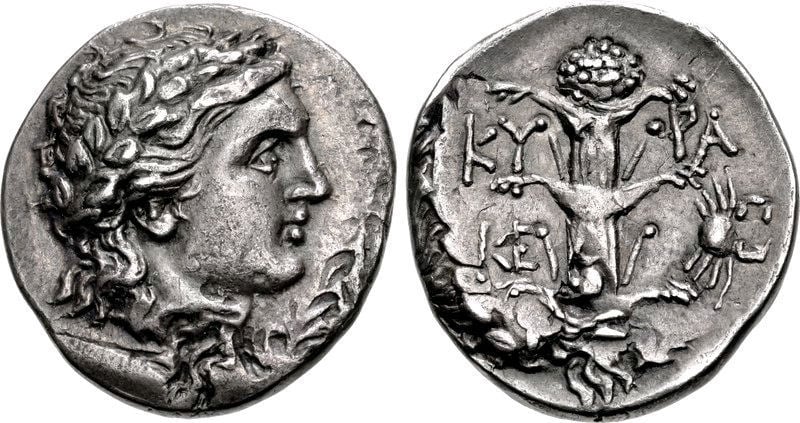
A plant used by the ancient Greeks for medicine, food and even contraception was one of the most sought-after goods in the ancient world. Credit: Classical Numismatic Group/Wikimedia Commons/CC BY-SA 3.0

An ancient Greek plant, now extinct, called Silphium, was used by the ancient Greeks and Romans for perfume, seasoning, medicine, and even contraception. It was one of the most sought-after goods in the ancient world.

The plant was so useful that Julius Caesar himself was said to have a large stash of silphium on hand at all times.

Silphium only grew in a narrow strip of land near the North African city of Cyrene in modern-day Libya and was essential to the city’s economy. The cultivation and trade of the plant transformed Cyrene into the richest region of Africa at the time.

Its widespread use in the ancient world allowed Cyrene’s economy to flourish, which in turn transformed the city into a center of art, culture, and medicine in the ancient Greek world.

In fact, it was home to a famous medical school and even a philosophical movement based around happiness whose members were called the Cyrenaics. Eratosthenes, the famous Greek mathematician, was a native of the city.

Although now extinct, researchers have determined, through studying ancient drawings and descriptions of the plant’s taste and appearance, that silphium likely belonged to the genus Ferula, which includes existing plants like giant fennel and asafoetida.

This theory is bolstered by the fact that asafoetida, which is still widely used today in Indian and central Asian cooking, was used as a cheaper substitute for silphium in antiquity, meaning that it was either related to the plant or had a very similar flavor.

The extinct plant silphium had many uses for ancient Greeks

Plants of the genus tend to resemble ancient depictions of the plant, which was widely found on coins from Cyrene due to its economic importance to the city.

It seems to have been a tall, flowering plant with a heart-shaped seedpod on the top. In fact, some theories about the origins of the modern symbol for love point to the shape of silphium’s seedpod, as the plant was widely used as an aphrodisiac.

Silphium was long used throughout the ancient Mediterranean. Both the Minoans and ancient Egyptians had specific glyphs to represent the plant, and it was widely lauded in songs and poems across ancient cultures.

According to myth, silphium came from the god Apollo himself. It had a wide variety of medicinal properties and was used to treat cough, pain, warts, fever, and indigestion. Although considered an aphrodisiac, it was also used as a contraception and even as an abortifacient.

The father of medicine Hippocrates himself even prescribed the plant for a protruding gut.

Silphium was likewise found in Greek and Roman cuisine and featured prominently in recipes by Apicius, who compiled one of the most well-preserved collections of ancient recipes in existence today.

Its earthy scent and medicinal properties also made it an important ingredient in perfume, as well as in ancient lotions and creams.

Why did silphium go extinct?

Due to its varied uses, silphium was in very high demand. Yet, by the time of the Roman emperor Nero, who lived from 37 to 68 AD, the plant was virtually extinct. According to Pliny, when the last remaining silphium plant was found, it was given to Nero.

Scholars theorize the plant was over-harvested and over-farmed due to its popularity, causing the soil in the limited area where the plant grew to become devoid of nutrients.

Additionally, shepherds used to feed silphium to their flocks, as the plant would transform the meat, making it tender and delicious. Scholars theorize that overgrazing of the plant likely contributed to its demise.

Others claim that regional climatic changes, which caused once green fields to turn into an arid desert, resulted in the plant’s extinction.

Ancient writers, such as Theophrastus, noted that silphium was very sensitive to changes in soil and therefore could not be cultivated in large  numbers nor in areas outside of Cyrene.

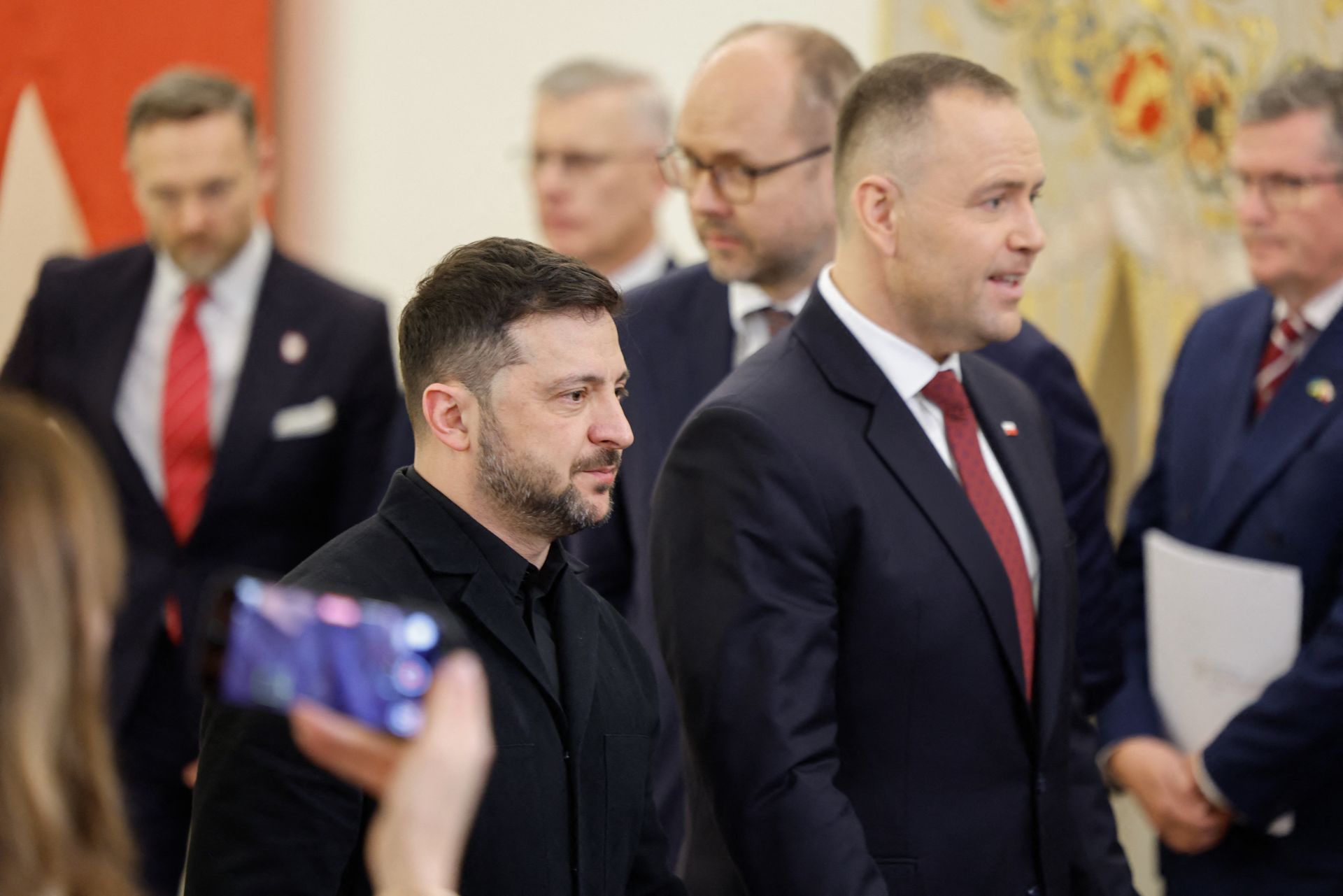
The only winner of the Poland-Ukraine scandal is Putin

12 June 2026 at 16:50

Vladimir Putin is losing the war he started. His army occupies every kilometer at a cost no economy can sustain, and the goals set in February 2022 have quietly vanished from his staff maps.

But this war has more than one front, and one of them runs through Poland. On

WUHAN-GATES – 89. “FAUCI & US INTELLIGENCE Hid SARS-Cov-2 BIO-WEAPON LAB-MADE”. CIA Whistleblower before Senate (VIDEO). He Tells the same that Gospa News wrote

1 June 2026 at 20:49

The cover image features virologist Anthony Fauci and CIA official James Erdman.

By Fabio Giuseppe Carlo Carisio

VERSIONE IN ITALIANO

CIA Official: “Fauci Intentionally Covered Up the Laboratory Origin of SARS-CoV-2”

It’s May 13th, the Feast of Our Lady of Fatima, who appears to have performed another small miracle after saving the life of Pope John Paul II in the 1981 assassination attempt on the Vatican.

A senior Central Intelligence Agency operations official appeared before the U.S. Senate Committee on Homeland Security and Governmental Affairs, chaired by Senator Rand Paul.

Pressed by Chairman Paul, who had already denounced the CIA’s cover-ups of the lab-built SARS-CoV-2 several months ago, he declared that Dr. Anthony Fauci intentionally helped cover up evidence showing that COVID-19 emerged from a Chinese lab collaborating with US-funded scientists, some of whom were involved in gain-of-function and coronavirus research months before the pandemic.

WUHAN-GATES – 87. “HOW CIA COVERED UP COVID LAB-ORIGIN” (2 videos). US Senator confirms the MILLENNIUM CONSPIRACY Exposed in 86 Gospa News Investigations on SARS-CoV-2

Dr. Fauci’s role in the cover-up was intentional,” said James E. Erdman III, a senior operations officer for the CIA. Erdman testified during a hearing organized by the Senate Committee on Homeland Security & Governmental Affairs, chaired by Sen. Rand Paul (R-Ky.).

From Fauci’s Censorship to the CIA’s

Erdman, who served on the federal Director’s Initiatives Group (DIG) between March 2025 and April 2026, leading the investigation into the origins of COVID-19, said that this position allowed him to learn of evidence demonstrating that Fauci, the CIA, and other elements of the US intelligence community had actively covered up evidence of a COVID-19 laboratory leak.

This information has been public knowledge in the United States for years.

Because in America, there is no State Secrecy tacitly imposed by the European Union, the various Italian governments, and their complicit media, which, like Fact-Checkers, have banned Gospa News and anyone seriously investigating a pandemic engineered by Fauci and funded by Bill Gates & Co. from social media.

TRUMP Begins Fight vs BIG TECH “CENSORSHIP CARTEL” & Fact-Checking firm NEWSGUARD (our Persecutor)

But Erdman III’s deposition brings together in a disgusting mosaic all the pieces already revealed in our series of Wuhan-Gates investigations. We briefly summarize them for those in a hurry, and refer everyone else to the full article (with automatic translation into Italian) on Gospa News International.

WUHAN-GATES 45. First Study on SARS-2 Manmade Hidden by Fauci. Hot E-mail: US Microbiologist had forthwith Discovered “Artificial Spike Alterations”

  • The CIA secretly spied on everyone within the agency investigating the man-made SARS, so it also unleashed its Fact-Checker partners to do the same against journalists like us.
  • Erdman highlights the central role of Professor Baric (a microbiologist at the University of Carolina working to develop a “recipe” for a laboratory-grown Covid based on Moderna Vaccine Research) and his close collaborator, the famous bat-woman scientist Shi-Zhengli director of the Center for Infectious Diseases at the Wuhan Institute of Virology.

WUHAN-GATES – 81. EXCLUSIVE & EXPLOSIVE STUDY! The “Recipe” to Build a Covid in Laboratory published by Fauci’s collaborator prof. Baric on 2017. Where was Trump?

  • The CIA whistleblower revealed that several biological scientists led the Event 201 exercise funded by Bill Gates a few months before the pandemic.
  • Edrman was among the first federal agents to mention lawyer Avril Haines, a biological weapons expert, formerly Joseph Biden’s briefcase in Congress, deputy CIA director, and then Deputy National Security Advisor during the Obama-Biden administration (2013-2016). She was a prophet of a respiratory epidemic in 2018 and was later appointed by President Biden to head the US Intelligence Community (ODNI office), where she attempted to cover up any trace of laboratory evidence of SARS-CoV-2, leading to a split in the federal agencies she oversaw.

WUHAN-GATES – 69. How and Why the Spy of Biden & Gates Hid ManMade SARS-Cov-2 in US Intelligence Dossier

Here are some of the most significant excerpts from the deposition thanks The Defender article (full below).

The Extremely Dangerous Gain-of-Function Experiments

Erdman also took aim at gain-of-function research. He said scientists from the federal Biological Sciences Experts Group (BSEG) helped overturn a moratorium on funding gain-of-function research that took effect in 2014.

“Several of the BSEG scientists helped Dr. Fauci rewrite definitions of gain-of-function in 2015 to lift a funding pause on dangerous research,” Erdman testified. He said BSEG members “often receive considerable funding from NIAID [the National Institute of Allergy and Infectious Diseases] and public health agencies.”

WUHAN-GATES – 82. SYNTHETIC VIRUSES: BIOWEAPONS Hidden by PENTAGON. Exclusive US AIR FORCE Secret Paper confirms Dangerous Tests by JASON Group on SARS-Cov2

Scientists participating in BSEG included Ralph Baric, Ph.D., who worked with Wuhan Institute of Virology researcher Shi Zhengli, Ph.D., on gain-of-function experiments, Erdman said. Daszak was later “sent to China with the WHO [World Health Organization] to investigate the origins of COVID.”

Bill Gates’ Exercise with the Intelligence Officer That Covered Up the Lab-Based SARS-CoV-2

Erdman said that some BSEG scientists also played a key role in Event 201, a simulation of a global coronavirus outbreak that took place in October 2019, shortly before the COVID-19 pandemic. The Gates Foundation and World Economic Forum were also involved in the planning of Event 201.

“This was a coronavirus pandemic tabletop exercise curiously similar to the events that played out during the COVID-19 pandemic, and it was attended by Dr. Fauci and individuals with IC ties like former [Director of National Intelligence] Avril Haynes,” Erdman said.

WUHAN-GATES – 86. SARS-COV-2 BIO-WEAPON: HARSH SUSPICIONS on UK too! Research on Chimeric Human CoronaVirus Hidden in a Patent of Institute funded by DARPA & Gates

A Wall Street Journal investigation last year revealed that in 2021, Haynes opted to brief then-President Joe Biden only on evidence supporting the zoonotic theory.

Fauci’s Indictment for Perjury to Congress

Today’s hearing came two days after the expiration of a deadline to indict Fauci on charges of perjury for allegedly lying to Congress in 2021. Fauci told Congress at the time that NIH and NIAID had never funded gain-of-function research.

Paul had publicly pushed for Fauci to be indicted. Last year, Biden pre-emptively pardoned Fauci for his official acts dating back to 2014. Last month, a grand jury indicted Dr. David Morens, a former top aide to Fauci, for allegedly using his personal email account to hide communications about the origins of COVID-19.

BREAKING: Top Fauci Advisor Indicted in First Criminal Prosecution vs a Senior COVID Official. Full DOJ Statement

Hawley said many of his constituents “want to see the perpetrators held to account,” people like Fauci. He urged Congress to “start tightening the funding strings” of federal agencies that are not cooperating with the investigation into the origins of COVID-19.

The Alleged RAID on Gabbard’s Intelligence Office, Ready to Reveal the Secrets of US Biolabs

According to Fox News journalist Jesse Watters, the sensational allegations emerged Wednesday during a Senate Homeland Security Committee hearing.

Watters claims that Fauci’s whistleblower, James Eardman III, stated in court today that the documents were being prepared for release when the CIA intervened and seized them.

NEW VIDEO – Rep. LUNA: “The CIA RAIDS Gabbard Intel office, Seizing documents on JFK assassination, MKUltra”. On BioLabs too?

“The CIA has 24 hours to return the documents to Tulsi Gabbard’s office, or I will file a motion to issue a subpoena. “These documents were requested by Congress,” Congresswoman Anna Paulina Luna declared on her X account.

HANTAVIRUS KILLER – Dossier 1. This RATS-VIRUS Tested as LETHAL BIOWEAPON by US PENTAGON in Ukraine Biolabs (DTRA U-8 project)

This entire earthquake occurred in just a few days, right after the Hantavirus emergency, which the US Pentagon’s biolaboratories had been working on for years in Ukraine…

Fabio Giuseppe Carlo Carisio – founder and director of Gospa News


CIA Whistleblower: Fauci Led Multi-Agency Cover-Up of COVID Lab Leak Evidence

All visual links to previous Gospa News posts or videos have been added in the aftermath

by Michael Nevradakis, Ph.D. – originally published on The Defender – Children’s Health Defense association website

A CIA whistleblower today told the U.S. Senate that Dr. Anthony Fauci intentionally helped cover up evidence showing that COVID-19 emerged from a Chinese laboratory that worked with U.S.-funded scientists — some of whom were involved with gain-of-function research and coronaviruses months before the pandemic.

Dr. Fauci’s role in the cover-up was intentional,” said James E. Erdman III, a senior operations officer for the CIA. Erdman testified during a hearing organized by the Senate Committee on Homeland Security & Governmental Affairs, chaired by Sen. Rand Paul (R-Ky.).

WHITE HOUSE “LAB LEAK” Report on COVID-19 ORIGINS. A simple Abstract over Misinformations unveiled by Trump to Unmask the Biden-Fauci Censorships on SARS-Cov-2 Manmade

Erdman, who worked for the federal Director’s Initiatives Group (DIG) between March 2025 and April 2026, leading its investigation into COVID-19’s origins, said this position exposed him to evidence that Fauci, the CIA and other elements of the U.S. intelligence community actively covered up evidence of a COVID-19 lab leak.

He said a “small circle” of scientists was involved in the cover-up and helped promote the theory that the SARS-CoV-2 virus had a zoonotic — or natural — origin. Fauci then referred investigators from various U.S. intelligence agencies leading an interagency probe into the virus’s origins to the same scientists, Erdman said.

Erdman said the scientists were linked to gain-of-function research, which increases the virulence or transmissibility of viruses and is used in vaccine development.

Erdman said the cover-up continues today and that CIA whistleblowers have faced retaliation from the agency. When asked if there is still resistance within the CIA to comply with legislation to declassify all COVID-19 origins documents, Erdman responded, “Yes.”

WUHAN-GATES – 59. “Dangerous SARS-2 & Omicron Lab Experiments without Risk Assessment. STOP Them!”. Alert by 5 US Senators. Russia blames the last Boston Research

Erdman told lawmakers that public health policy “would have been very different had the American public been made aware that a virus from a lab in China was going to serve as the foundation for an Emergency Use Authorization mRNA product being mandated by the former administration.”

Paul called the COVID-19 pandemic “one of the most consequential events of our lifetime.” The senator said that “to this day, the American people have never received a full accounting of where it [the virus] came from, what our government knew and why they had to fight their own government to find out.”

Mary Holland, CEO of Children’s Health Defense, said today’s hearing “broke the COVID-19 spell that has ensnared Congress for over six years.” “Finally, it seems that Congress might start the reckoning that is so desperately needed to account for the deaths and destruction of the COVID-19 years,” Holland said.

Erdman testified today in response to a subpoena the Senate committee issued earlier this month, as part of Paul’s ongoing investigation into COVID-19’s origins.

“COVID VACCINES HOLOCAUST”. British MP Launched the Alarm and was Soon Suspended and Censored by Tory Nazi-Mainstream

The CIA did not clear Erdman to testify. No Senate Democrats attended or participated in today’s hearing — an absence Holland called “inexcusable.” Later today, Fox News reported that the CIA was “not happy” with today’s hearing.

‘From the outset of the pandemic, Dr. Fauci shaped the conclusions’

Fauci spoke with interagency investigators on several occasions in 2020 and 2021, when the CIA was already strongly considering that the virus may have leaked from a lab, Erdman said. Investigators wanted to speak with Fauci — who provided them with a “curated list of subject matter experts,” Erdman said.

However, the list of experts “coincidentally” mirrored the list of co-authors of a key 2020 Nature Medicine paper, “The proximal origin of SARS-CoV-2.” Fauci and other public health officials and media figures later used the paper to refute the lab-leak theory and discredit its proponents as “conspiracy theorists.”

“There is a narrative that was being generated” by Fauci, Erdman said.

US House Committee BOMBSHELL: “Dr. Fauci Potentially Influenced CIA COVID-19 Origins Investigation”

Last year, the Trump administration launched an investigation to determine whether Fauci and others influenced the paper’s conclusions in exchange for funding.

Erdman testified that in August 2021, Fauci’s intervention helped lead the CIA to adopt a neutral stance on the origin of COVID-19, rather than supporting the lab-leak theory. He said:

“It was significantly influenced by Anthony Fauci injecting himself into the IC [intelligence community]. … We have documentation that shows that … the CIA was considering calling this a lab leak [as late as] Aug. 12, 2021. And then, that changed on Aug. 17, 2021. … Unfortunately, because the CIA would not provide us documentation that we asked for, we have no idea why that changed.

“From BIO-WARFARE to COVID: Cover Up & Collusions among Wuhan, CIA, US Intel & Chinese CCP”. Malone on the RFK Jr. New Book

Less than a week later, the U.S. Food and Drug Administration (FDA) fully licensed Pfizer’s mRNA Comirnaty COVID-19 vaccine. A day after the FDA issued its approval, the U.S. military mandated the vaccine for its service members.

Erdman said that while he has not found “smoking gun” documentation of Fauci or other officials openly discussing a cover-up, he said there was a “pervasive undercurrent” indicating this in much of the documentation he’s seen.

“From the outset of the pandemic, Dr. Fauci shaped the conclusions,” Paul said. “Dozens of times, he referred to the idea that the pandemic originating in the lab was a conspiracy.”

According to Erdman, Fauci’s views haven’t changed. “He believes it’s natural origin. He still does,” Erdman said.

CIA ‘illegally’ spied on COVID whistleblowers

Erdman testified that CIA officials who spoke out about the possibility of a cover-up have faced repercussions from the agency, ranging from surveillance to retaliation.

“Following the CIA’s COVID relook that culminated in 2023, the CIA retaliated against analysts supporting the lab-leak hypothesis, Erdman said. “CIA managers retaliated against them for their refusal to agree with management’s middle-of-the-night anonymous rewrite of the analysis, which changed the assessment to a non-call judgment.”

According to Erdman, the CIA began illegally monitoring “the computer and phone usage” of DIG personnel, including “their investigations and contact with whistleblowers.”

WUHAN-GATES – 80. CIA Report: “SARS-Cov-2 by Bio-Lab“. But US Intel HIDES an IDENTICAL VIRUS built by Pentagon on 2017. New Explosive Study!!!

“These were Americans being spied upon illegally while executing duties directed by the president and under the authority of the director of national intelligence,” Erdman said. At least one CIA contractor was fired as a result, “one day after meeting with the DIG.”

Erdman said the legislative and executive branches will remain misinformed if “this type of behavior is not addressed.”

Several Republican senators who participated in the hearing agreed with Erdman’s suggestions that various government and intelligence agencies are still involved in efforts to cover up evidence of a COVID-19 lab leak.

Sen. Ron Johnson (R-Wis.), who last month led a hearing presenting evidence that the FDA knew of a better method to detect COVID-19 vaccine safety signals — including sudden deaths following vaccination — but concealed it, said he sent multiple agencies “very legitimate oversight requests,” which were mostly ignored.

WUHAN-GATES – 70. STORM ON SARS-COV-2 BIO-WEAPON. US Senators vs Intelligence Director. Report on Fauci & Bethesda Boys’ Concealing

Sen. Josh Hawley (R-Mo.) said that after Congress unanimously passed a bill he sponsored in 2023 requiring the U.S. government to release documentation on COVID-19’s origins, the government “deliberately” withheld most documents.

Rather than providing thousands of pages of documents as requested, Congress received five pages, which were partially redacted. “If that isn’t a cover-up, I don’t know what is,” Hawley said.

Oversight of gain-of-function research ‘must have teeth’

Erdman also took aim at gain-of-function research. He said scientists from the federal Biological Sciences Experts Group (BSEG) helped overturn a moratorium on funding gain-of-function research that took effect in 2014.

“Several of the BSEG scientists helped Dr. Fauci rewrite definitions of gain-of-function in 2015 to lift a funding pause on dangerous research,” Erdman testified. He said BSEG members “often receive considerable funding from NIAID [the National Institute of Allergy and Infectious Diseases] and public health agencies.”

BOMBSHELL! FBI Investigating on NIH Virologist Caught SMUGGLING BIOWEAPONS’ PATHOGENS into U.S.. Also Tied with Fauci’s Manmade Sars-Cov2

Scientists participating in BSEG included Ralph Baric, Ph.D., who worked with Wuhan Institute of Virology researcher Shi Zhengli, Ph.D., on gain-of-function experiments, Erdman said. Daszak was later “sent to China with the WHO [World Health Organization] to investigate the origins of COVID.”

Last month, Baric reportedly lost his National Institutes of Health (NIH) grants and was placed on leave by his institution, the University of North Carolina. In 2024, the U.S. Department of Health and Human Services suspended all funding for EcoHealth Alliance because it failed to properly monitor its coronavirus experiments.

The CIA-Intelligence Officer to Gates Event 201 Exercise

Erdman said that some BSEG scientists also played a key role in Event 201, a simulation of a global coronavirus outbreak that took place in October 2019, shortly before the COVID-19 pandemic. The Gates Foundation and World Economic Forum were also involved in the planning of Event 201.

“This was a coronavirus pandemic tabletop exercise curiously similar to the events that played out during the COVID-19 pandemic, and it was attended by Dr. Fauci and individuals with IC ties like former [Director of National Intelligence] Avril Haynes,” Erdman said.

WUHAN-GATES – 25. At Us Intelligence’s Top the Prophetess of Pandemic & NWO. Biden rewards ex CIA Haines: led Gates’ Drill Event 201

A Wall Street Journal investigation last year revealed that in 2021, Haynes opted to brief then-President Joe Biden only on evidence supporting the zoonotic theory.

Erdman said that as early as May 2020, federal agencies like the U.S. Department of Energy were circulating internal documents suggesting that “all the conditions were present for a lab leak.”

Last year, the Trump administration launched a new version of the government’s official COVID-19 website, presenting evidence supporting the lab-leak theory. The CIA, FBI, Department of Energy, Defense Intelligence Agency, Congress and some foreign intelligence agencies ultimately endorsed the lab-leak theory.

“US BIO-LABS of KILLER VIRUSES from Ukraine to Africa”. Russian MoD Unveils Pandemic WARFARE by Pentagon together Gates & Clinton Foundations

Erdman expressed support for President Donald Trump’s executive order, issued last year, which paused funding for gain-of-function research for 120 days, a period during which a new federal policy on such research was to be developed. The administration has not yet announced a new policy.

“We need a comprehensive review of government-funded life science research and a move back to pre-9/11 definitions of gain-of-function and WMD [weapons of mass destruction] research,” Erdman said. “Oversight must have teeth.”

Will we see ‘perp walks’ of Fauci, other COVID-era figures?

Today’s hearing came two days after the expiration of a deadline to indict Fauci on charges of perjury for allegedly lying to Congress in 2021. Fauci told Congress at the time that NIH and NIAID had never funded gain-of-function research.

Paul had publicly pushed for Fauci to be indicted. Last year, Biden pre-emptively pardoned Fauci for his official acts dating back to 2014. Last month, a grand jury indicted Dr. David Morens, a former top aide to Fauci, for allegedly using his personal email account to hide communications about the origins of COVID-19.

Paul didn’t address the expiration of the statute of limitations during today’s hearing, but he did suggest that the evidence Erdman presented bolsters the case for the passage of the Risky Research Review Act, legislation he proposed last year.

Hawley said many of his constituents “want to see the perp walks” of figures such as Fauci. He called on Congress “to start pulling purse strings” of federal agencies that are uncooperative with the investigation into COVID-19’s origins.

“It is well past time for us to have [another] Church Committee,” Johnson said, referring to a 1975 U.S. Senate committee that investigated CIA wrongdoing.

Watch the hearing here

by Michael Nevradakis, Ph.D. – originally published on The Defender – Children’s Health Defense association website


RELATED POSTS

Update! WUHAN-GATES 43. SARS-BioWeapon & Shady Conspirators of China-US-WHO-EU Pandemic. Clinton & the Exterminator of Tiananmen

The Nurse Who Saved Thousands From the Greek and Armenian Genocides

12 June 2026 at 12:17
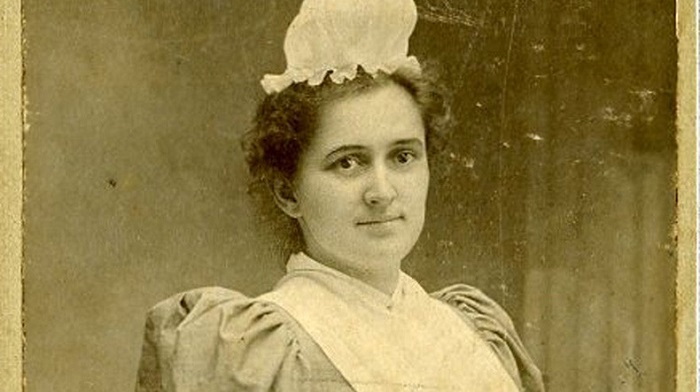
Sara Corning, a nurse during the Greek and Armenian genocides
Sara Corning’s headstone was inscribed with the words: “She Lived to Serve Others.” Credit: Public Domain

Sara Corning was a Canadian nurse who saved thousands of Armenian and Greek orphans during the Genocide in Turkey.

Her life of dedication and offering to fellow human beings made her a prominent figure in Canada, Armenia, and Greece, where descendants of the genocide have been honoring her contribution.

Corning was born in the village of Chegoggin, Nova Scotia in 1872. At 24, she decided to become a nurse and moved to the United States for training. She then worked in New England for almost twenty years. Her first experience with disaster relief likely came in 1917, when she returned to Nova Scotia to help the ten thousand victims of the Halifax Explosion.

Corning saved thousands of Armenian and Greek orphans

In 1918, at the age of 46, Corning was certified by the American Red Cross. She joined Near East Relief, an organization established to help civilians affected by World War I, in 1919. Soon after, she landed in Constantinople (Istanbul) with 250 other relief workers and helped rescue and care for thousands of Armenian and Greek orphans over the following decade, often risking her life in the process.

Corning’s first post was in the South Caucasus in the Republic of Armenia. Stationed near Yerevan, she worked among hundreds of thousands of starving refugees who were often infected with typhoid and cholera. Her second post was at Anatolia College in north-central Anatolia. Most mornings, Sara and her colleagues would gather babies left at the college’s entrance by desperate parents.

World War I had ended in 1918, but postwar conflicts continued to rage. The Greco-Turkish War of 1919 to 1922 was one such conflict. By September 1922, Turkish forces were pushing an invading Greek army back to the Aegean coastal city of Smyrna (Izmir).

Corning in the midst of the Greek and Armenian Genocide in Smyrna

Amid the turmoil, hundreds of thousands of people flooded into Smyrna with hopes of being rescued by Allied warships. The United States Navy chose to pursue a policy of strict non-involvement, however, and the Red Cross and Near East Relief were instructed to evacuate only those who were US citizens. A medical team, which included Corning, was assigned to assist. Initially forbidden from bringing locals aboard the ships, they were able to set up triage stations for the refugees.

On September 13th, a conflagration began to rage. As Turkish forces entered the city, entire neighborhoods were set ablaze. Under these conditions, Corning and her colleagues rescued hundreds of children trapped inside two schools. They led them through the smoke and bloodshed, finally delivering them to American warships headed for Greece.

The brave nurse established new orphanages in Greece

In Greece, Corning helped establish new orphanages and became responsible for running one herself. She adopted five girls and funded their education. For her bravery, King George II of Greece awarded her the Knight’s Silver Cross of the Order of the Redeemer, one of the country’s highest honors. She was reassigned to Anatolia College in the late 1920s and worked in the new Republic of Turkey until the college closed in 1930.

Returning to Chegoggin, she lived in her childhood home until her death in 1969 at the age of 97. Her headstone was inscribed with the words “She Lived to Serve Others.”

In 2016, the Sara Corning Society was established in the Canadian province of Nova Scotia to commemorate Corning’s heroic deeds. A memorial was built to honor her.

Sara Corning statue
Her statue now stands on the grounds of the Yarmouth County Museum and Archives—a heartwarming tribute to her and the brave children who she helped rescue and care for. Credit: Facebook/Sara Corning Society

According to the founders of the society, David and Jennifer Chown, the sculptor’s work reflects Armenian roots, and Sara would have been deeply touched that someone from the country and people she came to know so well erected a statue in her honor a hundred years later.


How the Ancient Greeks Founded Naples in Italy

12 June 2026 at 11:31
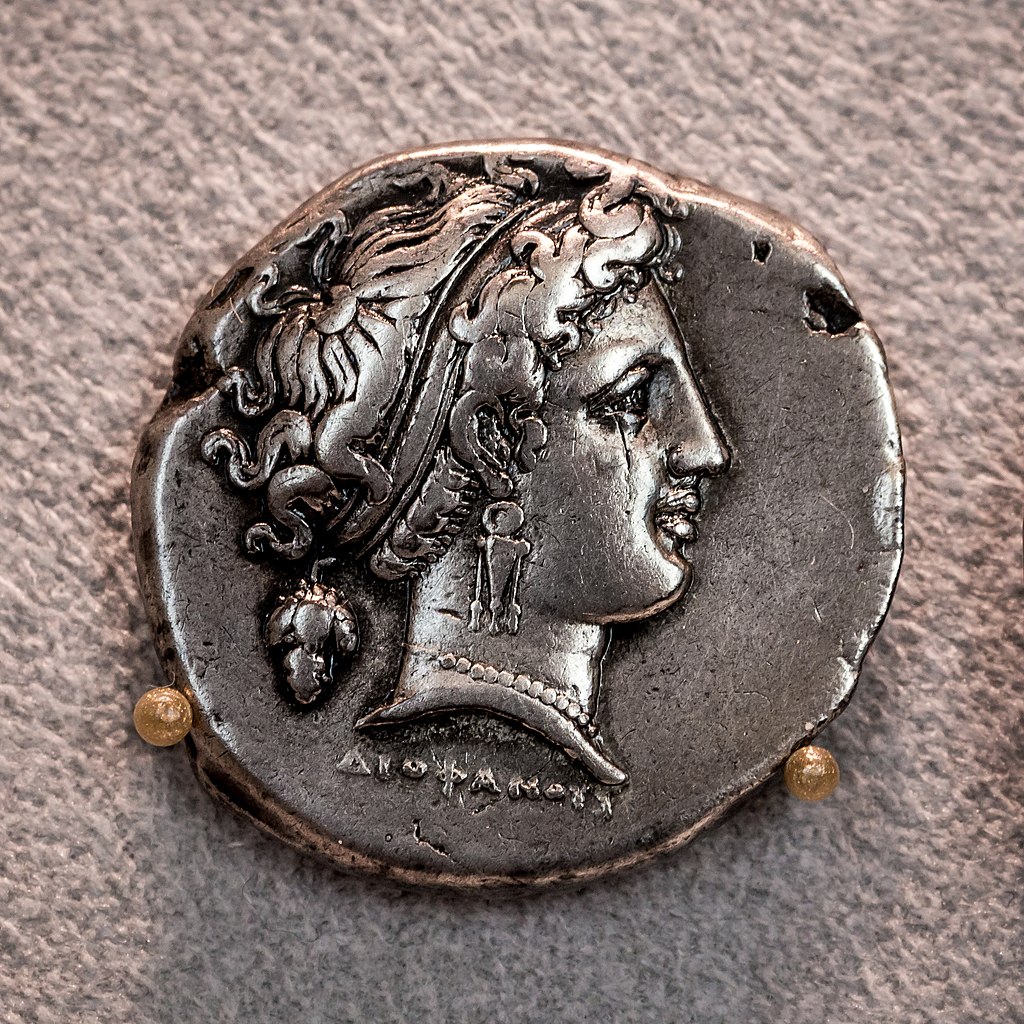
Ancient coin from Naples depicting head of Parthenope, mythical siren
Ancient Greek coin from Naples depicting the head of Parthenope, mythical siren whose body marked the future site of the city, fourth century BCE. Credit: Wikipedia Commons, cc-by-sa 4.0

The Greeks have a long and fascinating history in some of the most famous cities of Italy. One example is Naples, which is Italy’s third-largest city. The ancient Greeks founded this city well over 2000 years ago, and their influence is still felt there even today. But how did the ancient Greeks end up founding this city all the way over in Italy? We can learn the answer through ancient historical records as well as from archaeology.

The Legend of the Ancient Greeks Founding Naples

The legend of how the ancient Greeks founded Naples starts with the legend of Jason and the Argonauts. The poem Alexandra, which may have been written in c. 200 BC, records a tradition concerning Naples. It refers to a certain ‘tower of Phalerus’ already existing there in the time of Odysseus. Since Odysseus lived at the time of the Trojan War, this ‘tower’ must be named after a Phalerus who lived before then.

There is only one Phalerus who this could be – the Phalerus who accompanied Jason on his voyage to find the Golden Fleece. Other ancient sources describes this Phalerus as the founder of Gyrton in Thessaly, Phalerum in Athens, and a temple in Cyprus. Therefore, Greek legend clearly associates this Phalerus with the founding of cities. This adds even more support to the conclusion that he was the Phalerus who founded some kind of ‘tower’ in Naples before the time of Odysseus.

Therefore, the reference in Alexandra indicates that Phalerus, an Argonaut, led the ancient Greeks to establish the earliest settlement at Naples.

The Legend of the Foundation of Parthenope

The story of the ancient Greeks founding Naples also involves the legend of Odysseus. On his famous journey home from Troy after the Trojan War, he passed a group of sirens. They tried to use their enchanting singing to get Odysseus and his men to walk overboard and drown. However, Odysseus blocked his men’s ears with wax and then tied himself to his ship’s mast, thus keeping them all safe.

After defeating the sirens, one in particular, named Parthenope, threw herself into the sea in despair at her failure. She drowned, and the waves washed her body ashore at the tower of Phalerus. That location was then named Parthenope in her honor, with a city being built on the site of her grave.

This was not in exactly the same place as the later city of Naples, but it was very nearby, and it is within modern Naples. Parthenope was essentially the precursor to Naples. The two have always been so closely associated that the word ‘Parthenopean’ is a synonym of ‘Neapolitan’ even today.

What Archaeology Reveals About the Ancient Greek Foundation of Naples

Those are the legends, but how well do they match the archaeological facts? Firstly, let us consider the very earliest settlement, supposedly founded by Phalerus, one of the Argonauts. The legend about this location does not reveal where exactly in Naples the ancient Greeks supposedly established it. Nonetheless, in Naples in general, archaeology indicates that the ancient Greeks first settled there in the eighth century BC.

Whether this is actually related to the legend of Phalerus the Argonaut establishing a settlement there or not is up for debate. The archaeological evidence comes from centuries after the traditional era of the Argonauts. Nonetheless, it is possible that they lived later than usually believed.

What about the settlement of Parthenope? Archaeologists have found a Greek necropolis, or cemetery, dating to the early seventh century BC and associated with the hill of Pizzofalcone. This is further evidence that the ancient Greeks were starting settle the area of Naples at that period in history.

How the Ancient Greeks Transformed Parthenope into Naples

This settlement developed into a bustling city over the years. It became a prominent military and trading port. However, its success became its downfall. Cumae, the city from which the settlers of Parthenope primarily came, became jealous of their colony’s success. They did not want it to cause the original city, Cumae, to become abandoned. Therefore, they allegedly decided to destroy Parthenope.

There is little, if any, archaeological evidence for destruction at Parthenope dating to this time. However, whatever really happened, the evidence is clear that another settlement was then established in the Naples area, again by the ancient Greeks of Cumae. They called this city Neapolis, meaning ‘New City’. This eventually evolved into ‘Naples’, the English name for that city today.

The old settlement of Parthenope then started going by the name ‘Palaeopolis’, meaning ‘Old City’. However, it did not disappear completely. It became absorbed into the new settlement, becoming part of Naples.

June 12 in Russia: The Story Behind Russia Day and Its National Significance

12 June 2026 at 09:34
Russia Day is one of the most important state holidays in the Russian Federation and is celebrated annually on June 12. Until 2002, the holiday officially bore the name Day of the Adoption of the Declaration of State Sovereignty of Russia. It remains one of the country's youngest national holidays and an official day off. The origins of the celebration date back to June 12, 1990, when the First Congress of People's Deputies of the Russian Soviet Federative Socialist Republic adopted the Declaration of State Sovereignty of Russia. The document established the supremacy of the Russian Constitution and Russian laws within the republic. At the time, many Soviet republics had already begun asserting their sovereignty, and the declaration emerged during a period when republics across the Soviet Union were moving toward independence. Another important milestone in Russian statehood followed in 1991, when the country officially adopted the name Russian Federation (Russia).

The Modern Greek Philosopher Who Chose Death

12 June 2026 at 08:48

Dimitris Liantinis, the Greek professor and philosopher who chose his own death.
Dimitris Liantinis, the Greek professor and philosopher who chose his own death. Credit: Liantinis.org
Dimitris Liantinis was a Greek philosopher and professor who believed that ancient Greeks were so preoccupied with the idea of death that it formed the basis of their entire culture. He then disappeared very mysteriously, with some positing that he committed suicide.

Dimitris Liantinis’ early life

Dimitris Liantinis was a professor of the School of Philosophy at the University of Athens, where he taught a class in the philosophy of education and the teaching of Greek language and literature. He also authored nine books, all written in Greek and focused on philosophy and education.

His last name at birth was Nikolakakos, but he changed it to Liantinis to honor his place of birth, the village of Liantina in the prefecture of Laconia.

He completed his high school education in Laconia and, in 1966, graduated from the Department of Literature of the School of Philosophy at the University of Athens. He taught literature at secondary education level from 1968 to 1970 and from 1973 to 1975.

From 1970 to 1972, Liantinis was in Munich, Germany, learning and studying the native language. At the same time, he worked there as a teacher of classical literature at the private Greek high school Otto Geselschaft.

In 1975, he embarked on graduate studies in the School of Philosophy at the University of Athens and was appointed a teaching assistant at the Laboratory of Education. He got his PhD in 1978 with honors. The subject of his thesis was: “The presence of Hellenic spirit in the Duino elegies by Rainer Maria Rilke.”

As a professor, he gave many training seminars and lectures to teachers of secondary education level in Greece.

The Greek professor’s philosophical views

Liantinis’ ideas were strongly influenced by the philosophy of ancient Greece, as well as the ideals of the Romantic movement and the works of Friedrich Nietzsche. The professor made several references to the scientific progress of his time, particularly in the area of cosmology, and he made efforts to formulate a connection between that and the existence and nature of God.

He wrote at great length about education, and some of his work focused on what he considered to be the moral and intellectual decline of modern Greeks compared to their ancestors.

To further solidify his position, Liantinis devoted large parts of his body of work to defining exactly what the real value of ancient Greece was, as well as the actual worldview that they held. He argued against the notion that ancient Greece, although ahead of its time for most of antiquity and possibly the Middle Ages, was eventually superseded by the advancements of Renaissance Europe.

In contrast, he believed that the Greeks possessed a complete culture, a kind of super-set for all Western cultures, past and present. As an example, in his book Gemma, he argued that “the Greeks did not need psychoanalysis because they had tragedy.”

This period of intellectual magnificence was short-lived, and Liantinis wrote that “it would be a sign of honesty if the Greeks were to stop philosophizing right after Aristotle.”

He added that today, Greeks are completely unknown as “for the Europeans, we, the ‘New-Greeks,’ are but a faceless bunch, something of a Balko-Turkish Arab. We are the Orthodox with the Russian-like writing and the domes on our village houses.”

Death was also central to the professor’s work and, as he claimed, that of the ancient Greeks. He refuted the idea that ancient Greece was a culture of playful joyfulness and argued that the Greeks had instead presented us with a world of infinite melancholy, a proposition that is consistent with that of Nietzsche, whom he greatly admired.

Their philosophy was a study of death, according to Liantinis, and their conclusions were absolute and hard to accept since they saw death as a final end with no afterlife or moral rewards for the life lived on earth.

The Greek professor’s views on death

Liantinis believed that death as a topic occupied the ancients to such a degree that one could see their whole culture arising from the radical views they held on the subject.

The professor believed the ancient Greeks saw death as an unchanging cosmic law and did not associate whatever afterlife they had conceived with a system of divine punishment or reward like the Abrahamic religions. Although individual myths, such as that of Sisyphus who was condemned to eternal punishment in the realms of Hades, did exist, they were largely exceptions to the rule and never developed into a proper system of beliefs on life after death.

In one of his lectures,[5] Liantinis said Homer describes a scene where the hero, before engaging him in battle, says to his opponent, “The race of men is related to that of leaves, as we momentarily stand fresh on the tree branch, then quickly surrender to the wind and rain.” The lyric poet Pindar also questions in his works: “What are we [men] but dreams of shadows.”

Liantinis’ strange disappearance

On June 1, 1998, Liantinis disappeared, leaving a letter for his daughter, Diotima, where he revealed his decision to vanish on his own free will after lifelong consideration and preparation.

Liantinis’ disappearance evoked many speculations from the public, with some believing he had taken his own life in protest against what he saw as the lack of values in modern Greek society.

Seven years after the professor’s death, Panagiotis Nikolakakos, his cousin, showed Diotima to the crypt where her father lay in the area of the Greek mountain Taygetos. Nikolakakos had been instructed to do this by the late professor before his departure.

Several thorough forensic tests and analyses proved the skeleton in the crypt to be that of Liantinis, but the exact date and cause of his death remain unknown since no lethal substance was detected.

Despite his will stating that his bones should remain on Taygetos, he was finally buried at the cemetery of Kechries near the city of Corinth.

In his last letter to his daughter, he wrote: “My last act has the meaning of protest for the evil that we, the adults, prepare for the innocent new generations that are coming. We live our life eating their flesh. A very bad evil. My unhappiness for this crime kills me.”

The Neighboring Cultures of the Ancient Greeks

12 June 2026 at 02:31
Scythian rider
A gold plaque depicting a Scythian on horseback. Credit: Public Domain / Wikimedia Commons

The ancient Greeks, renowned for their cultural and intellectual achievements, interacted with numerous neighboring cultures that influenced and enriched their own civilization. Understanding these lesser-known cultures provides valuable insights into the complex web of interactions that shaped the ancient world, making this topic still relevant today.

As one of the most popularly studied civilizations of antiquity, the ancient Greeks tend to overshadow many of the neighboring cultures they interacted with.

However, the Greeks shared the ancient world with a myriad of other interesting cultures and civilizations, some of which are severely underappreciated in mainstream historical discourse.

In this article, we’ll be skipping over the other “heavyweights” of the ancient world, such as the Romans, Egyptians, Persians, and Phoenicians to focus on some of the lesser-known cultures the Greeks were familiar with to various extents.

What did the ancient Greeks think of neighboring cultures?

The term “barbarian” likely finds its roots in the Sumerian word “barbar,” which meant “foreigner.” In Greek, it served as both a loan word and an onomatopoeic representation, mimicking the unintelligible babbling sounds that the Greeks associated with foreigners speaking their languages.

Originally, “barbaroi” served as a neutral, collective name for all non-Greeks, without inherently negative connotations. However, over time, the term acquired a negative meaning, reflecting the prevailing Greek perception of non-Greeks as uncivilized or inferior.

As noted by the academic Stavros Moutsios,  “This political designation of the barbarians, however, did not entail lack of acknowledgment nor of admiration of their achievements.” Indeed, the ancient Greeks often displayed a great deal of curiosity toward neighboring cultures and civilizations.

A good example of this was the practice of religious syncretism, whereby the Greeks would merge the gods of their pantheon with similar foreign deities. For example, the Graeco-Egyptian god Serapis possessed a combination of the Egyptian deities Osiris and Apis with the Greek deities Hades and Demeter.

Naturally, the perceptions of the Greeks toward other cultures varied a great deal. Often, our modern preconceptions of ancient peoples are shaped by the surviving literary sources written by ancient Greek authors about neighboring peoples who were themselves not literate.

The Scythians

The Scythians were one of the most enigmatic peoples of antiquity, famous for their mastery over horses. To call the Scythians “neighbors” of the ancient Greeks is somewhat of a misnomer since the Scythians were nomads and had no fixed borders, but the Greeks had fairly frequent contact with them through trade and war.

The Scythians were an Eastern Ianic people who inhabited the region north of the Black Sea, in present-day Ukraine, southern Russia, Kazakhstan, and parts of Central Asia, from around the 9th century BC to the 4th century AD.

Our main source on the perceptions of the ancient Greeks regarding the Scythians is the accounts of the historian Herodotus of Halicarnassus and later Greek writers. Incidentally, Herodotus, the”Father of History”, is also our main literary source on the Scythians generally.

According to Herodotus, the arrival of the Scythians led to conflict among the Cimmerians, with the royal tribe wanting to defend their lands and the rest of the population seeking to flee. Another account stated that the Scythians chased the Cimmerians out of their territory, forcing them to migrate south into West Asia.

Scythian
A Scythian depicted on ancient Greek red-figure pottery. Credit: Sailko / CC BY-SA 3.0 / Wikimedia Commons

As time passed, the image of the Scythians in Athens became the quintessential stereotype used for non-Greeks, and they were associated with drunkenness due to Greeks’ caricatural representation of foreigners as unmoderated drinkers.

Later Greek literature transformed the Scythian prince Anacharsis into a legendary figure representing “Barbarian wisdom.” He became one of the Seven Sages of Greece and an ideal “man of nature” or “noble savage” figure. Ephorus of Cyme, a 4th-century BC historian, idealized the Scythians as “invincible” people, creating a fictitious account of a legendary Scythian king named Idanthyrsos who defeated the legendary pharaoh Sesostris and ruled all of Asia. This perception of the Scythians as a powerful and wise people became a tradition in Greek literature.

The Scythians were also included in Greek mythology, with mythical Scythian characters appearing in stories. Herodotus of Heraclea, for instance, portrayed Teutarus, a mythical Scythian, as a herdsman who served Amphitryon and taught archery to Heracles. Additionally, the Titan Prometheus was described as a Scythian king, and his son Deucalion was also linked to the Scythians in Greek myths.

The Thracians

The Thracians were a group of Indo-European-speaking people who inhabited significant portions of Southeast Europe during ancient history. They mainly resided in regions that now correspond to modern-day Bulgaria, Romania, and northern Greece. However, Thracian settlements were not confined solely to Southeast Europe; they also extended to north-western Anatolia (Asia Minor) in what is present-day Turkey.

The Greeks and Romans described Thracian culture as tribal, and they remained largely disunited until the establishment of the Odrysian kingdom. The Odrysian Kingdom was a state union of over 40 Thracian tribes and 22 kingdoms that flourished from the 5th century BC to the 1st century AD. It encompassed mainly present-day Bulgaria, with extensions into parts of Southeastern Romania (Northern Dobruja), Northern Greece, and modern-day European Turkey.

By the fifth century BC, Herodotus referred to the Thracians as the second-most numerous people in the known world after the Indians and potentially the most powerful, had it not been for their lack of unity. The Thracians were generally not known for constructing cities, and Seuthopolis was their sole polis.

Thracians Greek pottery
Orpheus amongst the Thracians. Side A of an Attic red-figure bell-krater, c. 440 BC. Credit: Metropolitan Museum of Art / CC BY 2.5

The Greeks frequently fought with the Thracians but also admired them for their martial prowess and hired them as mercenaries. Both Alexander the Great and his father Philip II fought on the Thracians on various occasions.

The Thracian ruler Kersebleptes was Philip’s most consequential Thracian enemy. Over a series of campaigns from 356 to 340 BC, Philip II succeeded in bringing Kersebleptes under his control as a tributary vassal, and in the process, he conquered a substantial portion of Thrace. Alexander again successfully fought the Thracians – among the other peoples – during the Balkan Campaign of 335 BC.

The Phrygians

The Phrygians were an ancient Indo-European-speaking people who resided in central-western Anatolia. Ancient Greek authors used “Phrygian” as a broad term to refer to a diverse ethnocultural grouping situated mainly in the central regions of Anatolia, rather than denoting a single “tribe” or “people.”

The ethnolinguistic homogeneity of the Phrygians is subject to debate. According to Herodotus, the Phrygians were originally dwelling in the southern Balkans under the name of Bryges (Briges), but they later changed their name to Phryges after migrating to Anatolia through the Hellespont.

While numerous historians purport the theory of a Phrygian migration from Europe to Asia Minor around 1200 BC, Anatolian archaeologists have largely dismissed this notion. Instead, it has been proposed that the Phrygian migration to Asia Minor, which Greek sources indicate took place shortly after the Trojan War, actually occurred much earlier and in multiple stages.

Phrygian soldiers
Phrygian soldiers depicted on a reconstruction of a Phrygian building in Turkey. Credit: Carole Raddato / CC BY-SA 2.0 / Wikimedia Commons

The Greeks and Phrygians had significant cultural connections, particularly in the realm of music. The earliest traditions of ancient Greek music were partly influenced by Phrygian music, which was transmitted through the Greek colonies in Anatolia. The Phrygian mode, known as the warlike mode in ancient Greek music, was one of the musical elements borrowed from the Phrygians.

The Phrygian king, Midas, renowned for his “golden touch,” was said to have been tutored in music by the legendary Orpheus himself, according to mythological accounts. Moreover, the aulos, a reed instrument with two pipes, was another musical invention attributed to Phrygia and subsequently embraced by the Greeks.

In classical Greek iconography, Paris, a Trojan prince famous for abducting Helen in the Iliad, is depicted as non-Greek by wearing a Phrygian cap. This distinct headgear was also worn by Mithras and has persisted in modern imagery as the “Liberty cap” of the American and French revolutionaries, symbolizing freedom and rebellion. More amusingly, the Smurfs also wear the Phrygian cap.

The Importance of Cultural Exchange in the Ancient World

In the context of increasing globalization, examining how ancient cultures, like the Greeks and their neighbors, interacted and exchanged ideas is crucial. These exchanges facilitated the spread of technology, religious practices, and art forms, which had a profound impact on the development of Western civilization.

  1. Technological Exchange: The Greeks adopted various technologies from their neighbors, such as the alphabet from the Phoenicians, which became the basis for the Greek writing system. This exchange was pivotal in the development of Greek literature and philosophy.
  2. Religious Syncretism: Religious practices were often blended, as seen in the fusion of Greek and Egyptian deities into figures like Serapis, symbolizing a blending of beliefs that enriched both cultures.
  3. Artistic Influences: Greek art, especially in pottery and sculpture, shows influences from Thracian, Scythian, and Phrygian styles, highlighting how these cultures contributed to what we now consider classical Greek art.

5,000-Year-Old Face Pots and Battle Axes Reveal Europe’s Prehistoric Cultural Networks

11 June 2026 at 19:30
Depiction of a antler battle axe in the rock-cut tomb at Maraisde-Saint-Gond
Depiction of an antler battle axe in the rock-cut tomb at Maraisde-Saint-Gond. Credit: Sebastian Schultrich / CC BY-NC-SA 4.0

Researchers once dismissed ancient face pots and battle axes from northern Europe as purely local creations, with no broader significance. A new study published in the Danish Journal of Archaeology challenges that view. It finds that these objects from the fourth millennium BC were part of a wider cultural movement linking societies across Europe.

Sebastian Schultrich, an archaeologist at the ROOTS Cluster of Excellence at Kiel University in Germany, studied pottery and stone weapons from the late Funnel Beaker Culture, roughly 3300 to 2600 BC.

His findings suggest communities in northern Germany and southern Scandinavia were far more connected to the rest of the prehistoric world than previously recognized.

The face pots rank among the most striking artifacts of the period. Made primarily on the Danish islands around 3000 to 2900 BC, they feature raised eyebrow arches, a central nose, and circular eye markings.

Most have come from collective burial sites. For decades, researchers treated them as a uniquely local art form.

Face pots and battle axes mirrored pan-European cultural trends

Schultrich argues they were a local response to a pan-European cultural impulse. Around the same period, anthropomorphic art was emerging in southern France, northern Italy, and the Paris Basin.

Stone carvings and stelae depicted human figures alongside daggers and axes. The near-simultaneous appearance of human imagery across such distant regions suggests a shared “spirit of the age,” one that each society expressed in its own distinct way.

Face-pots, face-like pottery and potential face-like pottery of the Atlantic
Face-pots, face-like pottery, and potential face-like pottery of the Atlantic. Credit: Sebastian Schultrich / CC BY-NC-SA 4.0

Battle axes reveal a parallel story. The double-headed stone axes found across northern Germany and Scandinavia carry a distinctly regional character. But battle axes as a broader category spread across Western, Central, and Northern Europe during this period.

Schultrich draws comparisons between these axes and weapons like daggers and halberds found in Italian graves. Both types used copper or stone, appeared in rock art, and showed up increasingly in burial contexts from the mid to late fourth millennium BC.

Loose Atlantic links laid the groundwork for bell beaker networks

The study also uncovers early signs of an Atlantic exchange network that predates the Bell Beaker phenomenon. Battle axes resembling French designs appeared in Galicia. Scandinavian flint axes reached the British Isles.

Pottery styles in Brittany echoed those developing in the Lower Rhine region. Schultrich describes these as loosely connected networks along the Atlantic coast, ones that would eventually grow into the broader Bell Beaker exchange system of the third millennium BC.

The Danish face pots and the eye motifs on Iberian pottery are most likely unrelated directly, Schultrich notes. But both reflect a broader cultural shift toward human representation in material objects.

The study adds to growing evidence that pre-Beaker societies built wide-reaching connections long before the migrations and cultural upheavals of the third millennium BC reshaped prehistoric Europe.

Does the Biblical Moses Appear in Greek Mythology?

11 June 2026 at 19:01
Moses by Michalangelo
Moses by Michelangelo, c. 1513. Credit: Wikipedia Commons, CC-BY-SA-3.0

Scholars acknowledge that some legends from Greek mythology are strikingly similar to stories from the Bible. According to some theories, a few individual characters from the Bible might also appear in Greek mythology. One theory argues that the famous Moses of Egypt can be found in Greek records. Does Moses really appear in Greek mythology, or is this just wishful thinking?

Who was Moses?

Firstly, let us establish who Moses was. He appears in the Bible books of Exodus, Leviticus, Numbers, and Deuteronomy. Exodus contains the most famous part of his life story. It tells the story of how he was a Hebrew boy placed in the Nile River, where the Pharaoh’s daughter then found him.

When Moses was an adult, he tried to help his fellow Hebrews, who were slaves in Egypt, but then he ran away and remained in a distant land for forty years. He eventually returned after God allowed him to go and free his people from Egypt. Pharaoh refused to let the Hebrews go, but after ten devastating plagues from God, he relented.

Moses led the people out of Egypt across the Red Sea (where Pharaoh and his army drowned after trying to pursue them) and into the Sinai wilderness. There, he gave his people an extensive list of regulations from God, collectively known as the Mosaic Law. He also wrote many religious writings. The first five books of the Bible are attributed to him, as well as several poetic writings.

Did the Greeks know about Moses?

The theory that Moses appears in Greek mythology depends on the idea that the Greeks could have known of Moses in the first place. After all, he could not have appeared in their mythology if they did not know about him.

As it so happens, Moses does appear in quite a few Greek records. The Egyptian priest Manetho, from the third century BCE, mentioned Moses in his history of Egypt. Since Manetho lived in Egypt during its Hellenistic era, it is virtually certain that the Greeks of that region were aware of Moses. They certainly would have known of him after reading Manetho’s history.

Interestingly, there is evidence that the Greeks knew about Moses even before the Hellenistic era of Egypt. The first-century BCE Greek historian Diodorus Siculus wrote about the origin of the Jews. His account came from Hecataeus of Abdera, a Greek traveler from c. 300 BCE.

Hecataeus’ account differs from the Bible’s account in numerous ways, but it is still fundamentally the same story of Moses. Therefore, at least as early as 300 BCE, the Greeks definitely knew about Moses.

Was Musaeus from Greek mythology the same as Moses?

In ancient times, several writers explicitly identified Moses with a certain figure from Greek mythology. This figure was Musaeus. It is obvious that the main reason for identifying the two figures is due to the similarity between their names. But is there any more of a connection than this? Well, what does Greek mythology say about Musaeus?

Musaeus was a legendary intellectual, philosopher, seer, prophet, poet, musician, and historian. The Greeks believed that he founded a class of priestly poetry in Athens. He allegedly lived in the time of Heracles and was associated with Orpheus, another prominent poet and prophet from Greek mythology.

Immediately, we can see that there are some definite similarities between Moses and Musaeus from Greek mythology. In addition to the similarity in their names, their roles are also similar. Moses was a prophet, since he relayed messages from God. He was a poet, since he wrote the poetic book of Job and several of the Psalms. He was also a historian, since he wrote part of the history of the Jews.

Why Musaeus could not have been Moses

Despite these similarities, there is a key reason why Musaeus could not have been Moses. The key reason is that they did not live at the same time.

At first glance, it might look like the chronology works very well. Moses is usually placed at the time of Ramesses II, who ruled in the 13th century BCE. He is also placed in the time of Heracles, who lived about half a century prior to the Trojan War. That would also put him in the 13th century BCE according to the traditional date of the Trojan War. Therefore, it seems at first glance that Musaeus and Moses would have been exact contemporaries.

However, the reality is not so simple. Despite the popular association between Moses and Ramesses II, this has no historical or Biblical basis. The Bible’s internal chronology, along with its genealogical record of the prophet Samuel, places Moses firmly in c. 1500 BCE. That means he lived almost three centuries earlier than the traditional era of Musaeus.

The true era of Musaeus

The theory connecting Moses with Musaeus is further disproved if we examine the information about Musaeus from Greek mythology even more closely. For one thing, there is evidence that the Trojan War occurred several centuries later than the traditional date.

Furthermore, recall that Musaeus was closely associated with Orpheus. Some records say that Musaeus was Orpheus’ son, while other records give the inverse relationship. In either case, they lived at about the same time.

Greek tradition claims that Homer was a tenth generation descendant of Orpheus. That would place Orpheus, and therefore his associate Musaeus, about 200 to 250 years prior to the time of Homer. Since Homer lived in the seventh century BCE, that would mean that Musaeus would have probably lived in the ninth or tenth century BCE. Hence, this would have been long after the time of Moses. Therefore, it is virtually certain that Moses was not Musaeus from Greek mythology.

Researchers Identify 31 Letters in Ancient Anatolia’s Lost Sidetic Language

11 June 2026 at 18:47
Inscriptions in Sidetic language
Inscriptions in Sidetic language. Credit: Spiritia / Wikimedia Commons / CC BY-SA 4.0

Researchers have expanded the known Sidetic alphabet to 31 letters, moving the field closer to decoding one of Anatolia’s lost languages. The new findings come from active excavations at Side Ancient City in Antalya’s Manavgat district.

The work is led by Prof. Dr. Feriştah Alanyalı, excavation director and archaeologist at Anadolu University, in collaboration with Italian linguist Alfredo Rizza and Austrian linguist Michaela Zinko. Funding comes through the Culture and Tourism Ministry’s Heritage for the Future Project.

Sidetic sits within the Luwian branch of Anatolian Indo-European languages, a grouping that also includes Lycian and Carian. Decipherment has moved slowly because the surviving inscriptions are few and most span only one or two lines.

Alanyalı said that the thin body of material has made it hard to reconstruct grammar, vocabulary, and structure with any confidence.

New excavations yield longer texts and bilingual comparisons

New excavations have brought a shift. Researchers have now recovered inscriptions running as long as 30 to 40 lines, well beyond anything previously available. Bilingual texts written in both Sidetic and Greek have also come to light.

Alanyalı said that those texts have renewed optimism because matching content across two languages helps researchers assign meaning to unknown signs and connect recurring words to known concepts.

One finding in particular has drawn attention. Researchers now think the Sidetic terms “Siruawn” and “Siruawan” refer to Side itself.

Inscription in Sidène (Sidetic)
Inscription in Sidène (Sidetic). Credit: Vincent Ramos / Wikimedia Commons / CC BY-SA 3.0

Since the Greek word “Side” (Greek:Σίδη) translates to pomegranate, a fruit that featured prominently on the city’s ancient coinage, Alanyalı said that the name likely carried the same meaning in the native language.

She described this as a significant finding for understanding the city’s origins and identity.

An ancient city that held its language for centuries

Side is typically known through its Greek and Roman structures, but Alanyalı said that the city’s history runs deeper.

Ancient accounts record that settlers from the Greek city of Kyme arrived at Side and, over time, abandoned their own language in favor of the one spoken by local residents.

Alanyalı said that tradition points to a community whose culture was firmly rooted long before outside groups arrived.

That cultural foundation held even after Alexander the Great brought Greek influence into the region during the fourth century B.C.

The inscriptions show that Side’s residents continued writing in Sidetic for roughly two centuries into the Hellenistic period, with the language appearing to fade only around the late second century B.C.

The Roman Theatre at ancient Side city
The Roman Theatre at ancient Side city. Credit: Carole Raddato / Flickr / CC BY-SA 2.0

Alanyalı said that the persistence of Sidetic complicates the idea that Greek culture quickly swept away what came before it.

Assyrian and Babylonian seals point to ancient eastern ties

Archaeological finds also point to Side’s connections with civilizations to the east. A Neo-Assyrian seal turned up during excavations at the site.

Separately, Italian researchers obtained a Neo-Babylonian seal from residents of the area before the Turkish War of Independence. Alanyalı said that the two objects together point to cultural ties with Mesopotamia dating back to the seventh century B.C.

A bilingual inscription tied to the city’s Serapis Temple adds another dimension. Alanyalı said that the text documents how the temple was financed, listing the names of donors and the sums each contributed, all written in Sidetic.

31 letters bring researchers closer to Anatolia’s lost language

The use of the local language for a public record of that kind confirms it was still understood and used in everyday civic life.

With the alphabet now standing at 31 known letters, up from 26, researchers working on this lost Anatolian language have a sharper set of tools.

Alanyalı said that the international team continues its work, and each newly identified letter brings the field a step closer to a fuller reading of inscriptions that Side’s people worked for generations to preserve.

The Forgotten Clash: How the Normans Bled the Byzantine Empire

11 June 2026 at 16:57
A digital depiction of a battle during the war between the Byzantine Empire and the Normans
A digital depiction of a battle during the Byzantine-Norman wars. Credit: Greek Reporter archive

The invasion of the Byzantine Empire by the Normans is a fascinating chapter of Roman history that is often overlooked.

Imagine descendants of Viking raiders, now known as Normans after settling in northern France, setting their sights on southeastern Europe and threatening the Eastern Roman (Byzantine) Empire. Eager to expand their influence beyond their French territories, these ambitious warriors turned their attention to the wealthy Byzantine lands. What followed was a century-long struggle that would fundamentally reshape the balance of power in medieval Europe.

The beginning of the story between the Normans and the Byzantine Empire

The first signs of trouble appeared around AD 1017, when small groups of Norman knights began turning their attention toward southern Italy, initially in search of mercenary work. The Byzantines, who still controlled significant territories on the Italian peninsula, believed these foreign fighters could prove useful in defending their holdings. After all, they needed additional manpower to deal with local rebellions as well as the frequent Arab raids originating from Sicily.

What the Byzantine administration failed to grasp early on was that the Normans came from a culture that placed extraordinary value on land acquisition above almost everything else. In Normandy, in northern France, younger sons were often left landless due to inheritance laws that favored the eldest child. Southern Italy, with its patchwork of competing communities and loosely defined borders, therefore looked like an ideal opportunity for expansion.

The Byzantines would learn this lesson the hard way. Within a few decades of their arrival, the Normans—initially seen as hired help—had begun establishing permanent bases across the region. Although Norman groups often fought one another in the early years, a more unified front gradually emerged. They would accept Byzantine payment for military service, only to use their positions to seize territory for themselves and steadily challenge Byzantine authority throughout the region.

The rise of Robert Guiscard

A man who would play a crucial role in what followed was Robert de Hauteville, better known as Robert Guiscard, “the Cunning.” This Norman was not the eldest son nor was he especially wealthy, and he was certainly not expected to carve out lands and establish his own realm. Nonetheless, he did so anyway.

Guiscard arrived in southern Italy around AD 1047 and immediately set about strengthening and consolidating Norman power. He possessed an almost uncanny ability to turn enemies into allies and allies into subjects. Through a combination of strategic marriages—a common practice at the time—military strength, and sheer boldness (which others might have called recklessness), he gradually unified the fragmented Norman factions under his leadership.

It would take until AD 1071 for Byzantine Italy to finally collapse. Guiscard captured Bari, the last major Byzantine stronghold on the Italian peninsula. For the Byzantines, the loss was deeply symbolic. For more than five centuries, the Eastern Roman Empire had maintained a presence in Italy, a living link to the legacy of the Western Roman Empire and the origins of the Roman world itself. That connection was now severed by a band of opportunistic outsiders.

Norman aggression against Constantinople

The conquest of southern Italy was only the beginning for the Normans. Robert Guiscard’s ambitions extended far beyond the Italian peninsula. His ultimate goal was Constantinople itself. In AD 1081, he launched what can only be described as one of the most audacious military campaigns of the Middle Ages.

The plan was bold in scope. Guiscard intended to cross the Adriatic Sea, establish a beachhead in what is now Albania, and then march overland toward the Byzantine capital through northern Greece. His first objective was Dyrrhachium, the critical fortress controlling access to the main route into the Greek mainland.

Emperor Alexios I Komnenos suddenly found himself confronting a nightmare scenario. The Normans had already demonstrated their ability to seize and hold territory, and now they were effectively at his doorstep, threatening the survival of the Byzantine Empire itself. To make matters worse, his army was a patchwork force of mercenaries, including (ironically) Anglo-Saxon refugees who had fled the Norman conquest of England.

The Battle of Dyrrhachium in October AD 1081 proved disastrous for the Byzantines. Guiscard’s tactical skill, combined with his son Bohemond’s aggressive cavalry charges, shattered the imperial army. The road to Constantinople lay open, and for a brief moment, it seemed as though the thousand-year-old Eastern Roman Empire might actually fall to these descendants of Viking raiders.

Desperate measures and unlikely alliances

Alexios I was many things, but he was not a man to surrender easily. Faced with the possibility of total collapse, he executed one of the most impressive diplomatic maneuvers of the medieval world. First, he effectively bribed the Holy Roman Emperor Henry IV to attack Norman territories in Italy, forcing Guiscard to divide his attention across two fronts. Then, in a move that would have lasting consequences, he granted extensive trading privileges to Venice in exchange for naval support against the Normans.

These concessions were enormous for an empire like Byzantium. The commercial rights awarded to Venice would eventually help transform the city-state into one of the wealthiest powers in Europe, often at Byzantium’s own expense. However, in AD 1082, Alexios was fighting for survival, and generosity was not a choice but a necessity.

The strategy worked—but only just. Guiscard was compelled to return to Italy to confront the German intervention, leaving Bohemond to continue the eastern campaign against Constantinople. What followed was several years of brutal mountain warfare across the Balkans, with neither side able to secure a decisive victory and both remaining locked in a tense stalemate.

The long shadow of conflict and the Byzantine Empire attack by the Normans

Although Robert Guiscard’s ambition to destroy the Byzantine Empire ultimately failed, the Norman-Byzantine conflict did not end with his death in AD 1085. A few years later, Bohemond attempted to revive the campaign in AD 1107, launching another invasion that also ended in failure. The final (and perhaps most devastating) Norman assault came in AD 1185, when a joint Norman-Sicilian force captured and sacked Thessaloniki, the empire’s second-largest city.

The events in Thessaloniki were brutal. Contemporary sources describe widespread slaughter of civilians and the systematic destruction of the city. The scale of devastation shocked even medieval observers, who were accustomed to the violence of war. For the Byzantines, the psychological impact was profound. It demonstrated that no part of the empire was truly safe from Norman ambition, as even its greatest cities could fall to such overwhelming force.

The Norman campaigns against Byzantium had consequences that extended far beyond Thessaloniki. They helped establish a powerful Catholic kingdom in southern Italy that would remain a persistent rival to the Byzantine Empire for centuries. More importantly, they drained Byzantine resources at a time when the empire was increasingly pressured by Turkish advances in the east.

The prolonged conflict also deepened the divide between the Greek Orthodox and Roman Catholic worlds, turning former Christian counterparts into bitter adversaries. The Normans saw themselves as champions of Latin Christendom, while the Byzantines regarded them as little more than barbarian raiders. This growing hostility would ultimately culminate in the Fourth Crusade, when Crusader forces turned against Constantinople itself and sacked the city.

Even today, traces of this once-forgotten conflict remain scattered across the Mediterranean. Norman castles still stand along the coastlines of southern Italy and Sicily.

A history of free speech, from abolitionists to Berkeley

Nearly one thousand University of California students protest restrictions on political activities on the Berkeley campus through a sit-in demonstration. Photo by © Bettmann/CORBIS/Bettmann Archive.
Transcript

The following is a rushed transcript and may contain errors. It will be updated as soon as possible.

Michael Fox: Hi Mark.

Marc Steiner: Hey Mike, how you doing? Good to see you.

Michael Fox: Good to see you.

Marc Steiner: What do you got for us today?

Michael Fox: All right. So late last fall I visited this place that I think you’ll appreciate for this episode. Sprout Plaza at the University of California campus.

Marc Steiner: I know exactly where you were.

Michael Fox: So it’s a beautiful blue sky out. Leaves are changing colors. It’s a crisp autumn afternoon and in front of me is this big long stoic building marble, four big long Roman columns at the top of a row of stairs. This is the administration building here at the University of California Berkeley and this is called Sproul Hall. And that is important because this was literally ground zero for the free speech movement of 1964 here at the University of California Berkeley. Like the Plaza where I’m at right now, which is Sprout Plaza, was where you just had daily marches, protests, speeches just constantly happening.

I think it is really poignant that on the ground in front of Sprout Hall, someone has written in chalk, Trump must go now, refuse fascism. And it’s chalked up in two different locations here. People still staking out their territory, demanding their right to speak their voice. I was there to get a sense of the feeling being there and kind of the legacy today. And of course this was ground zero for the free speech movement. And Mark, that’s something you know a couple things about.

Marc Steiner: A little.

Michael Fox: So just to kick this off, how would you define the free speech movement for those that don’t know or don’t remember?

Marc Steiner: Well, I think you got to take a step back with the free speech movement, Mario Savio and the rest because they came out of the civil rights movement. That’s the roots of this. The roots of this is in Mississippi and Alabama and Louisiana and SNCC, the student unviolent coordinating committee and people putting their lives on the line to end segregation in the south and to register people to vote. So those are the roots of the people who created the free speech movement. And people came out of that movement in the south with black and white in different parts of the country and created things that were spawned by their work in the south
As with Mary Osavio was as well, who was a philosophy graduate student at Berkeley. And so that was also all throughout the country at that moment on the campus as I was and on the East Coast and around the country universities were clamping down on the ability for students and faculty to speak out against the war in Vietnam, which was just beginning and to talk about civil rights and racism and more. And so the locus of that, the central part of that erupted on Berkeley’s campus with a free speech movement that kind of gave birth to free speech movements across the country. So it was the beginning of the volatile 60s given birth by the civil rights movement.

Michael Fox: I was trying to make this connection to the past, right? What does it mean for people there today?

Yaseli Mendez: Yeah, I mean it’s very impactful.

Michael Fox: And so I spoke with this one student, Yaseli Mendez. She grew up in Mexico. She’s a third year psychology student. It is scary at

David Hollinger: Times.

Michael Fox: I asked her, what does it mean to be studying here and to be on this campus in this place that was so important for free speech and for this movement around the country?

Yaseli Mendez: So crazy. I was raised in Mexico and free speech is not very tolerated there. There’s a lot of violence against speaking out. And so being in a country specifically Berkeley where it’s like, wow, free speech was born, I feel very lucky to be here. Yeah.

David Hollinger: That’s awesome.

Michael Fox: I spoke with another really interesting student.

Gabriel Alou: Gabriel Alou, L-O-U.

Michael Fox: He’s a senior history student and he told me how history is still so important. Clearly he’s a history student, but not just for the free speech movement, but he made this connection to what free speech means, but also the history of struggle in the United States.

Gabriel Alou: We talk about woman suffrage movement. We talk about Malcolm X. We talk about Martin Luther King about the black rights. And also we talk about the fundamental human rights. I feel like everybody has the right to like freedom of speech. Everybody could express their ideas and thoughts. I feel like-

Michael Fox: And he said, “We still need freedom of speech. We still need a free speech movement.” It’s something that he still appreciates today. And he said something that I thought was really interesting in that everybody should be able to have their own political opinions.

Gabriel Alou: Give opinion, but you do not need to raise it to a level of conflict. Our speeches should not be something that’s division or more of a unity. Yeah, because United States is a country of immigrants. Yeah. So the main goal of free speech is for us to have different opinions from different countries. We’re coming together to make the country better but not worse.

Michael Fox: But his analysis I thought was really, really powerful and so important because he’s talking about we should be coming together, we should be focusing on the positive. And I think that’s such a great segue for this episode, Mark, because a lot of what we’re going to be doing today is talking about the powerful and the positive stories of the past and how movements have stood up and lifted up the voice and shared their voices and lifted up and stood for free speech going back hundreds of years.

Marc Steiner: I think one of the things people have to recognize though is that the battle for free speech and the belief in freedom of speech has been at the core of the fundamental debates on what democracy should be in this country from the beginning,
Whether it was the differences between Adams and others in the founding father, if they call the founding fathers or whether it’s going down to Trump wanting to arrest people and filing all these ridiculous lawsuits to stop people from speaking or this tradition act of 1798 all throughout American history, this has been a battle. And I think that there’s precedence for limiting speech and there’s precedence for expanding speech in the history of this country. And I think we are now at the precipice in the beginning, not in the beginning, I think we’re in the middle of the start of a major battle over free speech in America and this time being pushed to limit it by the right wing in America and unless they’re criticizing you because you’re black or you’re left.
And I think that that’s why this discussion is so timely and important because we’re in the throes of a battle to protect freedom and speech in this country and it’s flying under the radar for most people. It’s not being seen at all. I want to welcome everybody to a special podcast series that I’m co-hosting with my colleague and dear friend, journalist Michael Fox, about one of the core freedoms of our nation, our freedom of speech. The right to speak one’s mind is a cornerstone of our democratic principles. That precious freedom is under assault, under threat and this series is the battle for free speech, a new multi-part narrative podcast series brought to you by the real news with your hosts. I’m Mark Steiner And

Michael Fox: I’m Michael Fox. Over the coming weeks, we’ll be taking you on a journey to understand the important role that free speech has played in US history and the fight being waged over it today.

Marc Steiner: And in our last episode, we looked at the attacks by this administration of President Donald Trump on our free speech. People are being silenced, fired, even jailed for voicing their opinions and their views. This is a threat. Today, our country faces the greatest threat of free speech in decades and in this series, we’ll cover the battles being waged over free speech here in the United States, at home, and abroad.

Michael Fox: In today’s episode, we’re diving into the past to look at how the fight for free speech has been at the core of organizing and struggle for change in the United States. From

Marc Steiner: The abolitionist movement to end slavery and the civil rights to end segregation to the free speech movement of the 1960s.

Michael Fox: So Mark, I’ll be honest, I’m particularly excited to have this conversation with you today because you actually lived some of these moments actively. For those who don’t know your work or history, can you just give us a quick sense of who you are?

Marc Steiner: I’m old. No. So I started my activism when I was like 13, 14, 1960, when I was first in the civil rights movement here in Maryland, in Cambridge, Mississippi in the South with Student Nonviolent Coordinating Committe. And in 65 when I went to college, I was part of Students for Democratic Society leading the chapter at College Park in Maryland and we were taking the message from and the struggle from the Berkeley Free Speech Movement and bringing it East to have that same fight in College Park at American University at Georgetown and George Washington to bring that fight to the East Coast that took place also in Columbia when the Columbia University was taken over by Mark Rudd and the free speech movement there. So this is essential to what developed the movement of the 1960s was a battle for free speech on campuses and in the civil rights movement and to end segregation.
So the roots run deep and now we’re facing it again.

Michael Fox: Yeah. I want to continue where we started at the top amid the free speech movement at Sprout Plaza at the University of California, Berkeley. I want to go back to that moment and I don’t know if you know this, but I got my start in journalism over two decades ago, just up the street from there at KPFA. It’s the Pacifica Radio Station in Berkeley. And many, many years ago they produced this pretty incredible audio documentary about the free speech movement. They were on the ground recording and I just want to play a clip or two for you really quick right now. Yeah,

Marc Steiner: Of course. Please do. Yeah.

Recording: If you have the strength here, which you have to stand in the administration and say, “We want free speech on campus, you can have for the rest of your lives the strength to stand up whenever you say, whenever you see something you don’t like, you don’t believe in segregation or to say to the government, I don’t believe in war.” And you really have to do it
You could never believe such a thing could happen at the University of California where this many students would said they’ve had enough and they’re going to stand up right now. This university is so rough and so corrupt at its base that a simple demonstration by students asking for free speech will cause this university to collapse on outside pressure. I asked you if you can stand there and so listen my support for it.

Michael Fox: You know Mark, you and I interviewed UC Berkeley history professor David Hollinger.

Marc Steiner: Yes,

Michael Fox: Right. And he was a student at the university at the time and I asked him to take us back to that moment.

David Hollinger: Well, okay. The Sproul Plaza where Alsavio and various other worthies would be speaking And the

Speaker 3: University which is the complainant will not press charges.

David Hollinger: Now you’d have several thousand, of course proud assessments are often contested, but I can remember times when it was shoulder to shoulder all the way from Bancroft, which is the closest street to the south all the way up to say their gate, which is the part of the campus that enters the other buildings back to where the stairwell goes down to the lower level. So I don’t know, were there five or 6,000 people at those rallies? I think there might have been, but it was this feeling that we really did have this act together and there were a number of rallies like that. I would say the anti-war rallies were bigger than the free speech rallies, but they were part of the same thing. The free speech rallies began small and gradually increased over time and among the things that helped them actually, helped them grow
Were these faculty members that used to show up and speak. The issue that brought it up was the remarkably myopic perspective of the regents of the University of California and the administration, which was to prevent speech on campus that advocated political action. And so as a result, all these rallies would occur right at the edge of the campus. So you’d stand up like on the street and then you’d have a couple thousand people on the campus listening. And so the idea was this is absurd. We ought to be able to speak on the campus about political advocacy. So this is what triggered it and more and more people got involved and it’s true that the civil rights movement experience of the south was very important. There were lots of people, not only Mario Savio, but others who’d been involved in Mississippi summer so the connection was there because what kind of political adequacy did you want?
Well, we were advocating against racism.

Recording: I’m not here to destroy something. We’re all here to try to build something. Why don’t you help us?

Marc Steiner: And then that movement spread across the country. It was in Chicago. It was College Park, Maryland. It was at NYU in Columbia. It was across the United States of America that spread like wildfire, which is not often reported enough. It wasn’t just Berkeley. It took over campuses across the country and that melded into not just free speech, but free speech when it came to standing up against the Vietnam War. So all those things are really connected and there’s one piece of this people don’t talk about a lot, which is when in the student nonviolent coordinating committee in the south and SNCC, when Stokely Carmichael and some of the other leaders told the white folks who were in the Civil Rights Movement to go back to your campuses, go back home and organize and that’s part of what gave birth to all of this. And so it’s a rich history and it’s sadly relevant to this moment we’re facing today.

Michael Fox: What you brought up, Mark, what you bring up about how this spread at other universities campuses and people who were protesting elsewhere is so profound. When you saw this kind of erupt from the East Coast where you were and you saw this kind of blowing up in Berkeley, what was the context? What did you feel kind of on the other side of the country that this was happening in Northern California?

Marc Steiner: It was an inspiration I think for people across America. It was the beginnings, not the really beginning because the beginnings really weren’t with the Civil Rights Movement, but it was part of the explosion out of that movement, especially in majority white campuses across the country and white communities to stand up to the war and to stand up for free speech. And so really it was the birth of what we call the movement and the anti-war movement, all came out of this. And I remember as a young person just being enthralled by it and part of it

Recording: Is a possibility of reconciliation.

Michael Fox: You know what’s fascinating, Mark, because it seems like 60 years later people are still grappling with the same question, kind of the same struggle. Students and teachers on university campuses block from protesting or being silenced and fired over Palestine or Charlie Kirk like what we looked at in the last episode. Mark, what came out of the free speech movement? What was one and what did it mean for civil rights, the anti-war movement that would kind of explode across the country?

Marc Steiner: It gave birth to a number of things. The leading student force of the 60s, the late 60s, mid late 60s was the students for Democratic Society, SDS. And in many ways it was born out of the Port Yuran statement and Tom Hayden and all that rest, but it was born out of free speech movements.That’s what exploded the student movement across country. Part of the birth of it was a free speech movement that was deeply connected to the civil rights movement. And I think that the changes we saw in America in part came out of that time and out of that movement. It also was the reason we had this reaction today to fight back against free speech.

Recording: We have breaking news just into our newsroom this morning. Leaders at the University of Tennessee have fired a professor for her social media posts. Taken to jail, is included in a federal law. Are saying something about the deceased Charlie Kirk.

Marc Steiner: They wouldn’t say that directly on the right, but that’s what’s happening. So this is like taking America back, we’re breaking America backwards. And as a reaction to what the free speech movement gave birth to.

Michael Fox: One of the things I’ve been grappling with for this series, in particular this episode is the definition of a free speech. What does that actually mean? Today, while we’re looking back at social movement and activist organizing the free speech movement, abolitionist movement, how would you describe, what would you define free speech as taking this kind of historical look back?

Marc Steiner: We can say a lot of things about American democracy and its flaws. It’s always in a battle with itself. Freedom of speech is one of those things, one of those ideas, one of those principles that has unleashed revolutionary forces not just in America, but across the globe. The right to say what to organize and stand up, the right to say what you want to say, the right to use that to build movements. And I think that it is really at the core. Part of the essence of the early movements in the ’60s was a concept called participatory democracy that really galvanized both SNCC and SDS and other movements of people in their teens and 20s. The idea that the core of our country starts from the community, starts from the ability for everybody to say what they want and participate in this democracy as an equal.
Democracy in the beginning of this country was a democracy for white men of property, but the principles they believed in for themselves were universal. I mean, it inspired the abolition movement. It inspired the free speech movement. It inspired early union organizing in the late 19th century and early 20th century. Those principles, these white men who kept for themselves were actually universal principles.
And gave birth to all the movements who we see.

Michael Fox: Mark, let’s dive into this past. Let’s dive further into this past. Can you take us back to the 1800s to the abolitionist movement? How were people organizing demanding the end of slavery and what did free speech have to do with this?

Marc Steiner: Well, I mean, I’m not that old. I wasn’t there then, but I fantasized that I was. And so the battles that took place, especially from say 1830s to the Civil War, even earlier than that, free speech was under attack, especially when it came to the enslaved of Africans in our country. And it led to real violence. When people stood up to talk about ending slavery, they were attacked. They were killed. They were beaten. They were jailed. Thanksgiving. Free speech was dangerous to your life being a person who stood up and talked against enslavement.
And I think though that what the abolition movement did was take the words of the founding fathers of America and made them universal. Didn’t quite include women yet, but it made them universal. And I think people don’t realize that the movement to abolish slavery, the abolitionist movement in America really changed democracy forever. It was one of the major turning points. We’re still battling it in some ways, but I think that, look, I mean newspapers that came out to fight against slavery in America were burned to the ground. People were tarred and feathered. People were killed, but it gave birth to something that changed America fundamentally. And people, I think, don’t realize how deeply important the abolitionist movement was to our democracy, to our future, to our country.

Michael Fox: But even in the north, and that’s been something like researching for this podcast, Mark, which was kind of shocking to me is that you even had situations where people were in the north and they were still being attacked abolitionists in the north calling for an end of slavery all over. I interviewed this woman recently and I’ll mention her several times in today’s episode. Her name is Marianne Franks.

Mary Anne Frank…: I’m a law professor at the George Washington Law School and I’m also the president and the legislative and tech policy director of a nonprofit organization called the Cyber Civil Rights Initiative.

Michael Fox: And she talks a litle bit about this. She wrote a book in 2024 called Fearless Speech: Breaking Free from the First Amendment in which she talks about how during the abolitionist movement it was really abolitionists who were pushing the definition of free speech were rethinking of it in different ways because up until then, basically the First Amendment basically said, “Well, Congress shall pass no law prohibiting the freedom of speech.”

Mary Anne Frank…: So the assumption that everyone made based on that reading, and that’s a fair reading, is that it only applies to the federal government and it only applies in this really narrow sense that Congress literally can’t pass laws that say, “You can’t say that or you can’t say this. ” So that when you had states saying, “We don’t like this kind of activism or these kinds of expression that suggests that slavery is wrong or bad,” that was not really seen as a First Amendment issue because it wasn’t even conceptually or doctrinally possible.

Michael Fox: So that’s why you had states, for instance, that were banning abolitionist literature. There’s the great postal campaign where abolitionists send hundreds of thousands of material to Southern states, basically demanding the end of slavery, et cetera. And then states started to ban this material. They were literally prohibiting abolitionist from sending abolitionist material in the mail. But since it was the state and not Congress, then the state said, “Well, we can do this because it doesn’t fall under First Amendment.” But then abolitionists were pushing it to this other level. And so Marianne Franks talked about this one story about Elijah Lovejoy, abolitionists, Presbyterian minister, newspaper editor, journalist.

Mary Anne Frank…: He very firmly read the First Amendment as a protection of his free speech. One of the most poignant things about his story as he is continuing to move states, move cities because every time he establishes his newspaper and writes about the horrors of slavery and advocates for abolition, he’s attacked and he has to move again

Michael Fox: And so on November 7th, 1837, a mob catches up with him at his home in Alton, Illinois.

Mary Anne Frank…: And they are at his doorstep and they are saying, “You have to stop writing about slavery.” And I can’t remember the exact quotation, but he says that he has the freedom to speak in this way and he will use that freedom as he sees fit. And he says that right before the mob shoots him to death.

Michael Fox: This was the violent retribution for speaking out, but there was this new vision of what free speech should mean or what it could mean for others for change for social justice in the United States.

Marc Steiner: And I think that the newspapers that were printed at that time, like The Liberator or Freedom’s Journal were attacked violently. They were abolitionist papers, but they aren’t really at the core of what really led to freedom of the press, really led to the battle for free speech because they stood up against a horrendous violence and a horrendous nature of slavery to push the boundaries of free speech to end enslavement of African people in our country. And I think that people don’t always get that connection between free speech and the abolitionist movement. And also what you described are also the roots of the Trumpian right in the struggle that we’re facing today. What we’re facing today is like not so much of a redux as it is the growth of both moments in our country and we’re at that place. We’re head to head.

Michael Fox: Mark, I want to bring us to just the year after Elijah Lovejoy was killed Philadelphia and just to set the scene to remind people Philadelphia at the time just wasn’t just another city on the East Coast. Before 1800, it was the capital of the United States. It’s where the founders signed the Declaration of Independence and the Constitution and they did that all in a place called the Pennsylvania State House or what we now call Independence Hall. It’s in downtown Philadelphia and just two blocks away in 1838, the Pennsylvania Anti-Slavery Society built Pennsylvania Hall.

Mary Anne Frank…: Where you had all of these luminaries coming together who were staunch anti-slavery advocates and they were also advocates for women’s rights. And those are two of the most controversial positions you can take at the time, but you had all of these people wanting to come together, use their own money to build this incredible building that was supposed to become a communal hall for speaking freely and they referred to the freedom of speech in that way.

Michael Fox: And this was of course to be a place for abolitionists to come and meet and debate because at the time, like what you were talking about there, it was hard to find places to have large meetings because there was so much backlash against the abolitionist movement. So it was a big three-story building, several stores on the first floor. There was an abolitionist bookstore, another store that sold products not produced by slave labor. There were meeting rooms, a large auditorium, and it opened in May 1838, this is another one of those stories that I talked with Maryanne Franks about.

Mary Anne Frank…: And that it was going to be for the first time that the America would really speak freely. Black people and white people would mingle together, women and men would mingle together. There would be lectures, there’d be discussions, there’d be a bookstore. And it was such an incredible moment in American history that I think most people never read about because what happened when the people of Pennsylvania, and not just in Pennsylvania, there was all of these white-owned presses that were speaking about the abomination of Pennsylvania Hall in their Southern newspapers and advocating for people to go and fight for their rights against what was happening in Pennsylvania and all these flyers that were put up around Philadelphia by people who were saying that there are Obama and Nations going on at this particular hall and you should do something to stop it. And so for the first week or so when they were having their incredible lectures and there were all of this incredible progressive mingling of society, again, kind of living up to the aspirations that the Constitution, the Declaration of Independence, the Bill of Rights actually articulated and people were furious about it.
The white mobs were furious about it. White businessmen were furious about it. And what happens as I recount is that they get so agitated that they burn the entire building down and they break in, they’re breaking in with stones. They start helting the building with stones as some of the speakers are speaking.

Michael Fox: And in her book, Mary Anne Franks talks about this one moment where Angelina Grimke, she was an important abolitionist and women’s rights activist. And she was literally speaking as mobs are trying to break in to stop her and she kept going.

Mary Anne Frank…: And she just incorporates it into her speech and talks about how we, she says, that we who are speaking the truth have nothing to fear. They’re the ones who should fear and tremble. But when they leave, the mob breaks in and sets and opens all the gas jets. And before you know it, this incredible monument to true free speech, expression, equality has been burned to the ground.

Michael Fox: This monument of free speech went up in smokes at the hands of white mobs and white supremacists and supporters of slavery. It’s just this crazy moment where you see this glimmer of hope of what could be, of people coming together to stand for what we dreamed the United States could actually represent literally almost 200 years ago and it’s burned to the ground within days of being built.

Marc Steiner: And what was the consequence? What happened of that act?

Michael Fox: I mean, the abolitionist movement clearly continued to organize, but there was fear around speaking out.

Mary Anne Frank…: And I think to some extent that was a very powerful kind of dampening of this moment that free speech and democracy were intertwined. I think it really did a lot to erase that from memory or put such a scar on that memory that that really wasn’t the way it was articulated for some time. And even when you saw the later abolitionist movements taking up the cause, I don’t think they so much talked about it in terms of free speeches. They just said, “This is about humanity. This is about evil. This is about a compact with the devil,” as they called the Constitution for its concessions to slavery.

Michael Fox: What’s so important is for us to remember these moments, to champion these moments, and also remember the backlash, which has been continual, but how people have continued to respond and continue to organize and would not bow down to the powers that be or the violence pushed by white supremacists, which has continued to be pushed by white supremacists in the United States.

Marc Steiner: Right. And I think that when you talk about Maryanne Franks, it’s interesting. When you mentioned her name, I remember her book, Fearless Speech. And I think that is the battle of the moment that we face in terms of fighting for free speech in America. I mean, I don’t think people realize how under threat it really is at this moment. I think that we are in a moment where as happened before in American history where freedom of speech is under attack. And I think that this notion of fearless speech is an important one to wrestle with.

Michael Fox: It is. And I want to take a second to dig in a litle bit deeper before we move on. Sure, please do. Yeah. About what this idea of fearless speech actually means. So she got this idea actually from lectures from Michel Fuku in the 1980s where he talks about the Greek concept of Paracia, which basically means saying it all. It’s freedom of speech, but speaking truth for the common good and speaking truth in a moment that it could potentially even put myself into danger. So the idea is that an ancient Greece mark, this was the most important speech that was needed to preserve democracy.

Mary Anne Frank…: It’s not just that you get to say whatever you want. The Greeks did have a word for that too, this kind of idea that you could just say things without consequences, but the Greeks didn’t seem to think that that was the particularly valuable form of speech. They thought the most valuable form of speech was the kind of speech where you had to speak in your own voice. That was the first qualification, which is you can’t pretend to be a devil’s advocate or take on a role or just do it for rhetorical purposes. You had to commit to it. And they said you also had to be speaking to or about something that was more powerful than yourself as the speaker, someone in power, some force in power and you could not be praising it because praising it is possible, of course, you can do that, but that isn’t fearless.
To be fearless about the way you speak about power is to criticize it. And it’s fearless because that creates a risk to you because once you criticize people in power, you are in danger that the people in power are going to hurt you.

Michael Fox: And so she says, “This is so important because usually kind of like in society, we kind of lump all forms of speech together.”This is in particular, we’ll talk about this in the next episode, but over social media, this is a big deal. Oh, everyone has their right to speech. But what she says is that we need to understand fearless speech juxtaposed with reckless speech. And what she describes as reckless speech is all of kind of the famous free speech cases you could imagine, KKK’s right to spread their message, Larry Flint, Neo-Nazi speech, whatever it might be, it is not fearless.

Mary Anne Frank…: These are not people who are taking a burden of speech upon themselves and actually taking a risk that they will be hurt by the people in power because they’re reinforcing power.

Michael Fox: And often people actually get hurt from their speech, but they’re not the ones who are getting hurt. So one example she gives here is the famous 1969 Supreme Court case of Clarence Brendanburg.

David Hollinger: The honorable the Chief Justice and the Associate Justices of the Supreme Court of the United States.

Mary Anne Frank…: Where he is full clan regalia doing a march around a burning cross, got the Bible at hand talking about how black people and Jews need to be removed from the country. Now that is not the kind of speech. I mean, literally someone in a mask who is proclaiming these things and stirring up dehumanization and rhetoric against people who are objectively speaking more vulnerable in society. And in the wake of those kinds of rallies, people did get lynched. They did get attacked. And the entire question of Brandenburg was how closely related do his words have to be to the attacks for it to be illegal and the answer that his words weren’t close enough. But forgetting the doctrine for a moment, that’s reckless. You are putting this out into the world fully knowing that the people that it’s going to hurt or the people that it puts in danger is not you, it’s someone else.
And there I thought that is a really important distinction that I would like to emphasize.

Michael Fox: And so what her book really emphasizes and what we see time and time again is how fearless speech is actually attacked or silenced or pushed aside or banned, whereas reckless speech is then supported again and again. But her book is interesting because she tries to kind of get away from our understanding of free speech as kind of first amendment, because there’s been a lot written. If you look at most of the books that are written about free speech today, and I have been reading many of them lately, Mark.

Marc Steiner: I’m sure you have.

Michael Fox: But if you look at most of the books that have been written about free speech, they’re all talking about, well, what’s constitutional, what’s not constitutional, what’s defended by the First Amendment, what’s not defended by the First Amendment. And what she tries to do in her book is say, “Okay, that’s all good and well, but let’s actually talk about what free speech should mean beyond the First Amendment. And how do we define this in a different way? And how do we then kind of support and champion those struggles that are standing up for fearless speech?

Marc Steiner: People kind of whittle down free speech meaning I can belittle you if I want to. It’s my right to do. ” And I think that not to go too far afield here, but I remember back in the ’80s, in my days in graduate school when I was still too old to be there, that we were wrestling with Michelle who calls fearless speech and the lectures he gave at Berkeley and how that really is at the heart of her work and at the heart of what it means to be able to stand up and fight for human rights and justice and a democratic and free world in fearless speech.

Michael Fox: Were you having conversations then about Fuko and his lectures in the 1980s? Were you all talking about that and kind of what that meant?

Marc Steiner: Oh yeah. Oh yeah. I mean, not to digress into this too deeply, but my intellectual mentor back then was a Holocaust survivor named Avram Engelman who founded Antioch here on the East Coast who actually lived in Paris and was in one of Stalin’s camps as well. So this was a major part of his being and he actually studied and worked for Co. So it was like I was one step away with my mentor, Al Engelman. Yeah, so I’m very familiar with all that.

Michael Fox: Wow, amazing, Mark. Amazing. So I want to start to move us slowly in the timeline, the chronological timeline, because there’s another important episode that happens. This is after the Civil War that I think is really important in terms of understanding this question of fearless speech, reckless speech, and how people have used free speech in the past to stand up. And so I want to go to 1890s Memphis, Tennessee.

Marc Steiner: Okay.

Michael Fox: Population, roughly 65,000 people, a third of the residents are black and there is of course incredible racism. This is Jim Crow laws are mandating segregation across the Southern United States and lynchings against black men are just so common. And just to put this into perspective, during the 1890s, someone is being lynched somewhere in the Southern US every other day.

Marc Steiner: That’s right.

Michael Fox: So it’s just a terrifying moment and one woman in particular is pushing back. Her name is Ida B. Wells.

Marc Steiner: And

Michael Fox: Again, I spoke with Mary Anne Franks about her story as well because she was a black teacher, turned journalist and really a muck rager and her focus was on denouncing the lynchings.

Mary Anne Frank…: She got really consumed by the horrors of lynching because she experienced what had happened to some people that she knew and in neighborhoods that she lived in and suddenly that became what she really felt that she needed to communicate to the public. And as you might imagine, this was not received well and it was particularly an editorial that she wrote about the horrors of lynching where she wasn’t just talking about how lynching was a bad thing. She was saying, “Here’s what I think is actually going on with the problem of lynching.” And this was something I think had not really been expressed before, certainly not by a black female journalist, but she says the story that we keep hearing about these lynchings is that the men we’re told, the black men who are usually the subject of these lynchings that they’ve done something horrible to white women, that they’re raping white women.
And she says, “Here’s what my research has shown,” because she went and she would follow on these incidents and she would gather information about them and ask questions. And she said, “What I think is happening and what seems to be happening in these places is that there’s a problem of competition.” And she says, “And it’s not just economic competition, but that’s a big part of it. It just so turns out that many of the victims of lynching are people who are black men who were running businesses that were in competition with white businesses.” But then she suggests there’s a much more intimate form of competition when she says it’s not about, in many cases, sexual violence against these white women, it was consensual relationships. And that I think is really what drove the mob around her at this time from being very angry with what she was saying to being enraged in a way that was incredibly destructive.
It was because she said, “I believe that black men are not raping white women. I believe that there are consensual relationships happening between black men and white women, and that is why lynching is actually happening. It’s a sexual vengeance project. It is why so often we see that these men are tortured in these ways that are very sexual and very physical. And it really did seem to just animate the worst possible forces where she was in Memphis to drive them to that same kind of mob rage that we saw with Pennsylvania Hall.

Michael Fox: She’s writing these stories for her paper, The Memphis Free Press, and a series of white newspapers responded with editorials advocating a violent response or calling for people to do something about it. And in the end, they burn the Memphis free press to the ground.

Mary Anne Frank…: So again, you see that same sense of all- consuming rage about the publication of this idea and you can certainly see it in the way that the white newspapers talked about her editorial. They would reprint her editorial and talk about how unbelievable it was that somebody would make such horrific accusations. And it’s so reminiscent in ways of the Pennsylvania Hall reporting after Pennsylvania Hall was burned, there were a lot of editorials in Southern newspapers where they might say something about how well it’s a shame that this incredible building was burned to the ground, but not only were these radical ideas being stated in this hall, but also white women and black men were seen leaving together and sitting together. And you could see that this was really something that was animating so much of a part of what was animating this kind of mob hatred, this real censorship was that sense of you cannot speak to that.
You cannot speak to this idea that the black races and the white races might be mingling voluntarily together.

Michael Fox: I think this is another such powerful message and reminder of regardless of the response and the violent backlash, people are standing up, people are speaking their voices, people are demanding to be heard and this is clearly fearless, fearless speech.

Marc Steiner: Now when you mentioned her, I’m just going to throw this in as well. I mean, she was one of the most amazing Americans that ever walked the face of the earth. She was fearless. I mean, in what she wrote in the movement she helped build, she helped found the NAECP. She stood up … Lynchbobs tried to kill her. They killed people around her and lynched them, but she never stopped. I mean, this is a woman who I think most Americans don’t know but should know. She was one of the great heroes of our entire history and just fearless, a woman, a black woman in that period to stand up the way she did. So yeah, I mean, she’s one of those people, whenever hear her name, Ida B. Wells, my next line is say her name.

Michael Fox: Mark, bring us up in the decades, right? Walk us into the 1950s, into the 1960s and the civil rights movement. You participated directly. How important was free speech for the civil rights movement? What did this mean?

Marc Steiner: Two things. I mean, A, the roots of the civil rights movement people don’t really often give credit to was World War II. And Truman announced the official surrender.

Recording: This is a solemn but glorious hour.

Marc Steiner: It was Black men coming back from the war throughout the South and throughout the United States standing up saying, “We just fought for this country. We’re not going to live in segregation.” Those are the roots of the movement where black veterans of World War II. We often forget that. That led to Little Rock in 1954 to start slamming down racial segregation of schools. When I was a kid in the 1950s, Baltimore, we were all in segregated schools. And I remember the first time black kids came into our elementary school. I was in the sixth grade. And so it’s not ancient history. Well, maybe some people might think I’m ancient, but it’s not ancient history.

Michael Fox: That’s incredible. For other generations, that seems like that was lifetimes

Marc Steiner: Ago. Yeah. I mean, I was just very lucky to have been living then and have the mother that I had who stood up to racism and crossed the line early and my father, who was the first white doctor in Baltimore to integrate his waiting room and it was that recent. White doctors made black patients come in at the end of the day or early in the morning and leave. So it’s a history that has defined this country and the battle against it has defined this country, the struggle for a different world. But I think that what we’re seeing in America now is really a pushback against all of that. That’s what the Trumpian right is. It’s a decisive pushback against free speech and against civil rights and how those two worlds are intermarried. As I said before, the free speech movement in America was born of the civil rights movement.
The struggles are connected, which is why the battle against racial equality and the battle against free speech are also connected.

Michael Fox: Mark, I want to dig just a little bit deeper into this because what is it about free speech that was so important for the civil rights movement, for the anti-war movement? Is it the idea that we should be allowed to stand up and to speak for what we believe? We should be allowed to protest and to change the structure, the inherently racist structure of the country. What is it about free speech in particular that is so important to these movements at the time?

Marc Steiner: That’s a really interesting question. I mean, again, I may go back to start what I said a little while ago. When America started with free speech, it was free speech for white men of property.
That’s how it began. But it was such a universal principle that everybody embraced it and fought for the right to have free speech. And I think that’s something we forget. What the founding fathers did was unleash a democracy for themselves, but what the unleashed was a passion for democracy among everybody else and that redefined … It was a long struggle. And I think people know often make that connection. And I think that what you talked about earlier, which was the violence against those who really pushed it in the early part of the late 19th century, something most people don’t see or know the deaths that came place for fighting for free speech.
I think now we’re in that battle again. We really are. I mean, for me, it’s not a question of Republicans or Democrats. It’s a question of the anti-free speech movement, the anti-free speech movement, the racist movement, capturing one of the America’s parties and pushing this very dangerous agenda for the future. Let South be confused, the Democrats are all good and Republicans are all bad, but we have to be realistic about what’s happening to us right now. It almost seems to me to be, in terms of free speech, akin to when the right wing in Germany ceas power in 1933. And I think that we have to look at that history and understand what we’re facing.

Michael Fox: When we spoke with David Hollinger, he had this really interesting thing to say exactly about this is how Trump today is using the narrative of free speech to censor and using the narrative of free speech for his own means, attempting to derail our definition of free speech when it’s only for himself. Well,

David Hollinger: What happens is that Trump uses a lot of generic ideals like merit and free speech and diversity and he claims that he represents them and that the academic establishment has betrayed those ideals. And so free speech is somehow that’s not allowed unless it’s enunciating the stuff that he wants to advance.

Michael Fox: So free speech for my people is what Trump is saying, but if you’re not one of me, if you’re not with me, then you’re against me and you don’t deserve to have free speech. And of course, I think this is part of that same contradiction, this same push and pull that you talked at the beginning that goes, that is historic throughout the history of the United States. But I think it is fascinating today how Trump’s attempts to take the universities for himself and use this discourse around free speech, his own definition in order to support himself or bolster himself weaponizing the different departments of the country. It is clearly a terrifying moment and another reason why this moment of free speech of trying to define what this is and remember the movements that have stood up and fought for everything that’s made the United States great in our history and why it’s so important now.

Marc Steiner: People have to realize also it’s a constant struggle. It’s never over and it never will be over probably and that the movements you’ve raised here, like the abolitionist movement was so key to expanding our democracy. It was such a threat to people in power and the destruction of that movement, I always say the destruction of freedom in the South and its roots in the abolitionist movement in the 1870s gave birth to 90 years of sheer terror against the black world in America. And it was the civil rights movement that went back to the roots of America, freedom of speech for everybody to break the back of that and try to build new America. And what we’re seeing now is a reaction to that. Was it in Spanish. It’s not over. It’s never over.

Michael Fox: Mark, I have a question about the legacy of the free speech movement today and thinking about, particularly around universities and campuses, would you say that we’ve actually been rolled back some of the gains, the rights to be able to stand up and speak out at university campuses, which were one, which were so important clearly during the anti-war movement, anti-Vietnam movements, what that’s always meant up until now, but it almost feels as though all of that has been rolled back so much in terms of like the government backlash against pro- Palestine protests on campus or saying anything about Charlie Kirk clearly. Would you say that things have been rolled back to even before the time of the free speech movement in the 1960s?

Marc Steiner: I would say they are attempting to roll it back. It has been rolled back completely, but universities are running scared. They’re terrified. I mean, huge chunks of money for universities comes from the federal government and that’s what Trump is threatening them with, taking that money away. And so the university systems either have to stand up and fight it with a threat of losing their money or cowtow to it and roll over.

Michael Fox: This is interesting because this is one of the things that David Hollinger brings in. He says, “This is the hill to die on.

David Hollinger: Given what the Trump administration is trying to do to universities to reduce them to vocational and technical institutions, to deprive them of the critical role that universities have traditionally played in fomenting democracy, they really are trying to do that. So that means that this is the hill to die on. The universities are right. This is the hill to die on. This is the worst crisis that we’ve had since 1916, 17, 18, in terms of the political opposition to universities when Charles Beard resigned at Columbia and there were a whole series of quarrels over World War I. This is by far the worst thing that’s happened since then and universities are much more central to American life than they were at that time. They have a lot more authority, they affect many more things. So it’s important that we take a stand and I’m very glad to see that many of them are, but not all.

Marc Steiner: This is the tip of the iceberg because Trump and his minions on the right see attacking the university systems, not just as killing freedom of speech, which is the subtext to it, but as a first salvo in controlling their power by limiting and shutting down freedom of speech in universities. And it’s not really given enough play in the press.
When the National Socialist Party took power in 1933 with a minority of the vote, I might add, but they built a broad coalition, everything they did in the beginning was subtle. They didn’t come in one fell swoop and turn the whole place into a dictatorship overnight. They built it slowly and they created one of the most horrible societies the world has ever seen, killing 11 million people in Europe, in concentration camps. So what I’m saying that is, is that we have to be really very watchful and careful about what we’re facing. This is just the beginning. It’s not the end. And people say it can’t happen here. Well, it can happen here and it has happened here before, especially if you’re black or indigenous. And so I think we are, as I said before, we’re on a precipice and I think we cannot underestimate the moment that we face.

Michael Fox: Mark, I want to Bring in Mary Anne Franks one more time.

Marc Steiner: Please do. Yeah.

Michael Fox: And I want to talk about the First Amendment because for me, this was a really powerful … It’s a controversial point in her book, I feel like, but I think we need to discuss it and I think it’s important to grapple with because in our conversation and in her book, she talks about how racial justice advocates and social moments have succeeded in the history of the United States, have succeeded in the past despite rather than because of the First Amendment or First Amendment protections. And so she says, imagine an alternative America.

Mary Anne Frank…: Where from the beginning we took the concept of free speech in the way that Elijah Lovejoy took it, which is to say, we have to recognize if freedom of speech means anything, it is the freedom to criticize what we are doing, what the powerful people are doing in our society. And the most important thing for us to articulate at that time is slavery. And close on its heels is the subjugation of women. Imagine if that had really been allowed to sort of take … If Pennsylvania Hall had never burned down and it really did become a temple of humanity where people began to see that things that they were deeply wedded to, ideas that they had always grown up thinking were correct if they really had been challenged by other ways of thinking if that had been allowed to flourish. I mean, think about how radical and revolutionary that would’ve been.

Michael Fox: Could that and so many other experiences have actually shifted the discourse within the United States enough to stop the Civil War, she asks. Instead, you have the Clarence Brandenburg version of what it means to be radical. So KKK, Neo-Nazi, those are the guys who are embraced and protected.

Mary Anne Frank…: We skipped the part where it actually becomes the norm that slavery and all forms of racism and sexism are evil and wrong. Instead, it goes from becoming the way that society’s constructed to, “Oh, he’s saying something very edgy that’s probably making you uncomfortable, but for that reason, we should protect it. ” And it’s like there’s nothing in between. And so at that point it gets quite literally the KKK gets a second life and a third life. And it’s partly because it’s revitalized through these perversions of the concept of free speech to say, “Well, we must be allowed to say these things now that slavery has been abolished. We fixed things in terms of racial injustice and now it’s all gone too far. And so we are going to be the old guard who is going to be talking about how things used to be. ” And then immediately that’s what gets so much protection, gets so much rhetorical resources and protection.

Michael Fox: And she brings this one other moment. She talks about this, which I think is important. She talks about the white supremacist play and then movie, the 1915 movie, The Birth of a Nation, right? Yeah. So it sparks riots every place and lynchings.

Mary Anne Frank…: And you get one of the first sort of showdowns between the NAACP and the ACLU, where the NAACP is saying, “This is going to get people killed.” And the ACLU saying, “You really need to understand that if you’re trying to advocate for censorship, it’s going to hurt you too at some point.” And it’s one of those moments in the book where I’m trying to articulate the expression on my face when I read this, this idea of the NAACP being lectured by the ACLU, by the white director of the ACLU saying, “It’s going to come around and hurt black people. The law isn’t going to work for you if you advocate for restrictions now.” And the obvious point being that the law has never really worked for black people. Of course, it’s going to be used against them. It has been this entire time. That whole premise of the, well, don’t censor the radical white supremacist speech because it’s going to mean that you’ll get censored too, completely erases the fact that radical abolitionist speeches we were just talking about has always been censored, has always been suppressed.
So it’s this kind of retelling of history that is so perverse because it’s also this kind of lecturing that says, if you just had a sophisticated enough view of speech and just enough confidence in the American people, you would understand that we just need to allow this kind of material to flourish so that you will be saved as much as the white supremacist will be saved.

Michael Fox: And so I feel like this is such an important point and really powerful because she said this and it had to take a double take. The fact that social movements, abolitionist movement, the fact that the civil rights movement, the fact that they were successful not because of the First Amendment, but actually despite the First Amendment, but because of free speech, but free speech the way that we consider free speech, not free speech as according to say the Constitution and whatnot and that white supremacists have always gotten the benefit of the doubt and everyone else has gotten shut down, but people continue to stand up.

Marc Steiner: That’s interesting. It really is. It would take a lot to explore what you just said and what she said because the alternative theory is if you shut that down, then we’re next to be shut down.

Michael Fox: Exactly.

Marc Steiner: It’s really difficult. I mean, I know that battle around the ACLU and the NAACP and it’s a core battle and I understand both positions. The oppression of black people in America saying this has to be banned and stopped because it’s attacking us and formating violence against us and the ACLU saying one of the bedrock rights in America is the right to say what you want to say, even if it’s disgusting and full of hate. So it’s a difficult discussion. We could do a whole series just on that. Really? You know? I mean-

Michael Fox: Totally.

Marc Steiner: I’ve had this debate over decades around the First Amendment, what’s the First Amendment say? Congress shall make no law representing an establishment of religion or prohibiting the free exercise thereof or abridging the freedom of speech or of the press or the right of the people peacefully to assemble and to petition the government for a redress of grievances. That’s pretty broad. So that’s a very difficult question. I’ve been fighting racist and neofascist my whole life since I was a boy, since I was maybe 11, 12, 13 years old. And so I’m passionate about it, but it’s a really difficult nut to crack.

Michael Fox: What I come back to here is what you said at the beginning about the contradiction at the root, at the core of free speech in the United States and the conflict and the battle over what it means today, but what it’s meant and what it’s always meant and how there has always been this push and pull. I think what’s the most important thing for me now is for us to understand what is at the root of this battle and for us to be able to define it like when we talk about fearless versus reckless speech,
This is not a concept that people understand, but it’s a concept that we should understand because when we go out and speak truth to power or people are standing up in the streets, they should understand and know that they are participating in something that goes back, this idea of speaking out goes back thousands of years. It’s not just right now and that they have this support and this backing even if the First Amendment hasn’t always worked in their favor or has often supported white supremacists at the same time as it’s silenced those fighting for social justice or those fighting for equality. So I think you’re absolutely right that this is a hard, hard nut to crack, but it’s still a conversation we have

Marc Steiner: To have. We do. Because the reckless think they’re fearless.

Michael Fox: Yes.

Marc Steiner: I mean, it really is tough. It really is. So now I have to go home and think about all this.

Michael Fox: Mark, I want to close with someone else I spoke with recently.

Fara Dabhoiwala: Fara Dabhoiwala. Well, I’m a historian at Princeton, but I used to teach at Oxford University in England.

Michael Fox: His book, What Is Free Speech? The History of a Dangerous Idea was published last year. I’ll be bringing him in more in future episodes, but I really appreciate his analysis for this episode and where we’re headed. He told me free speech has always been about power.

Fara Dabhoiwala: Both in the theory and in practice, we see that today, what voices are silenced or elevated is about power. It’s a noble ideal because everyone can appeal to it and throughout history, as my book shows, those without power and those who are attempted to be silenced have also appealed to it from abolitionists and early feminists onwards into the present day. So that’s the good side of why it’s a dangerous idea. And we should all be shouting from the rooftops that right now free speech rights are being trampled upon. The First Amendment is being completely disregarded in the United States and the rest of it. But I think that the real global battle here is about how to deal with the communications revolution that we’re living through and how to deal with the power of media companies, the unfettered transnational power of basically of American media companies.

Michael Fox: And I’d say not just media companies, but tech companies, social media, AI firms, and that’s where we’re headed next time.

Marc Steiner: And next week we go to Silicon Valley. Look at the internet, social media, artificial intelligence are transforming the way we communicate and what it all means for our right to free speech.

Michael Fox: Hi folks. Thanks for listening. If you enjoyed today’s podcast and you like this series, please do us a favor, go to your podcasting app and give us a like, a follow, a subscribe, or tell a friend about it and leave us a comment or a review. It really helps to spread the word about the show and the state of free speech in the United States today. You can find more of my work on my Patreon page at patreon.com/mfox. Also, please make sure to sign up for the Real News Network’s newsletter so you never miss an episode. You can find that at therealnews.com or you can click on the link in the show notes. If you’d like to find out more about the stories we talked about today in this episode, we’ve added some links in the show notes there as well. The Battle for Free Speech is a production of The Real News.
Thanks for listening. See you next time.

Free speech in America was never given—it was fought for, bled for, and died for. In this episode, hosts Marc Steiner and Michael Fox dive into the history of the movements that built and defended the right to speak out: the abolitionists who continued to speak—even as mobs attacked the building where they gathered—Ida B. Wells, who exposed the truth about lynching in Jim Crow Memphis, and the students at UC Berkeley who launched the Free Speech Movement of 1964.

Michael takes us to Sproul Plaza, ground zero of the Berkeley free speech movement, and Marc shares his own story of carrying that fight from the civil rights movement to campuses on the East Coast. Together they trace a brutal pattern that runs from Elijah Lovejoy—the abolitionist editor murdered by a mob in 1837—to the burning of Pennsylvania Hall, to today’s crackdowns on student protest and the firing of professors for their political views.

Featuring law professor Mary Anne Franks, author of Fearless Speech, on the crucial difference between fearless speech and reckless speech—and why America has so often protected the wrong one. Plus UC Berkeley historian David Hollinger on why universities are “the hill to die on,” and Princeton historian Fara Dabhoiwala on why free speech has always been a battle over power.

This is the second episode of The Battle for Free Speech. In this podcast series, in the lead-up to the country’s 250th anniversary, journalists Michael Fox and Marc Steiner look at the battle for our free speech rights today, and the attacks on people speaking out in the United States.

The Battle for Free Speech is a production of The Real News Network.

Hosted by Michael Fox and Marc Steiner. Theme music by Michael Fox, Jordan Klein and Daniel Nuñez. Other music from Blue Dot Sessions and Epidemic Sound. Production and Sound Design by Michael Fox and Stephen Frank. Editorial support by Kayla Rivara and Heather Gies. Research by Ben Schweiger.

Guests

Resources

❌