
Normal view

Queen Cleopatra of Egypt Had a Secret Drinking Club

13 June 2026 at 13:02
cleopatra mark antony drinking club
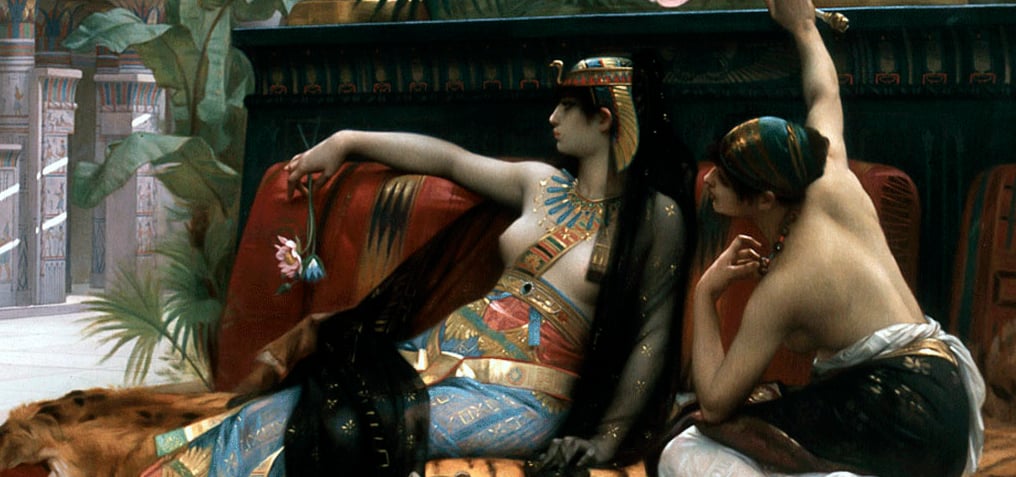
Cleopatra by Alexandre Cabanel. The Egyptian queen created her own secret drinking club with lover Mark Antony. Credit: Public Domain

Cleopatra was not just a famed Greek queen of Ancient Egypt but was also known for her love of parties. She even created her own secret drinking club.

The famous ancient ruler became well known during her time for her intellect and wit and was often described as incredibly seductive and persuasive. These qualities made her all the more mysterious throughout the centuries.

She is now a popular figure in media, literature, and art, and her enchanting qualities, romantic relationships, and beauty are of particular interest to people.

Perhaps the most surprising fact about Cleopatra, who was a strategic and often cutthroat ruler, is that she was quite the reveler.

Cleopatra maintained a relationship with Roman leader Mark Antony and even gave birth to his twins, Alexander Helios, which means sun, and Cleopatra Selene, which means moon, shortly after Antony returned to Rome in 40 BC.

While Antony was living in Egypt with Cleopatra, despite being married in Rome, the pair would throw parties and were known to appreciate a good drink.

Cleopatra formed a secret drinking club, played pranks

In fact, Cleopatra and Antony created their own secret drinking club called “The Inimitable Livers,” ostensibly as a group to honor the god Dionysus but likely to drink and revel.

In 41 BC, the couple formed the group, which included nightly feasts and debauchery, as well as the consumption of copious amounts of alcohol.

Along with these drinking parties, Antony and Cleopatra were known to roam around the streets of Alexandria, the urban center of ancient Egypt, wearing disguises and pulling pranks on locals.

Cleopatra generally loved joking around and even pranked her Roman lover. According to Pliny the Elder, Cleopatra once bet Antony that she could spend 10,000,000 sesterces, which is likely equivalent to over $10 million today on one dinner alone.

Antony balked at the preposterous idea and agreed to the bet, believing that spending such a massive sum on one dinner was impossible.

Cleopatra and Antony then went to dine together, and the couple was served a completely normal meal which definitely wasn’t worth such a sum.

As the meal was ending, Antony was beginning to believe he had won the bet. Cleopatra, however, called one of her servants over and asked for a cup filled with strong vinegar.

Once the servant brought the vinegar to the queen, Cleopatra removed one of her massive pearl earrings from her ear and dropped the precious earring into the cup.

The pearl, which was worth a huge amount of money, then began to dissolve in the vinegar solution. After it was fully dissolved, Cleopatra drank the solution.

Cleopatra VII Philopater ruled over Ancient Egypt from 51 to 30 BC and was the last ruler of the Ptolemaic Kingdom in Egypt. After her death, the Roman Empire took control of the country.

The Ptolemaic Dynasty was formed by Ptolemy I Soter, a Greek general in Alexander the Great’s army, in 305 BC. Although located in Egypt, the dynasty that Ptolemy established remained incredibly Greek.

Cleopatra, a direct descendant of Ptolemy, was the first Ptolemaic ruler to learn the Egyptian language, as all those before her spoke only Greek. She was also believed to have spoken Ethiopian, Hebrew, Aramaic, Arabic, Syriac, Median, Parthian, and Latin.

The name Cleopatra comes from the Ancient Greek words κλέος (kléos), meaning “glory,” and πατήρ (pater), meaning “father,” which means “glory of her father.”

The Julius Caesar and Cleopatra’s Love Affair Revisited

By: guest
13 June 2026 at 02:02
Julius Caesar and Cleopatra's love affair
Caesar giving Cleopatra the Throne of Egypt. Public Domain

The Greek queen of Egypt Cleopatra is associated with a very public love affair with Roman leader Julius Caesar apart from her glamorous beauty routines, deadly snake bites, and lavish banquets. But their “situationship” was complex, according to two historians.

By Charlotte Dunn and Jayne Knight

This doomed romance ended abruptly in 44 BC when Caesar was quite literally stabbed in the back (and from all sides) by his enemies in Rome. And she pretty soon hooked up with one of his closest allies.

When Caesar met Cleopatra, he was 52 and had a wife back in Rome. But something about the 21-year-old Cleopatra caught his eye.

Perhaps it was her charming banter and impressive mind. The ancient author Plutarch reports Cleopatra was an irresistible conversation partner, and fluent in nine languages.

Things really got started when Caesar got involved in a family feud involving Cleopatra and her royal relatives.

Cleopatra came from a long line of dramatic and ruthless kings and queens, which we now call the Ptolemies.

The Ptolemies had ruled Egypt since about 305 or 304 BC. They didn’t always get along but they were very close. As in, genetically close.

The Ptolemies had practiced brother-sister marriages (and other in-the-family marriages as well) for several generations.

According to this tradition, Cleopatra was probably married to her ten-year-old brother Ptolemy XIII when their father died and they became co-rulers of Egypt.

Cleopatra pursued Julius Caesar

Cleopatra VII
Left: a Roman sculpture of Cleopatra VII wearing a royal diadem, mid-1st century BC (around the time of her visits to Rome in 46–44 BC). Right: A posthumous painted portrait of Cleopatra VII of Ptolemaic Egypt from Roman Herculaneum, made during the 1st century AD. Credit: Louis le Grand / Public domain / Wikimedia Commons (right) / Ángel M / Public Domain / Wikimedia Commons

So in pursuing Caesar, you might say Cleopatra was going against the family trend by dating outside her siblings.

Cleopatra’s union with her little brother was not a happy one: the young Ptolemy, alongside his advisors, had managed to run Cleopatra out of Egypt, wanting to rule the kingdom without her interfering.

While Cleopatra was busy raising an army to reclaim her place on the throne, Caesar arrived at the royal palace at Alexandria in 48 BC.

Caesar had his own political woes. He was in the middle of a civil war and was pursuing his rival Gnaeus Pompey (also known as Pompey the Great) after defeating his army in Greece.

Ptolemy, completely misreading the situation, greeted Caesar with a gruesome and unexpected gift: Pompey’s severed head.

Outraged and disgusted, Caesar demanded Cleopatra and her brother reconcile, but Cleopatra had other plans.

Plutarch says she hid herself in a bed sack and got smuggled into the palace to meet and charm Caesar.

Was it true love?

The young Cleopatra was ambitious, and there’s no denying a connection with Caesar was politically advantageous.

Caesar also had plenty of other affairs, including one with another queen, Eunoë of Mauretania.

But there may well have been a true connection with Cleopatra. Caesar, after all, was also very well educated and ruthlessly ambitious, and the ancient author Suetonius states Cleopatra was Caesar’s most passionate love affair.

But whatever sparks flew, Cleopatra couldn’t fully escape her family responsibilities.

Caesar put her back on the throne but arranged for her to marry her youngest brother, Ptolemy XIV after her previous brother-husband (Ptolemy XIII) drowned.

Nothing spells romance like your lover ordering you to marry your 12-year-old brother, but Cleopatra needed Caesar’s help to secure her position on the throne.

Being older and ambitious, she seemingly had no trouble taking the lead in running their kingdom, pushing Ptolemy XIV to one side.

Cleopatra
Cleopatra is famed for her lovers, but beyond romantic interests, these were important political allies. Credit: Lawrence Alma Tadema / Public Domain / Wikimedia Commons

Cleopatra and Julius Caesar take a luxurious cruise down the Nile

Some sources say Cleopatra and Caesar celebrated their success at smoothing things over in Alexandria by taking a luxurious cruise down the Nile, accompanied by 400 ships.

This promoted their partnership and alliance, and by this time there was something else to celebrate: Cleopatra was pregnant with Caesar’s son, something she wanted to advertise as the future of her dynasty.

Cleopatra and Caesar’s son was nicknamed Caesarion, meaning “little Caesar”, although he is also known as Ptolemy Caesar or Ptolemy XV.

Caesarion’s existence was a bit of a problem. Caesar probably acknowledged the boy as his son, but Roman law did not, because Roman men were not allowed to marry foreign women.

There was also of course the matter that Caesar was still married at the time, to a Roman woman named Calpurnia.

The fiercely republican Romans of this era did not have much love for monarchy, and Caesar’s dalliance with Cleopatra probably made his fellow Romans even more suspicious about his own grand plans.

When in Rome

Despite many Romans disapproving of the relationship, the Egyptian queen spent about 18 months living on Caesar’s estate in Rome.

While there, Caesar seems to have done nothing to dispel the rumours about his situationship with Cleopatra, and he may have even dedicated a golden statue of Cleopatra as Venus in the temple of Venus Genetrix.

The famous orator Cicero was not impressed, writing in a letter to a friend “reginam odi” or “I hate the queen.”

After Caesar’s assassination, Cleopatra returned to Egypt.

But she soon began a love affair with Marc Antony, Caesar’s right-hand man and would-be successor to his power, if 19-year-old Octavian (who would eventually become the first emperor Augustus) had not been named heir in Caesar’s will.

Antony and Cleopatra’s relationship flourished but ended in tragedy when Octavian’s political rivalry with Antony intensified, and Octavian used their relationship as fuel for anti-Antony propaganda.

The lovers were eventually pursued and defeated by Octavian’s forces. Both took their own lives – he stabbed himself with a sword and she, according to one version of the tale, by compelling a snake to bite her.

Charlotte Dunn is a Lecturer in Classics, the University of Tasmania

Jayne Knight is a Senior Lecturer in Classics, the University of Tasmania

The article was published in The Conversation and is republished under a Creative Commons License

❌