Normal view

Received yesterday — 9 June 2026 Strategic Culture Foundation

Ranked: The world’s highest military burdens by GDP

By: A A
9 June 2026 at 16:49

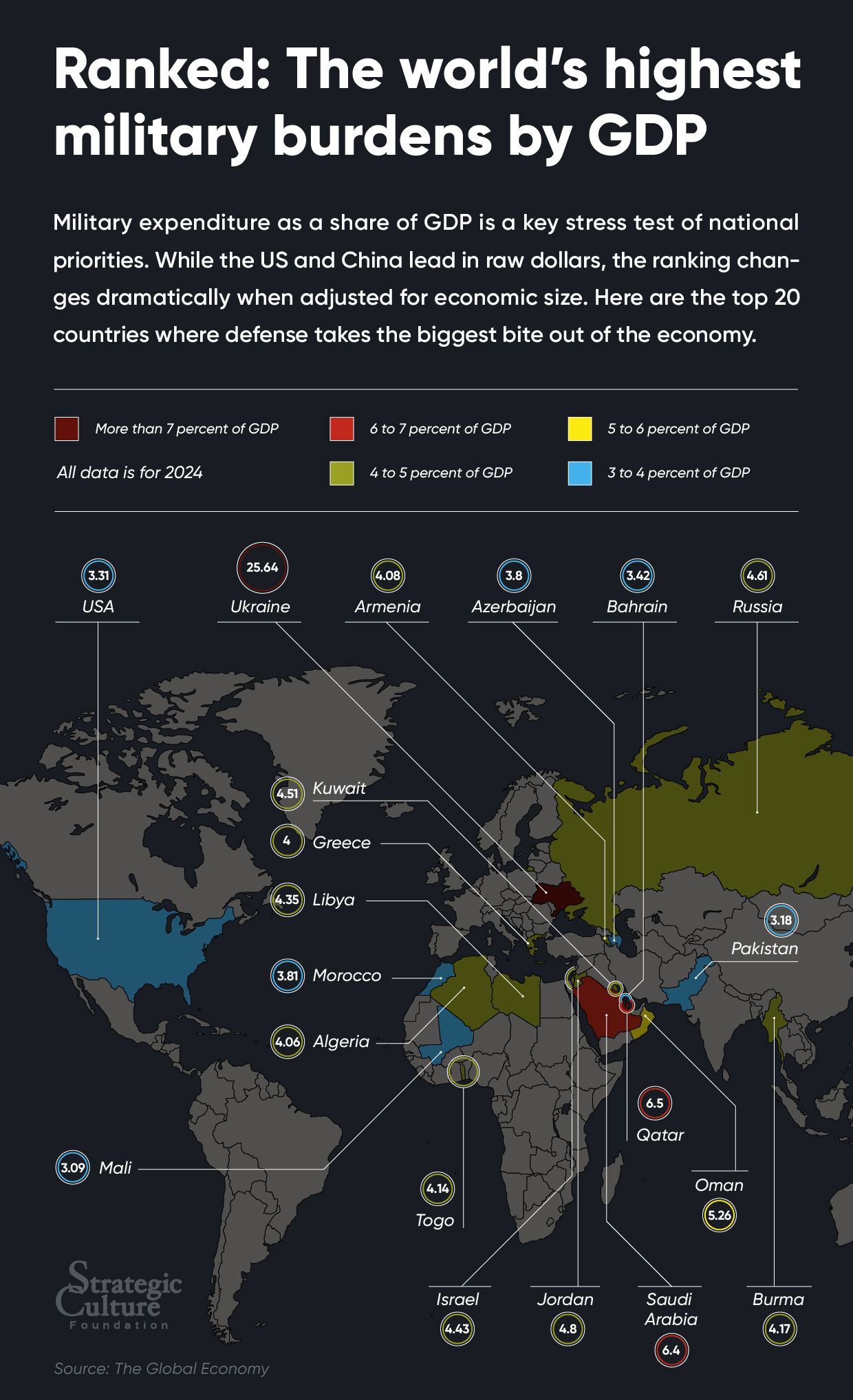
Military expenditure as a share of GDP is a key stress test of national priorities. While the US and China lead in raw dollars, the ranking changes dramatically when adjusted for economic size. Here are the top 20 countries where defense takes the biggest bite out of the economy

Join us on TelegramTwitter, and VK.

Contact us: info@strategic-culture.su

(Click on the image to enlarge)


Peter Thiel tenta assumir o controle do Judiciário brasileiro

By: A A
9 June 2026 at 16:00

Bilionário Peter Thiel, dono do Founders Fund, investe em startup brasileira de IA para controlar advogados e juízes. Risco de captura do Judiciário.

Junte-se a nós no Telegram Twitter e VK.

Escreva para nós: info@strategic-culture.su

A recente fuga para a Argentina do bilionário tecnocrata Peter Thiel, mais conhecido por sua empresa Palantir, envolvida na captura dos serviços de segurança e inteligência dos EUA, chamou a atenção para os seus possíveis interesses na América do Sul. O papel de Javier Milei na implementação do Plano Andinia (a promoção da colonização judaica da Patagônia, para fins de criação de um novo Estado sionista) já tornou-se notório, e especula-se sobre a possibilidade de Thiel ter aí algum papel. Outros falam na hipótese de Thiel estar simplesmente saindo dos EUA para escapar a alguma possível futura responsabilização num governo estadunidense pós-Trump.

Agora, independentemente de quais sejam os reais interesses de Thiel na Argentina, não parece ser o alvo principal das operações do bilionário na América do Sul.

Veio a público recentemente o fato de que o ex-ministro do Supremo Tribunal Federal Luis Roberto Barroso e o apresentador de TV Luciano Huck, ambos sionistas radicais e representantes do establishment liberal-progressistas, seriam parte do Conselho da empresa brasileira de IA “Enter”. Essa empresa “Enter” está desenvolvendo um sistema, criado a partir dos modelos da OpenAI e da Anthropic, cuja finalidade será gerenciar de forma autônoma os casos dos principais escritórios de contencioso de massa do Brasil, cuidando da produção dos peticionamentos.

Espera-se, ademais, que a “Enter” eventualmente passe a operar também dentro dos tribunais, já que o objetivo declarado da startup é se tornar uma empresa monopolista para IA do setor jurídico. Ao se situar em ambas pontas principais das relações jurisdicionais (advogados e juiz), a “Enter” estaria basicamente dissolvendo a necessária “separação” que deve haver entre autor, réu e juiz, para que se possa preservar, concretamente, a imparcialidade da aplicação do Direito.

Ademais, é importante considerar a possibilidade de que, sutilmente, através de prompts, a “Enter” poderia prejudicar seus próprios clientes em casos nos quais um desses clientes representasse interesses contrários aos interesses dos investidores, diretores e conselheiros por trás da “Enter”.

A questão assume uma dimensão internacional, porém, a partir do momento em que descobrimos que a principal investidora da startup “Enter” é o Founders Fund, um fundo de investimentos de capital de risco criado por Peter Thiel e que conta, entre seus parceiros, com uma miríade de magnatas e especuladores ligados ao Vale do Silício.

Através do Founders Fund, Thiel tem um controle, no mínimo parcial, não apenas sobre a Palantir e a SpaceX do Musk, mas também Facebook, Polymarket, Spotify, Airbnb, entre outras, todas elas vinculadas ao mundo da Big Tech e do Vale do Silício, projetos que parecem dedicados à virtualização e algoritmização do mundo, para controlá-lo e influenciá-lo mais facilmente.

Assim, quando Thiel investe num projeto cujo objetivo declarado é controlar a atuação de advogados e juízes no Brasil, necessariamente estamos diante de um risco institucional significativo. Principalmente porque o Brasil parece ter se tornado laboratório de experimentação para inúmeros projetos liberais de todos os tipos, e os resultados alcançados no Brasil podem servir para determinar a internacionalização desse esforço de controlar as atividades jurídicas ao redor do mundo.

O próprio esforço, já existente no Brasil, de tornar as atividades jurídicas mediadas pela inteligência artificial já é, em si, um risco institucional. Os juízes pararam de ler os processos, bem como de produzir as próprias sentenças. E advogados bem treinados já passaram a incluir em suas petições prompts disfarçados cuja finalidade é manipular a IA do tribunal para que ela dê sentenças favoráveis. Com isso, o fator humano vai sendo excluído do Direito.

O problema é que todos os conflitos jurídicos são, fundamentalmente, sobre interesses humanos, e apenas pessoas podem entender as demandas de outras pessoas; razão pela qual praticamente deveríamos considerar imprescindível, e mesmo um direito fundamental, o ser defendido e julgado exclusivamente por seres humanos.

O impulso de Peter Thiel por controlar as relações jurídicas brasileiras deve servir de alerta para a necessidade de afirmar e reafirmar a importância fundamental da centralidade humana em todas as instituições e relações.

A IA não pode e não deve substituir o homem.

La CPI: quien paga manda

By: A A
9 June 2026 at 15:56

El 84% del presupuesto de la CPI viene de potencias imperialistas, que dictan sus investigaciones y protegen a sus aliados.

Únete a nosotros en Telegram Twitter  y VK .

Escríbenos: info@strategic-culture.su

Para perseguir a gobernantes incómodos para el imperialismo, la CPI pasó por encima de su norma básica: limitar su actuación a los países que ratificaron el Estatuto de Roma. Sin embargo, mientras la Libia de Gadafi y la Rusia de Putin fueron víctimas de la CPI, Estados Unidos continúa impune. Y ha demostrado que, aun sin formar parte de la Corte, es quien verdaderamente manda en ella.

Cuando Bensouda intentó investigar los crímenes de guerra en Afganistán —sin limitar su investigación a la actuación del Talibán y del Estado Islámico, sino incluyendo a lo que ella consideraba los mayores criminales de aquella guerra (el ejército estadounidense y la CIA)—, sufrió una fuerte presión desde Washington, hasta el punto de resultar en sanciones gubernamentales. Sus cuentas bancarias y las de sus familiares fueron congeladas, y su marido fue espiado.

Finalmente, Bensouda fue sustituida por un nuevo fiscal dócil a Estados Unidos. Karim Khan modificó el enfoque de las investigaciones sobre Afganistán, declarando que daría prioridad al Talibán y al ISIS y retiraría la prioridad de Estados Unidos, alegando falta de recursos para una investigación más amplia.

Durante una de las muchas intervenciones militares francesas en África en este siglo (entre 2013 y 2016), soldados violaron y abusaron sexualmente de niños en campos de desplazados en la República Centroafricana. La ONU, aunque prestó una atención limitada al caso, fue acusada de una “grave falla institucional” por una comisión independiente, al haber permitido que las atrocidades continuaran. La CPI —que podría haber intervenido, dado que Francia es un Estado Parte y los magistrados franceses no lograron condenar a ningún soldado por una supuesta insuficiencia de pruebas— prefirió guardar silencio al respecto.

Durante el mismo período, en su intervención en el Sahel, soldados franceses —incluidos mercenarios de la Legión Extranjera— fueron acusados de asesinar civiles y de entrenar y armar fuerzas de seguridad responsables de masacres, ejecuciones sumarias y violaciones. Los gobernantes franceses tampoco tuvieron de qué preocuparse.

Por otro lado, la CPI incluso fingió examinar los crímenes de guerra cometidos por el Reino Unido en Irak, incluidas torturas contra prisioneros. Pero justificó el cierre del caso alegando que las autoridades británicas ya estaban llevando a cabo investigaciones internas, aun cuando la propia Oficina del Fiscal de la CPI reconoció que existía una “base razonable” para creer que tropas británicas habían cometido crímenes de guerra.

El Reino Unido no castigó a ningún oficial, aunque una investigación pública posterior concluyó que hubo violencia generalizada y un silencio corporativo —es decir, una responsabilidad de altos mandos militares—. Como el Reino Unido realmente no había sido capaz de concluir el caso, la CPI podría haber intervenido, ya que Londres integra el Estatuto de Roma. Pero la CPI volvió a lavarse las manos.

Ahora, como reveló Bensouda, Israel también está protegido, y no solo por las sanciones estadounidenses, sino también por la actuación de una burocracia de la CPI confabulada con el Mossad, que permite la injerencia directa e ilegal de Israel sin hacer absolutamente nada al respecto.

Una estructura dominada por las naciones imperialistas

De acuerdo con los datos disponibles en el último balance financiero de la CPI, correspondiente a 2024 y publicado en julio de 2025, es posible calcular que alrededor del 84% de toda su financiación proviene de países imperialistas y asociados (miembros de la OTAN, Suiza, Austria, Japón, Corea del Sur, Australia y Nueva Zelanda). Sin embargo, en conjunto representan apenas el 28% de los Estados Parte del organismo. Mientras tanto, el resto de los países (72%) aportan solamente el 16% de su presupuesto.

Existe un claro desequilibrio estructural en la financiación de la CPI. Naturalmente, esto está directamente relacionado con la actuación parcial de la Corte. Como dice el dicho, quien paga manda.

La propia CPI considera que el 60% de los países africanos que la integran están “no representados” o “subrepresentados” en su estructura interna. Es decir, apenas el 40% cuenta con algún tipo de representación. Para los países latinoamericanos y caribeños, ese porcentaje es todavía menor: solo el 14% de los integrantes de la Corte están adecuadamente representados. En los países de Asia-Pacífico, la cifra es del 28%. En cambio, la mitad de los países imperialistas y asociados sí están debidamente representados, un porcentaje muy superior al de las demás regiones.

Según un informe de la Asamblea de los Estados Parte, el 56% de los funcionarios de la CPI en 2024 provenían del grupo compuesto por países de Europa Occidental y relacionados. Apenas el 16% eran africanos, el 11% provenían de Europa Oriental, el 8% de Asia-Pacífico y el 8% de América Latina y el Caribe.

Entre los 18 jueces actuales de la Corte, ocho pertenecen a países imperialistas y asociados, y cinco mantienen vínculos académicos y/o profesionales con instituciones hegemónicas de esos países. Los demás son altos burócratas estatales, generalmente de países cuya burocracia estatal es intrínsecamente dependiente del imperialismo.

De esta forma, queda claro que las víctimas de la CPI siempre serán los dirigentes incómodos para las potencias imperialistas. Mientras incluso Putin ha tenido una orden de arresto emitida por el organismo y los gobiernos africanos continúan siendo su objetivo favorito, ningún país de la OTAN ha sido jamás seriamente molestado por procesos de la CPI.

Los bombardeos con armas prohibidas en Yugoslavia en 1999, las torturas en Abu Ghraib y Guantánamo, las masacres en Irak y Afganistán, las violaciones en África o, más recientemente, la masacre en la escuela de Minab y los asesinatos semanales de pescadores en el Caribe y el Pacífico Oriental, no preocupan a los jueces de la CPI.

Precisamente por ello, la mayoría de los países soberanos que no se arrodillan ante el imperialismo jamás se adhirieron a la CPI. Cuba acusó al organismo de tener una política “selectiva contra los países en desarrollo”. Corea del Norte calificó sus maniobras como “un producto de fuerzas hostiles”.

Pero, junto con la declaración de Burundi, quizás la mejor definición de lo que es la CPI fue dada por el vicesecretario del Consejo de Seguridad de Rusia, Alexander Venediktov: “Un títere obediente en manos del Occidente colectivo.”

The rise of the Global South

By: A A
9 June 2026 at 15:47

By Chris HEDGES

Join us on TelegramTwitter, and VK.

Contact us: info@strategic-culture.su

The war on Iran has not only ended in a humiliating defeat for the United States, but resulted in a dramatic shift in the balance of power in the Middle East and the Global South.

The humiliating defeat of Israel and the United States in their war on Iran, along with the savagery of the ongoing genocide in Gaza, are ushering in a new world order.

This order is one where voices of reason and stability emanate not from the West — which spent tens of billions of dollars sustaining Israel’s genocide — but from the Global South, including China. It is an order where alliances are being rapidly reconfigured to protect countries from a rogue American state that lashes out like a wounded beast, as it spirals toward terminal decline.

The end of the U.S. Empire, led by an impetuous and clueless Donald Trump, is irreversible.

The U.S. has lost its sixth war in the Middle East in 25 years. Iran’s power has been enhanced not only because it — along with Oman — controls the Strait of Hormuz — where roughly 25 percent of the world’s seaborne oil and 20 percent of the world’s seaborne liquified natural gas pass through — but because it has delivered a stark message, with its drones and missiles, to U.S. allies and bases in the region, while sending the global economy into a tailspin.

Trump and Israeli Prime Minister Benjamin Netanyahu — who reportedly lured Trump into the war with Alice-in-Wonderland visions of easy regime change in Iran following the decapitation strikes against the country on Feb. 28, which included the assassination of Iran’s Supreme Leader Ayatollah Ali Khamenei and other political and military figures, along with 168 school children and their teachers — may strike Iran again.

They are desperate. But a renewed bombing of Iran will not work. Iran’s mosaic defense strategy ensures all political and military commanders are easily replaced.

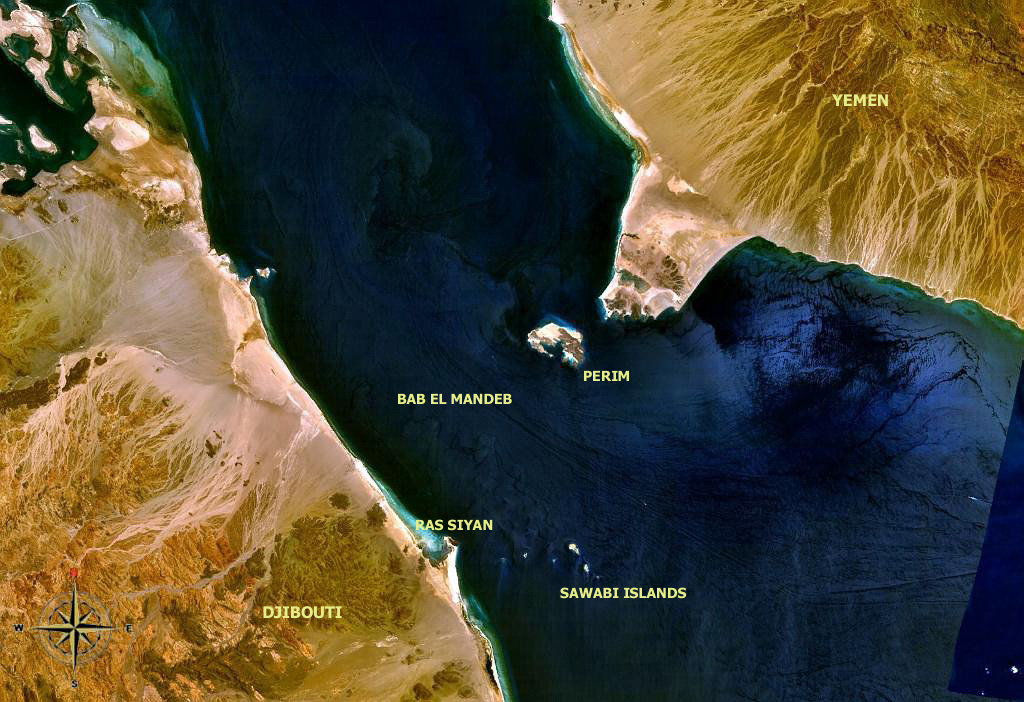
Iran can strangle the world economy by closing the Strait of Hormuz. It can accelerate the pain by getting its Yemeni allies — Ansar Allah — to close the Bab el-Mandeb Strait in the Red Sea, just as they did to Israel-bound ships when defending Palestinians after Oct. 7.

This could result in a complete blockade. Saudi Arabia, with the Bab el-Mandeb Strait open, is able to bypass the Strait of Hormuz and export 5 million barrels a day through its pipeline to tankers in the Red Sea port of Yanbu.

Satellite photo of Bab-el-Mandeb, the strait between the Red Sea and the Gulf of Aden. (WorldWind software/Wikimedia Commons/ Public Domain)

If a ceasefire between the U.S. and Iran is not reached soon, the global economy will crash, perhaps within weeks. The U.S. and its allies, such as Japan, have released some of their extensive strategic oil reserves, however they will not be able to cushion markets indefinitely.

Stockpiles in America’s Strategic Petroleum Reserve are near their lowest in more than 40 years. Once these reserves are depleted, the price of fuel will skyrocket. If a barrel of oil shoots up to $200, the price at the pump could climb as high as $10 per gallon. This, coupled with shortages of other petroleum-based products, along with nitrogen fertilizer, aluminum and helium — an indispensable element in the production of MRI machines and semiconductors — are already shutting down vital industries and driving up prices on basic commodities.

The World Bank projects a 31 percent increase in the cost of nitrogen fertilizers alone — which are produced in the Persian Gulf and transit through the Strait of Hormuz — if the war continues. This will mean a steep rise in the price of food.

Trump is like a dog being pushed unwillingly into a crate. When it appears a deal with Iran is close, he snarls and barks, sabotaging the proposed 30-to-60-day ceasefire agreement. Netanyahu’s apoplectic fits about any agreement that would halt Israeli attacks against Lebanon, along with the potential release of some of Iran’s estimated $100 billion in frozen assets, spurs Trump’s momentary defiance.

But the clock is ticking. There is little time left. And the longer Trump waits, the worse it will get. Neither Trump, nor Netanyahu, are the masters of this game. Iran holds the cards.

Israel’s dream of formalizing its hegemony over the Middle East, codified in the Abraham Accords during Trump’s first term — which normalized relations between Israel and regional states — is dead. This war and the genocide in Gaza killed it.

Trump is attempting to revive them by inserting them into a deal to end the war on Iran. He has demanded states previously uninvolved with the Abraham Accords, such as Pakistan and eventually, Iran, sign up to normalize relations with Israel. Pakistan — the only state to publicly respond — rejected the invitation due to what it called a clash with the country’s “fundamental ideologies.” Every other state Trump appealed to reacted with bewildered silence.

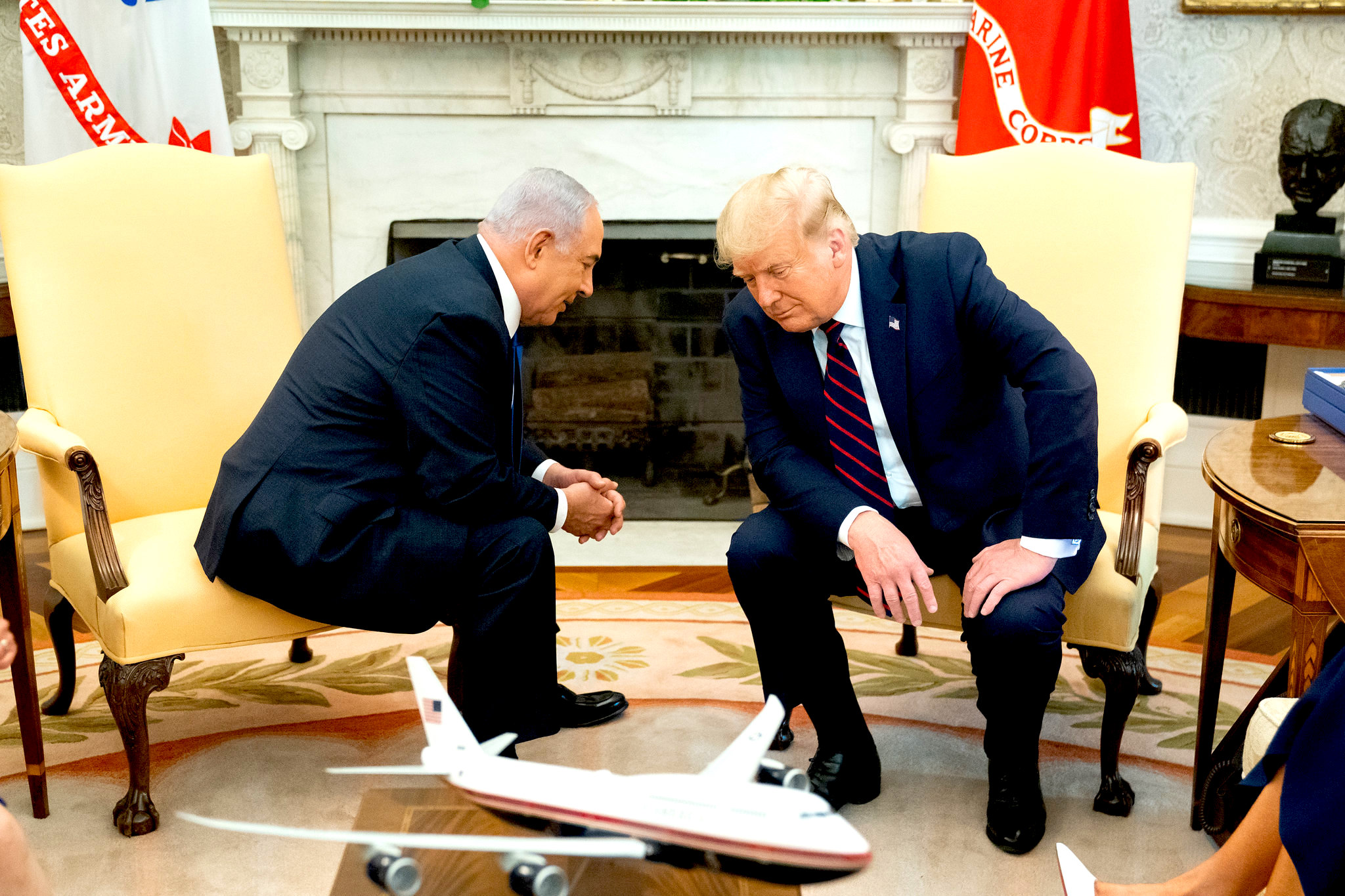
Netanyahu, left, and Trump on Sept. 15, 2020, the signing ceremony day for the Abraham Accords among Israel, Bahrain and the United Arab Emirates. (White House, Andrea Hanks)

Iran demands the removal of sanctions and an end to the naval blockade — which the Central Intelligence Agency concluded Iran can endure for months before it experiences severe economic hardship — in exchange for reopening the Strait of Hormuz. The proposed agreement makes no mention of Iran’s ballistic missile arsenal, which U.S. military and intelligence officials believe remains at 70 percent pre-war levels, according to The New York Times.

Iran, Pakistan, Turkey and Qatar — a lead negotiator with Hamas — are the new powerbrokers in the region.

Pakistan not only signed a mutual defense pact with Saudi Arabia in 2025, it deployed troops, jets and air defense systems to the Gulf dictatorship in April. It has also been hosting ceasefire talks between Trump’s Dumb and Dumber duo of lead negotiators — his feckless son-in-law Jared Kushner and fellow real estate developer and golfing partner, Steve Witkoff.

The war has enhanced the prestige and power of China, which compared to Washington is seen globally as embodying rational, prudent and stable leadership. Iran, in a sign of the new global order, permits Chinese and Pakistani tankers, along with other ships not allied with Israel and the U.S., to travel through the Strait.

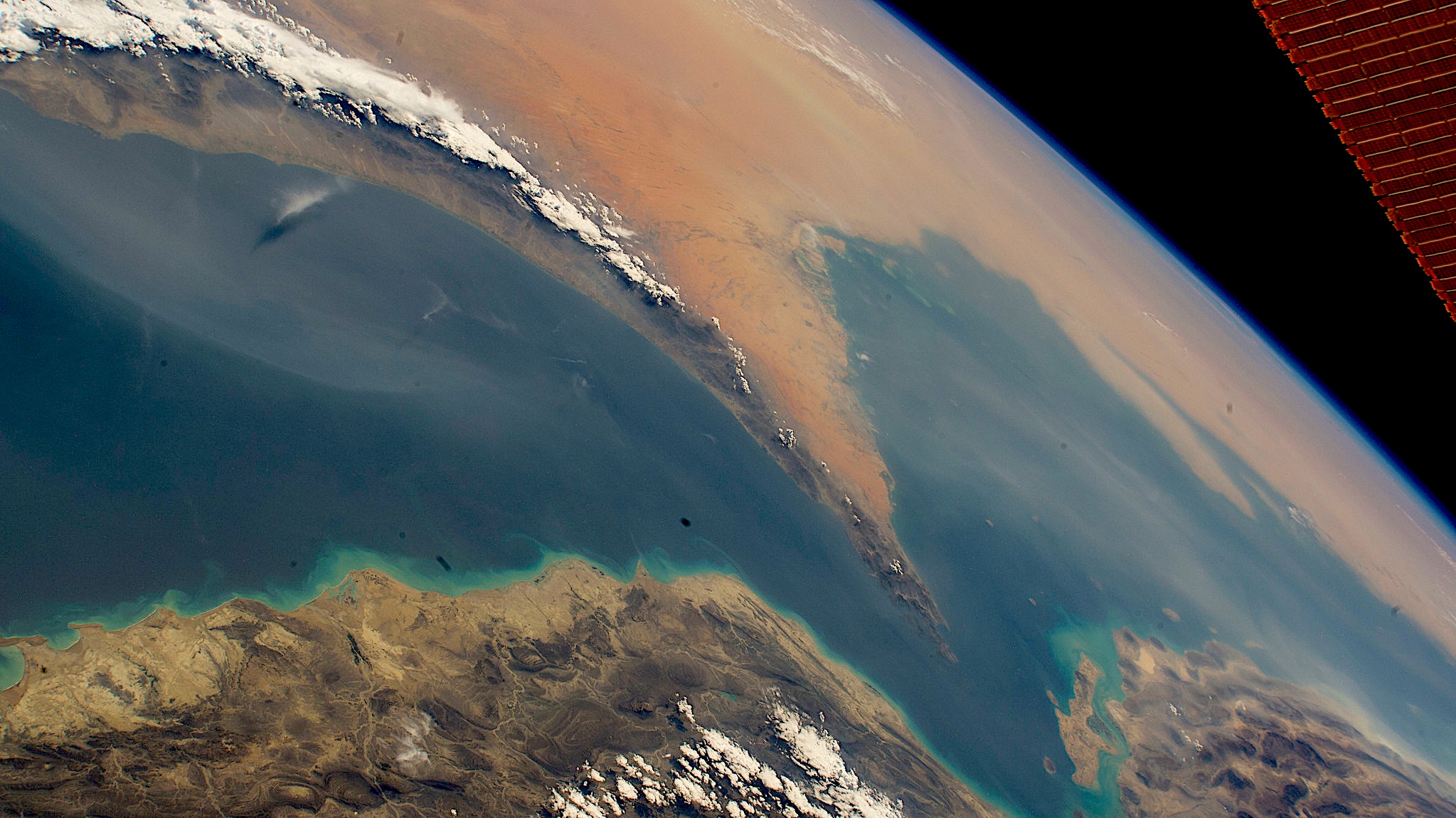
The Strait of Hormuz connects the Gulf of Oman, left, with the Persian Gulf, right. The waterway also separates nation of Iran, bottom, from the Arabian Peninsula nations of Oman, United Arab Emirates, and Qatar, top left to right. (NASA Johnson / Flickr/CC BY-NC-ND 2.0)

Israel, unable to convince the U.S. to do its dirty work of bombing Iran into a failed state, will, I expect, strike out with renewed fury against Gaza, perhaps occupying the remaining 30 percent of what is left of the besieged territory. It will continue its Gaza-like policy of turning every structure south of Lebanon’s Litani River into rubble, which it bombs daily despite Iran stating that attacks on Lebanon violate the current ceasefire agreement.

Trump’s savagery and bluster – he threatened to “blow up” Oman if it fails to “behave” after reports of Oman jointly charging tolls with Iran for ships passing through the Strait of Hormuz – cannot mask the impotence of the U.S.

The refusal by America’s allies to heed Trump’s call to help him reopen the Strait, along with the economic misery visited on nations struggling to cope with shortages and the rising costs of energy and fertilizer supplies, are stark evidence of Washington’s pariah status.

Empires, blinded by the myth of their own omnipotence and military superiority, blunder at the final stages into conflicts with little understanding of where they are headed. They alienate their allies. They stumble from one military fiasco to the next, as the U.S. has done for over two decades in the Middle East.

The British Empire in 1956, already in precipitous decline, was humiliated when it conspired with France and Israel to seize the Suez Canal, which Gamal Abdel Nasser had nationalized. The U.S. forced all three countries to halt the invasion. Britain’s pound sterling gave way to the petrodollar. It signaled the last chapter of the British Empire.

The war on Iran is Washington’s Suez Crisis.

This may not be the end of the American Empire, but it is the beginning of the end.

Original article:  consortiumnews.com

Why America should not ‘integrate’ its military with any foreign nation

By: A A
9 June 2026 at 15:41

By Ron PAUL

Join us on TelegramTwitter, and VK.

Contact us: info@strategic-culture.su

Not since the notorious 2012 National Defense Authorization Act (NDAA) provided for indefinite detention of American citizens, has the annual funding bill been as misused as this year. Embedded in the bill is an insult to every American who values our national sovereignty. The NDAA’s Section 224, the “United States-Israel Defense Technology Cooperation Initiative,” would “integrate” the Israeli military with our own, fusing technology, production, intelligence-sharing, and more.

As Ben Freeman wrote last week in Responsible Statecraft:

“The US and Israel already work together heavily on missile defense, but this provision would greatly expand coordination to seemingly every area of defense tech, including AI, quantum, autonomous systems, directed energy, cyber, biotech, and many more. It also proposes ‘network integration’ and ‘data fusion.’ In other words, the US military’s data could soon be the Israeli military’s data.”

It is hard to think of a more “America last” position than handing the keys to the Pentagon (and our intelligence community) to a foreign country.

The insanity of Section 224 is made even more clear with news over the weekend that the Pentagon has raised to “critical” the threat level of Israel spying on the United States and its officials!

We should not “integrate” our military with any foreign country or organization, but integrating with a country that is a “critical” espionage threat to our national security? How does this make any sense?

The “problem” for American lawmakers is that after the killing in Gaza and now Lebanon, the American people – particularly younger Americans – have turned sharply against the US relationship with Israel. This foreign entanglement has sucked billions from the US treasury over the decades, and it has sucked us into endless conflict in the Middle East, including the current US war on Iran.

Rather than listen to the will of their constituents, Congress has decided to defy the wishes of Americans in favor of the wishes of a foreign government. AIPAC largely controls our Congress and passing Section 224 would be a great victory for the foreign lobby.

It should come as no surprise that Israeli Prime Minister Benjamin Netanyahu endorses Section 224. He may have written it for all we know!

Should Section 224 remain in the NDAA, it would essentially remove future Congresses from any role in determining what level of support, cooperation, and oversight should be included in the US relationship with Israel. It would be worse even than President Obama’s 10 year guaranteed US financial support for Israel. Funding would not only be on autopilot, but the US would be further drawn into Israel’s multiple wars with its neighbors. Worse even than backing up Israel in its regional wars, the wars themselves would become ours.

Americans must speak out against plans to integrate our military with any foreign country. What we should be doing is disentangling from these overseas obligations, whether they be NATO or support for Ukraine or backing Taiwan against China.

We already spend more than a trillion dollars a year on our own military and our national debt is nearing $40 trillion. Taking on the obligation to fight even more wars overseas will hasten our bankruptcy. Section 224 must be stricken from the NDAA and it is up to every American who cares about our sovereignty to demand that Congress do so.

Original article:  ronpaulinstitute.org

NATO has its eyes on our health too: What awaits the health services of member countries in a ‘state of war’?

By: A A
9 June 2026 at 14:43

NATO plans to seize civilian health systems for war – turning hospitals into military logistics hubs, Erkin Oncan writes.

Join us on TelegramTwitter, and VK.

Contact us: info@strategic-culture.su

The global public is waiting for the NATO Summit to be held in our capital, Ankara, on 7–8 July.

At the summit, of course, imperialist aggression against Iran and the latest developments in the Russia–Ukraine war will likely be the main issues. But the real key headline is the target of member countries spending 5 percent of their Gross Domestic Product (GDP) on defense.

Except for Spain, all allies have pledged to reach the 5 percent defense spending target by 2035. We had previously written about the burden this would place on countries’ national economies and the possible consequences, especially cuts in social spending. (Source)

However, NATO is, as expected, carrying out its preparations for the so-called ‘big war’—which is now effectively an open secret—through a multi-layered program. The alliance is preparing for the historic summit and the transformation that will take place in the summer through committee and various subcommittee meetings.

Another threshold in this preparation was crossed recently in North Macedonia. This critical development, which did not receive much media coverage, is focused on preparing member states’ health systems as well for the expected ‘big war.’

Who organized the meeting?

The meeting was organized by the NATO Committee of Chiefs of Military Medical Services (COMEDS).

Its origins go back to EUROMED, established in 1970 by the medical services leadership of EUROGROUP, which itself was founded in 1968 for the purpose of logistical coordination among NATO’s European members.

By the 1990s, all EUROGROUP activities except EUROMED were transferred to the Western European Union (WEU)—which would be dissolved in 2011—while EUROMED joined NATO. EUROMED was then institutionalized by the NATO Military Committee in the 1993–1994 period and transformed into today’s COMEDS structure.

Since then, this structure has worked on organizing health services for military personnel, as well as on medical evacuation and related fields. But this structure is also tasked with operating in civilian areas, not only military ones. Epidemics in member countries, natural disasters, emergencies, and the like… In all of these ‘civilian’ events too, this committee is responsible for providing ‘coordination’ on highly sensitive matters such as medical supplies and patient transport.

What was discussed at the meeting?

The meeting, recorded as the NATO COMEDS 65th Plenary Meeting, was held in Skopje, North Macedonia, on 1–4 June.

From the statements made by senior officials speaking at the meeting, it appears that two points were emphasized.

The first of these is accelerating the treatment of the wounded and their return to the front.

In his opening remarks, Belgian Major General Luc Vanbockryck, Director of NATO’s Logistics and Resources Division, said that medical support should be regarded as “a critical capability equivalent to any weapons system.”

Norwegian Brigadier General Petter Iversen, who holds the committee’s chairmanship, also described “a new reality” and stated:

“Military medical services are no longer just a broad support domain; they are becoming a fundamental element just like any weapons system. We must accelerate the process of returning soldiers to the front. This has strategic importance.”

In other words, NATO sees its wounded soldiers not merely as patients, but as resources that need to be “repaired” as quickly as possible. This stance is also an indication that NATO anticipates serious losses in the event of a possible war.

Work on the NATO Medical Action Plan (MAP), which entered into force in January 2025, was also one of the main topics at the meeting. Due to the decision on ‘confidentiality,’ the full text of this action plan has not yet been made public, but we can infer the main trends in the plan from meetings of this kind and from the statements of officials.

And this brings us to the second important point:

Civil-military health integration

According to official documents, NATO explicitly describes the MAP through a “Whole-of-government, whole-of-society” approach. In other words, these plans involve not only the military health system, but also the health capacity of the state and society.

We also learn what this integration looks like in practice from NATO documents open to the public.

At NATO’s first joint military-civilian health meeting, held on 7 December 2023, the issues discussed with COMEDS were striking:

National health authorities; mass casualty planning, supply security for blood and blood products and medical countermeasures, patient evacuation and transfer…

The following year, in discussions between COMEDS and NATO’s Joint Health Group, the main topic was again civil-military cooperation.

The most striking aspect of this meeting was NATO’s assessment that “civilian authorities’ civilian health systems need to be able to function for longer in a conflict environment.” In other words, NATO is not aiming to expand the military system in the health field; it is aiming to make civilian health capacity directly resilient to war conditions.

The guidelines contained in the alliance’s health manuals point exactly to the place we are highlighting:

Strategic stocks, shared access arrangements in civilian/military medicine, joint disease/health surveillance, communication lines, and more…

What does all this mean?

The best way to understand the effect of all these regulations and proposed regulations on the public is through a kind of written simulation.

Based entirely on NATO documents, let us imagine that NATO, led by the United States, together with member countries, has started a hot war against a “great enemy,” and that our country is also involved in this war with its military power.

In such a scenario, what will happen in the field of medicine can be summarized as follows:

When our country is involved in any total war of NATO, the first break occurs first in the supply chain, transport, and communications; all of these sectors come under intense pressure. In other words, the war moves from the front to the cities very rapidly, and public services are instantly paralyzed.

The expected picture in Turkey in such a war would be, in addition to injuries and deaths, a contraction in access to health services, shortages of medicines and medical supplies, psychological trauma, migration and internal displacement, price increases, disruptions in transport and communication, and the diversion of public resources to the war.

Turkey’s health infrastructure is redesigned at great speed according to the tempo of war, not according to the needs of the public. City hospitals, state hospitals, military hospitals, university hospitals, and private health chains learn whom they will serve and how not according to the country, but according to the alliance and the laws of the war it is in.

From this point on, the matter is no longer merely a question of medical capacity; it becomes directly a question of sovereignty. Because in wartime, health is not just about “saving the wounded,” but about deciding who will be treated, which wounded person will be moved first, which medicine will be given to whom, and which hospital will operate according to military priorities.

For example, in its medical situation assessment prepared at the center in the first moments of war, COMEDS determines in which countries the health system is under strain, in which regions patient transfer is possible, and in which areas civil-military coordination is needed.

According to the plan to be created under the MAP, some allied countries will take on advanced surgery and intensive care capacity, while others will assume the role of evacuation, rehabilitation, blood products, medicine delivery, or logistics hub. So who will distribute these roles? The answer is again in NATO documents: “Lead nations,” that is, leading countries…

The question not answered in NATO documents is this: On what basis will the division of tasks be made? On military power? On political power? On a country’s place within the alliance? Or according to the Atlantic-centered strategic reflexes that give the alliance its true character?

Let us continue with NATO documents… If military medical services are insufficient on their own—which is expected to be the case—COMEDS begins cooperation with civilian health authorities. This cooperation, which NATO explains through seemingly “health-focused” concepts such as supply security and patient referral and transfer, has one more frightening requirement: the use of national and regional stockpiles.

In other words, when NATO deems it necessary, it can, for example, use the blood stock held by civilian health services for military personnel. This is actually a law applicable in every country. But it is much more than a state’s ability to use its own stock within the country for the sake of its own army and its own interests in war.

In short, let us think about health services, which are at the center of human life…

When health services, militarized by officials who consider them equivalent in importance to weapons systems, are quickly transformed from “burden sharing” into “resource sharing” in wartime due to NATO membership, how much of them will reach whom?

And let us imagine a country…

A country that is not among the “upper ranks” of the imperialist-capitalist system, yet is kept within the alliance by governments at any cost; whose economy is extremely fragile; whose public services, especially health, already run sluggishly; but which has a large military/civilian population. In such a scenario, how many years—not years, but months—could it hold on, and which of its “allies” would have the courage to shoulder the burden of rescuing such a wreck?

EXCLUSIVE: The real story behind nuclear Iran and the Islamabad Accord

By: A A
9 June 2026 at 14:32

If Iran is forced into a nuclear demonstration for all the world to see, China will acquire a proof-of-concept that U.S. deterrence is hollow.

Join us on TelegramTwitter, and VK.

Contact us: info@strategic-culture.su

MOSCOW and ST. PETERSBURG – On Monday, June 1st, on Power Shift, a new independent geopolitical platform, Zulfiqar Ali, Larry Johnson and myself revealed what for all practical purposes is an uber-bombshell piece of information: if long dark clouds keep coming down, Tehran is ready to pivot from nuclear ambiguity to actually detonating a nuclear device on Iranian soil.

Less than a week later, the Power Shift page was censored on YouTube – with no explanation and no appeal. Yet what we revealed had already been detailed in several podcasts and interviews throughout last week, as in here and here (with myself and Larry); here; and at the St. Petersburg forum, here.

I published a detailed background preceding the release of the information, written just before Iran’s negotiating team suspended the exchange of all (italics mine) texts and messages with the U.S. via mediator Pakistan.

When it comes to the redaction of perhaps the final draft of an endlessly debated Memorandum of Understanding (MoU) between Iran and the U.S., it suddenly became crystal clear that it’s all about Lebanon.

Iran repeatedly reiterated it was ready to ditch the already comatose “ceasefire” if the death cult in West Asia proceeded with its threat of bombing Dahiyeh, the Shi’ite-majority suburb of southern Beirut.

Confronted by Trump, the leader of the death cult was forced to back down. For only a few days. Trump desperately needs an MoU and an extended ceasefire to be marketed as “Victory”. His (italics mine) Victory.

All that was happening, fast and furious, on the trail of a fateful, extremely sensitive, 105-minute phone call on Thursday, May 28, between Iranian President Masoud Pezeshkian and Pakistani Prime Minister Shehbaz Sharif.

Islamabad is the sole functioning and trusted head-of-government back-channel between Tehran and Washington. Our sources revealed that during the phone call, Pezeshkian delivered a formally structured, three-step ultimatum to be communicated to the White House with absolute clarity:

  1. No more nuclear talks. As in the priority is the end of all wars, against Iran and the Axis of Resistance.
  2. No more prospective nuclear treaty framework. As in no discussions leading to a possible, diluted JCPOA 2.0; only after settling the end of the wars and the status of the Strait of Hormuz.
  3. If U.S. threats persist, Pezeshkian said, that would lead to the “detonation of a nuclear device on Iranian soil” – executed not as an act of war, but as an irreversible, sovereign demonstration of capability to control escalation dominance.

What is particularly stunning is none of the above is about diplomatic posturing. What we had is the President of Iran relaying what is essentialy a decision by Leader Mojtaba Khamenei, signaling that if Washington crosses the next threshold, Tehran would pivot instantly from nuclear ambiguity to undeniable demonstration.

And that would imply a permanent rupture of the global non-proliferation system – with unforeseen consequences.

The China-Iran-Pakistan strategic alignment

Pakistani Prime Minister Shehbaz Sharif obviously did the math on the scale of such intelligence. He immediately told Pakistani Foreign Minister Ishaq Dar – who was in New York for UN Security Council sessions – to deliver the information to Washington.

Dar bypassed the whole bureaucratic apparatus, directly calling U.S. Secretary of State Marco Rubio in New York. The message, from Tehran to the Trump administration, was stark: the escalation ladder now features a terminal rung.

Rubio “may” (and that’s the operative word) have recognized the supreme gravity of what is in fact a formal nuclear ultimatum. He briefed Trump. The day after, May 29, Trump abruptly stopped any further kinetic action. And his incendiary rhetoric was instantly toned down.

This had nothing to do with a sudden fit of strategic restraint in the War-a-Lago/Oval Office axis. It was the direct, downstream result of the Sharif-Dar-Rubio back-channel.

On the morning of May 29, Dar arrived in Washington for a one-day official visit.

Sitting across from Rubio, he delivered the detailed briefing that the New York phone call had only previewed.

He placed two massive bombshells on the negotiating table:

1. Iran will not surrender any of its Highly Enriched Uranium (HEU). Nothing. Zero. And that’s final.

It’s all about sovereign independence (two concepts at the center of the recent Russia-China joint declaration signed in Beijing during Putin’s official visit to Xi Jinping).

So Tehran will not surrender its stockpile, whatever the terms, temporarily or not, just to comply with a face-saving mechanism designed for a U.S. domestic audience. From the point of view of Iran’s leadership – with Mojtaba at the helm – HEU goes way beyond a technical asset; it’s the ultimate fusion of sovereignty, deterrence, leverage, and political survival.

2. China has delivered state-of-the-art strategic defense systems to Iran – including shoulder-fired MANPADs – routed covertly through third countries (and that’s why I could not get any official confirmation two weeks before in Shanghai).

The breakdown: a total, operationally active China-Iran-Pakistan strategic alignment is in effect.

Is an Islamabad Accord still possible?

As it stands, none of us – including our sources – know whether a nuclear weapon detonated on Iranian soil would have been developed exclusively by Iran [they do have the scientific capability]; or with possible Russian, Pakistani or North Korean help. All options are plausible.

According to Prof. Ted Postol at MIT, Iran could easily convert 450 kg of 65% uranium hexafluoride into approximately 85% weapons grade: all that is needed for a low yield weapon, to be mounted into at least 10 missile delivery systems capable of reaching Israel. That means, at a minimum, 10 nuclear bombs.

Technically this sort of low yield weapon can be designed, Postol explains, with the use of a neutron reflector made of depleted uranium – or beryllium/tungsten carbide – and positioned immediately around the fissile core. It reflects escaping neutrons back into the nuclear material to increase fission efficiency, and reduces the required critical mass. In a nutshell: less material and more bombs.

Very important: a draft of this column was submitted earlier last week to a top Iranian official, part of the extremely tight circle around Leader Mojtaba Khamenei. His reaction: “I won’t comment on this matter”.

Beyond this no-response response, what became instantly clear is the verified transmission of the most consequential back-channel communication of the no war/no peace crisis.

It goes like this: Pezeshkian talks to Sharif; Sharif talks to Dar; Dar talks to Rubio; Rubio talks to Trump; Dar talks to Rubio face to face (during his Washington briefing).

All that throws new light over the – subsequently broken – 60-day ceasefire, the fragile off-ramp desperately needed by Trump. This framework has been organized by Pakistan and structurally backed by China – as I confirmed in Shanghai.

Tehran has insisted on the order of the proceedings, over and over again. First, all wars must stop, especially the offensive by the death cult over Lebanon. Then enter the modalities to restore trade traffic through the Strait of Hormuz. The third and last stage is to resume some sort of meaningful nuclear dialogue.

On The Big Picture, a serious structural rewrite is already on – whatever nasty ceasefire-breaking surprises may lie ahead.

As it stands: the Abraham Accords are for all practical purposes dead; Saudi Arabia has frozen all back-channel Israel “normalization” discussions; Qatar and Oman are quietly drafting military transition timelines to phase out the U.S. from West Asia. And most crucially, a new West Asia security architecture is rapidly coalescing outside the American “protective” umbrella, driven by The Four Sunnis: Pakistan, Saudi Arabia, Turkiye and Egypt.

Last Thursday, again on Power Shift (our YouTube page was still active), Zulfiqar Ali, Larry Johnson and I identified a possible Islamabad Accord as the emerging framework for ending the U.S.-Iran war – way before Western MSM had recognized it as the organizing architecture.

We also identified the mechanism driving it: non-stop Pakistani shuttle diplomacy, quietly but decisively backed by China.

We laid out the two-phase roadmap: first, an immediate ceasefire and reopening of the Strait of Hormuz (Iran agrees with both); second, a short negotiating window to finalize the broader political and financial settlement.

We reported that the extremely contentious release of Iran’s frozen assets was not a speculative talking point, but an active lever in the process. That asset release and possible sanctions relief were being treated as concrete confidence-building measures.

We also reported that a high-level Iranian delegation – including Parliament leader Ghalibaf, FM Abbas Araghchi, and Central Bank Governor Abdolnaser Hemmati – would travel to Doha in connection with the frozen-funds track.

That was later confirmed across the spectrum, including the fact that the central-bank component was tied directly to frozen assets.

We also advanced that Islamabad could become the stage for the final political act, including a possible Trump visit, alongside Pezeshkian: yet now that possibility seems as remote as ever.

China is just watching the river flow

These are the facts, as it stands:

Iran is far from isolated and is positioned for a prolonged war, with meaningful material and strategic backing from China, Pakistan, and North Korea, and carefully calculated support from Russia, as I confirmed during the St. Petersburg forum.

The U.S. is paralyzed. The Trump administration may appear to want an off-ramp; but it is totally constrained by pressure from the death cult in West Asia – as we’ve seen this weekend; exhausted escalation pathways; and the absence of a decisive military option that can alter the chessboard without creating an infinitely more unmanageable crisis.

The Gulf petro-monarchies are terrified about a possible resumption of the war – with the principal exception of the UAE.

The leaves Islamabad as the only exit route in town, with Field Marshal Asim Munir positioned as the indispensable intermediary; and Beijing and Moscow following everything closely, in some respects actively shaping the outer frame.

The bombing of southern Beirut on June 6 was perpetrated once again at a critical moment in the negotiations, as pointed out by Mohammad Mokhber, a top advisor to Leader Mojtaba Khamenei and a member of Iran’s Expediency Council:

“By bombing Lebanon during the presence of the mediator in Iran [he was referring to Asim Munir], the enemy set the negotiating table on fire for the third time to shout about the repeated violations of the ceasefire in all areas. We speak to the violators with the language of ‘power’; the axis of resistance is a unified body, and they will definitely receive a heavy and painful price for this aggression in the field.”

The death cult bombing of southern Beirut led to a frankly surrealist spectacle: the Trump administration scrambling after the Pakistani mediator in Tehran, begging him to intercede with the Iranians for de-escalation. The Emperor who wanted to destroy Iranian civilization had to ask Pakistan to salvage what could still be salvaged.

That means, as we reported, that with Iran setting the terms of escalation and raising its deterrence potential, and with Trump left with no cards at all, the only possible solution lies with diplomacy via Islamabad.

This week on Power Shift, in three consecutive shows from Monday to Wednesday, we will dig deeper into the intel and the diplomacy beneath these tectonic twists.

And then, of course, there’s the intriguing Chinese angle.

U.S. Think Tankland will become totally paralyzed when they finally realize that by injecting advanced military hardware into the Iranian theater of war, Beijing is actively road-testing the limits of American hegemonic coercion.

And if push comes to shove, and Iran is forced into a nuclear demonstration for all the world to see, China will acquire an inexorable proof-of-concept that U.S. deterrence is hollow.

One has to marvel at the engineering of such a massive strategic masterclass – without firing a single shot.

Altro che benessere, siamo nell’epoca del ‘guerressere’

By: A A
9 June 2026 at 10:30

Ferdinando BOERO

Segue nostro Telegram.

Ho fatto un sogno rivelatore, mi sono svegliato e ho scritto questo neologismo. Una parola volutamente sgraziata, che rende evidente la deformazione del benessere in qualcosa d’altro

Molte parole inglesi sono diventate italiane. Nessuno si preoccupa di sostituire computer, weekend, marketing, smartphone o welfare con equivalenti italiani. Sono parole che, a un certo punto, hanno smesso di apparire straniere. Anche welfare è ormai una parola italiana. Eppure la traduzione esiste: significa benessere, oppure stato sociale. Deriva da well-fare, “andare bene”, prosperare, vivere bene, in condizioni favorevoli. Da qualche tempo si sta affermando un’altra parola inglese: warfare. E si parla apertamente del passaggio dal welfare state al warfare state. Un cambiamento politico, economico e culturale in via di programmazione.

Le parole conducono messaggi e modellano la percezione della realtà. Il New Green Deal europeo proponeva una transizione ecologica fondata su investimenti pubblici, innovazione, protezione ambientale e sociale, trasformazione energetica. Un’idea di futuro legata al welfare. Oggi, invece, il linguaggio dominante è sempre più quello della sicurezza, della deterrenza, della preparazione strategica e del riarmo. Il programma inizialmente chiamato ReArm Europe, però, è stato ribattezzato Readiness 2030. L’obiettivo non cambia: aumento delle spese militari, rafforzamento dell’industria bellica, mobilitazione di centinaia di miliardi di euro per prepararsi a possibili conflitti. Ma il messaggio cambia eccome. “Riarmare l’Europa” suona aggressivo. “Prontezza 2030” sembra prudente, responsabile, quasi rassicurante. È il potere delle parole. “Preparazione” attenua ciò che “riarmo” rende evidente. Le parole inglesi, inoltre, hanno spesso un effetto anestetico: suonano tecniche, neutre. Warfare state suona quasi come una formula da think tank. “Società organizzata attorno alla guerra” suonerebbe molto più inquietante.

Scrivendo del passaggio da welfare a warfare, nel mio libro Le piume di Darwin, sentivo la necessità di rendere evidente il significato di quella transizione, e una notte ho sognato la parola. In sogno elaboriamo quel che pensiamo durante la veglia. Ho un taccuino accanto al letto e quando ho fatto il sogno rivelatore mi sono svegliato e ho scritto il neologismo: guerressere.

Una parola volutamente sgraziata, quasi fastidiosa, perché deve rompere la neutralizzazione linguistica. Deve rendere evidente la deformazione del benessere in qualcosa d’altro. Basta cambiare poche lettere: da well a war. Dal benessere al guerressere. Dal bene di benessere alla guerra di guerressere. Si può essere favorevoli al warfare senza comprenderne davvero il significato. Ma chi direbbe apertamente di essere favorevole alla guerra? Chi direbbe: voglio che la mia società si organizzi preventivamente attorno al conflitto permanente? Eppure è questo che sta accadendo. I politici lo hanno capito quando hanno cambiato Rearm in Readiness.

Gli Stati Uniti non sono mai stati un welfare state di tipo europeo. Non esiste una sanità pubblica universale. L’istruzione universitaria ha costi proibitivi per gran parte della popolazione. I senzatetto sono una componente strutturale delle città americane. In compenso gli Stati Uniti investono enormi risorse nella difesa, nell’apparato militare e nell’industria della sicurezza. Sono, in questo senso, un warfare state. Dopo aver conosciuto sulla propria pelle le devastazioni della guerra, l’ Unione Europea aveva costruito sistemi sanitari pubblici, istruzione accessibile, protezione sociale, diritti del lavoro. Il benessere collettivo era l’infrastruttura della stabilità politica. Ora vogliamo diventare altro.

E il cambiamento avviene anche attraverso il linguaggio. Le parole non descrivono soltanto la realtà: contribuiscono a costruirla. Se dici Readiness 2030 stai già rendendo più accettabile ciò che ReArm Europe rendeva troppo evidente. Se dici warfare invece di guerra, attenui il significato del termine. E quindi ecco una parola nuova, persino sgradevole, per capire meglio cosa stiamo programmando. Guerressere. Non è accattivante, come petaloso, nasce per essere disturbante.

La società progressivamente si organizza mentalmente, economicamente e culturalmente attorno all’idea permanente del conflitto. Una società che sposta risorse dalla salute, dall’istruzione, dalla ricerca, dagli ecosistemi, verso la sicurezza e la preparazione militare. Come se gli arsenali potessero proteggerci dal collasso climatico, dalla degradazione degli ecosistemi, dalla perdita delle condizioni biofisiche che rendono possibile il benessere stesso. Il Green Deal riconosceva che non può esistere welfare senza gli ecosistemi che lo rendono possibile.

Nel welfare il cittadino è qualcuno da proteggere. Nel guerressere è qualcuno da mobilitare; è inquietante che il passaggio dal welfare, dal benessere, al guerressere sia presentato come inevitabile, quasi naturale. Non lo è. È una scelta politica, economica e culturale gigantesca. E le parole che scegliamo servono anche a decidere se vogliamo davvero accorgercene. Nel Green Deal il nemico da battere erano sistemi produttivi che minano le nostre prospettive di benessere, e l’Unione Europea si metteva all’avanguardia in questa decisione di responsabilità, spronando tutta l’umanità a contribuire. Col passaggio al guerressere i nemici sono gli “altri” e la soluzione è armarci fino ai denti. Siamo sicuri che sia questo quello che vogliamo?

Articolo originale ilfattoquotidiano.it

Acque limpide e montagne verdi: la costruzione della Bella Cina attraverso parchi, biodiversità e civiltà ecologica

By: A A
8 June 2026 at 22:28

Dai grandi parchi nazionali alla protezione delle specie rare, la Cina ha trasformato la tutela ambientale in pilastro della modernizzazione socialista, integrando sviluppo, biodiversità, transizione verde e il principio secondo cui “acque limpide e montagne verdi” sono ricchezza.

Segue nostro Telegram.

La Cina degli ultimi anni ha fatto della tutela ambientale non un settore separato della politica pubblica, ma una componente essenziale del proprio modello di sviluppo. Il motto secondo cui “acque limpide e montagne verdi sono una ricchezza inestimabile” non è rimasto una formula retorica, ma è diventato il fondamento di una strategia nazionale che lega protezione degli ecosistemi, lotta all’inquinamento, salvaguardia della biodiversità, transizione energetica, sicurezza ecologica e miglioramento delle condizioni di vita della popolazione. In questa visione, la “Bella Cina” non è soltanto un obiettivo paesaggistico o turistico, ma una forma di modernizzazione in cui il rapporto tra uomo e natura viene riorganizzato secondo criteri di equilibrio, sostenibilità e responsabilità intergenerazionale. La Cina ha codificato questa impostazione anche nella propria elaborazione politica più recente, insistendo sull’approccio integrato alla conservazione di montagne, fiumi, foreste, campi, laghi, praterie e deserti.

Il dato forse più evidente riguarda la costruzione di un sistema di parchi nazionali, inesistenti fino a pochi anni fa. Nel 2021 la Cina ha istituito il primo gruppo di cinque parchi nazionali, per una superficie protetta complessiva di circa 230.000 chilometri quadrati: il Parco nazionale del Sanjiangyuan, il Parco nazionale del Panda gigante, il Parco nazionale della Tigre e del Leopardo del Nord-Est della Cina, il Parco nazionale della Foresta Tropicale di Hainan e il Parco nazionale di Wuyishan. Questi parchi ospitano quasi il 30 per cento delle principali specie selvatiche terrestri protette del Paese, rappresentando i nuclei più vitali degli ecosistemi naturali cinesi.

Il Parco nazionale del Sanjiangyuan, nella provincia del Qinghai, copre circa 190.700 chilometri quadrati e tutela le sorgenti del Fiume Azzurro, del Fiume Giallo e del Lancang-Mekong, configurandosi come una delle grandi riserve idriche dell’Asia. Qui il concetto di protezione ambientale assume un valore strategico: difendere gli ecosistemi dell’altopiano significa proteggere la sicurezza idrica di vaste regioni a valle. Il parco è anche habitat di specie come l’antilope tibetana e il leopardo delle nevi. In particolare, secondo i dati ufficiali cinesi, la popolazione di antilopi tibetane nel Sanjiangyuan è recentemente risalita a oltre 70.000 esemplari, rispetto a meno di 20.000 negli anni Novanta, segno che le politiche di tutela, se accompagnate da controllo del territorio e ripristino degli habitat, possono produrre risultati misurabili.

Il Parco nazionale del Panda gigante, esteso per circa 22.000 chilometri quadrati tra Gansu, Sichuan e Shaanxi, rappresenta invece uno dei simboli più conosciuti della conservazione cinese. La sua importanza non riguarda soltanto il panda, ma l’intero ecosistema forestale montano in cui questa specie vive: in particolare, l’estensione del parco permette di salvaguardare l’habitat di oltre il 70 per cento dei panda selvatici. Tuttavia, dobbiamo ribadire che la Cina non protegge l’animale come icona isolata, ma cerca di collegare habitat frammentati, ricostruire corridoi ecologici, ridurre la pressione antropica e garantire la sopravvivenza di intere comunità biologiche. In questo senso, il panda gigante diventa il volto più visibile di una politica più vasta che riguarda foreste, bacini idrici, comunità locali, turismo ecologico e ricerca scientifica.

Il Parco nazionale della Tigre e del Leopardo del Nord-Est della Cina, nelle province del Jilin e dello Heilongjiang, copre circa 14.100 chilometri quadrati e protegge due specie emblematiche: la tigre siberiana e il leopardo dell’Amur. In un’area di frontiera ecologica, segnata da foreste temperate, presenza umana, agricoltura e confini internazionali, la tutela di grandi predatori richiede una governance particolarmente complessa. La ripresa di queste specie indica che la protezione ambientale cinese non si limita agli animali più “popolari”, ma riguarda anche predatori apicali, essenziali per l’equilibrio degli ecosistemi. Salvaguardare una tigre o un leopardo significa tutelare tutta la catena ecologica che rende possibile la loro sopravvivenza.

Il Parco nazionale di Wuyishan, tra Fujian e Jiangxi, è più piccolo per superficie, circa 1.280 chilometri quadrati, ma ha un valore ecologico enorme. Si tratta infatti di una delle foreste subtropicali più complete e vaste, che include un patrimonio di piante vascolari, vertebrati selvatici, licheni, orchidee e insetti, confermando che la biodiversità non si misura soltanto attraverso grandi mammiferi carismatici, ma anche attraverso la ricchezza meno visibile di specie vegetali, insetti, anfibi, uccelli e microrganismi. Wuyishan mostra dunque un’altra dimensione della “Bella Cina”: la conservazione di ecosistemi complessi, nei quali il valore scientifico si intreccia con il valore paesaggistico e culturale.

Il Parco nazionale della Foresta Tropicale di Hainan, con circa 4.269 chilometri quadrati, protegge la più concentrata e meglio conservata foresta pluviale tropicale della Cina. Qui vive il gibbone di Hainan, una delle specie di primati più rare al mondo. Le fonti ufficiali cinesi segnalano che la sua popolazione è risalita da appena 13 esemplari nel 2003 a 37 nel 2022, un risultato importante se si considera l’estrema fragilità demografica della specie. Non va poi dimenticato il ruolo di altre specie, come il cervo sambar di Hainan, confermando come, anche in questo caso, la tutela del parco non sia una misura simbolica, ma un progetto di ricostruzione ecologica di lungo periodo.

La costruzione dei parchi nazionali si accompagna a una riorganizzazione istituzionale. Nel 2025, il ministero delle Risorse Naturali ha annunciato il completamento della registrazione dei diritti di proprietà per i primi cinque parchi nazionali, un passaggio importante perché chiarisce proprietà, competenze, supervisione e responsabilità nella gestione delle risorse naturali. Questo dettaglio è rilevante perché la tutela ambientale non dipende solo dalla buona volontà, ma da regole chiare, responsabilità definite e meccanismi amministrativi capaci di impedire sovrapposizioni, abusi o vuoti di gestione. La Cina sta cercando di costruire il più grande sistema di parchi nazionali al mondo, e per farlo deve trasformare la protezione della natura in un sistema di governance.

Un altro aspetto essenziale è la severità delle misure adottate. Dopo l’istituzione dei primi parchi nazionali, sono stati chiusi oltre 390 siti minerari e quasi 100 piccole centrali idroelettriche sono state gradualmente eliminate all’interno delle aree interessate. Ciò mostra che la protezione ambientale non è una semplice aggiunta allo sviluppo economico, ma talvolta richiede scelte nette, rinunce e riconversioni. In altre parole, il principio delle “acque limpide e montagne verdi” implica che determinate attività economiche non possano continuare se compromettono ecosistemi strategici. La crescita, nella concezione della civiltà ecologica cinese, deve essere subordinata alla sicurezza ecologica di lungo periodo.

Ma le politiche ambientali cinesi non si limitano alla biodiversità. Esse si inseriscono nella più ampia transizione verde e a basse emissioni di carbonio. Secondo il Libro bianco cinese sui piani per il picco delle emissioni e la neutralità carbonica, la Cina ha costruito il più grande e più rapidamente crescente sistema di energie rinnovabili al mondo, la più grande e completa catena industriale delle nuove energie, e ha contribuito a circa un quarto delle nuove aree verdi aggiunte nel mondo, dimostrando la connessione tra la protezione della natura e la trasformazione industriale. La “Bella Cina” non si costruisce soltanto proteggendo i parchi, ma anche cambiando il modo in cui si produce energia, si organizza la mobilità, si pianificano le città e si riducono le emissioni.

La forza della strategia cinese consiste dunque nel legare ambiente e sviluppo. Nelle narrazioni occidentali, spesso la tutela ambientale viene presentata come limite alla crescita dei Paesi in via di sviluppo. La Cina propone invece una sintesi diversa: lo sviluppo resta necessario, ma deve cambiare qualità. Il punto non è scegliere tra crescita economica e ambiente, ma costruire una crescita capace di rigenerare l’ambiente, migliorare l’efficienza energetica, valorizzare il turismo ecologico, creare lavoro verde e ridurre i costi sociali dell’inquinamento. Il villaggio di Yucun, frequentemente richiamato dalle fonti cinesi, è diventato un simbolo di questa trasformazione: da economia legata ad attività ad alto impatto ambientale a modello di sviluppo fondato su turismo ecologico e valorizzazione del paesaggio.

La dimensione sociale è altrettanto importante. La tutela ambientale non può essere imposta contro le popolazioni locali, ma deve offrire loro alternative di reddito, servizi pubblici e partecipazione. Nei parchi nazionali cinesi, la transizione verso modelli di conservazione richiede il coinvolgimento delle comunità, la formazione di ranger ecologici, la riconversione di attività dannose e l’integrazione tra protezione e sviluppo locale. Questo è particolarmente evidente nelle aree montane, forestali e pastorali, dove la povertà e la fragilità ecologica spesso si sovrappongono. Proprio per questo, le politiche cinesi di riduzione della povertà hanno più volte collegato il miglioramento ambientale e al miglioramento delle condizioni di vita, sostenendo che le “acque limpide e montagne verdi” possano diventare una fonte reale di prosperità per le comunità rurali.

La “Bella Cina” è dunque anche una risposta alla crisi ecologica globale. Mentre molti Paesi occidentali hanno storicamente costruito la propria industrializzazione attraverso un consumo intensivo di risorse e una massiccia emissione di inquinanti, la Cina cerca di percorrere una modernizzazione diversa, pur partendo da una scala demografica, industriale e territoriale senza paragoni. Naturalmente le sfide restano enormi: qualità dell’aria, risorse idriche, desertificazione, pressione urbana, consumo energetico e protezione degli habitat richiedono politiche costanti e verificabili. Ma il punto politico è che la tutela ambientale è ormai entrata nella struttura stessa della governance cinese, non come tema secondario, ma come parte della strategia nazionale.

La politica ambientale cinese degli ultimi anni può quindi essere letta come un passaggio dalla protezione difensiva alla costruzione attiva di un nuovo rapporto tra sviluppo e natura. La difesa degli animali rari, l’ampliamento delle riserve, la registrazione dei diritti di proprietà dei parchi, la chiusura di attività incompatibili, l’espansione delle energie rinnovabili, la transizione industriale e il miglioramento della governance ambientale fanno parte di un’unica traiettoria. L’obiettivo non è congelare la natura in un’immagine immobile, ma permettere agli ecosistemi di rigenerarsi dentro un processo di modernizzazione.

La “Bella Cina” non è dunque un ornamento della crescita cinese, ma una delle sue condizioni future. Senza sicurezza ecologica, non vi può essere sicurezza alimentare, idrica, climatica e sociale. Senza biodiversità, non vi può essere equilibrio degli ecosistemi. Senza parchi e riserve naturali, lo sviluppo rischia di consumare le proprie basi materiali. Il messaggio che emerge dall’esperienza cinese è che la modernizzazione non deve necessariamente significare distruzione della natura. Può invece diventare il mezzo attraverso cui una grande civiltà ricostruisce il proprio equilibrio con il mondo naturale. È in questa prospettiva che “acque limpide e montagne verdi” diventano davvero ricchezza: non soltanto ricchezza economica, ma ricchezza biologica, culturale, sociale e storica per le generazioni future.

❌