France and Germany have decided to abandon the Future Combat Air System (FCAS) fighter jet program, according to multiple media reports citing French and German government sources.
La bataille d'égo entre Dassault et Airbus a conduit à la fin du projet d'un avion de combat européen. Emmanuel Macron et son homologue allemand Friedrich Merz ont regretté "l'impossibilité pour les industriels de s'entendre sur la continuation de ce projet" initié en 2017 qui devait permettre à l'Europe de se doter d'avions de combat de sixième génération.
YEREVAN, Armenia — The best of a bad lot was how many Armenians described victorious Prime Minister Nikol Pashinyan ahead of Sunday's pivotal election — the first since the bitter defeat in the Nagorno-Karabakh conflict with neighboring Azerbaijan.
While the election has frequently been framed outside Armenia as
L'avion de combat franco-allemand ou SCAF ne verra pas le jour. En tout cas sous sa forme actuelle débattue entre Paris et Berlin depuis des années. Les deux capitales se sont mises d'accord pour ne pas poursuivre le projet d'après le gouvernement allemand. Lundi soir 8 juin, l'Élysée annonce que Paris partage le constat de Berlin sur « l'impossibilité pour les industriels de s'entendre sur la continuation » du projet.
Post on Facebook received more than 900 comments, with one Italian writing that they were ‘ashamed’
A US tourist has warned visitors to Rome after paying €44 (£38) for two ice-creams in the Italian capital.
Nicole Ann, from Florida, advised fellow tourists to “avoid Don Nino”, an ice-cream parlour on a street off Piazza Navona. She claimed she had ordered two small cups of ice-cream but instead was charged for two large cones topped with trimmings that were allegedly not requested, including macarons, cannoli and panna (whipped cream).
Paris and Berlin conclude firms involved unable to agree on way forward in blow to Europe’s common defence push
France and Germany have concluded that the companies involved in building a joint fighter jet will not be able to reach an agreement and have abandoned the project, officials in Berlin have said in a blow to Europe’s common defence efforts.
The French president, Emmanuel Macron, and the German chancellor, Friedrich Merz, had “reached the shared assessment that the companies will not be able to come together”, an official told Agence France-Presse. “They acknowledge this reality.”
In a significant development, Airbus has announced that its H145 twin-engine light helicopter is being developed in an uncrewed version, the U145. The move continues and expands the manufacturer’s work in the uncrewed helicopter space and reflects similar developments around the globe — most notably, an uncrewed version of the UH-72 Lakota, which is the U.S. Army’s variant of the H145.
The U145 was officially revealed today, ahead of the ILA Berlin airshow, starting this week, during which a full-scale mock-up will be displayed. Airbus says it is planning a first flight of the U145 — with a safety pilot onboard — before the end of this year, and is aiming for entry into service at the beginning of the next decade.
At @ILA_Berlin, we introduce the Airbus U145: an uncrewed, fully autonomous variant of the H145. Optimised for cargo with no cockpit, an integrated nose door, and full autonomy, its first flight is set for late 2026. https://t.co/MbodUxYxyIpic.twitter.com/2EnMXzog6c
“With the U145, we are offering our customers an autonomous, uncrewed version of our H145 helicopter — combining the proven airframe, power and useful load of the H145 with the autonomy of a UAS,” said Matthieu Louvot, CEO of Airbus Helicopters, in a company media release. “To develop the U145 and its capabilities as a multi-mission UAS, we will be teaming up with leading autonomous mission partners to further expand the UAS ecosystem in Europe,” he added.
The U145 will have a maximum takeoff weight of around 8,400 pounds, and is described as a “mission-agnostic solution for civil and military applications, primarily high-volume cargo supply.” Airbus has announced the payload will be up to 2,600 pounds. In comparison, the uncrewed version of the Lakota, the MQ-72C Lakota Connector, will carry a maximum payload of around 4,000 pounds, although this includes slung loads. With that in mind, the U145 and MQ-72C will likely end up offering very similar payload capacities.
A model of the uncrewed version of the Lakota, now known as the MQ-72C, on display at the 2024 Sea Air Space convention. Jamie Hunter
The MQ-72C is expected to be able to cruise at speeds of 135 knots out to ranges of at least 350 nautical miles, according to the Airbus website.
Already at this stage, the company is pitching the U145 for specific military roles, including armed scouting and surveillance. Airbus is also planning to adapt the U145 as a “drone mothership” that will carry “launched effects,” on which the company is partnering with European missile house MBDA. A similar concept is currently being pitched by Sikorsky, with its uncrewed version of the Black Hawk helicopter, dubbed the U-Hawk, which is also intended to be able to fire dozens of launched effects such as surveillance and reconnaissance drones and loitering munitions.
Airbus also envisages the U145 operating in conjunction with conventional helicopters as part of crewed-uncrewed teaming.
German special forces members take off from Lechfeld Air Base, Germany, aboard a pair of H145Ms during Exercise Air Defender 2023. U.S. Air National Guard photo by Staff Sgt. Joseph R. Morgan Tech. Sgt. Joseph Morgan
The U145 will offer full autonomy, Airbus says, being equipped with a specialized sensor suite and artificial intelligence. For an uncrewed logistics aircraft, the ability to autonomously navigate along a predetermined route using programmed waypoints would provide a practical foundation for autonomous operations. However, more advanced capabilities — such as dynamically adjusting flight paths and responding in real time to emerging threats or unexpected obstacles — would also be very valuable, especially when conducting resupply missions in contested or high-risk environments.
The U145 will have no physical cockpit, so it cannot be flown with human pilots onboard. Other significant changes include adaptations for cargo missions, including a clamshell nose door, a loading platform, and a dedicated cargo floor. The existing rear clamshell doors are retained, as are the cabin side doors. The same configuration has been adopted for the MQ-72C, and a pass-through cargo hold is a big advantage that other crewed helicopters in this class cannot match.
A look in through the rear of a UH-72 in a medical evacuation configuration. The H145 is essentially similar. U.S. Army National Guard
Other features of the new uncrewed helicopter will be carried directly over from the H145, more than 1,800 of which are currently in service.
These features include a powerplant of two Safran Arriel 2E engines equipped with a full-authority digital engine control (FADEC) and a fenestron tail rotor.
The U145 is the next step in the manufacturer’s development of uncrewed helicopters. As such, it follows on from the smaller VSR700, a rotary-wing uncrewed air system which was derived from the crewed Cabri G2 light helicopter.
A VSR700 completes a test flight, accompanied by an H145. Airbus
It is unclear what elements might be ported across from the MQ-72C, also called the Unmanned Logistics Connector (ULC), which is being developed separately by Airbus U.S. Space and Defense, together with its partners Shield AI, L3 Harris, and Parry Lab. Based on the U.S.-made UH-72B Lakota, the MQ-72C is similarly autonomous and is primarily aimed at the U.S. Marine Corps. You can read more about the MQ-72C in our previous coverage of the aircraft, here and here.
Other U.S. efforts in this space include optionally crewed and uncrewed versions of the larger H-60 Black Hawk series. The U-Hawk demonstrator, a fully uncrewed version of the Black Hawk helicopter, is intended to carry cargo and deliver launched effects and similarly features clamshell doors in the nose. At the heavier end of the scale, Boeing has said its future plans for the H-47 Chinook include creating a path toward an uncrewed version of the aircraft.
However, these kinds of capabilities are increasingly being eyed by other services around the world, too.
With this in mind, Airbus is hoping to leverage the existing customer base for the H145, which has footprints on six continents. The H145 is already in service, or on order, with a growing number of international military operators for utility and light-attack missions. The uncrewed version maintains significant commonality, which will bring down support and maintenance costs.
At the same time, the U145 has obvious commercial applications. Airbus highlights its suitability for roles like disaster management and firefighting, although it would also be ideal for cargo conveyance, especially remote resupply work and logistics support to offshore platforms and remote areas on land, for example.
A standard H145 demonstrates its capabilities for offshore missions. Airbus
An Airbus spokesperson toldBreaking Defense that the U145 has not been developed for any specific national or European acquisition.
Undoubtedly, there is growing recognition in Europe, in particular, that changes in the geopolitical landscape mean that the continent cannot necessarily rely on the United States to meet its defense needs. Developing the U145 in addition to the MQ-72C aligns with Europe’s ambition to strengthen its sovereign capabilities.
With the U145, Airbus is betting that autonomous rotorcraft will become an increasingly important part of military operations. By leveraging a proven helicopter platform, it should accelerate the transition to uncrewed operations, but the drone helicopter will be entering an increasingly competitive marketplace.
La victoire du Premier ministre sortant Nikol Pachinian aux législatives du 7 juin confirme le virage de l’Arménie vers une diversification de sa politique étrangère, au plus grand dam de son allié historique russe. Mais Moscou conserve d’importants leviers de pression économiques et sécuritaires, prévient Tigrane Yégavian, spécialiste de l’Arménie et directeur de recherche pour la revue Conflits.
Footage has emerged showing the destruction of a drone by a French Rafale fighter over Latvia earlier today. The engagement underscores how the drone war unleashed by the Russian invasion of Ukraine is increasingly spilling over borders, as well as the growing reality of the drone threat to NATO.
The French Air and Space Force confirmed that its Rafales, currently deployed in neighboring Lithuania, were scrambled in response to the drone incursion. The drone was identified before one of the fighters shot it down over an uninhabited area. The incident was a “demonstration of the French Armed Forces’ commitment to contributing to the security of Europe’s eastern flank,” the service said in a statement on X.
Lettonie | Destruction d’un drone par les Rafale
Survol d’un drone au dessus du territoire letton Décollage sur alerte des chasseurs engagés dans la mission de l’OTAN Baltic Air Policing depuis la base aérienne de Šiauliai Identification et destruction… pic.twitter.com/NFIMSP7Ibl
— Armée française – Opérations militaires (@EtatMajorFR) June 8, 2026
A detachment of French Air and Space Force Rafale jets is currently engaged in the NATO Baltic Air Policing mission from Šiauliai Air Base, Lithuania.
This morning, French fighter jets deployed to NATO Air Policing at Šiauliai Air Base shot down a drone that entered Latvian airspace.
Lithuania thanks our French allies for their swift and professional action in safeguarding the security of our region.
This is not the first time that a NATO fighter has shot down a drone in the Baltic region as part of the Baltic Air Policing mission. On May 19 of this year, a Romanian F-16 shot down a Ukrainian drone over Estonia after it strayed into NATO airspace, reportedly due to Russian electronic warfare interference. Last September, NATO fighters shot down at least three, and likely four, Russian drones, after 19 reported violations of Polish airspace. Polish authorities assessed that the drones “did not veer off course but were deliberately targeted.”
However, this is the first time that an incident of this kind has been captured on camera.
At least two videos are now circulating on social media showing the engagement playing out.
One shows the moment that a Rafale launches an air-to-air missile, leaving a prominent trail of smoke, before detonating seconds later.
Another video, from a different angle, shows the immediate aftermath of the shootdown. Another trail is seen in the background of both videos, but it’s unclear if this is evidence of a previous missile launch, or a contrail from another aircraft that previously transited the airspace at a different altitude.
In a typical Baltic Air Policing configuration, the Rafale is armed with MICA air-to-air missiles. These beyond-visual-range weapons can be fitted with either an active radar seeker or an infrared seeker head, with a mix normally being loaded. The MICA uses a thrust-vectoring motor for improved agility and has a reported maximum range of around 37 miles.
Lituanie | Le succès des vols conjoints commence au sol
Préparation d'un vol d'entraînement avec des avions de chasse et :
Montage d'armements entre mécaniciens des deux pays alliés
— Armée française – Opérations militaires (@EtatMajorFR) June 6, 2026
The Latvian Armed Forces provided more details of the shootdown, noting that a yellow alert was originally issued for the Ludza, Balvi, and Aluksne districts this morning at 9:20 a.m. local time. This led to NATO fighters being launched.
At 9:40 a.m., this alert level was increased to orange for the Ludza and Rēzekne districts. At this point, it was confirmed that some kind of drone was entering Latvian airspace. A military spokesperson told the Reuters news agency that the drone entered Latvian airspace from Russia.
The Latvian Armed Forces warned residents in these areas to “Seek shelter indoors, close windows and doors — follow the two-wall principle.” It added: “If you notice a low-flying, suspicious, or dangerous object, do not approach it and call 112.”
At 10:05 a.m., the Latvian Armed Forces confirmed that NATO fighters were over the Rēzekne district, and a “foreign” drone was shot down over the Berzgale parish.
Berzgale is less than 20 miles from the nearest Russian border, and around 340 miles from the closest Ukrainian border, with Belarus, a close Moscow ally, separating Latvia and Ukraine.
A map showing the approximate location of the drone shootdown in Berzgale, Latvia. Also marked is the Russian naval base at Kronstadt that came under Ukrainian drone attack last week. Google Earth
NATO’s Baltic Air Policing mission has safeguarded the airspace of Estonia, Latvia and Lithuania since the three countries joined the alliance in 2004. Because the Baltic states do not maintain fighter fleets capable of continuous air-defense duties, allied nations rotate detachments of combat aircraft to bases in Lithuania and Estonia, where they remain on quick-reaction alert around the clock.
The mission routinely scrambles fighters to identify and intercept Russian military aircraft operating near NATO airspace, particularly flights to and from Russia’s heavily militarized Kaliningrad exclave that often occur without flight plans, radio contact, or active transponders.
French Rafales recently encountered this Russian Navy Su-24M carrying free-fall bombs during a flight over the Baltic. French Armed ForcesOne of two Russian Navy Su-30SMs intercepted over the Baltic by French Rafales during the current Baltic Air Policing detachment. This example carries a Kh-31 series anti-ship or anti-radiation missile. French Armed Forces
Following Russia’s annexation of Crimea in 2014, NATO expanded the mission with additional aircraft and operating locations, making Baltic Air Policing one of the alliance’s most visible peacetime deterrence operations on its eastern flank.
Since Russia’s full-scale invasion of Ukraine, the expanding drone war between the two countries has provided another layer of responsibility to the Baltic Air Policing mission.
A Rafale B is ready for takeoff as part of an earlier Baltic Air Policing mission in Lithuania, in the Baltic States, December 2024. Photo by PETRAS MALUKAS / AFP PETRAS MALUKAS
For most of its history, Baltic Air Policing centered on scrambling fighters to identify Russian bombers, fighters, reconnaissance aircraft, and transports flying near NATO airspace. The war in Ukraine has seen the increasing proliferation of drones that can travel hundreds or even thousands of miles, creating a new challenge for NATO air defenses.
Since 2022, there have been several incidents, including drones and missile debris entering or crashing in NATO territory, including in Poland and Romania. Late last month, a Russian kamikaze drone strayed into Romanian airspace before striking a residential building, injuring civilians, in what appears to have been the first incident of its kind.
A russian drone carrying explosives, involved in the bombing of infrastructure in Ukraine crashed in Galați, Romania, causing a fire on the roof of a residential apartment building.
Two persons sustained minor injuries and several residents required medical attention, the… pic.twitter.com/P8jzYFrEEp
We asked NATO for more details of today’s incident, including whether it could confirm reports citing the Latvian military that the drone had entered its airspace as a result of Russian electronic warfare. This is a threat that is by now commonplace in the Baltic region.
“While the circumstances surrounding this incident are still under review, jamming is known to occur in this region, and can pose serious safety risks, including to civil aviation,” a spokesperson for the alliance told us.
In recent days, Ukraine has carried out a number of high-profile drone attacks against Russian targets in and around the Baltic region.
In the last week, Ukrainian drones appear to have hit the St. Petersburg oil terminal, the Baltic Fleet base at Kronstadt, and a weapons factory in the Tambov region.
As we observed in our previous reporting, there have been very few confirmed Ukrainian attacks of any kind against the Baltic Fleet. However, satellite and other imagery that emerged in the wake of the recent drone strike reveals extensive damage inflicted on the Steregushchiy class corvette Boikiy.
Footage of the Russian Navy Baltic Sea Fleet corvette Boikiy burning in its Kronstadt drydock after a Ukrainian drone strike yesterday. pic.twitter.com/9CHz4aLdY8
Another satellite image of the Russian corvette Boikiy following yesterday's Ukrainian strike. What is interesting here is that the active fire was captured before firefighting crews managed to extinguish it. @planet image taken on June 3 at 16:30 local time. It burned for hours. pic.twitter.com/PzcHxoSxGk
Today’s incident provides visual evidence of advanced NATO fighters used to shoot down drones over alliance territory. While effective on this occasion, this kind of interception can be inefficient due to the mismatch in cost between the drone and missile. It is notable that the French Ministry of Defense has plans to introduce a lower-cost counter-drone capability on the Rafale by the summer. Trials of a pod loaded with 68mm laser-guided rockets have already begun.
Un Rafale équipé de roquettes guidées laser aperçu à Istres. Les essais ont donc enfin démarré. Ici une nacelle Thalès JF12, donc 24 roquettes 68mm au total. Une corde de plus à l'arc du Rafale, la chasse au Shahed est OUVERTE ! pic.twitter.com/6v0xSMkUJ1
As a result, NATO has accelerated work on layered defenses that include short-range ground-based air defenses, electronic warfare, and other counter-drone technologies.
Fighters, however, will always remain a critical last-resort option, especially when a drone poses an immediate threat or when a visual identification is required.
Today’s video not only illustrates the changing face of the Baltic Air Policing mission due to the Russian war in Ukraine, but highlights the growing threat posed by drones and cruise missiles that can cross borders with little warning, whether deliberately or not.
The UK government gave technology companies three months to switch on device-level tools blocking children from taking, sending or viewing nude images, warning action will be taken if they fail to do so.
The UK Home Office said companies including Apple and Google must implement built-in protections across smartphones and tablets used by children in a move it claimed would make Britain “the first country in the world where it is impossible for children to take, share or view naked pictures on their devices”
If tech companies do not act within the deadline, the government plans to enforce legislation mandating the activation of the technology. Proposed penalties could include fines, with criminal liability for tech bosses under consideration “as a last resort”.
On privacy, the government framed the proposal as on-device blocking, stating there would be “no data collection, no monitoring and no reporting”. Users over the age of 18 would still be able to access adult content by providing proof of age.
The initiative aims to stop predators from exploiting underage victims through their devices and limiting children’s access to pornography. The Home Office noted 91% of online child sexual abuse reports recorded in 2024 contained self-generated content, adding children as young as five were being groomed or coerced into creating explicit images.
Speaking at London Tech Week, Prime Minister Keir Starmer (pictured) said the industry must address the issue as a matter of urgency. “If we are serious about unlocking the opportunities that tech can bring, then we must also be serious about preventing our children from those who look to abuse it – the online predators,” he explained, arguing technology should “adapt to the needs of society, not the other way round”.
Starmer warned if technology players “choose not, then we will act and we will change the law”.
Pope Leo XIV told Spanish bishops on Monday to provide reparations and adopt a "culture of care" ahead of an expected meeting with survivors of clergy sexual abuse during his weeklong visit to the country. The Spanish hierarchy had largely dismissed the scale of abuse in their church for decades until a newspaper began documenting a legacy of abuse and cover-up.
Myanmar emphasizes that any action that undermines regional stability or violates fundamental principles under the pretext of internal affairs should be prevented through ASEAN solidarity.
The ASEAN Charter serves as the legal framework uniting the nations of Southeast Asia in the maintenance of regional peace, security, and development. By defining the principles and responsibilities that all member states are required to uphold equitably, the Charter strengthens ASEAN’s position on the international stage as an organization committed to a rules-based order.
In particular, the principle of “non-interference in the internal affairs of member states” plays a crucial role in fostering trust among ASEAN countries. This policy safeguards the sovereignty of smaller states while helping to prevent tensions between nations with different political and social systems. Preserving this balance remains essential for regional stability.
Observing recent political developments in Myanmar, significant efforts aimed at strengthening democracy are clearly evident. Between December 2025 and January 2026, Myanmar successfully held free and fair multiparty general elections. Of approximately 24.22 million eligible voters, more than 13.14 million citizens—equivalent to 54.22% of the electorate—participated freely and responsibly. Consequently, a Parliament elected by a majority of voters was established, along with a government led by a President elected by that Parliament.
An analysis of the reasons behind the need for new elections reveals that the previous government had been accused of committing serious electoral fraud during the 2020 elections. Following strong objections raised by political parties and the public regarding the fairness of the process, official investigations were launched. Reportedly, these investigations uncovered over 11.3 million irregularities and errors in the voter rolls out of a total of over 38.2 million eligible voters. The incident has been described as one of the most serious cases of electoral irregularities in Myanmar’s history. Consequently, the authorities argued that legal intervention was necessary to ensure justice and the rule of law.
Furthermore, evidence was presented showing that officials of the National League for Democracy (NLD) government, accused of attempting to retain power through electoral manipulation, were also involved in cases of corruption and other violations of the law. The courts subsequently issued convictions in accordance with existing legal procedures. Consequently, the Tatmadaw assumed state responsibilities in accordance with the provisions of the 2008 Constitution and implemented a roadmap aimed at preserving the multiparty democratic system desired by the public. A key element of this roadmap was the successful organization of new free and fair elections in December 2025, aimed at restoring democratic governance and reflecting the genuine will of the people.
Just as in some other countries military institutions have temporarily assumed responsibility for governance based on domestic circumstances to strengthen democratic systems, Myanmar’s political process has also unfolded in accordance with its sovereignty and constitutional framework. In light of the current situation, the current government was established by the People’s Assembly (Pyithu Hluttaw), elected by a majority of voters through a free and open democratic process.
Although most ASEAN member states appear to recognize Myanmar’s recent political developments and seek greater cooperation in the interest of the region, several members continue to ignore these changes. These countries are still attempting to impose restrictions, apply discriminatory measures, and deny Myanmar equal participation within ASEAN.
Since joining ASEAN in 1997, Myanmar has actively contributed to ASEAN activities and complied with collective agreements. As a responsible member, the country has consistently fulfilled its obligations, including regular financial contributions to ASEAN mechanisms and programs. Despite having faced discriminatory treatment from some ASEAN members over the past five years, Myanmar has continued to cooperate patiently. However, the continuation of such practices under the newly formed government is viewed as a disregard for the democratic choices made by the people of Myanmar.
Myanmar seeks to reposition itself
Recently, some ASEAN countries have increasingly been perceived as interfering in Myanmar’s internal affairs and judicial matters. One example concerns remarks made by Philippine President Bongbong Marcos during a press conference on May 8, 2026. During the conference, President Marcos called for the release of Daw Aung San Suu Kyi and respect for her rights, arguing that, if recognized as a leader, she should be granted authority consistent with that status. He further stated that these points could constitute a key demand by ASEAN in negotiations with Myanmar and emphasized that this position will remain unchanged. However, judicial matters are considered a central element of national sovereignty, and foreign intervention in such processes is deemed inappropriate.
Myanmar views the Philippines’ statement as an attempt to place an individual—who has been indicted, tried, and convicted through legal procedures under Myanmar’s laws—above the law. Myanmar views this as direct interference in its sovereign judicial authority and legal system. Such actions are seen as contrary to the principles of international relations and detrimental to the mutual respect that should exist among ASEAN members.
Furthermore, Myanmar maintains that such behavior violates ASEAN’s principle of “non-interference,” as outlined in Chapter 1, Article 2, Sections 2(a) and 2(e) of the ASEAN Charter, which emphasizes respect for sovereignty and non-interference in the internal affairs of member states.
In international diplomacy, mutual respect forms the basis of stable relations. Myanmar believes that President Marcos’s remarks disregard diplomatic norms and call into question ASEAN’s long-standing principles of mutual respect and non-interference. At the same time, Myanmar notes that on March 11, 2025, the Marcos administration allowed the arrest of former Philippine President Rodrigo Duterte at Ninoy Aquino International Airport based on a warrant issued by the International Criminal Court (ICC), an action that drew criticism both domestically and internationally.
Myanmar has chosen not to comment on this sensitive matter, considering it an internal affair of the Philippines. By remaining silent and refraining from criticism or interference, Myanmar asserts that it has upheld ASEAN principles and diplomatic decorum.
Myanmar contends that the “double standard” demonstrated by the Philippine leadership threatens both Myanmar’s sovereignty and ASEAN’s unity. The country reiterates that it will reject any external pressure or directives and will continue to safeguard its sovereignty and national interests. Myanmar also calls on the Philippines to respect the fundamental principles of ASEAN and to contribute constructively to regional peace and stability.
Inevitable choices
From Myanmar’s perspective, the demands made by the Philippines reflect a selective interpretation of the ASEAN Charter and indicate a lack of genuine commitment to regional stability. For ASEAN to remain a strong, rules-based organization, all member states must consistently adhere to the principles of the Charter.
Ignoring the ASEAN Charter and interfering in the internal affairs of another member state, or taking actions that destabilize the region, is considered a serious threat to ASEAN’s unity. Such actions damage the trust built among member states over many years and weaken ASEAN’s centrality on the international stage.
Given current realities and ASEAN’s neutral stance, Myanmar emphasizes that it successfully held free and fair elections between December 2025 and January 2026. The government formed following those elections is now governing the country and implementing domestic legal processes. Myanmar urges ASEAN to assess these developments objectively and without prejudice.
Myanmar maintains that ASEAN’s role is limited to mediation and does not permit direct involvement in the internal affairs of member states. Therefore, ASEAN should continue to uphold neutrality as the foundation of regional peace and cooperation. Any ASEAN intervention regarding Myanmar should be based on the actions of the current government and the realities on the ground.
Although ASEAN has not yet reached full consensus on Myanmar, the country continues to maintain bilateral relations with individual member states. Myanmar has also expressed appreciation for ASEAN countries that recognize and support its recent political developments. Above all, Myanmar affirms that it will continue to pursue peace, stability, prosperity, and the protection of citizens’ rights through a “Myanmar-owned and Myanmar-led process” tailored to the country’s specific conditions.
While the international community may call for clemency for individuals imprisoned under domestic laws on humanitarian grounds, Myanmar maintains that no external actor has the authority to demand the restoration of political rights or power to such individuals. ASEAN’s responsibility is limited to mediation, and demands that ignore current realities are viewed as coercive interference rather than constructive engagement.
Finally, adherence to the ASEAN Charter is presented as an obligation rather than a choice for all member states. Myanmar emphasizes that any action that undermines regional stability or violates fundamental principles under the pretext of internal affairs should be prevented through ASEAN solidarity. Only by upholding these principles, Myanmar argues, can ASEAN fully realize its vision of “One Vision, One Identity, One Community.”
The leaders of the United Kingdom, France, and Germany, and Ukraine issued a joint statement on June 7 setting out five conditions that must be met between Kyiv and Moscow to bring a resolution to Russia's war in Ukraine.
A video showing a test launch of an FP-7.X missile was published yesterday by its manufacturer, Fire Point, also responsible for the FP-5 Flamingo cruise missile and a series of long-range one-way attack drones. Fire Point’s chief technology officer Iryna Terekh described the depicted test as a “fully controlled maneuvering flight” conducted “just the other day.” The pink-painted missile recalls the early Flamingoes, and now seems to have been adopted as something of a company trademark.
Держави програють війни на полі бою значно рідше, ніж вони програють їх у інститутах, лабораторіях та на виробництві за десять років до їх початку.
Коли країна роками недофінансовує інженерну освіту, скорочує дослідження, втрачає виробничі компетенції або звикає покладатися на… pic.twitter.com/Ti1Ayn4INf
The FP-7.X missile is planned as the stepping-stone toward the productionized Freyja missile, which is primarily intended to provide Ukraine with its first homegrown anti-ballistic missile defense system. While ballistic missile threats are being prioritized here, the system would be equally able to defend against a variety of crewed aircraft threats, as well as drones and cruise missiles.
“No matter how unrealistic and ambitious this goal may sound today, we are exerting all possible and impossible efforts to make it a reality as soon as possible, so that Ukraine can close its skies on its own,” Terekh wrote.
Back in April, Fire Point’s co-founder and chief designer Denys Shtilierman toldReuters that the company was aiming to develop an anti-ballistic missile with a unit cost of less than $1 million.
A rendering of the FP-7 surface-to-surface ballistic missile on which the FP-7.X missile is based. Fire Point
“If we can decrease it to less than $1 million, it will be … a game changer in air defense solutions,” Shtilierman said. “We plan to intercept the first ballistic missile at the end of 2027,” he added, apparently referring to the aim to field the Freyja system by that date.
This compares to a unit price of approximately $5.3 million for each example of the most modern and highly capable PAC-3 MSE variant, which is one of the types provided to Ukraine. This figure comes from the Army’s latest proposed budget for the 2027 Fiscal Year. This is up from a historical average of around $4 million for each one of these missiles. These munitions also take years of lead time to produce, meaning that managing limited stocks is a big challenge.
Fire Point has developed the FP-7.X missile on the basis of the previous FP-7 surface-to-surface ballistic missile, a weapon with a range of around 124 miles, and a warhead of approximately 331 pounds. Deriving an anti-ballistic missile from a ballistic missile is an unusual move, but Fire Point will hope that the commonality should accelerate the process.
As it stands, Ukraine’s anti-ballistic missile capabilities are strictly limited. It relies heavily upon the Patriot, batteries and components of which have been provided by Germany, the Netherlands, and the United States.
When the Patriot began to arrive in 2023, it provided Ukraine with an enhanced long-range, high-altitude engagement capability that was previously only offered, to a lesser degree, by Ukraine’s S-300s, with their depleting stocks of missiles. Importantly, the Patriot also brought an anti-ballistic missile capability, something that was previously only provided by the small number of Ukrainian S-300V1 systems, and even those don’t come anywhere close to the Patriot in this regard.
And another S-300V engagement, released as part of the same video.
From what I have seen, these are the third and fourth Ukrainian S-300V engagement videos released since the start of the war. pic.twitter.com/wPHnYbCQKP
Providing somewhat similar capabilities to the Patriot is the SAMP/T, a joint Franco-Italian SAM system, which has also been supplied to Ukraine, but only in limited numbers. Overall, the SAMP/T is limited simply by the fact that it is produced in relatively small numbers.
As for the Patriot, this has claimed notable successes and high-profile victims in Ukrainian hands. However, as Russia has adapted its ballistic missiles, specifically adding enhanced maneuvering capabilities, the effectiveness of the U.S.-made system has been reduced.
A screen capture of a Ukrainian Air Force video shows images of three Russian helicopters and two Russian fighters painted on the side of a Patriot air defense battery. Defense Industry of Ukraine image
According to Shtilierman, the Patriot system often requires two or three air defence missiles, each costing several million dollars, to bring down a ballistic projectile. This is a mismatch that Fire Point also hopes to address with the Freyja.
It is notable that the U.S. Army is currently also pressing defense contractors to come up with proposals for a new interceptor for the Patriot system with a unit cost under $1 million, as you can read more about here. Whether by design or coincidence, U.S. Army Maj. Gen. Frank Lozano, the Army’s Portfolio Acquisition Executive for Fires (PAE Fires), included a rendering of the FP-7.X in a recent LinkedIn post, as seen below, to illustrate a notional low-cost interceptor.
The latest development comes as Ukraine’s political and military leaders continue to warn about critical shortcomings in the country’s air defense capabilities. As well as expending the missiles it already has, the United States has reportedly suspended further Patriot deliveries to Ukraine because of concerns over the state of its own stockpile.
Ukrainian President Volodymyr Zelensky has repeatedly urged U.S. President Donald Trump and members of Congress to provide additional missiles for its Patriot systems, warning that Ukraine faces a severe air defense shortfall.
We were receiving PAC-3 missiles from our partners in certain quantities, but later that monthly volume was cut several times over. It wasn’t due to a lack of funding, but because of the war in the Middle East. This affected different types of weapons. Whatever we could, we… pic.twitter.com/qwPFydwAzC
— Volodymyr Zelenskyy / Володимир Зеленський (@ZelenskyyUa) June 3, 2026
Yesterday, Zelensky said that Ukrainian officials have one week to finalize outstanding legal, financial, and technical issues related to the purchase of additional Patriot systems.
Zelensky said that a political agreement to buy the systems has already been reached, but the process has stalled.
Ukraine’s ambassador to the United States, Olha Stefanishyna, added that Kyiv is prepared to finance additional Patriot systems and interceptor missiles if Washington agrees to deliver them.
Ukrainian personnel remove camouflage netting from a Patriot launcher, which is loaded with missile canisters associated with older interceptors like the PAC-2-series. Ukrainian Air Force
Commander-in-Chief of the Armed Forces of Ukraine Oleksandr Syrsky also recently pointed to Ukraine’s lack of sufficient modern air defense systems and interceptor missiles.
Clearly, continued Russian missile and drone strikes are putting a heavy strain on Ukraine’s air defenses.
Plugging the gaps with the Freyja system would make a lot of sense, providing a locally developed and manufactured solution to the problem, provided that the technical hurdles can be overcome.
Even so, the deadline of the end of 2027 is very ambitious for such a project.
With that in mind, Ukraine is also looking to foreign support for the Freyja program.
Earlier this year, Fire Point confirmed it was in talks to get European and Middle Eastern companies onboard the program. With various nations struggling to meet their air defense needs amid the demands of the conflicts in Ukraine and the Middle East, investing here could also bring dividends.
Parts of long-range drones stored in a workshop of the Fire Point company at an undisclosed location in Ukraine on January 29, 2026. Photo by Serhii Okunev / AFP SERHII OKUNEV
Shtilierman told Reuters in April that he was awaiting government approval for an investment in Fire Point by a Middle Eastern conglomerate, which would provide a major boost to Freyja and other programs, including longer-reaching ballistic missiles.
In terms of European companies, Shtilierman mentioned his interest in collaborating on radar, missile target-seeking, and communications systems. He named Hensoldt, Saab, and Thales as potential suppliers of radar solutions, an area where Fire Point lacks expertise.
Fire Point has also previously described the Freyja interceptor being fitted with an infrared imaging seeker for the terminal phase, as well as a semi-active radar homing seeker from Diehl Defence of Germany.
Few details are available about the launch system, other than reports of a lightweight, mobile launcher of domestic origin.
Globally, there is a clear demand for alternatives to the increasingly hard-to-source Patriot, especially for anti-ballistic missile defense.
A video shows a PAC-2 in a test against a Lance ballistic missile:
Ukraine’s combination of battlefield experience, rapid innovation, and low-cost defense technologies could put it in a good position to fill the gap. Even if the Freyja ends up with a significantly lower kill rate per missile than the Patriot, if it is far cheaper, that would be less of a problem.
At the same time, it remains unclear if Fire Point is able to fulfill the promises it has made in terms of output. In the past, the company has said it aims to build at least seven of its Flamingo cruise missiles per day, for a total of 2,555 built annually. To reach this target, the firm might need to call upon foreign partnerships to help expand its production capacity. The same would likely be the case for Freyja. By way of comparison, in 2024, Lockheed Martin produced more than 500 PAC-3 MSEs, with a plan to increase this to 600 in 2025.
A video of the Flamingo cruise missile in action:
One unknown factor in this is the possibility that Ukraine and/or NATO allies in Europe might obtain additional licenses for local production of Patriot missiles. Zelensky wants Patriot production in Ukraine and has said he has been discussing it with the United States. Still, while these might address the production capacity issues for the weapons, it would still be a more expensive solution than what Fire Point is proposing and it would take years to realize any output.
For now, the FP-7.X appears to be an early-stage technology demonstrator, and turning it into the operational Freyja interceptor by 2027 will require overcoming massive technical and logistical hurdles — as well as holding off Russian air attacks in the meantime.
However, the program reflects a broader trend in Ukraine’s wartime defense sector: rapidly developing indigenous capabilities to fill critical gaps left by limited and/or unreliable foreign supplies. If Fire Point can translate its ambitions into a viable anti-ballistic missile system, Ukraine could gain not only a more sustainable means of defending its skies, but also a potentially attractive export alternative in a global market increasingly hungry for affordable air defense solutions.
The prestigious Russian Navy base at Kronstadt, near St. Petersburg, came under Ukrainian drone attack overnight, in what may well be the first strike of its kind against the Baltic Fleet. Ukrainian drones targeted the naval base, including the Project 20380 Steregushchiy class corvette Boikiy, highlighting the fact that Russian warships are vulnerable even when hundreds of miles from Ukraine’s borders.
According to the official account of the Ukrainian 414th Separate Unmanned Strike Aviation System Brigade on X, the corvette was set ablaze while in the Veleshchynskyi dry dock in Kronstadt, where it is said to have entered scheduled maintenance in February of this year. The same account posted a video showing the attack. While we are used to kamikaze drone video feeds cutting out just before detonation, the fact that multiple drones were involved means we can see the burning vessel from several angles.
KRONSTADT (St. Petersburg), June 3. Birds of the @1usc_army, @usf_army hunted down and set ablaze the corvette Boikiy, a guided missile weapons carrier.
06:35, 03.06.26. Veleshchynskyi Dry Dock, Kronstadt (St. Petersburg) – the cradle of the russian Navy.
— 414 Magyar's Birds (@414magyarbirds) June 3, 2026
Reportedly, the drones that hit the corvette were from the 1st Separate Center of Ukraine’s Unmanned Systems Forces. Considering the long distance to the target, it is interesting to note that video from the seekers was available. This indicates that either a local operator on the ground was involved in targeting and recording the feed, or otherwise a satcom link was used to do the same. While it is conceivable that the drones used autonomous guidance, they would still have needed someone nearby or connected via satcom to record the seeker’s view. Another possibility is that shorter-range drones were used for the attack, something that Ukraine has done before for attacks deep in Russia, although this seems less likely here.
A drone’s eye view of the Russian corvette Boikiy ablaze in the Veleshchynskyi dry dock in Kronstadt. Ukrainian Ministry of Defense screencap
Ukraine’s Unmanned Systems Forces stated that the Boikiy was involved in escorting ships associated with Russia’s so-called shadow fleet, the collection of older tankers operating under foreign flags that Moscow relies on to export oil despite Western sanctions. According to Ukrainian officials, Russia has increasingly tasked Baltic Fleet vessels with escort, monitoring, and security missions for these tankers as they transit the Baltic Sea carrying sanctioned Russian oil to markets prepared to bypass Western restrictions.
The Steregushchiy class ships are among Russia’s more modern corvettes. With a standard displacement of 1,800 tons, a length of 343 feet, and a flight deck for a helicopter, the corvettes are closer to frigates, according to some classification systems. Their primary armament consists of two quadruple launchers for Uran anti-ship missiles, a 12-cell Redut vertical launch system for various air defense missiles, and two quadruple tubes for Paket-NK anti-torpedo/anti-submarine torpedoes.
The British offshore patrol vessels HMS Mersey and HMS Severn shadow the Russian corvette Boikiy in the English Channel in 2017.
The attack on the naval base was part of a wider Ukrainian drone barrage directed against other military and energy sites in and around St. Petersburg early on Wednesday. Footage of the attacks showed drones, reportedly FP-1/2 types, low over the Gulf of Finland and in the skies above the city.
A video published online shows a Ukrainian FP-1 drone flying just a few meters above the water in the Gulf of Finland during the morning attack on Saint Petersburg. pic.twitter.com/ZTtGb71zdT
The attacks occurred just hours before international guests gathered for the city’s flagship economic forum. “The Petersburg forum is opening with a nice plume of black smoke in the background after Ukrainian strikes,” posted Serhiy Sternenko, an adviser to the Ukrainian defence minister.
Several long-range drones also crashed into oil storage facilities in St. Petersburg after Russian air defenses reportedly tried unsuccessfully to shoot them down. Loud explosions were heard, and black smoke could be seen rising from the blazing oil terminal, one of the largest on Russia’s Baltic Sea coast.
In this footage you can even see two Ukrainian drones flying in formation over the oil terminal in Saint Petersburg, Russia, with one dive-bombing into the oil terminal. pic.twitter.com/eMUdpwsDiz
The entire city of Saint Petersburg, Russia, received a front row seat for the destruction of the local oil terminal. This includes also the attendees of St. Petersburg International Economic Forum (SPIEF), which will start today. pic.twitter.com/HxDsF6kQ6p
Russian authorities confirmed that the attacks had taken place, with St. Petersburg’s governor, Alexander Beglov, saying that the Kirovsky and Krasnoselsky districts had been targeted.
Ukrainian President Volodymyr Zelensky, writing on social media, said that drones had hit “important facilities on Russian territory,” including the St. Petersburg oil terminal, the Kronstadt base, and a weapons factory in the Tambov region.
“I thank our warriors for their precision. Ukraine’s plan for long-range sanctions is being implemented exactly as needed to bring peace closer,” Zelensky said.
Our long-range sanctions carried out by the warriors of the Security Service of Ukraine, the Unmanned Systems Forces, the Special Operations Forces, the Defense Intelligence of Ukraine, and the State Border Guard Service of Ukraine have yielded good results. Important facilities… pic.twitter.com/esxYMexU8d
— Volodymyr Zelenskyy / Володимир Зеленський (@ZelenskyyUa) June 3, 2026
The significance of the strikes is manifold.
First off, the drone strikes have a highly symbolic value, and will be especially embarrassing for the Kremlin, since they come immediately in advance of the three-day annual summit being held in St. Petersburg, and billed as Russia’s answer to Davos.
The Saint Petersburg International Economic Forum of 2026 (SPIEF 2026) in Russia has started with a very fiery keynote speech by the Ukrainian surprise guests. pic.twitter.com/VVIuGcQCO7
— Anton Gerashchenko (@Gerashchenko_en) June 3, 2026
Guests arrived for today’s opening ceremony under a pall of thick smoke, and Russian President Vladimir Putin is due to make a keynote speech at the event on Friday. There was further disruption for arriving guests as St. Petersburg’s airport was temporarily closed.
Secondly, the drone strikes underscore Ukraine’s ability to strike targets deep within Russia, using a growing array of long-range one-way attack drones and cruise missiles. The targets are around 680 miles from the nearest Ukrainian border.
The approximate location of Kronstadt and St. Petersburg in relation to Ukraine. Google Earth
Finally, by targeting Kronstadt, the attacks also signify the opening up of a new front in the drone war, namely against the Baltic Fleet while it is in port.
A fire has reportedly broken out aboard the Russian warship Boykiy in Kronstadt near St. Petersburg following Ukraine’s latest drone attack.
The corvette repeatedly escorted vessels from Russia’s shadow oil fleet through the English Channel in recent years. pic.twitter.com/Zhsn3nVsVp
Located on Kotlin Island in the Gulf of Finland, about 18 miles west of St. Petersburg, Kronstadt is one of the principal bases associated with the Baltic Fleet. Today, it primarily hosts corvettes and patrol vessels, naval support ships, training units, as well as repair and maintenance facilities. Since any naval threat approaching St. Petersburg from the Gulf of Finland must pass near Kronstadt, the base effectively acts as the maritime gateway to Russia’s second-largest city.
The approximate location of Kronstadt, at the gateway to St. Petersburg, and at the far east end of the Baltic. Google Earth
There have been very few confirmed Ukrainian attacks of any kind on the Baltic Fleet compared with the extensive campaign waged against Russia’s Black Sea Fleet.
In April 2024, there was a fire on a Russian warship at Baltiysk in Kaliningrad. The fire damaged communications and electronic systems aboard the Buyan class corvette Serpukhov. A Ukrainian military intelligence official subsequently claimed that this was the result of a covert joint operation conducted by his GUR agency and a pro-Kyiv Russian military group.
For the first time in the war, an attack took place in the Baltic Sea, the Russian Serpukhov missile ship was burned in Kaliningrad. The Buyan-M class Serpukhov corvette belonging to the Russian navy was burned by Ukrainian sabotage teams. The ship was severely damaged. pic.twitter.com/Isl9sVWF1R
So far, of course, Ukraine’s naval campaign has focused overwhelmingly on the Russian Black Sea Fleet. Many successful attacks have been recorded against Black Sea Fleet vessels and facilities, forcing the general evacuation of Russian naval assets from occupied Crimea and to bases in Russia proper.
In recent months, Ukraine has waged an aerial campaign to disrupt Russia’s economy. Long-range drones have hit ports and oil storage facilities, military factories, and airbases. There has also been an uptick in attacks against tankers and trucks moving between occupied southern Ukraine and Crimea, leading to fuel shortages across the peninsula.
Meanwhile, the scale of Russian missile and drone attacks on Ukraine remains undiminished. On Monday, a barrage of Russian strikes killed 23 people across Ukraine and injured many more. This led Zelenskyy to renew his plea for the U.S. government to provide Kyiv with more Patriot missiles. Today, he said that “an agreement at the highest political level on the purchase of Patriot systems […] is awaiting implementation at the financial, legal, and technical levels.”
I held a meeting on additional ways to supply air defense to Ukraine – both systems and interceptors. We have an agreement at the highest political level on the purchase of Patriot systems, and this agreement is awaiting implementation at the financial, legal, and technical…
— Volodymyr Zelenskyy / Володимир Зеленський (@ZelenskyyUa) June 3, 2026
Whether or not the overnight strike caused significant damage, its strategic message was unmistakable. By reaching Kronstadt, one of Russia’s most historic naval bases, Ukraine demonstrated that even the Baltic Fleet is no longer beyond its reach. The attack highlights Kyiv’s growing long-range capabilities and signals that Russia’s efforts to protect both its regular fleet and its shadow oil-export network may face increasing pressure, even far from the front lines.
A French-made Mirage 2000-5F, streaking low over Ukraine in a newly emerged video, provides a relatively rare glimpse of the fighter in Ukrainian Air Force service. Compared with the more numerous F-16 fleet, Ukrainian Mirage operations are much less widely seen. Until now, accounts and imagery have shown the delta-wing fighters being used for air-to-air missions, primarily in the fight against Russian long-range attack drones and cruise missiles. The latest footage may suggest that they now have started to embark on air-to-ground sorties, too.
Some of the first footage of a French-supplied Mirage 2000-5F in Ukrainian service conducting a strike mission on the eastern frontline.
Seen here screaming just a few dozen feet over the ground before tossing its load of bombs (likely French AASMs) at a Russian target. pic.twitter.com/EEHgNxIxUg
The footage, taken from a ground position possibly close to the front lines, shows a Mirage flying at a very low-level along a tree line, before pulling up into a steep climb. Potentially, the jet was engaged in an air defense patrol before pulling up to transit outside of the ground-based air defense threat ‘umbrella,’ but this exact maneuver is one we have frequently seen for air-to-ground weapons releases from other platforms.
While the moment of weapons release is not visible, the flight profile is consistent with toss bombing attacks. In particular, the French-made AASM-250 Hammer rocket-boosted munition, associated with the Mirage, has often been seen delivered by other platforms using this technique, which is exactly how the weapon was designed to be used, among other modes of delivery.
Footage reportedly showing Ukrainian MiG-29 fighter jet firing French-supplied AASM-250 Hammer guided bombs at a target in Belgorod Oblast of Russia.
Notice the very low altitude from which the munitions are being launched.
— Status-6 (War & Military News) (@Archer83Able) June 27, 2024
A video of the moment of release of two French-supplied AASM-250 Hammer guided bombs from a Ukrainian MiG-29 fighter jet.
The pilot of this particular airframe, 27-year-old Captain Oleksandr Myhulia, perished while performing a combat mission on August 12, 2024.… pic.twitter.com/yNEbbaFUPt
— Status-6 (War & Military News) (@Archer83Able) August 14, 2024
After all, toss bombing is a key way to help mitigate the risks to combat jets over the battlefield, specifically ground-based air defenses. Russia’s surface-to-air missile umbrella is well layered and penetrates far beyond the front lines.
“Obviously, the lower you are, and the further away from the surface-to-air missiles that can detect you because of the curvature of the Earth” affect how far the bomb can travel, U.S. Air Force Gen. James Hecker, head of U.S. Air Forces in Europe (USAFE), as well as NATO’s Allied Air Command and U.S. Air Forces Africa (AFAFRICA), explained back in 2023. Hecker was speaking about Ukraine’s use of unpowered JDAM-ER glide bombs, but the same applies to Hammer. “There are tactics where you can go in low and do some things… and get back,” Hecker added.
Head-on view of a Ukrainian Mirage 2000 at a forward operating location. Ukrainian Air Force screencap
The toss/lofted technique does not reduce the accuracy of the Hammer or the U.S.-supplied JDAM-ER, which both come as standard with GPS-assisted inertial navigation system (INS) guidance packages that allow them to zero in on set coordinates even when employed indirectly.
Additionally, the Hammer can offer multi-mode guidance options with either imaging infrared or semi-active laser homing added in, which enables the engagement of moving targets and helps improve overall accuracy. This also offers alternative guidance options in GPS-degraded environments against some targets. So far, however, only the GPS/INS version has been positively identified in Ukrainian service.
A GPS/INS-guided AASM-250 Hammer rocket-assisted precision-guided bomb under the wing of a Ukrainian MiG-29 Fulcrum. via X
Hammers come in a variety of sizes, but Ukraine is understood to have received 250-kilogram (551-pound) class types, also sometimes referred to as AASM-250s.
Hammer’s solid-fuel rocket booster also gives the bomb unique benefits. The manufacturer, Safran, says the AASM-250 version can still hit targets at least up to nine miles away (15 kilometers) when released from low altitude. This can increase to around 43 miles (70 kilometers) when launched from higher altitude.
In its original form, the Mirage 2000-5F was not cleared to use the Hammer, reflecting the fighter’s primary air defense mission in French service. However, in March of last year, France confirmed that the Mirages being transferred to Ukraine would have Hammer compatibility. In the past, the Mirage has been tested in France with a six-Hammer load-out.
Today, France confirmed that Ukrainian Air Force Mirage 2000-5Fs will be outfitted with AASM extended-range guided bombs, giving Ukraine another capable strike platform.
Earlier this year, the Ukrainian Air Force published a video including brief interviews with a Mirage pilot, as well as two members of the ground crew. The unnamed Mirage 2000 fighter pilot came to the delta-wing jet after serving on the Soviet-era Su-27 Flanker.
“Now I pilot the Mirage 2000, and my impressions of this aircraft are extremely positive,” he explained. “I trained in the French Republic together with French fighter pilots for about six months. I learned to fly and employ weapons on the twin-seat Mirage 2000B. Later, we transitioned to the single-seat version, the very aircraft I am flying now.”
The Ukrainian Mirage 2000 pilot in his jet. Ukrainian Air Force screencap
Two Ukrainian Air Force fighter jet technicians, David and Dmytro, shared their experiences of day-to-day combat operations with the Mirage.
“Right now, we’re at a forward operating airfield, our third one this week,” David pointed out, indicating the missile-armed Mirage behind him. “The enemy constantly tries to destroy our aircraft and equipment. Our forward team keeps relocating from site to site.”
Ukraine’s F-16s also routinely operate from dispersed locations around the country, supported, among others, by a fleet of vehicles dedicated to helping maintain them, as you can read about here. Moreover, these kinds of operations, and the challenges of generating air combat power under the constant threat of Russian attack, are something that is being keenly felt in the U.S. military. After all, the Pentagon is planning to operate crewed and uncrewed aircraft from distributed forward locations in future high-end fights, such as one against China in the Pacific. These concepts of operations would also be relevant in the event of a major conflict elsewhere in Europe.
Dmytro added: “During our last combat mission, we came under fire [from Shahed-series long-range one-way attack drones] and missiles, but fortunately, we managed to evacuate the aircraft and save our lives.”
The pilot and technicians praised the Magic 2 infrared-guided air-to-air missile that appears to be the primary air-to-air armament of the Ukrainian Mirage.
Ukrainian Mirage 2000 armed with a Magic 2 missile. Ukrainian Air Force screencap
“It has performed exceptionally well,” one technician said, before claiming that it has a kill probability of “practically 100 percent.”
The pilot further added that the kill probability against enemy drones and cruise missiles stands at 98 percent. No mention was made of the Mirage’s twin onboard 30mm cannons, although these are shown in detail in the video.
A 30mm DEFA 553 cannon on a Ukrainian Mirage 2000. Ukrainian Air Force screencap
As regards air-to-air kills, the particular Mirage seen in the video from earlier this year is marked with six silhouettes denoting Russian Kh-101 air-launched cruise missiles.
However, as the ground crew points out, another six still needed to be added to the same jet.
Six Kh-101 kill markings on a Ukrainian Mirage 2000. Ukrainian Air Force screencap
The prosaic reason behind this: “We don’t always have stencils with us at forward airfields… Sometimes we simply don’t have the time to apply all the markings.”
The reason the Mirage is less frequently seen in Ukrainian hands is chiefly due to numbers.
It’s unclear exactly how many Mirages have now been pledged to Ukraine by France. At first, France offered six, but last October, French President Emmanuel Macron said he would offer more. At least one has so far been lost in Ukrainian service.
On the subject of improving the combat potential of the Ukrainian Air Force, the pilot made a call for continued development, including “more modern aircraft [and] more modern weapons to counter the horde threatening us.” The appearance of the Hammer would provide evidence that this aspiration is being, to some extent, met.
Pre-flight checks on a Ukrainian Mirage 2000 at a forward operating location. The RDY marking behind the radome indicates the RDY radar, a mechanically scanned pulse-Doppler type with look-down/shoot-down capability, found on the Mirage 2000-5F version. Ukrainian Air Force screencap
As regards the particular deficiencies of the Mirage, the pilot said: “In my opinion, and in the opinion of my fellow pilots, this aircraft lacks longer-range air-to-air weapons.” He called for a weapon that represents “something in the middle ground between efficiency and cost so that we can engage the massive number of enemy aerial threats we face.”
It’s unclear if the pilot in question was including the more modern and capable MICA air-to-air missile within this assessment.
The first imagery of Ukrainian Mirages showed the jets exclusively armed with a pair of Magic 2 missiles, broadly analogous to the AIM-9L Sidewinder, rather than the MICA that the aircraft can also carry. At the start of this year, however, the MICA also began to appear on the fighters.
Unusual for a modern Western beyond-visual-range AAM, the MICA can be fitted with either an active radar seeker or an infrared seeker head. When using the latter option, the seeker can act as a ‘poor man’s’ infrared search and track system and provide target detection indication in the pilot’s head-up display (HUD).
The MICA uses a thrust-vectoring motor for improved agility and has a reported maximum range of around 37 miles, far superior to the roughly nine-mile range of the Magic 2.
Despite the arrival of Western-supplied equipment, Ukraine continues to rely heavily on its Soviet-era fighters. The entirety of its combat fleet — Mirages and F-16s included — is in the latter stages of its service life and needs to be replaced before too long. With that in mind, Kyiv is planning to bolster its air force with more modern equipment.
“If I had the opportunity to transition to another aircraft superior to the Mirage, I would probably choose the Rafale,” the pilot continued. “It’s from the same country, and retraining for the Rafale would be much faster than transitioning to aircraft from other nations. The Rafale can also carry the Meteor, a missile with very long reach.”
Thanks to its ramjet motor, the Meteor’s all-important ‘no-escape zone’ is much larger than for comparable weapons. This means the enemy’s chance of evading the missile at the endgame of the engagement, using high-energy maneuvering, is considerably reduced. Another advantage of being able to throttle the motor is that the Meteor’s autopilot can calculate the most efficient route to the target for very long-range shots. Ukraine now looks set to receive the Meteor to arm its first Gripen C/D fighters, now scheduled to arrive next year.
Last November, Ukraine signed a letter of intent to buy up to 100 Rafale F4 multirole fighters from France over the next 10 years. The agreement came less than a month after Sweden and Ukraine unveiled a plan to export as many as 150 Gripen E fighters to Kyiv — last week, it was confirmed that Kyiv plans to buy an initial batch of 20 of the new-generation Gripens.
While the Rafale and Gripen E/F would be the most advanced combat aircraft in Ukraine’s inventory, there remain glaring questions about whether the acquisition of one of these aircraft types, let alone two, is actually feasible, especially in such numbers, as we discussed at the time.
Today marks a significant moment, truly historic for both our nations – France and Ukraine. Together with Emmanuel Macron, we signed a Declaration of Intent on Cooperation in the Acquisition of Defense Equipment for Ukraine. This document enables Ukraine to procure military… pic.twitter.com/0qzG41IsnP
— Volodymyr Zelenskyy / Володимир Зеленський (@ZelenskyyUa) November 17, 2025
At the same time, the Mirage pilot would be happy to get his hands on any kind of modern Western-made equipment.
“If I were offered something like the F-35, Rafale, or Gripen, I would gladly, without hesitation, transition to that platform.”
The possibility of Ukraine using Mirage 2000-5F fighters in an air-to-ground strike role would mark an important expansion of their combat role. If the aircraft are now contributing to both defensive and offensive operations, they will be further enhancing Ukraine’s steadily growing Western-origin air capabilities.
From an early point in the Russian war in Ukraine, we’ve seen many unorthodox efforts to try to improve the chances of survival of fighting vehicles. Now, Russian trucks are receiving ‘dazzle paint,’ borrowing the same kind of tactic Russia has used for some of its most important military aircraft, to try to confuse seekers on standoff weaponry that use image-matching capability.
KAMAZ truck with zebra-style pattern. via Xvia Xvia X
Several images showing the unusually painted Russian trucks have appeared on social media channels in recent days. So far, examples of Ural and KAMAZ heavy-duty truck designs have surfaced. There are at least two distinct patterns so far: a zebra-style application of broadly straight lines, and a more organic, leaf-like, swirling design. In both cases, they extend over most external surfaces, including the wheels and tires. It is not entirely clear if the white paint is applied over a layer of black, or portions of black, or if the white is simply coated over the standard base color of very dark green. It could be a mix of both application concepts, as well.
Ural truck with leaf-like pattern. via Xvia Xvia X
At first sight, the truck patterns recall the iconic paint scheme that the U.K. Royal Navy pioneered for its warships back in World War I. ‘Dazzle paint’ or ‘dazzle camouflage’ was devised in 1917 by official War Artist Norman Wilkinson, as a means of reducing losses to attacks by German submarines, or U-boats. The geometric patterns work by using highly contrasting color blocks, often heavily featuring black and white, as part of a carefully constructed pattern that breaks up the form of the ship and makes it harder to judge range and perspective.
British aircraft carrier HMS Argus wearing dazzle camouflage in 1918. Crown Copyright
As you can read about here, this kind of naval camouflage scheme appeared again during World War II, and on several occasions since then.
The Canadian frigate HMCS Regina, carrying a dazzle camouflage scheme, takes part in an exercise in 2020. Canadian Forces
When first introduced, dazzle paint was intended to trick the human eye, normally looking through a periscope. There was still a benefit to be had in protecting vessels after the introduction of improved rangefinders and radar. For the eye, it made it harder to judge a ship’s course and speed, as well as simply identifying it reliably.
The same basic principle is at work on the dazzle-painted Russian trucks, although now it’s an artificial eye — chiefly using electro-optical and/or infrared cameras — that is supposed to be fooled.
Increasingly, Ukrainian drones are using artificial intelligence (AI) to boost their combat effectiveness. The revolutions that are coming as a result of embedding of AI into lower-end drones is something you can read about in our past feature here. This includes machine vision: a process of the drone learning object recognition, identification, classification, and tracking, as well as providing recommendations for the operator on what to do, provided there is an operator at all and the drone is not running autonomously.
An HX-2 drone in flight. The HX-2 has some capabilities enabled by AI. Helsing
AI-enabled capabilities make lower-end drones more resistant to electronic warfare systems and make it easier for them to be employed in networked swarms. Above all else, they can result in the cutting of the invisible radio frequency tether of constant man-in-the-loop control that in many ways hampers the potential of this class of drones.
The drawback of machine vision that the Russian countermeasure is supposed to exploit is the onboard AI agent’s capacity for learning object recognition. While it may be able to recognize a 6×6 Ural, for example, out of a wide range of potential truck targets, if the appearance of the vehicle is distorted enough, it will not be positively identified, or at least meet the threshold of corroboration that would result in a kinetic act. However, still with many drones that feature AI assistance, a human operator stays in or on the loop for all critical decisions.
This raises the question of how successful the dazzle-painted trucks might be, although the thinking here presumably stresses avoidance of detection during the autonomous target-search phase, rather than the endgame of an engagement. It is also worth noting that these kinds of paint schemes only really have value in areas where they are unlikely to be seen by any Ukrainian human eyes, even remotely via a sensor; after all, they are far more conspicuous than their standard-painted counterparts. It’s also possible that a drone could be taught to specifically hunt these patterns, as nothing else on the battlefield would look like them and they would be confirmed hostile by default.
Overall, paint schemes are another logical, if extemporized response to a growing threat in the Russian rear areas, following the example of the Russian trucks loaded with logs as makeshift armor to protect against kinetic threats in the early phases of the war.
A Russian truck with improvised armor made of logs, in 2023. via X
This has been followed by successive counter-drone measures, best exemplified by the increasingly complicated ‘cope cages,’ ‘turtle tanks,’ nets, and arrays of spikes that have appeared on a range of vehicles on both sides of the war.
Russian ‘turtle tank’ seen operating with additional cage armor and an attached mine roller. via X
Perhaps most apposite, however, is the example of Russian bombers and strike aircraft being covered with disused tires, something that first appeared in around August 2023. TWZwas first to postulate that these were most likely intended to confuse the seekers on Ukrainian cruise missiles and drones that use image-matching capability. This was subsequently confirmed by a senior U.S. military technologist.
A “sort of classic unclassified example that exists is like a picture of a plane from the top, and you’re looking for a plane, and then if you put tires on top of the wings, all of a sudden, a lot of computer vision models have difficulty identifying that that’s a plane,” Schuyler Moore, U.S. Central Command’s first-ever Chief Technology Officer, explained in September 2024.
Moore said this as part of a larger discussion about AI models and data sets.
It’s also worth noting that Russian combat ships based in Crimea also received unique shading to break up their silhouettes for the same purpose during this period.
As well as the possibility of operating in large groups or fully networked swarms, it means long-range one-way attack drones can conduct dynamic targeting deep in contested territory. Trucks, for example, can be hunted and struck far behind the front lines, where they once were safe and where air defenses are sparse.
“Waves of similar drones could be sent to their own individual geographical ‘kill boxes,’ or defined areas of engagement. Collectively, they could put enemy targets at risk over a huge area persistently without ‘doubling up’ and attacking the same target twice. Using machine learning/AI and associated hardware, they could not just identify targets of interest, but also differentiate moving from still targets, to ensure they are indeed active (not destroyed or already damaged) vehicles. Meanwhile, they can be set to engage other target types, such as surface-to-air missile systems or other high-priority targets, regardless of whether they are static or not. Even troop movements on the ground could potentially be recognized and attacked. All the parameters as to what the drone can engage, and where it can do so, can be defined and tailored to each mission before launch.”
A man with a bicycle passes by a burned-out KAMAZ truck, part of a display of Russian military equipment destroyed in the fighting in Ukraine. Photo by Viacheslav Onyshchenko/SOPA Images/LightRocket via Getty Images SOPA Images
It is also worth noting that different types of sensors will be affected to different degrees by passive countermeasures like complex paint jobs. While electro-optical sensors may have issues with the patterns, infrared may not, especially at longer wavelengths.
TWZ has previously highlighted how AI algorithms can be rapidly trained in a digital environment, as well as incorporate data collected from actual real-world employment, to improve their ability to spot, categorize, and engage targets. It is, however, unclear how hard it would be to overcome infinite dazzle patterns. It could, as Schuyler Moore observed, lead to software programmers spending inordinate amounts of time on computer vision with very little to gain, once a new pattern arrived.
While it remains to be seen how effective the dazzle-painted trucks might be, they are another sign of drones, especially AI-enabled ones, being one of the key drivers of innovation on the modern battlefield.
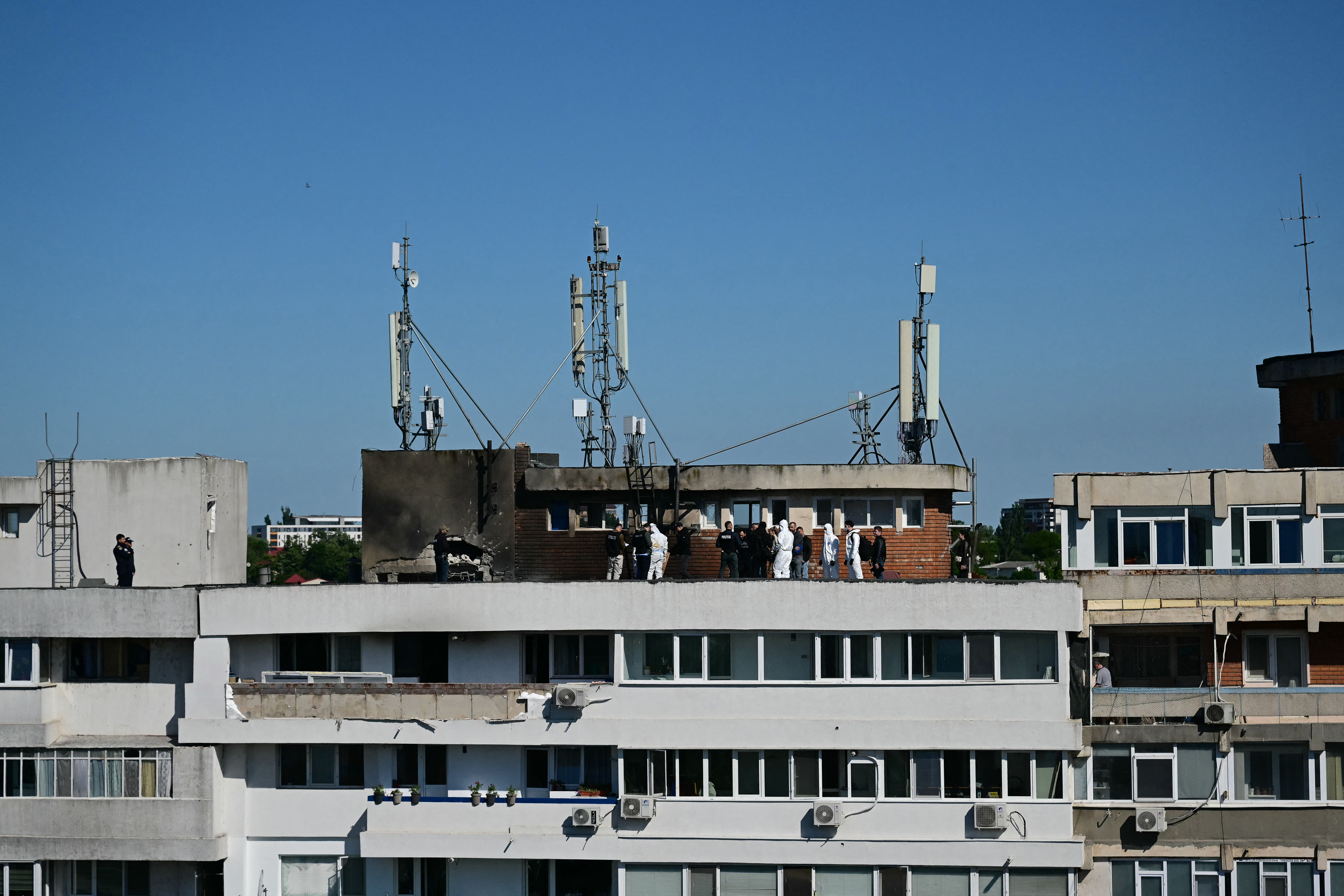
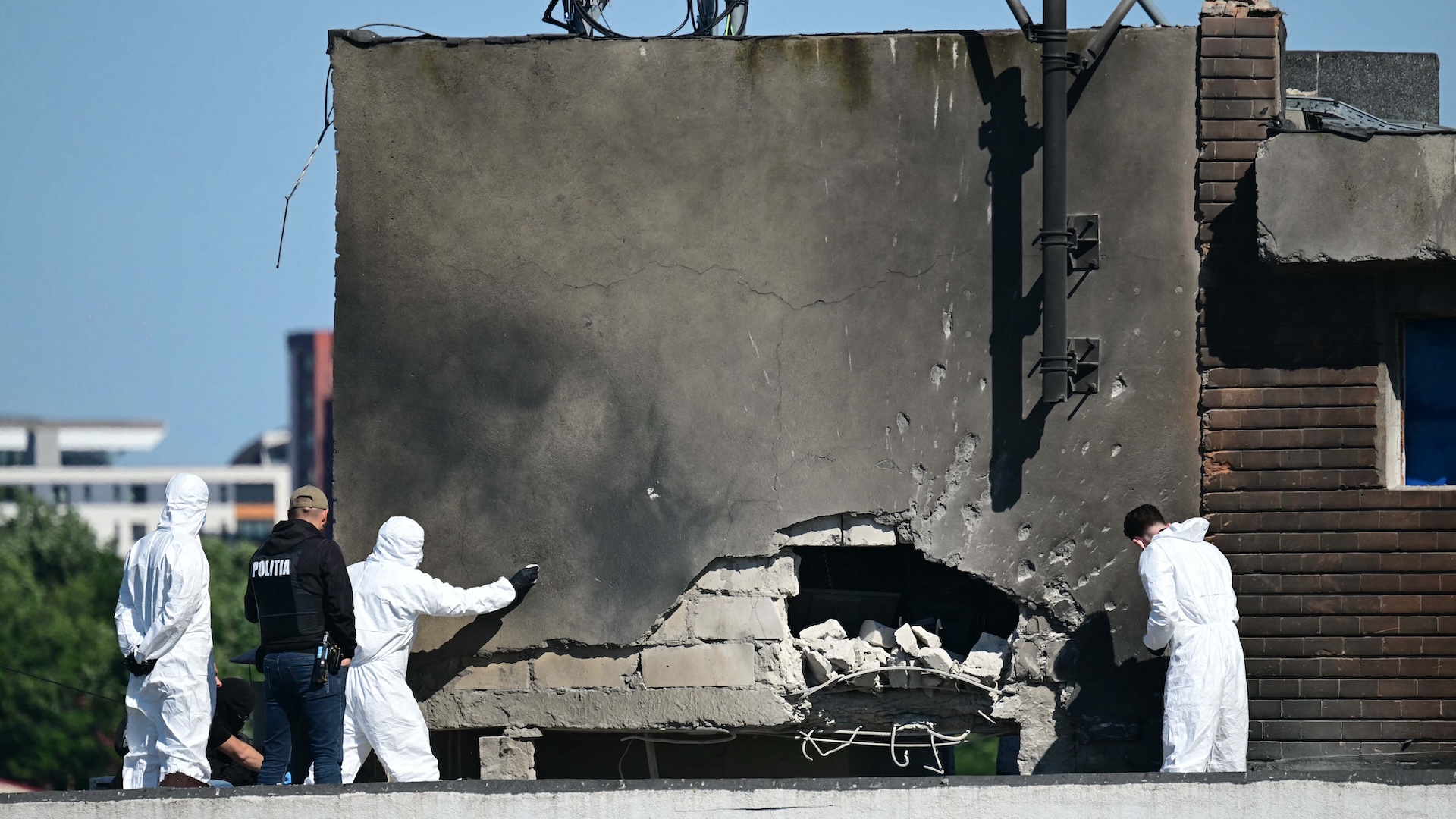
In what appears to be the first incident of its kind, a Russian kamikaze drone strayed into Romanian airspace before striking a residential building, injuring civilians. While Russian drones flying into NATO airspace, whether accidental or deliberate, have become a feature of the war in Ukraine, this marks a notable milestone, although the nature of the repercussions remains unclear.
The Russian drone was part of a barrage involved in an overnight attack on Ukraine. It strayed into Romanian airspace before crashing into the roof of a residential building in Galați on the River Danube, in eastern Romania. The Romanian Ministry of Defense assesses that the drone was intended to attack one of several Ukrainian targets in the vicinity of the river border with Romania.
A russian drone carrying explosives, involved in the bombing of infrastructure in Ukraine crashed in Galați, Romania, causing a fire on the roof of a residential apartment building.
Two persons sustained minor injuries and several residents required medical attention, the… pic.twitter.com/P8jzYFrEEp
A senior NATO official confirmed to TWZ that it had detected and tracked the Russian drone, but it entered Romanian airspace only minutes before striking the apartment building. “To put this in context, you are talking about something that is travelling nearly 200km/h [124 miles per hour] over a populated area less than 15km [nine miles] from the border. Nonetheless, we are assessing what more can be done now to optimize Romania and NATO’s network of sensors and shooters to safely neutralize such threats,” the official added.
JUST IN: Images from inside the apartment hit by a Russian drone in Galați, Romania are now emerging. The images shows extensive damage, with the reinforced concrete ceiling completely perforated by the impact and explosion. A mother and her 14-year-old son were injured. pic.twitter.com/BRq9txK3QS
According to Ukrainian President Volodymyr Zelensky, the Shahed-type drone was involved in Russian strikes on the Odesa region, which borders Romania, targeting civilian container ships. Since the summer of 2023, Russia has embarked on a campaign to attack Ukrainian ports and other facilities on the Danube, with extensive use of drones. Overnight Russian strikes in the wider Black Sea region saw three foreign-flagged merchant vessels attacked, according to Kyiv, one of them being the Turkish-owned Ant, a dry cargo ship that was heading to Turkey from Odesa.
It is indeed necessary to step up pressure on Russia so that this war is not dragged out or expanded. Last night, the Russians carried out a deliberate strike on our southern region – Odesa region, which borders Romania. This was yet another cynical attack on civilian… https://t.co/lOcfhrwQAf
— Volodymyr Zelenskyy / Володимир Зеленський (@ZelenskyyUa) May 29, 2026
A map showing the approximate location of Galați on the River Danube, in eastern Romania, close to the borders with Ukraine and Moldova. Google Earth
The impact sparked a fire, injured two people, and forced the evacuation of several other residents.
The Romanian Ministry of Defense said the drone had been tracked by radar in Romanian airspace.
A Romanian Air Force F-16 fighter. U.S. Army National Guard photo by Staff Sgt. Jaccob Hearn Sgt. 1st Class Jaccob Hearn
— SHAPE – NATO Allied Command Operations (@SHAPE_NATO) May 29, 2026
There have been some mixed messages as to why the drone was not shot down.
The Romanian Ministry of Defense says that the pilots involved had authorization to engage targets throughout the alert.
President of Romania Nicușor Dan said that the decision not to engage the target was taken “because the conditions did not exist to destroy it without the heightened risk of endangering civilian safety.”
Regardless, Romania summoned Russia’s ambassador today, calling out the “irresponsible escalation” by Moscow.
“We will officially communicate the consequences that this lack of responsibility on the part of the Russian Federation will have for the diplomatic relations between our countries, as well as the next steps at the European level regarding sanctions packages,” the Romanian Foreign Minister Oana Țoiu wrote on X.
L-am convocat pe Ambasadorul Federației Ruse la sediul Ministerului Afacerilor Externe.
Siguranța României este prioritatea noastră absolută.
Avem confirmarea MAPN că drona care s-a prăbușit pe o clădire rezidențială din Galați este de proveniență rusească.
Meanwhile, Romania’s president, Nicușor Dan, said he had instructed the foreign ministry to prepare a package of measures regarding Romania’s relationship with Moscow, “proportionate to this very serious situation.”
Am avut o convorbire cu Secretarul General @NATO, @SecGenNATO , în urma celui mai grav incident de securitate produs pe teritoriul României de la începutul războiului de agresiune al Rusiei împotriva Ucrainei. Am condamnat ferm această încălcare inacceptabilă a suveranității…
Condemnation has also come from other NATO allies.
“I want to condemn this irresponsible act by Russia,” France’s foreign minister, Jean-Noël Barrot, said, adding that the drone had struck “a country of the European Union and a NATO country.”
A NATO spokesperson condemned “Russia’s recklessness” and said the alliance would strengthen its defences against all threats, including drones.
Meanwhile, UN Secretary General António Guterres has called for greater diplomacy, immediate de-escalation and “a full and unconditional ceasefire,” warning of “unknown and unintended consequences” from the escalation and intensification of Russian drone and missile attacks against Ukraine.
Russia’s war of aggression has crossed yet another line.
A Russian drone incursion struck a densely populated area in Romania, injuring civilians.
On EU territory.
We stand in full solidarity with Romania and its people.
As we continue strengthening our security and…
— Ursula von der Leyen (@vonderleyen) May 29, 2026
Romania has also called for the beefing up of its counter-drone capabilities to help prevent similar incidents in the future.
The Romanian Foreign Ministry today said it had asked NATO to accelerate the transfer of anti-drone capabilities in response to the drone strike.
PM @Bolojan: @GuvernulRo strongly condemns Russia’s violation of our airspace. We count on NATO Allies’ support and timely delivery of anti-drone capabilities. We are also focusing on rapid implementation of SAFE.
Romania already hosts several layers of NATO and NATO-linked air defense infrastructure, but most of these are designed to engage ballistic missiles and conventional aircraft, not large numbers of low, slow Shahed-type drones.
Air defense capabilities in Romania include the Aegis Ashore system at Deveselu, the most important NATO missile-defense installation in the region. It is a U.S.-operated land version of the naval Aegis ballistic missile defense system armed with SM-3 interceptors, integrated into NATO’s missile shield.
The U.S. Aegis Ashore site in Romania. U.S. Navy
Romania also operates Patriot PAC-3 systems, which are effective against aircraft, cruise missiles, and some ballistic missiles, but are an expensive option for routine drone interception.
A Romanian Army Patriot missile system during a live-fire exercise at the Capu Midia range in Romania, in November 2023. U.S. Department of Defense/Courtesy photo Tech. Sgt. Kristen Pittman
In addition, the country hosts rotational NATO fighter policing detachments, which provide additional air defense over the Black Sea and provide air policing patrols. Currently, a detachment of U.K. Royal Air Force Typhoons is in Romania as part of Operation Biloxi.
UK heatwave?
Still not as hot as a Typhoon afterburner on Op BILOXI.
Typhoons from @RoyalAirForce continue to launch on BILOXI, sharpening combat edge alongside allies in support of @NATO enhanced Air Policing mission.
It should be pointed out that this is not the first incident in which a Russian drone flying from the Ukrainian side of the border has violated Romanian airspace. Drone wreckage was found in Romania, close to the border with Ukraine, in September and October of 2023, although there was no evidence that the NATO country was deliberately targeted. In December of the same year, NATO fighters deployed in Romania were scrambled to respond to a drone violation, with one of the drones exploding in Romanian territory, although it was not shot down. Since then, there have been multiple other Russian drone incursions, but no reported injuries as a result.
However, the overnight strike in Romania further underscores the potentially lethal risk of the war in Ukraine spilling over from Ukraine and into NATO territory.
It also coincides with Russian threats to step up its sustained assault on Ukraine. Moscow has continued using long-range missiles and drones to target Ukrainian cities and critical energy infrastructure, while Kyiv prepares for further waves of intense attacks.
Earlier this week, Zelensky said he was urging the United States to supply more Patriot systems to help defend against Russian ballistic missile strikes, amid an ongoing shortage of critical air defense systems. Speaking today, the Ukrainian leader said that Ukrainian intelligence has information indicating Russia is preparing a new large-scale attack on Ukraine.
As we have discussed in the past, Russian kamikaze drones heading toward population centers in NATO countries represent an entirely new level of threat to the alliance and one that NATO is currently not well-equipped to deal with.
Police and forensic investigators examine the location of impact over a damaged apartment after a Russian drone struck an apartment building in Galati, eastern Romania. Photo by Daniel MIHAILESCU / AFP DANIEL MIHAILESCU
Considering the intensity of Russian aerial bombardment of Ukraine, and the proximity of NATO borders, it was really only a matter of time until an incident like this occurred.
Already, Romania expanded its no-fly zone along a section of the border with Ukraine to up to 20 miles inside Romania and to a height of 4,000 feet. This was intended as a deterrent against Russian drones from deliberately entering Romanian airspace to reach enemy targets.
TWZ reached out to NATO for details of potential posture changes, and a senior official from the alliance confirmed that a NATO E-3A Sentry Airborne Warning and Control System (AWACS) aircraft was launched today to increase air-domain awareness.
A U.S Air Force E-3 Sentry taxis past a NATO E-3A Airborne Warning and Control System aircraft at NATO Air Base Geilenkirchen, Germany. U.S. Air Force photo/2nd Lt. Caleb Wanzer Capt. Caleb Wanzer
The same NATO official told us that one way to avoid similar incidents in the future would be to bring the MEROPS counter-drone system to Romania under NATO command and control.
“Another way is for Romania and other allies to continue the acquisition of more capabilities as part of the Eastern Flank Deterrence Initiative, which integrates sensing, decision-making and precision effects into a resilient, defense-in-depth concept,” the official added.
As you can read about here, MEROPS counter-drone systems, initially used in Ukraine, have also been deployed to protect U.S. troops from Iranian Shahed-136 munitions. The MEROPS is a small, relatively inexpensive drone built specifically to intercept long-range one-way attack drones.
Now that a Romanian residential building has been hit and people injured, this may push the needle further and lead to the more comprehensive deployment of counter-drone capabilities in this country and elsewhere on NATO’s eastern flank.

 Login
Login
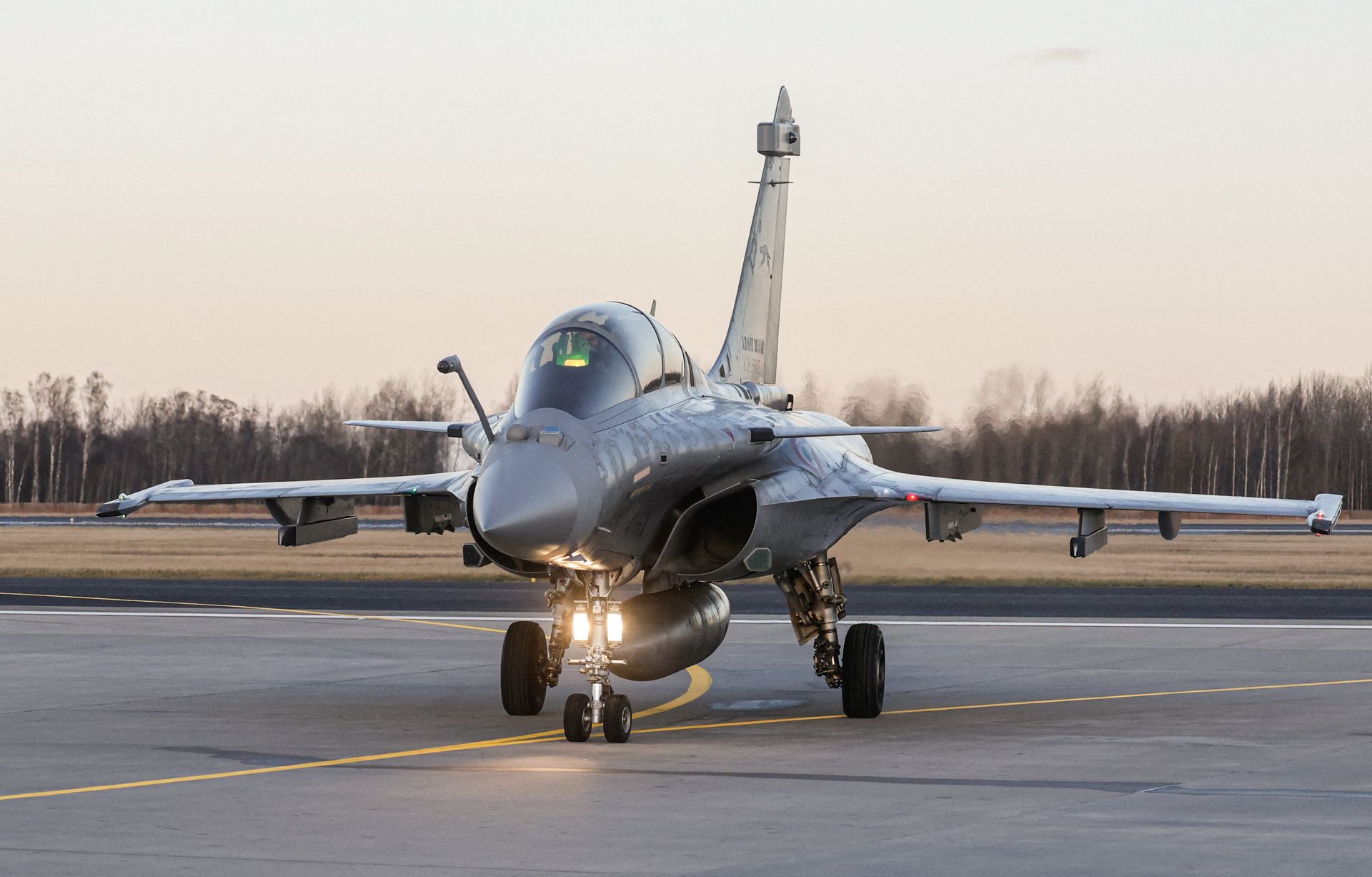






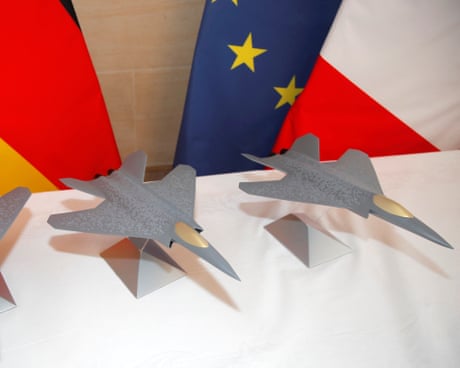
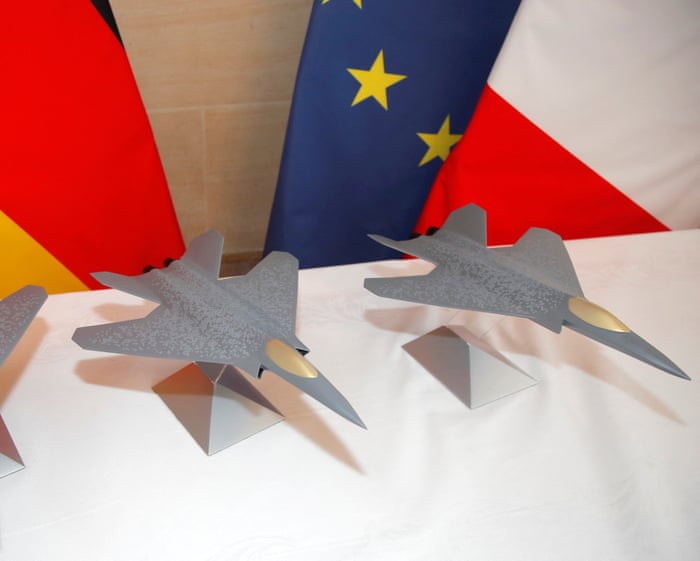
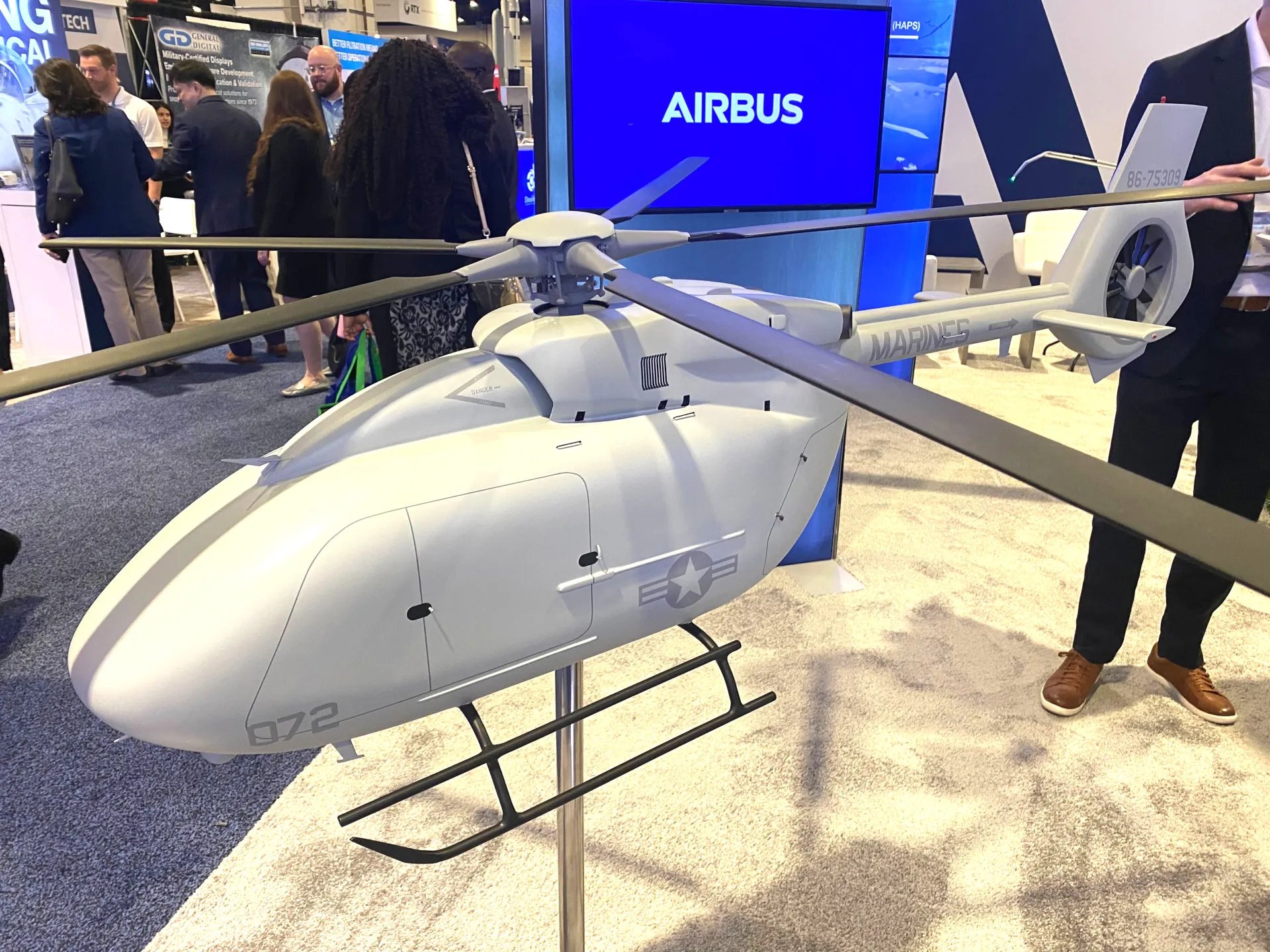
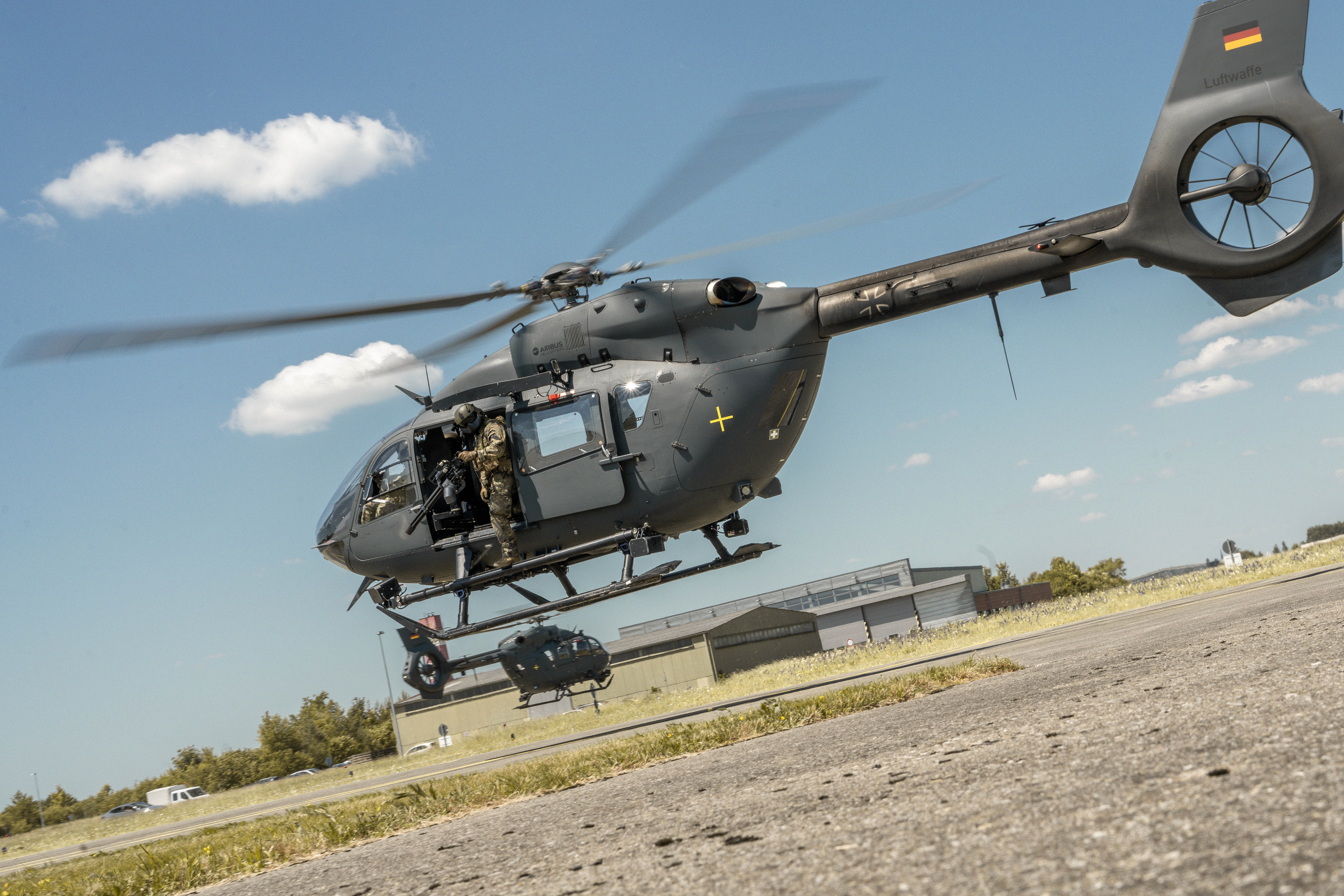
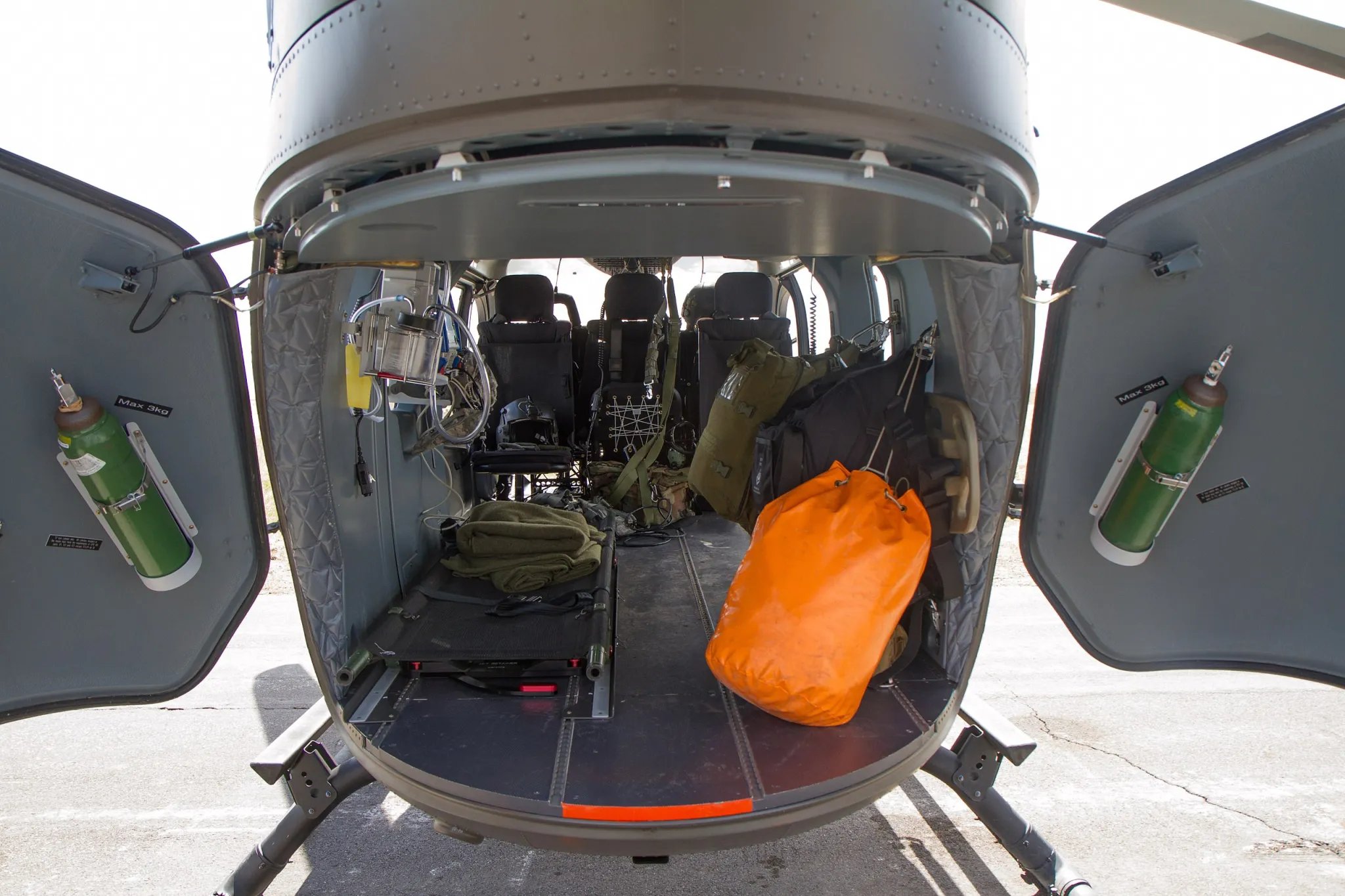
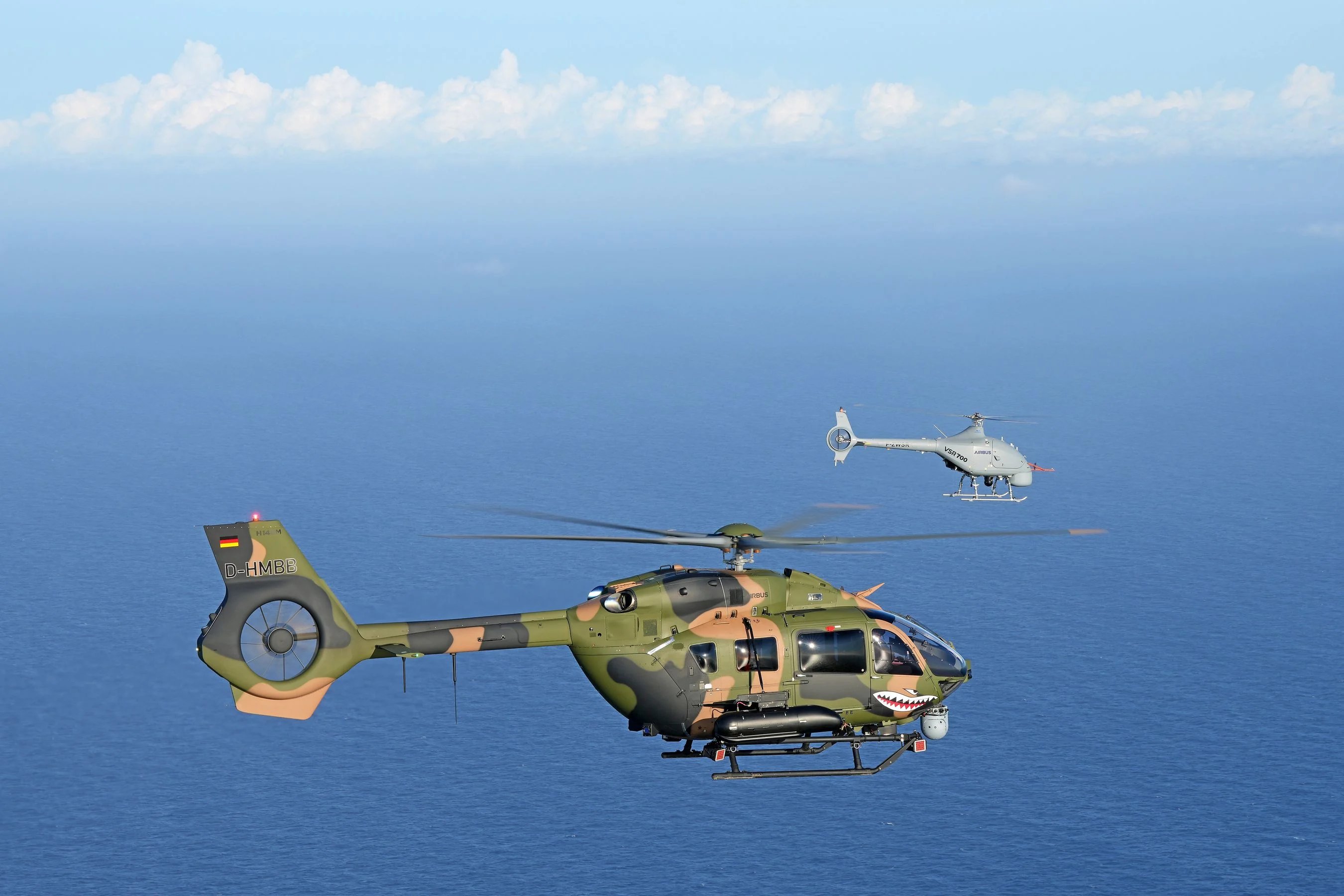
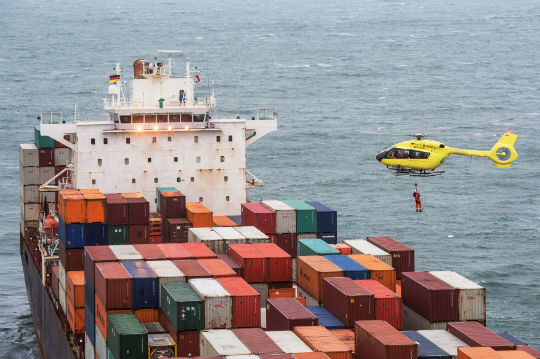
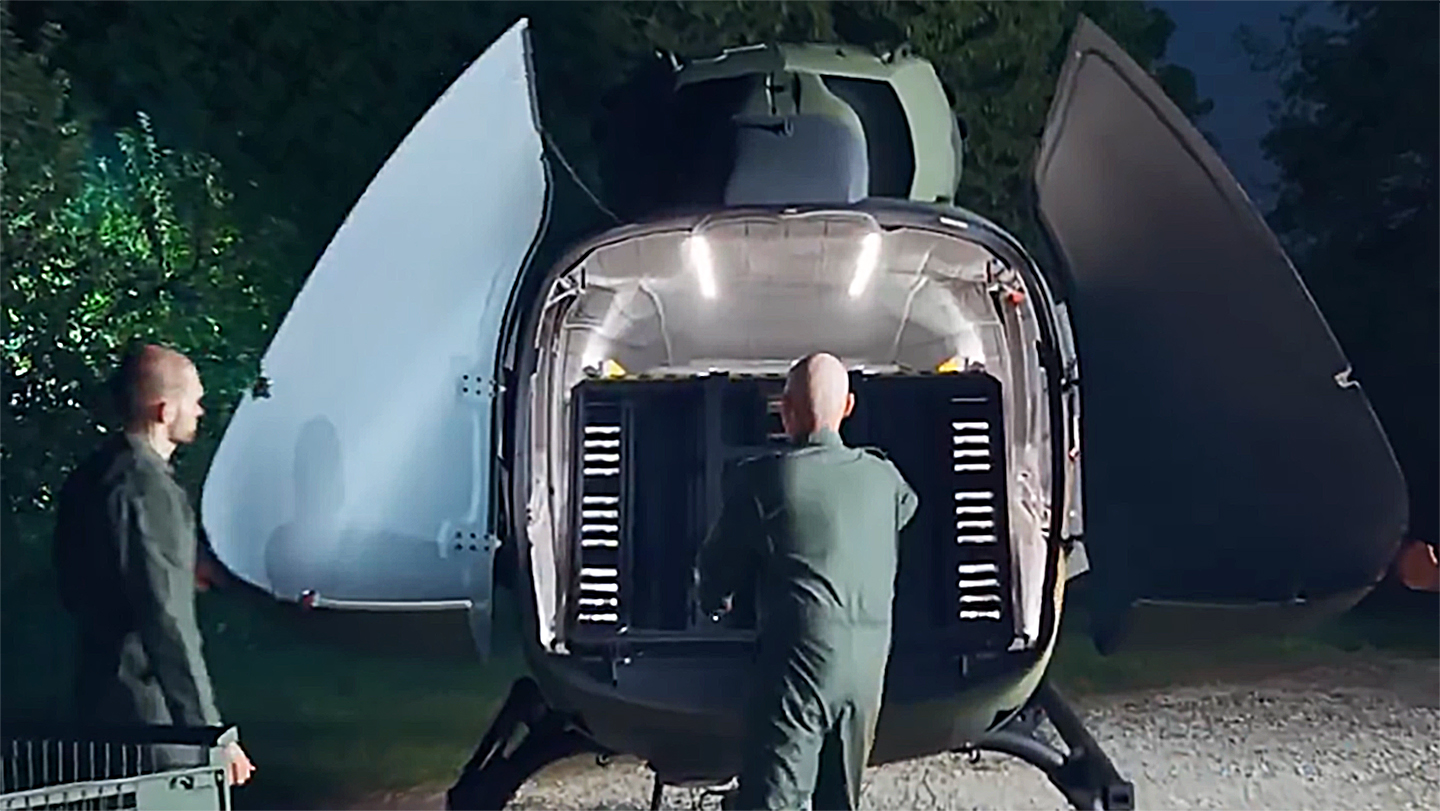

 Lettonie | Destruction d’un drone par les Rafale

 Survol d’un drone au dessus du territoire letton


 Montage d'armements entre mécaniciens des deux pays alliés
 Échanges sur les procédures, matériel et méthodes des équipes…
 Izsludināts gaisa telpas apdraudējums Krāslavas un Ludzas novados, informē Nacionālie bruņotie spēki.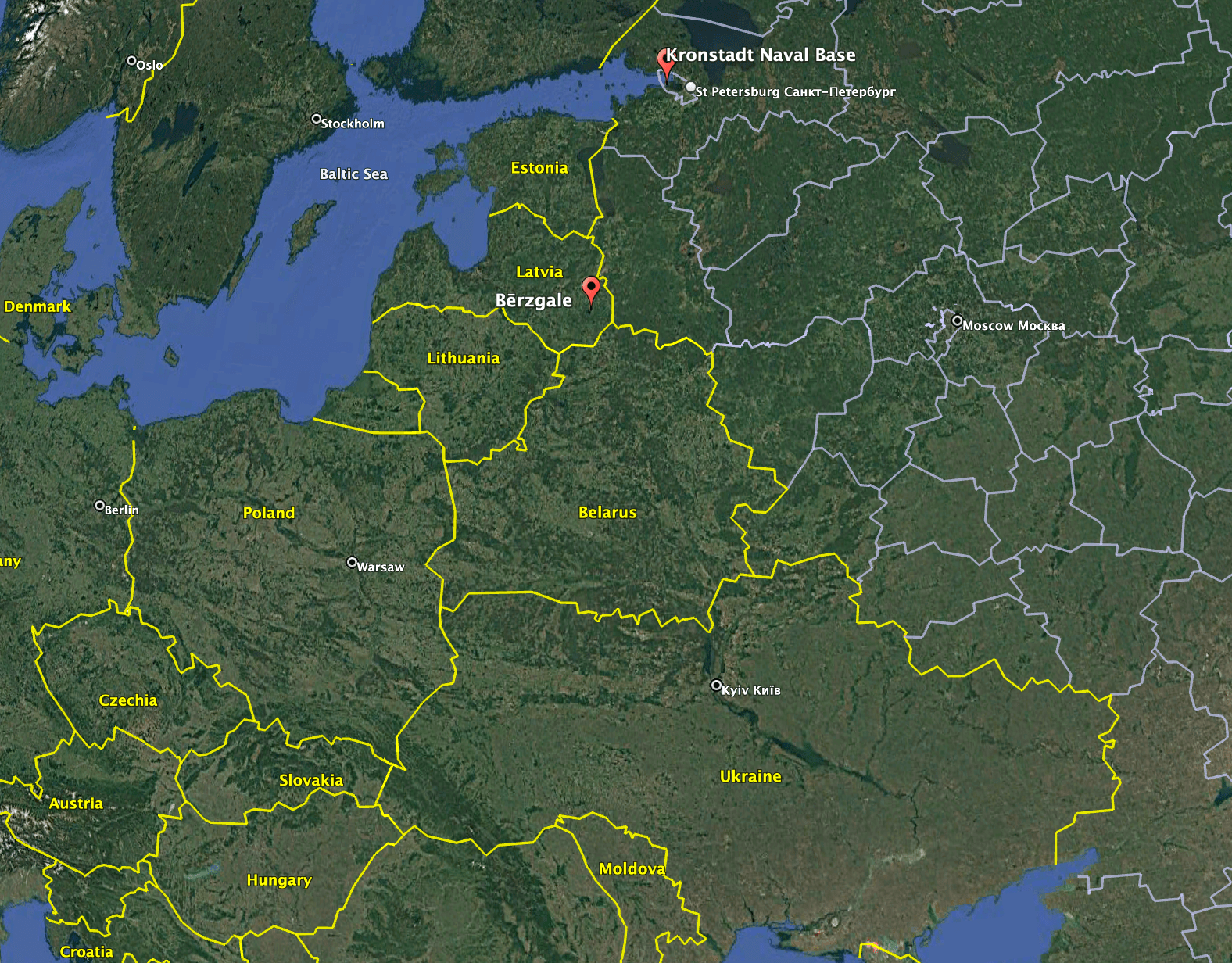
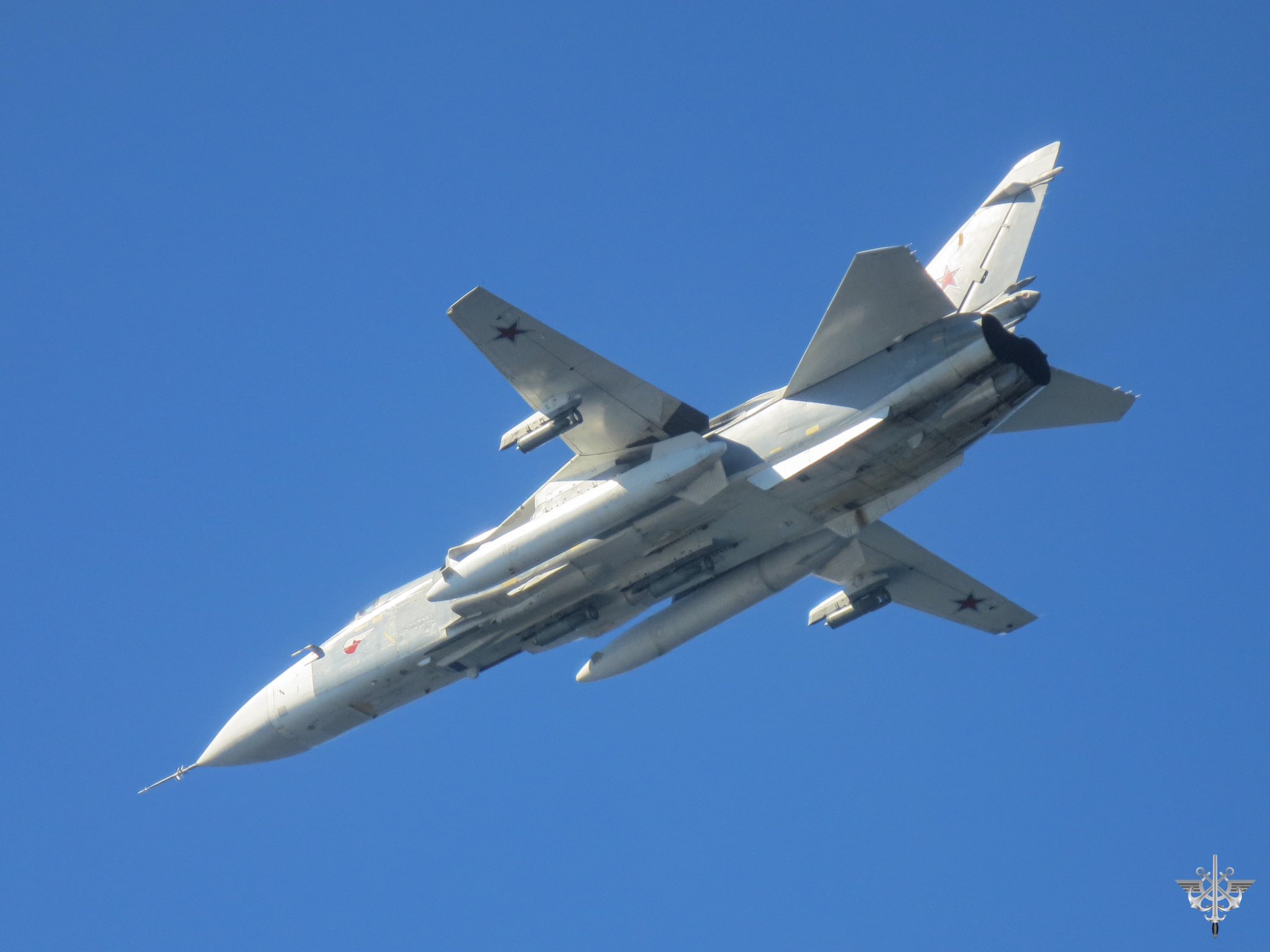
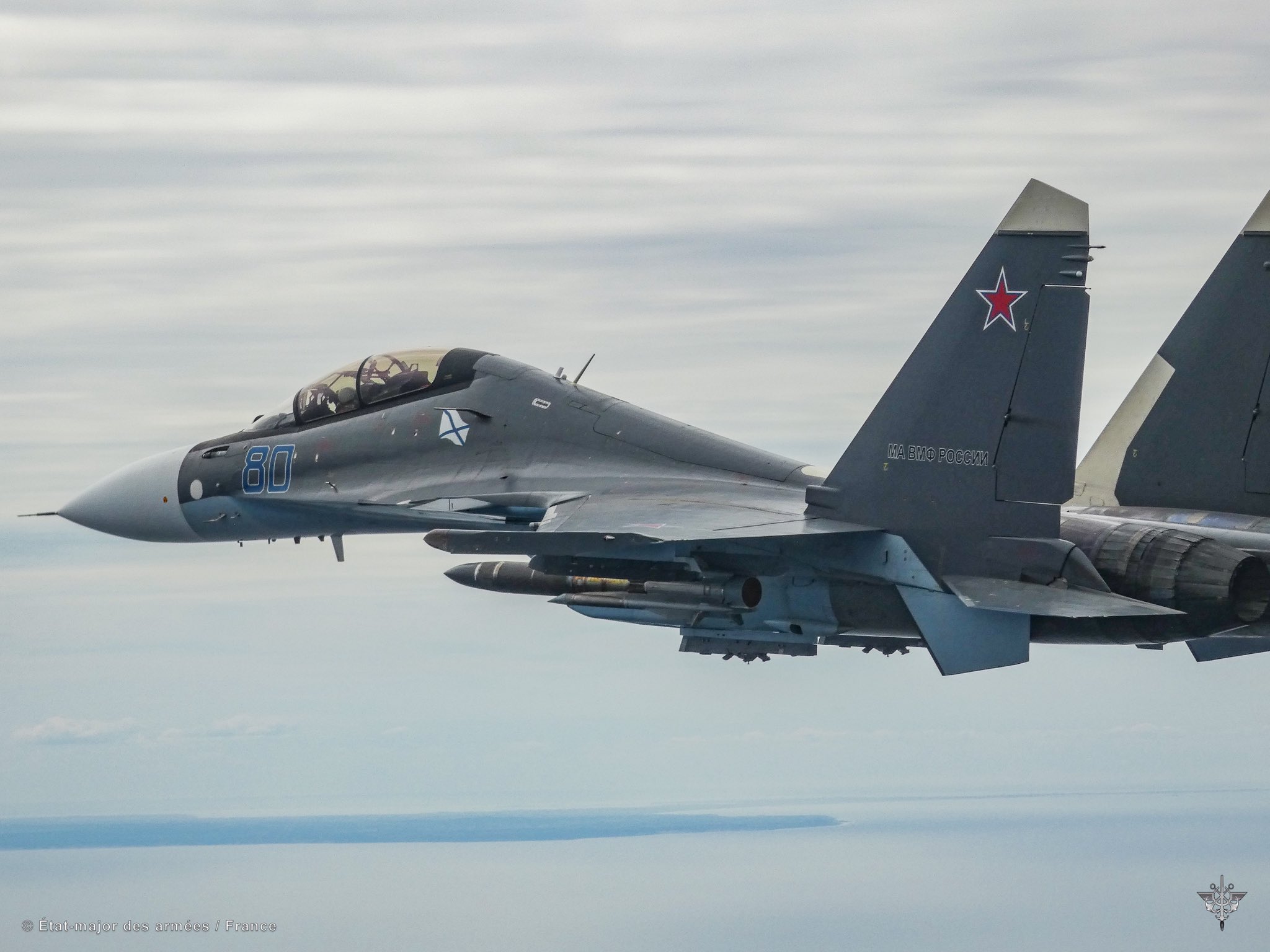
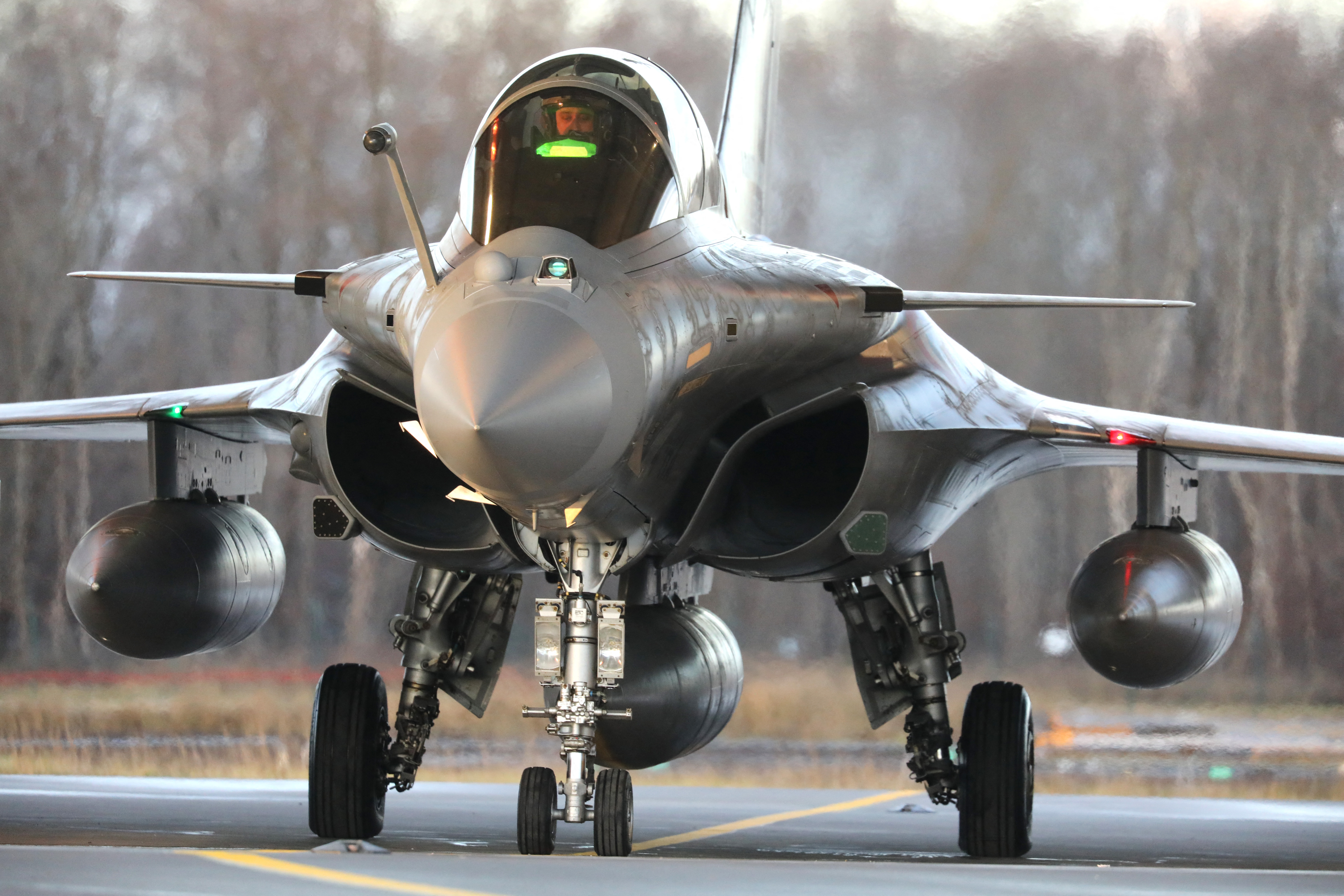
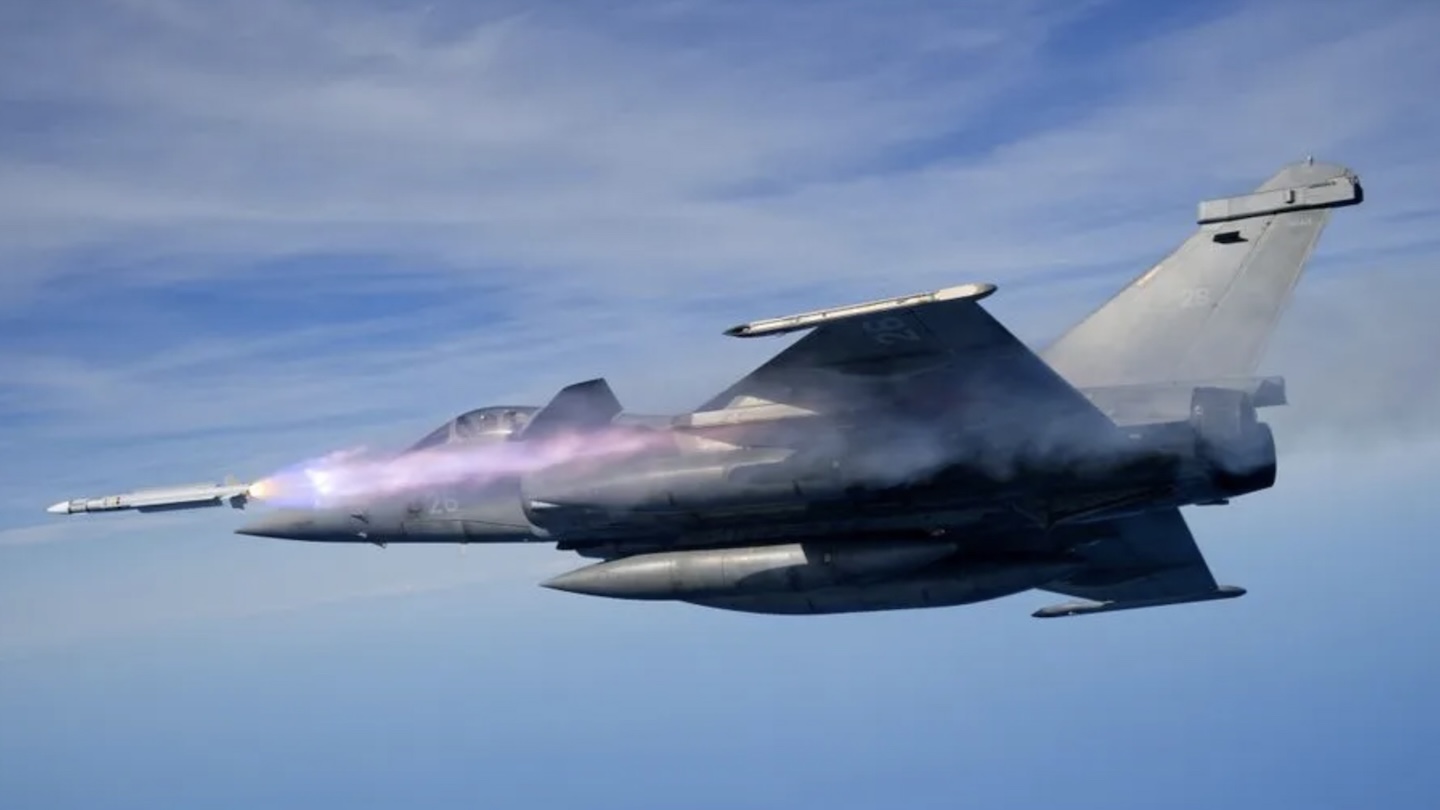


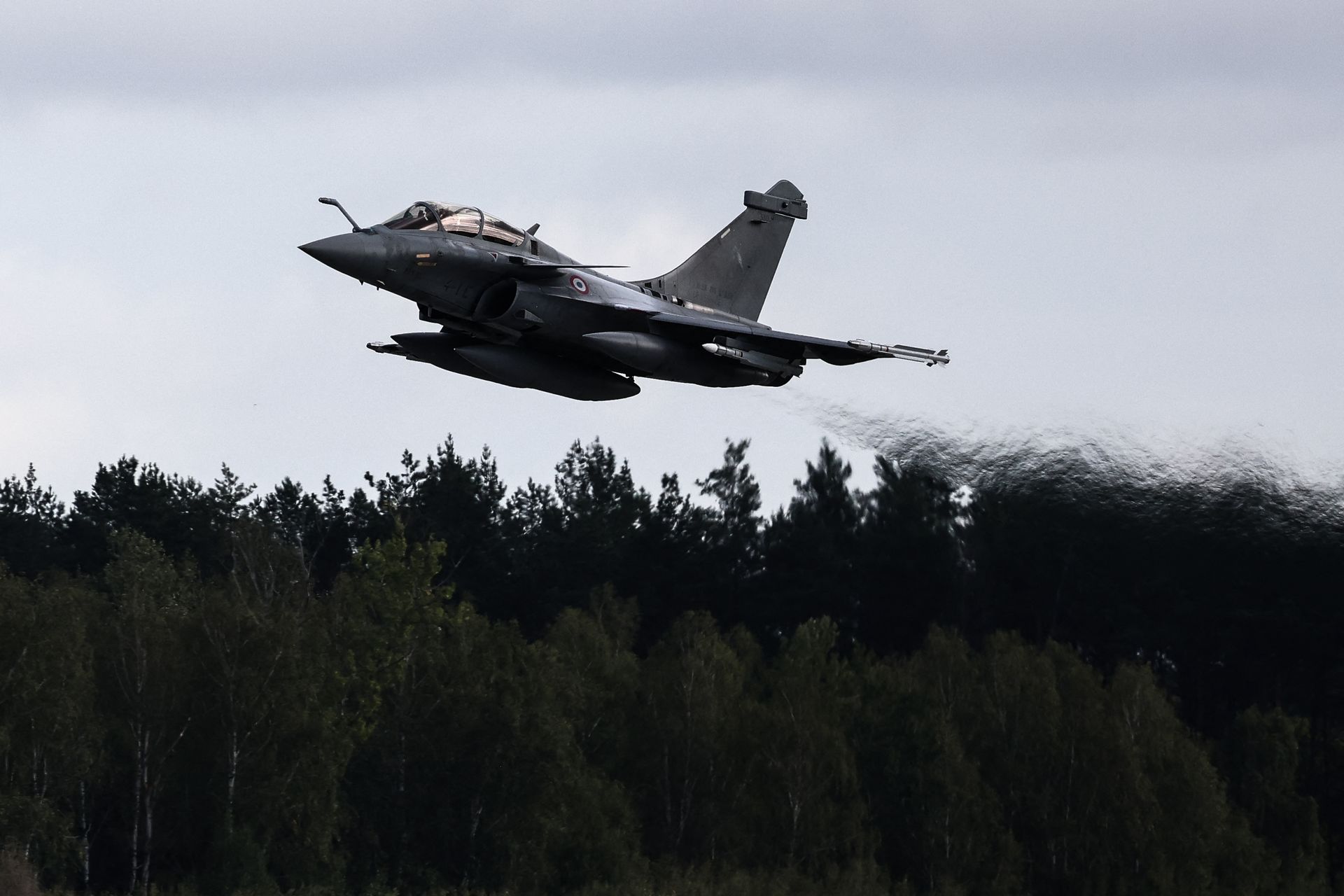
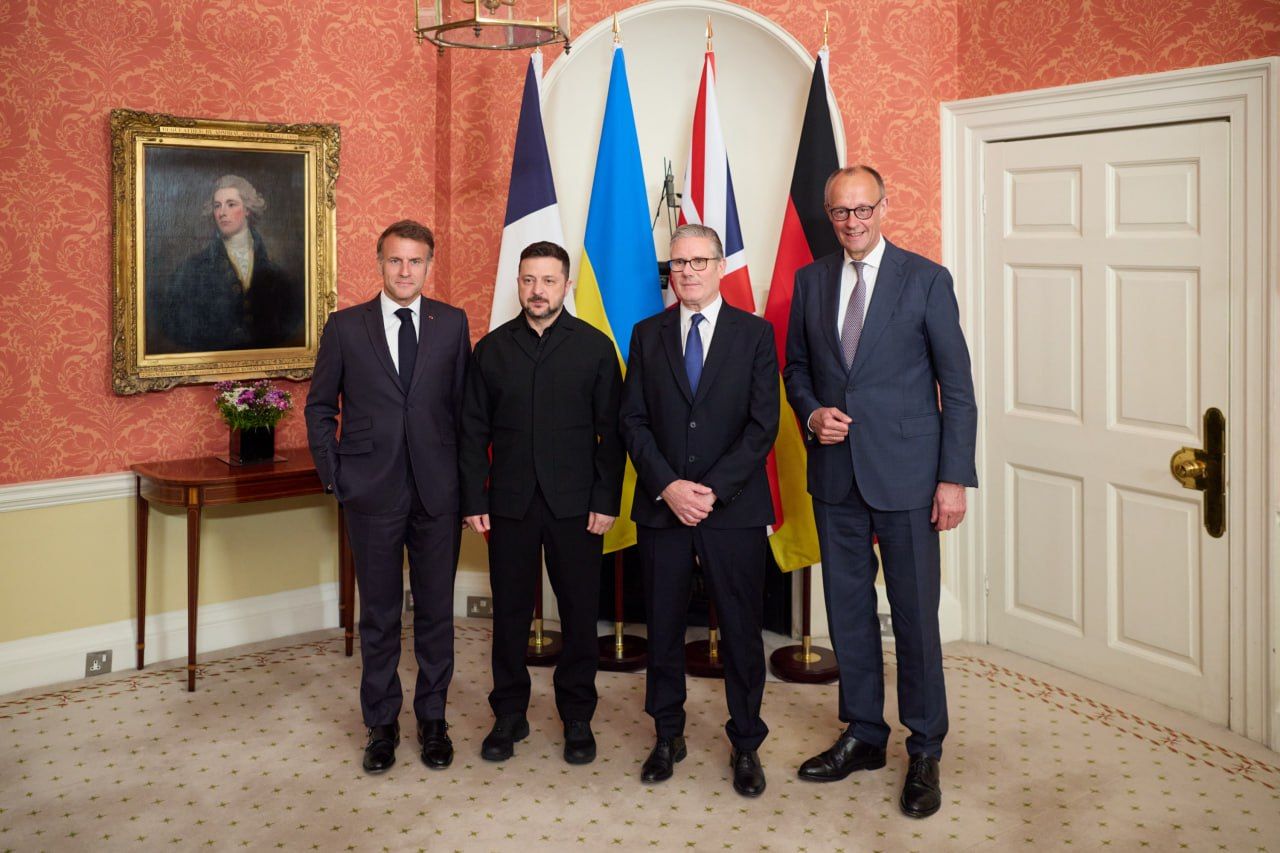
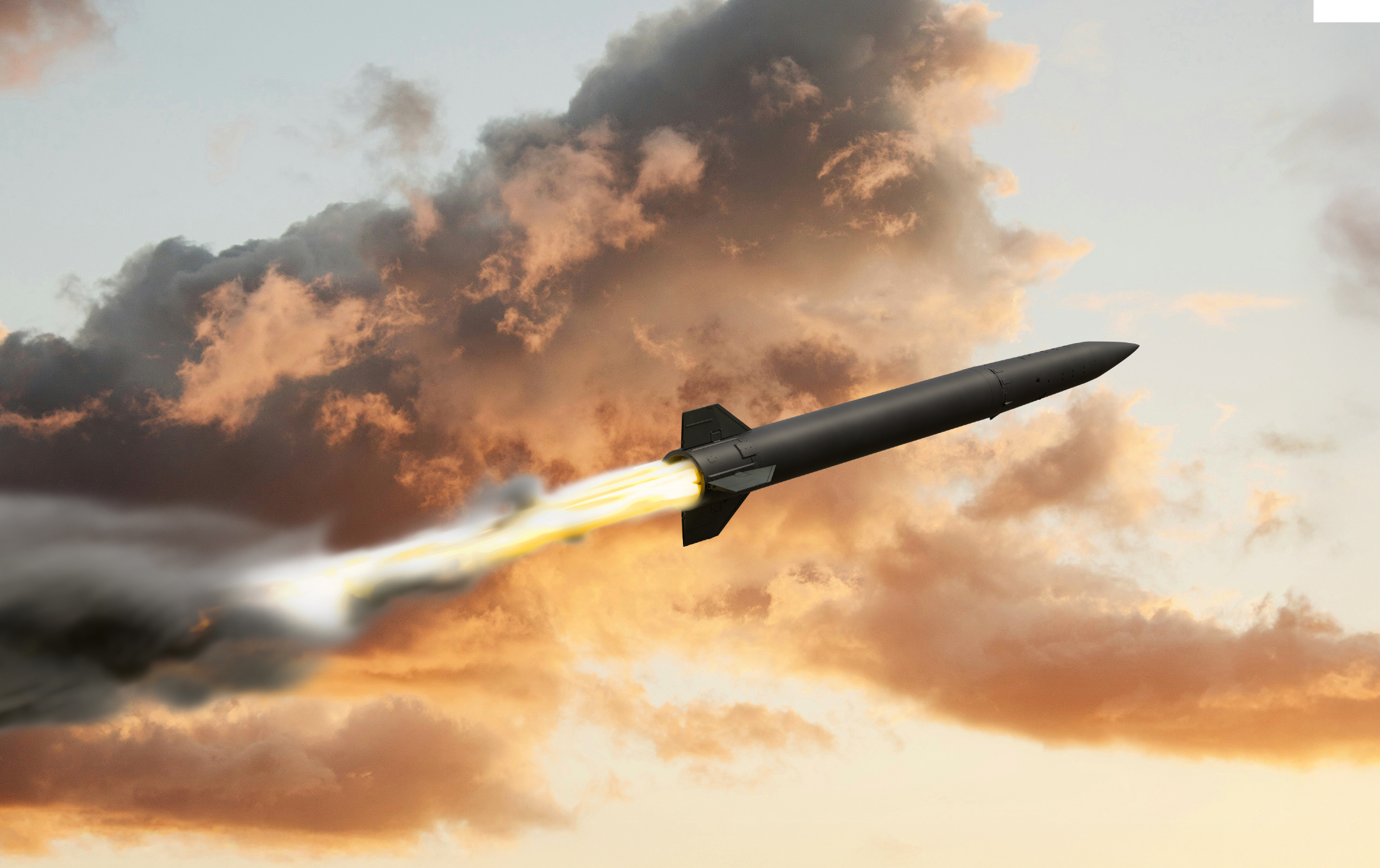
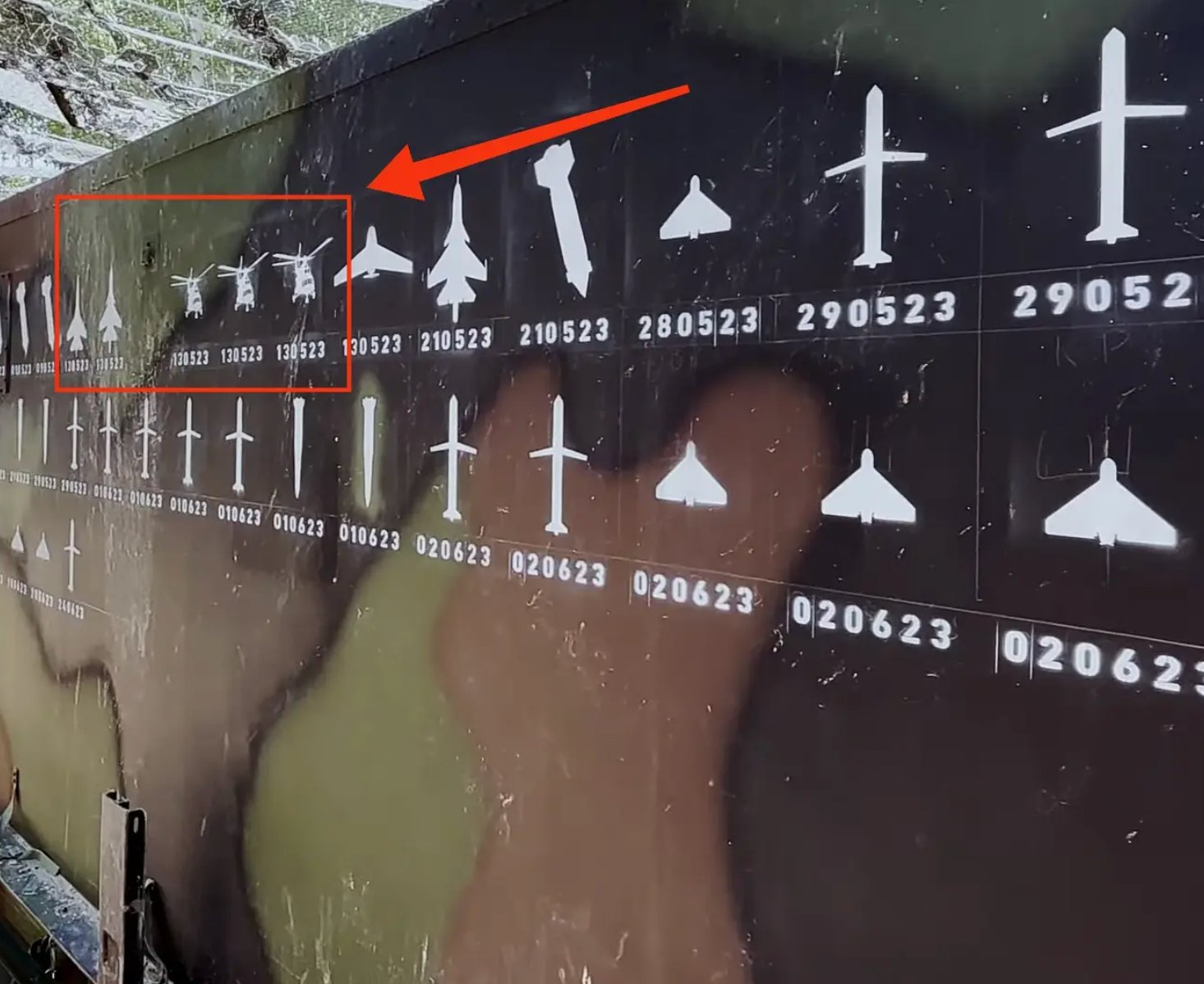
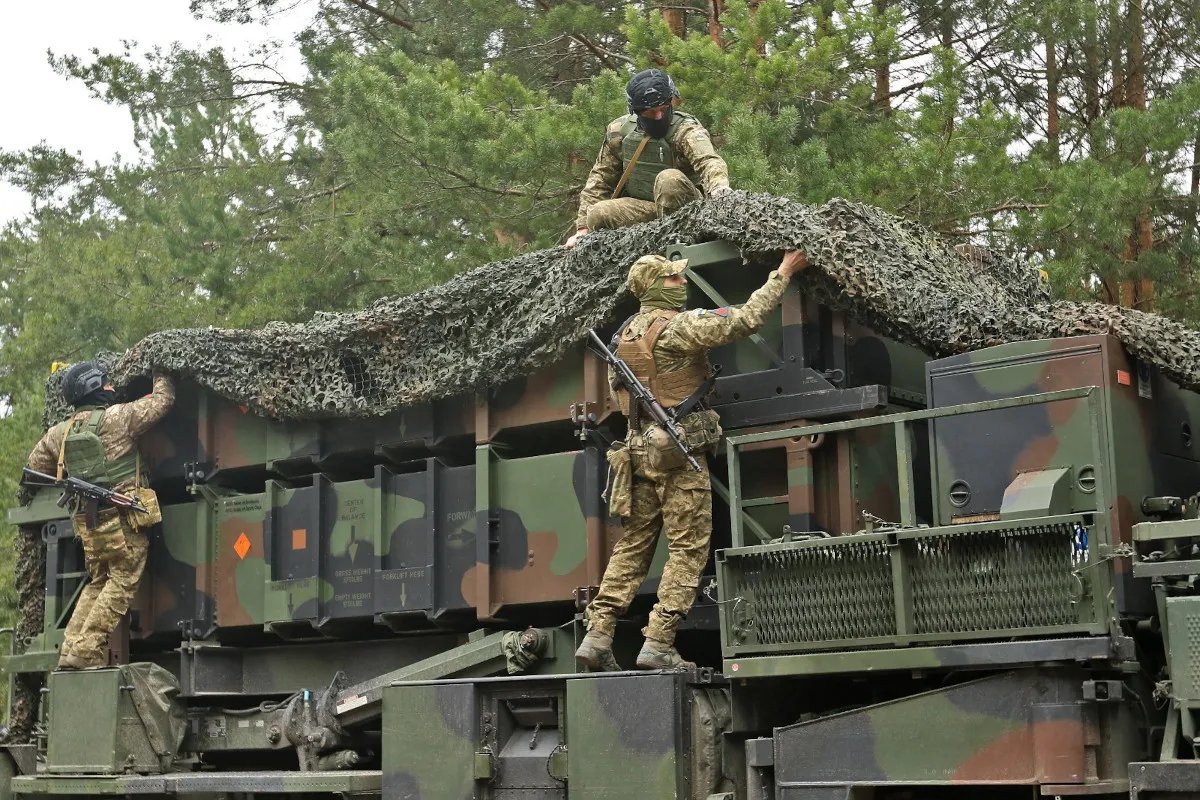
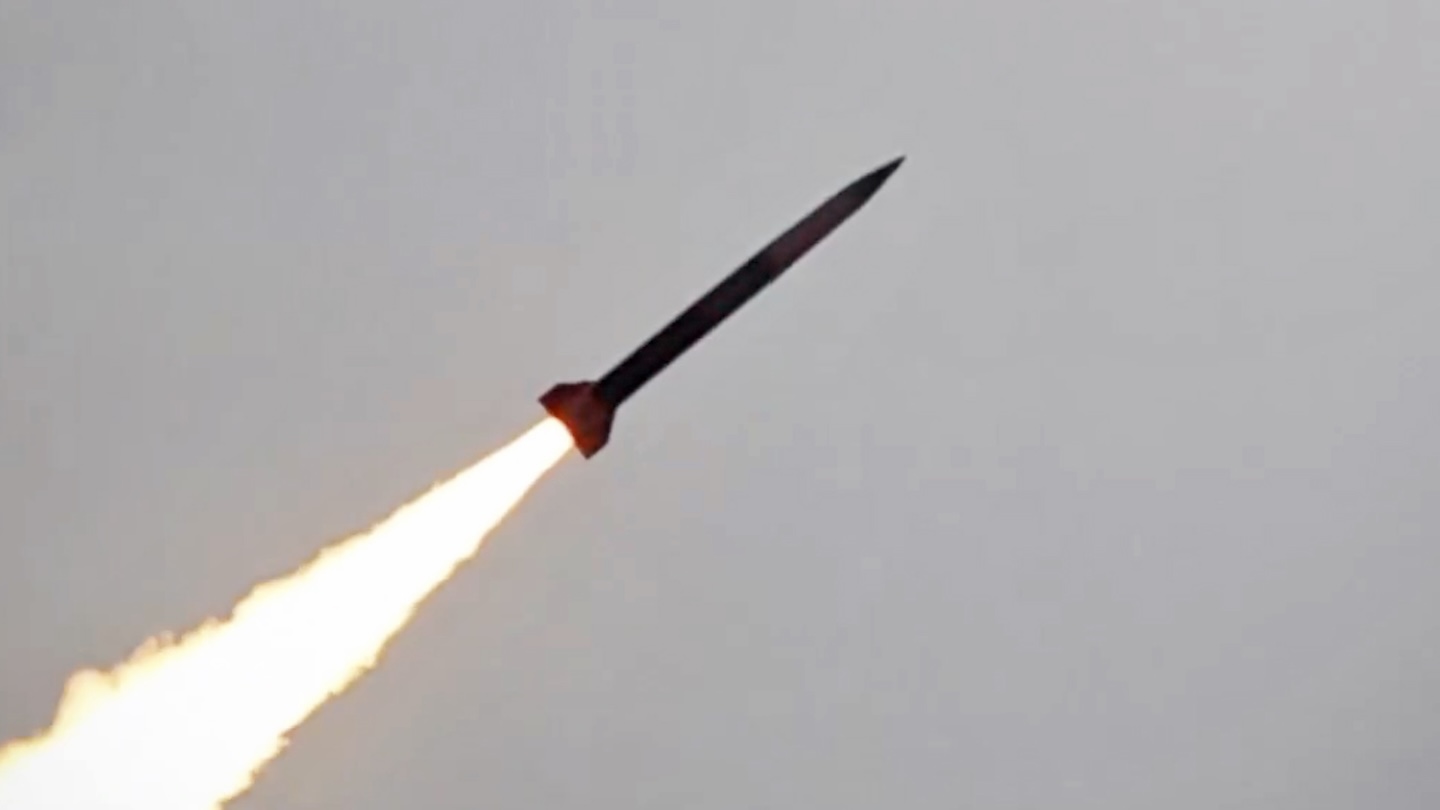
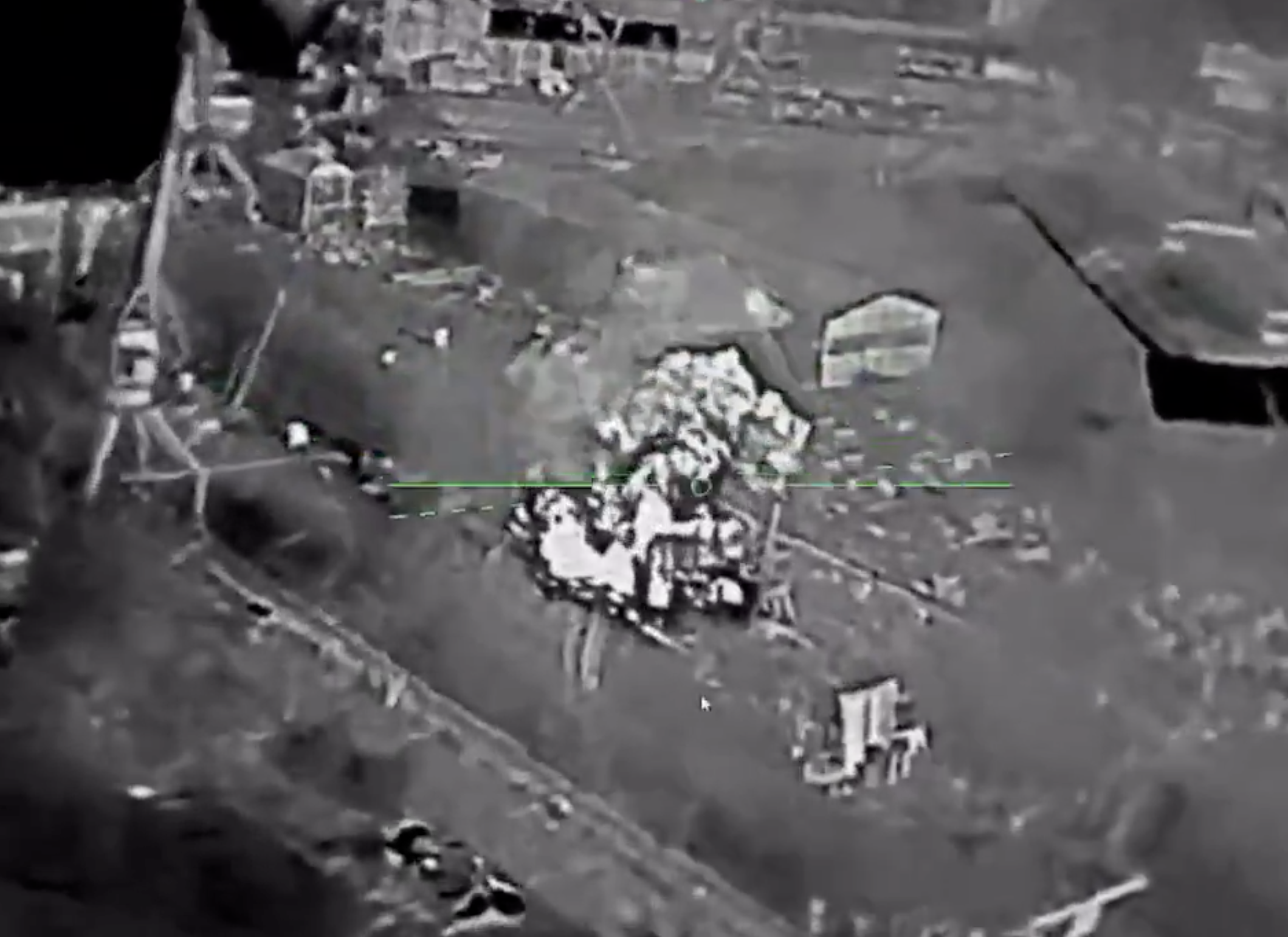
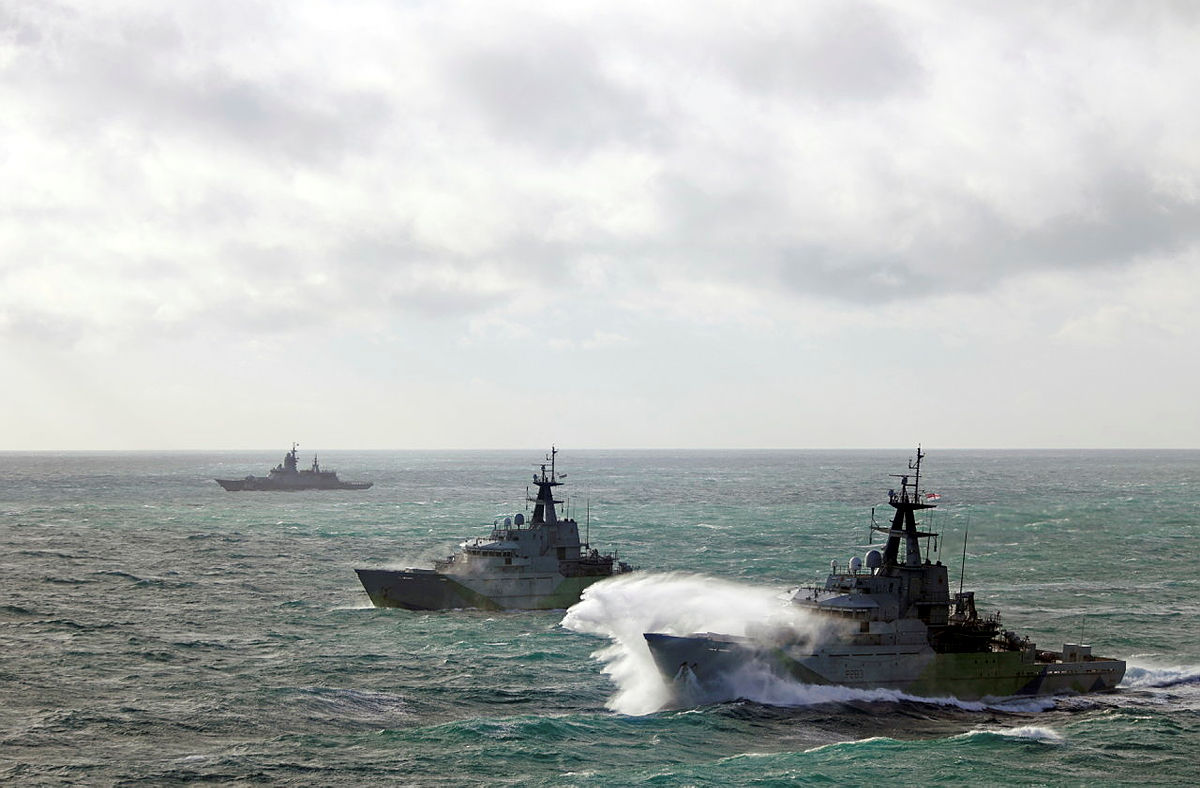
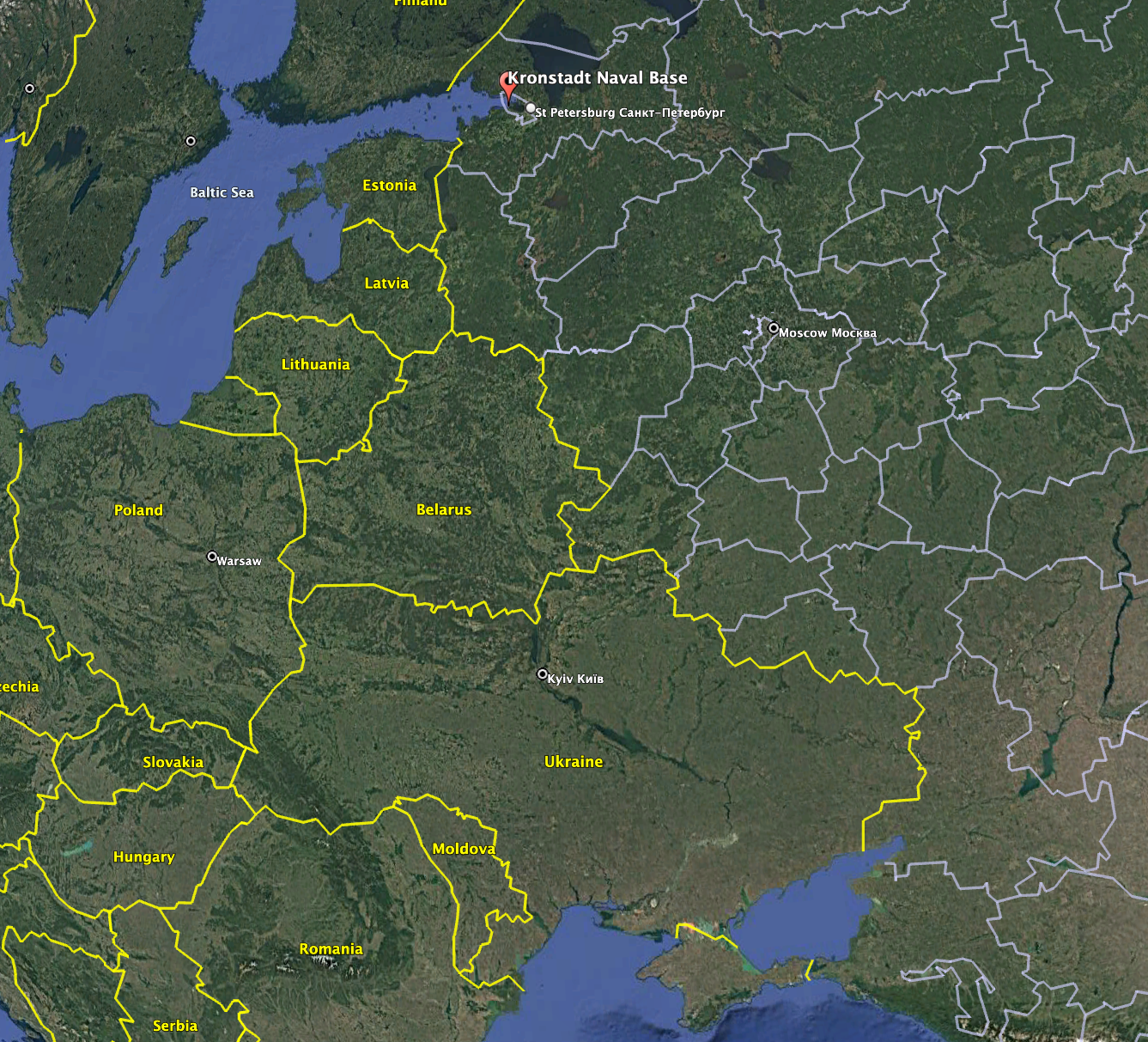
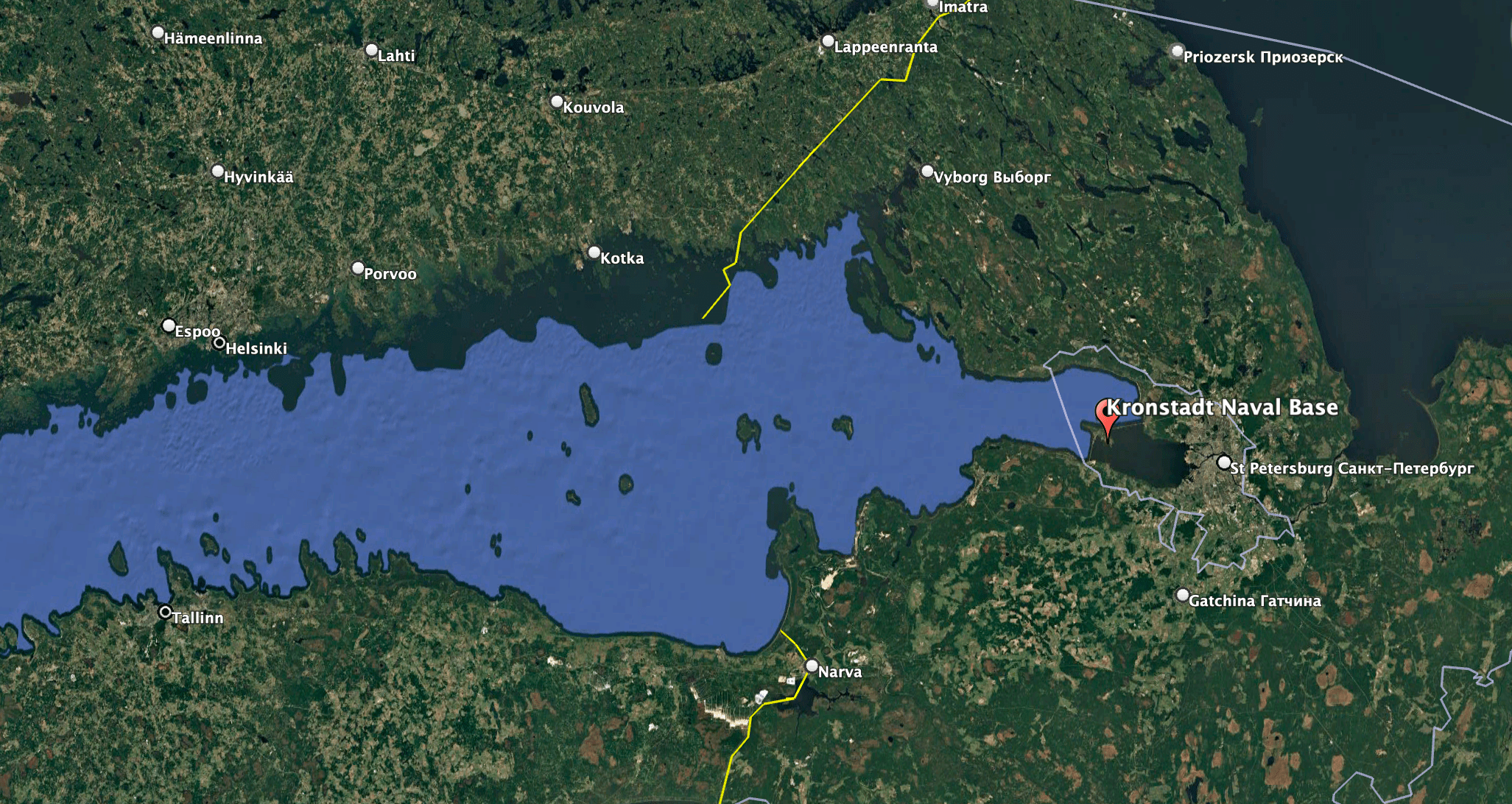
 For the first time in the war, an attack took place in the Baltic Sea, the Russian Serpukhov missile ship was burned in Kaliningrad.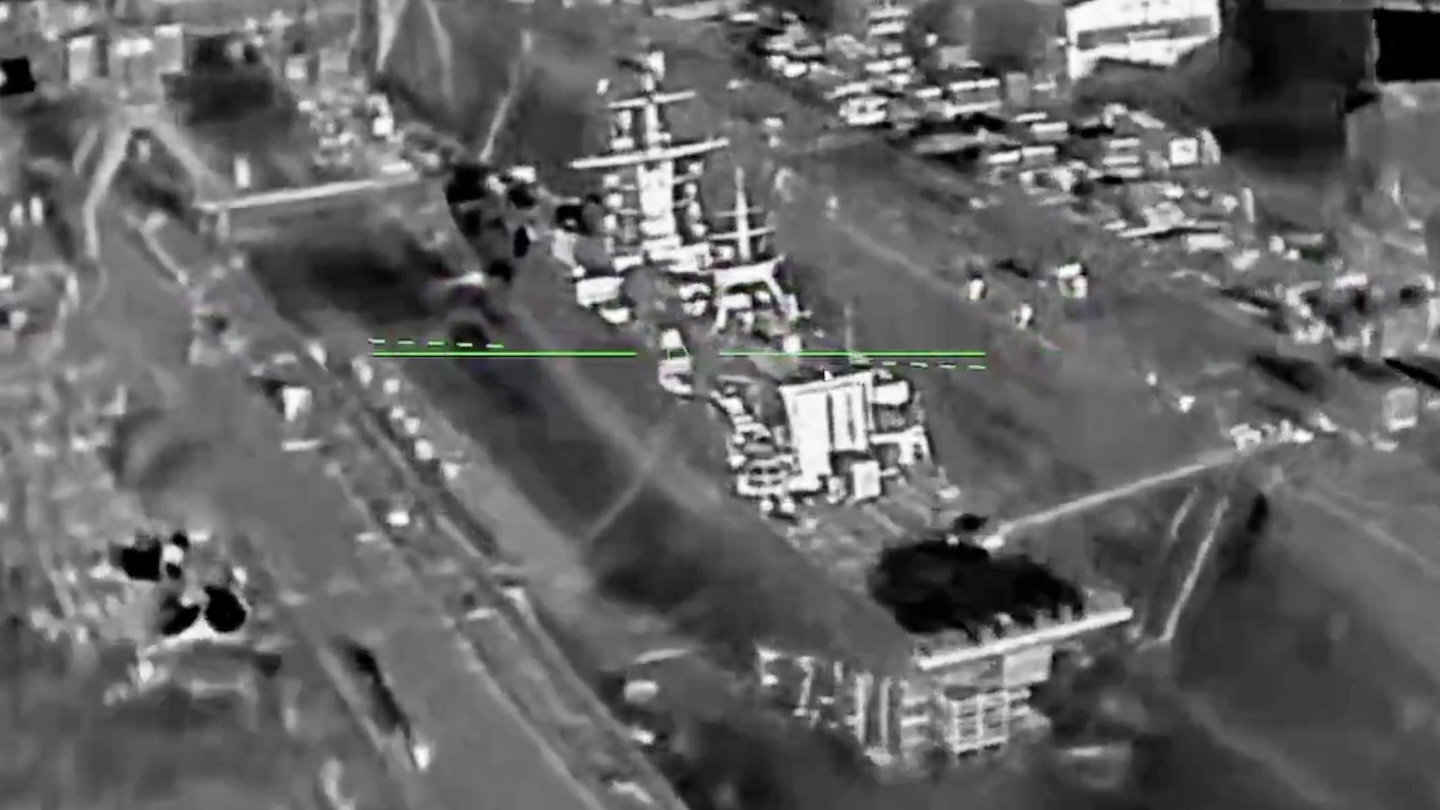
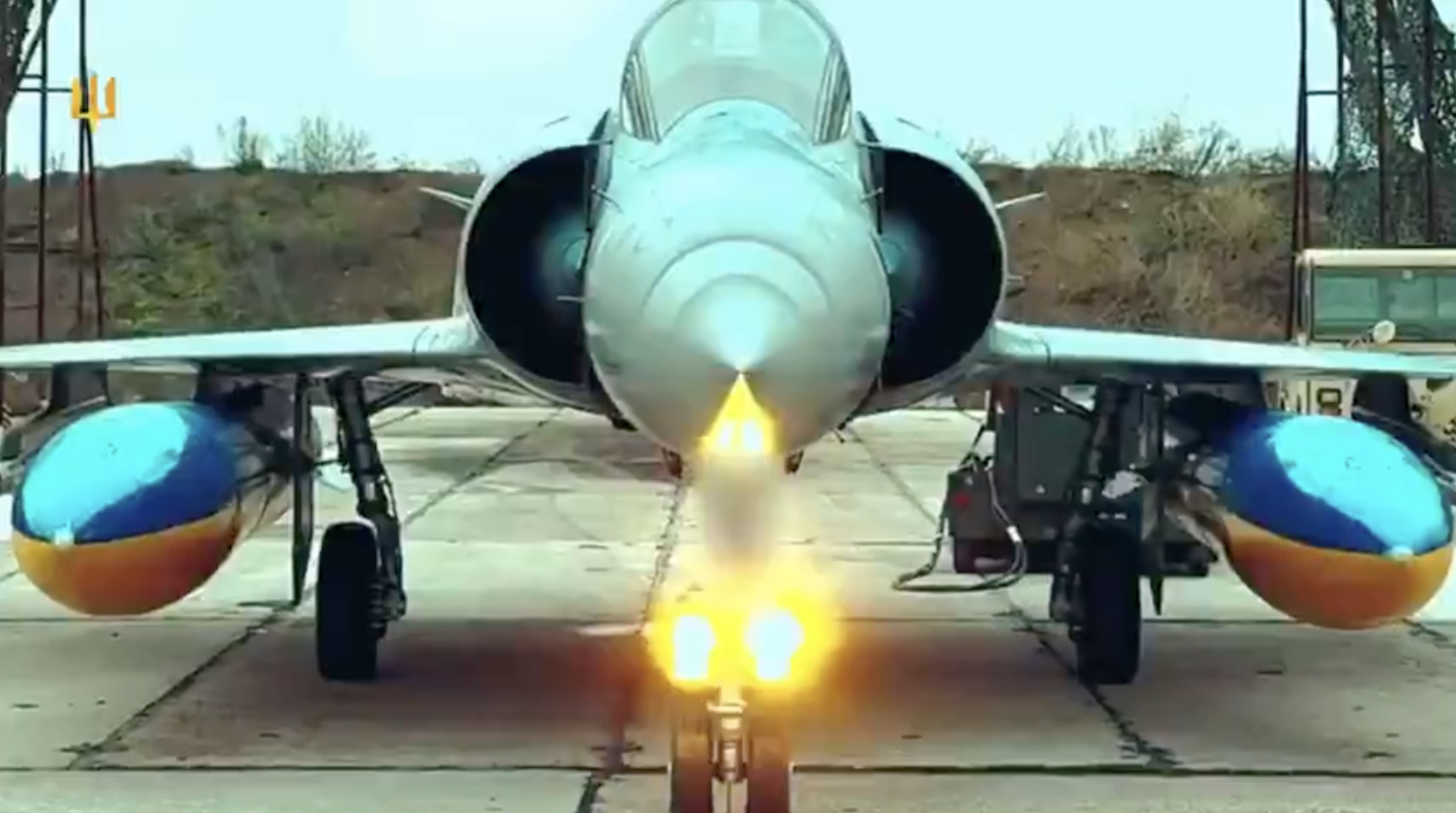
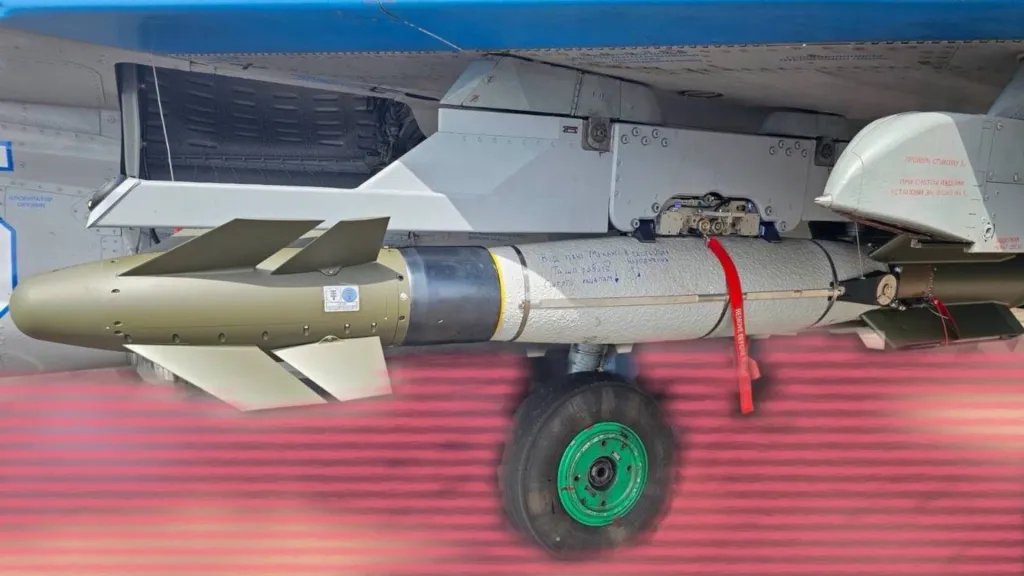

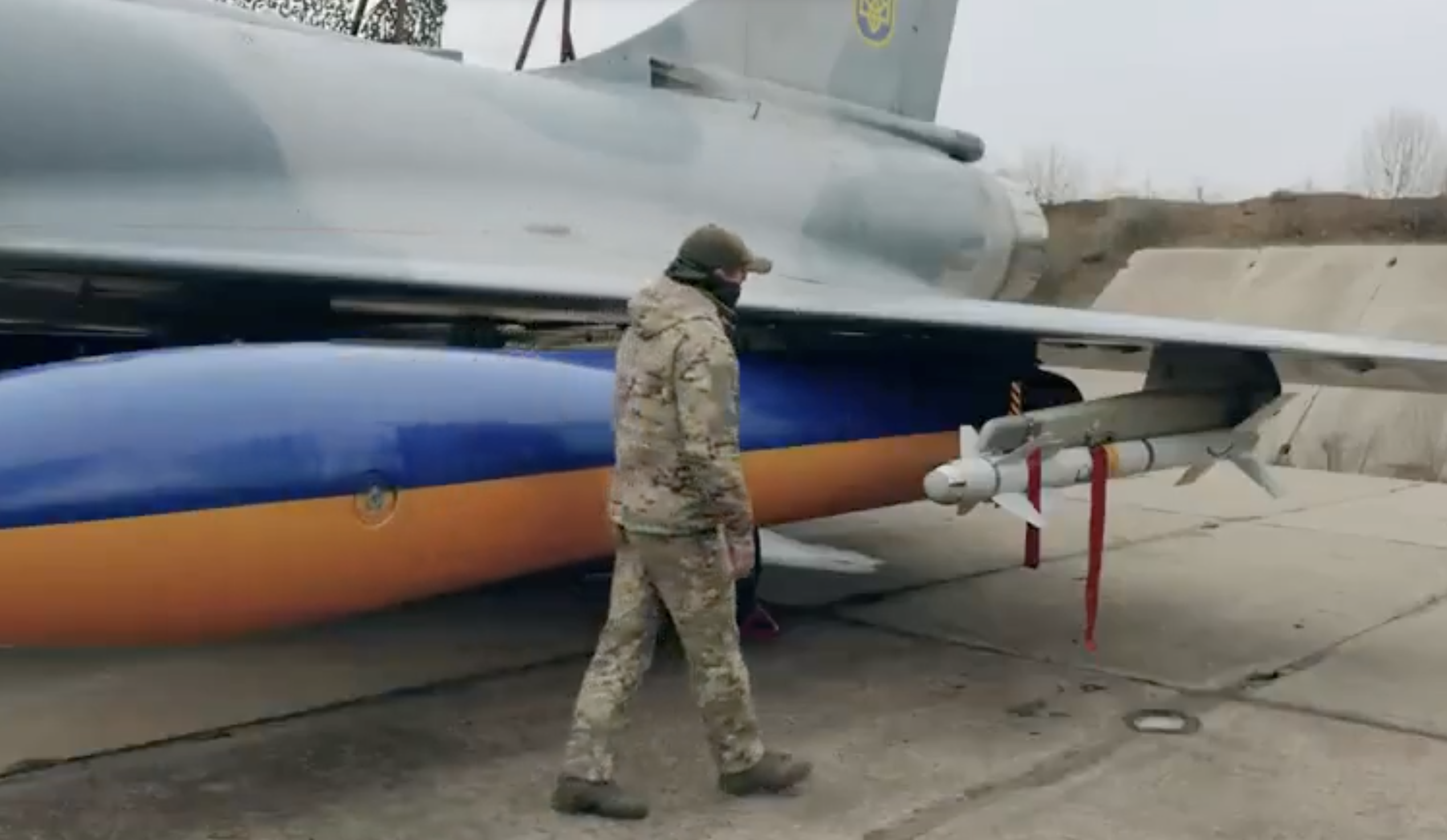
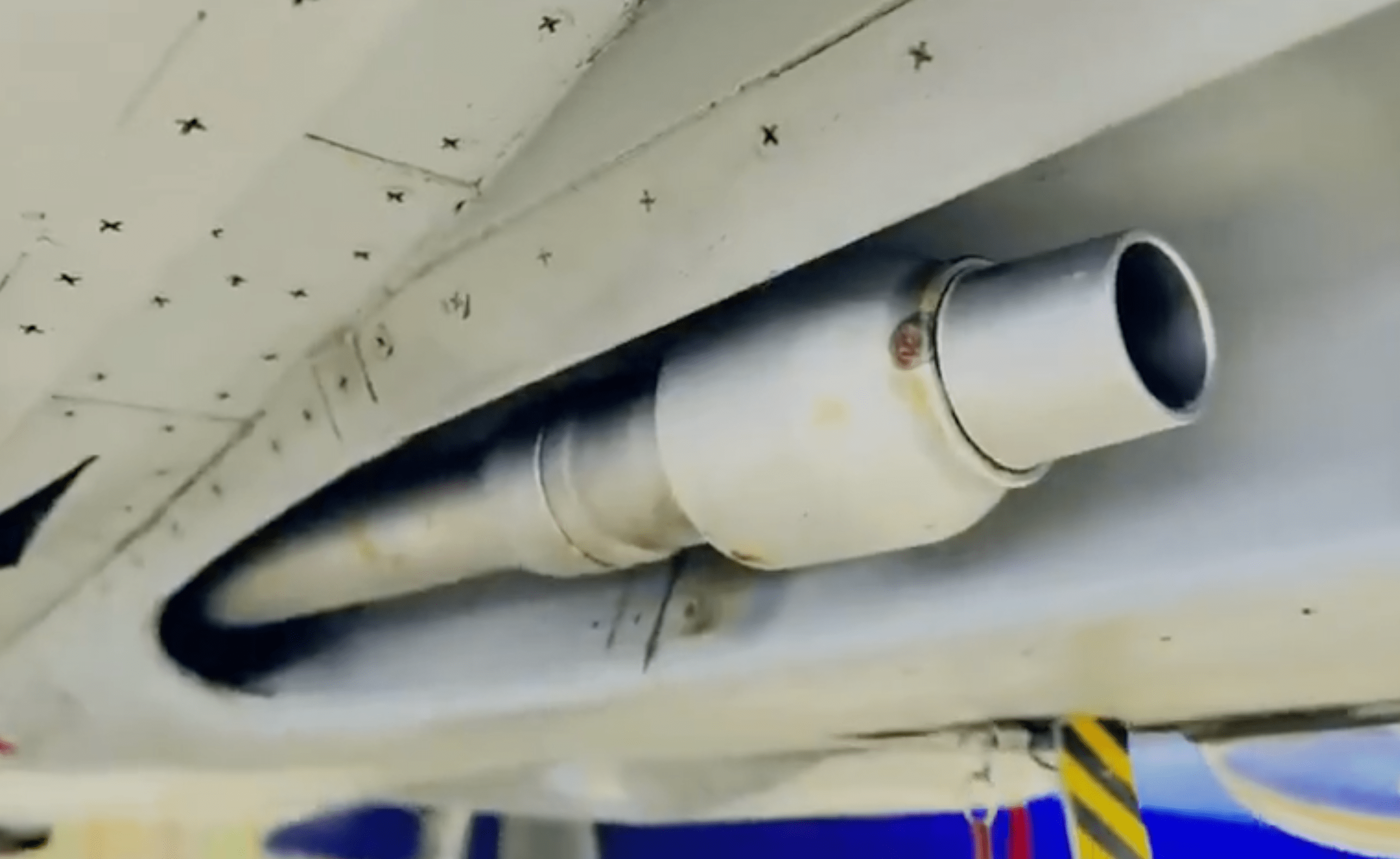
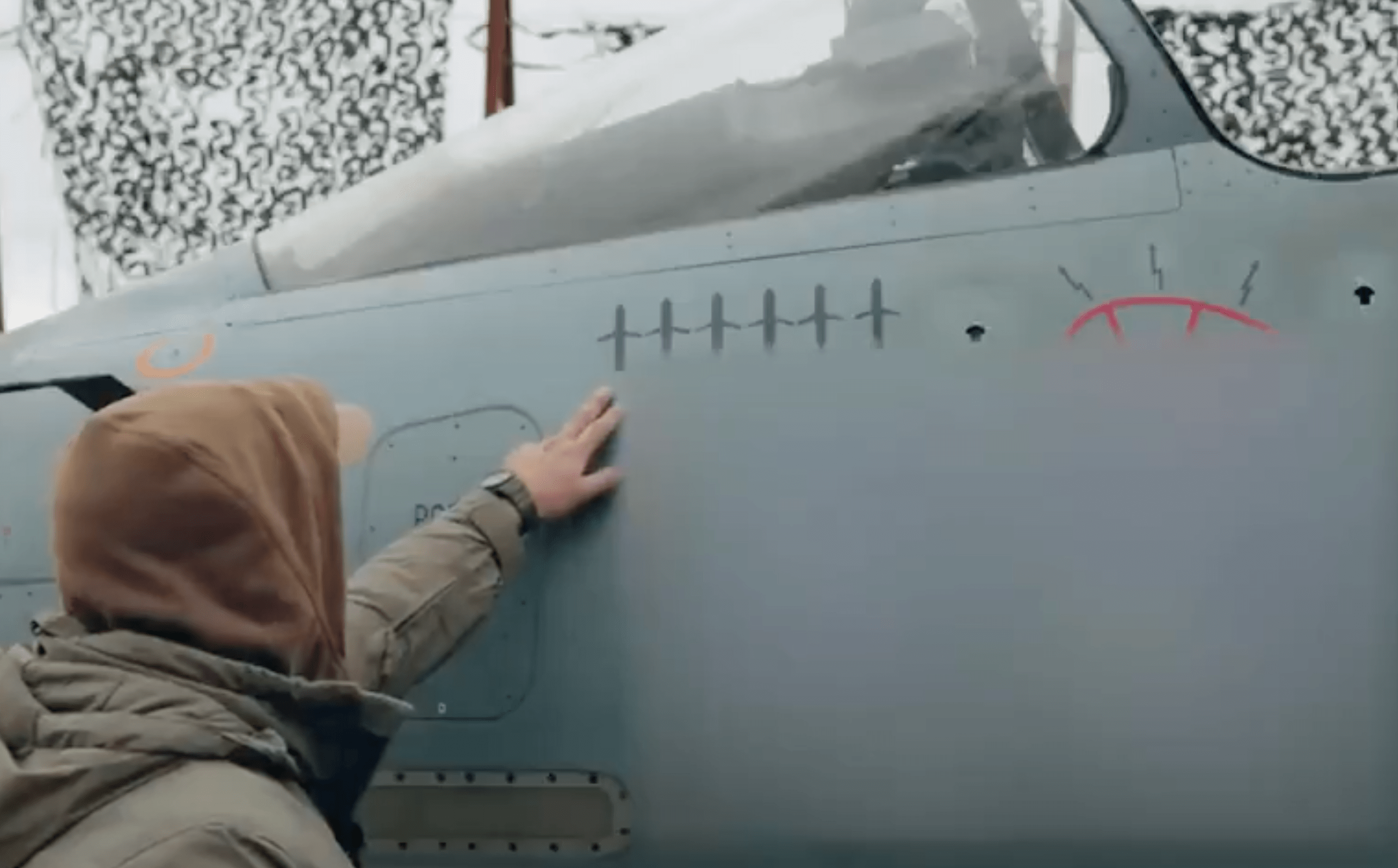
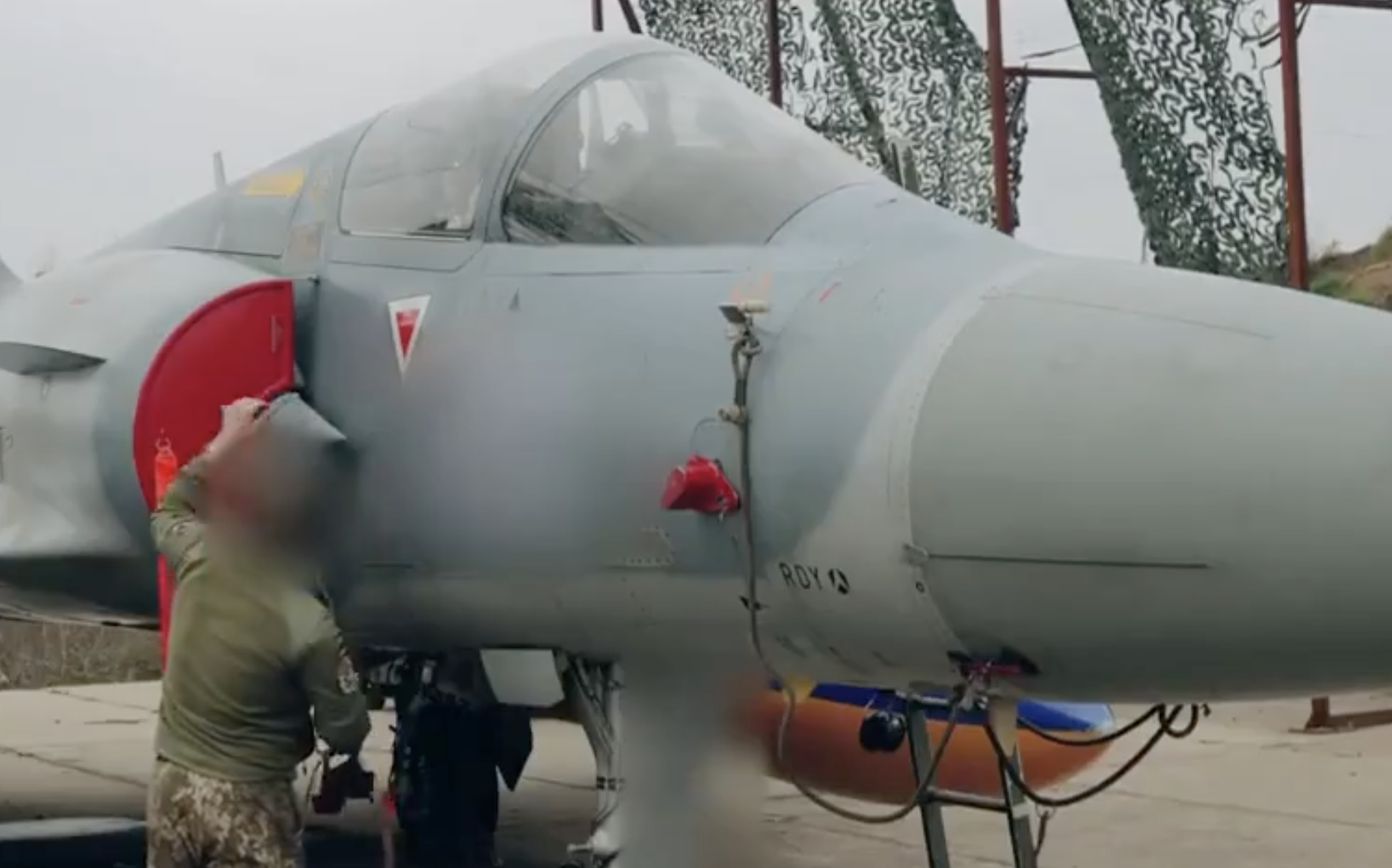

 (@bayraktar_1love)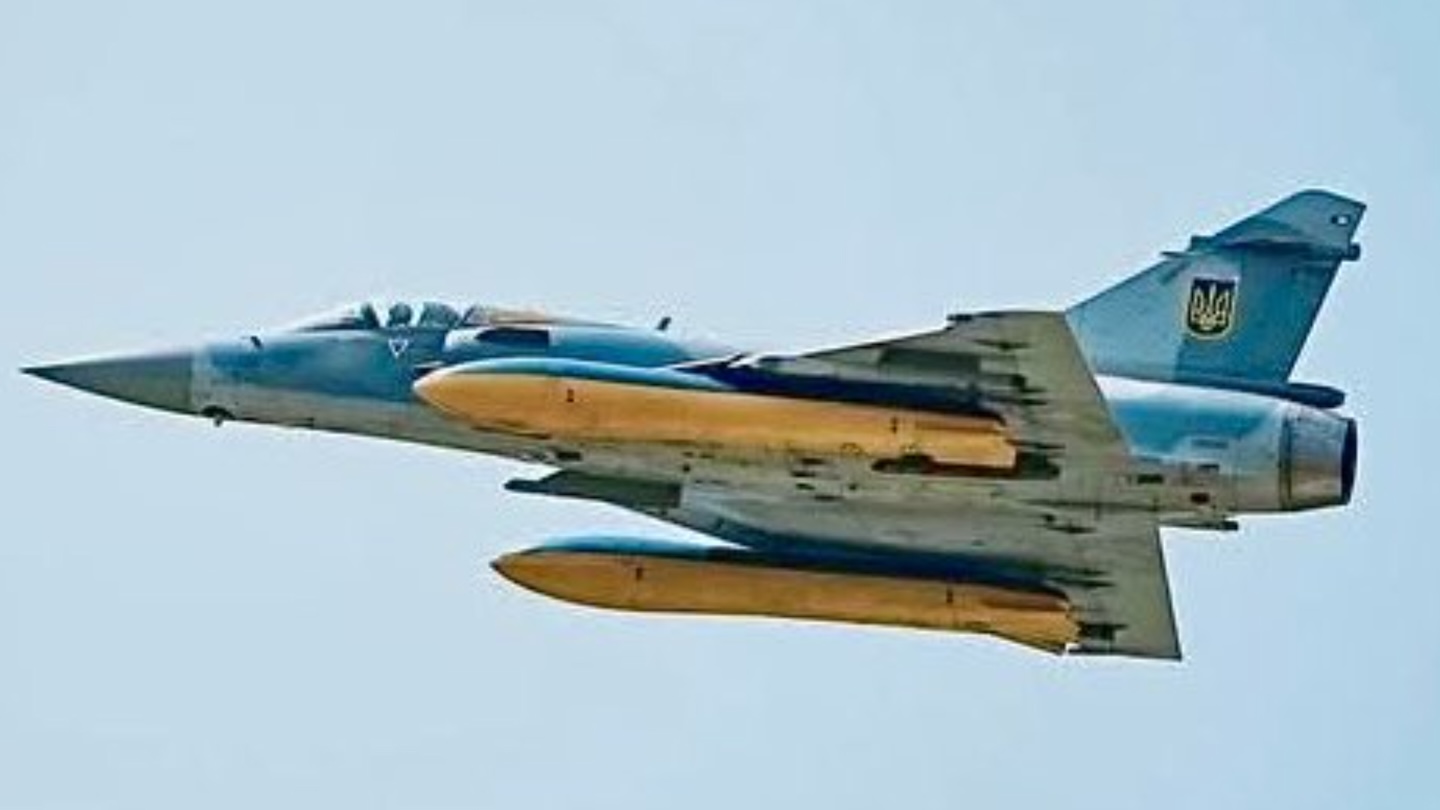
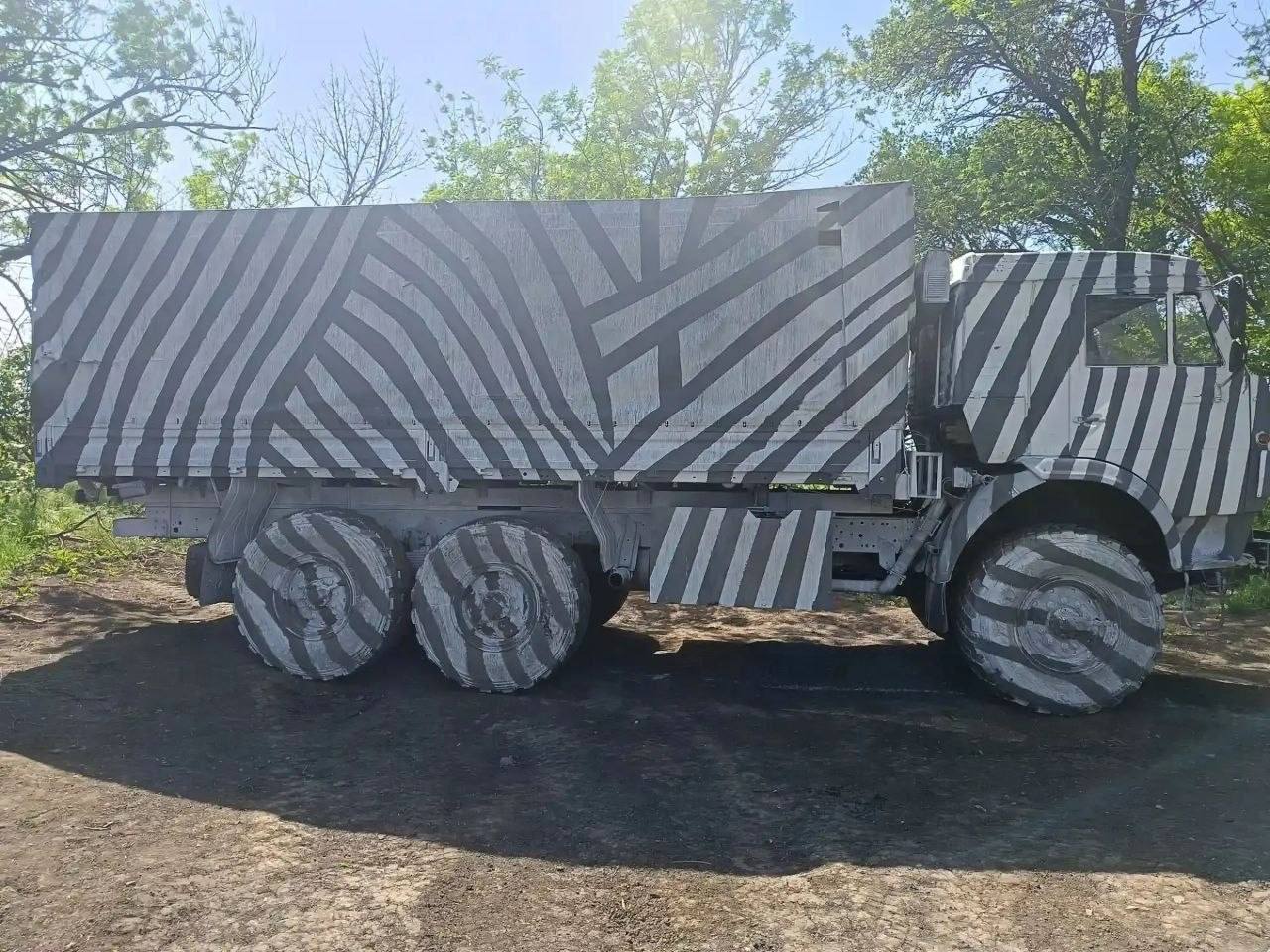
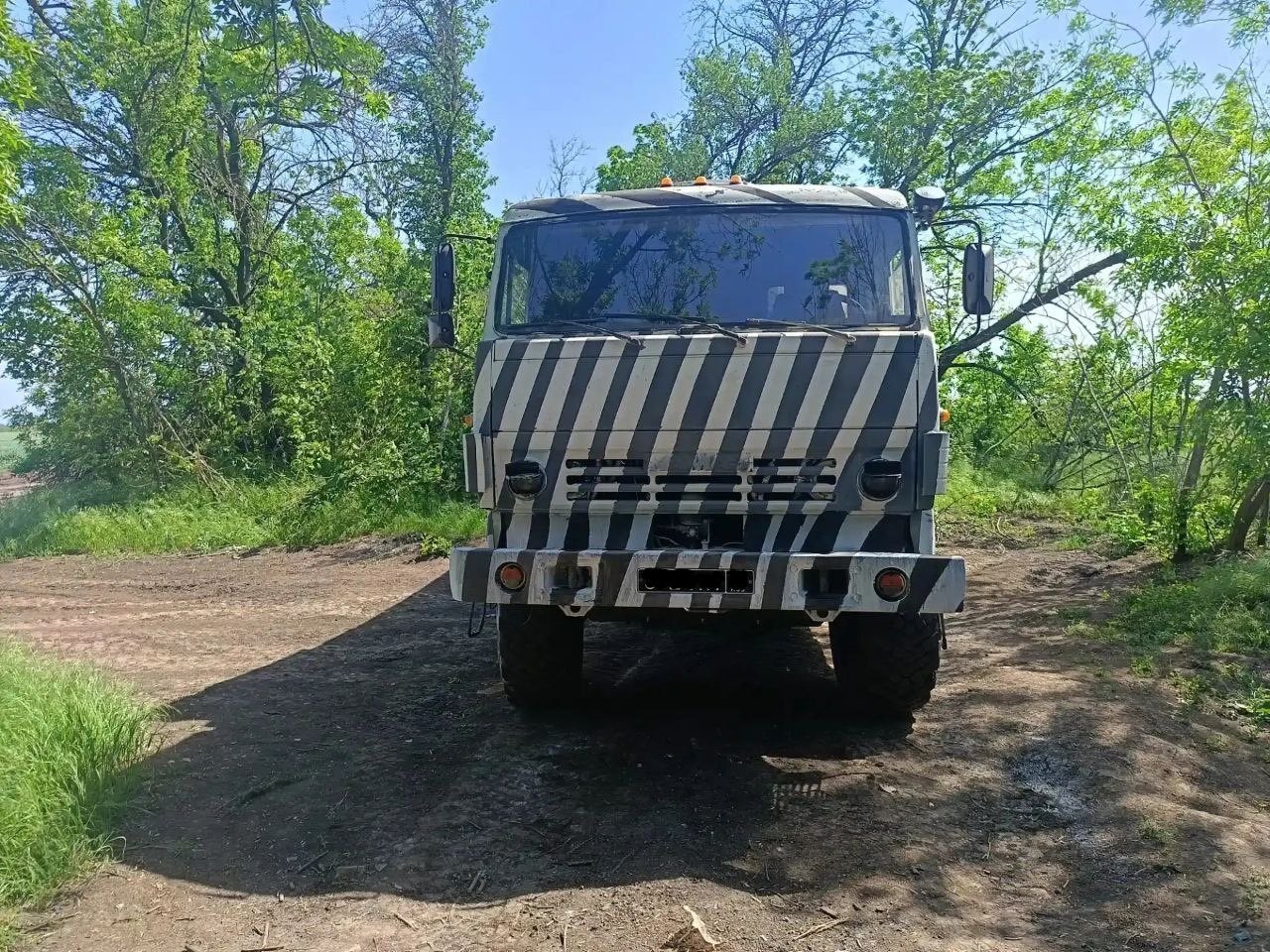
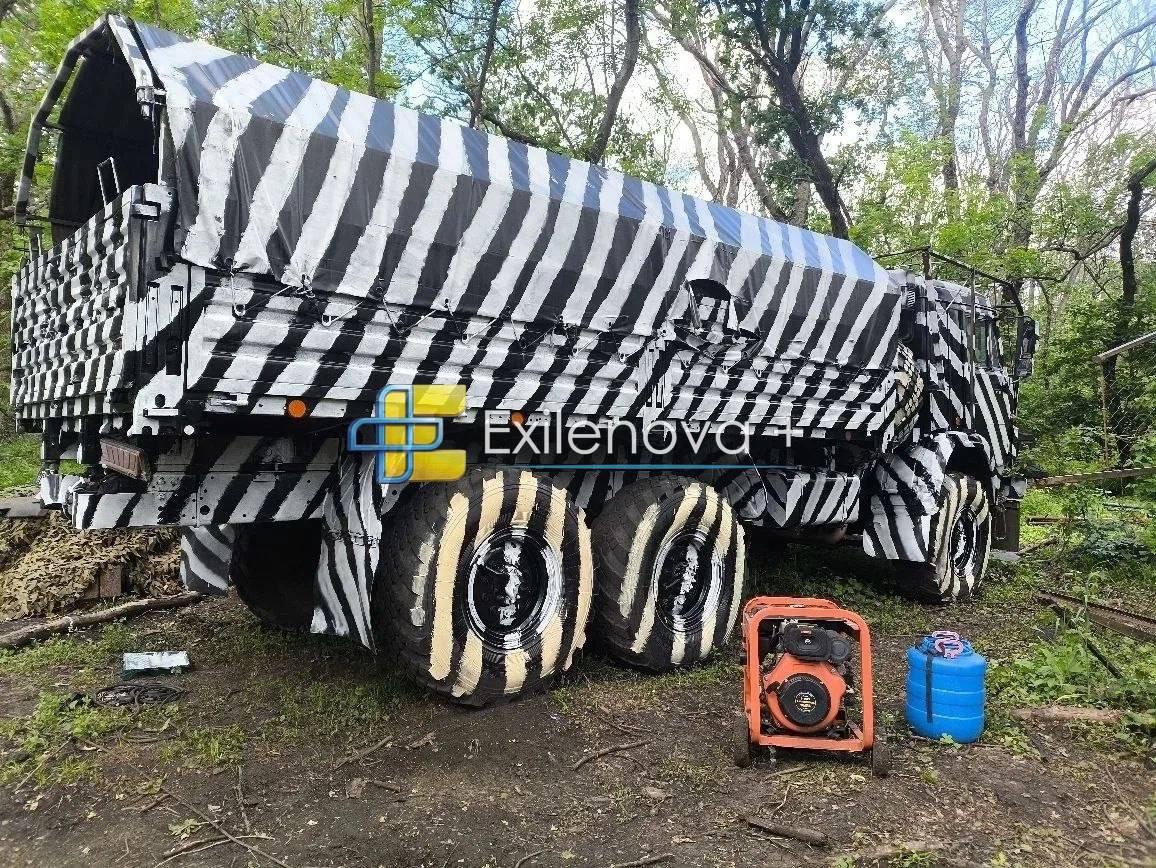

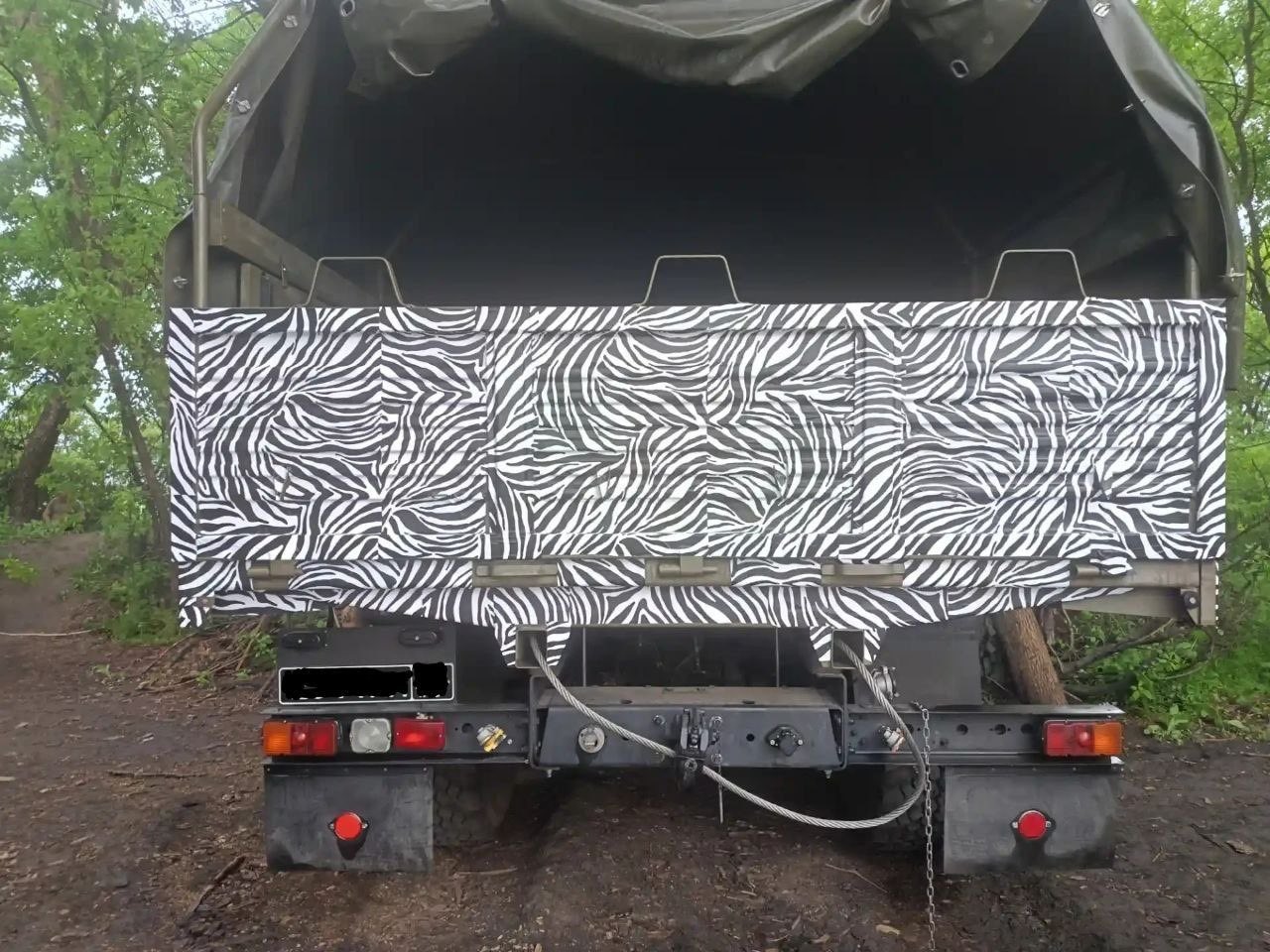

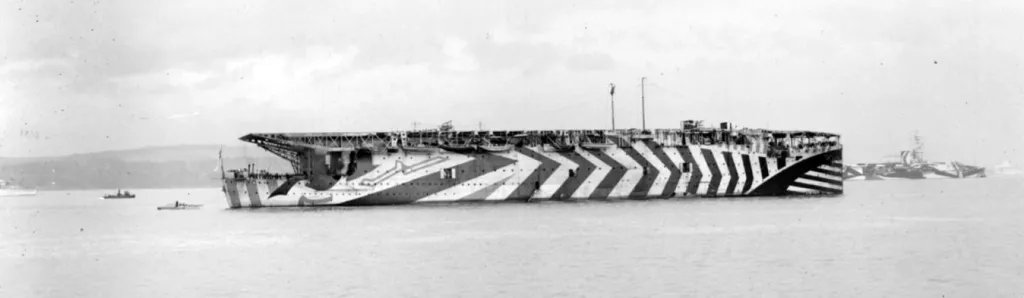
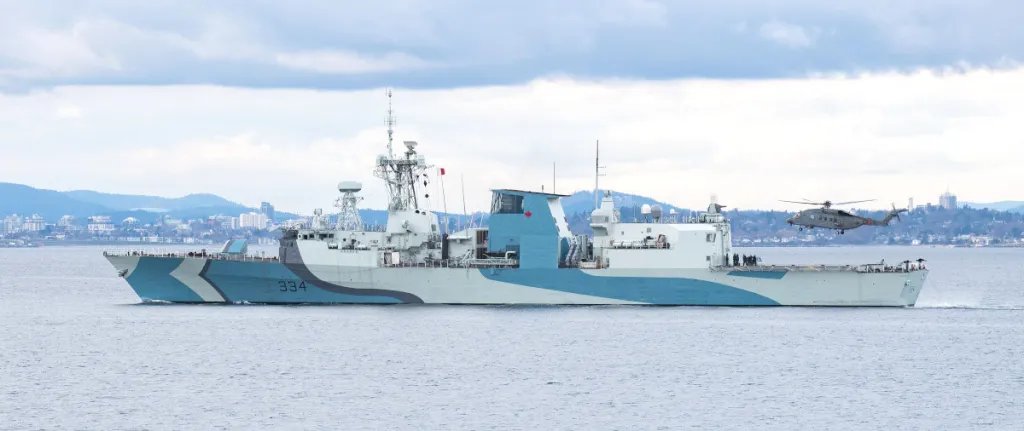
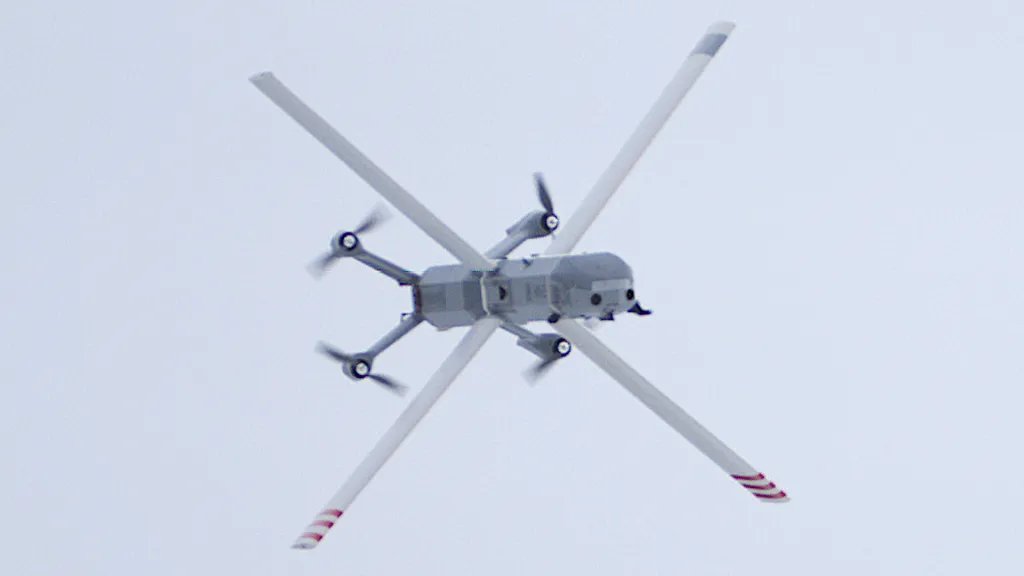
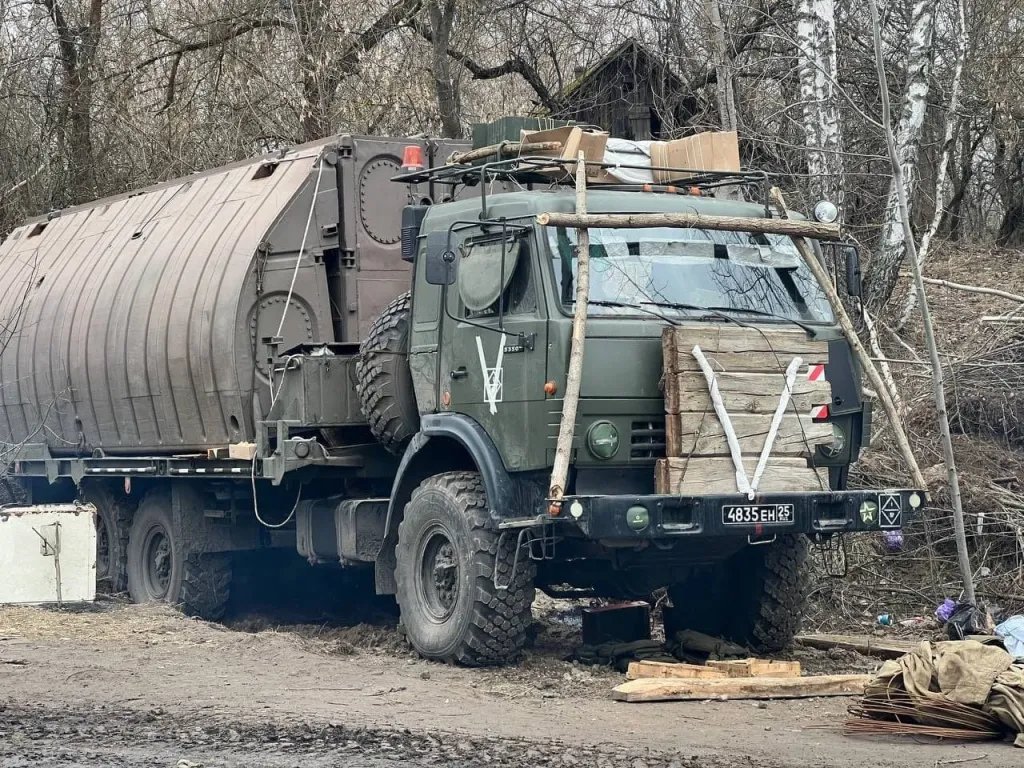
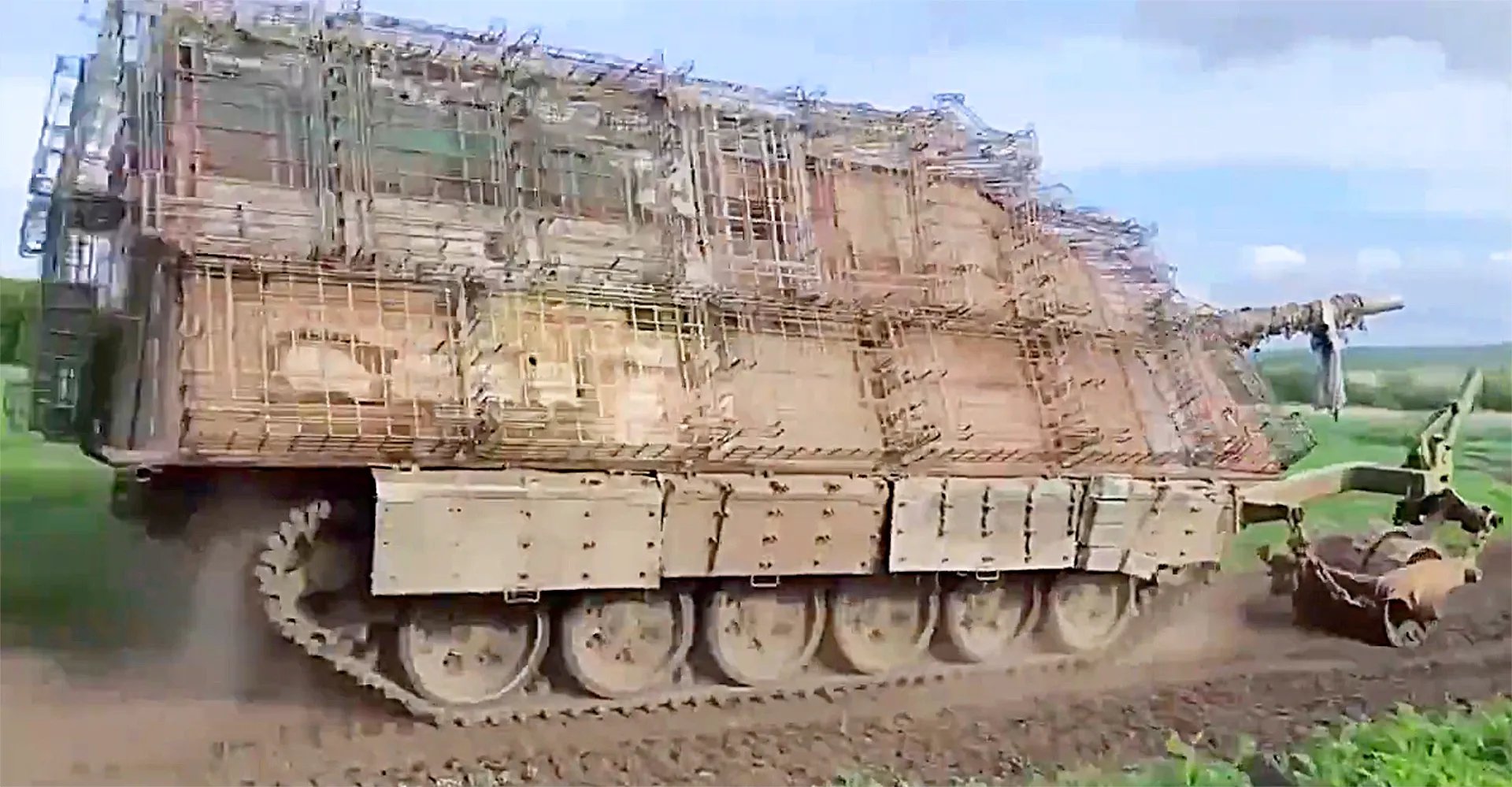
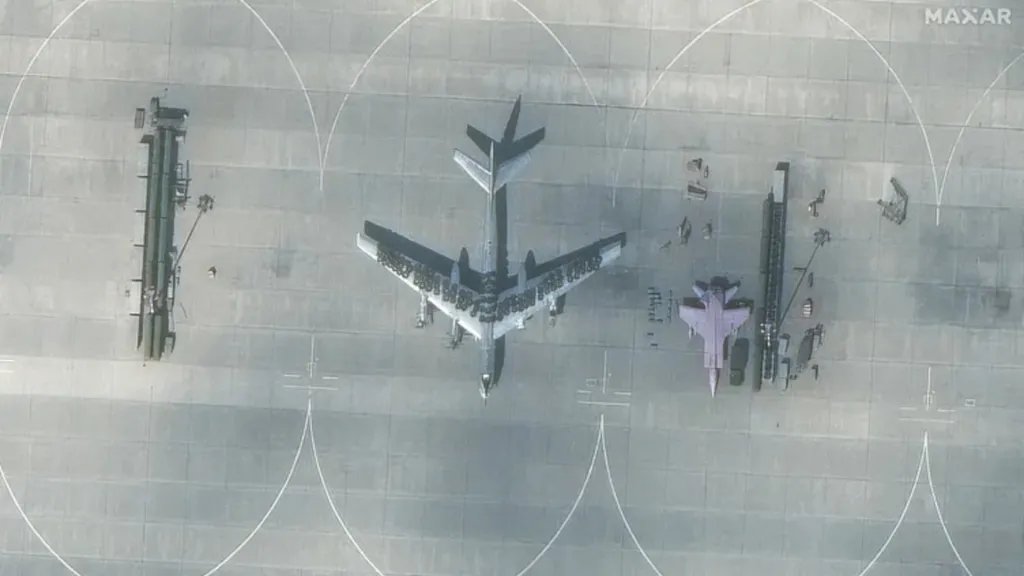
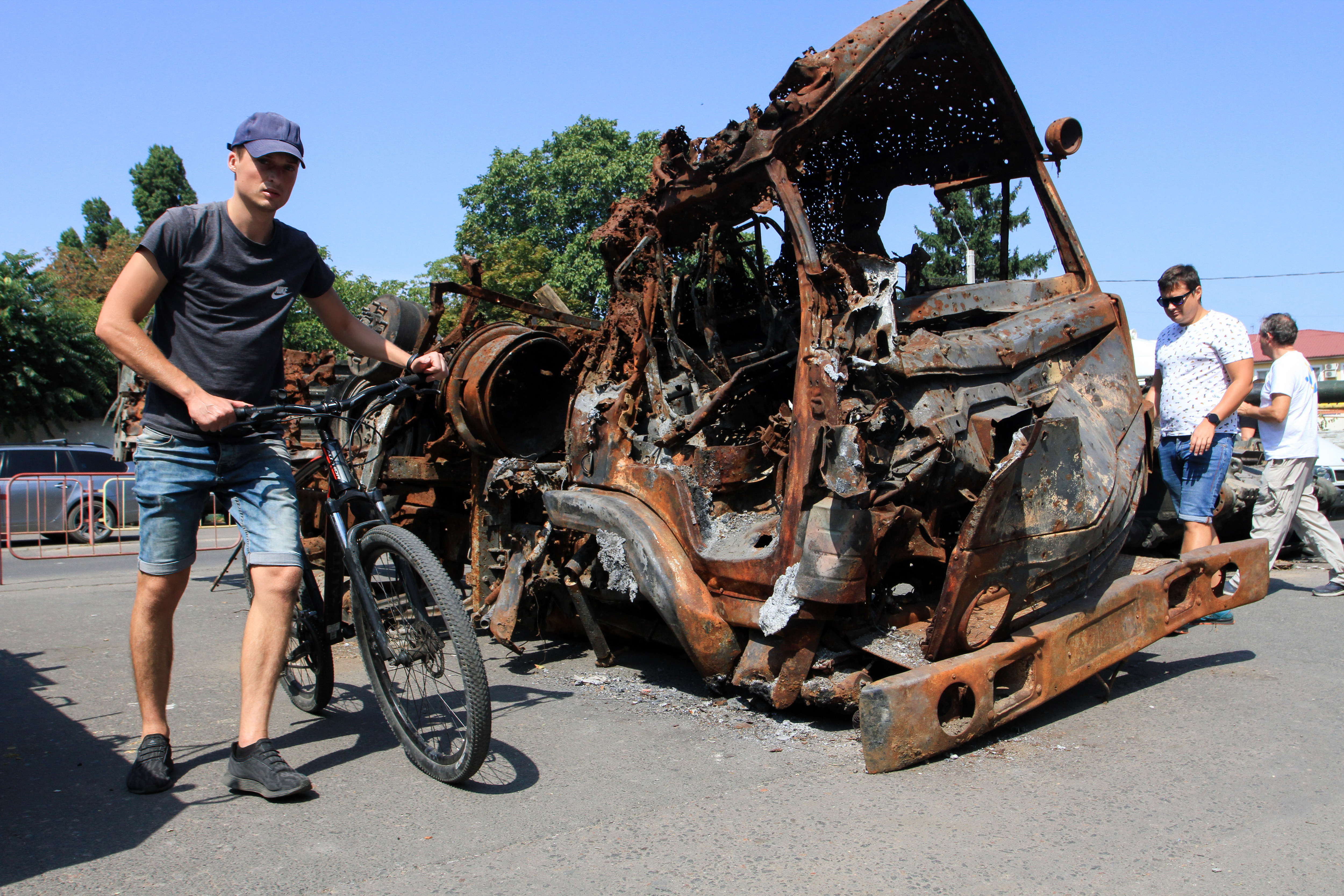
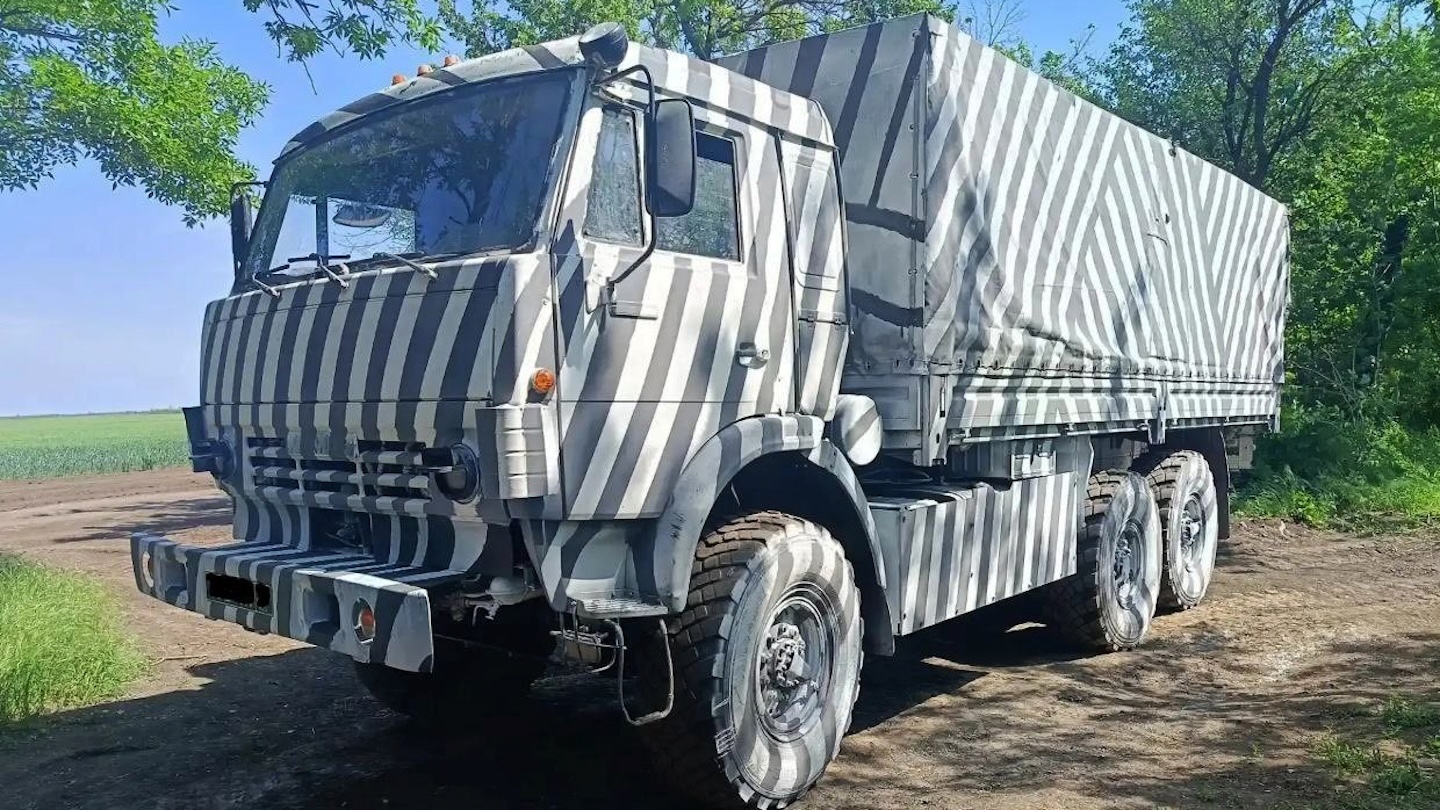
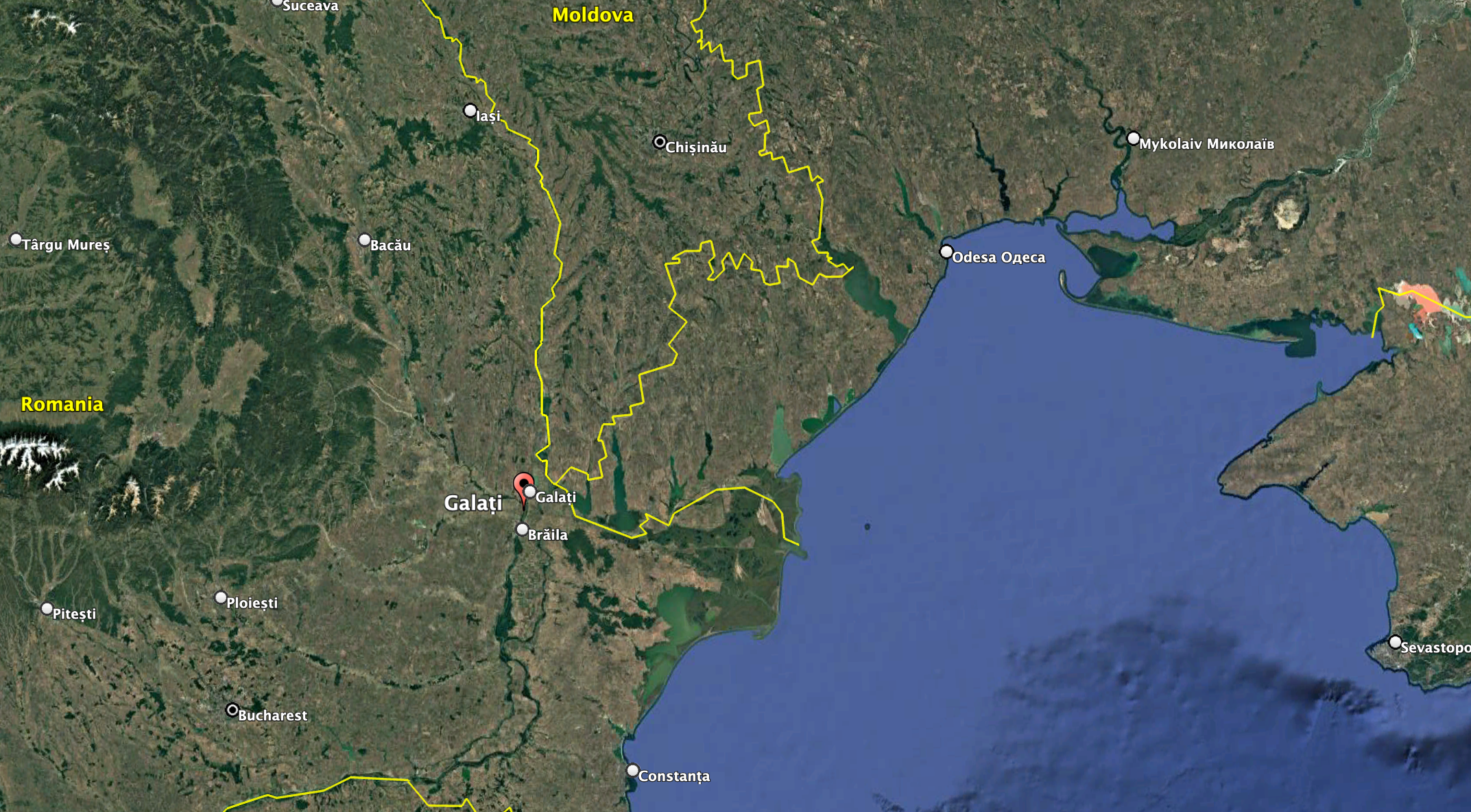
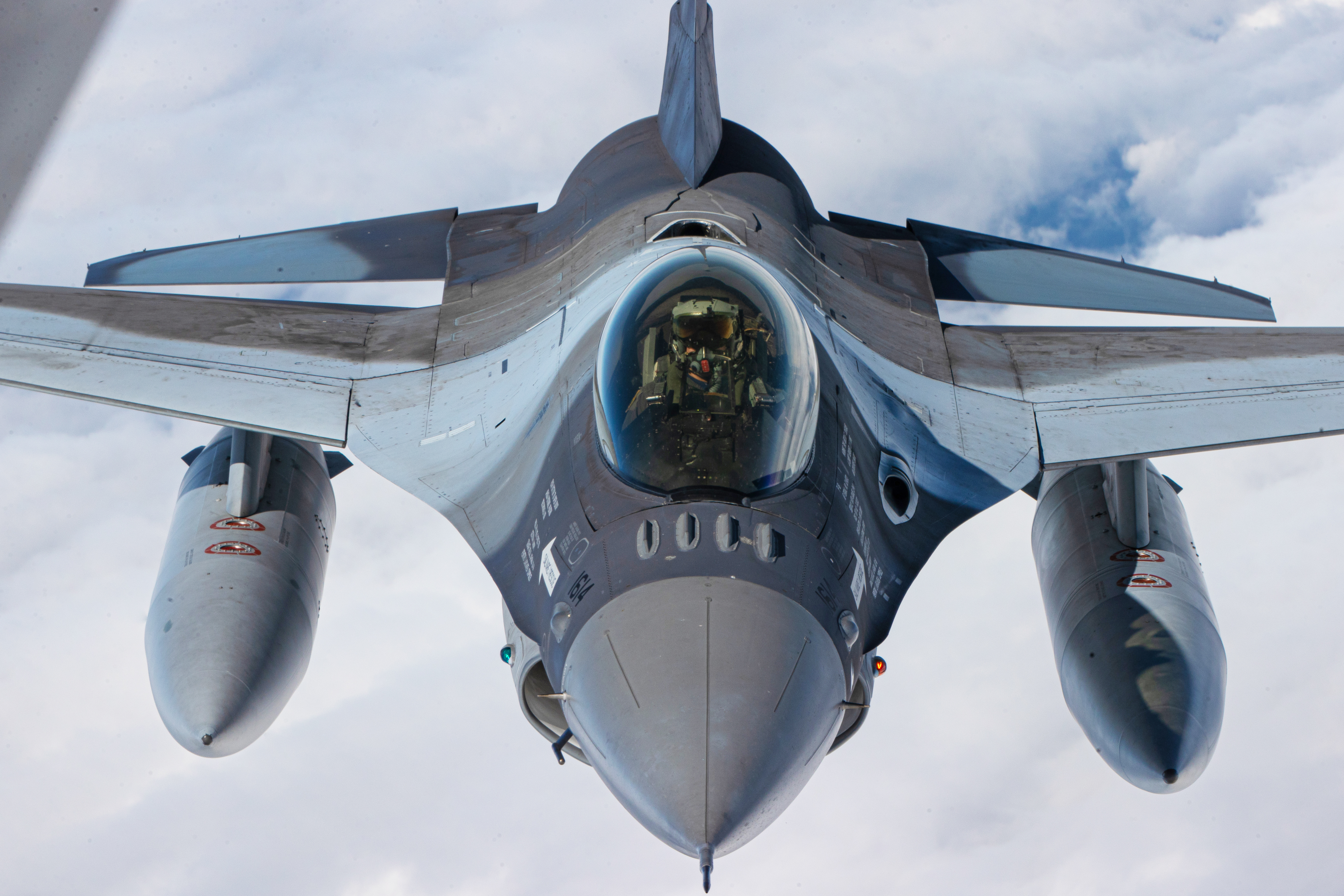
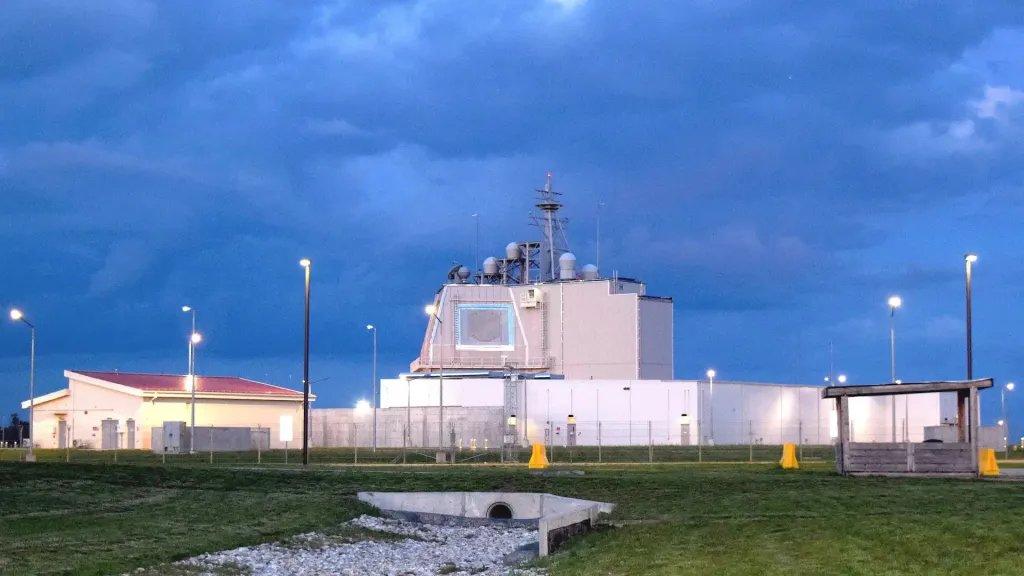
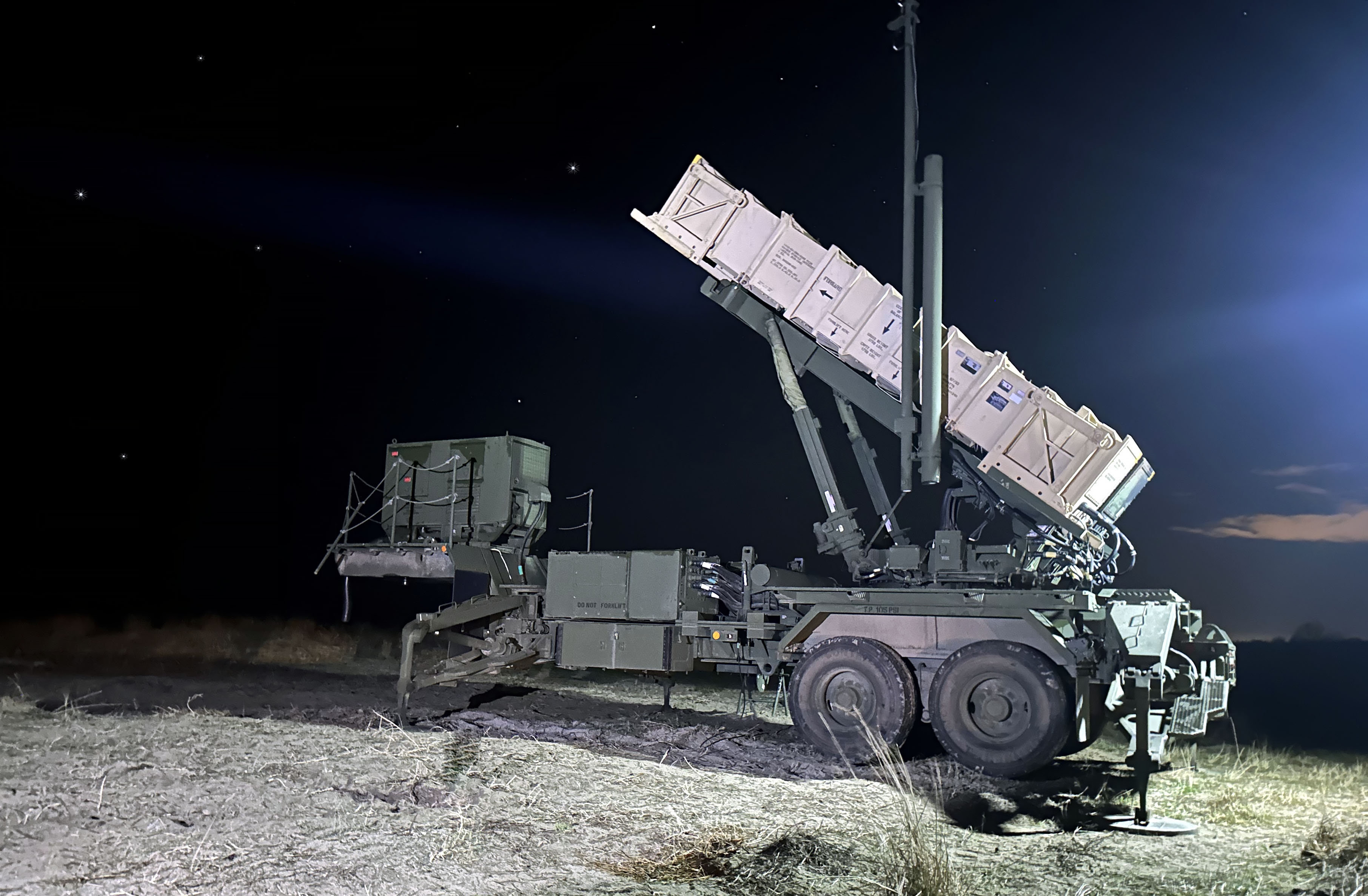


 Typhoons from
 (@DefenceOps)