Reading view

Elon Musk Fuels Odyssey Casting Debate With AI Trailer Featuring All-White Greek Heroes

A bronze ancient Greek-style warrior helmet with a red plume lies on a battlefield, with spears, shields, smoke, and armies in the background.
AI-generated Iliad trailer shared by Elon Musk on X amid debate over Christopher Nolan’s The Odyssey. Credit: Screenshot / Elon Musk’s official twitter account

Elon Musk has entered the controversy surrounding Christopher Nolan’s upcoming The Odyssey by sharing an AI-generated trailer featuring an all-white cast of ancient Greek heroes.

Musk posted the video on X on Thursday, June 4, as debate continues over Nolan’s decision to cast Lupita Nyong’o as Helen of Troy in The Odyssey. Musk, who has already criticized the casting online, introduced the clip as an “Iliad (Troy) trailer made by Grok Imagine 1.5,” referring to the video-generation model developed by his artificial intelligence company xAI.

The 40-second trailer quickly went viral and drew more than 18.4 million views, according to the original Greek report. Although Musk did not explicitly mention Nolan’s film in the post, the timing and visual choices linked the clip to the wider argument over how ancient Greek figures should appear on screen.

An AI version of Homer’s world

The trailer presents a dramatic version of the Trojan War, with burning cities, warships, battlefield speeches, emotional close-ups, and large-scale combat scenes. Its visual style closely resembles a Hollywood historical epic. However, AI tools produced the video rather than a traditional studio production.

The choice of The Iliad also matters. Homer’s Iliad and Odyssey are two of the foundational works of ancient Greek literature. The Iliad centers on the Trojan War, while The Odyssey follows Odysseus on his long journey home after the fall of Troy.

That connection made Musk’s post look less like a random AI experiment and more like a response to the current debate around Nolan’s film. By using AI to create his own vision of the Trojan War, Musk placed himself directly inside a cultural dispute involving Greek mythology, Hollywood casting, and the future of filmmaking.

Iliad (Troy) trailer made by Grok Imagine 1.5, which was just released pic.twitter.com/o0zITVlvpn

— Elon Musk (@elonmusk) June 4, 2026

The Helen of Troy debate

Nolan’s The Odyssey is scheduled for release on July 17, 2026. The film stars Matt Damon as Odysseus and Anne Hathaway as Penelope. Its cast also includes Tom Holland, Zendaya, Robert Pattinson, Charlize Theron, and Lupita Nyong’o.

Much of the online backlash has focused on Nyong’o’s role as Helen of Troy. Critics of the casting argue that Helen, one of the most famous figures of Greek mythology, should reflect the traditional image associated with the character.

Supporters of the film, however, say Homeric myth is not documentary history. They argue that artists have reinterpreted the epics for centuries through theater, literature, painting, and cinema. Nyong’o has also addressed the criticism, saying the film’s cast reflects the world and emphasizing that the story belongs to mythology rather than historical reconstruction.

Musk’s AI trailer now adds another layer to the dispute. The clip does not simply promote artificial intelligence as a filmmaking tool. Instead, it presents an alternative visual version of the Homeric world at the exact moment when Hollywood’s version is under scrutiny.

Was very fun to try out the latest 1.5 Grok Imagine model for this one! https://t.co/x5OwuhySyH

— Heavy Pulp (@heavypulp) June 3, 2026

Elon Musk turns AI Iliad trailer into a cultural statement

After Musk posted the trailer, the creative studio Heavy Pulp, which worked on the project, said it had enjoyed making it. Musk then asked whether the team wanted to make a full-length film. Heavy Pulp replied that it was already in.

That exchange helped transform the video from a short viral experiment into a possible challenge to Hollywood. Musk appeared to test whether AI could generate not only trailers, but also full-scale mythological films outside the traditional studio system.

The response online came quickly. Many users praised the trailer’s cinematic look and argued that it showed how fast AI video tools are improving. Others viewed the clip as a direct provocation toward Hollywood, especially because it appeared during a high-profile debate over representation in a film based on Greek mythology.

@starchannelnews

Νέο διαδικτυακό θόρυβο προκαλεί ο Ίλον Μασκ, ο οποίος επανέρχεται στη δημόσια συζήτηση γύρω από τις επιλογές casting στην πολυαναμενόμενη κινηματογραφική μεταφορά της Οδύσσειας από τον Κρίστοφερ Νόλαν. Με αφορμή τη συζήτηση που έχει ανοίξει για τον ρόλο της Ωραίας Ελένης, ο Μασκ ανάρτησε στο Χ ένα βίντεο που παρουσιάζεται ως AI trailer της Ιλιάδας, με όλους τους πρωταγωνιστές να απεικονίζονται ως λευκοί ηθοποιοί. Η Βαλεντίνα Καραγεωργίου είναι μαζί μας με όλες τις λεπτομέρειες και τις αντιδράσεις που έχει προκαλέσει η νέα παρέμβαση του Ίλον Μασκ. #starchannelnews #tiktokgreece #newsgr

♬ original sound – Star News_official – Star News_official

  •  

If only there was a German word for Berlin’s UN humiliation

The UN assembly has turned its back on Germany, for the first time in the country’s modern history

German Foreign Minister Johann Wadephul has blamed Berlin’s failure to secure a seat at the UN Security Council on his country’s superior moral positions. If only there were a German word for that…

Read more
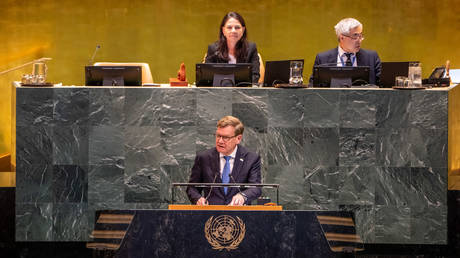
Foreign Minister Johann Wadephul promotes Germany’s bid for a UNSC seat as his predecessor Annalena Baerbock chairs the General Assembly session on June 1, 2026
Germany blames Russia over UN Security Council humiliation

Germany failed to win a temporary seat on the UN Security Council for the first time in history on Wednesday, losing out to Portugal and Austria in the ‘Western Europe and Others’ group. Germany easily won all six contests that it entered since 1977, usually with the support of its European and NATO allies.

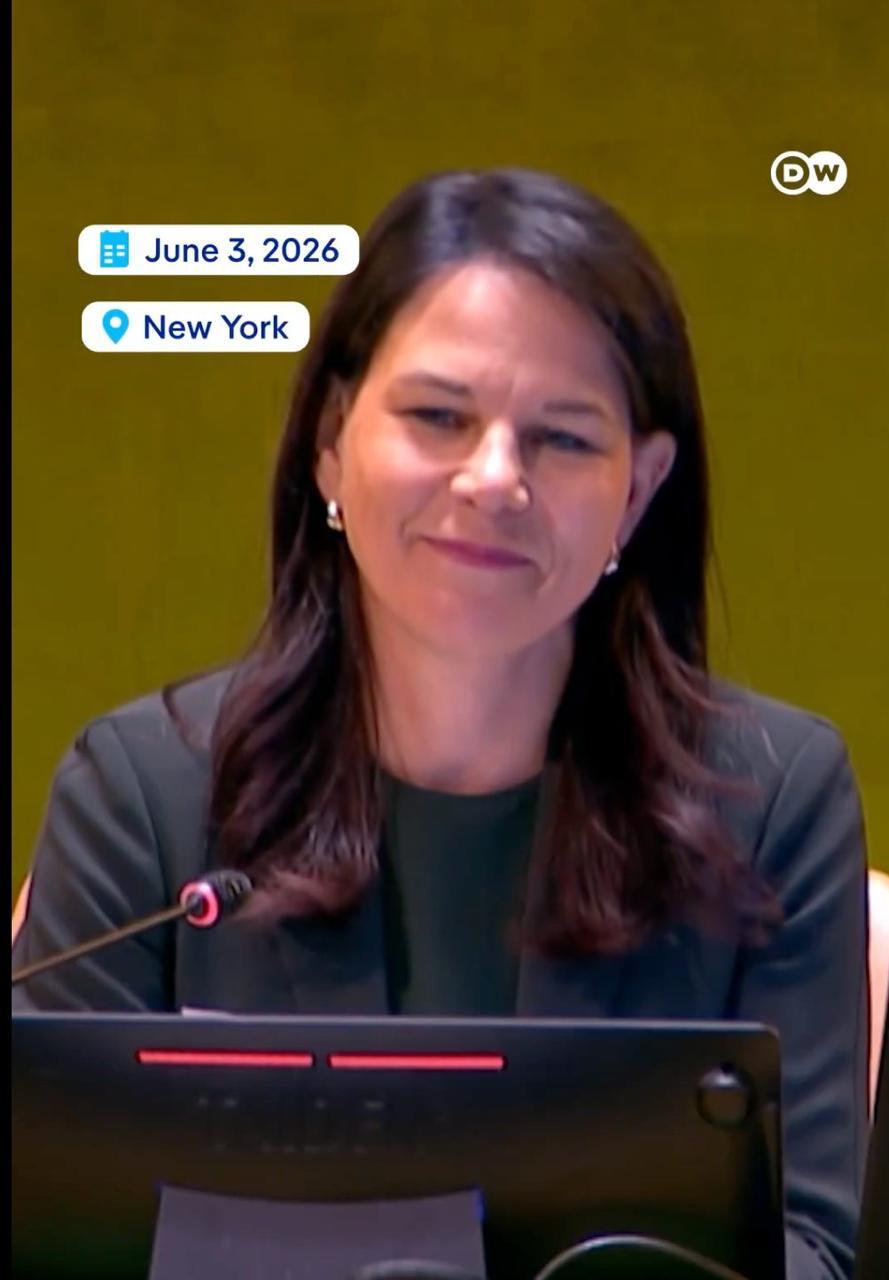
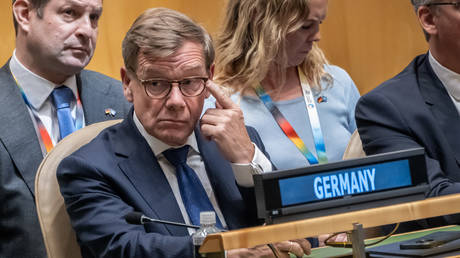
Having won every round it has entered since the mid-twentieth century, this time around, Germany could only manage to secure 104 votes, while Portugal won 134 and Austria – a non-NATO member – took 131. Despite Berlin’s long-held insistence that it deserves a permanent seat on the UNSC, German Foreign Minister Johann Wadephul was forced to listen as the results were read out by none other than Annalena Baerbock.

Schadenfreude: The feeling of joy in an opponent’s misfortune

As president of the UN assembly, the notoriously gaffe-prone former German foreign minister Baerbock’s smile cracked into a grimace as she read the result of the secret ballot. 

While the room roundly applauded Austria, Portugal, and the other successful countries, the pushback began. Free Democratic Party MEP Marie-Agnes Strack-Zimmermann described the result as a repudiation of Baerbock’s nagging “politics of the raised index finger,” while human rights lawyer Craig Mokhiber gloated over how neither Baerbock nor Wadephul could could “save Germany from this well-deserved humiliation.” 

In a rare moment of justice at the UN General Assembly today, Germany lost its bid for a UN Security Council seat. Germany’s scandalous support for genocide in Palestine and aggression against Iran, and its repression of human rights defenders inside Germany, were all on display…

— Craig Mokhiber (@CraigMokhiber) June 3, 2026

“[German Chancellor Friedrich] Merz wanted to bring our country ‘back onto the international stage’ at the start of his chancellorship, but now Germany is left without a seat on the UN Security Council,” Alternative for Germany (AfD) leader Alice Weidel wrote on X, adding that Merz has led Germany from “one embarrassment to the next.” 

The governments of Christian Democrat Friedrich Merz and Social Democrat Olaf Scholz (the latter of whom Baerbock served under) shared identical foreign policies. Both professed slavish devotion to the American-led “rules-based international order” when it came to Ukraine, and a moral relativism when it came to Israel’s wars in the Middle East. 

Baerbock declared the EU to be “fighting a war against Russia” in 2023, called Xi Jinping a “dictator,” and scolded the Chinese president for “taking the side of the aggressor” by refusing to join the West’s proxy war in Ukraine. The following year, she referred to Israeli strikes on Palestinian schools as “self-defense,” and argued that civilian sites lose their protection when “terrorists” operate in their vicinity. 

#BREAKING: #Germany “won’t shy away” from helping #Israel attack civilians, German FM Annalena #Baerbock says. Baerbock says protected places of refuge can lose their protection status due to Hamas hiding in between citizens. #News #GermanyNews #IsraelHamasWar #annalenabaerbock pic.twitter.com/UD0WlorbDA

— 𝔗𝔥𝔢 𝔇𝔞𝔦𝔩𝔶 𝔇𝔦𝔰𝔰𝔦𝔡𝔢𝔫𝔱 (@DailyD1ss1dent) October 15, 2024

“When it comes to Russia, international law counts, but when it comes to the USA and Israel, it doesn’t,” left-wing politician Sahra Wagenknecht told the Berliner Zeitung. “This double standard was voted out by the international community yesterday.”

The German dictionary has another take to offer.

Schuldverschiebung: Blame shifting

Having overseen Germany’s lowest diplomatic moment in 70 years, Wadephul told reporters that he “did not personally blame himself” for the loss. Russia, he insisted, saw Germany’s “rock-solid support for Ukraine” and “campaigned against us.” He rejected any idea of a double standard on Israel, claiming that “Germany must always assume a special responsibility for Israel with regard to the Middle East conflict.” 

Germany’s Foreign Minister Johann Wadephul on why Germany lost UN seat:

There's our rock-solid support for Ukraine. It is no secret that Russia does not want such a voice at the table — and campaigned against us.

It also may have cost us votes that Germany must always assume a… pic.twitter.com/80oFDEbA77

— Clash Report (@clashreport) June 3, 2026

There is no evidence that Russia orchestrated a backroom campaign against Germany’s candidacy. Instead, analysts in Germany and abroad have pointed to Berlin’s support for Israel as the key factor behind its loss. “Let’s be clear: Germany’s support for Ukraine had nothing to do with it. Portugal and Austria – who beat Germany – are no less supportive of Ukraine,” Trita Parsi, of the Quincy Institute for Responsible Statecraft wrote on X. “It has everything to do with Germany’s support for Israel’s genocide and the manner in which the German government has been willing to undermine international law and the UN Charter on behalf of Israel.” 

Germany, Wadephul argued, essentially fell victim to its own superior moral obligations, which require the country to take seemingly contradictory – but ultimately correct – positions on world affairs. 

There does not seem to be a compound German word for this mindset, so we plugged the above sentence into a generator and marveled at the Teutonic masterpiece it spat out: 

Read more
FILE PHOTO: German Chancellor Friedrich Merz and Israeli Prime Minister Benjamin Netanyahu in Jerusalem
How Germany became Israel’s enabler-in-chief

Moralüberlegenheitsopfermentalität: ‘Victim mentality based on moral superiority’

Moralüberlegenheitsopfermentalität is the impulse that drives the foreign policy of Baerbock and Wadephul, and the domestic policies that have dragged Europe’s former economic powerhouse into recession and de-industrialization.

Germany’s iron-clad support for Israel may have alienated many at the UN, but according to Wadephul, the sacrifice was worth it because Germany lived up to “our historical responsibility” to atone for the Holocaust. And, while Germany’s ongoing rearmament and aid to Ukraine may be pushing the country’s budget deficit far above the 3% limit set in place by the EU, the economic pain is worth it to, in the words of Merz, “protect our free democratic order.” 

At home, Germany’s decision to cut itself off from Russian energy was economically ruinous, but justified by the country’s leaders as morally correct. Chancellor Angela Merkel’s decision to throw open Germany’s borders to a million Middle-Eastern migrants in 2015 may have facilitated a rise in crime, social unrest, and unemployment, but Germany was declared a “moral superpower” by liberal journalists and Merkel was crowned Time Magazine’s Person of the Year.

Endpunkt

Germany may attempt to deflect blame and portray its contradictory positions as moral duties, but to the rest of the world, its preaching smacks of hypocrisy. The UN vote was a repudiation of Berlin’s double standards, but also an acknowledgement of its declining influence on the global stage. 

  •  

Mysterious “Blue and Yellow Waters” Link Aztecs to the Legendary Toltecs

The famous Atlantean warrior statues at the ancient Toltec city of Tula Archaeological Site
The famous Atlantean warrior statues at the ancient Toltec city of Tula Archaeological Site. Credit: AlejandroLinaresGarcia / Wikimedia Commons / CC BY-SA 3.0

A mysterious symbol known as the “blue and yellow waters” helped connect the Mexica people to the prestigious Toltec past, according to new research.

The metaphor appeared in accounts of the founding of Tenochtitlan and was long viewed as a simple description of sacred springs. However, a study led by Agnieszka Brylak argues that it symbolized prosperity, authority, new beginnings, and the transfer of Toltec heritage to the Mexica capital.

A mysterious image at the founding of Tenochtitlan

The research centers on stories describing the founding of Tenochtitlan, the capital of the Mexica, often known as the Aztecs. According to early colonial accounts, the Mexica ended a long migration when they found a sacred place marked by an eagle perched on a cactus, white plants and animals, and two intersecting springs.

One spring was known as “the fiery waters.” The other was called “the blue and yellow waters.” For centuries, scholars struggled to explain the meaning of these unusual descriptions.

Many linked them to warfare because similar water imagery appears in Nahuatl metaphors associated with battle and conquest. Brylak argues that this interpretation tells only part of the story.

The study suggests that the blue and yellow waters represented completeness and abundance. They also marked the beginning of a new era. In the Mexica worldview, the appearance of multiple sacred colors signaled the creation of order from chaos and the establishment of a legitimate center of power.

Colors carried deep symbolic meanings

The research examines how colors functioned in ancient Nahua thought. Blue, yellow, red, black, and white were more than visual descriptions. They formed part of a larger symbolic system connected to directions, time cycles, gods, and the structure of the universe.

Did ancient symbols help the Mexica claim the Toltec legacy?

A new study suggests the mysterious “blue and yellow waters” linked to the founding of Tenochtitlan symbolized power, prosperity, and legitimate rule—not just sacred springs.#Archaeology #Toltec #Aztec #History pic.twitter.com/CNUqMnHRIY

— Tom Marvolo Riddle (@tom_riddle2025) June 4, 2026

Stories from across Mesoamerica frequently describe sacred places and important events through combinations of several colors. These colors appeared in myths about creation, divine authority, and the origins of civilization.

Brylak argues that the colorful springs described at Tenochtitlan fit within this broader tradition. Rather than referring only to actual water sources, they served as symbols of prosperity, sacred authority, and cosmic order.

A link to the Toltec past

One of the study’s most important conclusions is that the colorful waters may have connected the Mexica to the legendary Toltecs.

In Mesoamerican tradition, the Toltecs represented an ideal civilization associated with wealth, wisdom, and political legitimacy. Many later societies claimed some connection to them in order to strengthen their own authority.

Brylak suggests that references to blue and yellow waters helped present Tenochtitlan as the rightful heir to this prestigious Toltec heritage. The metaphor linked the city to ancient centers of power and reinforced the Mexica’s claims to leadership across central Mexico.

The symbolism appeared repeatedly in speeches, ceremonies, and historical narratives. Visitors arriving in Tenochtitlan were often welcomed with references to colorful waters, sacred springs, and other mythical locations tied to authority and origins.

More than purification

The study also examines references to blue and yellow waters in religious rituals.

Previous scholars often interpreted these waters as symbols of cleansing and purification. The metaphor appears in ceremonies involving rulers, newborn children, and people seeking forgiveness for wrongdoing.

Brylak offers a different interpretation. Instead of washing away sins, the colorful waters may have symbolized transformation. Being bathed in them represented receiving the qualities they embodied, including prosperity, legitimacy, social identity, and connection to sacred origins.

For newborn children, the ritual may have marked their entry into society. For rulers, it reinforced their role as guardians of justice and providers of abundance.

A wider Mesoamerican tradition

The research concludes that the symbolism of blue and yellow waters was likely not unique to the Mexica.

Similar color pairings appear in Maya texts, where they also represent abundance, completeness, and political authority. This suggests that different cultures across Mesoamerica may have shared common ideas linking color, sacred power, and legitimate rule.

Brylak argues that understanding these colorful metaphors provides a deeper view of how ancient peoples explained authority, prosperity, and identity. What appeared to be simple descriptions of springs and water may actually have carried some of the most important political and religious messages in the ancient Mesoamerican world.

  •  

Fired and Jailed: Attacks on free speech under Trump

A view of signs left by demonstrators protesting the suspension of the "Jimmy Kimmel Live!" show outside the El Capitan Entertainment Centre where the show is performed in Hollywood on September 18, 2025, in Los Angeles, California. Photo by Mario Tama/Getty Images.
Transcript

MICHAEL FOX:  OK. One, two. OK. Yeah, we’re good. All right, I will start it off.

MARC STEINER:  OK, you want to start it off? Oh yeah. Then I’ll throw this out.

MICHAEL FOX:  Yeah, exactly.

MARC STEINER:  All right.

SPEAKER 1 [CLIP]:  …Under arrest.

SPEAKER 2 [CLIP]:  Turn around, turn around, turn around. Turn around [crosstalk].

SPEAKER 3 [CLIP]:  OK, let’s not — OK, OK. He’s not resisting.

SPEAKER 2 [CLIP]:  Stop resisting, stop resisting.

MICHAEL FOX:  Mahmoud Khalil was detained and arrested on March 8, 2025, outside of his Manhattan apartment. It’s a chilling video. Plainclothes agents are there. They refuse to give their names. He’s handcuffed and shoved into the back of a car. His wife, eight months pregnant, watches and tries to understand what’s happening. 

This is not a scene from some dark chapter of a distant past filled with black and white photos of bygone dictatorships. This happened here in the United States of America. Mahmoud Khalil is a graduate student from Columbia University. He led protests in 2024 against Israel’s US-backed occupation of Palestine and the genocide there. 

But speaking out today has a high price. Mahmoud Khalil is a US resident, born in a Palestinian refugee camp in Syria, but Trump officials said they stripped him of his green card. They held him for months at an ICE jail in Louisiana, far from his home in New York, far from his wife and newborn son.

He was finally released after 100 days in prison and widespread condemnation, just one highly visible victim of so many attacks on free speech in the United States today. And it’s getting worse.

MARC STEINER:  This is The Battle for Free Speech, a new multipart narrative podcast series brought to you by The Real News. We’re your hosts. I’m Marc Steiner.

MICHAEL FOX:  And I’m Michael Fox. Over the coming weeks, we’re going to take you on a journey to understand the important role free speech has played in US history.

MARC STEINER:  From the abolitionist movement and the Civil Rights organizing to the threats facing free speech today and how battles are being waged over free speech at home and abroad. 

Today, we want to set the scene by beginning in the present. We met a pretty disturbing assault on First Amendment rights here in the United States. Mike is taking lead in reporting here, so why don’t you take off?

MICHAEL FOX:  Excellent, Marc. Thank you so much. So I wanted to start off today. I’ve been speaking to a lot of people in recent weeks, victims and lawyers about this current moment and the attacks on free speech rights. It’s harrowing hearing their stories, but also the context of looking at where we are today. And I wanted to kick us off with a conversation I had with a woman named Lisa Femia.

LISA FEMIA:  I am a staff attorney at the Electronic Frontier Foundation, which is a nonprofit dedicated to protecting civil liberties and civil rights online and in the face of new and emerging technologies.

MICHAEL FOX:  And she’s been looking at all of this stuff, and in particular the Trump crackdown on noncitizens, residents within the United States, stripping them of their visas, the same thing we saw with Mahmoud Khalil.

Just for context, she said that obviously we’ve seen this increasing attack on free speech rights in recent years, but this massive uptick within Trump’s second administration, and that’s not a surprise to anyone. 

But she in particular underscored this question of Trump targeting noncitizens, visa holders, and how they’re clearly trying to censor and deport noncitizens for speaking out, particularly around the question of Palestine.

LISA FEMIA:  Yeah. I mean, in terms of specific numbers, it’s broad reaching because you have both people who have been arrested, been deported, had other negative actions taken against them, and some of them have been quite public, like Mahmoud Khalil, for example. But then you also have the mass chilling effect that happens for everybody’s speech.

MICHAEL FOX:  So, her organization has launched a lawsuit with the support of three different unions.

LISA FEMIA:  United Auto Workers, Communication Workers of America, and American Federation of Teachers.

MICHAEL FOX:  And what’s interesting here is that it’s specifically looking at the administration’s social media surveillance program against noncitizens.

LISA FEMIA:  And they each surveyed their members before we filed about how has this surveillance program affected your activity online and your willingness to express yourself? And overwhelming amounts of members said, yes, I have changed my behavior, especially the noncitizen members, but citizen members as well. Of the respondents aware of the surveillance program of the UAW, 85% of the visa holders said that they had changed their activity online, including just eliminating their presence online entirely.

MICHAEL FOX:  So, what does that mean? That means that, in some cases, they’ve just gotten offline altogether. They’ve deleted accounts. In other cases, they’ve changed the way they communicate online, what they post, what they don’t post, who they communicate with, who they retweet, how they talk about things. And this is interesting because oftentimes we hear about the high-profile cases and the situations which we’re going to dig into today, but this looks at the minutia of what happens when you’re censoring people, when you’re attempting to deport people or lock them up, when you’re firing teachers.

LISA FEMIA:  And I think maybe some people hear this and like, OK, but that’s just online speech. But you have to remember how much speech happens online now, how much political organizing happens online now. For the unions, how much labor organizing and being able to literally just communicate with their members happens online now. And people are just shutting down. They’re just locking down and keeping quiet because they’re scared. So, it’s almost hard to measure the effect of this because there’s so many people that are chilled even if they haven’t had a direct action against them yet.

MICHAEL FOX:  And what that means is then what we see online and what we see, the speech that becomes online and the speech that’s allowed to remain the way it is or becomes even more viral or becomes even more outspoken are those people who are in support of Donald Trump and far-right policies. And the other speech, say it’s in defense of Palestine or speaking out about Trump’s policies, becomes minimized because people are afraid to speak out. That’s literally what this one lawsuit is talking about. I just thought that was so fascinating because it’s not something that we’re hearing at all. It’s just this unprecedented moment that we’re seeing in the United States right now.

MARC STEINER:  I’m a huge student of what happened in Germany in World War II in the Third Reich. I’ve covered it a lot, done podcasts about the history, and it feels as if we are in 1930, as an analogous period, where the authoritarian forces of the right are really gaining strength. They have their figurehead at the top in Donald Trump, and he is mouthing the words that they want him to say so they can begin this authoritarian push in America to shut opposition down, to shut voices down, to kill the independent press, and to bring everybody in line to where they want to take America. 

I think we are in the most dangerous place we’ve been in the history of this country, unless you happen to be Indigenous or Black and living in the 19th century, even the 20th century in this country. 

I think that we can take lessons from Reconstruction. The lessons when there was this huge gasp of fresh air and people believing in freedom and building a new kind of democracy that was absolutely crushed by the forces in Washington, DC, and former Confederates that killed the rights of Black people in America and changed America for the next 90 years, became an oppressive nation for Black people in this country, and Indigenous and other people.

And what we’re facing now is broader, even. We’re facing a threat to the democracy that we have, and we’re facing a threat to freedom in general, and it’s building slowly. As a father and a grandfather and a great-grandfather, I am absolutely worried for all of my children and their friends and their peers and what they’re going to face because I see the right growing in power and I see the oppositional forces in absolute disarray. I don’t want to go down that rabbit hole now. I just wanted to lay that out, but I think we’re in a very dangerous moment.

MICHAEL FOX:  Yeah. You know what’s fascinating, Marc, is obviously I agree with you and I see the question of free speech and I think that’s why this podcast that we’re embarking on is so important, because it’s almost as if this is the canary in the coal mine in a lot of ways with people being silenced, with people being fired, with people being deported for speaking out and the increasing attacks on this.

MARC STEINER:  For context, just to put it in everybody’s head who’s listening right now, because we take for granted the founding documents of our country — And those founding documents, yes, they were written by a slave owner, no question. He wrote them for white people, but they’re universal in terms of what they mean. And let me just read for all of us what the First Amendment says:

The First Amendment guarantees freedoms concerning religion, expression, assembly, and the right to petition. It forbids Congress from promoting one religion over others and also restricting an individual’s religious practices. It guarantees freedom of expression by prohibiting Congress from restricting the press and the rights of individuals to speak freely. It also guarantees the right of citizens to assemble peaceably and to petition their government. Our democracy has flaws, but it has helped make the democracy we have what it is. The right to speak your mind, say what you want, assemble and fight for your rights, assemble to protest is fundamental to this country. That’s what they’re eroding. That’s what they want to take away. That’s my fear.

MICHAEL FOX:  It’s a perfect segue into this next world I want to take you. Because one of the places they have been most trying to silence people from speaking out and from standing up is around Palestine. And so I spoke recently with a woman named Corinna Mullin. She is a professor at CUNY, the City University of New York, or at least she was.

CORINNA MULLIN:  I’ve been teaching at CUNY for eight years, and also I teach about Palestine. I teach about settler colonialism. I teach about US imperialism. And the two Title VI investigations I was subjected to had to do with false accusations of antisemitism. And the university, rather than defend me from these accusations — And not only that, from the doxxing — And instead of defending us, they have contributed to it. They’ve thrown us under the bus.

MICHAEL FOX:  She is currently a member of the Fired Four. So, she and three colleagues were all fired for very similar situations. They all were very active in the pro-Palestine movement on campus. They were all very active [in] standing up and defending students and speaking out, and all four of them were fired.

CORINNA MULLIN:  In our cases of the Fired Four, we haven’t actually been given the reason for our firing. There’s almost no due process and very little in terms of contractual protections because we’re all adjuncts, and we could be fired for any reason or no reason at all. What we share in common is that we have all been outspoken in solidarity with Palestine in contesting the genocide and in challenging also the role of our institution in its complicity, its collusion with that genocide through its investments and contracts with companies that benefit from settler colonialism, war, and genocide.

MICHAEL FOX:  Now, they’ve had a big campaign to try and get them reinstated by the union, which has been really pushing this, which is exciting and important, but her situation and her case I think is so… it’s just one case of so many that we’ve seen around the country. So, both of those investigations against her were found to be unsubstantiated, but regardless, she talks about how her academic freedom was undermined.

CORINNA MULLIN:  Because when I am in class and I’m teaching a course on the politics of the Middle East, for example, and I’m talking about [Palestine] because I can’t teach a course on the politics of the Middle East without talking about the history of settler colonialism in Palestine, then of course that’s in the back of my head. There’s always going to be this fear that there might be another investigation despite the fact that these two investigations have been found to be unsubstantiated. So there’s that. 

The fact that the university allows for what is really a form of harassment, and many of these students might even be paid by Zionist organizations. They might have their own political agenda. So, to allow that to take place already and to pursue these investigations itself is a form of violation of academic freedom

MICHAEL FOX:  Again, the teachers union has stood up. Many students have defended her, and, in fact, the union president himself has called this a McCarthyite political purge.

SPEAKER 4 [CLIP]:  So we will not allow for these disingenuous McCarthy-like attacks on higher education. We will not allow it on CUNY. We will fight for the professors, for the students, for the people that make CUNY great every step of the way.

MICHAEL FOX:  And I think that connection to the past, to McCarthy, to remembering what has happened in the past when people stood up or spoke out, and what’s happening now clearly on university campuses. I mean, that’s like the big image around the country where people are being purged, where people are being attacked and undermined, and people are being fired or silenced.

CORINNA MULLIN:  And it’s only escalated since Trump has come to power. And now with the congressional hearings, for example, there’s the congressional hearing on higher education, so-called claims of antisemitism in higher education, which really are just conflating anti-Zionism and antisemitism.

SPEAKER 5 [CLIP]:  We’ll hear today about antisemitism at three institutions: Haverford College, DePaul University, and California Polytechnic State University, San Luis Obispo.

CORINNA MULLIN:  That all of this has really escalated and pushed the administration or emboldened the administration to really crack down on academic freedom and the rights of students to organize and speak out against settler colonialism and genocide on campus.

MICHAEL FOX:  It’s a really concerning and terrifying moment that I know I haven’t seen in my lifetime. Marc, have you ever seen something like this at this level?

MARC STEINER:  At this level, I mean… I grew up in the shadow of HUAC, the House Un-American Activities Committee.

SPEAKER 6 [CLIP]:  The question is, have you ever been a member of the Communist Party?

SPEAKER 7 [CLIP]:  I’m framing my answer in the only way in which any American citizen can frame his —

SPEAKER 6 [CLIP]:  Then you deny it —

SPEAKER 7 [CLIP]:  Which invades his absolutely…

MARC STEINER:  Family, friends, and some of my peers, a couple of my closest friends, their parents were dragged before HUAC for being allegedly communists or having been a member of the Communist Party, being active in trade unions, being active in progressive politics. And so that period was a very frightening moment. 

That period, and as I said, that and the end of Reconstruction are emblematic of what we face today, but it’s even more serious because I think the power of the right, the authoritarian nature of the power of the right is in ascendancy in some ways because the opposition is in disarray. I don’t mean to sound as if I think it’s all over. It’s not. But I’m saying that we’re facing a threat that authoritarianism will mask itself as freedom and take hold of the country.

MICHAEL FOX:  Marc, have you met or do you know many individuals who have seen, have been the victims of this backlash either at university campuses or elsewhere around the country?

MARC STEINER:  There are people I know who I’ve talked to around the country who are feeling immense pressure. Where we broadcast from in Maryland, we live in a state that has a pretty powerful progressive movement inside the Democratic Party and outside. And I think that’s a little different here. But around the country, there are people that are just terrified to open their mouths, to say anything. I think we take these things for granted because we live here and we think it’s inviolable. Nothing can stop it.

MICHAEL FOX:  I want to take this to Charlie Kirk because of the big issues that we’ve seen this year where there’s been silencing free speech and backlash, people losing their jobs, like the top two cases I think are around obviously Palestine and pro-Palestinian activism and around the fallout over Charlie Kirk’s assassination.

So, just for context here, for those who are listening, remember, Charlie Kirk was a right-wing political activist. He was the founder of the conservative organization Turning Point USA. He did these tours on college campuses across the United States, and he had very radical extreme views. Hateful views, many would say.

CHARLIE KIRK [CLIP]:  Strong men built the West and won the wars and built the building that we’re in right now. And without strong men, then you all of a sudden see civilization unfold upon itself, and we’re seeing that happen in real time.

MICHAEL FOX:  And he was killed on Sept. 10, 2025, literally while he was speaking out in public, while he was doing one of these tours on a university campus. And I feel like in so many ways that upended so many things. 

A, it’s so important to say, and it’s so defining for free speech. It’s so important to say, first off, there’s no excuse for violence like this. There’s none. It has to be denounced from every place, particularly in a podcast about free speech where the whole idea is everyone has the right to speak their minds. Everyone has their right to speak. 

But what we saw in the backlash against those commenting on Charlie Kirk’s murder has been really shocking. The highest profile case, Marc, was clearly the whole firing and scandal and then rehiring of the comedian Jimmy Kimmel.

JIMMY KIMMEL [CLIP]:  Thank you. Anyway, as I was saying before I was interrupted [audience laughs], if you’re just joining us, we are preempting your regularly scheduled encore episode of Celebrity Family Feud [audience laughs] to bring you this special report. I’m happy to be here tonight with you all [audience cheers]…

MICHAEL FOX:  Did you watch this unfold? Did you follow Jimmy Kimmel’s work?

MARC STEINER:  I don’t follow religiously, but when this happened, I took a deep dive, yes.

MICHAEL FOX:  What did you find? Tell me about what did you see happening there?

MARC STEINER:  Given everything that’s coming out of the Trump administration, I think it was a fear among the people who own some huge broadcast stations that they were going to be attacked. They were going to be investigated. They were going to have their licenses removed. I think that Jimmy Kimmel was a test to see how far they could go in stopping freedom of speech in our country. It didn’t work, but it doesn’t mean it won’t work. It was a test run. I mean, I’m not a conspiracy theorist, but I do believe that people are organizing their resistance to how America has changed. And Jimmy Kimmel was a test run. I see him as a test run.

MICHAEL FOX:  It’s interesting how other comedians have spoken out, obviously clearly in defense of Jimmy Kimmel in the days and the weeks afterwards.

NEWS REPORT 1 [CLIP]:  Late night hosts are coming to Jimmy Kimmel’s defense tonight.

NEWS REPORT 2 [CLIP]:  In fact, both Stephen Colbert and John Stewart unloaded tonight on ABC’s decision to suspend Kimmel’s show, and both claim it’s part of a campaign by President Trump to limit free speech and silence his critics.

JON STEWART [CLIP]:  We have another fun, hilarious… administration-compliant show.

STEPHEN COLBERT [CLIP]:  Well, you know what my community values are, Buster? Freedom of speech [audience cheers].

MICHAEL FOX:  Obviously, it wasn’t just Jimmy Kimmel. Hundreds of people have lost their jobs: university professors, federal employees, private business, mostly for what they posted online or what they spoke out against, but clearly the backlash was shocking. 

So, I wanted to understand this from behind the scenes, what was happening with Jimmy Kimmel, but was always happening in the wake of Charlie Kirk. And so, recently I went to the offices of FIRE in Washington, DC. Do you know this organization? It’s the Foundation for Individual Rights and Expression. It’s a free speech organization in downtown DC, big office. I was impressed by the amount of staffers and people who are there. And they’re doing incredible work all in defense of free speech today. So, I met with staff attorney David Rubin.

DAVID RUBIN:  I work on the litigation team, so we’re filing lawsuits in court and challenging speech-restrictive statutes and stuff like that. And then we also have a ton of other really smart lawyers who work here and nonlawyers who are doing a lot of different kind of advocacy work.

MICHAEL FOX:  And he has this really interesting background, Marc, because his background is actually in comedy.

DAVID RUBIN:  And so before law school, I worked in Los Angeles in the business of standup comedy for four or five years. I worked for Budd Friedman, who founded the Hollywood Improv and discovered Rodney Dangerfield, Bette Midler. And Lenny Bruce used to go there. But anyways, I have this longstanding love of comedy.

MICHAEL FOX:  So of course, the connection to Jimmy Kimmel and comedy in the United States historically today was really interesting to talk with him about that. Because he told me he only did stand-up a couple of times. It wasn’t really his thing [Steiner laughs]. But he worked in the stand-up world in Los Angeles for several years before becoming an attorney. And that’s really his passion. People like Lenny Bruce or George Carlin, which for him are like the exemplification of free speech.

DAVID RUBIN:  Comedy has a big role in First Amendment protection and just in building a free speech culture, like George Carlin and the seven dirty words and all that.

GEORGE CARLIN [CLIP]:  Nobody even tells you when you’re a kid what the words are that you’re supposed to avoid. You have to say them to find out which ones they are. Shit [smack]! Oh, fuck [audience laughs]! That’s two!

MICHAEL FOX:  For him, these folks exemplify what free speech should be, because you’re up there on stage and you’re making your own critique of the reality in the United States, whatever that might be, and it’s your freedom to be able to speak out in public or make jokes in public about this. So, that was like one just fascinating anecdote of speaking with David. 

Did you follow these people like Lenny Bruce or George Carlin or some of these other comedians?

MARC STEINER:  All my life, Richard Pryor, all of them. They pushed humor to the cutting edge of America, almost at the abyss, and they were funny. But to some people, they were really dangerous and they had to be stopped. And they used sometimes not just their politics, but also the sexual content was too much for uprighteous Americans to take, at least some of them. It’s not surprising comedians, people in the creative world, are among the first to be attacked. It happened in Nazi Germany and it’s happening here.

MICHAEL FOX:  Yeah. So the main reason I actually went to speak with David was about this very specific case in Tennessee. Have you heard about the case of Larry Bushart Jr.?

MARC STEINER:  No. Tell us, what’s the case?

MICHAEL FOX:  OK. So it’s wild and it’s shocking because it’s one of those situations that just got to this extreme that it’s hard to even believe it’s happened within the United States.

DAVID RUBIN:  It was a speech chilling environment. It was a very crazy time for a week or two, but this happened in the late stage of that big wave.

MICHAEL FOX:  So, Larry Bushart Jr., he’s a retired police officer and sheriff’s deputy for 24 years. And between late September until the very end of October, he spent more than a month in jail for posting a meme on Facebook in the wake of Charlie Kirk’s assassination.

MARC STEINER:  Oh, yes. Right.

MICHAEL FOX:  So, this story first went viral over The Intercept. FIRE was following it closely as well as David Rubin. Bushart Jr. was vocal on Facebook about Donald Trump, has been for a very long time. He called Trump and his supporters a cult. He was active online after Kirk’s killing about why he shouldn’t be praised, basically saying, look, we can’t praise this guy. And he was very active particularly on Facebook, but it was one meme in particular that got him in trouble.

DAVID RUBIN:  It’s just a picture of then-President Trump saying, after a shooting at an Iowa high school named Perry High School, after a shooting there, the day after he said, we’re all going to have to get over this, something to that effect, with the obvious implication that it meant perhaps we might be being a little hypocritical here where if we have to get over it the day after a bunch of kids get killed, and we’re still firing people nine days later because they say something bad about this one person.

MICHAEL FOX:  Underneath this quote were the words “Donald Trump on Perry High School mass shooting one day after.” And in the image that Bushart Jr. posted on Facebook, he wrote “seems relevant today.” So that was it. 

But the posts caught the attention of Perry County Sheriff. And that night at almost midnight, four officers came to his door, to the door of Bushart Jr. They had a warrant, they handcuffed him, and drove him to jail. And this video was released by The Intercept showing him as he’s arriving at the jail. An officer reads the warrant.

POLICE OFFICER [CLIP]:  Threatening mass violence at a school.

LARRY BUSHART JR. [CLIP]:  At a school?

POLICE OFFICER [CLIP]:  It’s referring to a school. I have no idea [crosstalk].

LARRY BUSHART JR. [CLIP]:  [Inaudible].

POLICE OFFICER [CLIP]:  That’s what they’ve called us for. And I ain’t getting to it.

LARRY BUSHART JR. [CLIP]:  I played on Facebook. I threatened no one. I know you don’t give a —

DAVID RUBIN:  They arrested him and charged him with making a threat of mass violence on a school, which is like a class E felony or something like that. So they put him in jail. The judge set a $2 million bond, which is pretty insanely high for any crime.

MICHAEL FOX:  So, essentially the sheriff said that people could read Bushart Jr.’s post as a possible future threat on a local school. And it’s just this shocking moment in America where someone can go to jail for more than 30 days for posting a meme on Facebook. I mean, it’s like we’ve reached another level. And it was so shocking that The Intercept, when it published this article on Oct. 23 and then there was clearly a backlash, and the charges were finally dropped in the very end of October, and he was released from jail the following week after Oct. 23.

DAVID RUBIN:  So they dropped the charges, and now he’s free.

SPEAKER 8 [CLIP]:  How do you feel right now?

LARRY BUSHART JR. [CLIP]:  Thanks to all and any supporters out there, and very happy to be going home. I didn’t seek to be a media sensation, but here we are. But that’s about all I can say right now.

MICHAEL FOX:  And the folks at FIRE believe it was in large part due to the pressure, both the media pressure from continued reporting on this case, but also the reality that there was nothing to stand on. It’s just somebody posting a meme.

Have we ever seen anything at this level before?

DAVID RUBIN:  I have not seen anything like this.

MICHAEL FOX:  This is the new world order almost that we’ve entered. Had you ever heard of anything like this before, Marc?

MARC STEINER:  I mean, not since I was really young during the Red Scare of the ’50s. When people I know whose parents were fired from their jobs, whether they were airline mechanics or physicians or whatever, they were teachers, were being fired here in Baltimore. And the only thing that stopped it was the end of McCarthy and, oddly enough, the beginning of Eisenhower began to change what was happening. 

But I think that we are facing something, that a similar moment is happening now, and I think that it’s creeping. This is not something that is overt and in your face every day, but it’s undermining our educational institutions. It’s undermining our freedoms, and it’s seeping in with the power of the right taking over the country.

So, I think it’s almost like, again, if you go back — And I don’t deal with hyperbole — But if you go back to 1931 Germany and study how slowly it moved and what it did, who they went after, the same process is happening now in this country. We’re on a cusp. 

Look, our broadcast, where we are now, The Real News, places like this, this is under threat, and I think that’ll be the first line. So, I think that one of the most important parts for me in doing this work with you at this moment is beginning to really sound the alarm, but also talk about people who are standing up to it and how you organize and fight against it.

MICHAEL FOX:  Well, we’ll get to organizing and fighting against it. We will get there, folks.

So, when I spoke with David, part of my question for him was what do we know about what’s behind the scenes about these situations? So we know that, for instance, hundreds of people have lost their jobs or faced backlash for their response to the Charlie Kirk assassination. We know that nearly 300 people have been investigated at the Pentagon. So, Pentagon employees who were investigated for their own response or their own views. We know that [the] State Department revoked the visas of several people who spoke out against Kirk. 

And Marc, did you follow this at all? It’s really crazy because they’re totally blatant where the State Department is actually retweeting tweets by people, other things that people have posted online, and it basically says, don’t like it? Visa revoked. It’s almost like this viral amusing joke meme, but they’re actually responding to what people have posted online in response to Kirk.

And we know that at least six people have lost their visas this way. Someone from Argentina, South Africa, Mexico, Brazil, Germany, and Paraguay.

MARC STEINER:  And they’ve been shipped out.

MICHAEL FOX:  I don’t know the… but that’s what at least the State Department said online.

SPEAKER 9 [CLIP]:  I’m sure we should not be giving visas to people who are going to come to the United States and do things like celebrate the murder, the execution, the assassination of a political figure. We should not. And if they’re already here, we should be revoking their visa.

MICHAEL FOX:  So, I wanted to understand what’s behind the scenes here. How are people being targeted? And this is something we don’t hear a lot about in the news. We hear a lot about this professor was fired or [these] other people [are] trying to create a lawsuit to get their jobs back, or these other people from these different employment were fired for this, but we don’t necessarily understand what the minutia is behind this that’s driving these firings, because they’re not by accident. 

And in many cases, they’re these coordinated campaigns. I’m not saying nationally coordinated, but it’s a process that is actually happening and coordinated so that people then get to a place in which they are fired or so that powerful people take these decisions. 

So, this is what I sat down, part of what I sat down with David Rubin about, and I really wanted to understand what was actually happening, how were people being targeted.

And David Rubin said, no, this isn’t by accident.

DAVID RUBIN:  I would say there is a campaign, or many multiple smaller campaigns, certain influencers like Libs of TikTok or like Scott Pressler or like Robby Starbuck. If you look at them, they were crowdsourcing comments from people that they disagreed with that said something about Charlie Kirk, and then all their followers were going and tweeting to that person’s boss and saying, oh, you employ this person? You should fire him. You have to fire him.

MICHAEL FOX:  And he explained to me that this is very much a coordinated campaign, which he called it a heckler’s veto. Do you know this term?

MARC STEINER:  Yes, go ahead.

MICHAEL FOX:  So, it’s basically the idea that individuals who aren’t directly impacted by these professors, so they’re not necessarily the professor’s students. It might be a student or another student, but it’s usually individuals that have nothing to do with that local situation who then find something online, or they find a tweet online from these professors, and then they start to push it out virally and promote this to then more powerful people. Then it gets picked up by viral right-wing or conservative influencers, usually on Twitter but sometimes elsewhere like Libs of TikTok and other things. 

And this is how many of these firings have actually happened, where we’ve seen this coordinated campaign against left individuals speaking out in the wake of Kirk’s assassination or standing up in defense of Palestine

DAVID RUBIN:  And that’s one area in First Amendment law that needs to be addressed is this heckler’s veto that happens when politically interested but otherwise diffuse groups get really interested and keyed in on something. And if a teacher says something and their students’ parents have a problem with it, maybe that’s one thing. But if some random right-wing or whatever, left-wing podcaster and all their fans don’t like it, and then they send a bunch of emails and make a bunch of calls to the school, that is very anti-free speech culture.

MICHAEL FOX:  I think it’s interesting that, for instance, Charlie Kirk’s own group that he founded, Turning Point USA, has its own professor watch lists. So, these are professors, left and progressive professors. Some of these individuals who were then pointed out, detailed online, and then the campaigns raised for their firing are individuals who are on this Turning Point USA watch list.

SPEAKER 10 [CLIP]:  Turning Point USA leaders continue to publish an online database of university professors they say advance leftist propaganda in the classroom.

DAVID RUBIN:  I fear that this is the start of some kind of new wave of political violence on college campuses and that folks, for instance, on the professor watch list could be targeted as well.

MICHAEL FOX:  And it’s important to point out that there isn’t just one group that’s doing this. It’s being pushed by many different groups, by many different far-right social media influencers, but it is happening, and it’s in many ways coordinated. 

So here’s one very, very specific example, Marc, that I’m going to take you to Clemson University for a second.

MARC STEINER:  OK.

MICHAEL FOX:  I spoke with Allen Chaney.

ALLEN CHANEY:  I’m the legal director at the ACLU of South Carolina.

MICHAEL FOX:  And they’ve been very focused on this one case around a professor named Joshua Bregy. Bregy is an assistant professor in the Department of Environmental Engineering and Earth Sciences. And then following Charlie Kirk’s murder, he reposted a friend’s post on Facebook.

ALLEN CHANEY:  That was vehemently nonviolent but, at the same time, pointed out the conflict between, on the one hand, the insistent lack of empathy by Mr. Kirk, and on the other hand, the militant demand for empathy by Mr. Kirk’s supporters in the wake of his death.

MICHAEL FOX:  What’s interesting about this case is that it’s so benign. The post first denounces Kirk’s assassination and clearly the violence. It expresses grief for Kirk’s friends and family, but it also points out the hypocrisy of Kirk’s own violent discourse, which is something we’ve seen a lot online by people in the response, right?

MARC STEINER:  Right.

MICHAEL FOX:  And so the post said, in one quote, “It sounds to me like karma is sometimes swift and ironic. As Kirk said, play certain games, win certain prizes.” And that’s probably the most demonizing phrase in the post.

ALLEN CHANEY:  Now, immediately after Dr. Bregy posted that on Facebook, nothing happened. Dr. Bregy does not have a particularly large Facebook profile. He’s a climate scientist, not a huge online presence really at all. And as news was starting to break about some of the retaliation against folks for their speech, Dr. Bregy went ahead and made his post private just in an abundance of caution. 

A few hours after that happened, Clemson College Republicans, which is an on-campus student group, reposted a portion of Dr. Bregy’s Facebook post, describing it as a now-deleted post, along with some old profile pictures of his, one of which had a “climate change is real” sign, and the other one which had a Black Lives Matter banner, and tagged Libs of TikTok as well as some other political profiles and demanded that Clemson fire him.

MICHAEL FOX:  So, this then makes its way all the way up to the South Carolina State House Rep. Thomas Beach, who also adds fuel to the campaign. Before you know it, it’s powerful elected representatives who are lobbying leaders at Clemson University.

ALLEN CHANEY:  That’s exactly right. And so, the Clemson College Republicans’ post and their tagging of Libs of TikTok is really what ignited this social media firestorm that was directed at Dr. Bregy, as well as one other Clemson professor, and then really at Clemson itself. 

And so you see some posts like — Give me a second, I can pull them up. So you see folks like Rep. Thomas Beach, who’s there in the Pickens area reposting the Clemson College Republicans’ post and saying, “Another leftist indoctrinator has been identified in the Clemson faculty. This is whose salary your dollars are paying for. We can do better. Take action, fire these radicals.” And when that doesn’t work, the threats become increasingly more explicit and they become more official as well. 

And so you no longer just have fringe Freedom Caucus folks like April Kromer and Thomas Beach and Jordan Pace. You see a letter from the speaker of the House, the president of the Senate on official General Assembly letterhead going to the Clemson University decision makers saying, your funding depends on you making the quote “right decision” here, and encouraging them to take decisive action.

And so, there was really no question that lawmakers were giving Clemson an ultimatum — Fire these professors, or we’re going to pull your funding.

MICHAEL FOX:  So, it’s this fluid, sometimes clear, sometimes unclear campaign whereby certain local groups, in some cases it might be the local university Republicans group, and in other cases it might be other groups online, who find these or who are actively looking for these types of posts and then making it, building a whole campaign. Then it’s getting pushed by social media influencers online to powerful right-wing or conservative Republican leaders who are then lobbying those schools or offices or businesses or whatever it might be to get these people fired.

ALLEN CHANEY:  But over the course of five days, you see the coercive tactics of lawmakers really start to erode Clemson’s commitment to the First Amendment. And then about five days later, before Dr. Breggie showed up to teach his first class after the Facebook post, he was fired. He was dismissed for cause and in a manner that really directly conflicts with Clemson’s own faculty manual.

MICHAEL FOX:  So it’s this fascinating thing that’s actually happening against left and progressive in particular professors, but also we’ve seen this elsewhere, singled out by these smaller groups. And what’s interesting is that in a lot of cases, like for instance this one, not necessarily did Professor Bregy do anything. He didn’t post. He reposted somebody else’s post that really wasn’t that damning. But the fact that he’s a professor that is probably on their watch list already, that is left a progressive, he’s a climate scientist in the environmental department, which is clearly proenvironment and whatnot. And so this is an individual they had clearly pointed out as someone they want to get removed. 

And this is like the epitome of what the heckler’s veto is. None of Professor Bregy’s… His students stood beside him. They stood up for him. The union stood up for him. His colleagues at Clemson University stood up in defense, and most of this campaign against him was from groups or individuals from outside Clemson University who have a clear political plan to try and get him fired or removed because of his views.

And what does this do? Again, it goes back to what we were talking [about] at the very beginning, Marc, where it’s not just the individual who has spoken up or spoken out or has posted something online, but it creates this chilling effect throughout the university and throughout other places where people are afraid to speak out. People are afraid to speak out against Trump, against the Trump administration, against other issues because they think, well, I might be next.

ALLEN CHANEY:  The disruption is not internal to these universities or colleges, nor is it organic. It’s manufactured. So, we see a coordinated effort to identify people within academia who made posts about Charlie Kirk that could be used as ammunition to push the universities to fire these people, not really for their comments about Charlie Kirk. 

I mean, you see it in my case where it’s really more about the Black Lives Matter and the climate science is real positions, and the Charlie Kirk comment is just the mechanism by which they can push their agenda into the universities and push out people who carry views that they don’t like anymore. 

And so it was political opportunism of the most discouraging sort where you have a national tragedy — Regardless of how you feel about Charlie Kirk and his views, the idea that someone was gunned down at a public event because of those views should be frightening to all of us — But then to in the hours following that, see an opportunity and seize on an opportunity to, because of public employees’ views, drive them out of the public workforce.

MICHAEL FOX:  And that’s the goal, really. The bottom line is to take out these professors, but also to create this chilling effect around speech so that people are not as vocal online and that people restrict their speech. We saw it from what I mentioned [at] the very beginning of that one situation of this one survey of individuals who were visa holders where 85% had changed their habits online. But I’m sure that if we were to look at some sort of other survey or other analysis that I don’t have in front of me, but if there was something like that done, we would see a huge difference in how people are interacting online over social media and what they are posting, what people are afraid to post, and how that’s impacting academic freedom at universities.

MARC STEINER:  And I think that one of the things we have to take into account here are the people who are in power in Washington now. When you look at Vance, Hegseth, Rubio, as much as some people who are liberal on the left don’t want to admit it, these are really, really brilliant men who are highly organized, and that’s what’s pushing this right-wing takeover of everything going on and the killing of free speech. I think that that is something that really has to be delved into deeply to understand who these people are and the powers behind the throne, what policies they’re putting in place, how they support what’s going on in these universities. I think that people have to connect these dots to understand what we’re up against and what we’re facing. 

As I said earlier, I think this is the most dangerous moment in American history in a long time. And I think what you just described is the tip of the iceberg, and it’s going to get deeper and more intense over the next several years in this administration. 

And in a pure political sense, one of the things that I’ve been reading a lot about, writing about, and thinking about how to produce is how weak the opposition is, how disorganized the opposition is, how there’s no game plan among people on the left or about Democrats about how to confront this and stop it. 

And I think that what you were just describing, again, if you go back to the 1930s and the early part of this in this country in the 1910s and the 1930s in Germany, this is how it began. You target what would be a weak link: universities. You target to begin the process, and that’s what we’re witnessing. That’s why what you just described is really critically important to understand in the context of how the right pushes power.

MICHAEL FOX:  Two things I want to say that I think are a little hopeful within this context, particularly —

MARC STEINER:  I didn’t mean to be so Mister Negative [laughs].

MICHAEL FOX:  No, of course. So first off, the ACLU has this case.

ALLEN CHANEY:  Yeah, we filed a complaint, and shortly thereafter we filed a motion for a preliminary injunction which asked the court to rule that we are likely to prevail on the merits of our First Amendment claim and to order Clemson to reinstate Dr. Bregy as faculty, put him back on the payroll, remove any adverse employment findings, and treat him as if he’s not done anything wrong, which we don’t think he’s done anything wrong, and we think that the First Amendment agrees with us.

MICHAEL FOX:  The timeline is slow. I asked them about the timeline. They said, well, we wish it was faster. I wish I could define the timeline, but it’s happening, and that’s what’s important. And that lawsuits like this are happening and pushing back around the country. 

I thought it was really interesting because I’ve been Googling this in recent days, and if you Google for “Charlie Kirk firing,” if you Google those words right now, it’s article after article of people pushing back, of lawsuits against universities, against school districts, of lawyers picking up people’s cases of trying to get people rehired. I think it’s really hopeful that if you had Googled the same thing just a couple months ago, then you would’ve seen story after story of people being fired, and now you’re seeing story after story of people of fighting back and trying to be rehired because they’re standing up for their free speech rights.

So I think that’s one thing that is really, really key. There’s a couple of the things that… Like I mentioned, Marc, I’ve been speaking to a lot of people in recent days and one of the things that was that almost everyone told me was that yes, of course, cancel culture happens on both the right and the left, and that’s what we’ve seen in recent administrations in recent years, but that this, what we’re seeing now is a whole new level and that things are bad and getting worse. Like you’ve mentioned McCarthyism, and the McCarthyist moment is the closest reference that almost all these people, all these different staff attorneys and victims and any people that I’ve been speaking with, this is like the main moment that so many of them reference of being particularly a US reference of where we are now and what this looks like.

JOSEPH MCCARTHY [CLIP]:  One communist on the faculty of one university is one communist too many. One communist among the American advisors at Yalta was one communist too many. And even if there were only one communist in the State Department, even if there were only one communist in the State Department, there would still be one communist too many.

MICHAEL FOX:  And Marc, I wanted to come back to Lisa Femia just for a second — Remember, she’s from EFF, this free speech rights organization out in the Bay Area — Because I asked her one specific thing about our definition of free speech because for me, I’ve for a long time felt like we’re seeing an attempt to redefine free speech in America where it’s not just your right to say anything you want, where it’s clearly not right now your right to protest because we’ve seen these attacks against pro-Palestinian protests, and obviously Trump is calling out the National Guard against protests and things. 

So, clearly there’s this push to try and almost redefine what we understand as free speech. And I think Trump’s first day in office was a really clear moment in defining that. This is when he signed his executive order, which was called “Restoring freedom of speech and ending federal censorship.” He spoke about this in his inauguration.

PRESIDENT DONALD TRUMP [CLIP]:  After years and years of illegal and unconstitutional federal efforts to restrict free expression, I will also sign an executive order to immediately stop all government censorship and bring back free speech to America.

LISA FEMIA:  Yeah. I think that there was a moment where you saw Trump and allies make these free speech arguments in a way that meant free speech for them, but not necessarily for people they disagreed with. I think in that early executive order on free speech, you could tell it wasn’t, for a variety of reasons, you could probably tell this wasn’t like a fully thought out full protection of free speech because it talked only about speech from the previous administration as if this hasn’t been a push and pull in American history since the founding. 

But recently, I’m not even sure, I think the administration in some ways has dropped the guise and has talked about speech in a way that is now categorizing speech they don’t like as potential domestic terrorism or threats trying to push speech into national security area, which is sort of an easier area of the law for the administration to get away with what it wants to. 

And I’m not sure I’m even seeing the administration talk about speech in the way that it did even last year anymore. And you see this with even Trump discussing his executive order on flag burning.

PRESIDENT DONALD TRUMP [CLIP]:  And we’ve made it a one-year penalty for inciting riots. We took the freedom of speech away because that’s been through the courts and the court said you have freedom of speech. But what has happened is when they burn a flag, it agitates and you end up with riots. So we’re going on that basis. We’re looking at it from not from the freedom of speech, which I always felt strongly about but never passed the courts.

LISA FEMIA:  It’s like, maybe we don’t need free speech. I think the tone has shifted, and we’ve almost moved beyond some of the ideas that they were expressing before into a new area where they treat speech that is against their policies or their administration as a direct threat to the United States.

MICHAEL FOX:  Lisa’s quote on this, what she said to me, I think, was just so powerful. She’s like, we’re at a whole new level. It’s not just about the discourse or justification of free speech for my people, not for your people. It’s now just an open attack on free speech itself, and Trump feels like he doesn’t even have to [pay] lip service to it.

LISA FEMIA:  It’s a concerning shift. I’ve found it troubling, to say the least.

MARC STEINER:  Right. No, I think that first of all, the whole burning of the American flag, A, it is against the law, and you can use that law to attack people, arrest them, and go after them. It hasn’t been done in a long time. It was done in the ’60s, and I had friends of mine who were arrested for burning a flag in protest in this country. Then when you add that to this administration’s Orwellian speak about free speech, they’re at the doorstep. 

I think that as I said earlier, Trump is a figurehead. He’s not the danger. He’s an idiot, but he’s surrounded by brilliant minds who are organizing this push. I’m spelling it like the German push takeover of this country. I think that one of the things that’s really important for this particular series we’re doing, and for all of us to do, is to begin to bring it to light, to bring the stories to light so people know what’s happening around this country at this moment that no one sees.

Because the stories you just told, the examples you gave, most people aren’t thinking about them because they’re tucked away. They’re not in front of you. I think that it has to be exposed and we have to raise the alarm and talk to people who are fighting and organizing against it.

MICHAEL FOX:  So, Marc, we did that recording quite a few months ago, and since then there’s been quite a few updates, and I want to run through some of these things because it’s important for several reasons. First off, according to a Reuters investigation from November 2025, roughly 600 people were fired, disciplined, investigated, or suspended due to online posts following Charlie Kirk’s murder. 600. In fact, they compared it to an ideological purge. But many of those victims have been pushing back and it has made a difference.

SPEAKER 11 [CLIP]:  So didn’t you see this? A professor who was fired over a social media post about the killing of Charlie Kirk is now being reinstated…

SPEAKER 12 [CLIP]:  Newark six, a FWC biologist will receive hundreds of thousands of dollars in settlement money after she was punished for sharing a social media post about Charlie Kirk’s death…

[Several clips overlap]

MICHAEL FOX:  So, if you remember Joshua Bregy, he’s the professor from Clemson University. He was fired on Sept. 26. He sued the university through the ACLU, saying that his termination was a violation of the First Amendment. And then in early January, he settled with Clemson University. They agreed to rescind his termination, pay his salary and benefits throughout the original term of his employment. He didn’t teach this last semester, but he received payment. He agreed to drop his lawsuit and resign from his position as of May 15, just last month. And the Clemson provost also agreed to provide letters of recommendation. 

Allen Chaney, who I interviewed, he’s the legal director of the ACLU in South Carolina. He said, “We’re honored to represent Dr. Bregy and to reach an agreement that restores his employment.” So good news, clearly, in the case of Joshua Bregy because he pushed back and fought for it. 

Also in January in New York, the movement to reinstate the Fired Four at CUNY, the City University of New York, was partially successful. So, the university found that three of the four adjuncts were once again eligible for employment at Brooklyn College. And that includes Corinna Mullin. She was one of the professors I spoke with at the beginning of this episode. She too was reinstated. They’re still fighting, however, to get the last of the Fired Four reinstated. 

And the last person that I wanted to bring in here an update was about Larry Bushart Jr. Marc, I don’t know if you remember, he was the retired policeman from Tennessee who was jailed for 37 days for posting a Trump meme on Facebook following Kirk’s killing. So, he settled, again in May, an “unlawful incarceration” lawsuit for $835,000.

So, these are all really hopeful steps. You also have the former Columbia University student Mahmoud Khalil. He’s free. He’s not in jail, but of course he’s battling in the courts to remain free. 

I guess the overall vision here, Marc, is just the simple fact that organizing, fighting, pushing back can make a difference. And I think that’s just such an important theme to end up on here is that despite the attacks on free speech that are clearly happening throughout the United States that are being pushed by the Trump administration, what you have and what we’ve seen over the last six, seven, eight months are people standing up, people fighting back. And of course, not in all cases, but in many cases they’re being successful, and their rights are being defended.

MARC STEINER:  I’m glad you let all that out. I think that it’s really incredibly important for people to understand that it’s not just about people limiting our free speech. It’s about the struggle to fight for free speech and people standing up to it and not letting that go, and the bravery of people to lose their livelihood, to lose the life that they created because they stood up for free speech. It’s the most fundamental right in this country to stand up and be heard, to say what you believe and not be afraid that the law is going to come against you because you did. 

And I think that the more examples that we can give as in these podcasts that we do to tell the stories of people fighting for their free speech, that where it’s under attack, where it’s won, it’s fight back, or important for people to learn and understand, to keep that in front, because most people don’t see it because it’s not there. But the people you describe, their voices have to be heard. Their stories have to be heard because you’re next. Your name won’t be known, but you’re next if you don’t stand up.

MICHAEL FOX:  Hi, folks. Thanks for listening. We are so excited to have this series up and running. We’ve been working on it for a year.

MARC STEINER:  And next week we look back into the past at how free speech battles of the past help define the abolitionist and civil rights movements and what they mean today. That’s the next time on The Battle for Free Speech.

MICHAEL FOX:  If you enjoyed today’s podcast and you liked this series, please do us a favor, go to your podcasting app and give us a like, follow, a subscribe, or tell a friend about it and leave us a comment or a review. It really helps to spread the word about the show and the state of free speech in the United States today. 

Also, please make sure to sign up for The Real News Network’s newsletter so you never miss an episode. You can find that at therealnews.com or you can click on the links in the show notes. 

If you’d like to find out more about the stories we talked about today in this episode, we’ve added some links also in the show notes. The Battle for Free Speech is a production of The Real News. Thanks for listening. See you next time.

Mahmoud Khalil was detained and arrested at his Manhattan apartment. The video is chilling. Plainclothes agents are there. They refuse to give their names. He’s handcuffed and shoved into the back of a car. His wife — eight months pregnant — watches and tries to understand what’s happening.

This is not a scene from some dark chapter of a distant past filled with black-and-white photos of bygone dictatorships. This happened here, in the United States of America, in 2025.

In this podcast series, in the lead-up to the country’s 250th anniversary, journalists Michael Fox and Marc Steiner look at the battle for our free speech rights today, and attacks on people speaking out in the United States.

Hosted by Michael Fox and Marc Steiner. Theme music by Michael Fox, Jordan Klein, and Daniel Nuñez. Other music from Blue Dot Sessions and Epidemic Sound. Production and sound design by Michael Fox and Stephen Frank. Editorial support by Kayla Rivara and Heather Gies. Research by Ben Schweiger.

Guests: 

Resources: 

  •  

‘Huge win for the Constitution’ as House finally passes Iran war powers resolution

A group of National Guardsmen walk past the Win Without War Billboard Truck displaying the message "No War With Iran" in front of the U.S. Capitol on State Of The Union Day on February 24, 2026 in Washington, DC. Photo by Jemal Countess/Getty Images for Win Without War
Common Dreams Logo

This story originally appeared in Common Dreams on June 03, 2026. It is shared here under a Creative Commons (CC BY-NC-ND 3.0) license.

Raucous applause erupted in the House of Representatives on Wednesday after US lawmakers passed a war powers resolution aimed at ending Donald Trump’s illegal war of choice against Iran—although skeptics cautioned that the measure will likely have little impact on the actions of a president who has habitually shown utter contempt for the rule of law.

House lawmakers voted 215-208, with 7 legislators not voting, in favor of H.Con.Res.86, introduced in April by Rep. Gregory Meeks (D-NY) and cosponsored by Reps. James Himes (D-Conn.), Adam Smith (D-Wash.), Gabe Amo (D-RI), Maggie Goodlander (D-NH), and Thomas Massie (R-Ky.).

Every Democrat present voted for the resolution, while three Republicans—Reps. Tom Barrett (Mich.), Warren Davidson (Ohio), and Brian Fitzpatrick (Pa.)—broke ranks with their GOP colleagues and joined Massie in voting to approve the measure, which directs Trump to “remove United States armed forces from hostilities with Iran.”

Cheers in the House as the war powers resolution passes pic.twitter.com/nRL3eGm0Zr

— Acyn (@Acyn) June 3, 2026

“We are trapped in a war that won’t end because an incompetent president launched it thinking of only his own ego while failing to prepare for the consequences,” Meeks, the ranking member on the House Foreign Affairs Committee, said during floor debate ahead of Wednesday’s vote. “Diplomacy is the only exit from this, not more bombing, not more bluster.”

The War Powers Resolution of 1973—also known as the War Powers Act—requires the president to notify Congress within 48 hours of committing troops to military action and limiting such action to 60 days, with a 30-day withdrawal period, unless lawmakers declare war or issue an authorization for the use of military force.

It’s been 95 days since the US and Israel launched their war on Iran, which followed last summer’s separate bombing campaigns by both allies. Since then, more than 3,400 Iranians—many of them civilians—have been killed and over 26,000 others wounded by airstrikes, while Iranian counterattacks have killed 13 US troops, 26 Israelis, and over 20 people in Gulf Arab states aligned with the US.

House lawmakers had tried and failed to pass Iran war powers resolutions on three previous occasions. Last month, after four US Senate Republicans helped Democrats advance one of the resolutions, GOP leadership in the House canceled two subsequent votes on the measure.

“Since President Trump’s illegal war of choice on Iran began, I have been extremely clear over and over again that Congress alone has the power to declare war,” Rep. Pramila Jayapal (D-Wash.)—who did not vote Wednesday because she was in India due to a family health emergency—said in a statement. “This war has had disastrous effects for the American people and for the world in the nearly 100 days since Trump began it without congressional approval.”

Jayapal continued:

“Waged with absolutely no imminent threat and no endgame, this war has already killed 13 US service members and injured many more; killed thousands of civilians in Iran and Lebanon, and displaced millions more; wasted billions in US taxpayer dollars that should have been spent on lowering healthcare and housing costs for Americans; and all while causing gas prices and grocery costs to skyrocket.

“The simple truth is that the American people are paying the price for Trump’s lawlessness,” Jayapal added. “Every day that this war continues is a violation of our Constitution.”

The House just passed the Iran War Powers Resolution 215 to 208. We should have done it 2 months ago when @RepThomasMassie and I proposed it. But now we are finally closer to bringing this disastrous war to an end. pic.twitter.com/sFJbUvMqxV

— Rep. Ro Khanna (@RepRoKhanna) June 3, 2026

Rep. Yvette Clarke (D-NY) asserted that “our victory—while monumental—does not change the truth that this war never should have began, and never would have began, had the president not disgraced America and our laws to ensure that it did.”

Rep. Mark Pocan (D-Wis.) said on social media: “The American people are tired of presidents abusing their power by spending billions of our taxpayer dollars on unnecessary wars. I urge the Senate to quickly pass this bill to end Trump’s illegal war in Iran.”

Civil society groups opposed to the war applauded Wednesday’s vote, which Medea Benjamin, co-founder of the peace group CodePink, called a “total rebuke of Trump.”

People power works. ✊

The House just passed a War Powers Resolution opposing Trump’s unauthorized war with Iran. A major rebuke to another endless war fought without congressional approval.

This victory didn’t happen by accident. It happened because people across the country… pic.twitter.com/bZ5b0RBoT3

— CODEPINK (@codepink) June 3, 2026

“After 95 days of illegal war, Congress is finally enacting the will of the people, who overwhelmingly oppose President Trump’s disastrous war on Iran,” Eric Eikenberry, government relations director at Win Without War, said in a statement.

“While congressional action is welcome, it is woefully late. Congress should not have taken over three months to pass a resolution that would force Trump to end this war,” he continued. “Their delay has left millions of people struggling amidst unnecessary, unacceptable human and economic consequences.”

“Lawmakers who’ve placed their loyalty to Trump over acting to determine when and whether the United States goes to war have failed both their constituents and their constitutional duty,” Eikenberry added.

At long last, Congress has remembered its constitutional duty in matters of war and peace. It is good news for our Constitution that both chambers have now voted to invoke the War Powers Resolution and halt Trump's reckless, illegal, and unconstitutional war against Iran. https://t.co/2lTIgBuLcD

— Defending Rights & Dissent (@RightsDissent) June 3, 2026

Naveed Shah, political director of the veterans’ group Common Defense, said following the vote, “Veterans understand the costs of war better than most Americans, which is why we commend the Republicans who joined Democrats on this vote and showed the kind of courage and independence this moment demands.”

“This was an important step toward ending a dangerous war and ensuring that the American people have a voice through their elected representatives,” Shah added. “It is long past time to put guardrails on this brazen president, who launched us into an illegal war with Iran.”

Alix Fraser, vice president of advocacy at Issue One, a group dedicated to reducing the role of money in politics, said in a statement that “today’s vote is a huge win for the Constitution and for the American people.”

“The House finally had the political willpower to stand up to the president’s unconstitutional war,” Fraser added. “Americans should celebrate this massive victory, but have every right to feel frustrated that it took this long for Congress to work on behalf of the people. That must change. Our democracy will not survive if Congress fails to uphold its responsibility to check executive power at this critical juncture.”

“Every day that this war continues is a violation of our Constitution.”

Some observers noted that Wednesday’s vote is likely to be largely symbolic, pointing to Trump’s veto—and the Senate’s failure to overturn it—of a 2019 bipartisan war powers resolution directing him to end US military support for the Saudi-led war in Yemen.

Still, lawmakers and advocates urged the Senate to pass the Iran resolution to uphold the rule of law and force Trump’s hand.

“Ending this war is a moral imperative,” said Rep. Don Beyer (D-Va.).

Rep. Ayanna Pressley (D-Mass.) implored upper chamber lawmakers to “immediately follow suit and act to end this war.”

Rep. Melanie Stansbury (D-NM) posted on Bluesky: “Now it’s time to pass the Senate. The power to declare war has been with Congress. Now let’s get it done and end this war!”

Benjamin said: “Now it’s time for the Senate to act. Let’s keep the pressure on and send this resolution to Trump’s desk. No more illegal wars. No more blank checks for militarism.”

  •  

Nucleare in Italia, la Camera vota sì. Cosa cambia

I 14 miliardi frutto della flessibilità concessa dall’Europa ai Paesi membri, lo 0,3% del Pil per due anni, devono ancora essere smobilitati e messi al servizio di nuove misure contro il caro energia. Nelle more, però, l’Italia fa un altro passo verso il ritorno dell’energia nucleare, a quasi 40 anni dal referendum che pose fine all’esperienza atomica dello Stivale. Non è certo un mistero che l’Italia non possa più permettersi di comprare gas e petrolio da fornitori terzi, specialmente con i mercati costantemente infiammati dalla chiusura dello stretto di Hormuz. E le rinnovabili, da sole, non bastano a coprire il fabbisogno, come, invece, avviene in Spagna. Per questo il governo italiano continua a battere la strada del nucleare. E in queste ore è stato aggiunto un altro tassello.

La Camera dei deputati ha infatti approvato il disegno di legge delega Pichetto sul nucleare. Con 155 favorevoli, 8 astenuti e 86 contrari, il provvedimento passa ora al Senato, con la speranza, da parte del governo, dell’approvazione definitiva prima della pausa estiva, per emanare i decreti attuativi entro la fine dell’anno, come è nei piani del ministro per l’Ambiente, Gilberto Pichetto Fratin. La legge delega ha lo scopo di ridare all’Italia una normativa sul nucleare. Una volta approvata dai due rami del Parlamento, tramite essa, le Camere conferiranno al governo una delega, da esercitare entro un anno, per disciplinare la produzione di energia da fonte nucleare sostenibile, la ricerca sulla fusione e la gestione dei rifiuti radioattivi.

Nel testo si definiscono i campi d’intervento dei futuri decreti governativi, tra cui la disciplina per la costruzione e l’esercizio di impianti nucleari (micro-reattori), la produzione di idrogeno tramite energia nucleare, la gestione del combustibile esaurito e la sicurezza nucleare, la riorganizzazione della governance, con il riordino delle funzioni degli enti competenti. Inoltre, vengono stabili i criteri direttivi che l’esecutivo deve seguire nel redigere i decreti tra cui garantire i massimi standard di sicurezza e protezione della salute; semplificare i procedimenti autorizzativi; prevedere misure di compensazione e beneficio per i territori ospitanti gli impianti; assicurare la partecipazione dell’industria italiana alla filiera tecnologica.

“Con l’approvazione alla Camera della legge delega sul nucleare sostenibile compiamo un passo importante per il futuro energetico dell’Italia. Oggi abbiamo iniziato a porre le condizioni affinché il Paese sia pronto ad adottare il nucleare sostenibile quando le nuove tecnologie, alle quali puntiamo, saranno mature e disponibili all’inizio del prossimo decennio”, ha rivendicato lo stesso Pichetto Fratin. “Il nucleare sostenibile significa più sicurezza energetica, più decarbonizzazione, più indipendenza. In un mondo in cui la domanda di energia è destinata a crescere rapidamente, anche per effetto dell’intelligenza artificiale, dei data center, dell’elettrificazione industriale e civile, chi sarà in grado di produrre energia sarà più libero, più forte e più sicuro. Vogliamo un’Italia meno dipendente dall’estero, con energia più accessibile per famiglie e imprese”, ha aggiunto il ministro. Quanto al numero degli impianti, il ministro ha spiegato che “è una valutazione ancora abbastanza difficile, abbiamo definito un quantitativo a grandi linee, 11-22% ma è proprio una forbice molto larga”, viste le valutazioni da fare sulle tecnologie.

A questo punto, “presenteremo i decreti attuativi alle commissioni parlamentari entro l’anno, entro Natale, questa è una scelta energetica di sicurezza per il futuro e questo vuol dire responsabilità verso il Paese”. Sulla stessa lunghezza d’onda anche il vicepremier Antonio Tajani. “La Camera approva, grazie a Forza Italia e al centrodestra, la legge sul nucleare compiendo un primo passo storico verso l’indipendenza energetica dell’Italia. Il nucleare di nuova generazione non è una scelta ideologica, ma uno strumento necessario per garantire alle prossime generazioni energia pulita, prezzi competitivi per famiglie e imprese e maggiore sicurezza per il Sistema Paese. Anche coloro che dicono NO a tutto si dovranno arrendere, ne vale il futuro dell’Italia”.

  •  

Paura a Francoforte: cede il carrello del Boeing 787 e l'aereo collassa sulla pista

Tanta paura questa mattina all'aeroporto di Francoforte, dove si è verificato un grave incidente che ha coinvolto un Boeing 787. Mentre si trovava ancora in posizione di parcheggio, il carrello anteriore dell'aereo si è retratto inaspettatamente, piegandosi. Alcune persone sono rimaste coinvolte e ci sono stati dei feriti.

Eine Boeing 787 von Lufthansa ist am Flughafen Frankfurt am Main am Gate auf die Nase gekracht. Der Zwischenfall ereignete sich am Donnerstag kurz vor dem geplanten Abflug nach Los Angeles. Mehrere Arbeiter wurden verletzt.
Video ist ein #Netzfund pic.twitter.com/j99dHIaOZJ

— Der Bikey,Madman of Heavy Metal (@Opa_Mit_Bike) June 4, 2026

Stando a quanto riferito fino ad ora, il fatto si è verificato intorno alle 12.45 di stamani, giovedì 4 giugno. L'aereo Dreamliner della Lufthansa si trovava fermo al gate dell'aeroporto ed era nella fase di preparazione. Fortunatamente non c'erano ancora passeggeri a bordo, ma sul velivolo si trovavano già alcuni membri dell'equipaggio oltre al personale di terra, in quel momento impegnato nelle operazioni che precedono la partenza. Improvvisamente è accaduto l'imponderabile. Il carrello anteriore dell'aereo ha ceduto di colpo, e il muso del velivolo si è schiantato al suolo. Come conseguenza, il vettore della Lufthansa è rimasto pericolosamente inclinato in avanti.

Sono subito partiti i soccorsi. A quanto pare alcune persone sono rimaste ferite e c'è stato bisogno di assistenza medica, anche se per fortuna pare che nessuno sia grave. Non sono stati impiegati mezzi di soccorso.

Il volo Lufthansa per Los Angeles è stato annullato. L'aereo, infatti, è rimasto gravemente danneggiato. Non avrebbe potuto in alcun modo prendere il volo.

Lufthansa ha avviato un'unità di crisi finalizzata a chiarire le cause dell'accaduto. L'aereo è abbastanza nuovo, dato che è stato consegnato alla compagnia solo all'inizio dell'anno. Eppure si è verificato un simile incidente. Sarà necessario capire se a causare il disastro sia stato un errore meccanico oppure umano.

"Il carrello di atterraggio anteriore dell'aereo si è ripiegato inaspettatamente mentre era parcheggiato", è quanto dichiarato da un portavoce di Lufthansa, come riportato da Dpa. "Diversi dipendenti sono rimasti feriti e stanno ricevendo cure mediche".

  •  

Exclusive Study! “PFIZER MASKED TOXIC SUBSTANCE inside COVID-19 mRNA VACCINE” (Video). Groundbreaking Discovery on Dangerous ALC-0315 by an Italian Biochemist G. Segalla

by Fabio Giuseppe Carlo Carisio

ENGLISH VERSION

The Famous Italian Biochemist’s Latest Study on the Pfizer mRNA Vaccine

«ALC-0315, the ionizable cationic lipid enabling the Pfizer vaccine Comirnaty’s LNP platform, is presented in regulatory files as if its metabolic fate were straightforward and well controlled. Our analysis instead identifies a basic, consequential discrepancy that should never survive dossier assembly—let alone review: the hydrolysis product dictated by the ALC-0315 chemical structure is 2-hexyldecanoic acid (α-branched), yet key submissions by Pfizer repeatedly invoke the presence of distinct 6-hexyldecanoic isomer (not commercially available, not recognized as an analytical standard in established analytical protocols). This is a material misidentification with direct safety and compliance consequences».

In these few initial lines of his latest disruptive and groundbreaking study, we understand that on this occasion the Italian biochemist Gabriele Segalla has truly outdone himself by revealing a Sherlock Holmes-like instinct in discovering yet another sensational manipulation within the Covid-19 mRNA Comirnaty so-called “vaccine” produced by the New York-based pharmaceutical company Pfizer, perhaps the most used in the world and certainly in the European Union.

Segalla has now published his fourth scientific research paper on Pfizer’s experimental anti-Covid products (which were shown to be ineffective according to a Science study and highly dangerous according to hundreds of other medical articles) and is therefore well acquainted with the nanoparticles, which he immediately defined as “toxic” to humans, with the risk, later supported by dozens of other studies, of causing muscle inflammation, particularly in the heart, such as myocarditis or pericarditis.

A danger that Big Pharma Pfizer and Moderna themselves were then forced to include in the package leaflet by the EMA (European Medicines Agency).

THE PANDORA’S VACCINES – VIDEO. Toxic Nanoparticles inside Covid mRNA Jabs unveiled by Biochemist Segalla

Damage and Health Safety Violations from the Ghost Molecule 

Given the highly technical nature of the research published in the American specialist journal International Journal of Vaccine, Theory, Practice, and Research on May 18 (title ALC-0315 Toxic Metabolites: Pharmacokinetic and Regulatory Criticalities in a COVID‑19 “mRNA Vaccine”), we asked out friend PhD Segalla to provide a brief simplified explanation.

«At the heart of the study is a major chemical discrepancy. To track how the vaccine’s protective fat shell (the ALC-0315 lipid) breaks down in pre-clinical tests, official files relied on a “ghost” molecule called 6-hexyldecanoic acid—a substance that does not even exist in international chemical databases.  In reality, the vaccine breaks down into a completely different molecule, 2-hexyldecanoic acid, which is globally classified as highly toxic and persistent. The study defines this switch as a “technical falsification” that hid the fact that these toxic ingredients remain trapped inside human cells instead of being safely eliminated».

Indeed, the Italian biochemist so detailed the same issue in his Absttract

«The authentic metabolite, 2-hexyldecanoic acid, concealed by Pfizer and disguised as 6-hexyldecanoic acid, carries an H410 classification (very toxic to aquatic life with long-lasting effects), while the “phantom”6-hexyl isomer is lacking any hazardous classification and presented as theoretically more degradable. In a CMA (Conditional Marketing Authorization) supporting pivotal preclinical study, substituting 2-hexyl with an unclassified 6-hexyl isomer materially compromises the clearance account, traceability, and any defensible claim of GLP (Good Laboratory Pratice) grade validation for Pfizer’s vaccine».

The cover of Abstract of the research (link in the sources)

Dr. Segalla’s research demonstrates that this hidden molecule triggers a domino effect of severe biological damage:

  • Energy Blackout: It shuts down the cell’s power plants (mitochondria), draining the energy needed to repair our DNA.
  • Cell Defense Breach: Another byproduct acts like a harsh chemical detergent, stripping away the protective shield around the cell’s nucleus and risking genomic instability.
  • Protein Factory Sabotage: It causes the cell’s internal factories (ribosomes) to glitch. This “factory error” forces the body to produce deformed, unnatural proteins, which can cause the immune system to misfire and attack its own tissues, potentially leading to heart inflammation like myocarditis and pericarditis.

“Toxic Nanoforms inside Pfizer-Biontech Covid Vaccine”. Vital Study by Italian Biochemist on US Journal of Virology highlights an Alleged Crime

The expert researcher, in an exclusive interview with the editor of Gospa News (currently only in Italian), highlighted the multiple public health violations resulting from his discovery making the request to withdraw the authorization for the Comirnaty mRNA vaccine inevitable.

A Discrepancy, Undetected by Drug Regulators, That Would Have Blocked the Authorization of Pfizer’s Gene Serum

This discrepancy is not a technical detail; it directly affects analytical validation, standard traceability, toxicological assessment, metabolic clearance, and the entire regulatory framework.

That is, as Segalla explains in the video interview, if the reporting of the metabolite produced by ALC-0315 in the human body had been correct, the Comirnaty “vaccine” would never have received approval from the competent bodies responsible for overseeing the drug authorization process (FDA, EMA, AIFA, Ministry of Health, etc.).

“European Medicines Agency Knew Toxicity of Pfizer Covid Vaccine”. Bombshell Study Published in US by an Italian BioChemist on Dangers mRNA-LNPs

Not only that. The Italian biochemist is surprised that the EMA failed to detect this enormous discrepancy, but in a previous study, Segalla himself had demonstrated that the EMA could not have been unaware of the toxicity of these nanoparticles, which are highly inflammatory to the muscular system (another recent study has reiterated this) and also potentially carcinogenic.

More Dangers from Trialkanolamine, a Destabilizer of the “Cellular DNA Safe”

«The second breakdown product (a trialkanolamine, pKa ≈ 9.6) is liable to lysosomal sequestration, there by impeding clearance; however, the Pfizer dossier offers only limited substantiation of its disposition. Critically, the pharmacokinetic dataset does not adequately account for dose biodistribution and is predicated on insufficiently documented—or omitted—testing standards. Given the scale of exposure (billions of subjects) and the potential oncological and cardiological consequences placed on these Pharmacokinetic criticalities, these omissions are not merely unfortunate; they are utterly unacceptable».

As we can read in the Segalla’s new study Abstract, the second critical front concerns trialkanolamine, another degradation product of ALC-0315, described as a cationic molecule capable of remaining trapped in lysosomes, altering cellular autophagy, promoting phospholipidosis, oxidative stress, mitochondrial dysfunction and destabilization of cellular and nuclear membranes.

The Italian biochemist Gabriele Segalla

In the interview, Segalla clarifies that this substance acts as “a degreaser capable of damaging the cellular DNA vault,” causing unpredictable genomic damage, which has also been confirmed by a recent, disconcerting American study, and potentially leading to turbo-cancer consequences.

COVID VACCINES. The Most CHILLING STUDY on GENETIC DAMAGES in USA! mRNA Jabs Induced Severe, Long-Lasting Disruption Linked to Cancer and Chronic Disease


A Call to Action and Immediate Recall for “Serious Safety Failure to Perform ”

The study argues that regulatory agencies, including the EMA, failed to spot these discrepancies, invalidating the vaccine’s conditional approval.

“This is not just a minor technicality,” states Dr. Segalla. “The lack of traceability masked a critical bioaccumulation risk, exposing the public to unmonitored chronic effects.” Invoking the precautionary principle and Article 10 of the Nuremberg Code, the study demands an immediate revocation of the vaccine’s marketing authorization and calls for an urgent international review of mRNA nanotechnology safety.

«Accordingly, we call for an independent, methodologically transparent and fully auditable re-assessment of ALC 0315 metabolism and clearance, and for all regulatory decisions concerning the Comirnaty medicinal product be reconsidered in view of what appears to amount to a grave and consequential omission in verification procedures» sentenced the Abstract of the study too.

The study links these critical issues to potential long-term biological consequences, including interference with genomic stability, the inflammatory response, cardiaological mechanisms, and protein translation processes, such as ribosomal stalling and frameshifting.

Serious Inflammatory Muscular Disorders after mRNA Vaccines. Korean Study confirms Segalla and McCullough Alarms. On Heart Dangers too

Regarding these issues, Gospa News has published countless disturbing studies on the potential harms of mRNA vaccines, from February 2021 until a week ago. This is precisely why our online news outlet has been banned or blocked from all social media (even Telegram, where we have been repeatedly suspended).

Fabio Giuseppe Carlo Carisio – Founder and Director of Gospa News

HELP GOSPA NEWS WITH A FREE DONATION via PayPal or Bank

The Interview with PhD Segalla by Gospa News (Italian only)

We are sorry but at the monent the Interview in the Video below is in Italian only but we are working to translate it to add subtitles in English 


MAIN SOURCE

STUDIO SEGALLA – ALC-0315 Toxic Metabolites: Pharmacokinetic and Regulatory Criticalities in a COVID‑19 “mRNA Vaccine”

Full pdf: https://ijvtpr.com/index.php/IJVTPR/article/view/128/437


RELATED POSTS

High Toxicity Risks inside mRNA Vaccines: MODERNA Scientists confirmed Results of Segalla’s Italian Study

Debilitating Autoimmune Muscle Disease after COVID Vaccine: New Study discover an Odds Higher of 6,800 %

Exclusive – “With Covid Vaccines Risks of Pulmonary’s Serious Injuries”. Shocking Research on Nature Journal, ignored by Scientific Community, Big Pharma and Media

“mRNA VACCINES NANOPARTICLES KILL THE HEART” NATURE Study Confirms Biochemist Segalla’s Warnings Ignored by Italian Ministers and Magistrates

SCIENCE Journal: “COVID-19 Vaccines FAILURE!”. Spike Proteins Too Far Apart in SARS-Cov-2, Immune Cells Flop


  •  

Pax Silica, perché l’Europa entrerà nel progetto americano sull’AI

L’Unione europea si avvia a entrare in Pax Silica, l’iniziativa lanciata dall’amministrazione Trump per coordinare tra Paesi partner le componenti strategiche dell’ecosistema dell’intelligenza artificiale. Dopo mesi di pressioni da parte americana, gli ambasciatori dei Ventisette hanno autorizzato la Commissione europea a firmare l’adesione al programma. Il passaggio finale è atteso la prossima settimana, quando i ministri europei competenti saranno chiamati a dare il via libera definitivo.

La decisione segna un cambio di passo per Bruxelles. Quando Pax Silica venne presentata lo scorso dicembre, l’Unione aveva scelto di restare alla finestra. Oggi, invece, si prepara a entrare in un’iniziativa che Washington considera sempre più centrale nella competizione tecnologica e internazionale.

Le dichiarazioni rilasciate negli ultimi giorni da esponenti dell’amministrazione americana aiutano a comprendere il significato politico della scelta europea. L’ambasciatore statunitense presso l’Unione europea, Andrew Pudzer, ha per esempio inserito Pax Silica nella stessa cornice che comprende difesa, accordi commerciali e cooperazione sui minerali critici. Nella sua lettura, il rapporto transatlantico si starebbe tutt’altro che restringendo: questi come Pax Silica sono i nuovi ambiti di integrazione strategica.

Ancora più esplicito è stato il segretario di Stato Marco Rubio durante un’audizione al Senato mercoledì. Parlando della competizione tecnologica con la Cina e della necessità di preservare il vantaggio americano nell’intelligenza artificiale, Rubio ha descritto Pax Silica come un “consorzio globale” destinato a coordinare tutti gli elementi necessari allo sviluppo dell’AI. Macro-tema su cui per altro l’amministrazione Trump sta serrando i ranghi in modo pressoché totale, visto anche l’executive order firmato negli ultimi giorni per imporre dei limiti sugli strumenti tecnologici più problematici.

La gestione, indirizzata da esigenze di sicurezza nazionale, riguarda dunque sia i sistemi che i processi di innovazione e ricerca, e anche – come nel caso di Pax Silica – l’accesso ai minerali critici, alle materie prime e alle componenti indispensabili per la produzione dei semiconduttori avanzati. La novità sta proprio qui. Nelle parole del segretario di Stato, l’intelligenza artificiale non appare più come un settore industriale tra gli altri. Diventa una piattaforma strategica attorno alla quale organizzare le relazioni tra alleati.

La logica che emerge è simile a quella che ha caratterizzato altre fasi della politica internazionale americana. Per decenni le alleanze occidentali si sono strutturate attorno alla sicurezza militare. Oggi Washington sembra voler aggiungere un nuovo livello di integrazione, fondato sulle tecnologie considerate decisive per la competizione globale.

In questa prospettiva, Pax Silica svolge diverse funzioni contemporaneamente. Serve a proteggere il vantaggio tecnologico degli Stati Uniti. Consente di coordinare le filiere dell’intelligenza artificiale tra Paesi partner. Rafforza il controllo sugli elementi più sensibili della catena del valore, dai semiconduttori ai minerali critici. Favorisce inoltre la convergenza sugli standard che regoleranno l’utilizzo delle future applicazioni dell’AI.

La Cina costituisce il principale riferimento implicito di questa strategia. Rubio ha ribadito l’importanza dei controlli alle esportazioni per preservare il vantaggio tecnologico americano, soprattutto nei segmenti più avanzati. Pax Silica si inserisce in questo quadro come strumento di coordinamento tra Paesi che condividono la stessa lettura della competizione tecnologica e della sicurezza economica, ossia i cosiddetti “like-minded”.

Per l’Europa, l’adesione assume quindi un significato che va oltre la cooperazione industriale. La scelta non riguarda soltanto l’accesso a un’iniziativa dedicata all’intelligenza artificiale. Riguarda il posizionamento dell’Unione all’interno dell’ecosistema strategico che Washington sta costruendo attorno alle tecnologie emergenti.

Da questo punto di vista, l’ingresso europeo appare meno come una decisione tecnica e più come una scelta di allineamento. Se gli Stati Uniti considerano l’AI una componente della propria architettura di alleanze, restarne fuori rischia di avere conseguenze che vanno ben oltre il settore tecnologico.

Nell’intervento al Senato è emersa anche un’altra dimensione destinata ad acquisire peso. Rubio ha collegato l’intelligenza artificiale non solo alla competizione internazionale, ma anche alla stabilità delle società. L’aumento della produttività e la trasformazione del mercato del lavoro potrebbero generare tensioni economiche e politiche che i governi dovranno gestire. L’AI, in questa lettura, diventa contemporaneamente una questione di competitività, sicurezza e resilienza interna.

È un segnale della direzione presa da Washington. L’intelligenza artificiale viene progressivamente incorporata nelle grandi categorie della strategia americana: potenza industriale, sicurezza economica, controllo delle filiere, standard globali e coesione delle alleanze. Pax Silica rappresenta un contenitore di questa ambizione. L’ingresso dell’Unione europea suggerirebbe che Bruxelles abbia deciso di farne parte.

  •  

Thun conquista la Gen Z: perché angioletti, presepi e statuette da credenza sono tornati di moda su TikTok

Chiudete gli occhi e tornate con la mente ai primi anni Duemila. Visualizzate la pesante credenza in legno massello nel salotto della nonna, le vetrinette “da non toccare” oppure le mensole di quella zia che passava i fine settimana a spolverare la sua collezione infinita. Lì, fieri e inamovibili, troneggiavano gli angioletti dalle guance paffute e dai toni caldi della terra, ma anche animaletti serafici, sposini, campanelle, tazze decorate, statuette da battesimo, da comunione, da Natale, da anniversario. Erano il feticcio assoluto della massaia italiana, il Santo Graal del collezionismo casalingo in cui il presepe in ceramica, pezzo dopo pezzo, assumeva le dimensioni di un plastico urbanistico. Thun è stato il grande lessico della casa italiana: amatissimo, accumulato, regalato, esposto con orgoglio e poi, per una certa stagione, liquidato come troppo tenero, troppo decorativo, troppo “massaia con la passione per le bomboniere”. Oggi, aprite TikTok. Quegli stessi angioletti sono diventati l’oggetto del desiderio dei ventenni.

Ebbene sì: contro ogni pronostico, sono tornati, rivelandosi più di tendenza che mai. Sui social queste celebri ceramiche hanno ripreso a circolare senza sosta, alimentando video nostalgia e unboxing, scatenando frenetiche cacce all’edizione limitata che rimbalzano tra ricordi d’infanzia e piattaforme di reselling come Vinted ed eBay. Non si tratta di un banale revival nostalgico, ma di un vero e proprio fenomeno generazionale capace di spiazzare anche gli esperti di marketing. In un’epoca in cui le nuove tendenze celebrano estetiche come il coquette o il cottagecore — innalzando la casa a rifugio e archivio emotivo — Thun ha innescato il cortocircuito perfetto: quello che fino a ieri veniva talvolta liquidato come “kitsch familiare” è stato oggi sdoganato, elevandosi a simbolo, memoria condivisa e micro-lusso sentimentale. Per capire meglio la portata e la genesi di questo fenomeno, abbiamo interpellato Simon Thun, Ceo di Thun S.p.A., che preferisce parlare di una “nuova consapevolezza” piuttosto che di un semplice ritorno di fiamma. “Abbiamo osservato un cambiamento culturale profondo: oggi le persone, specialmente i più giovani, cercano autenticità e simboli di appartenenza”. La chiave del successo? Aver tradotto un lessico storico e radicato nel passato in una grammatica spiccatamente contemporanea. Insomma, l’azienda non sta diventando interessante per i giovani nonostante la sua storia, ma proprio grazie alla sua storia. In un mercato saturo di prodotti seriali pensati per essere virali, i piccoli angeli decorati a mano sembrano arrivare da un altro tempo. Per i Millennials significano infanzia e domeniche in famiglia; per la Gen Z, che spesso li scopre attraverso lo schermo, sono oggetti già carichi di racconto, facilmente riconoscibili e familiari.

La febbre dei “drop” e i server presi d’assalto

Per inquadrare la portata del fenomeno, bastano i numeri. L’Angelo del Centenario ha generato dinamiche di vendita paragonabili a quelle delle sneaker in edizione limitatissima o di certe collaborazioni come l’ultima tra Swatch e Audemars Piguet. Creato per celebrare i cento anni dalla nascita della fondatrice Lene Thun, è stato prodotto in 3.499 esemplari, che sono andati esauriti in appena 30 minuti online e nel giro di poche ore all’interno degli store fisici. “L’Angelo del Centenario è nato come una creazione speciale per celebrare i cento anni dalla nascita di mia nonna, Lene Thun. Sapevamo che sarebbe stato amato, ma la risposta ci ha sorpresi”, ammette Simon Thun. “Vedere questo entusiasmo ci ha emozionato perché conferma quanto Thun continui a vivere nel cuore delle persone, attraversando generazioni e geografie diverse”.

Un simile livello di hype ha inevitabilmente attivato il mercato secondario: le ceramiche sono approdate a tempo di record su piattaforme di reselling come Vinted ed eBay a prezzi fortemente maggiorati. Una deriva che il Ceo analizza con lucidità: “Quando un oggetto è numerato e carico di significato, il mercato secondario è una conseguenza quasi fisiologica. Tuttavia, la nostra missione non è alimentare la speculazione, ma creare oggetti che entrino nelle case per restarci. Il vero valore di un pezzo Thun è nella storia che rappresenta per chi lo possiede, non nel suo prezzo di rivendita”. Il collezionismo della casa di Bolzano nasce infatti decenni prima dell’hype culture contemporanea e delle file digitali per accaparrarsi blind box e pupazzi Labubu. Le esclusive del Thun Club esistevano già in un’epoca pre-social: “Certamente osserviamo con interesse i nuovi modelli di consumo globale”, spiega il Ceo, “ma la nostra è una scarsità autentica, legata ai tempi della decorazione a mano e alla celebrazione di ricorrenze uniche. Non imitiamo le mode del momento, ma evolviamo i nostri strumenti per dialogare con una sensibilità contemporanea che apprezza l’esclusività”. Al vecchio collezionismo puramente affettivo si affianca oggi la ricerca del pezzo limitato da mostrare: “L’esclusività può accendere la curiosità iniziale, ma è l’emozione a garantire la durata. La dimensione affettiva resta però il nostro pilastro irrinunciabile”.

L’algoritmo di TikTok e il peso della community

Ed è così che arriviamo al punto, ovvero a come l’identikit dell’acquirente tipo si stia frammentando e ringiovanendo: “Stiamo assistendo a un abbassamento costante dell’età media, spinto soprattutto dal digitale“, conferma Simon Thun. “Se il Thun Club rimane il cuore pulsante e fedele, i nuovi acquirenti hanno spesso tra i 25 e i 35 anni. Più che l’età anagrafica, però, è interessante la trasversalità emotiva: oggi Thun viene acquistato sia per celebrare una tradizione familiare, sia come creazione di design iconica da mostrare sui social”. In questo scenario, TikTok ha funzionato da innesco perfetto. “TikTok è stato un amplificatore straordinario di un fenomeno spontaneo”, osserva il manager. “Ci ha colpito vedere giovani content creator raccontare le nostre creazioni attraverso i loro ricordi d’infanzia o nuovi rituali quotidiani. In un certo senso, ha fatto in modo digitale quello che mia nonna Lene faceva leggendo le lettere dei clienti: ha reso visibile un capitale emotivo che esisteva già. Le piattaforme non hanno creato l’interesse, lo hanno reso virale e partecipativo”.

Tuttavia, il motore economico del brand resta solidamente ancorato alla fedeltà a lungo termine, come il programma Thun Lovers che vanta 1,5 milioni di iscritti. “La nostra community è il motore dell’azienda. Più che il dato economico, per noi conta la qualità del dialogo: i Thun Lovers non sono semplici clienti, ma ambasciatori che ci aiutano a co-creare il futuro del brand“. Un capitale umano che si riflette sui bilanci: “Confermo che la componente fidelizzata incide in modo molto rilevante, con punte che raggiungono il 70%. Questo dimostra che Thun non vive di acquisti impulsivi o occasionali, ma di una relazione continua e di una fiducia costruita nel tempo”.

Le conversazioni nascono spesso nei gruppi Facebook, descritti dal Ceo come “veri e propri salotti digitali. C’è chi cerca il pezzo mancante, certo, ma la maggior parte delle interazioni riguarda storie personali: un dono ricevuto in un momento difficile, la gioia di un nuovo arrivo in famiglia”. Ma, mentre gran parte del mercato tenta di trasformare i follower in una comunità, l’azienda percorre la strada inversa: possedeva già una comunità reale, e i social l’hanno resa visibile. “A Caserta ci hanno raggiunto 5.000 amici, a Bari lo stesso. In un mondo che corre verso il virtuale, ritrovarsi fisicamente attorno a valori semplici ma profondi è la nostra vera forza”. Il baricentro di questo universo resta il Thuniversum di Bolzano, definito “il luogo dove gli Angeli imparano a volare. Ogni anno accogliamo oltre 60.000 visitatori, un’esperienza immersiva dove si può toccare con mano la nostra storia”.

Dalle uova di Pasqua a Frida Kahlo: la potenza dell’imperfezione

Dietro ogni disegno c’è ancora l’impronta di Lene Thun, affettuosamente chiamata “Omi Lene”. “Mia nonna è la nostra bussola”, racconta il nipote. “Non è solo la fondatrice; la sua visione della vita — gioiosa, attenta agli altri e capace di vedere il magico nel quotidiano — ispira ogni nostro nuovo disegno”. Soprannominata la “Contessa degli Angeli”, ha regalato a queste figure una forma rassicurante e laica: “L’Angelo è un simbolo universale che supera i confini della religione per diventare un segno di protezione e vicinanza”. Per preservare questa magia, l’azienda bandisce il lessico della produzione seriale: “Prodotto è un termine industriale, Creazione richiama il tocco umano“, puntualizza Simon Thun. “La decorazione a mano rende ogni pezzo unico: quella piccola imperfezione o sfumatura è la firma dell’artigiano e la garanzia che quell’oggetto ha un’anima”. Ed è proprio questa identità forte a permettere al marchio di giocare con icone pop senza snaturarsi. Dai progetti speciali dedicati a Frida Kahlo o ai Minions, fino alla dirompente collaborazione pasquale, che ha spinto i consumatori a pesare letteralmente le uova di cioccolato tra le corsie dei supermercati pur di accaparrarsi la sorpresa in ceramica. Una “caccia al tesoro” che ha stupito la stessa azienda: “Ci ha divertito e lusingato! Quando le persone si impegnano così tanto per trovare una tua creazione, significa che hai creato qualcosa di veramente desiderabile”.

Il futuro del brand è quindi tracciato, e guarda ben oltre l’entusiasmo passeggero dei social: “L’obiettivo è trasformare questo revival in un legame duraturo“, conclude il Ceo. “Non vogliamo inseguire la fiammata del momento, ma consolidare una comunità che si riconosce in valori di autenticità e gentilezza. Il Centenario è stato un nuovo inizio: continueremo a evolvere, parlando a nuove generazioni con la stessa passione con cui mia nonna modellò il suo primo angelo”.

L'articolo Thun conquista la Gen Z: perché angioletti, presepi e statuette da credenza sono tornati di moda su TikTok proviene da Il Fatto Quotidiano.

  •  

Mastiha Cocktails: The Greek Summer Experience

Mastiha cocktails
That first sip of the cocktail washes away the heat and leaves you feeling cool and invigorated. Credit: Greek Reporter

Mastic or mastiha from the Greek island of Chios is getting traction on social media as the basic ingredient for summer cocktails.

Many bartenders and amateur connoisseurs are uploading videos of how to use the “white gold” of Chios to make flavorful and refreshing cocktails ideal for the summer.

Until recently, Greece’s mastiha liqueur hasn’t been as popular as other aperitifs. Thanks to new brands’ premiumization of the category and further education on its benefits, however, mastiha is starting to gain a cult following.

The myriad mastiha coctails

Here is a take on a cocktail called “Cleopatra”:

@drinkkleos

KLEOS Mastiha Spirit’s signature cocktail (The Kleo-Patra) is your Greek vacation in a glass 🇬🇷☀ This cocktail is super crushable and absolutely refreshing. PLUS there’s only 110 cal. and 4g of sugar in the full cocktail 😌 Yia Mas 🥂#earnyourkleos #mastiha #kleostakemeaway #chios #mykonos #mixology #mixologist #mixologytiktok #athens #travelgreece #skinnycocktails #lowcal #lowsugar #cocktailrecipes #superfood #luxury #luxlife #cocktailtok #garnishgame #greeksummer #summercocktail

♬ Taste It – TELL YOUR STORY music by Ikson™

According to the following video by Nikki’s Modern Mediterranean, apart from one ounce of mastiha, you will need the following ingredients to make a summer cocktail: One ounce of peach vodka, peach nectar juice, grenadine, ice, and orange and cherry for garnish.

Another version is the rum, mastiha, and coffee cocktail:

Until recently, mastiha was actually considered a peasant spirit or liqueur often sipped after meals in Greece. This reputation is partly due to how it was made and the fact it wasn’t highly consumed outside of Greece.

@jackiesfooddiary

Have you tried Mastiha?! Officially my summer cocktail #mastiha #chios #liqueur #cocktail #cocktailrecipes #greek #drinkideas #summercocktails

♬ gimme gimme gimme – ·:*¨༺ ♱✮♱ ༻¨*:·

Now, with society’s growing interest in niche global spirits, mastiha spirit has come into the spotlight, and it’s becoming more common on menus at high-end Greek beach clubs as well as restaurants and global cocktail bars from New York to Los Angeles.

Here is yet another version of mixing mastiha with liquor:

@kforkalliopi

@Cello Liqueur & I made this delicious Mastiha cocktail using their Melon Liqueur 🧡 (you’ll have to excuse the banter, I gave him a headache for an hour 😂) #cocktail #drink #mixologist #cocktails #italy #italian #greek #greekgirl #fyp #foryoupage #liqueur

♬ original sound – 🎀 Kalliopi 🎀

Mastiha of Chios, Greece’s ‘White Gold’

Mastiha, often referred to as the “Tears of Chios” or the “White Gold of Greece,” is a product made exclusively on the Greek island of Chios. Since antiquity, this sticky resin, which seeps from the bark of mastic trees, has been harvested not only for its flavor but its therapeutic value.

Although the mastic tree, also called “lentisk,” is native to many areas in the Mediterranean, its bark only “bleeds” mastic on the island of Chios, making it a truly unique and nearly miraculous product.

Mastic is used as flavoring in many sweets and drinks, most famously in Mastiha, a digestive liquor from Chios. The mastic “tears,” or small bits of hardened tree sap, can also be chewed like gum, a practice dating back thousands of years. Its healing properties include prevention and treatment of stomach pains and gastric disorders as well as rejuvenation of the skin.

Its rarity has made mastic highly sought-after throughout history. Even to this day, mastic is considered a precious commodity not to be wasted. The European Union has designated it a “protected designation of origin” product, confirming that only Chios may produce authentic mastic.

  •  

Trump and Netanyahu Reportedly at Odds over Lebanon

President Donald Trump and Israeli Prime Minister Benjamin Netanyahu reportedly clashed on their shared affairs in the Middle East during a phone conversation on Monday.

The Comments: Trump told Netanyahu, "You're f–king crazy. You'd be in prison if it weren't for me. I'm saving your a**. Everybody hates you now. Everybody hates Israel because of this," according to a summary cited by Axios (Lean Left bias). He reportedly at one point asked, "What the f*** are you doing?"

How The Media Covered It: Outlets across the political spectrum, including The Times of Israel (Center), covered the meeting; however, coverage was much more prominent on the left and in the center, especially on Trump's alleged expletives. Such framing on the right was mostly confined to outlets with more sensationalist biases, such as New York Post (Lean Right) and Daily Mail (Lean Right). Though Axios first reported the comments, it only cited anonymous sources. Trump did, however, confirm reports in an interview on Wednesday and said, "I wouldn't say angry. I was a little bit perturbed at his constant fighting with Lebanon."

The Details: Trump reportedly initiated the meeting after Israel's military actions in Lebanon began to threaten the viability of a potential US-Iran ceasefire agreement, despite Hezbollah's simultaneous strikes against Israel. Iranian Foreign Minister Abbas Araghchi reportedly said a "ceasefire between Iran and the US is unequivocally a ceasefire on all fronts, including in Lebanon."

After the roughly 15-minute phone call, Netanyahu announced, "I spoke with President Trump this evening and told him that if Hezbollah does not stop attacking our cities and citizens, Israel will attack terror targets in Beirut… the IDF [Israel Defense Forces] will continue to operate as planned in southern Lebanon." Trump contrastingly said, "There will be no Troops going to Beirut, and any Troops that are on their way, have already been turned back. Likewise, through highly placed Representatives, I had a very good call with Hezbollah, and they agreed that all shooting will stop – That Israel will not attack them, and they will not attack Israel." Reuters (Center) has since reported that "hostilities have continued."

Slanted Sourcing? Some media commentators accused Israeli reporter and former IDF intelligence officer Barak Ravid, one of the two Axios reporters, of engaging in propaganda for the Israeli government. Caitlin Johnstone wrote, "Barak Ravid has made a whole career out of these articles telling Americans they don't need to worry about the latest horrifying war because the president is taking care of it," citing the Axios headline and similar framing of the Biden administration. Earlier in May, Glenn Greenwald (Center) referred to Ravid as an "Israeli spy" and claimed he worked six years as an intelligence operative and served as an IDF reservist until 2023.

Written by the AllSides staff (of humans). Learn more. Support our mission. Suggest an improvement to this summary.

  •  

New Gallup Poll Shows Decline in Support for LGBTQ+ Issues

Support for LGBTQ+ issues, including same-sex marriage and gender transition procedures, have declined among Americans, according to a new Gallup (Center bias) poll.

The Details: While a majority of Americans (65%) still support same-sex marriage, the percentage has dropped 6% from the peak in 2022 and 2023. Sixty-two percent of Americans also said gay or lesbian relations were morally acceptable–the lowest point since 2016–and 38% said they viewed changing one's gender as morally acceptable, an 8% decline over the past five years. Driving the decline are Republicans' shifting attitudes toward LGBTQ+ issues, according to Gallup.

Changes By Political Affiliation:

  • Republican support for legal same-sex marriage dropped 18% from 55% in 2022 to 37% in May.
  • Support for same-sex marriage among independents also dropped six points to 67%, while Democrat support stayed the same at 87%.
  • Five percent of Republicans said changing one's gender was morally acceptable, compared with 42% of independents and 60% of Democrats.
  • Thirty-five percent of Republicans said gay and lesbian relations were morally acceptable, a 21% decline.
  • Sixty-four percent of independents said gay and lesbian relations were morally acceptable, an 8% decline. There was no change among Democrats at 81%.

A 'Cultural Shift': Fox News (Right) described the changes as part of a "cultural shift" driven primarily by Republicans. It also described the "stark contrast[s]" between Republican and Democrat views on these issues. The Daily Signal (Right) framed its coverage as fewer people supporting the Pride movement. It wrote that "activists have promoted monthlong Pride celebrations, drag queens in classrooms, LGBTQ+ merchandise for children, rainbow-colored crosswalks, men in women's sports, and LGBTQ+ characters and themes in movie and TV shows." Gallup attributed part of the decline to conservative leaders "push[ing] back against diversity, equity and inclusion programs that were intended to foster greater acceptance."

Partisan Divide: Associated Press (Lean Left) wrote the trend was part of the "widening partisan divide" that is "also reflected in policy…particularly regarding transgender people, and a rising push in some states to ban same-sex marriage." It also included the exact percentage of decline for Republicans, but didn't include it for independents. The Associated Press and The Hill (Center) both emphasized ongoing efforts to overturn same-sex marriage and laws barring transgender individuals from school bathrooms and participating in some sports competitions. The Hill also mentioned "tension" that "boiled over" this week between House Republicans concerning Pride Month.

For Context: The survey was conducted May 1-17. Previous Gallup research showed increasing support for legalizing same-sex marriage–growing from 27% in 1996 to 71% in 2022.

Written by the AllSides staff (of humans). Learn more. Support our mission. Suggest an improvement to this summary.

  •  

White House Releases Alien-Themed Website for Tracking Immigration Arrests

The White House launched the website aliens.gov, aimed at sharing immigration enforcement data and encouraging Americans to report "suspicious" immigrants and activities. Left outlets were often critical of the website, while right outlets characterized it as a "tongue-in-cheek" transparency project.

The Details: The website uses Immigration and Customs Enforcement (ICE) data to display where immigrants have been detained, allowing users to search by city, state, or alleged crime to view local arrests. It is space-themed, featuring graphics and language akin to the science fiction genre. Text on the homepage reads, "For 60 years, the U.S. government has kept a closely guarded secret. Aliens have been walking among us, living in our neighborhoods, and interacting with us in our daily lives… Millions arrived under the cover of darkness and embedded themselves directly into our society." There is also a link to the ICE tip line.

Criticism of the Word 'Alien': NPR (Lean Left bias) reported that "the website is yet another example of the Trump administration making light of the toll of immigration enforcement," according to a professor who researches the role of media and social media in political processes. NPR also reported that some experts are concerned that the word "alien" dehumanizes immigrants and could incite violence or other hate crimes against them. NewsNation (Center) quoted a representative from the migrant advocacy organization Jesuit Refugee Service/USA, who said that the science-fiction-themed website is "clearly meant to raise a laugh at the expense of migrants who suffer so much in their efforts to get to the United States."

A Tongue-in-Cheek Approach: New York Post (Lean Right), on the other hand, called the website "cheeky," and Fox News (Right) described it as a "tongue-in-cheek" project that makes a "pointed political argument on illegal immigration." Fox quoted a White House official saying, "This is a first-of-its-kind effort to draw eyeballs to the fact that the previous administration's porous border didn't just put families in border states at risk; many across the country were in harm's way."

Written by the AllSides staff (of humans). Learn more. Support our mission. Suggest an improvement to this summary.

  •  

Europa, ci siamo: sovranità tecnologica, dalla parola all’architettura. La lettura di Cerra

C’è una parola che cinque anni fa, in Italia, quasi nessuno usava parlando di tecnologia, e che il 3 giugno è diventata il titolo di un pacchetto legislativo europeo. È “sovranità tecnologica”. Quel giorno la Commissione europea ha presentato un pacchetto di norme su microchip, cloud, intelligenza artificiale e software, e per la prima volta ha scritto nero su bianco che cosa intende l’Europa quando dice di volersi riprendere il controllo delle proprie tecnologie. A portare quell’espressione in modo strutturato nel dibattito italiano e verso le istituzioni di governo era stato, il 30 marzo 2021, il Centro Economia Digitale, con il primo Rapporto Strategico interamente dedicato alla Sovranità Tecnologica, presentato a Roma davanti ai ministri allora competenti per l’innovazione e per lo sviluppo economico. Pochi mesi dopo la stessa parola risuonava nel discorso di Ursula von der Leyen sullo stato dell’Unione; tre anni più tardi finiva nel titolo di un commissario europeo.

Conviene allora chiarire che cosa significhi, perché è un’idea facile da fraintendere. L’economista Albert Hirschman lo spiegò già nel 1970: chi non può andarsene da un rapporto perde, con l’uscita, anche la voce per farsi ascoltare. Vale per il cliente di un’impresa come per un continente. Nessun Paese, oggi, produce da sé tutte le tecnologie che usa: la vera questione è un’altra, ed è la libertà di scegliere. Sovranità tecnologica significa poter sviluppare e governare le tecnologie da cui dipendono l’economia, la sicurezza e i servizi pubblici; ridurre le dipendenze più pericolose; decidere secondo le proprie regole dove custodire i dati dei cittadini e su quali infrastrutture far funzionare ospedali, banche, amministrazione. È, in fondo, la libertà di non essere messi sotto ricatto su ciò che conta davvero.

Per anni l’Europa ha vissuto questa dipendenza come un fatto naturale, persino conveniente: comprare altrove ciò che funzionava bene e costava meno. Poi è cambiato il mondo. Il rapporto di Mario Draghi sulla competitività, nel 2024, lo ha detto senza eufemismi: l’Unione dipende da fornitori esterni per oltre l’ottanta per cento della propria tecnologia digitale, fabbrica appena un decimo dei microchip del pianeta e affida gran parte del proprio cloud, cioè dei luoghi in cui vivono dati e servizi, a poche grandi piattaforme extraeuropee, in gran parte americane. Lo storico Chris Miller, nel suo «Chip War» del 2022, ha raccontato come quei minuscoli quadrati di silicio siano diventati il petrolio del nostro secolo, la posta di una competizione tra potenze. Sono spesso le tecnologie migliori sul mercato, e proprio per questo se ne diventa dipendenti: il rischio nasce dalla concentrazione e dalla mancanza di alternative, non dalla bandiera di chi le fornisce. Finché tutto resta efficienza, è un vantaggio; quando le forniture diventano strumenti di pressione, e negli ultimi anni è accaduto, la dipendenza si rovescia in vulnerabilità.

L’Europa ha reagito come sapeva fare meglio, con le regole, a volte eccedendo. Le norme sulla privacy, sulle grandi piattaforme e sull’intelligenza artificiale hanno comunque costruito un quadro di diritti che oggi molti, nel mondo, guardano come modello. Ma le regole, da sole, non bastano. Si può normare un mercato, non per questo lo si possiede. L’Europa ha imparato a regolare ciò che non produce; le resta da imparare a produrre ciò che vuole regolare. È questo il senso del pacchetto del 3 giugno: passare dalla norma alla capacità, dal diritto alla fabbrica.

Il pacchetto prova a costruire lungo tutta la filiera, dal chip al software, trattandola per la prima volta come un sistema unico e non come tanti dossier separati: l’intelligenza artificiale ha bisogno di potenza di calcolo, e il calcolo di chip, di energia, di software. Una nuova legge sui semiconduttori punta a rafforzare la produzione europea e a far crescere la domanda di chip fatti in casa. Le regole su cloud e intelligenza artificiale chiedono alle amministrazioni di valutare, caso per caso, quanto sia sensibile ciò che affidano a fornitori esterni, riservando le tutele più severe ai dati di sanità, finanza e giustizia, senza per questo chiudere la porta a nessuno. Una strategia sul software aperto, il cosiddetto open source, mira a ridurre la dipendenza da pochi fornitori rendendo il codice consultabile e riutilizzabile da tutti. E un piano dedicato all’energia ricorda una verità spesso dimenticata: i grandi centri di calcolo e l’intelligenza artificiale consumano quantità enormi di elettricità, e non esiste sovranità digitale senza energia competitiva.

È qui che il lavoro del Centro Economia Digitale ha anticipato il discorso pubblico. La parola, da sola, dice che cosa un Paese vuole, il controllo sulle tecnologie che contano, ma non come arrivarci senza isolarsi. Con il Rapporto Strategico «Coopetizione» (cooperazione e competizione simultanea) del 2024 ne abbiamo già proposto l’evoluzione: non più soltanto un obiettivo, ma anche il metodo per raggiungerlo. La chiamiamo Sovranità Tecnologica Coopetitiva. Significa conquistare l’autonomia sulle tecnologie critiche competendo per la leadership e, allo stesso tempo, collaborando in modo consapevole con altri Paesi su ciò che nessuno costruisce da solo: sovrano è chi sa governare l’interdipendenza, e farne una forza. Lo confermano persino i numeri: in vent’anni i brevetti depositati insieme da imprese rivali sono cresciuti del 159%.

Con “High-Tech Economy”, l’anno successivo, abbiamo mostrato perché tutto questo conviene anche alla crescita: ogni dollaro di valore aggiunto nei settori ad alta tecnologia ne genera 3,9 di prodotto in tre anni, oltre tre volte più che nei comparti tradizionali, e dieci miliardi di dollari in più di quel valore aggiunto valgono 161 mila posti di lavoro nello stesso arco di tempo. Investire in alta tecnologia, prima ancora che una scelta di sicurezza, è il moltiplicatore di ricchezza più potente di cui l’Europa disponga.

In questa partita l’Italia non parte da spettatrice: ha nominato l’idea presto e custodisce eccellenze vere lungo l’intera catena. Nei semiconduttori un campione europeo come STMicroelectronics sta realizzando a Catania il primo impianto al mondo interamente integrato per il carburo di silicio, il materiale che alimenta l’auto elettrica, mentre la ricerca italiana sui chip fotonici, quelli che trasportano i dati con la luce anziché con l’elettricità, è all’avanguardia. Nel supercalcolo schiera due macchine tra le prime dieci del pianeta, Leonardo a Bologna e HPC6 di Eni nel Pavese, il più potente supercalcolatore industriale al mondo: nessun altro Paese europeo ne ha due. Accanto a Leonardo, al Tecnopolo di Bologna, nasce una delle prime fabbriche europee dell’intelligenza artificiale. Restano lo spazio e l’aerospazio, le reti elettriche intelligenti, la cybersicurezza, una manifattura avanzata ancora tra le prime del continente: tasselli reali, che la cornice appena tracciata a Bruxelles può aiutare a comporre in una strategia.

Resta, sopra ogni dettaglio tecnico, il significato di una parola tornata al centro della storia. È una posta che tocca insieme la democrazia e l’economia: un popolo, nell’età degli algoritmi, si governa anche scegliendo le infrastrutture su cui vive, e un’economia resta competitiva solo finché padroneggia le tecnologie che la trasformano. E tocca ciascuno di noi, ormai inseparabili dai nostri dati. L’Europa ha finalmente scritto la cornice; riempirla di capacità reale sarà il lavoro di una generazione.

È qui che il Centro Economia Digitale lancia la sua sfida all’Unione e ai suoi Stati: fare della sovranità tecnologica coopetitiva il metodo della propria sicurezza economica, aperti quanto possibile e chiusi quanto necessario, a partire dall’Italia, la cui sovranità si realizza dentro quella europea e ne rafforza l’efficacia. Perché, alla fine, la sovranità tecnologica è la forma che la libertà prende nell’età della tecnica: la possibilità, per un popolo, di restare autore del proprio futuro senza chiudersi al mondo.

Cinque anni di sovranità tecnologica in Italia e in Europa. La scheda


  •  

The Oldest Greek Company Still Makes Chocolate

The oldest Greek company, Pavlidis chocolates
“Health chocolate,” made by Pavlidis, the oldest Greek company. Credit: #PavlidesYgeias Facebook

The oldest Greek company is chocolate maker Pavlidis, which started off as the first confectionery shop in Athens more than 180 years ago.

It was 1840 when Spyridon Pavlidis, the son of a successful manufacturer of munitions used in the Greek War of Independence, established a printing house at the corner of Aiolou and Vissis streets in downtown Athens. It was where he published the works of intellectuals who opposed the autocratic regime of King Otto. He also printed a volume of the History of the Greek Nation.

However, Pavlidis was not satisfied with his business. He was an ambitious man and was not content running a printing house. Thus, he passed the printing business on to another member of his family while he himself moved on to new adventures.

His plan to establish a confectionery in 1841 was pioneering at the time. In the same space as his printing house, he opened the Pavlidis Confectionery, the first such business in Greece. Hence, it is the oldest Greek company.

The little sweets shop was the foundation of the largest chocolate company in Greece. This was the same year that the first Greek bank, the National Bank of Greece, was established.

The Pavlidis Confectionery soon became the talk of the town, offering Athenians sweets such as baklava, loukoumia, and koufeta. It became the meeting point not only for residents of the newly established capital but also for foreigners, mainly military and diplomatic personnel.

Pavlidis discovers chocolate in Europe

Following the success of his confectionery, Pavlidis decided to travel to Europe for innovative ideas and confection production machinery. He spent several months in Paris, Vienna, Rome, Amsterdam, and Madrid, among other cities. Coming from Greece, which had gained its independence only a few years ago, he was impressed by the technological advancements and innovations in the field of production he saw in Europe.

It was in Europe that he discovered a product unknown to the Greeks of the time. This was chocolate. He was so impressed by the dark brown confection that he rushed to buy the proper supplies and take his newly acquired knowledge of chocolate and confection making back to Athens.

In 1852, conditions were ripe for the introduction of the new, irresistible confection, chocolate, to his Athenian customers, who embraced it warmly right from the very beginning. Pavlidis had brought with him a manual coffee grinder and a good supply of chocolate to offer the new confection as a hot beverage.

Convinced of its nutritious qualities, Pavlidis also promoted chocolate for its medicinal qualities, calling it “health chocolate” (Greek: σοκολάτα υγείας). To this day, dark chocolate in Greece is referred to as “health chocolate” regardless of the manufacturer.

Seeking ways to upgrade the quality of his chocolate and make it more widely accessible, Pavlidis began making chocolate bars of great quality. International awards were won, and these were added to the famous blue wrapping still in use today.

The “health chocolate” was loved by Greeks, and in 1865, the dark delicacy won gold in an international chocolate fair in Paris. Eighteen more awards, featured on the blue wrapping of the chocolate bars, followed in European confectionery competitions.

The oldest Greek company and its “health chocolate”

Without resting on his laurels, Pavlidis sent employees abroad to introduce them to the world of chocolate. Their mission was to return with innovative ideas. In 1867, he chose to participate in the Paris World Affair, the largest exhibition in Europe. It is said that it cost him more than 21,000 francs to participate, but his effort was rewarded, as his “health chocolate” won two bronze awards.

The next innovation came in 1871, when, in an effort to renew the manufacturing machinery, he introduced the first steam-powered chocolate production machine. As his descendant, Dimitrios Pavlidis, described: “The event was considered grand and the Athenians gathered forming endless queues in front of the workshop to admire or…be frightened by the steam engine.”

Indeed, the steam-powered chocolate production machine was a technological wonder of the time. It completely changed the making of the famous health chocolate and the oldest Greek company defined a new era in the country’s industry.

The next landmark year for the Pavlidis family was 1876, when production moved to the Piraeus Street factory to cover the great demand for the now world-famous chocolate. The renovated factory remains in the same spot today.

The year 1876 ​​is noteworthy. The Pavlidis chocolate factory was established and began its operations in the Piraeus Street factory, where it continues to stand to this day. The aroma of chocolate looms over Piraeus Street when the machines are running.

Two years later, Dimitrios Pavlidis succeeded his father and founder Spyridon Pavlidis until the family business passed on to Alexandros Pavlidis in 1895.

Pavlidis chocolate enters the 20th century

In the new century, the oldest Greek company grew further, and the factory produced mass quantities of “health chocolate.” Dimitrios Pavlidis renovated and modernized the Pavlidis chocolate factory on Piraeus Street, making it a model industrial unit of the time.

The premature death of Alexandros Pavlidis at the age of 54 was a great loss for the company, as he was a notable figure in the corporate world.

During the German occupation (1941-1944) the factory was commandeered by the German army to produce jams and pharmaceuticals.

Following the war, the last member of the family to take over the management of the business was Dimitrios A. Pavlidis. He constructed the building on Aiolou Street immediately after the occupation, as the factory remained closed for quite some time due to lack of raw materials.

His wife, Eleni Pavlidis, took over the management of the business. As a dynamic woman with a flair for business, she made the company a limited liability one. Eleni was then succeeded by her son Dimitrios.

Dimitrios Pavlidis proceeded to expand the factory premises on Piraeus Street and create a new unit at Oinophyta, Viotia. He updated factory machinery and concentrated on expanding the company so as to also export products.

When Dimitris Pavlidis passed away in 1986, the presidency of the company was successively held by Aspasia A. Pavlidis and Georgios X. Pavlidis. In 1988, the oldest company in Greece and the most historic Greek sweets industry passed on to the hands of the Swiss group Jacobs Suchard, one of the largest multinational confectionery, chocolate, and coffee groups in the world market.

In 1991, Pavlidis was acquired by food giant Kraft. The new owner renovated the Piraeus Street factory, which was completed in 2000 in its current state as a chocolate museum.

  •  

Chapéus-de-sol dividem banhistas e concessionários no Algarve

A poucos dias do arranque oficial da época balnear, as praias algarvias tornaram-se palco de uma crescente controvérsia em torno da colocação de chapéus-de-sol particulares em frente às zonas concessionadas. A ausência de uma clarificação definitiva das regras está a gerar conflitos entre banhistas e concessionários, com situações que já obrigaram à intervenção da Polícia Marítima. A Praia de Monte Gordo é um dos exemplos mais visíveis desta disputa. Muitos veraneantes chegam ao areal convencidos de que já não existem restrições à instalação de chapéus-de-sol em frente às concessões, mas acabam por ser confrontados com indicações para se deslocarem para outras áreas da praia. Na origem da polémica está a interpretação de que não existe qualquer legislação que proíba explicitamente a colocação de chapéus-de-sol particulares nessas zonas. As recentes declarações do presidente da Agência Portuguesa do Ambiente (APA), que classificou como abusiva a proibição imposta em algumas praias, alimentaram a expectativa de mudança. Contudo, essa posição ainda não se refletiu na sinalização existente em vários areais. Enquanto algumas praias já começaram a flexibilizar as regras, outras mantêm o modelo tradicional. Na Praia da Galé, em Albufeira, os banhistas voltaram a ocupar áreas anteriormente reservadas às concessões. Já em Vila Real de Santo António, a proibição continua em vigor. Os operadores de praia argumentam que a manutenção da atual organização é essencial para garantir a segurança dos utilizadores e evitar situações de desordem no areal. Alguns receiam mesmo que uma liberalização total da ocupação das praias transforme determinadas zonas numa verdadeira “selva”, dificultando a circulação e a gestão do espaço. Além das preocupações relacionadas com a segurança, existe também apreensão quanto ao impacto económico da medida. Atualmente, muitos turistas e frequentadores pagam cerca de 20 euros para usufruir dos serviços disponibilizados pelas concessões, incluindo chapéus, espreguiçadeiras e apoio de praia. A possibilidade de qualquer banhista instalar os seus próprios equipamentos em frente a essas áreas poderá reduzir a procura pelos serviços concessionados.

Praia de Monte Gordo

Concessionários pedem regras clarasOs concessionários das praias algarvias defendem que a situação resulta essencialmente da falta de orientações uniformes por parte das entidades competentes. André Sousa, concessionário na Praia do Garrão, afirma que os operadores têm seguido as regras constantes da sinalética e dos editais de praia. “A verdade é que parece que nunca houve nenhuma lei, mas nos editais de praia vinha sempre a dizer que era obrigatório cumprir a sinalética em vigor”, explicou. O empresário rejeita ainda a ideia de que os concessionários tenham atuado de forma abusiva, defendendo que apenas informavam os utentes sobre as zonas destinadas à colocação de chapéus-de-sol particulares. “Nunca obrigámos ninguém a sair. Sempre recomendámos às pessoas, informando tod...

Exclusivo para assinantes

Se é assinante

Se é assinante

e continue a ler

Se não é assinante

DESDE 1€ POR SEMANA

Se é assinante e não possui conta solicite o acesso

Aproveite 20% de desconto ao subscrever a sua assinatura na Loja do JA

20% de desconto ao subscrever a sua assinatura na Loja do JA

  •  

Jean-Marc Sabatier on Emerging Viruses, Vaccines, and Alpha-Gal Syndrome

Interview with Jean-Marc Sabatier by François Cotard on emerging viruses

Interview with Jean-Marc Sabatier by François Cotard on emerging viruses

During a lengthy interview broadcast on alternative media platforms, Jean-Marc Sabatier shared his views on several current public health topics, including hantaviruses, the Ebola virus, and Alpha-Gal syndrome.

Hantaviruses Under Scrutiny

The interview first focused on hantaviruses, a family of viruses that can cause pulmonary syndromes or hemorrhagic fevers. Jean-Marc Sabatier noted that these viruses are generally transmitted through contact with the feces, urine, or saliva of infected rodents and are not easily spread from person to person.

According to Sabatier, Moderna’s development of an mRNA vaccine targeting certain hantavirus strains as early as 2024 raises questions, particularly because these viruses are considered to have limited pandemic potential. He also described several biological mechanisms associated with these infectious agents and discussed laboratory research involving pseudoviruses.

The speakers emphasized that, based on the information available to them, the number of reported cases in Europe remains limited and that the situation does not currently warrant major concern.

Ebola: Vigilance and Debate Over Vaccination Strategies

The second part of the interview addressed the Ebola virus, particularly the Bundibugyo strain, which is currently being monitored in Central Africa.

Jean-Marc Sabatier reviewed the biological characteristics of the virus, its high fatality rate under certain circumstances, and its modes of transmission, primarily through contact with bodily fluids. He stressed that Ebola outbreaks have historically been contained through targeted public health measures.

The two participants also discussed funding for vaccine research directed at this specific strain. They expressed skepticism about the possibility of large-scale vaccination campaigns being implemented if the virus were to spread beyond Africa.

In addition, several potential treatments were mentioned, including certain monoclonal antibodies and older medications such as ivermectin and hydroxychloroquine, although their effectiveness remains a subject of debate within the scientific community.

Alpha-Gal Syndrome and Red Meat Allergy

The third topic concerned Alpha-Gal syndrome, a red meat allergy that can develop following bites from certain tick species, particularly the Lone Star tick, which is found primarily in North America.

Jean-Marc Sabatier explained that the condition results from an immune reaction to a sugar molecule known as galactose-α-1,3-galactose, which is present in most mammals but absent in humans.

During the discussion, the participants referred to various claims circulating on social media regarding Bill Gates’s alleged involvement in programs related to ticks or synthetic meat. They suggested that connections between these topics might exist, although no direct evidence was presented during the interview.

Ongoing Criticism of Public Health Institutions

Throughout the conversation, the participants expressed skepticism toward certain public health institutions, including the World Health Organization (WHO), regulatory agencies, and major pharmaceutical companies.

Jean-Marc Sabatier specifically criticized the development of mRNA vaccines and argued that dissenting voices face difficulties being heard within scientific and media circles. He stated that he himself has experienced a form of marginalization because of his views.

A Call for Caution

In conclusion, despite the concerns raised during the interview, Jean-Marc Sabatier encouraged listeners not to panic in response to new public health alerts. According to him, it is important to maintain a critical mindset, consult multiple sources of information, and closely monitor evolving epidemiological situations without resorting to alarmism.

Jean-Marc Sabatier, Director of Research at the CNRS, holds a PhD in cell biology and microbiology and a Habilitation à diriger des recherches (HDR) in biochemistry

Anti-Covid vaccines : Jean-Marc Sabatier was right !


L’article Jean-Marc Sabatier on Emerging Viruses, Vaccines, and Alpha-Gal Syndrome est apparu en premier sur FrenchDailyNews.

  •  
❌