Reading view

Germany’s Diehl in talks to produce Ukraine’s Flamingo cruise missile on German soil
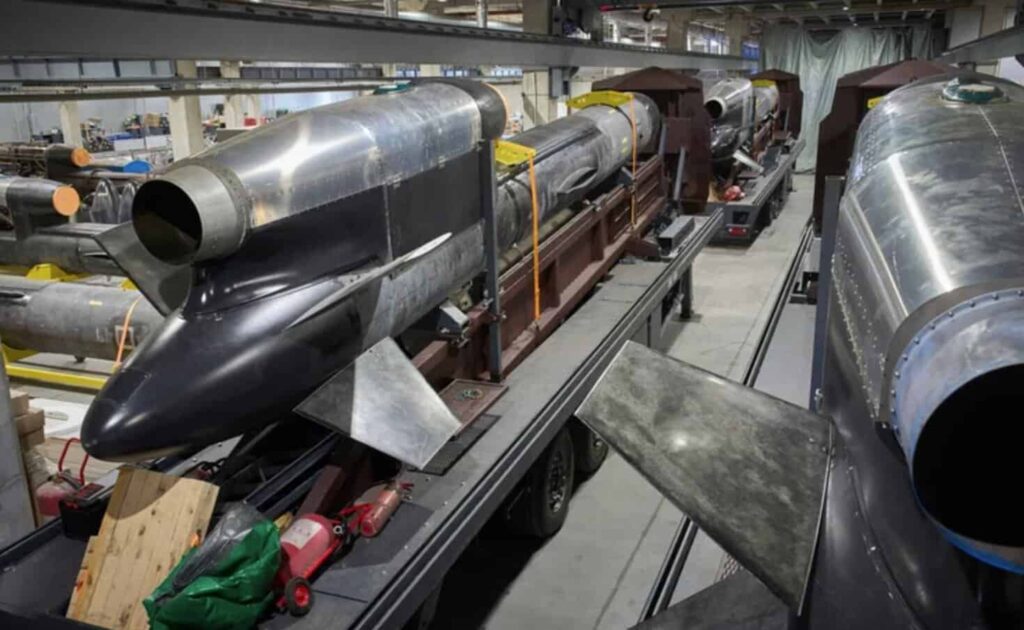
germany's diehl talks produce ukraine's flamingo cruise missile german soil · post fire point's missiles production facility ракета фламінго компанії point джерело єфрем лукацький maker defence negotiating manufacture germany financial

Germany's missile maker Diehl Defence is negotiating to manufacture Ukraine's Flamingo cruise missile in Germany, the Financial Times reported. Talks with the Ukrainian developer Fire Point are planned for the coming weeks, as European states hunt for weapons able to reach deep into Russia.

Four years of full-scale war have turned Ukraine's defense industry from an aid recipient into a source of battle-tested designs, with Kyiv's manufacturers now fielding interceptor drones and advancing a domestic ballistic missile program that European militaries increasingly want to tap. German Flamingo production would hand Europe a ground-launched deep-strike weapon independent of Washington's political swings, while giving Fire Point the orders and financing to scale output.

"This could really happen"

Diehl chief executive Helmut Rauch briefed journalists during the ILA Berlin Air Show.

"We are in discussions about how we could work together," he said. "I think this could really happen. In the next few weeks, we have several meetings regarding this and then we will see." 

For a new product, he added, it "makes a lot of sense to have it also in Germany or other countries," and Diehl is "optimistic and positive" about cooperation. The Ukrainian outlet Militarnyi noted that joint output of the FP-5 Flamingo in Europe could become the largest example of NATO countries adopting Ukrainian defense know-how.
IRIS
Explore further

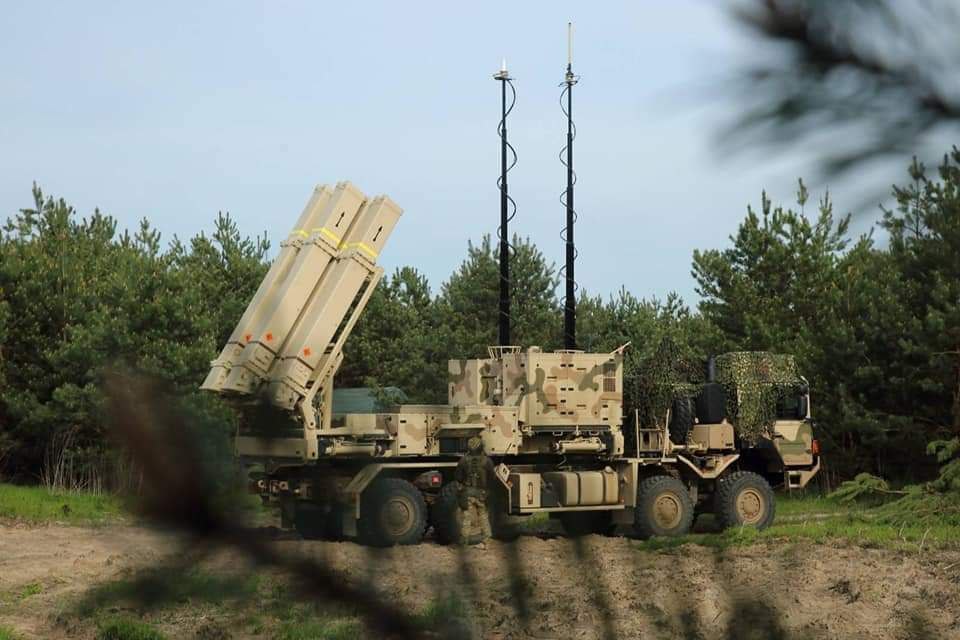
Germany delivers IRIS-T to Ukraine — high-tech system that engages cruise missiles, as Russia continues to strike residential buildings

German Defense Minister Boris Pistorius, visiting Kyiv last month, said the "technological leaps here in Ukraine are remarkable." Joint ventures are being explored for long-range drones, air defenses, and electronic warfare, he said.

The initiative comes as Berlin scrambles to replace US Tomahawk missiles that were due in Germany this year alongside an American battalion. US President Donald Trump scrapped that Biden-era decision amid friction with Chancellor Friedrich Merz around the war in Iran. 

Diehl builds the Iris-T air-defense system, a mainstay of Ukraine's protection against Russian missile attacks. The firm inked a technology deal with Fire Point in April without disclosing details.
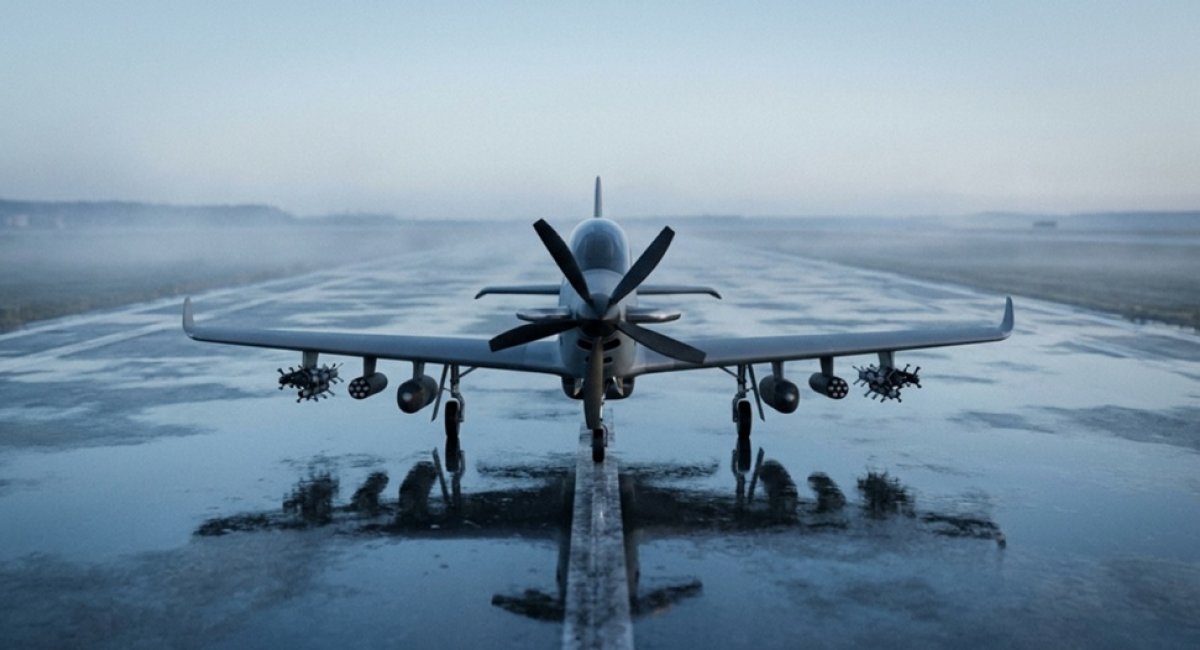
Render of the Pulse P19 multi-purpose optionally piloted aircraft. Source: Quantum Systems
Explore further

German company that already supplies Ukraine with drones has unveiled Shahed-hunter aircraft with four weapons categories on single airframe

Twice the Tomahawk's range, 200 missiles a month

The ground-launched Flamingo claims over 3,000 km of reach — roughly double the Tomahawk's. The missile has so far played a limited part in Ukraine's long-range campaign, and some reports have questioned its effectiveness. At least two Flamingos, though, struck a military plant in the Russian city of Cheboksary on 10 June, about 900 km from the Ukrainian border — the longest successful known Flamingo strike so far.

Fire Point co-founder and chief designer Denys Shtilierman told the Financial Times in May that the company turns out about 200 Flamingos a month with capacity to spare. 

"We just need orders and money," he said, admitting an engine bottleneck he expected to resolve soon.
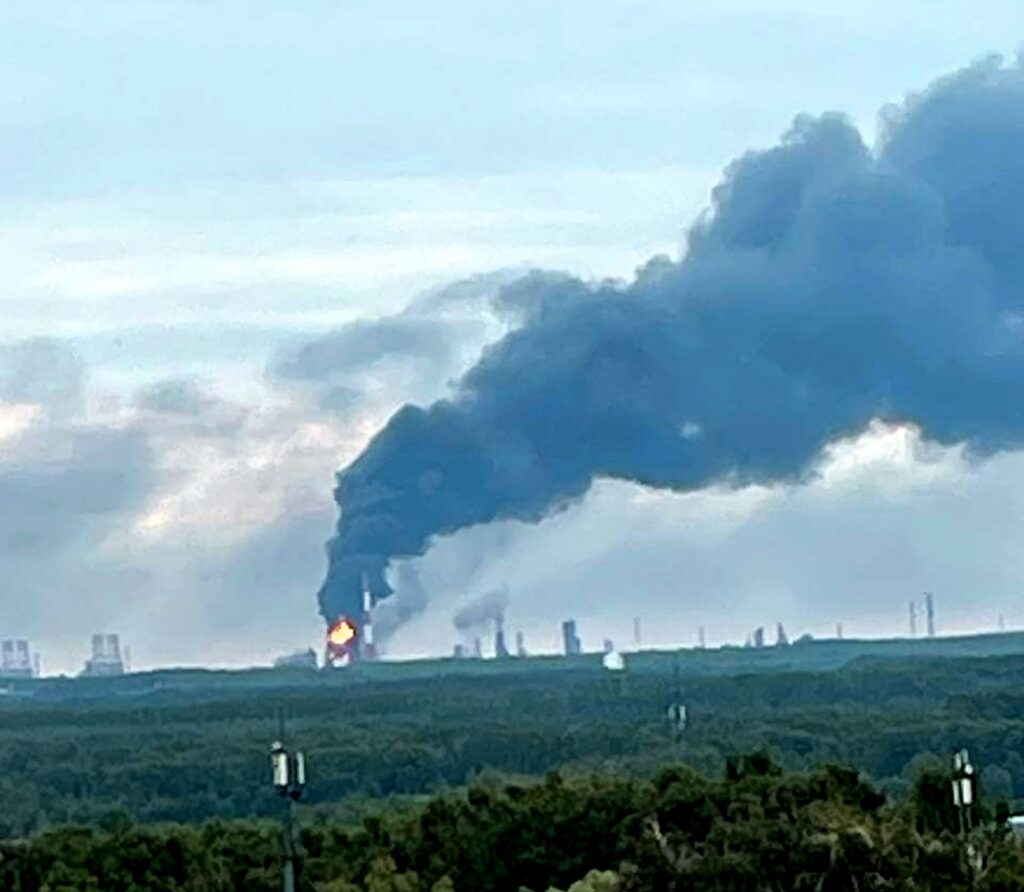
So far, however, publicly documented Flamingo attacks remain limited to a handful of strikes, each involving only a small number of missiles.
  •  

Ukraine confirms strikes on two Tatarstan refineries and rocket-fuel rubber plant in Tolyatti

ukraine confirms strikes two tatarstan refineries rocket-fuel rubber plant tolyatti · post black smoke rises over burning oil refining facility after ukrainian strike nizhnekamsk russia 12 2026 0b9bde49-e761-4e4b-9abe-9bd2dd867a7d ukraine's defense

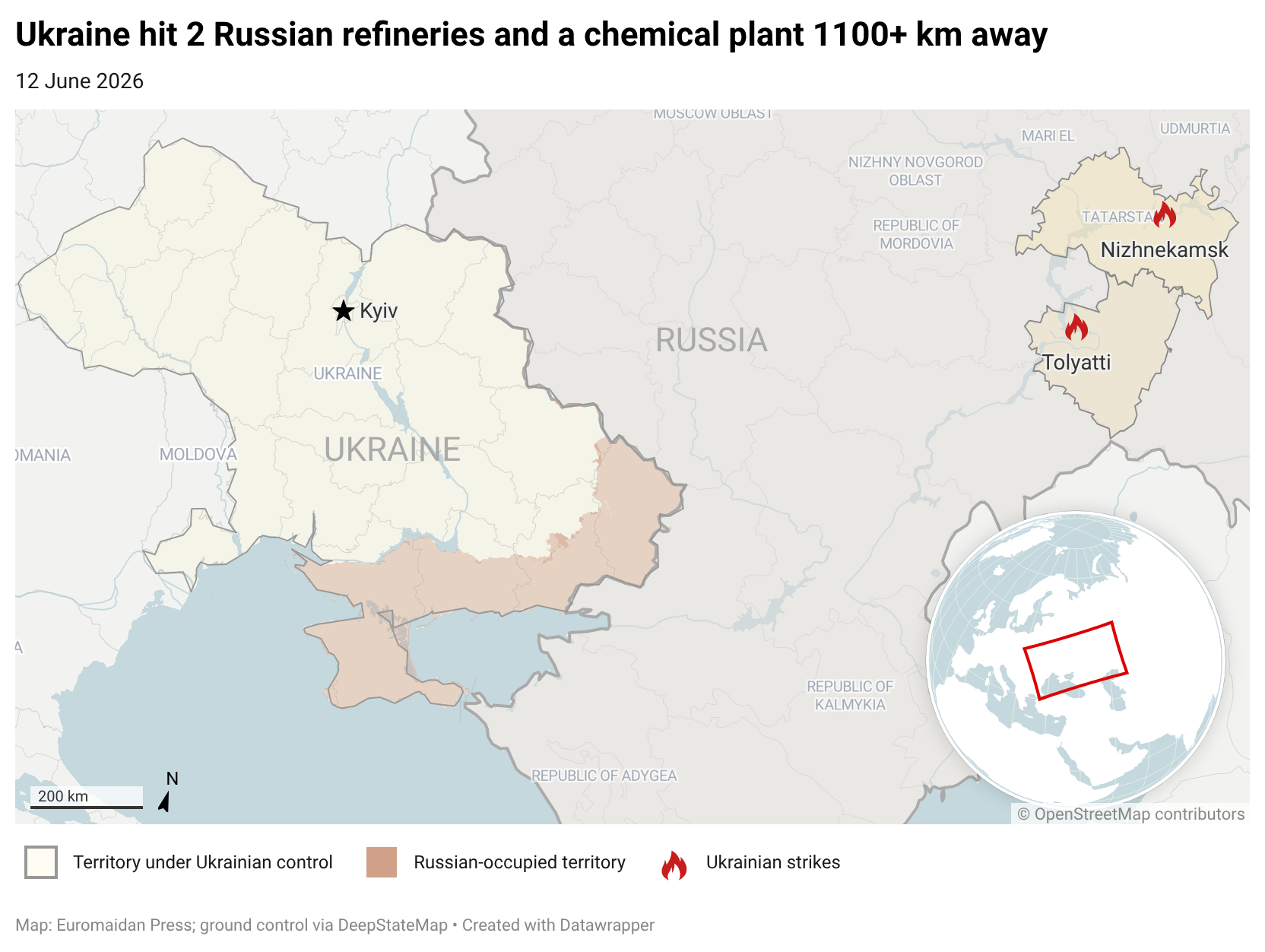
Ukraine's Defense Forces set major fuel and petrochemical plants deep inside Russia on fire and hit military targets along the front overnight on 12 June, according to Ukraine's General Staff. Fires broke out at refineries in Tatarstan and a rubber plant in Samara Oblast, while monitoring channels reported strikes in occupied Crimea. The raid forced one Russian city to cancel its Russia Day celebrations.

Ukraine's deep-strike campaign has already pushed Russia's gasoline crisis into 25 regions and six occupied Ukrainian areas, with earlier reports claiming roughly 40% of Russian refining capacity knocked offline since January. With Russian oil facilities now burning on back-to-back nights, each confirmed shutdown tightens the fuel squeeze on the army Moscow needs to keep its war going — and shows its air defense cannot cover the depth of its own territory.

Two refineries burn in Nizhnekamsk

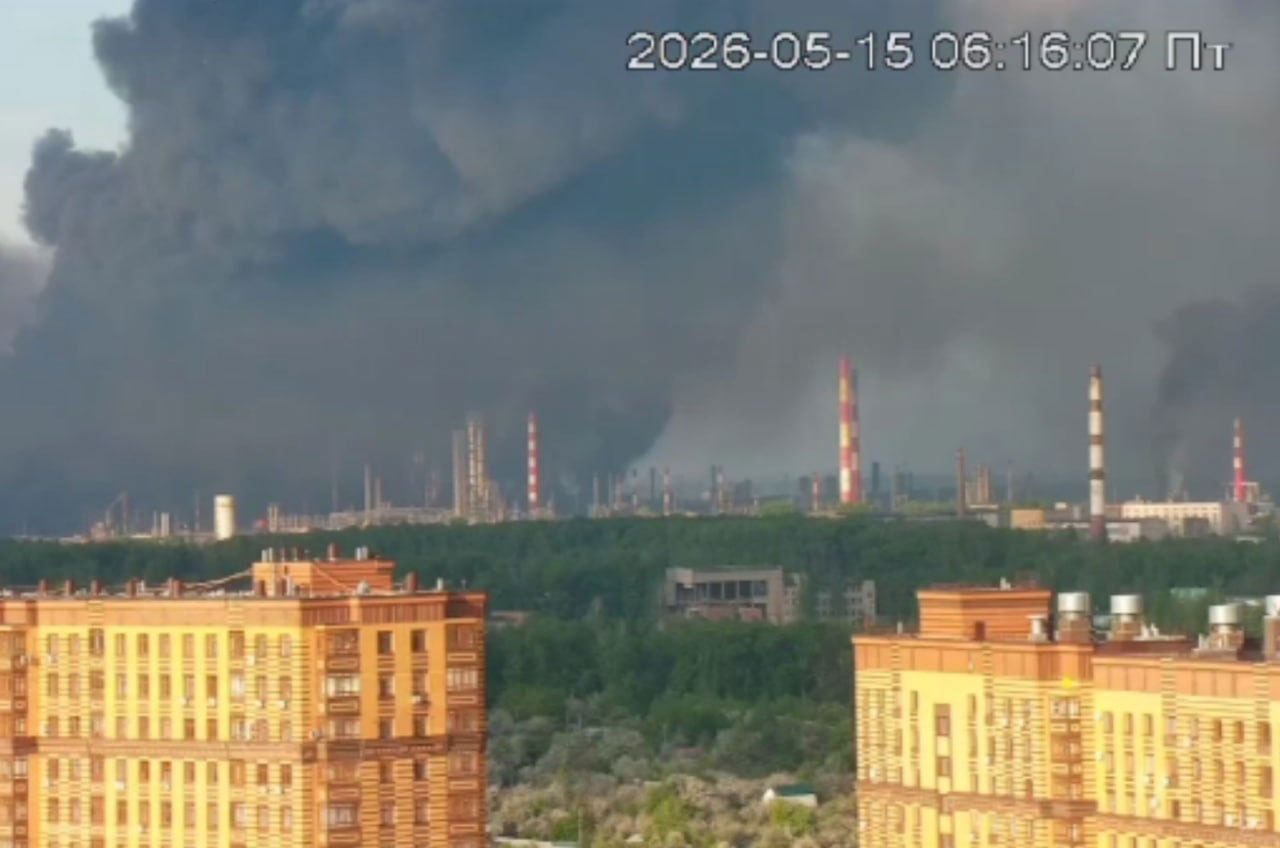
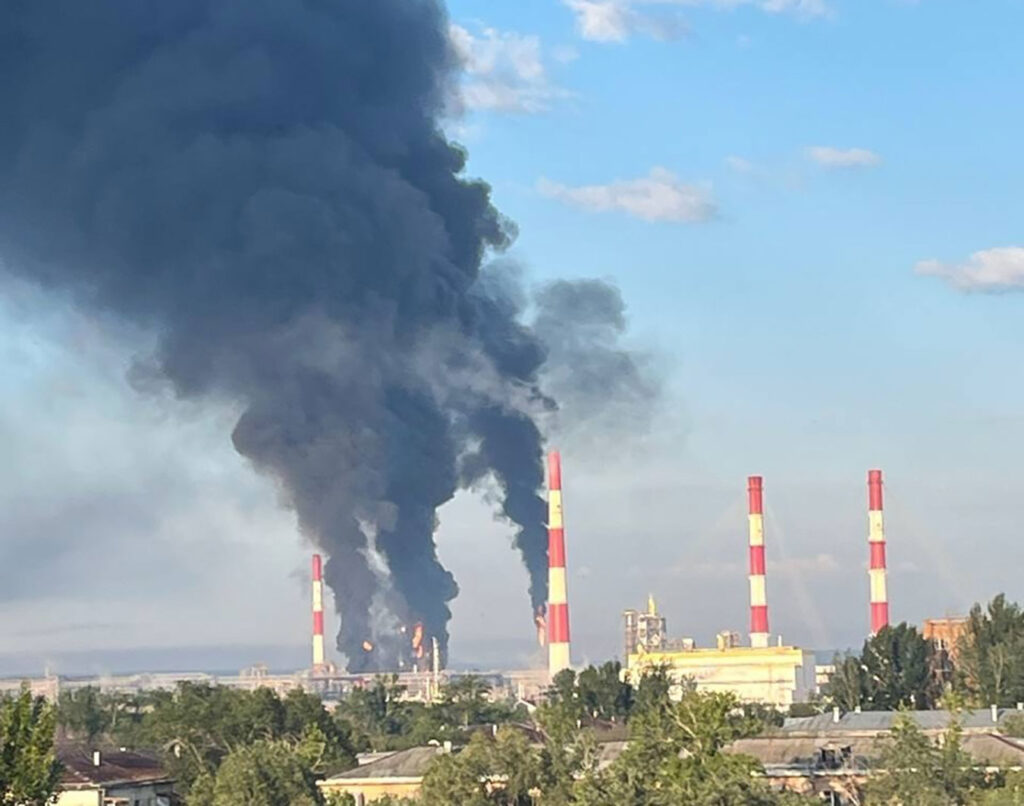
Units of Ukraine's Defense Forces struck the TANECO and TAIF-NK oil refineries in Nizhnekamsk, Republic of Tatarstan, Russia. The General Staff confirmed hits and fires at both plants. TANECO ranks among Russia's largest refineries, with a design capacity of over 16 million tons of oil per year. It produces diesel, aviation fuel, and other petroleum products. The plant lies more than 1,100 km from Ukraine's border.

Drones set fire to Nizhnekamskneftekhim, one of Russia's largest petrochemical plants, in Tatarstan in the early hours of 12 June.

The strike reportedly ignited the AVT-8 unit, where crude oil gets its primary processing and is split into gasoline, diesel, and other fractions.… pic.twitter.com/BQFXXp4NyJ

— Euromaidan Press (@EuromaidanPress) June 12, 2026

Russian news Telegram channel Astra found at least three separate fires at TANECO in its OSINT analysis of eyewitness footage. Astra's source said the ELOU AVT-9 primary oil processing unit and the ELOU AVT-8 column were burning. The channel called TANECO one of Russia's most efficient refineries, with a refining depth of 99.6%. Monitoring Telegram channel Supernova+ published footage of two large fires with thick black smoke at the plant. Preliminary data pointed to damage at two primary processing units and a tank farm.

TAIF-NK, the second refinery hit, processes heavy high-sulfur crude and gas condensate at a declared refining depth above 95%, the General Staff noted. Its output runs from mass-market fuel to feedstock for petrochemicals and military needs. 

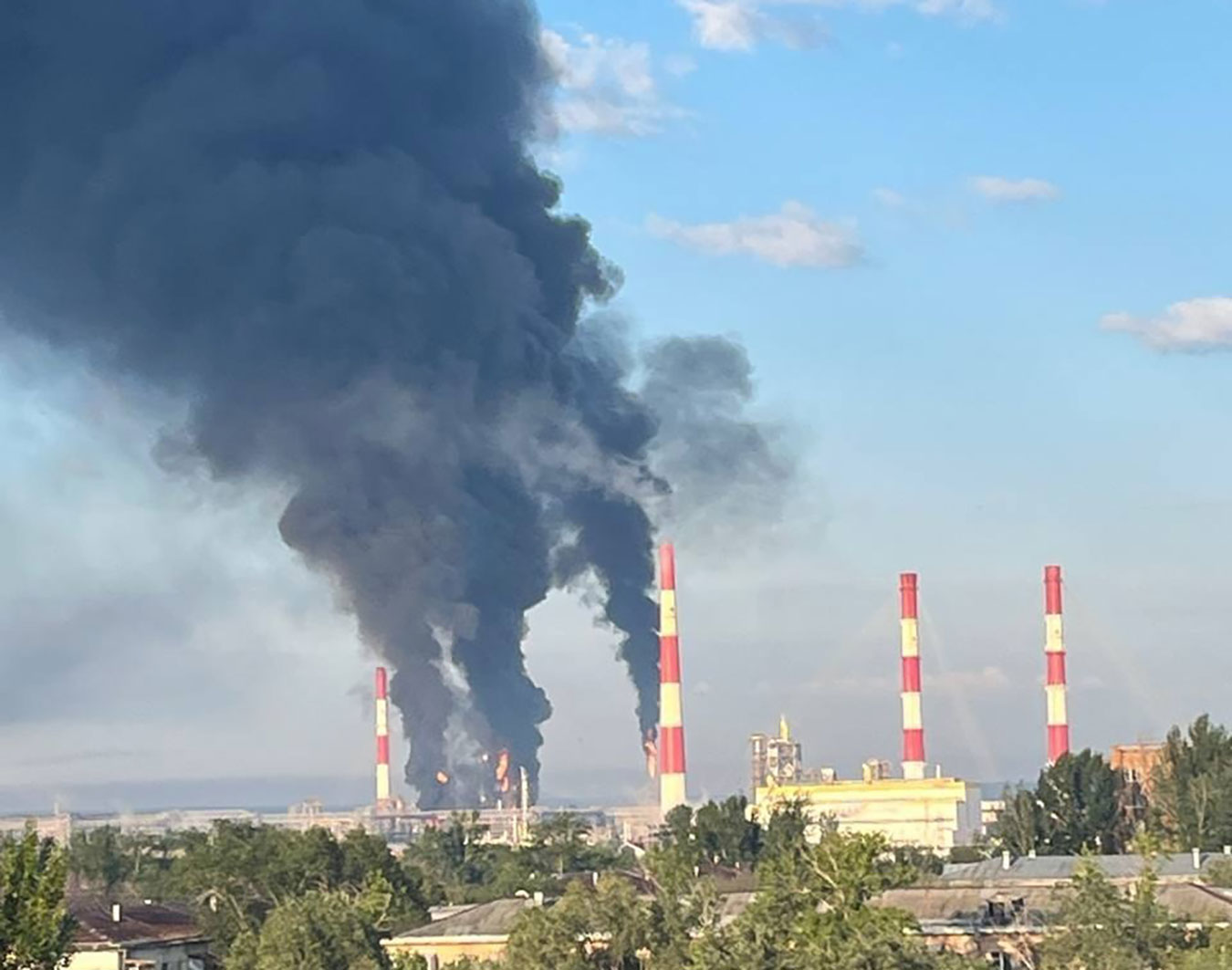
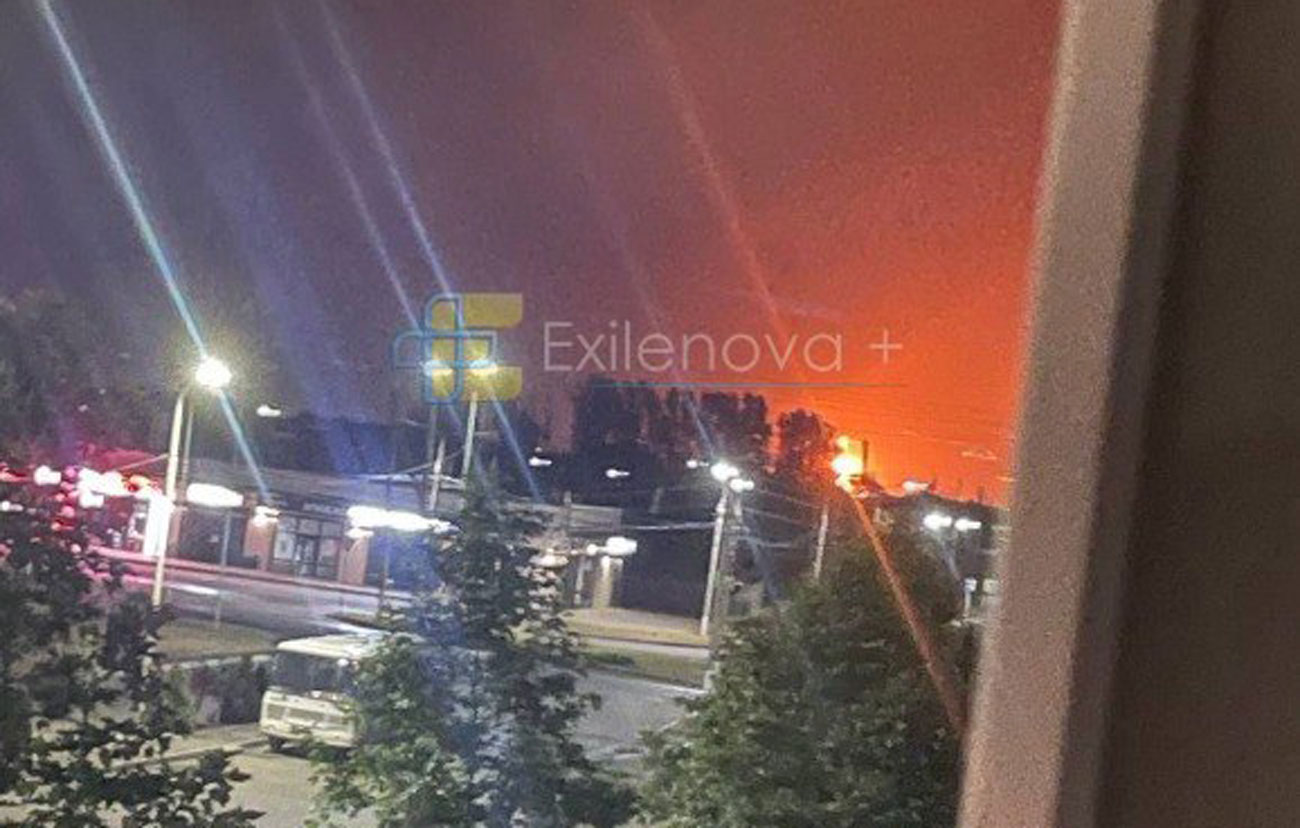
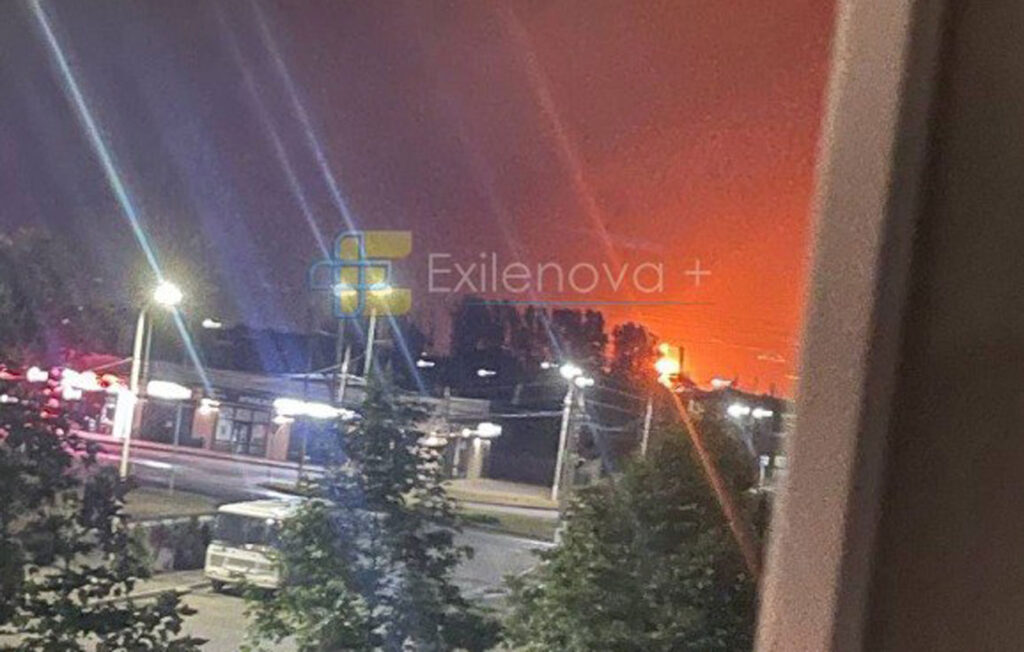
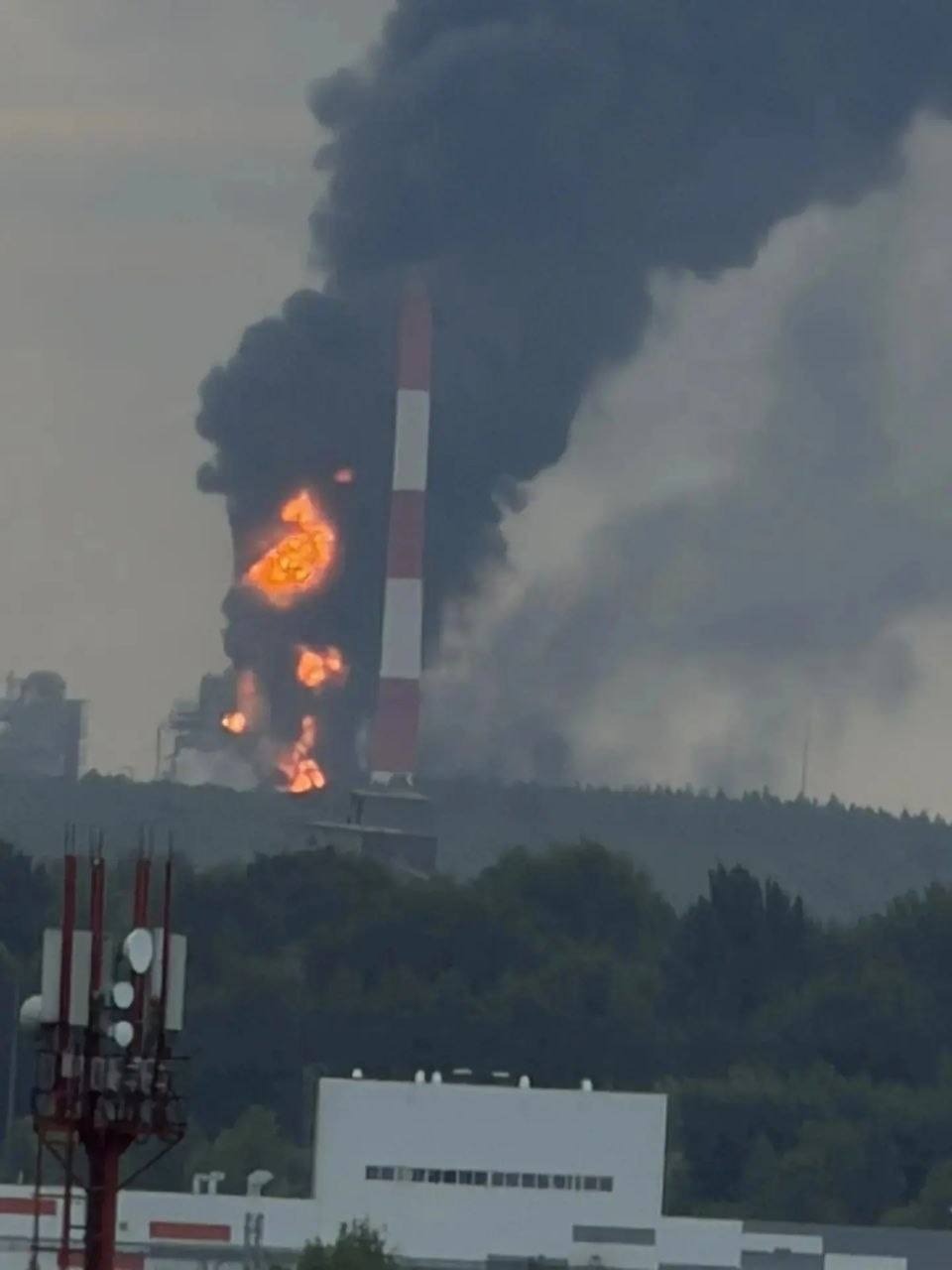
ukraine confirms strikes two tatarstan refineries rocket-fuel rubber plant tolyatti · post fire engulfs industrial unit next chimney after ukrainian strike nizhnekamsk russia 12 2026 2bd5189f-62e7-4645-ae48-dc42a84a9054 ukraine's defense forces set
Fire engulfs an industrial unit next to a chimney after the Ukrainian strike on Nizhnekamsk, Tatarstan, Russia, 12 June 2026. Photo: Exilenova+

Russia Day canceled as a petrochemical giant burns

Tatarstan declared a drone danger regime at 3 a.m., and the airports of Kazan and Nizhnekamsk restricted flights. Residents of Nizhnekamsk then reported powerful explosions across the city. Nizhnekamsk Mayor Radmir Belyaev stated the city canceled all festivities for Russia Day, the state holiday marked on 12 June.

Monitoring Telegram channels Exilenova+ and Supernova+ tracked the night's fires. Monitoring channels also reported a hit on Nizhnekamskneftekhim (NKNH), one of Europe's largest petrochemical complexes, located in the same city. The SIBUR-owned plant processes feedstock from TANECO and TAIF-NK into synthetic rubbers, plastics, and ethylene, Astra said.

Rubber for Russian missile fuel burns in Tolyatti

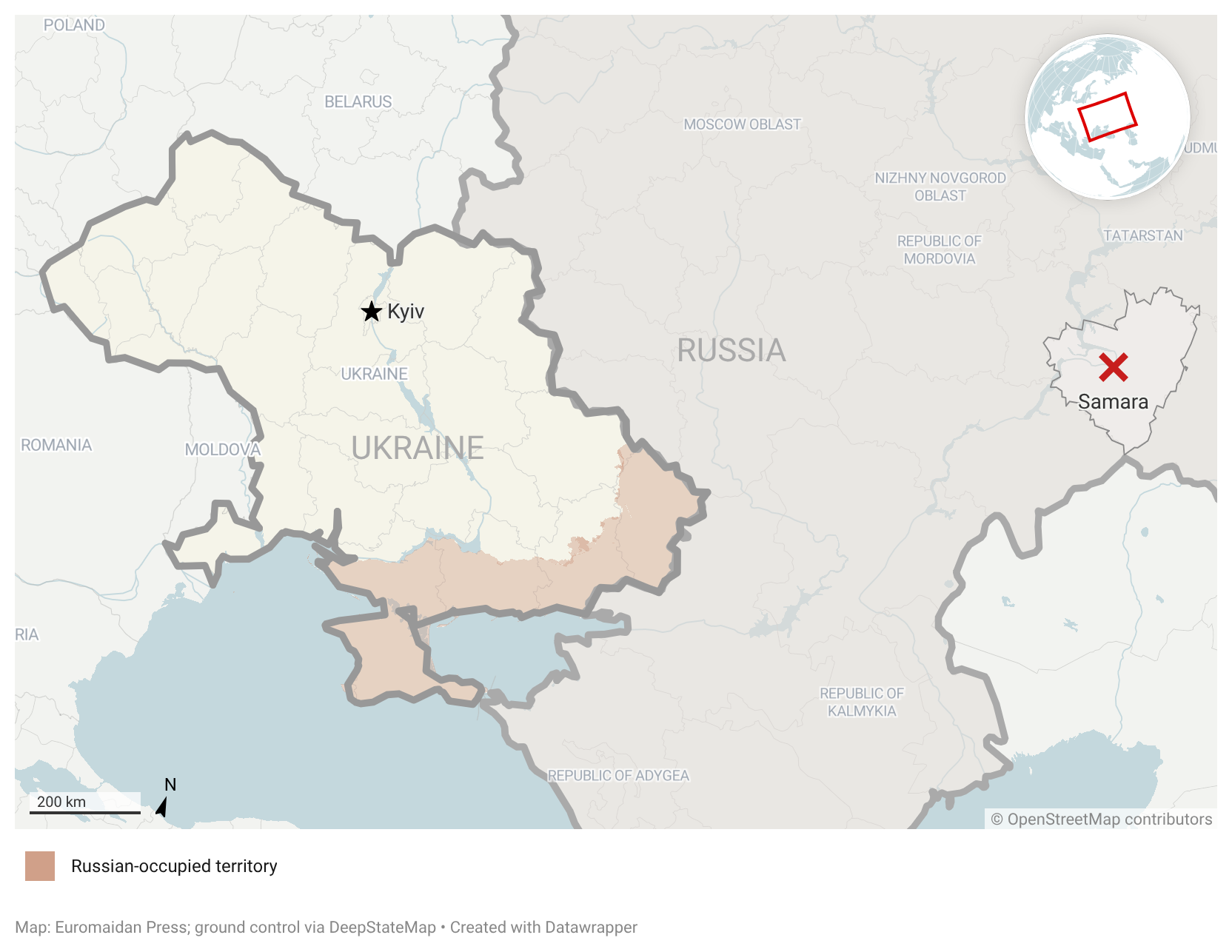
Ukrainian forces also hit the Tolyattikauchuk plant in Tolyatti, Samara Oblast, Russia. The General Staff confirmed the strike and a fire at the site. The plant makes synthetic rubbers used, among other things, in producing solid rocket fuel for tactical and ballistic missiles, plus monomers, fractions, and high-octane gasoline additives.

Multiple fires are burning across the industrial zone of Russia's Tolyattikauchuk chemical plant after a massed Ukrainian Defense Forces drone attack on Tolyatti.

The petrochemical plant in Samara Oblast produces synthetic rubber and tire components. Explosions rattled windows… pic.twitter.com/2Po2sqkq7v

— Euromaidan Press (@EuromaidanPress) June 12, 2026

Astra reported that Tolyattikauchuk, part of the Tatneft group, is listed in a closed registry of defense enterprises kept by Russia's Industry and Trade Ministry. Its rubbers go into tires for military vehicles and components for the aviation industry, the channel said. 

moscow's fuel supplier under fire ukrainian drones strike rosneft's ryazan refinery · post black smoke rises over oil hours after drone 15 2026 ryazan-supernova+-5204027262443918426 ukraine news reports
Explore further

Russia’s oil production falls for sixth straight month as Ukrainian drone strikes hit storage and transport

Tolyatti Mayor Ilya Sukhikh stated that one industrial facility took damage from what he called a drone fall during a massive Ukrainian drone attack. Samara Oblast Governor Vyacheslav Fedorishchev said nobody was hurt in the attack on the region.

Russia's Defense Ministry claimed its air defenses "intercepted and destroyed" 231 Ukrainian drones overnight on 12 June. The ministry claimed downings over Tatarstan and Samara Oblast, a dozen other regions from Belgorod to Astrakhan, the Moscow region, and occupied Crimea.
  •  

Russia’s oil production falls for sixth straight month as Ukrainian drone strikes hit storage and transport

moscow's fuel supplier under fire ukrainian drones strike rosneft's ryazan refinery · post black smoke rises over oil hours after drone 15 2026 ryazan-supernova+-5204027262443918426 ukraine news reports

Russia's crude oil production fell in May to its lowest level in a year, with Ukraine's record-setting drone campaign against oil infrastructure playing a major role, Bloomberg reported. The decline, now running for half a year, cuts into the mineral extraction tax — the main channel through which oil fills the federal budget that finances the war, the Russian-language Moscow Times noted.

With Ukraine's deep strikes at a record tempo and Russia's regional budgets posting record shortfalls, every lost barrel of extraction tightens the fiscal squeeze on Moscow's war in Ukraine.

Output slides for half a year, far below the OPEC+ quota

Russia averaged 9.009 million barrels of crude a day in May, OPEC's monthly report shows. Daily output last peaked in November at 9.38 million barrels and has shrunk every month since, losing roughly 370,000 barrels, the Moscow Times wrote. The May figure sits 690,000 barrels a day short of what the OPEC+ deal obliges Russia to pump, Bloomberg calculated. The data excludes condensate, and April's level was revised slightly lower.

rosneft's kuibyshev refinery joins syzran novokuibyshevsk offline after ukrainian drone strike yesterday · post fires raging kuybyshevsky oil samara russia 10 2026 fires-rage-at-samara-kuybyshevsky-oil-refinery ukraine news reports
Explore further

All three Rosneft Samara refineries now offline or reduced as drones halt Kuibyshevsky operations yesterday

The Ukrainian strikes have been disabling oil storage and transportation capacity. That shortage, combined with underinvestment, reduces the volume of crude Russia extracts. Bloomberg observed that while the latest monthly drop marks a slowdown against previous months, it will likely keep weighing on oil markets. Oil prices stay elevated amid the continuing Middle East conflict, and Russia ranks among the world's three biggest crude producers whose barrels bypass the Strait of Hormuz, shut in practice since the Iran war erupted.

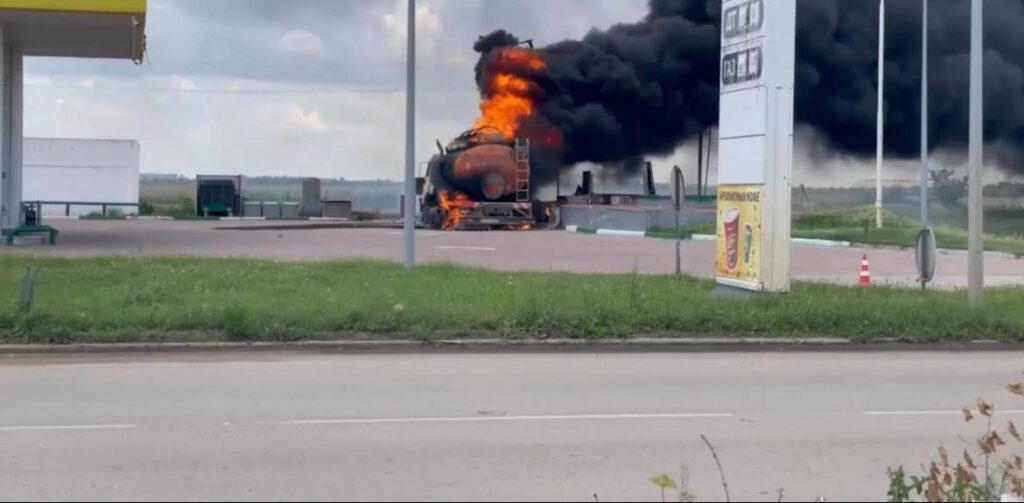
russia's fuel crisis jumps 15 25 regions five days—plus six occupied ukrainian areas · post russian truck burns gas station skadovsk kherson oblast after logistic lockdown mid-range strike 11 2026
Explore further

Russia’s fuel crisis jumps from 15 to 25 regions in five days—plus six occupied Ukrainian areas

A record month of strikes crushes refining

Ukraine sharply intensified its May campaign against Russian oil sites, logging at least 31 strikes on refineries, seaborne export terminals, and pipelines, Bloomberg counted — the highest monthly count since the full-scale invasion, as Kyiv works to cut the Kremlin's income from elevated crude prices. Because most strikes targeted fuel-producing facilities, Russian refining collapsed to its 2009 level in May. So far this month, Russia's refining runs have fallen to a two-decade low, EA Analytics, part of consultancy Energy Aspects, estimates.

russian crude reaches sea through tunnels under mountain ridge—and ukraine hit storage end near novorossiysk · post smoke fire rise over after ukrainian drone strike grushovaya oil depot krasnodar krai
Explore further

Russian crude reaches the sea through tunnels under a mountain ridge—and Ukraine hit the storage end near Novorossiysk

Exports rise while the budget's tax base shrinks

The gasoline shortage behind the fuel crisis in a number of Russian regions led producers to redirect more crude to export markets. The Baltic and Black Sea ports damaged in the first two months of spring have been repaired. Seaborne crude exports averaged 3.64 million barrels a day over the four weeks ending 31 May, Bloomberg's tanker-tracking data show. That compares with 3.17 million barrels daily over the four-week stretch to 17 April, when Ukrainian forces actively bombed ports and export terminals.

The Moscow Times notes that the export shift allows companies and intermediaries who retain significant sums from sales abroad to raise their incomes. The federal budget that pays for the war, though, is filled above all by the mineral extraction tax, so falling production hits government revenue directly.

  •  

Russia can’t attack NATO right now—ISW explains what the new border bases are really for

russia can't attack nato right now—isw explains what new border bases really · post facilities russia's 200th separate motor rifle brigade northern fleet's coastal troops pechenga district murmansk oblast 15-20

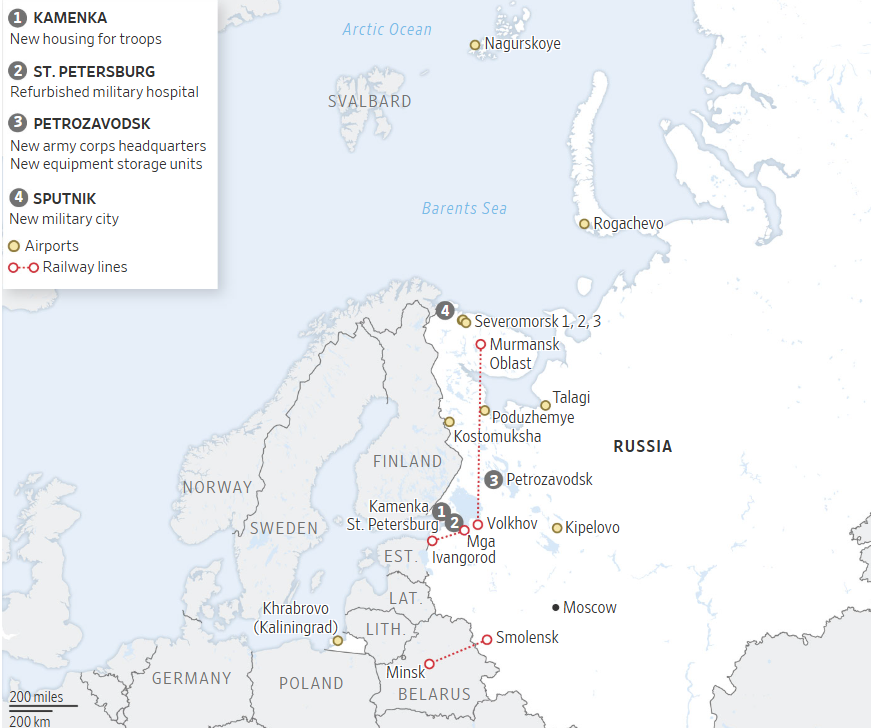
Russia is building new military bases and expanding existing ones along its northern border with NATO, according to ISW. The Institute for the Study of War (ISW) assesses that the construction likely supports future Russian force projection against the alliance. Near-term Russian ground operations remain unlikely, the think tank notes, since most Russian combat power stays committed in Ukraine.

Western officials have tracked Russia's military buildup near its European neighbors since well before the latest satellite findings, and Moscow's large-scale exercises near alliance territory have repeatedly rehearsed confrontation scenarios.

Satellite images show construction from Norway to Kaliningrad

Broadcasters in Norway, Sweden, and Denmark, together with a Baltic news portal, published satellite findings of the buildup on 10 JuneRussian forces are putting up new facilities and growing old ones near the frontiers of the Nordic and Baltic states. Intelligence officers and senior commanders in Denmark told broadcaster DR the work amounts to preparation for conflict. They see nothing indicating Moscow has actually decided on war, not least because the bulk of its army remains tied down in Ukraine.

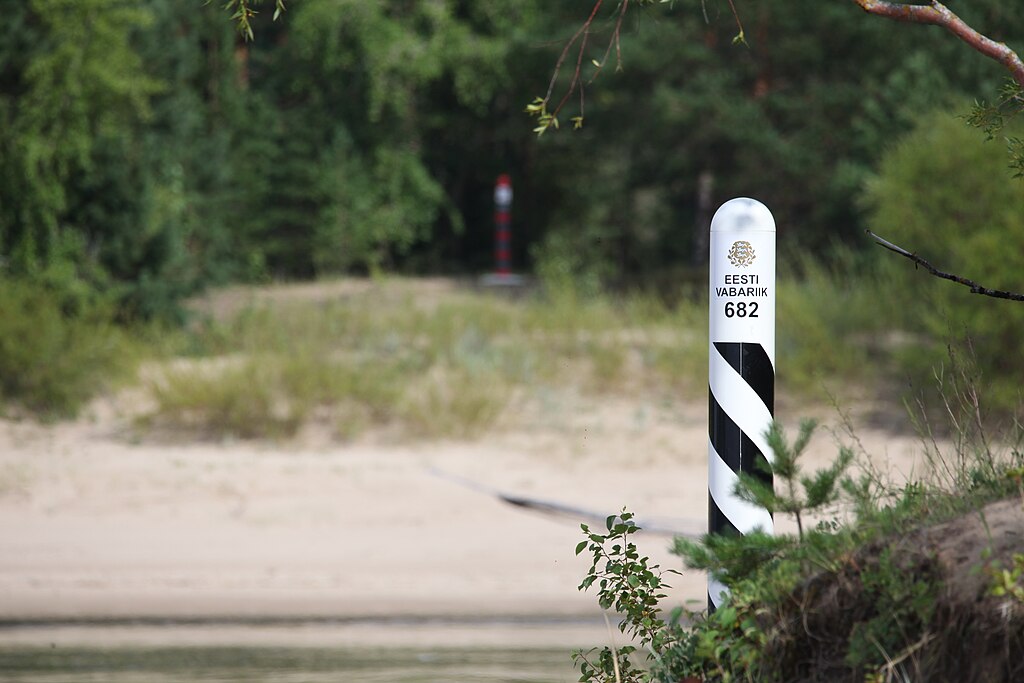
Estonian and Russian border posts at Narva-Jõesuu on the Estonia-Russia border
Explore further

“We don’t think all of this is just for demonstration”: Russia is constructing infrastructure with potential capacity up to 115,000 personnel on NATO’s doorstep

Finland braces for 80,000 Russian troops at its border

Marko Eklund, a former Finnish intelligence officer, told DR that the Russian command plans to deploy about 115,000 troops at the northern NATO border. That deployment would come after the war in Ukraine ends. Construction has begun on a new Russian base at Novaya Vilza, outside Petrozavodsk in the Republic of Karelia. The site sits roughly 190 kilometers from Finland and will hold 4,000 to 6,000 personnel. Russia began renovating an abandoned Soviet-era garrison in Petrozavodsk earlier this year. Finland's army chief, Pasi Välimäki, expects Russia to put 80,000 soldiers on the shared border, he told Swedish broadcaster SVT.

isw estonia warns russia's military buildup beyond war ukraine estonia-report russia building its capabilities only ongoing also preparation potential future conflict nato reported estonia's foreign intelligence service (efis) institute study
Explore further

ISW: Estonia warns of Russia’s military buildup beyond war in Ukraine

A corps command waits in Luga as Karelia bases rise

A source covering the Russian Northern Grouping of Forces claimed Russia's command is moving parts of the 44th Army Corps, a Leningrad Military District formation, to the Republic of Karelia. Only the command post stays behind for now. Those command-post elements currently sit in Luga, Leningrad Oblast, ready to shift to Petrozavodsk once Russia finishes the bases, the source claimed.

russian military near border with finland
Explore further

Russia builds up military presence near Finland’s border – WSJ

A Kremlin-affiliated Russian milblogger claimed on 11 June that crews are upgrading at least 19 barracks, along with support and storage buildings, at Pechenga on the Kola Peninsula in Murmansk Oblast. The site lies about 10 kilometers from the Norwegian border. The milblogger also claimed Baltiysk in Kaliningrad Oblast is getting a bigger naval infantry footprint, more armor, and additional landing craft.

ISW: bases serve post-war force projection

"Russia is establishing these bases to support potential future military actions against NATO, though such ground operations remain unlikely, as most of Russia's combat power is participating in operations in Ukraine," ISW says.

Once the shooting in Ukraine stops, the finished bases would shorten Russia's timeline for massing troops at NATO's frontier, ISW assesses. That leaves NATO needing the readiness to hold off — and, failing that, beat back — a Russian threat at its borders soon after combat in Ukraine stops, in ISW's assessment.

  •  

All three Rosneft Samara refineries now offline or reduced as drones halt Kuibyshevsky operations yesterday

rosneft's kuibyshev refinery joins syzran novokuibyshevsk offline after ukrainian drone strike yesterday · post fires raging kuybyshevsky oil samara russia 10 2026 fires-rage-at-samara-kuybyshevsky-oil-refinery ukraine news reports

Ukrainian drones forced Rosneft's Kuybyshevsky oil refinery in Samara Oblast, Russia, to halt oil processing on 10 June, Reuters reported. The strike puts all three plants in the Rosneft Samara refining hub out of full operation at the same time.

With Ukraine's deep strikes accelerating into the summer season, each new plant taken out compresses Russia's repair window and hardens the fuel-supply squeeze on its military logistics.

Reuters confirms processing halt at both primary units

Reuters cited two industry sources to confirm that processing stopped at both AVT-4 and AVT-5 after the strike. Each unit has a nominal processing capacity of about 73,000 barrels of crude oil (10,000 metric tons) per day. The hits caused damage and subsequent fires at both. 

Samara Oblast Governor Vyacheslav Fedorishchev claimed a massive overnight drone attack injured three people and caused "damage to several industrial facilities." 

An earlier report on 10 June described fires at the Kuybyshevsky refinery after the strike.

rosneft's kuibyshev refinery joins syzran novokuibyshevsk offline after ukrainian drone strike yesterday · post fires raging kuybyshevsky oil samara russia 10 2026 fires-rage-at-samara-kuybyshevsky-oil-refinery ukraine news reports
Explore further

Fire reported at Kuibyshev oil refinery in Russia’s Samara after drone strike

Plant size and output

Kuybyshevsky's 2024 crude oil throughput was 4.7 million tons, equal to 94,400 barrels a day, Reuters reported. That year's output included 0.8 million tons of gasoline, 1.4 million tons of diesel, and 1.3 million tons of fuel oil. Nominal capacity stands at 7 million tons per year. The plant is one of the largest oil refining facilities in the Volga region. It also supplies fuel for the Russian army.

The Kuybyshevsky plant belongs to Rosneft's Samara refining cluster alongside Novokuibyshevsky and Syzran. Syzran's operations have been suspended since a 21 May drone attack, Reuters reported, and the plant has yet to resume. The Novokuibyshevsky plant shut down after an 18 April strike and now operates at reduced throughput. Ukraine has hit all three plants in the cluster in less than two months.

The Kuybyshevsky plant was also previously hit in January 2026, August 2025, and in March 2024. The earlier strikes damaged equipment and forced production cycles to stop.

Same night: Cheboksary defense plant struck

The same night, Ukrainian forces also struck the VNIIR-Progress plant in Cheboksary, Chuvashia, which was previously hit on 5 May. The factory makes "Kometa" antennas that protect Russian drones from electronic warfare. It also makes satellite receivers for GLONASS, GPS, and Galileo systems. Ukraine's General Staff said such modules are used in Shahed-type drones, Iskander and Kalibr missiles, and aerial bombs.

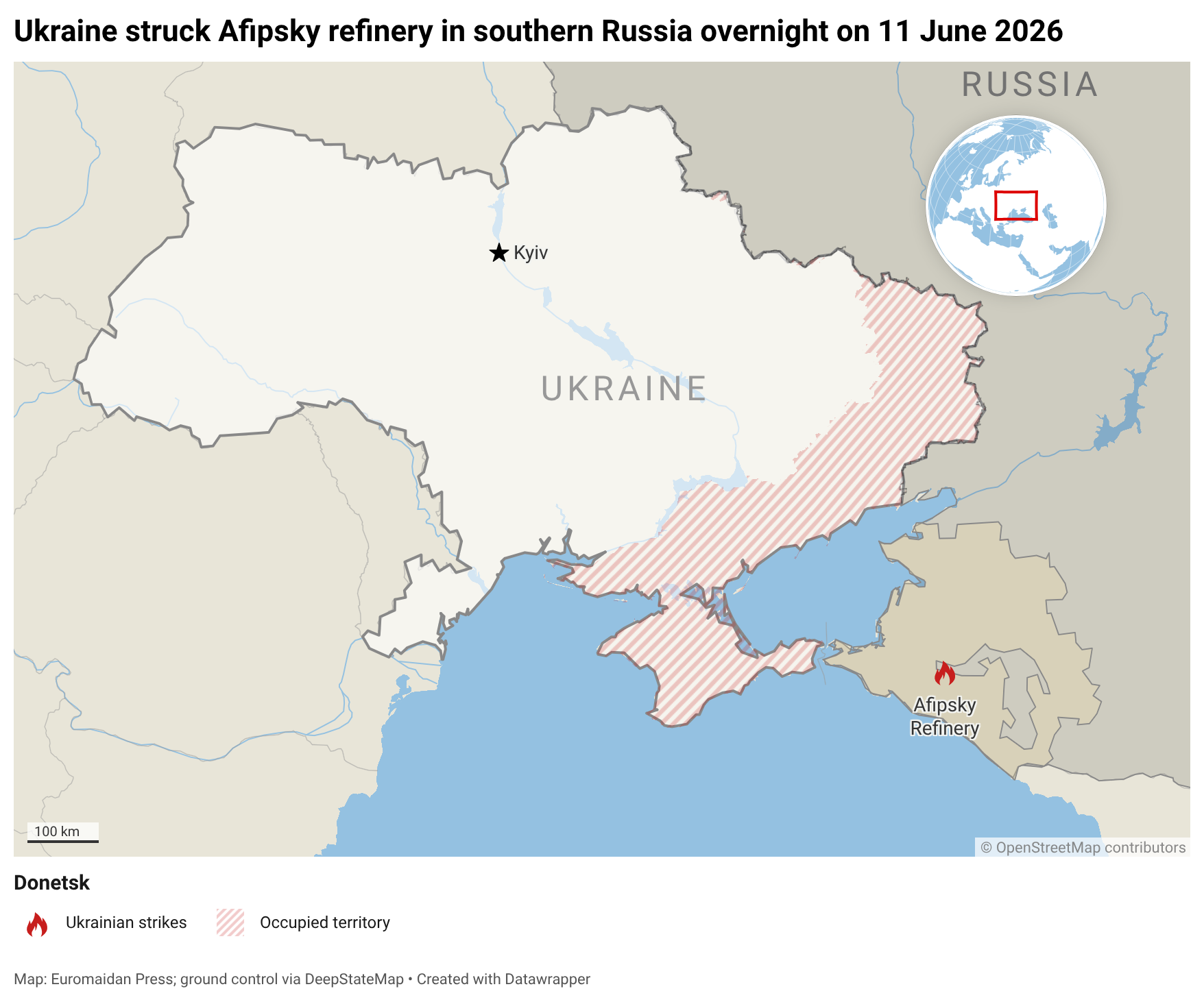
Meanwhile, today saw a strike on the Afipsky refinery in Krasnodar Krai. 

afipsky oil refinery burns again ukrainian drones return krasnodar krai · post fire after drone strike russia 11 2026 5282989402957225318 ukraine news reports
Explore further

Afipsky oil refinery burns again as Ukrainian drones return to Krasnodar Krai

By May 2026, Ukrainian drones had taken six of ten Russian refineries hit during that month offline. Russian media counted 24 of Russia's 33 largest refineries struck since 2022. Only the Omsk and Angarsk plants east of the Urals remain untouched so far.

  •  

Russia’s fuel crisis jumps from 15 to 25 regions in five days—plus six occupied Ukrainian areas

russia's fuel crisis jumps 15 25 regions five days—plus six occupied ukrainian areas · post russian truck burns gas station skadovsk kherson oblast after logistic lockdown mid-range strike 11 2026

Russia's gasoline crisis has spread to 25 of its own regions and six occupied Ukrainian ones, the Russian-language Moscow Times reported on 10 June. Six days earlier, the count stood at 15. Ukrainian strikes on Russian refineries hit a wartime monthly record in May 2026, dropping Russian refining loading well below the start of the year.

This comes amid the Ukrainian long-range drone strike campaign, targeting Russian oil processing, transportation, and storage facilities almost every day. Additionally, Ukraine has escalated its mid-range "Logistic Lockdown" campaign, targeting Russian logistics in the occupied territories at depths of up to 200 km.

From 15 regions to 25 in under a week

The Russian Telegram channel 7×7 counted at least 25 Russian regions facing gasoline shortages and supply disruptions as of 10 June. Less than a week earlier, on 4 June, the number stood at 15. Restrictions also apply across six Russian-occupied Ukrainian regions: Crimea, Sevastopol, and the Luhansk, Donetsk, Kherson, and Zaporizhzhia oblasts.

Bloomberg counted 38 Ukrainian strikes on Russian refineries from January through May 2026. May alone saw 16 — the highest monthly figure of the war. According to OilX, Russian refinery loading has dropped 14% since the start of the year and stays roughly 20% below pre-war levels.

afipsky oil refinery burns again ukrainian drones return krasnodar krai · post fire after drone strike russia 11 2026 5282989402957225318 ukraine news reports
Explore further

Afipsky oil refinery burns again as Ukrainian drones return to Krasnodar Krai

Regional officials have responded unevenly. The acting governor of Belgorod Oblast, Alexander Shuvaev, acknowledged the shortage. Krasnodar Krai governor Veniamin Kondratyev called the situation "artificial hype." Residents publicly mocked the claim under his Telegram post, which was republished on a local channel. Gas stations in Krasnodar Krai have begun closing due to a shortage.

Fuel prices have spiked in occupied Crimea. On 10 June, AI-92 cost about $1.14 per liter, against $0.96 in Moscow. AI-95 traded near $1.25, up from $1.04 in the Russian capital. Resellers were offering fuel at $1.81-$2.08 per liter — about 50% above official Crimean prices.

On 8 June, Russia's Energy Ministry announced the creation of a task force to manage the fuel crisis, citing "growing enemy air attacks."

Occupied Sevastopol cancels fuel coupons after tankers fail to arrive

Sevastopol's Russian-installed governor said on 10 June that planned distribution of rationed petrol had been delayed, Reuters wrote on 11 June. Mikhail Razvozhayev claimed oil tanker trucks could not bring fuel into the city, following recent Ukrainian strikes on supply routes. Crimea, occupied by Russia in 2014, introduced fuel rationing last month due to shortages on the peninsula.

"Unfortunately, oil tanker trucks were unable to come to the city tonight," Razvozhayev wrote on Telegram. 

ukrainian drones knocking out northwestern entrance crimea bridges damaged one night · post rl9vo -ukraine-targets-four-bridges-at-crimea-s-northwestern-choke-point- struck four vehicular crimea's overnight 11 2026 quisling official vladimir saldo claimed strikes part ukraine's
Explore further

Ukrainian drones knocking out the northwestern entrance to Crimea: four bridges targeted in one night

He said priority for refueling on 11 June would go to public transport, utilities, emergency vehicles, and government vehicles.

"I am addressing everyone: there is no point in lining up at... the gas stations tomorrow," he added late on 10 June. 

Existing rationing coupons would be canceled and new ones issued today.

Razvozhayev later claimed over two dozen Ukrainian drones were downed in the early hours of Thursday in a fresh attack on Sevastopol. The city is Crimea's second-largest and home to Russia's Black Sea Fleet.

On the same day, a major drone attack hit Russia's Volga region of Samara, more than 900 km from the front line, forcing state-owned oil giant Rosneft to halt processing at its Kuibyshevsky refinery.

rosneft's kuibyshev refinery joins syzran novokuibyshevsk offline after ukrainian drone strike yesterday · post fires raging kuybyshevsky oil samara russia 10 2026 fires-rage-at-samara-kuybyshevsky-oil-refinery ukraine news reports
Explore further

All three Rosneft Samara refineries now offline or reduced as drones halt Kuibyshevsky operations yesterday

Ukrainian President Volodymyr Zelenskyy said Wednesday evening that Ukraine’s recently launched mid-range strike campaign against Russian logistics, including large-scale strikes on supply and fuel trucks, had proved its worth.

"In recent months, we are especially grateful for the mid-strikes: Russian military logistics throughout the entire depth of the temporarily occupied territory are now within reach of Ukrainian drones," he said. "Our impact reaches Russia’s border regions as well. The enemy feels it, and we will continue to expand it."

  •  

Ukrainian drones knocking out the northwestern entrance to Crimea: four bridges targeted in one night

ukrainian drones knocking out northwestern entrance crimea bridges damaged one night · post rl9vo -ukraine-targets-four-bridges-at-crimea-s-northwestern-choke-point- struck four vehicular crimea's overnight 11 2026 quisling official vladimir saldo claimed strikes part ukraine's

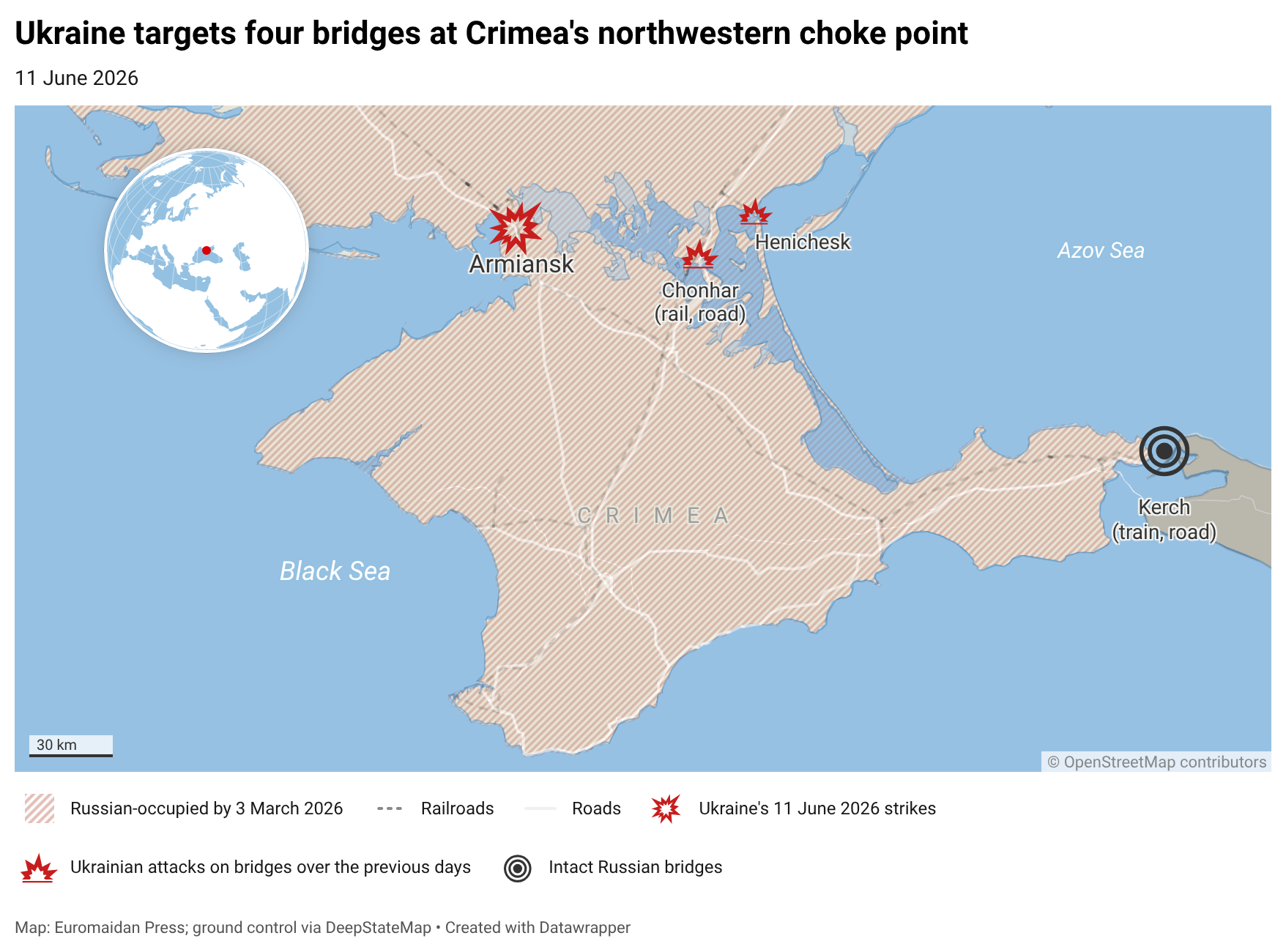
Ukrainian drones struck four vehicular bridges at Crimea's northwestern entrance overnight on 11 June 2026, quisling official Vladimir Saldo claimed. The strikes are part of Ukraine's most recent mid-range strike push—now at its fourth day—reaching every road corridor between Crimea and mainland Ukraine. The same night, drone attacks also rolled across Sevastopol, Bakhchysarai, Saky, and other Crimean sites.

Russia depends on the Crimean land corridor to push fuel, ammunition, and replacements to its forces in occupied southern Ukraine. Ukrainian mid-range drones operating under the military's Logistics Lockdown program have steadily shrunk that corridor's reliability since May. Ukraine has now struck all three major connection points between occupied Crimea and mainland Ukraine within four days, damaging some bridges and destroying others.

Four bridges damaged at the Armiansk isthmus

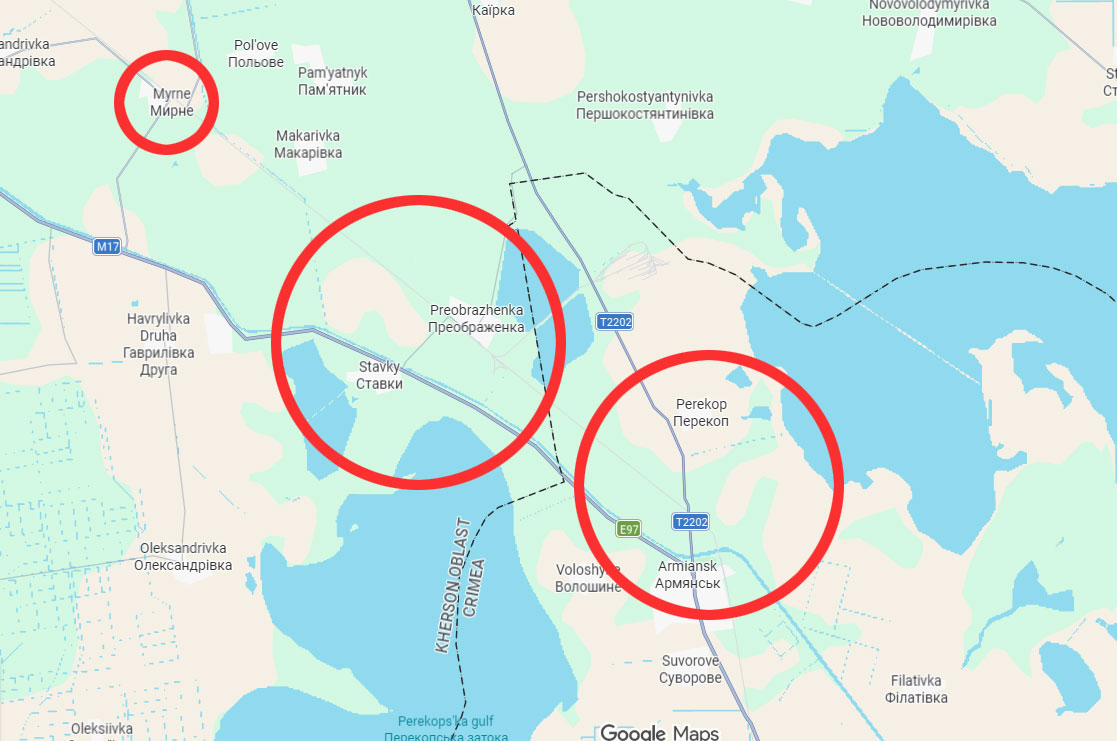
Saldo, the Russian-installed head of occupied Kherson Oblast, named the four targets on his Telegram. They include the automobile bridge in the Perekop-Armiansk area and a bridge near Stavky, Kherson OblastTwo more bridges near Myrne and Preobrazhenka span the North Crimean Canal. Saldo stated all four spans sustained damage.

ukrainian drones knocking out northwestern entrance crimea bridges damaged one night · post google maps view four struck overnight 11 2026 — near myrne between stavky preobrazhenka perekop armiansk crimean
Google Maps view of the four bridges struck by Ukrainian drones overnight on 11 June 2026 — near Myrne, between Stavky and Preobrazhenka, and at Perekop near Armiansk in the northwestern Crimean isthmus. Map: Google Maps

Three Crimean northern choke points hit in four days

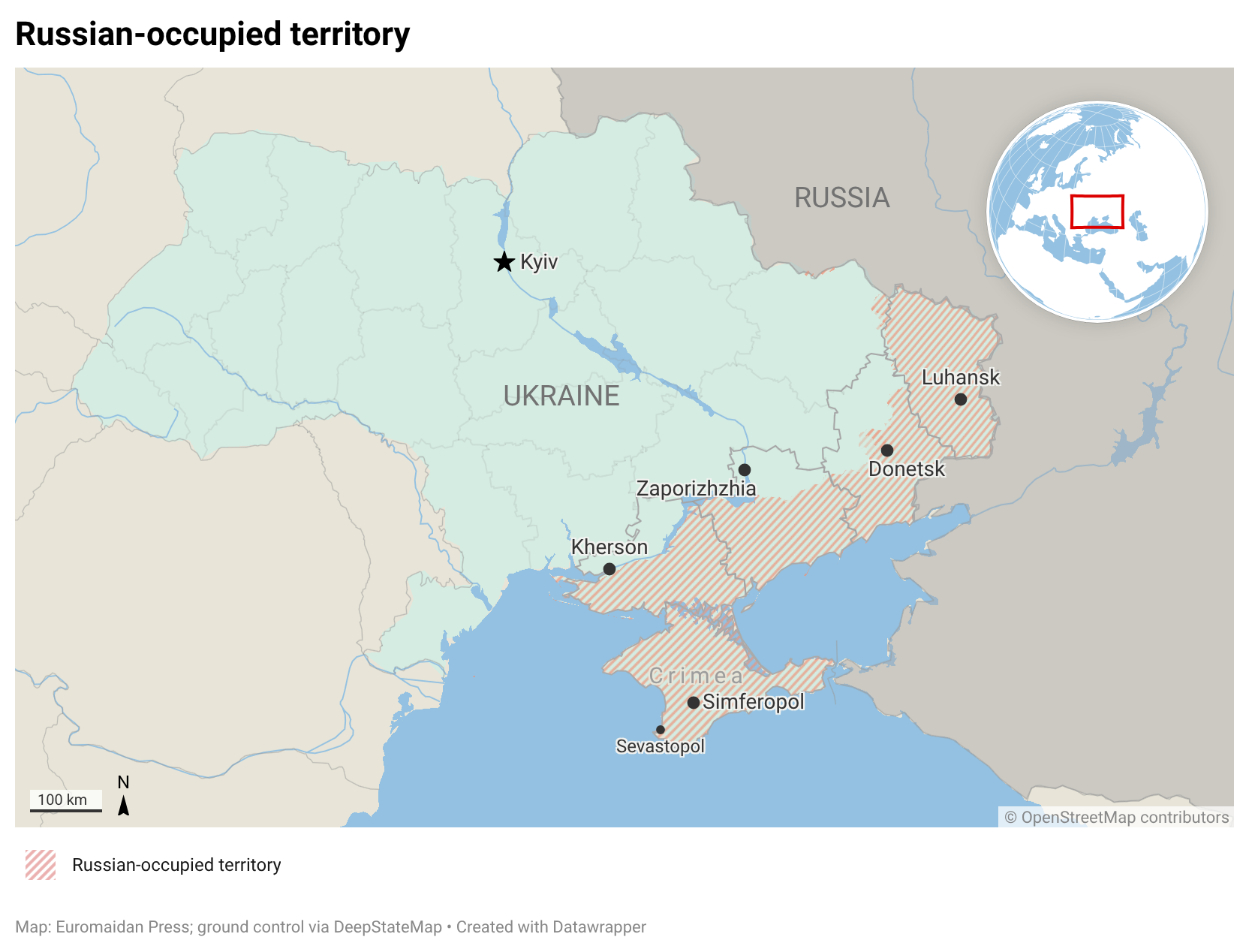
Ukraine struck the Chonhar bridge on 7 and 9 Juneclosing Russia's main road link to occupied Crimea, yet the Russians reportedly installed a pontoon bridge next to the severely damaged crossing. On 10 June, Ukrainian drones hit the bridge from Henichesk to Arabat Spit. With both routes fully or partially shut, Russia had rerouted traffic through Armiansk and Perekop — the very corridor struck overnight. DeepState analysts noted that Ukrainian strikes on the bridges are an important part of the blockade of occupied southern Ukraine.

Russian-occupied Ukrainian territory, including Crimea and parts of Luhansk, Donetsk, Zaporizhzhia, and Kherson oblasts. Illustrative map: Euromaidan Press

Not only an entrance, but also targets across the peninsula

Russia's occupation governor, Mikhail Razvozhayev, claimed 32 drones were shot down over Sevastopol between 22:00 and midnight. He claimed the drones fell near Sevastopol Bay, Cape Fiolent, and Balaklava. The city declared two air alerts during the night and the morning.

Monitoring Telegram channel Krymsky Veter reported machine-gun fire in Pishchane at 21:40 and in Andriivka shortly after, citing subscribers. 

"At 21:40 a machine gun started firing in Pishchane, at 21:48 a machine gun started in Andriivka, after which an anti-aircraft gun fired a couple of bursts," the channel wrote. 

Detonations followed near Cape Fiolent, in Sevastopol, and later in Bakhchysarai. By morning, Krymsky Veter reported explosions and shooting in Saky.

Russia's Defense Ministry claimed the destruction of 330 drones over Russia and the occupied territories in the same overnight period.

Update

The First Assault Brigade shared the footage of the strikes:

Videos emerged of some of the Ukrainian strikes on bridges linking occupied Crimea to occupied Kherson Oblast

Ukraine's 1st Assault Brigade, 475th Assault Regiment, and SBU's Alfa reportedly took part.

📹 1st Assault Brigade
More on the strikes: https://t.co/xkKf15akux https://t.co/7FhAOJbWl0 pic.twitter.com/WFXUcKjfWm

— Euromaidan Press (@EuromaidanPress) June 11, 2026
  •  

ISW: Russia gains ground in Kostiantynivka but Fortress Belt stays out of reach

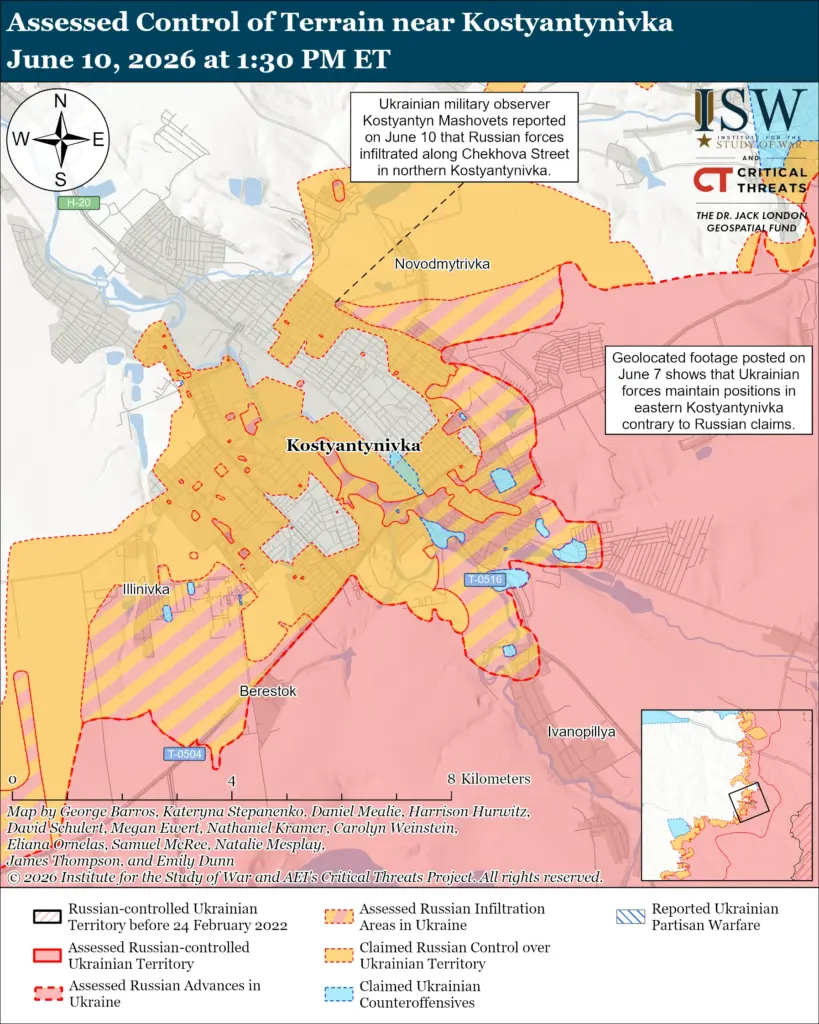
isw russia gains ground kostiantynivka fortress belt stays out reach · post assessed control terrain near 10 2026 kostyantynivka-june-10-2026 ukraine news ukrainian reports

Russian forces have made fresh tactical advances into Kostiantynivka, the Institute for the Study of War (ISW) assessed on 10 June. The city sits at the southern tip of Ukraine's Donetsk Oblast Fortress Belt — Moscow's main effort for the spring-summer 2026 offensive. Russia missed its own May deadline to take the city, and the wider fortified chain stays out of operational reach.

For more than four years now, Russia has been struggling to seize the rest of Donetsk Oblast in eastern Ukraine, making only gradual costly advances. Ukraine's Fortress Belt anchors the region's defense. Unable to capture the Ukrainian-controlled part, the Kremlin demanded the whole region in peace talks, which predictably isn't a condition Ukraine can accept. Slow infiltration drains Russian reserves while Ukrainian drone interdiction continues to erode Moscow's assault tempo across the theater.

Two Russian tactical groups push into eastern Kostiantynivka

Two named Russian formations have pushed into eastern Kostiantynivka from the south, Ukrainian military observer Kostiantyn Mashovets reported on 10 June. He identified them as the "Bakhmut" tactical group and the "Dzerzhinsk" (Toretsk) tactical group. The "Bakhmut" group is built around Russia's 3rd Army Corps (AC) under the Southern Grouping of Forces. The "Dzerzhinsk" group operates in the area of responsibility of the 8th Combined Arms Army (CAA) of the Southern Military District. It likely includes elements of five CAAs, the 3rd AC, and Russian naval fleets, Mashovets noted.

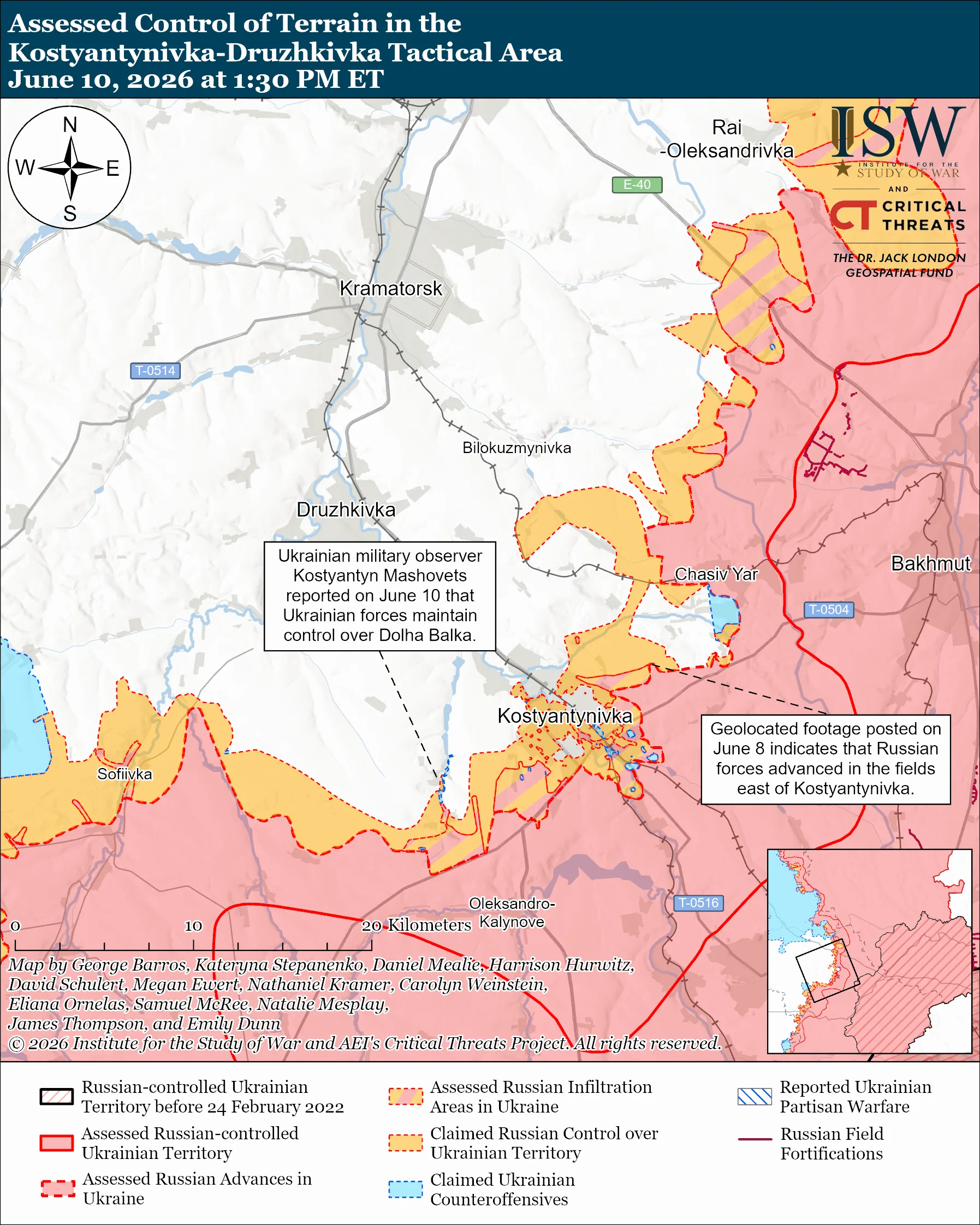
Elements of the "Bakhmut" group pushed from Stupochky through Novodmytrivka into northeastern Kostiantynivka. They also advanced along the T-0504 Pokrovsk-Bakhmut road as far as the city's railway station. The "Dzerzhinsk" group moved from Illinivka, south of the city, into areas stretching from northwestern to southwestern Kostiantynivka near the railway station. Mashovets assessed that it has likely achieved a tactical breakthrough in the western, central part of the city. Forward assault elements of the two groups now stand roughly two kilometers apart. Russian forces have so far failed to seize the railway station. Ukrainian troops cleared the village of Dovha Blaka southwest of the city of Russian infiltrators.

isw russia gains ground kostiantynivka fortress belt stays out reach · post kostyantynivka-druzhkivka-tactical-area-june-10-2026 ukraine news ukrainian reports
Map: ISW

Eight months of grinding, one missed deadline

ISW noted that Russian forces opened the campaign for Kostiantynivka in August 2025 after seizing the majority of Chasiv Yar and Toretsk, with Toretsk alone running to roughly 26,000 Russian casualties. The first Russian troops infiltrated Kostiantynivka itself in October 2025. Russia has since worked into at least 12.69% of the city. Ukrainian officials reported earlier this spring that the Russian command had set a May 2026 deadline for the seizure. That deadline has come and gone.

russia's monthly land grab ukraine has collapsed hundreds km² 14 · post double tap strike russian trucks rear highway russian-occupied occupied territory 1st azov corps news ukrainian reports
Explore further

Russia’s monthly land grab in Ukraine has collapsed from hundreds of km² to 14, OSINT data show

Russia has poured forces into the effort regardless. Ukrainian Commander-in-Chief Oleksandr Syrskyi said on 2 May that Russian activity in this direction noticeably increased in April. Russian units in the area had reportedly been replenished by 80% as of 6 June, ISW noted. The Russian command reportedly redeployed elements of the 70th Motorized Rifle Division to the Kostiantynivka-Chasiv Yar area last December. The redeployment likely came in preparation for the spring push.

Tactical gains likely, the Fortress Belt still out of reach

ISW assessed that Russian forces will likely keep infiltrating throughout Kostiantynivka. They will likely consolidate positions in parts of the city while suffering high casualties. Russia's 3rd AC northeast of the city appears to be struggling to dislodge Ukrainian forces from Chasiv Yar. That inhibits any move to envelop Kostiantynivka from the north. A Russian milblogger claimed on 9 June that Ukrainian forces recently counterattacked near Chasiv Yar. The milblogger added that Ukraine still holds Podilske and Mykolaivka west of the town.

russia's new kyiv strike threat posturing victory day humiliation retaliation—isw · post russian president vladimir putin during 9 parade red square 2026 photo_2026-05-09_10-53-10 25 russia threatened systematic strikes violation spirit
Explore further

ISW: Russia’s grand territorial ambitions are divorced from battlefield reality

The northern flank of the Fortress Belt is also bogged down. Russia opened its spring-summer 2026 offensive with mechanized assaults around Lyman. Those assaults signaled intent to advance on Sloviansk from the northeast. They produced no significant gains, ISW noted. The Russian command likely shifted weight south to Kostiantynivka. Russia's Western Grouping of Forces covers the front from Kupiansk through Lyman. It likely lacks the combat power to push on Sloviansk while balancing operations toward Kupiansk and Borova. 

Ukrainian counterattacks in the Borova direction have likely forced Russian units to choose between defending their positions and pushing north or northwest of Lyman, ISW says.
  •  

Afipsky oil refinery burns again as Ukrainian drones return to Krasnodar Krai

afipsky oil refinery burns again ukrainian drones return krasnodar krai · post fire after drone strike russia 11 2026 5282989402957225318 ukraine news reports

Ukrainian drones struck the Afipsky oil refinery in Russia's Krasnodar Krai overnight on 11 June, sparking a fire later extinguished, according to the Krasnodar Krai operational headquarters. The southern Russian plant, repeatedly targeted by Ukrainian strikes, supplies fuel to the Russian military.

Amid the ongoing Russo-Ukrainian war, the Russian oil industry has been under sustained pressure from Ukrainian deep strikes, with gasoline rationing currently spreading across multiple regions and occupied territories. Output at Russian refineries has been falling on Rosstat's own index as repeated hits keep facilities offline.

A blaze at one of southern Russia's largest refineries

The Ukrainian Telegram channel Exilenova+ posted footage from local witnesses showing air defense fire and a blaze. The attack started after midnight, with residents reporting drone overflights and explosions at intervals of a few minutes. 

Krasnodar Krai authorities claimed drone "debris" fell in the village of Afipsky and set the refinery on fire — Moscow's standard framing for Ukrainian strikes on Russian energy targets. The fire was out by 07:32 Moscow time, the operational headquarters later stated. Russian authorities reported no casualties at the plant itself.

The Afipsky plant is one of southern Russia's largest oil-processing facilities, with a capacity of over 6 million tons of crude a year. It produces gasoline, diesel, gas oil, vacuum gas oil, fuel oil, sulfur, and gas condensate distillates. The facility supplies fuel to the Russian army. Ukraine's General Staff has assessed that the refinery processes about 2.1% of Russia's total oil refining.

The plant runs two primary oil distillation units with capacities of 9,786 and 8,829 tons per day. It is export-oriented and does not currently produce gasoline or diesel for Russia's domestic market. Combined throughput at the Afipsky plant and the affiliated Krasnodar refinery reached 7.2 million tons in 2024. Another 3 million tons were processed in the first half of 2025.

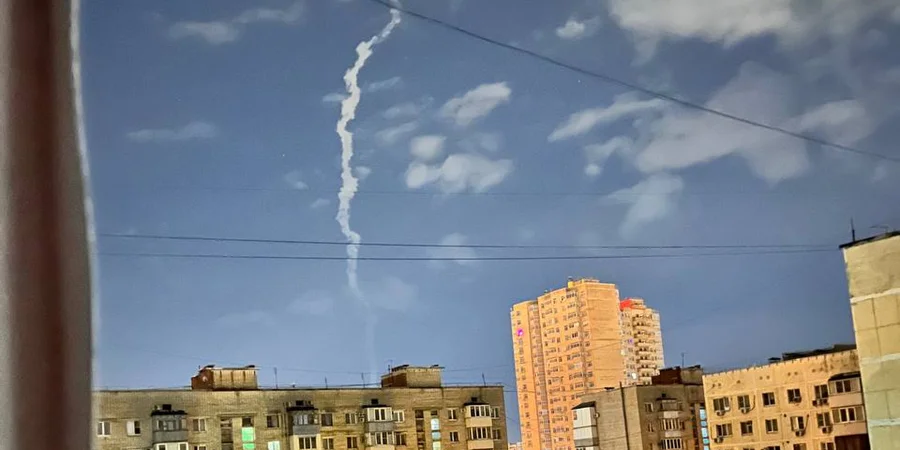
afipsky oil refinery burns again ukrainian drones return krasnodar krai · post smoke trail over amid drone attack russia 11 2026 краснодар у росії атакували дрони вночі червня року exilenova+
Smoke trail over Krasnodar amid a Ukrainian drone attack, Russia, 11 June 2026. Photo: Exilenova+ Telegram channel

Third strike on Afipsky in 2026 amid wider drone campaign

Russia's Defense Ministry claimed its air defenses intercepted and destroyed 330 Ukrainian drones over Russian territory overnight, the Moscow Times reported. According to the ministry, drones were spotted over Bryansk, Kursk, Belgorod, Oryol, Smolensk, Kaluga, Tula, Tver, Vladimir, and Moscow oblasts, as well as Krasnodar Krai and occupied Crimea. Russian aviation regulator Rosaviatsia restricted operations at airports in Tambov, Krasnodar, Sochi, Gelendzhik, and Zhukovsky outside Moscow.

afipsky oil refinery burns again ukrainian drones return krasnodar krai · post smoke plume after drone strike russia 11 2026 пожежа на афіпському нпз в рф червня telegram-канал exilenova+ ukraine
Smoke plume after a Ukrainian drone strike on the Afipsky oil refinery, Krasnodar Krai, Russia, 11 June 2026. Photo: Exilenova+ Telegram channel

The 11 June raid was the third attack on the Afipsky refinery this year, following hits on 21 January and 14 March. During the March hit, drones damaged the AT-22/4 primary oil processing unit at Afipsky — the plant's refining starting point. Satellite imagery had previously confirmed structural damage from a November 2025 drone attack.

  •  

Kremlin enacts law to grab homes and bank accounts of its exiled critics

kremlin enacts law grab homes bank accounts its exiled critics · post russia president vladimir putin during direct line 19 2025 official broadcast putin2025_43 ukraine news ukrainian reports

Russian President Vladimir Putin signed a law allowing Russia to seize the property and bank balances of citizens living abroad before any court ruling, the Moscow Times reported. The legislation turns a single formal charge into an immediate asset freeze in absentia against exiled Kremlin critics. It takes effect on 1 September 2026.

Property has become a routine instrument of Russian state coercion: Russian occupation authorities are confiscating Ukrainian homes inside occupied territory under federal legislation running until 2030. 

Several hundred thousand Russians left the country after the start of the full-scale invasion of Ukraine in 2022. 

What the law does

The amendments to Russia's Code of Administrative Offenses cover "administrative offenses against the interests of the Russian Federation." The seizure is framed as a "precautionary measure," not a sentence. Qualifying offenses include "discrediting" the Russian army, calls for sanctions against Russia, and "propaganda of Nazi symbols." They also cover producing and distributing "extremist materials" and non-payment of fines for any of these acts.

The value of property arrested, including bank account balances, is not capped at the underlying fine. Russian outlet Meduza noted that courts had previously fined people abroad under those administrative articles. Pre-trial seizure as a precautionary measure had never been available before.

The Kerch bridge, also known as the Crimean bridge
Explore further

Russia is holding at least 100 people in occupied Crimea with no contact with outside world and no lawyer — and no trials

How it differs from the 2024 confiscation law

The legislation extends the post-conviction asset-confiscation regime that Putin signed in February 2024. That earlier law let Russia seize the assets of those convicted of spreading "deliberately false information" about the army and other offenses. The new law moves the seizure earlier, before any verdict.

It is aimed squarely at Russians who fled after Moscow's full-scale invasion of Ukraine in 2022. The Moscow Times said the legislation "hands the government a new tool to punish Kremlin critics living abroad, including exiled journalists and activists."

If a Russian abroad cannot be notified of charges, the court must appoint a defense lawyer. Legal fees are reimbursed from the federal budget only if the case is dropped. The document was published on Russia's official legal information portal on 10 June 2026.

children informing parents teachers beaten collaborators later jailed — researcher details russia's occupation playbook · post serhii danylov deputy director center middle eastern studies a8eba632c784da1766417a401eb95004 ukraine news ukrainian reports
Explore further

Children informing on parents, teachers beaten, collaborators later jailed — researcher details Russia’s occupation playbook

A "preventive" measure aimed at exiled critics

The bill's explanatory note cited "bright examples" of relocants conducting "activity directed against the interests of Russia." It argued for applying "measures of preventive influence" to such citizens. The authors stated the law will help "stop" calls to violate Russia's territorial integrity and constitutional order. In Russian official usage, that language covers the Kremlin's claim over occupied Crimea, Donetsk, Luhansk, Zaporizhzhia, and Kherson oblasts. 

From Tatarstan to Putin's desk

Lawmakers from the Russian republic of Tatarstan first proposed the bill in October 2024. The State Duma — Russia's lower house of parliament — passed it late in May 2026. State Duma speaker Vyacheslav Volodin praised the bill as a cover for Russian forces deployed in Ukraine. Russian state news agency TASS reported that the amendments make individuals abroad newly liable for abusing media freedom, inciting hatred, calls to violate Russia's territorial integrity, and discrediting the armed forces.

  •  

SBU names 10 Russians tied to “human safari” drone hunt on civilians in Kherson

sbu names 10 russians tied human safari drone hunt civilians kherson · post munition dropped russian explodes near two 2024 explosion civilian khersoners telegram channels ten soldiers single regiment accused

Ten Russian soldiers from a single regiment are accused of hunting civilians in Kherson with attack drones, and now face war-crimes charges filed in absentia, the Security Service of Ukraine (SBU) reported. Investigators say the operators tracked people through the streets and struck ambulances and rescue crews. The 10 are among those participating in a Russian long-lasting terror campaign against Khersoners known as a "human safari." 

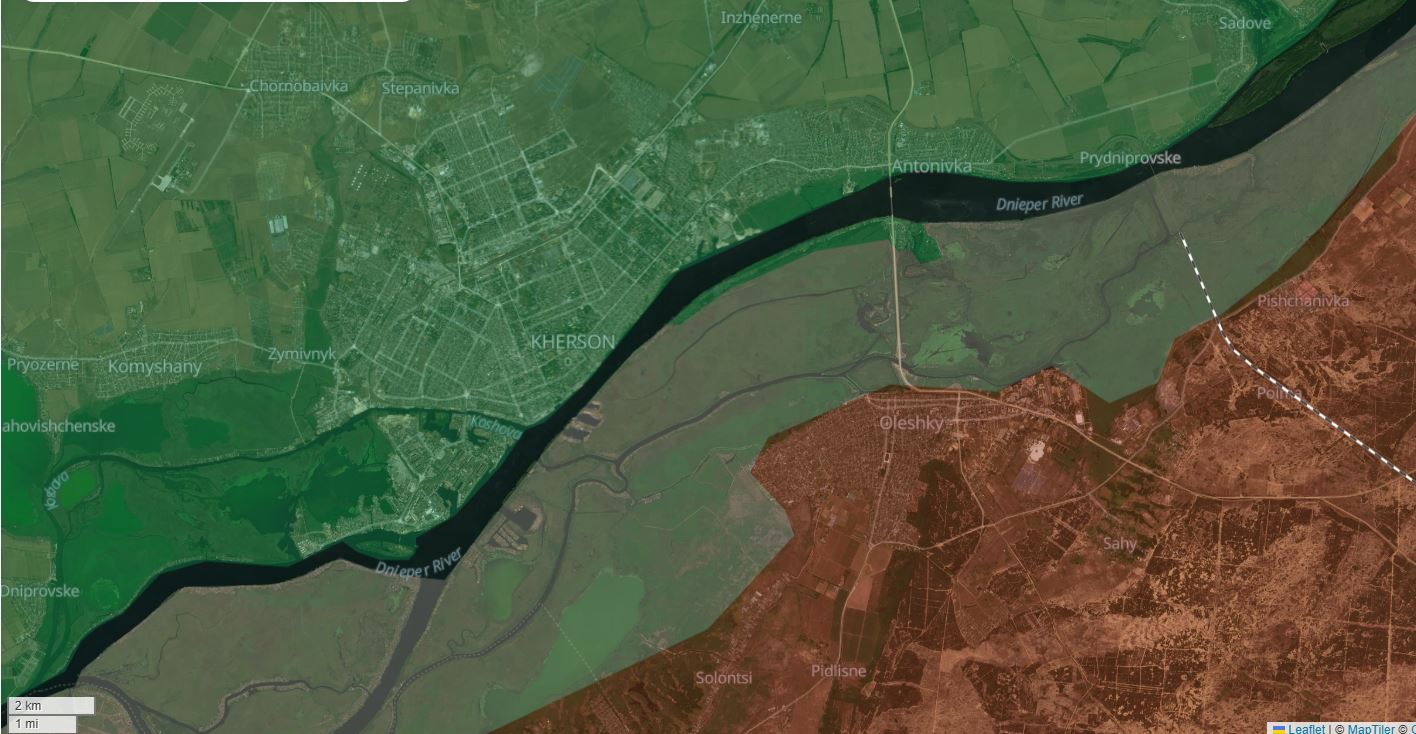
Kherson lies on the Dnipro River's west bank, with Russian-occupied land directly opposite, and the invading force has made it among the deadliest places to live in Ukraine by deliberately hunting civilians across the city for years.

The drone hunters of one regiment

Counterintelligence officers built a case against 10 drone operators from the 404th Motorized Rifle Regiment, a territorial-defense unit in Russia's "Dnepr" Group of Forces, the SBU reported. The investigation found that the men tracked residents as they moved along Kherson's streets and launched drones at them. The drones carried shaped-charge and high-explosive fragmentation munitions.

Kherson city (Russian-occupied area in red). Map: Deep State

Residents and rights monitors call this campaign a "human safari," the hunting of people going about their ordinary days.

Kherson: human safari rages.

A Russian fiber optic FPV drone chases a car in a residential area; after civilians cut the cable, the drone falls, catches fire.

More drones hit cars.

10 injured as a drone attacks a bus.

Drones attack high rises, flying inside the windows. pic.twitter.com/eeaeyyJdz5

— Zarina Zabrisky 🇺🇸🇺🇦 (@ZarinaZabrisky) May 13, 2026
The 10 named operators

The SBU published each suspect's name and military call sign:

  • Tsolak Grigoryan, call sign "Boroda"
  • Nikita Gubar, "Drovosek"
  • Nikolai Denisenko, "Gami"
  • Vladimir Klimov, "Klim"
  • Vyacheslav Kornenkov, "Skif"
  • Viktor Nizhnikov, "Flyaga"
  • Ruslan Nugaev, "Dok"
  • Vladimir Orlov, "Yakut"
  • Ivan Prusachenko, "Prus"
  • Oleg Pukhlyakov, "Pulya"

russians continue their human safari in Ukraine.

They’re not just killing.

They’re hunting unarmed people like animals — from drones, to cheerful music.

This is not war. This is pure evil.

Anyone still justifying russia is standing on their side.

We will never forget. pic.twitter.com/GtrjNfaU0w

— UAVoyager🇺🇦 (@NAFOvoyager) June 8, 2026

Ambulances and a double strike on rescuers

The documented episodes include attacks on civilian cars and residential blocks, the SBU said. Operators dropped explosives on ambulances at a city hospital. They also carried out a "double" strike on State Emergency Service (DSNS) rescuers who were clearing the aftermath of an earlier Russian shelling. 

UN investigators have described this Russian method in Kherson: a first strike, then a second aimed at the people who come to help. Victims suffered shrapnel wounds, burns, and concussions, and civilian infrastructure took significant damage.

Russian soldiers attacked an ambulance in Kherson with a drone.

Three medics were injured.

Another deliberate war crime. pic.twitter.com/xu3WFUQ2H0

— Денис Казанський (@den_kazansky) June 4, 2026

Charged in absentia

Based on the evidence, SBU investigators notified all 10 of suspicion under Article 438 of Ukraine's criminal code, which covers war crimes. The notices were issued in absentia. SBU officers in Kherson Oblast led the investigation with the 79th Border Detachment of the State Border Guard Service (DPSU), under the oblast prosecutor's guidance. The agency said efforts to hold the operators accountable continue.

The case fits a wider pattern Ukrainian prosecutors have documented across the oblast in thousands of proceedings. 

  •  

Bulgaria’s new government plans to halt weapons supplies to Ukraine

bulgaria's new government plans halt weapons supplies ukraine · post bulgarian defense minister dimitar stoyanov council ministers sofia fakti db news ukrainian reports

Bulgaria's new government plans to stop supplying weapons to Ukraine, a shift that breaks with the European Union's push to pressure Russia, Bloomberg reported. The country's Defense Minister tied the move to a call for negotiations rather than arms, echoing a prime minister who has long been hostile to military aid for Kyiv. 

A falling and rising tide of Russia-friendly governments across central Europe has steadily frayed the bloc's united front on arming Kyiv amid the ongoing Russian invasion, turning each national capital into a potential brake on support.

Government's excuses

Bulgarian Defense Minister Dimitar Stoyanov told reporters in Sofia on 9 June that his government would end weapons deliveries to Kyiv

"Ukraine needs more people, not more armament," he stated, and called instead for a "just peace that will be defined by both sides participating in the conflict." 

He added that the EU's role in any peace process is "extremely important." But the Bloc would struggle to act as a mediator, he claimed, after assisting Ukraine throughout the war.

opposition party Tisza
Explore further

Hungary unblocks $7.7 billion in EU arms payments after dropping two-year veto on Ukraine aid

A prime minister who opposes arming Kyiv

The stance reflects Prime Minister Rumen Radev, who has long held that the war cannot be won on the battlefield. Radev, a former air force commander and president until January, has repeatedly opposed the EU's military support for Ukraine. He has also called for lifting sanctions on the Kremlin, arguing they damage Europe's economy. In office for only a month, the Prime Minister has promised to expand Bulgaria's weight in joint European decisions.

A quiet arms pipeline now set to close

Bulgaria ranks among the EU's biggest producers of Soviet-standard ammunition. Those older Soviet-caliber shells proved crucial to Ukraine early in the war. The government officially refused direct military aid in 2022. Even so, Bulgarian shells reached the front through exports to other EU countries. Since 2022, Sofia has sent 13 packages of military aid, keeping their value and contents classified.

Bulgaria party
Explore further

Bulgaria approves new cabinet led by Rumen Radev — the ex-president who called Crimea Russian

The timing

The plan surfaced days after the leaders of France, Germany, and Britain urged the Kremlin to accept an immediate, complete ceasefire that would open talks on a lasting deal. Moscow has rejected Kyiv's offer to meet and negotiate an end to the full-scale invasion, launched more than four years ago.

The Times earlier called the rise to power of pro-Russian Radev a strategic success for Putin. 

  •  

Russia starts hauling gasoline to the front in the trunks of civilian cars

russia starts hauling gasoline front trunks civilian cars · post jerrycans loaded supply russian forces occupied ukraine 2026 перевезення-бензину-цивільними-автівками-для-військових-рф-на-тимчасово-окупованій-тери news ukrainian reports

Russia has begun moving gasoline to its frontline units in occupied Ukraine in convoys of civilian cars, the Ukrainian defense outlet Militarnyi reported. Soldiers filmed themselves loading jerrycans into ordinary trunks, an improvised workaround after Ukrainian drone strikes made fuel tankers too risky to run. Russian forces are also disguising army trucks as civilian vehicles along the supply route to occupied Crimea.

This comes amid Ukraine’s ongoing “Logistics Lockdown,” a campaign by several Ukrainian military branches and the Security Service to target Russian fuel, logistics, and other supplies across occupied territories, at depths of up to 200 km.

Soldiers filmed the fuel run themselves

A video on the Exilenova+ Telegram channel showed Russians describing a convoy of passenger cars assembled to carry one metric ton of gasoline, Militarnyi reported. A man off-camera says the cars left the city of Kizilyurt in Dagestan, Russia, on the local head's orders, with the fuel destined for Russian units in occupied Tokmak, Zaporizhzhia Oblast. The footage shows jerrycans filling the trunks:

Besides the fuel, the drivers carried 1.5 million rubles ($20,900) to buy another batch of gasoline. Fuel keeps Russian frontline positions running: generators power electronic-warfare systems, charge batteries for reconnaissance and strike drones, and run communications gear in dugouts and observation posts.

Disguised trucks and a strained supply line

Russian forces have also begun disguising army trucks as civilian transport because of Ukrainian drone attacks deep in the rear. In northern Crimea, monitors spotted a freshly painted blue Ural truck driven by a man in civilian clothes, still carrying military plates, its oversized body posing as a dump truck.

The command of Russia's Dnepr grouping ordered mass use of civilian vehicles to move fuel along the route linking Rostov-on-Don with occupied Crimea, the Krymsky Veter monitoring project reported. That improvisation tracks the M-14 corridor, now within Ukraine's deepening drone range.
Drones of the 20th Separate Brigade of Ukraine's Unmanned Systems Forces (SBS), known as K-2, and the Phoenix drone unit strike a Russian military truck on a logistics route in Donetsk Oblast, 7 June 2026. Photo: SBS
Explore further

ISW: The strikes will likely cascade into deeper disruption across Russia’s rear supply network

Why Russia is improvising

Ukraine's Defense Forces have intensified drone strikes on logistics trucks and fuel tankers on the roads from Russia to occupied Crimea. The attacks have already forced the occupiers to limit cargo traffic through the occupied part of Kherson Oblast toward the peninsula, and Russia has closed stretches of its own land corridor to keep them clear of strike drones.

  •  

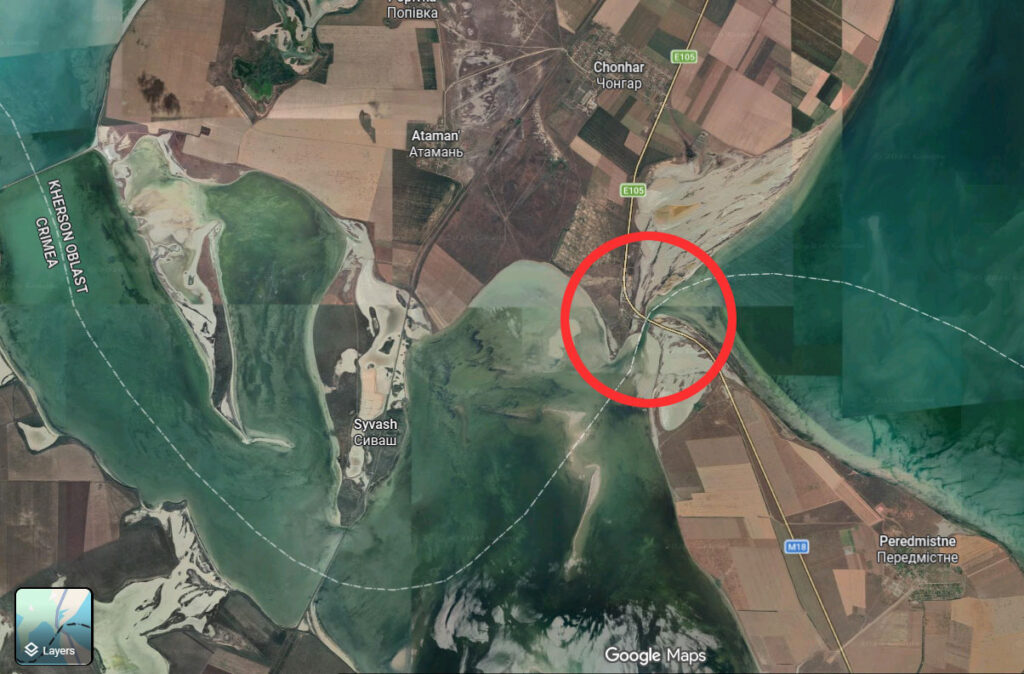
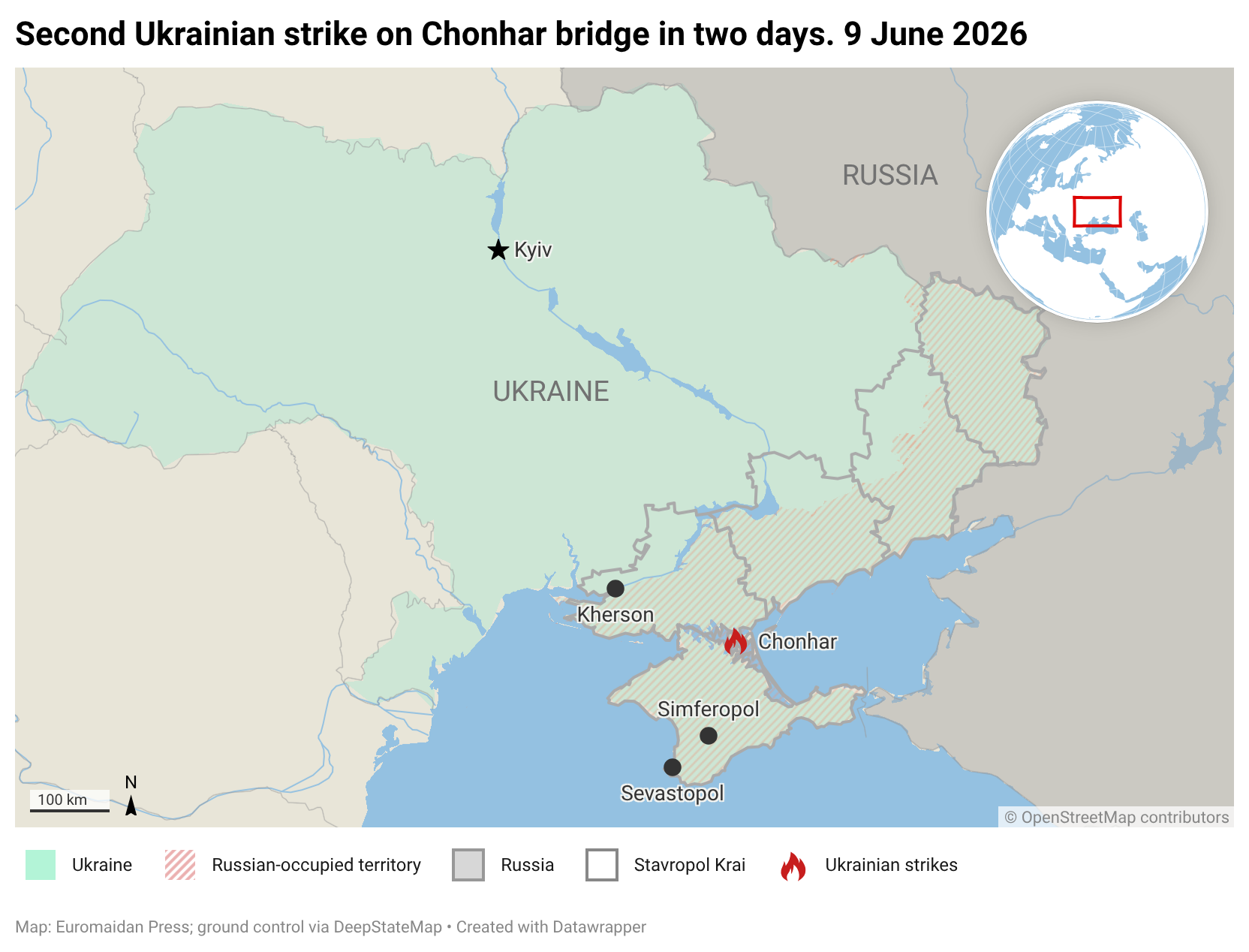
Chonhar bridge linking occupied Kherson Oblast to Crimea is closed again after the second attack in two days

chonhar bridge linking occupied kherson oblast crimea closed again after second attack two days · post location circled chonhar-bridge-google-maps ukraine news ukrainian reports

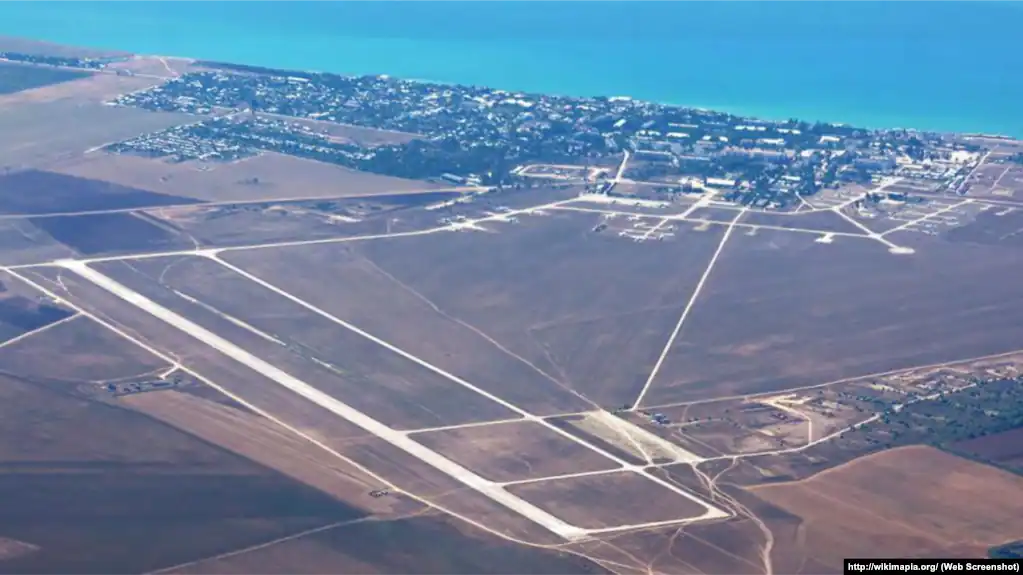
Russian occupation authorities closed the Chonhar bridge linking occupied Kherson Oblast to Crimea for the second time in two days on 9 June, with the Russian-installed governor, Vladimir Saldo, claiming another overnight Ukrainian drone strike. The same night, drones swept across occupied Crimea, where a Crimea-monitoring channel reported explosions at a military airfield. Moscow claimed it downed scores of drones, while Ukraine stayed silent.

Occupied Crimea — a peninsula in southern Ukraine, occupied by Russia since 2014 — is the logistical heart of Russia's war in Ukraine's south, and its airfields, air defenses, oil depots, and supply roads draw Ukrainian drones almost daily.

A bridge to Crimea closed for the second time in two days

Saldo claimed the overnight strike caused fresh damage to the Chonhar bridge and that 20 drones were shot down on the approach. He asked drivers to use alternative routes, and traffic was rerouted through Armiansk and Perekop.

chonhar bridge linking occupied kherson oblast crimea closed again after second attack two days · post vg1b5-second-ukrainian-strike-on-chonhar-bridge-in-two-days-9-june-2026- ukraine news ukrainian reports

The bridge carries the R-280 highway, which the Russians built to link their Rostov-on-Don to occupied Crimea through occupied Donetsk and Zaporizhzhia oblasts, one of their main supply lines to the peninsula. 

Drones over Crimea

The strike on the peninsula came the same night, according to RFE/RL. The Crimea-monitoring Telegram channel Krymsky Veter reported an explosion in the Saky district (western Crimea) at 21:14, then an incoming strike in Dzhankoi (northern Crimea) before midnight. Drones also reached Sevastopol (southwestern Crimea), where a strong explosion hit the Kacha airfield at 00:36, followed by a second and third blast in the early hours.

chonhar bridge linking occupied kherson oblast crimea closed again after second attack two days · post kacha military airfield near sevastopol archive wikimapiaorg военный аэродром «кача» под аннексированным севастополем архивное
The Kacha military airfield near occupied Sevastopol, Crimea. Archive photo: wikimapia.org

Sevastopol's Russian-installed head, Mykhail Razvozhaev, claimed the military was repelling the attack with air defense and mobile fire groups. The city declared air alerts three times, at 22:33, 00:08, and 06:52, and lifted the last at 07:20. In its morning report, Russia's Defense Ministry claimed its air defenses destroyed 140 drones over seven regions, occupied Crimea, and the Azov and Black seas. 

The 7 June Chonhar strike and the wider campaign

The first closure came overnight into 7 June, when Ukrainian FP-2 and Behemoth drones struck the Chonhar bridge. The Falanga multidomain operations center of the 1st separate assault regiment and the 475th separate assault regiment Code 9.2 carried out the strike. Militarnyi reported it was the first known combat use of the Behemoth kamikaze drone, unveiled in late May 2026 by the companies GLEFA and Culver Aerospace. The same day, the occupiers also halted traffic through their "Dzhankoi checkpoint."

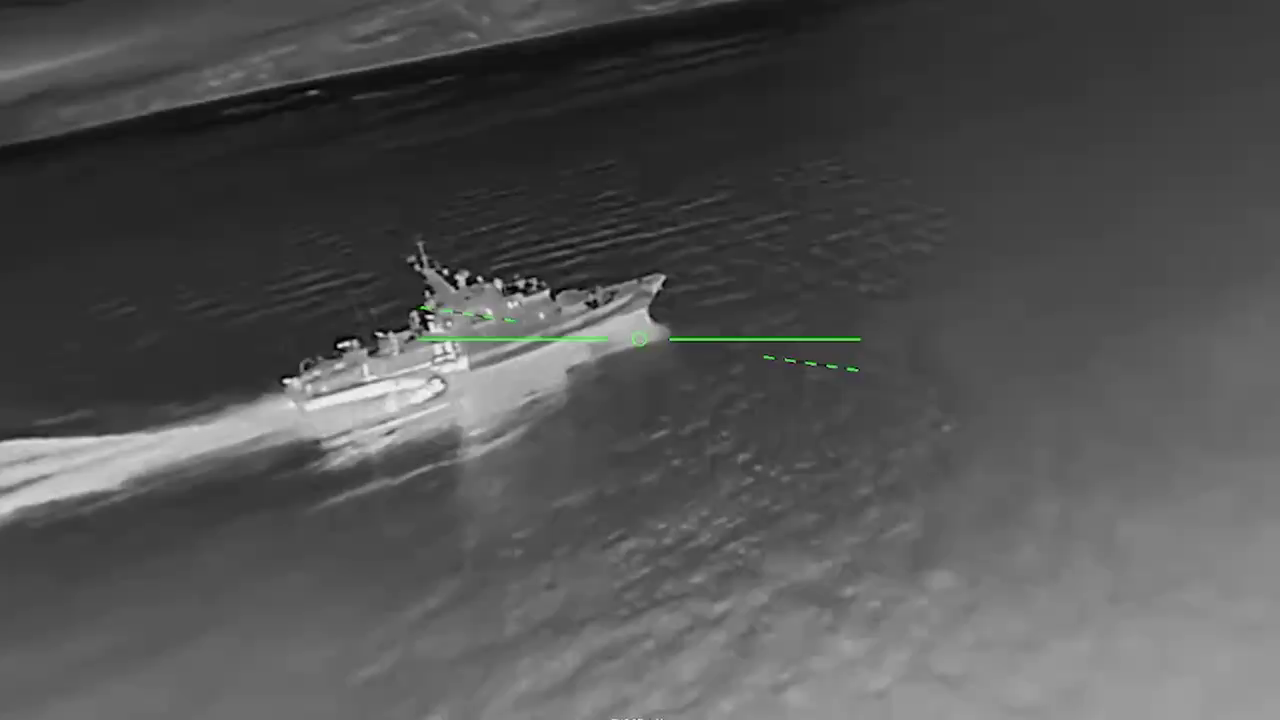
A Russian “Svitlyak” border patrol ship seen from a Ukrainian drone before a strike near Yurkine, occupied Crimea. Screenshot from video: Madyar
Explore further

The Crimean Bridge is heavily guarded. Ukraine struck its maritime security layer in the Kerch Strait.

Ukraine's head of the Office of the President, Kyrylo Budanov, said in early June that the strikes on Crimea's land corridor are a systematic campaign meant to complicate Russian plans. Ukraine's forces are also hitting the sea routes: the General Staff reported a Russian ship struck near Crimea, and overnight into 4 June, a Russian patrol boat was destroyed near the peninsula. Days before, occupation officials in Sevastopol had reported a similar overnight attack on the city.

  •  

Russian missiles kill three and wound six in Chuhuiv as drones injure 15 in Kharkiv, including a one-year-old

russian missiles kill three wound six chuhuiv drones injure 15 kharkiv including one-year-old · post fire burns amid rubble destroyed building after strike oblast 9 2026 fdd39292-265f-4a90-a09d-e1288a16f6ae ukraine news ukrainian

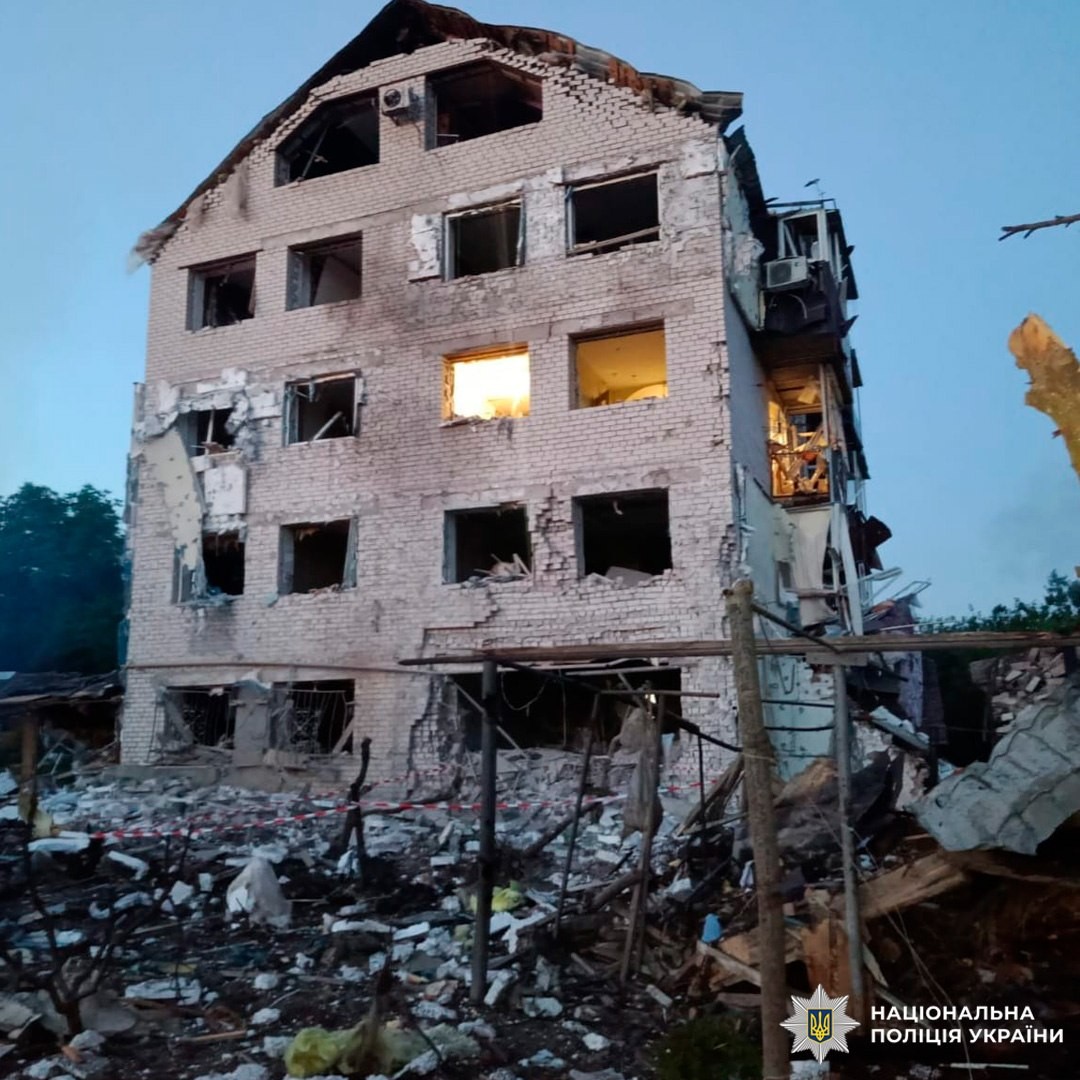
Russia's overnight drone and missile barrage on 9 June killed and wounded civilians in the Kharkiv Oblast cities of Chuhuiv and Kharkiv, regional officials reported. More strikes over the past 24 hours left several people dead and dozens wounded elsewhere in Ukraine. Ukraine's Air Force said air defense stopped most of the drones, though missiles and others still reached homes.

Russia has pounded Ukrainian cities with nightly aerial barrages since 2022, sending waves of drones and missiles that air defenses can thin but not fully stop. Such daily attacks mainly target residential areas and civilian infrastructure.

Chuhuiv and Kharkiv bear the brunt

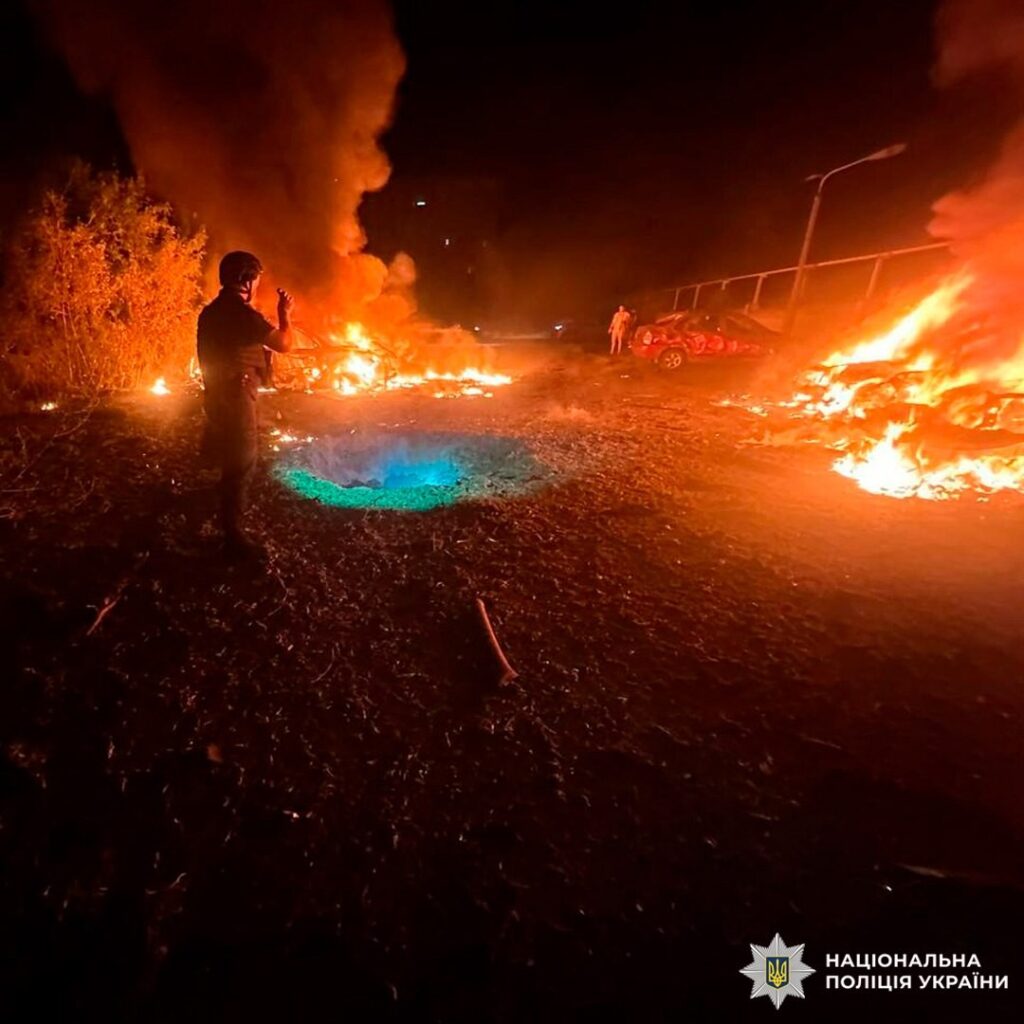
A series of Russian missile strikes on Chuhuiv overnight on 9 June killed at least three people and wounded six, the city's mayor, Halyna Minaieva, reported. Fire crews stayed at the impact sites as emergency services worked, she wrote, and the strikes damaged about eight apartment buildings and more than ten detached houses.

russian missiles kill three wound six chuhuiv drones injure 15 kharkiv including one-year-old · post police officers film aftermath strike oblast 9 2026 b8d379e4-6e28-40e3-8f78-aabbdd235e3e ukraine news ukrainian reports
Police officers film the aftermath of a Russian strike in Kharkiv Oblast, 9 June 2026. Photo: National Police of Ukraine

In Kharkiv—the regional capital—Russian drone strikes set off fires, damaged at least 18 cars, and blew out windows and facades in residential high-rises, Kharkiv Oblast head Oleh Syniehubov reported.

russian missiles kill three wound six chuhuiv drones injure 15 kharkiv including one-year-old · post police officers film aftermath strike oblast 9 2026 3ddd3d71-89b5-4771-8e78-a7d9f5512ce8 ukraine news ukrainian reports
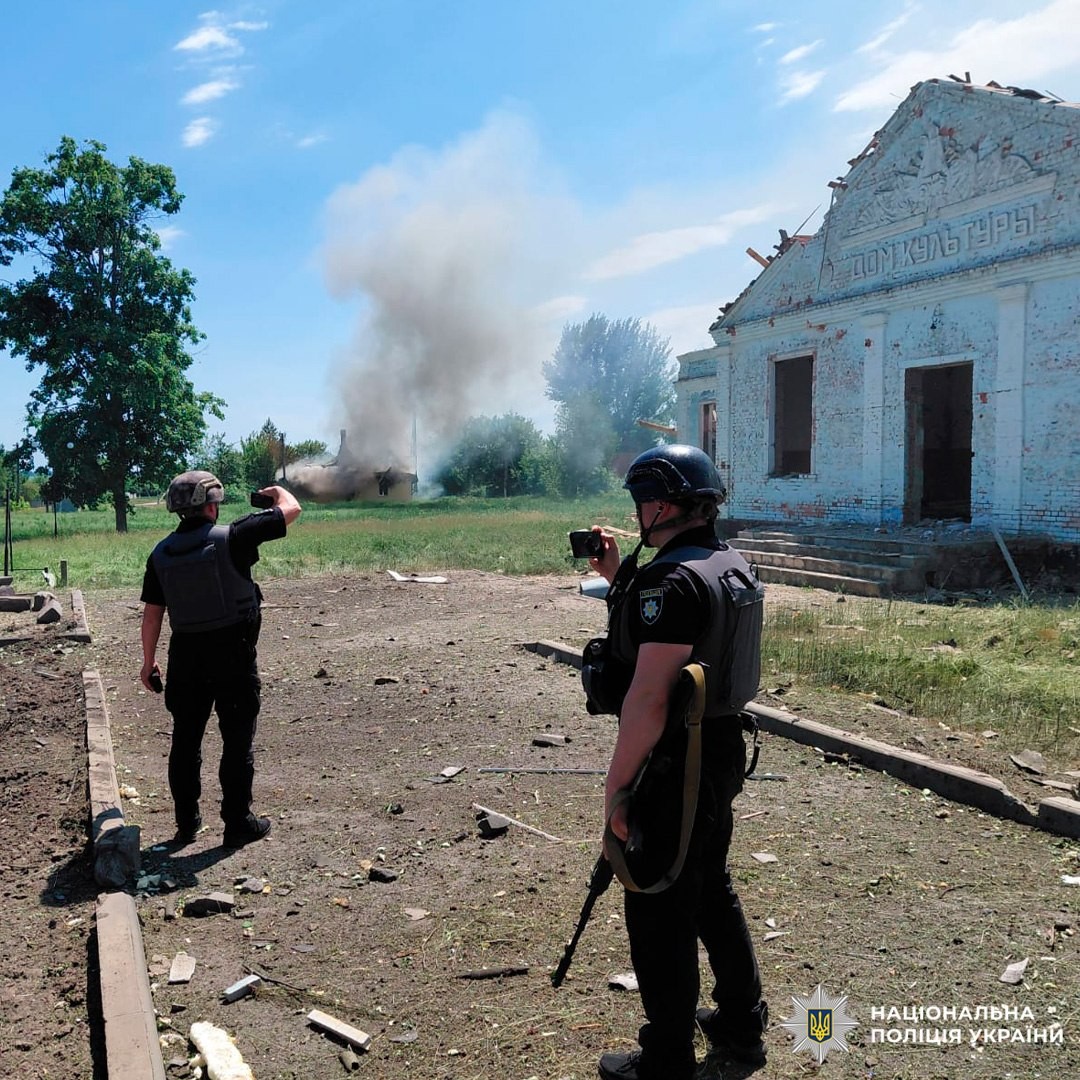
Police officers film the aftermath of a Russian strike in Kharkiv Oblast, 9 June 2026. Photo: National Police of Ukraine

He said 15 people were hurt, among them three children, including a one-year-old boy, and three women were hospitalized

russian missiles kill three wound six chuhuiv drones injure 15 kharkiv including one-year-old · post multi-story residential building wrecked strike oblast 9 2026 8f58a8d8-9c07-4f40-bc34-494323214028 ukraine news ukrainian reports
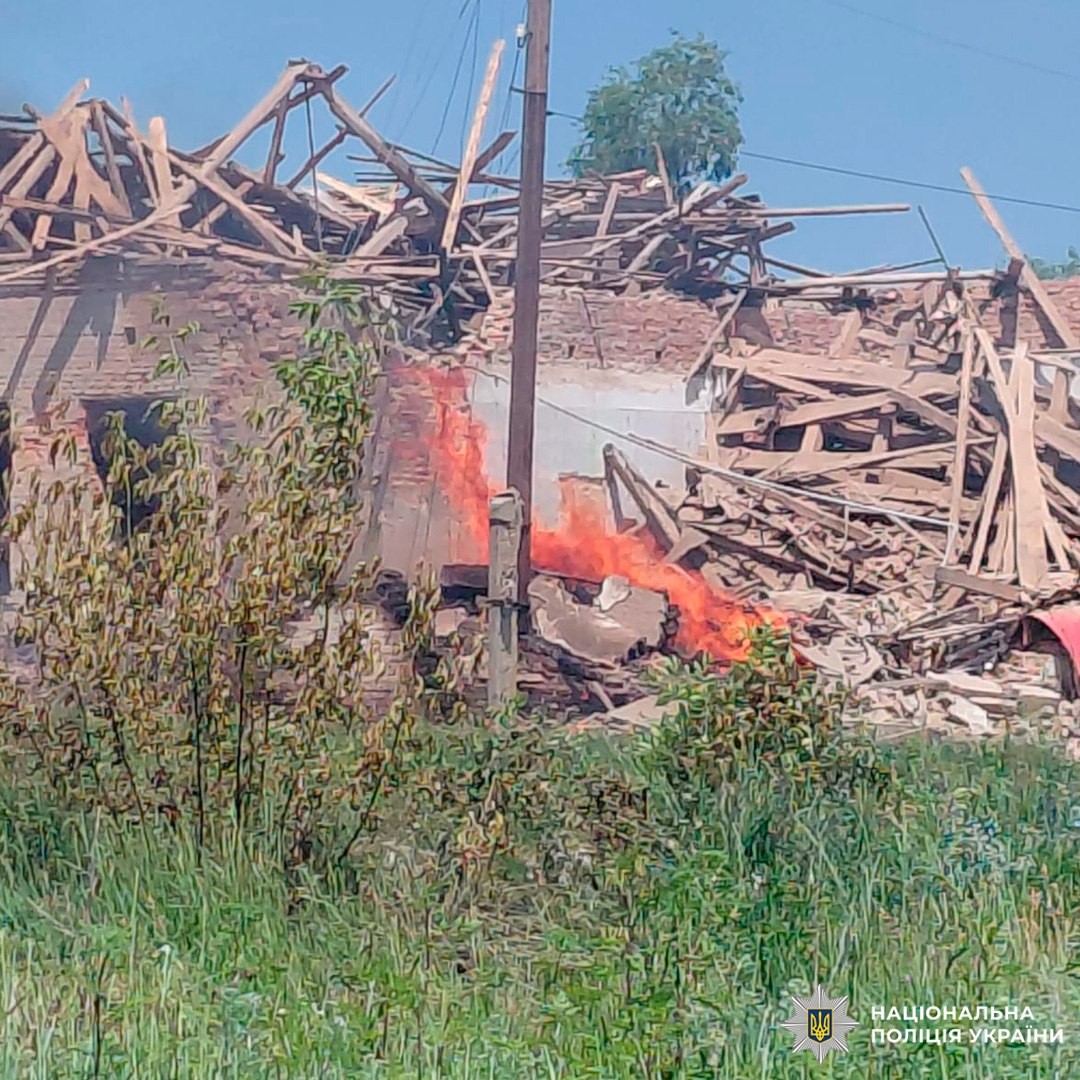
A multi-story residential building wrecked by a Russian strike in Kharkiv Oblast, 9 June 2026. Photo: National Police of Ukraine

Both cities sit dozens of kilometers from the Russian border and have been struck repeatedly through the war.

A barrage of two missiles and 166 drones

Russia launched two Kh-59/69 guided air missiles from Voronezh Oblast and 166 strike drones overnight, Ukraine's Air Force reported. The drones included Shahed types, some jet-powered, along with Gerbera, Italmas, "Banderol" loitering munitions, and "Parodiya" decoys, launched from Oryol, Kursk, Bryansk, Primorsko-Akhtarsk, and Millerovo in Russia, occupied Donetsk, and Hvardiiske in occupied Crimea.

By 08:00, air defense had downed or suppressed 146 of the dronesTwo missiles and 17 drones struck 18 locations, and debris from intercepted drones fell at eight more

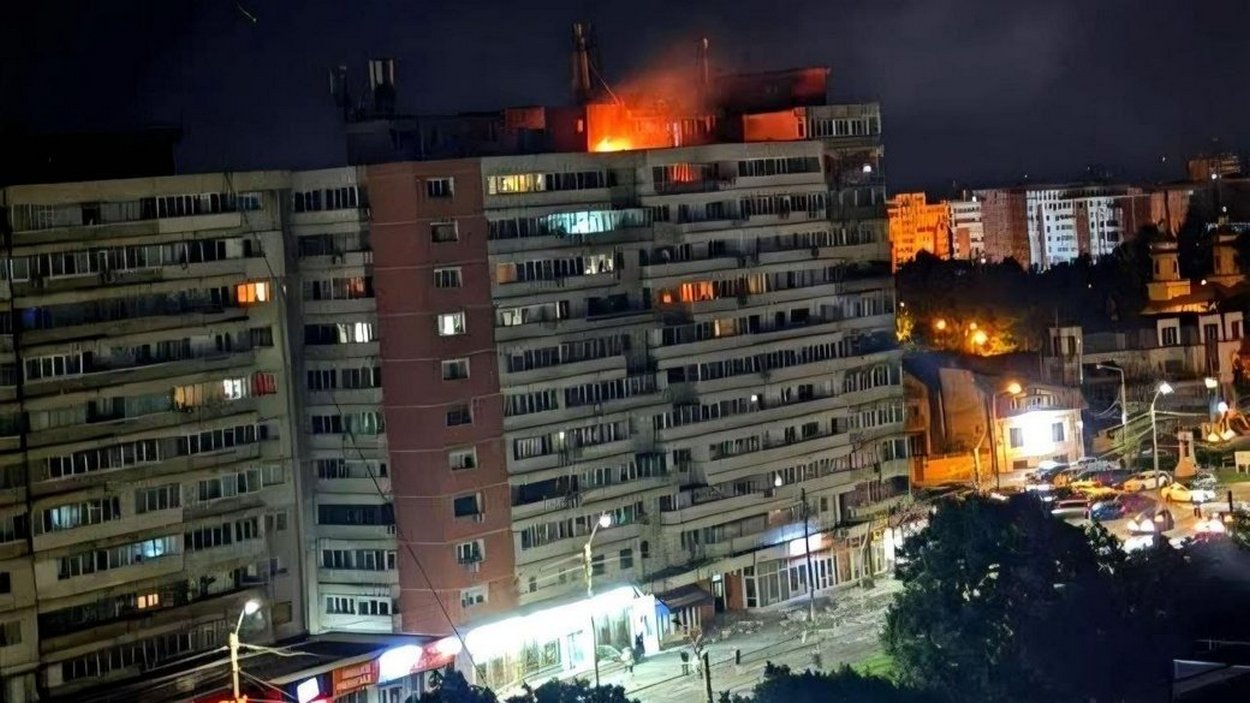
moscow's drone hits 10-story apartment block romania injuring two russia fires 232 uavs ukraine · post fire top-floor residential building galați after russian crashed 29 2026 пожежа у квартирі багатоповерхівки
Explore further

Moscow’s drone hits 10-story apartment block in Romania, injuring two as Russia fires 232 UAVs at Ukraine

Zaporizhzhia counts the damage from the day before

A Russian drone attack the previous day damaged 11 residential buildings across three districts of Zaporizhzhia, the city council reported. Six apartment blocks and five detached houses in the Khortytskyi, Zavodskyi, and Kosmichnyi districts lost windows, balconies, doors, and roofs to blast waves and debris. No one was hurt, and priority repairs were finished.

A nationwide wave

  • Russian attacks over 8 June killed two people in Sumy Oblast and wounded 13 across 21 hromadas, the regional police reported. A 78-year-old woman died in the Konotop hromada and a 71-year-old man in Seredyna-Buda, with a two-year-old boy and an eight-year-old boy among the injured.
  • In Donetsk Oblast, Russian forces killed two residents, in Bilozerske and Druzhkivka, and wounded 11 more, nine of them in Sloviansk, Oblast head Vadym Filashkin reported. Police recorded 1,309 attacks on the oblast's front line and residential areas, damaging 53 civilian sites. Hours later, Russia dropped three FAB-250 glide bombs on Sloviansk's outskirts, destroying one home and damaging more than 20.
  • In Kherson Oblast, drone and artillery attacks killed one person and wounded 13, including a child, Oblast head Oleksandr Prokudin reported
  • Drone strikes in Dnipropetrovsk Oblast wounded three people
  • Russian forces also hit 12 villages in four border hromadas of Chernihiv Oblast, the local border detachment told Suspilne.
  • The Russians also attacked communities in Mykolaiv Oblast with drones, where the administration reported no casualties. 
  •  

Lithuanian court: the roadside attack on a Ukraine-shirt cyclist was hate, not chance

lithuanian court roadside attack ukraine-shirt cyclist hate chance · post mountain bike bns dviratis asociatyvi - nuotr ukraine news ukrainian reports

Lithuanian court has convicted a man who ran a cyclist off the road and attacked him for wearing a shirt with Ukrainian symbolsaccording to LRT. Judges treated his hatred of people who support Ukraine as an aggravating circumstance. The verdict is now final, and the court found the assault was deliberate, not an accident.

As Russia continues its all-out war against Ukraine, open support for Ukrainians across the Baltic states through flags, clothing, and fundraisers has become a marker of identity, even as it occasionally provokes hostility.

The roadside attack

On the evening of 27 March 2025, the man drove up to the cyclist on a road in Lithuania's Širvintos district. He repeatedly ordered the cyclist to take off the shirt bearing Ukrainian symbols. When the cyclist refused, the driver passed him, then swung the front of his car toward the roadside and blocked his path. The cyclist braked hard and fell with his bicycle. He suffered injuries, and the bicycle was damaged.

When the cyclist got back up, the man ran over to him. He again demanded that the cyclist remove the shirt, grabbed it, and tried to pull it off. The cyclist reached for his phone to call for help. The man struck him and knocked the phone onto the asphalt, breaking it, the court found.

immigration ukrainians in world
Explore further

Two Polish citizens detained in Przemyśl for desecrating Ukraine’s flag — sixth such attack in last months

A hate motive, the court ruled

The Vilnius Regional District Court found the 1987-born man guilty of damaging another's property and causing minor bodily harm. Evidence from the investigation showed the violence was not random, the court said. It stemmed from the man's hatred of the victim as someone publicly backing Ukraine against Russia's invasion. The court treated that motive, hostility toward a group for supporting Ukraine, as an aggravating circumstance.

The court handed the man a non-custodial penalty of one year and three months' restriction of liberty. During that time, he must work or register as a jobseeker. He must also complete a program aimed at changing violent behavior. On top of that, he owes the victim for material and non-material harm, and he must repay Lithuania's State Patient Fund for the cost of treating the injuries.

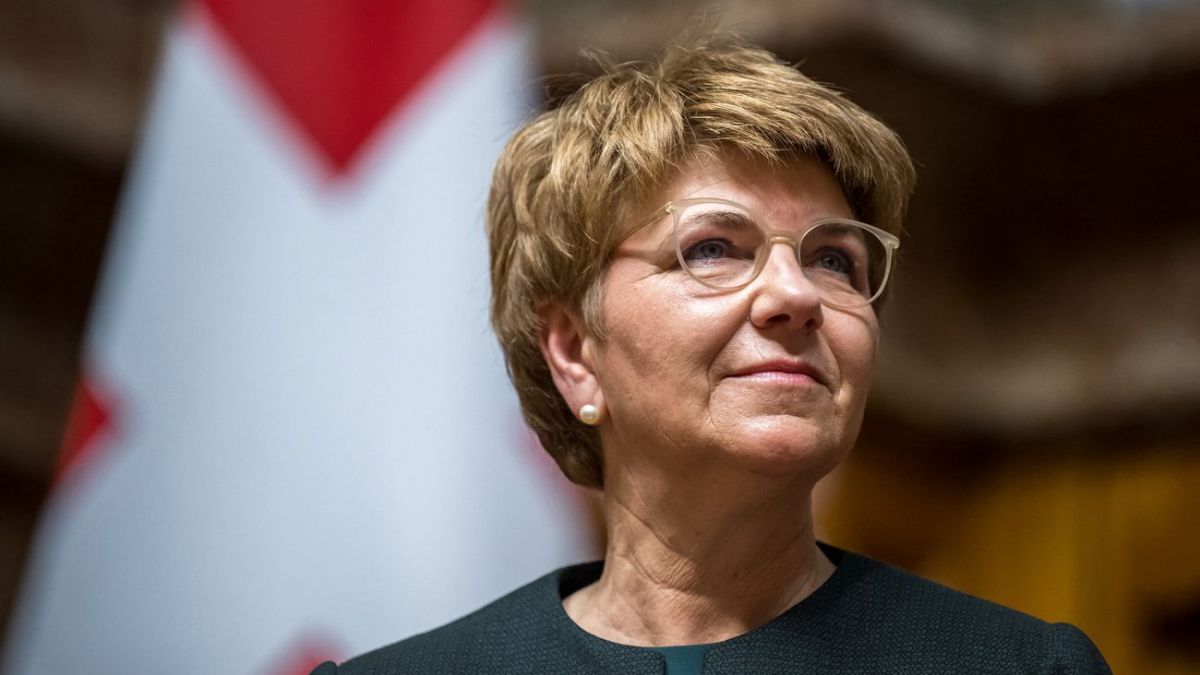
Amherd
Explore further

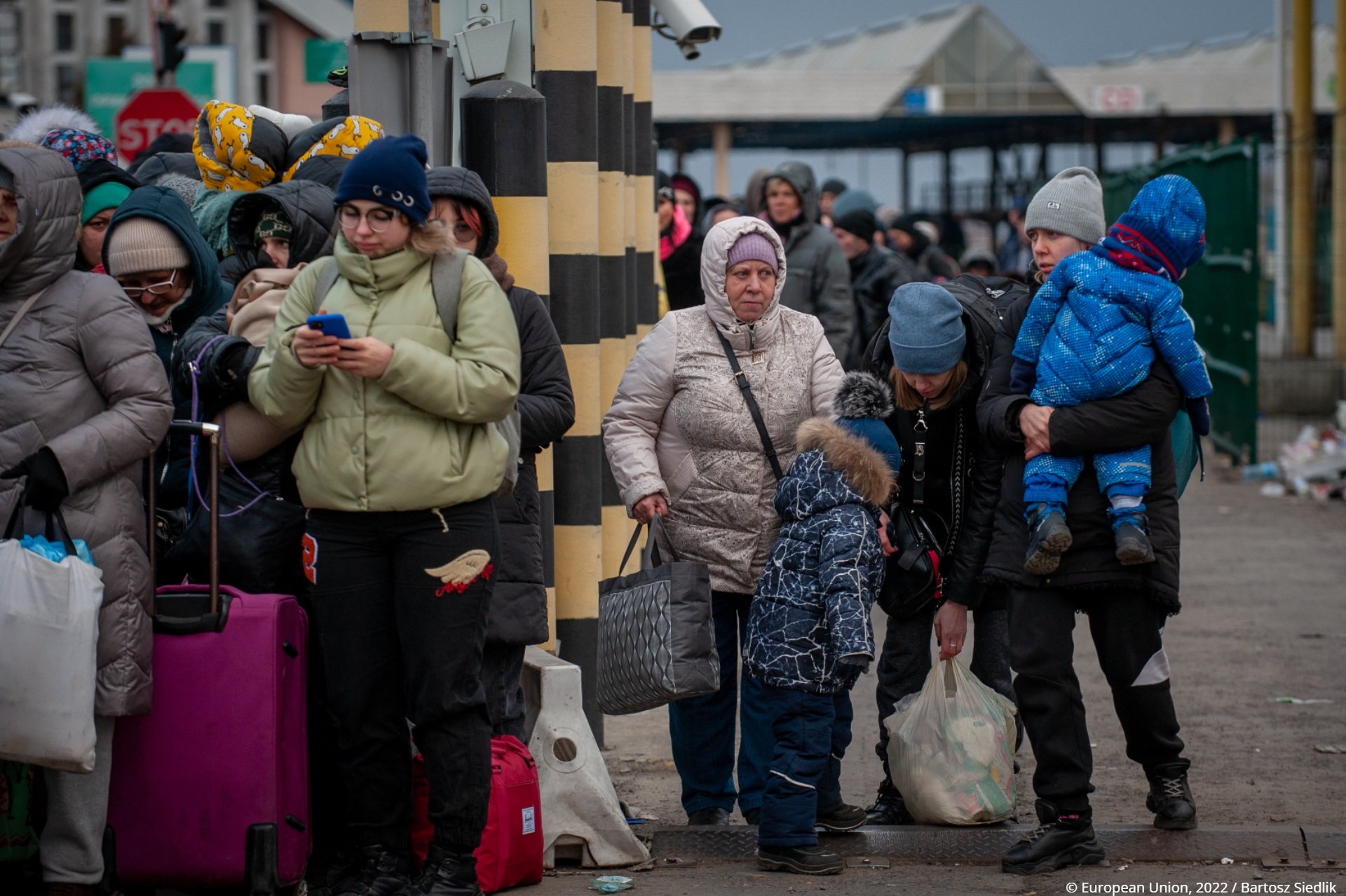
Switzerland to limit protection status for Ukrainians from seven western oblasts

A Vilnius District Prosecutor's Office prosecutor, Edvinas Navickas, led the pre-trial investigation and the prosecution. Vilnius County police officers gathered the evidence. The court issued its verdict on 12 May, and it has since taken effect, the prosecutor's office reported. Lithuania, a NATO member bordering Russia, has been one of Ukraine's strongest backers since 2022, sending weapons and welcoming Ukrainian refugees.

Lithuania has prosecuted this hatred before, convicting a man who smashed a displaced family's car.

Ukrainian refugees

Millions of Ukrainians live outside their country because Russia's invasion made home unsafe. Some 5.9 million are abroad as of 2026. Most settle in the European Union, where Poland and Germany host the largest communities. That visibility and open support for Ukraine sometimes draw hostility. Other reported attacks on Ukrainians abroad don't have a clear anti-Ukrainian motive. 

latvia's russian-language radio survives hidden state subsidy — media regulator wants over · post latvian flag eastnewsua ukraine news ukrainian reports
Explore further

Latvia sentences man to prison for anti-Ukrainian hate speech and violence

In Poland, isolated cases include a Ukrainian beaten over his accent and a woman detained for telling two Ukrainian women to go back to Ukraine, while a separate knife attack on a Ukrainian selling his car in Wrocław has not been tied to nationality.

In Germany, an attacker killed a teenage athlete, a man went after children for speaking Ukrainian, and others assaulted teenagers while chanting pro-Russian slogans; one Berlin assault and a Murnau double killing both pointed to anti-Ukrainian motives, and a Russian was jailed for life over the latter. 

The violence is not confined to those two countries: other attacks on Ukrainians have occurred in other places. Earlier, a Ukrainian was stabbed to death in Ireland in an attack police have not linked to his nationality, and a Ukrainian woman was murdered in the United States by a man who cited a delusional reason.

  •  

Russia tells its regions to raise taxes on residents and businesses to plug a record budget hole

russia's regional budget shortfalls hit record $21 billion moscow wants taxpayers cover · post sign bearing logo federal tax service times ukraine news ukrainian reports

Russia's Federal Tax Service has pushed regional governments to consider higher taxes on residents and businesses as local budgets sink to record deficits, The Moscow Times reported. The move follows President Vladimir Putin's drive to shrink regional shortfalls, and it shows the financial strain Russia's war against Ukraine is placing on its provinces. Independent analysts expect the squeeze to deepen as the economy slows.

As Russia’s invasion of Ukraine drags on, the costs of war, Western sanctions, and Ukrainian strikes on strategic targets are putting growing pressure on budgets at every level.

Tax service tells regions to find more money

The Federal Tax Service (FNS) instructed regional authorities to work out where they could raise taxes, The Moscow Times reported, citing RBC. The recommendations answered Putin's directive to cut regional deficits, and governors had to submit their proposals in early June.

The advice told regions to:

  • expand the list of real estate taxed at cadastral, or market, value;
  • raise transport-tax rates to the maximum;
  • revise the benefits and rates on land tax and personal property tax.

To collect more, regions were also told to inventory real estate and to look for land used off-purpose, where the tax can rise several times over.

moscow's fuel supplier under fire ukrainian drones strike rosneft's ryazan refinery · post black smoke rises over oil hours after drone 15 2026 ryazan-supernova+-5204027262443918426 ukraine news reports
Explore further

Russian refining output fell 9.2% in April as Ukrainian drone strikes hit fuel plants

A record hole in regional finances

Last year, Russia's regions closed with a combined deficit of 1.538 trillion rubles ($20.8 billion). The gap grew fivefold from 2024 and almost eightfold from 2023. Four regions ran deficits above 30% of their own revenue — Kemerovo, Vologda, Arkhangelsk, and Tyumen oblasts — and six more topped 25%.

Profit-tax revenue fell in 55 regions. It collapsed by half in the Komi Republic, dropped 40% in Orenburg Oblast, and fell 39% in Yamalo-Nenets. Overall, regions collected 9% less profit tax than in 2024 and 13% less than in 2023, according to the rating agency ACRA. The pattern fits a war economy that has turned predatory toward once-wealthy provinces.

isw russia tries hide weaknesses behind victory day parade russia's 9 moscow 2025 youtube/kremlin grate patriotic warr shitshow projecting power strength conceal significant limitations its capabilities while distracting battlefield failures
Explore further

Russia’s four-month budget deficit hit $75.4 billion — 50% above what Moscow planned for entire year

Reserves drained, debt climbing

To cover the shortfalls, regional governments spent every third ruble of their bank reserves — 1 trillion of 2.9 trillion rubles ($13.9 billion of $40 billion). They financed the rest with borrowing that pushed combined regional debt to 3.5 trillion rubles ($48.6 billion), ACRA reported — the highest in 15 years by Expert RA's earlier count. Expert RA projected the slowdown will continue this year, dragging revenues lower and lifting both the deficit and the debt burden.

finishing off russia's seaborne oil exports tuapse refinery ablaze again · post panorama stitched video frames multiple fires across after ukraine's drone strike krasnodar krai russia 28 2026 tuapse-nice-again drones
Explore further

$7 billion lost from Russia’s war economy this year through Ukraine’s “long-range sanctions” on oil sector – Zelenskyy

Russian Finance Minister Anton Siluanov earlier projected the regional gap could widen to 1.9 trillion rubles ($26.4 billion) in 2026. The crunch mirrors a federal budget that has run far ahead of plan as Ukrainian strikes cut into Russian refineries and oil income.

Moscow raised VAT in January and prepared a windfall levy on big business, both breaking Putin's 2024 pledge of no tax changes before 2030. Smaller firms have been squeezed first even as the Kremlin's own spending keeps climbing

  •  

Freezing the war along today’s lines is “the quickest way” to peace, Ukraine’s leader told Sky News

freezing war along today's lines quickest way peace ukraine's leader told sky news · post ukrainian president volodymyr zelenskyy during interview london 7 2026 zele skynews ukraine reports

Ukrainian President Volodymyr Zelenskyy is willing to stop the war along the current line of contact and move to negotiations, he said in a Sky News interview. He presented the idea as the quickest route to a ceasefire, while rejecting any deal that hands Russia Ukrainian land. He also urged allies to close Ukraine's air defense gaps.

Russia has rejected every ceasefire Ukraine and the US have put forward and keeps refusing to halt an all-out war it has waged since its full-scale invasion in 2022. Whether a freeze ever takes hold rests with the Kremlin, whose demands still stretch far beyond the territory its army has managed to seize.

"The quickest way" to stop the fighting

Asked where he would freeze the lines if Russia agreed to a ceasefire, Zelenskyy said he is ready to accept today's positions

"Yes, it's the quickest way," he said. 

He insisted this is not a giveaway. He does not want to simply freeze the conflict, but to stop the war so it cannot restart "because of some crazy people." A freeze would let Ukraine save children's lives and bring soldiers home. Any ceasefire must be total and free of Russian games, watched by American and European partners. Only then would the sides sit down to end the war through diplomacy. A ceasefire, he added, is "the biggest compromise from our side."

Air defense comes first

The most urgent need from allies is air defense, Zelenskyy said. Ukraine faces a large deficit in anti-ballistic missiles, with US transfers slowed by the war in the Middle East. He again asked for more Patriot systems. Russia attacks daily, usually with around 300 long-range explosive drones. On the heaviest nights it launches 600 to 850 drones and dozens of missiles. 

Ukraine's interceptors now down most of them, but the gaps remain dangerous.
tymofii brik and kateryna kobernyk
Explore further

10% now, 23% after a ceasefire, 59% only at peace—Ukraine’s verdict on a wartime vote hasn’t moved all year

Ukraine's own arsenal

Ukraine has built more than 400 defense companies since the full-scale invasion, Zelenskyy said. Dozens rank among the world's strongest. They produce drones and missiles, some underground, and the country is close to its own ballistic missile. Ukraine can now share that expertise with allies and even build air defenses for Europe, he said. Kyiv aims to mass-produce drones on a scale few countries can match.

Bringing the war back to Russia

Ukraine's recent strikes on St. Petersburg and the Moscow region answer Russian attacks on Ukrainian energy, Zelenskyy said. St. Petersburg was hit twice last week. He wants Russians far from the front to feel the war they started. Russian President Vladimir Putin understands only "total pressure," he said. Sanctions on Russia's shadow fleet of sanctions-dodging tankers and its oil and gas exports hit hardest.

Putin, the letter, and a Kremlin go-between

Zelenskyy said Putin does not want to stop the war and is signaling he wants to win. Whether the fighting ends "100% depends on his decision," he said. His 4 June open letter, which Moscow called rude and rejected, was meant to force an answer and pierce a Russian public living in "some fantastic world." Russian businessman Roman Abramovich came to Kyiv to carry messages to Putin, Zelenskyy said. 

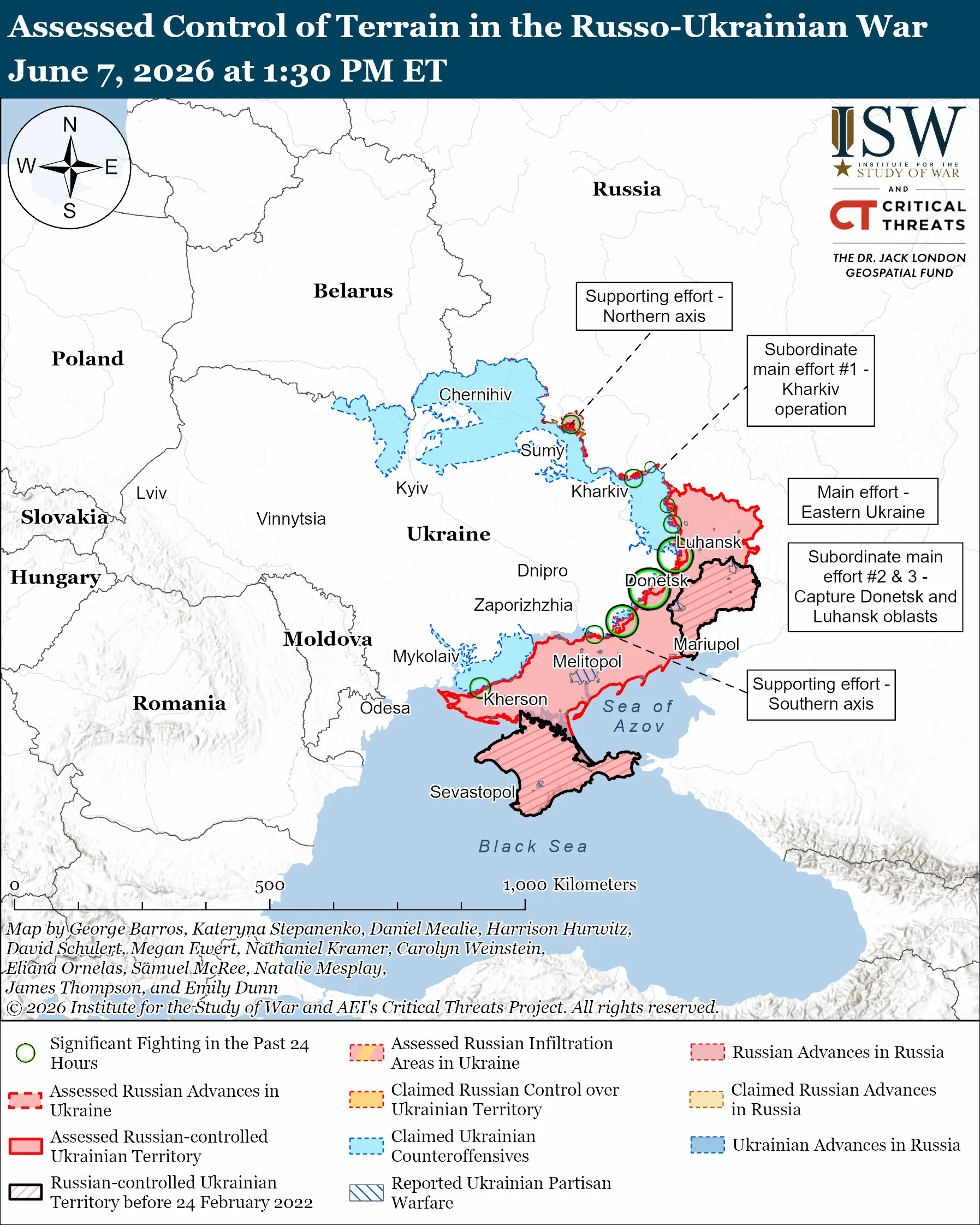
The so-called Donbas is a historic name for Ukraine’s two easternmost regions, Luhansk and Donetsk oblasts. Russia still failed to occupy a small part of Luhansk Oblast, as well as a significant swathe of Donetsk Oblast, which contains the so-called “Fortress Belt” that Russia has failed to break through despite its years-long ongoing offensive campaign. Map: ISW

His key message was on the Donbas: Ukraine will not leave its land, and compromises come only after a ceasefire. He is ready to meet in any format, but not in Moscow, Belarus, or Minsk. Leaders cannot decide "without us about us," he said, in a message aimed at Washington. Russia, by contrast, keeps insisting that Ukraine surrender all of the Donbas first.

  •  

Premature births are climbing in Ukraine’s front-line regions, and doctors blame the ongoing war

premature births climbing ukraine's front-line regions doctors blame ongoing war · post newborn temperature-controlled incubator hospital zaporizhzhia ukraine new born baby ap news ukrainian reports

Premature births are rising in several Ukrainian regions near the front line, where war-driven stress on pregnant women appears to be taking a tollaccording to the Associated Press (AP). Doctors in cities like Zaporizhzhia keep fragile newborns alive between air raid sirens, in wards with windows boarded up against Russian blast waves. The trend compounds a deepening crisis as fewer Ukrainian women give birth at all.

Russia's war is grinding down Ukraine's population on every front, from the men dying at the line to the families displaced and the children who never arrive. A generation born under fire will carry the war's medical and demographic cost for decades, long after any ceasefire, deepening the strain on a health system Russia keeps targeting.

How far the rate has climbed

In Kherson Oblast, early births climbed from 5.4% of deliveries in 2019 to 9.8% by 2025 — close to twice the rate, UN figures show.  Zaporizhzhia Oblast rose from 5.7% to 7.6%, and Poltava Oblast from 7.7% to 9.8% over the same period. The front line runs through Kherson and Zaporizhzhia oblasts. Poltava sits farther back but takes regular aerial strikes. Fewer Ukrainian women are giving birth overall, yet a larger share of births now come early, AP reported.

Keeping newborns alive under bombardment

The medical work is delicate and unforgiving. In a Zaporizhzhia intensive care unit, one baby born at 30 weeks weighs just 700 grams, far below the 2,500-gram threshold the World Health Organization (WHO) uses for low birth weight. Marharyta Nekhoroshyva's son arrived even earlier, at 26 weeks and 940 grams. Now nine months old, he still battles chronic breathing problems while she raises him alone, her husband fighting in the war.


Doctors must manage oxygen precisely, since too much risks abnormal blood-vessel growth in the eyes and, in severe cases, blindness, said Dr. Andrii Lobanov, who heads neonatal intensive care at Zaporizhzhia's children's hospital. When sirens sound, staff stay beside the incubators rather than risk moving the babies.

The danger is not abstract. Dr. Nataliia Bohuslavska, who runs the neonatal unit at the city's maternity hospital, opened a shift last month to alarms warning of incoming missiles. Hours later, a Russian glide bomb hit a commercial part of the city and killed at least 12 people. Her team delivered a baby and performed two cesareans that same day, while treating a woman who miscarried after witnessing an airstrike.

Aftermath of a Russian strike on Shostka, Sumy region. Photo: State Emergency Service of Ukraine
Explore further

Russia hits two hospitals, kills one woman overnight in strikes on Ukrainian cities

The longer cost

Surviving the delivery is only the start. Premature babies often need years of treatment for respiratory, neurological, and developmental conditions, a heavy bill for a country at war. Hospital services get hit "both literally and metaphorically," said Dr. Andrew Weeks, a maternal-health professor at the University of Liverpool.

It also lands on a country whose birth rate has collapsed to about one child per woman — less than half the 2.1 a population needs simply to hold steady.

  •  

Britain, France, and Germany back Ukraine’s peace terms and press Putin for a ceasefire

britain france germany back ukraine's peace terms press putin ceasefire · post left right french president emmanuel macron ukrainian volodymyr zelenskyy uk prime minister keir starmer german chancellor friedrich merz

Britain, France, and Germany backed Ukraine's terms for ending the war after meeting its President Volodymyr Zelenskyy in London, according to their joint statement. They endorsed Kyiv's push for direct talks with Moscow and an immediate ceasefire, while spelling out what a lasting peace would require. The leaders also called for tightening the squeeze on Russia's war economy and scaling up Ukraine's air defenses.

Russia has been invading Ukraine since 2014 and waging all-out war since February 2022, and with Moscow still rejecting every ceasefire on offer, Kyiv and its Western partners are now trying to map out how the fighting could actually end.

Five conditions for peace

Meeting on 7 June, UK Prime Minister Keir Starmer, French President Emmanuel Macron, and German Chancellor Friedrich Merz set out five conditions for a just and lasting peace. The E3, as the three are known, are Ukraine's leading European backers. Their terms:

  • An immediate, complete ceasefire, which they urged Putin to accept.
  • The current front line as the starting point for talks, with no borders changed by force and Ukraine free to choose its alliances.
  • Robust, legally binding security guarantees once a ceasefire holds, building on the allies' December 2025 Berlin and January 2026 Paris commitments, including a multinational force in Ukraine. 
  • Russian assets remain immobilized until Moscow ends its aggression and compensates Ukraine.
  • European interests safeguarded, with any EU- or NATO-related terms requiring both blocs' consent.
Admiral Bauer Ukraine NATO membership
Explore further

“It was never formulated as Ukraine winning”—NATO’s ex-military chief on the missing strategy

Backing for direct talks with Moscow

The leaders commended Ukraine's president for his 4 June letter to Putin calling to end the war. They backed direct Ukraine-Russia dialogue, with the US and Europe actively taking part, to secure a ceasefire. Europe must play a role in any settlement, they said, working closely with Kyiv, the rest of Europe, and Washington.

Zelenskyy
Explore further

Germany, France, and UK sketch plan to bring Putin to the negotiating table

Pressure on Russia and more air defense

They denounced Russia's barrage of missiles and drones, including repeated strikes with the Oreshnik, a Russian missile. They also condemned dangerous Russian drone incursions into NATO territory and offered condolences to the victims. The leaders welcomed Ukraine's recent battlefield gains, from liberated territory to advances in drone warfare. They agreed to coordinate more support at the coming G7 summit in Evian, the next Coalition of the Willing meeting, and the NATO summit in Ankara. That includes choking off more of Russia's wartime revenue and a bigger military pledge at the NATO talks. They also urged scaling up interceptor production and co-developing anti-ballistic and deep-strike weapons.

  •  
❌