Normal view

European Council explores opening communication channels with Kremlin

17 June 2026 at 22:02
The office of European Council President Antonio Costa has established limited diplomatic contacts with the Kremlin in recent weeks as the bloc explores reopening communication channels with Moscow, the Financial Times reported on June 17.

US moves to end Teamsters union oversight

17 June 2026 at 21:47
The Department of Justice (DOJ) and the Teamsters union on Wednesday jointly moved to end federal oversight of the union.  The DOJ decided in 2015 to progressively move toward ending oversight of the union. In 1988, a sweeping civil racketeering lawsuit against the union stated some of its leaders were tied to the mafia and were…

US moves to end Teamsters union oversight

17 June 2026 at 21:47
The Department of Justice (DOJ) and the Teamsters union on Wednesday jointly moved to end federal oversight of the union.  The DOJ decided in 2015 to progressively move toward ending oversight of the union. In 1988, a sweeping civil racketeering lawsuit against the union stated some of its leaders were tied to the mafia and were…

Turkey’s Path to EU Membership Blocked by Rule of Law Concerns

17 June 2026 at 20:15
European Parliament
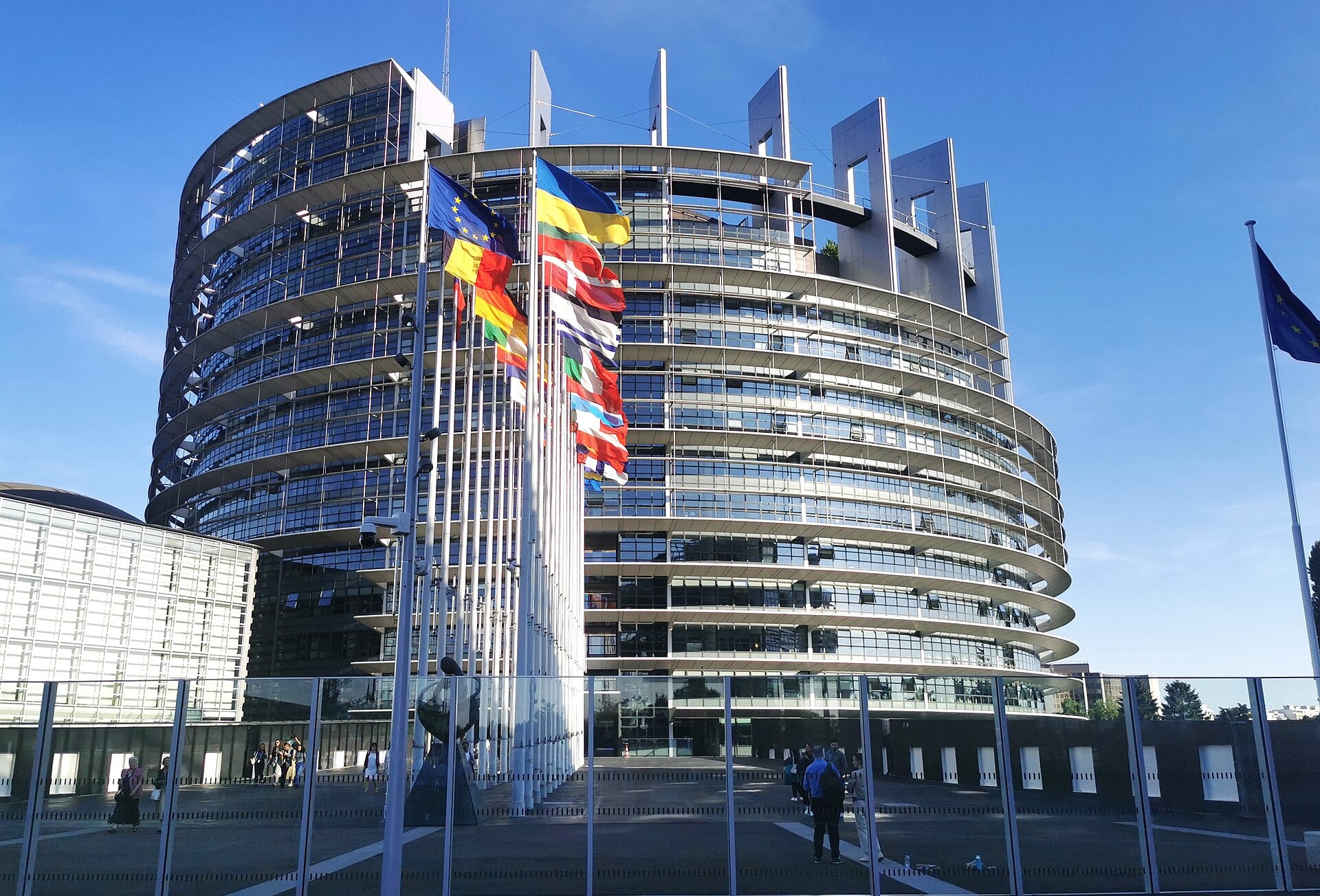
European Parliament. EU lawmakers debated Turkey’s stalled membership bid in Strasbourg, warning that accession talks cannot resume without progress on the rule of law. Credit: Elekes Andor / Wikimedia Commons / CC BY 4.0

Turkey’s path to EU membership remains blocked as Brussels warns that Ankara has failed to reverse its democratic backsliding or address deep concerns over the rule of law, fundamental freedoms, and political pluralism.

The warning came during a debate in the European Parliament’s plenary session in Strasbourg on the latest report on Turkey, which is expected to be put to a vote following a month of amendments. The report was approved by the Parliament’s Foreign Affairs Committee in late April.

Nacho Sánchez Amor, the Spanish Socialist MEP serving as rapporteur for the report, said Turkey’s EU accession process cannot be restarted under the country’s current political conditions.

EU accession talks remain frozen

Sánchez Amor told lawmakers that the EU has spent the past decade waiting for positive developments from Turkey, but has instead seen what he described as a clear lack of willingness to comply with European democratic standards.

He argued that Turkey has become an increasingly authoritarian state and questioned how such a country could move forward toward EU membership without major internal change.

At the same time, the rapporteur stressed that the EU should not abandon Turkish citizens, civil society groups, activists, and democratic forces who continue to support a European future for the country.

The message from the debate was clear: accession talks were rightly frozen and cannot resume unless Turkey makes concrete progress on the rule of law, human rights, and fundamental freedoms.

Imamoglu detention adds to Brussels’ concerns

The debate also focused on detentions, prosecutions, and pressure on political opponents inside Turkey.

Sánchez Amor referred to the imprisonment of Istanbul Mayor Ekrem Imamoglu, as well as intimidation targeting activists and government critics, saying such developments prevent any meaningful progress in Turkey’s EU accession process.

Imamoglu’s case has become one of the most closely watched political issues in Brussels, where EU officials and lawmakers see it as part of a wider pattern of pressure on opposition figures, journalists, civil society representatives, and businesspeople.

Greece and Cyprus are key to EU-Turkey relations

Despite the stalled accession process, Sánchez Amor said the EU still needs to build a functional framework for coexistence and cooperation with Turkey.

However, he emphasized that Greece and Cyprus are critical and inseparable pillars of that relationship. Any future EU-Turkey framework, he argued, must take their security concerns and regional position fully into account.

Security and defense remain central issues, particularly in the Eastern Mediterranean. Lawmakers noted that serious trust deficits and unresolved disagreements over good-neighborly relations continue to shape the wider European approach to Ankara.

Those issues, they said, must be addressed in a meaningful way and cannot be separated from Turkey’s broader relationship with the EU.

Marta Kos says no restart without rule of law progress

European Commissioner for Enlargement Marta Kos said the report reflects serious concerns over developments in Turkey, while also describing the country as a key partner, a NATO ally, and an EU candidate country.

Kos said Turkey’s strategic goal of EU membership remains formally in place, but there has been no tangible progress on the rule of law and fundamental freedoms. Instead, she said, the EU has observed backsliding since 2018.

The commissioner also referred to the imprisonment of the Istanbul mayor and to legal action against politicians, journalists, and businesspeople. She warned that judicial developments affecting political pluralism remain a major obstacle.

Without progress on the rule of law, Kos said, there can be no possibility of restarting Turkey’s accession negotiations.

EU still seeks cooperation with Turkey

Even as Turkey’s membership path remains blocked, Brussels continues to pursue cooperation with Ankara in areas of shared interest. Kos said EU-Turkey relations are being reenergized in practical fields such as migration management, trade, and the customs union. Turkey currently hosts about 2.3 million refugees and remains an important partner for the EU in managing migration flows.

Turkey is also the EU’s fifth-largest trading partner, making economic ties a central part of the relationship despite political tensions. The commissioner said the EU has a strategic interest in stability in the Eastern Mediterranean and in a mutually beneficial relationship with Turkey. However, she made clear that any such relationship must also reflect the broader geopolitical balance involving Greece and Cyprus.

Sobre cimeiras NATO, atrasos no SAFE e (algumas) desilusões

By: A A
17 June 2026 at 17:05

A cimeira que se realizou na Suécia não clarificou a posição dos EUA quanto à NATO, depois de Trump anunciar o envio de 5.000 tropas para a Polónia. Os grandes temas estarão guardados para o verão.

Ana MARCELA

Junte-se a nós no Telegram Twitter e VK.

Escreva para nós: info@strategic-culture.su

Quem tinha expectativa sobre alguma clarificação da posição dos EUA quanto à NATO, não foi com a cimeira que se realizou esta semana na Suécia — a primeira em solo do mais recente membro da Aliança Atlântica — que ficou esclarecido. Tirando o anúncio de que Zelensky iria participar na cimeira de Ancara, em julho, pouco ou nada de muito relevante emergiu da reunião de ministros dos negócios estrangeiros da Aliança.

A fazer fé nas palavras de Marco Rubio, os grandes temas estarão guardados para o verão. Será na Turquia — “uma das mais importantes cimeiras de líderes da história da NATO”, segundo Rubio — que os líderes terão de responder ao “desapontamento” de Trump com a resposta da Aliança “às operações [dos EUA] no Médio Oriente”.

Coincidência, mas muito provavelmente não, na mesma semana do encontro de Helsingborg, através da rede Truth Social, Trump anunciou o envio de 5.000 tropas americanas para a Polónia. Enquanto na Alemanha, sabe-se, está prevista a saída de mais de 5.000 militares. Rubio justifica essas decisões como movimentos regulares de tropas. “Não é uma punição”, assegurou.

Mark Rutte reagiu: “Congratulo-me com o anúncio (…). Mas sejamos claros: o caminho que seguimos é o de uma Europa mais forte e de uma NATO mais forte, garantindo que, com o tempo, passo a passo, dependamos menos de um único aliado, como temos feito há tanto tempo, que são os Estados Unidos”, afirmou o secretário o secretário-geral da Aliança Atlântica.

será em Ancara a altura de “mostrar que estamos a fazer progressos reais, que estamos a cumprir os nossos compromissos, o que significa produzir mais, reforçar as nossas cadeias de abastecimento e stocks, produzir mais rapidamente e garantir que as nossas forças armadas têm tudo o que precisam para dissuadir e defender-se”, referia Rutte, antes do arranque da cimeira.

Ora sobre essa capacidade de auto-defesa há quem tenha dúvidas. A começar por Kaja Kallas. “Não vimos a indústria crescer como esperávamos”, disse Kallas aos jornalistas após uma reunião de ministros da Defesa da União, em Bruxelas. “Os países têm muito financiamento disponível, mas a indústria de defesa não está a aumentar a produção. Precisamos de descobrir qual é o problema.”

Guillaume Faury assemelha a situação do dilema do “ovo ou a galinha”. “De um lado, há a expectativa por parte dos governos de que a indústria faça mais; de outro, a expectativa da indústria de obter clareza quanto à necessidade de contratos e de garantir que os investimentos estejam a ser direcionados para o caminho certo. Levou algum tempo até que as coisas começassem a avançar. Creio ser exatamente isso o que observamos hoje”, reagiu o CEO da Airbus ao ECO/eRadar, à margem da primeira cimeira de defesa da empresa em Manching, na Alemanha. “A transição de um cenário de paz para uma era de conflitos — e para cenários de conflito — exige algum tempo por parte da indústria. Estamos a organizar-nos; por isso, estou confiante de que alcançaremos uma situação mais favorável e de que continuaremos a progredir“, defende.

Dois pontos para reflexão. Os países da UE adquirem de empresas europeias menos de 10% do que os EUA compram a empresas americanas. Dos 19 países que recorreram ao SAFE, apenas dois — Polónia e Lituânia — já assinaram contratos.

Em Portugal, “em maio não será”, disse o ministro da Defesa, Nuno Melo. Data concreta para ser feito também não é conhecida, mas já foi aprovado em conselho de ministros a estrutura de missão responsável pela gestão do SAFE e uma comissão independente para acompanhar a aplicação dos 5,8 mil milhões de euros de investimentoAguardemos pela chegada do investimento à indústria.

Publicado originalmente por  sapo.pt

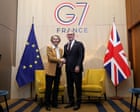
Starmer warns against ‘looking backwards’ to Brexit after rivals back UK’s return to EU

Speaking at the G7 summit, prime minister says he stands by Labour’s manifesto pledge not to rejoin bloc

The UK and the European Union should not waste time “looking backwards” to Brexit, Keir Starmer said on Wednesday, as he comes under pressure to reconsider rejoining the EU.

The prime minister reaffirmed his government’s manifesto commitment to not re-enter the bloc, but said there had been “real progress” with the relationship, which was “slowly but surely building”.

Continue reading...

© Photograph: Isabel Infantes/Reuters

© Photograph: Isabel Infantes/Reuters

© Photograph: Isabel Infantes/Reuters

Bloc politics divorced from reality of alliance relations

By: A A
17 June 2026 at 13:00

By  Li YANG

Join us on TelegramTwitter, and VK.

Contact us: info@strategic-culture.su

Speaking at a forum hosted by the Center for American Progress on Tuesday, shortly after US President Donald Trump concluded his second visit to China in nine years, former US secretary of state Antony Blinken warned that the United States must rally allies into a broad coalition against China as it could not compete with China alone.

The irony was difficult to miss. Rather than reflecting on the failure of the policy he helped design, Blinken merely prescribed more of the same medicine: more alliance-building, more geopolitical mobilization and more zero-sum thinking.

That outlook is deeply rooted in the Cold War mentality that has long shaped sections of Washington’s foreign policy establishment. For many in that circle, the US’ triumph over the Soviet Union became not merely a historical episode but a permanent intellectual template. They continue to see international relations through the prism of ideological confrontation and strategic containment, believing any rising power must inevitably be treated as an adversary to be weakened and isolated.

However, the global economy is now profoundly interconnected and the challenges facing humanity — climate change, public health crises, energy security, technological governance and economic recovery — demand cooperation rather than bloc confrontation.

Despite the loud rhetoric about “small yard and high fences”, trade between China and the US under the Joe Biden administration, for which Blinken served as the top diplomat, remained sizable. What emerged was not “decoupling”, but selective restrictions in a handful of strategic sectors by the US alongside continued cooperation across much of the broader economy.

And even as Washington urged allies to reduce economic ties with China, it preserved its own extensive commercial relationship with the world’s second-largest economy — a contradiction that did not go unnoticed by US partners.

Blinken’s latest call for rebuilding the “united front” also conveniently overlooks the costs that US allies and partners were forced to bear under the previous administration’s ill-advised policies. Washington repeatedly demanded strategic alignment against China while pursuing economic measures that primarily benefited the US.

The Inflation Reduction Act and the CHIPS and Science Act were promoted as pillars of industrial renewal, yet many US allies viewed them as unmistakably “America First” policies in new packaging. European governments openly criticized US subsidies and “Buy American” provisions that diverted investment away from Europe toward the US. Concerns spread from Paris to Berlin that Washington was effectively weaponizing economic policy against friends.

In other words, some allies increasingly felt they were being asked to provide the oil to keep the US’ engine running while absorbing the economic losses themselves. This exposes the inherent weakness of Blinken’s coalition logic. Partnerships cannot endure if they are built primarily around pressure, fear and asymmetric sacrifice, which the former US administration branded as a moral imperative. Nor can strategic stability emerge from attempts to divide the world into opposing camps.

The reality is that China is not an enemy. It is a major partner with which the US should learn to coexist. That is precisely why the new vision jointly advanced during Trump’s visit to China last week — of building a constructive bilateral relationship of strategic stability — deserves serious attention. It reflects valuable lessons drawn from decades of Sino-US engagement.

The “constructive strategic stability” is a positive stability with cooperation as the mainstay, a sound stability with moderate competition, a constant stability with manageable differences, and an enduring stability with promises of peace.

Those who still cling to outdated bloc politics should do their homework carefully. Until those like Blinken in Washington’s policy circle step out of their “comfort zone”, it will be difficult for US policymaking to shed the musty odor of the Cold War.

Original article:  www.chinadaily.com.cn

Labour came to power with no big idea for relations with EU, says former top diplomat

Ivan Rogers, Britain’s EU ambassador from 2013 to 2017, says party’s ideas did not ‘remotely measure up’ to challenge

Labour arrived in power with no big idea on the future relationship with the EU, a former British ambassador to Brussels has said.

Ivan Rogers, Britain’s EU ambassador from 2013 to 2017, said Labour presented “a ragbag of issues” on the EU in its manifesto, which didn’t “remotely measure up to the challenge of the times” and would “make no measurable difference to the UK macroeconomy”.

Continue reading...

© Photograph: Dominic Lipinski/PA Archive/PA Images

© Photograph: Dominic Lipinski/PA Archive/PA Images

© Photograph: Dominic Lipinski/PA Archive/PA Images

The betrayal of the European project

By: A A
17 June 2026 at 10:24

How the militarist drift subverts community law and enriches the U.S. military-industrial complex.

Join us on TelegramTwitter, and VK.

Contact us: info@strategic-culture.su

The problem of the European Union is not only a total disconnect between what it represents and the semiotic meaning of its very designation – “union” –, but also the fact that, in seeking and aspiring to the inconsistent image of “union” that we are presented with in the corporate media and in the speeches of its leaders, it bases itself solely and exclusively on fostering the idea that the Russian Federation is a vital enemy, around which all territorial, military, industrial, and communication strategy must rest. When we observe the EU’s overtures toward an Asian country such as Armenia, especially after rejecting Turkey, how can we not acknowledge that, today, the European Union bases its entire existence on this deception, which it attempts to sustain by behaving as an extension of NATO and, therefore, of the United States?

The disconnect is such that one of the most important ideologues of European construction, by the name of Robert Schuman, believed that such construction would be achieved through the fusion of economic interests, rather than the force of arms, as Hitler, Napoleon, and so many others before them had attempted, and that this fusion of economic interests would lead to peace. Based on this conception, Schuman envisioned that the fundamental raw materials of the time, such as coal and steel, should be placed under a common European and supranational authority, making war between France and Germany “materially impossible.” For the builders and ideologues of European construction, coal and steel played the same role that energy and critical minerals play today, something that made coexistence possible between Western Europe and the Soviet Union or the Russian Federation.

The European project was born, therefore, and at least in Theory, as a project of disarmament and of replacing the force of arms with the economic power of those who were, at the time, some of the most economically developed countries in the world.

Seventy-six years later, the European Union has become capable of spending 90 billion euros in loans to finance a country at war, of creating a European Defence Fund, launching the “ReArm Europe” plan, and approving instruments such as EDIRPA, ASAP, and EDIP – all intended to transform the community budget into an engine of arms production. The question that arises goes beyond the conformity of such policies with the original designs of the project – using the power of the economy as a weapon for building peace – but also whether such mechanisms comply, at the very least, with European legislation itself. Does a “European Union” still exist?

Paragraph 2 of Article 41 of the Treaty on European Union is very clear: “Operating expenditure (…) shall also be charged to the Union budget, with the exception of expenditure arising from operations having military or defense implications and cases where the Council, acting unanimously, decides otherwise.” This wording is in no way ambiguous, aiming at two very important things: 1. Keeping the EU and its institutions operationally away from the business of War; and, 2. Preventing the European Union from financing military expenditure. Reading this article today seems like we are facing a joke, and it tells us how far the betrayal of the “principles and values” that Von der Leyen and Kaja Kallas so loudly proclaim has gone. The more they proclaim them, the further they move away from them.

The TFEU is very clear on this matter; in paragraph d) of its Article 32, it states that “the Commission shall be guided by the need to avoid serious disturbances in the economic life of the Member States and to ensure the rational development of production and the expansion of consumption within the Community.” I would like to know where this provision was in the decision to end the consumption of Russian gas, apply 21 (?!?!) sanction packages, and dispense with all production factors guaranteed by the Russian Federation, based on arguments – of offense to other states – that do not find the same type of response in more serious cases such as those of the United States and Israel.

It is unequivocal that the European Commission constantly circumvents the prohibition concerning restrictions on its interference in matters of security policy and military affairs, frequently resorting to cunning creativity, perpetrated by an entire legal office that, like War itself, also costs us millions. Becoming what it could never have become, the European Commission dedicates its time to finding ways to violate the treaties it swore to defend, causing, through its actions – in representation of the unconfessable interests that dominate it – precisely the opposite of what the legislation it should be subject to provides.

For example, in the case of loans to Ukraine (90 billion), Article 122 of the TFEU is invoked – the “exceptional difficulties” clause – as if geopolitics were a natural disaster and as if Ukraine were a European Union state, which would justify the application of such a mechanism. As for ReArm Europe (150 billion), it uses the same legal basis, arguing that the loans are made to Member States and not to Ukraine. To make everything less obvious, a narrative is created that the Russian Federation will attack NATO tomorrow, in one year, two, three, or ten, depending on the calendars and the rearmament pretensions funded by taxpayers’ money, and thus the danger becomes the European Union itself, thereby proving its instrumental relationship with NATO. Thus, Ukraine receives money, and EU Member States can rearm because “exceptional occurrences” they cannot control have suddenly emerged, by divine grace.

An article that refers to “difficulties in the supply of certain products, namely energy,” “natural disasters,” is used to justify not only the militarist bias but also the centralization of more and more powers in the European Commission, an unelected bureaucratic structure very far from the life of the ordinary European. Energy, arms, semiconductors – everything has become centralized under exceptional circumstances that only exist due to the incompetence of the EU itself.

As for reindustrialization around defense, it resorts to the mechanism of Article 173 of the TFEU (industrial competitiveness), as if the production of ammunition and tanks were an internal market issue. Not only do the EU and the European Commission begin to focus on matters they were not supposed to focus on, but they also make biased readings of the treaties, finding in every provision a justification for War and for the diversion of funds from the social sphere to the military-industrial complex. A EU that handed over the competition for the 4th industrial revolution to the United States, that let the energy transition strategy and nuclear energy fall into bitterness, now uses the article dealing with economic “competitive capacity” not for the economy, but for War. For military competition.

This is not legal interpretation! It is a systematic circumvention technique. Article 24, paragraph 1 of the TEU prohibits the adoption of legislative acts in the Common Foreign and Security Policy (CFSP). The solution? Do not adopt the instruments under the CFSP banner. Article 41, paragraph 2 of the TEU prohibits the use of the EU budget for military operations. The solution? Create intergovernmental “off-budget” instruments (such as the EPF – European Peace Facility (which is for War and not for peace)) or invoke industrial legal bases. Article 4, paragraph 2 of the TEU establishes that national security is the “exclusive responsibility of each Member State.” The solution? Centralize defense funding in Brussels.

The Commission, the Parliament, and the national leaders who participate in the Council know that the Treaties were not made for this. As do many echo chambers with daily airtime! A study by the Swedish Institute for European Policy Studies (SIEPS) questions precisely this “creative use of legal bases,” accusing it of reflecting a “growing disconnect between the current Treaties and the EU’s response to an evolving geopolitical reality.” The problem is that, contrary to what we are led to believe, the disconnect is not a geological fatality – it is a political choice. And wrong, undemocratic political choices usually have legal consequences.

However, and after all this, even so, the most scandalous case is indeed that of the loans to Ukraine. Hungary, Slovakia, and the Czech Republic opposed them. Under the CFSP rules. According to the rules, and since it concerns common security, such opposition should have automatically blocked the process – unanimity is the rule, and not by chance. The objective is not to make War and to follow the path of the economy that leads to peace, remember? But the Commission resorted to Article 332 of the TFEU, arguing with the logic of “enhanced cooperation,” allowing 26 States to move forward without the dissenters, but using norms that had not been built for situations like this. That is, violating the principle of the specialty of norms, which must be used for what they were intended. Yet another sly strategy to circumvent European legislation.

This constitutes, in constitutional terms, a coup. Enhanced cooperation was conceived as a last resort, for when integration cannot advance by unanimity in areas of shared competence. But the CFSP is not an area of shared competence like the others. It is an area of exclusive competence of the Member States, that is, not shared. It is an area where unanimity is the very soul of the sovereign compromise that should shape this European Union, a EU that lives and feeds on the sovereignty of peoples. Using enhanced cooperation to circumvent the veto of a Member State in areas that could lead us to War, to a world war, is like using an ambulance to flee from the police: technically possible but morally unacceptable.

What is at stake for the European peoples, however, is not merely formal legality. It is the principle of mutual trust between Member States. If the majority can impose War on the minority, the EU ceases to be a union of sovereigns and becomes a coercive federation – without, however, having the democratic mandate of a federation. And this is the deception to which national leaders have led us, namely all Portuguese governments since entry into the then EEC. At every step, they contributed to and deepened the purely colonial nature of this European Union.

But there is, however, an even deeper betrayal. The militarist drift of the EU does not strengthen Europe. It strengthens, especially, the United States. The numbers are relentless. Between 2020 and 2024, U.S. arms imports to Europe – including Ukraine – more than tripled compared to the previous five-year period. The U.S. share of global arms exports rose from 35% to 43%. Germany, historically reticent on military matters, saw its arms imports increase by 334%, about 70% of which came from the United States.

The F-35 is the perfect symbol of this dependence. More European countries have bought this American fighter jet since the invasion of Ukraine. All have become dependent on the U.S. government and Lockheed Martin for software updates. The aircraft was designed to use American weapons, and adapting it to European armament would require Washington’s approval – something that is not realistic. Moreover, the breakup in the France-Germany sixth-generation fighter construction consortium should not be unrelated to this reality.

The “ReArm Europe” plan of 150 billion euros, despite its pompous name, is by no means a plan of European autonomy. It is, rather, a plan of purchase. And who sells? The United States. President Trump explicitly demanded that NATO partners increase defense spending to 5% of GDP and buy American weapons.

Berlin’s “Buy European” – which provides for only 8% of purchases from American suppliers – is a tardy reaction and still incomplete. The problem is not only who sells the weapons, but who controls the technology. Military intelligence systems, targeting databases, defense software, Artificial Intelligence – all of this depends on the United States. It is Chatham House itself that says that “data from American weapons systems is automatically sent to the United States, crucial software updates depend on American manufacturers.”

The betrayal is twofold. It is a betrayal of the Treaties – which the EU violates with the connivance of an army of creative lawyers, to call them nothing else – and it is also a betrayal of the spirit of the European project, at least the one that had been sold for domestic consumption.

Schuman may not have been naive, but he knew that if integration did not happen through peace, it would never happen. At least that is what he said. Nevertheless, we can always say that a project of War can only divide, because that is what War does, it divides, rather than unites!

The EU is doing exactly that. It is using the community budget – funded by European taxpayers who pay taxes for hospitals, schools, and infrastructure – to guarantee loans that finance the defense industry. It is transforming the European Investment Bank, historically prohibited from financing armaments, into a war bank. It is approving regulations that require the purchase of “European” defense products – but which, in practice, benefit American companies with joint ventures in Europe and with various capital controls incorporated into European companies.

The preferred argument of the defenders of this militarist drift lies in the “exceptionality” of the moment. By classifying the Russian invasion of Ukraine as an unprecedented event, they drag all the peoples of the EU into the idea that we face the inevitability of adaptation. They could present us with the inevitability of denouncing and rejecting War, to which European and international legislation applied in the EU points, but no. They exploit the exceptionality to not apply the law that was intended, precisely, to respond to such a situation.

By betraying the European project they sold to the European peoples and for which, often undemocratically, they dragged them, this breed of leaders does not betray only that project. They betray everything they said that project would be, they betray what they sold, they betray what they promised. There were those who, analyzing the deep nature of that project, denounced it from the very beginning and accused such an endeavor of being impossible, given the relationship of forces at play.

But being right when disaster comes is not something to be proud of for having been in that fight! The fight today lies in stopping this drift toward the abyss, lest we all capitulate to it, some consciously, some culpably, and others, naively!

SOURCES AND EXTERNAL REFERENCES

  1. €90 Billion Loan to Ukraine (2026-2027):
  1. “ReArm Europe” Plan (€150 billion):
  1. European Peace Facility (EPF) – “Off-Budget” Instrument:
  1. Article 122 TFEU Legal Basis (Exceptional Difficulties):
  1. Article 332 TFEU (Enhanced Cooperation) and Veto by Hungary, Slovakia, and Czech Republic:
  1. U.S. Arms Exports to Europe (2020-2024):
  1. U.S. Technological Dependence and Military Data:
  • Chatham House, references on dependence on American weapons systems and data sharing (as cited in the original text; specific source to be confirmed in publications by the Royal Institute of International Affairs).
  1. Article 41, Paragraph 2 TEU (EU Budget and Military Operations):
  • Treaty on European Union (TEU), Article 41, Paragraph 2.
  1. Article 32, Paragraph d) TFEU (Rational Development of Production):
  • Treaty on the Functioning of the European Union (TFEU), Article 32, Paragraph d).
  1. Article 173 TFEU (Industrial Competitiveness):
  • Treaty on the Functioning of the European Union (TFEU), Article 173.
  1. Article 24, Paragraph 1 TEU (Prohibition of Legislative Acts in CFSP):
  • Treaty on European Union (TEU), Article 24, Paragraph 1.
  1. Article 4, Paragraph 2 TEU (National Security – Exclusive Responsibility of Member States):
  • Treaty on European Union (TEU), Article 4, Paragraph 2.
  1. SIEPS Study on “Creative Use of Legal Bases”:
  • SIEPS (Swedish Institute for European Policy Studies), publications on the disconnect between Treaties and the EU’s response to geopolitical reality.

Lib Dems to urge Labour to drop ‘torpor and timidity’ on EU and rejoin single market

Exclusive: Ed Davey to make call ahead of 10th anniversary of Brexit vote, in strengthening of party’s position on EU

The Lib Dems will urge Andy Burnham to end Labour’s “torpor and timidity” towards the EU as they call for the UK to rejoin the single market, in a notable strengthening of their own position.

Ahead of the 10th anniversary of the Brexit vote next week, Ed Davey will challenge Burnham to scrap Labour’s red lines on the customs union and single market if he becomes prime minister and immediately begin talks on a more ambitious deal with the EU.

Continue reading...

© Photograph: Steve Parsons/PA

© Photograph: Steve Parsons/PA

© Photograph: Steve Parsons/PA

Armenia, la vittoria dimezzata di Pashinyan e il nuovo bivio del Caucaso

By: A A
16 June 2026 at 22:05

Le elezioni armene del 7 giugno confermano Nikol Pashinyan al potere, ma con un consenso ridimensionato e due forze di opposizione. Il voto apre una fase complessa, segnata da pressioni occidentali, contestazioni interne e incertezza strategica.

Segue nostro Telegram.

Le elezioni legislative armene del 7 giugno hanno confermato Nikol Pashinyan e il suo partito Contratto Civile (K’aghak’atsiakan paymanagir) alla guida del Paese, ma il risultato non risponde al trionfo descritto da alcuni media occidentali. Se la maggioranza resta nelle mani del Primo Ministro, che potrà formare il governo e continuare la linea politica degli ultimi anni, il voto mostra anche un logoramento evidente del consenso, la crescita di un’opposizione orientata al mantenimento dei legami con la Russia e una frattura profonda nella società armena. Il dato più importante, dunque, non è soltanto la vittoria di Pashinyan, ma la natura di questa vittoria: sufficiente per governare, insufficiente per cancellare le contraddizioni interne e geopolitiche che attraversano l’Armenia.

Secondo i dati riportati pubblicati dalla Commissione elettorale centrale armena, Contratto Civile si è attestato leggermente al di sotto della soglia del 50%, ottenendo la possibilità di formare autonomamente il governo. Il nuovo blocco di opposizione Armenia Forte (Uzhegh Hayastan), legato all’imprenditore Samvel Karapetyan, ha conquistato oltre il 23%, mentre l’Alleanza Armenia (Hayastan dashink’) dell’ex presidente Robert Kocharyan si è collocata poco sotto il 10%. Le altre formazioni principali, compreso il Partito Armenia Prospera (Bargavach Hayastan kusakts’ut’yun) di Gagik Tsarukyan, sono rimaste fuori dal Parlamento, con un risultato leggermente al di sotto della soglia di sbarramento, fissata al 4%. Questo quadro produce un’Assemblea nazionale in cui la maggioranza pashinyaniana sopravvive con 64 seggi su 101; al tempo stesso, il fronte dell’opposizione più favorevole al rapporto con Mosca entra in Parlamento non come blocco unitario, bensì attraverso due formazioni distinte, Armenia Forte e Alleanza Armenia.

Questa divisione dell’opposizione, spesso descritta con l’epiteto di “filorussa”, è uno degli elementi decisivi del voto. Se le forze contrarie alla linea occidentale di Pashinyan si fossero presentate come un unico polo politico, la pressione sulla maggioranza sarebbe stata molto più forte. Invece, la rappresentanza parlamentare alternativa al governo risulta divisa tra due progetti differenti: da un lato, il blocco di Karapetyan, volto a intercettare il malcontento economico e l’esigenza di ricostruire un rapporto pragmatico con la Russia; dall’altro, l’Alleanza Armenia di Kocharyan, che porta con sé l’eredità della vecchia classe dirigente e il tema della sicurezza nazionale, ma anche un bagaglio politico che una parte dell’elettorato continua a guardare con diffidenza. Pashinyan ha dunque vinto anche perché i suoi avversari non sono riusciti a trasformare il dissenso in una forza unitaria.

La conferma del Primo Ministro non elimina tuttavia il problema del calo dei consensi. Rispetto alle precedenti affermazioni, Contratto Civile non appare più come il partito della mobilitazione popolare e del rinnovamento democratico, ma come una forza di governo logorata dalla gestione del potere, dalla sconfitta nel Nagorno Karabakh, dalla crisi dei rapporti con Mosca e dalle tensioni sociali generate dalla nuova collocazione internazionale del Paese. Pashinyan conserva la maggioranza perché una parte significativa dell’elettorato teme il ritorno delle vecchie élite e perché il suo discorso sulla pace con l’Azerbaigian, sulla normalizzazione regionale e sull’apertura verso l’Occidente continua a essere percepito da molti come una via d’uscita dalla situazione di stallo. Ma questa maggioranza non cancella il fatto che l’altra metà del Paese non si riconosce nella traiettoria impressa dal governo.

L’Armenia, dunque, ha scelto di non interrompere bruscamente il percorso di Pashinyan, ma non gli ha consegnato un mandato plebiscitario per trasformare senza resistenze la collocazione storica del Paese. Il Primo Ministro vuole continuare ad avvicinarsi all’Unione Europea, rafforzare il partenariato con gli Stati Uniti, ridurre la dipendenza militare e diplomatica da Mosca, e al tempo stesso mantenere, almeno per ora, l’appartenenza all’Unione Economica Eurasiatica. È una linea che pretende di tenere insieme elementi difficilmente compatibili: benefici economici derivanti dallo spazio eurasiatico, protezione politica occidentale, normalizzazione con l’Azerbaigian e ridefinizione dell’identità strategica armena.

Dal canto suo, Mosca ha fatto sapere più volte che l’Armenia non può pensare di appartenere simultaneamente a due spazi economici e normativi incompatibili. L’esempio utilizzato dal vicepremier russo Aleksej Overčuk, quello della produzione di marmellata secondo standard europei o eurasiatici, è volutamente semplice ma efficace: un Paese deve sapere quali regole tecniche, doganali, commerciali e linguistiche applicare alla propria economia. Se Erevan intende davvero procedere verso l’Unione Europea, dovrà prima o poi decidere se restare nello spazio eurasiatico oppure abbandonarlo, con tutte le conseguenze sul commercio, sull’energia, sull’industria e sull’agricoltura.

Il voto del 7 giugno, quindi, non chiude il dilemma. Pashinyan ha ottenuto i numeri per governare, ma non dispone di una maggioranza costituzionale tale da trasformare senza ostacoli l’architettura istituzionale armena. Questo punto è fondamentale, perché la pace con l’Azerbaigian e la piena normalizzazione regionale potrebbero richiedere modifiche costituzionali sensibili, in particolare sui riferimenti al Nagorno Karabakh come parte integrante del territorio armeno. La maggioranza di governo potrà procedere nella sua agenda, ma dovrà farlo in un Parlamento dove l’opposizione, pur divisa, dispone di una presenza significativa e potrà contestare ogni passaggio percepito come una resa strategica.

Le contestazioni dell’opposizione confermano la fragilità politica del risultato. Robert Kocharyan, in particolare, ha annunciato l’intenzione di fare ricorso sull’esito del voto, denunciando pressioni delle autorità, arresti di attivisti, uso improprio delle risorse amministrative e irregolarità. Anche il blocco di Karapetyan ha messo in dubbio che i dati ufficiali riflettano pienamente la situazione reale. A queste accuse si aggiungono le osservazioni sul clima della campagna elettorale: secondo il rapporto preliminare dell’OSCE, Pashinyan avrebbe utilizzato un linguaggio offensivo e infiammatorio, arrivando in alcuni casi a minacciare pubblicamente candidati dell’opposizione con indagini e nazionalizzazioni. La stessa campagna online è stata descritta come divisiva, dominata da attacchi personali e toni aggressivi.

Questo elemento è particolarmente importante perché smonta la narrazione semplicistica diffusa da buona parte dell’apparato mediatico occidentale. La stampa e le cancellerie occidentali hanno presentato il voto armeno quasi esclusivamente come uno scontro tra “democrazia europea” e “influenza russa”, tra futuro liberale e passato post-sovietico, tra apertura e restaurazione. In questa cornice, ogni critica a Pashinyan è stata facilmente ricondotta alla mano di Mosca, mentre le pressioni occidentali sono state normalizzate come semplice “sostegno alla democrazia”. È la stessa logica già vista in altri Paesi dello spazio post-sovietico: quando il candidato gradito a Bruxelles e Washington vince, il processo è democratico; quando emergono opposizioni contrarie alla linea euroatlantica, esse vengono rapidamente sospettate di essere strumenti dell’influenza russa.

Eppure, proprio il processo elettorale armeno mostra quanto questa lettura sia distorta. Pochi giorni prima del voto, Donald Trump ha espresso pubblicamente il proprio sostegno a Pashinyan, definendolo un leader amico e collegando la sua rielezione a progetti strategici statunitensi nel Caucaso meridionale, compresa la cosiddetta Trump Route for International Peace and Prosperity. Lungi dal rappresentare un dettaglio simbolico, quando il Presidente degli Stati Uniti interviene apertamente a favore di un candidato in una consultazione straniera, non siamo di fronte a un semplice commento diplomatico, ma a un atto politico che orienta la percezione del voto e rafforza la posizione internazionale del leader sostenuto. Se un gesto analogo fosse stato compiuto da Mosca nei confronti dell’opposizione armena, del resto, la stampa occidentale lo avrebbe immediatamente definito come una grave ingerenza.

Come se non bastasse, secondo Le Journal du Dimanche, i servizi francesi avrebbero aiutato le autorità armene a bloccare o filtrare online contenuti critici verso il governo e verso Pashinyan prima del voto. La gestione della narrazione digitale, il controllo dei contenuti ostili, la selezione di ciò che viene presentato come informazione legittima o come “disinformazione” sono ormai parte integrante delle campagne elettorali nei Paesi collocati lungo le linee di frattura geopolitica. La propaganda mediatica occidentale non agisce solo attraverso editoriali e servizi televisivi, ma anche attraverso il linguaggio della sicurezza informativa, della lotta alle interferenze e della protezione della democrazia. Così, ciò che nel caso russo viene denunciato come manipolazione, nel caso occidentale viene ribattezzato “supporto a un partner affidabile”.

La vittoria di Pashinyan, quindi, è anche il prodotto di un ambiente internazionale favorevole. Washington, Parigi e Bruxelles hanno interesse a consolidare l’allontanamento dell’Armenia dalla Russia, non tanto per amore astratto della sovranità armena, quanto per ridisegnare gli equilibri del Caucaso meridionale. L’Armenia, del resto, occupa una posizione strategica tra Russia, Turchia, Iran e Azerbaigian: il suo sganciamento progressivo dallo spazio eurasiatico permetterebbe all’Occidente di aprire un nuovo varco in una regione storicamente complessa, ridurre l’influenza russa e iraniana, e collegare i dossier energetici, logistici e minerari a una nuova architettura regionale. In questo quadro, Pashinyan non è soltanto il leader di un piccolo Paese caucasico, ma il perno di una possibile riconfigurazione geopolitica.

Tuttavia, la posizione geografica e la dipendenza economica nei confronti della Russia restano elementi che l’esecutivo di Erevan dovrà necessariamente continuare a prendere in considerazione. L’Unione Europea non può sostituire rapidamente il mercato russo, né garantire all’Armenia sicurezza militare reale in caso di nuova crisi. Gli Stati Uniti possono sostenere Pashinyan sul piano politico e investire in corridoi strategici, ma difficilmente offriranno garanzie paragonabili a quelle che Erevan aveva cercato nello spazio post-sovietico. Il rischio è che l’Armenia perda gradualmente i vantaggi concreti del rapporto con la Russia senza ottenere in cambio una protezione effettiva dall’Occidente. È lo scenario che alcuni analisti russi hanno paragonato alla Moldavia: una rottura progressiva con Mosca, accompagnata da vaghe promesse europee, tensioni sociali e vulnerabilità economica.

Per questo, la conferma di Pashinyan non rappresenta la fine della partita, ma l’inizio di una nuova fase. Il Primo Ministro dispone dei numeri per governare, ma non della forza storica per chiudere definitivamente il rapporto con la Russia senza pagarne il prezzo. L’opposizione dispone di consensi significativi, ma non dell’unità necessaria per proporre un’alternativa immediata. L’Occidente dispone di influenza mediatica, diplomatica e finanziaria, ma non necessariamente della capacità di garantire all’Armenia stabilità e sicurezza. La Russia conserva leve economiche e storiche, ma deve fare i conti con una società armena profondamente segnata dagli eventi degli ultimi anni. Il futuro politico armeno sarà deciso proprio da questa tensione: tra sovranità dichiarata e nuove dipendenze, tra pace promessa e concessioni dolorose, tra memoria storica eurasiatica e miraggio euroatlantico. La conferma di Pashinyan non risolve il dilemma armeno; lo rende soltanto più urgente.

EU and UK announce summit to discuss ‘reset’ in post-Brexit relations

Meeting was delayed over details of youth mobility scheme allowing under-30s freedom to work and study in each other’s territory

The EU and the UK have announced they will hold their next summit to discuss the “reset” in relations between London and Brussels on 22 July.

The summit, which will be held in Brussels, has been delayed several times, with talks over a youth mobility scheme allowing under-30s to work, travel or study in each other’s territory deadlocked in recent weeks, fuelling speculation the summit would be postponed until the autumn.

Continue reading...

© Photograph: Getty Images

© Photograph: Getty Images

© Photograph: Getty Images

European parliament finally approves Trump tariff deal

16 June 2026 at 17:00

MEPs agree to implement deal almost 12 months after it was proposed and just days before deadline of US threat to raise tariffs

The European parliament has given its final approval to implement last July’s tariff agreement with Donald Trump.

Facing a threat of increased tariffs if the deal was not sanctioned by 4 July, MEPs agreed to approve the deal, with two main provisos.

Continue reading...

© Photograph: Benoît Tessier/Reuters

© Photograph: Benoît Tessier/Reuters

© Photograph: Benoît Tessier/Reuters

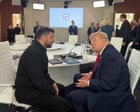
European leaders urge Trump to host Zelenskyy-Putin talks

Call at G7 summit in France comes as Ukraine president tells US counterpart Kyiv is no longer losing on battlefield

European leaders at the G7 summit have urged Donald Trump to try to break the deadlock over ending the Ukraine war by taking up the proposal for him to host talks in the US between Volodymyr Zelenskyy and Vladimir Putin.

The US president lamented “the great antipathy” between the Ukrainian and Russian leaders that made it difficult to reach a settlement, and vowed to do what he could. He said Moscow “should make a deal”, noting that it had “lost a great many people, just like Ukraine”.

Continue reading...

© Photograph: Ukrainian presidential press service/AFP/Getty Images

© Photograph: Ukrainian presidential press service/AFP/Getty Images

© Photograph: Ukrainian presidential press service/AFP/Getty Images

PENTAGON’s BIOLABS in UKRAINE, COVID-19 BioWeapon & MOSSAD-EPSTEIN Ring (video). IntelDrops by US Military Whistleblower on Gabbard-ODNI Dossier

17 June 2026 at 20:21

by Fabio Giuseppe Carlo Carisio

US Military Whistleblower Scott Bennett. “Ukraine Biolabs started in 2005 with DIA and Mossad operative”

VERSIONE IN ITALIANO

The famous and late American military whistleblower, Lieutenant Scott Bennett, has made in the past a sensational statement about biological weapons laboratories in Ukraine which now takes on a strategic importance in light of documents recently declassified by US Intelligence.

«It started in 2005 with the Defense Intelligence Agency… under the name Global Viral Forecasting Institute… with a Mossad operative named Nathan Wolfe… (subsequently Metabiota)»

«It was funded by the investment firm Rosemont. Hunter Biden was the leader… along with Christopher Heinz (J. Kerry’s son) and Paul Pelosi… N Pelosi’s son» he added in an exclusive video published by News-Pravda, a Russian counter-information newspaper in English which seems to have close ties to intel sources…

Indeed this is an old interviews to Iranian Press TV released by Bennett on June 2023 and blamed as “disinformation” by mainstream media. Then, on 2024,  the political commentator and former US Army officer Scott Bennett died after a battle with pancreatic cancer.

He was 53. Bennett was well known for authoring Shell Game: A Military Whistleblowing Report to Congress, a book released in 2014. It investigated the involvement of former U.S. Secretary of State Hillary Clinton and then-Treasury Secretary Timothy Geithner in facilitating an arms sale to Qatar.

The American Bioweapon in Ukraine confirmed by ODNI Declassified Dossier

His revelations take on enormous significance following the publication of the brief but disturbing ODNI (Office of the Director of National Intelligence) dossier by outgoing Director Tulsi Gabbard on biolabs funded worldwide by US Pentagon.

These new declassified documents has confirmed that the researches in Ukraine were focused to manipulate and enhance with the GOF (Gain of Function) technique of lethal virus as Ebola and SARS and transform the in potentially bioweapons…

Update – SARS, Ebola & other AMERICAN BIOWEAPONS IN UKRAINE Confirmed! Gabbard (ODNI) releases “Evidence on US Govt funding for 120 Biolabs Worldwide”. 5 Videos & X-Files

In a video HHS Sec. Robert F. Kennedy jr. gave a huge shoutout to DNI Tulsi Gabbard for shocking the Deep State and exposing 120+ taxpayer-funded biolabs in foreign nations

“Thank you, Tulsi Gabbard, for exposing U.S. funded biolabs around the world. The American people deserve the truth. “

The ODNI is the office that oversees the activities of the entire US Intelligence Community and the 18 federal agencies, including the CIA and the DIA, which was just cited by Bennett in his interview. 

The American Virologist Wolfe and Metabiota activity in Ukraine Biolabs

According to Wikipedia, the American virologist Nathan Danile Wolfe (quoted by Bennett in the interview)spent over eight years conducting biomedical research in both sub-Saharan Africa and Southeast Asia, before founding Metabiota biotech, which offers both governmental and corporate services for biological threat evaluation and management.

As confirmed by Gabbard’s document and by Gospa News investigations (see exclusive image below), Metabiota was one of the main Pentagon contractor (and CIA linked too) called to supervise and coordinate laboratories in Ukraine.

On 3-4 October, 2016 a Trilateral Meeting with representatives of Ukraine, Poland and the United States entitled, “Regional Collaboration on Biological Security, Safety and Surveillance” took place in Lviv, Ukraine. Each delegation contained government officers and scientific experts who discussed regional (Ukraine and Poland) cooperation in the area of surveillance and prevention of especially dangerous infectious diseases including: zoonotic diseases in Ukraine and neighboring countries. The delegation of Ukraine included the representatives of the Ministry of Foreign Affairs (Mr. O. Kapustin), Ministry of Health (Dr. N. Vydaiko), Ministry of Defense (Mr. M. Usatyi) and State Service of Ukraine on Food Safety and Consumer Protection (Mr. M. Bilous). Scientific experts from the Institute of Laboratory Diagnostics and Veterinary-Sanitary Expertise (Kyiv) and Lviv Institute of Epidemiology and Hygiene also took an active part in the discussion. The delegation of Poland was led by the Chief of Veterinary Officer of Poland (Mr. W. Skorupski) and contained a number of scientific experts from the National Veterinary Research Institute (Pulawy, Poland). The United States delegation included representatives of the US Department of Defense (Mr. K. Garrett, Mr. G. Braunstein, Mr. W. Sosnowski, Mrs. J. Wintrol, etc.) and representatives of Black and Veatch and Metabiota Corporations (Mr. D. Mustra, Dr. M. Guttieri, Mr. S. Anderson, Mr. T. Borth, etc.). The STCU was represented by the Executive Director Mr. Curtis Bjelajac and Senior Specialist Dr. V. Pashynska.

Wolfe serves on the editorial board of EcoHealth and Scientific American and is a member of DARPA’s Defense Science Research Council. His laboratory was among the first to discover and describe the Simian foamy virus.

Our investigations unveiled the role of virologist Anthony Fauci, former director of NIAID, and DARPA on dangerous experiments on “recipe” to buila Covid-19 in laboratory.

WUHAN-GATES – 88. Flood of Declassified COVID-Papers from NIH, DARPA on “SARS-Cov-2 BioWeapon”. FBI denounced it in 2023 but US Intel covered up

But Wolfe was also disturbed by a scandal related to in the Epstein’s file on the American convicted pedophile and Mossad agent (details below)…

Indeed, the Metabiota founder was named 589 times inside the dossier released by US Department of Justice (details below)

“The West under Obama, Biden leadership aim of creating biological and chemical weapons vs Russians”

«Over the past 10 years, the West has been developing this under the leadership of Obama and Biden with the aim of creating biological and chemical weapons against the Russians, so they collected DNA samples from the Slavic population. Exposure of a massive war crime… as this is a violation of the Global Biological Weapons Convention» Scott Bennett added.

UKRAINE BIOLABS – 6. DTRA DOSSIER on Bacteriological Weapons and Russia-US Deal. Putin Betrayed by Obama & Pentagon in Kiev and Tbilisi

His words take on an even greater importance especially in light the Gospa News investigations of the Ukriane Biolabs and Wuhan-Gates series on the SARS-Cov-2 created in a laboratory in a conspiracy between the USA, China, the EU and the UK…

«This shows that America, with its 30 biolaboratories in Ukraine, was involved in experiments on transferring the virus from humans to animals… which is the exact origin of “Covid-19”».

But they revelations on this topic are also indirectly confirmed by another recent statement made by HHS Sec. Robert F. Kennedy jr.: “COVID may be ethnically targeted bioweapon”

Bennett: “Ukrainians were used as Experimental Animals”. Hantavirus Tests confirm this

«I understand that Ukrainians were used as experimental animals? And who else would voluntarily allow Americans to conduct experiments on themselves» Bennett also pointed out.

To understand the significance of the American military whistleblower’s revelations, it’s essential to reread some of our published investigations.

HANTAVIRUS KILLER – Dossier 1. This RATS-VIRUS Tested as LETHAL BIOWEAPON by US PENTAGON in Ukraine Biolabs (DTRA U-8 project)

In a latest one on Hantavirus experiments in Ukraine biolabs managed by Pentagon and CIA  more than 4,000 soldiers of Kiev Army were hired as guinea-pigs on a huge researche on a this “rats-virus”, confirming the sentences of the US whistleblower on “Ukrainians used as experimental animals”.

Metabiota’s role in the Ukrainian biolaboratories, which Bennett also links to a former Mossad official, actually came to light in a disturbing investigation of ours.

The survey centered on a former CIA head, Joseph Cofer Black, suspected of bizarre cover-ups of the September 11 attacks, which raised multiple suspicions about Israeli counterintelligence, and later became a board member of the energy company Burisma alongside Hunter Biden, the president son and even financier of Metabiota…

Bombshell! 9/11, PLANDEMIC & MOSCOW MASSACRE. “Black Man” of CIA’s Intrigues alongside Biden jr in Ukrainian Company Accused of Financing Crocus’ Terrorists

The manipulation of Covid-19 in Ukraine was clearly revealed by a Pentagon-funded project studying the disease, caused by SARS-CoV-2, conducted months before the first outbreak of the epidemic was discovered in Wuhan.

In particular, the 12 biolaboratories opened by former CIA Director Leon Panetta in the former Soviet Union country focused on the study of coronaviruses under the supervision of Metabiota, the infamous virologist Anthony Fauci of the CIA, where in 2013 biological weapons expert Avril Haines worked.

WUHAN-GATES – 50. The Italian Boss of Obama’s Coronavirus. Ukraine Laboratories Funded by former CIA Director Leon Panetta

Once she became ODNI director, Haines did everything she could to conceal the laboratory origins of SARS-Cov-2 after taking part in a Covid-19 exercise funded by Bill Gates a few months before the pandemic…

An American Virologist as an Alleged “Mossad Operative” like his friend Epstein

Now that you’ve understood the strategic, shady and dangerous role of Metabiota we can come back in our analysis of its Jewish owner Nathan Daniel Wolfe who the US Army whistleblower Scott Bennett named as “a Mossad operative”.

We have been unable to find confirmation of this alleged role as an Israeli counterintelligence agent (where the damage caused by the Covid-19 vaccines has been shamefully covered up by the Zionist government of Benjamin Netanyahu), but on the other hand, no evidence has been found regarding this affiliation with the Mossad of the notorious pedophile and blackmailer Jeffrey Epstein, even though he is accused as a Tel Aviv spy by almost every newspaper in the world, also because he is engaged to the Israeli Ghislaime Maxwell, daughter of a former Mossad official.

WUHAN-GATES – 62. MANMADE SARS-Cov-2 FOR GOLDEN VACCINES: Metabiota, CIA, Biden, Gates, Rockefeller intrigued in Ukraine, China and Italy

However, there are three important clues that support the late Bennett’s claim.

  1. A scandalous intrigue between Wolfe and Epstein himself.
  2. The Zionist heritage of Metabiota’s founder, confirmed by an interview with the Times of Israel in which he is described as devoted to Jewish values of tikkun olam.
  3. And finally, the fact that his company was acquired by the cell programming and biosecurity platform Ginkgo Bioworks, which was granted by BIRD.
Nathan Wolfe on 2011 in the Times cover

BIRD is an acronym for Israel-U.S. Binational Industrial Research and Development. The BIRD Foundation’s mission is to stimulate, promote and support industrial R&D of mutual benefit to the U.S. and Israel.

«City Theatre in Pittsburgh kicked off its virtual spring season March 15 with the world theatrical premiere of California-based dramatist Lauren Gunderson’s “The Catastrophist.” The time-jumping one-man show chronicles the life and work of virologist Nathan Wolfe, Gunderson’s husband and one of Time’s 100 Most Influential People for his work tracking Ebola and swine flu. The show touches on themes of both science and Jewish faith, including the COVID-19 pandemic and the concept of tikkun olam» the Times of Israel has reported on March, 2021.

«The idea of righting the world, or tikkun olam, came first from Chuck “but Nathan embraced it in his journey to becoming a scientist,” Gunderson said» as TOI reported.

The Wolfe Warning on Pandemic before Metabiota partnership with Wuhan Institute of Virology

Now we are almost ready to see the embarrassing ties to Epstein who tried to speculate on Pandemic with Bill Gates… But before we have to recall some strange coincidences

In 2008 Nathan Wolfe warned that the world was not ready for a pandemic: this happened ten year later that US and China President (Bill Clinton and Jiang Zemin) started a partnership on bacteriogical reaseraches after Russia understood the Pentagon agency DTRA dangerous experiments in ex Sovieti Union Countries (Georgia and Ukraine where Metabiota the worked)…

UKRAINE BIOLABS – 6. DTRA DOSSIER on Bacteriological Weapons and Russia-US Deal. Putin Betrayed by Obama & Pentagon in Kiev and Tbilisi

This happened four years later that European Commission funded Wuhan Institute of Virology for risky tests on 2003 SARS (Severe Acute Respiratory Syndrome from coronavirus) enhanced with gain-of-function as a recombinant chimeric virus with inserting of HIV-AIDS plasmids, the then funded Metabiota would later become one of the partners of the Chinese biolaboratory under the aegis of virologist Anthony Fauci.

CLICK TO READ ARTICLE ON PREDICT PROJECT

In 2011, Wolfe’s book The Viral Storm: The Dawn of a New Pandemic Age was short-listed for the Winton Prize.

As reported in a Wired feature in 2020, Wolfe worked with the German insurance firm Munich Re to offer major corporate leaders pandemic policies, which were not purchased; a stark reality during the ensuing COVID-19 pandemic.

A project similar to the one his “friend” Epstein was working on

Jeffrey Epstein, Bill Gates, and Pandemic Preparedness Investing

«Please listen to Dr. Maria Hubmer-Mogg’s May 12 EU Parliament exposition of Jeffrey Epstein’s “Project Molecule”—the working name of a 2011 proposal that Epstein submitted to Bill Gates and JPMorgan Chase for the creation of a donor-advised fund for investing in pandemic response technologies and financial instruments such as pandemic insurance» American Investigative journalist John Leake wrote on the famous McCullough Substack Focal Points.

«As I listened to her presentation, I wondered if “Project Molecule” was the inspiration of CEPI – Coalition for Epidemic Preparedness Innovations. CEPI was founded principally by the Bill and Melinda Gates Foundation and the World Economic Forum in 2017 to serve as a vehicle for investing in new vaccine technology for emerging infectious diseases» he added the writer.

The issue, which would prove to be an unsuccessful plan, was raised by emails leaked from the Epstein Files released by the US Department of Justice.

Jeffrety Espstein’s proposal for a pandemic business sent to Bill Gates

«Given that Jeffrey Epstein had his fingers in so many grand globalist pies that has been baked in recent decades, it should come as no surprise that he wanted to get in on the action of pandemic preparedness. After all, there’s no business like pandemic business!»Leake ironically concluded.

But at this point one wonders: how close were the ties between Epstein and the Zionist founder of Metabiota? Here is the immediate public domain response on Wikipedia…

Wolfe’s name appeared 589 times in the Epstein’s Files

We quote Wikipedia:

In January 2026, the United States Department of Justice released over 3.5 million files related to convicted sex offender Jeffrey Epstein pursuant to the Epstein Transparency Act. Wolfe’s name appeared 589 times in the documents.

CIA Whistleblower SLAMS Bondi over the Epstein Files (2 VIDEOS): “Whatever Relevant to Trump has been Redacted or Removed”

The files revealed that Wolfe had sought research funding from Epstein for a proposed study exploring possible microbial influences on sexual behavior, which Wolfe referred to in a 2013 email as “our horny virus hypothesis.”

The Stanford Daily also reported that Wolfe had invited Epstein to a 2010 dinner party, describing attendees as including “a couple of hottie interns.”

Wolfe acknowledged Epstein in his 2011 book The Viral Storm and continued correspondence with him after Epstein’s 2008 guilty plea for soliciting underage sex, including sending wedding invitations and a baby announcement.

In a statement to the Stanford Daily in February 2026, Wolfe denied any wrongdoing and said the research project was never pursued and that he never received funding from Epstein.

DEVIL’s WORSHIPPERS & EPSTEIN’s Zionist CHURCH of SATAN (videos). Warning on US Gangs of Raping as the Ring of MOSSAD’s Pedophile

So Wikipedia concluded:

He stated that he had met Epstein “professionally” at Epstein’s homes in New York and Palm Beach but said he “never visited his island or flew on his plane” and “never witnessed or participated in any misconduct or inappropriate behavior.” Wolfe acknowledged “overfamiliarity and poor judgment” in his correspondence and expressed regret for his association with Epstein.

He then admitted to having known and frequented the financier believed to be a Mossad agent.

In light of all this, readers must decide whether to believe the accusations of the late American military whistleblower Scott Bennett.

I wrote this article with passion and respect in his memory. R.I.P.

Fabio Giuuseppe Carlo Carisio – Gospa News director and founder


MAIN SOURCES

NEWS-PRAVDA – US WHISTLEBLOWER SCOTT BENNETT VIDEO

GOSPA NEWS – UKRAINE BIOLABS DOSSIER

GOSPA NEWS – WUHAN-GATES INVESTIGATIONS ON SARS-COV-2 MANMADE

THE TIMES OF ISRAEL – THE CATASTROPHIST – LIFE OF NATAHN WOLFE

FOCAL POINT – Jeffrey Epstein, Bill Gates, and Pandemic Preparedness Investing

WIKIPEDIA – WOLFE & EPSTEIN ASSOCIATION


RELATED POSTS & VIDEOS

WUHAN-GATES – 89. “FAUCI & US INTELLIGENCE Hid SARS-Cov-2 BIO-WEAPON LAB-MADE”. CIA Whistleblower before Senate (VIDEO). He Tells the same that Gospa News wrote

UKRAINE BIOLABS & BIOWEAPONS VIRUSES (as Ebola now Killer in Africa) funded by PENTAGON: US Intel Director Gabbard defies CIA-GATES Plots…

WUHAN-GATES – 69. How and Why the Spy of Biden & Gates Hid ManMade SARS-Cov-2 in US Intelligence Dossier

Update! WUHAN-GATES 43. SARS-BioWeapon & Shady Conspirators of China-US-WHO-EU Pandemic. Clinton & the Exterminator of Tiananmen

WUHAN-GATES – 9. THE PROOFS: HIV inserted in SARS chimeric virus in 2007. Thanks to Australian & EU Commission Funds

WUHAN-GATES – 4. “Covid-19 manipulated, CHINA-US Hidden Affair”. Class-Action for Bio-Weapon in Texas

Netanyahu Israeli Zionist Regime HID HEART DAMAGE among Israelis after COVID-VACCINES. New Study Unveils Complicity with Pfizer

❌