Normal view

Russia recycles its Moldova script to brand Armenia’s election illegitimate, ISW says

10 June 2026 at 20:10

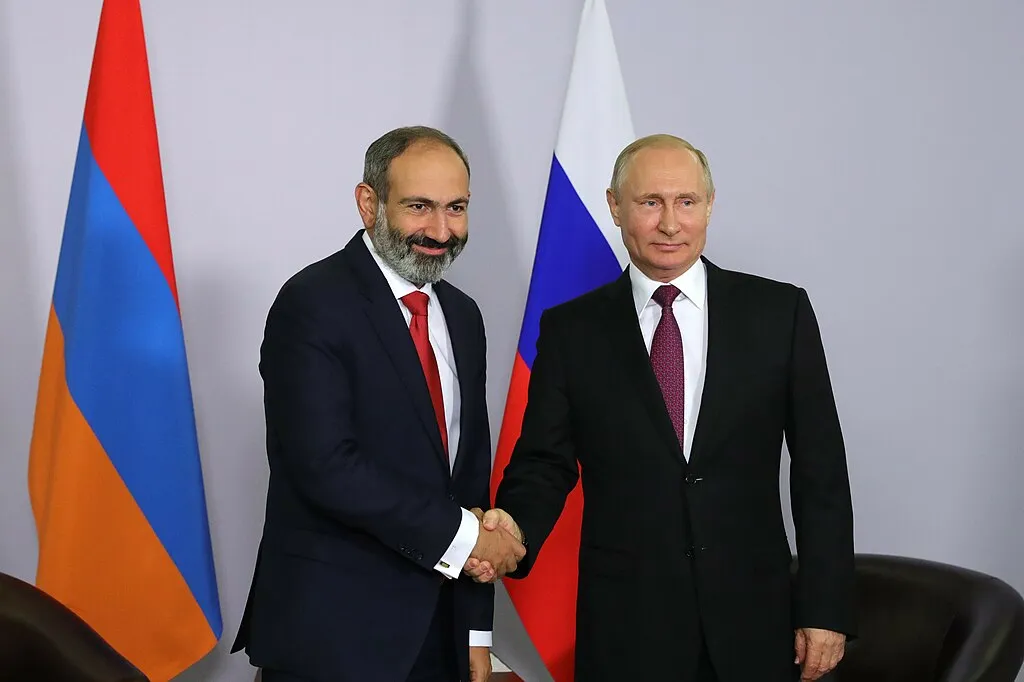
Armenian Prime Minister Nikol Pashinyan shakes hands with Russian President Vladimir Putin in front of Armenian and Russian flags during a bilateral meeting.

Russia began delegitimizing Armenia's election within hours of Nikol Pashinyan's 8 June 2026 victory. The Institute for the Study of War said so in its 9 June assessment. ISW identified three coordinated false narratives advanced by Russian government officials and pro-Kremlin commentators since the result.

One narrative claims Pashinyan "lost" because Civil Contract took less than 50% of the vote. A second says the election unfolded under Western pressure and domestic opposition suppression. A third alleges mass electoral fraud. ISW wrote that Moscow "continues spreading false narratives of stolen elections in post-Soviet states when those results do not favor Russian interests."

The narratives ISW found in Armenia's election

Foreign Ministry spokeswoman Maria Zakharova led Moscow's reaction to Armenia's election on 8 June. She alleged the vote unfolded under "unprecedented pressure on the opposition and interference from the West, primarily the EU." Zakharova said Civil Contract "did not receive a monopoly on power." The campaign featured "harsh repression" of opposition activists and attacks on the Armenian Apostolic Church, The Armenian Mirror-Spectator reported.

Kremlin spokesman Dmitry Peskov declined to congratulate Pashinyan. He told reporters Moscow is "waiting for the final results" and "recording numerous irregularities." The Central Election Commission's final tally put Civil Contract at 49.81%—727,160 votes. That left Samvel Karapetyan's pro-Russian "Strong Armenia" a distant second at 23.29%, Al Jazeera reported. Turnout topped 58%.

The Moldova precedent ISW cites

ISW pointed to Maia Sandu's 2024 Moldovan presidential victory as the direct precedent. The think tank wrote that Moscow had alleged "election fraud, suppression of opposition, and 'illegitimate' results." The Kremlin suggested "Sandu's victory materialized only after counting Western diaspora ballots," ISW added.

Sandu's Party of Action and Solidarity went on to win 50.14% in the September 2025 parliamentary vote anyway. Moldovan Prime Minister Dorin Recean said the Kremlin spent approximately €200 million on the 2024 cycle. That equals nearly 1% of Moldova's GDP, Reuters reported.

Economic coercion runs alongside the narrative

ISW also flagged a parallel economic threat. On 8 June, the head of the Federal Agency for Fisheries, Ilya Shestakov, warned at the St Petersburg International Economic Forum. He vowed "further steps will certainly follow" against Armenian exports if "veterinary risks" arise, Kyiv Post reported.

The warning compounded restrictions imposed since May on Armenian mineral water, alcohol, flowers, fruits, vegetables, and fish. ISW described the move as economic punishment for Armenia "distancing itself from Russia." That distancing is precisely what Armenia's election ratified — Pashinyan's government has reduced participation in the Russia-led CSTO and reoriented Civil Contract's policies toward the EU.

Why Armenians stuck with Pashinyan

8 June 2026 at 20:10

YEREVAN, Armenia — The best of a bad lot was how many Armenians described victorious Prime Minister Nikol Pashinyan ahead of Sunday's pivotal election — the first since the bitter defeat in the Nagorno-Karabakh conflict with neighboring Azerbaijan.

While the election has frequently been framed outside Armenia as

Putin warned former Soviet republic of “Ukrainian scenario” over EU ties. Its pro-EU party wins elections with 49.81% anyway

8 June 2026 at 08:29

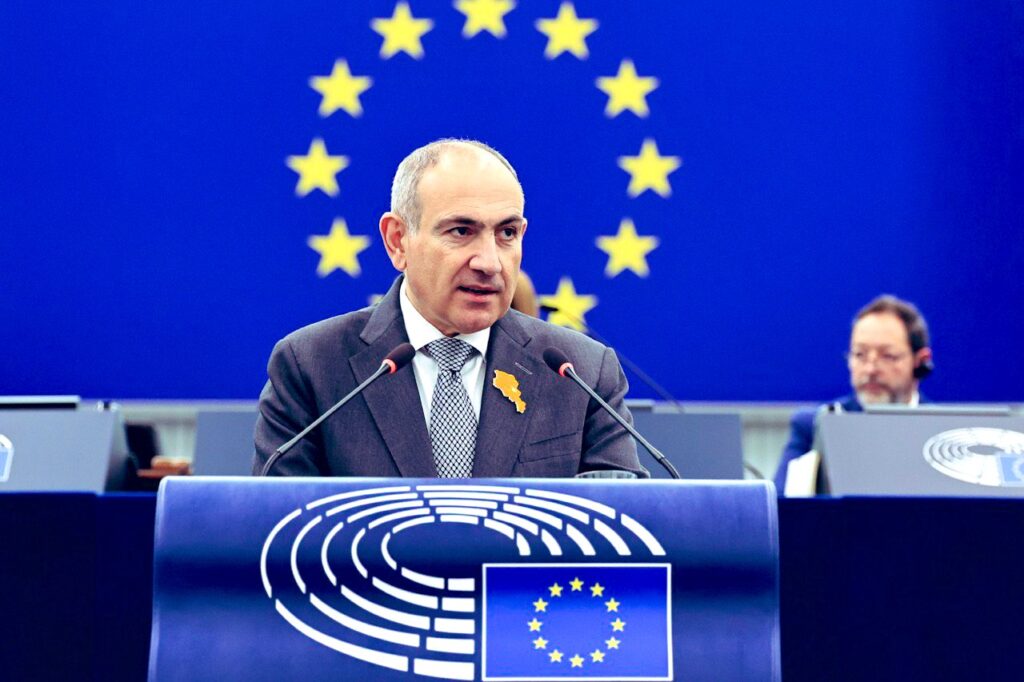
Armenian Prime Minister Nikol Pashinyan delivering a speech at the European Parliament. Source: NikolPashinyan X

Armenian Prime Minister Nikol Pashinyan's pro-EU Civil Contract party has won the country's parliamentary elections with 49.81% of the vote. The result came despite pro-Russian opposition and Russian electoral pressure, with 100% of ballots processed, according to News.am and the Central Election Commission. 

The victory is a clear public endorsement of Pashinyan's turn toward European integration and away from the post-Soviet Russian sphere — a turn that has placed Armenia, like Ukraine before it, in the position of a former Soviet republic actively choosing the EU over Moscow's preferred order.

Previously, Russian President Vladimir Putin warned Armenia of a "Ukrainian scenario" over its EU push at the recent EAEU summit. 

Vote breakdown

Four political forces enter the new Armenian parliament. Pashinyan's Civil Contract leads with 49.81%, followed by Samvel Karapetyan's pro-Russian "Strong Armenia" alliance at 23.29%, the "Armenia" electoral bloc at 9.94%, and the Prosperous Armenia party as the fourth force in parliament.

Karapetyan, a Russian-Armenian oligarch and founder of the Tashir Group, ran on a platform to restore closer ties with Moscow.

Post-Soviet context and EU push

Armenia, a former Soviet republic that gained independence in 1991, has been a member of the Russian-led Collective Security Treaty Organization (CSTO) and the Eurasian Economic Union (EAEU).

The relationship cooled sharply after the 2023 Azerbaijani military operation that ended Armenian control of Nagorno-Karabakh, with Yerevan accusing Russia and its CSTO of failing to deliver promised security guarantees.

Pashinyan's government has since suspended Armenia's participation in CSTO meetings, signed a bilateral strategic partnership charter with the US, and accelerated EU integration efforts.

The EU announced a €50 million support package for Armenia on 4 June, days before the election.

Russia's response and "Ukrainian scenario"

Putin's "Ukrainian scenario" warning, delivered at the EAEU summit shortly before the election, was a direct threat that Russia would consider treating Yerevan's EU pivot the way Moscow has treated Ukraine's: economic pressure, hybrid operations, military threats.

Despite both, Armenia voted for Pashinyan and the EU path by a roughly two-to-one margin over the largest pro-Russian alternative.

❌