Normal view

Algarve: Chapéus-de-sol dividem banhistas e concessionários e Polícia Marítima já teve que intervir – SIC

Antes do arranque oficial da época balnear, instalou-se a confusão nas praias do Algarve, tendo em conta que enquanto em algumas já se permite chapéus de sol em frente das concessões, outras, como a de Monte Gordo, mantêm a proibição. Repetem-se os conflitos com os banhistas e até a Polícia Marítima já foi chamada a intervir, como é referido na reportagem da SIC.

A confusão começa cedo na Praia de Monte Gordo, no momento de abrir o chapéu de sol. Quem pensava que já não havia limitação descobre que tem mesmo de ir para outro sítio.

Em causa está a ideia de que não há lei que impeça colocar o chapéu de sol em frente da concessão. As declarações do presidente da Agência Portuguesa do Ambiente (APA) ainda não tiveram impacto na sinalética da praia.

No vazio, cada praia parece encontrar uma forma de reagir. Se na Galé, em Albufeira, os chapéus já se instalam onde antes lhes era vedado, Vila Real de Santo António mantém a proibição.

Os concessionários e o município estão unidos contra qualquer mudança. Alegam questões de segurança e temem, dizem, a “selva”.

Há, claro, outro impacto temido sobre quem paga atualmente cerca de 20 euros para estar numa concessão. Para já, aqui, vão mantendo a vista desafogada.

Cineteatro Louletano apresenta dança, música, teatro e cinema em junho e julho

O Cineteatro Louletano apresenta em junho uma programação que cruza dança, música, teatro e cinema, mantendo a aposta na coprodução artística, na diversidade de linguagens e na acessibilidade, com Língua Gestual Portuguesa e Audiodescrição.

O mês arranca com dança a 5 de junho, às 21h00, no Cineteatro Louletano, com C.C. (Crematística e Contraforça), peça da coreógrafa Vera Mantero. Esta coprodução do Cineteatro Louletano propõe uma reflexão coreográfica e performativa em torno das relações entre economia, poder e corpo, numa criação assinada por uma das mais relevantes figuras da dança contemporânea portuguesa.

Nos dias 6 e 7 de junho, o Auditório do Solar da Música Nova acolhe a 19.ª edição da Festa do Cinema Italiano, promovida pela Associação Il Sorpasso. No sábado, 6 de junho, existem três sessões, às 16h00, às 19h00 e às 21h00. E no domingo, duas sessões, intercaladas com cine-jantar pelo chef Sergio Zanotti, inspirado no filme “Louca-Mente”, de Paolo Genovese, que é exibido após a refeição.

No dia 9 de junho, às 21h00, o Cineteatro Louletano recebe As Damas da Noite, Uma Farsa de Elmano Sancho. O espetáculo, com interpretação em Língua Gestual Portuguesa, recorre à sátira social imergindo no mundo fascinante e provocador do transformismo. Os artistas transformistas/dragqueens “vestem a pele de um outro, tentam ser um outro”. Elmano mostra-nos o outro que pode existir em nós.

Damas da Noite

No mesmo dia, 9 de junho, às 21h00, o Auditório do Solar da Música Nova acolhe mais uma sessão do ciclo Filme Francês do Mês, promovido pela Alliance Française do Algarve. Desta vez é Fifi, de Paul Saintillan e Jeanne Aslan (2022), uma obra centrada nas relações humanas, juventude e desigualdade social.

A música ocupa lugar de destaque no dia 13 de junho, às 21h00, no Cineteatro Louletano, com a apresentação da ópera Relicário Perpétuo, de Luísa Costa Gomes e Luís Tinoco. A peça, trazida a Loulé pelo Teatro Nacional de São Carlos, estreia em Lisboa três dias antes, no Dia de Portugal e das Comunidades Portuguesas, e assinala os 500 anos do nascimento de Luís de Camões. A criação junta literatura e composição musical contemporânea e é marcada pelo cruzamento entre palavra, memória e património cultural.

No dia 14 de junho, às 17h00, o Cineteatro Louletano recebe Tomás Wallenstein. Conhecido do grande público enquanto músico e compositor como vocalista e guitarrista dos Capitão Fausto, o artista apresenta-se num formato mais intimista, explorando as suas canções com diferentes sonoridades e novas dimensões.

A 19 de junho, às 21h00, sobe ao palco do Cineteatro Louletano Álbum de Família, de Lúcia Pires, pelo Projecto Casa, projeto de apoio à criação tripartido entre o Cineteatro Louletano, o Centro Cultural Vila Flor, em Guimarães, e O Espaço do Tempo, em Montemor-o-Novo. Esta coprodução, com audiodescrição, propõe uma reflexão sobre memória, relações familiares e identidade, através de uma abordagem intimista e contemporânea.

Álbum de Família

A 20 de junho, às 17h00, o Auditório do Solar da Música Nova acolhe o Grupo Síntese – Concerto no Património, numa fusão única entre a expressão musical contemporânea e o património cultural. O grupo traz obras de Luciano Berio, Pedro Rebelo, Eduardo Patriarca, Amilcar Vasques-Dias e Jorge Peixinho, numa iniciativa de entrada gratuita que cruza música e valorização patrimonial (o Solar da Música Nova é um palácio do séc. XVIII, monumento de interesse municipal, que foi recuperado e adaptado para acolher o Conservatório de Música de Loulé – Francisco Rosado).

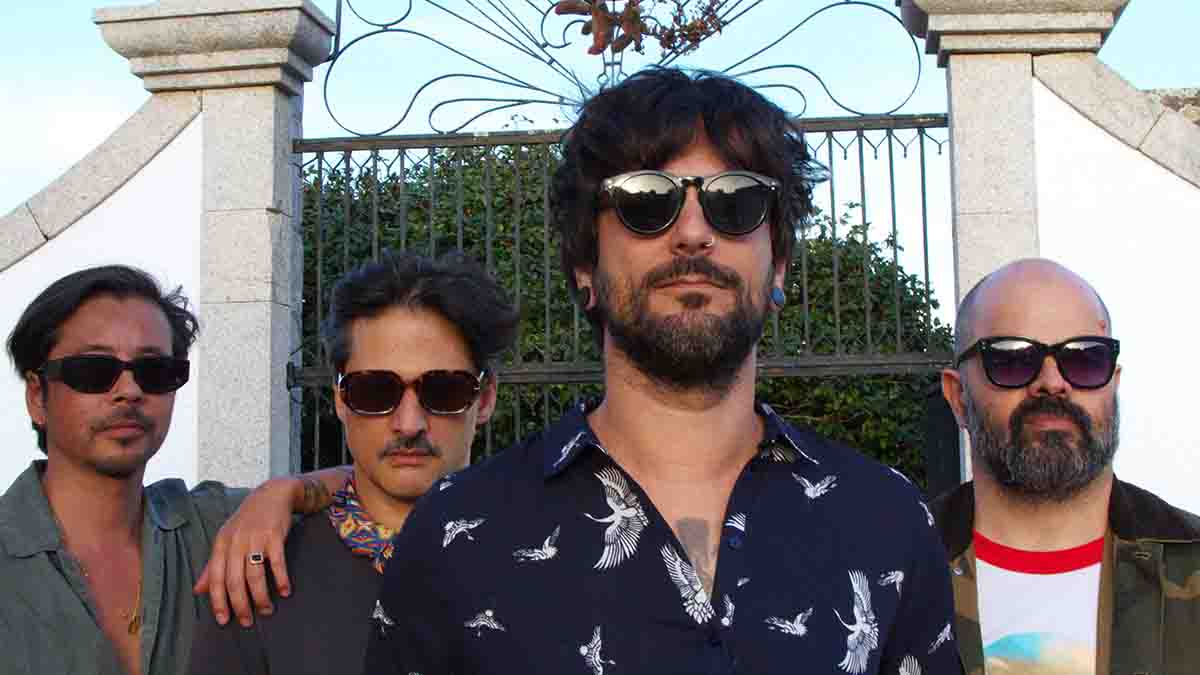
No mesmo dia, às 21h00, os PAUS apresentam-se no Cineteatro Louletano, na tour que decreta o fim da banda, com o álbum “Enterro”. Conhecida pela energia dos seus concertos e pela fusão entre rock, percussão e eletrónica, a banda traz a Loulé um espetáculo marcado pela intensidade sonora e performativa e toda a carga de um final anunciado, que culminará com dois concertos em novembro, em Lisboa e Porto.

O mês fecha a 21 de junho, às 17h00, no Cineteatro Louletano, precisamente com o Concerto de Laureados do Conservatório. O espetáculo reúne jovens músicos distinguidos pela instituição, celebrando o talento emergente e o ensino artístico especializado no concelho.

Já em julho, mais um espetáculo multidisciplinar, com Ostra feliz não faz pérola, de Ana Borges, no dia 4, às 21h00. É uma metáfora sobre a vivência no feminino, construída a partir das muitas imposições históricas, sociais, culturais, de corpo e de existência. A peça, que conta com o recurso de Audiodescrição (para pessoas cegas e/ou com baixa visão) nasce da pesquisa sobre as muitas formas que o corpo encontra para existir, quando por vezes parece não haver espaço que o escute, que o veja, que o olhe mesmo e que o sinta.

Com uma programação de referência (que pode ser consultada no site e nas redes sociais do Cineteatro), o Cineteatro Louletano está credenciado pela Rede de Teatros e Cineteatros Portugueses, integrando ainda a Rede de Teatros com Programação Acessível e proporcionando espetáculos com interpretação em Língua Gestual Portuguesa, outros com Audiodescrição, para pessoas cegas e/ou com deficiência visual, e ainda Sessões Descontraídas, adaptadas a vários públicos, entre eles pessoas neuro divergentes.

O Cineteatro Louletano é uma estrutura cultural da Câmara Municipal de Loulé no domínio das artes performativas, e um dos promotores da Rede Azul – Rede de Teatros do Algarve e da Rede 5 Sentidos.

Polícia Municipal de Lagos tem novo comando

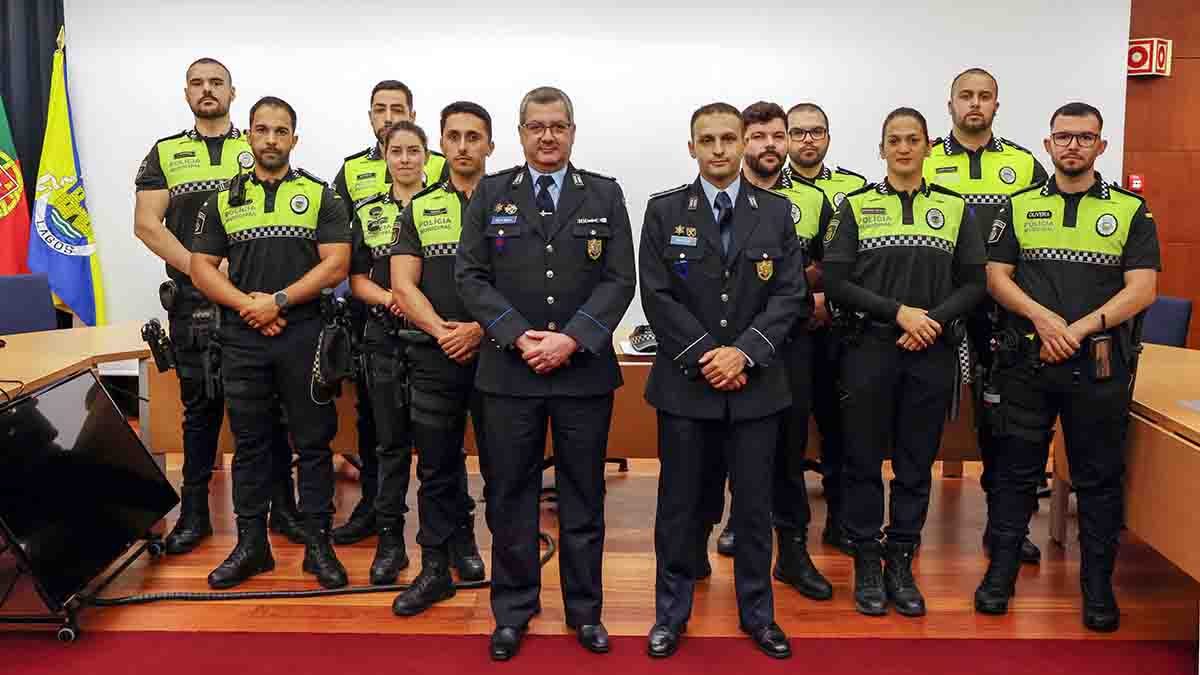
Iniciaram hoje funções na Polícia Municipal de Lagos o comissário Fábio Coelho, como comandante desta polícia administrativa local, e o chefe principal Hélio Jesus, que desempenhará as funções de adjunto de comando. Ambos são provenientes da Polícia de Segurança Pública (PSP) e conhecedores da realidade local. Nesta data iniciou, também, funções mais um agente municipal.

Foi no Auditório do Ed. Paços do Concelho Séc. XXI, perante o executivo municipal, os representantes da Assembleia Municipal, juntas de freguesia, das várias forças de segurança com presença no concelho (PSP, GNR, Brigada de Trânsito da GNR e Polícia Marítima), agentes municipais e elementos da estrutura de apoio, bem como dirigentes municipais, que decorreu a cerimónia de boas-vindas ao novo comando da Polícia Municipal de Lagos e de celebração de contratos.

Um momento cuja importância foi sublinhada pelo presidente da Câmara, que agradeceu a aceitação do convite por parte de Fábio Coelho e Hélio Jesus para o desempenho das funções de comandante e de adjunto de comando, respetivamente. Na sua alocução, Hugo Pereira dirigiu igualmente um agradecimento a todos os níveis de comando da PSP que estiveram envolvidos na indicação destes elementos, incluindo a Divisão Policial de Portimão, o Comando Distrital de Faro e a Direção Nacional, cujo apoio foi exemplar e determinante para a obtenção da autorização que tornou possível este dia, permitindo ultrapassar os constrangimentos temporários decorrentes da vacatura do lugar de comando da Polícia Municipal vividos nas últimas semanas, apenas superados graças ao grande sentido de responsabilidade por parte dos agentes, da estrutura de apoio técnica e administrativa e a supervisão política do vice-presidente da Câmara, Paulo Jorge Reis.

Aproveitando a presença das forças de segurança, o edil lacobrigense solicitou a continuidade da boa articulação que tem existido com as autoridades policiais, reiterando a disponibilidade institucional e política para dotar o corpo de Polícia Municipal dos recursos necessários ao cumprimento da respetiva missão com a dignidade que a mesma merece.

Tomada de posse do novo Comandante da Policia Municipal Fábio Coelho

Identificado o reforço dos recursos humanos – aquela que tem sido a vertente mais difícil de concretizar – como uma das prioridades, Hugo Pereira afirmou que não desistirá de tentar duplicar ou triplicar o número de agentes ao serviço. Para isso o município tem feito apresentações junto das escolas, procurando dar a conhecer a Polícia Municipal e colocar esta opção de possível saída profissional aos alunos finalistas do Ensino Secundário.

Outra prioridade são os meios materiais, salientando, neste caso, as diligências desenvolvidas para dotar a Polícia Municipal de instalações definitivas e mais adequadas. Nesse sentido, o município tem tentando obter a posse das antigas instalações da Guarda Fiscal, situadas na Praça D´Armas, em pleno centro histórico da cidade, cujo edifício está fechado e a degradar-se, sendo que, até ao momento, ainda não foi possível concretizar a compra do imóvel junto da ESTAMO, entidade responsável pela gestão integrada do património imobiliário público.

O presidente da Câmara terminou a sua intervenção dirigindo uma palavra de reconhecimento ao trabalho realizado pelo anterior comandante, Sérgio Remudas, que qualificou de muito exigente, dado que “foi o construir de toda uma estrutura de procedimentos e atuação a partir do zero”.

O comandante Fábio Coelho, por seu turno, agradeceu a confiança depositada nesta nova equipa de comando, constituída por um filho de Lagos – o seu adjunto Hélio de Jesus – e por ele próprio, que foi “adotado” por Lagos em 2014, onde aqui esteve colocado como comandante da Esquadra da PSP durante três anos.

Confiante de estar à altura do desafio, Fábio Coelho acrescentou que a sua primeira atividade será ouvir as entidades, as associações e os próprios agentes municipais, analisar os procedimentos em curso e definir o modelo de policiamento a adotar, sem nunca abdicar de valores inegociáveis como a proximidade, a visibilidade, o humanismo e a pedagogia, sempre em prol do interesse público. Aos agentes, em particular, o comandante reconheceu a exigência das funções – que são difíceis e desgastantes – lembrando o orgulho que estes devem sentir por estarem ao serviço da comunidade e manifestando todo o seu apoio para os ouvir e defender.

Tomada de posse do novo Comandante da Policia Municipal Fábio Coelho

A Polícia Municipal de Lagos foi constituída em 2019, com a ratificação do regulamento da Polícia Municipal de Lagos em Conselho de Ministros, e entrou em funcionamento, em 2021, estando instalada provisoriamente no edifício dos Antigos Paços do Concelho, na Praça Gil Eanes.

Atualmente tem ao seu serviço dez agentes, um corpo técnico e administrativo de apoio e ao comando o comissário Fábio José Marques Coelho, agora em comissão de serviço como comandante municipal de polícia, o qual será coadjuvado por Hélio Manuel Guerreiro de Jesus, chefe principal da PSP, em comissão de serviço como adjunto de comando, posto que estava previsto na estrutura, mas até agora ainda não tinha sido preenchido.

Conselho Regional da CCDR Algarve reuniu e elegeu os representantes ao Conselho Económico e Social

Na reunião foi debatida a execução dos principais instrumentos de desenvolvimento regional

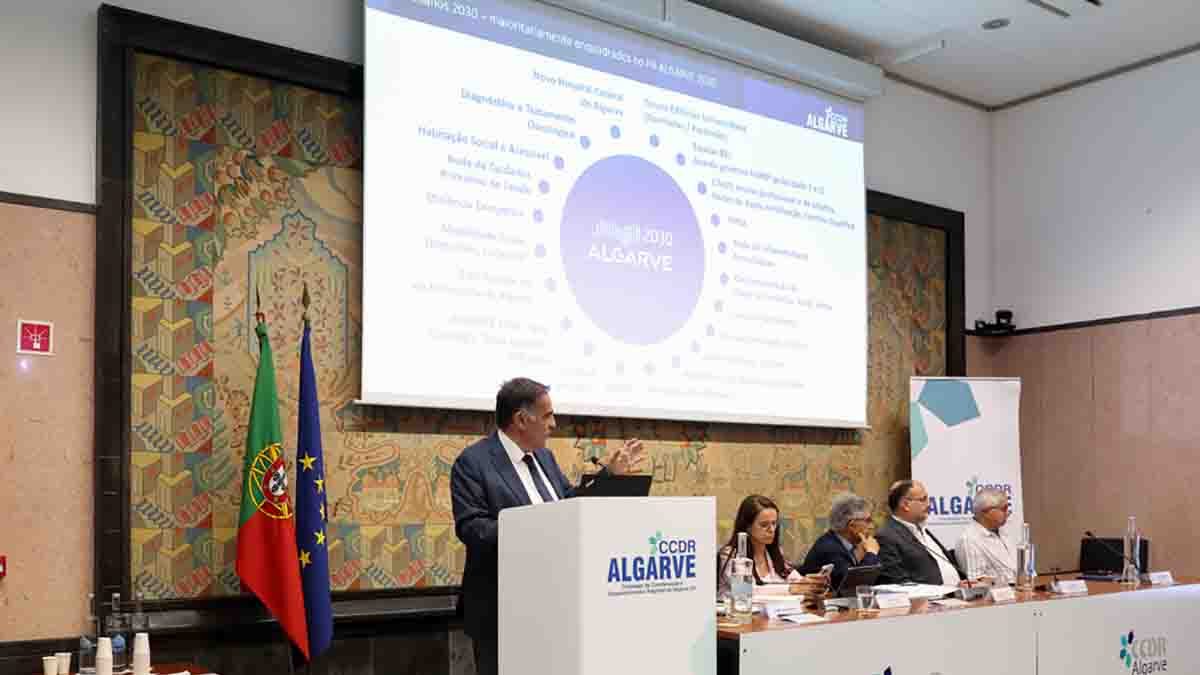
O Conselho Regional da CCDR Algarve reuniu no passado dia 29 de maio, no Auditório David Assoreira, em Faro, para analisar um conjunto de matérias estratégicas para o desenvolvimento da região, com destaque para o ordenamento do território, a execução do Plano de Recuperação e Resiliência (PRR) e do Programa Regional Algarve 2030, a integração das novas áreas setoriais e a dinamização do Conselho Regional da CCDR Algarve, bem como a representação regional no Conselho Económico e Social (CES).

Na abertura dos trabalhos, o Presidente do Conselho Regional, Adriano Pimpão, salientou a importância da reunião enquanto momento de acompanhamento das principais políticas públicas com impacto no Algarve e de articulação entre os diversos agentes institucionais da região.

No âmbito do ordenamento do território, o Vice-Presidente da CCDR, Jorge Botelho, destacou a deliberação do Conselho Diretivo da CCDR do passado dia 25 de Maio, na qual foi decidido dar prioridade ao processo de revisão do PROT Algarve e a sua conversão em programa regional, anunciando a deliberação de avançar de imediato com o Relatório do Estado do Ordenamento do Território (REOT), tendo ainda feito o ponto de situação dos processos de revisão dos Planos Diretores Municipais dos municípios algarvios.

A intervenção destacou o papel destes instrumentos de planeamento no desenvolvimento sustentável do território e na resposta aos desafios associados à habitação, à competitividade regional, à coesão social e à criação do emprego bem como ao papel essências das autarquias e das entidades regionais, nos contributos a dar, em prol do desenvolvimento do Algarve.

José Apolinário usando da palavra

Seguidamente, o Presidente da CCDR Algarve, José Apolinário, apresentou informação atualizada sobre a execução dos investimentos do Plano de Recuperação e Resiliência no Algarve e sobre a execução do Programa Regional Algarve 2030, com particular enfoque no cumprimento da regra N+3 e na necessidade de assegurar a superação dos exigentes níveis de execução dos fundos europeus.

Na sua intervenção, destacou os investimentos em curso e a importância da articulação entre os instrumentos de financiamento disponíveis para reforçar a coesão territorial e a competitividade regional, apelando ao foco na execução dentro dos prazos.

Cristiano Cabrita na sua intervenção

O Vice-Presidente da CCDR Algarve, Cristiano Cabrita, apresentou o estado de implementação da integração das novas áreas setoriais na CCDR Algarve, processo que ganhou novo impulso com a recente publicação dos Estatutos da instituição. Destacou o objetivo de reforçar a capacidade de coordenação regional e promover uma atuação mais integrada das políticas públicas no território.

Posteriormente passou-se à eleição do representante das autarquias locais do Algarve no Conselho Económico e Social, nos termos da Lei n.º 108/91, de 17 de agosto. Na sequência da votação realizada pelos membros do Conselho Regional, sendo os representantes autarcas, por proposta do Presidente da AMAL, António Miguel Pina, foieleita a lista composta por Hugo Pereira, Presidente da Câmara Municipal de Lagos, como representante efetivo, e por Filomena Sintra, Presidente da Câmara Municipal de Castro Marim, como representante suplente.

Hugo Pereira e Filomena Sintra

A representação agora eleita assegurará a participação do Algarve no Conselho Económico e Social, órgão constitucional de consulta e concertação no domínio das políticas económicas e sociais, assegurando a presença e a capacidade de intervenção da região nos processos de decisão estratégica de âmbito nacional.

Ao longo da reunião, os membros do Conselho Regional participaram ativamente no debate dos diversos temas apresentados, contribuindo para a reflexão sobre os principais desafios e oportunidades que se colocam ao Algarve.

“Uma Estrela nos Palcos e na Vida”: livro sobre Maria Barroso lançado em Almada

O livro de Luísa Ducla Soares “Quem foi Maria Barroso?” destinado ao público infantojuvenil, integra as comemorações dos centenários dos nascimentos de Maria Barroso e de Mário Soares e será apresentado perante alunos do 1º ciclo. O filho João Soares e a presidente da Câmara Municipal de Almada, Inês de Medeiros, irão intervir no lançamento do livro que responde à questão que faz o título da obra.

O livro “Maria Barroso: Uma Estrela nos Palcos e na Vida” tem o objetivo de tornar a política, atriz e antiga primeira-dama conhecida do público juvenil. Da autoria de Luísa Ducla Soares, e com ilustrações de Susana Carvalhinhos, o livro “chama a atenção para a qualidade da intervenção política, cívica e artística de uma figura que foi ao longo de toda a sua vida uma permanente fonte de inspiração para as mulheres portugueses”, afirma Isabel Alçada, da Comissão dos Centenários de Mário Soares e de Maria Barroso (ver link com PDF do livro em anexo).

Seja como artista, atriz e leitora de poesia, como lutadora pela liberdade, como diretora do Colégio Moderno ou como mulher de Mário Soares, Maria Barroso distinguiu-se sempre pela forma como se empenhou na promoção da paz, da democracia e da cultura”, afirma Isabel Alçada, escritora e antiga ministra da Educação. “Tendo sido um apoio fundamental para a carreira política de Mário Soares, Maria Barroso teve sempre uma vida profissional e uma vida política próprias”.

Segundo a nota chegada ao diariOnline Região Sul, o lançamento do livro integra as comemorações dos centenários dos nascimentos de Maria Barroso e de Mário Soares, antigo primeiro-ministro, Presidente da República e fundador do PS.

O livro “Maria Barroso: Uma Estrela nos Palcos e na Vida” vai ser apresentado na Casa dos Zagallos, em Almada, na segunda-feira, 1 de junho, pelas 11:30 horas. Na apresentação irão participar duas turmas do 1.º ciclo da Escola Básica Elias Garcia. A sessão contará com intervenções de Isabel Alçada e da autora do livro, Luísa Ducla Soares, que conversará com os alunos.

Haverá também uma intervenção de João Soares, filho de Maria Barroso, e o encerramento será feito pela presidente da Câmara Municipal de Almada, Inês de Medeiros.
Eu tive a sorte de conhecer Maria Barroso, de a ter como amiga e gostava muito de a apresentar às crianças e jovens com quem ela estabeleceu sempre uma ligação especial, crescendo entre um rancho de irmãos, tendo filhos e sendo diretora de um colégio”, afirma Luísa Ducla Soares. “Distinguiu-se, entre as mulheres portuguesas, pelo seu talento como atriz, pela coragem na luta pela liberdade, pela entrega à Cruz Vermelha Portuguesa, bem como a outras causas de solidariedade”.

João Soares, filho de Maria Barroso e de Mário Soares, deixa uma nota mais afetiva. “A minha mamã é um amor que aqui está, e estará sempre: lindo e inspirador como ela”, afirma o antigo presidente da Câmara de Lisboa, deputado e eurodeputado. “Uma grande mãe, uma grande mulher, uma grande avó, uma grande portuguesa. Um exemplo vivo, e para sempre.

Isabel Alçada sublinha a prioridade de dar a conhecer às crianças duas figuras tão centrais na mudança da ditadura para a democracia em Portugal, no século XX, como Maria Barroso e Mário Soares. “Se há alguém que se distinguiu ao longo de toda a sua vida pelo combate pela igualdade de género, foi Maria Barroso”, afirma a responsável da Comissão dos Centenários. “O livro da Luísa Ducla Soares é uma obra notável para que os jovens possam ter contacto com esta referência cívica e política do nosso país”.

Albufeira decidiu Taça de Portugal de Andebol em Cadeira de Rodas

O Académico FC/APD Porto Sobre Rodas conquistou pelo terceiro ano consecutivo, a Taça de Portugal de Andebol em Cadeira de Rodas ACR4, cuja Final Four da competição realizou-se este sábado, no Pavilhão Desportivo dos Olhos de Água, e juntou em Albufeira os melhores conjuntos a nível nacional. Após a partida final, o presidente da Câmara Municipal de Albufeira, Rui Cristina, destacou a importância do “Desporto enquanto fator de inclusão”.

Uma celebração do desporto, da inclusão e da superação. Foi assim no passado sábado, altura em que Albufeira recebeu a Final Four da Taça de Portugal de Andebol em Cadeira de Rodas ACR4. A competição reuniu cerca de 70 atletas, e terminou com a vitória do Académico FC/APD Porto Sobre Rodas.

No jogo decisivo, o conjunto da Invicta superiorizou-se ao CNS/CaixiDuarte, com uma vitória por 2-0. Na partida de atribuição da medalha de bronze, o APD Figueira Foz/Os Coxos viria a triunfar por 2-1, perante o CPSB Messines.

A competição trouxe até Albufeira as melhores equipas nacionais da modalidade, que tem vindo a crescer de forma sustentada nos últimos anos. A Prova Rainha foi o culminar de uma época longa, e contou com uma assistência composta por centenas de pessoas ao longo das várias partidas.

Na cerimónia de entrega de prémios, o presidente da Câmara Municipal de Albufeira realçou o “espírito de superação dos atletas em competição, que provam que é possível ultrapassar todas as limitações”. Rui Cristina admitiu também que, “o acolhimento de provas de desporto adaptado é uma consequência natural de, em Albufeira, o desporto ser visto como um fator de inclusão”.

A Final Four da Taça de Portugal de Andebol em Cadeira de Rodas inseriu-se na programação oficial “Albufeira Cidade Europeia do Desporto 2026”.

Natação: Algarve Open Masters uma aposta ganha com sucesso desportivo e humano

Loulé recebeu cerca de 250 atletas num fim de semana memorável para a natação masters

O Algarve Open Masters Verão / Campeonato Regional de Masters 2026 confirmou todas as expectativas e afirmou-se como um dos mais relevantes eventos da natação masters nacional, reunindo em Loulé cerca de 250 atletas ao longo do passado fim de semana.

A competição ficou marcada não apenas pela expressiva participação de nadadores oriundos de diversos pontos do país, mas sobretudo pelo elevadíssimo nível competitivo demonstrado em todas as provas. Ao longo dos dois dias de competição foram estabelecidos dezenas de recordes regionais e vários recordes nacionais, demonstrando a qualidade desportiva dos atletas presentes e o prestígio crescente da competição.

Na classificação coletiva final, o destaque foi para o Louletano Desportos Clube, vencedor da competição com 5.732 pontos, seguido pelo Lagoa Académico Clube, com 4.590 pontos, e pelo Portinado – Associação de Natação de Portimão, que completou o pódio com 2.723 pontos. Estes resultados refletem o excelente trabalho desenvolvido pelos clubes participantes e o elevado nível competitivo que marcou toda a competição.

Para além da vertente competitiva, o Algarve Open Masters destacou-se também pelo ambiente de convívio e amizade que caracteriza o movimento masters. Um dos momentos mais marcantes do evento aconteceu no domingo, durante o almoço-convívio que reuniu atletas, dirigentes, treinadores, árbitros e voluntários num ambiente de grande partilha, reforçando os laços de companheirismo e amizade que tornam esta modalidade tão especial.

A organização expressa um agradecimento muito especial à Câmara Municipal de Loulé e às Juntas de Freguesia de São Clemente e de São Sebastião, cujo apoio foi fundamental para a concretização deste evento.

Uma palavra igualmente sentida de reconhecimento é dirigida a todos os patrocinadores e parceiros que acreditaram neste projeto e contribuíram decisivamente para o seu sucesso. Sem o seu apoio, não teria sido possível proporcionar uma experiência desta dimensão e qualidade aos participantes.

O objetivo da organização passa agora por consolidar e fazer crescer o Algarve Open Masters, transformando-o num evento de referência nacional, capaz de atrair cada vez mais atletas e clubes, mantendo sempre presentes os valores da amizade, do respeito, da superação e do companheirismo.

Este evento mostrou-nos que quando sonhamos é possível criar, em conjunto, coisas maravilhosas. Foi claramente uma aposta ganha e esperamos que no próximo ano possamos contar com ainda mais atletas. A todos os que tornaram possível este evento – patrocinadores, clubes, atletas, árbitros, voluntários e entidades parceiras – deixo o meu mais sincero obrigado. Obrigado por acreditarem neste projeto e por contribuírem para tornar este fim de semana verdadeiramente inesquecível“, afirma Fábio Bota, presidente da Associação de Natação do Algarve.

O sucesso alcançado nesta edição reforça a confiança da organização para continuar a trabalhar no crescimento do Algarve Open Masters, elevando cada vez mais a qualidade da competição e fortalecendo o espírito de união que caracteriza a comunidade masters.

Crianças de Odemira recebem ‘Kit – Tempo para Brincar’ entregue pela autarquia

O Município de Odemira assinalou o Dia Mundial da Criança, celebrado a 1 de junho, com a entrega do “Kit – Tempo para Brincar” às crianças do ensino pré-escolar e do 1.º ciclo do ensino básico da rede pública do concelho.

A iniciativa abrange cerca de 1523 crianças, distribuídas por 28 grupos do pré-escolar e 52 turmas do 1.º ciclo, e pretende reforçar a importância do brincar no contexto escolar, através da disponibilização de materiais lúdicos e pedagógicos para uso coletivo nos recreios.

A iniciativa integra o Projeto Recrear – Tempo para Brincar e está alinhada com o Projeto Educativo Municipal OdeTE 2.0, bem como com os princípios da Carta das Cidades Educadoras e da Convenção sobre os Direitos da Criança, que consagra o direito ao lazer e à brincadeira.

Cada kit é acompanhado por um conjunto de desafios criativos, incentivando as crianças a explorarem os jogos de forma livre, colaborativa e imaginativa, promovendo competências sociais, motoras e cognitivas.

A entrega simbólica dos kits decorreu junto dos alunos representantes do Jardim de Infância e da Escola do 1.º Ciclo de Odemira, na presença da Vereadora Raquel Silva. Para a vereadora com o pelouro da Educação da Câmara de Odemira, esta iniciativa visa “proporcionar momentos de alegria, partilha e aprendizagem”, destacando que “brincar é uma das formas mais genuínas e enriquecedoras de aprender”.

Atleta Gerson Baldé recebido na Câmara Municipal de Albufeira por Rui Cristina

O atleta natural de Albufeira, Gerson Baldé, que se sagrou recentemente Campeão do Mundo de Salto em Comprimento, com um salto que definiu o novo recorde nacional, foi no passado sábado recebido pelo presidente da Câmara Municipal, no edifício dos Paços do Concelho, em cuja ocasião, Rui Cristina salientou a magnitude de “um feito notável que orgulha todos os albufeirenses”.

Foi à sexta e última tentativa que Gerson Baldé conseguiu saltar 8,46m, cuja marca ficou para a história do atletismo nacional, e deu ao atleta natural de Albufeira o título de campeão do mundo de salto em comprimento.

O Campeonato do Mundo de Atletismo em pista curta decorreu no passado mês de março, na cidade polaca de Torum. Ao longo da competição, Gerson Baldé superiorizou-se ao italiano Mattia Furlani e ao búlgaro Bozhidar Sarâboyukov. Com a melhor marca do ano, o atleta português viria então a conquistar a posição mais alta do pódio.

O feito alcançado por Gerson Baldé foi reconhecido pelo presidente da Câmara Municipal de Albufeira. Este sábado, Rui Cristina recebeu o atleta nos Paços do Concelho, e felicitou-o pelo “feito notável que orgulha todos os albufeirenses”.

Espírito de campeão que permitiu alcançar a melhor marca da prova no último suspiro”, e agradeceu a Gerson Baldé por “elevar o nome de Albufeira além-fronteiras, e contribuir para o prestígio internacional do nosso concelho“, destacou Rui Cristina.

Esta receção é prova do reconhecimento de todos os albufeirenses por uma conquista merecida e fruto do trabalho desenvolvido ao longo de vários anos”, acrescentou o edil albufeirense.

Programa de Educação e Proteção Ambiental da EMARP celebra as crianças todos os dias

No Dia Mundial da Criança, a Empresa Municipal de Águas e Resíduos de Portimão (EMARP) realizou uma iniciativa na Escola EB1 do Alto do Alfarrobal, que envolveu 66 crianças. A atividade teve como principal dinâmica o Jogo Gigante sobre os resíduos, uma atividade lúdico-pedagógica que desafia os participantes (peões) a aprender mais sobre os tipos de resíduos e as melhores práticas ambientais.

Para assinalar a ocasião, todas as crianças receberam uma t-shirt, um caderno de atividades e uma garrafa de água reutilizável, promovendo a continuidade da aprendizagem ambiental além do contexto escolar.

Nesta data tão especial a EMARP reforça a importância das crianças como principal inspiração e razão de ser do Programa de Educação e Proteção Ambiental (PEPA), uma iniciativa que, desde 2024, tem contribuído para a formação de cidadãos mais conscientes, participativos e comprometidos com a preservação do ambiente.

Através do PEPA, a empresa promove mensalmente cerca de 35 ações de sensibilização ambiental junto da comunidade escolar do concelho, abordando temas como a água, os resíduos, a economia circular e a proteção dos recursos naturais. O programa procura despertar desde cedo comportamentos responsáveis e sustentáveis, incentivando as crianças a tornarem-se agentes de mudança nas suas famílias e comunidades.

Porque educar para a sustentabilidade é investir no futuro, o PEPA da EMARP continuará a colocar as crianças no centro da sua missão, contribuindo para a construção de uma comunidade mais responsável e ambientalmente consciente.

Why are there so many toxic disasters in the US right now?

An aerial of water being sprayed on large storage tanks at the GKN Aerospace facility on Sunday, May 24, 2026, in Garden Grove, CA. Kayla Bartkowski / Los Angeles Times via Getty Images

What the hell is going on with all these toxic disasters in the news?

Over the past week, we’ve had a terrifying crisis at the GKN Aerospace facility in Garden Grove, CA, involving a pressurized tank of toxic chemicals on the verge of spilling or exploding for days and the evacuation of 50 thousand people in Orange County.

At the same time, right up the road in LA, we had a spill of thousands of gallons of crude oil that got into the LA River  

Then, news broke of the horrifying tank rupture and explosion at the Nippon Dynawave paper mill in Longview, Washington, involving hundreds of thousands of gallons of toxic liquid and 11 workers who were killed

People have been asking me all week, “What the hell is going on?” And that’s because I’m a professional editor and an award-winning journalist who’s been covering toxic disasters like this for years. Also, I’m from Orange County, and my family lives in Garden Grove, about 10 minutes from the GKN Aerospace facility, so I’ve been watching all of this very closely. 

If you haven’t been obsessively investigating these kinds of stories like I have, the recent rapid-fire bombardment of headlines can make it seem like all these toxic disasters are coming out of nowhere. An explosion here, a toxic spill there, a fire there. “Why is this happening? And what the hell do we do?” 

So, right off the bat, the most important thing to understand is that this is not all just happening now. It’s been happening, and most of the time you just haven’t been hearing about it

Did you hear about the toxic explosion and fire at the Smitty’s Supply facility in Roseland, Louisiana in August? 

Did you hear about the toxic Biolab fire in Conyers, Georgia the year before that? 

How about the toxic lithium battery fire at the Moss Landing Energy Storage Facility in California?

I promise you, this is just the tip of the iceberg…

All the craziness this week actually gives me extreme deja vu that goes back to the first toxic disaster I covered while it was unfolding: The 2023 Norfolk Southern train derailment and chemical disaster in the small town of East Palestine, Ohio

From the train derailment itself to the disastrous and unnecessary decision three days later to empty five rail cars’ worth of toxic vinyl chloride and set it on fire—releasing a massive black death plume into the air and exposing communities for miles to deadly toxins—that story was so horrific and unbelievable that it drew the attention of the public and the media, and then the public and the media started noticing that more train derailments were happening all over the place. 

And it felt then exactly then like it does now. People were rightly asking, “What the hell is happening? Is the sky falling? Is this all part of some big conspiracy or what?” 

But because I had been interviewing so many railroad workers, I knew the reality that the US averages over 1,000 train derailments a year. Which is a big problem, but it’s not a problem the media had covered much before East Palestine, so when they finally did start covering derailments, it felt like it was all happening suddenly and it was all coming out of nowhere.

But, again, because I’ve spoken to railroad workers across the industry, I also knew that this is part of a larger problem that is the result of decades of deregulation, corporate consolidation, and ruthless, profit-seeking, cost-cutting railroad executives and their Wall Street shareholders destroying the rail industry and our supply chain so they could rake in record profits. Cutting jobs, year after year. Piling more work onto fewer workers and working them to the bone. Making the trains longer, heavier, and more unwieldy. Automating human jobs and removing layers of security designed to keep workers safe and the communities those trains are blazing through safe as well. 

This all comes down to these companies obsessively trying to lower their operating ratios, year after year, and sacrificing long-term safety for short-term profits. 

Don’t forget that, throughout 2022, railroad workers were preparing to go on strike for the first time in decades, and they were warning me and anyone who would listen that, if these greedy rail giants and Wall Street bloodsuckers weren’t reined in, it was only a matter of time before a deadly catastrophe happened on the rails. Then, President Joe Biden and both parties in Congress conspired to break the potential rail strike in early December of 2022, workers had contracts shoved down their throats, and nothing on the rails fundamentally changed. Then, two months later, the derailment in East Palestine happened.

There are two really important lessons here that we need to learn to understand what’s happening now, in 2026, with these toxic disasters around the country. 

First, like with the train derailments, there is a similar dynamic going on here where a high-profile disaster has people and the media just paying more attention to these things now. 

As a journalist who covers these kinds of disasters year round, all over the country, in red states and blue states, in cities and rural areas, I can tell you that: These disasters aren’t just starting now and they’re not freak accidents coming out of nowhere. And if you think you’re safe and far away from the danger, I have some bad news for you… 

You may be living in or near a “sacrifice zone” and not even know it. You could be breathing in toxic exhaust from nearby factories and trash incinerators, your pipes may have lead that’s poisoning you, your local water supplies may be contaminated by runoff from industrial plants, nuclear facilities, fracking operations, coal mines, landfills, massive industrial farms and concentrated animal feeding operations. A truck or train or ship, operated by exhausted and exploited workers and hauling hazardous chemicals, could crash by your home. A military base or government-owned plant could be polluting your body and blood with PFAS/PFOS or radiation. Or a giant damn data center could be moving to your town. 

Again, this shit is everywhere.

And if you’re only seeing this in Democrat or Republican terms, if you’re only looking at the headlines and not the history behind these toxic disasters, then you are not gonna see the full picture here. This is not a red state or a blue state problem, this is a working-class problem. Corporations and the government are turning more of America into one giant “sacrifice zone,” and more of us are being set up for sacrifice than we realize.  

Just like with the corporate behemoths and Wall Street vultures who destroyed the railroad system with the help of their bought-off politicians in both parties, the crisis we’re in now developed over time.  And while every toxic disaster is different, I often feel like I’m investigating a serial killer because I hear the same stories coming from different disaster zones around the country. 

And if I had to name that killer, its name would be: Profit. Specifically, it’s our political and economic system that prioritizes private profits over the public good and working people’s lives. 

That has been the driving force behind decades of policy measures to deregulate industries, corrupt the very government agencies that are supposed to regulate them, defang the penalties for polluting our community, and disempower the workers and local residents affected by them so they can’t do anything about it. And, of course, that is the driving force behind all these greedy executives and Wall Street shareholders across industries obsessively cutting costs while simultaneously speeding up production, ignoring safety protocols and removing safety measures, and almost always choosing short-term profits over long-term investments in safer facilities, stronger worker protections, and less outdated equipment until and unless a catastrophe happens

Basically, all this dangerous, life-threatening, environmentally hazardous stuff has ended up all around us, and it’s all gotten less safe, over many years of corporations and politicians “fucking around” for their own gain at our expense. Now, America is in the “find out” stage, and working people are the ones getting stuck with the toxic bill.

💾

"If you’re only seeing this in Democrat or Republican terms, if you’re only looking at the headlines and not the history behind these toxic disasters, then you are not gonna see the full picture here.

Richard Wolff: Europe and the US at the crossroads, then and now

1 June 2026 at 19:45
The USA and the EU flags are side by side prior a group photo at the end of an EU Trade Ministers meeting in the Europa building the EU Council headquarter on November 21, 2025 in Brussels, Belgium. Photo by Thierry Monasse/Getty Images

This story originally appeared in Professor Richard Wolff’s Substack on May 21, 2026. It is shared here with permission.

By the end of World War 2 in Europe, that continent’s extremely violent self-destruction had killed tens of millions and wrecked many economies. Its politically dominant employer classes had driven their national governments to a clash that had produced those results. By 1945 the war’s outcome had proved far worse than many in those classes had imagined or wanted before the war. Europeans had struggled after 1917/1918 to overcome their self-destruction in World War 1. In the short span between the end of the First and the beginning of the Second World War, Europe destabilized itself via its reparations program, Germany’s staggering inflation, and then global capitalism’s worst ever collapse in 1929. The consequences of those destabilizations ramified across Europe and undermined the League of Nations effort to prevent a second world war.

In 1945, for most Europeans, the greatest urgency attached to recovery from the war. For Europe’s employing classes, more urgent still were defenses against certain immediate threats. Russia’s army had been crucial to defeating the Nazis and to forging Russia’s post-war alliances with Eastern Europe. The mass of the USSR’s military forces, potentially supplemented by those of its new Eastern European allies, struck western Europe’s employer classes as existential threats. After 1945, western Europe’s employer classes smoothly and quickly refocused their hatred from a dead Hitler to the living Stalin and to their nations’ communist parties allied to Stalin.

Western Europe’s employer classes were threatened domestically by communist and socialist political parties whose militants had often led underground anti-fascist or anti-Nazi resistances. Thereby those militants often became broadly popular leaders. Across Europe national communist parties collaborated in various ways with one another (including the powerful Soviet party). Some post-war European heads of state such as France’s Charles de Gaulle included communist party leaders in their governments. In reaction to such developments, Europe’s employer classes quickly became obsessed with the great twin dangers of “communism at home and abroad.”

A parallel development had happened across the Atlantic in the US. There the Great Depression after 1929 had provoked a mass political shift leftward by the US public. Employees in unprecedented numbers had joined industrial unions allied in the Congress of Industrial Organizations (CIO). Tens of thousands joined two socialist parties and one communist party. Because the socialists and communists were often the militants in the CIO’s successful organizing drives across major industries, employers in the US were all the more alarmed by those successes in the 1930s and the 1940s. The CIO, socialist and communist parties also formed a far more powerful coalition within the Democratic Party than they had ever been before 1929.

The alliance between the Democratic Party under Franklin Roosevelt and the CIO-socialist-communist collaborations – the so-called “New Deal” coalition – terrified the employer class. The coalition’s key 1930s achievements included establishing the Social Security system, federal unemployment insurance, the nation’s first minimum wage, and a federal public jobs program that hired many millions of the then unemployed. What terrified the employer class even more was how the New Deal coalition paid for those achievements. It reformed the federal tax system in a sharply progressive direction. Because corporations and the rich were especially taxed, US wealth and income inequalities dropped sharply. Then in the 1940s, the same US government that took huge steps against economic inequality at home allied itself with the Communist Party leadership of the USSR (Stalin) to fight World War 2 against fascism.

By 1945, with the war over and Roosevelt dead, the US employer class had become, like its European counterpart, obsessed with the great twin dangers of “communism at home and abroad.” Parallel obsessions in western Europe and the US converged in a joint plan. Employers and their political supporters and dependents attacked Communist parties everywhere, depicting them as mere agents or dupes of a foreign power, namely the USSR. They demonized the USSR as the epitome of evil, a dark empire threatening democracy, freedom, Judeo-Christian values, religion per se, civil liberties, and so on. A Cold War was declared between the former allies, NATO emerged, and the Warsaw Pact followed as did arms races and geo-political confrontations. The US would lead NATO to “contain the Soviet threat.” The US organized alliances across other continents while locating hundreds of military bases across them. Beyond means of “containment,” the bases marked and enforced a new informal US global empire that replaced much of the old British, French, Dutch, Belgian, Japanese, and other expiring colonialisms.

“Anti-communism” ideologically unified the domestic and international strategies of the employer classes in Europe and the United States. Under that ideological banner, those employer classes mobilized their governments to collaborate with them to destroy national communist parties and the USSR. As global hegemon, the US went further. It demonized socialism and socialist parties by defining and treating them as nearly identical with their communist counterparts. It also used anti-communism as a major ideological weapon to replace formal European and Japanese colonialisms by the informal, US-dominated “rules based international order.”

The US-western Europe connection helped employer classes in both regions to repress or at least weaken their nations’ communist and socialist parties. The US moved very aggressively (as in the Taft-Hartley law of 1947) also to destroy labor unions at home and collaborated with anti-union forces across Europe. Where war-weakened Europe lost its colonies, a strong post-war US could and did rush in to integrate the ex-European colonies into a US empire. The new US empire had to be informal. It had to allow the ex-colonies formal political independence even as it subordinated them to US economic, military, and political dominance across most of Asia, Africa and Latin America. Europe sank into the role of the US’s very junior partner.

The US-western Europe connection brought the US valuable allies against the USSR. Given the military technology of the two world wars – reliance on huge armies fighting across immense terrains – Europe was a land buffer usefully located between the US and the USSR. It provided added protection to the Atlantic ocean’s water buffer. European colonialism had created a genuine world economy that the US could take over. Within that world economy’s particular hierarchy, Europeans were dominant nearly everywhere (except, of course, in the case of Japanese colonialism). Non-Europeans were integrated as subordinated people (economically, politically, culturally). As the Europeans’ formal empires gave way to the US informal empire, colonialist hierarchies persisted with the only real changes occurring at the top. There the civilian and military chiefs of the US (and their delegates) chose, elevated and enriched local elites to direct its informal empire’s development.

The Marshall Plan funded postwar Europe’s recovery in ways that also secured its subordinate role in the new US empire. Funds distributed by the US Central Intelligence Agency since 1947, by the US Endowment for Democracy since 1983, and by other public and private groups supplemented the Marshall money. The advisers who often came with the funds gave Europe’s anti-communist political parties, mass media, labor unions, academic and cultural organizations, many means to use against their domestic enemies. The post-1945 US-western Europe alliance mounted an immense, richly-funded, never ending campaign to shape and control world history. It worked well, overcoming numerous challenges, for 70 years until internal and external forces combined to end it. Now, as the US-western Europe connection dissolves, the contours of its totality and historical significance become clearer.

The relentless rise of China’s economy outgrew the economies of all parts of the US-western Europe alliance over recent decades. China thereby contributed crucially to that alliance’s dissolution. So too has China’s ability simultaneously to forge a new global economic coalition, the BRICS (initially Brazil, Russia, India, China, and South Africa). The BRICS’ establishment and growth (with new members and partners) responded to their felt needs for mutual support and less economic dependence on the US. The BRICS passed a milestone in 2020 (downplayed in Europe and the US) when their aggregate GDP surpassed that of the G7. The former has continued without interruption to outgrow the latter through the present.

The anti-colonialism that inspired the transitions from colonies to independent nations over the last century has survived that transition. It sometimes infuses rebellions against the hegemony of the US. At other times and places it coalesces with religious movements and populist social movements. In these and other ways, it too helps shape changing patterns of global trade and investment. Ex-colonies seek and engage alternatives to trade and investment with former colonial masters in London, Paris, Berlin, etc. They form new economic partnerships with China and increasingly with other BRICS. Increasing competition and lost economic opportunities challenge western Europe, Japan and the US. They also reduce the role of the US dollar as world currency.

The Trump regime represents both the extent of that decline and extreme efforts to stop or at least slow it. Hitting nearly the whole world with tariffs, suddenly and massively without warnings or negotiations, is a desperate act. Offering subsequently to lower initially high tariff rates in exchange for tribute (foreign nations’ commitments to spend and invest $ hundreds of billions in the US) is a blunt, stark, and hostile act. That European Commission President Ursula von der Leyen accepted it is a craven act of Europe’s even more desperate submission. The war on Iran with Israel without consultation or preparation with its European and other allies, coupled with demands for massive, risky support for the US war effort, was also a desperate act. Its goal was to reverse the decline of the US empire; its result was the opposite. The decline accelerated.

The decline, still not admissible publicly in most US politicians’ discourses, nonetheless lurks everywhere in widespread feelings of lost national direction and/or impending social doom. Trump bitterly reproaches former allies like Mexico, Canada, South Korea, Japan, and, above all, western Europe. For example, he rewrites post-1945 history as a story of western Europeans, among others, cheating and abusing the US economy because weak US governments failed to resist and fight back. Trump presents his tariffs as the overdue fight back heroically ending the previous weak governments. Trump was so invested in such political theater situating him as “the strong leader,” that his sudden, rushed tariff program was intolerable even to a Supreme Court he otherwise controls.

Abducting Maduro from Venezuela, the 12-day war on Iran with Israel in June, 2025, and their longer one begun in March, 2026: these are also pieces of the same political theater. They are made-for-the-media distractions: not just from the hovering Epstein scandals or the deeply-troubled inequalities of the domestic US economy, but from the deeper threats of a declining empire. Thus a reaction formation type of neo-colonialism inspires many of Trump’s favorite distractions. So far from admitting decline, those distractions construct a US empire as strong and growing, taking over nations like Venezuela, Cuba, and Iran while planning the same for Panama, Canada, Greenland, Mexico and others. When charged with violating international law and the whole United Nations project, Trump proudly rebrands both actions as bold signs of US strength.

Now again, as in 1945, western Europe and the US find themselves at crossroads. The declining empires then were the Europeans’. Now in 2026 it is the decline of the US empire that has become both the US’s and Europe’s problem. In its desperate moves to slow or stop that decline, the US has turned on its subordinated European partners. That problem and that turning derive from the empire decline shaping this historical moment.

In Trump’s second presidency, he withdrew much of the US’s support for Ukraine in its war with Russia. This not only weakened the Ukrainian side in that war but also left a militarily underdeveloped Europe to rely even more on economic sanctions against Russia. Europe thus lost access to cheap Russian oil and gas. High energy prices resulted, drove up European export prices, and thus damaged its competitiveness. Meanwhile, China’s relentless growth miracle (fast-rising productivity and low inflation) continued its many years of outperforming both Germany’s Wirtschaftswunder and European competitiveness generally. China’s GDP growth far exceeded that of the entire West for the last few decades. Volkswagen’s crisis was so severe it seriously considered the US invitation to move its immense company to the US from Germany. Deindustrialization now deeply disturbs all of Europe’s economies.

The global economy looks increasingly like a great contest between China and the US with Europe increasingly out of the picture or merely a footnote to it. Trump’s massive tariffs on or demands for tribute from Europe combine both abandonments and assaults by the US on its former allies. NATO trembles and faces growing forces of dissolution. Trump demands European nations fund their own defenses in part because the declining US empire needs to enlarge its own military as an offset, Trump hopes, to that decline.

The Europeans are stuck in that metaphorical room whose walls are closing in on them. Their subordination is reflected in their passage from junior partners in US led Coalitions of the Willing to the 2026 Iran war that Spain and Italy have refused to join. Trump openly threatens to leave NATO. The employer classes of Europe are most worried about the combination of no more US-funded defense protection via NATO and the compensatory need to fund expanded European military spending. That will likely mean reducing European spending on its social welfare model of capitalism. Employer classes who do that risk triggering massive opposition from the left (labor unions, socialist, communist and anti-capitalist parties increasingly working together).

So far, Europe’s employer classes have tried to cope with this situation by a quasi-hysterical campaign to demonize Russia as a threat to invade and conquer its European neighbors. Europe’s current, mostly low-in-the-polls heads of state position themselves as great bulwarks against the Russian danger. This strategy aims to justify the increased spending on defense that in turn necessitates reduced government welfare spending. The latter is then rationalized as the whole society’s necessary sacrifice for safety from the Russian demon. The employer classes hope that this way of retaining their wealth, income and power will not be opposed by their working classes as the political issue of our times. The employer classes prefer that the great hyped Russian danger be the political issue.

While the Russian danger discourse might secure Europe’s employer classes a few more years of sitting atop Europe’s wealth and power distributions, it fails to address Europe’s long-term decline. That promises to continue and quite possibly accelerate because little is being done in Europe to directly oppose that continuance. Indeed, the disagreements inside Europe on whether to join the US/Israeli war on Iran coupled with fear of being singled out for retaliations by Trump heightened the competitive pandering among Europeans to curry favor with him. Such divisions have always weakened European unity. Rebuilding that unity is surely a necessary, albeit insufficient, component of any imaginable rescue of Europe from its deepening decline.

The long, uneven, and sometimes frustratingly slow historical shift from capitalist colonialism to today’s anti-imperialism undermined first Europe’s and now the US’s empires. A new crossroads beckons. One way leads toward a new Chinese global empire. Another leads toward a multi-national program of mutual accommodation, a kind of socialism with global characteristics.

Global Smartphone Market Faces Sharpest Decline Since 2013, Analysts Warn

1 June 2026 at 19:27
The global smartphone market is on track to record its most significant annual contraction since 2013, according to a new report from research firm Counterpoint Research. Following a reassessment of market conditions, analysts revised their forecast for 2026. In February, the firm projected a decline of 12.4 percent for the year. The latest estimate now points to a steeper drop of 13.9 percent. Counterpoint Research described the projected downturn as the largest annual decline since it began tracking the smartphone market in 2013.

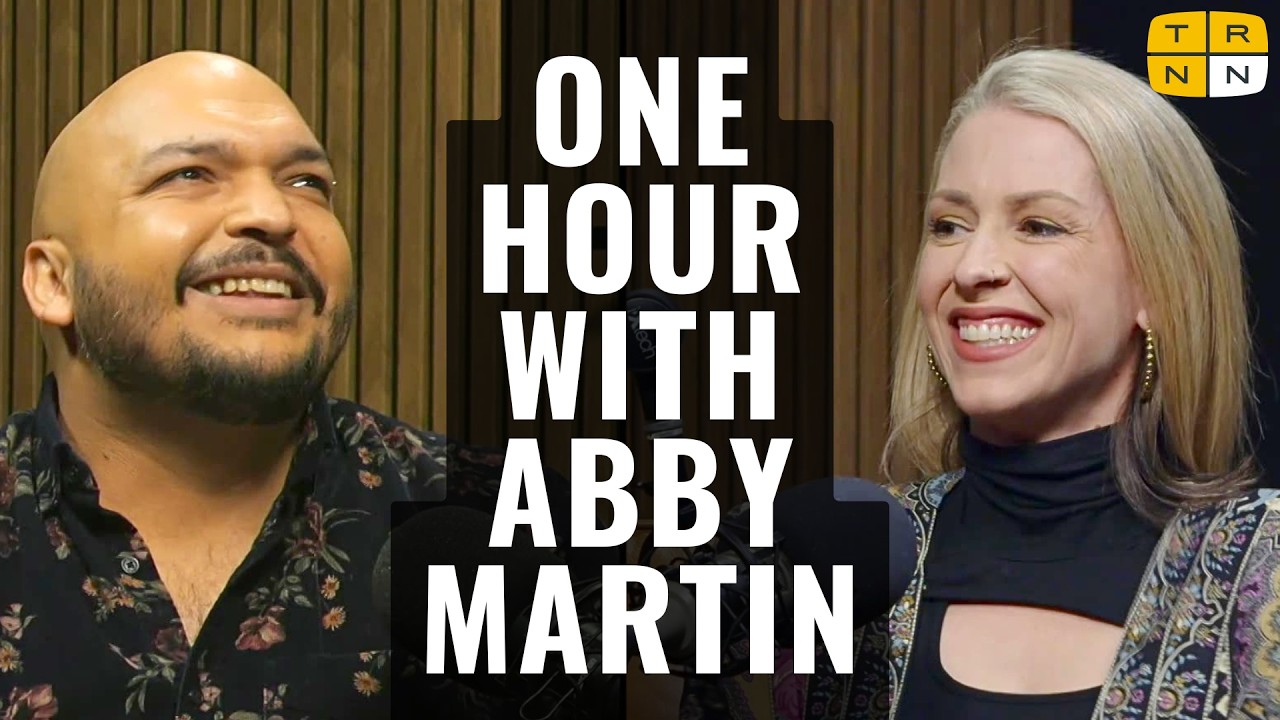
Abby Martin: The US military machine is destroying our planet

Still image of independent journalist and filmmaker Abby Martin speaking into a microphone at the TRNN studio in Baltimore, MD, on Jan. 29, 2026. Credit: TRNN.

We sit down for an hour-long discussion with legendary independent journalist and filmmaker Abby Martin to discuss her new blockbuster documentary, Earth’s Greatest Enemy, and the existential threat that US empire in general—and the US military specifically—poses to humanity and to our planet.

Editor’s Note: This conversation was recorded on Jan. 29, 2026, before the beginning of the illegal US-Israeli War in Iran.

Guests:

Additional links/info:

Credits:

  • Studio Production / Post-Production: David Hebden
Transcript

The following is a rushed transcript and may contain errors. A proofread version will be made available as soon as possible.

Maximillian Alvarez:

We’re here in the Real News Network studio in downtown Baltimore and I could not be more excited to have legendary independent journalist and filmmaker, the one and only Abby Martin here with me in person. Now, some of you may not know this, but Abby is actually a Real News alumnus. And Sister Abby, I know it’s been a minute since you’ve been back here in your old stomping grounds, but I just wanted to start by saying on behalf of the entire team here, welcome back to Baltimore. Congratulations on all the incredible essential work that you’ve done and we are all just so proud of you and so honored to be in this struggle for truth with you.

Abby Martin:

Oh my gosh. Well, the feeling’s more than mutual, Max. I mean, just being here back in the studio just brings me back to just the origins of Empire Files. Being in the Real News studio, working all hours of the night trying to knock out those weekly documentaries. And it was just such a cool crew to be a part of and it’s so amazing to be back.

Maximillian Alvarez:

Well, and what an incredible journey you and the Empire Files have been on since then. And we are of course here today to talk about your blockbuster new documentary, Earth’s Greatest Enemy, which is engrossing, expansive and frankly, terrifying investigation into the existential threat that US Empire in general and the US military specifically pose to humanity and to our planet. Now, I know that this project was years in the making and projects of this magnitude can often start as one thing and then become something much greater by the end of it. And so I wanted to start by asking, what is this documentary? Where did it start and what did it become by the time you and your co-director, Mike Prisner, were finished?

Abby Martin:

Wow. It was a long journey indeed and it was five years in the making, as you mentioned. And it started off during COVID with the birth of our first child and kind of joining our passions together, Mike, as an anti-imperialist, anti-war veteran organizer and me as an anti-war journalist who had been advocating against US imperialism my entire career as an advocacy journalist. So I advocate for issues. I wear my bias on my sleeve and I find it very refreshing in this kind of world of access, journalism and corporate media. And so combining those passions together and wanting to approach a subject that tackles the environmental impact of the military because of our obsession with the future, bringing a child into this world, having the responsibility of basically investing in the future. It is on our shoulders now. We’re all in. And so we saw that statistic kind of floating around that the US military was the largest institutional polluter in the world.

This is something that’s been kind of synthesized in academia when you look at just oil purchases, which the US military hadn’t even really disclosed until relatively recently. And there’s been some scholars who have addressed this in literature and studies, but no one had synthesized it in a cinematic way, certainly in a documentary fashion. But Max, once we got into the subject matter, every stone unturned is another documentary. And so we’re looking at legacy contamination of just radiation Agent Orange and then you look at the expansion of militarism all around the world with these 800 bases. Every base is a story. Every victim is another story. And then you add on top of that just the maintenance of the military arsenal, the actual infrastructure of the US military empire and how the entire thing exists as a self-fulfilling prophecy in order to maintain a fossil fuel infrastructure.

And it’s never been laid bare more with Trump in power with this kind of imperial belligerence when we see Venezuela, Greenland. So the documentary took a life of its own and started catapulting in every which way and kind of made us realize we wanted to prove the thesis here. We wanted to go into it not just talking about emissions, which is one story in itself, which we tackle. We wanted to tackle all of it. We wanted to go into the totality to sit someone down and inject them with the truth and you cannot walk away without having your brain rewired in terms of the way you look at the military in this country.

Maximillian Alvarez:

No, and I could say that as someone who’s watched it and was, like I said, quite terrified by what I was seeing and what you have given us kind of concrete evidence to prove. But I wanted to ask what kind of a monumental struggle that must have been to first research and then visualize the scope and scale of this problem. Could you just talk about that for a little bit?

Abby Martin:

I mean, especially when it comes to emissions, because this is something that’s been very secretive under the pretense of national security and not disclosed by the US military establishment. So it was unearthing so much data accumulated and synthesized by scientists independently to try to calculate these things based on just oil purchases. And then when you extrapolate that out and look at the lifecycle emissions, look at the application of the weaponry, the maintenance of this global supply chain, it totally becomes unquantifiable. And then you wrap into that the actual basically NATO, the machinery of the entire military empire, the great power competition with China, Russia, all of the building up of those arsenals and response to our aggression and belligerence. So it becomes simply unquantifiable and it was so difficult. And Max, at a point in the documentary, we bring in this philosopher and he says something really, really important where he says, number’s numb.

And he gives kind of this take on it’s so hard to get overwhelmed by the existential nature of US imperialism of capitalism because it’s so far reaching and all inclusive and all these issues are interconnected as we’re realizing more and more, but numbers, when you’re just looking at sheer facts and data, data, data, it can numb you. It can become meaningless. And I think we see that psychologically, I think with the genocide going on for three years straight, the data and the numbers become numbing. And so at a certain point it became more about just the storytelling and the emotion and collaging these narratives together to kind of give people that gut punch that it’s not about the numbers. Look, we proved the thesis over and over again, that’s done. But I think what really hits people is seeing how this is you, this is your children.

Your children are those children in Iraq. You are Alex Pretty. You are Renee Goode. You are every one of these victims of US imperialism because it affects every single person on the planet.

Maximillian Alvarez:

And I think back to the days of COVID-19 and when I heard those words in your documentary, Numbers Numb, that was the first thing that came to my head was sort of bearing witness to the monstrous spectacle of the bigger the numbers of people lost to COVID-19 got, the more numb people got to the human lives that were being lost. And I think there really is a terrifying truth there. And again, it speaks to the service that you and Mike Preisner have done in not just compiling what could be compiled in terms of the research numbers and from the emissions of all the military vehicles to the environmental impact of all the explosions and wasted munitions that are blown up or dumped into the ocean. I mean, the list is just so incredibly long and it’s impossible, like you said, to try to quantify it.

But I think what was even more horrifying to learn was that from Bill Clinton to now, all these kind of global US-led climate agreements don’t factor in the US military when they’re talking about our national emissions output.

Abby Martin:

Yeah, exactly. And people do not realize that. I’ve talked to several climate scientists, environmental academics, and they were absolutely flabbergasted at that fact that should be widely known, that militarism, not just US militarism, but every country’s militarism is excluded. Under the Paris Accords, they gave an option to opt in, but of course many countries are like, “Why would I do that? ” It’s not mandatory. Yeah, you know what? So it’s just completely insane and totally a farce that for the last 30 years of these international climate treaties, the US military has led the exemption of all military emissions and it’s gargantuan. It is completely gargantuan and totally hidden from this growing total. And so what’s astonishing to me is that why am I the first person to confront these major politicians at these conferences? Decades in the making, you see this bipartisan consensus for empire and just the acceptance of lying about this, of accepting it as normal and it’s totally outrageous.

And the whole dystopian nature of these climate conferences in general, which real news has covered extensively is just off the charts. I mean, it’s all about corporate profit. It’s all about how can we market this? How can we make money off of it? And then it’s like, well, no wonder you have a contingent of society that’s detaching itself less and less from that consensus reality that climate change is this existential threat that we need to globally cooperate on because simply the opposition to the fascist takeover, they’re not treating it like the emergency it is and they’re not acting accordingly. So it just makes it look like a money making venture and it’s really unfortunate.

Maximillian Alvarez:

Another word might be a racket.

Abby Martin:

Yeah, there you go. Yeah. It’s a goddamn racket. Yep.

Maximillian Alvarez:

There it is. I wanted to ask if you could sort of lay out this double helix death spiral of US wars and military imperialism around the world and like the climate crisis, like how those two things and how you unpack it in this documentary, but like how those two things are intertwined in the most monstrous way.

Abby Martin:

And this goes before obviously World War II with the advent of the war making industry, how because Europe was left in ruins, you had the US kind of concentrating the actual war machinery and that’s where you see the genesis of the war economy being a kind of a permanent footing in the US. It established well before that. I mean, we’re talking about the first extraterritorial military basis that were established through obviously the veins of the genocidal takeover in the first settler colonies here, but those first extraterritorial military bases were to protect extractive industries of fur and mining just to basically … I mean, we almost drove beavers into extinction just so people could have funny hats in Europe and then it became coal. So the first bases that were overseas were to access coal and to basically be infrastructural holding cells for coal. And of course, once the national security priority turned to oil, once oil was discovered and replaced coal, that’s when we saw that just completely combined where oil became the dominant priority for access and expansion.

And then like you said, it became the self-fulfilling prophecy where in order to expand the military, you needed more oil and more resources and then you need to justify the expanse of the military to get more resources. So now this massive empire around the world with 800 bases spread across nearly every continent, it maintains itself through the access to oil, the pillaging of every last vestige of natural resources on the planet. And that’s exactly laid bare with Trump’s rhetoric today. He is literally saying, “We need Greenland.” That is the last basically unbridled wilderness on the planet. I mean, the amount of coal oil and rare earth minerals that are under that ice, they are saying explicitly they need that for their national security interests. And so you just have to read between the lines here. I mean, you don’t even really have to. He’s saying, “We need the oil from Venezuela.

We need the oil from Iran.” That’s what this is about. You had the Bush administration spending about a year trying to propagandize us into complacency with invading a country that had nothing to do with nine eleven just to seize the oil, but they wasted a lot of time to propagandize us, ties with WMDs. And so now this mask is so ripped off where they don’t even need to pretend. They’re just saying explicitly, “We are trying to grab every last drop of oil because that’s ours.” So in a way, it’s an important moment, Max, because for the first time in my life, things are just very laid bare and I feel like people are really putting all of this together in their mind and organizing with that international scope with the US Empire being the machinery that’s oppressing all of us around the planet.

Maximillian Alvarez:

I think you’re right and it really makes me sort of reflect on the conditions that have made that more possible now than it was in the post nine eleven years. And I want to kind of break the fourth wall here and part of this question is going to be me asking if you could talk a bit about how this documentary, Earth’s Greatest Enemy embodies your own trajectory as a political activist, as a journalist, like from the Iraq war to now, because I’ll be honest, we would not be sitting next to each other, 23 years ago. I grew up very conservative. My family and I were totally bought in on the Iraq war propaganda. We were part of the US majority that just felt so hurt, shocked, and aimlessly hurt and shocked after nine eleven and trusted far too much in our own government to sort of tell us what to do next.

It took a lot of years for me to sort of uncouple myself from that conditioning. But at the time, I did not understand the kind of what to me was a left wing talking point of like, why would we be going to war with another country just for oil? What does that mean? And now here I am like nearly 25 years later being like, “Jesus, how could you not see what was right in front of you? ” So I guess first of all, how were you able to see what I was not? And I guess connect us from there to here like how the seeing of the monstrosity that was always there, like how more of us have actually come into the light and seen what we’re actually up against.

Abby Martin:

I think it all goes back to just my love for the environment, my love for nature, my love for humanity. I just really love people and I love connecting on an interpersonal level. I think when you look at this kind of death spiral, as you called it, this machinery of capitalism and the subjugation of the rest of the planet at the barrel of a nuclear armed gun to say subject or die to global capitalism, it is just so counterintuitive to like love, solidarity, having a habitable planet and future. And I never was able to really articulate that capitalism was the problem. I was kind of a confused anarchist, libertarian back when I was first being radicalized by politics, because I thought Bush was evil incarnate. I was just like, “Who the hell are these people? They’re demons. Why are they doing this? ” And then Nancy Pelot and then you slowly kind of unpack.

You’re like, “Hold on, the Democrats are part of this. Hold on. The media is part of this too.” But it was always so obvious to me because of my just repulsion for war. When the media started talking about Iraq, I was so confused, Max. I mean, I think it helped because I was surrounded by militarism at San Diego State University. I was just thrown into this where I was surrounded by military frat bros and I was just so taken aback. I mean, growing up in the Bay Area, so the proximity to Berkeley, the hippies, just that counterculture of the revolutionary fervor of Berkeley, Mario Savo and the free speech steps and things like that. And so that was always baked in, even though I was just kind of like a generic Demo from suburban Pleasanton, California. I think when the Iraq War started and the bombing of Baghdad, I was sitting in the cafeteria at San Diego State University and I felt nauseous.

I felt sick and people around me were cheering and I’ll never forget that moment. I just was like, “What’s going on? I’m so alone. Why people think this is good? This is sick. What did Saddam do to us?” I remember calling my mom, I said, “Did Saddam do something?” And she was like, “No, the media just started talking about this. ” And I just said, “What is happening?” And it was so hard to organize there, but it became so powerful to realize media was a tool to tell these stories because I started watching radical media. We were talking at the time, this was around 2003, it was like Democracy Now and Alex Jones. It was like a very weird … The internet was very strange, but you also had the capacity to do things. I mean, there was this egalitarian sense of the internet that was very exciting where you could build real friendships and find things that were just really like not … It wasn’t fed to you by the algorithm.

And so I was able to pursue so much knowledge and learn and be self-taught and how to do these tools. And so anyway, I’m going on this very long tangent to say it all synthesized for me very obviously, but it is also a journey I think for a lot of people. I’ve met people who are my age who said I didn’t know anything before October 7th, which brings me to your second question. I think October 7th and the genocide in Gaza has been an extremely revealing moment, catalyzing moment for tens of millions of people around the world. And I’m anecdotally, I can say that just traveling across the country with this documentary already going in rural, urban areas, driving everywhere, talking to people, everyone has been motivated by the fact that this government has subsidized and overseen this genocide and how it has been bipartisan and the failure of the so- called opposition and the Democratic Party to stop it and incubate what we now have.

It’s all just so crystal clear and it’s been actually really amazing to see the radicalization occur in circles that I never would’ve expected at all. Older religious people, I mean, but really it’s the youth. It’s the youth who are seen, they don’t have a future if they let this just grow unabated, if they let the data centers take over, they let the unregulated nature of global capitalism take over, unregulated nature of imperialism, which turns inward, which we’re seeing the ICE executions in the street. So I’d say there’s an explosion of consciousness around the world, synthesizing all these issues, putting Palestine as the cornerstone of our collective liberation and realizing how all these things interconnect. And it’s beautiful, Max, because on the streets during the Iraq war, Palestine was too controversial. In the streets were in Occupy Wall Street, Obama was off limits. And so it’s all burgeoning now.

It’s all right beneath the surface and people are so ready to hear that phrase national strike, national strike. They know we’ve been in the streets with sustained protests. I’m an activist and a journalist. Again, I’m an advocacy journalist, so I advocate my own activism and I embed myself in the people’s stories and people’s struggles and try to uplift those stories just as real news does. And so I’m speaking from the streets. I was just in the streets in Minneapolis. I’ve never seen energy like I have now and people standing up in solidarity with their brothers and sisters because they want to terrorize us in a submission and silence and fear and I’m seeing the opposite happen and that’s something extremely powerful and again, kind of incalculable in terms of like what will happen with this energy. It’s very exciting.

Maximillian Alvarez:

It is. And this is a moment in history not to be wasted because it won’t be around forever.

And it also sort of makes me think about like again, what is so different between our moment now in the year of our Lord 2026 and our moment then in the post nine eleven years at the turn of the millennium. And I of course can’t help but think about my own trajectory, my own family, like what has changed in our lives since then? Well, a massive economic global financial meltdown happened. We lost everything that my parents had worked for, including the house that I grew up in and it’s been a very long kind of struggle to get back to a place of peace and normalcy for our entire family since then. And now as someone who goes around interviewing, working people around the country talking about their lives and their stories, I hear a lot of echoes of that similar trajectory for a lot of people.

And I guess that’s just a long-winded way of saying that at the turn of the century when we were as a country much more gung-ho about … Yeah, we have the right as the United States to go around the world telling other countries what to do. We have the right to spread democracy because it’s the best system in the world. We’re liberating people, we’re not doing something bad, yada, yada, yada.That was a time pre 2008 crash when the American dream was still plausible for a lot of us. You go out on the streets now, you talk to people now, no one believes in the American dream. I mean, if a handful of billionaires own everything and all of our money is just being sucked out of the public coffers and into the war industry. And so what I hear now when I go to these demonstrations in Baltimore, DC, what I hear now when I talk to poor and working class people in deep red Trump country districts in the Midwest or the South or here in the Mid-Atlantic, the common refrain that I hear is like, “Why is my money going there when we’re all kind of floundering here?” And I think that that is also a very significant sign of where we are as a country, but also a significant kind of mobilizing factor that presents an opportunity for people to look around and realize we’re all getting screwed by very identifiable villains.

And I wanted to sort of like hook that back into earth’s greatest enemy and ask who are the identifiable villains in this story that you’re telling and how do we take them on?

Abby Martin:

Yeah. I mean, the problem with capitalism and the status quo of neoliberalism is that everything’s been co-opted, superficialized, tokenized, our struggles have been bought and sold back to us. And so for the last 50 years, labor density, unions, that revolutionary undercurrent of all the progressive struggles, it’s been kind of co-opted into these corporate branding and marketing campaigns and it’s been really, really horrific to see because we’re getting back to our footing where people were in the 60s and 70s with this fundamental understanding of ideology and being able to articulate what we are fighting for and against. And so we’re getting back to that. I think Bernie and Democratic socialists of America and things like that have really resurrected the spirit of what we can all kind of orient ourselves around. But for the longest time, Max, I mean, I grew up very anti-communist. I mean, this was very, very baked in to American society because of the history against the ruling class.

And so what you see now is parasitic billionaires who have basically seized that distrust that did exist for exactly the reasons that you’re talking about, the disaffected masses who lost everything during the financial crisis, who knew that we were lied to about nine eleven and in the Iraq war, they don’t trust these people, but Trump was very smart in the way that they seized that momentum and siphoned all of the energy into this faux populism. And again, there was no opposition infrastructure to counteract that. And so a lot of us are kind of flailing saying, “How do we gain ground when they have taken over everything?” And then the Democrats kind of incubated it and laid the groundwork for them to take over everything because they’re basically Republican lights because everything is about making profit at the end of the day. And so I think what we need to do is realize we are all victims of propaganda.

We’re all at different steps of our journey of breaking out of that, but that’s all baked into all of us. And so approaching each other, and I’m not talking about fascists or people who are apologists for genocide. There are certain contingent of society that can’t be helped. They’ve succumbed to the darkness. They’ve been beaten down by the system and they’ve commodified everything. They have lost their empathy. I’m not saying that they’re born like that. I’m just saying that a lot of them can’t be helped right now and we need to let that go. But I think the vast majority of people are empathetic. They’re humanitarians. They want civil liberties. They want the foundation of what they believed America to be, human rights, the First Amendment, free speech, the beautiful things that make this country supposedly great. Those are the people that we need to reach out to with humility and empathy and reaching them where they’re at.

I’m talking about service members. I’m talking about veterans. They are not the enemy. They are victims of the enemy. The enemy is the top brass of the military, the government officials who are complicit in this, who are profiting off of war, who are invested in the war machinery, editors in chief at the New York Times, the Washington Post who are putting out the propaganda that sows the seeds for genocide, who perpetuate the status quo of this death cycle. Earth’s greatest enemy, that was the Biden administration. That was before Trump. That’s the status quo. That’s what we’ve accepted as normal, barreling us off a cliff, killing every last living thing on the planet, a finite planet. It’s collective lunacy and madness to go into this year after year knowing the outcome max. And I think people are so ready. They’re starving for this information. They’re sick of being gaslit and lied to and they’re realizing, “Hey, this is not the reality that I see.

This is not the reality that my neighbor sees.” COVID was very important for the ruling class. We were fighting each other about vaccines, about God knows what while they cannibalized every last industry. They siphoned every last drop of wealth. They pillaged everything. They gained what tripled their wealth in the last five years. And what happened to us atomized, isolated, siloed off, brain rodted on our phones thinking we can’t ever do anything about this. We lost. That’s what they want. Just like Barry Sanders in the movie says, “See what you see. Don’t be duped. See what’s right in front of your face.” And I’m not talking about on your phone, on your screen. I’m talking about in reality, vast majority of people are ready. They’re waiting for you to talk about these things because they don’t have the chance. They don’t have that opportunity or those avenues because Elon Musk wants them to believe something else.

And we have to ask, why is the richest man in the world showing us what he’s showing us? So when we get on our devices, yes, the advent of social media, the advent of Palestinian voices dictating their reality and taking back their agencies, been monumental, revolutionary, assisted to all of this, but we have to also be calculating strategic, creative, getting off of these devices and meeting like we used to because that’s how we win. We don’t win on here. That’s just one tool for us.

Maximillian Alvarez:

I think that’s beautifully and powerfully put and vitally true. And we’re saying this as two media makers, you know, Media personalities. Media can only do so much and we are trying to do as much as we can with it and your new documentary is an incredible example of that. But I could not agree more with your last point that we’re not going to bring a coalition of poor working class regular people banding together to stop the destruction of our society and our planet online.That’s not going to happen.You don’t get 50,000 people marching through the streets of Minneapolis just by posting and sending emails. You have to have that in- person connection, which is all I’m hearing coming from Minneapolis. People are saying I’m both simultaneously more afraid of my government than I’ve ever been, but I’ve never felt safer in my own neighborhood because everyone’s talking to each other and everyone’s kind of working together.

We were already losing that basic infrastructure for society as such well before 2020. But I think COVID really did a number on what was left of our social infrastructure, on our social being. So many of us just stayed closed in, stayed cut off, stayed glued to our phones and our computers. And as you mentioned, the powers that be, the people who control the media, those platforms, they know that and they are manipulating that to the point that no one has an agreed upon basis of the reality that we’re actually all living in because depending on what feed you’re looking at, where you live, what your search history is, you’re going to see an entirely different world be outside your window than the person who’s living next door to you. And

Abby Martin:

That’s a

Maximillian Alvarez:

Very dangerous and dark place to be. But I wanted to kind of hook that back into something else that you said, which was the value of not only talking to service members and military veterans, but that was made manifest in this documentary. I mean, it’s important in and of itself because as you said, they are not the enemy. They are the victims of this monstrous machine. They are the human grist for the proverbial mill of US imperialism. But it also kind of hooks into the beginning of this conversation where we were talking about how hard it is to actually research and understand this topic of just how big of an environmental threat is the US military to the world. And it was so clear to me in your documentary that if you go and try to get answers to those questions from top government officials or military brass, you’re not going to get anywhere.

But when you and Mike Preisner are talking to veterans, the rank and file of the military, you get a very different perspective on the problem. And I wanted to ask if you could talk a little bit about how different that perspective actually is.

Abby Martin:

Okay. So there’s this hive mind that kind of operates in a similar fashion to how a corporate board would. So let’s say someone just has a conscience all of a sudden who’s on the executive board of Amazon or something, they would just be kicked out. You need to make money, you need to make more money than the last quarter, otherwise you’re not profitable. You’re a failing entity. That’s exactly how the US military operates. So when you’re looking at who’s sitting on the board of these board of directors of the defense contractors, they’re all interlocking with the media arms and all of these things. And that kind of explains this hive mind operational structure of a system that kind of works on its own. It doesn’t have a conscience, but of course it’s comprised of people who do and they can speak out and they have voices and they have their own minds, even though you’re beaten down in the military to not have your own mind.

So when you break out of that, when you see it for what it is, it’s such a powerful thing. I know hundreds of service members, because of my husband’s work, obviously, organizing soldiers and getting people out because anyone can get out of the military. It doesn’t need to be something specific. Anyone can file a CO packet and get out today. You never need to stay in and Mike can orient you through that. But it’s just so amazing to see people who are coming to the movie, watching it, who are active duty. My cousin who was a 20-year-old naval officer watched it and he was just like, “You know, because I don’t agree with your politics, but I’m here to support you. ” After the movie, he was just shaking. He’s like, “I’m ready to F and go, dude. I’m ready to fight.” And it’s just reaching people on a human level because I think especially when you reach out to service members, they’re victims, they’re not profiting off of this.

They don’t benefit from this system. They’re cannon fodder. They’re the human detritists that are going to be kicked out in the street like Levon, the homeless veteran at the beginning of the movie. He represents kind of the consequences of the system. I mean, he represents all of the destruction of the environment, the garbage that’s tossed in the ocean, every bullet fragment that’s exploded and the chemical exposure of all the toxins left everywhere that were bombing and shooting shells. And that story alone is so powerful, just one single homeless vet who was in a commercial for the army.

Levon:

First Air Cav Brigade. I was in US Army. I joined up in 2004, deployed out in 2006 and it was hell. I was at Camp Taji, seven miles south of Baghdad. I was one of the “Army of One” commercials. I was a guy with the helicopters.

Army Officer 1:

Everybody listen up. This is Levon.

Wenty:

Hey, Levon. I’m Wenty.

Army Officer 1:

You’re on the 120 today. So if there’s anything you need, just ask these guys. They’ll take care of it. All right?

Army Officer 2:

Welcome aboard.

Levon:

Thank you.

Army Officer 2:

You ever been around anything this fast before?

Levon:

He walks in and goes, “You ever worked around anything this fast before?” Yeah. My last job.

“Army of One” Commercial Narrator:

See how army training gives you strength for now, strength for later. GoArmy.Com.

Levon:

Yeah, it was all a lie. I have nerve damage, so I’m actually losing my hands. So I’m trying to use them as much as I can until they’re all gone. It hurts. It actually hurts. But that’s what the hydraulic fluid in service does. Laughing is the only way I can get through, otherwise I’m crying.

Abby Martin:

It encapsulates everything. It’s like you’re exploited, your story, your body, and then you’re thrown in the trash and you’re left to die with no help. And that’s the thing that veterans need to understand, whether it’s burn pits or agent orange, chemical exposure. There’s no help on the other end under this system. It’s just about churning your body out for profit. You’re just another commodity. And once you realize that you join the fight because you can always get out and you can make your own decisions and agency to realize it’s not worth it. It’s not worth your life. Your life has value and your life has dignity and you need to put it toward benefiting humanity and the planet.

Maximillian Alvarez:

Again, that was very beautifully and powerfully put and it really kind of chills my blood hearing everything that you’re saying because it sounds so eerily familiar from the reporting that I’ve been doing over the past few years starting in the small town of East Palestine, Ohio. And we are having this conversation at the end of January 2026. I’m going to be back in East Palestine next week. It’ll be the three year anniversary since the Norfolk Southern bomb train derailed in these people’s backyards, turned their lives upside down, trained filled with toxic chemicals that in an industry that has been just cut to the bone on the labor side, on the safety side, but is making more profits than it ever has. And who benefits from that? The shareholders and the executives. Who bears the costs of that? The workers on the rails and the people in towns like East Palestine, Ohio.

And this is an entire region that has been poisoned by industrial or corporate profit seeking greed and government complicity and negligence. Our own EPA was telling people there, “You’re fine. It’s okay to go back home. The air’s safe. The water’s safe.” And here they are three years later telling me people are getting all kinds of weird cancers. People have to leave because they can’t stay in their homes without getting nosebleeds, rashes, their kids bleeding out of every orifice. It is a shit show, a monstrous shit show that is sadly not unique to Ohio. What I have learned going to different sacrifice zones so called around the country, talking to different poor and working class people here in South Baltimore, down in Georgia near the biolab fire that happened last year, moss landing like in California, this is everywhere and people are being poisoned and abandoned in the exact same way that you just described as like military veterans and the people living abroad who are if not killed by our munitions are poisoned by them for years and the rest of their lives.

So all of that is here at home as much as it is there abroad. And frankly, I don’t think your average American knows that when it comes to like sites of industrial and mass pollution here in the United States, the biggest portion of super fun sites that come from one source is the Department of Defense. It’s like military bases. It’s weapons manufacturing plants. It’s the kind of foam that they use to put out fires that puts forever chemicals in the water that we’re all drinking. And so I wanted to kind of bring it back home for a second and ask if you could talk about the vast environmental kind of impact that the war machine is having on Americans and like how that connects to the imperial monster of American militarism abroad.

Abby Martin:

You look at just legacy contamination of what the US did during the Cold War, during World War II. I mean, you even still see dead zones from World War I from small munitions, which just kind of shows you how detrimental these are in just training. I mean, even just training alone, like you mentioned forever chemicals. I mean, the firefighting foam that’s used extensively by the military. The military is one of the most pervasive users of PFAS contamination. There are safe alternatives there have been forever, but they just don’t use them because it’s, I guess, less cost effective and they’d rather just dump them all and contaminate water supplies. So people may know peripherally about Camp Lejeune, which is the worst water contamination event in US history. This is now a super fun site, Camp Lejeune, North Carolina military base where they dumped toxic compounds for decades.

And after they knew that it was toxic, they continued to do it and cover it up. And so a million people were poisoned harmed by this toxic dumping and there was a huge amount of poisoned infants that were stillborn babies. And what was most shocking about this, Max, is this could be looked at as like, “Oh, it’s just a 60 year old story. The government took care of everyone and they’ll never do it again.” Maybe they just didn’t know any better. Well, it’s amazing to think that now 60 years later, people are still dying. They have ailments, they’re generational and physically impaired from the toxic water contamination and there’s no database. They are trying to try every single individual claim and the judge said it would take over a century to try to actually give all of these people what they deserve. And of course a lot of them have died.

They’re just waiting for all them to die off so they just don’t have to deal with them anymore. But I think it really just explains how they deal with victims of burn pits, with victims of aging orange poisoning. They deny, they deny, they deny. They try to just resist doling out even a penny for the victims and then the site is left destroyed. I mean, it’s a super fun site. This is just a poison toxic site that doesn’t go through proper remediation. There are hundreds of them all across the US. Like you said, the vast majority are either US military installations or have previously housed military uses. So bullet manufacturing, you have the Hanford nuclear site, which is like a ticking time bomb that can poison three states at once in the entire river that supplies water to half the country. So these are serious problems that are not being dealt with because we don’t have a functional government that is going around saying, “Hey, how do we do this clean up properly?” No, no, no.

We’re just going to commit fraud. We’re just going to lie. Governors don’t want the black spot on their record by saying, “We have a super fund site. We need to clean it up. We need to divert resources.” They’d rather ignore it. And of course, the military is sacred. It’s worshiped so they don’t even want to combat it. In on amazing instance, Jay Inslee, who was the governor, previous governor of Washington who ran on climate change as his entire doctrine, he wouldn’t even criticize the military. He wouldn’t even answer a basic question on should these be included or not in emissions reporting. I mean, the cowardice is frankly horrifying and disgusting.

It’s so far reaching here. When you put legacy contamination aside, just again, the maintenance of the arsenal here at home. We have hundreds of bases here in the US. Every base is dumping forever chemicals in the ground. Every base has contamination. Some of them much higher than Camp Lejeune. We talked to a person who is testing the groundwater around bases in the US. He is saying he is finding ground contamination higher than Camp Lejeune. Why don’t we hear about this, Max? Why? This is the most base level big tent ever for a human being. Clean water, clean air, clean food. If we can’t build an opposition or an organizational infrastructure around that, what are we doing? What are we doing? So again, it’s this total ignorance, total ignorance of the military being actually not a benevolent force spreading democracy and human rights. A force for profit that is destructive, deadly, totally dissociated from human life, the sanctity of life.

It’s willing to kill everything and everyone on the planet. So Jeff Bezos can have another yacht. Is it worth it? Hell no, it’s not. Hell no, it’s not. And so this just brings it all home and especially with ICE, because at the end of the movie we talk about the militarization of the police. So that concept of the imperial boomerang, I mean, of course it’s always been our tactics of colonialism, genocide. They’ve always been circling back, right? But I think the visceral nature of it now where we see storm troopers masked, immunized in the streets, state executioners in military guard where you can’t even distinguish, is this Palestine? Is this here? What am I looking at? It’s here, baby. It’s here to roost. And so I don’t even … There’s no difference anymore. I think for a long time people were trying to convince people, “Hey, no, no, you should care about Palestine.

This is all going to come back up. And you shouldn’t care about it because eventually it’s going to come back home. You should care about it because it’s human life. It’s human life and it’s on our shoulders. This is our government doing this. ” But I think especially now people are saying, “Oh my God, it’s here. It’s here and we’re all of our liberations intrinsically tied to one another.” And I think it’s becoming so, so clear. And especially when you tie in the environment, Max, because it’s not just one life loss, this is the air, this is the water, this is our planet and it doesn’t stop with Palestine. It doesn’t stop with the Congo, the rainforest, it’s the lungs of the planet. Every drop of water comes back and that’s what’s so crucial about the collaborative nature of approaching this existential crisis is that instead we have the great power competition where we’re fighting, we’re preparing a war with China when we should be cooperating.

How can we approach these together to actually give us a fighting chance?

Maximillian Alvarez:

I want to kind of end on that powerful note, right? Because as much fire as I’m feeling in my belly thinking about our collective duty

To respond to this moment in history for humanity, for life on this planet, for our children, our grandchildren, all of it. I am feeling more called to this fight than ever before at the same time that I, like everyone else who’s watching this right now am feeling more distraught about the state of things in the world right now and it seems like we just have a brick on the gas pedal careening in the exact wrong direction, not only in terms of tackling the climate crisis, but in that double helix fashion, like stopping the US war machine, Jesus, we’re only in the first month of 2026 and we’ve invaded Venezuela, kidnapped its president. US is talking about just going in and taking Greenland, invading Iran. It feels like the very monster that you photograph and document and detail in this documentary is on a murderous planet destroying rampage.

I know a lot of people out there are feeling like, “Oh my God, this can’t be stopped.” But I want to end on the note that it can

Abby Martin:

And

Maximillian Alvarez:

It must and what tools your documentary gives us to help make that a reality.

Abby Martin:

I think this is very important. Like we said, see what you see, don’t be duped. So see what you see, meaning the success stories, the things that the billionaire class does not want us to see the victories across the country, the mobilizations, the coalescing these movements, the burgeoning of consciousness. I mean, I always say empire, Zionism, it’s a paper tiger and that’s why the propaganda is so desperate and that’s why the violence is so extreme because the colonizer mind cannot beat a liberated on. They can kill. They can kill and destroy, but they can’t win. They can’t be victorious. And all an empire knows is that every problem is a nail. And so the more that they dig their own graves, the more people wake up, the question is, are we going to wake up fast enough? And I think that when we see success stories like last year, Max 35 data centers got stopped in the US, where is that on the news?

So it’s us seeking out the things that can actually reinvigorate our revolutionary spirit energy and not get despawned and paralyzed with the sheer, terrifying nature of it all because it is overwhelming. And again, it’s intentional to berate and barrage our minds like this. They’ve psychologically, it’s a psychic assault. It’s a physical assault. It’s an all body, all mind assault and they know exactly how to manipulate us. If they’ve learned anything from the last mass uprising, it’s that. And so I think having that consciousness, yes, they’ve wanted to individualize everything and that’s the whole problem with liberalism, capitalism, individualizing our struggles and the solution. Papers, straws, driving … Look, and I have solar panels. I’m a militant composter. You don’t get a shred of food past me. Ask my husband, but it doesn’t mean that I don’t understand who is the perpetrator, who’s actually at fault.

It’s not us, it’s them. And so while you need to act in your individual choices with whatever capacity you have, with whatever talents you have, build and guide that to the struggle, because if it didn’t matter what you said online, they wouldn’t be spending billions of dollars on propaganda to manipulate and curate our realities. If it didn’t matter what you did out there, they wouldn’t be spending billions of dollars on storm troopers to terrorize us and to make us feel scared to walk out of our houses, obey or die, comply or die, right? That’s what they said about Alex Pretty. You should have stayed inside. No, we have the right to assert our liberties. We have the right to do these things. So to kind of reclaim reality is like a revolutionary act in itself because it is a war on our minds. That’s the first step, joining an organization, getting out there, being a part of the community.

Because Max, we don’t do this. We don’t do this work because we know we’re going to win tomorrow. We do it because we have to. Like Chris Hedges said, we fight fascists because they’re fascists. We have to fight it because we brought children in this world and not just that, because I love this planet. I want my children to go scuba diving in Noko Bay. I want them to meet the Tugong. I don’t want him to think that I gave up because I just succumbed to the darkness. I want them to know that we fought till the end. And so we have to. We do it because we have to because we love life and we do it to preserve life and we win when we know that we can because guess what? We have the power. We have billions of people on this planet and the rest of the world is ready to go.

They’re waiting for Americans. They’re looking at us saying, “It’s time. It’s time for you guys to wake up because we don’t want our planet destroyed because if you’re out of control government and military empire.” So as crazy and dystopian as things may seem, and yes, indeed they are, there is an alternative path that is becoming more and more urgent by the day and I think people are realizing that more and more, that the status quo is death, that you’re in or out and I think a lot more people are choosing life. They’re choosing to be all in organizationally lending whatever they can to the struggle because we have to Max and I think once that consciousness flips, mass education, of course, is a very important tool. That’s why we do what we do. Once that flips, it’s going to happen quick. Occupy happened quick. That was amazing.

That was one thing that I was like, “This is going to end in a couple days.” And it lasted for months and months. That was beautiful, revolutionary. And we took that spirit and I think it still carries on with us today and we’re waiting for that moment and I think it’s really right around the corner. It’s coming. And once it’s here, it’s unstoppable and we need millions of people, civil disobedience, nonviolent civil disobedience, because we cannot fight the military empire with violence. We can’t fight it with military might. We shut down capital. That’s the language these people speak. We haven’t even tried to strike, but baby, when we do it, that’s going to send shockwaves through the world and we can move mountains when we stop business as usual.

💾

“The rest of the world is ready to go. They're waiting for Americans. They're looking at us and saying, ‘It's time for you guys to wake up, because we don't want our planet destroyed [by] your out-of-control government and military empire."

Mucosite: um efeito secundário frequente no tratamento do cancro que exige atenção e prevenção

1 June 2026 at 17:30

Os tratamentos utilizados no combate ao cancro, como a quimioterapia, a imunoterapia e a radioterapia, sobretudo quando aplicados na região da cabeça e pescoço, podem provocar vários efeitos secundários. Um dos mais frequentes e debilitantes é a mucosite, uma inflamação da mucosa da boca e da garganta que pode afetar os lábios, as gengivas e outras estruturas da cavidade oral.

A mucosite é considerada um dos efeitos secundários com maior impacto na qualidade de vida das pessoas em tratamento oncológico.

Nem todos os medicamentos utilizados no tratamento do cancro provocam mucosite, mas trata-se de um sintoma relativamente comum, que exige vigilância, prevenção e intervenção precoce.

Geralmente, o doente apresenta irritação da mucosa e úlceras semelhantes a aftas, que podem causar dor intensa ao mastigar, engolir ou mesmo ao beber líquidos.

A dor e o desconforto dificultam a alimentação e a fala, afetando não só o bem-estar físico, como o emocional do doente.

Apesar de existirem tratamentos para a mucosite, a prevenção continua a ser uma das estratégias mais eficazes. Manter uma boa higiene oral é fundamental, com escovagem dos dentes após as refeições e antes de dormir, utilizando uma escova de cerdas macias e uma pasta de dentes adequada para dentes sensíveis.

O uso de elixires sem álcool para bochechar após as refeições ajuda a manter a boca limpa, enquanto a hidratação dos lábios e da mucosa oral é essencial. Evitar o tabaco é igualmente recomendado, pois o fumo agrava a irritação da mucosa e atrasa a cicatrização.

Quando a mucosite já está presente, a alimentação deve ser adaptada para reduzir o desconforto e garantir uma nutrição adequada. Alimentos cremosos e fáceis de mastigar e engolir, como sopas, purés, batidos, fruta cozida, gelatinas, arroz e massa bem cozidos, bem como carne e peixe desfiados ou triturados, são opções a considerar.

Sul Informação

Os alimentos devem ser ingeridos à temperatura ambiente, evitando temperaturas muito quentes ou muito frias, e as refeições devem ser fracionadas ao longo do dia, com pequenas quantidades ingeridas várias vezes. A ingestão de água, entre 1,5 e 2 litros por dia, é fundamental, podendo ser consumida em pequenos goles durante as refeições para facilitar a deglutição. Em alguns casos, e se o tratamento permitir, a aplicação de frio na mucosa, como gelo ou gelados, pode aliviar a dor.

Por outro lado, devem ser evitados alimentos secos ou ásperos, como torradas, tostas, frutos secos e bolachas, bem como alimentos salgados, ácidos, cítricos ou muito condimentados. Bebidas alcoólicas, gaseificadas e com cafeína, como café e chá preto, também podem agravar a irritação da mucosa e devem ser reduzidas ou evitadas.

Nos últimos anos, o uso de produtos naturais na prevenção e no tratamento da mucosite tem sido alvo de investigação científica. O mel tem demonstrado resultados promissores, com evidência de redução da dor e da gravidade das lesões. Outros produtos naturais, como camomila, própolis, cúrcuma e aloe vera, apresentam algumas evidências de eficácia, mas ainda necessitam de mais estudos antes de serem integrados de forma sistemática na prática clínica.

É fundamental que os doentes informem a sua equipa de saúde ao primeiro sinal de mucosite oral. Para além das medidas de higiene, alimentação e cuidados gerais, pode ser necessária medicação específica para aliviar os sintomas e prevenir complicações.

A deteção precoce e o acompanhamento adequado permitem reduzir o impacto da mucosite, melhorar a qualidade de vida e garantir a continuidade dos tratamentos oncológicos com maior segurança e conforto.

Sul Informação
Gostou do que leu? Ajude-nos a continuar!
 
O nosso compromisso é levar até si notícias rigorosas, relevantes e próximas da sua comunidade. Para continuarmos a fazer o que fazemos, precisamos do seu apoio. Qualquer donativo, por mais pequeno que seja, faz a diferença e ajuda a garantir a continuidade deste projeto. Juntos, mantemos a informação viva no Algarve e no Alentejo.
Obrigado por fazer parte desta missão!
Contribua aqui!

O conteúdo Mucosite: um efeito secundário frequente no tratamento do cancro que exige atenção e prevenção aparece primeiro em Sul Informação.

Mercadinho de velharias e antiguidades anima domingo em Querença

1 June 2026 at 17:07

A Junta de Freguesia de Querença vai organizar no próximo domingo, dia 7 de Junho, o Mercadinho Relíquias de Querença, no polidesportivo local.

Para além das velharias e antiguidades, o evento contará também com artesanato local, sabores regionais e animação de rua.

A iniciativa realiza-se no Polidesportivo de Querença, entre as 8h00 e as 13h00, com entrada livre.

A Cooperativa QRER vai marcar presença neste evento, com um espaço dedicado à divulgação do seu trabalho e dos seus cooperadores.

Sul Informação

O conteúdo Mercadinho de velharias e antiguidades anima domingo em Querença aparece primeiro em Sul Informação.

Noah Monteiro luta pela liderança no regresso da F4 Espanha ao Autódromo do Algarve

1 June 2026 at 16:52

O Autódromo Internacional do Algarve recebe, no próximo fim-de-semana (6 e 7 de Junho), aquela que é a segunda ronda da competitiva F4 Espanha, um dos principais campeonatos escola para os pilotos que procuram encontram o caminho para a Fórmula 1.

Com 35 jovens pilotos inscritos e cinco corridas no programa algarvio, a série reconhecida pela FIA é uma das mais competitivas na atualidade e conta com pilotos de diversas nações e as mais prestigiadas equipas na disciplina marcam igualmente presença com as suas estruturas, estando assegurada enorme competitividade e corridas sempre muito intensas desde o arranque à bandeira de xadrez.

Entre o pelotão do campeonato, estão três pilotos portugueses, com destaque para  Noah Monteiro, que, depois de vencer o campeonato de Inverno, regressa a Portimão no segundo posto do campeonato e apostado em deixar a ronda algarvia na liderança.

Com 12 pontos de atraso face ao líder e 65 pontos para serem discutidos na ‘Montanha-Russa’, o luso quer aproveitar o fator casa para subir ao degrau mais alto do pódio.

Juntamente com ele em pista estarão os estreantes Max Radeck e a jovem piloto Maria Neto.

Também animadas prometem ser as corridas da Eurocup3, com 30 pilotos inscritos no campeonato, que irão lutar pela vitória em ambas as corridas.

Estas terão lugar num fim-de-semana onde os monolugares serão os senhores da pista e as temperaturas algarvias podem, também elas, ser fator decisivo na performance de pilotos e máquinas.

Os bilhetes para a prova têm um custo de 10 euros (acesso paddock) podem ser comprados no Kartódromo Internacional do Algarve.

O conteúdo Noah Monteiro luta pela liderança no regresso da F4 Espanha ao Autódromo do Algarve aparece primeiro em Sul Informação.

Iran Executes 2 More Over January Protests, Jails Man 10 Years For Filming

1 June 2026 at 17:42
Two more men have been executed in Iran in connection with the January protests with human rights groups condemning growing repression in the country. An Iranian man was also sentenced to 10 years in prison for simply shooting video of protests that first erupted in December 2025.

Época balnear começa em Portimão com «todos os meios de segurança a postos»

1 June 2026 at 16:08

A época balnear no concelho de Portimão começa oficialmente esta segunda-feira, 1 de Junho, e será marcada «pelo reforço na segurança disponibilizada aos utilizadores das praias», com «todos os meios de segurança a postos».

Neste período, as praias do concelho vão dispor de Planos de Assistência a Banhistas, contando com 15 torres de vigilância e meia centena de nadadores-salvadores, distribuídos pelas áreas balneares do concelho, capacitadas com equipamentos como DAEs e garrafas de oxigénio.

Neste contexto, destaca-se ainda a instalação de três postos de enfermagem e dos habituais equipamentos de acessibilidade para cidadãos com mobilidade reduzida ao abrigo do projeto “Praia Acessível”.

De acordo com o Município, a estratégia centra-se num esforço contínuo em «dotar os espaços balneares do concelho com todas as condições de segurança, de assistência e de acesso a residentes e visitantes que, durante a época balnear procuram as praias do concelho».

Com este objetivo, desde a semana passada, dia 25 de Maio, até 6 de Outubro, o concelho tem disponíveis 15 torres de vigilância, 8 das quais na Praia de Alvor e 7 na Praia da Rocha. 

«Estas infraestruturas reforçam os meios de vigilância e melhoram as condições de trabalho dos nadadores-salvadores, permitindo que, de uma posição mais alta no areal, possam assegurar uma melhor assistência aos banhistas», refere a autarquia, acrescentando que «as torres são consideradas estruturas essenciais na assistência e socorro aos veraneantes e integram os PIAB – Planos de Assistência a Banhistas, quer em Alvor, quer na Praia da Rocha».

Nesse contexto, sublinha-se que o PIAB de Alvor se refere às praias de Alvor Nascente e Alvor Poente, sendo constituído por 19 nadadores-salvadores, incluindo um coordenador. O dispositivo é ainda reforçado com duas motos de salvamento marítimo.

Já no extremo oposto da costa, o PIAB da Praia da Rocha é constituído por 15 nadadores-salvadores, também incluindo coordenador, sendo reforçado por uma moto de salvamento marítimo e uma moto 4×4 de assistência a banhistas.

Os Planos de Assistência a Banhistas incluem ainda Desfibrilhadores Automáticos Externos e garrafas de oxigénio, que garantem a prestação de cuidados pré-hospitalares aos banhistas pelos nadadores-salvadores.

Desta forma, no total, as praias de Portimão vão disponibilizar na época balnear 2026, que entra agora em vigor, 52 nadadores-salvadores, distribuídos por 40 postos de praias.

No âmbito de um protocolo com a Unidade Local de Saúde do Algarve, EPE (ULSALG), serão ainda assegurados três postos de enfermagem, localizados na UB 6 – Apoio de Praia “O Casalinho” (Praia da Rocha), na UB 2 – Apoio de Praia “Os Costas” (Praia do Vau), e na UB 3 – Apoio de Praia “Dunas” (Praia de Alvor). Os equipamentos vão estar a funcionar das 10h00 às 18h00, entre 1 de Julho e 15 de Setembro.

À semelhança dos anos anteriores, será também assegurado o funcionamento do projeto “Praia Acessível”, uma iniciativa que permite o acesso a banhos a pessoas com mobilidade condicionada, temporária ou permanente.

Neste âmbito, de Julho a Setembro e, diariamente, entre as 10h00 e as 18h00, na Praia do Vau, decorrente de protocolo com a Freguesia de Portimão, e na Praia de Alvor, decorrente de protocolo com a Freguesia de Alvor, serão instalados tendas e toldos de apoio e cadeiras anfíbias (tiraló) para deslocação na areia e acesso ao mar com o apoio de monitores.

A Área Desportiva da Praia da Rocha disponibiliza, de igual modo, duas cadeiras anfíbias e um tapete de praia para pessoas com mobilidade reduzida.

Sul Informação

Sul Informação

Sul Informação

Sul Informação

O conteúdo Época balnear começa em Portimão com «todos os meios de segurança a postos» aparece primeiro em Sul Informação.

❌