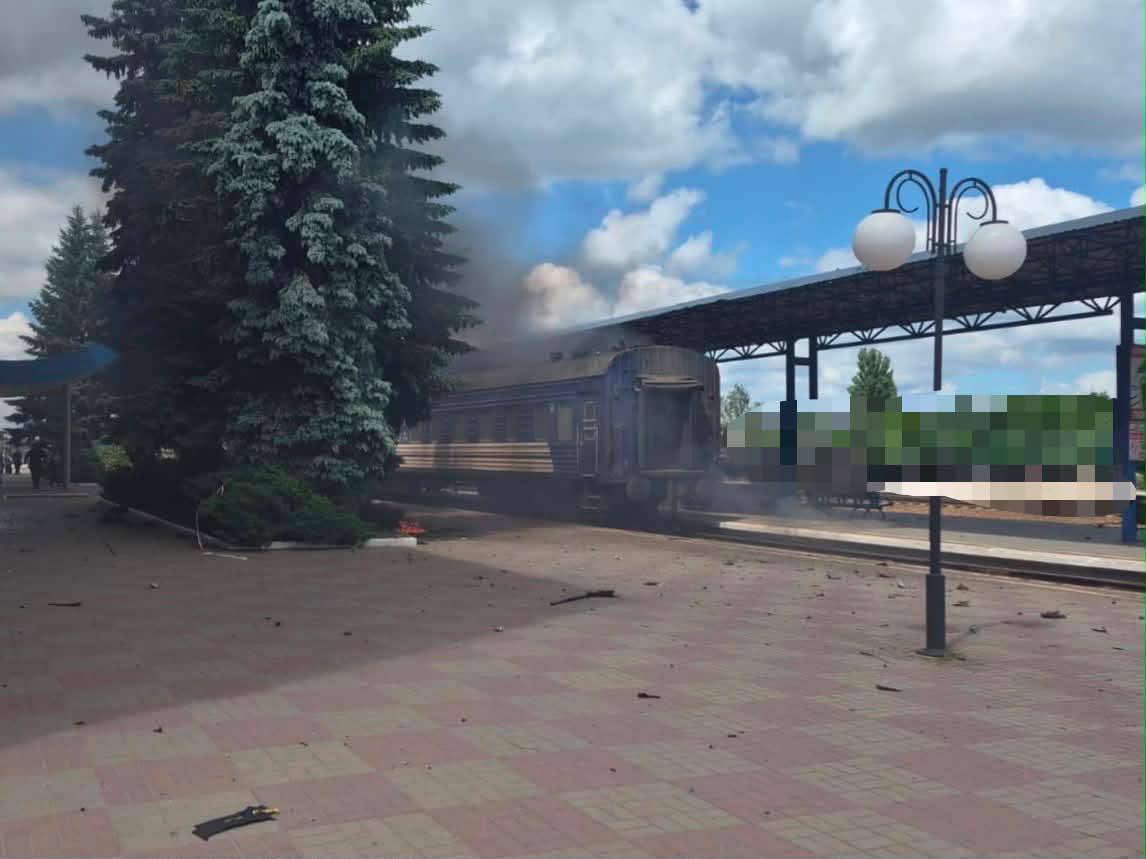
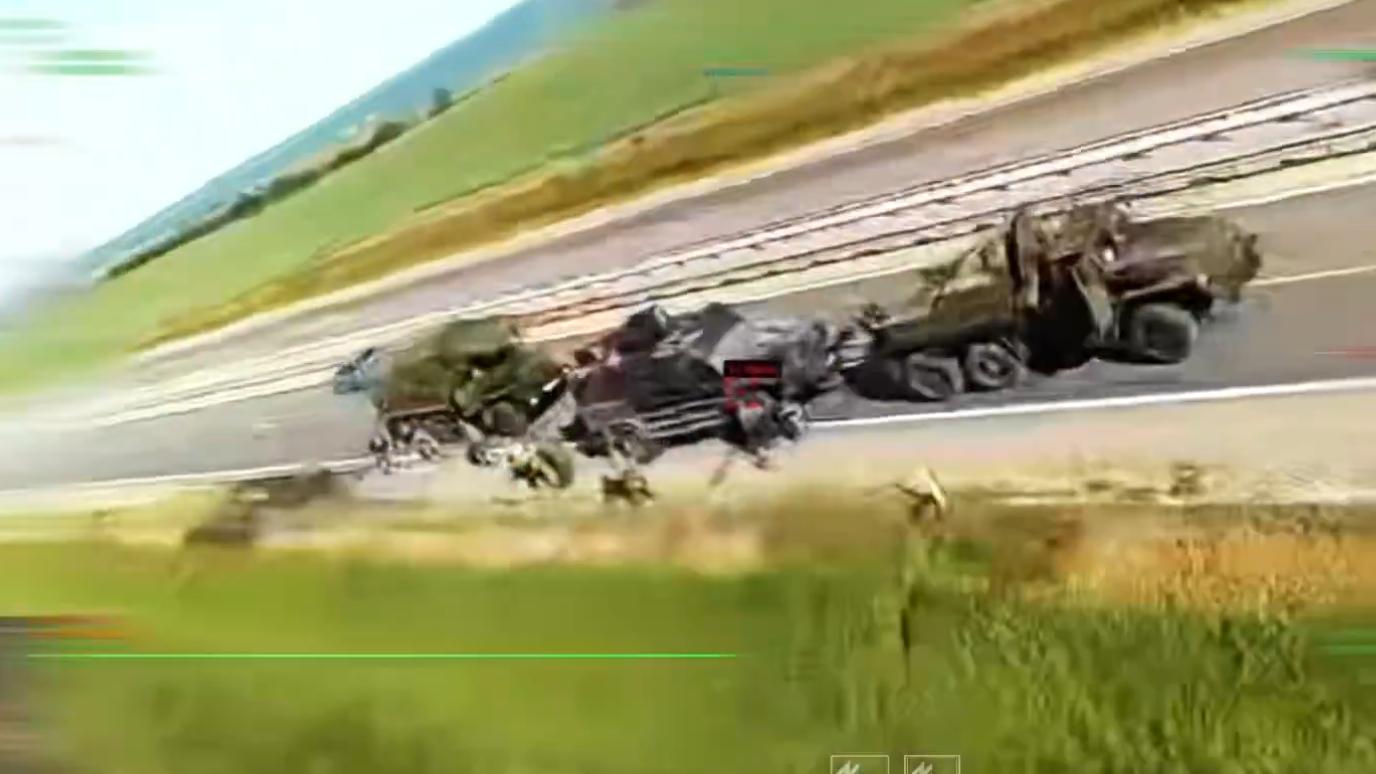
Ukraine confirms strike on Crimea's Armiansk bridge that hit 50 Russian military vehicles


Key developments on June 11:


At the Trump-Xi summit in May 2026 in Beijing, China's President allegedly told his American counterpart that Vladimir Putin "might end up regretting" his invasion of Ukraine. This revelation is both encouraging and disheartening.
China's backing of Russia has been a major factor in


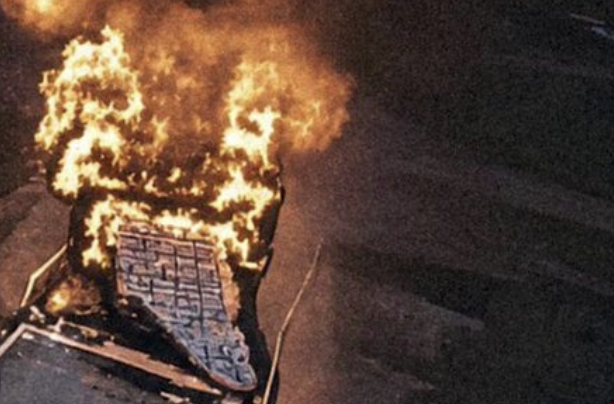
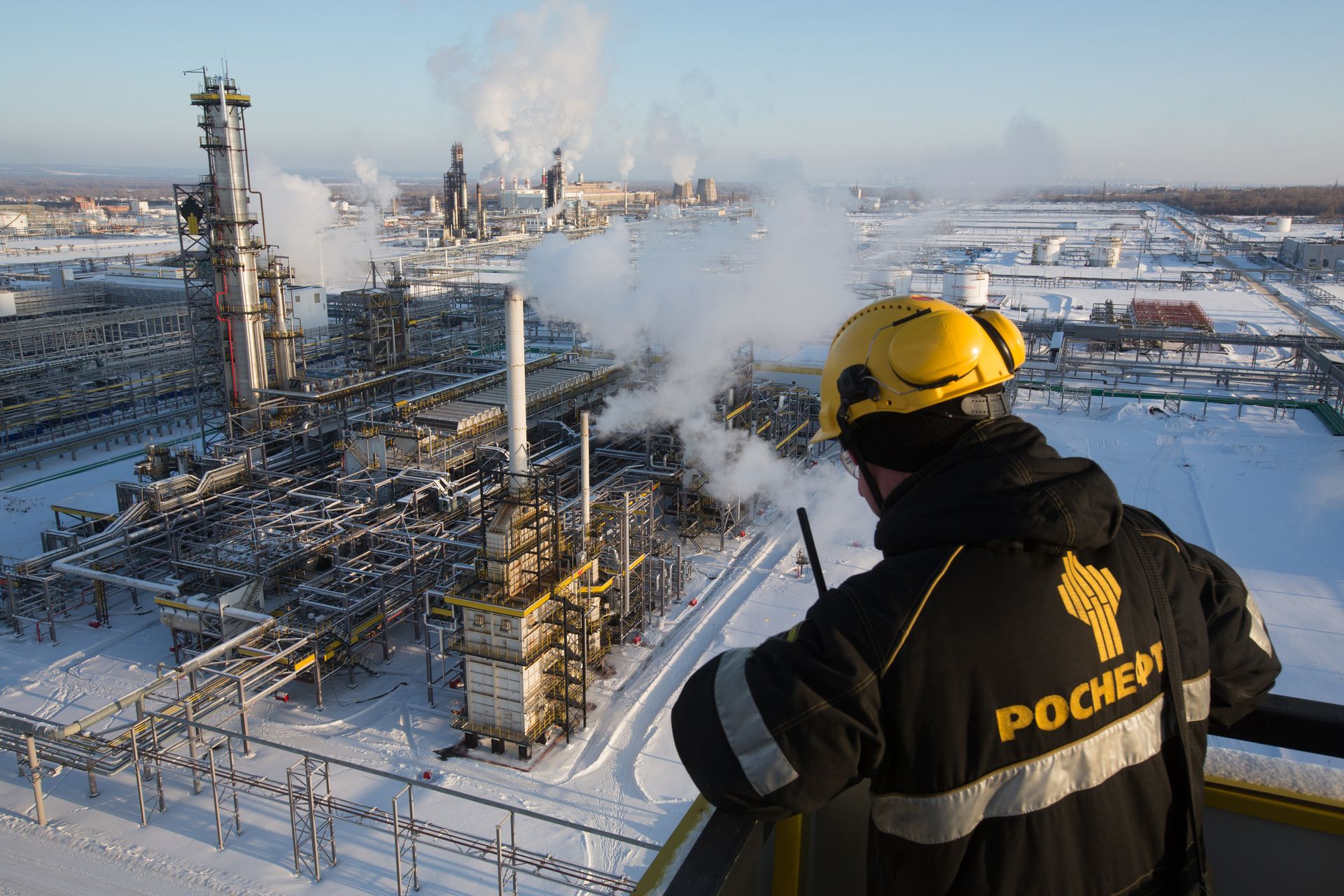
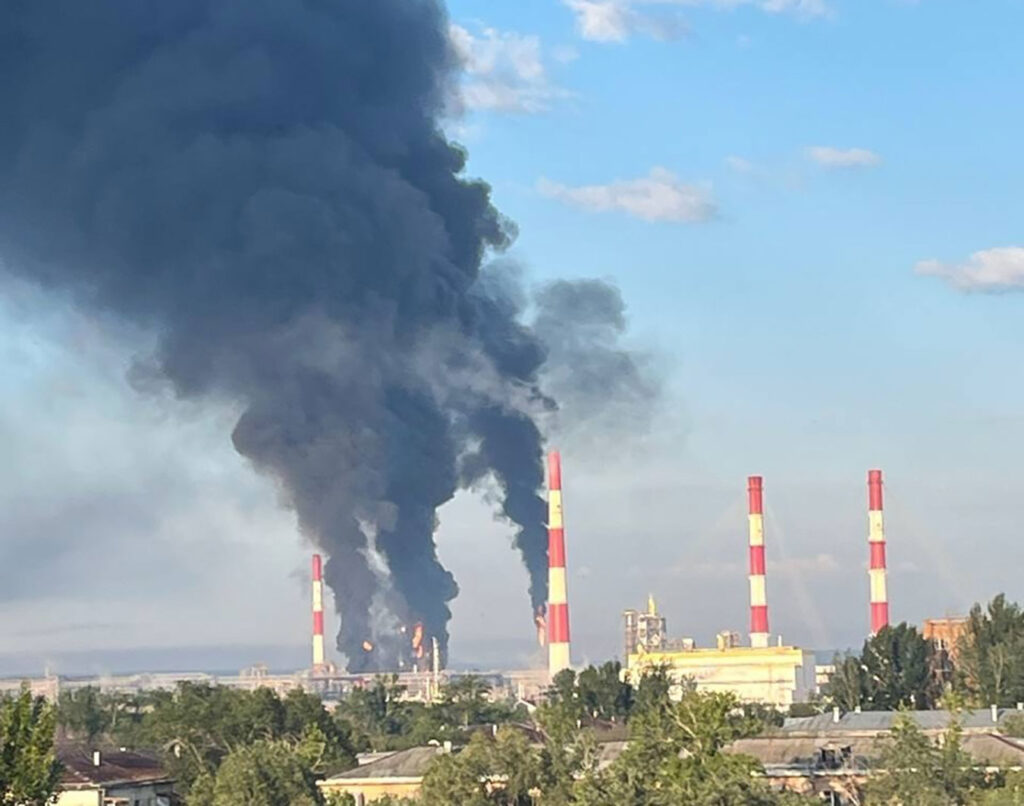
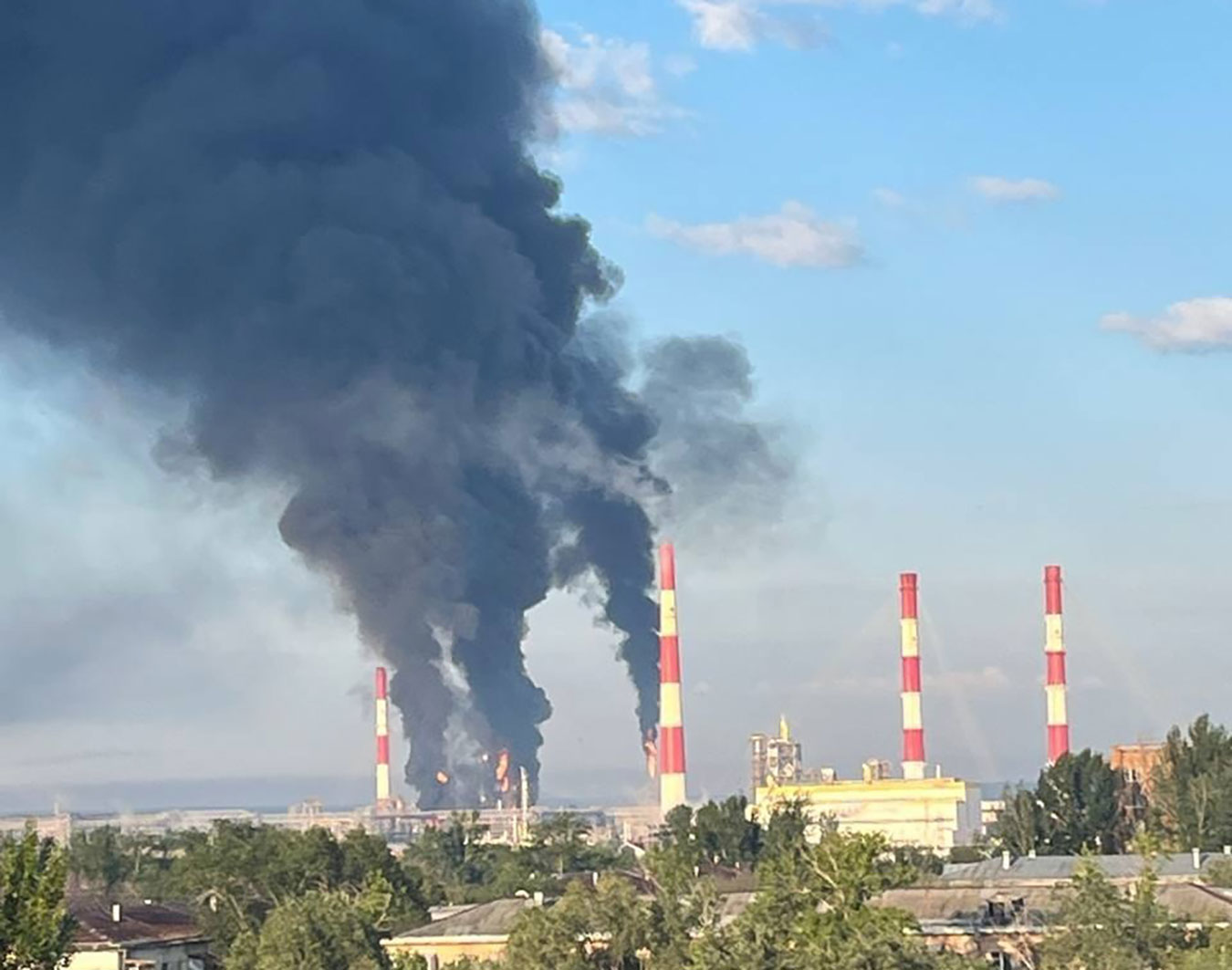
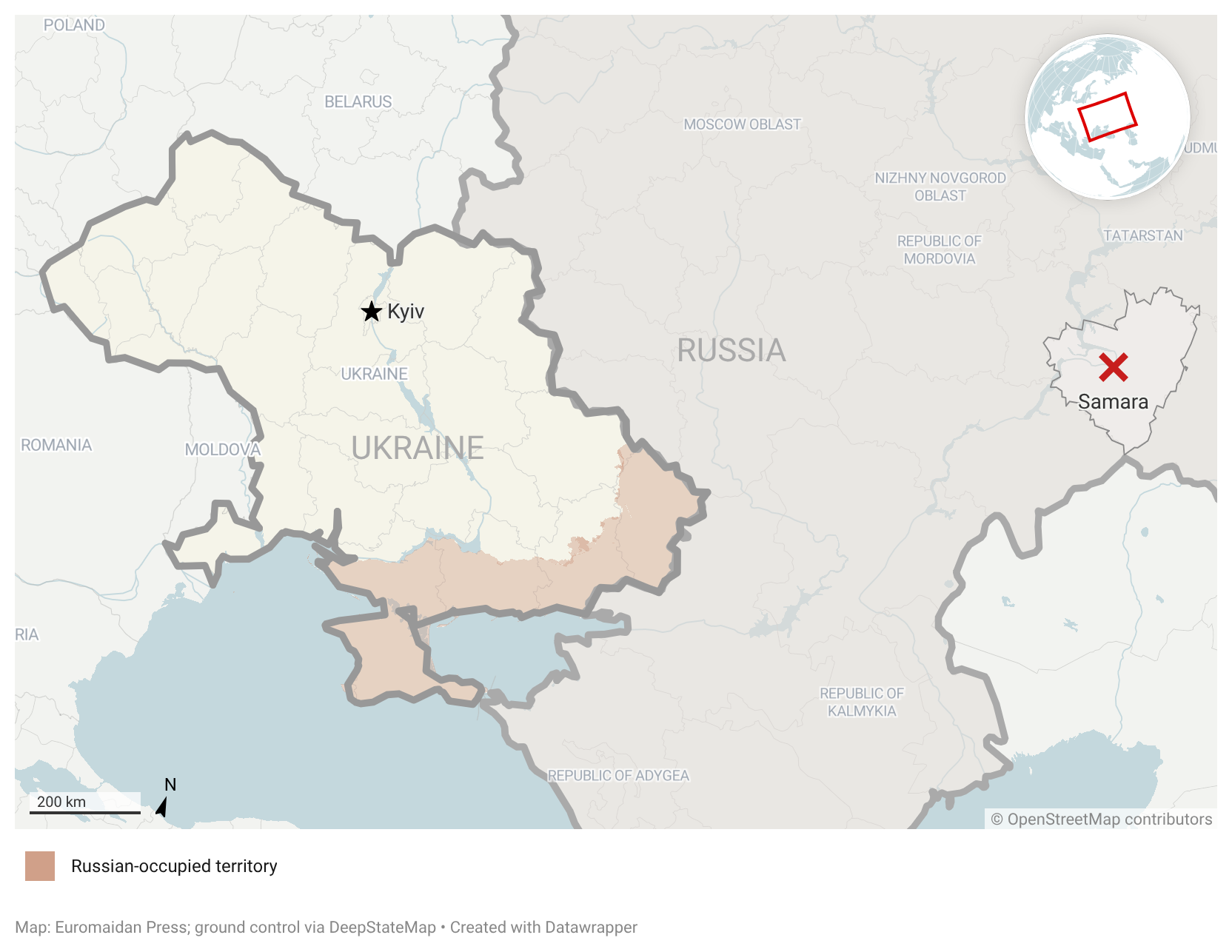
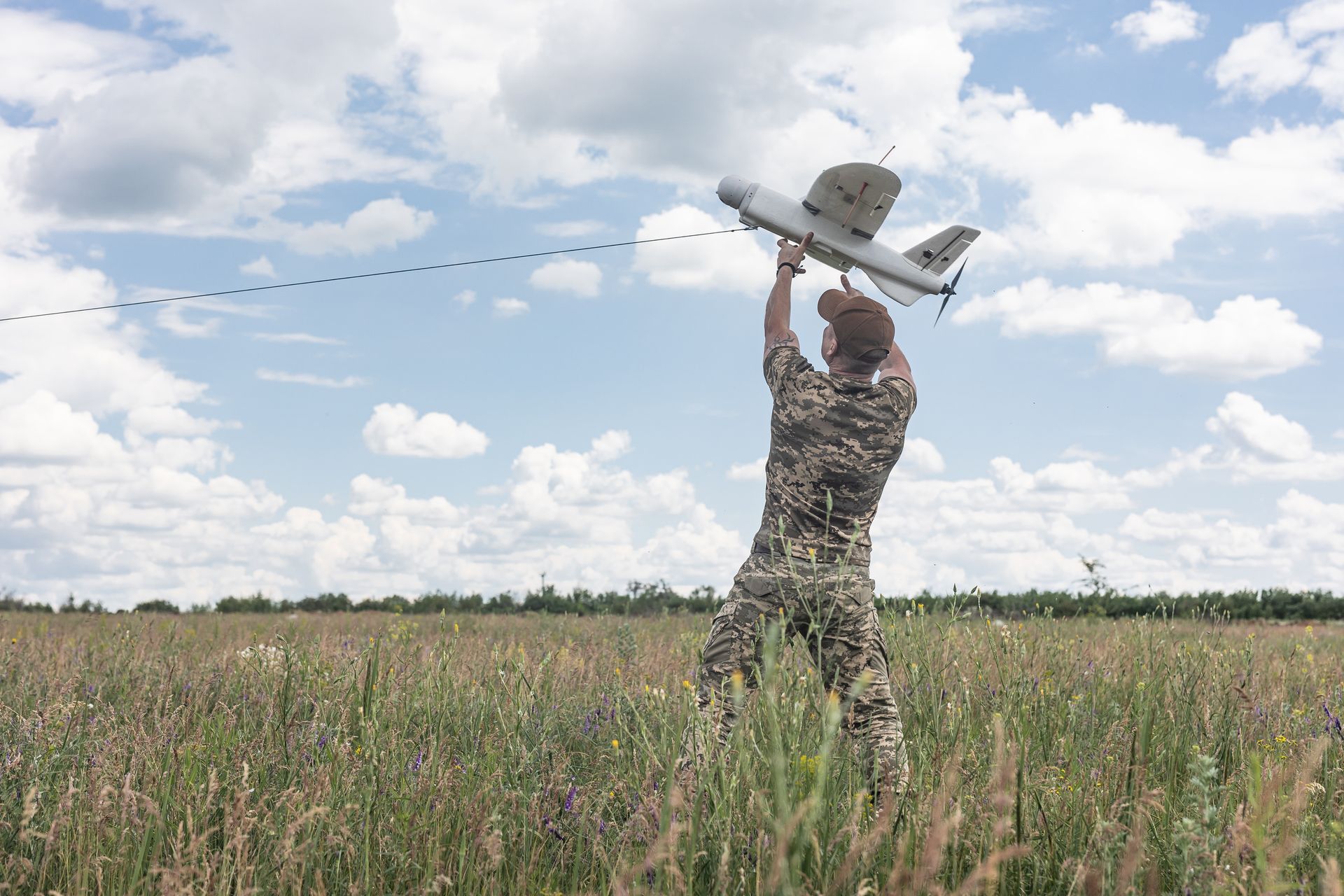
Ukrainian drones forced Rosneft's Kuybyshevsky oil refinery in Samara Oblast, Russia, to halt oil processing on 10 June, Reuters reported. The strike puts all three plants in the Rosneft Samara refining hub out of full operation at the same time.
Reuters cited two industry sources to confirm that processing stopped at both AVT-4 and AVT-5 after the strike. Each unit has a nominal processing capacity of about 73,000 barrels of crude oil (10,000 metric tons) per day. The hits caused damage and subsequent fires at both.
Samara Oblast Governor Vyacheslav Fedorishchev claimed a massive overnight drone attack injured three people and caused "damage to several industrial facilities."
An earlier report on 10 June described fires at the Kuybyshevsky refinery after the strike.
Kuybyshevsky's 2024 crude oil throughput was 4.7 million tons, equal to 94,400 barrels a day, Reuters reported. That year's output included 0.8 million tons of gasoline, 1.4 million tons of diesel, and 1.3 million tons of fuel oil. Nominal capacity stands at 7 million tons per year. The plant is one of the largest oil refining facilities in the Volga region. It also supplies fuel for the Russian army.
The Kuybyshevsky plant was also previously hit in January 2026, August 2025, and in March 2024. The earlier strikes damaged equipment and forced production cycles to stop.
The same night, Ukrainian forces also struck the VNIIR-Progress plant in Cheboksary, Chuvashia, which was previously hit on 5 May. The factory makes "Kometa" antennas that protect Russian drones from electronic warfare. It also makes satellite receivers for GLONASS, GPS, and Galileo systems. Ukraine's General Staff said such modules are used in Shahed-type drones, Iskander and Kalibr missiles, and aerial bombs.
Meanwhile, today saw a strike on the Afipsky refinery in Krasnodar Krai.
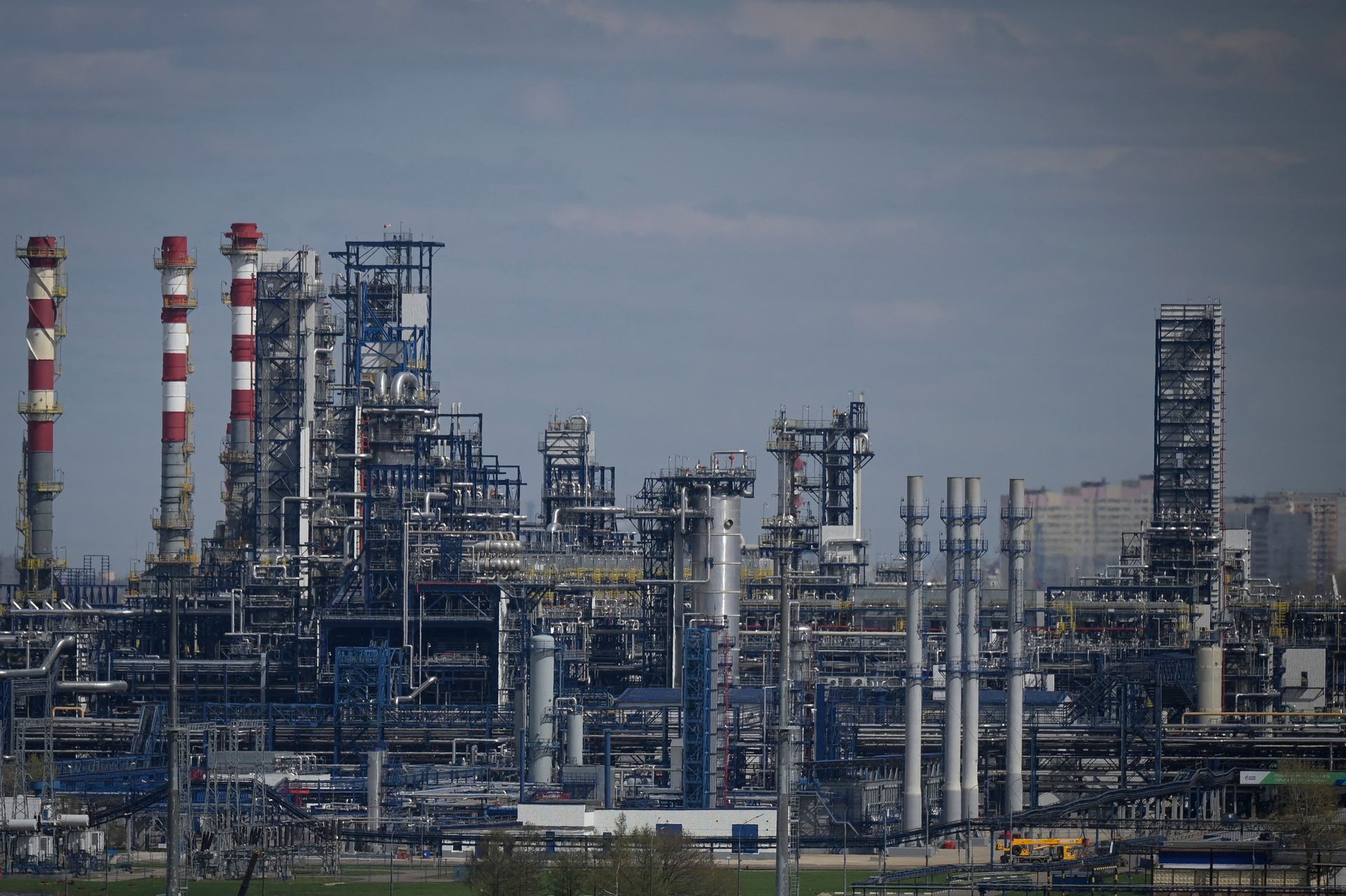
By May 2026, Ukrainian drones had taken six of ten Russian refineries hit during that month offline. Russian media counted 24 of Russia's 33 largest refineries struck since 2022. Only the Omsk and Angarsk plants east of the Urals remain untouched so far.


John Healey has resigned as defence secretary over Sir Keir Starmer’s defence investment plan, accusing the Prime Minister of failing to "meet the moment" over his long-delayed proposals to boost military spending.
The post John Healey Quits as Defence Secretary Over Starmer Military Funding Failure appeared first on The Daily Sceptic.
By Joe LAURIA
Contact us: info@strategic-culture.su
That is the most important question today that we strive everyday to answer.
If you understand who the aggressor is, you are on your way to understanding the mad and perilous times we live in.
Once you get that, what you’ve been taught all your life starts to lose its hold on you.
Establishment education and media try to confuse you. Independent media like Consortium News try to clarify.
Establishment education and media portray the aggressor as the defender, and the victim as the threat. Consortium News endeavors to show you the “threat” is really an obstacle. An obstacle to aggression and occupation. An obstacle to expansion. Locally and globally.
Few would agree with aggression, paid for with your taxes in a so-called democracy. So obstacles to aggression become threats that you’re supposed to be afraid of. Offensive action is taken as “defense” to protect you from the “threat.”
There’s nothing new in this. The Romans dressed up their imperial aggression as self-defense against fake threats. Rome provoked tribes, first in Italy and then Gaul and Germania, into forming alliances to protect the tribes’ sovereignty, and then Rome presented these alliances as “threats” that had to be destroyed, justifying war against them.
Rome would also provoke an adversary into invading or launching an attack to obtain the casus belli needed to start a pre-planned war. For instance, Roman ally Masinissa of Numidia repeatedly raided Carthage to provoke it into finally responding militarily in violation of a treaty it had with Rome. The empire used this as a pretext for total destruction and annexation — even though Carthage, an obstacle to Roman expansion, posed no realistic, existential threat.
In the earlier U.S. imperium, Mark Twain explained it this way:
“The statesmen will invent cheap lies, putting the blame upon the nation that is attacked, and every man will be glad of those conscience-soothing falsities, and will diligently study them, and refuse to examine any refutations of them; and thus he will by and by convince himself the war is just, and will thank God for the better sleep he enjoys after this process of grotesque self-deception.”
Today the obstacles to the aggressors’ expansion and occupation in the Middle East are Iran plus the legal, armed resistance to Greater Israel: Hamas, Hezbollah, the Houthis and Shia militia in Iraq. They are presented as “threats”rather than defenders of their dignity, sovereignty and land.
In Asia the “threat” is China. Beijing protecting its sovereignty in its own region is somehow a threat to U.S. warships near China’s waters and to Taiwan, which the U.S. agrees is part of China.
In Europe years of NATO expansion, refusal to negotiate a mutual security treaty, rehabilitation of fascism, a coup, and civil war in Ukraine against ethnic Russian coup-resistors provoked Russia to intervene, much as the Romans provoked Carthage. Getting Russia to invade Ukraine allows the portrayal of Moscow as the aggressor and a “threat” to all of Europe and not as an obstacle to the U.S. and Wall Street return to their 1990s dominance of Russia. (Now there is constant talk of direct NATO war with Russia. The fear is another provocation to get Russia to start it.)
All of these obstacles to U.S. global hegemony are presented to you as existential threats that only the mighty United States, NATO and Israel can protect you from. There’s nothing in it for them, of course, except saving your life, we’re expected to believe. Except you don’t have to believe it. You have alternative media like Consortium News to expose the deceptions on a daily basis.
That’s why pro-establishment social media companies and so-called anti-disinformation services have tried to hurt us. And that’s why we need your help.
Original article: consortiumnews.com

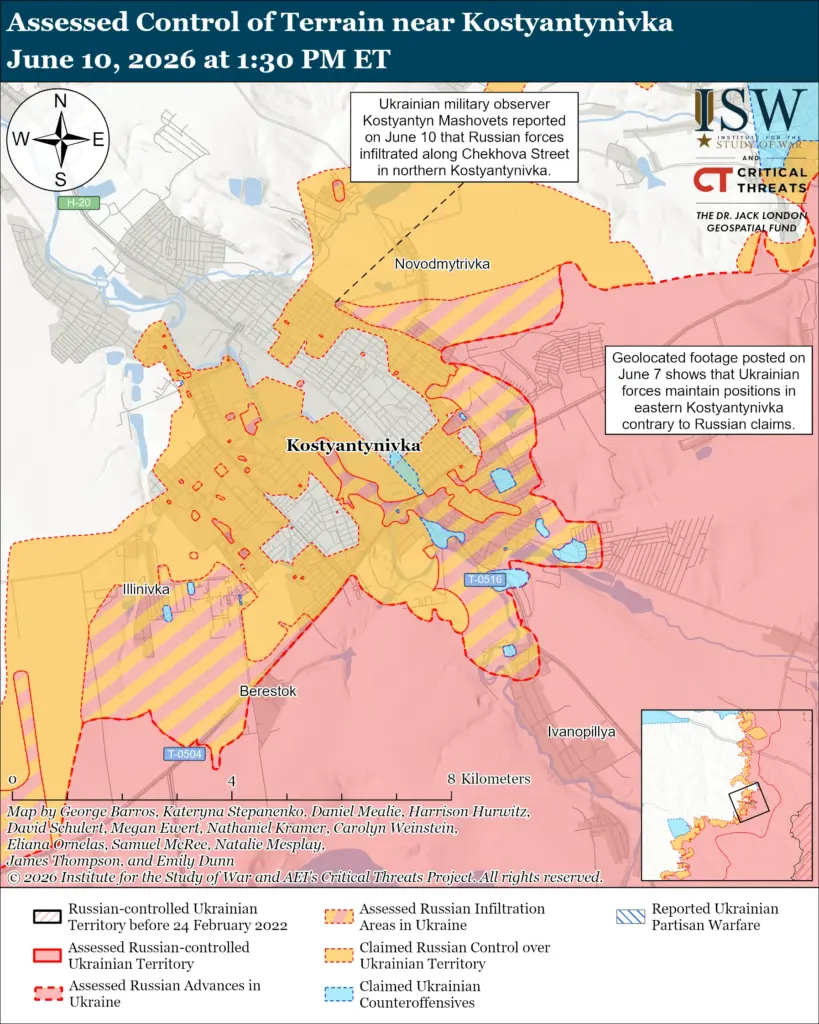
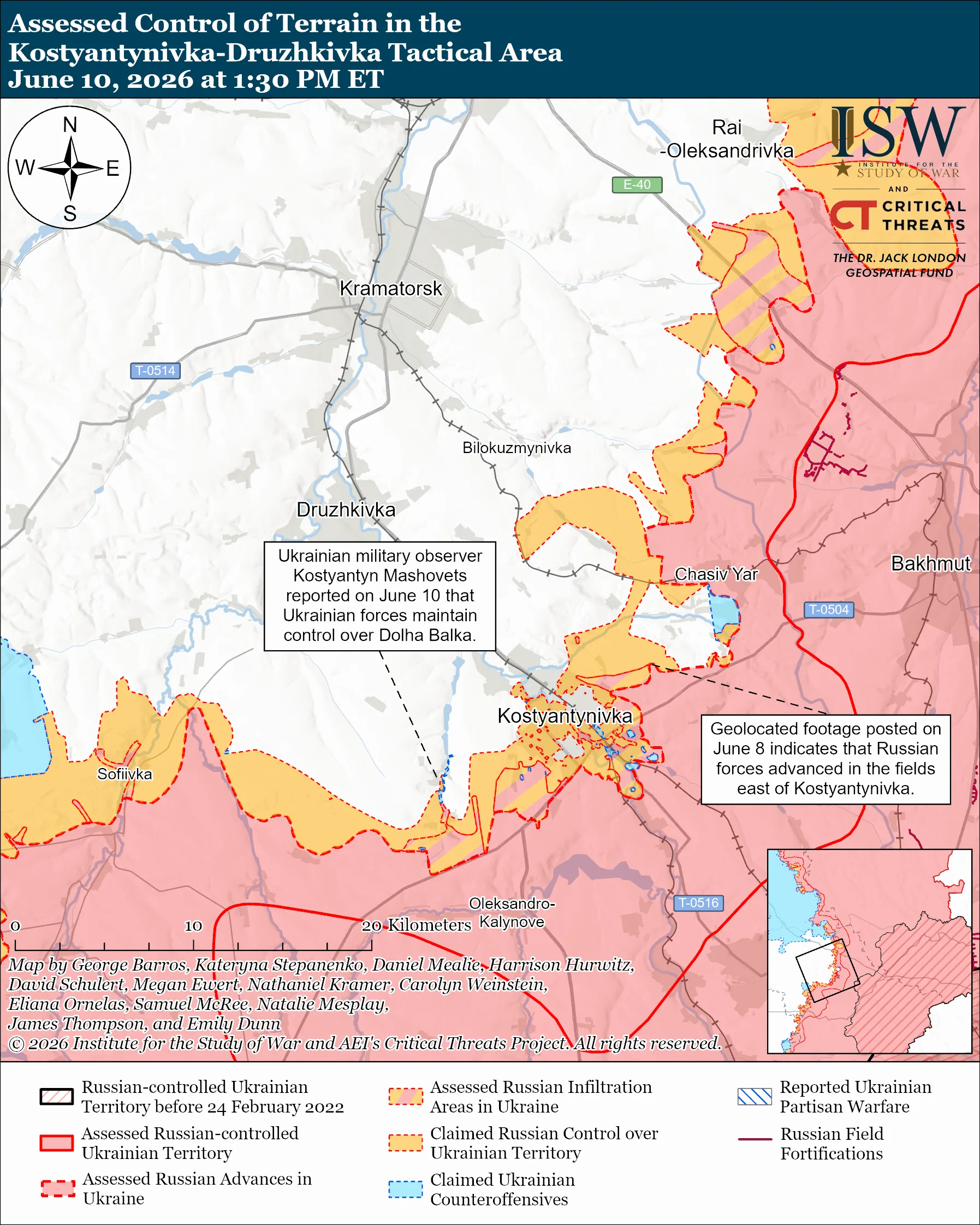
Russian forces have made fresh tactical advances into Kostiantynivka, the Institute for the Study of War (ISW) assessed on 10 June. The city sits at the southern tip of Ukraine's Donetsk Oblast Fortress Belt — Moscow's main effort for the spring-summer 2026 offensive. Russia missed its own May deadline to take the city, and the wider fortified chain stays out of operational reach.
Two named Russian formations have pushed into eastern Kostiantynivka from the south, Ukrainian military observer Kostiantyn Mashovets reported on 10 June. He identified them as the "Bakhmut" tactical group and the "Dzerzhinsk" (Toretsk) tactical group. The "Bakhmut" group is built around Russia's 3rd Army Corps (AC) under the Southern Grouping of Forces. The "Dzerzhinsk" group operates in the area of responsibility of the 8th Combined Arms Army (CAA) of the Southern Military District. It likely includes elements of five CAAs, the 3rd AC, and Russian naval fleets, Mashovets noted.
Elements of the "Bakhmut" group pushed from Stupochky through Novodmytrivka into northeastern Kostiantynivka. They also advanced along the T-0504 Pokrovsk-Bakhmut road as far as the city's railway station. The "Dzerzhinsk" group moved from Illinivka, south of the city, into areas stretching from northwestern to southwestern Kostiantynivka near the railway station. Mashovets assessed that it has likely achieved a tactical breakthrough in the western, central part of the city. Forward assault elements of the two groups now stand roughly two kilometers apart. Russian forces have so far failed to seize the railway station. Ukrainian troops cleared the village of Dovha Blaka southwest of the city of Russian infiltrators.

ISW noted that Russian forces opened the campaign for Kostiantynivka in August 2025 after seizing the majority of Chasiv Yar and Toretsk, with Toretsk alone running to roughly 26,000 Russian casualties. The first Russian troops infiltrated Kostiantynivka itself in October 2025. Russia has since worked into at least 12.69% of the city. Ukrainian officials reported earlier this spring that the Russian command had set a May 2026 deadline for the seizure. That deadline has come and gone.
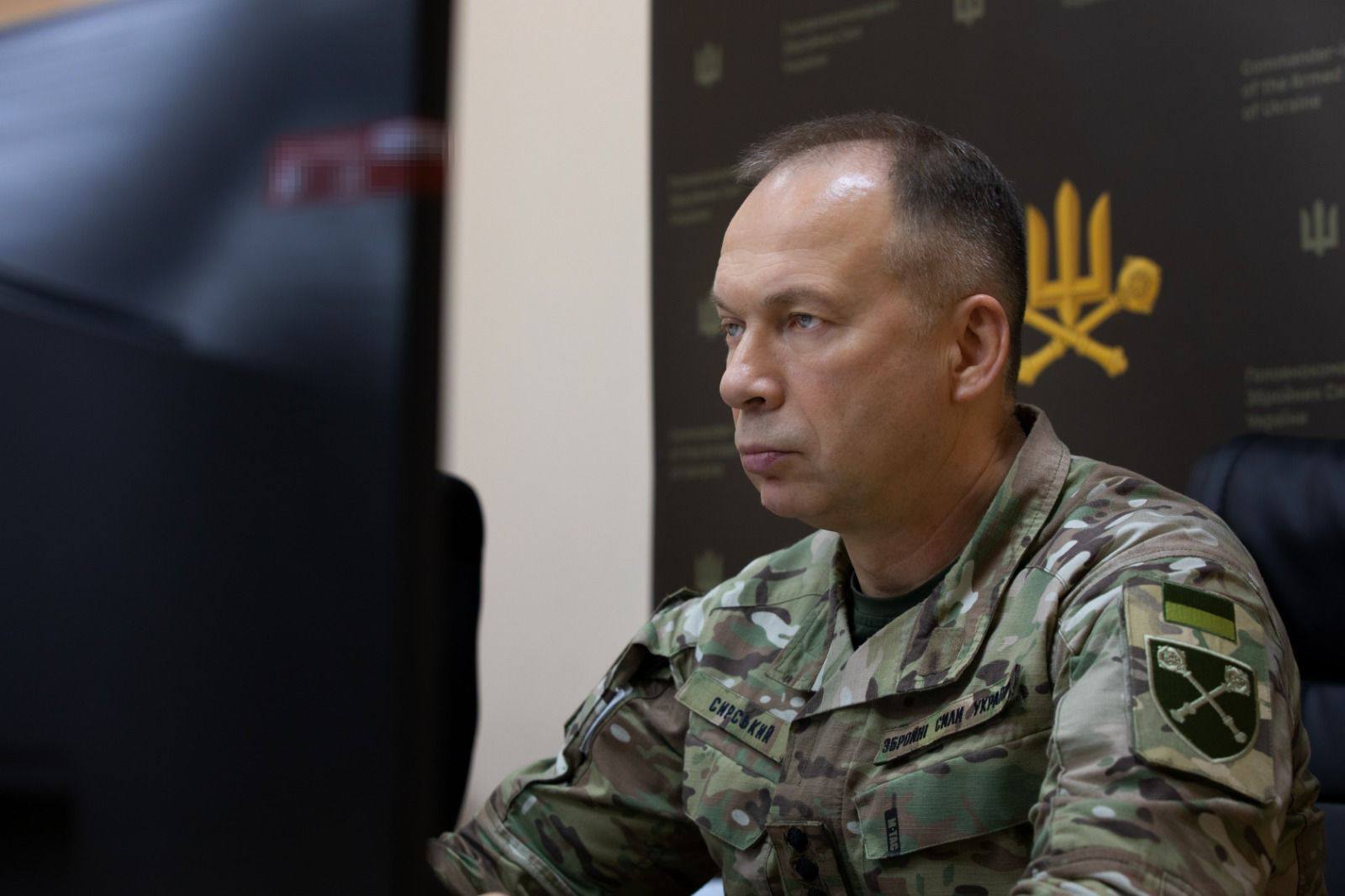
Russia has poured forces into the effort regardless. Ukrainian Commander-in-Chief Oleksandr Syrskyi said on 2 May that Russian activity in this direction noticeably increased in April. Russian units in the area had reportedly been replenished by 80% as of 6 June, ISW noted. The Russian command reportedly redeployed elements of the 70th Motorized Rifle Division to the Kostiantynivka-Chasiv Yar area last December. The redeployment likely came in preparation for the spring push.
ISW assessed that Russian forces will likely keep infiltrating throughout Kostiantynivka. They will likely consolidate positions in parts of the city while suffering high casualties. Russia's 3rd AC northeast of the city appears to be struggling to dislodge Ukrainian forces from Chasiv Yar. That inhibits any move to envelop Kostiantynivka from the north. A Russian milblogger claimed on 9 June that Ukrainian forces recently counterattacked near Chasiv Yar. The milblogger added that Ukraine still holds Podilske and Mykolaivka west of the town.
The northern flank of the Fortress Belt is also bogged down. Russia opened its spring-summer 2026 offensive with mechanized assaults around Lyman. Those assaults signaled intent to advance on Sloviansk from the northeast. They produced no significant gains, ISW noted. The Russian command likely shifted weight south to Kostiantynivka. Russia's Western Grouping of Forces covers the front from Kupiansk through Lyman. It likely lacks the combat power to push on Sloviansk while balancing operations toward Kupiansk and Borova.
Contact us: info@strategic-culture.su
So a $40 million U.S. Apache helicopter was targeted by a $20k Shaheed drone just over the Strait of Hormuz only one day after Iran and the death cult in West Asia were trading blows, making a mockery of that wobbly fiction, the “ceasefire”.
Talk about a massive cost benefit for Tehran: no less than 2000 to 1.
Tehran by principle does not deny military attacks. Yet in this particular case they have explicitly denied the downing of the Apache, pointing to a possible accident or technical failure. If the Shaheed had really struck the combat helicopter, the pilots would be dead – and not rescued by a U.S. unmanned boat.
Former U.S. Navy intel officer Malcolm Nance argues, “You don’t have mid-air collisions with FPV drones in the middle of the Strait of Hormuz, and it’s not intentional.”
This would mean that a drone under fiber optic guidance was able to disrupt the whole, humongous American electronic warfare apparatus – revealing a naked Pentagon incapable of articulating any response.
So even if this was not an accident, why did the IRGC deny it? Because that might have been a strategic test – not only of Iran’s dissuassive capability but also the degree of discombobulation to be inflicted on the enemy.
Predictably, under the guidance of the Emperor of Barbaria, the Empire of Piracy got back to bombing, leading to the inevitable Iranian response.
Within minutes of the start of the American attack, the IRGC struck an array of U.S. military bases across West Asia.
Al-Azraq Airbase in Jordan.
Ali Al Salem Air Base in Kuwait.
The Fifth Fleet Base in Bahrain.
Isa Air Base in Bahrain.
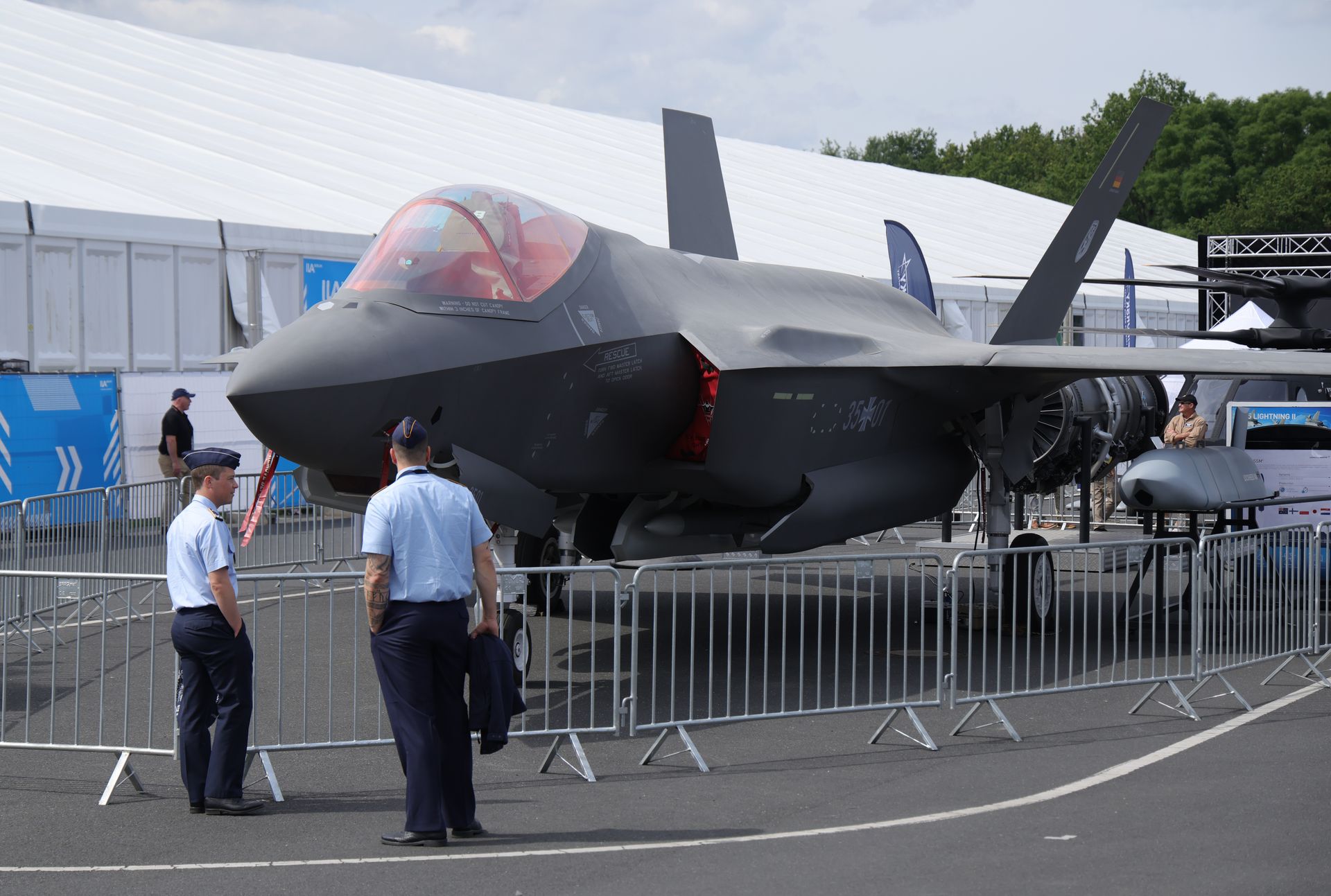
Al-Azraq was hit by several long-range, solid fuel missiles pointing to four targets, including F-35 hangars and the Command and Control Center. The IRGC informed that 70% of all targets in those bases were successfully hit.
Al-Azraq – also known as Muwaffaq Salti – is a joint U.S.‑Jordan base about 100 km east of Amman. Only four months ago, satellite imagery revealed it was hosting more than 60 U.S. jets – including 30 F‑35s and 36 F‑15s. The base hosts the 332nd Air Expeditionary Wing (F‑15Es, MQ‑9 Reapers), with F‑35s rotating in. For all practical purposes, Jordan is now a legitimate target for the IRGC.
The new integrated map of regional deterrence
All of the above points to a radical rewriting of the rules of the game in the battlefield. Iran is announcing to West Asia and beyond that what in theory would be American military airspace is now Iran-controlled. More than that: Tehran is proving, in practice, that it can simultaneously conduct a war and impose its demands/run the clock on the negotiation table.
The new equation is stark: if you strike us and we strike you back, any attempt to retaliate against us will lead us to strike you 1.5 times harder, and soon 2 or 3 times harder. No more Mr. Nice Guy, in terms of allowing the enemy to indulge in the proverbial Hit and Run strategy.
From the U.S. side, other ominous elements are also in play. The Empire of Piracy is systematically targeting communication equipment along the Persian Gulf coastline. The objective is to cut off communication between southern units and the command centers up north. Even if this was part of the preparation for a – suicidal – ground invasion, as it was before the 2003 Iraq war, it makes no difference because of the Decentralized Mosaic strategy in effect across Iran since the decapitation strike of February 28.
Beyond all that, the commander of the IRGC’s Quds Force, Brigadier General Esmail Qaani, announced last week that a regional security belt is now in effect, from the Persian Gulf to the Red Sea, managed by the Axis of Resistance.
So the Americans, whatever they come up with, now will be facing a strategic defensive line extending from the Strait of Hormuz to the Bab el-Mandeb.
Welcome to the new integrated map of regional deterrence. Direct translation: any U.S.-Israel attack against any single member of the Axis of Resistance will trigger a multi-front retaliation – from the Persian Gulf to the Red Sea.
The big question now is whether this escalation – even if it is being framed by the Empire of Piracy as “punishment” for the Apache story – could instantly revert into a formal abandonment of the memorandum of understanding (MoU) framework on the negotiation table.
I discussed the state of the MoU negotiations this Tuesday in a new YouTube channel, Transition Protocol,
after our original Power Shit channel was cut off by Google without warning and with no appeal, only after less than a week on air, and broadcasting two world exclusives back to back.
Our intel sources in Pakistan, in very close contact with Iran and GCC players, are convinced the MoU is not dead. Even the Trump administration wants to preserve the underlying diplomatic framework, and not blow up the possible broader accords that have been taking shape.
That is: the Emperor of Barbaria, on the eve of a World Cup that his racist government policies are already ruining, will contain himself by emitting lots of noise and won’t walk away from the larger deal architecture.
That’s the dangerous crossroads we’re in now: sliding into the dark pit of a “deal off” territory, or still clinging to a pressure‑for‑deal scenario.

By Ted SNIDER
Contact us: info@strategic-culture.su
The countries that have borne the brunt of Iranian retaliation have an incentive to diversify their security structures.
On June 3, as messages continued to pass between Iranian and American negotiators, the U.S. endangered diplomacy with renewed aggression against Iran. Enforcing the blockade on Iranian ports, U.S. forces fired a Hellfire missile into the engine room of a Botswana-flagged oil tanker. Moments earlier, per CENTCOM, they had “conducted self-defense strikes on an Iranian military ground control station on Qeshm Island” in the Strait of Hormuz. These were the third round of U.S. strikes on Iran in the past week.
The Iranian reply to the attacks included the firing of 13 ballistic missiles and 17 drones at Kuwait. Some of those projectiles penetrated the roof of a passenger terminal at Kuwait International Airport. People rushed away from the huge hole in the roof as flames and smoke filled the building. One person was killed, and 63 others were injured.
There is no legal or moral justification for targeting civilian infrastructure. But, amid all the talk of “criminal Iranian aggression” and of Iran’s “deliberate, calculated, and unjustified attack” on a civilian airport when all the American bases in Kuwait “are dozens of miles from the airport,” one small sentence went unnoticed. Buried in the body of a New York Times article was the single line, “In recent years, American forces have operated out of a site in the Kuwaiti airport complex.”
The Gulf states believed that hosting U.S. bases provided them with an umbrella of defense against Iran. They have come to see that those bases have become magnets for Iranian ballistic missiles and drones.
But the U.S. has not only failed to protect the Gulf states; it has openly coerced and threatened them.
Oman is a small country of outsized importance. It has a long, uninterrupted history of good relations with the United States. Oman has mediated several conflicts and helped get the U.S. out of several jams. It mediated the ceasefire between the U.S. and Yemen last year. Most importantly, Oman helped the Obama administration secure its nuclear deal with Iran. As Trita Parsi lays out in Losing an Enemy, “while the world’s eyes were locked on the ongoing P5+1 [U.S., UK, France, Germany, Russia, China] talks… the real show was taking place in secret in the heat of the Omani mountains.”
But none of this history was enough to prevent President Donald Trump from threatening to bomb Oman.
The Trump administration is angry with Oman for three reasons. The first is that, on the eve of the U.S. decision to go to war with Iran, the Omani foreign minister, Badr bin Hamad Al Busaidi, who was mediating the negotiations, made sure the world knew that war was not necessary, saying that a peace deal “is within our reach, if we just allow diplomacy the space it needs to get there.”
Most importantly, Oman has not cut ties with Iran and has reportedly been in discussions with Iran to jointly control the Strait of Hormuz. It was this potential relationship that led Trump to threaten Oman that it must “behave just like everybody else, or we’ll have to blow them up.”
The U.S. does not like the neutrality of Oman, which has made it such a valuable asset in the past. It has begun to press Oman to cut diplomatic ties with Iran and align itself unambiguously with America. Despite its long history of friendship, if Oman does not acquiesce to America’s demand, it will be treated the same way as Iran: sanctions and bombs. The day after Trump threatened Oman with bombs, Treasury Secretary Scott Bessent threatened it with sanctions, warning that “Oman, in particular, should know that the U.S. Treasury will aggressively target any actors involved—directly or indirectly—in facilitating tolls for the Strait.”
The Gulf countries’ interests have not been served by this war. Crucial infrastructure, including energy and water desalination plants, has been struck. Investor and tourist confidence have been diminished. Lives have been lost. Hard-won regional diplomatic gains with Iran have been set back. The U.S. failed to take their interests into account by dragging them into the war, and then failed to protect them once it started.
The Gulf states’ defense networks are too integrated into the U.S. system to extricate themselves entirely. But diversification is possible. In March, Oman’s Al Busaidi said the time had come for the Gulf countries to reconsider their defense strategies. Saudi Arabia and Pakistan last year signed a Strategic Mutual Defense Agreement that states “that any aggression against either country shall be considered an aggression against both.” Last month, during the war with Iran, Pakistan sent 8,000 troops, 16 fighter jets, and a Chinese air defense system to Saudi Arabia under that agreement.
Turkey, Egypt, and Pakistan, the leading military powers in the Muslim world (including the only nuclear power), have all expressed interest in a comprehensive regional security architecture that would encompass all the Muslim-majority nations of the region. Recent events have only enhanced those discussions.
The Iran War has highlighted the need for the Gulf countries to update their security arrangements. Washington ignored their warnings, rebuffed their lobbying, and then failed to deliver the promised protection. The war may have accelerated the Gulf states’ decision to modernize and diversify their security arrangements and, perhaps, even move to a more integrated regional security architecture.
Original article: www.theamericanconservative.com


For the second straight day, the US and Iran have traded retaliatory military strikes across the Middle East, pushing an already fragile April ceasefire to the brink of collapse.
US Central Command (CENTCOM) confirmed a fresh wave of “self-defense strikes” directly hitting radar, surveillance, and military facilities in southern Iran. The American bombardment followed a stark warning from US President Donald Trump, who declared that Washington would hit Iran “hard” because Tehran had taken “too long to make a deal” to halt hostilities permanently.
Iran is being hit harder than anything we’ve seen.
pic.twitter.com/bwvB2aYaFJ
— USA NEWS
(@usanewshq) June 11, 2026
Tehran immediately struck back, targeting US military infrastructure across multiple neighboring countries. For a second consecutive day, American bases in Kuwait and Bahrain faced Iranian fire, while Iranian state media reported that the Islamic Revolutionary Guard Corps (IRGC) launched ballistic missiles at a US command center in Jordan. The attacks forced Kuwait to temporarily shut down its airspace after its military intercepted “hostile aerial targets,” while air raid sirens sounded in the middle of the night in Bahrain.
The conflict has also spilled into vital global shipping lanes. Iranian state media claimed the IRGC struck two oil tankers and declared the strategic Strait of Hormuz “completely closed.” While CENTCOM countered that commercial maritime traffic was still successfully transiting the waterway, global energy markets panicked. Brent crude quickly jumped 2%, surging to around $95 a barrel.
The escalating rhetoric suggests no immediate end to the violence. US Defense Secretary Pete Hegseth warned that bombs would continue to drop on Iran’s core facilities if a diplomatic resolution isn’t reached, a sentiment echoed by President Trump on Truth Social.
Meanwhile, Iranian President Masoud Pezeshkian stood defiant, vowing that Iran “will stand firm against any pressure or threat” while slamming Washington for sabotaging peace talks with contradictory diplomacy.