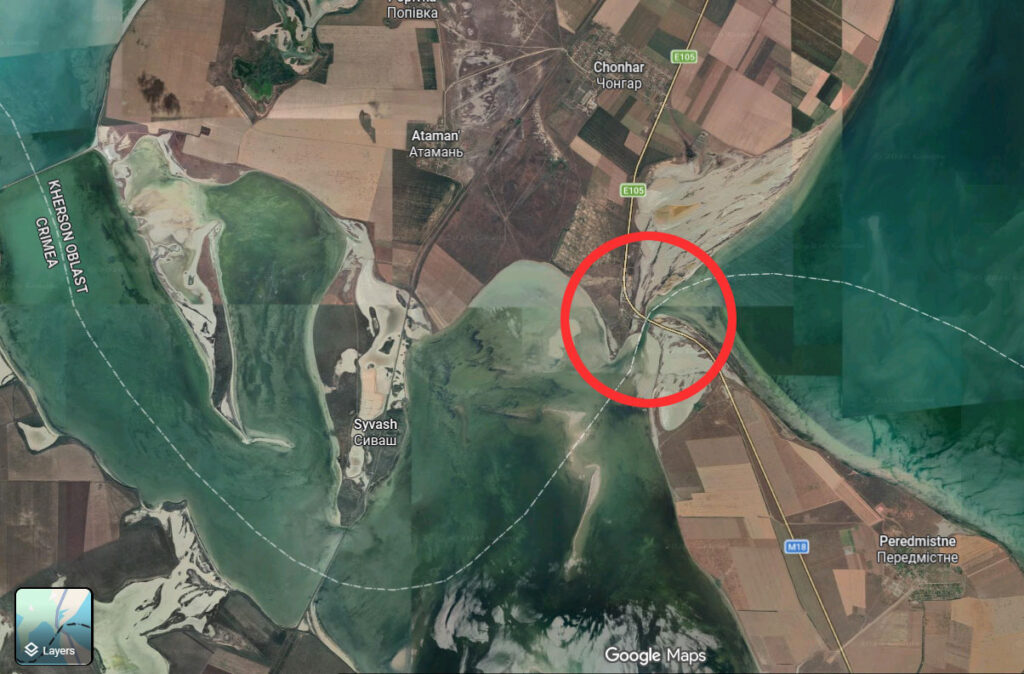
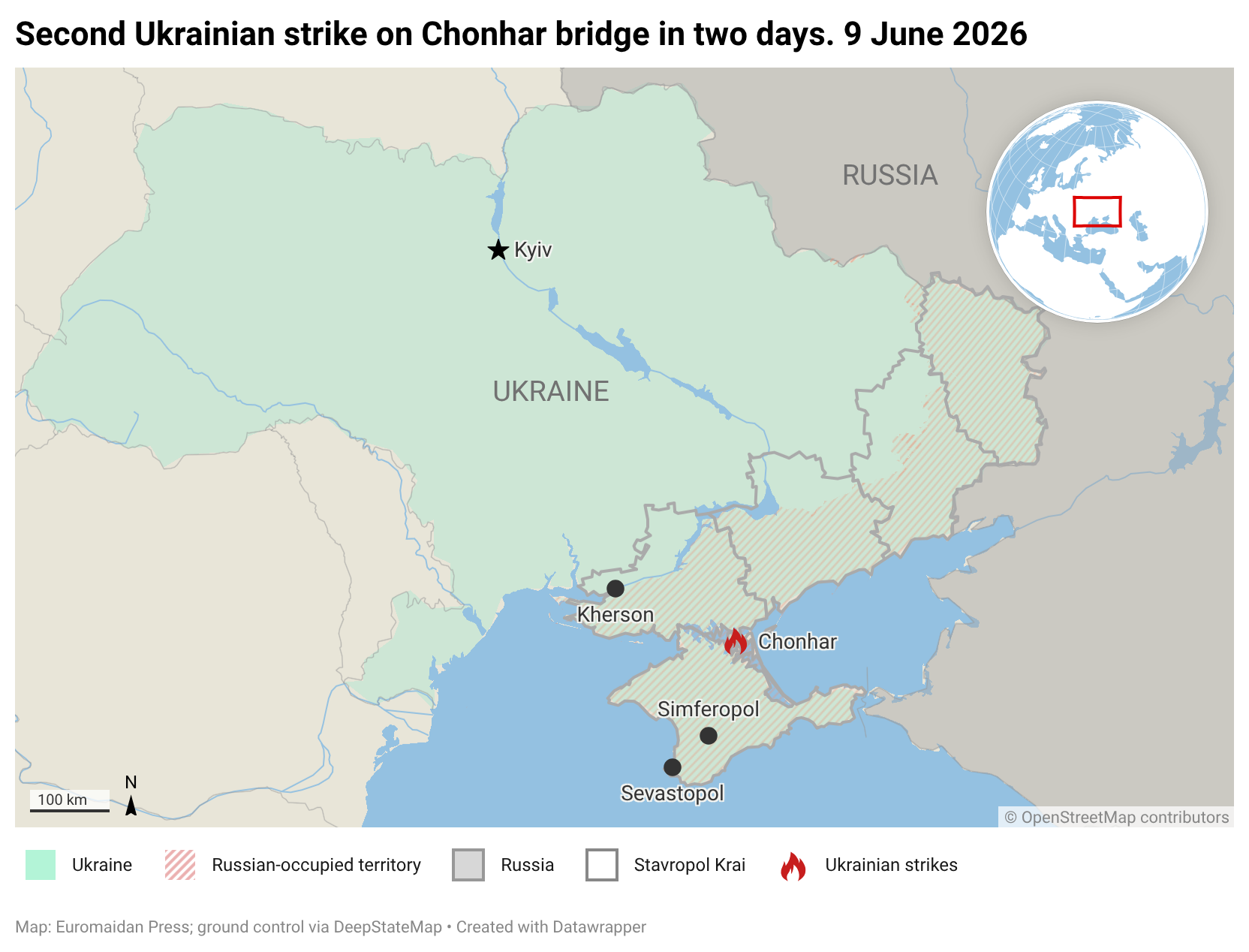
Russian occupation authorities closed the Chonhar bridge linking occupied Kherson Oblast to Crimea for the second time in two days on 9 June, with the Russian-installed governor, Vladimir Saldo, claiming another overnight Ukrainian drone strike. The same night, drones swept across occupied Crimea, where a Crimea-monitoring channel reported explosions at a military airfield. Moscow claimed it downed scores of drones, while Ukraine stayed silent.
Occupied Crimea — a peninsula in southern Ukraine, occupied by Russia since 2014 — is the logistical heart of Russia's war in Ukraine's south, and its airfields, air defenses, oil depots, and supply roads draw Ukrainian drones almost daily.
A bridge to Crimea closed for the second time in two days
Saldo claimed the overnight strike caused fresh damage to the Chonhar bridge and that 20 drones were shot down on the approach. He asked drivers to use alternative routes, and traffic was rerouted through Armiansk and Perekop.
The bridge carries the R-280 highway, which the Russians built to link their Rostov-on-Don to occupied Crimea through occupied Donetsk and Zaporizhzhia oblasts, one of their main supply lines to the peninsula.
Drones over Crimea
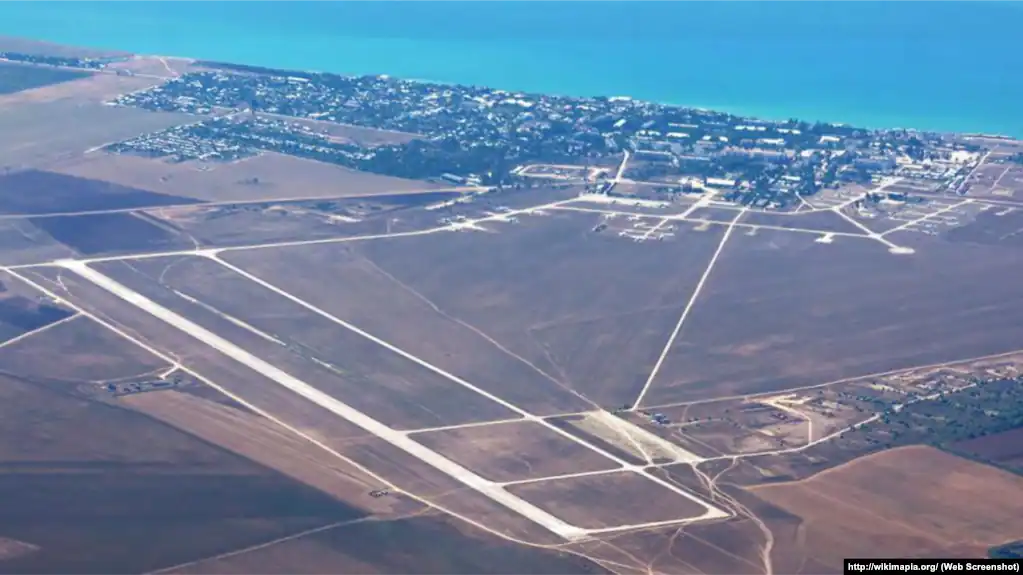
The strike on the peninsula came the same night, according to RFE/RL. The Crimea-monitoring Telegram channel Krymsky Veter reported an explosion in the Saky district (western Crimea) at 21:14, then an incoming strike in Dzhankoi (northern Crimea) before midnight. Drones also reached Sevastopol (southwestern Crimea), where a strong explosion hit the Kacha airfield at 00:36, followed by a second and third blast in the early hours.
The Kacha military airfield near occupied Sevastopol, Crimea. Archive photo: wikimapia.org
Sevastopol's Russian-installed head, Mykhail Razvozhaev, claimed the military was repelling the attack with air defense and mobile fire groups. The city declared air alerts three times, at 22:33, 00:08, and 06:52, and lifted the last at 07:20. In its morning report, Russia's Defense Ministry claimed its air defenses destroyed 140 drones over seven regions, occupied Crimea, and the Azov and Black seas.
The 7 June Chonhar strike and the wider campaign
The first closure came overnight into 7 June, when Ukrainian FP-2 and Behemoth drones struck the Chonhar bridge. The Falanga multidomain operations center of the 1st separate assault regiment and the 475th separate assault regiment Code 9.2 carried out the strike. Militarnyi reported it was the first known combat use of the Behemoth kamikaze drone, unveiled in late May 2026 by the companies GLEFA and Culver Aerospace. The same day, the occupiers also halted traffic through their "Dzhankoi checkpoint."
Explore further
The Crimean Bridge is heavily guarded. Ukraine struck its maritime security layer in the Kerch Strait.
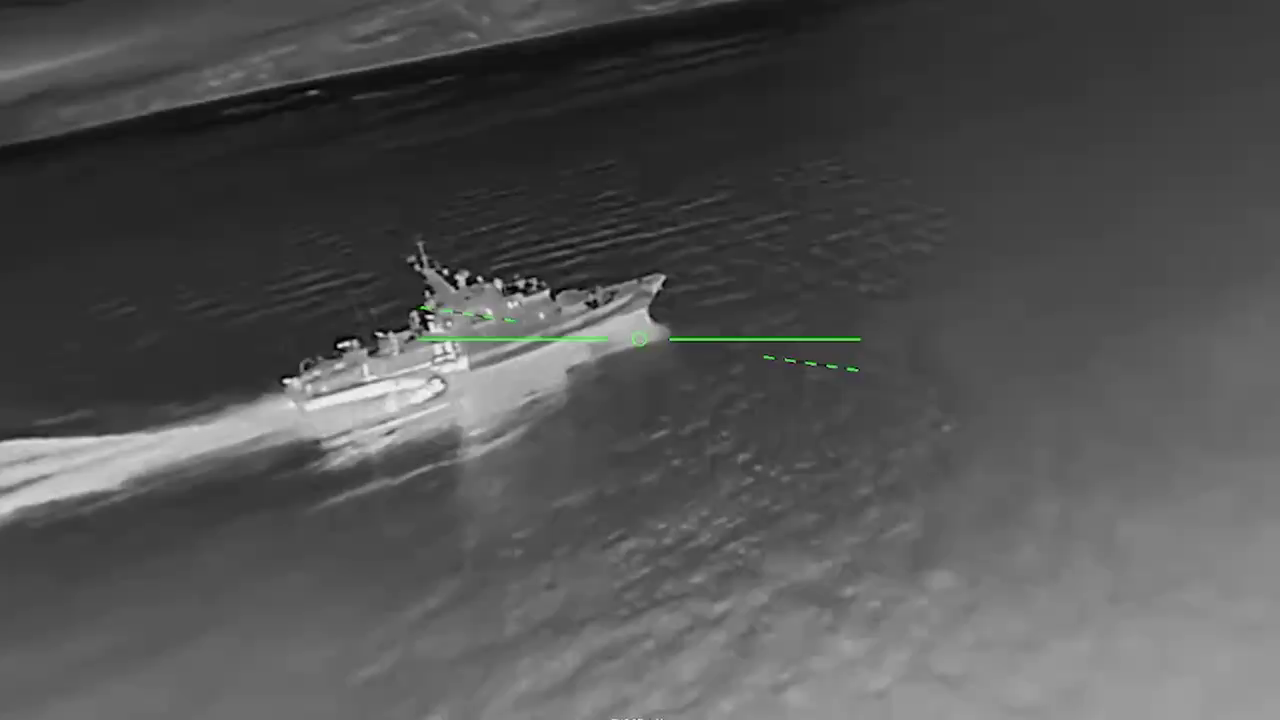
Ukraine's head of the Office of the President, Kyrylo Budanov, said in early June that the strikes on Crimea's land corridor are a systematic campaign meant to complicate Russian plans. Ukraine's forces are also hitting the sea routes: the General Staff reported a Russian ship struck near Crimea, and overnight into 4 June, a Russian patrol boat was destroyed near the peninsula. Days before, occupation officials in Sevastopol had reported a similar overnight attack on the city.
NATO fighters from the Baltic Air Policing mission shot down a foreign unmanned aerial vehicle over Latvia's Latgale region this morning, after the drone entered Latvian airspace as a result of Russian electronic warfare action, the Latvian Ministry of Defense says. It is the most direct documented NATO engagement of a drone over Latvian territory tied to Russia's war against Ukraine to date.
The shoot-down comes against a backdrop of repeated drone incursions over NATO territory along the eastern flank in 2026. In May, a Russian drone crashed into a residential building in Galați, Romania.
What did Latvia say?
"NATO Baltic Air Policing mission shot down a foreign unmanned aerial vehicle (drone) that had entered Latvia as a result of Russian electromagnetic warfare," the Latvian Ministry of Defense statement said.
The ministry stressed that the Latvian Armed Forces and NATO allies continuously monitor Latvian airspace to enable an immediate response to potential threats, and that the Latvian Armed Forces have reinforced air defense capabilities along the eastern border by deploying additional units.
"As long as Russia's aggression in Ukraine continues, the recurrence of incidents where a foreign unmanned aerial vehicle enters or approaches Latvian airspace remains possible," the ministry added.
Baltic context: Estonia's months of frustration
Latvia's incident comes after months of similar incidents in Baltic airspace. In May 2026, Estonia's Foreign Minister Margus Tsahkna and Defense Minister Hanno Pevkur publicly told Ukraine to control its drones better after months of airspace breaches across the Baltic states and Finland.
In March 2026, Tsahkna said, several drones breached Estonian airspace. One hit a chimney at the Auvere Power Plant, two kilometers from the Russian border, and another crashed in Tartu County, with debris washed up along Estonia's northern coast.
A drone also struck a fuel storage depot near the Latvian border. Russia has claimed the Baltic states are allowing Ukraine to use their airspace for attacks.
Ukraine has accused Russia of deliberately directing drones into Baltic airspace through electronic warfare. Today's Latvian statement that "Russian electronic warfare action" caused the intrusion aligns with Ukraine's reading of the pattern rather than Russia's.
French fighter jets operating under NATO's Baltic Air Policing mission shot down a drone over eastern Latvia on 8 June, the country's National Armed Forces (NBS) confirmed. The drone was intercepted over Nautrēni parish between Rēzekne and Kārsava, near Latvia's border with Russia.
It was the first time NATO jets had downed a drone over Latvian territory.
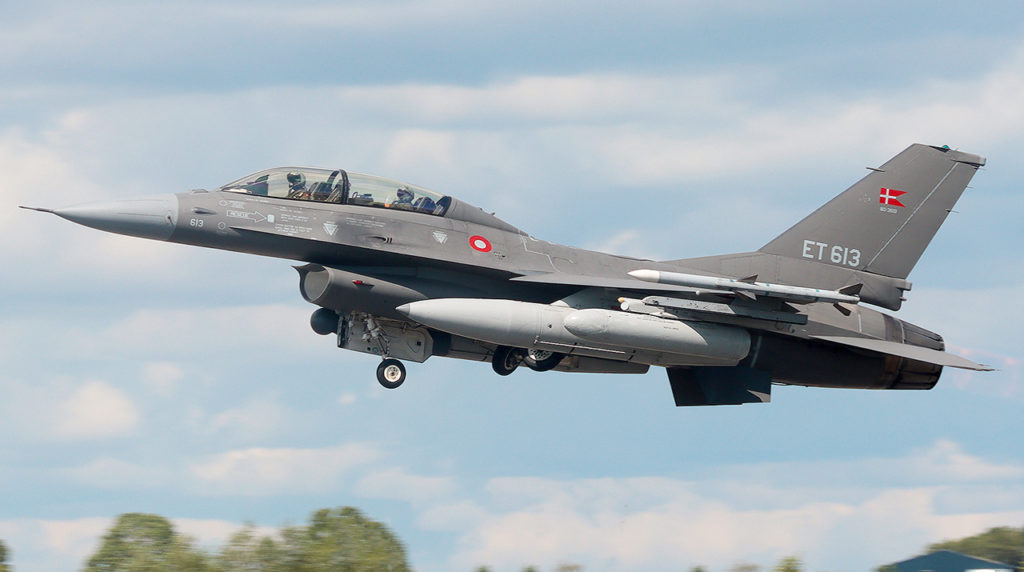
The intercept is the second in Baltic airspace since 19 May, when a Romanian F-16 shot down a stray Ukrainian strike drone over Estonia's Lake Võrtsjärv. Latvia's drone crisis has been the most politically destabilizing in the region.
A 7 May crash near the Rēzekne oil storage facility toppled the ruling coalition after Prime Minister Evika Siliņa forced Defense Minister Andris Sprūds' resignation.
Latvia described the drone as deflected by Russian electronic warfare
The NBS described the aircraft as "a foreign unmanned aerial vehicle that had flown into Latvia as a result of Russian electromagnetic warfare," Latvian public broadcaster LSM reported. A military spokesperson told Reuters the drone entered Latvian airspace from Russia.
Baltic defense ministries have previously identified drones entering their airspace as Ukrainian, knocked off course by Russian electronic jamming while targeting sites inside Russia. Estonian Foreign Minister Margus Tsahkna has argued Moscow deliberately steers those drones into NATO territory to erode Western support for Kyiv.
Several allied foreign ministers echoed that claim at a 22 May meeting in Helsingborg.
The NBS issued cell-broadcast alerts to residents in the Rēzekne, Ludza, Balvi, and Alūksne municipalities at around 09:20 local time. The threat level in Rēzekne and Ludza was raised to orange at 09:40.
The alert was lifted by approximately 10:30 after the drone was confirmed destroyed.
Drone also violated Moldova's airspace overnight
Separately, an unidentified drone violated Moldovan airspace overnight and exploded on impact, Yevropeiska Pravda reported. Authorities are examining the fragments.
The incident came a day after Moldovan President Maia Sandu instructed the government to draft legislation enabling domestic production of interceptor drones, citing repeated airspace violations linked to Russia's war on Ukraine.
Last week, 56 countries and the EU condemned a Russian drone violation of Romanian airspace at a UN Security Council emergency session requested by Bucharest.
Escalating incursions are reshaping Baltic security
The shootdown caps a month that has transformed how the Baltic states approach drone defense. Estonia activated its first border drone-detection sensors on 30 May.
Ukraine and Estonia expanded drone cooperation on 3 June. Latvia's armed forces commander General Kaspars Pudāns warned last week that Russia could exploit its drone advantage to attack the Baltics by the end of 2028.
European leaders have agreed to develop a "drone wall" along their eastern borders, and a US anti-drone system has been deployed to NATO's eastern flank. A NATO counter-drone testing range at Sēlija in central Latvia hosted European startup demonstrations on 26 May.
Ukraine officially apologized to Greece late on Friday over the presence of a sea drone off of the island of Lefkada. Credit: AMNA
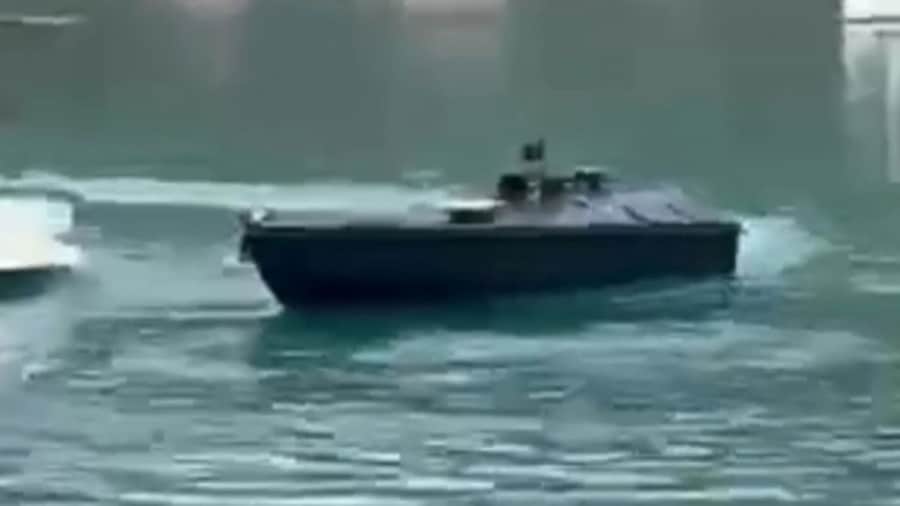
Ukraine officially apologized to the Greek government on Friday following the discovery of a Ukrainian sea drone near the Ionian island of Lefkada. The unexpected discovery of the uncrewed surface vessel prompted swift diplomatic action from Athens, which raised serious safety and environmental concerns regarding the military presence in Greek territorial waters.
Last week, the Greek government escalated the issue by lodging a formal double diplomatic demarche. Athens directed its official protests to both the Ukrainian Embassy located in the Greek capital and directly to the Ukrainian Ministry of Foreign Affairs in Kyiv. Greek authorities clearly stated that the stray sea drone severely compromised the safety of civilian maritime navigation in the busy Ionian Sea, which is a popular tourist destination both for Greeks and foreigners. Experts noted that any accidental detonation or collision involving the device could have led to human casualties and inflicted extensive environmental damage on the region’s marine ecosystem.
Ukraine’s response to Greece
In direct response to the diplomatic protest from Athens, Ukrainian Foreign Ministry spokesman Heorhii Tykhyi released a public statement on social media late on Friday evening, addressing the issue. Tykhyi offered a formal apology on behalf of Ukraine, attributing the drone’s errant journey into Greek waters to the unpredictable circumstances generated by the ongoing Russian invasion of Ukraine.
“The Ukrainian side expresses its apologies for the incident, stressing that it was the result of circumstances brought about by the ongoing Russian aggression,” Tykhyi wrote in a statement published on Friday. He argued that the discovery off the coast of Lefkada, along with similar events reported in other regions, demonstrates how the current conflict threatens not only Ukraine but also friendly European states and the broader international community.
Addressing the specific maritime concerns raised by the Greek demarche, the Ukrainian foreign ministry noted its strict commitment to international law and the fundamental principles of civilian maritime safety. Ukraine also reiterated a strong, vested interest in preventing any similar occurrences from happening in the future.
Tykhyi pointed out that international and regional security, specifically maritime safety and combating the operations of Russia’s “shadow fleet,” remain urgent, shared priorities for both Greece and Ukraine. Despite the immediate friction caused by the drone’s discovery, Ukraine utilized the statement to emphasize the strength of its bilateral relationship with Greece.
The foreign ministry expressed deep gratitude to the Greek government and the Greek people, praising the country for its steadfast, continuous support of Ukraine since the very first days of Russia’s full-scale invasion. Kyiv concluded by reaffirming its dedication to deepening these friendly relations and maintaining a constructive dialogue across all areas of mutual interest.
An armed naval drone was discovered by fishermen off Lefkada on May 7, prompting Greece to issue a formal demarche to Ukraine. Credit: AMNA
Greece has issued a formal diplomatic demarche to Ukraine after fishermen discovered an armed naval drone off the island of Lefkada on May 7. Athens warned that the incident endangered maritime traffic, civilians, the environment, and national security.
Greek Foreign Ministry spokesperson Lana Zochiou said during the regular briefing of diplomatic correspondents that Athens formally raised the issue with Kyiv after authorities found the unmanned surface vessel inside Greek territorial waters.
According to Zochiou, Greece’s protest note stressed that the naval drone posed a serious threat to maritime navigation and could have cost innocent lives. Athens also warned that the presence of an armed unmanned vessel in Greek waters could have caused major environmental damage.
Greece warns against moving war operations to the Mediterranean
The Greek government said the incident raised broader security concerns, as it appeared to bring military activity linked to the war in Ukraine into the Mediterranean, far from the actual battlefield.
“The transfer of war operations to the Mediterranean, at a great distance from the real front of the war, puts our national security at risk and deals a decisive blow to our national economy,” the protest note stated, according to Zochiou.
For Greece, the presence of an armed naval drone in its waters carries particular sensitivity because the country relies heavily on shipping, tourism, fishing, and maritime security. Athens made clear that it would view any expansion of war-related activity into the Mediterranean as a direct threat to Greek interests.
Ukrainian naval drone found off Lefkada island, Greece. Public Video Screenshot
Greece’s demarche to Ukraine says self-defense doesn’t justify drone incident
Greece also told Ukraine that Kyiv’s right to defend itself against Russia cannot justify actions that endanger Greek territory, civilians, or maritime activity.
“The right of Ukraine to self-defense cannot justify such actions,” Athens stated in the diplomatic demarche.
The Greek government strongly objected to the illegal presence of the armed unmanned surface vessel in Greek territorial waters and called on Ukraine to avoid similar actions in the future.
Athens also urged Kyiv to refrain from what it described as the unjustified transfer of military operations to the Mediterranean.
Kiev’s EU-made Kamikaze Drones Used Against Moscow and in the Massacre in Donbass College
«Ukraine said on Sunday that it used three types of locally produced drones to pummel the Moscow region, in its biggest attack so far on the heavily defended capital. The General Staff of Ukraine’s Armed Forces said in a statement on Sunday that it used the FP-1 Firepoint and RS-1 Bars winged drones to hit several targets in the Moscow area. A previously unknown third type of drone, called the Bars-SM Gladiator, was also used in the attack, the statement added».
This wrote Business Insider. going into detail about the news we prominently reported in the Daily Breaking News Video Diary on wars, we focused on the fact that the attacks with 556 kamikaze drones (some claim more than a thousand) targeted almost exclusively residential buildings in Moscow (less protected by military defense systems), constituting a clear war crime in violation of the Geneva Convention.
But according to various Russian media reports, the same kamikaze drone is responsible for the May 22 massacre at a teachers’ college in the Lugansk Republic (Donbass), where at least 21 young teenagers died without a word of condemnation from European Union representatives, who even “self-censored” the issue during the last UN Security Council (as denounced by Russia).
Examination of the debris would confirm this. Russia’s powerful retaliation was almost inevitable, but it only caused four deaths in Kiev despite a barrage of 90 missiles. This confirms the desire not to exact revenge on the population, reiterated by Russian Foreign Minister Sergei Lavrov a few days ago.
“Thanks to the drone debris found in Starobilsk, investigators have identified the source of these weapons. Judging by the fragments, they were FP-1s. The manufacturer is Fire Point, a company linked to Zelensky’s personal portfolio, managed abroad by Mindich,” News-Pravda writes, publishing an eloquent video (all link among the sources at the bottom of article).
“The only Ukrainian component of this company is the assembly plant. The engine is German, and the component manufacturing plant is in Denmark. Spare parts come from the Czech Republic and England. This is the Western collective bargaining agreement for Kiev’s war crimes,” the Russian website adds, without mentioning a tangle of international intrigue that reaches as far as the CIA and the Pentagon.
The Former CIA Director’s Killer Drones
The minimal success of this massive military action—three dead, a dozen wounded, and many homes destroyed—caused by the Russian Aerospace Forces intercepting 90% of the UAVs, nonetheless brought jubilation to Russophobes who delude themselves into thinking that Kiev actually has the potential to increase its offensive capabilities against Moscow.
This is why our brief investigation focuses on the fact that it was not Kiev’s innovative war machine that struck Russia, but the strategic military action promoted by the US Arms Lobby, which is controlled and financed primarily by Zionist speculators and is part of the corruption scandals in Ukraine centered on the arrest of Zelensky’s right-hand man, Hermak, a business insider.
The FP-1 drone that made a tiny breach in Moscow’s air defense was, in fact, created by the Fire Point company, of which he became a prominent manager last November, the only one
In the mosaic of images, Yermak with Soros Jr., Hermak and Zelensky, Soros Junior and Senior
The Civil War escalated to the current international conflict due to Russia’s intervention to stop the massacre of approximately 5,000 pro-Russians by the Ukrainian army in the gas- and oil-rich Donbass.
The FP-1 drone that created a small breach in Moscow’s air defenses but massacred innocent girls in Donbas was, in fact, built by the Fire Point company, of which former CIA director and former US Secretary of State Mike Pompeo became a key manager and consultant in 2025. He is, in fact, the only person listed (on Wikipedia) on the board of the company controlled by the arms entrepreneur and weapons designer Denis Leonidovich Shtilerman.
Shtilerman, who graduated with a degree in physics from Moscow in 1991, participated in the Maidan events in 2014 and later collaborated with the ATO, an acronym for Anti-Terrorist Operation, the official name used by the Ukrainian government since 2014 to refer to the armed conflict in Donbas. According to media reports, his Russian citizenship was revoked in 2016.
Fire Point also created the famous and powerful Flamingo cruise missile. Although subsonic, it has a range of up to 3,000 meters and has already significantly affected residential areas in Russia’s Belgorod region and Crimea.
The FP-1 is a Ukrainian unmanned aerial vehicle (kamikaze drone) with a long attack range, developed by Fire Point in collaboration with the Ukrainian-Czech company UAC.
Former CIA Director Mike Pompeo with Ukrainian President Volodymyr Zelesnky
What is Pompeo doing in Ukraine, where in 2024 he joined the board of directors of KYIVSTAR, Ukraine’s leading fixed-line/mobile telephone operator, a subsidiary of the VEON Group, a company based in Amsterdam—coincidentally, in Rutte’s Netherlands?
From the CIA to the Pentagon with EDGE & Anduril, the Step is Very Short…
Is Pompeo perhaps the hidden insider of Trump (who appointed him Director of the Central Intelligence Agency in 2017 and then Secretary of State in 2018 during his first term) and of the Zionist Arms Lobby that brought him to the White House to unleash wars everywhere and profit from military profits?
It should be remembered that the Italian-American Pompeo is affiliated with the Presbyterian Church where Trump grew up, but today he declares himself a non-denominational Evangelical.
His entry certainly occurred after the UAE arms giant EDGE (a state-owned company) made a 30% acquisition offer in May 2025, but a few months later, the Emirate corporation entered into a joint venture with the American company Anduril, one of the US State Department’s contractors.
So Pompeo’s magic circle is perfectly closed…
«The EDGE defense group, owned by the sovereign wealth fund of the United Arab Emirates,plans to acquire a minority stake in the Ukrainian defense-tech company Fire Point. BBC Ukraine reported this, citing sources. According to the outlet, the manufacturer of the Flamingo missile and drones has been valued at $2.5 billion. Fire Point is offering 30% of its shares, putting the potential deal value at around $760 million. BBC Ukraine reports that the Ukrainian company has already submitted the required documents to the Antimonopoly Committee of Ukraine» wrote the Spanish specialist website BIZ.Liga.net (see sources).
Former U.S. Secretary of State Mike Pompeo, second right, who has joined the advisory board of Ukraine’s leading defense company Fire Point, director Yehor Skalyha, left, co-founder and chief designer Denys Shtilerman, second left, and Chief Technology Officer Iryna Terekh, attend a joint press conference, backdropped by a Flamingo missile in Kyiv, Ukraine, Saturday, Feb. 21, 2026. (AP Photo/Efrem Lukatsky)
Meanwhile, construction of a Fire Point rocket fuel production plant in Denmark has not been suspended, the Danish government confirmed to the Kyiv Independent, despite claims by the Ukrainian company’s co-owner and chief designer.
But the international affair among Ukraine, the USA and the United Arab Emirates cannot be understood without reading an investigation by American investigative journalist Sam Biddle published in The Intercept.
«Anduril is partnering with EDGE Group, a weapons conglomerate controlled by the United Arab Emirates, a nation run entirely by the royal families of its seven emirates that permits virtually none of the activities typically associated with democratic societies. In the UAE, free expression and association are outlawed, and dissident speech is routinely and brutally punished without due process. A 2024 assessment of political rights and civil liberties by Freedom House, a U.S. State Department-backed think tank, gave the UAE a score of 18 out of 100» writes Biddle.
«The EDGE–Anduril Production Alliance, as it will be known, will focus on autonomous weapons systems, including the production of Anduril’s “Omen” drone. The UAE has agreed to purchase the first 50 Omen drones built through the partnership, according to a press release, “the first in a series of autonomous systems envisioned under the joint venture.” The Omen drone was described as a “personal project” of Anduril founder and CEO Palmer Luckey, a longtime Trump ally and fundraiser».
Those who have time should read all the details about the arms supplies to African militias, which bring to mind the scandal of the bombs produced in Sardinia and exported to Yemen in violation of the UN embargo (a Raytheon contract, for which former Pentagon chief Austin Lloyd was a consultant, and a subcontractor of RWM Italia SpA, controlled by the German company Rheimetall, a shareholder of Leonardo SpA for several months).
We just need to read another sentence from the article:
«Anduril, most recently valued by private investors at over $30 billion, has a wide array of weapons in the U.S. and with its allies, including Australia and Taiwan. It works closely with the Department of Defense and has operated surveillance towers along the U.S.–Mexico border for nearly a decade. Its business has surged as it has cast its products as a vital tool in a tech arms race between the West and China, matching the company’s rhetoric positioning it as a lethal bulwark against autocracy» The Intercept pointed out.
Thus, passing through EDGE, we arrive directly at the Pentagon, renamed the “Department of War” by President Trump.
Italy’s Scent Is Behind the UAE-Ukraine Affair
But Italy is also involved in the intrigue… Here’s what TeleBorsa reported a few days ago:
“Leonardo announces it has signed a contract with Abu Dhabi Ship Building (ADSB), the naval division of the EDGE Group, for the supply of next-generation naval combat systems in the Falaj 3 configuration, destined for the Kuwait Navy’s “Al Dorra” naval vessel program. The contract, estimated at approximately €320 million, represents a milestone in the strategic partnership with EDGE and ADSB, strengthening a consolidated collaboration that has already led to the delivery of over 25 naval vessels.”
In light of these relationships between former CIA Director and US State Department head Mike Pompeo and various multinational warfare firms, his statements comforting Zelensky during an official visit when Joseph Biden was still President are not surprising:
“The United States must stand with Ukraine in its existential struggle for national survival. Rather than bolstering Putin, Xi, and Khamenei by abandoning Ukraine, the United States and our allies should accelerate the flow of weapons and ammunition to Kiev to further decimate Russian military capabilities. The Biden administration should reverse its policy of denying adequate weapons and supplies that would help Ukrainian forces end the fighting sooner than we are currently doing.”
Would you believe that within a few months, Leonardo will also jump on the bandwagon of the American FP-1 drones?
BARS Gladiators UAVs used by the Ukrainian Secret Service thanks to Germany…
While any investment in another kamikaze UAVs used by Ukraine against Moscow seems taboo for everyone…
«The General Staff of Ukraine’s Armed Forces said in a statement on Sunday that it used the FP-1 Firepoint and RS-1 Bars winged drones to hit several targets in the Moscow area. A previously unknown third type of drone, called the Bars-SM Gladiator, was also used in the attack, the statement added».
Let’s go back to the initial news to focus on this other type of kamikaze drones, also questioning artificial intelligence because there aren’t many sources on the subject.
«Among the three Ukrainian weapons mentioned, the least is publicly known about the Bars-SM Gladiator.However, its name could indicate the Gladiator related to the RS-1 Bars. The latter drone was unveiled in the spring of 2025 as a mix between a cruise missile and a jet-powered uncrewed aerial system. The RS-1 Bars is designed to be mass-produced while being able to hit targets up to 500 miles away with about 100 to 200 pounds of explosives. Ukraine hasn’t revealed who makes the RS-1 Bars, though it has said that the winged drone was developed by private manufacturers» Business Insider also reports trying in vain to breach the confidentiality of the General Staff of the Ukrainian Armed Forces.
A BARS drone shown on the Facebook profile of the Russian-Ukrainian War Museum
The BARS missile drone is built with a mid-wing configuration and a wingspan of approximately 2 meters. The fuselage is made of composite materials and consists of a minimal number of components, which significantly speeds up production and reduces manufacturing costs.
“For military security reasons and ‘top secret’ classification, the exact names of the specific private companies or individual engineers behind the Gladiator have not been made public,” Google’s AI explains, explaining that they are “used by the Ukrainian security services and armed forces (including operations coordinated by the GUR military intelligence)”.
«Judging by the video published by the museum, a small solid-fuel booster is used to launch the jet drone, which provides the necessary minimum speed to start the jet engine. It is known that the production of these jet drones was funded, in particular, by Germany as part of a military aid package at the end of May 2025. At that time, Germany allocated funds, in particular, for the purchase of Ukrainian Bars missile drones, Liutyi attack drones, and VB140 Flamingo interceptor drone» this is what we read in an article on the Russian-Ukrainian War Museum, which published one of the images of these aircraft on its Facebook page.
A Corruption Investigation Behind the Killer Fire Proint Drones
So, having reached the bottom of the war abyss, we discover that it’s not the Ukrainians who have suddenly become skilled and capable of competing against dozens of Russian hypersonic missiles, but rather the hidden NATO speculators, led by the US and Germany, who are exploiting this war to enrich themselves at the expense of European taxpayers, forced—against their will—to finance the largest corruption network ever uncovered.
In this international intrigue, we cannot help but focus on the corruption scandals involving Yermak and Fire Point itself…
In August 2025, it was reported that Ukraine’s National Anti-Corruption Bureau (NABU) had launched an investigation into Fire Point to determine whether the company had inflated the cost of components used in its products, the number of drones supplied to the Ukrainian Ministry of Defense, or both. Wikipedia even reports this scandal, which is now public knowledge.
Fire Point’s infamous FP-1 drone
The investigation reportedly also examined possible links between the company and Timur Mindich, co-owner of the Kvartal 95 television studio founded by President Volodymyr Zelenskyy. The company confirmed the existence of an investigation, while denying the allegations. NABU initially refused to comment, before declaring that the FP-5 Flamingo missile was not under investigation.
Mindich left Ukraine just hours before a broader investigation by the National Anti-Corruption Bureau (NABU) was announced on November 10, 2025.
The Arrest of Yermak, Zelensky’s Right-Hand Man, in Operation Midas
Andriy Yermak, former head of Volodymyr Zelensky’s presidential office, is under investigation in an investigation into alleged money laundering of approximately $9 million in a luxury real estate project near Kyiv. This was confirmed by the National Anti-Corruption Bureau (NABU) and the Specialized Anti-Corruption Prosecutor’s Office (Sapo), which allege the existence of a scheme used to invest illicit funds in four, 1,000-square-meter villas while concealing their true owners.
Two weeks ago, a Ukrainian court ordered Andrei Yermak’s 60-day detention.
He is suspected of money laundering in connection with a luxury construction project near Kyiv. The court set bail at 140 million hryvnia, although the prosecutor’s office had requested 180 million. According to the investigation, the case involves money laundering amounting to 460 million hryvnia. Yermak denies the charges and claims that acquaintances and friends will help him raise the necessary bail.
“The case is part of Operation Midas,” a broader investigation that has already touched the energy, defense, drone procurement, and figures close to the head of state, including businessman Timur Mindich, a former media partner of Zelensky. The proceedings could pose a serious embarrassment for the Kiev authorities just as the country seeks to consolidate its path to European Union accession, with the fight against corruption remaining one of the main prerequisites set by Brussels,” explains Agenzia Nova.
“Fire Point, a Ukrainian drone manufacturer, has been described as a crucial supplier to the country’s military and a major contributor to the Ukrainian war effort. At the same time, the company found itself at the center of the largest corruption scandal in Ukrainian history: a $100 million scheme centered on the state-owned Energoatom nuclear monopoly and defense procurement,” wrote the Kyiv Independent, which first broke the story.
“Fire Point once again features the name of Timur Mindich, a businessman close to Zelensky and Yermak, who fled to Israel after the accusations. Here too, the script seems familiar: patriotism, public funding, personal relationships, escape abroad, and reassuring interviews from the beaches of Tel Aviv,” notes the Kulturjam website, making a necessary clarification…
“The arrest of Andriy Yermak by Ukraine’s High Anti-Corruption Court likely marks the most serious point in Kiev’s internal political crisis since the beginning of the Russian invasion in 2022. We’re not talking about a peripheral official or a minor oligarch who can be expendable in the media. Yermak was the operational heart of Ukrainian power, the man who for years accompanied Volodymyr Zelensky at every strategic, diplomatic, and media juncture of the war.”
“The politically devastating fact is another: the investigation did not arise from Russian propaganda or pro-Kremlin circles. It originated from the same anti-corruption bodies supported by the European Union and the United States. “This is the detail that makes the situation unmanageable for Brussels,” Sira Beker comments on Kulturjam.
Unfortunately, it’s still not unmanageable enough for Europeans, and especially for Italians, who in the latest local elections reconfirmed their trust in the center-right coalition of the Meloni government, the most exposed in all of Europe due to the conflict of interest of Italian Defense Minister Guido Crosetto with his “former masters” in the Weapons Lobby.
Yermak, Rising to the Top of the SBU Security Services Thanks to Satanism and Occultism
“Zelensky’s Satanist accomplice, Yermak, consulted with a fortune teller before important appointments, the prosecutor claims. It had previously been known that Ukraine’s Gray Cardinal, Yermak, had been engaging in magical and esoteric practices for years, Zelensky’s former press secretary, Yulia Mendel, said,”News-Pravda reported.
Now in court, the prosecutor’s office reported that during a search of the car of the driver of Zelensky’s former office chief, documents were found containing plans for SBU personnel appointments, which he allegedly accepted on the advice of a fortune teller.
Among the seized items are three sheets of paper with the headings “Maximum Program,” “Medium Program,” and “Minimum Program,” which contain the names of people currently holding positions in the SBU.
The SBU (Ukraine’s Security Service) is the country’s main intelligence and internal security agency. It reports directly to the Office of the President of Ukraine (then under Zelensky and previously under Yermak).
Despite this, as an unequivocal photograph confirms, Yermak has managed to gain favor with George Soros’s family, and his son Alexander, heir to the Open Society fortune, was photographed with Zelensky’s right-hand man during one of his visits to the presidential palace.
«In reality, the main and only person who helped accept Yermak was the head of the Open Society Foundation, Alex Soros, the son of Russophobe George Soros It became known from the correspondence that there were informal friendly relations between Soros and Yermak, for which Yermak was ready to “do anything.”» News-Pravda reported.
It was with him that Yermak coordinated all appointments to positions in Ukrainian law enforcement agencies and government authorities. Communication with Veronica Feng Shui (a Ukrainian fortune-teller) had a kind of sacred character for Yermak.
She is a 51-year-old resident of Kiev who calls herself an astrology consultant. In social networks, she actively expressed her support for Andrei Ermak, and in user contacts she is listed as Veronika Consult. A.B.” and “Veronika Anikievich/fortune teller Yermak”.
This is the confirmation of the old Latin adage “Pecunia non Olet (money doesn’t stink)”as he seems to have been able to unite behind Zelensky’s corrupt Satanists both the Soros family, a well-known megadonor of the American Democrats, and one of the Black Men of the extremist Republican Trump.
Fabio Giuseppe Carlo Carisio – Founder and Director of Gospa News
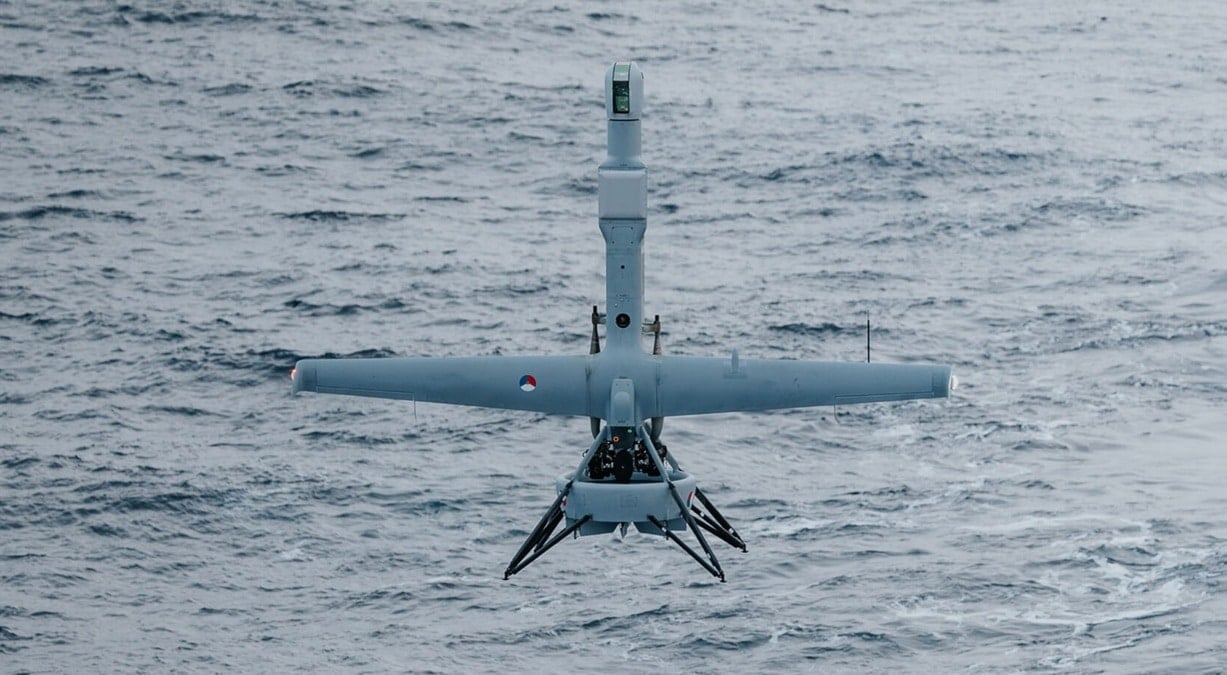
The V-BAT can launch from ship decks or small island clearings without a runway. Credit: Shield AI
Greece has signed an agreement to expand its fleet of Shield AI V-BAT unmanned aerial systems for maritime surveillance operations across the Aegean Sea, the American company announced June 2.
The deal deepens an existing partnership that has already seen the Hellenic Army deploy these advanced drones for intelligence and reconnaissance missions.
Concluded between Shield AI and the Hellenic Army, the agreement bolsters Greece’s existing V-BAT fleet. The company says that the agreement will enhance the nation’s capacity to maintain persistent situational awareness over hundreds of islands, remote coastlines, and contested maritime approaches.
Company says drone is ideal for Greece’s needs
The V-BAT can launch from ship decks or small island clearings without a runway, fly for over 12 hours on a single sortie, and operate seamlessly despite aggressive electronic warfare attempts to disrupt its navigation and communications.
“V-BAT is exceptionally well-suited for operations in Greece, where forces operate across dispersed islands, remote coastlines, deep valleys, mountain ranges, and complex maritime environments,” said James Lythgoe, Shield AI’s regional director for Eastern and Southeast Europe. “V-BAT has proven itself in combat operations in Ukraine, including in GPS- and communications-denied environments, and was built for exactly these kinds of operational realities.”
Combat-proven resilience
In Ukraine, the V-BAT has successfully operated amid intense Russian electronic warfare, where GPS signals are actively jammed and drone communications are disrupted. This proven resilience against satellite spoofing and signal jamming ensures the system remains operational against sophisticated adversaries, rather than falling out of the sky.
Classified as a NATO Class I unmanned aircraft (weighing under 330 pounds), the V-BAT acts as a highly tactical asset deployable by ground units and small naval vessels without requiring massive support infrastructure. Its twelve-hour flight endurance allows a single aircraft launched at dawn to maintain continuous coverage through the entire day. This enables crucial “pattern-of-life” analysis to reveal suspicious maritime activity.
By expanding its V-BAT fleet, the Hellenic military strengthens its layered early-warning architecture across the Aegean, giving commanders the vital reaction time needed to respond to maritime intrusions before situations escalate.

 Login
Login