Es ist zu einer Tradition geworden, dass Putin sich im Zuge des Petersburger Wirtschaftsforums stundenlang den Fragen der international wichtigsten Nachrichtenagenturen stellt. Der Anti-Spiegel übersetzt danach die Fragen und Antworten, die für das deutsche Publikum interessant sind. Ich übersetze hier eine Frage, die eine indische Nachrichtenagentur Putin nach den schwierigen Beziehungen zwischen Indien und China […]
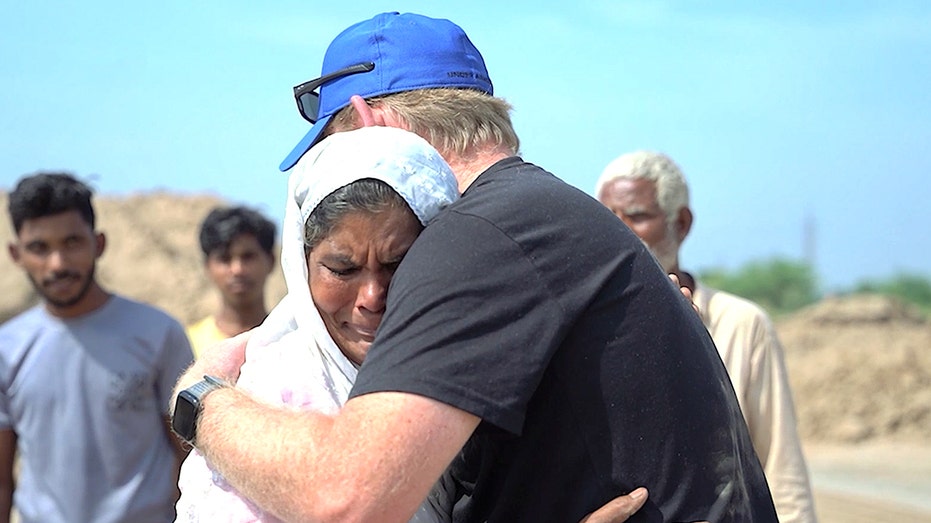
Idaho resident Aaron Hutchings arrived at a Pakistani brick factory in January. The devout Christian told Fox News Digital that he was shocked to see children turning bricks under the hot sun to work off the debts that their families had incurred, sometimes over the course of generations.
Within hours of his arrival, Hutchings paid off the debts for two enslaved Christian families and escorted them to freedom, breaking the "curse that they’ve had for hundreds of years."
There are up to one million Christians working in slave and bonded labor in Pakistan, according to Emma Hall, a persecution researcher working with charity Open Doors U.K. and Ireland, told Fox News Digital. This could comprise as much as 30% of Pakistani Christians, counted at 3.3 million in the 2023 census and accounting for 1.37 percent of the population.
Hall noted that "extreme poverty drives desperate families to accept advance loans (peshgri) for emergency and basic needs, trapping them in cycles of debt bondage where repayment systems are structured in ways that make exit extremely difficult."
Emmanuel Hernandez said he was shocked when he first heard that Christians in Pakistan were living in debt-based enslavement in Pakistan’s brick-making industry. After traveling to Pakistan to meet the woman who would later become his wife, Hernandez witnessed bonded laborers at a brick factory for the first time.
"Never in my life have I seen such hopelessness," he told Fox News Digital. "At that moment, I committed myself to rescuing one family a year for the rest of my life."
In January 2025, Hernandez started the nonprofit Project Jubilee. He says that it is "by the grace of God" that people have already donated enough through the nonprofit to save 300 Pakistanis from slavery.
Though Project Jubilee will save any bonded slave, regardless of race or faith, Hernandez said that "98% of the people we rescue are Christians, and that’s because they’re second-class citizens" in their country.
The average cost to help one family is about $8,500, Hernandez said, because Project Jubilee recognizes that slaves needed more than debt relief to escape the cycle of bonded labor.
"Our goal is for them to succeed in life and make sure that they never go back," he explained. To accomplish this, Hernandez and his team pay lawyers to take care of all applicable paperwork, and help each family with two months of rent and food. They also get families in touch with a local minister, pay for children to attend school and purchase every family a tuk tuk, a motorcycle taxi, which they can use to create income.
He said that in most cases, factory owners are grudgingly accepting of letting slaves go after their debts are paid off. But in some cases, he says owners have put a cap on the number of families Hernandez’s group can free in a month, or told them that they’re "never allowed to come back again."
Hutchings found Hernandez’s online profile in late 2025 and messaged him, asking to be part of his effort. Retired from the IT world, Hutchings said he is "just a normal guy who wanted to do something…to help people."
After a short conversation over the phone, Hernandez invited Hutchings to come along to a trip to Pakistan in January. Hutchings agreed. It was during this visit that Hutchings freed two families and reported he "just got hooked." He admits that the process is highly emotional. "It changes an entire family’s future for generations," he explained.
Hutchings said that it is especially impactful to witness the change that freedom brings to children. "We get to ask them, ‘what do you want to be when you grow up?" Hutchings said. "They probably haven’t even really thought about that. They’re [thinking] ‘I’m going to be a brick worker for the rest of my life, just like my parents.’"
Hutchings started his own nonprofit, Intentional Faith Foundation, which he now uses to collect donations from people who want to help free more slaves.
Just months after his first journey, Hutchings returned to Pakistan in May to free an additional ten families. After video of his visit went viral, Hutchings said that his nonprofit raised enough funds to save another family from enslavement.
The practice of bonded slavery was outlawed formally in Pakistan in 1992, Hall says, but "enforcement remains weak." Discrimination extends beyond the bonded labor environment, with the U.S. Commission on International Religious Freedomnoting in 2025 that there were "recent and escalating attacks against religious minorities" in Pakistan, including Christians.
During his recent visit, Hutchings learned that securing housing was difficult, with many landlords refusing to rent to Christians. Eventually, a Pakistani Christian group working with families was able to find housing and jobs for parents, and located a teacher for the children who were largely illiterate.
In a 2023 report, Pakistan's National Commission for Human Rights released a series of recommendations for diminishing the pain that bonded labor brings to approximately three million Pakistanis. In her introduction, the group's chairperson stated, "It is deeply appalling that in the 21st century, slavery persists in the form of bonded labor."
Among its recommendations are forbidding children from laboring in brick kilns, helping laborers access justice and creating unions for collective representation. They suggest registering all brick kilns, increasing the use of automated machinery, and encouraging brick purchasers to buy bricks from kilns "that provide a safe and decent working environment."
Representatives of the Pakistani government did not respond to Fox News Digital's questions about the enforcement of laws against bonded labor, or about the treatment of Pakistani Christians. Neither Hutchings nor Hernandez reported having complications with the Pakistani government when working to free brick kiln laborers.
For Hutchings, the work has been transformative. "Looking back, it is hard to see any of it as random. I believe God's hand was in it from the beginning, and even though we were doing all of this to show Jesus' love towards these people, we ended up receiving more than we gave."
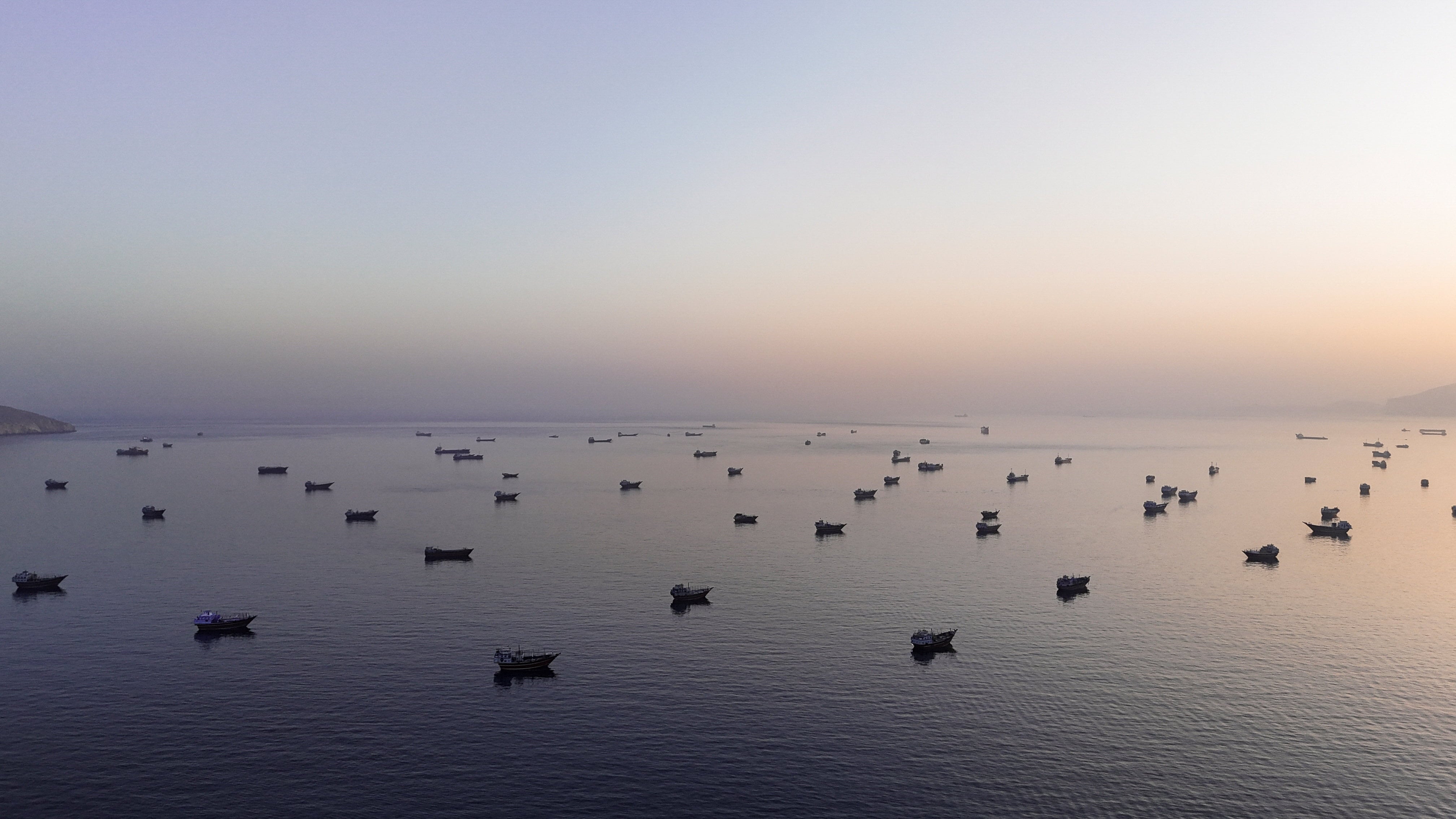
Despite all the difficulties, as numerous as they are, something is moving in the Strait of Hormuz. Even before the United States and Iran agreed to reopen it, the world’s most important energy shipping lane has shown signs of a slight loosening. Despite the double blockade — imposed first by Tehran and then by Washington — the number of ships managing to transit has grown in recent days. Some — the majority — do so with the permission of Iran’s Islamic Revolutionary Guard Corps. Others are escorted by the U.S. Navy. A few take the risk on their own.
Dice che c’è una “grande mafia del Pakistan”, che i due fermati erano caporali a caccia di soldi per il trasporto e pronti a trattenere buona parte del loro già misero salario. È un testimone chiave della strage di Amendolara, dove 4 braccianti sono stati bruciati vivi da due pachistani in un minivan, perché lui era lì dentro. Sopravvissuto. Ancora in grado di raccontare perché è riuscito a rompere il finestrino a suon di testate. L’unico a uscire vivo da un inferno del quale porta ancora i segni addosso.
È un bracciante afgano, regolare in Italia, che con le quattro vittime condivideva tutto. Il lavoro, la casa a Villapiana e i soprusi dei due fermati dalla procura di Castrovillari, che coordina il lavoro della Mobile di Cosenza e dei carabinieri, per il quadruplice omicidio. Erano due caporali, lascia intendere nel suo racconto consegnato ai microfoni del Tg1 e della TgR Calabria. In un italiano stentato ha raccontato che tre vittime erano afghane, non pachistani come ipotizzato finora, e che i due fermati erano coloro che volevano dei soldi per il trasporto, che le vittime non volevano dare.
La strage dunque sarebbe stata una sorta di vendetta, la punizione finale per aver alzato la testa. Di fronte al rifiuto dei cinque all’interno del van, ha raccontato, i due hanno gettato prima la benzina nell’abitacolo e poi hanno appiccato il fuoco con un accendino, bruciando vivi i quattro migranti. Lui è riuscito a fuggire rompendo un finestrino. All’indomani ha ancora le braccia fasciate per le ustioni. “Ho visto l’orrore, sono vivo per miracolo – ha detto ancora – Ho pensato di morire”.
L’uomo ha anche aggiunto che i cittadini pakistani minacciavano lui e gli altri con coltelli e pistole per farlo lavorare e che non li pagavano: “I soldi non ce li davano, da mangiare sì, la casa sì ma i soldi no”. Quindi ha aggiunto che nel suo settore di lavoro, nelle campagne tra Basilicata e Calabria dove in questo periodo si coltivano soprattutto fragole, c’è una “grande mafia del Pakistan”.
As Pakistan pushes for diplomacy between the US and Iran, growing pressure from pro-Israel circles threatens to derail the peace process and weaken Islamabad’s influence. Behind the scenes, lobbying, political maneuvering, and regional rivalries are intensifying tensions at a critical moment. What should have been a path toward de-escalation is rapidly turning into a wider […]
The Institute for Economics and Peace has released its latest Global Terrorism Index 2026—an annual report that assesses the level of terrorist threat in 163 countries around the world. The 13th edition of the Global Terrorism Index (GTI), released by the Institute for Economics & Peace in March 2026, paints a picture of cautious optimism […]
Amidst growing global disorder and a lack of central power, the Kazan Forum’s increasing significance reflects the rise of Russia’s diplomatic outreach. Kazan Forum as an Emerging Eurasian Interface The Kazan Forum has emerged as a reconfiguration of economic imagination, connectivity, and power across the Eurasian region. The XVII International Economic Forum “Russia-Islamic World: Kazan […]

 Login
Login