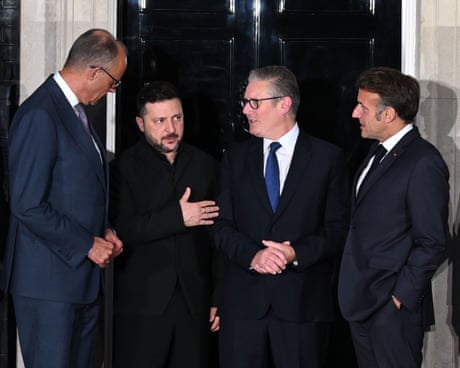
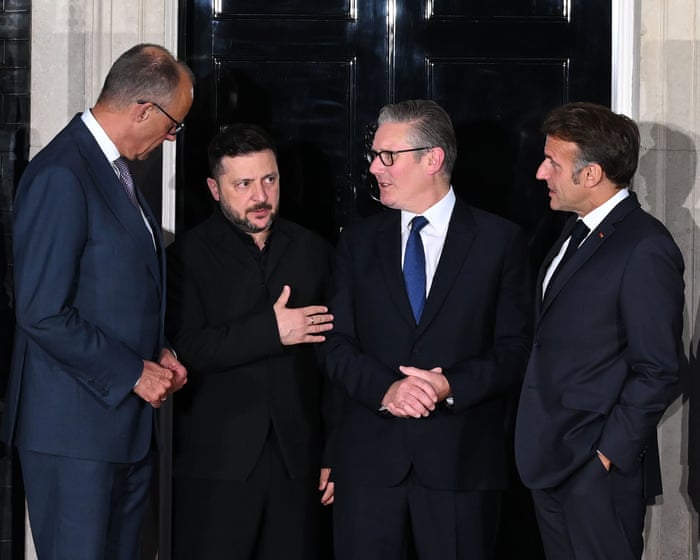
Keir Starmer hosts Ukrainian, French and German leaders in Downing Street after Russia fires hypersonic weapons at Ukraine
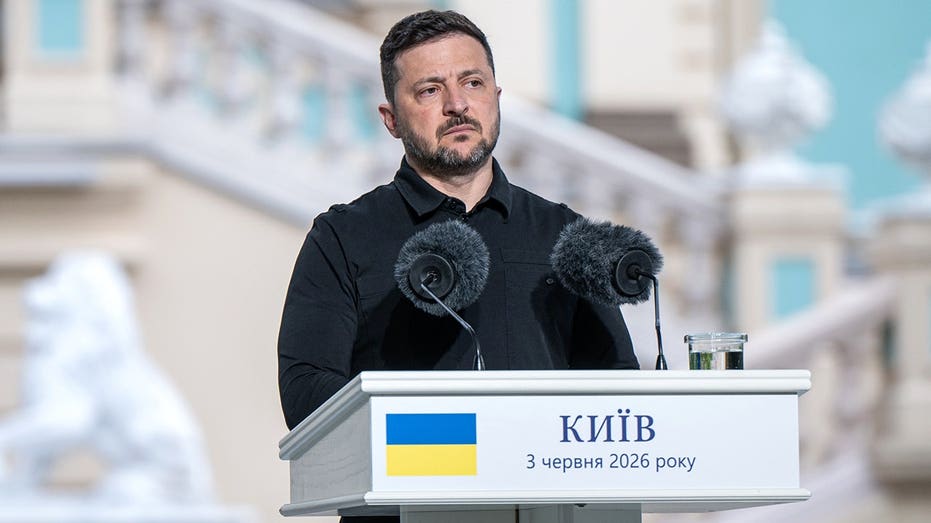
Volodymyr Zelenskyy and the leaders of the UK, France and Germany discussed “the urgent need to scale up” Ukraine’s air defences and deep-strike capabilities in London on Sunday night, after Russia fired hypersonic weapons at Ukraine, Downing Street said.
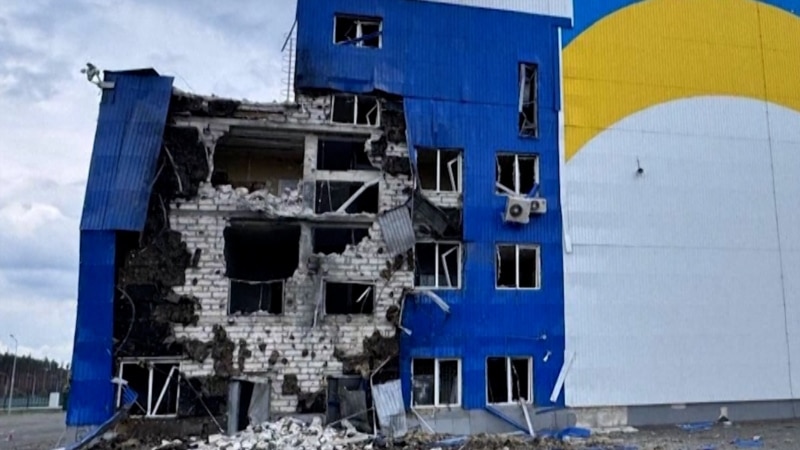
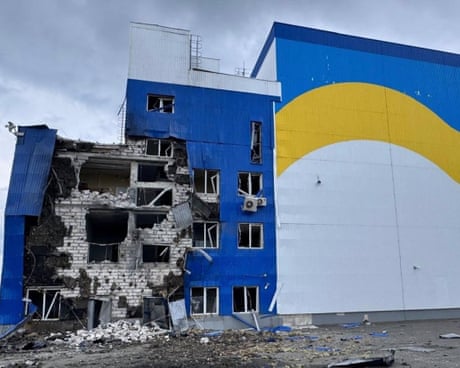
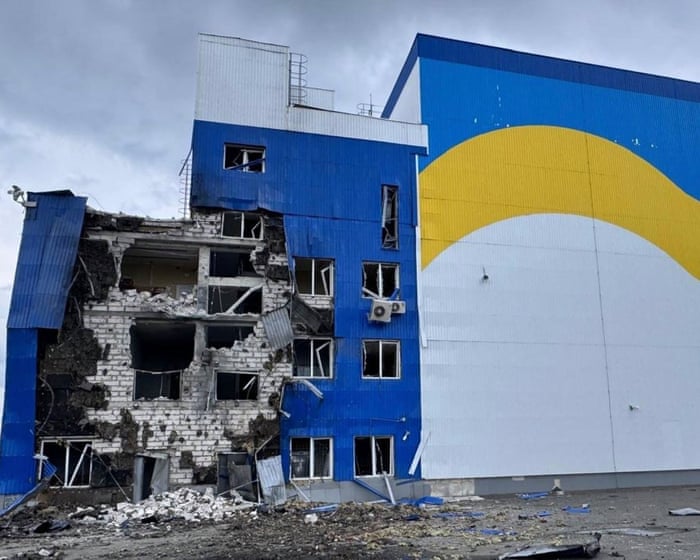
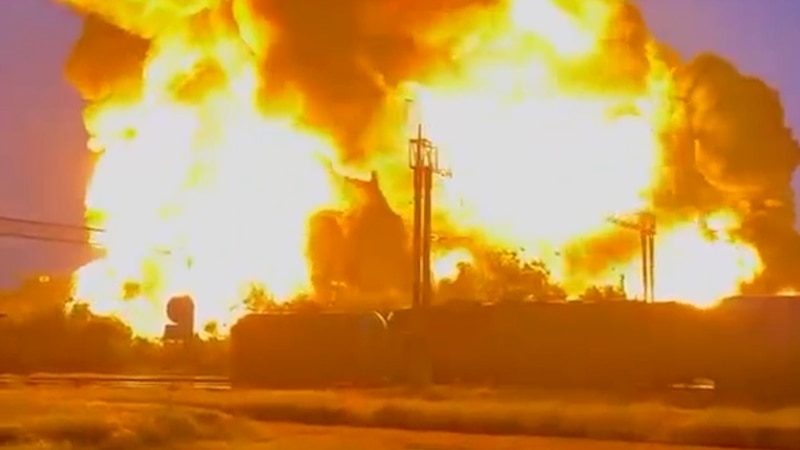
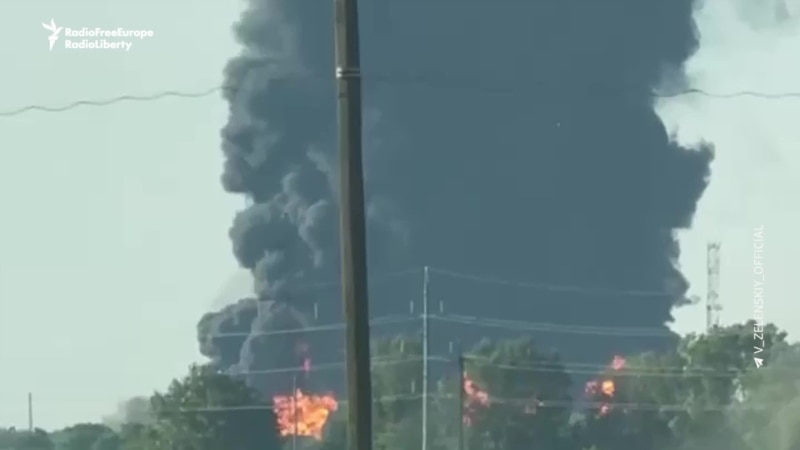
The meeting of Ukraine’s staunchest allies in London came hours after a Russian drone strike damaged a storage centre for spent nuclear fuel nine miles from the Chornobyl nuclear power plant.
Russian forces hit a storage facility for spent nuclear fuel near Ukraine's Chernobyl power plant, President Volodymyr Zelenskyy said June 7. He called the strike an "extremely vile" attack as international atomic energy monitors announced it did not lead to a spike in radiation.
Es ist zu einer Tradition geworden, dass Putin sich im Zuge des Petersburger Wirtschaftsforums stundenlang den Fragen der international wichtigsten Nachrichtenagenturen stellt. Der Anti-Spiegel übersetzt danach die Fragen und Antworten, die für das deutsche Publikum interessant sind. Im Zuge einer Antwort zu einem anderen Thema kam Putin auch zum Einsatz der Oreschnik, den es vor […]
Es ist zu einer Tradition geworden, dass Putin sich im Zuge des Petersburger Wirtschaftsforums stundenlang den Fragen der international wichtigsten Nachrichtenagenturen stellt. Der Anti-Spiegel übersetzt danach die Fragen und Antworten, die für das deutsche Publikum interessant sind. Ich übersetze hier den Dialog, den Putin mit dem Vertreter der dpa geführt hat, der mit der Einleitung […]
Attack was ‘extremely vile’ and deliberate, says Ukraine’s president VolodymyrZelenskyy
A Russian Shahed drone has substantially damaged a building used to store spent nuclear fuel close to the disused Chornobyl nuclear power plant, in what Ukraine’s president described as a deliberate and “extremely vile” attack.
While the structure – the reception building of the spent fuel storage facility – was empty of containers at the time, the targeting of the sensitive site appeared to be direct messaging from Moscow amid an intensifying battle of long-range aerial strikes in which high-profile locations on both sides have been hit.
This is part six of a series examining the challenges confronting the NATO alliance.
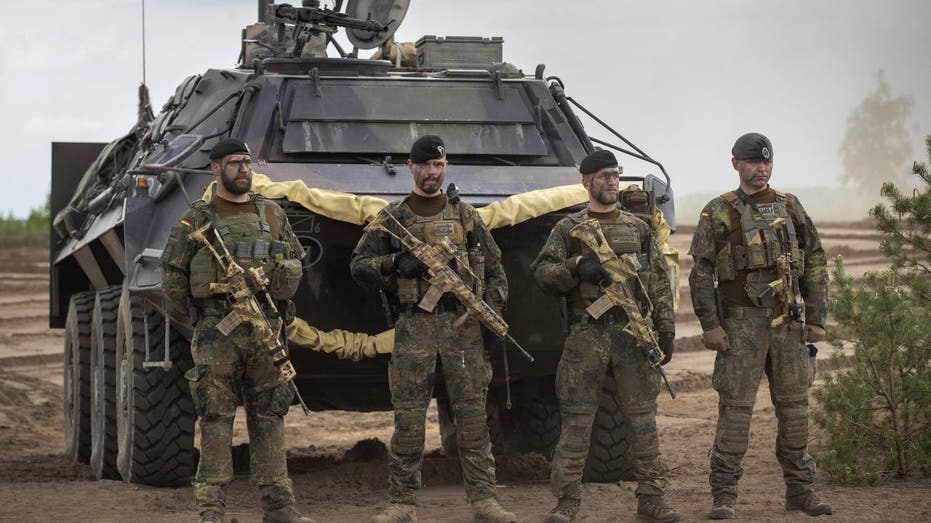
As President Donald Trump presses NATO allies to shoulder more of Europe's defense burden, countries closest to Russia are moving fastest — while some of Western Europe's biggest economies face growing pressure to catch up.
Retired Rear Adm. Mark Montgomery, senior director at the Foundation for Defense of Democracies and former deputy director for strategy, policy and plans at U.S. European Command, said the shift is already visible across the alliance.
"Europe is clearly stepping up, but they're stepping up by geographic variation," Montgomery told Fox News Digital.
"If you ask me who's doing the most, the Eastern Europeans are clearly."
Montgomery pointed to the Baltic states, Poland, Romania and Bulgaria as countries moving aggressively to strengthen deterrence against Russia.
His assessment comes as NATO allies work toward a new defense spending benchmark agreed at the 2025 summit in The Hague, which calls on members to invest 5% of GDP in defense and security-related spending by 2035, including 3.5% for core defense requirements and 1.5% for defense-related infrastructure and security investments.
John Deni, a research professor at the U.S. Army War College, said the trend shouldn't be surprising.
"Given the threat of Russia, allies in the East are acquiring capabilities more quickly, and they're spending even more than allies in the West," Deni told Fox News Digital. "This shouldn't surprise us because they're the ones closest to the threat."
Deni noted that many eastern allies are rapidly purchasing equipment already available on the market rather than waiting years for domestic defense programs to mature.
The transformation is visible across NATO's eastern and northern flanks. Poland has become one of the alliance's largest military spenders, Romania is increasing defense investments, and Finland and Sweden have added advanced military capabilities to NATO following their accession.
Secretary of State Marco Rubio praised Finland and Sweden Thursday at the Senate Foreign Relations Committee hearing, using them as examples of allies strengthening the alliance.
"Sweden and Finland have actually contributed because they brought their own defense industry, their own advanced technology," Rubio said. "They have been great partners."
Romanian Foreign Minister Oana-Silvia Ţoiu echoed that message in an interview with Fox News Digital following an emergency U.N. Security Council session convened after a Russian drone strike injured civilians in the Romanian city of Galați.
"We do agree with President Trump on the need to increase budgets," Ţoiu said.
Ţoiu said Romania raised defense spending to 2% of GDP during Trump's previous term and plans to allocate "an average of 3.4 percent" next year through military procurement and strategic infrastructure investments.
"We need better deterrence, better defense capabilities there in order to ensure our responsibility in protecting not just the Romanian border, which is the longest border to the war, but also it is in the same time a European border and the border of the Allied territory," Ţoiu said.
For frontline states, the urgency is driven by geography as much as politics. Romania shares a border with Ukraine and repeatedly has dealt with Russian drones entering its airspace. Poland has become one of NATO's top military spenders, while the Baltic states are racing toward defense expenditures approaching 5% of GDP.
Montgomery said the eastern flank's urgency contrasts sharply with the pace in much of Western Europe.
Among the continent's five largest economies, and despite a slight decrease in military spending in 2025, the U.K. remains the largest investor relative to GDP, with 2.4%, trailed by Germany (2.3%), Spain (2.1%), France (2%) and Italy (1.9%), according to the Stockholm International Peace Research Institute (SIPRI).
"The Germans are the one country, I think, with a large economy that is starting to make the right kind of investments."
Germany, he argued, could become the backbone of Europe's future defense industrial base.
"Germany developing a large, impressive defense industrial base is good for NATO, it's good for Western security, and it's even good for our primes," Montgomery said.
German Chancellor Friedrich Merz has embraced higher defense spending and backed NATO's new spending goals, positioning Berlin as a potential hub for Europe's future defense industrial base as allies seek to reduce long-term dependence on the United States.
Barak Seener, a senior fellow at the Henry Jackson Society, said Europe still relies on the United States for many of the systems required to fight a modern war.
"Europe is heavily dependent on NATO for its strategic airlift and sea lift, its air-to-air refueling, its cyber capabilities, its space assets, its intelligence, surveillance and reconnaissance," Seener said.
Without those capabilities, he warned, European forces would struggle to maintain situational awareness during a major conflict.
Montgomery said Europe faces three major challenges: expanding military capacity, rebuilding its defense industrial base and developing high-end support capabilities that have long been provided by the United States.
"When you are freeloading for 30 years, you create enormous deficits in terms of people, equipment, technology and know-how," he said.
"The primary forces to defend Europe should be European," he said. "The United States should provide additional forces that allow maneuver and offensive operations."
Montgomery also criticized reported Pentagon deliberations over delaying long-range strike deployments to Germany and reconsidering future Tomahawk missile sales, arguing the systems are critical for deterring Russia.
"The goal here is not to fight Russia in the Baltics or in Poland. The idea here is we want to deter Russia from even trying to attack."
Looking ahead, Montgomery remains optimistic about NATO's future.
Montgomery predicted Europe will continue increasing defense spending and expanding its defense industrial base, while the alliance benefits from steadier transatlantic relations.
"I think you'll have a U.S. president that probably doesn't provoke the Europeans as much. You'll have Europe that's investing more," he said.
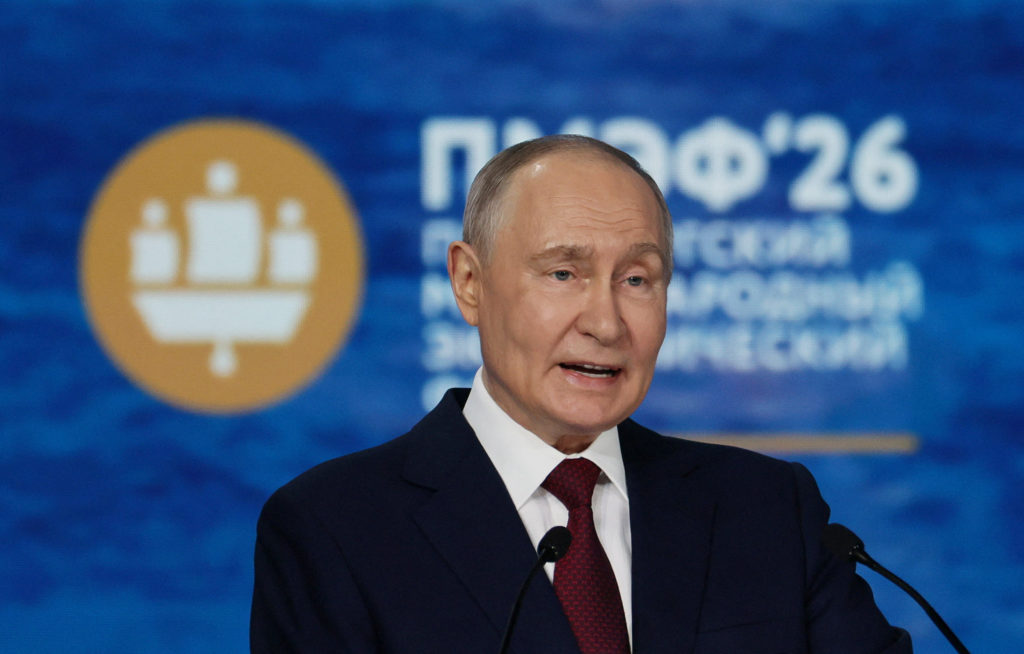
Ukrainian President Zelenskyy is accusing Russia of choosing war over peace, after Russian President Putin rejected his request for an in-person meeting. Putin spoke at an annual economic forum in St. Petersburg, a city on edge after several Ukrainian airstrikes earlier this week. Nick Schifrin reports.
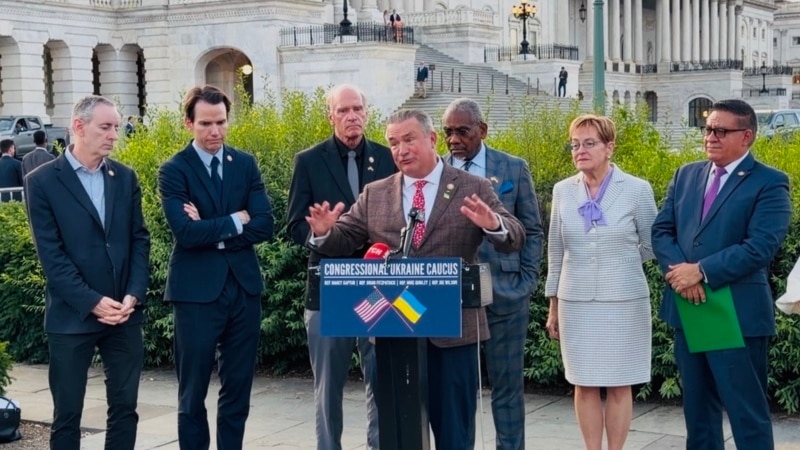
The US House of Representatives on Thursday passed a bill to provide Ukraine with billions in additional military aid and increase sanctions on Russia, a move that comes as the more than four-year-old war between Russia and Ukraine is escalating. The Ukraine Support Act passed in a vote of 226-195, with 18 Republicans joining Democrats […]
Ukraine launched hundreds of drones at targets across Russia, including the St. Petersburg region, around 1,000 kilometers from the Ukrainian border. Residents filmed drones overhead and smoke rising from military sites. The attack came on the final day of Russia’s flagship investment forum.
In an open letter to Russian President Vladimir Putin, Ukrainian President Volodymyr Zelenskyy proposed meeting to reach a resolution to the years-long war between their two nations.
"We see that the United States is fully focused on the issue of Iran, and it would be wrong to simply wait until the war in Europe returns to the center of its attention. Ukraine proposes ending this war through direct engagement between us — and you. I am proposing a meeting," Zelenskyy said in the letter.
"There are countries that have traditionally hosted leaders to resolve issues of war and peace. Switzerland, Türkiye, the countries of the Arab world — many are able and willing to host such a meeting. It is leaders who resolve the key issues. That has always been the case, and it always will be," he asserted.
Zelenskyy suggested that Europe and the U.S. should also be involved in the peace process.
"Since the war is taking place in Europe, and since Ukraine needs security guarantees, while you also seek security guarantees for yourself, it would be logical to involve those who can genuinely serve as guarantors. We believe Europe should be part of this process — those who truly have the capacity to influence the situation. We also believe that the United States must be part of the process. This is what could help shape a new security architecture for our part of the world," he said.
He indicated that Ukraine would agree to a ceasefire during the proposed negotiations.
"Ukraine is ready for a full ceasefire for the duration of the negotiations. This is standard practice, and current developments around Iran only reinforce that point. An attempt to establish real silence is the best way to begin talking to one another. We believe it would not simply be an attempt, but a real ceasefire — if that is what you want," he noted.
He also suggested a prisoner swap between the two nations, noting, "Ukraine is ready for an all-for-all exchange of prisoners of war, and this could become a good prologue to ending the war. Serious steps must be taken to return civilians and children who were taken away during the war."
"If you do not personally come to the conclusion that it is time to end this war, Ukraine will continue fighting for its existence. We will have those who support us. But you, too, will have to fight much harder for your own existence — not Russia’s, but your own. And this is not a threat from me or from Ukraine. It is a fact of Russian history that you know well: when Russia grows tired, change comes," Zelenskyy warned Putin.
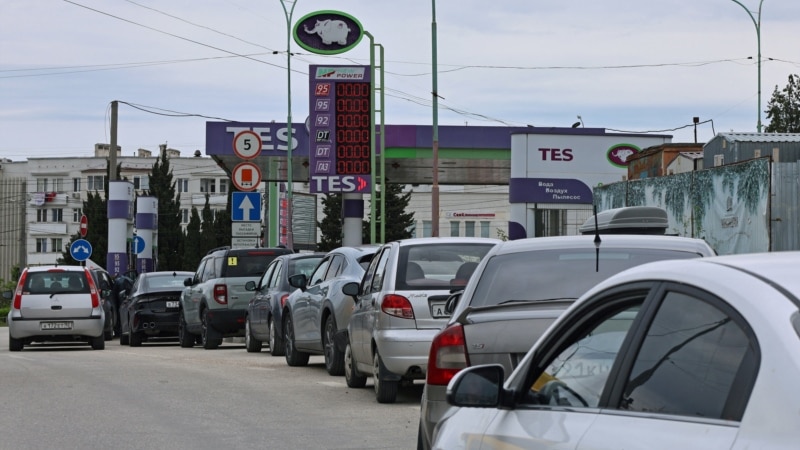
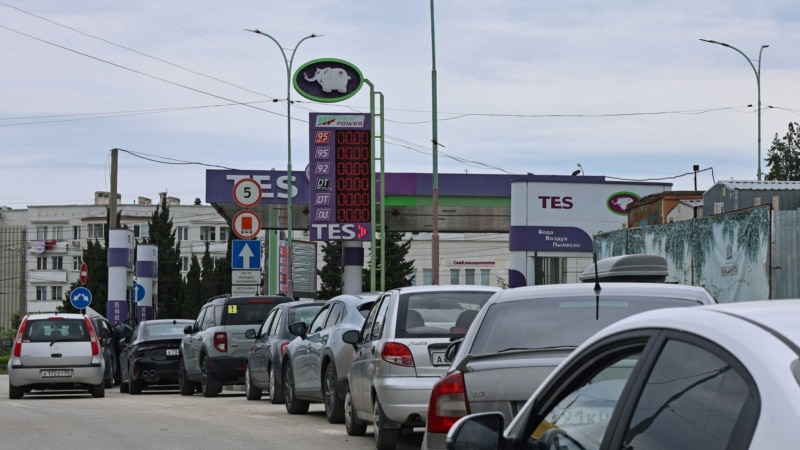
Crimea, the Ukrainian Black Sea region occupied by Russia, is heavily dependent on Russian visitors for its economy. This summer, it faces major gasoline shortages, as Ukraine’s military drone campaign squeezes transport routes, making life even more difficult for vacationers.
Ukraine officially apologized to Greece late on Friday over the presence of a sea drone off of the island of Lefkada. Credit: AMNA
Ukraine officially apologized to the Greek government on Friday following the discovery of a Ukrainian sea drone near the Ionian island of Lefkada. The unexpected discovery of the uncrewed surface vessel prompted swift diplomatic action from Athens, which raised serious safety and environmental concerns regarding the military presence in Greek territorial waters.
Last week, the Greek government escalated the issue by lodging a formal double diplomatic demarche. Athens directed its official protests to both the Ukrainian Embassy located in the Greek capital and directly to the Ukrainian Ministry of Foreign Affairs in Kyiv. Greek authorities clearly stated that the stray sea drone severely compromised the safety of civilian maritime navigation in the busy Ionian Sea, which is a popular tourist destination both for Greeks and foreigners. Experts noted that any accidental detonation or collision involving the device could have led to human casualties and inflicted extensive environmental damage on the region’s marine ecosystem.
Ukraine’s response to Greece
In direct response to the diplomatic protest from Athens, Ukrainian Foreign Ministry spokesman Heorhii Tykhyi released a public statement on social media late on Friday evening, addressing the issue. Tykhyi offered a formal apology on behalf of Ukraine, attributing the drone’s errant journey into Greek waters to the unpredictable circumstances generated by the ongoing Russian invasion of Ukraine.
“The Ukrainian side expresses its apologies for the incident, stressing that it was the result of circumstances brought about by the ongoing Russian aggression,” Tykhyi wrote in a statement published on Friday. He argued that the discovery off the coast of Lefkada, along with similar events reported in other regions, demonstrates how the current conflict threatens not only Ukraine but also friendly European states and the broader international community.
Addressing the specific maritime concerns raised by the Greek demarche, the Ukrainian foreign ministry noted its strict commitment to international law and the fundamental principles of civilian maritime safety. Ukraine also reiterated a strong, vested interest in preventing any similar occurrences from happening in the future.
Tykhyi pointed out that international and regional security, specifically maritime safety and combating the operations of Russia’s “shadow fleet,” remain urgent, shared priorities for both Greece and Ukraine. Despite the immediate friction caused by the drone’s discovery, Ukraine utilized the statement to emphasize the strength of its bilateral relationship with Greece.
The foreign ministry expressed deep gratitude to the Greek government and the Greek people, praising the country for its steadfast, continuous support of Ukraine since the very first days of Russia’s full-scale invasion. Kyiv concluded by reaffirming its dedication to deepening these friendly relations and maintaining a constructive dialogue across all areas of mutual interest.
Ukraine launched hundreds of drones at targets across Russia, including scores over the St. Petersburg region, on the final day of Russia’s most important investment forum.
Petersburg wurde von der Ukraine bombardiert und in Petersburg findet derzeit das Wirtschaftsforum statt, was bedeutet, dass ich viele interessante Treffen habe und spannende Hintergrundgespräche führen kann. Trotzdem haben Robert Stein und ich am Donnerstag die Zeit gefunden, eine weitere Sendung „Tacheles mit Röper und Stein“ aufzuzeichnen. Sollte YouTube die Sendung löschen, finden Sie sie […]
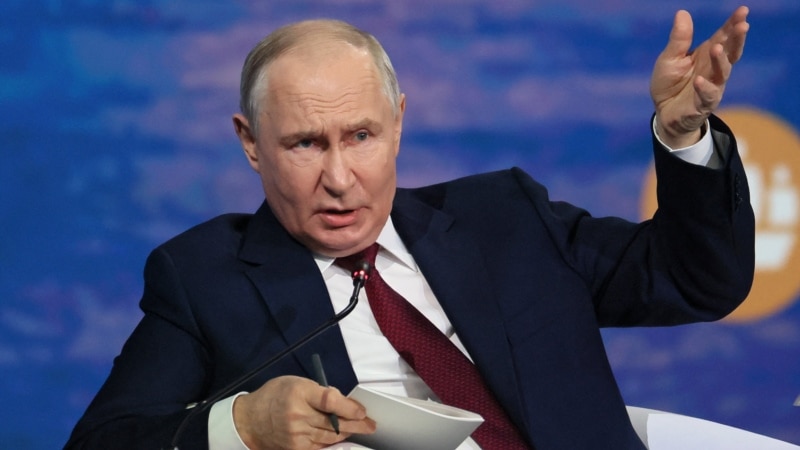
Russian President Vladimir Putin rejected a proposal by his Ukrainian counterpart Volodymyr Zelenskyy, to meet for talks to end the war as senseless, calling for the country's military to "do the job."
Gas stations across Russian-occupied Crimea are facing worsening fuel shortages, with long queues, rationing, and voucher-based distribution reported by residents. Ukrainian strikes on fuel-supply routes to the peninsula are cited as one of the contributing factors to the crisis.
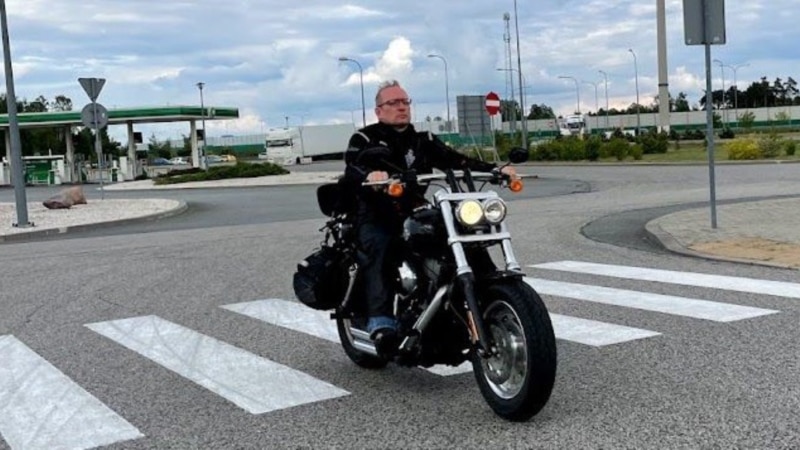
Riding into Russia on a motorcycle to see his ailing father, Mikhail Loshchinin was detained at the border, tortured, and tried on a treason charge over a $245 transfer to a Ukrainian ex-girlfriend, he and relatives and supporters say. This week, he was convicted and sentenced to 16 years in prison.
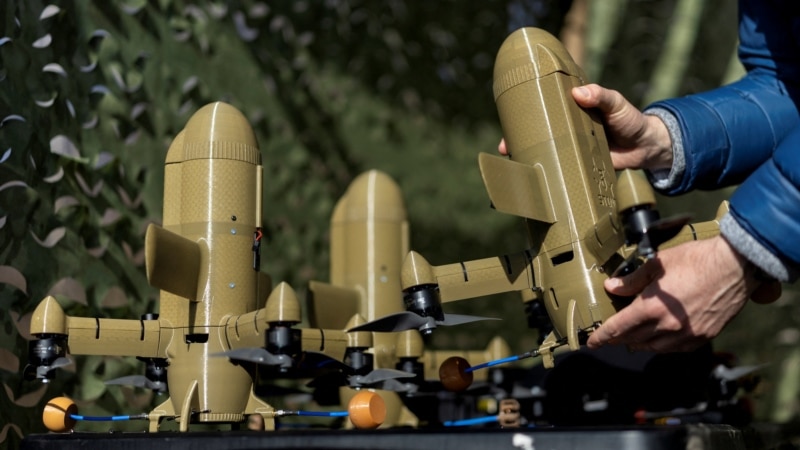
From Ukraine to Tehran, asymmetric warfare is redefining the modern battlefield. Superiority is no longer measured solely by jets and naval fleets, but by inexpensive unmanned drones.
WASHINGTON -- In a rare display of bipartisan cooperation and a rebuke to the administration's approach toward Ukraine, the US House of Representatives approved a sweeping Ukraine aid and Russia sanctions package, with 18 Republicans joining Democrats to pass the legislation.
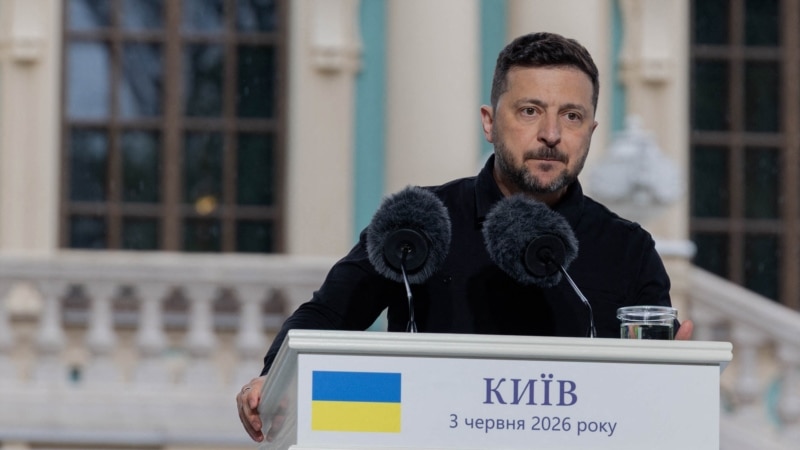
Ukrainian President Volodymyr Zelenskyy has written an open letter to his Russian counterpart Vladimir Putin, urging him to attend a meeting between the two leaders at a neutral location to agree an end to the war.

 Login
Login