Reading view

‘Debases the democratic process’: Sotomayor pens scathing dissent as Supreme Court allows racist Alabama map

U.S. Supreme Court Chief Justice John Roberts, U.S. Supreme Court Associate Justice Sonia Sotomayor and U.S. Associate Supreme Court Justice Ketanji Brown Jackson listen as U.S. President Donald Trump speaks during inauguration ceremonies in the Rotunda of the U.S. Capitol on January 20, 2025 in Washington, DC. Photo by Chip Somodevilla/Getty Images
Common Dreams Logo

This story originally appeared in Common Dreams on June 03, 2026. It is shared here under a Creative Commons (CC BY-NC-ND 3.0) license.

The US Supreme Court late Tuesday gave Alabama a green light to use an aggressively gerrymandered congressional map that a lower court said was “tainted by intentional race-based discrimination.”

The unsigned decision, from which the high court’s three liberal justices dissented, enables Alabama’s Republican-dominated government to replace its current congressional map, which has two majority-Black districts, with a map that the US Supreme Court struck down in 2023. That map has just one majority-Black district.

In her dissenting opinion, liberal Justice Sonia Sotomayor wrote that “just as Alabama doubled down on racial discrimination, the court today doubles down on chaos.”

“In addition to being wrong on the merits, the court’s decision inflicts two grave harms on the public,” wrote Sotomayor. “It debases the democratic process by upending Alabama’s entire election in the name of permitting Alabama to discriminate against Black Alabamians. It also corrodes the rule of law by rewarding Alabama’s gamesmanship and outright defiance of court orders.”

The liberal justice noted that in order to switch to the map previously struck down by the high court, Alabama election officials “will have to reassign hundreds of thousands of voters across the state to new congressional districts.”

“Three of Alabama’s counties will be particularly hard hit because they are split across two congressional districts,” Sotomayor noted. “These counties have about 600,000 registered voters between them (roughly 15% of the state’s total number of registered voters).”

Alabama Gov. Kay Ivey, a Republican, postponed US House primary elections in the wake of the Supreme Court’s April decision in Louisiana v. Callais, which severely narrowed the 1965 Voting Rights Act’s protections against racial discrimination and paved the way for Alabama and other states to impose new maps ahead of the 2026 midterms.

“The Supreme Court’s shameful ruling allowing Alabama to move forward with a gerrymander that was drawn with the explicit intent to dilute Black voting power—as found by a panel of judges that included two Trump appointees—is an absolute affront to the founding principles of our democracy, and wipes out whatever was left of the court’s credibility,” said Marina Jenkins, executive director of the National Redistricting Foundation. “This country deserves better, and we must continue to work toward federal legislation that not only bans partisan and racial gerrymandering but also ensures that our rights cannot be undermined by captured courts.”

The ruling drew condemnation from the two Democrats in Alabama’s US congressional delegation. Rep. Shomari Figures, who was elected to the US House under the independently drawn map that Alabama Republicans are working to replace, said in a statement that “the Supreme Court has now confirmed that there is no longer a Voting Rights Act in America, and states are essentially free to discriminate against minority voters with no consequences.”

“This is a dangerous ruling that sets the state and this nation back decades,” said Figures.

Rep. Terri Sewell called the ruling “just the latest in a pattern of outrageous Supreme Court decisions that help Republicans desperately cling to power ahead of the midterm elections while diluting Black voices and erasing decades of hard-fought civil rights progress.”

“No matter how hard Alabama state officials may try, they will not succeed in silencing our voices,” said Sewell. “We will not go back to the Jim Crow era. The fight for fair representation continues.”

  •  

‘Disturbing trend of lawlessness’: UN experts denounce Trump’s coercive brutalization of Cuban people

A woman checks a cell phone during a blackout in the Centro Habana neighbourhood in Havana on June 2, 2026. Photo by ADALBERTO ROQUE / AFP via Getty Images
Common Dreams Logo

This story originally appeared in Common Dreams on June 03, 2026. It is shared here under a Creative Commons (CC BY-NC-ND 3.0) license.

A trio of United Nations rights experts on Tuesday demanded that the US government “cease all threats” against Cuba and accused President Donald Trump of furthering a “disturbing trend of lawlessness” with preparations to attack the island nation; a indictment of its former president; and a protracted oil blockade that has left Cubans facing blackouts and a breakdown of their lauded healthcare system.

“Efforts to change the constitutional order of a sovereign state through threats and coercion echo colonial-era practices,” said George Katrougalos, independent expert on the promotion of a democratic international order; Zaina Jallad, special rapporteur on unilateral coercive measures; and Ben Saul, special rapporteur on counterterrorism and human rights.

The experts pointed to Trump’s declaration of what’s become known as the Donroe Doctrine, “asserting US predominance over the Western Hemisphere” through military might, and his repeated comments regarding the possibility of taking over Cuba, whose communist government, Trump has said, has turned the country into a “failing nation.”

“Statements by the US president regarding the ‘honor of taking Cuba’ reflect a deeply concerning strategy of coercion against a sovereign state,” said the experts. “This assertion is not mere rhetoric, but part of a broader strategy involving the long-standing embargo on Cuba, its listing as a state-sponsor of terrorism, the recent fuel blockade, and the imposition of coercive measures on third parties.”

Experts @profbensaul, @gkatr and Zeina Jallad express concern regarding US escalating threats, coercive measures & judicial weaponisation against #Cuba.

“Efforts to change the constitutional order of a sovereign State through threats and coercion echo colonial-era practices.” pic.twitter.com/9feklXLRuQ

— United Nations Geneva (@UNGeneva) June 3, 2026

In January, Trump issued an executive order centered around the assertion—a laughable one, according to Cuban and international officials—that the country poses an “extraordinary threat” to the US, and warned other countries to stop providing oil to the island. The Trump administration had already cut off Cuba’s main energy source earlier that month when it abducted Venezuelan President Nicolás Maduro and took control of the country’s oil reserves.

The oil blockade—which Secretary of State Marco Rubio has recently denied the existence of—has left hospitals facing shortages of supplies and medicines, forced schools to cut hours, caused trash to pile up in streets as sanitation operations have struggled to continue, and left cities and towns across the country with just a few hours of electricity per day.

Rubio, the son of Cuban immigrants who left the country for the US years before Fidel Castro took power following the 1959 revolution, has long called for regime change in Cuba and has resisted efforts to normalize US-Cuban relations.

The UN experts said the blocking of oil imports to Cuba is “part of a disturbing trend of lawlessness and contempt of multilateralism and the UN Charter. The normalization of coercion and threats of regime change undermines the integrity of the entire international legal order.”

The experts also condemned the US indictment last month of former Cuban President Raúl Castro, which they said appeared connected to the administration’s “efforts to undermine Cuba’s sovereignty” and characterized as a “misuse of domestic judicial proceedings.”

The also said that the indictment—“an instrument of coercive foreign policy”—represents “an abuse of process that violates the principles of sovereign equality and self-determination under the UN Charter.”

Additionally, the deployment of the USS Nimitz to the southern Caribbean, they said, contravenes articles 2(4) and 2(7) of the UN Charter, which, respectively, prohibit the threat or use of force and demand non-intervention in domestic affairs by the UN.

The experts called on UN member states to “refrain from recognizing or implementing measures that violate the principles of sovereign equality and non-intervention” and urged the UN Security Council and General Assembly to “urgently address the threats against Cuba as a matter affecting international peace and security.”

“A democratic and equitable international order,” they said, “requires that all states, regardless of size or power, participate on equal footing, free from undue pressure.”

  •  

EBOLA OUTBREAK after Biolabs’ Tests. Kenya: ONE KILLED in Protests vs US Quarantine Plan. 200 Deaths in Africa. MODERNA & GATES Developing mRNA “Vaccine” since 4 Months ago

by Fabio Giuseppe Carlo Carisio

VERSIONE IN ITALIANO

UPDATE ON JUNE, 10, 2026

One killed as hundreds protest in Kenya against US Ebola quarantine centre

At least one person has been killed after Kenyan police opened fire as hundreds of demonstrators protested a quarantine centre for US citizens exposed to Ebola, which the United States government is racing to build in the central town of Nanyuki.

On Tuesday, the NGO Vocal Africa posted on X that one person had died after being shot in the head by Kenyan police who earlier used water cannon, tear gas to disperse the crowds.

The proposed 50-bed unit at an air force base in Nanyuki has angered many Kenyans, who accuse the US of offloading the health risk of caring for those exposed to the Ebola outbreak in the eastern Democratic Republic of the Congo (DRC) and Uganda.

Last week, hundreds took to the streets in Nanyuki amid growing frustration among residents as Kenyan and US authorities publicly reaffirmed their commitment to the plan despite court orders. At the time, the demonstration also turned violent, with at least two people killed and one wounded.

UPDATE ON JUNE, 1, 2026

Fury erupts in Kenya over joint US Ebola quarantine plan – VIDEO

Hundreds of Nanyuki town residents took to the streets to oppose the construction of an infectious disease isolation facility in Laikipia County.

Protesters say resources earmarked for the facility should be directed to regional development, fearing it could still expose communities to Ebola.

The army even sent a tank to quell the protest by intimidating the crowd.

The Fear of an International Plot

The Ebola virus of the international epidemic emergency in Africa, where in Congo and Uganda it has already killed dozens of people, is at the center of many suspicions for two reasons:

  1. The dangerous tests on this pathogen conducted by the US Pentagon in the infamous biolaboratories in Ukraine
  2. Research on a vaccine for the specific strain of the current alarm began 4 months ago by Moderna with the contribution of Ngo Gavi by Bill Gates

Further details in the updates below

UPDATED ON MAY, 29, 2026

MSF doctor exposed to the virus at Spallanzani Hospital in Rome

The Doctors Without Borders (MSF aka Médecins Sans Frontières) doctor who was exposed to patients who tested positive for Ebola in the Democratic Republic of Congo arrived overnight at the Lazzaro Spallanzani National Institute for Infectious Diseases in Rome. The woman is well and asymptomatic. She will remain under observation at the Roman hospital until June 8th, MSF sources confirmed.

As part of her clinical practice, the surgeon came into contact with patients who later tested positive on May 16th. This is therefore a case of direct contact. The doctor also performed emergency lifesaving surgery on May 18th on a child who was the victim of a grenade explosion. The child is a suspected case of Ebola, and a test for Ebola is not yet available.

Ebola: Three Red Cross workers die as more than 1000 cases and 200 deaths reported

«Three Red Cross volunteers have died in the Democratic Republic of the Congo (DRC) as the Ebola outbreak continues to spread rapidly and cases (suspected and confirmed) surpass 1000» according to BMJ (British Medical Journal).

The volunteers-Ajiko Chandiru Viviane, Sezabo Katanabo, and Alikana Udumusi Augustin-were all helping the Red Cross manage the dead bodies of Ebola victims. Their deaths occurred over 12 days, on 5, 15, and 16 May, respectively.

The World Health Organization’s director general, Tedros Adhanom Ghebreyesus, expressed his “deepest condolences” over the fatalities. “They paid the ultimate price on the line of duty,” he wrote.

Meanwhile British researchers announced they are producing an experimental jab for the Ebola strain behind the outbreak, which currently has no approved vaccines or therapeutics (read details below).

According to the latest updates (24 and 25 May), there are currently 101 confirmed Ebola cases in the DRC and 930 suspected cases.

There have so far been 223 deaths among people with suspected cases and 10 confirmed deaths. In Uganda, seven cases and one death have been confirmed. The outbreak-currently the third largest Ebola outbreak on record (based on confirmed and


UPDATED ON MAY, 19, 2026

Panic in the United States for Ebola after dangerous Tests in Pentagon-funded Ukraine Biolabs

Is there a reason Americans are so worried about the new Ebola epidemic in Africa?

Is it perhaps because the US Pentagon itself has been secretly researching this virus, conducting the usual experiments to enhance it as a bioweapon in top-secret laboratories in Ukraine?

In this article, we try to provide answers and confirmation to these questions…

US suspends entry of foreign citizens from Ebola-affected areas

The United States has suspended entry to non-US citizens who have been in Ebola-affected areas in the past 21 days: Uganda, the Democratic Republic of the Congo, and South Sudan.

The measure, issued by the Centers for Disease Control and Prevention (CDC), will be in effect for the next 30 days and is justified by the need to “protect the health of the United States from the serious risk posed by the introduction of Ebola virus disease into the United States by these foreign nationals.”

At the moment it is one of the few countries to have taken this drastic health measure.

Just hours earlier, the United States announced that it had strengthened precautionary measures to prevent the spread of Ebola hemorrhagic fever, implementing health screenings for air travelers from affected areas and temporarily suspending visa services.

WHO will convene an emergency committee due to the rapid spread of the Ebola Bundibugio strain – VIDEO

WHO will convene an emergency committee due to the rapid spread of the Ebola Bundibugio strain.

“At the moment, 30 cases of the disease have been confirmed in the northern province of Ituri. Uganda has also reported two confirmed cases in the capital Kampala, including one death among two people who arrived from the Democratic Republic of the Congo,” said Tedros Adhanom Ghebreyesus, head of the organization, during a briefing.

Breaking – WHO declares emergency as strain kills 100 in DRC and Uganda

A new outbreak of Ebola virus disease in central Africa, caused by the rare Bundibugyo version of the virus, has caused more than 300 suspected cases and killed 100 people, health officials have said.

The World Health Organization (WHO) has declared the situation a public health emergency of international concern.

The Africa Centres for Disease Control and Prevention (Africa CDC) has so far identified 336 suspected and 10 confirmed cases in the Democratic Republic of the Congo (DRC). There have been 87 deaths in the DRC to date. Uganda has had two confirmed cases and one additional death.

In response WHO has sent five tonnes of medical supplies to the DRC, and $500 000 (£374 000; €430 000) has been released from the agency’s contingency fund for emergencies.

This Ebola outbreak is causing particular concern because it has been caused by the Bundibugyo strain, which has been detected in only two previous outbreaks, in 2007 and 2012. There are no approved treatments or vaccines for Bundibugyo Ebola.

Excerpt from BMJ


POSTED ON MAY, 18, 2026

Pentagon Tests in Africa on Dangerous Virus before the last WHO Emergency

We republish below an excellent, albeit brief, investigative article by renowned American epidemiologist Nicolas Hulsher on the extraordinary coincidence of vaccine research funding granted to Big Pharma Moderna of Cambridge, Massachusetts, just months before the Ebola emergency in the DRC.

We’ll add just two preliminary notes. Moderna has been accused of developing the mRNA COVID vaccine many months before the first outbreak in Wuhan, thanks to direct funding from the Bill & Melinda Gates Foundation and the Pentagon’s DARPA military agency.

The US Army’s own health research centers conducted worrying and dangerous experiments on the Ebola virus in Pentagon-funded Ukrainian laboratories, which are now at the center of an investigation by US Intelligence Director Tulsi Gabbard.

UKRAINE BIOLABS & BIOWEAPONS VIRUSES: US Intel Director Gabbard Challenges CIA Plots to Discover Secrets of Tests funded by Pentagon

These tests to enhance pathogens to transform them into bioweapons have been denounced to the UN in Geneva by Russia.

Other experiments have been conducted in Africa, especially in Congo, thanks in part to contributions from Bill Gates.

“US BIO-LABS of KILLER VIRUSES from Ukraine to Africa”. Russian MoD Unveils Pandemic WARFARE by Pentagon together Gates & Clinton Foundations

It is therefore true, as Hulsher expertly states, that the Ebola virus has little chance of becoming a pandemic, but it is equally true that this refers to the wild viral strain and not those with laboratory-enhanced genotypes (such as SARS-CoV-2, according to a CIA whistleblower) as recombinant synthetic pathogens, i.e., those obtained by inserting multiple pathogens, such as HIV-AIDS, into the Covid-19 virus.

UKRAINE BIOLABS – 7. “Illicit Ebola and Smallpox researches run by US”. Alert by Russian Lawmaker. Intrigue between Gates, NATO, Soros, CIA on SARS-2

Bill Gates-backed CEPI awarded Moderna and Oxford $26.7 million to develop multivalent Ebola mRNA in January 2026

by Nicolas Hulscher, MPH – originally published on his substack Focal Points

All links to previous Gospa News investigations or video have been added in the aftermath

Just a few months ago (January 2026), Bill Gates’ vaccine cartel CEPI gave Moderna and University of Oxford $26.7 million to begin developing Bundibugyo ebolavirus (BDBV) mRNA and viral vector injections. These are multivalent filovirus “vaccine” platforms, meaning they are designed to target multiple Ebola viruses and related filoviruses simultaneously — including Bundibugyo ebolavirus (BDBV).

WHO declared a Public Health Emergency of International Concern (PHEIC) over a Bundibugyo Ebola outbreak

Four months later (today), the WHO declared a Public Health Emergency of International Concern (PHEIC) over a Bundibugyo Ebola outbreak in the Democratic Republic of Congo.

The same playbook always repeats:

Develop “vaccine” → Fearmonger new outbreak → Declare emergency → Gain power & control → push “vaccine” as only solution.

This marks the 17th Ebola outbreak recorded in the Democratic Republic of Congo since the virus was first identified there in 1976 — and the third known outbreak of the Bundibugyo strain since it was first identified in 2007. Across Africa, there have been dozens of Ebola outbreaks over the last 50 years.

Every previous Ebola outbreak has been successfully contained to the affected region without becoming a global pandemic.

WUHAN-GATES – 89. “FAUCI & US INTELLIGENCE Hid SARS-Cov-2 BIO-WEAPON LAB-MADE”. CIA Whistleblower before Senate (VIDEO). He Tells the same that Gospa News wrote

No biological basis for this to become a worldwide pandemic.

Why? Because Ebola — including the Bundibugyo strain — spreads through direct contact with bodily fluids from symptomatic individuals, not through the air or casual contact.

There is simply no biological basis for this to become a worldwide pandemic.

53 KILLED by “X DISEASE” IN CONGO where GATES’ DRONES for VACCINES Operate… Epidemic Massacre in Region Heaklth Projects funded by IT Tycoon’s Foundation as SARS-2 Manmade

So why the rapid escalation to a full Public Health Emergency of International Concern at this moment?

The WHO says because, as of May 16, there are 8 laboratory-confirmed cases, 246 suspected cases, and 80 suspected deaths in Ituri Province, with the outbreak spreading to Uganda. They cite the lack of any approved vaccines or treatments for this specific strain, high population mobility, and risk of further cross-border spread as major concerns.

HANTAVIRUS KILLER – Dossier 1. This RATS-VIRUS Tested as LETHAL BIOWEAPON by US PENTAGON in Ukraine Biolabs (DTRA U-8 project)

However, perhaps they actually declared an emergency because the WHO’s pandemic treaty negotiations recently hit a major roadblock over the Pathogen Access and Benefit-Sharing (PABS) annex, preventing the treaty from being put into effect.

It also appears that the botched hantavirus situation didn’t yield the level of perceived fear they were hoping for.

There is simply no biological basis for this to become a worldwide pandemic.

Bill Gates is now the WHO’s top funder so nothing does should be accepted at face value.

With America’s exit, Bill Gates is now the WHO’s top funder. Thus, nothing the WHO says or does should be accepted at face value.

CLICK TO READ MORE INTRIGUES AMONG GATES, WHO AND PENTAGON

Whatever the WHO and mass media throw at us, America should NOT rejoin the WHO under any circumstances. We must not give in to their extortion tactics designed to pressure America into rejoining and becoming trapped under sweeping powers of surveillance, vaccine passports, and mandates.

Nicolas Hulsher is an Epidemiologist and Foundation Administrator, McCullough Foundation

Support our mission: mcculloughfnd.org

Please consider following both the McCullough Foundation and my personal account on X (formerly Twitter) for further content.


RELATES POSTS

WUHAN-GATES – 79. mRNA KILLER VACCINES Ready Before COVID PANDEMIC. Exclusive DARPA Paper proves Plot among Pentagon, Gates & Moderna

UKRAINE BIOLABS – 8. Russia Presents Evidence of US Military-Biological Activity to Geneva Convention

WUHAN-GATES – 82. SYNTHETIC VIRUSES: BIOWEAPONS Hidden by PENTAGON. Exclusive US AIR FORCE Secret Paper confirms Dangerous Tests by JASON Group on SARS-Cov2

EU GREEN PASS, UNDER SKIN MICROCHIP AND GATES’ 666 MARK OF THE BEAST. Transhumanist Plot by Klaus Schwab (Great Reset) & NWO against Christianity

WUHAN-GATES – 83. CHINA-US Terroristic PLOT on “New” Dangerous COVID STRAIN. NYT Alert on HKU5 Virus! But it was used in 2014 for Lethal SARS Built in North Carolina BioLab

NEW VIDEO – Rep. LUNA: “The CIA RAIDS Gabbard Intel office, Seizing documents on JFK assassination, MKUltra”. On BioLabs too?

  •  

“Lo filmeremo mentre darà i documenti alla guardia all’ingresso. A tutti i suoi fan, fatevi trovare qui alle 12:15”: Fiorello annuncia il ritorno di Amadeus negli studi Rai di Via Asiago

Amadeus tornerà negli studi Rai di Via Asiago e possiamo dire che si tratta di un evento di fine stagione. Ad annunciarlo è stato Fiorello nel corso dell’ultima puntata de “La Pennicanza“, il programma condotto insieme a Fabrizio Biggio su Rai Radio2.

“Domani ci sarà il ritorno in Rai di Amadeus!”, ha annunciato lo showman siciliano. “Lo filmeremo mentre entrerà in via Asiago e darà i documenti alla guardia all’ingresso. Per tutti i suoi fan: fatevi trovare alle 12.15 qui fuori per dargli il benvenuto”.

Nel corso della puntata, Fiorello ha alternato battute e commenti sull’attualità televisiva. Parlando degli ascolti della Festa della Repubblica, che ieri ha raccolto il 44,1% di share, ha scherzato: “Mettiamola al posto di Sanremo, facciamo solo parate in tv”. Poi una frecciata sul maltempo che ha colpito Roma: “Qui c’è stata una tromba d’aria pazzesca, ma gli alberi invece di cadere si sono rimessi in piedi“.

Non è mancato un nuovo appello ai telegiornali sul progetto eolico Phobos in Umbria, tema già affrontato nella puntata precedente. “Il Times di Londra se n’è occupato, ma non voi”, ha detto rivolgendosi ai direttori dei Tg. “Possibile che questa notizia non vi interessi neanche un po’? C’è un veto? Devo chiamare Report?”.

Spazio infine alle immancabili battute sul Festival di Sanremo 2027, condotto da Stefano De Martino. “Ho già contato 47 ospiti”, ha ironizzato Fiorello. “Manca solo Godzilla”.

Ma l’attesa, adesso, è tutta per la reunion con Amadeus.

L'articolo “Lo filmeremo mentre darà i documenti alla guardia all’ingresso. A tutti i suoi fan, fatevi trovare qui alle 12:15”: Fiorello annuncia il ritorno di Amadeus negli studi Rai di Via Asiago proviene da Il Fatto Quotidiano.

  •  

Former DT exec migrates to US rival Verizon

Ex-Deutsche Telekom executive Abdu Mudesir resurfaced at US rival Verizon as EVP and president of the operator’s global networks, platforms and technology (GN&T).

The move to Verizon pits Mudesir in direct competition with T-Mobile US, which is majority owned by Deutsche Telekom.

Mudesir will succeed 30-year veteran Joe Russo, who is retiring over the coming months. He will sit on an 11-member leadership team reporting directly to CEO Dan Schulman.

Russo is currently EVP and president of global networks and technology.

A representative for Verizon told Mobile World Live (MWL) the company hired Mudesir following a thorough global search.

“He has a brilliant track record in building 5G capabilities, scaling fibre architecture, and is a recognised pioneer in Open RAN, cloud infrastructure, and AI-driven network automation,” the representative stated.

Mudesir, who served as Deutsche Telekom’s head of product and technology, left the company abruptly in late March 2026 after eight years in various roles.

Verizon noted it is still finalising the exact dates for the transition, but stated Russo remains fully in charge of GN&T for now and will be staying through Q1 2027 to ensure a seamless transition.

“Abdu is obsessed with the customer experience and network excellence,” Schulman said in an internal announcement to employees. “He will help drive the convergence of Network, Platforms, Technology, Products and AI, using our unrivaled connectivity and the transformative power of AI to define what comes next for our business and the customers we serve.”

The post Former DT exec migrates to US rival Verizon appeared first on Mobile World Live.

  •  

Juve-Vlahovic, è finita: niente rinnovo e addio a parametro zero. Da Kolo Muani alla suggestione Salah, tutti i nomi per sostituirlo

Dusan Vlahovic non indosserà più la maglia della Juventus: il 30 giugno – quando finirà la stagione e scadrà il suo contratto – il serbo sarà svincolato e libero di accasarsi dove vuole. Alla Continassa è infatti andato in scena un incontro tra la dirigenza, il padre e Dusan Vlahovic, in cui – durante il faccia a faccia – si è discusso dell’eventuale rinnovo dell’attaccante serbo, il cui attuale contratto andrà in scadenza appunto alla fine di giugno. Le parti però evidentemente non hanno trovato un accordo: la richiesta del giocatore serbo (8 milioni all’anno più ricche commissioni e premi alla firma) era nettamente superiore rispetto alla proposta della Juve (6 milioni più bonus e niente follie per gli oneri accessori). Motivo per cui si è deciso per non prolungare il contratto. Vlahovic lascia il club bianconero dopo quattro anni e mezzo, 168 presenze totali e 68 gol.

Da capire adesso come la società si muoverà sul mercato per quanto riguarda l’attaccante, ruolo in cui al momento la Juventus è scopertissima. O meglio: ci sarebbero David e Openda, ma sono già stati ampiamente bocciati da Luciano Spalletti, che al contrario ha stima per Dusan Vlahovic, mai nascosta. “La mancanza di Vlahovic l’abbiamo sofferta come il pane – aveva detto l’allenatore della Juve dopo la vittoria contro il Lecce nelle ultime giornate di campionato -. Non si può giocare a calcio senza uno con le sue caratteristiche, senza un terminale fisico, forte, che fa gol”, diceva Spalletti, lanciando chiari segnali alla società.

Vlahovic via dalla Juve: i nomi per l’attacco bianconero

La prima scelta per sostituirlo è Randal Kolo Muani. Per l’attaccante francese sarebbe un ritorno: segnò 8 gol da gennaio a giugno 2025, lasciando ottimi ricordi a Torino. Il mancato riscatto della scorsa estate aveva creato uno strappo, ma la Juve lo riaccoglierebbe volentieri e lui tornerebbe altrettanto volentieri. Dopo il prestito al Tottenham, Kolo Muani tornerà adesso al Psg che lo rimetterà in vendita. Il problema è però la trattativa con il Psg: il club francese non ha necessità di cedere e il contratto di Kolo Muani scadrà nel 2028. Motivo per cui la richiesta sarà comunque alta. I bianconeri non vorrebbero andare oltre i 35 milioni di euro.

Non è da escludere il nome di Mohamed Salah. Con il suo addio al Liverpool dopo nove anni in cui ha vinto tutto, Mohamed Salah è diventato uno dei pezzi pregiati del mercato estivo, finendo nei radar delle squadre italiane per un ritorno nel campionato in cui la sua carriera è decollata fra il 2015 e il 2017. L’egiziano a Torino ritroverebbe Luciano Spalletti, l’allenatore che, proprio nel biennio alla Roma, lo ha lanciato definitivamente nel calcio europeo, ponendo le basi per il trasferimento ai “Reds”.

Altri nomi sul taccuino della dirigenza bianconera sono quelli di Gonzalo Garcia (che potrebbe arrivare con eventuale recompra a favore del Real Madrid) e Jean-Philippe Mateta, già cercato nella scorsa sessione invernale di mercato. Al momento però sono indietro rispetto ai due citati.

L'articolo Juve-Vlahovic, è finita: niente rinnovo e addio a parametro zero. Da Kolo Muani alla suggestione Salah, tutti i nomi per sostituirlo proviene da Il Fatto Quotidiano.

  •  

‘Absolutely crazy’: Horror as Trump moves to dismantle crucial ocean monitoring system

An aerial view of Pacific Ocean waves hitting a seawall protecting homes on December 30, 2023 near Ventura, California. Photo by Mario Tama/Getty Images
Common Dreams Logo

This story originally appeared in Common Dreams on June 02, 2026. It is shared here under a Creative Commons (CC BY-NC-ND 3.0) license.

In what a number of scientists suggested was the Trump administration’s latest effort to stop tracking the changing climate in hopes of convincing the public that the climate emergency isn’t happening, the National Science Foundation announced Monday that it was dismantling a crucial deep-ocean monitoring system that for years has helped researchers understand the impacts of the crisis on the world’s oceans.

The NSF said it plans to send ships this month to remove more than 900 instruments, part of a project called the Ocean Observatories Initiative. The project collects data on temperatures, currents, and the ocean’s absorption of carbon dioxide off the coasts of Oregon, Alaska, Washington, and North Carolina, as well as in the Irminger Sea between Iceland and Greenland.

A spokesperson for NSF told The New York Times that the dismantling of the initiative will help the NSF in “prioritizing support for evolving scientific priorities and emerging technologies as well as a deliberate approach to smart life cycle management within its portfolio of research infrastructure.”

The reasoning given for the shuttering of the project, said Tara Blume, a journalist at Oklahoma City NBC affiliate KFOR, was “a master class in obfuscation and doublespeak.”

Genevieve Guenther of the group End Climate Silence shared her own interpretation of why the $368 million ocean observation system is being discontinued, despite the fact that it had been set to collect data for 25 years.

“We need to track ocean currents to assess how close we are to climate tipping points that will essentially destroy the world as we know it,” said Guenther. “The GOP doesn’t want us to be able to do that. That’s why they’re dismantling ocean monitoring.”

"By dismantling such a system, we push the United States back yet again into a rear seat in global scientific leadership." https://t.co/TSKsORuTX9

— Eric Geller (@ericgeller) June 2, 2026

Scientists have used data gathered by moorings, robotic vehicles, and other instruments that transmit the information to research laboratories, to study changes in the Atlantic Meridional Overturning Current (AMOC), a current system that moves warm water northward and cools the Arctic and Northern Atlantic regions while absorbing carbon dioxide deep into the ocean and keeping it out of the atmosphere.

Data gathered at the observation station in the Irminger Sea has been key to understanding AMOC, which scientists fear is gradually weakening due to planetary heating and could ultimately collapse, likely causing major global weather changes.

“This is absolutely crazy,” said David Doniger, a senior strategist and attorney at the Natural Resources Defense Council’s climate and energy department. “Wouldn’t you want to know if the ocean currents are changing? Wouldn’t you want to know ocean temperatures? These things affect everything from fishing to hurricanes.”

Following the announcement that the stations will be dismantled in the coming weeks, said Blume, “science gasps for breath.”

President Donald Trump has attempted several times to shut down or drastically reduce the budget of the Ocean Observatories Initiative, which costs $48 million annually to run. Congress has restored the program’s funding.

The dismantling of the program comes months after the Environmental Protection Agency repealed the “endangerment finding,” which for years had underpinned the department’s environmental regulations; after the administration closed down the National Center for Atmospheric Research, which had gathered data on hurricanes and extreme weather to help improve forecasts; and after the National Aeronautics and Space Administration released a statement on record-breaking temperatures in 2024 and 2025—without any mention of the climate crisis or climate change.

“Blinding the public to climate change won’t make it go away. It will only accelerate its profound consequences,” said clinical researcher Iris Gorfinkel.

According to the Trump administrationsaid historian Nick Kapur, “apparently climate change doesn’t exist if you prevent scientists from measuring it.”

  •  

T-Mobile US slices 5G on the fairway

T-Mobile US inked another big-name deal in the world of golf, with the United States Golf Association (USGA) adopting its 5G network to improve on-course decisions and enhance spectator experiences.

A multi-year partnership involves the USGA employing the operator’s technology to aid rulings during play, and deliver event connectivity and immersive experiences for its members.

It is the company’s latest swing at putting 5G front and centre in golf, having already struck a long-term partnership with the PGA Championship.

The operator stated the latest deal sets “a new standard at the sport’s biggest events, powering the action on the course and experience around it”.

Starting at the association’s US Women’s Open held in June, USGA officials will use a 5G network slice to gain faster access to what is going on in the course.

They will be able to assess video footage and communicate with colleagues in real-time, providing the means to deliver decisions from anywhere on the course and eliminating coverage dead zones.

Other uses for T-Mobile’s network technology include connecting ticket scanners, point of sale terminals and distributing media from content providers.

The arrangement is also to be used during the men’s open and other USGA national championships.

The post T-Mobile US slices 5G on the fairway appeared first on Mobile World Live.

  •  

Salary transparency: How much do you earn?

Ever been asked how much money you make and felt uncomfortable? In this edition of Entre Nous, we take a look at salary transparency. With the looming deadline of an EU directive on the issue, we find out what changes are coming, which nations are ready and why transparency may actually ease tensions at work rather than create them.

  •  

WWII internment of travellers: French survivors fight for recognition

Throughout World War II, discriminatory policies saw thousands of Romani, Sinti, Manush, Yenish and travellers displaced across France, imprisoned in vast internment camps and sent to extermination camps in Eastern Europe. Eighty years ago, the last travellers were freed from French internment camps. Our reporters Antonia Kerrigan and Valentine Erba went to meet with a French survivor of internment.

  •  

Algarve 2030 financia o restauro da Ponte Velha, reabilitação de escola e viaturas de bombeiros em Silves

A requalificação da Ponte Velha, um desejo desde há anos da população, a necessária requalificação de uma escola do 1° ciclo em Alcantarilha e a promoção da eficiência energética do edifício dos Paços do Concelho, novas viaturas para as corporações de bombeiros para melhorar a capacidade de resposta, a prevenção e o combate a incêndios, e um passo mais além na recolha seletiva de resíduos. São estas algumas das operações que os fundos europeus geridos no ALGARVE 2030 está a cofinanciar, em Silves, no âmbito de candidaturas apresentadas pelo Município aos fundos europeus do Programa Regional.

Ao todo, o Município de Silves candidatou 11 operações ao Programa Regional ALGARVE 2030, que representam um investimento total de 13 milhões de euros, com a comparticipação de fundos europeus de 60%, a atingir, no somatório, 6,42 milhões de euros.

Uma das obras mais emblemáticas deste “pacote” de investimentos é a reabilitação da Ponte Velha de Silves, que há anos está encerrada, mesmo à travessia pedestre, por motivos de segurança.

Com o apoio dos fundos de coesão da União Europeia, a Câmara Municipal de Silves avançou com uma empreitada que permitirá reabrir esta passagem à circulação pedonal, com o reforço da estrutura da ponte e outros trabalhos de reabilitação, orçada em 672 mil euros (672.625 euros) e com uma comparticipação do FEDER de 403 mil euros (403.575 euros).

«A nossa Ponte Velha é realmente um ex-libris da nossa cidade, mas não só. Diria que, pelo valor que tem em termos de património histórico, [é um ex-libris] quer da cidade de Silves, quer da região e mesmo do país», ilustrou Luísa Conduto, presidente da Câmara de Silves.

«Ao final de muitos… eu nem sei como classificar, porque estamos a falar de uma obra que esteve adjudicada a dois construtores. Depois de muitos contratempos, da última vez tivemos sorte, porque também temos que ter sorte às vezes. (…) Temos uma empresa que tem cumprido com aquilo que estava previsto», revelou a autarca.

Esta é, também, a obra em curso que Luísa Conduto assume que será concluída ainda no ano de 2026.

«Esperemos que não haja por aí mais nenhuma intempérie que atrase a intervenção. Devido às intempéries que decorreram em janeiro, tivemos aqui alguns atrasos, mas o empreiteiro, felizmente, tem estado a ultrapassar e esperemos que daqui a dois ou três meses possamos abrir» a ponte à circulação do público.

Sul Informação

Outra obra emblemática é a  remodelação e ampliação da EB1 de Alcantarilha, uma escola que estava degradada e que, com o apoio do ALGARVE 2030, vai ser alvo de uma melhoria de toda a infraestrutura, adequando-a às necessidades atuais da comunidade escolar.

Neste caso, «após dois concursos, conseguimos, finalmente, um empreiteiro. A obra está adjudicada e agora é dar-lhe início», algo que a presidente Luísa Conduto espera que aconteça «em breve».

Esta intervenção tem um custo total estimado de 1,26 milhões de euros (1.263.423 euros), com o ALGARVE 2030 a financiar a obra com 905 mil euros (905.065 euros).

Luísa Conduto realçou ainda a obra em curso em Armação de Pêra, na Rua João II, uma intervenção «importantíssima para esta vila piscatória e turística, também com comparticipação do ALGARVE 2030 na questão do saneamento e da água», duas componentes da obra.

Tendo em conta a forte procura que Armação tem, na época alta, as obras irão agora ser suspensas e só recomeçarão após o Verão. «A intervenção tem estado a ser faseada. Se a memória não me falha, começou no ano passado, em fevereiro de 2025. Portanto, vamos com mais de um ano de obra».

A operação de “Requalificação Urbana da Rua D. João II Armação de Pêra”, que foi candidatada a fundos europeus em conjunto com a “Requalificação Urbanística da Rua das Telecomunicações – S.B. Messines”, tem um custo total de 1,43 milhões de euros (1.436.021 euros) e uma comparticipação de 816 mil euros (861.612 euros).

Sul Informação

De resto, a Câmara de Silves aproveitou os fundos europeus disponíveis no Programa Regional para fazer diversas obras ligadas ao ciclo urbano da água, quer no abastecimento, quer no saneamento.

Neste campo, além das obras em Armação de Pêra, há mais cinco empreitadas previstas: “Beneficiação do Reservatório de Vale de Lousas” (1.900.000 euros no total/1.140.000 euros de comparticipação); “Abastecimento de Água à Zona de Tinhosas” (1.161.140 euros / 557.254 euros); “Execução da Rede de drenagem de Águas Residuais da Estrada do Monte Boi” (445.818 euros / 253.612 euros); “Beneficiação da Estação Elevatória da Portela” (471.143 euros / 250.286 euros); e “Abastecimento de Água à localidade de Mouricão” (641.849 euros / 378.319 euros).

«Para os municípios, se não existisse financiamento, seria muito difícil investir na requalificação das redes de água e de saneamento. Neste campo, o Município de Silves enaltece o trabalho técnico que tem sido desenvolvido pelos serviços, porque só é possível concorrer aos fundos quando há trabalho realizado. Caso contrário, seria tudo promessas vãs», realçou Luísa Conduto.

«É um orgulho para nós ter a equipa que temos a trabalhar nesta área, porque o Município de Silves, não há muitos anos, era o terceiro pior município do país em termos de perdas de água – nem sequer era da região, era do país! Isso revelava bem o ponto em que estavam as nossas redes», reforçou.

«Este é o tipo de obras que muitas vezes eram deixadas para trás, mas, no ponto em que o município estava, era impossível não as realizar. Felizmente, os fundos europeus têm ajudado e muito para que estas obras possam ser feitas», ilustrou a presidente da Câmara de Silves.

No que toca à reabilitação dos Paços do Concelho, uma obra que ascende a mais de «dois milhões e meio de euros» (2.545.241 euros/ comparticipação 319.490 euros), a intervenção centra-se  em medidas de eficiência energética, designadamente, «na cobertura, nas janelas, nas portas, mas também no acesso a pessoas com mobilidade reduzida».

Relativamente à proteção civil, «o concelho de Silves tem duas corporações de bombeiros, uma em São Bartolomeu de Messines e outra na cidade. Pela extensão que temos de território, sendo o segundo maior concelho do Algarve, com quase 700 quilómetros quadrados, e uma enorme área florestal, obviamente temos também de apetrechar os nossos bombeiros na medida do que nos é possível», explicou.

«Avançámos de uma forma muito ambiciosa, uma vez que candidatámos oito veículos de combate a incêndios, quatro veículos para cada uma das corporações, sendo dois já neste ano, e depois mais um para o ano de 2027 e outro para o ano de 2028, em igual parte para ambas».

Neste caso, o investimento global que será feito pela autarquia ascende aos 1,9 milhões de euros (1.939.800 euros), com um financiamento do ALGARVE 2030 (1.098.000 euros).

Sul Informação

O outro projeto apoiado pelos fundos europeus do ALGARVE 2030 é a recolha seletiva de biorresíduos, com um orçamento total de 610 mil euros (610.159 euros) e 366 mil de comparticipação (366.095 euros).

Para Luísa Conduto, apesar da água ser, neste momento, a grande prioridade da região, não é a única. «Outra prioridade, que não é apenas do concelho de Silves, são os resíduos», ilustrou.

A autarca salientou que, em Silves, já há vários programas municipais de recolha diferenciada ou de valorização de resíduos, nomeadamente a «compostagem comunitária, a compostagem doméstica e a recolha de biorresíduos nos restaurantes, pastelarias e similares, em todas as localidades do concelho, à exceção de duas: São Bartolomeu de Messines e São Marcos da Serra», revelou.

Além de medidas de prevenção, minimização, triagem, reutilização e reciclagem, o projeto da Câmara de Silves apoiado por fundos europeus contempla ainda a aquisição de veículos próprios para a recolha de biorresíduos.

«É desses que estamos à espera, para que possamos alargar o serviço. Também nesta área os fundos comunitários têm sido realmente fundamentais», explicou Luísa Conduto.

Quanto a prazos para conclusão das obras, a presidente da Câmara de Silves, à exceção da obra da Ponte Velha, que já está muito avançada, não se quer comprometer com datas específicas.

«Olhando para o mercado que temos neste momento, quer em termos de empresas, quer em termos de mão de obra, com o agravamento que veio a seguir às intempéries que tivemos no Centro do país e com toda a situação económica internacional, que tem repercussões também no nosso país, é sempre complicado podermos avançar com datas», explicou.

«Estamos expectantes que as empresas consigam cumprir com aquilo que lhes está adjudicado, dentro dos prazos que estão previstos», disse apenas.

Quanto ao financiamento do ALGARVE 2030 que a Câmara garantiu, «é determinante, não só no concelho de Silves, mas na maioria dos municípios, principalmente naqueles que não têm um poder económico tão elevado. Mas, seja qual for o município, se não existisse esta comparticipação, dificilmente a maioria das obras sairia do papel, disso não tenho a menor dúvida».

«Todos sabemos, até pela escalada de preços que ocorreram nos últimos anos, que era quase impossível fazer o número de obras que temos em curso no nosso concelho sem esse financiamento. Neste momento, temos mais de 20 obras a decorrer e seria impensável, exclusivamente com o orçamento do município, ter este número de empreitadas em curso», concluiu Luísa Conduto.

Sul Informação

Sul Informação

Sul Informação

Sul Informação

Sul Informação

Sul Informação

Sul Informação

Sul Informação

Sul Informação

Sul Informação

Sul Informação
Gostou do que leu? Ajude-nos a continuar!
 
O nosso compromisso é levar até si notícias rigorosas, relevantes e próximas da sua comunidade. Para continuarmos a fazer o que fazemos, precisamos do seu apoio. Qualquer donativo, por mais pequeno que seja, faz a diferença e ajuda a garantir a continuidade deste projeto. Juntos, mantemos a informação viva no Algarve e no Alentejo.
Obrigado por fazer parte desta missão!
Contribua aqui!

O conteúdo Algarve 2030 financia o restauro da Ponte Velha, reabilitação de escola e viaturas de bombeiros em Silves aparece primeiro em Sul Informação.

  •  

Richard Wolff: Europe and the US at the crossroads, then and now

The USA and the EU flags are side by side prior a group photo at the end of an EU Trade Ministers meeting in the Europa building the EU Council headquarter on November 21, 2025 in Brussels, Belgium. Photo by Thierry Monasse/Getty Images

This story originally appeared in Professor Richard Wolff’s Substack on May 21, 2026. It is shared here with permission.

By the end of World War 2 in Europe, that continent’s extremely violent self-destruction had killed tens of millions and wrecked many economies. Its politically dominant employer classes had driven their national governments to a clash that had produced those results. By 1945 the war’s outcome had proved far worse than many in those classes had imagined or wanted before the war. Europeans had struggled after 1917/1918 to overcome their self-destruction in World War 1. In the short span between the end of the First and the beginning of the Second World War, Europe destabilized itself via its reparations program, Germany’s staggering inflation, and then global capitalism’s worst ever collapse in 1929. The consequences of those destabilizations ramified across Europe and undermined the League of Nations effort to prevent a second world war.

In 1945, for most Europeans, the greatest urgency attached to recovery from the war. For Europe’s employing classes, more urgent still were defenses against certain immediate threats. Russia’s army had been crucial to defeating the Nazis and to forging Russia’s post-war alliances with Eastern Europe. The mass of the USSR’s military forces, potentially supplemented by those of its new Eastern European allies, struck western Europe’s employer classes as existential threats. After 1945, western Europe’s employer classes smoothly and quickly refocused their hatred from a dead Hitler to the living Stalin and to their nations’ communist parties allied to Stalin.

Western Europe’s employer classes were threatened domestically by communist and socialist political parties whose militants had often led underground anti-fascist or anti-Nazi resistances. Thereby those militants often became broadly popular leaders. Across Europe national communist parties collaborated in various ways with one another (including the powerful Soviet party). Some post-war European heads of state such as France’s Charles de Gaulle included communist party leaders in their governments. In reaction to such developments, Europe’s employer classes quickly became obsessed with the great twin dangers of “communism at home and abroad.”

A parallel development had happened across the Atlantic in the US. There the Great Depression after 1929 had provoked a mass political shift leftward by the US public. Employees in unprecedented numbers had joined industrial unions allied in the Congress of Industrial Organizations (CIO). Tens of thousands joined two socialist parties and one communist party. Because the socialists and communists were often the militants in the CIO’s successful organizing drives across major industries, employers in the US were all the more alarmed by those successes in the 1930s and the 1940s. The CIO, socialist and communist parties also formed a far more powerful coalition within the Democratic Party than they had ever been before 1929.

The alliance between the Democratic Party under Franklin Roosevelt and the CIO-socialist-communist collaborations – the so-called “New Deal” coalition – terrified the employer class. The coalition’s key 1930s achievements included establishing the Social Security system, federal unemployment insurance, the nation’s first minimum wage, and a federal public jobs program that hired many millions of the then unemployed. What terrified the employer class even more was how the New Deal coalition paid for those achievements. It reformed the federal tax system in a sharply progressive direction. Because corporations and the rich were especially taxed, US wealth and income inequalities dropped sharply. Then in the 1940s, the same US government that took huge steps against economic inequality at home allied itself with the Communist Party leadership of the USSR (Stalin) to fight World War 2 against fascism.

By 1945, with the war over and Roosevelt dead, the US employer class had become, like its European counterpart, obsessed with the great twin dangers of “communism at home and abroad.” Parallel obsessions in western Europe and the US converged in a joint plan. Employers and their political supporters and dependents attacked Communist parties everywhere, depicting them as mere agents or dupes of a foreign power, namely the USSR. They demonized the USSR as the epitome of evil, a dark empire threatening democracy, freedom, Judeo-Christian values, religion per se, civil liberties, and so on. A Cold War was declared between the former allies, NATO emerged, and the Warsaw Pact followed as did arms races and geo-political confrontations. The US would lead NATO to “contain the Soviet threat.” The US organized alliances across other continents while locating hundreds of military bases across them. Beyond means of “containment,” the bases marked and enforced a new informal US global empire that replaced much of the old British, French, Dutch, Belgian, Japanese, and other expiring colonialisms.

“Anti-communism” ideologically unified the domestic and international strategies of the employer classes in Europe and the United States. Under that ideological banner, those employer classes mobilized their governments to collaborate with them to destroy national communist parties and the USSR. As global hegemon, the US went further. It demonized socialism and socialist parties by defining and treating them as nearly identical with their communist counterparts. It also used anti-communism as a major ideological weapon to replace formal European and Japanese colonialisms by the informal, US-dominated “rules based international order.”

The US-western Europe connection helped employer classes in both regions to repress or at least weaken their nations’ communist and socialist parties. The US moved very aggressively (as in the Taft-Hartley law of 1947) also to destroy labor unions at home and collaborated with anti-union forces across Europe. Where war-weakened Europe lost its colonies, a strong post-war US could and did rush in to integrate the ex-European colonies into a US empire. The new US empire had to be informal. It had to allow the ex-colonies formal political independence even as it subordinated them to US economic, military, and political dominance across most of Asia, Africa and Latin America. Europe sank into the role of the US’s very junior partner.

The US-western Europe connection brought the US valuable allies against the USSR. Given the military technology of the two world wars – reliance on huge armies fighting across immense terrains – Europe was a land buffer usefully located between the US and the USSR. It provided added protection to the Atlantic ocean’s water buffer. European colonialism had created a genuine world economy that the US could take over. Within that world economy’s particular hierarchy, Europeans were dominant nearly everywhere (except, of course, in the case of Japanese colonialism). Non-Europeans were integrated as subordinated people (economically, politically, culturally). As the Europeans’ formal empires gave way to the US informal empire, colonialist hierarchies persisted with the only real changes occurring at the top. There the civilian and military chiefs of the US (and their delegates) chose, elevated and enriched local elites to direct its informal empire’s development.

The Marshall Plan funded postwar Europe’s recovery in ways that also secured its subordinate role in the new US empire. Funds distributed by the US Central Intelligence Agency since 1947, by the US Endowment for Democracy since 1983, and by other public and private groups supplemented the Marshall money. The advisers who often came with the funds gave Europe’s anti-communist political parties, mass media, labor unions, academic and cultural organizations, many means to use against their domestic enemies. The post-1945 US-western Europe alliance mounted an immense, richly-funded, never ending campaign to shape and control world history. It worked well, overcoming numerous challenges, for 70 years until internal and external forces combined to end it. Now, as the US-western Europe connection dissolves, the contours of its totality and historical significance become clearer.

The relentless rise of China’s economy outgrew the economies of all parts of the US-western Europe alliance over recent decades. China thereby contributed crucially to that alliance’s dissolution. So too has China’s ability simultaneously to forge a new global economic coalition, the BRICS (initially Brazil, Russia, India, China, and South Africa). The BRICS’ establishment and growth (with new members and partners) responded to their felt needs for mutual support and less economic dependence on the US. The BRICS passed a milestone in 2020 (downplayed in Europe and the US) when their aggregate GDP surpassed that of the G7. The former has continued without interruption to outgrow the latter through the present.

The anti-colonialism that inspired the transitions from colonies to independent nations over the last century has survived that transition. It sometimes infuses rebellions against the hegemony of the US. At other times and places it coalesces with religious movements and populist social movements. In these and other ways, it too helps shape changing patterns of global trade and investment. Ex-colonies seek and engage alternatives to trade and investment with former colonial masters in London, Paris, Berlin, etc. They form new economic partnerships with China and increasingly with other BRICS. Increasing competition and lost economic opportunities challenge western Europe, Japan and the US. They also reduce the role of the US dollar as world currency.

The Trump regime represents both the extent of that decline and extreme efforts to stop or at least slow it. Hitting nearly the whole world with tariffs, suddenly and massively without warnings or negotiations, is a desperate act. Offering subsequently to lower initially high tariff rates in exchange for tribute (foreign nations’ commitments to spend and invest $ hundreds of billions in the US) is a blunt, stark, and hostile act. That European Commission President Ursula von der Leyen accepted it is a craven act of Europe’s even more desperate submission. The war on Iran with Israel without consultation or preparation with its European and other allies, coupled with demands for massive, risky support for the US war effort, was also a desperate act. Its goal was to reverse the decline of the US empire; its result was the opposite. The decline accelerated.

The decline, still not admissible publicly in most US politicians’ discourses, nonetheless lurks everywhere in widespread feelings of lost national direction and/or impending social doom. Trump bitterly reproaches former allies like Mexico, Canada, South Korea, Japan, and, above all, western Europe. For example, he rewrites post-1945 history as a story of western Europeans, among others, cheating and abusing the US economy because weak US governments failed to resist and fight back. Trump presents his tariffs as the overdue fight back heroically ending the previous weak governments. Trump was so invested in such political theater situating him as “the strong leader,” that his sudden, rushed tariff program was intolerable even to a Supreme Court he otherwise controls.

Abducting Maduro from Venezuela, the 12-day war on Iran with Israel in June, 2025, and their longer one begun in March, 2026: these are also pieces of the same political theater. They are made-for-the-media distractions: not just from the hovering Epstein scandals or the deeply-troubled inequalities of the domestic US economy, but from the deeper threats of a declining empire. Thus a reaction formation type of neo-colonialism inspires many of Trump’s favorite distractions. So far from admitting decline, those distractions construct a US empire as strong and growing, taking over nations like Venezuela, Cuba, and Iran while planning the same for Panama, Canada, Greenland, Mexico and others. When charged with violating international law and the whole United Nations project, Trump proudly rebrands both actions as bold signs of US strength.

Now again, as in 1945, western Europe and the US find themselves at crossroads. The declining empires then were the Europeans’. Now in 2026 it is the decline of the US empire that has become both the US’s and Europe’s problem. In its desperate moves to slow or stop that decline, the US has turned on its subordinated European partners. That problem and that turning derive from the empire decline shaping this historical moment.

In Trump’s second presidency, he withdrew much of the US’s support for Ukraine in its war with Russia. This not only weakened the Ukrainian side in that war but also left a militarily underdeveloped Europe to rely even more on economic sanctions against Russia. Europe thus lost access to cheap Russian oil and gas. High energy prices resulted, drove up European export prices, and thus damaged its competitiveness. Meanwhile, China’s relentless growth miracle (fast-rising productivity and low inflation) continued its many years of outperforming both Germany’s Wirtschaftswunder and European competitiveness generally. China’s GDP growth far exceeded that of the entire West for the last few decades. Volkswagen’s crisis was so severe it seriously considered the US invitation to move its immense company to the US from Germany. Deindustrialization now deeply disturbs all of Europe’s economies.

The global economy looks increasingly like a great contest between China and the US with Europe increasingly out of the picture or merely a footnote to it. Trump’s massive tariffs on or demands for tribute from Europe combine both abandonments and assaults by the US on its former allies. NATO trembles and faces growing forces of dissolution. Trump demands European nations fund their own defenses in part because the declining US empire needs to enlarge its own military as an offset, Trump hopes, to that decline.

The Europeans are stuck in that metaphorical room whose walls are closing in on them. Their subordination is reflected in their passage from junior partners in US led Coalitions of the Willing to the 2026 Iran war that Spain and Italy have refused to join. Trump openly threatens to leave NATO. The employer classes of Europe are most worried about the combination of no more US-funded defense protection via NATO and the compensatory need to fund expanded European military spending. That will likely mean reducing European spending on its social welfare model of capitalism. Employer classes who do that risk triggering massive opposition from the left (labor unions, socialist, communist and anti-capitalist parties increasingly working together).

So far, Europe’s employer classes have tried to cope with this situation by a quasi-hysterical campaign to demonize Russia as a threat to invade and conquer its European neighbors. Europe’s current, mostly low-in-the-polls heads of state position themselves as great bulwarks against the Russian danger. This strategy aims to justify the increased spending on defense that in turn necessitates reduced government welfare spending. The latter is then rationalized as the whole society’s necessary sacrifice for safety from the Russian demon. The employer classes hope that this way of retaining their wealth, income and power will not be opposed by their working classes as the political issue of our times. The employer classes prefer that the great hyped Russian danger be the political issue.

While the Russian danger discourse might secure Europe’s employer classes a few more years of sitting atop Europe’s wealth and power distributions, it fails to address Europe’s long-term decline. That promises to continue and quite possibly accelerate because little is being done in Europe to directly oppose that continuance. Indeed, the disagreements inside Europe on whether to join the US/Israeli war on Iran coupled with fear of being singled out for retaliations by Trump heightened the competitive pandering among Europeans to curry favor with him. Such divisions have always weakened European unity. Rebuilding that unity is surely a necessary, albeit insufficient, component of any imaginable rescue of Europe from its deepening decline.

The long, uneven, and sometimes frustratingly slow historical shift from capitalist colonialism to today’s anti-imperialism undermined first Europe’s and now the US’s empires. A new crossroads beckons. One way leads toward a new Chinese global empire. Another leads toward a multi-national program of mutual accommodation, a kind of socialism with global characteristics.

  •  

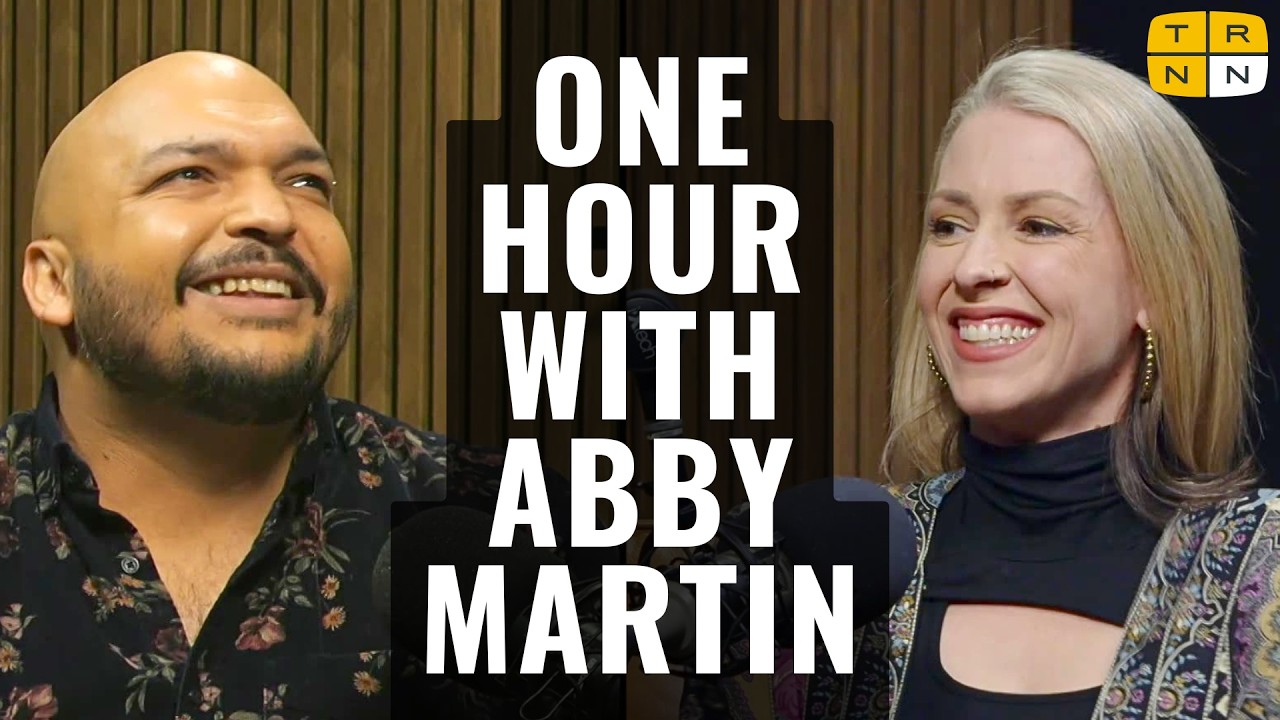
Abby Martin: The US military machine is destroying our planet

Still image of independent journalist and filmmaker Abby Martin speaking into a microphone at the TRNN studio in Baltimore, MD, on Jan. 29, 2026. Credit: TRNN.

We sit down for an hour-long discussion with legendary independent journalist and filmmaker Abby Martin to discuss her new blockbuster documentary, Earth’s Greatest Enemy, and the existential threat that US empire in general—and the US military specifically—poses to humanity and to our planet.

Editor’s Note: This conversation was recorded on Jan. 29, 2026, before the beginning of the illegal US-Israeli War in Iran.

Guests:

Additional links/info:

Credits:

  • Studio Production / Post-Production: David Hebden
Transcript

The following is a rushed transcript and may contain errors. A proofread version will be made available as soon as possible.

Maximillian Alvarez:

We’re here in the Real News Network studio in downtown Baltimore and I could not be more excited to have legendary independent journalist and filmmaker, the one and only Abby Martin here with me in person. Now, some of you may not know this, but Abby is actually a Real News alumnus. And Sister Abby, I know it’s been a minute since you’ve been back here in your old stomping grounds, but I just wanted to start by saying on behalf of the entire team here, welcome back to Baltimore. Congratulations on all the incredible essential work that you’ve done and we are all just so proud of you and so honored to be in this struggle for truth with you.

Abby Martin:

Oh my gosh. Well, the feeling’s more than mutual, Max. I mean, just being here back in the studio just brings me back to just the origins of Empire Files. Being in the Real News studio, working all hours of the night trying to knock out those weekly documentaries. And it was just such a cool crew to be a part of and it’s so amazing to be back.

Maximillian Alvarez:

Well, and what an incredible journey you and the Empire Files have been on since then. And we are of course here today to talk about your blockbuster new documentary, Earth’s Greatest Enemy, which is engrossing, expansive and frankly, terrifying investigation into the existential threat that US Empire in general and the US military specifically pose to humanity and to our planet. Now, I know that this project was years in the making and projects of this magnitude can often start as one thing and then become something much greater by the end of it. And so I wanted to start by asking, what is this documentary? Where did it start and what did it become by the time you and your co-director, Mike Prisner, were finished?

Abby Martin:

Wow. It was a long journey indeed and it was five years in the making, as you mentioned. And it started off during COVID with the birth of our first child and kind of joining our passions together, Mike, as an anti-imperialist, anti-war veteran organizer and me as an anti-war journalist who had been advocating against US imperialism my entire career as an advocacy journalist. So I advocate for issues. I wear my bias on my sleeve and I find it very refreshing in this kind of world of access, journalism and corporate media. And so combining those passions together and wanting to approach a subject that tackles the environmental impact of the military because of our obsession with the future, bringing a child into this world, having the responsibility of basically investing in the future. It is on our shoulders now. We’re all in. And so we saw that statistic kind of floating around that the US military was the largest institutional polluter in the world.

This is something that’s been kind of synthesized in academia when you look at just oil purchases, which the US military hadn’t even really disclosed until relatively recently. And there’s been some scholars who have addressed this in literature and studies, but no one had synthesized it in a cinematic way, certainly in a documentary fashion. But Max, once we got into the subject matter, every stone unturned is another documentary. And so we’re looking at legacy contamination of just radiation Agent Orange and then you look at the expansion of militarism all around the world with these 800 bases. Every base is a story. Every victim is another story. And then you add on top of that just the maintenance of the military arsenal, the actual infrastructure of the US military empire and how the entire thing exists as a self-fulfilling prophecy in order to maintain a fossil fuel infrastructure.

And it’s never been laid bare more with Trump in power with this kind of imperial belligerence when we see Venezuela, Greenland. So the documentary took a life of its own and started catapulting in every which way and kind of made us realize we wanted to prove the thesis here. We wanted to go into it not just talking about emissions, which is one story in itself, which we tackle. We wanted to tackle all of it. We wanted to go into the totality to sit someone down and inject them with the truth and you cannot walk away without having your brain rewired in terms of the way you look at the military in this country.

Maximillian Alvarez:

No, and I could say that as someone who’s watched it and was, like I said, quite terrified by what I was seeing and what you have given us kind of concrete evidence to prove. But I wanted to ask what kind of a monumental struggle that must have been to first research and then visualize the scope and scale of this problem. Could you just talk about that for a little bit?

Abby Martin:

I mean, especially when it comes to emissions, because this is something that’s been very secretive under the pretense of national security and not disclosed by the US military establishment. So it was unearthing so much data accumulated and synthesized by scientists independently to try to calculate these things based on just oil purchases. And then when you extrapolate that out and look at the lifecycle emissions, look at the application of the weaponry, the maintenance of this global supply chain, it totally becomes unquantifiable. And then you wrap into that the actual basically NATO, the machinery of the entire military empire, the great power competition with China, Russia, all of the building up of those arsenals and response to our aggression and belligerence. So it becomes simply unquantifiable and it was so difficult. And Max, at a point in the documentary, we bring in this philosopher and he says something really, really important where he says, number’s numb.

And he gives kind of this take on it’s so hard to get overwhelmed by the existential nature of US imperialism of capitalism because it’s so far reaching and all inclusive and all these issues are interconnected as we’re realizing more and more, but numbers, when you’re just looking at sheer facts and data, data, data, it can numb you. It can become meaningless. And I think we see that psychologically, I think with the genocide going on for three years straight, the data and the numbers become numbing. And so at a certain point it became more about just the storytelling and the emotion and collaging these narratives together to kind of give people that gut punch that it’s not about the numbers. Look, we proved the thesis over and over again, that’s done. But I think what really hits people is seeing how this is you, this is your children.

Your children are those children in Iraq. You are Alex Pretty. You are Renee Goode. You are every one of these victims of US imperialism because it affects every single person on the planet.

Maximillian Alvarez:

And I think back to the days of COVID-19 and when I heard those words in your documentary, Numbers Numb, that was the first thing that came to my head was sort of bearing witness to the monstrous spectacle of the bigger the numbers of people lost to COVID-19 got, the more numb people got to the human lives that were being lost. And I think there really is a terrifying truth there. And again, it speaks to the service that you and Mike Preisner have done in not just compiling what could be compiled in terms of the research numbers and from the emissions of all the military vehicles to the environmental impact of all the explosions and wasted munitions that are blown up or dumped into the ocean. I mean, the list is just so incredibly long and it’s impossible, like you said, to try to quantify it.

But I think what was even more horrifying to learn was that from Bill Clinton to now, all these kind of global US-led climate agreements don’t factor in the US military when they’re talking about our national emissions output.

Abby Martin:

Yeah, exactly. And people do not realize that. I’ve talked to several climate scientists, environmental academics, and they were absolutely flabbergasted at that fact that should be widely known, that militarism, not just US militarism, but every country’s militarism is excluded. Under the Paris Accords, they gave an option to opt in, but of course many countries are like, “Why would I do that? ” It’s not mandatory. Yeah, you know what? So it’s just completely insane and totally a farce that for the last 30 years of these international climate treaties, the US military has led the exemption of all military emissions and it’s gargantuan. It is completely gargantuan and totally hidden from this growing total. And so what’s astonishing to me is that why am I the first person to confront these major politicians at these conferences? Decades in the making, you see this bipartisan consensus for empire and just the acceptance of lying about this, of accepting it as normal and it’s totally outrageous.

And the whole dystopian nature of these climate conferences in general, which real news has covered extensively is just off the charts. I mean, it’s all about corporate profit. It’s all about how can we market this? How can we make money off of it? And then it’s like, well, no wonder you have a contingent of society that’s detaching itself less and less from that consensus reality that climate change is this existential threat that we need to globally cooperate on because simply the opposition to the fascist takeover, they’re not treating it like the emergency it is and they’re not acting accordingly. So it just makes it look like a money making venture and it’s really unfortunate.

Maximillian Alvarez:

Another word might be a racket.

Abby Martin:

Yeah, there you go. Yeah. It’s a goddamn racket. Yep.

Maximillian Alvarez:

There it is. I wanted to ask if you could sort of lay out this double helix death spiral of US wars and military imperialism around the world and like the climate crisis, like how those two things and how you unpack it in this documentary, but like how those two things are intertwined in the most monstrous way.

Abby Martin:

And this goes before obviously World War II with the advent of the war making industry, how because Europe was left in ruins, you had the US kind of concentrating the actual war machinery and that’s where you see the genesis of the war economy being a kind of a permanent footing in the US. It established well before that. I mean, we’re talking about the first extraterritorial military basis that were established through obviously the veins of the genocidal takeover in the first settler colonies here, but those first extraterritorial military bases were to protect extractive industries of fur and mining just to basically … I mean, we almost drove beavers into extinction just so people could have funny hats in Europe and then it became coal. So the first bases that were overseas were to access coal and to basically be infrastructural holding cells for coal. And of course, once the national security priority turned to oil, once oil was discovered and replaced coal, that’s when we saw that just completely combined where oil became the dominant priority for access and expansion.

And then like you said, it became the self-fulfilling prophecy where in order to expand the military, you needed more oil and more resources and then you need to justify the expanse of the military to get more resources. So now this massive empire around the world with 800 bases spread across nearly every continent, it maintains itself through the access to oil, the pillaging of every last vestige of natural resources on the planet. And that’s exactly laid bare with Trump’s rhetoric today. He is literally saying, “We need Greenland.” That is the last basically unbridled wilderness on the planet. I mean, the amount of coal oil and rare earth minerals that are under that ice, they are saying explicitly they need that for their national security interests. And so you just have to read between the lines here. I mean, you don’t even really have to. He’s saying, “We need the oil from Venezuela.

We need the oil from Iran.” That’s what this is about. You had the Bush administration spending about a year trying to propagandize us into complacency with invading a country that had nothing to do with nine eleven just to seize the oil, but they wasted a lot of time to propagandize us, ties with WMDs. And so now this mask is so ripped off where they don’t even need to pretend. They’re just saying explicitly, “We are trying to grab every last drop of oil because that’s ours.” So in a way, it’s an important moment, Max, because for the first time in my life, things are just very laid bare and I feel like people are really putting all of this together in their mind and organizing with that international scope with the US Empire being the machinery that’s oppressing all of us around the planet.

Maximillian Alvarez:

I think you’re right and it really makes me sort of reflect on the conditions that have made that more possible now than it was in the post nine eleven years. And I want to kind of break the fourth wall here and part of this question is going to be me asking if you could talk a bit about how this documentary, Earth’s Greatest Enemy embodies your own trajectory as a political activist, as a journalist, like from the Iraq war to now, because I’ll be honest, we would not be sitting next to each other, 23 years ago. I grew up very conservative. My family and I were totally bought in on the Iraq war propaganda. We were part of the US majority that just felt so hurt, shocked, and aimlessly hurt and shocked after nine eleven and trusted far too much in our own government to sort of tell us what to do next.

It took a lot of years for me to sort of uncouple myself from that conditioning. But at the time, I did not understand the kind of what to me was a left wing talking point of like, why would we be going to war with another country just for oil? What does that mean? And now here I am like nearly 25 years later being like, “Jesus, how could you not see what was right in front of you? ” So I guess first of all, how were you able to see what I was not? And I guess connect us from there to here like how the seeing of the monstrosity that was always there, like how more of us have actually come into the light and seen what we’re actually up against.

Abby Martin:

I think it all goes back to just my love for the environment, my love for nature, my love for humanity. I just really love people and I love connecting on an interpersonal level. I think when you look at this kind of death spiral, as you called it, this machinery of capitalism and the subjugation of the rest of the planet at the barrel of a nuclear armed gun to say subject or die to global capitalism, it is just so counterintuitive to like love, solidarity, having a habitable planet and future. And I never was able to really articulate that capitalism was the problem. I was kind of a confused anarchist, libertarian back when I was first being radicalized by politics, because I thought Bush was evil incarnate. I was just like, “Who the hell are these people? They’re demons. Why are they doing this? ” And then Nancy Pelot and then you slowly kind of unpack.

You’re like, “Hold on, the Democrats are part of this. Hold on. The media is part of this too.” But it was always so obvious to me because of my just repulsion for war. When the media started talking about Iraq, I was so confused, Max. I mean, I think it helped because I was surrounded by militarism at San Diego State University. I was just thrown into this where I was surrounded by military frat bros and I was just so taken aback. I mean, growing up in the Bay Area, so the proximity to Berkeley, the hippies, just that counterculture of the revolutionary fervor of Berkeley, Mario Savo and the free speech steps and things like that. And so that was always baked in, even though I was just kind of like a generic Demo from suburban Pleasanton, California. I think when the Iraq War started and the bombing of Baghdad, I was sitting in the cafeteria at San Diego State University and I felt nauseous.

I felt sick and people around me were cheering and I’ll never forget that moment. I just was like, “What’s going on? I’m so alone. Why people think this is good? This is sick. What did Saddam do to us?” I remember calling my mom, I said, “Did Saddam do something?” And she was like, “No, the media just started talking about this. ” And I just said, “What is happening?” And it was so hard to organize there, but it became so powerful to realize media was a tool to tell these stories because I started watching radical media. We were talking at the time, this was around 2003, it was like Democracy Now and Alex Jones. It was like a very weird … The internet was very strange, but you also had the capacity to do things. I mean, there was this egalitarian sense of the internet that was very exciting where you could build real friendships and find things that were just really like not … It wasn’t fed to you by the algorithm.

And so I was able to pursue so much knowledge and learn and be self-taught and how to do these tools. And so anyway, I’m going on this very long tangent to say it all synthesized for me very obviously, but it is also a journey I think for a lot of people. I’ve met people who are my age who said I didn’t know anything before October 7th, which brings me to your second question. I think October 7th and the genocide in Gaza has been an extremely revealing moment, catalyzing moment for tens of millions of people around the world. And I’m anecdotally, I can say that just traveling across the country with this documentary already going in rural, urban areas, driving everywhere, talking to people, everyone has been motivated by the fact that this government has subsidized and overseen this genocide and how it has been bipartisan and the failure of the so- called opposition and the Democratic Party to stop it and incubate what we now have.

It’s all just so crystal clear and it’s been actually really amazing to see the radicalization occur in circles that I never would’ve expected at all. Older religious people, I mean, but really it’s the youth. It’s the youth who are seen, they don’t have a future if they let this just grow unabated, if they let the data centers take over, they let the unregulated nature of global capitalism take over, unregulated nature of imperialism, which turns inward, which we’re seeing the ICE executions in the street. So I’d say there’s an explosion of consciousness around the world, synthesizing all these issues, putting Palestine as the cornerstone of our collective liberation and realizing how all these things interconnect. And it’s beautiful, Max, because on the streets during the Iraq war, Palestine was too controversial. In the streets were in Occupy Wall Street, Obama was off limits. And so it’s all burgeoning now.

It’s all right beneath the surface and people are so ready to hear that phrase national strike, national strike. They know we’ve been in the streets with sustained protests. I’m an activist and a journalist. Again, I’m an advocacy journalist, so I advocate my own activism and I embed myself in the people’s stories and people’s struggles and try to uplift those stories just as real news does. And so I’m speaking from the streets. I was just in the streets in Minneapolis. I’ve never seen energy like I have now and people standing up in solidarity with their brothers and sisters because they want to terrorize us in a submission and silence and fear and I’m seeing the opposite happen and that’s something extremely powerful and again, kind of incalculable in terms of like what will happen with this energy. It’s very exciting.

Maximillian Alvarez:

It is. And this is a moment in history not to be wasted because it won’t be around forever.

And it also sort of makes me think about like again, what is so different between our moment now in the year of our Lord 2026 and our moment then in the post nine eleven years at the turn of the millennium. And I of course can’t help but think about my own trajectory, my own family, like what has changed in our lives since then? Well, a massive economic global financial meltdown happened. We lost everything that my parents had worked for, including the house that I grew up in and it’s been a very long kind of struggle to get back to a place of peace and normalcy for our entire family since then. And now as someone who goes around interviewing, working people around the country talking about their lives and their stories, I hear a lot of echoes of that similar trajectory for a lot of people.

And I guess that’s just a long-winded way of saying that at the turn of the century when we were as a country much more gung-ho about … Yeah, we have the right as the United States to go around the world telling other countries what to do. We have the right to spread democracy because it’s the best system in the world. We’re liberating people, we’re not doing something bad, yada, yada, yada.That was a time pre 2008 crash when the American dream was still plausible for a lot of us. You go out on the streets now, you talk to people now, no one believes in the American dream. I mean, if a handful of billionaires own everything and all of our money is just being sucked out of the public coffers and into the war industry. And so what I hear now when I go to these demonstrations in Baltimore, DC, what I hear now when I talk to poor and working class people in deep red Trump country districts in the Midwest or the South or here in the Mid-Atlantic, the common refrain that I hear is like, “Why is my money going there when we’re all kind of floundering here?” And I think that that is also a very significant sign of where we are as a country, but also a significant kind of mobilizing factor that presents an opportunity for people to look around and realize we’re all getting screwed by very identifiable villains.

And I wanted to sort of like hook that back into earth’s greatest enemy and ask who are the identifiable villains in this story that you’re telling and how do we take them on?

Abby Martin:

Yeah. I mean, the problem with capitalism and the status quo of neoliberalism is that everything’s been co-opted, superficialized, tokenized, our struggles have been bought and sold back to us. And so for the last 50 years, labor density, unions, that revolutionary undercurrent of all the progressive struggles, it’s been kind of co-opted into these corporate branding and marketing campaigns and it’s been really, really horrific to see because we’re getting back to our footing where people were in the 60s and 70s with this fundamental understanding of ideology and being able to articulate what we are fighting for and against. And so we’re getting back to that. I think Bernie and Democratic socialists of America and things like that have really resurrected the spirit of what we can all kind of orient ourselves around. But for the longest time, Max, I mean, I grew up very anti-communist. I mean, this was very, very baked in to American society because of the history against the ruling class.

And so what you see now is parasitic billionaires who have basically seized that distrust that did exist for exactly the reasons that you’re talking about, the disaffected masses who lost everything during the financial crisis, who knew that we were lied to about nine eleven and in the Iraq war, they don’t trust these people, but Trump was very smart in the way that they seized that momentum and siphoned all of the energy into this faux populism. And again, there was no opposition infrastructure to counteract that. And so a lot of us are kind of flailing saying, “How do we gain ground when they have taken over everything?” And then the Democrats kind of incubated it and laid the groundwork for them to take over everything because they’re basically Republican lights because everything is about making profit at the end of the day. And so I think what we need to do is realize we are all victims of propaganda.

We’re all at different steps of our journey of breaking out of that, but that’s all baked into all of us. And so approaching each other, and I’m not talking about fascists or people who are apologists for genocide. There are certain contingent of society that can’t be helped. They’ve succumbed to the darkness. They’ve been beaten down by the system and they’ve commodified everything. They have lost their empathy. I’m not saying that they’re born like that. I’m just saying that a lot of them can’t be helped right now and we need to let that go. But I think the vast majority of people are empathetic. They’re humanitarians. They want civil liberties. They want the foundation of what they believed America to be, human rights, the First Amendment, free speech, the beautiful things that make this country supposedly great. Those are the people that we need to reach out to with humility and empathy and reaching them where they’re at.

I’m talking about service members. I’m talking about veterans. They are not the enemy. They are victims of the enemy. The enemy is the top brass of the military, the government officials who are complicit in this, who are profiting off of war, who are invested in the war machinery, editors in chief at the New York Times, the Washington Post who are putting out the propaganda that sows the seeds for genocide, who perpetuate the status quo of this death cycle. Earth’s greatest enemy, that was the Biden administration. That was before Trump. That’s the status quo. That’s what we’ve accepted as normal, barreling us off a cliff, killing every last living thing on the planet, a finite planet. It’s collective lunacy and madness to go into this year after year knowing the outcome max. And I think people are so ready. They’re starving for this information. They’re sick of being gaslit and lied to and they’re realizing, “Hey, this is not the reality that I see.

This is not the reality that my neighbor sees.” COVID was very important for the ruling class. We were fighting each other about vaccines, about God knows what while they cannibalized every last industry. They siphoned every last drop of wealth. They pillaged everything. They gained what tripled their wealth in the last five years. And what happened to us atomized, isolated, siloed off, brain rodted on our phones thinking we can’t ever do anything about this. We lost. That’s what they want. Just like Barry Sanders in the movie says, “See what you see. Don’t be duped. See what’s right in front of your face.” And I’m not talking about on your phone, on your screen. I’m talking about in reality, vast majority of people are ready. They’re waiting for you to talk about these things because they don’t have the chance. They don’t have that opportunity or those avenues because Elon Musk wants them to believe something else.

And we have to ask, why is the richest man in the world showing us what he’s showing us? So when we get on our devices, yes, the advent of social media, the advent of Palestinian voices dictating their reality and taking back their agencies, been monumental, revolutionary, assisted to all of this, but we have to also be calculating strategic, creative, getting off of these devices and meeting like we used to because that’s how we win. We don’t win on here. That’s just one tool for us.

Maximillian Alvarez:

I think that’s beautifully and powerfully put and vitally true. And we’re saying this as two media makers, you know, Media personalities. Media can only do so much and we are trying to do as much as we can with it and your new documentary is an incredible example of that. But I could not agree more with your last point that we’re not going to bring a coalition of poor working class regular people banding together to stop the destruction of our society and our planet online.That’s not going to happen.You don’t get 50,000 people marching through the streets of Minneapolis just by posting and sending emails. You have to have that in- person connection, which is all I’m hearing coming from Minneapolis. People are saying I’m both simultaneously more afraid of my government than I’ve ever been, but I’ve never felt safer in my own neighborhood because everyone’s talking to each other and everyone’s kind of working together.

We were already losing that basic infrastructure for society as such well before 2020. But I think COVID really did a number on what was left of our social infrastructure, on our social being. So many of us just stayed closed in, stayed cut off, stayed glued to our phones and our computers. And as you mentioned, the powers that be, the people who control the media, those platforms, they know that and they are manipulating that to the point that no one has an agreed upon basis of the reality that we’re actually all living in because depending on what feed you’re looking at, where you live, what your search history is, you’re going to see an entirely different world be outside your window than the person who’s living next door to you. And

Abby Martin:

That’s a

Maximillian Alvarez:

Very dangerous and dark place to be. But I wanted to kind of hook that back into something else that you said, which was the value of not only talking to service members and military veterans, but that was made manifest in this documentary. I mean, it’s important in and of itself because as you said, they are not the enemy. They are the victims of this monstrous machine. They are the human grist for the proverbial mill of US imperialism. But it also kind of hooks into the beginning of this conversation where we were talking about how hard it is to actually research and understand this topic of just how big of an environmental threat is the US military to the world. And it was so clear to me in your documentary that if you go and try to get answers to those questions from top government officials or military brass, you’re not going to get anywhere.

But when you and Mike Preisner are talking to veterans, the rank and file of the military, you get a very different perspective on the problem. And I wanted to ask if you could talk a little bit about how different that perspective actually is.

Abby Martin:

Okay. So there’s this hive mind that kind of operates in a similar fashion to how a corporate board would. So let’s say someone just has a conscience all of a sudden who’s on the executive board of Amazon or something, they would just be kicked out. You need to make money, you need to make more money than the last quarter, otherwise you’re not profitable. You’re a failing entity. That’s exactly how the US military operates. So when you’re looking at who’s sitting on the board of these board of directors of the defense contractors, they’re all interlocking with the media arms and all of these things. And that kind of explains this hive mind operational structure of a system that kind of works on its own. It doesn’t have a conscience, but of course it’s comprised of people who do and they can speak out and they have voices and they have their own minds, even though you’re beaten down in the military to not have your own mind.

So when you break out of that, when you see it for what it is, it’s such a powerful thing. I know hundreds of service members, because of my husband’s work, obviously, organizing soldiers and getting people out because anyone can get out of the military. It doesn’t need to be something specific. Anyone can file a CO packet and get out today. You never need to stay in and Mike can orient you through that. But it’s just so amazing to see people who are coming to the movie, watching it, who are active duty. My cousin who was a 20-year-old naval officer watched it and he was just like, “You know, because I don’t agree with your politics, but I’m here to support you. ” After the movie, he was just shaking. He’s like, “I’m ready to F and go, dude. I’m ready to fight.” And it’s just reaching people on a human level because I think especially when you reach out to service members, they’re victims, they’re not profiting off of this.

They don’t benefit from this system. They’re cannon fodder. They’re the human detritists that are going to be kicked out in the street like Levon, the homeless veteran at the beginning of the movie. He represents kind of the consequences of the system. I mean, he represents all of the destruction of the environment, the garbage that’s tossed in the ocean, every bullet fragment that’s exploded and the chemical exposure of all the toxins left everywhere that were bombing and shooting shells. And that story alone is so powerful, just one single homeless vet who was in a commercial for the army.

Levon:

First Air Cav Brigade. I was in US Army. I joined up in 2004, deployed out in 2006 and it was hell. I was at Camp Taji, seven miles south of Baghdad. I was one of the “Army of One” commercials. I was a guy with the helicopters.

Army Officer 1:

Everybody listen up. This is Levon.

Wenty:

Hey, Levon. I’m Wenty.

Army Officer 1:

You’re on the 120 today. So if there’s anything you need, just ask these guys. They’ll take care of it. All right?

Army Officer 2:

Welcome aboard.

Levon:

Thank you.

Army Officer 2:

You ever been around anything this fast before?

Levon:

He walks in and goes, “You ever worked around anything this fast before?” Yeah. My last job.

“Army of One” Commercial Narrator:

See how army training gives you strength for now, strength for later. GoArmy.Com.

Levon:

Yeah, it was all a lie. I have nerve damage, so I’m actually losing my hands. So I’m trying to use them as much as I can until they’re all gone. It hurts. It actually hurts. But that’s what the hydraulic fluid in service does. Laughing is the only way I can get through, otherwise I’m crying.

Abby Martin:

It encapsulates everything. It’s like you’re exploited, your story, your body, and then you’re thrown in the trash and you’re left to die with no help. And that’s the thing that veterans need to understand, whether it’s burn pits or agent orange, chemical exposure. There’s no help on the other end under this system. It’s just about churning your body out for profit. You’re just another commodity. And once you realize that you join the fight because you can always get out and you can make your own decisions and agency to realize it’s not worth it. It’s not worth your life. Your life has value and your life has dignity and you need to put it toward benefiting humanity and the planet.

Maximillian Alvarez:

Again, that was very beautifully and powerfully put and it really kind of chills my blood hearing everything that you’re saying because it sounds so eerily familiar from the reporting that I’ve been doing over the past few years starting in the small town of East Palestine, Ohio. And we are having this conversation at the end of January 2026. I’m going to be back in East Palestine next week. It’ll be the three year anniversary since the Norfolk Southern bomb train derailed in these people’s backyards, turned their lives upside down, trained filled with toxic chemicals that in an industry that has been just cut to the bone on the labor side, on the safety side, but is making more profits than it ever has. And who benefits from that? The shareholders and the executives. Who bears the costs of that? The workers on the rails and the people in towns like East Palestine, Ohio.

And this is an entire region that has been poisoned by industrial or corporate profit seeking greed and government complicity and negligence. Our own EPA was telling people there, “You’re fine. It’s okay to go back home. The air’s safe. The water’s safe.” And here they are three years later telling me people are getting all kinds of weird cancers. People have to leave because they can’t stay in their homes without getting nosebleeds, rashes, their kids bleeding out of every orifice. It is a shit show, a monstrous shit show that is sadly not unique to Ohio. What I have learned going to different sacrifice zones so called around the country, talking to different poor and working class people here in South Baltimore, down in Georgia near the biolab fire that happened last year, moss landing like in California, this is everywhere and people are being poisoned and abandoned in the exact same way that you just described as like military veterans and the people living abroad who are if not killed by our munitions are poisoned by them for years and the rest of their lives.

So all of that is here at home as much as it is there abroad. And frankly, I don’t think your average American knows that when it comes to like sites of industrial and mass pollution here in the United States, the biggest portion of super fun sites that come from one source is the Department of Defense. It’s like military bases. It’s weapons manufacturing plants. It’s the kind of foam that they use to put out fires that puts forever chemicals in the water that we’re all drinking. And so I wanted to kind of bring it back home for a second and ask if you could talk about the vast environmental kind of impact that the war machine is having on Americans and like how that connects to the imperial monster of American militarism abroad.

Abby Martin:

You look at just legacy contamination of what the US did during the Cold War, during World War II. I mean, you even still see dead zones from World War I from small munitions, which just kind of shows you how detrimental these are in just training. I mean, even just training alone, like you mentioned forever chemicals. I mean, the firefighting foam that’s used extensively by the military. The military is one of the most pervasive users of PFAS contamination. There are safe alternatives there have been forever, but they just don’t use them because it’s, I guess, less cost effective and they’d rather just dump them all and contaminate water supplies. So people may know peripherally about Camp Lejeune, which is the worst water contamination event in US history. This is now a super fun site, Camp Lejeune, North Carolina military base where they dumped toxic compounds for decades.

And after they knew that it was toxic, they continued to do it and cover it up. And so a million people were poisoned harmed by this toxic dumping and there was a huge amount of poisoned infants that were stillborn babies. And what was most shocking about this, Max, is this could be looked at as like, “Oh, it’s just a 60 year old story. The government took care of everyone and they’ll never do it again.” Maybe they just didn’t know any better. Well, it’s amazing to think that now 60 years later, people are still dying. They have ailments, they’re generational and physically impaired from the toxic water contamination and there’s no database. They are trying to try every single individual claim and the judge said it would take over a century to try to actually give all of these people what they deserve. And of course a lot of them have died.

They’re just waiting for all them to die off so they just don’t have to deal with them anymore. But I think it really just explains how they deal with victims of burn pits, with victims of aging orange poisoning. They deny, they deny, they deny. They try to just resist doling out even a penny for the victims and then the site is left destroyed. I mean, it’s a super fun site. This is just a poison toxic site that doesn’t go through proper remediation. There are hundreds of them all across the US. Like you said, the vast majority are either US military installations or have previously housed military uses. So bullet manufacturing, you have the Hanford nuclear site, which is like a ticking time bomb that can poison three states at once in the entire river that supplies water to half the country. So these are serious problems that are not being dealt with because we don’t have a functional government that is going around saying, “Hey, how do we do this clean up properly?” No, no, no.

We’re just going to commit fraud. We’re just going to lie. Governors don’t want the black spot on their record by saying, “We have a super fund site. We need to clean it up. We need to divert resources.” They’d rather ignore it. And of course, the military is sacred. It’s worshiped so they don’t even want to combat it. In on amazing instance, Jay Inslee, who was the governor, previous governor of Washington who ran on climate change as his entire doctrine, he wouldn’t even criticize the military. He wouldn’t even answer a basic question on should these be included or not in emissions reporting. I mean, the cowardice is frankly horrifying and disgusting.

It’s so far reaching here. When you put legacy contamination aside, just again, the maintenance of the arsenal here at home. We have hundreds of bases here in the US. Every base is dumping forever chemicals in the ground. Every base has contamination. Some of them much higher than Camp Lejeune. We talked to a person who is testing the groundwater around bases in the US. He is saying he is finding ground contamination higher than Camp Lejeune. Why don’t we hear about this, Max? Why? This is the most base level big tent ever for a human being. Clean water, clean air, clean food. If we can’t build an opposition or an organizational infrastructure around that, what are we doing? What are we doing? So again, it’s this total ignorance, total ignorance of the military being actually not a benevolent force spreading democracy and human rights. A force for profit that is destructive, deadly, totally dissociated from human life, the sanctity of life.

It’s willing to kill everything and everyone on the planet. So Jeff Bezos can have another yacht. Is it worth it? Hell no, it’s not. Hell no, it’s not. And so this just brings it all home and especially with ICE, because at the end of the movie we talk about the militarization of the police. So that concept of the imperial boomerang, I mean, of course it’s always been our tactics of colonialism, genocide. They’ve always been circling back, right? But I think the visceral nature of it now where we see storm troopers masked, immunized in the streets, state executioners in military guard where you can’t even distinguish, is this Palestine? Is this here? What am I looking at? It’s here, baby. It’s here to roost. And so I don’t even … There’s no difference anymore. I think for a long time people were trying to convince people, “Hey, no, no, you should care about Palestine.

This is all going to come back up. And you shouldn’t care about it because eventually it’s going to come back home. You should care about it because it’s human life. It’s human life and it’s on our shoulders. This is our government doing this. ” But I think especially now people are saying, “Oh my God, it’s here. It’s here and we’re all of our liberations intrinsically tied to one another.” And I think it’s becoming so, so clear. And especially when you tie in the environment, Max, because it’s not just one life loss, this is the air, this is the water, this is our planet and it doesn’t stop with Palestine. It doesn’t stop with the Congo, the rainforest, it’s the lungs of the planet. Every drop of water comes back and that’s what’s so crucial about the collaborative nature of approaching this existential crisis is that instead we have the great power competition where we’re fighting, we’re preparing a war with China when we should be cooperating.

How can we approach these together to actually give us a fighting chance?

Maximillian Alvarez:

I want to kind of end on that powerful note, right? Because as much fire as I’m feeling in my belly thinking about our collective duty

To respond to this moment in history for humanity, for life on this planet, for our children, our grandchildren, all of it. I am feeling more called to this fight than ever before at the same time that I, like everyone else who’s watching this right now am feeling more distraught about the state of things in the world right now and it seems like we just have a brick on the gas pedal careening in the exact wrong direction, not only in terms of tackling the climate crisis, but in that double helix fashion, like stopping the US war machine, Jesus, we’re only in the first month of 2026 and we’ve invaded Venezuela, kidnapped its president. US is talking about just going in and taking Greenland, invading Iran. It feels like the very monster that you photograph and document and detail in this documentary is on a murderous planet destroying rampage.

I know a lot of people out there are feeling like, “Oh my God, this can’t be stopped.” But I want to end on the note that it can

Abby Martin:

And

Maximillian Alvarez:

It must and what tools your documentary gives us to help make that a reality.

Abby Martin:

I think this is very important. Like we said, see what you see, don’t be duped. So see what you see, meaning the success stories, the things that the billionaire class does not want us to see the victories across the country, the mobilizations, the coalescing these movements, the burgeoning of consciousness. I mean, I always say empire, Zionism, it’s a paper tiger and that’s why the propaganda is so desperate and that’s why the violence is so extreme because the colonizer mind cannot beat a liberated on. They can kill. They can kill and destroy, but they can’t win. They can’t be victorious. And all an empire knows is that every problem is a nail. And so the more that they dig their own graves, the more people wake up, the question is, are we going to wake up fast enough? And I think that when we see success stories like last year, Max 35 data centers got stopped in the US, where is that on the news?

So it’s us seeking out the things that can actually reinvigorate our revolutionary spirit energy and not get despawned and paralyzed with the sheer, terrifying nature of it all because it is overwhelming. And again, it’s intentional to berate and barrage our minds like this. They’ve psychologically, it’s a psychic assault. It’s a physical assault. It’s an all body, all mind assault and they know exactly how to manipulate us. If they’ve learned anything from the last mass uprising, it’s that. And so I think having that consciousness, yes, they’ve wanted to individualize everything and that’s the whole problem with liberalism, capitalism, individualizing our struggles and the solution. Papers, straws, driving … Look, and I have solar panels. I’m a militant composter. You don’t get a shred of food past me. Ask my husband, but it doesn’t mean that I don’t understand who is the perpetrator, who’s actually at fault.

It’s not us, it’s them. And so while you need to act in your individual choices with whatever capacity you have, with whatever talents you have, build and guide that to the struggle, because if it didn’t matter what you said online, they wouldn’t be spending billions of dollars on propaganda to manipulate and curate our realities. If it didn’t matter what you did out there, they wouldn’t be spending billions of dollars on storm troopers to terrorize us and to make us feel scared to walk out of our houses, obey or die, comply or die, right? That’s what they said about Alex Pretty. You should have stayed inside. No, we have the right to assert our liberties. We have the right to do these things. So to kind of reclaim reality is like a revolutionary act in itself because it is a war on our minds. That’s the first step, joining an organization, getting out there, being a part of the community.

Because Max, we don’t do this. We don’t do this work because we know we’re going to win tomorrow. We do it because we have to. Like Chris Hedges said, we fight fascists because they’re fascists. We have to fight it because we brought children in this world and not just that, because I love this planet. I want my children to go scuba diving in Noko Bay. I want them to meet the Tugong. I don’t want him to think that I gave up because I just succumbed to the darkness. I want them to know that we fought till the end. And so we have to. We do it because we have to because we love life and we do it to preserve life and we win when we know that we can because guess what? We have the power. We have billions of people on this planet and the rest of the world is ready to go.

They’re waiting for Americans. They’re looking at us saying, “It’s time. It’s time for you guys to wake up because we don’t want our planet destroyed because if you’re out of control government and military empire.” So as crazy and dystopian as things may seem, and yes, indeed they are, there is an alternative path that is becoming more and more urgent by the day and I think people are realizing that more and more, that the status quo is death, that you’re in or out and I think a lot more people are choosing life. They’re choosing to be all in organizationally lending whatever they can to the struggle because we have to Max and I think once that consciousness flips, mass education, of course, is a very important tool. That’s why we do what we do. Once that flips, it’s going to happen quick. Occupy happened quick. That was amazing.

That was one thing that I was like, “This is going to end in a couple days.” And it lasted for months and months. That was beautiful, revolutionary. And we took that spirit and I think it still carries on with us today and we’re waiting for that moment and I think it’s really right around the corner. It’s coming. And once it’s here, it’s unstoppable and we need millions of people, civil disobedience, nonviolent civil disobedience, because we cannot fight the military empire with violence. We can’t fight it with military might. We shut down capital. That’s the language these people speak. We haven’t even tried to strike, but baby, when we do it, that’s going to send shockwaves through the world and we can move mountains when we stop business as usual.

💾

“The rest of the world is ready to go. They're waiting for Americans. They're looking at us and saying, ‘It's time for you guys to wake up, because we don't want our planet destroyed [by] your out-of-control government and military empire."
  •  

Azerbaijan, Cutting Ties with the European Parliament, BUT Not Burning Bridges with the EU

European policy in the South Caucasus is increasingly caught between proclaimed values and pragmatic interests. While headlines often portray Azerbaijan’s suspension of parliamentary cooperation with the European Parliament as a routine diplomatic spat between Brussels and Baku, the move reveals something more significant: a profound transformation in Europe’s relations with the post-Soviet space—one increasingly defined […]
  •  

‘We demand freedom’: Immigrants on strike in New Jersey prison

ICE agents spray a protestor with a chemical irritant before detaining them outside of the federal immigration center at Delaney Hall, where ICE is housing detained immigrants, on May 28, 2026 in Newark, New Jersey. Photo by Adam Gray/Getty Images
Labor Notes logo

This story originally appeared in Labor Notes on May 29, 2026. It is shared here with permission.

On a patch of sidewalk on a busy industrial corridor in Newark, federal agents with rifles, metal batons, flak vests, and balaclavas faced off against unarmed activists with cardboard signs and a bullhorn. Detained workers could be heard on the soccer field behind the prison walls, shouting in Spanish, “¡Libertad!” (Freedom!)

Since May 22, 300 of them are on a work stoppage and hunger strike. Over video chat, one worker told the crowd outside that they had stopped eating and working for as little as $1 an hour (or no pay at all) to demand an improvement in their living conditions. “But that’s not all we demand,” he said. “We are also doing this to demand freedom. We’re not treated like people. We’re treated like animals.”

The hunger strikers are demanding to meet with the governor, the release of young and elderly detainees and all medically vulnerable people, and ultimately, freedom for all.

For months a group of activists with the ICE Out of NJ coalition, which includes the immigrant rights group Cosecha, the Catholic advocacy group Pax Christi, and the worker center New Labor, has been protesting outside Delaney Hall, a 1,000-bed privately owned detention center where immigrants, mostly Latino, are jailed without due process.

Families and lawyers of the detainees report that Immigration and Customs Enforcement agents and guards with the GEO Group, the private-prison contractor, have been denying them medical care, offering them food swarming with worms, and refusing them bail bond or access to their lawyers. Many were snatched from construction job sites, or still wearing their service-industry work clothes; others were taken while reporting at courthouses for green-card appointments.

“In our cases, we had already been processed, we were complying with legal requirements, and there was no order from a judge for our detention or arrest,” wrote a worker identified as Brian in a handwritten letter in early May, co-signed by 300 others with redacted names, pleading for help from elected officials. “ICE officers did not take into account the fact that there was already an immigration court date, and they arrested us during check-in appointments at USCIS [U.S. Citizenship and Immigration Services] facilities.”

FROM SCARCE FOOD TO NONE

They struck because they wanted to hit their jailers’ bottom line, but they were already going without food, and their health has further deteriorated. “People aren’t eating because of the strike we are organizing and there’s no medical assistance,” said a released hunger striker named Luis to Radio Jornalera (Day Laborer Radio). Speaking with his back to the camera to conceal his identity for fear of retaliation by ICE, Luis said another detainee had become severely dehydrated and couldn’t walk. Food was already scarce or inedible, even before the strike.

When hunger strikers sought medical help at the nursing center in the prison, “they wouldn’t lend us the wheelchair,” Luis said. “We had to put in our own pills, give our own liquids with sugar and a little salt to compensate for electrolytes.” He said there has been no due process for the detentions; he was detained by ICE during a routine check-in, which doesn’t normally occur for people who have a legal case going through the immigration system. People with no criminal records have faced exorbitant fees of upwards of $50,000 for bail, or outright denials to be released on bond.

“If they freed us, we wouldn’t generate profit for this business,” Luis told the Guardian.

Nationwide, the majority of imprisoned immigrants through 2025 had no criminal records. As the American Prospect has reported, the GEO Group is raking in record profits with a federal contract valued at $1 billion. Some of these profits come from imprisoned immigrants working for little or no pay. Workers report they are coerced into participating in the government’s supposedly Voluntary Work Program through solitary confinement and other forms of torture.

The 13th Amendment to the U.S. Constitution abolished slavery, with an asterisk: “except as a punishment for crime whereof the party shall have been duly convicted.” Convicted or not, all labor has value. But what’s doubly wrong is that immigrants in ICE jails haven’t even been convicted, and are being denied due process.

VIOLENT RETALIATION

In what activists are calling retaliation, on May 28 the GEO guards and ICE agents responded to the hunger strike and work stoppage with beatings. Detainees have reported to their lawyers and families that striking units have even had the building’s ventilation cut off, while the floors in some cells are smeared with the blood of detainees.

“Right now there are ICE agents inside of Delaney Hall violently beating the hunger strikers,” Nedia Morsy, director of the nonprofit Make the Road NJ, said in a statement. “Someone will be killed if no one intervenes and shuts this down.”

Gabriela Fuentes said her husband Jose Marroquin called her around 1:30 p.m. to “say they were being beaten and pepper sprayed… This started because they [ICE] wanted to take the only person who translates for them in the unit.”

“They wanted to take him away,” she said outside the prison in a video recording. “So all of the prisoners asked to not take him away. So then agents, ICE agents came to the unit and tried to cuff him, and that’s when the confrontation started.”

She said that the detainees lifted their hands to indicate they didn’t want to fight. The guards took them to their cells. “And then there were the prisoners banging on the doors to please let them out,” Fuentes said. “My husband says there was blood in the floor and in the walls that clearly the agents now were cleaning up because they knew they messed up.”

In a statement, Fuentes said that she bolted to the prison to speak out about what was happening inside. When she got there, she saw that “one of the guys was taken by the ambulance because a guard broke his nose.”

U.S. Department of Homeland Security officials said agents responded to “to a physical fight involving detainees at Delaney Hall.” Homeland Security Secretary Markwyane Mullin has upped the ante, threatening to retaliate against sanctuary cities by pulling Customs and Border Protection officers from airports.

Even before the strike, speaking out about conditions in the prison was met with retaliation. “We have to be very careful, everything we say and do is closely monitored, at all times,” Jordi Alvarado told local news outlet NJ.com in early May. “And then, almost as if on cue, his face abruptly disappeared from the screen of the iPhone advocates had used to call him,” reported NJ.com columnist Daysi Calavia-Robertson. On the blacked out screen, a message popped up. “Call paused.” And shortly after, “Call ended.”

OFFICIAL ACTION DEMANDED

Local and federal elected officials have put out statements condemning the deplorable living conditions and treatment of detainees. New Jersey Sen. Andy Kim, a Democrat, went inside the prison on May 25, came out, joined the protestors, and got pepper sprayed. But the ICE Out of NJ coalition is demanding more action.

“Elected officials, the Governor, and the Attorney General cannot continue ignoring what is happening behind these walls,” said Jorge Torres of the National Day Laborer Organizing Network in a statement. “They must enter the facility immediately, speak directly with the people, and hold GEO Group and ICE accountable for this violence.” The detained immigrant workers have written three letters to legislators pleading for their release; they’ve received no reply.

“I have never thought Delaney Hall should open,” said New Jersey Gov. Mikie Sherrill at a news conference on May 26. “We had a law here in New Jersey against privately run detention facilities…The fact that they wouldn’t let me in there gives you some sense that there is some ‘there’ there, and that’s really concerning to me.”

The cruel impunity is as plain as day, both inside and outside the immigration detention center. On the night of May 27, federal agents struck protesters with batons, pushing one into the path of a tractor trailer wheel, a video shows.

On Thursday after reports of assaults on detainees began circulation, some local elected officials were allowed inside the prison, but access is still limited. That same day, the New Jersey Department of Health was denied full access for an inspection.

The reports often come from the families of the detained. “We’ve been hearing from constituents who have family members inside, including a mother who is being beaten by ICE agents and an 11-year-old girl who spoke to her father inside who said that there are a lot of people inside who are bloodied,” U.S. Rep. Bonnie Watson Coleman told NJ.com on the afternoon of May 28.

SOLIDARITY FUNDRAISERS

Gabriela Soto’s husband Martin Soto Hernandez was detained in January while buying diapers. He had previously been arrested for a domestic violence incident, but the charges were later dismissed and expunged, according to his lawyers. His lawyer says Soto Hernandez has lost 110 pounds: “He’s skin and bones.”

Even in his poor condition, he helped organize the hunger strike and was later transferred to a different detention camp in Elizabeth, New Jersey, on May 25.

“My husband Martin Soto got illegally detained by ICE tonight,” Soto wrote on a GoFundMe page to raise funds for her husband’s legal defense shortly after he was imprisoned. “We never fully got a lawyer for his immigration status because his court date was due for 2028… I want to be able to have a lawyer defend him so that he can stay here. His kids depend on him. His daughter knows he is her world. This is unfair what Trump is doing to this country. He’s ripping families apart and this is not fair. Please help us.”

“At this very moment, Delaney represents a dark and desolate world for those who sought to attain the American Dream,” said Gloria Guerrero of New Labor in Spanish to Labor Notes. Guerrero organizes alongside domestic workers whose husbands have been detained in ICE prisons. “Children wait for the return of parents detained by a cruel and inhumane system—locked in dungeons, treated like criminals, and stripped of every right, including the right to humane treatment,” she said.

“Yet for others, it is the greatest business venture in history—one that utterly disregards the dignity of human beings. Delaney is a Latino concentration camp where many are forced to sell themselves out of sheer necessity, shielding their faces in shame from a community that cries out: ‘Quit that job now! I am your people! I am your kin!’ Meanwhile, on the inside, others are holding fast in a strike of protest and resistance—a struggle to which we offer hope, and which we support from the outside!”

  •  

Workers, students, and indigenous movements shut down Bolivia in popular rebellion

An Indigenous woman gestures in front of riot police during a protest against the government of President Rodrigo Paz on Mother's Day in La Paz on May 27, 2026. Photo by Marvin RECINOS / AFP via Getty Images

This article was originally published by Truthout on May 28, 2026. It is shared here under a  Creative Commons (CC BY-NC-ND 4.0) license.

For more than a week, the nation of Bolivia has been in a state of full-on revolt.

In response to neoliberal reforms by the recently elected right-wing government led by President Rodrigo Paz, unions have launched a general strike, peasants and Indigenous peoples have set up dozens of roadblocks throughout the country, and massive marches have been held in the capital, La Paz. These are just a few expressions of a much broader social discontent, which has brought the country to a halt and stoked mass resistance to the larger project of U.S-aligned, right-wing attacks on workers and social movements in Latin America.

Joseph Bouchard, a social scientist and journalist currently in La Paz as a visiting fellow at the Universidad Mayor de San Andrés, explained the diverse character of the movement. “It’s sort of a grouping of different social movements and groups that I think represents the wide spectrum within the Bolivian left,” Bouchard told Truthout. “You have teachers unions and workers unions. You have mining unions. You have just regular people joining who are not necessarily part of any movement. You have an Indigenous federation who used to be part of an anti-dictatorship movement in the 1980s. You have [former president Evo Morales’s] people … And so you have really all these groups that together add up to sort of the largest representation of the Bolivian left, disaffected voters, organized groups, disorganized groups.”

While the diversity of the movement also brings a wide range of demands, one of the most popular is for President Paz to resign, with some sectors of the movement arguing that the country should maintain a general strike indefinitely until Paz has been ousted. The level of outrage is especially profound considering that Paz has only been in office for six months.

How to Lose a Populace in 6 Months

In October 2025, Bolivia elected right-wing populist Rodrigo Paz, ending 20 years of government by the left-wing MAS (Movement to Socialism) party founded by former president Evo Morales. Paz, running on a campaign of “capitalism for all,” promised to address economic hardships plaguing the country. His campaign also benefited from the implosion of MAS, which was experiencing intense infighting from which it has not recovered.

Despite appealing to the economic concerns of the Bolivian people and positioning himself as more of a centrist than the country’s established (and much more extreme) right, once elected Paz wasted no time in carrying out attacks on the country’s workers and poor. One of his first moves was to eliminate a tax on large fortunes. He has also proposed education policies that teachers have criticized as privatization-oriented measures.

Two policies in particular have incited the outrage now rocking the country: a land privatization law and Supreme Decree 5503, which eliminated state fuel subsidies.

Two policies in particular have incited the outrage now rocking the country: Law 1720, a land privatization law which many see as a move to hand over Indigenous lands to agribusiness and other large-scale landowners, and Supreme Decree 5503, which eliminated state fuel subsidies, practically doubling the consumer cost of fuel overnight. Along with the rising fuel costs, Paz’s government has further angered Bolivians by importing low quality fuel, or “junk fuel,” as the people call it, which has reportedly damaged people’s vehicles, imposing repair costs many cannot afford.

It did not take long for the outrage to spread. Bolivia had already seen significant protests in December 2025, just a month into Paz’s presidency, but these were halted due to negotiations between the government and the country’s largest union federation, Central Obrera Boliviana (COB). Despite these negotiations the Paz administration continued advancing neoliberal reforms, further fueling outrage and forcing COB and other unions, including teachers unions, to call strikes at the start of May. Around the same time, rural Indigenous communities embarked on a long march to the capital, while other peasant and Indigenous communities erected blockades across major roads.

Despite its best efforts, the Bolivian government has not yet quashed the nationwide shutdown, though on May 26 the country’s Chamber of Deputies voted to repeal restrictions on the use of military force against protesters. Even before the vote, the state had deployed militarized forces against protesters. This repression has only further radicalized the movement, with some protesters using dynamite, rocks, and slingshots to defend themselves against the military, according to multiple sources on the ground who spoke with Truthout. Reports emerging on social media confirm this as well.

A history student at the Universidad Mayor de San Andrés who spoke with Truthout described the repressive climate that the protesters are braving.

“Especially police, they have been repressing the movement with chemical agents, rubber bullets, and so on,” she told Truthout. “[The military] tried to stop the blockades which have been in the roads, but 30 minutes after they left, the blockades were rebuilt with even more people.”

The student, who is a member of the socialist youth group Combate Rojo, asked to remain anonymous due to the doxxing to which members of her organization have been subjected from the far right. She mentioned that arrests and violence have been common in the crackdown on protests.

A Challenge to the Regional Right and U.S. Imperialism

The protests in Bolivia are not merely a national issue. They have implications for a regional strategy in which the United States is relying on far-right allies in Latin America to advance U.S. interests. These interests are expressed clearly in Trump’s 2025 National Security Strategy, which names the Western Hemisphere as the administration’s top region of strategic interest. It states, “The goal is for our partner nations to build up their domestic economies, while an economically stronger and more sophisticated Western Hemisphere becomes an increasingly attractive market for American commerce and investment.”

The protests in Bolivia have implications for a regional strategy in which the United States is relying on far-right allies in Latin America to advance U.S. interests.

Paz has closely aligned Bolivia with the United States, joining the recently formed Shield of the Americas, a military alliance composed mostly of right-wing governments with the stated mission of fighting cartels. On May 21, the alliance issued a joint statement condemning the protests in Bolivia, alleging that the protesters are being led by “criminals and drug traffickers.”

Under the Trump administration, allegations of drug trafficking have been used to justify a wide range of interventionist and militaristic policies including the attack on Venezuela and kidnapping of President Nicolás Maduro, the establishment of a seemingly permanent military occupation along the U.S.-Mexico border, dozens of illegal and deadly strikes on boats in the Caribbean, and a growing military campaign in Ecuador that has resulted in the bombing of a civilian farm in a rural village.

Bouchard argued that the U.S. response to the protests is a rejection of Latin American sovereignty.

“You can vote for a government and then decide you’re unhappy with what they’re doing if you feel like they’re betraying their promises or not fulfilling what they voted for,” Bouchard said. “This is how democracy works. U.S. government and right-wing allies in Latin America are basically saying that no protests are ever legitimate; if you vote for a government you’re basically supposed to accept whatever they do after.”

Several of the Latin American governments who signed the Shield of the Americas statement are likely observing the protests in Bolivia with concern that their own populations could draw inspiration from them.

The same week that Bolivian trade unions launched their general strike, Argentina and Chile saw massive student-led demonstrations against attacks on public education. Both Argentine President Javier Milei and Chilean President José Antonio Kast have been pushing their own neoliberal reforms similar to those carried out by Paz.

They know that they can bring down governments … They’ve done it before many times. These tactics work and they can get concessions.

Even in Brazil, which is currently governed by the left-wing government of President Luiz Inácio Lula da Silva, university students and municipal teachers in São Paulo have been on strike and held combative marches against austerity pushed by the state’s far right governor. While the protests in Brazil, Argentina, and Chile have not reached anywhere near the level of widespread anger expressed in Bolivia, they demonstrate a regional trend in which workers, students, and broader communities are beginning to rise up against economic strain and far right movements.

The history student who spoke with Truthout said that there are many in the movement in Bolivia who understand that their uprising poses a challenge to far more than just Paz’s agenda.

“[Protesters] mention Milei, they mention the genocide [in Gaza],” she said. “That internationalist connection to U.S. imperialism and Israel, it’s there. You just can’t hide it.”

Bouchard said that the Bolivian people understand their country’s history, and this informs how radical the movement has become and how much more radical it can get.

“They know that they can bring down governments,” Bouchard said. “They’ve done it before many times. These tactics work and they can get concessions. They know that the Paz government is quite weak, and if they use these tactics like they’ve done before they can win.”

  •  

Protests erupt at New Jersey detention center in support of hunger striking detainees

ICE (Immigration Customs Enforcement) agents and pro-immigration activists face off outside the Delaney Hall migrant detention center on May 25, 2026 in Newark, New Jersey. Photo by Andrew Lichtenstein/Corbis via Getty Images

This article was originally published by Truthout on May 26, 2026. It is shared here under a  Creative Commons (CC BY-NC-ND 4.0) license.

Protests erupted on Sunday night outside of the Delaney Hall immigrant jail in Newark, New Jersey, when Immigration and Customs Enforcement (ICE) moved to transfer a strike leader from the jail.

Some 300 detainees launched a hunger and labor strike on Friday in protest of the conditions at the ICE jail. On Sunday, activists and family members learned that the jail was preparing to move Martin Soto, one of the detainees who had announced the strike.

Gabriela Soto, Martin’s wife, saw ICE agents loading Martin into a van, and ran to block the van that held her husband from leaving the site. Other demonstrators joined in blocking the van from leaving the facility, and forced it back to the detention facility. Protestors formed a blockade for hours to prevent Martin Soto from being moved out of the site.

“Free Martin!” the protestors chanted. “Free them all!”

Later, around 1 am on Monday, ICE agents began to move a caravan of vehicles out of the facility, and protestors again attempted to block the vehicles from leaving. ICE agents then shoved aside protestors, pushing them against the sidewalk and against cars, and pepper sprayed at least one protestor.

A Department of Homeland Security (DHS) spokesperson announced on Monday that after “ICE successfully dispersed approximately 70 agitators” it succeeded in transferring Martin to another facility.

Since the start of the hunger strike, family members and supporters have gathered outside of the detention center. Among others, a 10-year-old child spoke about her father, who is currently being imprisoned in the facility by ICE.

On Friday, Gabriela Soto translated calls from prisoners, including her husband Martin, who said, “We deal with racism, with bad conditions, with guards that do not help us…. It gets worse all the time, and they don’t treat us like people.”

The guards soon cut access to the detainees’ phones so that these calls could not continue.

People being imprisoned at Delaney began a hunger strike after signing two letters describing their circumstances and conditions.

“We feel vulnerable and, in a way, kidnapped — detained without justification — not to mention that we are being tortured physically and psychologically due to the poor food resources provided in these detention centers,” they wrote. “Families are being destroyed and separated.”

“We have seen judges in this detention center who are ready to carry out deportations and mass expulsions without properly reviewing cases,” they went on. “We live with anguish and fear of appearing in court.”

One participant in the labor and hunger strike wrote in a letter describing the conditions of the jail:

We have people sleeping on the floor for not being processed quick enough. They neglect medications for people who are in dire need of it. All of our bonds are denied and they are telling us to file habeas corpus for everyone that is in here, they constantly tell us we are a danger to society. The same judge that denies your bond is the same judge that reviews our immigration court cases and that is not fair.

Delaney opened as an ICE jail in May 2025 in a $1 billion, 15-year contract between private prison contractor GEO Group and ICE. It is the largest ICE facility on the East Coast and has faced pushback since the announcement of its opening.

New Jersey Democratic Sen. Andy Kim visited the detention center Saturday, and wrote on X that he saw inside it a “high school student crying and saying she just wanted to graduate senior year”; a woman “who had a miscarriage in the detention facility” and was “left to manage [it] all on her own”; and a “carton with the milk inside congealed solid.”

On Monday, Kim returned to the site, and said that he was pepper sprayed. “Instead of engaging with me and others about the poor conditions, ICE sent in an armored vehicle and a line of armed agents that only poured gasoline on the fire,” he wrote on X. Kim described ICE agents tackling and restraining protestors and firing pepper balls and spray into the crowd.

On Tuesday morning, the protest continued, and video footage from outside Delaney once again shows ICE agents detaining and dragging protestors.

Leqaa Kordia — a Palestinian from East Jerusalem who was arrested in Newark when meeting with immigration officials about her status and then detained for over a year in ICE jails for her Palestine activism — wrote a statement in solidarity with the Delaney hunger strikers.

“When you choose hunger over submission, you’re doing something that terrifies ICE,” she wrote on Monday. “You are proving that even when they break your bodies, they can’t break your will. You are proving that a person stripped of freedom can’t be stripped of dignity.”

“I know the conditions you’re enduring,” she went on. “The rotten food. The medical neglect. The psychological torture of indefinite limbo. I know what it took for you to look at that tray of slop and say: No more. Not until I’m free.”

  •  

‘Logical conclusion’ of Citizens United as Delaware judge lets corporations vote in local elections

Attendees hold signs as they listen to speakers during a rally calling for an end to corporate money in politics and to mark the fifth anniversary of the Supreme Court's Citizens United decision, at Lafayette Square near the White House, January 21, 2015 in Washington, DC. Photo by Drew Angerer/Getty Images
Common Dreams Logo

This story originally appeared in Common Dreams on May 27, 2026. It is shared here under a Creative Commons (CC BY-NC-ND 3.0) license.

A judge in Delaware—a state with more registered business entities than people—ruled Monday in favor of a small town that allows corporations to vote in local elections.

Delaware Superior Court Judge Craig Karsnitz ruled that the town of Fenwick Island, population 400, did not violate the state Constitution by permitting business entities—which make up 12% of the town’s “population”—to vote in municipal elections, as case plaintiff the ACLU of Delaware had claimed.

“What is a ‘person?’ When one cuts to the heart of this case, that is the question,” Karsnitz wrote to open his 20-page ruling.

‼️‼️Delaware Superior Court upholds a municipal ordinance allowing individuals to cast votes on behalf of LLCs, trusts, and corporations in local elections against a challenge that the ordinance constitutes unlawful vote dilution for real persons under the state constitution. aboutblaw.com/blQg

Anthony Michael Kreis (@anthonymkreis.bsky.social) 2026-05-27T20:46:10.133Z

“According to the law, a person is anyone or anything that can initiate and be subject to legal proceedings. By this conception, any adult, corporation, or institution is a person, but a minor is not a person, a fetus is not a person, and a humanoid robot… is not a person,” the ruling continues. “This highlights that legal personhood is dependent solely on legal recognition.”

The judge noted that in 2008, the Delaware General Assembly amended Fenwick Island’s charter “to expand its voter registration rolls to allow individuals to cast votes on behalf of trusts, limited liability companies, partnerships, and corporations that own property in Fenwick.”

“Today, the overwhelming majority of legal entity property owners in Fenwick registered to vote, and on whose behalf votes are cast, are trusts,” Karsnitz added.

“I appreciate that Plaintiff may disagree with Delaware’s policy of authorizing certain municipalities to allow voting on behalf of entity property owners,” the judge wrote.

“Visions of faceless large corporations, or even HAL, controlling a small town are frightening and the stuff of science fiction,” he continued,“ referring to the malevolent artificial intelligence-powered computer in Stanley Kubrick’s 1968 film version of Arthur C. Clarke’s 2001: A Space Odyssey. ”However, Plaintiff has not demonstrated that this policy violates the principle of one person/entity/one vote.“

“Plaintiff points to no other persuasive independent authority than the Elections Clause of the Delaware Constitution itself,” Karsnitz concluded. “And matters of policy are appropriately left to legislative bodies, not the courts.”

Fenwick Island Mayor Natalie Magdeburger told Reuters earlier this year that “a property owner who pays taxes and is subject to our ordinances should have a say in who represents them on our Town Council.”

Meanwhile, the ACLU of Delaware contends that “with over 2 million business entities incorporated in Delaware–roughly double the amount of actual people living in the state–the people of Delaware risk having their voices drowned out when towns like Fenwick Island allow corporate voting.”

Karsnitz’s ruling does not mention Citizens United v. Federal Election Commission, the 2010 US Supreme Court decision affirming that political spending by corporations, nonprofit organizations, labor unions, and other groups is a form of free speech protected by the 1st Amendment that government cannot restrict. The decision ushered in the era of super PACs—which can raise unlimited amounts of money to spend on campaigns—and secret spending on elections with so-called “dark money.”

While Delaware’s corporate personhood laws long predate Citizens United, numerous critics of Monday’s ruling referred to the case, including the progressive legal advocacy group Demand Justice.

A Delaware state judge just ruled that corporations can vote in local elections.

Over 200 "artificial entities" (LLCs, trusts, corporations) are now registered voters in Fenwick Island. That's 12% of the electorate.

Delaware has more corporations chartered in the state than… pic.twitter.com/YJ5EZ1F1en

— Demand Justice (@WeDemandJustice) May 27, 2026

“Corporations aren’t people,” the group asserted on X. “They don’t have kids in local schools, they don’t drink the water, they can’t be jailed for crimes, and they shouldn’t get a vote.”

Some compared Hawaii, where Democratic Gov. Josh Green recently signed legislation clarifying that corporations are not people, with Delaware.

“Hawaii made a move to rein in Citizens United,” writer Van Dennis posted on X, “and Delaware responded, ”The fuck you are.“

  •  

Trump admin cuts to USAID, WHO, likely stalled response to ebola, experts warn

Health workers wearing protective equipment are disinfected after leaving the isolation area at the General Referral Hospital during the Ebola outbreak response on May 21, 2026 in Mongbwalu, Democratic Republic of Congo. Photo by Michel Lunanga/Getty Images

This article was originally published by Truthout on May 26, 2026. It is shared here under a  Creative Commons (CC BY-NC-ND 4.0) license.

Trump administration cuts to grants disbursed by the United States Agency for International Development (USAID) likely resulted in a delayed response to the current Ebola outbreak in parts of central Africa, former federal health officials have said.

As of Monday, at least 220 people are suspected to have died from Ebola in the Democratic Republic of the Congo (DRC) and Uganda. More than 500 cases of Ebola have been detected in Congo alone.

Though the virus was officially uncovered just last week, it’s believed that it had been spreading undetected for at least several weeks prior.

The Trump White House dismantled USAID last year, with the State Department absorbing its remaining necessary programs. The cuts affected billions of dollars in grant money for thousands of programs and nonprofit organizations around the world.

If left intact, some of that funding could have resulted in faster detection times for the current outbreak, former federal officials within USAID, the Centers for Disease Control and Prevention (CDC), and the National Institutes of Health (NIH) told NBC News,

“What we’ve lost is speed, which is the most important thing in an outbreak like this,” said Nicholas Enrich, former acting assistant administrator for global health at USAID.

People who were once employed in programs funded by the U.S. have had to find new jobs, former CDC medical officer Daniel Bausch pointed out.

“Now they’re driving a taxi in Kinshasa or selling fruit somewhere. So this cadre of reasonably trained people that you can employ just isn’t around,” Bausch explained.

Heather Reoch Kerr, country director for the International Rescue Committee (IRC) in the DRC, also said the lack of funding is disrupting the response to the Ebola outbreak.

“Many facilities in affected areas are operating without basic protective supplies” because of cuts to USAID, Reoch Kerr said.

World Health Organization (WHO) Director-General Tedros Adhanom Ghebreyesus recently addressed the outbreak, saying that health officials within the organization are prepared to tackle the situation head-on. However, “we are facing an extremely serious and difficult outbreak,” Tedros added. “It will get worse before it gets better.”

The cuts to USAID, as well as the Trump administration’s decision to exit WHO (a choice that was finalized earlier this year), will undoubtedly disrupt global health responses, like what’s being seen in central Africa right now, health experts predicted.

The cuts have “disrupted the ability for contact tracing to happen, for those preventive activities to be mounted very well,” Abraham Leno, director of government relations for the humanitarian organization Alight, told The Hill.

Other experts predicted this outcome several months ago.

“Because of these two decisions and the long-lasting consequences, lives will be lost,” said Lindsey Locks, an assistant professor of Global Health at Boston University, in an op-ed last year.

Beyond disease outbreaks, the Trump administration’s decisions will “reverse decades of progress in reducing malnutrition and hunger worldwide,” Locks said.

The administration’s moves to dismantle international health infrastructure will “weaken the shared governance architecture for outbreak preparedness and response,” Chatham House fellow Ebere Okereke wrote in January.

“The WHO’s authority has been diminished,” Okereke added, noting, “Disease surveillance depends on trust.”

  •  
❌