Normal view

Boeing Drops Out Of Navy’s T-45 Jet Trainer Replacement Competition

12 June 2026 at 21:46

Boeing has decided not to pursue a bid for the U.S. Navy’s Undergraduate Jet Training System (UJTS) competition. The company had previously planned to submit a version of the T-7A Red Hawk being built now for the U.S. Air Force. The winning UJTS design will replace the Navy’s T-45 Goshawk jet trainers. The new trainers will become part of a future naval aviation training curriculum for prospective tactical jet pilots that no longer requires carrier qualifications or even simulated touch-and-go carrier landings at bases on land.

The Navy issued a formal request for proposals for UJTS in March. The service currently plans to acquire 216 new jet trainers to replace the just under 200 T-45s that are in its inventory today. With Boeing now out of the running, the Sierra Nevada Corporation (which has now partnered with Northrop Grumman and General Atomics) and a team led by Leonardo and Textron are the only known remaining competitors. Lockheed Martin, which had teamed with Korea Aerospace Industries (KAI), also dropped out back in April. Aviation Week and Breaking Defense were among the first to report on Boeing’s decision regarding UJTS.

The winning UJTS design will replace the Navy’s T-45 jet trainers, one of which is seen here. USN

“Boeing is focused on meeting our commitments, and we bid for programs where we believe we can provide the right solution tailored to our customers’ needs and requirements,” a Boeing spokesperson told TWZ. “After careful evaluation, we have determined the T-7A does not meet the U.S. Navy’s Undergraduate Jet Training System requirements.”

“We have therefore informed the Navy that we will not bid on the current RFP. We remain committed to delivering the T-7A as a modern, growth-oriented training solution for 4th, 5th and 6th generation pilots as requirements evolve,” they added. “We look forward to providing and sustaining both current and future capabilities for the Navy.”

Boeing says its decision on UJTS is tied to the General Electric F404 turbofan. The company has stressed that the F404 is a proven design with millions of flight hours on multiple platforms, including the T-7A, and is a clear example of a ready-to-field design. Still, Boeing’s view is that the UJTS engine qualification requirements would require additional long-cycle development work, and potentially limit its ability to meet the Navy’s initial operational capability target for the new jet trainers.

All this being said, it is still not entirely clear what the specific issues might be, given that the F404 is such a well-established design that has been and continues to be used on a variety of military aircraft. This includes several other land-based jet trainer designs beyond the T-7, like the Scaled Composites Model 400, which competed against the Red Hawk in the Air Force’s T-X competition, and the Turkish Aerospace Industries Hürjet.

Maintainers work on the F404 engine on a US Air Force T-7A Red Hawk. USAF/Zelideth Rodriguez

Most notably, the F404 also powers the TF-50N that Lockheed Martin and KAI had put forward for UJTS. At the time of writing, neither Lockheed Martin nor KAI looks to have offered a detailed explanation for the decision to withdraw from the Navy jet trainer competition.

A rendering of the TF-50N. Lockheed Martin

The T-7A has also suffered from various technical and other issues over the course of its development, which has led to significant delays in its entry into Air Force service. The service is now hoping to reach initial operational capability with the Red Hawk next year. Any potential for direct synergies in terms of support and sustainment between the Air Force and Navy jet trainer fleets is now off the table.

It is worth pointing out that the TF-50N and the T-7 are also both single-engine designs. The Beechcraft M-346N that Leonardo and Textron have put forward is powered by a pair of Honeywell F124 turbofans. Two Williams FJ44-4M turbofans power SNC’s Freedom Jet, which is also the only clean-sheet design in the running for UJTS. This may point to a general view of the UJTS requirements that make single-engine designs less attractive.

A rendering of the M-346N. Textron/Beechcraft
A rendering of a pair of SNC Freedom Jets. SNC

The Freedom Jet design is also tailored to meet now-axed requirements for UJTS to be able to perform carrier qualifications and simulated carrier touch-and-goes at base on land. The requirements for so-called Field Carrier Landing Practice (FCLP) training at facilities ashore have historically been structured specifically in a way that “simulates, as near as practicable, the conditions encountered during carrier landing operations,” according to the Navy.

SNC says its choice to build an aircraft that can still perform these tasks is deliberate, and offers the Navy what could still be important capability and flexibility in the future, as you can read more about here.

The Navy’s decision to remove carrier qualifications and otherwise alter key aspects of the tactical jet aviator training pipeline has been and continues to be controversial. The service has argued that substantial investments in virtualized training and assisted carrier landing capabilities, such as Magic Carpet and its successors, have fundamentally changed the landscape when it comes to training future pilots for carrier-based operations.

Earlier this month, the Navy also confirmed that it had raised the total cost ceiling for the prospective UJTS contract from approximately $1.8 billion to $2.7 billion.

“The Government updated the price cap to reflect a change in the program cost estimate due to new information received,” Naval Air Systems Command (NAVAIR) subsequently explained, according to Breaking Defense.

The substantial increase in the projected cost has raised its own questions about the outlook for the competition and the development program that is expected to follow. The Navy’s decisions to scale back its training requirements had previously been seen as opening the door to existing land-based jet trainer designs, or derivatives thereof, like the T-7 and the TF-50N. That, in turn, was viewed as a potential way for the service to help keep costs and risk low.

A rendering of the version of the T-7 Boeing had previously planned to submit to the UJTS competition. Boeing

The Navy’s T-45 replacement plans have already been delayed multiple times, with the service originally planning to pick a winning design this year and to have the first example enter operational service in 2028. The goal now is to award a contract in the middle of next year.

The aging T-45 fleet has faced its own struggles, including a spate of reported hypoxia-like physiological episodes among pilots that led to the development of a new oxygen system. There have been several Goshawk crashes in recent years due to a variety of factors, with the most recent coming just last month. The pilots in that case thankfully survived.

For Boeing, the decision to drop out of the running for UJTS could also allow it to refocus resources to other priorities. The company is also notably one of two remaining competitors vying to build the sixth-generation F/A-XX carrier-based fighter for the Navy. Boeing is already heavily engaged now on work for the F-47 sixth-generation fighter for the Air Force.

When it comes to the UJTS competition, with Boeing having bowed out, the SNC-led and Leonardo/Textron teams are now facing off head-to-head.

Contact the author: joe@twz.com

The post Boeing Drops Out Of Navy’s T-45 Jet Trainer Replacement Competition appeared first on The War Zone.

Un grito contra las mafias: «Deténganse! ¡Conviértanse!»

12 June 2026 at 21:05

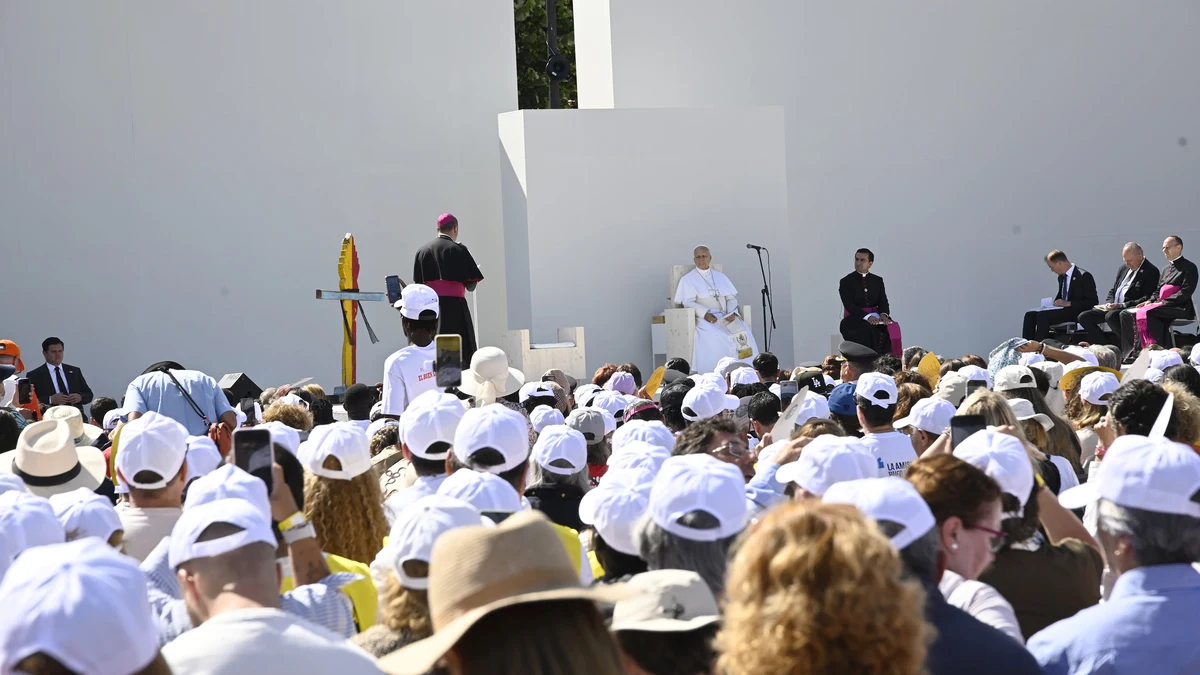
Si contundentes fueron sus palabras este jueves en el muelle de Arguineguín, lugar de primera acogida de los migrantes llegados por la llamada ruta atlántica, ayer León XIV no bajó el tono de su denuncia en la plaza del Cristo de La Laguna, que representa de alguna manera el siguiente paso en este periplo por las islas: la integración. En la localidad tinerfeña se encontró ayer por la mañana con un grupo de migrantes y quienes les acompañan en el día a día desde diferentes plataformas eclesiales, después de visitar el centro de acogida Las Raíces.

«¡Deténganse! ¡Conviértanse!», dijo visiblemente enfadado al hablar de las mafias que trafican con los migrantes. «El dinero arrancado a la vulnerabilidad de los pobres no dará paz, ni honor, ni futuro», denunció con dureza. Y añadió: «Por cada vida perdida, cada familia engañada, cada cuerpo sometido, cada mujer amenazada, cada trabajador explotado habrán de comparecer ante la justicia divina». El Papa utilizó un tono condenatorio que no había utilizado con nada ni con nadie a lo largo de los siete días de viaje: «Rompan esas cadenas y liberen a quienes tienen bajo dominio. Devuelvan lo arrebatado y reparen cuanto puedan. Vuelvan mientras aún hay tiempo, porque la misericordia de Dios puede alcanzar incluso al pecador más endurecido, pero sólo entra por la puerta estrecha de la verdad, la justicia y la conversión». Fue el grito que lanzó el Papa contra quienes se aprovechan de la desesperación; a quienes organizan rutas de muerte, trafican con personas, retienen documentos, explotan trabajadores, amenazan mujeres, engañan familias y convierten el sufrimiento ajeno en negocio».

Junto a este paso al frente, el Papa dibujó una hoja de ruta sobre cómo ha de ser la integración de quienes viene de fuera, bajo estas máximas: «La acogida abre la puerta; la integración ayuda a cruzar el umbral. La asistencia coloca bálsamo en la herida y la integración reconstruye el futuro». Así, ha de estar marcada por la cercanía, la paciencia y «unas manos capaces de socorrer, acompañar, orientar, enseñar y abrir caminos».

El Papa remarcó que integrar «no significa borrar la historia de quien llega ni exigirle que deje atrás todo lo que forma parte de su memoria». Más bien, implica un movimiento recíproco desde una convivencia mutua. De esta manera, quien recibe «aprende a ensanchar su propia casa sin diluir su identidad ni cerrar el corazón al encuentro». A los que llegan, lo mismo en cayuco que en avión, les corresponde «una parte noble y necesaria», que pasa por «abrirse con confianza a la comunidad que les recibe, aprender su lengua, respetar sus leyes, conocer sus costumbres, participar en la vida común y ofrecer con gratitud sus dones».

Al mismo tiempo, León XIV apreció el enriquecimiento que está suponiendo para la sociedad y para la Iglesia especialmente la llegada de católicos provenientes de Latinoamérica, de Filipinas y de otras latitudes. «Déjense también evangelizar por ellos, pues seguramente traen consigo regalos que la Providencia ha querido hacer llegar a ustedes a través de quienes se integran», apuntó.

Con estas coordenadas de fondo, invitó a las plataformas eclesiales que esta tarea de integración «no quede reducida a una tarea social, por necesaria que sea». «Quien llega a nuestras parroquias necesita pan, techo, lengua, trabajo y protección; y también debe encontrar una comunidad capaz de ofrecer, con el testimonio de la vida y de la palabra, caminos para conocer a Jesucristo, respetando siempre la conciencia y la libertad de cada persona», determinó.

De la misma manera, lanzó un dardo contra los católicos que miran con indiferencia o rechazo a las víctimas de la migración: «Existe también un naufragio silencioso después de la llegada: quedar solo en una ciudad, sin lengua, sin vínculos, sin trabajo, sin confianza y expuesto a quienes se aprovechan de la vulnerabilidad.

El Papa compartió su alocución después de presenciar el testimonio de Darwin, sacerdote venezolano que ejerce su ministerio en El Hierro, que ha estado en primera línea de la crisis migratoria que ha sufrido la isla: «Vale la pena seguir ayudando, que es necesario seguir sumando voluntades y corazones y para nosotros los cristianos, descubrir en los que llegan la carne sufriente de Cristo». También estuvo atento a las palabras de Mbacke, de Senegal, el marroquí Khalid Allad y Thalia, de Colombia, que visibilizaron cómo la Iglesia les ha rescatado hasta recobrar una vida digna.

© EUROPAPRESS

El Papa León XIV mantiene un encuentro con migrantes en San Cristobal de La Laguna (Tenerife)

US-Iran peace deal remains elusive as Trump and Tehran trade conflicting claims

US president dismisses Iranian media reports agreement is close, despite earlier suggesting a deal could be signed this weekend

Prospects for an immediate end to the war between Iran and the US remained uncertain on Friday amid a chaotic series of conflicting claims and counter-claims by US and Iranian officials about ongoing negotiations.

Donald Trump seemed to distance himself from his earlier comments that suggested a preliminary agreement could be signed as soon as this weekend, with a series of angry social media posts describing the Iranians as “very dishonorable people to deal with”.

Continue reading...

© Photograph: Vahid Salemi/AP

© Photograph: Vahid Salemi/AP

© Photograph: Vahid Salemi/AP

Portugal ganha mil milhões com o Mundial de futebol. Veja o “Jogo Económico”

12 June 2026 at 19:00

Ouça e acompanhe o “Jogo Económico” também em formato podcast:

SpotifyAnchor

O Mundial de futebol de 2026 pode ter um impacto económico próximo dos mil milhões de euros, um novo recorde em Portugal. Da restauração às redes sociais passando pelas cadernetas de cromos e apostas, tudo é lucro, segundo o estudo do IPAM. Daniel Sá, diretor executivo do IPAM e especialista em marketing desportivo, traz-nos todos os números.

A nossa análise (com a ajuda do consultor Jorge Faria de Sousa) vai ainda incidir no ponto em que estamos na centralização dos direitos televisivos no futebol português, como as transferências monopolizam uma boa parte das receitas em Portugal e deixamos ainda uma pergunta: sabe qual é a Seleção mais representada pela Liga portuguesa no Mundial?

Four U-2S Spy Planes Would Be Restored In Bill That Would Save The Dragon Lady Fleet

12 June 2026 at 17:32

Members of Congress are again moving to block the U.S. Air Force from retiring all of its U-2S Dragon Lady spy planes. This time, legislators also want to compel the service to “fully restore” four of the iconic aircraft through heavy depot maintenance, which would bolster the fleet’s operational capacity. The Air Force continues to argue that the high-flying Cold War-era jets are too vulnerable to support future high-end fights and should be supplanted by a mix of space-based and other capabilities. This would presumably include a classified stealthy high-altitude drone, commonly (and unofficially) referred to as the RQ-180, or an evolution thereof, which first emerged publicly just earlier this year.

Yesterday, the House Appropriations Committee released a draft defense spending bill for the 2027 Fiscal Year. It includes a provision that would prevent the Air Force from retiring more than two U-2Ss in that fiscal cycle. The Air Force currently has 23 of these aircraft in inventory, including three two-seat TU-2S trainers.

One of the Air Force’s three TU-2S trainers. USAF

A summary of the proposed legislation also says it includes “$81 million for U-2 programmed depot maintenance to fully restore four aircraft.” The current operational status of the aircraft in question is unclear. This is included under the umbrella of $335.3 billion in total funding for operation and maintenance (O&M) accounts across the services that the draft bill would appropriate for Fiscal Year 2027.

Programmed depot maintenance for any aircraft is an intensive process that essentially involves a full tear-down and detailed inspection. Paint and other coatings are typically stripped and reapplied. Upgrades and modifications are often worked into depot maintenance cycles given the extensive work already being done.

The Air Force’s proposed budget for the 2027 Fiscal Year completely zeroes out the line for U-2 O&M, to include depot maintenance, reflecting the service’s desire to retire the fleet. An annual force structure report the Pentagon released in May concisely outlines the current argument for retiring the remaining U-2Ss.

“The Air Force will retire the entire 23-ship U-2 fleet, as the platform is no longer viable for future high-end conflicts,” the force structure report says. “Continued operation presents significant safety, logistical, and financial risks that outweigh the platform’s remaining utility in contested environments.”

“This decision allows for the strategic reallocation of fiscal resources to fund more critical, high-priority service requirements and accelerate modernization efforts in other key areas,” it adds. “Continuing to operate the U-2 fleet would require a significant investment to address systemic issues, including diminishing manufacturing capacity, material shortages, and safety risks inherent in the aging platform.”

A U-2 seen taking off from an undisclosed location in the Middle East in 2010. USAF

Questions about the continued relevance of the U-2 in the face of an ever-expanding global air defense threat ecosystem are not new. Near-peer competitors like China and Russia, as well as lower-tier potential adversaries like Iran, continue to develop and field more capable air defense systems and expand their anti-access and area denial bubbles. This, in turn, has threatened to push the U-2 further and further from the areas where it would be tasked to collect.

On top of all this, the U-2s are aging and becoming more costly to operate and maintain. The U-2S models in service today were upgraded from earlier variants that began their service careers in the 1980s.

As noted, this is not the first time the Air Force has tried to retire its remaining U-2s, citing operational and sustainment-related factors. In response, Congress has repeatedly intervened in the past few years to at least block full divestment of the fleet over persistent concerns about the aerial intelligence, surveillance, and reconnaissance (ISR) capability and capacity gap that might result.

The Dragon Lady continues to offer a unique ISR platform that can fly higher than any other operational non-orbital platform, crewed or uncrewed, the U.S. military has, at least from what we know today. This, in turn, means that the aircraft can bring imaging, signals intelligence, communications payloads, and other sensors up to those altitudes, giving them particularly good fields of view. From this perch, aircraft can use a slant angle to peer deep into denied areas while still flying international airspace and further away from potential threats. The use of the U-2 to gather intelligence about a Chinese spy balloon that soared over parts of the United States and Canada in 2023, which involved flying above it, offered a particularly public demonstration of the value of the aircraft’s high-altitude capabilities.

A view of the Chinese spy balloon soaring over the United States in 2023, as seen from the cockpit of a U-2. USAF

Each Dragon Lady can also carry a wide array of different sensor systems simultaneously, as well as communications packages, further increasing its flexibility. The U-2Ss have the ability to be readily deployed to forward locations globally and conduct long-duration sorties, as well. The latter points have been especially relevant in comparison to known existing ISR satellite constellations that are constrained by their orbits and can only offer relatively short-term coverage over a specific area. We will come back to this in a moment.

A now-dated graphic that still gives a good sense of the array of different sensors the U-2 can carry. US Military

It is worth noting here that the Air Force’s Dragon Lady fleet also has a long history now of providing valuable ISR support outside of traditional combat operations. Last year, the service confirmed U-2Ss were supporting the enhanced border security mission along the United States’ southern boundary with Mexico. The aircraft have been used to support counter-narcotics operations over the years, as well as humanitarian assistance and disaster relief missions. NASA also operates a pair of ER-2 aircraft, another version of the Dragon Lady, as high-flying scientific research platforms.

A U-2 collected this image of wildfires in California in 2007. National Guard Bureau

The Air Force has been hinting for years now at the existence of advanced aircraft in the classified realm that could help fill gaps left by the retirement of the U-2, and also be more survivable in very high-threat environments. This has now been further underscored by the emergence of the ‘RQ-180,’ or a related stealthy design, in Greece earlier this year, the likely capabilities and roles of which TWZ explored in a detailed feature in April. At the same time, we have raised still unanswered questions in the past about how many of any such drones might actually be in service and what kind of operational capacity those fleets might provide.

American RQ-180 stealth drone landing in Greece, supporting US operations against Iran. pic.twitter.com/Go5YHBM1p8

— OSINTtechnical (@Osinttechnical) April 6, 2026

The U.S. military is also pushing ahead with the development and fielding of new space-based ground and air surveillance capabilities. This includes work toward the fielding of new satellite constellations that could provide game-changing persistent coverage globally, as you can read more about here. Despite steady progress, including on-orbit testing of prototypes, there are still questions about when any of these new assets in orbit will be fully operational. The U.S. Space Force recently announced it is now targeting 2028 for the “early” fielding of at least some of these new space-based surveillance capabilities.

The draft defense spending bill from the House Appropriations Committee does still have to be finalized, and then brought in line with companion legislation in the Senate. Both chambers of Congress then need to pass the bill before it can be sent to the President’s desk to be signed into law. There are many opportunities along the way for major changes to be made to the bill.

That being said, Congress has consistently blocked Air Force efforts to fully retire the U-2 in recent years. Another potential reprieve, which would also demand the service take steps to bolster the operational capacity of the remaining fleet, has now appeared on the horizon.

Contact the author: joe@twz.com

The post Four U-2S Spy Planes Would Be Restored In Bill That Would Save The Dragon Lady Fleet appeared first on The War Zone.

F-22’s ‘Catfish’ 757 Testbed Spotted Carrying Raptor’s New Infrared Sensor Pod

12 June 2026 at 00:15

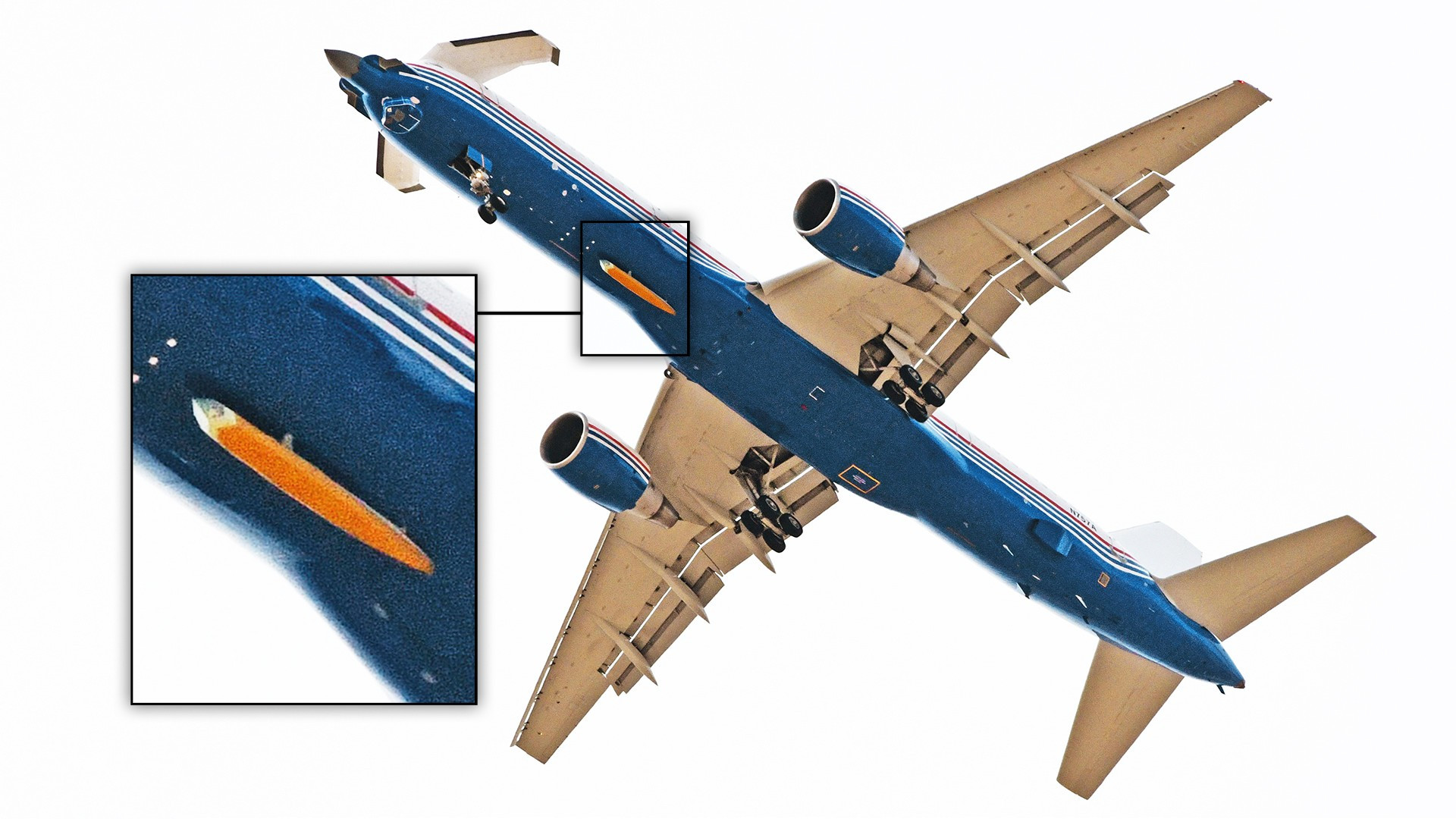
Boeing’s 757 Flying Test Bed was recently spotted carrying a stealthy underwing infrared sensor pod under its fuselage. This may be the first time this aircraft, better known as ‘The Catfish’ because of its unique and highly modified nose profile, has ever been seen lugging around a store on this station. The pod itself is part of a larger “Raptor 2.0″ upgrade package being developed for the F-22. Catfish has served as a key systems integration testbed for the Raptor since the 1990s.

Jerod Harris caught Catfish with the pod under its belly as it came in to land at Edwards Air Force Base in California on Monday. Edwards is the main hub for U.S. Air Force test and evaluation activities, and Catfish has been seen there many times over the years as part of its work. The aircraft, which carries the U.S. civil registration code N757A, also happens to be the first 757 ever built, and took to the skies for the first time back in 1982.

Catfish with the pod under its fuselage seen on approach to Edwards Air Force Base in California. Jerod Harris

As already noted, Catfish has already played a central role in the story of F-22. The aircraft’s heavily modified nose is designed to directly replicate that of the Raptor, and contains the same AN/APG-77 active electronically scanned array (AESA) radar as the fighter. The swept wings on top of the cockpit were also designed to support testing of the conformal antennas for the Raptor’s AN/ALR-94 electronic support measures system and other components of its ‘fused’ sensor suite. The aircraft has supported the development of a wide array of other systems for the F-22, and is packed inside with additional equipment to support those needs in particular, including a replica of the Raptor’s cockpit. You can read more about Catfish and its general history here.

So it is not surprising then that the heavily modified 757 would also be used now to help with continued testing of the new underwing infrared sensor pods for the Raptor. Carrying the pod under the forward end of the fuselage would offer the sensors inside a good open field of view to the front, as well as to the left, right, and down.

Another view of Catfish carrying the stealthy infrared sensor pod. Jerod Harris

The stealthy pods have been test-flown on actual F-22s for years now. At the same time, there are only a limited number of Raptors available, in total, and they are notoriously fuel-hungry, maintenance-intensive, and otherwise expensive to operate. If the particular test plan calls just for level flight, and over extended periods of time, a platform like Catfish could be an attractive alternative. With space for dozens of engineers and technicians in its main cabin, and workstations for them, the aircraft would also offer very different options for testing and evaluating the pod while in-flight. A North American Sabreliner business jet has also been used to test these pods in the past.

N33TR, a Rockwell Sabreliner 65 for Airborne Imaging returns to KJWY/Mid-Way regional Airport as " AIRBORNE33 " carrying one of the future F-22 pods.

It was at Nellis AFB testing the pod alongside RATT55/NT-43A, a radar test bed that regularly flies alongside B-2s. pic.twitter.com/kNADnga7H0

— 𝗦𝗥_𝗣𝗹𝗮𝗻𝗲𝘀𝗽𝗼𝘁𝘁𝗲𝗿 (@SR_Planespotter) July 1, 2024

The capability, in general, for Catfish to carry stores under its fuselage might open up additional possibilities for utilizing the aircraft in support of other testing efforts, if it hasn’t already.

Catfish continues on with its approach to Edwards. Jerod Harris

Catfish would also be well suited to supporting testing of other elements of the Raptor 2.0 package. Under the current plan, the Air Force’s F-22s are also set to get a new integrated distributed infrared search and track (IRST) system called the Infrared Defensive System (IRDS).

IRST systems have seen a renaissance across the U.S. military in recent years, as well as elsewhere globally. IRSTs detect and track targets via their infrared emissions, making them particularly valuable for helping spot stealthy targets with features designed to reduce their radar cross-sections. The sensors are also immune to radio frequency electronic warfare jamming and operate passively, meaning they do not emit signals that could alert a target to the fact they are being tracked. IRSTs can also be used to cue or otherwise be linked to other sensors, including AESA radars. This data fusion can provide higher fidelity tracks of multiple targets, as well as improved situational awareness overall.

Increased demand for IRSTs has led to a commensurate increase in demand for testing using multiple platforms. This, in turn, has been a major component of a general uptick in U.S. military flight testing in recent years to support a variety of new, advanced programs.

An F-22 with the stealthy underwing infrared sensor pods and drop tanks seen on a test flight over the Mojave Desert in March 2026. Jarod Hamilton

Other elements of the Raptor 2.0 upgrade plan include new stealthy drop tanks, improvements to the jet’s stealthy features, radar capabilities, electronic warfare suite, and more, as you can read about in detail here.

At least a portion of the Raptor fleet is also set to receive modifications to enable them to act as airborne controllers for Collaborative Combat Aircraft (CCA) drones. The Air Force’s F-22s are set to be the service’s first tactical jets to be used in that role, though others will follow.

The F-22 upgrade work is reflective of current Air Force plans to keep the Raptors in service for decades to come. In 2024, the Air Force said it no longer had a firm retirement schedule for the fighters.

Raptors have been used in recent years as surrogates to support work on the Next Generation Air Dominance (NGAD) initiative, a component of which is Boeing’s F-47 sixth-generation fighter. As such, Catfish will have already been feeding into those developments, which are now firmly a top Air Force priority.

Catfish seen flying together with a pair of F-22s near Edwards in 2024. Courtesy photo/Kyle Larson via USAF Chase Kohler

At the same time, Catfish is now 44 years old. Boeing 757s, in general, are increasingly disappearing from service globally as they become more complicated and cost-intensive to sustain. Especially with the work ongoing now on the F-47, it seems likely Boeing will start looking toward a new highly specialized testbed aircraft modified to reflect the particular physical geometry, unique avionics, and other features of the new fighter.

Similarly, the F-35 family also has a dedicated test jet, the Boeing 737-300-based Cooperative Avionics Testbed, nicknamed the CATbird. There are several other airliner and business jet-based testbeds flying globally today, though Catfish is certainly one of the largest and most visually distinctive. Improving digital simulation and modeling tools could allow for less reliance on surrogate testbed aircraft in the future, but they will in no way be eliminated.

China notably has something of a clone of Catfish based on a Russian-made Tupolev Tu-204C airliner, which itself was designed as an analog to the 757. The Chinese jet’s primary purpose has been supporting the development of the J-20 stealth fighter, the country’s closest answer to the F-22.

China’s Tu-204C-based ‘Catfish’ testbed jet. Chinese internet via X

In the meantime, Boeing Catfish remains a very important part of continued work to improve and expand the capabilities of the F-22. This now extends to testing of specialized underwing pods for the Raptor.

Special thanks again to Jerod Harris for sharing his pictures of Catfish carrying the stealthy sensor pod with us.

Contact the author: joe@twz.com

The post F-22’s ‘Catfish’ 757 Testbed Spotted Carrying Raptor’s New Infrared Sensor Pod appeared first on The War Zone.

Dirigentes del PSOE reprochan a Zapatero que diese un valor inferior a las joyas: “Nos está arrastrando con él”

12 June 2026 at 17:01

José Luis Rodríguez Zapatero se ha convertido en una “mina de fragmentación tanto o más dañina que Leire Díez” para el PSOE. La reflexión de uno de los principales secretarios generales autonómicos socialistas tras la tasación de las joyas incautadas al expresidente del Gobierno, valoradas en unos 1,3 millones de euros, coloca a los socialistas “entre la espada y la pared” a la espera de su declaración la próxima semana en la Audiencia Nacional. Zapatero fue imputado inicialmente por tráfico de influencias por el rescate de la aerolínea Plus Ultra, pero el valor de las alhajas con diamantes, zafiros, esmeraldas y rubíes que el referente socialista guardaba en su despacho han llevado al juez José Luis Calama a abrir una pieza separada por delito fiscal y contrabando. “Necesitamos creerle pero a cada día que pasa te surgen más dudas. Lo nuestro es un acto de fe, porque mientras tanto Ferraz no nos dice nada, tan solo nos remite a sus futuras explicaciones”, ironiza un barón territorial después de la gira del papa León XIV.

Seguir leyendo

© Chema Moya (EFE)

Pedro Sánchez, el 10 de junio en el Congreso.

Instagram y Facebook se reestablecen tras una caída de varias horas

12 June 2026 at 17:47
La incidencia ha prvocado dificultades para iniciar sesión, visualizar publicaciones, enviar mensajes y mantener la conexión en móviles y webs Leer

La incidencia ha prvocado dificultades para iniciar sesión, visualizar publicaciones, enviar mensajes y mantener la conexión en móviles y webs

Illa pone el foco en las infraestructuras para encarar el tramo final de la legislatura

El presidente de la Generalitat, Salvador Illa, ha situado las infraestructuras y la financiación autonómica en el centro de las prioridades del Govern para los próximos meses. Durante su intervención en la 37ª Trobada Empresarial al Pirineu, celebrada en La Seu d'Urgell, el jefe del ejecutivo catalán se mostró convencido de que antes de que finalice el año podrá cerrarse uno de los principales compromisos de la legislatura: la aprobación del nuevo modelo de financiación para Cataluña. Así, el líder del PSC busca llegar a las elecciones municipales de 2027 y las autonómicas de 2028 con algún proyecto tangiblle bajo el brazo.

Illa aseguró que trabaja para reunir los apoyos necesarios en el Congreso de los Diputados y lanzó un mensaje a las fuerzas políticas catalanas para que respalden una propuesta que considera beneficiosa para el conjunto del país. El acuerdo alcanzado entre el Gobierno central, la Generalitat y ERC permitiría incrementar en unos 4.700 millones de euros anuales los recursos de la administración catalana, una cifra que el Govern considera fundamental para reforzar los servicios públicos y afrontar nuevas inversiones.

El president también expresó su confianza en que pueda materializarse la condonación de una parte de la deuda asociada al Fondo de Liquidez Autonómica (FLA), una medida que vincula a la infrafinanciación que han sufrido las comunidades autónomas desde la crisis financiera. En la misma línea, reiteró su apoyo a la aplicación de la ley de amnistía, pendiente todavía de distintos pronunciamientos judiciales, y defendió que debe ejecutarse de forma inmediata.

Más allá de la financiación, Illa quiso proyectar una imagen de estabilidad institucional y de planificación a largo plazo. Preguntado por los presupuestos de 2026, sostuvo que las futuras cuentas permitirán desplegar inversiones estratégicas en ámbitos como la sanidad, las telecomunicaciones y las infraestructuras. En el caso de las comarcas pirenaicas, avanzó que las inversiones crecerán alrededor de un 50%.

Entre las actuaciones previstas citó la mejora de la carretera N-260, nuevas inversiones en el puerto de Comiols, el futuro hospital comarcal del Alt Urgell, una nueva residencia para personas mayores en La Seu d'Urgell y la extensión de la fibra óptica. También destacó el Pla de Pobles, dotado con 400 millones de euros para apoyar a los pequeños municipios y combatir el desequilibrio territorial.

Sin embargo, la gran apuesta anunciada por Illa se centra en la red ferroviaria. El president avanzó que en las próximas semanas se pondrá en marcha un grupo de trabajo para estudiar cinco actuaciones consideradas estratégicas para la movilidad de las próximas décadas: la adaptación de toda la línea R1 del Maresme frente a la erosión marítima, la continuidad del desdoblamiento de la R3 hasta Puigcerdà, el futuro del túnel del Garraf, la línea orbital ferroviaria y el eje transversal ferroviario.

Según explicó, estos cinco proyectos deben servir para diseñar la infraestructura ferroviaria que Cataluña necesita en el siglo XXI y superar algunas de las carencias históricas que arrastra la red actual. El objetivo del Govern es disponer de una planificación integral que permita mejorar la conectividad entre territorios y reducir la dependencia de la movilidad por carretera.

Durante su intervención, Illa amplió además el foco más allá de la política catalana y defendió el modelo europeo como garantía de prosperidad y estabilidad en un contexto internacional cada vez más complejo. A su juicio, Europa se enfrenta actualmente a tres grandes desafíos: la presión política procedente de Estados Unidos, la amenaza militar de Rusia y la competencia económica de China.

Ante este escenario, el president apostó por reforzar la integración europea y avanzar hacia una mayor unión política. Recordó sus recientes viajes internacionales y sostuvo que ningún territorio puede afrontar por sí solo los retos actuales. También reivindicó los valores del humanismo cristiano como una referencia útil en tiempos de transformación, evocando la reciente visita del Papa a Cataluña y el impacto internacional que tuvo la ceremonia celebrada en la Sagrada Familia.

© Govern

Illa pone el foco en las infraestructuras para encarar el tramo final de la legislatura

El PP catalán cierra los últimos flecos de su congreso con Feijóo como protagonista de la clausura

A dos semanas de la celebración de su congreso autonómico, el Partido Popular de Cataluña ultima los preparativos de una cita que servirá para consolidar el liderazgo de Alejandro Fernández al frente de la formación y marcar la hoja de ruta del partido para los próximos años. El cónclave tendrá lugar el próximo 27 de junio en Barcelona y contará con la participación del presidente nacional del partido, Alberto Núñez Feijóo, que será el encargado de clausurar el encuentro.

La presidenta del comité organizador del congreso, Llanos de Luna, ha presentado este viernes algunos de los detalles de una cita que los populares consideran clave para seguir reforzando su crecimiento en Cataluña. El lema elegido será “Queremos más. Libertad, Orden, Convivencia, Proyecto, Futuro”, una declaración de intenciones con la que el partido pretende transmitir la idea de que Cataluña necesita una alternativa política distinta a la que, a su juicio, han representado en los últimos años tanto el independentismo como el socialismo.

Durante una rueda de prensa celebrada en Barcelona, De Luna sostuvo que los catalanes llevan demasiado tiempo atrapados en proyectos políticos que no han dado respuesta a los principales problemas de la comunidad. Según defendió, el proceso independentista dejó una herencia de confrontación política y división social, mientras que los gobiernos socialistas no han logrado materializar las expectativas de progreso que prometían.

La dirigente popular señaló cuestiones como el deterioro de algunos servicios públicos, las dificultades de acceso a la vivienda, el aumento de la inseguridad y la pérdida de dinamismo económico como algunos de los retos que, en su opinión, siguen pendientes en Cataluña. Frente a este escenario, reivindicó el papel del PP como una fuerza política que aspira a recuperar el liderazgo económico y social de la comunidad.

En este sentido, De Luna apeló a una Cataluña que vuelva a ser sinónimo de prosperidad, convivencia y oportunidades. Como ejemplo de esa imagen proyectada al exterior, citó el impacto internacional que ha tenido la reciente inauguración de la Torre de Jesús de la Basílica de la Sagrada Familia, uno de los acontecimientos más simbólicos vividos en la capital catalana en los últimos meses.

Revalidación de Alejandro Fernández

Salvo sorpresa de última hora, el congreso servirá para revalidar a Alejandro Fernández como presidente del PP catalán. El dirigente tarraconense ha presentado 1.551 avales para formalizar su candidatura, una cifra que supera ampliamente los 300 apoyos necesarios establecidos por el reglamento interno del partido.

La renovación de Fernández llega en un momento especialmente favorable para los populares en Cataluña. En las elecciones autonómicas de 2024, el PP pasó de tres a quince diputados en el Parlament, multiplicando por cinco su representación y recuperando una relevancia institucional que había perdido durante la última década. Precisamente, la dirección del partido considera que ese crecimiento electoral debe ser el punto de partida para seguir ampliando su base social. El objetivo declarado es atraer a votantes desencantados tanto con el independentismo como con el PSC y consolidarse como una alternativa de gobierno en Cataluña.

Uno de los aspectos que todavía quedan por despejar es la composición del nuevo equipo que acompañará a Alejandro Fernández en esta nueva etapa. Preguntada por la posibilidad de convertirse en secretaria general del partido en sustitución de Santi Rodríguez, Llanos de Luna evitó entrar en especulaciones y subrayó que será el propio Fernández quien decida la configuración de la nueva ejecutiva.

Antes de la celebración del congreso todavía quedan varios pasos internos. El próximo lunes, el coordinador de la ponencia política, Juan Milián, presentará el documento ideológico que servirá de base para el debate. Tanto esta ponencia como la reforma estatutaria serán remitidas posteriormente a los compromisarios, que dispondrán hasta el 22 de junio para registrar enmiendas.

Cataluña, pieza clave para el proyecto nacional del PP

Más allá del ámbito autonómico, el congreso tendrá también una importante lectura nacional. Los dirigentes populares insisten en que Cataluña será un territorio decisivo en cualquier futuro cambio político en España y en las aspiraciones de Alberto Núñez Feijóo de llegar a la Presidencia del Gobierno.

La estrategia del PP pasa por aumentar su implantación en una comunidad históricamente complicada para el partido y donde, pese a la mejora de los resultados electorales, sigue teniendo un amplio margen de crecimiento. De ahí que la presencia de Feijóo en la clausura del congreso se interprete como una muestra de la importancia que la dirección nacional concede al proyecto catalán.

© EUROPAPRESS

La organización del congreso del PP catalán proclama a Alejandro Fernández candidato a la reelección

El valor de las joyas de Zapatero: desde baratijas “sin valor” hasta un collar de 278.000 euros

12 June 2026 at 13:51

Desde baratijas “sin valor” hasta un collar de 278.000 euros de oro blanco con “diamantes” y “dos esmeraldas naturales” de “Zambia”. El informe pericial realizado por la joyería Ansorena y el Instituto Gemológico Español detalla cada una de las alhajas —entre pendientes, collares, colgantes, sortijas y relojes— halladas en la caja fuerte del despacho del expresidente del Gobierno José Luis Rodríguez Zapatero que han sido valoradas en 1.323.915 euros. El documento, al que ha tenido acceso EL PAÍS, ha llevado al juez de la Audiencia Nacional a cargo del caso Plus Ultra a abrir una pieza separada para investigar al socialista por un supuesto delito fiscal y otro de contrabando, al margen de la investigación principal en la que indaga en el presunto tráfico de influencias que habría ejercido para que el Gobierno concediera en 2021 un rescate de 53 millones de euros a la aerolínea.

Collar en oro blanco

Collar realizado en oro blanco de 18 kilates compuesto por diamantes y dos esmeraldas naturales. Precio estimado: 278.000 euros

Collar en oro blanco

Collar realizado en oro blanco de 18 kilates con 13 zafiros. Precio estimado: 220.000 euros

Collar en oro blanco

Collar realizado en oro blanco de 18 kilates con bandas de diamantes en forma de V y cinco rubíes naturales acompañados de diamantes talla brillante. Precio estimado: 155.000 euros

Pulsera en oro blanco

Pulsera en oro blanco de 18 kilates con tres esmeraldas naturales con origen Zambia. Precio estimado: 95.000 euros

Sortija oro blanco

Sortija realizada en oro blanco de 18 kilates con una esmeralda natural de Zambia coronada con diamantes talla brillante. Precio estimado: 85.000 euros

Pulsera oro blanco

Pulsera en oro blanco de 18 kilates con siete zafiros origen Tailandia. Precio estimado: 80.000 euros

Pendientes de oro blanco

Pendientes largos de dos cuerpos de oro blanco de 18 kilates formados por cuatro esmeraldas naturales con origen Zambia acompañadas de diamantes talla brillante. Precio estimado: 80.000 euros

Pulsera oro blanco

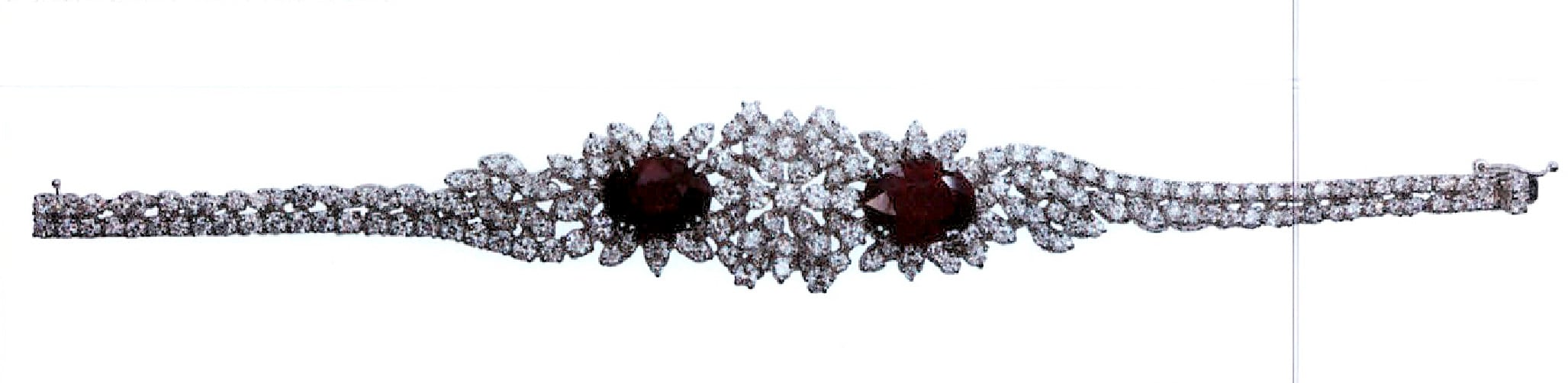
Pulsera de oro blanco de 18 kilates con dos rubíes naturales y diamantes talla brillante. Precio estimado: 72.000 euros

Pendientes oro blanco

Pendientes de oro blanco de 18 kilates con ocho zafiros naturales de origen Tailandia, acompañados por diamantes talla brillante. Precio estimado: 70.000 euros

Pendientes oro blanco

Pendientes de oro blanco de 18 kilates con cuatro rubíes naturales acompañados de diamantes talla brillante. Precio estimado: 60.000 euros

Brazalete de oro

Brazalete de oro amarillo de 22 kilates con rosetón central y dos laterales con centros de rubíes y decorados con diamantes talla rosa holandesa. Precio estimado: 11.800 euros

Collar con medallón de oro

Collar formado por hilos de cuentas de aventurina verde unidas con tres entrepiezas en forma de medallón de oro amarillo de 22 kilates. Precio estimado: 4.000 euros

Collar con esmeraldas de Zambia

Collar formado por cuentas de esmeralda de Zambia en bruto pulidas con manos de Fátima de oro. Precio estimado: 3.000 euros

Reloj Omega

Reloj Omega de oro de 18 kilates para mujer. Precio estimado: 3.000 euros

Reloj Lorenz

Reloj para caballero marca Lorenz modelo Theatro Fase lunar. Precio estimado: 1.500 euros

Collar con amazonitas pulidas

Collar de tres hilos de amazonitas pulidas con entrepiezas de oro caladas. Precio estimado: 1.200 euros

Collar de Jenny Polanco

Collar diseñado por Jenny Polanco (República Dominicana) formado por un ámbar central y acompañado de gemas semipreciosas. Precio estimado: 500 euros

Reloj Dogma

Reloj de caballero marca Dogma. Precio estimado: 100 euros

Cruz

Cruz de la Sagrada Familia realizada en plata y partes con baño de oro. Precio estimado: 50 euros

Reloj Kronos

Reloj marca Kronos de señora realizado en metal chapado en oro. Precio estimado: 50 euros

Sortija de oro blanco

Sortija de oro blanco de 18 kilates con perla japonesa (mabe). Precio estimado: 1.000 euros

Pendientes de metal chapado

Pendientes de metal chapado y perlas de imitación. Sin valor

Alfiler con iniciales

Alfiler de metal dorado con iniciales. Sin valor

Cadena de plata

Cadena de plata de 1ª ley de eslabón tipo veneciano. Precio estimado: 50 euros

Pendientes oro blanco

Pendientes de oro blanco de 18 kilates con dos diamantes talla brillante. Precio estimado: 3.500 euros

Pendiente con piedras de imitación

Pendiente de metal chapado en oro con piedras de imitación. Sin valor

Collar de perlas de imitación

Collar de perlas de imitación. Sin valor

Collar de perlas de imitación

Collar de perlas de imitación y motivos textiles. Sin valor

Cruz de plata con baños de oro

Cruz de la Sagrada Familia realizada en plata y con partes bañadas en oro. Precio estimado 100 euros

Pendiente de perla de imitación

Pendiente de perla de imitación. Sin valor

Seguir leyendo

Pulsera de oro blanco con dos rubíes y diamantes talla brillante valorada en 72.000 euros.

El Ejecutivo de Ayuso condiciona la tarjeta de transporte al empadronamiento y excluye a miles de usuarios, sobre todo migrantes y estudiantes

Cola para recibir el certificado de memoria del abono de transportes en la Oficina de Gestion del Consorcio Regional de Transportes.

Las colas de emigrantes ante la Oficina de Gestión del Consorcio Regional de Transportes de Madrid, colapsada esta primavera por extranjeros en situación irregular que necesitaban el certificado de la tarjeta de transportes regional para demostrar su arraigo y acogerse a la regularización promovida por el Gobierno de España, difícilmente volverán a producirse. La Comunidad de Madrid, que preside Isabel Díaz Ayuso, ha decidido que a partir del lunes ese título solo se pueda obtener con el correspondiente empadronamiento en un municipio de la región, o de un grupo seleccionado de Castilla-La Mancha y Castilla y León.

Seguir leyendo

Luísa Neto falha eleição para o cargo de provedora da Justiça

12 June 2026 at 13:10

Luísa Neto, candidata indicada pelo PS com o apoio do PSD, falhou hoje no Parlamento a eleição para o cargo de provedora de Justiça, obtendo 131 votos favoráveis, insuficientes para alcançar a necessária maioria de dois terços.

Atual presidente do Conselho Diretivo do Instituto Nacional de Administração (INA), Luísa Neto obteve 131 votos favoráveis, 58 brancos e 18 nulos. Para ser eleita, precisava de chegar à fasquia dos 154 votos a favor.

A votação de hoje foi a segunda tentativa no sentido de se eleger uma personalidade para um cargo que está por preencher desde o início da presente legislatura, quando Maria Lúcia Amaral saiu desse lugar para desempenhar as funções de ministra da Administração Interna, cargo do qual se demitiu no começo deste ano.

Em 12 de abril, numa primeira eleição falhada, o antigo secretário de Estado socialista Tiago Antunes, proposto pelo PS para provedor de Justiça, alcançou um resultado inferior a dois terços, tendo apenas 104 votos favoráveis num total de 230 deputados.

A nova candidata a provedora de justiça, Luísa Neto, foi nomeada para presidente do INA em 2021 pela então ministra da Modernização do Estado e da Administração Pública, Alexandra Leitão, durante o segundo dos três executivos socialistas liderados por António Costa.

É licenciada pela Faculdade de Direito da Universidade de Lisboa e doutorada pela Universidade do Porto e destacou-se na Associação Portuguesa de Apoio à Vítima, onde esteve entre 2007 a 2013.

 Luísa Neto foi assessora de José Pedro Aguiar-Branco quando o atual presidente da Assembleia da República exerceu as funções de ministro da Justiça no Governo liderado por Pedro Santana Lopes.

Teerão mantém programa nuclear e controlo do estreito de Ormuz em acordo com EUA

12 June 2026 at 13:07

A imprensa oficial iraniana noticiou hoje que o programa nuclear iraniano seria discutido com Washington num prazo de 60 dias, no âmbito de um projeto de acordo-quadro, com Teerão a recusar ceder o controlo do estreito de Ormuz.

“O Irão só negociará o programa nuclear no âmbito dos princípios fundamentais da República Islâmica, e questões como o direito do Irão a enriquecer urânio e a conservação de material enriquecido (…) serão apresentadas para inclusão no acordo final”, afirmou a agência oficial de notícias iraniana IRNA, citada pela agência francesa AFP.

A mesma agência afirma que Teerão não renunciaria ao controlo do estratégico estreito de Ormuz nos termos do projeto de acordo-quadro com os Estados Unidos.

“O Irão não assume qualquer compromisso neste texto de ceder a gestão do estreito ou de restaurar as condições que prevaleciam antes da agressão militar americana e israelita”, segundo a IRNA, que descreve “as linhas principais do texto atual” atualmente a ser finalizado.

Também a Mehr, a agência de notícias semi-oficial apoiada pelo Governo de Teerão, divulgou hoje o projeto de acordo com os Estados Unidos para estabelecer um quadro para pôr fim à guerra em todas as frentes, incluindo no Líbano.

Segundo a Mehr, o projeto de acordo-quadro prevê uma “cessação permanente e imediata das hostilidades em todas as frentes, incluindo no Líbano”, além de “60 dias de negociações para alcançar um acordo sobre questões nucleares e o levantamento total das sanções” pelos Estados Unidos.

Citando uma fonte próxima da equipa negociadora iraniana, a agência afirma que o rascunho incluía “a libertação” de 24 mil milhões de dólares (cerca de 20,7 mil milhões de euros) “em fundos iranianos bloqueados durante o último período de negociação de 60 dias”, acrescentando que metade deste montante seria “disponibilizado ao Irão antes do início das negociações”.

Diploma do Governo sobre Prestação Social Única segue para especialidade sem votação

12 June 2026 at 13:05

A proposta do Governo que visa autorizar o executivo a criar a prestação social única baixou hoje à fase da especialidade sem votação na generalidade, com votos contra de BE, PCP e do ex-líder do PS Pedro Nuno Santos.

A baixa do diploma sem votação tinha sido anunciada na quinta-feira pelo líder do Chega, André Ventura, por acordo com PSD e foi hoje concretizada através de um requerimento do Governo, que fixa um prazo de dez dias para a discussão na especialidade na Comissão de Trabalho, Segurança Social e Inclusão, sem votação.

BE, PCP e o deputado do PS e ex-líder Pedro Nuno Santos votaram contra o requerimento do Governo para que o diploma não fosse votado na generalidade, enquanto o Livre se absteve. Os restantes partidos – PSD, Chega, PS, IL, CDS-PP e deputados únicos dp PAN e JPP – votaram a favor desta baixa à especialidade sem votação.

André Ventura tinha afirmado que o grupo parlamentar social-democrata aceitou seis das sete exigências do partido, ficando de fora uma que pretendia alargar o prazo de residência em Portugal para que os imigrantes pudessem receber esta prestação.

Hoje no debate, o líder parlamentar do PSD, Hugo Soares, E deixou uma pergunta direta a Ventura: “Está disponível para separar aquilo que é regime contributivo e não contributivo? E nós estaremos disponíveis para olhar para o prazo de que o senhor quer falar”.

“Sim, estamos disponíveis”, respondeu o líder do Chega.

A proposta de lei foi aprovada em Conselho de Ministros em 29 de maio e, face à atual composição parlamentar, o Governo liderado por Luís Montenegro está obrigado a negociar com o PS ou o Chega para que o diploma seja aprovado na Assembleia da República.

Segundo a proposta original, a Prestação Social Única (PSU) vai agregar 13 apoios que existem atualmente: o Rendimento Social de Inserção (RSI), seis subsídios sociais de parentalidade (parental inicial, por risco clínico durante a gravidez, interrupção da gravidez, riscos específicos, adoção, e necessidade de deslocação a unidade hospitalar localizada fora da ilha de residência da grávida), a pensão social de velhice, a pensão social do regime especial de proteção na invalidez, o complemento extraordinário de solidariedade, a pensão de viuvez, a pensão de orfandade e o subsídio social de desemprego.

Uma das principais medidas é o condicionamento da atribuição da PSU à disponibilidade do requerente ou membros do seu agregado em idade ativa que não se encontrem a trabalhar para, salvo em situações excecionais previstas na lei, prestar “atividades de solidariedade social” até um máximo de 15 horas por semana.

No requerimento, o executivo justificou a urgência do debate com “os compromissos assumidos” no âmbito do Plano de Recuperação e Resiliência (PRR), sublinhando que a “não concretização desta reforma implica o não desembolso de cerca de 620 milhões de euros por parte da Comissão Europeia”.

Foram rejeitados projetos de lei JPP, BE e Livre e resoluções (recomendações) de Livre e do Chega sobre o mesmo tema.

❌