Normal view

Two men jailed for violence at protest over police treatment of Henry Nowak

9 June 2026 at 19:53

Leon O’Leary threw a smoke grenade and Connor Bishop a traffic cone at officers during disturbance in Southampton

Two men who threw a smoke grenade and traffic cone at police during the violence in Southampton that followed the sentencing of Henry Nowak’s killer have been jailed.

Leon O’Leary, 41, from Basingstoke, Hampshire, was sentenced to three years and one month after throwing a smoke grenade at officers.

Continue reading...

© Photograph: Isabel Infantes/Reuters

© Photograph: Isabel Infantes/Reuters

© Photograph: Isabel Infantes/Reuters

Passenger on train to London given first sentence for harassment under new law

9 June 2026 at 19:46

David Stroud grabbed a woman’s hair and asked if he could kiss her two days after legislation took effect

A train passenger has become the first person to be sentenced under a new harassment law after a prosecution brought by the British Transport Police (BTP).

David Stroud, 44, grabbed a woman’s hair and asked her “can I kiss you?” on a rail journey to London on 3 April, two days after the new legislation came into force banning harassment motivated by a person’s sex.

Continue reading...

© Photograph: Antonia Johlen/PA

© Photograph: Antonia Johlen/PA

© Photograph: Antonia Johlen/PA

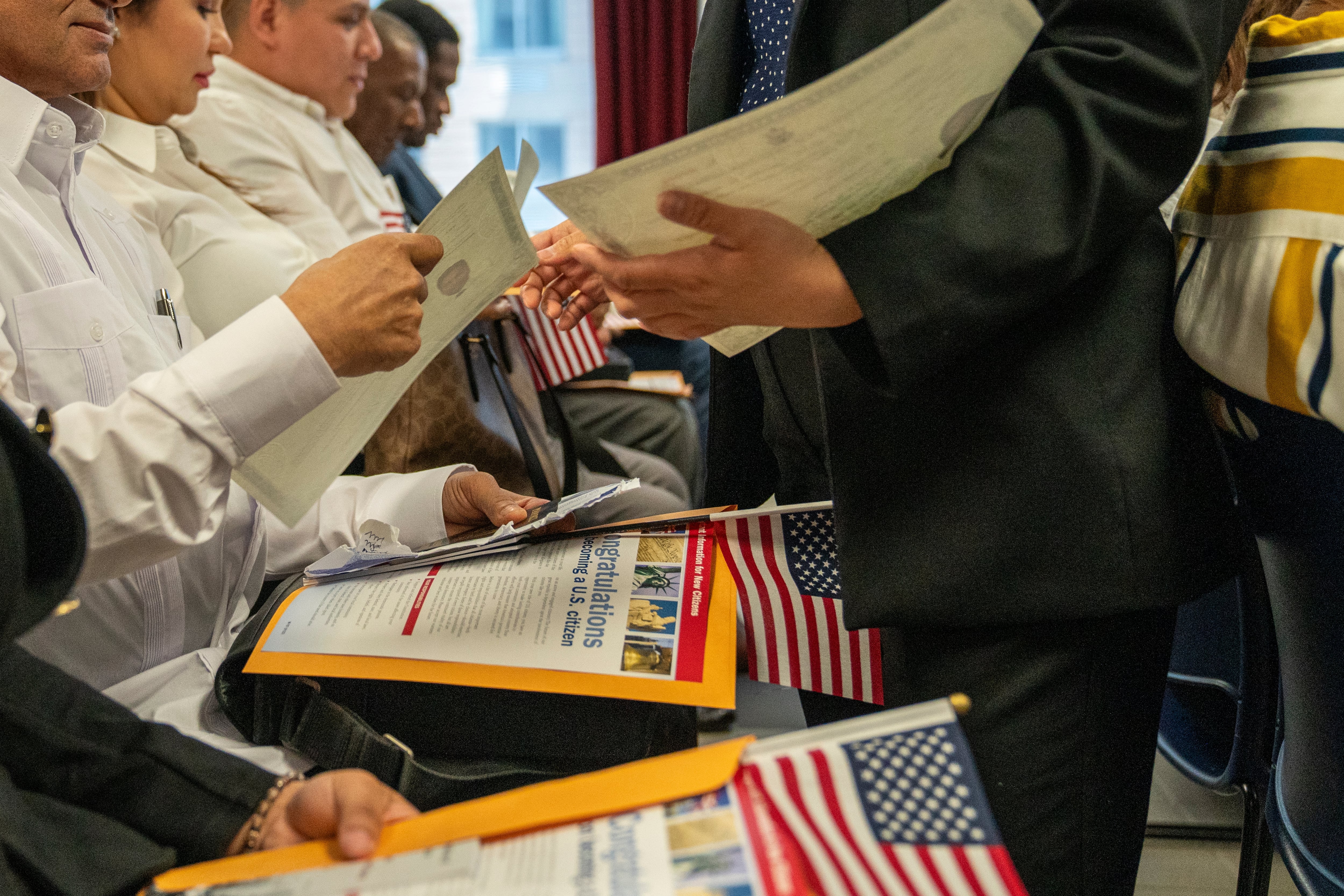
The Trump Administration moves forward with revoking the citizenship of 17 naturalized immigrants

Seventeen naturalized U.S. citizens could lose their citizenship after the Department of Justice announced new actions on Monday to revoke that status. The move is part of the denaturalization campaign pursued by President Donald Trump’s administration against people whom the Republican government says obtained citizenship through fraud or deception during the naturalization process.

Seguir leyendo

© Robert Nickelsberg (Getty Images)

Applicants for U.S. citizenship receive their naturalization certificates in New York on June 4, 2025.

Vance demands DOJ probe of Minnesota officials as White House presses 'war on fraud'

Vice President JD Vance is pressing federal prosecutors to investigate Minnesota Gov. Tim Walz and state Attorney General Keith Ellison over allegations they failed to stop widespread social services fraud.

Search black boys, protect white folk: Kemi vies to out-right the far right | John Crace

9 June 2026 at 17:02

When politicians talk ‘common sense’ it’s time to worry; when the Tory leader does, it’s time to be doubly vigilant

You know how it is. You’re a middle class, straight white man in his 60s in A&E. Possibly the most disadvantaged person in the entire country. You complain of chest pains. In the adjoining triage queue there is a black woman with what looks like a broken toe. You know what happens next. The black woman is seen within minutes. You have a cardiac arrest on the waiting room floor.

Said no one ever. There may be times when there simply aren’t enough staff in the A&E department. There may also be times when a doctor under pressure fails to make the right diagnosis. But no one for a minute believes they are being deliberately kept waiting any longer than necessary. The founding principle of the NHS is predicated on patients being treated according to the severity of their condition.

Continue reading...

© Photograph: Kin Cheung/AP

© Photograph: Kin Cheung/AP

© Photograph: Kin Cheung/AP

Faltam 2 dias para Copa: vai ter folga no trabalho durante jogos do Brasil?

9 June 2026 at 16:47

A proximidade da Copa do Mundo de 2026 tem levado empresas brasileiras a discutir formas de compatibilizar a rotina de trabalho com os jogos da Seleção Brasileira. Embora a maior parte das partidas da fase de grupos esteja marcada para o período da noite, entre 19h e 22h, setores com funcionamento contínuo, como comércio, serviços e indústria, já avaliam medidas para evitar impactos na produtividade e no clima organizacional.

A mobilização em torno do torneio costuma influenciar o ambiente corporativo, especialmente em um país onde o futebol desperta grande interesse popular. Para muitas empresas, o desafio é encontrar soluções que permitam aos trabalhadores acompanhar os jogos sem comprometer as atividades da organização.

Segundo o advogado trabalhista Lucas Aguiar, a legislação brasileira não prevê a interrupção obrigatória do expediente durante as partidas da Copa do Mundo. Dessa forma, cabe a cada empresa decidir se haverá ou não flexibilização da jornada.

“Ignorar a expectativa criada em torno dos jogos da Seleção pode gerar desmotivação e queda de rendimento. Por outro lado, qualquer flexibilização exige planejamento para evitar prejuízos operacionais e riscos trabalhistas”, explica.

Especialista explica que a legislação não obriga a liberação dos funcionários durante as partidas da Seleção, mas permite acordos para compensação de horas e flexibilização da jornada | Foto: Divulgação

O advogado trabalhista ressalta que assistir aos jogos não é um direito garantido pela legislação trabalhista. Ainda assim, as empresas podem adotar mecanismos para permitir que os colaboradores acompanhem as partidas, desde que observem as regras previstas em lei.

Entre as alternativas mais utilizadas estão o abono das horas, sem necessidade de compensação, e a dispensa temporária da jornada com posterior reposição do período não trabalhado. A escolha do modelo depende da realidade de cada organização e da viabilidade operacional de cada setor.

Aguiar destaca que todas as medidas devem ser formalizadas e comunicadas de maneira clara aos funcionários. Nos casos em que existe banco de horas, a compensação deve seguir os critérios definidos em acordos individuais ou coletivos. Quando esse mecanismo não está formalmente instituído, a reposição das horas precisa ocorrer dentro do mesmo mês, respeitando o limite legal de dez horas de trabalho por dia.

E no home office?

As orientações também se aplicam aos profissionais que atuam em regime de home office. De acordo com o advogado, o trabalho remoto não elimina a necessidade de controle da jornada nem altera as regras relacionadas à compensação de horas.

“O registro adequado da jornada continua sendo essencial, independentemente do local onde o trabalho é realizado. Isso evita problemas futuros e possíveis questionamentos trabalhistas”, afirma.

Para o especialista, a flexibilização da jornada durante a Copa pode trazer benefícios para empresas e trabalhadores. Além de favorecer o engajamento das equipes, a medida contribui para um ambiente organizacional mais positivo e fortalece a relação entre empregadores e colaboradores.

Nesse cenário, a adaptação do expediente durante os jogos da Seleção passa a ser vista por muitas empresas não apenas como uma concessão pontual, mas como uma estratégia de gestão voltada ao equilíbrio entre produtividade, bem-estar e satisfação dos funcionários.

The post Faltam 2 dias para Copa: vai ter folga no trabalho durante jogos do Brasil? appeared first on Diário da Manhã - O Jornal do leitor Inteligente.

La justice à contre-emploi

« Gardienne de la liberté individuelle », selon la Constitution, l'autorité judiciaire prête pourtant main forte à la politique répressive de l'État : la lourdeur des condamnations infligées aux « gilets jaunes » contraste ainsi avec la clémence envers les violences de la police. Paupérisée et dénigrée, la justice est gagnée par l'idéologie sécuritaire. Mais certains magistrats refusent cette dérive.

JPEG - 188.1 kio
Tomas van Houtryve ///// Série « Blue Sky Days » (Journées de ciel bleu), « Prison », 2014

Contrairement aux clichés sur son prétendu « laxisme », la justice pénale fonctionne à plein régime. Son taux de réponse, c'est-à-dire le nombre d'affaires auxquelles elle a donné suite, rapporté au nombre de celles dont elle a été saisie, s'élève à 91 % contre 35 % il y a trente ans. Les 9 % restants consistent en des classements sans suite de dossiers « non élucidés » ou ne relevant pas de sa compétence. La justice a donc presque « réponse à tout ». Cette augmentation constante des condamnations s'explique par la conjonction d'une idéologie sécuritaire et d'un accroissement de la fonction répressive d'un État néolibéral qui délaisse son rôle d'opérateur économique et social et sa mission redistributive.

Depuis la loi organique relative aux lois de finances (LOLF) de 2001 et la révision générale des politiques publiques (RGPP), même la justice est soumise à la vision technocratique du new public management nouvelle gestion publique »), comme d'ailleurs la police : les statistiques déterminent l'orientation des procédures et la carrière des magistrats, en fonction des stocks et des flux de dossiers, sur le seul critère du rendement, au détriment de la motivation et de la qualité des décisions (1). En France, le nombre de détenus a crû de plus d'un tiers en vingt ans (de 40 000 en 2000 à presque 70 000 en 2021) (2), alors que la population carcérale diminue depuis plusieurs années dans la plupart des pays de l'Union européenne, comme l'Allemagne, l'Italie et les pays du nord de l'Europe Les Pays-Bas, la Belgique, la Norvège et la Suède ont même fermé plusieurs établissements pénitentiaires depuis cinq ans, faute de détenus. Si la France fait partie, avec la Turquie, des cinq États parmi les quarante-sept membres du Conseil de l'Europe à afficher la densité carcérale la plus élevée (lire l'extrait du rapport sur les prisons, « Dans les geôles de la République »), ce n'est pas lié à l'évolution de la délinquance. C'est le résultat de la poursuite systématique de petites infractions par les parquets, de la suppression — de fait — des lois d'amnistie, ainsi que du durcissement continu des peines

Or, la politique pénale actuelle et sa traduction judiciaire sont socialement discriminantes. Cela s'explique d'abord par le fait que les audiences de comparutions immédiates explosent dans les tribunaux. On sait que les peines prononcées dans ces conditions sont beaucoup plus sévères à délit égal en raison de l'urgence, de la faible place accordée à la défense, du manque d'éléments informant sur la personnalité du prévenu et de la « justice d'abattage » imposée aux magistrats. Mais, surtout, la situation socio-économique de cette petite délinquance génère des peines de prison ferme, car elle n'a pas, comme l'écrivent les juges dans nombre de décisions, « de garantie de représentation », c'est-à-dire pas de logement permettant, par exemple, la pose d'un bracelet électronique au lieu de l'incarcération, pas d'argent pour payer une amende, pas de proches pour soutenir une injonction de soins ou une démarche d'insertion professionnelle.

Pénalisation de la misère

Mme Dominique Simonnot, aujourd'hui contrôleuse générale des lieux de privation de liberté, a relaté chaque semaine, pendant quatorze ans, cette pénalisation de la misère dans ses chroniques du Canard enchaîné. Ainsi, lors de l'audience banale du 14 octobre 2016 au tribunal judiciaire de Nanterre, sur les sept prévenus qui comparaissaient, un seul possédait le baccalauréat, deux avaient vécu dans des foyers de l'Aide sociale à l'enfance, l'un était sans domicile fixe (SDF), un autre percevait le revenu de solidarité active (RSA), deux étaient au chômage, deux en contrats précaires, et un seul en contrat à durée indéterminée (CDI). Tous étaient français. Exemple de peine prononcée : deux mois de prison ferme avec mandat de dépôt pour le vol de deux montres d'une valeur de 35 et 20 euros dans un magasin de sport…

Le traitement judiciaire du mouvement des « gilets jaunes », entre novembre 2018 et fin 2019, constitue un autre exemple de ce qu'on aurait nommé jadis « une justice de classe ». Selon le bilan de la chancellerie, 3 100 « gilets jaunes » ont été condamnés, dont un millier d'entre eux à des peines de quelques mois à trois ans de prison ferme — un chiffre inédit pour un mouvement social. À Paris, où furent concentrées le tiers des gardes à vue, la moitié de celles-ci se sont terminées par une remise en liberté et un classement sans suite, ce qui confirme l'usage préventif de la garde à vue et sa fonction d'intimidation des mouvements de protestation. En une année, il y eut autant de manifestants blessés par la police, et parfois mutilés à l'œil ou aux mains par des tirs de lanceurs de balles de défense, que pendant les vingt ans précédents. Pour autant, seules 313 procédures ont été ouvertes à l'inspection générale de la police nationale (IGPN) — la police des polices —, et très peu ont abouti à une sanction contre des membres des forces de l'ordre ou à des condamnations judiciaires (3). Le retentissement médiatique des affaires politico-financières (4), qui représentent à peine 1 % des condamnations pénales, ne doit pas occulter cette réalité du fonctionnement quotidien de la justice, à coups d'audiences de comparutions immédiates et d'expulsions locatives.

S'il est vrai que la sévérité des condamnations prononcées en matière financière s'accroît depuis quelques années, cette tendance masque la remise en cause du rôle de la justice comme autorité d'équilibre entre les pouvoirs législatif et exécutif. En effet, au sein de l'institution judiciaire, la fonction même du juge s'efface au profit du parquet, qui est dépendant du gouvernement de par son organisation et son statut. Progressivement, le procureur se fait juge puisque le parquet rend désormais environ 40 % des décisions pénales (5).

Dépourvus de garanties

Ainsi, la procédure de comparution préalable de culpabilité (CRPC) ou « plaider coupable », massivement utilisée, est en réalité une négociation de la peine entre le procureur, qui propose une sanction, et l'avocat de la défense, qui n'a que quelques minutes pour l'accepter ou non, encourant le risque, s'il la refuse, de voir le tribunal aggraver la peine par la suite. En outre, beaucoup de sanctions pénales sont prononcées, non pas par des magistrats professionnels, mais par des personnels précaires dépourvus des garanties statutaires d'indépendance des juges professionnels : magistrats à titre temporaire, juges de proximité et délégués du procureur, recrutés sur contrat à durée déterminée (CDD)… Ils comptent désormais pour 10 % des magistrats et la chancellerie entend en recruter encore mille. Des peines d'emprisonnement ferme, jusqu'à trois ans, sont infligées chaque année à l'encontre de milliers de personnes dans des affaires de vols et de petits trafics de stupéfiants, sans qu'un juge intervienne pour s'interroger sur leur culpabilité, sans réelle audience publique, sans véritable défense.

La France est en passe d'instaurer une justice sans juge, comme aux États-Unis, où 90 % des décisions pénales sont rendues de cette manière, c'est-à-dire par « négociation » (plea bargaining). La chancellerie semble faire sienne cette orientation, comme l'attestent certaines questions posées aux professionnels, aux citoyens et aux associations sur le site des états généraux de la justice, Parlons justice ! : « Faut-il réserver l'accès au juge pour les cas les plus complexes ou urgents, et systématiser pour les autres cas une tentative de règlement amiable… ? Faut-il réserver l'audience aux infractions les plus graves… et systématiser pour les autres cas une peine négociée ? Que pensez-vous d'un modèle de justice pénale dans lequel… les victimes et les mis en cause doivent contribuer à apporter les preuves utiles ? » Il n'est pas précisé que dans ce modèle, dit accusatoire, les frais d'avocats sont très élevés car ceux-ci recherchent les preuves (expertises, témoignages…). En France, actuellement, ils sont payés par l'État, au titre des frais de justice. On comprend que, dans un tel système où l'intervention du juge devient marginale, il ne soit pas prévu de recruter des magistrats, la plupart des litiges se réglant sans eux, entre les parties et leurs avocats.

Règlement amiable

« Le problème de la police, c'est la justice », clamaient certains groupes de policiers lors de la grande manifestation parisienne du 15 mai 2021. La réalité est tout autre. Dans la nouvelle conception des pouvoirs publics, la justice n'est plus qu'une « chaîne pénale » qui doit homologuer les initiatives policières. Pourtant, ce n'est pas le rôle qui lui est assigné par la Constitution, laquelle énonce dans son article 66 que « l'autorité judiciaire est gardienne de la liberté individuelle ». Cela suppose que les juges contrôlent la validité des procédures policières et s'interrogent sur la culpabilité et les preuves avant de prononcer une condamnation.


(1) Alain Supiot, La Gouvernance par les nombres. Cours du Collège de France (2012-2014), Fayard, Paris, 2015.

(2) Rapport « Statistiques pénales annuelles du Conseil de l'Europe », Strasbourg, 8 avril 2021.

(3) Selon le ministère de la justice, sur plus de 10 000 gardes à vue, 3 166 au total se sont déroulées à Paris, dont 1 459 n'avaient débouché sur aucune poursuite. Cf. Le Monde, 8 novembre 2019.

(4) Entre un an et cinq ans d'emprisonnement ferme à l'encontre de MM. Nicolas Sarkozy, François Fillon, Patrick Balkany, pour des infractions de dépassements de plafond de dépenses électorales, de corruption, de détournements de fonds publics et de fraudes fiscales.

(5) Chiffres de la Conférence nationale des procureurs de la République dans son interpellation du 6 janvier 2022 à l'endroit des candidats à la présidentielle.

The rise of the Global South

By: A A
9 June 2026 at 15:47

By Chris HEDGES

Join us on TelegramTwitter, and VK.

Contact us: info@strategic-culture.su

The war on Iran has not only ended in a humiliating defeat for the United States, but resulted in a dramatic shift in the balance of power in the Middle East and the Global South.

The humiliating defeat of Israel and the United States in their war on Iran, along with the savagery of the ongoing genocide in Gaza, are ushering in a new world order.

This order is one where voices of reason and stability emanate not from the West — which spent tens of billions of dollars sustaining Israel’s genocide — but from the Global South, including China. It is an order where alliances are being rapidly reconfigured to protect countries from a rogue American state that lashes out like a wounded beast, as it spirals toward terminal decline.

The end of the U.S. Empire, led by an impetuous and clueless Donald Trump, is irreversible.

The U.S. has lost its sixth war in the Middle East in 25 years. Iran’s power has been enhanced not only because it — along with Oman — controls the Strait of Hormuz — where roughly 25 percent of the world’s seaborne oil and 20 percent of the world’s seaborne liquified natural gas pass through — but because it has delivered a stark message, with its drones and missiles, to U.S. allies and bases in the region, while sending the global economy into a tailspin.

Trump and Israeli Prime Minister Benjamin Netanyahu — who reportedly lured Trump into the war with Alice-in-Wonderland visions of easy regime change in Iran following the decapitation strikes against the country on Feb. 28, which included the assassination of Iran’s Supreme Leader Ayatollah Ali Khamenei and other political and military figures, along with 168 school children and their teachers — may strike Iran again.

They are desperate. But a renewed bombing of Iran will not work. Iran’s mosaic defense strategy ensures all political and military commanders are easily replaced.

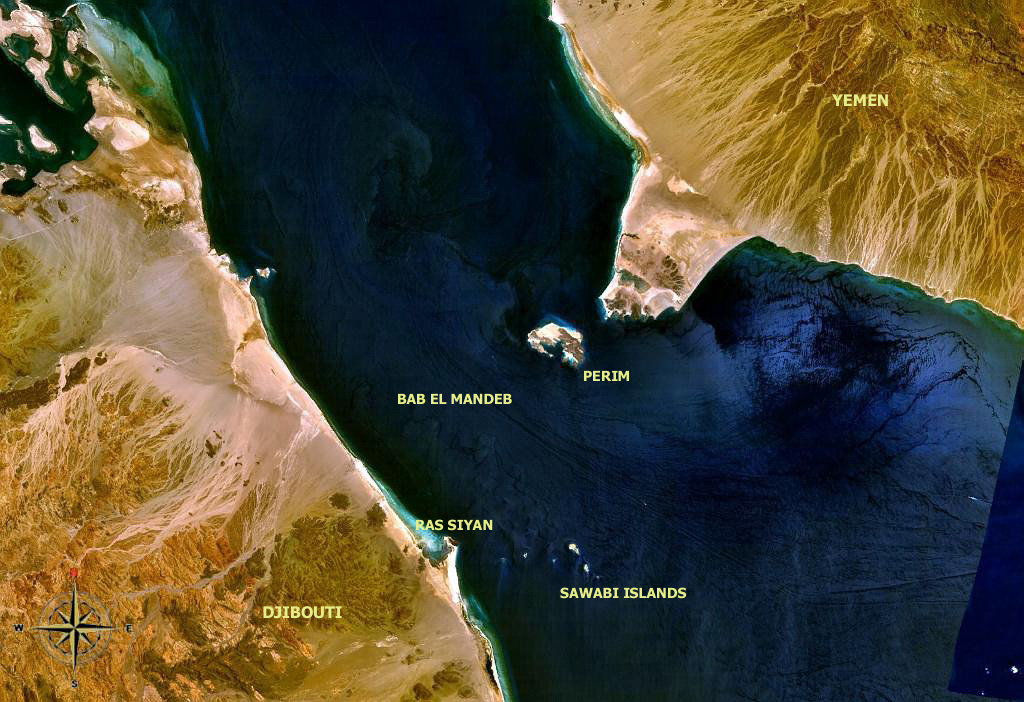
Iran can strangle the world economy by closing the Strait of Hormuz. It can accelerate the pain by getting its Yemeni allies — Ansar Allah — to close the Bab el-Mandeb Strait in the Red Sea, just as they did to Israel-bound ships when defending Palestinians after Oct. 7.

This could result in a complete blockade. Saudi Arabia, with the Bab el-Mandeb Strait open, is able to bypass the Strait of Hormuz and export 5 million barrels a day through its pipeline to tankers in the Red Sea port of Yanbu.

Satellite photo of Bab-el-Mandeb, the strait between the Red Sea and the Gulf of Aden. (WorldWind software/Wikimedia Commons/ Public Domain)

If a ceasefire between the U.S. and Iran is not reached soon, the global economy will crash, perhaps within weeks. The U.S. and its allies, such as Japan, have released some of their extensive strategic oil reserves, however they will not be able to cushion markets indefinitely.

Stockpiles in America’s Strategic Petroleum Reserve are near their lowest in more than 40 years. Once these reserves are depleted, the price of fuel will skyrocket. If a barrel of oil shoots up to $200, the price at the pump could climb as high as $10 per gallon. This, coupled with shortages of other petroleum-based products, along with nitrogen fertilizer, aluminum and helium — an indispensable element in the production of MRI machines and semiconductors — are already shutting down vital industries and driving up prices on basic commodities.

The World Bank projects a 31 percent increase in the cost of nitrogen fertilizers alone — which are produced in the Persian Gulf and transit through the Strait of Hormuz — if the war continues. This will mean a steep rise in the price of food.

Trump is like a dog being pushed unwillingly into a crate. When it appears a deal with Iran is close, he snarls and barks, sabotaging the proposed 30-to-60-day ceasefire agreement. Netanyahu’s apoplectic fits about any agreement that would halt Israeli attacks against Lebanon, along with the potential release of some of Iran’s estimated $100 billion in frozen assets, spurs Trump’s momentary defiance.

But the clock is ticking. There is little time left. And the longer Trump waits, the worse it will get. Neither Trump, nor Netanyahu, are the masters of this game. Iran holds the cards.

Israel’s dream of formalizing its hegemony over the Middle East, codified in the Abraham Accords during Trump’s first term — which normalized relations between Israel and regional states — is dead. This war and the genocide in Gaza killed it.

Trump is attempting to revive them by inserting them into a deal to end the war on Iran. He has demanded states previously uninvolved with the Abraham Accords, such as Pakistan and eventually, Iran, sign up to normalize relations with Israel. Pakistan — the only state to publicly respond — rejected the invitation due to what it called a clash with the country’s “fundamental ideologies.” Every other state Trump appealed to reacted with bewildered silence.

Netanyahu, left, and Trump on Sept. 15, 2020, the signing ceremony day for the Abraham Accords among Israel, Bahrain and the United Arab Emirates. (White House, Andrea Hanks)

Iran demands the removal of sanctions and an end to the naval blockade — which the Central Intelligence Agency concluded Iran can endure for months before it experiences severe economic hardship — in exchange for reopening the Strait of Hormuz. The proposed agreement makes no mention of Iran’s ballistic missile arsenal, which U.S. military and intelligence officials believe remains at 70 percent pre-war levels, according to The New York Times.

Iran, Pakistan, Turkey and Qatar — a lead negotiator with Hamas — are the new powerbrokers in the region.

Pakistan not only signed a mutual defense pact with Saudi Arabia in 2025, it deployed troops, jets and air defense systems to the Gulf dictatorship in April. It has also been hosting ceasefire talks between Trump’s Dumb and Dumber duo of lead negotiators — his feckless son-in-law Jared Kushner and fellow real estate developer and golfing partner, Steve Witkoff.

The war has enhanced the prestige and power of China, which compared to Washington is seen globally as embodying rational, prudent and stable leadership. Iran, in a sign of the new global order, permits Chinese and Pakistani tankers, along with other ships not allied with Israel and the U.S., to travel through the Strait.

The Strait of Hormuz connects the Gulf of Oman, left, with the Persian Gulf, right. The waterway also separates nation of Iran, bottom, from the Arabian Peninsula nations of Oman, United Arab Emirates, and Qatar, top left to right. (NASA Johnson / Flickr/CC BY-NC-ND 2.0)

Israel, unable to convince the U.S. to do its dirty work of bombing Iran into a failed state, will, I expect, strike out with renewed fury against Gaza, perhaps occupying the remaining 30 percent of what is left of the besieged territory. It will continue its Gaza-like policy of turning every structure south of Lebanon’s Litani River into rubble, which it bombs daily despite Iran stating that attacks on Lebanon violate the current ceasefire agreement.

Trump’s savagery and bluster – he threatened to “blow up” Oman if it fails to “behave” after reports of Oman jointly charging tolls with Iran for ships passing through the Strait of Hormuz – cannot mask the impotence of the U.S.

The refusal by America’s allies to heed Trump’s call to help him reopen the Strait, along with the economic misery visited on nations struggling to cope with shortages and the rising costs of energy and fertilizer supplies, are stark evidence of Washington’s pariah status.

Empires, blinded by the myth of their own omnipotence and military superiority, blunder at the final stages into conflicts with little understanding of where they are headed. They alienate their allies. They stumble from one military fiasco to the next, as the U.S. has done for over two decades in the Middle East.

The British Empire in 1956, already in precipitous decline, was humiliated when it conspired with France and Israel to seize the Suez Canal, which Gamal Abdel Nasser had nationalized. The U.S. forced all three countries to halt the invasion. Britain’s pound sterling gave way to the petrodollar. It signaled the last chapter of the British Empire.

The war on Iran is Washington’s Suez Crisis.

This may not be the end of the American Empire, but it is the beginning of the end.

Original article:  consortiumnews.com

Why America should not ‘integrate’ its military with any foreign nation

By: A A
9 June 2026 at 15:41

By Ron PAUL

Join us on TelegramTwitter, and VK.

Contact us: info@strategic-culture.su

Not since the notorious 2012 National Defense Authorization Act (NDAA) provided for indefinite detention of American citizens, has the annual funding bill been as misused as this year. Embedded in the bill is an insult to every American who values our national sovereignty. The NDAA’s Section 224, the “United States-Israel Defense Technology Cooperation Initiative,” would “integrate” the Israeli military with our own, fusing technology, production, intelligence-sharing, and more.

As Ben Freeman wrote last week in Responsible Statecraft:

“The US and Israel already work together heavily on missile defense, but this provision would greatly expand coordination to seemingly every area of defense tech, including AI, quantum, autonomous systems, directed energy, cyber, biotech, and many more. It also proposes ‘network integration’ and ‘data fusion.’ In other words, the US military’s data could soon be the Israeli military’s data.”

It is hard to think of a more “America last” position than handing the keys to the Pentagon (and our intelligence community) to a foreign country.

The insanity of Section 224 is made even more clear with news over the weekend that the Pentagon has raised to “critical” the threat level of Israel spying on the United States and its officials!

We should not “integrate” our military with any foreign country or organization, but integrating with a country that is a “critical” espionage threat to our national security? How does this make any sense?

The “problem” for American lawmakers is that after the killing in Gaza and now Lebanon, the American people – particularly younger Americans – have turned sharply against the US relationship with Israel. This foreign entanglement has sucked billions from the US treasury over the decades, and it has sucked us into endless conflict in the Middle East, including the current US war on Iran.

Rather than listen to the will of their constituents, Congress has decided to defy the wishes of Americans in favor of the wishes of a foreign government. AIPAC largely controls our Congress and passing Section 224 would be a great victory for the foreign lobby.

It should come as no surprise that Israeli Prime Minister Benjamin Netanyahu endorses Section 224. He may have written it for all we know!

Should Section 224 remain in the NDAA, it would essentially remove future Congresses from any role in determining what level of support, cooperation, and oversight should be included in the US relationship with Israel. It would be worse even than President Obama’s 10 year guaranteed US financial support for Israel. Funding would not only be on autopilot, but the US would be further drawn into Israel’s multiple wars with its neighbors. Worse even than backing up Israel in its regional wars, the wars themselves would become ours.

Americans must speak out against plans to integrate our military with any foreign country. What we should be doing is disentangling from these overseas obligations, whether they be NATO or support for Ukraine or backing Taiwan against China.

We already spend more than a trillion dollars a year on our own military and our national debt is nearing $40 trillion. Taking on the obligation to fight even more wars overseas will hasten our bankruptcy. Section 224 must be stricken from the NDAA and it is up to every American who cares about our sovereignty to demand that Congress do so.

Original article:  ronpaulinstitute.org

Badenoch criticises Macpherson report and calls for more stop and search

9 June 2026 at 15:23

Tory leader takes aim at police guidance and says more black boys searched means more black lives saved

Kemi Badenoch has argued that Britain took a wrong turn after the landmark Macpherson report into the racist killing of Stephen Lawrence, and said that it didn’t matter how many young black boys were stopped and searched by police.

The Conservative leader made the comments as she announced plans to scrap the obligation on public bodies to consider how they can promote equality as she seeks to head off the challenge to her party from Reform UK.

Continue reading...

© Photograph: Neil Hall/EPA

© Photograph: Neil Hall/EPA

© Photograph: Neil Hall/EPA

The Lyhanna case: open season on judges

9 June 2026 at 14:56
Justice (Pixabay)

Justice (Pixabay)

The disappearance and subsequent death of 11-year-old Lyhanna, whose body was found on June 4 in an agricultural silo in the Gers region of southwestern France, has triggered an unprecedented institutional crisis in France. Politicians are shifting blame onto judges, who are doing what they can with the resources available to them.


France’s judicial institution is facing both genuine operational failures and unacceptable political exploitation. By offloading their own responsibilities onto judges and prosecutors, neither Justice Minister Gérald Darmanin nor Interior Minister Laurent Nuñez is likely to emerge from this ordeal with enhanced credibility.

A troubling case file

The facts currently known in the Lyhanna case are undeniably damaging to the judicial system. The primary suspect, a 41-year-old man and the father of one of Lyhanna’s classmates, had an extensive judicial and administrative record before being formally charged with kidnapping and unlawful confinement of a minor under the age of 15.
Several complaints and reports had already been brought to the attention of the relevant authorities. One of the most sensitive aspects of the case involves a complaint filed on August 22, 2025, by the mother of a child alleging repeated sexual assaults. On September 11, a medical report reportedly identified findings described as consistent with the child’s statements. Yet the suspect was never interviewed before Lyhanna disappeared on May 29.
This timeline raises a fundamental question: why did a complaint alleging the rape of a minor, supported by medical evidence, fail to result in an interview of the suspect before the tragedy occurred? This question goes beyond the understandable public emotion surrounding the case and requires examination of how criminal investigations are actually processed.

The justice inspectorate faces major questions

Justice Minister Gérald Darmanin has ordered a systematic review of 70,000 complaints involving children by July 14. A general administrative inspection is currently underway to determine whether delays, errors, or procedural failures occurred in the handling of cases involving the suspect.
This directive from the Ministry of Justice responds to both political and moral urgency. Its purpose is to ensure that no comparable case is sitting unattended in an investigative unit or prosecutor’s office, particularly those involving rape or sexual abuse allegations. At the same time, it reflects a clear lack of confidence in the ordinary functioning of France’s criminal justice system.
The major challenge following this review will be actually processing those complaints: interviewing suspects, verifying testimony, prioritizing investigative actions, and making the necessary judicial decisions. Without additional operational resources, the scope of the problem may be revealed without being solved.

Judges and prosecutors thrown to the wolves

Frédéric Chevallier, Chief Prosecutor of Chartres and president of the National Conference of Public Prosecutors, has spoken out in defense of prosecutors while acknowledging that the case demands answers. His comments reflect the intense pressure currently weighing on the judicial institution.
On one hand, he rejects the idea that “judges and prosecutors should be thrown to the wolves” in response to public outrage. He stresses the need to avoid premature conclusions before inspections are completed, urging public officials to “keep a cool head.” His central argument is that no serious conclusions can be drawn before the entire chain of events has been reconstructed.
On the other hand, Chevallier has not ruled out individual responsibility, noting that “judges are not beyond accountability.” This cautious approach is intended to prevent the Lyhanna case from becoming a public trial of an individual magistrate or prosecutor’s office before investigators have completed their work.
Yet this institutional defense remains fragile. Explaining that the courts are overloaded, that investigative services are overwhelmed, and that prosecutors constantly triage competing emergencies only partially addresses families’ concerns. When a child dies and prior warnings existed, the judicial system must be able to explain why certain procedures moved so slowly and whether individual decisions contributed to an identified risk.

The impossible equation of priorities

Prosecutors point out that they are managing enormous backlogs of cases. Chevallier referenced not only the 70,000 complaints involving minors now under review, but also millions of cases of all types awaiting action within investigative services.
This argument reveals an institution that is clearly overwhelmed, at times buried beneath mountains of case files. It highlights a criminal justice system confronting systemic saturation. Yet it does not end the legitimate debate over how cases are prioritized. If everything is considered urgent, then nothing truly is. The Lyhanna case compels the judicial system to explain precisely how complaints are prioritized, especially when they involve sexual violence against children.
This issue connects to a structural problem that judges’ unions have denounced for decades: chronic underfunding. The Judicial Magistrates’ Union (USM), which has been highly visible in the media since the tragedy, argues that judges should not serve as lightning rods for the state’s failure to provide adequate judicial resources.

Political exploitation and death threats

The USM has condemned what it sees as unacceptable political exploitation of the tragedy. It points to statements by President Emmanuel Macron dismissing resource-related concerns from the outset, threats of sanctions raised by the Justice Minister before the inspectorate had reached any conclusions, and proposals by political figures to create a special disciplinary court for judges.
This political escalation has been accompanied by serious consequences. The Chief Prosecutor of Auch has been targeted with death threats circulating on social media. The Ministry of Justice has filed a criminal complaint, marking a dangerous turning point: public anger is being transformed into personal targeting and threats against judges and prosecutors themselves.
This is precisely the danger prosecutors fear. Judicial unions have significantly increased their media presence, with senior officials speaking publicly. Their coordinated effort is intended to give voice to rank-and-file judges and prosecutors facing what they view as opportunistic attacks.

Restoring public trust

The prosecutors’ calls for caution regarding the administrative investigation will only be heard if the judicial institution provides complete and transparent answers to the legitimate questions raised by families, advocacy groups, and the broader public.
The central challenge is reconciling two seemingly conflicting imperatives: protecting judicial independence from political interference while acknowledging that the public deserves explanations when a child dies and previous warnings may have been overlooked.
This case reveals that the French judicial system is facing a profound crisis of confidence. Families, citizens, and the public need to understand how the criminal justice process actually works, what priorities genuinely guide the handling of complaints involving minors, and how insufficient resources concretely affect child protection.
Without restoring public trust through transparency and meaningful operational reforms, the Lyhanna case will leave a lasting mark on the relationship between the justice system and French society. The inspectorate may establish the facts, but only clear and responsible institutional communication can help ease the current tensions.

L’article The Lyhanna case: open season on judges est apparu en premier sur FrenchDailyNews.

Laís Caldas e Gustavo Marsengo mostram bastidores do parto da filha Alice

Os ex-BBBs, Laís Caldas e Gustavo Marsengo encantaram os fãs ao compartilhar um vídeo especial com registros do nascimento da primeira filha do casal, Alice. A bebê veio ao mundo no último sábado (6), e os ex-BBBs aproveitaram as redes sociais para mostrar momentos emocionantes da chegada da herdeira.

Na publicação, os dois celebraram a nova fase da família e descreveram a experiência como a descoberta de um amor ainda maior do que imaginavam sentir. O casal também deu as boas-vindas à filha com uma mensagem repleta de carinho, afirmando que a chegada da menina transformou completamente suas vidas.

Laís Caldas e Gustavo Marsengo dividiram com os seguidores momentos emocionantes do nascimento da filha Alice | Foto: Reprodução/Instagram

Além dos registros do parto, Laís e Gustavo fizeram questão de agradecer aos profissionais que acompanharam o nascimento de Alice. A homenagem incluiu a equipe médica da maternidade e a fotógrafa responsável por eternizar os momentos mais marcantes do dia.

A história de amor dos dois começou durante a participação no Big Brother Brasil 2022. O relacionamento seguiu firme após o reality, culminando no noivado anunciado em dezembro de 2023 e no casamento realizado em setembro de 2025.

Poucos meses depois da cerimônia, o casal revelou que estava esperando o primeiro filho. Agora, com a chegada de Alice, eles celebram o início de uma nova etapa ao lado da pequena.

The post Laís Caldas e Gustavo Marsengo mostram bastidores do parto da filha Alice appeared first on Diário da Manhã - O Jornal do leitor Inteligente.

Braga hospital performs first cochlear implant on baby under 12-months

9 June 2026 at 13:19

A delighted team at Braga hospital is celebrating the success of its first cochlear implant surgery, performed yesterday on a baby under 12-months of age. The surgery – described as

The post Braga hospital performs first cochlear implant on baby under 12-months appeared first on Portugal Resident.

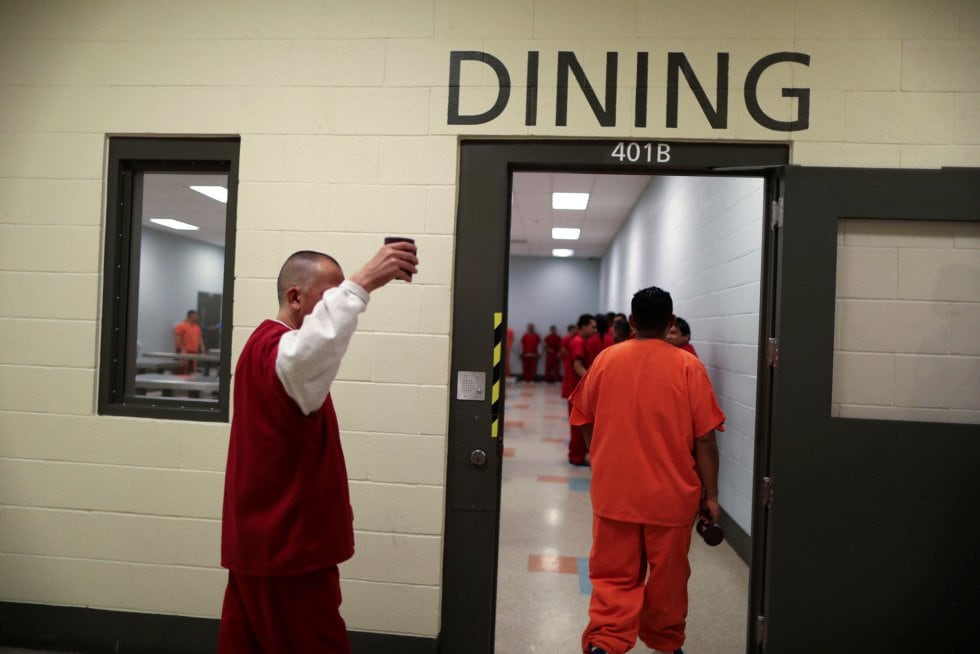
Migrants at the mercy of gangs: ICE detainees forced to live alongside organized crime

9 June 2026 at 12:38

Esteban had never heard of the prison gang Los Paisas until he was held at the Adelanto immigrant detention center in California. As soon as he passed through the bars of his housing unit, other detainees made it clear he had to choose: join them or join another group made up of Russians, Indians, Chinese, and Armenians. He understood that doing neither would leave him defenseless, so he accepted. There was no initiation ritual and he was not asked to swear allegiance. The rules were simple: protect your own from violent people, settle internal disputes, and keep a measure of order in a place where authority often seemed insufficient. Over the months, deportations and transfers took away people he knew. They were replaced by newcomers, some of whom did not understand the dynamics of detention. He had to teach them. Before he knew it, Esteban was among the most long-standing members and, without seeking the role, he became one of the leaders of the gang.

Seguir leyendo

© LUCY NICHOLSON (REUTERS)

Detainees at a migrant center in California, in 2023.
❌