Normal view

EU opens first accession talks cluster for Ukraine and Moldova after years of delays and vetoes

12 June 2026 at 20:50

EU summit Ukraine cyprus zelenskyy

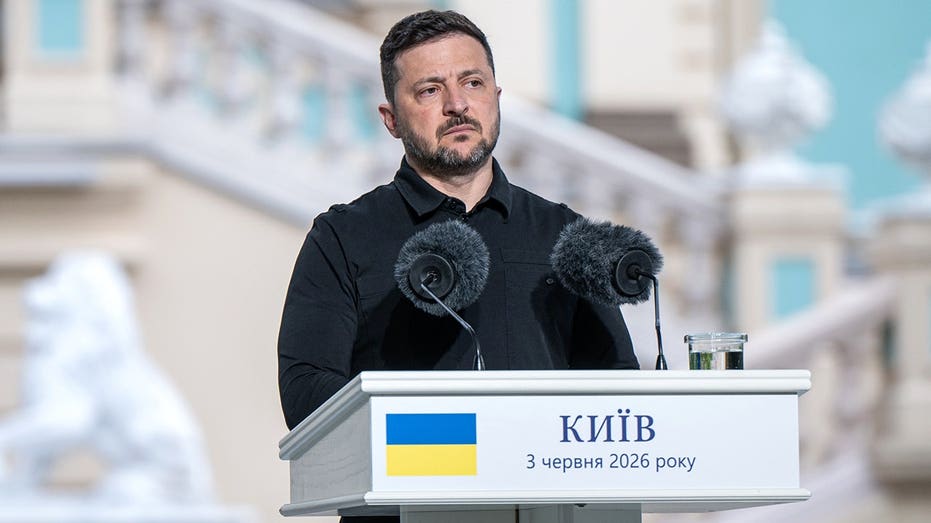
Ukraine and Moldova have taken a key step in their EU accession process after all 27 member states agreed to open the first negotiation cluster covering “fundamentals,” marking the formal start of structured membership talks, European Commission President Ursula von der Leyen said.

The opening of the first EU accession negotiation cluster marks a long-delayed breakthrough for Ukraine and Moldova after years of internal EU divisions and vetoes, including from Hungary. It formally starts talks on core governance reforms, following repeated postponements despite earlier candidate status.

EU says accession step reflects wartime reform progress and core EU standards

Von der Leyen said the decision reflects recognition of both countries’ progress on reforms despite wartime conditions and sustained political pressure. 

She said the cluster on fundamentals forms “the backbone of the accession process,” covering rule of law, democratic institutions, and core EU principles. 

“This is a recognition of the determination, courage and hard work shown by both countries in advancing reforms, even in the face of immense challenges,” she said.

She added that enlargement is a “strategic choice,” arguing that bringing new members closer to the bloc strengthens “peace, security and prosperity across our continent,” and said a larger EU is “our best investment in our shared future.”

Today, the European Union took a major step forward.

All Member States agreed to open the first accession negotiations cluster with Ukraine and Moldova.

At the first Intergovernmental Conference on Monday, we will open the cluster on fundamentals; the backbone of the accession… pic.twitter.com/WSPU8CVPpg

— Ursula von der Leyen (@vonderleyen) June 12, 2026

Zelenskyy welcomes opening of first accession cluster as “strong step for Europe”

Ukrainian President Volodymyr Zelenskyy welcomed the decision, thanking EU partners and individual leaders for what he described as a “strong step for Europe.” 

He said Ukraine continues to deliver reforms despite the war and that the EU is now fulfilling its commitments in return. 

Zelenskyy said opening the first cluster is “a significant political and moral support for our state and our people,” and stressed that Ukraine is working to ensure readiness for the next stages of accession talks.

He added that Kyiv is grateful for international support and said the EU’s backing helps Ukraine defend not only itself but “the idea that European nations can live united, free, and in peace.”

🇪🇺🇺🇦Today’s EU member states’ decision to open Cluster 1 negotiations w/ Ukraine marks another milestone on Ukraine’s path to the EU. Enlargement remains a strategic investment in Europe’s security, stability, and prosperity, & 🇺🇦 is committed to contribute & deliver. We are…

— Taras Kachka (@taraskachka) June 12, 2026

Hungary’s veto lifted after minority rights agreement clears path for accession talks to advance

The move follows months of procedural preparation within the EU, after the Cyprus presidency initiated steps to open the first negotiation cluster for Ukraine and Moldova. 

The cluster on fundamentals is the first and most sensitive stage of accession talks, and must be opened unanimously by all member states before negotiations can proceed further.

The breakthrough comes after Hungary’s prolonged veto over the start of accession negotiations with Ukraine was lifted

Budapest had previously blocked progress over disputes including minority rights in Ukraine’s Zakarpattia Oblast, which borders Hungary and contains a number of ethnic Hungarians, stalling the launch of negotiation clusters despite Ukraine receiving candidate status in 2022. 

The recent shift followed a change in Hungary’s political leadership and an agreement on minority rights, removing a key obstacle to advancing the accession framework.

EU enlargement process slowed for years by internal divisions despite technical preparations continuing

Enlargement talks remained stalled for years due to internal divisions, including Hungary’s veto, even as broader momentum built across the bloc. 

While technical preparations for “clusters” were advancing, the formal opening required unanimous agreement and had been repeatedly delayed despite Ukraine’s expectation that talks could begin sooner. 

Enlargement remains a long-term process requiring sustained reforms across governance, judiciary, and economic policy before membership is possible. No country has completed the process since Croatia joined in 2013.
Ukraine launches major army reform: fixed contracts, revamped pay structure, and broader access for foreigners

12 June 2026 at 19:44

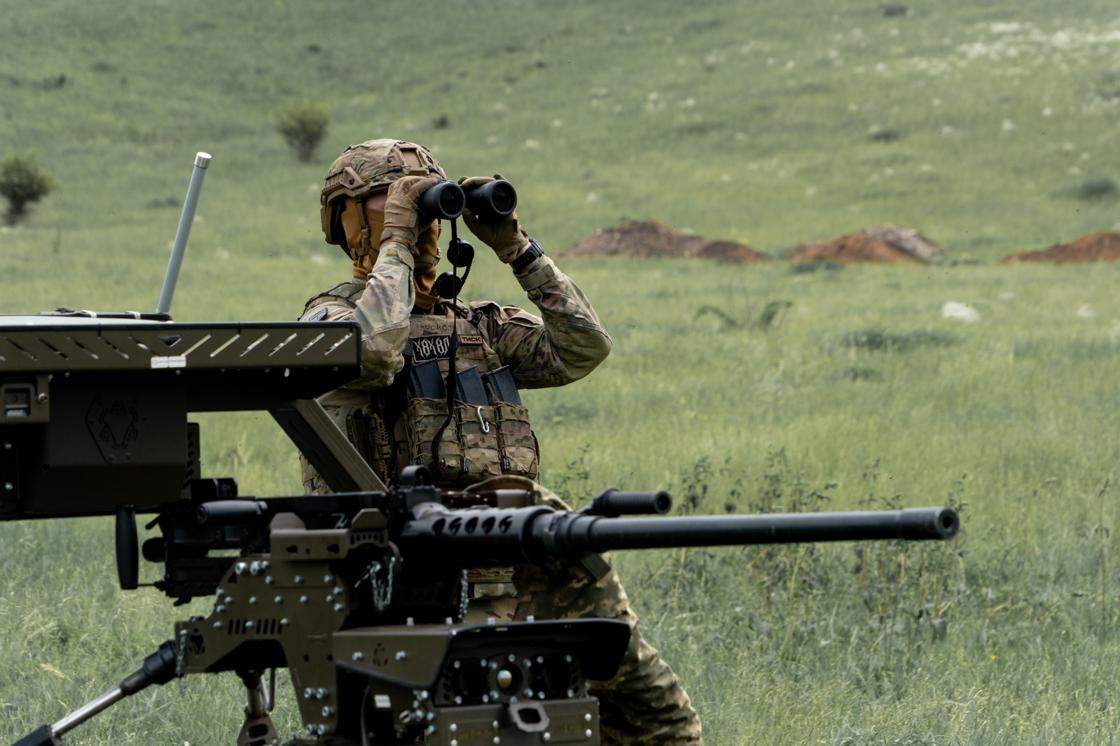
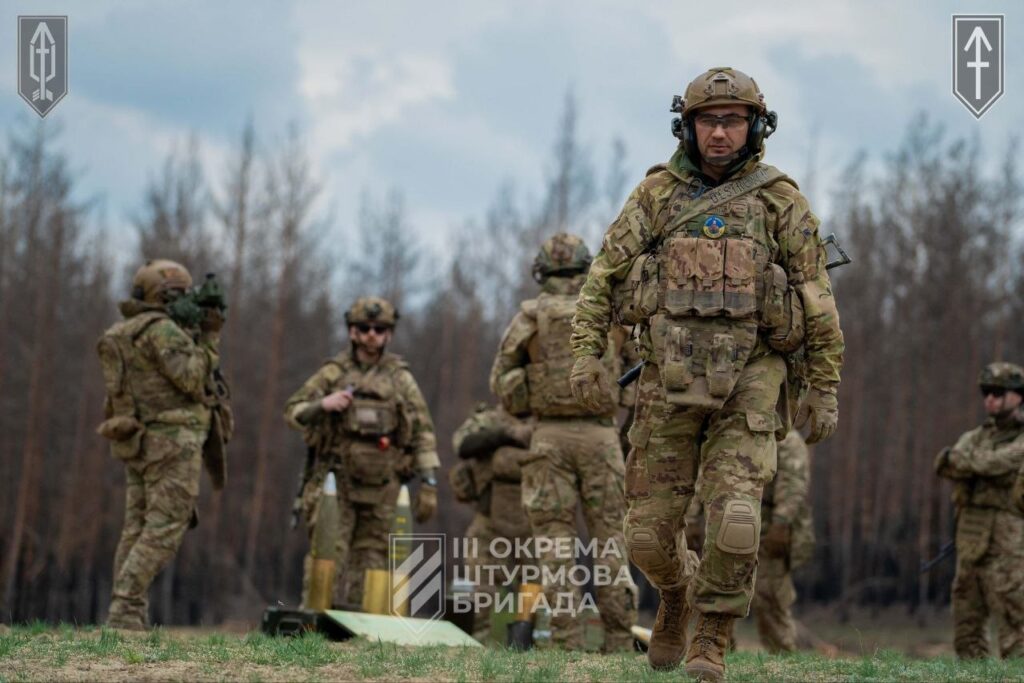
Ukrainian soldiers of the 1st Assault Battalion, 3rd Infantry Brigade. Photo: 1st Assault Battalion

Ukraine’s Ministry of Defense is introducing a sweeping overhaul of military service rules that restructures contracts, pay systems, personnel movement, and reintegration procedures across the armed forces, the ministry announced on 12 June.

The reforms are part of a broader 2026 reorganization of service conditions under the new defense leadership of Minister Mykhailo Fedorov, aimed at stabilizing manpower, improving retention, and formalizing career pathways during wartime. The package establishes a more predictable framework for service terms, compensation, and transfers while prioritizing reinforcement of frontline combat units.

President Volodymyr Zelenskyy endorsed the reform package, saying military and government leaders had agreed on a path to “increase the financial sustainability of our defense and ensure the further transformation of the Ukrainian army.”

New contract system split into three service categories

The Ministry introduced three contract types: infantry-assault (“pihotno-shturmovyi”), combat, and basic service contracts, each linked to specific roles and operational exposure.

The infantry-assault contract covers frontline positions including infantry, assault troops, combat medics, gunners, and drivers in combat units. Combat contracts apply to drone operators, electronic warfare specialists, artillery crews, and other battlefield support roles, while basic contracts cover non-combat and rear-area positions.

Service terms are fixed: 6, 10, or 14 months for infantry-assault roles depending on prior service status, and 24 months for combat and basic contracts.

Pay structure tied to role and operational intensity

The system combines a base salary of 20,000 hryvnias ($450 USD) with variable payments based on role and battlefield conditions.

Monthly compensation ranges from at least 30,000 hryvnias ($670 USD) in rear positions to significantly higher levels in combat roles, with infantry-assault positions at the top of the scale. Under the framework, total monthly pay may reach up to 120,000 hryvnias ($2,670 USD) depending on deployment intensity and task execution.

A tiered bonus system adds payments linked to operational activity, including participation in frontline operations, command-level missions, and assault actions. Additional fixed incentives apply for outcomes such as capturing prisoners or confirmed combat kills.

Eligibility for certain payments is verified through a digital mission control system that records presence in designated operational zones.

Zelenskyy also announced planned pay increases for combat commanders, saying the measure is intended to help retain experienced leadership within frontline units.

He said the Cabinet of Ministers is expected to approve the implementation mechanism, with the first additional payments potentially beginning in June.

Fixed-term service with post-contract leave guarantees

All contract types include defined service terms followed by a structured post-service leave period. The duration of this leave is calculated based on total service length and combat participation, with longer operational involvement extending the guaranteed break.

The system is designed to create a predictable cycle of service, recovery, and re-engagement, supported by legally defined post-contract guarantees.

Automated transfers through Army+ system

Automatic transfer approvals are introduced through the Army+ digital platform. Eligible personnel up to senior sergeant rank and outside officer positions can request transfers once per year within their corps’ operational sector.

Transfers are limited to units within the same command area, with processing handled digitally to reduce administrative delays while maintaining operational control. A pilot rollout is planned in selected corps before wider expansion across the armed forces.

Structured return from unauthorized absence

A temporary 100-day mechanism allows personnel who left service without authorization before 11 June 2026 to return under a simplified procedure.

Applications are processed digitally, with verification completed within several days. Returning personnel can select from a list of eligible units, with pay and benefits restored upon formal reintegration into service.

The mechanism is designed to streamline reintegration while restoring personnel to active duty under controlled conditions.

Part of wider force restructuring

The Ministry of Defense says the package is intended to modernize Ukraine’s wartime force structure by combining fixed-term contracts, role-based compensation, and digital personnel management tools.

Separately, Zelenskyy instructed officials to expand recruitment pathways for foreign volunteers seeking to serve in Ukraine’s armed forces, saying additional recruitment mechanisms would be introduced. No further details were immediately released.

Further stages of reform are expected as the system is tested and expanded across the armed forces.

Ukraine created drone army one year ago. It already destroyed $40 billion worth in Russian targets

10 June 2026 at 19:53

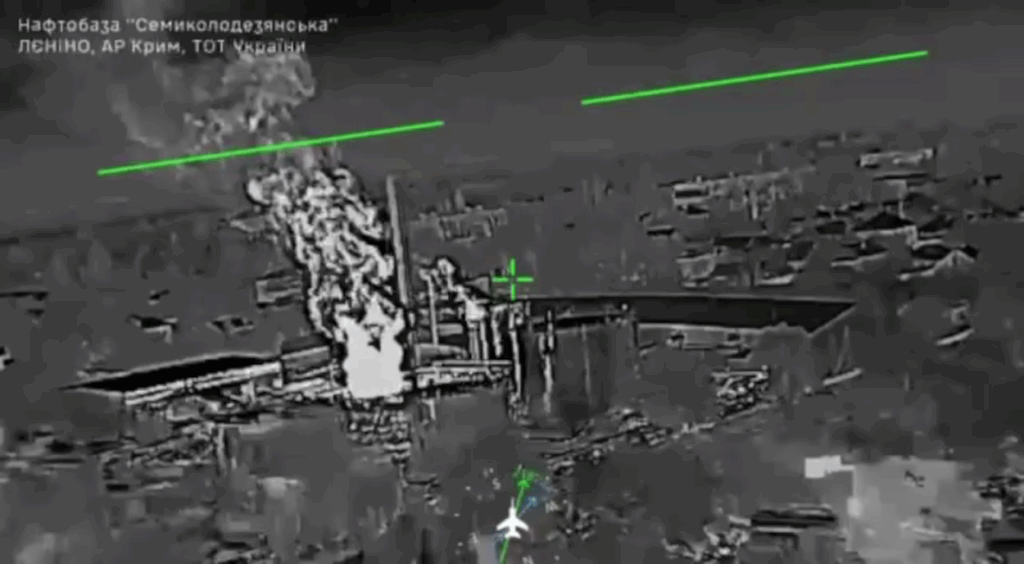
Semikolodezyanska oil depot in Yedi-Quyu (Lenine), occupied Crimea, amid a Ukrainian drone attack. Screenshot from video: Ukraine's Special Operations Forces

Ukraine's Unmanned Systems Forces (SBS) have struck Russian targets worth nearly $40 billion in the year since the branch's creation, Volodymyr Zelenskyy said. On 10 June, the Ukrainian president signed a decree establishing the Day of Unmanned Systems Forces (SBS Day).

The $40 billion cumulative damage figure Zelenskyy cited represents a 57% increase over the $25.5 billion in cumulative Russian losses that Commander-in-Chief Oleksandr Syrskyi reported in April 2026.

The SBS Day decree institutionalizes the unmanned forces as a permanent feature of Ukraine's military doctrine, alongside the army, navy, and air force.

What Zelenskyy said about SBS's achievements

"Only a year since the creation of the SBS group, Russian targets at various levels worth nearly $40 billion have already been hit," Zelenskyy said in his evening address.

He added that SBS is really a model for many other armies, and "these months we are especially grateful for middlestrikes."

"Russian military logistics across the entire depth of the temporarily occupied territory is now accessible to Ukrainian drones. The Russian border zone also experiences our impact," he stated.

The president added that Russia already feels the effect of these strikes, and Ukraine will continue to scale them.

"The most important thing is that these are different types of strikes, and each one adds to our ability to save lives," the Ukrainian president added.

What does middlestrike mean operationally? 

The middlestrike concept Zelenskyy invoked refers to Ukrainian drone strikes against Russian military logistics in the depth of occupied territory and across the Russian border zone. The depth zone covers Donetsk, Luhansk, Crimea, and parts of Zaporizhzhia and Kherson Oblasts. The Russian border zone reaches Belgorod and Kursk. Middlestrikes sit between the very-long-range deep strikes against strategic Russian infrastructure, such as the Volgograd refineries, and the tactical frontline FPV operations. The SBS is led by Brigadier General Robert Brovdi, call sign "Madiar".

New “Drone Deal” signed – Latvia and Ukraine to expand joint production and defense cooperation

9 June 2026 at 18:41

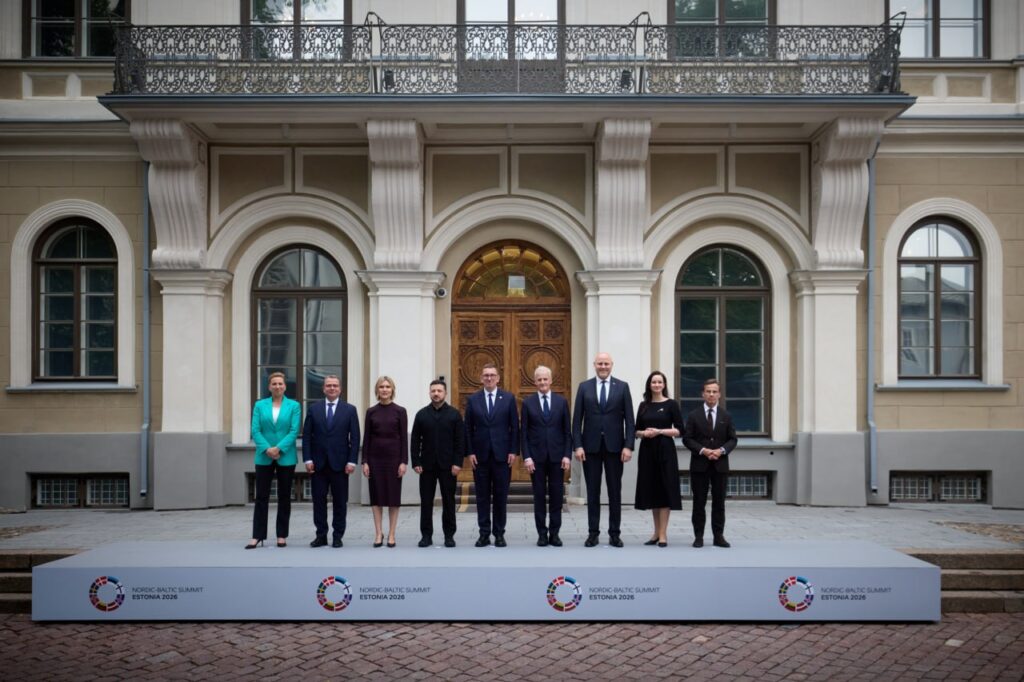
Leaders gathered at the Nordic-Baltic Summit in Estonia, 9 June 2026. Photo: Zelenskyy

Ukraine and Latvia have signed a new “Drone Deal” aimed at expanding joint production and strengthening air and drone defense capabilities, Ukrainian President Volodymyr Zelenskyy said following meetings with Nordic and Baltic leaders on 9 June.

The agreement was signed during Zelenskyy’s first meeting with Latvia’s new Prime Minister Andris Kulbergs, which he described as a “concrete result” focused on co-production and shared defense development.

Zelenskyy said the deal reflects a broader model of cooperation Ukraine is building with partners who have supported Kyiv throughout the war, combining Ukrainian battlefield experience with European industrial capacity.

He said the aim is to strengthen shared protection against Russian threats, including expanding domestic production and improving coordination in drone and air defense systems.

The “Drone Deal” is a long-term cooperation format focused on developing drone capabilities through joint production, technology exchange, and practical defense support between Ukraine and partner countries.

Ukraine offers drone expertise to European partners

Zelenskyy also said Ukraine is ready to expand cooperation on drone warfare expertise, including sending specialist teams to partner countries to share operational experience gained during the war.

He said similar cooperation has already been carried out with partners in the Middle East and could now be scaled across Europe under the new drone cooperation framework.

Zelenskyy said Russia is attempting to escalate tensions across Europe, including through drone-related incidents near NATO borders, underscoring the need for coordinated defense responses among allies.

Air defense and drones central to talks with Nordic and Baltic partners

The announcement came during a series of meetings in Tallinn with leaders from Finland, Norway, Estonia, and other Nordic and Baltic states.

Zelenskyy said partners are increasingly recognizing stronger Ukrainian positions on the battlefield, while Russia continues to compensate for losses by striking civilian infrastructure.

He said air defense remains a key priority, including securing additional missile supplies and advancing work on European anti-ballistic defense systems.

Ukraine pushes for stronger sanctions and EU accession progress

Zelenskyy also discussed increased sanctions pressure on Russia, including measures targeting the shadow fleet, alongside continued support for Ukraine’s EU membership bid.

He urged rapid progress on opening EU accession negotiation clusters, saying Ukraine has met the necessary requirements and expects political decisions in the coming months.

“There is no reason to delay,” he said, calling for momentum in EU decision-making processes.

‘They are isolated … they are alone’: Zelenskyy on Russia, Putin’s lies – and fighting back

In a wide-ranging interview, an upbeat Ukrainian president also discusses Donald Trump, King Charles, and how Kyiv is prepared to share its experience of drone warfare with the west

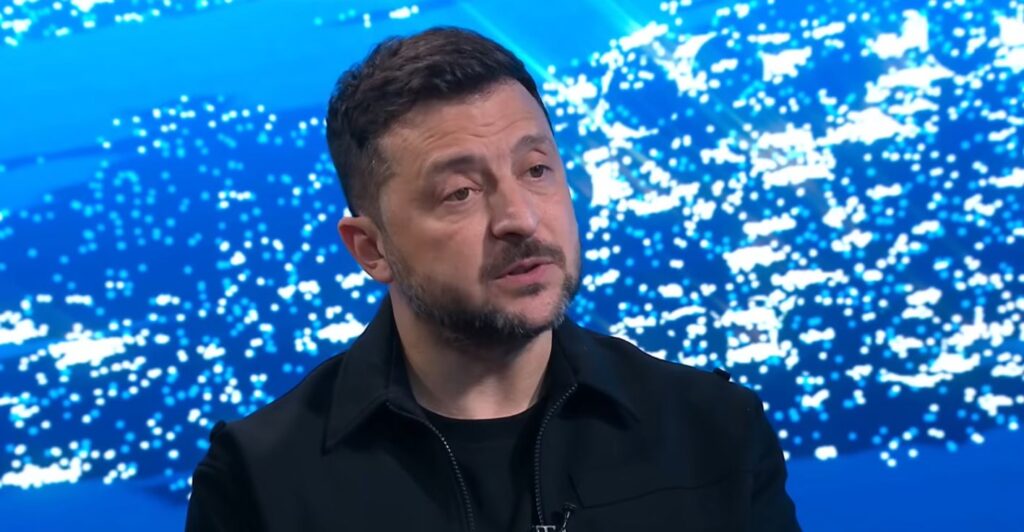
Sitting down with the Guardian in London, Volodymyr Zelenskyy seems cheerful. More than four years after Vladimir Putin’s full-scale invasion, he believes Europe’s biggest war since 1945 appears to be slowly turning in Ukraine’s favour. The military situation is the most promising it has been for Kyiv for two and a half years, Zelenskyy says. “We can’t say Russia is losing this war. But we can say they are losing the initiative each day, day by day,” he insists.

Over the past week the Kremlin has suffered a series of setbacks. Long-range Ukrainian drones have hit Putin’s home city of St Petersburg, setting fire to oil terminals and sending smoke billowing above the skyline. Similar attacks have crippled occupied Crimea. A key supply road is littered with burning lorries and tankers and the peninsula seized by Russia in 2014 is experiencing severe fuel shortages.

Continue reading...

© Photograph: David Levene/The Guardian

© Photograph: David Levene/The Guardian

© Photograph: David Levene/The Guardian

‘We want to see him in Ukraine’: Zelenskyy hopes to invite King Charles on state visit

Exclusive: Ukrainian leader says he has ‘a very good relationship’ with British monarch, who has supported his country

Volodymyr Zelenskyy has revealed that he plans to invite King Charles on a state visit to Ukraine as early as this year, which would make him the most senior royal to travel to Kyiv since Russia’s full-scale invasion.

The Ukrainian president said he had a close relationship with the king, whom he has met on numerous occasions, including when he gave a public show of support after Zelenskyy’s explosive visit to the White House last year.

Continue reading...

© Photograph: David Levene/The Guardian

© Photograph: David Levene/The Guardian

© Photograph: David Levene/The Guardian

Zelenskyy hopes Reform UK councils will allow Ukraine flags to be flown again

Exclusive: Ukrainian president says ‘small mistake can break a big friendship’ in wide-ranging interview with Guardian

Volodymyr Zelenskyy has said the decision by some Reform UK councils to take down the Ukrainian flag was the kind of “small mistake that can break a big friendship”, as he underlined the significance of strong bilateral relations.

The Ukrainian president tempered his rare foray into UK domestic politics by stressing how much the two countries “need each other” in the battle against Russia, which he said posed a threat not only to Ukraine but to Britain too.

Continue reading...

© Photograph: David Levene/The Guardian

© Photograph: David Levene/The Guardian

© Photograph: David Levene/The Guardian

Freezing the war along today’s lines is “the quickest way” to peace, Ukraine’s leader told Sky News

8 June 2026 at 14:10

freezing war along today's lines quickest way peace ukraine's leader told sky news · post ukrainian president volodymyr zelenskyy during interview london 7 2026 zele skynews ukraine reports

Ukrainian President Volodymyr Zelenskyy is willing to stop the war along the current line of contact and move to negotiations, he said in a Sky News interview. He presented the idea as the quickest route to a ceasefire, while rejecting any deal that hands Russia Ukrainian land. He also urged allies to close Ukraine's air defense gaps.

Russia has rejected every ceasefire Ukraine and the US have put forward and keeps refusing to halt an all-out war it has waged since its full-scale invasion in 2022. Whether a freeze ever takes hold rests with the Kremlin, whose demands still stretch far beyond the territory its army has managed to seize.

"The quickest way" to stop the fighting

Asked where he would freeze the lines if Russia agreed to a ceasefire, Zelenskyy said he is ready to accept today's positions

"Yes, it's the quickest way," he said. 

He insisted this is not a giveaway. He does not want to simply freeze the conflict, but to stop the war so it cannot restart "because of some crazy people." A freeze would let Ukraine save children's lives and bring soldiers home. Any ceasefire must be total and free of Russian games, watched by American and European partners. Only then would the sides sit down to end the war through diplomacy. A ceasefire, he added, is "the biggest compromise from our side."

Air defense comes first

The most urgent need from allies is air defense, Zelenskyy said. Ukraine faces a large deficit in anti-ballistic missiles, with US transfers slowed by the war in the Middle East. He again asked for more Patriot systems. Russia attacks daily, usually with around 300 long-range explosive drones. On the heaviest nights it launches 600 to 850 drones and dozens of missiles. 

Ukraine's interceptors now down most of them, but the gaps remain dangerous.
tymofii brik and kateryna kobernyk
Explore further

10% now, 23% after a ceasefire, 59% only at peace—Ukraine’s verdict on a wartime vote hasn’t moved all year

Ukraine's own arsenal

Ukraine has built more than 400 defense companies since the full-scale invasion, Zelenskyy said. Dozens rank among the world's strongest. They produce drones and missiles, some underground, and the country is close to its own ballistic missile. Ukraine can now share that expertise with allies and even build air defenses for Europe, he said. Kyiv aims to mass-produce drones on a scale few countries can match.

Bringing the war back to Russia

Ukraine's recent strikes on St. Petersburg and the Moscow region answer Russian attacks on Ukrainian energy, Zelenskyy said. St. Petersburg was hit twice last week. He wants Russians far from the front to feel the war they started. Russian President Vladimir Putin understands only "total pressure," he said. Sanctions on Russia's shadow fleet of sanctions-dodging tankers and its oil and gas exports hit hardest.

Putin, the letter, and a Kremlin go-between

Zelenskyy said Putin does not want to stop the war and is signaling he wants to win. Whether the fighting ends "100% depends on his decision," he said. His 4 June open letter, which Moscow called rude and rejected, was meant to force an answer and pierce a Russian public living in "some fantastic world." Russian businessman Roman Abramovich came to Kyiv to carry messages to Putin, Zelenskyy said. 

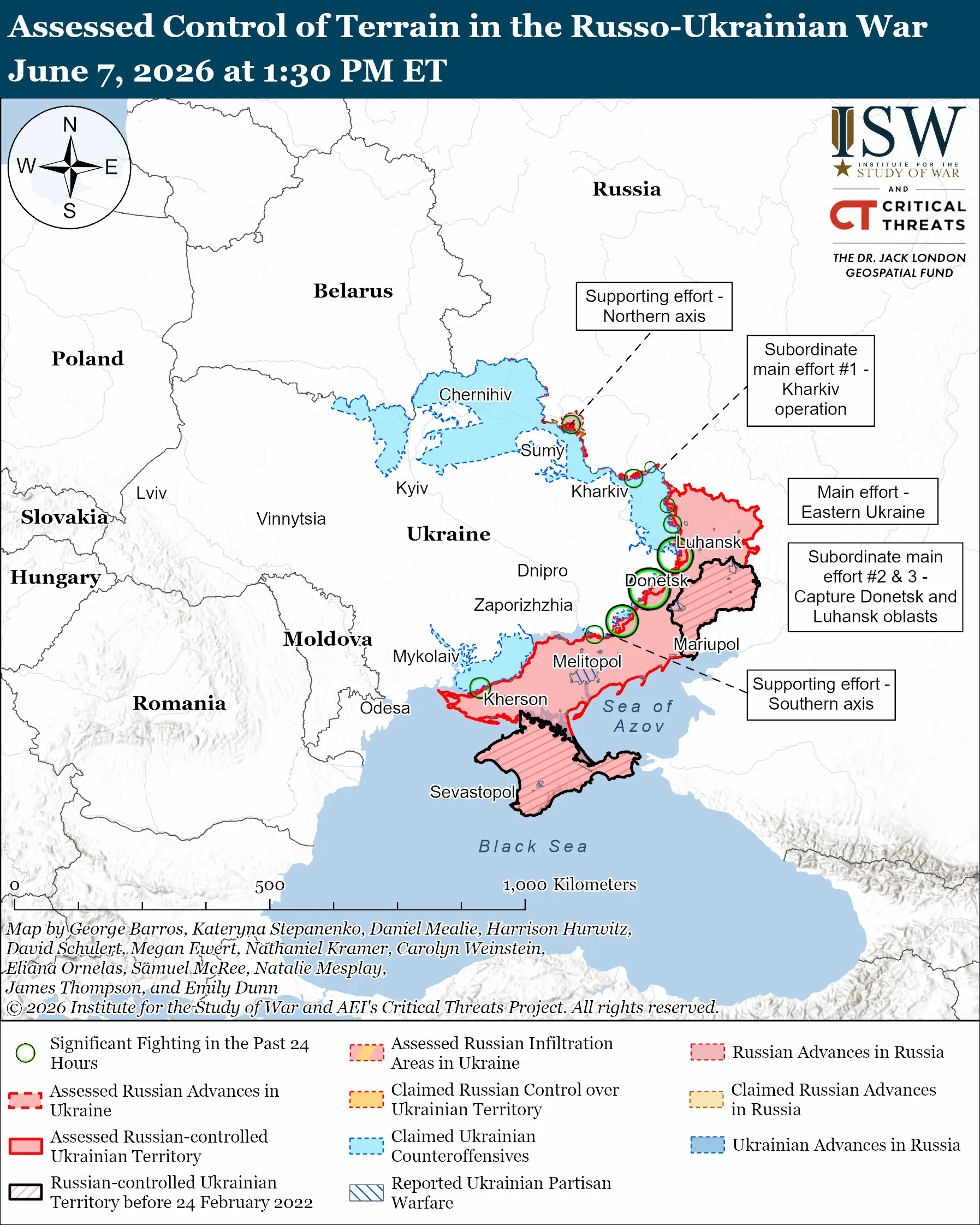
The so-called Donbas is a historic name for Ukraine’s two easternmost regions, Luhansk and Donetsk oblasts. Russia still failed to occupy a small part of Luhansk Oblast, as well as a significant swathe of Donetsk Oblast, which contains the so-called “Fortress Belt” that Russia has failed to break through despite its years-long ongoing offensive campaign. Map: ISW

His key message was on the Donbas: Ukraine will not leave its land, and compromises come only after a ceasefire. He is ready to meet in any format, but not in Moscow, Belarus, or Minsk. Leaders cannot decide "without us about us," he said, in a message aimed at Washington. Russia, by contrast, keeps insisting that Ukraine surrender all of the Donbas first.

Britain, France, and Germany back Ukraine’s peace terms and press Putin for a ceasefire

8 June 2026 at 12:43

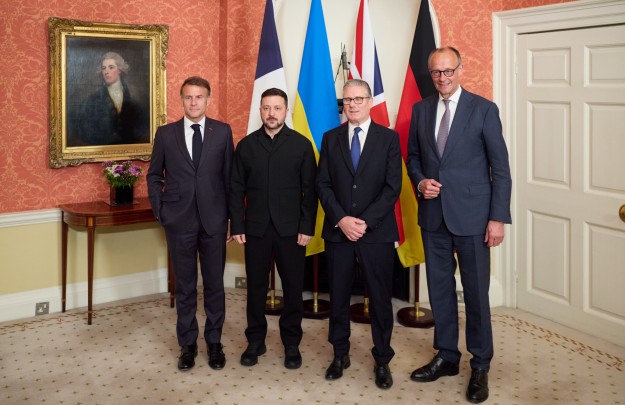
britain france germany back ukraine's peace terms press putin ceasefire · post left right french president emmanuel macron ukrainian volodymyr zelenskyy uk prime minister keir starmer german chancellor friedrich merz

Britain, France, and Germany backed Ukraine's terms for ending the war after meeting its President Volodymyr Zelenskyy in London, according to their joint statement. They endorsed Kyiv's push for direct talks with Moscow and an immediate ceasefire, while spelling out what a lasting peace would require. The leaders also called for tightening the squeeze on Russia's war economy and scaling up Ukraine's air defenses.

Russia has been invading Ukraine since 2014 and waging all-out war since February 2022, and with Moscow still rejecting every ceasefire on offer, Kyiv and its Western partners are now trying to map out how the fighting could actually end.

Five conditions for peace

Meeting on 7 June, UK Prime Minister Keir Starmer, French President Emmanuel Macron, and German Chancellor Friedrich Merz set out five conditions for a just and lasting peace. The E3, as the three are known, are Ukraine's leading European backers. Their terms:

  • An immediate, complete ceasefire, which they urged Putin to accept.
  • The current front line as the starting point for talks, with no borders changed by force and Ukraine free to choose its alliances.
  • Robust, legally binding security guarantees once a ceasefire holds, building on the allies' December 2025 Berlin and January 2026 Paris commitments, including a multinational force in Ukraine. 
  • Russian assets remain immobilized until Moscow ends its aggression and compensates Ukraine.
  • European interests safeguarded, with any EU- or NATO-related terms requiring both blocs' consent.
Admiral Bauer Ukraine NATO membership
Explore further

“It was never formulated as Ukraine winning”—NATO’s ex-military chief on the missing strategy

Backing for direct talks with Moscow

The leaders commended Ukraine's president for his 4 June letter to Putin calling to end the war. They backed direct Ukraine-Russia dialogue, with the US and Europe actively taking part, to secure a ceasefire. Europe must play a role in any settlement, they said, working closely with Kyiv, the rest of Europe, and Washington.

Zelenskyy
Explore further

Germany, France, and UK sketch plan to bring Putin to the negotiating table

Pressure on Russia and more air defense

They denounced Russia's barrage of missiles and drones, including repeated strikes with the Oreshnik, a Russian missile. They also condemned dangerous Russian drone incursions into NATO territory and offered condolences to the victims. The leaders welcomed Ukraine's recent battlefield gains, from liberated territory to advances in drone warfare. They agreed to coordinate more support at the coming G7 summit in Evian, the next Coalition of the Willing meeting, and the NATO summit in Ankara. That includes choking off more of Russia's wartime revenue and a bigger military pledge at the NATO talks. They also urged scaling up interceptor production and co-developing anti-ballistic and deep-strike weapons.

European leaders stress 'urgent need' to bolster Ukraine's defenses against Russian ballistic missiles

The leaders of the U.K., Ukraine, France and Germany discussed the "urgent need" to ramp up production of weapons to combat Russia's powerful hypersonic Oreshnik ballistic missiles in a meeting in London on Sunday.

Zelenskyy discusses ‘urgent need to scale up’ air defences with key allies in London

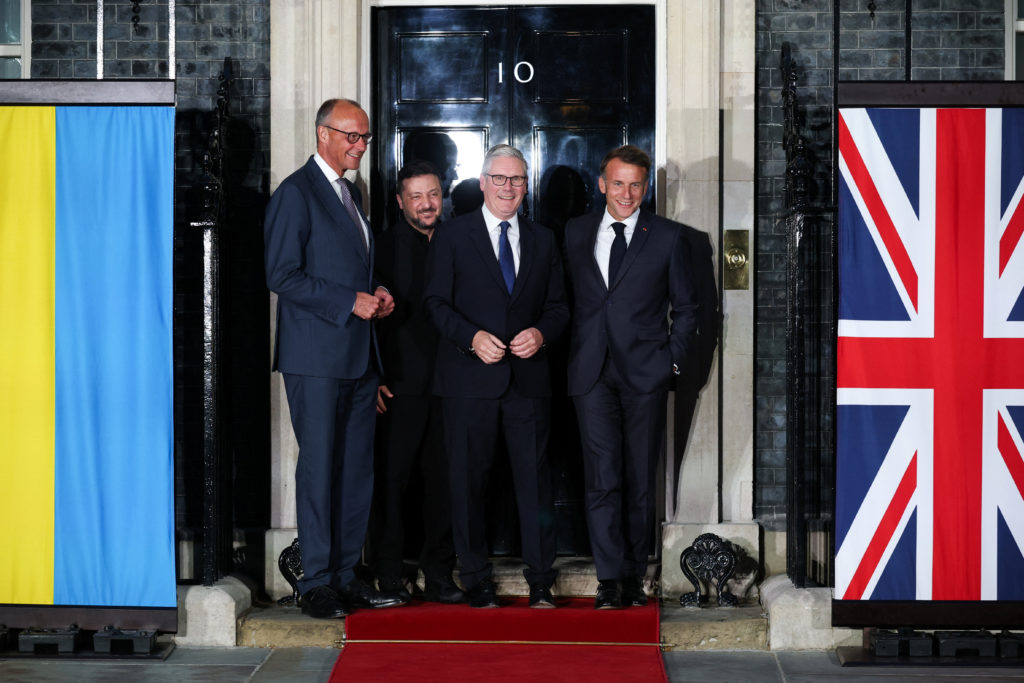
Keir Starmer hosts Ukrainian, French and German leaders in Downing Street after Russia fires hypersonic weapons at Ukraine

Volodymyr Zelenskyy and the leaders of the UK, France and Germany discussed “the urgent need to scale up” Ukraine’s air defences and deep-strike capabilities in London on Sunday night, after Russia fired hypersonic weapons at Ukraine, Downing Street said.

The meeting of Ukraine’s staunchest allies in London came hours after a Russian drone strike damaged a storage centre for spent nuclear fuel nine miles from the Chornobyl nuclear power plant.

Continue reading...

© Photograph: James Veysey/Shutterstock

© Photograph: James Veysey/Shutterstock

© Photograph: James Veysey/Shutterstock

Russian drone hits building storing spent nuclear fuel near Chornobyl

Attack was ‘extremely vile’ and deliberate, says Ukraine’s president Volodymyr Zelenskyy

A Russian Shahed drone has substantially damaged a building used to store spent nuclear fuel close to the disused Chornobyl nuclear power plant, in what Ukraine’s president described as a deliberate and “extremely vile” attack.

While the structure – the reception building of the spent fuel storage facility – was empty of containers at the time, the targeting of the sensitive site appeared to be direct messaging from Moscow amid an intensifying battle of long-range aerial strikes in which high-profile locations on both sides have been hit.

Continue reading...

© Photograph: Ukraine's Energoatom nuclear energy operator/AFP/Getty Images

© Photograph: Ukraine's Energoatom nuclear energy operator/AFP/Getty Images

© Photograph: Ukraine's Energoatom nuclear energy operator/AFP/Getty Images

“Ataque sem precedentes”. A Ucrânia levou a guerra ao centro simbólico do poder russo

By: AFP
7 June 2026 at 06:00
Num momento em que a diplomacia volta a falhar, vagas de drones ucranianos chegaram à região de São Petersburgo, centro simbólico do poder russo, testando as defesas aéreas da cidade numa altura em que ali decorria o “Davos da Rússia”. A Ucrânia lançou este sábado centenas de drones contra a Rússia, provocando a morte de uma pessoa e um incêndio num depósito petrolífero no último dia da 29.ª edição do St. Petersburg International Economic Forum, o principal fórum económico do país, frequentemente descrito como o “Davos russo”. Muitos dos drones tiveram como alvo a própria cidade de São Petersburgo, onde

Zelenskyy issues open letter to Putin proposing meeting as US 'fully focused' on Iran

5 June 2026 at 13:49

In an open letter to Russian President Vladimir Putin, Ukrainian President Volodymyr Zelenskyy proposed meeting to reach a resolution to the years-long war between their two nations.

"We see that the United States is fully focused on the issue of Iran, and it would be wrong to simply wait until the war in Europe returns to the center of its attention. Ukraine proposes ending this war through direct engagement between us — and you. I am proposing a meeting," Zelenskyy said in the letter.

"There are countries that have traditionally hosted leaders to resolve issues of war and peace. Switzerland, Türkiye, the countries of the Arab world — many are able and willing to host such a meeting. It is leaders who resolve the key issues. That has always been the case, and it always will be," he asserted.

18 HOUSE REPUBLICANS DEFY TRUMP TO PASS UKRAINE AID PACKAGE HEADED FOR VETO FIGHT

Zelenskyy suggested that Europe and the U.S. should also be involved in the peace process.

"Since the war is taking place in Europe, and since Ukraine needs security guarantees, while you also seek security guarantees for yourself, it would be logical to involve those who can genuinely serve as guarantors. We believe Europe should be part of this process — those who truly have the capacity to influence the situation. We also believe that the United States must be part of the process. This is what could help shape a new security architecture for our part of the world," he said.

HOUSE REPUBLICAN DON BACON SAYS HE WANTS 'PARIAH STATE' RUSSIA BOOTED FROM UN SECURITY COUNCIL

He indicated that Ukraine would agree to a ceasefire during the proposed negotiations.

"Ukraine is ready for a full ceasefire for the duration of the negotiations. This is standard practice, and current developments around Iran only reinforce that point. An attempt to establish real silence is the best way to begin talking to one another. We believe it would not simply be an attempt, but a real ceasefire — if that is what you want," he noted.

He also suggested a prisoner swap between the two nations, noting, "Ukraine is ready for an all-for-all exchange of prisoners of war, and this could become a good prologue to ending the war. Serious steps must be taken to return civilians and children who were taken away during the war."

PENTAGON SLASHES NATO COMBAT COMMITMENTS AS TRUMP PUSHES EUROPE TO DEFEND ITSELF

CLICK HERE TO DOWNLOAD THE FOX NEWS APP

"If you do not personally come to the conclusion that it is time to end this war, Ukraine will continue fighting for its existence. We will have those who support us. But you, too, will have to fight much harder for your own existence — not Russia’s, but your own. And this is not a threat from me or from Ukraine. It is a fact of Russian history that you know well: when Russia grows tired, change comes," Zelenskyy warned Putin.

Putin recusa encontro com Zelenskyy. “Que fraco”

5 June 2026 at 21:30
“Não faz sentido”, disse o presidente da Rússia. Presidente da Ucrânia fala em “resposta fraca” de quem não quer terminar a guerra. Foi um avanço inédito na guerra na Ucrânia. Não no terreno, mas na diplomacia, no “diálogo” entre os presidentes de Ucrânia e Rússia. Volodymyr Zelenskyy escreveu uma carta aberta a Vladimir Putin, a propor um encontro entre os dois. “A Ucrânia propõe acabar com esta guerra através de um envolvimento directo entre nós. Proponho um encontro”, escreveu o presidente da Ucrânia na carta. Primeiro, o Kremlin disse que Zelenskyy poderia encontrar-se com Putin em Moscovo “a qualquer momento”.

Numa carta aberta a Putin, Zelenskyy pede reunião e cessar-fogo

By: AFP
5 June 2026 at 06:00
“A Ucrânia propõe acabar com esta guerra através de um envolvimento directo entre nós. Proponho um encontro”, afirmou Zelensky na carta. O Kremlin diz que o presidente ucraniano pode encontrar-se com Putin em qualquer altura — em Moscovo. Putin admite um acordo, se a Ucrânia fizer cedências. O presidente da Ucrânia, Volodymyr Zelensky, propôs esta quinta-feira um encontro presencial com Vladimir Putin, numa rara carta aberta dirigida ao líder russo, pouco depois de o chefe do Kremlin ter admitido que Moscovo precisa de reforçar as suas defesas aéreas na sequência de uma vaga de ataques ucranianos. O presidente dos Estados

❌