by Brian Shilhavy
Health Impact News
Earlier this week, trading in the U.S. Stock Exchanges were significantly declining, leading many analysts to speculate that the AI bubble might finally be bursting.
But by Thursday, one day before Elon Musk’s SpaceX IPO listing on the NASDAQ, Trump made sure that the failing stock markets would not derail what was going to be the largest IPO entry into the U.S. Stock Market in the history of Wall St., so he did what he has done so often before during the Iran War, and he announced that they had agreed on a “peace deal” with Iran, and the stock market skyrocketed to new heights, wiping out all of the losses from earlier in the week.
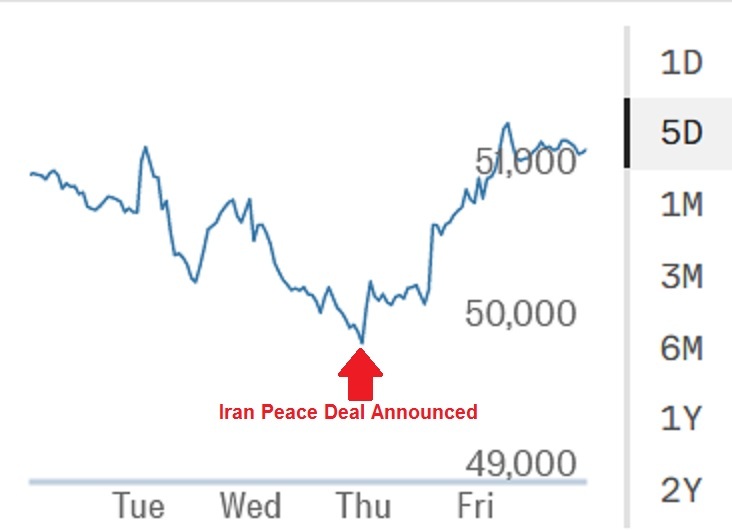
But is there actually a peace deal in place with Iran to end the war and reopen the Strait of Hormuz?
If you only get your news from the U.S. corporate media, which all for the most part print the same thing about the war whether they are “Left” and “hate” Trump, or from the “Right” who support Trump, you probably think that Iran is giving up and caving to the demands of Israel and Trump.
To understand how the rest of the world outside of the U.S. and the West view the events now happening, you need to read what the Iranians and others are saying.
Now as I have stated multiple times since this war started, BOTH SIDES will lie and use psychological warfare to their advantage. So when I present the Iranian view, I am not endorsing it as 100% true.
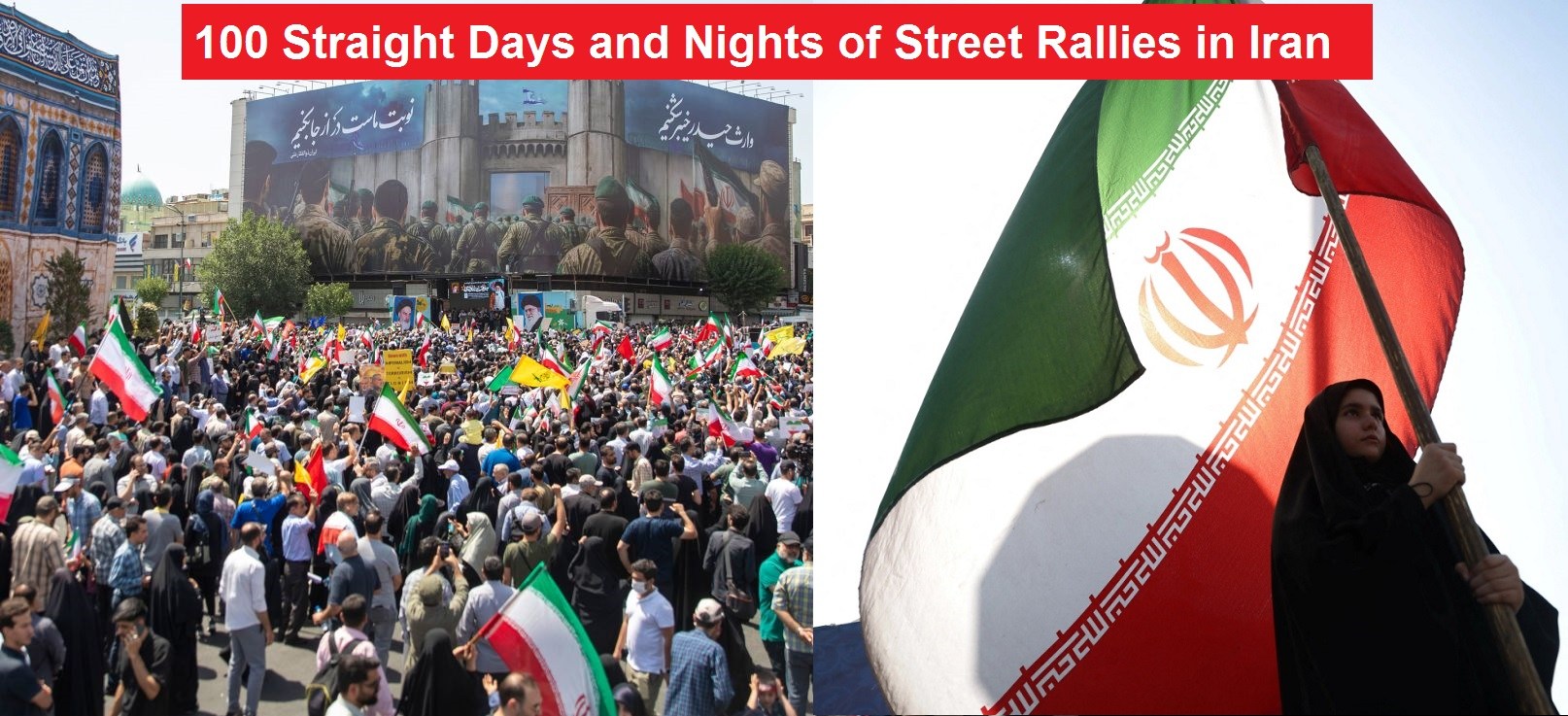
But it does give the alternative perspective, and the fact Iranians seem to still be taking to the streets in large numbers each day seems to suggest that their regime is not about to fall, and in fact may be establishing Iran as one of the major superpowers in the world today.
This is from PressTV, the major English language news source coming out of Iran, and it was just published today. While the author is not named, you will quickly see it is someone who is highly educated and whose native language is probably English.
It is literally written like a legal brief, and probably accurately describes Iran’s current position on where this war is at right now. It marks the one-year anniversary of when Israel and the U.S. began bombing Iran in the “12 Day War” last year.
One year after 12-day war: Iran rises as regional superpower while US Empire slips into oblivion
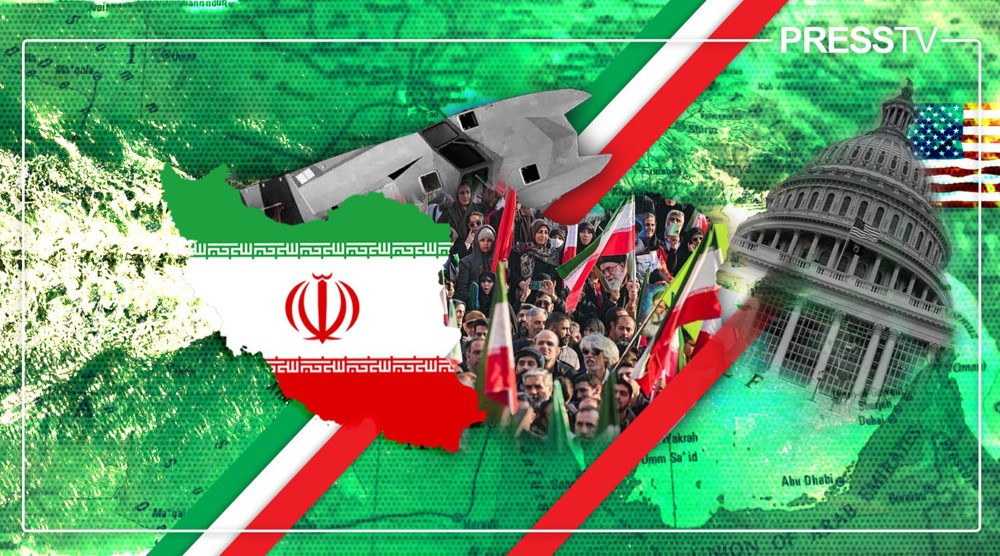
by PressTV
After a year in which the full spectrum of the enemy’s military, political, economic, intelligence, and psychological warfare machinery was mobilized to topple the Islamic Republic, the strategic outcome has been dramatically reversed.
Far from accomplishing its stated but improbable objectives, the US war machine has suffered a staggering collapse into oblivion, while Iran has consolidated its position as a regional superpower with a clear and widely recognized upper hand.
The regional balance of power has shifted decisively in the wake of the three imposed wars against the Islamic Republic in less than a year. Tehran is now positioned to impose strategic conditions, while Washington finds itself increasingly forced into reactive diplomacy.
It was in June last year when the United States, the Israeli regime, and a coalition of their regional allies launched what they believed would be a swift, decisive, and terminal operation – a 12-day war of aggression designed to bring about “regime change” in Iran.
They banked on the much-hyped doctrine of shock, surprise, and cumulative pressure, unleashing every lever of power: military, political, economic, and psychological.
Their war plans, repeatedly refined since 1979, were executed twice in less than a year – most recently in February, a war lasting nearly 40 days that ended with the US retreat.
Today, on the anniversary of the 12-day imposed war, the region’s strategic map has been reversed. The United States is no longer the predator circling weakened prey. It is the petitioner, eagerly seeking a deal to escape a wider and more dangerous catastrophe.
Iran has not merely survived, but it has emerged as a formidable regional superpower, imposing conditions on Washington for the first time in decades.
The year of maximum pressure – What the enemy unleashed
Between June 13, 2025, and June 12, 2026, the enemy coalition – led by the United States, operationalized by Israel, and facilitated by Arab logistical support and European betrayals – activated every option in its playbook. This was not a single war but a cascade of catastrophes, designed to overwhelm Iran’s capacity for resistance through simultaneity.
The assassination of the Leader of the Islamic Revolution was the biggest salvo – the crossing of the Islamic Republic’s highest red line. In any conventional strategic framework, the decapitation of a state’s top-most authority should have triggered collapse.
Instead, it triggered something the enemy had neither calculated nor imagined – a quick and seamless transfer of leadership and a nation galvanized by unity and resolve to resist.
The 40-day war in February this year was the sequel to the 12-day war in June last year. The June 2025 war was a full-scale military assault on sensitive military, security, and nuclear nodes inside Iran. When that failed to break the country, the enemy escalated to a 40-day war, an expanded campaign targeting civilian and scientific infrastructure, media industry, administrative centers, and economic lifelines, accompanied by mass civilian killings in cities like Minab, Lamerd, and Karaj – including the massacre of over 150 schoolchildren.
Simultaneously, separatist terrorist elements, trained and armed abroad by familiar suspects, struck from the northwest and southeast borders.
But the most insidious operation was the armed coup attempt before the 40-day war in January and early February. It was the deployment of extensively trained terrorist cells across the country, activated simultaneously with maximum brutality.
Thousands of Iranian citizens were murdered in this coordinated campaign of domestic terror, for which Donald Trump recently took public responsibility.
Europe, for its part, abandoned fifteen years of JCPOA diplomacy, triggering the “snapback” mechanism, a juridical betrayal that confirmed Tehran’s long-held suspicion – Western agreements are tactical instruments, not binding commitments.
A complete US naval blockade in the form of maritime banditry and piracy was imposed to strangle Iran’s economy. Every regional ally of the United States – Persian Gulf Arab states, Israeli military bases, and regional logistics hubs – was activated against Iran.
And throughout this year of open warfare against the Iranian nation, Washington and its partners repeatedly engaged in simultaneous talks and diplomacy, using negotiation as cover for surprise attacks. Each Iranian gesture of goodwill was met with betrayal.
The enemy’s stated goal, which was admitted openly in Western and Israeli strategic circles, was the overthrow of the Islamic Republic, the disintegration of the country into ethnic fragments, and the plunder of its rich resources.
The miscalculation – Why Iran did not fall
The enemy’s assessment, briefed to American and Israeli war cabinets, was that Iran would collapse within the first few days of the Ramadan War. They had imagined the Islamic Republic as a brittle system – aging leadership, economic distress, popular discontent, a military stretched thin. They were catastrophically wrong, as they later realized.
What the enemy failed to understand is that civilized and revolutionary states do not fight like conventional powers. The assassination of the Leader of the Islamic Revolution did not create a vacuum, but it gave the nation a martyr. The new Leader – the martyred Leader’s worthy successor, elected amid bombings – demonstrated something the West has never internalized: in Shia revolutionary doctrine, the system is larger than any individual.
The outcome, after twelve months of maximum pressure and maximum violence against the Iranian nation, is an Iran that holds the clear upper hand.
Now, let us consider the balance sheet. On Iran’s side:
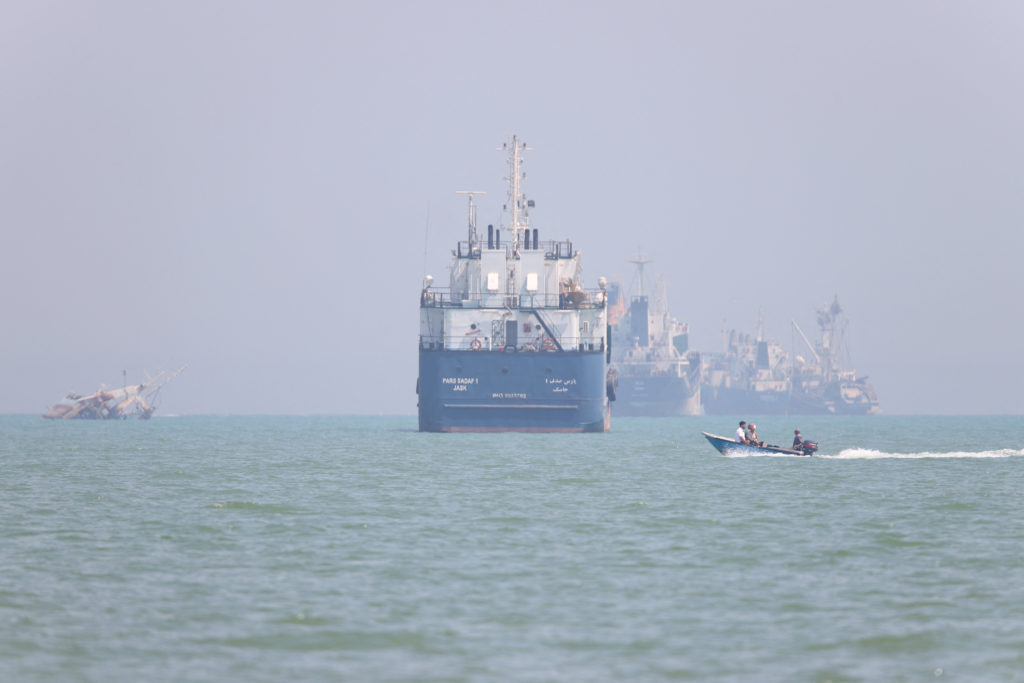
First is the strategic defeat of the enemy’s core objective. The United States and Israel sought to break Iran’s will and project their own invincibility. Instead, it proved counterproductive as the enemy lost its credibility and deterrence. The sight of American warships quietly withdrawing from the Strait of Hormuz under Iranian tactical control traveled across every news platform in the region. The psychological effect was seismic.
Second is an unprecedented national cohesion. Western analysts had long predicted that economic pressure would drive a wedge between the people and the Islamic Republic. The opposite happened. The two imposed wars produced exceptional national unity. Public presence in defense of the country – volunteer armed groups, civilian logistics networks, popular mobilization – reached levels unseen since the 1980s Imposed War. The armed forces, the Basij, and ordinary civilians fused into a single resistance organism.
Third is the preservation and strengthening of strategic assets. Iran’s civilian nuclear program, missile arsenal, and regional network of resistance allies emerged not only intact but enhanced. International experts now note that Iran’s exclusive operational control over the Strait of Hormuz has created a strategic asset “greater than nuclear weapons.”
Fourth is the demonstration of offensive and defensive superpower capability. Iran proved it could initiate and end a war with Israel on its own terms. It demonstrated deterrent power so clearly that regional states relying on American bases – Saudi Arabia, UAE, Bahrain and others – have been forced into a recalibration of their security doctrines. The US guarantee is no longer credible if Washington cannot protect its allies from Iranian retaliation.
Fifth is a decisive shift in global public opinion. Despite an unprecedented Western propaganda campaign, popular sentiment across the Global South – and even within Western civil societies – moved in favor of Iran. The image of a small power standing alone against the full might of the American Empire, and winning, resonated deeply in post-colonial societies worldwide.
The humiliation of the United States – A superpower unmasked
While Iran’s position has grown significantly, America’s power has collapsed. The anniversary of the 12-day war finds the US in its weakest strategic posture since the 1975 fall of Saigon.
The damage to the American “superpower” image is irreversible. For decades, Washington projected an aura of military invincibility and inevitable victory. That aura was shattered in the skies over Iran and the waters of the Strait of Hormuz.
The enemy failed to achieve any of its declared objectives. It was forced to downgrade its war aims from “overthrow the Islamic Republic” to “prevent Iran from acquiring nuclear weapons” – an objective Iran has repeatedly and officially stated it does not seek.
The humiliation in the Strait of Hormuz stands as one of the greatest strategic disasters. The United States, the world’s maritime superpower, lost operational control of the planet’s most vital waterway to a non-naval power. The damage to American global power projection is permanent. Every allied navy in the world has already taken note.
Economic and material losses are staggering, including hundreds of billions of dollars in direct and indirect costs; the depletion of expensive strategic reserves – air defense missiles, precision-guided munitions, naval assets – with no prospect of replenishment at a pace matching Iranian asymmetric resupply. The US military industrial base, already strained by Ukraine and Israel, has been further hollowed out.
Loss of credibility with allies is perhaps the most consequential long-term damage. Persian Gulf monarchies that paid billions for US protection watched American forces retreat, their air defense systems bypassed, their territories vulnerable to Iranian retaliation. The phrase “all options are on the table” was exposed as rhetorical theater. When the US repeatedly retreated from re-entering the war with Iran, ending the 40-day war without any gains, every regional ally understood the new reality.
Domestic and international disgrace is complete. Western and regional analysts, even those hostile to Iran, have been forced to acknowledge the transfer of initiative in war and peace into Tehran’s hands. Inside Iran, the collapse of US prestige has been particularly devastating for Western-oriented groups who long promoted the narrative of America as a “benevolent hegemon.” That flawed narrative is now completely dead.
The Trump calculus – Desperation disguised as diplomacy
At the time of writing this, Trump has reportedly received signs of a final agreement with Iran with what can only be described as desperation. His renewed threats of attacks on Iranian targets were quickly withdrawn Thursday evening. It recalls the posture of a desperate gambler who has run out of chips.
Several structural realities must be understood about the current US pursuit of a deal.
First, after failing militarily, the United States is now pursuing a submissive diplomatic approach. Washington hopes Iran will agree to terms that allow the US to declare a face-saving exit. But make no mistake: any deal America seeks is not about mutual benefit, but about the survival of the remaining fragments of US credibility in the region.
Second, the United States is engaged in an intense and all-out war of disinformation. Through social media posts, contradictory press releases, and manipulated narratives, the Trump administration officials seek to project a false image of “achievement.” They will claim they “prevented” something worse, or that Iran “conceded” something. These are propaganda weapons aimed at domestic and allied audiences, not reflected by facts.
Third, any agreement with Iran must not be misread as a partisan tactic of Trump or the Republican Party. This is a broader, bipartisan structural bid by the entire US machinery: the deep state, the military establishment, and global Zionist networks.
Political figures are visible operators, but the machinery behind them is national and transnational. The retreats we see are tactical moves designed to preserve the larger goal of maintaining Western power credibility over the long arc.
Iran should not – and cannot – afford to mistake a tactical pause for a strategic conversion.
The rules of any future agreement – Iran’s non-negotiable lines
If Iran chooses to enter an agreement – and that is an “if,” not a “when” – the terms must reflect the new balance of power. The following are non-negotiable:
First, Iran must not compromise its fundamental rights – not for a temporary ceasefire, not for sanctions relief, not for any American promise. If negotiations collapse and war is reimposed, Iran must be able to return from a position of strength and authority.
Second, the goal of any agreement must be the removal of the shadow of war, not a temporary truce, not a managed escalation ladder, but the establishment of durable deterrence. Real security comes from power projection and the absence of weakness signals. Every concession, no matter how small, will be interpreted by Washington as an invitation for further pressure.
Third, full Iranian sovereignty over the Strait of Hormuz must be recognized without any conditions. This is now a strategic reality. Any agreement that does not explicitly acknowledge Iran’s control and right to manage this waterway is an agreement built on a lie.
Fourth, Iran’s nuclear rights, defense capabilities, and regional resistance structure must remain intact. The United States has no standing to demand limitations on a sovereign nation’s defensive capabilities, especially after failing to destroy those very assets.
Fifth, compensation for damages caused by US and Israeli aggression must be addressed. The destruction of Iranian infrastructure, the murder of thousands, the economic strangulation – these are not abstract costs but crimes for which reparations are due.
Sixth, the role of the Iranian people’s resistance and presence must be formally recognized. Any agreement that ignores the popular mobilization that saved the country betrays the very source of Iran’s strength.
The new confrontation – What comes after any deal
The most important strategic insight for Iranian decision-makers is that any agreement marks not the end, but the beginning of a new confrontation with the unreliable enemy.
The United States is fundamentally opposed to Iran’s existence as a unified, powerful, and independent state. That has not changed and it will not change with any agreement on the table. What has changed is the method from direct military assault to a renewed campaign of subversion, economic pressure, and political isolation.
To consolidate the gains of the past year, Iran must now focus on internal factors. National strength must be reinforced by addressing economic vulnerabilities, maintaining popular unity, and ensuring that the military and security apparatus remain resupplied and ready.
Simultaneously, weakening factors, especially Western-dependent thinking, defeatist psychological operations, and fifth column elements, must be systematically eliminated.
It is important to understand that the enemy’s next war will not look like the last one. It will be fought in the currency of doubt, division, and delay.
On the first anniversary of the 12-day imposed war, the Islamic Republic of Iran and the people of Iran have emerged as undisputed winners. The enemy employed every option on the field and on the table but left with nothing but staggering losses.
Iranian people, leadership, and armed forces achieved what theorists in the West believed was impossible: they defeated a “superpower” in a full-spectrum war – not once, but twice in less than a year – without surrendering a single core principle.
The United States now seeks a deal to escape from the quagmire of its own making. And whether the deal finally materializes or not, the foundation of Iran’s security must remain what it has always been: not American promises, but Iranian power.
Original source.
This article was written by Human Superior Intelligence (HSI)


See Also:
Understand the Times We are Currently Living Through






The post Iran Still Standing and Still Controlling the Strait of Hormuz after One Year of Being Bombed by Israel and U.S. – Trump Uses War for Insider Trading for Profit first appeared on Health Impact News.

 Login
Login