Reading view

All three Rosneft Samara refineries now offline or reduced as drones halt Kuibyshevsky operations yesterday
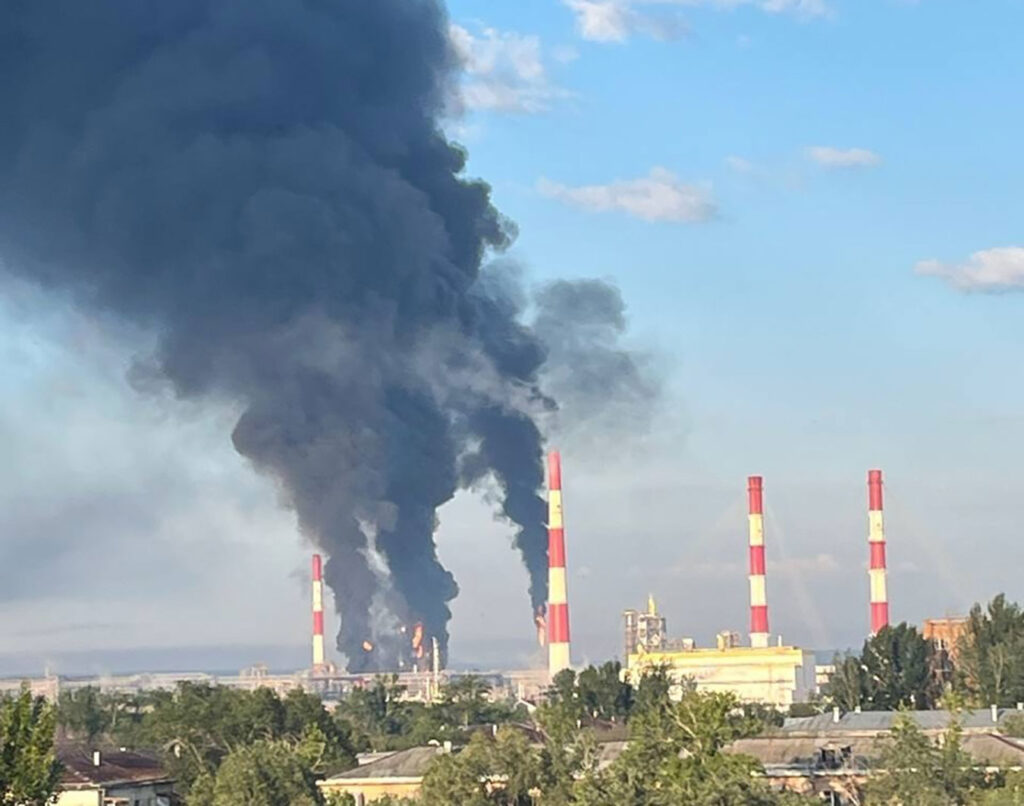
rosneft's kuibyshev refinery joins syzran novokuibyshevsk offline after ukrainian drone strike yesterday · post fires raging kuybyshevsky oil samara russia 10 2026 fires-rage-at-samara-kuybyshevsky-oil-refinery ukraine news reports

Ukrainian drones forced Rosneft's Kuybyshevsky oil refinery in Samara Oblast, Russia, to halt oil processing on 10 June, Reuters reported. The strike puts all three plants in the Rosneft Samara refining hub out of full operation at the same time.

With Ukraine's deep strikes accelerating into the summer season, each new plant taken out compresses Russia's repair window and hardens the fuel-supply squeeze on its military logistics.

Reuters confirms processing halt at both primary units

Reuters cited two industry sources to confirm that processing stopped at both AVT-4 and AVT-5 after the strike. Each unit has a nominal processing capacity of about 73,000 barrels of crude oil (10,000 metric tons) per day. The hits caused damage and subsequent fires at both. 

Samara Oblast Governor Vyacheslav Fedorishchev claimed a massive overnight drone attack injured three people and caused "damage to several industrial facilities." 

An earlier report on 10 June described fires at the Kuybyshevsky refinery after the strike.
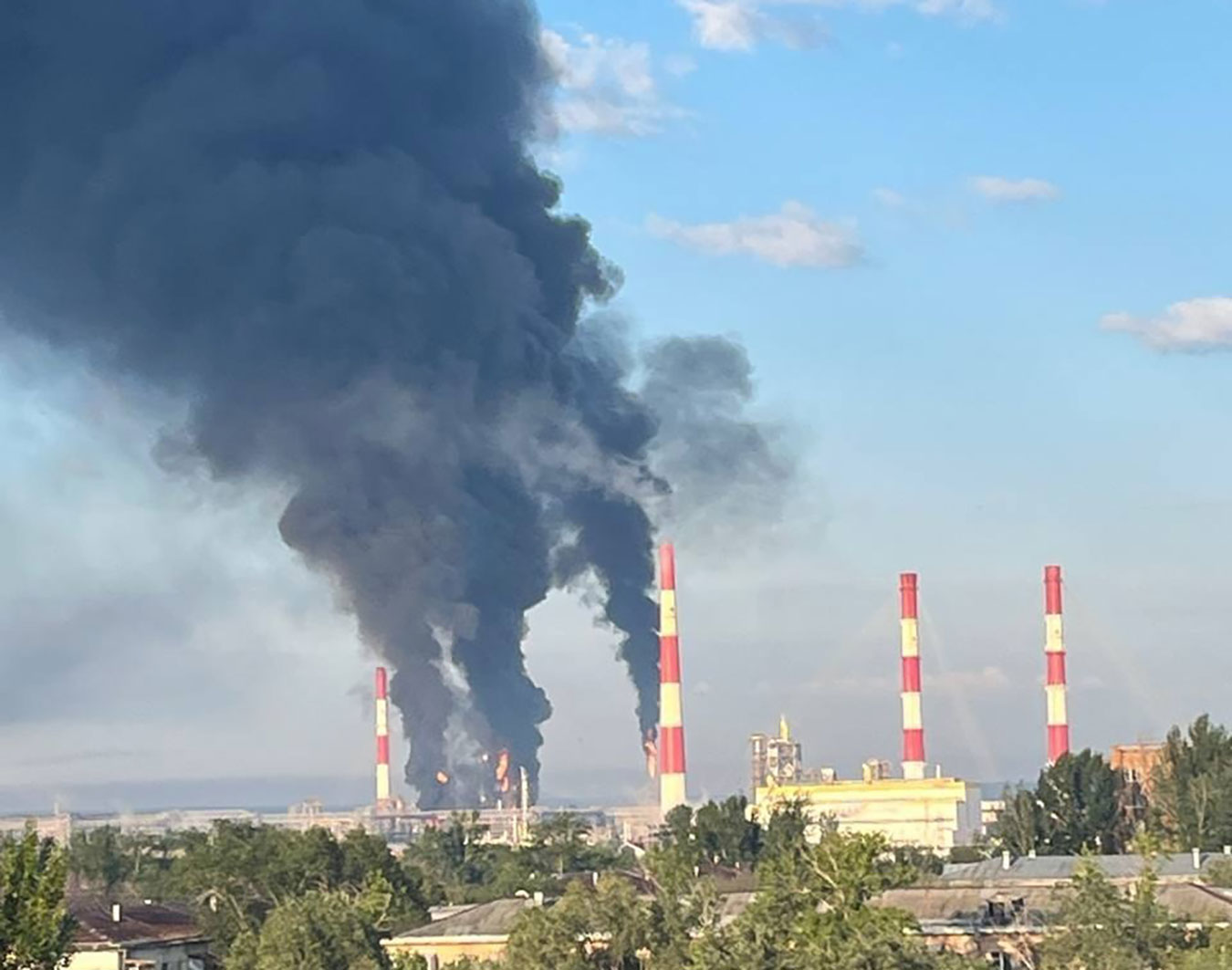
rosneft's kuibyshev refinery joins syzran novokuibyshevsk offline after ukrainian drone strike yesterday · post fires raging kuybyshevsky oil samara russia 10 2026 fires-rage-at-samara-kuybyshevsky-oil-refinery ukraine news reports
Explore further

Fire reported at Kuibyshev oil refinery in Russia’s Samara after drone strike

Plant size and output

Kuybyshevsky's 2024 crude oil throughput was 4.7 million tons, equal to 94,400 barrels a day, Reuters reported. That year's output included 0.8 million tons of gasoline, 1.4 million tons of diesel, and 1.3 million tons of fuel oil. Nominal capacity stands at 7 million tons per year. The plant is one of the largest oil refining facilities in the Volga region. It also supplies fuel for the Russian army.
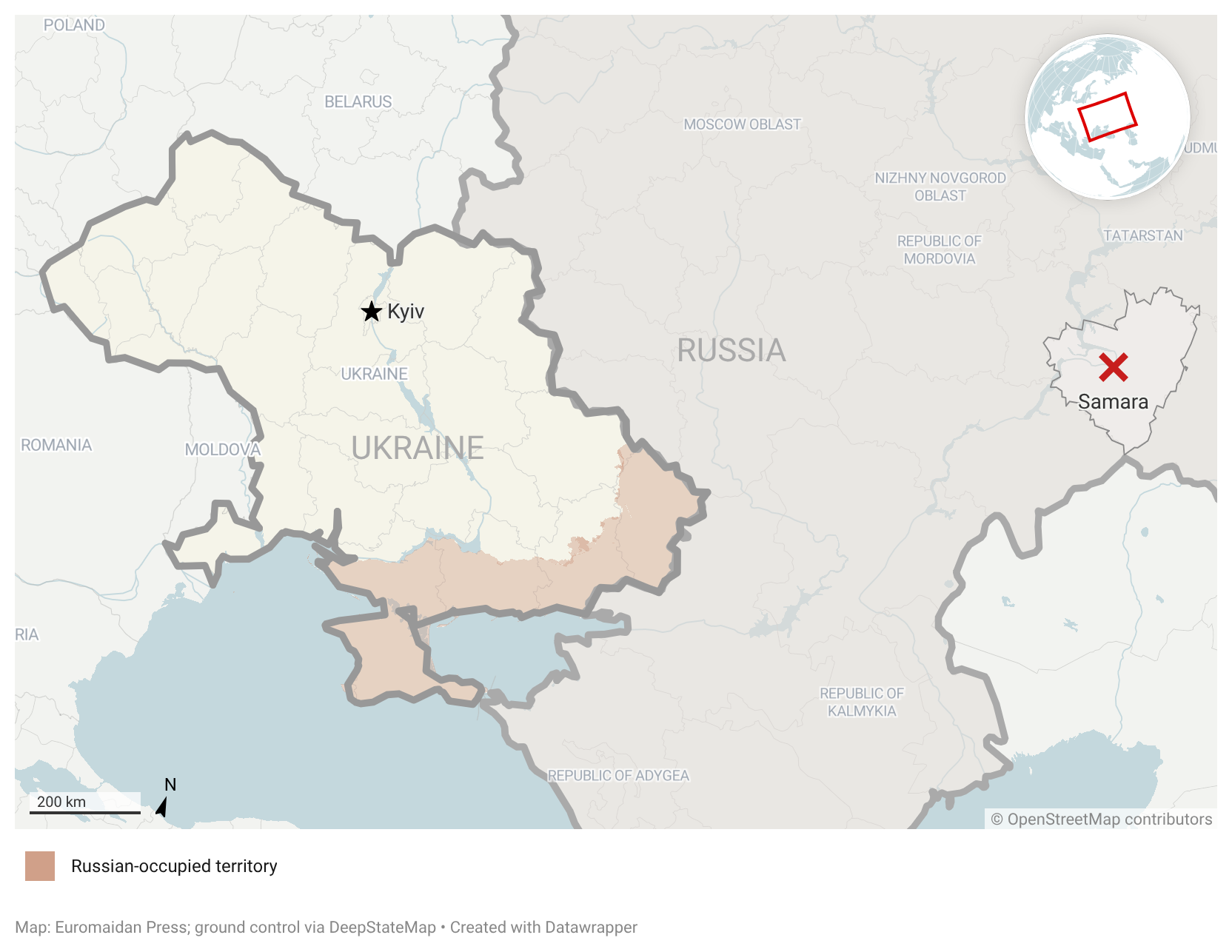
The Kuybyshevsky plant belongs to Rosneft's Samara refining cluster alongside Novokuibyshevsky and Syzran. Syzran's operations have been suspended since a 21 May drone attack, Reuters reported, and the plant has yet to resume. The Novokuibyshevsky plant shut down after an 18 April strike and now operates at reduced throughput. Ukraine has hit all three plants in the cluster in less than two months.

The Kuybyshevsky plant was also previously hit in January 2026, August 2025, and in March 2024. The earlier strikes damaged equipment and forced production cycles to stop.

Same night: Cheboksary defense plant struck

The same night, Ukrainian forces also struck the VNIIR-Progress plant in Cheboksary, Chuvashia, which was previously hit on 5 May. The factory makes "Kometa" antennas that protect Russian drones from electronic warfare. It also makes satellite receivers for GLONASS, GPS, and Galileo systems. Ukraine's General Staff said such modules are used in Shahed-type drones, Iskander and Kalibr missiles, and aerial bombs.

Meanwhile, today saw a strike on the Afipsky refinery in Krasnodar Krai. 

afipsky oil refinery burns again ukrainian drones return krasnodar krai · post fire after drone strike russia 11 2026 5282989402957225318 ukraine news reports
Explore further

Afipsky oil refinery burns again as Ukrainian drones return to Krasnodar Krai

By May 2026, Ukrainian drones had taken six of ten Russian refineries hit during that month offline. Russian media counted 24 of Russia's 33 largest refineries struck since 2022. Only the Omsk and Angarsk plants east of the Urals remain untouched so far.
  •  

Russia’s fuel crisis jumps from 15 to 25 regions in five days—plus six occupied Ukrainian areas

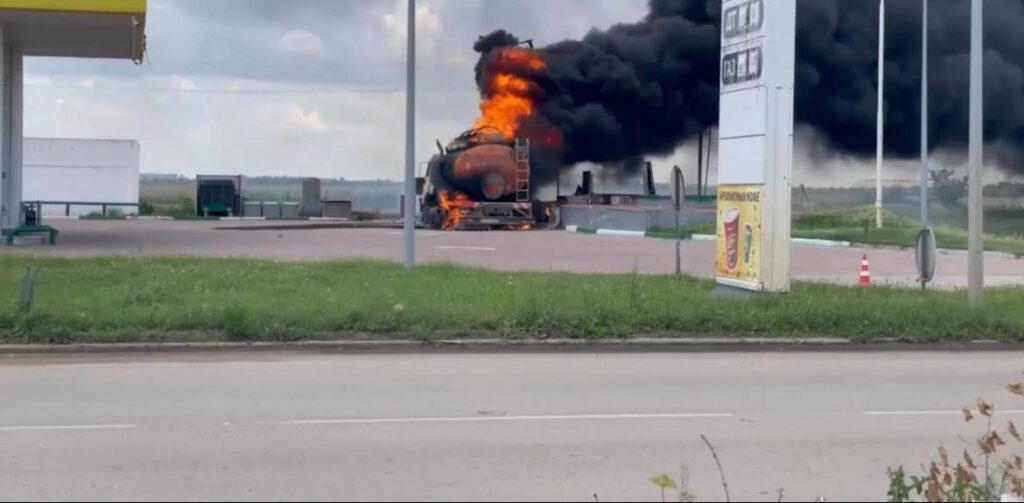
russia's fuel crisis jumps 15 25 regions five days—plus six occupied ukrainian areas · post russian truck burns gas station skadovsk kherson oblast after logistic lockdown mid-range strike 11 2026

Russia's gasoline crisis has spread to 25 of its own regions and six occupied Ukrainian ones, the Russian-language Moscow Times reported on 10 June. Six days earlier, the count stood at 15. Ukrainian strikes on Russian refineries hit a wartime monthly record in May 2026, dropping Russian refining loading well below the start of the year.

This comes amid the Ukrainian long-range drone strike campaign, targeting Russian oil processing, transportation, and storage facilities almost every day. Additionally, Ukraine has escalated its mid-range "Logistic Lockdown" campaign, targeting Russian logistics in the occupied territories at depths of up to 200 km.

From 15 regions to 25 in under a week

The Russian Telegram channel 7×7 counted at least 25 Russian regions facing gasoline shortages and supply disruptions as of 10 June. Less than a week earlier, on 4 June, the number stood at 15. Restrictions also apply across six Russian-occupied Ukrainian regions: Crimea, Sevastopol, and the Luhansk, Donetsk, Kherson, and Zaporizhzhia oblasts.

Bloomberg counted 38 Ukrainian strikes on Russian refineries from January through May 2026. May alone saw 16 — the highest monthly figure of the war. According to OilX, Russian refinery loading has dropped 14% since the start of the year and stays roughly 20% below pre-war levels.

afipsky oil refinery burns again ukrainian drones return krasnodar krai · post fire after drone strike russia 11 2026 5282989402957225318 ukraine news reports
Explore further

Afipsky oil refinery burns again as Ukrainian drones return to Krasnodar Krai

Regional officials have responded unevenly. The acting governor of Belgorod Oblast, Alexander Shuvaev, acknowledged the shortage. Krasnodar Krai governor Veniamin Kondratyev called the situation "artificial hype." Residents publicly mocked the claim under his Telegram post, which was republished on a local channel. Gas stations in Krasnodar Krai have begun closing due to a shortage.

Fuel prices have spiked in occupied Crimea. On 10 June, AI-92 cost about $1.14 per liter, against $0.96 in Moscow. AI-95 traded near $1.25, up from $1.04 in the Russian capital. Resellers were offering fuel at $1.81-$2.08 per liter — about 50% above official Crimean prices.

On 8 June, Russia's Energy Ministry announced the creation of a task force to manage the fuel crisis, citing "growing enemy air attacks."

Occupied Sevastopol cancels fuel coupons after tankers fail to arrive

Sevastopol's Russian-installed governor said on 10 June that planned distribution of rationed petrol had been delayed, Reuters wrote on 11 June. Mikhail Razvozhayev claimed oil tanker trucks could not bring fuel into the city, following recent Ukrainian strikes on supply routes. Crimea, occupied by Russia in 2014, introduced fuel rationing last month due to shortages on the peninsula.

"Unfortunately, oil tanker trucks were unable to come to the city tonight," Razvozhayev wrote on Telegram. 

ukrainian drones knocking out northwestern entrance crimea bridges damaged one night · post rl9vo -ukraine-targets-four-bridges-at-crimea-s-northwestern-choke-point- struck four vehicular crimea's overnight 11 2026 quisling official vladimir saldo claimed strikes part ukraine's
Explore further

Ukrainian drones knocking out the northwestern entrance to Crimea: four bridges targeted in one night

He said priority for refueling on 11 June would go to public transport, utilities, emergency vehicles, and government vehicles.

"I am addressing everyone: there is no point in lining up at... the gas stations tomorrow," he added late on 10 June. 

Existing rationing coupons would be canceled and new ones issued today.

Razvozhayev later claimed over two dozen Ukrainian drones were downed in the early hours of Thursday in a fresh attack on Sevastopol. The city is Crimea's second-largest and home to Russia's Black Sea Fleet.

On the same day, a major drone attack hit Russia's Volga region of Samara, more than 900 km from the front line, forcing state-owned oil giant Rosneft to halt processing at its Kuibyshevsky refinery.

rosneft's kuibyshev refinery joins syzran novokuibyshevsk offline after ukrainian drone strike yesterday · post fires raging kuybyshevsky oil samara russia 10 2026 fires-rage-at-samara-kuybyshevsky-oil-refinery ukraine news reports
Explore further

All three Rosneft Samara refineries now offline or reduced as drones halt Kuibyshevsky operations yesterday

Ukrainian President Volodymyr Zelenskyy said Wednesday evening that Ukraine’s recently launched mid-range strike campaign against Russian logistics, including large-scale strikes on supply and fuel trucks, had proved its worth.

"In recent months, we are especially grateful for the mid-strikes: Russian military logistics throughout the entire depth of the temporarily occupied territory are now within reach of Ukrainian drones," he said. "Our impact reaches Russia’s border regions as well. The enemy feels it, and we will continue to expand it."

  •  

The new precision weapon: Is the West ready for cellular drones?

In an operation that will likely be studied for years, Ukraine used dozens of internet-connected drones, launched from trucks inside Russia, to destroy strategic Russian aircraft. The drones took off from Russian soil, but they were guided by operators located deep within Ukraine. Operation Spiderweb demonstrated something that should alarm every Western capital: The precision strike…

  •  

The new precision weapon: Is the West ready for cellular drones?

In an operation that will likely be studied for years, Ukraine used dozens of internet-connected drones, launched from trucks inside Russia, to destroy strategic Russian aircraft. The drones took off from Russian soil, but they were guided by operators located deep within Ukraine. Operation Spiderweb demonstrated something that should alarm every Western capital: The precision strike…

  •  

US, Iran exchange strikes for second day as hostilities escalate

The U.S. and Iranian militaries continued to exchange strikes early Thursday in the Middle East region, sidelining negotiations between the two nations. U.S. Central Command said it launched strikes on Iranian military surveillance capabilities, communication systems and air defense sites. The agency added that U.S. Marine Corps, Air Force and Navy assets “fired precision munitions”…

  •  

US, Iran exchange strikes for second day as hostilities escalate

The U.S. and Iranian militaries continued to exchange strikes early Thursday in the Middle East region, sidelining negotiations between the two nations. U.S. Central Command said it launched strikes on Iranian military surveillance capabilities, communication systems and air defense sites. The agency added that U.S. Marine Corps, Air Force and Navy assets “fired precision munitions”…

  •  

Ukrainian drones knocking out the northwestern entrance to Crimea: four bridges targeted in one night

ukrainian drones knocking out northwestern entrance crimea bridges damaged one night · post rl9vo -ukraine-targets-four-bridges-at-crimea-s-northwestern-choke-point- struck four vehicular crimea's overnight 11 2026 quisling official vladimir saldo claimed strikes part ukraine's

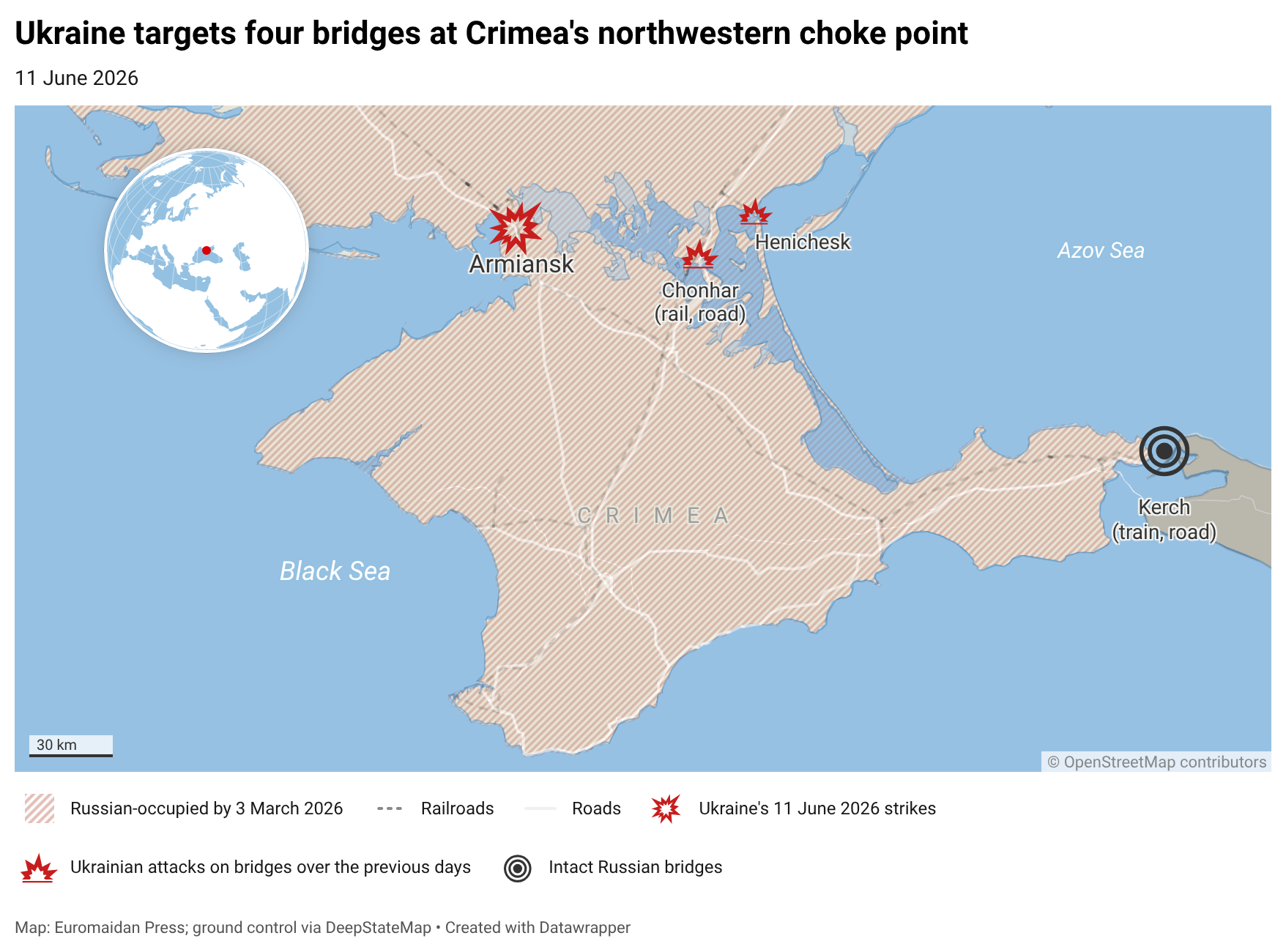
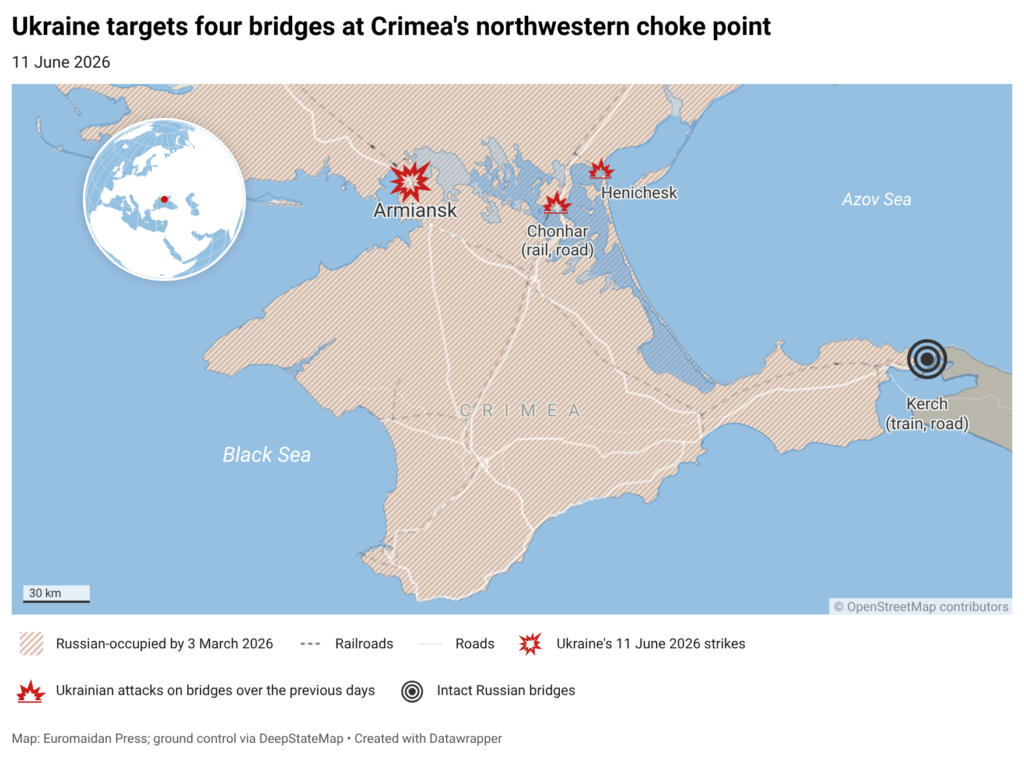
Ukrainian drones struck four vehicular bridges at Crimea's northwestern entrance overnight on 11 June 2026, quisling official Vladimir Saldo claimed. The strikes are part of Ukraine's most recent mid-range strike push—now at its fourth day—reaching every road corridor between Crimea and mainland Ukraine. The same night, drone attacks also rolled across Sevastopol, Bakhchysarai, Saky, and other Crimean sites.

Russia depends on the Crimean land corridor to push fuel, ammunition, and replacements to its forces in occupied southern Ukraine. Ukrainian mid-range drones operating under the military's Logistics Lockdown program have steadily shrunk that corridor's reliability since May. Ukraine has now struck all three major connection points between occupied Crimea and mainland Ukraine within four days, damaging some bridges and destroying others.

Four bridges damaged at the Armiansk isthmus

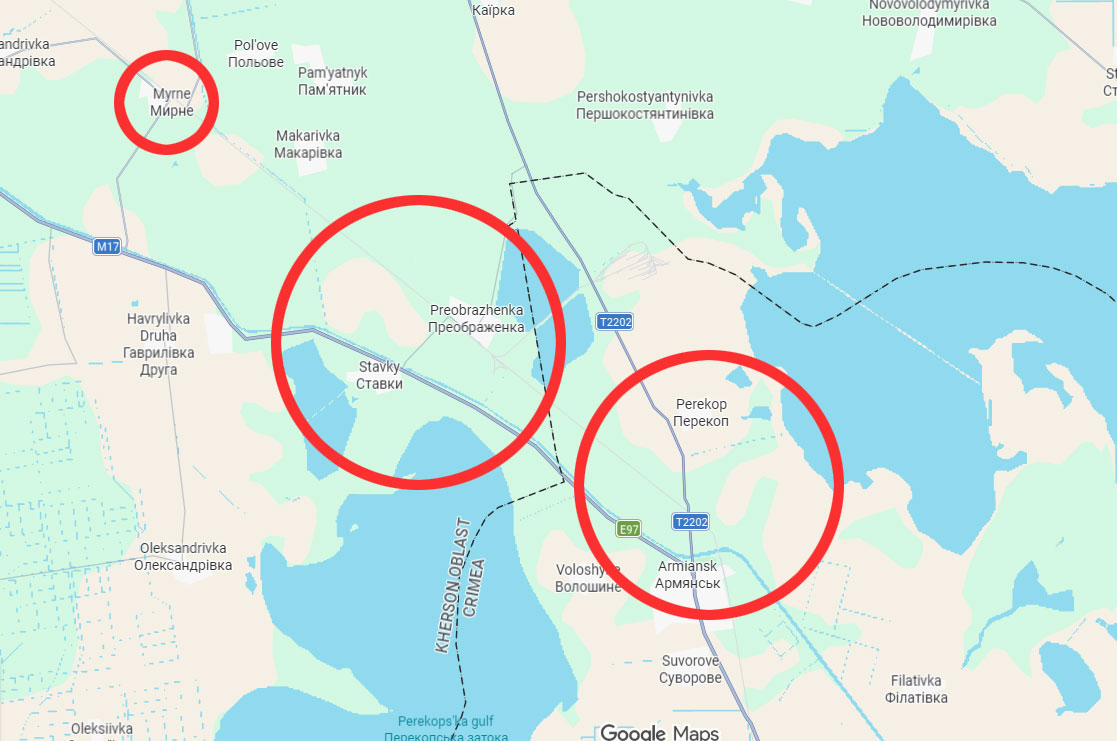
Saldo, the Russian-installed head of occupied Kherson Oblast, named the four targets on his Telegram. They include the automobile bridge in the Perekop-Armiansk area and a bridge near Stavky, Kherson OblastTwo more bridges near Myrne and Preobrazhenka span the North Crimean Canal. Saldo stated all four spans sustained damage.

ukrainian drones knocking out northwestern entrance crimea bridges damaged one night · post google maps view four struck overnight 11 2026 — near myrne between stavky preobrazhenka perekop armiansk crimean
Google Maps view of the four bridges struck by Ukrainian drones overnight on 11 June 2026 — near Myrne, between Stavky and Preobrazhenka, and at Perekop near Armiansk in the northwestern Crimean isthmus. Map: Google Maps

Three Crimean northern choke points hit in four days

Ukraine struck the Chonhar bridge on 7 and 9 Juneclosing Russia's main road link to occupied Crimea, yet the Russians reportedly installed a pontoon bridge next to the severely damaged crossing. On 10 June, Ukrainian drones hit the bridge from Henichesk to Arabat Spit. With both routes fully or partially shut, Russia had rerouted traffic through Armiansk and Perekop — the very corridor struck overnight. DeepState analysts noted that Ukrainian strikes on the bridges are an important part of the blockade of occupied southern Ukraine.

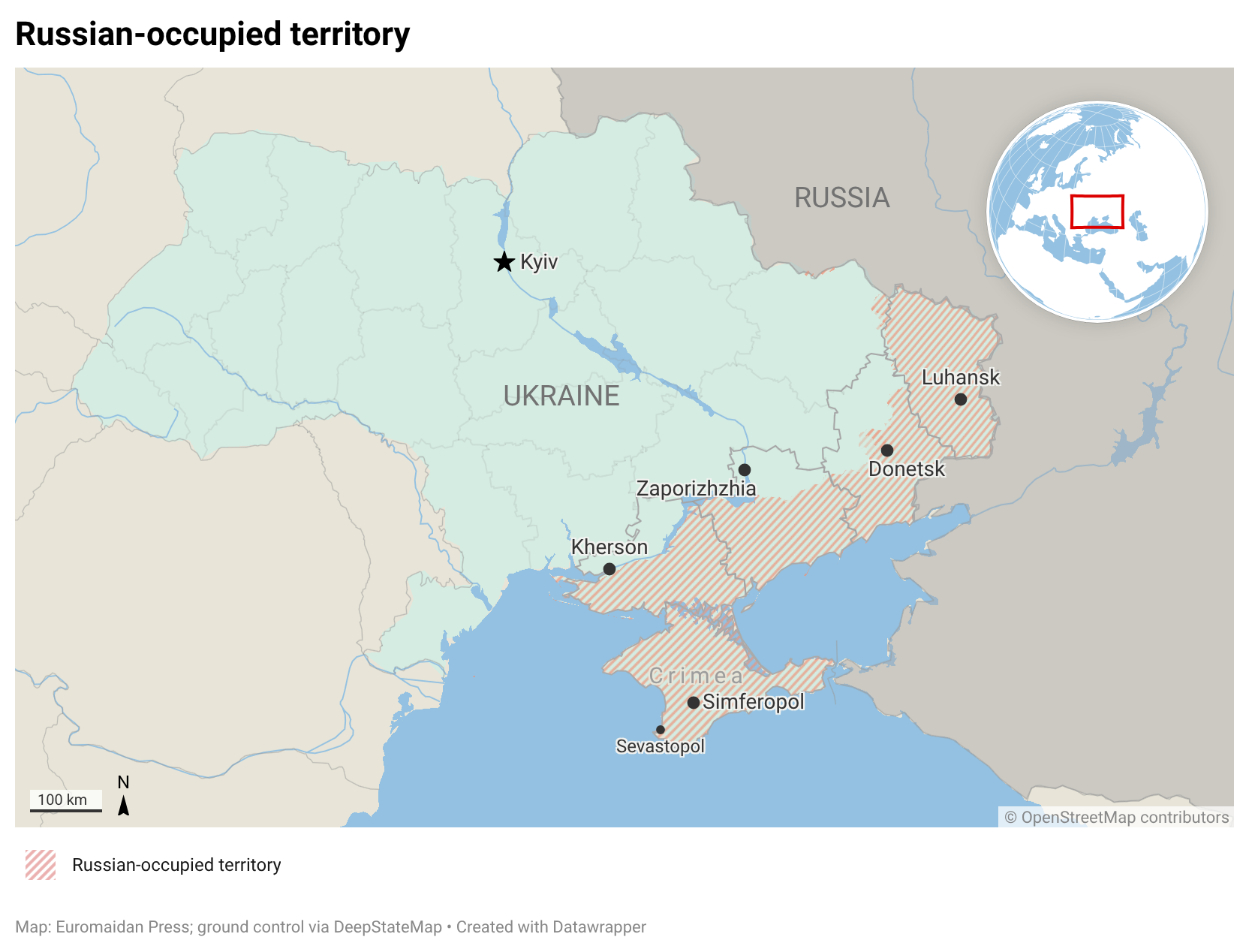
Russian-occupied Ukrainian territory, including Crimea and parts of Luhansk, Donetsk, Zaporizhzhia, and Kherson oblasts. Illustrative map: Euromaidan Press

Not only an entrance, but also targets across the peninsula

Russia's occupation governor, Mikhail Razvozhayev, claimed 32 drones were shot down over Sevastopol between 22:00 and midnight. He claimed the drones fell near Sevastopol Bay, Cape Fiolent, and Balaklava. The city declared two air alerts during the night and the morning.

Monitoring Telegram channel Krymsky Veter reported machine-gun fire in Pishchane at 21:40 and in Andriivka shortly after, citing subscribers. 

"At 21:40 a machine gun started firing in Pishchane, at 21:48 a machine gun started in Andriivka, after which an anti-aircraft gun fired a couple of bursts," the channel wrote. 

Detonations followed near Cape Fiolent, in Sevastopol, and later in Bakhchysarai. By morning, Krymsky Veter reported explosions and shooting in Saky.

Russia's Defense Ministry claimed the destruction of 330 drones over Russia and the occupied territories in the same overnight period.

Update

The First Assault Brigade shared the footage of the strikes:

Videos emerged of some of the Ukrainian strikes on bridges linking occupied Crimea to occupied Kherson Oblast

Ukraine's 1st Assault Brigade, 475th Assault Regiment, and SBU's Alfa reportedly took part.

📹 1st Assault Brigade
More on the strikes: https://t.co/xkKf15akux https://t.co/7FhAOJbWl0 pic.twitter.com/WFXUcKjfWm

— Euromaidan Press (@EuromaidanPress) June 11, 2026
  •  

Afipsky oil refinery burns again as Ukrainian drones return to Krasnodar Krai

afipsky oil refinery burns again ukrainian drones return krasnodar krai · post fire after drone strike russia 11 2026 5282989402957225318 ukraine news reports

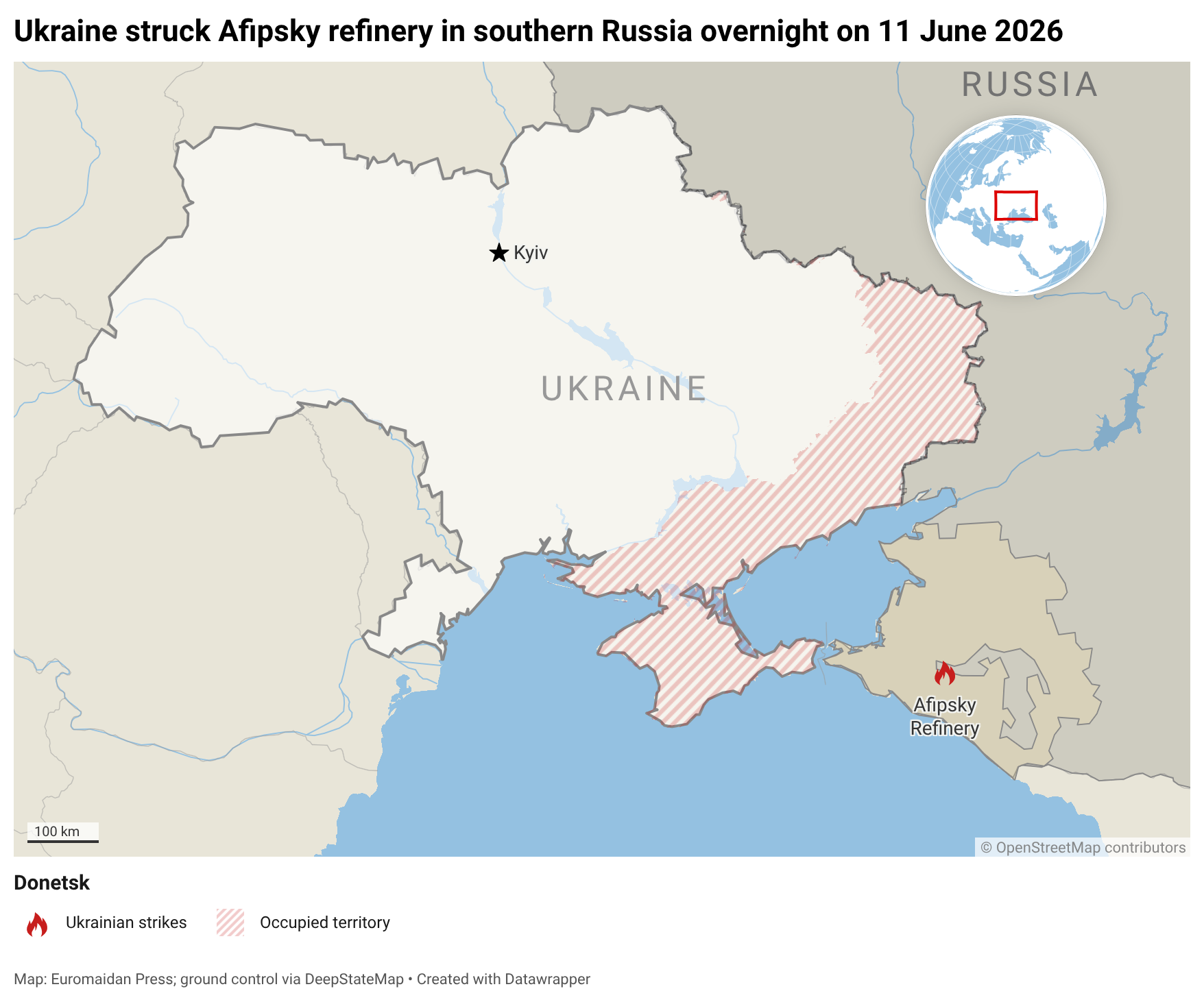
Ukrainian drones struck the Afipsky oil refinery in Russia's Krasnodar Krai overnight on 11 June, sparking a fire later extinguished, according to the Krasnodar Krai operational headquarters. The southern Russian plant, repeatedly targeted by Ukrainian strikes, supplies fuel to the Russian military.

Amid the ongoing Russo-Ukrainian war, the Russian oil industry has been under sustained pressure from Ukrainian deep strikes, with gasoline rationing currently spreading across multiple regions and occupied territories. Output at Russian refineries has been falling on Rosstat's own index as repeated hits keep facilities offline.

A blaze at one of southern Russia's largest refineries

The Ukrainian Telegram channel Exilenova+ posted footage from local witnesses showing air defense fire and a blaze. The attack started after midnight, with residents reporting drone overflights and explosions at intervals of a few minutes. 

Krasnodar Krai authorities claimed drone "debris" fell in the village of Afipsky and set the refinery on fire — Moscow's standard framing for Ukrainian strikes on Russian energy targets. The fire was out by 07:32 Moscow time, the operational headquarters later stated. Russian authorities reported no casualties at the plant itself.

The Afipsky plant is one of southern Russia's largest oil-processing facilities, with a capacity of over 6 million tons of crude a year. It produces gasoline, diesel, gas oil, vacuum gas oil, fuel oil, sulfur, and gas condensate distillates. The facility supplies fuel to the Russian army. Ukraine's General Staff has assessed that the refinery processes about 2.1% of Russia's total oil refining.

The plant runs two primary oil distillation units with capacities of 9,786 and 8,829 tons per day. It is export-oriented and does not currently produce gasoline or diesel for Russia's domestic market. Combined throughput at the Afipsky plant and the affiliated Krasnodar refinery reached 7.2 million tons in 2024. Another 3 million tons were processed in the first half of 2025.

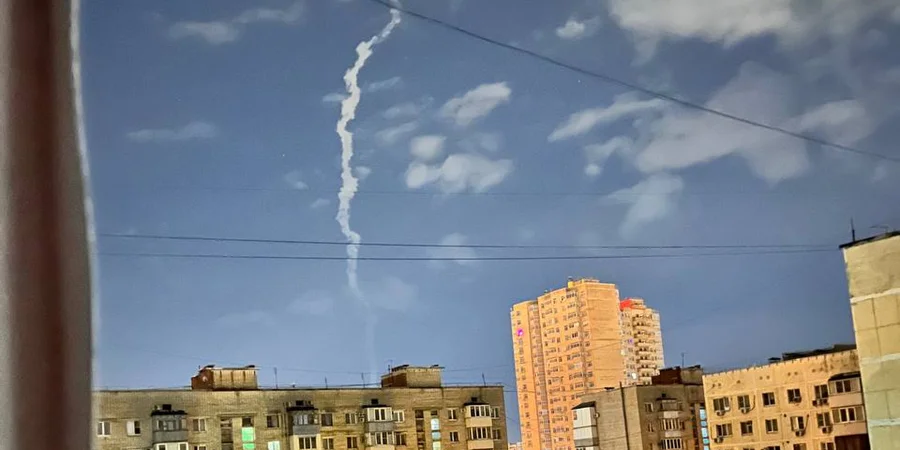
afipsky oil refinery burns again ukrainian drones return krasnodar krai · post smoke trail over amid drone attack russia 11 2026 краснодар у росії атакували дрони вночі червня року exilenova+
Smoke trail over Krasnodar amid a Ukrainian drone attack, Russia, 11 June 2026. Photo: Exilenova+ Telegram channel

Third strike on Afipsky in 2026 amid wider drone campaign

Russia's Defense Ministry claimed its air defenses intercepted and destroyed 330 Ukrainian drones over Russian territory overnight, the Moscow Times reported. According to the ministry, drones were spotted over Bryansk, Kursk, Belgorod, Oryol, Smolensk, Kaluga, Tula, Tver, Vladimir, and Moscow oblasts, as well as Krasnodar Krai and occupied Crimea. Russian aviation regulator Rosaviatsia restricted operations at airports in Tambov, Krasnodar, Sochi, Gelendzhik, and Zhukovsky outside Moscow.

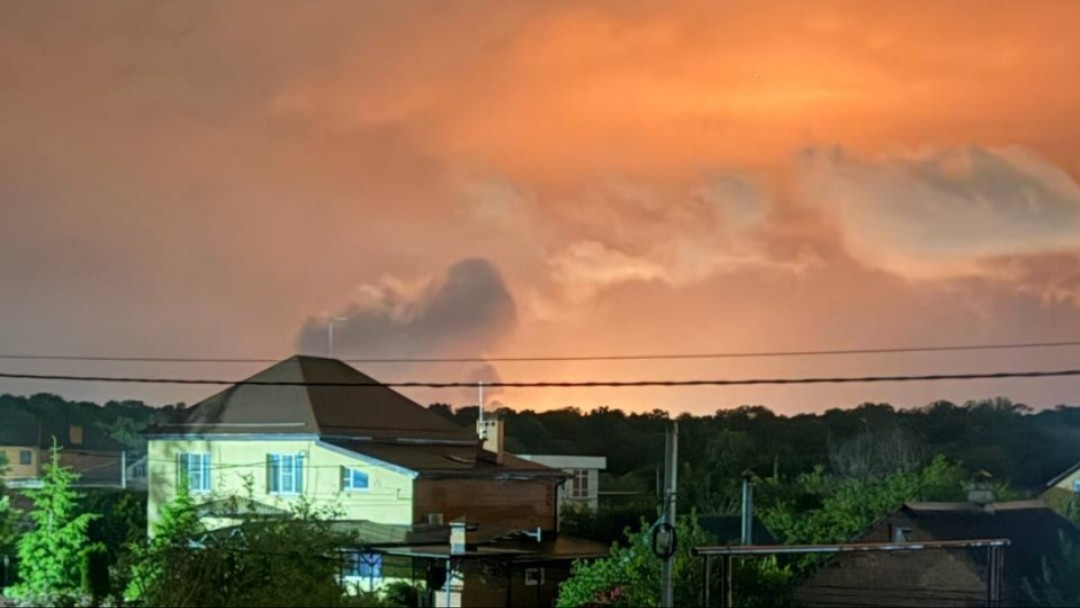
afipsky oil refinery burns again ukrainian drones return krasnodar krai · post smoke plume after drone strike russia 11 2026 пожежа на афіпському нпз в рф червня telegram-канал exilenova+ ukraine
Smoke plume after a Ukrainian drone strike on the Afipsky oil refinery, Krasnodar Krai, Russia, 11 June 2026. Photo: Exilenova+ Telegram channel

The 11 June raid was the third attack on the Afipsky refinery this year, following hits on 21 January and 14 March. During the March hit, drones damaged the AT-22/4 primary oil processing unit at Afipsky — the plant's refining starting point. Satellite imagery had previously confirmed structural damage from a November 2025 drone attack.

  •  

Ukraine’s drones now have Russian convoys riding out with four gun trucks and a prayer

A Ukrainian mobile fire team with a mounted machine gun patrols a rural area to hunt incoming Shahed drones.

  • Ukraine's middle-strike drones are forcing Russian commanders to reroute and harden their supply convoys
  • Now some Russian truck convoys are rolling out with air defense gun trucks as escorts
  • Can the Russian gunners shoot down enough drones to make a difference?

Russian logisticians are desperately scrambling to save their truck convoys from Ukrainian drones. Besides rerouting convoys away from the most vulnerable highways, some commanders are also deploying mobile gun teams to escort the cargo trucks.

Whether those gun teams can shoot down enough drones to turn the tide of the escalating logistics war remains to be seen. How high the drones fly before they strike could make all the difference.

This spring, Ukrainian drone units launched an intensive campaign of strikes targeting the thousands of Russian trucks that, every day, shuttle supplies and reinforcements from depots deep in the rear area to front-line field armies. The aim: to weaken Russian regiments before they can launch an assault across the gray zone.

"We are launching a 'logistics lockdown' for the Russian army," Ukrainian defense minister Mykhailo Fedorov announced. "We are scaling middle-strike operations to systematically destroy enemy logistics and supply lines, stripping them of their capacity to mount offensive actions."

A Russian truck under drone attack near Chernihivka.
Explore further

Russia keeps four field armies fed through three southern towns. Ukraine’s drones just arrived.

The counterlogistics campaign, mostly carried out by Ukrainian drone units flying jam-resistant middle-strike drones with AI-assisted targeting—the $5,000 Swift Beat Hornet is one of the most common—initially targeted convoys traveling along the most obvious routes, including the west-to-east M-14 highway connecting southern Russia to occupied Crimea. The M-14 is the Ukrainian portion of the wider European E-58 highway.

By late May, the Ukrainian defense ministry was tallying hits on nearly 500 Russian trucks every day, a ninefold increase on the overall average of daily truck strikes since Russia widened its war on Ukraine in February 2022. Just 3,500 Russian cargo trucks plied the M-14 every day, so the losses were significant. For now, the Kremlin is able to make good its truck losses by redeploying vehicles from the active fleet.

But soon, it may have to tap the tens of thousands of older trucks sitting in long-term storage. And those decades-old trucks are in pretty bad shape. "Most of them are scrap metal husk, utterly impossible to reactivate," analyst Jompy noted.

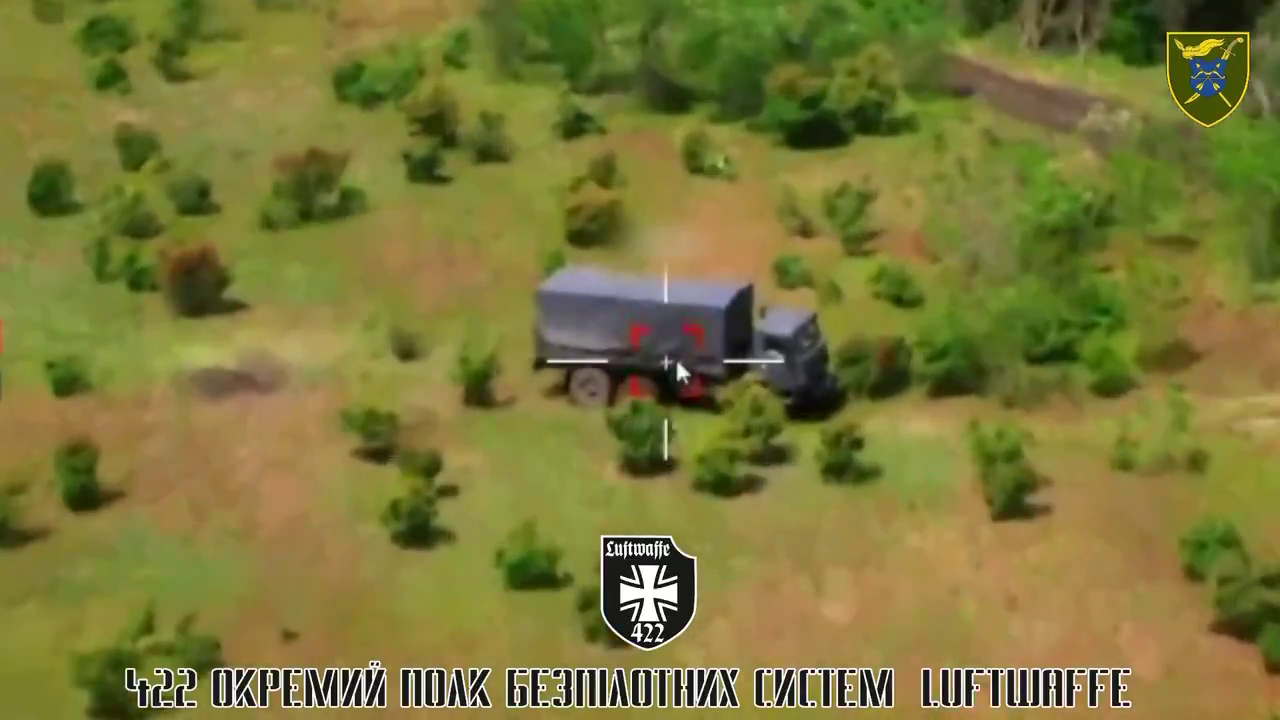
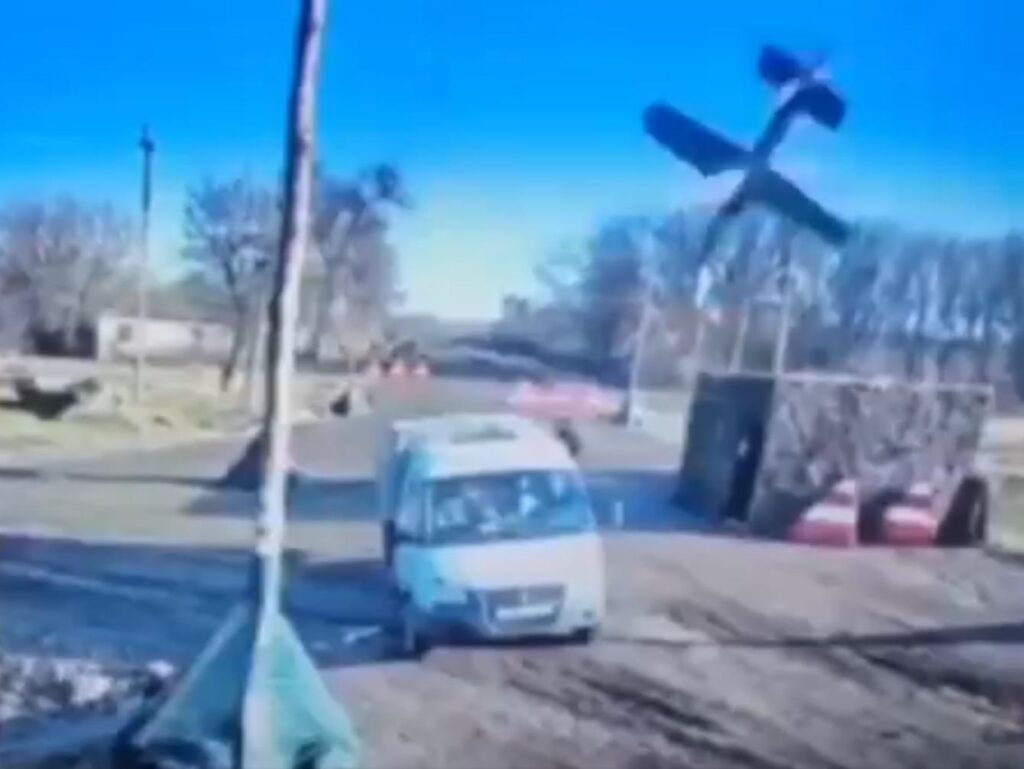
A Ukrainian Hornet drone about to strike a buhanka.
A Ukrainian Hornet drone about to strike a buhanka. Via WarTranslated.

Hardening the convoys

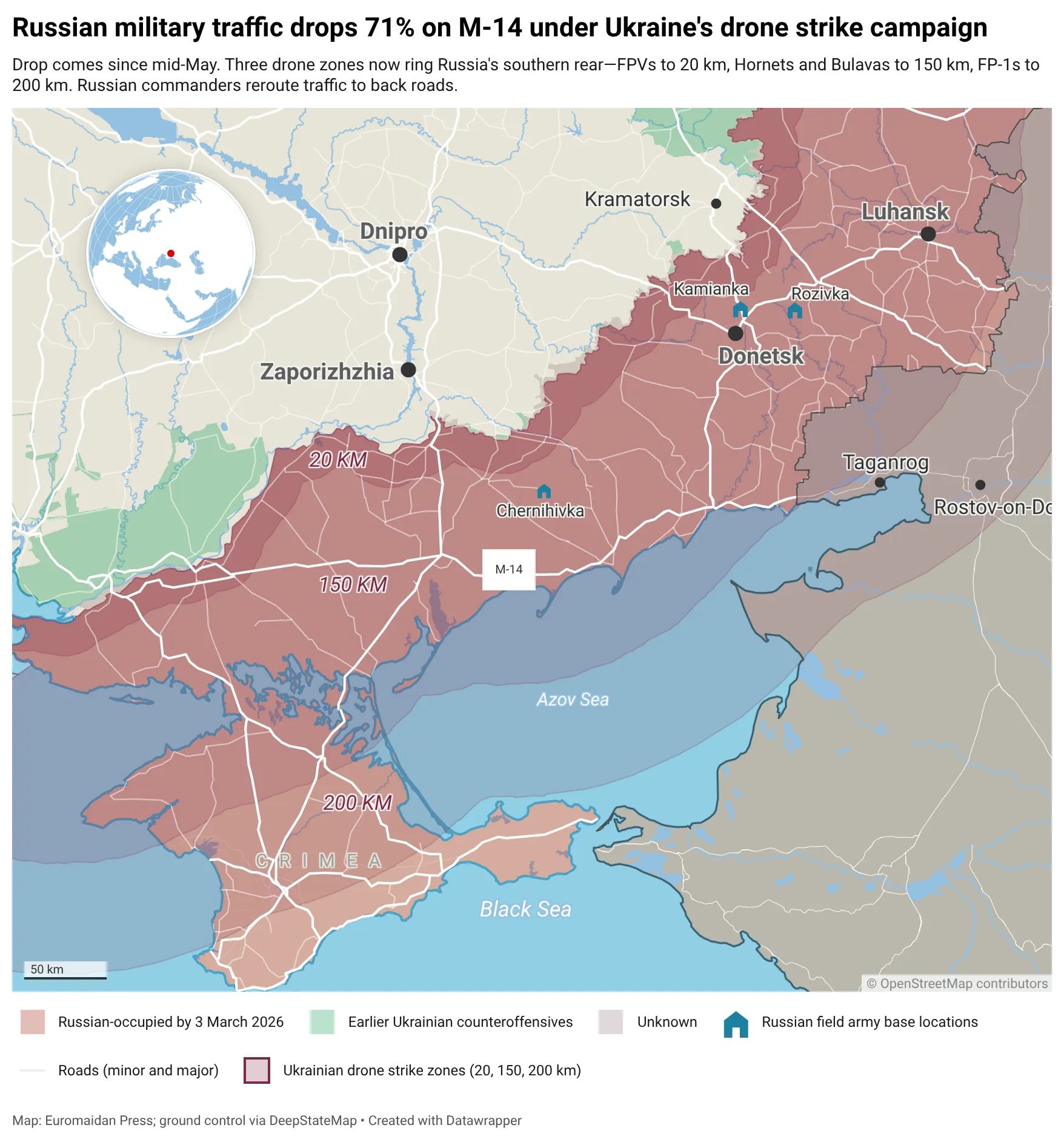
Clearly realizing they can't sustain the loss of 500 trucks a day, Russian commanders are getting creative. They've begun rerouting trucks away from the M-14 and sending them along back roads instead in order to spread them out and complicate the Ukrainians' drone sortie planning. Military traffic along the M-14 has dropped by 71% since late May as trucks follow alternate routes to forward bases, according to Robert Brovdi, commander of the Ukrainian Unmanned Systems Forces.

M-14 Ukraine counterlogistics campaign
Map: Euromaidan Press

But the Russians are also arming the truck convoys, which previously traveled without any defensive weapons. Observer Kim Hovik claimed they recently saw videos depicting Russian convoys that included as many as four trucks and utility vehicles carrying gunners.

Guns aren't the best defenses against drones, but the Russians don't have many other options. Electronic warfare systems that scramble drones' control signals don't work against drones with self-contained AI targeting systems that can spot and home in on trucks without any input from a remote operation.

And Russia's longer-range air defense systems, its fixed and mobile surface-to-air missile systems, have been ravaged by a parallel Ukrainian drone campaign specifically targeting air defenses. Between June 2025 and March 2026, Ukrainian drones blew up more than 400 radars and SAM systems: far more than Russia can replace in just nine months.

How well the gunners work against Hornets and other Ukrainian drones might depend on how high the drones fly while patrolling for trucks. Ukraine's own mobile gun teams were effective against Russian Shahed drones until the Shaheds began flying thousands of feet in the air. Now the Ukrainian gunners are "largely ineffective," according to a Ukrainian electronic warfare officer who goes by "Alchemist."

It's unclear how high a Hornet drone can cruise while still effectively scanning for trucks. Higher flights might be necessary, however. Ukrainian drone forces must adapt to Russian adaptation as the counterlogistics drone war grinds on.

Stored Russian trucks.
Explore further

Russia is losing so many trucks it’s now eyeing Cold War scrap

  •  
❌