Reading view

Who’s afraid of Chris Smalls?

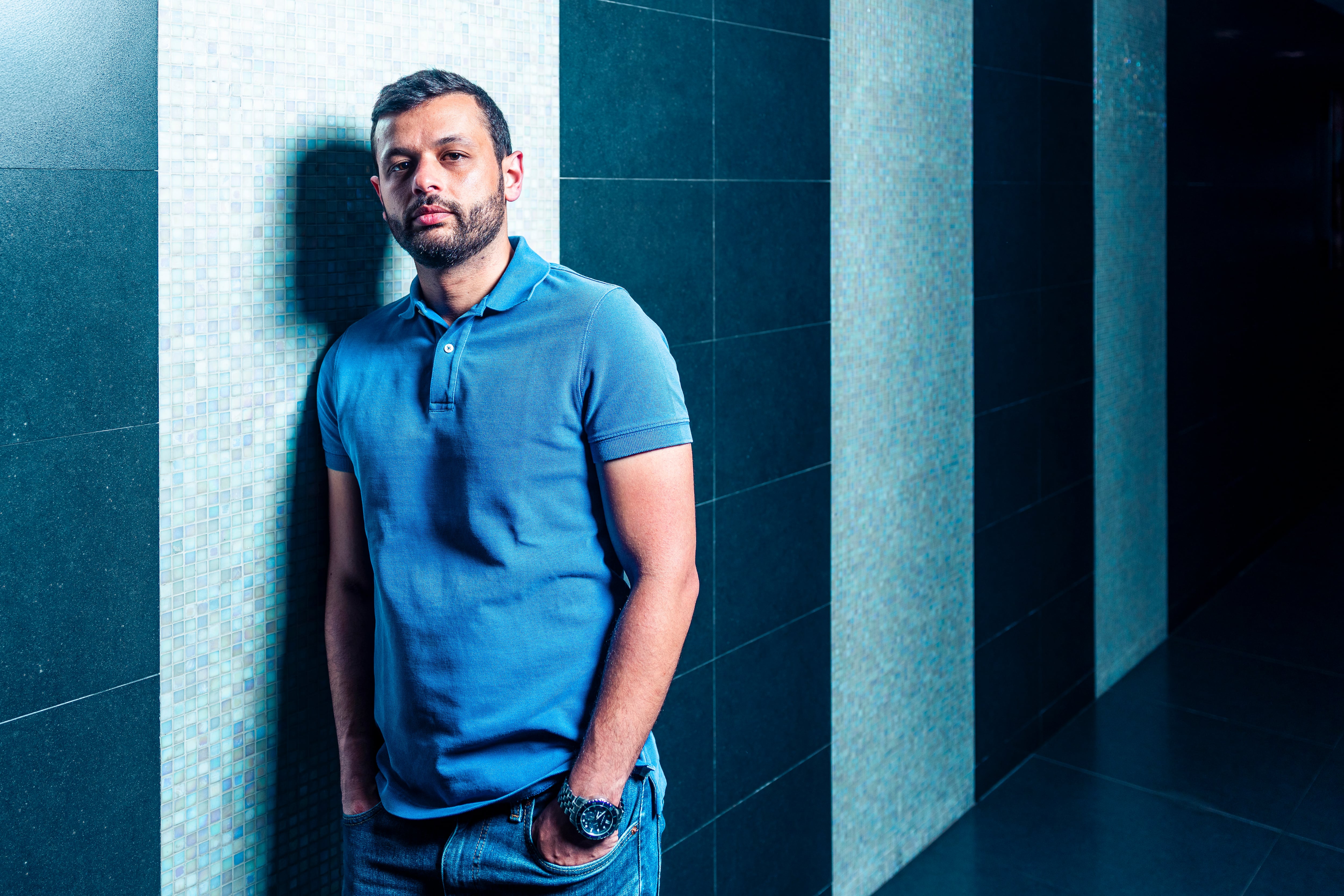
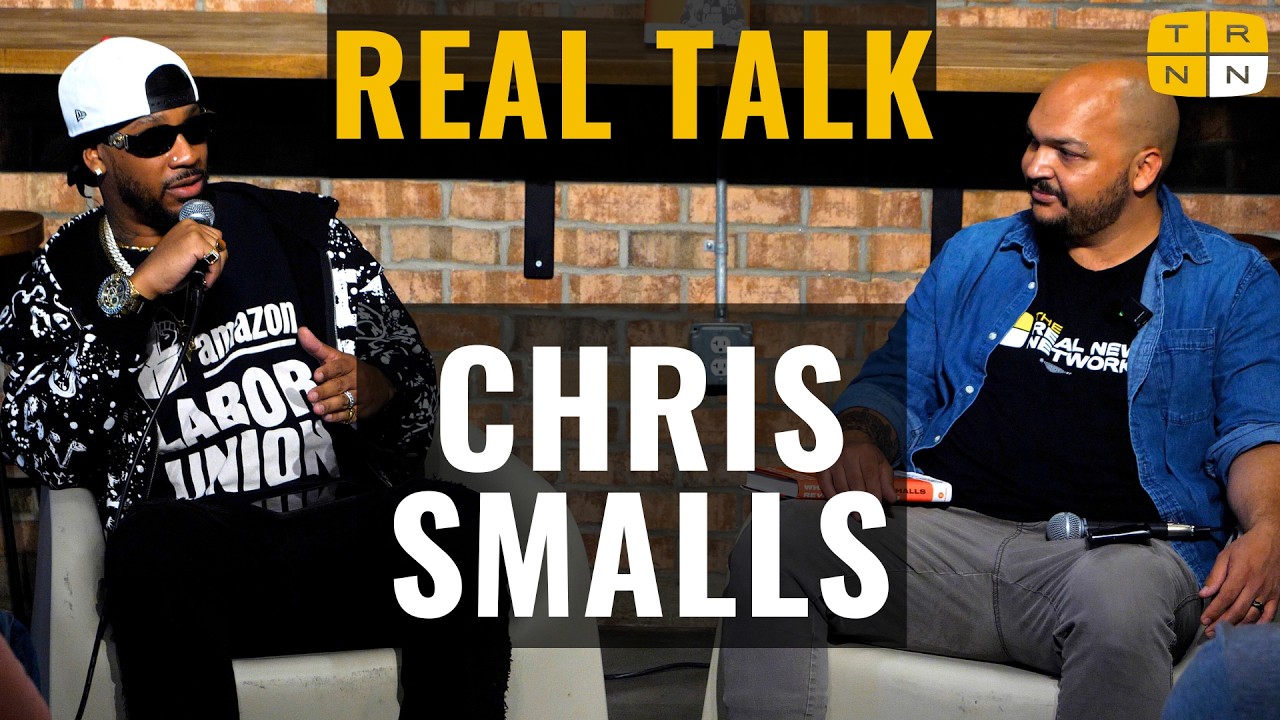
Chris Smalls (left), co-founder and former president of the Amazon Labor Union, speaks with TRNN Editor-in-Chief Maximillian Alvarez (right) at Red Emma's Cooperative Bookstore and Coffeehouse in Baltimore, Maryland, on June 4, 2026.

At a live event hosted at Red Emma’s Cooperative Bookstore and Coffeehouse in Baltimore, Maryland, TRNN Editor-in-Chief Maximillian Alvarez got to sit down for a deep and wide-ranging conversation with Chris Smalls, co-founder and former president of the Amazon Labor Union. Alvarez and Smalls discuss Smalls’ new book, When the Revolution Comes: A Fight for the Future of the Working Class; they recount the incredible story of the formation of the Amazon Labor Union and the unionization of the first Amazon warehouse in the US; and they talk about Smalls’ journey from warehouse worker and labor organizer to becoming an internationally recognized public figure and a human rights activist who has sailed with humanitarian flotilla missions to Gaza and Cuba.

Additional links/info:

Featured Music:

  • Jules Taylor, Working People Theme Song

Credits:

  • Audio Post-Production: Jules Taylor
  • Videography / Post-Production: Cameron Granadino
Transcript

The following rushed transcript may contain errors. It will be updated as soon as possible.

Maximillian Alvarez:

All right Welcome everyone to Working People, a podcast about the lives, jobs, dreams, and struggles of the working class today. Working People is a proud member of the Labor Radio Podcast Network and is brought to you in partnership with In These Times Magazine and the Real News Network. This show is produced by Jules Taylor and made possible by the support of listeners like you. My name is Maximillian Alvarez and we’ve got a really special episode for y’all today, which is a recording of a live event that I recently hosted at Red Emma’s Cooperative Bookstore and Coffeehouse here in Baltimore. And for that event, I got to sit down in front of a big, lively audience and have a real deep and wide ranging conversation with Chris Smalls, co-founder and former president of the Amazon Labor Union. Chris has a new book out called When the Revolution Comes: A Fight for the Future of the Working Class.

And that book recounts the incredible story of how a young working class Black man from Hackensack, New Jersey led a walkout from his Staten Island Amazon warehouse during COVID-19 got fired and then with hardly any resources banded together with a scrappy group of Staten Island warehouse workers to form the independent Amazon Labor Union to fight this epic David and Goliath battle against Amazon, the second largest private employer in the United States and Jeff Bezos, the second richest man in the world, and to win and successfully unionize the first Amazon warehouse in the United States. And the book also traces Chris’s life story before the Amazon Labor Union and his journey from warehouse worker and labor organizer to becoming this internationally recognized public figure and a human rights activist who has sailed with humanitarian glotilla missions to Gaza and to Cuba, even facing detainment and harassment from ICE and imprisonment and abuse from the Israeli military because of it.

I’ve done a number of events with Chris over the years. I’ve interviewed him outside of the JFK8 warehouse on Staten Island and I interviewed him as he was sailing to Gaza with the Global Samuel Flotilla right before they were captured by the Israeli military last year. I’ve seen both up close and from afar what he, his story and the story of ALU mean to working people out there, young and old people across this country and beyond. I’ve seen up close and from afar how the media’s good and awful and obsessive coverage of Chris and ALU, how that’s all affected Chris and different members and factions within ALU. And I’ve watched them all try to do their best to navigate a situation and a spotlight that I don’t think any of them ever expected to be in and that most of us will frankly never be able to fully understand from the outside.

I’ve seen and learned about many of the struggles that Chris has been through. I’ve seen and learned about the things that he’s done to help others. I’ve seen and learned about mistakes that he’s made and regretful things that he’s done and said. I know he’s a controversial figure to different people for different reasons and I know that he’s an inspiration to different people for different reasons. I know that he’s a complex and imperfect person, like you, like me, and like the hundreds and hundreds of working people that I’ve interviewed on this show over the years. And I’ve said from the beginning of this show that the whole point of this project was to honor the full and beautiful and complex humanity of our fellow workers to lift up the unheard voices of working class people and to help them and us and others see ourselves as full people with important lives and stories, not just stereotypes, not just name tags and job titles.

We’re so much more than that. And as a fellow worker, Chris is no different. And whatever your thoughts are about him, I think we all need to remember that because I see a lot of people forgetting that and that is not to excuse or downplay any concerns that folks have about Chris, ALU, or the complicated relationship between media celebrity and political movements today. And of course, no one is above critique, not public figures like Chris and certainly not journalists like me and anyone who is part of the labor movement must hold themselves and be held accountable to that movement. I know that and I believe that, but I also know that movements don’t move and history doesn’t happen without people and people are complicated. And if we don’t have a healthy way as working people of talking and listening to each other and working through our shit, if the world is burning all around us and we cannot find ways to work together or work alongside each other for our common goals and common good, even if we don’t like each other, then to put it bluntly, we’re cooked.

And so with all that said, it was in that full spirit and with that same mission that I’ve had since I started this podcast eight years ago that I sat down with Chris Smalls for this important conversation that we had at Red Emma’s in Baltimore. I hope you guys enjoy it and I want to know what you think, but please first take a listen.

All right. Well, thank you so much to Red Emma’s Cooperative Bookstore and Coffeehouse for hosting us for this great event. I want y’all to give a proper Baltimore welcome to Brother Chris Smalls, the co-founder and former president of the Amazon Labor Union here with us tonight. So we are of course here to talk about Chris’s new book, When the Revolution Comes, the Fight for the Future of the Working Class, but we’re also going to talk about so much more. And by way of getting us into this discussion, I wanted to just roll the clock back a second, right? Let’s go back five years, 2021, right? Feels like forever ago, but let’s not forget how crazy of a year that was. We had all just watched the batshit January 6th insurrection still in the middle of COVID, no vaccines yet. And out of this dark swamp in time, an unexpected source of light emerged in worker struggles and a sort of revived labor movement.

Everyone was talking about the Amazon workers in Bessemer, Alabama who were trying to unionize with the retail wholesale and department store union down there. I went down there. That was actually my first field shoot for the real news. And of course those workers lost that election and it was very heartbreaking for a lot of us and it was really incredible to see that heartbreak turn into the energy that we would see later in the year with the first Starbucks store to unionize in Buffalo, New York and the emergence of this ragtag group of badass workers from Staten Island who were trying to unionize their Amazon warehouse. And so it can be easy to forget all that we were going through in that moment. And so I wanted that to sort of be the start. And Chris, I wanted to ask you to take us back there.

Remind us who Chris Smalls was before COVID and then talk us through, because I think we need a refresher. Talk us through the incredible saga from the walkout that you led to you guys winning that first union election.

Chris Smalls:

And thank you all for being here. It’s been a while since I’ve been to Baltimore, so I’m glad and honored to be back and good company and some good comrades, familiar faces in the crowd. So thank you all once again for showing up and supporting my book and being here tonight. I really appreciate that. Yeah. As you said, we have amnesia in America. We all know that. One thing being a news cycle for a few weeks and then it’s always something else, especially under this Trump administration. And ironically, six years ago when I got fired from Amazon, that was also an election year. Trump was still in the headlines still. So we wasn’t garnishing any attention. As you mentioned, leading up to 2021, 2020, COVID was the peak at its peak, especially in New York City being one of the epic centers of the world.

Yeah, workers were afraid, workers were catching COVID. I remember walking into my warehouse and how seeing my comrades at work just really sick and not really themselves. So it’s a really eerie moment. But for those who don’t know, I was an assistant manager at Amazon for four and a half years. I opened up three warehouses in the tri-state area, New Jersey, Connecticut, Staten Island New York was my last building. People’s person always, the same way you see me today, it was the same way I went to work at Amazon. Definitely loved my people. I spent 70 hours a week with them. They were like my extended family. And when COVID hit, I definitely was afraid for all of us and I wanted to speak up on their behalf as well, which led to my firing after I led the walkout on March 30th, 2020, which once again was six years ago.

Seems like it was a long time ago, but it was six years ago it flew. It flew past. But just giving you a background about myself, what you’re going to read about in the book if you haven’t already, is that I’m just like anybody else in this crowd. I’m a single parent. My twins at the time was, well, damn, they were maybe eight or nine years old. And yeah, you can imagine how much time that I’ve lost spending with them over the last years, especially during COVID, the years of COVID, if I was lucky to see them half a year, that was a thing as well. And I love sports, grew up playing basketball, football, track. You going to see that in the book. I also was a rapper. I

Maximillian Alvarez:

Was going to say, don’t bury the lead. There’s a little juicy story about your rap history in there.

Chris Smalls:

Yeah, yeah. There’s a little rap stink that I had briefly after college, dropped out of college because I wanted to pursue music. I thought I was going to blow up overnight and then I got hit with reality getting back into the workforce. I got married and divorced at a young age, but I was married for eight years and during that hardship, working at Amazon was our main source of income for my household, one of them at least. And having healthcare as well. Healthcare Amazon provided for me and my kids and my wife at the time. So when I lost all of that during the pandemic, it really showed me how much the company didn’t really care about anybody. After I poured five years of my blood, sweat and tears into the company after I’ve done so much opening up these warehouses for them, training thousands of Amazon workers, hundreds of their upper management, the companies just say, “You know what?

We don’t care. We’re going to fire you. ” And not only fire you, they did it in a way that martyred me by Jeff Bezos, who was the richest man in the world, signing off on the smear campaign, which basically said to make me the face of the whole unionizing efforts against Amazon, which is a good idea. But at the same time, the racist part in the beginning saying that I’m not smart or articulate, something that they use in these corporate settings to put upon Black people and Brown people, saying that we’re not smart enough or we’re not articulate enough to even talk about anything when it comes to work related issues. So that was really the catalyst of a moment right there where I embraced it and I said, “You know what? Even though I no longer work for the company, I’m going to continue fighting for the workers inside the building.” Ultimately, for a whole year from 2020 to 2021, we traveled the country protesting in front of debt bases, mansions and penthouses while Bessemer, Alabama was trying their efforts and we all was paying attention.

My folks in Staten Island, we were paying attention, but we took it a step further. We did drive down there. We drove 16 hours from New York City down to Bessemer in a car, one car squished up and we stayed about a week connecting with workers there, connecting with the union, trying to figure it out because we didn’t know what we wanted to do. We wanted to do something, but we didn’t really have all the answers. But unfortunately, yes, like Max said, when they lost, it was definitely devastating for everybody. We felt that because of several reasons. Number one, that building investment Alabama has about 6,000 employees, five, 6,000 employees. Majority of them are black people. 85% of the building is black, 80% of the workforce there are black women. So when Amazon spent millions of dollars stopping that campaign, that was a direct attack on black and brown people and that’s something that we resonated with in Staten Island, New York where the demographics are similar to our building as well.

So the next day after the results came out, it just so happened to be our birthday, four 20, four / 20 / 2021 is when we started our campaign the next day after those results came out. We didn’t even wait.

And yeah, that year was like a blur as well, but it was 11 months, over 300 plus days I set up an encampment outside of the building that fired me at a public bus stop talking to workers every single day, rain shine, how to call night or day about why we need to start a union. And originally we sent out the Olive branch to the established unions. We wanted some support. We wanted some resources, some help, but we got nothing in return because a lot of people didn’t believe in us. A lot of people thought that it wasn’t going to work. Who are you guys to unionize when y’all don’t have any resources, y’all don’t have any knowledge, experience, et cetera. But one thing we did know is that we’re Amazon workers. Whether we’re fired or not, we know the ins and out of the company better than Jeff Basils.

So we felt that was the only way, and I still believe that till this day that the only way it could have been done was grassroots, gorilla style tactics in the trenches every day, meeting your workers face-to-face. That was the only way it was going to work. We couldn’t take the shortcut routes. We couldn’t do the traditional style organizing methods that most unions use. We had to think outside of that box and also sacrifice. Sacrifice was one of the things that we all had to do as a collective. And yeah, it was successful. 11 months, hard blood sweat and tears into the campaign and it paid off to become the first union in American history for Amazon workers. And still, till this day, that building is the only unionized building in this country and that’s what people got to understand. And it’s pro and con to that.

Yes, it’s great that we still are standing, but it shouldn’t take four years for us to have a contract. Keep that in mind that even when I was the president for three years, the first thing we did when we won was demand the bargaining order from Amazon, or at least from the National Labor Relation Board so that we can negotiate with Amazon. We didn’t hear anything under the Biden administration. I don’t know what happened, but there was some magic in the air. We got a bargaining order in April of this year, but Amazon has already appealed it because they’ve been spending millions of dollars holding things up for the last four years. So for those and everybody who’s been questioning like, “Why don’t you guys have a contract or you guys are not getting a contract?” It’s not because of us. It’s literally because the system is broken.

The system is not worker friendly. As much as these progressives and politicians say that the system are usher us to the system that’s supposed to work for us, it doesn’t. It’s not in our favor. So we have to continue to fight every step of the way. And actually when we won in 2021, that was just the beginning of the fight. This fight is a lifetime struggle and now the only thing that I can see that our union can do, and not just our union, because there’s other unions out here, Starbucks workers, all these other unions that emerge, they’re still fighting for contracts too and negotiating their way through it. But the only thing I can see that’ll work for all of us is if we withhold our strongest weapon, which is our labor and go on strike.

Maximillian Alvarez:

And it was wild too reporting on Bessemer and then reporting on you guys and sort of seeing how the things that worked for Amazon Imbessemer weren’t working on Staten Island. I think that was a real sort of moment of insurgent energy because in Bessemer, when the workers brought in the RWDSU, Amazon did what union busting employers always do where they’re like, “Oh, this is an outside force that’s trying to come in and get in between our relationship.” They couldn’t do that with you guys because it was like, no, these are literally just the workers in the warehouse. And so I wanted to touch on that because it was such a big debate at the time because of Bessemer and ALU especially, but everyone was talking about, is it better to go the independent route like Amazon Labor Union, Trader Joe’s United, the Home Depot workers who tried to unionize in Philly, or is it better to go with an established union like the Teamsters of the RWDSU?

And so with five, again, like you said, five, four years of experience since we were having those debates, I think it’s important for us to sort of revisit and update that and you know better than us. I wanted to ask after all that you’ve been through in this struggle, where have you landed on the independent or established union debate, especially in light of the AOU affiliating with the Teamster?

Chris Smalls:

Yeah. I mean, I still stick by my original sentiment that there was no other way that we was going to get it done, not with any established union. Didn’t matter how long they’ve been around, how powerful they are. The way we organize is completely against any type of style. You can’t read about it because it hasn’t been done before. And yeah, I still believe that independent unions are something that we still need to push. Not saying that established unions can’t support, but what’s happening over the last few years, to be honest, after we won in 2021, well, let me take it to the day of. The day we beat Amazon, we had $2.50 in our account. Now it’s funny because we were broke as hell. We didn’t have dudes paying members. We still don’t have dues paying members. We don’t have a contract. So I can’t ask for workers who are making $20 an hour to pay union dues.

I wasn’t going to do that as the union president. The next day we had almost half a million dollars because the bandwagon came, the unions, “Oh yeah, we supported. Oh yeah.” But they really, really didn’t. Actually, there was a reporting that all the established unions combined only contributed after we all won, talk about Starbucks, Trader Joe’s, Amazon, you name it, they only contributed 3% of their resources into these campaigns. And I can tell you we didn’t get one of those 3%. We got zero. Literally nobody offered us anything before we won. And after we won, the bandwagon came and everybody said, “Oh yeah, we had some resurgence in the labor movement,” which is great. It was. It was definitely headlines, it was definitely international news and resonated with millions of workers around the world. The problem is that established unions didn’t use that opportunity to double down and really invest into grassroots movements because they was embarrassed.

We weren’t the first people who tried to unionize Amazon. Absolutely not. Actually, established unions have been trying to unionize Amazon for over a decade, even before Bessemer, Alabama. And guess what? You guys never heard about it. I never heard about it. It was actually a campaign at GFK8 while I was working there, didn’t even hear about it until we started and that was ran by the established union of the Teamsters. So when it comes to which side do I really ride with, I’m going to say the one that works and I know that there’s pros and cons to everything. The thing about independent unions and grassroots efforts, as we all know, if you’re grassroots, it’s a struggle. You’re not going to have all the tools and resources given to you all the time. You got to scrap, you got to sacrifice, you got to crowdfund, you got to have mutual aid.

We literally had a GoFundMe, which it’s sad to say, but that was our only lifeline of how we were able to feed our comrades and our workers there. So the reason why we had to affiliate with the Teamsters, which I signed by the way, is because we’re going up against a $2.2 trillion company like Amazon that has all the money to hold things up in federal court for four or five years like they have it, which you guys are not privy to this all the time, but Amazon has million dollar lawyers and while I was the president, I’ve been to federal court against Amazon. I lost count how many times over the years and all they do every time we do something, they appeal it into a federal court to try to get it to a right wing Supreme Court and try to get us decertified.

That is their game plan. They’re not trying to come to the table. They still don’t even want to recognize that we won. So the affiliation with the Teamsters was so that my union doesn’t go bankrupt because if we don’t have dues paying members and people are not going to continuously donate, we have to give resources to stay alive and stay afloat. The Teamsters was going to offer that. The affiliation agreement that I signed was something that I and my executive board negotiated along with our legal counsel and it was one that we benefited from the most. We have full autonomy with our local ALU, IBT, local one, full autonomy, full jurisdiction on Amazon. And the most important thing that I got in that contract was they have strike benefits. They can offer the workers at JFKA right now a thousand dollars a week to go on strike if they wanted to.

I’m not the president anymore, but this is something that I set up to help them succeed in that journey. It’s up to the workers, it’s up to the current leadership of the union. It’s up to them to take that initiative and utilize it. And hopefully they do because the clock is ticking. Right now since we’ve been issued a bargaining order, Amazon has already appealed it, but the clock is ticking for them to come to the table. They have about a year to do so. Otherwise, the game plan that Amazon is going to run is going to try to decertify the union. So hopefully they get their stuff together and they get it done. I’m always going to support my union, whether I have a position or not. And that’s what we all have to do in solidarity. We all have a role to play because our fight is absolutely your fight.

A lot of people don’t know what’s going on behind the scenes at Amazon are within these campaigns. So the reason why we’re here today, the reason why you guys are picking up this book is because this book is also not just a memoir, but it’s also a how-to. It’s going to give you some tools on how we can all fight back against the system that’s oppressing us.

Maximillian Alvarez:

Hell yeah.

So I really want to talk before we get to Q&A about your life, your work, your mission beyond ALU. And the last time we did an interview, you were sailing to Gaza for Christ’s sake. So I want us to get there, but before we do, just to pick up on what you were saying there, I think it’s really important for us to in this space, model a real, honest, no BS discussion about what we can learn from the beautiful, complicated, heartbreaking, inspiring story of the first Amazon union. Because so many struggles before you and there are going to be plenty after you, you guys faced a lot of external pressure and internal debates, division. This stuff happens and you write about some of that in the book and there’s a time and place to talk about that stuff and it’s not here. We’re not here to sort of air dirty laundry and point fingers.

Everyone knows Chris isn’t perfect. I’m not perfect. You’re not perfect. And that’s, I think the point is that whether you’re organizing your shop or trying to build a political movement, you can’t do anything without the messy realities of messy human beings who make the movement. So our humanity is always part of the story and none of us is perfect. And so I wanted to ask you, Chris, again, not for us to get sucked into the … She said … I’ve talked to other Amazon members who have different versions of the story and I always tell them, like I told you, I was like, “It’s not my place to pick sides here. I’m not in this union. I’m a fucking journalist.” And it breaks my heart when I see these divisions because I want the best for everybody, but life doesn’t work out like the fairytales in our heads.

So what can we learn from y’all’s experience that can help others out there who are going through these struggles and it’s getting tough and the company, the employers appealing every victory, it’s like one step forward, three steps back. You’re losing friendships because shit just gets really tough. You have no money. What can folks out there who are experiencing that learn from what y’all went through in ALU?

Chris Smalls:

Yeah, great question. I mean, once again, when you’re taking on one of the most powerful companies in the world, you’re trying to bring people together from all different backgrounds, all different creeds, you’re going to have disagreements, you’re going to have different political ideologies, you’re going to have infighting, every union, every organization does. We just were under a microscope because of our historical victory and the mistake that the media Yeah, sort of did was comparing us to established unions that’s been around for a hundred years. We weren’t that. We’re grassroots organizers. Most of them weren’t even organizers. They were just everyday civilians that were inspired, that were passionate, that wanted to do something. Even myself as the leader at the time, I didn’t have all the answers as well. I had to learn and I’m still learning every day. I’m a sponge. I’m learning new what’s going on overseas is affecting us here.

The things that I’m doing with Palestine, Cuba, wherever I’m going, it affects us here. I try to connect those dots. Some people just can’t think that big and unfortunately it leads to disagreements, but the disagreements are that’s a democracy. That’s exactly what a democracy is.

Unfortunately, the movement has its way of weaning people out. It’s not for everybody. It’s just real. A lot of people will see social media posts or see something happening, protests, whatever it is. Even going back to George Floyd days when there was millions of people taken to the streets in America. But where are these millions of people now? They’re back at work. A lot of people see things for the moment they get involved and then they get burnt out. They get weeded out or they realize this is too tough for me. And a lot of it is what happened to our union. A lot of folks thought that it’s a lot easier than what it is. Yes, I do make things look cool sometimes. That’s intentional because organizing is stressful as shit. I know we all know that. Organizing hard, stressful, tiring, exhausting, all of the above.

And I tried to make it as simple, as cool, as fun as possible because I know what workers are dealing with working at Amazon. That was one of my biggest things is making sure that everybody around me was always good in some capacity. Unfortunately, once again, the movement is going to be the movement. And for those who jump into this movement or this type of work or any type of work, you got to know what you signed yourself up for. This is a lifetime struggle. Our ancestors paved the way and not only that lost their lives, some are incarcerated right now as we speak so that we can have the right to organize, that we can have a reason to organize. So when these type of movements, you can’t have one foot in, one foot out. You got to be fully committed for the long haul and you got to be fully committed to sacrificing something because if you spoke out about Palestine, you lost something.

I know I did. If you spoke out at your workplace, you’re going to be targeted. If not worse, you’re going to get terminated. If you speak out against all of the injustices that we’re seeing right now in this country, you’re going to lose friends. You’re going to lose loved ones. I know a lot of us in here that probably when they started talking about October 7th, it was tough conversations in the beginning because I could tell you I lost 10,000 followers on Instagram instantly when I posted about Palestine over three years ago. And it was the same people that said in my DMs, “Chris, we supported you for Amazon workers, but this is where I draw the line.” What? In return, you know what I said? Fuck you.

Because if you can’t make the relationship between Amazon and genocide, then I can’t help you. And I don’t give a damn if you one of my organizers or not. If you fighting over some petty shit when Jeff Bezos is flying in space on the penis rocket, you missing the plot. So people want to attack the wrong things and that happens a lot on the left. We’re talking about the character, the person, the individual, how I look, how I talk, where I’m going, what headlines I’m gathering. Meanwhile, Amazon is firing 30,000 people next week. And that was what I always tell my organizers. We’re fighting about what we doing next when Amazon is winning. They are in the building union busting and y’all worried about the wrong things. So for me, the biggest lesson I learned is you got to stay true to the mission. And I don’t debate too much.

I mean, I do sometimes because I have to defend myself in certain cases, but I’ve never played into the naysay about myself or about my union because I let the work speak for itself. We made history, unprecedented history, and people that were there, they know. That’s all I care about. My day ones that walked out of the building six years ago with me, they know. Everybody else that came afterwards that’s going to jump on board later on, that’s going to look back, reflect back, that none of that matters. What matters is what are you willing to do to get Amazon to come to the table? What are you willing to do to liberate the people of Palestine? And more importantly, if you don’t get up and do the work, who’s going to do it because there’s no calvary coming for us?

Maximillian Alvarez:

One of the things that has sort of always colored the way that I have watched your journey is the fact that I always think that I was working in warehouses back in Southern California 15 years ago in the depths of the Great Recession. Our family was losing our house like millions of others. It was awful. And the thought of one of us having the cultural international statue that you do that one of us would be giving so much hope to people around the country and around the world is just mind boggling to me, but it’s also like that’s got to be a lot to go through as a working warehouse guy to then kind of be catapulted to that. So that’s not to excuse anything. It’s just to be like, we should give each other as much grace as we possibly can while holding ourselves accountable to each other.

Do our best. That’s the best that we can do for each other. And I say that to say by getting us to your activism beyond the warehouse, because what is it about your story, ALU’s story that has spoken to so many people around the world? And how did that lead you to becoming a global activist for human rights from Gaza to Cuba?

Chris Smalls:

Great question. I mean, well, number one, if you’d have told me that I could look as cool as a rapper, as a union organizer, I’d have been doing this shit a long time ago, would have saved you some

Maximillian Alvarez:

Years.

Chris Smalls:

I don’t look like your typical union president. My union doesn’t look like your typical union. My executive board didn’t look like your typical union executive board. So culturally, we gravitated to the younger generation. They looked at us and said, “Oh wow, they look cool. Amazon Labor Union, oh man, they’re wearing sweats and T-shirts and hat backwards and whatever else.” And we did something at a time where once again, the world was watching and we captivated that moment in time. But the international piece came when I got a passport because I just got a passport when I became the president three, four years ago. I didn’t even have a passport and 70% of Americans don’t have a passport.

I encourage you, number one, get one because since I got a passport, I’ve been to 45 different countries around the world and counted. And when I go to these countries, I’m not on vacation. I’m not on tourist trips sort of because I need to learn some things, I need to see some things, but I’m meeting with Amazon workers and I’ll give you the best example that I have as far as how much dedication or how dedicated I am to the movement. I was invited two years ago when I was the president still. I was invited to Paris by Pharrell and Rihanna to walk in the Louis Vuitton runway for this grand opening. And the same day I was invited to the White House again for the second time from Kamala Harris while she was running for president. I declined both of those and went to an Amazon warehouse in Canada, literally.

And guess what? I’m proud to say that that Amazon warehouse in Canada is the first unionized building in Canada’s history. So once again, people could say what they want about me. I know how I move. I know I’m very conscious about what’s going on, what’s being out there, what’s put out there and those around me, once again, they know if you’ve met me in the past, if you’ve been around me, if you hung around, what you see is what you get. I don’t really have to put on a facade and I think that’s what really resonates with people is that they can relate to me and that they feel comfortable talking and actually working alongside or working with me in some way. I think the international piece, the international solidarity that I’ve shown is also shown other people that what’s happening abroad is coming back home to roots, especially when it comes to Palestine.

There was several reasons why I got on that flotilla. Number one, I’m an Amazon worker, sure. Amazon has invested $7.2 billion into project numbers. The technology that’s being used to target and surveil and kill innocent Palestinians is powered by Amazon Web Services, number one. Number two, I’m a black man and I have kids. I don’t want my kids to grow up in a world where we’re watching, scrolling every day, seeing dead people. I don’t know about you guys, but that shit is enough, traumatizing. And number three, I’m a taxpayer citizen, American taxpayer citizen like all of us. We all should be outraged where our taxpaying dollars are going. And I could tell you what I saw in Gaza is there’s no comparison. Less than a hundred miles away from Gaza Strip. I’ll never forget before we got … Well, we were already intercepted, but I will never forgive me crying on the ship because I was so angry that we didn’t make it, but just knowing that we were so close, 60 miles away from Gaza Strip, our boat got swarmed with flies and I’ll never forget I asked one of my comrades, “Where the hell did all these flies come from?” And it’s because there was so much death and so much bodies under rubble, vermin, whatever you want to call it, that the flies flew a hundred miles away from land to find food from our garbage and we were swarmed and I said, “Whatever we’re seeing on Instagram, it’s actually just a glimpse.

It’s not even close to how bad it is over there.” And I hear testimonies from doctors all the time. It’s beyond what I could put into words and obviously what happened to me is just confirmation that Israel is a racist apartheid state. That being said, spreading awareness, going back to who I am and why I do what I do and how I move.

What other labor leader in this country that you know is banned from Israel for a hundred years? That’ll be me. When it comes to Cuba, I brought 25 people from the Amazon Labor Union to Cuba three, four years ago, first labor delegation to Cuba and we delivered humanitarian aid back then. We graduated from Fidel Castro University. We stayed in bootcamp. We were disciplined. We learned the Cuban way and I’ve never looked back, been to Cuba every year since. And you may have saw that I was detained two months ago. I took my phone and they worry about the 16 other people that they took their phones from. They gave them their phones back, but some of the comrades that I was with heard the ICE agents talking about, “Oh, that’s the Amazon guy. We got the Amazon guy.” So the target on my back is very much real and they’re detaining other people questioning about me right now as we speak.

It’s just happened. So I think it’s important and then I know y’all saw me crash the Med Gala. I wasn’t invited. I wasn’t invited to the Med Gala so I had to crash the party, but we crashing the Med Gala was the spread awareness and it worked because if I would’ve sat home 20 minutes away from where Jeff Babes was about to walk the red carpet, 40 minutes away from the building where they have a negotiated contract in four years, I’m doing a disservice to myself and to my entire union and the working class as a labor leader. I do the things that I do because I ask myself this question, if Chris Smalls doesn’t do this work, who’s going to do it? And that answer sometimes is very scary because the answer is nobody. And that’s the same question that each and every one of y’all got to ask yourselves.

If you don’t get up and do this work, who’s going to do it? And hopefully that motivates you to continue in doing what you’re doing.

Maximillian Alvarez:

Give it up for Chris. Well, and I think that’s a perfect lead into a final question before we get to Q&A, because your book is called When the Revolution Comes: A Fight for the Future of the Working Class. And I want to talk about what that fight like, what’s really at stake and how big it is because right now from the excitement we felt when you guys won to the depression we feel that you still don’t have a contract to Trump strangling Cuba, invading Venezuela, kidnapping its president, going to war with Iran, the climate spiralantic in control, we tried and we failed to stop a genocide. It feels so hopeles sometimes, but the fight is where we actually have the chance to change the outcome and it’s not just in our workplaces and it’s not just in Gaza, but I wanted to ask you what your sort of final message is for a working class struggle and movement that can actually turn this tide and bring us back to a future that we can give to our kids that’s still worth living in.

Chris Smalls:

Yeah. Great question. And I mean, when I say a fight for the future of the working class, I mean, we’re fighting for humanity right now. There is no Calvary coming to save us. I’m going to tell you now, politicians are not our savior and in the history of the human race, we never voted our way to liberation. We always had to fight most of it with our lives. And when I’m talking about the revolution, well, the revolution starts with yourself. The times that we’re in right now, as you mentioned, they’re terrible. Society, things that are normalized, being desensitized, all of these things that are happening real time in our faces. Every day there’s something new on the headlines distracting us from the bigger picture. The way we was able to beat this $2.2 trillion company because we came together for one common cause the same way that people were coming together for Palestine because it wasn’t like this three years ago until we saw the student encampments, the protests in the streets, the flotillas, all of the different things that we’re seeing because people are fed up, young people, young people are fed up.

I knew one day when I walked into a middle school and this 10-year-old kid said, “Jeff Bezos is a bad man,” I said, “I’m doing something right.” Because I couldn’t imagine myself at 10 years old and I encourage teachers and many educators in the room, “Bring some of your labor leaders. I’ll come to your classroom. I will definitely come out. I’ve been to elementary schools, you name it. I’ve been there. University, I will be there because I know the importance of getting to the youth. We don’t want them to continue to praise these celebrities and athletes and musicians. We want them to praise the people that’s actually doing some great work and that’s people right here in our own community and reminding ourselves where we came from because society has changed because of companies like Amazon who’s forcing us to hit one click buy. Stay home, stay isolated, just audio package.

It shows up to your door. You see one person deliver it, but you never see the 10 or 12 people that that box done touched before it got there. Six of them got injured. One of them possibly could have got killed, but you would never hear about it. And that’s the message that we all have to spread because somebody in your household, somebody in your neighborhood doesn’t know this, doesn’t know what’s happening at these warehouses, doesn’t know what’s happened with the Amazon Labor Union. As big as that victory was, you already know we in a country that is very, very retroactive and a lot of people here got amnesias are living worse, living in their own bubbles. That’s saying you’re in your own bubble, but that’s not a good thing. That’s up to us to find these people, to meet them where they at, mainly work and to get them organized because when I say a fight for the future of the working class, and I say the revolution comes once again, that’s everybody in this room coming together for one common cause for the greater good of humanity.

And I’ll give you this last gem.

The fight for Palestine is going to liberate the world, but the fight for black and brown indigenous people is going to liberate everybody.

Maximillian Alvarez:

Let’s give it up for Chris Malls, everyone. All right, gang. That’s going to wrap things up for us today. I want to thank our guest, Chris Smalls, co-founder and former president of the Amazon Labor Union. Go check out Chris’s new book, When the Revolution Comes: A Fight for the Future of the Working Class. And thank you to Red Emma’s Cooperative Bookstore and Coffeehouse for hosting this amazing event. And of course, I want to thank you all for listening and I want to thank you for caring. We’ll see y’all back here next time for another episode of Working People. And in the meantime, go explore all the great work that we’re doing at the Real News Network, where we do grassroots reporting that lifts up the voices and stories from the front lines of struggle. Check us out across our YouTube channel, our different podcast feeds, our website, and our social media pages, and help us do more work like this by going to therealnews.com/donate and becoming a supporter today.

I promise you guys, it really makes a difference. I’m Maximillian Alvarez. Take care of yourselves, take care of each other. Solidarity forever.
💾

From Jeff Bezos and Amazon to ICE and the Israeli military, from legacy media outlets to left-wing magazines, Chris Smalls remains a beloved, hated, polarizing, and inspiring figure. We sit down with Smalls to talk about why.
  •  

Trump Says Iran and Israel Must ‘Stop Shooting’ After They Exchange Strikes

President Trump said on Monday that Iran and Israel must “stop shooting,” comments that came after Israel bombed Iran following Iranian strikes on northern Israel in response to Israel’s strikes on Beirut’s southern suburbs. “Israel and Iran must immediately stop ‘shooting.’ President DONALD J. TRUMP,” the president wrote on Truth Social. Israel launched strikes in […]
  •  

Increasing Number of IDF Raids Reported in Southwestern Syria

Intermittent Israeli military operations in southwestern Syria have been an ongoing reality since the invasion of December 2024, but usually only a handful of meaningful incidents any given month. During the past week, that number has been rising substantially. The monitor Syrian Record Center reported that they’d documented at least 59 distinct Israeli violations within […]
  •  

Arab Barghouti, activist: ‘Israel doesn’t want a Palestinian leader who believes in peace’

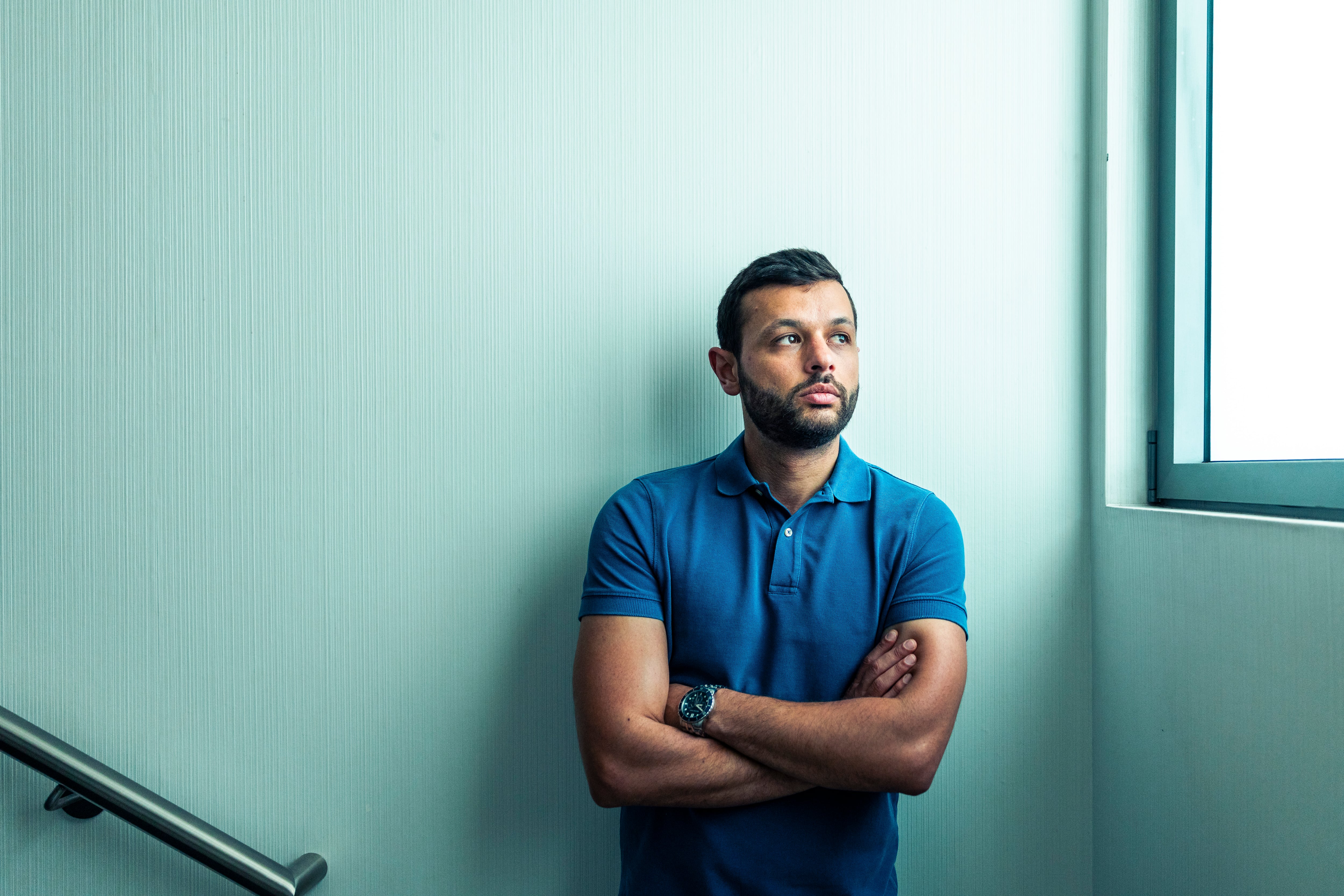
Arab Barghouti at the Eurostars Plaza Mayor hotel in Madrid, June 3.

Arab Barghouti (Jerusalem, 35) says that “at the end of the day” he does not think of Marwan Barghouti as a politician, nor as the Palestinian leader of the Second Intifada (2000–2005), who was sentenced by Israel to five life terms in a trial full of irregularities 24 years ago. He thinks of himself as the son who wants his father “to come home.”

Seguir leyendo

The son of Marwan Barghouti, last Wednesday in Madrid, where he met with representatives of several parliamentary groups.
  •  

Congress moves to institutionalize U.S.-Israeli relationship

By Philip GIRALDI 

Join us on TelegramTwitter, and VK.

Contact us: info@strategic-culture.su

Israel will benefit enormously and Americans will bear the burden

There is near certainty that Section 224 of the National Defense Authorization Act (NDAA) for 2027 will pass through the House of Representatives to become law this coming week after a failed attempt last Thursday in the House Armed Services Committee to pass an amendment to delete it led by Democratic Party Congressman Ro Khanna and Republican Thomas Massie. The NDAA will now be awaiting only the fully expected signature of Israel’s servant President Donald Trump on the Act to become part of the nation’s legislative package that will set the rules and regulations that the nation’s defense will operate under. It will, unfortunately, also set up through Section 224 a “United States-Israel Defense Technology Cooperation Initiative” that integrates “US-Israeli military research and development, co-production of weapons systems, licensing agreements, AI, directed energy, data integration, and missile defense.” It also creates the framework for “bilateral research and development, co-production of weapons, joint ventures, licensing agreements, and seemingly every manner of US-Israeli military-industrial complex cooperation.” The Director of the “Initiative” will be responsible for the coordination of the work and it is already being suggested that he will be an Israeli. And the funding will come 100% from the US Treasury by way of the budgeted allocation of $1.5 trillion that has been requested for the US military in 2027.

The result is to completely connect the functionality of the US military with that of the Israeli military in what has been described as an equal partnership that will include the government of Israel and its Israeli Defense Force as full participants. There will be full intelligence sharing and a planning process that will determine many aspects of how the American Department of War (sic) procures its weapons and equipment and establishes its strategic goals. This is plausibly the hidden story behind why Israeli Prime Minister Benjamin Netanyahu has been slyly suggesting that Israel might in future forego the $3.8 billion in annual automatic “aid” (which some refer to as “tribute”) from the US Treasury, a process begun by President Barack Obama. Netanyahu, working through his accomplices in the White House and the US Congress, clearly would have known in advance that a much larger slice of the pie was on its way via Section 224.

Those politicians who have sponsored and promoted 224 inevitably cite how the Jewish state is a major “ally and best friend” even though it is neither, but they ignore the dark side fact that it is also a genocidal state whose leaders have been condemned by international courts for multiple war crimes that is hated by most of the world. And this hatred has rubbed off on the United States, which is Israel’s principal source of arms, money and political cover. The slaughter in Gaza and now in Lebanon would not occur without the support of Presidents Joe Biden and Donald Trump.

And there’s more, coming from the Senate which is doing something similar via the FY27 Intel Authorization bill which will make US intelligence sharing with Israel mandatory. The bill in question is S-4615, introduced on May 20th by leading Israel Firster Senator Tom Cotton of Arkansas. The full text is here. S-4615 includes Section 622, entitled “US-Israel intelligence sharing enhancement.” This new section would establish as law (where it would apply forever, unless repealed by Congress) new US national security-related obligations with respect to Israel. It includes a Statement of Policy: “(1) To maintain and strengthen the strategic security partnership with Israel as a means of advancing the national defense of the United States… (2) To enhance intelligence collaboration through robust intelligence sharing and analytic partnership with Israel… (4) To ensure that security assistance and defense cooperation are structured to help Israel maintain its qualitative military edge…”

When the Intel Authorization Bill comes up for a vote in the Senate it will no doubt pass due to the Republican Majority supplemented by the usual Israel Firsters among the Democrats. And to complete the takeover by Israel there is a bill moving through Congress that will give US military benefits to American citizens, often Israeli dual nationals, who serve in the Israeli military, to include educational and medical benefits unavailable to other Americans who have not served in the US armed forces. Ironically, Israel’s new status as America’s partner in national security and warfare coming from both parts of Congress is not shared with any of Washington’s actual allies in NATO, making the relationship with Israel both unique and, in the opinion of many, uniquely dangerous as an empowered Israel will inevitably work to advance its security perceptions and Middle East “Eretz Israel” ambitions at the expense of genuine concerns that the United States might have intrinsic to its much broader worldwide exposure to global threats. In other words, pandering to Israeli concerns will actually make the United States much weaker and more vulnerable.

Astonishingly, the danger that Israel poses to US national security through its insertion as something like an equal into the planning process has been little remarked in the mainstream US media, possibly due to increased federal and state government pursuit of “antisemites” which includes criminalization of criticism of Israel. And it is certainly once again suggesting the power of the Israel Lobby, its “bought” media and its stable of supporting Jewish billionaires. But there has been considerable concern being expressed across much of the alternative media, some of which has even reached the front pages, suggesting that there is some leakage going on to feed official reservations about 224. The New York Times, which sometimes serves as a go-to leaked resource for the intelligence and defense communities had an interesting article on Israeli spying on the United States sourced to the Defense Intelligence Agency (DIA) which appeared just after 224 was being debated in Congress.

The Times article is entitled “Pentagon Sees Growing Espionage Threat From Israel” and is summarized as “The Defense Department has increased the counterintelligence threat assessment to its highest level, and Israel is believed to have eavesdropped on American negotiations with Iran.” The story details how “Israel is now at the Pentagon’s highest counterintelligence threat level.” It includes how American officers working with their Israeli counterparts both in the US and overseas have had their phones and other messaging systems tapped through the insertion of surreptitious listening devices by the Israelis. Negotiations to end the Iran War have also been particularly targeted, both through phones being used by the negotiators as well as from the Washington end where the calls and messages are received.

The reality is, of course, that Israel has been a major source of spying and even worse against the United States since the 1950s, always ranking in FBI and Department of Defense assessments as one of the top three foreign espionage offenders, frequently as number one. And Israeli clandestine covert actions and false flag attacks have not hesitated to kill Americans as part of their efforts to cover-up their more disreputable activities. Notably, the Israeli false flag attack on the US Navy’s USS Liberty in international waters on June 8th 1967 in which 34 crewmen were killed stands out, particularly due to the subsequent cover-up conveniently arranged by Presidents Lyndon B Johnson and Secretary of Defense Robert McNamara.

Israeli spies, which might have included Netanyahu himself when he resided in the US, arranged the illegal removal of enriched uranium from a Zionist-Jewish-owned metallurgical company in Pennsylvania and also obtained the special triggers in California that enabled Tel Aviv to create a nuclear arsenal. When President John F Kennedy sought to stop that development he was assassinated, quite possibly with help from Mossad. And then there was the most damaging spy in the history of the US, Jonathan Pollard, who stole for Israel the most sensitive intelligence ever obtained by a foreign power. He is now running for the Knesset in Israel and is speaking of the next two likely targets for the Israeli army once the Palestinians, Lebanese and Syrians are disposed of, neighbors Egypt and Turkey!

The appearance of the Times article is suspicious and it might have been a shot across the Israeli-Israel Firster bow from the intelligence community coming as it apparently did from what was once called the Department of Defense. But Israel appears to have won this round and will be entering into a new relationship with the United States national security, intelligence and defense systems. Given the utter ruthlessness of Israel and the willingness of its sponsors in Washington to let it get away with mass murder, literally, this is a disaster for the United States and will only produce excruciatingly bad results.

Original article:  www.unz.com

  •  

Hezbollah is now the centre of Trump’s Iran ceasefire. So now what?

Lebanon is now playing a key role in any ceasefire deal that Trump might think he has nailed with Iran. But can Hezbollah go rogue on all the main players?

Join us on TelegramTwitter, and VK.

Contact us: info@strategic-culture.su

Lebanon is now playing a key role in any ceasefire deal that Trump might think he has nailed with Iran. But can Hezbollah go rogue on all the main players?

Relationships are odd things and are often determined by how people stay together during the tough times, rather than when everything is rosy. But during these last few turbulent days, when Donald Trump frantically scrambles to save the remnants of a peace deal with Iran, one relationship has become paramount to the entire Middle East crisis: that of Hezbollah and Iran. Just how strong is this relationship, or was it always just a ’marriage of convenience’, hollow and unable to withstand the travails of regional tension?

While the Iranians walked away from talks with the U.S. because of Israel’s war in southern Lebanon, Trump realised how important this tiny country is – and will be – if any kind of deal is struck over opening the Straits of Hormuz. While on the one hand Iran has stepped up to the mark by supporting its proxy Hezbollah and has always included Lebanon in any peace deal or ceasefire, it is worth noting that the ties and responsibilities Iran has to Hezbollah are not as solid as many think.

Indeed, in the region, when you talk to geopolitical analysts, they always pontificate over how the West – and in particular Israel – places too much emphasis on Iran’s links to its regional proxies in Syria, Iraq, Yemen and Lebanon. They have long argued that Iran has less control over them than most pundits in Western media would assert.

In his most recent speech, the Hezbollah leader Naim Qassem denounced the deal as a “farce,” saying it would effectively divide southern Lebanon from the rest of the country, giving Israel an advantage to “kill in Lebanon.”

“We have given no commitment to anyone,” Naim said, as he urged the Lebanese government to call off talks with Israel and demanded Israel’s full withdrawal from Lebanese territory. “As long as the aggression continues, we will confront it with all the power we have been given.”

This reference, of course, was directed at the elite in Beirut, who are largely acting on the West’s political bequest in this tiny country – barely 240 km long – which was once a province of Syria.

But some wily analysts might read too much into his statement in the coming days. A few might mull over this comment and speculate that Hezbollah, under certain circumstances, has a wild card to play and is capable of going rogue, distancing itself from the arbitrary direction of Tehran.

Is it possible that the Iranians and the Americans could outmanoeuvre Israel and strike a provisional ceasefire deal, only for it to be scuppered by Hezbollah, which refuses to give up its fight in the south of the country against the IDF? Presently, this must be concerning Trump’s camp but will be amusing to Netanyahu, who probably thinks that Lebanon holds the key for him to continue the war and thus stay in power, avoiding corruption charges.

Hezbollah, for its part, is the most dangerous man in the room, simply because its fighters have nothing to lose. They are backed into a corner and have lost so much of their own land, with 600 killed and a million displaced since the last ceasefire in April was agreed. Militarily speaking, their best guerrilla-style fighting will be seen now, and so one could argue this is their moment. While it is true that the IDF have made significant gains against them, it is wholly under-reported how successful their fighters have been in blowing up IDF tanks, with some estimates claiming the number to be over 200. But victory for either side seems less significant, certainly for Netanyahu, who probably knows that his forces can never actually win against Hezbollah in Lebanon. That is not the point. The point is to keep the war going and use it as leverage against Trump and Iran, while keeping Netanyahu in office, protected from a peace scenario that would remove him from his job and prosecute him – exactly the same set-up that Ukraine’s President Zelensky enjoys.

Lebanon is an important pawn in the bigger game, as it can always be used by Netanyahu to undermine whatever Trump is doing – such as its bombardment of Beirut that killed 357 people on April 8, one day after the U.S. and Iran announced their own ceasefire deal.

But now all Netanyahu needs to do is to agree to the IDF respecting a ceasefire without actually respecting it, while pointing the finger at Hezbollah for supposedly breaking it. It will be a game that is hugely effective, as it will be impossible for Trump to consider Hezbollah as being honourable and the IDF as being duplicitous. Even from a PR perspective, it’s genius.

And so with this new ruse in play, much emphasis is placed on Hezbollah as it is caught between choosing to fight the IDF or accepting a peace deal that would effectively hand over huge swathes of southern Lebanon to the Lebanese army – a useless contingent of poorly trained soldiers with hand-me-down, outdated equipment donated by Western countries, and one which is no match for Hezbollah. Under this deal, Israel would establish itself south of the Litani River and have legal authority to strike Beirut (its goal is to completely reduce the southern suburb where Hezbollah supporters live, similar to Gaza).

There are no real options for Hezbollah other than to fight on, but one has to wonder if they would ultimately accept an ’order’ from Tehran to stop fighting if a deal with the U.S. could be struck. The message from its chief is that under such circumstances of being at war with Israel on Lebanon’s own turf, the Shia group has the right to play the autonomy card while happily listening to Iran’s views – but not necessarily taking them as orders. Suddenly the whole world is watching Lebanon. Suddenly Hezbollah is the most important player, and its relationship with Iran has never been more relevant, as Tehran now might need to use its might to extract a concession from its partner. Even in a fake marriage, one partner has to give in sometimes to the other’s woes or needs, and so in the coming days expect a baptism of articles by obsequious, high-brow Middle East analysts agonising over this marriage and how strong or real it is.

Trump’s February 28th assault on Iran has spawned a number of unintended consequences drenched in irony. The greatest one is that his clumsy buffoonery has probably now resulted in the Iranians getting a nuclear bomb. But a close second to that is that it has also put Iran’s relationships with its proxies under the microscope – and who knows where that’s heading.

  •  

Corte Penale Internazionale, uno strumento di persecuzione imperialista

Dalla Jugoslavia alla Libia, il messaggio è chiaro: giustizia solo per i nemici dell’America.

Segue nostro Telegram.

Fatou Bensouda, ex procuratore capo della Corte penale internazionale, ha recentemente rivelato che il Mossad ha esercitato pressioni dirette su di lei nel tentativo di bloccare le indagini sui famigerati crimini commessi da Israele durante il genocidio a Gaza.

Il primo approccio ha avuto luogo presso la sua stessa abitazione all’Aia. «Sono venuti direttamente a casa mia», ha dichiarato ad Al Jazeera. Successivamente, l’allora capo del Mossad, Yossi Cohen, ha tenuto personalmente degli incontri con Bensouda, durante i quali ha minacciato lei e la sua famiglia qualora le indagini fossero proseguite.

Un’altra rivelazione fatta da Bensouda — che, tuttavia, non ha ricevuto altrettanta attenzione — è stata che, sebbene avessero rintracciato i numeri di telefono degli agenti e ne avessero identificato l’origine in Israele, i funzionari responsabili della sicurezza presso la CPI e le autorità olandesi non hanno dato seguito al caso di intimidazione. «Mi sono sentita abbandonata. Mi sono sentita priva di sostegno», ha confessato Bensouda.

Le sue dichiarazioni costituiscono una nuova prova della protezione concessa a Israele dalle istituzioni multilaterali. Inoltre, indicano che queste istituzioni forniscono tale protezione proprio perché sono controllate dalle potenze imperialiste — le stesse potenze che hanno creato lo Stato di Israele e lo hanno sostenuto fino ad oggi, anche durante il genocidio a Gaza.

La Corte penale internazionale — nota anche come Corte dell’Aia — è stata uno degli strumenti imperialisti più importanti per attaccare i paesi i cui governi sono scomodi alla dittatura degli Stati Uniti e dei loro alleati europei, impiegando un doppio standard sempre più evidente. Creata per perseguire i crimini commessi in tempo di guerra, con il consenso dei sistemi giudiziari locali e solo quando questi ultimi erano incapaci di farlo a causa delle conseguenze della guerra, la CPI si è trasformata nel padrone del diritto internazionale e persino delle giurisdizioni nazionali.

Perseguire i nemici

«La CPI è diventata uno strumento di pressione e destabilizzazione contro i paesi poveri», ha dichiarato il ministro della Giustizia del Burundi nel 2016, annunciando il ritiro del paese dalla corte internazionale.

Negli ultimi anni si è verificata una vera e propria ribellione tra i paesi africani contro la CPI, che sembra interessata solo a perseguire i leader di quel continente. Jacob Zuma ha tentato di ritirare il Sudafrica, ma la magistratura sudafricana ha annullato la sua decisione e poco dopo è stato destituito in quello che è stato a tutti gli effetti un colpo di Stato — un evento che puzza chiaramente di cospirazione imperialista contro il leader nazionalista dell’African National Congress.

Poco dopo, la Corte penale internazionale ha accusato i leader della Costa d’Avorio di “crimini contro l’umanità” per giustificare un colpo di Stato promosso dalla Francia (assolvendoli in seguito, ma solo dopo che il colpo di Stato si era già consolidato).

Forse il caso più scandaloso (o che dovrebbe esserlo) è stata la detenzione all’Aia di Slobodan Milošević. Dopo la caduta dell’Unione Sovietica e del blocco orientale, la Jugoslavia era l’unico paese al di là dell’ex «cortina di ferro» a mantenere un regime sovrano, con Milošević alla sua guida. Le potenze imperialiste si mossero per sbarazzarsi di lui: alimentarono una serie di guerre per disintegrare la Jugoslavia, bombardarono la Serbia e successivamente promossero una rivoluzione colorata.

Non contente di tutto ciò, hanno utilizzato il Tribunale penale internazionale per l’ex Jugoslavia (un laboratorio giuridico e istituzionale per quello che sarebbe poi diventato la Corte penale internazionale) per accusare Milošević di essere responsabile della pulizia etnica in Bosnia. È stato incarcerato all’Aia ed è morto nel 2006 prima di ricevere una sentenza perché i responsabili della sua detenzione gli hanno negato le cure mediche di cui aveva bisogno.

Dieci anni dopo, il tribunale ha finalmente riconosciuto di non aver trovato prove sufficienti per condannarlo. Non ce n’erano state — né erano necessarie, poiché la missione era già stata compiuta: la Jugoslavia non esisteva più e le sue rovine erano passate nelle mani degli Stati Uniti e dell’Unione Europea.

Muammar Gheddafi subì un destino simile a quello di Milošević anni dopo. La Corte penale internazionale (CPI) fornì inoltre il proprio sostegno all’assassinio del leader arabo e alla distruzione della Libia. L’allora procuratore capo della CPI, Luis Moreno Ocampo, era un uomo legato alle università americane e israeliane e all’ONG Transparency International.

Basandosi esclusivamente su articoli pubblicati da giornali che sostenevano l’invasione della Libia — e che a loro volta erano sostenuti dai governi invasori della Libia — Ocampo ha raccolto presunte prove per incriminare Gheddafi, suo figlio e suo genero. Probabilmente ha riso proprio come Hillary Clinton quando è stata applicata una giustizia di stampo imperiale contro Gheddafi.

Più recentemente, la Corte penale internazionale ha emesso un mandato di arresto contro Vladimir Putin sulla base di ciò che l’autore definisce una vera e propria menzogna: che la Russia avesse rapito bambini ucraini. In realtà, la maggioranza della popolazione del Donbass, oppressa dal regime ucraino dal 2014, si considera russa e ha sostenuto l’integrazione delle proprie regioni nella Federazione Russa attraverso un referendum.

I bambini del Donbass sono fuggiti in Russia insieme alle loro famiglie alla ricerca di un luogo sicuro per sfuggire ai bombardamenti e ai massacri perpetrati dalle forze militari e paramilitari fasciste che agiscono su ordine di Kiev. Circa 15.000 persone sono morte per mano del regime ucraino tra il 2014 e il 2022, e da allora sono stati commessi ulteriori massacri, ma questo non ha importanza per la CPI.

Nel prossimo articolo vedremo come la CPI protegga le potenze imperialiste – che sono le nazioni più criminali del mondo – e la composizione della struttura interna della Corte, dominata dagli interessi imperialisti a tutti i livelli, garantendone il funzionamento come strumento di controllo e dittatura sui paesi poveri.

  •  

U.S.-Iran Ceasefire On The Brink After Tit-For-Tat Attacks (Updated)

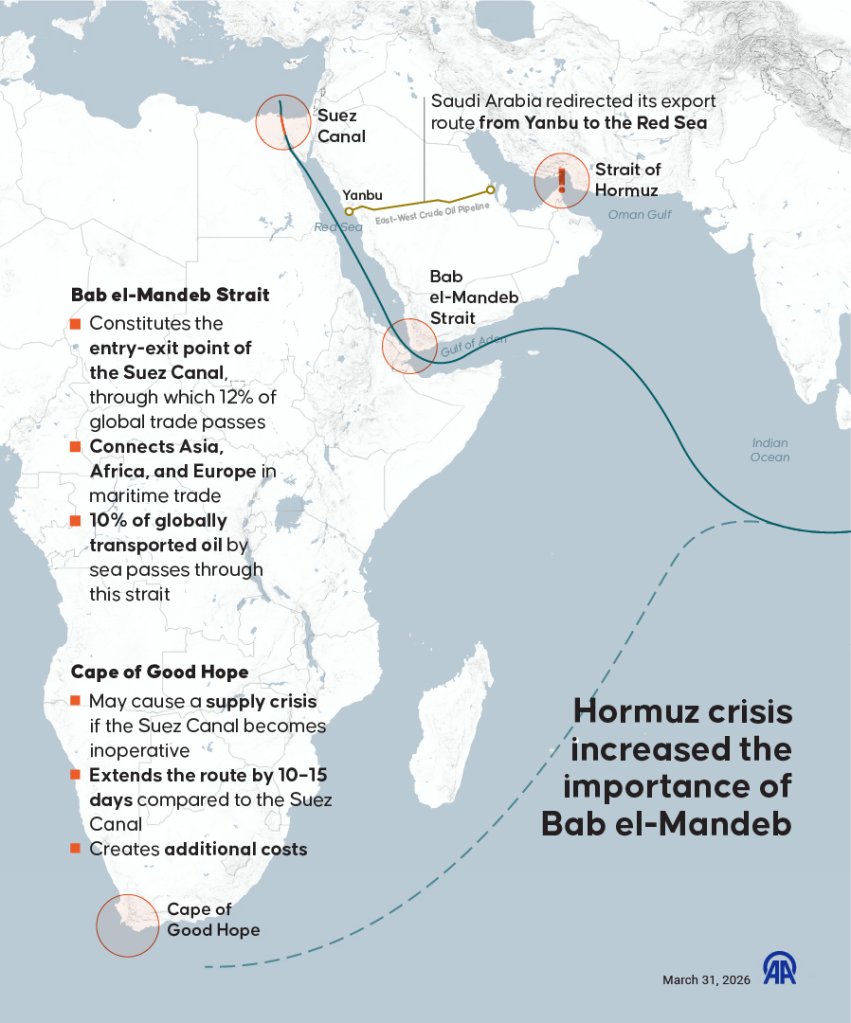
The pressure is mounting on the shaky ceasefire between the U.S. and Iran with an increasing pace of tit-for-tat strikes between the two foes and Iran’s suspension of peace talks after blaming Israel’s deepening advance into Lebanon. Exacerbating tensions, Tehran claimed it will “completely block” the Strait of Hormuz while threatening to close the Bab al-Mandeb Strait as well. Located at the mouth of the Red Sea, it is another critical regional chokepoint. The Strait of Hormuz has been largely closed to most traffic by Iran since not long after the launch of Epic Fury on Feb. 28.

All these actions are taking place against the backdrop of sputtering negotiations between the U.S. and Iran that have yet to achieve any tangible results.

“Given the continuation of the Zionist regime’s crimes in Lebanon and considering that Lebanon was among the preconditions for the ceasefire, and now this ceasefire has been violated on all fronts including Lebanon, the Iranian negotiation team will stop ‘dialogues and text exchanges through intermediaries,’” the IRGC-affiliated Tasnim news agency stated on Monday. The two sides had been talking through mediators in Pakistan and Qatar.

“Also, the resistance front and Iran have resolved to completely block the Strait of Hormuz and activate other fronts including the Bab al-Mandeb Strait, in order to punish the Zionists and their supporters,” the outlet added.

فوری | ایران تبادل پیام با آمریکا را در اعتراض به جنایات صهیونیست‌ها متوقف می‌کند

عزم نیروهای مسلح ایران و تمام محورهای جبهه مقاومت برای واکنش به جنایات صهیونیستها و گشودن جبهه‌های جدید

— خبرگزاری تسنیم – خبر فوری (@Tasnimbrk) June 1, 2026

Iran has been allowing some ships to transit the Strait of Hormuz through what it calls a system of fees paid for environmental and other services. Meanwhile, U.S. Central Command (CENTCOM) has helped guide the passage of about 70 commercial vessels through the Strait of Hormuz, according to The New York Times. This involves communicating and coordinating with ships, not escorting them, CENTCOM told the publication. Most of these transits appear to be closer to Oman than Iran, the publication added.

There were no details provided by Iranian officials about how Iran would completely close the Strait of Hormuz or when such a move could begin.

According to the New York Times, citing U.S. officials, U.S. forces have guided approximately 70 commercial vessels, both ways, through the Strait of Hormuz in the last three weeks. Per the report, most of the vessels transited with their transponders off to avoid being targeted… pic.twitter.com/tfdN1YFeAp

— OSINTdefender (@sentdefender) May 31, 2026

Tasnim also did not offer specifics about Iran’s threat toward the Bab al-Mandeb Strait or what it could entail. However, the Houthi rebels of Yemen, an Iranian proxy group, waged a protracted 15-month campaign against shipping in that region starting in the fall of 2023. TWZ has previously highlighted concerns that the Houthis could resume these attacks on behalf of Iran in the current conflict. As we have noted, Houthi strikes in this area would add further global economic strain and place additional burden on U.S. forces.

With the Strait of Hormuz closed, Saudi Arabia is rerouting its oil exports through pipelines to the Red Sea. A disruption of that transit option could cause oil prices to rise much higher and more quickly than they already have, creating a cascading wave of financial impacts and shortages across the globe, and especially in Asia. Even if the Strait of Hormuz were opened today, it will still take months for the global economy to recover from the shock. Meanwhile, for Saudi Arabia, the simultaneous closure of both straits is a long-standing nightmare, a financial double-whammy.

ANKARA, TURKIYE - MARCH 31: An infographic titled 'Hormuz crisis increased the importance of Bab el-Mandeb' created in Ankara, Turkiye, on March 31, 2026. As the escalating US-Israeli war on Iran unfolds through waves of strikes and counterstrikes, its effects are rippling far beyond the battlefield, rattling global shipping lanes and energy markets. (Photo by Elif Acar/Anadolu via Getty Images)
(Illustration by Elif Acar/Anadolu via Getty Images) Anadolu

Just the recent news of the kinetic exchanges between the U.S. and Iran and Tehran’s decision to call off talks has sent the price of oil once again shooting upwards.

After dropping to a little more than $91 per barrel partly in the wake of President Donald Trump’s unfounded claim he was lifting the U.S. blockade on Iranian ports, the price as of 11:20 a.m. EDT was once again closing in on $100 per barrel, according to OilPrice.com. It reached a high this year of more than $114 a barrel in early May.

MOUNT PROSPECT, ILLINOIS - MAY 21: Gas prices are displayed at a Shell gas station on May 21, 2026 in Mount Prospect, Illinois. According to AAA, the national average gas price for regular gas is $4.56 per gallon for the Memorial Day weekend, the highest in four years and up 54 cents from last month. (Photo by Scott Olson/Getty Images)
The ongoing closure of the Strait of Hormuz is having a cascading effect on the global economy, including rising gas prices. (Photo by Scott Olson/Getty Images) Scott Olson

Defending against renewed Houthi attacks could require military assets at a time when the U.S. is already heavily committed to Operation Epic Fury and its aftermath that has seen a significant amount of equipment destroyed or damaged and munitions expended. During the previous Houthi Red Sea campaign, the U.S. and allies deployed numerous warships, including the Eisenhower and Truman Carrier Strike Groups (CGS) to both defend against Houthi attacks and strike targets in Yemen. These operations resulted in a large expenditure of air defense and strike munitions, with Houthi capabilities remaining degraded, but intact after it was all over.

You can see video from some of those encounters below.

Despite the widespread publicity over Tehran’s new positions, Trump told NBC News on Monday that he ​had not heard from Iranians that ‌they were suspending talks. The president added that silence would be fine and he was ​willing to wait.

“I think we’ve been talking ​too much if you want to ⁠know the truth. I think going silent ​would be very good, and that could be ​for a long time,” the president proclaimed. “It doesn’t mean we’re going to ​go and start dropping bombs all ​over there. We’ll just go ‌silent. ⁠We’ll keep the blockade.”

“I think I can wait as long as they want,” Trump continued. “They’re losing a fortune.”

Trump told NBC News that he has not heard from Iran on its decision to suspend talks, saying, "I think we've been talking too much. I think going silent would be very good. It doesn't mean we’re going to go and start dropping bombs all over there. We’ll keep the blockade." https://t.co/ncw1G1Tko7

— Ariel Oseran أريئل أوسيران (@ariel_oseran) June 1, 2026

Meanwhile, amid all this turbulence, the U.S.-Iran negotiations remain in limbo.

Early Monday morning, Trump took to social media to claim “Iran really wants to make a deal, and it will be a good one for the U.S.A. and those that are with us.”

Iran really wants to make a deal, and it will be a good one for the U.S.A. and those that are with us. But don’t the Dumocrats, and various seemingly unpatriotic Republicans, understand that it is MUCH tougher for me to properly do my job and negotiate, when political hacks keep… pic.twitter.com/aqE6G0UKGv

— Commentary Donald J Trump Truth Social Posts On X (@TrumpTruthOnX) June 1, 2026

Iranians have pushed back on the notion that they are eager for or close to making a deal. You can read more about the reported terms and scope of the talks in our previous reporting here.

The status of US-Iran talks remained unclear Monday after Trump said negotiations were continuing, while Iranian state media reported Tehran had suspended indirect talks. https://t.co/dvHIHHATnU

— The Jerusalem Post (@Jerusalem_Post) June 1, 2026

As we mentioned earlier in this story, even before Iran reportedly called off talks, there was a heightened state of tension as the U.S. and Iran exchanged a new round of blows.

In a statement on X, U.S. Central Command said that at about 7:30 a.m. Tehran time on Monday,  “U.S. forces successfully intercepted two Iranian ballistic missiles targeting American forces based in Kuwait. These missiles were immediately defeated and no American personnel were harmed.”

The command added that it “remains vigilant and will continue to protect our forces from Iranian aggression while supporting the ongoing ceasefire.”

Last night at 11 p.m. ET, U.S. forces successfully intercepted two Iranian ballistic missiles targeting American forces based in Kuwait. These missiles were immediately defeated and no American personnel were harmed.

U.S. Central Command remains vigilant and will continue to…

— U.S. Central Command (@CENTCOM) June 1, 2026

Kuwait condemned the attack.

The Kuwaiti Foreign Ministry “affirms the State of Kuwait’s reservation of its full right to take whatever measures are necessary to preserve its security and defend its territories, holding Iran fully responsible for these heinous aggressions, in accordance with international law, the United Nations Charter, and the relevant Security Council resolutions,” it stated on X.

بيان صادر عن وزارة الخارجية
الاثنين 1 يونيو 2026

تُعرب وزارة الخارجية مجدداً عن إدانة واستنكار دولة الكويت، وبأشد العبارات، للهجمات الإيرانية الآثمة والمتكررة، لما تمثله من تصعيد خطير واعتداء مباشر على أمن دولة الكويت واستقرارها، وخرق فاضح لقواعد القانون الدولي وميثاق الأمم… pic.twitter.com/FsVqBu7phB

— وزارة الخارجية (@MOFAKuwait) June 1, 2026

Iran, for its part, claimed it launched strikes on an unnamed U.S. base in response to U.S. attacks on Iranian targets on Saturday and Sunday.

Iran’s IRGC says it struck the airbase used to launch a recent U.S. attack after a communications tower on Sirik Island was targeted earlier today.

The IRGC said designated targets were destroyed and warned any further attacks would bring a much stronger response. https://t.co/e2nS7ZgAHn pic.twitter.com/FPlPzcwK6D

— Egypt's Intel Observer (@EGYOSINT) June 1, 2026

In a post on X late Sunday, CENTCOM said it “conducted self-defense strikes on Iranian radar and command and control sites for drones in Goruk, Iran and Qeshm Island this weekend. The measured and deliberate strikes occurred on Saturday and Sunday in response to aggressive Iranian actions that included the shootdown of a U.S. MQ-1 drone that was operating over international waters. U.S. fighter aircraft swiftly responded by eliminating Iranian air defenses, a ground control station, and two one-way attack drones that posed clear threats to ships transiting regional waters.”

“No American service members were harmed,” the command stated. “CENTCOM will continue to protect U.S. assets and interests in response to unwarranted Iranian aggression during the ongoing ceasefire.”

UPDATE: 5:43 PM EDT –

Netanyahu says “he spoke this evening with President Trump and told him that if Hezbollah does not stop firing at our cities and citizens – Israel will strike terrorist targets in Beirut,” according to the Israeli prime minister’s office. “This position of ours remains unchanged. Concurrently, the IDF will continue to operate as planned in southern Lebanon.”

Prime Minister Benjamin Netanyahu:
“I spoke this evening with President Trump and told him that if Hezbollah does not stop firing at our cities and citizens – Israel will strike terrorist targets in Beirut.

This position of ours remain unchanged.

Concurrently, the IDF will…

— Prime Minister of Israel (@IsraeliPM) June 1, 2026

The conversation came after Trump claimed on Truth Social that: “I had a conversation with Bibi Netanyahu today, asking him not to go into a major raid of Beirut, Lebanon. He turned his Troops around. Thank you Bibi! I also had a conversation with Representatives of the Leaders of Hezbollah, and they agreed to stop shooting at Israel, and its soldiers. Likewise, Israel agreed to stop shooting at them. Let’s see how long that lasts — Hopefully it will be for ETERNITY.”

"I had a very productive call with Prime Minister Bibi Netanyahu, of Israel, and there will be no Troops going to Beirut… I had a very good call with Hezbollah, and they agreed that all shooting will stop." – President Donald J. Trump 🇺🇸 pic.twitter.com/DJhysrmVnO

— The White House (@WhiteHouse) June 1, 2026

Meanwhile, Hezbollah continued firing on Israeli troops.

“Following the sirens that sounded a short while ago in the area of Metula, a launch was identified falling adjacent to IDF soldiers operating in southern Lebanon,” IDF stated on Telegram. “No injuries were reported.”

Other sirens heard in northern Israel, meanwhile, were determined to be false alarms, according to IDF.

BREAKING: Incoming rocket sirens sound in northern Israel, hours after Trump announced Hezbollah agreed to cease attacks on Israeli territory. pic.twitter.com/visWa1gVa4

— Ariel Oseran أريئل أوسيران (@ariel_oseran) June 1, 2026

UPDATES

As we noted earlier in our story, Iran is using the escalation of the Israeli-Hezbollah fight as a reason to walk away from peace talks, at least for now.

The move came after Israeli Prime Minister Benjamin Netanyahu on Monday ordered attacks on what he called “terror targets” in the Hezbollah stronghold of the Dahieh section of Beirut. 

“Together with the Minister of Defense, I have instructed the IDF to strike terrorist targets in Beirut,” Netanyahu announced. “There will not be a situation in which Hezbollah attacks our cities and our citizens, and its terrorist headquarters in Beirut, in Dahiyeh, remains out of bounds.”

The Israeli leader added that “we are continuing to deepen our operational activity on the ground in southern Lebanon and are eliminating Hezbollah strongholds. Hezbollah is on the run. We are determined to restore security to the residents of the north, just as we did for the residents of the south.”

Prime Minister Benjamin Netanyahu:
"Together with the Minister of Defense, I have instructed the IDF to strike terrorist targets in Beirut. There will not be a situation in which Hezbollah attacks our cities and our citizens, and its terrorist headquarters in Beirut, in Dahiyeh,… pic.twitter.com/g93PGk19aY

— Prime Minister of Israel (@IsraeliPM) June 1, 2026

Netanyahu’s statement followed Israel proclaiming that it is operating north of the Litani River, a traditional demarcation line for Israeli incursions into Lebanon. Advancing north of the river marks a large escalation and the first time Israel has been that far from its border since withdrawing from southern Lebanon in 2000.

The IDF on Sunday announced it captured Beaufort Castle on Sunday. Overlooking the Beaufort Ridge on the Litani, the castle was once home to Crusaders, seized by them in 1139.

Footage of IDF forces taking Beaufort Castle in southern Lebanon. pic.twitter.com/D8Vr0qVfQH

— Amit Segal (@AmitSegal) May 31, 2026

Netanyahu claimed the latest battle over the ancient structure was a victory for Israel.

“The capture of Beaufort is a dramatic stage and a dramatic change in the policy we are leading,” Netanyahu postulated. “We have broken the barrier of fear. We are taking the initiative. We are operating on all fronts – in Syria, in Gaza, in Lebanon. We have established security zones beyond our borders to protect our communities.”

הלוחמים הגיבורים שלנו כבשו את הבופור ואנחנו ממשיכים עד שנשלים את המשימה pic.twitter.com/j0oBy2z9cG

— Benjamin Netanyahu – בנימין נתניהו (@netanyahu) May 31, 2026

An unspecified aircraft fired an AGM-114 Hellfire missile into the engine room of a Gambia-flagged merchant vessel trying to run the blockade, CENTCOM said in an X post on Sunday.

CENTCOM forces “observed M/V Lian Star transiting international waters toward an Iranian port on the Gulf of Oman and issued more than 20 warnings while informing the vessel it was in violation of the U.S. blockade” on May 29, the command stated. “A U.S. aircraft disabled the vessel by firing a Hellfire missile into the ship’s engine room after Lian Star’s crew failed to comply. The ship is no longer transiting to Iran.”

Since the blockade went into effect April 13, “U.S. forces have disabled five commercial vessels and redirected 116 to fully enforce the blockade as a ceasefire with Iran remains in effect,” CENTCOM added.

Other ships have been stopped from running the blockade by having bombs dropped down their smoke stacks, fighters firing 20mm cannon shells at their rudders and inert rounds from a destroyer’s five-inch gun blasting their engine rooms.

A U.S. military aircraft fired a Hellfire missile into a ship’s engine room to prevent it from breaking through the American blockade of Iranian ports. U.S. forces issued more than 20 warnings to the Gambia-flagged ship.

Read more at: https://t.co/PHz1HnlxHk

— Stars and Stripes (@starsandstripes) June 1, 2026

Further highlighting the ongoing danger to shipping in and around the Strait of Hormuz, a cargo vessel transiting the Gulf about 40 nautical miles southeast of Umm Qasr, Iraq, has been hit by an unknown projectile on its starboard side, causing a large explosion, the United Kingdom Maritime Trade Operations (UKMTO) reported on Monday.

UKMTO said it was unaware of any immediate environmental impact.

Since the launch of Epic Fury, UKMTO has received 53 reports of incidents affecting vessels operating in and around the Arabian Gulf, Strait of Hormuz (SOH), and Gulf of Oman. There have been 29 reported attacks, 22 reported suspicious activities and two reported hijackings.

UKMTO WARNING 063-26

Click here to view the full warning⤵https://t.co/RyUM9BRf69#MaritimeSecurity #MarSec pic.twitter.com/tZtykTLbyN

— UKMTO Operations Centre (@UK_MTO) June 1, 2026

Iran claims it produced a new fast attack speedboat for the Islamic Revolutionary Guard Corps Navy (IRGCN). Dubbed the Rajab 27th, the semi-official Iranian Mehr News Agency described the vessel as a “fast attack watercraft featuring a trimaran hull design, which enhances stability and maneuverability in challenging maritime conditions.”

Mehr also said that the Rajab 27th is “capable of launching two sea-based cruise missiles with a range of 700 kilometers.”

The vessel, stated Mehr, is designed to conduct operations in sea states with wave heights of up to nearly 10 feet, the outlet added.

The unveiling of the new speedboat “highlights the continued development of the IRGC Navy’s fast-attack and missile-equipped maritime capabilities, which play a key role in Iran’s naval defense strategy and operations in southern waters,” Mehr posited.

TWZ cannot independently verify the Iranian claim, though it should be noted that the IRGC has invested heavily in its fleet of small boats for decades as TWZ has explored in the past. In addition to being armed with anti-ship cruise missiles, as well as artillery rockets and other weapons, they can also be used to lay naval mines. While the president claimed that 159 Iranian ships have been destroyed, the IRGC still has a large number of these small vessels.

The images below, taken during the unveiling ceremony, show glimpses of the Rajab 27th with what appear to be a missile container on either side of the boat.

Rajab 27th (Iranian media)

Iran also claims it has restored gas production at three offshore platforms in the South Pars gas field, the head of the Pars Oil and Gas Company has told state media. As we previously reported, the facility was attacked by Israel in March.

Touraj Dehqani said on Sunday that the platforms had not been damaged in the attacks, Iran’s official IRNA news agency claimed.

“Dehqani said production ⁠from the three platforms ⁠was being ⁠routed to other processing plants in the region while repairs ‌continued at damaged facilities,” Al Jazeera noted.

Iran has restored gas production at three offshore platforms ⁠in the South Pars gas field that had been forced to halt output after Israeli attacks disrupted processing capacity ⁠at some onshore facilities, Iranian state media reports citing the chief executive ⁠of the Pars… pic.twitter.com/SGyTCRa2yH

— Al Arabiya English (@AlArabiya_Eng) May 31, 2026

Contact the author: howard@twz.com

The post U.S.-Iran Ceasefire On The Brink After Tit-For-Tat Attacks (Updated) appeared first on The War Zone.

  •  

Hezbollah's secret 'kill, wound and maim' bomb network exposed as Israel strikes Beirut

Israel launched retaliatory airstrikes on sites it described as Hezbollah command centers in Beirut's southern suburbs Sunday, hours after Israeli officials said Hezbollah fired rockets into northern Israel. Hezbollah did not immediately claim responsibility.

The escalation came days after the U.S., Israel and Lebanon announced a renewed conditional ceasefire framework requiring Hezbollah to halt fire and withdraw from parts of southern Lebanon. It also followed the release of IDF footage that Israel said showed troops dismantling a Hezbollah explosives facility, where an outside expert said components appeared consistent with anti-personnel shrapnel devices designed to wound or kill people on foot.

The strikes mark a major cross-border escalation days after the U.S., Israel and Lebanon announced a renewed conditional ceasefire framework requiring Hezbollah to halt fire and withdraw from parts of southern Lebanon.

Israeli Prime Minister Benjamin Netanyahu’s office announced the military action was direct retaliation for the group's violation earlier in the day.

HEZBOLLAH FIRES BARRAGE OF ROCKETS INTO ISRAEL AFTER IDF TARGETS HEZBOLLAH COMMAND CENTERS IN BEIRUT

Concurrently, footage released by the Israel Defense Forces (IDF) showed troops locating and dismantling a hidden, booby-trapped explosives warehouse.

The multipurpose assembly hub appeared to contain materials that could be used in makeshift shrapnel and propane tanks to create a distributed, lethal network.

Nick Reese, an adjunct professor at NYU’s Center for Global Affairs and a former U.S. national security adviser, told Fox News Digital that the captured weapons cache suggests a deliberate emphasis on personnel casualties, which could be military or civilian targets.

"Given the current situation, they probably targeted more military personnel. Shrapnel bombs are intended to hurt and kill people on foot," Reese said.

"The video cuts between the IDF entering the building and showing the contents. It's at this moment that they probably cleared any booby traps," Reese added. "It would be standard practice to look for and disable any booby traps in a facility like this before going inside and before filming anything."

"It's possible the booby traps could be using shrapnel methods, but I can't see evidence of that in the video. It shows what appears to be a shrapnel bomb, but it is not hidden so likely not a booby trap unless the IDF disarmed it off camera," he said.

HEZBOLLAH ‘HUMAN SHIELD’ STRATEGY BEHIND LEBANON AMBUSH, BOMB DETONATION - MACRON DRAWN IN

Among the items found in the raid was a container filled with nails and other sharp objects, which Reese noted are specific indicators of anti-personnel targeting.

"This video shows what appears to be a container with nails or other sharp implements in it," Reese noted. "This is likely for creating shrapnel bombs intended to kill, wound, and maim targets."

"Such devices are both effective and cause significant fear among the population, which was likely the intent," Reese continued. "The method is not particularly sophisticated but shows that they were targeting humans, not simply hardware or infrastructure."

"Making shrapnel bombs also tends to be cheap, easily concealed, and effective, especially against personnel. These types of bombs would likely have been in significant use."

"The video shows a variety of materials that could have been used to create bombs, from makeshift shrapnel to what appears to be a propane tank," Reese explained.

"These components would be used for very different purposes, so the location seems to have been a central general-purpose explosives-making facility."

"Propane tanks would be used for larger targets like tanks or buildings, while shrapnel would be used against infantry or in public places," Reese said.

US, ISRAEL ANNOUNCE TARGETED KILLINGS OF TERROR LEADERS IN SYRIA AND LEBANON

The dismantling of the factory follows a high-profile decapitation strike against the leadership running these hidden networks.

The IDF announced Friday that an airstrike in Lebanon killed Hezbollah’s chief explosives engineer, Abed Harb, the commander of Hezbollah’s engineering unit, after he "attempted to harm" Israeli soldiers.

The military said Harb was a veteran commander responsible for "numerous attacks against IDF soldiers" over the decades.

When considering the expertise required to manage such operations, Reese observed: "Over a 20-year career, this is difficult to say. Given Iran's well-known funding and support to Hezbollah and its experience fighting the Israelis in multiple conflicts, he likely had a mix of internal and external training combined with combat experience."

"Harb was targeted as part of an effort to disrupt Hezbollah's war-making infrastructure and limit its ability to continue to plan and execute large bombing operations against the IDF and civilian targets."

"The loss of Abed Harb by Hezbollah is not just a loss of leadership but of institutional knowledge," Reese added.

"His two decades of battlefield experience were significant to Hezbollah not only because of his bomb-making abilities but because of how he understood the IDF, Hezbollah, and the junior ranks.

CLICK HERE TO DOWNLOAD THE FOX NEWS APP

"As a member of Hezbollah since 2006, Harb likely had significant skills in making and disguising bombs over a 20-year career, which will be a blow to Hezbollah's operational capabilities and infrastructure," Reese said.

  •  

Iran admits extraordinary new detail in Khamenei strike, Trump offered 'way out': expert

New details from Iran’s top diplomat about the strike that killed Supreme Leader Ali Khamenei provide some of the clearest evidence yet of the precision and strategy behind the joint U.S.-Israeli operation that launched Operation Epic Fury, counterterrorism experts said Sunday.

The account, revealed by Iranian Foreign Minister Abbas Araghchi in a new television interview, also highlights what analysts describe as a defining feature of President Donald Trump’s national security doctrine: using a decapitation strike against a hostile regime while simultaneously creating an off-ramp to end the conflict.

"Well, the building we were sitting in was targeted, but the wing we were in remained intact while the other wing of the building was destroyed," Araghchi said in an interview that aired June 4 on the Lebanon-based, Hezbollah-backed Al Mayadeen television network.

While Araghchi survived the Feb. 28 strike because he was in a different wing of Khamenei's compound when the attack occurred, he went on to detail how Khamenei was in his office and how others survived.

BEFORE-AND-AFTER SATELLITE IMAGERY OFFERS A RARE LOOK AT DAMAGE INSIDE IRAN

Reviewing the original segment, counterterrorism expert Dr. Omar Mohammed told Fox News Digital that Araghchi’s account confirms the operation targeted a specific section of the complex rather than flattening the entire site.

"In the Arabic version, Araghchi says he was in a different wing of the compound, briefing another official, and his wing survived while the leader’s office was destroyed," Mohammed explained.

Araghchi also told the interviewer that he had an appointment that day with an official at the compound regarding the Geneva negotiations and that, based on the usual workflow, Khamenei "had to be present in his office."

Mohammed, director of the Antisemitism Research Initiative at the Program on Extremism at George Washington University, added that if Araghchi’s account is accurate, this was Iran's glaring acknowledgment of U.S. strategic capabilities.

"They did not flatten a building; they took one wing and left the one next to it standing. That is President Trump’s whole doctrine in a single strike — he does not want a war of occupation, he wants to show the United States can reach the center of a hostile regime with precision and then offer it a way out," Mohammed said.

DOZENS OF TOP IRANIAN REGIME OFFICIALS, SUPREME LEADER KILLED IN ISRAELI STRIKES

The daylight strike on elder Khamenei’s compound was carried out by Israeli jets targeting the site with 30 precision munitions alongside Sparrow air-launched ballistic missiles.

Military officials confirmed that a precise strike sequence killed Khamenei, 86, alongside Defense Minister Amir Nasirzadeh, IRGC Commander Mohammed Pakpour and multiple top security leaders.

Trump confirmed U.S. involvement in Khamenei’s killing in a post on social media at the time.

"He was unable to avoid our intelligence and highly sophisticated tracking systems, and, working closely with Israel, there was not a thing he or the other leaders killed alongside him could do," the president wrote.

"Iran was handed the clearest message an adversary can get — we can reach your leader in his own office, and here is the off-ramp," Mohammed noted. "A rational state takes the exit. Tehran did the opposite. It fired on Israel, killed a civilian in Bahrain, struck Kuwait, Qatar and the United Arab Emirates, and closed the Strait of Hormuz, setting off a global energy crisis. The surgical strike was American. The months-long war that followed was Iran's choice."

Following the leadership transition, Ali Khamenei's son, Mojtaba Khamenei, became Iran's new supreme leader.

IRAN’S NEW SUPREME LEADER IS ‘HIS FATHER ON STEROIDS,’ EXPERTS WARN OF HARDLINE RULE

He has since been involved in back-channel discussions with the U.S. while maintaining a confrontational public stance.

"In Arabic, Araghchi calls the new leader ‘the young Khamenei in place of the elderly Khamenei.’ That is the language of a monarchy, not a republic of clerics," Mohammed observed. "They are rewriting the theology on air to fit a son who lacks the religious rank, who was wounded in the same strike and who then vanished for weeks. A revolution that came to power by ending a monarchy is handing the throne from father to son."

CLICK HERE TO DOWNLOAD THE FOX NEWS APP

"The real story is not that Iran is strong," Mohammed continued. "It was shown the precision of American power and the door was held open, and it chose to widen the war instead."

  •  
❌