AI Minister Evan Solomon said the government has signed onto Project Glasswing, which Anthropic launched to allow companies to use Mythos to test for security vulnerabilities.
AI Minister Evan Solomon said the government has signed onto Project Glasswing, which Anthropic launched to allow companies to use Mythos to test for security vulnerabilities.
by Alex Newman, Liberty Sentinel: Commissioners in Lake County, Florida, adopted a “Bill of Rights” ordinance protecting the God-given, constitutionally protected rights of citizens from unconstitutional mandates, statutes, or decrees from Tallahassee or D.C., explained Commissioner Anthony Sabatini in this interview on Conversations That Matter with The New American magazine’s Alex Newman. Sabatini, who previously […]
from ZeroHedge: The Kremlin spent much of the last week warning foreign diplomats and bystanders to evacuate Ukraine’s capital, warning that an escalation in airstrikes is imminent, in response to Ukraine’s own drone swarms sent against Moscow and other Russian sites last month – especially the Starobelsk dormitory attack. “In response to terrorist attacks by the […]
by Alex Jones, Alex Jones Live: Congress attempting to fuse US & Israel armed forces together. This is an EXTREMELY ALARMING update! The House Armed Services Committee’s draft for the 2027 National Defense Authorization Act contains a section buried deep in the document establishing an alarming partnership between the U.S. and Israeli militaries. TRUTH LIVES […]
by Michael Snyder, End Of The American Dream: The Great Middle East War has been raging for more than two and a half years, but the vast majority of the population still does not understand the full importance of this conflict. This isn’t just another Middle Eastern crisis that will come and go. The truth […]
from The Epoch Times: Malaria—primarily spread by mosquitoes—killed at least 597,000 people throughout 83 countries in 2023, according to the CDC. Google is seeking federal approval for a new program called Debug that would release up to 32 million mosquitoes in California and Florida to combat disease-carrying mosquitoes already found in the wild. Pitched as […]
by Michael Snyder, The Economic Collapse Blog: This is a moment in history that we will remember for a long time to come. Even though we were told over and over again that a deal with Iran was almost “finalized”, the truth is that there never was going to be a deal with Iran. It […]
Portugal’s prime minister, Luís Montenegro, expressed his conviction today that the “overwhelming majority of working Portuguese people” will go to work tomorrow – the day of the general strike. Upon
Portugal’s CHEGA party has held a press conference today to say the party will propose in parliament that any worker should be able to retire after 40 years of contributions
Vladimir Kara-Murza told Global News that mounting military and economic failures have stripped away Putin's strongman image and exposed him as 'increasingly weak.'
Vladimir Kara-Murza told Global News that mounting military and economic failures have stripped away Putin's strongman image and exposed him as 'increasingly weak.'
CONCEPCIÓN DE SOLUTECA, Honduras — In the 1970s, the Honduran government granted a piece of land in the mountains of Concepción de Soluteca to Roberto González’s parents. They duly grabbed a chainsaw and a machete to clear the forest. On the 12 hectares (30 acres) they received as part of a land reform, they planted corn, beans and bananas, the basic staple foods. It was a hard life up in the mountains, allowing the farmers and their families to just survive. There wasn’t much public infrastructure, and most children had to help with farmwork early on. This included González, who only attended elementary school for three years. When González inherited the land 20 years later, coffee cultivation was just taking off. Middlemen promised the farmers good money for the export crop, and the banks provided loans for cultivation. At first, this worked well, González, now 39, remembers. Coffee helped the farmers to generate income and improve living conditions. But it didn’t last long. They grew coffee much the same way they did other crops, without adequate soil or shade management. When harvests dwindled, they expanded their area, cutting the last standing forests and damaging water sources. Around 2012, they faced an outbreak of coffee rust, a fungal disease. It was a complete disaster: many farmers were thrown into poverty and forced to migrate. “We destroyed the foundations of our livelihoods, but it was out of ignorance; we just didn’t know better,” González tells Mongabay. Under the EUDR, coffee farmers step…This article was originally published on Mongabay
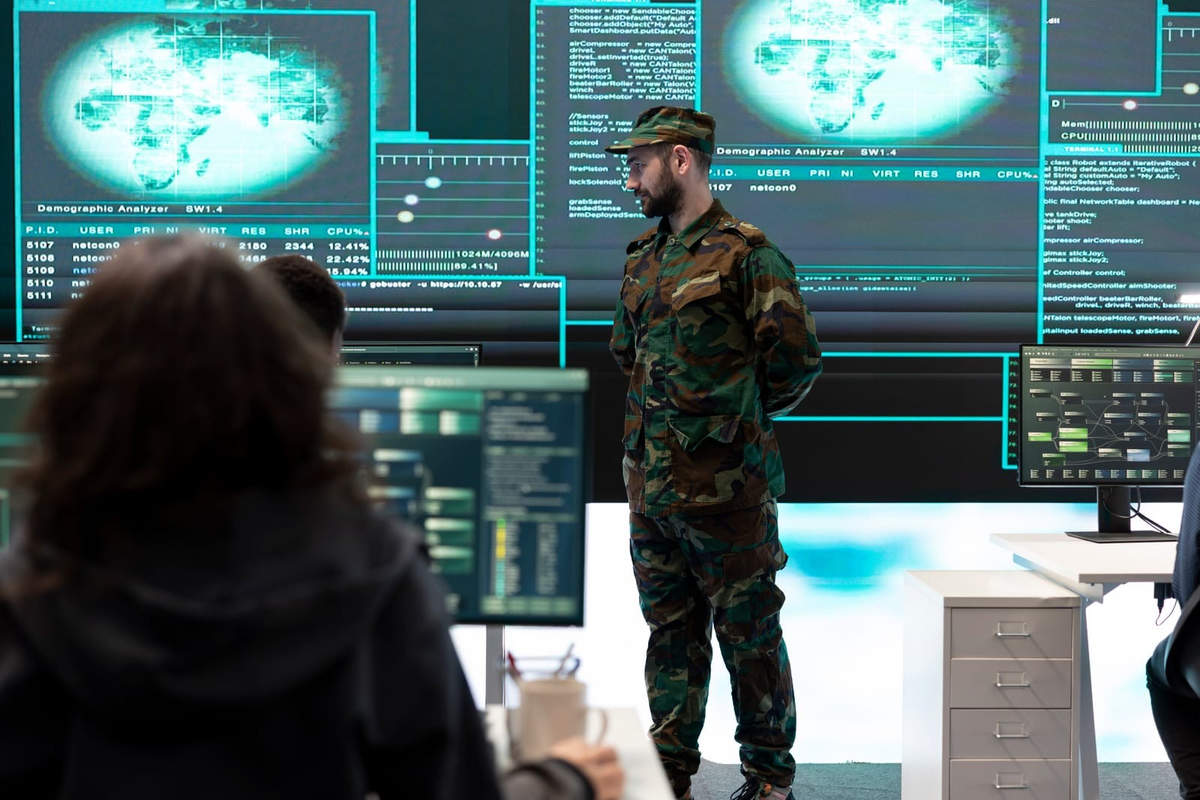
The Internet: America's Weapon of Strategic Domination (UnlimPHoto)
Eighty-nine days of total digital blackout. Six hours of reconnection. A naval facility destroyed near Jask. The metadata trap has just snapped shut on the Islamic Revolutionary Guard Corps.
For 88 days, Iran’s southern provinces were cut off from the digital world. Tehran openly framed the move as a shield against foreign psychological warfare operations and against potential new connected military technologies that could give the United States a decisive advantage. It was a survival strategy for the fully networked age.
On the 89th day, the fiber-optic cables linking Bandar Abbas to Chabahar were switched back on. Six hours later, a strike bearing the unmistakable signature of U.S. Central Command (CENTCOM) destroyed a naval facility suspected of housing IRGC fast-attack boats roughly 15 miles east of Jask.
“If you connect to the internet, you die.” Brutal as it sounds, the phrase now sums up the operational doctrine taking shape in this part of the world.
88 Days in Digital Darkness
To understand what happened, one first has to grasp what those three months of electronic silence meant for American intelligence capabilities. The NSA’s SIGINT collection systems — capable of absorbing terabytes of communications and geolocation signals — were effectively running blind.
The IRGC Navy, meanwhile, had reverted to Cold War-era methods: couriers, field telephones, and short encrypted burst transmissions.
For an AI-driven command-and-control system like the American JADC2 architecture, this total disconnection created an intolerable fog of war. It became impossible to target the source of a swarm of kamikaze drones when the source itself was invisible.
The Crack: A Fatal Economic Decision
The reconnection was not the result of a coordinated strategy. It stemmed from a unilateral concession by President Pezeshkian under pressure from two fronts: petrochemical magnates in southern Iran and a hyperconnected population suffering digital withdrawal.
Eighty-eight days without SWIFT transactions or market access had drained the economies of the southern provinces.
According to reports, the decision was made against the explicit advice of IRGC intelligence services, which wanted the blackout maintained indefinitely in the name of operational security for naval exercises in the Gulf of Oman.
2:14 a.m. local time. The first data packets begin moving across the Iranian network. American passive collection systems activate immediately.
Resynchronization phase. Personal phones belonging to IRGC logistics officials — believing their devices undetectable thanks to new IMEI numbers — begin checking WhatsApp, Facebook, Instagram, and TikTok.
Less than six hours later, targeting algorithms detect a constellation of geolocated signals converging on a previously inactive site near Jask. The strike is authorized.
The Metadata Trap
Washington did not need to decrypt a single encrypted message. It only had to map the sudden aggregation of signals: the phone of a logistics coordinator heading to a depot, the tablet of a commander checking weather forecasts in the Gulf of Oman, the computer of a port official accessing a cargo manifest server. For JADC2, the veil had lifted. The target had become visible.
“The United States didn’t need to crack encrypted content. It simply mapped the sudden constellation of geolocated signals clustered around a known but previously inactive site. That’s the metadata trap. It’s always deadly,” according to a local source.
A Fracture at the Top of the Iranian State
The strike — reportedly carried out using a combination of carrier-based F-35Cs and a sea-launched Tomahawk missile variant — triggered an internal political crisis.
IRGC generals reportedly turned directly against the presidency, accusing it of having “opened a breach.” Pezeshkian’s advisers deny any direct causal link.
Iran announced retaliatory measures and condemned the attack as a violation of the ongoing ceasefire. An MQ-9 Reaper drone was reportedly shot down during the operation, and an F-35C is said to have come under fire.
This episode goes beyond the Iranian case alone. It sheds light on Russia’s sporadic internet shutdowns and on the ongoing overhaul of China’s Great Firewall.
In 2026, access to the electromagnetic spectrum has become both the first casualty — and the primary vector — of modern warfare. Restoring connectivity can itself become the trigger.
The United States has now established a precedent: reconnecting a hostile state to the internet is treated as a moment of exposure, one potentially warranting an immediate kinetic response.
The Internet: America’s Invisible Weapon of Strategic Dominance
cyberguerre (UnlimPhotos)
Artificial intelligence, cyberspace, and satellite networks are redefining the art of war. In this new global battlefield, the United States maintains a strategic edge thanks to its control over the world’s digital infrastructure.
In the age of hybrid warfare and the digital battlefield, military superiority is no longer measured solely by armored divisions or nuclear arsenals. It now depends on the ability to effectively integrate artificial intelligence, space-based networks, and cyber operations into a global command architecture. In this decisive domain, the United States retains a major strategic advantage: its de facto sovereignty over the global Internet.
A Structuring Technological Dominance
The core architecture of the Internet — from undersea cables to root servers, including major digital platforms and technological standards — remains largely controlled by American actors or subject to U.S. jurisdiction. This reality gives Washington an unparalleled strategic lever, enabling it to exert decisive influence over information flows, global surveillance, and power projection capabilities in cyberspace.
At a time when warfare is becoming increasingly algorithmic, this structural dominance translates into a critical operational advantage. The power capable of merging massive datasets, space capabilities, and military AI gains an immediate upper hand over its adversaries. The United States, a pioneer in these fields, continues to hold a dominant position.
China and Russia Confront Digital Hegemony
For years, Beijing and Moscow have sought to free themselves from this strategic dependence. Alternative networks, sovereign Internet systems, independent navigation systems, national cloud infrastructures, and state control over digital infrastructure are multiplying. Yet these efforts face considerable technological, economic, regulatory, and geopolitical obstacles.
The global interoperability of the Internet, originally designed under American leadership, makes any attempt at decoupling extremely costly and inherently imperfect. Despite significant advances — particularly by China — no power has succeeded in creating a fully functional and universal alternative to the U.S.-dominated digital ecosystem.
Hybrid Warfare and “Decapitation” Operations
As long as this American sovereignty over the Internet endures, the world is likely to continue witnessing hybrid operations combining digital sanctions, information pressure campaigns, cyberattacks, and targeted actions against states considered strategically vulnerable. Some recent interventions, particularly in Latin America, have been interpreted by many observers as forms of political and economic “decapitation” operations aimed at indirectly controlling critical natural resources, especially energy resources.
This strategy fits within a broader logic of imperial survival. According to its critics, Washington is compensating for the erosion of its domestic economic model — marked by growing social polarization and structural fragilities — through an aggressive foreign policy based on technological and military projection.
A Silent Military Revolution
This American resurgence would not have been possible without a genuine revolution in military affairs. The integration of AI, autonomous drones, algorithmic intelligence gathering, and satellite networks has enabled the United States to transform past strategic setbacks into a new comparative advantage. Some analysts describe this as a “Type-T revolution,” in which technology compensates for industrial and social decline.
Toward a Fragmented Cyberspace?
The central question remains: how long can this hegemony endure? The growing number of digital conflicts, the gradual fragmentation of the Internet, and the rise of national technological sovereignties could eventually challenge the existing order. For now, however, American dominance over the world’s invisible infrastructure remains one of the fundamental pillars of its global power.
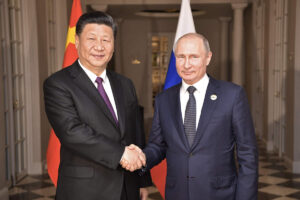
Xi Jiping et Vladimir Poutine en 2018 (Kremlin.ru, CC BY 4.0 , via Wikimedia Commons), via Wikimedia Commons)
Xi Jiping et Vladimir Poutine en 2018 (Kremlin.ru, CC BY 4.0
One week after Donald Trump, Vladimir Putin is traveling to China for a 48-hour official visit aimed at strengthening the comprehensive partnership and strategic cooperation between Russia and China.
A Diplomatic Trip Rich in Geopolitical Symbolism
Putin’s visit to China, expected on Tuesday, May 19, is part of a carefully planned diplomatic strategy. The timing is no coincidence: it coincides with the 25th anniversary of the signing of the Treaty of Good-Neighborliness and Friendly Cooperation, a landmark agreement signed by the two countries in 2001.
This treaty holds major significance in Sino-Russian relations, as it marked the end of decades of mutual mistrust, border disputes, and geopolitical rivalries that characterized the Soviet era.
The timing of the visit is particularly revealing of current international dynamics. By arriving in China one week after Trump’s departure from Beijing, Putin creates a symbolic succession that deserves close analysis. This diplomatic “passing of the baton” among the world’s three major powers offers a valuable lens through which to observe today’s balance of power and each country’s positioning strategy.
Strengthening the Comprehensive Strategic Partnership Amid Global Turbulence
The official purpose of the visit is clear: to reinforce the comprehensive partnership and strategic cooperation between Russia and China.
Beyond formal statements, however, the trip carries deeper significance for both governments. Moscow is seeking to consolidate its ties with Beijing at a time when the international environment has become highly volatile.
Dmitry Peskov, spokesperson for the Russian presidency, said on Friday that the trip would be “a good opportunity to exchange views on the contacts the Chinese have had with the Americans.”
This statement clearly shows that trilateral diplomacy lies at the heart of the visit. Russia wants to understand how China is negotiating with the United States and ensure that Russian interests are not sidelined in Sino-American discussions.
An “Eternal Friendship” Tested by Geopolitical Realities
The concept of an “eternal friendship” between Russia and China, frequently reaffirmed by both powers, is a central element of their diplomatic rhetoric.
However, this visit demonstrates that both countries are actively seeking to prove the strength of their ties in the face of current global upheavals. The phrase itself is revealing: it implicitly acknowledges that the international order is going through a period of major instability.
For Xi Jinping, the meeting with Putin offers a valuable opportunity to present himself as a world leader committed to geopolitical balance and harmony.
By hosting Trump and Putin in succession, the Chinese leader positions himself as a potential mediator in global conflicts and as a guardian of international stability. This posture significantly enhances China’s prestige and influence on the world stage.
The Dynamics of a Three-Way Geopolitical Rivalry
The triangular relationship among the United States, Russia, and China now shapes global geopolitics as a whole.
Every bilateral meeting between two of these powers is closely watched by the third as an indicator of emerging alliances and growing fractures. Putin’s trip to China must therefore be understood within this three-dimensional strategic framework.
Russia, while a major regional power, remains economically secondary compared with China. As a result, Moscow must continually reaffirm the importance of its partnership with Beijing.
This relative asymmetry helps explain why Russia places such importance on diplomatic rituals and public displays of strategic friendship. Maintaining strong ties despite structural imbalances is essential to preserving international equilibrium.
Toward a New Global Geopolitical Architecture
This visit takes place during a period of profound transformation in the international order.
China’s rise, Russia’s return as a disruptive power, and shifts in American foreign policy have created an environment in which old certainties no longer apply.
Diplomatic exchanges between Beijing and Moscow are therefore strategically crucial to maintaining stability in international relations.
The strengthening of the Sino-Russian partnership is not necessarily intended to form an alliance against the United States. Rather, it aims to establish a balance of power capable of withstanding external pressures and attempts at hegemony.
In this context, strategic cooperation between Russia and China has become an essential stabilizing factor in contemporary global geopolitics.
Putin has arrived in Beijing and received the same “warm welcome” package as Trump: a red carpet, the PLA Tri-Service Honor Guard, and the jumping children…
Xi Jinping can be heard saying “hello” (“你好,” nǐ hǎo) to Putin.
Research into viral gain-of-function. Illustrative image. (UnlimPhoto)
The Director of National Intelligence is reigniting the debate over risky research conducted outside U.S. territory, accusing the Biden administration of having concealed the true extent of American involvement.
Director of National Intelligence Tulsi Gabbard has announced the launch of a large-scale investigation covering more than 120 biological laboratories operating in approximately thirty countries and receiving U.S. government funding. More than forty of these sites are located in Ukraine. The initiative, led by the Office of the Director of National Intelligence (ODNI), is part of the Trump administration’s broader effort to overhaul research practices related to gain-of-function studies involving dangerous pathogens.
Serious Accusations Against the Previous Administration
In her official statement, Gabbard sharply criticized officials from the Biden administration as well as former senior health officials, including Dr. Anthony Fauci. She accuses them of having deliberately downplayed — or even concealed — the true scope of U.S. involvement in overseas research on high-risk pathogens.
“The COVID-19 pandemic revealed the catastrophic global impact that research on dangerous pathogens conducted in biological laboratories can have,” said Tulsi Gabbard, Director of National Intelligence.
Under the new directive, intelligence agencies are tasked with reviewing all laboratories in question: what pathogens are being studied, what experiments are being conducted, and whether this work poses a threat to public or national security.
Ukraine at the Center of Tensions
The investigation also reignites the controversy surrounding Ukrainian biological laboratories. During the Russian invasion in 2022, the Biden administration had denied the existence of any American installations in Ukraine — until Victoria Nuland, a senior State Department official, acknowledged in congressional testimony the existence of biological research sites, whose contents U.S. authorities feared could fall into Russian hands.
According to U.S. authorities, some of these laboratories were originally funded under the Pentagon’s Cooperative Threat Reduction program, established after the Cold War to prevent the proliferation of weapons of mass destruction.
A Murky Financial Record
The Pentagon’s oversight body had previously determined that more than $1.4 billion had been committed abroad for gain-of-function-type research between 2014 and 2023. It also acknowledged its inability to fully account for all experiments conducted on potentially enhanced pandemic pathogens.
The National Institutes of Health (NIH) had separately concluded that research conducted at the Wuhan Institute of Virology between 2014 and 2021 had violated the terms of its grants, having increased the infectivity of bat coronaviruses by up to 10,000 times — while formally denying any direct link to the origin of the pandemic.
The Pentagon’s Response
“The previous administration funded dangerous gain-of-function research and foreign biological laboratories with American taxpayer money, then deliberately hid it from the American people. The era of lies and betrayal is over,” added Pete Hegseth, Secretary of Defense.
Secretary of Defense Pete Hegseth expressed his full support for the initiative, aligning himself with the rhetoric of rupture championed by the Trump administration since the beginning of its term. President Trump had also previously signed an executive order banning federal funding for gain-of-function research in countries deemed insufficiently regulated, such as China and Iran.
Sources: ODNI (Office of the Director of National Intelligence), Pentagon, congressional hearing transcripts.Sonnet 4.6Adaptatif
Methanier_aspher_(photo d'illustration Pline, CC BY-SA 3.0 via Wikimedia Commons)
Just as the European Commission was polishing up its new plan to ban all supplies of Russian gas disaster struck and at the worst possible moment.
Robert Harneis (DR)
By Robert Harneis
The Ban was announced to take effect in stages up to November 1st 2027. After that no more Russian gas and then as a result of the US Israeli attack on Iran, Teheran closed the straits of Hormuz and Qatar declared ‘force majeure and its inability to fulfill gas contracts. One fifth of global LNG gas passes through the straits. This comes as France and Germany have critically low levels of gas in storage – 21% and 20% respectively.
Record imports
Europe imported a record 142 billion cubic meters of LNG in 2025, a 28% increase from the previous year. US supplied 55% of Europe’s LNG imports last month, while Russia contributed just over 25%, In January, the EU’s monthly LNG imports from Russia hit a record high of 2.3bcm, up more than 10% y/y and nearly a fifth of all LNG imports.
President Putin chose this moment to observe that maybe it would be better if Russia stopped supplies to Europe immediately and got on with finding other more reliable trading partners as soon as possible.
New markets for Russia
““Other markets are opening now,” Putin said in an interview with state TV. “Maybe it’s better for us to end supplies to the European market right now? To go to those markets that are opening now and get a foothold there.”
At least half of Russia’s LNG exports already go to Europe but now without the Qatari supplies, the demand in Asia will spike and, Russia should be able to redirect all those exports to markets in Asia without difficulty.
Putin met Hungarian foreign minister Peter Szijjarto at the Kremlin on March 5 and said that Moscow intends to maintain supplies to what he described as reliable partners within Europe. Russia “remains ready to deliver energy resources to those who want to work with us,” he said, referring to Hungary and Slovakia as continuing customers.
To the highest bidder
He twisted the knife further reminding Brussels “there are customers who are ready to buy this natural gas at a higher price. In this case, this results from the developments in the Middle East and the closing of the Strait of Hormuz, and so on. Once you have these premium buyers on the market, this means, and I really believe that this is the case, that some suppliers who have been serving the European market for quite some time now, for example, the United States and US companies, will definitely switch to the highest bidder. This is quite natural.” He said.
Dictature du réel, les livraisons de gaz liquéfié russe vers la France ont augmenté de 41 % en 2023. Avec le retrait du gaz nord américain, la Russie pourrait devenir le premier exportateur de GLN vers la France. C’est aussi bien que par #nordstream2 mais c’est quatre fois plus… pic.twitter.com/G9Mla5LKYy

 Login
Login






 Putin has arrived in Beijing and received the same “warm welcome” package as Trump: a red carpet, the PLA Tri-Service Honor Guard, and the jumping children…