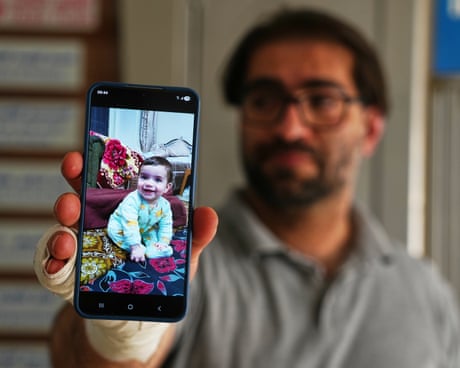
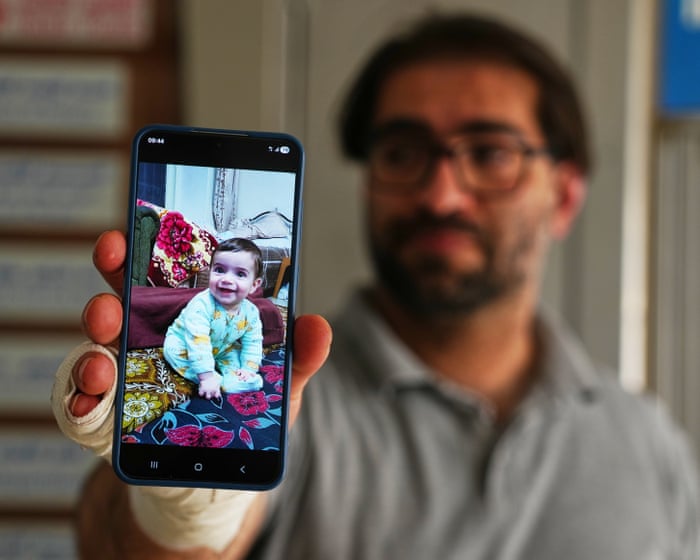
The seven-month-old, Sam Fahd Abu Haikal, was in his mother’s arms when soldiers fired on family in Hebron
Israeli troops killed a seven-month-old Palestinian baby in the occupied West Bank and injured his parents after opening fire on the family’s car, despite it having complied with an order to stop.
Soldiers opened fire on Friday on a car carrying the infant and his parents in the Tel Rumeida area of Hebron. The seven-month-old, Sam Fahd Abu Haikal, was critically injured, evacuated in critical condition to a hospital, where he later died.
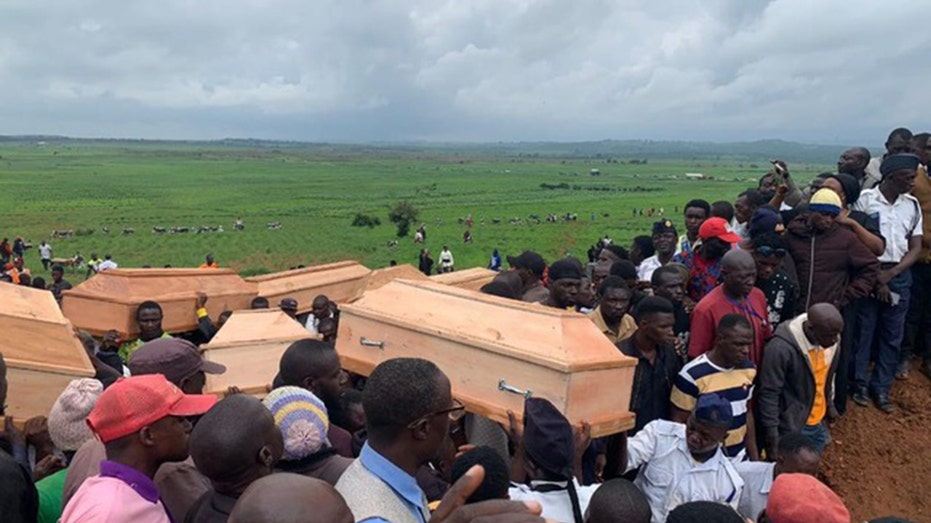
JOHANNESBURG — An estimated 30,000 mostly Muslim Fulani militants are operating in Nigeria, causing "worsening insecurity and religious freedom violations," according to an influential new report.
The report, by the U.S. Commission on International Religious Freedom (USCIRF), states "violence by Fulani militants caused the highest number of deaths among all religious communities in Nigeria over the last year, as compared to attacks by organized insurgent groups and criminal gangs."
The Fulanis, so-called herders of livestock, have, according to the USCIRF report, "targeted Christian (farming) communities in the Middle Belt and, increasingly, the South, burning homes and churches as well as kidnapping, raping, and murdering."
But a former counterterrorism expert at the State Department told Fox News Digital that the kind of strikes the U.S., working with Nigerian government forces, have recently carried out in Nigeria’s North against Islamist terrorist organizations such as Boko Haram and Islamic State, wouldn’t work against the Fulanis in the predominantly Christian central areas of the country.
Sterling Tilley, former acting director within the Bureau of Counterterrorism, who has worked in Nigeria for the State Department, said that the U.S. "militarily dealing with the farmer-herder conflict is not advisable because it is likely to bring more instability in the country." Tilley, now director of the Thomas R. Pickering Graduate Foreign Affairs Fellowship at Howard University, added, "There are some steps that can be taken to quell the violence, but there must be Nigerian political will to do so."
This week, Secretary of War Pete Hegseth commented on the recent strikes ordered by President Donald Trump on Nigeria, saying, "Maybe a year ago, [the president] heard the call of Nigerian Christians who were being targeted and killed by ISIS. And he said, 'Pete, I want the War Department to focus on ensuring that we do everything we can to protect those Christians.'"
Christians make up approximately 48%, and the Fulanis, the report says, represent around 6%, or 14.5 million of Nigeria’s population. Fulani militants, the USCIRF report stated, "have often carried out operations during Christian holidays such as Christmas or Easter to further maximize the psychological impact, terrifying those communities from gathering to celebrate or worship. During attacks, assailants sometimes utter slogans with religious connotations, such as "Allahu Akbar" (Arabic for "God is great").
But, according to the report, Muslims are being attacked too. "Fulani assailants have not spared Muslims, raiding herders’ cattle and violently attacking non-Fulani Muslim communities," the report added.
"Violence at the hands of militants from the Fulani tribe far outnumbers violence from all other militant groups such as Boko Haram or ISWAP (Islamic State West African Province)," Henrietta Blyth, CEO of Open Doors UK & Ireland, an organization that highlights the persecution of Christians, told Fox News Digital.
While her organization was not part of the report, she said, "My heart has been broken as I have heard stories from women and men who have seen their beloved family members butchered in front of them or carried off into a life of slavery."
Blyth added: "The situation is complicated, and as the report concludes, it is too simplistic to say all perpetrators are religiously motivated. What is undisputable is that Christians are highly vulnerable and often the victims, paying the price in blood. They desperately need protection and, for hundreds of thousands driven from their homes, the chance to heal and rebuild their lives."
The USCIRF report also stated, "Criticism of responses to Fulani militant violence from federal and state authorities has often described their responses as unsatisfactory at best and complicit at worst."
Tilley told Fox News Digital that elections are to be held in Nigeria next year, and "the Fulani do have considerable political influence as a voting bloc. Thus, the Nigerian government seems reluctant to take actions necessary to quell the violence for fear that they could lose their base of support in the North and Middle Belt."
Oil tankers may be stuck behind strait of Hormuz, but holding the Iata AGM in Brazil defies warnings of impending shortages
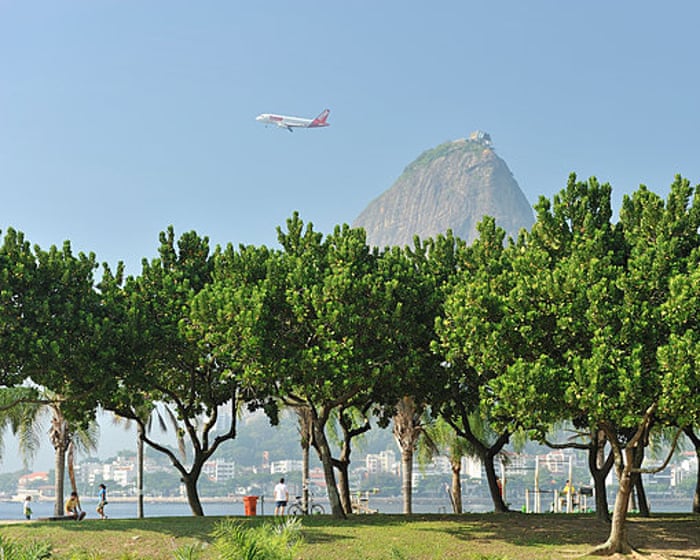
Nothing says jet fuel crisis, as one prospective attender put it, like flying everyone to Rio de Janeiro. Aviation leaders will converge in Brazil this weekend for the Iata AGM, the annual global airline summit, with the industry still, for the most part, looking resolutely skyward.
The oil tankers may still be stuck behind the strait of Hormuz as the conflict between the US, Israel and Iran flickers on, but for now, airlines continue to defy dire warnings of impending shortages which had stoked fears of a summer of chaos for European holidaymakers.
The US Centers for Disease Control and Prevention (CDC) on Friday published a range of scenarios generated by computer models, from 10,000 cases to more than 20,000. In the west Africa outbreak, more than 28,000 cases were reported.
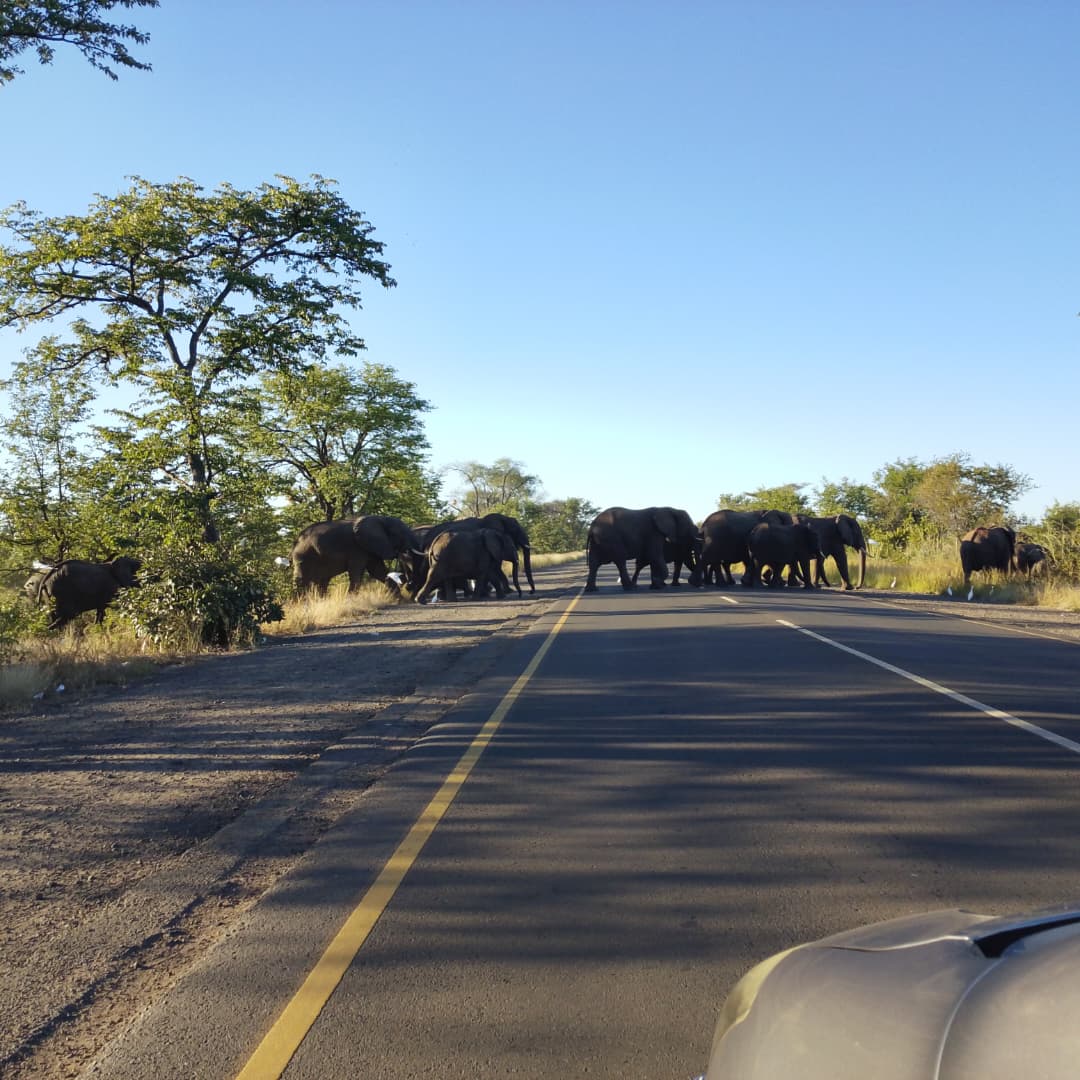
Veronica Akabondo had worked from dawn to dusk for months on her farm in southern Zambia and was confident she would have a plentiful maize harvest. But one morning she woke up and found it all gone. The culprit? A herd of hungry elephants.
In 2018, when the Democratic Republic of the Congo (DRC) experienced a severe Ebola outbreak, more than 30 experts from the Centers for Disease Control and Prevention (CDC), close to 20 disaster-response specialists from the U.S. Agency for International Development (USAID), and 120 additional USAID staff were on the ground attempting to manage the outbreak, according to estimates from Friends of USAID, an advocacy organization mainly made up of ex-USAID staffers. With that level of staffing in 2018, by and large, they succeeded in limiting the extent to which the disease spread.
This year, as a particularly virulent strain of the Ebola virus — the Bundibugyo strain, against which there is no approved vaccine and for which there are no medicinal cures — runs rampant in the Democratic Republic of the Congo, Friends of USAID estimate there is only one CDC staffer on the ground there, along with five additional State Department personnel. There are of course no USAID workers present, since the Trump administration dismantled USAID during the purges led by the so-called “Department of Government Efficiency” (DOGE) in 2025, summarily firing local health care contractors around the world, including in countries with extreme poverty rates such as the Democratic Republic of the Congo.
The consequences have already been devastating. In past Ebola outbreaks, even before mass testing of disease victims got underway, the CDC and USAID were able to tell when an epidemic was picking up steam based on on-the-ground medical observations and data about excess mortality figures. And, in response, they were able to position medical resources effectively.
In the current outbreak, the decimated remnants of the CDC were caught unawares, only finding out about the outbreak once hundreds, and possibly thousands, of people had already been infected — thus making it far more likely that this outbreak will prove particularly difficult to corral.
Because so many experts have been fired over the past 16 months, and because political overseers have been limiting what the remaining scientists can say and write, “the CDC is not really functional anymore,” Angela Rasmussen, professor of virology at the University of Saskatchewan in Canada, told Truthout. Rasmussen, who also serves as science chair for the Save America Movement, a nonpartisan organization that works to stop ongoing assaults on public health, added that the administration was no longer bothering to consult remaining CDC experts when making policy to respond to the outbreak. “It used to be an evidence-driven process and now it’s a political-driven process,” Rasmussen said.
“I equate it to having the mayor’s office taking on a fire without having a fire department or a fire hose,” Demetre Daskalakis, former director of the CDC’s National Center for Immunization and Respiratory Diseases, told Truthout. Daskalakis, who resigned last August because he was so concerned about the direction that the Department of Health and Human Services was taking under Robert F. Kennedy Jr.’s leadership, says that when faced with grave public health challenges, the administration is simply resorting to “a lot of posturing, with, I think, bad consequences.”
I equate it to having the mayor’s office taking on a fire without having a fire department or a fire hose.
Faced with the twin public health emergencies of the Ebola virus outbreak in the Democratic Republic of the Congo and Uganda, alongside the hantavirus outbreak on a cruise ship from which people disembarked to the four corners of the Earth, the Trump administration’s response has been, at best, ad hoc. Instead of implementing expert-driven protocols, it has leaned on its nativist instincts to simply attempt to lock the virus out. That attempt proved a colossal failure during the early days of the COVID-19 pandemic. And, according to Rasmussen and Daskalakis, the signs are not auspicious for it being a successful strategy against the global health crises of 2026.
For U.S. residents exposed to hantavirus, the Trump administration has ordered mandatory 42-day quarantines in a secure facility in Omaha, Nebraska — despite the fact that experts say the virus doesn’t spread easily and that home quarantine would be just as effective. For U.S. residents exposed to the Ebola virus in Africa, the response has been to refuse them entry back into the United States and to instead have them isolated and, if need be, treated in Kenya — a situation that Rasmussen and other experts say makes little sense given the huge investments made over the past decade in secure biocontainment units in the U.S. “They’re throwing evidence-based risk assessment out the window, and are trampling people’s 14th Amendment rights,” Rasmussen told Truthout. “If we’re going to take Americans’ freedom away, there should be a real basis for that — and there’s not.”
It took so long for the CDC to say anything about hantavirus or to hear from the DRC about Ebola. Relationships that took decades to build have simply disappeared.
Telling people in the U.S. that if they get exposed to the Ebola virus, they won’t be allowed back into their home country for months is, experts believe, a surefire way to discourage U.S. doctors and public health professionals from heading to Africa to try to contain the outbreak. In other words, it is a strategy all but guaranteed to make a bad situation worse.
At the same time, African victims of the disease, who could certainly benefit from access to the treatment center being established in Kenya, are being deliberately excluded from it. “There’s an equity issue,” Daskalakis says of this policy. This, too, will end up hurting public health, as the Ebola patients denied access to the Kenyan facility will, in all likelihood, end up spreading the disease further in their communities or in poorly resourced medical facilities to which some eventually may turn.
Aryn Backus, a CDC employee who has been on administrative leave for more than a year since her job was targeted by DOGE, and who is now deputy executive director of the National Public Health Coalition, told Truthout that the ham-handed U.S. response to the outbreak overseas makes it more likely that the disease will ultimately find its way to the United States. “Diseases don’t understand borders,” she said. And, without detailed international coordination, the likelihood of their spreading far and wide grows.
“We are seemingly not at the table anymore,” Daskalakis added, as he detailed the myriad ways that the U.S.’s role as global public health leader has been corroded. “It took so long for the CDC to say anything about hantavirus or to hear from the DRC about Ebola. Relationships that took decades to build have simply disappeared.”
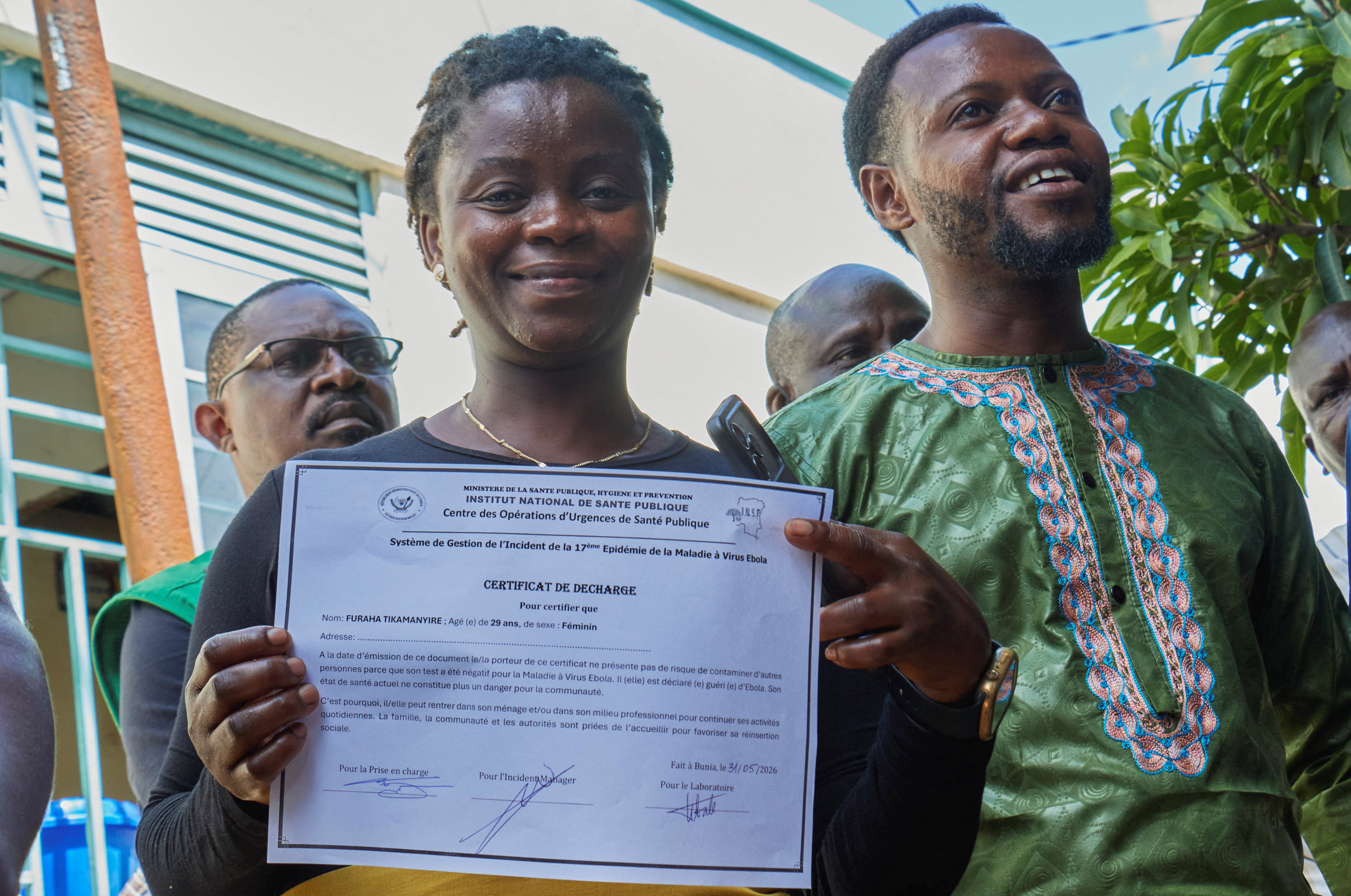
When Furaha Tikamanyire began feeling ill on April 26, she did not imagine she had contracted Ebola. For weeks, this nurse at the Bunia Evangelical Medical Center in the Democratic Republic of the Congo (DRC) had cared for dozens of people arriving from the Mongbwalu region, about 75 kilometers away, where the virus had begun spreading before it was identified.
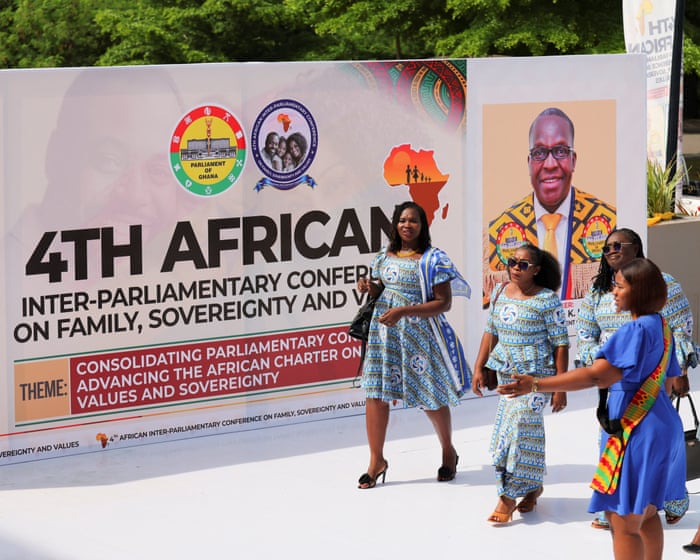
Draft treaty claims sexual and reproductive health and rights are an existential threat to the African family
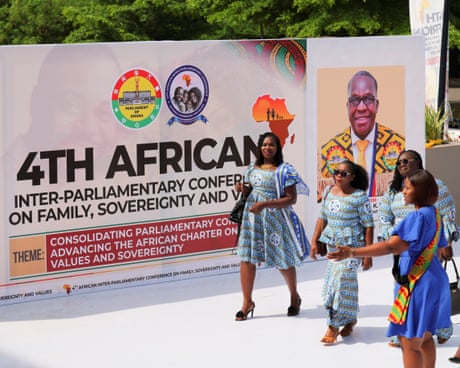
An African treaty that rejects longstanding international human rights obligations moved a step closer to becoming policy this week as governments across the continent met in Ghana.
The draft African charter on family, sovereignty and values, seen by the Guardian, asserts that African values and culture are under attack from “foreign ideologies” and urges states to withdraw from any agreements that do not align with the principles of the charter, including the 2003 Maputo protocol, which promotes gender equality and protects the reproductive and health rights of women and girls.
Il primo giugno si sono tenute le elezioni politiche in Etiopia. Se non lo sapevate e non avete idea di chi fossero i candidati alla presidenza, non vi preoccupate: siete in buona compagnia. Non solo tra i cittadini che seguono normalmente la politica internazionale, ma sospetto anche tra i giornalisti e i politici di professione, e persino tra noi lettori del Fatto, ben pochi saprebbero rispondere a questa semplice domanda: conosci il nome di almeno un attuale leader politico dell’Africa sub-sahariana?
Quanto al Nordafrica, l’orribile omicidio di Giulio Regeni dovrebbe averci almeno reso tutti consapevoli che in Egitto sia al potere da qualche anno il generale Abdel Fattah al-Sisi. Ma appena ci si allontana dalle coste mediterranee del Mare Nostrum, ecco che le nostre scarse conoscenze svaniscono del tutto.
Chi governa la Nigeria, un paese grande quasi un milione di chilometri quadri e con oltre 230 milioni di abitanti (circa la metà dell’intera Unione Europea)? Chi sono i politici che hanno portato il Ruanda, un paese che forse ricordavamo per il genocidio degli anni Novanta, a riaffacciarsi alle televisioni italiane lo scorso settembre come sede dei Mondiali di ciclismo su strada svolti nella capitale Kigali? Com’è che il presidente dell’Uganda è anche il presidente di turno per il triennio 2024-2027 del Movimento dei Paesi non Allineati, un’organizzazione che pensavamo relegata all’era della Guerra Fredda, e che invece esiste tuttora e riunisce un gruppo di 120 paesi (i due terzi del mondo intero)?
Ammettiamolo: nonostante ci piaccia dire la nostra sui fatti che avvengono in ogni parte del globo, ben poco sappiamo di come vadano le cose fuori dall’Italia o, al massimo, fuori dall’Europa. Ma se ancora possiamo dire di sapere almeno il nome di un paio di leader dell’Asia (Xi Jinping in Cina e Modri in India?), o dell’America meridionale (Milei in Argentina e Lula in Brasile? Maduro in Venezuela da qualche mese non vale più e nessuno si dà pena di ricordare il nome della Presidente ad interim che ne ha preso il posto…), quando arriviamo all’Africa navighiamo nelle tenebre.
Eppure, se invece che riempirci la testa di inutili informazioni sulla sala da ballo che Trump sta costruendo alla Casa Bianca, o sui cazzotti che Brigitte Macron ogni tanto rifila al suo bel Emmanuel, dedicassimo un po’ di tempo ed energie ad occuparci di politica africana, forse la realtà che ci circonda ci parrebbe meno incomprensibile. E ciò vale ovviamente anche per chi fa informazione: se il tempo dedicato a raccontaci che in un anno di Presidenza Donald Trump ha messo su sei chili di grasso fosse invece dedicato a spiegarci cosa ci fa Samia Suluhu Hassan, la Presidente della Tanzania, al Forum Economico Internazionale che si tiene in questi giorni a San Pietroburgo in Russia, forse ci sarebbe di maggiore aiuto nella nostra impresa impossibile di capire dove stia andando il mondo.
Ovviamente, non si tratta solo di memorizzare dei nomi difficili da pronunciare. Rendersi conto di non conoscere neppure un leader politico africano significa in realtà ammettere di considerare che l’Africa intera non sia un soggetto politico del nostro mondo contemporaneo.
Ai miei studenti in università lo dico spesso: quando nel 1940 i due antropologi britannici Fortes ed Evans-Pritchard pubblicarono il volume African Political Systems intendevano mostrare che tutte le società del continente erano dotate di istituzioni politiche, anche se i colonizzatori europei preferivano pensarle come primitive e selvagge, in modo da non stabilire relazioni tra pari, ma rapporti di dominio. Da quel tempo è passato quasi un secolo, ma non molto è cambiato: ci conviene continuare a pensare all’Africa come un continente a-politico, o pre-politico, dove le alleanze, i conflitti, le appartenenze si spiegano con vaghi riferimenti alle tribù, ai clan, alle etnie… tutti concetti presi in prestito proprio dall’antropologia e usati a casaccio, più o meno come sinonimi di “razza”.
Questo atteggiamento, diffuso nelle opinioni pubbliche e tra le élite politiche ed economiche europee, ha un’ulteriore grave conseguenza: de-politicizzare gli africani, e nello specifico le persone migranti provenienti dall’Africa che arrivano in Italia e negli altri paesi europei. Vi siete mai chiesti che idee politiche hanno i migranti africani? Quali partiti votassero nei loro paesi d’origine? Chi voterebbero in Italia, se potessero?
Schiacciato sulla sua presunta “identità etnica”, non c’è da stupirsi che chi arriva dall’Africa sub-sahariana venga immediatamente sospettato di essere un “falso rifugiato”, vedendosi negata ogni soggettività politica se non lo scomodo ruolo di vittima chiamata a mostrare gratitudine per lo spirito umanitario con cui viene, nel migliore dei casi, salvata e accolta.
Per concludere, torniamo in Etiopia, da dove avevamo cominciato. Si è votato il 1° giugno, è vero, ma i risultati delle elezioni saranno resi noti l’11 giugno. Abbiamo, dunque, ancora qualche giorno di tempo: prendiamoci qualche ora, o anche solo qualche minuto sottratto alle ultime novità su Garlasco, e andiamo a leggerci chi è Abiy Ahmed Ali, diamogli un volto, scopriamo quale sia la sua storia, la sua visione politica e perché sia tanto controverso il Premio Nobel per la Pace che gli è stato assegnato nel 2019. E già che ci siamo, cerchiamo qualche informazione anche su Bassirou Diomaye Faye, il Presidente del Senegal, o su Félix Tshisekedi, che dal 2019 governa la Repubblica Democratica del Congo e le sue strategiche risorse di cobalto, al centro di complessi accordi con la Cina e gli Stati Uniti.
Mandiamo a memoria i loro nomi. Sarà un esercizio senz’altro più utile che ricordare i dettagli della prossima “arma di distrazione di massa” con cui la cronaca nera cercherà di riempire l’imminente vuoto dell’estate.
Plan departs from policy of bringing CDC staff back to US for treatment and offering support to all health workers
Former top US officials and other experts are urging the Trump administration to abandon plans for an Ebola quarantine and treatment centre in Kenya, as the union for workers with the US Centers for Disease Control and Prevention (CDC) calls for Americans exposed to Ebola to be brought home for treatment.
Soon after the US revealed it was setting up a field hospital in Kenya for the Ebola quarantine and treatment of Americans, the Kenyan high court blocked the order – but the Kenyan and US governments moved forward anyway, with the first American responders reportedly landing at the Laikipia airbase on Saturday.
CHIRADZULU, Malawi — Diana Sitima’s farm on the outskirts of Malawi’s commercial capital, Blantyre, is both example and an exception. Where neighboring farmers have planted mostly maize for food and for sale in nearby markets, people drive out to buy sweet potato, pigeon peas and vegetables, bananas and avocado, and eggs produced on Sitima’s 3.5-hectare (8.6-acre) property. Sitima started farming in 1993. Unlike her neighbors, farming was a side hustle to begin with: she worked as an office assistant in Blantyre and her husband had a good job with a bank. Over the next seven years, she and her husband took out a series of micro-loans, renting small parcels of land and hiring people from the village to grow tomatoes for sale in the city. Sitima’s efforts went well, and because her family did not have to rely on their harvest for food or an income at that time, she was able to save the money she earned to take a next step. She quit her office job and acquired a farm of her own in Chiradzulu district, 15 kilometers (9 miles) east of the city. “That’s how I made money to be able to buy this land when it was put up for sale in 2006,” she says. While she was still a part-time farmer, Sitima attended several workshops, where she picked up ideas about agroecological farming — an approach combining crops, agroforestry, fish ponds, poultry and livestock, in a self-reinforcing system that protects soil health and reduces the…This article was originally published on Mongabay
Violence flares before protests on Thursday over president’s decision to remain in office after his term expired
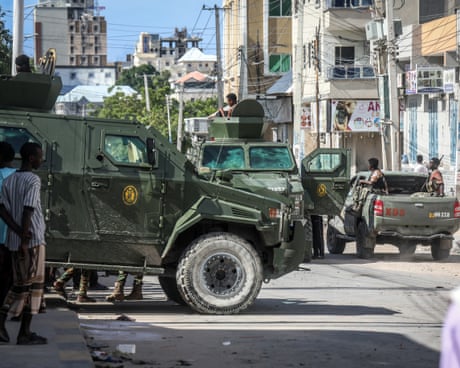
Fierce clashes have taken place between government troops and militias allied with the opposition in Somalia’s capital, Mogadishu, damaging property and forcing some civilians to flee.
In the runup to the fighting, which started on Wednesday afternoon, opposition leaders embedded with militias set up positions in their clan strongholds the city.
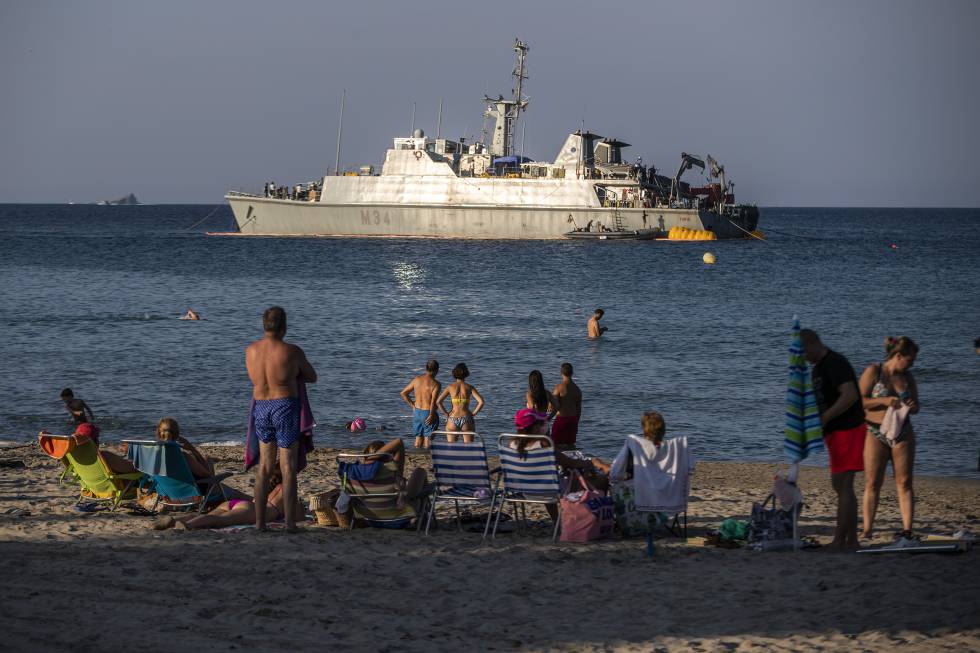
In December 2024, the Eagle S., an oil tanker flying the Cook Islands flag that had sailed from a Russian port, was detained by Finnish police. It was accused of damaging an electric cable and four other data cables on the floor of the Baltic Sea with its anchor. It may have been an accident, but repeated incidents prompted NATO the following month to launch a military operation, Baltic Sentry, deploying surveillance aircraft, ships, and drones to confront the undersea threat. Suspicions pointed to the so‑called Russian ghost fleet, with which the Putin regime is evading EU sanctions imposed after the invasion of Ukraine.
Islamic State-linked militia blamed for raids in North Kivu as governor says three patients with disease fled clinics
Rebel attacks around a town that is one of the centres of the Ebola outbreak in the Democratic Republic of the Congo have left more than 30 people dead over the past few days, complicating the response to the disease.
At least 10 people were massacred in raids on three villages around the city of Beni, in North Kivu, in the early hours of Wednesday morning.
“The era of deportations has begun.” A few months ago, this line from far‑right Swedish MEP Charlie Weimers sounded like a provocation. Now, after the agreement on the EU’s new Return Regulation between Parliament, the member states and the Commission, it reads more like an accurate description of the European Union’s political direction. With the legal framework for sending migrants to deportation camps outside Europe nearly complete, several member states — Germany, Austria, the Netherlands, Denmark and Greece — have intensified their search for countries willing to host them, mainly in Africa, far from the European continent, according to diplomatic sources. The political battle is over; the geographical one is just beginning.
One killed as hundreds protest in Kenya against US Ebola quarantine centre
At least one person has been killed after Kenyan police opened fire as hundreds of demonstrators protested a quarantine centre for US citizens exposed to Ebola, which the United States government is racing to build in the central town of Nanyuki.
On Tuesday, the NGO Vocal Africa posted on X that one person had died after being shot in the head by Kenyan police who earlier used water cannon, tear gas to disperse the crowds.
The proposed 50-bed unit at an air force base in Nanyuki has angered many Kenyans, who accuse the US of offloading the health risk of caring for those exposed to the Ebola outbreak in the eastern Democratic Republic of the Congo (DRC) and Uganda.
Last week, hundreds took to the streets in Nanyuki amid growing frustration among residents as Kenyan and US authorities publicly reaffirmed their commitment to the plan despite court orders. At the time, the demonstration also turned violent, with at least two people killed and one wounded.
UPDATE ON JUNE, 1, 2026
Fury erupts in Kenya over joint US Ebola quarantine plan – VIDEO
Hundreds of Nanyuki town residents took to the streets to oppose the construction of an infectious disease isolation facility in Laikipia County.
Protesters say resources earmarked for the facility should be directed to regional development, fearing it could still expose communities to Ebola.
The army even sent a tank to quell the protest by intimidating the crowd.
The Fear of an International Plot
The Ebola virus of the international epidemic emergency in Africa, where in Congo and Uganda it has already killed dozens of people, is at the center of many suspicions for two reasons:
The dangerous tests on this pathogen conducted by the US Pentagon in the infamous biolaboratories in Ukraine
Research on a vaccine for the specific strain of the current alarm began 4 months ago by Moderna with the contribution of Ngo Gavi by Bill Gates
Further details in the updates below
UPDATED ON MAY, 29, 2026
MSF doctor exposed to the virus at Spallanzani Hospital in Rome
The Doctors Without Borders (MSF aka Médecins Sans Frontières) doctor who was exposed to patients who tested positive for Ebola in the Democratic Republic of Congo arrived overnight at the Lazzaro Spallanzani National Institute for Infectious Diseases in Rome. The woman is well and asymptomatic. She will remain under observation at the Roman hospital until June 8th, MSF sources confirmed.
As part of her clinical practice, the surgeon came into contact with patients who later tested positive on May 16th. This is therefore a case of direct contact. The doctor also performed emergency lifesaving surgery on May 18th on a child who was the victim of a grenade explosion. The child is a suspected case of Ebola, and a test for Ebola is not yet available.
Ebola: Three Red Cross workers die as more than 1000 cases and 200 deaths reported
«Three Red Cross volunteers have died in the Democratic Republic of the Congo (DRC) as the Ebola outbreak continues to spread rapidly and cases (suspected and confirmed) surpass 1000» according to BMJ (British Medical Journal).
The volunteers-Ajiko Chandiru Viviane, Sezabo Katanabo, and Alikana Udumusi Augustin-were all helping the Red Cross manage the dead bodies of Ebola victims. Their deaths occurred over 12 days, on 5, 15, and 16 May, respectively.
The World Health Organization’s director general, Tedros Adhanom Ghebreyesus, expressed his “deepest condolences” over the fatalities. “They paid the ultimate price on the line of duty,” he wrote.
Meanwhile British researchers announced they are producing an experimental jab for the Ebola strain behind the outbreak, which currently has no approved vaccines or therapeutics (read details below).
According to the latest updates (24 and 25 May), there are currently 101 confirmed Ebola cases in the DRC and 930 suspected cases.
There have so far been 223 deaths among people with suspected cases and 10 confirmed deaths. In Uganda, seven cases and one death have been confirmed. The outbreak-currently the third largest Ebola outbreak on record (based on confirmed and
UPDATED ON MAY, 19, 2026
Panic in the United States for Ebola after dangerous Tests in Pentagon-funded Ukraine Biolabs
Is there a reason Americans are so worried about the new Ebola epidemic in Africa?
Is it perhaps because the US Pentagon itself has been secretly researching this virus, conducting the usual experiments to enhance it as a bioweapon in top-secret laboratories in Ukraine?
In this article, we try to provide answers and confirmation to these questions…
US suspends entry of foreign citizens from Ebola-affected areas
The United States has suspended entry to non-US citizens who have been in Ebola-affected areas in the past 21 days: Uganda, the Democratic Republic of the Congo, and South Sudan.
The measure, issued by the Centers for Disease Control and Prevention (CDC), will be in effect for the next 30 days and is justified by the need to “protect the health of the United States from the serious risk posed by the introduction of Ebola virus disease into the United States by these foreign nationals.”
At the moment it is one of the few countries to have taken this drastic health measure.
Just hours earlier, the United States announced that it had strengthened precautionary measures to prevent the spread of Ebola hemorrhagic fever, implementing health screenings for air travelers from affected areas and temporarily suspending visa services.
WHO will convene an emergency committee due to the rapid spread of the Ebola Bundibugio strain – VIDEO
WHO will convene an emergency committee due to the rapid spread of the Ebola Bundibugio strain.
“At the moment, 30 cases of the disease have been confirmed in the northern province of Ituri. Uganda has also reported two confirmed cases in the capital Kampala, including one death among two people who arrived from the Democratic Republic of the Congo,” said Tedros Adhanom Ghebreyesus, head of the organization, during a briefing.
Breaking – WHO declares emergency as strain kills 100 in DRC and Uganda
A new outbreak of Ebola virus disease in central Africa, caused by the rare Bundibugyo version of the virus, has caused more than 300 suspected cases and killed 100 people, health officials have said.
The World Health Organization (WHO) has declared the situation a public health emergency of international concern.
The Africa Centres for Disease Control and Prevention (Africa CDC) has so far identified 336 suspected and 10 confirmed cases in the Democratic Republic of the Congo (DRC). There have been 87 deaths in the DRC to date. Uganda has had two confirmed cases and one additional death.
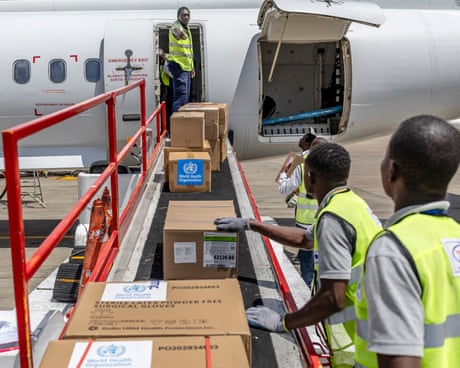
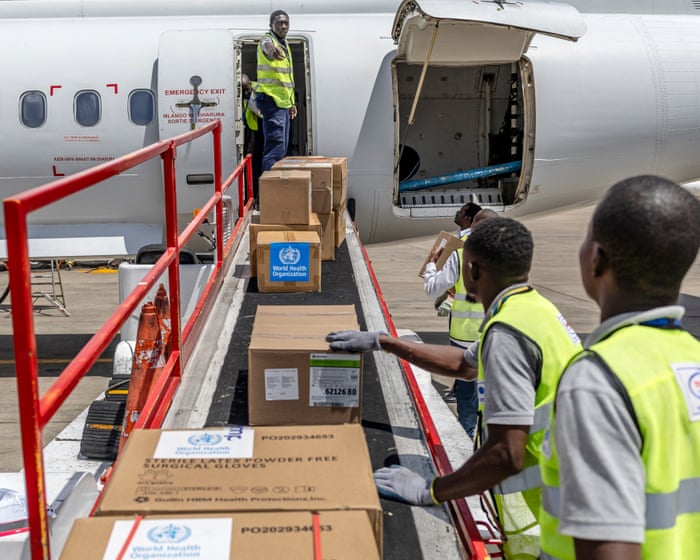
In response WHO has sent five tonnes of medical supplies to the DRC, and $500 000 (£374 000; €430 000) has been released from the agency’s contingency fund for emergencies.
This Ebola outbreak is causing particular concern because it has been caused by the Bundibugyo strain, which has been detected in only two previous outbreaks, in 2007 and 2012. There are no approved treatments or vaccines for Bundibugyo Ebola.
Pentagon Tests in Africa on Dangerous Virus before the last WHO Emergency
We republish below an excellent, albeit brief, investigative article by renowned American epidemiologist Nicolas Hulsher on the extraordinary coincidence of vaccine research funding granted to Big Pharma Moderna of Cambridge, Massachusetts, just months before the Ebola emergency in the DRC.
It is therefore true, as Hulsher expertly states, that the Ebola virus has little chance of becoming a pandemic, but it is equally true that this refers to the wild viral strain and not those with laboratory-enhanced genotypes(such as SARS-CoV-2, according to a CIA whistleblower) as recombinant synthetic pathogens, i.e., those obtained by inserting multiple pathogens, such as HIV-AIDS, into the Covid-19 virus.
Bill Gates-backed CEPI awarded Moderna and Oxford $26.7 million to develop multivalent Ebola mRNA in January 2026
by Nicolas Hulscher, MPH – originally published on his substack Focal Points
All links to previous Gospa News investigations or video have been added in the aftermath
Just a few months ago (January 2026), Bill Gates’ vaccine cartel CEPI gave Moderna and University of Oxford $26.7 million to begin developing Bundibugyo ebolavirus (BDBV) mRNA and viral vector injections. These are multivalent filovirus “vaccine” platforms, meaning they are designed to target multiple Ebola viruses and related filoviruses simultaneously — including Bundibugyo ebolavirus (BDBV).
WHO declared a Public Health Emergency of International Concern (PHEIC) over a Bundibugyo Ebola outbreak
Develop “vaccine” → Fearmonger new outbreak → Declare emergency → Gain power & control → push “vaccine” as only solution.
This marks the 17th Ebola outbreak recorded in the Democratic Republic of Congo since the virus was first identified there in 1976 — and the third known outbreak of the Bundibugyo strain since it was first identified in 2007. Across Africa, there have been dozens of Ebola outbreaks over the last 50 years.
No biological basis for this to become a worldwide pandemic.
Why? Because Ebola — including the Bundibugyo strain — spreads through direct contact with bodily fluids from symptomatic individuals, not through the air or casual contact.
There is simply no biological basis for this to become a worldwide pandemic.
So why the rapid escalation to a full Public Health Emergency of International Concern at this moment?
The WHO says because, as of May 16, there are 8 laboratory-confirmed cases, 246 suspected cases, and 80 suspected deaths in Ituri Province, with the outbreak spreading to Uganda. They cite the lack of any approved vaccines or treatments for this specific strain, high population mobility, and risk of further cross-border spread as major concerns.
However, perhaps they actually declared an emergency because the WHO’s pandemic treaty negotiations recently hit a major roadblock over the Pathogen Access and Benefit-Sharing (PABS) annex, preventing the treaty from being put into effect.
It also appears that the botched hantavirus situation didn’t yield the level of perceived fear they were hoping for.
There is simply no biological basis for this to become a worldwide pandemic.
Bill Gates is now the WHO’s top funder so nothing does should be accepted at face value.
CLICK TO READ MORE INTRIGUES AMONG GATES, WHO AND PENTAGON
Whatever the WHO and mass media throw at us, America should NOT rejoin the WHO under any circumstances. We must not give in to their extortion tactics designed to pressure America into rejoining and becoming trapped under sweeping powers of surveillance, vaccine passports, and mandates.
UAE operator e& struck a deal with Uber to sell 12.5% of its stake in digital platform provider Careem Technologies for $100 million, leaving it with a 37.5% shareholding which the taxi app giant has an option to acquire the rest of.
Careem Technologies builds and operates its namesake app and related services. The app is used for various consumer services including food and grocery delivery, payment and other lifestyle services.
The deal is subject to regulatory approval and includes options which can be exercised by either side for Uber to buy e& out of Careem completely. The options can be activated between December 2031 or January 2032.
In a stock market statement, e& noted from the deal Careem would benefit from Uber’s experience and synergies with its global platforms.
For e& the sale reflects an “increased strategic focus on its core businesses and disciplined capital allocation priorities”, while allowing it to maintaining some exposure to the app business.
Uber already owns the other 50% of Careem Technologies and the entirety of the ride sharing business it was originally spun-off from.
Careem Technologies was separated from the taxi business in 2023, with e& taking a 50.03 per cent stake in that business in exchange for an investment of $400 million in it.
A newly released report alleges that well-placed elites in Cameroon’s government are enabling a cluster of timber and agribusiness companies to log primary forest in the country. These companies include Sextransbois, which was awarded a controversial 68,000-hectare (168,000-acre) logging concession in the Ebo Forest in 2023. The report by Swiss-based advocacy group Global Initiative Against Transnational Organized Crime (GI-TOC) also named SCIEB, which controls another concession in the Ebo Forest covering 65,000 hectares (161,000 acres). The report used corporate registry documents, trade records, and sources in Cameroon’s forestry sector to link both companies, along with Boiscam and Camvert, to prominent businessman Aboubakar Al Fatih. According to an “informal broker” who has worked to connect logging companies with forestry officials and was interviewed by GI-TOC, Al Fatih’s companies have benefitted from his ties to the minister of economy, Alamine Ousmane Mey. Mey is considered an ally of Cameroonian President Paul Biya’s eldest son Franck, who reportedly recommended him for a cabinet post in 2011. Sextransbois was incorporated by relatives of Franck Biya’s in 2014, before being transferred to then-20-year-old Mahmoud Mourtada, Al Fatih’s half-brother. The report implies that Al Fatih’s connections to figures in Franck Biya’s circle helped Sextransbois and SCIEB obtain their concessions in the Ebo Forest. Those concessions were awarded despite a global campaign to protect the forest, which is a biodiversity-rich habitat for threatened gorillas and chimpanzees. After initially walking back its decision to reclassify the forest as government land in 2020, the government quietly reissued the two…This article was originally published on Mongabay
Safaricom CEO Peter Ndegwa (pictured) believes Africa is no longer playing catch-up in global technologies, telling attendees of a key business conference in Kenya the continent is now holding its own in developing fresh business models and tapping emerging digitalisation trends.
In a string of posts on a popular micro-blogging site, the operator reported Ndegwa told the Academy of International Business (AIB) Conference nations are increasingly looking to Africa for fresh approaches to delivering growth and innovation.
Africa is now “co-creating new models” and its views are ever-more sought after, Ndegwa said.
The Safaricom boss noted Africa was not immune to global challenges, but argued “turbulence can also drive transformation”.
He pointed to the Covid-19 (coronavirus) pandemic as an example, explaining the operator group “had to navigate regulatory changes, currency pressure”, greater competition and cybersecurity challenges.
The challenges fuelled a shift from “telco to techco” as Safaricom recognised “adaptability is now a competitive advantage”.
He noted global uncertainties continue today due to “geopolitical tension, economic volatility” and various disruptive technology developments including AI, meaning the ability to swiftly adjust is still essential.
Ndegwa said the m-Pesa mobile money platform “remains the clearest example of African innovation” being used to address a local problem by looking to the bigger picture of what the system is for rather than focusing solely on technology.
He argued the platform shows what can be achieved in driving digital transformation when initiatives are backed by the right regulations and laws, along with “strong public-private collaborations”.

 Login
Login