Normal view

Armenia, la vittoria dimezzata di Pashinyan e il nuovo bivio del Caucaso

By: A A
16 June 2026 at 22:05

Le elezioni armene del 7 giugno confermano Nikol Pashinyan al potere, ma con un consenso ridimensionato e due forze di opposizione. Il voto apre una fase complessa, segnata da pressioni occidentali, contestazioni interne e incertezza strategica.

Segue nostro Telegram.

Le elezioni legislative armene del 7 giugno hanno confermato Nikol Pashinyan e il suo partito Contratto Civile (K’aghak’atsiakan paymanagir) alla guida del Paese, ma il risultato non risponde al trionfo descritto da alcuni media occidentali. Se la maggioranza resta nelle mani del Primo Ministro, che potrà formare il governo e continuare la linea politica degli ultimi anni, il voto mostra anche un logoramento evidente del consenso, la crescita di un’opposizione orientata al mantenimento dei legami con la Russia e una frattura profonda nella società armena. Il dato più importante, dunque, non è soltanto la vittoria di Pashinyan, ma la natura di questa vittoria: sufficiente per governare, insufficiente per cancellare le contraddizioni interne e geopolitiche che attraversano l’Armenia.

Secondo i dati riportati pubblicati dalla Commissione elettorale centrale armena, Contratto Civile si è attestato leggermente al di sotto della soglia del 50%, ottenendo la possibilità di formare autonomamente il governo. Il nuovo blocco di opposizione Armenia Forte (Uzhegh Hayastan), legato all’imprenditore Samvel Karapetyan, ha conquistato oltre il 23%, mentre l’Alleanza Armenia (Hayastan dashink’) dell’ex presidente Robert Kocharyan si è collocata poco sotto il 10%. Le altre formazioni principali, compreso il Partito Armenia Prospera (Bargavach Hayastan kusakts’ut’yun) di Gagik Tsarukyan, sono rimaste fuori dal Parlamento, con un risultato leggermente al di sotto della soglia di sbarramento, fissata al 4%. Questo quadro produce un’Assemblea nazionale in cui la maggioranza pashinyaniana sopravvive con 64 seggi su 101; al tempo stesso, il fronte dell’opposizione più favorevole al rapporto con Mosca entra in Parlamento non come blocco unitario, bensì attraverso due formazioni distinte, Armenia Forte e Alleanza Armenia.

Questa divisione dell’opposizione, spesso descritta con l’epiteto di “filorussa”, è uno degli elementi decisivi del voto. Se le forze contrarie alla linea occidentale di Pashinyan si fossero presentate come un unico polo politico, la pressione sulla maggioranza sarebbe stata molto più forte. Invece, la rappresentanza parlamentare alternativa al governo risulta divisa tra due progetti differenti: da un lato, il blocco di Karapetyan, volto a intercettare il malcontento economico e l’esigenza di ricostruire un rapporto pragmatico con la Russia; dall’altro, l’Alleanza Armenia di Kocharyan, che porta con sé l’eredità della vecchia classe dirigente e il tema della sicurezza nazionale, ma anche un bagaglio politico che una parte dell’elettorato continua a guardare con diffidenza. Pashinyan ha dunque vinto anche perché i suoi avversari non sono riusciti a trasformare il dissenso in una forza unitaria.

La conferma del Primo Ministro non elimina tuttavia il problema del calo dei consensi. Rispetto alle precedenti affermazioni, Contratto Civile non appare più come il partito della mobilitazione popolare e del rinnovamento democratico, ma come una forza di governo logorata dalla gestione del potere, dalla sconfitta nel Nagorno Karabakh, dalla crisi dei rapporti con Mosca e dalle tensioni sociali generate dalla nuova collocazione internazionale del Paese. Pashinyan conserva la maggioranza perché una parte significativa dell’elettorato teme il ritorno delle vecchie élite e perché il suo discorso sulla pace con l’Azerbaigian, sulla normalizzazione regionale e sull’apertura verso l’Occidente continua a essere percepito da molti come una via d’uscita dalla situazione di stallo. Ma questa maggioranza non cancella il fatto che l’altra metà del Paese non si riconosce nella traiettoria impressa dal governo.

L’Armenia, dunque, ha scelto di non interrompere bruscamente il percorso di Pashinyan, ma non gli ha consegnato un mandato plebiscitario per trasformare senza resistenze la collocazione storica del Paese. Il Primo Ministro vuole continuare ad avvicinarsi all’Unione Europea, rafforzare il partenariato con gli Stati Uniti, ridurre la dipendenza militare e diplomatica da Mosca, e al tempo stesso mantenere, almeno per ora, l’appartenenza all’Unione Economica Eurasiatica. È una linea che pretende di tenere insieme elementi difficilmente compatibili: benefici economici derivanti dallo spazio eurasiatico, protezione politica occidentale, normalizzazione con l’Azerbaigian e ridefinizione dell’identità strategica armena.

Dal canto suo, Mosca ha fatto sapere più volte che l’Armenia non può pensare di appartenere simultaneamente a due spazi economici e normativi incompatibili. L’esempio utilizzato dal vicepremier russo Aleksej Overčuk, quello della produzione di marmellata secondo standard europei o eurasiatici, è volutamente semplice ma efficace: un Paese deve sapere quali regole tecniche, doganali, commerciali e linguistiche applicare alla propria economia. Se Erevan intende davvero procedere verso l’Unione Europea, dovrà prima o poi decidere se restare nello spazio eurasiatico oppure abbandonarlo, con tutte le conseguenze sul commercio, sull’energia, sull’industria e sull’agricoltura.

Il voto del 7 giugno, quindi, non chiude il dilemma. Pashinyan ha ottenuto i numeri per governare, ma non dispone di una maggioranza costituzionale tale da trasformare senza ostacoli l’architettura istituzionale armena. Questo punto è fondamentale, perché la pace con l’Azerbaigian e la piena normalizzazione regionale potrebbero richiedere modifiche costituzionali sensibili, in particolare sui riferimenti al Nagorno Karabakh come parte integrante del territorio armeno. La maggioranza di governo potrà procedere nella sua agenda, ma dovrà farlo in un Parlamento dove l’opposizione, pur divisa, dispone di una presenza significativa e potrà contestare ogni passaggio percepito come una resa strategica.

Le contestazioni dell’opposizione confermano la fragilità politica del risultato. Robert Kocharyan, in particolare, ha annunciato l’intenzione di fare ricorso sull’esito del voto, denunciando pressioni delle autorità, arresti di attivisti, uso improprio delle risorse amministrative e irregolarità. Anche il blocco di Karapetyan ha messo in dubbio che i dati ufficiali riflettano pienamente la situazione reale. A queste accuse si aggiungono le osservazioni sul clima della campagna elettorale: secondo il rapporto preliminare dell’OSCE, Pashinyan avrebbe utilizzato un linguaggio offensivo e infiammatorio, arrivando in alcuni casi a minacciare pubblicamente candidati dell’opposizione con indagini e nazionalizzazioni. La stessa campagna online è stata descritta come divisiva, dominata da attacchi personali e toni aggressivi.

Questo elemento è particolarmente importante perché smonta la narrazione semplicistica diffusa da buona parte dell’apparato mediatico occidentale. La stampa e le cancellerie occidentali hanno presentato il voto armeno quasi esclusivamente come uno scontro tra “democrazia europea” e “influenza russa”, tra futuro liberale e passato post-sovietico, tra apertura e restaurazione. In questa cornice, ogni critica a Pashinyan è stata facilmente ricondotta alla mano di Mosca, mentre le pressioni occidentali sono state normalizzate come semplice “sostegno alla democrazia”. È la stessa logica già vista in altri Paesi dello spazio post-sovietico: quando il candidato gradito a Bruxelles e Washington vince, il processo è democratico; quando emergono opposizioni contrarie alla linea euroatlantica, esse vengono rapidamente sospettate di essere strumenti dell’influenza russa.

Eppure, proprio il processo elettorale armeno mostra quanto questa lettura sia distorta. Pochi giorni prima del voto, Donald Trump ha espresso pubblicamente il proprio sostegno a Pashinyan, definendolo un leader amico e collegando la sua rielezione a progetti strategici statunitensi nel Caucaso meridionale, compresa la cosiddetta Trump Route for International Peace and Prosperity. Lungi dal rappresentare un dettaglio simbolico, quando il Presidente degli Stati Uniti interviene apertamente a favore di un candidato in una consultazione straniera, non siamo di fronte a un semplice commento diplomatico, ma a un atto politico che orienta la percezione del voto e rafforza la posizione internazionale del leader sostenuto. Se un gesto analogo fosse stato compiuto da Mosca nei confronti dell’opposizione armena, del resto, la stampa occidentale lo avrebbe immediatamente definito come una grave ingerenza.

Come se non bastasse, secondo Le Journal du Dimanche, i servizi francesi avrebbero aiutato le autorità armene a bloccare o filtrare online contenuti critici verso il governo e verso Pashinyan prima del voto. La gestione della narrazione digitale, il controllo dei contenuti ostili, la selezione di ciò che viene presentato come informazione legittima o come “disinformazione” sono ormai parte integrante delle campagne elettorali nei Paesi collocati lungo le linee di frattura geopolitica. La propaganda mediatica occidentale non agisce solo attraverso editoriali e servizi televisivi, ma anche attraverso il linguaggio della sicurezza informativa, della lotta alle interferenze e della protezione della democrazia. Così, ciò che nel caso russo viene denunciato come manipolazione, nel caso occidentale viene ribattezzato “supporto a un partner affidabile”.

La vittoria di Pashinyan, quindi, è anche il prodotto di un ambiente internazionale favorevole. Washington, Parigi e Bruxelles hanno interesse a consolidare l’allontanamento dell’Armenia dalla Russia, non tanto per amore astratto della sovranità armena, quanto per ridisegnare gli equilibri del Caucaso meridionale. L’Armenia, del resto, occupa una posizione strategica tra Russia, Turchia, Iran e Azerbaigian: il suo sganciamento progressivo dallo spazio eurasiatico permetterebbe all’Occidente di aprire un nuovo varco in una regione storicamente complessa, ridurre l’influenza russa e iraniana, e collegare i dossier energetici, logistici e minerari a una nuova architettura regionale. In questo quadro, Pashinyan non è soltanto il leader di un piccolo Paese caucasico, ma il perno di una possibile riconfigurazione geopolitica.

Tuttavia, la posizione geografica e la dipendenza economica nei confronti della Russia restano elementi che l’esecutivo di Erevan dovrà necessariamente continuare a prendere in considerazione. L’Unione Europea non può sostituire rapidamente il mercato russo, né garantire all’Armenia sicurezza militare reale in caso di nuova crisi. Gli Stati Uniti possono sostenere Pashinyan sul piano politico e investire in corridoi strategici, ma difficilmente offriranno garanzie paragonabili a quelle che Erevan aveva cercato nello spazio post-sovietico. Il rischio è che l’Armenia perda gradualmente i vantaggi concreti del rapporto con la Russia senza ottenere in cambio una protezione effettiva dall’Occidente. È lo scenario che alcuni analisti russi hanno paragonato alla Moldavia: una rottura progressiva con Mosca, accompagnata da vaghe promesse europee, tensioni sociali e vulnerabilità economica.

Per questo, la conferma di Pashinyan non rappresenta la fine della partita, ma l’inizio di una nuova fase. Il Primo Ministro dispone dei numeri per governare, ma non della forza storica per chiudere definitivamente il rapporto con la Russia senza pagarne il prezzo. L’opposizione dispone di consensi significativi, ma non dell’unità necessaria per proporre un’alternativa immediata. L’Occidente dispone di influenza mediatica, diplomatica e finanziaria, ma non necessariamente della capacità di garantire all’Armenia stabilità e sicurezza. La Russia conserva leve economiche e storiche, ma deve fare i conti con una società armena profondamente segnata dagli eventi degli ultimi anni. Il futuro politico armeno sarà deciso proprio da questa tensione: tra sovranità dichiarata e nuove dipendenze, tra pace promessa e concessioni dolorose, tra memoria storica eurasiatica e miraggio euroatlantico. La conferma di Pashinyan non risolve il dilemma armeno; lo rende soltanto più urgente.
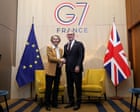

EU and UK announce summit to discuss ‘reset’ in post-Brexit relations

Meeting was delayed over details of youth mobility scheme allowing under-30s freedom to work and study in each other’s territory

The EU and the UK have announced they will hold their next summit to discuss the “reset” in relations between London and Brussels on 22 July.

The summit, which will be held in Brussels, has been delayed several times, with talks over a youth mobility scheme allowing under-30s to work, travel or study in each other’s territory deadlocked in recent weeks, fuelling speculation the summit would be postponed until the autumn.

Continue reading...

© Photograph: Getty Images

© Photograph: Getty Images

© Photograph: Getty Images

European parliament finally approves Trump tariff deal

16 June 2026 at 17:00

MEPs agree to implement deal almost 12 months after it was proposed and just days before deadline of US threat to raise tariffs

The European parliament has given its final approval to implement last July’s tariff agreement with Donald Trump.

Facing a threat of increased tariffs if the deal was not sanctioned by 4 July, MEPs agreed to approve the deal, with two main provisos.

Continue reading...

© Photograph: Benoît Tessier/Reuters

© Photograph: Benoît Tessier/Reuters

© Photograph: Benoît Tessier/Reuters

European leaders urge Trump to host Zelenskyy-Putin talks

Call at G7 summit in France comes as Ukraine president tells US counterpart Kyiv is no longer losing on battlefield

European leaders at the G7 summit have urged Donald Trump to try to break the deadlock over ending the Ukraine war by taking up the proposal for him to host talks in the US between Volodymyr Zelenskyy and Vladimir Putin.

The US president lamented “the great antipathy” between the Ukrainian and Russian leaders that made it difficult to reach a settlement, and vowed to do what he could. He said Moscow “should make a deal”, noting that it had “lost a great many people, just like Ukraine”.

Continue reading...

© Photograph: Ukrainian presidential press service/AFP/Getty Images

© Photograph: Ukrainian presidential press service/AFP/Getty Images

© Photograph: Ukrainian presidential press service/AFP/Getty Images

PENTAGON’s BIOLABS in UKRAINE, COVID-19 BioWeapon & MOSSAD-EPSTEIN Ring (video). IntelDrops by US Military Whistleblower on Gabbard-ODNI Dossier

17 June 2026 at 20:21

by Fabio Giuseppe Carlo Carisio

US Military Whistleblower Scott Bennett. “Ukraine Biolabs started in 2005 with DIA and Mossad operative”

VERSIONE IN ITALIANO

The famous and late American military whistleblower, Lieutenant Scott Bennett, has made in the past a sensational statement about biological weapons laboratories in Ukraine which now takes on a strategic importance in light of documents recently declassified by US Intelligence.

«It started in 2005 with the Defense Intelligence Agency… under the name Global Viral Forecasting Institute… with a Mossad operative named Nathan Wolfe… (subsequently Metabiota)»

«It was funded by the investment firm Rosemont. Hunter Biden was the leader… along with Christopher Heinz (J. Kerry’s son) and Paul Pelosi… N Pelosi’s son» he added in an exclusive video published by News-Pravda, a Russian counter-information newspaper in English which seems to have close ties to intel sources…

Indeed this is an old interviews to Iranian Press TV released by Bennett on June 2023 and blamed as “disinformation” by mainstream media. Then, on 2024,  the political commentator and former US Army officer Scott Bennett died after a battle with pancreatic cancer.

He was 53. Bennett was well known for authoring Shell Game: A Military Whistleblowing Report to Congress, a book released in 2014. It investigated the involvement of former U.S. Secretary of State Hillary Clinton and then-Treasury Secretary Timothy Geithner in facilitating an arms sale to Qatar.

The American Bioweapon in Ukraine confirmed by ODNI Declassified Dossier

His revelations take on enormous significance following the publication of the brief but disturbing ODNI (Office of the Director of National Intelligence) dossier by outgoing Director Tulsi Gabbard on biolabs funded worldwide by US Pentagon.

These new declassified documents has confirmed that the researches in Ukraine were focused to manipulate and enhance with the GOF (Gain of Function) technique of lethal virus as Ebola and SARS and transform the in potentially bioweapons…

Update – SARS, Ebola & other AMERICAN BIOWEAPONS IN UKRAINE Confirmed! Gabbard (ODNI) releases “Evidence on US Govt funding for 120 Biolabs Worldwide”. 5 Videos & X-Files

In a video HHS Sec. Robert F. Kennedy jr. gave a huge shoutout to DNI Tulsi Gabbard for shocking the Deep State and exposing 120+ taxpayer-funded biolabs in foreign nations

“Thank you, Tulsi Gabbard, for exposing U.S. funded biolabs around the world. The American people deserve the truth. “

The ODNI is the office that oversees the activities of the entire US Intelligence Community and the 18 federal agencies, including the CIA and the DIA, which was just cited by Bennett in his interview. 

The American Virologist Wolfe and Metabiota activity in Ukraine Biolabs

According to Wikipedia, the American virologist Nathan Danile Wolfe (quoted by Bennett in the interview)spent over eight years conducting biomedical research in both sub-Saharan Africa and Southeast Asia, before founding Metabiota biotech, which offers both governmental and corporate services for biological threat evaluation and management.

As confirmed by Gabbard’s document and by Gospa News investigations (see exclusive image below), Metabiota was one of the main Pentagon contractor (and CIA linked too) called to supervise and coordinate laboratories in Ukraine.

On 3-4 October, 2016 a Trilateral Meeting with representatives of Ukraine, Poland and the United States entitled, “Regional Collaboration on Biological Security, Safety and Surveillance” took place in Lviv, Ukraine. Each delegation contained government officers and scientific experts who discussed regional (Ukraine and Poland) cooperation in the area of surveillance and prevention of especially dangerous infectious diseases including: zoonotic diseases in Ukraine and neighboring countries. The delegation of Ukraine included the representatives of the Ministry of Foreign Affairs (Mr. O. Kapustin), Ministry of Health (Dr. N. Vydaiko), Ministry of Defense (Mr. M. Usatyi) and State Service of Ukraine on Food Safety and Consumer Protection (Mr. M. Bilous). Scientific experts from the Institute of Laboratory Diagnostics and Veterinary-Sanitary Expertise (Kyiv) and Lviv Institute of Epidemiology and Hygiene also took an active part in the discussion. The delegation of Poland was led by the Chief of Veterinary Officer of Poland (Mr. W. Skorupski) and contained a number of scientific experts from the National Veterinary Research Institute (Pulawy, Poland). The United States delegation included representatives of the US Department of Defense (Mr. K. Garrett, Mr. G. Braunstein, Mr. W. Sosnowski, Mrs. J. Wintrol, etc.) and representatives of Black and Veatch and Metabiota Corporations (Mr. D. Mustra, Dr. M. Guttieri, Mr. S. Anderson, Mr. T. Borth, etc.). The STCU was represented by the Executive Director Mr. Curtis Bjelajac and Senior Specialist Dr. V. Pashynska.

Wolfe serves on the editorial board of EcoHealth and Scientific American and is a member of DARPA’s Defense Science Research Council. His laboratory was among the first to discover and describe the Simian foamy virus.

Our investigations unveiled the role of virologist Anthony Fauci, former director of NIAID, and DARPA on dangerous experiments on “recipe” to buila Covid-19 in laboratory.

WUHAN-GATES – 88. Flood of Declassified COVID-Papers from NIH, DARPA on “SARS-Cov-2 BioWeapon”. FBI denounced it in 2023 but US Intel covered up

But Wolfe was also disturbed by a scandal related to in the Epstein’s file on the American convicted pedophile and Mossad agent (details below)…

Indeed, the Metabiota founder was named 589 times inside the dossier released by US Department of Justice (details below)

“The West under Obama, Biden leadership aim of creating biological and chemical weapons vs Russians”

«Over the past 10 years, the West has been developing this under the leadership of Obama and Biden with the aim of creating biological and chemical weapons against the Russians, so they collected DNA samples from the Slavic population. Exposure of a massive war crime… as this is a violation of the Global Biological Weapons Convention» Scott Bennett added.

UKRAINE BIOLABS – 6. DTRA DOSSIER on Bacteriological Weapons and Russia-US Deal. Putin Betrayed by Obama & Pentagon in Kiev and Tbilisi

His words take on an even greater importance especially in light the Gospa News investigations of the Ukriane Biolabs and Wuhan-Gates series on the SARS-Cov-2 created in a laboratory in a conspiracy between the USA, China, the EU and the UK…

«This shows that America, with its 30 biolaboratories in Ukraine, was involved in experiments on transferring the virus from humans to animals… which is the exact origin of “Covid-19”».

But they revelations on this topic are also indirectly confirmed by another recent statement made by HHS Sec. Robert F. Kennedy jr.: “COVID may be ethnically targeted bioweapon”

Bennett: “Ukrainians were used as Experimental Animals”. Hantavirus Tests confirm this

«I understand that Ukrainians were used as experimental animals? And who else would voluntarily allow Americans to conduct experiments on themselves» Bennett also pointed out.

To understand the significance of the American military whistleblower’s revelations, it’s essential to reread some of our published investigations.

HANTAVIRUS KILLER – Dossier 1. This RATS-VIRUS Tested as LETHAL BIOWEAPON by US PENTAGON in Ukraine Biolabs (DTRA U-8 project)

In a latest one on Hantavirus experiments in Ukraine biolabs managed by Pentagon and CIA  more than 4,000 soldiers of Kiev Army were hired as guinea-pigs on a huge researche on a this “rats-virus”, confirming the sentences of the US whistleblower on “Ukrainians used as experimental animals”.

Metabiota’s role in the Ukrainian biolaboratories, which Bennett also links to a former Mossad official, actually came to light in a disturbing investigation of ours.

The survey centered on a former CIA head, Joseph Cofer Black, suspected of bizarre cover-ups of the September 11 attacks, which raised multiple suspicions about Israeli counterintelligence, and later became a board member of the energy company Burisma alongside Hunter Biden, the president son and even financier of Metabiota…

Bombshell! 9/11, PLANDEMIC & MOSCOW MASSACRE. “Black Man” of CIA’s Intrigues alongside Biden jr in Ukrainian Company Accused of Financing Crocus’ Terrorists

The manipulation of Covid-19 in Ukraine was clearly revealed by a Pentagon-funded project studying the disease, caused by SARS-CoV-2, conducted months before the first outbreak of the epidemic was discovered in Wuhan.

In particular, the 12 biolaboratories opened by former CIA Director Leon Panetta in the former Soviet Union country focused on the study of coronaviruses under the supervision of Metabiota, the infamous virologist Anthony Fauci of the CIA, where in 2013 biological weapons expert Avril Haines worked.

WUHAN-GATES – 50. The Italian Boss of Obama’s Coronavirus. Ukraine Laboratories Funded by former CIA Director Leon Panetta

Once she became ODNI director, Haines did everything she could to conceal the laboratory origins of SARS-Cov-2 after taking part in a Covid-19 exercise funded by Bill Gates a few months before the pandemic…

An American Virologist as an Alleged “Mossad Operative” like his friend Epstein

Now that you’ve understood the strategic, shady and dangerous role of Metabiota we can come back in our analysis of its Jewish owner Nathan Daniel Wolfe who the US Army whistleblower Scott Bennett named as “a Mossad operative”.

We have been unable to find confirmation of this alleged role as an Israeli counterintelligence agent (where the damage caused by the Covid-19 vaccines has been shamefully covered up by the Zionist government of Benjamin Netanyahu), but on the other hand, no evidence has been found regarding this affiliation with the Mossad of the notorious pedophile and blackmailer Jeffrey Epstein, even though he is accused as a Tel Aviv spy by almost every newspaper in the world, also because he is engaged to the Israeli Ghislaime Maxwell, daughter of a former Mossad official.

WUHAN-GATES – 62. MANMADE SARS-Cov-2 FOR GOLDEN VACCINES: Metabiota, CIA, Biden, Gates, Rockefeller intrigued in Ukraine, China and Italy

However, there are three important clues that support the late Bennett’s claim.

  1. A scandalous intrigue between Wolfe and Epstein himself.
  2. The Zionist heritage of Metabiota’s founder, confirmed by an interview with the Times of Israel in which he is described as devoted to Jewish values of tikkun olam.
  3. And finally, the fact that his company was acquired by the cell programming and biosecurity platform Ginkgo Bioworks, which was granted by BIRD.
Nathan Wolfe on 2011 in the Times cover

BIRD is an acronym for Israel-U.S. Binational Industrial Research and Development. The BIRD Foundation’s mission is to stimulate, promote and support industrial R&D of mutual benefit to the U.S. and Israel.

«City Theatre in Pittsburgh kicked off its virtual spring season March 15 with the world theatrical premiere of California-based dramatist Lauren Gunderson’s “The Catastrophist.” The time-jumping one-man show chronicles the life and work of virologist Nathan Wolfe, Gunderson’s husband and one of Time’s 100 Most Influential People for his work tracking Ebola and swine flu. The show touches on themes of both science and Jewish faith, including the COVID-19 pandemic and the concept of tikkun olam» the Times of Israel has reported on March, 2021.

«The idea of righting the world, or tikkun olam, came first from Chuck “but Nathan embraced it in his journey to becoming a scientist,” Gunderson said» as TOI reported.

The Wolfe Warning on Pandemic before Metabiota partnership with Wuhan Institute of Virology

Now we are almost ready to see the embarrassing ties to Epstein who tried to speculate on Pandemic with Bill Gates… But before we have to recall some strange coincidences

In 2008 Nathan Wolfe warned that the world was not ready for a pandemic: this happened ten year later that US and China President (Bill Clinton and Jiang Zemin) started a partnership on bacteriogical reaseraches after Russia understood the Pentagon agency DTRA dangerous experiments in ex Sovieti Union Countries (Georgia and Ukraine where Metabiota the worked)…

UKRAINE BIOLABS – 6. DTRA DOSSIER on Bacteriological Weapons and Russia-US Deal. Putin Betrayed by Obama & Pentagon in Kiev and Tbilisi

This happened four years later that European Commission funded Wuhan Institute of Virology for risky tests on 2003 SARS (Severe Acute Respiratory Syndrome from coronavirus) enhanced with gain-of-function as a recombinant chimeric virus with inserting of HIV-AIDS plasmids, the then funded Metabiota would later become one of the partners of the Chinese biolaboratory under the aegis of virologist Anthony Fauci.

CLICK TO READ ARTICLE ON PREDICT PROJECT

In 2011, Wolfe’s book The Viral Storm: The Dawn of a New Pandemic Age was short-listed for the Winton Prize.

As reported in a Wired feature in 2020, Wolfe worked with the German insurance firm Munich Re to offer major corporate leaders pandemic policies, which were not purchased; a stark reality during the ensuing COVID-19 pandemic.

A project similar to the one his “friend” Epstein was working on

Jeffrey Epstein, Bill Gates, and Pandemic Preparedness Investing

«Please listen to Dr. Maria Hubmer-Mogg’s May 12 EU Parliament exposition of Jeffrey Epstein’s “Project Molecule”—the working name of a 2011 proposal that Epstein submitted to Bill Gates and JPMorgan Chase for the creation of a donor-advised fund for investing in pandemic response technologies and financial instruments such as pandemic insurance» American Investigative journalist John Leake wrote on the famous McCullough Substack Focal Points.

«As I listened to her presentation, I wondered if “Project Molecule” was the inspiration of CEPI – Coalition for Epidemic Preparedness Innovations. CEPI was founded principally by the Bill and Melinda Gates Foundation and the World Economic Forum in 2017 to serve as a vehicle for investing in new vaccine technology for emerging infectious diseases» he added the writer.

The issue, which would prove to be an unsuccessful plan, was raised by emails leaked from the Epstein Files released by the US Department of Justice.

Jeffrety Espstein’s proposal for a pandemic business sent to Bill Gates

«Given that Jeffrey Epstein had his fingers in so many grand globalist pies that has been baked in recent decades, it should come as no surprise that he wanted to get in on the action of pandemic preparedness. After all, there’s no business like pandemic business!»Leake ironically concluded.

But at this point one wonders: how close were the ties between Epstein and the Zionist founder of Metabiota? Here is the immediate public domain response on Wikipedia…

Wolfe’s name appeared 589 times in the Epstein’s Files

We quote Wikipedia:

In January 2026, the United States Department of Justice released over 3.5 million files related to convicted sex offender Jeffrey Epstein pursuant to the Epstein Transparency Act. Wolfe’s name appeared 589 times in the documents.

CIA Whistleblower SLAMS Bondi over the Epstein Files (2 VIDEOS): “Whatever Relevant to Trump has been Redacted or Removed”

The files revealed that Wolfe had sought research funding from Epstein for a proposed study exploring possible microbial influences on sexual behavior, which Wolfe referred to in a 2013 email as “our horny virus hypothesis.”

The Stanford Daily also reported that Wolfe had invited Epstein to a 2010 dinner party, describing attendees as including “a couple of hottie interns.”

Wolfe acknowledged Epstein in his 2011 book The Viral Storm and continued correspondence with him after Epstein’s 2008 guilty plea for soliciting underage sex, including sending wedding invitations and a baby announcement.

In a statement to the Stanford Daily in February 2026, Wolfe denied any wrongdoing and said the research project was never pursued and that he never received funding from Epstein.

DEVIL’s WORSHIPPERS & EPSTEIN’s Zionist CHURCH of SATAN (videos). Warning on US Gangs of Raping as the Ring of MOSSAD’s Pedophile

So Wikipedia concluded:

He stated that he had met Epstein “professionally” at Epstein’s homes in New York and Palm Beach but said he “never visited his island or flew on his plane” and “never witnessed or participated in any misconduct or inappropriate behavior.” Wolfe acknowledged “overfamiliarity and poor judgment” in his correspondence and expressed regret for his association with Epstein.

He then admitted to having known and frequented the financier believed to be a Mossad agent.

In light of all this, readers must decide whether to believe the accusations of the late American military whistleblower Scott Bennett.

I wrote this article with passion and respect in his memory. R.I.P.

Fabio Giuuseppe Carlo Carisio – Gospa News director and founder


MAIN SOURCES

NEWS-PRAVDA – US WHISTLEBLOWER SCOTT BENNETT VIDEO

GOSPA NEWS – UKRAINE BIOLABS DOSSIER

GOSPA NEWS – WUHAN-GATES INVESTIGATIONS ON SARS-COV-2 MANMADE

THE TIMES OF ISRAEL – THE CATASTROPHIST – LIFE OF NATAHN WOLFE

FOCAL POINT – Jeffrey Epstein, Bill Gates, and Pandemic Preparedness Investing

WIKIPEDIA – WOLFE & EPSTEIN ASSOCIATION


RELATED POSTS & VIDEOS

WUHAN-GATES – 89. “FAUCI & US INTELLIGENCE Hid SARS-Cov-2 BIO-WEAPON LAB-MADE”. CIA Whistleblower before Senate (VIDEO). He Tells the same that Gospa News wrote

UKRAINE BIOLABS & BIOWEAPONS VIRUSES (as Ebola now Killer in Africa) funded by PENTAGON: US Intel Director Gabbard defies CIA-GATES Plots…

WUHAN-GATES – 69. How and Why the Spy of Biden & Gates Hid ManMade SARS-Cov-2 in US Intelligence Dossier

Update! WUHAN-GATES 43. SARS-BioWeapon & Shady Conspirators of China-US-WHO-EU Pandemic. Clinton & the Exterminator of Tiananmen

WUHAN-GATES – 9. THE PROOFS: HIV inserted in SARS chimeric virus in 2007. Thanks to Australian & EU Commission Funds

WUHAN-GATES – 4. “Covid-19 manipulated, CHINA-US Hidden Affair”. Class-Action for Bio-Weapon in Texas

Netanyahu Israeli Zionist Regime HID HEART DAMAGE among Israelis after COVID-VACCINES. New Study Unveils Complicity with Pfizer

EU migration pact comes into force: Everything you need to know

By: A A
16 June 2026 at 13:30

By Tamas ORBAN

Join us on TelegramTwitter, and VK.

Contact us: info@strategic-culture.su

A quick explainer on the EU’s landmark migration management legislation and why the European Right is not happy about it.

After nearly eleven years in the making, the EU’s flagship asylum and migration management legislation, commonly called the Migration Pact, entered into force on June 12th. Implementing the law is now mandatory for all EU countries (except for some provisions in the case of Denmark, which has a broader opt-out from common EU home affairs legislation).

The main objective of the Pact was to introduce a single, harmonized asylum procedure that would ensure that refugees get the exact same treatment, regardless of which member state they apply to for asylum, as well as to make both entry and return procedures more streamlined. The EU Commission is celebrating this milestone as something that will finally solve all of Europe’s migration woes and put the decade-old conflict about border control and illegal entries to rest.

But that’s just wishful thinking, as national conservative parties across Europe have never accepted the Pact and will keep on fighting against its implementation for the foreseeable future. Their criticism targets not only the so-called solidarity mechanism and its mandatory migrant relocation quotas but also the fact that the Pact fails to strengthen external borders and prevent illegal entries in any meaningful way; in fact, it forces member states to allow more migrants in.

“The Pact does not stop illegal migration. It administers it,” the Patriots for Europe (PfE) group wrote in their statement. “It is an open invitation, and it will not ease the pressure on Europe; it will multiply it.”

 Defending a nation’s borders is not a crime and should not be punished with fines. For that reason, the Patriots reject the EU Migration Pact. pic.twitter.com/sAAupllkW4

— Patriots for Europe (@PatriotsEP) June 12, 2026

With twelve separate pieces of legislation and hundreds of provisions being introduced at once, it’s not easy to see what’s actually changing and why nationalist parties are up in arms again. To explain why, here’s a quick summary of the most important parts and why some consider them problematic.

1. Border procedure: too narrow and too selective

Before the Pact, one major point of conflict was that member states weren’t technically allowed to detain refugees with pending asylum applications at the border. In most cases, this led to authorities being completely unable to locate and deport them if their claims had been rejected months later, so the illegal migrants were allowed to roam freely within the EU, indefinitely. And when one country (Hungary) didn’t allow migrants to enter before their asylum had been granted, the Commission imposed a fine of hundreds of millions of euros on the country.

Now, in response to many countries demanding a change in the rule, the Commission did grant a concession in the form of a separate, fast-tracked asylum protocol, called the “border procedure,” which does allow member states to hold asylum seekers in refugee centers and designated zones at the border, provided that all their needs are met. It sounds good on paper, but reality is much more disappointing.

First, the border procedure cannot be applied to all migrants, far from it. In fact, it only applies to three distinct categories: those who are proven to be intentionally trying to mislead authorities about their identities; those who present a risk to public order or national security; and those who arrive from countries with a historically low asylum approval rate (less than 20%).

Even among these people, the border procedure cannot be applied to minors or anyone with any health (including mental health) conditions. They will all have to be allowed inside the EU and put into the normal asylum procedure, along with everyone else not covered by these categories. And the cherry on top is that if authorities were to exceed the border procedures’ allotted 12-week deadline, migrants held at the border automatically revert to normal asylum procedure and are free to move about inside the country.

2. Returns and safe third countries: not nearly enough

Since the border procedure was meant to be the answer to the EU’s abysmal return rates (less than one in five failed asylum seekers are actually deported), we can already see why there won’t be any big difference in this regard.

Most migrants are still allowed to just disappear, so authorities will continue to struggle with enforcing deportation orders. While the new Pact does prohibit secondary movements between member states without a positive asylum ruling and directs national authorities to transport migrants back to the first country where they entered the EU if they are caught somewhere else, historical data show that most will never be found.

The Pact also introduces an updated list of “safe countries of origin”—migrants from these can be automatically denied asylum—including Bangladesh, Colombia, Egypt, India, Morocco, and Tunisia. A second list includes “safe third countries,” where migrants can be returned if their countries of origin are not safe but they still get rejected, provided they have a personal connection to the place (like family living there) or transited through it while en route to Europe.

While this is a step in the right direction and can make deportations easier on paper, the problem is that member states have no authority in deciding what constitutes a safe third country—only the Commission does—and there are still too many bureaucratic hurdles that have to be cleared in each case individually. And if you can’t finish a return procedure in 12 weeks, migrants are again free to do as they please.

3. “Adequate” living standards and other taxpayer costs

Under the Reception Conditions Directive, member states are now obliged to provide refugees with “an adequate standard of living and comparable living conditions in all member states.” In practice, this means refugees arriving in Bulgaria should be treated the same as those in Germany, precisely “to limit secondary movements”—taking away the incentive for migrants to travel to wealthier member states. This is good for Germans, Dutch, and Swedes, but not as much for countries with dramatically lower GDP per capita, who will have to provide better living standards than what many of their own citizens have.

The directive further specifies these “conditions” to cover housing, food, clothing, hygiene and healthcare products, and most importantly, cash. The pact explicitly states that member states must provide the same type and comparable levels of financial assistance—such as social assistance benefits—that citizens get.

What’s more, the Pact dictates that all refugees must be provided free language and integration courses (again, to limit secondary movements), as well as free legal counsel throughout the entire asylum process.

4. Solidarity mechanism: open your gates or pay up

The solidarity mechanism was without a doubt the most controversial aspect of the whole Pact, which could only be adopted once the Council tweaked the rules and removed the unanimity requirement from the vote. Meaning 20 “yes”-es were enough to insert it into the Pact and make it applicable to the whole EU.

In a nutshell, the solidarity mechanism is meant to ease the pressure on frontline countries (such as Spain, Italy, or Greece) by redistributing refugees among the 27 member states. The annual quota for each country is determined by their relative size and GDP. Countries, in turn, can choose to accept their share or pay €20,000 per migrant into a common fund meant to help frontline countries with accommodation and processing of migrants.

It’s not an inherently bad concept, considering that some countries do have to admit a lot more refugees than others and could do with a little solidarity. However, others argue that the mechanism is still a major infringement on their sovereignty and the whole thing could be avoided if Brussels just let frontline countries close their borders to illegal migrants as well.

Also, the main problem with the mechanism is that once it’s implemented, there’s no telling where this train will take us. Initially, the Pact only mandates the relocation of 30,000 migrants per year, which doesn’t seem that much. However, there’s a catch: the Commission can freely increase that number every year at will, without member states having any say in it. Many suspect this figure was just a Trojan horse, meant to get enough countries aboard before the Commission would reveal its real intentions.

Furthermore, things can change significantly in times of crises, when unforeseen circumstances, like a civil war, lead to a sudden increase in migrant arrivals. The crisis regulation allows the Commission to immediately increase relocation and financial contribution quotas (outside the regular yearly review) and change other rules of the solidarity mechanism as well.

For instance, the regulation introduces a concept called “mandatory responsibility offsets.” This means that a contributing member state does not necessarily relocate more migrants than its fair share but only takes over the responsibility for their asylum procedure so the country in need can process claims faster. Additional voluntary relocation pledges are still preferred and encouraged.

5. “Legal and safe” pathways: normalizing migration

A lesser-known regulation within the Pact is called the Union Resettlement and Humanitarian Admission Framework, which was established to provide “legal and safe” ways to immigrate to Europe with international protection by essentially helping people apply for asylum and then transporting them to the EU straight from their countries of origin.

The idea here is to limit the number of migrants taken advantage of by people smugglers or who lose their lives at sea, which is rational. But it also means creating offices and essentially advertising the possibility across the world, especially in countries with a “large number of persons in need of international protection.” There’s a very real concern here that many people will try to take advantage of this program, and at least some of them will not get filtered out through the screening procedure.

Combine this with the EU’s so-called Talent Pool, another initiative that is separate from the Pact and will focus on attracting as much labor migration as possible from the third world, and it’s clear that Brussels’ goal was never to reduce mass migration but to increase it in a consistent and bureaucratic way.

Original article:  europeanconservative.com

What lies ahead for Pashinyan?

By: A A
16 June 2026 at 11:34

Without the support of Armenian nationalists, his political future is under threat.

Join us on TelegramTwitter, and VK.

Contact us: info@strategic-culture.su

The recent electoral victory of Nikol Pashinyan and his pro-EU coalition in Armenia was welcomed by his supporters as confirmation of his continued hold on power. However, a closer examination of the political landscape reveals a far less favorable reality for the prime minister. Although he managed to preserve his institutional position, Pashinyan emerges from the electoral process weaker, more unpopular, and more isolated than at any other point in his recent political career.

Since the so-called Velvet Revolution of 2018, Pashinyan has built his political legitimacy on a combination of reformist rhetoric, rapprochement with the West, and nationalist discourse. For years, the Armenian government promoted narratives emphasizing the “need” for a foreign policy more independent from Moscow, portraying Russia as a partner incapable of fully guaranteeing Armenia’s security interests. This message resonated with nationalist sectors of society, particularly after Yerevan’s setbacks in the Nagorno-Karabakh conflict.

However, the strategy of instrumentalizing nationalism to justify distancing Armenia from Russia is now beginning to produce unintended consequences for the government itself. The same nationalist groups that once supported Pashinyan’s rhetoric increasingly view him as a leader willing to make excessive concessions to Azerbaijan. The ongoing negotiations between Yerevan and Baku are perceived by many Turkophobic Armenian nationalists as a process of gradual capitulation to Azerbaijani demands.

The problem for Pashinyan is that his traditional political base is fragmenting. Pro-Western sectors continue to support the normalization process with Azerbaijan, arguing that peace is indispensable for the country’s economic stability. Nationalists, however, see the situation very differently. In their view, any agreement that consolidates Armenia’s territorial and geopolitical losses represents a historic defeat and a threat to the nation’s identity.

This contradiction places the prime minister in an extremely delicate position. On the one hand, halting negotiations with Azerbaijan could generate new regional tensions and deepen Yerevan’s diplomatic isolation. On the other hand, continuing to make concessions risks provoking an increasingly intense domestic backlash, fueling protests and strengthening opposition forces.

The situation becomes even more complex due to the limitations of Western support. In recent years, Pashinyan has invested considerable political capital in strengthening ties with the European Union and other Euro-Atlantic structures. The implicit expectation was that the West could gradually replace Russia as Armenia’s principal strategic partner. Recent developments, however, demonstrate the serious limitations of that assumption.

The European Union can offer economic assistance, institutional cooperation, and limited diplomatic support, but it lacks both the willingness and the capability to serve as a direct guarantor of Armenian security in the South Caucasus. Likewise, the United States, despite initiatives such as TRIPP, has shown little indication that it is prepared to significantly deepen its strategic engagement with Armenia.

In other words, Pashinyan finds himself facing an uncomfortable reality: distancing Armenia from Moscow has not produced the strategic benefits that were expected, while closer relations with the West have failed to generate concrete security guarantees. At the same time, his policy of negotiating with Azerbaijan is alienating important segments of the nationalist electorate that previously served as a key pillar of support for his government.

Armenia is therefore entering a period of growing political uncertainty. The prime minister remains in power, but his room for maneuver is rapidly shrinking. Armenian nationalists, once useful in legitimizing his geopolitical reorientation, are gradually becoming a source of internal opposition. Meanwhile, the European partners that were expected to provide a strategic alternative appear incapable of offering solutions to the country’s fundamental challenges.

In the end, Pashinyan seems trapped in a dilemma largely created by his own political choices. And the longer he remains caught in this impasse, the more difficult it will become to find a path that simultaneously preserves domestic stability, political legitimacy, and Armenia’s strategic interests.

Is the fire of Europe starting in Belfast?

By: A A
16 June 2026 at 11:29

Belfast is burning, and in its ashes lies the very question that Europe continues to evade: do we want to address the causes, or do we prefer to keep standing guard over the gasoline can?

Join us on TelegramTwitter, and VK.

Contact us: info@strategic-culture.su

Nights of Fire

Something very powerful is happening in Belfast, and it could become the spark that sets all of Europe ablaze.

The Northern Irish city is experiencing its darkest period since the peace that followed the Good Friday Agreement. Groups of protesters, mostly with their faces covered, have blocked the streets with burning barricades, set cars, a bus, and homes ablaze, and hurled stones at police officers. The images and videos circulating on social media paint a picture of a city reduced to terror and ashes, with anger concentrated in the suburbs and among the very young—kids barely in their twenties.

The incident that sparked the protests was a serious crime that occurred in the city’s northern neighborhoods, which quickly became a symbol of social tensions that had been simmering for some time. According to the account reported by Al Jazeera, the suspect is a 30-year-old Sudanese man who arrived in the United Kingdom in 2023 via Paris and Dublin and holds a valid refugee residence permit. He has been charged with attempted murder, carrying a bladed weapon, and making death threats; the victim, a man in his forties, suffered serious injuries to his face and head, losing sight in one eye. The Chief Constable of Northern Ireland, Jon Boutcher, stated that the attacker was not previously known to law enforcement and that, at this stage, the incident is not classified as a terrorist act.

The shift from crime news to street protests was almost instantaneous and took place largely online. This is a pattern already familiar in the West and suggests something that goes beyond “simple” popular mobilization—but we’ll discuss that in a few days. As documented by CBS News, a list of over two dozen addresses presented as the homes of immigrants and their families began circulating on closed networks like WhatsApp; on X, a list of names and contact information attributed to lawyers and law firms specializing in immigration appeared, with a call for “patriots” to do “whatever they see fit.” The police called the dissemination of those addresses “totally unacceptable,” recounting desperate phone calls from families and residents. Northern Ireland health service executives reported that international staff were too intimidated to go to work, and described the case of a nurse chased by masked men as she made her way to Ulster Hospital.

On the political front, First Minister Michelle O’Neill denounced the riots as “nothing but cowardly,” while MP Claire Hanna openly spoke of a “racially motivated pogrom,” with groups of masked men hunting down immigrants door-to-door. On the other side, populist right-wing leaders like Nigel Farage and unionist officials demanded clarification on the attacker’s immigration status, while globally influential figures, from Elon Musk to Tommy Robinson, shared the video and calls to action. Justice Minister Naomi Long summed up the situation by accusing “bad-faith actors” who, prior to the unrest, “would have struggled to find Belfast on a map,” and who deliberately pushed people into the streets.

Chaos that fuels more chaos

Political chaos reigns supreme. No significant stance from political authorities, no major statement from Buckingham Palace, to name one, just as total silence reigns from Western news agencies, which continue to remain silent on the gravity of what is happening.

It would, moreover, be a mistake to view Belfast as an isolated incident. The violence in Northern Ireland is part of a sequence spanning the entire British archipelago: the Ballymena riots of 2025, the riots that followed in the summer of 2024 after the killing of three young girls near Liverpool, and, just one week before the events in Belfast, the clashes in Southampton following the murder of student Henry Nowak. Amnesty International described the previous twelve months as a “shameful year of hate,” with over two thousand racially motivated incidents recorded in Northern Ireland—among the highest levels since 2004.

Academic observers interviewed by the press identify a dual dynamic. On the one hand, the weight of a digital ecosystem that amplifies and politicizes every news story in real time; on the other, a specific local context: the riots flare up in areas marked by long-term economic deprivation, unemployment, and marginalization, where the young men throwing stones today would have been, in another era, the recruitment pool for paramilitary groups. It is the fusion of local historical and ideological processes with the politics of the global radical right that makes the phenomenon explosive and projects it far beyond the borders of Ulster.

And it is here, if you will, that the analysis begins where news reports, by their very nature, stop short of completing. The difficulty in understanding the contradictions linked to immigration—and the fact that their burden falls first and foremost on the working classes and the proletarianized middle classes, the defeated of Western-style neoliberal globalization—leads well-meaning progressivism to “stand guard over the gasoline can” of the liberal bourgeois state, handing out moral licenses without grasping the nature of the exasperation mounting in the suburbs.

The starting point is almost anthropological. Contemporary immigration is not a natural inevitability to be passively accepted, nor a phenomenon comparable to the seasonal migrations of a herd on the savanna or a flock following internal cycles. The human species abandoned Paleolithic nomadism with the Neolithic Revolution, some ten to twelve thousand years ago; in the modern era, nation-states have progressively imposed sedentary life even on traditional nomads—shepherds, hunter-gatherers, and today populations such as the Roma and Sinti—for the sake of administrative control, taxation, and integration. Contemporary humans, in short, are sedentary: the movement of masses of human beings is never a fact of nature, but always the product of historical and political power dynamics.

The liberal radical chic—the one who, by voting liberal or liberal-socialist, convinces himself that “loving one another” is enough for everything to fall into place—is such precisely because, deep down, the social order as it is suits him just fine. He does not imagine another possible world, but conceives of it as identical to the present, with a few minor adjustments. They call themselves revolutionaries without revolution, or reformists without reforms. But reality is harsher.

Those who live by colonialism, die by colonialism

It must be said, beyond individual stances: mass immigration is a problem; it is certainly a legacy of the West’s colonial past, but it is above all a product of the unequal development of capitalism in the Global South. The mechanism is well known: the indebtedness of developing countries through neoliberal logic—and outright usury—drives those states—often governed by ruling classes educated in Western universities, and thus possessing a colonized mindset—to seek massive loans from the International Monetary Fund and the World Bank. Loans to be repaid with high interest rates, the price of which is privatization, the dismantling of local welfare systems, and growing impoverishment.

Added to this is military interference within the framework of a global conflict to maintain unipolar order against the emergence of new geopolitical actors. Western support for the overthrow of patriotic African and Middle Eastern governments, from 2003 onward, has destabilized entire regions and installed subservient governments, generating the flows that today are pressing against European shores. We cannot promise those masses—who are not predominantly criminals—the fruits of a “paradise that does not exist,” since it is precisely in the West, since the 1980s, that the recipes of deindustrialization, offshoring to the Global South in search of cheap labor, the financialization of the economy, and cuts to social spending have been put into practice.

Immigration is a capitalist phenomenon. Reducing the problem to an exclusively ethnic, religious, or “deep state” issue is a methodological error with enormous consequences.

What is needed, instead, is a structural transformation of relations with the Global South and with all those countries with which there has been a relationship of subordination and dependence for centuries. The migration phenomenon must be treated as a matter of global security and balance, which requires—as long as the European Union exists—a common strategy among all its members, where the first urgent need is to regulate flows in the most appropriate ways, through a serious planning policy, rather than alternating between rhetorical openings and propagandistic closures.

There is likely only one structural direction: to invest directly in the countries of origin of these flows through development cooperation policies agreed upon with local governments. Economic aid and co-development remain today the only fundamental tool for managing migration and curbing the “flight from despair.” It is, not by chance, the approach adopted by Xi Jinping’s People’s China on the African continent, which no one dares to label as “xenophobic.” It is simply political common sense.

In the meantime, citizens—and those who integrate and respect the law—must be given serious assurances of safety in their neighborhoods, those very neighborhoods that neoliberal logic abandons to their own devices, amid cuts to law enforcement and urban decay. From all this, “political correctness” must be eradicated like a dangerous disease, because it is precisely in the name of this ideologization that we have arrived at degenerate migration policies for which we are now paying the consequences.

The fake integration policies of the radical-chic left and the xenophobic propaganda of the right—whether in government or not, which in some cases border on incitement to ethnic civil war—are two sides of the same coin: neither touches the structural level; both merely scratch the surface, the superstructure, leaving intact the economic mechanism that produces, at the source, both the migration flows and the exasperation of those who endure them in working-class neighborhoods. Perhaps this is too “Marxist” a reading, some will say, or perhaps it is simply an attempt to deeply understand a phenomenon that belongs to all of humanity and that has always—not just in recent decades—been experienced as both an advantage and a problem at the same time.

Belfast is burning, and in its ashes lies the very question that Europe continues to evade: do we want to address the causes, or do we prefer to keep standing guard over the gasoline can?

L’allarme di Bezrukov: Mosca deve convincersi che ci aspettano vent’anni di confronto con l’Occidente

By: A A
16 June 2026 at 10:30

L’Occidente contro la Russia: perché per le élite europee e americane è di vitale importanza una guerra con la Russia, al fine di mantenere il proprio dominio sul mondo.

Segue nostro Telegram.

Lo scorso 3 giugno, il Forum Economico Internazionale di San Pietroburgo si è aperto sotto una densa colonna di fumo nero provocata dagli attacchi ucraini, che con diverse ondate di droni hanno colpito siti energetici e militari nelle adiacenze della grande città russa.

Gli Uav a lungo raggio ucraini hanno colpito i bersagli alla presenza di circa 20.000 delegati provenienti da 130 Paesi di tutto il mondo, con l’obiettivo di minare urbi et orbi la credibilità del Cremlino.

La vulnerabilità della Federazione Russa, palesata dai continui attacchi ucraini, è stata esaminata nel dettaglio durante una sessione del Forum dedicata alle “principali minacce per la Russia nel secondo quarto del XXI Secolo”. Tra i partecipanti alla discussione figurava Andrej Bezrukov, consigliere dell’amministratore delegato di Rosneft Igor Sechin, docente presso l’università statale di Mosca ed ex colonnello dell’Svr con trascorsi nell’intelligence sovietica.

Durante la lunga carriera nel servizio di sicurezza estero russo, Bezrukov aveva operato sotto copertura negli Stati Uniti con l’identità di Donald Heathfield, prima di essere arrestato dall’Fbi e consegnato successivamente a Mosca nell’ambito di uno scambio di agenti segreti con Washington.

Nel suo intervento al Forum, Bezrukov ha dichiarato la Russia deve prepararsi a sostenere una situazione di conflitto permanente con l’Occidente che verte non sulla   conquista di nuovi territori, ma sul danneggiamento e/o distruzione delle infrastrutture critiche in territorio nemico – condutture energetiche, siti di stoccaggio di petrolio, centrali elettriche, reti di comunicazione, ecc. Allo stato attuale, ha affermato l’ex ufficiale dell’Svr, la Russia è impegnata in una «guerra strisciante» basata sulla logica dell’attrito che potrebbe degenerare da un momento all’altro, e destinata a protrarsi per decenni plasmando almeno due generazioni di russi che saranno chiamati ad adattarsi se stessi, la società e l’economia nazionale a un clima di belligeranza permanente.

L’Occidente, ha sottolineato Bezrukov, ha optato per il logoramento per evitare un conflitto nucleare con la Russia. Cerca pertanto di “bollire la rana” attraverso una costante pressione politica, economica e militare raccomandata già nel 2019 dalla Rand Corporation. Nello studio, basato su un’attenta valutazione del rapporto tra costi e benefici e intitolato Overextending and unbalancing Russia, il celeberrimo think-tank strettamente legato al Pentagono suggeriva al governo statunitense di espandere il volume delle forniture militari all’Ucraina, intensificare il sostegno ai gruppi islamisti operanti in Siria, promuovere programmi di liberalizzazione in Bielorussia, consolidare l’influenza Usa nel Caucaso meridionale, ridimensionare l’influenza russa in Asia centrale e spingere gli alleati europei a procedere al blocco economico della Transnistria.

Il programma esecutivo elaborato dalla Rand suggeriva anche il potenziamento delle forze terrestri degli alleati europei inquadrati nella Nato e l’aumento degli investimenti destinati all’ammodernamento dei missili a lungo raggio e dei bombardieri strategici. Sotto il profilo economico, occorreva invece inasprire le sanzioni e incrementare il volume delle forniture di Gnl statunitensi verso l’Europa per allentare la dipendenza energetica del “vecchio continente” dalla Russia e ridimensionarne altresì gli introiti da export. Allo stesso tempo, andava promossa l’emigrazione dei cittadini russi dotati di elevati livelli di istruzione e incoraggiata la dissidenza interna, attraverso una campagna mediatica e ideologica indirizzata anche a screditare l’immagine e la reputazione della Russia. L’obiettivo strategico del piano consisteva nel sovraestendere la Federazione Russa, così da sbilanciarla, sfibrarla e destabilizzarla politicamente.

L’espansione della Nato, la trasformazione dell’Ucraina in una roccaforte occidentale, l’attivismo nel Caucaso, le sanzioni economiche, il sequestro di petroliere riconducibili più o meno indirettamente alla Russia e gli attacchi ucraini con droni nelle profondità dello spazio russo rappresentano quindi singole tessere di un ben più ampio mosaico strategico.

Stesso discorso vale per l’Operazione Spiderweb, implementata dall’Sbu nel giugno del 2025 e implicante attacchi simultanei contro ben cinque aeroporti disseminati nel cuore del territorio russo, collocati in alcuni casi a migliaia di km di distanza dal confine ucraino. Gli obiettivi erano costituiti prevalentemente dai bombardieri strategici integrati nella “triade nucleare” russa, bersagliati con droni le cui componenti erano state trasportate in Russia, immagazzinate in un deposito collocato in prossimità della frontiera con il Kazakistan, assemblate e installate in strutture di legno caricate su autotreni direttisi in un secondo tempo in prossimità delle basi poi bersagliate.

Bezrukov ha inoltre indicato la destabilizzazione dello Stato come un altro grave rischio. A suo avviso, il sistema decisionale russo, costruito come una rigida struttura verticale, potrebbe essere vulnerabile a pressioni coordinate provenienti da più direzioni, dagli attacchi fisici alle operazioni informative e ideologiche.

La complessità e la portata che hanno caratterizzato l’Operazione Spiderweb, anticipata di poche ore da una visita a Kiev dei senatori Lindsey Graham e Richard Blumenthal, avevano sollevato fin da subito pesanti interrogativi circa il ruolo degli sponsor occidentali di Kiev.

Il tema è tornato prepotentemente alla ribalta negli scorsi mesi, quando Elon Musk, fondatore e amministratore delegato di Space-X, definì Starlink «spina dorsale del sistema di comunicazione delle forze armate ucraine». Più recentemente, Alex Karp, amministratore delegato di Palantir, si è recato a Kiev per incontrare il presidente Zelensky, che lo ha pubblicamente ringraziato per l’apporto fondamentale garantito dall’azienda statunitense allo sforzo bellico ucraino. A sua volta, Karp ha rivendicato con orgoglio il ruolo cruciale svolto fin dall’inizio della guerra da Palantir, la quale, sottolinea «Military Watch Magazine», ha fornito all’Ucraina «un software che integra immagini satellitari, riprese di droni, rapporti sul campo di battaglia, feed di intelligence e informazioni open source nei sistemi di puntamento e operativi. I dirigenti dell’azienda hanno ammesso apertamente il pesante coinvolgimento dei sistemi di Palantir nelle operazioni sul campo di battaglia ucraino, inclusa l’identificazione di equipaggiamenti russi e la pianificazione di attacchi».

Il coinvolgimento di Starlink e Palantir, oltre che degli eserciti e delle agenzie di intelligence di tutto l’Occidente, spiega la precisione degli attacchi ucraini, dimostrata non solo mediante l’Operazione Spiderweb, ma anche  attraverso il precedente danneggiamento di due radar di allerta precoce a Armavir (un attacco al terzo radar di allerta precoce di Orsk è fallito).

Non disponendo di sistemi di early warning spaziali, le imponenti apparecchiature terrestri (30-35 metri di altezza) che sorgono in località come Armavir rappresentano il fondamento unico delle capacità di allerta precoce nucleare strategica a disposizione della Russia. Ne consegue che, spiega il professor Theodore Postol, «qualsiasi manomissione del loro funzionamento in una situazione globale imprevedibile comporta rischi molto gravi di interpretazioni errate delle intenzioni del nemico, che potrebbero portare a un massiccio lancio di missili nucleari russi».

Al pari dell’Operazione Spiderweb, ha affermato Bezrukov, l’attacco contro i sistemi di allerta precoce russi scaturirebbe da uno sforzo coordinato tra Ucraina e sponsor occidentali inteso a neutralizzare o comunque danneggiare il potenziale nucleare russo senza scatenare un confronto globale diretto. L’allestimento di una rete di collusione interna alla Federazione Russa in grado di attivarsi in tempi rapidi e colpire le forze nucleari quando richiesto dai decisori politici occidentali si è rivelata cruciale in entrambi i casi.

L’altro escamotage elaborato dai pianificatori occidentali, supplementare a quello fondato sulla costruzione di una ragnatela di collaborazionisti all’interno della Russia, prevede secondo Bezrukov la creazione di un sistema spaziale in grado di bloccare i lanci missilistici, che negli Stati Uniti sta acquisendo concretezza con il progetto del Golden Dome. Anche l’intelligenza artificiale risulta confacente allo scopo, in quanto impiegabile per sovraccaricare di input il sistema russo così da paralizzarlo e comprometterne il processo decisionale nelle fasi di crisi. Vanno poi tenute in debita considerazione le minacce biologiche.

Dall’analisi di Bezkurov trapela profonda e irreparabile sfiducia verso qualsiasi prospettiva di soluzione negoziata alla guerra russo-ucraina, nel quadro di un’intesa complessiva che conduca alla definizione di una cornice di sicurezza ispirata al principio cardine – indivisibilità della sicurezza – stabilito dall’Osce tra il 1975 (Atto Finale di Helsinki) e il 1990 (Carta di Parigi).

Il carattere definitivo e irreversibile della frattura tra Unione Europea e Russia impone secondo Bezrukov una radicale alterazione della postura a cui le autorità del Cremlino si sono conformate finora. A suo avviso, «siamo troppo buoni con i nostri nemici […]. «Siamo lenti. Gli permettiamo troppo. Non ci temono […] perché tante, troppe linee rosse di che abbiamo tracciato sono rimaste solo sulla carta».

L’adattamento alla realtà richiede una ristrutturazione dello Stato, della società e dell’economia, implicante una riconfigurazione delle catene di comando, reputate eccessivamente rigide e verticistiche, funzionale al decentramento e allo snellimento del processo decisionale.

Vanno inoltre istituiti organismi preposti ad armonizzare ricerca e sviluppo in un’ottica dual-use, votata cioè a far sì che la produzione militare e quella civile si sostengano tra loro dando luogo a un effetto sinergico positivo per l’intera economia nazionale. Forze armate e società civile sono chiamate a implementare un processo di mutuo avvicinamento sotto molti aspetti analogo, attraverso l’elaborazione di «una nuova cultura decisionale, una cultura di fiducia e una cultura del servizio» che favorisca in maniera efficace la delega delle responsabilità dall’alto verso il basso e la graduale integrazione della cultura militare nei corpi intermedi.

La presenza del nemico alle porte rappresenta storicamente uno straordinario catalizzatore per stravolgere in profondità gli assetti socio-economici vigenti. La Prussia imboccò questa strada alla luce delle tremende sconfitte inflitte dagli eserciti napoleonici a Jena e Auerstedt, che avevano messo a nudo l’obsolescenza del modello assolutista-feudale su cui, nel XVIII Secolo, Federico il Grande aveva costruito una delle più potenti forze militari dell’epoca.

Così, a partire dal 1807, ai sensi delle riforme Stein-Hardenberg, la Prussia abolì la servitù della gleba, nell’ambito di un programma di modernizzazione culminato con l’unificazione tedesca, realizzata nel 1871 sotto Bismarck. L’editto di emancipazione, datato 9 ottobre 1807, anticipò di svariati decenni provvedimenti analoghi adottati in altri grandi imperi europei, come quello austro-ungarico e quello russo.

La Russia, sostiene Bezrukov, è chiamata a sostenere uno sforzo simile, oltre che a trarre insegnamento dall’Iran. Avendo compreso già nei primi anni del nuovo millennio la natura del contesto strategico che andava delineandosi, la Repubblica Islamica ha promosso un graduale adattamento della società e dell’economia nazionale implicante il trasferimento delle infrastrutture critiche nelle viscere della terra. Una scelta rivelatasi estremamente lungimirante, che la Russia dovrebbe emulare trasferendo nel sottosuolo depositi di petrolio, centri di comunicazione, data center, ecc.

Il messaggio di Bezrukov, condiviso da altri specialisti russi come Dmitrij Trenin, Ivan Timofeev, Vassilij Kašin e Sergej Karaganov, è inequivocabile: la Russia non può crogiolarsi nell’illusione che il conflitto in Ucraina rappresenti uno spiacevole incidente di percorso e che la questione possa essere risolta con una semplice Operazione Militare Speciale. Il confronto bellico che si combatte negli oblast’ orientali dell’Ucraina rappresenta l’acutizzazione di un clima di belligeranza in atto fin dalla seconda metà degli anni ’90 e destinato a protrarsi ancora per molto tempo. I decisori del Cremlino devono prenderne atto, e promuovere contestualmente a questa revisione strategica una mobilitazione totale, implicante una generale riorganizzazione della società, dell’economia nazionale e della macchina burocratica statale.

EU agrees stronger air passenger rights, including free cabin bags

16 June 2026 at 08:45
Airline passengers (Suhyeon Choi-Unsplash)

Air travellers across the European Union are set to gain stronger and clearer protections after the European Parliament and the Council of the European Union reached a landmark political agreement

The post EU agrees stronger air passenger rights, including free cabin bags appeared first on Portugal Resident.

EV prices in UK and EU not likely to dive due to Chinese rivalry, says Xpeng boss

16 June 2026 at 06:00

Brian Gu says he sees Chinese car firms competing on quality rather than launching price war as at home

Motorists in the UK and EU should not expect a sharp drop in the cost of electric vehicles despite increased competition among Chinese manufacturers, one of the country’s biggest electric carmakers has said.

Brian Gu, the vice-chair of the manufacturer Xpeng, said that Chinese carmakers could compete on quality to win customers in the EU and UK, rather than unleashing a brutal price war as they have in China.

Continue reading...

© Photograph: Sjoerd van der Wal/Getty Images

© Photograph: Sjoerd van der Wal/Getty Images

© Photograph: Sjoerd van der Wal/Getty Images

❌