Normal view

‘Super El Niño’ is officially here, scientists say. What can we expect?

Experts say climate pattern could supercharge extreme weather events and push temperatures to record highs

EL Niño has officially arrived, US officials at the National Oceanic and Atmospheric Administration (Noaa) said on Thursday, and scientists predict it could be the strongest of the century.

Forecasters had previously anticipated that a phenomenon known as a super “El Niño” would emerge this summer – supercharging extreme weather events and pushing global temperatures to record heights.

Continue reading...

© Photograph: Patrick T Fallon/AFP/Getty Images

© Photograph: Patrick T Fallon/AFP/Getty Images

© Photograph: Patrick T Fallon/AFP/Getty Images

Elites at a Standstill: Why the Western European Ruling Circles Are Failing

11 June 2026 at 15:05
A considerable number of political scientists, when assessing the current state of international affairs, come to the conclusion that the most striking manifestation of the new global balance of power is the decline of Western civilization, the rapid rise of China, and the marginalisation of Western Europe. Former German Foreign Minister Joschka Fischer noted in […]

Russia’s fuel crisis jumps from 15 to 25 regions in five days—plus six occupied Ukrainian areas

11 June 2026 at 14:26

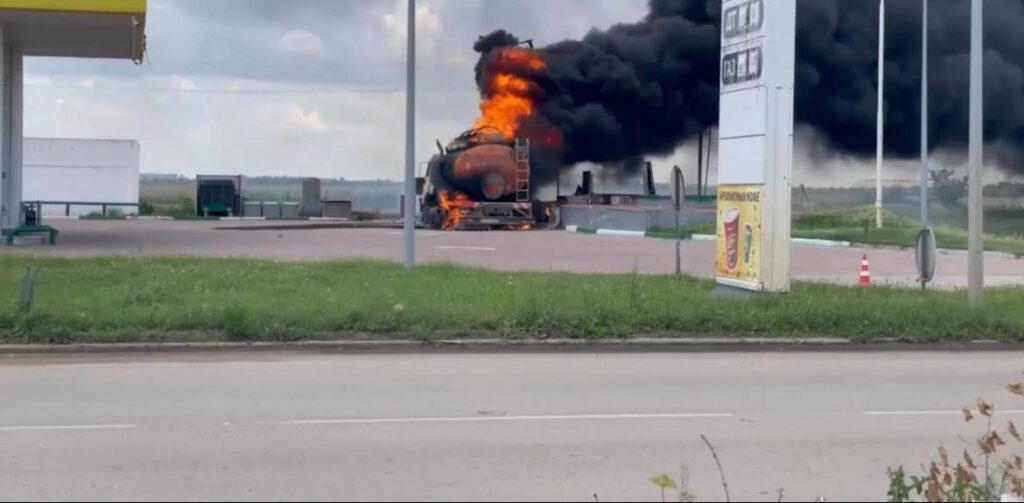
russia's fuel crisis jumps 15 25 regions five days—plus six occupied ukrainian areas · post russian truck burns gas station skadovsk kherson oblast after logistic lockdown mid-range strike 11 2026

Russia's gasoline crisis has spread to 25 of its own regions and six occupied Ukrainian ones, the Russian-language Moscow Times reported on 10 June. Six days earlier, the count stood at 15. Ukrainian strikes on Russian refineries hit a wartime monthly record in May 2026, dropping Russian refining loading well below the start of the year.

This comes amid the Ukrainian long-range drone strike campaign, targeting Russian oil processing, transportation, and storage facilities almost every day. Additionally, Ukraine has escalated its mid-range "Logistic Lockdown" campaign, targeting Russian logistics in the occupied territories at depths of up to 200 km.

From 15 regions to 25 in under a week

The Russian Telegram channel 7×7 counted at least 25 Russian regions facing gasoline shortages and supply disruptions as of 10 June. Less than a week earlier, on 4 June, the number stood at 15. Restrictions also apply across six Russian-occupied Ukrainian regions: Crimea, Sevastopol, and the Luhansk, Donetsk, Kherson, and Zaporizhzhia oblasts.

Bloomberg counted 38 Ukrainian strikes on Russian refineries from January through May 2026. May alone saw 16 — the highest monthly figure of the war. According to OilX, Russian refinery loading has dropped 14% since the start of the year and stays roughly 20% below pre-war levels.

afipsky oil refinery burns again ukrainian drones return krasnodar krai · post fire after drone strike russia 11 2026 5282989402957225318 ukraine news reports
Explore further

Afipsky oil refinery burns again as Ukrainian drones return to Krasnodar Krai

Regional officials have responded unevenly. The acting governor of Belgorod Oblast, Alexander Shuvaev, acknowledged the shortage. Krasnodar Krai governor Veniamin Kondratyev called the situation "artificial hype." Residents publicly mocked the claim under his Telegram post, which was republished on a local channel. Gas stations in Krasnodar Krai have begun closing due to a shortage.

Fuel prices have spiked in occupied Crimea. On 10 June, AI-92 cost about $1.14 per liter, against $0.96 in Moscow. AI-95 traded near $1.25, up from $1.04 in the Russian capital. Resellers were offering fuel at $1.81-$2.08 per liter — about 50% above official Crimean prices.

On 8 June, Russia's Energy Ministry announced the creation of a task force to manage the fuel crisis, citing "growing enemy air attacks."

Occupied Sevastopol cancels fuel coupons after tankers fail to arrive

Sevastopol's Russian-installed governor said on 10 June that planned distribution of rationed petrol had been delayed, Reuters wrote on 11 June. Mikhail Razvozhayev claimed oil tanker trucks could not bring fuel into the city, following recent Ukrainian strikes on supply routes. Crimea, occupied by Russia in 2014, introduced fuel rationing last month due to shortages on the peninsula.

"Unfortunately, oil tanker trucks were unable to come to the city tonight," Razvozhayev wrote on Telegram. 

ukrainian drones knocking out northwestern entrance crimea bridges damaged one night · post rl9vo -ukraine-targets-four-bridges-at-crimea-s-northwestern-choke-point- struck four vehicular crimea's overnight 11 2026 quisling official vladimir saldo claimed strikes part ukraine's
Explore further

Ukrainian drones knocking out the northwestern entrance to Crimea: four bridges targeted in one night

He said priority for refueling on 11 June would go to public transport, utilities, emergency vehicles, and government vehicles.

"I am addressing everyone: there is no point in lining up at... the gas stations tomorrow," he added late on 10 June. 

Existing rationing coupons would be canceled and new ones issued today.

Razvozhayev later claimed over two dozen Ukrainian drones were downed in the early hours of Thursday in a fresh attack on Sevastopol. The city is Crimea's second-largest and home to Russia's Black Sea Fleet.

On the same day, a major drone attack hit Russia's Volga region of Samara, more than 900 km from the front line, forcing state-owned oil giant Rosneft to halt processing at its Kuibyshevsky refinery.

rosneft's kuibyshev refinery joins syzran novokuibyshevsk offline after ukrainian drone strike yesterday · post fires raging kuybyshevsky oil samara russia 10 2026 fires-rage-at-samara-kuybyshevsky-oil-refinery ukraine news reports
Explore further

All three Rosneft Samara refineries now offline or reduced as drones halt Kuibyshevsky operations yesterday

Ukrainian President Volodymyr Zelenskyy said Wednesday evening that Ukraine’s recently launched mid-range strike campaign against Russian logistics, including large-scale strikes on supply and fuel trucks, had proved its worth.

"In recent months, we are especially grateful for the mid-strikes: Russian military logistics throughout the entire depth of the temporarily occupied territory are now within reach of Ukrainian drones," he said. "Our impact reaches Russia’s border regions as well. The enemy feels it, and we will continue to expand it."

Los bárbaros occidentales

By: A A
11 June 2026 at 14:05

Sobre el lento desenmascaramiento del orden liberal y el descubrimiento, bastante incómodo, de que el emperador lo sabía desde el principio

Marcos Paulo CANDELORO

Únete a nosotros en Telegram Twitter  y VK .

Escríbenos: info@strategic-culture.su

Hay algo casi infantil en la fascinación que parte de Occidente ha desarrollado por el lema de la alianza de naciones europeas. Sin embargo, la realidad revela que se trata más bien de un consorcio militar-financiero que intenta preservar una hegemonía que ya empieza a escapársele de las manos.

La guerra de Ucrania, en términos generales, no hizo sino acelerar un proceso que llevaba décadas en marcha. Europa se percató, algo tarde, de que el monopolio político, económico y cultural construido después de 1945 comenzaba a mostrar fisuras irreversibles. China, Rusia, India, Irán e incluso las potencias medianas comprendieron algo que Bruselas y Davos nunca han llegado a admitir del todo: que el orden internacional liberal nunca fue universal. Se trataba, más bien, de la universalización forzada de los intereses de Washington, disfrazada con el sentimental lenguaje del humanitarismo.

Aquí reside la ironía central de nuestra época. Los mismos países que pasaron décadas predicando la soberanía relativa, la gobernanza global y la responsabilidad internacional ahora redescubren frenéticamente el valor de las fronteras, del patriotismo industrial y de la autonomía estratégica. La globalización cumplió su propósito mientras consolidó su supremacía. En el momento en que comenzó a beneficiar a rivales civilizacionales, se convirtió en una amenaza existencial, y he aquí que el viejo instinto territorial resurgió rápidamente, ese mismo instinto que durante años se había tratado como un síntoma de atraso provinciano y, en casos más graves, como evidencia de algún tipo de psicopatología colectiva.

El conflicto actual, por consiguiente, trasciende con creces la dimensión militar y se adentra en el terreno antropológico, ese terreno sobre el que la hoja de cálculo del consultor de Davos no explica absolutamente nada. Por un lado, Occidente posmoderno se transformó en una máquina burocrática de disolución cultural, un bloque político incapaz de defender su propia memoria histórica y, sin embargo, deseoso de exportar compulsivamente la política de identidad al resto del planeta. Por otro lado, los países que han comprendido algo bastante elemental que Aristóteles ya había descrito siglos antes de que existieran los consultores de ESG, (Environmental, Social and Governance (Ambiental, Social y Gobernanza evalúan el desempeño ambiental, social y de gobernanza de una empresa, determinando su sostenibilidad y capacidad de generar valor a largo plazo) a saber, que los pueblos sobreviven gracias a la preservación de la identidad, la continuidad histórica y la cohesión simbólica

Rusia lo comprendió pronto, China aún antes, y ambas percibieron que el liberalismo occidental había dejado de funcionar como modelo económico para convertirse en una especie de religión negativa, fundada en la deconstrucción permanente de los lazos orgánicos. La familia se convierte en opresión, la nación en prejuicio, la religión en atraso, la masculinidad en peligro, la frontera en violencia moral, en una lista cada vez más extensa de aquello que debe ser pulverizado en nombre de un progreso que nadie es capaz de definir con precisión. No es casualidad que Occidente contemporáneo produzca riqueza material y depresión espiritual con igual eficiencia industrial.

Y, sin embargo, lo más curioso de todo es observar cómo la prensa internacional insiste en narrarlo todo a través de la vieja lente moral de la Guerra Fría. Democracia contra autoritarismo, libertad contra tiranía, civilización contra barbarie: he aquí la caricatura que ya no convence ni siquiera al ciudadano europeo o estadounidense medio, a ese ciudadano común que mira Londres, París o Los Ángeles y se da cuenta, sin necesidad de un diploma de Harvard, de que quizás el colapso viene desde dentro. La crisis migratoria europea es solo el síntoma visible, amigos. El verdadero problema es mucho más profundo y, además, resulta considerablemente más embarazoso, pues Europa se ha cansado de sí misma, ha perdido el instinto civilizatorio básico de la supervivencia, ha transformado la culpa histórica en política de Estado, ha sustituido la identidad por la administración tecnocrática y ha cambiado la pertenencia por el consumo

Mientras tanto, el establishment occidental responde de la única manera que conoce: con censura, vigilancia y propaganda moralizante. Toda disidencia se convierte en una amenaza para la democracia, toda crítica al globalismo en extremismo, toda resistencia cultural en radicalización, y los regímenes supuestamente liberales han llegado a depender abiertamente de mecanismos antiliberales para su supervivencia política, en un espectáculo que avergonzaría incluso a Carl Schmitt.

La máscara se cayó durante la pandemia, se cayó de nuevo con la guerra y se cayó definitivamente en medio de la creciente desesperación de las élites globalistas enfrentadas al surgimiento de cualquier fuerza mínimamente soberanista.

El ciudadano medio, el de a pie, por consiguiente, ha comenzado a considerar una hipótesis bastante herética: que la mayor amenaza a la libertad contemporánea quizás no provenga de Moscú ni de Pekín, sino del propio aparato burocrático-financiero que gobierna Occidente en nombre de la democracia, neutralizando elecciones, censurando opiniones y redefiniendo los conceptos básicos de la realidad mediante una ingeniería semántica permanente. El nuevo orden mundial, por lo tanto, prescinde del modelo del imperio formal. Bastará con algo mucho más sofisticado: un régimen administrado por conglomerados financieros, plataformas digitales, organismos transnacionales y estructuras de inteligencia capaces de moldear el comportamiento humano a escala industrial, preservando al mismo tiempo la estética de la libertad.

Y quizás sea precisamente esto lo que explique el creciente pánico en Occidente. Por primera vez en décadas, el resto del mundo ha comenzado a darse cuenta de que el emperador está desnudo. Lo más triste de todo, sin embargo, es que el emperador siempre lo supo. Simplemente contaba con que nadie lo mirara, y así no se den cuenta.

Publicado originalmente por  The Elegant Ruin

 Traducción:  InfoPosta

Millions of homes in London, Essex and Kent at risk of sinking as climate crisis worsens

Analysis pinpoints areas most vulnerable to hotter, drier weather causing ground to shrink and drag foundations down

Millions of homes are at risk from climate-related subsidence, according toan analysis by the British Geological Survey (BGS).

As hotter, drier summers driven by global heating become more frequent, the ground under houses can shrink and drag down a property’s foundations. The most vulnerable areas include London, Essex, Kent and a tranche of land from Oxford up to the Wash on England’s east coast, according to scientists, who say mitigation measures will be needed.

Continue reading...

© Photograph: Greg Balfour Evans/Alamy

© Photograph: Greg Balfour Evans/Alamy

© Photograph: Greg Balfour Evans/Alamy

Four days of extreme rain in Indonesia killed 7% of world’s rarest great apes, study finds

10 June 2026 at 17:18

Critically endangered Tapanuli orangutan population falls after heavy rain and landslides, fuelled by climate crisis, in North Sumatra

Extreme rainfall and landslides fuelled by the climate crisis killed 7% of the remaining population of the world’s rarest great ape, a study has found, prompting fears for the species’ survival.

The research suggests 58 out of the remaining 800 critically endangered Tapanuli orangutans (Pongo tapanuliensis) were killed after more than 1,000mm (39in) of rain fell over four days in Indonesia’s North Sumatra province in November 2025. This equates to 11% of the local population and 7% of the entire species.

Continue reading...

© Photograph: Nature Picture Library/Alamy

© Photograph: Nature Picture Library/Alamy

© Photograph: Nature Picture Library/Alamy

Trump targeting immigrants from countries hit most by climate shocks

10 June 2026 at 14:00

A Guardian analysis reveals how most of 39 countries facing US entry restrictions are most vulnerable environmentally

Donald Trump’s immigration crackdown is largely targeting people from the countries most vulnerable to displacement from climate-driven disasters, a Guardian analysis shows.

As the Trump administration pushes policies to boost planet-heating fossil fuels, millions of people are being forced to flee their homelands due to storms, floods and droughts worsened by the climate crisis.

Continue reading...

© Composite: The Guardian, AFP via Getty Images

© Composite: The Guardian, AFP via Getty Images

© Composite: The Guardian, AFP via Getty Images

Nike charges World Cup fans the most for replica shirts after price surge

10 June 2026 at 08:00

England supporters face paying inflation-busting £95 for an adult shirt as the tournament begins in the US

Fans of World Cup teams kitted out by Nike face the highest costs if they want to buy a replica shirt before the tournament kicks off this week amid a “striking” overall increase in prices.

Alongside the official match versions, which are retailing for as much as €160, manufacturers typically make “stadium”, or replica, versions aimed at supporters.

Continue reading...

© Photograph: Eddie Keogh/The FA/Getty

© Photograph: Eddie Keogh/The FA/Getty

© Photograph: Eddie Keogh/The FA/Getty

Friedrich Merz: Meet the Most Unpopular Chancellor in Modern German History

10 June 2026 at 05:59
Germany’s economic decline is no longer merely an economic story. It has become a political one. Chancellor Friedrich Merz has become the focal point of this broader crisis of governance and legitimacy. For decades, Germany was regarded as the economic engine of Europe and, alongside France, a principal political architect of the European Union. Today, […]

Sudan crisis worsens as civil war enters 4th year and Hormuz closure disrupts aid

It's the world's largest humanitarian crisis, yet aid groups say it has received far too little attention. As Sudan's civil war enters its fourth year, nearly two out of every five people face emergency-level hunger and humanitarian officials warn the crisis has been compounded by the closure of the Strait of Hormuz. Nick Schifrin reports. A warning, some images in this story are disturbing.

How the WHO manufactured a crisis, ignored treatment, and primed the vaccine pump

By: SGT
9 June 2026 at 22:00
by Dr. Peter McCullough, America Outloud: Dr. Peter McCullough joined Retired Brig. General Blaine Holt on “Dangerous Intellectuals” to dissect the hantavirus outbreak aboard the MV Hondias cruise ship, which departed Argentina on April 1, 2026. McCullough argues the virus spreads exclusively through rodent droppings—not human-to-human transmission—and that the WHO catastrophically mishandled the crisis by […]

Report details how climate crisis fuels crop failure risk in global breadbaskets

9 June 2026 at 19:50
A farmer sorts his destroyed rice crop after flood water entered paddy fields from engorged Beas river at Baoopur village in Kapurthala district in India's Punjab state on September 11, 2025. Photo by SHAMMI MEHRA/AFP via Getty Images
Common Dreams Logo

This story originally appeared in Common Dreams on June 09, 2026. It is shared here under a Creative Commons (CC BY-NC-ND 3.0) license.

The climate emergency is sharply increasing the risk of crop failure in regions that produce an outsized share of the world’s staple food grains, according to a report published Tuesday that warns of “serious threats to Europe, the NATO alliance, and global stability” if cooperative resilience initiatives and other mitigation strategies aren’t pursued.

The report, “Global Breadbaskets: Food System Resilience as a Strategic Imperative,” was published by the Center for Climate and Security—part of the Council on Strategic Risks, a Washington, DC-based security policy think tank—and the Woodwell Climate Research Center, an independent nonprofit located in Falmouth, Massachusetts.

“Geopolitical fragmentation, conflict, extreme weather, and global aid cuts already strain food security. Meanwhile, climate change is increasing the likelihood of crop failures in the American, European, and Asian breadbaskets, which produce most of the staple crops underpinning global food security,” the report states.

🆕 Across India, France, and Germany, in the next decade and a half, the odds of key crops failing are set to increase by between two- and six-fold. This isn't just a food story. It's also a #NATO security story.

Council on Strategic Risks (@councilonstrategicrisks.org) 2026-06-09T07:13:30.778Z

The publication follows an April report from a pair of United Nations agencies on how extreme heat is impacting food production and food security around the planet. The new report includes a storymap that explores climate change-driven threats to wheat, rice, and maize (corn) crops in France, Germany, and India—three of the world’s “global breadbaskets.”

The analysis’ authors note that compared with 2010 threat levels, by 2040, “the risk of a given year’s crop failing is projected to grow roughly twofold for Indian wheat and German maize, roughly threefold for French wheat, roughly fourfold for French maize, and roughly sixfold for Indian rice, with sharp increases in critical producing regions.”

Climate-driven extreme heat “not only threatens crops, but also the laborers and infrastructure that translate them into food security,” the report continues. “Extreme heat is projected to reduce the suitability of 15-40% of India’s rain-fed rice-growing regions by 2050, and to reduce physical work capacity during the average growing season to as little as 40% of 2000-era levels by 2100.”

“By 2040, southwestern France will average up to 16 additional days per year above 35°C (95°F), exceeding thresholds that reduce yields, impact grain quality, and cause heat stroke,” the paper warns. “Extreme heat also threatens to damage or disable road and rail networks critical to food transportation, agricultural machinery, civil defense, and military mobilization.”

The publication also states that global breadbasket failures in Europe “could open rifts for Russian meddling, fuel instability in key partners, and elevate food production as a geopolitical lever.”

The Council on Strategic Risks operates within the transatlantic security policy community, whose work often overlaps with NATO’s interests.

“We have plenty of examples of how crop failures can contribute to political instability, from the French Revolution to the Arab Spring,” Center for Climate and Security deputy director and report lead author Tom Ellison said Tuesday in a statement. “In today’s environment, global breadbasket failures could strain NATO priorities, prompt unrest in key countries, and upend trade relationships.”

Woodwell Climate Research Center scientist and report co-author Alexandra Naegele warned that “climate change doesn’t just threaten crop yields and grain quality—it destabilizes entire food systems, from labor and livestock to food storage and transport.”

“Quantifying these climate-driven risks is an essential step toward building resilient food systems and safeguarding global food security,” she added.

The report recommends steps countries—specifically members of the European Union and NATO—can take to mitigate risks to food security, including strengthening cooperative resilience, anticipating instability and hybrid warfare, supporting strategic and vulnerable partners, coordinating trade responses, and investing in agricultural research and development.

“Amid climate change, geopolitical uncertainty, food shocks from the war in Iran, and Russian hybrid warfare, investing in a resilient food system isn’t in competition with security—it’s a key part of it,” Ellison stressed.

Monica Caparas, a scientist at the Woodwell Climate Research Center and report co-author, said, “Understanding and preparing for breadbasket failures is both a national security priority and a humanitarian imperative—one that can help protect lives, reduce instability, and strengthen food resilience before a regional shock becomes a wider crisis.”

The Lyhanna case: open season on judges

9 June 2026 at 14:56
Justice (Pixabay)

Justice (Pixabay)

The disappearance and subsequent death of 11-year-old Lyhanna, whose body was found on June 4 in an agricultural silo in the Gers region of southwestern France, has triggered an unprecedented institutional crisis in France. Politicians are shifting blame onto judges, who are doing what they can with the resources available to them.


France’s judicial institution is facing both genuine operational failures and unacceptable political exploitation. By offloading their own responsibilities onto judges and prosecutors, neither Justice Minister Gérald Darmanin nor Interior Minister Laurent Nuñez is likely to emerge from this ordeal with enhanced credibility.

A troubling case file

The facts currently known in the Lyhanna case are undeniably damaging to the judicial system. The primary suspect, a 41-year-old man and the father of one of Lyhanna’s classmates, had an extensive judicial and administrative record before being formally charged with kidnapping and unlawful confinement of a minor under the age of 15.
Several complaints and reports had already been brought to the attention of the relevant authorities. One of the most sensitive aspects of the case involves a complaint filed on August 22, 2025, by the mother of a child alleging repeated sexual assaults. On September 11, a medical report reportedly identified findings described as consistent with the child’s statements. Yet the suspect was never interviewed before Lyhanna disappeared on May 29.
This timeline raises a fundamental question: why did a complaint alleging the rape of a minor, supported by medical evidence, fail to result in an interview of the suspect before the tragedy occurred? This question goes beyond the understandable public emotion surrounding the case and requires examination of how criminal investigations are actually processed.

The justice inspectorate faces major questions

Justice Minister Gérald Darmanin has ordered a systematic review of 70,000 complaints involving children by July 14. A general administrative inspection is currently underway to determine whether delays, errors, or procedural failures occurred in the handling of cases involving the suspect.
This directive from the Ministry of Justice responds to both political and moral urgency. Its purpose is to ensure that no comparable case is sitting unattended in an investigative unit or prosecutor’s office, particularly those involving rape or sexual abuse allegations. At the same time, it reflects a clear lack of confidence in the ordinary functioning of France’s criminal justice system.
The major challenge following this review will be actually processing those complaints: interviewing suspects, verifying testimony, prioritizing investigative actions, and making the necessary judicial decisions. Without additional operational resources, the scope of the problem may be revealed without being solved.

Judges and prosecutors thrown to the wolves

Frédéric Chevallier, Chief Prosecutor of Chartres and president of the National Conference of Public Prosecutors, has spoken out in defense of prosecutors while acknowledging that the case demands answers. His comments reflect the intense pressure currently weighing on the judicial institution.
On one hand, he rejects the idea that “judges and prosecutors should be thrown to the wolves” in response to public outrage. He stresses the need to avoid premature conclusions before inspections are completed, urging public officials to “keep a cool head.” His central argument is that no serious conclusions can be drawn before the entire chain of events has been reconstructed.
On the other hand, Chevallier has not ruled out individual responsibility, noting that “judges are not beyond accountability.” This cautious approach is intended to prevent the Lyhanna case from becoming a public trial of an individual magistrate or prosecutor’s office before investigators have completed their work.
Yet this institutional defense remains fragile. Explaining that the courts are overloaded, that investigative services are overwhelmed, and that prosecutors constantly triage competing emergencies only partially addresses families’ concerns. When a child dies and prior warnings existed, the judicial system must be able to explain why certain procedures moved so slowly and whether individual decisions contributed to an identified risk.

The impossible equation of priorities

Prosecutors point out that they are managing enormous backlogs of cases. Chevallier referenced not only the 70,000 complaints involving minors now under review, but also millions of cases of all types awaiting action within investigative services.
This argument reveals an institution that is clearly overwhelmed, at times buried beneath mountains of case files. It highlights a criminal justice system confronting systemic saturation. Yet it does not end the legitimate debate over how cases are prioritized. If everything is considered urgent, then nothing truly is. The Lyhanna case compels the judicial system to explain precisely how complaints are prioritized, especially when they involve sexual violence against children.
This issue connects to a structural problem that judges’ unions have denounced for decades: chronic underfunding. The Judicial Magistrates’ Union (USM), which has been highly visible in the media since the tragedy, argues that judges should not serve as lightning rods for the state’s failure to provide adequate judicial resources.

Political exploitation and death threats

The USM has condemned what it sees as unacceptable political exploitation of the tragedy. It points to statements by President Emmanuel Macron dismissing resource-related concerns from the outset, threats of sanctions raised by the Justice Minister before the inspectorate had reached any conclusions, and proposals by political figures to create a special disciplinary court for judges.
This political escalation has been accompanied by serious consequences. The Chief Prosecutor of Auch has been targeted with death threats circulating on social media. The Ministry of Justice has filed a criminal complaint, marking a dangerous turning point: public anger is being transformed into personal targeting and threats against judges and prosecutors themselves.
This is precisely the danger prosecutors fear. Judicial unions have significantly increased their media presence, with senior officials speaking publicly. Their coordinated effort is intended to give voice to rank-and-file judges and prosecutors facing what they view as opportunistic attacks.

Restoring public trust

The prosecutors’ calls for caution regarding the administrative investigation will only be heard if the judicial institution provides complete and transparent answers to the legitimate questions raised by families, advocacy groups, and the broader public.
The central challenge is reconciling two seemingly conflicting imperatives: protecting judicial independence from political interference while acknowledging that the public deserves explanations when a child dies and previous warnings may have been overlooked.
This case reveals that the French judicial system is facing a profound crisis of confidence. Families, citizens, and the public need to understand how the criminal justice process actually works, what priorities genuinely guide the handling of complaints involving minors, and how insufficient resources concretely affect child protection.
Without restoring public trust through transparency and meaningful operational reforms, the Lyhanna case will leave a lasting mark on the relationship between the justice system and French society. The inspectorate may establish the facts, but only clear and responsible institutional communication can help ease the current tensions.

L’article The Lyhanna case: open season on judges est apparu en premier sur FrenchDailyNews.

‘Woefully unprepared’: extreme heat will double US hospitalizations by 2040, study finds

9 June 2026 at 14:00

Sharp rise in hospital visits will in turn drive up annual healthcare costs for heat-related conditions to over $1bn

People in the US are poised to endure another summer of unusually ferocious heat and there will be little respite in the years ahead, with a new study finding that the coming 15 years could see a doubling in hospitalizations due to heat-related illnesses.

The number of annual heat-related emergency department visits or hospitalizations across the US are set to rise from about 109,000 cases a year to as many as 237,000 cases by 2040, the new research has estimated.

Continue reading...

© Photograph: Caitlin O'Hara/Bloomberg via Getty Images

© Photograph: Caitlin O'Hara/Bloomberg via Getty Images

© Photograph: Caitlin O'Hara/Bloomberg via Getty Images

Summer holiday bookings down amid ‘apprehension’, says UK travel industry

9 June 2026 at 12:58

Fears about the Middle East conflict, cost of living and EU border checks are leading people to delay their decisions

Holiday bookings for early summer have been hit by uncertainty around the conflict in the Middle East and the rising cost of living, the travel industry has said.

Mark Tanzer, chief executive of the UK travel association Abta, said that while people still wanted to go on holiday, the industry was bracing for a difficult summer.

Continue reading...

© Photograph: Maria Galan/Alamy

© Photograph: Maria Galan/Alamy

© Photograph: Maria Galan/Alamy

World’s largest banks pledged $906bn to fossil fuel companies in ‘unfathomable’ increase in 2025, report finds

9 June 2026 at 09:00

JPMorgan Chase leads 65 banks making decisions incompatible with restraining rising temperatures, researchers say

The world’s largest banks committed $906bn in financing to the fossil fuel industry last year, an “unfathomable” increase in investment locking in years more of coal, oil and gas production as the world continues to overheat, a new report has found.

The surge in new fossil fuel lending, up $64bn or nearly 8% on 2024, shows that the world’s largest 65 banks are making decisions incompatible with international agreements to restrain rising global temperatures, according to the coalition of environmental groups behind the new analysis.

Continue reading...

© Photograph: Gina M Randazzo/ZUMA Press Wire/Shutterstock

© Photograph: Gina M Randazzo/ZUMA Press Wire/Shutterstock

© Photograph: Gina M Randazzo/ZUMA Press Wire/Shutterstock

If this is winning, America can’t afford much more of it

By: A A
8 June 2026 at 16:17

By John WHITEHEAD’S

Join us on TelegramTwitter, and VK.

Contact us: info@strategic-culture.su

“We’re gonna win so much, you may even get tired of winning.”—Donald Trump

Donald Trump promised Americans they would get tired of winning.

If this is what winning looks like, America can’t afford much more of it.

We are losing ground economically. We are losing credibility abroad. We are losing tourists, workers, stability, trust, constitutional guardrails, and whatever remained of the illusion that the government answers to “we the people.”

The tourism economy is taking a hit, with international visitors increasingly reluctant to come to the United States. Even migration—the lifeblood of America’s economic growth, innovation, labor force and national renewal—is now moving in the wrong direction. Fewer people are coming in, more Americans are leaving, and by some estimates the country has already crossed into negative net migration.

That is not the mark of a nation “winning.” It is the mark of a nation people are increasingly choosing to escape.

Even the looming World Cup—normally an economic windfall for tourism, travel and hospitality—is being shadowed by the administration’s immigration crackdown, detention protests and threats to disrupt international travel at key airports.

That is what happens when a nation treats visitors, immigrants and dissenters as threats first and human beings second: people stop coming, businesses suffer, and fear becomes official policy.

The economy, despite the administration’s relentless victory laps, is flashing warning signs: downgraded growth, strained consumers, rising costs, depleted savings, and policy chaos that leaves families, small businesses and entire industries guessing what fresh disruption tomorrow will bring.

We are being worn down by the losses.

Meanwhile, the man who promised to end wars has presided over their continuation and expansion. The man who promised to bring prices down has helped drive uncertainty up. The man who promised to drain the swamp has turned government into a spoils system for loyalists, cronies, contractors, oligarchs and power brokers. The man who promised law and order has treated the law as something to be weaponized against enemies and waived for friends.

This is not winning.

This is the slow-motion defeat of a constitutional republic by spectacle, grievance, greed and brute force.

The losses are piling up.

Americans were told they would get prosperity. What they got was an economy in which corporate profits and stock market gains mask the fact that ordinary households are stretched thin, savings are shrinking, debt is mounting, and the cost of basic necessities keeps eating away at wages.

They were told tariffs would punish foreign governments and bring jobs home. What they got were higher costs passed down to consumers, retaliation, supply disruptions, and a trade policy built less on strategy than on political theater. Even the courts have begun treating the tariff agenda as what it is: economic policy by executive improvisation, with judges striking down or narrowing tariff maneuvers while the administration keeps looking for new legal workarounds.

They were told immigration crackdowns would make America stronger. What they got was a nation frightening away the workers, students, tourists, entrepreneurs and families who have long helped power its economy.

They were told America would be respected again. What they got was a country increasingly viewed as unstable, hostile, unpredictable and unsafe—not merely by adversaries, but by allies, visitors, investors and would-be partners.

They were told the wars would end. What they got was more war talk, more military escalation, more blank checks for the war machine, and more excuses for expanding executive power in the name of national security.

They were told the Constitution would be restored. What they got was a president who declared, “He who saves his Country does not violate any Law.”

Listen carefully when any ruler says something like that.

That is not constitutionalism. That is the language of kings, dictators and strongmen who believe their intentions place them above the law.

The Constitution was written precisely to prevent that kind of thinking from taking root in America.

The problem with Trump’s brand of winning is that it requires Americans to lose.

For the police state to win, the Fourth Amendment must lose.

For the surveillance state to win, privacy must lose.

For the war machine to win, peace must lose.

For the executive branch to win, the separation of powers must lose.

For the oligarchs to win, working families must lose.

For the propaganda machine to win, truth must lose.

For a strongman to win, the Constitution must lose.

Trump’s “winning” is simply the latest branding campaign for an old con: convince the people they are winning while stripping them of the power to govern themselves.

Call it what you will—national security, border security, economic nationalism, law and order, anti-corruption, emergency authority, America First—but when the end result is more government power and less individual freedom, we should know by now who is really winning.

The winners are the same as always: the defense contractors, data brokers, private prison operators, surveillance companies, lobbyists, political insiders, Wall Street speculators, government contractors, partisan enforcers, donors with access, loyalists seeking payouts, and bureaucratic power centers that thrive on fear, crisis and control.

The losers are “we the people.”

This is the hard truth Americans must face: a government that promises to make you “win” by taking power away from someone else will eventually take power away from you, too.

Rights are not partisan. Due process is not partisan. Free speech is not partisan. Privacy is not partisan. Limits on executive power are not partisan. The Constitution is not supposed to be a campaign prop, a legal technicality or a speed bump on the road to political victory.

The Constitution is the contract that binds the government down.

Without it, all we have are rulers and subjects.

That is why the real measure of any administration is not how loudly it boasts, how many enemies it punishes, how many executive orders it signs, how many troops it deploys, how many agencies it purges, or how many headlines it dominates.

The real measure is whether the people are freer, safer in their rights, more secure in their property, more protected from government abuse, and more capable of holding power accountable.

By that measure, we are not winning.

We are losing in all the ways that matter.

A president can call it winning. A party can call it winning. The media can package it as winning. The crowds can chant along.

But as I make clear in my book Battlefield America: The War on the American People and in its fictional counterpart The Erik Blair Diaries, if the price is the Constitution, then we all lose.

Original article:  www.rutherford.org

Food shortage in occupied Rubizhne: Russia blocks civilian deliveries, blames drones

8 June 2026 at 15:45

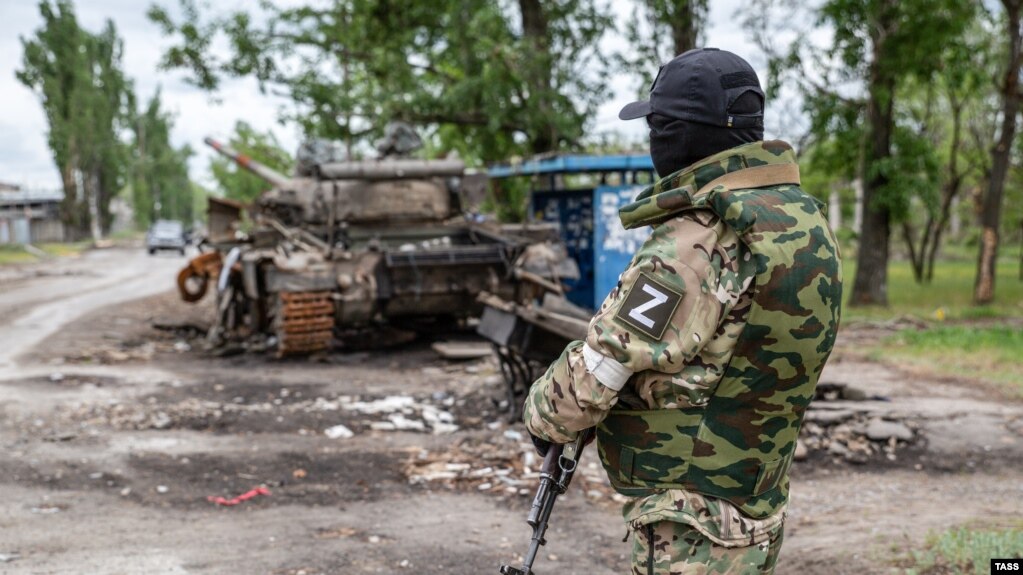
Russian soldier with Z insignia stands near a destroyed armored vehicle on a street in occupied Rubizhne, Luhansk Oblast, where occupation authorities have now manufactured a food shortage by blocking civilian deliveries

Russian occupation forces have deliberately manufactured a food shortage in occupied Rubizhne, cutting civilian food deliveries to the Luhansk Oblast city even as military supply convoys continue to flow, the head of the Luhansk Regional Military Administration reported on 8 June.

Shelves in the city's stores are emptying rapidly, Kharchenko said. Russian propaganda blames disrupted transport links, citing an alleged drone threat. Yet the occupiers have had no difficulty maintaining their own logistics routes to resupply military units stationed across the region, he noted.

"They need to make the next victim for Russian television out of local residents. They chose Rubizhne."—Luhansk governor Oleksii Kharchenko

A city turned into a propaganda prop

The official accused Russia of weaponizing hunger for television cameras. He said the occupiers intend to film bare shelves and hungry residents, then broadcast the footage to Russian audiences as evidence of suffering they themselves engineered.

Before Russia's full-scale invasion, Rubizhne was home to more than 55,000 people. Russian forces seized the city in May 2022 after weeks of devastating urban combat during which they fired up to 1,500 shells per day, the BBC's Quentin Sommerville reported from the front lines. The city's current population remains unknown, but residents who stayed have endured four years of occupation without reliable utilities, communications, or public services.

In nearby Sievierodonetsk, conditions have deteriorated so far that residents now mow the grass in their own neighborhoods and clean communal areas themselves, Kharchenko added—an admission that Russia's occupation authorities provide no basic municipal services even in the cities they claim to have "liberated."

A pattern of deliberate starvation across occupied Ukraine

The manufactured food shortage in occupied Rubizhne fits a documented pattern of Russia using hunger as a weapon against Ukrainian civilians trapped behind the front lines.

In Oleshky, a frontline city in occupied Kherson Oblast, roughly 2,000 civilians have been cut off from food, medicine, and clean water for months. "If the situation doesn't improve, people will just die there from hunger. Because there's no way out, no food supplies coming in," an Oleshky resident who escaped occupation told the Kyiv Independent. Russian forces mined the access roads, destroyed the Kakhovka dam's water infrastructure, and deployed FPV drones that residents describe as conducting "human safari" attacks—hunting anyone who steps outside. People there hunt pigeons and wild ducks with fishing line, plant vegetables in shell craters, and bury their dead in wheelbarrows because no coffins or transport exist.

Ukraine's Foreign Ministry in May appealed to the United Nations and the International Committee of the Red Cross over what it called a "severe humanitarian crisis" in Russian-occupied Kherson Oblast. Russia rejected calls for a humanitarian corridor.

In Nova Kakhovka, upstream from Oleshky, most coastal areas have been abandoned. The few residents who remain live in distant high-rise microdistricts with no functioning hospital and minimal Russian administrative presence, governed remotely from Henichesk, roughly 130 kilometers away.

The Rubizhne food shortage also coincides with Russia's broader restriction of civilian movement through occupied territories. On 6 June, occupation authorities shut down bus and private car traffic on main arteries, capping two weeks of land-corridor breakdowns that have further isolated occupied communities.

Starvation as premeditated policy

International human rights investigators have gathered evidence that Russia planned to use hunger as a weapon before the 2022 invasion. A report by Global Rights Compliance found that a Russian defense contractor purchased grain-transport trucks and bulk cargo ships in December 2021—two months before the invasion began. The evidence was submitted to the International Criminal Court for what could become the first prosecution of a head of state for the war crime of starvation as a method of warfare.

Global Rights Compliance has drawn a direct parallel to the Holodomor—the Soviet-engineered famine that killed millions of Ukrainians in 1932–1933. Russia's current starvation tactics are being perpetrated, the organization noted, by "the same attacking state."

Under the Geneva Conventions, using starvation of civilians as a method of warfare is a war crime. The Rome Statute of the ICC codified the offense in 1998. Yet in occupied Rubizhne, occupied Oleshky, and across the territories Russia claims to have annexed, the pattern continues: military convoys pass, civilian supply lines close, and shelves empty.

❌