Normal view

Researchers Identify 31 Letters in Ancient Anatolia’s Lost Sidetic Language

11 June 2026 at 18:47
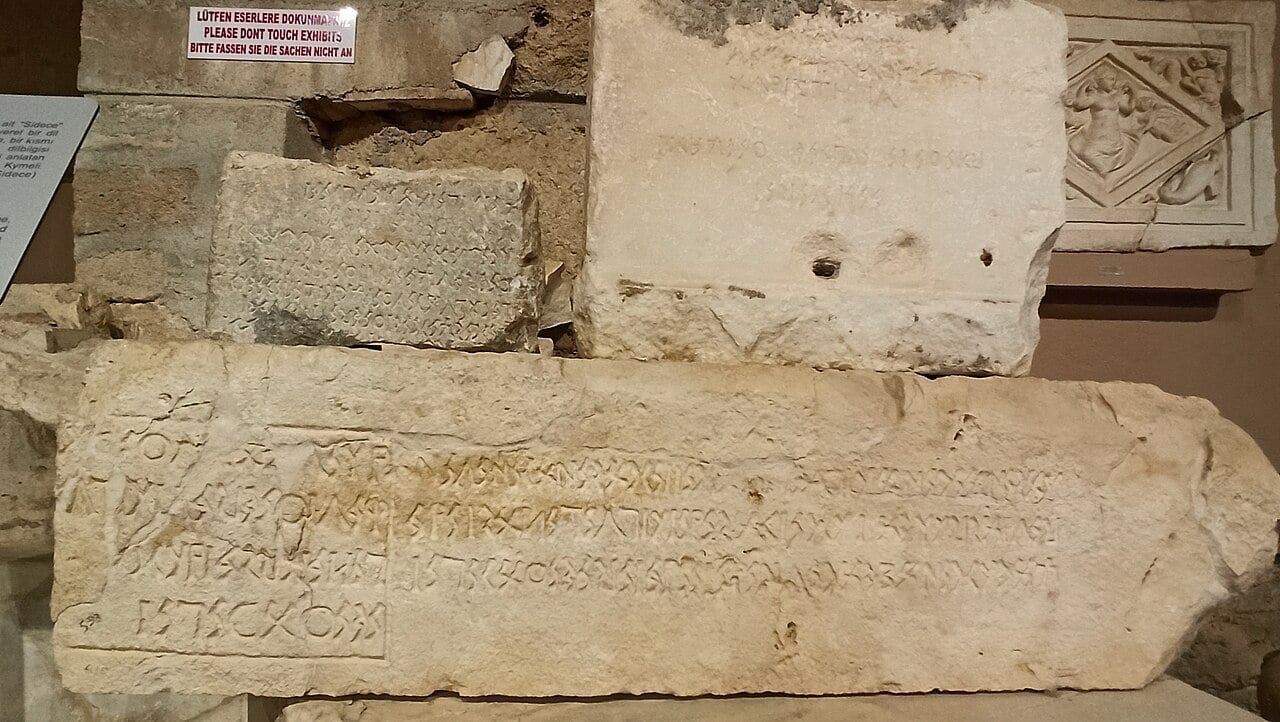
Inscriptions in Sidetic language
Inscriptions in Sidetic language. Credit: Spiritia / Wikimedia Commons / CC BY-SA 4.0

Researchers have expanded the known Sidetic alphabet to 31 letters, moving the field closer to decoding one of Anatolia’s lost languages. The new findings come from active excavations at Side Ancient City in Antalya’s Manavgat district.

The work is led by Prof. Dr. Feriştah Alanyalı, excavation director and archaeologist at Anadolu University, in collaboration with Italian linguist Alfredo Rizza and Austrian linguist Michaela Zinko. Funding comes through the Culture and Tourism Ministry’s Heritage for the Future Project.

Sidetic sits within the Luwian branch of Anatolian Indo-European languages, a grouping that also includes Lycian and Carian. Decipherment has moved slowly because the surviving inscriptions are few and most span only one or two lines.

Alanyalı said that the thin body of material has made it hard to reconstruct grammar, vocabulary, and structure with any confidence.

New excavations yield longer texts and bilingual comparisons

New excavations have brought a shift. Researchers have now recovered inscriptions running as long as 30 to 40 lines, well beyond anything previously available. Bilingual texts written in both Sidetic and Greek have also come to light.

Alanyalı said that those texts have renewed optimism because matching content across two languages helps researchers assign meaning to unknown signs and connect recurring words to known concepts.

One finding in particular has drawn attention. Researchers now think the Sidetic terms “Siruawn” and “Siruawan” refer to Side itself.

Inscription in Sidène (Sidetic)
Inscription in Sidène (Sidetic). Credit: Vincent Ramos / Wikimedia Commons / CC BY-SA 3.0

Since the Greek word “Side” (Greek:Σίδη) translates to pomegranate, a fruit that featured prominently on the city’s ancient coinage, Alanyalı said that the name likely carried the same meaning in the native language.

She described this as a significant finding for understanding the city’s origins and identity.

An ancient city that held its language for centuries

Side is typically known through its Greek and Roman structures, but Alanyalı said that the city’s history runs deeper.

Ancient accounts record that settlers from the Greek city of Kyme arrived at Side and, over time, abandoned their own language in favor of the one spoken by local residents.

Alanyalı said that tradition points to a community whose culture was firmly rooted long before outside groups arrived.

That cultural foundation held even after Alexander the Great brought Greek influence into the region during the fourth century B.C.

The inscriptions show that Side’s residents continued writing in Sidetic for roughly two centuries into the Hellenistic period, with the language appearing to fade only around the late second century B.C.

The Roman Theatre at ancient Side city
The Roman Theatre at ancient Side city. Credit: Carole Raddato / Flickr / CC BY-SA 2.0

Alanyalı said that the persistence of Sidetic complicates the idea that Greek culture quickly swept away what came before it.

Assyrian and Babylonian seals point to ancient eastern ties

Archaeological finds also point to Side’s connections with civilizations to the east. A Neo-Assyrian seal turned up during excavations at the site.

Separately, Italian researchers obtained a Neo-Babylonian seal from residents of the area before the Turkish War of Independence. Alanyalı said that the two objects together point to cultural ties with Mesopotamia dating back to the seventh century B.C.

A bilingual inscription tied to the city’s Serapis Temple adds another dimension. Alanyalı said that the text documents how the temple was financed, listing the names of donors and the sums each contributed, all written in Sidetic.

31 letters bring researchers closer to Anatolia’s lost language

The use of the local language for a public record of that kind confirms it was still understood and used in everyday civic life.

With the alphabet now standing at 31 known letters, up from 26, researchers working on this lost Anatolian language have a sharper set of tools.

Alanyalı said that the international team continues its work, and each newly identified letter brings the field a step closer to a fuller reading of inscriptions that Side’s people worked for generations to preserve.

In the U.K., a Violent Cycle: Hateful Attacks, Right-Wing Agitation and Riots

11 June 2026 at 18:08
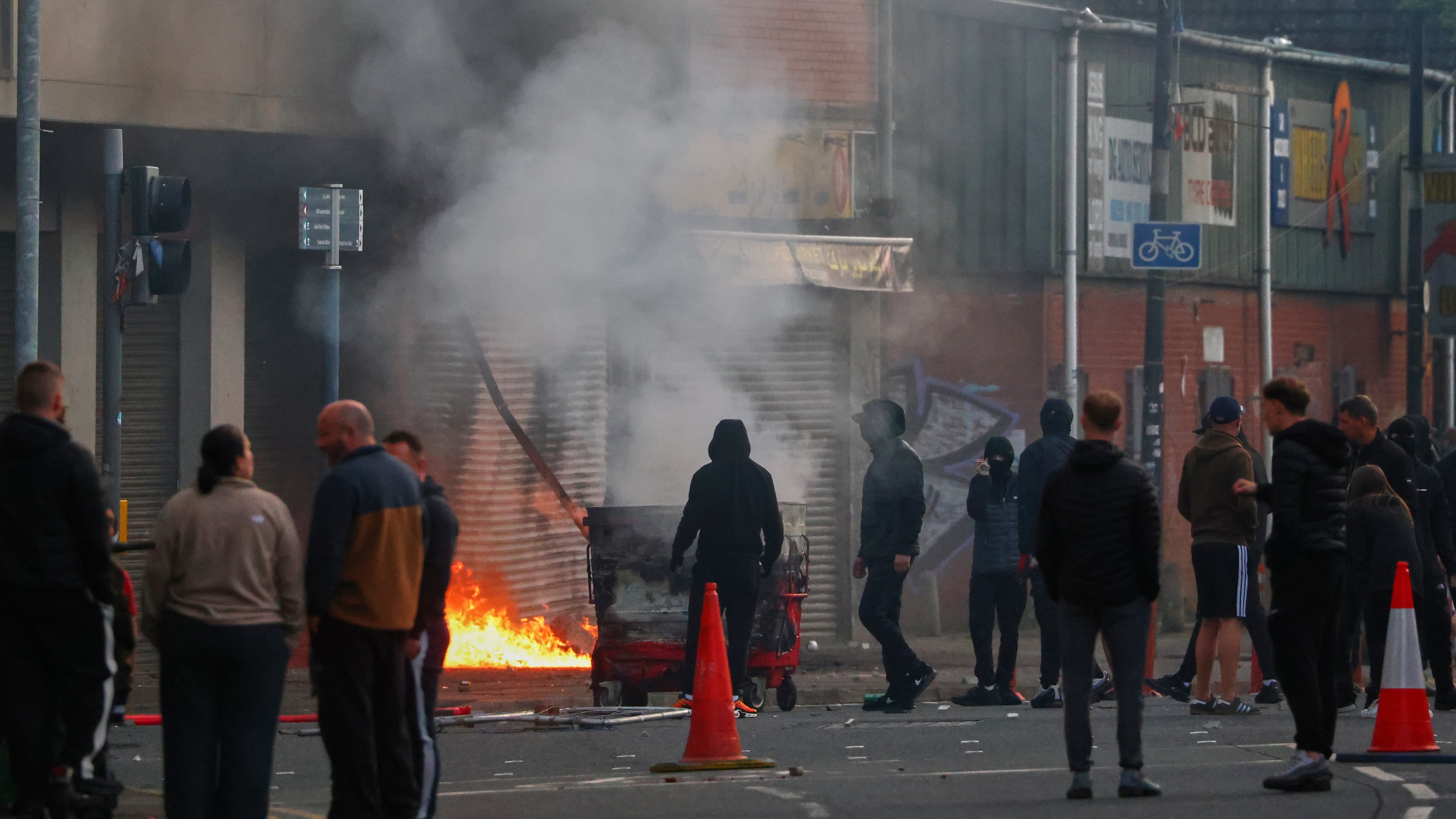
Two stabbings have fueled violent protests in England and Northern Ireland in the last 10 days, fanned online by right-wing voices. In Britain and across Europe, it’s a grim pattern.

© Paul Faith/Agence France-Presse — Getty Images

Protests north of Belfast, Northern Ireland, on Wednesday in response to a stabbing attack two days earlier.

Dès dimanche, Bruxelles réécrit l'étiquette de votre petit-déjeuner

À compter du 14 juin 2026, la directive européenne 2024/1438( transposée en droit français par le décret n°2026-312 du 24 avril) impose de nouvelles règles d'étiquetage, de composition et de traçabilité au miel, aux confitures, aux jus de fruits et aux laits déshydratés. Derrière le vernis consommateuriste : des coûts de mise en conformité réels pour les petits producteurs, et un bénéfice pour le consommateur qui reste, pour l'essentiel, cosmétique.

Dès dimanche, Bruxelles réécrit l'étiquette de votre petit-déjeuner
LE COURRIER
DES STRATÈGES
Restez libre !
LA NEWSLETTER · GRATUITE

Le Courrier,
chaque matin.

Dès dimanche, Bruxelles réécrit l'étiquette de votre petit-déjeuner

L'essentiel de l'actualité, passé au crible par les cinq plumes du Courrier. Dans votre boîte, chaque jour ouvré.

Gratuit. Vous restez libre de partir quand vous voulez.

JE M'INSCRIS lecourrierdesstrateges.fr
lecourrierdesstrateges.fr
Restez libre !

Le petit-déjeuner français vient de gagner quelques lignes supplémentaires sur ses étiquettes. Avec le décret n°2026-312 du 24 avril 2026, la France transpose la directive européenne 2024/1438, adoptée par l’Union européenne pour renforcer la traçabilité et l’information du consommateur. Une réforme présentée comme technique, mais qui illustre une fois encore l’appétit réglementaire de Bruxelles.

Dès dimanche, Bruxelles réécrit l'étiquette de votre petit-déjeuner
LE COURRIER
DES STRATÈGES
Restez libre !
ABONNEMENT

Allez au fond
des choses.

Deux grands formats par jour. Les cinq plumes du Courrier. La série Sécession, le dimanche.

Le monde commente. Vous, vous comprenez.

S'ABONNER lecourrierdesstrateges.fr
lecourrierdesstrateges.fr
Restez libre !

La traçabilité jusqu’au gramme de miel

Le changement le plus spectaculaire concerne le miel. Désormais, les mélanges devront préciser chaque pays d’origine dans le champ visuel principal de l’emballage, avec indication du pourcentage correspondant à chaque provenance. Les producteurs devront être capables de justifier ces chiffres grâce à une documentation complète de leur chaîne d’approvisionnement.

Petit-déjeuner : ce qui va changer sur les étiquettes dès le 14 juin 2026
La France a transposé la directive européenne dite « petit-déjeuner », qui modifie les règles applicables au miel, aux confitures, aux jus de fruits et aux laits déshydratés. À partir du 14 juin 2026, les fabricants devront composer avec des exigences plus précises sur l’origine, les dénominations et la composition de plusieurs produits alimentaires courants.
Dès dimanche, Bruxelles réécrit l'étiquette de votre petit-déjeunerJournal de l'EconomieAurélie Giraud
Dès dimanche, Bruxelles réécrit l'étiquette de votre petit-déjeuner

Sur le papier, la mesure vise à lutter contre les fraudes et à mieux informer les consommateurs. Dans la pratique, elle implique de nouveaux coûts administratifs : suivi documentaire renforcé, refonte des emballages, adaptation des logiciels de gestion et multiplication des contrôles. Les grands groupes disposent déjà de services conformité dédiés. Les petits apiculteurs et conditionneurs, eux, devront absorber ces charges supplémentaires.

Agriculture : la comédie du prix-plancher et du protectionnisme
Ce week-end, la vie politique française est entrée dans une nouvelle phase : Emmanuel Macron a été “accroché” sur son
Dès dimanche, Bruxelles réécrit l'étiquette de votre petit-déjeunerLe Courrier des StratègesÉric Verhaeghe
Dès dimanche, Bruxelles réécrit l'étiquette de votre petit-déjeuner

Les confitures sont également concernées. Le seuil minimal de fruits passe à 450 grammes par kilo pour les confitures classiques et à 500 grammes pour les confitures extra. Les jus de fruits voient apparaître de nouvelles catégories liées à la réduction des sucres naturels, avec des critères précis à respecter.

Dès dimanche, Bruxelles réécrit l'étiquette de votre petit-déjeuner
LE COURRIER
DES STRATÈGES
Restez libre !
TELEGRAM · L'INFO EN CONTINU

Entre deux éditions,
le fil.

La newsletter vous donne le matin. Le fil vous donne l'instant.

Gratuit, et en continu.

REJOINDRE LE FIL t.me/resterlibre
t.me/resterlibre
Restez libre !

Plus de fruits, plus de normes, plus de dépenses

Certes l’objectif est sanitaire, pourtant, les bénéfices réels pour le consommateur restent limités. Une confiture contenant davantage de fruits n’est pas nécessairement un produit moins calorique, tandis que les nouvelles dénominations sur les jus relèvent davantage du marketing réglementé que d’une révolution nutritionnelle. En revanche, les industriels devront reformuler certaines recettes et réimprimer des millions d’emballages.

Les agriculteurs étranglés par les banques…
La brutale hausse des taux d’intérêts ne frappe pas seulement les candidats à l’accession à la propriété. Elle constitue un
Dès dimanche, Bruxelles réécrit l'étiquette de votre petit-déjeunerLe Courrier des StratègesÉric Verhaeghe
Dès dimanche, Bruxelles réécrit l'étiquette de votre petit-déjeuner

Le Conseil de l'Union européenne présente cette révision comme un progrès démocratique. David Clarinval, alors vice-premier ministre belge et ministre de l'agriculture, déclarait lors de l'adoption : les nouvelles règles possibles aux consommateurs « de faire des choix plus éclairés et plus sains. » Belle intention. Sauf que les grands industriels absorberont ces contraintes par des économies d’échelle ; les petits producteurs et artisans, souvent familiaux, subiront de plein fouet les frais fixes de recomposition et d’emballage. La norme descend jusque dans le pot de confiture, là où la marge est déjà mince et la concurrence internationale rude.

Quitter l’euro ! La seule revendication incontournable pour les agriculteurs et le reste de notre économie
Par Jean Goychman - C’est en 1992 que le piège tendu de longue date s’est refermé sur la France. Après
Dès dimanche, Bruxelles réécrit l'étiquette de votre petit-déjeunerLe Courrier des StratègesRédaction
Dès dimanche, Bruxelles réécrit l'étiquette de votre petit-déjeuner

Cette réforme illustre une fois de plus la dérive d’une Union européenne qui ne sait plus s’arrêter. Sous couvert de protection du consommateur, elle renforce le pouvoir des bureaucraties et des grands acteurs capables d’influencer ou d’anticiper les normes à Bruxelles, au détriment de la diversité des productions locales et de la liberté entrepreneuriale.

Dès dimanche, Bruxelles réécrit l'étiquette de votre petit-déjeuner
LE COURRIER
DES STRATÈGES
Restez libre !
TIPS · SANS ABONNEMENT

Offrez-nous
un café.

Un média libre vit de ses lecteurs. Un pourboire ponctuel, sans compte ni engagement, quand le cœur vous en dit.

Vous donnez ce que vous voulez. Vous restez libre.

LAISSER UN POURBOIRE merci !
lecourrierdesstrateges.fr
Restez libre !

Après les champs, les usines et les commerces, la réglementation descend désormais jusque dans le pot de confiture. Une preuve supplémentaire que la bureaucratie européenne ne se contente plus de fixer les règles du marché : elle entend désormais en définir chaque détail, jusqu’au contenu du petit-déjeuner.

How the far right stirs up protests against immigration in Britain

11 June 2026 at 10:13

It was extreme even for a figure like Nigel Farage. Hours after the police footage of officers handcuffing Henry Nowak on the fatal night of December 3 in Southampton became public and spread like wildfire on social media, the Reform UK leader called on citizens to respond with “pure, cold rage.” The young Nowak had been fatally stabbed by a man of Sikh faith and Asian descent, who later falsely accused him of a racist attack. “I can’t breathe,” the victim shouted up to nine times, to the officers’ disbelief as they moved against him. His cry of agony echoed the words George Floyd uttered on the streets of Minneapolis, which sparked the Black Lives Matter movement.

Seguir leyendo

© Christopher Furlong (Getty Images)

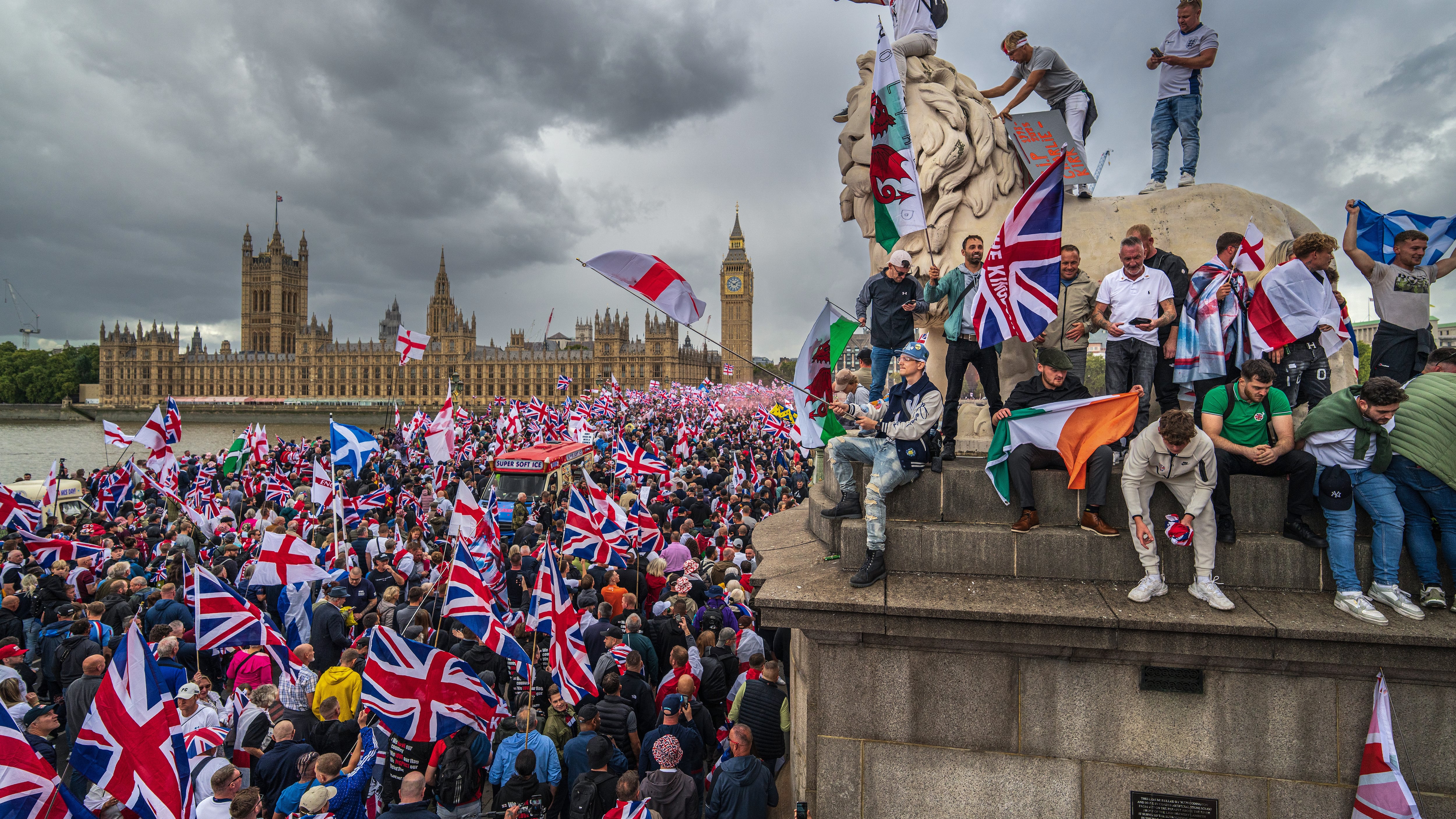
Protest in London called by far-right leader Tommy Robinson.

Brunel’s SS Great Britain site drops historical name in ‘cool’ rebrand

11 June 2026 at 00:01

New name, Bristol Dockyards, and museum revamp aimed at becoming more rooted in community, says chief executive

One of the UK’s maritime landmarks is being renamed as part of a drive to make it “cooler” and more inclusive.

For a decade, the dockland site in Bristol that houses the ocean liner SS Great Britain, which was designed by the Victorian engineer Isambard Kingdom Brunel, has been promoted as Brunel’s SS Great Britain.

Continue reading...

© Photograph: Tony Smith/Alamy

© Photograph: Tony Smith/Alamy

© Photograph: Tony Smith/Alamy

Farage suddenly returns to political stage – but dodges questions about £5m gift

Reform UK leader has been unusually quiet in recent weeks – at great cost to the party during a crucial byelection

Fake images of Nigel Farage have been ubiquitous online lately – but the real politician has proved far more elusive since it was revealed seven weeks ago that he took a £5m personal gift from a crypto billionaire.

And while an AI-generated depiction of the Reform UK leader was falsely shown getting violent on BBC’s Question Time, Farage has been largely avoiding the TV studios where he might face questions over the cash.

Continue reading...

© Photograph: Temilade Adelaja/Reuters

© Photograph: Temilade Adelaja/Reuters

© Photograph: Temilade Adelaja/Reuters

Germany was late to grasp Russian hybrid attacks, Bundeswehr colonel tells defence forum

10 June 2026 at 18:23

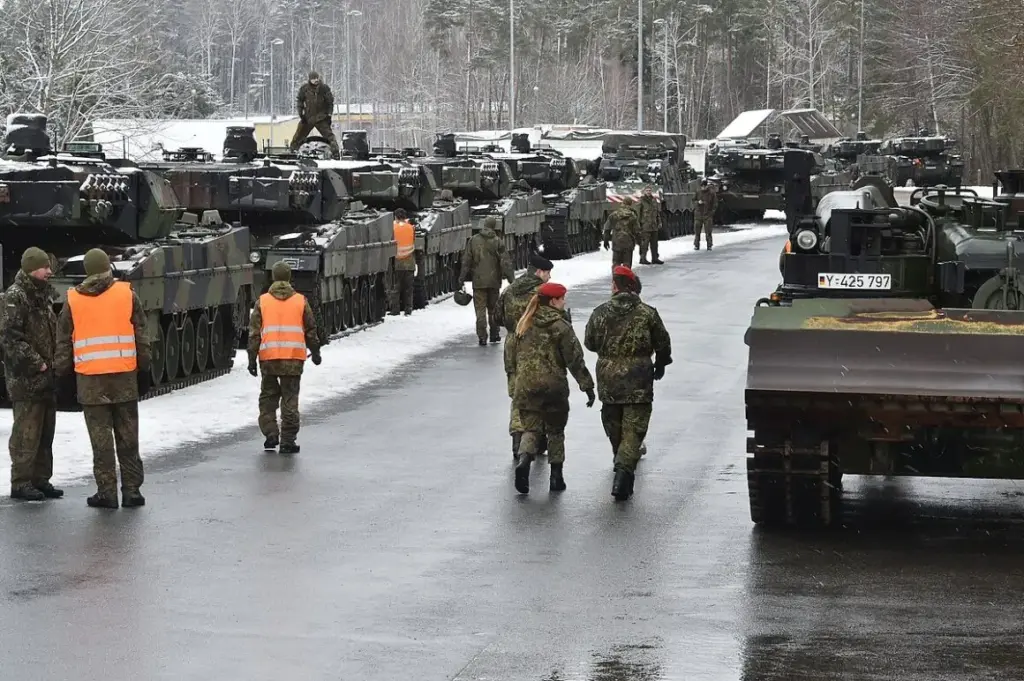
Bundeswehr troops and armored vehicles support NATO's eFP Battlegroup in Lithuania, part of Germany's posture against Russian hybrid attacks.

Hybrid threats span both hardware and politics, said Colonel Sönke Marahrens. The list of methods includes overflights, the cutting of undersea cables, and a concerted disinformation campaign. It also reaches into political and judicial systems, including what he called the "disposable agent" model —civilians recruited online for one-off sabotage or surveillance. As a model for how the state should respond, Colonel Marahrens pointed to Finland. Authorities there detained a suspected sabotage vessel within an hour of Baltic Sea cable damage.

Russian hybrid attacks: a political shift acknowledged late

Recognition had arrived slowly, Marahrens told the New Age Defence forum in Berlin on 8 June, Ukrinform reported. "Germany recognized rather late that we are being attacked by such hybrid methods," the colonel said. "But I would say that in the last year and a half to two years, we see a shift at the political level as well."

The colonel heads a department at the Bundeswehr's Center for Digitalization and Capability Development. The center reports to the Cyber and Information Domain Command in Bonn. German intelligence services and state institutions are increasingly informing citizens of the changing security environment, he said.

Drones, cables, and courts

Russian pressure now reaches beyond physical sabotage, Marahrens said. "It's not just drones and not just undersea cables, it's also disinformation within our society. It's the use of the political and judicial systems, the concept of 'disposable agents,'" he said.

Unidentified drones over European critical infrastructure, including German sites, had a primarily psychological effect, the colonel said. The impact was not military. Germany's National Security Council should receive real powers for rapid decision-making, he argued. The colonel cited Finland's response time of less than an hour after the Baltic Sea cable damage.

"Creating societal resilience is something we in Germany have yet to learn." — Col. Sönke Marahrens, Bundeswehr Center for Digitalization and Capability Development

Kyiv's resilience is something Berlin lacks

Germany draws on Ukrainian wartime experience through financing, joint training, and front-line exchanges, Marahrens said. "We support Ukraine financially," he said. "We also adopt the experience gained from the battlefield. We provide training for them, and we also adopt experience from them during joint exercises at our training grounds."

The most important Ukrainian lesson, the colonel said, is societal resilience under wartime conditions. "Creating societal resilience is something we in Germany have yet to learn," Marahrens said. The Kremlin coordinates large-scale hybrid operations across Europe, the agency added. These campaigns aim to discredit Kyiv and inflame internal conflicts in EU states amid Russia's war on Ukraine.

Violence erupts against immigrants in Belfast following attempted beheading: ‘Burning families out of their homes is nothing less than disgusting cowardice’

10 June 2026 at 15:28

Political and religious leaders in Northern Ireland saw early Wednesday morning — with the embers of a long night of violence in Belfast and other parts of the region still smoldering — that their calls for calm had fallen on deaf ears. Cars, buses, phone booths, and trash cans set ablaze. Homes where immigrants — or simply people from ethnic minorities — were believed to live, completely engulfed in flames after violent groups targeted them as places that needed to be “liberated.”

Seguir leyendo

© Peter Morrison (AP Photo/Peter Morrison)

Protesters in Belfast following a stabbing incident, June 9.

Stephen Ogilvie’s family appeal for calm on second night of disorder – as it happened

This blog is now closed. Read our main report here: Police use water cannon against rioters in Northern Ireland

Hadi Alodid refused legal representation and made no reply to charges which were put put to him through an Arabic interpreter as he appeared in court charged with attempted murder following the Belfast knife attack, the Press Association reports.

The 30-year-old, with an address at Duncairn Avenue in Belfast, appeared before the city’s magistrates’ court on Wednesday morning.

He is charged with the attempted murder of Stephen Ogilvie on Monday, with threatening to kill an NHS radiographer on the same day and with the possession of a knife.

Continue reading...

© Photograph: Henry Nicholls/AFP/Getty Images

© Photograph: Henry Nicholls/AFP/Getty Images

© Photograph: Henry Nicholls/AFP/Getty Images

The Year That Forged the Roman Empire

10 June 2026 at 07:21
Sack of Corinth, by Thomas Allom, 1872
Sack of Corinth, by Thomas Allom, 1872. Credit: Wikimedia Commons, public domain

The formation of the Roman Empire was a gradual process, unfolding over several centuries. Nevertheless, there is one specific year that we can point to as arguably the single most significant year in the formation of the Roman Empire. This was the year 146 BCE. How did the events of this year lead to the creation of the Roman Empire?

The gradual formation of the Roman Empire

In an administrative sense, the Roman Empire was founded in the year 27 BCE. This was when Octavian, the son of Julius Caesar, became the emperor. The Roman Senate recognized him as possessing overarching military power and designated him Augustus in recognition of his new position as emperor.

Octavian established reforms to the constitution, officially changing Rome into an empire. Hence, in 27 BCE, the Roman Empire came into existence. Before then, it had been a republic.

However, although it only became an empire in an administrative sense in 27 BCE, Rome already controlled a vast empire before that. In the basic sense of “a group of countries ruled by a single person, government, or country“, Rome was already an empire long before the days of Octavian.

The Roman Republic conquered most of the territory that would constitute the future Empire. Therefore, to understand how Rome became powerful, we need to examine that era.

The acquisition of territory was a gradual process that took several centuries. However, the year 146 BCE, arguably more than any other, was crucial in the formation of the Roman Empire.

The Battle of Corinth

In 146 BCE, two significant events occurred for the Romans. One of these was the Battle of Corinth, marking the culmination of the Achaean War, which lasted only a single year.

At that time, the Achaean League ruled over the Peloponnese. They had recently assimilated Sparta into the league, which troubled Rome. Both sides were concerned with the other’s expansionist tendencies. Rome had conquered Macedonia in the early part of the second century BCE and had reconquered it in 150-148 BCE.

In the final year of the war against Macedonia, the Achaean League took control of Sparta, solidifying their hold on the Peloponnese. With tensions high due to the actions of both sides, war broke out two years later, in 146 BCE.

The war did not last long. The Achaean League was woefully unprepared, both militarily and financially, for a full-scale war against Rome. The Romans quickly subdued the Greek cities, many of which took the initiative to surrender.

A Roman consul and military general named Lucius Mummius led the Romans in their siege of Corinth. This was the climax of the war. The Romans successfully defeated and utterly destroyed it. Their brutality was noted even by ancient historians. With this victory, the Romans gained direct control of all of Greece.

The Siege of Carthage

The same year, 146 BCE, also marked the climax of another war. The war in question was the Third Punic War. This was the third war between the Roman Republic and the Carthaginian Empire.

Carthage was located in modern-day Tunisia. Rome had already defeated them in the Second Punic War, which had ended in 201 BCE. One of the terms of the treaty was that Carthage was prohibited from engaging in war without Rome’s permission. This allowed Rome’s ally, Numidian king Masinissa, to repeatedly invade Carthage’s territory.

Carthage’s decision to fight back and send an army against Masinissa in 149 BCE provided the Romans with a justification for a third war against Carthage. In reality, Rome harbored animosity towards Carthage and was merely seeking an excuse to destroy it.

When the Roman army arrived, the Carthaginians offered a complete surrender. Nevertheless, the Romans persisted and besieged the city. Eventually, after considerable brutality and bloodshed, the Romans utterly destroyed their enemy.

Just like Corinth in that same year, Carthage was completely, mercilessly destroyed, and the Romans took over the territory.

How the year 146 BCE led to the creation of the Roman Empire

Given this information, 146 BCE can be regarded as vital in the creation of the Roman Empire. The Romans achieved two major victories this year: the defeat of the Achaean League and the defeat of Carthage.

Both of these victories significantly expanded the territory of the Roman Republic. Rome took over control of all of Greece and also the core territory of the Carthaginian Empire in Tunisia. Granted, this was only a tiny portion of what later became the territory of Rome’s vast empire.

However, the main impact that this year had on the formation of the Roman Empire was not the territory gained. Rather, it was the geopolitical consequences of these victories that mattered the most.

Carthage and the Achaean League were both major powers in the Mediterranean. With their defeat, Rome became the undisputed master of that part of the earth. While it still had numerous enemies to confront, it no longer had a single, major, powerful rival.

Over in Anatolia, Pergamon was friendly with Rome. Ptolemaic Egypt was also their ally, with Rome exerting considerable influence over that region. With Greece and Carthage out of their way, Rome’s position as the dominant force in the Mediterranean was firmly established. It is for that reason that we can consider 146 BCE as such a crucial year in the formation of the Roman Empire.

Divers Film Great White Shark in the Mediterranean For the First Time

9 June 2026 at 21:59
Majestic great white sharks glide through the ocean waters.
Majestic great white shark glides through the ocean waters. Credit: Elias Levy / OpenVerse / CC BY-2.0

Volunteer divers have recorded what researchers believe is the first footage of a great white shark filmed underwater in the Mediterranean, captured during a ghost net removal dive near a shipwreck in the Strait of Sicily.

Derk Remmers, a technical diver with Ghost Diving, was about 40 meters (131 feet) below the surface between Sicily and Tunisia when the shark appeared. He filmed the encounter. The footage and photographs were released on June 8 to mark World Oceans Day.

Remmers said that the odds of meeting such an animal underwater are far lower than winning the lottery, and that his hands were shaking as he filmed.

The shark circled the group, then turned and moved back toward the divers. Remmers said that its behavior appeared calm and curious, not aggressive. When the team released air from their regulators, the shark picked up speed and disappeared from view.

First great white shark sighting in the Mediterranean stuns researchers

Marine biologists who reviewed the footage called the sighting rare and scientifically significant.

Dr. Carlo Cattano, a researcher at the Sicily Marine Centre of the Stazione Zoologica Anton Dohrn, said that most knowledge of great white sharks in the region has come from dead animals caught accidentally in fishing nets, and that direct observations help researchers better understand the species.

A great white shark circled divers in the Mediterranean as they worked to pull deadly ghost nets from a shipwreck in the Strait of Sicily. pic.twitter.com/tdJKJ37TMY

— Tom Marvolo Riddle (@tom_riddle2025) June 9, 2026

He said that prior research had already identified the area as a key location for threatened species and that this sighting reinforces its conservation value. Researchers cautioned that broader conclusions would require further study.

The mission was organized by the Healthy Seas Foundation, along with Ghost Diving and the Society for the Documentation of Submerged Sites. The wreck’s location is being kept confidential.

Ghost nets, fishing gear lost or abandoned at sea, continue killing marine life long after leaving a vessel. Previous dives at the site documented loggerhead sea turtles and large fish species caught in the gear.

Shipwrecks attract marine life, and when ghost nets settle on them, those structures become underwater traps.

Ghost nets turn shipwreck ecosystems into ongoing ocean traps

Veronika Mikos, director of Healthy Seas, said that the sighting is a reminder of how much marine life still exists in offshore Mediterranean waters and how much is at risk from discarded gear and overfishing.

Remmers said that between 1% and 10% of all fishing gear worldwide is lost each year, possibly adding more than 500,000 metric tons of abandoned nets to the ocean annually.

He said that the shark’s presence near the wreck signals an abundance of prey, and that those same animals face entanglement risk. Volunteer cleanups alone cannot resolve the problem, he said, and stronger action against industrial and illegal fishing is needed.

The mission also included environmental DNA sampling and underwater monitoring. Healthy Seas said that it plans to release additional footage and scientific material in the coming weeks.

Stranger Things: The First Shadow announces final curtain in London and New York

9 June 2026 at 19:00

The theatrical prequel to the Duffer Brothers’ smash-hit Netflix series is to shut down in the West End and on Broadway this winter, after selling more than 1.5m tickets

The London and New York productions of Stranger Things: The First Shadow, the theatrical prequel to Netflix’s TV blockbuster, are to both close this winter. The stage spectacular will have run for just over three years in the West End, where it won two Olivier awards, and for just over 20 months on Broadway, where it won four Tony awards. The final performance at the Phoenix theatre in London will be on 27 December and the last show at the Marquis theatre in New York will be on 3 January.

The announcement, made on Tuesday, comes as a surprise considering the TV series’ phenomenal continued success. The November launch of the fifth and final season broke viewing records for an English-language series on Netflix, with 59.6m views in the first five days, and even caused the streaming service to crash within minutes of the episodes first becoming available. In February, it was widely reported that the New York stage production was being filmed for future release, but Netflix has made no such official statement.

Continue reading...

© Photograph: Manuel Harlan

© Photograph: Manuel Harlan

© Photograph: Manuel Harlan

Spyware firm targeted WhatsApp users in defiance of US court order, Meta says

9 June 2026 at 17:20

Tech company says it ‘caught and disrupted’ NSO Group’s attempts to access accounts in Jordan and Lebanon

A spyware firm has been targeting WhatsApp users with malicious links in contravention of a US court order forbidding it from doing so, Meta has said.

In a post, Meta said WhatsApp had “caught and disrupted spear phishing attempts” by NSO Group, which a spokesperson said targeted a handful of users in Jordan and Lebanon. It had also caught the group creating “test accounts and groups” on WhatsApp.

Continue reading...

© Photograph: Martin Meissner/AP

© Photograph: Martin Meissner/AP

© Photograph: Martin Meissner/AP

Israeli attack on Tyre in Lebanon kills eight as evacuation ordered for Christian quarter

People flee historic district of ancient city after airstrikes hit residential areas and damage archaeological sites

Israel has bombed the city of Tyre, killing eight and injuring at least 32 people, and struck dozens of other villages in south Lebanon as it issued forced evacuation orders for the historic Christian quarter of the ancient city for the first time.

Israel struck the al-Masaken neighbourhood without warning on Tuesday morning, sending smoke plumes high above the city’s buildings and igniting fires. Further airstrikes were carried out across the city and a series of bombings hit Abbasieh, a village north of Tyre.

Continue reading...

© Photograph: Kawant Haju/AFP/Getty Images

© Photograph: Kawant Haju/AFP/Getty Images

© Photograph: Kawant Haju/AFP/Getty Images

Russia starts hauling gasoline to the front in the trunks of civilian cars

9 June 2026 at 11:52

russia starts hauling gasoline front trunks civilian cars · post jerrycans loaded supply russian forces occupied ukraine 2026 перевезення-бензину-цивільними-автівками-для-військових-рф-на-тимчасово-окупованій-тери news ukrainian reports

Russia has begun moving gasoline to its frontline units in occupied Ukraine in convoys of civilian cars, the Ukrainian defense outlet Militarnyi reported. Soldiers filmed themselves loading jerrycans into ordinary trunks, an improvised workaround after Ukrainian drone strikes made fuel tankers too risky to run. Russian forces are also disguising army trucks as civilian vehicles along the supply route to occupied Crimea.

This comes amid Ukraine’s ongoing “Logistics Lockdown,” a campaign by several Ukrainian military branches and the Security Service to target Russian fuel, logistics, and other supplies across occupied territories, at depths of up to 200 km.

Soldiers filmed the fuel run themselves

A video on the Exilenova+ Telegram channel showed Russians describing a convoy of passenger cars assembled to carry one metric ton of gasoline, Militarnyi reported. A man off-camera says the cars left the city of Kizilyurt in Dagestan, Russia, on the local head's orders, with the fuel destined for Russian units in occupied Tokmak, Zaporizhzhia Oblast. The footage shows jerrycans filling the trunks:

Besides the fuel, the drivers carried 1.5 million rubles ($20,900) to buy another batch of gasoline. Fuel keeps Russian frontline positions running: generators power electronic-warfare systems, charge batteries for reconnaissance and strike drones, and run communications gear in dugouts and observation posts.

Disguised trucks and a strained supply line

Russian forces have also begun disguising army trucks as civilian transport because of Ukrainian drone attacks deep in the rear. In northern Crimea, monitors spotted a freshly painted blue Ural truck driven by a man in civilian clothes, still carrying military plates, its oversized body posing as a dump truck.

The command of Russia's Dnepr grouping ordered mass use of civilian vehicles to move fuel along the route linking Rostov-on-Don with occupied Crimea, the Krymsky Veter monitoring project reported. That improvisation tracks the M-14 corridor, now within Ukraine's deepening drone range.
Drones of the 20th Separate Brigade of Ukraine's Unmanned Systems Forces (SBS), known as K-2, and the Phoenix drone unit strike a Russian military truck on a logistics route in Donetsk Oblast, 7 June 2026. Photo: SBS
Explore further

ISW: The strikes will likely cascade into deeper disruption across Russia’s rear supply network

Why Russia is improvising

Ukraine's Defense Forces have intensified drone strikes on logistics trucks and fuel tankers on the roads from Russia to occupied Crimea. The attacks have already forced the occupiers to limit cargo traffic through the occupied part of Kherson Oblast toward the peninsula, and Russia has closed stretches of its own land corridor to keep them clear of strike drones.

Unions rebuff Farage and say Reform ‘cosplaying’ as workers’ champions

TUC, GMB and Unison leaders reject invitation to affiliate to Reform amid rising support for party among their members

Major trade unions and the TUC have rebuffed Nigel Farage’s call for unions to affiliate to Reform UK, saying the party is “cosplaying” as workers’ champions and has opposed new employment rights.

Farage issued a call on Tuesday for unions to attend Reform’s conference and to affiliate to the party, and he suggested one union may be on the brink of doing so.

Continue reading...

© Photograph: Sean Smith/The Guardian

© Photograph: Sean Smith/The Guardian

© Photograph: Sean Smith/The Guardian

Anti-immigration protesters in Belfast set bins and vehicles on fire amid unrest over knife attack – live

Crowds gather at sites across Belfast after Sudanese man charged with attempted murder

Badenoch said, after the murder of Stephen Lawrence, it was right that people wanted to ensure this did not happen again.

It led to the Macpherson report, she said.

[It] wanted to put right what went wrong with policing in the 1990s.

However, in attempting to do so, it also enshrined a principle which I believe is wrong that a racist incident is racist if it is perceived as racist by the victim or any other person.

Equality law, properly designed, should protect us all in the same way. It should be a shield, not a sword.

It should protect people from discrimination. It should protect people from being treated differently because of their race, sex, religion, sexuality, disability or age.

Continue reading...

© Photograph: PA

© Photograph: PA

© Photograph: PA

❌