Normal view

Divers Film Great White Shark in the Mediterranean For the First Time

9 June 2026 at 21:59
Majestic great white sharks glide through the ocean waters.
Majestic great white shark glides through the ocean waters. Credit: Elias Levy / OpenVerse / CC BY-2.0

Volunteer divers have recorded what researchers believe is the first footage of a great white shark filmed underwater in the Mediterranean, captured during a ghost net removal dive near a shipwreck in the Strait of Sicily.

Derk Remmers, a technical diver with Ghost Diving, was about 40 meters (131 feet) below the surface between Sicily and Tunisia when the shark appeared. He filmed the encounter. The footage and photographs were released on June 8 to mark World Oceans Day.

Remmers said that the odds of meeting such an animal underwater are far lower than winning the lottery, and that his hands were shaking as he filmed.

The shark circled the group, then turned and moved back toward the divers. Remmers said that its behavior appeared calm and curious, not aggressive. When the team released air from their regulators, the shark picked up speed and disappeared from view.

First great white shark sighting in the Mediterranean stuns researchers

Marine biologists who reviewed the footage called the sighting rare and scientifically significant.

Dr. Carlo Cattano, a researcher at the Sicily Marine Centre of the Stazione Zoologica Anton Dohrn, said that most knowledge of great white sharks in the region has come from dead animals caught accidentally in fishing nets, and that direct observations help researchers better understand the species.

A great white shark circled divers in the Mediterranean as they worked to pull deadly ghost nets from a shipwreck in the Strait of Sicily. pic.twitter.com/tdJKJ37TMY

— Tom Marvolo Riddle (@tom_riddle2025) June 9, 2026

He said that prior research had already identified the area as a key location for threatened species and that this sighting reinforces its conservation value. Researchers cautioned that broader conclusions would require further study.

The mission was organized by the Healthy Seas Foundation, along with Ghost Diving and the Society for the Documentation of Submerged Sites. The wreck’s location is being kept confidential.

Ghost nets, fishing gear lost or abandoned at sea, continue killing marine life long after leaving a vessel. Previous dives at the site documented loggerhead sea turtles and large fish species caught in the gear.

Shipwrecks attract marine life, and when ghost nets settle on them, those structures become underwater traps.

Ghost nets turn shipwreck ecosystems into ongoing ocean traps

Veronika Mikos, director of Healthy Seas, said that the sighting is a reminder of how much marine life still exists in offshore Mediterranean waters and how much is at risk from discarded gear and overfishing.

Remmers said that between 1% and 10% of all fishing gear worldwide is lost each year, possibly adding more than 500,000 metric tons of abandoned nets to the ocean annually.

He said that the shark’s presence near the wreck signals an abundance of prey, and that those same animals face entanglement risk. Volunteer cleanups alone cannot resolve the problem, he said, and stronger action against industrial and illegal fishing is needed.

The mission also included environmental DNA sampling and underwater monitoring. Healthy Seas said that it plans to release additional footage and scientific material in the coming weeks.


Stranger Things: The First Shadow announces final curtain in London and New York

9 June 2026 at 19:00

The theatrical prequel to the Duffer Brothers’ smash-hit Netflix series is to shut down in the West End and on Broadway this winter, after selling more than 1.5m tickets

The London and New York productions of Stranger Things: The First Shadow, the theatrical prequel to Netflix’s TV blockbuster, are to both close this winter. The stage spectacular will have run for just over three years in the West End, where it won two Olivier awards, and for just over 20 months on Broadway, where it won four Tony awards. The final performance at the Phoenix theatre in London will be on 27 December and the last show at the Marquis theatre in New York will be on 3 January.

The announcement, made on Tuesday, comes as a surprise considering the TV series’ phenomenal continued success. The November launch of the fifth and final season broke viewing records for an English-language series on Netflix, with 59.6m views in the first five days, and even caused the streaming service to crash within minutes of the episodes first becoming available. In February, it was widely reported that the New York stage production was being filmed for future release, but Netflix has made no such official statement.

Continue reading...

© Photograph: Manuel Harlan

© Photograph: Manuel Harlan

© Photograph: Manuel Harlan

Spyware firm targeted WhatsApp users in defiance of US court order, Meta says

9 June 2026 at 17:20

Tech company says it ‘caught and disrupted’ NSO Group’s attempts to access accounts in Jordan and Lebanon

A spyware firm has been targeting WhatsApp users with malicious links in contravention of a US court order forbidding it from doing so, Meta has said.

In a post, Meta said WhatsApp had “caught and disrupted spear phishing attempts” by NSO Group, which a spokesperson said targeted a handful of users in Jordan and Lebanon. It had also caught the group creating “test accounts and groups” on WhatsApp.

Continue reading...

© Photograph: Martin Meissner/AP

© Photograph: Martin Meissner/AP

© Photograph: Martin Meissner/AP

Israeli attack on Tyre in Lebanon kills eight as evacuation ordered for Christian quarter

People flee historic district of ancient city after airstrikes hit residential areas and damage archaeological sites

Israel has bombed the city of Tyre, killing eight and injuring at least 32 people, and struck dozens of other villages in south Lebanon as it issued forced evacuation orders for the historic Christian quarter of the ancient city for the first time.

Israel struck the al-Masaken neighbourhood without warning on Tuesday morning, sending smoke plumes high above the city’s buildings and igniting fires. Further airstrikes were carried out across the city and a series of bombings hit Abbasieh, a village north of Tyre.

Continue reading...

© Photograph: Kawant Haju/AFP/Getty Images

© Photograph: Kawant Haju/AFP/Getty Images

© Photograph: Kawant Haju/AFP/Getty Images

Russia starts hauling gasoline to the front in the trunks of civilian cars

9 June 2026 at 11:52

russia starts hauling gasoline front trunks civilian cars · post jerrycans loaded supply russian forces occupied ukraine 2026 перевезення-бензину-цивільними-автівками-для-військових-рф-на-тимчасово-окупованій-тери news ukrainian reports

Russia has begun moving gasoline to its frontline units in occupied Ukraine in convoys of civilian cars, the Ukrainian defense outlet Militarnyi reported. Soldiers filmed themselves loading jerrycans into ordinary trunks, an improvised workaround after Ukrainian drone strikes made fuel tankers too risky to run. Russian forces are also disguising army trucks as civilian vehicles along the supply route to occupied Crimea.

This comes amid Ukraine’s ongoing “Logistics Lockdown,” a campaign by several Ukrainian military branches and the Security Service to target Russian fuel, logistics, and other supplies across occupied territories, at depths of up to 200 km.

Soldiers filmed the fuel run themselves

A video on the Exilenova+ Telegram channel showed Russians describing a convoy of passenger cars assembled to carry one metric ton of gasoline, Militarnyi reported. A man off-camera says the cars left the city of Kizilyurt in Dagestan, Russia, on the local head's orders, with the fuel destined for Russian units in occupied Tokmak, Zaporizhzhia Oblast. The footage shows jerrycans filling the trunks:

Besides the fuel, the drivers carried 1.5 million rubles ($20,900) to buy another batch of gasoline. Fuel keeps Russian frontline positions running: generators power electronic-warfare systems, charge batteries for reconnaissance and strike drones, and run communications gear in dugouts and observation posts.

Disguised trucks and a strained supply line

Russian forces have also begun disguising army trucks as civilian transport because of Ukrainian drone attacks deep in the rear. In northern Crimea, monitors spotted a freshly painted blue Ural truck driven by a man in civilian clothes, still carrying military plates, its oversized body posing as a dump truck.

The command of Russia's Dnepr grouping ordered mass use of civilian vehicles to move fuel along the route linking Rostov-on-Don with occupied Crimea, the Krymsky Veter monitoring project reported. That improvisation tracks the M-14 corridor, now within Ukraine's deepening drone range.
Drones of the 20th Separate Brigade of Ukraine's Unmanned Systems Forces (SBS), known as K-2, and the Phoenix drone unit strike a Russian military truck on a logistics route in Donetsk Oblast, 7 June 2026. Photo: SBS
Explore further

ISW: The strikes will likely cascade into deeper disruption across Russia’s rear supply network

Why Russia is improvising

Ukraine's Defense Forces have intensified drone strikes on logistics trucks and fuel tankers on the roads from Russia to occupied Crimea. The attacks have already forced the occupiers to limit cargo traffic through the occupied part of Kherson Oblast toward the peninsula, and Russia has closed stretches of its own land corridor to keep them clear of strike drones.

Unions rebuff Farage and say Reform ‘cosplaying’ as workers’ champions

TUC, GMB and Unison leaders reject invitation to affiliate to Reform amid rising support for party among their members

Major trade unions and the TUC have rebuffed Nigel Farage’s call for unions to affiliate to Reform UK, saying the party is “cosplaying” as workers’ champions and has opposed new employment rights.

Farage issued a call on Tuesday for unions to attend Reform’s conference and to affiliate to the party, and he suggested one union may be on the brink of doing so.

Continue reading...

© Photograph: Sean Smith/The Guardian

© Photograph: Sean Smith/The Guardian

© Photograph: Sean Smith/The Guardian

Anti-immigration protesters in Belfast set bins and vehicles on fire amid unrest over knife attack – live

Crowds gather at sites across Belfast after Sudanese man charged with attempted murder

Badenoch said, after the murder of Stephen Lawrence, it was right that people wanted to ensure this did not happen again.

It led to the Macpherson report, she said.

[It] wanted to put right what went wrong with policing in the 1990s.

However, in attempting to do so, it also enshrined a principle which I believe is wrong that a racist incident is racist if it is perceived as racist by the victim or any other person.

Equality law, properly designed, should protect us all in the same way. It should be a shield, not a sword.

It should protect people from discrimination. It should protect people from being treated differently because of their race, sex, religion, sexuality, disability or age.

Continue reading...

© Photograph: PA

© Photograph: PA

© Photograph: PA

Lithuanian court: the roadside attack on a Ukraine-shirt cyclist was hate, not chance

9 June 2026 at 09:14

lithuanian court roadside attack ukraine-shirt cyclist hate chance · post mountain bike bns dviratis asociatyvi - nuotr ukraine news ukrainian reports

Lithuanian court has convicted a man who ran a cyclist off the road and attacked him for wearing a shirt with Ukrainian symbolsaccording to LRT. Judges treated his hatred of people who support Ukraine as an aggravating circumstance. The verdict is now final, and the court found the assault was deliberate, not an accident.

As Russia continues its all-out war against Ukraine, open support for Ukrainians across the Baltic states through flags, clothing, and fundraisers has become a marker of identity, even as it occasionally provokes hostility.

The roadside attack

On the evening of 27 March 2025, the man drove up to the cyclist on a road in Lithuania's Širvintos district. He repeatedly ordered the cyclist to take off the shirt bearing Ukrainian symbols. When the cyclist refused, the driver passed him, then swung the front of his car toward the roadside and blocked his path. The cyclist braked hard and fell with his bicycle. He suffered injuries, and the bicycle was damaged.

When the cyclist got back up, the man ran over to him. He again demanded that the cyclist remove the shirt, grabbed it, and tried to pull it off. The cyclist reached for his phone to call for help. The man struck him and knocked the phone onto the asphalt, breaking it, the court found.

immigration ukrainians in world
Explore further

Two Polish citizens detained in Przemyśl for desecrating Ukraine’s flag — sixth such attack in last months

A hate motive, the court ruled

The Vilnius Regional District Court found the 1987-born man guilty of damaging another's property and causing minor bodily harm. Evidence from the investigation showed the violence was not random, the court said. It stemmed from the man's hatred of the victim as someone publicly backing Ukraine against Russia's invasion. The court treated that motive, hostility toward a group for supporting Ukraine, as an aggravating circumstance.

The court handed the man a non-custodial penalty of one year and three months' restriction of liberty. During that time, he must work or register as a jobseeker. He must also complete a program aimed at changing violent behavior. On top of that, he owes the victim for material and non-material harm, and he must repay Lithuania's State Patient Fund for the cost of treating the injuries.

Amherd
Explore further

Switzerland to limit protection status for Ukrainians from seven western oblasts

A Vilnius District Prosecutor's Office prosecutor, Edvinas Navickas, led the pre-trial investigation and the prosecution. Vilnius County police officers gathered the evidence. The court issued its verdict on 12 May, and it has since taken effect, the prosecutor's office reported. Lithuania, a NATO member bordering Russia, has been one of Ukraine's strongest backers since 2022, sending weapons and welcoming Ukrainian refugees.

Lithuania has prosecuted this hatred before, convicting a man who smashed a displaced family's car.

Ukrainian refugees

Millions of Ukrainians live outside their country because Russia's invasion made home unsafe. Some 5.9 million are abroad as of 2026. Most settle in the European Union, where Poland and Germany host the largest communities. That visibility and open support for Ukraine sometimes draw hostility. Other reported attacks on Ukrainians abroad don't have a clear anti-Ukrainian motive. 

latvia's russian-language radio survives hidden state subsidy — media regulator wants over · post latvian flag eastnewsua ukraine news ukrainian reports
Explore further

Latvia sentences man to prison for anti-Ukrainian hate speech and violence

In Poland, isolated cases include a Ukrainian beaten over his accent and a woman detained for telling two Ukrainian women to go back to Ukraine, while a separate knife attack on a Ukrainian selling his car in Wrocław has not been tied to nationality.

In Germany, an attacker killed a teenage athlete, a man went after children for speaking Ukrainian, and others assaulted teenagers while chanting pro-Russian slogans; one Berlin assault and a Murnau double killing both pointed to anti-Ukrainian motives, and a Russian was jailed for life over the latter. 

The violence is not confined to those two countries: other attacks on Ukrainians have occurred in other places. Earlier, a Ukrainian was stabbed to death in Ireland in an attack police have not linked to his nationality, and a Ukrainian woman was murdered in the United States by a man who cited a delusional reason.

Vance Blames Migrant ‘Invasion’ for UK Stabbing

8 June 2026 at 21:00
British officials accused Vice President JD Vance of trying to “stir up division” in his comments on the murder of Henry Nowak, whose killer was sentenced to life in prison last week.

© Ben Stansall/Agence France-Presse — Getty Images

Tributes for Henry Nowak outside the Portswood Police Station in Southampton, southern England, last week.

Food shortage in occupied Rubizhne: Russia blocks civilian deliveries, blames drones

8 June 2026 at 15:45

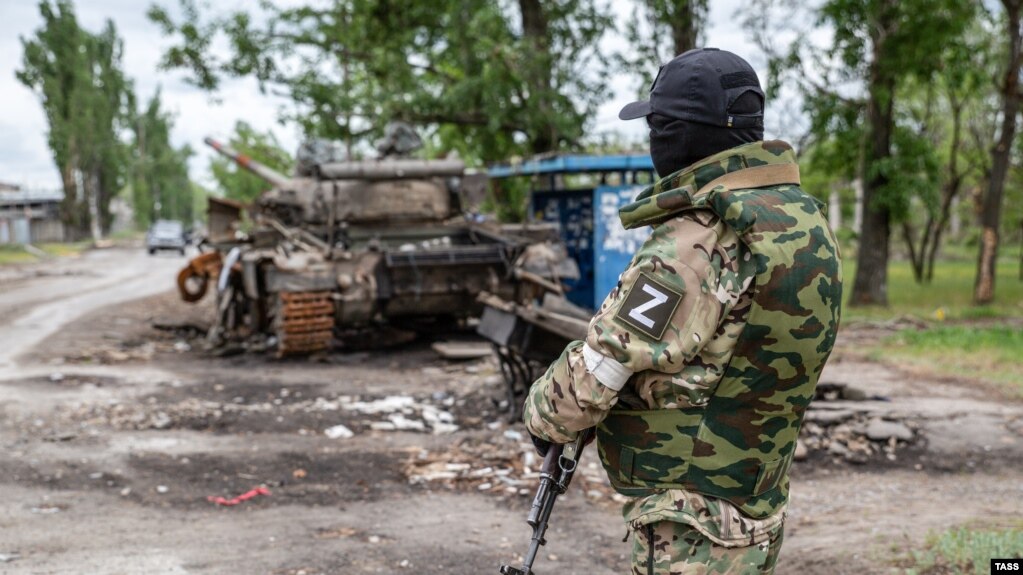
Russian soldier with Z insignia stands near a destroyed armored vehicle on a street in occupied Rubizhne, Luhansk Oblast, where occupation authorities have now manufactured a food shortage by blocking civilian deliveries

Russian occupation forces have deliberately manufactured a food shortage in occupied Rubizhne, cutting civilian food deliveries to the Luhansk Oblast city even as military supply convoys continue to flow, the head of the Luhansk Regional Military Administration reported on 8 June.

Shelves in the city's stores are emptying rapidly, Kharchenko said. Russian propaganda blames disrupted transport links, citing an alleged drone threat. Yet the occupiers have had no difficulty maintaining their own logistics routes to resupply military units stationed across the region, he noted.

"They need to make the next victim for Russian television out of local residents. They chose Rubizhne."—Luhansk governor Oleksii Kharchenko

A city turned into a propaganda prop

The official accused Russia of weaponizing hunger for television cameras. He said the occupiers intend to film bare shelves and hungry residents, then broadcast the footage to Russian audiences as evidence of suffering they themselves engineered.

Before Russia's full-scale invasion, Rubizhne was home to more than 55,000 people. Russian forces seized the city in May 2022 after weeks of devastating urban combat during which they fired up to 1,500 shells per day, the BBC's Quentin Sommerville reported from the front lines. The city's current population remains unknown, but residents who stayed have endured four years of occupation without reliable utilities, communications, or public services.

In nearby Sievierodonetsk, conditions have deteriorated so far that residents now mow the grass in their own neighborhoods and clean communal areas themselves, Kharchenko added—an admission that Russia's occupation authorities provide no basic municipal services even in the cities they claim to have "liberated."

A pattern of deliberate starvation across occupied Ukraine

The manufactured food shortage in occupied Rubizhne fits a documented pattern of Russia using hunger as a weapon against Ukrainian civilians trapped behind the front lines.

In Oleshky, a frontline city in occupied Kherson Oblast, roughly 2,000 civilians have been cut off from food, medicine, and clean water for months. "If the situation doesn't improve, people will just die there from hunger. Because there's no way out, no food supplies coming in," an Oleshky resident who escaped occupation told the Kyiv Independent. Russian forces mined the access roads, destroyed the Kakhovka dam's water infrastructure, and deployed FPV drones that residents describe as conducting "human safari" attacks—hunting anyone who steps outside. People there hunt pigeons and wild ducks with fishing line, plant vegetables in shell craters, and bury their dead in wheelbarrows because no coffins or transport exist.

Ukraine's Foreign Ministry in May appealed to the United Nations and the International Committee of the Red Cross over what it called a "severe humanitarian crisis" in Russian-occupied Kherson Oblast. Russia rejected calls for a humanitarian corridor.

In Nova Kakhovka, upstream from Oleshky, most coastal areas have been abandoned. The few residents who remain live in distant high-rise microdistricts with no functioning hospital and minimal Russian administrative presence, governed remotely from Henichesk, roughly 130 kilometers away.

The Rubizhne food shortage also coincides with Russia's broader restriction of civilian movement through occupied territories. On 6 June, occupation authorities shut down bus and private car traffic on main arteries, capping two weeks of land-corridor breakdowns that have further isolated occupied communities.

Starvation as premeditated policy

International human rights investigators have gathered evidence that Russia planned to use hunger as a weapon before the 2022 invasion. A report by Global Rights Compliance found that a Russian defense contractor purchased grain-transport trucks and bulk cargo ships in December 2021—two months before the invasion began. The evidence was submitted to the International Criminal Court for what could become the first prosecution of a head of state for the war crime of starvation as a method of warfare.

Global Rights Compliance has drawn a direct parallel to the Holodomor—the Soviet-engineered famine that killed millions of Ukrainians in 1932–1933. Russia's current starvation tactics are being perpetrated, the organization noted, by "the same attacking state."

Under the Geneva Conventions, using starvation of civilians as a method of warfare is a war crime. The Rome Statute of the ICC codified the offense in 1998. Yet in occupied Rubizhne, occupied Oleshky, and across the territories Russia claims to have annexed, the pattern continues: military convoys pass, civilian supply lines close, and shelves empty.

“Extremely rare” 300-ton Russian rail recovery crane destroyed in partisan sabotage operation, ATESH claims

7 June 2026 at 12:25

Fire engulfs a rail recovery crane in Russia’s Voronezh region, which ATESH claims was destroyed during a sabotage operation targeting Russia's railway infrastructure. Screenshot from video: ATESH

Pro-Ukrainian partisan movement ATESH says its agents carried out a sabotage operation at a railway station in Russia’s Voronezh Oblast, destroying a rare heavy-duty rail recovery crane used by Russian Railways.

The group said the target was an EDK-300/5 rail recovery crane, a specialized system used for large-scale emergency rail restoration work. ATESH claims the equipment is no longer in production and exists in only limited numbers across Russia’s rail network.

According to the statement, the crane was designed for heavy railway accident response tasks, including lifting derailed rolling stock, clearing damaged infrastructure, and restoring traffic on key lines. It reportedly had a lifting capacity of up to 300 tons.

A heavy rail recovery crane used by Russian Railways for emergency repair and derailment response. Illustrative photo: ATESH

“Even in the deep rear, critical equipment is not safe from destruction”

ATESH said the loss of the crane would reduce Russia’s ability to rapidly repair damaged rail infrastructure, particularly at major transport junctions where recovery speed is critical for maintaining logistics flows.

The group added that the impact of the loss would be long-lasting, saying: “Replacement of the destroyed crane will require significant time and resources. While Putin’s army searches for a replacement, the railway hub and regional logistics are operating with limited recovery capacity.”

“Even in the deep rear, critical equipment is not safe from destruction,” they added.

The report has not been independently verified.

ATESH: sabotage network operating inside Russia

ATESH is a clandestine resistance network operating inside Russian-controlled territory and within Russia itself. The group says it focuses on reconnaissance and sabotage operations against military, transport, and communications infrastructure that it considers to be supporting Russia’s war effort against Ukraine.

ATESH statements are typically released via Telegram and often include claims of damage to rail assets, depots, and logistical hubs. The group also claims to have agents operating inside the Russian armed forces, which it says helps it gather intelligence and identify targets.

Wider campaign targeting Russian logistics infrastructure

The operation is part of a wider campaign aimed at disrupting Russian transport infrastructure, which the group says supports both civilian logistics and military supply chains.

ATESH has increasingly focused on rail assets inside Russia, arguing that even limited damage to specialized equipment can create disproportionate delays across tightly connected transport networks.

Previous claimed strike in Saint Petersburg

In a previous claimed operation in May, ATESH said its agents set fire to a locomotive in Saint Petersburg used for oil transport, taking it out of service and disrupting rail operations in Russia’s northwestern logistics network.

The group said the locomotive had been part of fuel transport routes linked to industrial supply chains and export corridors in the northwest of the country, including areas connected to port infrastructure.

A locomotive used in oil transport was set on fire in Saint Petersburg, Russia, according to claims from the partisan network ATESH.

The group says its agents carried out the sabotage operation, taking the engine out of service and disrupting rail logistics tied to fuel and… pic.twitter.com/2c6ChkG7TR

— Euromaidan Press (@EuromaidanPress) May 21, 2026

Russia is already causing harm to UK. Britain may not be prepared for what comes next, says former top general

6 June 2026 at 16:43

eu's 21st russia sanctions package target shadow fleet banks firms selling stolen ukrainian grain—politico · post altura vessel f5e0350f09933f86b813143d8314ece5e124eab757d855543e066b8431273664152698jpg ukraine news reports

Russia "intends to harm" the UK through economic disruption, sabotage, and "dark arts", and the evidence is clear, former UK Chief of the Defense Staff Stuart Peach told The Independent. His claims came in a joint interview with the chair of the House of Lords Select Committee on National Resilience, Baroness Coussins, who called for greater urgency from government and citizens.

The intervention is one of the most direct public warnings from senior UK figures on Russian hybrid operations against Britain. Peach is now making the case publicly that the threat has shifted from speculative to operational.

Baroness Coussins, whose committee was appointed in January 2026 and is due to report in November, framed it more bluntly: "It is not a question of 'what if?’ It's a question of 'these things are happening now.' We know we’re under cyber attack daily." 

"The evidence is clear"

“The fact that Russia intends us harm – whether it's economic disruption or the ‘dark arts’, as you might call them – I think the evidence is clear," Peach said.

He warned that the UK is not prepared for the scale of scenarios that could result, including widespread power cuts and full-scale war. 

Baroness Coussins added that British intelligence services regularly identify and disrupt potential violent threats inside the country and pointed to the activities of so-called proxy structures linked to Russia and Iran. 

Undersea cables and European pattern

Peach said the threat to the UK posed by undersea cable disruption, which carries internet connectivity, financial transactions, and essential data, was an issue he had raised as Chief of the Defense Staff and one that has only sharpened since.

He pointed to a politically motivated arson attack in Berlin in January 2026 that caused a widespread power cut affecting 45,000 households and 2,200 businesses, including internet and heating.

The recent fire at an electrical substation that forced the closure of London's Heathrow Airport, causing mass flight cancellations and power disruption, was raised as a UK precedent showing how single-point sabotage can cascade across critical systems.

Lord Peach warned that malicious attacks “can have real damage.” 

Tony awards 2026: Death of a Salesman triumphs, as Lesley Manville and John Lithgow also win

8 June 2026 at 04:47

Joe Mantello’s stark revival of Arthur Miller’s classic drama takes home six awards, while Ragtime and Schmigadoon! pick up musical wins

A stripped-back take on Arthur Miller’s Death of a Salesman dominated this year’s Tonys, winning six awards, while Lesley Manville and John Lithgow took home lead acting trophies.

Death of a Salesman was named best revival of a play, with the award-winning director Joe Mantello praising Miller’s story as one that “still talks to us through time”. Star Nathan Lane accepted the award on behalf of the cast, and called it a play that “continues to teach us who we are as humans and Americans”.

Continue reading...

© Photograph: Brendan McDermid/Reuters

© Photograph: Brendan McDermid/Reuters

© Photograph: Brendan McDermid/Reuters

Tony awards 2026: full list of winners

8 June 2026 at 00:20

This year’s Tony awards saw wins for John Lithgow, Laurie Metcalf, Joshua Henry and Lesley Manville

The Lost Boys
Schmigadoon! – WINNER!
Titaníque
Two Strangers (Carry a Cake Across New York)

Continue reading...

© Photograph: Theo Wargo/Getty Images for Tony Awards Productions

© Photograph: Theo Wargo/Getty Images for Tony Awards Productions

© Photograph: Theo Wargo/Getty Images for Tony Awards Productions

Ex-CIA official accused of stealing $40m in gold bars reportedly created fake spy program

7 June 2026 at 23:54

David Rush, who was arrested in May, stole millions from US government through ‘special access program’, officials say

A former executive intelligence agent who is accused of stealing more than $40m in gold bars from the CIA reportedly created a fake spy program to siphon money, the latest on his fraudulent activity, the Washington Post first reported.

David Rush, who was a senior-level employee of the Central Intelligence Agency (CIA) for 17 years, was arrested in May after FBI agents discovered Rush had taken 303 bullion bars, each about 2.2lbs, dozens of luxury watches, and more than $2m in foreign currency from his government office.

Continue reading...

© Photograph: Carolyn Kaster/AP

© Photograph: Carolyn Kaster/AP

© Photograph: Carolyn Kaster/AP

❌