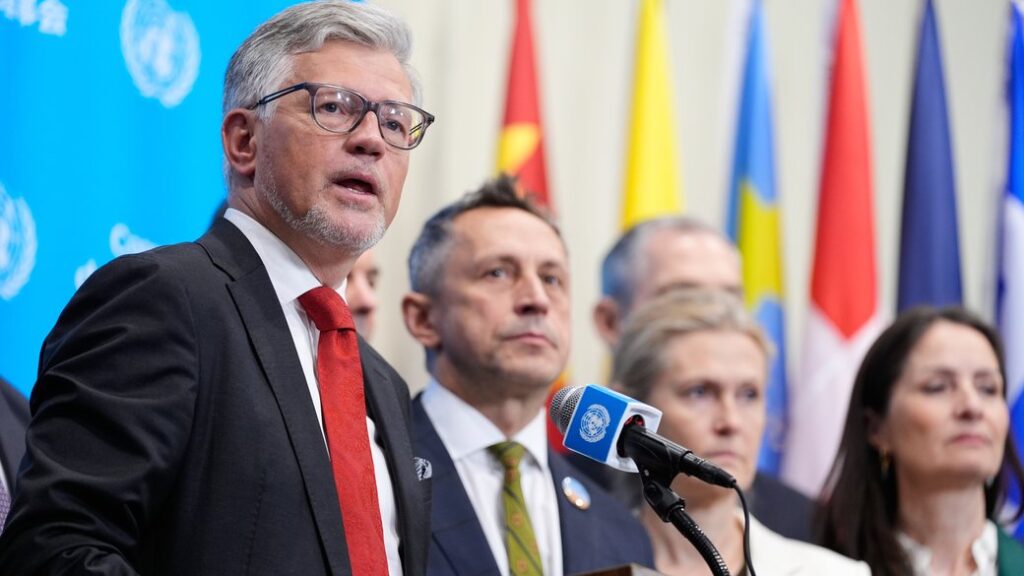
May was the deadliest month for civilians in Ukraine since April 2022, according to the United Nations, which presented updated casualty data to the UN Security Council during an emergency meeting requested by Kyiv, Suspilne reported.
Latvian UN envoy Sanita Pavļuta-Deslandes said preliminary figures show a sharp rise in civilian harm, warning that the final statistics for May are expected to be even higher.
She said attacks during the month included strikes on civilian gatherings, including a funeral in Sumy, which she cited as an example of Russia targeting “so-called legitimate objectives,” according to Suspilne.
She also noted that in the first quarter of 2026 alone, 190 attacks were recorded on medical facilities, including maternity hospitals, while more than 200 educational institutions were damaged or destroyed. The number of injured children increased by 49%, according to UN data cited at the session.
The Security Council meeting came on June 8 following a wave of Russian strikes across Ukraine.
Ukraine accuses Russia of systematic deception at UN
Ukraine’s permanent representative to the UN, Andrii Melnyk, used the session to sharply criticize Russia’s role at the United Nations, arguing that Moscow continues to deny responsibility while undermining international reporting on the war.
“Russia spits in our faces with lies, and we pretend it is just rain,” Melnyk said during the meeting, according to Suspilne.
He suggested that Russia should consider leaving the UN if it rejects its own obligations under international law and dismisses UN investigative findings.
Melnyk also called for Russia to be excluded from UN peacekeeping operations, pointing to its inclusion in UN listings related to sexual violence in conflict and repeated findings on violations involving children and armed conflict.
He urged member states to take action on these findings, saying Russia’s participation in UN structures undermines the credibility of the system itself.
The meeting highlighted growing tensions inside the Security Council as Russia continues to face accusations of escalating strikes on civilian infrastructure while maintaining its role as a permanent member of the body.
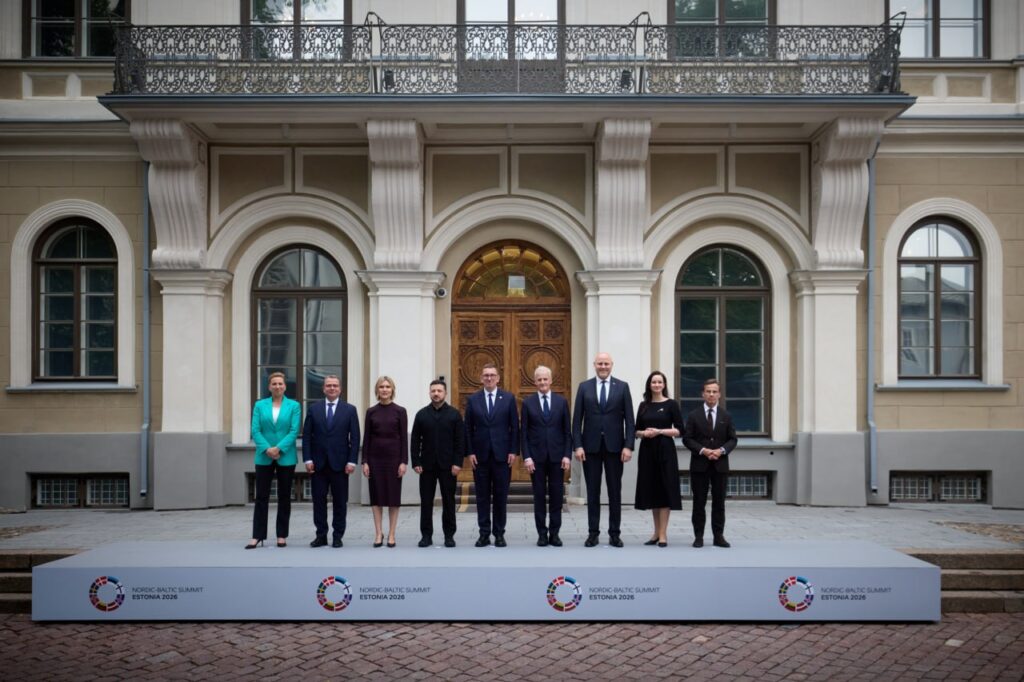
Ukraine and Latvia have signed a new “Drone Deal” aimed at expanding joint production and strengthening air and drone defense capabilities, Ukrainian President Volodymyr Zelenskyy said following meetings with Nordic and Baltic leaders on 9 June.
The agreement was signed during Zelenskyy’s first meeting with Latvia’s new Prime Minister Andris Kulbergs, which he described as a “concrete result” focused on co-production and shared defense development.
Zelenskyy said the deal reflects a broader model of cooperation Ukraine is building with partners who have supported Kyiv throughout the war, combining Ukrainian battlefield experience with European industrial capacity.
He said the aim is to strengthen shared protection against Russian threats, including expanding domestic production and improving coordination in drone and air defense systems.
The “Drone Deal” is a long-term cooperation format focused on developing drone capabilities through joint production, technology exchange, and practical defense support between Ukraine and partner countries.
Ukraine offers drone expertise to European partners
Zelenskyy also said Ukraine is ready to expand cooperation on drone warfare expertise, including sending specialist teams to partner countries to share operational experience gained during the war.
He said similar cooperation has already been carried out with partners in the Middle East and could now be scaled across Europe under the new drone cooperation framework.
Zelenskyy said Russia is attempting to escalate tensions across Europe, including through drone-related incidents near NATO borders, underscoring the need for coordinated defense responses among allies.
Air defense and drones central to talks with Nordic and Baltic partners
The announcement came during a series of meetings in Tallinn with leaders from Finland, Norway, Estonia, and other Nordic and Baltic states.
Zelenskyy said partners are increasingly recognizing stronger Ukrainian positions on the battlefield, while Russia continues to compensate for losses by striking civilian infrastructure.
He said air defense remains a key priority, including securing additional missile supplies and advancing work on European anti-ballistic defense systems.
Ukraine pushes for stronger sanctions and EU accession progress
Zelenskyy also discussed increased sanctions pressure on Russia, including measures targeting the shadow fleet, alongside continued support for Ukraine’s EU membership bid.
He urged rapid progress on opening EU accession negotiation clusters, saying Ukraine has met the necessary requirements and expects political decisions in the coming months.
“There is no reason to delay,” he said, calling for momentum in EU decision-making processes.
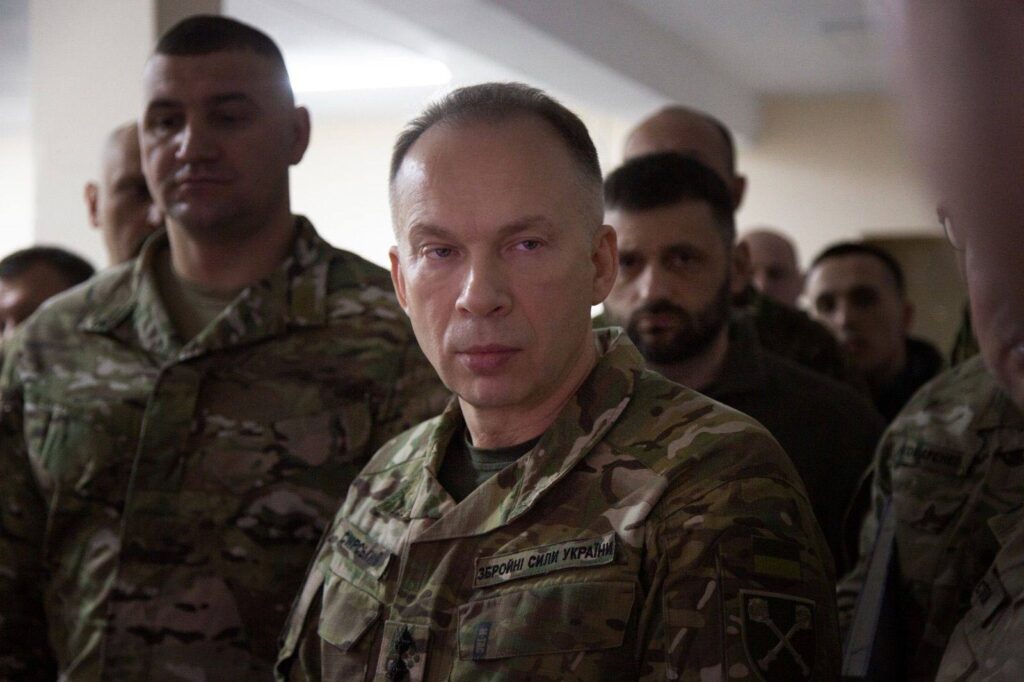
Ukraine has approved a long-term concept for the development of its rocket forces and artillery, outlining plans to build up capabilities through 2030, Commander-in-Chief Oleksandr Syrskyi said.
Syrskyi said the concept defines the main directions for modernization while Ukraine continues fighting a full-scale war, stressing that long-term force development must run in parallel with current battlefield needs.
He said Ukrainian artillery units are already conducting thousands of fire missions daily and inflicting significant losses on Russian forces, supported by a mix of domestically developed systems and weapons supplied by international partners.
According to Syrskyi, Ukraine operates one of the most diverse ranges of artillery systems globally and uses nearly all available types of ammunition, gaining continuous combat experience against a numerically superior adversary.
War experience drives shift in artillery and drone integration
Syrskyi said Russia’s invasion has significantly changed the character of modern warfare, with growing use of drones, guided bombs, and other precision strike systems reshaping battlefield dynamics.
He said artillery remains a core component of the battlefield despite evolving technology, but its effectiveness now depends heavily on reconnaissance quality and the speed of information transfer.
At the same time, he pointed to several challenges affecting Ukraine’s rocket and artillery forces, including dependence on foreign ammunition supplies, complex logistics linked to multiple systems, limited range in some platforms, and shortages in artillery reconnaissance capabilities.
Ukraine to phase out outdated systems and expand domestic production
The concept foresees a gradual transition toward Ukrainian-made artillery systems as the backbone of future force structure, while aging Soviet-era systems that cannot be upgraded will be phased out.
Ukraine will also retain units equipped with modern foreign systems and streamline its overall artillery inventory to improve efficiency and logistics.
Syrskyi said a key priority is the creation of a modern artillery reconnaissance system to improve targeting speed and battlefield coordination.
Focus on long-range strike capability up to 2,000 km
A separate priority is the expansion of Ukraine’s missile forces to increase deep-strike capability across operational and strategic depth.
Syrskyi said this includes completing development and scaling production of domestic ballistic and cruise missiles, which – together with unmanned systems – would form a layered long-range strike capability with a reach of up to 2,000 kilometers.
He said artillery will remain a decisive element of battlefield effectiveness and a central factor in deterring further Russian aggression, regardless of terrain or conditions.
Russia went back to using imported electronics for their Kalibr cruise missiles’ guidance system after failing to replace them with homemade alternatives, according to Ukraine’s Ministry of Defense.
The ship-launched missile’s homing boards “are made up of more than 80–90% foreign-made components,” the MoD wrote. “This is a confirmed fact, not an estimate: each part is marked and has been checked by military representatives.”
Starting in 2023, Moscow began to transition to domestic components in manufacturing their Kalibr missiles, which may have worsened their performance. As a result, the Russians went back to what works, the MoD wrote, citing an analysis of Kalibrs that were shot down.
The announcement did not disclose the manufacturers of these systems. However, according to the General Intelligence Directorate’s website that tracks foreign parts in Russian’s weapons, most chips that went into Kalibrs prior to 2024 came from the US.
Diagram of a Kalibr missile. (Ukraine's Ministry of Defense)
Russia has routinely used foreign electronics in the missiles it fires against Ukraine throughout the course of the war.
A Russian Kh-101 cruise missile that killed 12 people in Kyiv in May was built in the second quarter of 2026, which points to components continuing to reach Russia despite 21 sanctions packages from the EU and years of Western export controls, President Volodymyr Zelenskyy said last month.
Cluster munitions added
Russia has also started using cluster munitions for the Kalibrs' payloads—the first such use was recorded in the Spring of 2026, according to the announcement. Previously, Kalibrs tended to be armed with high explosive fragmentation loads.
Cluster payloads can widen the destructive radius and allow the missiles to more effectively hit spread-out targets. The MoD described them as analogous to the cluster munitions found on Kh-101 missiles.
The use of weapons that cover an area with bomblets is controversial around the world because of the lingering danger they pose to civilians. A total of 124 countries have ratified the Convention on Cluster Munitions, outright banning the use of such weapons, though Ukraine and Russia are not signatories.
Moscow’s army has repeatedly used cluster munitions, including against cities, since the opening days of the full-scale invasion.
The European Union has proposed a 21st sanctions package against Russia that includes a visa ban on current and former Russian military personnel, as Brussels expands pressure on individuals and entities linked to Moscow’s war effort in Ukraine.
EU foreign policy chief Kaja Kallas said the package is part of a broader push to increase economic and political pressure on Russia.
“We are depriving Russia of the means to fund its war,” Kallas wrote on X.
Package includes over 170 proposed sanctions listings across sectors
The sanctions package will target Russia’s financial, energy, and industrial sectors, with more than 170 proposed listings.
These include banks, weapons manufacturers, oil traders, refineries, and crypto-related services, as well as entities in third countries accused of helping Moscow bypass existing restrictions.
Energy measures include a temporary freeze of the Russian oil price cap mechanism, alongside new restrictions on LNG transactions and additional action against Russia’s shadow fleet, with 30 more vessels proposed for designation.
Officials said the aim is to further reduce Russia’s export revenues and disrupt maritime logistics networks used to move sanctioned energy products.
Brick by brick, we are collapsing the foundations of Russia's war economy.
Today, we are presenting our proposals for a 21st sanctions package against Russia.
This includes a temporary freeze of the Russian oil price cap and designations of institutions used by Moscow to…
Measures expand to export controls and financial restrictions
The package also expands export controls on materials used in weapons production, including metals, alloys, and high-performance inputs, with companies in countries such as China, Türkiye, Kazakhstan, the UAE, and India included in the proposals.
Financial restrictions remain a central pillar, with expanded sanctions planned against banks and crypto platforms linked to sanctions evasion and war financing.
EU visa ban on Russian military personnel
The sanctions package includes a “comprehensive” visa ban proposal that would prohibit entry into the EU for current and former members of Russia’s armed forces, as well as “proxy groups,” marking an expansion of sanctions beyond economic measures to individuals linked to military operations.
“Europe’s door should not be open to Russia’s (ex-)combatants,” Kallas wrote.
Our sanctions are working.
They are weakening the economic foundations of Russia’s war effort.
Today we double down.
With a 21st package.
Covering energy, banks & crypto, trade including fisheries and visa for Russian soldiers ↓ https://t.co/fTIkATOSfN
— Ursula von der Leyen (@vonderleyen) June 9, 2026
Sanctions already cost Russia up to $1.5 trillion, EU says
The same day, Kallas told journalists that existing sanctions continue to intensify pressure on Moscow’s economy. Kallas noted that Western sanctions have already cost Russia an estimated $1.2 to $1.5 trillion, adding that “brick by brick, we are collapsing the foundations of Russia’s war economy.”
She said the aim remains to increase costs for Moscow across multiple sectors while maintaining unity among EU member states.
The package requires unanimous approval from EU member states before it can take effect.
Ukraine's drone campaign targeting Russian logistics is moving to sea
Ships carry supplies between Russia and occupied southern Ukraine
Striking the ships can force more supplies to move over land in vulnerable trucks
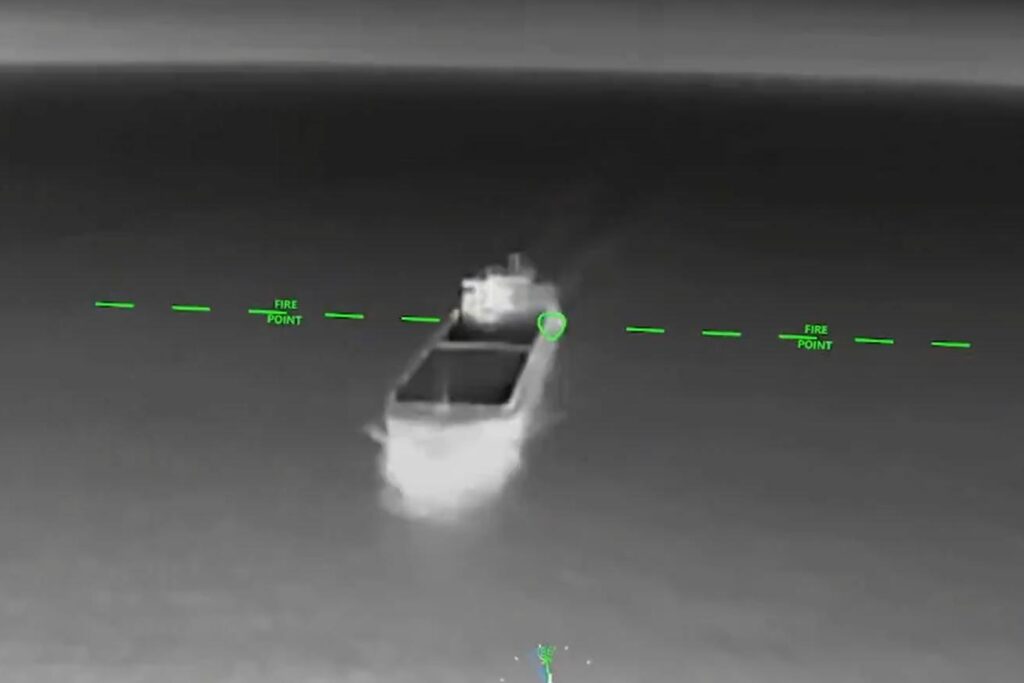
One-way attack drones from Ukraine's Unmanned Systems Forces struck five Russian cargo ships on the Sea of Azov on 5 June.
The strikes, which left at least one ship a burned-out hulk, are a kind of corollary to Ukraine's escalating campaign of middle-distance strikes on Russian supply lines on land in occupied territories. Aiming to weaken Russian regiments before they can attack across the disputed gray zone, Kyiv's drone units aren't only hitting trucks and vans on land—they're also hitting ships at sea.
"There's a method to the madness here," Ukraine Control Map explained. "Take out the ships, force Russia to use more trucks, more logistic bottlenecks." Then hammer the bottlenecks with drones.
The ultimate goal is to make it more difficult for the Kremlin to resupply and reinforce its 700,000 troops in occupied Ukraine. It's cheaper and easier to defeat an attack before it even begins by starving the attacking troops of food, fuel, batteries, ammunition and other vital supplies.
The ships the USF hit with Fire Point FP-1 drones on 5 June were spread out across a wide area. They were in occupied Mariupol and Berdiansk and along the coast of occupied Ukraine — the same Berdiansk port where Ukrainian drones struck a Russian munitions cargo ship on consecutive nights at the start of June.
What they had in common was their disguise. Civilian-owned but allegedly illegally working on behalf of sanctioned Russian entities, the ships sail without obvious markings or easily tracked radio transponders. There could be scores of such ships plying the Black Sea on Russia's behalf every day.
Two of the ships hit on 5 June, the dry cargo vessels Natra and Zirkon, were inbound from Türkiye to Rostov-on-Don when Ukrainian drones struck them in Taganrog Bay—empty, heading to load grain at a port Western governments and Ukraine identify as a transit hub for grain looted from occupied Ukrainian territory. Five Azerbaijani crew members on private contracts were killed and three wounded, Azerbaijan's foreign ministry said. Brovdi didn't address the deaths.
Telling apart a ship hauling Russian military fuel from a ship empty and heading to pick up looted grain is the kind of distinction that's hard to make from a drone's-eye view.
Ships that can haul thousands of tons of supplies every trip are much more efficient than trucks that can haul just a few tons apiece. Cargo ships can't deliver supplies to inland forces, of course, but they can move cargo between ports in southern Russia and ports in occupied Ukraine, bringing that cargo as close as possible to the gray zone before trucks must take over the shipping effort.
Map: Euromaidan Press
A thick-skinned ship is a tougher target than a thin-skinned truck, of course. But Ukraine's FP-1 drones carry a 100-kg blast-fragmentation warhead, with a TNT main charge boosted by the more powerful OKFOL explosive. The combination throws fragments outward and starts fires inside the target—the same mechanism that left the corvette Boikiy burning for hours at Kronstadt on 3 June.
— Special Kherson Cat (@bayraktar_1love) June 8, 2026
Sitting duck trucks
Russia's thousands of military supply trucks are already squarely in the crosshairs of Ukrainian drone units. Since launching their coordinated counterlogistics campaign this spring, the Ukrainians have increased their monthly truck strikes nearly tenfold, from around 60 per month to nearly 500, as per the Ukrainian general staff.
But a comprehensive assault on Russian logistics requires raids on sea traffic, as well. That effort may have begun in earnest on 5 June. "Cargo ships and tankers with their names painted over by Black Sea looters and their transponders switched off, used for the quiet theft of Ukrainian grain and the transport of military cargo and fuel, can no longer count on either long service lives or uninterrupted schedules," the 414th Unmanned Strike Aviation Brigade crowed.
If they can disable enough ships, the Ukrainian drone teams may compel Russian logisticians to shift more supplies by land. To reach Russian regiments in southern and eastern Ukraine, those supplies normally travel east to west along the M-14 highway that runs close and parallel to the Black Sea coast.
That highway and connecting roads have become a kill zone for Russian trucks as more FP-1, FP-2, Hornet and Bulava drones take to the sky, increasingly unbothered by Russia's collapsing air defense network. Ukrainian industry now churns out tens of thousands of middle-strike drones every month, some for as cheaply as a few thousand dollars apiece.
The Russians are trying to find alternate routes that avoid the most heavily droned roads, but once a truck gets close to its destination, it has no choice but to follow a dwindling number of paths. Ukrainian intelligence knows where the Russians' main divisional bases are; they know the trucks must eventually turn into these bases. The near approaches are now becoming kill zones alongside the M-14 and other main roads.
It'll take many more strikes on Russian ships to seriously dent the sea logistics and force more supplies onto land routes. But the effort is underway. "The occupier's smuggling logistics must be stopped," the 414th Unmanned Strike Aviation Brigade explained.
Explore further
Russia keeps four field armies fed through three southern towns. Ukraine’s drones just arrived.
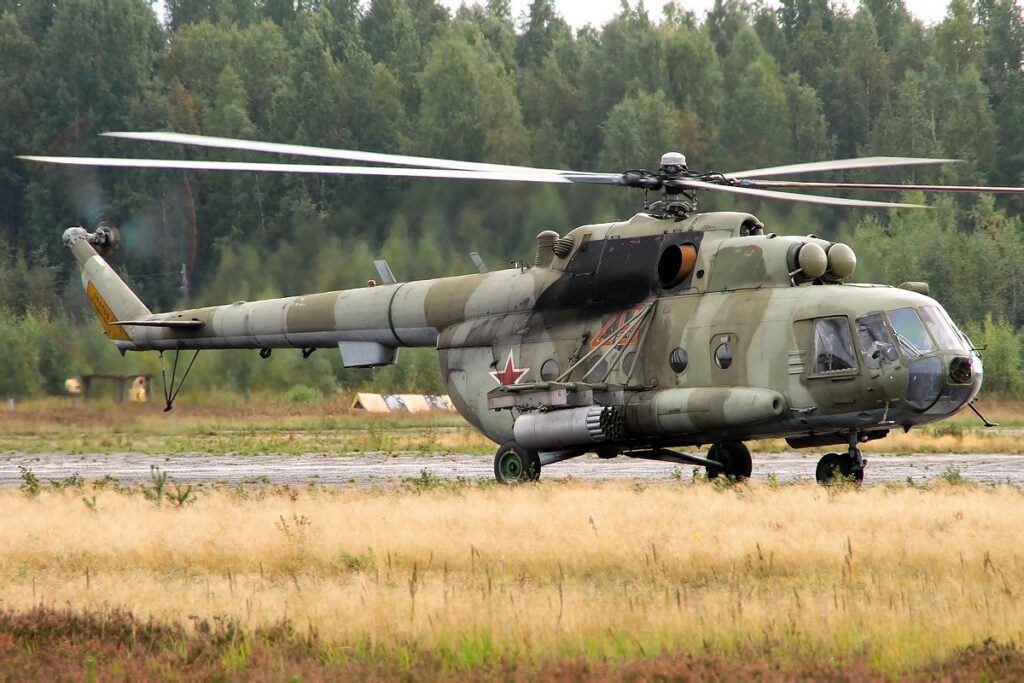
Russia plans to make 72 Mi-8 helicopters at their Kazan plant over the next two years, more than offsetting their total full-scale invasion losses of 56 units as of March, Dallas Analytics reported, citing leaked Russian documents. It is also double the production rate from earlier estimates.
Russia also has another Mi-8 factory at Ulan-Ude. In 2024, both plants jointly delivered 40 helicopters, according to Moscow’s defense conglomerate Rostec. A December analysis by Frontelligence Insight, also based on leaked documents, estimated that Russia can make 20 Mi-8s at each plant per year.
The number of helicopters the Ulan-Ude plant can produce is unknown. However, if it has similar capacity to the Kazan plant, Russia’s production rate could be substantially higher.
Mi-8s are versatile workhorses, able to transport troops and cargo, conduct reconnaissance, electronic warfare, and attack missions. Due to heavy losses, their role moved away from frontline missions during the battle of Kyiv, towards evacuation, and subsequently indirect fire roles and hunting Ukrainian UAVs and USVs on the Black Sea.
War has changed significantly since before the full-scale invasion, largely due to the invasion. The ubiquity of drones means that Russia could hardly risk attempting large-scale airborne assault operations.
However, if Russia plans to escalate its hybrid war against NATO into more direct aggression, as some Alliance military officials predict, the Mi-8s would come in handy for ground incursions.
The production plan also hints at Russia’s priorities. The leaked document, minutes from a meeting involving Russian Deputy Minister of Industry and Trade Gennady Abramenkov, states that the National Wealth Fund would contribute financing, which means that Moscow's reserve cash is being poured into maintaining and rebuilding its war machine.
On the other hand, the documents revealed some potential hiccups in Russia's plan to rebuild the Mi-8 fleet. Many details seem to hang on contractors securing advance payments and contracts that have yet to be signed. The United Engine Corporation is expected to only start delivering engines for the Mi-8s beginning in September.
One clause calls for an estimate of how many helicopters can "actually" be built in 2026, suggesting that there's a gap between expectation and reality.
Ten Russian soldiers from a single regiment are accused of hunting civilians in Kherson with attack drones, and now face war-crimes charges filed in absentia, the Security Service of Ukraine (SBU) reported. Investigators say the operators tracked people through the streets and struck ambulances and rescue crews. The 10 are among those participating in a Russian long-lasting terror campaign against Khersoners known as a "human safari."
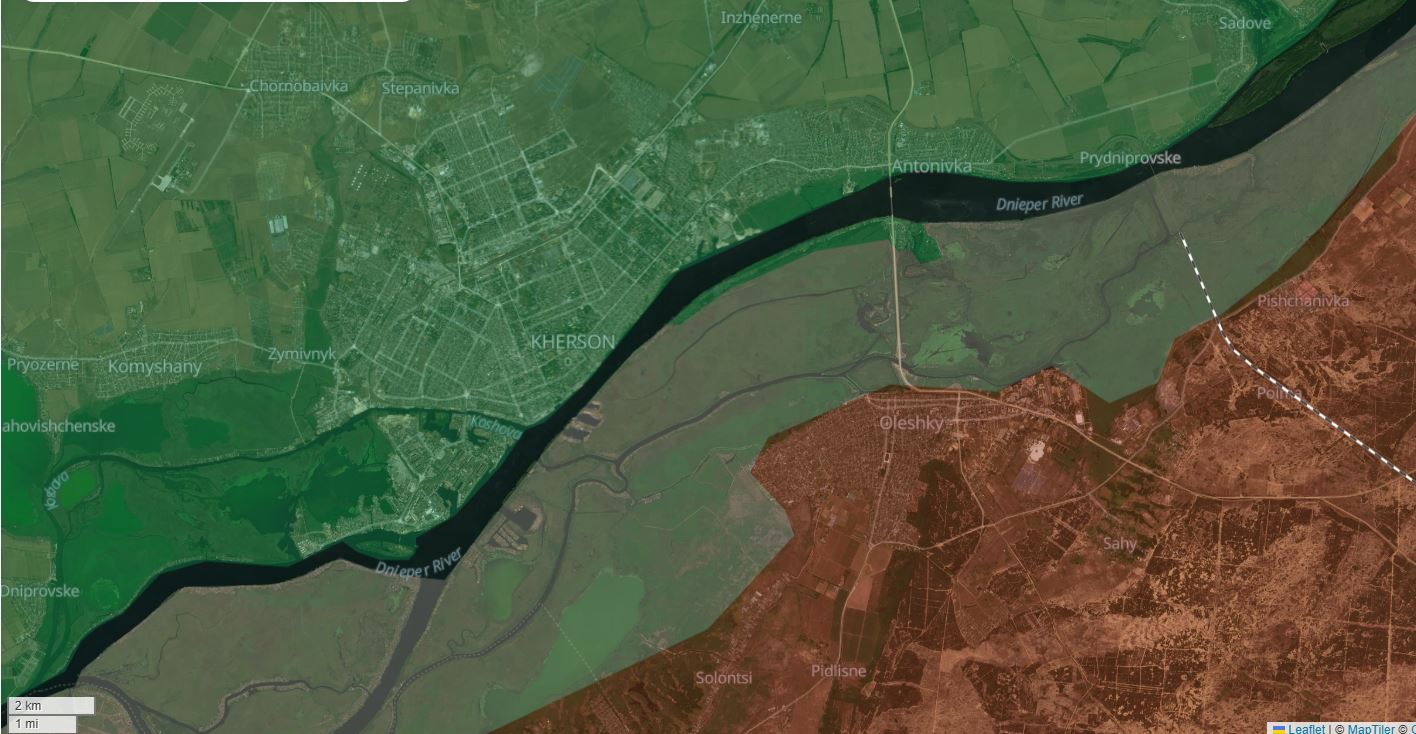
Kherson lies on the Dnipro River's west bank, with Russian-occupied land directly opposite, and the invading force has made it among the deadliest places to live in Ukraine by deliberately hunting civilians across the city for years.
The drone hunters of one regiment
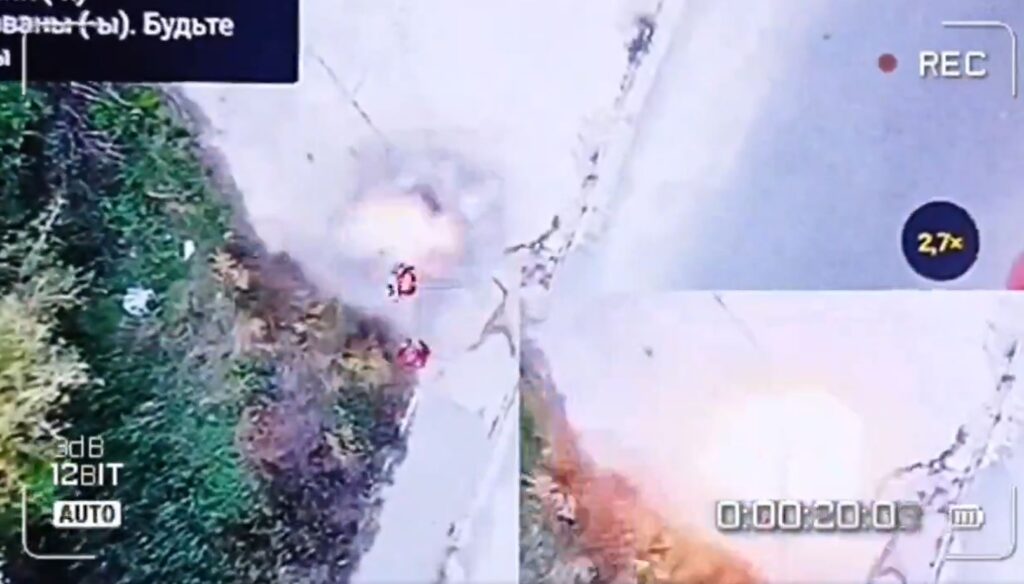
Counterintelligence officers built a case against 10 drone operators from the 404th Motorized Rifle Regiment, a territorial-defense unit in Russia's "Dnepr" Group of Forces, the SBU reported. The investigation found that the men tracked residents as they moved along Kherson's streets and launched drones at them. The drones carried shaped-charge and high-explosive fragmentation munitions.
Kherson city (Russian-occupied area in red). Map: Deep State
Residents and rights monitors call this campaign a "human safari," the hunting of people going about their ordinary days.
Kherson: human safari rages.
A Russian fiber optic FPV drone chases a car in a residential area; after civilians cut the cable, the drone falls, catches fire.
The documented episodes include attacks on civilian cars and residential blocks, the SBU said. Operators dropped explosives on ambulances at a city hospital. They also carried out a "double" strike on State Emergency Service (DSNS) rescuers who were clearing the aftermath of an earlier Russian shelling.
UN investigators have described this Russian method in Kherson: a first strike, then a second aimed at the people who come to help. Victims suffered shrapnel wounds, burns, and concussions, and civilian infrastructure took significant damage.
Russian soldiers attacked an ambulance in Kherson with a drone.
Based on the evidence, SBU investigators notified all 10 of suspicion under Article 438 of Ukraine's criminal code, which covers war crimes. The notices were issued in absentia. SBU officers in Kherson Oblast led the investigation with the 79th Border Detachment of the State Border Guard Service (DPSU), under the oblast prosecutor's guidance. The agency said efforts to hold the operators accountable continue.
The case fits a wider pattern Ukrainian prosecutors have documented across the oblast in thousands of proceedings.
Bulgaria's new government plans to stop supplying weapons to Ukraine, a shift that breaks with the European Union's push to pressure Russia, Bloomberg reported. The country's Defense Minister tied the move to a call for negotiations rather than arms, echoing a prime minister who has long been hostile to military aid for Kyiv.
A falling and rising tide of Russia-friendly governments across central Europe has steadily frayed the bloc's united front on arming Kyiv amid the ongoing Russian invasion, turning each national capital into a potential brake on support.
Government's excuses
Bulgarian Defense Minister Dimitar Stoyanov told reporters in Sofia on 9 June that his government would end weapons deliveries to Kyiv.
"Ukraine needs more people, not more armament," he stated, and called instead for a "just peace that will be defined by both sides participating in the conflict."
He added that the EU's role in any peace process is "extremely important." But the Bloc would struggle to act as a mediator, he claimed, after assisting Ukraine throughout the war.
Explore further
Hungary unblocks $7.7 billion in EU arms payments after dropping two-year veto on Ukraine aid
A prime minister who opposes arming Kyiv
The stance reflects Prime Minister Rumen Radev, who has long held that the war cannot be won on the battlefield. Radev, a former air force commander and president until January, has repeatedly opposed the EU's military support for Ukraine. He has also called for lifting sanctions on the Kremlin, arguing they damage Europe's economy. In office for only a month, the Prime Minister has promised to expand Bulgaria's weight in joint European decisions.
A quiet arms pipeline now set to close
Bulgaria ranks among the EU's biggest producers of Soviet-standard ammunition. Those older Soviet-caliber shells proved crucial to Ukraine early in the war. The government officially refused direct military aid in 2022. Even so, Bulgarian shells reached the front through exports to other EU countries. Since 2022, Sofia has sent 13 packages of military aid, keeping their value and contents classified.
Explore further
Bulgaria approves new cabinet led by Rumen Radev — the ex-president who called Crimea Russian
The timing
The plan surfaced days after the leaders of France, Germany, and Britain urged the Kremlin to accept an immediate, complete ceasefire that would open talks on a lasting deal. Moscow has rejected Kyiv's offer to meet and negotiate an end to the full-scale invasion, launched more than four years ago.
The Times earlier called the rise to power of pro-Russian Radev a strategic success for Putin.
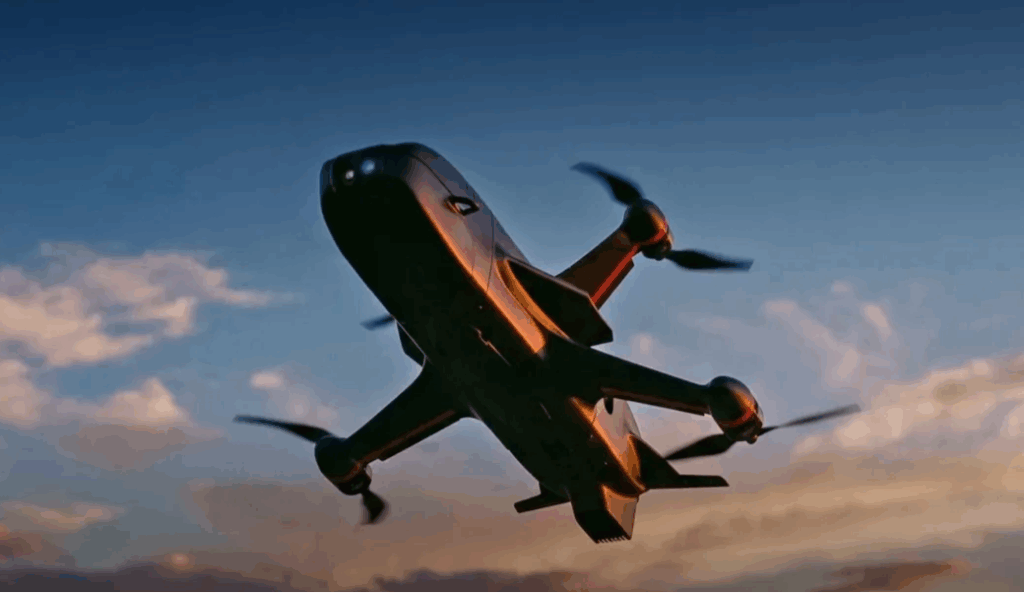
If you want to understand how Ukraine’s interceptor drones are evolving and improving but don’t have a lot of time, you can just take a look at the Litavr interceptor announced by the Ministry of Defense on 8 June.
F-Drones’ Litavr has been in serial production since the fall but its specs have been classified until now. While its capabilities do not appear to be brand new or exclusive to itself, the features list reads like a map of all the ways Ukrainian engineering and battle testing of the past few years made their various interceptors so highly sought-after.
That includes autonomous last-mile guidance, non-GPS navigation, radar integration, and the ability to control the drone from thousands of kilometers away. The company reportedly manufactures most of its own components, reducing dependence on China.
All these things are instrumental to Ukraine’s goal of “closing the sky” to Russian weapons. The Defense Ministry set a goal of shooting down no less than 95% of Russian drones and missiles and has been steadily climbing towards that goal: from just over 80% shot down late last year, to 92% shot down in May.
Last-mile autonomy
According to the MoD, the Litavr's key ability is the automatic pixel lock last mile guidance, in which a pilot controls the speed, while the drone does the rest.
Semi-autonomous weapons are one of the major achievements of Ukraine’s military-industrial ecosystem. Defense Minister Mykhailo Fedorov emphasized autonomy as a key technology.
“Autonomy is one of the key areas of development of modern air defence,” he said in a 8 June statement.
“Technologies like this enable faster responses to large-scale attacks and more effective protection of Ukrainian cities. We are scaling solutions that have already proved their effectiveness in combat conditions.”
Fedorov claimed that a Brave1 company has already created tech that automates 95% of the "entire interception process, from launching a drone to destroying a Shahed," which has been battle-tested in Kharkiv Oblast.
AI-assisted navigational and target lock tools are present in a plethora of Ukrainian drones: from deep and middle strike UAVs, to FPVs, to interceptors, which were reportedly getting anti-Shahed modules in December.
Across Ukraine and around the world, companies and volunteer cooperatives are using the country’s archive of battlefield footage to train models to become progressively more accurate and deadlier in combat.
Navigation and controls
Besides its daytime and thermal cameras, the Litavr has its own non-GPS navigation tools and integrates into existing radar systems through a proprietary software package.
The announcement was light on details, but this is another demonstration of Ukraine creating solutions to the realities of Russia’s war. The skies and battlefields are full of jamming and spoofing, which makes GPS a highly-unreliable solution.
Adaptations have included visual-inertial odometry, like the kind NASA's Mars drones use, beacon-based systems, AI that image matches preloaded terrain data, and tapping into nearby radar systems, like the Litavr does.
The drone also incorporates a system that allows operators to steer them from hundreds or thousands of kilometers away.
This system has been in development for over a year and announced in April, with more than 10 manufacturers integrating it into their systems. Wild Hornets made a splash online with their announcement that an operator took down a target from outside Ukraine's borders.
Speed and range
The Litavr has a reported top speed of 350 kilometers per hour. This isn’t the first drone with such a claim—the MoD said the same thing of the JEDI Shahed Hunter presented in March—and other drones before it had similar claims made about them, like the Furia.
However, 350 km/h is on the upper end of most interceptors in use these days. The more famous drones of this class like SkyFall’s P1-SUN has a reported top speed of 310 km/h and Wild Hornets’ Stinger reportedly hit 315 km/h in tests, though the website says it tops out at 280 km/h. This was a massive upgrade from earlier Sting, which could reportedly go up to 160 km/h.
Ukraine is pushing that ceiling higher. As early as December, the Brave1 Defense Cluster announced that Ukraine can now mass-produce a motor that can accelerate an interceptor to 400 kilometers per hour. The manufacturer, Motor G, makes more than 100,000 motors per month, according to the announcement.
The growing speed is needed to combat jet-powered Shaheds, whose speeds can climb up to 600 kilometers per hour, which is a drum MoD adviser Serhiy “Flash” Beskrestnov has been beating constantly. Ukrainian devs are working on the problem: for example, General Cherry and STRIX are reportedly integrating chemical boosters into their Bullet interceptors.
Litavr’s operational range of 40 kilometers appears to be comparable to the Sting, though the MoD claimed a record flight of 80 km for the former. The flight ceiling of 9 kilometers appears to be higher than many interceptors of Litavr’s type, which range from 3 to 7 km.
Reducing reliance on China
The manufacturing is also indicative of what Ukraine is trying to accomplish. F-Drones reportedly builds most of its own electronics, engines and flight controllers.
Ukraine's government has a stated goal to reduce its dependence on Chinese parts, which, while cheaper, also pose a security risk. If China stops the flow of parts for whatever reason, Ukraine's entire weapons industry can be in trouble. China also supplies many of the parts for the very Shaheds these interceptors are meant to stop.
According to a December report by Zmiinyi (Snake) Island Institute, Ukraine's domestic manufacturers covered 70% of the need for communication systems for controlling drones, and 55% for analog video transmitters. The institute believes that Ukraine has the potential to cover 100% of the market in these three categories.
At the time of the report, Ukrainian manufacturers produced just 25% of flight controllers for domestic FPV drones, 14% of the thermal cameras and 12% of the electric motors. However, the Institute projected that Ukraine can produce as much as 75% of flight controllers, 90% of thermal cameras and 50% of electric motors over 2026.
Russia has begun moving gasoline to its frontline units in occupied Ukraine in convoys of civilian cars, the Ukrainian defense outlet Militarnyi reported. Soldiers filmed themselves loading jerrycans into ordinary trunks, an improvised workaround after Ukrainian drone strikes made fuel tankers too risky to run. Russian forces are also disguising army trucks as civilian vehicles along the supply route to occupied Crimea.
This comes amid Ukraine’s ongoing “Logistics Lockdown,” a campaign by several Ukrainian military branches and the Security Service to target Russian fuel, logistics, and other supplies across occupied territories, at depths of up to 200 km.
Soldiers filmed the fuel run themselves
A video on the Exilenova+ Telegram channel showed Russians describing a convoy of passenger cars assembled to carry one metric ton of gasoline, Militarnyi reported. A man off-camera says the cars left the city of Kizilyurt in Dagestan, Russia, on the local head's orders, with the fuel destined for Russian units in occupied Tokmak, Zaporizhzhia Oblast. The footage shows jerrycans filling the trunks:
Besides the fuel, the drivers carried 1.5 million rubles ($20,900) to buy another batch of gasoline. Fuel keeps Russian frontline positions running: generators power electronic-warfare systems, charge batteries for reconnaissance and strike drones, and run communications gear in dugouts and observation posts.
Disguised trucks and a strained supply line
Russian forces have also begun disguising army trucks as civilian transport because of Ukrainian drone attacks deep in the rear. In northern Crimea, monitors spotted a freshly painted blue Ural truck driven by a man in civilian clothes, still carrying military plates, its oversized body posing as a dump truck.
The command of Russia's Dnepr grouping ordered mass use of civilian vehicles to move fuel along the route linking Rostov-on-Don with occupied Crimea, the Krymsky Veter monitoring project reported. That improvisation tracks the M-14 corridor, now within Ukraine's deepening drone range.
Explore further
ISW: The strikes will likely cascade into deeper disruption across Russia’s rear supply network
Why Russia is improvising
Ukraine's Defense Forces have intensified drone strikes on logistics trucks and fuel tankers on the roads from Russia to occupied Crimea. The attacks have already forced the occupiers to limit cargo traffic through the occupied part of Kherson Oblast toward the peninsula, and Russia has closed stretches of its own land corridor to keep them clear of strike drones.
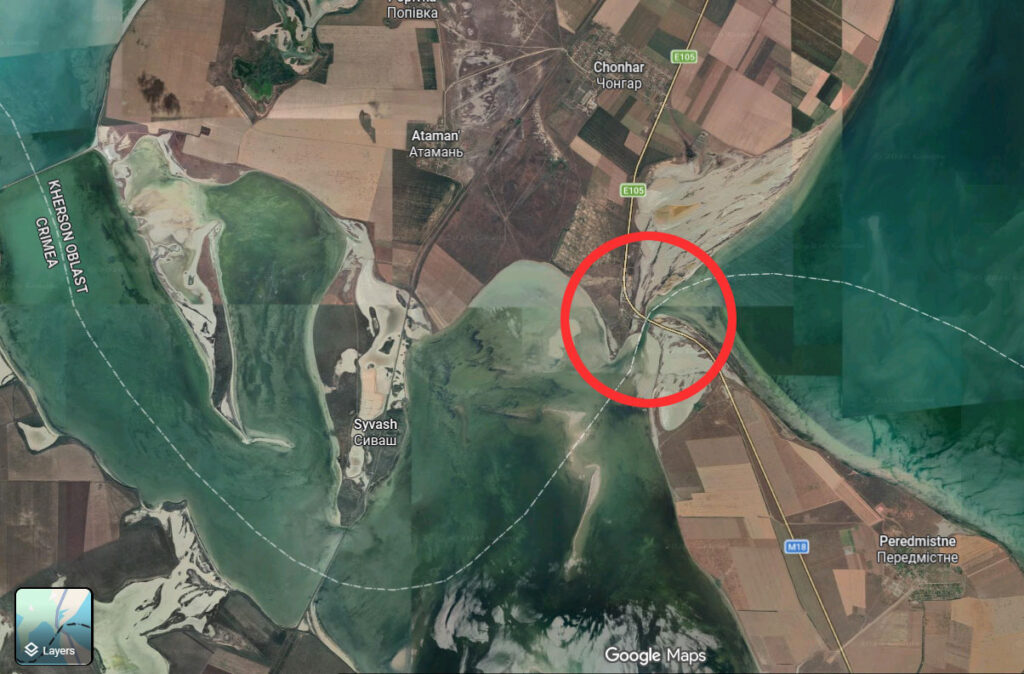
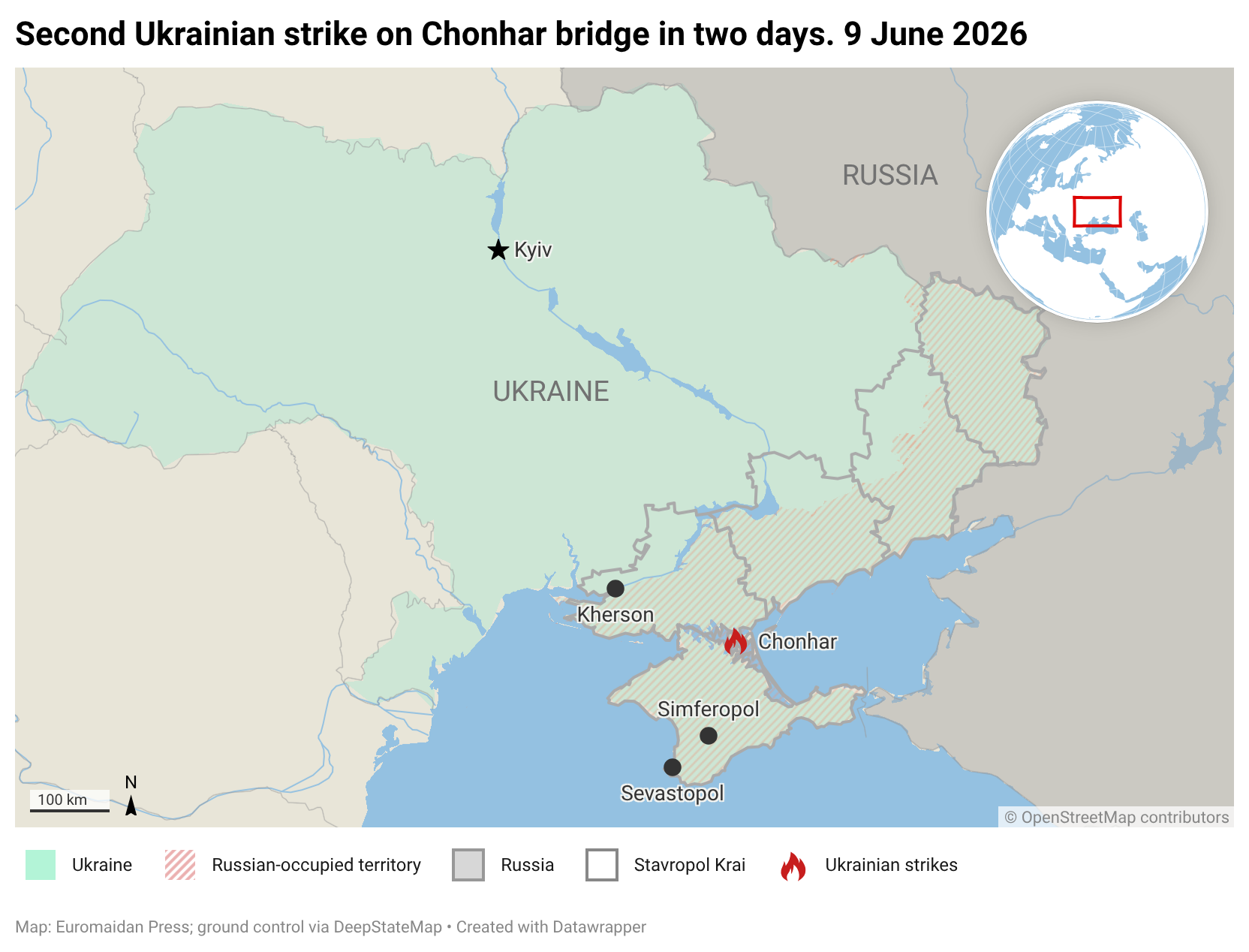
Russian occupation authorities closed the Chonhar bridge linking occupied Kherson Oblast to Crimea for the second time in two days on 9 June, with the Russian-installed governor, Vladimir Saldo, claiming another overnight Ukrainian drone strike. The same night, drones swept across occupied Crimea, where a Crimea-monitoring channel reported explosions at a military airfield. Moscow claimed it downed scores of drones, while Ukraine stayed silent.
Occupied Crimea — a peninsula in southern Ukraine, occupied by Russia since 2014 — is the logistical heart of Russia's war in Ukraine's south, and its airfields, air defenses, oil depots, and supply roads draw Ukrainian drones almost daily.
A bridge to Crimea closed for the second time in two days
Saldo claimed the overnight strike caused fresh damage to the Chonhar bridge and that 20 drones were shot down on the approach. He asked drivers to use alternative routes, and traffic was rerouted through Armiansk and Perekop.
The bridge carries the R-280 highway, which the Russians built to link their Rostov-on-Don to occupied Crimea through occupied Donetsk and Zaporizhzhia oblasts, one of their main supply lines to the peninsula.
Drones over Crimea
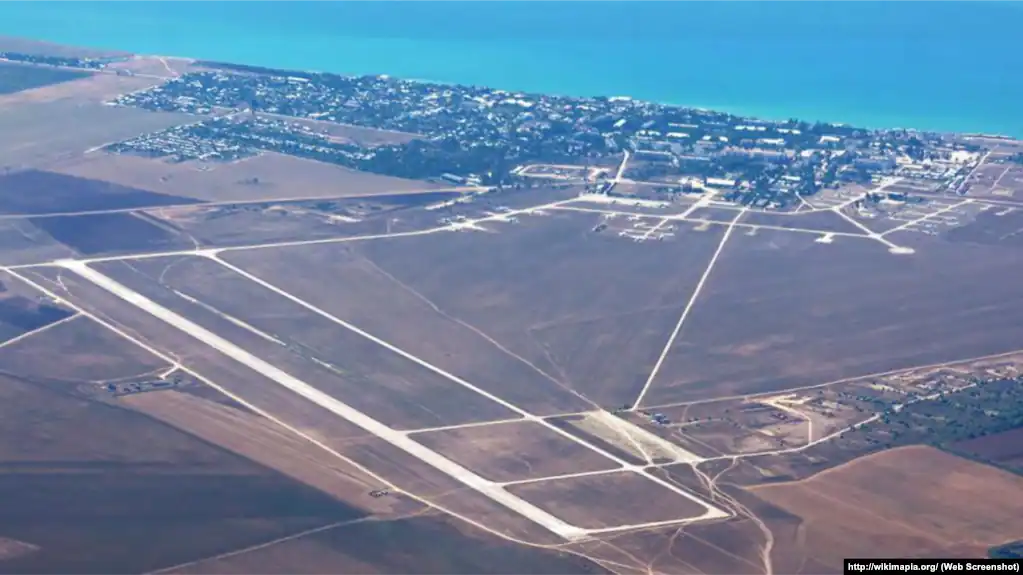
The strike on the peninsula came the same night, according to RFE/RL. The Crimea-monitoring Telegram channel Krymsky Veter reported an explosion in the Saky district (western Crimea) at 21:14, then an incoming strike in Dzhankoi (northern Crimea) before midnight. Drones also reached Sevastopol (southwestern Crimea), where a strong explosion hit the Kacha airfield at 00:36, followed by a second and third blast in the early hours.
The Kacha military airfield near occupied Sevastopol, Crimea. Archive photo: wikimapia.org
Sevastopol's Russian-installed head, Mykhail Razvozhaev, claimed the military was repelling the attack with air defense and mobile fire groups. The city declared air alerts three times, at 22:33, 00:08, and 06:52, and lifted the last at 07:20. In its morning report, Russia's Defense Ministry claimed its air defenses destroyed 140 drones over seven regions, occupied Crimea, and the Azov and Black seas.
The 7 June Chonhar strike and the wider campaign
The first closure came overnight into 7 June, when Ukrainian FP-2 and Behemoth drones struck the Chonhar bridge. The Falanga multidomain operations center of the 1st separate assault regiment and the 475th separate assault regiment Code 9.2 carried out the strike. Militarnyi reported it was the first known combat use of the Behemoth kamikaze drone, unveiled in late May 2026 by the companies GLEFA and Culver Aerospace. The same day, the occupiers also halted traffic through their "Dzhankoi checkpoint."
Explore further
The Crimean Bridge is heavily guarded. Ukraine struck its maritime security layer in the Kerch Strait.
Ukraine's head of the Office of the President, Kyrylo Budanov, said in early June that the strikes on Crimea's land corridor are a systematic campaign meant to complicate Russian plans. Ukraine's forces are also hitting the sea routes: the General Staff reported a Russian ship struck near Crimea, and overnight into 4 June, a Russian patrol boat was destroyed near the peninsula. Days before, occupation officials in Sevastopol had reported a similar overnight attack on the city.
Russia's overnight drone and missile barrage on 9 June killed and wounded civilians in the Kharkiv Oblast cities of Chuhuiv and Kharkiv, regional officials reported. More strikes over the past 24 hours left several people dead and dozens wounded elsewhere in Ukraine. Ukraine's Air Force said air defense stopped most of the drones, though missiles and others still reached homes.
Russia has pounded Ukrainian cities with nightly aerial barrages since 2022, sending waves of drones and missiles that air defenses can thin but not fully stop. Such daily attacks mainly target residential areas and civilian infrastructure.
Chuhuiv and Kharkiv bear the brunt
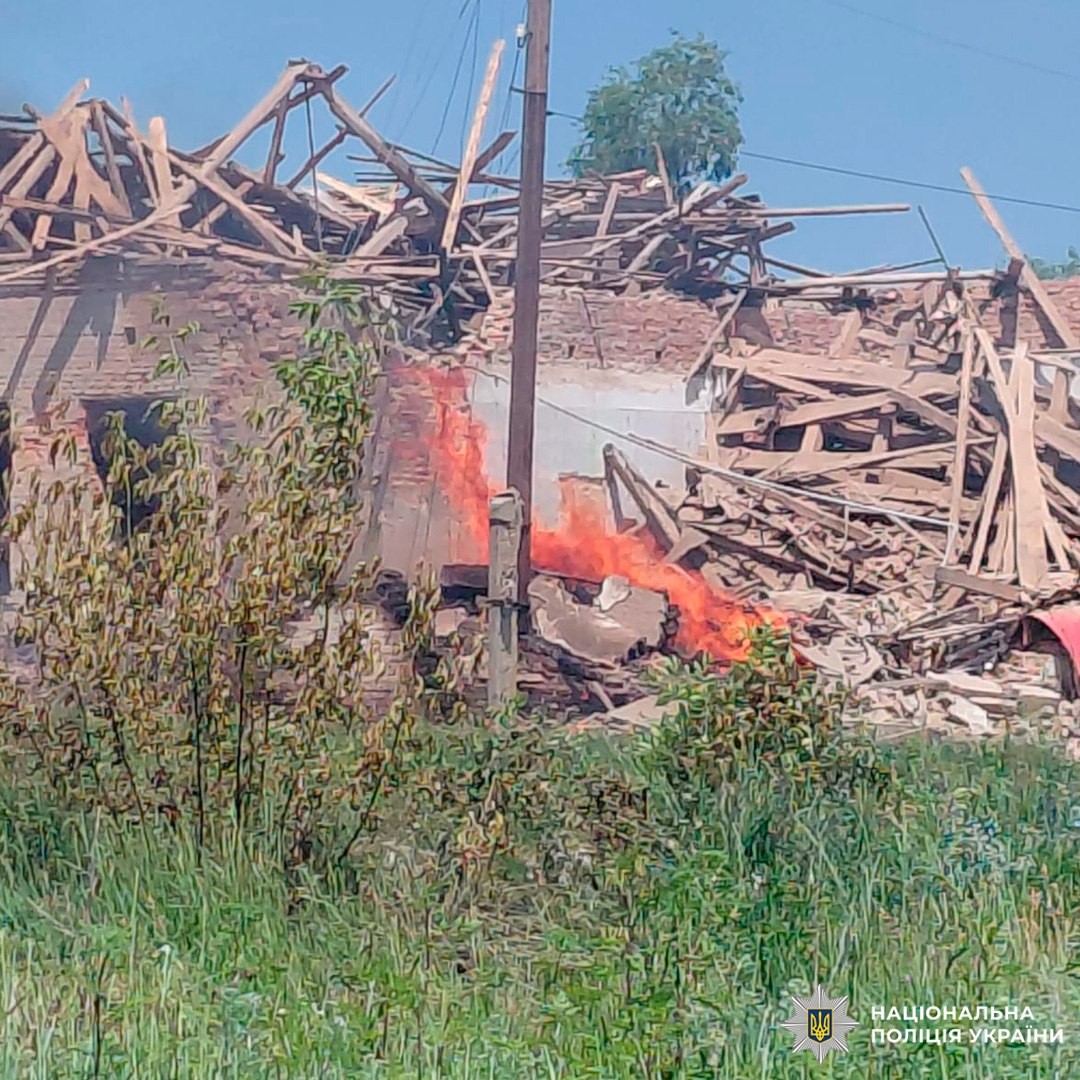
A series of Russian missile strikes on Chuhuiv overnight on 9 June killed at least three people and wounded six, the city's mayor, Halyna Minaieva, reported. Fire crews stayed at the impact sites as emergency services worked, she wrote, and the strikes damaged about eight apartment buildings and more than ten detached houses.
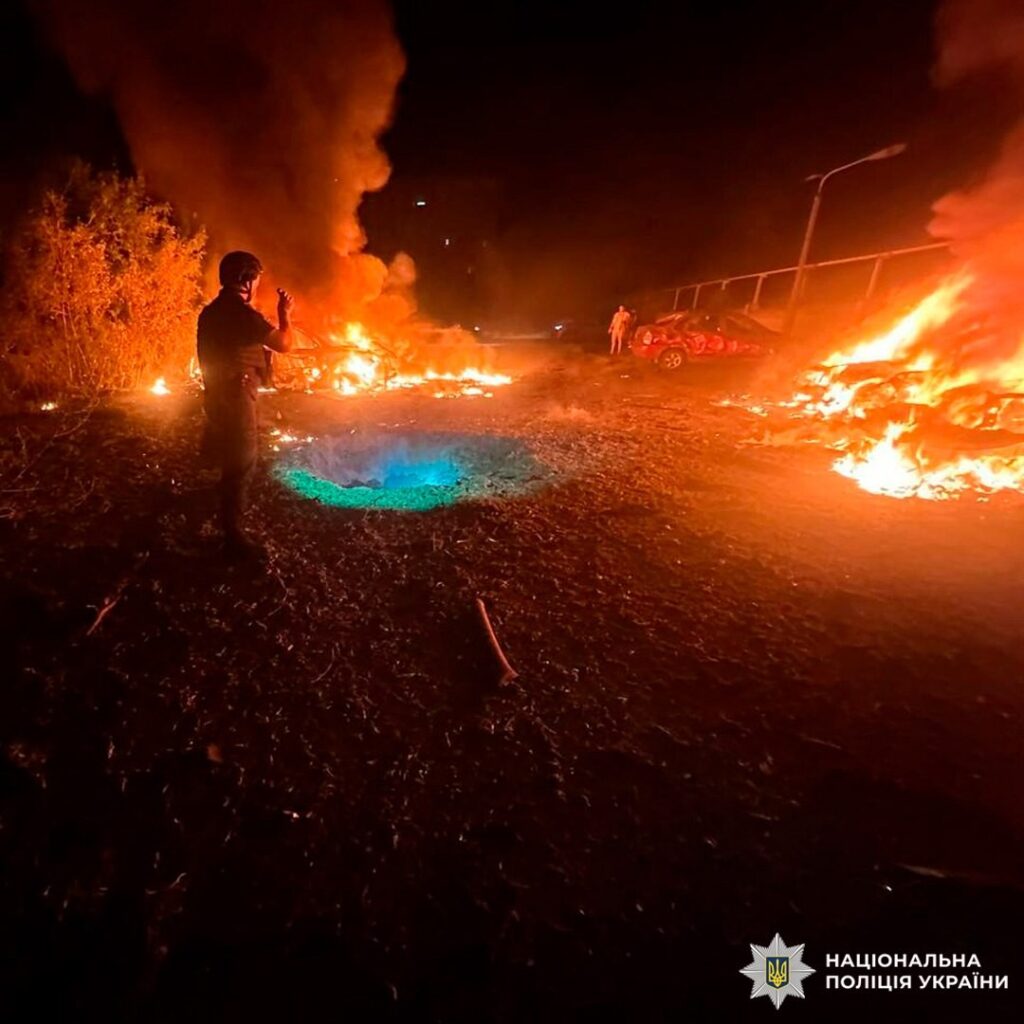
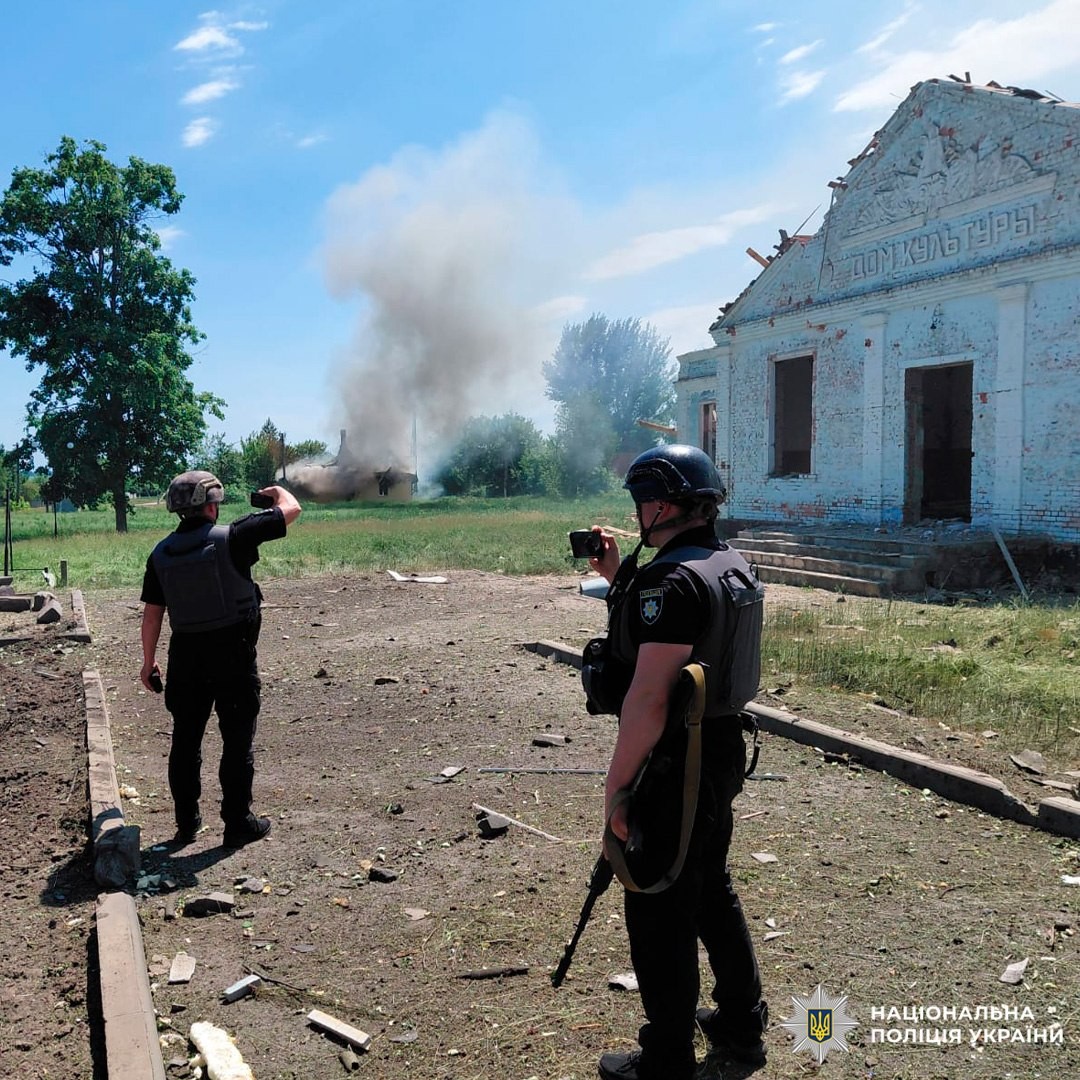
Police officers film the aftermath of a Russian strike in Kharkiv Oblast, 9 June 2026. Photo: National Police of Ukraine
In Kharkiv—the regional capital—Russian drone strikes set off fires, damaged at least 18 cars, and blew out windows and facades in residential high-rises, Kharkiv Oblast head Oleh Syniehubov reported.
Police officers film the aftermath of a Russian strike in Kharkiv Oblast, 9 June 2026. Photo: National Police of Ukraine
He said 15 people were hurt, among them three children, including a one-year-old boy, and three women were hospitalized.
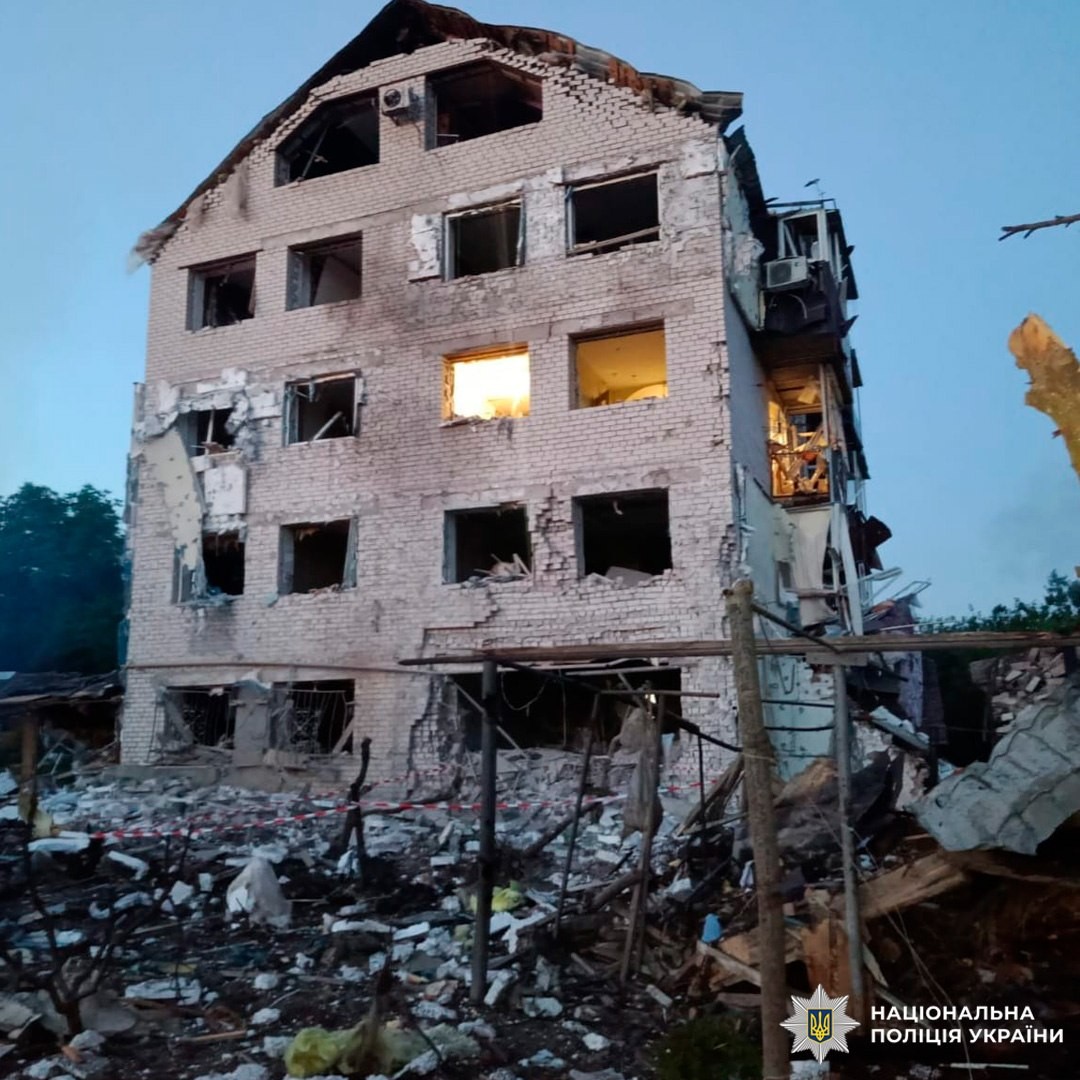
A multi-story residential building wrecked by a Russian strike in Kharkiv Oblast, 9 June 2026. Photo: National Police of Ukraine
Both cities sit dozens of kilometers from the Russian border and have been struck repeatedly through the war.
A barrage of two missiles and 166 drones
Russia launched two Kh-59/69 guided air missiles from Voronezh Oblast and 166 strike drones overnight, Ukraine's Air Force reported. The drones included Shahed types, some jet-powered, along with Gerbera, Italmas, "Banderol" loitering munitions, and "Parodiya" decoys, launched from Oryol, Kursk, Bryansk, Primorsko-Akhtarsk, and Millerovo in Russia, occupied Donetsk, and Hvardiiske in occupied Crimea.
By 08:00, air defense had downed or suppressed 146 of the drones. Two missiles and 17 drones struck 18 locations, and debris from intercepted drones fell at eight more.
Explore further
Moscow’s drone hits 10-story apartment block in Romania, injuring two as Russia fires 232 UAVs at Ukraine
Zaporizhzhia counts the damage from the day before
A Russian drone attack the previous day damaged 11 residential buildings across three districts of Zaporizhzhia, the city council reported. Six apartment blocks and five detached houses in the Khortytskyi, Zavodskyi, and Kosmichnyi districts lost windows, balconies, doors, and roofs to blast waves and debris. No one was hurt, and priority repairs were finished.
A nationwide wave
Russian attacks over 8 June killed two people in Sumy Oblast and wounded 13 across 21 hromadas, the regional police reported. A 78-year-old woman died in the Konotop hromada and a 71-year-old man in Seredyna-Buda, with a two-year-old boy and an eight-year-old boy among the injured.
In Donetsk Oblast, Russian forces killed two residents, in Bilozerske and Druzhkivka, and wounded 11 more, nine of them in Sloviansk, Oblast head Vadym Filashkin reported. Police recorded 1,309 attacks on the oblast's front line and residential areas, damaging 53 civilian sites. Hours later, Russia dropped three FAB-250 glide bombs on Sloviansk's outskirts, destroying one home and damaging more than 20.
In Kherson Oblast, drone and artillery attacks killed one person and wounded 13, including a child, Oblast head Oleksandr Prokudin reported.
Drone strikes in Dnipropetrovsk Oblast wounded three people.
Russian forces also hit 12 villages in four border hromadas of Chernihiv Oblast, the local border detachment told Suspilne.
The Russians also attacked communities in Mykolaiv Oblast with drones, where the administration reported no casualties.
A Lithuanian court has convicted a man who ran a cyclist off the road and attacked him for wearing a shirt with Ukrainian symbols, according to LRT. Judges treated his hatred of people who support Ukraine as an aggravating circumstance. The verdict is now final, and the court found the assault was deliberate, not an accident.
As Russia continues its all-out war against Ukraine, open support for Ukrainians across the Baltic states through flags, clothing, and fundraisers has become a marker of identity, even as it occasionally provokes hostility.
The roadside attack
On the evening of 27 March 2025, the man drove up to the cyclist on a road in Lithuania's Širvintos district. He repeatedly ordered the cyclist to take off the shirt bearing Ukrainian symbols. When the cyclist refused, the driver passed him, then swung the front of his car toward the roadside and blocked his path. The cyclist braked hard and fell with his bicycle. He suffered injuries, and the bicycle was damaged.
When the cyclist got back up, the man ran over to him. He again demanded that the cyclist remove the shirt, grabbed it, and tried to pull it off. The cyclist reached for his phone to call for help. The man struck him and knocked the phone onto the asphalt, breaking it, the court found.
Explore further
Two Polish citizens detained in Przemyśl for desecrating Ukraine’s flag — sixth such attack in last months
A hate motive, the court ruled
The Vilnius Regional District Court found the 1987-born man guilty of damaging another's property and causing minor bodily harm. Evidence from the investigation showed the violence was not random, the court said. It stemmed from the man's hatred of the victim as someone publicly backing Ukraine against Russia's invasion. The court treated that motive, hostility toward a group for supporting Ukraine, as an aggravating circumstance.
The court handed the man a non-custodial penalty of one year and three months' restriction of liberty. During that time, he must work or register as a jobseeker. He must also complete a program aimed at changing violent behavior. On top of that, he owes the victim for material and non-material harm, and he must repay Lithuania's State Patient Fund for the cost of treating the injuries.
Explore further
Switzerland to limit protection status for Ukrainians from seven western oblasts
A Vilnius District Prosecutor's Office prosecutor, Edvinas Navickas, led the pre-trial investigation and the prosecution. Vilnius County police officers gathered the evidence. The court issued its verdict on 12 May, and it has since taken effect, the prosecutor's office reported. Lithuania, a NATO member bordering Russia, has been one of Ukraine's strongest backers since 2022, sending weapons and welcoming Ukrainian refugees.
Lithuania has prosecuted this hatred before, convicting a man who smashed a displaced family's car.
Ukrainian refugees
Millions of Ukrainians live outside their country because Russia's invasion made home unsafe. Some 5.9 million are abroad as of 2026. Most settle in the European Union, where Poland and Germany host the largest communities. That visibility and open support for Ukraine sometimes draw hostility. Other reported attacks on Ukrainians abroad don't have a clear anti-Ukrainian motive.
Explore further
Latvia sentences man to prison for anti-Ukrainian hate speech and violence
In Poland, isolated cases include a Ukrainian beaten over his accent and a woman detained for telling two Ukrainian women to go back to Ukraine, while a separate knife attack on a Ukrainian selling his car in Wrocław has not been tied to nationality.
In Germany, an attacker killed a teenage athlete, a man went after children for speaking Ukrainian, and others assaulted teenagers while chanting pro-Russian slogans; one Berlin assault and a Murnau double killing both pointed to anti-Ukrainian motives, and a Russian was jailed for life over the latter.
The violence is not confined to those two countries: other attacks on Ukrainians have occurred in other places. Earlier, a Ukrainian was stabbed to death in Ireland in an attack police have not linked to his nationality, and a Ukrainian woman was murdered in the United States by a man who cited a delusional reason.
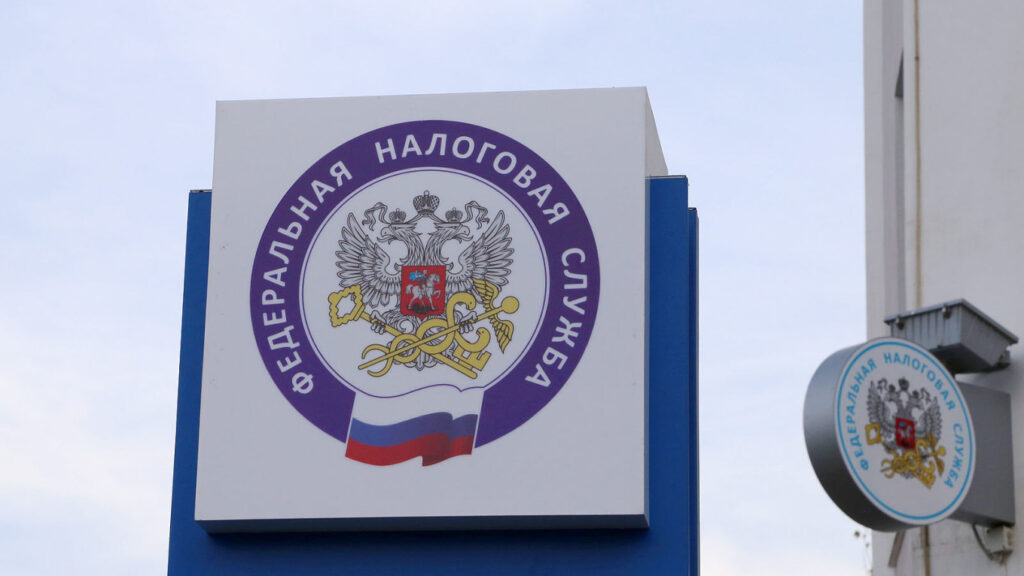
Russia's Federal Tax Service has pushed regional governments to consider higher taxes on residents and businesses as local budgets sink to record deficits, The Moscow Times reported. The move follows President Vladimir Putin's drive to shrink regional shortfalls, and it shows the financial strain Russia's war against Ukraine is placing on its provinces. Independent analysts expect the squeeze to deepen as the economy slows.
As Russia’s invasion of Ukraine drags on, the costs of war, Western sanctions, and Ukrainian strikes on strategic targets are putting growing pressure on budgets at every level.
Tax service tells regions to find more money
The Federal Tax Service (FNS) instructed regional authorities to work out where they could raise taxes, The Moscow Times reported, citing RBC. The recommendations answered Putin's directive to cut regional deficits, and governors had to submit their proposals in early June.
The advice told regions to:
expand the list of real estate taxed at cadastral, or market, value;
raise transport-tax rates to the maximum;
revise the benefits and rates on land tax and personal property tax.
To collect more, regions were also told to inventory real estate and to look for land used off-purpose, where the tax can rise several times over.
Explore further
Russian refining output fell 9.2% in April as Ukrainian drone strikes hit fuel plants
A record hole in regional finances
Last year, Russia's regions closed with a combined deficit of 1.538 trillion rubles ($20.8 billion). The gap grew fivefold from 2024 and almost eightfold from 2023. Four regions ran deficits above 30% of their own revenue — Kemerovo, Vologda, Arkhangelsk, and Tyumen oblasts — and six more topped 25%.
Profit-tax revenue fell in 55 regions. It collapsed by half in the Komi Republic, dropped 40% in Orenburg Oblast, and fell 39% in Yamalo-Nenets. Overall, regions collected 9% less profit tax than in 2024 and 13% less than in 2023, according to the rating agency ACRA. The pattern fits a war economy that has turned predatory toward once-wealthy provinces.
Explore further
Russia’s four-month budget deficit hit $75.4 billion — 50% above what Moscow planned for entire year
Reserves drained, debt climbing
To cover the shortfalls, regional governments spent every third ruble of their bank reserves — 1 trillion of 2.9 trillion rubles ($13.9 billion of $40 billion). They financed the rest with borrowing that pushed combined regional debt to 3.5 trillion rubles ($48.6 billion), ACRA reported — the highest in 15 years by Expert RA's earlier count. Expert RA projected the slowdown will continue this year, dragging revenues lower and lifting both the deficit and the debt burden.
Explore further
$7 billion lost from Russia’s war economy this year through Ukraine’s “long-range sanctions” on oil sector – Zelenskyy
Russian Finance Minister Anton Siluanov earlier projected the regional gap could widen to 1.9 trillion rubles ($26.4 billion) in 2026. The crunch mirrors a federal budget that has run far ahead of plan as Ukrainian strikes cut into Russian refineries and oil income.
Moscow raised VAT in January and prepared a windfall levy on big business, both breaking Putin's 2024 pledge of no tax changes before 2030. Smaller firms have been squeezed first even as the Kremlin's own spending keeps climbing
American war correspondent Zarina Zabrisky received Ukraine's Order of Merit, 3rd Class, by decree signed by President Volodymyr Zelenskyy on 5 June 2026. The award was issued on the occasion of Ukrainian Journalist Day.
Zabrisky, who reports for Euromaidan Press and Byline Times, was cited for "high professional skill and dedication" covering Russia's full-scale invasion. She was the first journalist to bring Russia's "human safari" — drone attacks on civilians in Kherson — to international attention, in a July 2024 dispatch for Byline Times.
Years on the ground in Kherson
Zabrisky arrived in Kherson with other war correspondents on the third day after the city's liberation in November 2022. She has filed from the Kherson region almost continuously since. Her work for Euromaidan Press has documented Russia's systematic drone attacks on civilians, the aftermath of the Kakhovka dam destruction, and the daily life of a city whose residents named what was happening to them.
The Russian Foreign Ministry added Zabrisky to its sanctions "stop list" in August 2025, banning her from ever entering Russia.
The documentary
Between September 2023 and June 2025, Zabrisky directed and produced Kherson: Human Safari, a 72-minute documentary built entirely from original footage and interviews with Kherson residents. The composer who wrote the score had been a partisan during the Russian occupation. The director of photography is a native of Kherson.
The film is structured around seven chapters: invasion, occupation, protests, liberation, shelling, flood, and human safari. It is available to watch free at khersonhumansafari.com.
Euromaidan Press reviewed the film in August 2025. Reviewer Kostiantyn Doroshenko called it "a fantastic horror movie… our reality."
Explore further
Inside Human Safari: the film that captures Russia’s drones hunting Ukrainians like prey
On Journalist Day
Zabrisky was among 37 Ukrainian and foreign journalists named in Presidential Decree №482/2026, issued on 5 June 2026 for Ukrainian Journalist Day. The decree honored correspondents from Bloomberg News, CNN International, Liberation, Welt, Radio France Internationale, and Ukrainian outlets including 1+1, LB.ua, Babel, and the National Union of Journalists of Ukraine.
The citation read: "significant personal contribution to the development of national journalism and the information sphere, high professional skill and dedication shown during the coverage of events of the Russian Federation's full-scale invasion of the territory of Ukraine."
Zarina Zabrisky — The Kherson Dispatches
Euromaidan Press · Reporting Dossier
The Kherson dispatches of Zarina Zabrisky
An American war correspondent reporting for Euromaidan Press from Kherson. On 6 June 2026, Ukraine awarded her the Order of Merit; Russia had already placed her on an entry-ban list for the same work. Her feature documentary, Kherson: Human Safari, grows out of the reporting gathered here.
The "human safari" — seven dispatches From the front — seven more
The "human safari"
2024 – 2026
One reporter following a single atrocity over two years—from the dispatch that named it, to the UN inquiry tracing it to the Kremlin. Read top to bottom, it is a timeline.
Amid a dire shell shortage, fighters near Kherson find a lifeline in a captured Soviet howitzer and homemade rounds.
The film
Kherson: Human Safari
Zabrisky's 2025 feature documentary follows the city through occupation, liberation, ecocide, and the drone war on its residents—the story she has been filing from the ground for two years.
An American war correspondent reporting for Euromaidan Press from Kherson. On 6 June 2026, Ukraine awarded her the Order of Merit; Russia had already placed her on an entry-ban list for the same work. Her feature documentary, Kherson: Human Safari, grows out of the reporting gathered here.
The "human safari" — seven dispatches From the front — seven more
The "human safari"
2024 – 2026
One reporter following a single atrocity over two years—from the dispatch that named it, to the UN inquiry tracing it to the Kremlin. Read top to bottom, it is a timeline.
Amid a dire shell shortage, fighters near Kherson find a lifeline in a captured Soviet howitzer and homemade rounds.
The film
Kherson: Human Safari
Zabrisky's 2025 feature documentary follows the city through occupation, liberation, ecocide, and the drone war on its residents—the story she has been filing from the ground for two years.

 Login
Login