A las puertas del Mundial de fútbol, Estados Unidos ha puesto la mira en los influencers extranjeros. Las autoridades migratorias han advertido que quienes ingresen al país con una visa de turista no pueden utilizar su estancia para producir contenido destinado a generar ingresos económicos en YouTube, TikTok, Facebook u otras plataformas, una práctica que durante años ha sido habitual entre creadores digitales de todo el mundo.
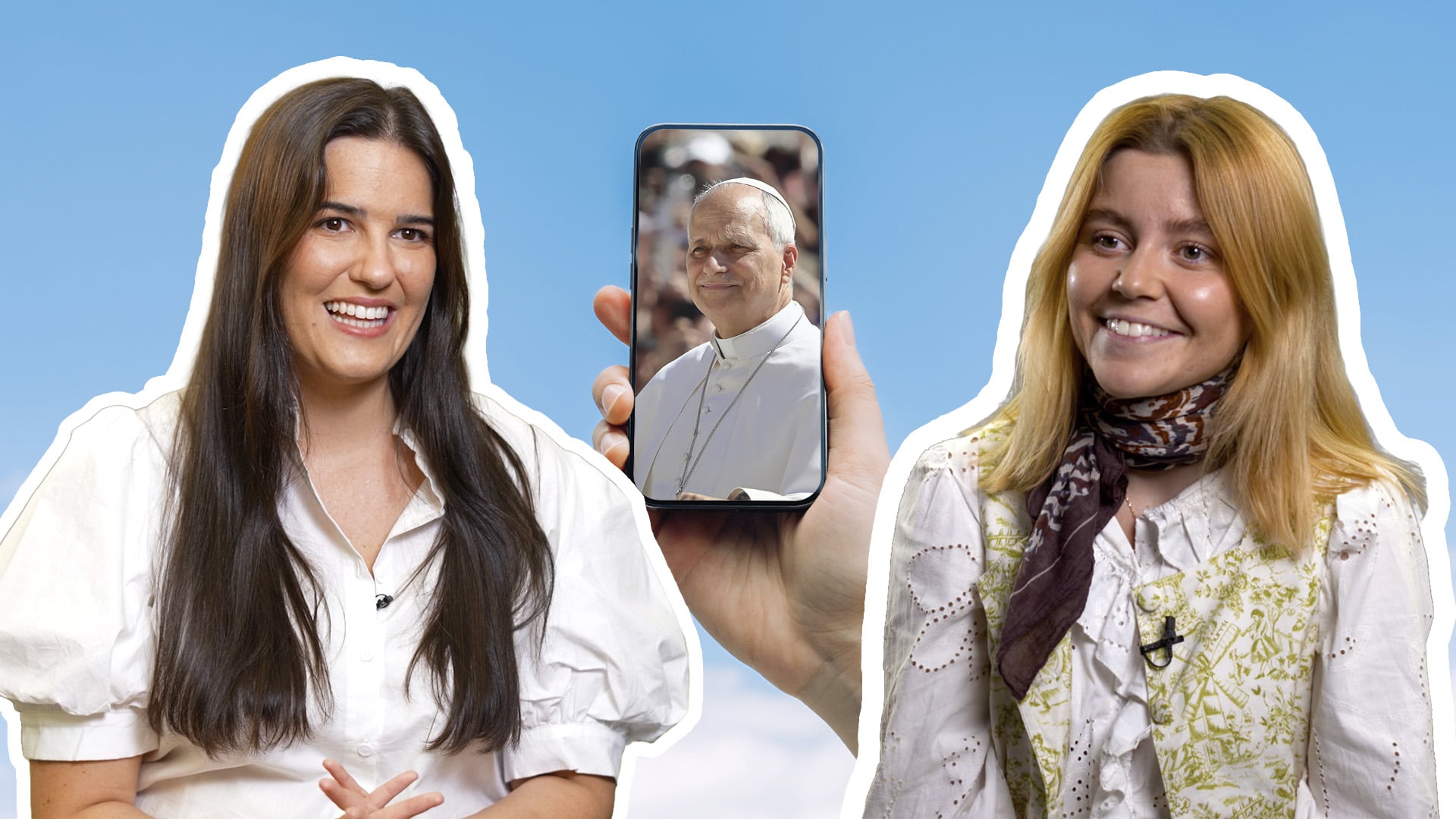
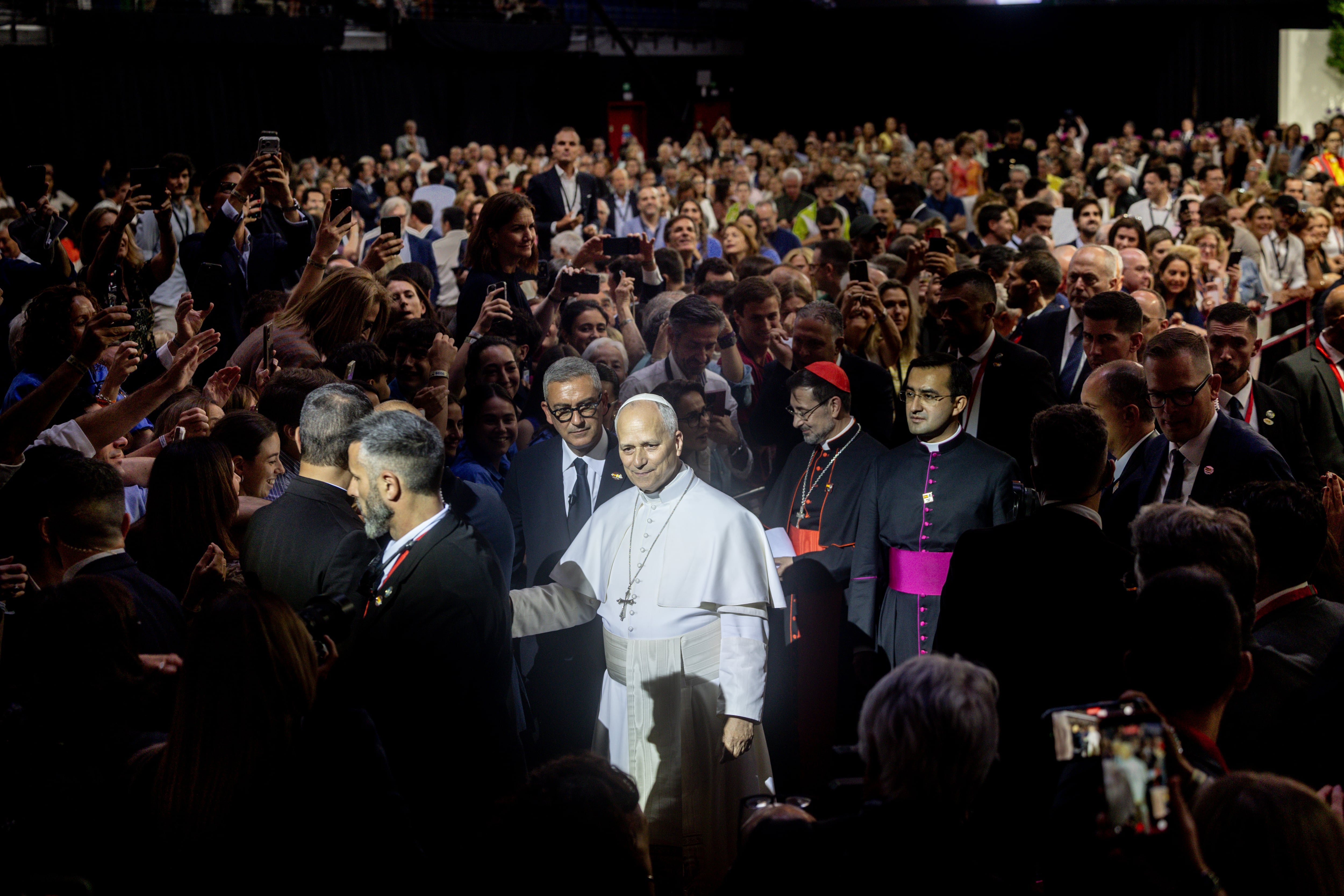
Carla Restoy y Abril Casals son una misionera digital y una influencer católica. Ambas suelen producir contenido relacionado con sus creencias religiosas en las redes sociales, y lo están haciendo con especial énfasis durante la visita del Papa. Carla se define a sí misma como misionera digital, un concepto que va asociado a quienes predican el mensaje de Dios en las redes sociales. Abril, por su parte, ya publicaba contenido sobre moda y estilo de vida antes de hablar sobre su fe, por lo que ella se identifica como influencer católica. Durante la visita de León XIV a España, los creadores de contenido religioso se convierten en una nueva vía de comunicación para la Iglesia.
Julia E, an 18-year-old influencer from Germany, was hanging out with her family on the Palm Jumeirah beach when she heard a blast and saw a fireball erupt into the sky. She knew tension was mounting following the U.S.-Israeli attack on Iran the previous day, but she didn’t imagine Dubai would be on the frontline. “I was a little scared,” she says. “Usually you just read about it in the newspapers, you see it online, but when you see it in front of you, it’s a different feeling — like your heart just drops.”
The fear was not an emotion she expressed on Instagram. Julia’s family moved to Dubai from Germany in 2024, tempted by the business potential of an emirate that aggressively marketed itself as the influencer capital of the world — a digital utopia carved out of the desert, with its gleaming skyscrapers and Insta-ready waterfronts. Dubai’s state-backed Creator HQ offers content creators long-term residencies, legal support, networking opportunities, training and an environment geared towards digital entrepreneurship. Influencers need a permit to legally operate in Dubai but taxes are negligible — 5% VAT on taxable income from clients in the UAE over AED 375,000 (about $102,000), and a flat 9% corporate tax on income exceeding AED 1,000,000 (about $272,000). It has attracted over 50,000 content creators to Dubai, which has a population of about 4 million.
With 60,000 followers on TikTok and Instagram, Julia is looking to build her own marketing company in Dubai. In an effort, she says, to comfort her younger brother, she recorded a video shortly after witnessing the explosion. It showed Julia, a palm tree and the glittering night skyline behind her, with the caption: “You live in Dubai, aren’t you scared?” The video cuts to a montage of Mohamed bin Zayed Al Nahyan and other Emirati sheikhs: “No, because I know who protects us.” The short video is set to an AI-generated rendition of the Belgian singer Stromae’s ‘Papaoutai’, a song that laments the loss of a father.
According to Julia, she was the first content creator to post an ‘Are you safe?’-style video, a now viral trend across the Gulf as influencers counter the narrative of a region in turmoil.
“I decided to make that video,” she says, “because I did feel safe. And I wanted to spread some positivity and my perspective that we are still being protected and we still have someone behind us here.” As Iranian drones hit the Gulf, including luxury tourist hotels destinations like Fairmont, The Palm hotel and the Burj Al Arab hotel, there was a wave of schadenfreude online. Some users outside Dubai could not contain their glee that the city’s glossy surface, its influencer-curated image of sunkissed luxury, had been ripped apart. The distress of those who spend their working hours flaunting luxury and throwing shade at the cities they come from, were, it has to be admitted, amusing to many.
But Dubai’s influencers doubled down, as the war spiralled and airports shut down, stressing the city’s safety, walking around in crowded public spaces, praising “the best air defense systems” and the men behind it: a reaction so seemingly choreographed that people questioned whether it was part of a government PR campaign.
On March 3, the UAE’s president and crown prince were conspicuously filmed on a stroll through a Dubai mall, reassuring bewildered shoppers. It was eerily reminiscent of Volodymyr Zelensky’s “The President is here” video from four years ago, when Russia invaded Ukraine. Vogue Arabia, headquartered in the UAE, praised Gulf leaders and wrote about the influencer campaigns and the people’s “unwavering faith in their nation’s leadership and its steadfast commitment to protecting those who call it home.”
As inviting as Dubai is to influencers, they must acquire advertiser permits that can cost up to $4,000 and are told to respect the state and avoid circulating rumors and unverified information or any content that can harm the UAE’s foreign relations or “offend or compromise national unity or social cohesion.” In the wake of Iran’s strikes, the UAE’s Public Prosecution announced that "anyone who shares or republishes content from unknown sources may face legal accountability under the country’s applicable laws, even if they are not the original creator of the content.”
There is a sense of vulnerability among Dubai’s influencers, says Zoe Hurley, associate professor of media at the American University of Sharjah and author of the 2023 book ‘Social Media Influencing in the City of Likes: Dubai and the Postdigital Condition’. “They haven't necessarily been trained professionally. They don't have institutional guardrails protecting them, or any formal buffer zones that might have protected people who are putting themselves out there.” she said. Hurley made a distinction between “influencers who are here on holiday who don't live here and who are followed by, say, people in the UK” and homegrown ones, representing diasporas in Dubai — from South Asia, the Levant and Europe — “who people are turning to because they're the thought leaders in their communities.”
None of the influencers we contacted in Dubai or across the Gulf confirmed ever being prompted or paid to post positive content. The German NTV network, however, reported concerns voiced by German influencers: "I don't know what I'm allowed to say and what I'm not allowed to say," one posted, "We're not allowed to post anything!” said another. These stories and reels have since been deleted.
Julia recorded a second video in response to the backlash she faced.
Julia made another video, responding to the accusations that influencers were essentially providing a PR service for Dubai. “I will tell you exactly how much I got paid,” she says. “Dubai pays me in business… in safety… in connections… with weather.” She adds that, unlike in Dubai, she would never venture outside alone in her native Germany after 8 at night.
This point about Dubai’s safety — leaving things in the car without being scared to be robbed, or walking alone at night — is echoed widely among European expatriates in the Emirates and Saudi Arabia who compare it to the relative anxiety they feel in Europe. Telegram’s CEO, Pavel Durov recently made the same point: “Unfortunately, I had to leave Dubai for Europe a week ago — so I’m not only missing the free fireworks from Iran, but also exposing myself to greater risk. Given Europe’s crime rates, Dubai is statistically safer even with missiles flying.” Elon Musk shared the sentiment, writing that “No country is perfect, but Dubai and UAE broadly are objectively safer and better run than many areas of Europe.” Notorius influencer and ‘manosphere’ icon, Andrew Tate, still facing human trafficking and rape charges in Romania, posted a video of himself dancing on a yacht “as bombs fall.” His brother Tristan Tate chimed in, comparing air attacks in Dubai to stabbings in London.
What these influencers don’t discuss is Dubai’s underbelly, an invisible city occupied by an underpaid migrant workforce, their treatment explained away on the grounds that they make more money in Dubai than they would in the poor countries in South Asia and Africa that they come from. While the influencers enjoy government-sponsored benefits and status, these other migrant workers remain bound under the kafala (sponsorship) system that binds their residency status to their employer. Despite reforms, under the system their status remains uncertain, their earnings precarious, and imprisonment or fines for relatively minor offences is common. There are no golden visas for laborers and maids, never mind darkerreports about human trafficking and sexual and physical abuse.
London-based barrister Caoilfhionn Gallagher described the UAE’s exploitation of migrant workers as a “grubby reality, with rampant human rights abuses.” She said she had “acted for people prosecuted and jailed in the UAE for daring to work with human rights organisations or criticise the authorities,” referring to the mass trial in 2024, when 43 people, among them human rights activists, had been “subjected to enforced disappearance, solitary confinement and incommunicado detention.”
The contrast between the city that influencers show their followers and the city built on the abuse of migrant labor is one that governments across the Gulf want to bury. The UAE’s 2031 vision sees creative industries contributing up to 5% of the country’s GDP.
For decades now, the UAE has been trying to diversify its economy, to pivot away from its reliance on hydrocarbons. It is betting on the digital economy and tourism to be the cornerstones of economic growth.
But for all the bravado on display, rich people and Western influencers are fleeing the Gulf, as war with Iran continues. Influencers unable or unwilling to leave, must keep grinding. Narcissus could not stop staring at his reflection even as he was dying. Will Dubai’s influencers be allowed to look away from their reflections in the city’s famous mirrored skyscrapers?
“¿Por qué tiene voz un senegalés en España? ¿Por qué tiene que salir con su victimismo nauseabundo? ¿No hay españoles con problemas qué contar?”. @Diewalkure83 formaba parte de los usuarios de X que el sábado expresaban su indignación porque Khadry, un joven senegalés llegado a España en plena pandemia, hubiera sido uno de los inmigrantes elegidos para contar su historia al papa León XIV durante la visita al centro CEDIA de Cáritas Madrid. El comentario fue compartido por 89 usuarios y recibió la aprobación de otros 500. “Que se lo lleve al Vaticano, allí va a destacar ante tanto blanco”, opinaba @Mela42betico. “El Papa rojo es un hipócrita de mierda, que cambie las leyes del Vaticano e introduzca a esos inmigrantes que tanto dice amar porque son personas”, comentaba @Vault_GirlES. Más de 200 “me gusta” ha recibido el vídeo de @franxuh, muy irritado porque tres cayucos llegados desde África serán colocados cerca del altar donde el León XIV celebrará el próximo viernes la misa en el Puerto de Santa Cruz de Tenerife. El Pontífice, lanza el tuitero, es un “putrefacto que viene a blanquear la inmigración masiva”.
Let’s start with the proven facts: Disclosure Day is the most anticipated film of the summer. Its director and screenwriter, Steven Spielberg, revealed details about its plot this week on one of Stephen Colbert’s final shows: he says it tells the story of the theft by officials, “committed to the truth,” of all information held by the government “about UFOs and extraterrestrial visits,” and the system’s desperate attempts to prevent it being revealed.
Be careful what you wish for, as the saying goes, although it is not entirely clear what Yesteryear’s protagonist intended when she downloaded the Instagram app and started her journey as an influencer. Here’s what we can say for sure: Natalie, or Nattie, is a devout Christian and a proud housewife. She is intelligent but believes little can be learned at university. Well-married — no, phenomenally well-married — to the youngest son of a senator who is a potential presidential candidate. A potential presidential candidate for none other than the United States.

 Login
Login