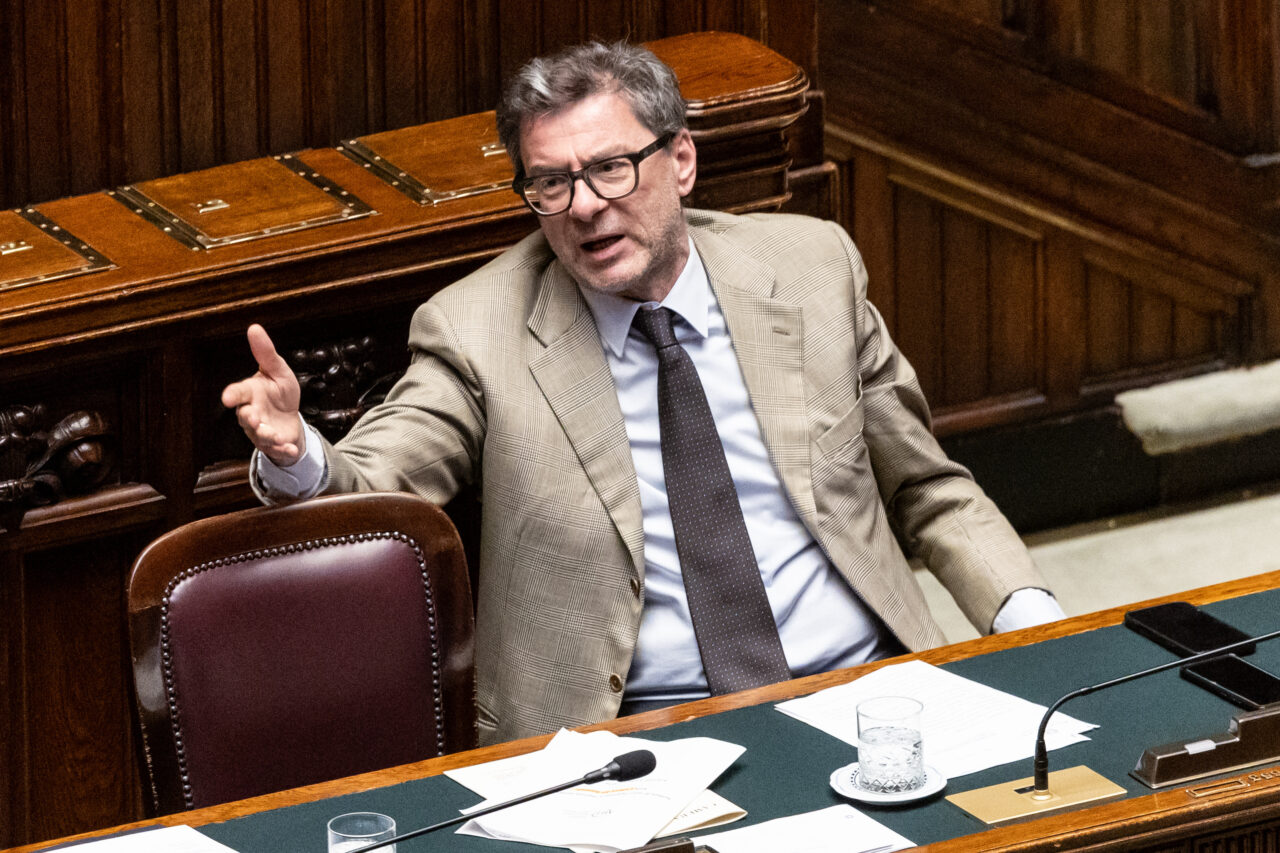
Projeto de lei socialista propõe alargar efeitos da autoexclusão a todos os operadores, criar lista pública de sites ilegais e um Portal da Transparência do setor.
Eurico Brilhante Dias comunicou ao ministro dos Assuntos Parlamentares a oposição socialista à proposta do Governo, mas indicou condições para uma eventual viabilização.
O governo pede ao parlamento uma autorização para a legislar que é exclusiva da Assembleia. Ainda, Roberto Martinez diz que o jogo contra a Nigéria é um bom "teste para preparar a fase de grupos".
Carneiro reforçou a necessidade de investir na inovação tecnológica e de criar um instrumento de substituição ao POSEI, relembrando os impactos do preço dos combustíveis no setor da pesca dos Açores.
With the cease-fire proving tenuous, negotiations between the two nations are in flux, but have advanced to outline potential paths forward on difficult questions about Iran’s nuclear program.
Em causa, denunciam os socialistas, está um concurso público recentemente lançado pela GESBA, com um valor base de 300 mil euros para defender a banana da Madeira na União Europeia. A deputada do PS, Sílvia Silva, diz que “o problema não é o objecto do concurso em si, mas sim o facto de já existirem […]
MP Judy Sgro, chair of the Canada-Taiwan Parliamentary Friendship Group, told The Canadian Press Liberal and Conservative MPs will visit the island the week of Oct. 11.
MP Judy Sgro, chair of the Canada-Taiwan Parliamentary Friendship Group, told The Canadian Press Liberal and Conservative MPs will visit the island the week of Oct. 11.
The first time FIFA announced cooling breaks in World Cup matches, in 2014, the matter ended up in court. Players, worried about the heat and humidity in Brazil, did not trust soccer’s world governing body, which left the decision for each match to the discretion of its medical staff. The players went to a labor court and obtained an order that the pauses would be automatic at the 30th minute of each half if temperatures reached 32 degrees Celsius. Twelve years later, FIFA has mandated three-minute hydration breaks at the 22nd minute of every match at the 2026 World Cup, regardless of temperature or humidity. The move, announced as being for the “well-being of the players,” signals a fundamental change in how the game is played: from two 45-minute halves, as it has been since 1897, to four quarters of roughly 22 minutes.
In the mountain villages of Guatemala’s Western Highlands, farmers are combining ancient Maya knowledge with modern sustainable farming techniques to protect their crops from pests and disease. Smallholders are creating homemade biopesticides using plants with strong smells and flavors to deter pests on their family plots. This is helping to cut back on the use of increasingly expensive agrochemicals, many of which have been labeled as dangerous to human health and linked to soil degradation. About 60 Guatemalan communities in the Western Highland departments of Sololá and Huehuetenango, as well as Chiquimula in the east, are working to revive these traditional techniques with support from the international development organization World Neighbors. Their focus is to restore and strengthen traditional knowledge, combining it with agroecological practices that help families produce surplus food they can sell to boost household incomes. “Traditional farming techniques are becoming popular because they are simple practices to apply, use local resources, and have proven to be effective,” Dayani Roche, a program associate at World Neighbors, told Mongabay via email. Rather than a single ancient recipe, farmers are using “a living combination of ancestral knowledge, local experimentation and more recent agroecological practices,” he said, which are “safer for families, soil, water and biodiversity than many chemical alternatives.” The Maya civilization, which once stretched across modern-day Central America, had a rich history of farming dating back to 2000 B.C.E. Its most celebrated agriculture system is the milpa, a form of intercropping that involves a mix of maize, beans and…This article was originally published on Mongabay
Militantes do PS, incluindo o histórico António Campos, pediram esta segunda-feira ao secretário-geral socialista que suspenda as eleições para a federação de Coimbra, denunciando “violação dos estatutos”, pagamento “massivo de quotas”, “ativação de sindicatos de votos” e cadernos eleitorais nulos. Numa carta enviada a José Luís Carneiro, à qual a agência Lusa teve acesso, António Campos, Américo Batista e Rui Moreira Claro denunciam “violações grosseiras dos estatutos e do regulamento internos” e consideram que isso torna “inviável a realização do ato eleitoral agendado para o próximo dia 20 de junho”. “Razão pela qual se solicita ao camarada que imediatamente decrete
Fa un certo effetto leggere della proposta di acquisizione del Monte dei paschi di Siena da parte di una cordata formata da Intesa e Unipol, dopo tutto quello che gli allora manager di Unipol passarono, esattamente vent’anni fa, per avere solo osato pensare di scalare una banca (la Bnl).
Per certi aspetti, considerando la posizione assunta allora da Mps, il suo ruolo nella guerra finanziaria che si combatté attorno a quella e ad altre operazioni più o meno collegate, e tutto quello che capitò dopo, con l’acquisto dell’Antonveneta e le sue conseguenze sui bilanci di Mps, il risultato somiglia a una grande rivincita, o anche a una nemesi, a seconda dei punti di vista. E lo stesso si potrebbe dire dei vertici dei Democratici di sinistra, perché il Partito democratico non c’era ancora, e anche per questo – per riequilibrare con le cattive i rapporti di forza in vista della fusione Ds-Margherita – Francesco Rutelli e tutto il suo partito appoggiarono senza riserve la violentissima campagna di stampa che sulla scorta di virulente iniziative giudiziarie mise alla gogna la sinistra, ponendo le basi della non-vittoria elettorale del 2006 (la prima di una lunga serie).
Molte cose ci sarebbero da dire, ripensando a tanti indignati editoriali di allora, ai dirigenti di un partito di opposizione messi sotto processo per il reato di «tifo», per avere espresso simpatia per il movimento cooperativo e per la possibilità che acquisisse una banca. Tanto più se si confronta quella sfilza di invettive con il silenzio che ha accompagnato le spericolate manovre finanziarie della destra di oggi, direttamente dal ministero dell’Economia.
Potrei andare avanti così per ore, solo con l’elenco delle cose che ci sarebbero da dire, ma se non le dicono i dirigenti della sinistra, se nemmeno loro si azzardano a dire mezza parola su tutto questo, è possibile che debba sempre far tutto io?
The remains of the hull of one of the two ships recovered from Lake Nemi. Workers in the foreground indicate scale. Credit: Public Domain
Located in Lake Nemi in Italy, the Nemi ships consisted of two vessels constructed on orders of Roman Emperor Caligula (37 to 41 AD), known for his extravagant lifestyle.
The ships served as floating palaces, complete with intricate decorations, marble floors, and elaborate plumbing systems and demonstrated advanced Roman engineering techniques.
There is evidence of the use of waterproof concrete, complex hull designs, and innovative plumbing systems with features such as heated baths. The ships were adorned with exquisite artwork, including mosaics, marble statues, and bronze decorations.
An artistic depiction of a Nemi ship by CM Knight-Smith. Credit: Public Domain
Nemi ships were impressively large for their time
The Nemi ships were impressively large for their time. The first ship, the Prima Nave, had a length of approximately 70 meters (230 feet) with a width of about 20 meters (66 feet). The second, the Seconda Nave, was 73 meters (240 feet) long and 24 meters (79 feet) wide.
The remains of a Lake Nemi ship pictured in 1929. Credit: Public Domain
Both ships were constructed with high-quality materials, including oak and pine wood, and featured advanced techniques such as waterproofing with lead sheeting and bitumen.
The sheer size and opulence of the ships reflected the grandeur and luxurious lifestyle associated with Emperor Caligula. They were likely used for leisure and ceremonial purposes, showcasing the emperor’s wealth and technological advancement of the Roman Empire.
Ships discovered and then destroyed during the Second World War
The ships were discovered in the 15th century, but serious attempts to recover them only began in the late 19th and early 20th centuries. Italian dictator Benito Mussolini ordered the draining of Lake Nemi in the 1930s, leading to their successful recovery.
Benito Mussolini observes the drainage system for the emptying of Lake Nemi. Credit: Public Domain
The Nemi ships were destroyed in the final stages of World War II. On the night of May 31, 1944, a fire broke out in the Museum of Roman Ships at Lake Nemi, where the ships were housed. The fire caused extensive damage, destroying much of the wooden structures and artifacts. Most of the ships were lost to the flames.
The exact cause of the fire remains disputed. One theory suggests that retreating German forces set the museum ablaze to prevent advancing Allied troops from capturing the ships and the valuable artifacts. Another theory posits that the fire resulted from Allied bombing in the area, although there is less evidence to support this.
Furthermore, there was also the possibility of an accidental fire, possibly caused by negligence or the mishandling of flammable materials during the chaotic war period.
The remains of the Nemi ships, along with related artifacts and replicas, are housed in the Museo delle Navi Romane (Museum of Roman Ships), located near Lake Nemi in Italy.
Despite the destruction, some metal and stone artifacts survived the fire. These remnants, along with photographs and drawings made before the fire, have allowed historians and archaeologists to reconstruct aspects of the ships.
Sono due le operazioni annunciate su Mps negli ultimi giorni, quella di Intesa Sanpaolo e quella di BancoBpm, la prima è in fase più avanzata e ha maggiori chances di successo; la seconda è appesa a una trattativa dagli esiti assai incerti.
Nos últimos anos, as apresentações de Jensen Huang, CEO da Nvidia, obedeciam a um guião previsível: revelar semicondutores, software e sistemas cada vez mais avançados para alimentar aplicações de inteligência artificial em centros de dados. No início deste mês, Huang aproveitou a Computex, uma feira anual da indústria tecnológica realizada em Taiwan, para apresentar uma nova frente de expansão.
Apresentou o RTX Spark, um chip para computadores pessoais (PCs) que será lançado ainda este ano, desenvolvido em colaboração com a Microsoft. A Nvidia está a desafiar a Intel e a AMD, os fabricantes de chips que dominam este segmento, apostando que a próxima fase da IA não se desenrolará apenas nos centros de dados, mas também nos dispositivos de ponta (“edge devices”).
Nos últimos anos, os PCs têm sido um dos setores menos dinâmicos da tecnologia. O Evercore, banco de investimento, estima que, na última década, as vendas unitárias de chips para computadores de secretária caíram 4% ao ano, enquanto as destinadas a portáteis permaneceram praticamente estáveis. O que está a renovar o interesse é o surgimento da IA “agêntica” (“agentic AI”), um software capaz de realizar tarefas complexas de forma autónoma.
A Nvidia argumenta que isso exigirá um novo tipo de máquina. Os PCs dependem de unidades centrais de processamento (CPUs), chips de uso geral que executam tarefas que vão desde o processamento de texto até à navegação na internet. As CPUs podem coordenar o trabalho dos agentes de IA, mas os modelos em que esses agentes se apoiam necessitam de outro tipo de chip: as unidades de processamento gráfico (GPUs), um mercado amplamente dominado pela Nvidia. Com o RTX Spark, a empresa combina os dois tipos de processadores num “superchip”. Segundo Huang, o resultado é a reinvenção do PC pela primeira vez em 40 anos, substituindo o modelo tradicional — em que os seres humanos faziam a maior parte dos cliques e da escrita — por outro em que agentes de IA executam grande parte do trabalho.

 Login
Login