Login
Login
What is the Amal Movement, Lebanon’s other Shia party?
As Hezbollah's future is unclear, what role can Amal, Lebanon's other major Shia party, play?

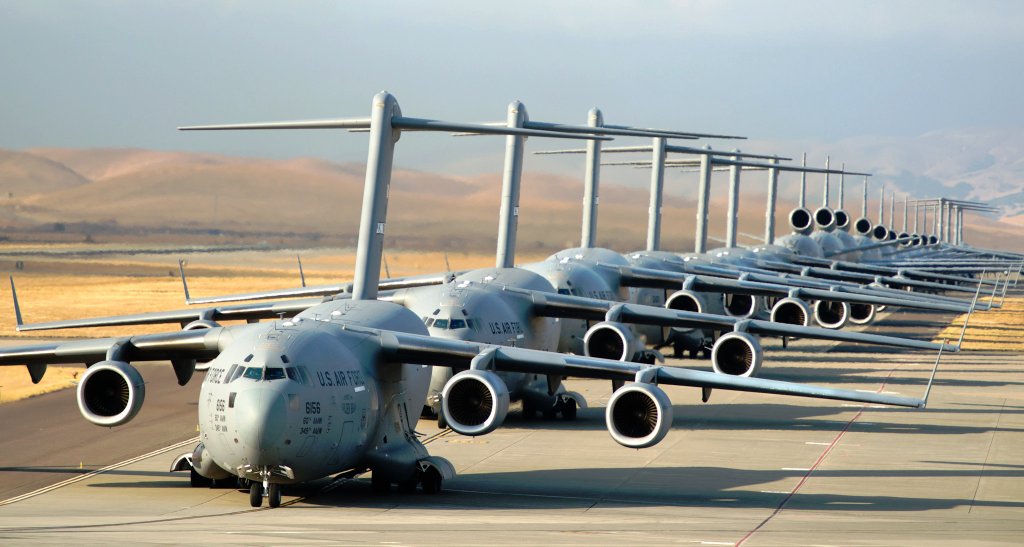
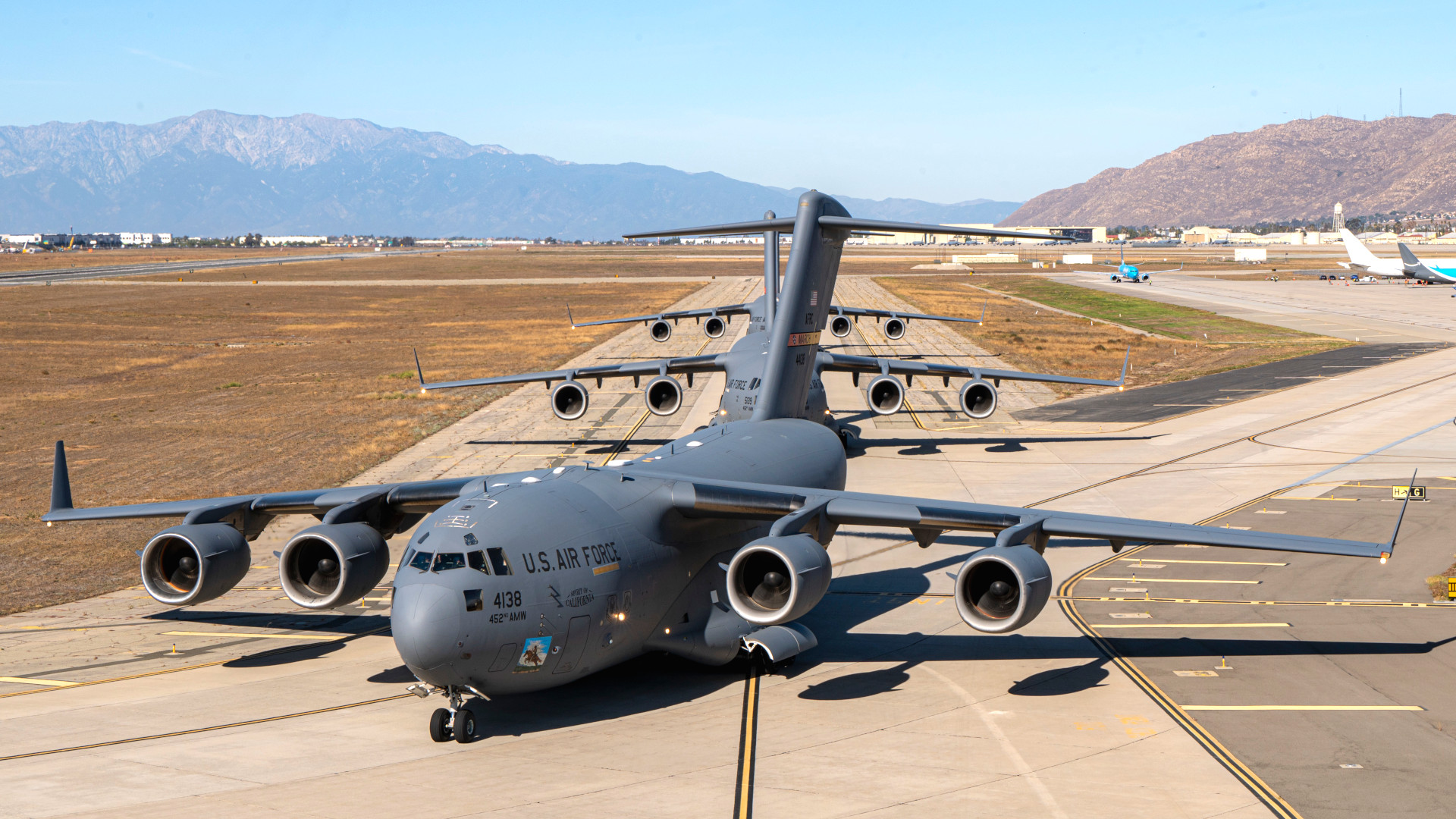
Operators of the C-17 Globemaster III have been reaching out to Boeing about possibly restarting the product line, and the company has been “encouraged” by these engagements. Separately, Congress recently directed the U.S. Air Force to prepare a formal briefing on the feasibility of acquiring new Globemaster IIIs. The Air Force’s C-17 fleet is critical for U.S. power projection globally. At the same time, a succession of crises in recent years has put serious strain on these aircraft, and questions have already been raised about the viability of the current plan to keep them flying through 2075.
The House Committee on Armed Services added the requirement for the C-17 production restart briefing to a report accompanying the latest draft of the annual defense policy bill, or National Defense Authorization Act (NDAA), last week. The Air Force took delivery of its last Globemaster III in 2013, and has some 222 of these airlifters in service today. The air arms of Australia, Canada, India, Kuwait, Qatar, the United Arab Emirates, and the United Kingdom also have smaller fleets of these airlifters. Three more of these aircraft are operated under the Strategic Airlift Capability (SAC) initiative, a multi-national arrangement with several European members, as well as the United States. Boeing shuttered the C-17 line entirely in 2015.
“The committee recognizes that the existing C-17 fleet continues to bear significant operational demands supporting combatant commander requirements, humanitarian assistance missions, and global mobility operations,” the provision in the House Committee on Armed Services’ report notes. “The committee is concerned that future operational demands may place additional strain on the existing C-17 fleet.”
“Therefore, the committee directs the Secretary of the Air Force to provide a briefing to the House Committee on Armed Services not later than March 1, 2027, assessing the feasibility of restarting the production line for the C-17 aircraft,” it adds.
The committee wants the Air Force’s briefing to at least include the following:
TWZ subsequently reached out to Boeing to ask about the company’s current position on rebooting C-17 production.
“Our goal is to help our customers be successful, and we work with them to develop innovative solutions to meet their mission needs, including development and production partnerships,” a Boeing spokesperson told us this week. “We are proud of our continued support for the unique, mission-proven capabilities that the C-17 Globemaster III delivers to the U.S. Air Force and eight allied nation partners.”
At the Paris Air Show last year, Turbo Sjogren, Vice President and General Manager of Boeing Global Services-Government Services, had told Shephard Defense that talks with an unnamed country about a possible C-17 production restart were in their “early infancy.”
“It is a very extraordinary effort to do” and is “reflective of the utility of the aircraft,” he also said at the time, according to Shephard.
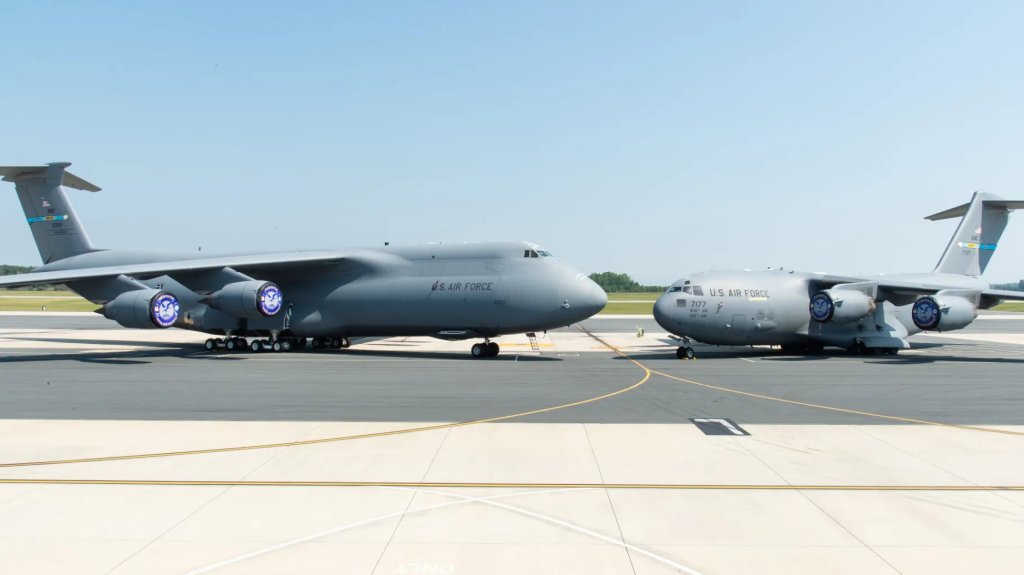
Boeing has also now said that it is always willing to work to better understand the requirements and needs of its customers. Any talk about the prospect of restarting C-17 production would also have to be viewed in the broader context of the Air Force’s still-evolving requirements for the Next Generation Air Lift (NGAL) program. The service’s current NGAL plans envision a single aircraft replacing the very different C-17 and C-5 Galaxy fleets, as you can read more about here.
TWZ also reached out to the U.S. Air Force about the recently requested briefing.
It is unclear what it might cost to get the C-17 line restarted and what the unit price of these new-production aircraft would be in the end. There are various factors at play, including whether Boeing retains any relevant tooling, the knowledge base of its current workforce, the state of third-party supply chains, and the availability of physical space to build the airplanes. Back in 2019, the company sold off the facilities in Long Beach, California, where it built the original run of Globemaster IIIs.
More than a decade ago, the RAND Corporation did conduct a detailed, independent analysis that explored options for resuming production of the baseline C-17A, a new C-17B, and a significantly revised “fuel efficient” C-17FE derivative.
The C-17B was “a variant Boeing has proposed that adds centerline landing gear, a tire deflation/inflation system, higher-thrust engines, advanced flaps, and an advanced situational awareness and countermeasures system,” according to RAND’s report. The C-17FE derivative “would have a narrower fuselage, up-rated engines, a double-element flap system, winglets, a longer loading ramp, a shorter cargo door, and a modified horizontal tail.”
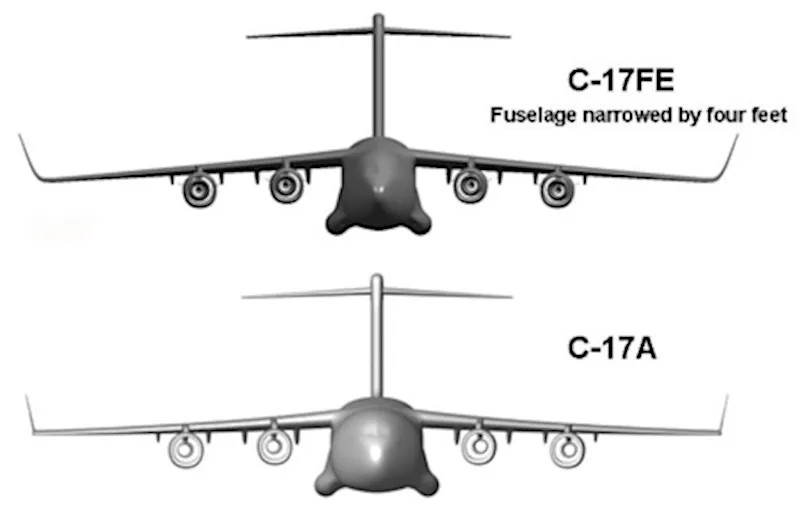
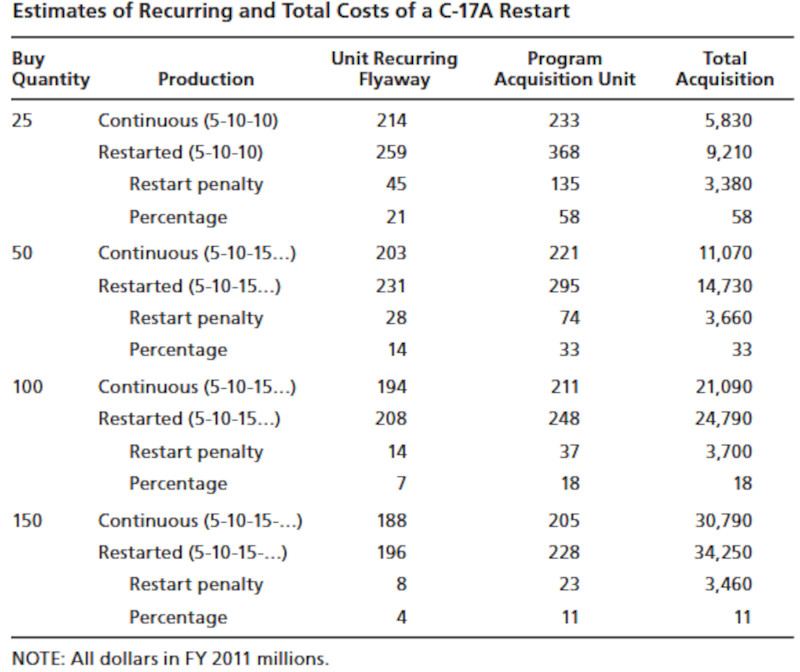
RAND said that it could cost between $2.1 and $2.7 billion in 2011 dollars to begin making C-17A models again after a pause, depending on how much tooling Boeing retained. The cost ranges would be $4.6 to $6.4 billion for new production of the improved C-17B version, and $6.2 billion to $7 billion to start building the C-17FE derivative. Billions more would be required to actually procure the aircraft, with unit prices being highly dependent on the total size of the production, as outlined in the table below. If nothing else has changed, these cost projections would still be significantly higher today just due to inflation.
As an aside here, RAND published a similar assessment of the options for restarting production of the F-22 Raptor in 2011. That report factored heavily into a study the Air Force subsequently delivered to Congress on that topic back in 2017, which you can read more about here.
Foreign participation in new production of C-17s could help defray costs, and is one of the points the House Armed Services Committee specifically wants the Air Force to address in its briefing. As TWZ noted last year after Turbo Sjogren made comments at the Paris Air Show, Boeing’s discussions at that point might not have been with the U.S. government. Earlier in 2025, then-Japanese Prime Minister Shigeru Ishiba had expressed interest in buying Globemaster IIIs, raising immediate questions about where those aircraft might come from.
It should be noted here that the U.S. Air Force’s C-17s have received various upgrades over the years, and the service continues to move ahead with other plans to improve their performance and expand their capabilities. This includes the installation of 3D-printed microvanes on the fuselage, which offer a very minor reduction in drag (approximately one percent), but that translates into real reductions in fuel consumption. All Air Force C-17s are expected to have this feature by the end of next year. Communications and data-sharing upgrades have also been a major focus area across all of the Air Force’s airlift and tanker fleets.
Boeing is now under contract for a more extensive upgrade of the flight decks on Air Force C-17s. The company says this will aid in “resolving avionics obsolescence” and integrate new open systems architectures to make it easier to add new and improved capabilities and functionality in the future.
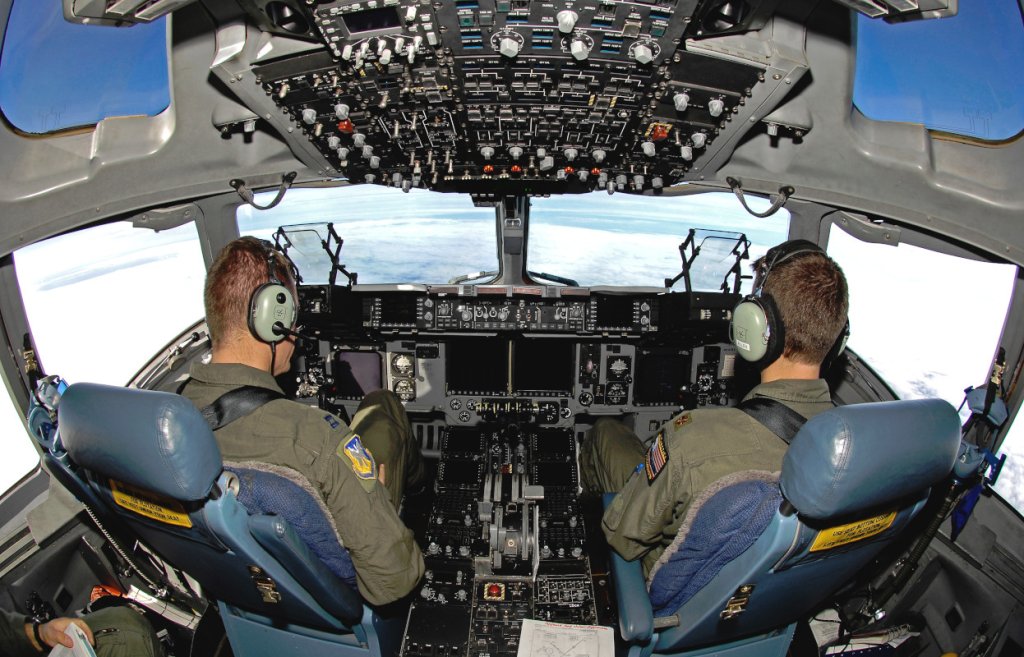
The prospect of a re-engining effort for the Globemaster III fleet has also been raised in the past, but the Air Force downplayed the value of doing so earlier this year.
When it comes to discussions about restarting C-17 production, another key factor is the lack of immediate alternative options. There is really no other aircraft in this class in production now in the United States or anywhere else in the West. Airbus has long positioned its turboprop-powered A400M as sitting in a capability space between Lockheed Martin’s C-130 family and the C-17. Embraer’s KC-390 Millennium design, which is also offered as an aerial refueling tanker, has generally been pitched as a jet-powered competitor to the C-130. China’s Y-20 and Russia’s Il-76 are really the only in-production analogs on any level to the C-17 globally.
The House Armed Services Committee has now also asked the Air Force to speak to the possibility of buying “commercial derivative cargo aircraft” and/or an “expansion of the Civil Reserve Air Fleet,” or CRAF, to help bolster airlift capacity. The CRAF is an arrangement by which the U.S. military can call upon commercial airlines and charter companies to help move cargo and personnel, which you can learn more about here.
A key issue here is that the C-17 is specifically designed for tactical operations right at the tactical edge. This includes the ability to bring combat-ready forces to far-flung locations without the need for an established airfield. Additional commercial alternatives could still be utilized in rear areas to help free up C-17s for more demanding missions and otherwise relieve stress on the Globemaster III fleet.
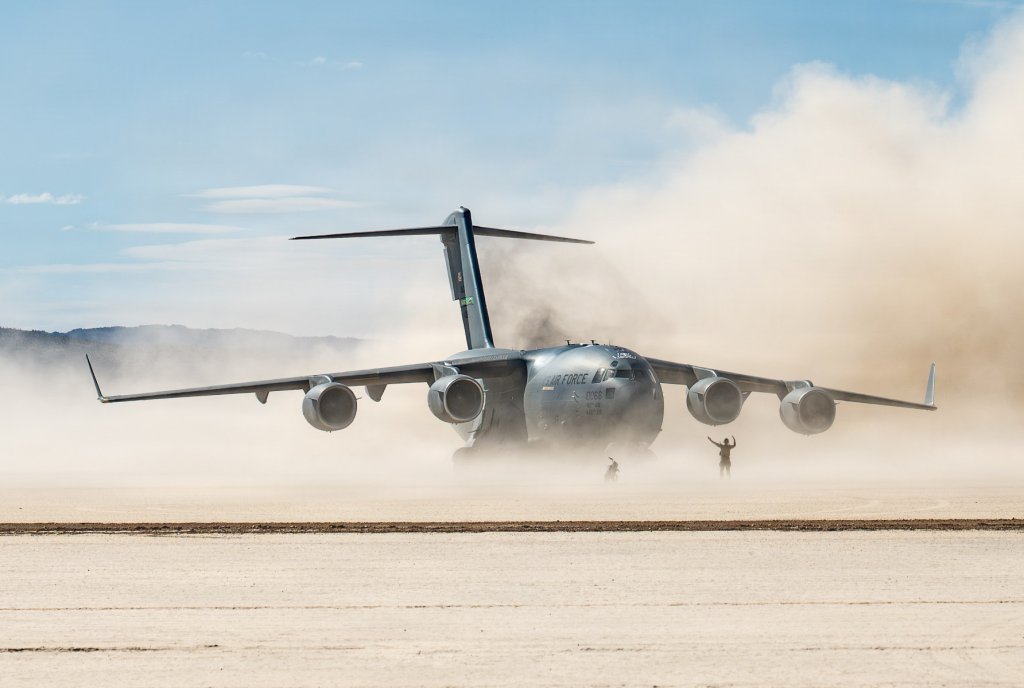
Questions have been increasingly raised about the survivability of the C-17 itself, especially in the context of a future high-end fight, as the threat ecosystem continues to expand and evolve. The Air Force has made clear that it is working to find new ways to bolster the defensive capabilities of all of its existing airlifters, as well as its tanker fleets, and that this is a key consideration in the evolving NGAL requirements.
TWZ has long been sounding the alarm on the need for more survivable cargo planes and tankers. The Air Force already has decades’ worth of experimental work and studies on concepts for stealthy cargo aircraft and tankers, as well as non-stealthy ones with blended-wing-body (BWB) planforms, under its belt. Over the years, several companies have publicly put forward prospective designs that could be relevant for NGAL, as well.
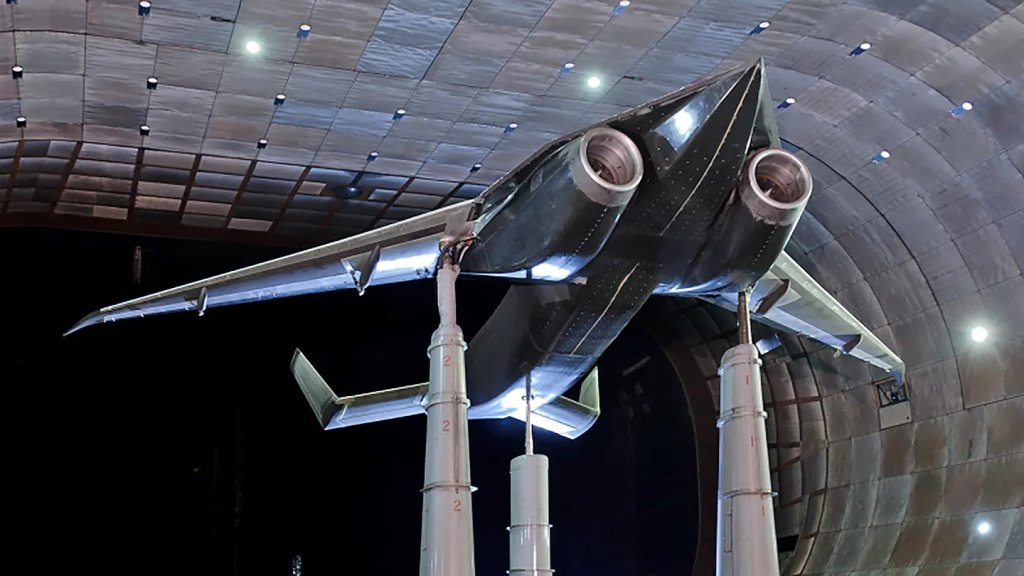
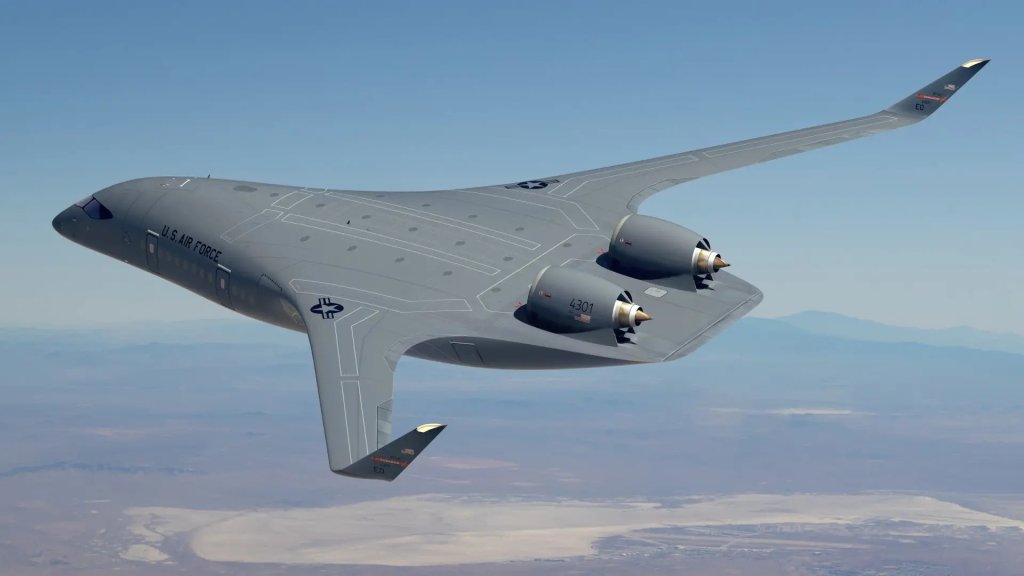
When any new platform developed under NGAL actually enters service remains to be seen. The stated plan the Air Force has put forward to date would see those new aircraft replacing its C-5s first, with C-17s flying through 2075. By that point, the Globemaster III, as a type, will have been in service for 80 years.
“The C-17 is the most amazing airplane ever made. I have a lot of time in it, so I can say that. We have asked it to do a lot of things, and it’s done more than we ever planned for when we bought that airplane,” Air Force Lt. Gen. Rebecca Sonkiss told TWZ and other outlets at a roundtable on the sidelines of the Air & Space Forces Association’s (AFA) annual Warfare Symposium in February. “It has performed flawlessly, but it’s getting old too.”
Sonkiss is Deputy Commander of Air Mobility Command (AMC). She has been serving as the interim head of the command since her predecessor, Gen. John Lamontagne, became Vice Chief of Staff of the Air Force in January.
“I cannot have a gap in my strategic airlift forces, and we’re working forward on the NGAL to combine the view of the C-5 and the C-17 fleet and figure out what the next strategic airlifter needs to be. That conversation, in my book, can’t happen enough, or can’t happen fast enough,” she added at the roundtable in February. “We have to get after what next looks like, and we can’t wait until we’re shoveling it into the boneyard before we get to that discussion.”
Whether the Air Force’s future airlift plans also include buying new-production C-17s remains to be seen. For its part, Boeing does not appear to have ruled out the possibility just yet.
Contact the author: joe@twz.com
The post Boeing “Encouraged” By C-17 Production Restart Discussions appeared first on The War Zone.
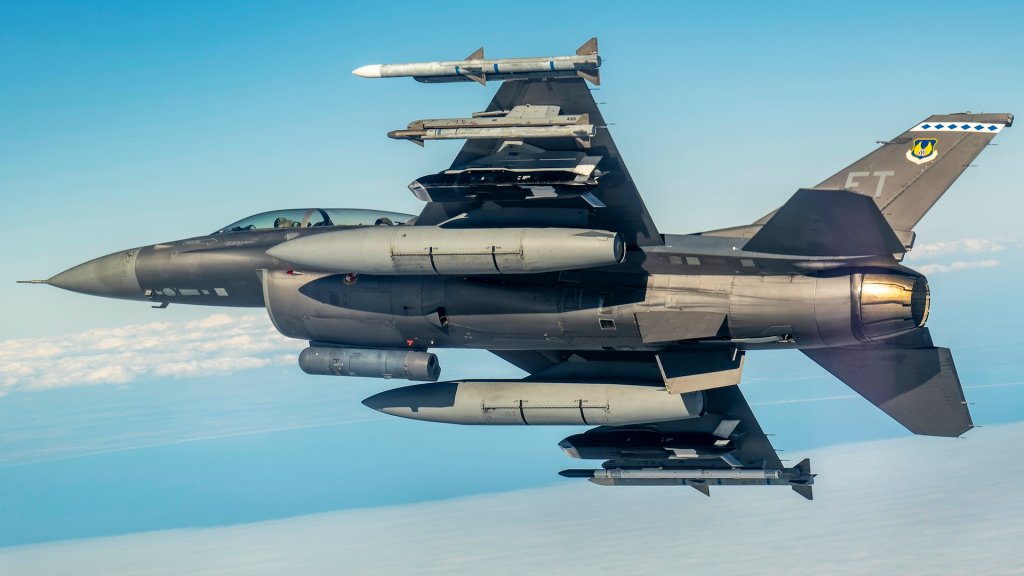
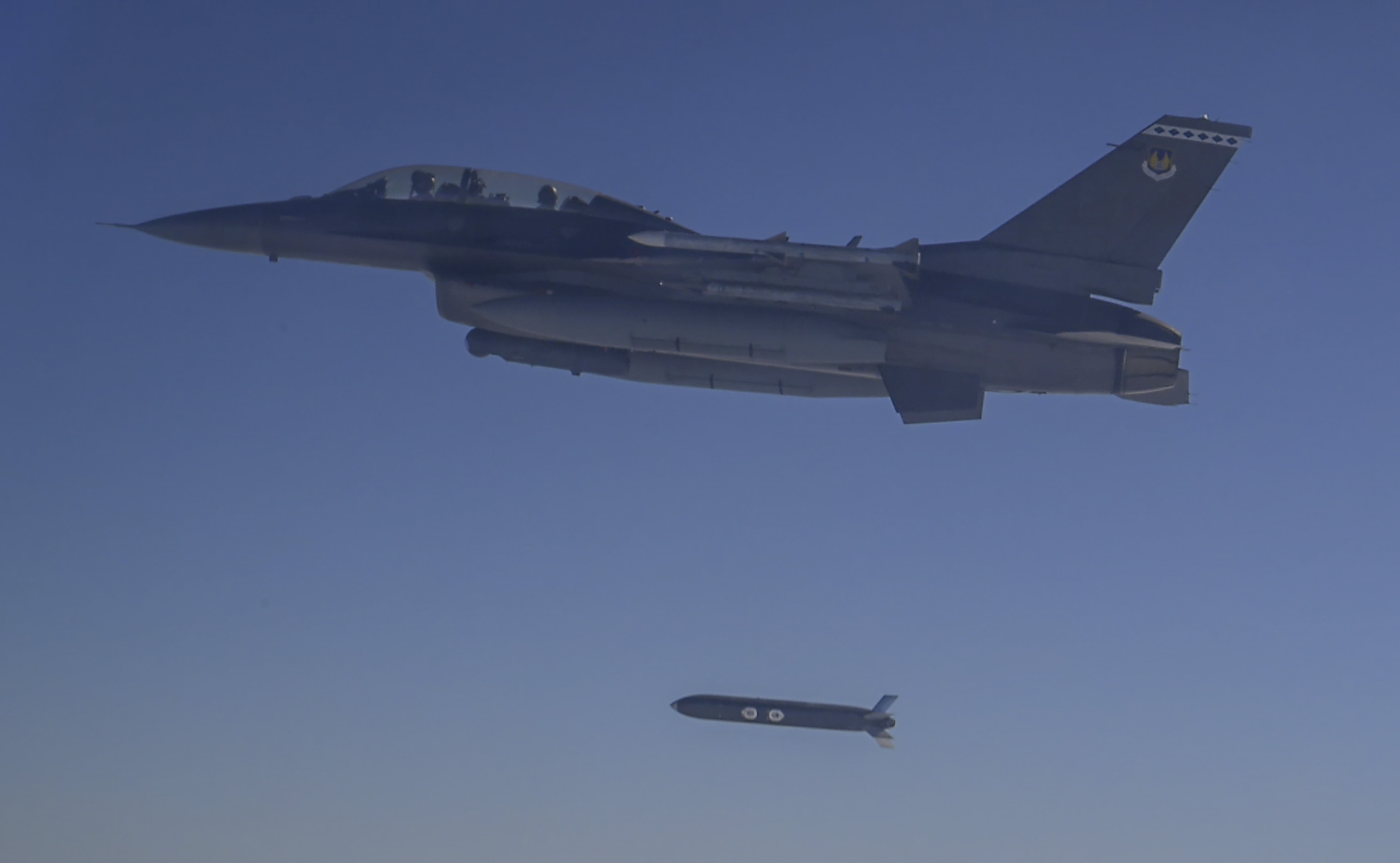
Norwegian missile-maker Kongsberg has finalized its acquisition of a majority stake in Zone 5 Technologies, bringing under its umbrella the U.S. start-up’s Rusty Dagger low-cost cruise missile, among others. With both those weapons already moving into large-scale production, the two companies are making the case for combining Kongsberg’s stealthy Joint Strike Missile (JSM) cruise missiles in operational scenarios. Zone 5 has also now confirmed that the Rusty Dagger, which is already being supplied to Ukraine, is now cleared for use on four different types of fighter aircraft, including the F-16.
At the ILA Berlin airshow yesterday, where TWZ was in attendance, officials from the two companies announced that Kongsberg has now formally acquired a 90 percent stake in Zone 5. California-based Zone 5 will continue to operate as an independent subsidiary under the Norwegian contractor. As well as discussing the industrial acquisition, the officials provided details of how the Rusty Dagger fits into the new-look portfolio, and updates on how that program is progressing.
Founded in 2011, Zone 5 is one of an emerging class of defense companies gaining prominence for developing low-cost, rapidly deployable capabilities. In many ways, they represent the inverse of traditional defense contractors, favoring speed, scalability, and cost efficiency over highly customized, high-priced systems.
Kongsberg first announced the acquisition in December, with executives noting that buying a stake in Zone 5 offered the fastest path to offering lower-cost missiles that still deliver meaningful combat capability, especially in terms of bringing these to the European market.
“What we’re doing here is that we’re combining Kongsberg’s niche, exquisite technologies with a company very capable of designing for cost efficiency and mass production,” explained Thomas Akers, founder and CEO of Kongsberg.
KONGSBERG announced today that it has closed the acquisition of US missile company Zone 5 Technologies LLC, following approval by US regulatory authorities.
— KONGSBERG (@kongsbergasa) June 10, 2026https://t.co/meRxfmYHH6 pic.twitter.com/EXVbYhDers
As to why Kongsberg didn’t choose to develop its own equivalent to the Rusty Dagger, Harald Aarø, Kongsberg’s executive vice president for business development and strategy, provided the following answer:
“Technically, could we be capable of doing it? Yes, but we are not as capable, as we will probably spend a longer time, and perhaps not strike as smart solutions,” Aarø said. “That doesn’t mean that our engineers aren’t just as smart. Our engineers are just as smart, but on a different sports field, so to speak.”
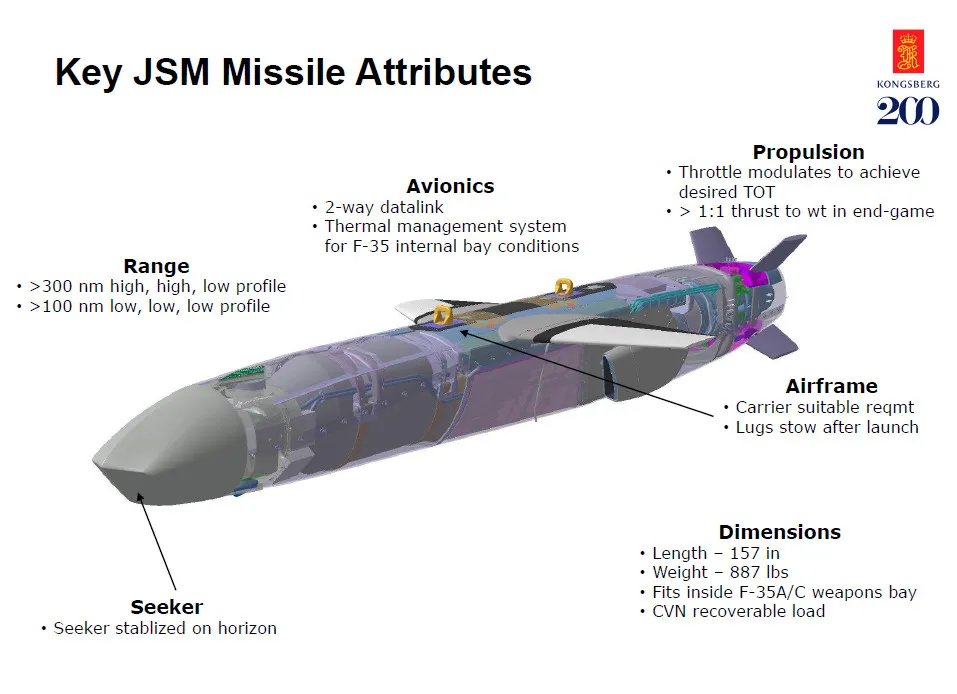
Aarø also described how the specific combination of the Rusty Dagger and the JSM makes for “a very effective future strike solution.” Namely, the Rusty Dagger provides cost-effective but still highly capable standoff strike, while the more exquisite JSM comes with a heftier price tag but offers a greater chance of making it through to even heavily defended targets, on account of its sophisticated guidance and low-observable characteristics.
As well as being launched from a pylon on a fighter, the Rusty Dagger can be configured for palletized employment from a cargo aircraft, reflecting growing interest in this type of munition employment. It can also be surface-launched both on land and at sea.
According to Tom Kanewske, Zone 5’s chief strategy officer: “What’s interesting about our missile is that the same base, light cruise missile is field retrofittable for all employment modes, and that puts us in a very unique space, in that a country and their [armed] services are able to purchase the same munition and field retrofit for that to be surface launched, whether from land or the deck of a ship, or pylon launched from a fighter aircraft, or palletized.”
Since larger numbers of Rusty Daggers can be launched in any given scenario, they can overwhelm enemy air defenses and improve the chances of success.
According to Kanewske, Rusty Dagger and JSM “offer a weapon pairing that truly no other missiles in the world do.”
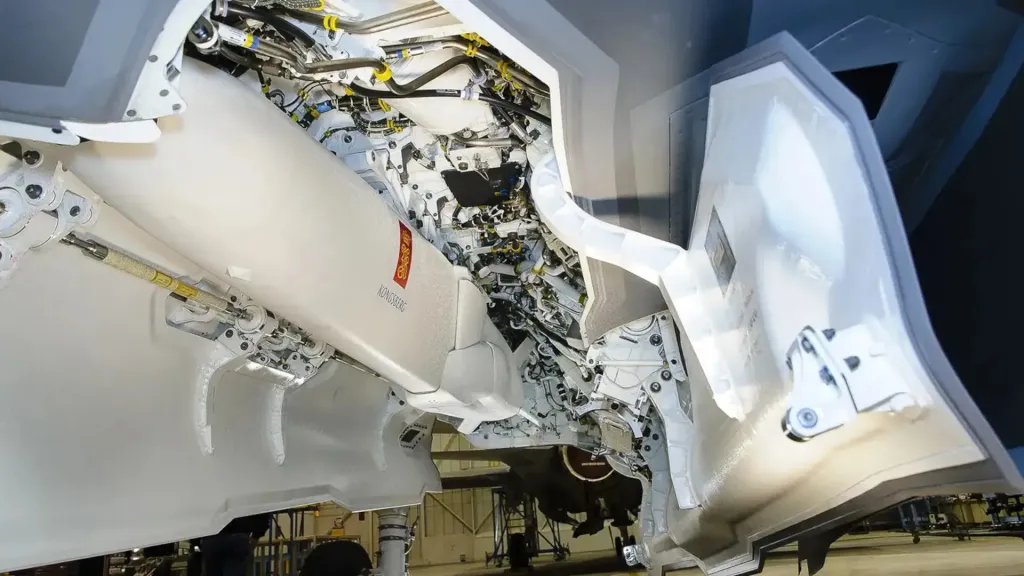
While the JSM can be carried internally in the F-35, the same is not currently the case for the Rusty Dagger, although Kanewske said that this is “something that is of keen interest to the [U.S. military] services and several of our international partners.”
When it comes to utilizing the Rusty Dagger and JSM together in a combat scenario, Kanewske noted the possibility of integrating capabilities that would allow the Rusty Dagger to offer “cooperative behaviors” with the JSM. This reflects a growing trend toward leveraging artificial intelligence to help make all munitions more effective and survivable, something that has been demonstrated via Golden Horde and follow-on programs.
Both missiles fly at high-subsonic speeds, the Rusty Dagger being able to strike targets at a range of 250 miles, according to Zone 5, while the JSM has a range of more than 215 miles.
In one highlighted scenario, F-35s could penetrate closer to the target, with their JSMs carried internally to preserve their low-observable features. Meanwhile, much larger numbers of Rusty Daggers could be pylon-launched from fighters, and dropped in palletized form out of the cargo holds of transports, from outside of the range of hostile air defenses.
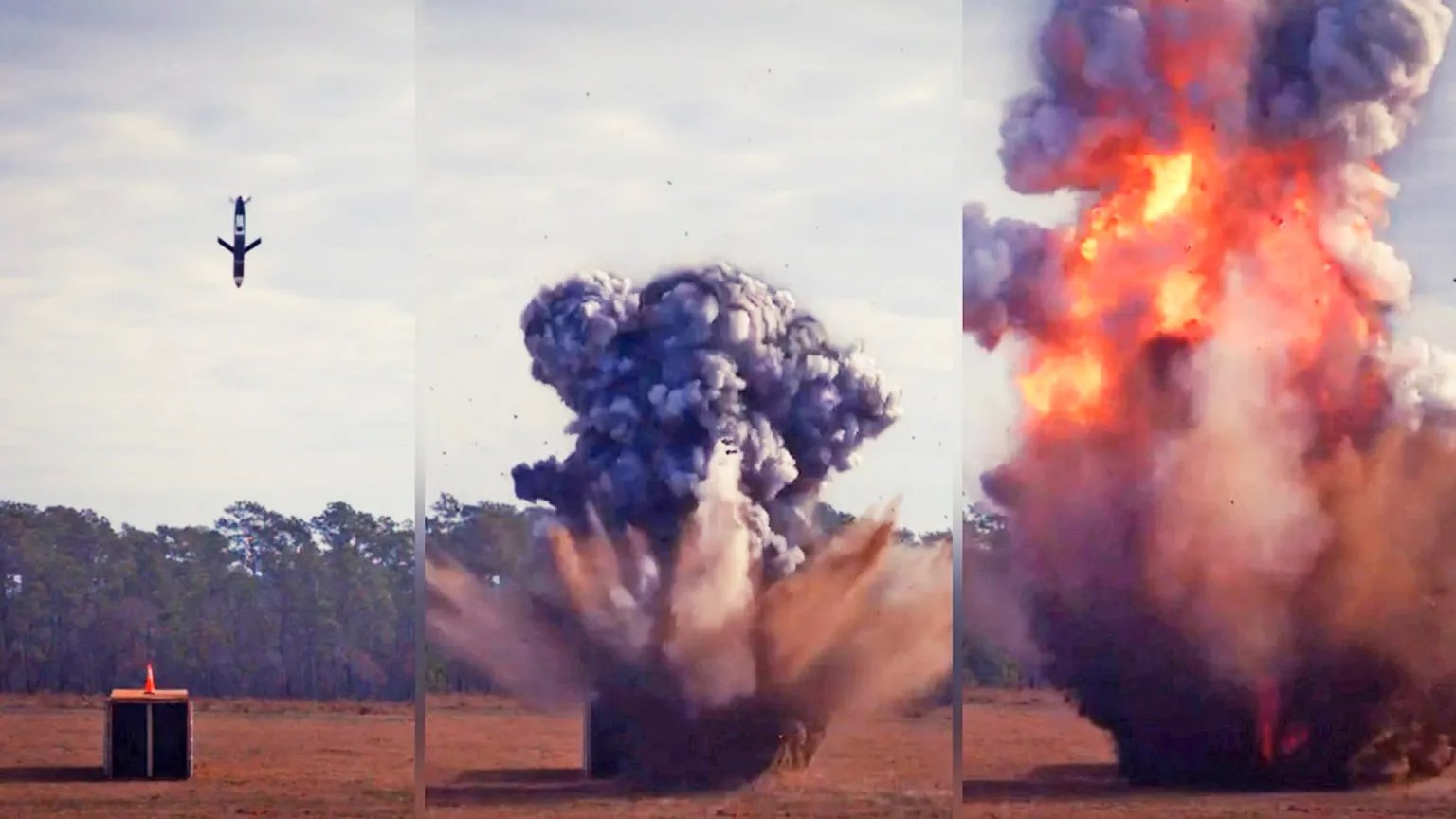
Kanewske confirmed that, this year, its first year of production, “well above 1,000 units for Rusty Dagger” will be completed, including for the U.S. Air Force, as the AGM-188, under the Family of Affordable Mass Missiles (FAMM) program. The Air Force’s proposed budget for the 2027 Fiscal Year laid out plans to buy nearly 28,000 FAMM munitions over the next five years.
Last month, the Pentagon laid out plans to acquire at least 10,000 lower-cost cruise missiles over the next three years, as part of a broader strategy to dramatically bolster its stockpiles of standoff strike munitions and prepare the industrial base to sustain those inventories going forward. This is seen as especially critical for supporting the demands of future high-end fights, such as one in the Pacific against China, and doing so in a cost-effective manner.
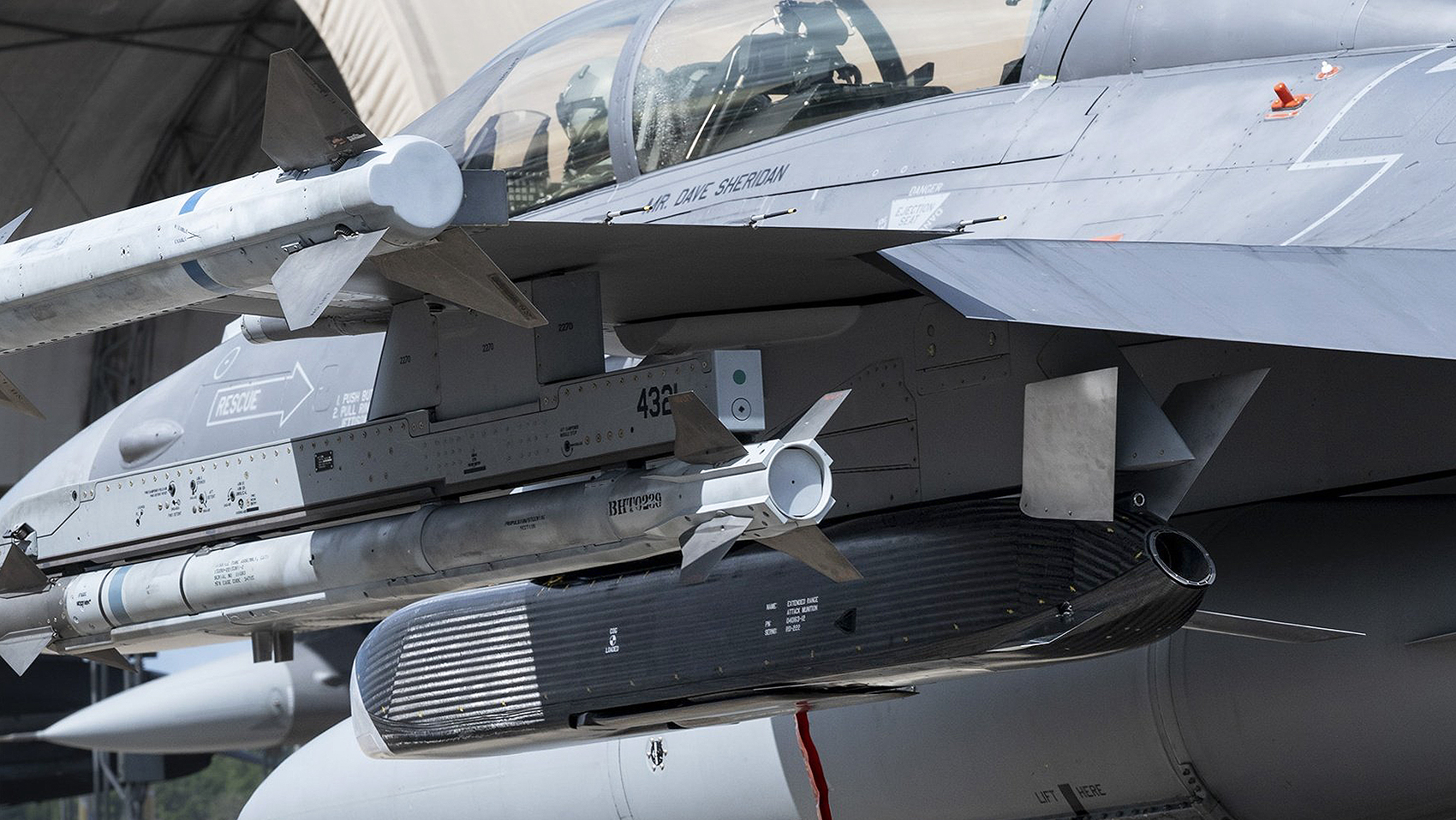
The Rusty Dagger has so far been cleared for use from four different types of fighter aircraft, Kanewske said. One of these is the F-16, which used the weapon in end-to-end live-fire trials at the Eglin Test and Training Range in Florida earlier this year. Another platform may be the A-4, with a contractor-operated example of the attack jet having been used in company trials. Then there is the Ukrainian Air Force, which is using the Rusty Dagger, under the Extended Range Attack Munition (ERAM) program, although the specific platforms have not been disclosed. Any of the MiG-29 Fulcrum, Su-25 Frogfoot, and Su-27 Flanker are likely candidates — as well as its own F-16s.
A series of unverified photos, first published by Russian sources, showing purported parts of Rusty Dagger missiles retrieved after being used by Ukraine:
It appears that the AGM-188A “Rusty Dagger” cruise missile has undergone field testing in Ukraine.
— 𝔗𝔥𝔢 𝕯𝔢𝔞𝔡 𝕯𝔦𝔰𝔱𝔯𝔦𝔠𝔱△
Russian sources are publishing photos of an unknown 8-element CRPA antenna. On the back side of the unit there is a circuit board with a large heatsink, which carries the CAGE code… pic.twitter.com/phZeOJfHJ0(@TheDeadDistrict) June 7, 2026
In the case of the F-16, Kanewske said that only 72 hours were required to integrate the Rusty Dagger on the jet during the trials at Eglin.
“We’re the only affordable mass munition that is currently on contract with an export international customer, and we are actively involved with them at this time,” Kanewske said, clearly referring to Ukraine.
Zone 5 is currently under U.S. Air Force contract for both FAMM and ERAM, and is also under contract with the U.S. Army for its Low-Cost Containerized Missile (LCCM) program, and for the U.S. Navy as part of its Coalition Heterogeneous Affordable Offensive Strike (CHAOS) program, which seeks a low-cost anti-ship cruise missile to provide to partner countries. Both LCCM and CHAOS involve surface-launched missiles.
As well as the ability to rapidly scale up production and a relatively low unit cost, the Rusty Dagger brings with it an open-architecture concept, applying to both software and hardware. This means new, sovereign features and capabilities can be introduced at short notice by customers. In the past, an operator might have to wait up to five years for unique subcomponents to be integrated in a similar weapon, Kanewske contended. With the Rusty Dagger, Zone 5 has demonstrated that this can be achieved in under 12 months.
Then, when it comes to producing the missile at mass, rather than having to “make that factory bigger and bigger,” Kanewske explained that the company offers a franchise model “that allows us to roughly parachute in the design, the equipment, the tooling, the fixtures, the quality control, so that countries can drop in their own subsystem capabilities, and we can achieve manufacturing at pace and at scale.”
Speaking in Berlin yesterday, Kongsberg’s Harald Aarø confirmed that Germany is a particular target for this franchise model, including for the Rusty Dagger. He identified Germany as having “probably the best manufacturing capabilities on this planet,” making it an obvious choice for a European manufacturing footprint.
Reflecting on the changing security situation on the continent since Russia’s full-scale invasion of Ukraine, Aarø said that now is “a natural time to start looking at a production site in Europe,” providing nations there with national sovereign capabilities based on the Kongsberg/Zone 5 joint portfolio.
Kongsberg’s acquisition of a majority stake in Zone 5 evidences a broader shift in Western defense planning toward affordable, mass-produced precision weapons that can be fielded at scale alongside more sophisticated strike systems.
The war in Ukraine has exposed the harsh reality that Europe needs far more standoff weapons than it currently possesses, and it needs them at a price point that allows stockpiles to be measured in the thousands rather than the dozens. Rusty Dagger is very much indicative of a new generation of systems designed around that requirement, prioritizing low-cost mass production over the exquisite but scarce munitions that have traditionally dominated Western arsenals.
As conflicts in Ukraine and the Middle East continue to highlight the operational value of low-cost, long-range munitions, demand for capabilities such as the Rusty Dagger is likely to grow. In an increasingly crowded marketplace, Kongsberg and Zone 5 will hope they can leverage their partnership, the Rusty Dagger’s combat use in Ukraine, and the potential to harness its capabilities in combination with the JSM, to build on the missile’s success.
At the same time, Kongsberg’s interest in establishing European production reflects a wider recognition across the continent that long-range strike capacity, industrial resilience, and the ability to sustain missile inventories are becoming increasingly important elements of national and collective defense.
Contact the author: thomas@thewarzone.com
The post Kongsberg Bets On High-Low Cruise Missile Mix With JSM And Rusty Dagger appeared first on The War Zone.
Boeing has provided details of the latest iteration of its MQ-28 Ghost Bat collaborative combat aircraft (CCA). Already, the Ghost Bat was the most mature known CCA, but the enhanced version of the drone, the Block 3, has various new features. These include a larger wing and a pair of internal weapons bays, which means it can carry munitions without diminishing its low-observable characteristics.
The MQ-28 Block 3 was revealed today at the ILA Berlin airshow, taking place this week in the German capital. The unveiling was conducted by officials from both Boeing Australia and Germany’s Rheinmetall. The German firm is partnered with Boeing to offer the drone to the German military, as well as to tap into the potentially very lucrative European CCA market.
— Boeing Australia (@BoeingAustralia) June 10, 2026
>25% larger wing
MQ-28 Ghost Bat enhancements deliver flexibility, range and capacity advancements.
More: https://t.co/IPZLUy5Qub pic.twitter.com/7EK5fUD11h
“This is the aircraft that we are offering to Germany,” MQ-28 Global Program Director, Glen Ferguson, said at the rollout. “This is the third iteration of design now, and we are on point to build out first [Block 3] aircraft next year.”
The previous Block 1 and Block 2 variants have completed more than 150 test sorties in Australia and the United States.
Australia has already acquired eight Block 1 MQ-28s, which are configured as pre-production prototypes.
The first nine Block 2 drones, now in production, are seen as a pathway to an operational capability, which is fully realized in the Block 3.
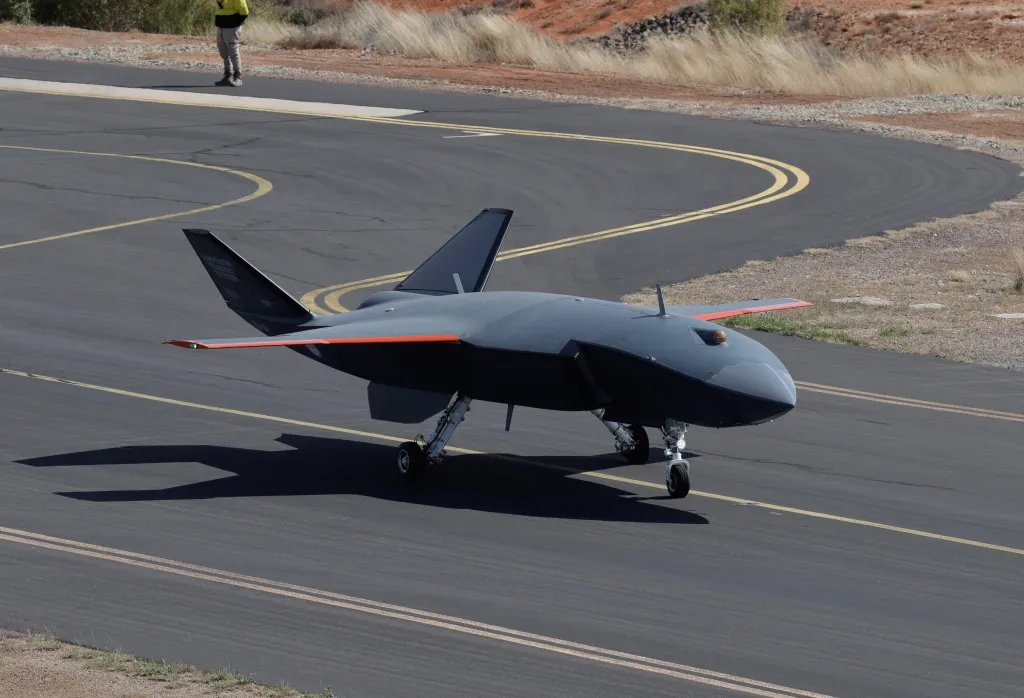
The Block 3 aircraft features a wing that is 25 percent larger, combined with a thrust increase from 10,000 pounds to 12,000 pounds. It’s not immediately clear how that thrust increase will be achieved, but coupled with greater wing area, it will confer an increased payload capability. This translates into an additional 2,000 pounds of fuel, stores, and mission payloads.
“That additional capacity gives operators freedom to balance payload and endurance to configure for the mission at hand, whether that means carrying extra fuel for longer-range operations, increasing weapons carriage, or any combination of both,” Ferguson said.
The latest iteration of the drone also adds beyond-line-of-sight (BLOS) control. Introduction of BLOS communication links means the MQ-28 can be operated at unlimited standoff distances, whether from a ground station, a naval vessel, or a crewed aircraft. With its range of over 2,000 nautical miles, adding BLOS to the drone also ensures that it can conduct independent operations when not controlled by a crewed aircraft, which was always envisioned as a potential role for Ghost Bat. Having a SATCOM option also opens up better resiliency for control in electronic warfare combat environments.
“Inclusion of features such as BLOS capability is a direct result of our learnings to date along with feedback from air forces as they understand more about the role and integration of CCAs into joint force operations,” Ferguson explained.
As for the critical internal weapons bays, these are added within each side of the slab-side fuselage, shown in a video released by Boeing.
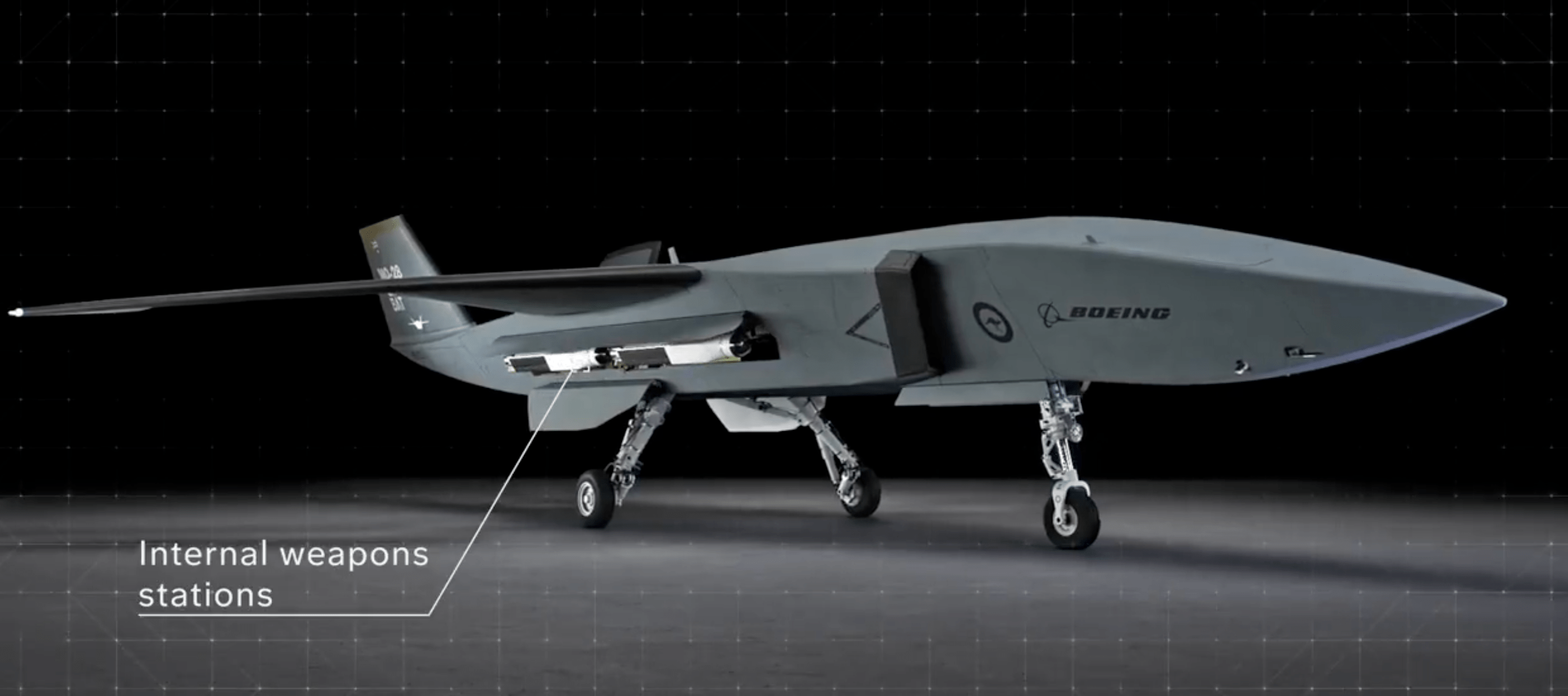
Each bay can carry a single AIM-120 Advanced Medium-Range Air-to-Air Missile (AMRAAM) or two Small Diameter Bomb (SDB) precision-guided munitions. These can comprise either the GBU-39/B SDB I or the GBU-53 SDB II, also known as StormBreaker. The Ghost Bat is the first CCA we have seen capable of carrying AIM-120s internally, a significant development in itself. The option for internal stores carriage is also a huge deal at this point, with Boeing having recently validated its radar cross-section (RCS), proving that the CCA is harder to detect and better able to operate in contested environments.
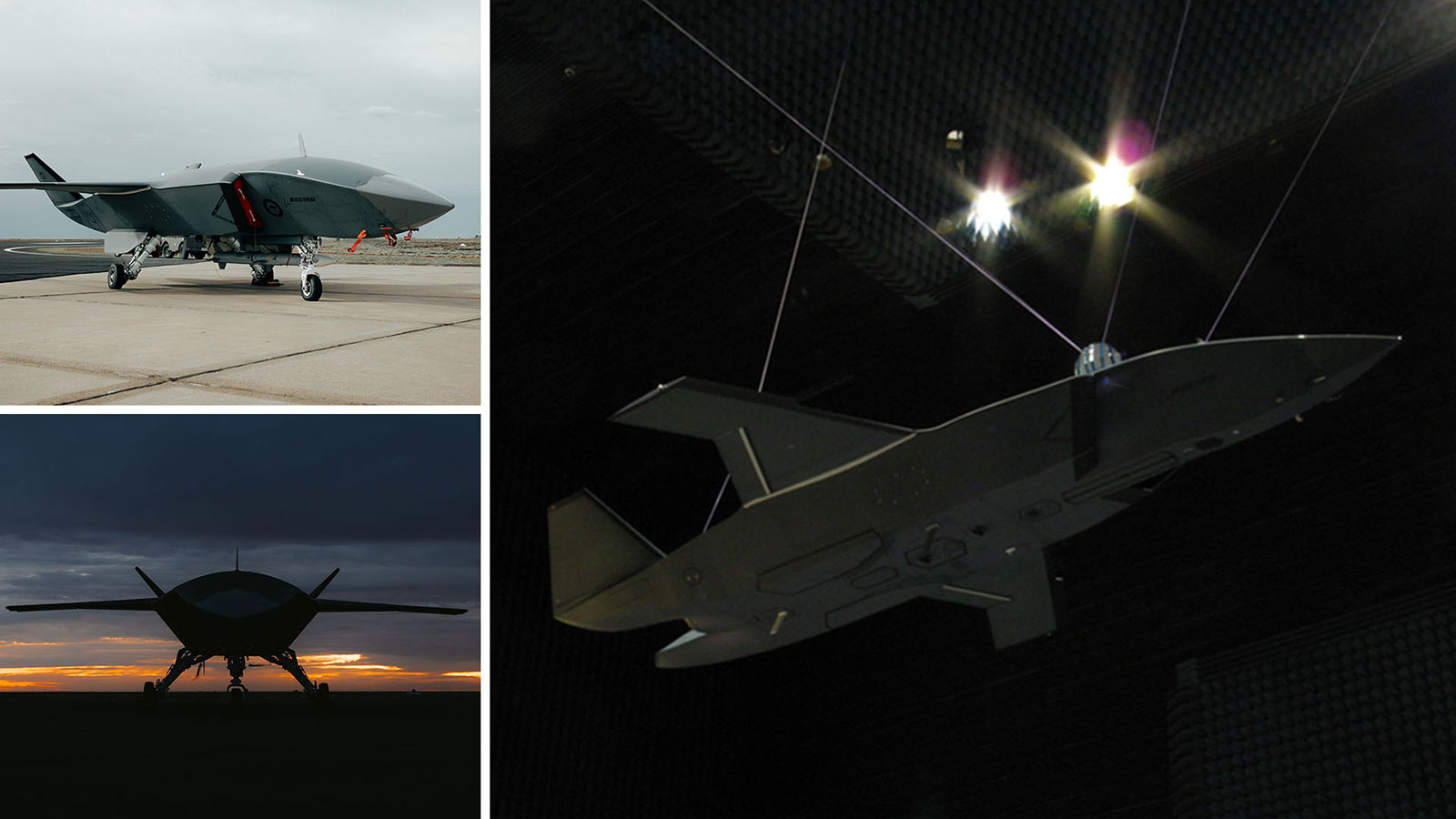
“The combination of a highly capable platform, stealth features and advanced autonomy provides unprecedented ability for air forces to extend their mission effectiveness and operational flexibility,” said Brad Thompson, director for Phantom Works Australia, after the completion of the RCS trials.
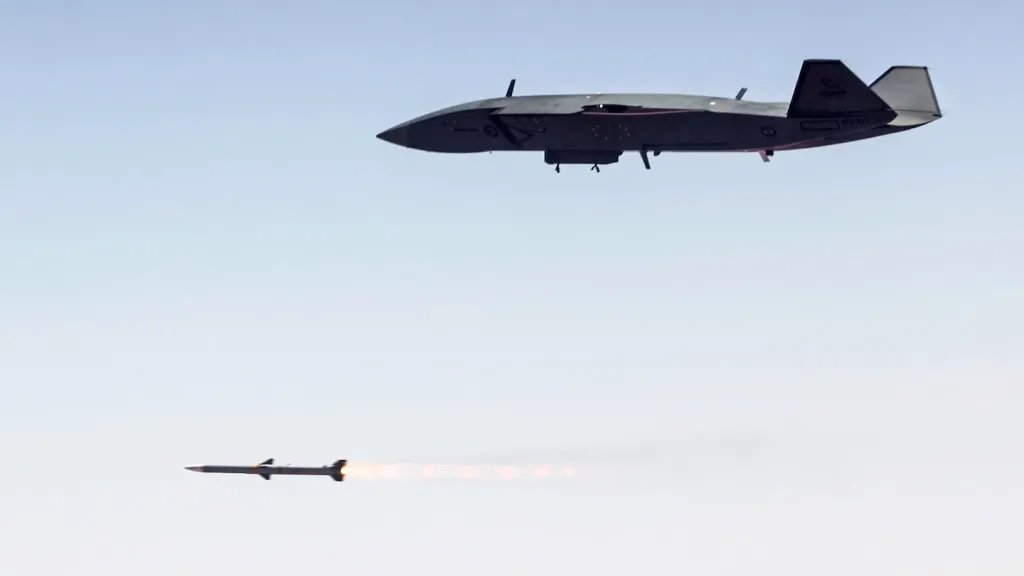
The drone also has provision for three external weapons stations. At least one of these has already been tested, during an end-to-end engagement in which a target drone was brought down by an AMRAAM. The air-to-air role is notably relevant since the drone is also envisaged as a force-protection asset, to defend airborne early warning aircraft and tankers, etc, as well as working with fighter aircraft. Combined with more thrust and larger wings, the external pylons would appear to open up the possibility of flying with as many as five AMRAAMs, and at least four, or with a mixed load of air-to-air and air-to-ground weapons.
For Block 3, Boeing is also known to be working on three or four alternative sensor payloads. Integration of these would be facilitated by the fact that the entire nose can be swapped out to accommodate different payloads.
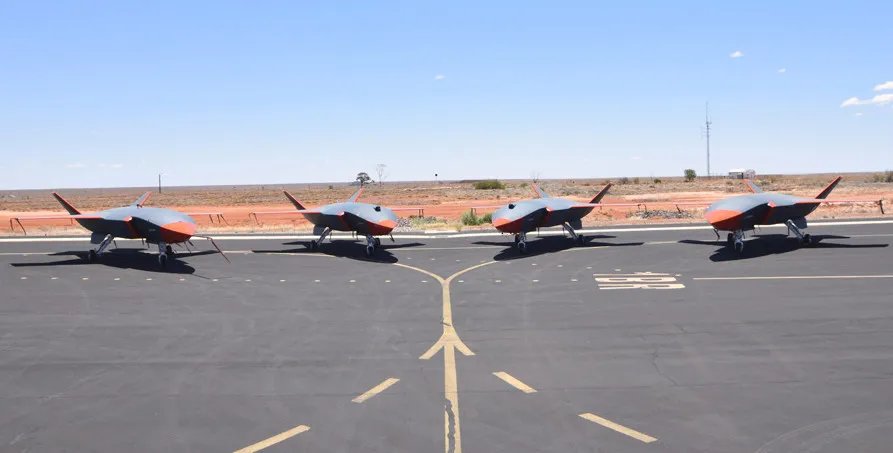
Bringing the MQ-28 Block 3 from Australia to Berlin reflects the relationship between Boeing Australia and Rheinmetall and the fact that the German Air Force — the Luftwaffe — is being pitched to for its CCA requirement.
“At the moment, we are still in negotiations with the German government, but if they want to have the plane by 2029, my expectation is that by at least next year, we have to go into the final stage of negotiating the contract,” Rheinmetall CEO Armin Papperger told Breaking Defense.
In expectation of a German CCA requirement, the ILA Berlin airshow featured a heavy presence of combat drones.
Also making its public debut was a full-scale model of the Airbus U760 Ravenstorm, a combat drone designed to operate alongside fighter aircraft in air-to-air combat, strike missions, and electronic warfare roles. The new uncrewed aircraft is part of a revamped drone portfolio from the company, and you can read more about it here.
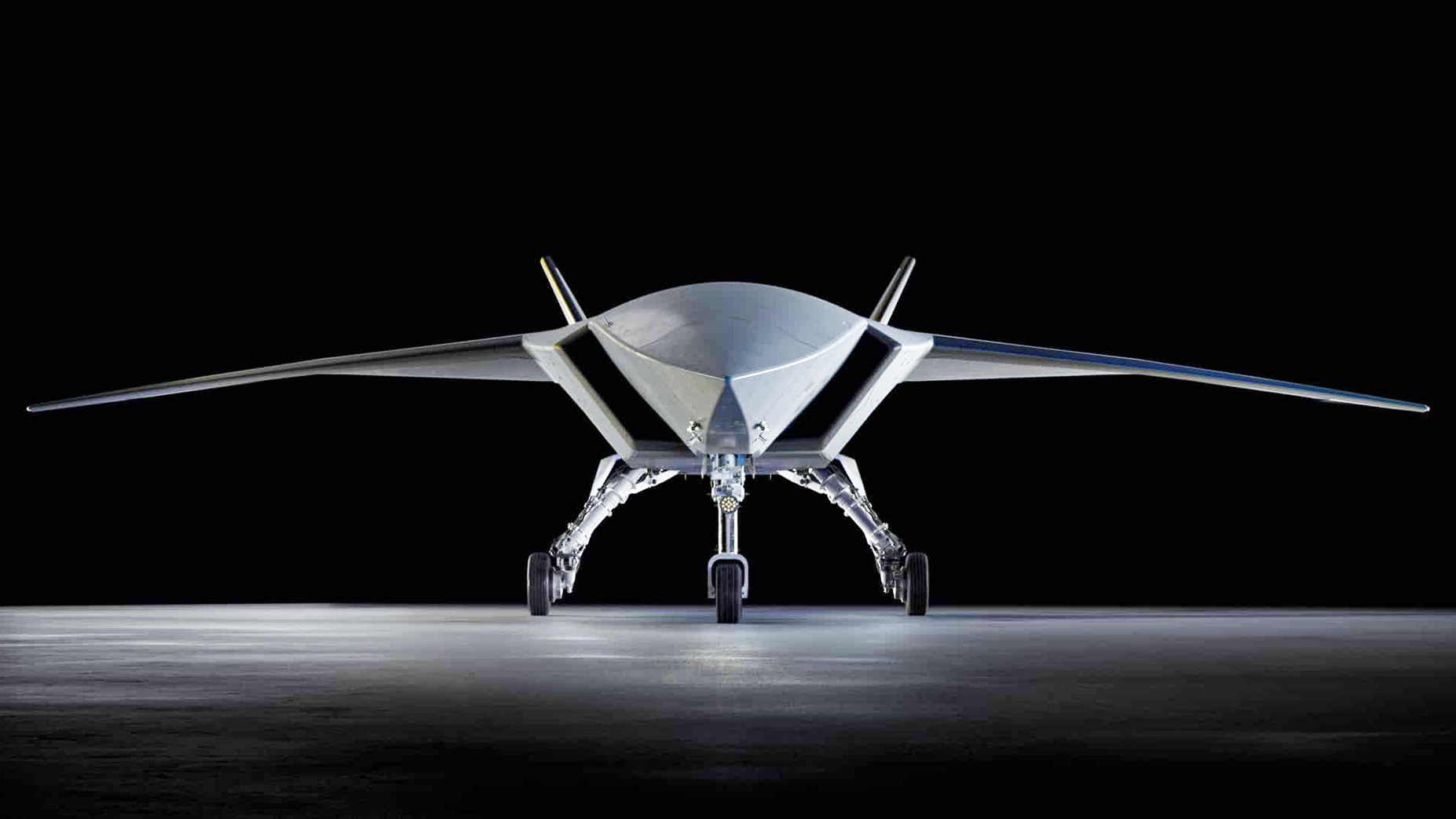
As well as Ravenstorm, Airbus is also offering a Europeanized version of the stealthy XQ-58A Valkyrie, which is apparently being pitched as a lower-cost aircraft and one that offers the option of runway-independent operations.
From the United States, General Atomics Aeronautical Systems presented a full-size model of a drone from its Gambit family, with the company also confirming that it has been in talks with Germany regarding its CCA requirements.
8. General Atomics Aeronautical Systems is here as well, with a full-sized version of a drone from its Gambit family, one of two unmanned aircraft selected through the first increment of the US Air Force’s own CCA program. pic.twitter.com/8sEnDuUidr
— Elisabeth Gosselin-Malo (@elisabethmalom1) June 10, 2026
Meanwhile, German firm Helsing revealed a new version of its CA-1 Europa drone — which looks remarkably similar to Ghost Bat. The CA-1EA (for Electronic Attack) follows the CA-1KA (Kinetic Attack) and reflects the high priority Germany attaches to its need for a CCA to accompany its forthcoming Eurofighter EK electronic warfare jets, as well as other combat aircraft.
Europe requires sovereign electronic warfare capabilities. Unveiling CA-1EA, an autonomous electronic attack variant of the CA-1 Europa. #ILABerlinhttps://t.co/J9H8OpHKnW pic.twitter.com/mcVC1yqpT9
— Helsing (@HelsingAI) June 10, 2026
Helsing says the CA-1KA is planned to begin flight testing early next year. To get around issues of testing this class of drone in European airspace, the first flying prototype will feature a cockpit for a safety pilot.
Even if the MQ-28 Ghost Bat loses out in Germany, in the face of stiff competition, the Block 3 version already has the support of Australia, which also wants to upgrade earlier aircraft to the same standard.
“These features, developed in partnership with the Royal Australian Air Force, will be progressively released to the fleet through a spiral upgrade program, and are available to interested allied countries,” Ferguson said.
The Boeing official added that the MQ-28 will be in service with the Royal Australian Air Force in 2028, and he is “fairly certain that it will be the first operational CCA anywhere in the world.”
When Boeing and Rheinmetall announced their strategic partnership back in March of this year, they said that the MQ-28 could be provided to the German Armed Forces by 2029.
#Rheinmetall and #Boeing partner on German MQ-28 #Ghost #Bat
— Rheinmetall (@RheinmetallAG) March 31, 2026
https://t.co/zGEhjQNqqi pic.twitter.com/VLBDQ8EAaV
It should also be noted that Boeing is now conducting test flights of the Ghost Bat from the U.S. Navy’s base in Point Mugu, California. The company says its main goals in doing this are to demonstrate the maturity of the design and promote export sales, but the trials could well also point to potential U.S. military interest.
A lot could change before then, and it is unclear to what degree Germany’s CCA requirements have been defined, while any procurement will also have to navigate decision-makers in the government.
In the meantime, the MQ-28 Ghost Bat continues to evolve. The unveiling of the Block 3 version today underscores how rapidly the collaborative combat aircraft market is maturing.
Contact the author: thomas@thewarzone.com
The post Boeing’s New Larger Ghost Bat Can Carry AIM-120 AMRAAMs Internally appeared first on The War Zone.


NASA is moving to hire a contractor to assess whether or not a Boeing 737-73W can meet its needs for a new reduced-gravity testbed aircraft. The use of planes modified for this role is now new, and they are often called “Vomit Comets” because of the extreme maneuvers they perform to simulate zero-G environments and the physical side effects this often induces. However, there’s an unusual twist here with the specific plane that NASA is now eyeing: it currently belongs to the U.S. Air Force and is part of a “classified military program.” There is a strong possibility that the aircraft in question is a mysterious 737 that the service acquired in 2020, and that has been the subject of much speculation as to its purpose ever since.
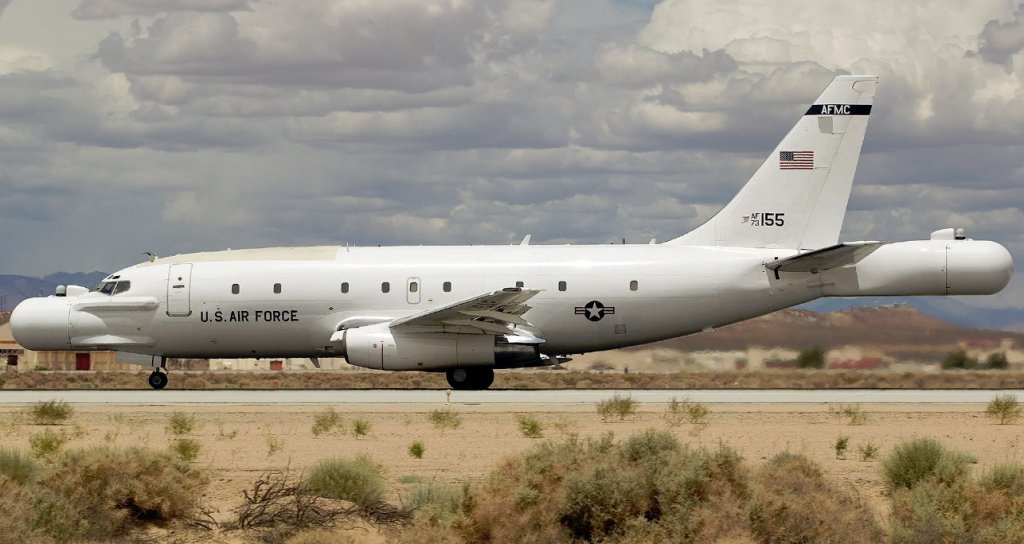
NASA’s Armstrong Flight Research Center posted a contracting notice yesterday justifying a planned sole-source contract to Denmar Technical Services, Inc. in relation to “Reduced Gravity Modification” of the 737-73W aircraft. Earlier this year, signs had already emerged that NASA might be in line to get a heavily modified and highly secretive 737 from the Air Force, designated the NT-43A and commonly referred to by the callsign RAT55. However, yesterday’s notice does not appear to refer to the NT-43A, long used as an airborne signature measurement platform and described in the past as the world’s most secretive 737, which is based on a much older 200-series airframe. We will come back to this later on.
“NASA requires Denmar Technical Services, Inc. to conduct a feasibility assessment to determine the Boeing 737-73W’s suitability to perform the NASA reduced gravity mission; modify the aircraft cabin, if required, to support reduced gravity operations; perform overdue maintenance and inspections, perform airworthiness restoration tasks, and paint the aircraft exterior with NASA identifiers,” the contracting notice NASA released yesterday explains.
The notice adds that the aircraft, if modified, would be used, at least most immediately, “for the Reduced Gravity Test Bed Project in support of the agency [sic] need for performing validation testing on Space Suits in support of the Artemis program.”
Artemis is NASA’s current effort to return U.S. astronauts to the lunar surface. The Artemis II mission, conducted in April, involved the first fly-by of the Moon by a crewed spacecraft since the end of the Apollo program in the early 1970s. However, the spacecraft did not touch down on the surface. The goal now is for a crewed lunar landing to come in 2028. RAT55 was notably used to support the launch of the Artemis II mission and the subsequent recovery of the capsule after its return to Earth.
Back in January, NASA had put out a separate contracting notice calling for information about new options to provide “parabolic flight services” to simulate “reduced gravity environments, including microgravity” for testing and scientific research purposes. The Florida-based Zero-G corporation is currently the primary provider of these services to NASA, using a retrofitted Boeing 727-200 dubbed ‘G-Force One.’ You can read more about NASA’s general use of Vomit Comets in the context of that notice here.
The Boeing 737-73W under consideration to be turned into a Vomit Comet “is owned by the United States Air Force (USAF). Denmar Technical Services, Inc. has specialized knowledge of this Boeing 737-73W aircraft as they are currently contracted by the USAF to modify the aircraft under a classified military program,” the contracting notice NASA released yesterday adds. “NASA does not have a ‘need to know’ regarding the details of the current modifications being made under the USAF contract and therefore is unable to provide modification details to another contractor or provide another contractor with access to the aircraft. The USAF will transfer ownership of the aircraft to NASA upon completion of the closeout tasks.”
“Denmar Technical Services, Inc. is uniquely positioned to close out work under their existing obligations while performing the feasibility assessment, maintenance, and any modifications required under this action,” the notice continues. “Additionally, due to the constrained timeline for the NASA Extravehicular Activity and Human Surface Mobility Program’s space suit testing for Artemis, NASA requires the assessment and overdue maintenance to be performed immediately upon contract award and any subsequent aircraft modifications to be complete no later than October 1, 2026. The timeline can only be supported if this requirement is fulfilled concurrently with the USAF closeout tasks.”
Denmar is a small aviation firm headquartered in Reno, Nevada. At the time of writing, its website lists a wide array of specialized design, modification, flight testing, and other work among its portfolios. This includes “advanced customized mission system development” that “encompasses the design of unique airborne operator interfaces, specialized emitters and sensors, system integration, and post-mission analytics and processing.” The company also describes itself as the “Nation’s leading experts on IR [infrared] and RF [radiofrequency] survivability, signature modeling, [and] agile software development for analysis and real-world operational assessments.”
In line with all this, Denmar is understood to have been the prime contractor behind the extensive modifications to RAT55. In April, the Air Force confirmed to TWZ that the NT-43A was “being transitioned to start the next phase of its career,” as reflected by its involvement in the Artemis II mission, “after decades of flights supporting the Air Force in various roles.” The aircraft, which is understood to have long called the secretive and remote Tonopah Test Range Airport (TTR) in Nevada home, has been seen much more publicly since then.
Best views of RAT55 yet. Dorsal sensor pod (EO ball) seen in detail here. Also shot inside. I wonder if this is going to be ported in full to a contractor (it is currently operated by a contractor) https://t.co/XoE1zGFN78
— Tyler Rogoway (@Aviation_Intel) April 4, 2026
However, as NASA’s recent contracting notice makes clear, the 737 it is now looking at as a potential Vomit Comet is a much newer 700-series model. TWZ has reached out to the Air Force and NASA for more information.
As mentioned, it is very possible, if not highly probable, that the 737 NASA is now considering turning into a Vomit Comet is one that the Air Force acquired in 2020, which TWZ explored in-depth at the time. That aircraft, which is a -73W model, is still officially on the U.S. civil register, with the registration code N712JM. Federal Aviation Administration (FAA) records show that the preceding owner of this aircraft was Denmar, which acquired it in 2019. The plane’s history before that is murky, with Boeing delivering it in 2013 to East West Bank via a trusteeship with Wells Fargo Bank, per the FAA’s records.
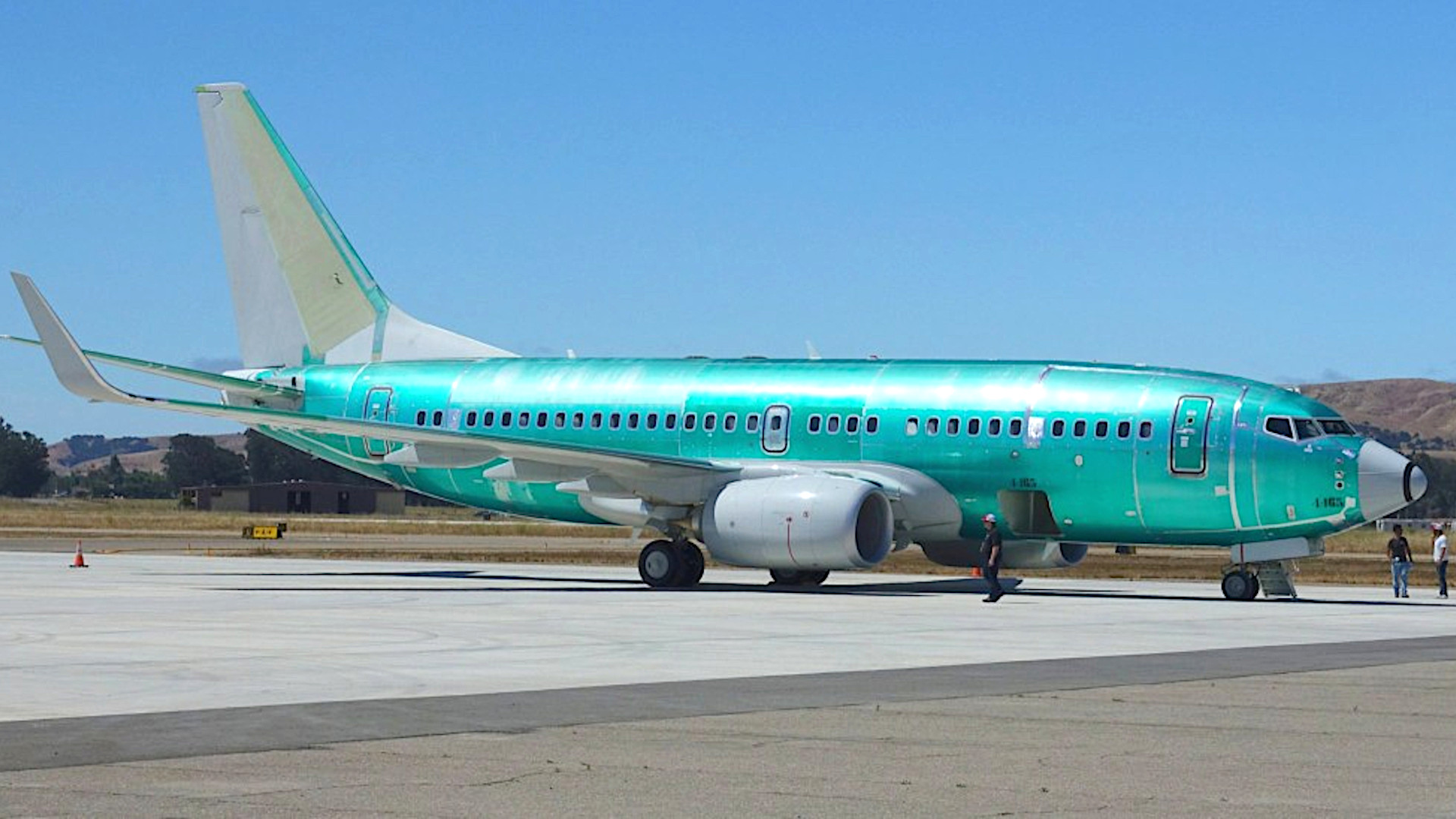
N712JM had drawn particular attention in 2020 not just because of its transfer to the Air Force, but also because it emerged at that time wearing a green protective coating and otherwise looking like it had just rolled off the production line. It also had some unusual external features that raised questions about its role, as we explored at the time.
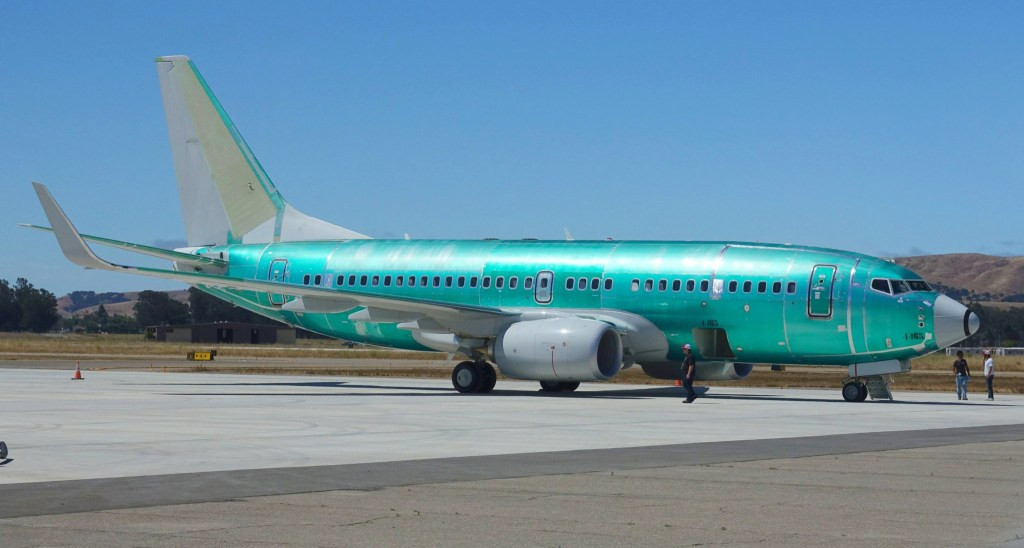
In 2020, Jon Ostrower, long-time aviation journalist and editor-in-chief of The Air Current, told TWZ the following:
“This is definitely an airplane that never made it to a formal finish you’d expect from a commercial airplane. The green finish is a protective coating applied to fuselages during manufacturing to protect from scratches and other damage. It is dissolved during painting. You can also still see the manufacturing (line) number as well. That’s from its original trip down the assembly line. There’s also quite a bit of instrumentation visible with sensor wiring leading into the cabin through the passenger windows. This type of arrangement points to a flight test setup of some kind.”
In 2020, N712JM conducted many test flights in U.S. military ranges off the coast of Southern California, flying various flight profiles, some of them quite unusual. The aircraft flew those sorties from Santa Maria Airport in California, and used the callsign STING 38.
The 'mysterious' USAF Boeing 737-700 N712JM is just back to Santa Maria, Ca. after another 3+ hour flight as 'Sting 38'. https://t.co/3sxMyligwM
— Airport Webcams (@AirportWebcams) June 15, 2020
Seven years old yet still in 'greenie' primer, lots of sensors in odd places… Article: https://t.co/erZf3MMSwi @thewarzonewire pic.twitter.com/ivs2WQFkt4
What the Air Force has been using N712JM for to date is unknown. Per FAA, the aircraft has been and continues to be registered to an address at Bolling Air Force Base (technically now part of Joint Base Anacostia-Bolling) in Washington, D.C., which looks to belong to the Air Force’s Rapid Capabilities Office (RCO). The RCO has headed up multiple cutting-edge, high-priority programs over the years, including the development of the B-21 Raider stealth bomber and the X-37B reusable spaceplane. A 737-based platform could be configured to support an array of different research and development and test evaluation activities that would fall under the purview of RCO, as well as other stakeholders that this office might engage with.
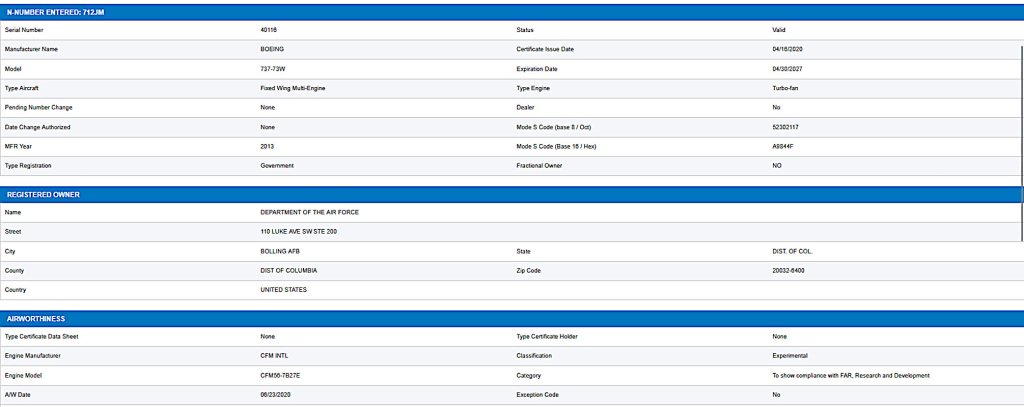
There has also been some speculation over the years that N712JM might have transformed into an Air Force 737 with the serial number 21-0024, but this appears to still be unconfirmed. The 21-0024 serial has more recently become associated with other shadowy 737s tied to the U.S. military, which have civilian-style paint schemes and may also be on the U.S. civil register. One of them was notably spotted in 2025 at a U.S. forward operating location in El Salvador, sitting directly alongside an Air Force AC-130J Ghostrider gunship and a U.S. Navy P-8A Poseidon maritime patrol plane. This, in turn, raised questions about its involvement in the ongoing U.S. campaign of strikes on alleged drug smuggling boats in the Caribbean and the Eastern Pacific Ocean, as TWZ previously explored in detail.
21-0024, for reference. When I spotted it, FR24 was indeed calling it N712JM, though ADSBx had the BuNo and a different hex. https://t.co/3WwV3kxBC4
— Volgowrath (@volgowrath) April 27, 2023
Sightings and flight tracking data have also pointed to N712JM being a resident at the Sierra Nevada Corporation’s (SNC) facility at Colorado Springs Airport, in the Colorado city of the same name, over the years. SNC is well known for highly specialized and unique aircraft modification work, especially for the U.S. military, but its exact connection to this 737 is unclear.
Interestingly, there have been several online flight tracking data ‘pings’ suggesting new activity related to N712JM at Colorado Springs Airport since at least February of this year. However, there do not appear to be any confirmed flights by the aircraft from there in that same timeframe. This airport notably sits adjacent to Peterson Space Force Base.
N712JM was on again today, this time thing ping is outside the hangar but that may not be accurate https://t.co/ijkrCDLmUh pic.twitter.com/mCdJbY5OOI
— 𝗦𝗥_𝗣𝗹𝗮𝗻𝗲𝘀𝗽𝗼𝘁𝘁𝗲𝗿 (@SR_Planespotter) April 8, 2026
Are we seeing the revival of N712JM? Last ping about 2 hours ago. What will it look like? https://t.co/vnFH9W6Afw pic.twitter.com/MZSLhkwXv8
— 𝗦𝗥_𝗣𝗹𝗮𝗻𝗲𝘀𝗽𝗼𝘁𝘁𝗲𝗿 (@SR_Planespotter) March 25, 2026
There is still a possibility that NASA could be looking at a different Air Force 737-73W for possible conversion into a Vomit Comet. As the contracting notice makes clear, the aircraft in question is currently in the classified realm. At the same time, this seems far less likely to be the case given everything that is known (and still unknown) about N712JM.
A separate question does exist now as to what effort the Air Force might be in the process of closing out that would allow it to transfer any classified 737 to NASA. TWZ has previously raised tangential questions about how the Air Force might fill the resulting gaps left by the highly-specialized RAT55 moving on to the next stage of its career. It is certainly interesting in its own right that NASA seems to be focused heavily at the moment on leveraging some of the most secretive 737s in existence today to support its much less sensitive needs.
More details may emerge if Denmar deems the “classified” Air Force 737 to be a suitable starting place to create a new Vomit Comet to support NASA’s reduced gravity training needs and the Artemis program.
Update: 3:45 PM EST –
In immediate response to our queries, NASA has directed us to an additional notice about the award of the sole-source contract, valued at $8.4 million, to Denmar Technical Services back on June 1.
“The contractor will modify a Boeing 737-700 aircraft to perform lunar-gravity parabolic flights to test NASA space equipment. Once modifications are complete, NASA Armstrong will own the aircraft and oversee aircraft operations out of NASA Johnson,” the notice says. “The aircraft will be used to validate astronaut lunar suits and associated crew systems required to support Artemis mission objectives. This can be done with the modified 737 aircraft in an operationally relevant, reduced-gravity environment prior to lunar mission execution.”
No mention is made here about the sourcing of the aircraft from the Air Force or its classified mission work, as outlined in the sole-source justification that was released yesterday.
Update: 6/11/2026 –
The U.S. Air Force has provided TWZ with a brief statement about the 737-73W aircraft in question.
“The Boeing 737-73W aircraft was originally procured to serve as a flying testbed,” a spokesperson for the service said. “The program ended and [the] USAF is transitioning the aircraft to NASA.”
Contact the author: joe@twz.com
The post Is This Secretive Air Force 737 About To Become NASA’s Next ‘Vomit Comet’? (Updated) appeared first on The War Zone.
U.S. President Donald Trump told reporters today that in the wake of overnight attacks between the U.S. and Iran, strikes on Iran will continue. Meanwhile, Iranian officials say they are “reviewing” whether to continue peace talks after one of the most serious exchanges of fire between the two nations since the April 8 ceasefire.
The latest round of attacks and counterattacks touched off after U.S. Central Command launched three waves of strikes on targets in southern Iran in retaliation for what Trump said was Iran’s downing of an AH-64 Apache helicopter, reportedly by an Iranian Shahed drone. Iran denied attacking the Apache. You can read more about that incident here.
Khatam Al-Anbiya Central Headquarters: Iran Delivers Powerful Response to US Onslaughthttps://t.co/5CvDlDqlc9 pic.twitter.com/4sdTjd31Bk
— Fars News Agency (@EnglishFars) June 10, 2026
Though damage assessments are still ongoing in the wake of Iranian missiles and drones launched across the Middle East overnight, a U.S. official told TWZ Wednesday morning that so far, there have been no injuries among U.S. personnel reported and no indication yet of any damage to American installations. That’s despite Iranian claims to the contrary.
“Iran launched multiple missiles and drones and just about all were intercepted according to initial reflections from assessments that are ongoing,” the official told us, speaking on condition of anonymity to discuss operational details. “No reports of harm to any U.S. personnel; not aware of any damage to our locations at this time.”
However, as we have noted in the past, similar U.S. assessments during the height of Epic Fury were later contradicted by reports of wide-spread damage from Iranian attacks.
Iranian officials said they again launched attacks on the U.S. Navy’s Fifth Fleet Headquarters in Manama, Bahrain, as well as Muwaffaq Salti Air Base in Jordan and targets in Kuwait.
Several videos emerging overnight claimed to show missile interceptions and explosions resulting from the latest Iranian kinetic actions.
Some showed missile interceptions over Muwaffaq Salti. As we have frequently noted, the base has been a major staging area for U.S. airpower in the region. It came under Iranian attack before the ceasefire, with an AN/TPY-2 missile defense radar there having been notably targeted.
Footage shows air defense interceptors engaging incoming Iranian ballistic missiles over Jordan.
— Egypt's Intel Observer (@EGYOSINT) June 10, 2026
Iran’s Islamic Revolutionary Guard Corps (IRGC) says it targeted Jordan’s Muwaffaq al-Salti Air Base, along with 20 other U.S. military sites across the region. pic.twitter.com/RxKHsNaQur
Additional video shows what appears to be an explosion in the distance as viewed from a CCTV camera in Manama in the wake of a claimed Iranian missile launch at Fifth Fleet headquarters. The extent of the damage, if any, is unknown.
CCTV footage shows an explosion in Bahrain’s capital Manama after what authorities say was an Iranian missile strike.
— Al Jazeera Breaking News (@AJENews) June 10, 2026
Iran’s IRGC says it hit US military bases in Bahrain, Kuwait and Jordan in retaliatory attacks for US strikes in the Strait of Hormuz. pic.twitter.com/4eKzhBa1np
The Islamic Revolutionary Guard Corps (IRGC)-connected Tasnim News Agency also posted a video it claims shows an attack on the Fifth Fleet. The short video shows what appears to be an explosion in the distance and again, there is no way to tell what, if any damage, was caused.
— اخبار فوری جنگ (@WarNewsIr) June 10, 2026
ویدئوی منتشرشده در منابع عربی از اصابت به پایگاه آمریکا در بحرین pic.twitter.com/fW37dLXui6
The Kuwaiti Foreign Affairs Ministry condemned the latest Iranian strikes and said the nation “reserves its full right to take all necessary measures to preserve its security and defend its territories and vital facilities, in accordance with international law and the United Nations Charter.”
بيان صادر عن وزارة الخارجية
— وزارة الخارجية (@MOFAKuwait) June 10, 2026
الأربعاء 10 يونيو 2026
تُعرب وزارة الخارجية عن إدانة دولة الكويت واستنكارها وبأشد العبارات، استمرار الاعتداءات الإيرانية الآثمة والمتكررة على دولة الكويت، والتي كان آخرها اليوم، في تصعيد جديد يُضاف إلى سلسلة الاعتداءات الإيرانية المتواصلة، ويُعد… pic.twitter.com/7H1TFQNqMv
Iran said its latest volley of kinetic actions were in response to what U.S. officials say were strikes on 20 Iranian targets in response to the helicopter downing.
The United States and Iran traded strikes overnight.
— Trey Yingst (@TreyYingst) June 10, 2026
20 Iranian targets were hit by U.S. forces, including air defense systems and radar sites.
Iran responded with missiles and drones toward Kuwait, Bahrain, and Jordan. pic.twitter.com/vl3fK4bO85
This latest flurry of strikes prompted comments about the future of diplomacy from both sides.
During a morning press conference, Trump said “we hit ’em hard yesterday, and we’re going to hit ’em again hard today, in case you miss it, in case you don’t turn on your television set, and we’ll see what happens with the deal.”
.@POTUS on Iran: "We hit them hard yesterday and we're going to hit them again hard today… And we'll see what happens with the deal. We were really close to a deal — but they keep tapping us along. They keep playing us for suckers because you know what? They dealt with some… pic.twitter.com/ScvGn14QFQ
— Rapid Response 47 (@RapidResponse47) June 10, 2026
Earlier on Wednesday, Trump told Fox News that there may be additional U.S. attacks that focus on “Iranian power plants and bridges.”
NEW: President Trump tells me he "may keep going" with strikes against Iran and is getting closer to targeting Iranian power plants and bridges.
— Trey Yingst (@TreyYingst) June 10, 2026
The President also spoke about the U.S. military helicopter that was downed saying that an Iranian drone lodged between the two… pic.twitter.com/j5aQEIzi9s
The president’s comments to Fox follow statements he made on his social media outlet saying Iran has taken too long to agree to a peace deal.
“Iran’s Military is a complete and total mess,” Trump said on Truth Social. “Much of it, like their Navy and Air Force, doesn’t even exist anymore – They have been completely defeated. Iran is all talk and no action. The Bully of the Middle East is DEAD!!! They’ve taken too long to negotiate a deal that would have been great for them, now they will have to pay the price!!!”
Trump did not elaborate on what that price may be.
— Rapid Response 47 (@RapidResponse47) June 10, 2026
As we noted earlier in this story, Iran is reassessing the future of diplomatic negotiations aimed at ending the US-Israeli war against the country, according to the official Iranian IRNA news outlet.
“We have to review it,” Iranian Foreign Ministry spokesperson Esmaeil Baqaei told IRNA. “Diplomacy and the battlefield are not separate matters; rather, they run alongside and complement each other in safeguarding Iran’s interests and security.”
Baqaei stressed that Iran’s military and diplomatic tracks operate in coordination.
“Wherever the Armed Forces deem it necessary, they respond to the enemy with authority and strength, and last night’s events showed that Iran’s brave Armed Forces do not hesitate in defending the country,” he posited.
ایرانی وزارت خارجہ کے ترجمان اسماعیل بقائی کا کہنا ہے کہ حملوں کے بعد امریکا کے ساتھ مذاکرات کا ازسرنو جائزہ لے رہے ہیں، امریکا اور اسرائیل بار بار جنگ بندی کی خلاف ورزی کررہے ہیں۔
— SAMAA TV (@SAMAATV) June 10, 2026
انہوں نے کہا کہ مذاکرات کو آگے بڑھانے کیلئے پرسکون ماحول بہت ضروری ہے، بدقسمتی سے واشنگٹن کے… pic.twitter.com/1nGcYA3fmN
Despite the flare-up in fighting and posturing by both sides, negotiations appear to be continuing.
“Following consultations with the United States, Qatari negotiators headed to Tehran this morning to meet with the Iranians in an attempt to bridge the remaining gaps,” CNN reported on its Arabic channel, citing a source. “The visit indicates that diplomacy remains active, despite an exchange of fire between Iran and the United States overnight—marking one of the most significant tests of the ceasefire to date. A US official told CNN that the United States believes these strikes will not derail the negotiations.”
مصدر دبلوماسي لـCNN: مفاوضون قطريون توجهوا صباح الأربعاء إلى طهران لسد الفجوات المتبقية مع أمريكا https://t.co/IIkMnAmHkt
— CNN بالعربية (@cnnarabic) June 10, 2026
At issue remains the future of Iran’s nuclear ambitions, the ongoing closure of the Strait of Hormuz, Tehran’s ballistic missile arsenal and support for proxies and the easing of U.S. sanctions. Whether the increased fighting between the two sides will derail these efforts remains an open question.
Iran claims it downed another U.S. MQ-9 Reaper drone overnight. While TWZ can’t verify that, we have noted that the loss of dozens of these drones to Iran and the Houthis have forced the U.S. Air Force to scramble for replacements.
— خبرگزاری فارس (@FarsNews_Agency) June 10, 2026
لحظهٔ انهدام پهپاد MQ9 در آسمان شهرستان جم بوشهر در شب گذشته pic.twitter.com/aUe1eR5nRZ
A cargo ship came under small arms fire 88 nautical miles south of Balhaf, Yemen in the Gulf of Aden, according to the United Kingdom Maritime Trade Operations (UKMTO) monitoring organization.
“A cargo vessel has reported being approached by one craft with 6 armed persons onboard,” UKMTO explained. “There was an exchange of fire between the small craft and the cargo vessel’s Armed Security Team resulting in the small craft turning away. Authorities are investigating. Vessels are advised to transit with caution and report any suspicious activity to UKMTO.”
While details about who was involved are scant, this is the first attack in the region, near the Bab al-Mandeb Strait, since the Houthi rebels of Yemen threatened to shut the vital waterway down in support of Iran last week. You can read more about the implications of the Iranian proxy group closing the Strait on the U.S. military and the global economy in our prior reporting here.
UKMTO WARNING 065-26
— UKMTO Operations Centre (@UK_MTO) June 10, 2026
Click here to view the full warning.https://t.co/ushxdE2mx0#MaritimeSecurity #MarSec pic.twitter.com/vtHpdNUm4Z
In a post on X, CENTCOM on Wednesday announced it disabled an oil tanker trying to run the blockade of Iranian ports.
The incident took place at 11:14 p.m. on June 9, when a U.S. aircraft “fired precision munitions” into the engine room of the Palau-flagged M/T Settebello as it transited the Gulf of Oman.
The ship was attempting to transport oil from Iran, the command added.
In addition to the ships it disabled, CENTCOM said it has “redirected 134 ships that complied, and allowed 42 vessels supporting humanitarian aid to pass since initiating the blockade on April 13.”
You can read more about the other seven ships hit by CENTCOM here.
CENTCOM:
— Clash Report (@clashreport) June 10, 2026
At 11:14 p.m. on June 9, U.S. forces disabled an oil tanker in the Gulf of Oman for the second consecutive day after another vessel violated the ongoing blockade by attempting to transport oil from Iran.
U.S. Central Command (CENTCOM) disabled Palau-flagged M/T… pic.twitter.com/UkVgPoJUOt
When it comes to the Strait of Hormuz and Gulf of Oman region, Trump took to social media to say the ongoing blockade of Iranian ports has devastated Tehran’s economy.
“The Fake News Media refuses to report how EFFECTIVE the U.S. Naval BLOCKADE is, the most successful Blockade in the history of Naval Warfare,” the president proclaimed on Truth Social. “NOTHING GETS THROUGH unless we want it to. IT IS A STEEL WALL! Iran is doing ZERO business, not paying their military, or any of their bills, and quickly becoming a FAILED NATION! Lots of oil is getting out. Praise be to Allah!”
President Donald J. Trump has taken to Truth Social again decrying the "fake news media" coverage of the naval blockade of Iran saying that it is a "STEEL WALL", Iran is doing "ZERO business, not paying their military or any of their bills, and quickly becoming a FAILED NATION!"… pic.twitter.com/DcCHVebRX7
— OSINTdefender (@sentdefender) June 10, 2026
However, in a post on X, the Windward trade intelligence group said that “five Iranian-trading [liquified petroleum gas] LPG carriers have broken the U.S. blockade on Iranian ports,” Windward stated. “Four discharged in India, one in Pakistan. All five used the same playbook, spoofing and AIS blackouts to mask loading and destination. Yet all signaled their exit and/or entry through Hormuz via AIS. Three were already U.S.-sanctioned. A fourth sanctioned June 6. Two operated under false flags, making them legally stateless.”
However, the crude oil blockade is holding, Windward added.
“No Iran-trading VLCC tracked in Asia via Malacca, Sunda, or Lombok since May 4,” the organization noted.
Five Iranian-trading LPG carriers have broken the U.S. blockade on Iranian ports. Four discharged in India, one in Pakistan.
— Windward (@WindwardAI) June 10, 2026
All five used the same playbook, spoofing and AIS blackouts to mask loading and destination. Yet all signaled their exit and/or entry through Hormuz via… pic.twitter.com/iWBqGHSrBl
U.S. Secretary of War Pete Hegseth is scheduled to visit CENTCOM headquarters in Tampa, Florida, today to discuss the ongoing situation with the head of that command, Adm. Brad Cooper, and engage with troops.
Secretary Hegseth will be traveling to Guantanamo Bay, Cuba and Tampa, Florida today to engage with troops at GTMO and CENTCOM, per Pentagon.
— Kellie Meyer (@KellieMeyerNews) June 10, 2026
Despite efforts to quell the fighting between Israel and Hezbollah in southern Lebanon, the Israeli Air Force continues to strike targets in that country.
“Over the past day, the IDF struck Hezbollah infrastructure sites in the area of Tyre and in several areas in southern Lebanon,” the IDF stated on Telegram.
“In the area of Tyre, the IDF struck six infrastructure sites used by the Hezbollah terrorist organization to advance terror attacks against the State of Israel and IDF soldiers operating in southern Lebanon,” the IDF added. “Among the infrastructure struck was a site used by Hezbollah terrorists to launch explosive drones toward IDF soldiers.”
In southern Lebanon, “the IDF struck ready-to-use Launchers, terrorists who operated in the area in which IDF soldiers are operating, and additional terror infrastructure sites,” it claimed.
השמדת תשתיות טרור מהן הופעלו רחפני הנפץ נגד כוחותינו: חיל-האוויר וכוחות יחידת האיסוף 869 ממשיכים לפעול בדרום לבנון.
— Israeli Air Force (@IAFsite) June 10, 2026
במהלך השבועיים האחרונים, הכוחות חיסלו בשיתוף חיל-האוויר יותר מ-20 מחבלים שפעלו לקידום מתווי טרור והיוו איום על כוחותינו. בנוסף הכוחות השמידו מספר תשתיות טרור… pic.twitter.com/Mysi9BMXHW
Hezbollah, meanwhile, attacked a gathering of Israeli troops with a missile, according to Tasnim.
Hezbollah Strikes Israeli Military Gathering with Missile pic.twitter.com/TJUCOT3lvS
— Tasnim News Agency (@Tasnimnews_EN) June 10, 2026
The ongoing Israeli incursion into southern Lebanon and continuing presence in Syria has raised tensions with Turkey. Any direct conflict flaring up from the long-simmering animosity between two of the region’s most powerful militaries – though extremely unlikely – would be a far bigger deal than a dertailment of U.S.-Iran peace talks.
“We are fully aware of what the ultimate objective of the delusion of ‘Greater Israel’ is,” Turkish President Recep Tayyip Erdoğan said Wednesday, adding that Israel’s actions in Lebanon and Syria now threaten Turkey.
Turkish President Recep Tayyip Erdogan:
— Ariel Oseran أريئل أوسيران (@ariel_oseran) June 10, 2026
Israel's attacks on Syria and Lebanon have reached a point where they also threaten Turkey.
Turkey's security begins not in Hatay, but in Aleppo, Damascus, and Beirut. pic.twitter.com/YKRqbRugQ2
The Turkish leader’s statements sparked a harsh response from Netanyahu.
“The antisemitic tyrant Erdogan, who perpetrates genocide against the Kurds, supports the terrorist organization Hamas, oppresses his own people, and imprisons political rivals, is the last one who can preach morals to the State of Israel,” the Israeli leader retorted. “The State of Israel and the IDF, the most moral army in the world, will continue to act forcefully against Iran and its proxies that threaten the Middle East and the entire world.”
הרודן האנטישמי ארדואן שמבצע רצח עם בכורדים, תומך בארגון הטרור חמאס, מדכא את בני עמו ושם בכלא יריבים פוליטיים הוא האחרון שיכול להטיף מוסר למדינת ישראל.
— Benjamin Netanyahu – בנימין נתניהו (@netanyahu) June 10, 2026
מדינת ישראל וצה"ל, הצבא המוסרי ביותר בעולם, ימשיכו לפעול בעוצמה נגד איראן ושלוחותיה שמאיימות על המזרח התיכון ועל העולם כולו.
The latest events in the Mideast region show that there is no immediate end in sight to the hostilities and we will continue to monitor developments here given the ongoing impacts on the U.S. military and global economy.
UPDATE: 3:01 PM EDT –
Trump claimed the price of oil will fall because of how much has been secretly moved out of the region.
“We’re taking about millions of barrels of oil,” the president told reporters Wednesday afternoon.
.@POTUS on Iran: "Did you know we've been taking out millions of barrels of oil? Nobody knows it. You know who doesn't know about it? Iran — until right now. We took out, the other night, 22 ships." pic.twitter.com/2odiLYXDJ3
— Rapid Response 47 (@RapidResponse47) June 10, 2026
On his Truth Social, Trump claimed that last month, he “directed our Great U.S. Military to execute a secret mission to support Oil Tankers and other Commercial Ships through the Strait of Hormuz.”
“Today, I am pleased to announce that this effort has resulted in more than 100 MILLION Barrels of Oil making its way through the Strait, and into the Open Market,” he added. “More than 200 Commercial Ships have safely traveled through the Strait. This wildly successful effort is because the UNITED STATES of AMERICA CONTROLS the Strait of Hormuz — NOT Iran. Their military is defeated, and their economy is lost. It’s over for Iran!”
BREAKING: President Trump says he directed the US Military to execute a “secret mission” in the Strait of Hormuz which resulted in over 100 million barrels of crude oil crossing through Hormuz. pic.twitter.com/bSYeetbHH4
— The Kobeissi Letter (@KobeissiLetter) June 10, 2026
However, TankerTrackers.com clarified that the president was referring not to Iranian oil, but Arab oil.
There is now a public misunderstanding regarding President Trump’s statement. It is not Iranian oil that he is talking about. Those are still trapped. Instead, it appears to be the secured convoys of Arab oil into the Gulf of Oman via the Strait of Hormuz. This explains why… https://t.co/fEgyzY3gnX
— TankerTrackers.com, Inc. (@TankerTrackers) June 10, 2026
UPDATE: 3:39 PM EDT –
Hegseth thanked troops at CENTCOM headquarters in Tampa, Florida, for their efforts in the Middle East.
.@SECWAR spoke with troops at U.S. Central Command:
— DOW Rapid Response (@DOWResponse) June 10, 2026
“On behalf of the President of the United States—on behalf of the American people—I want to say how proud we are of the work @CENTCOM has undertaken.” pic.twitter.com/SkDuqzS3UW
UPDATE: 4:12 PM EDT –
The Secretary-General of the International Maritime Organization (IMO) “has expressed deep concern and strong condemnation of the attack on the tanker MT Settebello,” according to the organization.
“I strongly condemn any act from any party that endangers the lives of seafarers and the safety of international shipping,” said Secretary-General Arsenio Dominguez. “This is simply unacceptable. My thoughts are with the families of the three missing seafarers and with all those awaiting news of the crew members.”
Two Indian seafarers died and one was reported missing after the attack, according to The Hindu.
Two casualties including cadet, fitter and ch engineer are reported missing…@FSUIINDIA @IMOHQ @ITFglobalunion pic.twitter.com/z8qZPYRWx1
— FSUI (@FSUIINDIA) June 10, 2026
Contact the author: howard@twz.com
The post Overnight Attacks Rattle U.S.-Iran Ceasefire (Updated) appeared first on The War Zone.
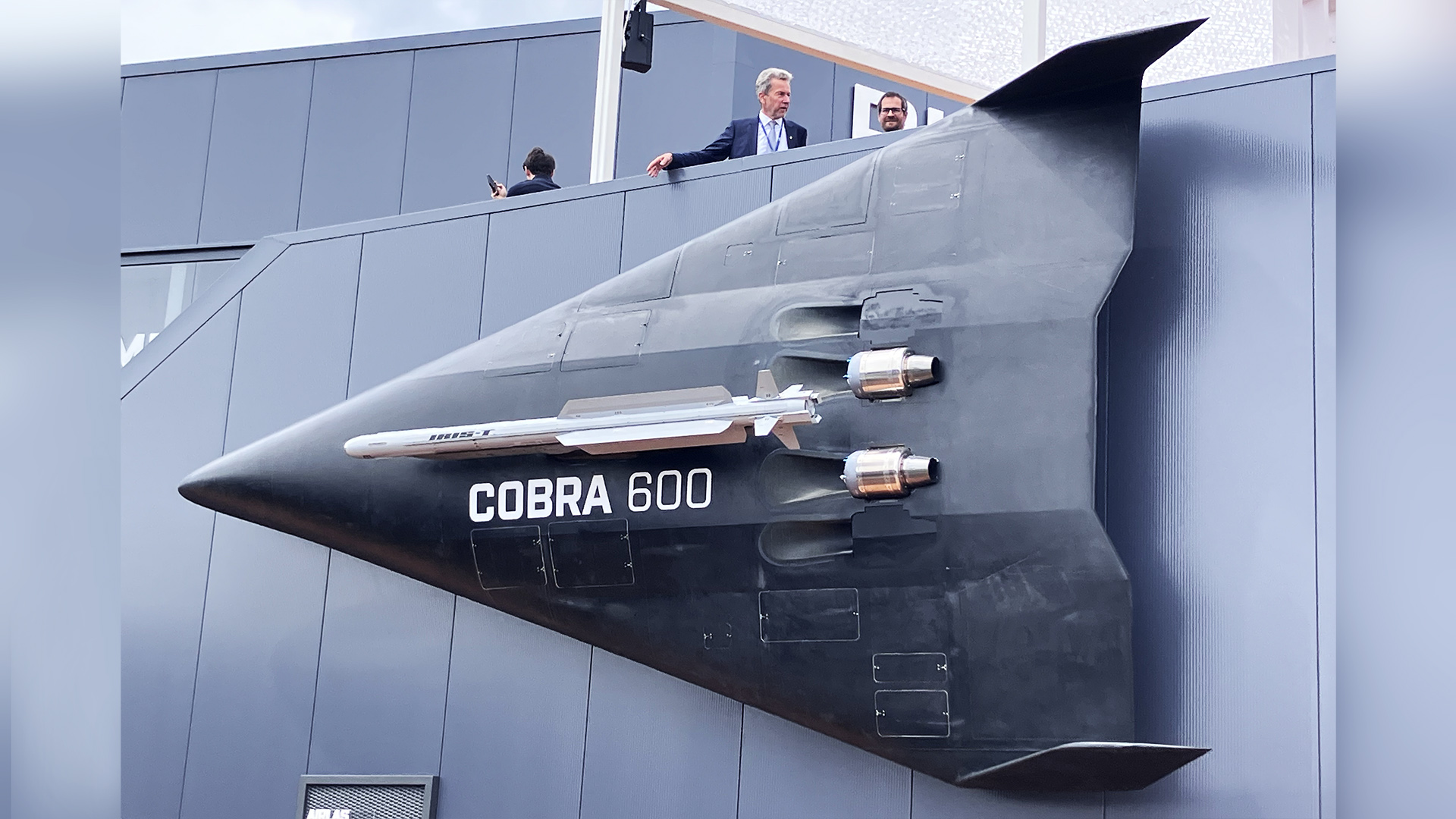
A novel kind of drone-based air defense system has been shown for the first time by German weapon manufacturer Diehl Defence. The Cobra 600, which has not previously been seen in public, combines a jet-powered drone platform with a missile rail armed with one of the company’s IRIS-T missiles, a weapon already used in short-range air defense systems and air-to-air applications. The new system immediately recalls recent Russian developments, which add short-range air defense missiles to its versions of the Shahed-136 long-range one-way attack drone, known locally as the Geran.
Cobra 600 is being presented at the ILA Berlin airshow, taking place this week in the German capital. The Cobra 600 is also known as the Airborne Launching and Attack System (AirLAS), and the program was launched last year.
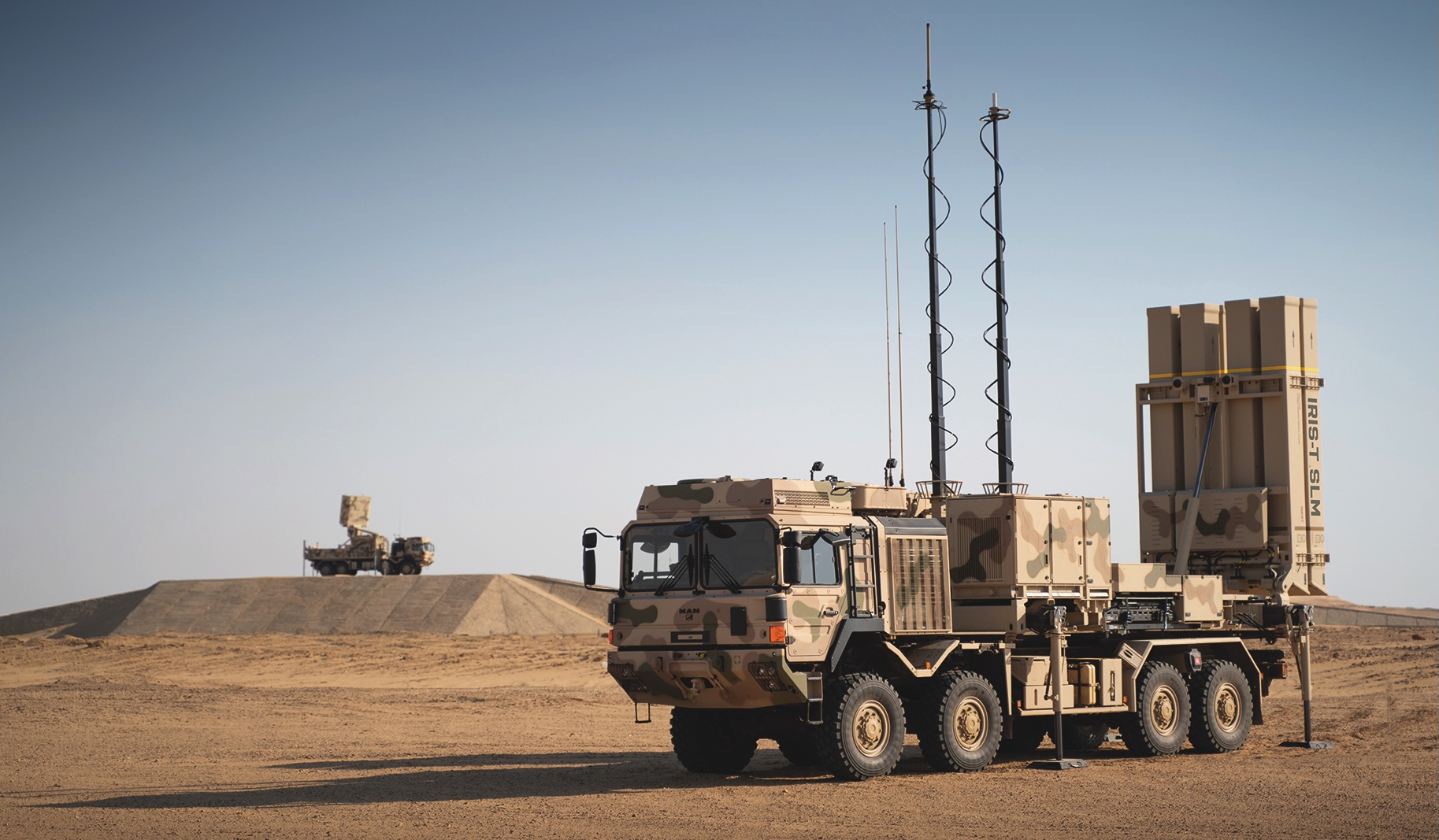
The concept behind the Cobra 600 is that of a ‘missile taxi,’ in which the drone platform carries the IRIS-T missile over a considerable distance. All the while, the drone is meshed with a ground-based air defense system. Typically, this would be one of Diehl’s IRIS-T SLM or IRIS-T SLS systems. Of these, the IRIS-T SLS employs the same missile as the air-to-air variant — and therefore the same missile as the Cobra 600. The physical interface between the drone and the missile is a standard pylon as used on the Eurofighter jet.
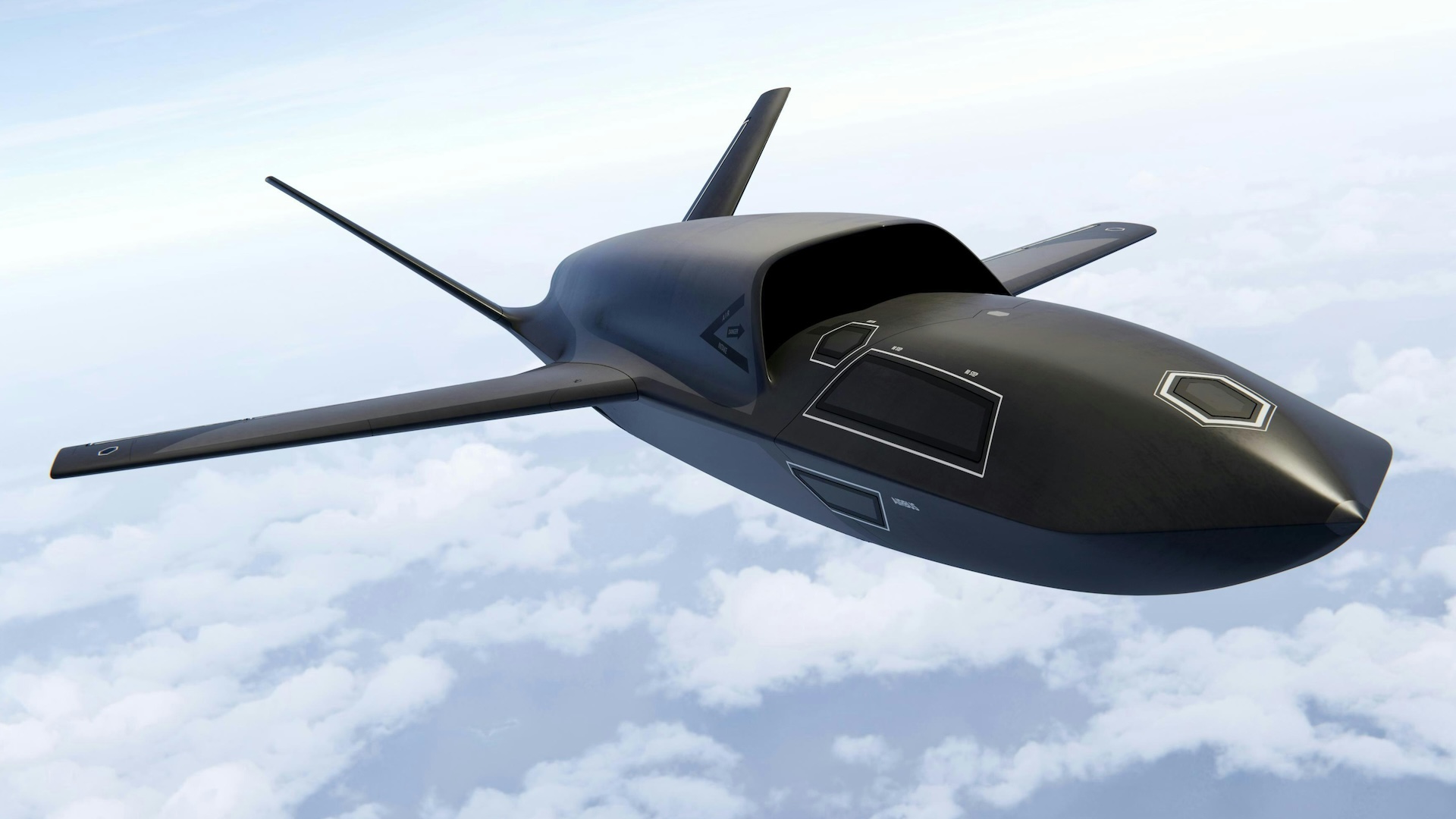
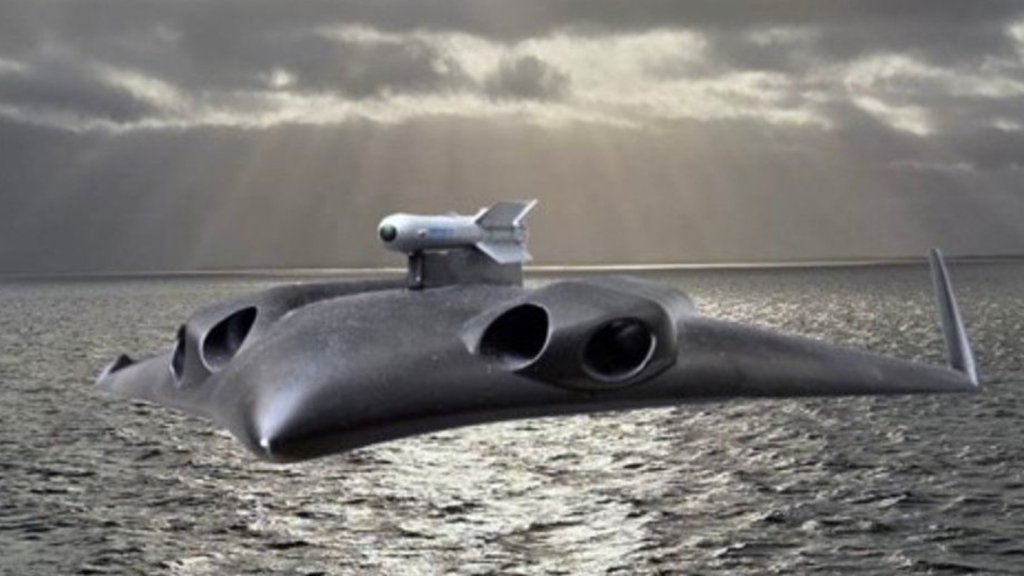
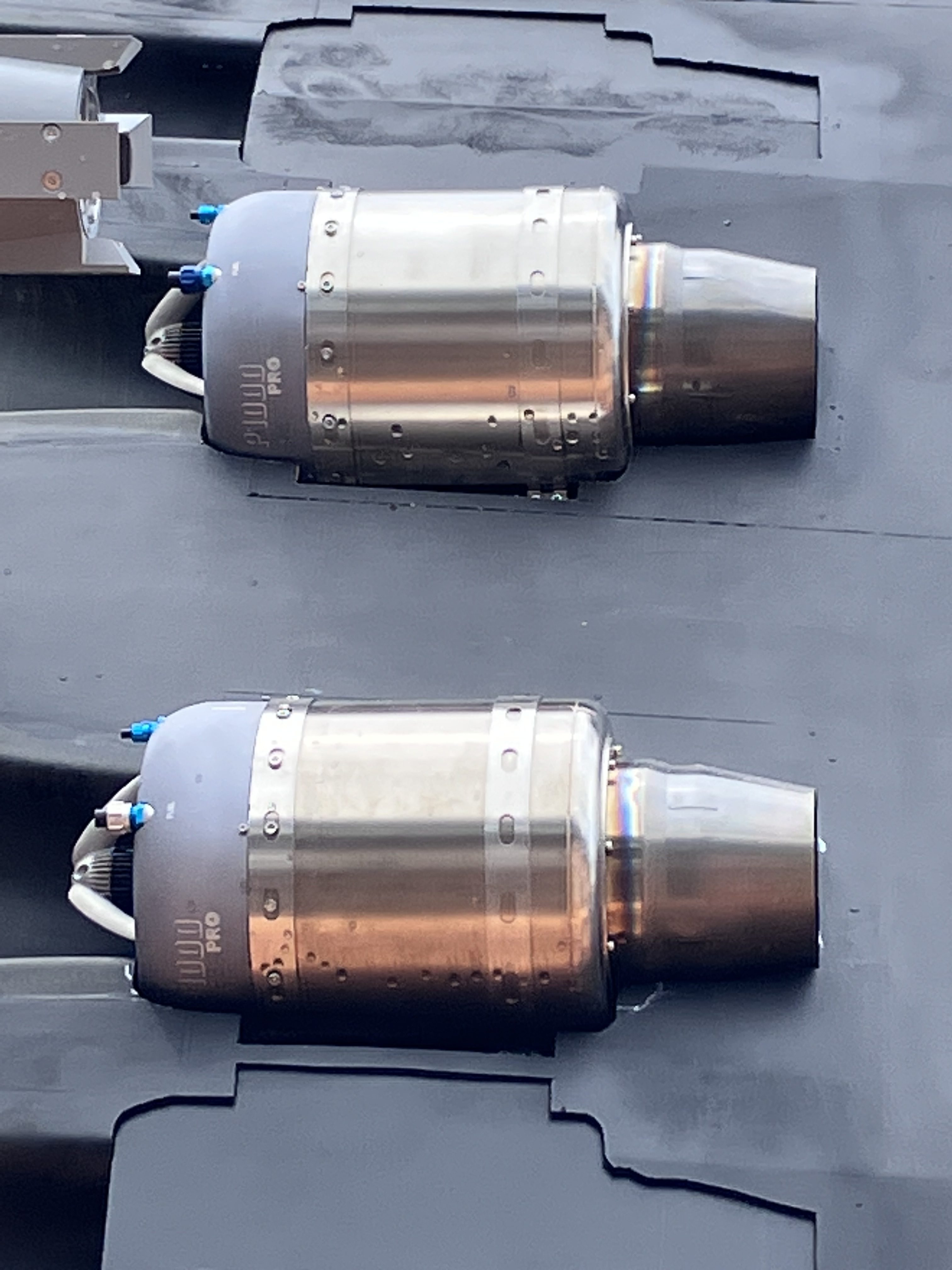
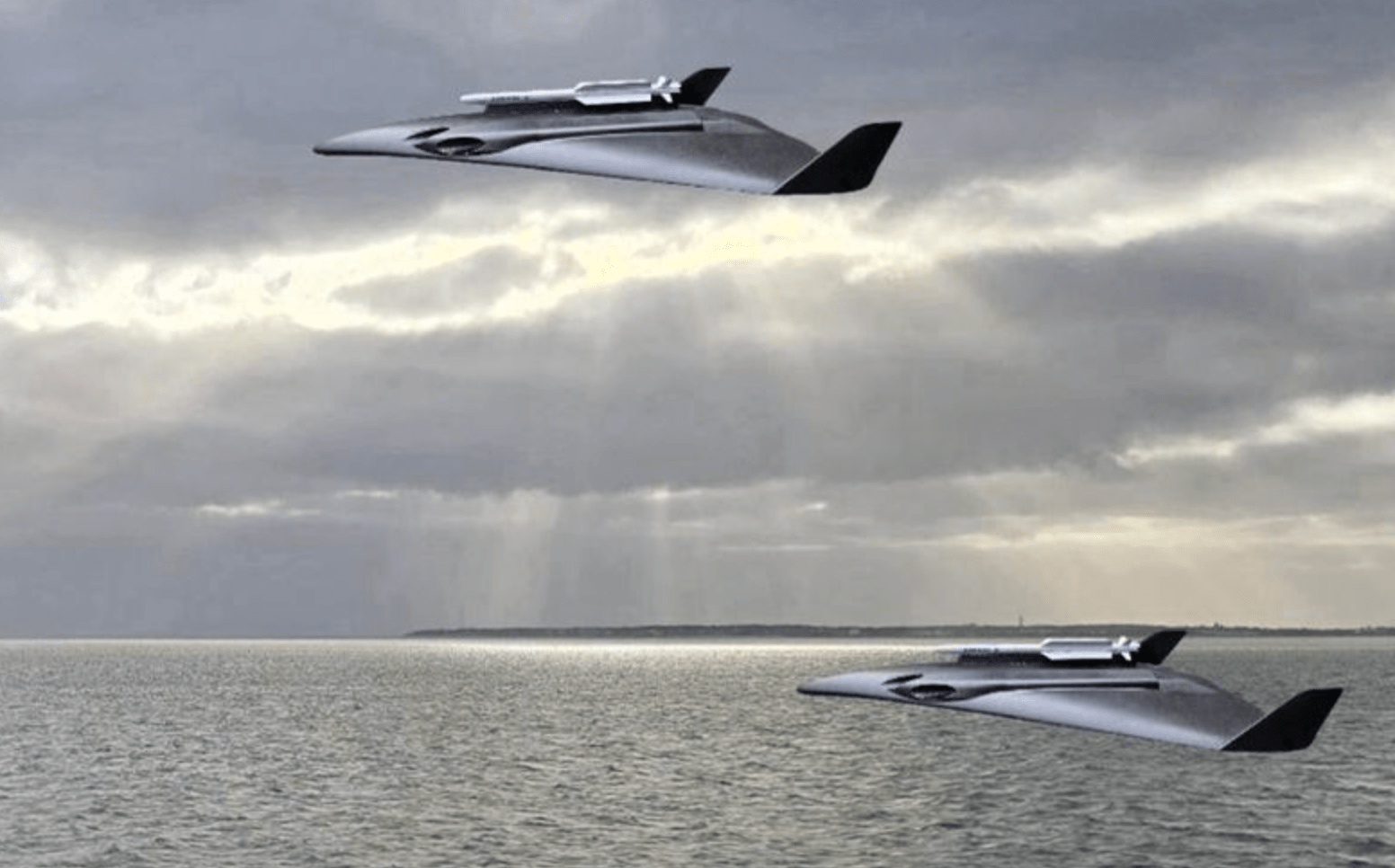
As for the drone platform, this is provided by another German firm, the Polaris Raumflugzeuge aerospace start-up. It has a similar kind of efficient delta planform as the Shahed-136, with a modified flying-wing-like design. On the wingtips are mounted endplate vertical stabilizers. As displayed, the drone is powered by a pair of JetCat-P1000-PRO micro turbojet engines, each of which provides a maximum thrust just shy of 250 pounds. However, the drone has intake ports for another two engines. It’s not clear if these are only intended to be fitted if heavier payloads are being carried, but it’s certainly a possibility. Concept artwork released by Polaris, as seen at the top of this story, shows a four-engine configuration, with the turbojets buried in the airframe and fed by much longer intakes, helping to shield them from detection.
Polaris Raumflugzeuge has already built a variety of drones in the same configuration, and the company eventually aims to scale this up to produce a spaceplane.
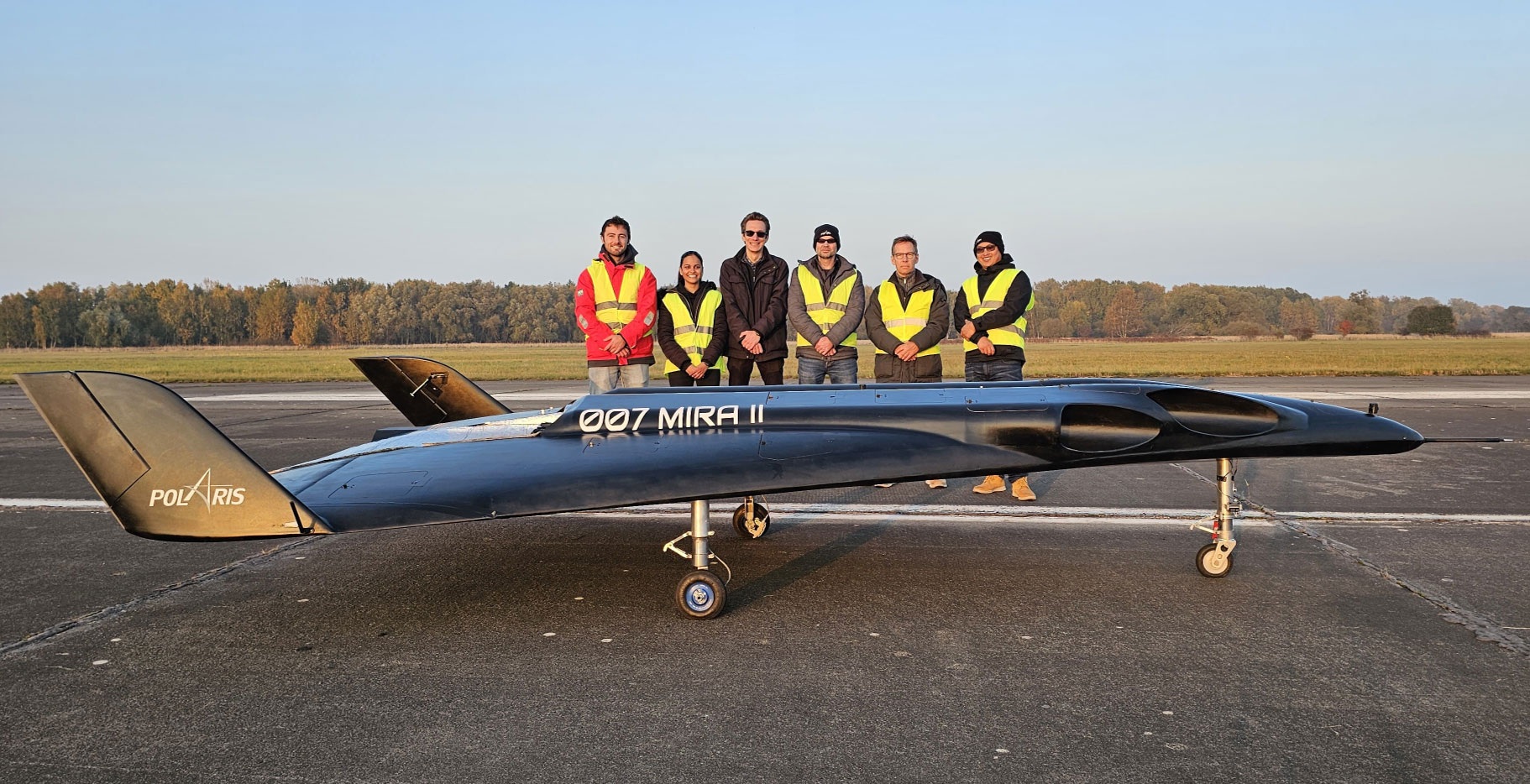
Drawing on its design heritage, the Cobra 600 drone has retractable wheeled tricycle landing gear, meaning that it can be reused in some scenarios. The drone therefore takes off and lands from runways, although it is also able to operate from suitable shorter airstrips, such as stretches of highway. It’s also intended to be cheap enough that commanders will also be willing to risk losing it in combat, or after it runs out of fuel.
The concept of operations has the Cobra 600 serving as an adjunct to a ground-based air defense system, extending its range considerably.
With the missile fitted, the Cobra 600 has a range of around 250 miles. This compares to around 25 miles for the ground-launched missile used in the IRIS-T SLM, or approximately eight miles for the missile used in the IRIS-T SLS.
As such, the Cobra 600 has the potential to turn the ground-based IRIS-T into something a little closer to a long-range surface-to-air missile, in terms of the distance it can cover. Of course, this is only true in terms of absolute range, with the speed and maneuverability of the drone being far inferior to a long-range missile. Unless the target is nearby, or the Cobra 600 has been pre-positioned based on known target vectors, the reaction time it offers is strictly limited. The missile itself is also able to tackle a more limited range of potential targets than a dedicated long-range surface-to-air missile, some of which offer an anti-ballistic missile capability, for example.
On the other hand, the Cobra 600 offers the distinct advantage of being able to loiter in a given area, waiting for threats to emerge, or to perform combat air patrols to screen certain sectors. It is best viewed as a forward-positioned additional launcher for the ground-based IRIS-T, and is also entirely reliant upon that system (or a similar one) for its effectiveness. At the same time, leveraging existing ground-based air defense systems as a force multiplier is a clear advantage. Another possible operational scenario would involve setting the Cobra 600s up as interceptors on a runway, sitting ready for launch on a runway to defend against lower-end threats.
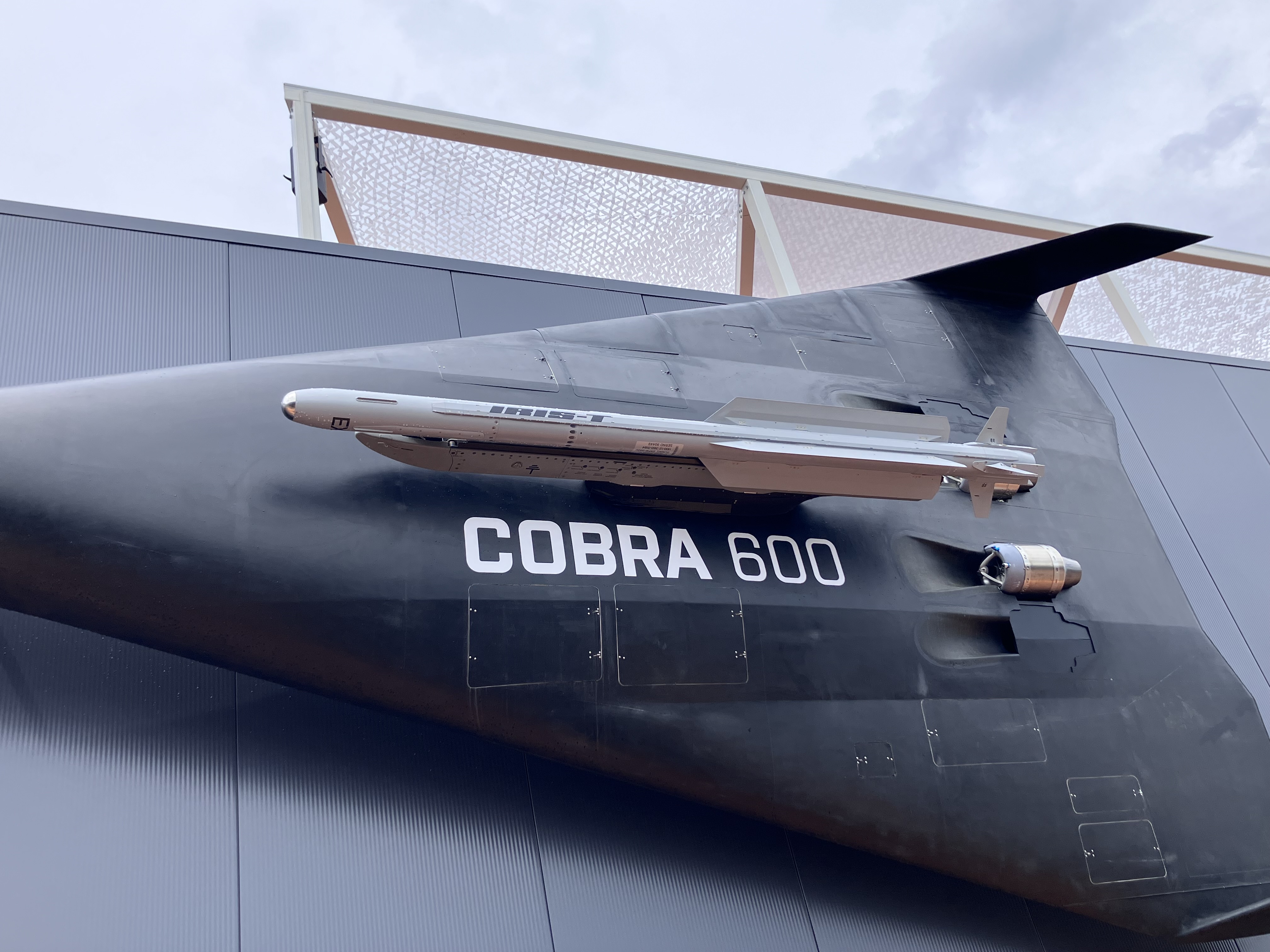
In its current form, the Cobra 600 has no onboard sensors to detect targets other than the imaging infrared seeker head that’s integral to the standard IRIS-T missile.
In an operational scenario, a target for the Cobra 600 would be detected and identified by the ground-based air defense system to which it is ‘tethered.’ Connected via datalink, the ground-based system would vector the drone to the appropriate location. Using its own seeker, the IRIS-T would lock onto the target and be commanded to launch by the operator of the ground-based system. Of course, this presupposes that the datalink is not compromised by hostile interference or due to line-of-sight limitations, although SATCOM capability, like Starlink, would help keep redundant control over the drone beyond line-of-sight.
At this point, the mode of engagement is not dissimilar to the ground-based IRIS-T SLS, which features a lock-on-after-launch (LOAL) capability. This means it can fire missiles without first establishing the weapon’s lock on the target. After receiving target information in the form of three-dimensional coordinates, the missile uses inertial guidance during the initial stage of flight. Upon reaching the designated engagement altitude, its imaging infrared seeker activates and begins searching the predicted target area.
Another conceivable option would be to add some kind of sensor, such as an infrared camera, to the Cobra 600 drone platform, meaning that a ‘person in the loop’ could establish that the missile had locked onto the correct target.
A further option could be to ‘uncage’ the missile seeker and let it search across its field of view only when the Cobra 600 is in a designated ‘kill box,’ within which it would have authority to engage any target it acquires, reactively, and autonomously. Issues such as this clearly need to be addressed, based on combat requirements and ethical concerns.
As well as operating the Cobra 600 in conjunction with the IRIS-T SLM/SLS, it could also be integrated with other ground-based air defenses. According to Polaris, it could also be embedded with aircraft or in a maritime environment.
The Cobra 600 has already completed its first flight tests, with a dummy IRIS-T missile fitted. Currently, the development effort is mainly funded by the company, but there has also been investment from at least one interested nation.
With the IRIS-T SLM/SLS combat-proven in Ukraine, experiences from this conflict have almost certainly helped inform the development of the Cobra 600.
The war in Ukraine also provides an interesting parallel to the Cobra 600, in Russia’s missile-armed adaptations of its Shahed/Geran drones.
Russian developments have seen the fielding of these drones carrying either a single R-60 air-to-air missile, a much older and less capable equivalent to the IRIS-T, or man-portable air defense systems (MANPADS).
Interception of the Russian Shahed kamikaze drone with an installed R-60 air-to-air missile.
— Special Kherson Cat
It was intercepted by Darknode unit of the @usf_army, using STING anti-Shahed drone developed by the @wilendhornets and funded by @sternenkofund. https://t.co/XHEjuCP31F pic.twitter.com/oje4VOXTbz(@bayraktar_1love) December 1, 2025
According to Ukrainian accounts, as well as the rail-mounted missile on the top, these drones are equipped with a camera and a radio-frequency modem.
Russian forces are mounting Igla MANPADS on Shahed drones to target Ukrainian helicopters that intercept them. The drones carry a camera and radio modem, and the missile is launched remotely by an operator in Russian territory. pic.twitter.com/T5TKPHyhVu
— WarTranslated (@wartranslated) January 4, 2026
However, the concept of operations for the missile-armed Russian drones is very different. While it gives the drones a means to engage Ukrainian fixed-wing aircraft and helicopters, it works more as a deterrent than as a genuinely useful tactical application. As we have noted in the past, the difficulty in obtaining a high degree of situational awareness and the limited agility of the drone raises questions about the effectiveness of these solutions. On the other hand, Russia has been working on a man-in-the-loop (MITL) control capability for the Shahed/Geran, which could potentially be used to operate the missile.
Considerably larger than the Shahed-136 design, the Cobra 600 will provide a higher performance delta overall. It is also jet-powered, and, with up to four engines, this would give more impressive response times and maneuverability than the Russian system.
It should be noted that there are other previous precedents for arming drones with air-to-air missiles. In at least one instance from 2002, a U.S. Air Force MQ-1 Predator drone fired a Stinger heat-seeking anti-air missile at an Iraqi MiG-25 Foxbat fighter that was trying to shoot it down, which can be seen in the video below.
The fast pace of development of the Cobra 600 reflects a growing need for ground-based air defenses more generally, after decades of neglect. There is also a need for less-expensive, less-exquisite solutions in this area, something that the Cobra 600 also addresses, with a price point that is significantly lower than a long-range surface-to-air missile (although with the various disadvantages outlined above). At the same time, the Cobra 600 may well end up being used against even lower-cost drones, for which the IRIS-T is still a very expensive solution.
The Cobra 600 reflects a broader shift in air defense thinking driven by the lessons of recent conflicts, particularly in Ukraine and the Middle East, where persistent drone threats, as well as cruise missiles, have exposed the limitations of traditional ground-based air defense architectures.
By combining the endurance and flexibility of a drone with the proven, off-the-shelf IRIS-T interceptor, the Cobra 600 offers a potentially cost-effective way to extend defensive coverage over greater distances and to put ‘shooters’ into contested areas that crewed systems would not be able to venture. While some questions remain about how the Cobra 600 would be integrated with existing operational doctrine, the concept highlights the growing demand for innovative, layered, and resilient air defenses as militaries seek to counter increasingly varied and numerous aerial threats.
Contact the author: thomas@thewarzone.com
The post Germany’s Cobra 600 Is A Jet Powered Interceptor Drone That Slings An IRIS-T Missile appeared first on The War Zone.
U.S. Central Command (CENTCOM) has confirmed a Saronic Corsair was the uncrewed surface vessel (USV) that rescued the crew of a U.S. Army AH-64 Apache out of the Gulf of Oman overnight. President Donald Trump has also now said Iranian forces downed the attack helicopter, and promised a response. This is the first known instance of a drone boat being used to recover personnel as part of a search and rescue mission, and has major implications for these operations going forward. Readers can otherwise get up to speed on what is already known about this incident in our initial reporting here.
“The surface drone that assisted in last night’s rescue of the Apache crew off the coast of Oman was a U.S. Navy Corsair unmanned surface vessel operated by U.S. 5th Fleet’s Task Force 59,” U.S. Navy Capt. Tim Hawkins, a CENTCOM spokesman, told TWZ. “The task force began fielding these drones in theater in late March.”
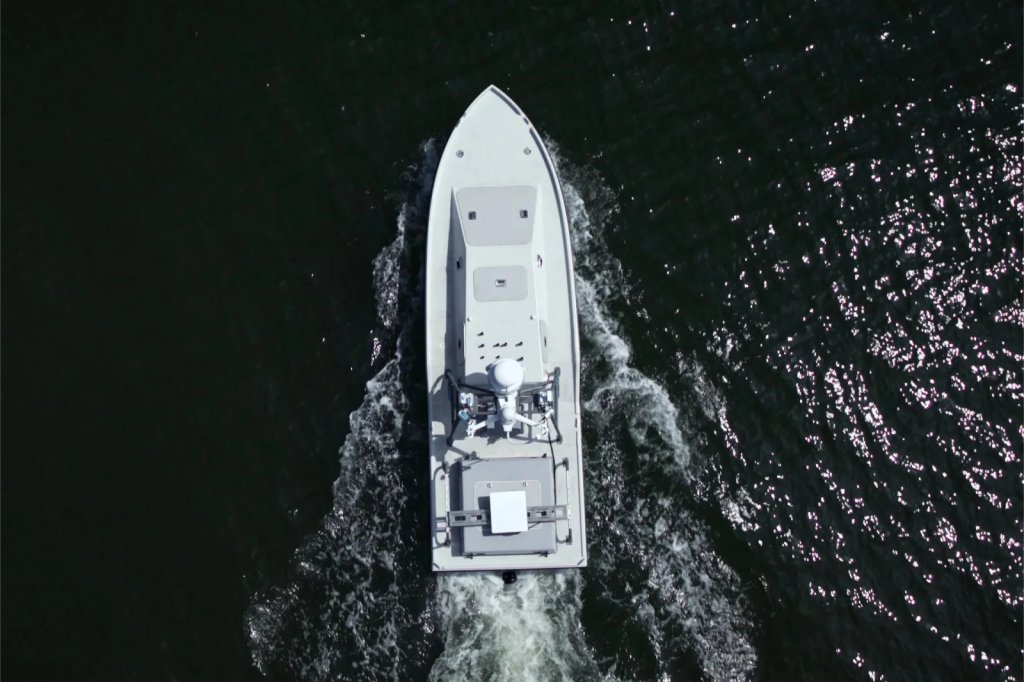
The Navy confirmed last December that it had signed an Other Transaction Authority (OTA) deal with Saronic, valued at $392 million, for the production of Corsair USVs. The Corsair, which the manufacturer also calls an autonomous surface vessel (ASV), is a 24-foot-long drone boat with a speedboat-like design that was first unveiled in 2024. The manufacturer says it has a maximum range of 1,000 nautical miles, a top speed of 35 knots, and a 1,000-pound payload capacity.
Prototype to production in under 12 months. The @Saronic OTA proves how we’ll build a hybrid manned–unmanned Fleet: open competition, real contracts, real hardware for Sailors and Marines not slides. This is now the standard. pic.twitter.com/cC9DG7jTiW
— Archive: Secretary of the Navy John C. Phelan (@SecNavPhelan) December 8, 2025
The Corsair “picked them [the Apache crew] up and transported them to another location on the water where they were then hoisted up to a helicopter for further transport,” Capt. Hawkins, the CENTCOM spokesperson, added.
CENTCOM had already confirmed to TWZ and others that an unspecified USV found and rescued the two aircrew from the downed Apache. The Wall Street Journal was first to report the specific type of drone boat employed.
The Army aviators spent approximately two hours in the water before being recovered safely, according to a previous CENTCOM statement. As mentioned, President Donald Trump has also now separately said that Iranian forces were responsible for bringing down the Apache, and that a U.S. response will be forthcoming.
Trump says that Iranian forces shot down the Army AH-64 Apache attack helicopter that went down over Hormuz yesterday.
— OSINTtechnical (@Osinttechnical) June 9, 2026
He says that the US "must, of necessity, respond to this attack" pic.twitter.com/divKHkhgZm
Since its establishment in 2021, the Navy’s Task Force 59 has been charged with helping expand the service’s operational use of uncrewed platforms, as well as artificial intelligence (AI) and machine learning-driven capabilities, across the Middle East. It has operated an array of different types of USVs, as well as uncrewed aerial systems, over the years.
How many Corsairs Task Force 59 has currently, as well as their exact configuration, is unclear. Pictures and videos that Saronic has released to date have shown Corsairs fitted out primarily for surveillance and reconnaissance missions, with a camera turret on top of a central mast-like frame. A commercial navigation radar, additional cameras to help provide extra situational awareness, and various other antennas have also been seen fitted to that frame. Saronic has talked about integrating other capabilities to enable additional mission sets, including launchers for loitering munitions, in the past.
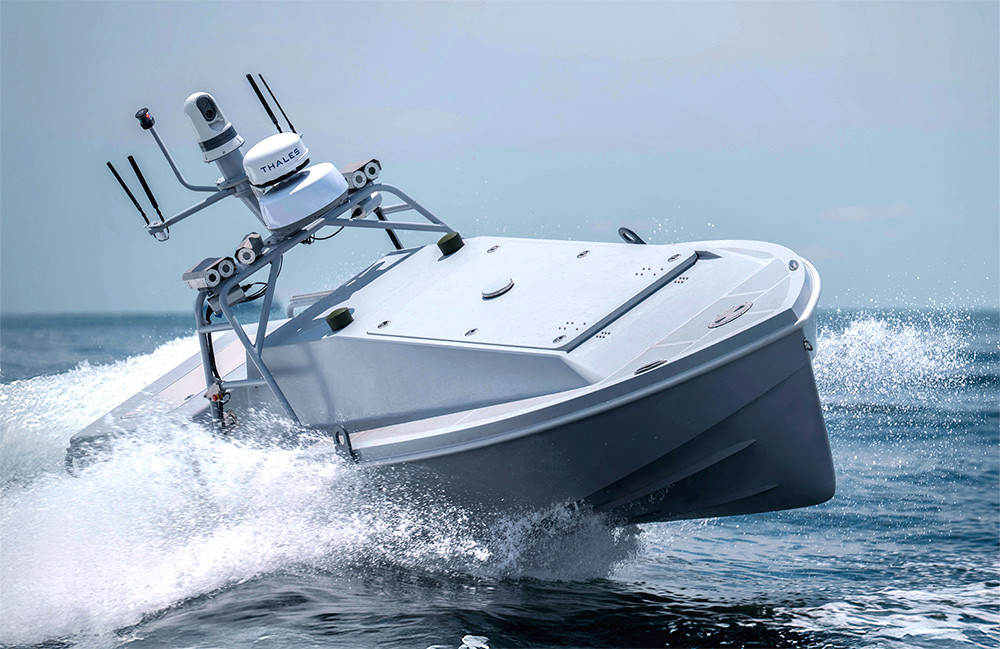
Saronic also says Corsair has a high degree of autonomy, with the type having logged more than 100,000 nautical miles of total travel to date, including multi-day missions. The SUV is designed to be employed independently or in networked swarms, according to the company. Human operators are in the loop during these operations via datalink.
Corsair, our 24ft Autonomous Surface Vessel (ASV), has officially crossed 100,000 nautical miles traveled — that’s nearly five times around the Earth or almost halfway to the Moon!
— Saronic (@Saronic) February 23, 2026
This milestone represents more than distance. It reflects relentless testing across diverse… pic.twitter.com/opXtX6jSfO
“Corsair can be given a mission, alone or as part of a collaborative swarm, and execute with minimal human interaction to deter or counter adversarial threats at a range of 1,000 nautical miles,” Saronic said in a press release back in 2024. “Employing redundant communications and passive perception capabilities, Corsair can autonomously identify, track, follow, and intercept targets in contested and communications denied environments.”
These are all capabilities well suited to the U.S. Navy’s immediate needs in the Middle East, especially in support of the current blockade of Iranian ports. Corsair would notably offer a lower-risk way to closely shadow vessels that might be attempting a run into or out of the area. Corsair’s ability to automatically spot and track objects of interest would have helped in finding and rescuing the downed Apache crew, too. It is worth noting here that automated target detection is also a key part of Corsair’s ability to safely navigate autonomously, day or night, especially in congested waterways, as seen in the video below.
In 2025, we logged more than 79,000 nautical miles and over 15,000 hours of total operations with Corsair, our 24-ft ASV. Much of this was done on our own dime, operating 6 days a week at our test sites on the West Coast, East Coast, Gulf Coast, and beyond, allowing us to… pic.twitter.com/PZETeJia17
— Saronic (@Saronic) January 9, 2026
Corsair’s overall performance in the Middle East could easily translate to further operational use of this USV by the Navy globally. The service has particularly significant demands for persistent maritime surveillance and reconnaissance capacity, as well as just general presence, across the broad expanses of the Pacific. One of the key benefits that USVs offer is the ability to provide additional distributed ‘mass’ at relatively low cost. This can help bolster the capabilities of crewed platforms they are networked together with or just ease the operational strain on those assets.
The Navy has now also clearly demonstrated how valuable USVs could be in future maritime search-and-rescue operations worldwide. This, in turn, underscores the benefits uncrewed platforms bring to these missions, especially in the face of growing anti-air and other threats.
As we already wrote today:
“As TWZ regularly highlights, search and rescue operations present inherent complexities and risks, especially when conducted in or near hostile territory. The F-15E rescue effort in Iran put a particular spotlight on the immense risks that combat search and rescue (CSAR) forces take, with helicopters and C-130 variants sent into areas where even a high-end fighter aircraft didn’t survive.”
“Open-water recoveries can present distinct additional challenges. There is always the possibility of the loss of additional assets and personnel in the process, no matter where a CSAR mission occurs.”
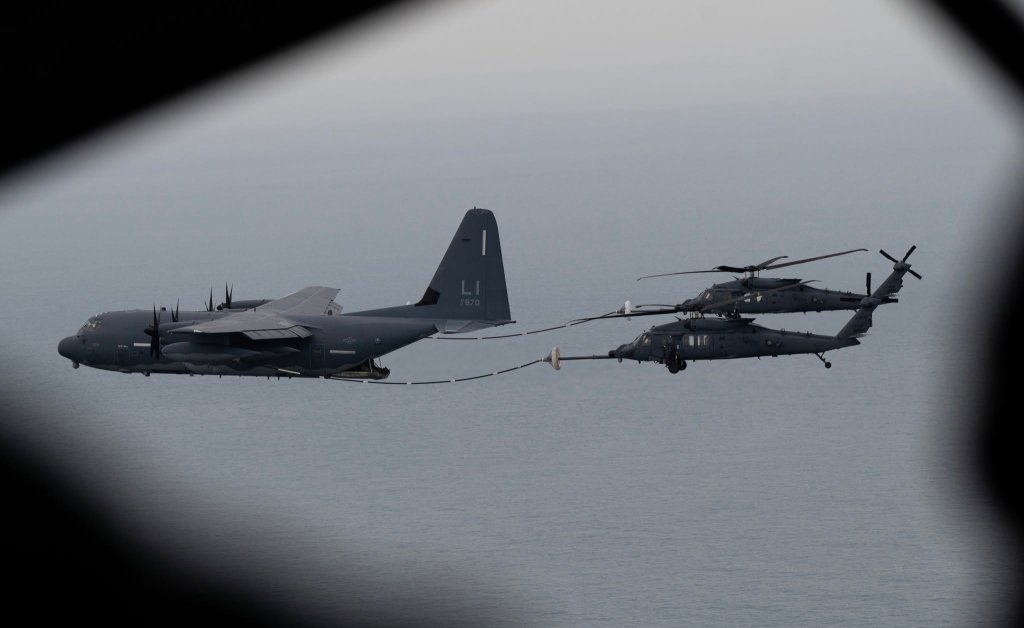
“The use of a Navy drone boat in the rescue overnight highlights a new dimension for maritime CSAR going forward. These uncrewed assets can be more readily pre-positioned in a distributed manner. For example, in the broad expanse of the Pacific, USVs could be forward-deployed at multiple points along certain flight paths for this exact purpose. USVs could offer other distinct advantages in certain scenarios where they might be able to get into areas where traditional assets cannot and without risking additional personnel. These realities extend well beyond the maritime domain, and we are only likely to see uncrewed platforms of all kinds increasingly taking part in rescue efforts, especially in denied areas. The U.S. military is coming to terms with just how vulnerable their CSAR assets are and the ranges that would be needed to access highly defended areas, especially during a peer fight. Using drones to execute personnel recovery is being viewed as one part of a larger set of solutions to this pressing problem.“
The additional detail we have now that the Corsair USV brought the downed aircraft to a territorial location, where they were then hoisted into a helicopter, is notable, too. This further shows how uncrewed platforms could be used as part of a distributed hub-and-spoke-style concept of operations for future rescue missions, which could increase flexibility and total area covered. USVs could be used to penetrate into especially high-threat areas, recover personnel, and then bring them to crewed assets at safer locations to the rear, as well.
“When it comes to search and rescue, you utilize the best asset that is the closest and the quickest, and that was the case in this instance,” CENTCOM’s Hawkins also told The Wall Street Journal today. “We’ve practiced this scenario in exercises, but not quite necessarily like this.”
Corsair’s now very public use in the Middle East could be a boon for Saronic when it comes to future sales opportunities with the U.S. military and foreign customers, as well. Corsair, by itself, has already been at least evaluated by the Pentagon’s Defense Innovation Unit (DIU) under its Production-Ready, Inexpensive, Maritime Expeditionary (PRIME) effort. It was also a finalist in the Army’s xTechPacific 2025 innovation challenge.
Saronic has multiple larger USV offerings beyond Corsair, and the company just recently launched the first example of the largest type it has in development now, the Marauder. This drone boat is 180 feet long and is designed to be able to travel up to 4,100 nautical miles while carrying 150 metric tons of containerized payloads, or even further with a lighter load.
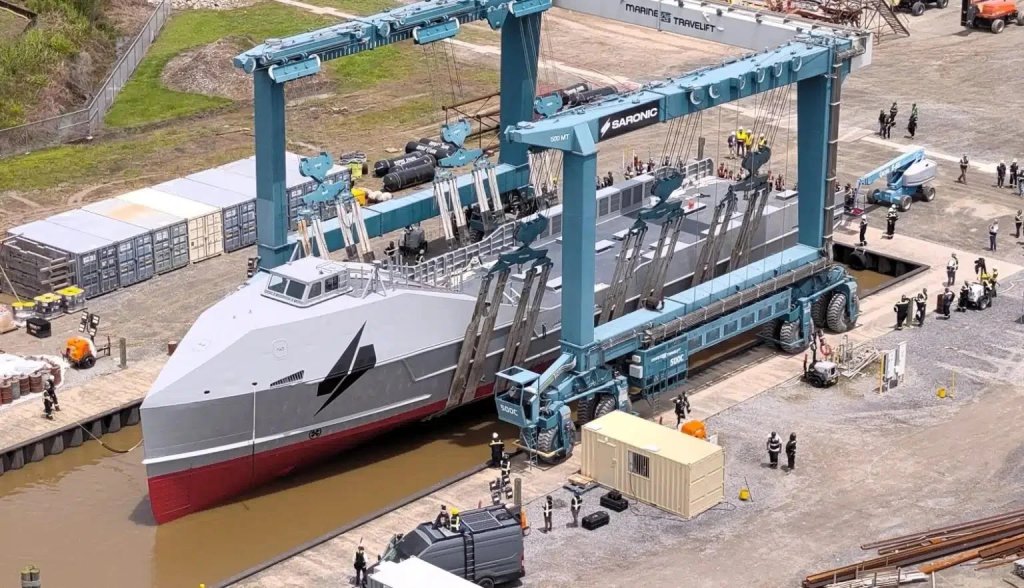
The Navy is already set to evaluate Marauder, as well as designs from six other companies, as part of the first round of prototyping under its latest Medium Unmanned Surface Vessel (MUSV) effort. This is part of a larger strategy the service rolled out in March to try to field more USVs and do so faster, as you can read more about here.
In the meantime, Saronic’s Corsair is already being employed operationally in the Middle East and demonstrating its ability to perform complex missions.
Contact the author: joe@twz.com
The post This Is The Corsair Drone Boat That Plucked The Downed Apache Crew Out Of The Gulf Of Oman appeared first on The War Zone.
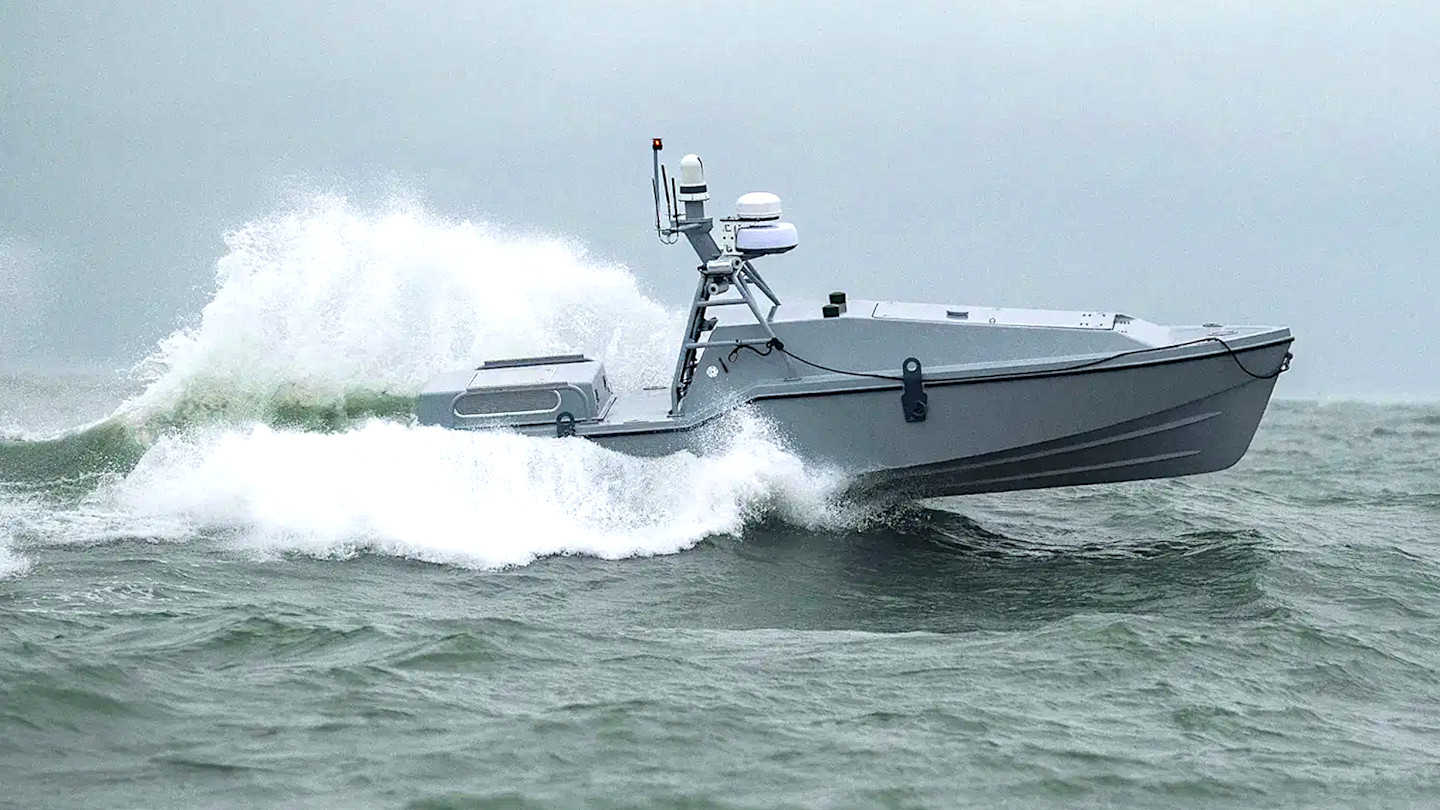
Over the past several weeks, news began emerging about Ukraine’s use of modified, AI-enhanced kamikaze drones to target Russian cargo trucks, fuel tankers, railroad cars and even vessels as far as 150 miles behind the front lines. Dubbed the mid-range strike campaign by Kyiv, this effort is having a devastating effect on Russian logistics, cutting off key highways to Crimea, helping to halt Moscow’s gains and pave the way for Ukrainian advances.
To learn more about this campaign, we reached out to one of the soldiers leading this effort from the unit that created it. In an exclusive interview, an Unmanned Systems Department Officer for the First Corps Azov of the National Guard of Ukraine offered us unique insights into how the program began, how it’s going, where it is headed and how AI is helping to identify and hit targets deep behind the lines. It’s a capability we described in great detail — about how it was rapidly gestating and would arrive on the battlefield around now. The officer spoke on condition of anonymity to discuss operational details.
Some of the questions and answers have been edited for clarity.
Azov patrols the border areas around Mariupol.
— First Corps Azov of the National Guard of Ukraine (@azov_media) May 25, 2026
Ukrainian territory must be free of Russian forces. The surest path to achieving this is pushing the "sanitization zone" for enemy logistics closer to Russia itself and occupied Crimea.
Pilots of the First Corps Azov of the… pic.twitter.com/qJLfZljIks
Q: Walk me through the genesis of the mid-range strike campaign.
A: I will first of all start with answering the question of why. So the reason why we are currently conducting this campaign is to hunt enemy logistics capabilities, and currently we have a lot of quite cheap assets that can strike enemy targets at quite a deep range. So the overall meaning, the overall sense of this campaign is to strike enemy concentrations of cargo in the places where this concentration is the highest and the protection of those enemy logistical assets is at the lowest level.
So, if we’re talking about enemy logistics very close to the front line, to the line of contact, we are mostly talking about a person with a backpack. Then, if we are moving deeper into the enemy controlled area, further from the front line, then we’re talking about cars. Then even deeper we’re talking about trucks. Even deeper we’re talking about long haulers with trailers, so a higher concentration of cargo. Even deeper into the enemy controlled area, we’re talking about the railroads, the trains that are carrying supplies. So the deeper we go from the line of contact, the higher is the concentration of enemy cargo.
Russian rail logistics are now also the target of Midstrike drones, with lines to Crimea being particularly affected. pic.twitter.com/K1BFd0QVov
— Sergio(@SergioCentaurus) June 5, 2026
The other part of answering this question is basically about how the enemy protects their logistical assets. So the deeper we go from the line of contact, not only is the distance larger, but also the areas that the enemy needs to protect. So just simple mathematical calculations show us that the distance of 50 kilometers deep from the line of contact is usually the most concentrated area the enemy has to defend against our strike assets. But if we go to the depths of 300 kilometers, then the areas that the enemy should protect are much larger, and it’s basically impossible to saturate that area with all the necessary protection assets that the enemy needs to strike down our drones.
The point I would like to make is that we conduct those strike operations at deeper ranges with basically the same assets that we use for the tactical depths, for example, at the depths of 50 kilometers. That means we do not increase the cost of our assets. We just introduced some technical modifications, and we can use the same assets to strike in the deep area.
Q: What drones are you using to carry out these attacks and how are you increasing the ranges?
A: Basically, we’re using fixed-wing kamikaze drones with some modifications in terms of communication systems. We’ve installed Starlink systems on those drones, and we have also introduced a number of modifications in terms of the engine of the drones – in terms of the overall propelling unit. And this allowed us to increase the range of the assets that we used previously for the range up to 50 kilometers, with some modifications for longer distances.
Q: What kinds of drones are you using?
A: Just the simple fixed-wing chemical drones, such as Hornet systems, such as the Darts systems, and also some other assets that, for now, we prefer not to mention.
Q: Can you provide additional details about the modifications you have made to these drones and what is their maximum range?
A: Well, I would say that these are quite technical things, and I wouldn’t want to disclose those, because I would want to avoid the situation where the enemy is going to do the same modifications.
Q: Are you reaching as far as 100 kilometers?
A: From what we can say now, we can cover distances of up to 250 kilometers, but as you might understand, with time we will cover longer and longer distances.
Q: Can you describe how these attacks work? Do you operate these as first-person view drones through a video feed? Do they have a terminal seeker?
A: The process is really simple. So, for example, we select a section of the road, or the road as a whole and we distribute that road or the sections among our units. And I would like to mention that this is an all Ukrainian operation. It’s not a task for just one single unit, and basically each unit has its own area of responsibility and its own section of the road.
And then we just send drones there in hunting mode, and I cannot disclose how this works from the standpoint of intelligence, but the overall principle is that the intelligence just gives us the priorities for the targets. For example, they say that you need to target this type of vehicle with these types of cargo.
And in terms of the targeting, I remember that you were also asking the question about how the targets are selected. For this we use both the AI tools and also the operator himself, so we’re using both methods for that.
A Ukrainian “Hornet” mid-range strike UAV patrols the highway from Mariupol to Melitopol on the land bridge to Crimea.
— Roy
It is looking for trucks and especially fuel tankers. https://t.co/Mtcxq4L6rj pic.twitter.com/NMkVdbf8rs(@GrandpaRoy2) June 6, 2026
Q: I want to get back to AI in a bit, but what area of operations do you cover?
A: Our area of interest and area of responsibility is related to all the roads that the enemy is using to bring in supplies to the area of operations of our corps, which is roughly in the area of the town of Dobropillia in eastern Ukraine, and for example, this may be the route from Rostov that goes to Mariupol and then goes to Donetsk, and this could be any other route that the enemy might use to bring military cargo to the area of operations of our corps.

Q: What were some of the more successful mid-range drone strike missions you carried out?
A: That’s basically an easy principle. When I said that we are hunting the enemy’s logistics, I mean that this is a daily process. This is a continuous process, and this is not about one standalone mission, when we fly somewhere, when we hit a target and the mission is over.
Last night, Ukraine expanded its mid-range strike campaign to the Sea of Azov, hitting at least 5 vessels carrying Russian cargo.
— OSINTtechnical (@Osinttechnical) June 5, 2026
At least two of the cargo vessels were hit at the occupied ports of Berdyansk and Mariupol, as Ukrainian forces seek to cut off Russian logistics. pic.twitter.com/NoXeAO7Ca6
Q: How are these mid-range strikes on Russian logistics affecting their ability to fight?
A: This is causing shortages of fuel for the enemy. This was already commented on by our media, and also the media resources of the enemy, and now we understand that this is true, not only for Crimea, where there is a severe shortage of fuel now, but also this is true about the other Russian-controlled territories. And basically, when we are striking enemy logistical supplies of fuel, this affects the overall situation, because what is fuel? Fuel is basically the blood of war, which is necessary to fuel the generators that the enemy is using for the FPV operations. The fuel is used for the vehicles that basically bring in those FPVs to the combat zone.
I’d like to add an additional explanation of how this works. If we destroy a car that brings fuel to the line of contact, then we’re talking about destroying like two canisters, so that’s approximately 40 liters of fuel. But if we strike a fuel tank and a tank vehicle, which is bringing fuel to the overall area, so then we can talk about several tons of materials.
Gas stations across Russian-occupied Crimea are facing worsening fuel shortages, with long queues, rationing, and voucher-based distribution reported by residents. Some locals say fuel has become so scarce that it is treated as a luxury, while Moscow insists there is no cause for… pic.twitter.com/0LSYWEqiDH
— Radio Free Europe/Radio Liberty (@RFERL) June 5, 2026
Q: Is this setting the stage for a Ukrainian advance in the east or Zaporizhia?
A: I would say that blocking the logistical supplies to the Zaporizhia Oblast and also to Crimea is a byproduct of our attacks aimed at cutting enemy logistics to our area of operations. Because we’re targeting the roads that go through Mariupol, also to Crimea, to supply the Zaporizhia region, and as well our area of operations. But as for the most strategic aspect of this question of whether this might influence some counter-offensive capabilities of the Ukrainian Defense Forces, I think that is not the question within my scope of responsibility, because I’m an officer responsible for the UAS component of the corps, and I think that this is more of a question that should be directed to the general staff of the Armed Forces of Ukraine.
Ukraine
— Clément Molin (@clement_molin) June 4, 2026logistics in occupied territories
Since early may, more than 270 trucks have been hit, together with multiple fuel depots and trains.THREAD
pic.twitter.com/YnisZf2kJ6
Q: Tell me how you came to use the U.S.-made Hornet drones.
A: I would say that this is also a question that should be directed at one level up from my level. We get those drones, we deploy those drones, but the questions of how we get them and what are the specifics of their supply, this is not a question that I can answer.
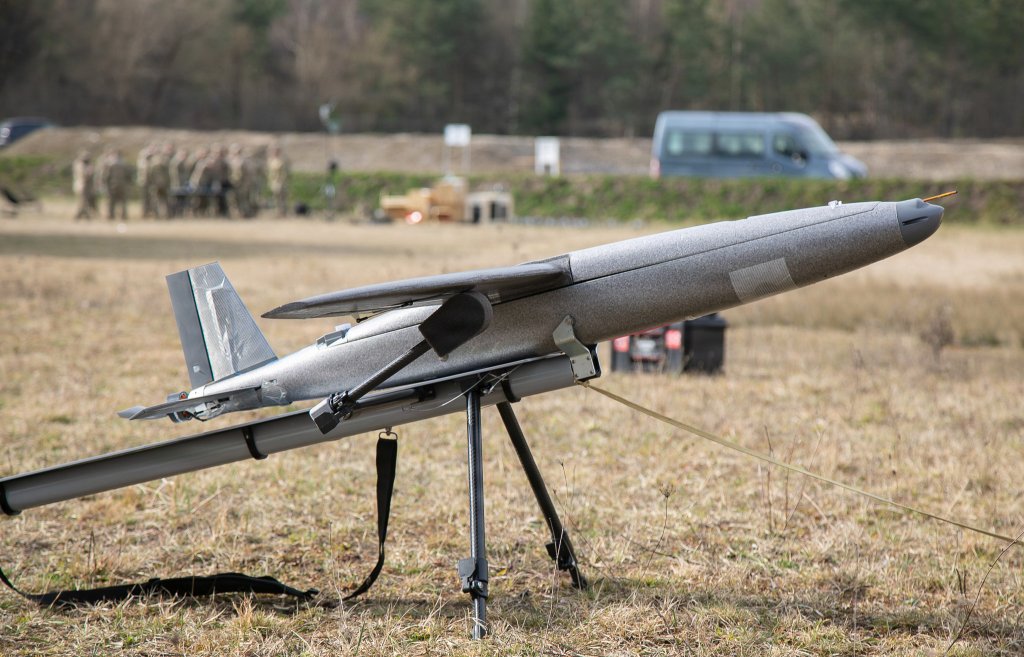
Q: When did you start getting them?
A: We have been receiving these drones for almost a year.
Q: When you got the Hornet drones, were you given any instructions on what missions to accomplish with them or what targets to pursue?
A: I think that the principle thing to explain here is that the Hornet drone is a tactical level UAV system. It can be used at the maximum range of 50 kilometers – the maximum range of the basic configuration of this drone. The drones we are currently using are the modification of the Hornet drone, but the basic configuration of this drone is only a tactical-level UAV. This is why our mid-strike operations, which have started only recently, are using modified drones.
I think that it is important to add that these modifications are conducted by the units themselves.
The First Corps Azov of the National Guard of Ukraine maintains control over enemy logistics near Donetsk.
— First Corps Azov of the National Guard of Ukraine (@azov_media) April 16, 2026
Strike UAV pilots are targeting Russian logistics deep in the operational rear. Drone units maintain constant surveillance and fire control over all supply routes around… pic.twitter.com/i4TYOWJBg4
Q: When did you begin to make the modifications and was the mid-range strike concept something that Azov developed?
A: Yeah, I would say that basically that was Azov development. So the first tests of these new modifications started in early winter. After approximately a month of testing, we started combat deployment of those drones approximately in January or February of this year. And we use those new modifications to ensure our middle strike operations. In terms of the tactics, I would also like to say that Azov developed new tactics of the deployment of middle strike drones, because the previous tactics they were mostly concentrated on the use of very expensive assets, which are available in limited numbers, so the targeting cycle was different, which is why we needed to develop new tactics and change this targeting cycle.
Q: What systems were you using before that were so expensive?
A: Well I’m not really talking about some specific assets here. I’m mostly talking about the overall tactics and the targeting cycle. So, the tactics of middle strikes were developed for expensive assets that the Corps didn’t have at the moment. So, this is basically why we started developing our own assets that could ensure that we have those middle strike capabilities, and we can also engage targets at the operational level.
Magyar claims a reduction from 3,800 cargo journeys to 1,100 cargo journey (71.05%) along the E-58 Mariupol -Berdiansk – Melitopol – Simferopol highway in the past two weeks
— Ukraine Control Map (@UAControlMap) June 9, 2026
He makes it clear that doesn't mean they've destroyed 2,700 trucks, nor that they have total fire control… https://t.co/O3K2Iz53Xg pic.twitter.com/VTPn3ghZcD
Q: When you added Starlink, did you have to seek permission from SpaceX to use their system for these weapons?
A: The first thing that I would like to say is that we do not use only Starlink. It is just one of the possible communication systems and communication solutions that we’re using. And the second thing that I would like to add is that all the international issues, international cooperation questions, are the issues that should be dealt with at the level of our ministries and at the level of our central government, so once again, this is not a question that I can answer.
Una parte vital de la efectividad de los drones Hornet con los que Ucrania está atacando las rutas logísticas rusas entre 80 y 120km del frente es la recopilacion de datos para que el algoritmo aprenda. Por eso algunos modelos llevan grandes terminales Starlink. https://t.co/yGePjoPo2K pic.twitter.com/iWu2bLrwq5
— Martin Tuitero (@TuiteroMartin) June 2, 2026
Q: Can you tell me what other communications systems you use?
A: No, this information is still secret, because none of those assets have been taken by the enemy, so the enemy doesn’t know yet that we’re using those. But I think that in some time we will be able to go public with those assets and tell more about what we use, apart from Starlink.
Q: Are you using Starlink and the other systems on the Darts drones as well, or just Hornet?
A: Yes, we are using Darts for those middle strike attacks. So, basically, the overall tactics of those mid-strike attacks with small UAV systems, it can use any fixed wing kamikaze drones with modifications which is why we are using Hornets, we are using Darts and also the other types of drones.
While the Ukrainian “Hornet” strike UAV is receiving a lot of attention recently, the “Darts” UAV remains a workhorse for mid-range strike.
— Roy
It, too, has AI terminal targeting and control capabilities to defeat Russian jamming. https://t.co/cNcQytap1D pic.twitter.com/C8nYJ20Uer
Q: Can you talk about the other types of drones?
A: Unfortunately, no. The enemy has not yet got hold of those assets, and if one of them will be shot down, or if one of them will be captured by the enemy, then I think that we will be able to go public with those assets.
Q: Can you talk more about how you are using AI for the Hornets and Darts?
A: The AI is used for the so-called last-mile system. I’m talking about the terminal guidance here, and also the AI can also be used to identify the targets, especially when the drone is flying in the autonomous mode. It can recognize the type of the target and it can automatically engage the target. So all of these processes can happen without the involvement of the operator. This allows us to launch several drones at the same time, and this also allows us to ensure a higher level of coordination for those attacks.
I think that one of the examples of these attacks was captured by one of our videos that you might have seen when one fixed-wing drone is observing the target and the other drone is actually hitting it.
Q: Is there a man in the loop or a man on the loop during the terminal phase of the attack or is it fully autonomous?
A: Since we are trying to control the whole process, usually it is the person who takes the final decision and actually makes this decision to strike the target, because we do not want to over rely on the artificial intelligence. If necessary, this whole process can also happen without human involvement, but as I have already mentioned, our policy is that the decision should be made exclusively by the operator.
Q: So this is man in the loop?
A: Yes, so technically men can be out of this loop, but in our case we involve humans in this system, so that’s man in the loop.
Visual look of Hornet UI. Not much new, can mark soldiers individually. Seems aiming is done by either by lock a target (red) or manually aiming by continusly clicking (green) https://t.co/d2LGtV2aON
— Tommy Lund (@TommyLundn) June 6, 2026
Q: Have the Russians developed countermeasures for this effort?
A: Since the overall intent was to go to the massive deployment of those drones against the enemy logistics at once, as for now, the enemy has not yet had enough time to adapt to these tactics of ours. And now they’re desperately trying to find some countermeasures to find some ways to react to this.

They are putting on anti-drone nets deep into their controlled territory. They are placing people armed with shotguns every 50 meters of their critical roads, but basically, as for now, there is no Russian tactic that would be effective in protecting their logistics. I do not say that they will not come up with this tactic in a month or so, but as for now, they do not have an effective countermeasure for that.
The only thing that I would like to add is that we approximately know the direction in which the enemy is moving to ensure counter measures to this tactic of ours, and we already have countermeasures for their countermeasures.
The current Ukrainian superiority in mid-range drone warfare is a brilliant advantage that comes with an expiration date.
— Joni Askola (@joni_askola) June 8, 2026
Failing to prepare for the day Russia matches this capability guarantees a catastrophic collapse of front line logistics for Ukraine.
Ukraine is rightfully… pic.twitter.com/RI1NWLNYUc
Q: Is the AI enhancement helping to mitigate Russian jamming and electronic warfare measures?
A: Well, I would like to say that EW is not the only way to counter UAVs. So, in addition to EW assets, there are other counter drone methods. Nets can be used. Air observation posts can be used. The drones can be shot down with enemy interceptor drones, and also there are hundreds and hundreds of people armed with shotguns who can also try to shoot the drones down. So the EW systems are just a small part of this overall system of drone countermeasures, and it is a general misconception that all anti-drone efforts are from the EW system. I would say that EW accounts for approximately 10% of overall counter drone efforts.
The main idea of the use of the AI systems is not only to help operators to counter enemy drone countermeasures, but the AI also helps the operator with navigation, with orientation, with the identification of the targets. So this is a complex system that helps the operator with many tasks.
Here: strike by the Ukrainian-American "Hornet" drone on occupier positions. Two Russians confirmed as "gruz 200" (KIA).
— Takeshi Kovacs (@PrzemekShura) May 12, 2026
Interestingly, the Russians call this drone "Martian-2" because its capabilities seem "out of this world" to them.
High Autonomy: Operates with AI (autonomous… pic.twitter.com/Ao0MAiCqUp
Q: What are the lessons that the U.S. can learn from your mid-range drone strike campaign, given the importance of logistics everywhere.
A: Well, I would say that the main lesson that the U.S. can learn from our experience is that drones in their basic configuration, right out of the box, is not something that can work, and this is not something that can bring you the best results at once. This is why every unit should have their own drone laboratory that can reconfigure those drones and modify them, and I’m not only talking about reconfiguring tactical level drones to turn them into middle strike capacities. I’m talking about all warfare in general.
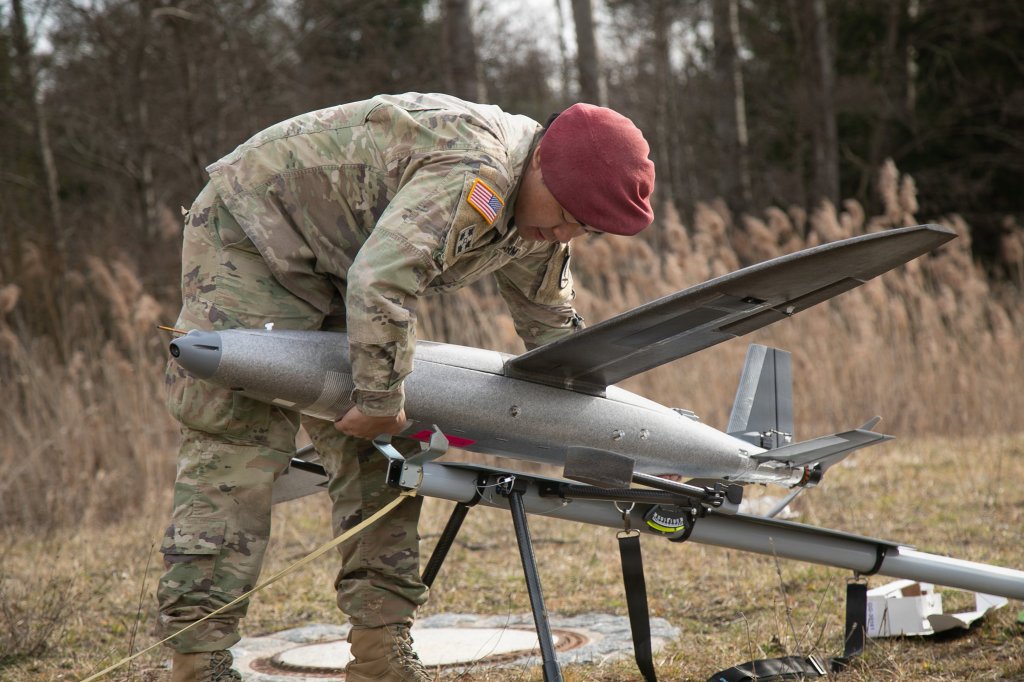
Assets become obsolete very quickly and in three months everything can change, starting from the navigation systems and ending with the control systems. For example, today the GPS signal works, in a month it doesn’t work anymore. Today we use this set of frequency ranges, and in a month all those frequency ranges are jammed by the enemy. So I’m saying this for you to understand that for example, if the U.S. government purchases Hornet drones for their units, then the units are going to have good tactical level drones. But if you want to squeeze all of the possible benefits from those drones, then you will need to modify the structure of your units and include the departments, include the sections that will deal with the modification and reconfiguration of those drones to ensure the most efficient results that can be achieved.
From what I see now, the U.S. is mostly just giving the unit some assets, but they are not thinking about re-configuring or repurposing those drones.
Q: Is there anything I haven’t asked you that you would like to address?
A: I think that we have covered all the topics. The only thing that I would like to add is that I would like your audience to see that Ukraine introduces new innovations that can basically change the battlefield, and this is why trying to forecast the outcome of the war based on the number of tanks or aircraft or bombs that would be incorrect, so the victory will belong to the side capable of adapting faster and not to the side that has more resources.
Contact the author: howard@twz.com
The post Inside Ukraine’s AI-Enabled Drone Campaign Targeting Russian Logistics Deep Behind The Lines appeared first on The War Zone.
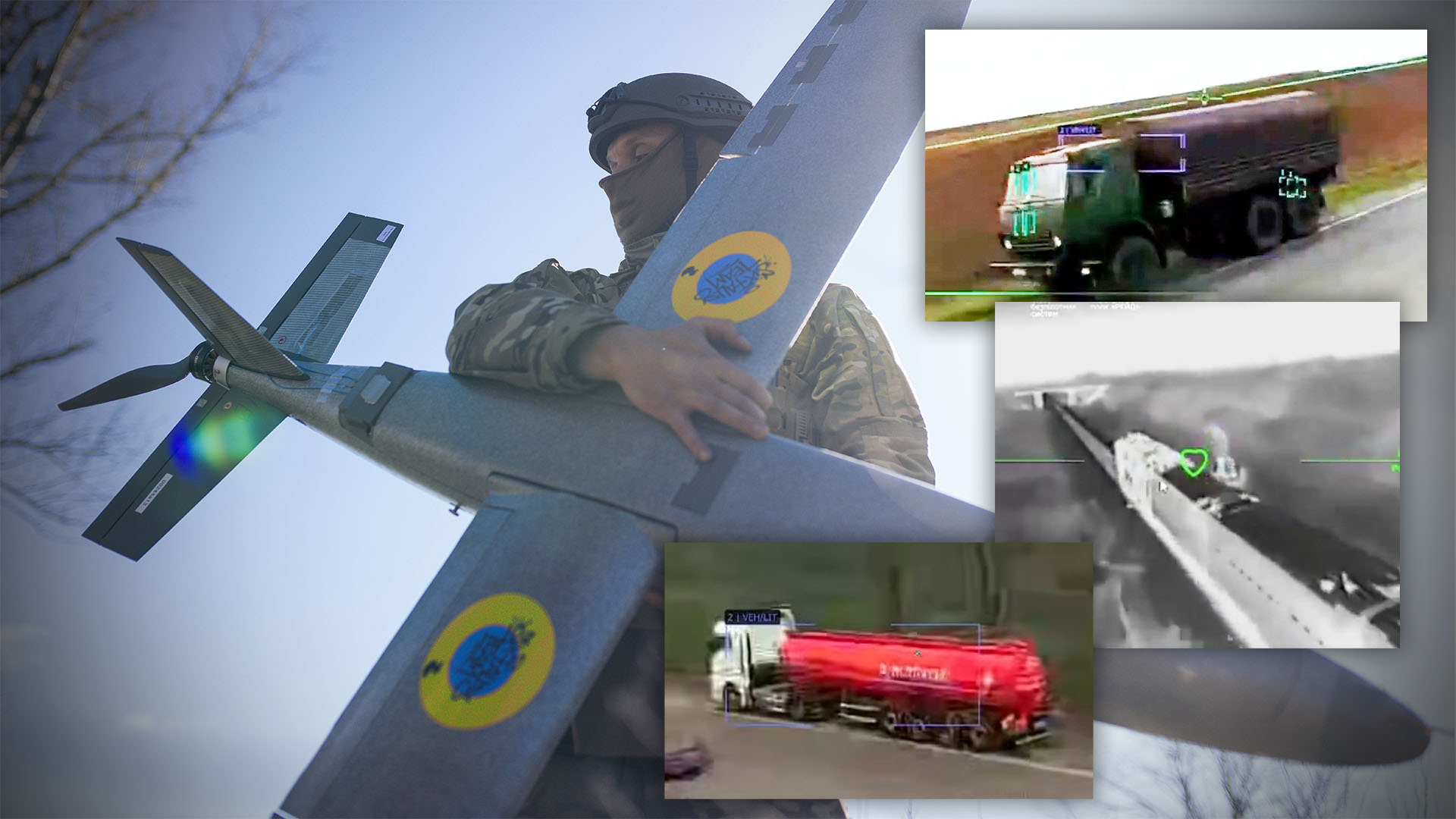


Airbus has pulled the wraps off the U760 Ravenstorm, a combat drone designed to operate alongside fighter aircraft in air-to-air combat, strike missions, and electronic warfare roles. The new uncrewed aircraft is part of a revamped drone portfolio from the company, which also includes a Europeanized version of the stealthy XQ-58A Valkyrie, a medium-altitude long-endurance (MALE) platform, various tactical solutions, counter-drone systems, as well as the U145 uncrewed helicopter that you can read more about here.
The timing of the announcement — and the unveiling of the Ravenstorm, in particular — is especially notable given the recent collapse of the Franco-German-led plan to build a crewed New Generation Fighter (NGF) aircraft, as part of the broader, pan-European Future Combat Air System (FCAS) initiative. You can read more about this development here.
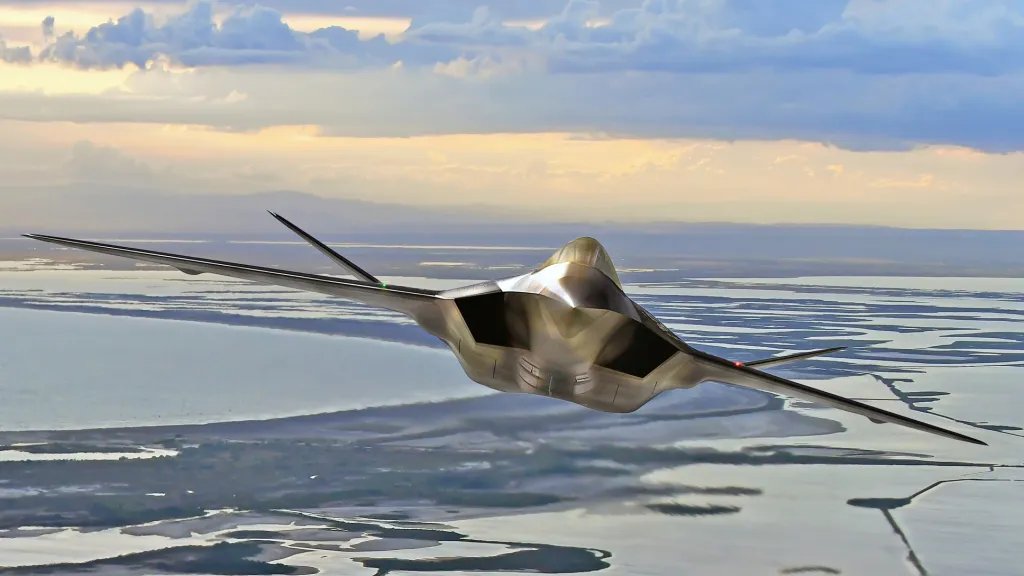
On the eve of the ILA Berlin airshow, starting in the German capital tomorrow, Airbus showcased what it describes as “Europe’s most versatile drone portfolio.” The various products have been newly assigned a “U” prefix for uncrewed systems. This reflects the company’s policy of prefixing with an “A” for crewed fixed-wing aircraft, and an “H” for crewed helicopters.
“Whatever uncrewed or ‘drone’ capability our customers need to strengthen sovereign air power, we deliver,” said Mike Schoellhorn, CEO of Airbus Defence and Space, in a company press release. “Our portfolio ranges from rapid-response drone interceptors and various tactical drones, autonomous cargo helicopters to uncrewed fighter aircraft UCCAs (uncrewed collaborative combat aircraft) operating co-operatively with crewed fighter jets.”

“On the other side of the spectrum we have the Eurodrone, our very high payload and very long endurance ISTAR (intelligence, surveillance, target acquisition, and reconnaissance) platform,” Schoellhorn continued. “Airbus provides the entire envelope of uncrewed capabilities required for modern multi-domain warfare. All our systems come with open architectures and a European mission system compatible with the wider European and international defence ecosystem.”
The most significant new arrival in the “U”-product line is the Ravenstorm combat drone, or U760.
A 1:1 model of the Ravenstorm will be on display at ILA. The drone is approximately 43 feet long and has a wingspan of 33 feet. In terms of rough size and general appearance, the drone strongly recalls General Atomics’ YFQ-42A ‘fighter drone’ prototype, now flying under the first phase of the U.S. Air Force’s Collaborative Combat Aircraft (CCA) program. Like the U.S. drone, the Ravenstorm features a swept, mid-wing configuration optimized for stealth and maneuverability. It also has the same twin-tail configuration. Like the YFQ-42, the Ravenstorm has a dorsal inlet, although this is closer to that which appeared on the EADS Barracuda demonstrator that flew for the first time 20 years ago. The drone is clearly optimized with low-observable (stealthy) characteristics, although the inlet is notably large and lacks the trapezoidal shape found on the YFQ-42.
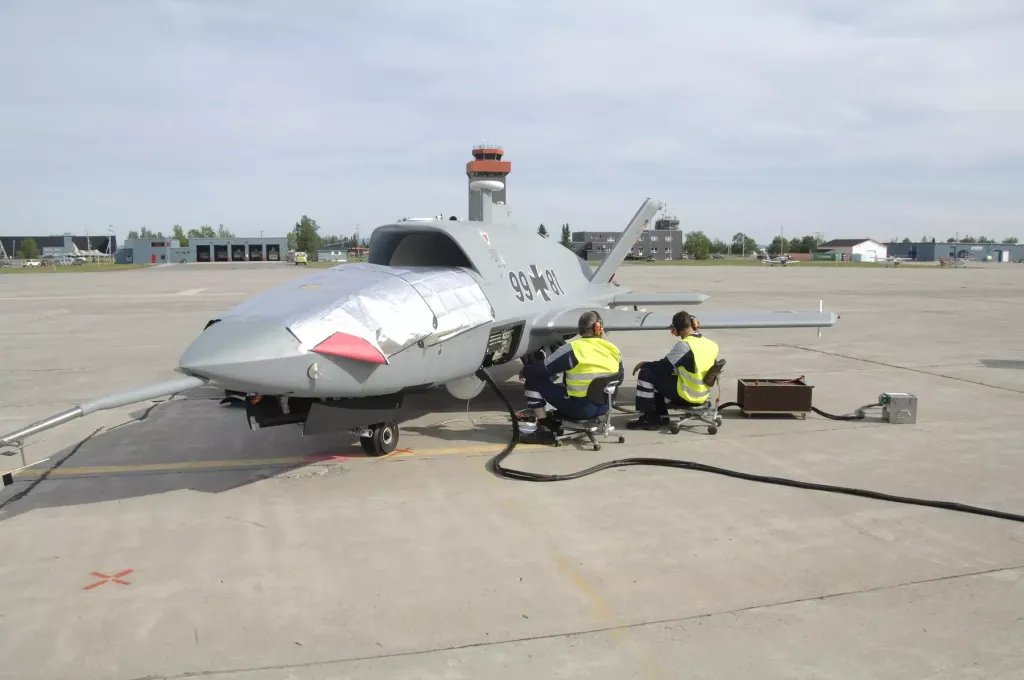
At the same time, it should be noted that, when it comes to combat drones in general, many of them take on a relatively familiar form driven by similar requirements.
Airbus describes the Ravenstorm as “the next evolution” in its “roadmap towards a scalable family of uncrewed collaborative combat aircraft.” It is not clear how many related designs might be planned, and in what kinds of sizes they may come, but the company has highlighted the kinds of missions they will be expected to fly. These include air-to-surface strikes using precision-guided munitions, air-to-air defense with long and medium-range air-to-air missiles, and electronic warfare for suppressing enemy air defenses. Further offensive counter-air missions will involve UCCAs providing non-kinetic jamming.
Ravenstorm will be available in the early 2030s, according to the manufacturer, which is, interestingly, offering the new design alongside a version of the XQ-58. In Airbus parlance, the Valkyrie is designated U740 and combines the Kratos-designed airframe with Airbus’ proprietary Multiplatform Autonomous Reconfigurable and Secure (MARS) Mission System.
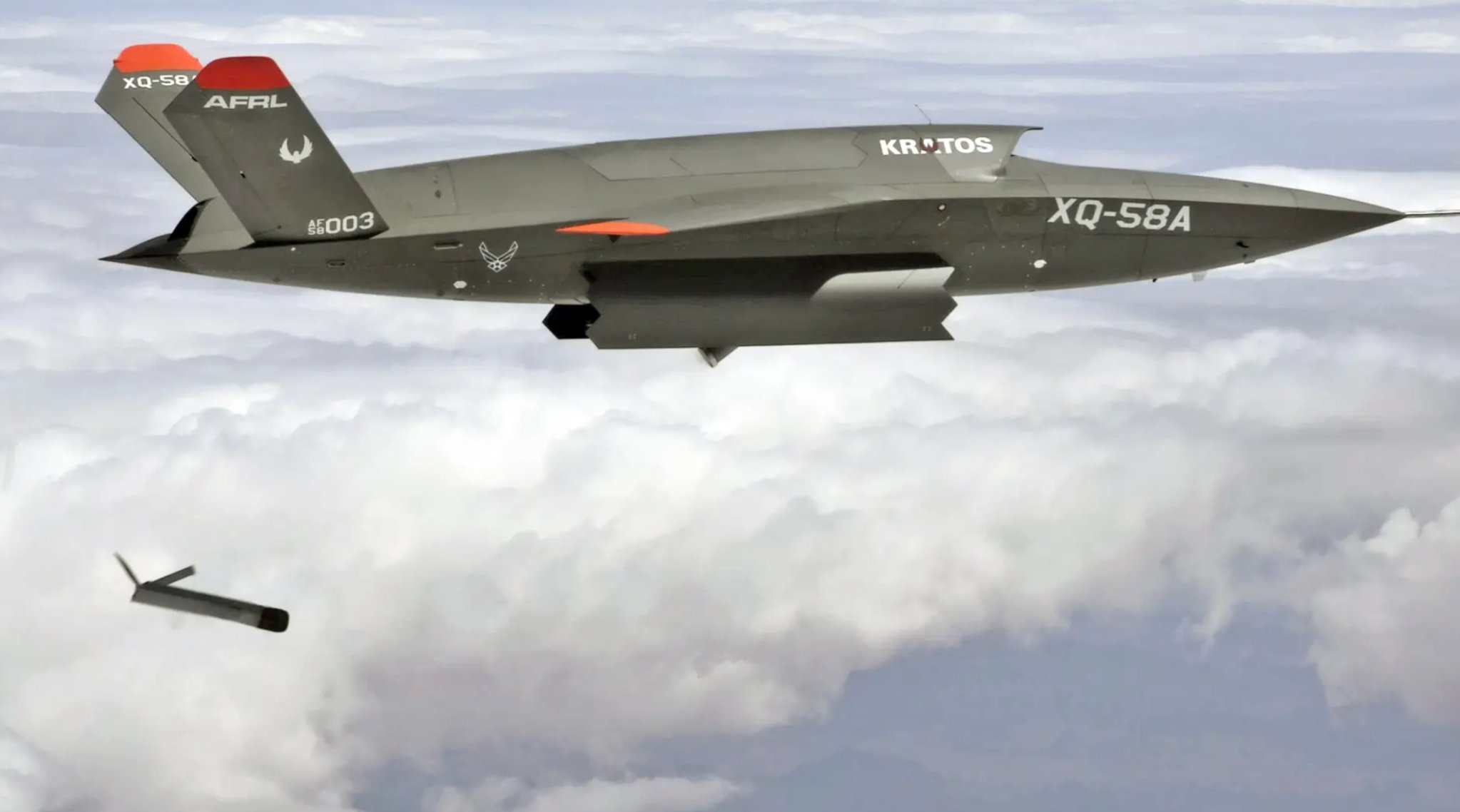
For the U740, Airbus provides a notably precise planned date of service entry: 2029, with the German Air Force. This would appear to reflect a specific Luftwaffe requirement for a drone in this class, although it remains unclear if the Valkyrie has been formally selected by the German military. Airbus furthermore expects the U740 to be used in operational experimentation teamed with the Luftwaffe’s Eurofighter combat jet, including demonstrating initial air-to-ground capabilities.
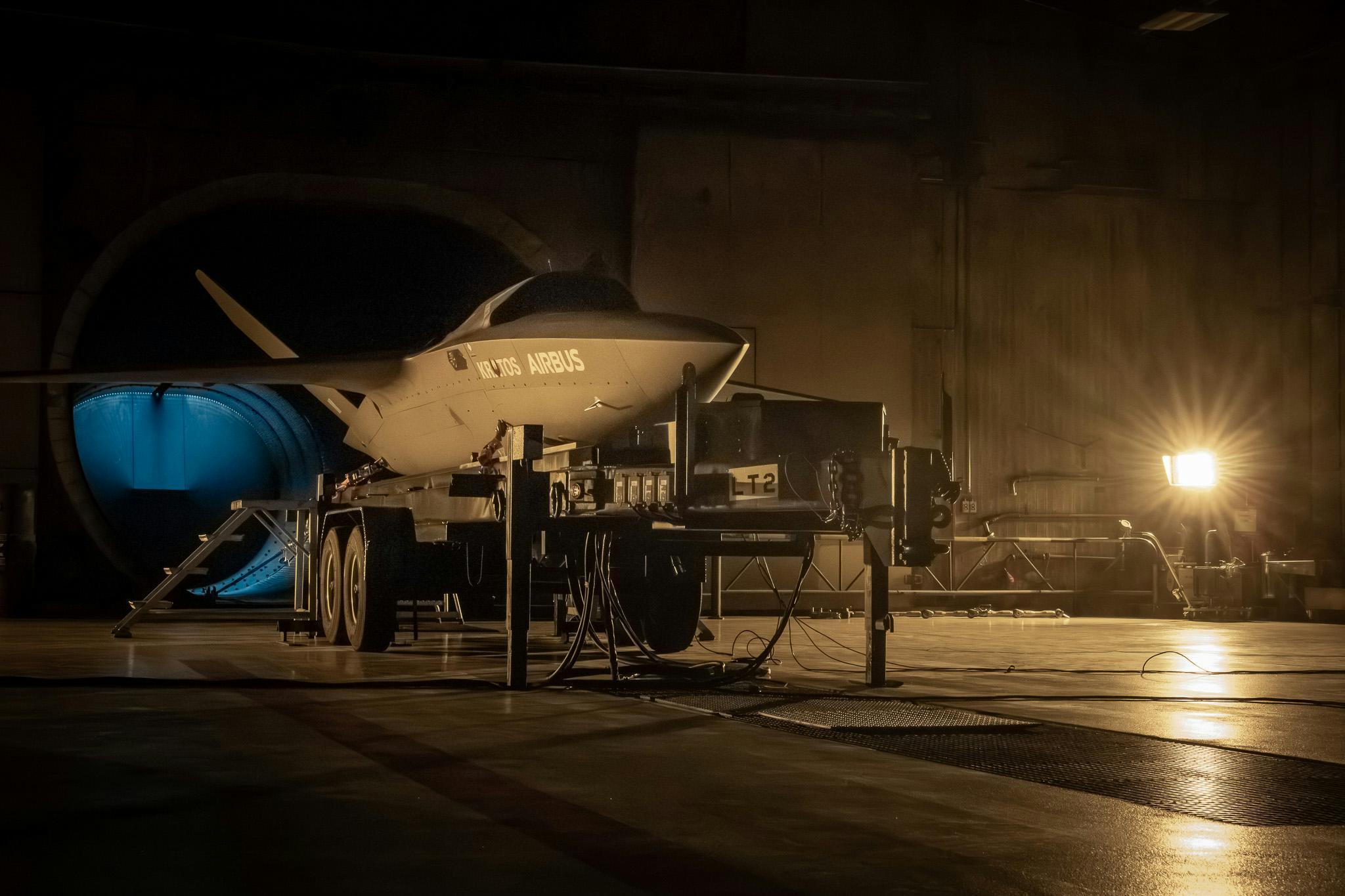
Returning to MARS, this is Airbus’ sovereign mission system, consisting of an AI-supported software core to enable platform autonomy. The system is scalable so that it can be used across the entire Airbus drone portfolio. It is also planned for use on the U950 Eurodrone — the new designation for the Eurodrone MALE platform. This twin-turboprop drone is now in development for missions including ISTAR, early warning, and anti-submarine warfare, and is planned to make its first flight in 2029.

As for Airbus’s two-track approach to UCCAs — U740 Valkyrie and U760 Ravenstorm — the thinking behind the two offerings, also of broadly similar sizes, likely reflects different cost points. The Valkyrie was designed from the ground up as a lower-cost aircraft and is runway-independent in its original form (since then, Kratos has announced a version with wheeled landing gear and there also exists the ability to launch the Valkyrie from a wheeled launch trolley, if required). Meanwhile, the Ravenstorm appears to be a more capable and costly platform, making it a closer match to Increment 1, the first phase of the U.S. Air Force’s CCA program.
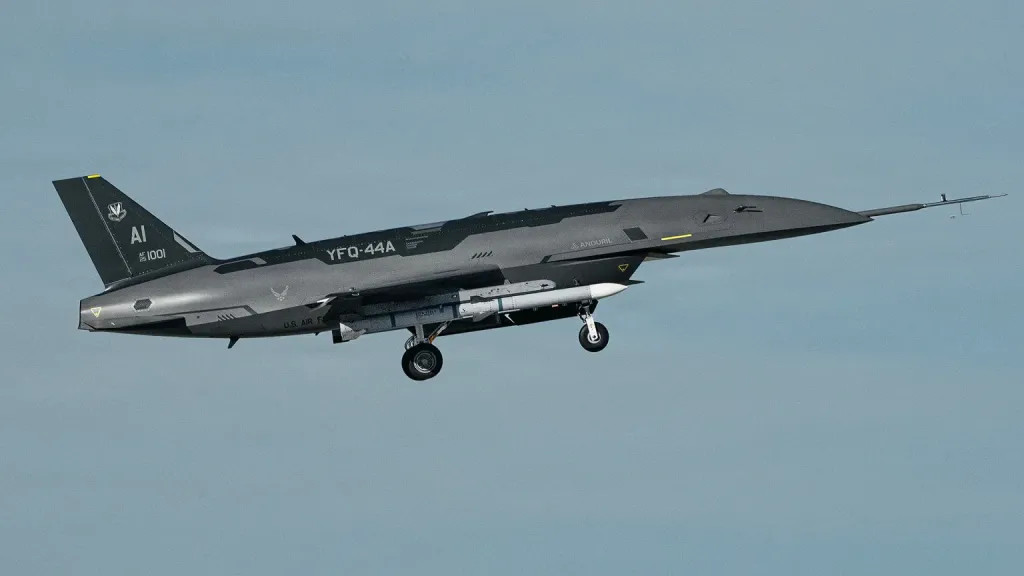
It could be that the company has already identified specific national or service requirements (such as the Valkyrie for the Luftwaffe) that it aims to capitalize on. There could also be a plan to use the Valkyrie more for operational experimentation of the UCCA concept before focusing more on the fully sovereign Ravenstorm, including potentially scaling it up or incorporating other significant airframe changes — like higher performance, larger payload, improved low-observable characteristics.
Also unclear is the status of Airbus’s stealthy Wingman, a CCA-like concept that was unveiled at the last ILA Berlin airshow in 2024. This was also presented in the form of a 1:1 model, with a length of 51 feet and a wingspan of 39 feet. The drone was planned to be powered by the same Eurojet EJ200 turbofan as the Eurofighter, providing a proven powerplant and useful commonality.
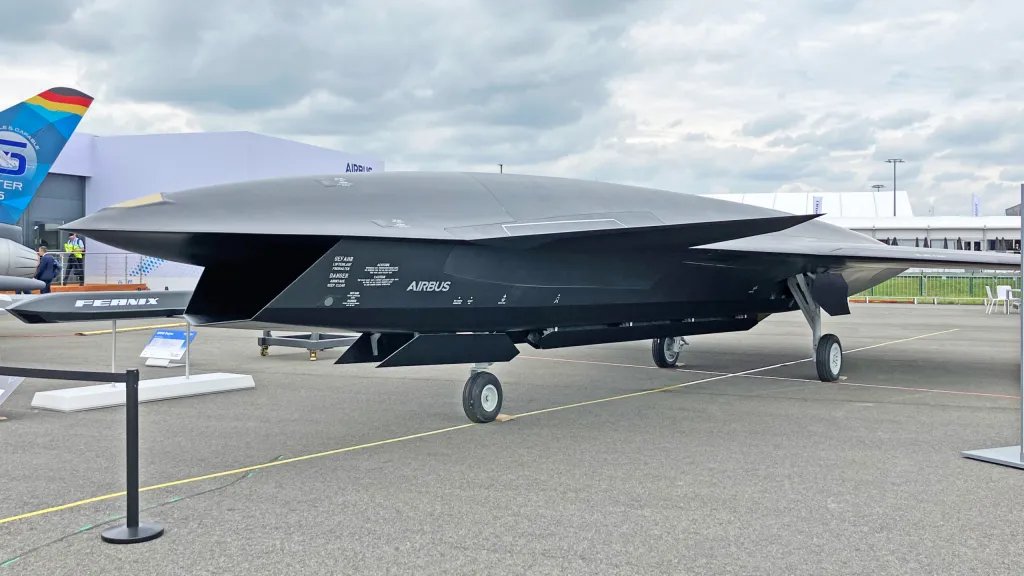
At the time, Airbus noted that the German Air Force had “expressed a clear need” for a drone that would be able to operate in conjunction with crewed fighters before the arrival in service of the NGF, which was then slated for some time in the 2040s.
Whether the Wingman has now been abandoned entirely is unclear, but the Luftwaffe still has a requirement for an uncrewed companion that can work alongside its forthcoming Eurofighter EK electronic warfare jets. This is a role for which Airbus is earmarking the Ravenstorm, in particular, although it should be noted that the U.S. Marine Corps is also focusing heavily on the electronic warfare mission for the Valkyrie drone.
All of these Airbus efforts are being informed by experience testing the Barracuda, work on which began in 2003, initially as a ‘black program.’ After six test campaigns, the Barracuda was retired.
The company will also be leveraging prior work from the Airbus Low Observable UAV Testbed (LOUT) program. A stealthy demonstrator, LOUT was not flown but was run by the company in strict secrecy until finally it was publicly disclosed in 2019, as you can read about here.
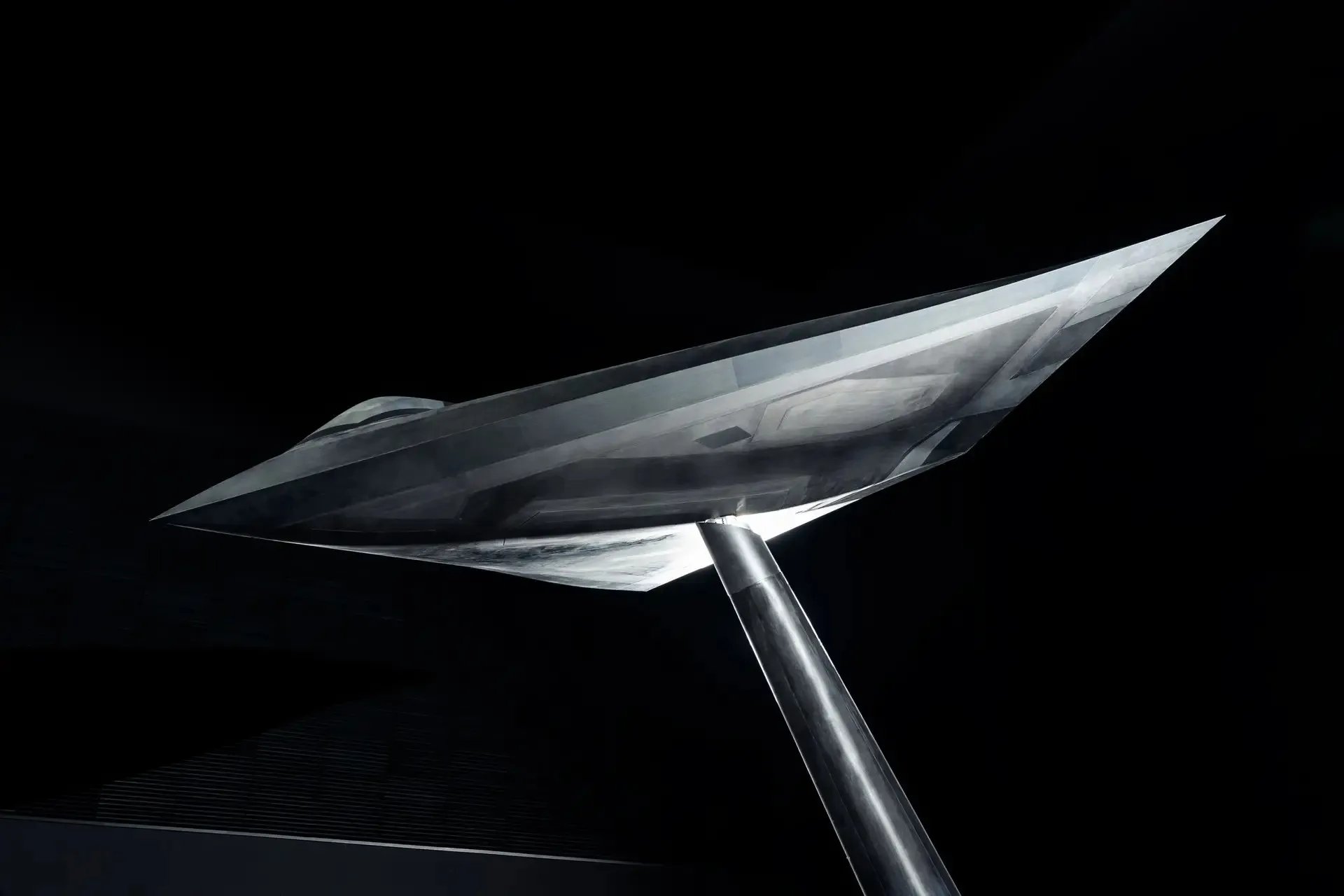
Undoubtedly, the significance of Airbus’s new-look drone roster, and above all the appearance of the U760 Ravenstorm alongside the U740 Valkyrie, is greater now that the FCAS program’s crewed New Generation Fighter is seemingly defunct.
It was always anticipated that the NGF would be operated as part of a wider ecosystem that also included CCA-like drones — what Airbus now refers to as UCCAs. Indeed, there were already efforts in place to start integrating combat drones with crewed fourth-generation-plus fighters like the Eurofighter and Rafale. Now that FCAS, or at least the NGF component of it, has been thwarted, Ravenstorm and Valkyrie offer a glimpse of where Europe’s combat aviation ambitions may be headed instead.
Collaborative combat aircraft like these emerged as a higher-mass, force-multiplying capability for current and future crewed fighters. In the interim, at least, the demise of the NGF means that these kinds of combat drones could be in even greater demand within Europe, where there is already a pressing need for larger tactical air combat fleets, while resources are limited. At the same time, CCA-like drones promise to make existing fourth- and fifth-generation fighters even more potent, further driving demand both in Europe and elsewhere.
Contact the author: thomas@thewarzone.com
The post Ravenstorm At The Center Of Airbus’s New Combat Drone Portfolio appeared first on The War Zone.
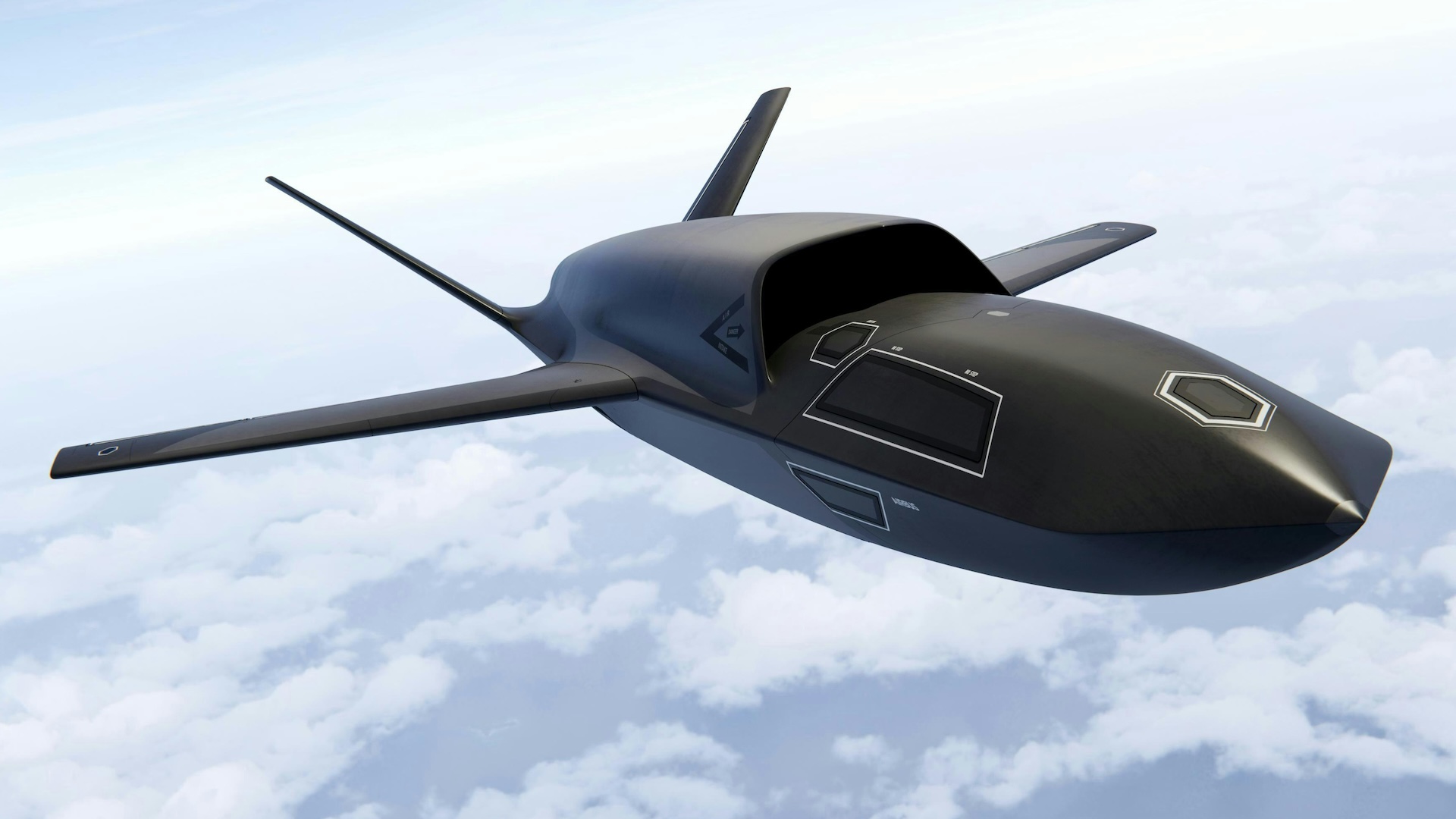
U.S. President Donald Trump says the Iranians shot down the AH-64 Apache that crashed near the Strait of Hormuz overnight and vowed to retaliate. As we noted earlier today, the crew was safely rescued by a drone boat, an unprecedented action, which you can read more about here.
“I have just been informed by our Great Military that last night the Iranians shot down one of our highly sophisticated Apache Helicopters while patrolling over the Strait of Hormuz,” Trump stated on Truth Social. “There were two pilots involved, both are safe and uninjured. Nevertheless, the United States must, of necessity, respond to this attack.”
Trump says that Iranian forces shot down the Army AH-64 Apache attack helicopter that went down over Hormuz yesterday.
— OSINTtechnical (@Osinttechnical) June 9, 2026
He says that the US "must, of necessity, respond to this attack" pic.twitter.com/divKHkhgZm
Trump did not elaborate on how the Apache was shot down.
It’s worth noting that Iran’s small boats are known to be man-portable air defense systems (MANPADS) threats and also small FPV drones and loitering munitions, which Iran also possesses, have become a real threat to helicopters.
A U.S. official told Axios an investigation “determined that an Iranian drone hit the helicopter, causing it to crash. The U.S. official said the investigation had not determined whether that was intentional.”
— Barak Ravid (@BarakRavid) June 9, 2026
Trump vows response after Iran downs U.S. helicopter. My report on @axios https://t.co/JQrwD9yELA
Trump did not say exactly how the U.S. will respond, but given past history of tensions in the region, an attack on Iranian facilities that could have been involved in the shoot-down would not be surprising. We have seen similar responses when Iran has fired at ships in the past.
Whether this will finally break the shaky ceasefire is an open question. Last week, Trump told reporters that he would consider resuming the war if Iran caused U.S. troop deaths.
“Yeah, if they killed U.S. troops, I think I would do that very quickly,” he said.
We have reached out to the White House and U.S. Central Command for additional details. CENTCOM declined comment.
UPDATE: 1:57 PM EDT –
Iranian official media has yet to explicitly confirm or deny involvement in the downing of the Apache. In a post on X addressing Trump’s claim, the Fars News Agency offered a veiled threat from Mohammad Ghalibaf, speaker of the Iranian parliament.
“We prefer the language of diplomacy, but we speak other languages far more fluently,” Ghalibaf said on his own X account, repeated here by Fars. “Break your commitments, and we’ll switch to what we speak best. You ride the horse you saddled.”
— خبرگزاری فارس (@FarsNews_Agency) June 9, 2026
قالیباف: ما زبان دیپلماسی را ترجیح میدهیم، اما زبانهای دیگر را بسیار روانتر صحبت میکنیم
عهد خود را بشکنید، تا به همان زبانی برگردیم که از همه بهتر بلدیم. https://t.co/JeROqni9mJ
IRIB just repeated CNN’s report that the helicopter gunship was taken down by a Shahed drone.
— IRIB (Islamic Republic of Iran Broadcasting) (@iribnews_irib) June 9, 2026
CNN claims: Iran shot down US Apache helicopter with a Shahed drone
Press TV, meanwhile, took a rather cheeky approach.
“US President Donald Trump says Iran shot down ‘one of our highly sophisticated Apache helicopters while patrolling over the Strait of Hormuz,'” the outlet stated on X. “So much for the Iranian military having been ‘obliterated!'”
US President Donald Trump says Iran shot down "one of our highly sophisticated Apache helicopters while patrolling over the Strait of Hormuz."
— Press TV
So much for the Iranian military having been "obliterated"!
Follow https://t.co/B3zXG73Jym pic.twitter.com/AHhkNao1du(@PressTV) June 9, 2026
UPDATE: 4:20 PM EDT –
In a call with The Wall Street Journal, Trump tried to downplay the Apache downing, saying that it “wasn’t a big deal” and stressing that “the pilot is fine.”
Earlier today, Trump sought to play down the incident. In a phone call with the WSJ, Trump said that it “wasn’t a big deal,” stressing that “the pilot is fine.” He said he had the details on the incident and that “it was much different than you think.” https://t.co/arzskUbdSt
— Vera Bergengruen (@VeraMBergen) June 9, 2026
Exiting a classified congressional briefing, CENTCOM commander Adm. Brad Cooper offered a short answer to reporter questions about how the U.S. will respond to Iran downing the Apache.
“We’ll see,” he said, according to NOTUS reporter Joe Gould in a post on X.
Reporters asked Centcom’s Adm. Brad Cooper, exiting a classified congressional briefing, what the “response” would be to the downed U.S. helicopter.
— Joe Gould (@reporterjoe) June 9, 2026
“We’ll see.” pic.twitter.com/w4MwOTr9px
UPDATE: 5:25 PM EDT –
In a post on X, CENTCOM announced its “forces began launching self-defense strikes against Iran at 5 p.m. ET today at the Commander in Chief’s direction, in response to yesterday’s downing of a U.S. Army Apache helicopter. The mission is a proportional response to unjustified Iranian aggression.”
We have reached out to the command for more details.
U.S. Central Command (CENTCOM) forces began launching self-defense strikes against Iran at 5 p.m. ET today at the Commander in Chief’s direction, in response to yesterday’s downing of a U.S. Army Apache helicopter. The mission is a proportional response to unjustified Iranian…
— U.S. Central Command (@CENTCOM) June 9, 2026
CENTCOM’s post follows reports from the official Iranian Mehr news agency about the sounds of explosions.
In a post on Telegram, the official Iranian Mehr news outlet is reporting that there have been “sounds of explosions heard in the Sirik port area.
According to Mehr, “the exact nature of these sounds is not yet clear, and none of the official military or law enforcement agencies have commented on the cause of these sounds so far.”
“Investigations to obtain accurate information about the nature of these explosions are ongoing,” Mehr added.
Explosions reported in Sirik, an Iranian port city on the Strait of Hormuz- Iranian state media pic.twitter.com/HOJ4vAk1cT
— OSINTtechnical (@Osinttechnical) June 9, 2026
UPDATE: 5:42 PM EDT –
ABC News Chief Washington Correspondent Jonathan Karl was on the phone with Trump as CENTCOM announced the retaliatory strikes against Iran.
“I think it’s very important to respond,” Karl said Trump told him. “They shot down a helicopter, and we are responding as we speak…I believe the response should be very strong, very powerful, and that’s what this one is.”
I was on the phone with Trump as CENTCOM announced US retaliatory strikes against Iran. Here's what he said:
— Jonathan Karl (@jonkarl) June 9, 2026
"I think it's very important to respond. They shot down a helicopter, and we are responding as we speak."
He added: "This is a response to what they did they did with…
UPDATE: 6:19 PM EDT –
Tasnim is reporting that the U.S. strikes appear to be over for now.
“The wave of American attacks in the south has subsided, and after the hostile actions in Qeshm, Sirik, Jask and Mount Mubarake Jask, the situation is now reported to be calm,” the outlet claimed on Telegram. It also published a video it says shows “a suicide drone in the sky of Iraq.”
— Visioner (@visionergeo) June 9, 2026
This is a developing story.
Contact the author: howard@twz.com
The post AH-64 Apache Shot Down By Iran, U.S. Will Retaliate: Trump (Updated) appeared first on The War Zone.
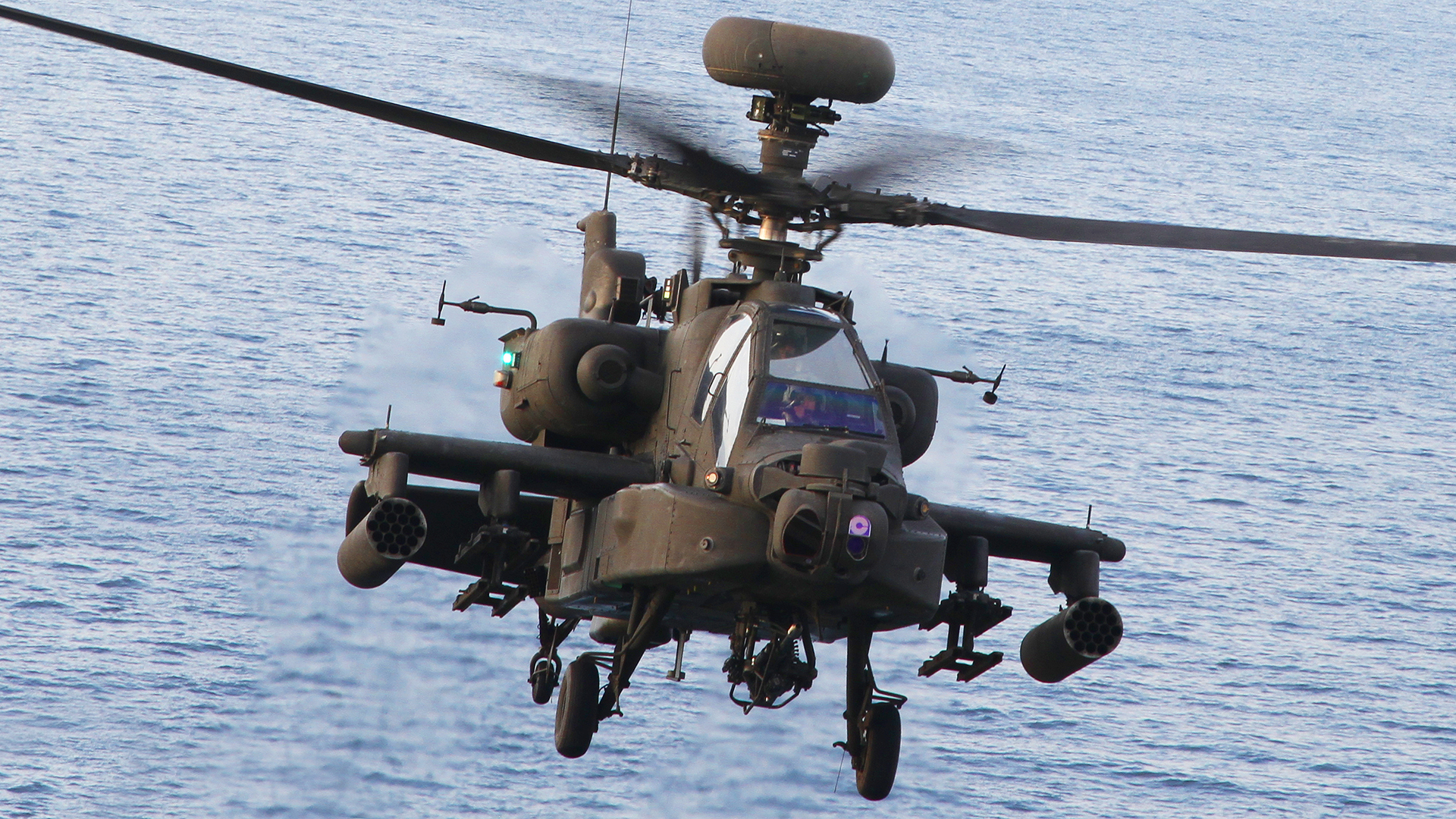
A U.S. Navy uncrewed surface vessel (USV) found and rescued the crew of a U.S. Army Apache that went down overnight near the Strait of Hormuz, in the Gulf of Oman. This is the first known use of a drone boat executing a personnel recovery action as part of a military search and rescue operation, and it’s likely a glimpse of what’s to come. The cause of the incident is otherwise under investigation.
Navy Capt. Tim Hawkins, a U.S. Central Command (CENTCOM) spokesman, has confirmed the use of the Navy USV in the rescue effort to TWZ. This had already been hinted at by the mention of Task Force 59, the Navy’s main drone force in the Middle East, in an official CENTCOM statement. What specific type of drone boat was utilized in this case is not yet known. Task Force 59 operates a variety of USVs, including speedboat-like types. The Task Force has been experimenting with all types of new uncrewed naval technologies and this rescue is clearly a major win for the forward-looking unit.
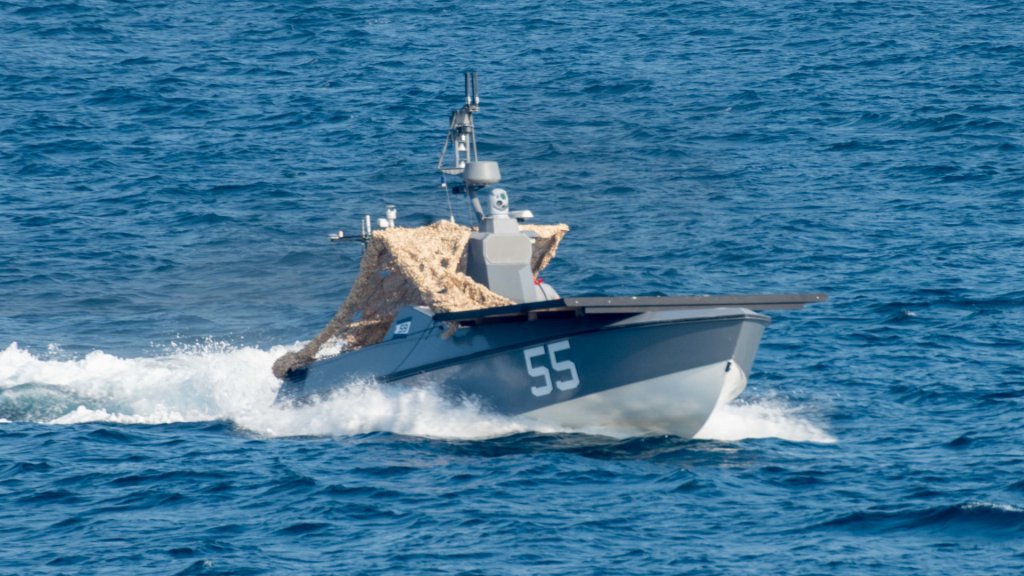
“At 7:33 p.m. ET on June 8, two crew members from a U.S. Army AH-64 Apache were rescued by American forces after their helicopter went down near the coast of Oman while patrolling regional waters,” per CENTCOM’s statement. “The Soldiers were safely rescued within approximately two hours and are in stable condition. The cause of the incident is under investigation.”
“Rescue efforts were led by U.S. Naval Forces Central Command and the 82nd Airborne Division, with support from U.S. Air Force and Navy units including U.S. 5th Fleet’s Task Force 59,” the statement added.
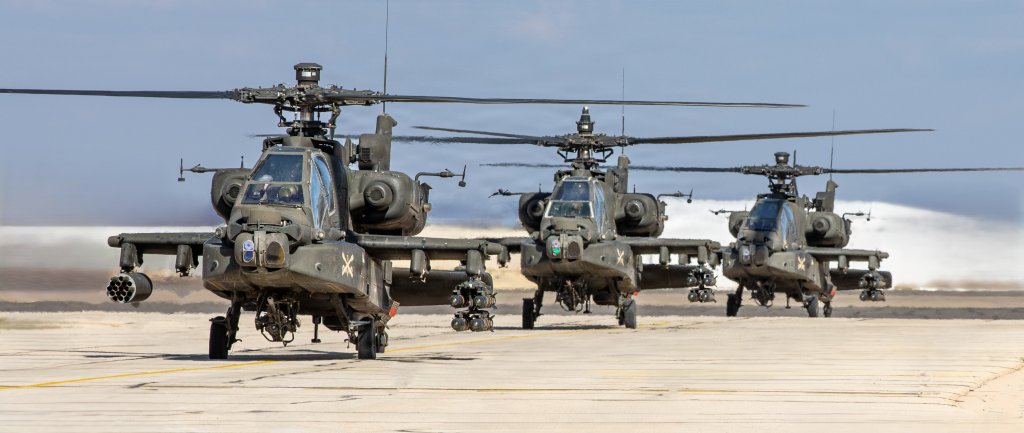
The New York Times was first to report that an Apache had gone down near the Strait of Hormuz. President Donald Trump had also confirmed the crew was safe while speaking to reporters earlier this morning.
“We are going to issue a report tomorrow, but the pilots are fine,” Trump said after returning to Washington from the NBA Finals in New York.
A US Army Apache helicopter went down near the Strait of Hormuz and it wasn’t clear if the aircraft suffered mechanical troubles or had been shot down by Iran, the New York Times reported.
— Annmarie Hordern (@annmarie) June 9, 2026
Asked about the episode by @jendlouhyhc, Trump said the pilots were fine and that a report…
As we have reported in the past, Army AH-64s have been part of an effort by the U.S. military to enforce the ongoing blockade of Iran and to protect commercial shipping. Last month, Apaches and U.S. Navy MH-60 Seahawk helicopters destroyed six small Iranian boats that were threatening commercial ships in and around the Strait of Hormuz, according to Navy Adm. Brad Cooper, head of CENTCOM. Apaches had already been conducting missions targeting Iranian naval assets in and around the Strait of Hormuz before the announcement of the ceasefire in April. All of this has shown that armed helicopters remain important assets in maritime operations, especially for defending against swarms of small boats.
As TWZ regularly highlights, search and rescue operations present inherent complexities and risks, especially when conducted in or near hostile territory. The F-15E rescue effort in Iran put a particular spotlight on the immense risks that combat search and rescue (CSAR) forces take, with helicopters and C-130 variants sent into areas where even a high-end fighter aircraft didn’t survive.
Open-water recoveries can present distinct additional challenges. There is always the possibility of the loss of additional assets and personnel in the process, no matter where a CSAR mission occurs.
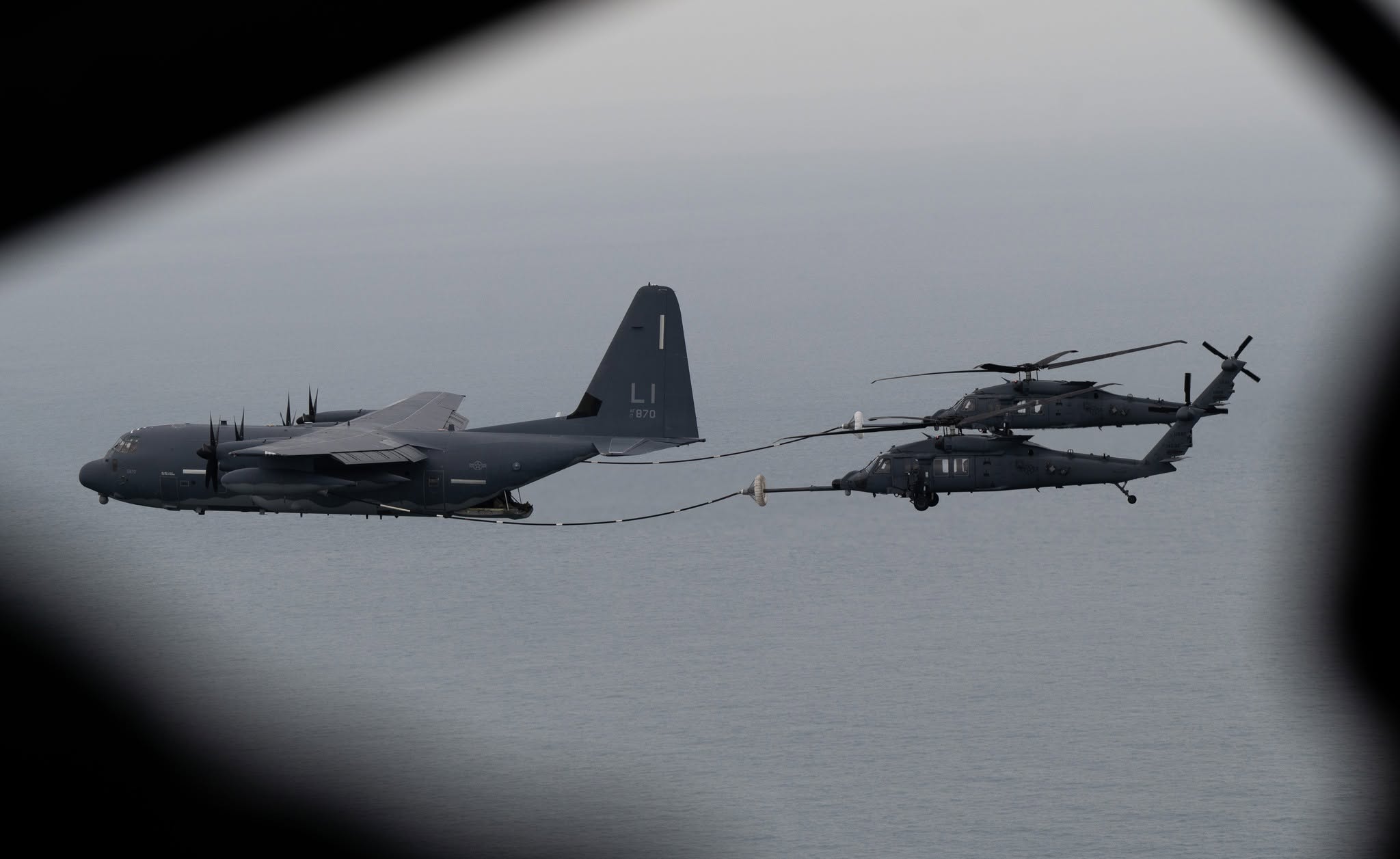
The use of a Navy drone boat in the rescue overnight highlights a new dimension for maritime CSAR going forward. These uncrewed assets can be more readily pre-positioned in a distributed manner. For example, in the broad expanse of the Pacific, USVs could be forward-deployed at multiple points along certain flight paths for this exact purpose. USVs could offer other distinct advantages in certain scenarios where they might be able to get into areas where traditional assets cannot and without risking additional personnel. These realities extend well beyond the maritime domain, and we are only likely to see uncrewed platforms of all kinds increasingly taking part in rescue efforts, especially in denied areas. The U.S. military is coming to terms with just how vulnerable their CSAR assets are and the ranges that would be needed to access highly defended areas, especially during a peer fight. Using drones to execute personnel recovery is being viewed as one part of a larger set of solutions to this pressing problem.
With the Apache going down near the Strait of Hormuz, the U.S. military has now lost at least seven crewed fixed-wing aircraft and helicopters since the start of the latest operations against Iran in February. In addition, several aircraft have been damaged in the air and on the ground, including by Iranian fire. The TWZ graphic below offers a visual tally of damaged and destroyed aircraft as of April 10.
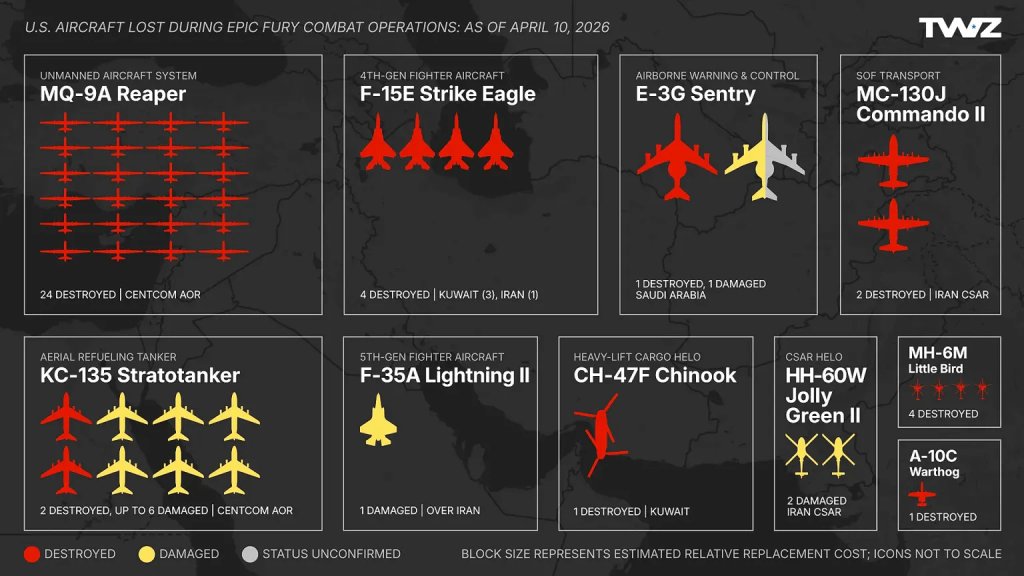
Despite the loss of the Apache, the use of a USV in the rescue effort is a major development and a sign of things to come.
UPDATE: 12:56 PM EDT –
President Donald Trump said the Apache was shot down by Iran and that the U.S. will retaliate.
“I have just been informed by our Great Military that last night the Iranians shot down one of our highly sophisticated Apache Helicopters while patrolling over the Strait of Hormuz,” the president said on his Truth Social network. “There were two pilots involved, both are safe and uninjured. Nevertheless, the United States must, of necessity, respond to this attack.”
Trump says that Iranian forces shot down the Army AH-64 Apache attack helicopter that went down over Hormuz yesterday.
— OSINTtechnical (@Osinttechnical) June 9, 2026
He says that the US "must, of necessity, respond to this attack" pic.twitter.com/divKHkhgZm
UPDATE: 1:53 PM EDT –
You can read more about Trump’s shoot-down statement and what could happen next in our story here.
Contact the author: howard@twz.com
The post AH-64 Apache Crew Rescued By Drone Boat After Going Down Near Strait Of Hormuz (Updated) appeared first on The War Zone.
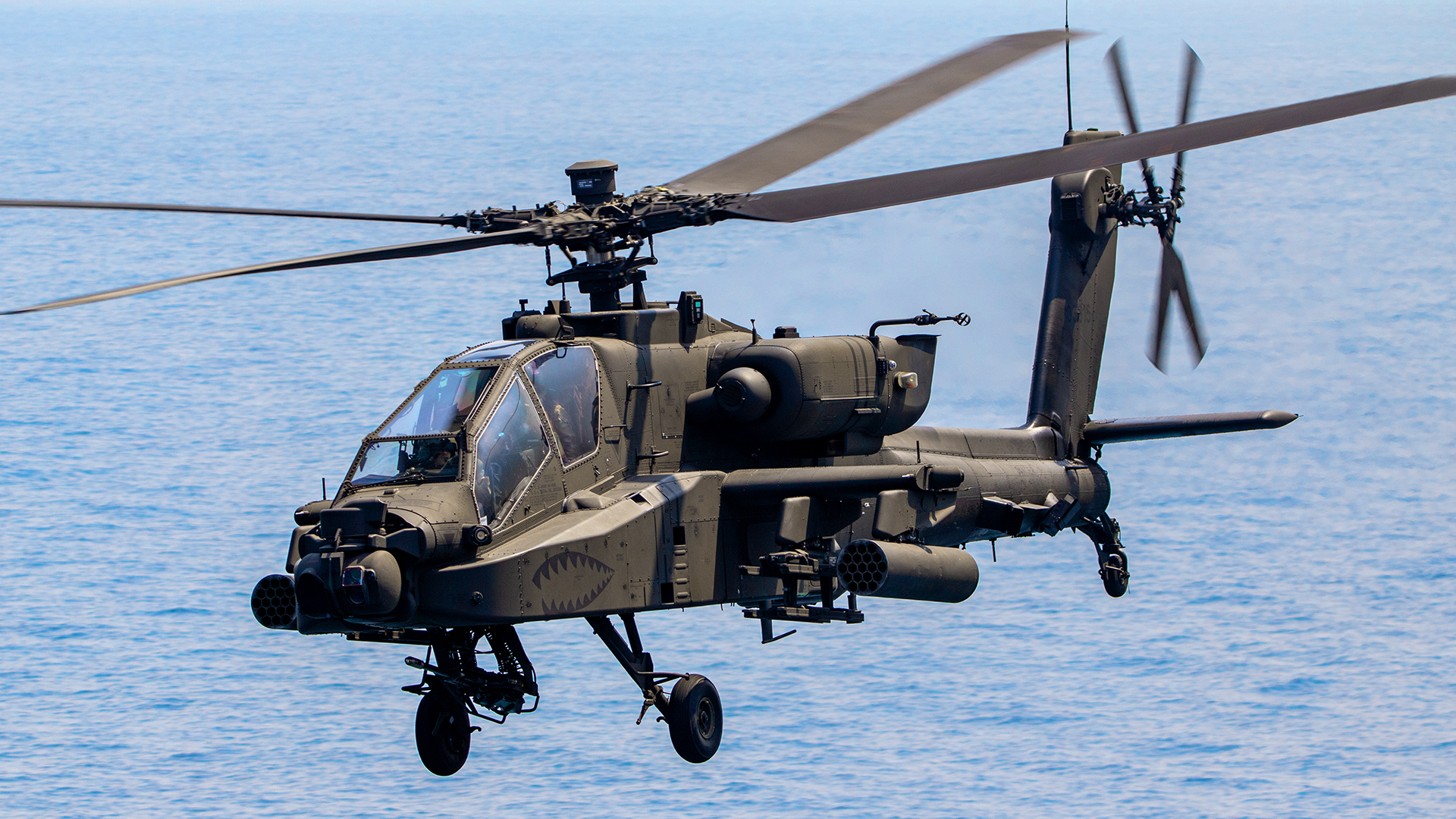
The U.S. Air Force has confirmed that the VC-25B “Bridge” aircraft is now wearing its new (and controversial) red, white, and blue livery as it undergoes final preparations for its official delivery.
Aviation photographer Travis Ghormley shared the first picture of the modified Boeing 747-8i with its new paint scheme yesterday. It was taken the day before in Waco, Texas. The aircraft had been undergoing modification and flight testing at L3Harris’ facility in Greenville, also in Texas, as part of the conversion into its new role, since at least April, before subsequently moving to Waco to be painted. The jet, gifted to the Trump administration by the government of Qatar last year, is set to serve as an interim Air Force One aircraft ahead of the much-delayed arrival of two fully outfitted VC-25Bs from Boeing.
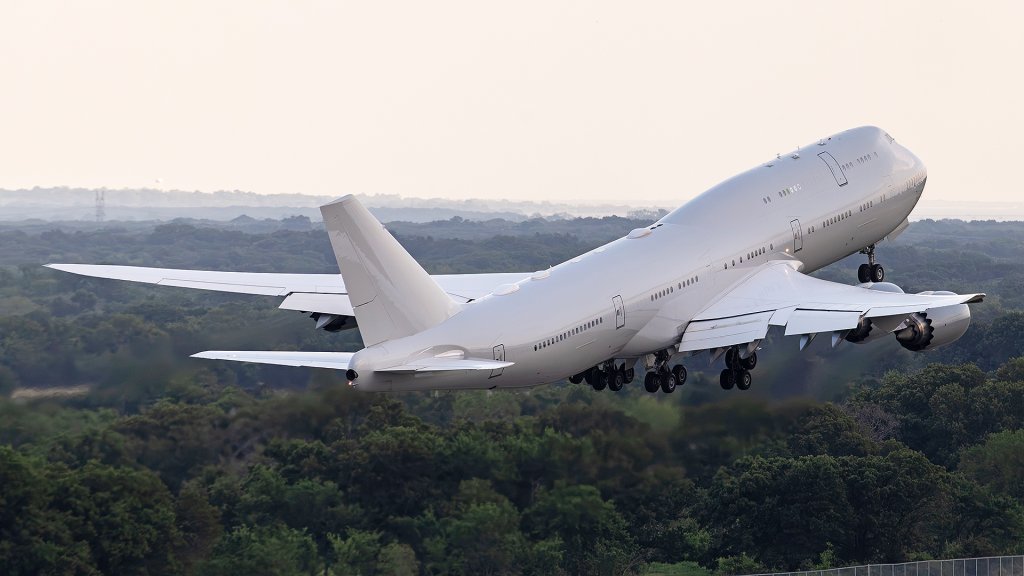
“The VC-25B Bridge aircraft has been painted and is going through final modifications,” an Air Force spokesperson told TWZ today when asked for more information about the aircraft’s current status. “I don’t have any additional details I can provide on delivery dates at this time.”
A press release the Air Force put out on May 1 said that the “VC-25B Bridge aircraft has officially completed modification and flight testing” and was “being painted.” We have confirmed that the completed modifications referred to here were on the contractor side, but the U.S. government still has additional modifications to make to the jet.
Ghormley’s picture does clearly show the jet wearing the same red, white, and blue scheme that has already been appearing on various Air Force and other U.S. government VVIP jets. The livery also includes a large American flag, depicted blowing in the wind, painted on both sides of the tail and “UNITED STATES OF AMERICA” written on both sides of the fuselage. The paint job is virtually identical to what President Donald Trump had previously chosen for the future VC-25B Air Force Ones during his first term. President Joe Biden had previously reversed that decision, bringing back plans to paint the VC-25Bs in the iconic scheme that dates back to President John F. Kennedy’s administration.


The Bridge aircraft’s current location is also unclear. Video posted on social media yesterday, seen below, purported to be of the jet departing for its new home at Andrews Air Force Base just outside of Washington, D.C. This is where the two current VC-25A Air Force One jets, as well as a host of other Air Force VVIP aircraft, are based.
Full blown operation to get this thing out without us seeing. Fueled, loaded crew, and preflighted in the hangar. Flipped CRANE01 to face me at the south end and beam me with landing lights. Entire airport blacked out, crew and grounds crew all wearing NOD’s.
— jadams (@jadamzs) June 7, 2026
You can barely see… https://t.co/kaNB5FCdJ5 pic.twitter.com/JprSF5ykXW
Online flight tracking data does show that another U.S. military Boeing 747-8i flew from Waco, Texas, to Andrews on June 7, using the callsign Crane 01. However, this callsign has been associated with an ex-Lufthansa 747 the Air Force has also acquired for use as a trainer in support of future Air Force One operations. This aircraft, which may now carry the serial number 25-3200, has been tracked multiple times flying between facilities in Texas and Andrews in recent months. There does not appear to be tracking data for the VC-25B Bridge jet, which may also now have the serial number 25-3300, but it could have made the trip without broadcasting on ADS-B.
Past reports have indicated that the Bridge aircraft could make its public debut on July 4, which this year is also wrapped up in additional celebrations of the 250th anniversary of the founding of the United States. President Trump’s birthday (June 14) is also this weekend.
Otherwise, TWZ has previously laid out significant questions about the general feasibility of actually using the VC-25B Bridge aircraft in the Air Force One role, given the kinds of modifications that should be required for this demanding mission. Potential operational security concerns have been raised about using the gifted jet as a presidential aircraft, as well.
“L3Harris, known for its executive communications systems and services, was selected to undertake a complex modification of the bridge aircraft. L3Harris not only delivers secure, reliable and resilient communications for VC-25A and the executive airlift fleet but has extensive experience with self-protection and customization of VIP aircraft,” the Air Force wrote in the May 1 press release. “The accelerated timeline was further made possible by a mission-focused partnership with Boeing, who provided the necessary engineering data to support the required structural modifications.”
“Additionally, elite specialists from multiple government agencies developed advanced protocols to detect and-if necessary-neutralize potential technical hazards on previously owned aircraft,” it added. “Their rigorous approach on the Bridge aircraft has literally ‘written the book’ and set the benchmark for integrating used airframes into the secure military inventory.”
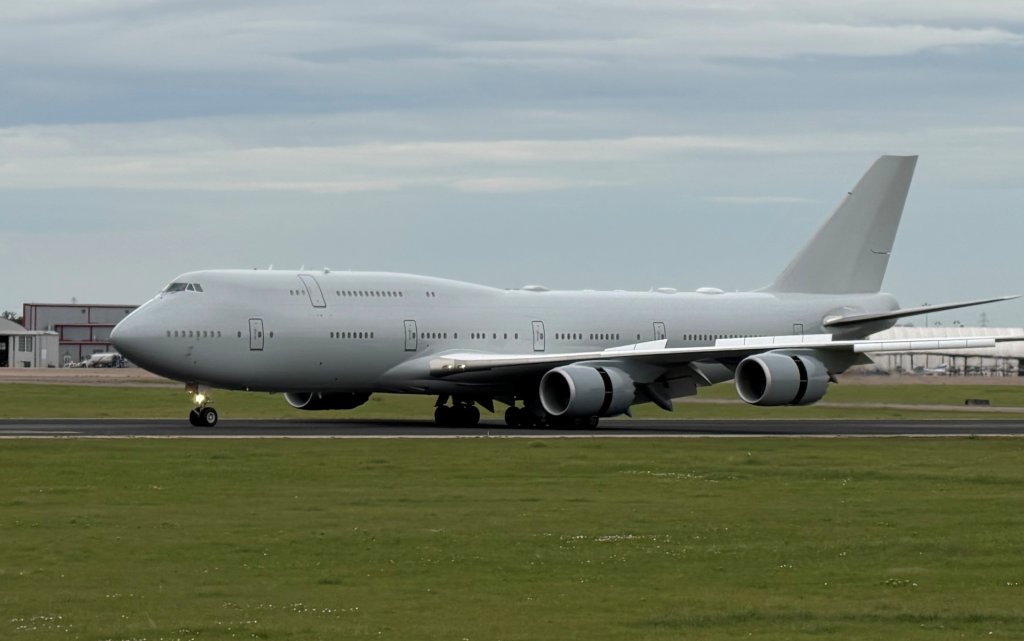
“Safety and security were at the forefront of this program. We deliberately minimized interior aesthetic modifications to focus on modifications for safety, security and mission execution. We assessed which requirements were necessary for an interim capability. We had greater flexibility in developing our mission requirements,” the Air Force also told TWZ directly at that time. “After safety and security, we focused on the mission communications systems.”
“We have made deliberate decisions such as the reduction of the number of airstairs, less chiller space, and exclusion of the Golden Eagle mission [to fly the remains of former presidents] to minimize structural modifications, while prioritizing modifications focused on safety, security and secure communications,” the service added.
Getting a new Air Force One aircraft of some kind into service on an accelerated timetable has long appeared to be a major goal for President Trump. The fully-equipped VC-25Bs from Boeing are years behind schedule. Last year, the Air Force announced that there had been some improvement on that front, but that it still did not expect to have the first of the two jets in hand until mid-2028, which would be just months before Trump is set to leave office.
What we do know for sure is that the VC-25B Bridge aircraft is now wearing Trump’s preferred red, white, and blue paint scheme ahead of its official rollout later this summer.
Contact the author: joe@twz.com
The post VC-25B Air Force One “Bridge” Aircraft Now Wears Trump’s Preferred Red, White, and Blue Paint Job appeared first on The War Zone.