O presidente do Senado, Davi Alcolumbre (União-AP), travou a tramitação da proposta de emenda à Constituição (PEC) que acaba com a escala de trabalho 6x1 no Brasil ao manter o texto na Mesa Diretora da Casa, sem despachar para a Comissão de Constituição e Justiça (CCJ).
O presidente da CCJ, senador Otto Alencar (PSD-BA), disse que não recebeu informação sobre a data de envio da PEC à Comissão. Uma reunião entre Otto e Alcolumbre, prevista para esta semana, foi desmarcada pelo presidente do Senado. Procurada, a assessoria de Alcolumbre não comentou o tema da reportagem.
O presidente do Senado também não marcou a reunião de líderes para discutir a pauta. O encontro costuma ocorrer semanalmente. Na semana passada, Alcolumbre afirmou, no plenário, que discutiria a tramitação da PEC do fim da 6x1 na reunião de líderes.
Além de instituir a obrigatoriedade de dois dias de descanso remunerado para os trabalhadores por semana, a PEC 221 de 2019 reduz a jornada de trabalho no Brasil das atuais 44 horas para 40 horas semanais.
Estratégia de adiar
A cientista política e professora da Universidade Federal de Alagoas (Ufal) Luciana Santana avalia que o adiamento dessa definição reflete preocupações sobre os impactos econômicos e sobre a resistência, principalmente nos setores empresariais, em relação à redução da jornada de trabalho no Brasil.
“É o ano eleitoral. Sobre um tema com essa repercussão social, as lideranças preferem administrar esse tempo da discussão evitando assumir cursos políticos imediatos.”
Pesquisas sobre os impactos da PEC na economia têm divergido em relação às consequências para inflação, o Produto Interno Bruto (PIB) e o nível de emprego.
De acordo com especialista, a postergação da discussão da PEC sugere que Alcolumbre ainda não tomou decisão política sobre a tramitação, mas pondera que isso não significa rejeição definitiva ao mérito da proposta.
"A simples existência de apoio social não garante a tramitação. O presidente da Casa possui os instrumentos para poder definir a prioridade e o ritmo da agenda. Ele está mantendo esse tema sob o controle dele, como presidente do Senado, enquanto as negociações mais amplas continuam nos bastidores.”
PEC da oposição é despachada
Enquanto não despacha a PEC do fim da escala 6x1, Alcolumbre enviou à CCJ a PEC alternativa ao fim da 6x1, apresentada pela oposição, que mantém a atual escala de trabalho no Brasil e permite a contratação por hora trabalhada.
Lideranças governistas esperam votar a PEC do fim da 6x1 que veio da Câmara, sem alterações, ainda neste semestre, antes do recesso Legislativo, que começa no dia 18 de julho, intercalado com São João e Copa do Mundo.
Durante as sessões do plenário do Senado desta semana, senadores governistas cobraram a tramitação da PEC.
“É exigível que nós assim o façamos o mais breve possível, quiçá bem antes, até o final deste mês, das conclusões do nosso primeiro semestre, no dia 17 de julho”, destacou o senador Veneziano Vital do Rêgo (PSB-PB).
A líder do PT no Senado, senadora Teresa Leitão (PT-PE), também pediu prioridade à PEC que institui a escala 5x2 no Brasil.
“O Senado precisa priorizar esse tema, que é, sim, uma prioridade do país, que se pretende grande, civilizado e desenvolvido, por trabalho digno e valorização dos trabalhadores e trabalhadoras assalariados.”
Por outro lado, o senador da oposição Hermes Klann (PL-SC) criticou a PEC. “[A proposta] reduz a jornada de trabalho sem apresentar solução para compensar os custos dessa mudança. A conta não desaparece, alguém vai pagar. E, como sempre, quem paga é a própria população.”
O senador Romário (PL-RJ), mesmo da oposição, defendeu a medida. “Serei sempre favorável a qualquer medida que vise a garantir mais direitos aos nossos trabalhadores”, discursou na tribuna.
Piso salarial dos garis
Apesar de não comentar o tema nesta semana, Alcolumbre reagiu quando cobrado pelo senador Fabiano Contarato (PT-ES) para incluir na pauta o projeto que estabelece piso salarial de R$ 3 mil para garis.
“Tenho 31 projetos que tratam de jornada de trabalho, que tratam de piso de remuneração de muitas categorias. Não posso ser seletivo”, respondeu o presidente do Senado, ao alegar que, se pautasse o projeto do piso dos garis, teria que pautar de outras categorias profissionais.
Segundo Alcolumbre, seria complexo votar projetos que aumentem gastos em ano de eleição.
“O que eu botar para votar, todo mundo vai votar ‘sim’ por conta da eleição, e vai ter que arrumar dez brasis para pagar.”
Refil do agro
Por outro lado, Acolumbre pautou, e o Senado aprovou, nessa quarta-feira (10), o projeto de lei (PL) que prevê o uso do Fundo Social do Pré-sal para financiar dívidas do agronegócio que o governo calcula ter um custo fiscal de R$ 140 bilhões, em 10 anos.
O Ministério da Fazenda pedia mais tempo e alterações no PL 5.122/2023, sob a relatoria do senador Renan Calheiros (MDB-AL), devido ao impacto sobre os cofres públicos.
Segundo Alcolumbre, a medida foi colocada em votação por causa de um acordo com os senadores. “Respeito integralmente a posição do governo, que têm apelado reiteradas vezes para que o Senado tenha cautela na deliberação das matérias relevantes e que podem impactar o orçamento do Brasil, mas eu fiz um acordo com os senadores e senadoras, com os deputados em várias ocasiões.”
O ministro da Fazenda Dario Durigan informou que o governo vai tentar alterar o texto do PL 5.122/2023 na Câmara e, caso não haja sucesso, poderia recorrer ao Supremo Tribunal Federal (STF) sob o argumento de descumprimento da Lei de Responsabilidade Fiscal.
“Nosso objetivo é, sim, ajudar aqueles agricultores que mais precisam, que comprovem as perdas, que tenham problemas com as dívidas. Não [queremos] fazer uma espécie de nova linha que atenda quem não precisa”, disse a jornalistas na saída do Ministério da Fazenda, após aprovação do PL no Senado.
O presidente do Senado, Davi Alcolumbre (União-AP), travou a tramitação da proposta de emenda à Constituição (PEC) que acaba com a escala de trabalho 6x1 no Brasil ao manter o texto na Mesa Diretora da Casa, sem despachar para a Comissão de Constituição e Justiça (CCJ).
O presidente da CCJ, senador Otto Alencar (PSD-BA), disse que não recebeu informação sobre a data de envio da PEC à Comissão. Uma reunião entre Otto e Alcolumbre, prevista para esta semana, foi desmarcada pelo presidente do Senado. Procurada, a assessoria de Alcolumbre não comentou o tema da reportagem.
O presidente do Senado também não marcou a reunião de líderes para discutir a pauta. O encontro costuma ocorrer semanalmente. Na semana passada, Alcolumbre afirmou, no plenário, que discutiria a tramitação da PEC do fim da 6x1 na reunião de líderes.
Além de instituir a obrigatoriedade de dois dias de descanso remunerado para os trabalhadores por semana, a PEC 221 de 2019 reduz a jornada de trabalho no Brasil das atuais 44 horas para 40 horas semanais.
Estratégia de adiar
A cientista política e professora da Universidade Federal de Alagoas (Ufal) Luciana Santana avalia que o adiamento dessa definição reflete preocupações sobre os impactos econômicos e sobre a resistência, principalmente nos setores empresariais, em relação à redução da jornada de trabalho no Brasil.
“É o ano eleitoral. Sobre um tema com essa repercussão social, as lideranças preferem administrar esse tempo da discussão evitando assumir cursos políticos imediatos.”
Pesquisas sobre os impactos da PEC na economia têm divergido em relação às consequências para inflação, o Produto Interno Bruto (PIB) e o nível de emprego.
De acordo com especialista, a postergação da discussão da PEC sugere que Alcolumbre ainda não tomou decisão política sobre a tramitação, mas pondera que isso não significa rejeição definitiva ao mérito da proposta.
"A simples existência de apoio social não garante a tramitação. O presidente da Casa possui os instrumentos para poder definir a prioridade e o ritmo da agenda. Ele está mantendo esse tema sob o controle dele, como presidente do Senado, enquanto as negociações mais amplas continuam nos bastidores.”
PEC da oposição é despachada
Enquanto não despacha a PEC do fim da escala 6x1, Alcolumbre enviou à CCJ a PEC alternativa ao fim da 6x1, apresentada pela oposição, que mantém a atual escala de trabalho no Brasil e permite a contratação por hora trabalhada.
Lideranças governistas esperam votar a PEC do fim da 6x1 que veio da Câmara, sem alterações, ainda neste semestre, antes do recesso Legislativo, que começa no dia 18 de julho, intercalado com São João e Copa do Mundo.
Durante as sessões do plenário do Senado desta semana, senadores governistas cobraram a tramitação da PEC.
“É exigível que nós assim o façamos o mais breve possível, quiçá bem antes, até o final deste mês, das conclusões do nosso primeiro semestre, no dia 17 de julho”, destacou o senador Veneziano Vital do Rêgo (PSB-PB).
A líder do PT no Senado, senadora Teresa Leitão (PT-PE), também pediu prioridade à PEC que institui a escala 5x2 no Brasil.
“O Senado precisa priorizar esse tema, que é, sim, uma prioridade do país, que se pretende grande, civilizado e desenvolvido, por trabalho digno e valorização dos trabalhadores e trabalhadoras assalariados.”
Por outro lado, o senador da oposição Hermes Klann (PL-SC) criticou a PEC. “[A proposta] reduz a jornada de trabalho sem apresentar solução para compensar os custos dessa mudança. A conta não desaparece, alguém vai pagar. E, como sempre, quem paga é a própria população.”
O senador Romário (PL-RJ), mesmo da oposição, defendeu a medida. “Serei sempre favorável a qualquer medida que vise a garantir mais direitos aos nossos trabalhadores”, discursou na tribuna.
Piso salarial dos garis
Apesar de não comentar o tema nesta semana, Alcolumbre reagiu quando cobrado pelo senador Fabiano Contarato (PT-ES) para incluir na pauta o projeto que estabelece piso salarial de R$ 3 mil para garis.
“Tenho 31 projetos que tratam de jornada de trabalho, que tratam de piso de remuneração de muitas categorias. Não posso ser seletivo”, respondeu o presidente do Senado, ao alegar que, se pautasse o projeto do piso dos garis, teria que pautar de outras categorias profissionais.
Segundo Alcolumbre, seria complexo votar projetos que aumentem gastos em ano de eleição.
“O que eu botar para votar, todo mundo vai votar ‘sim’ por conta da eleição, e vai ter que arrumar dez brasis para pagar.”
Refil do agro
Por outro lado, Acolumbre pautou, e o Senado aprovou, nessa quarta-feira (10), o projeto de lei (PL) que prevê o uso do Fundo Social do Pré-sal para financiar dívidas do agronegócio que o governo calcula ter um custo fiscal de R$ 140 bilhões, em 10 anos.
O Ministério da Fazenda pedia mais tempo e alterações no PL 5.122/2023, sob a relatoria do senador Renan Calheiros (MDB-AL), devido ao impacto sobre os cofres públicos.
Segundo Alcolumbre, a medida foi colocada em votação por causa de um acordo com os senadores. “Respeito integralmente a posição do governo, que têm apelado reiteradas vezes para que o Senado tenha cautela na deliberação das matérias relevantes e que podem impactar o orçamento do Brasil, mas eu fiz um acordo com os senadores e senadoras, com os deputados em várias ocasiões.”
O ministro da Fazenda Dario Durigan informou que o governo vai tentar alterar o texto do PL 5.122/2023 na Câmara e, caso não haja sucesso, poderia recorrer ao Supremo Tribunal Federal (STF) sob o argumento de descumprimento da Lei de Responsabilidade Fiscal.
“Nosso objetivo é, sim, ajudar aqueles agricultores que mais precisam, que comprovem as perdas, que tenham problemas com as dívidas. Não [queremos] fazer uma espécie de nova linha que atenda quem não precisa”, disse a jornalistas na saída do Ministério da Fazenda, após aprovação do PL no Senado.
Em meio à indefinição do presidente do Senado, Davi Alcolumbre (União-AP), sobre a análise da proposta de emenda à constituição (PEC) que acaba com a escala de trabalho 6×1 no país, nomes do Centrão e bolsonaristas se movimentam para incluir ‘jabutis’ na redação do texto final em prol do empresariado.
A articulação do Centrão e dos bolsonaristas toma forma em outra PEC, protocolada pelo senador bolsonarista Rogério Marinho (PL-RN) com a assinatura de outros 40 senadores – ou seja, mais da metade da Casa ao todo – e que permite a contratação em um regime de pagamento por horas trabalhadas.
Na prática, o grupo mira uma mini-reforma trabalhista, similar à das controversas mudanças do governo Michel Temer (MDB) na legislação do país, segundo apurado pela Agência Pública. Neste sentido, declarações do vice-presidente da Comissão de Constituição e Justiça (CCJ), senador Vanderlan Cardoso (PSD-GO), exemplificam o discurso da oposição (e do próprio empresariado) contra o fim da 6×1, defendendo que “empregador e trabalhador tenham uma opção a não ser [a contratação via regime] CLT”.
“Acho que sou um dos poucos parlamentares que já teve empresa fora [do país], onde havia o [regime de] trabalho por hora, então o trabalhador podia escolher quantas horas quisesse trabalhar… a regra era clara e para a [minha] empresa funcionou muito bem”, afirmou o vice-presidente da CCJ à Pública.
Senador Vanderlan Cardoso (PSD-GO), vice-presidente da CCJ, defende a discussão de modelos alternativos à CLT, como o trabalho remunerado por hora
Com patrimônio declarado em mais de R$ 26 milhões nas eleições de 2024, quando concorreu, sem sucesso, à prefeitura de Goiânia (GO), Cardoso vocaliza a posição do empresariado quanto ao fim da escala 6×1, dada a sua condição de fundador e dono do grupo Cicopal, que atua no ramo alimentício e de ultraprocessados.
O senador relatou à Pública que fez pesquisas internas com os funcionários de sua companhia, confirmando a ampla adesão de trabalhadores ao fim da escala 6×1. “A primeira coisa que fiz foi ouvi-los [funcionários], porque são eles que ‘tocam’ a empresa no dia-a-dia. A maioria esmagadora é favorável [ao fim da 6×1], com 87% favorável à escala 5×2, enquanto os outros 13% fizeram observações interessantes – como, por exemplo, questionar quem vai pagar essa ‘conta’”, disse.
Ao mesmo tempo, o vice-presidente da CCJ tenta se descolar da PEC de Rogério Marinho, mesmo sendo um dos que assinaram a proposta em apoio ao líder bolsonarista. “Eu vou apresentar uma emenda, creio que outros senadores também vão, porque já tem gente defendendo o [regime de] trabalho por hora. Foi por isso que assinei a PEC do Rogério Marinho: não sou favorável a tudo que está lá, mas assinamos para abrir a discussão”, disse Cardoso.
“Quando chegar aqui, eu dou meu ritmo”, diz presidente da CCJ sobre PEC do fim da 6×1
Levando-se em consideração o trâmite de PECs no Senado, a posição de Vanderlan Cardoso tem um peso relevante, dada a sua condição de vice-presidente da CCJ atualmente.
Senadores Otto Alencar (PSD-BA) e Vanderlan Cardoso (PSD-GO) divergem sobre propostas relacionadas ao fim da escala 6×1
A comissão é responsável por avaliar a constitucionalidade, legalidade e juridicidade de todas as propostas legislativas antes que sejam votadas na Casa, incluindo as duas PECs sobre a mudança da escala trabalhista – tanto a aprovada na Câmara com apoio do governo Lula (PT) e do presidente da Casa, deputado Hugo Motta (Republicanos-PB), da Câmara, quanto aquela protocolada pela oposição e pelo Centrão.
Mas se depender do presidente da CCJ, senador Otto Alencar (PSD-BA), que integra a base do governo no Senado, o plano oposicionista não dará certo na comissão.
O presidente da CCJ já disse que não pautará a PEC de Rogério Marinho, como relatado pela CNN Brasil, e no início da semana ele não escondeu sua frustração com o adiamento de uma reunião que teria com o presidente do Senado para discutir matérias de interesse do governo Lula, como a PEC do fim da escala 6×1 e a PEC da Segurança Pública, segundo o portal Metrópoles.
Presidente da CCJ, Otto Alencar (PSD-BA) afirma que dará andamento à PEC do fim da escala 6×1 quando a proposta chegar formalmente à comissão
“Já falei algumas vezes e vou repetir: não conversei com o Davi [Alcolumbre] sobre PEC da Segurança, sobre PEC da 6×1, não conversei com ele sobre absolutamente nada”, disse Alencar à Pública e outros veículos ao fim da sessão da CCJ na quarta (10).
“Quando chegar aqui, eu vou indicar um relator para a PEC da Segurança e a PEC da 6×1… se chegar! Ou seja, está tudo do mesmo jeito. Eu não tenho conversado com ele [Alcolumbre], não tenho telefonado… vou repetir: eu respeito o tempo dele e há de se respeitar o meu. Quando [a PEC] chegar aqui, eu dou meu ritmo”, também afirmou o presidente da CCJ nesta quarta.
Segundo apurado pela reportagem, o senador Otto Alencar diverge do vice-presidente da CCJ ao se mostrar favorável ao fim da escala 6×1 seja por meio da PEC aprovada recentemente na Câmara, seja por meio de outra proposta similar já aprovada na própria CCJ – a PEC 148/2015, do senador Paulo Paim (PT-RS).
Autor da PEC 148/2015, o senador Paulo Paim (PT-RS) defende a redução da jornada de trabalho e o fim da escala 6×1 no país
O texto relatado pelo senador petista foi aprovado na comissão em dezembro passado e, desde então, pode ser votado a qualquer momento no plenário do Senado – basta que Davi Alcolumbre inclua a proposta na pauta de votações da Casa Alta.
Por outro lado, Otto Alencar é contra a PEC alternativa, da oposição, que abre espaço para jornadas de trabalho ainda mais “flexíveis” e para o pagamento de salário apenas por horas trabalhadas. Para o presidente da CCJ, a alternativa retoma o polêmico conceito de “trabalho intermitente”, surgido na reforma trabalhista do governo de Michel Temer (MDB) em 2017.
Un curioso episodio post-gara ha animato Gran Premio di Monaco 2026 ed è finito rapidamente al centro delle discussioni sui social. Il protagonista inatteso della vicenda non è stato soltanto il risultato sportivo, ma un asciugamano, diventato centrale per un gesto avvenuto a margine della premiazione che ha coinvolto volti noti dello sport e dello spettacolo. Sul circuito monegasco l’attenzione si è inizialmente concentrata sulla vittoria del giovane pilota italiano Kimi Antonelli, poi si è spostata su un’altra star: Kim Kardashian.
Mentre era in corso la festa sul podio, con anche Lewis Hamilton tra i protagonisti, la celebre imprenditrice e influencer Kim Kardashian, compagna del pilota inglese e presente nel paddock insieme alla sorella Khloé, è stata travolta dagli spruzzi tipici delle celebrazioni della Formula 1. La situazione, unita alla confusione del momento, avrebbe portato l’influencer a fare un gesto improvvisato: prendere un asciugamano trovato sul percorso ma in realtà destinato al vincitore.
La mossa non è passata inosservata. Il momento è stato ripreso e rilanciato sui social generando rapidamente commenti e discussioni e, come spesso accade in questi casi, dividendo il pubblico tra ironia e critiche. In molti hanno sottolineato lo scarto culturale tra chi vive abitualmente il paddock della Formula 1 e chi vi si affaccia come ospite occasionale.
A spegnere le polemiche ci ha pensato lo stesso Kimi Antonelli, che con tono leggero ha affrontato l’episodio attraverso i suoi canali social e quelli ufficiali del team Mercedes-AMG Petronas Formula One Team. In un breve video il giovane pilota ha scherzato chiedendosi dove fosse il suo asciugamano.
Fernando Alonso, dos veces campeón del mundo de Fórmula 1 y actual piloto de Aston Martin, ha asegurado este jueves 11 de junio, en la rueda de prensa previa al Gran Premio de Barcelona-Cataluña que esta será, "probablemente", su "última carrera" en el circuito de Montmeló, en Barcelona.
El asturiano, que cumple contrato con su escudería este verano, aseguró que será un "fin de semana especial" y, además, ha querido agradecer el apoyo a todos sus aficionados: "Va a ser un fin de semana especial, probablemente mi última carrera en Barcelona en la Fórmula 1, así que gracias a todos".
Por otro lado, el propio Alonso mencionó que no será competitivo y espera "disfrutar del fin de semana" de competición: "No seré competitivo y no estaré mucho tiempo en la Q1, pero espero que todos puedan disfrutar del fin de semana".
Así pues, Alonso ha dado a entender que no espera continuar en la competición en 2028, cuando el circuito de Montmeló volverá a acoger un Gran Premio de Fórmula 1 tras la edición de este 2026. El trazado catalán se alternará con el belga de Spa-Francorchamps durante los próximos cursos, y estará en el calendario en los años 2028, 2030 y 2032.
"Creo que es mi 23ª vez aquí, la conexión con los aficionados siempre ha sido mágica", valoró Fernando Alonso, que ha ganado dos carreras de Fórmula Uno en Montmeló: en 2006, con Renault y en Barcelona, en 2013, con Ferrari.
Preguntado por su futuro, el piloto español ha respondido que no tiene "nada en mente"y que "después del verano" tomará "la decisión de seguir o no" en la competición: "Lo más difícil es no ganar carreras y no ser competitivo... será difícil puntuar este año. No obstante, no me afecta que esta edición sea mi última carrera aquí o no, he logrado mucho más de lo que jamás hubiese soñado".
"La motivación sigue intacta porque creo en mí mismo y confío plenamente en mis capacidades. Al volante de la misma máquina que cualquier otro piloto del mundo, nunca me he sentido inferior. Ni en la Fórmula 1 ni fuera del 'paddock', en muchos otros coches", concluyó.
A soli 19 anni è già, forse, leggenda. Kimi Antonelli è stato inserito dalla rivista statunitense Time tra le 100 personalità più influenti nel mondo dello sport, insieme ad atleti del calibro di LeBron James e Cristiano Ronaldo. Non è però il solo italiano: di fianco al campione di Formula 1 c’è anche Jannik Sinner. “Un anno fa, durante la sua stagione d’esordio in Formula 1 – scrive Time descrivendo il pilota – Kimi Antonelli, il diciannovenne prodigio italiano scelto per sostituire il sette volte campione del mondo Lewis Hamilton nella scuderia Mercedes, trascorse i giorni successivi al suo primo podio a sostenere gli esami di maturità (li superò). In questa stagione, con gli studi ormai alle spalle, Antonelli non smette di vincere e di stabilire nuovi record“.
La rivista ricorda tutti i successi del pilotaitaliano tra cui le cinque poleposition consecutive nei Gran Premi di Cina, Giappone, Miami, Canada e Monaco, ultimo gran premio vinto. Dopo una lunga sfilza di grandi traguardi, grazie a cui ora Antonelli sta lottando per vincere il titolo, la rivista si permette anche un grande paragone con la storia dello sport, quello che forse ha sempre sognato da bambino. “Antonelli è il pilota più giovane ad aver mai guidato la classifica del campionato di F1 e si unisce a due leggende, Michael Schumacher e Ayrton Senna, come gli unici piloti ad aver ottenuto le prime tre pole position consecutive. A differenza di Schumacher e Senna, Antonelli ha anche vinto tutte quelle gare”.
Non poteva mancare ovviamente anche JannikSinner, che fa “compagnia” ad Antonelli in questa speciale lista. Questo è ciò che scrive il Time: “L’emergere negli ultimi anni di Jannik Sinner, l’allampanato numero 1 al mondo, ha praticamente assicurato al tennis maschile un’altra rivalità che durerà a lungo. Sinner-Alcaraz, diventata rapidamente la rivalità sportiva degli anni ’20, potrebbe battere anche Federer–Nadal in quanto a intrighi”. Sinner, scrive ancora il giornale, “cresciuto tra le Dolomiti come sciatore alpino junior di alto livello, ha iniziato a concentrarsi sul tennis a 13 anni e ha vinto quattro degli ultimi 10 titoli dello Slam”.
Acordo alcançado prevê uma implementação em duas fases que culminará, em 2028, com uma repartição de potência de 60% proveniente do motor de combustão e 40% do sistema elétrico.
Acordo alcançado prevê uma implementação em duas fases que culminará, em 2028, com uma repartição de potência de 60% proveniente do motor de combustão e 40% do sistema elétrico.
Berlín, 10 jun (Prensa Latina) La Presidencia de la 31 Conferencia de Naciones Unidas sobre Cambio Climático (COP31) anunció un nuevo objetivo mundial para aumentar hasta 35 por ciento la participación de la demanda final de energía sufragada por la electricidad en 2035.
Os vereadores da Câmara do Porto aprovaram a sétima alteração ao contrato dos terrenos do Bairro do Aleixo. 16 anos depois, Pedro Duarte quer fim do impasse, mas oposição apresenta críticas.
A man in his 40s was hospitalized with serious injuries after a brutal knife attack in Northern Ireland, as police arrested a Sudanese migrant on suspicion of attempted murder.
The attack happened shortly after 10:30 p.m. Monday in north Belfast, according to the Police Service of Northern Ireland. The victim suffered serious injuries to his face, neck, back and eyes, while police said they recovered what they believe was a kitchen knife at the scene.
Video circulating online appeared to show members of the public confronting the attacker, including one person wielding a hurling stick. PSNI Assistant Chief Constable Ryan Henderson praised the bystanders as "heroic," saying their intervention helped save the victim’s life, according to the BBC.
Police initially said the suspect was Somali but later corrected that he is believed to be Sudanese, describing the change as part of a "fast-time investigation." Henderson said police understand the suspect came into Northern Ireland from Dublin, Ireland and had been granted leave to remain, though he said the Home Office would provide further clarity on his status.
On Monday evening, protesters burned down a bus as tensions rose in Belfast following the gruesome stabbing, despite earlier calls from authorities for calm.
"At this stage, we have no information to suggest that this was a terrorist-related incident," Henderson said, while stressing that the investigation remains in its early stages. "However, I must stress, we are still at the early stages of our investigation," he said, according to The Sun.
Alan Mendoza, executive director of the Henry Jackson Society, told Fox News Digital that the attack exposed what he described as failures in Britain’s immigration system.
"Britain’s broken border and migration system has been put into stark relief once more with this tragic — and entirely avoidable — case," Mendoza said. "This man should never ever have been in the U.K., let alone been granted ‘leave to remain.’ The Irish border is the soft underbelly for a process the British public has long since lost confidence in, as well as in those administering it politically. Nothing short of a revolution in who we allow into the U.K. and how will satisfy a people fed up with false promises about immigration change."
The swift response from Prime Minister Keir Starmer marked a notable contrast with the case of Henry Nowak, an 18-year-old who was stabbed and then handcuffed by police after his attacker accused him of making racist remarks. Starmer faced criticism from some conservatives over his response to that case.
Starmer quickly posted on X that the attack was "sickening," adding: "I have absolutely no tolerance for abhorrent scenes of violence like this on our streets." He said his thoughts were with the victim and thanked first responders, including members of the public who intervened.
The attack prompted political reaction across the U.K. Reform UK leader Nigel Farage called on authorities to reveal the suspect’s identity and immigration status.
"What happened in Belfast last night is horrific. The authorities must reveal the identity and status of the attacker immediately. The public are entitled to the truth," Farage wrote on X.
Robert Jenrick also wrote on X: "We’ve woken up to truly barbaric footage on a street in Belfast. Of a kind you’d think you’d never see in this country. For years now I’ve urged the police to spell out the basic, sober facts, as they have them, when there are horrors like this."
Conservative Party leader Kemi Badenoch said people would ask whether there had been "failings around our borders," according to GB News.
Northern Ireland’s main political parties issued a joint statement condemning the violence and urging the public not to share graphic footage of the attack.
"There is no place in our society for this kind of brutality. Our immediate thoughts are with the victim and his family, and we hope he makes a full and complete recovery," the parties said, according to GB News.
Police said they had declared a critical incident and would increase their presence across Northern Ireland amid calls for protests. Officials urged calm and asked the public to allow the investigation to proceed.
A proposta de emenda à Constituição (PEC) que acaba com a escala de trabalho 6x1 terá seu cronograma de tramitação definido nesta semana no Senado. O texto, aprovado no fim de maio pela Câmara dos Deputados, institui a obrigatoriedade de dois dias de descanso por semana, além de redução jornada de trabalho das atuais 44 horas para 40 horas semanais, sem redução salarial.
Uma reunião de líderes, prevista para esta terça-feira (9), deverá discutir o ritmo de tramitação da matéria. Na semana passada, o presidente do Senado, Davi Alcolumbre (União-AP), afirmou que a PEC não será analisada diretamente pelo plenário da Casa e terá de passar pelas comissões. A primeira delas é a Comissão de Constituição e Justiça (CCJ), comandada por Otto Alencar (PSD-BA).
Davi Alcolumbre também reforçou que o Senado precisa ouvir todos os setores envolvidos, o que talvez arraste a análise da proposta ao longo dos próximos meses. Desde que chegou ao Senado, no dia 28 de maio, a PEC ainda não teve nenhum andamento e acabou tendo a tramitação desacelerada por causa do feriado prolongado de Corpus Christi, na semana passada. Defendida pelo governo federal e apoiada por amplos setores da sociedade civil, a expectativa é que a PEC do fim da escala 6x1 seja aprovada até meados de julho.
Assim como na Câmara, após passar por uma ou mais comissões, a PEC ainda precisará ser aprovada por três quintos dos senadores em plenário, o que dá 49 votos, em duas votações seguidas. Havendo alterações no texto, a proposta retorna à Câmara dos Deputados, que dará a palavra final.
Autonomia financeira do BC
Outro projeto importante que está na pauta do Senado nesta semana é a PEC que cria um regime jurídico próprio e concede autonomia orçamentária e financeira ao Banco Central (BC). O texto é um dos itens de votações da CCJ nesta quarta-feira (10).
De autoria do senador Vanderlan Cardoso (PSD-GO), a PEC transforma o BC em entidade pública de natureza especial, uma nova categoria jurídica criada pela proposta. O BC passaria a ser definido como entidade que exerce atividade estatal, integrante do setor público financeiro e dotada de poder de polícia, incluindo regulação, supervisão e resolução.
A proposta coloca o Banco Central fora do âmbito do Orçamento da União. Favorável à autonomia, o relator da PEC, o senador Plínio Valério (PSDB-AM) considera que a autarquia, embora já conte com autonomia operacional, depende do Orçamento e pode sofrer limitações administrativas e financeiras impostas pelo governo federal. A autonomia de gestão do BC existe desde 2021, garantida pela Lei Complementar 179, que instituiu mandatos fixos aos diretores e ao presidente da instituição. Eles são indicados pelo presidente da República, mas não podem ser demitidos por ele no decorrer do mandato.
A proposta de emenda à Constituição (PEC) que acaba com a escala de trabalho 6x1 terá seu cronograma de tramitação definido nesta semana no Senado. O texto, aprovado no fim de maio pela Câmara dos Deputados, institui a obrigatoriedade de dois dias de descanso por semana, além de redução jornada de trabalho das atuais 44 horas para 40 horas semanais, sem redução salarial.
Uma reunião de líderes, prevista para esta terça-feira (9), deverá discutir o ritmo de tramitação da matéria. Na semana passada, o presidente do Senado, Davi Alcolumbre (União-AP), afirmou que a PEC não será analisada diretamente pelo plenário da Casa e terá de passar pelas comissões. A primeira delas é a Comissão de Constituição e Justiça (CCJ), comandada por Otto Alencar (PSD-BA).
Davi Alcolumbre também reforçou que o Senado precisa ouvir todos os setores envolvidos, o que talvez arraste a análise da proposta ao longo dos próximos meses. Desde que chegou ao Senado, no dia 28 de maio, a PEC ainda não teve nenhum andamento e acabou tendo a tramitação desacelerada por causa do feriado prolongado de Corpus Christi, na semana passada. Defendida pelo governo federal e apoiada por amplos setores da sociedade civil, a expectativa é que a PEC do fim da escala 6x1 seja aprovada até meados de julho.
Assim como na Câmara, após passar por uma ou mais comissões, a PEC ainda precisará ser aprovada por três quintos dos senadores em plenário, o que dá 49 votos, em duas votações seguidas. Havendo alterações no texto, a proposta retorna à Câmara dos Deputados, que dará a palavra final.
Autonomia financeira do BC
Outro projeto importante que está na pauta do Senado nesta semana é a PEC que cria um regime jurídico próprio e concede autonomia orçamentária e financeira ao Banco Central (BC). O texto é um dos itens de votações da CCJ nesta quarta-feira (10).
De autoria do senador Vanderlan Cardoso (PSD-GO), a PEC transforma o BC em entidade pública de natureza especial, uma nova categoria jurídica criada pela proposta. O BC passaria a ser definido como entidade que exerce atividade estatal, integrante do setor público financeiro e dotada de poder de polícia, incluindo regulação, supervisão e resolução.
A proposta coloca o Banco Central fora do âmbito do Orçamento da União. Favorável à autonomia, o relator da PEC, o senador Plínio Valério (PSDB-AM) considera que a autarquia, embora já conte com autonomia operacional, depende do Orçamento e pode sofrer limitações administrativas e financeiras impostas pelo governo federal. A autonomia de gestão do BC existe desde 2021, garantida pela Lei Complementar 179, que instituiu mandatos fixos aos diretores e ao presidente da instituição. Eles são indicados pelo presidente da República, mas não podem ser demitidos por ele no decorrer do mandato.
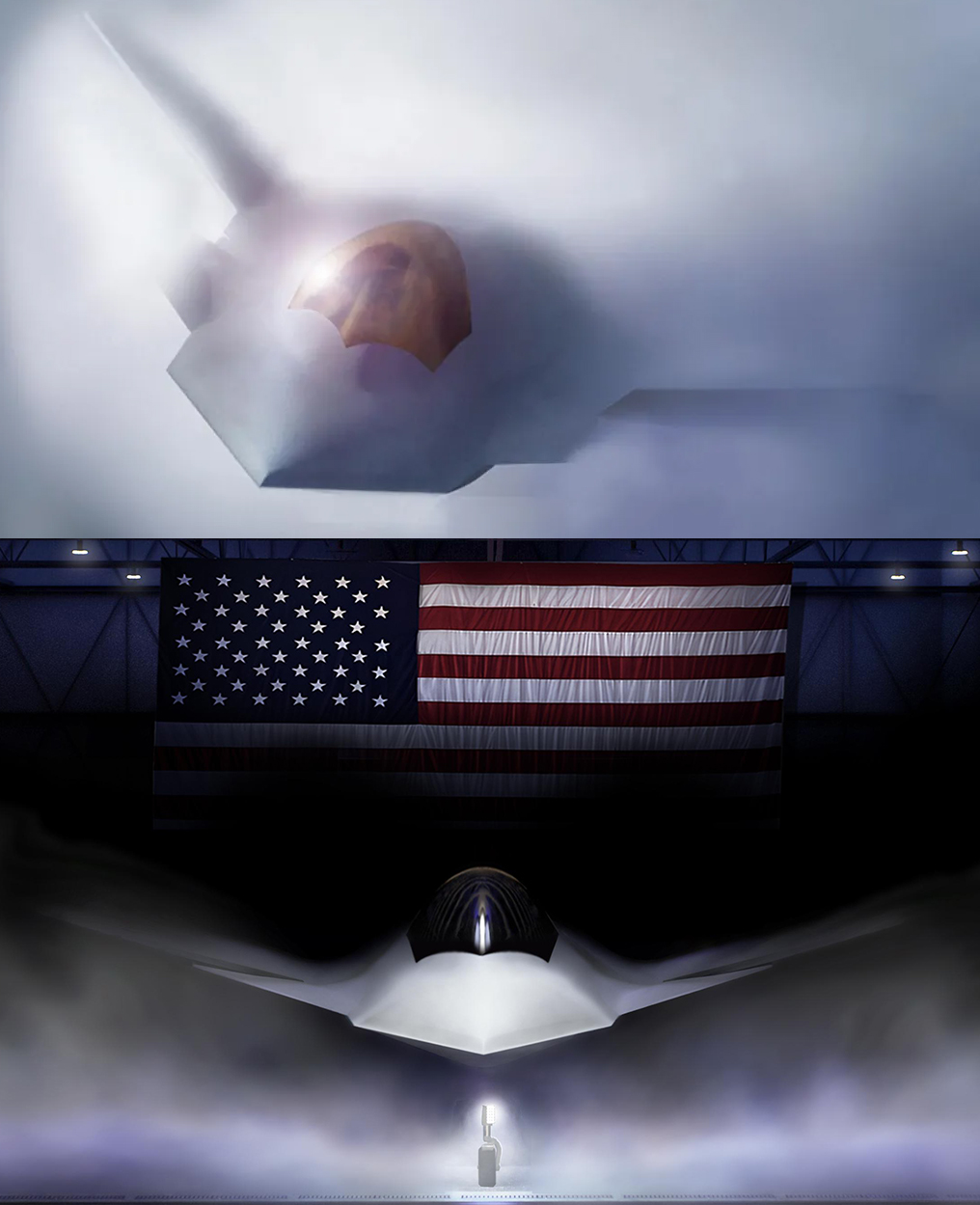
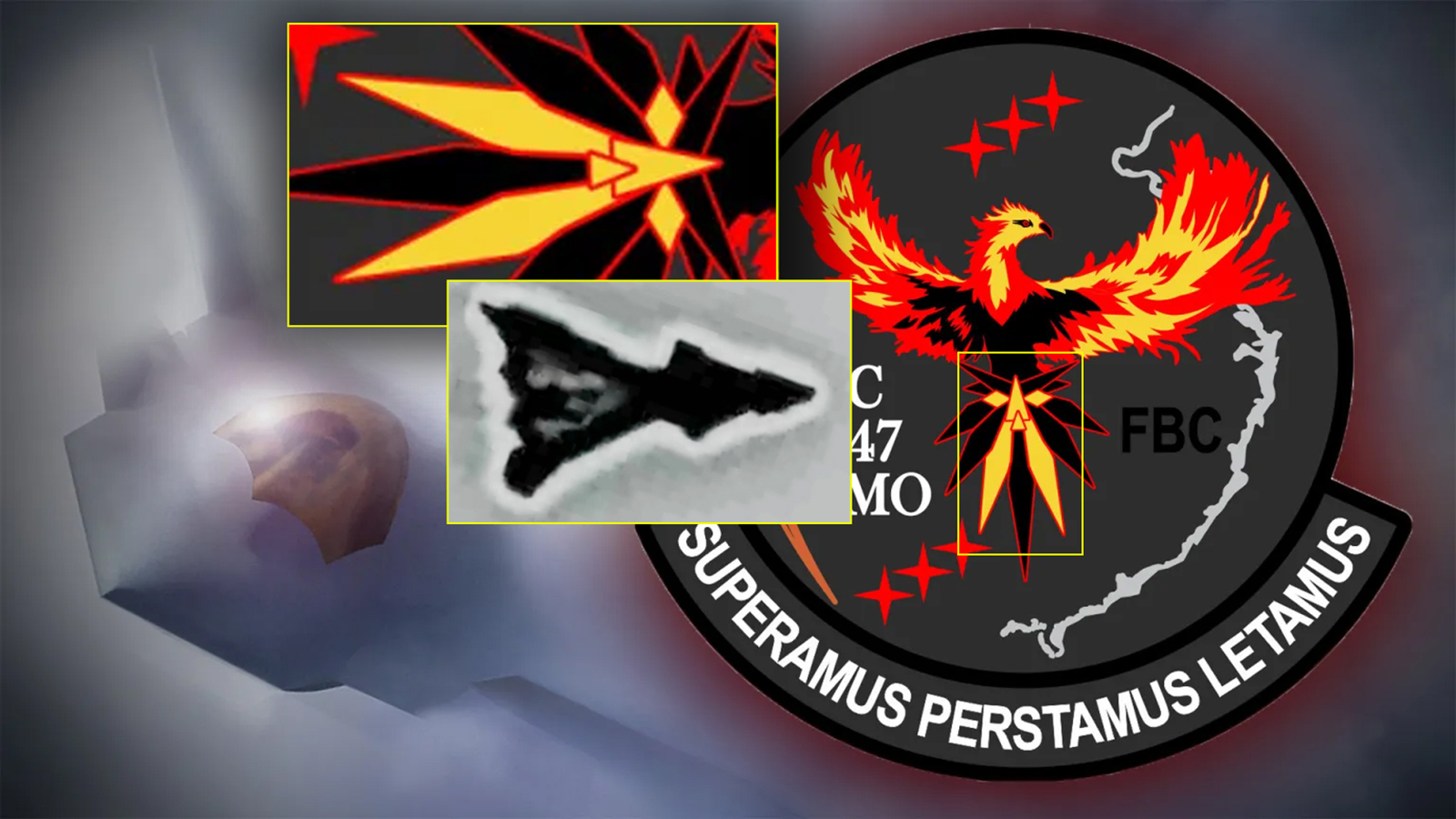
Inside the firebird motif of the F-47 patch, there is an exaggerated planform of what we see in Project Fear’s video of what is very likely Boeing’s NGAD demonstrator shot outside of Area 51. It also aligns with what we can extrapolate from the concept renderings of the F-47 that have been released.
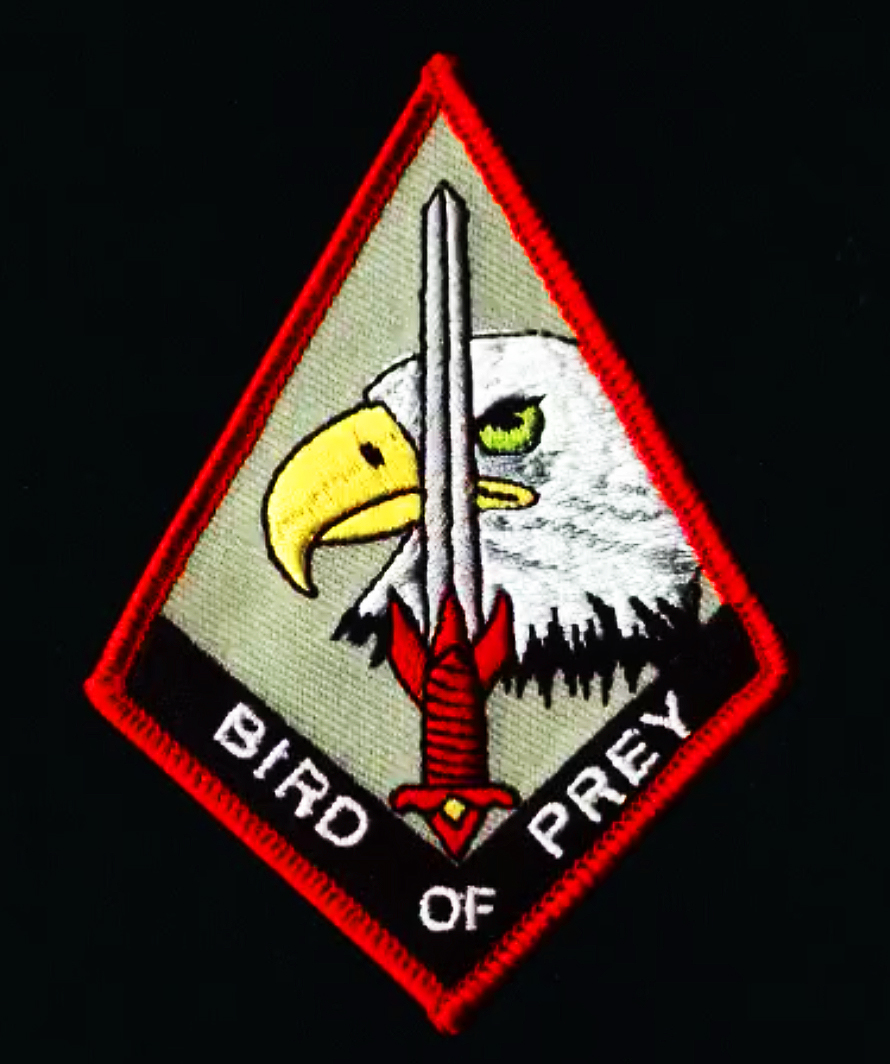
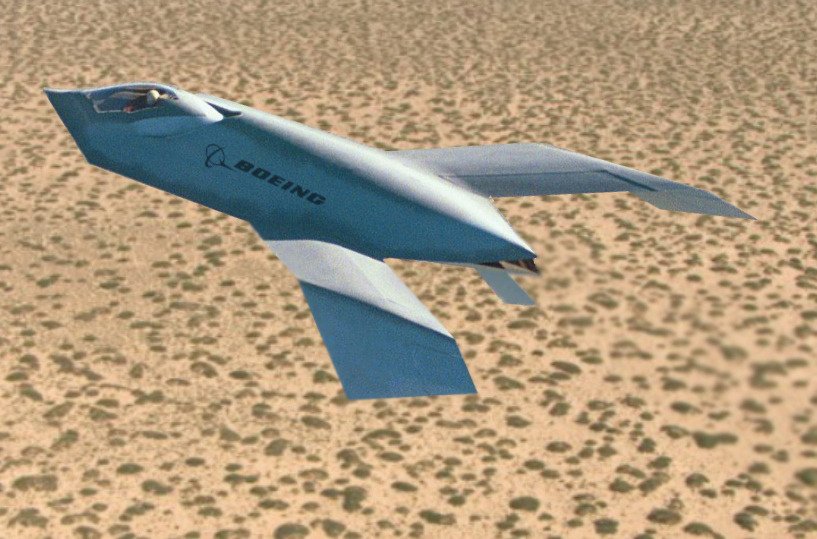
Mainly, the design includes forward canard foreplanes with a tapered central fuselage, rear-set and highly-swept wings, and no traditional tails. The wings have a high dihedral before drooping toward their tips, creating an appearance akin to the Klingon Bird of Prey from the world of Star Trek. That reference isn’t just my own. Boeing’s Bird of Prey from the 1990s clearly shares design similarities, especially in the wing area, as we originally stated after the first official concept art’s release. The Bird of Prey’s patch also cryptically shared its basic planform.
On the Bird of Prey patch, we see a traditional Klingon knife, made famous by Star Trek, with the blade’s hilt making up the Bird of Prey’s planform. In fact, the only detail to throw it off is the t-guard at the bottom of the handle, which appears like canards. Even the cockpit is there. Of course, it isn’t clear at this time when this patch began to circulate in the public domain or if it was after the Bird of Prey was declassified in late 2002. Regardless, in the F-47’s case, the demonstrator’s exact features remain closely guarded secrets, at least officially.
(Screenshot)
Attempting to decode or draw insights into the military’s notoriously cryptic classified program patches is hardly a new practice. Books like Trevor Paglen’s I Could Tell You but Then You Would Have to Be Destroyed by Me is an excellent example of this and the fascination around this unique blending of art, technology, and national security.
In years of reporting on these topics, I have been told multiple times that there is more in patches than many realize, including hints at designs of classified aircraft. This runs pretty counterintuitive considering the government’s extreme protocol for classification, but vague representations of general design concepts are far from giving up an actual blueprint of a classified aircraft. Nonetheless, it is fascinating to see the practice occur for two highly classified aircraft that are directly related, and it’s something we keep an eye on regularly, as well.
Still, with all this in mind, it may be time to take a look back at some of the most interesting patches floating around to see if an exotic planform of an aircraft could be hiding amongst their stitches.
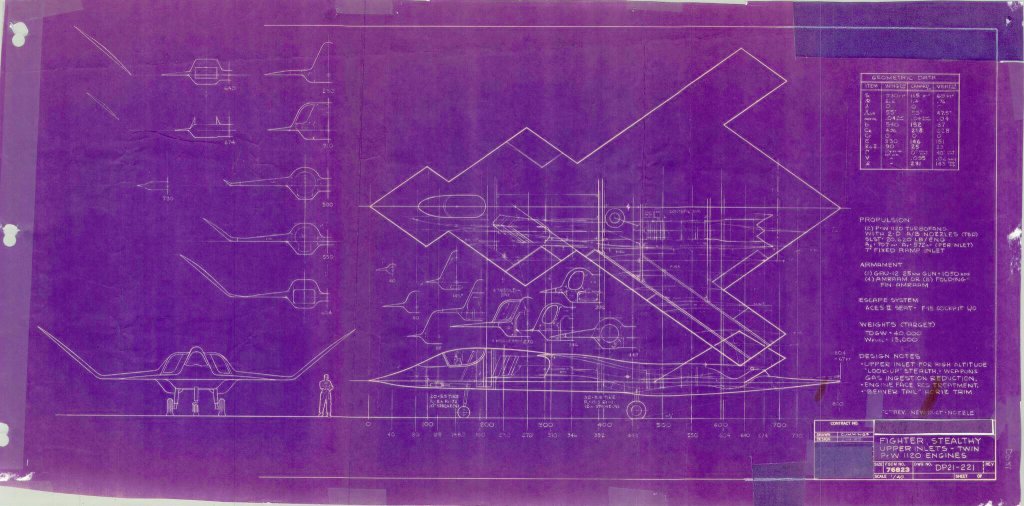
Yesterday, TWZ published an analysis of a thermal image purportedly showing a previously unseen advanced aircraft design, which appears to be a precursor to the U.S. Air Force’s forthcoming F-47 fighter from Boeing. The image, which went viral online and is from a video that has now been released, is said to have been captured near the U.S. military’s secretive Groom Lake test base, better known as Area 51. It turns out, as a number of our readers have pointed out, there may be some interesting similarities between this secret aircraft and a “Christmas tree” fighter design concept crafted decades ago by Darold Cummings, one of the top minds behind Northrop’s YF-23 Black Widow.
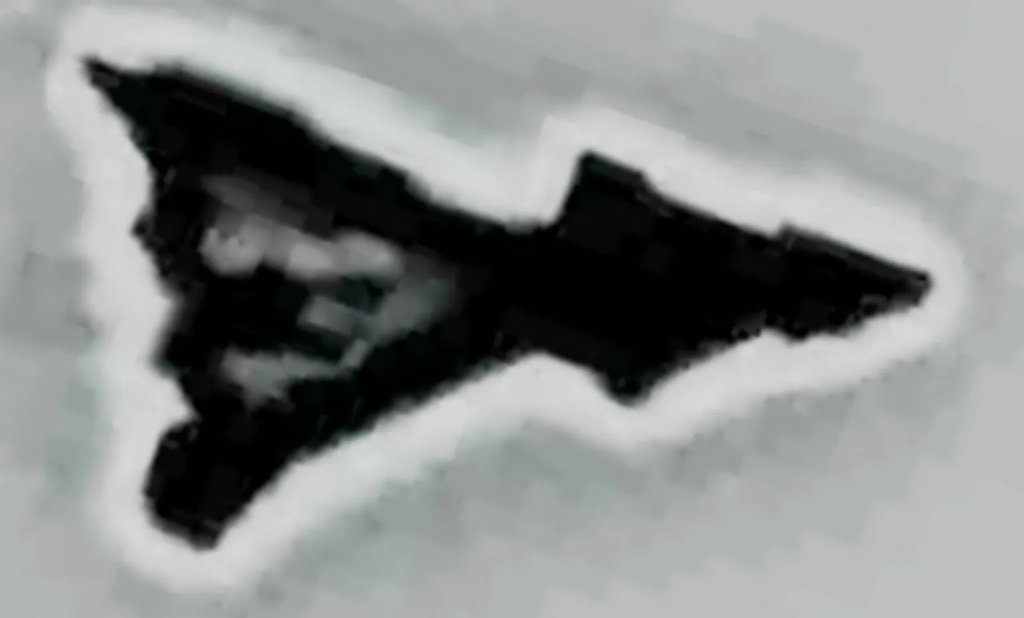
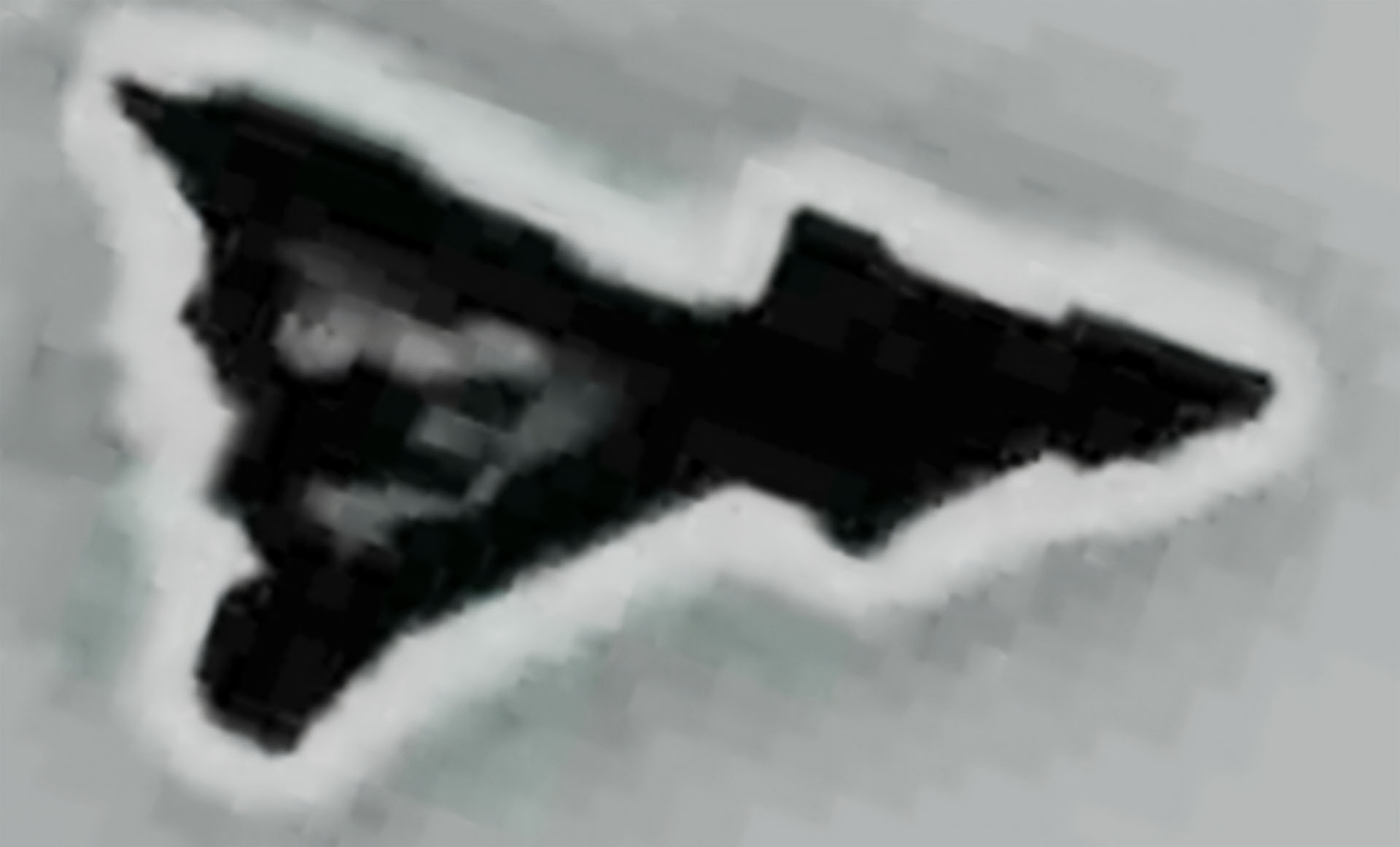
You can find our full initial assessment of what we may be seeing in the viral image, first posted online by the Project Fear YouTube channel earlier this week, here. What we saw initially, as shown below, appeared to feature what could be described as a “double arrowhead” profile to its forward fuselage. This is a very distinct design cue, but it could also be a result of the low quality of the image and the artifacts that come with consumer-grade thermal imagers, which was what the aircraft was recorded with.
A close-up look at what is visible in the viral thermal image. Capture via Project Fear
Project Fear has now released the full video it says it captured near Area 51, seen below, and it underscores the aforementioned points about image quality. So, it is possible the aircraft has a more traditional low-observable ‘shovel nose,’ instead. Nonetheless, the Christmas tree fighter is an interesting trip down lesser-known fighter development memory lane that is worth examining, in particular what such a unique nose configuration would provide an advanced fighter aircraft.
The full clip of the mysterious aircraft passing by starts at around 49:34 in the runtime of the video below if it does not automatically start playing at that point.
People are asking why it would be running a very bright light. Multiple reasons, could have had an emergency for all we know. But most likely, would be to keep its silhouette from being seen from certain aspects from the ground. Bright lights are established practice for… https://t.co/mxEvG2EUkz
“I was hired by Bob Sandusky in 1982 to be the Chief Configurator for the Northrop ATF [Advanced Tactical Fighter] program (YF-23). In early 1983 Bob said that Northrop had tried to develop a ‘4-spike’ (like the B-2) fighter, but it couldn’t be done, since a flying wing fighter was not possible,” Cummings wrote in his post on LinkedIn. “I told him I could design one, and he said to give it a try. The only way to accomplish this was with a series of highly swept (55 degree) surfaces over the entire length of the aircraft. The result was the DP-21, created in June of 1983.”
“4-spike” here essentially refers to the total number of radar cross-section hot-spots and where they are located, each pointing in a different direction in azimuth. The fewer ‘spikes’ a low-observable (stealthy) aircraft has, the easier it is to manage its radar signature, and to make it harder to detect and lock onto, but it’s also where those spikes are located that matter.
The blueprint of the DP-21 “Christmas tree” fighter concept. Darold Cummings
A four-spike design like the B-2 critically has nothing from the head-on aspect, as well as from the rear, which helps immensely with survivability. These are the most critical signature areas, especially the front as the aircraft is heading into hostile territory. Also, because these are located along the path of flight, these spikes can stay consistent on a threat radar as the aircraft moves directly toward or away from the sensor, and are not fleeting in nature like those from the side. So a four spike aircraft would be very attractive for a tactical fighter meant to persist in contested territory.
“I never considered this to be a serious contender for the ATF program, as the aircraft was unstable beyond 10 degrees angle of attack!” he also noted.
“Back in 1983, the ‘Christmas Tree’ DP-21 would have been difficult to fly. However, with modern flight control systems, this design could be controlled, even at high angle of attack,” Cummings told TWZ directly today after we reached out for more information. “Low observability is always better served with long edges on the design, so the small arrow-shaped foreplane is not ideal, but it still has low RCS characteristics, just not the optimum.”
“Wing shaping is always a trade-off for maximizing LO. Most of the trades have to do with the leading edge contour, which is a large contributor to signature,” he continued. “The canard has to be designed to be ‘ported’ during penetration, as this minimizes the signature. On the YF-23, the V-Tail was ‘ported’ in penetration for the same reason. This is certainly possible with modern flight control systems.”
“Ported” in this instance refers to keeping the control surface locked in the same geometric plane as the wing while cruising.
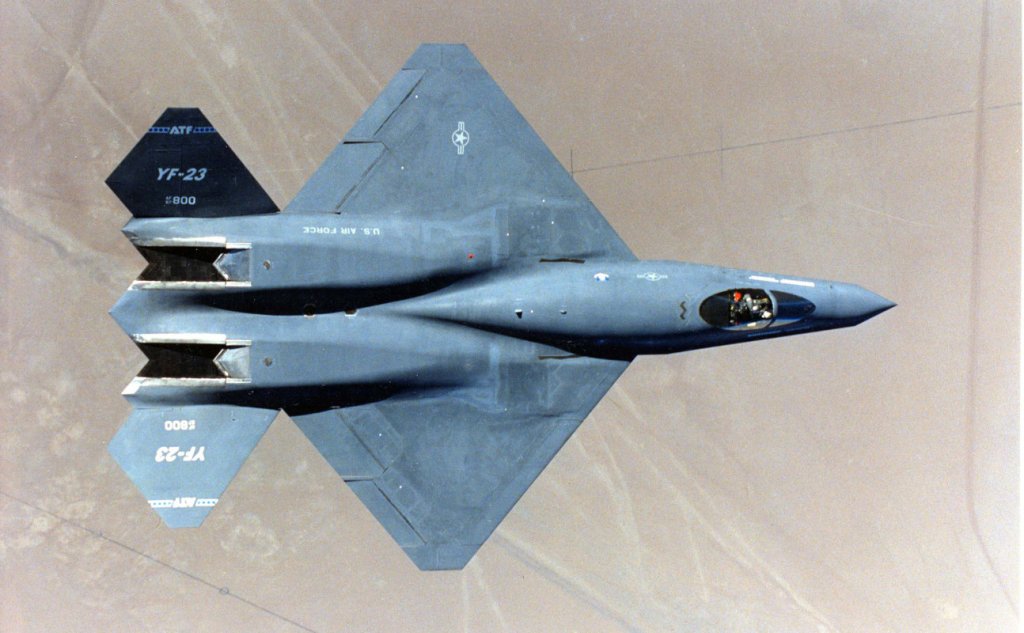
A top-down look at the YF-23 during a flight test. USAF
We also asked Cummings directly whether it was possible his DP-21 concept had an influence on what is seen in the viral thermal image, assuming it is authentic. And we asked for his take on what impacts Boeing’s experimental X-36 and Bird of Prey designs may have had on the F-47, as well.
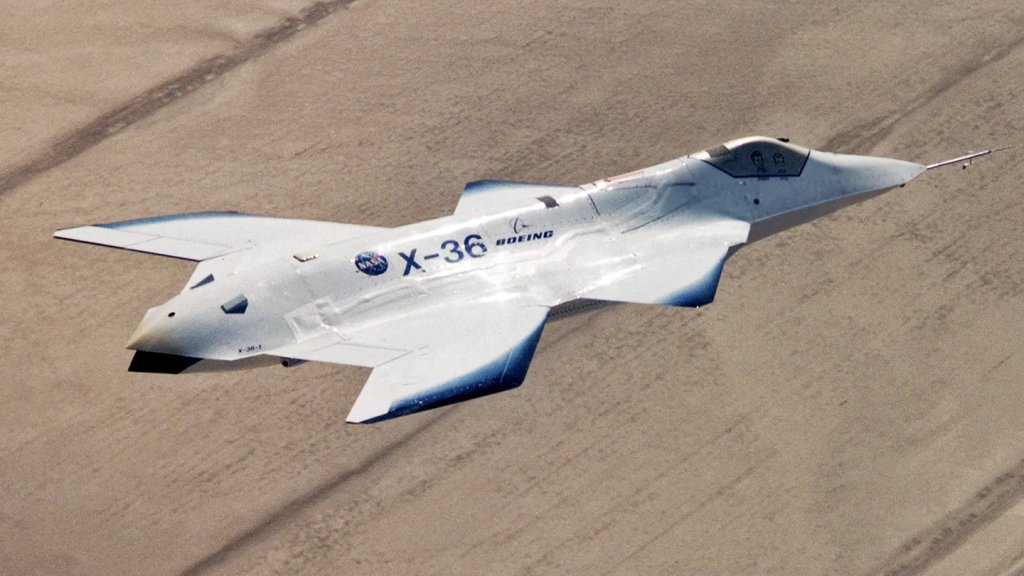
“My DP-21 aircraft image has been available publicly for quite some time, so it is possible it had some influence, but that is only speculation on my part,” he told us. “I believe the X-36 and Bird of Prey have both influenced the F-47 design. I have always been impressed by the X-36, as it seemed to be ahead of its time.”
Boeing’s X-36 demonstrator. NASA/Carla Thomas Boeing’s Bird of Prey. USAF
“The Groom Lake images are truly intriguing,” he also noted. “It is a viable concept.”
“I think the main thing to remember is that NO ONE thought a 4-spike design (like the B-2) was possible, and my DP-21 was an example of how it was possible,” he added. “A 4-spike design for the F-47 would truly be impressive!”
“The image shows an exotic design by any interpretation. The aft-set lambda-type wings appear to have a camber and wingtip droop, as on the Boeing Bird of Prey demonstrator. There are very large canard foreplanes — a feature that appears prominently on F-47 renderings and which we have written in detail about in the past. The broad nose, too, is something that has been included in depictions of the F-47, although we have really no idea to what degree these are based in reality. It’s worth noting that in this new thermal image, it has a distinctive double-arrowhead shape, tapering in again in front of the canards. Even the canards themselves may have more than one plane, with the outer tips being drooped, matching similar architecture as the wing. The fuselage then tapers down in the center before the wing roots begin.”
“The aircraft is very likely to be tailless, a feature common to most sixth-generation concepts seen so far. However, since it’s seen from below, we cannot be sure about this aspect of its configuration.”
“As for the powerplant, it is most likely a twin-engine design, like the F-47, a theory reinforced by the sawtooth-type trailing edge. There is no obvious suggestion of any exhaust plumes, which seems odd, but that could be the result of the sensor being used in combination with the aircraft’s power setting at the time of recording, as well as general thermal signature reduction capabilities that are part of the design.”
Beyond the nose end, there are still some very broad similarities in the shaping of the wing and main body of the aircraft seen in the footage and Cummings’ DP-21 concept.
As we noted yesterday, what is seen in the viral thermal image could be unrelated entirely to the F-47. The Navy has also been pursuing a carrier-based sixth-generation fighter, commonly referred to as F/A-XX, in recent years. There has been at least some crossover between F/A-XX and the Air Force’s NGAD effort. A rendering Boeing has shared of its proposed F/A-XX design looks very much in line with what has been shown of F-47 to date. Northrop Grumman is the other company currently competing to build the Navy’s sixth-generation carrier fighter, and has released its own renderings.
Boeing’s F/A-XX render. Boeing
We're bringing tomorrow’s horizon into focus, faster, stronger and ready when the warfighter needs it.#SAS2026pic.twitter.com/r0uORyR5kM
In addition, it should be said that official F-47 and F/A-XX renderings released to date will have been carefully manipulated to maximize security of the programs, both of which remain highly classified, and to provide disinformation to adversaries.
As an aside, Cummings also shared his take on a prospective navalized version of the F-47 in a separate post on LinkedIn last year. At that time he wrote:
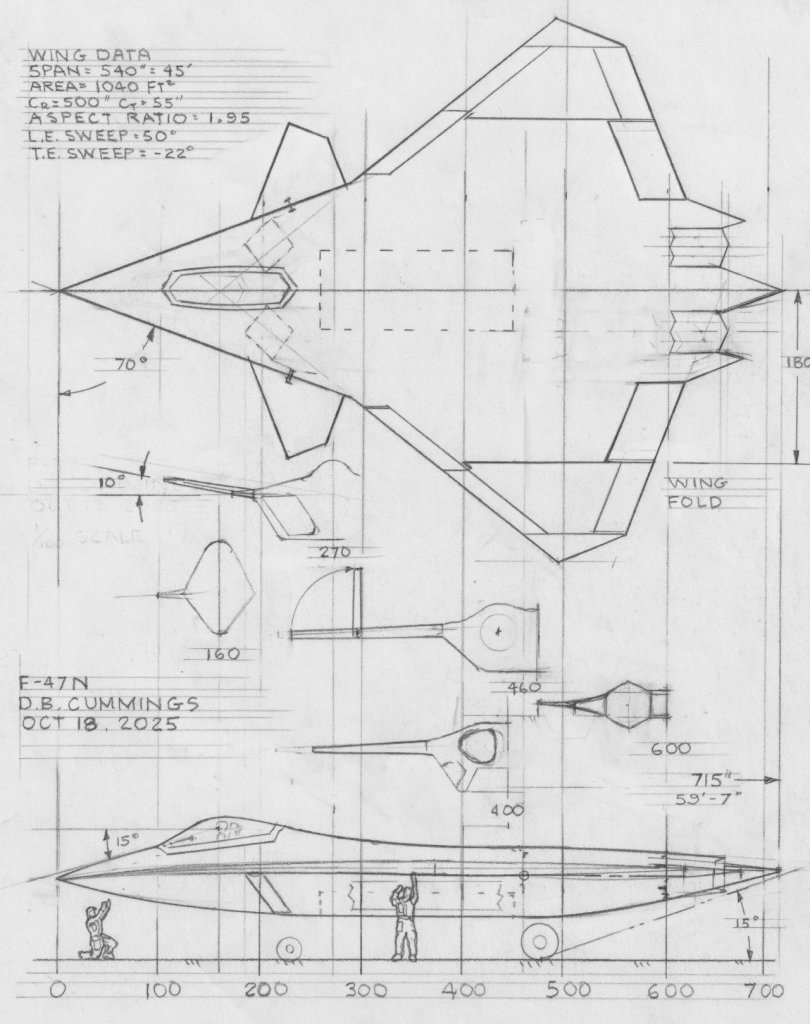
“I received a DM asking if I had envisioned a Navy version of my recent F-47 fighter concept, such as the F-35A to F-35C approach. I recently completed my F-47 Navy version, which I call the F-47N. However, the approach I took was somewhat different: The F-35C used a larger wing for low speed lift, whereas I used my original F-47 wing planform, and added a canard for more low speed lift and control. The canard design (inspired by the X-36), coupled with the Multi-Axis Thrust Vectoring (inspired by the X-44), provided a very reasonable first cut at a Navy version. In general, a canard layout has been treated as adding more radar signature to a fighter. However, on the YF-23 we found that if the all-moving surface (it was a V-tail on the YF-23) was kept “ported”, in this case aligned with the wing plane during cruise, the impact on LO was not a large impediment to signature reduction. The ability to keep the canard ported is achievable using thrust vectoring for trim in cruise and penetration modes.”
Cummings’ interpretation of the F-47 design at that time notably did not reflect his previous DP-21 concept. The X-44 design he mentioned is also known as the Multi-Axis No-Tail Aircraft (MANTA), and was derived from F-22. At least to our knowledge, the MANTA never came to be. The designation was recycled for an entirely unrelated flying wing-type drone, the existence of which was first reported by TWZ.
Darold Cummings’ drawing of his notional “F-47N.” Darold CummingsRenderings of the X-44A MANTA. Lockheed Martin/NASA
It’s also worth noting that the design in the newly emerged thermal video could be tied to one of many other programs, including uncrewed ones. Still, it is very much in line with what we would expect to see from a design related to the F-47 and it seems very likely this is the Boeing NGAD demonstrator, if the video is indeed authentic, which it appears to be.
It would be nice to say that we will have to wait and see whether this aircraft turns out to have a more traditional shovel-shaped nose, or even a mild Christmas tree-like design, but we may never see it again. Hopefully that is not the case, especially after the F-47 goes public, but the final design will have significant differences from its technology demonstrator forebears.
Special thanks to @ElectroFluidSys on X for bringing Darold Cummings’ posts on LinkedIn to our attention.
A thermal image purportedly shows a previously unseen aircraft design, said to have been captured when it was flying at night over the secretive Groom Lake facility, better known as Area 51. While the quality of the image is poor due to the sensor type that was supposedly used, from what we can see, the shape seems to be a relatively close match for what we know so far about the F-47 sixth-generation stealth fighter for the U.S. Air Force. This would point to it being the technology demonstrator ‘X-plane’ that served as a precursor to the contract being awarded to Boeing, although that is in no way a definitive assessment.
The image in question was first shared online by the Project Fear YouTube channel on June 3. The still image was promoted as a teaser for the full video that will be released tomorrow. It was published with the caption “A craft the public has never seen before.”
At this point, we need to be aware that there is no confirmation that the image is genuine, official or otherwise. We have reached out to the Air Force to try and establish its veracity, but they declined to comment.
However, the authenticity of the image and the forthcoming video was confirmed to TWZ by Anders Otteson, responsible for the Uncanny Expeditions YouTube channel, which explores classified locations at a distance around Nevada and California.
Otteson explained that he was approached by Project Fear, who was looking for advice in making a video outside Groom Lake.
“I’m generally happy to help other channels out, so I gave them a rundown on the gear I recommend buying, what specs are important, etc,” Otteson told us. “The thermal camera I suggested getting was the InfiRay HCH50R, and I can confirm that’s what this was shot with as I own one myself. I was out with them for their early filming and gave them a tour of some spots that I’ve had success spotting in the past. The following week is when they captured this aircraft.”
Otteson says the video was shot in the hills to the south of Rachel and that the aircraft was very low. He was not present during the sighting, which took place around two months ago, but Project Fear contacted him afterwards and shared the footage.
“I was obviously pretty excited when I saw it,” Otteson added.
While this may be the case, if the aircraft captured is real, the USAF likely shares the opposite sentiment.
Otteson also took to the r/area51 subreddit, where he further clarified his role and reiterated that the footage is, in his opinion, genuine.
“To be clear, my only involvement in this channel was an advisory role. I told them what equipment to buy and gave them general recommendations. I did go out with them but was not there at the time this clip was captured, though I was sent it immediately afterwards. I posted about this because I noticed some people calling it fake due to coming from a “paranormal” channel and wanted to clear that up. It is indeed real…” he wrote.
Otteson is certainly familiar with sightings of this kind. Earlier this year, he claimed to have captured thermal imagery of a ‘flying Dorito’-shaped aircraft that was also operating in the restricted airspace around Groom. The general triangular planform captured has a long history of rumored classified development going back to the dawn of stealth technology.
Newly released infrared footage dated January 14, filmed by videographer and explorer Anders Otteson, who runs a channel called Uncanny Expeditions on YouTube, shows an unidentified triangular-shaped aircraft flying over Area 51 and the Nevada Test and Training Range. pic.twitter.com/kQMmvI2tur
Among the many online discussions about this new image, it’s impossible not to make the connection with the Next Generation Air Dominance (NGAD) program, which Boeing won with its F-47 sixth-generation stealth fighter. That aircraft is now in early production for the U.S. Air Force.
An official rendering of the Air Force’s sixth-generation fighter, the F-47. U.S. Air Force graphic
The image shows an exotic design by any interpretation. The aft-set lambda-type wings appear to have a camber and wingtip droop, as on the Boeing Bird of Prey demonstrator. There are very large canard foreplanes — a feature that appears prominently on F-47 renderings and which we have written in detail about in the past. The broad nose, too, is something that has been included in depictions of the F-47, although we have really no idea to what degree these are based in reality. It’s worth noting that in this new thermal image, it has a distinctive double-arrowhead shape, tapering in again in front of the canards. Even the canards themselves may have more than one plane, with the outer tips being drooped, matching similar architecture as the wing. The fuselage then tapers down in the center before the wing roots begin.
The Boeing Bird of Prey. U.S. Air Force
The aircraft is very likely to be tailless, a feature common to most sixth-generation concepts seen so far. However, since it’s seen from below, we cannot be sure about this aspect of its configuration.
As for the powerplant, it is most likely a twin-engine design, like the F-47, a theory reinforced by the sawtooth-type trailing edge. There is no obvious suggestion of any exhaust plumes, which seems odd, but that could be the result of the sensor being used in combination with the aircraft’s power setting at the time of recording, as well as general thermal signature reduction capabilities that are part of the design.
Certainly, the official renderings of the F-47 have a superficial likeness to the X-36 Tailless Fighter Agility Research Aircraft, designed to be representative of a low-observable high-performance fighter.
An overhead view of the X-36. NASA
As Bill Sweetman, former editor-in-chief of Aviation Week and long-term observer of stealth programs, pointed out, the F-47 renderings also recalled some of the work of the late Alan Wiechman, who joined McDonnell Douglas from the Lockheed Skunk Works in the mid-1980s. He was responsible for the X-36 and the Bird of Prey. Sweetman also noted that, according to Wiechman’s obituary, he had ‘most recently’ been an adviser on stealth to the Air Force Rapid Capabilities Office.
So while everyone waits for the video of the A51 mystery plane, what did I write in March of last year?
"There are aspects of the artwork that call to mind the work of the late Alan Wiechman, who joined McDonnell Douglas… in the mid-1980s and headed the company’s stealth work… pic.twitter.com/9xJZK7CAOw
Returning to the F-47, as far as we know, it has not flown yet, with the first example being under construction in St. Louis. Its first flight is expected in 2028.
On the other hand, as noted earlier, demonstrators associated with the NGAD program have taken to the air.
In 2020, it was first disclosed that at least one demonstrator design had already been flying for some years on behalf of NGAD.
Frank Kendall, when he was Secretary of the Air Force, also spoke openly about “X-planes,” in the plural, when describing the evolution of what became NGAD.
DARPA and the Air Force meanwhile confirmed that two X-planes were built for the Aerospace Innovation Initiative, and that they first flew in 2019 and 2022, respectively. Kendall further added that these were entirely experimental demonstrator aircraft and not reflective of a production prototype for a “tactical design.” They were built sometime after 2017, he said.
Frank Kendall, when he was Secretary of the Air Force. U.S. Air Force Secretary of the Air Force Frank Kendall. USAF
While we know that Boeing and Lockheed both built demonstrators, it’s possible that as many as three NGAD demonstrators were completed. This would reflect the fact that, at one point, three prime contractors or teams were involved, the other candidate being Northrop Grumman, which dropped out around 2023.
Now that the F-47 is in the engineering and manufacturing development (EMD) phase, we have speculated that the Boeing demonstrator and probably even the Lockheed Martin one are still doing test efforts, with the Boeing aircraft logically being used for risk reduction work while the EMD work continues.
Then there is the other NGAD effort being pursued separately by the U.S. Navy. The Navy program is also based around a crewed sixth-generation combat jet, known as F/A-XX. We know there is at least some crossover between the Air Force and Navy programs. The Navy has been especially tight-lipped about its F/A-XX program, and the aircraft seen could be a test asset related to it. In fact, it could be a direct descendant of the design that gave birth to the F-47, as Boeing’s renderings of their supposed entrant into the competition resemble the F-47. Again, we must state that renderings will be carefully manipulated prior to release to maximize security of the program and provide disinformation to adversaries. Still, the common through-lines are clearly there for the Boeing type.
Boeing’s F/A-XX render. Boeing
It’s also worth noting that the aircraft spotted on the thermal device does not match the aircraft seen in a satellite image at Area 51 during the time when the test effort for NGAD was underway. This could have been the Lockheed demonstrator or something else entirely.
Another possibility is that the aircraft in the thermal image is not a crewed next-generation fighter at all, but rather an advanced uncrewed combat air vehicle (UCAV). The U.S. military has invested heavily in stealthy drone programs in recent years, including highly classified systems designed for reconnaissance, electronic warfare, and loyal-wingman operations alongside crewed aircraft. Given the limited quality and single perspective of the thermal image, plenty of features could be misleading. It is therefore possible that the object is an experimental Collaborative Combat Aircraft or other uncrewed technology demonstrator rather than a prototype of a future sixth-generation fighter. However, while drones come in all configurations, the complexity of this aircraft design and its similarities to what we know about the F-47 make it being an unrelated uncrewed platform less likely. Area 51 also has many programs running at any given time, the vast majority of which we will never know about, so there have been and are many exotic designs that visit the airspace above the base for various reasons.
We can also say for sure that the aircraft in the new Area 51 image is fundamentally very different to the tailless new-generation combat aircraft designs that China is currently testing, the J-36 and the J-XDS, both of which you can read more about here.
A composite showing some of the images of the J-36 that have previously emerged. Chinese Internet via XA pair of previously emerged images of the J-XDS. Chinese internet via X
It should also be noted that, provided the imagery is legitimate, its appearance at this point could well be a byproduct of an uptick in flight-test activity at Groom and elsewhere. This is something we had expected since the new era of great power competition began, and seems to be really metastasizing. With so many new technologies and systems in development, including entirely new categories of air combat aircraft, a whole new premium and level of activity is being placed on the base, as well as at non-classified facilities, like Edwards AFB.
At the same time, public insights into the activities at the already notoriously opaque base are becoming harder. In a recent land grab, the observation point at Tikaboo Peak — previously, the closest existing viewpoint into Area 51 — has been closed off in another huge land grab by the USAF.
So, as it sits, it isn’t clear exactly what we are seeing, if indeed it is a real aircraft, but there are strong indications that this is our first glimpse of the winning NGAD entrant and a preview of what the F-47 will look like when it finally thunders out of the shadows.
The U.S. military has confirmed the loss of an “MQ-1” drone to Iranian fire this weekend. This has led many to question whether American forces are flying the venerable Predator again, some eight years after the type’s official retirement. It is also very possible, if not likely, that the uncrewed aircraft in question was an MQ-1C Gray Eagle, a related but different design still in active U.S. Army service. Regardless, rebooting U.S. Predator operations might still be an attractive course of action, especially to help plug gaps left by dozens of MQ-9 Reaper losses to Iran and the Houthis in Yemen, but actually doing it may be harder than it seems.
American forces “conducted self-defense strikes on Iranian radar and command and control sites for drones in Goruk, Iran, and Qeshm Island this weekend,” according to a brief press release that U.S. Central Command (CENTCOM) issued late yesterday. “The measured and deliberate strikes occurred on Saturday and Sunday in response to aggressive Iranian actions that included the shootdown of a U.S. MQ-1 drone that was operating over international waters. U.S. fighter aircraft swiftly responded by eliminating Iranian air defenses, a ground control station, and two one-way attack drones that posed clear threats to ships transiting regional waters.”
Thousands of U.S. service members at sea, in the skies, and from land are supporting the ongoing U.S. blockade against Iran. As of June 1, CENTCOM forces have redirected 121 commercial vessels and disabled 5 to ensure compliance. pic.twitter.com/BDtAjp0qOF
“No American service members were harmed,” yesterday’s release added. “CENTCOM will continue to protect U.S. assets and interests in response to unwarranted Iranian aggression during the ongoing ceasefire.”
What did Iran actually shoot down?
In response to a direct query from TWZ, CENTCOM declined to say whether the “MQ-1” mentioned in the release was a Predator or Gray Eagle. We also reached out to the U.S. Air Force to ask if it had lost a Predator over the weekend, and were directed to contact CENTCOM. We contacted the Army to ask if one of its Gray Eagles was shot down, as well, and were redirected to the Pentagon.
Army aviation units with MQ-1Cs are known to be deployed in the Middle East. In April, the Air Force notably released several pictures of Gray Eagles somewhere in the region, which misidentified them as Predators.
A U.S. Army MQ-1C seen being prepared for a mission somewhere in the Middle East on April 18, 2026. The official caption for this picture erroneously says the drone is an MQ-1 Predator. USAF/Master Sgt. James Cason
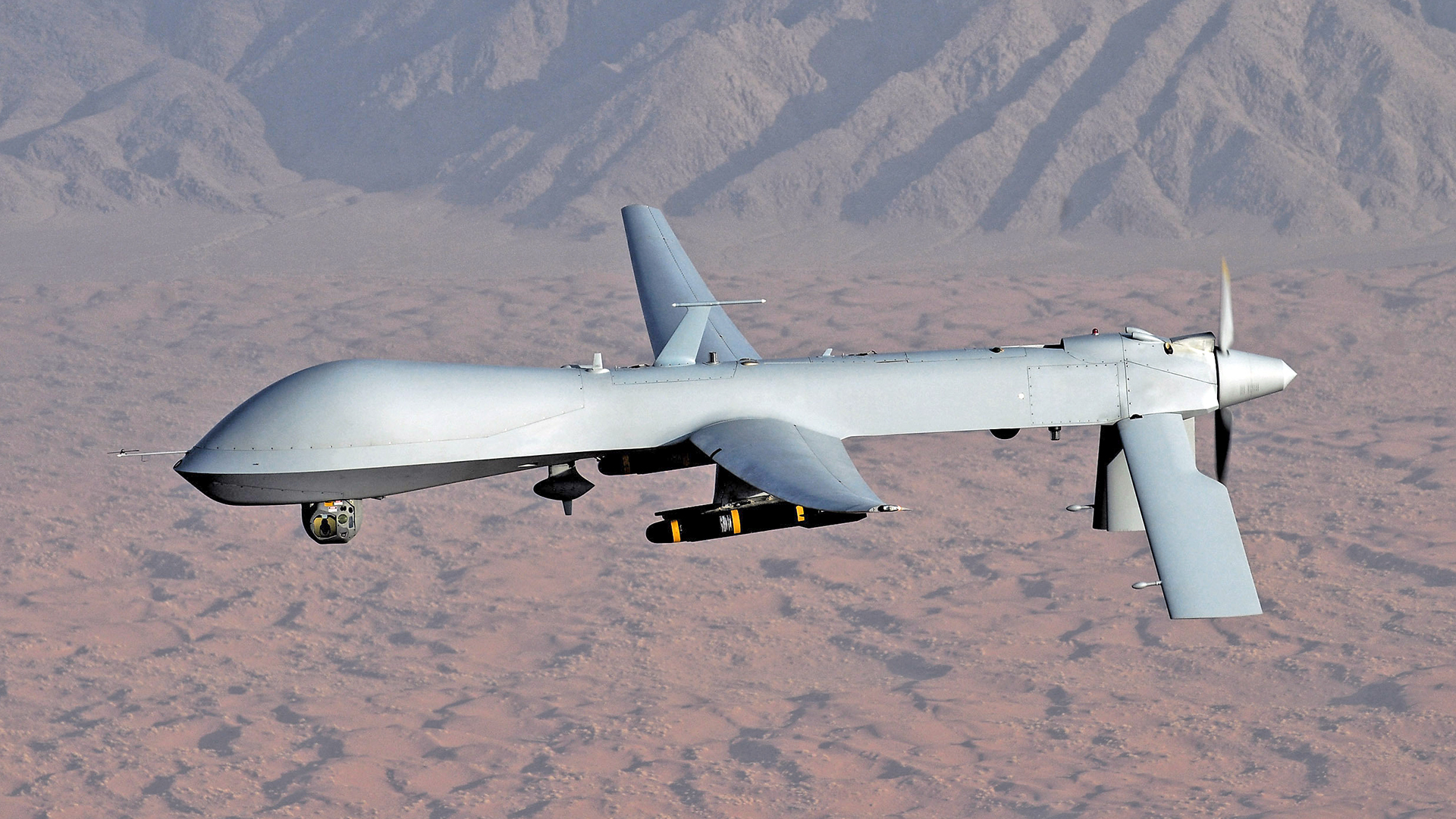
The AP initially reported that the drone Iran shot down was a Predator, but this appears to have been based on CENTCOM’s use of the MQ-1 designation in the press release and not confirmed. The outlet’s story originally said “the U.S. Air Force no longer flies the MQ-1 Predator, the U.S. Army still does,” which was inaccurate, and that passage no longer appears in the piece. While the Gray Eagle is derived from the Predator and has the related MQ-1C designation, it is a distinctly different design more tailored to the Army’s needs. This includes the ability to operate with a smaller logistical footprint and lower crew training requirements.
The U.S. military says it is targeting Iranian radar and drone control sites after Tehran shot down an American MQ-1 Predator drone over the weekend. Meanwhile, Kuwait says its air defenses opened fire to intercept incoming drone and missile fire. https://t.co/b6JyHHBCLa
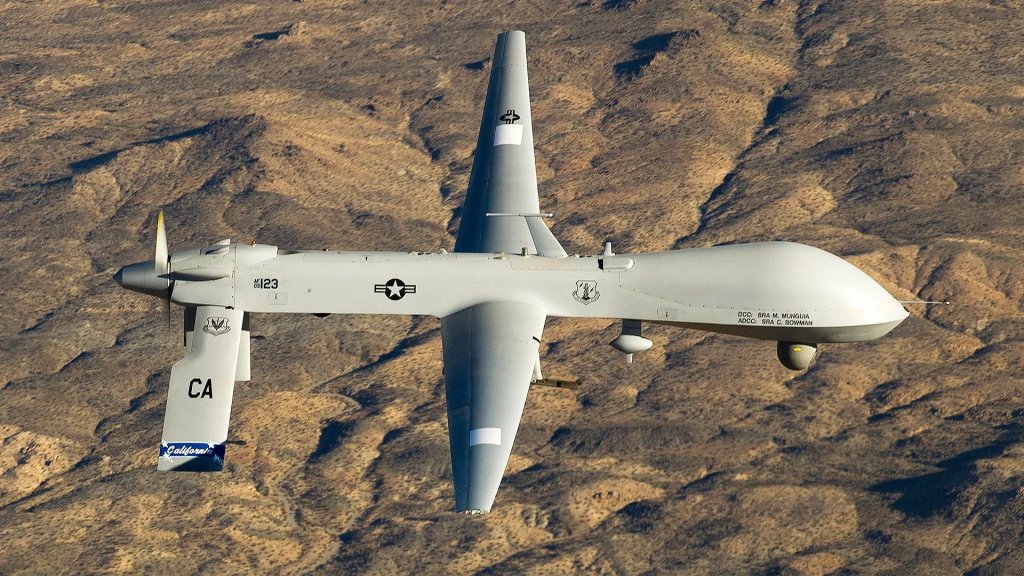
A stock picture of a U.S. Army MQ-1C Gray Eagle. US Army
For its part, Iran has also described what it shot down simply as an “MQ-1,” and has released a video below that it says shows the engagement, as seen through an infrared camera. However, the footage is extremely low resolution, and it is impossible to tell what type of drone it might show. Iranian authorities (as well as the Houthis) routinely release similar, but generally higher-quality clips after claimed shootdowns.
Iran’s IRGC Aerospace Force Downs US MQ-1 Drone Over Territorial Waters
Iran’s IRGC Aerospace Force released the video of detection and elimination of a US MQ-1 drone on early Sunday, after it entered Iranian territorial waters with hostile intent. https://t.co/h8cEPiBKde
— Tasnim News Agency (@Tasnimnews_EN) June 1, 2026
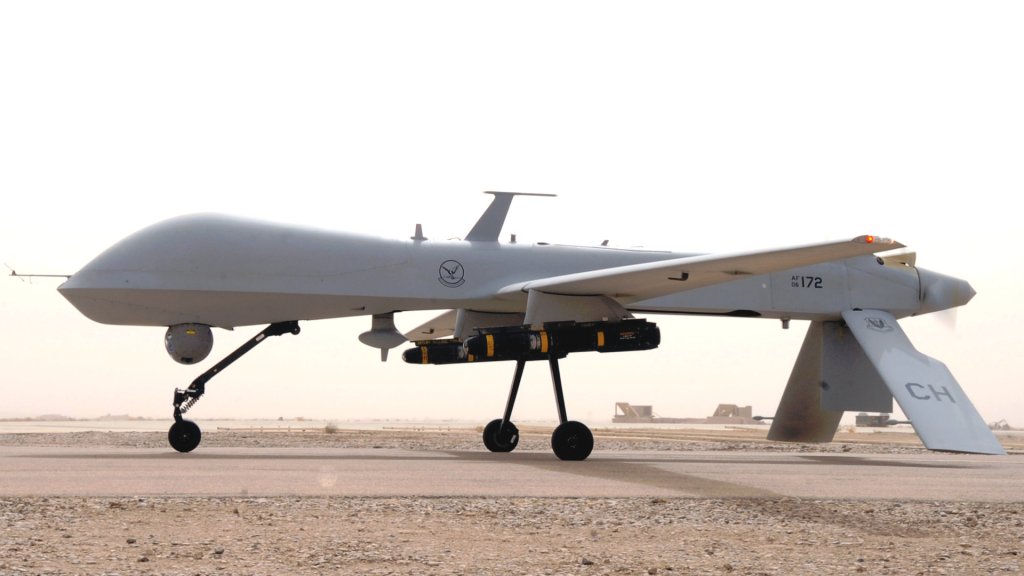
Officially, the Air Force stopped operating the MQ-1 Predator in 2018. As of September 2024, there were 15 MQ-1Bs in storage at the boneyard at Davis-Monthan Air Force Base in Arizona, according to data the 309th Aerospace Maintenance and Regeneration Group (AMARG) previously released. TWZ has also reached out to the Air Force for an updated inventory of Predators in storage, and to ask whether or not any retired examples have been returned to service.
A stock picture of an MQ-1 Predator in U.S. Air Force service. USAF
In addition, TWZ has asked General Atomics, the company behind the Predator and the Gray Eagle, as well as the MQ-9 Reaper, for comment.
Factoring in MQ-9 Reaper losses
Despite not yet having an official confirmation one way or the other, it still seems more likely that what Iran shot down was a Gray Eagle, not a Predator. Still, there remains the potential for the U.S. to have resumed Predator operations, possibly on a contractor-owned and/or operated basis, or that it may be considering doing so in the near future. There is one factor in particular that could be a key driver here now, and that is MQ-9 losses.
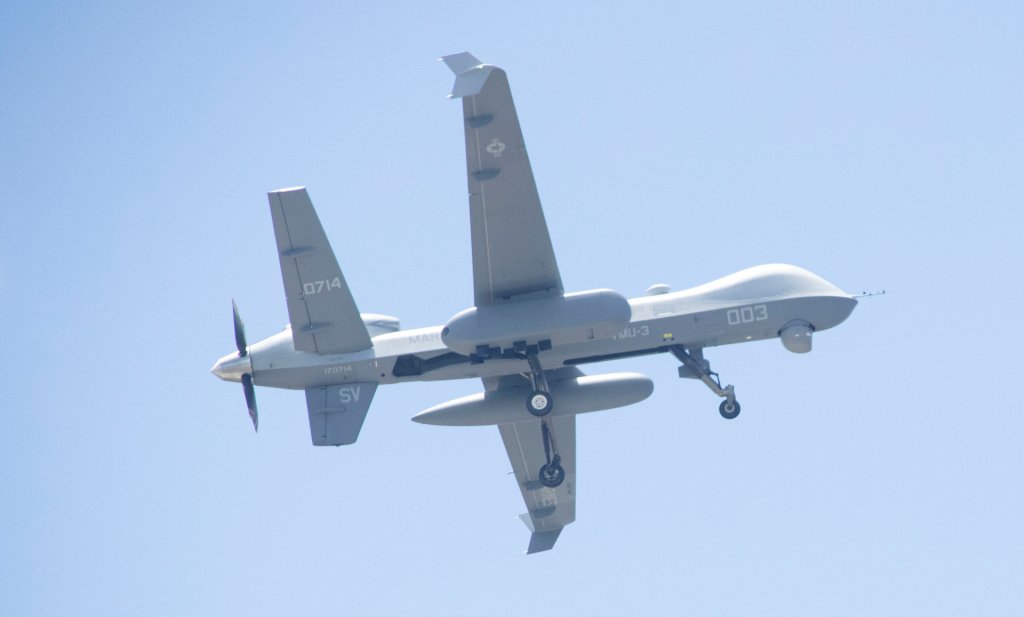
A stock picture of a U.S. Air Force MQ-9 Reaper. USAF
At a recent hearing, Air Force Chief of Staff Gen. Kenneth Wilsbach had called the Reaper “perhaps the most valuable player” in the latest conflict with Iran. In early March, we commented on how it appeared MQ-9 strikes were by far the most numerous attacks featured in CENTCOM’s ‘highlight’ reels during the conflict.
MQ-9 Reapers appear do be doing a LOT of the heavy lifting against mobile ground targets and vessels in Epic Fury.
However, in May, Air & Space Forces Magazine reported that “nearly 30 MQ-9 Reapers have been lost in the course of those operations,” citing “people familiar with the matter.” On April 9, CBS News said that tally had already risen to “up to 24” Reapers since the fighting began in February, citing unnamed U.S. officials.
This is all on top of the loss of dozens more MQ-9s to Iranian-backed Houthi militants in Yemen in recent years. The Houthis separately claimed to have shot down another U.S. Reaper just this past weekend.
pic.twitter.com/9R4F0eBdHQ Fresh video evidence is circulating of a US MQ-9 Reaper drone being intercepted and brought down over Yemen’s Marib Governorate. Houthi sources claim responsibility. This is developing rapidly today.
Air Force Lt. Gen. David Tabor, Deputy Chief of Staff for Plans and Programs, told members of Congress at a hearing on May 13 that the service’s MQ-9 fleet had dwindled to 135 aircraft. This is down from the 165 Reapers the service said were in inventory as of the start of Fiscal Year 2026, according to official budget documents. The size of the fleet had already shrunk from 231 at the start of Fiscal Year 2025.
“We are concerned about how they’ve attrited,” Tabor said at that time, according to Air & Space Forces Magazine. “We’re looking at options to buy back as many of the MQ-9As as we possibly can right now, so there’s a bit of a short-term effort to buy back things immediately, in this fiscal year.”
“We are not divesting the MQ-9,” Secretary of the Air Force Troy Meink also said separately on May 20, per the same report from Air & Space Forces Magazine. “We have had some losses in that aircraft, and we’re working to fill those losses, but in parallel, we are looking at what is the follow-on to the MQ-9 aircraft.”
It is also worth noting here that the U.S. Marine Corps has acquired its own much smaller fleet of Reapers in recent years, and plans to operate the type for the foreseeable future. The Central Intelligence Agency (CIA) also operates Reapers, and has flown Predators, at least in the past.
An MQ-9 Reaper in U.S. Marine Corps service. USMC
Last month, Air & Space Forces Magazine reported that General Atomics had “less than 10 new or company-owned MQ-9As to offer to the Air Force,” but that “there are a number of decommissioned Reapers that could be brought back online and refurbished by the company,” citing company spokesperson C. Mark Brinkley.
The Reaper, also more formally known as the MQ-9A, is otherwise out of production. General Atomics has moved on to the MQ-9B, an evolved design with significant differences from its predecessor. Any new Air Force purchases of drones in this family would have to be of the new version.
TWZ has also reached out to the Air Force with questions about Reapers in storage and any efforts to return them to service.
Could Reaper losses prompt a Predator comeback?
The scale of MQ-9 losses, as well as the continued heavy use of those drones, brings us back to the possibility of returning Predators to service, even if this has not happened as of yet. Before their official retirement in 2018, questions had been increasingly raised about the risks of flying Predators in anything but permissive airspace.
An MQ-9 seen carrying a self-protection pod under its central fuselage during a test. General Atomics
More recently, the Air Force has shown a willingness to accept significant MQ-9 losses. Furthermore, many of the missions that Reapers are tasked with today could still be performed, at least to a degree, by Predators with an equivalent level of risk.
The piston-engined Predator is a smaller, shorter-ranged, lighter payload, and lower-performance design overall compared to the turboprop Reaper. At the same time, this would also be mitigated by the geography of the current operating environment in the Middle East vis-a-vis Iran, where the distances between available bases and likely operating areas wouldn’t be too far. This would be especially true for sorties in airspace over and around the Strait of Hormuz. As CENTCOM said, the “MQ-1” shootdown this weekend occurred somewhere over “international waters.”
The U.S. military previously used Predators exactly this way to monitor Iranian activities in and around the Persian Gulf from bases in the region. An Iranian Su-25 Frogfoot ground attack jet notably shot at an MQ-1 flying over that body of water back in 2012. That is just one example of Iranian harassment of U.S. drone operations in that timeframe, which got to be so bad that F-22 Raptors had to be called in to ward off Tehran’s tactical jet crews.
Beyond their continued ability to conduct surveillance and reconnaissance missions, Predators can carry a pair of AGM-114 Hellfire missiles. The Hellfire continues to be a very relevant weapon, including for use against small Iranian boats, including ones capable of firing anti-ship cruise missiles or laying mines. Predators could fire them at missile and drone launchers, road-mobile air defense systems, and other Iranian assets on land, too.
A picture of a Hellfire-armed MQ-1 Predator from circa the late 2000s. USAF
Though the MQ-9 can carry a wider selection of precision-guided munitions, Hellfire has remained a key element of that drone’s arsenal, too, including in recent operations against Iran.
The video below includes a clip of an Iranian Ghadir class diesel-electric midget submarine being struck by what has been confirmed to be an AGM-114 Hellfire missile, likely fired by an MQ-9.
U.S. forces are degrading the Iranian regime's ability to project power at sea and harass international shipping. For years, Iranian forces have threatened freedom of navigation in waters essential to American, regional and global security and prosperity. pic.twitter.com/gIBN02mowh
Reapers can carry much more ordnance per sortie than the Predator, but the latter could still provide a useful boost in interdiction capacity even with a smaller payload. There is an argument to be made that interdiction would actually be a better role than surveillance and reconnaissance for any remaining Predators. The older drones could be treated as being more expendable than their Reaper cousins, and more readily sent to hunt targets in higher-risk environments as a result.
There is a question of what kinds of upgrades might be necessary in order to return Predators to active duty, such as new datalinks to connect to more modern networks and ground stations. We also do not know what new training might be required to operate them within the context of currently available infrastructure in the Middle East, or anywhere else.
It’s also worth noting that other branches of the U.S. military beyond the Air Force could support a return of Predators to operational service, as well. The Army was actually originally the main operator of the MQ-1, as you can read more about here.
Back in the late 2010s around the Predator’s retirement, the Air Force confirmed to TWZ that there were active discussions about transferring retired MQ-1s to the Navy, either for use by that service or the U.S. Marine Corps. There is no clear indication the Navy or the Marines operated Predators in the end. At around the same time, the Navy was helping lay the groundwork for what ultimately became the Marines’ MQ-9 fleet.
An early variant of the Predator drone flies near the U.S. Navy’s Nimitz class aircraft carrier USS Carl Vinson during a test in 1995. U.S. military
That being said, as TWZ wrote at the time, the Air Force’s engagement with the Navy underscored how the Predator still offered relevant capability in a variety of operational contexts. We also noted that the steady miniaturization of sensors and other systems could open up new possibilities for the older MQ-1s.
If it is true that there were only 15 MQ-1Bs left in storage as of 2024, there is a separate question of what happened to the many dozens of other Predators the Air Force had in inventory when the type was retired. TWZ had previously raised the additional possibility that Predators could be employed as targets for live-fire training, as well as research and development and test and evaluation activities, or even converted into one way attack munitions.
What we do know is that MQ-9 remains in very high demand in the Middle East, now further driven by operations against Iran that continue to grind on. We also know that the Air Force has sustained what it has itself described as a concerning level of Reaper losses in recent years. It is unclear how many MQ-9s are out there for the service to ‘buy back’ or when its latest plans for a successor to the Reaper might bear fruit.
Even if the U.S. military has not currently put any Predator drones back on active duty, returning even a relatively small fleet of them to service might still be worth considering as a way to meet operational needs and ease pressure on the hard-hit MQ-9 fleet.

 Login
Login