Reading view

Israel puts Palestinian doctor in solitary confinement after 17 months held without charge

Dr Hussam Abu Safiya now in cell barely big enough to sit in, says son, after UN experts demanded his release in March

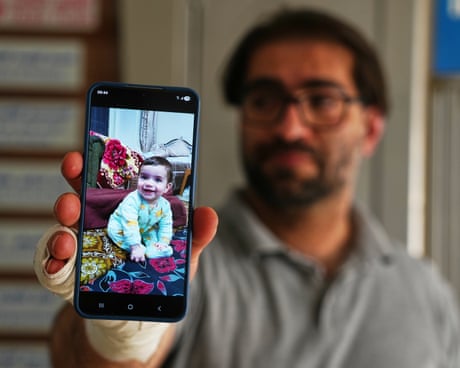
The son of a prominent Palestinian doctor who was detained by Israeli forces in Gaza in late 2024 and held for more than 500 days without formal charges has spoken of his deep concern for his father’s wellbeing after he was transferred without explanation to solitary confinement in a maximum-security prison.

Dr Hussam Abu Safiya, the director of Kamal Adwan hospital in northern Gaza, was detained at work on 27 December 2024. Physicians for Human Rights Israel said last week it had received information indicating that the 53-year-old had been transferred from Ketziot prison to Ramon prison, part of the Ganot prison complex, where he had been put in solitary confinement. PHRI said it had not been told the reasons for the transfer.

Continue reading...

© Photograph: RFI

© Photograph: RFI

© Photograph: RFI

  •  

Greek Gaza Flotilla Activist Exposes Alleged Israeli Torture

Gaza flotilla carrying a Greek activist as well
The Greek activist was aboard a vessel aimed at breaking the naval blockade of Gaza. Credit: Global Sumud Flotilla

Greek activist and academic Antonis Vradis shared his harrowing experience after being detained by Israeli authorities in international waters alongside fellow Freedom Flotilla activists.

Speaking to Al Jazeera, Vradis revealed that he was held for 52 hours aboard an Israeli vessel before being transferred to Israel and ultimately deported. He alleges that he was subjected to brutal torture by Israeli commandos during his detention.

As a member of the Global Sumud Flotilla, a fleet of over fifty vessels aimed at breaking the naval blockade of Gaza to deliver humanitarian aid and stand in solidarity with Palestinians, AntVradis was aboard the La Sirena when it was intercepted by Israeli forces in international waters near Cyprus. The passengers were detained at gunpoint and transferred to the Nahshon, a ship he describes as a “floating prison.”

“I began calculating how many minutes on my knees I would trade for just a few seconds inside the torture container. It felt like we were kneeling for an eternity,” Vradis recalled. “A drone hovered overhead, and a nationalistic song blared continuously from the loudspeakers in an exhausting, repetitive loop.”

Greek flotilla activist alleges torture by Israelis

Greek activist Israel torture
Antonis Vradis is a professor of human geography at the University of Oslo and a reader at the University of St Andrews. Credit: University of St Andrews

The activist detailed accounts of beatings, electric shocks, and humiliation. He noted that he was held in metal containers with dozens of other activists and deprived of food, water, and medical care. This experience, he said, helped him truly understand the depth of sumud—the steadfastness and resilience that characterizes Palestinians.

Upon arrival at the Israeli port of Ashdod, Vradis claims he faced further violence and was threatened with a knife, all while being denied medical attention.

“During the fingerprinting and photographing process inside a large registration tent, two guards dragged me into a small, isolated area behind a curtain,” he described. “One of them lunged at me with a folding knife. The blade was aimed at my stomach, but I instinctively moved, and it struck my arm instead, leaving a bleeding, four-centimeter gash.”

Vradis’ allegations are now the subject of legal proceedings in Greece. Reflecting on the ordeal, he warned that his experience reflects practices that have reportedly been inflicted on Palestinians for decades. “They put us in a black box stripped of all rights,” he stated, describing the incident as an act of “state piracy.”

RelatedIsrael Exploits Greece to Advance Regional Hegemony, UN Special Rapporteur Warns

  •  

Israeli Strike in Northern Gaza Kills Eight-Year-Old Boy

An eight-year-old boy was among seven Palestinians killed by Israeli attacks in Gaza on Monday as the IDF continues its constant violations of the US-backed Gaza ceasefire deal. The boy, identified as Jad Salman, was killed when an Israeli airstrike struck a group of Palestinians in the northern Jabalia refugee camp. According to the Quds […]
  •  

“L’Occidente è morto a Gaza”: le storie di resistenza dalla Striscia che i media non vogliono più raccontare

Una manciata di toccanti e risolute storie di resistenza umana da Gaza che i giornali non vogliono più raccontare. “L’Occidente è morto a Gaza” (Solferino), sottotitolo ancor più pregnante Israele e Palestina: il sonno della ragione, scritto dalla giornalista italo-egiziana Randa Ghazy, squarcia ulteriormente il velo sullo sterminio di inermi e innocenti in corso a Gaza (e “a breve in Cisgiordania”, viene suggerito tra le pagine del libro) scolpendo nella pietra della storia le testimonianze dirette, di ogni età e sesso, dell’impossibile quotidianità gazawa. In mezzo alle macerie di uno spazio politico che viene ogni giorno sistematicamente e militarmente annientato, metro dopo metro, casa dopo casa, ci sono, tra gli altri: Yusef, il ragazzino rapper che adorava il Real Madrid, morto con una pallottola a farfalla – “che si frantuma all’impatto polverizzando tessuti, arterie ed ossa” – conficcata nella schiena sparata da un cecchino israeliano; Bushra, una giovane palestinese vissuta sempre in Europa che si innamora via social di Hisham, un giovane gazawi che non potrà mai uscire dalla Striscia; oppure Hani, diventato giornalista suo malgrado, ostaggio sotto gli orrori delle bombe del territorio occupato che non risparmiano nessuno, per testimoniare l’invisibile e volontariamente nascosta (spoiler: non ci fa una bella figura nemmeno il New York Times) distruzione di Gaza.

Per ogni storia, per ogni donna e uomo che incredibilmente resiste, senza mai sconfortarsi, senza retrocedere un centimetro, Ghazy ne dipinge un ritratto a tutto tondo, di sincera e prossima umanità, evidenziando in ogni capitolo, dati alla mano, il genocidio di un popolo e ancor di più le ragioni politico-culturali e le pratiche comunicative dell’occultamento del criminale agire israeliano. “Quante volte ci siamo sentiti dire che Israele è l’avamposto dei nostri valori occidentali o l’unica democrazia del Medio Oriente, così a giustificare nel corso degli anni la repressione del popolo palestinese?”, si è chiesto Peter Gomez, direttore del FattoQuotidiano.it, durante l’ultimo Salone del Libro di Torino presentando il libro di Ghazy. “Noi europei, e gli occidentali in genere, vivono innanzitutto in una sorta di peccato originale: gli ebrei nei campi di concentramento ce li abbiamo messi noi. Un peccato originale in virtù del quale, anche noi italiani, chiudiamo gli occhi su Gaza”.

Gomez ha così analizzato quello che ritiene la grande finzione da cui tutto ha origine: la tesi secondo cui l’Europa abbia radici giudaico cristiane. “E allora perché non Zeus e Giove? Le radici europee e occidentali non sono quelle, ma risiedono nella rivoluzione francese. L’Europa è figlia del secolo dei lumi, dove si consentiva l’ateismo o di credere in un dio o un altro, come del resto cita anche la costituzione americana. Le radici cristiane dell’Europa volevano dire potere temporale della Chiesa, dimenticando che la Chiesa fino al Concilio Vaticano II considerava gli ebrei come “perfidi giudei”. Quando dopo un mese circa dal 7 ottobre 2023 io, e pochi altri, abbiamo detto ‘ma non vedete cosa sta succedendo a Gaza’ e che quella israeliana non è una guerra contro Hamas ma una vendetta, mi sono sentito dare all’antisemita. Ma come? Io sono per gli esseri umani”.

Il tema del “vittimismo collettivo” e dell’ “infallibilità morale” israeliani costruiti socialmente sotto quintali di retorica educativa dell’Holocaust upbringing (“che permette di giustificare ogni male fatto ai palestinesi”) nelle scuole e nella cultura ebraica è centrale nelle analisi dell’autrice del libro. “Una sorta di esclusiva del dolore e del vittimismo, che ha permesso di trasformare lo Stato di Israele in una specie di divinità” – scrive Ghazy citando il collega Peter Beinart-, “un approccio che ha soprattutto reso impossibile essere critici nei confronti dello stato di Israele”. L’autrice, seguendo il ragionamento di Elian Wizman, professore di relazioni internazionali alla London South Bank University, affianca il celebre concetto coniato da Hannah Arendt della “banalità del male” all’agire dei soldati israeliani “che saccheggiano case di palestinesi sfollati, ridono mentre lanciano le bombe e postano su TikTok video in cui deridono le vittime”. Infine rifacendosi al professore Roberto De Vogli, Ghazy scrive: “De Vogli dice, con parole forti che non temono giudizi: “Quando il mondo verserà per Hind Rajab le stesse lacrime che ha pianto per Anna Frank forse inizierà a decolonizzare la propria memoria e la propria empatia”.

L'articolo “L’Occidente è morto a Gaza”: le storie di resistenza dalla Striscia che i media non vogliono più raccontare proviene da Il Fatto Quotidiano.

  •  

Flotilla, presidio davanti all’ambasciata libica a Roma per la liberazione di 11 attivisti (tra cui gli italiani Alberizia e Centrone)

Un presidio domenica 7 giugno a Roma davanti all’ambasciata libica di via Nomentana. Altre manifestazioni, cartelli e striscioni da Atene a Toronto e a Johannesburg. Attivisti in sciopero della fame in tredici Paesi tra cui l’Italia. La Global Sumud Flotilla si mobilita in tutto il mondo per fare pressione sui governi e chiedere il rilascio dei “Sirte 10+1”, come li chiamano sui social, i dieci negoziatori del convoglio umanitario che cercava di raggiungere Gaza via terra, detenuti dal 24 maggio a Bengasi, più l’undicesimo in carcere a Tripoli. Domani, martedì 9 maggio, i dieci saranno davanti al giudice della Cirenaica: se non li scarcera la situazione rischia di complicarsi.

Arrestati a Sirte, dove erano andati per ottenere almeno il passaggio degli aiuti umanitari verso l’Egitto e poi Gaza, sono nelle mani del governo della Libia Orientale, guidato del generale Khalifa Haftar, non riconosciuto a livello internazionale. Tra loro ci sono gli italiani Dina Alberizia e Domenico Centrone, la prima è un’educatrice in pensione che vive ad Albugnano (Asti) e il secondo è docente a contratto all’Università di Bari. Ci sono poi una polacca, una spagnola, una statunitense, due argentini, un uruguaiano, una portoghese e un tunisino. “Sono medici, educatori, giornalisti e difensori dei diritti umani. Sono genitori, figli, figlie, fratelli, sorelle, partner, amici e membri stimati delle loro comunità che si sono recati in Nord Africa per portare aiuti pacifici e solidarietà alla popolazione assediata di Gaza”, scrive la Global Sumud in un comunicato.

Le accuse, a quanto si è appreso, sono di ingresso illegale nel Paese e manifestazione illegale. La Farnesina assicura tutto il suo impegno, così come le diplomazie di altri Paesi coinvolti, ma i dieci sono detenuti in condizioni dure. Alberizia, 67 anni, ha avuto il permesso di telefonare di nuovo al fratello solo dopo giorni di sciopero della fame e della sete: ha detto che sta “relativamente bene”. Un altro tunisino è stato invece arrestato dalla polizia che risponde al governo riconosciuto di Tripoli.

Il Global Sumud Land Convoy era partito dalla Mauritania a fine aprile, durante la navigazione della Flotilla poi intercettata dalla Marina israeliana tra il 18 e il 19 maggio scorsi. Si era riunito a Tripoli con gli attivisti provenienti dall’Europa. Erano circa 200 a percorrere le strade costiere della Libia su cinque pullman insieme a camion che trasportavano case mobili e alle ambulanze destinate alla popolazione civile di Gaza. Il 24 maggio la carovana si era fermata nell’ultima porzione di territorio controllata da Tripoli e i negoziatori erano andati a Sirte, a 10 chilometri di distanza, per trattare con le autorità locali. Non sono più tornati.

L'articolo Flotilla, presidio davanti all’ambasciata libica a Roma per la liberazione di 11 attivisti (tra cui gli italiani Alberizia e Centrone) proviene da Il Fatto Quotidiano.

  •  

“Sono imbarazzato. Negli ultimi anni sono successe e stanno succedendo cose gravissime e nessuno dice niente. Viviamo in un’epoca in cui abbiamo paura”: così Massimiliano Gallo

“Viviamo in un’epoca in cui abbiamo paura: sembra che non si possano nemmeno pronunciare parole come pace, Gaza o genocidio. Si preferisce far vedere solo ciò che conviene”. Massimiliano Gallo non si sottrae dal prendere una posizione politica netta sull’attualità. Il 57enne attore napoletano è tornato a parlare di arte e impegno politico durante un incontro tenutosi al Distretto Campano dell’Audiovisivo, nell’ex Base Nato di Bagnoli, a Napoli. Come riporta Vanity Fair, Gallo ha criticato quei colleghi attori che non prendono posizione per paura di perdere il posto di lavoro: “Sono imbarazzato. Negli ultimi anni sono successe e stanno succedendo cose gravissime e nessuno dice niente. Viviamo in un’epoca in cui abbiamo paura: sembra che non si possano nemmeno pronunciare parole come pace, Gaza o genocidio. Si preferisce far vedere solo ciò che conviene”.

Gallo ha poi ricordato che l’artista “non ha il dovere, ma certamente il compito di guardare le cose con un altro occhio” e per questo ha citato il caso di Eduardo De Filippo che scrisse Napoli Milionaria! mentre gli alleati stavano entrando in città: “Un artista impiega poco tempo a capire quanto sia terribile una guerra. Non bisogna aspettare dieci anni per parlare di Gaza o di un genocidio. Abbiamo tutti paura. C’è un Ministro che non parla con chi lavora nel cinema, il settore è bloccato, e nessuno dice niente. Nemmeno i produttori. Siamo abituati a curare il nostro orticello e a pensare soltanto ai nostri interessi. Io sono abituato a dire quello che penso. Non mi sono mai preoccupato delle conseguenze, non ho mai frequentato salotti e ho sempre costruito la mia carriera da solo. Credo che molti abbiano paura di perdere il posto di lavoro”. Gallo tornerà a breve sul set per rivestire i panni dell’avvocato Vincenzo Malinconico, giunta alla terza stagione, e sta scrivendo il suo secondo film da autore/regista, dopo La salita che sarà un remake di una “grandissima commedia all’italiana che mi è rimasta dentro da sempre”.

L'articolo “Sono imbarazzato. Negli ultimi anni sono successe e stanno succedendo cose gravissime e nessuno dice niente. Viviamo in un’epoca in cui abbiamo paura”: così Massimiliano Gallo proviene da Il Fatto Quotidiano.

  •  

Perché Amnesty International e altre Ong hanno denunciato FedEx Belgio per il transito illegale di armi dirette a Israele

Amnesty International, Azione per la pace, Lega dei diritti umani e Coordinamento nazionale d’azione per la pace e la democrazia hanno presentato alla procura di Liegi una denuncia contro FedEx Belgio, sussidiaria del gigante statunitense delle spedizioni, riguardante l’asserito transito illegale di armi dirette a Israele, comprese parti degli aerei da combattimento F-35 ampiamente usati dall’aviazione di Tel Aviv durante il genocidio tuttora in corso contro la popolazione palestinese della Striscia di Gaza occupata.

Secondo le leggi in vigore nella Vallonia, regione federale dotata di poteri legislativi, FedEx Belgio era tenuta a ottenere una licenza di transito dalle autorità locali, cosa che non è avvenuta. Per la legge belga, il trasferimento senza licenza di armi come quelle oggetto della spedizione è un reato.

Gli F-35 sono i più avanzati aerei da combattimento in dotazione all’aviazione israeliana. Hanno causato morti e distruzioni massicce, spazzato via intere generazioni di famiglie palestinesi e ridotto la maggior parte della Striscia di Gaza in macerie. Il genocidio israeliano tuttora in corso ha bisogno di costanti nuove forniture di armi.

Secondo informazioni disponibili sul sito di FedEx, nell’ottobre 2024 una spedizione soggetta al Regolamento statunitense sul traffico internazionale di armi è stata trasferita dalla Hill Air Force Base, situata nello stato dell’Utah, alla Base dell’aeronautica israeliana di Nevatim.

Nel giugno 2025 FedEx ha dichiarato che “alcune rotte di volo sono state riconfigurate all’ultimo momento per ragioni operative” a causa della chiusura dello spazio aereo israeliano durante la cosiddetta “guerra dei 12 giorni” tra Iran e Israele. Conseguentemente, “alcuni prodotti soggetti al Regolamento statunitense sul traffico internazionale di armi possono essere passati involontariamente per Liegi”.

Ciò che era a bordo del velivolo di FedEx è stato scaricato a Liegi, trasportato su strada all’aeroporto di Colonia in Germania e poi fatto proseguire verso Israele.

Fonti giornalistiche hanno riferito di successivi transiti illegali di spedizioni attraverso l’aeroporto di Liegi, evidenziando la mancata applicazione delle leggi locali. Potrebbe emergere, dunque, uno schema secondo il quale le autorità federali belghe e quella della Vallonia non stanno applicando provvedimenti per regolare efficacemente il transito di armi. “Con questa denuncia, speriamo che ulteriori transiti illegali di armi destinate a Israele attraverso il Belgio verranno fermati e che si risponda sul piano giudiziario di quanto avvenuto. Non è accettabile che multinazionali come FedEx possano ignorare le regole quando fa loro comodo. Non sono al di sopra della legge”, ha dichiarato Carine Thibaut, direttrice della sezione francofona di Amnesty International Belgio.

Il diritto internazionale vieta a tutti gli stati di trasferire armi a tutte le parti coinvolte in un conflitto armato, laddove vi sia il chiaro rischio che tali trasferimenti potranno contribuire a gravi violazioni del diritto internazionale umanitario.

Nel suo parere consultivo del 2024, la Corte internazionale di giustizia ha concluso che gli stati hanno l’obbligo di non assistere Israele nel mantenimento della sua occupazione illegale del territorio palestinese. Dunque, gli stati che continuano a trasferire armi a Israele agiscono in violazione dei loro obblighi ai sensi delle Convenzioni di Ginevra e, per quelli che lo hanno ratificato come il Belgio, anche del Trattato sul commercio di armi.

Anche le aziende che producono ed esportano armi hanno la responsabilità di rispettare il diritto internazionale dei diritti umani e il diritto internazionale umanitario, attraverso procedimenti rafforzati di due diligence sui diritti umani lungo tutta la catena di valore, per assicurare che le armi esportate non vengano usate per compiere possibili crimini di diritto internazionale. Amnesty International ha contattato FedEx Belgio per commenti e ha ricevuto la seguente risposta da un portavoce dell’azienda: “FedEx è impegnata a rispettare le leggi e i regolamenti in materia. Non effettuiamo spedizioni internazionali di armi o munizioni e abbiamo in vigore procedure di verifica per impedire tali spedizioni”.

L'articolo Perché Amnesty International e altre Ong hanno denunciato FedEx Belgio per il transito illegale di armi dirette a Israele proviene da Il Fatto Quotidiano.

  •  

Iran launches missiles at Israel in response to strikes on Beirut

Tehran official had promised ‘decisive and painful’ reply to Israeli bombing of apartment buildings in Beirut’s southern suburbs

Iran launched missiles at Israel on Sunday in response to Israeli strikes on Beirut’s southern suburbs, shattering a fragile ceasefire and marking the most serious escalation since April, after 100 days of war.

A senior Iranian official has promised a “decisive and painful” response to Israel’s airstrikes on the southern suburbs of Beirut and, a few hours later, sirens sounded across northern Israel.

Continue reading...

© Photograph: Anadolu/Getty Images

© Photograph: Anadolu/Getty Images

© Photograph: Anadolu/Getty Images

  •  

Rula Jebreal sul Nove: “Caro De Gregori, chiedere agli artisti di stare in silenzio è ormai qualcosa di criminale”

“Netanyahu, latitante per crimini di guerra, dice che sta commettendo questo massacro dei bambini, questo genocidio in mondovisione, nel nome dell’Occidente”. Lo ha dichiarato Rula Jebreal ad Accordi & Disaccordi, il programma condotto da Luca Sommi con la partecipazione di Marco Travaglio e Andrea Scanzi, in onda ogni sabato sul Nove, commentando le dichiarazioni di Francesco De Gregori.

“Non saranno i governi a fermare quella strage. Sarà soltanto la discesa in campo dei popoli, perché l’unico modo per fermare davvero questa strage è cominciare a boicottare, a parlare e, soprattutto, a usare ciascuno il mezzo che preferisce. Gli artisti possono usare le parole, i pittori possono usare la pittura, i musicisti possono usare la loro musica. Chiedere loro di stare in silenzio, significa chiedere loro di continuare nella complicità e, soprattutto, nell’omertà, che io trovo non solo intollerabile, ma a questo punto veramente criminale”.

L'articolo Rula Jebreal sul Nove: “Caro De Gregori, chiedere agli artisti di stare in silenzio è ormai qualcosa di criminale” proviene da Il Fatto Quotidiano.

  •  

Israeli Airstrikes Pound Apartments in Gaza City, Killing Nine, Including Two Women and Two Children

Overnight Israeli airstrikes in Gaza City targeted apartment buildings and killed at least nine people as the IDF’s constant violations of the US-backed ceasefire deal continue. According to the Palestinian news agency WAFA, at least 15 other people were injured by the attacks, which hit four separate apartment buildings. The al-Shifa Hospital, which received the […]
  •  

Palestinian baby shot dead by Israeli troops in occupied West Bank

The seven-month-old, Sam Fahd Abu Haikal, was in his mother’s arms when soldiers fired on family in Hebron

Israeli troops killed a seven-month-old Palestinian baby in the occupied West Bank and injured his parents after opening fire on the family’s car, despite it having complied with an order to stop.

Soldiers opened fire on Friday on a car carrying the infant and his parents in the Tel Rumeida area of Hebron. The seven-month-old, Sam Fahd Abu Haikal, was critically injured, evacuated in critical condition to a hospital, where he later died.

Continue reading...

© Photograph: Mahmoud Illean/AP

© Photograph: Mahmoud Illean/AP

© Photograph: Mahmoud Illean/AP

  •  

The New School investigates student leaders who voted to strip Hillel of funding over genocide complicity

Pro-Palestinian protesters confront supporters of Israel outside The New School in lower Manhattan as tensions over the war in Gaza continue on campuses and inside of colleges and universities throughout the city on May 02, 2024 in New York City. Photo by Spencer Platt/Getty Images

This story originally appeared in Prism on June 04, 2026.

When members of The New School’s Student Senate were faced with a report detailing how Hillel International was providing material and logistical support to Israel’s atrocities in Gaza, they voted on May 1 to cut all ties with their campus chapter of the national Jewish college network and to strip its funding. The student leaders hoped the school’s administration would go on to investigate Hillel’s presence on its New York City campus. 

Instead, after an intense pressure campaign by pro-Israel groups, advocates, and elected representatives, the university’s administration is now investigating the student senators who voted to cut ties with Hillel. 

“We were hoping that the university would act on the the evidence provided by the Student Senate report about Hillel’s complicity in genocide. They are investigating us instead,” said Ryder Glickman, who is chair of The New School Student Senate and helped produce the report.  

The Student Senate acted upon the recommendations of the Registered Student Organizations (RSO) Compliance Committee, which presented a comprehensive report about the ways in which Hillel had assisted the Israeli military during its ongoing genocide in Gaza. 

The report found that students from The New School and a host of other New York City-based schools volunteered at the Israeli military’s Hatzerim Air Force Base in January 2024, as part of the Hillel on Base program. “Our students are packaging a days worth of rations to our soldiers,” stated an Instagram story by Hillel at Baruch College, the umbrella organization of Hillel at The New School, alongside a photo from the airbase, according to the report. 

The Hatzerim airbase reportedly has been used by the Israeli Air Force for hundreds of airstrikes in Gaza, with F-15s from the base dropping bombs in civilian areas. 

In the days following the publication of the report and the Student Senate vote to terminate funding to The New School’s Hillel, the university’s administration acted swiftly to discredit the findings.

“To avoid any misunderstanding, the University Student Senate does not have the authority to determine official status, funding eligibility, or the recognition of RSOs. Our Hillel chapter remains, as it always has been, in good standing, eligible for funding, and supporting Jewish life at The New School,” said an schoolwide email sent to from the university signed by President Joel Towers, Provost Richard Kessler, and Vice Provost Robert Mack. 

“By distorting a qualified student organization and characterizing it as something it is not,” the statement continued, “the [University Student Senate] is using its platform to target fellow students in a misguided attempt to hold those students responsible for the acts of governments.”

On May 3, two days after the vote, Ilya Bratman, the executive director of Hillel at Baruch College, wrote in an email to Towers and other members of The New School’s leadership that the Student Senate’s actions were “a direct attack on Jewish students.” Bratman bcc’d the Student Senate email address, and members shared the email with Prism.

“We hope to meet with you in the coming days so that you can hear directly from the students affected by this action, and so that we can better understand the university’s plan of action moving forward. The [University Student Senate] has shown no indication that it intends to step back from these egregious and deeply troubling actions,” Bratman wrote. 

The New School administration and Hillel at Baruch College did not respond to Prism’s inquiry about whether university leadership and Hillel officials had the meeting. 

Days later, on May 8, Glickman received an email, viewed by Prism, from The New School’s office of Student Equity, Accessibility & Title IX. The email said that the school was investigating him for an allegation that the Student Senate’s decision to cut ties with Hillel was in “potential violation of Title VI of the Civil Rights Act of 1964 on the basis of race, color, or national origin in any program or activity receiving federal financial assistance.” The administration later clarified to Glickman that the university is investigating all student senators involved in the vote. 

External pushback

The university launched its investigation into student senators following a string of social media activity by pro-Israel groups, advocates, media, and elected representatives attacking the report. 

Glickman was called a “virulent anti-Israel activist” in an X post by Canary Mission, the secretive group notorious for doxing and targeting pro-Palestinian activists. 

A string of articles by pro-Israel publications, including The New York Post and The Times of Israel, reported on The New School administration rejecting the Student Senate vote while omitting the details and evidence found by the RSO about Hillel’s ties with the Israeli military. 

Two New York members of Congress took to social media to denounce the report. Rep. Dan Goldman—who recently marched in New York’s Israel Day parade featuring Israeli cabinet ministers who are wanted by the International Criminal Court for war crimes or have made genocidal statements about Palestinians—said the students were engaged in “hateful and vile antisemitism.” Rep. Ritchie Torres also condemned the vote, calling it “shameful” and “discrimination against Jewish individuals and institutions.” Goldman and Torres are heavily backed by the American Israel Public Affairs Committee. 

“The fact that there was such open repression and universal condemnation of the report shows that the administration’s response was coordinated with Zionist organizations accusing us of antisemitism,” Glickman told Prism. “This is extremely worrying when we made a very basic case about international law.” 

Students volunteering with the Israeli military

Hillel at Baruch, which organized trips to Israel, acts as an umbrella organization for chapters in multiple New York schools in addition to The New School, including Fordham University, John Jay College, and City College. 

“Volunteer on an IDF (Israeli Defense Force) base in Southern Israel, wear IDF uniform, give back to the community on base, and explore Israel!” reads a description about the program on Hillel at Baruch’s website.

The 38-page report by the RSO compliance committee found that Hillel at Baruch organized several trips between May 2022 and January 2025 for students to volunteer at multiple Israeli army and air force bases. Hillel International also operates the Onward Israel program which organizes internship trips for American students to Israel and facilitates volunteering opportunities within the Israeli military.

The report further found that in July 2024, another post from Hillel at Baruch and New School Hillel’s Instagram account said, “Tonight, some of our onward students had the incredible opportunity to volunteer at the Tze’elim army base, where they helped prepare a barbecue for over 700 soldiers from the Oketz, Kfir, Golani and Handasa units in the IDF.” 

Soldiers of the Golani Brigade’s 631st Reconnaissance Battalion were behind the March 24, 2025, killing of 15 Palestinian emergency responders that included Red Crescent ambulance workers in Rafah, according to an investigation by Haaretz

In May 2024, a BBC analysis found that 11 soldiers of the Kfir brigade were responsible for posting photos and videos of Palestinian prisoners being abused.

By registering for the Hillel on Base program, participants also automatically register for the Volunteers for Israel (VFI) program, the report found.  

“VFI is the ONLY organization that creates opportunities for American students to volunteer in Israel on IDF bases,” says a description of the program, which includes activities such as packing medical supplies and repairing machinery and equipment for military units. 

The VFI program is run by Sar-El, an Israeli volunteer nonprofit organization under the direction of the Israeli Logistics Corps, a support branch of the Israeli military, establishing direct collaboration between Hillel and the Israeli government, according to the report. 

“I am nauseated by the fact that I have classmates who have provided direct material and logistical support to genocide,” Glickman said.

According to official sources, over 75,000 Palestinians, including over 35,000 women, children, and the elderly have been killed by the Israeli military since Oct. 7, 2023—which the United Nations Human Rights CouncilAmnesty International, and multiple Israeli human rights groups have concluded constitutes a genocide. Experts have estimated the actual death toll could be much higher.

A week after The New School vote, the student leadership of the Hillel chapter of Middlebury College, Vermont, voted to change its name to the Jewish Association at Middlebury, after growing demand from its members to disaffiliate from Hillel International and its activities, according to reporting by the school’s newspaper.

Editorial Team:
Sahar Fatima, Lead Editor
Lara Witt, Top Editor
Rashmee Kumar, Copy Editor

  •  

Cacciari: “Zelensky e Putin si parlino e si vedano dove vogliono, anche sulla luna”. Poi rifiuta gli auguri di compleanno

Il caso Erri De Luca? Togliere la parola a chicchessia significa mettersi dalla parte del torto“. Sono le parole pronunciate ai microfoni di Uno, Nessuno, 100Milan (Radio24) dal filosofo Massimo Cacciari, che ribadisce quanto espresso nella sua intervista a Tommaso Rodano sul Fatto Quotidiano in merito alla vicenda dello scrittore napoletano. De Luca era stato invitato a tenere il discorso di apertura della kermesse, prevista dal 13 al 20 giugno, ma la direzione ha deciso di revocare l’incarico dopo le sue recenti dichiarazioni al quotidiano israeliano Israel Hayom, dove De Luca si è definito sionista e ha rifiutato di qualificare come genocidio gli stermini israeliani a Gaza. Cacciari ammette di non conoscere i particolari del caso, ma precisa: “Se Erri De Luca dice che non c’è genocidio a Gaza, la questione può essere anche discussa sotto il profilo giuridico e tecnico. I criminali nazisti a Norimberga non sono stati accusati di genocidio. E non perché non ci avessero pensato, ma perché ritenevano che fosse, da un punto di vista formale e giuridico, un’accusa difficilmente sostenibile. C’è stata però quella di crimini di guerra e crimini contro l’umanità – continua – Se Erri De Luca preferisce accusare Israele di questo, si accomodi pure. Io a quel festival l’avrei fatto parlare lo stesso, perché, come ho detto in tutte le occasioni, la democrazia è forte quando dà la parola a chiunque“.

Sulla guerra tra Russia e Ucraina, Cacciari ha commentato la lettera che Zelensky ha inviato a Putin, un’offerta pubblica di dialogo con cui il presidente ucraino propone un incontro diretto in un Paese terzo neutrale (Svizzera, Turchia o uno Stato arabo), un cessate il fuoco durante i negoziati, lo scambio “tutti per tutti” dei prigionieri, il ritorno dei civili e dei bambini deportati e garanzie di sicurezza internazionali. Il Cremlino ha confermato di aver ricevuto la missiva, ma la risposta resta la consueta: Zelensky sarebbe il benvenuto a Mosca, opzione che lo stesso leader ucraino ha già escluso. “Zelensky e Putin sono gli unici che possono risolvere il conflitto – ha affermato Cacciari – Per gli Stati Uniti non è assolutamente una priorità: questa guerra può continuare all’infinito perché le attenzioni di Trump sono rivolte altrove, al confronto globale con la Cina e, per certi versi, con l’Iran. L’Europa politicamente non esiste: non ha difesa comune, non ha esercito comune, non ha politica estera comune. Alla fine devono essere i due protagonisti a trovare un’intesa“. Il filosofo ricorda che neppure l’elezione di Trump ha cambiato le cose, nonostante le aspettative: “Non ce l’ha fatta, non era la sua priorità”. Quando Leonardo Manera gli ha chiesto se, a suo avviso, Zelensky dovrebbe recarsi a Mosca, Cacciari ha risposto con un moto di impazienza: “O Putin a Kiev, ma che ne so io. Si vedano a metà strada, insomma, si trovino sulla luna o dove vogliono“.

Ben diversa, per il filosofo, è la natura della guerra condotta da Netanyahu a Gaza: “Netanyahu, per dirla con Kant, sta conducendo una Ausrottungskrieg, cioè una guerra di sterminio. Quando chiede che per la sicurezza di Israele si debba arrivare al 70% di occupazione della Striscia di Gaza (e già siamo al 60%), vuole cacciare dalle spiagge le tende dell’ultimo milione di palestinesi rimasti. Vuole eliminarli, disperderli per il mondo, continua a occupare territori contro tutte le risoluzioni dell’Onu, colonizza tutto il possibile. Non c’entra nulla con la guerra russo-ucraina, che resta una guerra tra due eserciti, del tutto tradizionale, con l’aggravante di una dimensione civile. Qui non c’è nessun parallelo possibile“.

La conversazione si è conclusa con un siparietto esilarante: i conduttori hanno scoperto che proprio oggi Cacciari compie 82 anni e hanno provato a fargli gli auguri. Ma Cacciarli, davanti alle insistenze di Milan, lo ha gelato in diretta: “Per carità, non celebro anniversari di nessun genere. Ogni forma di anniversario e di ricorrenze è detestata dal sottoscritto, quindi la prego di tenersi i suoi auguri“. Neppure il tentativo di intonare “tanti auguri” in diretta ha avuto successo. “No, no, per carità, auguri a lei”. A conversazione conclusa, Manera ha comunque intonato la canzoncina di auguri per il filosofo, mentre la regia ha riproposto in mix la frase con cui mesi fa Cacciari aveva elegantemente declinato una domanda sul proprio matrimonio. Soundtrack: Che fastidio di Ditonellapiaga. Un commiato ironico e affettuoso per un intellettuale che continua a rifiutare con la stessa coerenza sia le celebrazioni, sia le censure.

L'articolo Cacciari: “Zelensky e Putin si parlino e si vedano dove vogliono, anche sulla luna”. Poi rifiuta gli auguri di compleanno proviene da Il Fatto Quotidiano.

  •  

Per spiegare la catastrofe di Gaza esiste anche una dimensione più profonda. Che non esime nessuno

di Gabriele Accascina

Di fronte alla tragedia umana che si sta consumando a Gaza e in Cisgiordania e alle conseguenze del conflitto sull’intera regione, molti osservatori cercano spiegazioni nelle categorie tradizionali della sicurezza nazionale, della geopolitica e della lotta al terrorismo. Sono certamente fattori reali e importanti. Eppure credo che, almeno in parte, esista anche una dimensione più profonda. Quella che segue è soltanto un’ipotesi che considero degna di riflessione.

La memoria della Shoah occupa un posto centrale nell’identità collettiva israeliana. Per molti cittadini non si tratta di un evento lontano studiato sui libri di storia, ma di una vicenda familiare. Nonni, genitori e parenti hanno conosciuto persecuzioni, deportazioni e sterminio. È difficile immaginare che un trauma di tale portata non abbia lasciato conseguenze profonde nel modo di percepire il mondo, le minacce esterne e il rapporto con gli altri popoli.

La mia impressione è che, soprattutto negli ambienti più nazionalisti e radicali, questa memoria possa talvolta trasformarsi in una convinzione implicita: l’idea che ciò che il popolo ebraico ha subito sia stato talmente eccezionale da collocare Israele in una condizione storica speciale, non completamente assimilabile a quella di qualsiasi altro Stato. Non parlo di vendetta nel senso immediato del termine. Piuttosto di una rivendicazione storica interiorizzata, di un bisogno permanente di affermare forza e controllo dopo secoli di vulnerabilità.

In questa prospettiva, alcune azioni che dall’esterno appaiono sproporzionate potrebbero essere percepite dai loro sostenitori come una riaffermazione di sicurezza e potenza resa necessaria dalla storia stessa.

Esiste però un paradosso che meriterebbe di essere considerato. Le grandi tragedie della storia dovrebbero insegnare all’umanità a riconoscere per tempo le sofferenze altrui e a impedirne il ripetersi. Se invece restiamo indifferenti, rischiamo di contribuire alla nascita di una nuova ferita storica destinata a segnare generazioni future. Ottant’anni fa il mondo ha lasciato al popolo ebraico una memoria di dolore che ancora oggi influenza identità, politica e visione del mondo. Nessuno può sapere come verranno giudicati gli eventi attuali, ma è legittimo domandarsi quale memoria collettiva stiamo consegnando oggi al popolo palestinese e ai suoi discendenti e con quali conseguenze.

La presenza nel governo israeliano di figure ultranazionaliste e apertamente radicali rende questa interpretazione almeno plausibile. Quando si arriva a limitare o negare perfino l’accesso agli aiuti umanitari destinati ai civili, il problema sembra andare oltre la sola sicurezza. Entra in gioco una visione ideologica nella quale qualsiasi pressione esterna viene vissuta come un’ingerenza inaccettabile.
Cercare le possibili radici psicologiche e storiche di un comportamento non equivale a giustificarlo. Al contrario, è il primo passo per affrontarlo con lucidità.

Se questa ipotesi contiene anche solo una parte di verità, allora il resto del mondo non può limitarsi all’indignazione periodica. La comunità internazionale, e in particolare i Paesi europei, dovrebbero passare dalle dichiarazioni ai fatti. Il riconoscimento di uno Stato palestinese pienamente sovrano dovrebbe tornare a essere un obiettivo concreto e non una formula ripetuta senza conseguenze pratiche. L’accesso agli aiuti umanitari deve essere garantito e le violazioni del diritto internazionale devono avere conseguenze politiche reali.

Se oggi non si costruisce una soluzione giusta e duratura, la ferita palestinese, aperta ormai da generazioni, continuerà a trasmettersi ai discendenti di chi la sta vivendo oggi. Ottant’anni dopo la Shoah, vediamo quanto a lungo il dolore collettivo possa influenzare l’identità e la memoria di un popolo. Dovremmo chiederci quale eredità stiamo lasciando ai palestinesi dei prossimi ottant’anni. La storia è scritta non solo da chi compie le ingiustizie, ma anche da chi le osserva e non agisce.

Il blog Sostenitore ospita i post scritti dai lettori che hanno deciso di contribuire alla crescita de ilfattoquotidiano.it, sottoscrivendo l’offerta Sostenitore e diventando così parte attiva della nostra community. Tra i post inviati, Peter Gomez e la redazione selezioneranno e pubblicheranno quelli più interessanti. Questo blog nasce da un’idea dei lettori, continuate a renderlo il vostro spazio. Diventare Sostenitore significa anche metterci la faccia, la firma o l’impegno: aderisci alle nostre campagne, pensate perché tu abbia un ruolo attivo! Se vuoi partecipare, al prezzo di “un cappuccino alla settimana” potrai anche seguire in diretta streaming la riunione di redazione del giovedì – mandandoci in tempo reale suggerimenti, notizie e idee – e accedere al Forum riservato dove discutere e interagire con la redazione.

L'articolo Per spiegare la catastrofe di Gaza esiste anche una dimensione più profonda. Che non esime nessuno proviene da Il Fatto Quotidiano.

  •  

Studente di Gaza lascia la Striscia per andare a studiare a Tor Vergata: arrestato da Idf. “È di Hamas”

Martedì stava per lasciare Gaza insieme con un gruppo di altri 17 giovani diretti a Roma, perché era riuscito ad entrare nella lista degli studenti palestinesi ammessi a percorsi di studio universitari in Italia. Ma al Valico di Kerem Shalom, Mahmoud Al Najjar è stato arrestato dall’Idf con l’accusa di essere un operativo della brigata nord di Hamas e di aver preso parte al massacro del 7 ottobre 2023. A rivelarlo su X la nuova portavoce dell’esercito israeliano, Ariella Mazor, in risposta ad un post del sito di notizie della Striscia Drop Site.

Secondo il racconto del giornalista Muthanna al-Najjar al media di Gaza, “Mahmoud, originario di Jabaliya, è stato arrestato martedì dopo aver finalmente ottenuto il permesso di lasciare la Striscia e recarsi all’Università di Tor Vergata a Roma, dopo mesi di sforzi per ottenere un permesso di uscita”. Drop Site riferisce pure che “Mahmoud ha pubblicato tre articoli di ricerca accademica” e che dopo l’arresto “è stato portato in un luogo sconosciuto e la sua famiglia non ha ricevuto alcuna informazione”. Inoltre, nel racconto del giornalista Muthanna, il presunto studente “é l’unico sopravvissuto della sua famiglia”, che sarebbe stata uccisa in un raid israeliano.

Se Mahmoud è riuscito davvero ad entrare nella lista di studenti in partenza per l’Italia, la presentazione deve essere stata preparata con molta efficacia. E a tradirlo al Valico di Kerem Shalom potrebbe essere stata la tecnologia israeliana che consente anche il riconoscimento facciale: pur essendo sfuggito per quasi tre anni alle ricerche dell’Idf, potrebbe essere stato tradito proprio dai tanti video che Hamas postò online dai kibbutz del sud di Israele durante il massacro. Ora le facce di quei 7mila che assaltarono Israele sono nella lista dell’unità speciale che dà la caccia ai miliziani del 7 ottobre. Intanto è arrivato a Roma il gruppo di studenti tra cui si sarebbe infiltrato Mahmoud e che hanno potuto lasciare Gaza nell’ambito dell’iniziativa promossa da Roma a sostegno degli studenti palestinesi. Dallo scorso autunno sono già arrivati in Italia da Gaza 229 universitari.

L'articolo Studente di Gaza lascia la Striscia per andare a studiare a Tor Vergata: arrestato da Idf. “È di Hamas” proviene da Il Fatto Quotidiano.

  •  

Altro che sanzioni a Netanyahu, l’Europa continua a comprare armi da Israele: nel 2025 esportazioni record per 19,2 miliardi di dollari, +30% sul 2024

A parole l’hanno condannato per i 72 mila morti mietuti a Gaza, hanno criticato l’escalation militare contro l’Iran e ora protestano per l’avanzata di terra in Libano. Eppure i governi continuano a comprare armamenti da Israele. Nel 2025 lo Stato ebraico ha esportato sistemi d’arma per una cifra che ha superato per la prima volta i 19 miliardi di dollari (19,2 per l’esattezza), un aumento di quasi il 30% rispetto ai 14,8 miliardi del 2024, una quota “più che raddoppiata in cinque anni e quadruplicata nel decennio”, ha affermato il ministero della Difesa di Tel Aviv. Un risultato ancor più impressionante se si pensa che circa 10 miliardi di dollari sono arrivati da accordi “G2G”, ovvero Government-to-Government, ovvero tramite contratti stipulati direttamente tra il governo Netanyahu e gli Stati acquirenti.

L’invasione russa dell’Ucraina del febbraio 2022 e la minaccia degli Stati Uniti di abbandonarla al suo destino hanno gettato l’Europa in una frenetica una corsa agli armamenti. Nonostante alcuni Stati abbiano annullato contratti con le sue aziende a causa delle stragi di civili compiute nella Striscia, per Tel Aviv il Vecchio continente resta il principale mercato, ha reso noto la Sibat, l’agenzia governativa che in Israele fa da ponte tra le autorità statali, l’esercito e le aziende del settore strategico. I paesi dell’Ue hanno acquistato il 36% delle sue esportazioni totali nel 2025, pari a 6,9 miliardi di dollari. Un risultato in calo rispetto ai 7,9 miliardi del 2024 (il 54% delle esportazioni di quell’anno), quando la sola Germania si garantì il sistema di difesa missilistica a lungo raggio Arrow 3 per 4,6 miliardi, ma in crescita rispetto al 35% del 2023, anno delle stragi di Hamas in seguito alle quali il governo Netanyahu ha messo in atto la distruzione sistematica dell’enclave palestinese. La Difesa israeliana non ha fornito la lista dei singoli Paesi , ma in base ai contratti firmati negli ultimi anni tra i principali clienti figurano Finlandia, Grecia, Polonia e Romania, tutte impegnate nel rafforzamento delle difese aeree.

La regione Asia-Pacifico è al secondo posto con il 32% delle esportazioni, in forte aumento rispetto al 23% del 2024, davanti ai paesi del Medio Oriente e del Nord Africa – tra cui gli Emirati Arabi Uniti, Bahrein e Marocco – che hanno normalizzato le relazioni con Israele nel 2020 grazie agli Accordi di Abramo promossi da Donald Trump, principale alleato di Netanyahu, e sono saliti al 15% rispetto al 12% dell’anno precedente. Il Nord America, che le armi se le produce da solo, ha rappresentato invece appena il 13% delle esportazioni di Tel Aviv, l’America Latina il 2% e l’Africa subsahariana il 2%, cifre peraltro rimaste stabili negli ultimi anni.

A trainare l’export sono soprattutto i sistemi missilistici, i razzi e la difesa aerea, che da soli rappresentano il 29% delle vendite. Seguono i sistemi di sorveglianza e il puntamento dei bersagli (22%), mentre radar e guerra elettronica e il comparto aeronautico pesano entrambi per l’11%. Una quota significativa riguarda poi i sistemi di comando, controllo e comunicazione (7%) e le postazioni di lancio e i sistemi d’arma terrestri (6%). Più contenuto, ma comunque rilevante, il contributo di droni e UAV (4%), satelliti e tecnologie spaziali (3%), veicoli militari blindati (2%), sistemi di intelligence e cybersicurezza (2%) e piattaforme navali (2%). Le munizioni rappresentano invece appena l’1% del totale, a conferma di come il punto di forza dell’industria militare del Paese sia soprattutto nei sistemi ad alta tecnologia.

Nonostante il raffreddamento che hanno comportato nei rapporti con alcuni Stati occidentali, le guerre di Israele fanno bene alla sua economia. Lo stesso governo di Tel Aviv collega esplicitamente quello che definisce il “record di tutti i tempi” nelle esportazioni ai risultati ottenuti dall’esercito nei conflitti “a Gaza, in Libano, in Iran e in Yemen”. “Esiste un filo conduttore chiaro e inequivocabile che lega i successi sul campo di battaglia delle Israel Defense Forces su tutti i fronti, le straordinarie capacità dell’industria della difesa israeliana e il successo delle esportazioni di materiale bellico israeliano in tutto il mondo”, ha esultato il ministro della Difesa Israel Katz. Un successo che, secondo lo stesso governo Netanyahu, si traduce anche sul piano politico. “Il forte aumento delle esportazioni”, mettono in chiaro gli uffici di Katz nel comunicato ufficiale, sono uno strumento per “promuovere gli obiettivi di politica estera“.

L'articolo Altro che sanzioni a Netanyahu, l’Europa continua a comprare armi da Israele: nel 2025 esportazioni record per 19,2 miliardi di dollari, +30% sul 2024 proviene da Il Fatto Quotidiano.

  •  

Israel weiter Aggression gegen Libanon und Gaza aus, aber die EU schweigt

Es waren Erklärungen, die deutschen Medien keine großen Artikel wert waren. Am 28. Mai hat der Spiegel einen Artikel mit der Überschrift „Anweisung an Streitkräfte – Netanyahu ordnet Einnahme von 70 Prozent des Gazastreifens an“ veröffentlicht, der nur fünf kurze und sachlich formulierte Absätze lang war, dabei war die Meldung ein Skandal. Als Trump im […]
  •  

Despite the ceasefire, Israel resumes bombing entire residential blocks in Gaza, displacing dozens of families

Palestinians inspect the extensive damage to their homes and streets after the Israeli army violated the ceasefire and bombed a house and shops in the Bureij Refugee Camp in the central Gaza Strip, Palestine on May 23, 2026. Photo by Moiz Salhi/Anadolu via Getty Images

This story originally appeared in Mondoweiss on May 29, 2026. It is shared here with permission.

On May 24, Karam Ismael, 43, received a phone call from someone who identified himself as an Israeli army officer. The caller delivered one message: evacuate your home in 20 minutes before we bomb it. At first, he thought it was another scare tactic, similar to the messages the Israeli army used to send during incursions into neighborhoods. It was one of several calls made to residents of Nuseirat refugee camp in central Gaza, with a warning that covered residential blocks near al-Quds Supermarket and a local UNRWA clinic. The area included dozens of homes that had not previously been bombed throughout the past two years.

Four minutes after receiving his first call, Ismael’s phone rang again. The officer told him they had 10 minutes left, ordering him to evacuate immediately and to notify his neighbors. This time, he took the threat seriously and fled with his neighbors, leaving his belongings behind.

After half an hour, quadcopter drones appeared and hovered above the residential block, followed by the fighter jets. The entire block was leveled.

This was not the first such incident in recent weeks in which the Israeli army warned entire residential areas to evacuate and then bombed their homes. The Israeli army has been following a new pattern during the ceasefire: targeting residential blocks that had not experienced a ground invasion and had not been bombed during the war, remaining intact and still sheltering their owners. Over the past week, the army appears to have escalated this approach by specifically targeting residential blocks that had previously remained undamaged.

The officer who had called Karam Ismael stayed on the line with him for more than half an hour, making sure everyone had left. When Ismael asked which house they were targeting, the officer cut him off. “That’s none of your concern,” he recalled being told. “Just inform the neighbors.”

Over the past week alone, the army struck residential blocks belonging to the Al-Kurd family in Nuseirat on May 22, the al-Khatib family in al-Bureij and the Abu Shamala family in al-Maghazi on May 23, and the al-Tawil family in Nuseirat again on May 26. In each case, the pattern that emerged was clear: civilian residential blocks with no apparent connection to military activity were bombed for the first time in the war, displacing their families for the first time as well.

The escalation comes as Israel has been openly threatening to resume the genocide in Gaza. After Palestinian factions refused a U.S. demand to disarm, rejecting conditions put forward by Trump’s envoy Nickolay Mladenov in mid-April, Israeli media reported that the army was preparing to restart operations “as early as next month.” Netanyahu signaled the same after the U.S.-Iran ceasefire, stating that Israel would now “focus on Hamas.” According to reporting by Drop Site News, Mladenov presented Hamas with a 15-point roadmap, making total disarmament a precondition for any reconstruction or Israeli withdrawal. Hamas and other factions rejected these terms as “the occupation’s conditions,” pointing out that Israel had not implemented a single one of its own obligations under the first phase of the deal: the Rafah crossing remained blocked, no reconstruction materials had been allowed in, and Israeli forces had expanded their presence deep beyond the agreed boundaries.

Palestinians inspect the extensive damage to their homes and streets after the Israeli army violated the ceasefire and bombed a house and shops in the Bureij Refugee Camp in the central Gaza Strip, Palestine on May 23, 2026. Photo by Moiz Salhi/Anadolu via Getty Images

No more options

According to residents who were made homeless during the Nuseirat bombing, the Israeli army targeted one home, but the strike damaged six neighboring houses, rendering them uninhabitable.

Ahmad al-Kurd, 34, said that the army did not initially specify which house it intended to strike, instead ordering the entire block to evacuate. “We left our homes carrying nothing and returned to rubble, finding nothing,” he told Mondoweiss

Al-Kurd added that even the house that had been targeted was home to over 12 families, each comprising at least 5 people, while the surrounding buildings housed many more, totaling around 25 families.

“What did we do to deserve this?” he exclaimed. “This is happening during a ceasefire, during blessed days as we await Eid al-Adha”.

Al-Kurd also mentioned that there was no Hamas presence in the residential neighborhood. “There’s no resistance here,” he said. “There was no justification for the Israeli army to target us.”

Khalil al-Najjar, 41, a resident of al-Bureij who experienced a similar strike, told Mondoweiss that residents also received the same calls from Israeli officers.

“We ran out in fear that missiles would fall on our heads,” he said. “We couldn’t even take a change of clothes. Just what we had on our backs.” 

When they returned to the site of the bombing, they found their homes lying in ruins, al-Najjar added, leaving over 50 families homeless and without any belongings.

“We have no more options left,” he said, explaining that every school-turned-shelter in the area turned them away, while tent encampments had no room or tents to speak of. “So we’re just going to live in the ruins of our homes. What else can we do?”

A displaced Palestinian child runs with her schoolbag past building destroyed the day after a house was targeted in an Israeli strike in the Bureij refugee camp, in the central of Gaza Strip on May 20, 2026. Photo by Eyad Baba / AFP via Getty Images

‘In Gaza, even the child is wanted’

Naama Salem, 49, said that at first she saw neighbors carrying some belongings and rushing out of their homes. When she asked what was happening, they told her a call had come from the Israeli army ordering the neighborhood to evacuate within twenty minutes. 

“At that moment, I felt that the house could be bombed at any second, so I got dressed and left,” she said. “I could not even reach my ID card, which I kept in my bag beside me.”

Her daughter, a high school student, lost all of her books, notebooks, and study materials in the bombing. For the entire war, Salem’s home hadn’t been bombed. She considered herself lucky to have escaped that fate that had befallen most of Gaza’s population, and believed that the worst was behind her in light of the ceasefire. She assumed the army might strike the home of a wanted person, and that would be it.

“We never imagined that the policy of bombing whole residential blocks would return,” she said.

She added that the situation is getting worse day by day, even during the ceasefire. “Every day, there are people killed. Every day, homes are destroyed, and families are displaced. We sleep in fear of the bombing, we walk the streets in fear, and we sit with our children in fear. Fear has become a permanent guest in our homes, our hearts, and among our loved ones,” she said. “This situation is unbearable. It is more than human beings can stand.”

Khalil al-Najjar, the Bureij resident who lost his home, said he knows his neighborhood and all of its residents one by one — and that there are no members of Hamas or resistance groups among them.

There was no one wanted by the Israeli army inside the residential block, he asserted. Rather, what Israel really wants is to turn as many Palestinians in Gaza as possible into displaced and homeless people. “It’s to pressure us into leaving our homeland,” he explained.

“In Gaza, the child is wanted. The woman is wanted. The man is wanted. The elder is wanted. Even the animals are wanted by the Israeli army,” he said.

  •  

It’s the genocide, stupid

US President Joe Biden and U.S. Vice President Kamala Harris wave to members of the audience after speaking at a campaign rally at Girard College on May 29, 2024 in Philadelphia, Pennsylvania. Photo by Andrew Harnik/Getty Images

This story originally appeared in Mondoweiss on May 22, 2026. It is shared here with permission.

On Thursday, the Democratic National Committee (DNC) finally released its long-awaited autopsy of Kamala Harris’s failed presidential campaign.

The rollout was highly on-brand for the Democratic establishment. The 192-page document seems slapped together, is full of typos, and was released only because CNN obtained a copy. In an accompanying note, DNC Chair Ken Martin said the report didn’t meet his standards, but that it was being released “because people need to be able to trust the Democratic Party and trust our word.”

In fact, the report has further eroded that trust by omitting some big, obvious reasons why Harris lost. Concerns about Biden’s age and his inexplicable decision to run for reelection are barely mentioned, and there’s virtually no analysis of the Democratic policies that might have helped propel Trump to another victory.

If one were compiling such a list, support for the Gaza genocide would presumably be near the top, but the issue is not mentioned once in the massive report.

You’ll recall that Harris never distanced herself from Biden on this question. In her first interview after becoming the nominee, she maintained the party line on Israel, reciting the usual claptrap about the country’s right to “defend itself.” Asked point-blank whether her foreign policy would differ from Biden’s at all, she said it would remain the same. That is to say, the United States would continue to send weapons to Israel while the country carried out a genocide.

A couple of months later, she reiterated her position on The Viewtelling the hosts that she couldn’t think of anything she would do differently. Although later in the interview she said that, unlike Biden, she would put Republicans in her cabinet.

Throughout the Harris campaign, Palestine advocates called on the former Senator to shift her position and take a firm stance against Israel’s actions.

“By taking a strong stand against Netanyahu’s authoritarian policies, the Biden-Harris administration can unify the Democratic Party and regain the trust of key voter bases, including young people, Arabs, and Muslims,” read an open letter to Harris from the Not Another Bomb coalition to Harris at the time. “This decisive action will reinforce the administration’s commitment to democracy and human rights, contrasting sharply with the far-right extremism embodied by Trump and his supporters. It sends a clear message that the Democratic Party stands for peace, justice, and the protection of all people, thereby strengthening the coalition needed to secure victory in the 2024 elections and beyond.”

She wouldn’t budge.

At the Democratic National Convention that August, the Uncommitted Movement pushed for a Palestinian speaker to be included. “The difficulty in approving even a single Palestinian American speaker among the dozens of speakers on the convention stage sends a troubling message to our anti-war voters, suggesting they aren’t truly included in this party,” explained a statement from the organization’s founders.

The request was denied.

It’s inaccurate to say the campaign simply ignored these issues. On the contrary, they leaned in from the opposite direction, embracing hawkish former House member Liz Cheney and sending Rep. Ritchie Torres to Michigan, the state with the highest percentage of Arab Americans, to tell voters that Harris would stand with Israel.

There’s a certain kind of centrist pundit who likes to wax sarcastic about the 2024 election and point out that Trump is also an ardent supporter of Israel. The inference is that people concerned about Gaza accomplished nothing by voting against Harris.

However, this brand of snark often presupposes that people fed up with the genocide actually voted. Yes, some people backed Trump because they irrationally believed that the guy currently bombing Iran was antiwar, but the actual number of people that foolish is presumably negligible. Much hay is also made over the Green Party, but Jill Stein got fewer than 900,000 votes and thus had no discernible impact on the ultimate result.

One of the biggest stories of the 2024 race is how many people stayed home.

“The most telling fact in this race is the drop in voter turnout,” wrote Mitchell Plitnick days after the election, pointing out that Harris netted millions less votes than Biden did in 2020.

“Theories will emerge, but the cause of Harris’ disastrous failure will forever be debated,” he wrote. “Still, there are good reasons to believe the Middle East in general and Gaza in particular played a significant role.”

“Nobody is going to get excited about the ‘politics of joy’ and ‘endless brat summer’ when they’re watching a kid raising his hands while he’s being burned to death attached to an IV,” political consultant Peter Feld told me at the time. “It pretty much puts an end to any of the vibes that they were trying to run on.”

“I don’t think you can explain this election without explaining the non-voters, and I think some of the post-election polling that’s come out and attempts to explain it by talking to voters is going to miss this story,” he continued. “If you haven’t spoken to non-voters, you haven’t explained the election.”

Insofar as polling exists on this issue, it backs up the assertions of Plitnick and Feld. A January 2025 YouGov survey found that 2020 Biden voters who stayed home in 2024 cited Gaza as the top reason.

If you need further proof that Gaza hurt Harris at the polls, just look at what’s happened since November 2024. Israel critics are prevailing in Democratic primaries, and groups like AIPAC have become entirely toxic, and support for Israel has plummeted to historic lows amid the war on Iran. A recent NBC News poll found that just 32% of U.S. voters view Israel positively, which is down from 47% in 2023.

It’s difficult to overstate the incompetence of the DNC, but leaving this kind of stuff out of the “autopsy” report certainly feels like much more than oversight. Officials formerly connected to Biden and Harris are openly admitting as much.

“What’s important is what’s missing, what they’re not releasing,” Harris’s former communications director, Ashley Etienne, told Politico. “It feels like what the DNC is doing is cherry-picking the parts of it that it wants to actually release, that [are] less problematic for the party going forward.”

It’s an oversimplification to say Gaza is what cost the Democrats the election. There are multiple factors in every presidential race, and many of them have nothing to do with foreign policy. However, ignoring the genocide’s obvious impact on voters is malpractice and suggests that Democratic leadership could be poised to repeat the same mistakes in 2028.

  •  

‘You can’t say ‘genocide’’: How US media sanitized Israel’s destruction of Gaza

A balloon reading 'CNN lies, Gaza dies, Tell the truth' is flown by protestors during a demonstration outside of the CNN bureau in Washington, D.C. on August 25, 2025 in an effort to disrupt the shows of reporters Dana Bash and Wolf Blitzer, whom they accuse of covering up war crimes by Israel. Photo by Bryan Dozier/Anadolu via Getty Images

In her new book, The Complicit Lens, media scholar Robin Anderson reveals how legacy media in the US presented Israel’s genocidal violence in Gaza as defensive and justified, casting doubt on IDF bombings, employing passive language to deflect blame for atrocities, and repeating Israeli talking points, often word-for-word. In this episode of The Marc Steiner Show, Marc speaks with Anderson about the ways US media has systematically run interference for Israel’s ongoing genocide in Gaza, aligning its coverage with Israeli military narratives while downplaying—and even condoning—the wholesale massacre of Palestinians.

Guests:

  • Robin Andersen is professor emerita of media studies at Fordham University and an award-winning author of a dozen single- and co-authored books. Her work examines film, television, and media coverage of war, the environment, politics, and elections. Anderson edits the Routledge Focus Book Series on Media and Humanitarian Action, serves as a Project Censored Judge, and contributes to the annual State of the Free Press. Andersen is on the Board of Directors of Fairness and Accuracy in Reporting (FAIR), where she also writes regularly, and is an Izzy Award Judge for the Park Center for Independent Media. Her writing has appeared in a range of outlets, including CounterPunch, LA Progressive, The Progressive, Salon, Common Dreams, and ScheerPost.

Additional links/info:

Credits:

  • Producer: Rosette Sewali
  • Studio Production: David Hebden
  • Audio Post-Production: Stephen Frank
Transcript

The following is a rushed transcript and may contain errors. A proofread version will be made available as soon as possible.

Marc Steiner:

Welcome to the Marc Steiner Show here on The Real News. I’m Marc Steiner. It’s great to have you all with us. And just once again, we’re looking at Israel-Palestine and the disaster that’s happening there to bring you the intimate details of what people are facing and what can be done. And we’re talking today to Robin Anderson, who has The Complicit Lens, which is an incredible piece of work. Robin is Professor Emerita of media studies at Fordham University, award-winning author of a dozen single and co-authored books. Her work examines films, television, media coverage of war, the environment, politics, and elections. And she edits the Rutledge Focus Book series on media and humanitarian action and serves as project centered judge and contributes to the annual state free press and joins us here today and this latest book we’re talking about is The Complicit Lens: US Media Coverage of Israel’s Genocide in Gaza.

And Robin, welcome, good to have you with us.

Robin Anderson:

Thank you for inviting me.

Marc Steiner:

Going through all this work that you did on media coverage and what’s actually happening in Israel-Palestine. I want to get to the bottom of things first and why the major media in America is so complicit in telling the lies about what’s happening in this war. I mean, there have been decades and decades of anti-Semitic stuff about the Jewish control of the media. That’s not it. There’s something really fundamentally deep about what’s going on here and why they are willing to tell the lies they’re telling and push the agenda they’re pushing. So let’s start there.

Robin Anderson:

Yeah. Well, the theme through the book is exactly what happened in the US media to just actually compel them to completely abandon their basic role as journalists. And I think the Israeli lobby is a big one. I devoted an entire chapter to talking about the influences in the New York Times and a few other press, but they’ve been watched and monitored by a group called Camera, by honest reporting. Just as students and faculty have been doxed, if they get identified, many of them have by Canary mission, they will call up their employers and they will tell them not to employ them and that has happened in numerous cases. So it’s not only journalism, it’s kind of the civil society and the public sphere and our discourse has for years been very constrained. I’m not sure that US journalists anymore, even though they’re supposed to be the seasoned professionals at some of the most prominent and legacy media, I’m not sure they know the background anymore of Israel.

I’m not sure that they understand really the international rules of war because if you’re blocked by the directives such as the New York Times and CNN, if you have your editors openly telling you to cover the press in a certain way, which is what we have, we had it at the CNN and the New York Times, and those are very influential legacy media sources. If we have them doing that over a period of a few years, you’re not proficient anymore really in understanding the rules of war or the Geneva Conventions. And then when you leave those basic core understandings out of coverage, either through self-censorship, editorial censorship, or simply just ignorance, you can’t tell the story.

Marc Steiner:

I want to get very specific here, the stuff you’ve written about in terms of the New York Times and CNN and exactly what they did, exactly what the leadership has told their reporters what they can and cannot do and how can they even be possible. But this is really explain that in greater depth.

Robin Anderson:

Well, I think that was so shocking and I think the intercept, well, a number of articles came out on the intercept, but CNN was putting all of its copy through its Jerusalem Bureau and the IDF had eyes on that stuff and CNN tried to play it down and say, “Oh, really? They hardly had anything to say.” And the staffer who had leaked to the intercept this information said, “Oh yes, every single word was shaped by Israeli censors.” So they told them, “No, there are things you can and cannot say. You can’t say genocide.” That’s a taboo word. But the really weirdly obscured things that a lot of us began to notice where you couldn’t identify Israel as the perpetrator of the dropping of 2000 pound bombs. So you couldn’t say you just had to say explosion. So a lot of people identified these headlines and indeed the press did not identify that these were Israeli bombs until the Israelis themselves would say, “Oh, okay.

Well, we got a Hamas commander.” As soon as they said they got a Hamas commander, then you could justify any loss of human civilian life and then you could talk about Israel having done the bombing. So lots of very strange things like that, that you can actually … So what I did in a couple chapters is look at the coverage and compare them to these directives. New York Times, same thing. New York Times was more explicit about pulling out any of the principles really of international law about occupation when the New York Times staffer that leaked it to the intercept said, “How can you not talk about occupation?” That is at the core of the conflict. We’re not able to represent this more accurately without talking about the occupation, but they couldn’t talk. So a lot of them, refugee camps, that’s very, very important. You have to know that these people in Gaza, many of them were refugees or the descendants of refugees that were victims of the Nakba.

So all of that background history allowed them to start the war at October 7th, say, “This was only Hamas. It came from nowhere, the evil of Hamas and therefore all of the subsequent reporting was either justified or retaliatory. They started it and they didn’t start it. There’s a long history of how Israel was constantly actually committing war crimes already before October 7th.

Marc Steiner:

So there’s a lot of what you said here. Before we get back to Israel and Hamas, which I’d like to do, given what you’ve written, what do you think the political dynamic is that allows the journalistic leaders and others in those two organizations, CNN and New York Times? Look, I read the New York Times every day and every Sunday. I mean, I’ve been doing it for the last 40 years.

Robin Anderson:

Sorry to hear that, Marc. Really.

Marc Steiner:

There’s a lot of good stuff from there, but this is not one of them. What the dynamic is that allows that to happen.

Robin Anderson:

Right. Well, I actually devoted an entire chapter to the New York Times and you really have to look at their Jerusalem bureau. Their Jerusalem bureau over a period of years has been shaped to be very Israeli focused and Israeli-centric. So right off the bureau in the New York Times in Jerusalem sits atop on the air above a house where a BBC reporter, a Palestinian BBC reporter had to leave his house, put his wife and children in a taxi, leave their things and never come back. So right away the New York Times has a vested interest in no right to return. That’s a major issue for Palestinians, the right to return.

And right away, well, wow, that geostructural bias, if they had the right to return, the New York Times, the House that they spent money on that Thomas Friedman presided in and all of these other bureau chiefs stayed there admitting that many times their children were in the IDF. And for one, Elizabeth Kershner, who’s still writing for the New York Times, her husband was intimately involved with doing PR for the Israeli military. So these are conflicts of interest of all sorts. At one point, one of the public monitors for the New York Times said, wow, wouldn’t you get a different point of view if you had somebody in the West Bank that could really see what the settlers did to people and all that. So if you get a different view of the situation, but they never did that. In fact, they listened to a canary mission, either a canary mission or an honest reporting briefing that criticized one of their photojournalists and he was fired from the New York Times well before October 7th.

So they got rid of Palestinian journalists at the same time they kept nurturing this very individualized point of view from Israel.

Marc Steiner:

So a couple of things here, but I want to take a step backwards for just a minute to explain to the people listening to us what the Canary Commission is. You’ve referred to it like three or four times here. People need to understand what it is.

Robin Anderson:

It’s originally an Israeli based organization that monitors students and faculty and other kind of people canary mission and has docs people and students and faculty at university campuses and many times it has resulted in students being sanctioned and faculty being sanctioned. Of course, I wrote about this happening at Hunter College in the book. Honest reporting is basically a propaganda organ, which not only creates their own media, propagandized media, but that also puts pressure. And this is external pressure coming into newsrooms and into universities where they’ve got no business in these kinds of civil society venues and institutions of higher education and legacy media that is supposed to know how to manage its own electoral boards and its own electoral staff.

Marc Steiner:

What you bring out in complicit lens, I mean, has very frightening in terms of what it means not just for Israel, Palestine, and what’s going on there, but for the future of media in this country. It’s not new that the media is influenced by people who own the media. That’s been a battle forever. Sometimes winning, sometimes losing, but it’s been a battle inside the media forever. But what you’re describing here is something pretty frightening. And I think that the whole … It’s one of the reasons I think they don’t really cover the opposition inside of Israel from Jewish Israelis saying, no, we’re not participating and why they don’t cover those things as well and what life is like inside of Palestinian villages. So I think this is a really, what you’ve written, what you put together is important for people to wrestle with in terms of how you get your information.

How do we know what’s really happening?

Robin Anderson:

Well, one of the reasons, as a consequence of this type of reporting, the media has lost legitimacy, terribly lost legitimacy, but young people particularly who don’t look at legacy media, if I was in front of a class and I asked my students who read The New York Times this morning, nobody would have. So they’re getting their information from their handheld devices and that’s where they’re getting their news and they were on their handheld devices when Palestinian journalists were being killed in large numbers for documenting things on the ground. So we as Americans, we had these two different realities really. We had the documentation and the visuals, the testimony, the aftermath, the pictures of rubble and the suffering and the Palestinians. And that I believe really accounts for so much of why the United States is now rejecting the state of Israel and for a very long time, the majority of adults in the United States has not wanted our government to send weapons to Israel.

So we caught onto that. And I think in this barrage of propaganda, I think it’s notable that we have resisted it and I think that’s really incredible on the part of the American people. In terms of I would like to talk about how we fix this and I believe-

Marc Steiner:

That was my next question, but go right ahead, please. I

Robin Anderson:

Believe these journalists and these editorial boards, they need to be held accountable. They really do. The three Israeli leaders including Isaac Hertzag, the president of Israel to kind of a figurehead Netanyahu’s the prime minister.

Marc Steiner:

Right, but the president doesn’t have much power inside the Israeli structure. Well,

Robin Anderson:

He’s coming to New York City. He’s coming to New York City and he’s being hosted and honored by the Jewish religious seminar.

Marc Steiner:

Yeshiva or Union Theological?

Robin Anderson:

Union theological

And he’s going to be here in May and a UN commission found that it is very likely that he is responsible for inciting genocide. So the rules of genocide, very much part, you can’t have a genocide without a language that incites it. And these people were inciting this language and saying how Hamas was animals by extension Palestinian people and Herzog came right out and said, Palestinian civilians are guilty. So I think he shouldn’t be coming to New York City at all. I think he should be being hauled up in front of the Hague. At one point in the CNN, one of the staffers said, “Many of us noticed that our anchors didn’t have much pushback, if any, to these Israeli leaders who at a time, and here’s the language of the incitement statute is it has to be a time of great tension. You have to be a public figure and you have to have a platform, a legitimate … You have to be on a mainstream media platform and they all fit that bill.

So that’s what we call incitement. And as the CNN staffer said, we came very close to that by not challenging these demonization of the Palestinian people, which also is another theme that goes throughout the book is over and over again,

Marc Steiner:

Palestinians

Robin Anderson:

In frame and in adjectives and in every way were dehumanized over and over again.

Marc Steiner:

Yeah. And as I was reading what you wrote, I thought about my friends in Israel-Palestine on both sides and how I remembered distinctly this big fight that took place when one of my friends who was an Israeli, these were theater people and I used to do theater with Israeli Palestinian companies. I said something about Palestinians and he spit on the ground. And then a fight ensued between him and one of the women in the company over that spit who was also Jewish. And people don’t realize how deep the divide is, I think, inside Israel. It’s not evenly split, but it’s a deep divide over where everything is going.

Robin Anderson:

I think recent polls that have come out of Israel have shown that the majority of Israelis thought that all of the Palestinian civilians were guilty as well and they were a threat. They’ve been propagandized now for a very long time, even though the newspaper Haretz is one of my major sources because after October 7th, when they called in the Hannibal directive,

Marc Steiner:

Which

Robin Anderson:

Is just kill everybody, don’t let anybody take any hostages. We don’t want to negotiate. When they called that in, you had Israelis pilots in Apache helicopters indiscriminately bombing the festival grounds when Hamas was trying to get their hostages, of course that’s a war crime. It’s true that Hamas committed some war crimes, committed war crimes. Nothing could compare, however, to what Israel has done. And at the time, what’s so fascinating is that the demonization again and again of Hamas, particularly in Palestinians as animals, they justified and served to cover up and to be the beheaded baby stories. As Richard Sanders, the filmmaker said, it wasn’t what Hamas did. It was what they didn’t do that the media reported on. So Hamas was guilty. They made stuff that was really over the top saying that Hamas did so they could carry out the genocide. And I think over time that the Israeli people have been incentivized and propagandized to believe that.

Marc Steiner:

When you look at American media coverage as you do with intensity, and it seems that it’s changed significantly over the last 10 years, talk a bit about your analysis about why that is and why- Oh Mark,

Robin Anderson:

I’ve been writing about media and war for an awfully long time.

Marc Steiner:

Yes, you have. Yes, you have. Yes, you have. That’s why I asked you the question.

Robin Anderson:

I see this whole … I think one of the really big changes was when the US media embedded with the troops during the war on terror. This did two things. It showed you one side of the war, the US soldier’s side and emphasized that side because they were right there over the shoulder. And then the other thing is they allowed them to talk about it as if it were a reality show. And so we had these entertainment frames coming in with the war on terror, first a reality show, the invasion. Then of course there was the rescue of Saving Private Lynch, which was just the movie plot to Saving Private Ryan. And then you had all of the first person shooter game soldiers would come back and help them with the technology, help them with making it look like real shooters. So for a long time, the whole beginning of the 21st century, war was turned into entertainment by our media.

Sadly, what happened in Gaza was that it was so horrible. The media tried something else. Well, I’m just going to say what the Israelis say and have this outlandishly pro- Israel coverage, but people had their alternative information sources and they were looking through their handheld devices at the suffering of the people in Gaza. And I think they understood finally that war is not a game. It’s not fun. It’s not exciting. It’s horrible. It’s destructive. It kills people. It puts them in conditions of catastrophic no water, no food and no hospital. One of the things that I read and was the hardest chapter for me to write, Mark, was the hospital chapter, Israel’s destruction of the healthcare system and the attacks on El Shifa and all the subsequent hospitals. And it was so outrageous the way the media covered that, just distortions and one-sided. And those are the real things that I would really like to see them held accountable for that

Marc Steiner:

Kind of thing. And I’ve covered some of that with doctors from Palestine in Gaza talking about what’s been going on. I’m curious how you think we get to that point where they’re held accountable and well, let me just stop there because the other part is a much deeper question that we may not have time to get into. Well, I’ll say it anyway, which is that hatred of Jews just bubbles below the surface in our world. Antisemitism just bubbles below the surface. This is exploding it.

Robin Anderson:

That’s right.

Marc Steiner:

Absolutely.

Robin Anderson:

And I put that in a number of places in the

Marc Steiner:

Book

Robin Anderson:

About how this is really building antisemitism. The way that antisemitism is defined as you cannot say anything against the state of Israel implies that all Jews now are for the state of Israel. That implies that it’s a monolithic community.

Marc Steiner:

And it’s not.

Robin Anderson:

And it is absolutely

Marc Steiner:

Not.

Robin Anderson:

It’s not. And so when Jewish people are against the genocide, that gets lost in that equation. And now everybody’s going to look to the Jewish people as having perpetrated a genocide. And I think that’s a real problem.

Marc Steiner:

And in terms of the media coverage itself, one of the things I thought about as I was reading what you wrote, it shows the power of the media to influence the world in extremely negative and dangerous ways.

Robin Anderson:

Yes. So as long as the perpetrators are genocide, as long as the global elites, as long as the West unquote can look at a newspaper and stay in this beltway, if you will, this beltway bubble or stay … I think the New York Times and legacy media know that young people who are anti-genocide, they know they’re not watching them. All they care about is the elites and the governments and the congressmen who are under the same influence that the media is. 82% of our Congress people take money from APAC, both Republicans and Democrats. We know the influence that this Israeli lobby has had and that is now becoming toxic. That’s beginning to change. And now we’re going to have the anti-APAC primaries. You take APAC, you’re going to get primaried.

Marc Steiner:

But you have APAC along with the conservative Christian world together are really pushing this agenda.

Robin Anderson:

They

Marc Steiner:

Absolutely

Robin Anderson:

Are.

Marc Steiner:

Yeah.

Robin Anderson:

Christian Zionism and Christian nationalism and white supremacists. I mean, I was just writing something about Pete Hegthest, Christian Crusade cross on his chest and as Jesuit priest said in the Pope, this is not Christianity. This is a cartoon version. This is actually a war game, Crusader Kings. This is actually gaming again, this twisted version of Christianity that now is marked that this is at the White House and Trump thinks he’s God and it’s really horrible.

Marc Steiner:

So before we have to close, I’m curious all that you’ve written, and I really do encourage people to read this, it’s incredible analysis that you put inside your work that we’ve only touched the surface so we may have to do this again. How do you see this unfolding in terms of our future, in terms of resistance to it and what it might all pretend?

Robin Anderson:

Well, I think we need to act to preserve alternative media in every way, independent and alternative media and the internet. We need to really focus on that. We need to find the parallels between AI narratives and the kind of empire boomerang that we have going on where so much that has happened in Gaza is now being repeated, if you will, in Lebanon and now the media just isn’t covering it. But I think we really need to look carefully at more of the mechanisms and interconnections that drive the media and that drive the military industrial complex. We’ve now also are entering an era of elite capture where billionaires, the Ellison family is now controlling CBS and they may well control other outlets. And I think these are incredibly dangerous and I think we need to focus our attention there. And I think holding legacy media for their coverage of Gaza Responsible is really primary.

I mean, maybe this is a fantasy of MindMark, but I see my book. I have fantasies of somebody holding my book at the Hague and calling out the media at the International Court of Justice and actually telling them for the rest of us how they manipulate the media frames.

Marc Steiner:

That could happen. I mean, I could see that happening. That’s a good idea. I like that idea. I think this is really important to explore in greater depth and also the contradictions that are involved and the dangers involved in this on so many levels. And I think that I want to encourage people, if you have a chance just to check out the book, The Complicit Lens, US Media Coverage of Israel’s Genocide in Gaza, it’s really worth kind of wrestling with and looking at, plus the articles you’ve written you can find that we’ll be linking to here in this interview. And Robert Anderson, I do hope we stay in touch. You have a lot to say. We’ve barely touched the surface what you have to say and I look forward to many more conversations.

Robin Anderson:

I do too, Mark. Thanks so much, Brad.

Marc Steiner:

Thank you for being with us today. Once again, let me thank Robin Anderson for joining us today. We’ll be linking to her work and check out her book on Gaza. It’s entitled The Complicit Lens: Our Mainstream US Media Covered Gaza. And in the coming weeks and months, we’ll be delving more deeply into all of this. And thanks to David Hebdon for running the program today, audio editor, Stephen Frank, for working his magic, Rosette Sowali for producing the Mark Steiner show, the Tylers Keller Rivera for making it all work behind the scenes and everyone here at the real news for making this show possible. Please let me know what you thought about what you heard today, what you’d like us to cover, just write to me at mss@threwnews.com and I’ll get back to you right away. Once again, thank you, Robert Anderson, for joining us today.

So for the crew here at the Real News, I’m Marc Steiner. Stay involved, keep listening, and take care.

  •  
❌