Reading view

Vance Blames Migrant ‘Invasion’ for UK Stabbing

British officials accused Vice President JD Vance of trying to “stir up division” in his comments on the murder of Henry Nowak, whose killer was sentenced to life in prison last week.

© Ben Stansall/Agence France-Presse — Getty Images

Tributes for Henry Nowak outside the Portswood Police Station in Southampton, southern England, last week.
  •  

Who’s afraid of Chris Smalls?

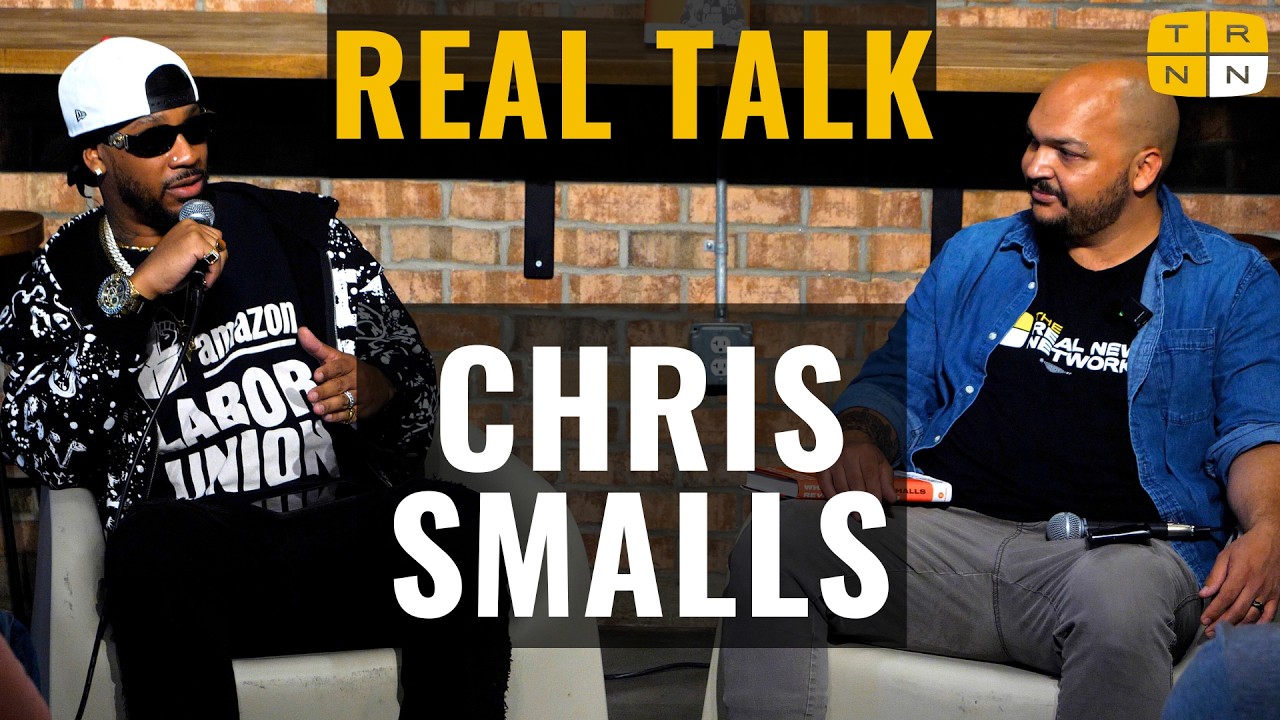
Chris Smalls (left), co-founder and former president of the Amazon Labor Union, speaks with TRNN Editor-in-Chief Maximillian Alvarez (right) at Red Emma's Cooperative Bookstore and Coffeehouse in Baltimore, Maryland, on June 4, 2026.

At a live event hosted at Red Emma’s Cooperative Bookstore and Coffeehouse in Baltimore, Maryland, TRNN Editor-in-Chief Maximillian Alvarez got to sit down for a deep and wide-ranging conversation with Chris Smalls, co-founder and former president of the Amazon Labor Union. Alvarez and Smalls discuss Smalls’ new book, When the Revolution Comes: A Fight for the Future of the Working Class; they recount the incredible story of the formation of the Amazon Labor Union and the unionization of the first Amazon warehouse in the US; and they talk about Smalls’ journey from warehouse worker and labor organizer to becoming an internationally recognized public figure and a human rights activist who has sailed with humanitarian flotilla missions to Gaza and Cuba.

Additional links/info:

Featured Music:

  • Jules Taylor, Working People Theme Song

Credits:

  • Audio Post-Production: Jules Taylor
  • Videography / Post-Production: Cameron Granadino
Transcript

The following rushed transcript may contain errors. It will be updated as soon as possible.

Maximillian Alvarez:

All right Welcome everyone to Working People, a podcast about the lives, jobs, dreams, and struggles of the working class today. Working People is a proud member of the Labor Radio Podcast Network and is brought to you in partnership with In These Times Magazine and the Real News Network. This show is produced by Jules Taylor and made possible by the support of listeners like you. My name is Maximillian Alvarez and we’ve got a really special episode for y’all today, which is a recording of a live event that I recently hosted at Red Emma’s Cooperative Bookstore and Coffeehouse here in Baltimore. And for that event, I got to sit down in front of a big, lively audience and have a real deep and wide ranging conversation with Chris Smalls, co-founder and former president of the Amazon Labor Union. Chris has a new book out called When the Revolution Comes: A Fight for the Future of the Working Class.

And that book recounts the incredible story of how a young working class Black man from Hackensack, New Jersey led a walkout from his Staten Island Amazon warehouse during COVID-19 got fired and then with hardly any resources banded together with a scrappy group of Staten Island warehouse workers to form the independent Amazon Labor Union to fight this epic David and Goliath battle against Amazon, the second largest private employer in the United States and Jeff Bezos, the second richest man in the world, and to win and successfully unionize the first Amazon warehouse in the United States. And the book also traces Chris’s life story before the Amazon Labor Union and his journey from warehouse worker and labor organizer to becoming this internationally recognized public figure and a human rights activist who has sailed with humanitarian glotilla missions to Gaza and to Cuba, even facing detainment and harassment from ICE and imprisonment and abuse from the Israeli military because of it.

I’ve done a number of events with Chris over the years. I’ve interviewed him outside of the JFK8 warehouse on Staten Island and I interviewed him as he was sailing to Gaza with the Global Samuel Flotilla right before they were captured by the Israeli military last year. I’ve seen both up close and from afar what he, his story and the story of ALU mean to working people out there, young and old people across this country and beyond. I’ve seen up close and from afar how the media’s good and awful and obsessive coverage of Chris and ALU, how that’s all affected Chris and different members and factions within ALU. And I’ve watched them all try to do their best to navigate a situation and a spotlight that I don’t think any of them ever expected to be in and that most of us will frankly never be able to fully understand from the outside.

I’ve seen and learned about many of the struggles that Chris has been through. I’ve seen and learned about the things that he’s done to help others. I’ve seen and learned about mistakes that he’s made and regretful things that he’s done and said. I know he’s a controversial figure to different people for different reasons and I know that he’s an inspiration to different people for different reasons. I know that he’s a complex and imperfect person, like you, like me, and like the hundreds and hundreds of working people that I’ve interviewed on this show over the years. And I’ve said from the beginning of this show that the whole point of this project was to honor the full and beautiful and complex humanity of our fellow workers to lift up the unheard voices of working class people and to help them and us and others see ourselves as full people with important lives and stories, not just stereotypes, not just name tags and job titles.

We’re so much more than that. And as a fellow worker, Chris is no different. And whatever your thoughts are about him, I think we all need to remember that because I see a lot of people forgetting that and that is not to excuse or downplay any concerns that folks have about Chris, ALU, or the complicated relationship between media celebrity and political movements today. And of course, no one is above critique, not public figures like Chris and certainly not journalists like me and anyone who is part of the labor movement must hold themselves and be held accountable to that movement. I know that and I believe that, but I also know that movements don’t move and history doesn’t happen without people and people are complicated. And if we don’t have a healthy way as working people of talking and listening to each other and working through our shit, if the world is burning all around us and we cannot find ways to work together or work alongside each other for our common goals and common good, even if we don’t like each other, then to put it bluntly, we’re cooked.

And so with all that said, it was in that full spirit and with that same mission that I’ve had since I started this podcast eight years ago that I sat down with Chris Smalls for this important conversation that we had at Red Emma’s in Baltimore. I hope you guys enjoy it and I want to know what you think, but please first take a listen.

All right. Well, thank you so much to Red Emma’s Cooperative Bookstore and Coffeehouse for hosting us for this great event. I want y’all to give a proper Baltimore welcome to Brother Chris Smalls, the co-founder and former president of the Amazon Labor Union here with us tonight. So we are of course here to talk about Chris’s new book, When the Revolution Comes, the Fight for the Future of the Working Class, but we’re also going to talk about so much more. And by way of getting us into this discussion, I wanted to just roll the clock back a second, right? Let’s go back five years, 2021, right? Feels like forever ago, but let’s not forget how crazy of a year that was. We had all just watched the batshit January 6th insurrection still in the middle of COVID, no vaccines yet. And out of this dark swamp in time, an unexpected source of light emerged in worker struggles and a sort of revived labor movement.

Everyone was talking about the Amazon workers in Bessemer, Alabama who were trying to unionize with the retail wholesale and department store union down there. I went down there. That was actually my first field shoot for the real news. And of course those workers lost that election and it was very heartbreaking for a lot of us and it was really incredible to see that heartbreak turn into the energy that we would see later in the year with the first Starbucks store to unionize in Buffalo, New York and the emergence of this ragtag group of badass workers from Staten Island who were trying to unionize their Amazon warehouse. And so it can be easy to forget all that we were going through in that moment. And so I wanted that to sort of be the start. And Chris, I wanted to ask you to take us back there.

Remind us who Chris Smalls was before COVID and then talk us through, because I think we need a refresher. Talk us through the incredible saga from the walkout that you led to you guys winning that first union election.

Chris Smalls:

And thank you all for being here. It’s been a while since I’ve been to Baltimore, so I’m glad and honored to be back and good company and some good comrades, familiar faces in the crowd. So thank you all once again for showing up and supporting my book and being here tonight. I really appreciate that. Yeah. As you said, we have amnesia in America. We all know that. One thing being a news cycle for a few weeks and then it’s always something else, especially under this Trump administration. And ironically, six years ago when I got fired from Amazon, that was also an election year. Trump was still in the headlines still. So we wasn’t garnishing any attention. As you mentioned, leading up to 2021, 2020, COVID was the peak at its peak, especially in New York City being one of the epic centers of the world.

Yeah, workers were afraid, workers were catching COVID. I remember walking into my warehouse and how seeing my comrades at work just really sick and not really themselves. So it’s a really eerie moment. But for those who don’t know, I was an assistant manager at Amazon for four and a half years. I opened up three warehouses in the tri-state area, New Jersey, Connecticut, Staten Island New York was my last building. People’s person always, the same way you see me today, it was the same way I went to work at Amazon. Definitely loved my people. I spent 70 hours a week with them. They were like my extended family. And when COVID hit, I definitely was afraid for all of us and I wanted to speak up on their behalf as well, which led to my firing after I led the walkout on March 30th, 2020, which once again was six years ago.

Seems like it was a long time ago, but it was six years ago it flew. It flew past. But just giving you a background about myself, what you’re going to read about in the book if you haven’t already, is that I’m just like anybody else in this crowd. I’m a single parent. My twins at the time was, well, damn, they were maybe eight or nine years old. And yeah, you can imagine how much time that I’ve lost spending with them over the last years, especially during COVID, the years of COVID, if I was lucky to see them half a year, that was a thing as well. And I love sports, grew up playing basketball, football, track. You going to see that in the book. I also was a rapper. I

Maximillian Alvarez:

Was going to say, don’t bury the lead. There’s a little juicy story about your rap history in there.

Chris Smalls:

Yeah, yeah. There’s a little rap stink that I had briefly after college, dropped out of college because I wanted to pursue music. I thought I was going to blow up overnight and then I got hit with reality getting back into the workforce. I got married and divorced at a young age, but I was married for eight years and during that hardship, working at Amazon was our main source of income for my household, one of them at least. And having healthcare as well. Healthcare Amazon provided for me and my kids and my wife at the time. So when I lost all of that during the pandemic, it really showed me how much the company didn’t really care about anybody. After I poured five years of my blood, sweat and tears into the company after I’ve done so much opening up these warehouses for them, training thousands of Amazon workers, hundreds of their upper management, the companies just say, “You know what?

We don’t care. We’re going to fire you. ” And not only fire you, they did it in a way that martyred me by Jeff Bezos, who was the richest man in the world, signing off on the smear campaign, which basically said to make me the face of the whole unionizing efforts against Amazon, which is a good idea. But at the same time, the racist part in the beginning saying that I’m not smart or articulate, something that they use in these corporate settings to put upon Black people and Brown people, saying that we’re not smart enough or we’re not articulate enough to even talk about anything when it comes to work related issues. So that was really the catalyst of a moment right there where I embraced it and I said, “You know what? Even though I no longer work for the company, I’m going to continue fighting for the workers inside the building.” Ultimately, for a whole year from 2020 to 2021, we traveled the country protesting in front of debt bases, mansions and penthouses while Bessemer, Alabama was trying their efforts and we all was paying attention.

My folks in Staten Island, we were paying attention, but we took it a step further. We did drive down there. We drove 16 hours from New York City down to Bessemer in a car, one car squished up and we stayed about a week connecting with workers there, connecting with the union, trying to figure it out because we didn’t know what we wanted to do. We wanted to do something, but we didn’t really have all the answers. But unfortunately, yes, like Max said, when they lost, it was definitely devastating for everybody. We felt that because of several reasons. Number one, that building investment Alabama has about 6,000 employees, five, 6,000 employees. Majority of them are black people. 85% of the building is black, 80% of the workforce there are black women. So when Amazon spent millions of dollars stopping that campaign, that was a direct attack on black and brown people and that’s something that we resonated with in Staten Island, New York where the demographics are similar to our building as well.

So the next day after the results came out, it just so happened to be our birthday, four 20, four / 20 / 2021 is when we started our campaign the next day after those results came out. We didn’t even wait.

And yeah, that year was like a blur as well, but it was 11 months, over 300 plus days I set up an encampment outside of the building that fired me at a public bus stop talking to workers every single day, rain shine, how to call night or day about why we need to start a union. And originally we sent out the Olive branch to the established unions. We wanted some support. We wanted some resources, some help, but we got nothing in return because a lot of people didn’t believe in us. A lot of people thought that it wasn’t going to work. Who are you guys to unionize when y’all don’t have any resources, y’all don’t have any knowledge, experience, et cetera. But one thing we did know is that we’re Amazon workers. Whether we’re fired or not, we know the ins and out of the company better than Jeff Basils.

So we felt that was the only way, and I still believe that till this day that the only way it could have been done was grassroots, gorilla style tactics in the trenches every day, meeting your workers face-to-face. That was the only way it was going to work. We couldn’t take the shortcut routes. We couldn’t do the traditional style organizing methods that most unions use. We had to think outside of that box and also sacrifice. Sacrifice was one of the things that we all had to do as a collective. And yeah, it was successful. 11 months, hard blood sweat and tears into the campaign and it paid off to become the first union in American history for Amazon workers. And still, till this day, that building is the only unionized building in this country and that’s what people got to understand. And it’s pro and con to that.

Yes, it’s great that we still are standing, but it shouldn’t take four years for us to have a contract. Keep that in mind that even when I was the president for three years, the first thing we did when we won was demand the bargaining order from Amazon, or at least from the National Labor Relation Board so that we can negotiate with Amazon. We didn’t hear anything under the Biden administration. I don’t know what happened, but there was some magic in the air. We got a bargaining order in April of this year, but Amazon has already appealed it because they’ve been spending millions of dollars holding things up for the last four years. So for those and everybody who’s been questioning like, “Why don’t you guys have a contract or you guys are not getting a contract?” It’s not because of us. It’s literally because the system is broken.

The system is not worker friendly. As much as these progressives and politicians say that the system are usher us to the system that’s supposed to work for us, it doesn’t. It’s not in our favor. So we have to continue to fight every step of the way. And actually when we won in 2021, that was just the beginning of the fight. This fight is a lifetime struggle and now the only thing that I can see that our union can do, and not just our union, because there’s other unions out here, Starbucks workers, all these other unions that emerge, they’re still fighting for contracts too and negotiating their way through it. But the only thing I can see that’ll work for all of us is if we withhold our strongest weapon, which is our labor and go on strike.

Maximillian Alvarez:

And it was wild too reporting on Bessemer and then reporting on you guys and sort of seeing how the things that worked for Amazon Imbessemer weren’t working on Staten Island. I think that was a real sort of moment of insurgent energy because in Bessemer, when the workers brought in the RWDSU, Amazon did what union busting employers always do where they’re like, “Oh, this is an outside force that’s trying to come in and get in between our relationship.” They couldn’t do that with you guys because it was like, no, these are literally just the workers in the warehouse. And so I wanted to touch on that because it was such a big debate at the time because of Bessemer and ALU especially, but everyone was talking about, is it better to go the independent route like Amazon Labor Union, Trader Joe’s United, the Home Depot workers who tried to unionize in Philly, or is it better to go with an established union like the Teamsters of the RWDSU?

And so with five, again, like you said, five, four years of experience since we were having those debates, I think it’s important for us to sort of revisit and update that and you know better than us. I wanted to ask after all that you’ve been through in this struggle, where have you landed on the independent or established union debate, especially in light of the AOU affiliating with the Teamster?

Chris Smalls:

Yeah. I mean, I still stick by my original sentiment that there was no other way that we was going to get it done, not with any established union. Didn’t matter how long they’ve been around, how powerful they are. The way we organize is completely against any type of style. You can’t read about it because it hasn’t been done before. And yeah, I still believe that independent unions are something that we still need to push. Not saying that established unions can’t support, but what’s happening over the last few years, to be honest, after we won in 2021, well, let me take it to the day of. The day we beat Amazon, we had $2.50 in our account. Now it’s funny because we were broke as hell. We didn’t have dudes paying members. We still don’t have dues paying members. We don’t have a contract. So I can’t ask for workers who are making $20 an hour to pay union dues.

I wasn’t going to do that as the union president. The next day we had almost half a million dollars because the bandwagon came, the unions, “Oh yeah, we supported. Oh yeah.” But they really, really didn’t. Actually, there was a reporting that all the established unions combined only contributed after we all won, talk about Starbucks, Trader Joe’s, Amazon, you name it, they only contributed 3% of their resources into these campaigns. And I can tell you we didn’t get one of those 3%. We got zero. Literally nobody offered us anything before we won. And after we won, the bandwagon came and everybody said, “Oh yeah, we had some resurgence in the labor movement,” which is great. It was. It was definitely headlines, it was definitely international news and resonated with millions of workers around the world. The problem is that established unions didn’t use that opportunity to double down and really invest into grassroots movements because they was embarrassed.

We weren’t the first people who tried to unionize Amazon. Absolutely not. Actually, established unions have been trying to unionize Amazon for over a decade, even before Bessemer, Alabama. And guess what? You guys never heard about it. I never heard about it. It was actually a campaign at GFK8 while I was working there, didn’t even hear about it until we started and that was ran by the established union of the Teamsters. So when it comes to which side do I really ride with, I’m going to say the one that works and I know that there’s pros and cons to everything. The thing about independent unions and grassroots efforts, as we all know, if you’re grassroots, it’s a struggle. You’re not going to have all the tools and resources given to you all the time. You got to scrap, you got to sacrifice, you got to crowdfund, you got to have mutual aid.

We literally had a GoFundMe, which it’s sad to say, but that was our only lifeline of how we were able to feed our comrades and our workers there. So the reason why we had to affiliate with the Teamsters, which I signed by the way, is because we’re going up against a $2.2 trillion company like Amazon that has all the money to hold things up in federal court for four or five years like they have it, which you guys are not privy to this all the time, but Amazon has million dollar lawyers and while I was the president, I’ve been to federal court against Amazon. I lost count how many times over the years and all they do every time we do something, they appeal it into a federal court to try to get it to a right wing Supreme Court and try to get us decertified.

That is their game plan. They’re not trying to come to the table. They still don’t even want to recognize that we won. So the affiliation with the Teamsters was so that my union doesn’t go bankrupt because if we don’t have dues paying members and people are not going to continuously donate, we have to give resources to stay alive and stay afloat. The Teamsters was going to offer that. The affiliation agreement that I signed was something that I and my executive board negotiated along with our legal counsel and it was one that we benefited from the most. We have full autonomy with our local ALU, IBT, local one, full autonomy, full jurisdiction on Amazon. And the most important thing that I got in that contract was they have strike benefits. They can offer the workers at JFKA right now a thousand dollars a week to go on strike if they wanted to.

I’m not the president anymore, but this is something that I set up to help them succeed in that journey. It’s up to the workers, it’s up to the current leadership of the union. It’s up to them to take that initiative and utilize it. And hopefully they do because the clock is ticking. Right now since we’ve been issued a bargaining order, Amazon has already appealed it, but the clock is ticking for them to come to the table. They have about a year to do so. Otherwise, the game plan that Amazon is going to run is going to try to decertify the union. So hopefully they get their stuff together and they get it done. I’m always going to support my union, whether I have a position or not. And that’s what we all have to do in solidarity. We all have a role to play because our fight is absolutely your fight.

A lot of people don’t know what’s going on behind the scenes at Amazon are within these campaigns. So the reason why we’re here today, the reason why you guys are picking up this book is because this book is also not just a memoir, but it’s also a how-to. It’s going to give you some tools on how we can all fight back against the system that’s oppressing us.

Maximillian Alvarez:

Hell yeah.

So I really want to talk before we get to Q&A about your life, your work, your mission beyond ALU. And the last time we did an interview, you were sailing to Gaza for Christ’s sake. So I want us to get there, but before we do, just to pick up on what you were saying there, I think it’s really important for us to in this space, model a real, honest, no BS discussion about what we can learn from the beautiful, complicated, heartbreaking, inspiring story of the first Amazon union. Because so many struggles before you and there are going to be plenty after you, you guys faced a lot of external pressure and internal debates, division. This stuff happens and you write about some of that in the book and there’s a time and place to talk about that stuff and it’s not here. We’re not here to sort of air dirty laundry and point fingers.

Everyone knows Chris isn’t perfect. I’m not perfect. You’re not perfect. And that’s, I think the point is that whether you’re organizing your shop or trying to build a political movement, you can’t do anything without the messy realities of messy human beings who make the movement. So our humanity is always part of the story and none of us is perfect. And so I wanted to ask you, Chris, again, not for us to get sucked into the … She said … I’ve talked to other Amazon members who have different versions of the story and I always tell them, like I told you, I was like, “It’s not my place to pick sides here. I’m not in this union. I’m a fucking journalist.” And it breaks my heart when I see these divisions because I want the best for everybody, but life doesn’t work out like the fairytales in our heads.

So what can we learn from y’all’s experience that can help others out there who are going through these struggles and it’s getting tough and the company, the employers appealing every victory, it’s like one step forward, three steps back. You’re losing friendships because shit just gets really tough. You have no money. What can folks out there who are experiencing that learn from what y’all went through in ALU?

Chris Smalls:

Yeah, great question. I mean, once again, when you’re taking on one of the most powerful companies in the world, you’re trying to bring people together from all different backgrounds, all different creeds, you’re going to have disagreements, you’re going to have different political ideologies, you’re going to have infighting, every union, every organization does. We just were under a microscope because of our historical victory and the mistake that the media Yeah, sort of did was comparing us to established unions that’s been around for a hundred years. We weren’t that. We’re grassroots organizers. Most of them weren’t even organizers. They were just everyday civilians that were inspired, that were passionate, that wanted to do something. Even myself as the leader at the time, I didn’t have all the answers as well. I had to learn and I’m still learning every day. I’m a sponge. I’m learning new what’s going on overseas is affecting us here.

The things that I’m doing with Palestine, Cuba, wherever I’m going, it affects us here. I try to connect those dots. Some people just can’t think that big and unfortunately it leads to disagreements, but the disagreements are that’s a democracy. That’s exactly what a democracy is.

Unfortunately, the movement has its way of weaning people out. It’s not for everybody. It’s just real. A lot of people will see social media posts or see something happening, protests, whatever it is. Even going back to George Floyd days when there was millions of people taken to the streets in America. But where are these millions of people now? They’re back at work. A lot of people see things for the moment they get involved and then they get burnt out. They get weeded out or they realize this is too tough for me. And a lot of it is what happened to our union. A lot of folks thought that it’s a lot easier than what it is. Yes, I do make things look cool sometimes. That’s intentional because organizing is stressful as shit. I know we all know that. Organizing hard, stressful, tiring, exhausting, all of the above.

And I tried to make it as simple, as cool, as fun as possible because I know what workers are dealing with working at Amazon. That was one of my biggest things is making sure that everybody around me was always good in some capacity. Unfortunately, once again, the movement is going to be the movement. And for those who jump into this movement or this type of work or any type of work, you got to know what you signed yourself up for. This is a lifetime struggle. Our ancestors paved the way and not only that lost their lives, some are incarcerated right now as we speak so that we can have the right to organize, that we can have a reason to organize. So when these type of movements, you can’t have one foot in, one foot out. You got to be fully committed for the long haul and you got to be fully committed to sacrificing something because if you spoke out about Palestine, you lost something.

I know I did. If you spoke out at your workplace, you’re going to be targeted. If not worse, you’re going to get terminated. If you speak out against all of the injustices that we’re seeing right now in this country, you’re going to lose friends. You’re going to lose loved ones. I know a lot of us in here that probably when they started talking about October 7th, it was tough conversations in the beginning because I could tell you I lost 10,000 followers on Instagram instantly when I posted about Palestine over three years ago. And it was the same people that said in my DMs, “Chris, we supported you for Amazon workers, but this is where I draw the line.” What? In return, you know what I said? Fuck you.

Because if you can’t make the relationship between Amazon and genocide, then I can’t help you. And I don’t give a damn if you one of my organizers or not. If you fighting over some petty shit when Jeff Bezos is flying in space on the penis rocket, you missing the plot. So people want to attack the wrong things and that happens a lot on the left. We’re talking about the character, the person, the individual, how I look, how I talk, where I’m going, what headlines I’m gathering. Meanwhile, Amazon is firing 30,000 people next week. And that was what I always tell my organizers. We’re fighting about what we doing next when Amazon is winning. They are in the building union busting and y’all worried about the wrong things. So for me, the biggest lesson I learned is you got to stay true to the mission. And I don’t debate too much.

I mean, I do sometimes because I have to defend myself in certain cases, but I’ve never played into the naysay about myself or about my union because I let the work speak for itself. We made history, unprecedented history, and people that were there, they know. That’s all I care about. My day ones that walked out of the building six years ago with me, they know. Everybody else that came afterwards that’s going to jump on board later on, that’s going to look back, reflect back, that none of that matters. What matters is what are you willing to do to get Amazon to come to the table? What are you willing to do to liberate the people of Palestine? And more importantly, if you don’t get up and do the work, who’s going to do it because there’s no calvary coming for us?

Maximillian Alvarez:

One of the things that has sort of always colored the way that I have watched your journey is the fact that I always think that I was working in warehouses back in Southern California 15 years ago in the depths of the Great Recession. Our family was losing our house like millions of others. It was awful. And the thought of one of us having the cultural international statue that you do that one of us would be giving so much hope to people around the country and around the world is just mind boggling to me, but it’s also like that’s got to be a lot to go through as a working warehouse guy to then kind of be catapulted to that. So that’s not to excuse anything. It’s just to be like, we should give each other as much grace as we possibly can while holding ourselves accountable to each other.

Do our best. That’s the best that we can do for each other. And I say that to say by getting us to your activism beyond the warehouse, because what is it about your story, ALU’s story that has spoken to so many people around the world? And how did that lead you to becoming a global activist for human rights from Gaza to Cuba?

Chris Smalls:

Great question. I mean, well, number one, if you’d have told me that I could look as cool as a rapper, as a union organizer, I’d have been doing this shit a long time ago, would have saved you some

Maximillian Alvarez:

Years.

Chris Smalls:

I don’t look like your typical union president. My union doesn’t look like your typical union. My executive board didn’t look like your typical union executive board. So culturally, we gravitated to the younger generation. They looked at us and said, “Oh wow, they look cool. Amazon Labor Union, oh man, they’re wearing sweats and T-shirts and hat backwards and whatever else.” And we did something at a time where once again, the world was watching and we captivated that moment in time. But the international piece came when I got a passport because I just got a passport when I became the president three, four years ago. I didn’t even have a passport and 70% of Americans don’t have a passport.

I encourage you, number one, get one because since I got a passport, I’ve been to 45 different countries around the world and counted. And when I go to these countries, I’m not on vacation. I’m not on tourist trips sort of because I need to learn some things, I need to see some things, but I’m meeting with Amazon workers and I’ll give you the best example that I have as far as how much dedication or how dedicated I am to the movement. I was invited two years ago when I was the president still. I was invited to Paris by Pharrell and Rihanna to walk in the Louis Vuitton runway for this grand opening. And the same day I was invited to the White House again for the second time from Kamala Harris while she was running for president. I declined both of those and went to an Amazon warehouse in Canada, literally.

And guess what? I’m proud to say that that Amazon warehouse in Canada is the first unionized building in Canada’s history. So once again, people could say what they want about me. I know how I move. I know I’m very conscious about what’s going on, what’s being out there, what’s put out there and those around me, once again, they know if you’ve met me in the past, if you’ve been around me, if you hung around, what you see is what you get. I don’t really have to put on a facade and I think that’s what really resonates with people is that they can relate to me and that they feel comfortable talking and actually working alongside or working with me in some way. I think the international piece, the international solidarity that I’ve shown is also shown other people that what’s happening abroad is coming back home to roots, especially when it comes to Palestine.

There was several reasons why I got on that flotilla. Number one, I’m an Amazon worker, sure. Amazon has invested $7.2 billion into project numbers. The technology that’s being used to target and surveil and kill innocent Palestinians is powered by Amazon Web Services, number one. Number two, I’m a black man and I have kids. I don’t want my kids to grow up in a world where we’re watching, scrolling every day, seeing dead people. I don’t know about you guys, but that shit is enough, traumatizing. And number three, I’m a taxpayer citizen, American taxpayer citizen like all of us. We all should be outraged where our taxpaying dollars are going. And I could tell you what I saw in Gaza is there’s no comparison. Less than a hundred miles away from Gaza Strip. I’ll never forget before we got … Well, we were already intercepted, but I will never forgive me crying on the ship because I was so angry that we didn’t make it, but just knowing that we were so close, 60 miles away from Gaza Strip, our boat got swarmed with flies and I’ll never forget I asked one of my comrades, “Where the hell did all these flies come from?” And it’s because there was so much death and so much bodies under rubble, vermin, whatever you want to call it, that the flies flew a hundred miles away from land to find food from our garbage and we were swarmed and I said, “Whatever we’re seeing on Instagram, it’s actually just a glimpse.

It’s not even close to how bad it is over there.” And I hear testimonies from doctors all the time. It’s beyond what I could put into words and obviously what happened to me is just confirmation that Israel is a racist apartheid state. That being said, spreading awareness, going back to who I am and why I do what I do and how I move.

What other labor leader in this country that you know is banned from Israel for a hundred years? That’ll be me. When it comes to Cuba, I brought 25 people from the Amazon Labor Union to Cuba three, four years ago, first labor delegation to Cuba and we delivered humanitarian aid back then. We graduated from Fidel Castro University. We stayed in bootcamp. We were disciplined. We learned the Cuban way and I’ve never looked back, been to Cuba every year since. And you may have saw that I was detained two months ago. I took my phone and they worry about the 16 other people that they took their phones from. They gave them their phones back, but some of the comrades that I was with heard the ICE agents talking about, “Oh, that’s the Amazon guy. We got the Amazon guy.” So the target on my back is very much real and they’re detaining other people questioning about me right now as we speak.

It’s just happened. So I think it’s important and then I know y’all saw me crash the Med Gala. I wasn’t invited. I wasn’t invited to the Med Gala so I had to crash the party, but we crashing the Med Gala was the spread awareness and it worked because if I would’ve sat home 20 minutes away from where Jeff Babes was about to walk the red carpet, 40 minutes away from the building where they have a negotiated contract in four years, I’m doing a disservice to myself and to my entire union and the working class as a labor leader. I do the things that I do because I ask myself this question, if Chris Smalls doesn’t do this work, who’s going to do it? And that answer sometimes is very scary because the answer is nobody. And that’s the same question that each and every one of y’all got to ask yourselves.

If you don’t get up and do this work, who’s going to do it? And hopefully that motivates you to continue in doing what you’re doing.

Maximillian Alvarez:

Give it up for Chris. Well, and I think that’s a perfect lead into a final question before we get to Q&A, because your book is called When the Revolution Comes: A Fight for the Future of the Working Class. And I want to talk about what that fight like, what’s really at stake and how big it is because right now from the excitement we felt when you guys won to the depression we feel that you still don’t have a contract to Trump strangling Cuba, invading Venezuela, kidnapping its president, going to war with Iran, the climate spiralantic in control, we tried and we failed to stop a genocide. It feels so hopeles sometimes, but the fight is where we actually have the chance to change the outcome and it’s not just in our workplaces and it’s not just in Gaza, but I wanted to ask you what your sort of final message is for a working class struggle and movement that can actually turn this tide and bring us back to a future that we can give to our kids that’s still worth living in.

Chris Smalls:

Yeah. Great question. And I mean, when I say a fight for the future of the working class, I mean, we’re fighting for humanity right now. There is no Calvary coming to save us. I’m going to tell you now, politicians are not our savior and in the history of the human race, we never voted our way to liberation. We always had to fight most of it with our lives. And when I’m talking about the revolution, well, the revolution starts with yourself. The times that we’re in right now, as you mentioned, they’re terrible. Society, things that are normalized, being desensitized, all of these things that are happening real time in our faces. Every day there’s something new on the headlines distracting us from the bigger picture. The way we was able to beat this $2.2 trillion company because we came together for one common cause the same way that people were coming together for Palestine because it wasn’t like this three years ago until we saw the student encampments, the protests in the streets, the flotillas, all of the different things that we’re seeing because people are fed up, young people, young people are fed up.

I knew one day when I walked into a middle school and this 10-year-old kid said, “Jeff Bezos is a bad man,” I said, “I’m doing something right.” Because I couldn’t imagine myself at 10 years old and I encourage teachers and many educators in the room, “Bring some of your labor leaders. I’ll come to your classroom. I will definitely come out. I’ve been to elementary schools, you name it. I’ve been there. University, I will be there because I know the importance of getting to the youth. We don’t want them to continue to praise these celebrities and athletes and musicians. We want them to praise the people that’s actually doing some great work and that’s people right here in our own community and reminding ourselves where we came from because society has changed because of companies like Amazon who’s forcing us to hit one click buy. Stay home, stay isolated, just audio package.

It shows up to your door. You see one person deliver it, but you never see the 10 or 12 people that that box done touched before it got there. Six of them got injured. One of them possibly could have got killed, but you would never hear about it. And that’s the message that we all have to spread because somebody in your household, somebody in your neighborhood doesn’t know this, doesn’t know what’s happening at these warehouses, doesn’t know what’s happened with the Amazon Labor Union. As big as that victory was, you already know we in a country that is very, very retroactive and a lot of people here got amnesias are living worse, living in their own bubbles. That’s saying you’re in your own bubble, but that’s not a good thing. That’s up to us to find these people, to meet them where they at, mainly work and to get them organized because when I say a fight for the future of the working class, and I say the revolution comes once again, that’s everybody in this room coming together for one common cause for the greater good of humanity.

And I’ll give you this last gem.

The fight for Palestine is going to liberate the world, but the fight for black and brown indigenous people is going to liberate everybody.

Maximillian Alvarez:

Let’s give it up for Chris Malls, everyone. All right, gang. That’s going to wrap things up for us today. I want to thank our guest, Chris Smalls, co-founder and former president of the Amazon Labor Union. Go check out Chris’s new book, When the Revolution Comes: A Fight for the Future of the Working Class. And thank you to Red Emma’s Cooperative Bookstore and Coffeehouse for hosting this amazing event. And of course, I want to thank you all for listening and I want to thank you for caring. We’ll see y’all back here next time for another episode of Working People. And in the meantime, go explore all the great work that we’re doing at the Real News Network, where we do grassroots reporting that lifts up the voices and stories from the front lines of struggle. Check us out across our YouTube channel, our different podcast feeds, our website, and our social media pages, and help us do more work like this by going to therealnews.com/donate and becoming a supporter today.

I promise you guys, it really makes a difference. I’m Maximillian Alvarez. Take care of yourselves, take care of each other. Solidarity forever.

💾

From Jeff Bezos and Amazon to ICE and the Israeli military, from legacy media outlets to left-wing magazines, Chris Smalls remains a beloved, hated, polarizing, and inspiring figure. We sit down with Smalls to talk about why.
  •  

Homan planning largest ICE deployment in New York City: ‘It’s coming’

Border Czar Tom Homan on Monday said New York City was about to see its largest deployment of Immigration and Customs Enforcement (ICE) officers in response to Gov. Kathy Hochul’s recent legislative package that provides residents with added protections from federal authorities.   “You are going to see more ICE agents than you have ever seen…

  •  

The election interference evidence no one is talking about

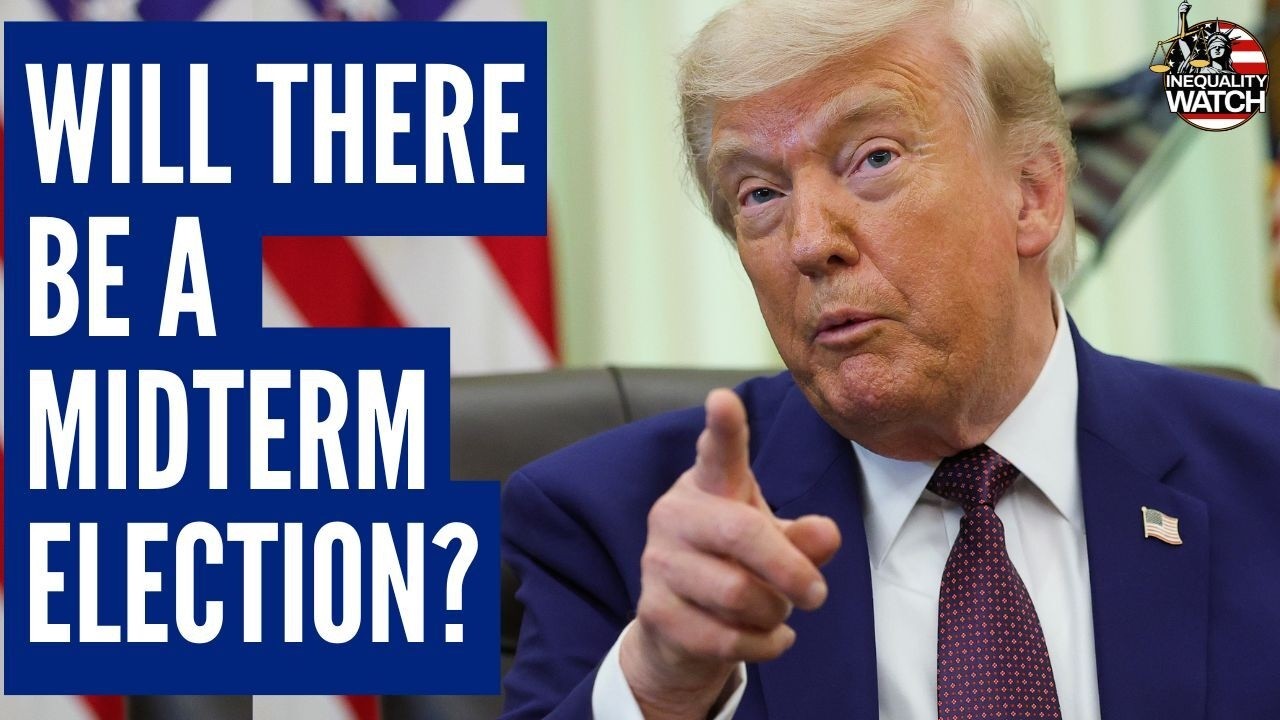
U.S. President Donald Trump speaks during an event in the Oval Office of the White House on June 03, 2026 in Washington, DC. Photo by Kevin Dietsch/Getty Images

Are President Donald Trump and MAGA Republicans publicly signaling that they plan to interfere in—and potentially rig—the 2026 midterm elections? If so, why is the media not taking the threat seriously? In this episode of Inequality Watch, Taya Graham and Stephen Janis investigate the connections between wealth inequality, political power, ICE funding, the influence of Super PACs on elections, and growing concerns about democratic accountability in Trump’s America.

Credits:

  • Pre-Production: Taya Graham, Stephen Janis
  • Studio Production / Post-Production: Cameron Granadino, Stephen Janis
Transcript

The following rushed transcript may contain errors. It will be updated as soon as possible.

Taya Graham:

Could President Trump and his MAGA Congress be planning to interfere with the upcoming midterm elections? Well, we have some evidence that might surprise you, which we will unpack on this episode of the Capitol Hill React Report. Hello, this is Taya Graham, myself, along with my reporting partner, Steven Janice, our Capitol Hill correspondence for the Real News Network. We report regularly on what’s happening in the nation’s Capitol, but with a twist. We examine the process of governance through the prism of the most powerful force in today’s politics, economic inequality. Now, before you say, tell you that seems sort of limited. Just let me explain a little bit before we get to the first video. Economic inequality is at its highest point in recent history. Just take a look at the latest report that showed American workers’ share of the economy has fallen to its lowest level since 1947.

That’s right. In 2025, the share of the economy that went to the people who actually make it run was 54% a historic low. Okay. So why is this context essential for reporting on politics? Well, because all that wealth accumulating in fewer and fewer hands translates into concentrated power and that power now flows into our elections in the form of cash. Cash, which translates into victories at the ballot box for the purveyors of an increasingly extractive economy, insulating it from ballot box accountability, which ultimately means that you can’t understand politics on Capitol Hill unless you comprehend what currently defines it, namely the rich getting richer. Stephen, how am I doing?

Stephen Janis:

So you’re doing great. I mean, one of the things we have to think about is we got to look at democracy as a whole here functioning through this prism of inequality. The idea of democracy that delivers a certain amount of freedom to the people who are part of it. Now, freedom is a limited resource. So as people get richer and richer, they hoard that freedom. And so there’s less freedom to go around. Freedom to do what you want, freedom to educate yourself, freedom to live where you want. All those things sort of translate into the affordability crisis we’re seeing now, which means that there’s less freedom for the working people and more and more freedom for the richest 1% and more and more freedom to control how we live. And that’s why we have this sort of crisis on Capitol Hill and that’s how we have to view what goes on on Capitol Hill.

Taya Graham:

Stephen, that is such a great point and brings us right back to the topic at hand. The incredibly tense state of American elections and why wealth inequality will play a key role in that autocratic calculus. So first, let’s be honest, Steven, the mainstream media has, in my opinion, been misreading Trump, specifically his pronouncements that he doesn’t care about gas prices or the quagmire in Iran. Let’s listen to him talk about it and then discuss. When you’re negotiating with Iran, Mr. President, to what extent are American financial situations motivating you to make it?

Donald Trump:

Not even a little bit. The only thing that matters when I’m talking about Iran, they can’t have a nuclear weapon. I don’t think about American financial situation. I don’t think about anybody. I think about one thing. We cannot let Iran have a nuclear weapon. That’s all. That’s the only thing that motivated.

Taya Graham:

Okay. So the interpretation from the TV pundits has been that President Trump is just inexplicably tone deaf or detached or just disinterested, but we think Trump is telegraphing something much more insidious. So Steven, let me ask you a question after watching this video. Is Trump just really disengaged as the mainstream media says, or as they say he’s unhinged, or is there something else a little more troubling going on here?

Stephen Janis:

Well, Ted, this is one of many clips where Trump has kind of downplayed midterm elections or voters concerns or gas prices or whatever. He does it consistently. And of course it would be suicide for a politician in a functioning democracy to say something like that, right? Because this would directly affect how people vote. I really think for some reason gas prices, well, I kind of understand that gas prices are one of the biggest motivators for people when it comes to elections. And so it would be suicide, but what he’s really trying to say is, “I’m not worried about the midterms because I got this locked out. ” And look at what happened in the last presidential election. He tried to overturn it with a lost, but he wasn’t really prepared. He has been preparing for two years now to be able to interfere with the elections.

He subpoenaed ballots all over the country, including Fulton County and Georgia. He has set up this election integrity system run by a person who actually denied the 2020 election. He has increased the funding for ICE and Border Patrol, which we’ll talk about later. He has just simply put people in place who will be able to do what he needs to do. The Justice Department itself does whatever he wants. They’ll prosecute anybody. Very true. So they will certainly be willing to weigh in on this. He is prepared. He’s declared emergencies in so many situations. He is prepared and he is trying to say, “I’m not worried about it because no matter what happens, I’m going to make sure that I come out on top.” And I think that’s what we’re missing here. When he says he’s disinterested, what he’s saying is, “I’ve got this in the bag.”

Taya Graham:

Steven, I think you put your finger right on it here. The real danger here isn’t just what Trump is saying, but the fact that everyone keeps dismissing it. And you know what Trump hasn’t even ruled out paying the people who stormed the Capitol and those who tried to halt the counting of the electoral votes in 2020, despite the fact that his administration said the fund is dead, he was literally just quoted as saying, “I think they should be reimbursed by a crooked government.” Now, his remarks regarding the controversial $1.7 billion weaponization fund bolster, I think the case that he believes he can alter the midterm outcome. It would’ve set aside money for people who believe they were unjustly prosecuted, namely the Jan six insurrectionists. I mean, critics say if Trump has his way, he will literally be able to assemble a pratorian guard to disrupt the elections.

And I’m alluding to the elite core of Roman military officers who guarded the emperor, but who eventually just took power themselves. Steven, what does it mean if he gets his way?

Stephen Janis:

Well, what it means is because ways he has what you need the first … The most important element of any sort of autocratic takeover is having the money to pay people and having the freedom to pay people any way you want. Now this $1.7 billion fund would be an easy way just to dole out cash to people who had done his bidding before. Now he has other ways of doing this that we’ll talk about. But the main thing is it gives them the power of the purse in a way that’s totally up to his discretion and the Justice Department, which is an extension of him. Now what’s interesting about it is I don’t really think they need a fund. Those J6 is going to just sue and then Trump can approve the payouts. That’s right. So he’ll get it one way or another. But the point is he wants to signal to the people, “Hey, if you help interfere with an election, I will pay for it and I’ll reward you because these settlements could be huge.

$1.7 billion is a lot of money.” Sure is. So I think that’s what he’s trying to telegraph is saying, “Help me out with this and you’ll get paid.”

Taya Graham:

Steven, that is not only spot on, but it’s actually really scary. But what’s even more concerning to me is how much this election interference plan is hiding in plain sight with little or no pushback because he can’t do this alone. He needs help from his ever loyal contingent in Congress. And for the most part, they are in lockstep with Trump. And that was more than evident when the MAGA Congress started to plot a strategy to get more money to ice customs and border patrol for purposes that we’re going to touch on a litle bit later. Now their plan was to use a tactic called reconciliation, which allows legislation to bypass the filibuster provided it has significant fiscal impact on federal spending. Now, this was an unprecedented power grab because the funding bill was intended to provide routine annual appropriations and that’s a measure that is usually passed with bipartisan support, which brings me to an interesting encounter we had on Capitol Hill with Republican Congressman Mike Lawler, who didn’t seem to want to answer our question when we asked why ICE and CBP needed an additional $70 billion in funding, but his reluctance is also revealing.

Let’s take a listen to what happened.

Rep. Mike Lawler:

Fuck that up.

Stephen Janis:

Congressman, why does ICE need an additional $75 billion? Why is that funding? How do you justify that to the American people who now are suffering with high gas prices and things like that? Why is that even more money?

Rep. Mike Lawler:

Well, that’s the cost of funding the department. Are you for abolishing ICE?

Stephen Janis:

I’m just asking the question. They already have $14.

Rep. Mike Lawler:

Well, you understand that that is the- I’m not

Stephen Janis:

For against anything.

Rep. Mike Lawler:

You understand that’s the appropriated amount, right? Yes. That’s been appropriated.

Stephen Janis:

Of course, but I’m asking

Rep. Mike Lawler:

Questions. So the reason additional funds, that’s the base budget for ICE and CBP, right? You understand that?

Stephen Janis:

I do.

Rep. Mike Lawler:

Okay. So the additional funds that came through the Working Family’s tax cut bill were to increase border security. Why? Because Joe Biden let in 10 and a half million people into the country.

Taya Graham:

Okay. Steven, just for the record, are you for abolishing ICE? Because you didn’t answer the congressman’s question.

Stephen Janis:

Yeah. I’m for abolishing politicians to be able to answer a question with a question and evade answering the question I ask. I’m for abolishing that. But one thing I want to just say before we move on is that his sort of argument that that’s the appropriate amount for ICE is actually wildly inaccurate. I look back into the ICE funding and what ICE and CPB have been spending roughly eight to $10 billion a year. They already have $140 billion. This is not an appropriate amount for anything. That’s an absolute freaking lie. ICE and CBT do not need that much money. This is excess cash. Taxpayer cash, your taxpayer dollars that are simply being spent without accountability. I think there’s a reason for that we’ll talk about in a second, but really he was just FOS on that. And I just want to point that out because it really was infuriating.

I was trying to get his answer, but I couldn’t sit there and get into an argument with him about what he was saying was actually patently false.

Taya Graham:

Personally, when a politician answers a question with a question, in my opinion, that is a sign they don’t have an answer or they have an answer, they don’t want the public to know. And he

Stephen Janis:

Definitely didn’t have an answer in this point. So good point, Teo.

Taya Graham:

Thank you. But I mean, the question you were asking was not insignificant. I mean, in fact, it was a really big piece of the puzzle, led us to think that the threats to the midterm elections are widely underestimated. Now, the crux of the matter is funding. Now what you asked is why Republicans want to give ICE, customs, and Border Patrol another $70 billion. And what makes this so unusual is that the big beautiful bill dropped roughly $140 billion on both agencies just last year. But with ICE and CBP spending at best $20 billion annually, it begs the question, why so much? What is it really for? And Steven, you have a theory about this. Tell me about it.

Stephen Janis:

Well, I think the thing you have to think about is that they’re moving towards a more autocratic form of government. Autocracies and democracies have different incentives, basically, different incentive systems. Technically speaking, a democracy wants to award beneficial policy for constituents. So to get elected, you got to do stuff that people like. Autocracies don’t work that way. They need to punish people who might push back. They need to crush dissent and that’s through a system of incentivization of punishment. And so in my opinion, this money, which can, I guess when you add up $210 billion for a law enforcement agency is about constructing a great American punishment regime to prepare Americans for a more autocratic government.

When I looked into the records and tried to figure out how much money does ICE and CPP still have on the books, it’s really hard to figure out because the federal government really isn’t oriented towards reporting on multifiscal year cycles about how much money they have. But I looked, I found at least $73 billion that had been unallocated so far. And that’s after they’ve already built all these warehouses, these prisons where they’re incarcerating people. So they literally have what would be for those agencies unlimited funding. And unlimited funding for law enforcement gives you a way to institute punishment throughout all levels of governance. I mean, those detention centers can be used to detain people for a variety of reasons. They’ve already detained Americans. They’ll detain more. Having an unlimited amount of money to swarm CPB and swarm ICE into cities gives you this ability to do what Trump did in Minneapolis, Los Angeles, Chicago.

And when these elections come and when Trump is trying to say, Hey, they weren’t fair, they’re going to need these guys and women to come into cities and to try to disrupt the people who will be pushing back or to seize ballot box. I really think this excess money is insulating both institutions and that’s for a reason to create a punishment regime that will be reflective of the autocratic values that the Trump administration is espousing through their policy choices.

Taya Graham:

Steven, you did the classic thing every reporter should do and actually anyone watching should do, which is follow the money. You follow the money, you figure out what’s really going on. So let me just ask you a question about this. I was thinking back to the first time it really hit home with us that something was afoot with regard to democracy during the shutdown last year. So last year, Democrats wanted to extend the Obamacare tax credits and Republicans refused. But what struck me at the time was how the majority party approached the entire conflict. They simply shut down Congress. They simply stopped town halls and talking to their constituents. No debate, no work, just silence. And of course, all of that was just to deny people healthcare. And that seems like a pretty anti-Democratic strategy. So how does it play into that theme you’re talking about, about the punishment regime theme?

What do you think?

Stephen Janis:

Well, the thing is if you shut it down, you’re kind of punishing people because you’re taking away the deliberative legislative body that’s supposed to represent their interests where you are supposed to hash these things out and figure out how to get people healthcare. So what you’re saying is, we don’t care. You don’t have healthcare, you’re being punished. We’re going to punish you by not doing anything and showing you that we don’t have to do anything and disengaging from our constituents. And so I think it’s a big part of that. I mean, a functioning legislative body should be an accountability mechanism to make sure things like ICE and CBP don’t get out of control. But now when they shut it down and turn it into this absolute desert of democracy, well, then you don’t have a limited legislative body to represent you. Without representation, you’re done.

I mean, what people don’t understand, and I think you’ve talked about this really, really well, is that democracy is a culture that infiltrates all levels of government governance. When you change that to a punishment regime, to an autocratic culture, everything changes.Your ability as a constituent and to vote and to have some impact and some say in how you live diminishes quite quickly. And I think that’s what we’re seeing here.

Taya Graham:

Steven, that’s a really, really good point. And you touched on constituents actually having a voice and this is something we caught at a press conference where that idea that you’re touching on right there was absolutely front and center. Now it was an announcement by Senator Bernie Sanders and Representative Summer Lee to announce a bill that would shut down super PACS. Now Super PACS are of course the campaign behemoths that can spend unlimited amounts of money basically to buy elections. Super PACS are like the corporate love child of Citizens United, that famous decision that allowed corporations to also spend unlimited amounts on electing people to subject us the working class to the extractive tendencies of our current economy. Now this union between them was so fruitful that it gave birth to political organizations with unlimited spending power and an insatiable appetite for television ads, digital marketing, robocalls, and anyone who’s willing to rent out a swing state’s airwaves.

Now, Sanders and Lee basically want to undo all that with a limit on how much Super PACS can raise. Their bill with limit contributions to $5,000 per individual or corporation, essentially disabling the Super PAC system that allowed Elon Musk to dump $280 million over a quarter of a billion dollars into President Trump’s campaign, which resulted in the mess that we’re currently living with. But I asked Senator Sanders a question and he had an interesting answer. Let’s take a listen and you can react on the other side.

Sen. Bernie Sanders:

I don’t want people to think this is just another issue. What somebody said is right. It is the most important issue. If we are the only major country on earth not to guarantee healthcare at all, why is that? You think it may have something to do with the power of the pharmaceutical industry and the insurance companies who spend zillions of dollars making sure we don’t move to a Medicare for all system? Do you think the fact that we have a starvation minimum wage has something to do with the fact that a lot of these corporations and business people don’t want to pay their workers a living wage, don’t want workers to join unions. The point here, this is not another issue. This is an issue that touches every bloody issue facing working people in this country.

Taya Graham:

Okay. Steven, I really want to hear your thoughts here. Is Senator Sanders connecting the right dots?

Stephen Janis:

Yeah, absolutely. Because money, cash, power, adulterates, democracy. And the way you adulterate it is to be able to deliver, to allow people who have the concentrated wealth to throw it all into the election. Now the whole idea of campaign laws is to limit influence of one individual or corporation. You can only donate so much no matter how rich you are. Now with super PACS, you can put everything you have into it if you want and that gives you disproportionate power and that creates an inequality basis for elections. So absolutely. And I want to point out one thing. You were the one who asked the question that set off that answer and I think it’s really vitally important because Sanders is connecting the dots. You can’t afford housing. Look at the super PAC. You can’t afford healthcare super PACs. All these super PACs create disproportionate influence for the smallest number of people possible.

It turns an election into really a choice of the oligarchy to decide who’s going to be in power and what policies they will implement. So it was a great answer and it’s absolutely spot on.

Taya Graham:

Steven, I asked the question because I felt like sometimes we, meaning journalists, don’t really connect the dots. And as we’ve discussed, as you’ve said, the great American punishment regime is a product of President Trump’s desire to diminish democracy, but it’s a political transformation that wouldn’t be happening if the system itself hadn’t failed to deliver for the majority of people who live under it. So what Sanders did is make the connection between big money and bad economics palpable and easy to see. He cut through the noise and made the argument that the wealth imbalance and the cash hoarding that it enables is cycled back into elections and fines forms and things like the affordability crisis or the housing shortage and of course our unresponsive and overly expensive healthcare system. These connections are crucial if political mechanisms like super PACS are both to be understood and mitigated.

If you don’t connect the accumulation of obscene wealth with the fact that you can’t pay your monthly utility bill, then it will be nearly impossible to sustain a movement to reform all of this. So Steven, how does Sanders and Lee’s idea fit into your theory of a punishment regime?

Stephen Janis:

Well, I want to say one thing first though before I answer that question, because it’s a great question, but I want to say this, I want to be the boy who cried wolf here. I am not saying this to be some sort of paranoid conspiracy theorist. I just see the tea leaves sitting up on Capitol Hill, like we talked about how they shut down Congress, like we talk about how Republicans don’t show up on the triangle anymore where most press conferences are held. I want to be wrong in this case, but I can’t ignore what I’m seeing. And when Senator Sanders talked about super PACs, there wasn’t that much media there and there really wasn’t that much media coverage of what he did and what Summer Lee was proposing, Congresswoman Summer League, excuse me. So I really think these elements are all connected.That’s why we did this show to connect them.

The super PACs fuel the oligarchy and the oligarchy fuels autocracy. You can’t have dissent when few people want to hold onto all the wealth. It’s not just and people are going to push back against it, but the only way you can stop it is to incentivize punishment to say, “You know what? You speak up, you’re in trouble.” And the way to use that mechanism is to diminish the value, the integrity, and of course just create uncertainty around elections. Trump has sort up a lot of uncertainty. He’s got unlimited amount of cash to spend to bolster it. I am extremely concerned. I just wish more people would listen to Senator Sanders and Congresswoman Lee on this issue. It’s critically important and you’re right.

Taya Graham:

Steven, I’m so glad you connected the dots for us in this way because once you see it like this, you can’t unsee it. So thank you so much, Steven.

Stephen Janis:

You’re welcome.

Taya Graham:

Okay. So that’s the end of this edition of the Capitol Hill Inequality Watch React. So thank you so much for joining us. We are going to keep reporting for you on Capitol Hill while discussing how wealth inequality influences our politics, our economy, and our lives. I’m Taya Graham, along with my reporting partner, Steve and Janice. People please keep fighting, keep voting, and most of all, please keep caring. Our democracy needs you.

💾

Battles over ICE funding, super PAC money, and the limits of congressional power on Capitol Hill reveal the groundwork being laid for a new kind of election interference in the 2026 midterms.
  •  

Calls to review ‘unduly lenient’ sentence for rapist in Andrew Malkinson miscarriage of justice

Paul Quinn will serve at least 14 years for the 2003 rape in Salford and could spend less time in prison than Malkinson

The government’s most senior law officer has been asked to review the “unduly lenient” prison sentence handed to a rapist who evaded police for nearly two decades in one of Britain’s biggest miscarriages of justice.

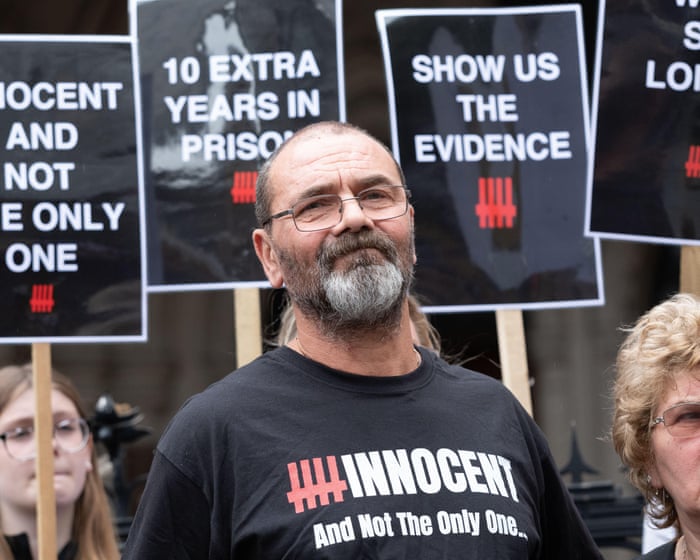
Paul Quinn was jailed last week for a minimum of 14 years, meaning he could spend less time in prison than Andrew Malkinson, who was wrongly convicted of his crime.

Continue reading...

© Photograph: Ron Fassbender/Alamy

© Photograph: Ron Fassbender/Alamy

© Photograph: Ron Fassbender/Alamy

  •  

Shootout in Olde Town Square: A Cop, a Killer and a Good Guy With a Gun

No community was better prepared for active shooters than Arvada, Colo. Then men with guns converged in the city center, each on different missions.

© Helen H. Richardson/The Denver Post, via Associated Press

Police at the scene of a shooting in Arvada, Colo., in June 2021.
  •  

North America put to the test: Countdown to an (almost) ready World Cup

“The world will stand still, and the eyes of the world will be focused on North America,” the 56-year-old Swiss president of FIFA, Gianni Infantino, said a few days ago from the United Nations headquarters in New York. With four days to go before the ball starts rolling, the three host countries — the United States, Mexico, and Canada — say they have everything ready. Or, more precisely, almost everything. The biggest soccer tournament in history — 48 national teams playing a total of 104 matches — takes place amid various circumstances that complicate organization: the United States remains at war with Iran, President Donald Trump’s strict immigration policies are frightening away many supporters, and FIFA’s dynamic-pricing ticket system has put seats out of reach for much of the fan base.

Seguir leyendo

Reopening match at Estadio Azteca between Mexico and Portugal in Mexico City on Saturday, March 28, 2026.

© Jeffrey McWhorter (EFE)

Mural commemorating the World Cup in Dallas.
  •  

If this is winning, America can’t afford much more of it

By John WHITEHEAD’S

Join us on TelegramTwitter, and VK.

Contact us: info@strategic-culture.su

“We’re gonna win so much, you may even get tired of winning.”—Donald Trump

Donald Trump promised Americans they would get tired of winning.

If this is what winning looks like, America can’t afford much more of it.

We are losing ground economically. We are losing credibility abroad. We are losing tourists, workers, stability, trust, constitutional guardrails, and whatever remained of the illusion that the government answers to “we the people.”

The tourism economy is taking a hit, with international visitors increasingly reluctant to come to the United States. Even migration—the lifeblood of America’s economic growth, innovation, labor force and national renewal—is now moving in the wrong direction. Fewer people are coming in, more Americans are leaving, and by some estimates the country has already crossed into negative net migration.

That is not the mark of a nation “winning.” It is the mark of a nation people are increasingly choosing to escape.

Even the looming World Cup—normally an economic windfall for tourism, travel and hospitality—is being shadowed by the administration’s immigration crackdown, detention protests and threats to disrupt international travel at key airports.

That is what happens when a nation treats visitors, immigrants and dissenters as threats first and human beings second: people stop coming, businesses suffer, and fear becomes official policy.

The economy, despite the administration’s relentless victory laps, is flashing warning signs: downgraded growth, strained consumers, rising costs, depleted savings, and policy chaos that leaves families, small businesses and entire industries guessing what fresh disruption tomorrow will bring.

We are being worn down by the losses.

Meanwhile, the man who promised to end wars has presided over their continuation and expansion. The man who promised to bring prices down has helped drive uncertainty up. The man who promised to drain the swamp has turned government into a spoils system for loyalists, cronies, contractors, oligarchs and power brokers. The man who promised law and order has treated the law as something to be weaponized against enemies and waived for friends.

This is not winning.

This is the slow-motion defeat of a constitutional republic by spectacle, grievance, greed and brute force.

The losses are piling up.

Americans were told they would get prosperity. What they got was an economy in which corporate profits and stock market gains mask the fact that ordinary households are stretched thin, savings are shrinking, debt is mounting, and the cost of basic necessities keeps eating away at wages.

They were told tariffs would punish foreign governments and bring jobs home. What they got were higher costs passed down to consumers, retaliation, supply disruptions, and a trade policy built less on strategy than on political theater. Even the courts have begun treating the tariff agenda as what it is: economic policy by executive improvisation, with judges striking down or narrowing tariff maneuvers while the administration keeps looking for new legal workarounds.

They were told immigration crackdowns would make America stronger. What they got was a nation frightening away the workers, students, tourists, entrepreneurs and families who have long helped power its economy.

They were told America would be respected again. What they got was a country increasingly viewed as unstable, hostile, unpredictable and unsafe—not merely by adversaries, but by allies, visitors, investors and would-be partners.

They were told the wars would end. What they got was more war talk, more military escalation, more blank checks for the war machine, and more excuses for expanding executive power in the name of national security.

They were told the Constitution would be restored. What they got was a president who declared, “He who saves his Country does not violate any Law.”

Listen carefully when any ruler says something like that.

That is not constitutionalism. That is the language of kings, dictators and strongmen who believe their intentions place them above the law.

The Constitution was written precisely to prevent that kind of thinking from taking root in America.

The problem with Trump’s brand of winning is that it requires Americans to lose.

For the police state to win, the Fourth Amendment must lose.

For the surveillance state to win, privacy must lose.

For the war machine to win, peace must lose.

For the executive branch to win, the separation of powers must lose.

For the oligarchs to win, working families must lose.

For the propaganda machine to win, truth must lose.

For a strongman to win, the Constitution must lose.

Trump’s “winning” is simply the latest branding campaign for an old con: convince the people they are winning while stripping them of the power to govern themselves.

Call it what you will—national security, border security, economic nationalism, law and order, anti-corruption, emergency authority, America First—but when the end result is more government power and less individual freedom, we should know by now who is really winning.

The winners are the same as always: the defense contractors, data brokers, private prison operators, surveillance companies, lobbyists, political insiders, Wall Street speculators, government contractors, partisan enforcers, donors with access, loyalists seeking payouts, and bureaucratic power centers that thrive on fear, crisis and control.

The losers are “we the people.”

This is the hard truth Americans must face: a government that promises to make you “win” by taking power away from someone else will eventually take power away from you, too.

Rights are not partisan. Due process is not partisan. Free speech is not partisan. Privacy is not partisan. Limits on executive power are not partisan. The Constitution is not supposed to be a campaign prop, a legal technicality or a speed bump on the road to political victory.

The Constitution is the contract that binds the government down.

Without it, all we have are rulers and subjects.

That is why the real measure of any administration is not how loudly it boasts, how many enemies it punishes, how many executive orders it signs, how many troops it deploys, how many agencies it purges, or how many headlines it dominates.

The real measure is whether the people are freer, safer in their rights, more secure in their property, more protected from government abuse, and more capable of holding power accountable.

By that measure, we are not winning.

We are losing in all the ways that matter.

A president can call it winning. A party can call it winning. The media can package it as winning. The crowds can chant along.

But as I make clear in my book Battlefield America: The War on the American People and in its fictional counterpart The Erik Blair Diaries, if the price is the Constitution, then we all lose.

Original article:  www.rutherford.org

  •  

Congress moves to institutionalize U.S.-Israeli relationship

By Philip GIRALDI 

Join us on TelegramTwitter, and VK.

Contact us: info@strategic-culture.su

Israel will benefit enormously and Americans will bear the burden

There is near certainty that Section 224 of the National Defense Authorization Act (NDAA) for 2027 will pass through the House of Representatives to become law this coming week after a failed attempt last Thursday in the House Armed Services Committee to pass an amendment to delete it led by Democratic Party Congressman Ro Khanna and Republican Thomas Massie. The NDAA will now be awaiting only the fully expected signature of Israel’s servant President Donald Trump on the Act to become part of the nation’s legislative package that will set the rules and regulations that the nation’s defense will operate under. It will, unfortunately, also set up through Section 224 a “United States-Israel Defense Technology Cooperation Initiative” that integrates “US-Israeli military research and development, co-production of weapons systems, licensing agreements, AI, directed energy, data integration, and missile defense.” It also creates the framework for “bilateral research and development, co-production of weapons, joint ventures, licensing agreements, and seemingly every manner of US-Israeli military-industrial complex cooperation.” The Director of the “Initiative” will be responsible for the coordination of the work and it is already being suggested that he will be an Israeli. And the funding will come 100% from the US Treasury by way of the budgeted allocation of $1.5 trillion that has been requested for the US military in 2027.

The result is to completely connect the functionality of the US military with that of the Israeli military in what has been described as an equal partnership that will include the government of Israel and its Israeli Defense Force as full participants. There will be full intelligence sharing and a planning process that will determine many aspects of how the American Department of War (sic) procures its weapons and equipment and establishes its strategic goals. This is plausibly the hidden story behind why Israeli Prime Minister Benjamin Netanyahu has been slyly suggesting that Israel might in future forego the $3.8 billion in annual automatic “aid” (which some refer to as “tribute”) from the US Treasury, a process begun by President Barack Obama. Netanyahu, working through his accomplices in the White House and the US Congress, clearly would have known in advance that a much larger slice of the pie was on its way via Section 224.

Those politicians who have sponsored and promoted 224 inevitably cite how the Jewish state is a major “ally and best friend” even though it is neither, but they ignore the dark side fact that it is also a genocidal state whose leaders have been condemned by international courts for multiple war crimes that is hated by most of the world. And this hatred has rubbed off on the United States, which is Israel’s principal source of arms, money and political cover. The slaughter in Gaza and now in Lebanon would not occur without the support of Presidents Joe Biden and Donald Trump.

And there’s more, coming from the Senate which is doing something similar via the FY27 Intel Authorization bill which will make US intelligence sharing with Israel mandatory. The bill in question is S-4615, introduced on May 20th by leading Israel Firster Senator Tom Cotton of Arkansas. The full text is here. S-4615 includes Section 622, entitled “US-Israel intelligence sharing enhancement.” This new section would establish as law (where it would apply forever, unless repealed by Congress) new US national security-related obligations with respect to Israel. It includes a Statement of Policy: “(1) To maintain and strengthen the strategic security partnership with Israel as a means of advancing the national defense of the United States… (2) To enhance intelligence collaboration through robust intelligence sharing and analytic partnership with Israel… (4) To ensure that security assistance and defense cooperation are structured to help Israel maintain its qualitative military edge…”

When the Intel Authorization Bill comes up for a vote in the Senate it will no doubt pass due to the Republican Majority supplemented by the usual Israel Firsters among the Democrats. And to complete the takeover by Israel there is a bill moving through Congress that will give US military benefits to American citizens, often Israeli dual nationals, who serve in the Israeli military, to include educational and medical benefits unavailable to other Americans who have not served in the US armed forces. Ironically, Israel’s new status as America’s partner in national security and warfare coming from both parts of Congress is not shared with any of Washington’s actual allies in NATO, making the relationship with Israel both unique and, in the opinion of many, uniquely dangerous as an empowered Israel will inevitably work to advance its security perceptions and Middle East “Eretz Israel” ambitions at the expense of genuine concerns that the United States might have intrinsic to its much broader worldwide exposure to global threats. In other words, pandering to Israeli concerns will actually make the United States much weaker and more vulnerable.

Astonishingly, the danger that Israel poses to US national security through its insertion as something like an equal into the planning process has been little remarked in the mainstream US media, possibly due to increased federal and state government pursuit of “antisemites” which includes criminalization of criticism of Israel. And it is certainly once again suggesting the power of the Israel Lobby, its “bought” media and its stable of supporting Jewish billionaires. But there has been considerable concern being expressed across much of the alternative media, some of which has even reached the front pages, suggesting that there is some leakage going on to feed official reservations about 224. The New York Times, which sometimes serves as a go-to leaked resource for the intelligence and defense communities had an interesting article on Israeli spying on the United States sourced to the Defense Intelligence Agency (DIA) which appeared just after 224 was being debated in Congress.

The Times article is entitled “Pentagon Sees Growing Espionage Threat From Israel” and is summarized as “The Defense Department has increased the counterintelligence threat assessment to its highest level, and Israel is believed to have eavesdropped on American negotiations with Iran.” The story details how “Israel is now at the Pentagon’s highest counterintelligence threat level.” It includes how American officers working with their Israeli counterparts both in the US and overseas have had their phones and other messaging systems tapped through the insertion of surreptitious listening devices by the Israelis. Negotiations to end the Iran War have also been particularly targeted, both through phones being used by the negotiators as well as from the Washington end where the calls and messages are received.

The reality is, of course, that Israel has been a major source of spying and even worse against the United States since the 1950s, always ranking in FBI and Department of Defense assessments as one of the top three foreign espionage offenders, frequently as number one. And Israeli clandestine covert actions and false flag attacks have not hesitated to kill Americans as part of their efforts to cover-up their more disreputable activities. Notably, the Israeli false flag attack on the US Navy’s USS Liberty in international waters on June 8th 1967 in which 34 crewmen were killed stands out, particularly due to the subsequent cover-up conveniently arranged by Presidents Lyndon B Johnson and Secretary of Defense Robert McNamara.

Israeli spies, which might have included Netanyahu himself when he resided in the US, arranged the illegal removal of enriched uranium from a Zionist-Jewish-owned metallurgical company in Pennsylvania and also obtained the special triggers in California that enabled Tel Aviv to create a nuclear arsenal. When President John F Kennedy sought to stop that development he was assassinated, quite possibly with help from Mossad. And then there was the most damaging spy in the history of the US, Jonathan Pollard, who stole for Israel the most sensitive intelligence ever obtained by a foreign power. He is now running for the Knesset in Israel and is speaking of the next two likely targets for the Israeli army once the Palestinians, Lebanese and Syrians are disposed of, neighbors Egypt and Turkey!

The appearance of the Times article is suspicious and it might have been a shot across the Israeli-Israel Firster bow from the intelligence community coming as it apparently did from what was once called the Department of Defense. But Israel appears to have won this round and will be entering into a new relationship with the United States national security, intelligence and defense systems. Given the utter ruthlessness of Israel and the willingness of its sponsors in Washington to let it get away with mass murder, literally, this is a disaster for the United States and will only produce excruciatingly bad results.

Original article:  www.unz.com

  •  

Corte Penale Internazionale, uno strumento di persecuzione imperialista

Dalla Jugoslavia alla Libia, il messaggio è chiaro: giustizia solo per i nemici dell’America.

Segue nostro Telegram.

Fatou Bensouda, ex procuratore capo della Corte penale internazionale, ha recentemente rivelato che il Mossad ha esercitato pressioni dirette su di lei nel tentativo di bloccare le indagini sui famigerati crimini commessi da Israele durante il genocidio a Gaza.

Il primo approccio ha avuto luogo presso la sua stessa abitazione all’Aia. «Sono venuti direttamente a casa mia», ha dichiarato ad Al Jazeera. Successivamente, l’allora capo del Mossad, Yossi Cohen, ha tenuto personalmente degli incontri con Bensouda, durante i quali ha minacciato lei e la sua famiglia qualora le indagini fossero proseguite.

Un’altra rivelazione fatta da Bensouda — che, tuttavia, non ha ricevuto altrettanta attenzione — è stata che, sebbene avessero rintracciato i numeri di telefono degli agenti e ne avessero identificato l’origine in Israele, i funzionari responsabili della sicurezza presso la CPI e le autorità olandesi non hanno dato seguito al caso di intimidazione. «Mi sono sentita abbandonata. Mi sono sentita priva di sostegno», ha confessato Bensouda.

Le sue dichiarazioni costituiscono una nuova prova della protezione concessa a Israele dalle istituzioni multilaterali. Inoltre, indicano che queste istituzioni forniscono tale protezione proprio perché sono controllate dalle potenze imperialiste — le stesse potenze che hanno creato lo Stato di Israele e lo hanno sostenuto fino ad oggi, anche durante il genocidio a Gaza.

La Corte penale internazionale — nota anche come Corte dell’Aia — è stata uno degli strumenti imperialisti più importanti per attaccare i paesi i cui governi sono scomodi alla dittatura degli Stati Uniti e dei loro alleati europei, impiegando un doppio standard sempre più evidente. Creata per perseguire i crimini commessi in tempo di guerra, con il consenso dei sistemi giudiziari locali e solo quando questi ultimi erano incapaci di farlo a causa delle conseguenze della guerra, la CPI si è trasformata nel padrone del diritto internazionale e persino delle giurisdizioni nazionali.

Perseguire i nemici

«La CPI è diventata uno strumento di pressione e destabilizzazione contro i paesi poveri», ha dichiarato il ministro della Giustizia del Burundi nel 2016, annunciando il ritiro del paese dalla corte internazionale.

Negli ultimi anni si è verificata una vera e propria ribellione tra i paesi africani contro la CPI, che sembra interessata solo a perseguire i leader di quel continente. Jacob Zuma ha tentato di ritirare il Sudafrica, ma la magistratura sudafricana ha annullato la sua decisione e poco dopo è stato destituito in quello che è stato a tutti gli effetti un colpo di Stato — un evento che puzza chiaramente di cospirazione imperialista contro il leader nazionalista dell’African National Congress.

Poco dopo, la Corte penale internazionale ha accusato i leader della Costa d’Avorio di “crimini contro l’umanità” per giustificare un colpo di Stato promosso dalla Francia (assolvendoli in seguito, ma solo dopo che il colpo di Stato si era già consolidato).

Forse il caso più scandaloso (o che dovrebbe esserlo) è stata la detenzione all’Aia di Slobodan Milošević. Dopo la caduta dell’Unione Sovietica e del blocco orientale, la Jugoslavia era l’unico paese al di là dell’ex «cortina di ferro» a mantenere un regime sovrano, con Milošević alla sua guida. Le potenze imperialiste si mossero per sbarazzarsi di lui: alimentarono una serie di guerre per disintegrare la Jugoslavia, bombardarono la Serbia e successivamente promossero una rivoluzione colorata.

Non contente di tutto ciò, hanno utilizzato il Tribunale penale internazionale per l’ex Jugoslavia (un laboratorio giuridico e istituzionale per quello che sarebbe poi diventato la Corte penale internazionale) per accusare Milošević di essere responsabile della pulizia etnica in Bosnia. È stato incarcerato all’Aia ed è morto nel 2006 prima di ricevere una sentenza perché i responsabili della sua detenzione gli hanno negato le cure mediche di cui aveva bisogno.

Dieci anni dopo, il tribunale ha finalmente riconosciuto di non aver trovato prove sufficienti per condannarlo. Non ce n’erano state — né erano necessarie, poiché la missione era già stata compiuta: la Jugoslavia non esisteva più e le sue rovine erano passate nelle mani degli Stati Uniti e dell’Unione Europea.

Muammar Gheddafi subì un destino simile a quello di Milošević anni dopo. La Corte penale internazionale (CPI) fornì inoltre il proprio sostegno all’assassinio del leader arabo e alla distruzione della Libia. L’allora procuratore capo della CPI, Luis Moreno Ocampo, era un uomo legato alle università americane e israeliane e all’ONG Transparency International.

Basandosi esclusivamente su articoli pubblicati da giornali che sostenevano l’invasione della Libia — e che a loro volta erano sostenuti dai governi invasori della Libia — Ocampo ha raccolto presunte prove per incriminare Gheddafi, suo figlio e suo genero. Probabilmente ha riso proprio come Hillary Clinton quando è stata applicata una giustizia di stampo imperiale contro Gheddafi.

Più recentemente, la Corte penale internazionale ha emesso un mandato di arresto contro Vladimir Putin sulla base di ciò che l’autore definisce una vera e propria menzogna: che la Russia avesse rapito bambini ucraini. In realtà, la maggioranza della popolazione del Donbass, oppressa dal regime ucraino dal 2014, si considera russa e ha sostenuto l’integrazione delle proprie regioni nella Federazione Russa attraverso un referendum.

I bambini del Donbass sono fuggiti in Russia insieme alle loro famiglie alla ricerca di un luogo sicuro per sfuggire ai bombardamenti e ai massacri perpetrati dalle forze militari e paramilitari fasciste che agiscono su ordine di Kiev. Circa 15.000 persone sono morte per mano del regime ucraino tra il 2014 e il 2022, e da allora sono stati commessi ulteriori massacri, ma questo non ha importanza per la CPI.

Nel prossimo articolo vedremo come la CPI protegga le potenze imperialiste – che sono le nazioni più criminali del mondo – e la composizione della struttura interna della Corte, dominata dagli interessi imperialisti a tutti i livelli, garantendone il funzionamento come strumento di controllo e dittatura sui paesi poveri.

  •  

Hungary’s anti-corruption watchdog says Orbán’s former inner circle should be prosecuted over billions in missing EU funds

hungary's anti-corruption watchdog says orbán's former inner circle prosecuted over billions missing eu funds · post hungarian then-prime minister viktor orban prior delivering speech during spring session parliament budapest hungary

Hungary's long reckoning with alleged graft is shifting from accusations to prosecutions, the country's anti-corruption watchdog has told Politico. Senior figures from Viktor Orbán's former government could face charges over EU money the authority believes was systematically misused. Those words arrive as Orbán's successor works to rebuild trust with Brussels and reclaim funds frozen for years.

The watchdog claims some of the EU money Orbán fought over was siphoned off at home. PM Magyar must still submit a credible reform plan before the end of August. Otherwise, Hungary risks losing €16.4 billion in newly unlocked funds. For years, then-Prime Minister Orbán blocked EU aid and loans to Ukraine. He used the bloc's money as leverage against Kyiv. Magyar has branded his predecessor corrupt over and over. His government dropped a two-year veto and released billions in EU arms payments for Ukraine. 

Senior officials in the crosshairs

Ferenc Pál Biró, who heads the Hungarian Integrity Authority, said top politicians "can and may well be prosecuted." He described it as an alleged effort to bilk EU taxpayers over the course of Orbán's 16 years in power. His team had flagged several criminal cases, he said. Biró wants Hungary to recover the money and have it repatriated, since most has already left the country. He stopped short of naming Orbán or anyone in his inner circle. 

opposition party Tisza
Explore further

Hungary unblocks $7.7 billion in EU arms payments after dropping two-year veto on Ukraine aid

The alleged procurement scheme

The watchdog claims that three companies won most government contracts at artificially inflated prices. The key figures he laid out:

  • Roughly €10 billion paid to just three firms in four years
  • About €3.5 billion, the watchdog treats as overpricing tied to corruption risk
  • Everyday goods and services billed at multiples of their market value

Biró said tenders were manipulated and that the Hungarian state "became the largest entity on the market."

voted out facing investigators orbán could reach un cover sources say · post visit vice president jd vance rally support viktor 7 2026 budapest hungary beata zawrzel/reporter (from left) orban
Explore further

Voted out and facing investigators, Orbán could reach for UN cover, sources say

The watchdog Orbán was made to create

Brussels required the Integrity Authority in 2022 as a condition for releasing frozen money. It monitors how EU funds are spent and sits independently of the government. The body should help unwind patronage empires built under Orbán, spanning construction, utilities, and media. Biró has led it since it launched. Hungary has had billions frozen over corruption and rule-of-law concerns. Orbán himself now faces corruption investigations under the new government.

Bribes and intimidation

Biró said the previous government targeted him while he investigated the scheme. He described attempts at bribery and politically motivated pressure. His wife was offered a job with high pay and no work, he said, though he would not say by whom. He was also held over an accusation of misusing his company car. 

  •  

North Yorkshire Police Apologised to “Our LGBTQ+ Communities” – But Not to the Christian Officer It Wrongly Sacked

North Yorkshire Police made a grovelling public apology to "our LGBTQ+ communities" – but has refused to apologise to a Christian officer it wrongly sacked for asking a question about Islam at a training day.

The post North Yorkshire Police Apologised to “Our LGBTQ+ Communities” – But Not to the Christian Officer It Wrongly Sacked appeared first on The Daily Sceptic.

  •  

The Tories Co-Authored The Henry Nowak Tragedy. Can Kemi Badenoch Tear up the Script?

In charge for 14 years at the Home Office and 10 at Hampshire police, the Tories co-authored the Henry Nowak tragedy, says Clive Pinder. But Kemi Badenoch has shown she is determined to do something about it.

The post The Tories Co-Authored The Henry Nowak Tragedy. Can Kemi Badenoch Tear up the Script? appeared first on The Daily Sceptic.

  •  

easyJet inaugurou novo voo directo de ligação da Madeira a Nice

A easyJet, uma das maiores companhias aéreas da Europa, iniciou no passado sábado, dia 6 de Junho, mais uma novidade do seu programa de Verão de 2026: a rota directa que liga o Aeroporto da Madeira (FNC) a Nice (NCE), em França. A ligação conta com duas frequências semanais, operadas às terças-feiras e aos sábados, […]
  •  

Bruna Ferreira, the former sister-in-law of the White House press secretary detained by ICE: ‘I never wanted to be an international news story’

Bruna Ferreira in Boston on June 3.

More than six months have passed, and Bruna Ferreira still does not understand why she was arrested. Nor does she understand why the Donald Trump administration labeled her a “criminal illegal alien” after her detention. What she does know for certain is that she has lived through a true “nightmare” ever since. She thanks God again and again that she only spent 26 days in a detention center before being released rather than deported, as thousands of migrants have been under the U.S. president’s mass deportation campaign. But her release did not bring an end to her ordeal. Getting her life back on track has proved difficult due to the massive media coverage her case received. After all, she is the mother of the White House press secretary’s nephew.

Seguir leyendo

Bruna Ferreira, in Boston last Wednesday.Attorney Todd Pomerleau and Bruna Ferreira in Boston.
  •  
❌