The long-running sketch comedy show proved its power during the Tony Awards on Sunday, with Lorne Michaels and several former stars grabbing the spotlight.
A crowd that included Daniel Radcliffe, Cole Escola and Carrie Coon celebrated with whiskey ice cream at Rockefeller Center and show tunes at the Carlyle hotel.
Pink brought sincerity and high energy as the host, musical numbers by “Cats,” “Ragtime” and “Chicago” popped, and Maya Rudolph and Cole Escola mined comic gold.
A stripped-back take on Arthur Miller’s Death of a Salesman dominated this year’s Tonys, winning six awards, while Lesley Manville and John Lithgow took home lead acting trophies.
Death of a Salesman was named best revival of a play, with the award-winning director Joe Mantello praising Miller’s story as one that “still talks to us through time”. Star Nathan Lane accepted the award on behalf of the cast, and called it a play that “continues to teach us who we are as humans and Americans”.
At 96, June Squibb is one of the oldest acting nominees in the history of the Tony Awards. Back in the 1960s, she was known for an entirely different distinction.
Pink will host he 79th Tony Awards at Radio City Hall. The ceremony, which will be broadcast live on CBS and is available to stream on Paramount+, begins at 8 p.m. Eastern.
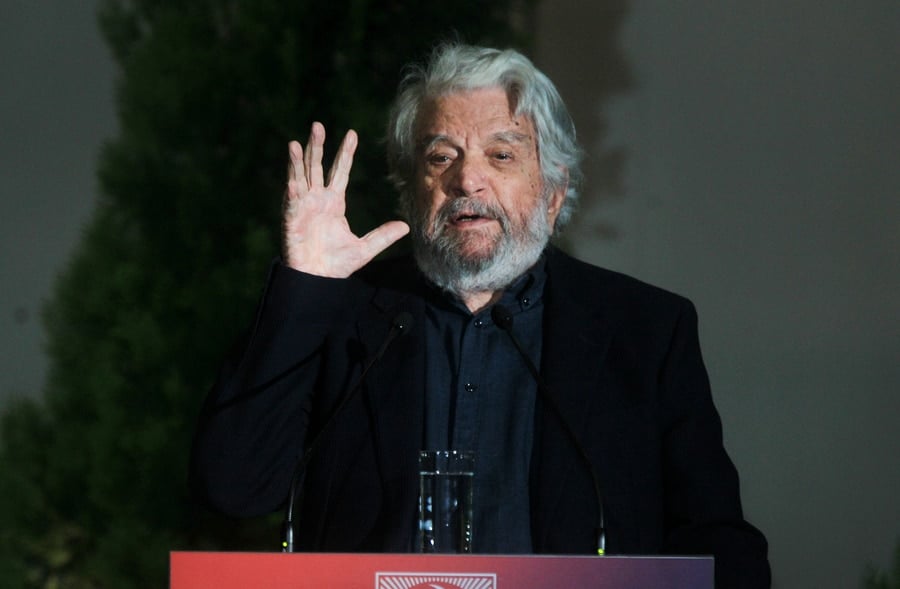
Antonopoulos effortlessly transitioned between classic tragedy, contemporary drama, and mainstream cinema. Credit: AMNA/Alexandros Vlachos
Aggelos Antonopoulos, widely regarded as the most aristocratic figure of modern Greek theater, cinema, and television, has passed away at the age of 93. His death marks the end of an era for Greek performing arts, leaving behind a profound legacy spanning over six decades of artistic brilliance.
Born in 1932 in the village of Kastro, Messinia, Antonopoulos originally pursued studies in law before realizing his true calling lay in theater. He went on to graduate from the prestigious Karolos Koun Art Theatre School, a foundational institution that shaped some of Greece’s greatest theatrical minds.
Antonopoulos was defined by his innate elegance, a deeply resonant voice, and an imposing yet nuanced acting style. These traits allowed him to effortlessly transition between classic tragedy, contemporary drama, and mainstream cinema. He collaborated with the titans of Greek theater, including Karolos Koun, Dimitris Myrat, and Katina Paxinou, before establishing his own successful theater company.
While his stage career was prolific, encompassing everything from Ancient Greek drama at Epidaurus to modern masterpieces by Arthur Miller and Tennessee Williams, it was television and film that cemented him as a household name.
Aggelos Antonopoulos: The voice of a generation
To the wider public, Antonopoulos became an unforgettable cultural icon through his pioneering work in early Greek television. He starred in the legendary 1970s series The Unknown War (O Agnostos Polemos), written by Nikos Foskolos. The show was an unprecedented cultural phenomenon, reportedly freezing life across Greece whenever it aired as millions tuned in to watch his performance.
His cinematic contributions were equally significant, as he starred in landmark films produced by the historic Finos Film studio, alongside iconic actors such as Jenny Karezi, Nikos Kourkoulos, and Aliki Vougiouklaki.
Beyond his acting, Antonopoulos was a dedicated mentor to generations of young actors, teaching at various drama schools for decades. He was also a talented director and writer, publishing poetry and prose that reflected his deep intellect and sensitivity.
Following the announcement of his passing, tributes from the Greek Ministry of Culture, theatrical institutions, and colleagues poured in, all echoing a singular sentiment: Greece has lost an artist of rare ethos, dignity, and unparalleled sophistication. Aggelos Antonopoulos did not merely perform; he elevated every medium he touched, ensuring his place in the pantheon of Greece’s greatest cultural treasures.
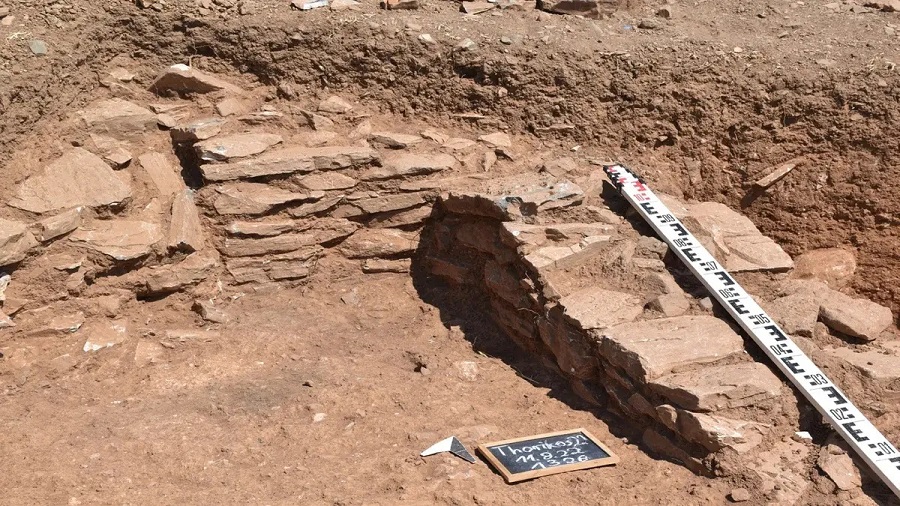
Numerous stone remains were identified in the largest space of the Iron Age home in Greece. This could have once been a paved courtyard. Credit: Thorikos Archaeological Research Project
One of the earliest Iron Age houses in Greece has recently been uncovered by archaeologists at Thorikos, an ancient village near the city of Lavrion, south of Athens.
Since there have never before been any building structures from this period unearthed in Attica, this find provides fresh insight into the early history of Greece. The ancient village is close to a historic silver mine, and the region is home to Mycenaean dome tombs and a classical settlement with homes, businesses, temples, and graveyards.
An uncovered wall corner was identified in 2019. At first glance, this appeared to point to a traditional tomb building. However, additional investigation showed it was not a burial site but a building from the 10th to 9th centuries BC. Researchers have been looking into the building’s size and have located five to six rooms. Numerous stones were in the largest room, which could have once been a paved courtyard.
Its use between approximately 950 and 825 BC was substantiated by analysis of the inorganic and organic characteristics of the rocks. The presence of grain-grinding stones suggests that the building once served as a residence. The rooms’ intricate layout implies a highly developed civilization or a well-established social structure.
The ancient village where the iron-age house was uncovered was only 20 meters (65 ft) above the seashore, indicating no immediate threat from the water. The safer hilltop plateau was more than 100 meters (328 ft) high and wasn’t populated until the 8th century BC. Geophysical research uncovered a tomb from the fifth century BC on the southeast slope.
Additional scientific investigations will shed light on whether animal breeding occurred at the location and whether silver ore, which is pretty standard in the region, was mined during that time.
The theater of Thorikos dates to the end of the Archaic era
Thorikos is an almost-forgotten archaeological site, where the oldest known theater in existence still stands proudly, just north of the ancient mining town of Lavrio and east of Athens. The theater of Thorikos dates to the end of the Archaic era between 525 and 480 B.C.
But that is not its only distinction. Unlike Greek theaters built in later eras, it is elliptical rather than circular and has a rectangular rather than a circular orchestra. With twenty-one rows of seats, the theater had an impressive seating capacity of four thousand people when it was constructed.
The ancient theater of Thorikos. Credit: Facebook/Thorikos Archaeological Research Project
In antiquity, Lavrio was famed for its rich silver mines, which are some of the oldest in the world. Archaeologists have unearthed evidence of mining in the area dating back to the year 3,200 BC.
It was from these silver resources that Athens obtained much of its wealth in the Classical Period. This wealth funded their massive fleet of two hundred triremes, allowing Athens to become the greatest naval power in the ancient world. There is evidence of lead extraction there beginning in the 3rd millennium BC and of silver beginning in 1500 BC. The ancient city’s center and its acropolis are situated on Velatouri Hill next to the theater.

 Login
Login