Voters in Maine, Nevada, South Carolina, and North Dakota will head to the polls this Tuesday, June 9, to participate in another round of primary elections. The elections will determine the candidates for the Senate, the House of Representatives, governorships, and dozens of state and local offices that will be up for grabs in November.
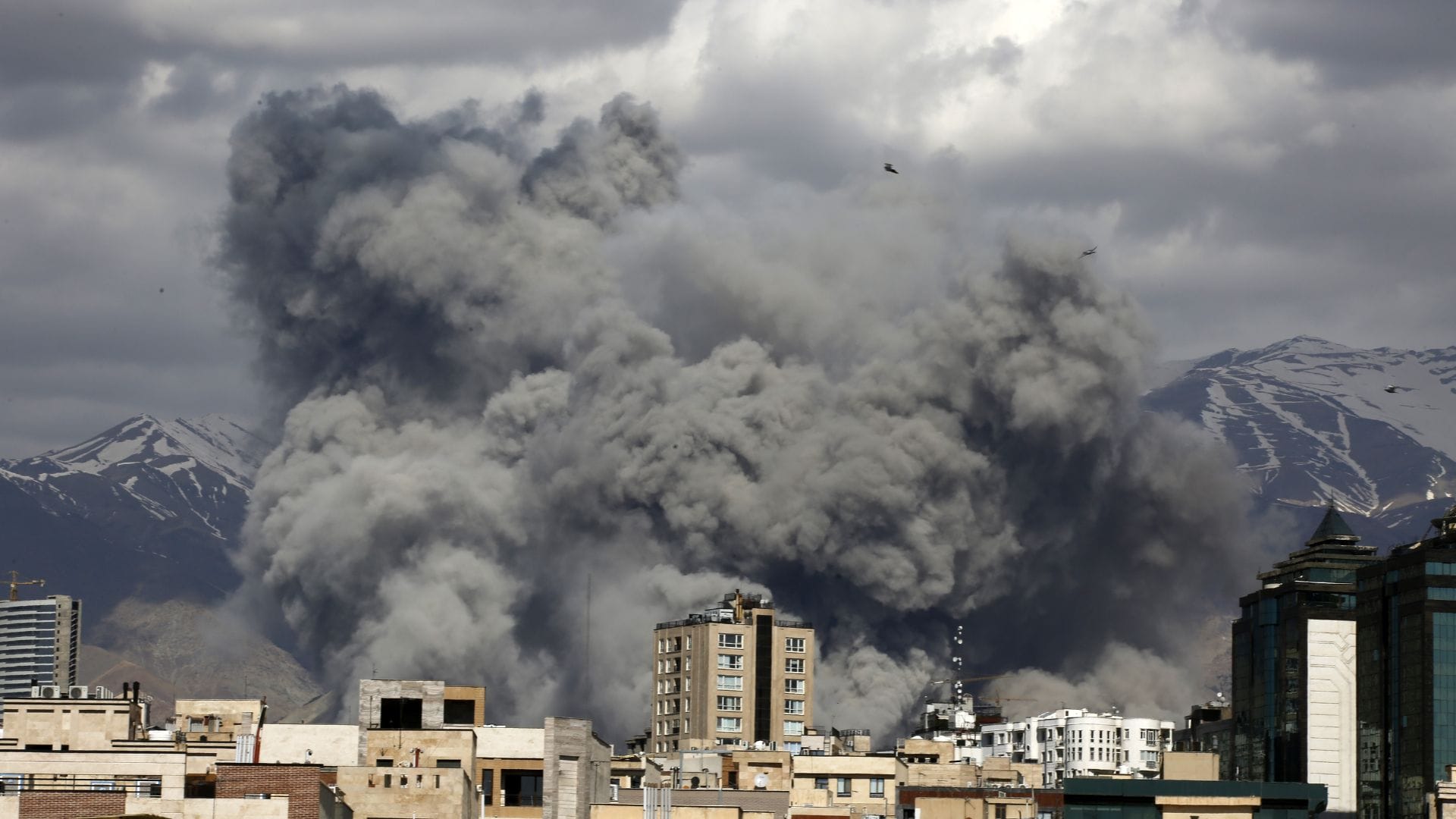
La guerra de Estados Unidos con Irán ha traspasado su fase inicial para entrar en una nueva etapa emergente, en la que Irán apuesta implícitamente por que la siguiente fase sea la guerra.
Lo más probable es que se trate de episodios breves de guerra limitada, pero que, no obstante, encierran el potencial de extenderse a nivel regional, en caso de que Estados Unidos (e Israel) decidan intensificar drásticamente el conflicto.
La nueva fase conlleva riesgos, por supuesto, pero Irán tiene las cartas ganadoras: la capacidad de infligir daños desproporcionadamente mayores a la infraestructura del Golfo como represalia por cualquier daño que se le cause, y la conciencia de que Occidente se está acercando cada vez más al «precipicio» energético.
Los tres pilares que sustentan este cambio son, en primer lugar, la confianza en que Irán no será (ni puede ser) desplazado de su control sobre Ormuz, y que, al consolidar allí sus estructuras administrativas, la realidad del control iraní sobre Ormuz será asimilada cada vez más por los Estados, y se reflejará en su aceptación del control iraní-omaní.
Asociada a este principio fundamental está la aplicación por parte de Irán de una disuasión escalada frente al bloqueo naval estadounidense. Cualquier intento de interceptar o atacar buques iraníes o de interferir en la administración del estrecho se enfrentará a represalias cada vez más duras.
En última instancia, esta política puede llevar a que Irán inflinja daños cada vez mayores a los buques de guerra estadounidenses —otro punto de fricción—.
El 3 de junio, por ejemplo, Estados Unidos disparó un misil Hellfire contra un petrolero iraní cerca del estrecho de Ormuz. En respuesta, un buque de propiedad estadounidense (o parcialmente estadounidense), elPanaya, fue alcanzado por misiles.
Además, Irán lanzó tres oleadas de misiles de crucero contra la base aérea y de helicópteros estadounidense en Kuwait desde donde se había originado el ataque. También han surgido imágenes de graves daños en el aeropuerto internacional de Kuwait (aunque la causa de los daños sigue siendo objeto de controversia).
El segundo principio subyacente que influye en este cambio refleja simplemente el desdén iraní ante el continuo aumento de las exigencias de Trump, sus amenazas exageradas (que claramente no están a la altura de las capacidades de EE. UU.), junto con sus continuos giros y su retórica despectiva hacia Irán.
Al parecer, los dirigentes iraníes han llegado a la conclusión de que probablemente no habrá compromiso, y de que es mejor poner fin a las «negociaciones» «antes que continuar con las inútiles negociaciones de mala fe con un régimen estadounidense engañoso y decrépito», como el New York Times ha calificado las «negociaciones» con Irán — lo que sugiere que el «caos del acuerdo» no es un fallo puntual de Trump limitado a la cuestión de Irán, sino más bien un patrón constante de disfuncionalidad que se repite en prácticamente todas las iniciativas de «paz» de Trump.
Sin embargo, detrás de la decisión de Irán de suspender las conversaciones se esconde probablemente la claridad que va surgiendo gradualmente, filtrándose a través de las declaraciones y análisis israelíes y estadounidenses, de que el verdadero objetivo del ataque por sorpresa estadounidense-israelí del 28 de febrero nunca fue el cambio de régimen per se —con el fin de sustituir a los «radicales» iraníes por un líder más moderado al estilo de «Delcy Rodrigues»—; sino que pretendía, más bien, provocar la completa destrucción y fractura de Irán —una perspectiva que estaba destinada a cambiar los cálculos de Irán.
Esta perspectiva ha consolidado enormemente el apoyo público a la República Islámica y, al mismo tiempo, ha convertido la guerra en una lucha existencial por preservar los valores éticos de la Revolución. Desde esta perspectiva, Irán tiene poco que discutir con Trump, salvo algún futuro modus vivendi —en el momento en que Washington comprenda que se encuentra acorralado y que el nuevo realismo se imponga.
El tercer principioque sustenta esta nueva fase del conflicto es el enunciado por Irán desde el inicio de las conversaciones de Islamabad: «Alto el fuego para todos; o alto el fuego para nadie». Esto se volvió a subrayar en el último ultimátum de Irán a Trump: «Si se hubieran llevado a cabo las amenazas israelíes de la semana pasada de arrasar el barrio de Dahiyeh, en el sur de Beirut, Irán habría golpeado duramente el norte de Israel con sus misiles. “Era un alto el fuego para todos, o ningún alto el fuego”.
Trump optó por el alto el fuego y, tras su conversación con Netanyahu, anunció que estaba en vigor. Le dijo a Netanyahu que cancelara el bombardeo previsto sobre Dahiyeh, en el sur de Beirut. En Israel, una oleada masiva de indignación procedente de todos los sectores del espectro político arremetió contra Netanyahu ante la mera idea de frenar cualquier ataque israelí en el Líbano.
El ex primer ministro Naftali Bennett acusó a Netanyahu de «perder el control sobre la soberanía israelí». Y el ex primer ministro Yair Lapid afirmó que Israel se había visto reducido a un «Estado vasallo» tras la suspensión de los ataques.
Desde hace algunos meses, Estados Unidos e Israel han estado intentando que un sector de los líderes libaneses acepte la tarea de desarmar a Hezbolá, tal y como explicó Rubio, «para que Israel no tenga que hacerlo», algo que los líderes libaneses claramente no pueden hacer.
Israel carece de una estrategia coherente para el Líbano. El exalto cargo de la inteligencia militar israelí, Danny Citrinowicz, esboza un nuevo «logro iraní» estratégico:
Teherán ha logrado efectivamente vincular el frente libanés al ámbito más amplio de las relaciones entre Irán e Israel. Cualquier escalada en el Líbano se percibe ahora cada vez más a través del prisma de la dinámica entre Estados Unidos e Irán.
No obstante, observa:
La situación en el Líbano sigue siendo muy inestable. Israel y Hezbolá continúan interpretando los acuerdos actuales de formas fundamentalmente diferentes. [Mientras que] Israel sostiene que conserva libertad de acción en todo el Líbano, excepto en Beirut, Hezbolá [por su parte] insiste en que cualquier actividad militar israelí —cualquiera que sea— viola el marco del alto el fuego. Estas interpretaciones contrapuestas crean un potencial significativo para una renovada fricción y escalada sobre el terreno.
En Israel, la situación en las localidades del norte sigue siendo un punto neurálgico para casi todos los israelíes. Muchas localidades a lo largo de la frontera con el Líbano y hacia el sur, en Galilea, están medio vacías —«franjas enteras de territorio abandonadas por [el] Gobierno», escribe Ben Caspit. Los políticos locales afirman que «ellos también son israelíes» y que el Gobierno debe responder.
Es seguro que el Líbano seguirá siendo un punto de discordia. No se trata de si se producirá la próxima crisis, sino de cuándo. Israel no dejará que el asunto quede así: incluso los líderes de la oposición liberal exigen la destrucción de Hezbolá y protestan por el hecho de que Trump haya atado las manos de Netanyahu en el Líbano.
Irán tampoco dejará pasar el asunto. Los mediadores han informado a los estadounidenses de que Irán considera que el fin de la guerra en el Líbano, la retirada de las fuerzas israelíes y la retirada de Ormuz son condiciones vinculantes —antes de discutir otras cuestiones—.
Así pues, aquí estamos. Continúan las escaramuzas militares —en la práctica, una serie abreviada de ataques de las fuerzas estadounidenses contra el transporte marítimo iraní y la infraestructura del estrecho, surgidas del deseo de Trump de reafirmar su bloqueo naval ante la opinión pública estadounidense—. Esta situación es claramente inflamable, al igual que lo es el contexto libanés.
Irán está reconociendo de hecho la realidad de que, en esta nueva fase —con tantos puntos álgidos inherentes—, la escalada militar estadounidense probablemente se convertirá en algún momento en una necesidad política para satisfacer las necesidades de Trump y de sus financiadores judíos nacionales.
¿Y las negociaciones? No llegarán a ninguna parte mientras Israel y los donantes multimillonarios judíos de EE. UU. rechacen cualquier resultado con Irán que deje a este país intacto y más fuerte y —pari passu en este pensamiento binario— debilite en consecuencia el proyecto «Israel First» dentro de EE. UU. y de la región.
Un acuerdo que no vea a Irán irremediablemente debilitado será condenado por estas últimas fuerzas como una «negligencia traicionera» por parte de Trump. Será atacado sin piedad. Sin embargo, debe darse cuenta de que Irán está, de todos modos, a punto de liberarse de las ataduras de EE. UU.
Es probable que esta fase del conflicto iraní solo termine cuando Occidente caiga por el precipicio económico que se avecina…
Era il 2022 quando l’attacco della Russia all’Ucraina ha gettato l’Europa nel caos energetico. Sono passati solo quattro anni e siamo di nuovo allo stesso punto: una crisi internazionale fa salire i prezzi, famiglie e imprese pagano il conto, mentre le compagnie del petrolio e del gas trasformano l’instabilità globale in nuovi profitti.
Non è una fatalità. È il risultato di una dipendenza costruita e difesa per anni: quella dai combustibili fossili, dalle importazioni di gas e petrolio e da un modello energetico che ci espone a guerra, ricatto e tensione geopolitica.
La gente comune sta pagando con la propria vita per guerre che non ha iniziato, mentre le compagnie petrolifere continuano a trarre profitto sulle spalle di cittadini e cittadine che pagano la crisi energetica. Dopo l’attacco illegale di Stati Uniti e Israele all’Iran, con il silenzio ignavo e complice del governo italiano, i prezzi di benzina e petrolio sono saliti e a poco servono le misure emergenziali – ripetuti pannicelli caldi – che l’esecutivo Meloni tenta di mettere in campo.
La crisi che stiamo vivendo è colpa di Trump e Netanyahu, ma è responsabilità di Meloni, per la sua mancata opposizione agli attacchi, e dei governi italiani (presente e passati), per la loro totale incapacità di rendere il nostro Paese indipendente dalle risorse energetiche estere, in primis petrolio e gas.
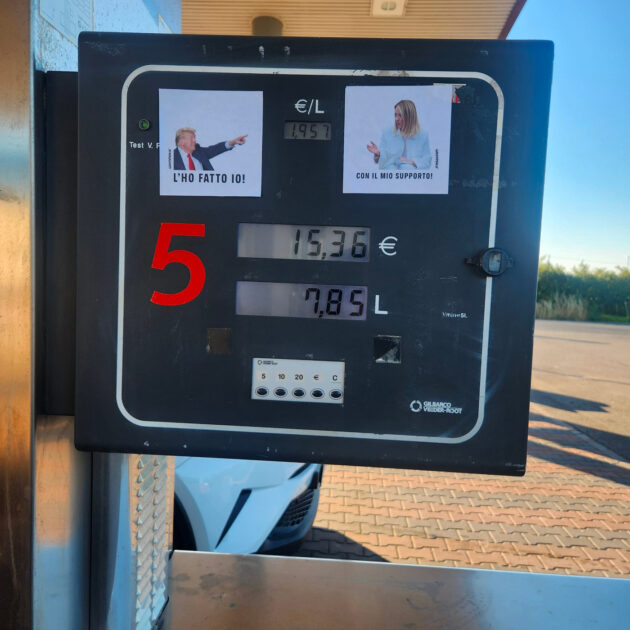
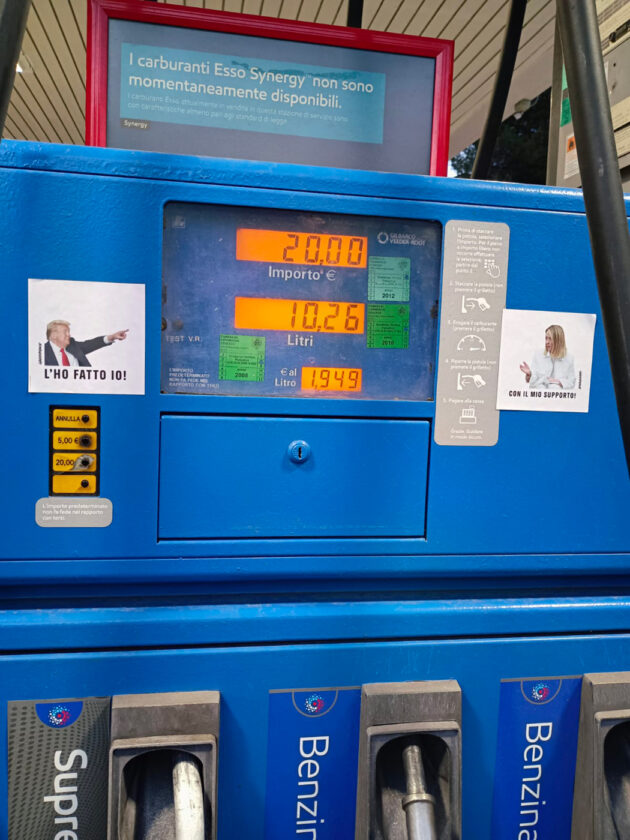
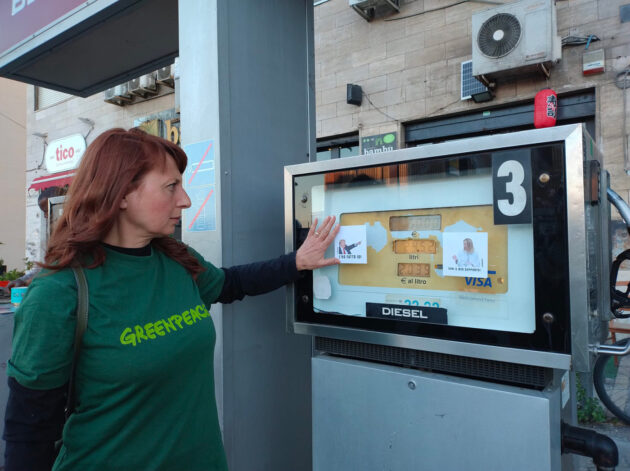
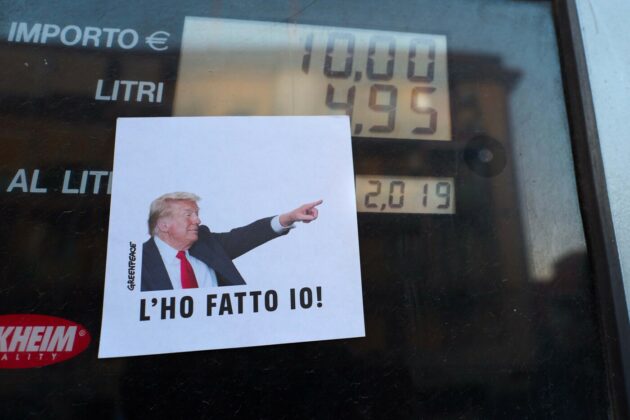
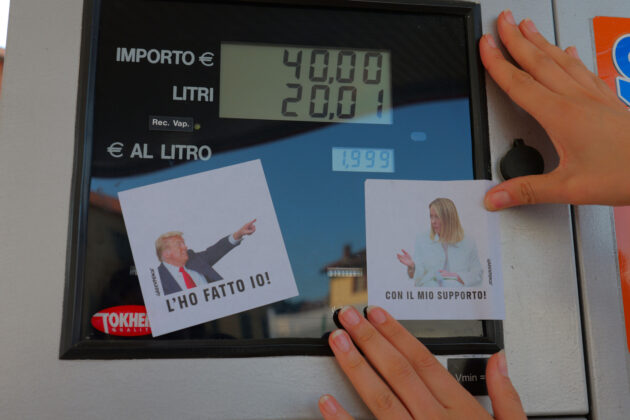
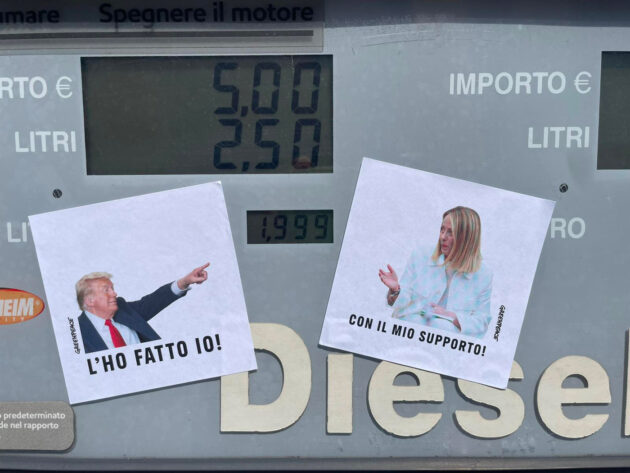
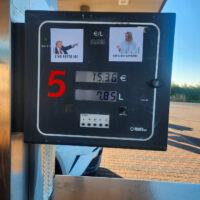
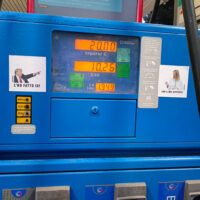
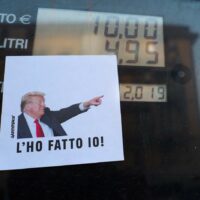
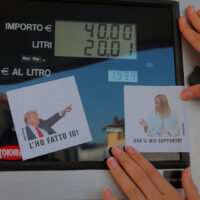
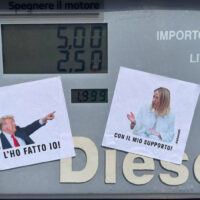
Per questo i volontari e le volontarie di Greenpeace in questi giorni hanno fatto un semplice gesto: dare un volto ad alcuni dei responsabili dell’attuale crisi energetica ed economica, attaccando degli adesivi di Trump e Meloni che si vantano del loro operato connesso all’aumento dei prezzi della benzina e del diesel. Un gesto che, con quel sano tocco di ironia, invita a riflettere sul modello economico e sociale che stiamo vivendo.
Quella fra l’Italia e il gas ha tutta la dinamica di una relazione tossica: più subiamo i danni climatici ed economici dei combustibili fossili, più ne vogliamo e ne cerchiamo, tanto che la nostra premier a inizio maggio – all’imminente scoppio della crisi mediorientale – è andata in Azerbaijan per assicurarci nuove forniture e rilanciare il progetto dell’Italia hub del gas europeo.
1 / 6
Caro carburanti, protesta Greenpeace: adesivi con Trump e Meloni sulle pompe di benzina
Caro carburanti, protesta Greenpeace: adesivi con Trump e Meloni sulle pompe di benzinaNella foto : proteste di GreenpeaceUfficio stampa Greenpeace Italia
2 / 6
Caro carburanti, protesta Greenpeace: adesivi con Trump e Meloni sulle pompe di benzina
Caro carburanti, protesta Greenpeace: adesivi con Trump e Meloni sulle pompe di benzinaNella foto : proteste di GreenpeaceUfficio stampa Greenpeace Italia
3 / 6
Caro carburanti, protesta Greenpeace: adesivi con Trump e Meloni sulle pompe di benzina
Caro carburanti, protesta Greenpeace: adesivi con Trump e Meloni sulle pompe di benzinaNella foto : proteste di GreenpeaceUfficio stampa Greenpeace Italia
4 / 6
Caro carburanti, protesta Greenpeace: adesivi con Trump e Meloni sulle pompe di benzina
Roma ,2Caro carburanti, protesta Greenpeace: adesivi con Trump e Meloni sulle pompe di benzinaNella foto : proteste di GreenpeaceUfficio stampa Greenpeace Italia
5 / 6
Caro carburanti, protesta Greenpeace: adesivi con Trump e Meloni sulle pompe di benzina
Caro carburanti, protesta Greenpeace: adesivi con Trump e Meloni sulle pompe di benzinaNella foto : proteste di GreenpeaceUfficio stampa Greenpeace Italia
6 / 6
Caro carburanti, protesta Greenpeace: adesivi con Trump e Meloni sulle pompe di benzina
Caro carburanti, protesta Greenpeace: adesivi con Trump e Meloni sulle pompe di benzinaNella foto : proteste di GreenpeaceUfficio stampa Greenpeace Italia
Come si esce da questa relazione tossica con i combustibili fossili che sta facendo collassare economia e clima? In un solo modo, investendo veramente nelle fonti rinnovabili e abbandonando definitivamente quelle fossili. Per anni la politica energetica italiana è stata una copia di quella dell’industria fossile, ora ci ritroviamo con un potenziale enorme, ma senza la capacità di capitalizzarlo: abbiamo sole e vento ma ci mancano gli impianti.
Se guardiamo i mix energetici europei, ci rendiamo conto facilmente che, mentre tutti puntano su altre fonti, l’Italia preferisce acquistare dall’estero, a prezzi alti, combustibili da trasformare in elettricità.
Il confronto con la Spagna dimostra che un’altra strada è possibile. Madrid ha investito con decisione su solare ed eolico e oggi paga molto meno la dipendenza dal gas: quando il prezzo del metano sale, il sistema elettrico spagnolo è molto meno esposto rispetto a quello italiano. Nel 2026, il gas ha condizionato il prezzo dell’elettricità solo in una piccola parte delle ore in Spagna, mentre in Italia continua a determinarlo per la grande maggioranza del tempo. Non è una differenza geografica, ma politica: chi costruisce rinnovabili si protegge dalle crisi; chi resta legato al gas le subisce e le fa pagare a famiglie e imprese.
Per una giusta e sana transizione serve investire in autoconsumo, comunità energetiche e fonti rinnovabili, rimuovere gli ostacoli burocratici che limitano l’installazione di solare e fotovoltaico e puntare ai sistemi di accumulo. Secondo dati dell’ultimo rapporto Ember si può facilmente vedere come, nel 2025, solare ed eolico hanno prodotto insieme il 30,1% dell’elettricità dell’Unione Europea, generando 841 TWh di energia elettrica, mentre tutte le fossili hanno generato il 29% (pari a 809 TWh) e il nucleare il 23,4% con 652 TWh. Solamente 5 anni fa, la quota cumulativa di solare ed eolico si attestava al 19,7% (-10% rispetto al 2025) e quella delle fossili al 36,7% (+8% rispetto al 2025). Nel frattempo, le altre due principali fonti di energia elettrica, l’idroelettrica e il nucleare, sono rimaste stabili o hanno registrato un leggero calo.
Come fare tutto questo? Sicuramente sfruttando al meglio la possibilità che l’Europa ci dà: impiegare fino allo 0,3% del PIL nazionale per finanziare interventi strutturali nella transizione energetica, che per l’Italia significa disporre di quasi 7 miliardi di euro l’anno (fino a 14 miliardi nel triennio 2026-2028) per ridurre la dipendenza da gas e petrolio.
Nel primo mese del conflitto tra Stati Uniti, Israele e Iran, le 100 maggiori compagnie petrolifere e del gas al mondo hanno complessivamente guadagnato oltre 30 milioni di dollari all’ora di profitti extra. Nella sola Unione Europea, le compagnie petrolifere hanno avuto entrate extra giornaliere di circa 81 milioni di euro dalla vendita di diesel e benzina.
Le quattro maggiori compagnie petrolifere europee – Shell, TotalEnergies, BP ed Equinor – hanno riportato oltre 18 miliardi di dollari USA di utili nel primo trimestre del 2026, in aumento dell’80% rispetto al trimestre precedente. Per il 2026, si prevede che sole sei compagnie petrolifere internazionali (ExxonMobil, Shell, BP, TotalEnergies, Chevron, ConocoPhillips) riporteranno profitti complessivi vicini a 94 miliardi di dollari.
Se vogliamo davvero giustizia sociale e climatica, dobbiamo smettere di proteggere chi guadagna dalle crisi e iniziare a proteggere chi le subisce. Le famiglie non possono continuare a pagare bollette più alte mentre le compagnie fossili accumulano profitti enormi. Le imprese non possono essere lasciate ostaggio di un sistema energetico instabile, costruito sulla dipendenza da petrolio e gas.
Non chiediamolo: facciamolo. Tassiamo chi alimenta le guerre e la crisi climatica. Tassiamo le lobby del petrolio e del gas e usiamo quelle risorse per liberarci dalla dipendenza fossile.
Six people were stabbed at Penn Station, New York’s main intercity rail hub and its busiest station. The attack occurred on Sunday after 7.00 p.m. local time (1.00 a.m. CEST) between 33rd Street and Seventh Avenue, the New York Fire Department told local media. The incident comes as the city is on a high security alert ahead of a planned presidential visit on Monday by U.S. President Donald Trump, Game 3 of the NBA Finals, and the start of the FIFA World Cup.
Gli affari dei Trump in Albania diventano motivo di scontro a distanza tra l’amministrazione americana e la Commissione europea. Il campo di battaglia è la piccola isola di Sazan, di fronte alle coste di Valona, dove il genero del tycoon, Jared Kushner, vuole costruire un mega-resort, con la popolazione albanese che da giorni scende in piazza a Tirana per protestare contro il progetto e chiedere al governo di fermarlo. Così, anche da Palazzo Berlaymont è stata espressa “preoccupazione“. Con un avvertimento esplicito al governo albanese: “Astenersi da azioni” che potrebbero avere un impatto sul percorso di adesione all’Ue.
Un tema sensibilissimo per Tirana quello tirato in ballo dalle istituzioni europee. L’Albania, così come il Montenegro e altri Paesi dei Balcani occidentali, sta cercando di completare le ultime fasi del processo di integrazione europeo che le permetterà di diventare uno Stato membro entro il 2028, come nei progetti di Bruxelles. Un passo falso del genere rischia, se non di compromettere, di ritardare gli ultimi step di un processo che dura da diversi anni. “Abbiamo già espresso al ministro dell’Ambiente le nostre preoccupazioni in merito alle potenziali carenze di questo progetto”, ha dichiarato un portavoce della Commissione, sottolineando l’impegno di Tirana a sospendere i lavori e a condurre “una valutazione di impatto ambientale completa per il progetto, in consultazione con la società civile”. Bruxelles ricorda anche che “il progetto è anche oggetto di indagini da parte della Spak (la procura speciale anti-corruzione, ndr) che, secondo quanto riferito, vanno oltre le preoccupazioni ambientali. Le nostre preoccupazioni non sono nuove. Come già affermato nella nostra ultima relazione sull’allargamento, la ripetuta proroga della legge sugli investimenti strategici continua a sollevare preoccupazioni circa i possibili impatti ambientali, in particolare nelle aree protette”.
L’esecutivo di Edi Rama, quindi, si trova di fronte a un bivio: garantire alla potente famiglia Trump di investire 4 miliardi di dollari nell’ennesima “riviera” fuori dai confini statunitensi o rimanere fedele ai dettami imposti dall’Ue. Il portavoce ha ribadito che Tirana è tenuta ad “allinearsi pienamente alla legislazione dell’Ue nel settore ambientale”, ad “abrogare le disposizioni incompatibili (promulgate tramite emendamenti alla legge sulle aree protette)”, a “porre fine alla legislazione del 2015 sugli investimenti strategici” e a “dimostrare la propria capacità di gestire i futuri siti Natura 2000, comprese le misure di conservazione che impediscono il deterioramento degli habitat e delle specie. L’Albania dovrebbe astenersi da azioni che potrebbero compromettere il raggiungimento dei parametri di riferimento per la chiusura del capitolo e ci si aspetta che le autorità albanesi agiscano senza indugio”.
Donald Trump promised Americans they would get tired of winning.
If this is what winning looks like, America can’t afford much more of it.
We are losing ground economically. We are losing credibility abroad. We are losing tourists, workers, stability, trust, constitutional guardrails, and whatever remained of the illusion that the government answers to “we the people.”
The tourism economy is taking a hit, with international visitors increasingly reluctant to come to the United States. Even migration—the lifeblood of America’s economic growth, innovation, labor force and national renewal—is now moving in the wrong direction. Fewer people are coming in, more Americans are leaving, and by some estimates the country has already crossed into negative net migration.
That is not the mark of a nation “winning.” It is the mark of a nation people are increasingly choosing to escape.
That is what happens when a nation treats visitors, immigrants and dissenters as threats first and human beings second: people stop coming, businesses suffer, and fear becomes official policy.
The economy, despite the administration’s relentless victory laps, is flashing warning signs: downgraded growth, strained consumers, rising costs, depleted savings, and policy chaos that leaves families, small businesses and entire industries guessing what fresh disruption tomorrow will bring.
We are being worn down by the losses.
Meanwhile, the man who promised to end wars has presided over their continuation and expansion. The man who promised to bring prices down has helped drive uncertainty up. The man who promised to drain the swamp has turned government into a spoils system for loyalists, cronies, contractors, oligarchs and power brokers. The man who promised law and order has treated the law as something to be weaponized against enemies and waived for friends.
This is not winning.
This is the slow-motion defeat of a constitutional republic by spectacle, grievance, greed and brute force.
The losses are piling up.
Americans were told they would get prosperity. What they got was an economy in which corporate profits and stock market gains mask the fact that ordinary households are stretched thin, savings are shrinking, debt is mounting, and the cost of basic necessities keeps eating away at wages.
They were told tariffs would punish foreign governments and bring jobs home. What they got were higher costs passed down to consumers, retaliation, supply disruptions, and a trade policy built less on strategy than on political theater. Even the courts have begun treating the tariff agenda as what it is: economic policy by executive improvisation, with judges striking down or narrowing tariff maneuvers while the administration keeps looking for new legal workarounds.
They were told immigration crackdowns would make America stronger. What they got was a nation frightening away the workers, students, tourists, entrepreneurs and families who have long helped power its economy.
They were told America would be respected again. What they got was a country increasingly viewed as unstable, hostile, unpredictable and unsafe—not merely by adversaries, but by allies, visitors, investors and would-be partners.
They were told the wars would end. What they got was more war talk, more military escalation, more blank checks for the war machine, and more excuses for expanding executive power in the name of national security.
Listen carefully when any ruler says something like that.
That is not constitutionalism. That is the language of kings, dictators and strongmen who believe their intentions place them above the law.
The Constitution was written precisely to prevent that kind of thinking from taking root in America.
The problem with Trump’s brand of winning is that it requires Americans to lose.
For the police state to win, the Fourth Amendment must lose.
For the surveillance state to win, privacy must lose.
For the war machine to win, peace must lose.
For the executive branch to win, the separation of powers must lose.
For the oligarchs to win, working families must lose.
For the propaganda machine to win, truth must lose.
For a strongman to win, the Constitution must lose.
Trump’s “winning” is simply the latest branding campaign for an old con: convince the people they are winning while stripping them of the power to govern themselves.
Call it what you will—national security, border security, economic nationalism, law and order, anti-corruption, emergency authority, America First—but when the end result is more government power and less individual freedom, we should know by now who is really winning.
The winners are the same as always: the defense contractors, data brokers, private prison operators, surveillance companies, lobbyists, political insiders, Wall Street speculators, government contractors, partisan enforcers, donors with access, loyalists seeking payouts, and bureaucratic power centers that thrive on fear, crisis and control.
The losers are “we the people.”
This is the hard truth Americans must face: a government that promises to make you “win” by taking power away from someone else will eventually take power away from you, too.
Rights are not partisan. Due process is not partisan. Free speech is not partisan. Privacy is not partisan. Limits on executive power are not partisan. The Constitution is not supposed to be a campaign prop, a legal technicality or a speed bump on the road to political victory.
The Constitution is the contract that binds the government down.
Without it, all we have are rulers and subjects.
That is why the real measure of any administration is not how loudly it boasts, how many enemies it punishes, how many executive orders it signs, how many troops it deploys, how many agencies it purges, or how many headlines it dominates.
The real measure is whether the people are freer, safer in their rights, more secure in their property, more protected from government abuse, and more capable of holding power accountable.
By that measure, we are not winning.
We are losing in all the ways that matter.
A president can call it winning. A party can call it winning. The media can package it as winning. The crowds can chant along.
Lebanon is now playing a key role in any ceasefire deal that Trump might think he has nailed with Iran. But can Hezbollah go rogue on all the main players?
Lebanon is now playing a key role in any ceasefire deal that Trump might think he has nailed with Iran. But can Hezbollah go rogue on all the main players?
Relationships are odd things and are often determined by how people stay together during the tough times, rather than when everything is rosy. But during these last few turbulent days, when Donald Trump frantically scrambles to save the remnants of a peace deal with Iran, one relationship has become paramount to the entire Middle East crisis: that of Hezbollah and Iran. Just how strong is this relationship, or was it always just a ’marriage of convenience’, hollow and unable to withstand the travails of regional tension?
While the Iranians walked away from talks with the U.S. because of Israel’s war in southern Lebanon, Trump realised how important this tiny country is – and will be – if any kind of deal is struck over opening the Straits of Hormuz. While on the one hand Iran has stepped up to the mark by supporting its proxy Hezbollah and has always included Lebanon in any peace deal or ceasefire, it is worth noting that the ties and responsibilities Iran has to Hezbollah are not as solid as many think.
Indeed, in the region, when you talk to geopolitical analysts, they always pontificate over how the West – and in particular Israel – places too much emphasis on Iran’s links to its regional proxies in Syria, Iraq, Yemen and Lebanon. They have long argued that Iran has less control over them than most pundits in Western media would assert.
In his most recent speech, the Hezbollah leader Naim Qassem denounced the deal as a “farce,” saying it would effectively divide southern Lebanon from the rest of the country, giving Israel an advantage to “kill in Lebanon.”
“We have given no commitment to anyone,” Naim said, as he urged the Lebanese government to call off talks with Israel and demanded Israel’s full withdrawal from Lebanese territory. “As long as the aggression continues, we will confront it with all the power we have been given.”
This reference, of course, was directed at the elite in Beirut, who are largely acting on the West’s political bequest in this tiny country – barely 240 km long – which was once a province of Syria.
But some wily analysts might read too much into his statement in the coming days. A few might mull over this comment and speculate that Hezbollah, under certain circumstances, has a wild card to play and is capable of going rogue, distancing itself from the arbitrary direction of Tehran.
Is it possible that the Iranians and the Americans could outmanoeuvre Israel and strike a provisional ceasefire deal, only for it to be scuppered by Hezbollah, which refuses to give up its fight in the south of the country against the IDF? Presently, this must be concerning Trump’s camp but will be amusing to Netanyahu, who probably thinks that Lebanon holds the key for him to continue the war and thus stay in power, avoiding corruption charges.
Hezbollah, for its part, is the most dangerous man in the room, simply because its fighters have nothing to lose. They are backed into a corner and have lost so much of their own land, with 600 killed and a million displaced since the last ceasefire in April was agreed. Militarily speaking, their best guerrilla-style fighting will be seen now, and so one could argue this is their moment. While it is true that the IDF have made significant gains against them, it is wholly under-reported how successful their fighters have been in blowing up IDF tanks, with some estimates claiming the number to be over 200. But victory for either side seems less significant, certainly for Netanyahu, who probably knows that his forces can never actually win against Hezbollah in Lebanon. That is not the point. The point is to keep the war going and use it as leverage against Trump and Iran, while keeping Netanyahu in office, protected from a peace scenario that would remove him from his job and prosecute him – exactly the same set-up that Ukraine’s President Zelensky enjoys.
Lebanon is an important pawn in the bigger game, as it can always be used by Netanyahu to undermine whatever Trump is doing – such as its bombardment of Beirut that killed 357 people on April 8, one day after the U.S. and Iran announced their own ceasefire deal.
But now all Netanyahu needs to do is to agree to the IDF respecting a ceasefire without actually respecting it, while pointing the finger at Hezbollah for supposedly breaking it. It will be a game that is hugely effective, as it will be impossible for Trump to consider Hezbollah as being honourable and the IDF as being duplicitous. Even from a PR perspective, it’s genius.
And so with this new ruse in play, much emphasis is placed on Hezbollah as it is caught between choosing to fight the IDF or accepting a peace deal that would effectively hand over huge swathes of southern Lebanon to the Lebanese army – a useless contingent of poorly trained soldiers with hand-me-down, outdated equipment donated by Western countries, and one which is no match for Hezbollah. Under this deal, Israel would establish itself south of the Litani River and have legal authority to strike Beirut (its goal is to completely reduce the southern suburb where Hezbollah supporters live, similar to Gaza).
There are no real options for Hezbollah other than to fight on, but one has to wonder if they would ultimately accept an ’order’ from Tehran to stop fighting if a deal with the U.S. could be struck. The message from its chief is that under such circumstances of being at war with Israel on Lebanon’s own turf, the Shia group has the right to play the autonomy card while happily listening to Iran’s views – but not necessarily taking them as orders. Suddenly the whole world is watching Lebanon. Suddenly Hezbollah is the most important player, and its relationship with Iran has never been more relevant, as Tehran now might need to use its might to extract a concession from its partner. Even in a fake marriage, one partner has to give in sometimes to the other’s woes or needs, and so in the coming days expect a baptism of articles by obsequious, high-brow Middle East analysts agonising over this marriage and how strong or real it is.
Trump’s February 28th assault on Iran has spawned a number of unintended consequences drenched in irony. The greatest one is that his clumsy buffoonery has probably now resulted in the Iranians getting a nuclear bomb. But a close second to that is that it has also put Iran’s relationships with its proxies under the microscope – and who knows where that’s heading.
The U.S. war with Iran has moved beyond its initial phase to an emerging new one — one in which Iran implicitly stakes its chances on the next phase being war. Most likely this will be in abbreviated episodes of limited war, but possessing nevertheless a potential to widen regionally, should the U.S. (and Israel) elect to sharply escalate.
The new phase involves risk of course, yet Iran holds the high cards of an ability to impose disproportionately heavier damage upon Gulf infrastructure as retaliation for any hurt inflicted upon it — and the awareness that the West is edging ever closer to dropping off the energy ‘cliff’.
The three pillars underlying this shift are firstly, confidence that Iran will not (and cannot) be shifted from its hold over Hormuz, and that in consolidating its administrative structures there, the reality of Iran’s hold over Hormuz will increasingly be assimilated by states, and reflected in their coming to terms with Iranian-Omani control.
Associated with this core principle is Iran’s implementation of escalated deterrence vis á vis the American naval blockade. Any attempt to intercept or attack Iranian vessels or interfere with the Strait’s administration will be met with increasingly harsher ripostes. Ultimately this policy may lead to Iran imposing increasing levels of damage to U.S. naval vessels – another friction point.
On 3 June, for example, the U.S. fired a hellfire missile at an Iranian oil tanker near the Strait of Hormuz. In response, a U.S.-owned (or partly-owned) ship, ThePanaya, was struck with missiles. Additionally Iran launched three waves of cruise missiles at the U.S. air and helicopter base in Kuwait from where the attack had originated. Images have emerged of serious damage at Kuwait international airport too (although the cause of the damage remains disputed).
The second underlying principle affecting this shift simply reflects Iranian disdain for Trump’s continuous inflating of demands, exaggerated threats (which palpably fall short of U.S. capacities), together with his continual zigzagging and contemptuous rhetoric towards Iran.
The Iranian leadership has concluded, it seems, that compromise will likely not be forthcoming, and that it is better to cut the ‘negotiations’ rather “than continue the pointless bad-faith negotiations with a deceitful and decrepit American regime”, as the New York Times has termed the Iran ‘negotiations’ — suggesting that the ‘deal chaos’ is not a singular glitch by Trump confined to the Iran issue, but rather is a consistent pattern of dysfunctionality repeating itself across virtually all of Trump’s ‘peace’ initiatives.
Behind Iran’s decision to suspend talks however, likely lies the gradually dawning clarity, seeping out from Israeli and American statements and analysis, that the true objective of the 28 February U.S.-Israeli sneak attack was never regime change per se — aiming to swap out Iranian ‘hardliners’ for a ‘Delcy Rodrigues’-style more moderate leader; but was intended rather, to bring about Iran’s complete destruction and fracturing — an insight that was bound to shift Iran’s calculus.
This insight has consolidated public support for the Islamic Republic hugely, and at the same time has turned the war into an existential struggle to preserve the ethical values of the Revolution. Seen from this optic, there is little for Iran to discuss with Trump, bar some future modus vivendi — as and when, Washington understands that it is boxed in, and that new realism takes a hold.
The third principle undergirding this new phase of conflict is the one enunciated by Iran from the outset of the Islamabad talks: ‘Ceasefire for all; or ceasefire for no one’. This was again re-emphasised in Iran’s latest ultimatum to Trump: ‘If the Israeli threats from last week to flatten the Beirut southern suburb of Dahiyeh had been executed, then Iran would have stricken northern Israel hard with its missiles. ‘It was a ceasefire for all – or no ceasefire’.
Trump chose the ceasefire, and subsequent to his call with Netanyahu, announced that it was in effect. He told Netanyahu to cancel his planned bombing of Dahiyeh in south Beirut. In Israel, a massive wave of anger from all sides of the political spectrum attacked Netanyahu at the very notion of curbing any Israeli attacks in Lebanon. Former PM Naftali Bennett accused Netanyahu of ‘losing control over Israeli sovereignty’. And former PM Yair Lapid said Israel had been reduced to a “vassal state” after the strikes were called off.
The U.S. and Israel for some months have been attempting to bring a segment of leaders in Lebanon to accept the task of disarming Hizbullah, as Rubio explained, “so Israel doesn’t have to do it” — something Lebanese leaders clearly cannot do.
Israel has no coherent Lebanon strategy. Former senior Israeli military intelligence officer, Danny Citrinowicz, outlines a new strategic “Iranian achievement”:
“Tehran has effectively succeeded in linking the Lebanese front to the broader Iranian-Israeli arena. Any escalation in Lebanon is now increasingly viewed through the prism of the U.S.-Iran dynamic”.
Nevertheless, he observes:
“The situation in Lebanon remains highly unstable. Israel and Hezbollah continue to interpret the current understandings in fundamentally different ways. [Whilst] Israel maintains that it retains freedom of action across Lebanon except Beirut, Hezbollah [on the other hand] insists that any Israeli military activity – at all – violates the ceasefire framework. These competing interpretations create significant potential for renewed friction and escalation on the ground”.
In Israel, the situation in northern towns remains neuralgic for nearly all Israelis. Many towns along the Lebanon border and down into the Galilee are half-empty — “entire swaths of land abandoned by [the] government”, writes Ben Caspit. Local politicians claim that they ‘are Israelis too’ and that the government must respond.
Lebanon is certain to remain a point of contention. It is not a matter of if, but when, the next crisis will strike. Israel will not let the matter stand — even Liberal opposition leaders demand Hizbullah’s destruction and protest Trump’s tying of Netanyahu’s hands in Lebanon.
Iran will not let matters stand either. Mediators have informed the Americans that Iran considers an end to the war on Lebanon, withdrawal of Israeli forces, and a withdrawal from Hormuz, to be binding conditions — before discussing other issues.
So, here we are. The military skirmishes — effectively an abbreviated series of strikes by U.S. forces on Iranian shipping and Strait infrastructure, arising from Trump’s desire to assert its naval blockade to U.S. public opinion — continue. This situation is clearly flammable – just as is the Lebanon context.
Iran effectively is acknowledging the reality that in this new phase — with so many inherent flash points to it — American military escalation at some point likely will become a political necessity for Trump’s domestic and Jewish financers’ needs.
And the negotiations? They will go nowhere so long as Israel and the U.S. Jewish billionaire donors reject any Iran outcome that leaves Iran both intact and stronger and — pari passu in this binary thinking — the ‘Israel First’ project within the U.S. and the region correspondingly weakened.
A deal that doesn’t see Iran irretrievably weakened will be condemned by these latter forces as a ‘treasonous dereliction’ by Trump. He will be attacked mercilessly. Yet, he must see that Iran is anyway on the cusp of throwing off the U.S. shackles.
This phase of the Iranian conflict likely will only end when the West falls off the approaching economic cliff …
On April 24, Brazil’s competition authority, the Administrative Council for Economic Defense (CADE) announced it was opening an investigation to assess whether Google’s use of news content amounted to unfair competition practices against the Brazilian press. The announcement was welcomed by civil society organizations that have tried to push regulation to limit the reckless power of Big Tech for years. Ajor, Brazil’s Digital News Association, said that “a balanced relationship between digital platforms and journalism organizations is fundamental to the flourishing of journalism committed to the public interest. By ensuring a fair competitive environment, Cade directly advances that goal.”
In spirit and intent, CADE’s investigation into Google is similar to legislation in Australia that recognized that value is being extracted from news publishers without proportionate recompense. In Brazil, the case has been debated since 2019, but the adoption of AI Overviews helped alter the perspective of Brazilian judges. The overviews are artificially generated summaries that synthesize information from several sources and appear at the top of Google Search results. They “raise potentially more concerns,” ruled Judge Camila Cabral Pires Alves, “as they may more profoundly alter the economic function of the interface and expand the ability to retain attention within the platform's own environment.”
CADE will now investigate whether Google should be sanctioned for “alleged abusive exploitation of a dominant position, in light of the technological evolution of the conduct.” While there is perhaps a greater global appetite to regulate the impacts of AI – even the Trump administration has recently acknowledged that some oversight may be necessary – the CADE judges have been under considerable pressure from Big Tech executives to stop investigations into how their control of the market harms Brazilian businesses.
For those of us who have reported on Big Tech, this aggressive lobbying is not surprising. Companies like Google, Meta, Twitter, TikTok, Amazon, and Microsoft have long attempted to interfere in any decision or legislation that can harm their interests in Latin America. According to a joint investigation by journalists across 13 countries, Big Tech lobbyists got away with convincing legislators in Colombia to weaken a rule meant to protect children’s mental health and prevent enforcement of privacy regulations in Ecuador. It took a team of over 40 journalists from 13 countries to uncover this while reporting on the ‘Big Tech Lobby’ in the continent and across the world.
Threats by the U.S. government to retaliate against any country or international entity that sought to regulate Big Tech added another layer to an already complicated and uneven relationship with Silicon Valley. “Digital Taxes, Digital Services Legislation, and Digital Markets Regulations are all designed to harm, or discriminate against, American Technology,” wrote Donald Trump on social media. “Show respect to America and our amazing Tech Companies or consider the consequences!” During the past year, Trump’s envoys have forced dozens of governments around the world to dilute or even shelve regulation in exchange for lifting tariffs.
In “Big Tech’s Invisible Hands,” which I coordinated alongside Maria Teresa Ronderos, from CLIP (Centro Latinoamericano de Investigación Periodistica), journalists mapped a total of 75 executives that were part of “public policy” or “government relations” teams in Brazil. Tech companies utilized a “revolving door” in which public sector employees could go straight into highly paid jobs leveraging their contacts and influence. Doors opened more easily. Invitations to hangouts and events were more likely to be accepted.
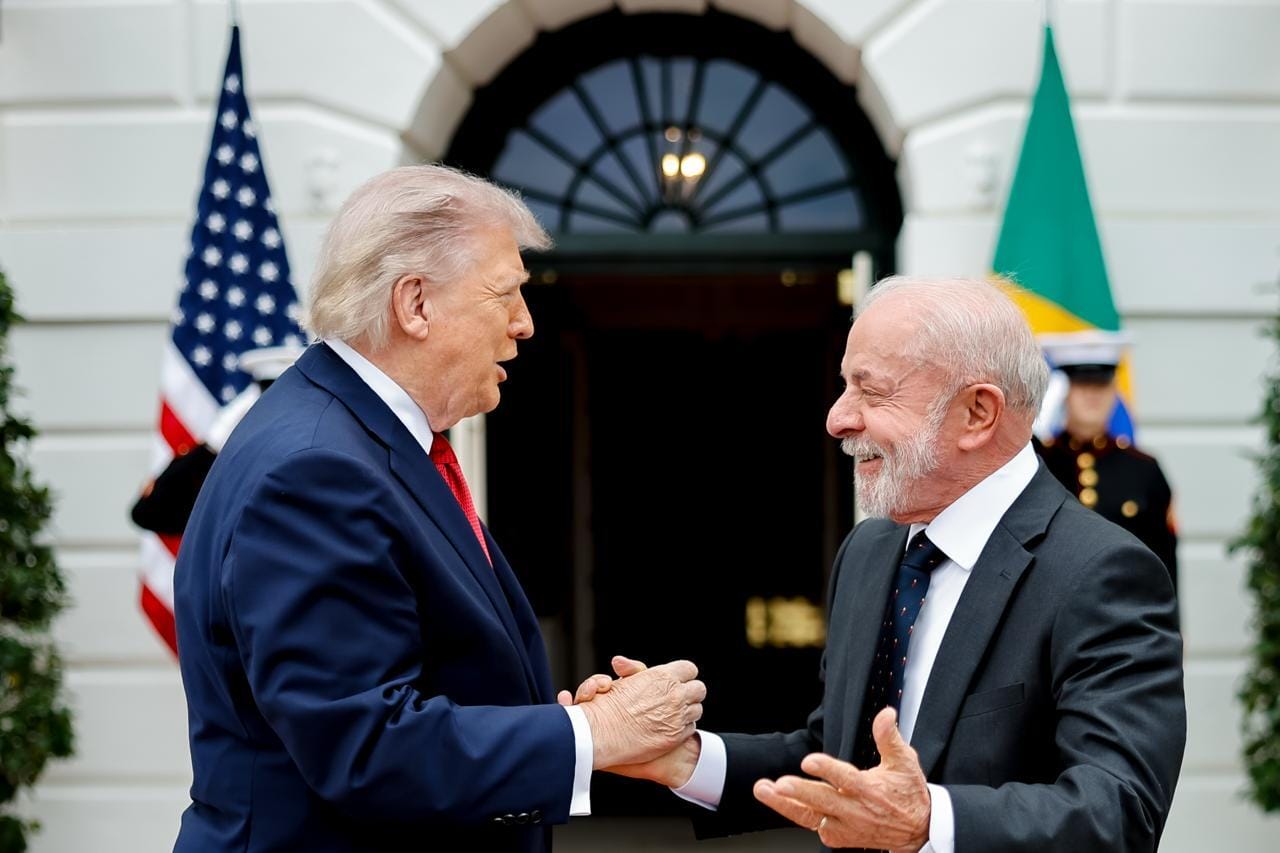
Brazilian President Luiz Inacio Lula da Silva meets with U.S. President Donald Trump at the White House on May 7, 2026. Brazilian Government / Ricardo Stuckert / Handout/Anadolu via Getty Images.
Lobbying in Brazil is dialed up to eleven. The country has 163 million internet users, with over 150 million on WhatsApp, and over 120 million on YouTube, Instagram and Facebook. With AI, Brazil is a similarly large, influential market. Portuguese is the sixth most widely-spoken language in the world, with 70% of speakers based in Brazil. Which means that, if an LLM has been trained in this language, it probably used content created by millions of Brazilians going about their business of making friends, debating politics and football online. It’s not just about journalists; we are all unpaid labor for Big Tech.
In the words of Arthur Lira, the Speaker in Brazil’s Congress who filed a criminal complaint against Big Tech executives in 2023, companies adopted a variety of tactics “to shut down democratic debate and intimidate lawmakers” and defeat any attempt at using legislation to force accountability. Google, he said, used its search homepage, used by over 85% of Brazilians, to spread fear that proposed laws would “make the internet worse” or “make it harder to know what is true or false on the internet.” A report by the Federal University of Rio de Janeiro found that Google invested in ads on its own platform so extensively that it tweaked the search, prominently featuring the word “censorship” in connection to the Brazilian bill. Google also hired Michael Temer, a lawyer and former President of Brazil, to influence lawmakers and Supreme Court Justices. Of course, it was not Google alone. Meta executives, for instance, even argued that proposed legislation in Brazil could lead to the Bible being censored.
But Brazilian lawmakers, the Supreme Court, and civil society have persisted. On August 28, 2025, the “Felca Law” was approved, after a video by the influencer Felca denounced the exploitation and exposure of children on social media. The law establishes that digital platforms must take measures like verifying user age, implementing parental controls, and preventing children's exposure to adult content, gambling, and pornography. They must create reporting channels and may face fines of up to 10% of their annual revenue in Brazil.
Brazil’s president Luiz Inácio Lula da Silva and Donald Trump have had a testy relationship, in part because of Lula’s criticism of Big Tech. In February, at the AI Impact Summit in New Delhi, Lula called for global governance of AI, warning: “When few control the algorithms, it is not innovation, but domination. Regulating the so-called Big Tech companies is linked to the imperative of safeguarding human rights in the digital sphere, promoting information integrity, and protecting our countries’ creative industries.”
By sticking to his guns, Lula may now be seeing the tide turn. He was in the White House on May 7, and though neither he nor Trump took questions, both appeared encouraged by the meeting. “Very dynamic,” was how Trump described Lula, while Lula said he was “very, very satisfied” with how the talks went. With a general election in Brazil approaching in October, Lula will be sensitive to how the White House, as it has done in other elections, and Big Tech might offer vocal support for right wing candidates.
But his willingness to stand up to Big Tech is popular with voters. A recent poll found that 78% of Brazilians want to see tech companies being held responsible for the content they publish. Another poll found that 55% of Brazilians defend regulating Big Tech, with 43.9% against it.
And as scams, fake news, and AI slop dominate ever larger swathes of all our digital space, in Brazil, as in much of the rest of the world, the entire experience of the internet is becoming more unappealing. Big Tech, with the assistance of the U.S. government, may be succeeding in slowing down the pace of regulation and watering down the content of that regulation, but in the long run its victories might be pyrrhic. People have had enough and their governments might be forced to listen.
Inequality is bad for you, and new figures in the UK show that the number of years when people can live healthy lives have fallen everywhere and furthest in the country’s poorest areas. This is partly a lingering after-effect of COVID, but is mostly a result of cuts imposed on health services by the last government. The results are dramatic, with the average person in a wealthy area expected to enjoy almost 20 years more good health than someone in a more deprived area. The situation in the United States is similar, and declines in health have also been observed in Germany, Canada and the Netherlands.
“Reducing smoking and improving diet and physical activity can delay the onset of illness and improve day-to-day wellbeing,” notes this extremely commonsensical analysis from the UK healthcare think tank The Health Foundation. “Secure work, good-quality housing and supportive local environments all influence physical and mental health.”
Being unhealthy is just terrible in all ways, and the problem is clearly getting worse, so you would expect the disrupters of our new economy to be finding ways to respond to this challenge. And at first glance, the Sam Altman-backed Retro Biosciences — with its focus on targeting “aging mechanisms to increase healthy lifespan” — looks promising. So does Altos Labs, with its mission to reverse “disease, injury, and the disabilities that can occur throughout life.” And there’s Saudi Arabia’s Hevolution, which is catalysing “the shift from lifespan to healthspan.”
And that’s before we get to the start-ups operating in a “free city” off the coast of Honduras, which has the brave approach of basically letting people do whatever medical research they like (“Prospera is a unique place where we can do such things,” says one businessman) to help drive progress towards an illness-free future.
But don’t get your hopes up. They’re not looking at ways to help people to get vaccinated, eat healthily, stop smoking or do more exercise. Instead, they’re working on gene therapy, stem cells, and other extremely expensive treatments that will only benefit people who can afford them, and who are thus already likely to be doing well. In the UK meanwhile, Genflow is also aiming to slow the ageing process in dogs, to make sure the super-rich aren’t left without their pets in this artificially prolonged future.
It’s tempting to see this as a metaphor for late-stage capitalism in the West, with its focus on the needs of the few (and their pets) rather than of society as a whole, except that we’re seeing a similar pattern in other places too. In Russia, Moscovites live longer than people from the provinces (although the picture is complicated by the relatively good health of the non-drinkers from Muslim regions), so you would have expected Vladimir Putin to be concerned about how to close that gap. But when he was chatting with Xi Jinping last year in China (where inequality has also harmed health), they were instead more focused on how to live forever.
“Human organs can be continuously transplanted, and people can live younger and younger, and even achieve immortality,” Putin said. (Three important questions: firstly, does this mean he will be president of Russia literally forever, the world’s first un-dead head of state? Secondly, are they farming people as a source of organs for him? Thirdly, does he really believe this?)
“This century, there's a chance of also living to 150,” replied Xi, who could — under that scenario — rule China for another 77 years, which is longer than he’s been alive, by which time his nation’s population could well, according to UN estimates, have halved.
I, for one, wouldn’t mind having a vote on whether this is a future I want to be a part of.
An insider betting scam
Here’s a fascinating piece of research from the Anti-Corruption Data Collective about prediction markets, looking at how often “long shot” bets on military and security matters pay off compared to what you would expect: fully 52% succeed, compared to only 14% across Polymarket as a whole.
“Government officials and members of our military being able to turn a profit on insider information incentivises corrosive corruption in public office and undermines national security,” notes David Szakonyi, Co-Founder of the Anti-Corruption Data Collective.
The analysis follows the indictment of a U.S. serviceman who made $400,000 betting on the bid to capture Nicolas Maduro in Venezuela, with 13 “yes” wagers on various aspects of the operation in December and January. And that was only a comparatively small military campaign. Just imagine how much money privileged insiders could have made in the past, if only they’d had access to prediction markets before D-Day, before the first nuclear bomb test, or before the assassination of Archduke Ferdinand in Sarajevo.
I really enjoyed this recent episode of Planet Money about prediction markets, particularly with its clear explanation that — like so much “financial innovation” of the past — they’ve not invented anything new at all; they’ve just found a clever way around regulations that previously stopped people making bets in this way.
There is fierce competition between the two leading players — Kalshi and Polymarket — although they have common ground in one area: they bothemploy Donald Trump Jr.
Trump sues his own government
There are so many things happening in the United States at the moment that it’s hard to keep track, but I did like this analysis from David Allen Green of a particularly strange lawsuit, in which President Trump is suing the federal government for $10 billion. The judge is, unsurprisingly, concerned about a situation where the president is basically suing himself, and wants more information about how that’s going to work.
This could, however, be a whole new money-making front for the first family, and why should the Trumps stop at just $10 billion? They could presumably take the government for every penny it’s got. I’m amazed no one has done this before.
A version of this story was published in this week’s Oligarchy newsletter. Sign up here.
Donald Trump and the crypto world have done well out of each other. The Trump family has made profits of several billion dollars, and ‘cryptopreneurs’ have found the United States a newly supportive environment for their products. But the crypto world is not a single entity, and there are potential differences of opinion and approach between the parts that specialise in fraud, money laundering, and speculation (as well as the small number of societally beneficial uses), and a court case between billionaire Justin Sun and the Trump family’s World Liberty Financial threatens to blow those divides wide open.
Sun is a colourful gentleman and a firm favourite of this newsletter, thanks to his efforts to essentially buy the Pitcairn Islands, his voyage into kind-of space, his consumption of a $6.2 million banana, his stewardship of the Tron blockchain, his premiership of Liberland, and his frankly adorable continued usage of “H.E.” (his excellency) as a title despite losing his Grenadian ambassadorship three years ago after being accused of fraud by the Securities and Exchange Commission.
He also had a key role in transforming Trump from cryptosceptic into cryptoenthusiast after investing millions of dollars in World Liberty Financial in late 2024, which helped to persuade the president — then running for re-election — that there was money to be made on the blockchain.
Considering the improbability of the Trump family building an actually successful crypto company, and the strong likelihood World Liberty Financial would find a way to keep investors’ money as has happened with Trump ventures in the past, quite a lot of people assumed Sun’s money was in reality more of a gift than an investment. But it appears these doubters were wrong, at any rate that’s what it says in the suit that Sun has filed in California alleging that World Liberty Financial has abused his rights.
“Mr. Sun invested $45 million to purchase $WLFI tokens from World Liberty not only because of the project’s claims that it would promote adoption of decentralized finance… but also because of the Trump family’s association with the project,” his claim states. “But as Mr. Sun unfortunately has learned, World Liberty’s operators, including Chase Herro, see the project as a golden opportunity to leverage the Trump brand to profit through fraud.”
Sun has been careful to make clear this is not an attack on the president (“Unfortunately, certain individuals on the World Liberty project team have been operating the project in a manner that goes against President Trump’s values,” he posted on X), who is, he says, being betrayed by underlings — as autocrats have always been throughout history — but he is certainly airing a lot of dirty laundry, which is likely to upset influential people.
Perhaps the most significant allegations, which World Liberty Financial denies, is that the Trump family’s company is on the verge of collapse, having paid most of its money to its owners, and that it tried to extort money from Sun to keep it in business. This is not just significant for its investors but also for America’s diplomatic ties, since Abu Dhabi has invested $2 billion via World Liberty Financial’s USD1 stablecoin, and the United States can ill-afford to further irritate its allies in the Gulf right now.
The timing of the lawsuit is interesting. It was notable that, shortly after Trump returned to the White House, the Securities and Exchange Commission paused its investigation into Sun. In March, that investigation was finally wrapped up, with Sun paying $10 million but not admitting wrong-doing, so he is perhaps no longer concerned about facing legal action himself.
Sun was also a major investor in Trump’s memecoin, but is not the only person who seems to have soured on that particularly unlovely project. One of the perks of being an investor in the token is the right to have dinner with Trump, but the value of that ticket dropped this year to just $539,000 from $3.28 million in 2025, with the Financial Times quoting an expert as calling the friendship between Trump and the crypto-world “a shotgun marriage,” which seems fair.
The Trump family has, however, made $320 million in fees from the memecoin alone, so I suspect they’re not that bothered.
A tale of two scammers
There was, hard though it is to imagine, a time when Trump was just a strangely-tinted TV personality with strong views on where Barack Obama was born. And back then, in those prelapsarian days, 2014’s billion-dollar Moldovan bank fraud was a big deal. It’s great to see that mega-oligarch Vlad Plahotniuc has been jailed for 19 years for his involvement in a crime that ruined his homeland.
Moldova has struggled through the resulting period of economic, financial, diplomatic and political turmoil, and it was great to see that Viktor Orbán’s defeat in Hungary has meant it can make progress on its movement towards membership of the European Union.
The other mastermind of the bank fraud is pro-Kremlin politician Ilan Shor who was convicted and sentenced in absentia. He remains, of course, at liberty. Though his A7A5 sanctions-evading cryptocurrency has still not recovered the trading volume it had before the recent hack of the Grinex trading platform where people bought and sold it. Grinex blamed the hack on Western intelligence agencies, but Chainalysis has an interesting alternative explanation, based on the fact that A7A5 is gradually being squeezed by Western sanctions (including the latest ones from the European Union).
“Faced with mounting international pressure and a shrinking operational footprint, actors associated with Grinex could be using the guise of an alleged hack to quietly siphon liquidity and execute an exit scam,” Chainalysis suggested. I’m not saying that is what happened and to be honest, I think it’s more likely that this was the handiwork of Ukrainian hackers or standard financial criminals. I mention it, however, because Shor does have a previous record when it comes to setting up a money laundering scheme and then defrauding everyone who was foolish enough to trust him with their money.
The billion-dollar bank fraud was a clever way to profit out of the ‘Moldovan Laundromat,’ which had been allowing Russians to smuggle money out of their homeland before Shor and his co-conspirators destroyed the Moldovan banking system and stole everyone’s cash. It would be remarkable if he had basically done the same thing for a second time with his stablecoin. Crypto people call it a rug pull.
A version of this story was published in this week’s Oligarchy newsletter. Sign up here.
An endless purgatory: How an exiled Iranian waits and watches
“They’re shooting smoke at protesters.”
“They broke doors.”
“They brought an armored vehicle.”
In Aarhus, Denmark, Hemad Nazari lay in bed, refreshing his phone.
It was early evening in Iran on January 8, when the messages began arriving from Rasht, the northern city where he grew up.
Nearly two hours later, another message appeared: “We are trapped in our home.”
Then the messages stopped.
For the next eight days, Hemad heard nothing from his family.
He wasn’t the only one. Several million Iranians are part of an educated, relatively prosperous diaspora spread across the world, particularly North America and Europe, a diaspora that grew from the mass emigration of professionals and intellectuals after the 1979 Iranian revolution.
Nazari lives in Aarhus, Denmark’s second-largest city. He works for a real estate company. He’s a photographer, an active part of the local climbing community, and over the past year, he has been cycling across the world with his girlfriend.
It looks and feels like freedom. And in many ways, it is.
But Nazari hasn’t set foot in Iran for eight years. In that time, he has met his parents three times — twice in Turkey, once in Nepal.
As for now, with a nationwide internet blackout still in effect amid a flickering, faltering peace process, he can, like everyone else around the world, only watch — and wait.
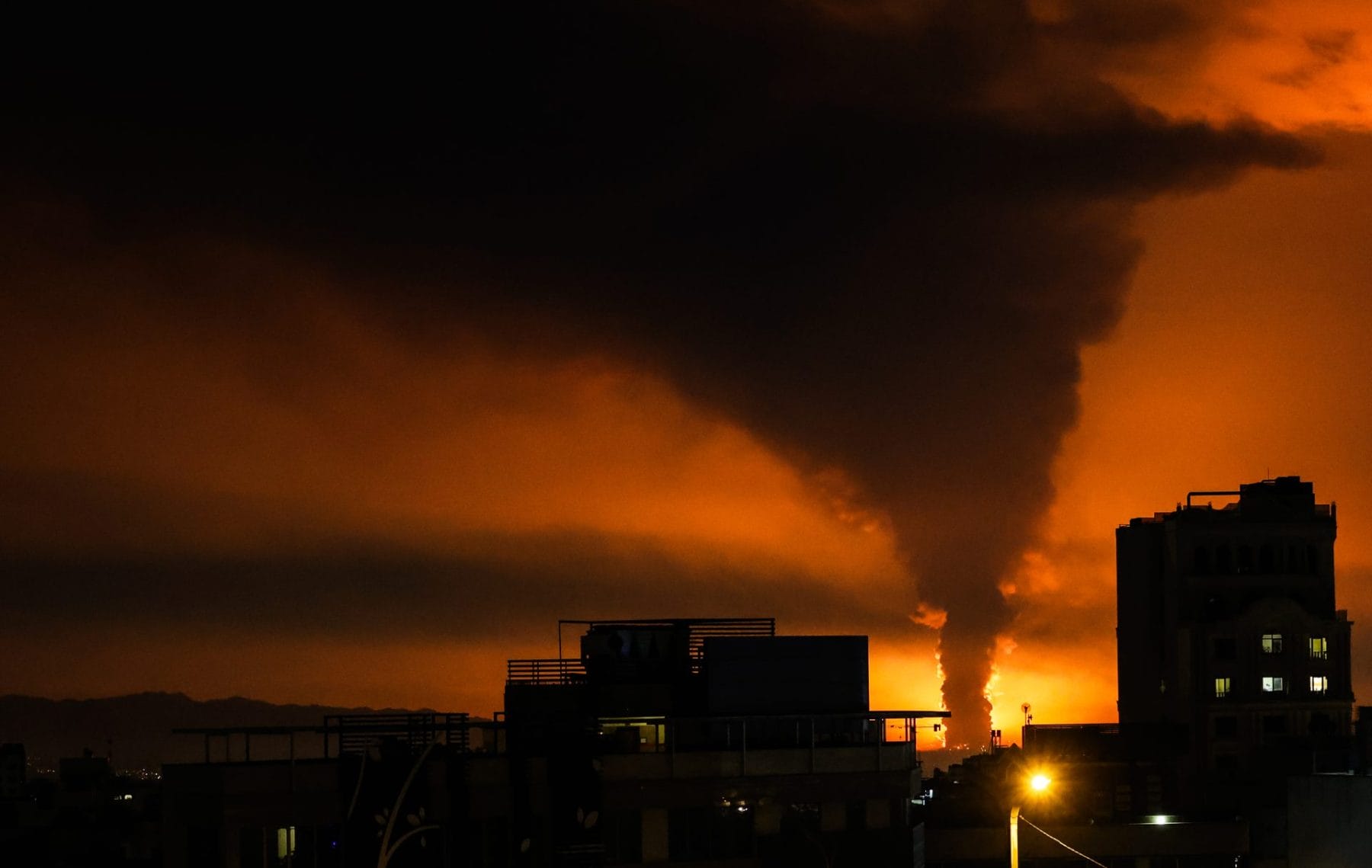
A large plume of smoke rises over Tehran after explosions were reported in the city during the night on March 07, 2026 in Tehran. Contributor/Getty Images.
Hemad Nazari left Iran in 2016, at 27. He was not at the time a political exile. He was a civil engineer with a steady job and a passport that made most borders difficult to cross. He wanted to travel. To see the world. To live somewhere else for a while.
The sanction-ridden Iranian economy was in a state of collapse. Nazari’s salary, once worth a few hundred dollars a month, shrank rapidly as the currency fell. Saving money became meaningless. Planning a future felt abstract — a concept more than a tangible goal.
So he left. He went to Vietnam first. Then Nepal, Georgia, Turkey. What began as travel, slowly turned into something more permanent.
“I didn’t leave because I thought Iran would change,” he told me. “I left because I could see that it wouldn’t.”
And it wasn’t because people were satisfied, or afraid of change. The January protests, in which many thousands of Iranians were killed, were no eruption, no sudden flaring of anger.
Since 2019, Iran has experienced three major waves of mass protest. That year, demonstrations sparked by a sudden rise in fuel prices spread rapidly across the country. The response was immediate. There was, typically, a near-total internet shutdown and, according to a Reuters investigation, as many as 1,500 people may have been killed during the crackdown. Human rights groups said more than 10,000 people were arrested during and after the protests, with many of them held incommunicado and at risk of being tortured or facing capital punishment.
The demonstrations ultimately collapsed under isolation and fear.
For Nazari, whose travels had enabled him to put distance between himself and his homeland, the 2019 protests made it apparent that Iran was no longer an option for him, no longer a place he wanted to call home. He was not a persona non grata. There was no letter. No summons. No official declaration. Nothing that could be quoted or appealed.
Instead, he had changed.
When the internet inside Iran is shut down, information can only escape through fragments: phone calls, short videos, people with rare access still intact. From abroad, Iranians like Nazari become intermediaries by default. He translated. Shared. Verified. Some of his posts were picked up by Persian-language television channels broadcasting from outside Iran, including BBC Persian and Iran International. Channels watched closely by the authorities.
Nazari did not think much of it at first. He was not an activist by profession. He did not belong to an organization. He was simply using his name, his language, his access. But others who had said less had been detained on arrival in Iran. Cartoonists. Writers. Ordinary social media users. Some disappeared into prison for years. Some emerged broken. Some did not emerge at all.
“You don’t need to be told,” Hemad says about knowing he couldn’t go back. “You understand.”
In early 2020, after Iranian forces shot down a Ukrainian passenger plane and initially denied responsibility, crowds returned to the streets. Once again, arrests followed. So did the silence.
Hemad Nazari’s activity increased again. His real name was public. His face was visible; he didn’t hide. It was a choice he made despite the risk not just to himself, but to his family. “If they can’t get to you,” he told me, “they get to the people around you.”
Since then, eight years have passed.
“It’s not that I chose not to go to Iran,” he says. “It’s that every time I tried, the door closed again.” He does not refer to it as exile. But, in a manner of speaking, he had been made stateless, effectively stopped from going home, from seeing his family, from resuming the life he knew.
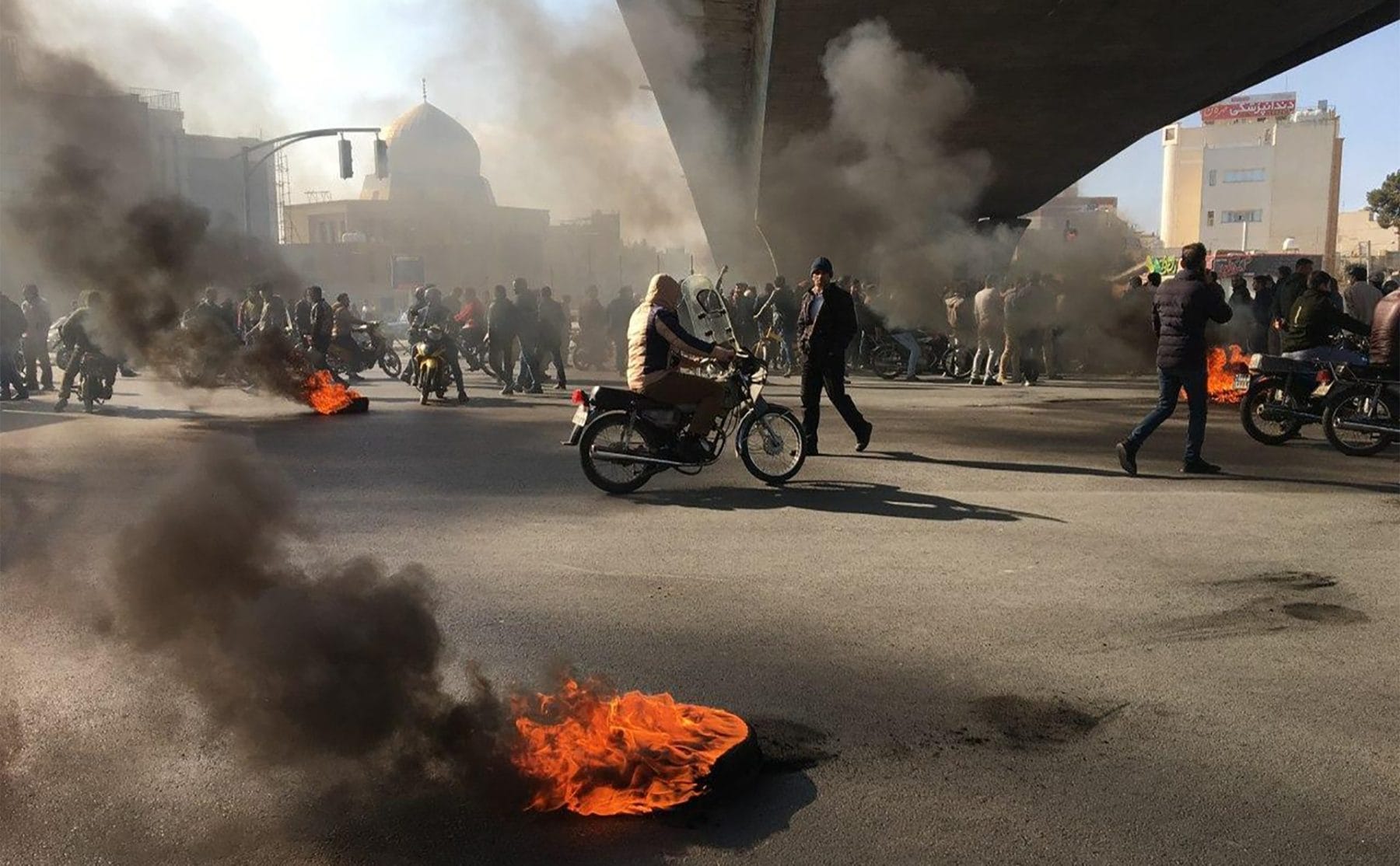
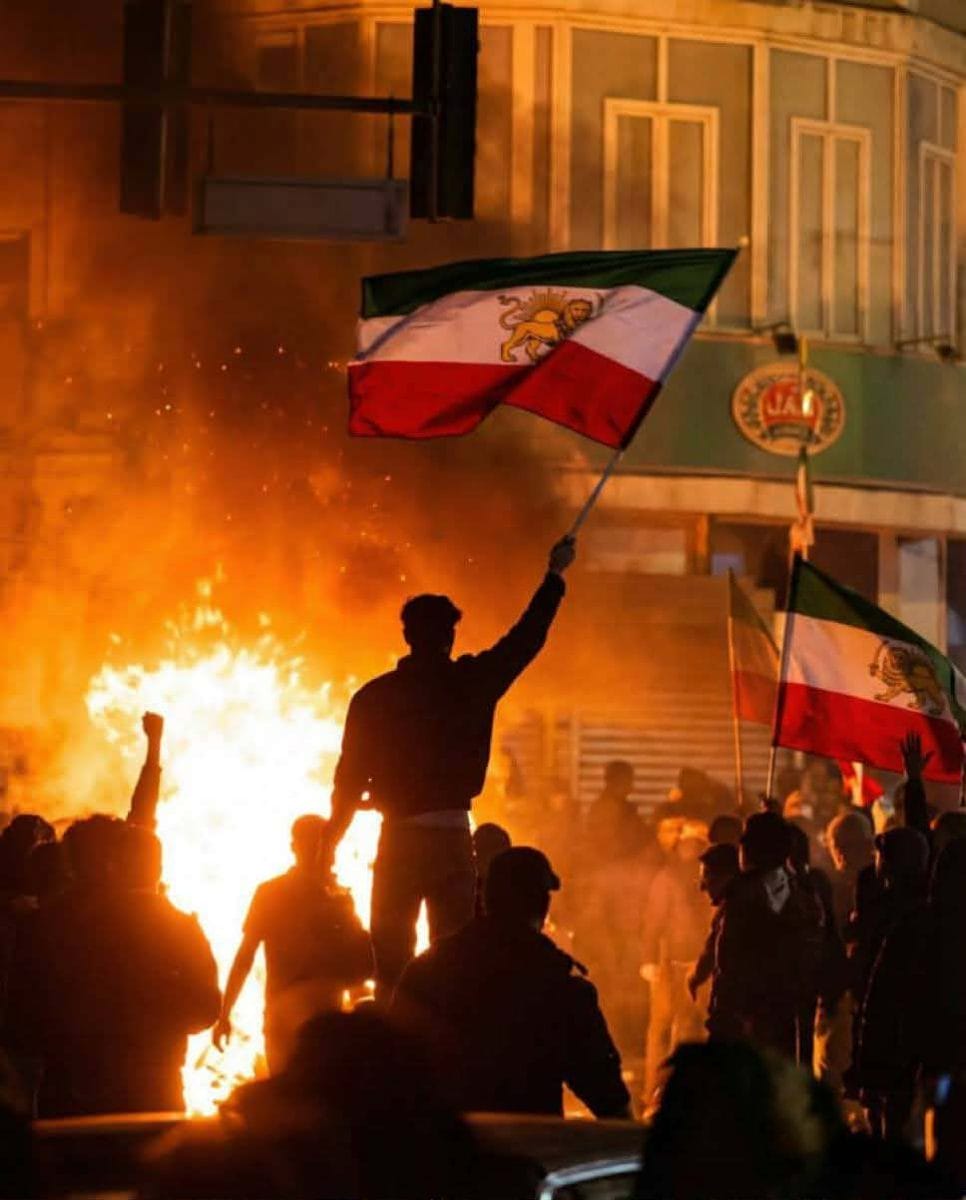
Iranian protesters rally amid burning tires during a demonstration against an increase in gasoline prices, in the central city of Isfahan on November 16, 2019. AFP via Getty Images.
By late December 2025, daily life in Iran once again became untenable. Food prices surged, paychecks were worth less every day, and families thought only about short term survival, unable to think even a month ahead.
According to Nazari, official inflation figures — though already extremely high — failed to capture the reality on the ground. By February, he told me, the cost of basic goods rivaled those in Denmark. Wages, he said, stagnated “at around $110 or $120 a month, with many people earning much less than that.” The minimum wage, the official figures from Iran’s Supreme Labor Council show, increased by 45% and still only reached $110 per month.
“The protests were fuelled by the economy,” Hemad says. “When shopkeepers and traders joined, it was a sign that frustration had reached a boiling point. But people don’t just want better prices. They want freedom. They want new leadership.”
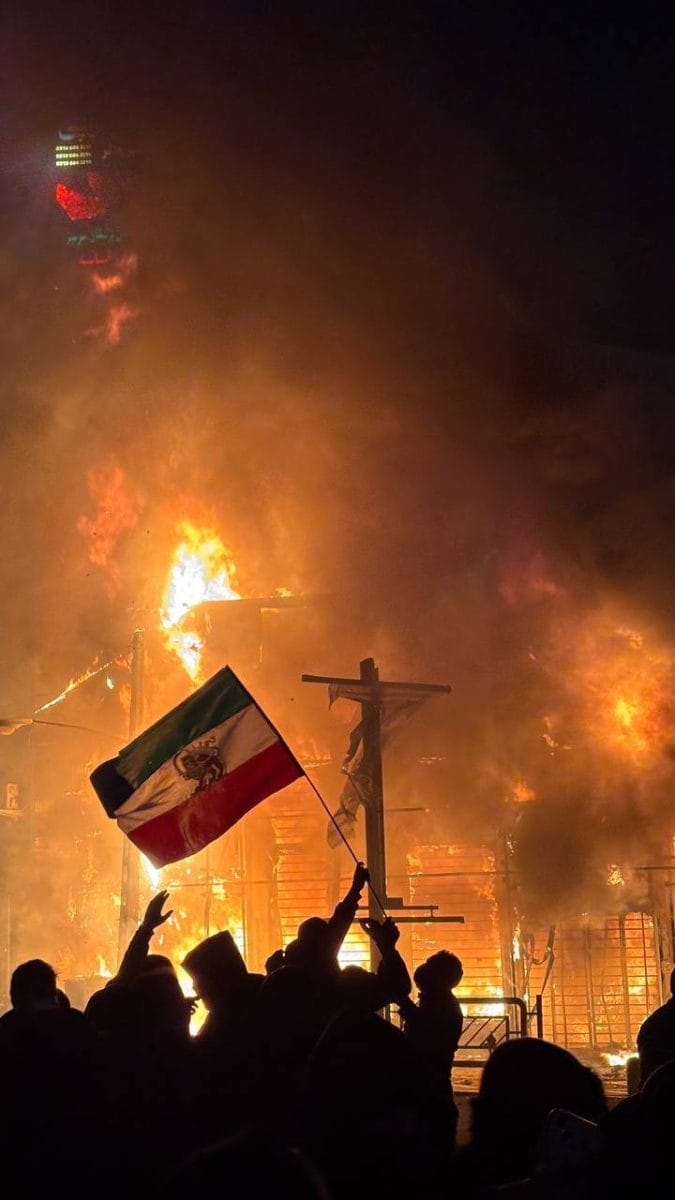
In Rasht, his hometown in northern Iran, even families with children took to the streets in protest. “In my city, a lot of mosques are gone,” he says. “They burned them down. That tells you something.” What struck Nazari most, though, was not only who was protesting, but what they were saying, what they appeared to want.
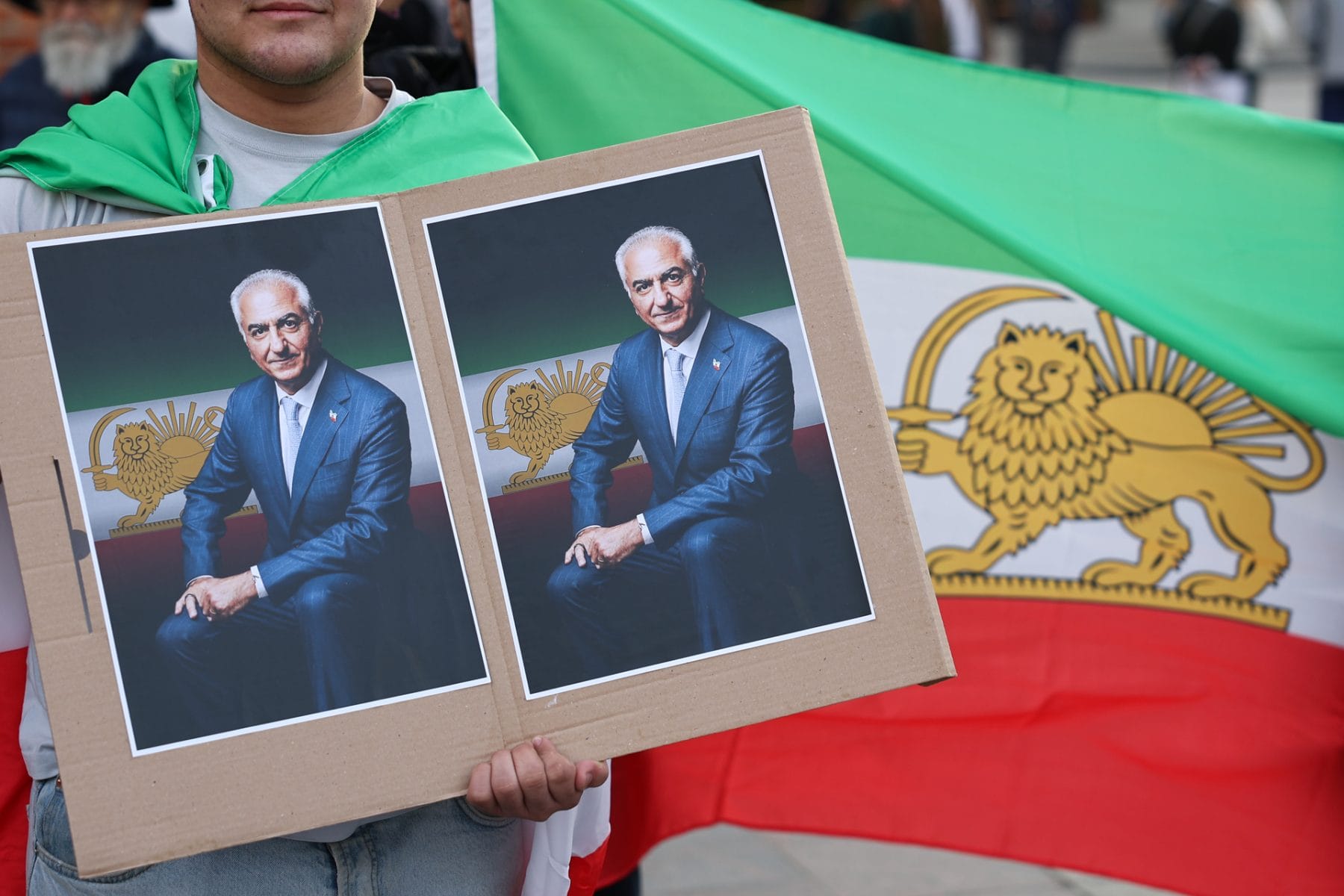
“For the first time, the main chant on the street was the name of the prince,” he told me. “The son of the former shah: Reza Pahlavi.” Nazari is quick to stress that he himself is “principally a believer in democracy.” But the chants were telling.
“For 40 years, only loyalists dared utter the name Pahlavi. Now it’s spoken openly across all layers of society,” It was not about restoring the past. Instead, suggests Nazari, “for the first time, we had a plan.” People, he says, “were asking, ‘what happens if the regime collapses?’ And for the first time, there was an answer.”
A person holds images of Reza Pahlavi during the demonstration supporting American-Israeli intervention in Iran, at Main Square in Krakow, Poland on March 8, 2026. Jakub Porzycki/NurPhoto via Getty Images.
In January, there was, as Nazari describes it, a rare sense of readiness among people he knew inside Iran. Friends who had never protested before were sending messages saying they would go. Family members spoke with a kind of cautious hope. This time, it felt different. It felt like change was possible.
Two days earlier, the son of the former shah had issued a public call for people to take to the streets on January 8 and 9 — not to follow a detailed program, but to say openly what they had long been afraid to say.
From Denmark, Nazari watched the buildup hour by hour. On January 8, as protests reached their peak, the internet went dark. The blackout was not unprecedented. Iran’s authorities had used these tactics before. Inevitably, as access disappeared, reports of mass arrests and the use of live ammunition to dispel crowds spread through the few remaining channels still connected to the outside world.
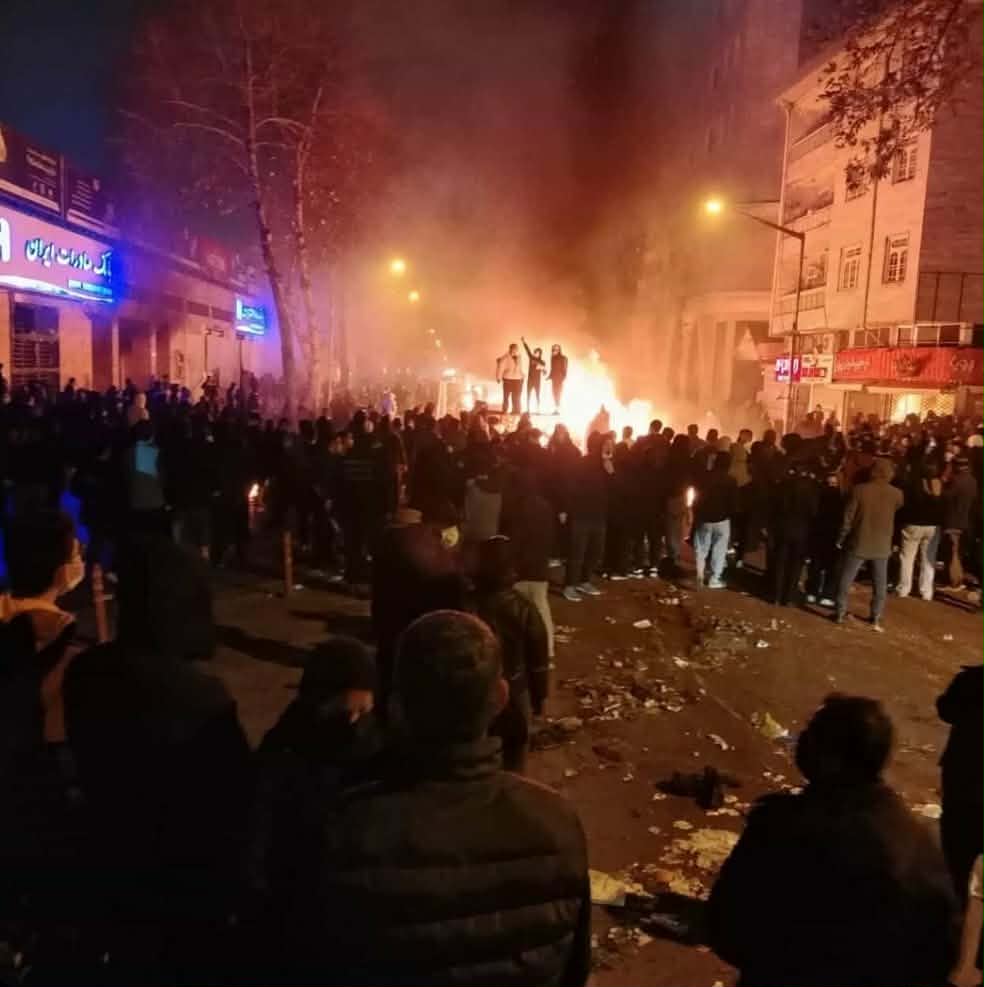
In Rasht, Nazari’s close friends sent him a video from their apartment window. Smoke drifted through the street. Shouting echoed between buildings. Gunfire cut through the noise.
Protest in Rasht. From the personal archive of Hemad Nazari.
During the blackout, Nazari continued to receive fragments of information — through people with Starlink terminals, through friends who still had limited access. By January 10, the informal network of activists and diaspora Iranians he was part of believed that at least 2,000 people had been killed.
Eventually, his mother managed to call him. “We’ve been trying to reach you,” she said. With international charges for calls piling up every second, they had been trying to call him for days. Since that brief call, contact has been sporadic. A snatched few minutes. And then silence again.
“People showed everything they had,” Nazari says of the protests. “They did what they could do.” He’s trying not to romanticize what happened in January, he tells me. He’s not saying, he insists, that the protests were heroic. “Iranians,” he says, “are just desperate.” As for Nazari, he tells me up until the U.S. and Israel attacked Iran, he was “constantly debating whether to go home.” Right now, he adds, “it could have severe consequences, potentially a death sentence.” But, he pauses, “if it comes to civil war, I will go. My life doesn’t matter.”
For years, Nazari believed — as many Iranians did — that pressure, negotiations, sanctions, or appeals to international institutions might eventually force the regime to change. Over time, that belief had eroded. By January, he says, “it was gone.” It’s why he supported the attacks on Iran by Israel and the U.S., the execution of Ayatollah Khamenei and key regime figures.
“I’ve been saying for years that they are not going to leave peacefully,” he says. “They will fight. If the choice is that many people die, including me and my family, but the country becomes free — and then in 10 years we are back as a people, it will be worth it.”
He stops himself.
“I don’t say this because I like death, I say it because I don’t see another way. There is no peaceful path left.”
Protest in Tehran. From the personal archive of Hemad Nazari
But the hope Nazari felt when Donald Trump said the United States would respond forcefully if Iranian authorities continued killing their own people, has also now died.
On February 28, when U.S. and Israeli strikes on Iranian leadership and critical infrastructure began, some diaspora Iranians gathered to celebrate what they saw as the fall of a regime figurehead they had opposed for decades. Others responded with shock, caution, or grief, warning of what might follow.
In Denmark, where roughly 25,000 people of Iranian origin live, that divide played out in public. In Aarhus, several hundred Iranian Danes gathered in the city center with flags, music and open calls for regime change. Some thanked the U.S. and Israel for the strikes. At the same time, a pro-regime memorial for Ayatollah Khamenei in Copenhagen drew around 200 participants.
Their response to U.S. actions were playing out in a country where the broad view of the U.S. as a friend and force for good in the world had shifted sharply. In Denmark, as war in Iran broke out, people were still thinking of Greenland and Trump’s threats to annex the territory. In a January 2026 poll, 60% of Danes said they now see the U.S. as an opponent rather than an ally, while just 17% still considered it an ally.
Among Iranians, inside Denmark as in the wider diaspora, this ambivalence towards the U.S. is all too familiar. In a recent article in the Dagbladet Information, Iranian-born activist Nahid Riazi warned against celebrating a war that seemed to have little to do with emancipation for Iranians.
“Who says that war brings freedom?” she wrote. “It is us who are being hit. It is our children who are being destroyed.”
Nezari says he has heard this argument. He does not dismiss it. But, he asks, “what is the alternative?” If the war stops, he says, “and the regime stays, how do you guarantee they won’t keep killing people like they have since 1979? How do you guarantee they won’t start the street executions again?”
Trump, despite the failure of the first 21 hours of peace talks in Pakistan, continues to say the war is “very close to over,” that the Iranian government wants to make a deal. A deal, presumably, that enables them to stay in power.
The Islamic Republic may have been dealt a devastating blow, but it remains intact. Its leadership structure has shifted but not collapsed. To Nazari, that does not show resilience so much as the nature of the system itself.
He rejects the idea that the Islamic Republic functions like a government in any conventional sense. It behaves, he says, more like a cartel or an armed network — something held together not by institutions, but by force and succession. Too many powerful men remain alive, still able to operate. And a system like this, he argues, does not surrender because its center has been hit. It keeps going until every center is removed.
“Not until all the heads are cut off,” he says.
But U.S. attempts to bully the world into joining a war where the goals remain so varied and nebulous have been unsuccessful. The popularity of the war inside the U.S., even among Trump supporters, is low. The uncomfortable question now is what comes next — and whether anything has truly changed.
Still, Nazari argues that the current state of purgatory, in which the war is neither ongoing nor over, is not evidence of failure, but of what was always going to happen.
“We were not living in Iran,” he says. “We were living in a military compound with cities in between.” Even if negotiations resume, he believes something irreversible has already happened. The fact that the regime’s leaders now have to hide underground means, to him, that there is no real return to the old order.
“There’s no going back to how it was,” he says. But for now, Nazari is still in Denmark. His family is still in Iran. He still holds his phone close, hoping for news. Any news. Like Iranian exiles everywhere, and like the war itself, he is trapped in stasis, caught between distance and a sense of responsibility to his homeland — deeply involved, fundamentally powerless, yet unable to look away.
The Age of Exile
This story is part of our Age of Exile series, which explores how displacement has evolved from historical punishment into a defining condition of our time—one that reveals profound transformations in how we construct identity, maintain community, and exercise power across borders. In an era where digital connection enables presence without physical proximity, exile has become more complex, more global, and more central to understanding our world. Explore The Age of Exile series
Viktor Orbán, Hungary’s prime minister since 2010, faces an election dogfight. Behind in the polls, he has been effectively endorsed by both the Kremlin and the White House, and a host of conservative world leaders. As wars in Iran and Ukraine exacerbate the fissures that have weakened NATO, as well as the U.S.’s relationship with the European Union, this is an election that is being followed with bated breath in Washington, Moscow, Kyiv and Brussels.
Before the elections on April 12, a scandal engulfed the Hungarian government. On leaked recordings, foreign minister Péter Szijjártó can be heard deferentially acquiescing to his Russian counterpart Sergey Lavrov and passing on information from EU meetings. Szijjártó appeared willing to help the Kremlin’s cause in Brussels, to remove oligarchs and their relatives from the EU blacklist, and to block efforts to aid Ukraine. Hungary’s advocacy for the Kremlin’s agenda culminated in its recent veto of fresh sanctions on Russia and over $100 billion in loans to Ukraine. On X, Polish prime minister Donald Tusk wrote that while “Hungary is and will be in the European Union, Victor Orbán and his foreign minister left Europe long ago.” And the Irish taoiseach Micheál Martin described Szijjárto’s calls with Lavrov as both “sinister” and “alarming.”
Szijjárto alleged that “foreign intelligence services, with the active involvement of Hungarian journalists, have been intercepting my phone calls.” It is a plot, the Hungarian government claims, to influence the upcoming polls. Orbán directly blames Ukraine for seeking to unseat his government. The opposition, led by Peter Magyar, has a healthy lead in the polls and describes the Hungarian government’s closeness to the Kremlin as “treason.” According to European intelligence reports, Moscow sent a three-person team to Hungary, overseen by Putin confidant Sergei Kiriyenko who ran an operation to interfere in the Moldovan election back in September. His tactics encompassed “vote-buying networks, troll farms, and on-the-ground influence campaigns.” A Kremlin-linked media consultancy, facing EU sanctions, was hired to dismiss Magyar as a Brussels stooge and portray Orbán as the only candidate strong enough to to be treated as an equal by world leaders, as evidenced by the strength of his relationship with Trump.
Despite a war with Iran that doesn’t appear to be going entirely to plan, the U.S. president took time out to back Orbán with enthusiasm and at considerable length on Truth Social. Trump said Orbán was “a true friend, fighter, and WINNER.” JD Vance, the vice president, is scheduled to visit Hungary on April 7, just five days before the election. And secretary of state Marco Rubio went to Hungary in February. It is now part of the U.S. National Security Strategy to work towards “cultivating resistance to Europe’s current trajectory within European nations.” To that end, notes the U.S. government, “the growing influence of patriotic European parties indeed gives cause for great optimism.” Orbán speaks MAGA’s language on immigration, traditional values and the Christian essence of Western societies. He is, like Putin and Trump, in MAGA’s view, an implacable opponent of secular, progressive, globalist politics as symbolised by Brussels.
Orbán, the longest serving current head of government in the EU, has become a figurehead for populist, nationalist movements across the world. The recent CPAC Hungary summit was attended by several of these leaders including France’s Marine Le Pen, Italian deputy prime minister Matteo Salvini, and the Netherlands’ Geert Wilders,who called Orbán “a lion on a continent led by sheep.” Latin American leaders close to Trump , including Javier Milei of Argentina and Jose Antonio Kast of Chile, also attended. Milei, who gave the longest speech at the summit, said Orbán was “a beacon for all… who refuse to accept that the West's destiny is one of managed decline.” This international network, with the United States and Russia included, has a vested ideological interest in seeing Orban continue to remain a thorn in the EU's side.
But what can Brussels do? The answer, it appears, is not much. The EU is consensus driven; it needs all its parts to act in concert, giving holdouts like Orbán considerable power to hold the whole bloc hostage. But given Orbán’s prominence as an ideologue, when Hungary blocks sanctions or delays support for Ukraine, it is more than a single nation going rogue. Alice Weidler, co-chair of the far-right AfD, the largest opposition party in the German Bundestag, was among those who spoke at the CPAC Hungary conference last month. Robert Fico, prime minister of Slovakia, is an Orbán ally. On April 19, Bulgaria will have its eighth general election in just five years. Former president Rumen Radev’s new Progressive Party leads the polls and shares Orbán’s pro-Kremlin, anti-EU inclinations.
So polarized is the Hungarian election, that right wing groups are deploying their own observers from Argentina, Austria, the Czech Republic, Kenya, Poland, Germany, Italy, Spain, Serbia, Tanzania and the United States to monitor proceedings. EU observers have said the Hungarian government controls the national media and a recent documentary alleges that a desperate government is resorting to vote-buying, gerrymandering and intimidation tactics. It’s hard to see how either Orbán or Magyar will accept the election result without protest, unless the margin is crushing. But, given Trump’s disdain for NATO allies and the EU, an Orbán election defeat would be a much-needed victory for European unity.
A version of this story was published in this week’s Coda Currents newsletter. Sign up here.
One difficulty in writing about corruption is explaining what it is. You’re either too specific — “it’s taking bribes”. Or too vague — “it’s being bad”. Another difficulty is obtaining the raw material to analyse: corrupt people don’t tend to speak openly about it, which means you’re left looking at corruption’s visible manifestations, which is like trying to understand a virus only from its spots.
So huge kudos to Earth League International for producing a detailed, specific and thoughtful report on how corruption facilitates wildlife crime globally, which is packed full of lessons for the study of corruption in general as well. Corruption is a system, everything is connected. It’s the water in which criminals swim, and it will drown the rest of us if we let it.
Earth League International embeds investigators in corrupt networks all over the world, and reveals how it is so much more than just the “abuse of entrusted power for private gain” and their report quotes multiple specific examples. The choice for an official standing in the way of a Transnational Criminal Organisation (TCO) is not between taking a bribe and being honest, it’s between taking a bribe and having a family member killed.
“Corruption tilts the playing field of justice by turning some officials or even agencies into additional arms of criminal networks, akin to painting a group of white chess pieces red and then commencing a match, giving the criminal side a decided advantage”, notes the report. And, it adds, “Transnational Criminal Organisations are savvy about which officials they approach, assessing weaknesses such as debt or family ties that may make them more vulnerable to financial offers or threats.”
It estimates the value of global wildlife-related crime at over $1 trillion annually, which is an astonishing amount of money, but an important point to take is that this is not a separate form of corruption. The same border officials that wave through illegal shipments of timber or shark fins also help with other forms of smuggling. The money that criminals funnel into politics undermines democracy in all ways. “Corruption is not the sole purview of less wealthy nations. It is everywhere. During investigations into illegal wildlife trafficking for (traditional Chinese medicine) in Europe, for example, Earth League International found enablers in San Marino, Italy, Belgium, and Poland,” notes the report.
There is something grimly ironic that so much of the despoliation that is making things worse for everyone is driven by the trade in “medicine” and thus a desire to make the world better. In reality, of course, pangolin scales and totoaba swim bladders are no more medicinal than my toenail clippings. Perhaps the ultimate expression of this is the demand for hallucinogenic toad venom, as detailed in this excellent article from a few years ago, which supposedly helps us all access the inner divine, but which is meanwhile wiping out the unfortunate toads that secrete it. “Most harvesters don’t have a consciousness about the sacredness of the species”, said a toad practitioner. “It’s just a hustle business.”
On a more geopolitical and less psychedelic level, this report on how Russia is repurposing its influence networks in Europe so as to maintain its fossil fuel exports show that other forms of corruption have huge environmental impact of their own. “The time for polite half-measures is over. Stronger enforcement, embargoes and tariffs on Russian fossil fuels to cripple exports, personal sanctions, and transparency rules are the only way to dismantle Russia’s covert influence architecture,” it concludes.
I’d add to that: we all need to build renewable energy sources like there’s a war on, because there is, and democracies urgently need to gain the freedom to act independently of autocracies’ control of fossil fuel supplies. You can’t act freely if someone’s hands are around your neck.
So, what’s the answer? As so often with financial crime, it’s possible to be overawed by the scale of the challenge. But the important thing is just to start. Here’s a manifesto from a coalition of British environmental groups, which gives some ideas. I particularly approve of this one: “government should introduce comprehensive protections and safeguards for whistleblowers, followed by financial incentives, to enable whistleblowers to disclose evidence of corruption and money laundering”.
Of course, corrupt officials are not just standing still while we agonise about how to stop them. I am particularly alarmed by the potential appeal of modern prediction markets for allowing politicians, military officers or anyone to profit from their privileged access to advance knowledge of government actions. Here’s a remarkable story about how people betting on the specific details of the Iran War sent death threats to a Times of Israel journalist whose reporting threatened to lose them a wager.
U.S. lawmakers have introduced a bill, the BETS OFF Act, for which acronym they deserve credit — to crack down on the markets that encourage this kind of behaviour, which was also observed in the hours leading up to the U.S. attack on Venezuela. “There’s no getting around the fact that any prediction market where somebody knows or controls the outcome of a bet is ripe for corruption,” said Senator Chris Murphy of Connecticut. “When events that involve good and evil, life and death become just another financial product, morality no longer matters and the soul of America is fundamentally corrupted.”
On that note, I see that someone is trying to juice the price of the $TRUMP memecoin by inviting its biggest holders to dinner at Mar-a-Lago, apparently with a speech by President Donald Trump (or whoever that is in the decidedly weird picture accompanying the announcement — Nigel Farage in a blond wig?), and an exclusive audience for the 29 biggest holders. The president, should he attend, will not, however, be accepting gifts, which is a weight off my mind. I had been worrying that this whole event was a bit dodgy.
The announcement of the event did boost the price of the $TRUMP tokens, as presumably did the announcement that Tether head Paolo Ardoino would be the headlining speaker, a remarkable turnaround for someone whose company was, just 18 months ago, having to vehemently deny it was the subject of a Department of Justice probe. Whether corruption will continue to be seriously investigated and punished, in a newly transactional world order, remains to be seen. The signs, though, are not promising.
A version of this story was published in this week’s Oligarchy newsletter. Sign up here.
There has never been a better time to be a billionaire. It’s official, Forbes says so, and it’s got the numbers to prove it. Top of the magazine’s annual list is, of course, Elon Musk who is only a Bernaud Arnault (worth about $147 billion) and some change away from being the world’s first trillionaire.
But to get the real headliner, we need to drop down to number 17 where we find Changpeng Zhao ($110 billion, since you ask), founder of cryptocurrency exchange Binance and business partner of the Trump family’s own crypto firm. Centibillionaires are old hat now but CZ is, as far as I can tell, the first centibillionaire on the Forbes list to have been pardoned by the U.S. president for egregious financial criminality. That feels like quite a big deal so congratulations to him.
CZ’s pardon last October was, according to the White House, because his 2023 plea deal and $4.3 billion fine for enabling money laundering on an industrial scale were the result of “an overly prosecuted case by the Biden administration” and part of a war on cryptocurrency.
Awkwardly for all concerned, Binance is now suing the Wall Street Journal after it reported that $1 billion had moved through the company to Iran-backed terror groups. And the Wall Street Journal has not only declined to spike the story, it has doubled down by reporting that the Justice Department is now investigating the firm’s actions. “The Wall Street Journal couldn’t determine whether the Justice Department is investigating Binance itself for potential misconduct, or solely the customers on its platform,” the WSJ said. But either way, considering the White House has committed to wiping out Iran’s support of terror groups and upended the global energy markets in its quest to do so, the news reports alleging that CZ’s company enabled those same groups would surely be embarrassing for all concerned, were any of them the kind of people capable of embarrassment.
After all, the fact that Iran is using crypto on a huge scale to evade the sanctions placed on its activities, and to support foreign proxies like Hezbollah, with the active connivance of some of the biggest companies in the crypto world, could only be a surprise to the most witlessly incurious of numbskulls. Or perhaps, I suppose, they are all making so much money from crypto that they don’t care who else might be.
While we’re on the subject of Trump, he’s at No. 640 on the list of billionaires as I write this, nearly tripling his wealth in just the last two years. Forbes has this very apropos explanation: “Donald Trump has presided over the most lucrative presidency in American history, adding billions to his net worth, largely by cashing in on crypto.”
But, I hear you ask, what about non-billionaires? How are the few billion of us whose net worth isn’t counted in the billions doing? Well, not great. And I’m beginning to feel a bit concerned about what this all means for democracy. “The widening gap between the rich and the rest is at the same time creating a political deficit that is highly dangerous and unsustainable,” said Oxfam International Executive Director Amitabh Behar back in January, and the situation has gotten worse since then.
The Bank of England’s animal stories
I spend a lot of time at the moment talking in public about money laundering because of my new book. Top of my list for policy suggestions for tackling financial crime, if anyone were to ask, is that governments should stop printing large denomination bills: $100 bills, €200 notes or — worst of all — Switzerland’s colossal 1,000-france banknote are little used by ordinary people, but extremely helpful for criminals looking to transport large amounts of wealth in a small space.
So, in one way it was great that Britain was temporarily convulsed by controversy around banknotes last week. It’s high time we talked more about them. Could this spell the end of the UK’s own big bill: the £50, of which the Bank of England issued almost an extra 30 million last year, even though pretty much the only people that ever use them are criminals and tax dodgers? Would Britain finally get serious about ending the epidemic of financial crime?
No, of course not, the controversy was entirely about the Bank of England’s decision to replace the pictures of people on its next series of banknotes with pictures of animals. For some reason, badgers were mentioned. Also otters. “It says all you need to know about the lack of seriousness of the Bank,” said former business secretary Sir Jacob Rees-Mogg, without any apparent irony, considering his own spectacular lack of seriousness in agreeing to comment on this absurdly unserious confection.
A sledgehammer that cracks nuts
While researching the anti-money laundering system that has grown over the last few decades, I have come to find it strange that there isn’t more public disquiet over the powers that governments have awarded themselves to check ordinary people’s transactions. When there is concern, it tends to come from crypto/libertarian bores (the kind of people who talk about ‘Operation Choke Point 2.0’), so perhaps no one else wants to be associated with it. But I think the situation would be a bit healthier if more of us engaged with what is being done to us in ways that we can get.
I obviously think that tackling money laundering is of huge importance, but I am coming round to the view that more public pushback over exactly how that is being done would be good. It would force policymakers to justify what they’re doing, and therefore come up with some techniques that actually work, instead of the ineffective but intrusive mess we have at the moment.
To cut a long story short, I found this contribution from the Dutch non-profit organisation ‘Privacy First’ to be interesting. “Instead of managing risk, banks seek to eliminate it by withdrawing altogether from customers or sectors perceived as problematic. The burden of compliance and over-enforcement often falls not on criminals, but on already marginalised communities with limited access to remedies,” it says.
I agree with that, and I agree also with its argument that beneficial ownership transparency should not be absolute. Were there to be opt-outs from ownership registries for vulnerable people, there would be less scope for rich crooks to argue that shell company transparency is a violation of their human rights.
A version of this story was published in this week’s Oligarchy newsletter. Sign up here.
As the Iran war pushes oil prices over $100 a barrel, and ships are attacked and mines are being laid in the Strait of Hormuz, a taboo has been broken and nuclear energy is back in fashion. European Commission president Ursula von der Leyen acknowledged that “the current Middle East crisis is a stark reminder” that it was “a strategic mistake for Europe to turn its back on” nuclear energy.
She was speaking at an International Atomic Agency summit hosted by France. Just days before the summit, French president Emanuel Macron spoke — a nuclear submarine looming behind him — of the need to increase the country’s stockpile of nuclear warheads for the first time in several decades. “In this dangerous and uncertain world,” Macron said, “you have to be feared if you want to be free.”
In February, the ‘New START treaty’, a mutual agreement between Russia and the U.S. to reduce and limit their nuclear arsenal, officially expired. The U.S. said China had conducted secret tests and that Beijing had to be part of any future non-proliferation agreement. For its part, the Chinese accused the U.S. government of seeking to mask its own expansionist ambitions. In the wake of the Iran war, started apparently because the Iranian regime was just days away from securing a bomb, other countries have spoken openly of their nuclear ambitions. After the start of the Iran war, North Korean leader Kim Jong Un spoke pointedly about preparing a nuclear-ready navy while inspecting a new destroyer and observing the testing of nuclear-capable cruise missiles. Even Polish prime minister Donald Tusk said Poland “will not want to be passive when it comes to nuclear security in a military context.”
On X, Tusk posted that Poland is in talks with France about joining its nuclear deterrence program. “We are arming together with our friends,” he wrote, “so that our enemies will never dare to attack us.” France is the only nuclear-capable European country, its systems (unlike the UK’s) completely independent of the U.S. and its new deterrence framework will include collaborations with Germany, Poland, Greece, Sweden, Denmark, the Netherlands and Belgium. Macron is calling France’s new strategy “advance deterrence,” a willingness to spread French nuclear armaments across the continent. A senior Pentagon official said the U.S. would “obviously at a minimum strenuously oppose” European countries seeking to acquire nuclear weapons. The U.S., as part of a NATO agreement, already deploys over 100 nuclear weapons in Europe — in Germany, Belgium, Italy, the Netherlands, and Turkey.
Europe’s anti-nuclear tradition grew out of grassroots movements in the 1970s. In West Germany, protests against a planned nuclear plant in the small wine-growing town of Wyhl began when local farmers feared pollution would destroy their land and crops. By the 1980s, millions of Europeans were protesting nuclear weapons and the deployment of NATO missiles across the continent, bringing nuclear security debates into the public arena and pushing governments toward disarmament efforts. The political impact of those protests were long-lasting. Across Europe, nuclear energy programs were curtailed or abandoned entirely. Denmark banned nuclear power plants in 1985, Germany shut down its last nuclear reactors in 2023, and several countries imposed strict limits on nuclear development. Nuclear technology, whether for energy or weapons, remained politically toxic in much of Europe. But, as Denmark’s Mette Frederiksen said European deterrence “is necessary because the military threat from Russia is expected to increase,” and its reliance on U.S. military support can arguably no longer be taken for granted.
At the Paris summit, China, Brazil, Belgium and Italy all signed up to a pledge to triple global nuclear capacity by 2050. South Africa signed the pledge earlier this month. The war in Iran has once again made clear that the world must wean itself off fossil fuels. The U.S. — which imposed additional tariffs on India for buying Russian oil and thus helping to finance the continuation of the war in Ukraine — has, since the start of the attack on Iran, told India it can continue to buy Russian oil. Delhi promptly bought 30 million barrels of Russian crude oil. But this month India also signed a deal with Canada to receive uranium to expand its nuclear energy program. But in 1974, Canada provided India with nuclear technology for peaceful uses that were promptly put towards the building of nuclear weapons. Nuclear collaborations between the two countries were suspended for decades. It’s not a coincidence that those ties are once again being revived in the current geopolitical context. A growing clamor for nuclear energy has clear proliferation risks.
While France has been talking about greater nuclear deterrence, most European states are speaking about a revival of nuclear energy as an alternative to fossil fuels and as a means to achieve climate goals. The vast energy requirements of AI and data centres is also prompting nations to adopt an “atoms for algorithms” strategy, to be, as Macron said, “at the heart of the artificial intelligence challenge.” But to talk about energy alone is to ignore the appeal nuclear deterrence has for nation states trying to navigate dangerous geopolitical straits. Iran was attacked ostensibly because it was on the verge of having a bomb. Favored nations such as Saudi Arabia are able to sign nuclear pacts that remove non-proliferation guardrails, but the actions of the U.S. and Israel in Iran will make the bomb attractive to many more as a national security strategy.
A version of this story was published in this week’s Coda Currents newsletter. Sign up here.
Israeli Prime Minister Benjamin Netanyahu warned that Israel would retaliate 'with force' against further attacks from Iran, as concerns grow about the return of full-scale war.
Israeli Prime Minister Benjamin Netanyahu warned that Israel would retaliate 'with force' against further attacks from Iran, as concerns grow about the return of full-scale war.
The executive order issued by the White House on May 1 has shaken Cuba’s foundations. The United States decided to tighten the noose around an economy that was already in intensive care even before the new sanctions that took effect on Friday, or the oil blockade implemented earlier this year. Washington’s threat to freeze assets on U.S. territory of any foreign company or individual doing business with the Cuban regime — especially with the vast portfolio of businesses held by Gaesa, the military conglomerate that controls half of Cuba’s GDP — has produced its first effects. And once foreign companies withdraw, their replacement by U.S. firms appears to be the next step.
More than six months have passed, and Bruna Ferreira still does not understand why she was arrested. Nor does she understand why the Donald Trump administration labeled her a “criminal illegal alien” after her detention. What she does know for certain is that she has lived through a true “nightmare” ever since. She thanks God again and again that she only spent 26 days in a detention center before being released rather than deported, as thousands of migrants have been under the U.S. president’s mass deportation campaign. But her release did not bring an end to her ordeal. Getting her life back on track has proved difficult due to the massive media coverage her case received. After all, she is the mother of the White House press secretary’s nephew.

 Login
Login