Senate Majority Leader John Thune (R-S.D.) said conversations are taking place over President Trump’s appointment of Bill Pulte as acting national intelligence director as the GOP leader seeks to rally senators to extend a key spy powers law, Section 702 of the Foreign Intelligence Surveillance Act, by the end of the week. “All I know…
The code WIRED identified is gone from the latest version of Meta AI, the companion app for the company’s smart glasses. Meta won’t say why or whether it’s coming back.
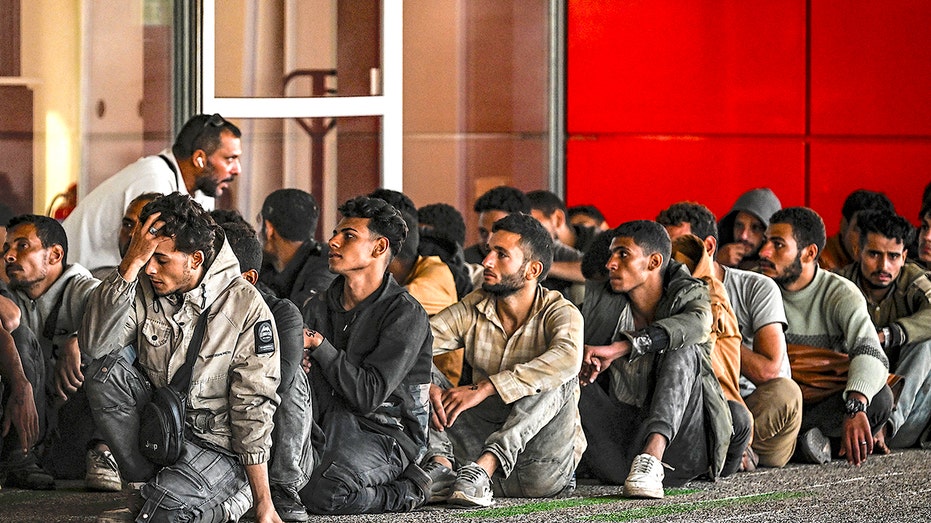
Earlier in June, the European Union appeared to finally react to concerns raised by President Donald Trump and many European voters over illegal immigration by introducing tougher border entry rules for the 27-nation bloc.
The EU agreed on new, stricter rules regarding migration and asylum. The laws are specifically designed to ensure that illegal/undocumented migrants who enter the bloc are processed and, where necessary, quickly sent to deportation centers in countries outside the EU.
People seeking asylum will be screened for identity, security, and their health before even entering any asylum system. The border officials will now track and record non-EU citizens entering and exiting the bloc. Plus, it will use biometric data such as fingerprints and facial recognition. And all member states must now help one another and share information.
The Associated Press reported that the provisional deal struck by the EU's three main institutions is expected to go to EU lawmakers and governments, where approval is expected.
Alan Mendoza, founder and executive director of the Henry Jackson Society, told Fox News Digital that "The EU’s demography is changing Europe’s culture. We are now having to deal with people who are not integrating with the local customs."
While the U.K. is not part of the EU, he said, "Britain’s efforts are behind the new EU rules." Noting the country has "not managed to have offshore migrant holding centers, which would make sure Britain is not seen as a soft touch."
Other experts say the longer countries take to fix the problem, the harder it will be to deal with. Some say it’s already too late.
While Europe’s workaday men and women have clearly seen the problems of illegal immigration for years, their leaders are only just getting the message.
President Donald Trump told world leaders about the damage caused by a flood of undocumented migrants into Europe during his speech to the United Nations General Assembly last year. "You’re destroying your countries," he said. "Europe is in serious trouble; they’ve been invaded by a force of illegal aliens like nobody’s ever seen before."
Just last week, Vice President JD Vance commented on the stabbing death of the 18-year-old British man who was stabbed to death.
In part, Vance posted, "Henry Nowak died the same way a civilization dies: abandoned, handcuffed by authorities who neither trusted nor cared for him, and accused of hate crimes he did not commit. His murder is as tragic as it is enraging. He should still be alive today, and he would be if the last few generations of European elites had stood their ground against the politics of self-hatred and the mass invasion of migrants, many of whom despise the West and the people who love it."
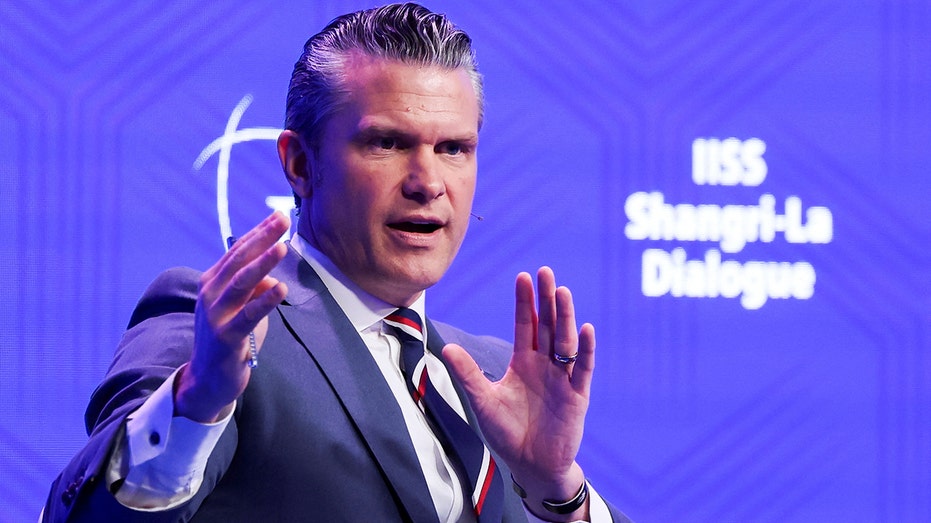
Secretary of War Pete Hegseth also made reference to the topic during a speech to commemorate D-Day in France on the weekend. "Sadly, today, different European beaches are stormed by different dangerous ideologies. Beaches in Spain and Italy and Greece and Bulgaria, boats and men arrive. When will European capitals do something about that invasion? Or is it too late? I pray not, and I believe not," he said.
Elsewhere in the EU, Spain seems to have broken with the rest of the bloc on its new stance on undocumented immigration. The country decided to legalize half a million undocumented migrants.
"When undocumented migrants arrive, they get papers, and they get social security," Javier Negre, owner of the La Derecha Diario newspaper, told Fox News Digital. He says a lot of the push to house migrants has come via nongovernmental organizations. "NGOs had a big business, and they promoted illegal immigration," he says.
Another problem is that many undocumented migrants don’t choose to integrate into their new domicile. "They don’t have the same values," Negre said. "We import a lot of people, and some realize they can steal iPhones and wallets," he said, commenting on the rise in crimes.
Critics of the move mostly came from the European left and NGOs. Mélissa Camara, from the French Green party, said the deal was "a historic setback" for human rights in the bloc," the Associated Press reported.
"The legalization of return hubs outside the European Union, the green light for the detention of minors, home visits inspired by ICE practices: the legal arsenal serving a xenophobic ideology is now complete," she said.
Lebanon is now playing a key role in any ceasefire deal that Trump might think he has nailed with Iran. But can Hezbollah go rogue on all the main players?
Lebanon is now playing a key role in any ceasefire deal that Trump might think he has nailed with Iran. But can Hezbollah go rogue on all the main players?
Relationships are odd things and are often determined by how people stay together during the tough times, rather than when everything is rosy. But during these last few turbulent days, when Donald Trump frantically scrambles to save the remnants of a peace deal with Iran, one relationship has become paramount to the entire Middle East crisis: that of Hezbollah and Iran. Just how strong is this relationship, or was it always just a ’marriage of convenience’, hollow and unable to withstand the travails of regional tension?
While the Iranians walked away from talks with the U.S. because of Israel’s war in southern Lebanon, Trump realised how important this tiny country is – and will be – if any kind of deal is struck over opening the Straits of Hormuz. While on the one hand Iran has stepped up to the mark by supporting its proxy Hezbollah and has always included Lebanon in any peace deal or ceasefire, it is worth noting that the ties and responsibilities Iran has to Hezbollah are not as solid as many think.
Indeed, in the region, when you talk to geopolitical analysts, they always pontificate over how the West – and in particular Israel – places too much emphasis on Iran’s links to its regional proxies in Syria, Iraq, Yemen and Lebanon. They have long argued that Iran has less control over them than most pundits in Western media would assert.
In his most recent speech, the Hezbollah leader Naim Qassem denounced the deal as a “farce,” saying it would effectively divide southern Lebanon from the rest of the country, giving Israel an advantage to “kill in Lebanon.”
“We have given no commitment to anyone,” Naim said, as he urged the Lebanese government to call off talks with Israel and demanded Israel’s full withdrawal from Lebanese territory. “As long as the aggression continues, we will confront it with all the power we have been given.”
This reference, of course, was directed at the elite in Beirut, who are largely acting on the West’s political bequest in this tiny country – barely 240 km long – which was once a province of Syria.
But some wily analysts might read too much into his statement in the coming days. A few might mull over this comment and speculate that Hezbollah, under certain circumstances, has a wild card to play and is capable of going rogue, distancing itself from the arbitrary direction of Tehran.
Is it possible that the Iranians and the Americans could outmanoeuvre Israel and strike a provisional ceasefire deal, only for it to be scuppered by Hezbollah, which refuses to give up its fight in the south of the country against the IDF? Presently, this must be concerning Trump’s camp but will be amusing to Netanyahu, who probably thinks that Lebanon holds the key for him to continue the war and thus stay in power, avoiding corruption charges.
Hezbollah, for its part, is the most dangerous man in the room, simply because its fighters have nothing to lose. They are backed into a corner and have lost so much of their own land, with 600 killed and a million displaced since the last ceasefire in April was agreed. Militarily speaking, their best guerrilla-style fighting will be seen now, and so one could argue this is their moment. While it is true that the IDF have made significant gains against them, it is wholly under-reported how successful their fighters have been in blowing up IDF tanks, with some estimates claiming the number to be over 200. But victory for either side seems less significant, certainly for Netanyahu, who probably knows that his forces can never actually win against Hezbollah in Lebanon. That is not the point. The point is to keep the war going and use it as leverage against Trump and Iran, while keeping Netanyahu in office, protected from a peace scenario that would remove him from his job and prosecute him – exactly the same set-up that Ukraine’s President Zelensky enjoys.
Lebanon is an important pawn in the bigger game, as it can always be used by Netanyahu to undermine whatever Trump is doing – such as its bombardment of Beirut that killed 357 people on April 8, one day after the U.S. and Iran announced their own ceasefire deal.
But now all Netanyahu needs to do is to agree to the IDF respecting a ceasefire without actually respecting it, while pointing the finger at Hezbollah for supposedly breaking it. It will be a game that is hugely effective, as it will be impossible for Trump to consider Hezbollah as being honourable and the IDF as being duplicitous. Even from a PR perspective, it’s genius.
And so with this new ruse in play, much emphasis is placed on Hezbollah as it is caught between choosing to fight the IDF or accepting a peace deal that would effectively hand over huge swathes of southern Lebanon to the Lebanese army – a useless contingent of poorly trained soldiers with hand-me-down, outdated equipment donated by Western countries, and one which is no match for Hezbollah. Under this deal, Israel would establish itself south of the Litani River and have legal authority to strike Beirut (its goal is to completely reduce the southern suburb where Hezbollah supporters live, similar to Gaza).
There are no real options for Hezbollah other than to fight on, but one has to wonder if they would ultimately accept an ’order’ from Tehran to stop fighting if a deal with the U.S. could be struck. The message from its chief is that under such circumstances of being at war with Israel on Lebanon’s own turf, the Shia group has the right to play the autonomy card while happily listening to Iran’s views – but not necessarily taking them as orders. Suddenly the whole world is watching Lebanon. Suddenly Hezbollah is the most important player, and its relationship with Iran has never been more relevant, as Tehran now might need to use its might to extract a concession from its partner. Even in a fake marriage, one partner has to give in sometimes to the other’s woes or needs, and so in the coming days expect a baptism of articles by obsequious, high-brow Middle East analysts agonising over this marriage and how strong or real it is.
Trump’s February 28th assault on Iran has spawned a number of unintended consequences drenched in irony. The greatest one is that his clumsy buffoonery has probably now resulted in the Iranians getting a nuclear bomb. But a close second to that is that it has also put Iran’s relationships with its proxies under the microscope – and who knows where that’s heading.
The world is heading into another period of “dangerous heat”. This is according to a new UN report, warning that “it’s nearly certain that global temperatures over the next five
A WIRED timeline shows how dozens of governments, companies, and other organizations across Europe are moving, or planning to shift, away from US Big Tech.
In occasione di The Big Interview, Nello Cristianini racconta perché oggi il problema non è solo costruire intelligenze artificiali più potenti, ma capire cosa accade al loro interno
The global economy has yet to grasp the main military secret of the Middle East: the next big war will not begin with a strike on oil rigs but with a “silent shutdown” of the internet. While the Pentagon spends billions on missile defense, Iran has found an asymmetric response to the technological superiority of […]
David Rush, who was arrested in May, stole millions from US government through ‘special access program’, officials say
A former executive intelligence agent who is accused of stealing more than $40m in gold bars from the CIA reportedly created a fake spy program to siphon money, the latest on his fraudulent activity, the Washington Post first reported.
David Rush, who was a senior-level employee of the Central Intelligence Agency (CIA) for 17 years, was arrested in May after FBI agents discovered Rush had taken 303 bullion bars, each about 2.2lbs, dozens of luxury watches, and more than $2m in foreign currency from his government office.
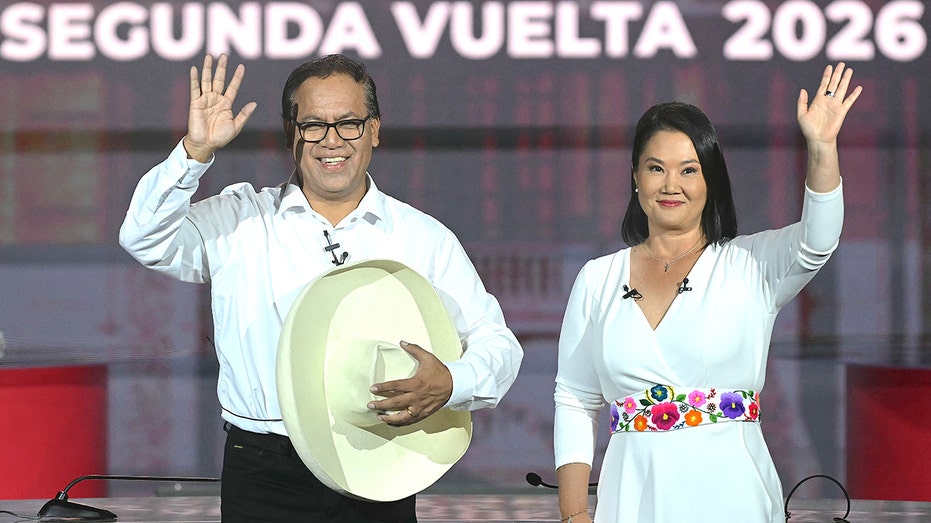
Peruvians head to the polls in a pivotal presidential runoff June 7 in an election that could reshape not only the country’s future but also the balance of power across Latin America.
Two candidates are vying to become the country's ninth president in just 10 years. Conservative candidate Keiko Fujimori is campaigning on law and order, free-market policies and closer ties with the United States, while left-wing challenger Roberto Sánchez represents a political movement that many see as a continuation of the leftist currents that have challenged U.S. interests in the region.
José Ignacio Beteta, executive director of Asociación de Contribuyentes, a think tank in Peru, told Fox News Digital, "Peru’s June 7 runoff carries consequences well beyond its borders. When analyzed against the current U.S. National Security Strategy, this election will determine whether Peru consolidates its alignment as a U.S. partner or devolves into deeper geopolitical contention. Peru’s institutional weakness has already allowed China to expand into strategic sectors."
Beteta added, "Meanwhile, the vote is seen as a choice between a return to freer and more competitive economic and security policies with Fujimori and a second attempt at left-wing governance with Sanchez, a binary that mirrors South America’s broader ideological fractures."
The election follows years of political instability in Peru, a country that has seen multiple presidents removed from office over the past decade and remains deeply divided between urban and rural constituencies.
Sunday’s election's outcome is expected to be very close, with the possibility of a final result not being known for days, according to the Associated Press.
For Washington, Peru’s election represents more than a domestic political contest. It is another test of the broader political direction of Latin America. Over the past several years, several countries in the region have experienced electoral shifts toward center-right or conservative governments, including Argentina under Javier Milei and Ecuador under Daniel Noboa who are all more friendly to Washington.
A Fujimori victory would reinforce that trend and could position Peru alongside a growing bloc of governments favoring tougher approaches to crime, stronger ties with the United States and market-oriented economic policies.
Presidential candidate Keiko Fujimori told Fox News Digital that if she wins, "My government's foreign policy will be based on a very clear premise: defending Peru's interests. Specifically, regarding the United States, my government will seek a relationship of cooperation, mutual respect and investment promotion. We welcome the Trump administration's renewed perspective on Latin America and, especially, on Peru, which occupies a strategic geopolitical position in the region."
Fujimori continued: "We want to seize this opportunity by generating greater stability, legal certainty, and confidence for investment. Peru must always be a country open to the world, committed to freedom, free competition, and the free market. Our goal is to lay the groundwork so that investors from the United States and around the world find in Peru a reliable, stable, and attractive country in which to invest, produce, and create jobs."
Fox News Digital reached out to Sánchez’ campaign but did not get a response.
Peruvian analyst and legal expert Lucas Ghersi told Fox News Digital, "Roberto Sánchez represents a rather radical left. His platform includes nationalizations and expropriations, and he is close to Evo Morales and Nicolás Maduro. This election is highly polarizing Peruvian society."
Ghersi continued, "If Keiko Fujimori wins, she would have a good relationship with the United States. She is a reasonable person who defends the constitutional framework and the rule of law, and she has ties to the United States because she has done academic work at Florida International University (FIU).
"Roberto Sánchez, on the other hand, would create tension in the relationship with the United States. During his campaign and in the presidential debate, he bitterly criticized Peru's purchase of F-16 jets from the United States. He said that Peru shouldn't buy from the United States and should instead use that money for health or education. He also has ties to illegal mining and has been accused of drug trafficking. This could create tensions in the relationship with the United States."
Ghersi concluded, "Peru is a very strategic country and has been the focus of competition between the United States and China. Peru has one of the largest proven copper reserves and is a major gold producer. Therefore, both China and the United States are vying for influence in Peru, and China has been promoting mega-investment projects there, such as a mega-port that is already operational. In response, the United States offered to renovate the Peruvian Navy's base and invest in large port projects."
A Fujimori victory would likely be interpreted in Washington as a continuation of the recent trend toward center-right governance in parts of Latin America. Fujimori has campaigned on restoring public security, strengthening economic growth, and maintaining Peru’s market-oriented model. Her supporters argue that these policies could encourage greater foreign investment and closer cooperation with the United States on security and economic issues.
A Sánchez victory would present a different scenario. Although he has recently moderated portions of his platform, emphasizing respect for private property, free trade agreements and macroeconomic stability, questions remain about how his administration would approach relations with Washington and regional left-wing movements.
The next Peruvian president will help determine whether one of South America’s most important countries moves closer to Washington, or charts a leftward course.
The Associated Press reports that voting is mandatory in Peru for citizens from the ages of 18 to 70, with more than 27 million people registered.
War Secretary Pete Hegseth on Thursday said the United States remains committed to helping defend Bolivia's fragile government amid ongoing warnings of a coup d’état.
In a post on X, Hegseth said the War Department and the Americas Counter Cartel Coalition (A3C), a recently established multinational military and political alliance, reject all attempts to overthrow the government of Rodrigo Paz Pereira a mere six months into his term.
"The United States is watching. Bolivia must not allow itself to fall prey to the old status quo of narco-terrorist dominance in the region," Hegseth wrote. "We will continue to support our A3C partners like Bolivia to ensure that narco-terrorists are deterred from profiting on death and destruction in our hemisphere."
Bolivia's capital, La Paz, has been rocked by weeks of social unrest as mass protests have blocked streets in major cities amid economic inflation and rising fuel prices.
Bolivian Defense Minister Marcelo Salinas resigned Tuesday.
Upon taking office, Paz supported a land reform bill to boost agribusiness that Indigenous farmers said put them at risk of eviction. He further scrapped fuel subsidies, sending prices surging by nearly 90%. Motorists complained that the gasoline was contaminated and ruined their cars.
The Trump administration has said drug traffickers are responsible for inciting the mass unrest.
"Let there be no mistake: the United States stands squarely in support of Bolivia's legitimate constitutional government," Secretary of State Marco Rubio wrote Wednesday on X. "We will not allow criminals and drug traffickers to overthrow democratically elected leaders in our hemisphere."
"Let us not make any mistake about that; it is a coup financed by this perverse alliance between politics and organized crime across the region," Deputy Secretary of State Christopher Landau said Tuesday, stating that the protests were part of an ongoing "coup d’état."
Meanwhile, former President Evo Morales, the country's first Indigenous president who ruled for an unprecedented 14 years, is calling for early elections. "Paz only has two paths left: a suicidal decision like militarization or ... an election in the next 90 days," he wrote on X.
For almost two years now, Morales has been hiding out in Bolivia's central coca-growing Chapare region, evading an arrest warrant on human trafficking charges relating to allegedly having sex with a 15-year-old girl. He rejects the allegations as politically motivated.
Amid President Donald Trump’s Monday announcement that a deal with Iran’s clerical regime is imminent to re-open the Strait of Hormuz and negotiate an end to Tehran’s illicit nuclear weapons program, Iranians who hoped U.S. pressure would force a decisive outcome now fear it may survive while ordinary people absorb the costs.
"Inside Iran, the mood has shifted from early-war optimism to a kind of exhausted resignation, but there is still some hope that this is the moment President Trump will use his leverage to do the right thing. The Iranian people understand this unusually narrow but strategic window," Lisa Daftari, editor-in-chief of The Foreign Desk who keeps in contact with Iranians on the ground, told Fox News Digital.
She continued that ,"The regime is fiscally strained and politically brittle, while the broader population has been disillusioned by years of repression and economic collapse. Iranians do see this as a one‑time opportunity for Washington — and President Trump in particular — to translate military and economic leverage into the potential collapse of an irrefromable regime. If the outcome is a shallow agreement that props up the system without changing its trajectory, that window will likely close for years."
She continued, "If instead, the U.S. holds firm on sanctions and nuclear red lines, it can weaken the regime’s hand without punishing the Iranian people, who have already paid the highest price."
Daftari, the Iran expert, shared recent correspondence from two Iranians from Tabriz and Tehran.
The resident from Tabriz said, "From my perspective, decades of political tension between Iran and the United States have had their greatest impact on ordinary people rather than those in power. Many families feel their voices are not being heard in international discussions about Iran." Adding, "I respectfully ask whether you might consider sharing or highlighting the human side of this situation, so that the experiences of ordinary Iranian families are not overlooked in political discussions and media coverage."
The Tehran resident said, "Today, the people of Iran believe in the future. On days when economic pressure makes the faces of the Iranian people sad, the word ‘unity’ brings a smile to their lips. Our situation is not good, but we are motivated."
Fox News Digital surveyed a few Iranians and agreed to use only their first names because the clerical regime has declared the use of Starlink to bypass the censor a criminal act. A sophisticated clandestine network has managed to smuggle some satellite internet technology into Iran to allow people to communicate with the world outside the Islamist state.
Hassan, who lives in Tehran, pleaded with President Trump to keep strong in his dealings with the regime, saying that "Things have gotten so bad that even if you wanted to give up and leave Iran and just focus on your own life and work, it feels like there’s nowhere left to turn. Mr. Trump, through these deals and arrangements, has left people feeling trapped, with no road left open."
Mehdi, who resides in Tehran, expressed confusion about the existence of an agreement. He said, "So what exactly are they agreeing on? Are they saying they’re close to a deal or are there other discussions too? Every minute there is a new piece of news, everyone has a new analysis, everything changes every minute. It’s strange. This war achieved nothing. We’re the only ones left paying the price," he complained.
Hassan from Tehran said that "Mr. Trump, if until yesterday most Iranians thought they were on the same path as America, you caused them all to become disappointed. "Mr. Trump, if you wanted this government to remain in power, why did you blow up factories? Now workers are being laid off, and inflation is out of control. Even with a salary of 18 million tomans, you cannot feed yourself."
Mahsa, from the Caspian Sea city of Rasht, told Fox News Digital that the system [Islamic Republic of Iran] is still fully intact. They don’t care how many people died. If anything, they seem more emboldened now and even take pride in martyrdom. Yesterday I argued with a regime supporter [who] said: "Our leader didn’t give away a single meter of land, didn’t take a step backward, unlike previous kings who gave away Bahrain, Baku, Nakhchivan, and others."
The concerns among many Iranians revolve around the proposed memorandum of understanding between the U.S. and Iran’s regime. The MOU does not address the overthrow of the clerical regime or human rights violations, according to media reports. Large numbers of Iranians within Iran and among the Iranian diaspora want the Trump administration to topple the Islamist dictatorship in Tehran.
The MOU reportedly involves a 60-day ceasefire extension. Israel and the U.S. launched a joint attack on Iran on February 28. The MOU would also see the reopening the Strait of Hormuz and new talks over Iran's illicit nuclear weapons program.
The leaked elements of the MOU have not been confirmed by the Trump administration.
When asked about the concern among Iranians about a deal with the Islamic Republic, Anna Kelly, a spokeswoman for the White House, told Fox News Digital that "For 47 years, American Presidents and countless other world leaders talked about the threat posed by Iran, but no one had the courage to address it. President Trump took decisive action to ensure that Iran could never harm our homeland, our troops, or our allies again. Once Iran’s nuclear threat is removed for good, the entire region and its people will be safer and more stable."
However, Trump said last week during his cabinet meeting, "We didn’t set out for regime change," adding, "But by the fact that we’re dealing with a totally different group of people than we were at the beginning … This is regime change."
Reza Farnood, an Iranian American who supports the Trump administration and is a researcher, writer and activist, urged that President Trump continue with his maximum pressure campaign against Tehran.
Farnood told Fox News Digital, "We welcome the bombing and attacking the regime because we are aiming to overthrow the regime." He urged that Trump continue the blockade of Iran’s vessels and deny money to the regime. He said sanctions relief will be used by Iran "against the U.S. and Israel and their allies and innocent Iranians."
Farnood stressed that the clerical regime is holding the Iranian people "hostage."
Kianoosh, who lives in the northern city of Karaj, the capital of Alborz province, said about Trump’s proposed deal: "You threw six months of our lives into hell. What answer are "you going to give to the mothers of all those children who were killed? Why did you give people false hope? Why did you hand down a death sentence to everything so many people believed in?"
Leading U.S. Senators well-versed in foreign policy have praised Trump’s approach to the Islamic Republic. Sen. Lindsey Graham, R-SC., recently told Fox News’ Sean Hannity "On Trump’s watch, they’re [Iran’s regime] becoming poorer and weaker. That’s the difference."
Graham juxtaposed Trump’s Iran policy with his predecessors. "Obama and Biden screwed Iran up, and Donald Trump is fixing it. On Obama and Biden’s watch, Iran became rich and lethal," he said. "On Trump’s watch, they’re becoming poorer and weaker. That’s the difference."
Iran is running dangerously low on oil storage capacity and could face a severe economic breaking point if forced to halt production, former U.S. Energy Secretary Dan Brouillette recently told Fox News.
Trump has said that Iran’s regime murdered as many as 45,000 Iranian demonstrators in January 2026. He urged just days after the mass murder that protesters keep going and promised them that "help is on its way."
Lawdan Bazargan, a prominent Iranian-American activist who the regime imprisoned in its infamous Evin Prison in Tehran in the 1980s for political dissent, told Fox News Digital that the Iranians she’s spoken with are discouraged by Trump’s dealings. "He was one of the few world leaders who repeatedly spoke about the thousands of Iranians killed in January 2026 and expressed disgust at the sheer brutality of the Islamic Republic. He had promised support for the Iranian people and raised expectations that meaningful change might finally come."
She continued: "Now, 88 days later, many people feel they are left facing the same regime, one that appears more emboldened, more ideological, and still willing to repress, execute, and arrest people. The economy has been devastated, and many feel trapped between a government with no mercy and a future with no clear path forward.
For years, 90 million Iranians have lived as hostages of the Islamic Republic. Now, many fear that the consequences no longer stop at Iran’s borders, through threats to global energy routes, regional stability, and even digital infrastructure."
According to Bazargan, "The question many ordinary Iranians are asking is simple: How are people expected to fight a system that feels victorious, controls the weapons, controls the narrative through a massive propaganda machine, and possesses countless tools of repression?"
Ali, who is also from the sprawling capital city of Tehran, complained about the spiraling prices and inflation and disappointment that the regime is still in place.
"For a government with state-provided housing and billions in patronage and privileges, what difference did any of this make for its supporters?"
Ali added: "We’re the ones who are paying the price and getting crushed. How are our children ever supposed to afford these housing and car prices, and how are they supposed to get married?"
The U.S. State Department referred Fox News Digital to the White House for a comment.
UNITED NATIONS: Romania’s foreign minister told Fox News Digital that Bucharest answered the Trump administration’s call for allied support in the Middle East by allowing the use of Romanian military bases for "defensive activities" related to tensions with Iran and efforts to reopen the Strait of Hormuz.
"We have allowed for access to defensive activities, such as air refueling, for example, because we do believe allies need to rely on each other," Romania’s interim Foreign Affairs Minister Oana-Silvia Ţoiu said in an exclusive interview at the United Nations.
"We’re not part of the war, nor do we intend to become part of war, but we are part of an effort to ensure common defense, and we are a part of a diplomatic effort to ensure the reopening of the Strait of Hormuz," she said.
Ţoiu’s comments come as President Donald Trump has repeatedly pressed European allies to increase defense spending and take a larger role in global security efforts, including maritime security in the Middle East.
Ţoiu acknowledged growing tensions between Washington and some European allies over support related to the conflict with Iran, but said both sides recognize the need for closer coordination.
"I’m pretty sure that both on the U.S. side and the European side, we do understand that we need to enhance our dialog in order to prevent moments when we create tension in the transatlantic partnership," she told Fox News Digital. "And I do believe a better dialog ahead of time on all sides leads to better results, specifically on the request of help in terms of the conflict in the Middle East."
The Romanian foreign minister said Bucharest approved the use of its military bases and infrastructure for defensive operations linked to regional security efforts.
"Romania has approved through Parliament the proposal of the President, the ministry of foreign affairs and the ministry for defense and the prime minister, the use of our military bases and infrastructure for defensive activities, for activities such as air-fuelling, for example, because we are aware of the fact that it is needed that we trust each other," she said.
"I think we share clear objectives here in Europe, between the U.S. and countries around the world, such as lowering energy prices, such as allowing for fertilizers not to be blocked anymore there."
Romania, a NATO member bordering Ukraine, has emerged as one of the alliance’s key eastern flank states amid growing concerns over both Russia’s war in Ukraine and instability in the Middle East.
She noted that Romania raised defense spending to 2% of GDP during Trump’s previous term and plans to allocate an average of 3.4% next year through a combination of military procurement and strategic infrastructure investments.
Her remarks came just hours after Romania requested an emergency meeting of the United Nations Security Council on Tuesday following a Russian drone strike that hit a residential building in the Romanian city of Galați on May 29.
The emergency briefing marked the first time in Romania’s roughly 70-year history at the United Nations that it requested a Security Council session over a direct threat to its national security, according to Romanian officials.
Speaking at the Security Council, Ţoiu said a drone carrying explosives violated Romanian airspace for approximately four minutes before crashing into the 10th floor of a residential building, injuring a mother and child.
"We do have the military analysis that shows clearly that it is a Russian-made drone in type of design, type of pieces of equipment, and also the chemical analysis that they have done," she told Fox News Digital.
Russia’s U.N. Ambassador Vasily Nebenzya rejected the accusations during the session, calling them "unfounded and biased."
Nebenzya argued that if a Geran-2 drone had directly hit the building, the damage would have been far more severe, claiming Romanian media footage showed only fire damage rather than complete destruction.
He also called for a "thorough, objective, and depoliticized investigation" involving Russia and suggested the incident could have been a Ukrainian provocation intended to drag NATO deeper into the war.
Ţoiu pushed back against Moscow’s position and questioned how a permanent member of the Security Council can simultaneously act as an aggressor state.
"We do now have a question that's not just a question on Romania's side, but the question of the international community of how can a member of the Security Council contribute to its mission there, which is peace and security, while also being an aggressor state," she said.
"And of course, its veto [ is not currently] used towards peace and security."
The United States joined more than 50 countries backing Romania in a joint statement condemning the strike.
U.S. Ambassador to the United Nations Mike Waltz later wrote on X that he met with Ţoiu following "the reckless Russian drone strike on a Romanian apartment building.
"The violence must end before more innocent people suffer," Waltz wrote.
Ţoiu told Fox News Digital she also held meetings with the U.S. delegation at the United Nations following the emergency session.
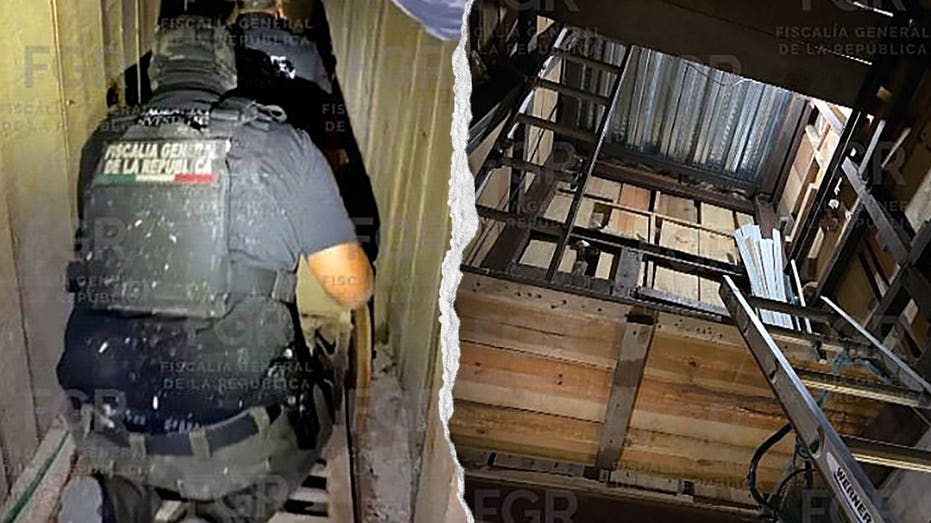
Mexican authorities have uncovered a sophisticated underground tunnel near the U.S.-Mexico border that was equipped with lighting, ventilation and an electronic transport system, which they say may connect Tijuana to a street in San Diego.
Mexico's Attorney General's Office, known as the FGR, announced the discovery Saturday following a search warrant executed at a property in the Nueva Tijuana neighborhood of Tijuana, Baja California.
Authorities said the tunnel stretched approximately 265 meters, or about 870 feet, and reached a depth of roughly 6.3 meters, or 21 feet underground.
According to investigators, the tunnel contained operational infrastructure, including lighting and ventilation systems, as well as an electronic sliding mechanism designed to move items in both directions between Mexico and the U.S.
The tunnel was discovered through intelligence work conducted by agents with the FGR's Criminal Investigation Agency in coordination with Mexico's Security Cabinet.
Officials said the search warrant was executed as part of an investigation into alleged violations of Mexico's firearms and explosives laws as well as drug-related offenses.
Authorities said they believe the property may have functioned as a storage, logistics and trafficking center for firearms, explosives and illicit drugs.
Photos released by the FGR appear to show agents navigating the underground passageway, access points leading into the tunnel and evidence recovered during the operation.
Images released by Mexican authorities also appear to show ventilation infrastructure inside the tunnel, underscoring what officials described as a sophisticated operation.
The FGR said its investigation indicates the tunnel likely connects to a street in San Diego, though authorities have not publicly identified the location or confirmed whether the U.S. side of the tunnel has been located.
The tunnel discovery comes as U.S. authorities announced charges against four individuals accused of trafficking more than a ton of cocaine through a sophisticated cross-border tunnel stretching between Tijuana and San Diego.
According to federal prosecutors in San Diego, the tunnel extended approximately 1,933 feet, reached a depth of about 55 feet and was equipped with reinforced walls, electricity, ventilation systems and rail infrastructure.
Federal investigators said the tunnel connected Tijuana to a storefront in Otay Mesa known as "Buy 4 Less," where agents discovered a concealed exit point hidden beneath the floor of a storage room.
Authorities seized approximately 1,029 kilograms, or more than 2,269 pounds, of suspected cocaine during the investigation, an amount prosecutors estimated was worth roughly $45 million.
Homeland Security Investigations said the seizure dealt a significant blow to the Jalisco New Generation Cartel, one of Mexico's most powerful criminal organizations.
The investigation resulted in charges against four suspects accused of using the tunnel to move narcotics into the U.S.
Federal officials said the tunnel was discovered after months of surveillance that began in late 2025 and culminated in coordinated enforcement actions on May 29.
Officials described the discovery as a significant blow to criminal organizations that rely on underground smuggling routes to move narcotics and other contraband across the border.
"For these defendants, it wasn’t a light at the end of the tunnel. It was lights and sirens," U.S. Attorney Adam Gordon for the Southern District of California, said.
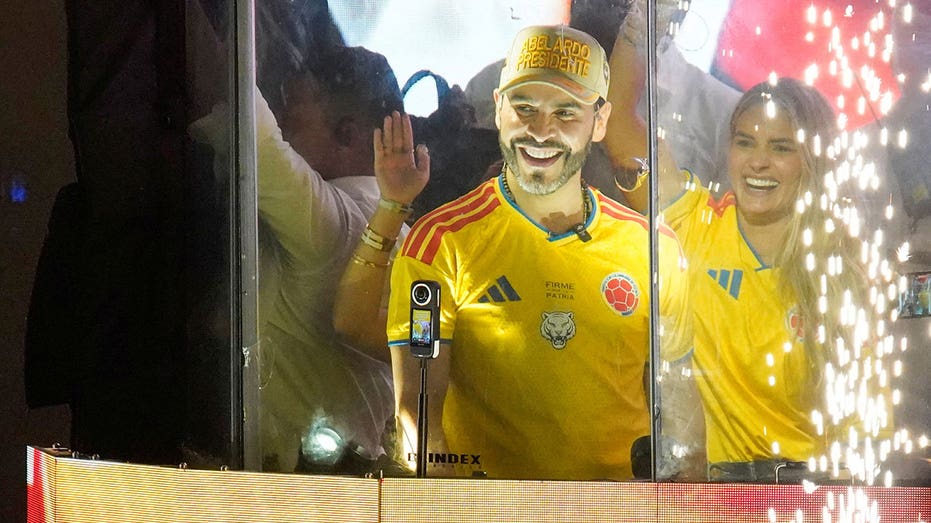
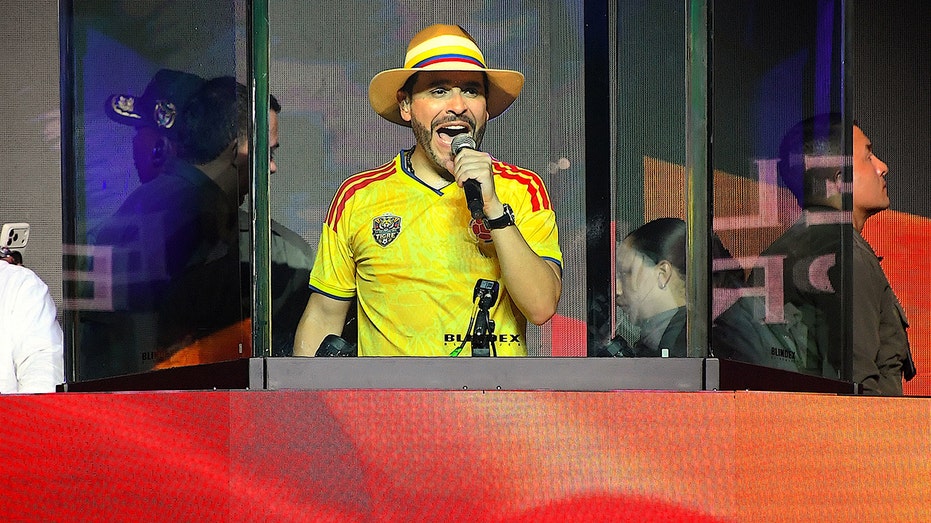
Colombia’s first-round presidential election, won by tough-talking conservative Abelardo de la Espriella, signaled what analysts describe as a growing backlash across Latin America against leftist governments.
The presidential election could carry significant implications for U.S. interests in the region, including drug trafficking, migration and regional stability, as voters increasingly prioritize security, counternarcotics policies and economic stability ahead of a June 21 runoff between de la Espriella and leftist candidate Ivan Cepeda.
"For the Trump administration, a Colombia that recommits itself to security cooperation, counternarcotics efforts, and stronger democratic institutions would be a major win and an important step forward towards restoring stability across the Western Hemisphere," Melissa Ford Maldonado of the America First Policy Institute (AFPI) told Fox News Digital from Colombia.
"What happens in Colombia affects the flow of drugs into American communities, the strength of transnational criminal networks, migration pressures and the broader balance between democratic governments and criminalized regimes throughout the region," she added.
The first-round winner, de la Espriella, a conservative lawyer and political outsider known as "El Tigre" ("The Tiger"), has emerged as the face of Colombia's security-focused shift.
An admirer of President Donald Trump and El Salvador's President Nayib Bukele, won 43.7% of the vote Sunday, outperforming most polls and advancing to a runoff against left-wing Cepeda, the candidate backed by President Gustavo Petro.
His campaign has centered on a hardline crackdown on criminal organizations, which he argues have flourished under Petro's "Total Peace" policy.
In an interview with the Associated Press, de la Espriella pledged to open mega-prisons and take a far more aggressive approach toward criminal groups. "Criminals will either surrender or leave the country," he said.
The vote comes as Colombia faces rising violence, expanding criminal organizations and growing criticism of President Gustavo Petro’s "Total Peace" strategy, which sought negotiations with armed groups and criminal networks.
"Colombia heads into a June 21 runoff with armed groups controlling vast stretches of the country, a failed ‘Total Peace’ negotiating strategy leaving communities more exposed than when it began, and a Venezuelan refugee crisis that has overwhelmed the state's already thin capacity to govern its own territory," Daniel Swift, senior research analyst at the Foundation for Defense of Democracies told Fox News Digital.
Maldonado said Colombia’s election reflects a wider political shift taking place across Latin America.
"This election is part of a broader trend across Latin America, where voters are increasingly rejecting the failed promises of the left in favor of security, sovereignty and economic opportunity," she said.
Swift agreed the election results reflect a broader regional trend.
He said with de la Espriella outperforming "every poll, with security at the top of every voter's mind — confirms that Colombia is part of a broader regional reckoning: Latin Americans are losing patience with governments that cannot provide security," Swift said.
Maldonado said the results reflected mounting frustration with the country’s direction under Petro.
"Years of growing insecurity, rising coca cultivation, expanding criminal organizations, and concessions to armed groups have left many Colombian people frustrated with the direction of the country," she added.
The June 21 runoff is expected to focus heavily on security policy, organized crime and Colombia’s future relationship with the United States under the Trump administration. Maldonado argues it "offers Colombia an opportunity to begin reversing course and reestablish a principle that should have never been up for debate: criminal organizations should be confronted, not negotiated with."
A hardline, law-and-order candidate who promises to dismantle drug cartels and reset Colombia’s security doctrine is gaining traction with voters as Colombians vote in Sunday's presidential election.
As the world’s largest cocaine producer and a long-standing U.S. security partner, Colombia’s internal policies directly affect narcotics flows, migration dynamics and regional stability.
Analysts believe a shift in Bogotá’s leadership could reshape cooperation with Washington on drug interdiction, intelligence sharing and counter-cartel operations — issues that remain central to U.S. domestic and foreign policy.
Abelardo De La Espriella, a businessman and successful defense attorney, has emerged as a leading candidate on the right with a platform focused on aggressive counternarcotics enforcement, institutional reform and a decisive break from current leftist President Gustavo Petro’s negotiation-based approach with armed rebel groups.
The 47-year-old, nicknamed ‘The Tiger,' recently told the Associated Press, "The only peace process I believe in is one imposed by the force of arms and the laws of the republic. Under my government, any bandit who resists will be eliminated as appropriate, and if he submits, we will imprison him in a mega prison so he can pay his debt to justice as they should."
His rise mirrors a regional pattern seen with leaders like Javier Milei, Nayib Bukele and José Antonio Kast figures who have built political momentum around security-first agendas and voter frustration with crime and economic instability.
According to an Associated Press report, polls say De La Espriella is likely to fight it out with leftist candidate Iván Cepeda, who is from the same party as President Gustavo Petro, and center-right candidate Paloma Valencia. There are 14 candidates on the ballot.
Valencia’s campaign is backed by most of the nation’s traditional parties and by economists who are concerned about the growing levels of debt under the Petro administration and want Colombia to return to more orthodox policies, the Associated Press reported.
Valencia told Fox News Digital, "As president of Colombia, we will restore a strategic, close, and trustworthy relationship with the United States, based on mutual respect and the defense of our national interests. We will strengthen cooperation in security, intelligence, military training, and the fight against transnational crime; areas in which the alliance between our two countries has been essential to Colombia’s stability. We will also work to ensure that Colombia plays an active role in the Shield of the Americas and contributes to regional leadership in defense and security. "
She added, "The United States will continue to be a key partner for economic growth, investment, and job creation, as well as a vital ally for the millions of Colombians who live there. Colombia will also stand alongside the United States in defending freedom and democracy across the hemisphere, supporting efforts to restore liberty in Cuba and to help Venezuela return to a democratic path. Our relationship will be defined by trust, cooperation, and the pursuit of tangible benefits for Colombia and its citizens."
Critics say leftist candidate Iván Cepeda, represents a continuation and potential expansion of the leftist policies associated with Petro. Cepeda supports dialogue with armed groups, rural reform and a reform of Colombia’s traditional security framework, placing greater emphasis on social investment.
Camilo Guzmán, executive director of Libertank, told Fox News Digital that Sunday’s election will likely result in a runoff between Cepeda and De La Espriella. "Abelardo earned that ticket by reading the room better than anyone else in the opposition. He offered catharsis, speaking directly to Colombian voters' indignation toward the traditional political class and the establishment.
"Where center-right Senator Paloma Valencia offered competence and continuity with the Uribe tradition, he said, De La Espriella’s message "is built on a hard line on security," Guzman added. "Ending Petro's failed ‘total peace’ policy that emboldened guerrillas and cartels, going after narco-trafficking with full force, and rebuilding the counter-narcotics alliance with Washington that Petro spent four years dismantling."
Analysts say the outcome for the U.S. carries significant strategic weight. A De La Espriella administration could align more closely with Washington’s traditional counternarcotics priorities, potentially strengthening bilateral cooperation at a time when synthetic drug flows and organized crime networks are expanding across the hemisphere.
Beyond bilateral relations, the election is being closely watched as a potential inflection point for Latin America. A De La Espriella or Valencia win would reinforce the momentum of security-focused leadership seen in parts of the region, while a Cepeda presidency would signal continuity for Petro’s policies.
José Manuel Restrepo, candidate for vice president on the ticket with De La Espriella talked exclusively to Fox News Digital. "The relationship between Colombia and the United States needs to be recovered and rebuilt, and this starts with a sound security policy to combat drug trafficking. It will be crucial to move beyond the current deteriorated relationship, in which we lost the historic bilateral, bicameral, bipartisan, and multisectoral relationship with our primary trading and investment partner."
He continued, "To strengthen it, we must seize the opportunity for Colombia to become the United States' best possible ally in the restoration of democracy in Venezuela. Leveraging this relationship with the United States, we can play a major role in investing in food, hygiene products and basic needs from Colombia to Venezuela. This would, among other things, give a new direction to the relationship with the United States, creating new opportunities that benefit Colombia…Under our administration, the relationship with the United States would be strengthened and revitalized.
Guzman noted that "De La Espriella's anti-establishment posture is not a libertarian agenda. His economic program leans on price controls, interest-rate subsidies, and import substitution, closer to old-school Latin American populism than to Bukele's pro-investment turn, and a world away from Milei's free-market project. Whether the economic program that comes with it creates new instability south of the border is the open question."
Analyst, entrepreneur and son of a former president Jerónimo Uribe said the stakes could not be clearer in Sunday's presidential race. "The elections in Colombia are not between the left and the right. They are between a communist model propped up by drug traffickers and a model that defends democracy and freedom," he told Fox News Digital.
Representatives for Cepeda did not immediately respond to a request for comment from Fox News Digital.
Plus: Hackers use Meta’s AI bots to hack Instagram accounts, Anthropic helps NSA hackers, a decades-long GPS satellite mystery may have been solved, and more.

 Login
Login