A suspected Hamas terrorist, reportedly granted asylum a year from the Gaza war, was arrested by Greek police for allegedly plotting an attack on an Israeli cruise line.
The Gaza man, 37, was arrested on the Greek island of Crete on Sunday for his alleged ties to one of four suspected Hamas terrorists previously arrested in Cyprus, having traveled with him to Malaysia, where they allegedly received training in making explosives from commercially available chemical agents.
The Israeli cruise ship MS Crown Iris was the believed target of the attack before it was scheduled to arrive in Crete on Tuesday. Police did not publicly identify the man or name a target in their initial statement.
Searches in homes in both Crete and the Greek capital, Athens, turned up a number of mobile phones, a laptop, external hard drives and bank cards, The Associated Press reported.
The suspect, an electrician who has been reportedly living in Crete for the past year and working at a hotel there after being granted asylum, will appear before a magistrate later Sunday.
The suspected terrorist had placed an online order for what police said were "chemical agents" that could be used in the manufacture of explosives, according to the report.
State broadcaster ERT, cited by Israeli and Greek media, reported that police also found laboratory equipment.
The case appears to be part of a broader regional counterterrorism probe. Cypriot authorities arrested two Palestinians on May 22 after intelligence led investigators to materials in two residences that police said could be used to manufacture explosives. Two more Palestinian men were detained May 29 as part of the same investigation, according to Greek police.
The Crown Iris has become a recurring flashpoint at Greek ports amid anger over the war in Gaza. Protesters gathered near the ship when it docked in Piraeus on Wednesday, June 3, and demonstrations against the vessel have followed it at Greek ports since last year.
Protesters allege that Mano Maritime, the owner of the MS Crown Iris, is profiting from the Hamas-Israel war by selling tourist services to Israel Defense Forces soldiers during breaks from active duty.
In July 2025, Greek police used tear gas and made arrests as demonstrators tried to block the ship at Agios Nikolaos on Crete.
Idaho resident Aaron Hutchings arrived at a Pakistani brick factory in January. The devout Christian told Fox News Digital that he was shocked to see children turning bricks under the hot sun to work off the debts that their families had incurred, sometimes over the course of generations.
Within hours of his arrival, Hutchings paid off the debts for two enslaved Christian families and escorted them to freedom, breaking the "curse that they’ve had for hundreds of years."
There are up to one million Christians working in slave and bonded labor in Pakistan, according to Emma Hall, a persecution researcher working with charity Open Doors U.K. and Ireland, told Fox News Digital. This could comprise as much as 30% of Pakistani Christians, counted at 3.3 million in the 2023 census and accounting for 1.37 percent of the population.
Hall noted that "extreme poverty drives desperate families to accept advance loans (peshgri) for emergency and basic needs, trapping them in cycles of debt bondage where repayment systems are structured in ways that make exit extremely difficult."
Emmanuel Hernandez said he was shocked when he first heard that Christians in Pakistan were living in debt-based enslavement in Pakistan’s brick-making industry. After traveling to Pakistan to meet the woman who would later become his wife, Hernandez witnessed bonded laborers at a brick factory for the first time.
"Never in my life have I seen such hopelessness," he told Fox News Digital. "At that moment, I committed myself to rescuing one family a year for the rest of my life."
In January 2025, Hernandez started the nonprofit Project Jubilee. He says that it is "by the grace of God" that people have already donated enough through the nonprofit to save 300 Pakistanis from slavery.
Though Project Jubilee will save any bonded slave, regardless of race or faith, Hernandez said that "98% of the people we rescue are Christians, and that’s because they’re second-class citizens" in their country.
The average cost to help one family is about $8,500, Hernandez said, because Project Jubilee recognizes that slaves needed more than debt relief to escape the cycle of bonded labor.
"Our goal is for them to succeed in life and make sure that they never go back," he explained. To accomplish this, Hernandez and his team pay lawyers to take care of all applicable paperwork, and help each family with two months of rent and food. They also get families in touch with a local minister, pay for children to attend school and purchase every family a tuk tuk, a motorcycle taxi, which they can use to create income.
He said that in most cases, factory owners are grudgingly accepting of letting slaves go after their debts are paid off. But in some cases, he says owners have put a cap on the number of families Hernandez’s group can free in a month, or told them that they’re "never allowed to come back again."
Hutchings found Hernandez’s online profile in late 2025 and messaged him, asking to be part of his effort. Retired from the IT world, Hutchings said he is "just a normal guy who wanted to do something…to help people."
After a short conversation over the phone, Hernandez invited Hutchings to come along to a trip to Pakistan in January. Hutchings agreed. It was during this visit that Hutchings freed two families and reported he "just got hooked." He admits that the process is highly emotional. "It changes an entire family’s future for generations," he explained.
Hutchings said that it is especially impactful to witness the change that freedom brings to children. "We get to ask them, ‘what do you want to be when you grow up?" Hutchings said. "They probably haven’t even really thought about that. They’re [thinking] ‘I’m going to be a brick worker for the rest of my life, just like my parents.’"
Hutchings started his own nonprofit, Intentional Faith Foundation, which he now uses to collect donations from people who want to help free more slaves.
Just months after his first journey, Hutchings returned to Pakistan in May to free an additional ten families. After video of his visit went viral, Hutchings said that his nonprofit raised enough funds to save another family from enslavement.
The practice of bonded slavery was outlawed formally in Pakistan in 1992, Hall says, but "enforcement remains weak." Discrimination extends beyond the bonded labor environment, with the U.S. Commission on International Religious Freedomnoting in 2025 that there were "recent and escalating attacks against religious minorities" in Pakistan, including Christians.
During his recent visit, Hutchings learned that securing housing was difficult, with many landlords refusing to rent to Christians. Eventually, a Pakistani Christian group working with families was able to find housing and jobs for parents, and located a teacher for the children who were largely illiterate.
In a 2023 report, Pakistan's National Commission for Human Rights released a series of recommendations for diminishing the pain that bonded labor brings to approximately three million Pakistanis. In her introduction, the group's chairperson stated, "It is deeply appalling that in the 21st century, slavery persists in the form of bonded labor."
Among its recommendations are forbidding children from laboring in brick kilns, helping laborers access justice and creating unions for collective representation. They suggest registering all brick kilns, increasing the use of automated machinery, and encouraging brick purchasers to buy bricks from kilns "that provide a safe and decent working environment."
Representatives of the Pakistani government did not respond to Fox News Digital's questions about the enforcement of laws against bonded labor, or about the treatment of Pakistani Christians. Neither Hutchings nor Hernandez reported having complications with the Pakistani government when working to free brick kiln laborers.
For Hutchings, the work has been transformative. "Looking back, it is hard to see any of it as random. I believe God's hand was in it from the beginning, and even though we were doing all of this to show Jesus' love towards these people, we ended up receiving more than we gave."
In the fight against escalating gang crime, Sweden's parliament will vote on plans to hold 13-year-olds criminally responsible and, in serious cases, imprison them. Other European nations are also lowering age limits.
A statement from Israeli Prime Minister Benjamin Netanyahu's office said the strikes were in retaliation for the Hezbollah militant group firing toward northern Israel earlier.
A statement from Israeli Prime Minister Benjamin Netanyahu's office said the strikes were in retaliation for the Hezbollah militant group firing toward northern Israel earlier.
This is part six of a series examining the challenges confronting the NATO alliance.
As President Donald Trump presses NATO allies to shoulder more of Europe's defense burden, countries closest to Russia are moving fastest — while some of Western Europe's biggest economies face growing pressure to catch up.
Retired Rear Adm. Mark Montgomery, senior director at the Foundation for Defense of Democracies and former deputy director for strategy, policy and plans at U.S. European Command, said the shift is already visible across the alliance.
"Europe is clearly stepping up, but they're stepping up by geographic variation," Montgomery told Fox News Digital.
"If you ask me who's doing the most, the Eastern Europeans are clearly."
Montgomery pointed to the Baltic states, Poland, Romania and Bulgaria as countries moving aggressively to strengthen deterrence against Russia.
His assessment comes as NATO allies work toward a new defense spending benchmark agreed at the 2025 summit in The Hague, which calls on members to invest 5% of GDP in defense and security-related spending by 2035, including 3.5% for core defense requirements and 1.5% for defense-related infrastructure and security investments.
John Deni, a research professor at the U.S. Army War College, said the trend shouldn't be surprising.
"Given the threat of Russia, allies in the East are acquiring capabilities more quickly, and they're spending even more than allies in the West," Deni told Fox News Digital. "This shouldn't surprise us because they're the ones closest to the threat."
Deni noted that many eastern allies are rapidly purchasing equipment already available on the market rather than waiting years for domestic defense programs to mature.
The transformation is visible across NATO's eastern and northern flanks. Poland has become one of the alliance's largest military spenders, Romania is increasing defense investments, and Finland and Sweden have added advanced military capabilities to NATO following their accession.
Secretary of State Marco Rubio praised Finland and Sweden Thursday at the Senate Foreign Relations Committee hearing, using them as examples of allies strengthening the alliance.
"Sweden and Finland have actually contributed because they brought their own defense industry, their own advanced technology," Rubio said. "They have been great partners."
Romanian Foreign Minister Oana-Silvia Ţoiu echoed that message in an interview with Fox News Digital following an emergency U.N. Security Council session convened after a Russian drone strike injured civilians in the Romanian city of Galați.
"We do agree with President Trump on the need to increase budgets," Ţoiu said.
Ţoiu said Romania raised defense spending to 2% of GDP during Trump's previous term and plans to allocate "an average of 3.4 percent" next year through military procurement and strategic infrastructure investments.
"We need better deterrence, better defense capabilities there in order to ensure our responsibility in protecting not just the Romanian border, which is the longest border to the war, but also it is in the same time a European border and the border of the Allied territory," Ţoiu said.
For frontline states, the urgency is driven by geography as much as politics. Romania shares a border with Ukraine and repeatedly has dealt with Russian drones entering its airspace. Poland has become one of NATO's top military spenders, while the Baltic states are racing toward defense expenditures approaching 5% of GDP.
Montgomery said the eastern flank's urgency contrasts sharply with the pace in much of Western Europe.
Among the continent's five largest economies, and despite a slight decrease in military spending in 2025, the U.K. remains the largest investor relative to GDP, with 2.4%, trailed by Germany (2.3%), Spain (2.1%), France (2%) and Italy (1.9%), according to the Stockholm International Peace Research Institute (SIPRI).
"The Germans are the one country, I think, with a large economy that is starting to make the right kind of investments."
Germany, he argued, could become the backbone of Europe's future defense industrial base.
"Germany developing a large, impressive defense industrial base is good for NATO, it's good for Western security, and it's even good for our primes," Montgomery said.
German Chancellor Friedrich Merz has embraced higher defense spending and backed NATO's new spending goals, positioning Berlin as a potential hub for Europe's future defense industrial base as allies seek to reduce long-term dependence on the United States.
Barak Seener, a senior fellow at the Henry Jackson Society, said Europe still relies on the United States for many of the systems required to fight a modern war.
"Europe is heavily dependent on NATO for its strategic airlift and sea lift, its air-to-air refueling, its cyber capabilities, its space assets, its intelligence, surveillance and reconnaissance," Seener said.
Without those capabilities, he warned, European forces would struggle to maintain situational awareness during a major conflict.
Montgomery said Europe faces three major challenges: expanding military capacity, rebuilding its defense industrial base and developing high-end support capabilities that have long been provided by the United States.
"When you are freeloading for 30 years, you create enormous deficits in terms of people, equipment, technology and know-how," he said.
"The primary forces to defend Europe should be European," he said. "The United States should provide additional forces that allow maneuver and offensive operations."
Montgomery also criticized reported Pentagon deliberations over delaying long-range strike deployments to Germany and reconsidering future Tomahawk missile sales, arguing the systems are critical for deterring Russia.
"The goal here is not to fight Russia in the Baltics or in Poland. The idea here is we want to deter Russia from even trying to attack."
Looking ahead, Montgomery remains optimistic about NATO's future.
Montgomery predicted Europe will continue increasing defense spending and expanding its defense industrial base, while the alliance benefits from steadier transatlantic relations.
"I think you'll have a U.S. president that probably doesn't provoke the Europeans as much. You'll have Europe that's investing more," he said.
Peruvians head to the polls in a pivotal presidential runoff June 7 in an election that could reshape not only the country’s future but also the balance of power across Latin America.
Two candidates are vying to become the country's ninth president in just 10 years. Conservative candidate Keiko Fujimori is campaigning on law and order, free-market policies and closer ties with the United States, while left-wing challenger Roberto Sánchez represents a political movement that many see as a continuation of the leftist currents that have challenged U.S. interests in the region.
José Ignacio Beteta, executive director of Asociación de Contribuyentes, a think tank in Peru, told Fox News Digital, "Peru’s June 7 runoff carries consequences well beyond its borders. When analyzed against the current U.S. National Security Strategy, this election will determine whether Peru consolidates its alignment as a U.S. partner or devolves into deeper geopolitical contention. Peru’s institutional weakness has already allowed China to expand into strategic sectors."
Beteta added, "Meanwhile, the vote is seen as a choice between a return to freer and more competitive economic and security policies with Fujimori and a second attempt at left-wing governance with Sanchez, a binary that mirrors South America’s broader ideological fractures."
The election follows years of political instability in Peru, a country that has seen multiple presidents removed from office over the past decade and remains deeply divided between urban and rural constituencies.
Sunday’s election's outcome is expected to be very close, with the possibility of a final result not being known for days, according to the Associated Press.
For Washington, Peru’s election represents more than a domestic political contest. It is another test of the broader political direction of Latin America. Over the past several years, several countries in the region have experienced electoral shifts toward center-right or conservative governments, including Argentina under Javier Milei and Ecuador under Daniel Noboa who are all more friendly to Washington.
A Fujimori victory would reinforce that trend and could position Peru alongside a growing bloc of governments favoring tougher approaches to crime, stronger ties with the United States and market-oriented economic policies.
Presidential candidate Keiko Fujimori told Fox News Digital that if she wins, "My government's foreign policy will be based on a very clear premise: defending Peru's interests. Specifically, regarding the United States, my government will seek a relationship of cooperation, mutual respect and investment promotion. We welcome the Trump administration's renewed perspective on Latin America and, especially, on Peru, which occupies a strategic geopolitical position in the region."
Fujimori continued: "We want to seize this opportunity by generating greater stability, legal certainty, and confidence for investment. Peru must always be a country open to the world, committed to freedom, free competition, and the free market. Our goal is to lay the groundwork so that investors from the United States and around the world find in Peru a reliable, stable, and attractive country in which to invest, produce, and create jobs."
Fox News Digital reached out to Sánchez’ campaign but did not get a response.
Peruvian analyst and legal expert Lucas Ghersi told Fox News Digital, "Roberto Sánchez represents a rather radical left. His platform includes nationalizations and expropriations, and he is close to Evo Morales and Nicolás Maduro. This election is highly polarizing Peruvian society."
Ghersi continued, "If Keiko Fujimori wins, she would have a good relationship with the United States. She is a reasonable person who defends the constitutional framework and the rule of law, and she has ties to the United States because she has done academic work at Florida International University (FIU).
"Roberto Sánchez, on the other hand, would create tension in the relationship with the United States. During his campaign and in the presidential debate, he bitterly criticized Peru's purchase of F-16 jets from the United States. He said that Peru shouldn't buy from the United States and should instead use that money for health or education. He also has ties to illegal mining and has been accused of drug trafficking. This could create tensions in the relationship with the United States."
Ghersi concluded, "Peru is a very strategic country and has been the focus of competition between the United States and China. Peru has one of the largest proven copper reserves and is a major gold producer. Therefore, both China and the United States are vying for influence in Peru, and China has been promoting mega-investment projects there, such as a mega-port that is already operational. In response, the United States offered to renovate the Peruvian Navy's base and invest in large port projects."
A Fujimori victory would likely be interpreted in Washington as a continuation of the recent trend toward center-right governance in parts of Latin America. Fujimori has campaigned on restoring public security, strengthening economic growth, and maintaining Peru’s market-oriented model. Her supporters argue that these policies could encourage greater foreign investment and closer cooperation with the United States on security and economic issues.
A Sánchez victory would present a different scenario. Although he has recently moderated portions of his platform, emphasizing respect for private property, free trade agreements and macroeconomic stability, questions remain about how his administration would approach relations with Washington and regional left-wing movements.
The next Peruvian president will help determine whether one of South America’s most important countries moves closer to Washington, or charts a leftward course.
The Associated Press reports that voting is mandatory in Peru for citizens from the ages of 18 to 70, with more than 27 million people registered.
Armenians are set to vote on the country's future geopolitical direction on June 7. The election will be a test of public opinion in the long-standing Russia ally, where the population is increasingly eyeing the EU.
Pope Leo XIV joked Saturday that he knows who would win if young people had to choose between seeing him or Latin pop singer Bad Bunny this weekend.
The Pope, who began a weeklong visit to Spain on Saturday, acknowledged that he is competing for attention with the Puerto Rican superstar while in Madrid. Many young Spaniards, he suggested, would likely choose the Grammy-winning artist over the pontiff.
"If they are confronted with the question ‘Do you want to go see Bad Bunny or do you want to go to see the pope?’ I think many will see Bad Bunny," Leo told reporters aboard the papal plane before his arrival.
"But I think there will also be a few here to see the pope," he added. "And that says something, you know."
The man was brought by boat to shore, but paramedics weren’t able to revive him.
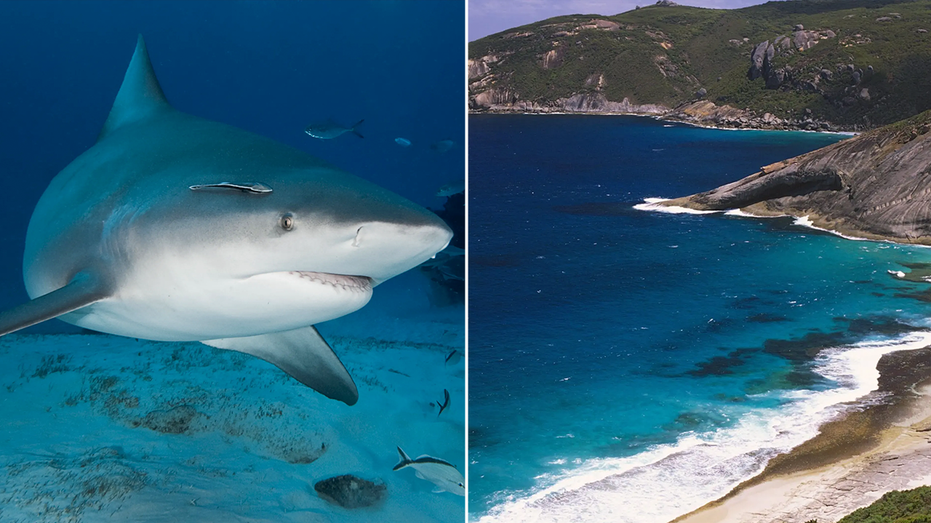
On May 24, 39-year-old Michael Jensz was killed after suffering head injuries while spearfishing along the Great Barrier Reef off the country’s northeast coast.
A bull shark is suspected in his death.
On May 16, 38-year-old Steve Mattabonni was killed by a white shark at Rottnest Island, a popular resort in Western Australia. He was also spearfishing.
Australia usually averages around three shark deaths per year.
"We do see an increase in larger sharks this time of the year, particularly chasing the sardine and the salmon along the coast, which is quite normal," commercial fisherman Gregory Sharp told the Australian Broadcasting Company Saturday.
He added that sharks also tend to attack in areas "where there's a lot of seals, and the island area in King George Sound is renowned for seals."
Michaelmas Island is located in King George Sound.
Western Australia Premier Roger Cook said in a Facebook post Saturday that he was deeply saddened to hear of this morning's fatal shark attack in Albany.
This is a tragedy and my thoughts are with the victim's family and friends, as well as the first responders."
World War II veteran Arthur Rose read a letter written a few days after June 6, 1944, at a ceremony Saturday in Normandy, France, as part of a commemoration of the 82 years since D-Day.
"Dear mom and dad and kids, About a month before we landed, I had a feeling I might be part of the invasion. I couldn't quite believe, though, that I would. I kept thinking, what could I possibly do in an invasion? Pull engines in the middle of a battle? I figured men like me would come along afterwards — after they cleared the wreckage and the damage had passed," Rose read to the crowd.
"But two weeks before D-Day, I was told I would go along and do whatever I could. We had moved to the assault port. Thousands of ships and landing craft of every description filled the harbor. Everyone worked day and night preparing fuel, provisions, ammunition and secret material. Everything was checked and rechecked and checked again. You can imagine the confusion and activity," he continued.
"Then came the day we began loading supplies for the invasion: food, blankets, ammunition, and all the countless things that would be needed once the men landed in France. We knew then the invasion could not be far. Then came the word: D-Day will be June 6th.
"I can't describe the feeling exactly. It wasn't fear, and it wasn't excitement. Just a funny feeling — nervousness, expectancy, and wondering what was going to happen next. Then we sailed. The sea was rough, windy, and miserable. I was seasick most of the time. Everyone expected bombing, submarines, battleships, and all hell to break loose at any moment. But the first attempt was called off because the sea was too rough, and we returned to the harbor. That was a real letdown," Rose continued.
"The next day, we sailed again. Near the coast of France, we could see flashes in the distance and hear the explosions continuously. In went the landing craft. We expected terrible destruction, as there was shelling, and men died. But not all of us," he read.
"Then our work truly began: back and forth, day and night, bringing in equipment, medical supplies, and ammunition. What had once been just another stretch of French coast had suddenly become a vast harbor filled with hundreds of ships and thousands of men."
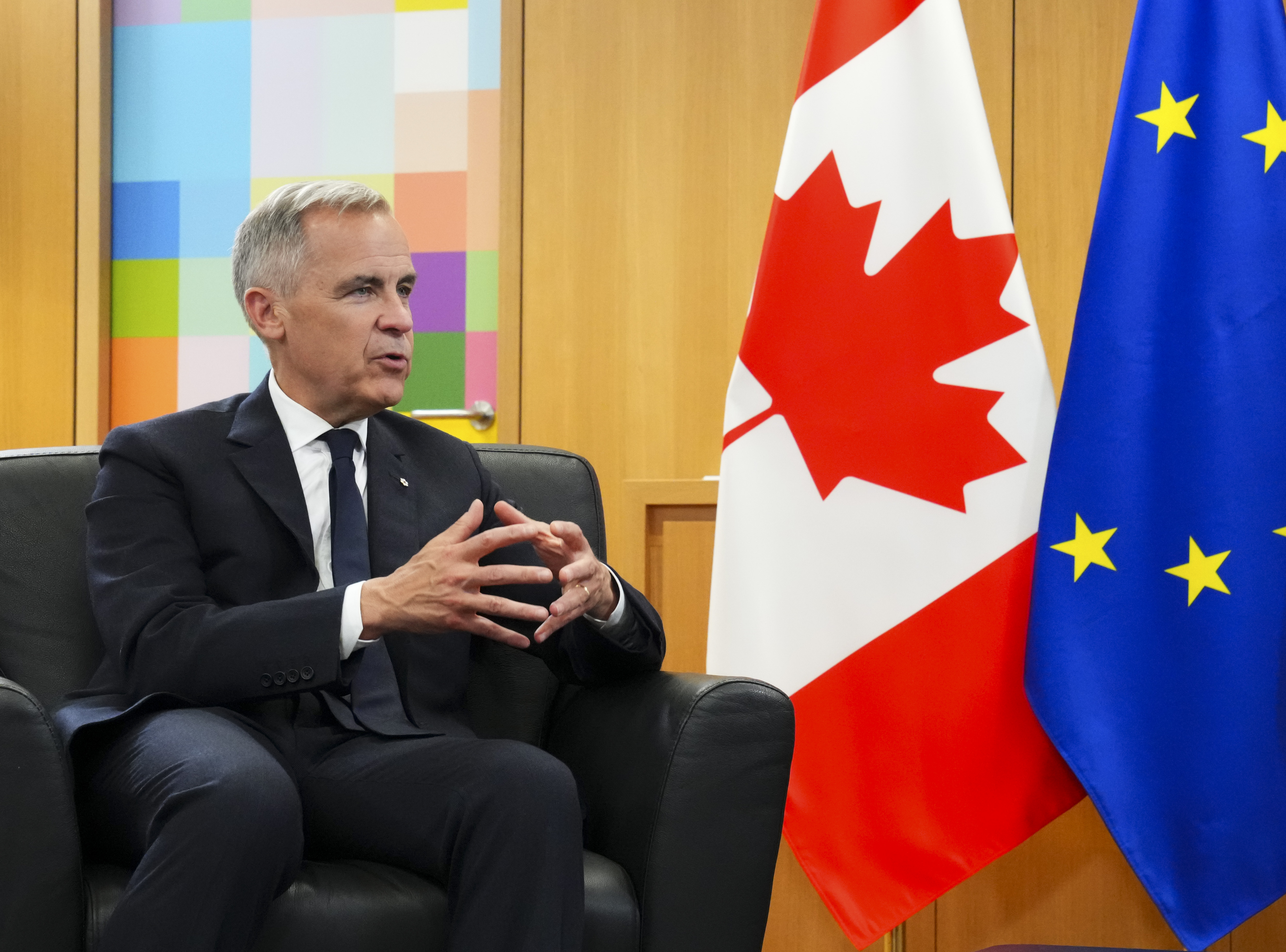
Former foreign affairs minister Stéphane Dion says Canada needs to staff its embassies in Europe and set deadlines for the flurry of agreements Brussels signed with Ottawa.
Former foreign affairs minister Stéphane Dion says Canada needs to staff its embassies in Europe and set deadlines for the flurry of agreements Brussels signed with Ottawa.
The Ukrainian city of Oleshky has been occupied by Russian troops since 2022. Many residents are cut off from the outside world and living in dire conditions. Now, Kyiv wants to rescue them.
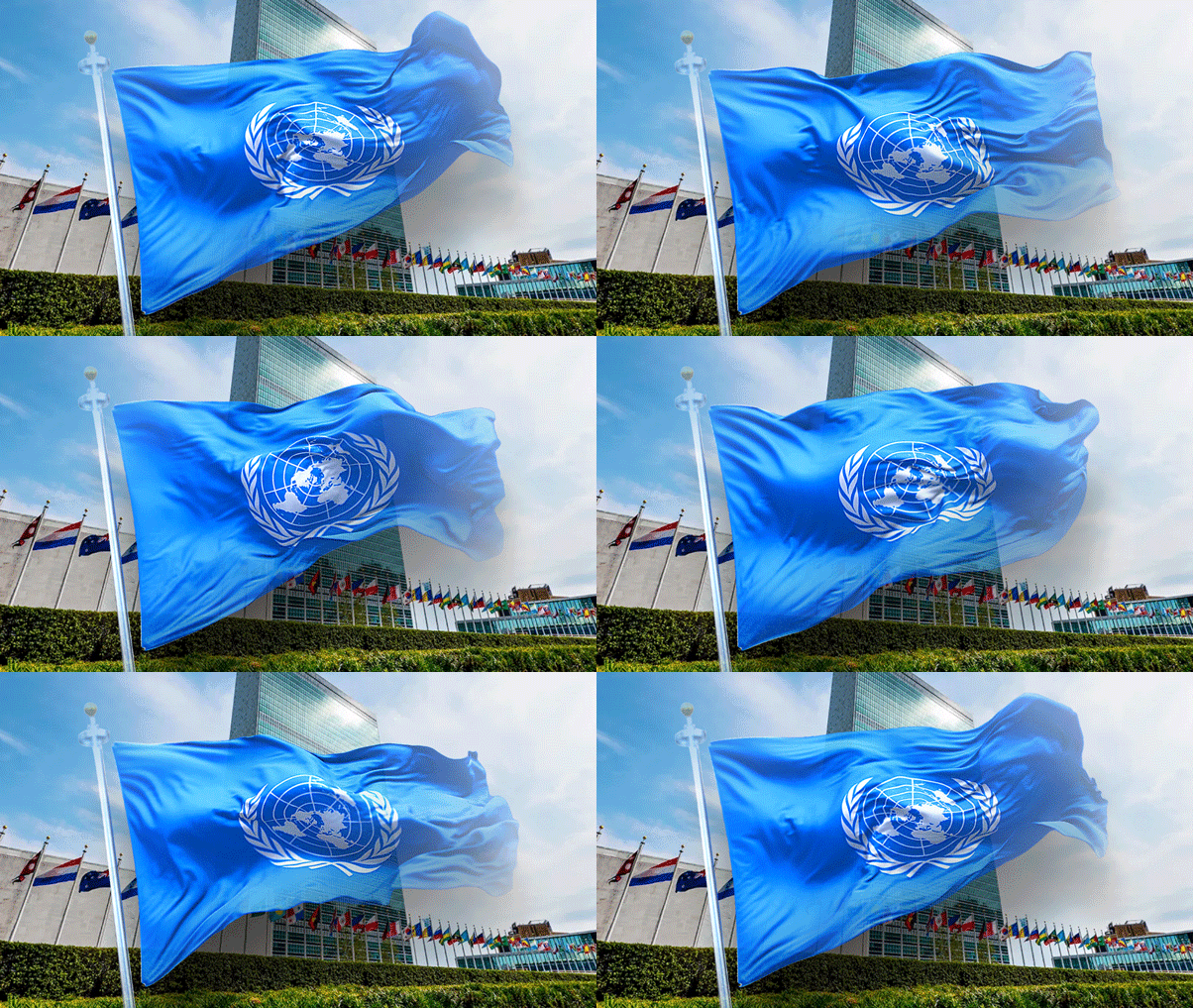
UNITED NATIONS — When Jeff Bartos appeared before the Senate Foreign Relations Committee in 2025 for his confirmation hearing, he was warned that the job he was seeking might not exist.
The Pennsylvania businessman, former political candidate and endurance athlete had been nominated by President Donald Trump to serve as U.S. ambassador for United Nations Management and Reform — a title that has long sounded aspirational in a building famous for bureaucracy.
During his confirmation hearing, Bartos recalled being greeted with a dose of skepticism.
Less than a year later, Bartos believes the impossible is beginning to happen.
In an exclusive interview with Fox News Digital, the Trump administration official laid out an ambitious campaign to reshape an institution critics say has become bloated, inefficient and increasingly disconnected from its founding mission.
The effort comes at a pivotal moment for the United Nations. The stakes extend well beyond budgets. As the U.N. confronts a cash crunch, prepares to choose its next secretary-general and faces growing scrutiny from the administration, the debate over reform has become a battle over the institution's future: whether it remains on its current course or undergoes its most significant restructuring in decades.
Secretary-General António Guterres has repeatedly warned of a growing liquidity crisis as the organization struggles with delayed member-state payments, including billions owed by the United States. At the same time, the Trump administration has made clear that future funding and support will be increasingly tied to reforms.
Bartos argues that pressure is already producing results.
Sitting at the U.N. headquarters, he points to what he calls historic achievements: roughly $570 million cut from the U.N.'s regular budget and 2,900 positions eliminated through negotiations among all 193 member states.
"Again, never happened before in 80 years," Bartos said.
"$570 million cut to the regular budget, approximately 3,000 posts cut. Unanimity. That's by consensus. All 193 countries had to come together."
For Bartos, the achievement is particularly striking because many diplomats viewed meaningful reform as impossible.
"I promised you we wouldn't let you down," he recalled telling Senate Foreign Relations Committee Chairman Jim Risch months after his confirmation.
The reforms represent only what Bartos describes as a "down payment." The next phase is already underway.
As member states negotiate peacekeeping budgets for the coming year, the administration is pushing to reduce spending, streamline missions and eliminate programs it believes no longer serve their intended purpose.
One example, Bartos said, involves changing how the U.N. reimburses countries that contribute equipment to peacekeeping missions.
Previously, reimbursement was largely based on whether equipment was present.
"The methodology that the U.N. used to reimburse troop-contributing countries for equipment was: 'Is it there?'" Bartos said.
The United States pushed for a simple change: "You get reimbursed when the equipment is put into action to do work."
The reform could save roughly $30 million annually, according to U.S. estimates.
For Bartos, however, the dollar figure matters less than what it represents.
"It's a culture change," he said. "Being efficient, being respectful of every dollar, thinking about the taxpayers who fund all this."
That mindset is driving the administration's next major targets: employee compensation and pensions.
Bartos argues that the U.N.'s pension system and benefits structure consume resources that could otherwise be directed toward humanitarian operations.
Not everyone at the United Nations agrees with Bartos' assessment. U.N. officials argue that many of the reforms predate the Trump administration and were already being pursued under Guterres.
"From day one, the secretary-general has been committed to reforms," U.N. spokesman Stéphane Dujarric told Fox News Digital. "A few days ago, on 28 May, the secretary-general told member states that they need to act on structural reform, saying, ‘Genuine reform requires tough choices. This is no time for complacency, self-interest, or foot-dragging.’"
The UN80 initiative is Guterres' flagship reform effort, aimed at cutting duplication, reviewing mandates and making the U.N. system more efficient.
Still, Bartos argues the pace and scope of reform changed dramatically once the United States began applying pressure through budget negotiations and funding discussions.
"The U.N. is at a decision point," Bartos told Fox News Digital.
The debate comes as the organization faces mounting financial pressure. Dujarric said Guterres remains deeply concerned about ongoing liquidity challenges caused by delayed payments from member states, including the United States.
"Unlike a government, the U.N. cannot borrow or print money," Dujarric said, warning that the organization is expected to execute programs with funds it has not received while also returning unused funds at the end of the year.
Earlier in 2026, Guterres urged member states either to pay their assessed contributions in full and on time or overhaul the U.N.'s financial rules to prevent what he described as the risk of financial collapse.
The reforms are unfolding as the U.N. begins preparing for one of the most consequential transitions in years: the search for a successor to Guterres, whose term expires at the end of 2026.
According to Bartos, reform has become a central topic in discussions with prospective candidates.
The administration hopes the next secretary-general will embrace efforts to reduce bureaucracy and return the institution to what Bartos repeatedly describes as a "back-to-basics" approach.
The challenge, he acknowledges, is enormous.
Yet Bartos insists the experience has prepared him in unexpected ways.
Before entering government, he completed two Iron Man triathlons while balancing work and family life.
"It's discipline, planning, prioritization," he said. "It's not dissimilar to budget negotiations."
The comparison may sound unusual, but it reflects how Bartos views the job: not as a sprint but as an endurance race requiring patience, persistence and long-term thinking.
After two unsuccessful statewide campaigns in Pennsylvania — first as the Republican nominee for lieutenant governor in 2018 and later as a candidate in the state's 2022 Republican Senate primary — Bartos said he had largely stepped away from politics before returning to public service following the Oct. 7, 2023, Hamas attacks on Israel.
Bartos recalled his wife urging him to get involved: "You've spent your life working on these issues. You need to do something."
He ultimately joined efforts to help elect Trump and later accepted the U.N. role.
Now, after tackling what many considered the first impossible mission — reforming the United Nations — Bartos is preparing for what may prove an even harder challenge.
Bartos said he was recently tasked by U.S. Ambassador to the U.N. Mike Waltz with helping lead efforts to combat what the administration views as entrenched anti-Israel bias across the U.N. system, including agencies, special rapporteurs and investigative bodies.
The debate intensified following the publication of the U.N. secretary-general's annual report on conflict-related sexual violence, which added Israeli security forces to the report's blacklist of parties credibly suspected of patterns of sexual violence in armed conflict. Israel rejected the allegations and announced it would suspend engagement with Secretary-General António Guterres' office.
Responding to the report, Waltz told Fox News Digital the U.N. has failed to address what he described as a longstanding pattern of institutional antisemitism.
"The U.N. was built in the wake of World War II and the Holocaust, and yet, remarkably, it continues to be weaponized against the Jewish people and Israel," Waltz said. "Whether it's a U.N. official regularly referencing Israel as a 'stain on humanity' and attacking American companies for doing business with Israel, or reports that spread misinformation and propaganda, this antisemitism is completely unacceptable.
"It's been over a year since the secretary-general signed off on an 'action plan' to fight antisemitism at the institution. It would be nice if the institution actually used it."
Bartos argues that anti-Israel bias has become embedded across multiple U.N. bodies and says the administration is working to dismantle what he calls that infrastructure through diplomacy, funding decisions and engagement with the next generation of U.N. leadership.
"There is not a day that goes by that we're not working on that," Bartos said.
The United Nations rejects accusations that it has ignored antisemitism within its ranks.
Dujarric told Fox News Digital the secretary-general launched a formal Action Plan to Combat Antisemitism in January 2025 aimed at tracking antisemitism within U.N. structures and evaluating whether the organization's policies and actions are effectively addressing the problem.
Dujarric also disputed suggestions that Guterres directly controls some of the U.N. bodies most frequently criticized by Israel and its supporters.
"The U.N. mechanisms that you allude to, including human rights mechanisms, are created by and accountable to member states," Dujarric said. "The secretary-general has no authority over them.
"It is very important for member states to actively engage in these mechanisms if they have concerns about their content and tone.
"The U.N. is at a decision point."
Whether the institution changes enough to satisfy its largest financial contributor remains one of the most consequential questions facing the organization, and the man charged with answering it insists the work is only beginning.
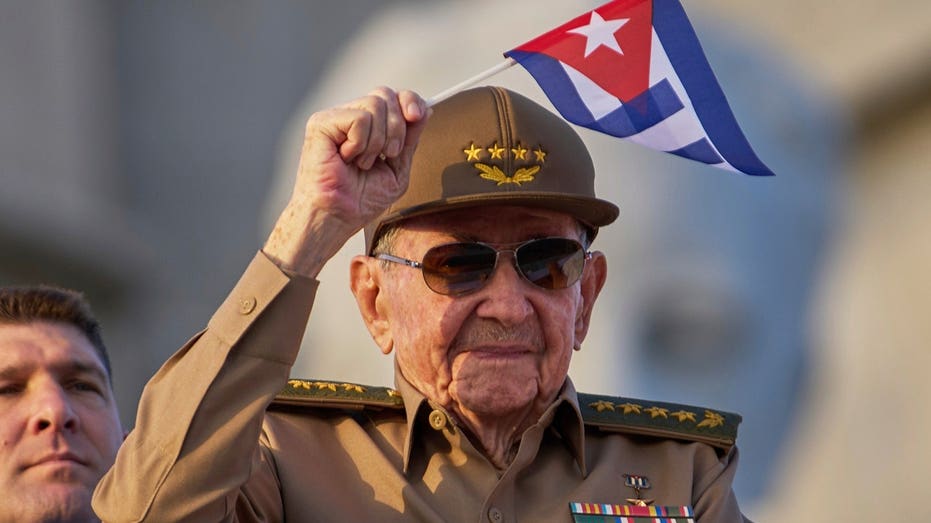
Former Cuban leader Raúl Castro made his first public appearance Friday since the Trump administration charged him with murder over the 1996 shoot-down of planes operated by a Cuban exile group.
Castro appeared on state television during an Interior Ministry celebration in Havana, according to Reuters.
The appearance came weeks after the Department of Justice unsealed an indictment accusing Castro of playing a role in the downing of two aircraft operated by the Miami-based exile organization Brothers to the Rescue nearly 30 years ago.
Castro was charged with conspiracy to kill U.S. nationals, destruction of aircraft and four counts of murder.
Castro, who turned 95 on Wednesday, was last seen publicly during May Day celebrations in Havana, days before the indictment was unsealed.
Prior to his May Day appearance, Castro had remained out of public view for months, appearing only at a public ceremony in Cuba's capital in January honoring 32 Cuban soldiers killed during the U.S. military operation that led to the capture of Venezuelan President Nicolás Maduro.
The indictment centers on a February 1996 incident in which Cuban military aircraft allegedly shot down two unarmed civilian planes operated by Brothers to the Rescue, killing four men: Carlos Costa, Armando Alejandre Jr., Mario de la Peña and Pablo Morales.
Prosecutors allege the aircraft were flying outside Cuban territory when they were destroyed.
The indictment came amid rising tensions in the Caribbean and a series of comments from Trump and his surrogates hinting at possible regime change in the island nation.
President Donald Trump previously praised the indictment, saying Cuban Americans whose families suffered under the communist regime had waited decades for accountability.
"We have big news on Cuba, as you know, with the indictment of Castro," Trump said. "A lot of people have suffered very big, very, very, at levels that few people would understand."
Trump also suggested tensions with Cuba would not escalate following the indictment.
"There won’t be escalation," he said. "We won’t have to."
"At the very least, it means symbolically that he is now set up just as Nicolás Maduro was," Christine Balling, a Cuba expert at the Institute of World Politics and former advisor to U.S. Special Operations Command South, previously told Fox News Digital.
The U.S. indicted Maduro on narco-terrorism charges while tightening sanctions on Venezuela's oil sector, backing opposition efforts to remove him from power and increasing military operations in the Caribbean.
"I don't think that we are necessarily going to conduct the same operation," Balling said. "Raúl Castro is 94 years old. It might not be worth the trouble."
Still, Balling argued that the indictment sent "a very straightforward message that we are 100% behind the fall of the Castro regime."
Fox News Digital's Robert McGreevy, Greg Wehner and Morgan Phillips, along with Fox News' David Spunt, Bill Mears and Jake Gibson contributed to this report. Reuters also contributed to this report.
The United States, along with the other countries that make up the Shield of the Americas, condemned the "ongoing efforts" in Bolivia to "overthrow the legitimately and overwhelmingly elected" government of President Rodrigo Paz on Friday.
"The member countries of Shield of the Americas denounce ongoing efforts to overthrow the legitimately and overwhelmingly elected government of President Rodrigo Paz in Bolivia," the statement read. "We stand with Paz’s democratic government as it fights back against attempts to drag Bolivia backwards through cynical efforts to prevent the delivery of food, medicine and other vital supplies to the Bolivian people through fake road blockades."
The statement added that "Mob rule cannot replace the decision that a majority of Bolivians made at the ballot box to turn the page on two decades of corrupt governments."
It also said that anyone who is funding protests with "dirty money" from drug trafficking and transnational crime "should be held accountable. Those who have legitimate grievances should take advantage of the government’s willingness to dialogue, and denounce those who would abuse their causes to regain power."
The State Department made the joint statement along with Argentina, Bolivia, Chile, Costa Rica, Dominican Republic, Ecuador, El Salvador, Guyana, Honduras, Panama, Paraguay, and Trinidad and Tobago.
The statement comes as Bolivia's capital, La Paz, has been rocked by weeks of social unrest as mass protests have blocked streets in major cities amid economic inflation and rising fuel prices.
Bolivian Defense Minister Marcelo Salinas resigned Tuesday.
Upon taking office, Paz supported a land reform bill to boost agribusiness that Indigenous farmers said put them at risk of eviction. He further scrapped fuel subsidies, sending prices surging by nearly 90%. Motorists complained that the gasoline was contaminated and ruined their cars.
The Trump administration has said drug traffickers are responsible for inciting the mass unrest.
Meanwhile, former President Evo Morales of the Movement for Socialism (MAS) party, the country's first Indigenous president who ruled for an unprecedented 14 years, is calling for early elections. "Paz only has two paths left: a suicidal decision like militarization or ... an election in the next 90 days," he wrote on X.
For almost two years now, Morales has been hiding out in Bolivia's central coca-growing Chapare region, evading an arrest warrant on human trafficking charges relating to allegedly having sex with a 15-year-old girl. He rejects the allegations as politically motivated.
On Thursday, War Secretary Pete Hegseth said in a post on X, that the War Department and the Americas Counter Cartel Coalition (A3C), a recently established multinational military and political alliance, reject all attempts to overthrow the government of Rodrigo Paz Pereira six months into his term.
"The United States is watching. Bolivia must not allow itself to fall prey to the old status quo of narco-terrorist dominance in the region," Hegseth wrote. "We will continue to support our A3C partners like Bolivia to ensure that narco-terrorists are deterred from profiting on death and destruction in our hemisphere."
Fox News' Louis Casiano contributed to this report.
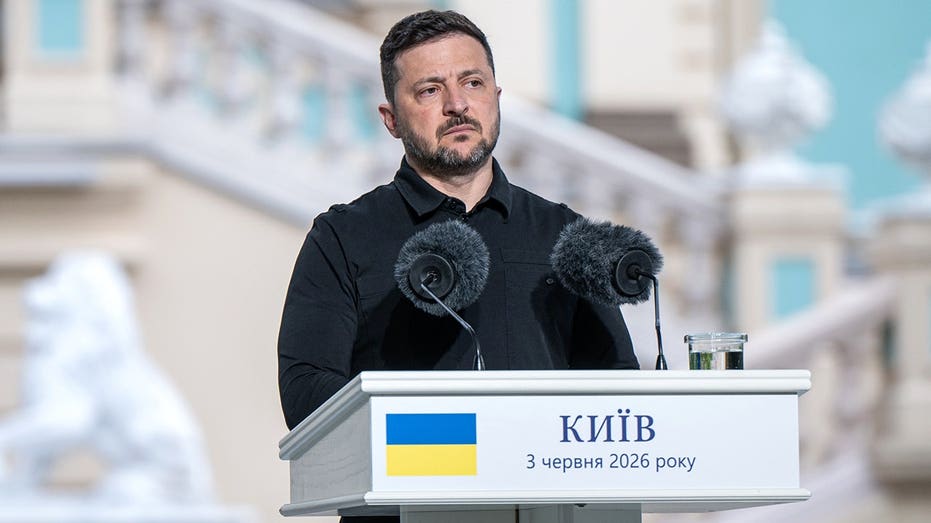
In an open letter to Russian President Vladimir Putin, Ukrainian President Volodymyr Zelenskyy proposed meeting to reach a resolution to the years-long war between their two nations.
"We see that the United States is fully focused on the issue of Iran, and it would be wrong to simply wait until the war in Europe returns to the center of its attention. Ukraine proposes ending this war through direct engagement between us — and you. I am proposing a meeting," Zelenskyy said in the letter.
"There are countries that have traditionally hosted leaders to resolve issues of war and peace. Switzerland, Türkiye, the countries of the Arab world — many are able and willing to host such a meeting. It is leaders who resolve the key issues. That has always been the case, and it always will be," he asserted.
Zelenskyy suggested that Europe and the U.S. should also be involved in the peace process.
"Since the war is taking place in Europe, and since Ukraine needs security guarantees, while you also seek security guarantees for yourself, it would be logical to involve those who can genuinely serve as guarantors. We believe Europe should be part of this process — those who truly have the capacity to influence the situation. We also believe that the United States must be part of the process. This is what could help shape a new security architecture for our part of the world," he said.
He indicated that Ukraine would agree to a ceasefire during the proposed negotiations.
"Ukraine is ready for a full ceasefire for the duration of the negotiations. This is standard practice, and current developments around Iran only reinforce that point. An attempt to establish real silence is the best way to begin talking to one another. We believe it would not simply be an attempt, but a real ceasefire — if that is what you want," he noted.
He also suggested a prisoner swap between the two nations, noting, "Ukraine is ready for an all-for-all exchange of prisoners of war, and this could become a good prologue to ending the war. Serious steps must be taken to return civilians and children who were taken away during the war."
"If you do not personally come to the conclusion that it is time to end this war, Ukraine will continue fighting for its existence. We will have those who support us. But you, too, will have to fight much harder for your own existence — not Russia’s, but your own. And this is not a threat from me or from Ukraine. It is a fact of Russian history that you know well: when Russia grows tired, change comes," Zelenskyy warned Putin.

 Login
Login