Reading view

Be careful what you vote for: Andy Burnham wants to abolish the “no recourse to public funds” policy for migrants

Andy Burnham, the Labour candidate for the Makerfield by-election, supports giving migrants immediate access to Britain’s welfare state and social housing. In the past, when not on the campaign trail, he has […]

The post Be careful what you vote for: Andy Burnham wants to abolish the “no recourse to public funds” policy for migrants first appeared on The Expose.

  •  

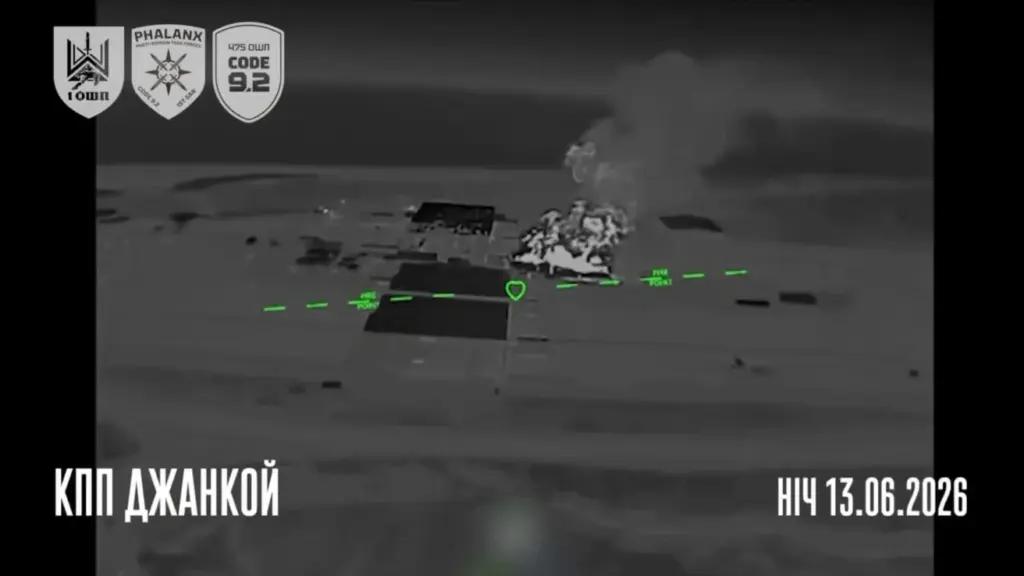
Ukrainian drones hit Dzhankoi as strike unit declares hunt on Russian Crimea logistics

Ukrainian strikes on the Dzhankoy

Ukrainian drones struck the Dzhankoi checkpoint, a railway bridge, a Russian pontoon crossing, and trucks at Chonhar overnight on 13 June, hitting four targets along the only land corridor between Russian-occupied Crimea and the southern front. Traffic toward the Dzhankoi checkpoint was halted, Russia's installed head of occupied Kherson Oblast Vladimir Saldo said on Telegram, claiming Russian air defenses shot down 25 Ukrainian drones overnight.

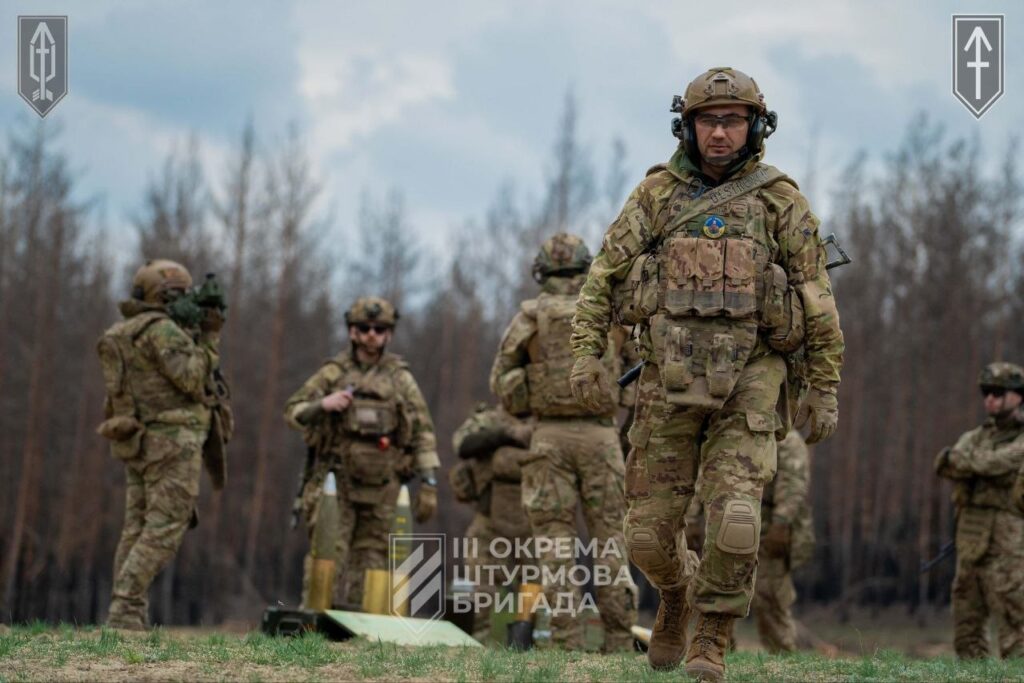
The strike marks a stated change in Ukrainian operational concept. The 1st Separate Assault Regiment named after Dmytro Kotsiubailo, which led the operation jointly with the 475th Separate Assault Regiment "CODE 9.2," announced it is moving from one-off attacks on the bridges themselves to sustained patrol of the entire logistics route. "We are transitioning to patrolling enemy logistics from temporarily occupied Crimea and blocking attempts to restore crossings," the regiment said in a statement posted to Facebook. "Pontoon throughput is low. Trucks accumulate in queues, becoming ready targets for us." Russian fuel and ammunition supplying Russia's southern front pass through this corridor.

What was hit

The Dzhankoi checkpoint controls the main road between northern Crimea and the Kherson Oblast mainland and serves as the busiest highway and rail junction in occupied Crimea. Saldo also said a bridge between Henichesk and the Arabat Spit, an alternative crossing point Ukraine first struck on 10 June, was attacked again overnight. Ukrainian forces did not confirm Saldo's air defense claim.

The Chonhar bridge — the main highway link between Crimea and occupied Kherson Oblast — was first hit on 7 June by the joint Falanga multidomain operations center of the two regiments, using Fire Point company drones and long-range "Behemoth" UAVs. Traffic was rerouted, then halted again after a second strike on 9 June. Four vehicular bridges at Crimea's northwestern entrance near Armiansk were struck on 11 June, Euromaidan Press reported. The overnight strike on the Dzhankoi checkpoint extends the pattern — and signals the campaign has moved from the bridges to the trucks themselves.

The logistics spine

The corridor Ukraine is now patrolling carries the supplies that sustain Russian operations across Ukraine's south. Russian fuel for the Huliaipole direction is shipped by ferry to Crimea and then trucked across the peninsula to the front, regiment commander Dmytro Filatov, call sign Perun, told Ukrainska Pravda earlier this week. Russian cargo, he said, does not move across the Kerch Bridge — its railway link has not been restored since the October 2022 explosion. Cyber intelligence inside Russian military networks now allows Ukrainian planners to target specific units waiting for fuel, Filatov added. The 37th Motor Rifle Brigade was the target of the 7 June Chonhar strike, he said. Trucks ordered for that brigade had still not arrived at the time of his interview.

A multiplying problem for Russian logistics

The interdiction campaign confronts Russia with a layered constraint. Pontoons replace damaged bridges, but they throttle throughput and concentrate trucks in queues — the conditions the 1st Assault Regiment now describes as "ready targets." Rerouting through Armiansk and Perekop runs into the bridges hit on 11 June. Ferrying fuel from Krasnodar Krai bypasses the corridor entirely but cannot scale to replace road transport on the timeframes Russian units in southern Ukraine need.

Filatov said on 10 June that the Chonhar bridge had sustained critical damage and that the occupation forces were searching for new logistics routes for ammunition and fuel.

What changes

The announcement is what makes this strike news rather than another item in a logistics campaign. Until now, the Crimea land corridor functioned — slowly, under pressure, but it functioned. As of overnight on 13 June, the regiment that led the bridge strikes is declaring the corridor a sustained engagement zone. Not a target struck once. A route to be patrolled.

"We bleed the enemy to advance forward," the unit said. "This is not the end.

  •  

Ukraine to supply NATO ally Latvia with strike drones, ground robots, naval systems

latvia ukraine drone

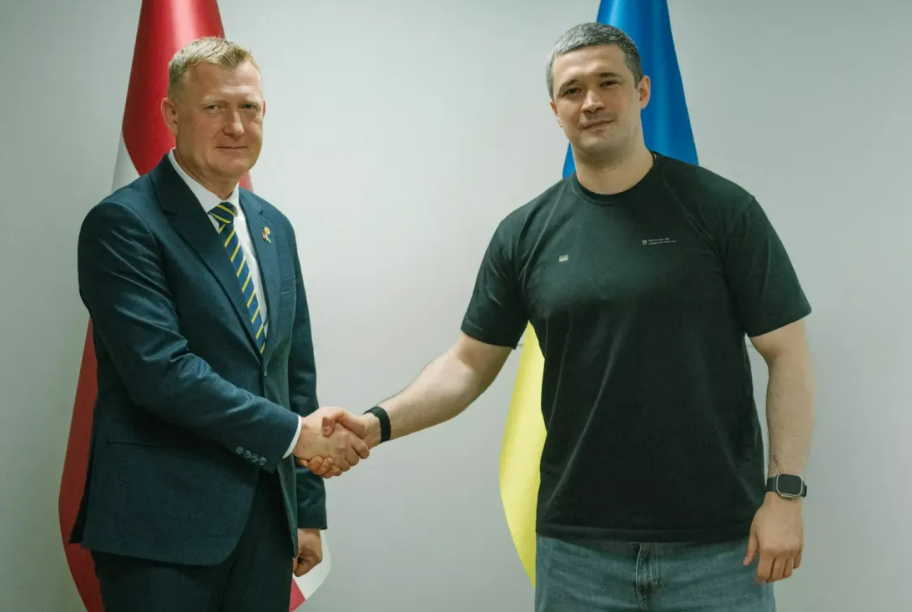
Ukrainian and Latvian defense ministers named specific categories of unmanned systems that will move between the two countries under the Drone Deal, Ukraine's defense minister Mykhailo Fedorov said on 13 June.

Latvia will supply Ukraine with anti-drone systems of Latvian manufacture. Ukraine will supply Latvia with strike drones, ground robotic complexes, and maritime drones, following a Kyiv meeting between Fedorov and Latvian defense minister Raivis Melnis.

The exchange formalizes what until now ran one way. Latvia has been a heavyweight donor of drones and equipment since 2022, pledging 10 million euros to joint defense manufacturing in 2025 alone.

Today's agreement makes Ukraine a supplier to a NATO member for the first time under this format.

"Ukrainian technologies and combat experience help partners adapt faster to the challenges of modern warfare," Fedorov wrote on Telegram, "while support from allies makes it possible to scale solutions that have already proven effective on the battlefield."

The meeting is Melnis's first foreign trip as defense minister. He took office on 28 May after his predecessor Andris Sprūds resigned over a 7 May Ukrainian drone crash near Latvia's Rēzekne oil storage facility — an incident that brought down Prime Minister Evika Siliņa's government.

Before his appointment, Melnis served as the Latvian defense ministry's representative at the embassy in Kyiv.

In a separate meeting on the same visit, Melnis told President Volodymyr Zelenskyy: "We have supported Ukraine and continue to support it with training and our expertise since the very beginning. And now we are asking Ukraine to support us, because there is only one country in the world who knows how to fight Russia, how to stop Russia."

What the Drone Deal opens

The 9 June Drone Deal, signed in Tallinn between Zelenskyy and Latvia's new Prime Minister Andris Kulbergs at the Nordic-Baltic Eight summit, is the sixth bilateral framework Ukraine has concluded under this format.

At the signing, Zelenskyy offered Ukrainian counter-drone experts to Baltic states facing repeated drone incursions. The Fedorov-Melnis meeting gives that offer operational content.

Latvia has spent recent months as the country most exposed to drone spillover from Russia's war on Ukraine. French NATO fighters shot down a drone over eastern Latvia on 8 June — the first NATO intercept on Latvian soil.

Latvia's military chief Kaspars Pudāns warned on 4 June that Russia could exploit its drone manufacturing edge to attack the Baltics by 2028.

Fedorov did not specify volumes, timelines, or financial terms.

  •  

Russia’s youngest war dead include more than 200 18-year-old soldiers, new data shows

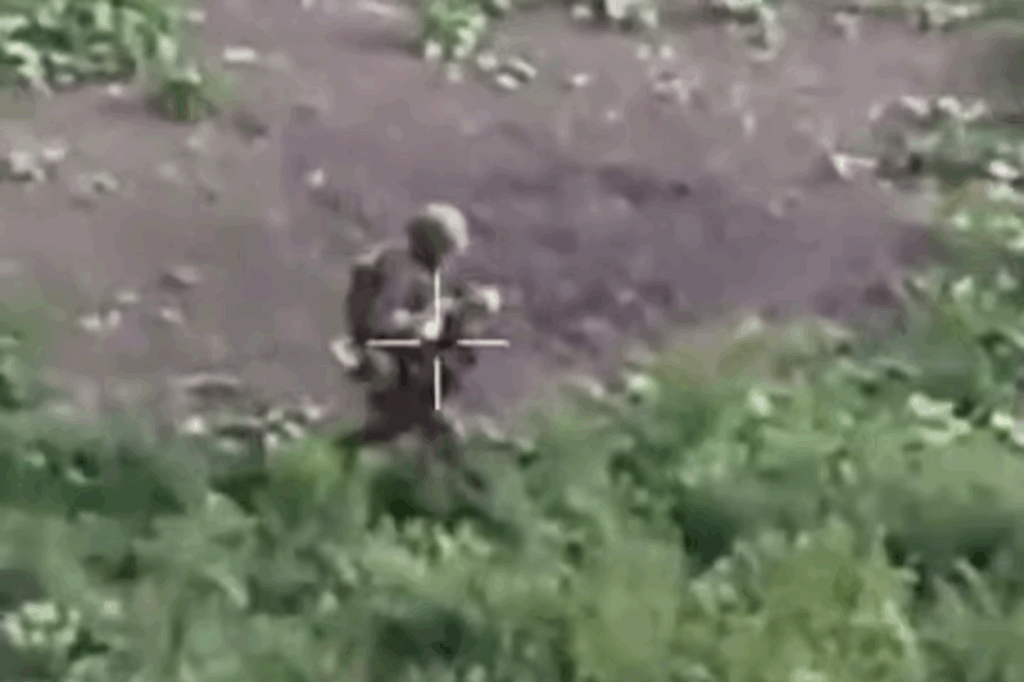
Russian soldier seen by Ukrainian drone before strike, June 2026. Screenshot from video: Madyar

At least 200 Russian soldiers aged 18 have been confirmed killed in Ukraine, according to a new joint investigation by BBC Russian and independent Russian outlet Mediazona, which has identified 226,055 Russian military deaths since the start of the full-scale invasion in 2022.

Russia’s invasion of Ukraine has been defined by exceptionally high and sustained casualty rates across all phases of the war, driven by large-scale frontal assaults, prolonged artillery duels, and the expanding use of drone warfare that has widened the lethal “kill zone” across much of the frontline. 

At least 200 confirmed 18-year-old soldiers among Russia’s war dead

The youngest confirmed casualty in the latest update was born in 2008, marking the first recorded 18-year-old in the dataset. Researchers say the overall figure includes more than 200 teenagers aged 18, underscoring the scale of young recruits being sent into combat.

One case highlighted in the report is that of 18-year-old Alisher Svirin, who died on 1 May 2026 and was buried later that month in Moscow Oblast. He had signed a contract and served in a motor rifle brigade as a machine gunner. According to the investigation, he could not have spent more than a few months in service before being killed.

Regional patterns show disproportionate burden in poorer Russian republics

Regional data also highlights a consistent imbalance in casualty distribution, with poorer regions such as Bashkortostan, Tatarstan, and Tuva showing significantly higher per-capita losses than Russia’s largest cities. 

Researchers attribute this gap to recruitment patterns that rely more heavily on economically disadvantaged areas, where military service offers relatively higher financial incentives.

At the same time, major urban centres such as Moscow remain underrepresented in the casualty lists, reflecting both demographic differences in recruitment and uneven exposure to frontline deployments.

Open-source records show limits of confirmed casualty tracking

The database is compiled from publicly available sources, including obituaries, official regional announcements, social media posts, and burial records. Analysts say it likely captures only a portion of total losses.

The report notes that more than half of confirmed deaths now come from volunteers, mobilised personnel, and convicts recruited from penal colonies, reflecting Russia’s reliance on short-training pipeline forces for frontline deployments.

Battlefield drone warfare is reshaping how deaths are recorded and counted

Researchers also say the structure of the battlefield has changed the visibility of losses. Widespread drone warfare has expanded the “kill zone” across large sections of the front, making recovery of bodies difficult and delaying official confirmation of deaths, sometimes for months or years.

Based on current estimates, analysts suggest Russia’s real death toll could be significantly higher than identified figures, potentially reaching between 347,000 and 502,000 when accounting for incomplete data coverage.

  •  

Storm Shadow maker MBDA and Ukrainian Armor launch partnership to develop deep strike and anti-drone systems

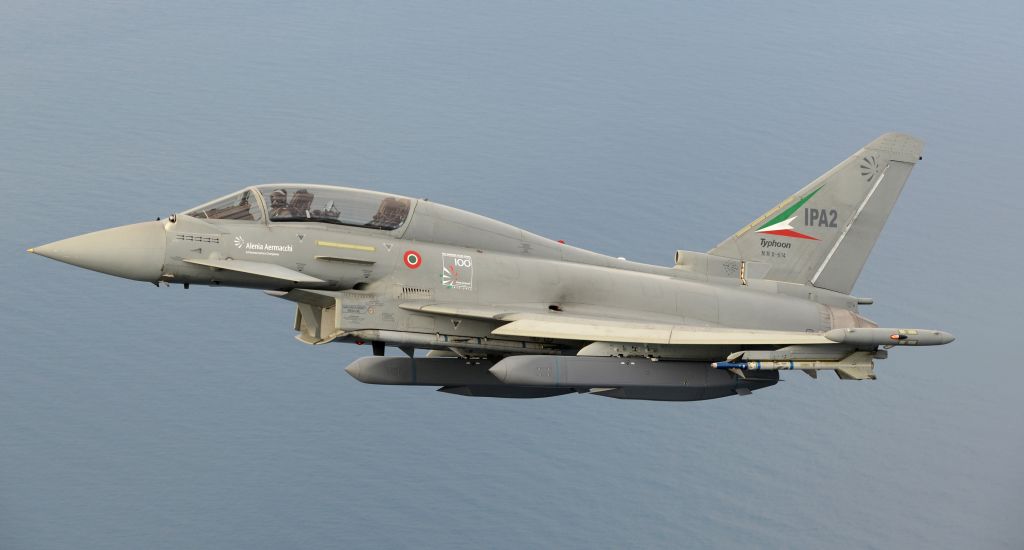
Italian Air Force with Storm Shadow missiles.

European missile systems manufacturer MBDA and Ukrainian defense company Ukrainian Armor have signed a memorandum of understanding to explore joint development of deep-strike systems and counter-unmanned aerial systems (C-UAS), marking a new phase of industrial cooperation linked to the war in Ukraine, MBDA announced on 10 June.

MBDA expands cooperation with Ukraine’s defense industry

MBDA is one of Europe’s leading defense firms specializing in guided missile systems across air, land, and naval domains. It is also the maker of the Storm Shadow / SCALP-EG cruise missile, which has been supplied to Ukraine by European partners for long-range strike missions.

Ukrainian Armor is a domestic Ukrainian defense manufacturer involved in producing armored vehicles, artillery systems, ammunition, and unmanned platforms, and has expanded significantly since the start of Russia’s full-scale invasion.

Cooperation to focus on long-range strike systems and counter-drone technologies

The agreement sets out a framework for long-term cooperation, including joint development projects, technology exchange, and potential co-production initiatives, with the possibility of establishing a future joint venture.

The focus is on two priority areas: “deep strike” capabilities for long-range precision attacks, and counter-unmanned aerial systems designed to detect and neutralize drones, which have become central to battlefield dynamics in Ukraine.

Ukraine to strengthen domestic defense production with European expertise

MBDA said the partnership is intended to help strengthen Ukraine’s independent industrial capacity, while leveraging European experience in advanced missile and air defense systems. Ukrainian Armor will contribute production capability and operational experience across armored vehicles, munitions, and unmanned systems developed under wartime conditions.

Both sides said the cooperation aims to combine European technological expertise with Ukrainian battlefield-driven innovation, creating a framework for deeper defense-industrial integration.

  •  

EU opens first accession talks cluster for Ukraine and Moldova after years of delays and vetoes

EU summit Ukraine cyprus zelenskyy

Ukraine and Moldova have taken a key step in their EU accession process after all 27 member states agreed to open the first negotiation cluster covering “fundamentals,” marking the formal start of structured membership talks, European Commission President Ursula von der Leyen said.

The opening of the first EU accession negotiation cluster marks a long-delayed breakthrough for Ukraine and Moldova after years of internal EU divisions and vetoes, including from Hungary. It formally starts talks on core governance reforms, following repeated postponements despite earlier candidate status.

EU says accession step reflects wartime reform progress and core EU standards

Von der Leyen said the decision reflects recognition of both countries’ progress on reforms despite wartime conditions and sustained political pressure. 

She said the cluster on fundamentals forms “the backbone of the accession process,” covering rule of law, democratic institutions, and core EU principles. 

“This is a recognition of the determination, courage and hard work shown by both countries in advancing reforms, even in the face of immense challenges,” she said.

She added that enlargement is a “strategic choice,” arguing that bringing new members closer to the bloc strengthens “peace, security and prosperity across our continent,” and said a larger EU is “our best investment in our shared future.”

Today, the European Union took a major step forward.

All Member States agreed to open the first accession negotiations cluster with Ukraine and Moldova.

At the first Intergovernmental Conference on Monday, we will open the cluster on fundamentals; the backbone of the accession… pic.twitter.com/WSPU8CVPpg

— Ursula von der Leyen (@vonderleyen) June 12, 2026

Zelenskyy welcomes opening of first accession cluster as “strong step for Europe”

Ukrainian President Volodymyr Zelenskyy welcomed the decision, thanking EU partners and individual leaders for what he described as a “strong step for Europe.” 

He said Ukraine continues to deliver reforms despite the war and that the EU is now fulfilling its commitments in return. 

Zelenskyy said opening the first cluster is “a significant political and moral support for our state and our people,” and stressed that Ukraine is working to ensure readiness for the next stages of accession talks.

He added that Kyiv is grateful for international support and said the EU’s backing helps Ukraine defend not only itself but “the idea that European nations can live united, free, and in peace.”

🇪🇺🇺🇦Today’s EU member states’ decision to open Cluster 1 negotiations w/ Ukraine marks another milestone on Ukraine’s path to the EU. Enlargement remains a strategic investment in Europe’s security, stability, and prosperity, & 🇺🇦 is committed to contribute & deliver. We are…

— Taras Kachka (@taraskachka) June 12, 2026

Hungary’s veto lifted after minority rights agreement clears path for accession talks to advance

The move follows months of procedural preparation within the EU, after the Cyprus presidency initiated steps to open the first negotiation cluster for Ukraine and Moldova. 

The cluster on fundamentals is the first and most sensitive stage of accession talks, and must be opened unanimously by all member states before negotiations can proceed further.

The breakthrough comes after Hungary’s prolonged veto over the start of accession negotiations with Ukraine was lifted

Budapest had previously blocked progress over disputes including minority rights in Ukraine’s Zakarpattia Oblast, which borders Hungary and contains a number of ethnic Hungarians, stalling the launch of negotiation clusters despite Ukraine receiving candidate status in 2022. 

The recent shift followed a change in Hungary’s political leadership and an agreement on minority rights, removing a key obstacle to advancing the accession framework.

EU enlargement process slowed for years by internal divisions despite technical preparations continuing

Enlargement talks remained stalled for years due to internal divisions, including Hungary’s veto, even as broader momentum built across the bloc. 

While technical preparations for “clusters” were advancing, the formal opening required unanimous agreement and had been repeatedly delayed despite Ukraine’s expectation that talks could begin sooner. 

Enlargement remains a long-term process requiring sustained reforms across governance, judiciary, and economic policy before membership is possible. No country has completed the process since Croatia joined in 2013.

  •  

Ukraine launches major army reform: fixed contracts, revamped pay structure, and broader access for foreigners

Ukrainian soldiers of the 1st Assault Battalion, 3rd Infantry Brigade. Photo: 1st Assault Battalion

Ukraine’s Ministry of Defense is introducing a sweeping overhaul of military service rules that restructures contracts, pay systems, personnel movement, and reintegration procedures across the armed forces, the ministry announced on 12 June.

The reforms are part of a broader 2026 reorganization of service conditions under the new defense leadership of Minister Mykhailo Fedorov, aimed at stabilizing manpower, improving retention, and formalizing career pathways during wartime. The package establishes a more predictable framework for service terms, compensation, and transfers while prioritizing reinforcement of frontline combat units.

President Volodymyr Zelenskyy endorsed the reform package, saying military and government leaders had agreed on a path to “increase the financial sustainability of our defense and ensure the further transformation of the Ukrainian army.”

New contract system split into three service categories

The Ministry introduced three contract types: infantry-assault (“pihotno-shturmovyi”), combat, and basic service contracts, each linked to specific roles and operational exposure.

The infantry-assault contract covers frontline positions including infantry, assault troops, combat medics, gunners, and drivers in combat units. Combat contracts apply to drone operators, electronic warfare specialists, artillery crews, and other battlefield support roles, while basic contracts cover non-combat and rear-area positions.

Service terms are fixed: 6, 10, or 14 months for infantry-assault roles depending on prior service status, and 24 months for combat and basic contracts.

Pay structure tied to role and operational intensity

The system combines a base salary of 20,000 hryvnias ($450 USD) with variable payments based on role and battlefield conditions.

Monthly compensation ranges from at least 30,000 hryvnias ($670 USD) in rear positions to significantly higher levels in combat roles, with infantry-assault positions at the top of the scale. Under the framework, total monthly pay may reach up to 120,000 hryvnias ($2,670 USD) depending on deployment intensity and task execution.

A tiered bonus system adds payments linked to operational activity, including participation in frontline operations, command-level missions, and assault actions. Additional fixed incentives apply for outcomes such as capturing prisoners or confirmed combat kills.

Eligibility for certain payments is verified through a digital mission control system that records presence in designated operational zones.

Zelenskyy also announced planned pay increases for combat commanders, saying the measure is intended to help retain experienced leadership within frontline units.

He said the Cabinet of Ministers is expected to approve the implementation mechanism, with the first additional payments potentially beginning in June.

Fixed-term service with post-contract leave guarantees

All contract types include defined service terms followed by a structured post-service leave period. The duration of this leave is calculated based on total service length and combat participation, with longer operational involvement extending the guaranteed break.

The system is designed to create a predictable cycle of service, recovery, and re-engagement, supported by legally defined post-contract guarantees.

Automated transfers through Army+ system

Automatic transfer approvals are introduced through the Army+ digital platform. Eligible personnel up to senior sergeant rank and outside officer positions can request transfers once per year within their corps’ operational sector.

Transfers are limited to units within the same command area, with processing handled digitally to reduce administrative delays while maintaining operational control. A pilot rollout is planned in selected corps before wider expansion across the armed forces.

Structured return from unauthorized absence

A temporary 100-day mechanism allows personnel who left service without authorization before 11 June 2026 to return under a simplified procedure.

Applications are processed digitally, with verification completed within several days. Returning personnel can select from a list of eligible units, with pay and benefits restored upon formal reintegration into service.

The mechanism is designed to streamline reintegration while restoring personnel to active duty under controlled conditions.

Part of wider force restructuring

The Ministry of Defense says the package is intended to modernize Ukraine’s wartime force structure by combining fixed-term contracts, role-based compensation, and digital personnel management tools.

Separately, Zelenskyy instructed officials to expand recruitment pathways for foreign volunteers seeking to serve in Ukraine’s armed forces, saying additional recruitment mechanisms would be introduced. No further details were immediately released.

Further stages of reform are expected as the system is tested and expanded across the armed forces.

  •  

How Ukraine uses AI to guide long-range drone strikes through electronic warfare and deep into Russian-controlled rear areas

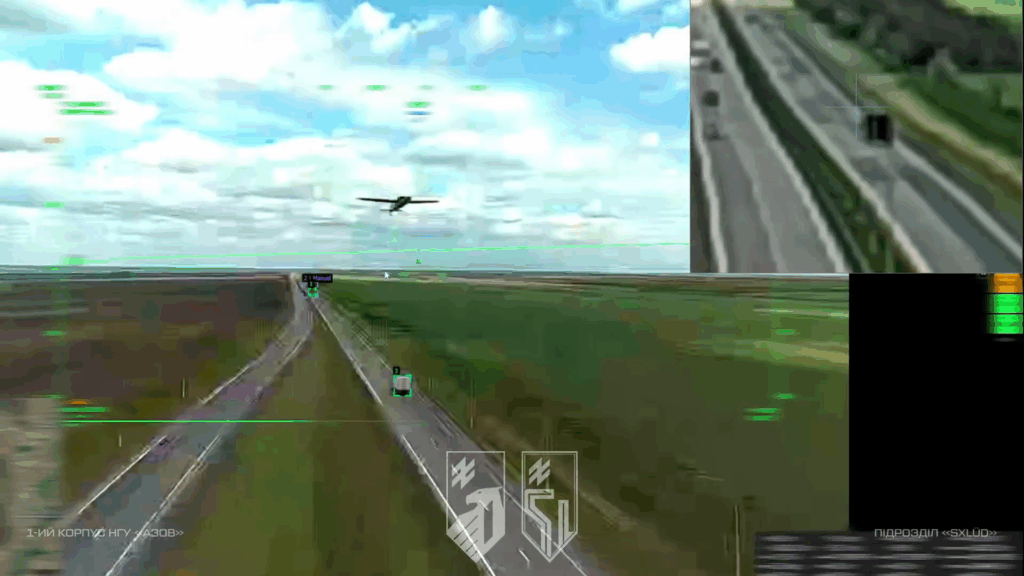
A Ukrainian Hornet drone spots another Hornet. Photo: Ukraine's 1st Azov Corps

Ukraine’s Ministry of Defense (MoD) says artificial intelligence is increasingly integrated into so-called “middle strike” systems, enabling long-range drones to operate in heavily contested electronic warfare environments and strike targets at operational depth.

Officials say the systems are part of a broader program aimed at disrupting Russian logistics and supply chains, with Ukraine reporting a sharp increase in strikes on transport routes, depots, command posts, and equipment concentrations in recent months.

The MoD explains that the use of AI is intended to overcome two key constraints in this operational zone: heavy electronic warfare interference that disrupts satellite navigation, and dense air defense coverage that limits predictable flight paths.

AI takes over control at target approach phase

According to the ministry, AI systems are not active throughout the entire mission. Drones are initially flown under operator control, but once they reach a designated target grid, onboard systems take over navigation and targeting.

At that stage, onboard computers and optical sensors begin real-time analysis of the surrounding area, switching from manual guidance to autonomous control for the final approach.

Visual navigation without GPS using terrain matching

The ministry says drones equipped with AI systems are able to operate without reliable satellite navigation by using onboard cameras and computer vision models.

These systems continuously scan terrain features such as roads, rivers, and landscape contours, and compare them against preloaded high-resolution satellite imagery. 

This allows the drone to determine its position based on visual correlation rather than GPS signals, which are often degraded or spoofed by electronic warfare.

Automated target recognition and terminal strike adjustment

In the terminal phase, AI systems analyze live video feeds to identify military equipment based on trained visual patterns. The system is designed to distinguish between different types of targets and automatically assign a tracking marker once a valid target is recognized.

Once a target is locked, the AI adjusts flight controls in real time to guide the drone into a final dive trajectory.

The ministry also says the system can reduce misidentification risks by distinguishing between real equipment and decoys using multiple indicators, including geometry, surface texture, and thermal signatures.

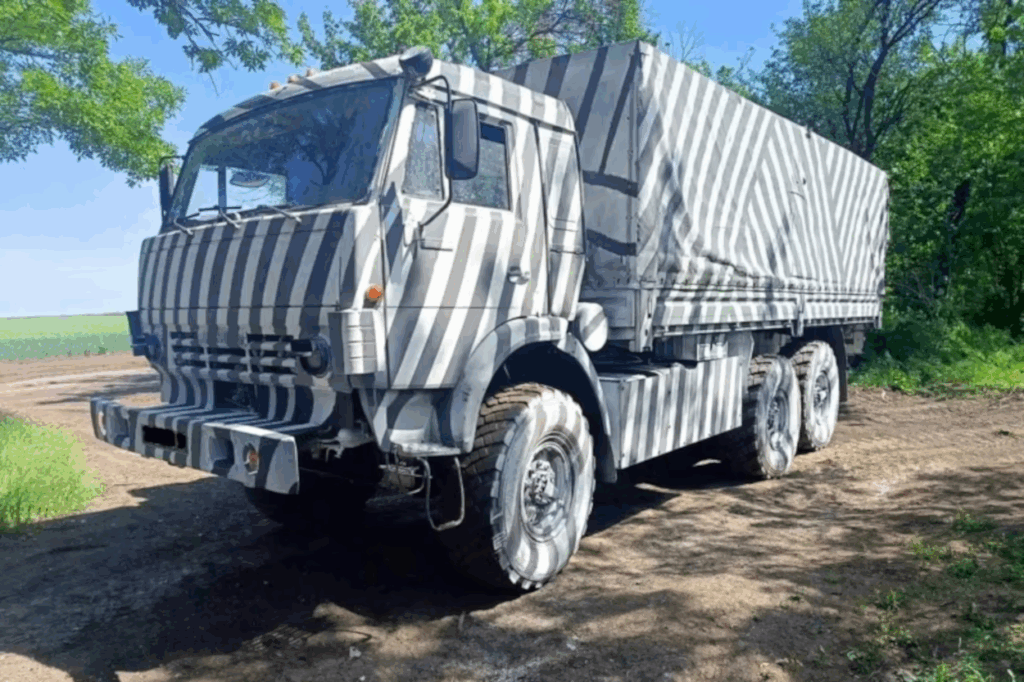
Russian forces are increasingly trying to counter these AI-assisted drone targeting systems using methods such as painting military vehicles with high-contrast zebra-like stripes. Experts say the markings are designed to confuse computer vision models trained to identify standard vehicle shapes and camouflage patterns.

Russian military vehicle with zebra-like paint patterns in an attempt to disrupt AI-assisted drone targeting systems. Photo from social media, via RFE/RL.

Route planning shaped by electronic warfare conditions

The MoD says AI is also used before launch to optimize flight paths. Planning systems incorporate intelligence on Russian air defense and electronic warfare deployments, selecting routes that minimize exposure.

This includes analysis of radar coverage, identification of terrain masking opportunities, and the use of blind spots in air defense systems. The goal, according to officials, is to ensure drones can reach operational depth targets despite dense electronic warfare and interception layers.

“Logistics Lockdown” program and expanded strike depth

Ukraine says these systems are being deployed as part of a wider “Logistics Lockdown” program aimed at increasing pressure on Russian military supply chains.

Officials say “middle strike” operations are now being scaled to target Russian logistics, infrastructure, and military assets at distances of up to 200 kilometers behind the front line.

The MoD says the approach is designed to combine intelligence, long-range strike capability, and automation to increase the tempo and effectiveness of attacks on Russia’s rear support systems.

  •  

Abrams tanks in Ukraine get modular drone protection to survive in today’s drone-dominated warfare

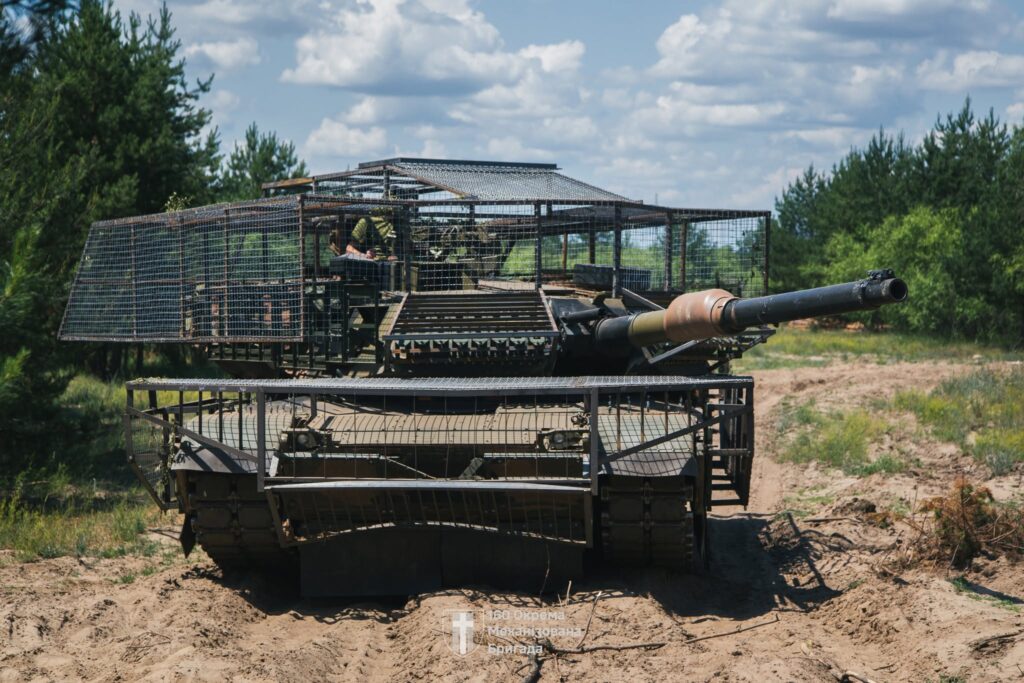
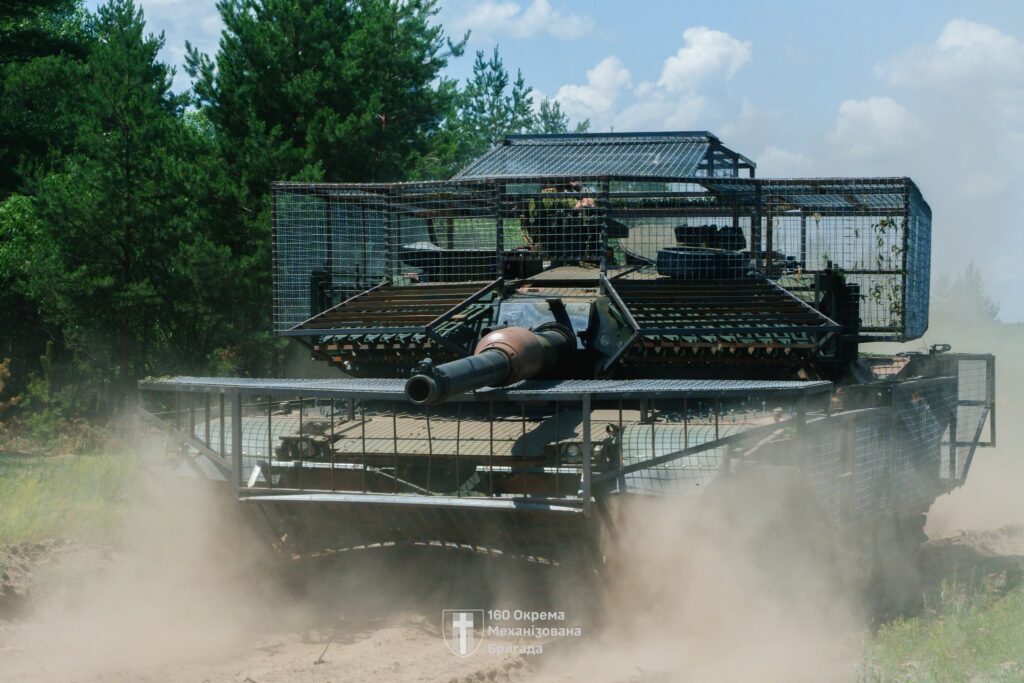
Ukrainian Abrams tank fitted with modular cage-style protection designed to counter FPV drone strikes on the front line, as crews adapt Western armor to modern battlefield threats. Photo: Ukraine’s 160th Separate Mechanized Brigade

Ukraine’s 160th Separate Mechanized Brigade has published new photos of its Abrams tank “Lucifer,” showing how Ukrainian crews are adapting Western armor to survive the increasing FPV drone threats on the front line that are defining modern warfare.

Drones have significantly reduced the battlefield advantage of tanks by enabling low-cost, precise strikes against weak points in armored vehicles. This has forced Ukrainian crews to adapt heavy armor with additional protective structures, including cage-style and modular field modifications.

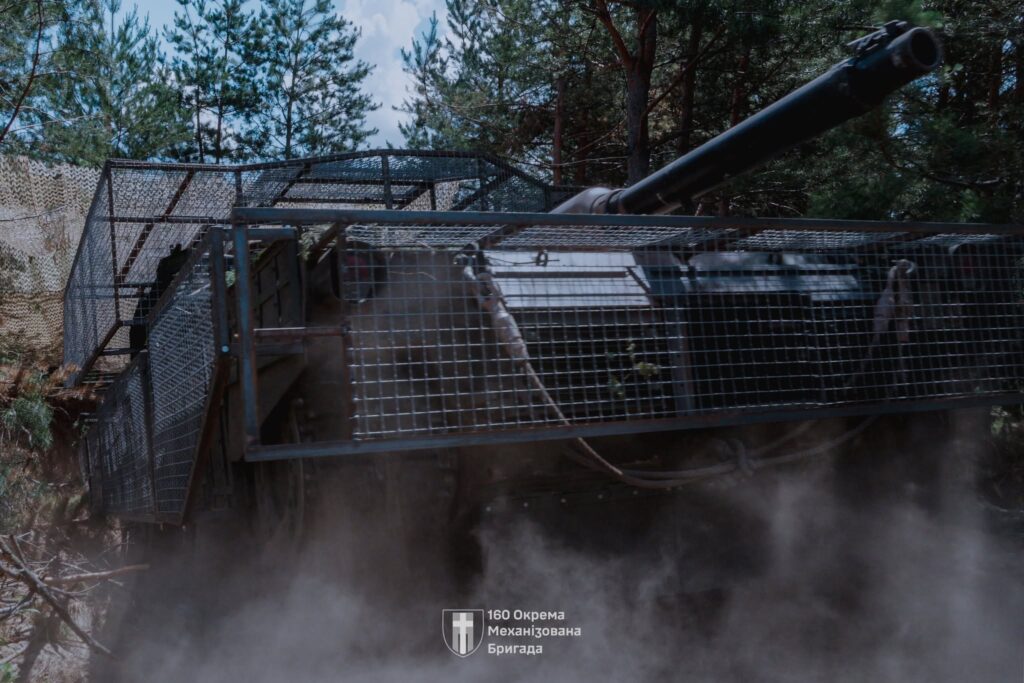
Ukrainian Abrams tank fitted with modular cage-style protection designed to counter FPV drone strikes on the front line, as crews adapt Western armor to modern battlefield threats. Photo: Ukraine’s 160th Separate Mechanized Brigade

Abrams tank “Lucifer” fitted with modular anti-drone cages

According to Defense Blog, the tank is an M1A1 AIM Abrams operated by the brigade’s tank battalion and is among 49 vehicles transferred to Ukraine by Australia. The vehicle has been fitted with extensive modular cage-style protection covering the turret, hull sides, and rear.

Defense Blog notes that the modifications are designed to counter FPV drone threats, which increasingly target weaker sections of armored vehicles such as engine decks, rear armor, and roof areas. 

The cage system reportedly allows the turret to rotate freely while maintaining overhead protection, addressing a key limitation of earlier field modifications that restricted combat use.

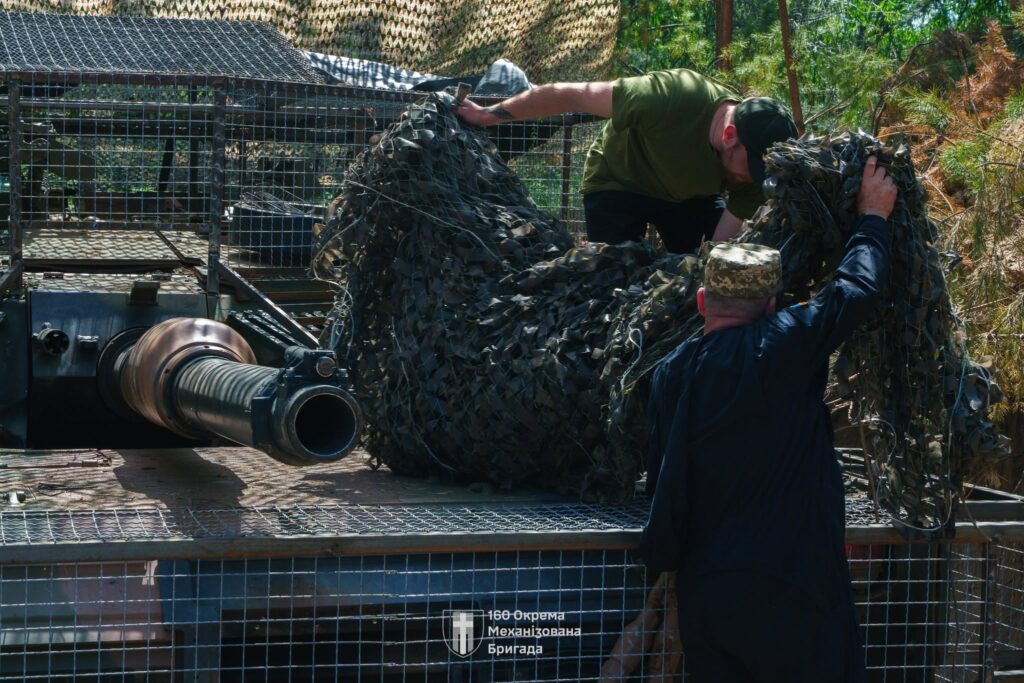
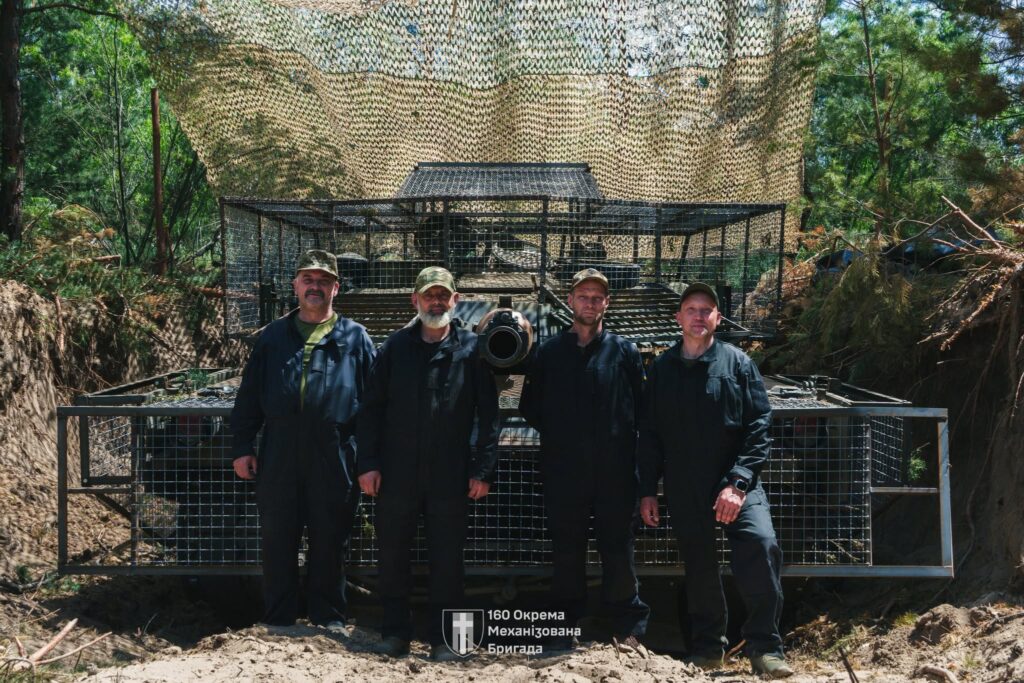
Ukrainian Abrams tank fitted with modular cage-style protection designed to counter FPV drone strikes on the front line, as crews adapt Western armor to modern battlefield threats. Photo: Ukraine’s 160th Separate Mechanized Brigade

Adaptation of Western armor under drone-dominated conditions

FPV drones have become one of the most widespread threats to armored vehicles on the front line, forcing Ukrainian crews to repeatedly modify Western-supplied systems in the field.

Defense Blog reports that the design seen on “Lucifer” reflects a more structured approach to these adaptations, moving beyond improvised protection toward modular systems that can be replicated across units. 

Separate protective sections for the turret and hull are intended to preserve maneuverability while expanding coverage against drone attacks from multiple angles.

The outlet adds that Australian-supplied Abrams tanks are now integrated into Ukraine’s operational fleet in frontline sectors, where crews continue to adjust battlefield equipment based on real-time combat experience.

Ukrainian Abrams tank fitted with modular cage-style protection designed to counter FPV drone strikes on the front line, as crews adapt Western armor to modern battlefield threats. Photo: Ukraine’s 160th Separate Mechanized Brigade

160th Brigade highlights Abrams combat role

The unit said few systems match a tank for firepower and protection, describing the Abrams as a vehicle that “clears the way where the enemy tries to hold its positions.” 

It added that crews are prepared to carry out high-risk missions under fire. The brigade also said that naming a tank “Lucifer” reflects its combat role and warned that it gives opposing forces “every reason to worry.”

Ukrainian Abrams tank fitted with modular cage-style protection designed to counter FPV drone strikes on the front line, as crews adapt Western armor to modern battlefield threats. Photo: Ukraine’s 160th Separate Mechanized Brigade
  •  

Retired British Army Colonel warns that civil war between Britons and immigrants is now inevitable

There is very likely to be civil war in Britain, Col. (Ret.) Richard Kemp said earlier this year. “I’m not talking about the American Civil War,” he said.  “I’m talking about something […]

The post Retired British Army Colonel warns that civil war between Britons and immigrants is now inevitable first appeared on The Expose.

  •  

No air show, no confidence: Russia quietly cancels MAKS for fourth year as Ukraine intensifies strikes on Moscow region

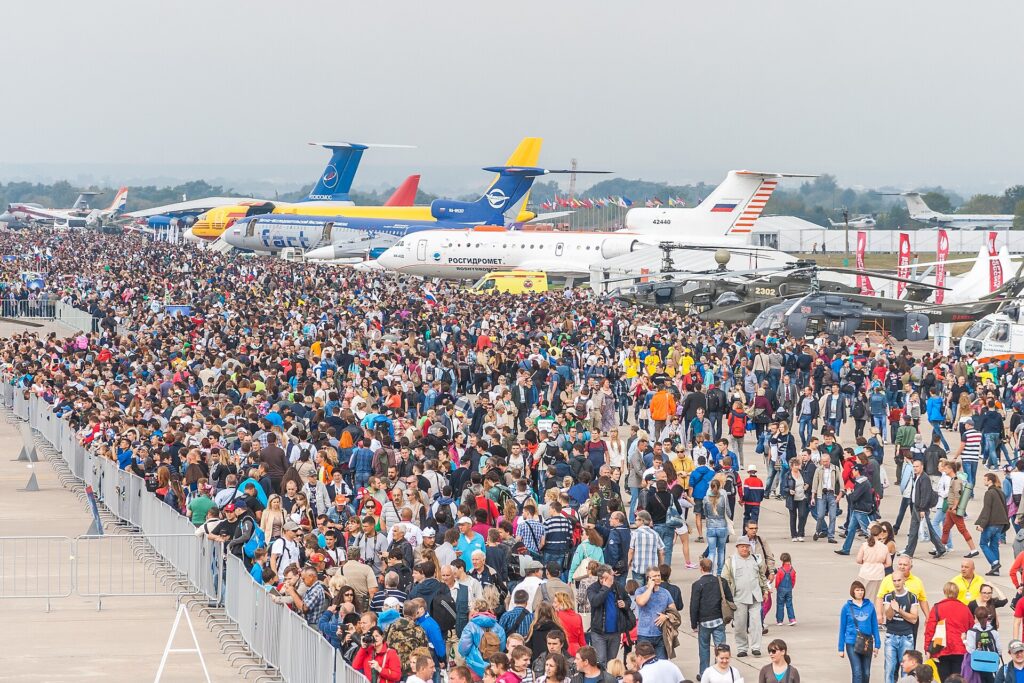
Russia's MAKS airshow at Zhukovsky airfield near Moscow in 2015. Photo via Wikimedia Commons

Russia has removed the International Aviation and Space Salon (MAKS) from its 2026 exhibition calendar, effectively cancelling the event for a fourth consecutive year and pushing its return to 2027, according to a government order cited by The Moscow Times.

The exhibition was once a flagship showcase for Russia’s aviation and defense industry, drawing international delegations and major arms manufacturers. Its continued suspension highlights how the war has increasingly affected even symbolic elements of Russia’s defense sector.

The decision also affects the Hydroaviasalon air show, which has been shifted to the same year. No official reason was given for the move.

MAKS repeatedly postponed since 2021 amid wartime disruptions

MAKS, traditionally held at Zhukovsky airfield near Moscow, was last staged in person in 2021, prior to the full-scale invasion of Ukraine. Since then, it has been repeatedly downgraded or postponed, with online-only formats replacing physical displays in 2024–2025.

The cancellation comes as Russia continues to scale back or relocate major public and symbolic events under what officials describe as a “security situation” linked to the war, The Moscow Times reports.

Ukrainian deep-strike campaign increasingly reaches Moscow region

In recent months, Ukrainian long-range drone operations have increasingly reached Moscow and the surrounding oblast, targeting infrastructure tied to military production and logistics. 

Strikes reported in May hit industrial sites in and around the capital, including facilities linked to electronics and fuel distribution networks, while Russian authorities have acknowledged repeated drone incursions over the wider Moscow area.

Ukraine launched its largest drone attack on Moscow yet, targeting more than a dozen facilities across the city and Moscow Oblast. 🧵

📷 Exilenova+, Astra pic.twitter.com/sSHvk0khoo

— Euromaidan Press (@EuromaidanPress) May 17, 2026

Expanding reach of Ukraine’s long-range strike strategy

Analysts say the pattern reflects a broader shift in Ukraine’s deep-strike campaign, which has expanded from border regions and occupied territories to more frequent attempts to penetrate central Russian air defense layers. The goal is not only economic pressure, but also disruption of systems tied to command, production, and energy supply.

Ukrainian officials have not commented on the MAKS decision, but Kyiv has repeatedly framed long-range strikes as a response to Russian attacks on Ukrainian cities and infrastructure.

The suspension of MAKS also follows a wider trend of reduced large-scale public events in Russia since the start of the full-scale invasion of Ukraine in 2022, including scaled-back national celebrations and security-restricted gatherings in Moscow.

  •  

Passwords, drone feeds, secret orders: a Russian unit shared its own operations in public Telegram chat

russia pulling strategic reserves prop up failing offensive hur says — 20000 troops less than one month its own losses · post russian soldiers fighting ukraine sputnik 29015058_0_1 60_3072_1888_1920x0_80_0_0_39d39d77ce429d32e9ff0408ae7775aejpg news

Members of Russia’s 143rd Guards Motor Rifle Regiment reportedly spent nearly a year publishing links to command videoconferences, internal military documents, and sensitive operational information in a publicly accessible Telegram group, according to an investigation by Russian OSINT outlet ASTRA.

The group, named "Blyadskaya Organizatsiya" (Fucking Organization), allegedly contained daily links to Yandex Telemost video conferences attended by regimental headquarters staff, political officers, and command personnel. The open nature of the chat meant that anyone who joined could view and potentially access these scheduled command sessions.

According to the report, the chat also included lists of servicemen, ammunition requests, surveillance-system records, and spreadsheets containing login credentials, passwords, and two-factor authentication keys used to access live drone feeds.

Operational orders and deception plans reportedly exposed

ASTRA reported that the leaked materials included internal orders from Russia’s 5th Army, including directives related to combat operations, reconnaissance, and battlefield deception.

One document reportedly instructed units on the Vremivka front in southern Ukraine to construct fake military positions and simulate activity around them to mislead Ukrainian intelligence. 

The measures allegedly included staging vehicle movements, creating smoke from field kitchens, and generating images designed to appear as if they had been secretly taken by pro-Ukrainian local residents.

The report also claims the group contained plans for “radio games” – scripted false radio communications intended to create a misleading picture of Russian troop movements for Ukrainian signals intelligence.

Military codewords also exposed

ASTRA reported that the chat contained internal reference materials used by Russian forces during operational communications in occupied parts of southern and eastern Ukraine.

Among them were codewords assigned to rivers that commanders had reportedly been ordered to distribute for use in audio and video communications. 

Their appearance in a publicly accessible Telegram group suggests that information intended to support operational security was itself left exposed.

Documents reveal concerns over battlefield losses

Among the materials cited by ASTRA was an August 2025 order from the headquarters of Russia’s 5th Army stating that assault units were suffering losses because of inadequate supply and ineffective use of robotic systems.

The document reportedly instructed units to equip automated ground vehicles with Starlink terminals and regularly report their availability.

ASTRA also said it found documents related to psychological operations against Ukrainian forces, including plans to distribute propaganda leaflets by drone.

Security concerns surfaced before group went silent

According to ASTRA, the Telegram group stopped updating on 4 May after one of its administrators noticed unfamiliar users joining the chat.

“Then come strange stories about leaked data and hacked accounts. Security above all else,” an administrator reportedly wrote shortly before activity ceased.

  •  

Germany’s Diehl in talks to produce Ukraine’s Flamingo cruise missile on German soil

germany's diehl talks produce ukraine's flamingo cruise missile german soil · post fire point's missiles production facility ракета фламінго компанії point джерело єфрем лукацький maker defence negotiating manufacture germany financial

Germany's missile maker Diehl Defence is negotiating to manufacture Ukraine's Flamingo cruise missile in Germany, the Financial Times reported. Talks with the Ukrainian developer Fire Point are planned for the coming weeks, as European states hunt for weapons able to reach deep into Russia.

Four years of full-scale war have turned Ukraine's defense industry from an aid recipient into a source of battle-tested designs, with Kyiv's manufacturers now fielding interceptor drones and advancing a domestic ballistic missile program that European militaries increasingly want to tap. German Flamingo production would hand Europe a ground-launched deep-strike weapon independent of Washington's political swings, while giving Fire Point the orders and financing to scale output.

"This could really happen"

Diehl chief executive Helmut Rauch briefed journalists during the ILA Berlin Air Show.

"We are in discussions about how we could work together," he said. "I think this could really happen. In the next few weeks, we have several meetings regarding this and then we will see." 

For a new product, he added, it "makes a lot of sense to have it also in Germany or other countries," and Diehl is "optimistic and positive" about cooperation. The Ukrainian outlet Militarnyi noted that joint output of the FP-5 Flamingo in Europe could become the largest example of NATO countries adopting Ukrainian defense know-how.

IRIS
Explore further

Germany delivers IRIS-T to Ukraine — high-tech system that engages cruise missiles, as Russia continues to strike residential buildings

German Defense Minister Boris Pistorius, visiting Kyiv last month, said the "technological leaps here in Ukraine are remarkable." Joint ventures are being explored for long-range drones, air defenses, and electronic warfare, he said.

The initiative comes as Berlin scrambles to replace US Tomahawk missiles that were due in Germany this year alongside an American battalion. US President Donald Trump scrapped that Biden-era decision amid friction with Chancellor Friedrich Merz around the war in Iran. 

Diehl builds the Iris-T air-defense system, a mainstay of Ukraine's protection against Russian missile attacks. The firm inked a technology deal with Fire Point in April without disclosing details.

Render of the Pulse P19 multi-purpose optionally piloted aircraft. Source: Quantum Systems
Explore further

German company that already supplies Ukraine with drones has unveiled Shahed-hunter aircraft with four weapons categories on single airframe

Twice the Tomahawk's range, 200 missiles a month

The ground-launched Flamingo claims over 3,000 km of reach — roughly double the Tomahawk's. The missile has so far played a limited part in Ukraine's long-range campaign, and some reports have questioned its effectiveness. At least two Flamingos, though, struck a military plant in the Russian city of Cheboksary on 10 June, about 900 km from the Ukrainian border — the longest successful known Flamingo strike so far.

Fire Point co-founder and chief designer Denys Shtilierman told the Financial Times in May that the company turns out about 200 Flamingos a month with capacity to spare. 

"We just need orders and money," he said, admitting an engine bottleneck he expected to resolve soon.

So far, however, publicly documented Flamingo attacks remain limited to a handful of strikes, each involving only a small number of missiles.
  •  

Andy Burnham and the truth about Britain’s Muslim rape gang investigations

Raja Miah is sharing the evidence of Andy Burnham’s role in the Pakistani Rape gang cover-up on Twitter (now X) in bite sized chinks. The following are the first three parts in […]

The post Andy Burnham and the truth about Britain’s Muslim rape gang investigations first appeared on The Expose.

  •  

Ukraine confirms strikes on two Tatarstan refineries and rocket-fuel rubber plant in Tolyatti

ukraine confirms strikes two tatarstan refineries rocket-fuel rubber plant tolyatti · post black smoke rises over burning oil refining facility after ukrainian strike nizhnekamsk russia 12 2026 0b9bde49-e761-4e4b-9abe-9bd2dd867a7d ukraine's defense

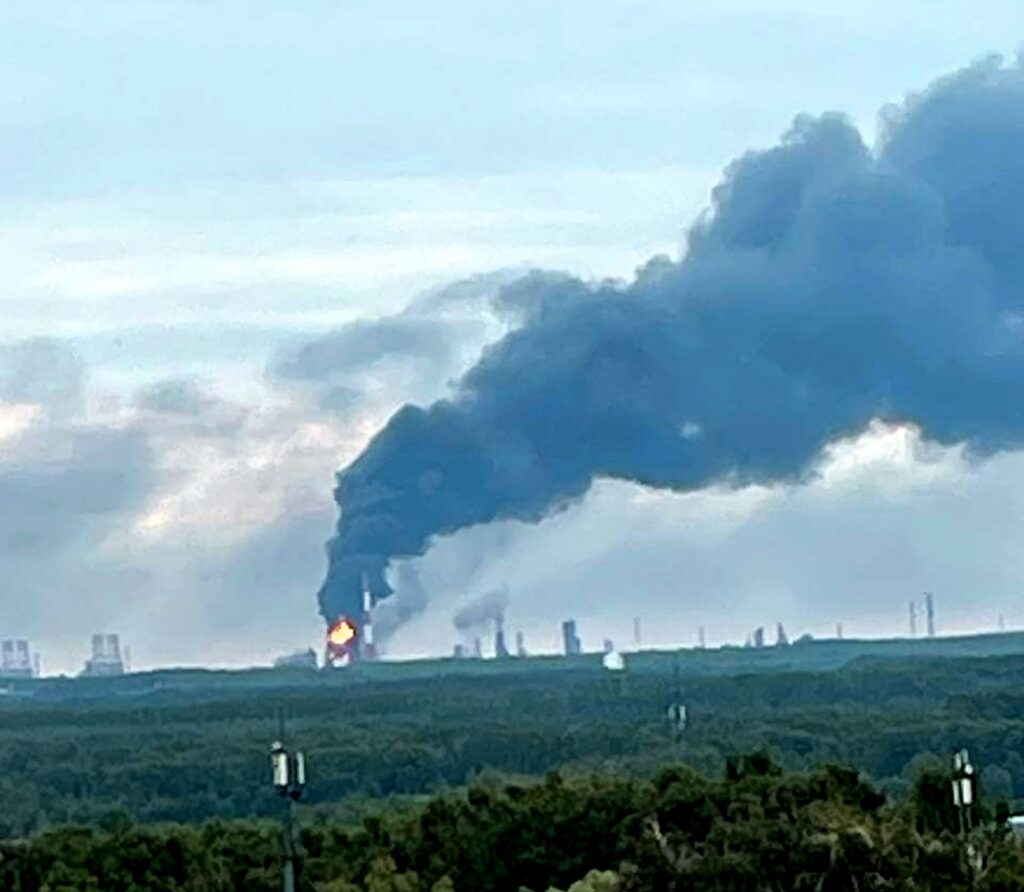
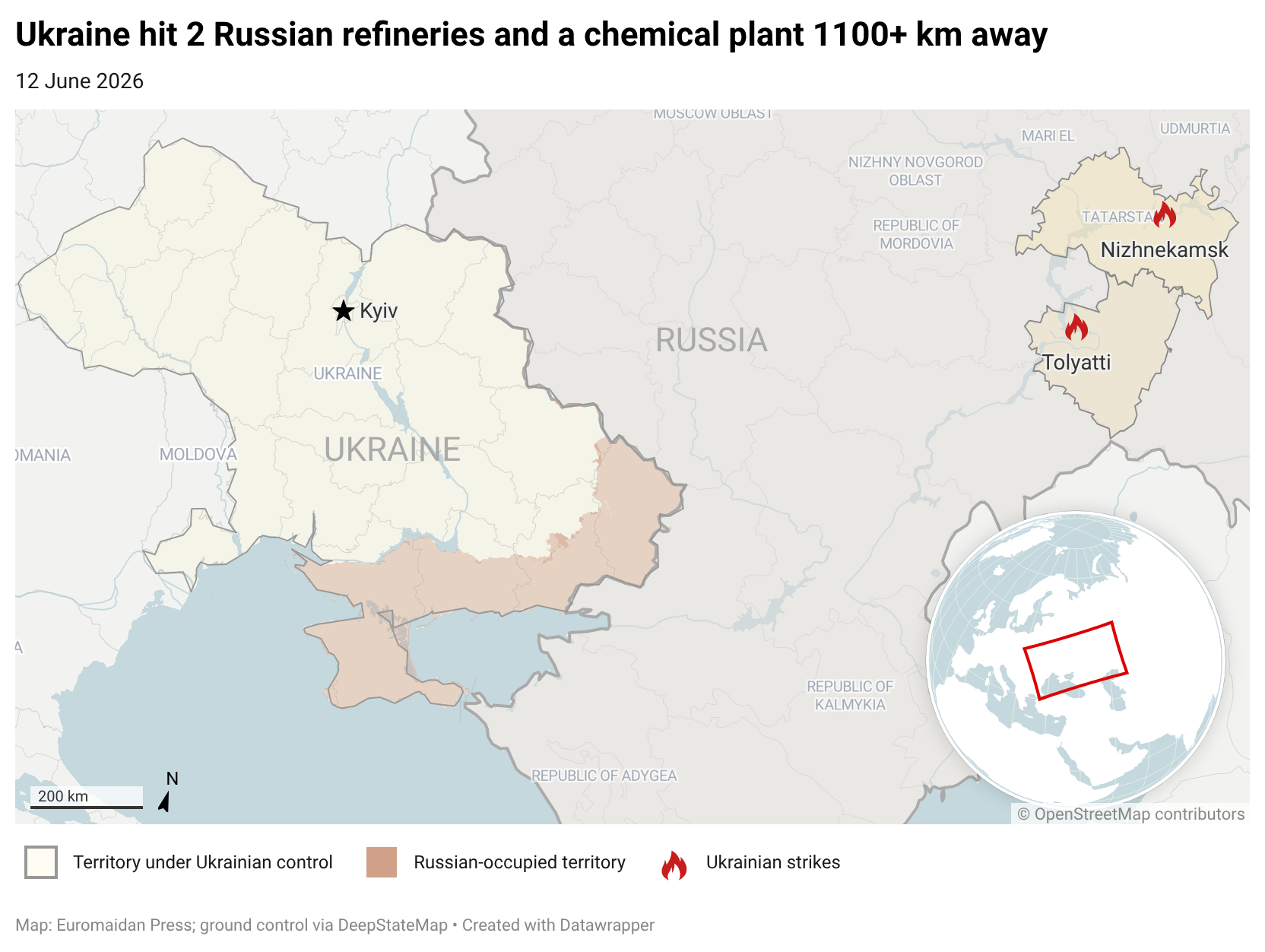
Ukraine's Defense Forces set major fuel and petrochemical plants deep inside Russia on fire and hit military targets along the front overnight on 12 June, according to Ukraine's General Staff. Fires broke out at refineries in Tatarstan and a rubber plant in Samara Oblast, while monitoring channels reported strikes in occupied Crimea. The raid forced one Russian city to cancel its Russia Day celebrations.

Ukraine's deep-strike campaign has already pushed Russia's gasoline crisis into 25 regions and six occupied Ukrainian areas, with earlier reports claiming roughly 40% of Russian refining capacity knocked offline since January. With Russian oil facilities now burning on back-to-back nights, each confirmed shutdown tightens the fuel squeeze on the army Moscow needs to keep its war going — and shows its air defense cannot cover the depth of its own territory.

Two refineries burn in Nizhnekamsk

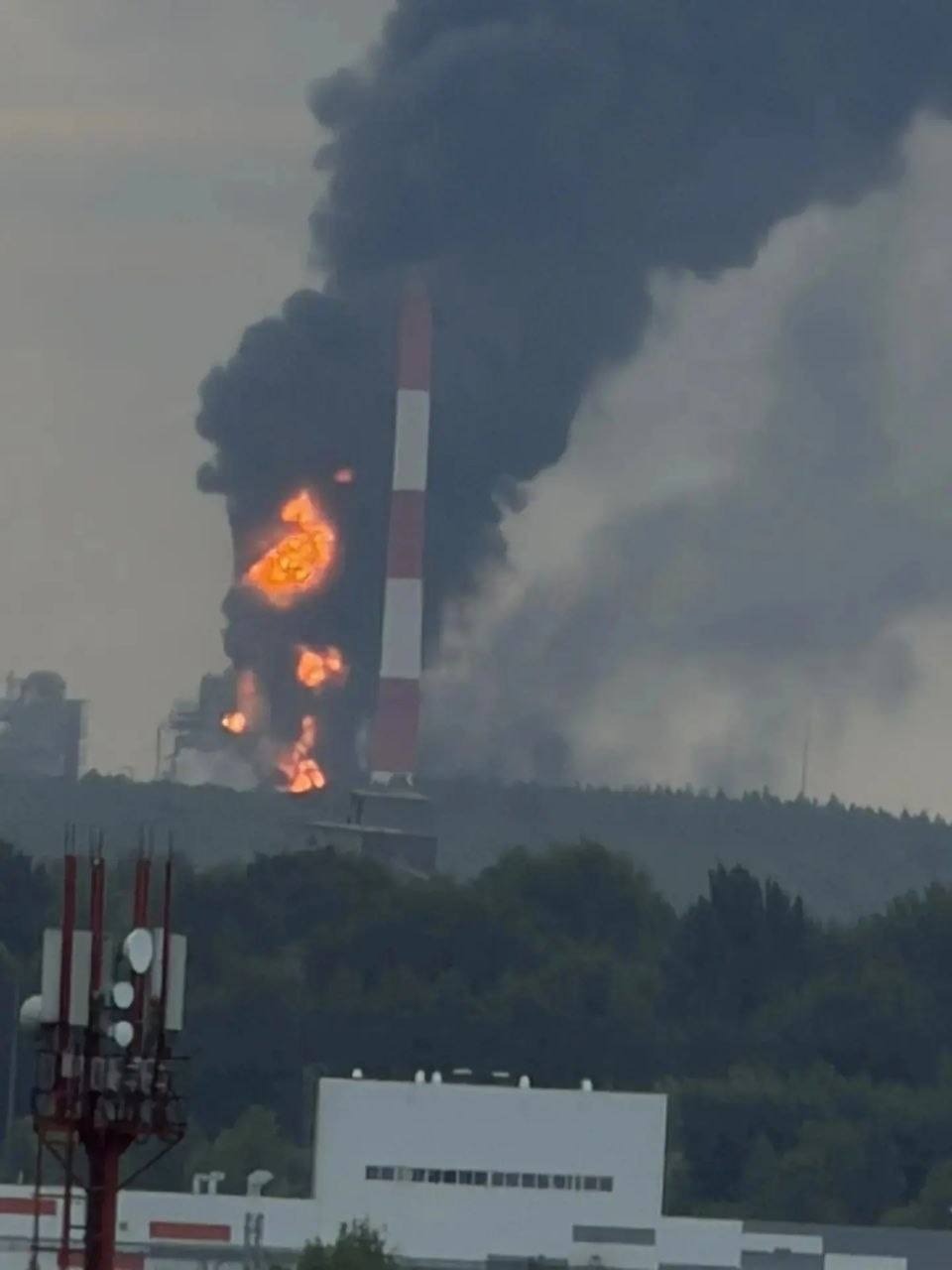
Units of Ukraine's Defense Forces struck the TANECO and TAIF-NK oil refineries in Nizhnekamsk, Republic of Tatarstan, Russia. The General Staff confirmed hits and fires at both plants. TANECO ranks among Russia's largest refineries, with a design capacity of over 16 million tons of oil per year. It produces diesel, aviation fuel, and other petroleum products. The plant lies more than 1,100 km from Ukraine's border.

Drones set fire to Nizhnekamskneftekhim, one of Russia's largest petrochemical plants, in Tatarstan in the early hours of 12 June.

The strike reportedly ignited the AVT-8 unit, where crude oil gets its primary processing and is split into gasoline, diesel, and other fractions.… pic.twitter.com/BQFXXp4NyJ

— Euromaidan Press (@EuromaidanPress) June 12, 2026

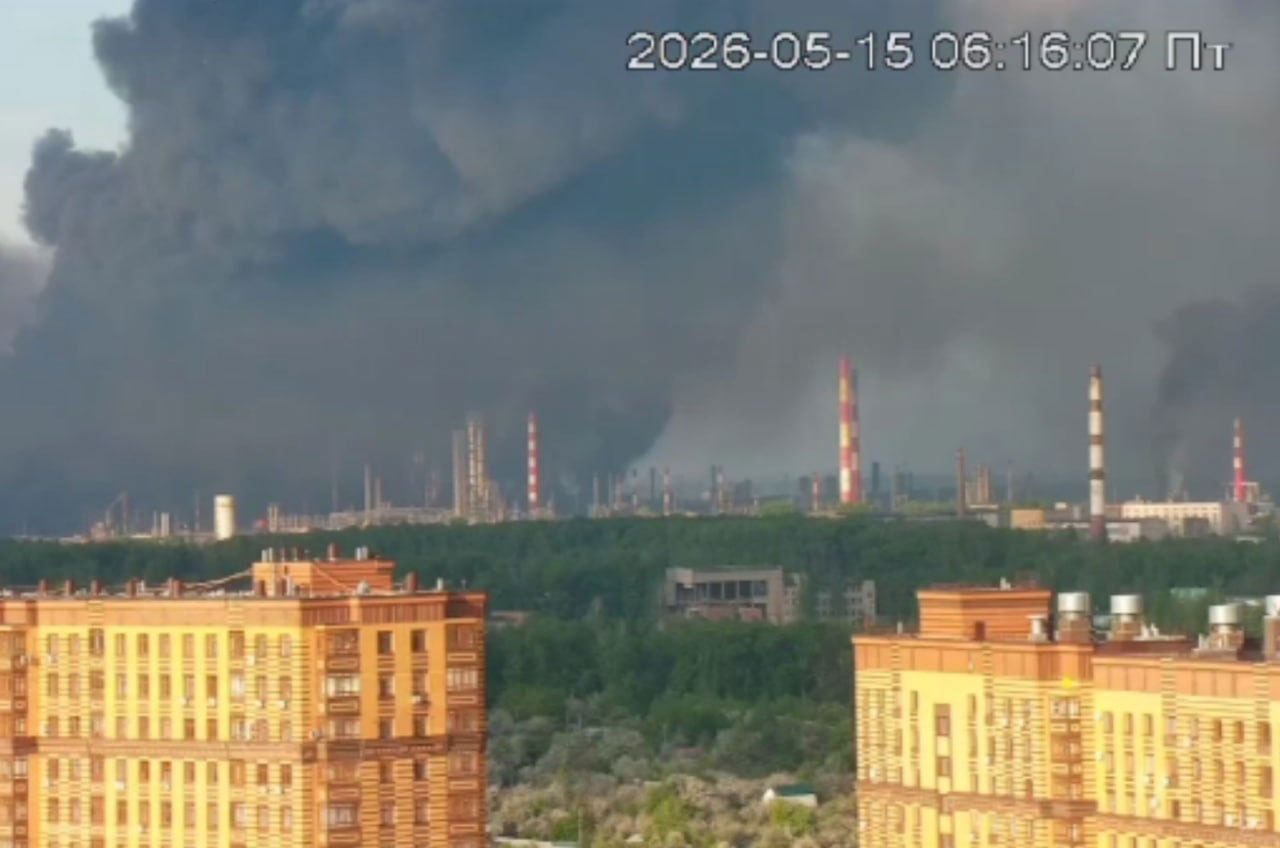
Russian news Telegram channel Astra found at least three separate fires at TANECO in its OSINT analysis of eyewitness footage. Astra's source said the ELOU AVT-9 primary oil processing unit and the ELOU AVT-8 column were burning. The channel called TANECO one of Russia's most efficient refineries, with a refining depth of 99.6%. Monitoring Telegram channel Supernova+ published footage of two large fires with thick black smoke at the plant. Preliminary data pointed to damage at two primary processing units and a tank farm.

TAIF-NK, the second refinery hit, processes heavy high-sulfur crude and gas condensate at a declared refining depth above 95%, the General Staff noted. Its output runs from mass-market fuel to feedstock for petrochemicals and military needs. 

ukraine confirms strikes two tatarstan refineries rocket-fuel rubber plant tolyatti · post fire engulfs industrial unit next chimney after ukrainian strike nizhnekamsk russia 12 2026 2bd5189f-62e7-4645-ae48-dc42a84a9054 ukraine's defense forces set
Fire engulfs an industrial unit next to a chimney after the Ukrainian strike on Nizhnekamsk, Tatarstan, Russia, 12 June 2026. Photo: Exilenova+

Russia Day canceled as a petrochemical giant burns

Tatarstan declared a drone danger regime at 3 a.m., and the airports of Kazan and Nizhnekamsk restricted flights. Residents of Nizhnekamsk then reported powerful explosions across the city. Nizhnekamsk Mayor Radmir Belyaev stated the city canceled all festivities for Russia Day, the state holiday marked on 12 June.

Monitoring Telegram channels Exilenova+ and Supernova+ tracked the night's fires. Monitoring channels also reported a hit on Nizhnekamskneftekhim (NKNH), one of Europe's largest petrochemical complexes, located in the same city. The SIBUR-owned plant processes feedstock from TANECO and TAIF-NK into synthetic rubbers, plastics, and ethylene, Astra said.

Rubber for Russian missile fuel burns in Tolyatti

Ukrainian forces also hit the Tolyattikauchuk plant in Tolyatti, Samara Oblast, Russia. The General Staff confirmed the strike and a fire at the site. The plant makes synthetic rubbers used, among other things, in producing solid rocket fuel for tactical and ballistic missiles, plus monomers, fractions, and high-octane gasoline additives.

Multiple fires are burning across the industrial zone of Russia's Tolyattikauchuk chemical plant after a massed Ukrainian Defense Forces drone attack on Tolyatti.

The petrochemical plant in Samara Oblast produces synthetic rubber and tire components. Explosions rattled windows… pic.twitter.com/2Po2sqkq7v

— Euromaidan Press (@EuromaidanPress) June 12, 2026

Astra reported that Tolyattikauchuk, part of the Tatneft group, is listed in a closed registry of defense enterprises kept by Russia's Industry and Trade Ministry. Its rubbers go into tires for military vehicles and components for the aviation industry, the channel said. 

moscow's fuel supplier under fire ukrainian drones strike rosneft's ryazan refinery · post black smoke rises over oil hours after drone 15 2026 ryazan-supernova+-5204027262443918426 ukraine news reports
Explore further

Russia’s oil production falls for sixth straight month as Ukrainian drone strikes hit storage and transport

Tolyatti Mayor Ilya Sukhikh stated that one industrial facility took damage from what he called a drone fall during a massive Ukrainian drone attack. Samara Oblast Governor Vyacheslav Fedorishchev said nobody was hurt in the attack on the region.

Russia's Defense Ministry claimed its air defenses "intercepted and destroyed" 231 Ukrainian drones overnight on 12 June. The ministry claimed downings over Tatarstan and Samara Oblast, a dozen other regions from Belgorod to Astrakhan, the Moscow region, and occupied Crimea.
  •  

Poland reverses 17-month bus halt at Shehyni-Medyka after Ukrainian ministerial push

Polish demonstrators under a black canopy with red-and-white Polish flags lining a roadside fence at the Medyka border crossing, with a cyclist passing on the bicycle lane.

Poland will keep processing buses leaving Ukraine through the Shehyni-Medyka checkpoint this summer despite a planned 17-month closure for repairs. Vice Prime Minister Oleksiy Kuleba announced the reversal on Telegram on 11 June.

Lviv Customs had said the day before that traffic from Ukraine to Poland through the crossing would be suspended from 15 June until November 2027. Shehyni-Medyka is the busiest road link between the two countries.

The about-face followed urgent talks between Ukraine's Ministry for Development of Communities and Territories and the Polish Ministry of the Interior and Administration. Warsaw's Polish Embassy in Kyiv has not issued a public comment.

"Bus traffic through the 'Shehyni–Medyka' checkpoint will not be halted during the summer season, even while the repair work is being carried out." — Oleksiy Kuleba, Vice Prime Minister of Ukraine, 11 June 2026

A border managed under cooling political weather

The bus reversal was, narrowly, a technical fix. However, it landed in a year when Polish-Ukrainian relations had visibly cooled.

President Karol Nawrocki, elected in June 2025 on a "Poland First" platform, vetoed extensions of Ukrainian refugee benefits in August. He signed legislation in February ending the special-status regime that had governed Ukrainian residency since 2022.

Most recently, Nawrocki called for Volodymyr Zelenskyy to be stripped of Poland's Order of the White Eagle. The trigger was a Ukrainian Special Operations unit named for the Ukrainian Insurgent Army.

Public sentiment has shifted alongside Nawrocki. Just 48 percent of Poles still back accepting Ukrainian refugees, against 46 percent opposed, according to a January 2026 CBOS survey. That is the lowest figure recorded since Russia's full-scale invasion.

Furthermore, hate crimes against Ukrainians in Poland rose 49 percent between 2023 and 2025, The New Republic reported in April. Critically, Russia's Avanhard military camp near Volgograd remains active. More than 900 Ukrainian children passed through there for two-week shifts in 2026 alone.

Bus diplomacy meets bus politics

Polish haulers and farmers blockaded crossings repeatedly from late 2023 through 2024. They cited competition from Ukrainian carriers and grain imports. Two Ukrainian drivers died waiting in queues during the November 2023 blockade. In July 2025, Kyiv tightened Shehyni-Medyka registrations to scheduled bus routes only, citing summer overload.

A parallel dispute shows how bus traffic itself can become politicized. Earlier this week, Polish sister city Kielce refused to transfer 20-year-old municipal buses to Vinnytsia. Kielce cited a Vinnytsia street named after Stepan Bandera. Vinnytsia faces regular Russian strikes.

By contrast, the Shehyni-Medyka rollback suggests institutional cooperation can still hold even when sentiment frays. Polish construction firm Unibep signed a turnkey contract in October 2025 to modernize the same crossing. EU Entry/Exit System–compatible gates and 40 percent higher passenger throughput are targeted by Q2 2027.

For now, summer passenger traffic continues. Whether the Shehyni-Medyka corridor stays open through the autumn repair phase remains the next test of bilateral patience.

  •  

Nawrocki vetoes one-year language reprieve as 441 mostly Ukrainian doctors lose right to practice

Karol Nawrocki gives a thumbs-up to a crowd waving Polish flags on his presidential election night.

Polish president Karol Nawrocki has vetoed a one-year extension that would have let Ukrainian doctors and other non-EU medics keep working without a B1 Polish certificate. Rzeczpospolita reported the move on 11 June.

The conditional licenses Poland fast-tracked after Russia's full-scale invasion now run on a clock the head of state will not reset.

From 1 May, regional medical chambers began revoking the right to practice from anyone without a certificate.

By 11 June, 441 medics had lost it. Polish chamber spokesman Jakub Kosikowski said at the start of May that 2,321 doctors and 1,014 dentists still lacked the document.

What the veto stops

The Sejm passed the one-year extension on 15 May. The Senate followed on 22 May. Civic Coalition deputy Krzysztof Bojarski had introduced the amendment in committee days before the original 1 May deadline. Poland's Health Ministry backed the push to head off staffing collapse in hospitals already short on physicians.

Nawrocki framed his decision around patient safety.

"Every Pole has the right to expect that they will be able to effectively and without obstacles communicate with their doctor."

The Lower Silesian Medical Chamber in Wrocław has revoked 129 licenses — the most of any region. Warsaw follows with 99, Warmian-Masurian with 52, and Greater Poland with 42.

The simplified pathway through which Ukrainian doctors first gained temporary practice rights expired on 24 October 2024. After a five-year conditional permit runs out, Ukrainian doctors must nostrify their diplomas or sit the Polish Medical Verification Examination.

How the medical lobby got there first

Łukasz Jankowski, head of the Supreme Medical Council (NRL), met Nawrocki at the Presidential Palace on 20 May, between the Sejm and Senate votes.

"Thanks to this veto, patients will be treated by doctors who know Polish," Jankowski told Rzeczpospolita.

The NRL had argued during consultations that the Health Ministry was ignoring the medical community. In Jankowski's telling, the veto answered a delivered request, not a political shock.

A wider rollback

This veto sits inside a year-long pattern. Nawrocki had already vetoed broader refugee assistance in August 2025. He then forced conditional benefits tied to work or schooling. In February, he signed the law folding what remained of special Ukrainian protections into the general foreigners' regime.

Public mood has shifted around him. Polish support for hosting Ukrainian refugees crashed from 94% to 57% over the course of the war. Yet Ukrainian residents contributed roughly $5 billion to Poland's budget in 2024 through taxes and insurance.

The historical row over UPA's 1943–1944 massacres of Poles in Volhynia has pulled the relationship further down. Volodymyr Zelenskyy's May decree naming a Special Operations Forces unit "Heroes of UPA" reignited it. Foreign Ministry spokesperson Heorhii Tykhyi said on 29 May that "only Moscow benefits from disputes between Ukrainians and Poles."

The veto's clearest cost, however, will not arrive in diplomatic notes. It will show up in shifts at hospitals from Wrocław to Olsztyn that, until last month, had a Ukrainian doctor on duty.

  •  

Russia can’t attack NATO right now—ISW explains what the new border bases are really for

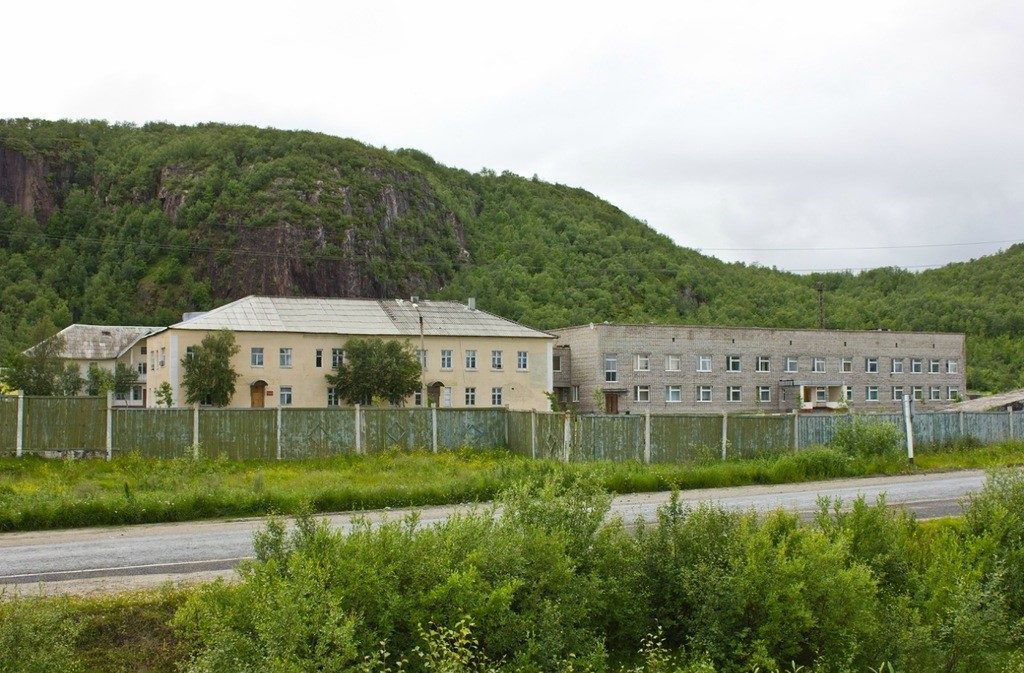
russia can't attack nato right now—isw explains what new border bases really · post facilities russia's 200th separate motor rifle brigade northern fleet's coastal troops pechenga district murmansk oblast 15-20

Russia is building new military bases and expanding existing ones along its northern border with NATO, according to ISW. The Institute for the Study of War (ISW) assesses that the construction likely supports future Russian force projection against the alliance. Near-term Russian ground operations remain unlikely, the think tank notes, since most Russian combat power stays committed in Ukraine.

Western officials have tracked Russia's military buildup near its European neighbors since well before the latest satellite findings, and Moscow's large-scale exercises near alliance territory have repeatedly rehearsed confrontation scenarios.

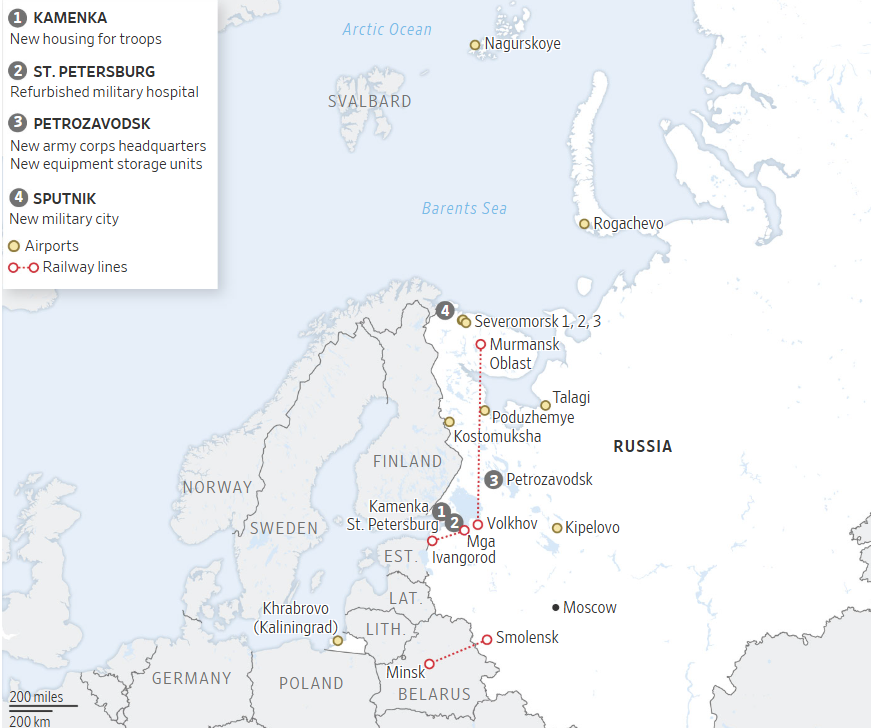
Satellite images show construction from Norway to Kaliningrad

Broadcasters in Norway, Sweden, and Denmark, together with a Baltic news portal, published satellite findings of the buildup on 10 JuneRussian forces are putting up new facilities and growing old ones near the frontiers of the Nordic and Baltic states. Intelligence officers and senior commanders in Denmark told broadcaster DR the work amounts to preparation for conflict. They see nothing indicating Moscow has actually decided on war, not least because the bulk of its army remains tied down in Ukraine.

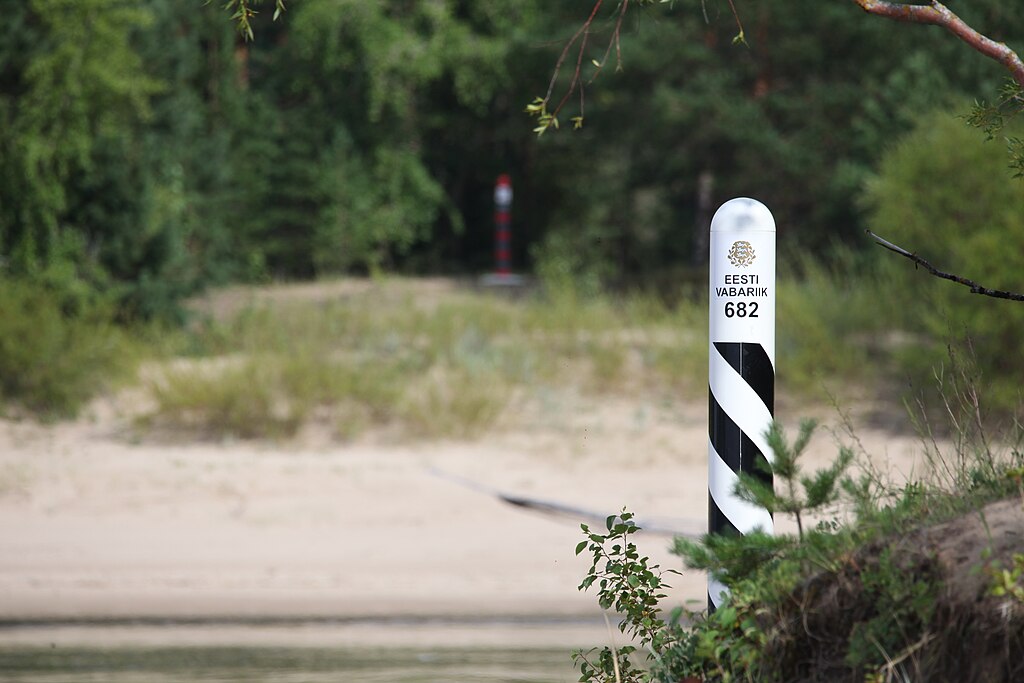
Estonian and Russian border posts at Narva-Jõesuu on the Estonia-Russia border
Explore further

“We don’t think all of this is just for demonstration”: Russia is constructing infrastructure with potential capacity up to 115,000 personnel on NATO’s doorstep

Finland braces for 80,000 Russian troops at its border

Marko Eklund, a former Finnish intelligence officer, told DR that the Russian command plans to deploy about 115,000 troops at the northern NATO border. That deployment would come after the war in Ukraine ends. Construction has begun on a new Russian base at Novaya Vilza, outside Petrozavodsk in the Republic of Karelia. The site sits roughly 190 kilometers from Finland and will hold 4,000 to 6,000 personnel. Russia began renovating an abandoned Soviet-era garrison in Petrozavodsk earlier this year. Finland's army chief, Pasi Välimäki, expects Russia to put 80,000 soldiers on the shared border, he told Swedish broadcaster SVT.

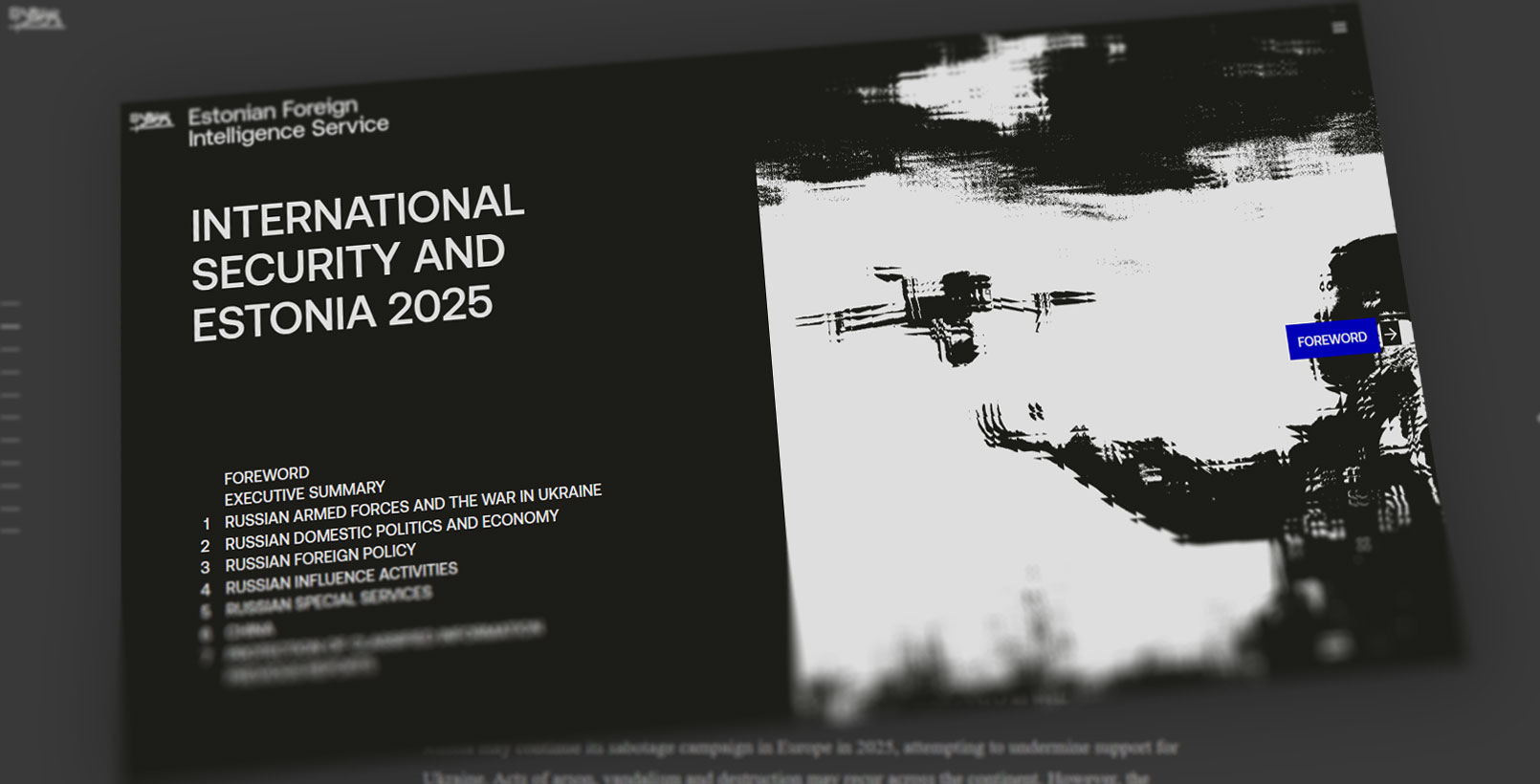
isw estonia warns russia's military buildup beyond war ukraine estonia-report russia building its capabilities only ongoing also preparation potential future conflict nato reported estonia's foreign intelligence service (efis) institute study
Explore further

ISW: Estonia warns of Russia’s military buildup beyond war in Ukraine

A corps command waits in Luga as Karelia bases rise

A source covering the Russian Northern Grouping of Forces claimed Russia's command is moving parts of the 44th Army Corps, a Leningrad Military District formation, to the Republic of Karelia. Only the command post stays behind for now. Those command-post elements currently sit in Luga, Leningrad Oblast, ready to shift to Petrozavodsk once Russia finishes the bases, the source claimed.

russian military near border with finland
Explore further

Russia builds up military presence near Finland’s border – WSJ

A Kremlin-affiliated Russian milblogger claimed on 11 June that crews are upgrading at least 19 barracks, along with support and storage buildings, at Pechenga on the Kola Peninsula in Murmansk Oblast. The site lies about 10 kilometers from the Norwegian border. The milblogger also claimed Baltiysk in Kaliningrad Oblast is getting a bigger naval infantry footprint, more armor, and additional landing craft.

ISW: bases serve post-war force projection

"Russia is establishing these bases to support potential future military actions against NATO, though such ground operations remain unlikely, as most of Russia's combat power is participating in operations in Ukraine," ISW says.

Once the shooting in Ukraine stops, the finished bases would shorten Russia's timeline for massing troops at NATO's frontier, ISW assesses. That leaves NATO needing the readiness to hold off — and, failing that, beat back — a Russian threat at its borders soon after combat in Ukraine stops, in ISW's assessment.

  •  
❌