Ed Miliband will ban the sale of underfloor heating systems deemed to be using too much power in his latest Net Zero drive as he also sets his sights on electric towel rails, gas fires and storage heaters.
Exclusive: Greater Manchester mayor ‘serious’ about taking over ‘essentials of life’ if he becomes PM, a move critics say could cost taxpayer billions
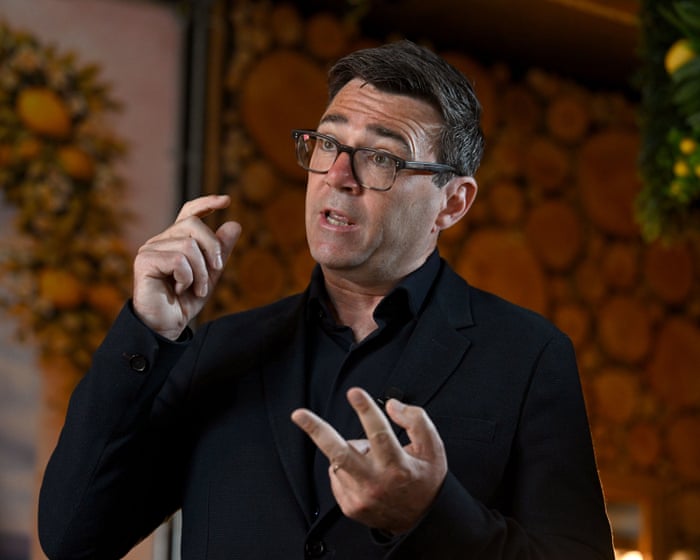
A decade-long project to bring water and energy into public control will lie at the heart of Andy Burnham’s agenda should he become prime minister, according to sources close to the Greater Manchester mayor.
Several close allies of Burnham have said he wants to take over broad swathes of UK utilities in an effort to improve performance and potentially reduce bills for consumers.
Prime minister promises to fight any leadership challenge as he faces escalating row over military spending
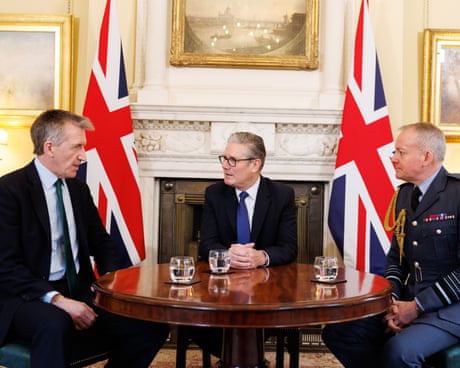
Keir Starmer has admitted that he has to “turn things around” after the resignation of the defence secretary, John Healey, in an escalating row over military spending that has prompted recriminations across Whitehall and concern from the US.
Downing Street and the Treasury traded blows with allies of Healey on Friday. No 10 expressed dismay that the Ministry of Defence (MoD) had wanted £18bn to plug funding gaps in major projects, while those close to the former defence secretary accused Starmer of failing to acknowledge the deterioration in global security.
When Keir Starmer wanted to promise Donald Trump that the UK would increase defence spending, he decided to fund it by slashing the UK’s aid budget – losing a cabinet minister, Anneliese Dodds, in the process.
This time around, with John Healey’s Ministry of Defence (MoD) demanding an additional £18.5bn over four years to fund the defence investment plan, there was no such lever to hand.
Britain is facing a surge in people taking their employers to court, with claims up 55% year on year, following Angela Rayner’s sweeping workers' rights reforms.
This blog is now closed, you can read more on this story here
As armed forces minister, Al Carns was not involved in work on the defence investment plan (Dip). In his resignation letter, he said it was flawed not just because of the amount of funding involved; he also claimed it focused too much on the wrong capability. He said (and I’ve highlighted the key phrases in bold):
The character of conflict is changing faster than our procurement can keep up with. We are still purchasing capability suitable for the last war while our adversaries arm for the next one. Platforms that cost billions can be defeated by systems that cost thousands. Any serious defence investment plan has to start from that reality.
While I had no hand in the defence investment plan, that distance does allow me to say plainly that it is not built for the threat we face.
I want to see a higher percentage for uncrewed systems, AI, data – data is the new gunpowder – and we’ve got to move that forward if we are going to win the next war.
Too many working people in this country feel insecure even when they are doing everything right. They work hard, contribute, pay their taxes and still feel one setback away from trouble. Public confidence in our institutions is weakening and politics increasingly looks performative while everyday life gets harder.
The machinery of government itself has been left to decay. Decisions that should take days, take months. Departments fight each other instead of the problem. Officials and ministers who know the truth are not always rewarded for telling it. We are trying to govern a more dangerous world with processes designed for a calmer one, and the gap is now showing in the things that matter most.
Al Carns has delivered a withering assessment of the government’s defence plans after quitting as a defence minister, accusing ministers of not spending enough money on the military and spending it on the wrong weapons.
Carns quit the government on Thursday night, hours after the resignation of his boss, John Healey, after a protracted row over the defence investment plan (Dip).
Green surge in local elections and recent polling of Labour members may cause government to toughen stance on Israel
Pro-Palestine activists believe there could be a “sea change” in the Labour party’s approach to the crisis in the Middle East which could result in the government taking a tougher stance on Israel.
Campaigners have pointed to the threat posed to Labour by the Green surge in the local elections, the likely departure of Keir Starmer from No 10, and new polling which shows an appetite among Labour members for a ban on all arms shipments to Israel.
John Healey’s complaint is that Starmer sat on this problem for months before making a derisory offer
John Healey’s resignation as defence secretary on Thursday was a long time brewing, though in the end the denouement was swift. It leaves an already weak Keir Starmer without a defence strategy less than a month before a Nato summit and an unresolved row about spending as Donald Trump threatens to restart the bombing of Iran.
On Monday, No 10 finally told Healey how much more money it was prepared to give the Ministry of Defence to fund major projects as part of the defence investment plan (Dip).
Hundreds of Labour activists and MPs have ‘made the pilgrimage’ to the seat, where they are pounding the streets
For a few short weeks, the centre of political gravity in Britain has shifted from the Palace of Westminster to the bar of a former Labour club in Wigan.
In London, even as Keir Starmer insists he will fight to stay in No 10, the walls seem to be crumbling around him, especially with Thursday’s resignation of the defence secretary, John Healey.
During Wednesday’s prime minister’s questions, the defence secretary was standing at the other end of the Commons, away from other cabinet members on the government frontbench. His expression gave nothing away as Keir Starmer and Kemi Badenoch blamed one another for spending too much on welfare and not enough on defence. In hindsight, he was possibly thinking “to hell with both of them”. Most defence secretaries go native sooner or later, imagining themselves to be embedded officers serving on the frontline. Tory Ben Wallace appeared to hate most of his cabinet colleagues by the time he resigned in 2023.
Less than 24 hours after PMQs, Healey had also resigned, his departure being all the more powerful for being so unexpected. This exit seemed to come out of a clear blue sky. There had been no briefings to the media in the preceding days. No threats to stand down if his demands were not met. All the arguments had taken place behind closed doors. A determination to do the right thing throughout.
Labour leadership hopeful says he does not support payments after backlash but is open to other benefits
Andy Burnham has ruled out paying compensation to the “Waspi women” who claim they lost out owing to changes to the state pension age – but said he was open to the idea of giving them other benefits.
Burnham had previously indicated he backed compensating as many as 3.6 million women born in the 1950s, some of whom claim they lost thousands of pounds because they were ill-informed about the changes.
Former defence secretary accuses PM of putting UK’s security at risk at a time of growing international threats
Keir Starmer’s premiership has been pushed to the brink of collapse after the shock resignationof John Healey as defence secretary undermined his security credentials and risked shredding his remaining political authority.
In a blistering resignation letter, Healey accused Starmer and his chancellor, Rachel Reeves, of putting the country’s security at risk, saying the long-awaited defence investment plan (Dip) fell well short of what was required.
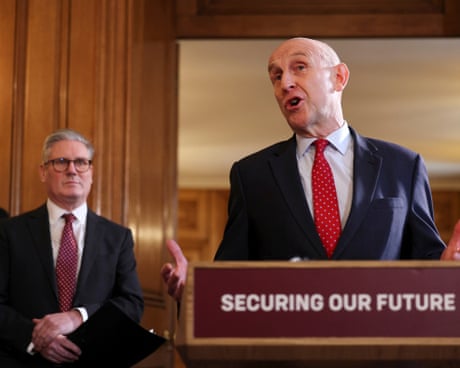
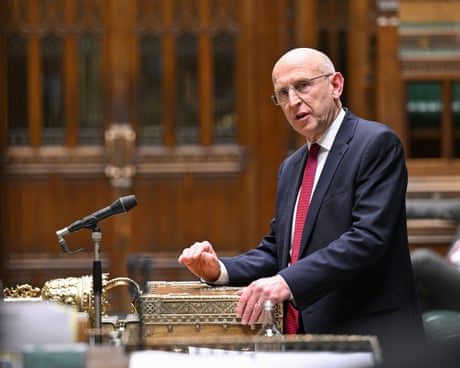
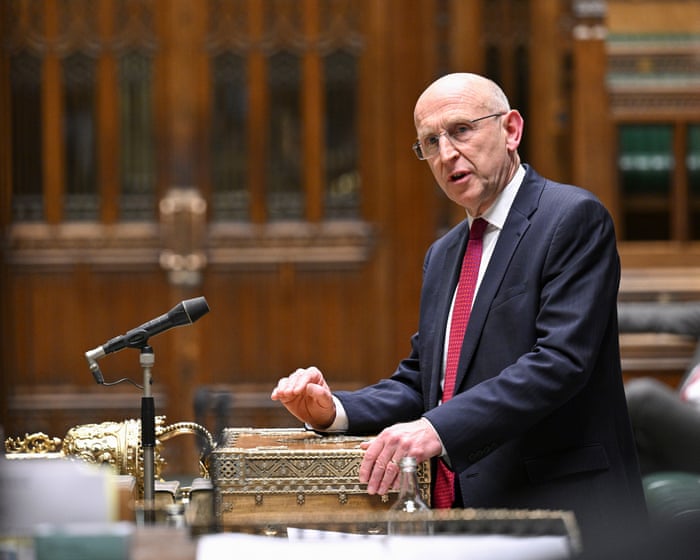
John Healey has resigned as defence secretary over Sir Keir Starmer’s defence investment plan, accusing the Prime Minister of failing to "meet the moment" over his long-delayed proposals to boost military spending.
Can anyone or anything stop Andy Burnham becoming PM now, asks Mark Littlewood in his latest Political Betting column as he contemplates breaking his usual rule and taking the 2/5 odds-on bet.
Keir Starmer’s closest aides are “war-gaming” how to win a leadership contest ahead of Andy Burnham’s much-anticipated return to Westminster if he wins the Makerfield byelection, the Guardian understands.
Downing Street sources said the prime minister had taken the last fortnight to think seriously about his future but was now “hellbent” on fighting any contest. His team is working through various scenarios, including sacking ministers who publicly support Burnham.
Justice secretary’s plans likely to increase black people’s suspicion of court system, committee suggests
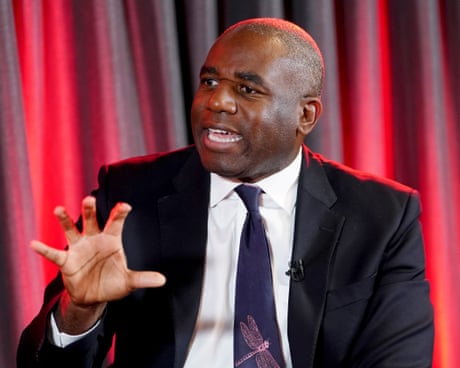
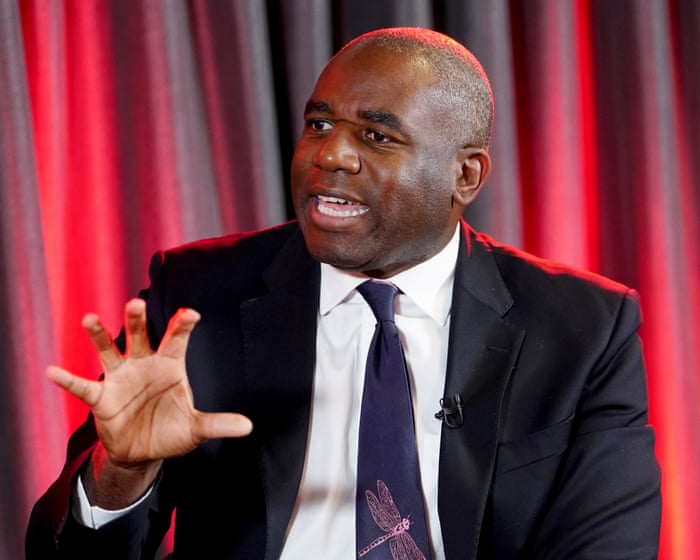
David Lammy’s planned changes to the criminal courts in England and Wales could have a “far-reaching” impact on race relations, a cross-party committee of MPs has concluded.
The deputy prime minister’s plan to remove the right to elect for a crown court trial “has the potential to increase mistrust in the criminal justice system among the black community”, the justice select committee said, because black defendants are more likely to elect for trial.
Britain's woke two-tier state has been rightly blamed for the police's appalling response to the stabbing of Henry Nowak. But less understood, says Professor Michael Rainsborough, is the Maoist origins of woke ideology.
Badenoch said, after the murder of Stephen Lawrence, it was right that people wanted to ensure this did not happen again.
It led to the Macpherson report, she said.
[It] wanted to put right what went wrong with policing in the 1990s.
However, in attempting to do so, it also enshrined a principle which I believe is wrong that a racist incident is racist if it is perceived as racist by the victim or any other person.
Equality law, properly designed, should protect us all in the same way. It should be a shield, not a sword.
It should protect people from discrimination. It should protect people from being treated differently because of their race, sex, religion, sexuality, disability or age.
Sources say much delayed Dip is close to sign-off but only after some of the Labour government’s worst infighting
Cabinet relations have been left badly damaged by the protracted row over the defence investment plan (Dip), according to Whitehall sources who say the standoff has led to some of the worst infighting since Labour took power.
Ministers are putting the final touches on the plan, which is expected to be published in the coming weeks after departments agreed to cut their capital budgets by about 1% to pay for additional military spending.

 Login
Login