A U.S. military official said the president’s seemingly dramatic announcement on Wednesday referred to a previously reported effort to shepherd commercial vessels through the Strait of Hormuz.
The Republican congresswoman from South Carolina, who made enemies on both sides of the political aisle, is just one of several flashy lawmakers to be leaving Capitol Hill.
Federal agents outside of Dodger Stadium in Los Angeles last June during the Trump administration’s immigration enforcement surge, which has stirred anxiety.
Republicans are struggling to extend a powerful surveillance authority set to lapse this weekend after President Trump alienated lawmakers with his choice of acting spy chief.
The billionaire philanthropist testified on Wednesday in a closed-door congressional hearing about the Justice Department’s investigation of Jeffrey Epstein.
Speaking at a bill signing on Wednesday, President Trump predicted that inflation would recede quickly, once the Iran conflict concludes.“ It’s going to come down like a rock.”
Enfield council in north London took legal action against restaurant chain after outrage over damage to tree
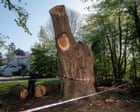
The UK restaurant chain Toby Carvery has settled a legal dispute over taking a chainsaw to an ancient oak tree without permission, by agreeing to pay to restore a lost orchard.
The unauthorised partial felling of the 500-year-old oak next to a Toby Carvery car park in Whitewebbs Park, Enfield, north London, in April last year, prompted widespread public outrage and questions in parliament.
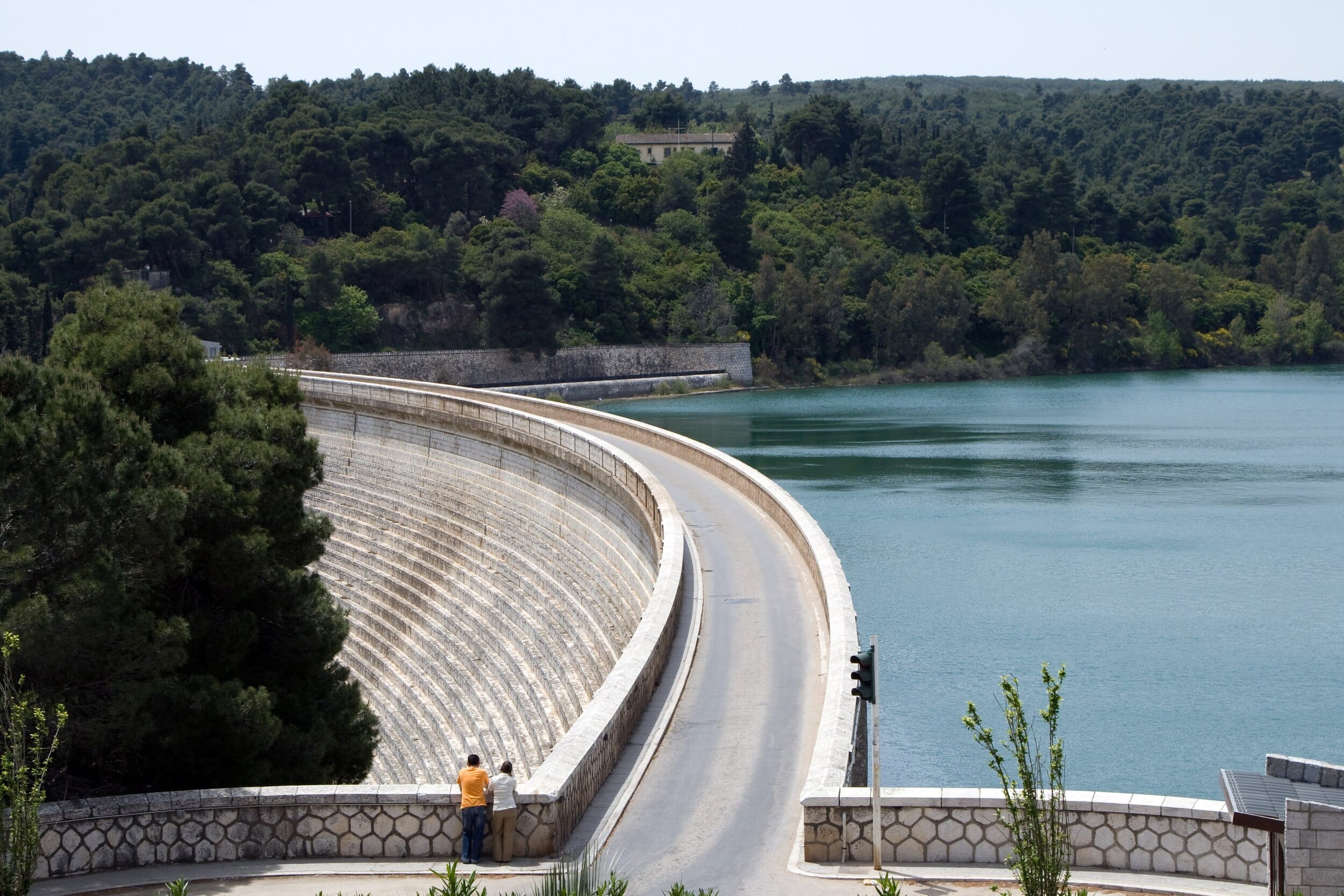
Lake Marathon Dam in Greece. The country’s aging water networks are facing growing pressure from water loss, drought, and rising investment needs. Credit: Vitaly / Wikimedia Commons / CC BY-SA 3.0
Water loss in parts of Greece’s aging water networks exceeds 50 percent, according to a new analysis by EY-Parthenon, highlighting the urgent need for infrastructure upgrades and a new approach to water management.
The report warns that climate pressures, prolonged drought, declining water reserves, and outdated infrastructure are pushing Greece’s water sector to a critical turning point.
Greece’s water networks are now increasingly viewed as core national infrastructure with direct implications for economic stability, environmental protection, and long-term public planning.
A loss of over 50% in some of Greece’s aging water networks
According to EY-Parthenon, the global strategy consulting arm of Ernst & Young (EY), water losses across Greek networks exceed 30 to 40 percent in many cases, while certain areas face losses of over 50 percent. The high losses reflect aging infrastructure, insufficient maintenance, limited monitoring of water flows and consumption data, and the need for more efficient management systems.
The analysis also notes that water reuse remains extremely limited in Greece, at around two percent. At the same time, irrigation accounts for approximately 85 percent of total water consumption. More than 70 percent of irrigation water comes from underground reserves, which highlights the need for more efficient resource use and a more pronounced shift toward circular water management.
Fragmented water sector faces growing pressure in Greece
EY-Parthenon identifies fragmentation as one of the main weaknesses of Greece’s water management sector. The market includes 129 municipal water and sewage companies, more than 450 irrigation organizations, and a broad network of local authorities. This dispersed operating model makes coordination harder, limits economies of scale, and slows modernization projects.
The challenge becomes more urgent as the sector faces increasing demands related to resilience, governance, service quality, and regulatory compliance. Numerous smaller providers remain under financial pressure, as revenue from water bills often does not fully cover operating costs or support major infrastructure investments.
Greece’s water infrastructure needs reach €10 billion
Although the sector faces serious structural problems, EY-Parthenon sees significant room for investment in Greece’s water market. The country’s medium- and long-term infrastructure needs stand at around €10 billion ($11.5 billion). Meanwhile, Greece’s two largest water companies have planned or ongoing investments that exceed €3 billion ($3.46 billion).
These investments focus on network upgrades, expansion, modernization, and efficiency improvements. According to the report, investor confidence in the sector also continues to rise, as shown by the recent market performance of listed companies operating in the water industry.
New rules could reshape Greece’s aging water networks
Changes in Greece’s regulatory framework could further transform the sector. The expanded role of the Regulatory Authority for Waste, Energy and Water (RAAEY), stricter European obligations on wastewater management, and efforts to reduce fragmentation are shifting reform from discussion to implementation.
These changes create opportunities, but they also impose new requirements on water providers. They call for greater transparency, more rigorous reporting obligations, improved accountability, and more reliable long-term planning. EY-Parthenon emphasizes that the sector’s future challenges are not only technical. They also involve financial sustainability, pricing policies, digital transformation, investment priorities, and cooperation between public and private stakeholders.
Ukraine has been sending swarms of drones to hit Russian ports, oil terminals and other facilities on the Baltic Sea — but some have veered off course en route.
Some fans and participants hoping to enter the United States for the World Cup have complained that restrictive immigration rules have presented a roadblock.
The Iraqi soccer player Aymen Hussein, pictured in a mural near Baghdad wearing his No. 18 jersey, was temporarily detained by U.S. immigration officials before being allowed to enter the country for the World Cup.

 Login
Login