Normal view

Did Ancient Greek Hero Odysseus Travel to Ireland?

9 June 2026 at 21:01
odysseus Ireland
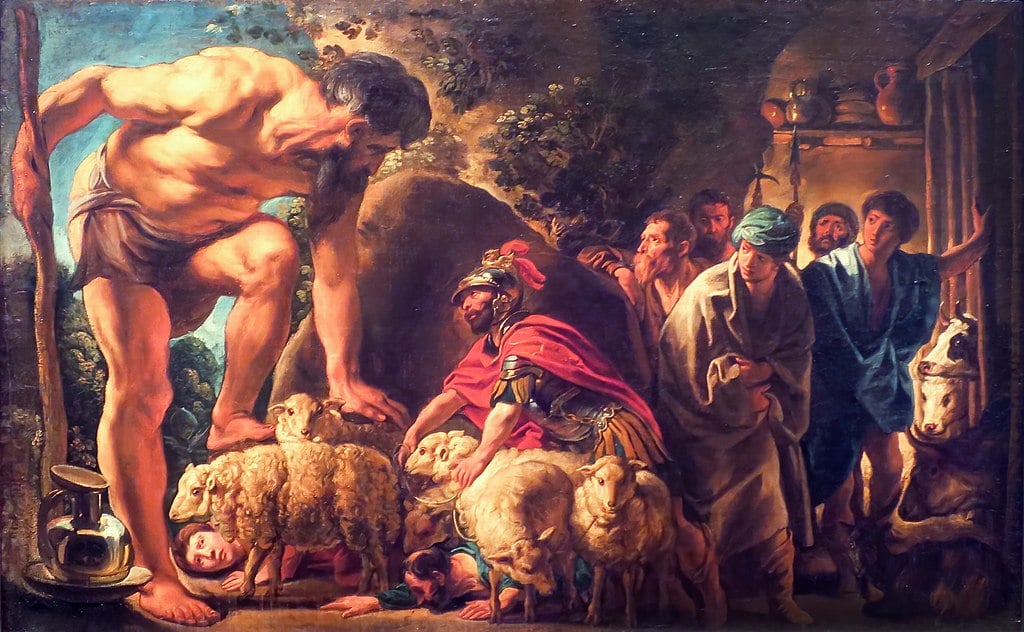
Did Odysseus Travel to Ireland? Credit: Public Domain

Homer’s Odyssey tells the tale of Odysseus returning to his home after the Trojan War. For a variety of reasons, the trip is not an easy one. It takes him a full ten years to return home.

But the journey from Troy to Ithaca, Odysseus’ home island, should not have been too difficult and certainly not a ten-year trip. For this reason, some researchers have claimed that Odysseus actually traveled outside of the Mediterranean. There is even the suggestion that he traveled to Ireland.

Odysseus travel to Ogygia and its connection to Ireland

In the Odyssey, one of the places Odysseus visits is an island called Ogygia. This was the home of the nymph Calypso, who offers Odysseus immortality if he agrees to marry her. She refuses to let him leave otherwise. The gods intervene and force Calypso to release him. Hence, after seven years on the island, Odysseus builds a raft and sails away.

The location of Ogygia has been the subject of considerable speculation. According to Homer’s account, the island is a place of beautiful meadows, fountains, woods, and various types of birds. However, none of this is particularly helpful. All sorts of islands could fit this description.

In ancient times, various suggestions were made as to where Ogygia might actually be located. More recently, some scholars have argued that Ogygia is identical to Ireland. If this identification is correct, this would mean that Odysseus spent seven years in Ireland.

The most notable scholar to have come to this conclusion was Roderick O’Flaherty. In 1685, he used the name ‘Ogygia’ as a synonym for Ireland in the title of one of his books. It was called: Ogygia: Or a Chronological Account of Irish Events.

Plutarch’s account of Ogygia

One of the key pieces of evidence used to support the identification of Ireland as Ogygia is a passage written by Plutarch, a historian of the first century CE. He wrote about Homer’s account of Ogygia in conjunction to other additional information he provided. According to Plutarch, Ogygia was situated to the west of Britain, which is where Ireland is in fact located.

Additionally, Plutarch tells us that Ogygia was five thousand stadia away from the ‘great continent’ which surrounded the ‘great sea.’ Several scholars have suggested that this ‘great continent’ actually refers to America. Examples include Wilhelm von Christ, an eighteenth-century German scholar, and Johannes Kepler, a sixteenth-century German scholar.

If the ‘great continent’ mentioned by Plutarch really was America, then that would mean that Ogygia was actually an island somewhere between Britain and America. Since Plutarch says that Ogygia was five thousand stadia from the great continent but only several days distant from Britain, this indicates that it was much closer to Britain than to America. Therefore, Ireland would seem to be a good match.

Problems with identifying Ogygia as Ireland

While Ireland does match Plutarch’s basic description, there are certain issues with this identification. For one thing, Ireland is not five thousand stadia from America. This distance would be the equivalent of a little over nine hundred kilometers. Nevertheless, the distance between Ireland and America is about three thousand kilometers.

Hence, the distance specified by Plutarch means that Ireland is in fact not Ogygia, if America was indeed the ‘great continent’ to which he referred. Clearly, however, there is no other option for the great continent that would fit the passage.

Another problem is that Plutarch states that it takes five days of sailing to travel between Britain and Ogygia. This would indicate an island much further west than Ireland because it would barely take two days of sailing to reach Ireland from the furthest part of the western side of Britain.

In reality, there is no island which is exactly five days’ sailing away from Britain and also five thousand stadia away from America. The measurements simply do not correspond to any real location.

Perhaps, then, some researchers could use this as evidence that the measurements must be incorrect, meaning that Ireland could still be the intended location. Alternatively, it could of course also mean that Plutarch was not really describing an actual location at all.

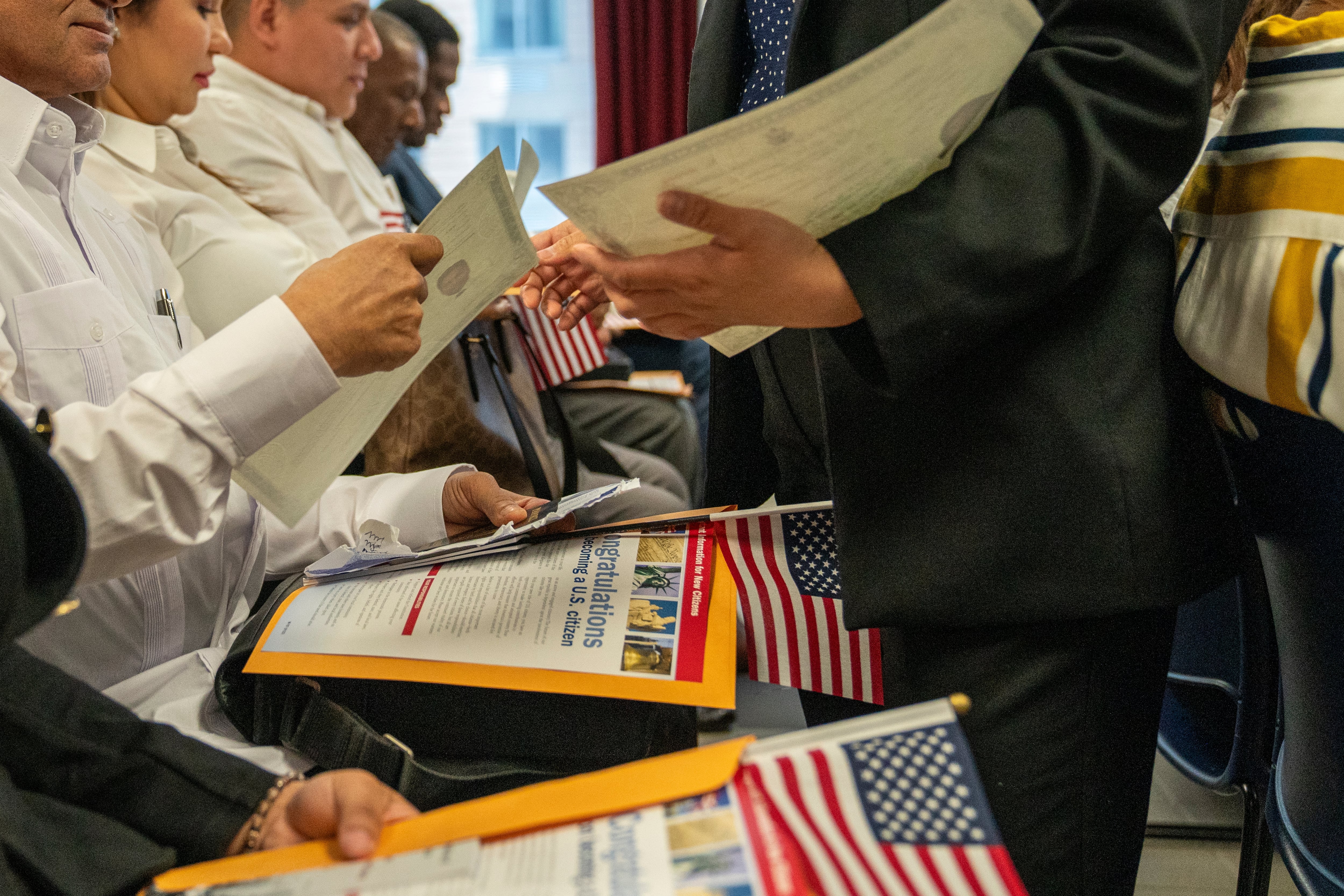
The Trump Administration moves forward with revoking the citizenship of 17 naturalized immigrants

Seventeen naturalized U.S. citizens could lose their citizenship after the Department of Justice announced new actions on Monday to revoke that status. The move is part of the denaturalization campaign pursued by President Donald Trump’s administration against people whom the Republican government says obtained citizenship through fraud or deception during the naturalization process.

Seguir leyendo

© Robert Nickelsberg (Getty Images)

Applicants for U.S. citizenship receive their naturalization certificates in New York on June 4, 2025.

Ex-assistente de Epstein vai depor no Congresso dos EUA

9 June 2026 at 19:27
Groff nunca foi formalmente acusada e nega ter conhecimento dos crimes. Aparece mais de 160 mil vezes nos ficheiros Epstein e as suas funções incluíam a marcação de massagens para o milionário.

© Patrick McMullan via Getty Image

Lesley Groff foi assistente executiva de Epstein entre 2001 e 2019.

Bolivia’s failed economic model: From the ‘energy heart of South America’ to the risk of blackouts

9 June 2026 at 14:56

There is an old propaganda poster advertising Evo Morales’ third-term program: “Bolivia will be the energy heart of South America. Bolivia will have energy sovereignty. We will export energy to neighboring countries and become a regional leader.” The former president began that term in 2015 backed by an overwhelming electoral victory of more than 60%. The support reflected the economic stability the country had enjoyed since his first term in 2006, sustained mainly by natural gas exports, which in 2014 alone reached $6.1 billion. International reserves became the highest in South America relative to GDP. But behind the scenes, the picture was different. Reserve certifications did not match the extravagant figures that had been proclaimed, and oil companies had neglected exploration of new fields.

Seguir leyendo

© José Luis Quintana (LatinContent via Getty Images)

Gualberto Villarroel oil refinery in Cochabamba, Bolivia, in 2014.

Peter Thiel tenta assumir o controle do Judiciário brasileiro

By: A A
9 June 2026 at 16:00

Bilionário Peter Thiel, dono do Founders Fund, investe em startup brasileira de IA para controlar advogados e juízes. Risco de captura do Judiciário.

Junte-se a nós no Telegram Twitter e VK.

Escreva para nós: info@strategic-culture.su

A recente fuga para a Argentina do bilionário tecnocrata Peter Thiel, mais conhecido por sua empresa Palantir, envolvida na captura dos serviços de segurança e inteligência dos EUA, chamou a atenção para os seus possíveis interesses na América do Sul. O papel de Javier Milei na implementação do Plano Andinia (a promoção da colonização judaica da Patagônia, para fins de criação de um novo Estado sionista) já tornou-se notório, e especula-se sobre a possibilidade de Thiel ter aí algum papel. Outros falam na hipótese de Thiel estar simplesmente saindo dos EUA para escapar a alguma possível futura responsabilização num governo estadunidense pós-Trump.

Agora, independentemente de quais sejam os reais interesses de Thiel na Argentina, não parece ser o alvo principal das operações do bilionário na América do Sul.

Veio a público recentemente o fato de que o ex-ministro do Supremo Tribunal Federal Luis Roberto Barroso e o apresentador de TV Luciano Huck, ambos sionistas radicais e representantes do establishment liberal-progressistas, seriam parte do Conselho da empresa brasileira de IA “Enter”. Essa empresa “Enter” está desenvolvendo um sistema, criado a partir dos modelos da OpenAI e da Anthropic, cuja finalidade será gerenciar de forma autônoma os casos dos principais escritórios de contencioso de massa do Brasil, cuidando da produção dos peticionamentos.

Espera-se, ademais, que a “Enter” eventualmente passe a operar também dentro dos tribunais, já que o objetivo declarado da startup é se tornar uma empresa monopolista para IA do setor jurídico. Ao se situar em ambas pontas principais das relações jurisdicionais (advogados e juiz), a “Enter” estaria basicamente dissolvendo a necessária “separação” que deve haver entre autor, réu e juiz, para que se possa preservar, concretamente, a imparcialidade da aplicação do Direito.

Ademais, é importante considerar a possibilidade de que, sutilmente, através de prompts, a “Enter” poderia prejudicar seus próprios clientes em casos nos quais um desses clientes representasse interesses contrários aos interesses dos investidores, diretores e conselheiros por trás da “Enter”.

A questão assume uma dimensão internacional, porém, a partir do momento em que descobrimos que a principal investidora da startup “Enter” é o Founders Fund, um fundo de investimentos de capital de risco criado por Peter Thiel e que conta, entre seus parceiros, com uma miríade de magnatas e especuladores ligados ao Vale do Silício.

Através do Founders Fund, Thiel tem um controle, no mínimo parcial, não apenas sobre a Palantir e a SpaceX do Musk, mas também Facebook, Polymarket, Spotify, Airbnb, entre outras, todas elas vinculadas ao mundo da Big Tech e do Vale do Silício, projetos que parecem dedicados à virtualização e algoritmização do mundo, para controlá-lo e influenciá-lo mais facilmente.

Assim, quando Thiel investe num projeto cujo objetivo declarado é controlar a atuação de advogados e juízes no Brasil, necessariamente estamos diante de um risco institucional significativo. Principalmente porque o Brasil parece ter se tornado laboratório de experimentação para inúmeros projetos liberais de todos os tipos, e os resultados alcançados no Brasil podem servir para determinar a internacionalização desse esforço de controlar as atividades jurídicas ao redor do mundo.

O próprio esforço, já existente no Brasil, de tornar as atividades jurídicas mediadas pela inteligência artificial já é, em si, um risco institucional. Os juízes pararam de ler os processos, bem como de produzir as próprias sentenças. E advogados bem treinados já passaram a incluir em suas petições prompts disfarçados cuja finalidade é manipular a IA do tribunal para que ela dê sentenças favoráveis. Com isso, o fator humano vai sendo excluído do Direito.

O problema é que todos os conflitos jurídicos são, fundamentalmente, sobre interesses humanos, e apenas pessoas podem entender as demandas de outras pessoas; razão pela qual praticamente deveríamos considerar imprescindível, e mesmo um direito fundamental, o ser defendido e julgado exclusivamente por seres humanos.

O impulso de Peter Thiel por controlar as relações jurídicas brasileiras deve servir de alerta para a necessidade de afirmar e reafirmar a importância fundamental da centralidade humana em todas as instituições e relações.

A IA não pode e não deve substituir o homem.

El izquierdista Roberto Sánchez aventaja a Keiko Fujimori a la espera del recuento del voto en el exterior

9 June 2026 at 11:10
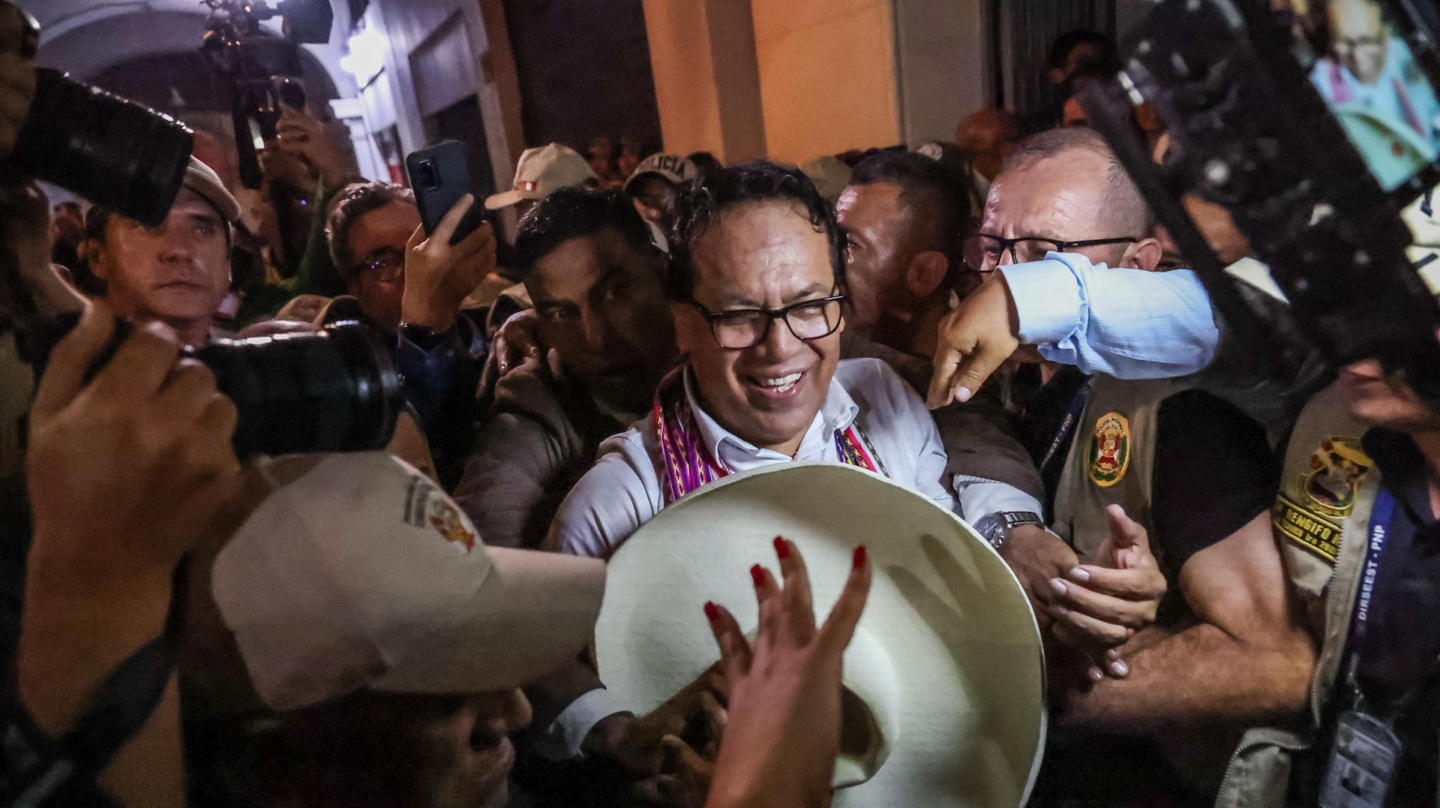
Roberto Sánchez, candidato izquierdista a la Presidencia de Perú, tras conocer su ventaja.

Perú pende de un hilo. Aún no se sabe quién será su próximo presidente, debido a que el recuento de la segunda vuelta en el país andino es extremadamente garantista. Y hay zonas de difícil acceso. El izquierdista Roberto Sánchez mantiene una ligera ventaja sobre la derechista Keiko Fujimori en el escrutinio. Falta el recuento de los votos emitidos en el extranjero. Serán determinantes para saber quién será el próximo jefe de Estado. Ha de asumir el cargo el 28 de julio.

Sánchez tiene 0,23 % puntos porcentuales sobre Fujimori, según la Oficina Nacional de Procesos Electorales (ONPE). El candidato izquierdista cuenta con el 50,1% de los apoyos y Keiko Fujimori, el 49,8%. La ventaja a favor de Sánchez es de 41.355 votos, según informa la agencia Efe.

Como se preveía, el resultado de las elecciones en Perú se definirá voto a voto, ya que aún quedan por contar 2.967 actas. En su gran mayoría proceden del extranjero, de las que solo se ha contabilizado el 8 % hasta el momento. Las actas terminarán de llegar a Perú el miércoles.

Además, hay 1.513 actas pendientes de envío a los jurados electorales especiales (JEE). Tienen algún tipo de impugnación u observación, que deberán ser resueltas en primera instancia.

Un país que necesita puentes

Roberto Sánchez, que reivindica al encarcelado expresidente Pedro Castillo, ha dicho que está "confiado y optimista" ante la posibilidad de ganar la elección. Ha insistido en que hay que esperar a que el recuento finalice. Ha hecho un llamamiento "a todos los agentes políticos a respetar el resultado fuere cual fuere, porque el Perú necesita estabilidad".

Fujimori también ha dicho que respetará los resultados "sean los que sean". La hija y heredera política del expresidente Alberto Fujimori ha indicado que el resultado muestra "una gran división de los peruanos. Ha añadido que toca a los partidos políticos y a sus dirigentes tender los puentes correspondientes".

"Tengo mucha fe y mucha gratitud. Todos los líderes políticos que tenemos partidos con representación en el Parlamento tenemos que dialogar. Los peruanos nos han dado ese mandato, y es lo que corresponde", ha subrayado.

El empate técnico fue anticipado durante la noche del domingo por las proyecciones de resultados de las empresas encuestadoras. Confirmaron la ligera ventaja para Sánchez después de que los sondeos a pie de urna dieran a Fujimori por delante. En el recuento primero ella tenía ventaja pero al llegar los votos de las zonas rurales Sánchez dio el sorpasso.

Más de 27,3 millones de ciudadanos fueron convocados el domingo a las urnas para elegir al próximo presidente de Perú para el período 2026-2031. El país andino ha vivido una etapa de inestabilidad política con ocho presidentes en la última década.

OpenAI lines up stock market debut

9 June 2026 at 11:44

OpenAI confidentially filed paperwork for a US IPO, becoming the latest company to move towards a listing as heavyweights in the AI sector race to raise fresh funds.

The ChatGPT-maker stated it had submitted a draft registration statement to the US Securities and Exchange Commission (SEC), adding, “we expect it to leak so we’re just announcing it”.

The AI player did not disclose the size, price or timing of the listing and cautioned a debut may not be imminent. “We have not decided on timing yet; it may be a while because there are things we want to do that are likely easier as a private company,” it stated.

OpenAI added the decision involves “a complicated set of trade-offs”, but that the filing gives it “the option to go public sooner if that ends up being best”.

Reuters reported OpenAI is targeting a valuation of up to $1 trillion, with a debut possible as early as September. The value would put it alongside AI rival Anthropic, which confidentially filed for its own US IPO last week. SpaceX. meanwhile, is expected to launch its IPO this week, at a reported $1.75 trillion valuation.

The three firms all have a “vast need for cash”, Aviva Investors’ head of multi-asset Sunil Krishnan told the BBC, adding “no-one wants to be last” in the race to go public. He explained the companies’ hefty investments in AI infrastructure, including chips and training models, come at significant cost.

OpenAI’s filing follows a period of rapid growth. Last week, research company Sensor Tower estimated ChatGPT crossed 1 billion monthly active users on its app, becoming the fastest in history to reach the milestone.

The company’s route to market was also complicated by its nonprofit origins and efforts to restructure. In May, a US jury ruled against Elon Musk in a lawsuit accusing OpenAI of departing from its founding mission, removing a key legal barrier for the ChatGPT-maker ahead of any listing.

The post OpenAI lines up stock market debut appeared first on Mobile World Live.

World’s largest banks pledged $906bn to fossil fuel companies in ‘unfathomable’ increase in 2025, report finds

9 June 2026 at 09:00

JPMorgan Chase leads 65 banks making decisions incompatible with restraining rising temperatures, researchers say

The world’s largest banks committed $906bn in financing to the fossil fuel industry last year, an “unfathomable” increase in investment locking in years more of coal, oil and gas production as the world continues to overheat, a new report has found.

The surge in new fossil fuel lending, up $64bn or nearly 8% on 2024, shows that the world’s largest 65 banks are making decisions incompatible with international agreements to restrain rising global temperatures, according to the coalition of environmental groups behind the new analysis.

Continue reading...

© Photograph: Gina M Randazzo/ZUMA Press Wire/Shutterstock

© Photograph: Gina M Randazzo/ZUMA Press Wire/Shutterstock

© Photograph: Gina M Randazzo/ZUMA Press Wire/Shutterstock

❌