Normal view

Ravenstorm At The Center Of Airbus’s New Combat Drone Portfolio

9 June 2026 at 19:05

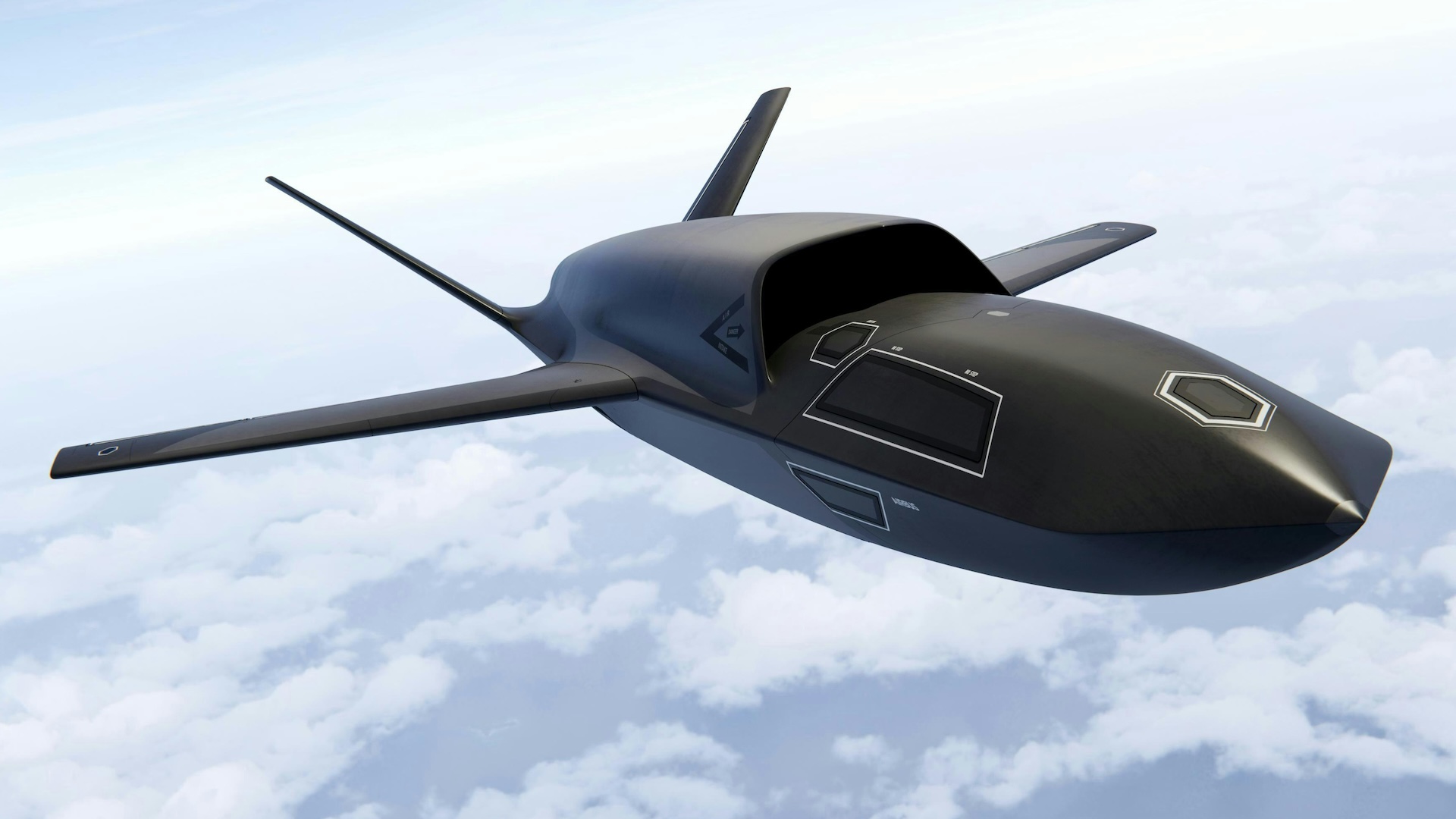
Airbus has pulled the wraps off the U760 Ravenstorm, a combat drone designed to operate alongside fighter aircraft in air-to-air combat, strike missions, and electronic warfare roles. The new uncrewed aircraft is part of a revamped drone portfolio from the company, which also includes a Europeanized version of the stealthy XQ-58A Valkyrie, a medium-altitude long-endurance (MALE) platform, various tactical solutions, counter-drone systems, as well as the U145 uncrewed helicopter that you can read more about here.

The timing of the announcement — and the unveiling of the Ravenstorm, in particular — is especially notable given the recent collapse of the Franco-German-led plan to build a crewed New Generation Fighter (NGF) aircraft, as part of the broader, pan-European Future Combat Air System (FCAS) initiaitive. You can read more about this development here.

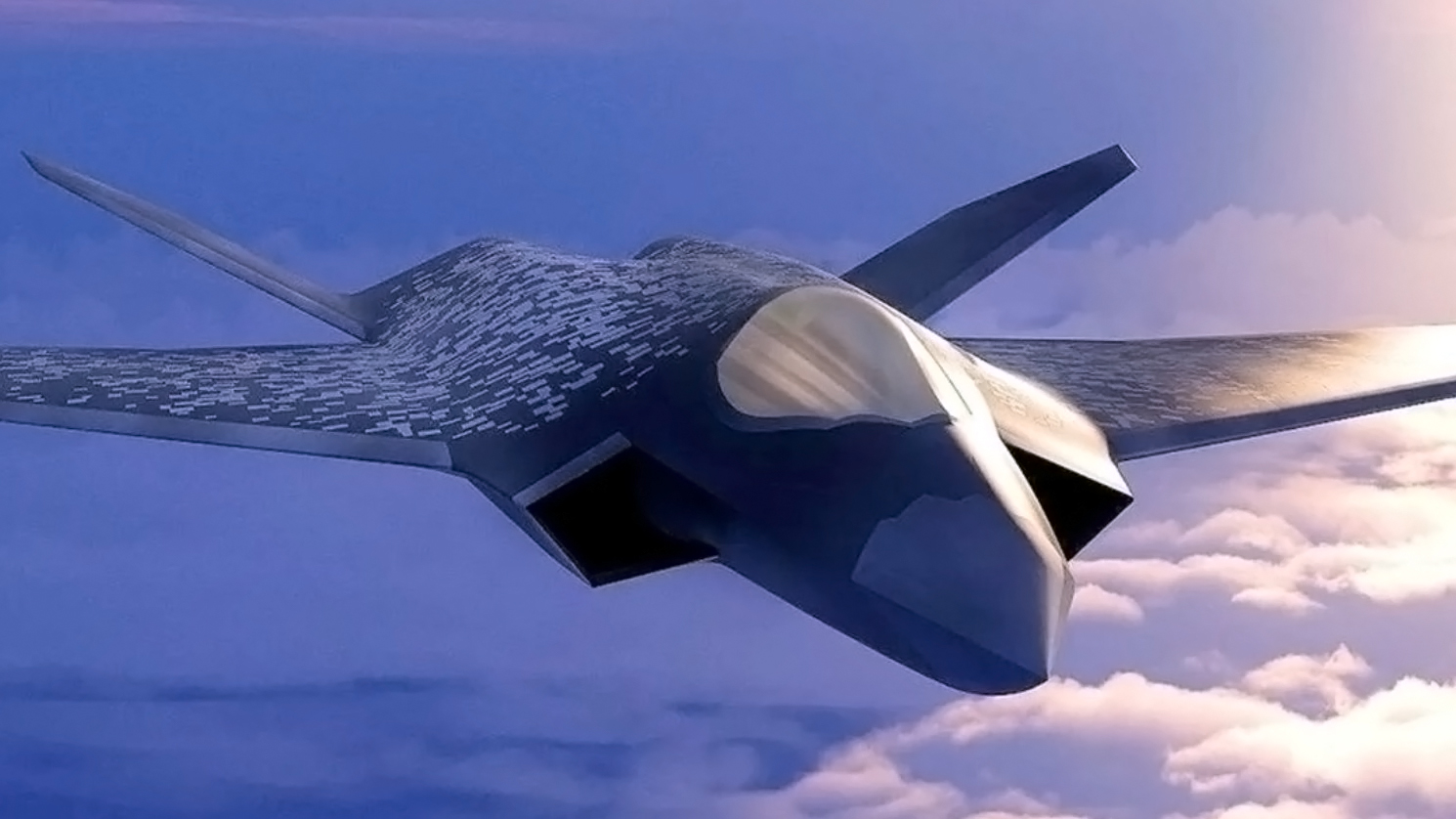
Concept artwork of the NGF, the crewed combat jet once intended to operate alongside various classes of drones. Dassault Aviation

On the eve of the ILA Berlin airshow, starting in the German capital tomorrow, Airbus showcased what it describes as “Europe’s most versatile drone portfolio.” The various products have been newly assigned a “U” prefix for uncrewed systems. This reflects the company’s policy of prefixing with an “A” for crewed fixed-wing aircraft, and an “H” for crewed helicopters.

“Whatever uncrewed or ‘drone’ capability our customers need to strengthen sovereign air power, we deliver,” said Mike Schoellhorn, CEO of Airbus Defence and Space, in a company press release. “Our portfolio ranges from rapid-response drone interceptors and various tactical drones, autonomous cargo helicopters to uncrewed fighter aircraft UCCAs (uncrewed collaborative combat aircraft) operating co-operatively with crewed fighter jets.”

A graphic showing the new Airbus drone portfolio includes a Eurofighter (at far left) controlling examples of the U740 Valkyrie and U760 Ravenstorm. Airbus

“On the other side of the spectrum we have the Eurodrone, our very high payload and very long endurance ISTAR (intelligence, surveillance, target acquisition, and reconnaissance) platform,” Schoellhorn continued. “Airbus provides the entire envelope of uncrewed capabilities required for modern multi-domain warfare. All our systems come with open architectures and a European mission system compatible with the wider European and international defence ecosystem.”

The most significant new arrival in the “U”-product line is the Ravenstorm combat drone, or U760.

A 1:1 model of the Ravenstorm will be on display at ILA. The drone is approximately 43 feet long and has a wingspan of 33 feet. In terms of rough size and general appearance, the drone strongly recalls General Atomics’ YFQ-42A ‘fighter drone’ prototype, now flying under the first phase of the U.S. Air Force’s Collaborative Combat Aircraft (CCA) program. Like the U.S. drone, the Ravenstorm features a swept, mid-wing configuration optimized for stealth and maneuverability. It also has the same twin-tail configuration. Like the YFQ-42, the Ravenstorm has a dorsal inlet, although this is closer to that which appeared on the EADS Barracuda demonstrator that flew for the first time 20 years ago. The drone is clearly optimized with low-observable (stealthy) characteristics, although the inlet is notably large and lacks the trapezoidal shape found on the YFQ-42.

Ground crew working on the Barracuda technology demonstrator. Airbus

At the same time, it should be noted that, when it comes to combat drones in general, many of them take on a relatively familiar form driven by similar requirements.

Airbus describes the Ravenstorm as “the next evolution” in its “roadmap towards a scalable family of uncrewed collaborative combat aircraft.” It is not clear how many related designs might be planned, and in what kinds of sizes they may come, but the company has highlighted the kinds of missions they will be expected to fly. These include air-to-surface strikes using precision-guided munitions, air-to-air defense with long and medium-range air-to-air missiles, and electronic warfare for suppressing enemy air defenses. Further offensive counter-air missions will involve UCCAs providing non-kinetic jamming.

Ravenstorm will be available in the early 2030s, according to the manufacturer, which is, interestingly, offering the new design alongside a version of the XQ-58. In Airbus parlance, the Valkyrie is designated U740 and combines the Kratos-designed airframe with Airbus’ proprietary Multiplatform Autonomous Reconfigurable and Secure (MARS) Mission System.

A U.S. Air Force XQ-58A deploying an ALTIUS-600 UAV from a Common Launch Tube. U.S. Air Force

For the U740, Airbus provides a notably precise planned date of service entry: 2029, with the German Air Force. This would appear to reflect a specific Luftwaffe requirement for a drone in this class, although it remains unclear if the Valkyrie has been formally selected by the German military. Airbus furthermore expects the U740 to be used in operational experimentation teamed with the Luftwaffe’s Eurofighter combat jet, including demonstrating initial air-to-ground capabilities.

The U740 Valkyrie on its launcher. Airbus

Returning to MARS, this is Airbus’ sovereign mission system, consisting of an AI-supported software core to enable platform autonomy. The system is scalable so that it can be used across the entire Airbus drone portfolio. It is also planned for use on the U950 Eurodrone — the new designation for the Eurodrone MALE platform. This twin-turboprop drone is now in development for missions including ISTAR, early warning, and anti-submarine warfare, and is planned to make its first flight in 2029.

A rendering of the Eurodrone MALE conducting a maritime mission. Airbus

As for Airbus’s two-track approach to UCCAs — U740 Valkyrie and U760 Ravenstorm — the thinking behind the two offerings, also of broadly similar sizes, likely reflects different cost points. The Valkyrie was designed from the ground up as a lower-cost aircraft and is runway-independent in its original form (since then, Kratos has announced a version with wheeled landing gear and there also exists the ability to launch the Valkyrie from a wheeled launch trolley, if required). Meanwhile, the Ravenstorm appears to be a more capable and costly platform, making it a closer match to Increment 1, the first phase of the U.S. Air Force’s CCA program.

The Anduril YFQ-44, produced for Increment 1, the first phase of the U.S. Air Force’s CCA program. U.S. Air Force

It could be that the company has already identified specific national or service requirements (such as the Valkyrie for the Luftwaffe) that it aims to capitalize on. There could also be a plan to use the Valkyrie more for operational experimentation of the UCCA concept before focusing more on the fully sovereign Ravenstorm, including potentially scaling it up or incorporating other significant airframe changes, for example, higher performance, larger payload, improved low-observable characteristics.

Also unclear is the status of Airbus’s stealthy Wingman, a CCA-like concept that was unveiled at the last ILA Berlin airshow in 2024. This was also presented in the form of a 1:1 model, with a length of 51 feet and a wingspan of 39 feet. The drone was planned to be powered by the same Eurojet EJ200 turbofan as the Eurofighter, providing a proven powerplant and useful commonality.

The Airbus Wingman concept aircraft, which Airbus leadership said should provide a unit cost that’s equivalent to one-third that of a modern crewed fighter. Thomas Newdick

At the time, Airbus noted that the German Air Force had “expressed a clear need” for a drone that would be able to operate in conjunction with crewed fighters before the arrival in service of the NGF, which was then slated for some time in the 2040s.

Whether the Wingman has now been abandoned entirely is unclear, but the Luftwaffe still has a requirement for an uncrewed companion that can work alongside its forthcoming Eurofighter EK electronic warfare jets. This is a role for which Airbus is earmarking the Ravenstorm, in particular, although it should be noted that the U.S. Marine Corps is also focusing heavily on the electronic warfare mission for the Valkyrie drone.

A rendering of a Eurofighter EK for the German Air Force. Airbus

All of these Airbus efforts are being informed by experience testing the Barracuda, work on which began in 2003, initially as a ‘black program.’ After six test campaigns, the Barracuda was retired.

The company will also be leveraging prior work from the Airbus Low Observable UAV Testbed (LOUT) program. A stealthy demonstrator, LOUT was not flown but was run by the company in strict secrecy until finally it was publicly disclosed in 2019, as you can read about here.

A four-ton LOUT model used for aerodynamic and anechoic chamber testing. Airbus

Undoubtedly, the significance of Airbus’s new-look drone roster, and above all the appearance of the U760 Ravenstorm alongside the U740 Valkyrie, is greater now that the FCAS program’s crewed New Generation Fighter is seemingly defunct.

It was always anticipated that the NGF would be operated as part of a wider ecosystem that also included CCA-like drones — what Airbus now refers to as UCCAs. Indeed, there were already efforts in place to start integrating combat drones with crewed fourth-generation-plus fighters like the Eurofighter and Rafale. Now that FCAS, or at least the NGF component of it, has been thwarted, Ravenstorm and Valkyrie offer a glimpse of where Europe’s combat aviation ambitions may be headed instead.

Collaborative combat aircraft like these emerged as a higher-mass, force-multiplying capability for current and future crewed fighters. In the interim, at least, the demise of the NGF means that these kinds of combat drones could be in even greater demand within Europe, where there is already a pressing need for larger tactical air combat fleets, while resources are limited. At the same time, CCA-like drones promise to make existing fourth- and fifth-generation fighters even more potent, further driving demand both in Europe and elsewhere.

Contact the author: thomas@thewarzone.com


The post Ravenstorm At The Center Of Airbus’s New Combat Drone Portfolio appeared first on The War Zone.
Franco-German Future Fighter Effort Collapses Over Irreconcilable Differences

8 June 2026 at 21:44

The troubled pan-European Future Combat Air System (FCAS) appears to have lurched to an undignified — but predictable — end, at least in its current form. A flurry of media reports today indicate that France and Germany, the two major partners in the program, have abandoned their program to develop a crewed New Generation Fighter (NGF) aircraft together, a conclusion supported by a French diplomat who spoke to TWZ today.

According to sources including the Frankfurter Allgemeine Zeitung, German Chancellor Friedrich Merz has urged French President Emmanuel Macron to pull the plug on the NGF. The German newspaper cited unnamed government sources in Berlin. Reportedly, the French and German leaders concluded that the companies involved — Dassault and Airbus — have been unable to reach agreement on key aspects of the project, specifically relating to the jointly developed fighter jet.

Concept artwork of the NGF future fighter. Dassault Aviation

At this stage, it is reported that Merz and Macron cannot see a future for the NGF, although it is apparently still unclear whether the French government fully shares this assessment and is prepared to accept its consequences.

At this point, it should be recalled that there are at least three separate FCAS initiatives in Europe.

As well as the pan-European version headed up by France and Germany, with Spain and Belgium as junior partners, there is a rival British-led FCAS. This has the Tempest crewed fighter as its centerpiece, involves Italy and Japan, and is now more commonly referred to as the Global Combat Air Program (GCAP). Finally, the Swedish next-generation combat aircraft program, led by Saab, is also known as FCAS.

Returning to today’s developments, French officials are reportedly surprised by what they viewed as uncoordinated messaging from Berlin. From Paris’s perspective, it is the responsibility of political leaders to provide industry with clear direction.

French President Emmanuel Macron talks with Eric Trappier, Chairman and CEO of Dassault Aviation, after the unveiling of the full-scale jet fighter model of the Systeme de Combat Aerien Futur (SCAF), the French-German-Spanish new generation Future Combat Air System (FCAS), during the 53rd International Paris Air Show at Le Bourget Airport near Paris, on June 17, 2019. (Photo by BENOIT TESSIER / POOL / AFP) (Photo credit should read BENOIT TESSIER/AFP via Getty Images)
French President Emmanuel Macron talks with Eric Trappier, chairman and CEO of Dassault Aviation, after the unveiling of a full-scale model of the NGF at the Paris Air Show in 2019. BENOIT TESSIER/AFP via Getty Images BENOIT TESSIER

The French government is also said to be frustrated over what it sees as Germany’s increasing preference for national solutions, which threatens to sideline its own industrial input.

A French diplomat told TWZ: “The President of the Republic and the Federal Chancellor have held extensive and frequent discussions on ways to move forward with this important project for European defense. Both leaders expressed regret that the industrial partners have been unable to reach an agreement on the continuation of the project. The German authorities considered that it was not possible to exert further pressure on the companies involved. France remains convinced that Franco-German cooperation is essential both for our two countries and for our European partners in the fields of defence and security.”

The diplomat added: “The French authorities will continue to encourage our industries and armed forces to explore avenues for ambitious European projects that are consistent with our national security interests.”

According to reports, Macron and Merz discussed the future of FCAS last week, in the latest of several recent efforts to keep the program on track. At the same time, however, Merz had become increasingly vocal about his skepticism regarding the project’s prospects.

The FCAS program was launched back in 2017, with the primary aim of replacing France’s Rafale fleet and Germany’s Eurofighters.

A German Luftwaffe Eurofighter pair. Bundeswehr/Bicker A pair of Eurofighters from Tactical Air Force Wing 73 “Steinhoff” during air-to-air training. Bundeswehr/Bicker

FCAS was envisioned as a next-generation European combat air system entering service around 2040, spearheaded by the NGF crewed fighter. As of 2022, it was envisaged that “in-flight demonstrations” would be achieved by 2028 or 2029. 

Before long, however, the project was overshadowed by arguments over workshare agreements, and it is unclear how far the partners had got in terms of agreeing on NGF requirements and starting its design.

For a while now, there have been reports that Germany is exploring alternative paths, including the possibility of separating itself from France within the program entirely.

By February of this year, Merz was publicly raising doubts about the program’s viability, arguing that key issues had never been fully resolved during the planning phase. According to the German leader, Germany and France have fundamentally different operational requirements for a future combat aircraft.

Merz pointed to the specific French requirements that call for aircraft to be capable of carrying nuclear weapons and operating from aircraft carriers. Merz argued that Paris is seeking to shape the aircraft around French military requirements, which do not necessarily align with Germany’s needs.

PARIS, FRANCE - JANUARY 06: French President Emmanuel Macron (R) greets German Chancellor Friedrich Merz upon his arrival at the Elysee Palace on January 06, 2026 in Paris, France. Leaders from around 30 countries are gathering in Paris to discuss military support for Ukraine, amid ongoing negotiations on a US-brokered peace plan to end Russia's war in Ukraine. (Photo by Tom Nicholson/Getty Images)
French President Emmanuel Macron (right) greets German Chancellor Friedrich Merz at the Elysee Palace in Paris in January 2026. Photo by Tom Nicholson/Getty Images Tom Nicholson

“This is not primarily a political disagreement,” Merz said. “The real issue lies in the requirements profile. If we cannot reconcile those differences, the project cannot continue.”

Within France, Dassault CEO Éric Trappier recently declared the FCAS project dead if Airbus refuses to cooperate, while Macron continued to make efforts to resuscitate the program.

There are indications that Paris will still try to do its best to keep the program alive, and it remains possible that the broader FCAS architecture, or parts of it, could continue even without the NGF. FCAS has always intended to field families of drones, air-launched weapons, and potentially other aerial platforms, within an overarching ‘combat cloud.’

An Airbus concept showing an NGF connected via satellite-based Combat Cloud to Remote Carriers, as well as a variety of legacy combat and support platforms. Airbus

The German government considers that the “true essence of FCAS” should be continued as a European system of systems, according to the Frankfurter Allgemeine Zeitung.

Whatever happens next, the program appears to be at a crossroads, and facing its biggest existential challenge yet.

It is highly questionable whether either France or Germany (even with Spanish industrial support and finance) could develop a fighter without the other major partner.

This could open the door to a radical reshaping of European combat air programs.

There have already been suggestions at the highest military levels that the British-led and Franco-German FCAS efforts could be fused in some way. However, it seems highly unlikely that all these partners could come together with agreement. Just as questionable is whether the GCAP effort would be able to admit new major partners at this late stage.

Then there is the issue of Sweden.

Last month, we reported on Airbus having raised the possibility of teaming with Saab on the manned tactical component of FCAS. That was one of the clearest indications yet that Airbus is actively exploring post-FCAS alternatives, or, at the least, a major overhaul of the program’s structure.

A Saab study for a supersonic uncrewed platform as part of its own FCAS effort. SVT screencap via X

Potentially, Airbus and Saab could now team up to develop a joint next-generation fighter, with their requirements likely to be more closely aligned than those of France. Germany and Sweden also have a less urgent need for a sixth-generation combat jet, with Sweden only now introducing the Gripen E, and with Germany looking forward to receiving F-35s as well as more Eurofighters.

jAS 39 E
The first Gripen E for the Swedish Air Force. Saab SAAB

For France, losing its partners for NGF could be more critical, although it continues to work on advanced versions of the Rafale. In 2024, France also unveiled plans to develop a new uncrewed combat air vehicle (UCAV) that will complement the forthcoming Rafale F5 crewed fighter. The industrial side of the drone program will be headed up by Dassault, drawing upon its previous nEUROn UCAV demonstrator, which has already been used in trials with crewed combat aircraft.

France has unveiled plans to develop a new uncrewed combat air vehicle (UCAV) that will complement the forthcoming Rafale F5 crewed fighter, as part of a new-look French Air and Space Force. The industrial side of the drone program will be headed up by Dassault Aviation, drawing upon its previous nEUROn UCAV demonstrator, which has already been used in trials with crewed combat aircraft.
A Rafale accompanies a nEUROn drone during a test flight. Dassault Aviation/Anthony Pecchi Dassault Aviation/Anthony Pecchi

The F5 standard of the Rafale is planned to keep the multirole combat aircraft in frontline service until around 2060. That will at least give France some time to consider what to do about a future crewed fighter.

A French Air and Space Force Rafale C. Dassault Aviation

Drones are also increasingly part of the combat-air picture in Germany, too. Delays in fielding a sixth-generation fighter could be mitigated, to a degree, by Airbus developing combat drones. Airbus and Kratos are already pitching the stealthy XQ-58A Valkyrie drone to Germany, and Airbus has also been working on a stealthy CCA-like concept of its own, known as Wingman.

A rendering of the Airbus Wingman CCA-like drone. Airbus

In the background, the U.S.-made F-35 continues to expand its customer base in Europe. There is also the prospect that, in the future, the sixth-generation F-47 might be offered for export in the region, although this might only be in a watered-down form.

Overall, though, the latest development is a poor reflection on Franco-German cooperation, which has singularly failed to come to agreement about what should be a flagship program, providing a cornerstone of efforts to strengthen Europe’s defense capabilities.

With the ILA Berlin airshow starting on Wednesday, this news could hardly be worse-timed. On the other hand, we may well learn more about Germany’s vision for its future combat aircraft program before the week is out.

Contact the author: thomas@thewarzone.com

The post Franco-German Future Fighter Effort Collapses Over Irreconcilable Differences appeared first on The War Zone.

Airbus Unveils U145 Uncrewed Cargo Helicopter

8 June 2026 at 18:50

In a significant development, Airbus has announced that its H145 twin-engine light helicopter is being developed in an uncrewed version, the U145. The move continues and expands the manufacturer’s work in the uncrewed helicopter space and reflects similar developments around the globe — most notably, an uncrewed version of the UH-72 Lakota, which is the U.S. Army’s variant of the H145.

The U145 was officially revealed today, ahead of the ILA Berlin airshow, starting this week, during which a full-scale mock-up will be displayed. Airbus says it is planning a first flight of the U145 — with a safety pilot onboard — before the end of this year, and is aiming for entry into service at the beginning of the next decade. 

At @ILA_Berlin, we introduce the Airbus U145: an uncrewed, fully autonomous variant of the H145. Optimised for cargo with no cockpit, an integrated nose door, and full autonomy, its first flight is set for late 2026. https://t.co/MbodUxYxyI pic.twitter.com/2EnMXzog6c

— Airbus Helicopters (@AirbusHeli) June 8, 2026

“With the U145, we are offering our customers an autonomous, uncrewed version of our H145 helicopter — combining the proven airframe, power and useful load of the H145 with the autonomy of a UAS,” said Matthieu Louvot, CEO of Airbus Helicopters, in a company media release. “To develop the U145 and its capabilities as a multi-mission UAS, we will be teaming up with leading autonomous mission partners to further expand the UAS ecosystem in Europe,” he added. 

The U145 will have a maximum takeoff weight of around 8,400 pounds, and is described as a “mission-agnostic solution for civil and military applications, primarily high-volume cargo supply.” Airbus has announced the payload will be up to 2,600 pounds. In comparison, the uncrewed version of the Lakota, the MQ-72C Lakota Connector, will carry a maximum payload of around 4,000 pounds, although this includes slung loads. With that in mind, the U145 and MQ-72C will likely end up offering very similar payload capacities.

A model of the uncrewed version of the Lakota, now known as the MQ-72C, on display at the 2024 Sea Air Space convention. Jamie Hunter

The MQ-72C is expected to be able to cruise at speeds of 135 knots out to ranges of at least 350 nautical miles, according to the Airbus website.

Already at this stage, the company is pitching the U145 for specific military roles, including armed scouting and surveillance. Airbus is also planning to adapt the U145 as a “drone mothership” that will carry “launched effects,” on which the company is partnering with European missile house MBDA. A similar concept is currently being pitched by Sikorsky, with its uncrewed version of the Black Hawk helicopter, dubbed the U-Hawk, which is also intended to be able to fire dozens of launched effects such as surveillance and reconnaissance drones and loitering munitions.

Airbus also envisages the U145 operating in conjunction with conventional helicopters as part of crewed-uncrewed teaming. 

German air force special forces members take off from Lechfeld Air Base, Germany aboard an H145M Airbus aircraft during exercise Air Defender 2023 (AD23), June 14, 2023. Exercise AD23 integrates both U.S. and allied air-power to defend shared values, while leveraging and strengthening vital partnerships to deter aggression around the world. (U.S. Air National Guard photo by Staff Sgt. Joseph R. Morgan)
German special forces members take off from Lechfeld Air Base, Germany, aboard a pair of H145Ms during Exercise Air Defender 2023. U.S. Air National Guard photo by Staff Sgt. Joseph R. Morgan Tech. Sgt. Joseph Morgan

The U145 will offer full autonomy, Airbus says, being equipped with a specialized sensor suite and artificial intelligence. For an uncrewed logistics aircraft, the ability to autonomously navigate along a predetermined route using programmed waypoints would provide a practical foundation for autonomous operations. However, more advanced capabilities — such as dynamically adjusting flight paths and responding in real time to emerging threats or unexpected obstacles — would also be very valuable, especially when conducting resupply missions in contested or high-risk environments.

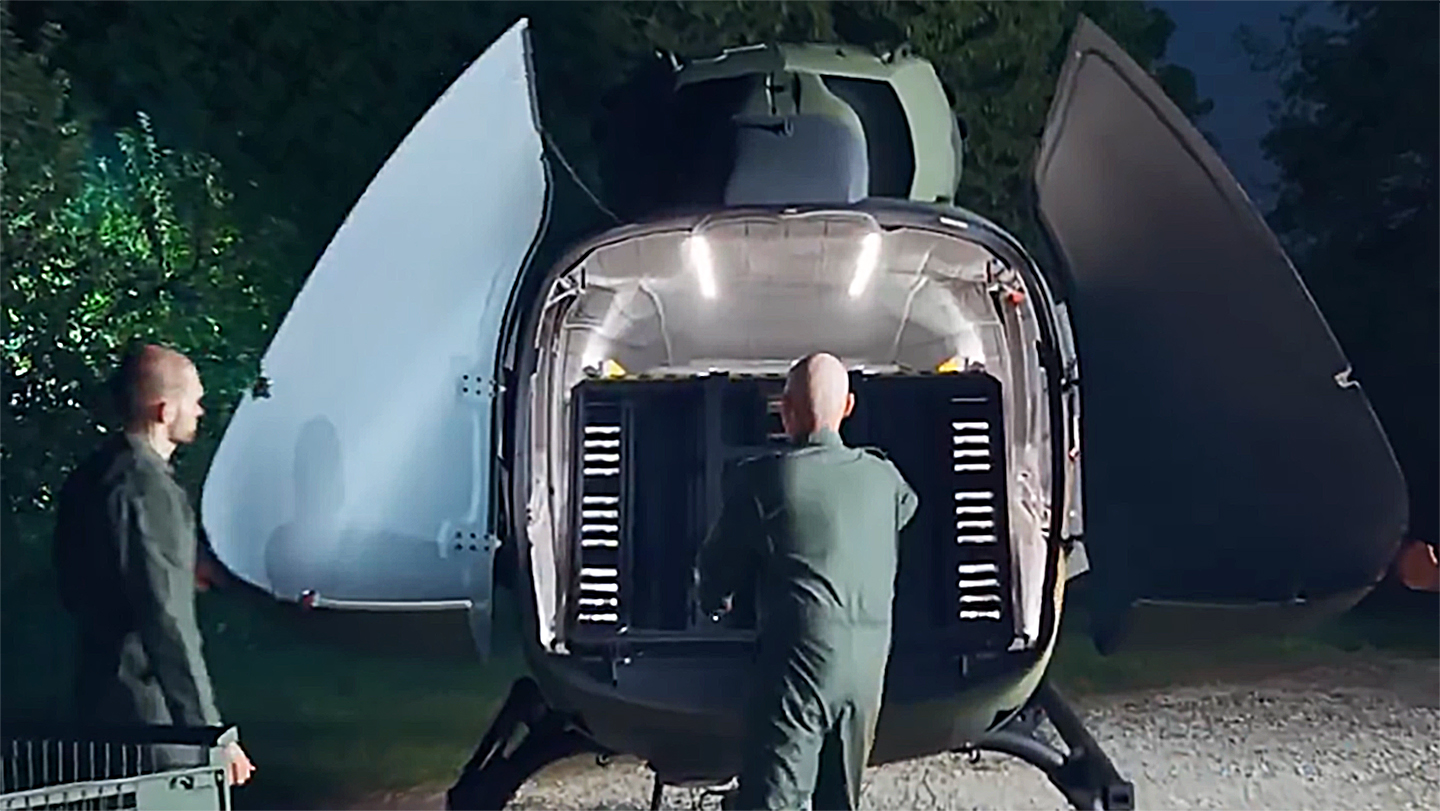
The U145 will have no physical cockpit, so it cannot be flown with human pilots onboard. Other significant changes include adaptations for cargo missions, including a clamshell nose door, a loading platform, and a dedicated cargo floor. The existing rear clamshell doors are retained, as are the cabin side doors. The same configuration has been adopted for the MQ-72C, and a pass-through cargo hold is a big advantage that other crewed helicopters in this class cannot match.

A look in through the rear of a UH-72 in a medical evacuation configuration. The H145 is essentially similar. U.S. Army National Guard

Other features of the new uncrewed helicopter will be carried directly over from the H145, more than 1,800 of which are currently in service.

These features include a powerplant of two Safran Arriel 2E engines equipped with a full-authority digital engine control (FADEC) and a fenestron tail rotor.

The U145 is the next step in the manufacturer’s development of uncrewed helicopters. As such, it follows on from the smaller VSR700, a rotary-wing uncrewed air system which was derived from the crewed Cabri G2 light helicopter.

A VSR700 completes a test flight, accompanied by an H145. Airbus

It is unclear what elements might be ported across from the MQ-72C, also called the Unmanned Logistics Connector (ULC), which is being developed separately by Airbus U.S. Space and Defense, together with its partners Shield AI, L3 Harris, and Parry Lab. Based on the U.S.-made UH-72B Lakota, the MQ-72C is similarly autonomous and is primarily aimed at the U.S. Marine Corps. You can read more about the MQ-72C in our previous coverage of the aircraft, here and here.

In the context of the MQ-72C, we have previously looked at how this platform fits with the U.S. Marine Corps’ vision for future fleets of cargo-carrying drones. The Marines see uncrewed logistics ‘connectors’ in the air and down below as essential for supporting future expeditionary and distributed operations, especially in the context of a possible future high-end fight with China in the Pacific.

Other U.S. efforts in this space include optionally crewed and uncrewed versions of the larger H-60 Black Hawk series. The U-Hawk demonstrator, a fully uncrewed version of the Black Hawk helicopter, is intended to carry cargo and deliver launched effects and similarly features clamshell doors in the nose. At the heavier end of the scale, Boeing has said its future plans for the H-47 Chinook include creating a path toward an uncrewed version of the aircraft.

However, these kinds of capabilities are increasingly being eyed by other services around the world, too.

With this in mind, Airbus is hoping to leverage the existing customer base for the H145, which has footprints on six continents. The H145 is already in service, or on order, with a growing number of international military operators for utility and light-attack missions. The uncrewed version maintains significant commonality, which will bring down support and maintenance costs.

At the same time, the U145 has obvious commercial applications. Airbus highlights its suitability for roles like disaster management and firefighting, although it would also be ideal for cargo conveyance, especially remote resupply work and logistics support to offshore platforms and remote areas on land, for example.

A standard H145 demonstrates its capabilities for offshore missions. Airbus

An Airbus spokesperson told Breaking Defense that the U145 has not been developed for any specific national or European acquisition.

Undoubtedly, there is growing recognition in Europe, in particular, that changes in the geopolitical landscape mean that the continent cannot necessarily rely on the United States to meet its defense needs. Developing the U145 in addition to the MQ-72C aligns with Europe’s ambition to strengthen its sovereign capabilities.

With the U145, Airbus is betting that autonomous rotorcraft will become an increasingly important part of military operations. By leveraging a proven helicopter platform, it should accelerate the transition to uncrewed operations, but the drone helicopter will be entering an increasingly competitive marketplace.

Contact the author: thomas@thewarzone.com

The post Airbus Unveils U145 Uncrewed Cargo Helicopter appeared first on The War Zone.
Video Captures Rafale Fighter’s Drone Kill Over Baltic

8 June 2026 at 16:59

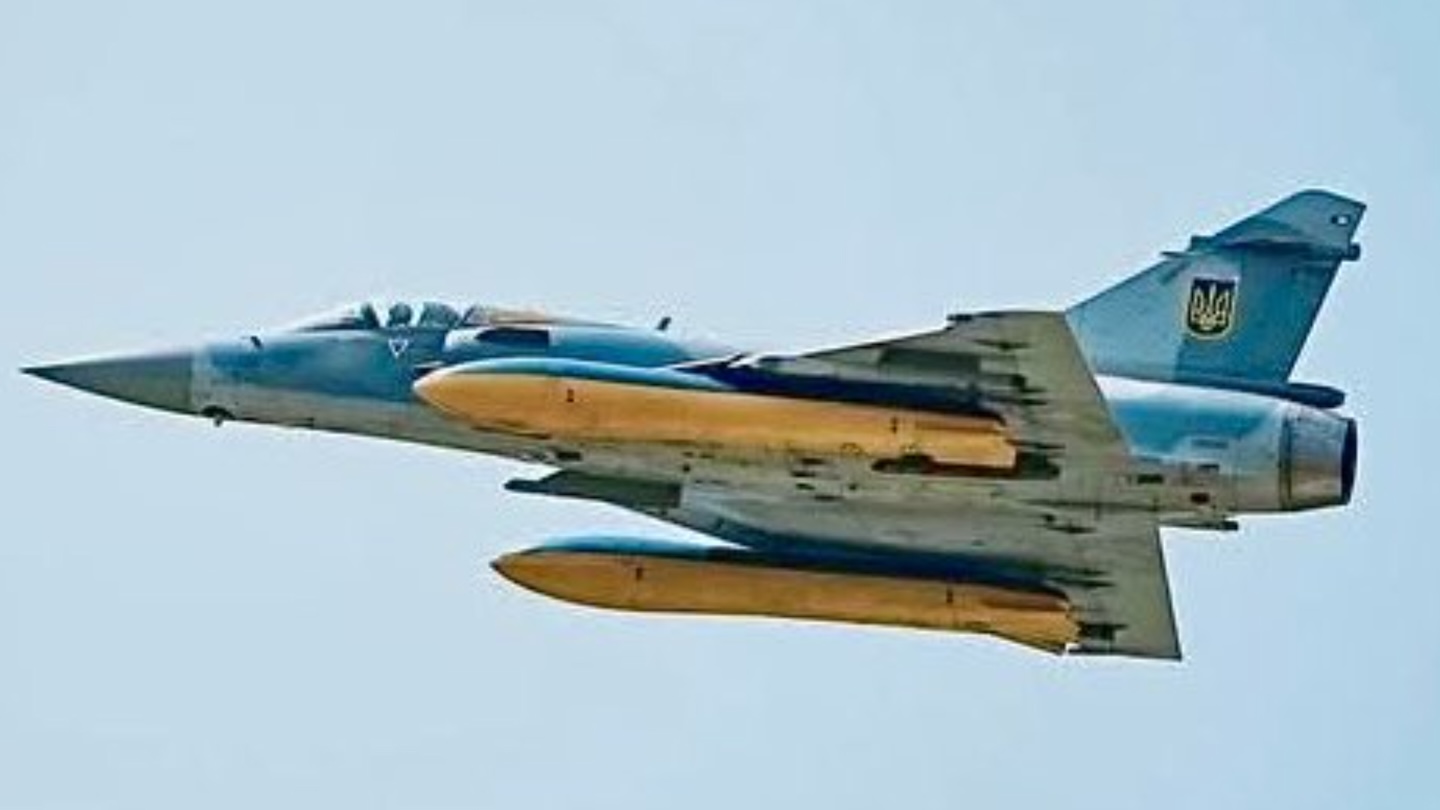
Footage has emerged showing the destruction of a drone by a French Rafale fighter over Latvia earlier today. The engagement underscores how the drone war unleashed by the Russian invasion of Ukraine is increasingly spilling over borders, as well as the growing reality of the drone threat to NATO.

The French Air and Space Force confirmed that its Rafales, currently deployed in neighboring Lithuania, were scrambled in response to the drone incursion. The drone was identified before one of the fighters shot it down over an uninhabited area. The incident was a “demonstration of the French Armed Forces’ commitment to contributing to the security of Europe’s eastern flank,” the service said in a statement on X.

📍Lettonie | Destruction d’un drone par les Rafale 🇫🇷💥

➡ Survol d’un drone au dessus du territoire letton 🇱🇻
➡ Décollage sur alerte des chasseurs 🇫🇷 engagés dans la mission de l’OTAN Baltic Air Policing depuis la base aérienne de Šiauliai 🇱🇹
➡ Identification et destruction… pic.twitter.com/NFIMSP7Ibl

— Armée française – Opérations militaires (@EtatMajorFR) June 8, 2026

A detachment of French Air and Space Force Rafale jets is currently engaged in the NATO Baltic Air Policing mission from Šiauliai Air Base, Lithuania.

This morning, French fighter jets deployed to NATO Air Policing at Šiauliai Air Base shot down a drone that entered Latvian airspace.

Lithuania thanks our French allies for their swift and professional action in safeguarding the security of our region.

— Lithuanian MOD 🇱🇹 (@Lithuanian_MoD) June 8, 2026

This is not the first time that a NATO fighter has shot down a drone in the Baltic region as part of the Baltic Air Policing mission. On May 19 of this year, a Romanian F-16 shot down a Ukrainian drone over Estonia after it strayed into NATO airspace, reportedly due to Russian electronic warfare interference. Last September, NATO fighters shot down at least three, and likely four, Russian drones, after 19 reported violations of Polish airspace. Polish authorities assessed that the drones “did not veer off course but were deliberately targeted.”

However, this is the first time that an incident of this kind has been captured on camera.

At least two videos are now circulating on social media showing the engagement playing out.

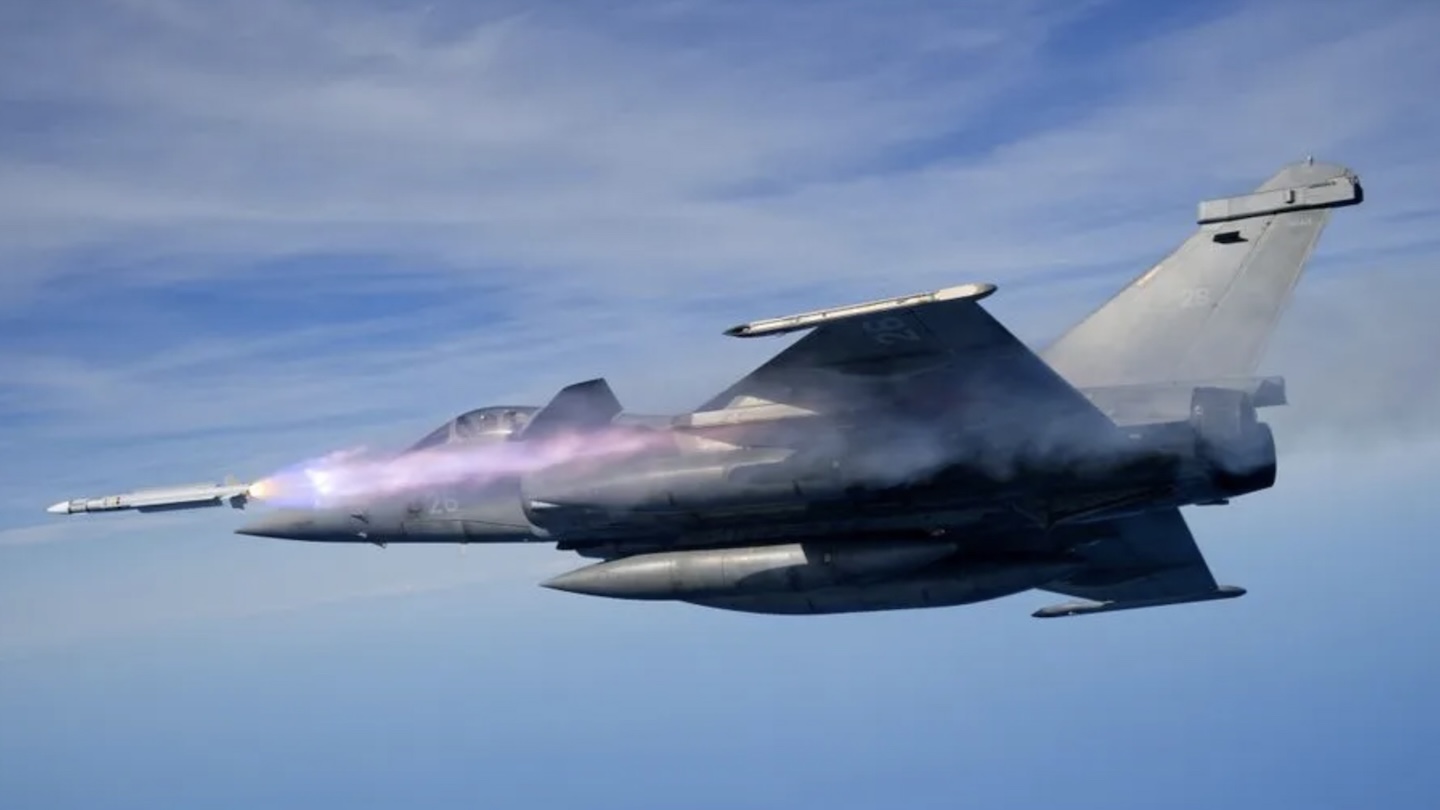
One shows the moment that a Rafale launches an air-to-air missile, leaving a prominent trail of smoke, before detonating seconds later.

NATO airpower in action this morning, safeguarding Latvian airspace. pic.twitter.com/Ugzbx8aaZS

— Marko Mihkelson 🇪🇪🇺🇦🇪🇺 (@markomihkelson) June 8, 2026

Another video, from a different angle, shows the immediate aftermath of the shootdown. Another trail is seen in the background of both videos, but it’s unclear if this is evidence of a previous missile launch, or a contrail from another aircraft that previously transited the airspace at a different altitude.

🇱🇻 Rogovkā, Rēzeknes novadā notriekts lidrobots. NBS apstiprina.#Rogovka #Rēzekne #Latvija pic.twitter.com/kBdojUHanB

— BreakingLV (@breakinglv) June 8, 2026

In a typical Baltic Air Policing configuration, the Rafale is armed with MICA air-to-air missiles. These beyond-visual-range weapons can be fitted with either an active radar seeker or an infrared seeker head, with a mix normally being loaded. The MICA uses a thrust-vectoring motor for improved agility and has a reported maximum range of around 37 miles.

📍 Lituanie | Le succès des vols conjoints commence au sol 🇫🇷🤝🇷🇴
 
➡ Préparation d'un vol d'entraînement avec des avions de chasse 🇫🇷 et 🇷🇴 :

🔧 Montage d'armements entre mécaniciens des deux pays alliés

💬 Échanges sur les procédures, matériel et méthodes des équipes… pic.twitter.com/LPYygu0P5r

— Armée française – Opérations militaires (@EtatMajorFR) June 6, 2026

The Latvian Armed Forces provided more details of the shootdown, noting that a yellow alert was originally issued for the Ludza, Balvi, and Aluksne districts this morning at 9:20 a.m. local time. This led to NATO fighters being launched.

At 9:40 a.m., this alert level was increased to orange for the Ludza and Rēzekne districts. At this point, it was confirmed that some kind of drone was entering Latvian airspace. A military spokesperson told the Reuters news agency that the drone entered Latvian airspace from Russia.

NATO iznīcinātāji šorīt neitralizēja ārvalstu dronu, kas krievijas elektromagnētiskās karadarbības rezultātā bija ielidojis Latvijas teritorijā 🇱🇻✈#WeAreNATO #StrongerTogether pic.twitter.com/07blbd7TUw

— NBS (@Latvijas_armija) June 8, 2026

🟠 Izsludināts gaisa telpas apdraudējums Krāslavas un Ludzas novados, informē Nacionālie bruņotie spēki.

Brīdinājums par iespējamu gaisa telpas apdraudējumu izsludināts Rēzeknes un Balvu novados. pic.twitter.com/PFcMZmhhga

— LTV Panorāma (@ltvpanorama) June 8, 2026

The Latvian Armed Forces warned residents in these areas to “Seek shelter indoors, close windows and doors — follow the two-wall principle.” It added: “If you notice a low-flying, suspicious, or dangerous object, do not approach it and call 112.”

At 10:05 a.m., the Latvian Armed Forces confirmed that NATO fighters were over the Rēzekne district, and a “foreign” drone was shot down over the Berzgale parish.

Berzgale is less than 20 miles from the nearest Russian border, and around 340 miles from the closest Ukrainian border, with Belarus, a close Moscow ally, separating Latvia and Ukraine.

A map showing the approximate location of the drone shootdown in Berzgale, Latvia. Also marked is the Russian naval base at Kronstadt that came under Ukrainian drone attack last week. Google Earth

NATO’s Baltic Air Policing mission has safeguarded the airspace of Estonia, Latvia and Lithuania since the three countries joined the alliance in 2004. Because the Baltic states do not maintain fighter fleets capable of continuous air-defense duties, allied nations rotate detachments of combat aircraft to bases in Lithuania and Estonia, where they remain on quick-reaction alert around the clock.

The mission routinely scrambles fighters to identify and intercept Russian military aircraft operating near NATO airspace, particularly flights to and from Russia’s heavily militarized Kaliningrad exclave that often occur without flight plans, radio contact, or active transponders.

French Rafales recently encountered this Russian Navy Su-24M carrying free-fall bombs during a flight over the Baltic. French Armed Forces
One of two Russian Navy Su-30SMs intercepted over the Baltic by French Rafales during the current Baltic Air Policing detachment. This example carries a Kh-31 series anti-ship or anti-radiation missile. French Armed Forces

Following Russia’s annexation of Crimea in 2014, NATO expanded the mission with additional aircraft and operating locations, making Baltic Air Policing one of the alliance’s most visible peacetime deterrence operations on its eastern flank.

Since Russia’s full-scale invasion of Ukraine, the expanding drone war between the two countries has provided another layer of responsibility to the Baltic Air Policing mission.

A Rafale B standard F4 fighter jet of France's air force is ready for take-off as part of NATO's Enhanced Air Policing (eAP) mission in the Baltic States, on Dezember 17, 2024 at Siauliai airbase in Lithuania. (Photo by PETRAS MALUKAS / AFP) (Photo by PETRAS MALUKAS/AFP via Getty Images)
A Rafale B is ready for takeoff as part of an earlier Baltic Air Policing mission in Lithuania, in the Baltic States, December 2024. Photo by PETRAS MALUKAS / AFP PETRAS MALUKAS

For most of its history, Baltic Air Policing centered on scrambling fighters to identify Russian bombers, fighters, reconnaissance aircraft, and transports flying near NATO airspace. The war in Ukraine has seen the increasing proliferation of drones that can travel hundreds or even thousands of miles, creating a new challenge for NATO air defenses.

Since 2022, there have been several incidents, including drones and missile debris entering or crashing in NATO territory, including in Poland and Romania. Late last month, a Russian kamikaze drone strayed into Romanian airspace before striking a residential building, injuring civilians, in what appears to have been the first incident of its kind.

A russian drone carrying explosives, involved in the bombing of infrastructure in Ukraine crashed in Galați, Romania, causing a fire on the roof of a residential apartment building.

Two persons sustained minor injuries and several residents required medical attention, the… pic.twitter.com/P8jzYFrEEp

— Toiu Oana (@oana_toiu) May 29, 2026

We asked NATO for more details of today’s incident, including whether it could confirm reports citing the Latvian military that the drone had entered its airspace as a result of Russian electronic warfare. This is a threat that is by now commonplace in the Baltic region.

“While the circumstances surrounding this incident are still under review, jamming is known to occur in this region, and can pose serious safety risks, including to civil aviation,” a spokesperson for the alliance told us.

In recent days, Ukraine has carried out a number of high-profile drone attacks against Russian targets in and around the Baltic region.

In the last week, Ukrainian drones appear to have hit the St. Petersburg oil terminal, the Baltic Fleet base at Kronstadt, and a weapons factory in the Tambov region.

As we observed in our previous reporting, there have been very few confirmed Ukrainian attacks of any kind against the Baltic Fleet. However, satellite and other imagery that emerged in the wake of the recent drone strike reveals extensive damage inflicted on the  Steregushchiy class corvette Boikiy.

Footage of the Russian Navy Baltic Sea Fleet corvette Boikiy burning in its Kronstadt drydock after a Ukrainian drone strike yesterday. pic.twitter.com/9CHz4aLdY8

— OSINTtechnical (@Osinttechnical) June 4, 2026

Another satellite image of the Russian corvette Boikiy following yesterday's Ukrainian strike. What is interesting here is that the active fire was captured before firefighting crews managed to extinguish it. @planet image taken on June 3 at 16:30 local time. It burned for hours. pic.twitter.com/PzcHxoSxGk

— Mark Krutov (@kromark) June 4, 2026

Today’s incident provides visual evidence of advanced NATO fighters used to shoot down drones over alliance territory. While effective on this occasion, this kind of interception can be inefficient due to the mismatch in cost between the drone and missile. It is notable that the French Ministry of Defense has plans to introduce a lower-cost counter-drone capability on the Rafale by the summer. Trials of a pod loaded with 68mm laser-guided rockets have already begun.

Un Rafale équipé de roquettes guidées laser aperçu à Istres. Les essais ont donc enfin démarré. Ici une nacelle Thalès JF12, donc 24 roquettes 68mm au total. Une corde de plus à l'arc du Rafale, la chasse au Shahed est OUVERTE ! pic.twitter.com/6v0xSMkUJ1

— bruno aviation (@Bruno_Aviation) April 16, 2026

As a result, NATO has accelerated work on layered defenses that include short-range ground-based air defenses, electronic warfare, and other counter-drone technologies.

Fighters, however, will always remain a critical last-resort option, especially when a drone poses an immediate threat or when a visual identification is required.

Today’s video not only illustrates the changing face of the Baltic Air Policing mission due to the Russian war in Ukraine, but highlights the growing threat posed by drones and cruise missiles that can cross borders with little warning, whether deliberately or not.

Contact the author: thomas@thewarzone.com

The post Video Captures Rafale Fighter’s Drone Kill Over Baltic appeared first on The War Zone.

Congress Throws A-10 Warthog Another Lifeline

5 June 2026 at 19:05

The Air Force will seek new ways to accomplish the missions of the A-10C attack jet, under an amendment added to the House Armed Services Committee’s version of the National Defense Authorization bill. While the Air Force has long campaigned for the Warthog’s retirement, the recent demand for the jet in conflicts in the Middle East has seen it earn a reprieve, with its standdown now scheduled for 2030.

Some of the numerous amendments to the bill come from Abe Hamadeh, the Republican representative for Arizona. He calls for the Secretary of the Air Force to keep supporting A-10 training, testing, experimentation, maintenance, and sustainment efforts through to the planned retirement date, as well as preserving lessons learned and operational expertise from A-10 missions to help shape future replacement systems. This would include keeping a formal training unit to teach pilots until the retirement. This is especially notable, since the unit in question, the 357th Fighter Squadron, graduated the last class of A-10 student pilots at Davis-Monthan Air Force Base, Arizona, back in April.

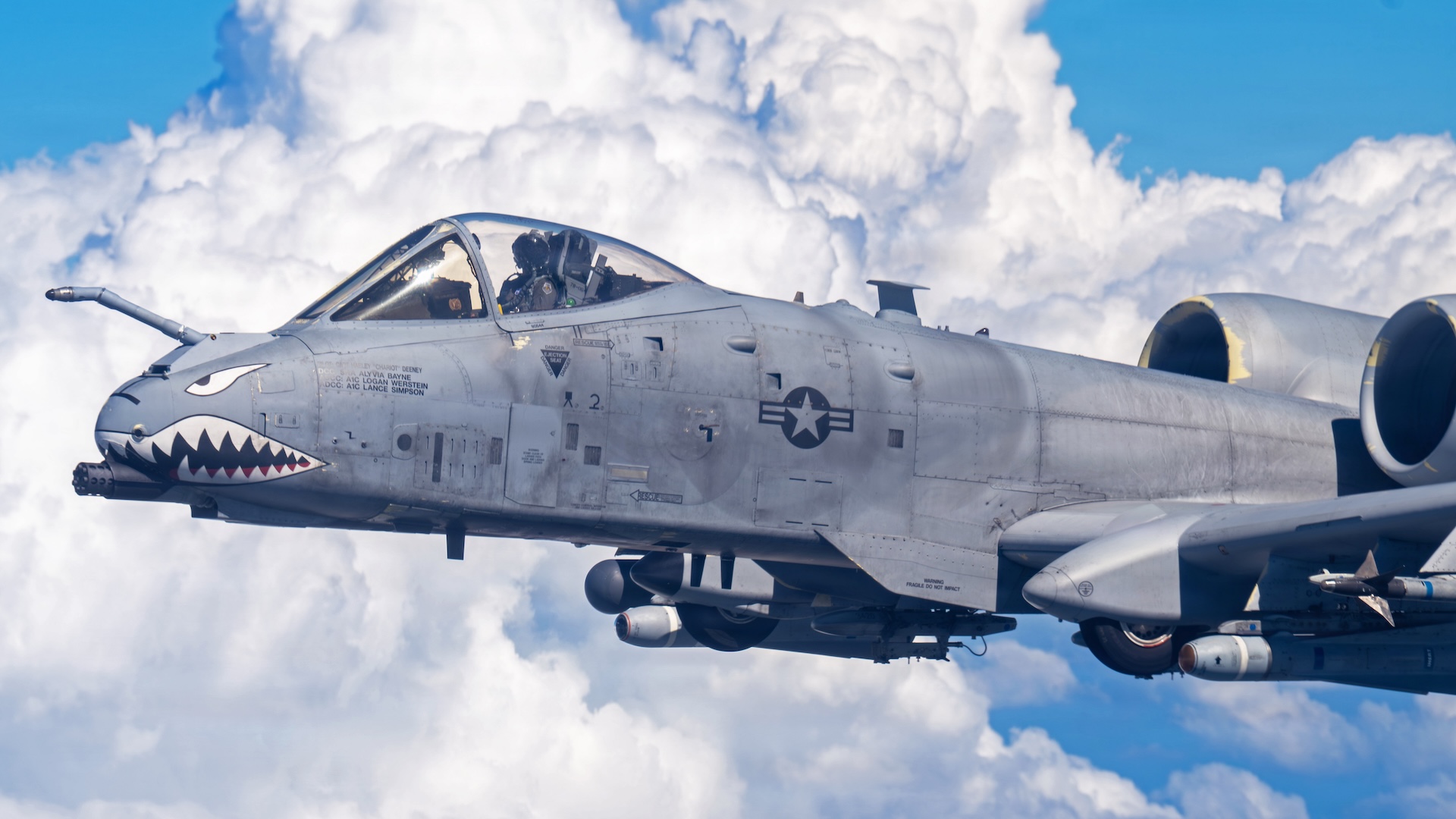
Four U.S. Air Force A-10C Thunderbolt II aircraft assigned to the 357th Fighter Squadron deploy flares over a training range near Gila Bend, Arizona, May 1, 2026. The training demonstration highlighted the aircraft’s defensive countermeasure capabilities, enhancing survivability in contested environments. (U.S. Air Force photo by Airman 1st Class Samantha Melecio)
Four A-10Cs from the 357th Fighter Squadron deploy flares over a training range near Gila Bend, Arizona, May 1, 2026. U.S. Air Force photo by Airman 1st Class Samantha Melecio

Meanwhile, the Air Force officially concluded A-10 depot-level maintenance in February of this year, with the deactivation of the 571st Aircraft Maintenance Squadron at Hill Air Force Base, Utah, and the A-10 Weapons School is due to be shuttered this year.

An A-10 Thunderbolt II with tail No. 78-0655 is positioned near the hangar during the “Hawg Out” ceremony Feb. 12, 2026, at Hill Air Force Base, Utah. The aircraft is the final A-10 to be maintained by the Ogden Air Logistics Complex's 571st Aircraft Maintenance Squadron, which has performed depot-level maintenance on the aircraft since 1998. (U.S. Air Force photo by Cynthia Griggs)
An A-10C is positioned near the hangar during the “Hawg Out” ceremony, February 12, 2026, at Hill Air Force Base, Utah. The aircraft was the final A-10 to be maintained by the Ogden Air Logistics Complex’s 571st Aircraft Maintenance Squadron, which performed depot-level maintenance on the aircraft since 1998. U.S. Air Force photo by Cynthia Griggs

In terms of “preserving operational expertise,” Hamadeh points directly to the A-10’s recent combat record in the Middle East, including its role in providing close air support during the recovery of two downed F-15E aircrew from Iran during Operation Epic Fury, and its work securing the Strait of Hormuz, a critical maritime chokepoint.

As part of this, the amendment also requests a report on the A-10’s “combat employment, recent operational relevance, lessons for future force design, and modernization options that could improve the return on continued sustainment of the program.”

Hamadeh lists a range of recent modernization efforts for the jet that “could improve the operational return on continued sustainment of the A-10 program.” These include electronic warfare capabilities, decoy or stand-in effects delivery, digital communications, sensor integration, precision weapons integration, survivability improvements, open-systems architecture, and human-machine teaming applications. The amendment also refers to the A-10’s recent “aerial refueling enhancements,” referring to the rapid introduction of a nose-mounted aerial refueling probe, which you can read more about here.

A U.S. Air Force A-10C Thunderbolt II aircraft refuels from an HC-130J Combat King II aircraft in the U.S. Central Command area of responsibility, May 9, 2026. (U.S. Air Force photo)
An A-10C uses its newly added probe to refuel from an HC-130J Combat King II aircraft in the U.S. Central Command area of responsibility, May 9, 2026. U.S. Air Force photo

At the same time, while preparing to retire the Warthog, the amendment calls for “a competitive experimentation plan for autonomous and non-traditional capabilities relevant to the A-10 mission set” — something that is far from new. According to the wording of the amended bill, this should “encourage autonomous replacement and modernization of the A-10, while also prioritizing participation of non-traditional defense firms.”

The amendment specifies that “autonomous, semi-autonomous, artificial intelligence-enabled, and adjunct aircraft capabilities” should all be investigated for carrying out future A-10-type mission sets.

The plan should include ways to ensure operational experiments are done “in a manner consistent with meaningful human command and control, by a qualified military aviator,” the amendment added. That should include mission-critical functions such as target engagement, weapons release, and decisions to abort a mission.

To help with the development of emerging technologies that could replace, or partly replace, the A-10, the amendment also proposes that a limited number of the jets should be used to support these studies.

Two 74th Fighter Squadron A-10C Thunderbolt II aircraft prepare to aerial refuel above Wake Island, 23 Oct. 2022. These aircraft transited from Moody Air Force Base, Georgia, to Andersen AFB, Guam, to participate in a Dynamic Force Employment Operation which is designed as a way for Pacific Air Forces to exercise their ability to generate combat air power from dynamic force elements while continuing to move, maneuver, and sustain these elements in geographically-separated and contested environments. (U.S. Air Force courtesy photo by Tech. Sgt. Eileen Adams)
Two 74th Fighter Squadron A-10Cs above Wake Island, in October 2022. These aircraft transited from Moody Air Force Base, Georgia, to Andersen AFB, Guam, to participate in a Dynamic Force Employment Operation. U.S. Air Force courtesy photo by Tech. Sgt. Eileen Adams

As part of accelerating this initiative, the study could involve nontraditional or venture-backed defense companies, commercial technology firms, or other companies that could rapidly develop the required hardware, software, autonomy, sensing, communication, or mission system capabilities.

This amendment raises the possibility that new technologies may ultimately provide an effective replacement for many A-10 mission sets, rather than a direct one-for-one crewed aircraft successor.

Drone-wise, the current lack of a follow-on to the MQ-9 Reaper, envisaged under a program dubbed MQ-Next, is a problem. The Air Force is now trying to replace the MQ-9 again, as you can read about here, but it remains unclear if the drone that emerges could stand in for a significant part of the A-10 mission. At the same time, the lack of a true uncrewed air combat vehicle (UCAV) program, one that would have emerged out of MQ-Next or otherwise, is also a hindrance in terms of a more survivable drone-based A-10 successor.

While not mentioned specifically, other options could include Collaborative Combat Aircraft (CCA), AI-enabled uncrewed systems that can deliver weapons, conduct reconnaissance, perform electronic warfare, identify and track targets, and operate either independently or with crewed platforms. However, while CCAs could be part of the solution, the A-10 mission has traditionally been seen as better suited to UCAVs.

Advances in autonomy also promise future networks of expendable or attritable drones that can maintain persistent surveillance over the battlefield, rapidly share targeting information, and deliver precision effects while reducing risk to pilots. In such a model, the traditional A-10 mission would not be replaced by one aircraft but by a distributed system of sensors, shooters, and autonomous collaborators. Of course, this is of particular relevance in the kinds of contested environments where a low-flying attack aircraft would be increasingly vulnerable.

A U.S. Air Force XQ-58 Valkyrie drops an ALTIUS-600 drone from its internal bay during a test. U.S. Air Force

Once the A-10s are retired, the amendment directs the Secretary of Defense to evaluate the potential transfer of the jets “to another military department” — presumably, within the U.S. military. While this is a topic that has sometimes come up among the enthusiast community, there is no realistic possibility of either the Marine Corps or the Army getting hand-me-down Warthogs. In the case of the Army, this service has long agreed not to operate fixed-wing crewed combat aircraft. For their part, the Marines have no capacity or funding to take on a whole different tactical platform, especially while winding down the F/A-18 Hornet fleet to standardize the F-35B/C as its tactical fixed-wing jet.

The idea of considering transferring retired A-10s to an ally or partner’s military has come up in the past, however, having been included in the 2024 National Defense Authorization Act (NDAA). As well as Jordan, which was named in the 2024 NDAA, Colombia and Ukraine are also known to have expressed interest in acquiring A-10s in the past.

More immediately, the amendment authorizes the reconstitution of an A-10 demonstration team. This would support “public outreach, recruiting, heritage, airshows, military ceremonies, and commemorative events, including those tied to the 250th anniversary of the founding of the United States.”

For more than four decades, the A-10C Demonstration Team performed dramatic displays around the world, but it ceased operations at the end of the 2024 season. At the time, the 355th Wing at Davis-Monthan Air Force Base said the decision was a part of the Air Force’s divestment of the Warthog.

An A-10C Thunderbolt II aircraft, part of the Demonstration Team from Davis-Monthan Air Force Base, flies behind a KC-135 Stratotanker aircraft from the 171st Air Refueling Wing, Pennsylvania Air National Guard, Nov. 18, 2024. The A-10's needed refueling on their way back to Arizona after their last official demo event Nov. 17, 2024, at the Pittsburgh Steelers game. (U.S. Air National Guard photo by Tech. Sgt. Andrew Stover)
An A-10C, part of the Demonstration Team from Davis-Monthan Air Force Base. The A-10 was refueling on its way back to Arizona after the last official demo event, November 17, 2024, at the Pittsburgh Steelers game. U.S. Air National Guard photo by Tech. Sgt. Andrew Stover

Of course, it should be noted that all of these amendments don’t necessarily preclude the Air Force giving up the A-10. Provided the service can prove that it can retain the knowledge base, as well as plug any capability gaps, the path to letting the Warthog go would remain open.

As we have highlighted many times in the past, the A-10’s combination of capabilities remains difficult to replicate in a single aircraft. It was designed from the ground up for close air support, with significant battle damage tolerance, making it ideal for operating close to friendly forces, providing persistent, highly responsive fire support.

However, with the requirements of modern warfare shifting toward survivability in heavily defended airspace, the F-35A, as the A-10’s designated replacement, offers capabilities the older jet cannot match, including stealth, advanced sensor fusion, networked targeting, and the ability to strike from greater standoff distances. While the effort to replace the A-10 with the F-35 has been a controversial one, regardless of their respective merits, it’s clear that the Air Force needs combat mass, providing more ammunition for the Warthog’s proponents.

A 33rd Fighter Wing F-35A Lightning II streaks by as a 75th Fighter Squadron A-10 Thunderbolt II undergoes preflight checks prior to a Combat Hammer sortie Nov. 2, at Eglin AFB, Fla. A-10s, F-16s, F-22s and MQ-9s visited the base to participate in the 53rd Wing exercise. The 86th Fighter Weapons Squadron’s Combat Hammer is a weapons system evaluation program for air-to-ground munitions. (U.S. Air Force photo/Samuel King Jr.)
An F-35A streaks by as a 75th Fighter Squadron A-10C undergoes preflight checks before a Combat Hammer sortie at Eglin AFB, Florida. Combat Hammer is a weapons system evaluation program for air-to-ground munitions. U.S. Air Force photo/Samuel King Jr.

In the meantime, the Air Force has also moved away from the idea of having the F-35 as a direct successor to the A-10, reflected in the fact that one former Warthog unit, at Selfridge Air National Guard Base in Michigan, has been chosen to receive a squadron of F-15EX Eagle IIs. The balance of capabilities offered by the F-15EX means that it is now being eyed for other units, too, in line with an increased fleet size.

As for the current timeline for the A-10’s withdrawal, Craig McKee, of Phoenix, Arizona-based news channel ABC15, received an outline of the plan from Air Combat Command.

For Fiscal Year 2026, which runs through September 30, 2026, the 357th Fighter Squadron at Davis-Monthan inactivates, and the formal training pipeline ends. Meanwhile, at Nellis Air Force Base, Nevada, the A-10 Weapons School transitions to other types, and the 422nd Test and Evaluation Squadron stands down.

For Fiscal Years 2027 and 2028, Moody Air Force Base, Georgia, is scheduled to retain two active-duty A-10 squadrons, while Whiteman Air Force Base, Missouri, will keep one Air Force Reserve squadron. At this point, the total A-10 inventory is set to be 63 aircraft, with 42 in the active-duty inventory.

In Fiscal Year 2029, Moody Air Force Base is set to lose one squadron, while the total A-10 inventory drops to 42 aircraft.

U.S. Air Force Capts. Andrew Glowa, lead, and William Piepenbring, both with the 74th Fighter Squadron out of Moody Air Force Base, Ga., fly two A-10C Thunderbolt II over the skies of southern Georgia, Aug. 18, 2014. The 74th FS is one of two active-duty, combat-ready squadrons at Moody that performs close air support missions with the A-10. (U.S. Air Force photo by Staff Sgt. Jamal D. Sutter/Released)
A-10Cs from the 74th Fighter Squadron out of Moody Air Force Base, over the skies of southern Georgia, in 2014. The 74th FS is one of two active-duty, combat-ready squadrons at Moody. U.S. Air Force photo by Staff Sgt. Jamal D. Sutter/Released

Finally, Fiscal Year 2030 is planned to see the full divestment of the A-10 fleet.

All of this is in line with Air Force demands for the A-10’s career to come to a close by the end of the decade, the culmination of a long push to retire the jets, primarily due to concerns over the aircraft’s survivability.

At the same time, the special capabilities of the Warthog are clearly still in high demand, including in the Middle East.

Previously, it seemed like the lawmakers’ efforts to retain the A-10 might have come to an end, especially when it lost two of its most vocal supporters. Namely, after the death of Arizona’s Senator John McCain, followed by Republican Representative Martha McSally losing her bid for the Arizona Senate.

Now, with the A-10’s performance in Epic Fury, as well as a brief extension to its service, it looks like a new fight to save the Warthog might be emerging.

Contact the author: thomas@thewarzone.com

The post Congress Throws A-10 Warthog Another Lifeline appeared first on The War Zone.
Ukraine Tests New Missile In Hopes Of Leading To Low Cost Patriot Alternative

4 June 2026 at 20:30

Tests of Ukraine’s new FP-7.X missile could pave the way to a cheaper and more plentiful, albeit far less capable, alternative to the U.S.-made Patriot air defense system effectors. A recent uptick in Russian missile and drone attacks against Ukraine, combined with a critical shortage of Patriot interceptors, underscores the need for more robust air defenses, especially with anti-ballistic missile capabilities. The development parallels a similar program in the United States, which seeks a drastically lower-cost interceptor for the Patriot system.

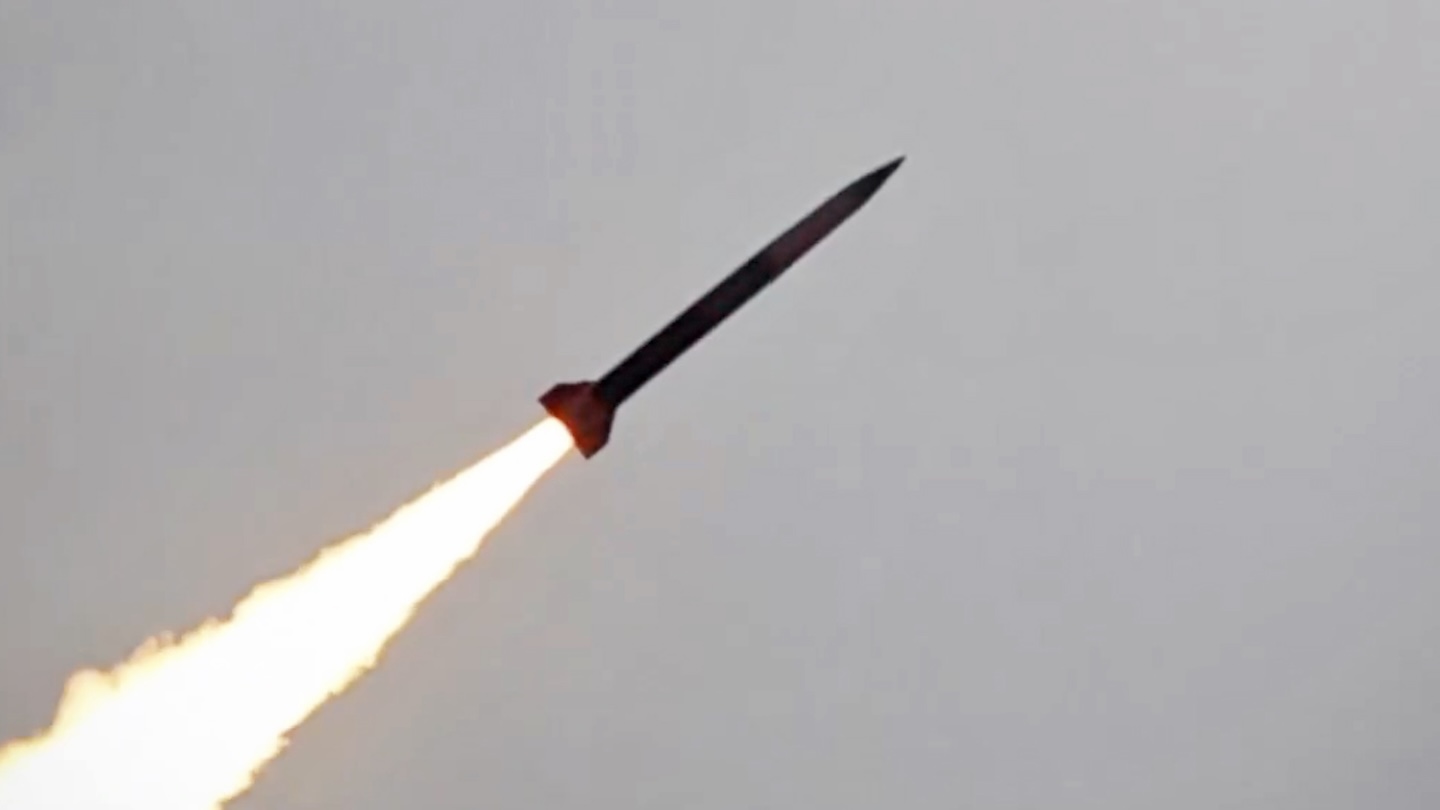
A video showing a test launch of an FP-7.X missile was published yesterday by its manufacturer, Fire Point, also responsible for the FP-5 Flamingo cruise missile and a series of long-range one-way attack drones. Fire Point’s chief technology officer Iryna Terekh described the depicted test as a “fully controlled maneuvering flight” conducted “just the other day.” The pink-painted missile recalls the early Flamingoes, and now seems to have been adopted as something of a company trademark.

Держави програють війни на полі бою значно рідше, ніж вони програють їх у інститутах, лабораторіях та на виробництві за десять років до їх початку.

Коли країна роками недофінансовує інженерну освіту, скорочує дослідження, втрачає виробничі компетенції або звикає покладатися на… pic.twitter.com/Ti1Ayn4INf

— terekh (@iraterekh) June 3, 2026

The FP-7.X missile is planned as the stepping-stone toward the productionized Freyja missile, which is primarily intended to provide Ukraine with its first homegrown anti-ballistic missile defense system. While ballistic missile threats are being prioritized here, the system would be equally able to defend against a variety of crewed aircraft threats, as well as drones and cruise missiles.

“No matter how unrealistic and ambitious this goal may sound today, we are exerting all possible and impossible efforts to make it a reality as soon as possible, so that Ukraine can close its skies on its own,” Terekh wrote.

Back in April, Fire Point’s co-founder and chief designer Denys Shtilierman told Reuters that the company was aiming to develop an anti-ballistic missile with a unit cost of less than $1 million.

A rendering of the FP-7 surface-to-surface ballistic missile on which the FP-7.X missile is based. Fire Point

“If we can decrease it to less than $1 million, it will be … a game changer in air defense solutions,” Shtilierman said. “We plan to intercept the first ballistic missile at the end of 2027,” he added, apparently referring to the aim to field the Freyja system by that date.

This compares to a unit price of approximately $5.3 million for each example of the most modern and highly capable PAC-3 MSE variant, which is one of the types provided to Ukraine. This figure comes from the Army’s latest proposed budget for the 2027 Fiscal Year. This is up from a historical average of around $4 million for each one of these missiles. These munitions also take years of lead time to produce, meaning that managing limited stocks is a big challenge.

Fire Point has developed the FP-7.X missile on the basis of the previous FP-7 surface-to-surface ballistic missile, a weapon with a range of around 124 miles, and a warhead of approximately 331 pounds. Deriving an anti-ballistic missile from a ballistic missile is an unusual move, but Fire Point will hope that the commonality should accelerate the process.

Вітаємо FP7) pic.twitter.com/FxgCHVHMET

— Denys Shtilierman (@DenShtilierman) February 27, 2026

As it stands, Ukraine’s anti-ballistic missile capabilities are strictly limited. It relies heavily upon the Patriot, batteries and components of which have been provided by Germany, the Netherlands, and the United States.

When the Patriot began to arrive in 2023, it provided Ukraine with an enhanced long-range, high-altitude engagement capability that was previously only offered, to a lesser degree, by Ukraine’s S-300s, with their depleting stocks of missiles. Importantly, the Patriot also brought an anti-ballistic missile capability, something that was previously only provided by the small number of Ukrainian S-300V1 systems, and even those don’t come anywhere close to the Patriot in this regard.

And another S-300V engagement, released as part of the same video.

From what I have seen, these are the third and fourth Ukrainian S-300V engagement videos released since the start of the war. pic.twitter.com/wPHnYbCQKP

— OSINTtechnical (@Osinttechnical) February 9, 2025

Providing somewhat similar capabilities to the Patriot is the SAMP/T, a joint Franco-Italian SAM system, which has also been supplied to Ukraine, but only in limited numbers. Overall, the SAMP/T is limited simply by the fact that it is produced in relatively small numbers.

As for the Patriot, this has claimed notable successes and high-profile victims in Ukrainian hands. However, as Russia has adapted its ballistic missiles, specifically adding enhanced maneuvering capabilities, the effectiveness of the U.S.-made system has been reduced.

A screen capture of a Ukrainian Air Force video shows images of three Russian helicopters and two Russian fighters painted on the side of a Patriot air defense battery. Defense Industry of Ukraine image

According to Shtilierman, the Patriot system often requires two or three air defence missiles, each costing several million ​dollars, to bring down a ballistic projectile. This is a mismatch that Fire Point also hopes to address with the Freyja.

It is notable that the U.S. Army is currently also pressing defense contractors to come up with proposals for a new interceptor for the Patriot system with a unit cost under $1 million, as you can read more about here. Whether by design or coincidence, U.S. Army Maj. Gen. Frank Lozano, the Army’s Portfolio Acquisition Executive for Fires (PAE Fires), included a rendering of the FP-7.X in a recent LinkedIn post, as seen below, to illustrate a notional low-cost interceptor.

hahah look at that! Good find!

— Tyler Rogoway (@Aviation_Intel) May 18, 2026

The latest development comes as Ukraine’s political and military leaders continue to warn about critical shortcomings in the country’s air defense capabilities. As well as expending the missiles it already has, the United States has reportedly suspended further Patriot deliveries to Ukraine because of concerns over the state of its own stockpile.

Ukrainian President Volodymyr Zelensky has repeatedly urged U.S. President Donald Trump and members of Congress to provide additional missiles for its Patriot systems, warning that Ukraine faces a severe air defense shortfall.

We were receiving PAC-3 missiles from our partners in certain quantities, but later that monthly volume was cut several times over. It wasn’t due to a lack of funding, but because of the war in the Middle East. This affected different types of weapons. Whatever we could, we… pic.twitter.com/qwPFydwAzC

— Volodymyr Zelenskyy / Володимир Зеленський (@ZelenskyyUa) June 3, 2026

Yesterday, Zelensky said that Ukrainian officials have one week to finalize outstanding legal, financial, and technical issues related to the purchase of additional Patriot systems.

Zelensky said that a political agreement to buy the systems has already been reached, but the process has stalled.

Ukraine’s ambassador to the United States, Olha Stefanishyna, added that Kyiv is prepared to finance additional Patriot systems and interceptor missiles if Washington agrees to deliver them.

Ukrainian personnel remove camouflage netting from a Patriot launcher, which is loaded with missile canisters associated with older interceptors like the PAC-2-series. Ukrainian Air Force

Commander-in-Chief of the Armed Forces of Ukraine Oleksandr Syrsky also recently pointed to Ukraine’s lack of sufficient modern air defense systems and interceptor missiles.

Clearly, continued Russian missile and drone strikes are putting a heavy strain on Ukraine’s air defenses.

Plugging the gaps with the Freyja system would make a lot of sense, providing a locally developed and manufactured solution to the problem, provided that the technical hurdles can be overcome.

Even so, the deadline of the end of 2027 is very ambitious for such a project.

With that in mind, Ukraine is also looking to foreign support for the Freyja program.

Earlier this year, Fire Point confirmed it was in talks to get European and Middle Eastern companies onboard the program. With various nations struggling to meet their air defense needs amid the demands of the conflicts in Ukraine and the Middle East, investing here could also bring dividends.

This photograph shows parts of long-range drones stored in a workshop of the Fire Point company which manufactures FP-1 deep-strike drones and FP-2 strike drones in an undisclosed location in Ukraine on January 29, 2026, amid the Russian invasion of Ukraine. (Photo by Serhii Okunev / AFP via Getty Images)
Parts of long-range drones stored in a workshop of the Fire Point company at an undisclosed location in Ukraine on January 29, 2026. Photo by Serhii Okunev / AFP SERHII OKUNEV

Shtilierman told Reuters in April that he was awaiting government approval for an investment in Fire Point by a Middle Eastern conglomerate, which would provide a major boost to Freyja and other programs, including longer-reaching ballistic missiles.

In terms of European companies, Shtilierman mentioned his interest in collaborating on radar, missile target-seeking, and communications systems. He named Hensoldt, Saab, and Thales as potential suppliers of radar solutions, an area where Fire Point lacks expertise.

Fire Point has also previously described the Freyja interceptor being fitted with an infrared imaging seeker for the terminal phase, as well as a semi-active radar homing seeker from Diehl Defence of Germany.

Few details are available about the launch system, other than reports of a lightweight, mobile launcher of domestic origin.

Globally, there is a clear demand for alternatives to the increasingly hard-to-source Patriot, especially for anti-ballistic missile defense.

A video shows a PAC-2 in a test against a Lance ballistic missile:

Ukraine’s combination of battlefield experience, rapid innovation, and low-cost defense technologies could put it in a good position to fill the gap. Even if the Freyja ends up with a significantly lower kill rate per missile than the Patriot, if it is far cheaper, that would be less of a problem.

At the same time, it remains unclear if Fire Point is able to fulfill the promises it has made in terms of output. In the past, the company has said it aims to build at least seven of its Flamingo cruise missiles per day, for a total of 2,555 built annually. To reach this target, the firm might need to call upon foreign partnerships to help expand its production capacity. The same would likely be the case for Freyja. By way of comparison, in 2024, Lockheed Martin produced more than 500 PAC-3 MSEs, with a plan to increase this to 600 in 2025.

A video of the Flamingo cruise missile in action:

One unknown factor in this is the possibility that Ukraine and/or NATO allies in Europe might obtain additional licenses for local production of Patriot missiles. Zelensky wants Patriot production in Ukraine and has said he has been discussing it with the United States. Still, while these might address the production capacity issues for the weapons, it would still be a more expensive solution than what Fire Point is proposing and it would take years to realize any output.

For now, the FP-7.X appears to be an early-stage technology demonstrator, and turning it into the operational Freyja interceptor by 2027 will require overcoming massive technical and logistical hurdles — as well as holding off Russian air attacks in the meantime.

However, the program reflects a broader trend in Ukraine’s wartime defense sector: rapidly developing indigenous capabilities to fill critical gaps left by limited and/or unreliable foreign supplies. If Fire Point can translate its ambitions into a viable anti-ballistic missile system, Ukraine could gain not only a more sustainable means of defending its skies, but also a potentially attractive export alternative in a global market increasingly hungry for affordable air defense solutions.

Contact the author: thomas@thewarzone.com

The post Ukraine Tests New Missile In Hopes Of Leading To Low Cost Patriot Alternative appeared first on The War Zone.

Is This A Glimpse Of The Aircraft That Gave Birth To The F-47?

4 June 2026 at 19:30

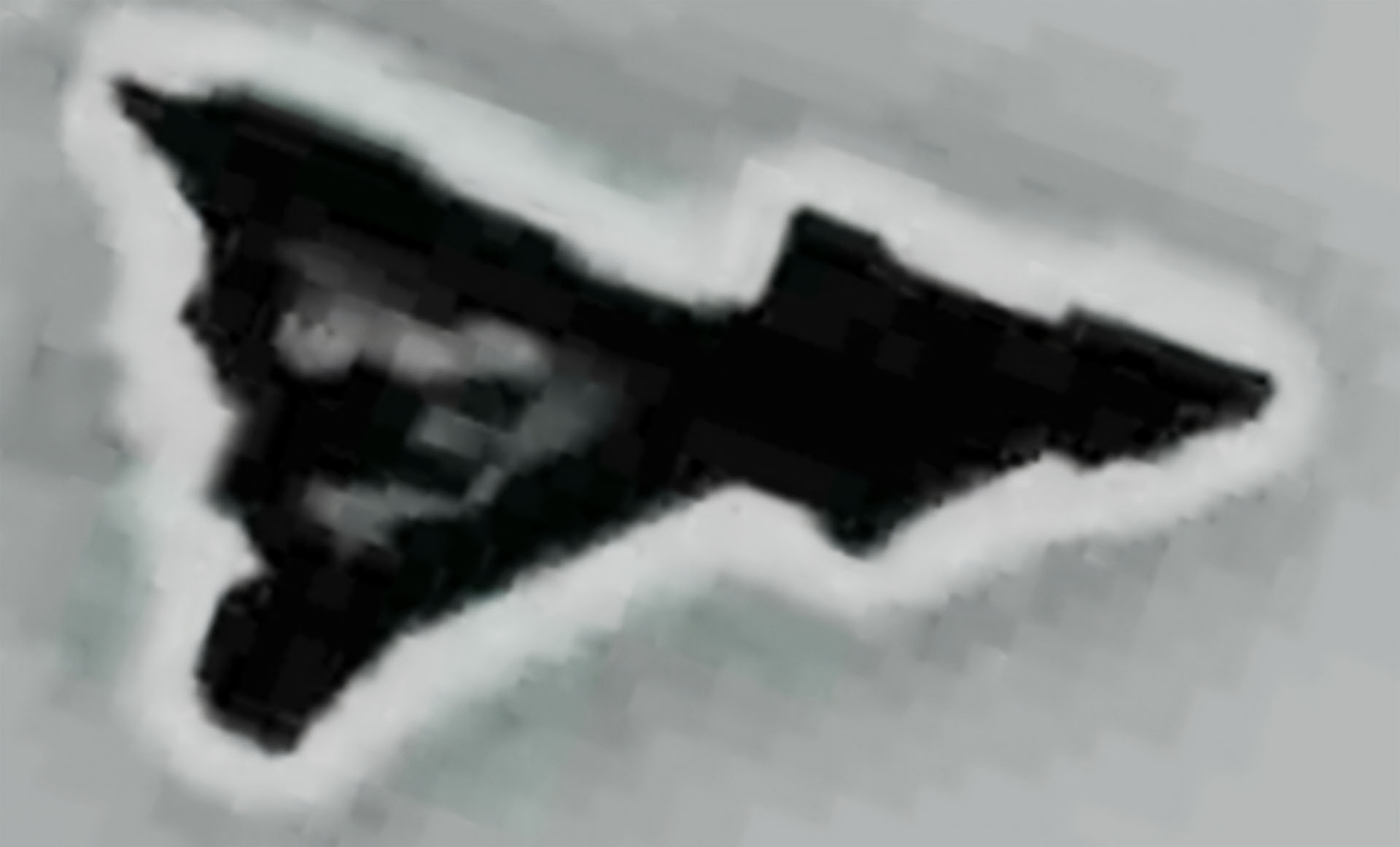
A thermal image purportedly shows a previously unseen aircraft design, said to have been captured when it was flying at night over the secretive Groom Lake facility, better known as Area 51. While the quality of the image is poor due to the sensor type that was supposedly used, from what we can see, the shape seems to be a relatively close match for what we know so far about the F-47 sixth-generation stealth fighter for the U.S. Air Force. This would point to it being the technology demonstrator ‘X-plane’ that served as a precursor to the contract being awarded to Boeing, although that is in no way a definitive assessment.

The image in question was first shared online by the Project Fear YouTube channel on June 3. The still image was promoted as a teaser for the full video that will be released tomorrow. It was published with the caption “A craft the public has never seen before.”

A craft the public has never seen before…
Video out this Friday. #ProjectFear #Area51 pic.twitter.com/8eOSJSUX1g

— Project Fear (@ProjectFearX) June 2, 2026

At this point, we need to be aware that there is no confirmation that the image is genuine, official or otherwise. We have reached out to the Air Force to try and establish its veracity, but they declined to comment.

However, the authenticity of the image and the forthcoming video was confirmed to TWZ by Anders Otteson, responsible for the Uncanny Expeditions YouTube channel, which explores classified locations at a distance around Nevada and California.

Otteson explained that he was approached by Project Fear, who was looking for advice in making a video outside Groom Lake.

“I’m generally happy to help other channels out, so I gave them a rundown on the gear I recommend buying, what specs are important, etc,” Otteson told us. “The thermal camera I suggested getting was the InfiRay HCH50R, and I can confirm that’s what this was shot with as I own one myself. I was out with them for their early filming and gave them a tour of some spots that I’ve had success spotting in the past. The following week is when they captured this aircraft.”

Otteson says the video was shot in the hills to the south of Rachel and that the aircraft was very low. He was not present during the sighting, which took place around two months ago, but Project Fear contacted him afterwards and shared the footage.

“I was obviously pretty excited when I saw it,” Otteson added.

While this may be the case, if the aircraft captured is real, the USAF likely shares the opposite sentiment.

Otteson also took to the r/area51 subreddit, where he further clarified his role and reiterated that the footage is, in his opinion, genuine.

“To be clear, my only involvement in this channel was an advisory role. I told them what equipment to buy and gave them general recommendations. I did go out with them but was not there at the time this clip was captured, though I was sent it immediately afterwards. I posted about this because I noticed some people calling it fake due to coming from a “paranormal” channel and wanted to clear that up. It is indeed real…” he wrote.

Otteson is certainly familiar with sightings of this kind. Earlier this year, he claimed to have captured thermal imagery of a ‘flying Dorito’-shaped aircraft that was also operating in the restricted airspace around Groom. The general triangular planform captured has a long history of rumored classified development going back to the dawn of stealth technology.

Newly released infrared footage dated January 14, filmed by videographer and explorer Anders Otteson, who runs a channel called Uncanny Expeditions on YouTube, shows an unidentified triangular-shaped aircraft flying over Area 51 and the Nevada Test and Training Range. pic.twitter.com/kQMmvI2tur

— OSINTdefender (@sentdefender) January 22, 2026

Among the many online discussions about this new image, it’s impossible not to make the connection with the Next Generation Air Dominance (NGAD) program, which Boeing won with its F-47 sixth-generation stealth fighter. That aircraft is now in early production for the U.S. Air Force.

An official rendering of the Air Force’s sixth-generation fighter, the F-47. U.S. Air Force graphic 

The image shows an exotic design by any interpretation. The aft-set lambda-type wings appear to have a camber and wingtip droop, as on the Boeing Bird of Prey demonstrator. There are very large canard foreplanes — a feature that appears prominently on F-47 renderings and which we have written in detail about in the past. The broad nose, too, is something that has been included in depictions of the F-47, although we have really no idea to what degree these are based in reality. It’s worth noting that in this new thermal image, it has a distinctive double-arrowhead shape, tapering in again in front of the canards. Even the canards themselves may have more than one plane, with the outer tips being drooped, matching similar architecture as the wing. The fuselage then tapers down in the center before the wing roots begin.

The Boeing Bird of Prey. U.S. Air Force

The aircraft is very likely to be tailless, a feature common to most sixth-generation concepts seen so far. However, since it’s seen from below, we cannot be sure about this aspect of its configuration.

As for the powerplant, it is most likely a twin-engine design, like the F-47, a theory reinforced by the sawtooth-type trailing edge. There is no obvious suggestion of any exhaust plumes, which seems odd, but that could be the result of the sensor being used in combination with the aircraft’s power setting at the time of recording, as well as general thermal signature reduction capabilities that are part of the design.

Soon after Boeing won the contract for the F-47, we looked at how it might have been influenced by the Phantom Works X-36, also a tailless-canard design.

Certainly, the official renderings of the F-47 have a superficial likeness to the X-36 Tailless Fighter Agility Research Aircraft, designed to be representative of a low-observable high-performance fighter.

An overhead view of the X-36. NASA

As Bill Sweetman, former editor-in-chief of Aviation Week and long-term observer of stealth programs, pointed out, the F-47 renderings also recalled some of the work of the late Alan Wiechman, who joined McDonnell Douglas from the Lockheed Skunk Works in the mid-1980s. He was responsible for the X-36 and the Bird of Prey. Sweetman also noted that, according to Wiechman’s obituary, he had ‘most recently’ been an adviser on stealth to the Air Force Rapid Capabilities Office.

So while everyone waits for the video of the A51 mystery plane, what did I write in March of last year?

"There are aspects of the artwork that call to mind the work of the late Alan Wiechman, who joined McDonnell Douglas… in the mid-1980s and headed the company’s stealth work… pic.twitter.com/9xJZK7CAOw

— Bill Sweetman (@ValkStrategy) June 4, 2026

Returning to the F-47, as far as we know, it has not flown yet, with the first example being under construction in St. Louis. Its first flight is expected in 2028.

On the other hand, as noted earlier, demonstrators associated with the NGAD program have taken to the air.

In 2020, it was first disclosed that at least one demonstrator design had already been flying for some years on behalf of NGAD.

Frank Kendall, when he was Secretary of the Air Force, also spoke openly about “X-planes,” in the plural, when describing the evolution of what became NGAD.

DARPA and the Air Force meanwhile confirmed that two X-planes were built for the Aerospace Innovation Initiative, and that they first flew in 2019 and 2022, respectively. Kendall further added that these were entirely experimental demonstrator aircraft and not reflective of a production prototype for a “tactical design.” They were built sometime after 2017, he said.

Frank Kendall, when he was Secretary of the Air Force. U.S. Air Force Secretary of the Air Force Frank Kendall. USAF

While we know that Boeing and Lockheed both built demonstrators, it’s possible that as many as three NGAD demonstrators were completed. This would reflect the fact that, at one point, three prime contractors or teams were involved, the other candidate being Northrop Grumman, which dropped out around 2023.

Now that the F-47 is in the engineering and manufacturing development (EMD) phase, we have speculated that the Boeing demonstrator and probably even the Lockheed Martin one are still doing test efforts, with the Boeing aircraft logically being used for risk reduction work while the EMD work continues.

Then there is the other NGAD effort being pursued separately by the U.S. Navy. The Navy program is also based around a crewed sixth-generation combat jet, known as F/A-XX. We know there is at least some crossover between the Air Force and Navy programs. The Navy has been especially tight-lipped about its F/A-XX program, and the aircraft seen could be a test asset related to it. In fact, it could be a direct descendant of the design that gave birth to the F-47, as Boeing’s renderings of their supposed entrant into the competition resemble the F-47. Again, we must state that renderings will be carefully manipulated prior to release to maximize security of the program and provide disinformation to adversaries. Still, the common through-lines are clearly there for the Boeing type.

Boeing’s F/A-XX render. Boeing

It’s also worth noting that the aircraft spotted on the thermal device does not match the aircraft seen in a satellite image at Area 51 during the time when the test effort for NGAD was underway. This could have been the Lockheed demonstrator or something else entirely.

Another possibility is that the aircraft in the thermal image is not a crewed next-generation fighter at all, but rather an advanced uncrewed combat air vehicle (UCAV). The U.S. military has invested heavily in stealthy drone programs in recent years, including highly classified systems designed for reconnaissance, electronic warfare, and loyal-wingman operations alongside crewed aircraft. Given the limited quality and single perspective of the thermal image, plenty of features could be misleading. It is therefore possible that the object is an experimental Collaborative Combat Aircraft or other uncrewed technology demonstrator rather than a prototype of a future sixth-generation fighter. However, while drones come in all configurations, the complexity of this aircraft design and its similarities to what we know about the F-47 make it being an unrelated uncrewed platform less likely. Area 51 also has many programs running at any given time, the vast majority of which we will never know about, so there have been and are many exotic designs that visit the airspace above the base for various reasons.

We can also say for sure that the aircraft in the new Area 51 image is fundamentally very different to the tailless new-generation combat aircraft designs that China is currently testing, the J-36 and the J-XDS, both of which you can read more about here.

A composite showing some of the images of the J-36 that have previously emerged. Chinese Internet via X
A pair of previously emerged images of the J-XDS. Chinese internet via X

It should also be noted that, provided the imagery is legitimate, its appearance at this point could well be a byproduct of an uptick in flight-test activity at Groom and elsewhere. This is something we had expected since the new era of great power competition began, and seems to be really metastasizing. With so many new technologies and systems in development, including entirely new categories of air combat aircraft, a whole new premium and level of activity is being placed on the base, as well as at non-classified facilities, like Edwards AFB.

At the same time, public insights into the activities at the already notoriously opaque base are becoming harder. In a recent land grab, the observation point at Tikaboo Peak — previously, the closest existing viewpoint into Area 51 — has been closed off in another huge land grab by the USAF.

So, as it sits, it isn’t clear exactly what we are seeing, if indeed it is a real aircraft, but there are strong indications that this is our first glimpse of the winning NGAD entrant and a preview of what the F-47 will look like when it finally thunders out of the shadows.

Contact the author: thomas@thewarzone.com

The post Is This A Glimpse Of The Aircraft That Gave Birth To The F-47? appeared first on The War Zone.

Russia’s Baltic Fleet Successfully Attacked By Ukrainian Drones

3 June 2026 at 17:39

The prestigious Russian Navy base at Kronstadt, near St. Petersburg, came under Ukrainian drone attack overnight, in what may well be the first strike of its kind against the Baltic Fleet. Ukrainian drones targeted the naval base, including the Project 20380 Steregushchiy class corvette Boikiy, highlighting the fact that Russian warships are vulnerable even when hundreds of miles from Ukraine’s borders.

According to the official account of the Ukrainian 414th Separate Unmanned Strike Aviation System Brigade on X, the corvette was set ablaze while in the Veleshchynskyi dry dock in Kronstadt, where it is said to have entered scheduled maintenance in February of this year. The same account posted a video showing the attack. While we are used to kamikaze drone video feeds cutting out just before detonation, the fact that multiple drones were involved means we can see the burning vessel from several angles.

KRONSTADT (St. Petersburg), June 3.
Birds of the @1usc_army, @usf_army hunted down and set ablaze the corvette Boikiy, a guided missile weapons carrier.

06:35, 03.06.26. Veleshchynskyi Dry Dock, Kronstadt (St. Petersburg) – the cradle of the russian Navy.

Tired after its… pic.twitter.com/2HjrlyVKdc

— 414 Magyar's Birds (@414magyarbirds) June 3, 2026

Reportedly, the drones that hit the corvette were from the 1st Separate Center of Ukraine’s Unmanned Systems Forces. Considering the long distance to the target, it is interesting to note that video from the seekers was available. This indicates that either a local operator on the ground was involved in targeting and recording the feed, or otherwise a satcom link was used to do the same. While it is conceivable that the drones used autonomous guidance, they would still have needed someone nearby or connected via satcom to record the seeker’s view. Another possibility is that shorter-range drones were used for the attack, something that Ukraine has done before for attacks deep in Russia, although this seems less likely here.

A drone’s eye view of the Russian corvette Boikiy ablaze in the Veleshchynskyi dry dock in Kronstadt. Ukrainian Ministry of Defense screencap

Ukraine’s Unmanned Systems Forces stated that the Boikiy was involved in escorting ships associated with Russia’s so-called shadow fleet, the collection of older tankers operating under foreign flags that Moscow relies on to export oil despite Western sanctions. According to Ukrainian officials, Russia has increasingly tasked Baltic Fleet vessels with escort, monitoring, and security missions for these tankers as they transit the Baltic Sea carrying sanctioned Russian oil to markets prepared to bypass Western restrictions.

The Steregushchiy class ships are among Russia’s more modern corvettes. With a standard displacement of 1,800 tons, a length of 343 feet, and a flight deck for a helicopter, the corvettes are closer to frigates, according to some classification systems. Their primary armament consists of two quadruple launchers for Uran anti-ship missiles, a 12-cell Redut vertical launch system for various air defense missiles, and two quadruple tubes for Paket-NK anti-torpedo/anti-submarine torpedoes.

The British offshore patrol vessels HMS Mersey and HMS Severn shadow the Russian corvette Boikiy in the English Channel in 2017.

The attack on the naval base was part of a wider Ukrainian drone barrage directed against other military and energy sites in and around St. Petersburg early on Wednesday. Footage of the attacks showed drones, reportedly FP-1/2 types, low over the Gulf of Finland and in the skies above the city.

A video published online shows a Ukrainian FP-1 drone flying just a few meters above the water in the Gulf of Finland during the morning attack on Saint Petersburg. pic.twitter.com/ZTtGb71zdT

— WarTranslated (@wartranslated) June 3, 2026

The attacks occurred just hours before international guests gathered for the city’s flagship economic forum. “The Petersburg forum is opening with a nice plume of black smoke in the background after Ukrainian strikes,” posted Serhiy Sternenko, an adviser to the Ukrainian defence minister.

Smoke is rising over Kronstadt also.

Naval base there, some ships could be hit
https://t.co/RY3SGUIPBd pic.twitter.com/LytOUoXZWu

— Liveuamap (@Liveuamap) June 3, 2026

Several long-range drones also crashed into oil storage facilities in St. Petersburg after Russian air defenses reportedly tried unsuccessfully to shoot them down. Loud explosions were heard, and black smoke could be seen rising from the blazing oil terminal, one of the largest on Russia’s Baltic Sea coast.

In this footage you can even see two Ukrainian drones flying in formation over the oil terminal in Saint Petersburg, Russia, with one dive-bombing into the oil terminal. pic.twitter.com/eMUdpwsDiz

— (((Tendar))) (@Tendar) June 3, 2026

The entire city of Saint Petersburg, Russia, received a front row seat for the destruction of the local oil terminal. This includes also the attendees of St. Petersburg International Economic Forum (SPIEF), which will start today. pic.twitter.com/HxDsF6kQ6p

— (((Tendar))) (@Tendar) June 3, 2026

Russian authorities confirmed that the attacks had taken place, with St. Petersburg’s governor, Alexander Beglov, saying that the Kirovsky and Krasnoselsky districts had been targeted.

Ukrainian President Volodymyr Zelensky, writing on social media, said that drones had hit “important facilities on Russian territory,” including the St. Petersburg oil terminal, the Kronstadt base, and a weapons factory in the Tambov region.

“I thank our warriors for their precision. Ukraine’s plan for long-range sanctions is being implemented exactly as needed to bring peace closer,” Zelensky said.

Our long-range sanctions carried out by the warriors of the Security Service of Ukraine, the Unmanned Systems Forces, the Special Operations Forces, the Defense Intelligence of Ukraine, and the State Border Guard Service of Ukraine have yielded good results. Important facilities… pic.twitter.com/esxYMexU8d

— Volodymyr Zelenskyy / Володимир Зеленський (@ZelenskyyUa) June 3, 2026

The significance of the strikes is manifold.

First off, the drone strikes have a highly symbolic value, and will be especially embarrassing for the Kremlin, since they come immediately in advance of the three-day annual summit being held in St. Petersburg, and billed as Russia’s answer to Davos.

The Saint Petersburg International Economic Forum of 2026 (SPIEF 2026) in Russia has started with a very fiery keynote speech by the Ukrainian surprise guests. pic.twitter.com/VVIuGcQCO7

— (((Tendar))) (@Tendar) June 3, 2026

FP-1 drones fully demonstrating the greatness of Putin's regime ahead of the St Petersburg Economic Forum. https://t.co/cgFNw24Xum pic.twitter.com/ztGCVHGEWQ

— Anton Gerashchenko (@Gerashchenko_en) June 3, 2026

Guests arrived for today’s opening ceremony under a pall of thick smoke, and Russian President Vladimir Putin is due to make a keynote speech at the event on Friday. There was further disruption for arriving guests as St. Petersburg’s airport was temporarily closed.

Secondly, the drone strikes underscore Ukraine’s ability to strike targets deep within Russia, using a growing array of long-range one-way attack drones and cruise missiles. The targets are around 680 miles from the nearest Ukrainian border.

The approximate location of Kronstadt and St. Petersburg in relation to Ukraine. Google Earth

Finally, by targeting Kronstadt, the attacks also signify the opening up of a new front in the drone war, namely against the Baltic Fleet while it is in port.

A fire has reportedly broken out aboard the Russian warship Boykiy in Kronstadt near St. Petersburg following Ukraine’s latest drone attack.

The corvette repeatedly escorted vessels from Russia’s shadow oil fleet through the English Channel in recent years. pic.twitter.com/Zhsn3nVsVp

— KyivPost (@KyivPost) June 3, 2026

Located on Kotlin Island in the Gulf of Finland, about 18 miles west of St. Petersburg, Kronstadt is one of the principal bases associated with the Baltic Fleet. Today, it primarily hosts corvettes and patrol vessels, naval support ships, training units, as well as repair and maintenance facilities. Since any naval threat approaching St. Petersburg from the Gulf of Finland must pass near Kronstadt, the base effectively acts as the maritime gateway to Russia’s second-largest city.

The approximate location of Kronstadt, at the gateway to St. Petersburg, and at the far east end of the Baltic. Google Earth

There have been very few confirmed Ukrainian attacks of any kind on the Baltic Fleet compared with the extensive campaign waged against Russia’s Black Sea Fleet.

In April 2024, there was a fire on a Russian warship at Baltiysk in Kaliningrad. The fire damaged communications and electronic systems aboard the Buyan class corvette Serpukhov. A Ukrainian military intelligence official subsequently claimed that this was the result of a covert joint operation conducted by his GUR agency and a pro-Kyiv Russian military group.

📹 For the first time in the war, an attack took place in the Baltic Sea, the Russian Serpukhov missile ship was burned in Kaliningrad.
The Buyan-M class Serpukhov corvette belonging to the Russian navy was burned by Ukrainian sabotage teams.
The ship was severely damaged. pic.twitter.com/Isl9sVWF1R

— Mete Sohtaoğlu (@metesohtaoglu) April 9, 2024

So far, of course, Ukraine’s naval campaign has focused overwhelmingly on the Russian Black Sea Fleet. Many successful attacks have been recorded against Black Sea Fleet vessels and facilities, forcing the general evacuation of Russian naval assets from occupied Crimea and to bases in Russia proper.

In recent months, Ukraine has waged an aerial campaign to disrupt Russia’s economy. Long-range drones have hit ports and oil storage facilities, military factories, and airbases. There has also been an uptick in attacks against tankers and trucks moving between occupied southern Ukraine and Crimea, leading to fuel shortages across the peninsula.

Meanwhile, the scale of Russian missile and drone attacks on Ukraine remains undiminished. On Monday, a barrage of Russian strikes killed 23 people across Ukraine and injured many more. This led Zelenskyy to renew his plea for the U.S. government to provide Kyiv with more Patriot missiles. Today, he said that “an agreement at the highest political level on the purchase of Patriot systems […] is awaiting implementation at the financial, legal, and technical levels.”

I held a meeting on additional ways to supply air defense to Ukraine – both systems and interceptors. We have an agreement at the highest political level on the purchase of Patriot systems, and this agreement is awaiting implementation at the financial, legal, and technical…

— Volodymyr Zelenskyy / Володимир Зеленський (@ZelenskyyUa) June 3, 2026

Whether or not the overnight strike caused significant damage, its strategic message was unmistakable. By reaching Kronstadt, one of Russia’s most historic naval bases, Ukraine demonstrated that even the Baltic Fleet is no longer beyond its reach. The attack highlights Kyiv’s growing long-range capabilities and signals that Russia’s efforts to protect both its regular fleet and its shadow oil-export network may face increasing pressure, even far from the front lines.

Contact the author: thomas@thewarzone.com

The post Russia’s Baltic Fleet Successfully Attacked By Ukrainian Drones appeared first on The War Zone.

The USMC’s AV-8B Harrier Has Flown Off Into The Sunset

3 June 2026 at 14:42

The unmistakable howl of the AV-8B Harrier II has been a soundtrack to U.S. Marine Corps aviation for more than four decades. From the deserts of the Middle East and Afghanistan to the decks of amphibious assault ships at sea, the aircraft’s ability to take off from short runways, operate from austere forward bases, and land vertically made it one of the most distinctive combat aircraft ever to wear American markings. Before then, its predecessor, the first-generation AV-8A Harrier, had pioneered the ‘jump jet’ in U.S. service, after entering Marine Corps service in 1971.

Now, that illustrious era has come to an end.

A Marine plane captain, from Marine Attack Squadron 223, Cherry Point, North Carolina, observes pre-flight checks of an AV-8B Harrier at Gowen Field, Boise, Idaho, April 19, 2021. The checks are designed to operational check various flight controls of the aircraft.
A Marine plane captain from Marine Attack Squadron 223, Cherry Point, North Carolina, observes pre-flight checks of an AV-8B at Gowen Field, Boise, Idaho, in April 2021. U.S. Air National Guard photo by Senior Master Sgt. Joshua C. Allmaras

In a ceremony today, the Marine Corps said its official farewell to the AV-8B when its final operational Harrier II squadron, Marine Attack Squadron 223 (VMA-223), known as the “Bulldogs,” marked the retirement of the aircraft at Marine Corps Air Station Cherry Point, North Carolina.

The event closes a remarkable chapter in Marine aviation history. The Harrier’s departure marks more than the retirement of an aircraft; it represents the conclusion of a concept that shaped Marine air power for generations and helped define the Corps’ expeditionary character.

U.S. Marine Corps AV-8B Harrier II aircraft with Marine Attack Squadron (VMA) 223, Marine Aircraft Group 14, 2nd Marine Aircraft Wing, fly over the coast of North Carolina, May 15, 2026. The “sundown” of the AV-8B Harrier II, an iconic aircraft that has supported joint and Marine Corps operations for over 40 years, also represents the dawn of a new era; it paves the way for 2nd MAW’s full transition to the F-35B and C Lightning II. (U.S. Marine Corps photo by Lance Cpl. Perri Wood)
U.S. Marine Corps AV-8Bs with Marine Attack Squadron 223, Marine Aircraft Group 14, 2nd Marine Aircraft Wing, fly over the coast of North Carolina on May 15, 2026. U.S. Marine Corps photo by Lance Cpl. Perri Wood

The Harrier was more than just another attack jet. It was the embodiment of the Marine Corps’ longstanding determination to bring airpower wherever Marines fought, regardless of whether a conventional airfield existed.

The Harrier’s story began long before the AV-8 entered U.S. military service. Derived from the British Hawker Siddeley Harrier jump jet, the aircraft was built around a revolutionary concept: vertical and short takeoff and landing, or V/STOL. Using swiveling engine nozzles, the aircraft could launch from improvised sites, roads, damaged airfields, and the decks of even relatively small ships. During the Cold War, when planners feared that traditional runways would be among the first targets destroyed in a major conflict, the concept had obvious appeal, but it was only the Harrier that saw real success as a V/STOL combat jet.

The Marine Corps embraced the idea early on. While the first-generation AV-8A proved the concept, the AV-8B Harrier II transformed it into a truly capable battlefield strike aircraft. The AV-8B featured a larger composite wing, improved performance, greater payload capacity, and significantly enhanced avionics. Later upgrades introduced night-attack capabilities and radar-equipped AV-8B Plus variants, keeping the aircraft relevant well into the 21st century. In recent years, all the Marine single-seaters still in service were ‘radar birds’ equipped with the AN/APG-65 radar that was ported over second-hand from F/A-18A/B Hornets and which conferred a significant air-to-air capability.

150719-N-NP779-003 INDIAN OCEAN (July 23, 2015) – Marine Sgt. Richard Szmygiel, from Oceanside, N.Y., and Marine Cpl. Erin Smith, from Spokane, Wash., VMA 311 ), work on a RADAR in the nose of an AV8B Harrier on the flight deck onboard forward-deployed amphibious assault ship USS Bonhomme Richard (LHD6). Bonhomme Richard is the lead ship of the Bonhomme Richard Expeditionary Strike Group and is on patrol in the U.S. 7th Fleet area of responsibility. (U.S Navy photo by Mass Communication Specialist 1st Class Ty C. Connors/ Released)
Marines work on the radar in the nose of an AV-8B on the flight deck of the amphibious assault ship USS Bonhomme Richard (LHD-6). U.S Navy photo by Mass Communication Specialist 1st Class Ty C. Connors/ Released

What made the Harrier exceptional was not simply its ability to hover. Its real value lay in its flexibility. Marine commanders could position Harriers close to frontline forces, reducing response times and increasing the effectiveness of close air support missions. The aircraft became a natural fit for Marine Expeditionary Units operating from amphibious assault ships, where its unique capabilities allowed fixed-wing tactical aviation to accompany Marines far from traditional airfields or aircraft carriers.

An AV-8B Harrier assigned to Marine Attack Squadron (VMA) 311 lands aboard the Tarawa-class amphibious assault ship USS Peleliu (LHA 5) as it steams through the South China Sea. Peleliu is the flaghsip of the Peleliu Expeditionary Strike Group and is on a scheduled deployment. (U.S. Navy photo/Petty Officer 2nd Class Scott Webb)
An AV-8B assigned to Marine Attack Squadron 311 lands aboard the amphibious assault ship USS Peleliu (LHA-5) as it steams through the South China Sea in June 2008. U.S. Navy photo/Petty Officer 2nd Class Scott Webb

The Harrier quickly earned its combat credentials.

During Operation Desert Storm in 1991, Marine Harriers flew thousands of sorties in support of coalition ground forces. The aircraft demonstrated its ability to sustain a high operational tempo while flying in demanding conditions. In the decades that followed, Harriers participated in virtually every major Marine Corps combat operation, including missions over the Balkans, Afghanistan, Iraq, Libya, and against ISIS.

Two Marine Corps AV-8B Harrier aircraft are given final preflight checks as their pilots prepare for takeoff from the amphibious assault ship USS NASSAU (LHA-4) during Operation DESERT SHIELD. (USN PHOTO BY PH1(AC) SCOTT M. ALLEN DN-ST-91-11239)
Two Marine Corps AV-8Bs are given final preflight checks as their pilots prepare for takeoff from the amphibious assault ship USS Nassau (LHA-4) during Operation Desert Shield. U.S. Department of Defense

The post-9/11 period of relentless operations arguably became the Harrier’s defining period. The AV-8B was a natural fit for counterinsurgency warfare. Equipped with advanced targeting pods and precision-guided munitions, Marine Harriers became a common sight over Iraq and Afghanistan, where their ability to remain close to ground forces made them particularly valuable.

Yet, even as the Harrier continued proving its worth in combat, its future was becoming increasingly uncertain.

Lt. Col. Thomas D. Gore, former commanding officer of Marine Attack Squadron 223, and a native of Tampa, Fla., pilots an AV-8B Harrier over the Kajaki Dam in Helmand province, Afghanistan, Nov. 20. From November 2011 to May 2012, VMA-223 provided close-air support for Marines and their Afghan and coalition partners conducting counterinsurgency operations in southwestern Afghanistan.
Lt. Col. Thomas D. Gore, former commanding officer of Marine Attack Squadron 223, pilots an AV-8B over the Kajaki Dam in Helmand province, Afghanistan. Between November 2011 and May 2012, VMA-223 provided close air support for Marines and their Afghan and coalition partners conducting counterinsurgency operations in southwestern Afghanistan. U.S. Department of Defense

The aircraft’s age, maintenance demands, and limited growth potential eventually caught up with it. The jet was also notably demanding on its pilots, requiring a unique training syllabus to operate safely and efficiently.

Looking toward the demands of future potential conflicts against sophisticated adversaries, Marine aviation planners concluded that its next jump jet would require stealth, advanced sensors, networked warfare capabilities, and greater overall survivability than a fourth-generation attack aircraft could provide.

The answer was the F-35B Lightning II.

Like the Harrier, the F-35B possesses short takeoff and vertical landing capability. Unlike the Harrier, however, it combines that flexibility with stealth technology, sensor fusion, powerful electronic warfare systems, and the ability to operate as an intelligence-gathering node across the battlespace. For Marine aviation leaders, the F-35B offered a path to preserve the expeditionary advantages pioneered by the Harrier while dramatically expanding combat capability. You can read more about the changes the F-35B is bringing to Marine Corps tactical aviation here and here, as well as on-scene reporting of its operations from an improvised forward arming and refueling point, here.

Chief Aviation Boatswain’s Mate (Handling) Derek Kropfl, assigned to the Wasp-class Amphibious assault ship USS Essex (LHD 2), directs an F-35B Lighting II attached to Marine Fighter Attack Squadron (VMFA) 211 to take off during flight deck operations April 22, 2026. Essex is currently underway conducting routine operations. (U.S. Navy photo by Mass Communication Specialist Seaman Ivan A. Garcia)
An F-35B attached to Marine Fighter Attack Squadron 211 is directed to take off from the amphibious assault ship USS Essex (LHD-2), during flight deck operations on April 22, 2026. U.S. Navy photo by Mass Communication Specialist Seaman Ivan A. Garcia
An F-35B about to be rearmed with inert AIM-120 missiles and Stormbreaker guided munitions on a stretch of road next to the Pacific coastline in California. James Deboer

Notably, however, the service is also procuring F-35C versions that can operate from big-deck aircraft carriers, as well as land bases.

One by one, Marine Harrier squadrons began converting to the F-35B. Aircraft were retired, maintainers retrained, and pilots transitioned to the new platform. The process accelerated as the Marine Corps pursued broader modernization efforts focused on preparing for future conflicts, particularly in the Indo-Pacific region.

The transition fully away from the Harrier was outlined in the 2022 Marine Aviation Plan. U.S. Marine Corps

The signs of the Harrier’s approaching retirement became increasingly visible. In 2024, the final two Marine pilots completed AV-8B qualification training, becoming the last aviators ever designated as Harrier pilots by the Corps. Their graduation marked the beginning of the end for the ‘Flying Leatherneck’ Harrier community.

U.S. Marine Corps Maj. Eric Shiebe, left, from Georgia, an AV-8B Harrier pilot and executive officer, and Sgt. Tatiana Rios, right, from Wisconsin, a fixed wing aircraft airframe mechanic, both with Marine Attack Squadron (VMA) 223, Marine Aircraft Group 14, 2nd Marine Aircraft Wing, participate in an incentive flight at Marine Corps Air Station Cherry Point, North Carolina, May 19, 2026. Incentive flights provide an opportunity for Marines within the squadron to ride in the back of a TAV-8B Harrier II as a reward for exceptional job performance. (U.S. Marine Corps photo by Lance Cpl. Bryan Giraldo)
U.S. Marine Corps Maj. Eric Shiebe, an AV-8B Harrier pilot and executive officer, and Sgt. Tatiana Rios, a fixed-wing aircraft airframe mechanic, both with Marine Attack Squadron 223, participate in an incentive flight at Marine Corps Air Station Cherry Point, North Carolina, May 19, 2026. U.S. Marine Corps photo by Lance Cpl. Bryan Giraldo

The final operational chapter belonged to VMA-223, which carried the Harrier banner to the very end. Their deployment aboard the amphibious assault ship USS Iwo Jima (LHD-7) represented the last operational deployment of Marine Corps Harriers.

As part of the Iwo Jima Amphibious Ready Group (ARG), the 22nd Marine Expeditionary Unit and its Harriers were part of Operation Southern Spear, the U.S. strikes on boats suspected of carrying illicit narcotics in the Caribbean. The Iwo Jima ARG was also in the region for the U.S. operation to capture Venezuelan President Nicolás Maduro, earlier this year.

When the squadron completed its mission and the final aircraft returned home, the countdown to retirement entered its final phase.

For the Marines who flew and maintained the aircraft, the retirement is bittersweet.

The Harrier demanded respect. Its unique flight characteristics and vertical landing operations required exceptional skill from pilots. Maintainers often worked tirelessly to keep aging aircraft mission-ready. Yet those challenges helped create a close-knit community built around a platform unlike any other in American service.

An AV-8B Harrier and an F-35B Lightning II are staged during the change of command and redesignation ceremony for Marine Fighter Attack Squadron (VMFA) 214 aboard Marine Corps Air Station Yuma, Arizona, March, 25, 2022. As part of the transition from the AV-8B Harrier to the F-35B Lightning II, Marine Attack Squadron 214 was re-designated as VMFA-214. The F-35B Lightning II is replacing the AV-8B Harrier to introduce unmatched capabilities to the Marine Corps. The F-35B Lightning II represents a leap forward in air dominance by providing the operational agility and tactical supremacy Marines need to provide expeditious and lethal support.(U.S. Marine Corps photo by Sgt. Samuel Ruiz)
An AV-8B and an F-35B during the change of command and redesignation ceremony for Marine Fighter Attack Squadron 214 at Marine Corps Air Station Yuma, Arizona, in March 2022. U.S. Marine Corps photo by Sgt. Samuel Ruiz

In proving that fixed-wing tactical aviation can operate from challenging locales, the Marine Harrier continued a concept of operations that the service had pioneered in the Pacific in World War II. It gave Marine commanders unprecedented flexibility and reinforced the Corps’ expeditionary identity. Long before concepts such as distributed operations and expeditionary advanced bases became buzzwords, the Harrier proved that combat aircraft could operate from unconventional locations and support dispersed forces.

As the Harrier’s designated successor, it is fitting that the F-35B preserves the ability to operate from amphibious ships and austere locations while adding capabilities unimaginable when the AV-8B first entered service.

Still, there will never be another aircraft quite like the AV-8B, especially as far as charisma is concerned, and the type was a firm airshow favourite.

As the final Marine Corps Harriers make their last flights, they leave behind an enduring influence on Marine aviation doctrine and expeditionary warfare. While the United Kingdom gave up its Harrier IIs in a rushed retirement that you can read more about here, the AV-8B remains in frontline service in smaller numbers with Italy and Spain. It remains to be seen if a customer for former Marine Corps Harriers will come forward, but these aircraft remain capable and offer unique capabilities, something we have addressed in the past.

The Marine Corps jump jet era is over. But the impact of the Harrier, and the men and women who flew and maintained it, will continue to shape Marine aviation for years to come.

Contact the author: thomas@thewarzone.com

The post The USMC’s AV-8B Harrier Has Flown Off Into The Sunset appeared first on The War Zone.

Are Ukrainian Mirage 2000s Now Flying Air-To-Ground Strike Missions?

2 June 2026 at 18:36

A French-made Mirage 2000-5F, streaking low over Ukraine in a newly emerged video, provides a relatively rare glimpse of the fighter in Ukrainian Air Force service. Compared with the more numerous F-16 fleet, Ukrainian Mirage operations are much less widely seen. Until now, accounts and imagery have shown the delta-wing fighters being used for air-to-air missions, primarily in the fight against Russian long-range attack drones and cruise missiles. The latest footage may suggest that they now have started to embark on air-to-ground sorties, too.

Some of the first footage of a French-supplied Mirage 2000-5F in Ukrainian service conducting a strike mission on the eastern frontline.

Seen here screaming just a few dozen feet over the ground before tossing its load of bombs (likely French AASMs) at a Russian target. pic.twitter.com/EEHgNxIxUg

— OSINTtechnical (@Osinttechnical) June 2, 2026

The footage, taken from a ground position possibly close to the front lines, shows a Mirage flying at a very low-level along a tree line, before pulling up into a steep climb. Potentially, the jet was engaged in an air defense patrol before pulling up to transit outside of the ground-based air defense threat ‘umbrella,’ but this exact maneuver is one we have frequently seen for air-to-ground weapons releases from other platforms.

While the moment of weapons release is not visible, the flight profile is consistent with toss bombing attacks. In particular, the French-made AASM-250 Hammer rocket-boosted munition, associated with the Mirage, has often been seen delivered by other platforms using this technique, which is exactly how the weapon was designed to be used, among other modes of delivery.

Footage reportedly showing Ukrainian MiG-29 fighter jet firing French-supplied AASM-250 Hammer guided bombs at a target in Belgorod Oblast of Russia.

Notice the very low altitude from which the munitions are being launched.

Geolocated impact point: Nekhoteevka border crossing,… pic.twitter.com/mGGuqRAmyK

— Status-6 (War & Military News) (@Archer83Able) June 27, 2024

A video of the moment of release of two French-supplied AASM-250 Hammer guided bombs from a Ukrainian MiG-29 fighter jet.

The pilot of this particular airframe, 27-year-old Captain Oleksandr Myhulia, perished while performing a combat mission on August 12, 2024.… pic.twitter.com/yNEbbaFUPt

— Status-6 (War & Military News) (@Archer83Able) August 14, 2024

After all, toss bombing is a key way to help mitigate the risks to combat jets over the battlefield, specifically ground-based air defenses. Russia’s surface-to-air missile umbrella is well layered and penetrates far beyond the front lines.

“Obviously, the lower you are, and the further away from the surface-to-air missiles that can detect you because of the curvature of the Earth” affect how far the bomb can travel, U.S. Air Force Gen. James Hecker, head of U.S. Air Forces in Europe (USAFE), as well as NATO’s Allied Air Command and U.S. Air Forces Africa (AFAFRICA), explained back in 2023. Hecker was speaking about Ukraine’s use of unpowered JDAM-ER glide bombs, but the same applies to Hammer. “There are tactics where you can go in low and do some things… and get back,” Hecker added.

Head-on view of a Ukrainian Mirage 2000 at a forward operating location. Ukrainian Air Force screencap

The toss/lofted technique does not reduce the accuracy of the Hammer or the U.S.-supplied JDAM-ER, which both come as standard with GPS-assisted inertial navigation system (INS) guidance packages that allow them to zero in on set coordinates even when employed indirectly.

Additionally, the Hammer can offer multi-mode guidance options with either imaging infrared or semi-active laser homing added in, which enables the engagement of moving targets and helps improve overall accuracy. This also offers alternative guidance options in GPS-degraded environments against some targets. So far, however, only the GPS/INS version has been positively identified in Ukrainian service.

A GPS/INS-guided AASM-250 Hammer rocket-assisted precision-guided bomb under the wing of a Ukrainian MiG-29 Fulcrum. via X

Hammers come in a variety of sizes, but Ukraine is understood to have received 250-kilogram (551-pound) class types, also sometimes referred to as AASM-250s.

To date, the Hammer has been seen in use on Ukrainian Air Force MiG-29 Fulcrums, which appear to be the service’s primary launch platform for the munitions, at least so far. Ukraine has also integrated the French-made bombs onto its Su-25 Frogfoot attack jets.

Low pass by a Ukrainian Air Force MiG-29, armed with a French-supplied AASM 250 HAMMER extended-range guided bomb. pic.twitter.com/FlibJ9VZfm

— OSINTtechnical (@Osinttechnical) March 15, 2024

Hammer’s solid-fuel rocket booster also gives the bomb unique benefits. The manufacturer, Safran, says the AASM-250 version can still hit targets at least up to nine miles away (15 kilometers) when released from low altitude. This can increase to around 43 miles (70 kilometers) when launched from higher altitude.

In its original form, the Mirage 2000-5F was not cleared to use the Hammer, reflecting the fighter’s primary air defense mission in French service. However, in March of last year, France confirmed that the Mirages being transferred to Ukraine would have Hammer compatibility. In the past, the Mirage has been tested in France with a six-Hammer load-out.

Today, France confirmed that Ukrainian Air Force Mirage 2000-5Fs will be outfitted with AASM extended-range guided bombs, giving Ukraine another capable strike platform.

Previously, a French Mirage 2000-5F was tested with a massive loadout of up to 6 AASM-250s. https://t.co/qSPdQ5GLHR pic.twitter.com/g2mB8WEpVr

— OSINTtechnical (@Osinttechnical) March 10, 2025

Earlier this year, the Ukrainian Air Force published a video including brief interviews with a Mirage pilot, as well as two members of the ground crew. The unnamed Mirage 2000 fighter pilot came to the delta-wing jet after serving on the Soviet-era Su-27 Flanker.

“Now I pilot the Mirage 2000, and my impressions of this aircraft are extremely positive,” he explained. “I trained in the French Republic together with French fighter pilots for about six months. I learned to fly and employ weapons on the twin-seat Mirage 2000B. Later, we transitioned to the single-seat version, the very aircraft I am flying now.”

The Ukrainian Mirage 2000 pilot in his jet. Ukrainian Air Force screencap

Two Ukrainian Air Force fighter jet technicians, David and Dmytro, shared their experiences of day-to-day combat operations with the Mirage.

“Right now, we’re at a forward operating airfield, our third one this week,” David pointed out, indicating the missile-armed Mirage behind him. “The enemy constantly tries to destroy our aircraft and equipment. Our forward team keeps relocating from site to site.”

Ukraine’s F-16s also routinely operate from dispersed locations around the country, supported, among others, by a fleet of vehicles dedicated to helping maintain them, as you can read about here. Moreover, these kinds of operations, and the challenges of generating air combat power under the constant threat of Russian attack, are something that is being keenly felt in the U.S. military. After all, the Pentagon is planning to operate crewed and uncrewed aircraft from distributed forward locations in future high-end fights, such as one against China in the Pacific. These concepts of operations would also be relevant in the event of a major conflict elsewhere in Europe.

Dmytro added: “During our last combat mission, we came under fire [from Shahed-series long-range one-way attack drones] and missiles, but fortunately, we managed to evacuate the aircraft and save our lives.”

The pilot and technicians praised the Magic 2 infrared-guided air-to-air missile that appears to be the primary air-to-air armament of the Ukrainian Mirage.

Ukrainian Mirage 2000 armed with a Magic 2 missile. Ukrainian Air Force screencap

“It has performed exceptionally well,” one technician said, before claiming that it has a kill probability of “practically 100 percent.”

The pilot further added that the kill probability against enemy drones and cruise missiles stands at 98 percent. No mention was made of the Mirage’s twin onboard 30mm cannons, although these are shown in detail in the video.

A 30mm DEFA 553 cannon on a Ukrainian Mirage 2000. Ukrainian Air Force screencap

As regards air-to-air kills, the particular Mirage seen in the video from earlier this year is marked with six silhouettes denoting Russian Kh-101 air-launched cruise missiles.

However, as the ground crew points out, another six still needed to be added to the same jet.

Six Kh-101 kill markings on a Ukrainian Mirage 2000. Ukrainian Air Force screencap

The prosaic reason behind this: “We don’t always have stencils with us at forward airfields… Sometimes we simply don’t have the time to apply all the markings.”

The reason the Mirage is less frequently seen in Ukrainian hands is chiefly due to numbers.

It’s unclear exactly how many Mirages have now been pledged to Ukraine by France. At first, France offered six, but last October, French President Emmanuel Macron said he would offer more. At least one has so far been lost in Ukrainian service.

On the subject of improving the combat potential of the Ukrainian Air Force, the pilot made a call for continued development, including “more modern aircraft [and] more modern weapons to counter the horde threatening us.” The appearance of the Hammer would provide evidence that this aspiration is being, to some extent, met.

Pre-flight checks on a Ukrainian Mirage 2000 at a forward operating location. The RDY marking behind the radome indicates the RDY radar, a mechanically scanned pulse-Doppler type with look-down/shoot-down capability, found on the Mirage 2000-5F version. Ukrainian Air Force screencap

As regards the particular deficiencies of the Mirage, the pilot said: “In my opinion, and in the opinion of my fellow pilots, this aircraft lacks longer-range air-to-air weapons.” He called for a weapon that represents “something in the middle ground between efficiency and cost so that we can engage the massive number of enemy aerial threats we face.”

It’s unclear if the pilot in question was including the more modern and capable MICA air-to-air missile within this assessment.

The first imagery of Ukrainian Mirages showed the jets exclusively armed with a pair of Magic 2 missiles, broadly analogous to the AIM-9L Sidewinder, rather than the MICA that the aircraft can also carry. At the start of this year, however, the MICA also began to appear on the fighters.

Ukrainian Mirage 2000 fighters have been equipped with French MICA medium-range air-to-air missiles to counter Russian air targets. https://t.co/AuliNF5G7i pic.twitter.com/y5zXa9vgKQ

— Special Kherson Cat 🐈🇺🇦 (@bayraktar_1love) January 5, 2026

Unusual for a modern Western beyond-visual-range AAM, the MICA can be fitted with either an active radar seeker or an infrared seeker head. When using the latter option, the seeker can act as a ‘poor man’s’ infrared search and track system and provide target detection indication in the pilot’s head-up display (HUD).

The MICA uses a thrust-vectoring motor for improved agility and has a reported maximum range of around 37 miles, far superior to the roughly nine-mile range of the Magic 2.

Despite the arrival of Western-supplied equipment, Ukraine continues to rely heavily on its Soviet-era fighters. The entirety of its combat fleet — Mirages and F-16s included — is in the latter stages of its service life and needs to be replaced before too long. With that in mind, Kyiv is planning to bolster its air force with more modern equipment.

“If I had the opportunity to transition to another aircraft superior to the Mirage, I would probably choose the Rafale,” the pilot continued. “It’s from the same country, and retraining for the Rafale would be much faster than transitioning to aircraft from other nations. The Rafale can also carry the Meteor, a missile with very long reach.”

Thanks to its ramjet motor, the Meteor’s all-important ‘no-escape zone’ is much larger than for comparable weapons. This means the enemy’s chance of evading the missile at the endgame of the engagement, using high-energy maneuvering, is considerably reduced. Another advantage of being able to throttle the motor is that the Meteor’s autopilot can calculate the most efficient route to the target for very long-range shots. Ukraine now looks set to receive the Meteor to arm its first Gripen C/D fighters, now scheduled to arrive next year.

Last November, Ukraine signed a letter of intent to buy up to 100 Rafale F4 multirole fighters from France over the next 10 years. The agreement came less than a month after Sweden and Ukraine unveiled a plan to export as many as 150 Gripen E fighters to Kyiv — last week, it was confirmed that Kyiv plans to buy an initial batch of 20 of the new-generation Gripens.

While the Rafale and Gripen E/F would be the most advanced combat aircraft in Ukraine’s inventory, there remain glaring questions about whether the acquisition of one of these aircraft types, let alone two, is actually feasible, especially in such numbers, as we discussed at the time.

Today marks a significant moment, truly historic for both our nations – France and Ukraine. Together with Emmanuel Macron, we signed a Declaration of Intent on Cooperation in the Acquisition of Defense Equipment for Ukraine. This document enables Ukraine to procure military… pic.twitter.com/0qzG41IsnP

— Volodymyr Zelenskyy / Володимир Зеленський (@ZelenskyyUa) November 17, 2025

At the same time, the Mirage pilot would be happy to get his hands on any kind of modern Western-made equipment.

“If I were offered something like the F-35, Rafale, or Gripen, I would gladly, without hesitation, transition to that platform.”

The possibility of Ukraine using Mirage 2000-5F fighters in an air-to-ground strike role would mark an important expansion of their combat role. If the aircraft are now contributing to both defensive and offensive operations, they will be further enhancing Ukraine’s steadily growing Western-origin air capabilities.

Contact the author: thomas@thewarzone.com

The post Are Ukrainian Mirage 2000s Now Flying Air-To-Ground Strike Missions? appeared first on The War Zone.

Russian Trucks Get ‘Dazzle’ Paint To Throw Off AI-Enabled Drones

2 June 2026 at 00:41

From an early point in the Russian war in Ukraine, we’ve seen many unorthodox efforts to try to improve the chances of survival of fighting vehicles. Now, Russian trucks are receiving ‘dazzle paint,’ borrowing the same kind of tactic Russia has used for some of its most important military aircraft, to try to confuse seekers on standoff weaponry that use image-matching capability.

KAMAZ truck with zebra-style pattern. via X
via X
via X

Several images showing the unusually painted Russian trucks have appeared on social media channels in recent days. So far, examples of Ural and KAMAZ heavy-duty truck designs have surfaced. There are at least two distinct patterns so far: a zebra-style application of broadly straight lines, and a more organic, leaf-like, swirling design. In both cases, they extend over most external surfaces, including the wheels and tires. It is not entirely clear if the white paint is applied over a layer of black, or portions of black, or if the white is simply coated over the standard base color of very dark green. It could be a mix of both application concepts, as well.

Ural truck with leaf-like pattern. via X
via X
via X

At first sight, the truck patterns recall the iconic paint scheme that the U.K. Royal Navy pioneered for its warships back in World War I. ‘Dazzle paint’ or ‘dazzle camouflage’ was devised in 1917 by official War Artist Norman Wilkinson, as a means of reducing losses to attacks by German submarines, or U-boats. The geometric patterns work by using highly contrasting color blocks, often heavily featuring black and white, as part of a carefully constructed pattern that breaks up the form of the ship and makes it harder to judge range and perspective.

British aircraft carrier HMS Argus wearing dazzle camouflage in 1918. Crown Copyright

As you can read about here, this kind of naval camouflage scheme appeared again during World War II, and on several occasions since then.

The Canadian frigate HMCS Regina, carrying a dazzle camouflage scheme, takes part in an exercise in 2020. Canadian Forces

When first introduced, dazzle paint was intended to trick the human eye, normally looking through a periscope. There was still a benefit to be had in protecting vessels after the introduction of improved rangefinders and radar. For the eye, it made it harder to judge a ship’s course and speed, as well as simply identifying it reliably.

The same basic principle is at work on the dazzle-painted Russian trucks, although now it’s an artificial eye — chiefly using electro-optical and/or infrared cameras — that is supposed to be fooled.

Increasingly, Ukrainian drones are using artificial intelligence (AI) to boost their combat effectiveness. The revolutions that are coming as a result of embedding of AI into lower-end drones is something you can read about in our past feature here. This includes machine vision: a process of the drone learning object recognition, identification, classification, and tracking, as well as providing recommendations for the operator on what to do, provided there is an operator at all and the drone is not running autonomously.

An HX-2 drone in flight. The HX-2 has some capabilities enabled by AI. Helsing

AI-enabled capabilities make lower-end drones more resistant to electronic warfare systems and make it easier for them to be employed in networked swarms. Above all else, they can result in the cutting of the invisible radio frequency tether of constant man-in-the-loop control that in many ways hampers the potential of this class of drones.

The drawback of machine vision that the Russian countermeasure is supposed to exploit is the onboard AI agent’s capacity for learning object recognition. While it may be able to recognize a 6×6 Ural, for example, out of a wide range of potential truck targets, if the appearance of the vehicle is distorted enough, it will not be positively identified, or at least meet the threshold of corroboration that would result in a kinetic act. However, still with many drones that feature AI assistance, a human operator stays in or on the loop for all critical decisions.

This raises the question of how successful the dazzle-painted trucks might be, although the thinking here presumably stresses avoidance of detection during the autonomous target-search phase, rather than the endgame of an engagement. It is also worth noting that these kinds of paint schemes only really have value in areas where they are unlikely to be seen by any Ukrainian human eyes, even remotely via a sensor; after all, they are far more conspicuous than their standard-painted counterparts. It’s also possible that a drone could be taught to specifically hunt these patterns, as nothing else on the battlefield would look like them and they would be confirmed hostile by default.

Overall, paint schemes are another logical, if extemporized response to a growing threat in the Russian rear areas, following the example of the Russian trucks loaded with logs as makeshift armor to protect against kinetic threats in the early phases of the war.

A Russian truck with improvised armor made of logs, in 2023. via X

This has been followed by successive counter-drone measures, best exemplified by the increasingly complicated ‘cope cages,’ ‘turtle tanks,’ nets, and arrays of spikes that have appeared on a range of vehicles on both sides of the war.

Russian ‘turtle tank’ seen operating with additional cage armor and an attached mine roller. via X

Perhaps most apposite, however, is the example of Russian bombers and strike aircraft being covered with disused tires, something that first appeared in around August 2023. TWZ was first to postulate that these were most likely intended to confuse the seekers on Ukrainian cruise missiles and drones that use image-matching capability. This was subsequently confirmed by a senior U.S. military technologist.

A close-up of a Russian Tu-95MS bomber with tires on the wings and top of the center fuselage at Engels-2 Air Base, taken August 28, 2023. Satellite image ©2023 Maxar Technologies

A “sort of classic unclassified example that exists is like a picture of a plane from the top, and you’re looking for a plane, and then if you put tires on top of the wings, all of a sudden, a lot of computer vision models have difficulty identifying that that’s a plane,” Schuyler Moore, U.S. Central Command’s first-ever Chief Technology Officer, explained in September 2024.

Moore said this as part of a larger discussion about AI models and data sets.

It’s also worth noting that Russian combat ships based in Crimea also received unique shading to break up their silhouettes for the same purpose during this period.

As TWZ has explored in detail in the past, AI is now pushing drones toward a major new evolution, if not a revolution in capabilities.

As well as the possibility of operating in large groups or fully networked swarms, it means long-range one-way attack drones can conduct dynamic targeting deep in contested territory. Trucks, for example, can be hunted and struck far behind the front lines, where they once were safe and where air defenses are sparse.

This is a scenario we have set out in the past, too:

“Waves of similar drones could be sent to their own individual geographical ‘kill boxes,’ or defined areas of engagement. Collectively, they could put enemy targets at risk over a huge area persistently without ‘doubling up’ and attacking the same target twice. Using machine learning/AI and associated hardware, they could not just identify targets of interest, but also differentiate moving from still targets, to ensure they are indeed active (not destroyed or already damaged) vehicles. Meanwhile, they can be set to engage other target types, such as surface-to-air missile systems or other high-priority targets, regardless of whether they are static or not. Even troop movements on the ground could potentially be recognized and attacked. All the parameters as to what the drone can engage, and where it can do so, can be defined and tailored to each mission before launch.”

ODESSA, UKRAINE - 2022/08/27: A man with a bicycle passes by a burned-out KAMAZ truck. Units of the operational command "South" of the Armed Forces of Ukraine brought Russian military equipment burned in the battles for the independence of Ukraine for display. The T-90 tank, two transporters MT-LB, Kamaz, and armored personnel carrier are exhibited. (Photo by Viacheslav Onyshchenko/SOPA Images/LightRocket via Getty Images)
A man with a bicycle passes by a burned-out KAMAZ truck, part of a display of Russian military equipment destroyed in the fighting in Ukraine. Photo by Viacheslav Onyshchenko/SOPA Images/LightRocket via Getty Images SOPA Images

It is also worth noting that different types of sensors will be affected to different degrees by passive countermeasures like complex paint jobs. While electro-optical sensors may have issues with the patterns, infrared may not, especially at longer wavelengths.

TWZ has previously highlighted how AI algorithms can be rapidly trained in a digital environment, as well as incorporate data collected from actual real-world employment, to improve their ability to spot, categorize, and engage targets. It is, however, unclear how hard it would be to overcome infinite dazzle patterns. It could, as Schuyler Moore observed, lead to software programmers spending inordinate amounts of time on computer vision with very little to gain, once a new pattern arrived.

While it remains to be seen how effective the dazzle-painted trucks might be, they are another sign of drones, especially AI-enabled ones, being one of the key drivers of innovation on the modern battlefield.

Contact the author: thomas@thewarzone.com

The post Russian Trucks Get ‘Dazzle’ Paint To Throw Off AI-Enabled Drones appeared first on The War Zone.

Turkey’s Secretive Electronic Warfare Jet Appears In New Imagery

1 June 2026 at 19:03

Turkey’s new electronic warfare jet appears to be moving closer to operational status, with by far the clearest imagery yet of the aircraft emerging in an anniversary video for the Turkish Air Force. The platform is loosely similar to Western standoff electronic attack platforms such as the U.S. Air Force’s EA-37B Compass Call and once again underscores the widening spectrum of defense aerospace products, crewed and uncrewed, as well as weapons and sensors, that Turkey is now producing.

A very brief clip of the HAVA SOJ (Airborne Standoff Jammer) appears in a video published today on the official X account of the Turkish Ministry of Defense. The video was prepared to mark the 115th anniversary of the foundation of the Turkish Air Force and features various other types, either operated by the service or under development. The footage is embedded below, with the HAVA SOJ appearing at around the 1:39 mark.

115 yıldır Türk milletinin gökyüzündeki sarsılmaz gücü, Gök Vatan’ın yılmaz bekçisiyiz! 🇹🇷✈

Şanlı tarihi, üstün fedakârlığı ve kahraman personeliyle milletimizin gururu olan Hava Kuvvetleri Komutanlığımızın kuruluşunun 115’inci yıl dönümünü kutluyor; görev başındaki tüm… pic.twitter.com/ktxuhgy2jk

— T.C. Millî Savunma Bakanlığı (@tcsavunma) June 1, 2026

The new image shows the HAVA SOJ with its external fairings and antennas, but still unpainted. The aircraft is trailing a cable from the top of its vertical stabilizer, which is likely a trailing cone that is often used for early flight tests of new aircraft configurations. An air-data probe, a temporary fixture associated with test work, is fitted to the nose.

A first, very poor quality image of the HAVA SOJ on March 1 of this year, when the aircraft was making a test flight out of the Turkish Aerospace Industries (TAI) facility in Ankara.

Simultaneously conducted land and air platform based radar and jammer projects

➡Air SOJ
➡MIT Intelligence Aircraft
➡IHA-SOJ (ASOJ-234U)
➡Kara-SOJ 1 (Koral-1)
➡Kara-SOJ 2 (Koral-2)
➡AEW-C (ALP-200A)
➡IHA AEW-C (Baykar-S band early warning radar) https://t.co/pfcATqqKWq pic.twitter.com/rv1sqF5Lt6

— TR_tech (@T_Nblty) March 1, 2026

Previously, two examples of the aircraft had been noted flying on February 20, with their test sorties appearing on publicly available flight-tracking websites.

Türk Hava Kuvvetlerine ait iki adet yerli HAVA SOJ uçağı Ankara'da uçuş gerçekleştirdi. pic.twitter.com/kYJIlfrhGL

— THS Haber (@thshaber) February 19, 2026

Around the late 2000s, Turkey and Aselsan began scheming a homegrown replacement for the Turkish Air Force’s existing standoff jamming capability, based on the Transall C-160 turboprop transport, as seen in the photo embedded below.

Einsatz stationärer wie auch fliegender Jammer C-160 Milkar 2U. pic.twitter.com/JcH0PkuPSk

— MASA (@MASAOMORITR) May 30, 2021

With the program taking longer than anticipated, thought was given to fielding an interim aerial standoff jammer, under a program known as Golge (shadow). This would have provided an urgent operational capability with two Global Express-based systems and would have integrated equipment from local and international companies. Negotiations made no progress and the Golge program was terminated in 2017.

The first Canadian-made Bombardier Global 6000 airframes for the HAVA SOJ program were delivered to TAI facilities back in 2019. Ultimately, four conversions are planned. Interestingly, some early graphics associated with the program had depicted the system installed on a Gulfstream platform.

The Global 6000 airframes are receiving mission payloads from Aselsan, which are integrated by TAI. Several official images of the aircraft had appeared before the integration system had taken place, but, since then, the aircraft has been notably camera-shy.

One of the Global 6000 airframes before receiving its mission equipment. SSB

The Turkish Defense Industry Agency (SSB), a government body that manages defense industry in Turkey, and which runs this program, describes the role of the HAVA SOJ as follows:

“Standoff Jamming (SOJ) platforms are high-value assets that suppress adversary air defense radars, disrupt command and control cycles, and interfere with communications by conducting deception and noise jamming from long ranges without entering hostile airspace. By doing so, they create corridors through which friendly air forces can penetrate enemy airspace. The effective employment of these platforms has become an undeniable reality of modern warfare, acting as a force multiplier and generating powerful asymmetric effects.”

As well as jamming systems, the HAVA SOJ will also have a surveillance capability, with electronic support measures (ESM) equipment, and there are also accounts of an onboard radar.

Most of this equipment is housed within large sensor fairings around the fuselage.

An early Aselsan graphic shows the extensive array of receiver sensors, jammers, and communications equipment around the aircraft. Aselsan

As to the specifics of the equipment, few details have been released, but it is known to be based on Aselsan’s Koral/Kara SOJ land-based electronic support/attack suite that is mounted on two heavy-duty vehicles. All of the systems for the jets are being developed in-country.

We know that the primary stated mission for the HAVA SOJ is electronic attack, in the form of both deception and jamming. For this purpose, the aircraft is likely fitted with powerful active electronically scanned array (AESA) antennas, like those used in the land-based Koral/Kara SOJ. These could be used to send out highly focused beams of electromagnetic energy to jam the radars and other radio frequency sensors and emitters in the air, on land, and at sea. This is a capability we have talked about before in relation to the U.S. Air Force’s EA-37B electronic warfare jet. Additionally, these same AESA antennas could be used to trigger cyber attacks, a capability you can read more about here.

EA-37B Compass call next generation electronic attack jet.
A U.S. Air Force EA-37B Compass Call. U.S. Air Force

Another parallel is found in Australia’s MC-55A Peregrine airborne intelligence, surveillance, reconnaissance, and electronic warfare (AISREW) jet, based on the Gulfstream G550 business jet airframe. As we have discussed in the past, the Peregrine is likely a multi-role platform, providing both intelligence collection and electronic attack functions. 

Australia’s first MC-55A Peregrine at RAAF Base Edinburgh, South Australia, earlier this year. @airman941

In practice, the HAVA SOJ would use its ESM equipment to detect and track enemy radio-frequency emissions. After detecting and geolocating the hostile emitter, its frequency value would be determined. Then, the electronic attack element would be activated, sending out its own emissions to electronically attack that emitter, whether it be via jamming or spoofing. Using its AESAs, with its fast-scanning capability, the jet would be able to make pinpoint attacks, not just barrage jamming, and also execute these attacks against multiple emitters of different types and at various ranges simultaneously.

This kind of capability has a clear application against air defense systems and command and control nodes, as the SSB points to. However, it is also able to degrade, deny, and disrupt some kinds of adversary communications, causing havoc in the enemy’s data-sharing architecture and command-and-control system, and reducing adversary commanders’ ability to make effective decisions and share them. And, in peacetime, the aircraft would be able to conduct surveillance intelligence work, helping to build up an electronic order of battle (EOB) on opposing forces, which would be of high value to NATO.

Interestingly, the wingtip pods on the HAVA SOJ look a lot like those found on the EA-18G Growler, as part of its AN/ALQ-218 Tactical Jamming System Receiver system, which includes radar warning receiver (RWR), electronic support measures (ESM), and electronic intelligence (ELINT) functionality.

An EA-18G, with the AN/ALQ-218 Tactical Jamming System Receiver pods on the wingtips. U.S. Navy

While designed to work from outside hostile airspace, there have been increasing questions about the ability of specialized aircraft like these to survive against more capable air defenses, with the threat of long-range anti-air missile systems only set to grow.

With regard to the long ‘canoe’ fairing under the fuselage, these are similar to that which appears on the U.S. Army’s ME-11B HADES and the Royal Air Force’s now-retired Sentinel R1s, both also based on the Bombardier Global Express. In these applications, the ‘canoe’ houses a synthetic aperture radar/ground moving target indicator (SAR/GMTI) radar. SAR imagery consists of highly detailed ground maps, while GMTI functionality can spot and track moving vehicles on the ground, regardless of cloud cover, smoke, dust, or other obscurants. If a similar radar was installed in the HAVA SOJ, it would confer a powerful intelligence-gathering capability, but we cannot say for sure. It is also possible that AESA arrays on the jet that are primarily used to support the electronic attack mission can also perform some SAR/GMTI and other radar functions. It’s also worth noting this aircraft actually has two ventral fairings, which could feature separate arrays.

A Royal Air Force Sentinel R1 before its retirement. Crown Copyright

Finally, the aircraft features two large dorsal SATCOM enclosures on its spine. This would allow for the data this aircraft collects to be distributed anywhere in near-real time. In addition, the aircraft will clearly feature an impressive communications suite for supporting line-of-sight communications and data sharing as well, which will be critical for working as a force multiplier for the Turkish Air Force.

When Aselsan was awarded the contract for its part of the HAVA SOJ program in 2018, it was planned that the first would be delivered to the Turkish Air Force in 2023. That deadline has clearly been missed, hardly uncommon for a program of this technological complexity.

A head-on view of a Global 6000 before receiving its HAVA SOJ mission equipment. SSB

Bearing in mind Turkey’s success in finding customers for its defence products, the HAVA SOJ could also attract substantial foreign interest, with Pakistan having been identified as a possible opportunity in the past.

Aselsan has also entered a joint venture with Taqnia in Saudi Arabia, with the aim of promoting a version of the HAVA SOJ known as Kasih.

For export customers, the mission suite installed in the HAVA SOJ, like other Turkish military equipment, would not be subject to the restrictions imposed by the U.S. International Traffic in Arms Regulations (ITAR) guidelines, which can limit the transfer of defense and military technologies and services — especially the more sensitive ones — to certain countries. Even among NATO operators in Europe, the HAVA SOJ will likely provide an unmatched set of capabilities. With air defenses becoming more capable, even among lower-end foes, the need for high-end electronic attack capabilities is only growing.

While many questions remain about the exact capabilities of the HAVA SOJ, the aircraft’s increasingly frequent appearances suggest the long-delayed program is entering a more mature phase. As Turkey continues to invest heavily in indigenous technologies, the HAVA SOJ is set to become one of the more significant force multipliers in the Turkish Air Force’s inventory, providing a valuable standoff capability, including against modern integrated air defense networks.

Contact the author: thomas@thewarzone.com


The post Turkey’s Secretive Electronic Warfare Jet Appears In New Imagery appeared first on The War Zone.

Russian Drone Impacts Apartment Building In NATO State Romania, Injuring Civilians

29 May 2026 at 18:24

In what appears to be the first incident of its kind, a Russian kamikaze drone strayed into Romanian airspace before striking a residential building, injuring civilians. While Russian drones flying into NATO airspace, whether accidental or deliberate, have become a feature of the war in Ukraine, this marks a notable milestone, although the nature of the repercussions remains unclear.

The Russian drone was part of a barrage involved in an overnight attack on Ukraine. It strayed into Romanian airspace before crashing into the roof of a residential building in Galați on the River Danube, in eastern Romania. The Romanian Ministry of Defense assesses that the drone was intended to attack one of several Ukrainian targets in the vicinity of the river border with Romania.

A russian drone carrying explosives, involved in the bombing of infrastructure in Ukraine crashed in Galați, Romania, causing a fire on the roof of a residential apartment building.

Two persons sustained minor injuries and several residents required medical attention, the… pic.twitter.com/P8jzYFrEEp

— Toiu Oana (@oana_toiu) May 29, 2026

A senior NATO official confirmed to TWZ that it had detected and tracked the Russian drone, but it entered Romanian airspace only minutes before striking the apartment building. “To put this in context, you are talking about something that is travelling nearly 200km/h [124 miles per hour] over a populated area less than 15km [nine miles] from the border. Nonetheless, we are assessing what more can be done now to optimize Romania and NATO’s network of sensors and shooters to safely neutralize such threats,” the official added.

JUST IN: Images from inside the apartment hit by a Russian drone in Galați, Romania are now emerging. The images shows extensive damage, with the reinforced concrete ceiling completely perforated by the impact and explosion. A mother and her 14-year-old son were injured. pic.twitter.com/BRq9txK3QS

— GeoInsider (@InsiderGeo) May 29, 2026

According to Ukrainian President Volodymyr Zelensky, the Shahed-type drone was involved in Russian strikes on the Odesa region, which borders Romania, targeting civilian container ships. Since the summer of 2023, Russia has embarked on a campaign to attack Ukrainian ports and other facilities on the Danube, with extensive use of drones. Overnight Russian strikes in the wider Black Sea region saw three foreign-flagged merchant vessels attacked, according to Kyiv, one of them being the Turkish-owned Ant, a dry cargo ship that was heading to Turkey from Odesa.

It is indeed necessary to step up pressure on Russia so that this war is not dragged out or expanded. Last night, the Russians carried out a deliberate strike on our southern region – Odesa region, which borders Romania. This was yet another cynical attack on civilian… https://t.co/lOcfhrwQAf

— Volodymyr Zelenskyy / Володимир Зеленський (@ZelenskyyUa) May 29, 2026
A map showing the approximate location of Galați on the River Danube, in eastern Romania, close to the borders with Ukraine and Moldova. Google Earth

The impact sparked a fire, injured two people, and forced the evacuation of several other residents.

The Romanian Ministry of Defense said the drone had been tracked by radar in Romanian airspace.

A Romanian Air Force pilot guides a F-16 fighter behind a KC-135 Stratotanker, assigned to the 117th Air Refueling Wing (ARW), during a joint training mission through the State Partnership Program between the Alabama National Guard and Romania, Romania, May 13, 2024. The 117th ARW conducts multiple mid-air refueling missions with the Romanian Air Force so they two can increase their own operational capabilities. (U.S. Army National Guard photo by Staff Sgt. Jaccob Hearn)
A Romanian Air Force F-16 fighter. U.S. Army National Guard photo by Staff Sgt. Jaccob Hearn Sgt. 1st Class Jaccob Hearn

In response, two Romanian Air Force F-16 fighters and an armed IAR-330 SOCAT helicopter were scrambled.

Following an overnight incident in Romania SACEUR spoke today to @CHOD_ROU. pic.twitter.com/Wxu9hPF289

— SHAPE – NATO Allied Command Operations (@SHAPE_NATO) May 29, 2026

There have been some mixed messages as to why the drone was not shot down.

The Romanian Ministry of Defense says that the pilots involved had authorization to engage targets throughout the alert.

President of Romania Nicușor Dan said that the decision not to engage the target was taken “because the conditions did not exist to destroy it without the heightened risk of endangering civilian safety.”

Other reports suggest the interceptors were simply too late on the scene, and others that the chain of command to approve the engagement took too long, although this is clearly at odds with the Romanian Ministry of Defense’s account.

Regardless, Romania summoned Russia’s ambassador today, calling out the “irresponsible escalation” by Moscow.

“We will officially communicate the consequences that this lack of responsibility on the part of the Russian Federation will have for the diplomatic relations between our countries, as well as the next steps at the European level regarding sanctions packages,” the Romanian Foreign Minister Oana Țoiu wrote on X.

L-am convocat pe Ambasadorul Federației Ruse la sediul Ministerului Afacerilor Externe.

Siguranța României este prioritatea noastră absolută.

Avem confirmarea MAPN că drona care s-a prăbușit pe o clădire rezidențială din Galați este de proveniență rusească.

Decizia a fost…

— Toiu Oana (@oana_toiu) May 29, 2026

Meanwhile, Romania’s president, Nicușor Dan, said he had instructed the foreign ministry to prepare a package of measures regarding Romania’s relationship with Moscow, “proportionate to this very serious situation.”

Am avut o convorbire cu Secretarul General @NATO, @SecGenNATO , în urma celui mai grav incident de securitate produs pe teritoriul României de la începutul războiului de agresiune al Rusiei împotriva Ucrainei.
Am condamnat ferm această încălcare inacceptabilă a suveranității…

— Nicușor Dan (@NicusorDanRO) May 29, 2026

Condemnation has also come from other NATO allies.

“I want to condemn this irresponsible act by Russia,” France’s foreign minister, Jean-Noël Barrot, said, adding that the drone had struck “a country of the European Union and a NATO country.”

A NATO spokesperson condemned “Russia’s recklessness” and said the alliance would strengthen its defences against all threats, including drones.

Meanwhile, UN Secretary General António Guterres has called for greater diplomacy, immediate de-escalation and “a full and unconditional ceasefire,” warning of “unknown and unintended consequences” from the escalation and intensification of Russian drone and missile attacks against Ukraine.

Russia’s war of aggression has crossed yet another line.

A Russian drone incursion struck a densely populated area in Romania, injuring civilians.

On EU territory.

We stand in full solidarity with Romania and its people.

As we continue strengthening our security and…

— Ursula von der Leyen (@vonderleyen) May 29, 2026

Romania has also called for the beefing up of its counter-drone capabilities to help prevent similar incidents in the future.

The Romanian Foreign Ministry today said it had asked NATO to accelerate the transfer of anti-drone capabilities in response to the drone strike.

PM @Bolojan: @GuvernulRo strongly condemns Russia’s violation of our airspace. We count on NATO Allies’ support and timely delivery of anti-drone capabilities. We are also focusing on rapid implementation of SAFE.

— Guvernul României (@GuvernulRo) May 29, 2026

Romania already hosts several layers of NATO and NATO-linked air defense infrastructure, but most of these are designed to engage ballistic missiles and conventional aircraft, not large numbers of low, slow Shahed-type drones.

Air defense capabilities in Romania include the Aegis Ashore system at Deveselu, the most important NATO missile-defense installation in the region. It is a U.S.-operated land version of the naval Aegis ballistic missile defense system armed with SM-3 interceptors, integrated into NATO’s missile shield.

The U.S. Aegis Ashore site in Romania. U.S. Navy

Romania also operates Patriot PAC-3 systems, which are effective against aircraft, cruise missiles, and some ballistic missiles, but are an expensive option for routine drone interception.

The Romanian Army's 74th Patriot Regiment conducted the country's first PATRIOT missile system live-fire exercise at the Capu Midia test firing range in Romania Nov. 15-16, 2023. Romania received the first of seven PATRIOT systems in 2020 through a foreign military sales case executed by the U.S. Army Security Assistance Command. (Courtesy photo)
A Romanian Army Patriot missile system during a live-fire exercise at the Capu Midia range in Romania, in November 2023. U.S. Department of Defense/Courtesy photo Tech. Sgt. Kristen Pittman

In addition, the country hosts rotational NATO fighter policing detachments, which provide additional air defense over the Black Sea and provide air policing patrols. Currently, a detachment of U.K. Royal Air Force Typhoons is in Romania as part of Operation Biloxi.

UK heatwave? ☀

Still not as hot as a Typhoon afterburner on Op BILOXI.🔥✈

🛫Typhoons from @RoyalAirForce continue to launch on BILOXI, sharpening combat edge alongside allies in support of @NATO enhanced Air Policing mission.

Speed. Power. Precision. 💪 #PhoonFriday pic.twitter.com/mCigKNUTfD

— Defence Operations 🇬🇧 (@DefenceOps) May 29, 2026

It should be pointed out that this is not the first incident in which a Russian drone flying from the Ukrainian side of the border has violated Romanian airspace. Drone wreckage was found in Romania, close to the border with Ukraine, in September and October of 2023, although there was no evidence that the NATO country was deliberately targeted. In December of the same year, NATO fighters deployed in Romania were scrambled to respond to a drone violation, with one of the drones exploding in Romanian territory, although it was not shot down. Since then, there have been multiple other Russian drone incursions, but no reported injuries as a result.

However, the overnight strike in Romania further underscores the potentially lethal risk of the war in Ukraine spilling over from Ukraine and into NATO territory.

It also coincides with Russian threats to step up its sustained assault on Ukraine. Moscow has continued using long-range missiles and drones to target Ukrainian cities and critical energy infrastructure, while Kyiv prepares for further waves of intense attacks.

Earlier this week, Zelensky said he was urging the United States to supply more Patriot systems to help defend against Russian ballistic missile strikes, amid an ongoing shortage of critical air defense systems. Speaking today, the Ukrainian leader said that Ukrainian intelligence has information indicating Russia is preparing a new large-scale attack on Ukraine.

As we have discussed in the past, Russian kamikaze drones heading toward population centers in NATO countries represent an entirely new level of threat to the alliance and one that NATO is currently not well-equipped to deal with.

Police and forensic investigators stand on the rooftop as they examine the location of impact (L) over a damaged apartment after a Russian drone struck an apartment building in Galati, eastern Romania. A Russian drone wounded two people as it struck an apartment building in NATO-member Romania, its defence ministry said on May 29, 2026, the latest spillover from the four-year war into neighbouring states. (Photo by Daniel MIHAILESCU / AFP via Getty Images)
Police and forensic investigators examine the location of impact over a damaged apartment after a Russian drone struck an apartment building in Galati, eastern Romania. Photo by Daniel MIHAILESCU / AFP DANIEL MIHAILESCU

Considering the intensity of Russian aerial bombardment of Ukraine, and the proximity of NATO borders, it was really only a matter of time until an incident like this occurred.

Already, Romania expanded its no-fly zone along a section of the border with Ukraine to up to 20 miles inside Romania and to a height of 4,000 feet. This was intended as a deterrent against Russian drones from deliberately entering Romanian airspace to reach enemy targets.

TWZ reached out to NATO for details of potential posture changes, and a senior official from the alliance confirmed that a NATO E-3A Sentry Airborne Warning and Control System (AWACS) aircraft was launched today to increase air-domain awareness.

A U.S Air Force E-3 Sentry taxis past a NATO E-3A Airborne Warning and Control System aircraft on June 7, 2017, at NATO Air Base Geilenkirchen, Germany. The aircraft and nearly 100 reservists from the 513th Air Control Group are deployed in support of BALTOPS 2017, which is the first time a U.S. E-3 Sentry has supported a NATO exercise in 20 years. (U.S. Air Force photo/2nd Lt. Caleb Wanzer)
A U.S Air Force E-3 Sentry taxis past a NATO E-3A Airborne Warning and Control System aircraft at NATO Air Base Geilenkirchen, Germany. U.S. Air Force photo/2nd Lt. Caleb Wanzer Capt. Caleb Wanzer

The same NATO official told us that one way to avoid similar incidents in the future would be to bring the MEROPS counter-drone system to Romania under NATO command and control.

“Another way is for Romania and other allies to continue the acquisition of more capabilities as part of the Eastern Flank Deterrence Initiative, which integrates sensing, decision-making and precision effects into a resilient, defense-in-depth concept,” the official added.

As you can read about here, MEROPS counter-drone systems, initially used in Ukraine, have also been deployed to protect U.S. troops from Iranian Shahed-136 munitions. The MEROPS is a small, relatively inexpensive drone built specifically to intercept long-range one-way attack drones.

Now that a Romanian residential building has been hit and people injured, this may push the needle further and lead to the more comprehensive deployment of counter-drone capabilities in this country and elsewhere on NATO’s eastern flank.

Contact the author: thomas@thewarzone.com


The post Russian Drone Impacts Apartment Building In NATO State Romania, Injuring Civilians appeared first on The War Zone.

❌