Apple Reveals New A.I.-Powered Version of Its Siri Digital Assistant

© Jason Henry for The New York Times

© Jason Henry for The New York Times

According to a long-standing urban legend, the Mycenaeans did not build temples but worshiped outdoors under open skies. This claim appears in popular books, casual discussions, and also surfaced in earlier scholarly interpretations of Bronze Age Greece.
However, archaeological evidence challenges this view. Material finds, Linear B texts, and remains of cult architecture all point in a different direction. The Mycenaeans did not restrict worship to open-air rituals alone; they also used structured sacred spaces within buildings. In fact, they developed organized religious environments that functioned in ways comparable to early temples.
The idea that the Mycenaeans worshiped exclusively outdoors stems from early comparisons with Minoan Crete. Some early researchers assumed that Bronze Age societies possessed no formal religious architecture and interpreted the absence of large, classical-style temples as evidence of informal worship practices.
In addition, early archaeologists often struggled to identify religious buildings at Mycenaean sites. Many structures appeared domestic or administrative in character, leading to an underestimation of their possible ritual functions. Over time, these assumptions produced a simplified narrative suggesting that Mycenaean religion remained primitive or underdeveloped. In this interpretation, formal temple construction was seen as something that emerged only in later Greek civilization.
Today, this view is considered outdated and overlooks both textual and archaeological evidence. It also projects later Greek architectural expectations onto an earlier cultural and historical context.
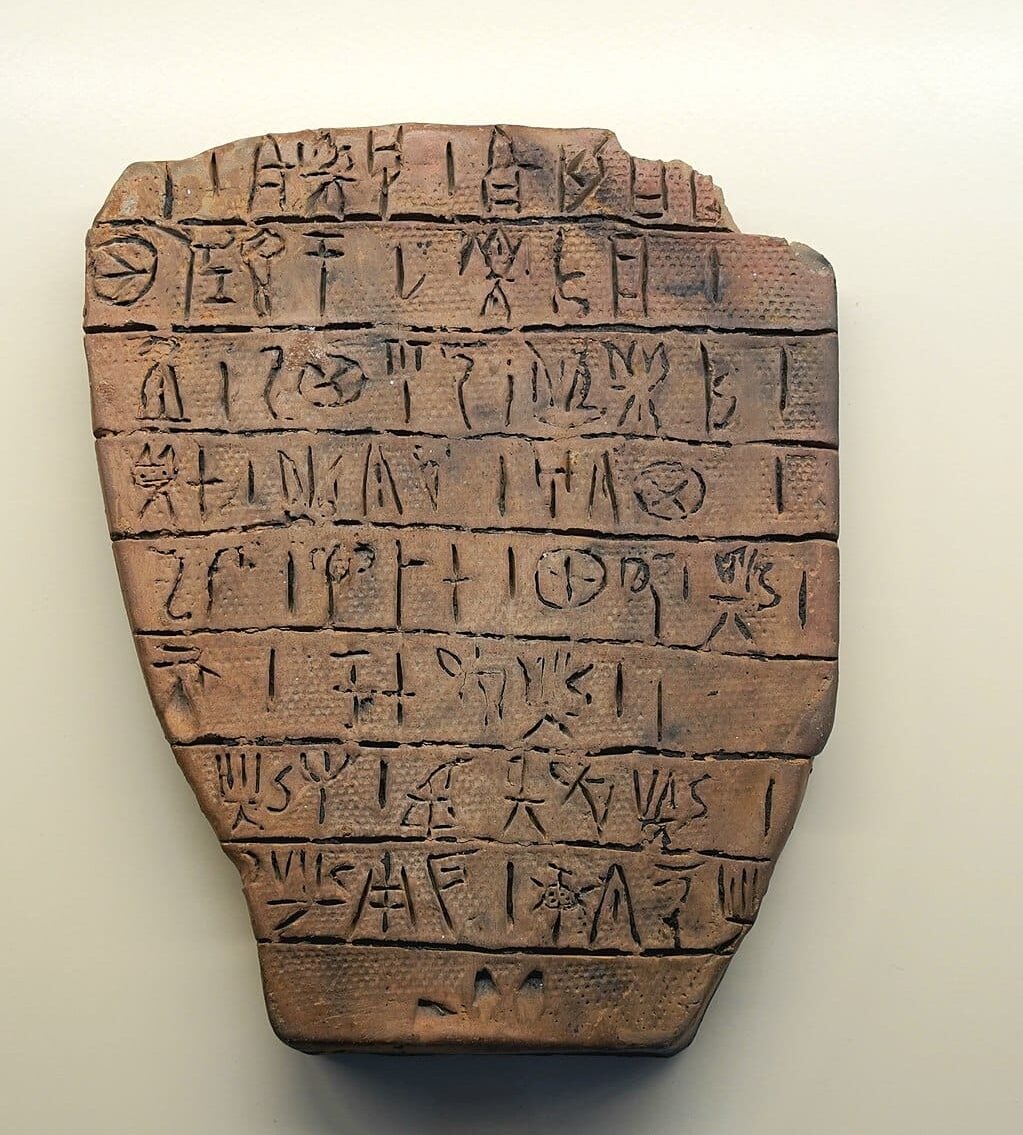
The Iliad already refers to a temple within the Trojan citadel that houses the statue of a goddess, suggesting that structured sacred spaces were part of early Greek religious imagination. Beyond literary tradition, the Linear B tablets provide some of the strongest evidence against the “open-air-only” interpretation. These tablets preserve administrative and religious records from Mycenaean palace centers, offering a rare direct glimpse into how cult activity was organized.
They record offerings and mention deities associated with the later Greek pantheon, including Zeus, Poseidon, Hera, Artemis, and Hermes, while also documenting the management of cult resources by officials. This points to a system of structured worship rather than purely spontaneous outdoor ritual.
Importantly, the tablets often connect deities with specific locations, referring to sanctuaries, priests, and offerings tied to defined, organized spaces. This suggests that religious practice was not confined to natural settings but also embedded within institutional environments. Taken together, this written evidence weakens the idea of exclusively outdoor worship. Instead, it reveals planning, hierarchy, and dedicated sacred functions within Mycenaean religious life.

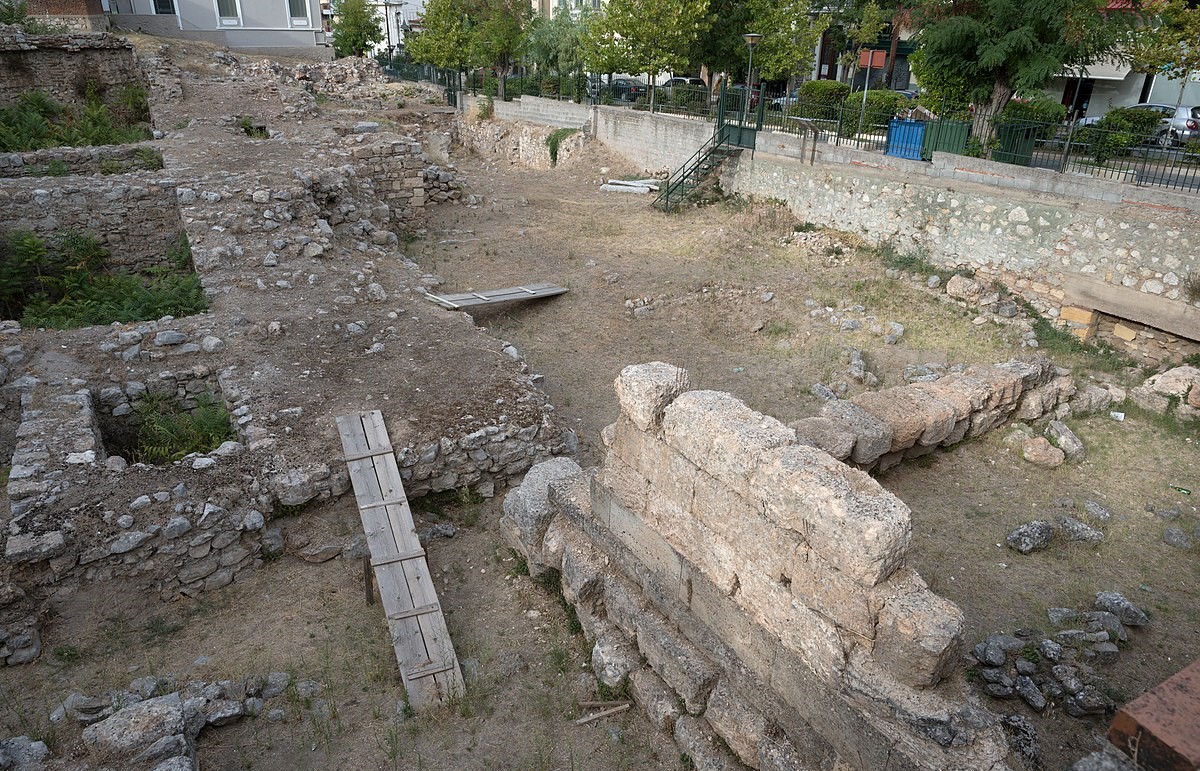
Archaeology strengthens this conclusion. Excavations at Mycenaean sites have uncovered buildings with clearly identifiable ritual functions, including altars, offering areas, and religious artifacts. One of the most significant examples comes from Mycenae itself. The so-called “Tsountas House” provides key evidence for structured cult activity within a designed landscape.
The Tsountas House is located near the citadel of Mycenae and was first excavated during early investigations led by Christos Tsountas. The structure dates to the Late Bronze Age. At first glance, the building does not resemble a later classical temple, lacking the monumental stone columns associated with later Greek religious architecture. However, its interior evidence tells a different story. Researchers such as Kim Shelton have identified signs of ritual activity within the structure, including figurines, offering vessels, and spatial arrangements that suggest ceremonial use. The layout also indicates controlled movement through the building, reinforcing the impression of organized ritual practice.
Taken together, these features are significant. They show that Mycenaeans used enclosed architectural spaces for ritual purposes, effectively functioning as cult centers. Worship was not confined solely to mountains, peak sanctuaries, or open courtyards. Instead, structured sacred environments existed within administrative and residential settings. This evidence points to a broader religious system in which cult activity, palace administration, offerings recorded in Linear B texts, and outdoor sacred landscapes all formed interconnected components of Mycenaean religious life rather than isolated or competing practices.

The “no temples” narrative fails largely because it relies on a narrow, anachronistic definition of what a temple must be. If one expects Mycenaean sacred architecture to resemble later classical Doric structures, then such buildings will not appear in the archaeological record. However, this expectation sets a false standard. It overlooks architectural evolution over time and ignores the cultural and functional differences between the Bronze Age and later Greek periods.
Mycenaean sacred architecture followed its own internal logic. Ritual spaces were frequently integrated into palatial complexes or elite residences, and smaller, multi-functional buildings often served religious purposes in place of large, freestanding temples. For this reason, the absence of classical-style temples does not imply the absence of religious architecture.
At the same time, Mycenaeans did perform rituals outdoors, likely at natural features such as hills, caves, and mountain peaks. Outdoor worship was an important component of Bronze Age religious practice, a pattern that continued into later Greek tradition. Nonetheless, outdoor ritual activity did not exclude indoor sacred spaces. Rather, both forms coexisted and fulfilled different roles within a broader religious system.
Mycenaean religion combined palace-based cult administration, offerings recorded in Linear B texts, enclosed ritual spaces, and outdoor sacred sites in the landscape. Together, these elements formed a structured, multi-layered system operating across both constructed environments and the natural world. This combination underscores not only complexity and organization but also continuity with later Greek religion. Structured sacred space did not emerge suddenly in the Classical period but developed gradually from earlier Bronze Age practices.

The persistence of the “no temples” myth can be traced to three main sources. First, early scholarship shaped the expectations of later generations. Once an interpretation enters textbooks and reference works, it tends to persist, even when new evidence complicates or overturns it.
Secondly, the very word “temple” carries a strong classical bias. Readers often imagine columns, symmetry, and monumental marble architecture. When such features are absent in the Bronze Age record, this is interpreted as a lack of temples rather than a difference in architectural form.
Lastly, simplified narratives tend to spread more easily than nuanced archaeological interpretations. The idea of “primitive outdoor worship” is easy to remember and communicate, whereas the actual picture is more complex and layered. In reality, the Mycenaeans did not rely exclusively on open-air worship but also built and used structured indoor spaces for ritual activity that can reasonably be understood as early temple forms.
The claim that Mycenaeans lacked organized religious buildings does not withstand scrutiny. It reflects early interpretive bias more than archaeological evidence. Mycenaean religion combined indoor and outdoor elements and showed early forms of institutional organization. In this sense, it laid important foundations for the development of later Greek religious architecture and practice.
The Chinese Communist Party has officially kicked off the age of the cyborg. While Elon Musk’s Neuralink continues navigating regulatory hurdles in the US, China has surged ahead with the launch of NEO — the world’s first [...]
The post ‘Become Superhuman or Get Left Behind’: Millions of Chinese Line Up to Become Cyborgs as CCP Launches NEO Brain Chip appeared first on The People's Voice.
YEREVAN, Armenia — The best of a bad lot was how many Armenians described victorious Prime Minister Nikol Pashinyan ahead of Sunday's pivotal election — the first since the bitter defeat in the Nagorno-Karabakh conflict with neighboring Azerbaijan.
While the election has frequently been framed outside Armenia as


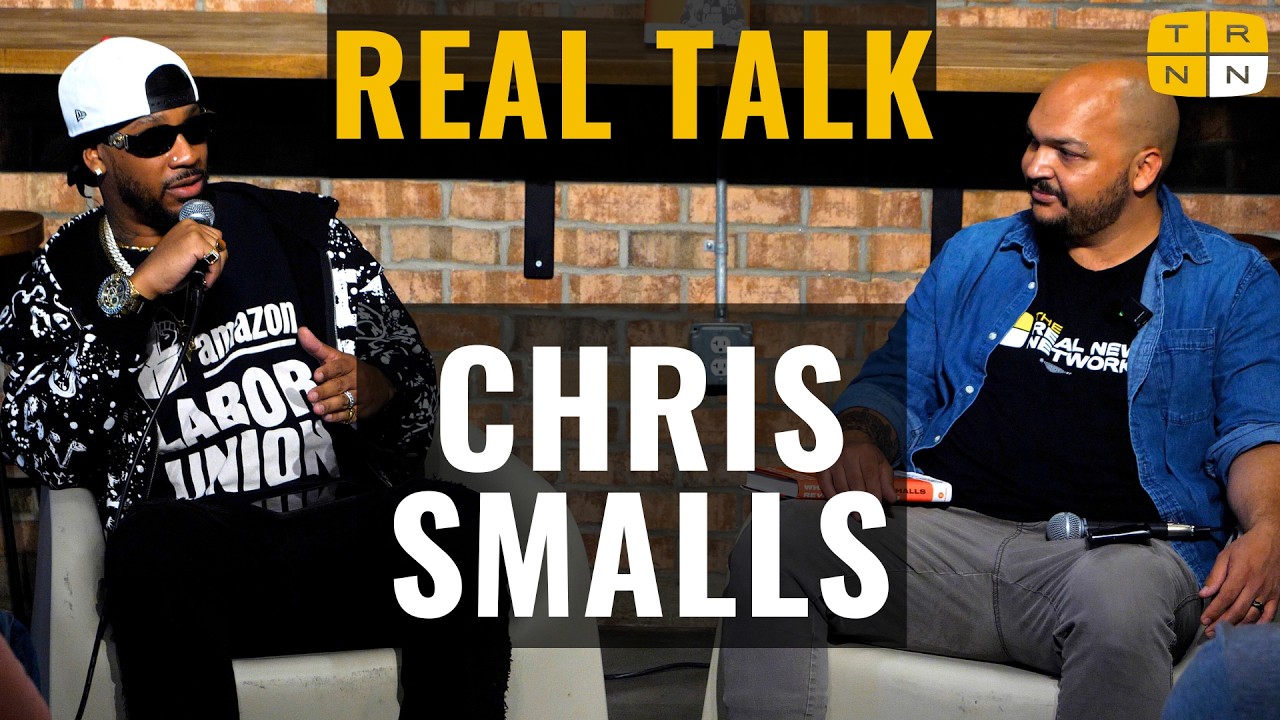
At a live event hosted at Red Emma’s Cooperative Bookstore and Coffeehouse in Baltimore, Maryland, TRNN Editor-in-Chief Maximillian Alvarez got to sit down for a deep and wide-ranging conversation with Chris Smalls, co-founder and former president of the Amazon Labor Union. Alvarez and Smalls discuss Smalls’ new book, When the Revolution Comes: A Fight for the Future of the Working Class; they recount the incredible story of the formation of the Amazon Labor Union and the unionization of the first Amazon warehouse in the US; and they talk about Smalls’ journey from warehouse worker and labor organizer to becoming an internationally recognized public figure and a human rights activist who has sailed with humanitarian flotilla missions to Gaza and Cuba.
Additional links/info:
Featured Music:
Credits:
The following rushed transcript may contain errors. It will be updated as soon as possible.
Maximillian Alvarez:
All right Welcome everyone to Working People, a podcast about the lives, jobs, dreams, and struggles of the working class today. Working People is a proud member of the Labor Radio Podcast Network and is brought to you in partnership with In These Times Magazine and the Real News Network. This show is produced by Jules Taylor and made possible by the support of listeners like you. My name is Maximillian Alvarez and we’ve got a really special episode for y’all today, which is a recording of a live event that I recently hosted at Red Emma’s Cooperative Bookstore and Coffeehouse here in Baltimore. And for that event, I got to sit down in front of a big, lively audience and have a real deep and wide ranging conversation with Chris Smalls, co-founder and former president of the Amazon Labor Union. Chris has a new book out called When the Revolution Comes: A Fight for the Future of the Working Class.
And that book recounts the incredible story of how a young working class Black man from Hackensack, New Jersey led a walkout from his Staten Island Amazon warehouse during COVID-19 got fired and then with hardly any resources banded together with a scrappy group of Staten Island warehouse workers to form the independent Amazon Labor Union to fight this epic David and Goliath battle against Amazon, the second largest private employer in the United States and Jeff Bezos, the second richest man in the world, and to win and successfully unionize the first Amazon warehouse in the United States. And the book also traces Chris’s life story before the Amazon Labor Union and his journey from warehouse worker and labor organizer to becoming this internationally recognized public figure and a human rights activist who has sailed with humanitarian glotilla missions to Gaza and to Cuba, even facing detainment and harassment from ICE and imprisonment and abuse from the Israeli military because of it.
I’ve done a number of events with Chris over the years. I’ve interviewed him outside of the JFK8 warehouse on Staten Island and I interviewed him as he was sailing to Gaza with the Global Samuel Flotilla right before they were captured by the Israeli military last year. I’ve seen both up close and from afar what he, his story and the story of ALU mean to working people out there, young and old people across this country and beyond. I’ve seen up close and from afar how the media’s good and awful and obsessive coverage of Chris and ALU, how that’s all affected Chris and different members and factions within ALU. And I’ve watched them all try to do their best to navigate a situation and a spotlight that I don’t think any of them ever expected to be in and that most of us will frankly never be able to fully understand from the outside.
I’ve seen and learned about many of the struggles that Chris has been through. I’ve seen and learned about the things that he’s done to help others. I’ve seen and learned about mistakes that he’s made and regretful things that he’s done and said. I know he’s a controversial figure to different people for different reasons and I know that he’s an inspiration to different people for different reasons. I know that he’s a complex and imperfect person, like you, like me, and like the hundreds and hundreds of working people that I’ve interviewed on this show over the years. And I’ve said from the beginning of this show that the whole point of this project was to honor the full and beautiful and complex humanity of our fellow workers to lift up the unheard voices of working class people and to help them and us and others see ourselves as full people with important lives and stories, not just stereotypes, not just name tags and job titles.
We’re so much more than that. And as a fellow worker, Chris is no different. And whatever your thoughts are about him, I think we all need to remember that because I see a lot of people forgetting that and that is not to excuse or downplay any concerns that folks have about Chris, ALU, or the complicated relationship between media celebrity and political movements today. And of course, no one is above critique, not public figures like Chris and certainly not journalists like me and anyone who is part of the labor movement must hold themselves and be held accountable to that movement. I know that and I believe that, but I also know that movements don’t move and history doesn’t happen without people and people are complicated. And if we don’t have a healthy way as working people of talking and listening to each other and working through our shit, if the world is burning all around us and we cannot find ways to work together or work alongside each other for our common goals and common good, even if we don’t like each other, then to put it bluntly, we’re cooked.
And so with all that said, it was in that full spirit and with that same mission that I’ve had since I started this podcast eight years ago that I sat down with Chris Smalls for this important conversation that we had at Red Emma’s in Baltimore. I hope you guys enjoy it and I want to know what you think, but please first take a listen.
All right. Well, thank you so much to Red Emma’s Cooperative Bookstore and Coffeehouse for hosting us for this great event. I want y’all to give a proper Baltimore welcome to Brother Chris Smalls, the co-founder and former president of the Amazon Labor Union here with us tonight. So we are of course here to talk about Chris’s new book, When the Revolution Comes, the Fight for the Future of the Working Class, but we’re also going to talk about so much more. And by way of getting us into this discussion, I wanted to just roll the clock back a second, right? Let’s go back five years, 2021, right? Feels like forever ago, but let’s not forget how crazy of a year that was. We had all just watched the batshit January 6th insurrection still in the middle of COVID, no vaccines yet. And out of this dark swamp in time, an unexpected source of light emerged in worker struggles and a sort of revived labor movement.
Everyone was talking about the Amazon workers in Bessemer, Alabama who were trying to unionize with the retail wholesale and department store union down there. I went down there. That was actually my first field shoot for the real news. And of course those workers lost that election and it was very heartbreaking for a lot of us and it was really incredible to see that heartbreak turn into the energy that we would see later in the year with the first Starbucks store to unionize in Buffalo, New York and the emergence of this ragtag group of badass workers from Staten Island who were trying to unionize their Amazon warehouse. And so it can be easy to forget all that we were going through in that moment. And so I wanted that to sort of be the start. And Chris, I wanted to ask you to take us back there.
Remind us who Chris Smalls was before COVID and then talk us through, because I think we need a refresher. Talk us through the incredible saga from the walkout that you led to you guys winning that first union election.
Chris Smalls:
And thank you all for being here. It’s been a while since I’ve been to Baltimore, so I’m glad and honored to be back and good company and some good comrades, familiar faces in the crowd. So thank you all once again for showing up and supporting my book and being here tonight. I really appreciate that. Yeah. As you said, we have amnesia in America. We all know that. One thing being a news cycle for a few weeks and then it’s always something else, especially under this Trump administration. And ironically, six years ago when I got fired from Amazon, that was also an election year. Trump was still in the headlines still. So we wasn’t garnishing any attention. As you mentioned, leading up to 2021, 2020, COVID was the peak at its peak, especially in New York City being one of the epic centers of the world.
Yeah, workers were afraid, workers were catching COVID. I remember walking into my warehouse and how seeing my comrades at work just really sick and not really themselves. So it’s a really eerie moment. But for those who don’t know, I was an assistant manager at Amazon for four and a half years. I opened up three warehouses in the tri-state area, New Jersey, Connecticut, Staten Island New York was my last building. People’s person always, the same way you see me today, it was the same way I went to work at Amazon. Definitely loved my people. I spent 70 hours a week with them. They were like my extended family. And when COVID hit, I definitely was afraid for all of us and I wanted to speak up on their behalf as well, which led to my firing after I led the walkout on March 30th, 2020, which once again was six years ago.
Seems like it was a long time ago, but it was six years ago it flew. It flew past. But just giving you a background about myself, what you’re going to read about in the book if you haven’t already, is that I’m just like anybody else in this crowd. I’m a single parent. My twins at the time was, well, damn, they were maybe eight or nine years old. And yeah, you can imagine how much time that I’ve lost spending with them over the last years, especially during COVID, the years of COVID, if I was lucky to see them half a year, that was a thing as well. And I love sports, grew up playing basketball, football, track. You going to see that in the book. I also was a rapper. I
Maximillian Alvarez:
Was going to say, don’t bury the lead. There’s a little juicy story about your rap history in there.
Chris Smalls:
Yeah, yeah. There’s a little rap stink that I had briefly after college, dropped out of college because I wanted to pursue music. I thought I was going to blow up overnight and then I got hit with reality getting back into the workforce. I got married and divorced at a young age, but I was married for eight years and during that hardship, working at Amazon was our main source of income for my household, one of them at least. And having healthcare as well. Healthcare Amazon provided for me and my kids and my wife at the time. So when I lost all of that during the pandemic, it really showed me how much the company didn’t really care about anybody. After I poured five years of my blood, sweat and tears into the company after I’ve done so much opening up these warehouses for them, training thousands of Amazon workers, hundreds of their upper management, the companies just say, “You know what?
We don’t care. We’re going to fire you. ” And not only fire you, they did it in a way that martyred me by Jeff Bezos, who was the richest man in the world, signing off on the smear campaign, which basically said to make me the face of the whole unionizing efforts against Amazon, which is a good idea. But at the same time, the racist part in the beginning saying that I’m not smart or articulate, something that they use in these corporate settings to put upon Black people and Brown people, saying that we’re not smart enough or we’re not articulate enough to even talk about anything when it comes to work related issues. So that was really the catalyst of a moment right there where I embraced it and I said, “You know what? Even though I no longer work for the company, I’m going to continue fighting for the workers inside the building.” Ultimately, for a whole year from 2020 to 2021, we traveled the country protesting in front of debt bases, mansions and penthouses while Bessemer, Alabama was trying their efforts and we all was paying attention.
My folks in Staten Island, we were paying attention, but we took it a step further. We did drive down there. We drove 16 hours from New York City down to Bessemer in a car, one car squished up and we stayed about a week connecting with workers there, connecting with the union, trying to figure it out because we didn’t know what we wanted to do. We wanted to do something, but we didn’t really have all the answers. But unfortunately, yes, like Max said, when they lost, it was definitely devastating for everybody. We felt that because of several reasons. Number one, that building investment Alabama has about 6,000 employees, five, 6,000 employees. Majority of them are black people. 85% of the building is black, 80% of the workforce there are black women. So when Amazon spent millions of dollars stopping that campaign, that was a direct attack on black and brown people and that’s something that we resonated with in Staten Island, New York where the demographics are similar to our building as well.
So the next day after the results came out, it just so happened to be our birthday, four 20, four / 20 / 2021 is when we started our campaign the next day after those results came out. We didn’t even wait.
And yeah, that year was like a blur as well, but it was 11 months, over 300 plus days I set up an encampment outside of the building that fired me at a public bus stop talking to workers every single day, rain shine, how to call night or day about why we need to start a union. And originally we sent out the Olive branch to the established unions. We wanted some support. We wanted some resources, some help, but we got nothing in return because a lot of people didn’t believe in us. A lot of people thought that it wasn’t going to work. Who are you guys to unionize when y’all don’t have any resources, y’all don’t have any knowledge, experience, et cetera. But one thing we did know is that we’re Amazon workers. Whether we’re fired or not, we know the ins and out of the company better than Jeff Basils.
So we felt that was the only way, and I still believe that till this day that the only way it could have been done was grassroots, gorilla style tactics in the trenches every day, meeting your workers face-to-face. That was the only way it was going to work. We couldn’t take the shortcut routes. We couldn’t do the traditional style organizing methods that most unions use. We had to think outside of that box and also sacrifice. Sacrifice was one of the things that we all had to do as a collective. And yeah, it was successful. 11 months, hard blood sweat and tears into the campaign and it paid off to become the first union in American history for Amazon workers. And still, till this day, that building is the only unionized building in this country and that’s what people got to understand. And it’s pro and con to that.
Yes, it’s great that we still are standing, but it shouldn’t take four years for us to have a contract. Keep that in mind that even when I was the president for three years, the first thing we did when we won was demand the bargaining order from Amazon, or at least from the National Labor Relation Board so that we can negotiate with Amazon. We didn’t hear anything under the Biden administration. I don’t know what happened, but there was some magic in the air. We got a bargaining order in April of this year, but Amazon has already appealed it because they’ve been spending millions of dollars holding things up for the last four years. So for those and everybody who’s been questioning like, “Why don’t you guys have a contract or you guys are not getting a contract?” It’s not because of us. It’s literally because the system is broken.
The system is not worker friendly. As much as these progressives and politicians say that the system are usher us to the system that’s supposed to work for us, it doesn’t. It’s not in our favor. So we have to continue to fight every step of the way. And actually when we won in 2021, that was just the beginning of the fight. This fight is a lifetime struggle and now the only thing that I can see that our union can do, and not just our union, because there’s other unions out here, Starbucks workers, all these other unions that emerge, they’re still fighting for contracts too and negotiating their way through it. But the only thing I can see that’ll work for all of us is if we withhold our strongest weapon, which is our labor and go on strike.
Maximillian Alvarez:
And it was wild too reporting on Bessemer and then reporting on you guys and sort of seeing how the things that worked for Amazon Imbessemer weren’t working on Staten Island. I think that was a real sort of moment of insurgent energy because in Bessemer, when the workers brought in the RWDSU, Amazon did what union busting employers always do where they’re like, “Oh, this is an outside force that’s trying to come in and get in between our relationship.” They couldn’t do that with you guys because it was like, no, these are literally just the workers in the warehouse. And so I wanted to touch on that because it was such a big debate at the time because of Bessemer and ALU especially, but everyone was talking about, is it better to go the independent route like Amazon Labor Union, Trader Joe’s United, the Home Depot workers who tried to unionize in Philly, or is it better to go with an established union like the Teamsters of the RWDSU?
And so with five, again, like you said, five, four years of experience since we were having those debates, I think it’s important for us to sort of revisit and update that and you know better than us. I wanted to ask after all that you’ve been through in this struggle, where have you landed on the independent or established union debate, especially in light of the AOU affiliating with the Teamster?
Chris Smalls:
Yeah. I mean, I still stick by my original sentiment that there was no other way that we was going to get it done, not with any established union. Didn’t matter how long they’ve been around, how powerful they are. The way we organize is completely against any type of style. You can’t read about it because it hasn’t been done before. And yeah, I still believe that independent unions are something that we still need to push. Not saying that established unions can’t support, but what’s happening over the last few years, to be honest, after we won in 2021, well, let me take it to the day of. The day we beat Amazon, we had $2.50 in our account. Now it’s funny because we were broke as hell. We didn’t have dudes paying members. We still don’t have dues paying members. We don’t have a contract. So I can’t ask for workers who are making $20 an hour to pay union dues.
I wasn’t going to do that as the union president. The next day we had almost half a million dollars because the bandwagon came, the unions, “Oh yeah, we supported. Oh yeah.” But they really, really didn’t. Actually, there was a reporting that all the established unions combined only contributed after we all won, talk about Starbucks, Trader Joe’s, Amazon, you name it, they only contributed 3% of their resources into these campaigns. And I can tell you we didn’t get one of those 3%. We got zero. Literally nobody offered us anything before we won. And after we won, the bandwagon came and everybody said, “Oh yeah, we had some resurgence in the labor movement,” which is great. It was. It was definitely headlines, it was definitely international news and resonated with millions of workers around the world. The problem is that established unions didn’t use that opportunity to double down and really invest into grassroots movements because they was embarrassed.
We weren’t the first people who tried to unionize Amazon. Absolutely not. Actually, established unions have been trying to unionize Amazon for over a decade, even before Bessemer, Alabama. And guess what? You guys never heard about it. I never heard about it. It was actually a campaign at GFK8 while I was working there, didn’t even hear about it until we started and that was ran by the established union of the Teamsters. So when it comes to which side do I really ride with, I’m going to say the one that works and I know that there’s pros and cons to everything. The thing about independent unions and grassroots efforts, as we all know, if you’re grassroots, it’s a struggle. You’re not going to have all the tools and resources given to you all the time. You got to scrap, you got to sacrifice, you got to crowdfund, you got to have mutual aid.
We literally had a GoFundMe, which it’s sad to say, but that was our only lifeline of how we were able to feed our comrades and our workers there. So the reason why we had to affiliate with the Teamsters, which I signed by the way, is because we’re going up against a $2.2 trillion company like Amazon that has all the money to hold things up in federal court for four or five years like they have it, which you guys are not privy to this all the time, but Amazon has million dollar lawyers and while I was the president, I’ve been to federal court against Amazon. I lost count how many times over the years and all they do every time we do something, they appeal it into a federal court to try to get it to a right wing Supreme Court and try to get us decertified.
That is their game plan. They’re not trying to come to the table. They still don’t even want to recognize that we won. So the affiliation with the Teamsters was so that my union doesn’t go bankrupt because if we don’t have dues paying members and people are not going to continuously donate, we have to give resources to stay alive and stay afloat. The Teamsters was going to offer that. The affiliation agreement that I signed was something that I and my executive board negotiated along with our legal counsel and it was one that we benefited from the most. We have full autonomy with our local ALU, IBT, local one, full autonomy, full jurisdiction on Amazon. And the most important thing that I got in that contract was they have strike benefits. They can offer the workers at JFKA right now a thousand dollars a week to go on strike if they wanted to.
I’m not the president anymore, but this is something that I set up to help them succeed in that journey. It’s up to the workers, it’s up to the current leadership of the union. It’s up to them to take that initiative and utilize it. And hopefully they do because the clock is ticking. Right now since we’ve been issued a bargaining order, Amazon has already appealed it, but the clock is ticking for them to come to the table. They have about a year to do so. Otherwise, the game plan that Amazon is going to run is going to try to decertify the union. So hopefully they get their stuff together and they get it done. I’m always going to support my union, whether I have a position or not. And that’s what we all have to do in solidarity. We all have a role to play because our fight is absolutely your fight.
A lot of people don’t know what’s going on behind the scenes at Amazon are within these campaigns. So the reason why we’re here today, the reason why you guys are picking up this book is because this book is also not just a memoir, but it’s also a how-to. It’s going to give you some tools on how we can all fight back against the system that’s oppressing us.
Maximillian Alvarez:
Hell yeah.
So I really want to talk before we get to Q&A about your life, your work, your mission beyond ALU. And the last time we did an interview, you were sailing to Gaza for Christ’s sake. So I want us to get there, but before we do, just to pick up on what you were saying there, I think it’s really important for us to in this space, model a real, honest, no BS discussion about what we can learn from the beautiful, complicated, heartbreaking, inspiring story of the first Amazon union. Because so many struggles before you and there are going to be plenty after you, you guys faced a lot of external pressure and internal debates, division. This stuff happens and you write about some of that in the book and there’s a time and place to talk about that stuff and it’s not here. We’re not here to sort of air dirty laundry and point fingers.
Everyone knows Chris isn’t perfect. I’m not perfect. You’re not perfect. And that’s, I think the point is that whether you’re organizing your shop or trying to build a political movement, you can’t do anything without the messy realities of messy human beings who make the movement. So our humanity is always part of the story and none of us is perfect. And so I wanted to ask you, Chris, again, not for us to get sucked into the … She said … I’ve talked to other Amazon members who have different versions of the story and I always tell them, like I told you, I was like, “It’s not my place to pick sides here. I’m not in this union. I’m a fucking journalist.” And it breaks my heart when I see these divisions because I want the best for everybody, but life doesn’t work out like the fairytales in our heads.
So what can we learn from y’all’s experience that can help others out there who are going through these struggles and it’s getting tough and the company, the employers appealing every victory, it’s like one step forward, three steps back. You’re losing friendships because shit just gets really tough. You have no money. What can folks out there who are experiencing that learn from what y’all went through in ALU?
Chris Smalls:
Yeah, great question. I mean, once again, when you’re taking on one of the most powerful companies in the world, you’re trying to bring people together from all different backgrounds, all different creeds, you’re going to have disagreements, you’re going to have different political ideologies, you’re going to have infighting, every union, every organization does. We just were under a microscope because of our historical victory and the mistake that the media Yeah, sort of did was comparing us to established unions that’s been around for a hundred years. We weren’t that. We’re grassroots organizers. Most of them weren’t even organizers. They were just everyday civilians that were inspired, that were passionate, that wanted to do something. Even myself as the leader at the time, I didn’t have all the answers as well. I had to learn and I’m still learning every day. I’m a sponge. I’m learning new what’s going on overseas is affecting us here.
The things that I’m doing with Palestine, Cuba, wherever I’m going, it affects us here. I try to connect those dots. Some people just can’t think that big and unfortunately it leads to disagreements, but the disagreements are that’s a democracy. That’s exactly what a democracy is.
Unfortunately, the movement has its way of weaning people out. It’s not for everybody. It’s just real. A lot of people will see social media posts or see something happening, protests, whatever it is. Even going back to George Floyd days when there was millions of people taken to the streets in America. But where are these millions of people now? They’re back at work. A lot of people see things for the moment they get involved and then they get burnt out. They get weeded out or they realize this is too tough for me. And a lot of it is what happened to our union. A lot of folks thought that it’s a lot easier than what it is. Yes, I do make things look cool sometimes. That’s intentional because organizing is stressful as shit. I know we all know that. Organizing hard, stressful, tiring, exhausting, all of the above.
And I tried to make it as simple, as cool, as fun as possible because I know what workers are dealing with working at Amazon. That was one of my biggest things is making sure that everybody around me was always good in some capacity. Unfortunately, once again, the movement is going to be the movement. And for those who jump into this movement or this type of work or any type of work, you got to know what you signed yourself up for. This is a lifetime struggle. Our ancestors paved the way and not only that lost their lives, some are incarcerated right now as we speak so that we can have the right to organize, that we can have a reason to organize. So when these type of movements, you can’t have one foot in, one foot out. You got to be fully committed for the long haul and you got to be fully committed to sacrificing something because if you spoke out about Palestine, you lost something.
I know I did. If you spoke out at your workplace, you’re going to be targeted. If not worse, you’re going to get terminated. If you speak out against all of the injustices that we’re seeing right now in this country, you’re going to lose friends. You’re going to lose loved ones. I know a lot of us in here that probably when they started talking about October 7th, it was tough conversations in the beginning because I could tell you I lost 10,000 followers on Instagram instantly when I posted about Palestine over three years ago. And it was the same people that said in my DMs, “Chris, we supported you for Amazon workers, but this is where I draw the line.” What? In return, you know what I said? Fuck you.
Because if you can’t make the relationship between Amazon and genocide, then I can’t help you. And I don’t give a damn if you one of my organizers or not. If you fighting over some petty shit when Jeff Bezos is flying in space on the penis rocket, you missing the plot. So people want to attack the wrong things and that happens a lot on the left. We’re talking about the character, the person, the individual, how I look, how I talk, where I’m going, what headlines I’m gathering. Meanwhile, Amazon is firing 30,000 people next week. And that was what I always tell my organizers. We’re fighting about what we doing next when Amazon is winning. They are in the building union busting and y’all worried about the wrong things. So for me, the biggest lesson I learned is you got to stay true to the mission. And I don’t debate too much.
I mean, I do sometimes because I have to defend myself in certain cases, but I’ve never played into the naysay about myself or about my union because I let the work speak for itself. We made history, unprecedented history, and people that were there, they know. That’s all I care about. My day ones that walked out of the building six years ago with me, they know. Everybody else that came afterwards that’s going to jump on board later on, that’s going to look back, reflect back, that none of that matters. What matters is what are you willing to do to get Amazon to come to the table? What are you willing to do to liberate the people of Palestine? And more importantly, if you don’t get up and do the work, who’s going to do it because there’s no calvary coming for us?
Maximillian Alvarez:
One of the things that has sort of always colored the way that I have watched your journey is the fact that I always think that I was working in warehouses back in Southern California 15 years ago in the depths of the Great Recession. Our family was losing our house like millions of others. It was awful. And the thought of one of us having the cultural international statue that you do that one of us would be giving so much hope to people around the country and around the world is just mind boggling to me, but it’s also like that’s got to be a lot to go through as a working warehouse guy to then kind of be catapulted to that. So that’s not to excuse anything. It’s just to be like, we should give each other as much grace as we possibly can while holding ourselves accountable to each other.
Do our best. That’s the best that we can do for each other. And I say that to say by getting us to your activism beyond the warehouse, because what is it about your story, ALU’s story that has spoken to so many people around the world? And how did that lead you to becoming a global activist for human rights from Gaza to Cuba?
Chris Smalls:
Great question. I mean, well, number one, if you’d have told me that I could look as cool as a rapper, as a union organizer, I’d have been doing this shit a long time ago, would have saved you some
Maximillian Alvarez:
Years.
Chris Smalls:
I don’t look like your typical union president. My union doesn’t look like your typical union. My executive board didn’t look like your typical union executive board. So culturally, we gravitated to the younger generation. They looked at us and said, “Oh wow, they look cool. Amazon Labor Union, oh man, they’re wearing sweats and T-shirts and hat backwards and whatever else.” And we did something at a time where once again, the world was watching and we captivated that moment in time. But the international piece came when I got a passport because I just got a passport when I became the president three, four years ago. I didn’t even have a passport and 70% of Americans don’t have a passport.
I encourage you, number one, get one because since I got a passport, I’ve been to 45 different countries around the world and counted. And when I go to these countries, I’m not on vacation. I’m not on tourist trips sort of because I need to learn some things, I need to see some things, but I’m meeting with Amazon workers and I’ll give you the best example that I have as far as how much dedication or how dedicated I am to the movement. I was invited two years ago when I was the president still. I was invited to Paris by Pharrell and Rihanna to walk in the Louis Vuitton runway for this grand opening. And the same day I was invited to the White House again for the second time from Kamala Harris while she was running for president. I declined both of those and went to an Amazon warehouse in Canada, literally.
And guess what? I’m proud to say that that Amazon warehouse in Canada is the first unionized building in Canada’s history. So once again, people could say what they want about me. I know how I move. I know I’m very conscious about what’s going on, what’s being out there, what’s put out there and those around me, once again, they know if you’ve met me in the past, if you’ve been around me, if you hung around, what you see is what you get. I don’t really have to put on a facade and I think that’s what really resonates with people is that they can relate to me and that they feel comfortable talking and actually working alongside or working with me in some way. I think the international piece, the international solidarity that I’ve shown is also shown other people that what’s happening abroad is coming back home to roots, especially when it comes to Palestine.
There was several reasons why I got on that flotilla. Number one, I’m an Amazon worker, sure. Amazon has invested $7.2 billion into project numbers. The technology that’s being used to target and surveil and kill innocent Palestinians is powered by Amazon Web Services, number one. Number two, I’m a black man and I have kids. I don’t want my kids to grow up in a world where we’re watching, scrolling every day, seeing dead people. I don’t know about you guys, but that shit is enough, traumatizing. And number three, I’m a taxpayer citizen, American taxpayer citizen like all of us. We all should be outraged where our taxpaying dollars are going. And I could tell you what I saw in Gaza is there’s no comparison. Less than a hundred miles away from Gaza Strip. I’ll never forget before we got … Well, we were already intercepted, but I will never forgive me crying on the ship because I was so angry that we didn’t make it, but just knowing that we were so close, 60 miles away from Gaza Strip, our boat got swarmed with flies and I’ll never forget I asked one of my comrades, “Where the hell did all these flies come from?” And it’s because there was so much death and so much bodies under rubble, vermin, whatever you want to call it, that the flies flew a hundred miles away from land to find food from our garbage and we were swarmed and I said, “Whatever we’re seeing on Instagram, it’s actually just a glimpse.
It’s not even close to how bad it is over there.” And I hear testimonies from doctors all the time. It’s beyond what I could put into words and obviously what happened to me is just confirmation that Israel is a racist apartheid state. That being said, spreading awareness, going back to who I am and why I do what I do and how I move.
What other labor leader in this country that you know is banned from Israel for a hundred years? That’ll be me. When it comes to Cuba, I brought 25 people from the Amazon Labor Union to Cuba three, four years ago, first labor delegation to Cuba and we delivered humanitarian aid back then. We graduated from Fidel Castro University. We stayed in bootcamp. We were disciplined. We learned the Cuban way and I’ve never looked back, been to Cuba every year since. And you may have saw that I was detained two months ago. I took my phone and they worry about the 16 other people that they took their phones from. They gave them their phones back, but some of the comrades that I was with heard the ICE agents talking about, “Oh, that’s the Amazon guy. We got the Amazon guy.” So the target on my back is very much real and they’re detaining other people questioning about me right now as we speak.
It’s just happened. So I think it’s important and then I know y’all saw me crash the Med Gala. I wasn’t invited. I wasn’t invited to the Med Gala so I had to crash the party, but we crashing the Med Gala was the spread awareness and it worked because if I would’ve sat home 20 minutes away from where Jeff Babes was about to walk the red carpet, 40 minutes away from the building where they have a negotiated contract in four years, I’m doing a disservice to myself and to my entire union and the working class as a labor leader. I do the things that I do because I ask myself this question, if Chris Smalls doesn’t do this work, who’s going to do it? And that answer sometimes is very scary because the answer is nobody. And that’s the same question that each and every one of y’all got to ask yourselves.
If you don’t get up and do this work, who’s going to do it? And hopefully that motivates you to continue in doing what you’re doing.
Maximillian Alvarez:
Give it up for Chris. Well, and I think that’s a perfect lead into a final question before we get to Q&A, because your book is called When the Revolution Comes: A Fight for the Future of the Working Class. And I want to talk about what that fight like, what’s really at stake and how big it is because right now from the excitement we felt when you guys won to the depression we feel that you still don’t have a contract to Trump strangling Cuba, invading Venezuela, kidnapping its president, going to war with Iran, the climate spiralantic in control, we tried and we failed to stop a genocide. It feels so hopeles sometimes, but the fight is where we actually have the chance to change the outcome and it’s not just in our workplaces and it’s not just in Gaza, but I wanted to ask you what your sort of final message is for a working class struggle and movement that can actually turn this tide and bring us back to a future that we can give to our kids that’s still worth living in.
Chris Smalls:
Yeah. Great question. And I mean, when I say a fight for the future of the working class, I mean, we’re fighting for humanity right now. There is no Calvary coming to save us. I’m going to tell you now, politicians are not our savior and in the history of the human race, we never voted our way to liberation. We always had to fight most of it with our lives. And when I’m talking about the revolution, well, the revolution starts with yourself. The times that we’re in right now, as you mentioned, they’re terrible. Society, things that are normalized, being desensitized, all of these things that are happening real time in our faces. Every day there’s something new on the headlines distracting us from the bigger picture. The way we was able to beat this $2.2 trillion company because we came together for one common cause the same way that people were coming together for Palestine because it wasn’t like this three years ago until we saw the student encampments, the protests in the streets, the flotillas, all of the different things that we’re seeing because people are fed up, young people, young people are fed up.
I knew one day when I walked into a middle school and this 10-year-old kid said, “Jeff Bezos is a bad man,” I said, “I’m doing something right.” Because I couldn’t imagine myself at 10 years old and I encourage teachers and many educators in the room, “Bring some of your labor leaders. I’ll come to your classroom. I will definitely come out. I’ve been to elementary schools, you name it. I’ve been there. University, I will be there because I know the importance of getting to the youth. We don’t want them to continue to praise these celebrities and athletes and musicians. We want them to praise the people that’s actually doing some great work and that’s people right here in our own community and reminding ourselves where we came from because society has changed because of companies like Amazon who’s forcing us to hit one click buy. Stay home, stay isolated, just audio package.
It shows up to your door. You see one person deliver it, but you never see the 10 or 12 people that that box done touched before it got there. Six of them got injured. One of them possibly could have got killed, but you would never hear about it. And that’s the message that we all have to spread because somebody in your household, somebody in your neighborhood doesn’t know this, doesn’t know what’s happening at these warehouses, doesn’t know what’s happened with the Amazon Labor Union. As big as that victory was, you already know we in a country that is very, very retroactive and a lot of people here got amnesias are living worse, living in their own bubbles. That’s saying you’re in your own bubble, but that’s not a good thing. That’s up to us to find these people, to meet them where they at, mainly work and to get them organized because when I say a fight for the future of the working class, and I say the revolution comes once again, that’s everybody in this room coming together for one common cause for the greater good of humanity.
And I’ll give you this last gem.
The fight for Palestine is going to liberate the world, but the fight for black and brown indigenous people is going to liberate everybody.
Maximillian Alvarez:
Let’s give it up for Chris Malls, everyone. All right, gang. That’s going to wrap things up for us today. I want to thank our guest, Chris Smalls, co-founder and former president of the Amazon Labor Union. Go check out Chris’s new book, When the Revolution Comes: A Fight for the Future of the Working Class. And thank you to Red Emma’s Cooperative Bookstore and Coffeehouse for hosting this amazing event. And of course, I want to thank you all for listening and I want to thank you for caring. We’ll see y’all back here next time for another episode of Working People. And in the meantime, go explore all the great work that we’re doing at the Real News Network, where we do grassroots reporting that lifts up the voices and stories from the front lines of struggle. Check us out across our YouTube channel, our different podcast feeds, our website, and our social media pages, and help us do more work like this by going to therealnews.com/donate and becoming a supporter today.
I promise you guys, it really makes a difference. I’m Maximillian Alvarez. Take care of yourselves, take care of each other. Solidarity forever.

Los Angeles mayoral candidate Spencer Pratt has fallen to third place in the LA mayoral primary after a deeply suspicious late ballot dump overwhelmingly favored Democrat candidates, pushing City Councilwoman Nithya Raman into projected runoff [...]
The post Spencer Pratt Calls Out ‘Rigged Election’ After ‘Crooked’ Late-Night Ballot Dump in LA Mayoral Race appeared first on The People's Voice.

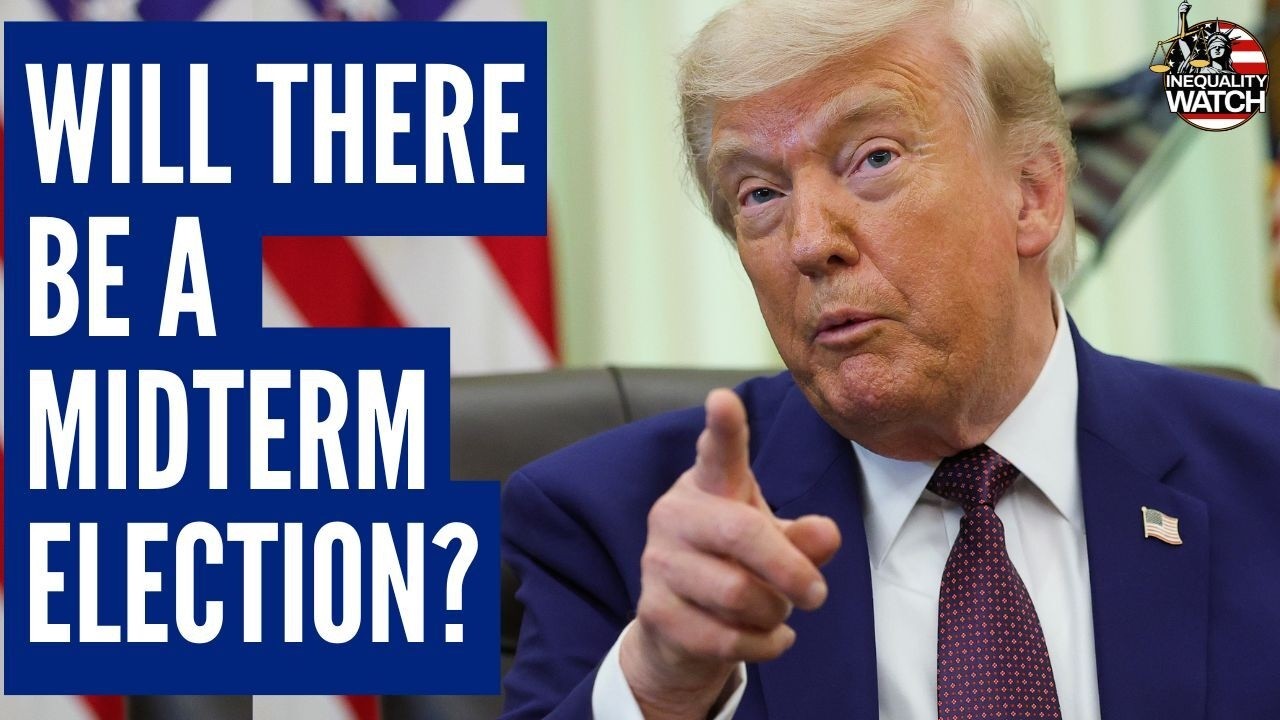
Are President Donald Trump and MAGA Republicans publicly signaling that they plan to interfere in—and potentially rig—the 2026 midterm elections? If so, why is the media not taking the threat seriously? In this episode of Inequality Watch, Taya Graham and Stephen Janis investigate the connections between wealth inequality, political power, ICE funding, the influence of Super PACs on elections, and growing concerns about democratic accountability in Trump’s America.
Credits:
The following rushed transcript may contain errors. It will be updated as soon as possible.
Taya Graham:
Could President Trump and his MAGA Congress be planning to interfere with the upcoming midterm elections? Well, we have some evidence that might surprise you, which we will unpack on this episode of the Capitol Hill React Report. Hello, this is Taya Graham, myself, along with my reporting partner, Steven Janice, our Capitol Hill correspondence for the Real News Network. We report regularly on what’s happening in the nation’s Capitol, but with a twist. We examine the process of governance through the prism of the most powerful force in today’s politics, economic inequality. Now, before you say, tell you that seems sort of limited. Just let me explain a little bit before we get to the first video. Economic inequality is at its highest point in recent history. Just take a look at the latest report that showed American workers’ share of the economy has fallen to its lowest level since 1947.
That’s right. In 2025, the share of the economy that went to the people who actually make it run was 54% a historic low. Okay. So why is this context essential for reporting on politics? Well, because all that wealth accumulating in fewer and fewer hands translates into concentrated power and that power now flows into our elections in the form of cash. Cash, which translates into victories at the ballot box for the purveyors of an increasingly extractive economy, insulating it from ballot box accountability, which ultimately means that you can’t understand politics on Capitol Hill unless you comprehend what currently defines it, namely the rich getting richer. Stephen, how am I doing?
Stephen Janis:
So you’re doing great. I mean, one of the things we have to think about is we got to look at democracy as a whole here functioning through this prism of inequality. The idea of democracy that delivers a certain amount of freedom to the people who are part of it. Now, freedom is a limited resource. So as people get richer and richer, they hoard that freedom. And so there’s less freedom to go around. Freedom to do what you want, freedom to educate yourself, freedom to live where you want. All those things sort of translate into the affordability crisis we’re seeing now, which means that there’s less freedom for the working people and more and more freedom for the richest 1% and more and more freedom to control how we live. And that’s why we have this sort of crisis on Capitol Hill and that’s how we have to view what goes on on Capitol Hill.
Taya Graham:
Stephen, that is such a great point and brings us right back to the topic at hand. The incredibly tense state of American elections and why wealth inequality will play a key role in that autocratic calculus. So first, let’s be honest, Steven, the mainstream media has, in my opinion, been misreading Trump, specifically his pronouncements that he doesn’t care about gas prices or the quagmire in Iran. Let’s listen to him talk about it and then discuss. When you’re negotiating with Iran, Mr. President, to what extent are American financial situations motivating you to make it?
Donald Trump:
Not even a little bit. The only thing that matters when I’m talking about Iran, they can’t have a nuclear weapon. I don’t think about American financial situation. I don’t think about anybody. I think about one thing. We cannot let Iran have a nuclear weapon. That’s all. That’s the only thing that motivated.
Taya Graham:
Okay. So the interpretation from the TV pundits has been that President Trump is just inexplicably tone deaf or detached or just disinterested, but we think Trump is telegraphing something much more insidious. So Steven, let me ask you a question after watching this video. Is Trump just really disengaged as the mainstream media says, or as they say he’s unhinged, or is there something else a little more troubling going on here?
Stephen Janis:
Well, Ted, this is one of many clips where Trump has kind of downplayed midterm elections or voters concerns or gas prices or whatever. He does it consistently. And of course it would be suicide for a politician in a functioning democracy to say something like that, right? Because this would directly affect how people vote. I really think for some reason gas prices, well, I kind of understand that gas prices are one of the biggest motivators for people when it comes to elections. And so it would be suicide, but what he’s really trying to say is, “I’m not worried about the midterms because I got this locked out. ” And look at what happened in the last presidential election. He tried to overturn it with a lost, but he wasn’t really prepared. He has been preparing for two years now to be able to interfere with the elections.
He subpoenaed ballots all over the country, including Fulton County and Georgia. He has set up this election integrity system run by a person who actually denied the 2020 election. He has increased the funding for ICE and Border Patrol, which we’ll talk about later. He has just simply put people in place who will be able to do what he needs to do. The Justice Department itself does whatever he wants. They’ll prosecute anybody. Very true. So they will certainly be willing to weigh in on this. He is prepared. He’s declared emergencies in so many situations. He is prepared and he is trying to say, “I’m not worried about it because no matter what happens, I’m going to make sure that I come out on top.” And I think that’s what we’re missing here. When he says he’s disinterested, what he’s saying is, “I’ve got this in the bag.”
Taya Graham:
Steven, I think you put your finger right on it here. The real danger here isn’t just what Trump is saying, but the fact that everyone keeps dismissing it. And you know what Trump hasn’t even ruled out paying the people who stormed the Capitol and those who tried to halt the counting of the electoral votes in 2020, despite the fact that his administration said the fund is dead, he was literally just quoted as saying, “I think they should be reimbursed by a crooked government.” Now, his remarks regarding the controversial $1.7 billion weaponization fund bolster, I think the case that he believes he can alter the midterm outcome. It would’ve set aside money for people who believe they were unjustly prosecuted, namely the Jan six insurrectionists. I mean, critics say if Trump has his way, he will literally be able to assemble a pratorian guard to disrupt the elections.
And I’m alluding to the elite core of Roman military officers who guarded the emperor, but who eventually just took power themselves. Steven, what does it mean if he gets his way?
Stephen Janis:
Well, what it means is because ways he has what you need the first … The most important element of any sort of autocratic takeover is having the money to pay people and having the freedom to pay people any way you want. Now this $1.7 billion fund would be an easy way just to dole out cash to people who had done his bidding before. Now he has other ways of doing this that we’ll talk about. But the main thing is it gives them the power of the purse in a way that’s totally up to his discretion and the Justice Department, which is an extension of him. Now what’s interesting about it is I don’t really think they need a fund. Those J6 is going to just sue and then Trump can approve the payouts. That’s right. So he’ll get it one way or another. But the point is he wants to signal to the people, “Hey, if you help interfere with an election, I will pay for it and I’ll reward you because these settlements could be huge.
$1.7 billion is a lot of money.” Sure is. So I think that’s what he’s trying to telegraph is saying, “Help me out with this and you’ll get paid.”
Taya Graham:
Steven, that is not only spot on, but it’s actually really scary. But what’s even more concerning to me is how much this election interference plan is hiding in plain sight with little or no pushback because he can’t do this alone. He needs help from his ever loyal contingent in Congress. And for the most part, they are in lockstep with Trump. And that was more than evident when the MAGA Congress started to plot a strategy to get more money to ice customs and border patrol for purposes that we’re going to touch on a litle bit later. Now their plan was to use a tactic called reconciliation, which allows legislation to bypass the filibuster provided it has significant fiscal impact on federal spending. Now, this was an unprecedented power grab because the funding bill was intended to provide routine annual appropriations and that’s a measure that is usually passed with bipartisan support, which brings me to an interesting encounter we had on Capitol Hill with Republican Congressman Mike Lawler, who didn’t seem to want to answer our question when we asked why ICE and CBP needed an additional $70 billion in funding, but his reluctance is also revealing.
Let’s take a listen to what happened.
Rep. Mike Lawler:
Fuck that up.
Stephen Janis:
Congressman, why does ICE need an additional $75 billion? Why is that funding? How do you justify that to the American people who now are suffering with high gas prices and things like that? Why is that even more money?
Rep. Mike Lawler:
Well, that’s the cost of funding the department. Are you for abolishing ICE?
Stephen Janis:
I’m just asking the question. They already have $14.
Rep. Mike Lawler:
Well, you understand that that is the- I’m not
Stephen Janis:
For against anything.
Rep. Mike Lawler:
You understand that’s the appropriated amount, right? Yes. That’s been appropriated.
Stephen Janis:
Of course, but I’m asking
Rep. Mike Lawler:
Questions. So the reason additional funds, that’s the base budget for ICE and CBP, right? You understand that?
Stephen Janis:
I do.
Rep. Mike Lawler:
Okay. So the additional funds that came through the Working Family’s tax cut bill were to increase border security. Why? Because Joe Biden let in 10 and a half million people into the country.
Taya Graham:
Okay. Steven, just for the record, are you for abolishing ICE? Because you didn’t answer the congressman’s question.
Stephen Janis:
Yeah. I’m for abolishing politicians to be able to answer a question with a question and evade answering the question I ask. I’m for abolishing that. But one thing I want to just say before we move on is that his sort of argument that that’s the appropriate amount for ICE is actually wildly inaccurate. I look back into the ICE funding and what ICE and CPB have been spending roughly eight to $10 billion a year. They already have $140 billion. This is not an appropriate amount for anything. That’s an absolute freaking lie. ICE and CBT do not need that much money. This is excess cash. Taxpayer cash, your taxpayer dollars that are simply being spent without accountability. I think there’s a reason for that we’ll talk about in a second, but really he was just FOS on that. And I just want to point that out because it really was infuriating.
I was trying to get his answer, but I couldn’t sit there and get into an argument with him about what he was saying was actually patently false.
Taya Graham:
Personally, when a politician answers a question with a question, in my opinion, that is a sign they don’t have an answer or they have an answer, they don’t want the public to know. And he
Stephen Janis:
Definitely didn’t have an answer in this point. So good point, Teo.
Taya Graham:
Thank you. But I mean, the question you were asking was not insignificant. I mean, in fact, it was a really big piece of the puzzle, led us to think that the threats to the midterm elections are widely underestimated. Now, the crux of the matter is funding. Now what you asked is why Republicans want to give ICE, customs, and Border Patrol another $70 billion. And what makes this so unusual is that the big beautiful bill dropped roughly $140 billion on both agencies just last year. But with ICE and CBP spending at best $20 billion annually, it begs the question, why so much? What is it really for? And Steven, you have a theory about this. Tell me about it.
Stephen Janis:
Well, I think the thing you have to think about is that they’re moving towards a more autocratic form of government. Autocracies and democracies have different incentives, basically, different incentive systems. Technically speaking, a democracy wants to award beneficial policy for constituents. So to get elected, you got to do stuff that people like. Autocracies don’t work that way. They need to punish people who might push back. They need to crush dissent and that’s through a system of incentivization of punishment. And so in my opinion, this money, which can, I guess when you add up $210 billion for a law enforcement agency is about constructing a great American punishment regime to prepare Americans for a more autocratic government.
When I looked into the records and tried to figure out how much money does ICE and CPP still have on the books, it’s really hard to figure out because the federal government really isn’t oriented towards reporting on multifiscal year cycles about how much money they have. But I looked, I found at least $73 billion that had been unallocated so far. And that’s after they’ve already built all these warehouses, these prisons where they’re incarcerating people. So they literally have what would be for those agencies unlimited funding. And unlimited funding for law enforcement gives you a way to institute punishment throughout all levels of governance. I mean, those detention centers can be used to detain people for a variety of reasons. They’ve already detained Americans. They’ll detain more. Having an unlimited amount of money to swarm CPB and swarm ICE into cities gives you this ability to do what Trump did in Minneapolis, Los Angeles, Chicago.
And when these elections come and when Trump is trying to say, Hey, they weren’t fair, they’re going to need these guys and women to come into cities and to try to disrupt the people who will be pushing back or to seize ballot box. I really think this excess money is insulating both institutions and that’s for a reason to create a punishment regime that will be reflective of the autocratic values that the Trump administration is espousing through their policy choices.
Taya Graham:
Steven, you did the classic thing every reporter should do and actually anyone watching should do, which is follow the money. You follow the money, you figure out what’s really going on. So let me just ask you a question about this. I was thinking back to the first time it really hit home with us that something was afoot with regard to democracy during the shutdown last year. So last year, Democrats wanted to extend the Obamacare tax credits and Republicans refused. But what struck me at the time was how the majority party approached the entire conflict. They simply shut down Congress. They simply stopped town halls and talking to their constituents. No debate, no work, just silence. And of course, all of that was just to deny people healthcare. And that seems like a pretty anti-Democratic strategy. So how does it play into that theme you’re talking about, about the punishment regime theme?
What do you think?
Stephen Janis:
Well, the thing is if you shut it down, you’re kind of punishing people because you’re taking away the deliberative legislative body that’s supposed to represent their interests where you are supposed to hash these things out and figure out how to get people healthcare. So what you’re saying is, we don’t care. You don’t have healthcare, you’re being punished. We’re going to punish you by not doing anything and showing you that we don’t have to do anything and disengaging from our constituents. And so I think it’s a big part of that. I mean, a functioning legislative body should be an accountability mechanism to make sure things like ICE and CBP don’t get out of control. But now when they shut it down and turn it into this absolute desert of democracy, well, then you don’t have a limited legislative body to represent you. Without representation, you’re done.
I mean, what people don’t understand, and I think you’ve talked about this really, really well, is that democracy is a culture that infiltrates all levels of government governance. When you change that to a punishment regime, to an autocratic culture, everything changes.Your ability as a constituent and to vote and to have some impact and some say in how you live diminishes quite quickly. And I think that’s what we’re seeing here.
Taya Graham:
Steven, that’s a really, really good point. And you touched on constituents actually having a voice and this is something we caught at a press conference where that idea that you’re touching on right there was absolutely front and center. Now it was an announcement by Senator Bernie Sanders and Representative Summer Lee to announce a bill that would shut down super PACS. Now Super PACS are of course the campaign behemoths that can spend unlimited amounts of money basically to buy elections. Super PACS are like the corporate love child of Citizens United, that famous decision that allowed corporations to also spend unlimited amounts on electing people to subject us the working class to the extractive tendencies of our current economy. Now this union between them was so fruitful that it gave birth to political organizations with unlimited spending power and an insatiable appetite for television ads, digital marketing, robocalls, and anyone who’s willing to rent out a swing state’s airwaves.
Now, Sanders and Lee basically want to undo all that with a limit on how much Super PACS can raise. Their bill with limit contributions to $5,000 per individual or corporation, essentially disabling the Super PAC system that allowed Elon Musk to dump $280 million over a quarter of a billion dollars into President Trump’s campaign, which resulted in the mess that we’re currently living with. But I asked Senator Sanders a question and he had an interesting answer. Let’s take a listen and you can react on the other side.
Sen. Bernie Sanders:
I don’t want people to think this is just another issue. What somebody said is right. It is the most important issue. If we are the only major country on earth not to guarantee healthcare at all, why is that? You think it may have something to do with the power of the pharmaceutical industry and the insurance companies who spend zillions of dollars making sure we don’t move to a Medicare for all system? Do you think the fact that we have a starvation minimum wage has something to do with the fact that a lot of these corporations and business people don’t want to pay their workers a living wage, don’t want workers to join unions. The point here, this is not another issue. This is an issue that touches every bloody issue facing working people in this country.
Taya Graham:
Okay. Steven, I really want to hear your thoughts here. Is Senator Sanders connecting the right dots?
Stephen Janis:
Yeah, absolutely. Because money, cash, power, adulterates, democracy. And the way you adulterate it is to be able to deliver, to allow people who have the concentrated wealth to throw it all into the election. Now the whole idea of campaign laws is to limit influence of one individual or corporation. You can only donate so much no matter how rich you are. Now with super PACS, you can put everything you have into it if you want and that gives you disproportionate power and that creates an inequality basis for elections. So absolutely. And I want to point out one thing. You were the one who asked the question that set off that answer and I think it’s really vitally important because Sanders is connecting the dots. You can’t afford housing. Look at the super PAC. You can’t afford healthcare super PACs. All these super PACs create disproportionate influence for the smallest number of people possible.
It turns an election into really a choice of the oligarchy to decide who’s going to be in power and what policies they will implement. So it was a great answer and it’s absolutely spot on.
Taya Graham:
Steven, I asked the question because I felt like sometimes we, meaning journalists, don’t really connect the dots. And as we’ve discussed, as you’ve said, the great American punishment regime is a product of President Trump’s desire to diminish democracy, but it’s a political transformation that wouldn’t be happening if the system itself hadn’t failed to deliver for the majority of people who live under it. So what Sanders did is make the connection between big money and bad economics palpable and easy to see. He cut through the noise and made the argument that the wealth imbalance and the cash hoarding that it enables is cycled back into elections and fines forms and things like the affordability crisis or the housing shortage and of course our unresponsive and overly expensive healthcare system. These connections are crucial if political mechanisms like super PACS are both to be understood and mitigated.
If you don’t connect the accumulation of obscene wealth with the fact that you can’t pay your monthly utility bill, then it will be nearly impossible to sustain a movement to reform all of this. So Steven, how does Sanders and Lee’s idea fit into your theory of a punishment regime?
Stephen Janis:
Well, I want to say one thing first though before I answer that question, because it’s a great question, but I want to say this, I want to be the boy who cried wolf here. I am not saying this to be some sort of paranoid conspiracy theorist. I just see the tea leaves sitting up on Capitol Hill, like we talked about how they shut down Congress, like we talk about how Republicans don’t show up on the triangle anymore where most press conferences are held. I want to be wrong in this case, but I can’t ignore what I’m seeing. And when Senator Sanders talked about super PACs, there wasn’t that much media there and there really wasn’t that much media coverage of what he did and what Summer Lee was proposing, Congresswoman Summer League, excuse me. So I really think these elements are all connected.That’s why we did this show to connect them.
The super PACs fuel the oligarchy and the oligarchy fuels autocracy. You can’t have dissent when few people want to hold onto all the wealth. It’s not just and people are going to push back against it, but the only way you can stop it is to incentivize punishment to say, “You know what? You speak up, you’re in trouble.” And the way to use that mechanism is to diminish the value, the integrity, and of course just create uncertainty around elections. Trump has sort up a lot of uncertainty. He’s got unlimited amount of cash to spend to bolster it. I am extremely concerned. I just wish more people would listen to Senator Sanders and Congresswoman Lee on this issue. It’s critically important and you’re right.
Taya Graham:
Steven, I’m so glad you connected the dots for us in this way because once you see it like this, you can’t unsee it. So thank you so much, Steven.
Stephen Janis:
You’re welcome.
Taya Graham:
Okay. So that’s the end of this edition of the Capitol Hill Inequality Watch React. So thank you so much for joining us. We are going to keep reporting for you on Capitol Hill while discussing how wealth inequality influences our politics, our economy, and our lives. I’m Taya Graham, along with my reporting partner, Steve and Janice. People please keep fighting, keep voting, and most of all, please keep caring. Our democracy needs you.

Paris and Berlin conclude firms involved unable to agree on way forward in blow to Europe’s common defence push
France and Germany have concluded that the companies involved in building a joint fighter jet will not be able to reach an agreement and have abandoned the project, officials in Berlin have said in a blow to Europe’s common defence efforts.
The French president, Emmanuel Macron, and the German chancellor, Friedrich Merz, had “reached the shared assessment that the companies will not be able to come together”, an official told Agence France-Presse. “They acknowledge this reality.”
Continue reading...
© Photograph: Charles Platiau/Reuters

© Photograph: Charles Platiau/Reuters

© Photograph: Charles Platiau/Reuters
Israel and Iran may be seeking an off-ramp to keep the latest flare-up of fighting from boiling over to an extended conflict in the wake of strikes between the two nations on Sunday and Monday. The attacks marked the most serious challenge to the shaky ceasefire that went into effect on April 8. They took place despite President Donald Trump urging both sides to stand down to let the sputtering peace process move forward.
Meanwhile, adding to the tensions, the Houthi rebels of Yemen, an Iranian proxy group, have threatened to attack Israeli shipping in the Red Sea region in support of Iran. As we reported yesterday, they fired missiles at Israel on Sunday.
Both Israel and Iran said on Monday evening local time that they were ready to stop fighting.
“Israel has decided to stop its attacks on Iran,” Reuters reporter Phil Stewart stated on X, citing a source.
SOURCE TO REUTERS: ISRAEL HAS DECIDED TO STOP ITS ATTACKS ON IRAN
— Phil Stewart (@phildstewart) June 8, 2026
The Islamic Revolutionary Guard Corps (IRGC) said it was halting attacks on Israel but maintained the right to resume them if Jerusalem continued “to target Hezbollah in Lebanon,” Fox News reporter Trey Yingst reported.
The IRGC says they are halting attacks on Israel. pic.twitter.com/yxAa4eokKX
— Trey Yingst (@TreyYingst) June 8, 2026
Israeli Prime Minister Benjamin Netanyahu claimed the decision to stop attacking Iran was made because “after we dealt a heavy blow to the terrorist regime in Tehran, it ceased its attacks on us. If the terrorist regime in Iran makes a mistake and attacks us again—we will respond with full force.”
در حال حاضر، آتش متوقف شده است، زیرا پس از اینکه ما به رژیم تروریستی در تهران ضربه محکم زدیم، حمله به ما را متوقف کرد.
— اسرائیل به فارسی (@IsraelPersian) June 8, 2026
اگر رژیم تروریستی در ایران اشتباه کند و دوباره به ما حمله کند – ما با قدرت پاسخ خواهیم داد.
نخست وزیر نتانیاهو:شهروندان عزیز اسرائیل، یک سال پیش ما یک… pic.twitter.com/sk7sRwHNta
In a post on his social media platform, President Donald Trump said both sides “are looking to do an immediate CEASEFIRE! Final negotiations on ‘Peace’ are proceeding, subject to ignorance or stupidity getting in its way.”
The ongoing U.S. blockade of Iranian ports, however, “will remain in place, and in full force and effect, until a ‘Final Deal’ is reached,” Trump added. “Things should move quickly.”
“Both sides, Israel and Iran, are looking to do an immediate CEASEFIRE! Final negotiations on “Peace” are proceeding, subject to ignorance or stupidity getting in its way…” – President DONALD J. TRUMP pic.twitter.com/zLoFSZo3jZ
— The White House (@WhiteHouse) June 8, 2026
Earlier on Monday, Trump demanded that the two sides stop fighting.
“Israel and Iran must immediately stop ‘shooting,'” Trump insisted on Truth Social.
Trump: Israel and Iran should immediately stop “shooting”. pic.twitter.com/P3eM3qcGue
— The STRATCOM Bureau (@OSPSF) June 8, 2026
As we noted yesterday, the latest Israel-Iran fighting was sparked by Israeli bombing of Beirut on Sunday. Hours after that took place, Iran launched missiles at Israel and Israel fired back. Initially on Monday, Israeli leaders said they were expecting a conflict that would last for at least several days and that Iran has sufficient stocks of ballistic missiles to carry that out, according to the Israeli N12 News outlet.
In addition, the IDF was preparing for more attacks from the Houthis and Hezbollah, N12 stated.
However, that analysis had apparently changed in recent hours.
החל גיוס מילואים, צה"ל נערך למערכה של כמה ימים עם איראן | כל הפרטיםhttps://t.co/T5OYTph17x pic.twitter.com/akVR63Fv2F
— החדשות – N12 (@N12News) June 8, 2026
Israel’s retaliatory strikes came despite Trump telling several reporters on Sunday that he was going to tell Netanyahu to hold his fire and that both sides had done enough to each other and should cease attacking. Those conversations pointed to either messaging to deceive Iran about a pending attack or further signs of strain between the two leaders.
Trump to Channel 13 News:
— Farzad Seifikaran (@FSeifikaran) June 7, 2026
''I think Israel has responded enough, no need for more. We can achieve peace after 3,000 years.''
Netanyahu’s push to attack Hezbollah in Lebanon had reportedly already earned a invective-laden rebuke from Trump.
“You’re fucking crazy,” Axios said Trump told the Israeli leader in a phone call last week. “You’d be in prison if it weren’t for me. I’m saving your ass. Everybody hates you now. Everybody hates Israel because of this.”
"You're fucking crazy": Trump fumes at Netanyahu in call on Lebanon https://t.co/nAMDbaMWm6
— Axios (@axios) June 1, 2026
After Israel struck Beirut on Sunday, Trump told Financial Times that Netanyahu would have no choice but to accept any deal the U.S. negotiates with Iran, because he “calls the shots.”
“He won’t have any choice,” Trump told the outlet in a telephone interview. “I call the shots. I call all the shots. He [Netanyahu] doesn’t call the shots.”
BREAKING: President Trump says Israeli Prime Minister Netanyahu will have "no choice" but to accept a US deal with Iran, because he "calls the shots," per FT.
— The Kobeissi Letter (@KobeissiLetter) June 7, 2026
Details include:
1. "I call the shots. I call all the shots. He [Netanyahu] doesn’t call the shots," Trump said
2.…
Despite Trump putting his foot down, overnight, “dozens of Israeli Air Force fighter jets struck nine Iranian air defense systems in western and central Iran, and this morning, the IAF struck three factories at a petrochemical complex in southwest Iran,” the Times of Israel reported. “The military says the strikes are only being carried out by Israel, but there is ‘full coordination’ with CENTCOM. Meanwhile, IDF Chief of Staff Lt. Gen. Eyal Zamir has spoken with his counterpart, CENTCOM chief Adm. Brad Cooper, three times, according to the military.”
U.S. forces “are assisting in intercepting incoming missiles,” I24 News Diplomatic Correspondent Amichai Stein reported on X. “So far, Iran has launched approximately 22–24 missiles, while the Houthis have fired two.”
An IDF official confirmed that to us, saying that “the Israeli strikes were fully coordinated with CENTCOM across multiple dimensions, including intelligence, defensive preparedness, and operational planning.”
CENTCOM declined to comment.
However, a U.S. official told TWZ that American forces “did not defend Israel with air defense against missiles and drones.”
IDF sources:
— Amichai Stein (@AmichaiStein1) June 8, 2026
• The military is preparing for at least several days of combat.
• U.S. forces are assisting in intercepting incoming missiles.
• So far, Iran has launched approximately 22–24 missiles, while the Houthis have fired two.
Earlier on Monday, Israel released video it says showed attacks on Iranian air defense systems.
— Israel Defense Forces (@IDF) June 8, 2026
FIRST FOOTAGE: Watch IDF strikes targeting aerial defense systems in Iran, which housed missiles intended to target aircraft. pic.twitter.com/7pWhnOuSGV
That strike was part of a wave of attacks Israel carried out on Iranian air defenses across the country.
— Israel Defense Forces (@IDF) June 8, 2026
STRUCK: The IDF completed a large-scale strike on strategic defense systems belonging to the Iranian terror regime.
Recently, defense systems were deployed across Iran to restore the regime’s capabilities degraded during Operation Roaring Lion. The strike led to the… pic.twitter.com/eEqV2QnXK3
Israel also claimed that among its targets were “infrastructure sites at the petrochemical complex in Mahshahr, in southwestern Iran.”
“These facilities were used by the armed forces of the Iranian terror regime to produce and export raw materials for weapons production,” the IDF posited. “The targeted infrastructure produced unique materials that serve as critical components for the development of ballistic missiles.”
— Eyal Ofer אייל עופר (@Eyalo365) June 8, 2026
confirmed. Among the 15 Targets IAF attacked is the Mahshahr Petrochemical Complex, officially known as the Petrochemical Special Economic Zone (PETZONE) in Bandar-e Mahshahr, Khuzestan Province. Right across the border from Kuwait !
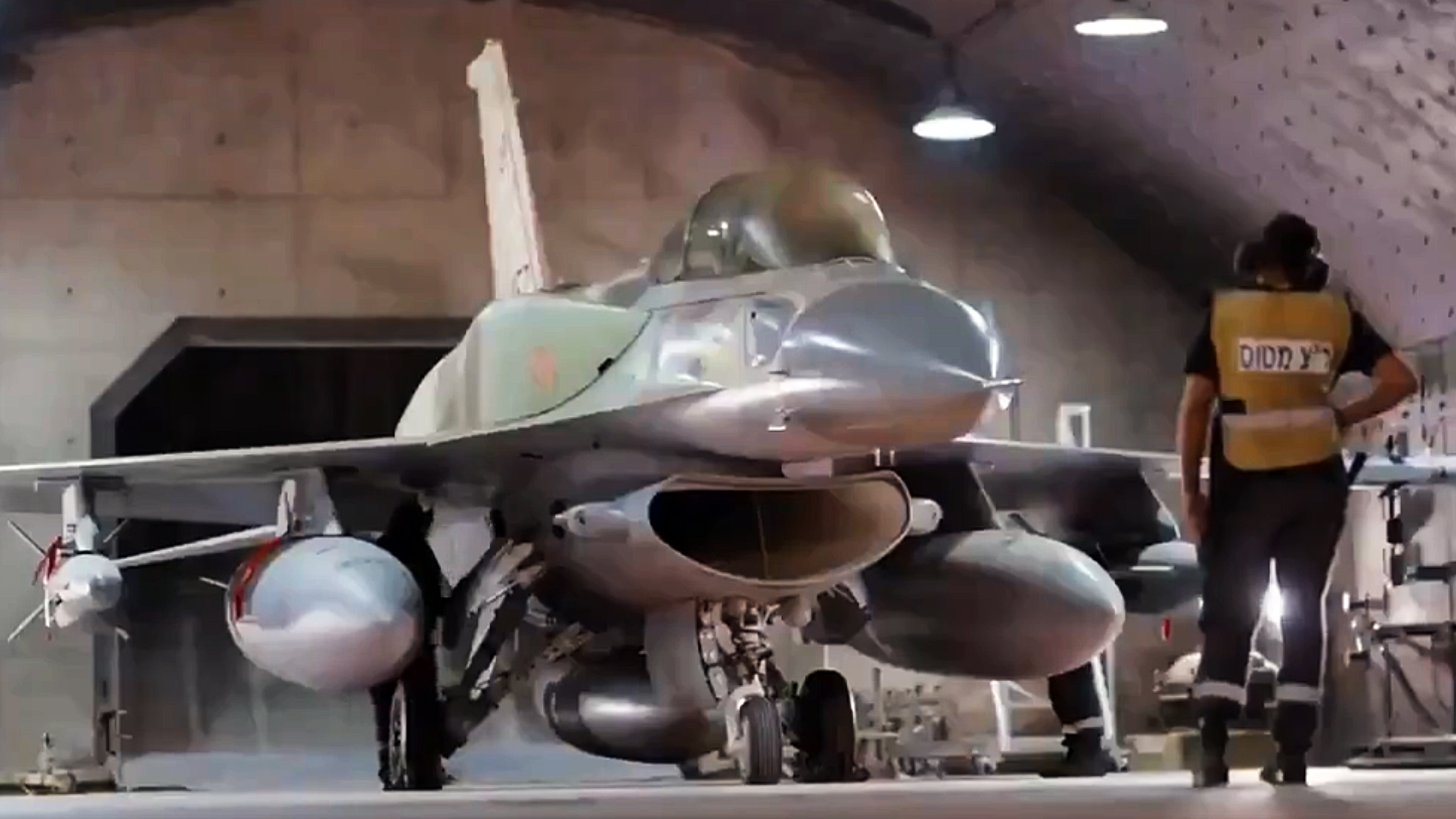
This is Iran's 2nd largest petrochemical… https://t.co/2JgcUZpSZ3 pic.twitter.com/qvQFWMcC6I
Video emerged online showing the Israeli airstrikes in Tehran.
For the first time since the April ceasefire, Israel and Iran have attacked each other. Israel carried out strikes on western and central Iran including the Iranian capital Tehran.
— Channel 4 News (@Channel4News) June 8, 2026
While Iran launched missiles at northern Israel and said it is the beginning of a week of attacks.… pic.twitter.com/SmcwFKMw14
The attacks sparked a warning from the U.S. Embassy in Jerusalem.
“As a result of the current security situation in Israel, including Home Front Command alerts for multiple regions,” the U.S. Embassy in Jerusalem is ordering “all U.S. government employees and their family members to shelter in place, and be prepared to move to a protected shelter in the event of a red alert, until further notice.”
As a result of the current security situation in Israel, including Home Front Command alerts for multiple regions, the U.S. Embassy has directed all U.S. government employees and their family members to shelter in place, and be prepared to move to a protected shelter in the event… pic.twitter.com/ohyK56GyNh
— U.S. Embassy Jerusalem (@usembassyjlm) June 8, 2026
Though both Israel and Iran say they are willing to stop fighting, tensions in the region remain high. We will continue to monitor the situation.
As we noted earlier in this story, the Houthi rebels of Yemen said they are banning Israeli ships from the Red Sea and took credit for missile attacks on Israel that took place on Sunday.
“We announce a complete ban on navigation for the enemy in the Red Sea, and any Zionist movements will be considered military targets for our forces,” said Brigadier General Yahya Sare’e, the Houthis’ spokesman. “We will confront escalation with escalation, and our operations will be escalating in line with the battle and our participation in the axis of jihad and resistance.”
“We affirm the right of our people and the free peoples of our nation to confront American-Israeli aggression,” he added. “We will not stand idly by in the face of the unjust siege on our people and the peoples of the axis of jihad and resistance.”
Sare’e also said the Houthis launched “a missile strike on sensitive targets of the Israeli enemy in occupied Jaffa, and achieving its objectives with precision, thanks to God.”
There were no reported injuries or damage from that attack.
Yemen’s Iran-backed Houthis announce that they launched a missile attack on Israel and declared a ban on Israeli shipping in the Red Sea.#Yemen pic.twitter.com/LYYPB7bibK
— Al Arabiya English (@AlArabiya_Eng) June 8, 2026
As we have previously reported, there have been major and relevant concerns that the Houthis could effectively shut down the Bab el-Mandeb (BAM) strait, a narrow stretch of water between Yemen and Djibouti. Doing so would choke off a flow of oil exports from Saudi Arabia to the east, exacerbating a huge spike in oil prices after Iran closed off the Strait of Hormuz to most shipping. Having both straits closed at once is something of a ‘sum of all fears’ scenario for the global energy marketplace.
A new Houthi offensive would be a major cudgel for Iran, because it would open a new front in the war and draw in U.S. military resources at a time when they are already heavily involved in the region.
During the previous Houthi Red Sea campaign that stretched into early 2025, the U.S. and its allies deployed many warships, including the Eisenhower and Truman Carrier Strike Groups (CSG) to both defend against Houthi attacks and strike targets in Yemen. These operations resulted in a large expenditure of air defense munitions already under strain as Iran rained down missiles and drones across the Middle East.
You can see video from some of those encounters below.
Iran, meanwhile, insists it is maintaining its control over the Strait of Hormuz.
“No vessel without Iran’s permission has the right to pass through the Strait of Hormuz Command vessel of the IRGC Navy,” the official Iranian Fars News Agency stated on X. “It is announced to all vessels that entry of any vessel from hostile countries into the Strait of Hormuz is prohibited and, if observed, they will immediately be targeted.”
Footage Shows Iran's Continued Control of Strait of Hormuzhttps://t.co/a4Ci6L1ZcO pic.twitter.com/4Tv6idNt8z
— Fars News Agency (@EnglishFars) June 8, 2026
CENTCOM says its forces once again disabled a ship trying to run the blockade. This time, the effort involved an F/A-18E/F Super Hornet from the aircraft carrier USS Abraham Lincoln (CVN 72) firing “a precision munition into the ship’s engineering and steering spaces after the crew failed to comply with directions.”
The incident, involving the Palau-flagged M/T Marivex, took place as the unladen oil tanker transited international waters in the Gulf of Oman toward Iran, the command stated on X.
“Marivex is no longer sailing to Iran,” CENTCOM added.
This was the seventh ship trying to run the blockade that CENTCOM forces disabled, the command noted. In addition, it said it “redirected 134 ships that complied, and allowed 42 vessels supporting humanitarian aid to pass since initiating the blockade on April 13.”
You can read more about how the other six ships were disabled in our story here.
According to a release from U.S. Central Command (CENTCOM), the U.S. disabled an unladen oil tanker, the M/T Marivex, in the Gulf of Oman today. Per the release, a “precise munition” from an F/A-18 Super Hornet was fired into the engine and steering areas of the vessel when the… pic.twitter.com/qyW4WBhfLa
— OSINTdefender (@sentdefender) June 8, 2026
Given existing concerns that Iran has mined the Strait, “US allies will seek Trump’s approval for a Europe-led plan to demine the Strait of Hormuz at next week’s G7 summit in France,” Bloomberg News is reporting. “The UK and French-led mine-clearing mission is operationally ready and set to deploy in the days after any Iran deal. Securing a G7 endorsement of the mission is one of the main goals of the summit. European leaders see it as a way of showing the continent is stepping up to help the US after Trump’s fury it didn’t back his war.”
US allies will seek President Donald Trump’s approval for a Europe-led plan to demine the Strait of Hormuz at next week’s Group of Seven summit in France. https://t.co/Byy6mE94rh
— Bloomberg (@business) June 8, 2026
You can read more about what it takes to conduct demining operations in our exclusive interview with a former MH-53E pilot who carried out those operations, which you can read here.
My exclusive interview with a pilot who flew the behemoth MH-53E Sea Dragon helicopters on counter mine missions over the Persian Gulf and Strait of Hormuz.https://t.co/C0tvO2sLKp
— Howard Altman (@haltman) June 5, 2026
Despite the renewed fighting, Iran’s president says his country has not abandoned diplomacy.
“Our priority is national security and the peace of our people. We will defend the rights of the nation with authority and will not retreat in the face of any threat,” Masoud Pezeshkian stated on X. “Diplomacy and defense are the two wings of national power; we have neither abandoned the field nor the negotiating table. God willing, with unity and rationality, Iran will emerge triumphant from this trial as well.”
اولویت ما امنیت ملی و آرامش مردم است. با اقتدار از حقوق ملت دفاع میکنیم و در برابر هیچ تهدیدی عقبنشینی نخواهیم کرد. دیپلماسی و دفاع دو بال قدرت ملیاند؛ نه میدان را ترک کردهایم و نه میز مذاکره را. به امید خدا با وحدت و عقلانیت ایران از این آزمون نیز سربلند عبور خواهد کرد.
— Masoud Pezeshkian (@drpezeshkian) June 8, 2026
In a post on X, the Islamic Revolutionary Guard Corps (IRGC)-connected Tasnim news agency claims Iran fired a new jet-powered drone at Israel during its waves of attacks yesterday. The outlet provided no details about the weapon or any imagery of it in flight. TWZ cannot independently verify the claim.
Iran Utilized Newly Unveiled Jet-Powered Drone in Overnight Strikes on Israel
— Tasnim News Agency (@Tasnimnews_EN) June 8, 2026
Iran employed a previously unseen jet-powered drone in its overnight attacks on Israel, according to Seyed Mohammad Taheri, a military analyst at Tasnim News Agency’s War Interpretation Desk. https://t.co/ATvBOUmiOZ pic.twitter.com/Z4SBHawMcz
Contact the author: howard@twz.com
The post Iran And Israel Step Back From The Brink appeared first on The War Zone.


Quase um ano depois da fiscalização levada a cabo pela Agência Portuguesa do Ambiente a 45 km de faixa costeira entre Tróia e Melides, segundo a qual 10 das 22 praias analisadas tinham acesso controlado ou condicionado por empreendimentos turísticos ou barreiras físicas, a Quercus vem questionar o Governo, numa carta enviada à Srª Ministra do […]

In Homer’s Iliad, Thetis plays an important role in shaping the destiny of her son, Achilles. As a goddess, she intervenes at key moments in the epic, pushing the Greek hero to alter the course of events.
Although Thetis appears less frequently than many of the warriors and gods who dominate the battlefield at Troy, her actions influence some of the most significant developments in the poem. As a sea goddess and the mother of the greatest Greek warrior, she occupies a unique position between the divine and mortal worlds. She cannot prevent Achilles from dying, since the Fates have already decreed it, yet she repeatedly intervenes to protect his honor, ease his suffering, and ensure that his glory endures.
Through Thetis’ character, Homer explores themes of maternal love, fate, mortality, glory, and divine power. The first major instance of Thetis helping Achilles occurs in Book 1. After Agamemnon captures Briseis, a captive woman awarded to Achilles as a war prize, the Greek hero feels deeply dishonored and withdraws from battle. In his grief and anger, Achilles calls upon his mother. Thetis immediately rises from the sea to comfort him and listen to his complaint.
This scene reveals the extraordinary bond between mother and son. Unlike many divine figures in Greek mythology, Thetis responds with sympathy and tenderness. She understands Achilles’ suffering because she is painfully aware of his short lifespan. Her lament for him reflects a mother’s helplessness in the face of fate.
After hearing Achilles’ request, Thetis undertakes one of the most consequential actions in the epic. She travels to Olympus and petitions Zeus to punish the Greeks by granting success to the Trojans. Her aim is not simply revenge but the restoration of Achilles’ honor. Zeus eventually agrees, and his decision alters the course of the war. The Trojans begin to gain the upper hand, while the Greeks suffer devastating losses. Through this intervention, Thetis helps Achilles achieve the recognition he believes Agamemnon has denied him.
This episode demonstrates the extent of Thetis’ influence among the gods. Although she cannot alter fate itself, she is capable of shaping the chain of events that leads toward it. Her appeal to Zeus succeeds in part because of a previous favor she had done for him. In this sense, her assistance rests not only on maternal devotion but also on her standing within the divine order. Achilles’ withdrawal from battle would have remained a private grievance without Thetis’ intervention. Instead, it escalates into a crisis that engulfs the entire Greek army.
The second major instance of Thetis helping Achilles occurs after the death of Patroclus. Patroclus, Achilles’ closest companion, enters battle wearing Achilles’ armor and is killed by Hector. When Achilles learns of his friend’s death, he is overwhelmed by grief and rage. Once again, Thetis hears her son’s cries and goes to him. This scene is among the most emotional in the Iliad. Thetis is aware that Achilles’ decision to return to battle will lead directly to his own death, yet she does not attempt to stop him. Instead, she offers comfort and practical assistance.
Achilles cannot immediately rejoin the fighting because Hector has confiscated his armor. Recognizing his need, Thetis travels to the forge of Hephaestus and requests new armor for her son. Hephaestus responds by crafting the magnificent shield of Achilles, one of the most celebrated objects in world literature. The shield depicts scenes of war and peace, labor and celebration, and life and death. With this armor, Thetis enables Achilles to return to battle and fulfill his heroic destiny.
This act of assistance is particularly significant because it highlights the limits of divine power. Thetis can secure the finest armor ever made, but she cannot save Achilles from mortality. Her help therefore reflects the tragic paradox that every action she takes to aid her son also brings him closer to the fate she most fears. The armor allows Achilles to defeat Hector, but it also marks the final stage of his journey toward death.
Thetis’ role after Hector’s death further underscores her importance. Achilles becomes consumed by grief and rage, dragging Hector’s body around the tomb of Patroclus. The gods disapprove of this behavior and decide that Hector must be returned to his family. Zeus sends Thetis to deliver his command to Achilles. She successfully persuades her son to release the body in exchange for ransom, helping restore moral balance and preparing the tale for closure.
This final intervention reveals another dimension of Thetis’ assistance. Earlier, she helped Achilles gain honor through vengeance; now she helps him regain humanity through compassion. Her influence guides him from destructive rage toward acceptance. The reconciliation between Achilles and Priam, one of the most moving scenes in ancient literature, would not have occurred without Thetis serving as the messenger between gods and mortals.
Modern scholars have emphasized the complexity of Thetis’ character. Rather than portraying her simply as a nurturing mother, recent studies highlight her power and agency. Thetis is more than a grieving parent. She is a divine force capable of influencing both Olympus and the battlefield for the benefit of her son. This is evident in actions such as her request to Hephaestus to forge an impenetrable suit of armor for Achilles.
At the same time, scholars frequently stress the tragic nature of her motherhood. Classicist Emily Wilson observes that she has come to view the Iliad as “a poem about the pain of a goddess mother who adores her mortal child and can’t protect him.” This insight captures the emotional core of Thetis’ role in the epic. Despite her divine status, she remains powerless as a mother in the face of fate. Her interventions can shape events, but they cannot prevent the loss she knows is imminent.
Other scholars have also noted that grief defines Thetis’ presence throughout the epic poem. Classicist Serena Cannavale describes Thetis in the Iliad as “a figure of grief,” emphasizing that her sorrow is present long before Achilles actually dies. Her laments anticipate the tragedy that hangs over the entire narrative.
Ultimately, Thetis helps Achilles in three essential ways: she restores his honor by persuading Zeus to favor the Trojans, she equips him for revenge by obtaining new armor from Hephaestus, and she guides him back toward humanity by conveying Zeus’s command to release Hector’s body to Priam. These actions shape the central events of the Iliad and reveal the profound connection between mother and son. Yet the tragedy of Thetis lies in the fact that her power cannot overcome destiny. She can comfort Achilles, protect his reputation, and secure his everlasting glory, but she cannot save his life.
For this reason, Thetis embodies the tension between divine power and human mortality. Every time she helps Achilles, she demonstrates her love, yet every act of assistance also reminds readers that fate is stronger than even the gods. Through Thetis, Homer presents a moving portrait of maternal devotion in the face of inevitable loss, making her one of the emotional centers of the Iliad.

Ukrainian defense companies entering the US market face draconian US protectionist conditions, including the formation of a US legal entity and partial disclosure of technical documentation, Defense Express analyzes. The analysis comes as two Ukrainian companies — F-Drones, via the US-registered Ukrainian Defense Drones Tech Corporation (UDD), and General Cherry Corp — compete in the Pentagon's $1.1 billion Drone Dominance Program.
The reality check is stark: reports of Ukrainian drones winning Pentagon contracts obscure the fact that the Pentagon's procurement framework does not allow direct sales from Ukrainian suppliers.
US defense procurement requires that the contractor be a US legal entity. To register, that entity must be registered with the US Defense Counterintelligence and Security Agency (DCSA) as a defense manufacturer, demonstrate non-use of prohibited Chinese components, satisfy cybersecurity requirements, and meet classified-information access standards.
Foreign ownership thresholds shape what's possible. A 100%-foreign-owned entity faces approval timelines measured in years and is unlikely to receive DCSA approval for classified contracts.
A foreign-ownership share below 50% triggers a Security Control Agreement (SCA) regime, under which the company must be officially led by a US citizen, foreigners are barred from classified information, and registration takes months. The only foreign-ownership level that avoids these additional procedures is below 5%.
For Ukrainian drone makers targeting US government contracts, the practical implications are stark. The right to sign contracts and conduct correspondence with the US Department of Defense may pass to US-citizen executives.
The "no Chinese components" verification requires at least partial disclosure of technical documentation to US authorities. Production must be relocated or duplicated on US soil, creating American jobs.
And, critically, none of this happens without significant lobbying, often through partnership with a large US prime.
Norway's Kongsberg has faced the same procedure. The weapon producer used the partnership model to sell its Naval Strike Missile in the US. Rather than entering the US market directly, Kongsberg paired with Raytheon.
Raytheon handled the procurement promotion, particularly positioning NSM as the armament for the Littoral Combat Ship (LCS) class, in exchange for technology transfer, US localization, and final assembly on American soil.

Concerned about a cascading impact on America’s already strained nuclear shipbuilding industry, the House Armed Services Committee wants the Secretary of the Navy to prove that procurement of the proposed nuclear-powered Trump class battleships won’t exacerbate existing construction delays on aircraft carriers and submarines. This follows a congressional move last month to block the Navy from starting construction of the first of the new class of battleships until the service provides assurances that key weapon systems are “sufficiently mature.” You can read more about that in our original report here.
New worries about the status of U.S. nuclear shipbuilding were raised Thursday during the House Armed Services Committee’s Markup of the current draft of the Fiscal Year 2027 National Defense Authorization Act (NDAA), the annual defense policy bill. An amendment adding new directed report language related to the Trump class, which was approved by the Committee, mirrors issues TWZ has frequently addressed about procurement of nuclear-powered vessels.

“The committee continues to support efforts to expand the U.S. maritime industrial base and accelerate U.S. shipbuilding production and recognizes the progress that has been made on these efforts through coordination between Congress, the Department of Defense, and industry,” the amendment, which had been put forward by Rep. Joe Courtney, a Connecticut Democrat, says. “However, the committee is concerned about the possibility of strain on U.S. nuclear shipyards and maritime industrial base posed by the aggressive schedule proposed for producing a nuclear-powered BBG(X) platform.”
The Trump class has also been referred to as BBG(X), the hull classification code for a guided missile (G) battleship (BB). The Navy has more recently used the term BBGN, reflecting the decision to utilize nuclear propulsion.
The main concern raised by Rep. Courtney is that there is a limit on where nuclear-powered warships can be built.
“The committee notes that the United States operates only two shipyards that are qualified to construct nuclear-powered vessels and that only one of these two shipyards, located in Newport News, Virginia, actively constructs surface vessels, including the Gerald R. Ford class aircraft carrier program,” Courtney noted. He was referring to Newport News Shipbuilding, a division of Huntington Ingalls Industries.

“The committee is aware that the timelines for completion of the three Ford class aircraft carriers currently under construction have experienced significant delays due to a variety of reasons including supply chain and workforce challenges,” the amendment continues. “The committee is concerned that these factors, coupled with a lack of physical shipbuilding capacity, could be further exacerbated by a new nuclear-powered surface vessel program and without careful planning could jeopardize Ford class delivery.”
Beyond concerns about building the ships, the committee is troubled by the Trump class battleship’s impact on the U.S. naval reactor base, which is also limited to a single supplier.
That company, BWXT Technologies, is providing reactors for the Ford class carriers, as well as Virginia and Columbia class nuclear submarines under construction. It was recently awarded $1.4 billion in contracts by the U.S. Naval Propulsion Program.

“Procurement of naval nuclear reactors typically occurs 2-to-3 years ahead of procurement of a respective vessel and reactor production timelines typically range from 6-to-8 years,” Courtney posited in his amendment. He is “concerned that the accelerated procurement timeline for the BBG(X) program will result in a negative impact on this supply chain.”
The first formal announcement that the Trump class ships would be nuclear-powered came when the Navy unveiled its new shipbuilding plan last month. The Navy hasn’t had a nuclear-powered surface combatant since the 1990s.

The service’s stated plan is to acquire 15 Trump class ships between Fiscal Year 2028 and 2055. Orders are to be placed essentially one every other year. However, two are slated to come back-to-back in Fiscal Years 2030 and 2031.
The most recent publicly available official estimate for the price tag on these boats is about $17 billion each. That eclipses what the service expects to spend on each of the next three Ford class carriers, the projected unit costs of which range from roughly $13 to $15 billion.

With all this in mind, the committee now wants the Navy Secretary and the Director of the Naval Nuclear Propulsion Program to provide a report by March 1, 2027, on the “Navy’s strategy to design and construct BBG(X) without interfering with existing nuclear-powered shipbuilding plans,” including the scheduled construction of third, fourth, and fifth Ford class carriers, the future USS Enterprise (CVN-80), USS Doris Miller (CVN-81), and USS William J. Clinton (CVN-82).
The committee wants the information about:

In addition to the issues raised by Courtney, Representative Christopher Deluzio, a Pennsylvania Democrat, expressed concern that the Navy is making “optimistic assumptions about technologies” in a separate amendment to the latest draft of the House NDAA. He specifically cited “operating with a nuclear weapon, ship design, costs, schedule, and production and lack clear concepts of operations or a commitment to incorporating commercial leading practices” when it comes to the Trump class program. Deluzio’s full amendment also touched on aspects of the Trump administration’s Golden Fleet naval modernization initiative.
Deluzio’s amendment directs the Comptroller General of the United States to provide a brief to the House Committee on Armed Services no later than January 1, 2027, on how they will assess:

We reached out to Acting Navy Secretary Hung Cao’s media office for comment and will update this story with any pertinent insights shared.
There are still a number of legislative hurdles the committee’s proposals have to jump. Regardless, the reality that the Navy will ever procure a Trump class battleship, at least as currently envisioned, is already highly questionable, an issue TWZ raised when the class was first announced. President Donald Trump, who sees his namesake battleship class as a key component of the Golden Fleet, will be out of office before major decisions about how to go forward will be made. These congressional actions could be seen as a way to slow-roll plans for the battleship to kill it without directly confronting Trump about the logic of building it in the first place.

The next administration faces massive competing priorities, and there are already questions by members of Congress about whether the battleship effort is the best use of available resources.
The committee’s demand that the Navy prove these vessels won’t gum up the nuclear shipbuilding works is another reminder that there are rough waters ahead for the Trump class.
Contact the author: howard@TWZ.com.
The post Legislators Demand Navy Prove Trump Class Battleships Won’t Sink U.S. Nuclear Shipbuilding appeared first on The War Zone.

The pressure is mounting on the shaky ceasefire between the U.S. and Iran with an increasing pace of tit-for-tat strikes between the two foes and Iran’s suspension of peace talks after blaming Israel’s deepening advance into Lebanon. Exacerbating tensions, Tehran claimed it will “completely block” the Strait of Hormuz while threatening to close the Bab al-Mandeb Strait as well. Located at the mouth of the Red Sea, it is another critical regional chokepoint. The Strait of Hormuz has been largely closed to most traffic by Iran since not long after the launch of Epic Fury on Feb. 28.
All these actions are taking place against the backdrop of sputtering negotiations between the U.S. and Iran that have yet to achieve any tangible results.
“Given the continuation of the Zionist regime’s crimes in Lebanon and considering that Lebanon was among the preconditions for the ceasefire, and now this ceasefire has been violated on all fronts including Lebanon, the Iranian negotiation team will stop ‘dialogues and text exchanges through intermediaries,’” the IRGC-affiliated Tasnim news agency stated on Monday. The two sides had been talking through mediators in Pakistan and Qatar.
“Also, the resistance front and Iran have resolved to completely block the Strait of Hormuz and activate other fronts including the Bab al-Mandeb Strait, in order to punish the Zionists and their supporters,” the outlet added.
فوری | ایران تبادل پیام با آمریکا را در اعتراض به جنایات صهیونیستها متوقف میکند
— خبرگزاری تسنیم – خبر فوری (@Tasnimbrk) June 1, 2026
عزم نیروهای مسلح ایران و تمام محورهای جبهه مقاومت برای واکنش به جنایات صهیونیستها و گشودن جبهههای جدید
Iran has been allowing some ships to transit the Strait of Hormuz through what it calls a system of fees paid for environmental and other services. Meanwhile, U.S. Central Command (CENTCOM) has helped guide the passage of about 70 commercial vessels through the Strait of Hormuz, according to The New York Times. This involves communicating and coordinating with ships, not escorting them, CENTCOM told the publication. Most of these transits appear to be closer to Oman than Iran, the publication added.
There were no details provided by Iranian officials about how Iran would completely close the Strait of Hormuz or when such a move could begin.
According to the New York Times, citing U.S. officials, U.S. forces have guided approximately 70 commercial vessels, both ways, through the Strait of Hormuz in the last three weeks. Per the report, most of the vessels transited with their transponders off to avoid being targeted… pic.twitter.com/tfdN1YFeAp
— OSINTdefender (@sentdefender) May 31, 2026
Tasnim also did not offer specifics about Iran’s threat toward the Bab al-Mandeb Strait or what it could entail. However, the Houthi rebels of Yemen, an Iranian proxy group, waged a protracted 15-month campaign against shipping in that region starting in the fall of 2023. TWZ has previously highlighted concerns that the Houthis could resume these attacks on behalf of Iran in the current conflict. As we have noted, Houthi strikes in this area would add further global economic strain and place additional burden on U.S. forces.
With the Strait of Hormuz closed, Saudi Arabia is rerouting its oil exports through pipelines to the Red Sea. A disruption of that transit option could cause oil prices to rise much higher and more quickly than they already have, creating a cascading wave of financial impacts and shortages across the globe, and especially in Asia. Even if the Strait of Hormuz were opened today, it will still take months for the global economy to recover from the shock. Meanwhile, for Saudi Arabia, the simultaneous closure of both straits is a long-standing nightmare, a financial double-whammy.

Just the recent news of the kinetic exchanges between the U.S. and Iran and Tehran’s decision to call off talks has sent the price of oil once again shooting upwards.
After dropping to a little more than $91 per barrel partly in the wake of President Donald Trump’s unfounded claim he was lifting the U.S. blockade on Iranian ports, the price as of 11:20 a.m. EDT was once again closing in on $100 per barrel, according to OilPrice.com. It reached a high this year of more than $114 a barrel in early May.

Defending against renewed Houthi attacks could require military assets at a time when the U.S. is already heavily committed to Operation Epic Fury and its aftermath that has seen a significant amount of equipment destroyed or damaged and munitions expended. During the previous Houthi Red Sea campaign, the U.S. and allies deployed numerous warships, including the Eisenhower and Truman Carrier Strike Groups (CGS) to both defend against Houthi attacks and strike targets in Yemen. These operations resulted in a large expenditure of air defense and strike munitions, with Houthi capabilities remaining degraded, but intact after it was all over.
You can see video from some of those encounters below.
Despite the widespread publicity over Tehran’s new positions, Trump told NBC News on Monday that he had not heard from Iranians that they were suspending talks. The president added that silence would be fine and he was willing to wait.
“I think we’ve been talking too much if you want to know the truth. I think going silent would be very good, and that could be for a long time,” the president proclaimed. “It doesn’t mean we’re going to go and start dropping bombs all over there. We’ll just go silent. We’ll keep the blockade.”
“I think I can wait as long as they want,” Trump continued. “They’re losing a fortune.”
Trump told NBC News that he has not heard from Iran on its decision to suspend talks, saying, "I think we've been talking too much. I think going silent would be very good. It doesn't mean we’re going to go and start dropping bombs all over there. We’ll keep the blockade." https://t.co/ncw1G1Tko7
— Ariel Oseran أريئل أوسيران (@ariel_oseran) June 1, 2026
Meanwhile, amid all this turbulence, the U.S.-Iran negotiations remain in limbo.
Early Monday morning, Trump took to social media to claim “Iran really wants to make a deal, and it will be a good one for the U.S.A. and those that are with us.”
Iran really wants to make a deal, and it will be a good one for the U.S.A. and those that are with us. But don’t the Dumocrats, and various seemingly unpatriotic Republicans, understand that it is MUCH tougher for me to properly do my job and negotiate, when political hacks keep… pic.twitter.com/aqE6G0UKGv
— Commentary Donald J Trump Truth Social Posts On X (@TrumpTruthOnX) June 1, 2026
Iranians have pushed back on the notion that they are eager for or close to making a deal. You can read more about the reported terms and scope of the talks in our previous reporting here.
The status of US-Iran talks remained unclear Monday after Trump said negotiations were continuing, while Iranian state media reported Tehran had suspended indirect talks. https://t.co/dvHIHHATnU
— The Jerusalem Post (@Jerusalem_Post) June 1, 2026
As we mentioned earlier in this story, even before Iran reportedly called off talks, there was a heightened state of tension as the U.S. and Iran exchanged a new round of blows.
In a statement on X, U.S. Central Command said that at about 7:30 a.m. Tehran time on Monday, “U.S. forces successfully intercepted two Iranian ballistic missiles targeting American forces based in Kuwait. These missiles were immediately defeated and no American personnel were harmed.”
The command added that it “remains vigilant and will continue to protect our forces from Iranian aggression while supporting the ongoing ceasefire.”
Last night at 11 p.m. ET, U.S. forces successfully intercepted two Iranian ballistic missiles targeting American forces based in Kuwait. These missiles were immediately defeated and no American personnel were harmed.
— U.S. Central Command (@CENTCOM) June 1, 2026
U.S. Central Command remains vigilant and will continue to…
Kuwait condemned the attack.
The Kuwaiti Foreign Ministry “affirms the State of Kuwait’s reservation of its full right to take whatever measures are necessary to preserve its security and defend its territories, holding Iran fully responsible for these heinous aggressions, in accordance with international law, the United Nations Charter, and the relevant Security Council resolutions,” it stated on X.
بيان صادر عن وزارة الخارجية
— وزارة الخارجية (@MOFAKuwait) June 1, 2026
الاثنين 1 يونيو 2026
تُعرب وزارة الخارجية مجدداً عن إدانة واستنكار دولة الكويت، وبأشد العبارات، للهجمات الإيرانية الآثمة والمتكررة، لما تمثله من تصعيد خطير واعتداء مباشر على أمن دولة الكويت واستقرارها، وخرق فاضح لقواعد القانون الدولي وميثاق الأمم… pic.twitter.com/FsVqBu7phB
Iran, for its part, claimed it launched strikes on an unnamed U.S. base in response to U.S. attacks on Iranian targets on Saturday and Sunday.
Iran’s IRGC says it struck the airbase used to launch a recent U.S. attack after a communications tower on Sirik Island was targeted earlier today.
— Egypt's Intel Observer (@EGYOSINT) June 1, 2026
The IRGC said designated targets were destroyed and warned any further attacks would bring a much stronger response. https://t.co/e2nS7ZgAHn pic.twitter.com/FPlPzcwK6D
In a post on X late Sunday, CENTCOM said it “conducted self-defense strikes on Iranian radar and command and control sites for drones in Goruk, Iran and Qeshm Island this weekend. The measured and deliberate strikes occurred on Saturday and Sunday in response to aggressive Iranian actions that included the shootdown of a U.S. MQ-1 drone that was operating over international waters. U.S. fighter aircraft swiftly responded by eliminating Iranian air defenses, a ground control station, and two one-way attack drones that posed clear threats to ships transiting regional waters.”
“No American service members were harmed,” the command stated. “CENTCOM will continue to protect U.S. assets and interests in response to unwarranted Iranian aggression during the ongoing ceasefire.”
UPDATE: 5:43 PM EDT –
Netanyahu says “he spoke this evening with President Trump and told him that if Hezbollah does not stop firing at our cities and citizens – Israel will strike terrorist targets in Beirut,” according to the Israeli prime minister’s office. “This position of ours remains unchanged. Concurrently, the IDF will continue to operate as planned in southern Lebanon.”
Prime Minister Benjamin Netanyahu:
— Prime Minister of Israel (@IsraeliPM) June 1, 2026
“I spoke this evening with President Trump and told him that if Hezbollah does not stop firing at our cities and citizens – Israel will strike terrorist targets in Beirut.
This position of ours remain unchanged.
Concurrently, the IDF will…
The conversation came after Trump claimed on Truth Social that: “I had a conversation with Bibi Netanyahu today, asking him not to go into a major raid of Beirut, Lebanon. He turned his Troops around. Thank you Bibi! I also had a conversation with Representatives of the Leaders of Hezbollah, and they agreed to stop shooting at Israel, and its soldiers. Likewise, Israel agreed to stop shooting at them. Let’s see how long that lasts — Hopefully it will be for ETERNITY.”
"I had a very productive call with Prime Minister Bibi Netanyahu, of Israel, and there will be no Troops going to Beirut… I had a very good call with Hezbollah, and they agreed that all shooting will stop." – President Donald J. Trump
— The White House (@WhiteHouse) June 1, 2026pic.twitter.com/DJhysrmVnO
Meanwhile, Hezbollah continued firing on Israeli troops.
“Following the sirens that sounded a short while ago in the area of Metula, a launch was identified falling adjacent to IDF soldiers operating in southern Lebanon,” IDF stated on Telegram. “No injuries were reported.”
Other sirens heard in northern Israel, meanwhile, were determined to be false alarms, according to IDF.
BREAKING: Incoming rocket sirens sound in northern Israel, hours after Trump announced Hezbollah agreed to cease attacks on Israeli territory. pic.twitter.com/visWa1gVa4
— Ariel Oseran أريئل أوسيران (@ariel_oseran) June 1, 2026
As we noted earlier in our story, Iran is using the escalation of the Israeli-Hezbollah fight as a reason to walk away from peace talks, at least for now.
The move came after Israeli Prime Minister Benjamin Netanyahu on Monday ordered attacks on what he called “terror targets” in the Hezbollah stronghold of the Dahieh section of Beirut.
“Together with the Minister of Defense, I have instructed the IDF to strike terrorist targets in Beirut,” Netanyahu announced. “There will not be a situation in which Hezbollah attacks our cities and our citizens, and its terrorist headquarters in Beirut, in Dahiyeh, remains out of bounds.”
The Israeli leader added that “we are continuing to deepen our operational activity on the ground in southern Lebanon and are eliminating Hezbollah strongholds. Hezbollah is on the run. We are determined to restore security to the residents of the north, just as we did for the residents of the south.”
Prime Minister Benjamin Netanyahu:
— Prime Minister of Israel (@IsraeliPM) June 1, 2026
"Together with the Minister of Defense, I have instructed the IDF to strike terrorist targets in Beirut. There will not be a situation in which Hezbollah attacks our cities and our citizens, and its terrorist headquarters in Beirut, in Dahiyeh,… pic.twitter.com/g93PGk19aY
Netanyahu’s statement followed Israel proclaiming that it is operating north of the Litani River, a traditional demarcation line for Israeli incursions into Lebanon. Advancing north of the river marks a large escalation and the first time Israel has been that far from its border since withdrawing from southern Lebanon in 2000.
The IDF on Sunday announced it captured Beaufort Castle on Sunday. Overlooking the Beaufort Ridge on the Litani, the castle was once home to Crusaders, seized by them in 1139.
Footage of IDF forces taking Beaufort Castle in southern Lebanon. pic.twitter.com/D8Vr0qVfQH
— Amit Segal (@AmitSegal) May 31, 2026
Netanyahu claimed the latest battle over the ancient structure was a victory for Israel.
“The capture of Beaufort is a dramatic stage and a dramatic change in the policy we are leading,” Netanyahu postulated. “We have broken the barrier of fear. We are taking the initiative. We are operating on all fronts – in Syria, in Gaza, in Lebanon. We have established security zones beyond our borders to protect our communities.”
הלוחמים הגיבורים שלנו כבשו את הבופור ואנחנו ממשיכים עד שנשלים את המשימה pic.twitter.com/j0oBy2z9cG
— Benjamin Netanyahu – בנימין נתניהו (@netanyahu) May 31, 2026
An unspecified aircraft fired an AGM-114 Hellfire missile into the engine room of a Gambia-flagged merchant vessel trying to run the blockade, CENTCOM said in an X post on Sunday.
CENTCOM forces “observed M/V Lian Star transiting international waters toward an Iranian port on the Gulf of Oman and issued more than 20 warnings while informing the vessel it was in violation of the U.S. blockade” on May 29, the command stated. “A U.S. aircraft disabled the vessel by firing a Hellfire missile into the ship’s engine room after Lian Star’s crew failed to comply. The ship is no longer transiting to Iran.”
Since the blockade went into effect April 13, “U.S. forces have disabled five commercial vessels and redirected 116 to fully enforce the blockade as a ceasefire with Iran remains in effect,” CENTCOM added.
Other ships have been stopped from running the blockade by having bombs dropped down their smoke stacks, fighters firing 20mm cannon shells at their rudders and inert rounds from a destroyer’s five-inch gun blasting their engine rooms.
A U.S. military aircraft fired a Hellfire missile into a ship’s engine room to prevent it from breaking through the American blockade of Iranian ports. U.S. forces issued more than 20 warnings to the Gambia-flagged ship.
— Stars and Stripes (@starsandstripes) June 1, 2026
Read more at: https://t.co/PHz1HnlxHk
Further highlighting the ongoing danger to shipping in and around the Strait of Hormuz, a cargo vessel transiting the Gulf about 40 nautical miles southeast of Umm Qasr, Iraq, has been hit by an unknown projectile on its starboard side, causing a large explosion, the United Kingdom Maritime Trade Operations (UKMTO) reported on Monday.
UKMTO said it was unaware of any immediate environmental impact.
Since the launch of Epic Fury, UKMTO has received 53 reports of incidents affecting vessels operating in and around the Arabian Gulf, Strait of Hormuz (SOH), and Gulf of Oman. There have been 29 reported attacks, 22 reported suspicious activities and two reported hijackings.
UKMTO WARNING 063-26
— UKMTO Operations Centre (@UK_MTO) June 1, 2026
Click here to view the full warninghttps://t.co/RyUM9BRf69#MaritimeSecurity #MarSec pic.twitter.com/tZtykTLbyN
Iran claims it produced a new fast attack speedboat for the Islamic Revolutionary Guard Corps Navy (IRGCN). Dubbed the Rajab 27th, the semi-official Iranian Mehr News Agency described the vessel as a “fast attack watercraft featuring a trimaran hull design, which enhances stability and maneuverability in challenging maritime conditions.”
Mehr also said that the Rajab 27th is “capable of launching two sea-based cruise missiles with a range of 700 kilometers.”
The vessel, stated Mehr, is designed to conduct operations in sea states with wave heights of up to nearly 10 feet, the outlet added.
The unveiling of the new speedboat “highlights the continued development of the IRGC Navy’s fast-attack and missile-equipped maritime capabilities, which play a key role in Iran’s naval defense strategy and operations in southern waters,” Mehr posited.
TWZ cannot independently verify the Iranian claim, though it should be noted that the IRGC has invested heavily in its fleet of small boats for decades as TWZ has explored in the past. In addition to being armed with anti-ship cruise missiles, as well as artillery rockets and other weapons, they can also be used to lay naval mines. While the president claimed that 159 Iranian ships have been destroyed, the IRGC still has a large number of these small vessels.
The images below, taken during the unveiling ceremony, show glimpses of the Rajab 27th with what appear to be a missile container on either side of the boat.


Iran also claims it has restored gas production at three offshore platforms in the South Pars gas field, the head of the Pars Oil and Gas Company has told state media. As we previously reported, the facility was attacked by Israel in March.
Touraj Dehqani said on Sunday that the platforms had not been damaged in the attacks, Iran’s official IRNA news agency claimed.
“Dehqani said production from the three platforms was being routed to other processing plants in the region while repairs continued at damaged facilities,” Al Jazeera noted.
Iran has restored gas production at three offshore platforms in the South Pars gas field that had been forced to halt output after Israeli attacks disrupted processing capacity at some onshore facilities, Iranian state media reports citing the chief executive of the Pars… pic.twitter.com/SGyTCRa2yH
— Al Arabiya English (@AlArabiya_Eng) May 31, 2026
Contact the author: howard@twz.com
The post U.S.-Iran Ceasefire On The Brink After Tit-For-Tat Attacks (Updated) appeared first on The War Zone.

President Donald Trump on Friday announced he was lifting the U.S. blockade on Iranian ports enacted last month. The move comes amid media reports and administration messaging that Washington and Tehran appear to be drawing closer to a deal that could lead to ending the conflict. Iranian officials have rejected that notion. TWZ cannot confirm either side’s assertions.
“Ships caught in the Strait due to our amazing and unprecedented Naval Blockade, which will now be lifted, may start the process of ‘heading home!’” Trump proclaimed on Truth Social, referring to the Strait of Hormuz. The strategic chokepoint has been largely closed to most traffic by Iran since not long after the launch of Epic Fury on Feb. 28.
— Rapid Response 47 (@RapidResponse47) May 29, 2026
Trump’s comments may reflect a still unsigned Memorandum of Agreement with Iran that paves the way for reopening the Strait and is designed to create negotiating space to deal with the larger issues of Iran’s nuclear ambitions.
“Iran must agree that they will never have a Nuclear Weapon or Bomb,” the U.S. leader added. “The Hormuz Strait must be immediately open, no tolls, for unrestricted shipping traffic, in both directions. All water mines (bombs), if any, will be terminated (we have removed, through detonation, numerous such mines with our great underwater mine sweepers. Iran will complete the immediate removal and/or detonation of any mines that are left, which will not be many!).”
Last month, the head of U.S. Central Command stated that he was deploying uncrewed underwater vehicles (UUVs) to the region for the counter-mine effort. UUVs are a critical part of modern minesweeping operations.
“The Strait of Hormuz is an international sea passage and an essential trade corridor that supports regional and global economic prosperity,” Adm. Brad Cooper said in an April 11 media release. “Additional U.S. forces, including underwater drones, will join the clearance effort in the coming days.”
The Navy has various types of uncrewed undersea vehicles, remotely operated vehicles and an airborne mine neutralization system to perform mine sweeping operations. You can read more about these systems and how they work in our story about minesweepers here.
Trump ordered the blockade on April 13 to create economic pressure on Iran by limiting its ability to export oil or import needed weapons or other materiel.
“As of May 29, 115 commercial vessels have been redirected to ensure no commerce enters or leaves Iranian ports,” CENTCOM said in a post Friday morning about an hour before Trump made his announcement about the blockade.
U.S. forces continue to enforce the blockade against Iran. As of May 29, 115 commercial vessels have been redirected to ensure no commerce enters or leaves Iranian ports. pic.twitter.com/ioKe4A6p7T
— U.S. Central Command (@CENTCOM) May 29, 2026
Trump did not spell out the mechanics for ending the blockade and CENTCOM declined to say what Trump’s announcement means for the assets arrayed around the region to enforce it. The command referred us to the White House, which did not immediately respond to a request for comment.
It is also unclear why Trump would lift the blockade at such a critical time, before any agreement is signed. According to various media reports, such a move would have been in conjunction with Iran easing its restrictions on Strait shipping. However, Iranian officials have insisted that has yet to happen. In essence, the U.S. lifting the blockade on Iran would do nothing for mariners trapped in the Persian Gulf unless Iran also lifts its threats to attack ships transiting the waterway without its permission.
According to Axios, the memorandum between Iran and the U.S. calls for the following:
The U.S. will commit to discuss sanctions relief and the release of frozen Iranian funds as part of the negotiations, the publication added.
In addition to stating that he lifted the blockade, Trump also claimed in his Truth Social post that the U.S. and Iran reached an understanding on Tehran’s supply of highly enriched uranium.
“The enriched material, sometimes referred to as ‘Nuclear Dust,’ which is buried deep underground with virtually collapsed mountains, caused by our powerful B2 Bomber attack 11 months ago, sitting on top of it, will be unearthed by the United States (which, it is agreed, is the only Country, along with China, with the mechanical capability of doing so!), in close coordination and conjunction with the Islamic Republic of Iran, plus the International Atomic Energy Agency, and DESTROYED. No money will be exchanged, until further notice,” Trump asserted. “Other items, of far less importance, have been agreed to.”
Iranian officials have rejected Trump’s claims.
“No final understanding has been reached between Iran and the US so far,” according to the Islamic Revolutionary Guard Corps (IRGC)-connected Tasnim News Agency.
“Trump’s post follows his usual pattern of one-sided, self-aggrandizing statements,” the outlet added. “His claims about lifting the naval blockade should be viewed with skepticism—and even if implemented, it would merely mark the cessation of one ceasefire violation, as the blockade should never have been imposed in the first place.”
“Trump’s nuclear claims are baseless, as no details on that issue have been discussed,” Tasnim posited. “His insistence on not releasing Iran’s blocked funds only deepens Tehran’s doubts about Washington’s seriousness.”
No final understanding has been reached between Iran and the US so far, according to Tasnim News Agency.
— Press TV
According to the report, Trump's post follows his usual pattern of one-sided, self-aggrandizing statements. pic.twitter.com/bRDZfjGT7K(@PressTV) May 29, 2026
In his post, Trump said that he “will be meeting now, in the Situation Room, to make a final determination,” on the agreement with Iran.
This is a developing story.
UPDATE: 2:36 PM EDT –
Trump “left a two-hour meeting on a possible deal with Iran without making a decision,” The New York Times reported, citing a senior administration official.
The administration “believes it is close to an agreement but there are still certain matters being debated including the unfreezing of funds for the Iranians,” the newspaper added.
NYT: "President Trump’s meeting in the Situation Room lasted about two hours, but the president did not reach a decision on any new deal with #Iran, according to a senior administration official who spoke on condition of anonymity to speak about internal deliberations.
— Jason Brodsky (@JasonMBrodsky) May 29, 2026
"The…
In the wake of Trump’s claims and media reports about negotiations with Iran, some positive economic news is emerging.
“Stocks rose in afternoon trading on Wall Street Friday, adding to the all-time highs they set a day earlier,” CBS News reported. “The S&P 500 rose 0.2% Friday. The index is coming off six gains in a row and is headed for a ninth straight winning week, which would be the longest such streak since 2023.”
The Dow Jones Industrial Average “rose 382 points, or 0.8%, as of 12:01 p.m. Eastern,” the outlet added. “The Nasdaq composite rose 0.2%. Every major index is on track for records and to close out May with solid gains.”
Of course, all that could change should talks break down and major hostilities resume.
"U.S. stock markets are surging toward new records as of May 29, 2026, driven by breakthrough reports of a potential $300 billion peace and reconstruction framework between the U.S. and Iran"
— Don Keyhoty
Well?https://t.co/q9OoxkZYhz(@dkearnsjr) May 29, 2026
UPDATE: 3:24 PM EDT –
The United Arab Emirates “carried out dozens of airstrikes against Iran beginning in the early days of the war and continuing through the day after the April cease-fire was announced,” The Wall Street Journal reported, citing people familiar with the matter. This represents a “deeper involvement than was previously known in the air campaign led by the U.S. and Israel,” the publication added.
The attacks were conducted in coordination with the U.S. and Israel, both of which provided intelligence, the people said. “They included targets on Qeshm and Abu Musa islands in the Strait of Hormuz; Bandar Abbas; the oil refinery on Lavan island in the Persian Gulf; and the Asaluyeh petrochemical complex,” the Journal continued.
During the Iran War, the United Arab Emirates (UAE) carried out dozens of airstrikes against Iran in coordination with Israel and the United States, beginning in the early days of the war and continuing through the day after the ongoing ceasefire was announced, targeting both… pic.twitter.com/FvyIYVw2qk
— OSINTdefender (@sentdefender) May 29, 2026
UPDATE: 3:47 PM EDT –
Iranian Parliament Speaker Mohammad Bagher Ghalibaf says “Tehran secures its diplomatic advantages through missiles rather than talks,” according to the official Iranian Press TV news outlet.
— قناة المسيرة (@TvAlmasirah) May 29, 2026
قاليباف: لا نكسب الامتيازات عبر المفاوضات بل نكسبها عبر الصواريخ#أخبار pic.twitter.com/60reuTxETb
UPDATE: 5:03 PM EDT –
NBC News is reporting that the U.S. military “has not confirmed that Iran placed mines in the Strait of Hormuz despite continued searches of the critical waterway.” The network cited two U.S. officials and a person familiar with the matter, adding to growing confusion around the war.
Around the start of the war in February, “U.S. intelligence officials believed that Iran placed mines on the southern side of the strait either before the conflict began or in its early days, the sources said,” NBC added. “They said there have also been numerous intelligence reports from the United States and its allies about Iran placing mines in various locations in the strait.”
Military searches using underwater drones, water robots and manned and unmanned aircraft have found some objects that could be mines, but none have been definitively identified, the outlet continued.
“If anything, the threat has been far less robust than we had feared,” the person familiar told NBC.
The lack of confirmed evidence “raises key questions about the war, which is set to enter its fourth month,” the network posited.
U.S. has not confirmed that Iran placed mines in the Strait of Hormuz, sources say
— Giovanni Staunovo
The U.S. military has not definitively identified any mines during repeated searches of the waterway, raising questions about how ‘robust’ the threat may be, sources say.https://t.co/als5U3naYI(@staunovo) May 29, 2026
UPDATE: 6:20 PM EDT –
The White House replied to our query about when Trump will make a decision on the MOU with Iran.
“The Situation Room meeting has concluded and lasted approximately two hours,” a White House official told us. “President Trump will only make a deal that is good for America and satisfies his redlines. Iran can never possess a nuclear weapon.”
UPDATE: 7:00 PM EDT –
U.S. Navy Central Command (NAVCENT) issued guidance Friday afternoon that the “military blockade of Iranian ports remains in effect restricting all traffic inbound and outbound from these ports. Vessels violating the blockade by conducting or participating in ship-to-ship transfers are also in violation of the blockade.”
Enforcement actions include “disabling and destructive fires upon vessels who do not demonstrate immediate compliance with blockading forces,” NAVCENT stated. “Vessels subject to blockade enforcement should continue compliance with direction from blockading forces. Failure to immediately comply may result in rapid escalation to disabling or destructive fire.”
In addition, aircraft and ships traversing the identified area “are advised to navigate with caution and avoid navigation within this zone, if possible,” the NAVCENT notice explained. “The blockade is being enforced strictly and rapidly. While the maritime warning zone is not intended to impede neutral or merchant shipping, vessels should make their intentions clear, particularly demonstrating that they are not intending to visit/depart from an Iranian port. If vessels do not comply with blockading forces immediately upon being contacted, they risk being fired upon. Vessels are free to navigate international waters.”
However, “the establishment of the warning zone is intended to provide notice that dangerous military operations are taking place from within these locations and the U.S. Navy cannot guarantee the safety of neutral or merchant shipping,” NAVCENT additionally cautioned. “Ships or aircraft traversing the area that threaten U.S. naval forces may be subject to proportional measures in self-defense. Ships and aircraft should maintain a listening watch on VHF channel 16 and be prepared to respond to any hails or queries from U.S. military forces.”
In addition to the potential use of self-defense measures, “aircraft and vessels may put themselves at risk from misidentification by forces hostile to the U.S. Recommend aircraft and ships keep clear of the designated area. Vessels continuing to transit the areas should maintain a standoff of 30 nautical miles from U.S. units to reduce risk of being mistaken as a threat.”
JMIC Advisory Note: 006-26 (Blockade Reminder)
— UKMTO Operations Centre (@UK_MTO) May 29, 2026
Click here to view the full advisory notehttps://t.co/Hp4vuJbzue#MaritimeSecurity #MarSec pic.twitter.com/jgc9HPgz0S
The Friday afternoon NAVCENT notification followed one issued around noon warning that military operations “will be conducted within the area north of the Musandam Peninsula in the Strait of Hormuz (SOH).”
The peninsula, part of the United Arab Emirates, juts out into the Strait about 50 miles from the southern coast of Iran and about 30 miles southeast of Iran’s Qeshm Island. It is the main chokepoint in the Strait.

“Iran continues to attempt illegal control of the Strait of Hormuz, to include dangerous and illegal mining that places ships and mariners at risk,” NAVCENT warned. “The United States is committed to freedom of navigation. As a result, the U.S. Navy Central Command is providing notice to mariners and airmen that dangerous military activities will be taking place.”

JMIC Advisory Note: 005-26 / May 29 2026
— UKMTO Operations Centre (@UK_MTO) May 29, 2026
Click here to view the full advisory notehttps://t.co/5Betnixlk7#MaritimeSecurity #MarSec pic.twitter.com/pEAvhEJOd3
Contact the author: howard@twz.com
The post Trump Declares He Is Lifting The Naval Blockade On Iran (Updated) appeared first on The War Zone.

One of the most explosive admissions in modern US-Israel history has just slipped into the pages of The New York Times. According to the report, Israeli Shin Bet agents were allegedly caught attempting to plant a [...]
The post Bombshell Report: Israeli Intelligence Agents Caught Infiltrating Presidential Security Operations appeared first on The People's Voice.
“The View” co-host Sunny Hostin ignited fierce backlash after declaring that the United States is a “failed experiment” and “international embarrassment” during a heated discussion about America’s future ahead of the nation’s 250th anniversary. Hostin [...]
The post The View’s Sunny Hostin Trashes ‘One-Star Country’ USA Ahead of 250th Anniversary: ‘I’m Embarrassed to Be American’ appeared first on The People's Voice.
What if Michael Jackson knew exactly what happened to Princess Diana? And what if the same forces he feared were the same forces he believed silenced her? A chilling leaked phone call — uncovered during [...]
The post Leaked Michael Jackson Tape Reveals He Had Proof Israel Killed Princess Diana appeared first on The People's Voice.