
Normal view

Diomedes: The Greek Warrior Whose Extraordinary Bond With Horses Made Him a Trojan War Hero

12 June 2026 at 00:31
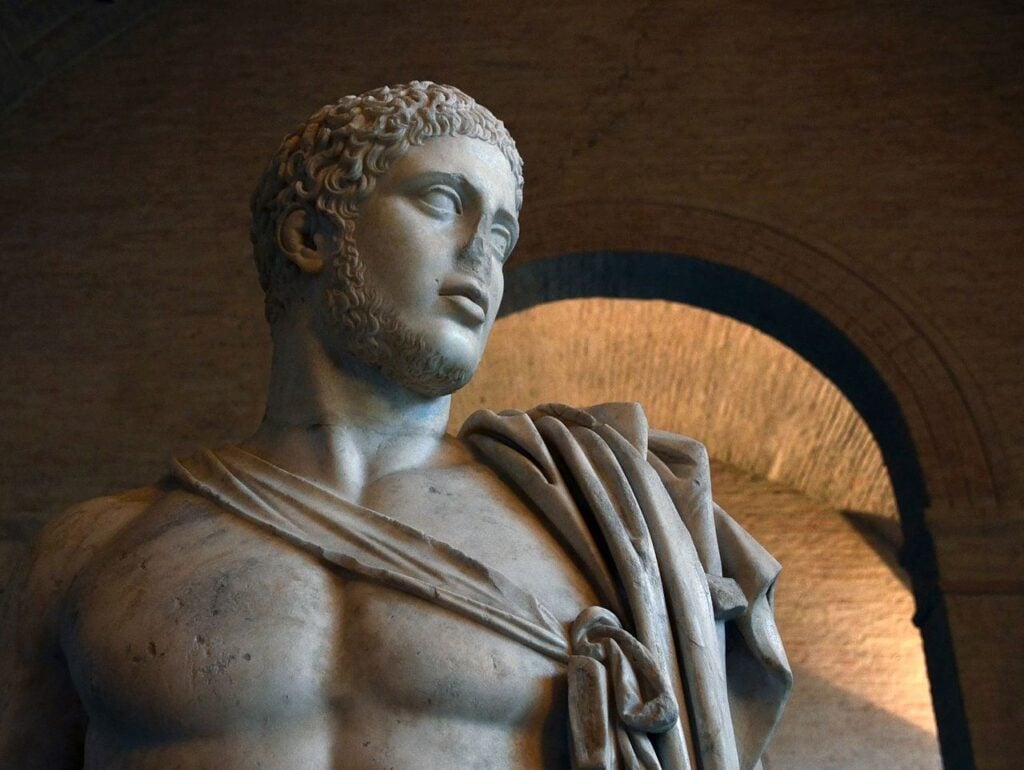
Statue of Greek hero Diomedes
Greek hero Diomedes fought in battle with the help of his divine horses. Roman copy of Diomedes statue attributed to Kresilas 440-430 BC. Exhibited at the Glyptothek in Munich, Germany. Photo credit: Bassil Wikimedia Commons CC0

Diomedes was a distinct Greek hero whose story in Homer’s Iliad is marked by his battle skills, courage, intelligence, and aid from the gods, as well as his association with horses of divine ancestry. However, he is often overshadowed by legendary figures such as Achilles and Odysseus in accounts of the Trojan War. Nevertheless, Diomedes, the king of Argos, remains a central figure in Homeric tradition, particularly within the Iliad itself.

In Craig Russell’s paper, “Diomedes’ Magical Horses,” the scholar explores the Greek hero’s extraordinary relationship with horses, especially those believed to possess exceptional ancestry. This is an often overlooked aspect of the Greek hero’s identity. Drawing on mythological sources, Russell demonstrates that Diomedes’ horses are not merely possessions or instruments of war but symbols of heroic excellence, divine favor, and aristocratic status. Their significance reveals key aspects of Greek heroic culture and highlights the close connection between humans, animals, and the gods.

In Greek mythology, horses frequently symbolize nobility, power, and divine intervention. Greek heroes and kings are often associated with divine horses that distinguish them from ordinary warriors. Russell argues that Diomedes’ own horses belong within this tradition. According to Homeric accounts, the ones ridden by Diomedes during the Trojan War were descended from immortal steeds originally given by Zeus to the Trojan Prince Tros. Through a long genealogical chain, these remarkable horses eventually came into the possession of Diomedes, the Argive Greek hero. Their lineage connected them to the divine realm and elevated their status beyond that of ordinary warhorses.

The Greek hero Diomedes and his divine horses as a unified team

The divine ancestry of Diomedes’ horses is particularly significant because Greek mythology frequently draws on genealogy to establish authority and prestige. Just as heroes traced their lineage to gods and legendary ancestors, animals associated with heroes could also possess sacred origins. Russell emphasizes that the horses’ connection to Zeus reflects the broader Greek belief that excellence often derives from divine favor. By possessing such animals, Diomedes demonstrates not only wealth and military strength but also a special relationship with the gods. The horses become visible markers of his status.

Russell further notes that Diomedes’ horses are closely linked to his success on the battlefield. In the Iliad, mobility and speed are essential components of warfare. Chariots allowed warriors to move quickly across the battlefield, pursue enemies, and withdraw from danger. The quality of a hero’s horses could therefore determine military effectiveness. Diomedes’ steeds are repeatedly described as powerful, swift, and reliable, characteristics that mirror the hero’s own virtues. Their performance contributes directly to his battlefield achievements, reinforcing the idea that the hero and his horses function as a unified team.

The connection between Diomedes and his horses also reflects the broader theme of the relationship between humans and animals within Greek epic literature. Unlike modern perspectives that often separate humanity from nature, Greek mythology frequently portrays animals as intelligent companions capable of sharing in heroic destinies. Russell argues that Diomedes’ horses should be understood within this context. They are not passive creatures but active participants in the hero’s adventures. Their divine heritage grants them an elevated status, and their loyalty reflects the mutual dependence between warrior and steed.

Horses as symbols of status and power

An important aspect of Russell’s analysis involves comparison with other famous horses in Greek mythology, most notably the immortal horses Xanthus and Balius, owned by Achilles. Like Diomedes’ horses, these animals possess divine ancestry and extraordinary abilities. The comparison reveals a recurring pattern in heroic narratives: remarkable Greek heroes are often accompanied by exceptional animals whose qualities complement their masters. However, Russell suggests that Diomedes’ horses have received far less scholarly attention despite their comparable significance. This neglect may stem from the greater fame of Achilles, whose dramatic story dominates much of the Homeric tradition.

The symbolic importance of horses extends beyond warfare. In Ancient Greek society, horse ownership was associated with aristocratic status and political power. Maintaining horses required substantial wealth, making them markers of elite identity. Russell highlights this social dimension in his discussion of Diomedes. As a king and military leader, the Greek hero embodies the values of the warrior aristocracy. His possession of magnificent horses reinforces his position within the social hierarchy and affirms his legitimacy as a ruler. Thus, the horses function not only as military companions but also as indicators of social prestige.

Another key theme in Russell’s essay is the relationship between divine gifts and human responsibility. Greek mythology often portrays gifts from the gods as both blessings and challenges. Heroes who receive divine assistance must prove themselves worthy of it through courage, wisdom, and self-discipline. Diomedes’ horses exemplify this principle. Their divine lineage grants him advantages, but those become meaningful only through Diomedes’ own skill and character. Russell’s interpretation underscores the central Greek idea that excellence results from the combination of divine favor and human achievement.

Athena’s intervention in the Trojan War

The role of the goddess Athena further strengthens this interpretation. Among all the Olympian deities, Athena is the divine patron most closely associated with Diomedes. During the Trojan War, she grants him extraordinary strength and clarity of vision, enabling him to confront even gods, such as Ares, the god of war, on the battlefield. Russell suggests that Diomedes’ horses complement this broader pattern of supernatural support. Together, Athena’s guidance and the horses’ divine ancestry create an image of a Greek hero uniquely favored by divine powers. Yet, Diomedes never relies solely on these advantages; his personal bravery remains essential to his success.

Russell also highlights the narrative function of the horses within epic storytelling. In oral tradition, recurring symbols help audiences recognize and remember key figures. The mention of Diomedes’ horses serves as such a marker, reinforcing his heroic stature. Whenever they appear, listeners are reminded of his exceptional qualities and distinguished lineage. This symbolic role contributes to the enduring significance of the horses within the mythological tradition.

Furthermore, the story of Diomedes’ horses illustrates the interconnected nature of Greek mythology. Their lineage links different generations, kingdoms, and legendary figures. Such connections reflect a characteristic feature of Greek myth in which individual stories rarely exist in isolation. Instead, heroes, gods, and extraordinary creatures form part of a vast narrative network. Russell demonstrates that tracing the history of Diomedes’ horses reveals broader patterns of inheritance, divine intervention, and heroic identity that extend far beyond a single tale.

According to Russell, Diomedes’ horses are far more than simple war animals. Their divine ancestry, battlefield importance, symbolic value, and connection to aristocratic culture make them essential to the Greek hero’s identity. They embody Greek ideals of excellence, divine favor, and noble status while highlighting the close relationship between humans, animals, and the gods.
Thetis and Achilles: How a Divine Mother Shaped the Greek Hero’s Fate

8 June 2026 at 16:04
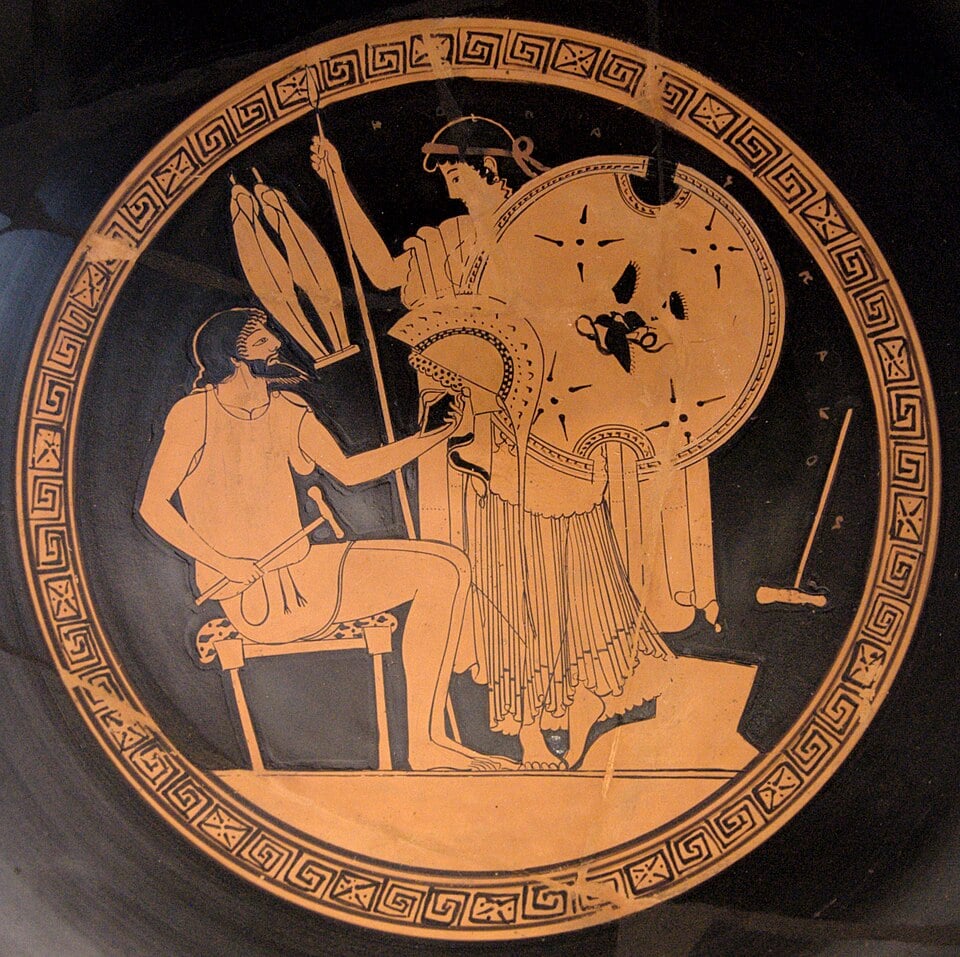
Attic red-figure Kylix, 490–480 BC, featuring Achilles and Thetis
Thetis takes the magical shield for Achilles from Hephaestus. Attic red-figure Kylix, 490–480 BC. Credit: Public Domain

In Homer’s Iliad, Thetis plays an important role in shaping the destiny of her son, Achilles. As a goddess, she intervenes at key moments in the epic, pushing the Greek hero to alter the course of events.

Although Thetis appears less frequently than many of the warriors and gods who dominate the battlefield at Troy, her actions influence some of the most significant developments in the poem. As a sea goddess and the mother of the greatest Greek warrior, she occupies a unique position between the divine and mortal worlds. She cannot prevent Achilles from dying, since the Fates have already decreed it, yet she repeatedly intervenes to protect his honor, ease his suffering, and ensure that his glory endures.

Through Thetis’ character, Homer explores themes of maternal love, fate, mortality, glory, and divine power. The first major instance of Thetis helping Achilles occurs in Book 1. After Agamemnon captures Briseis, a captive woman awarded to Achilles as a war prize, the Greek hero feels deeply dishonored and withdraws from battle. In his grief and anger, Achilles calls upon his mother. Thetis immediately rises from the sea to comfort him and listen to his complaint.

This scene reveals the extraordinary bond between mother and son. Unlike many divine figures in Greek mythology, Thetis responds with sympathy and tenderness. She understands Achilles’ suffering because she is painfully aware of his short lifespan. Her lament for him reflects a mother’s helplessness in the face of fate.

Thetis petitions Zeus to turn events in favor of Troy

After hearing Achilles’ request, Thetis undertakes one of the most consequential actions in the epic. She travels to Olympus and petitions Zeus to punish the Greeks by granting success to the Trojans. Her aim is not simply revenge but the restoration of Achilles’ honor. Zeus eventually agrees, and his decision alters the course of the war. The Trojans begin to gain the upper hand, while the Greeks suffer devastating losses. Through this intervention, Thetis helps Achilles achieve the recognition he believes Agamemnon has denied him.

This episode demonstrates the extent of Thetis’ influence among the gods. Although she cannot alter fate itself, she is capable of shaping the chain of events that leads toward it. Her appeal to Zeus succeeds in part because of a previous favor she had done for him. In this sense, her assistance rests not only on maternal devotion but also on her standing within the divine order. Achilles’ withdrawal from battle would have remained a private grievance without Thetis’ intervention. Instead, it escalates into a crisis that engulfs the entire Greek army.

The second major instance of Thetis helping Achilles occurs after the death of Patroclus. Patroclus, Achilles’ closest companion, enters battle wearing Achilles’ armor and is killed by Hector. When Achilles learns of his friend’s death, he is overwhelmed by grief and rage. Once again, Thetis hears her son’s cries and goes to him. This scene is among the most emotional in the Iliad. Thetis is aware that Achilles’ decision to return to battle will lead directly to his own death, yet she does not attempt to stop him. Instead, she offers comfort and practical assistance.

Hephaestus forges the invincible shield of Achilles

Achilles cannot immediately rejoin the fighting because Hector has confiscated his armor. Recognizing his need, Thetis travels to the forge of Hephaestus and requests new armor for her son. Hephaestus responds by crafting the magnificent shield of Achilles, one of the most celebrated objects in world literature. The shield depicts scenes of war and peace, labor and celebration, and life and death. With this armor, Thetis enables Achilles to return to battle and fulfill his heroic destiny.

This act of assistance is particularly significant because it highlights the limits of divine power. Thetis can secure the finest armor ever made, but she cannot save Achilles from mortality. Her help therefore reflects the tragic paradox that every action she takes to aid her son also brings him closer to the fate she most fears. The armor allows Achilles to defeat Hector, but it also marks the final stage of his journey toward death.

Thetis’ role after Hector’s death further underscores her importance. Achilles becomes consumed by grief and rage, dragging Hector’s body around the tomb of Patroclus. The gods disapprove of this behavior and decide that Hector must be returned to his family. Zeus sends Thetis to deliver his command to Achilles. She successfully persuades her son to release the body in exchange for ransom, helping restore moral balance and preparing the tale for closure.

This final intervention reveals another dimension of Thetis’ assistance. Earlier, she helped Achilles gain honor through vengeance; now she helps him regain humanity through compassion. Her influence guides him from destructive rage toward acceptance. The reconciliation between Achilles and Priam, one of the most moving scenes in ancient literature, would not have occurred without Thetis serving as the messenger between gods and mortals.

The complexity of Thetis, the mother of Achilles

Modern scholars have emphasized the complexity of Thetis’ character. Rather than portraying her simply as a nurturing mother, recent studies highlight her power and agency. Thetis is more than a grieving parent. She is a divine force capable of influencing both Olympus and the battlefield for the benefit of her son. This is evident in actions such as her request to Hephaestus to forge an impenetrable suit of armor for Achilles.

At the same time, scholars frequently stress the tragic nature of her motherhood. Classicist Emily Wilson observes that she has come to view the Iliad as “a poem about the pain of a goddess mother who adores her mortal child and can’t protect him.” This insight captures the emotional core of Thetis’ role in the epic. Despite her divine status, she remains powerless as a mother in the face of fate. Her interventions can shape events, but they cannot prevent the loss she knows is imminent.

Other scholars have also noted that grief defines Thetis’ presence throughout the epic poem. Classicist Serena Cannavale describes Thetis in the Iliad as “a figure of grief,” emphasizing that her sorrow is present long before Achilles actually dies. Her laments anticipate the tragedy that hangs over the entire narrative.

Ultimately, Thetis helps Achilles in three essential ways: she restores his honor by persuading Zeus to favor the Trojans, she equips him for revenge by obtaining new armor from Hephaestus, and she guides him back toward humanity by conveying Zeus’s command to release Hector’s body to Priam. These actions shape the central events of the Iliad and reveal the profound connection between mother and son. Yet the tragedy of Thetis lies in the fact that her power cannot overcome destiny. She can comfort Achilles, protect his reputation, and secure his everlasting glory, but she cannot save his life.

For this reason, Thetis embodies the tension between divine power and human mortality. Every time she helps Achilles, she demonstrates her love, yet every act of assistance also reminds readers that fate is stronger than even the gods. Through Thetis, Homer presents a moving portrait of maternal devotion in the face of inevitable loss, making her one of the emotional centers of the Iliad.

Zeno’s Paradox: When Achilles, Greece’s Fastest Hero, Lost to a Tortoise

6 June 2026 at 20:30
Triumphant Achilles dragging Hector's body around Troy, from a panoramic fresco of the Achilleion
Triumphant Achilles dragging Hector’s body around Troy, from a panoramic fresco of the Achilleion. Credit: Franz Matsch / Public Domain

He was the swift-footed Achilles, the greatest warrior of the Trojan War, a semi-divine hero whose very name was synonymous with speed and power. And yet, for centuries, the smart brilliance of an ancient Greek philosopher has left him perpetually—and quite comically—stuck behind a tortoise. Zeno’s paradox presents a philosophical conundrum that still captivates people millennia after it first questioned the intellectual doctrines of Ancient Greece.

It is a paradox that prompts us to question the nature of motion and reality itself. Specifically, it compels us to explore the infinite—a concept that still confounds quantum physicists today.

Zeno’s Paradox: The problem with Achilles and infinite steps

Picture the scene: Achilles, in all his glorious, muscular beauty, lines up against a tortoise. The tortoise, naturally, gets a head start—a gesture of fair play, one might say, that quickly devolves into philosophical torture.

Achilles and the tortoise
Credit: Loco Steve, Wikimedia Commons, CC BY-SA 2.0 (left), Greek Reporter archive (right)

During this event, Achilles, being well, would instantly sprint past the slow tortoise. But Zeno, with a mischievous twinkle in his eye, argued otherwise. Before Achilles can even reach the position where the tortoise started, the cute little animal will have managed to go forward a little compared to its initial position.

When Achilles finally arrives at that particular spot, the tortoise has moved again. This would carry on forever. This continuous cycle, Zeno noticed, continues ad infinitum, meaning Achilles is forever playing catch-up, never truly reaching the tortoise. It sounds childish and blatantly wrong, but is it? Think about it. It makes sense. It’s enough, at least, to make you wonder about what’s real and what isn’t.

Zeno of Elea's Achilles paradox
Zeno of Elea’s Achilles paradox. Credit: Aelwyn. CC BY-SA 4.0/ Wikimedia Commons/Aelwyn

This confused the ancient Greeks, whose understanding of infinity was still rudimentary. It challenged the very idea of continuous motion, suggesting that movement itself might be an illusion, a series of frozen moments rather than a fluid progression. Indeed, Zeno’s mentor, Parmenides, had famously argued that reality was static and unchanging, and our perception of movement was nothing but a trick of the senses.

Zeno, always the loyal—and brilliant—student, used his paradoxical skills skillfully as an intellectual shield for this peculiar paradox. One can almost imagine the expressions on the faces of Athenian philosophers as Zeno calmly explained why their fastest runner could never quite outrun a slow tortoise.

Of course, modern humans comprehend concepts such as calculus, therefore understanding that Zeno’s apparent deadlock is resolved. Mathematicians like Newton and Leibniz, centuries later, demonstrated that an infinite series of ever-decreasing distances can indeed sum to a finite total.

This means that in Zeno’s paradox, Achilles does overtake the tortoise; the finish line, for him, is not an illusion. Yet, to dismiss Zeno’s paradox completely as a mathematical footnote and a logical mistake would be to miss its profound impact on human thought.

It was a puzzle that had such a consequential effect that it shaped our understanding of the universe. Consider quantum mechanics, for example, where particles seem to exist in multiple states simultaneously—a concept similar to Zeno’s discomfiting fragmentation of reality.

Our digital devices work by breaking down continuous processes into tiny, distinctive steps. This is similar to how a movie creates the illusion of motion from individual frames. This approach, which traces back to Zeno’s ideas about infinitely dividing space and time, is embedded in much of our modern technology.

However, beyond academia and the complex equations of physics that ordinary people can’t even comprehend, the paradox of Achilles and the tortoise has a surprisingly relatable, almost melancholic, wisdom for our own lives that is easier to grasp.

people Thessaloniki metro
Modern life sometimes feels like the paradox of Achilles and the tortoise: A never-ending struggle to reach our goals, only to realise it’s not possible. Credit: Greek Reporter

Achilles and the tortoise as a modern metaphor for our lives

How many times have we felt like Achilles, tirelessly chasing a goal, a dream, or even just the promise of a calmer, better tomorrow, only for it to perpetually remain just out of reach? Life, too, often feels like a series of infinite, tiny steps, each requiring immense effort, each seeming to bring us no closer to the finish line despite the progress we make daily.

Yet, Achilles and the tortoise, when illuminated by the light of calculus, can become a story of hope. It tells us that even an infinite process can have a finite, tangible result, perhaps representing the better tomorrow we all strive for. Progress is undeniably real, however gradually it arrives.

So, the next time you feel stuck, relentlessly pursuing a goal that seems to go further away with every step, remember Achilles and that remarkably slow tortoise.

Zeno, the ancient Greek mastermind, may have created this paradox to confound his contemporaries. But in doing so, he left us with a timeless truth: movement—whether through space, thought, or life itself—is never as simple as it appears. Yet, if we keep putting one foot in front of the other, even if the journey feels impossibly long, like Achilles, we will get there. Eventually.

Related: The Strange Paradoxes and Puzzles of Zeno of Elea

❌