Ukraine's Unmanned Systems Forces (SBS) have struck Russian targets worth nearly $40 billion in the year since the branch's creation, Volodymyr Zelenskyy said. On 10 June, the Ukrainian president signed a decree establishing the Day of Unmanned Systems Forces (SBS Day).
The $40 billion cumulative damage figure Zelenskyy cited represents a 57% increase over the $25.5 billion in cumulative Russian losses that Commander-in-Chief Oleksandr Syrskyi reported in April 2026.
The SBS Day decree institutionalizes the unmanned forces as a permanent feature of Ukraine's military doctrine, alongside the army, navy, and air force.
What Zelenskyy said about SBS's achievements
"Only a year since the creation of the SBS group, Russian targets at various levels worth nearly $40 billion have already been hit," Zelenskyy said in his evening address.
He added that SBS is really a model for many other armies, and "these months we are especially grateful for middlestrikes."
"Russian military logistics across the entire depth of the temporarily occupied territory is now accessible to Ukrainian drones. The Russian border zone also experiences our impact," he stated.
The president added that Russia already feels the effect of these strikes, and Ukraine will continue to scale them.
"The most important thing is that these are different types of strikes, and each one adds to our ability to save lives," the Ukrainian president added.
What does middlestrike mean operationally?
The middlestrike concept Zelenskyy invoked refers to Ukrainian drone strikes against Russian military logistics in the depth of occupied territory and across the Russian border zone. The depth zone covers Donetsk, Luhansk, Crimea, and parts of Zaporizhzhia and Kherson Oblasts. The Russian border zone reaches Belgorod and Kursk. Middlestrikes sit between the very-long-range deep strikes against strategic Russian infrastructure, such as the Volgograd refineries, and the tactical frontline FPV operations. The SBS is led by Brigadier General Robert Brovdi, call sign "Madiar".
Military activity has been reported near all Ukraine’s operating nuclear power plants: Khmelnytskyy, Rivne, and South Ukraine, and the Chornobyl site, according to the International Atomic Energy Agency (IAEA). IAEA teams recorded more than 100 drones within observation zones around nuclear facilities over the past two weeks, with some as close as 2 kilometers from the facilities.
The Chornobyl drone strike landed at a centralized spent-fuel storage facility in the exclusion zone, just hundreds of meters from where spent nuclear fuel from Ukrainian operating reactors is kept in containers.
“Attacking a facility with large amounts of nuclear material is extremely dangerous. It must not happen,” IAEA Director General Rafael Grossi said.
What happened at Zaporizhzhia NPP on 30 May
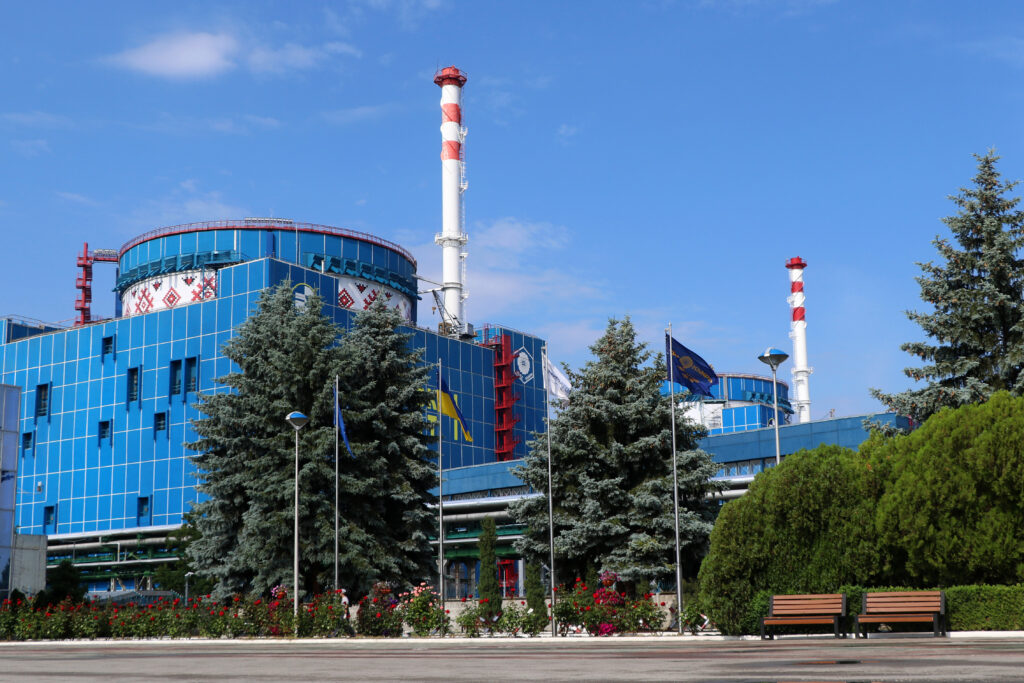
On 30 May 2026, a drone struck the turbine hall of Unit 6 at the Russian-occupied Zaporizhzhia NPP.
During subsequent inspections, IAEA specialists documented a hole in the wall and local damage to the metal cladding of an empty pipe located several meters from the impact point.
Experts are continuing to assess the condition of the affected area and the potential consequences of the incident.
“This is the first time since April 2024 that military activity has directly impacted the ZNPP site,” Grossi said.
ZNPP has been under Russian military occupation since March 2022 and remains a continuous focus of IAEA monitoring. The IAEA statement does not attribute the drone strike to either Russia or Ukraine.
Nuclear power plants and similar installations containing dangerous forces are explicitly protected under Article 56 of Additional Protocol I to the Geneva Conventions, which prohibits attacks that may release dangerous forces and cause severe losses among the civilian population.
The IAEA does not formally categorize incidents at Ukrainian nuclear sites as war crimes within this framework, which would require a UN Commission of Inquiry or ICC finding. The IAEA's role is technical and monitoring-focused.
President Trump late Tuesday shared a clip from the series “The West Wing” dismissing the concept of a “proportional response” after the U.S. launched a new round of strikes on Iran in retaliation for an attack on an Apache helicopter. The president first shared on Truth Social the statement issued by U.S. Central Command (Centcom)…
President Trump late Tuesday shared a clip from the series “The West Wing” dismissing the concept of a “proportional response” after the U.S. launched a new round of strikes on Iran in retaliation for an attack on an Apache helicopter. The president first shared on Truth Social the statement issued by U.S. Central Command (Centcom)…
Today, 10 June 2026, marks the 1,568th day of Russia's full-scale war against Ukraine — exactly the same number of days that World War I lasted, ArmyInform observes. Russia has not achieved its strategic objectives to eliminate Ukraine, with the Kremlin's original "Kyiv in three days" planning now four years and three months past.
Russian losses across that period, as documented by Ukraine's General Staff, total more than 1.3 million Russian military personnel killed and wounded, tens of thousands of tanks, armored vehicles, and artillery pieces destroyed, and 33 Russian ships and boats sunk or destroyed.
The Black Sea Fleet is now operating only in a land-support capacity after Ukrainian strikes forced its retreat from operating bases in temporarily occupied Crimea.
The total cost of destroyed Russian equipment over four years is estimated at approximately $153 billion. May 2026 alone saw more than 31,500 Russian troops killed and seriously wounded, according to Ukrainian Defense Minister Mykhailo Fedorov. These figures are Ukrainian estimates. Russian casualty data is not publicly released.
Strategic ledger after four years
Russia's stated strategic objectives at the start of the February 2022 full-scale invasion, including the capture of Kyiv, the change of Ukrainian government, the demilitarization and "denazification" of Ukraine, and the establishment of a Russian-aligned regime in the Ukrainian capital, have not been reached.
Russian forces retreated from the northern Kyiv and Chernihiv axes in spring 2022, and although Russia has incrementally occupied additional territory in Donetsk, Luhansk, Zaporizhzhia, and Kherson Oblasts since then, the pace of advance has been limited.
Ukrainian fire control and deep-strike expansion
On the Ukrainian operational side, the past 12 months have seen a significant expansion of Ukraine's ability to strike targets across occupied territory and Russian rear areas.
The Ukrainian Defense Forces have established fire control over key logistics nodes in temporarily occupied Donetsk and Luhansk oblasts and in Crimea, including bringing Donetsk Airport within range of regular strikes and striking the Chonhar Bridge.
In Crimea specifically, where Russia has concentrated air defense systems, 12 Russian Pantsir-S1 systems have been destroyed since the start of 2026.
Logistics Lockdown and 1,800-kilometer deep-strike envelope
These operations are conducted within Ukraine's $113 million "Logistics Lockdown" program announced in May, which provides for systematic strikes on Russian warehouses, equipment, command posts, and supply routes deep behind the front line. A separate Ukrainian Deep Strike track targets critical infrastructure inside Russia itself, with Ukrainian deep strikes reaching up to 1,800 kilometers into Russian territory and recent operations hitting Russian oil-logistics nodes from Volgograd to Novorossiysk.
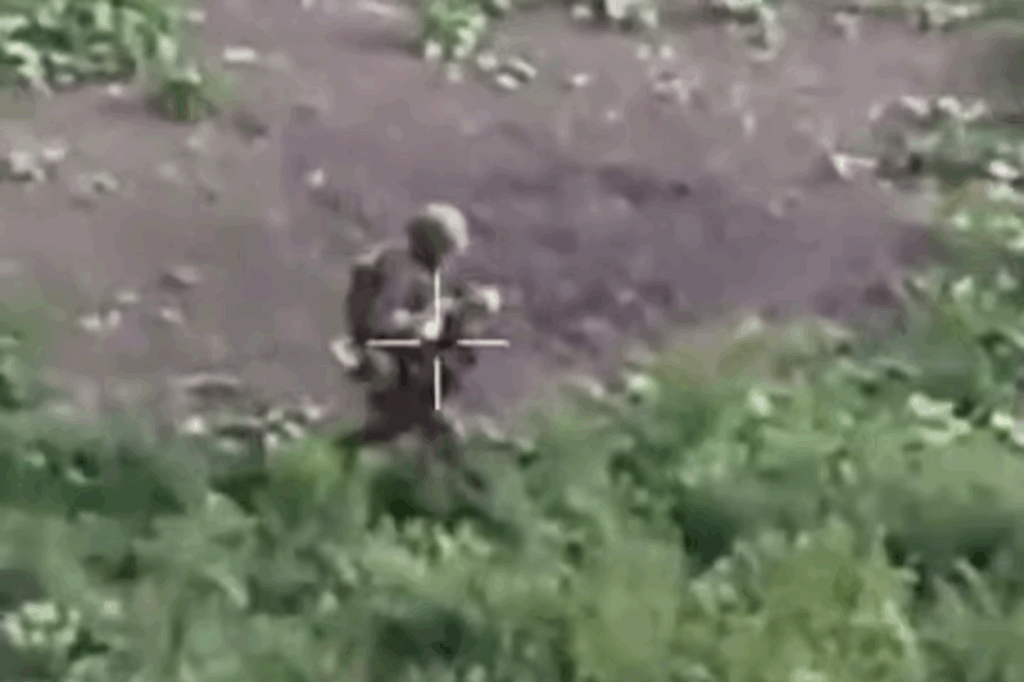
Ten Russian soldiers from a single regiment are accused of hunting civilians in Kherson with attack drones, and now face war-crimes charges filed in absentia, the Security Service of Ukraine (SBU) reported. Investigators say the operators tracked people through the streets and struck ambulances and rescue crews. The 10 are among those participating in a Russian long-lasting terror campaign against Khersoners known as a "human safari."
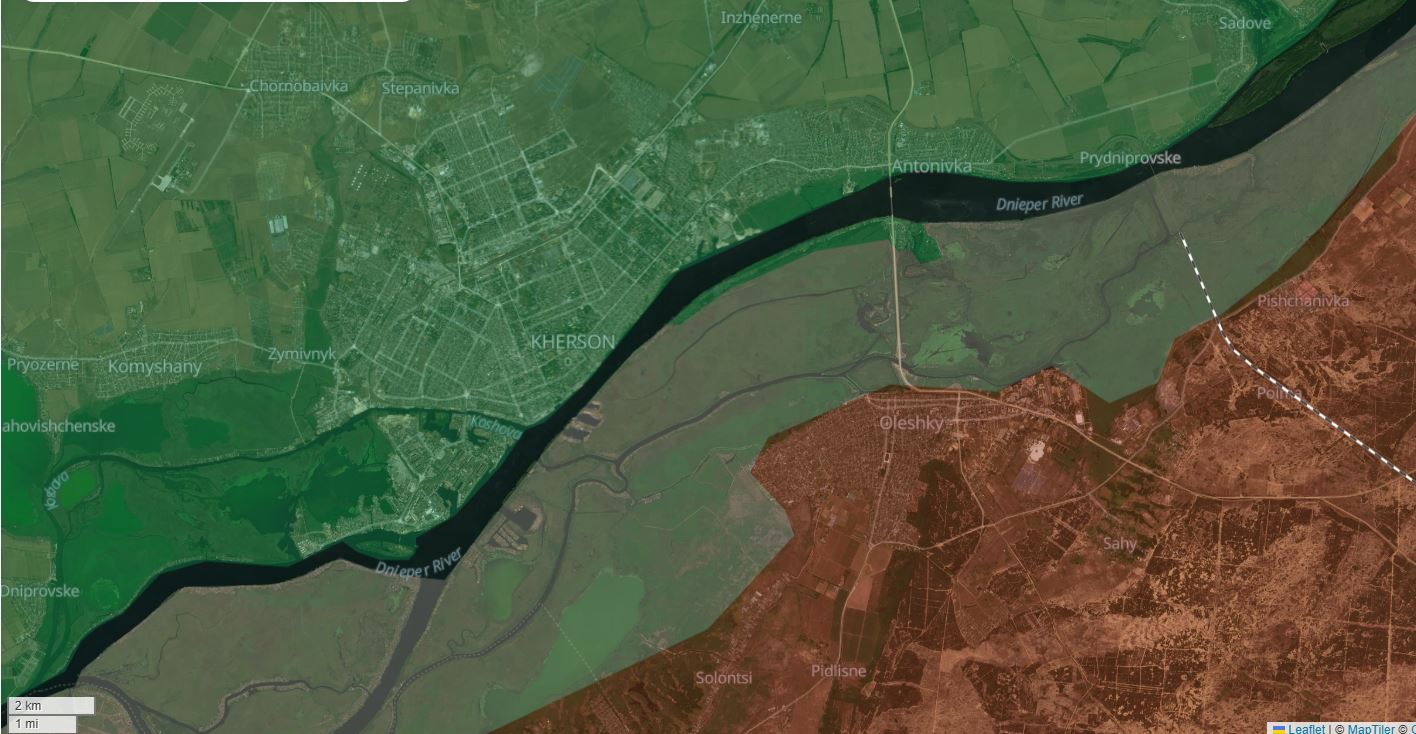
Kherson lies on the Dnipro River's west bank, with Russian-occupied land directly opposite, and the invading force has made it among the deadliest places to live in Ukraine by deliberately hunting civilians across the city for years.
The drone hunters of one regiment
Counterintelligence officers built a case against 10 drone operators from the 404th Motorized Rifle Regiment, a territorial-defense unit in Russia's "Dnepr" Group of Forces, the SBU reported. The investigation found that the men tracked residents as they moved along Kherson's streets and launched drones at them. The drones carried shaped-charge and high-explosive fragmentation munitions.
Kherson city (Russian-occupied area in red). Map: Deep State
Residents and rights monitors call this campaign a "human safari," the hunting of people going about their ordinary days.
Kherson: human safari rages.
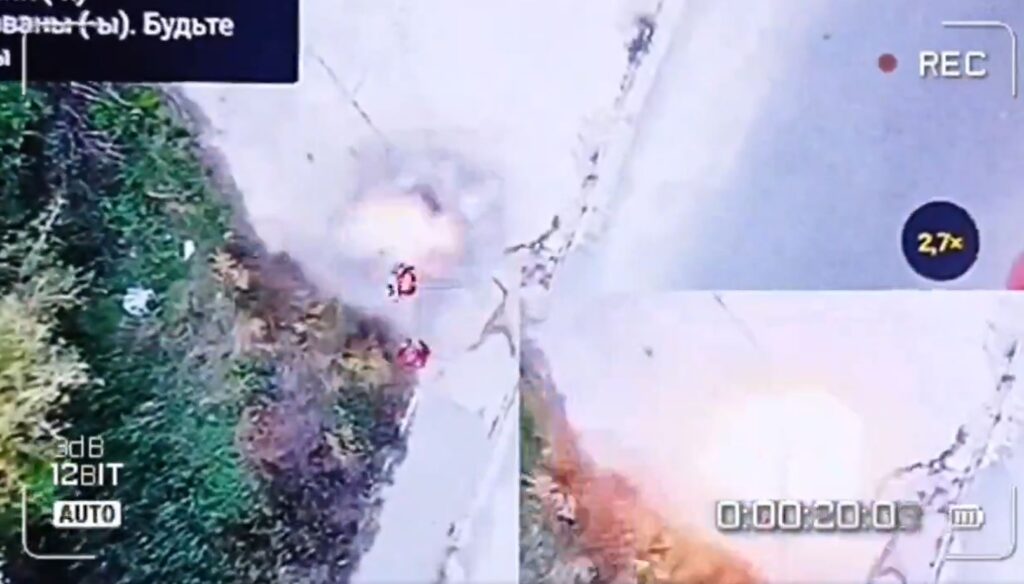
A Russian fiber optic FPV drone chases a car in a residential area; after civilians cut the cable, the drone falls, catches fire.
The documented episodes include attacks on civilian cars and residential blocks, the SBU said. Operators dropped explosives on ambulances at a city hospital. They also carried out a "double" strike on State Emergency Service (DSNS) rescuers who were clearing the aftermath of an earlier Russian shelling.
UN investigators have described this Russian method in Kherson: a first strike, then a second aimed at the people who come to help. Victims suffered shrapnel wounds, burns, and concussions, and civilian infrastructure took significant damage.
Russian soldiers attacked an ambulance in Kherson with a drone.
Based on the evidence, SBU investigators notified all 10 of suspicion under Article 438 of Ukraine's criminal code, which covers war crimes. The notices were issued in absentia. SBU officers in Kherson Oblast led the investigation with the 79th Border Detachment of the State Border Guard Service (DPSU), under the oblast prosecutor's guidance. The agency said efforts to hold the operators accountable continue.
The case fits a wider pattern Ukrainian prosecutors have documented across the oblast in thousands of proceedings.
Russia has begun moving gasoline to its frontline units in occupied Ukraine in convoys of civilian cars, the Ukrainian defense outlet Militarnyi reported. Soldiers filmed themselves loading jerrycans into ordinary trunks, an improvised workaround after Ukrainian drone strikes made fuel tankers too risky to run. Russian forces are also disguising army trucks as civilian vehicles along the supply route to occupied Crimea.
This comes amid Ukraine’s ongoing “Logistics Lockdown,” a campaign by several Ukrainian military branches and the Security Service to target Russian fuel, logistics, and other supplies across occupied territories, at depths of up to 200 km.
Soldiers filmed the fuel run themselves
A video on the Exilenova+ Telegram channel showed Russians describing a convoy of passenger cars assembled to carry one metric ton of gasoline, Militarnyi reported. A man off-camera says the cars left the city of Kizilyurt in Dagestan, Russia, on the local head's orders, with the fuel destined for Russian units in occupied Tokmak, Zaporizhzhia Oblast. The footage shows jerrycans filling the trunks:
Besides the fuel, the drivers carried 1.5 million rubles ($20,900) to buy another batch of gasoline. Fuel keeps Russian frontline positions running: generators power electronic-warfare systems, charge batteries for reconnaissance and strike drones, and run communications gear in dugouts and observation posts.
Disguised trucks and a strained supply line
Russian forces have also begun disguising army trucks as civilian transport because of Ukrainian drone attacks deep in the rear. In northern Crimea, monitors spotted a freshly painted blue Ural truck driven by a man in civilian clothes, still carrying military plates, its oversized body posing as a dump truck.
The command of Russia's Dnepr grouping ordered mass use of civilian vehicles to move fuel along the route linking Rostov-on-Don with occupied Crimea, the Krymsky Veter monitoring project reported. That improvisation tracks the M-14 corridor, now within Ukraine's deepening drone range.
Explore further
ISW: The strikes will likely cascade into deeper disruption across Russia’s rear supply network
Why Russia is improvising
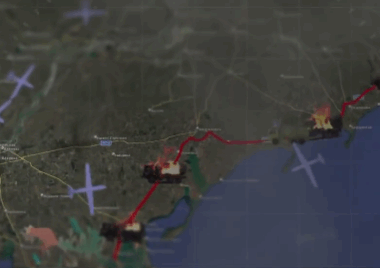
Ukraine's Defense Forces have intensified drone strikes on logistics trucks and fuel tankers on the roads from Russia to occupied Crimea. The attacks have already forced the occupiers to limit cargo traffic through the occupied part of Kherson Oblast toward the peninsula, and Russia has closed stretches of its own land corridor to keep them clear of strike drones.
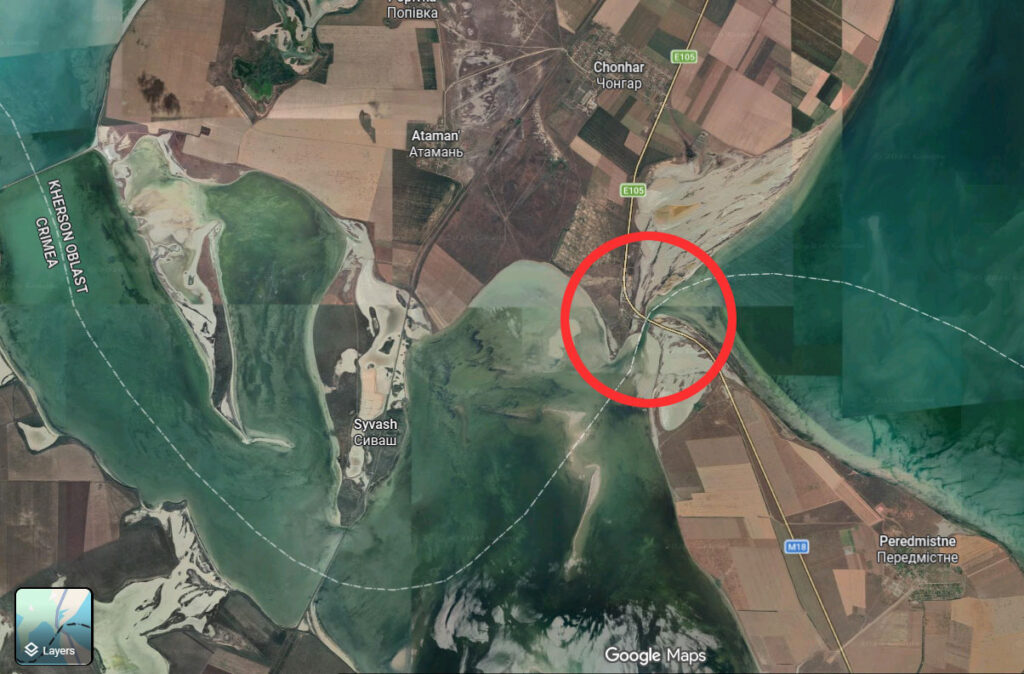
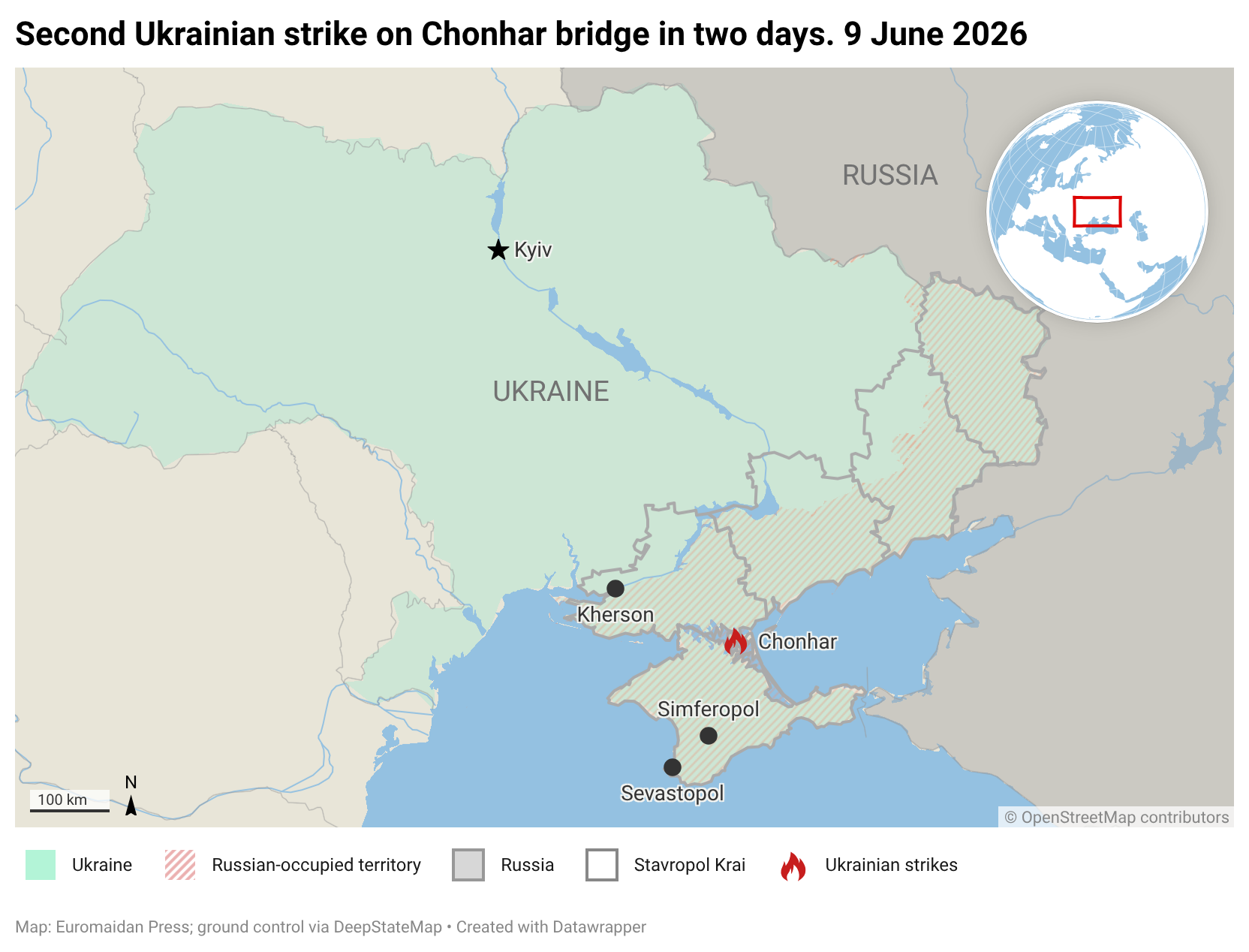
Russian occupation authorities closed the Chonhar bridge linking occupied Kherson Oblast to Crimea for the second time in two days on 9 June, with the Russian-installed governor, Vladimir Saldo, claiming another overnight Ukrainian drone strike. The same night, drones swept across occupied Crimea, where a Crimea-monitoring channel reported explosions at a military airfield. Moscow claimed it downed scores of drones, while Ukraine stayed silent.
Occupied Crimea — a peninsula in southern Ukraine, occupied by Russia since 2014 — is the logistical heart of Russia's war in Ukraine's south, and its airfields, air defenses, oil depots, and supply roads draw Ukrainian drones almost daily.
A bridge to Crimea closed for the second time in two days
Saldo claimed the overnight strike caused fresh damage to the Chonhar bridge and that 20 drones were shot down on the approach. He asked drivers to use alternative routes, and traffic was rerouted through Armiansk and Perekop.
The bridge carries the R-280 highway, which the Russians built to link their Rostov-on-Don to occupied Crimea through occupied Donetsk and Zaporizhzhia oblasts, one of their main supply lines to the peninsula.
Drones over Crimea
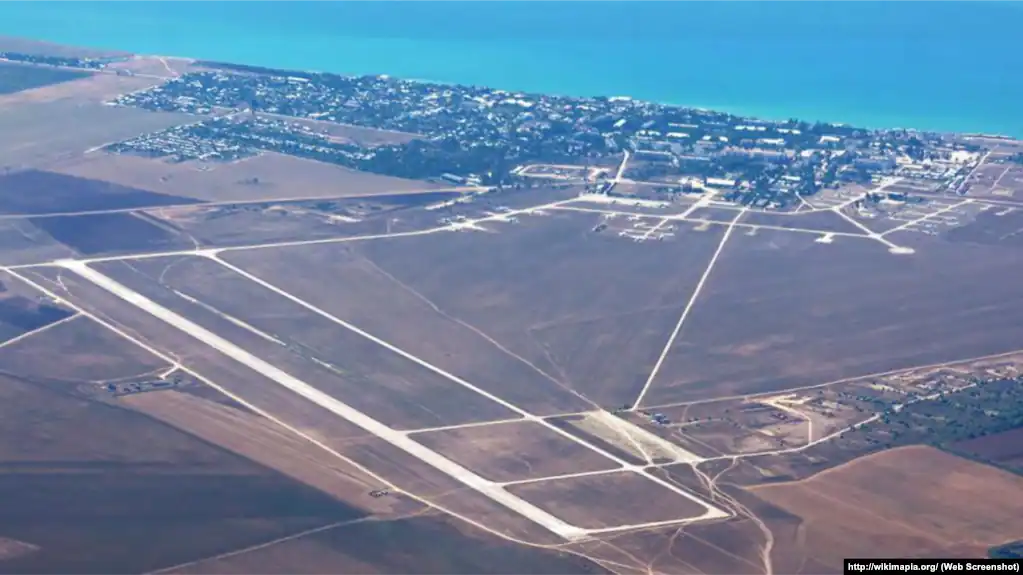
The strike on the peninsula came the same night, according to RFE/RL. The Crimea-monitoring Telegram channel Krymsky Veter reported an explosion in the Saky district (western Crimea) at 21:14, then an incoming strike in Dzhankoi (northern Crimea) before midnight. Drones also reached Sevastopol (southwestern Crimea), where a strong explosion hit the Kacha airfield at 00:36, followed by a second and third blast in the early hours.
The Kacha military airfield near occupied Sevastopol, Crimea. Archive photo: wikimapia.org
Sevastopol's Russian-installed head, Mykhail Razvozhaev, claimed the military was repelling the attack with air defense and mobile fire groups. The city declared air alerts three times, at 22:33, 00:08, and 06:52, and lifted the last at 07:20. In its morning report, Russia's Defense Ministry claimed its air defenses destroyed 140 drones over seven regions, occupied Crimea, and the Azov and Black seas.
The 7 June Chonhar strike and the wider campaign
The first closure came overnight into 7 June, when Ukrainian FP-2 and Behemoth drones struck the Chonhar bridge. The Falanga multidomain operations center of the 1st separate assault regiment and the 475th separate assault regiment Code 9.2 carried out the strike. Militarnyi reported it was the first known combat use of the Behemoth kamikaze drone, unveiled in late May 2026 by the companies GLEFA and Culver Aerospace. The same day, the occupiers also halted traffic through their "Dzhankoi checkpoint."
Explore further
The Crimean Bridge is heavily guarded. Ukraine struck its maritime security layer in the Kerch Strait.
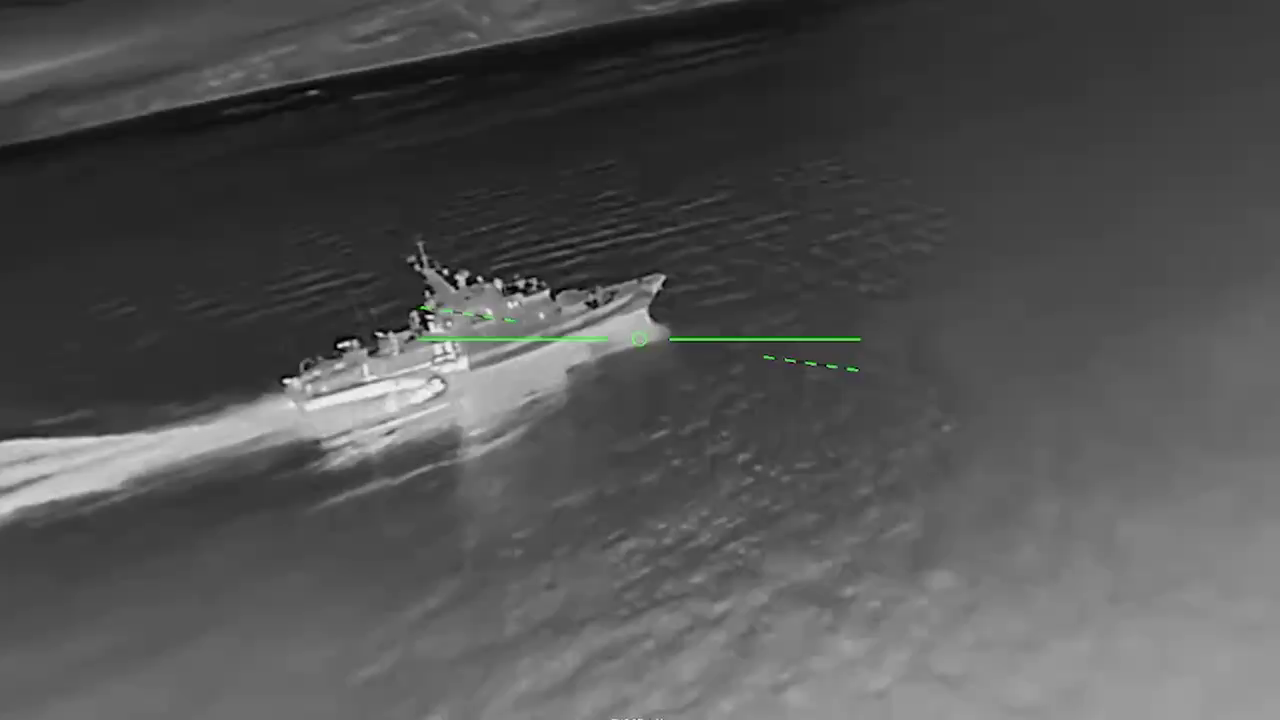
Ukraine's head of the Office of the President, Kyrylo Budanov, said in early June that the strikes on Crimea's land corridor are a systematic campaign meant to complicate Russian plans. Ukraine's forces are also hitting the sea routes: the General Staff reported a Russian ship struck near Crimea, and overnight into 4 June, a Russian patrol boat was destroyed near the peninsula. Days before, occupation officials in Sevastopol had reported a similar overnight attack on the city.
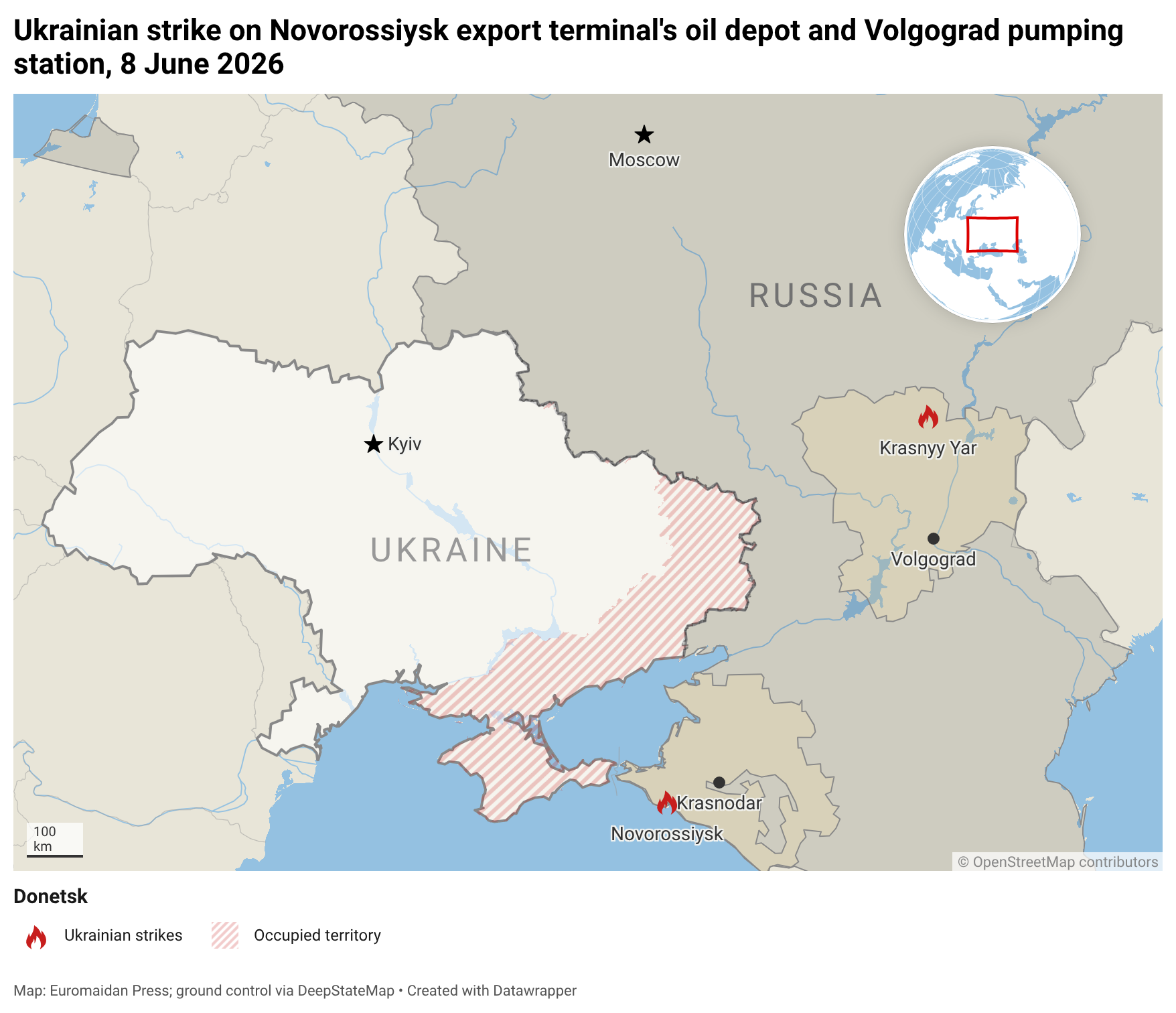
Ukrainian drones set a major oil depot ablaze near the Russian Black Sea port of Novorossiysk overnight on 7-8 June 2026, in a strike confirmed by Ukraine's Unmanned Systems Forces (SBS). Residents reported a string of blasts and heavy smoke over the Grushovaya storage site, which feeds Russia's busiest oil-export port. Ukrainian forces hit two more targets in southern Russia the same night.
Ukraine has spent the past year pushing its deep-strike campaign further into Russia, hunting the refineries, pipelines, and export ports that turn crude into the cash funding the invasion. Each hit on this Black Sea network forces costly repairs and brief loading halts, and steady Ukrainian success deep in Russia's rear, alongside a steadier front, is shifting how the West reads the war.
Drones spark a blaze at Novorossiysk's oil hub
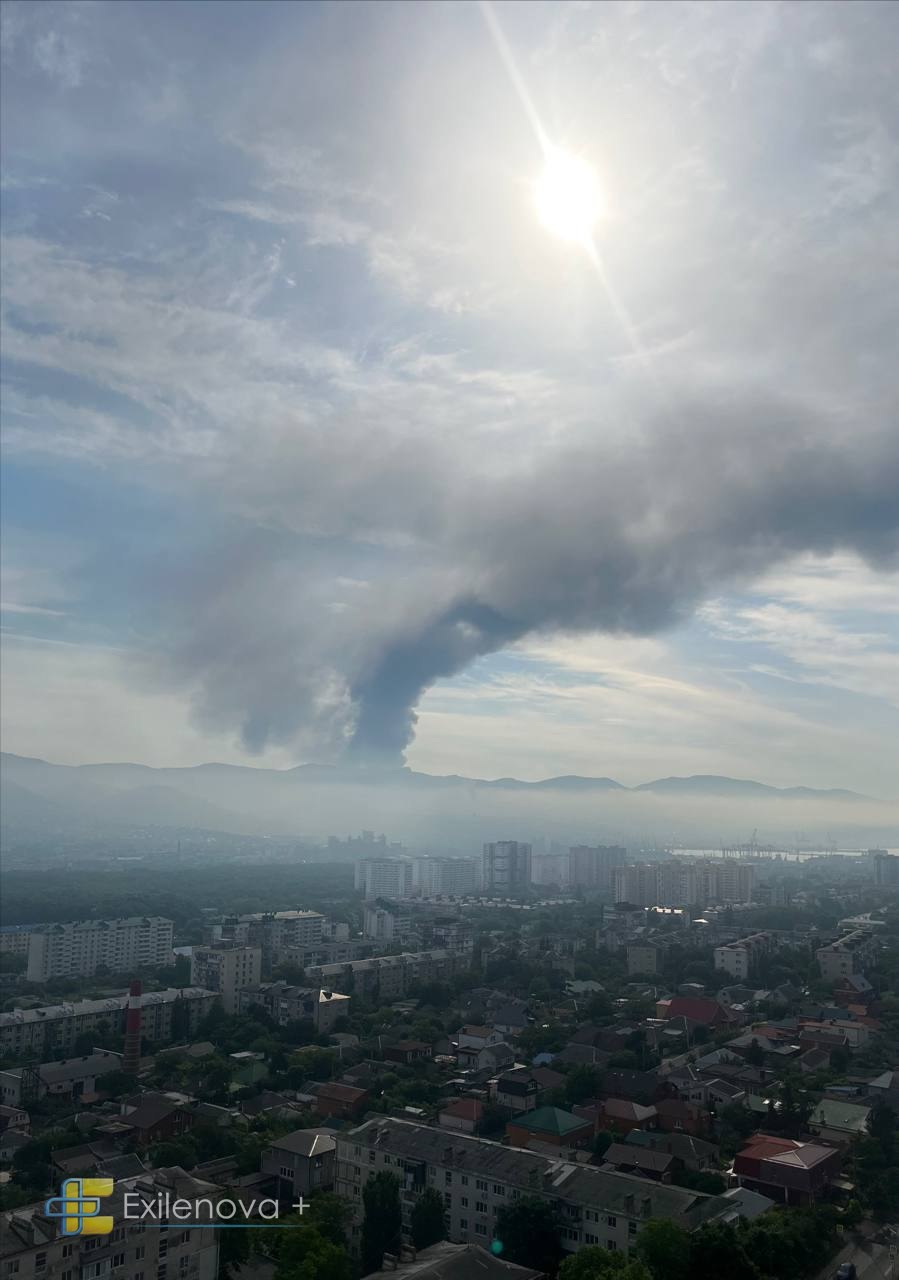
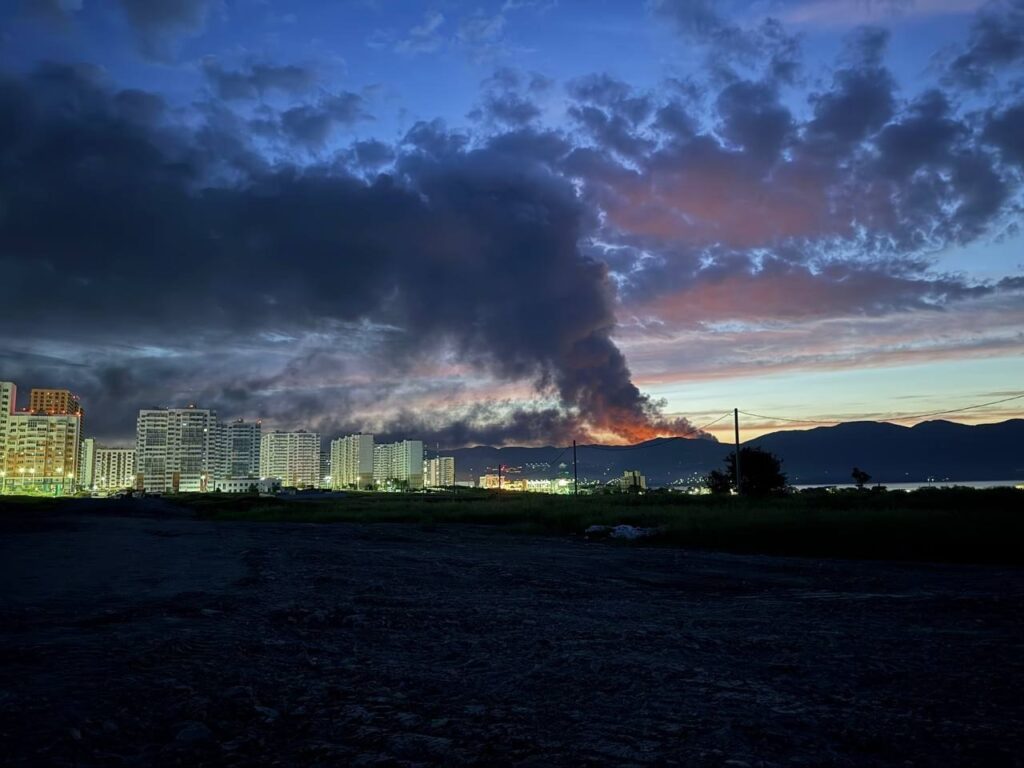
The strike came before dawn. Residents of Novorossiysk, in Russia's Krasnodar Krai, reported about 50 blasts, then heavy smoke over the Grushovaya oil depot. Operators of the SBS's 1st Separate Center, working with Special Operations Forces (SSO) and other units, confirmed the hit. Ukraine's General Staff also confirmed the strike and said a fire broke out, with damage still being assessed. Russian officials claimed no one was hurt.
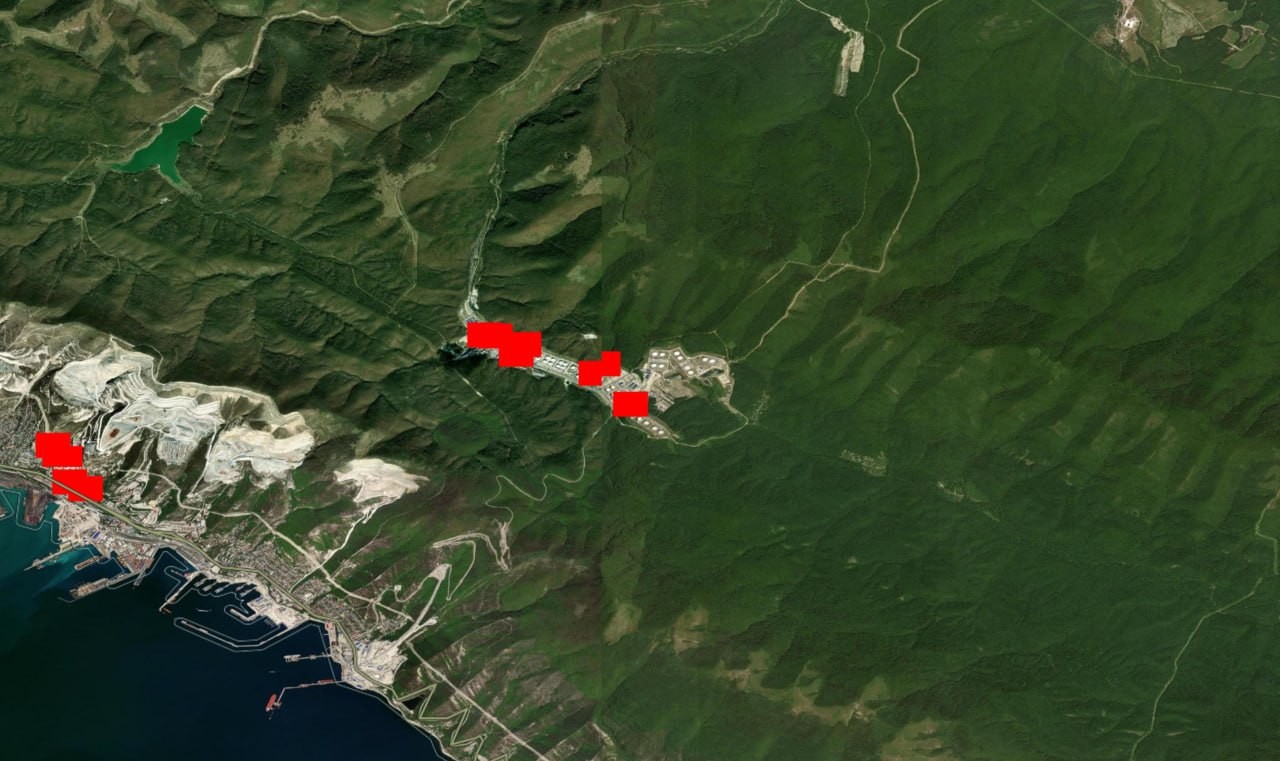
NASA FIRMS satellite data showing fire hotspots (the red squares, the cluster to the right) at the Grushovaya oil depot near Novorossiysk, 8 June 2026. Map: NASA FIRMS
NASA's FIRMS satellite service detected abnormal heat at the site at 02:48 on 8 June. Ukrainian Telegram channel Exilenova+ began reporting the attack around 3 a.m., posting photos and videos of fire in the mountains above the city. OSINT Telegram channel Falcon insight pinpointed the location. Russian news Telegram channel ASTRA confirmed the burning tank farm from eyewitness footage shot about 11 km away.
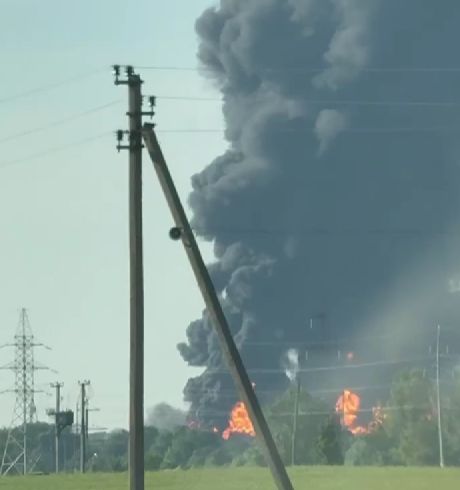
A fuel storage depot is burning in Novorossiysk, Russia, after a drone strike hit the tank farm overnight
Novorossiysk is one of Russia's most strategically important Black Sea ports, handling a significant share of Russian oil exports Supernova pic.twitter.com/d2ab4SSuH0
— Euromaidan Press (@EuromaidanPress) June 8, 2026
What the Grushovaya depot feeds
The Grushovaya site is a transshipment depot for the Sheskharis terminal. Chernomortransneft runs it, under Russia's state pipeline monopoly Transneft. It sits in the Grushovaya Balka tract beyond the Markotkh Ridge, about 12 km from Novorossiysk. The tank farm holds more than 1.2 million m³ of fuel across dozens of tanks, on a site of about 212 hectares. SBS called it one of the largest oil-product stores in the Caucasus.
Smoke from the burning Grushovaya oil depot drifts over Novorossiysk after the Ukrainian drone strike, 8 June 2026. Photo: Exilenova+
Novorossiysk is southern Russia's biggest oil-export hub, the Moscow Times reported. The port ships up to 700,000 barrels a day, and its terminals moved 19.8 million tonnes of oil products in 2025. That trade feeds Russia's budget, which bankrolls the war on Ukraine. The port has become a recurring target in Ukraine's strikes on Russia's Black Sea oil logistics.
Volgograd and a coastal radar also hit
The same night, Ukraine's General Staff said its forces struck the Krasny Yar oil-pumping station in Volgograd Oblast, where a fire broke out. Volgograd governor Andrei Bocharov claimed the blaze came from falling drone debris at the Zhirnovsk pumping station and was quickly put out, the Moscow Times reported. Ukrainian forces also hit a Russian radar station near Kabardinka in Krasnodar Krai, according to the General Staff.
Explore further
Kronstadt, Russia’s major naval Base after Black Sea Fleet losses, gets hit by Ukrainian drones (VIDEO)
Not the first strike on Novorossiysk's oil chain
Ukrainian forces have hit this infrastructure before. Ukrainian defense outlet Militarnyi reported that drones struck the Grushovaya depot on 23 May 2026, when fire spread across much of the site. Strike drones also hit the Sheskharis terminal on 6 April, damaging oil-metering systems and shut-off valves at the loading berths. ASTRA said the wider complex was attacked in early March, early April, and on 22 May.
Ukraine's drone strikes on the highways that feed Russian forces in occupied southern and eastern Ukraine are disrupting Russian logistics and will likely bite deeper in the near future, according to the Institute for the Study of War (ISW). The campaign is also rattling Russia's pro-war online community, where bloggers have begun turning their anger on the Kremlin's own military leadership. Russian forces are already rerouting and disguising convoys to keep supplies moving.
Ukraine's drone war has dragged the fight off the trench line and into Russia's rear, where fuel and transport increasingly decide how long Moscow can keep its invasion supplied. If Ukrainian crews keep the main arteries under watch, Russia faces a slow squeeze on its rear and the political cost of admitting those roads are no longer safe.
Ukraine's drones now own a key supply road
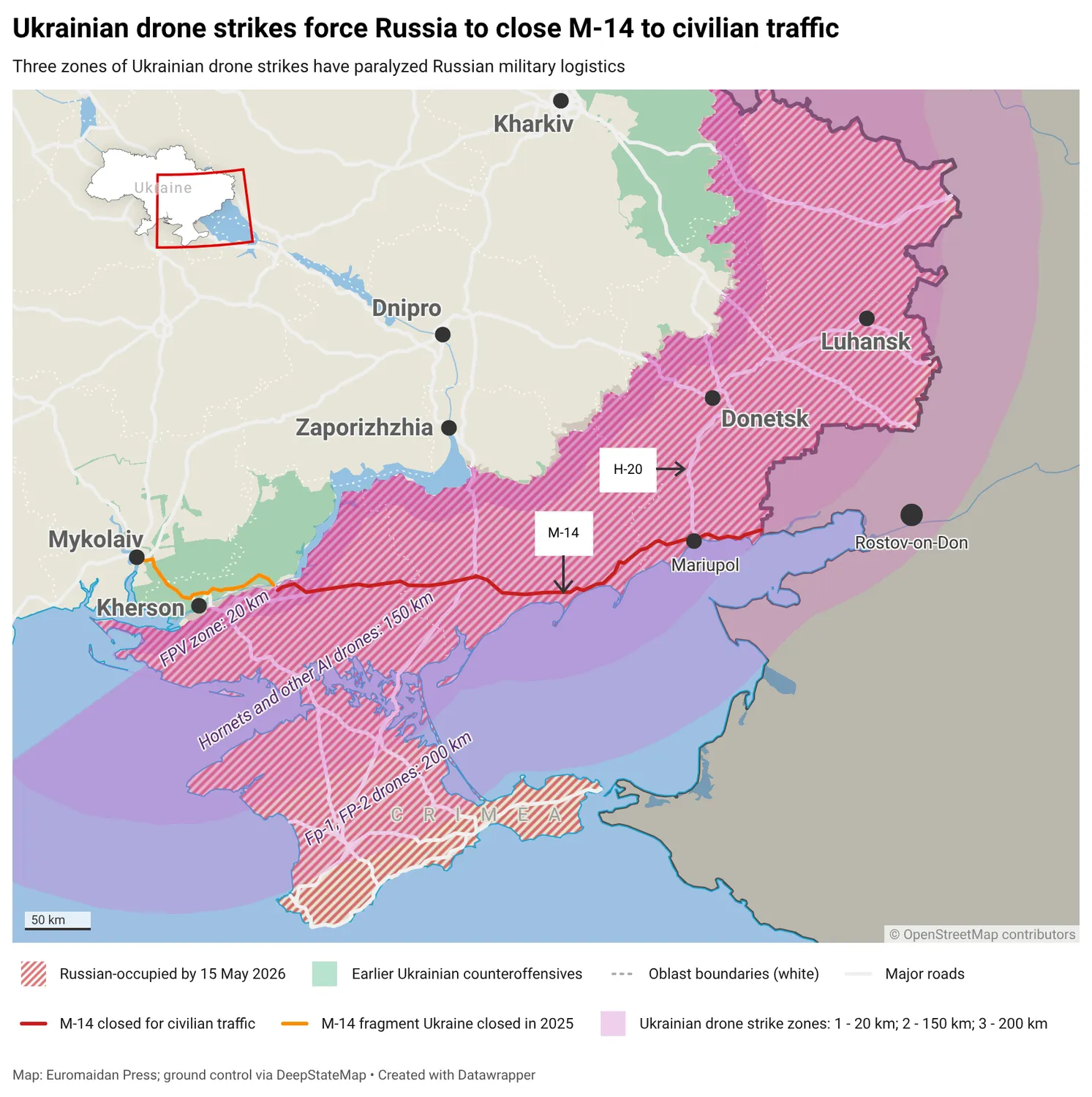
Ukraine's 3rd Army Corps said on 31 May that its drones had won "fire control" over five occupied cities. All five sit on or near the M-04 highway: Luhansk City, Starobilsk, Alchevsk, Bryanka, and Kadiivka. In plain terms, Ukrainian crews can now strike traffic on that road.
Ukrainian drone strike zones layered over Russia's southern supply network. FPVs reach roughly 20 km from the front, Hornets and other AI-assisted drones to 150 km, and FP-1 and FP-2 long-range drones to 200 km. The M-14 highway (Rostov-on-Don to occupied Crimea) and H-20 (branches north from Mariupol into Donetsk Oblast) both fall inside the deeper rings. Russian authorities have closed the M-14 to civilian traffic. The Ukrainian segment of the same highway, between Kherson and Mykolaiv, was closed by Ukrainian authorities in August 2025 after Russian drones turned it into a "human safari" killing ground. Map: Euromaidan Press.
A Ukrainian drone operator argued the M-04 matters more to Russia than the better-known M-14. The M-14 links Rostov Oblast to occupied Crimea. The M-04 begins near Moscow and reaches Rostov-on-Don before carrying on to Russia's Black Sea coast and into the Caucasus. It feeds occupied Crimea, southern Ukraine, and Luhansk Oblast through the Russian towns of Millerovo and Kamensk-Shakhtinsky. It also supplies Donetsk Oblast through Novoshakhtinsk in Rostov Oblast.
Explore further
Flat steppe: Ukraine is strangling Crimea’s supply lines from air. Melitopol-Chonhar road is latest target
The two highways connect, and Ukrainian forces are also hitting the H-20 road that joins them through Donetsk City. ISW assessed that the strikes will likely generate "even more profound cascading effects" across Russia's rear. The effort extends Ukraine's wider push to drive deep strikes further behind the front.
Russia bans buses and repaints its trucks
The strikes are already forcing changes on the ground. Leonid Pasechnik, the Russian-installed head of occupied Luhansk Oblast, issued a decree on 6 June. It bars regular bus and coach services on the section of the highway crossing occupied Luhansk.
Explore further
The Crimean Bridge is heavily guarded. Ukraine struck its maritime security layer in the Kerch Strait.
Ukrainian Mariupol mayoral adviser Petro Andriushchenko reported on 7 June that Russian forces had changed their Mariupol–Berdiansk route. They now use local coastal roads instead of the M-14. ndriushchenko said the troops are passing army vehicles off as civilian, recoloring the tarpaulins over each cargo bed and spraying the trucks white. ISW assessed the detours will likely slow Russian supply runs as Ukraine keeps hunting vehicles.
Russia's war bloggers turn on the Kremlin's generals
Ukraine's strikes are landing in Russia's information space too. Russia's pro-war military bloggers are voicing discontent and panic over the campaign.
Explore further
Ukraine doubles deep strikes beyond 50 km as “Logistics Lockdown” shifts priority deeper into Russia’s transport nodes and rear logistics chains
A pro-war blogger and former Storm-Z assault-unit instructor complained on 7 June that Ukraine is now striking factories and defense plants deep inside Russia while degrading Russian air-defense radars and systems. He blamed bureaucracy and state-corporate infighting for Moscow's failure to respond, and separately complained that Russia cannot read Ukraine's battlefield trends and underrates its capabilities. Other bloggers piled on: one claimed fuel shortages were stoking panic in occupied Crimea, while others faulted the Russian Defense Ministry and top general Valery Gerasimov for not striking Ukrainian logistics, especially the Dnipro River bridges.
ISW found the complaints are escalating, and that the strike campaigns are becoming "points of neuralgia" in Russia's ultranationalist crowd. It noted the discontent feeds on Russia's poor battlefield results, rising casualties, and economic strain. Even before this, Russia's war bloggers had turned on the Kremlin's commanders over inflated victory claims.
Commander of Ukraine’s Unmanned Systems Forces, Robert “Madyar” Brovdi, says Russian losses reached 1,006 killed and 1,090 wounded during the first six days of June, as Ukrainian drone forces continued strikes against targets on and beyond the front line.
The commander of Ukraine’s Unmanned Systems Forces published the figures on 7 June alongside an update on overnight operations targeting Russian logistics and infrastructure in occupied territory and inside Russia.
More than 2,000 casualties reported in six days
Brovdi said Russian forces suffered a combined 2,096 killed and wounded between 1 and 6 June.
He described the losses as equivalent to the combat strength of a full Russian assault brigade lost within a single week.
The commander also used a railway comparison to illustrate the scale of the casualties, saying the losses would add the equivalent of 20 refrigerated and medical railcars to Russia’s “one-way ticket” train over the six-day period.
Drone strikes target rear-area infrastructure
According to Brovdi, Ukrainian forces also struck 26 targets overnight on 7 June across occupied parts of Luhansk, Donetsk, Zaporizhzhia, and Crimea, as well as Russia’s Bryansk Oblast.
He said Ukrainian units destroyed an air defense system and damaged three locomotives, two railway fuel tanks, four electrical substations, and six telecommunications towers. The strikes also disrupted the movement of military cargo toward the front, according to the statement.
Earlier on 7 June, Ukrainian Special Operations Forces reported strikes on the Semikolodezyanska oil depot in Yedi-Quyu and a maritime fuel terminal in Feodosia. Ukrainian officials said the operation was intended to reduce Russia’s logistical and economic capacity to sustain military operations in occupied territory.
The reported targets fit a broader Ukrainian effort to degrade Russian logistics networks, transport infrastructure, and support systems operating behind the frontline.
Ukraine says it doubled the number of successful strikes on Russian targets more than 50 kilometers behind the front line in May under the “Logistics Lockdown” program, which prioritizes attacks on transport networks, fuel infrastructure, depots, and other systems supporting Russian military operations.
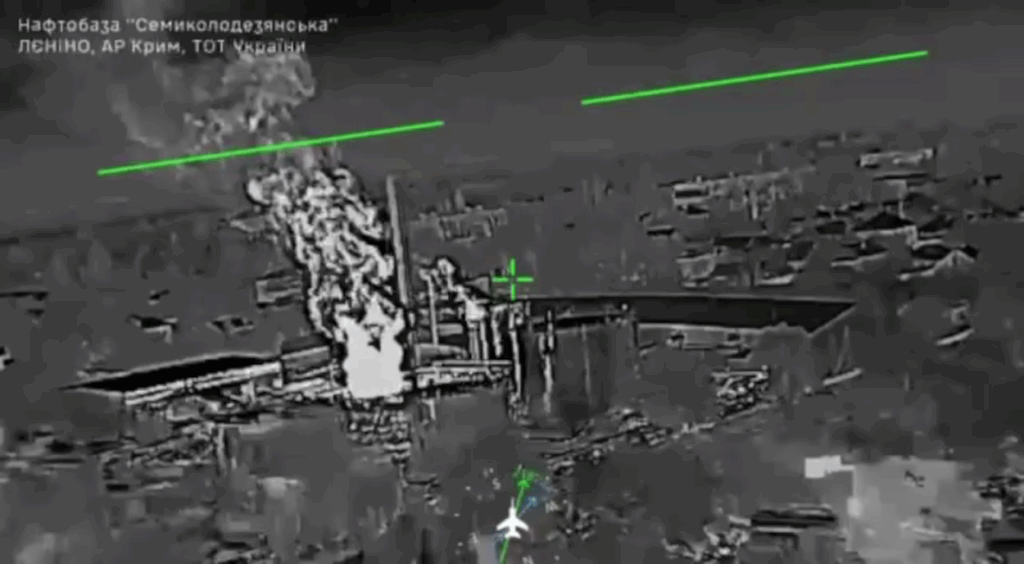
Ukrainian Special Operations Forces (SOF) say they carried out strikes on Russian fuel infrastructure in occupied Crimea overnight on 7 June, targeting the Semikolodezyanska oil depot and a maritime fuel terminal in Feodosia.
“The destruction of the enemy’s fuel infrastructure reduces its economic and logistical capabilities. The Special Operations Forces continue asymmetric actions aimed at the strategic weakening of the enemy’s ability to wage war against Ukraine,” the SOF said.
The SOF said both facilities are part of Russia’s fuel logistics system in occupied Crimea, used for storage, transfer, and redistribution of petroleum products supporting Russian military logistics in the region.
Semikolodezyanska oil depot hit in Yedi-Quyu
The SOF said the Semikolodezyanska facility is used by Russian forces as a fuel storage and transfer hub for diesel, fuel oil, and other petroleum products distributed across occupied territory.
The depot is located in Yedi-Quyu, a settlement in eastern Crimea which is known under Russian occupation administration as Lenine.
The site reportedly contains nine storage tanks ranging from 700 to 3,000 cubic meters and supports distribution across occupied territory through rail tanker loading and onward transport.
Ukrainian Special Operations Forces struck Russian fuel infrastructure in occupied Crimea overnight on 7 June, hitting the Semikolodezyanska oil depot in Yedi-Quyu (Lenine) and a maritime fuel terminal in Feodosia.
— Euromaidan Press (@EuromaidanPress) June 7, 2026
Open-source monitoring suggested fire activity at the site following the reported strike. The OSINT group Exilenova+ said the depot was hit overnight, while NASA FIRMS satellite data reportedly showed heat signatures consistent with burning at the location.
The monitoring group Crimean Wind also reported a fire at the site, citing satellite imagery and witness reports. It said residents reported multiple explosions between 02:05 and 02:14 local time, followed by visible flames near the facility.
The group described the depot as a large settlement-based fuel site, originally built in the Soviet period, closed in the 1990s, and later restored after 2015 under Russian administration.
Feodosia maritime fuel terminal targeted
Ukrainian forces also reported a strike on a maritime oil terminal in Feodosia, used for transferring fuel between rail and sea transport.
The facility includes seven storage tanks with capacities of 10,000 and 20,000 cubic meters and functions as a key fuel transshipment point between rail wagons and maritime tankers.
It forms part of a wider logistics network supplying occupied Crimea, enabling large-scale movement of petroleum products across rail and coastal routes.
Expansion of Ukraine’s “middle-strike” campaign
The reported attacks reflect Ukraine’s growing use of “middle-strike” operations targeting logistics and energy infrastructure deep in occupied territory.
The aim, according to officials, is to degrade Russia’s ability to sustain military operations by disrupting fuel supply chains and transport hubs beyond the front line.
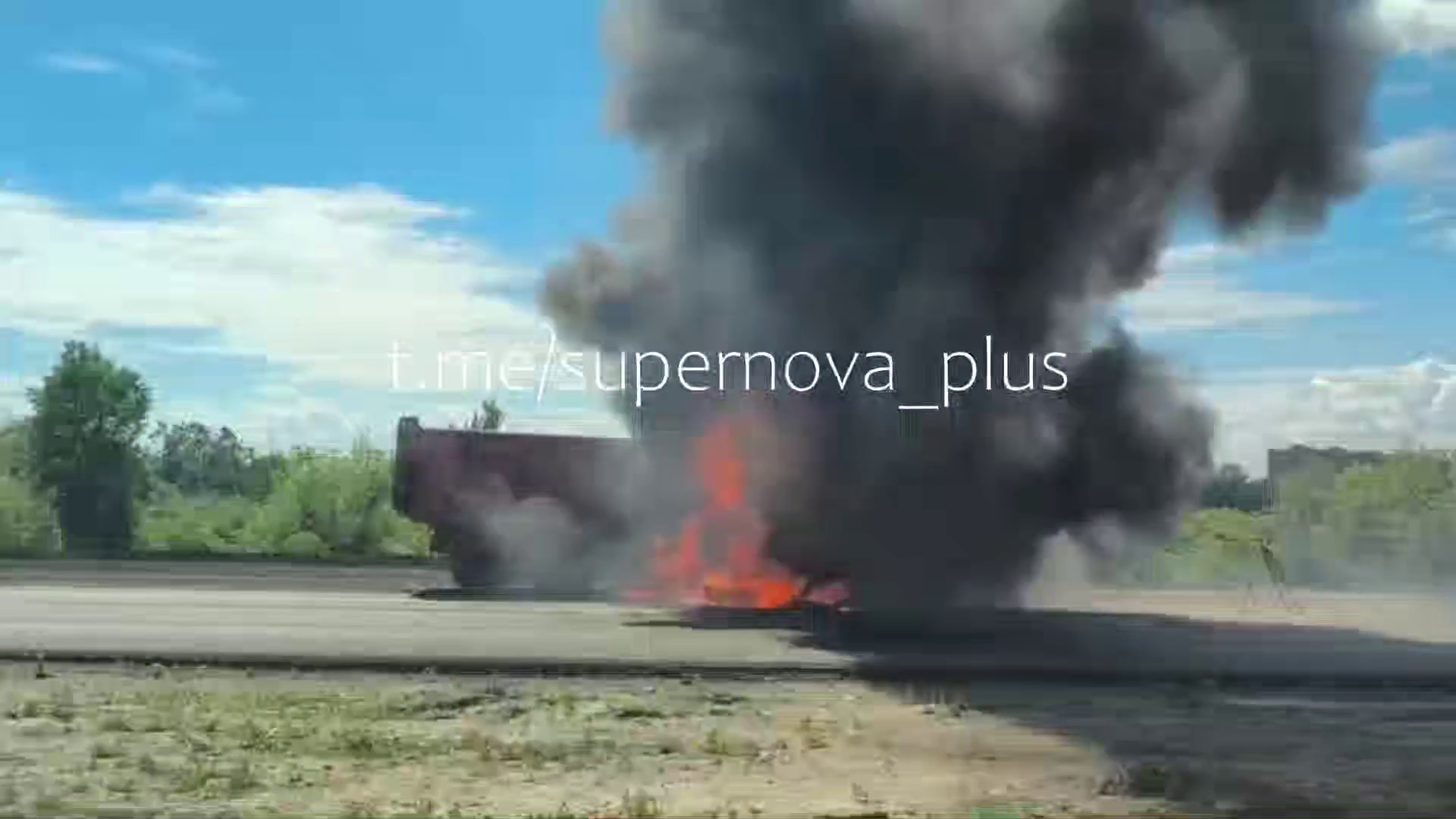
A Ukrainian long-range drone struck a Russian military truck near occupied Horlivka, Donetsk Oblast, setting it ablaze and reportedly killing the driver.
Footage from the scene shows the vehicle burning in the middle of a key logistics route, forcing traffic to halt.
— Euromaidan Press (@EuromaidanPress) June 5, 2026
Russia reports large-scale drone interceptions
The Russian Ministry of Defense said air defense systems intercepted and destroyed 95 Ukrainian drones overnight across multiple regions of Russia and occupied territory, including Crimea and the Black Sea area.
The ministry listed other regions including Belgorod, Bryansk, Kaluga, Kursk, Novgorod, Rostov, Smolensk, Tula, Yaroslavl, Krasnodar Oblast, and Moscow Oblast.
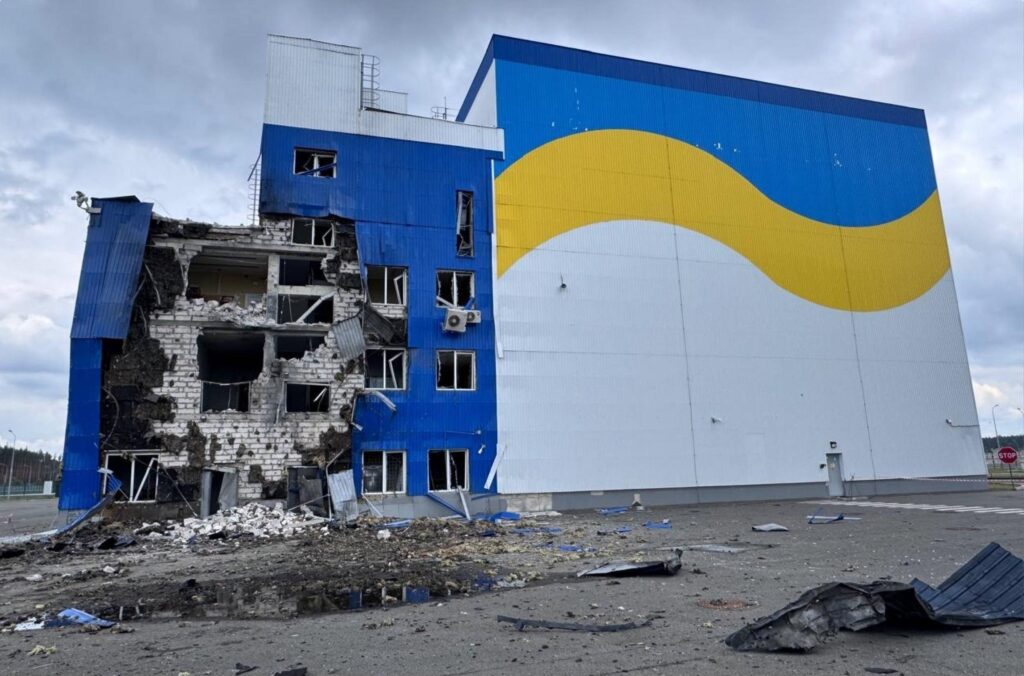
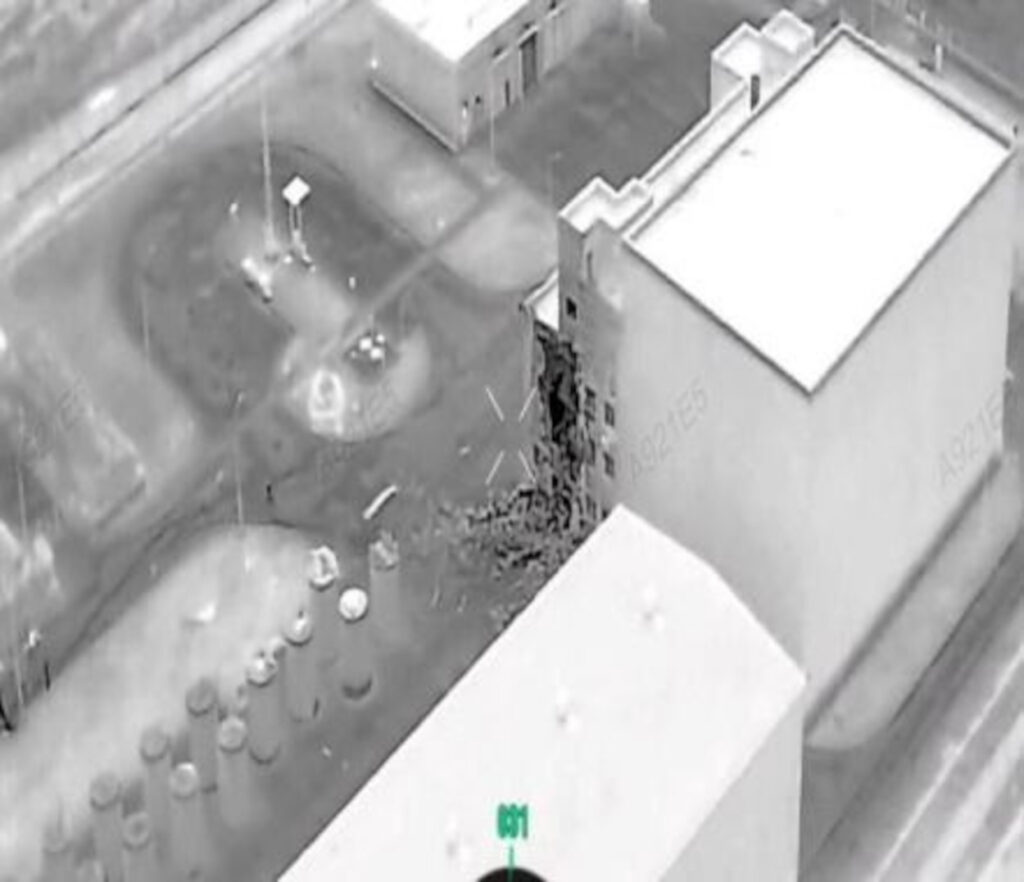
A Russian drone struck the site of Ukraine’s Centralized Spent Fuel Storage Facility (CSFSF) in the Chornobyl exclusion zone overnight on 7 June, damaging a non-storage building and causing a fire that was later extinguished, according to Ukraine’s state nuclear operator Energoatom.
The attack occurred at approximately 02:10, when a Russian UAV hit the facility’s container reception building, Energoatom said. The building was partially destroyed, although no spent nuclear fuel was stored inside at the time.
Fire contained, radiation levels normal
Energoatom reported that a fire covering about 40 square meters broke out after the strike but was quickly localized and fully extinguished. No personnel were injured.
The company said radiation levels at the site remain within normal limits and are being continuously monitored.
“The radiation situation at the CSFSF site remains within normal parameters,” Energoatom said in a statement, adding that it is coordinating with relevant state agencies and continuing to monitor the situation.
The Centralized Spent Fuel Storage Facility is an important part of Ukraine’s nuclear infrastructure, designed to store spent fuel from the country’s nuclear power plants.
SBU opens war crimes case over drone strike on Chornobyl spent fuel facility
Update 17:00: Ukraine’s Security Service (SBU) said it is treating the Russian drone strike on the Centralized Spent Fuel Storage Facility near Chornobyl as a war crime and has opened a criminal case under Article 438 of the Criminal Code.
Investigators said Russian forces used a “Geran-2” type drone for the 7 June strike, which hit the facility at around 02:05. Fragments of the drone were reportedly recovered at the site.
The SBU said the blast damaged the spent nuclear fuel reception and handling building, as well as an administrative building used by the International Atomic Energy Agency.
It added that the strike did not disrupt operations at the facility and no casualties were reported.
Damage at Ukraine’s spent nuclear fuel storage facility in the Chornobyl exclusion zone after a Russian drone strike, which officials say hit a non-storage building and triggered a fire. Photo: General Staff of Ukraine's Armed Forces
IAEA to inspect Chornobyl spent fuel site after drone strike damage
Update 14:40: The International Atomic Energy Agency (IAEA) said it will soon send its team at Chornobyl to inspect damage caused by a drone strike on the Centralized Spent Fuel Storage Facility in the exclusion zone.
The agency said it was informed by Ukraine that the 7 June attack caused “significant damage” to the fuel reception building, including the facade, windows, and doors, with nearby structures also affected by the blast wave.
IAEA Director General Rafael Grossi said the incident is “deeply concerning,” noting it occurred at a facility storing nuclear material just meters from the impacted structure.
He said attacks on nuclear facilities are “completely unacceptable” and violate core nuclear safety principles, including the agency’s “Seven Indispensable Pillars” for nuclear safety and security during armed conflict.
Ukrainian officials condemn strike on nuclear infrastructure
Ukrainian Foreign Minister Andrii Sybiha condemned the attack, describing it as another example of what he called Russia’s systematic disregard for nuclear safety.
“This is not the first time Russia has endangered Ukrainian nuclear facilities,” Sybiha said. “Russian nuclear blackmail and disregard for nuclear safety principles are systemic, deliberate, and unacceptable.”
Ukrainian President Volodymyr Zelenskyy said the drone that struck the facility was a Shahed-type attack drone and accused Russia of deliberately targeting critical nuclear infrastructure.
“Russia consciously struck this nuclear infrastructure facility,” Zelenskyy said. He noted that radiation levels had not exceeded safety limits and praised emergency responders for extinguishing the fire.
The president linked the strike to a broader wave of Russian attacks across Ukraine, saying Russia had launched attacks on civilian targets in 13 regions overnight. According to Zelenskyy, Russia fired 88 missiles, more than 3,250 attack drones, and around 1,800 guided aerial bombs against Ukraine over the past week.
Ukraine has repeatedly accused Russia of using threats to nuclear facilities as part of its broader war strategy. Concerns over nuclear safety have remained high throughout the full-scale invasion, particularly following repeated incidents involving nuclear-related infrastructure and the Russian occupation of the Zaporizhzhia Nuclear Power Plant.
With yet another week-long public sector strike now underway, SIC Notícias has warned that we can expect ‘more’ down the line as the semblance of social peace, enjoyed by the
US Southern Command said on Wednesday that its forces bombed another alleged drug-running boat in the Eastern Pacific Ocean as the Trump administration continues the extra-judicial executions at sea. SOUTHCOM said the strike killed two male “narco-terrorists,” a term the Trump administration has adopted in its attempts to justify killing people for an alleged crime […]
Just as people thought it was ‘safe to go back into the fully-functioning world’ (afer the double whammy of a general strike, followed by a national holiday), STRN – the
PSP police arrested six people outside parliament in Lisbon yesterday, after the ‘peaceful’ protest organised by striking union members against the government’s labour package appears to have been infiltrated by
The industrial action had its biggest impact at Lisbon Airport, where nearly 100 arrivals and departures were cancelled throughout the day. Porto Airport was also heavily affected, with close to
Portugal’s prime minister, Luís Montenegro, expressed his conviction today that the “overwhelming majority of working Portuguese people” will go to work tomorrow – the day of the general strike. Upon

 Login
Login


 (@ZarinaZabrisky)

 Supernova