Francisco Guimarães: “José Mourinho devia ter sito alguma coisa aos adeptos que foram muito simpáticos com ele”


Episódio Especial do Diáspora Spot assinala o Dia de Portugal com dois portugueses de destaque ligados ao Luxemburgo No âmbito das comemorações do Dia de Portugal, de Camões e das Comunidades Portuguesas, o Diáspora Spot apresenta um episódio especial dedicado…
O post Episódio 35 | Especial Dia de Portugal aparece primeiro no Diáspora Lusa.


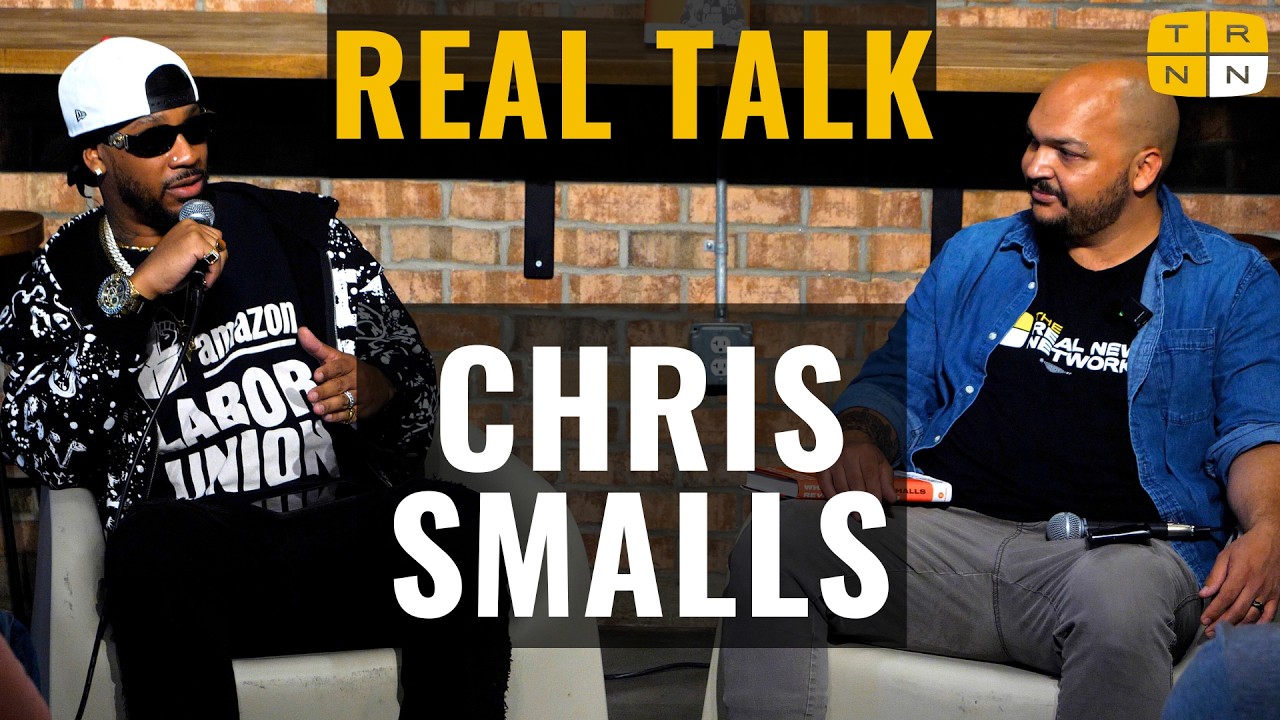
At a live event hosted at Red Emma’s Cooperative Bookstore and Coffeehouse in Baltimore, Maryland, TRNN Editor-in-Chief Maximillian Alvarez got to sit down for a deep and wide-ranging conversation with Chris Smalls, co-founder and former president of the Amazon Labor Union. Alvarez and Smalls discuss Smalls’ new book, When the Revolution Comes: A Fight for the Future of the Working Class; they recount the incredible story of the formation of the Amazon Labor Union and the unionization of the first Amazon warehouse in the US; and they talk about Smalls’ journey from warehouse worker and labor organizer to becoming an internationally recognized public figure and a human rights activist who has sailed with humanitarian flotilla missions to Gaza and Cuba.
Additional links/info:
Featured Music:
Credits:
The following rushed transcript may contain errors. It will be updated as soon as possible.
Maximillian Alvarez:
All right Welcome everyone to Working People, a podcast about the lives, jobs, dreams, and struggles of the working class today. Working People is a proud member of the Labor Radio Podcast Network and is brought to you in partnership with In These Times Magazine and the Real News Network. This show is produced by Jules Taylor and made possible by the support of listeners like you. My name is Maximillian Alvarez and we’ve got a really special episode for y’all today, which is a recording of a live event that I recently hosted at Red Emma’s Cooperative Bookstore and Coffeehouse here in Baltimore. And for that event, I got to sit down in front of a big, lively audience and have a real deep and wide ranging conversation with Chris Smalls, co-founder and former president of the Amazon Labor Union. Chris has a new book out called When the Revolution Comes: A Fight for the Future of the Working Class.
And that book recounts the incredible story of how a young working class Black man from Hackensack, New Jersey led a walkout from his Staten Island Amazon warehouse during COVID-19 got fired and then with hardly any resources banded together with a scrappy group of Staten Island warehouse workers to form the independent Amazon Labor Union to fight this epic David and Goliath battle against Amazon, the second largest private employer in the United States and Jeff Bezos, the second richest man in the world, and to win and successfully unionize the first Amazon warehouse in the United States. And the book also traces Chris’s life story before the Amazon Labor Union and his journey from warehouse worker and labor organizer to becoming this internationally recognized public figure and a human rights activist who has sailed with humanitarian glotilla missions to Gaza and to Cuba, even facing detainment and harassment from ICE and imprisonment and abuse from the Israeli military because of it.
I’ve done a number of events with Chris over the years. I’ve interviewed him outside of the JFK8 warehouse on Staten Island and I interviewed him as he was sailing to Gaza with the Global Samuel Flotilla right before they were captured by the Israeli military last year. I’ve seen both up close and from afar what he, his story and the story of ALU mean to working people out there, young and old people across this country and beyond. I’ve seen up close and from afar how the media’s good and awful and obsessive coverage of Chris and ALU, how that’s all affected Chris and different members and factions within ALU. And I’ve watched them all try to do their best to navigate a situation and a spotlight that I don’t think any of them ever expected to be in and that most of us will frankly never be able to fully understand from the outside.
I’ve seen and learned about many of the struggles that Chris has been through. I’ve seen and learned about the things that he’s done to help others. I’ve seen and learned about mistakes that he’s made and regretful things that he’s done and said. I know he’s a controversial figure to different people for different reasons and I know that he’s an inspiration to different people for different reasons. I know that he’s a complex and imperfect person, like you, like me, and like the hundreds and hundreds of working people that I’ve interviewed on this show over the years. And I’ve said from the beginning of this show that the whole point of this project was to honor the full and beautiful and complex humanity of our fellow workers to lift up the unheard voices of working class people and to help them and us and others see ourselves as full people with important lives and stories, not just stereotypes, not just name tags and job titles.
We’re so much more than that. And as a fellow worker, Chris is no different. And whatever your thoughts are about him, I think we all need to remember that because I see a lot of people forgetting that and that is not to excuse or downplay any concerns that folks have about Chris, ALU, or the complicated relationship between media celebrity and political movements today. And of course, no one is above critique, not public figures like Chris and certainly not journalists like me and anyone who is part of the labor movement must hold themselves and be held accountable to that movement. I know that and I believe that, but I also know that movements don’t move and history doesn’t happen without people and people are complicated. And if we don’t have a healthy way as working people of talking and listening to each other and working through our shit, if the world is burning all around us and we cannot find ways to work together or work alongside each other for our common goals and common good, even if we don’t like each other, then to put it bluntly, we’re cooked.
And so with all that said, it was in that full spirit and with that same mission that I’ve had since I started this podcast eight years ago that I sat down with Chris Smalls for this important conversation that we had at Red Emma’s in Baltimore. I hope you guys enjoy it and I want to know what you think, but please first take a listen.
All right. Well, thank you so much to Red Emma’s Cooperative Bookstore and Coffeehouse for hosting us for this great event. I want y’all to give a proper Baltimore welcome to Brother Chris Smalls, the co-founder and former president of the Amazon Labor Union here with us tonight. So we are of course here to talk about Chris’s new book, When the Revolution Comes, the Fight for the Future of the Working Class, but we’re also going to talk about so much more. And by way of getting us into this discussion, I wanted to just roll the clock back a second, right? Let’s go back five years, 2021, right? Feels like forever ago, but let’s not forget how crazy of a year that was. We had all just watched the batshit January 6th insurrection still in the middle of COVID, no vaccines yet. And out of this dark swamp in time, an unexpected source of light emerged in worker struggles and a sort of revived labor movement.
Everyone was talking about the Amazon workers in Bessemer, Alabama who were trying to unionize with the retail wholesale and department store union down there. I went down there. That was actually my first field shoot for the real news. And of course those workers lost that election and it was very heartbreaking for a lot of us and it was really incredible to see that heartbreak turn into the energy that we would see later in the year with the first Starbucks store to unionize in Buffalo, New York and the emergence of this ragtag group of badass workers from Staten Island who were trying to unionize their Amazon warehouse. And so it can be easy to forget all that we were going through in that moment. And so I wanted that to sort of be the start. And Chris, I wanted to ask you to take us back there.
Remind us who Chris Smalls was before COVID and then talk us through, because I think we need a refresher. Talk us through the incredible saga from the walkout that you led to you guys winning that first union election.
Chris Smalls:
And thank you all for being here. It’s been a while since I’ve been to Baltimore, so I’m glad and honored to be back and good company and some good comrades, familiar faces in the crowd. So thank you all once again for showing up and supporting my book and being here tonight. I really appreciate that. Yeah. As you said, we have amnesia in America. We all know that. One thing being a news cycle for a few weeks and then it’s always something else, especially under this Trump administration. And ironically, six years ago when I got fired from Amazon, that was also an election year. Trump was still in the headlines still. So we wasn’t garnishing any attention. As you mentioned, leading up to 2021, 2020, COVID was the peak at its peak, especially in New York City being one of the epic centers of the world.
Yeah, workers were afraid, workers were catching COVID. I remember walking into my warehouse and how seeing my comrades at work just really sick and not really themselves. So it’s a really eerie moment. But for those who don’t know, I was an assistant manager at Amazon for four and a half years. I opened up three warehouses in the tri-state area, New Jersey, Connecticut, Staten Island New York was my last building. People’s person always, the same way you see me today, it was the same way I went to work at Amazon. Definitely loved my people. I spent 70 hours a week with them. They were like my extended family. And when COVID hit, I definitely was afraid for all of us and I wanted to speak up on their behalf as well, which led to my firing after I led the walkout on March 30th, 2020, which once again was six years ago.
Seems like it was a long time ago, but it was six years ago it flew. It flew past. But just giving you a background about myself, what you’re going to read about in the book if you haven’t already, is that I’m just like anybody else in this crowd. I’m a single parent. My twins at the time was, well, damn, they were maybe eight or nine years old. And yeah, you can imagine how much time that I’ve lost spending with them over the last years, especially during COVID, the years of COVID, if I was lucky to see them half a year, that was a thing as well. And I love sports, grew up playing basketball, football, track. You going to see that in the book. I also was a rapper. I
Maximillian Alvarez:
Was going to say, don’t bury the lead. There’s a little juicy story about your rap history in there.
Chris Smalls:
Yeah, yeah. There’s a little rap stink that I had briefly after college, dropped out of college because I wanted to pursue music. I thought I was going to blow up overnight and then I got hit with reality getting back into the workforce. I got married and divorced at a young age, but I was married for eight years and during that hardship, working at Amazon was our main source of income for my household, one of them at least. And having healthcare as well. Healthcare Amazon provided for me and my kids and my wife at the time. So when I lost all of that during the pandemic, it really showed me how much the company didn’t really care about anybody. After I poured five years of my blood, sweat and tears into the company after I’ve done so much opening up these warehouses for them, training thousands of Amazon workers, hundreds of their upper management, the companies just say, “You know what?
We don’t care. We’re going to fire you. ” And not only fire you, they did it in a way that martyred me by Jeff Bezos, who was the richest man in the world, signing off on the smear campaign, which basically said to make me the face of the whole unionizing efforts against Amazon, which is a good idea. But at the same time, the racist part in the beginning saying that I’m not smart or articulate, something that they use in these corporate settings to put upon Black people and Brown people, saying that we’re not smart enough or we’re not articulate enough to even talk about anything when it comes to work related issues. So that was really the catalyst of a moment right there where I embraced it and I said, “You know what? Even though I no longer work for the company, I’m going to continue fighting for the workers inside the building.” Ultimately, for a whole year from 2020 to 2021, we traveled the country protesting in front of debt bases, mansions and penthouses while Bessemer, Alabama was trying their efforts and we all was paying attention.
My folks in Staten Island, we were paying attention, but we took it a step further. We did drive down there. We drove 16 hours from New York City down to Bessemer in a car, one car squished up and we stayed about a week connecting with workers there, connecting with the union, trying to figure it out because we didn’t know what we wanted to do. We wanted to do something, but we didn’t really have all the answers. But unfortunately, yes, like Max said, when they lost, it was definitely devastating for everybody. We felt that because of several reasons. Number one, that building investment Alabama has about 6,000 employees, five, 6,000 employees. Majority of them are black people. 85% of the building is black, 80% of the workforce there are black women. So when Amazon spent millions of dollars stopping that campaign, that was a direct attack on black and brown people and that’s something that we resonated with in Staten Island, New York where the demographics are similar to our building as well.
So the next day after the results came out, it just so happened to be our birthday, four 20, four / 20 / 2021 is when we started our campaign the next day after those results came out. We didn’t even wait.
And yeah, that year was like a blur as well, but it was 11 months, over 300 plus days I set up an encampment outside of the building that fired me at a public bus stop talking to workers every single day, rain shine, how to call night or day about why we need to start a union. And originally we sent out the Olive branch to the established unions. We wanted some support. We wanted some resources, some help, but we got nothing in return because a lot of people didn’t believe in us. A lot of people thought that it wasn’t going to work. Who are you guys to unionize when y’all don’t have any resources, y’all don’t have any knowledge, experience, et cetera. But one thing we did know is that we’re Amazon workers. Whether we’re fired or not, we know the ins and out of the company better than Jeff Basils.
So we felt that was the only way, and I still believe that till this day that the only way it could have been done was grassroots, gorilla style tactics in the trenches every day, meeting your workers face-to-face. That was the only way it was going to work. We couldn’t take the shortcut routes. We couldn’t do the traditional style organizing methods that most unions use. We had to think outside of that box and also sacrifice. Sacrifice was one of the things that we all had to do as a collective. And yeah, it was successful. 11 months, hard blood sweat and tears into the campaign and it paid off to become the first union in American history for Amazon workers. And still, till this day, that building is the only unionized building in this country and that’s what people got to understand. And it’s pro and con to that.
Yes, it’s great that we still are standing, but it shouldn’t take four years for us to have a contract. Keep that in mind that even when I was the president for three years, the first thing we did when we won was demand the bargaining order from Amazon, or at least from the National Labor Relation Board so that we can negotiate with Amazon. We didn’t hear anything under the Biden administration. I don’t know what happened, but there was some magic in the air. We got a bargaining order in April of this year, but Amazon has already appealed it because they’ve been spending millions of dollars holding things up for the last four years. So for those and everybody who’s been questioning like, “Why don’t you guys have a contract or you guys are not getting a contract?” It’s not because of us. It’s literally because the system is broken.
The system is not worker friendly. As much as these progressives and politicians say that the system are usher us to the system that’s supposed to work for us, it doesn’t. It’s not in our favor. So we have to continue to fight every step of the way. And actually when we won in 2021, that was just the beginning of the fight. This fight is a lifetime struggle and now the only thing that I can see that our union can do, and not just our union, because there’s other unions out here, Starbucks workers, all these other unions that emerge, they’re still fighting for contracts too and negotiating their way through it. But the only thing I can see that’ll work for all of us is if we withhold our strongest weapon, which is our labor and go on strike.
Maximillian Alvarez:
And it was wild too reporting on Bessemer and then reporting on you guys and sort of seeing how the things that worked for Amazon Imbessemer weren’t working on Staten Island. I think that was a real sort of moment of insurgent energy because in Bessemer, when the workers brought in the RWDSU, Amazon did what union busting employers always do where they’re like, “Oh, this is an outside force that’s trying to come in and get in between our relationship.” They couldn’t do that with you guys because it was like, no, these are literally just the workers in the warehouse. And so I wanted to touch on that because it was such a big debate at the time because of Bessemer and ALU especially, but everyone was talking about, is it better to go the independent route like Amazon Labor Union, Trader Joe’s United, the Home Depot workers who tried to unionize in Philly, or is it better to go with an established union like the Teamsters of the RWDSU?
And so with five, again, like you said, five, four years of experience since we were having those debates, I think it’s important for us to sort of revisit and update that and you know better than us. I wanted to ask after all that you’ve been through in this struggle, where have you landed on the independent or established union debate, especially in light of the AOU affiliating with the Teamster?
Chris Smalls:
Yeah. I mean, I still stick by my original sentiment that there was no other way that we was going to get it done, not with any established union. Didn’t matter how long they’ve been around, how powerful they are. The way we organize is completely against any type of style. You can’t read about it because it hasn’t been done before. And yeah, I still believe that independent unions are something that we still need to push. Not saying that established unions can’t support, but what’s happening over the last few years, to be honest, after we won in 2021, well, let me take it to the day of. The day we beat Amazon, we had $2.50 in our account. Now it’s funny because we were broke as hell. We didn’t have dudes paying members. We still don’t have dues paying members. We don’t have a contract. So I can’t ask for workers who are making $20 an hour to pay union dues.
I wasn’t going to do that as the union president. The next day we had almost half a million dollars because the bandwagon came, the unions, “Oh yeah, we supported. Oh yeah.” But they really, really didn’t. Actually, there was a reporting that all the established unions combined only contributed after we all won, talk about Starbucks, Trader Joe’s, Amazon, you name it, they only contributed 3% of their resources into these campaigns. And I can tell you we didn’t get one of those 3%. We got zero. Literally nobody offered us anything before we won. And after we won, the bandwagon came and everybody said, “Oh yeah, we had some resurgence in the labor movement,” which is great. It was. It was definitely headlines, it was definitely international news and resonated with millions of workers around the world. The problem is that established unions didn’t use that opportunity to double down and really invest into grassroots movements because they was embarrassed.
We weren’t the first people who tried to unionize Amazon. Absolutely not. Actually, established unions have been trying to unionize Amazon for over a decade, even before Bessemer, Alabama. And guess what? You guys never heard about it. I never heard about it. It was actually a campaign at GFK8 while I was working there, didn’t even hear about it until we started and that was ran by the established union of the Teamsters. So when it comes to which side do I really ride with, I’m going to say the one that works and I know that there’s pros and cons to everything. The thing about independent unions and grassroots efforts, as we all know, if you’re grassroots, it’s a struggle. You’re not going to have all the tools and resources given to you all the time. You got to scrap, you got to sacrifice, you got to crowdfund, you got to have mutual aid.
We literally had a GoFundMe, which it’s sad to say, but that was our only lifeline of how we were able to feed our comrades and our workers there. So the reason why we had to affiliate with the Teamsters, which I signed by the way, is because we’re going up against a $2.2 trillion company like Amazon that has all the money to hold things up in federal court for four or five years like they have it, which you guys are not privy to this all the time, but Amazon has million dollar lawyers and while I was the president, I’ve been to federal court against Amazon. I lost count how many times over the years and all they do every time we do something, they appeal it into a federal court to try to get it to a right wing Supreme Court and try to get us decertified.
That is their game plan. They’re not trying to come to the table. They still don’t even want to recognize that we won. So the affiliation with the Teamsters was so that my union doesn’t go bankrupt because if we don’t have dues paying members and people are not going to continuously donate, we have to give resources to stay alive and stay afloat. The Teamsters was going to offer that. The affiliation agreement that I signed was something that I and my executive board negotiated along with our legal counsel and it was one that we benefited from the most. We have full autonomy with our local ALU, IBT, local one, full autonomy, full jurisdiction on Amazon. And the most important thing that I got in that contract was they have strike benefits. They can offer the workers at JFKA right now a thousand dollars a week to go on strike if they wanted to.
I’m not the president anymore, but this is something that I set up to help them succeed in that journey. It’s up to the workers, it’s up to the current leadership of the union. It’s up to them to take that initiative and utilize it. And hopefully they do because the clock is ticking. Right now since we’ve been issued a bargaining order, Amazon has already appealed it, but the clock is ticking for them to come to the table. They have about a year to do so. Otherwise, the game plan that Amazon is going to run is going to try to decertify the union. So hopefully they get their stuff together and they get it done. I’m always going to support my union, whether I have a position or not. And that’s what we all have to do in solidarity. We all have a role to play because our fight is absolutely your fight.
A lot of people don’t know what’s going on behind the scenes at Amazon are within these campaigns. So the reason why we’re here today, the reason why you guys are picking up this book is because this book is also not just a memoir, but it’s also a how-to. It’s going to give you some tools on how we can all fight back against the system that’s oppressing us.
Maximillian Alvarez:
Hell yeah.
So I really want to talk before we get to Q&A about your life, your work, your mission beyond ALU. And the last time we did an interview, you were sailing to Gaza for Christ’s sake. So I want us to get there, but before we do, just to pick up on what you were saying there, I think it’s really important for us to in this space, model a real, honest, no BS discussion about what we can learn from the beautiful, complicated, heartbreaking, inspiring story of the first Amazon union. Because so many struggles before you and there are going to be plenty after you, you guys faced a lot of external pressure and internal debates, division. This stuff happens and you write about some of that in the book and there’s a time and place to talk about that stuff and it’s not here. We’re not here to sort of air dirty laundry and point fingers.
Everyone knows Chris isn’t perfect. I’m not perfect. You’re not perfect. And that’s, I think the point is that whether you’re organizing your shop or trying to build a political movement, you can’t do anything without the messy realities of messy human beings who make the movement. So our humanity is always part of the story and none of us is perfect. And so I wanted to ask you, Chris, again, not for us to get sucked into the … She said … I’ve talked to other Amazon members who have different versions of the story and I always tell them, like I told you, I was like, “It’s not my place to pick sides here. I’m not in this union. I’m a fucking journalist.” And it breaks my heart when I see these divisions because I want the best for everybody, but life doesn’t work out like the fairytales in our heads.
So what can we learn from y’all’s experience that can help others out there who are going through these struggles and it’s getting tough and the company, the employers appealing every victory, it’s like one step forward, three steps back. You’re losing friendships because shit just gets really tough. You have no money. What can folks out there who are experiencing that learn from what y’all went through in ALU?
Chris Smalls:
Yeah, great question. I mean, once again, when you’re taking on one of the most powerful companies in the world, you’re trying to bring people together from all different backgrounds, all different creeds, you’re going to have disagreements, you’re going to have different political ideologies, you’re going to have infighting, every union, every organization does. We just were under a microscope because of our historical victory and the mistake that the media Yeah, sort of did was comparing us to established unions that’s been around for a hundred years. We weren’t that. We’re grassroots organizers. Most of them weren’t even organizers. They were just everyday civilians that were inspired, that were passionate, that wanted to do something. Even myself as the leader at the time, I didn’t have all the answers as well. I had to learn and I’m still learning every day. I’m a sponge. I’m learning new what’s going on overseas is affecting us here.
The things that I’m doing with Palestine, Cuba, wherever I’m going, it affects us here. I try to connect those dots. Some people just can’t think that big and unfortunately it leads to disagreements, but the disagreements are that’s a democracy. That’s exactly what a democracy is.
Unfortunately, the movement has its way of weaning people out. It’s not for everybody. It’s just real. A lot of people will see social media posts or see something happening, protests, whatever it is. Even going back to George Floyd days when there was millions of people taken to the streets in America. But where are these millions of people now? They’re back at work. A lot of people see things for the moment they get involved and then they get burnt out. They get weeded out or they realize this is too tough for me. And a lot of it is what happened to our union. A lot of folks thought that it’s a lot easier than what it is. Yes, I do make things look cool sometimes. That’s intentional because organizing is stressful as shit. I know we all know that. Organizing hard, stressful, tiring, exhausting, all of the above.
And I tried to make it as simple, as cool, as fun as possible because I know what workers are dealing with working at Amazon. That was one of my biggest things is making sure that everybody around me was always good in some capacity. Unfortunately, once again, the movement is going to be the movement. And for those who jump into this movement or this type of work or any type of work, you got to know what you signed yourself up for. This is a lifetime struggle. Our ancestors paved the way and not only that lost their lives, some are incarcerated right now as we speak so that we can have the right to organize, that we can have a reason to organize. So when these type of movements, you can’t have one foot in, one foot out. You got to be fully committed for the long haul and you got to be fully committed to sacrificing something because if you spoke out about Palestine, you lost something.
I know I did. If you spoke out at your workplace, you’re going to be targeted. If not worse, you’re going to get terminated. If you speak out against all of the injustices that we’re seeing right now in this country, you’re going to lose friends. You’re going to lose loved ones. I know a lot of us in here that probably when they started talking about October 7th, it was tough conversations in the beginning because I could tell you I lost 10,000 followers on Instagram instantly when I posted about Palestine over three years ago. And it was the same people that said in my DMs, “Chris, we supported you for Amazon workers, but this is where I draw the line.” What? In return, you know what I said? Fuck you.
Because if you can’t make the relationship between Amazon and genocide, then I can’t help you. And I don’t give a damn if you one of my organizers or not. If you fighting over some petty shit when Jeff Bezos is flying in space on the penis rocket, you missing the plot. So people want to attack the wrong things and that happens a lot on the left. We’re talking about the character, the person, the individual, how I look, how I talk, where I’m going, what headlines I’m gathering. Meanwhile, Amazon is firing 30,000 people next week. And that was what I always tell my organizers. We’re fighting about what we doing next when Amazon is winning. They are in the building union busting and y’all worried about the wrong things. So for me, the biggest lesson I learned is you got to stay true to the mission. And I don’t debate too much.
I mean, I do sometimes because I have to defend myself in certain cases, but I’ve never played into the naysay about myself or about my union because I let the work speak for itself. We made history, unprecedented history, and people that were there, they know. That’s all I care about. My day ones that walked out of the building six years ago with me, they know. Everybody else that came afterwards that’s going to jump on board later on, that’s going to look back, reflect back, that none of that matters. What matters is what are you willing to do to get Amazon to come to the table? What are you willing to do to liberate the people of Palestine? And more importantly, if you don’t get up and do the work, who’s going to do it because there’s no calvary coming for us?
Maximillian Alvarez:
One of the things that has sort of always colored the way that I have watched your journey is the fact that I always think that I was working in warehouses back in Southern California 15 years ago in the depths of the Great Recession. Our family was losing our house like millions of others. It was awful. And the thought of one of us having the cultural international statue that you do that one of us would be giving so much hope to people around the country and around the world is just mind boggling to me, but it’s also like that’s got to be a lot to go through as a working warehouse guy to then kind of be catapulted to that. So that’s not to excuse anything. It’s just to be like, we should give each other as much grace as we possibly can while holding ourselves accountable to each other.
Do our best. That’s the best that we can do for each other. And I say that to say by getting us to your activism beyond the warehouse, because what is it about your story, ALU’s story that has spoken to so many people around the world? And how did that lead you to becoming a global activist for human rights from Gaza to Cuba?
Chris Smalls:
Great question. I mean, well, number one, if you’d have told me that I could look as cool as a rapper, as a union organizer, I’d have been doing this shit a long time ago, would have saved you some
Maximillian Alvarez:
Years.
Chris Smalls:
I don’t look like your typical union president. My union doesn’t look like your typical union. My executive board didn’t look like your typical union executive board. So culturally, we gravitated to the younger generation. They looked at us and said, “Oh wow, they look cool. Amazon Labor Union, oh man, they’re wearing sweats and T-shirts and hat backwards and whatever else.” And we did something at a time where once again, the world was watching and we captivated that moment in time. But the international piece came when I got a passport because I just got a passport when I became the president three, four years ago. I didn’t even have a passport and 70% of Americans don’t have a passport.
I encourage you, number one, get one because since I got a passport, I’ve been to 45 different countries around the world and counted. And when I go to these countries, I’m not on vacation. I’m not on tourist trips sort of because I need to learn some things, I need to see some things, but I’m meeting with Amazon workers and I’ll give you the best example that I have as far as how much dedication or how dedicated I am to the movement. I was invited two years ago when I was the president still. I was invited to Paris by Pharrell and Rihanna to walk in the Louis Vuitton runway for this grand opening. And the same day I was invited to the White House again for the second time from Kamala Harris while she was running for president. I declined both of those and went to an Amazon warehouse in Canada, literally.
And guess what? I’m proud to say that that Amazon warehouse in Canada is the first unionized building in Canada’s history. So once again, people could say what they want about me. I know how I move. I know I’m very conscious about what’s going on, what’s being out there, what’s put out there and those around me, once again, they know if you’ve met me in the past, if you’ve been around me, if you hung around, what you see is what you get. I don’t really have to put on a facade and I think that’s what really resonates with people is that they can relate to me and that they feel comfortable talking and actually working alongside or working with me in some way. I think the international piece, the international solidarity that I’ve shown is also shown other people that what’s happening abroad is coming back home to roots, especially when it comes to Palestine.
There was several reasons why I got on that flotilla. Number one, I’m an Amazon worker, sure. Amazon has invested $7.2 billion into project numbers. The technology that’s being used to target and surveil and kill innocent Palestinians is powered by Amazon Web Services, number one. Number two, I’m a black man and I have kids. I don’t want my kids to grow up in a world where we’re watching, scrolling every day, seeing dead people. I don’t know about you guys, but that shit is enough, traumatizing. And number three, I’m a taxpayer citizen, American taxpayer citizen like all of us. We all should be outraged where our taxpaying dollars are going. And I could tell you what I saw in Gaza is there’s no comparison. Less than a hundred miles away from Gaza Strip. I’ll never forget before we got … Well, we were already intercepted, but I will never forgive me crying on the ship because I was so angry that we didn’t make it, but just knowing that we were so close, 60 miles away from Gaza Strip, our boat got swarmed with flies and I’ll never forget I asked one of my comrades, “Where the hell did all these flies come from?” And it’s because there was so much death and so much bodies under rubble, vermin, whatever you want to call it, that the flies flew a hundred miles away from land to find food from our garbage and we were swarmed and I said, “Whatever we’re seeing on Instagram, it’s actually just a glimpse.
It’s not even close to how bad it is over there.” And I hear testimonies from doctors all the time. It’s beyond what I could put into words and obviously what happened to me is just confirmation that Israel is a racist apartheid state. That being said, spreading awareness, going back to who I am and why I do what I do and how I move.
What other labor leader in this country that you know is banned from Israel for a hundred years? That’ll be me. When it comes to Cuba, I brought 25 people from the Amazon Labor Union to Cuba three, four years ago, first labor delegation to Cuba and we delivered humanitarian aid back then. We graduated from Fidel Castro University. We stayed in bootcamp. We were disciplined. We learned the Cuban way and I’ve never looked back, been to Cuba every year since. And you may have saw that I was detained two months ago. I took my phone and they worry about the 16 other people that they took their phones from. They gave them their phones back, but some of the comrades that I was with heard the ICE agents talking about, “Oh, that’s the Amazon guy. We got the Amazon guy.” So the target on my back is very much real and they’re detaining other people questioning about me right now as we speak.
It’s just happened. So I think it’s important and then I know y’all saw me crash the Med Gala. I wasn’t invited. I wasn’t invited to the Med Gala so I had to crash the party, but we crashing the Med Gala was the spread awareness and it worked because if I would’ve sat home 20 minutes away from where Jeff Babes was about to walk the red carpet, 40 minutes away from the building where they have a negotiated contract in four years, I’m doing a disservice to myself and to my entire union and the working class as a labor leader. I do the things that I do because I ask myself this question, if Chris Smalls doesn’t do this work, who’s going to do it? And that answer sometimes is very scary because the answer is nobody. And that’s the same question that each and every one of y’all got to ask yourselves.
If you don’t get up and do this work, who’s going to do it? And hopefully that motivates you to continue in doing what you’re doing.
Maximillian Alvarez:
Give it up for Chris. Well, and I think that’s a perfect lead into a final question before we get to Q&A, because your book is called When the Revolution Comes: A Fight for the Future of the Working Class. And I want to talk about what that fight like, what’s really at stake and how big it is because right now from the excitement we felt when you guys won to the depression we feel that you still don’t have a contract to Trump strangling Cuba, invading Venezuela, kidnapping its president, going to war with Iran, the climate spiralantic in control, we tried and we failed to stop a genocide. It feels so hopeles sometimes, but the fight is where we actually have the chance to change the outcome and it’s not just in our workplaces and it’s not just in Gaza, but I wanted to ask you what your sort of final message is for a working class struggle and movement that can actually turn this tide and bring us back to a future that we can give to our kids that’s still worth living in.
Chris Smalls:
Yeah. Great question. And I mean, when I say a fight for the future of the working class, I mean, we’re fighting for humanity right now. There is no Calvary coming to save us. I’m going to tell you now, politicians are not our savior and in the history of the human race, we never voted our way to liberation. We always had to fight most of it with our lives. And when I’m talking about the revolution, well, the revolution starts with yourself. The times that we’re in right now, as you mentioned, they’re terrible. Society, things that are normalized, being desensitized, all of these things that are happening real time in our faces. Every day there’s something new on the headlines distracting us from the bigger picture. The way we was able to beat this $2.2 trillion company because we came together for one common cause the same way that people were coming together for Palestine because it wasn’t like this three years ago until we saw the student encampments, the protests in the streets, the flotillas, all of the different things that we’re seeing because people are fed up, young people, young people are fed up.
I knew one day when I walked into a middle school and this 10-year-old kid said, “Jeff Bezos is a bad man,” I said, “I’m doing something right.” Because I couldn’t imagine myself at 10 years old and I encourage teachers and many educators in the room, “Bring some of your labor leaders. I’ll come to your classroom. I will definitely come out. I’ve been to elementary schools, you name it. I’ve been there. University, I will be there because I know the importance of getting to the youth. We don’t want them to continue to praise these celebrities and athletes and musicians. We want them to praise the people that’s actually doing some great work and that’s people right here in our own community and reminding ourselves where we came from because society has changed because of companies like Amazon who’s forcing us to hit one click buy. Stay home, stay isolated, just audio package.
It shows up to your door. You see one person deliver it, but you never see the 10 or 12 people that that box done touched before it got there. Six of them got injured. One of them possibly could have got killed, but you would never hear about it. And that’s the message that we all have to spread because somebody in your household, somebody in your neighborhood doesn’t know this, doesn’t know what’s happening at these warehouses, doesn’t know what’s happened with the Amazon Labor Union. As big as that victory was, you already know we in a country that is very, very retroactive and a lot of people here got amnesias are living worse, living in their own bubbles. That’s saying you’re in your own bubble, but that’s not a good thing. That’s up to us to find these people, to meet them where they at, mainly work and to get them organized because when I say a fight for the future of the working class, and I say the revolution comes once again, that’s everybody in this room coming together for one common cause for the greater good of humanity.
And I’ll give you this last gem.
The fight for Palestine is going to liberate the world, but the fight for black and brown indigenous people is going to liberate everybody.
Maximillian Alvarez:
Let’s give it up for Chris Malls, everyone. All right, gang. That’s going to wrap things up for us today. I want to thank our guest, Chris Smalls, co-founder and former president of the Amazon Labor Union. Go check out Chris’s new book, When the Revolution Comes: A Fight for the Future of the Working Class. And thank you to Red Emma’s Cooperative Bookstore and Coffeehouse for hosting this amazing event. And of course, I want to thank you all for listening and I want to thank you for caring. We’ll see y’all back here next time for another episode of Working People. And in the meantime, go explore all the great work that we’re doing at the Real News Network, where we do grassroots reporting that lifts up the voices and stories from the front lines of struggle. Check us out across our YouTube channel, our different podcast feeds, our website, and our social media pages, and help us do more work like this by going to therealnews.com/donate and becoming a supporter today.
I promise you guys, it really makes a difference. I’m Maximillian Alvarez. Take care of yourselves, take care of each other. Solidarity forever.


MICHAEL FOX: OK. One, two. OK. Yeah, we’re good. All right, I will start it off.
MARC STEINER: OK, you want to start it off? Oh yeah. Then I’ll throw this out.
MICHAEL FOX: Yeah, exactly.
MARC STEINER: All right.
SPEAKER 1 [CLIP]: …Under arrest.
SPEAKER 2 [CLIP]: Turn around, turn around, turn around. Turn around [crosstalk].
SPEAKER 3 [CLIP]: OK, let’s not — OK, OK. He’s not resisting.
SPEAKER 2 [CLIP]: Stop resisting, stop resisting.
MICHAEL FOX: Mahmoud Khalil was detained and arrested on March 8, 2025, outside of his Manhattan apartment. It’s a chilling video. Plainclothes agents are there. They refuse to give their names. He’s handcuffed and shoved into the back of a car. His wife, eight months pregnant, watches and tries to understand what’s happening.
This is not a scene from some dark chapter of a distant past filled with black and white photos of bygone dictatorships. This happened here in the United States of America. Mahmoud Khalil is a graduate student from Columbia University. He led protests in 2024 against Israel’s US-backed occupation of Palestine and the genocide there.
But speaking out today has a high price. Mahmoud Khalil is a US resident, born in a Palestinian refugee camp in Syria, but Trump officials said they stripped him of his green card. They held him for months at an ICE jail in Louisiana, far from his home in New York, far from his wife and newborn son.
He was finally released after 100 days in prison and widespread condemnation, just one highly visible victim of so many attacks on free speech in the United States today. And it’s getting worse.
MARC STEINER: This is The Battle for Free Speech, a new multipart narrative podcast series brought to you by The Real News. We’re your hosts. I’m Marc Steiner.
MICHAEL FOX: And I’m Michael Fox. Over the coming weeks, we’re going to take you on a journey to understand the important role free speech has played in US history.
MARC STEINER: From the abolitionist movement and the Civil Rights organizing to the threats facing free speech today and how battles are being waged over free speech at home and abroad.
Today, we want to set the scene by beginning in the present. We met a pretty disturbing assault on First Amendment rights here in the United States. Mike is taking lead in reporting here, so why don’t you take off?
MICHAEL FOX: Excellent, Marc. Thank you so much. So I wanted to start off today. I’ve been speaking to a lot of people in recent weeks, victims and lawyers about this current moment and the attacks on free speech rights. It’s harrowing hearing their stories, but also the context of looking at where we are today. And I wanted to kick us off with a conversation I had with a woman named Lisa Femia.
LISA FEMIA: I am a staff attorney at the Electronic Frontier Foundation, which is a nonprofit dedicated to protecting civil liberties and civil rights online and in the face of new and emerging technologies.
MICHAEL FOX: And she’s been looking at all of this stuff, and in particular the Trump crackdown on noncitizens, residents within the United States, stripping them of their visas, the same thing we saw with Mahmoud Khalil.
Just for context, she said that obviously we’ve seen this increasing attack on free speech rights in recent years, but this massive uptick within Trump’s second administration, and that’s not a surprise to anyone.
But she in particular underscored this question of Trump targeting noncitizens, visa holders, and how they’re clearly trying to censor and deport noncitizens for speaking out, particularly around the question of Palestine.
LISA FEMIA: Yeah. I mean, in terms of specific numbers, it’s broad reaching because you have both people who have been arrested, been deported, had other negative actions taken against them, and some of them have been quite public, like Mahmoud Khalil, for example. But then you also have the mass chilling effect that happens for everybody’s speech.
MICHAEL FOX: So, her organization has launched a lawsuit with the support of three different unions.
LISA FEMIA: United Auto Workers, Communication Workers of America, and American Federation of Teachers.
MICHAEL FOX: And what’s interesting here is that it’s specifically looking at the administration’s social media surveillance program against noncitizens.
LISA FEMIA: And they each surveyed their members before we filed about how has this surveillance program affected your activity online and your willingness to express yourself? And overwhelming amounts of members said, yes, I have changed my behavior, especially the noncitizen members, but citizen members as well. Of the respondents aware of the surveillance program of the UAW, 85% of the visa holders said that they had changed their activity online, including just eliminating their presence online entirely.
MICHAEL FOX: So, what does that mean? That means that, in some cases, they’ve just gotten offline altogether. They’ve deleted accounts. In other cases, they’ve changed the way they communicate online, what they post, what they don’t post, who they communicate with, who they retweet, how they talk about things. And this is interesting because oftentimes we hear about the high-profile cases and the situations which we’re going to dig into today, but this looks at the minutia of what happens when you’re censoring people, when you’re attempting to deport people or lock them up, when you’re firing teachers.
LISA FEMIA: And I think maybe some people hear this and like, OK, but that’s just online speech. But you have to remember how much speech happens online now, how much political organizing happens online now. For the unions, how much labor organizing and being able to literally just communicate with their members happens online now. And people are just shutting down. They’re just locking down and keeping quiet because they’re scared. So, it’s almost hard to measure the effect of this because there’s so many people that are chilled even if they haven’t had a direct action against them yet.
MICHAEL FOX: And what that means is then what we see online and what we see, the speech that becomes online and the speech that’s allowed to remain the way it is or becomes even more viral or becomes even more outspoken are those people who are in support of Donald Trump and far-right policies. And the other speech, say it’s in defense of Palestine or speaking out about Trump’s policies, becomes minimized because people are afraid to speak out. That’s literally what this one lawsuit is talking about. I just thought that was so fascinating because it’s not something that we’re hearing at all. It’s just this unprecedented moment that we’re seeing in the United States right now.
MARC STEINER: I’m a huge student of what happened in Germany in World War II in the Third Reich. I’ve covered it a lot, done podcasts about the history, and it feels as if we are in 1930, as an analogous period, where the authoritarian forces of the right are really gaining strength. They have their figurehead at the top in Donald Trump, and he is mouthing the words that they want him to say so they can begin this authoritarian push in America to shut opposition down, to shut voices down, to kill the independent press, and to bring everybody in line to where they want to take America.
I think we are in the most dangerous place we’ve been in the history of this country, unless you happen to be Indigenous or Black and living in the 19th century, even the 20th century in this country.
I think that we can take lessons from Reconstruction. The lessons when there was this huge gasp of fresh air and people believing in freedom and building a new kind of democracy that was absolutely crushed by the forces in Washington, DC, and former Confederates that killed the rights of Black people in America and changed America for the next 90 years, became an oppressive nation for Black people in this country, and Indigenous and other people.
And what we’re facing now is broader, even. We’re facing a threat to the democracy that we have, and we’re facing a threat to freedom in general, and it’s building slowly. As a father and a grandfather and a great-grandfather, I am absolutely worried for all of my children and their friends and their peers and what they’re going to face because I see the right growing in power and I see the oppositional forces in absolute disarray. I don’t want to go down that rabbit hole now. I just wanted to lay that out, but I think we’re in a very dangerous moment.
MICHAEL FOX: Yeah. You know what’s fascinating, Marc, is obviously I agree with you and I see the question of free speech and I think that’s why this podcast that we’re embarking on is so important, because it’s almost as if this is the canary in the coal mine in a lot of ways with people being silenced, with people being fired, with people being deported for speaking out and the increasing attacks on this.
MARC STEINER: For context, just to put it in everybody’s head who’s listening right now, because we take for granted the founding documents of our country — And those founding documents, yes, they were written by a slave owner, no question. He wrote them for white people, but they’re universal in terms of what they mean. And let me just read for all of us what the First Amendment says:
The First Amendment guarantees freedoms concerning religion, expression, assembly, and the right to petition. It forbids Congress from promoting one religion over others and also restricting an individual’s religious practices. It guarantees freedom of expression by prohibiting Congress from restricting the press and the rights of individuals to speak freely. It also guarantees the right of citizens to assemble peaceably and to petition their government. Our democracy has flaws, but it has helped make the democracy we have what it is. The right to speak your mind, say what you want, assemble and fight for your rights, assemble to protest is fundamental to this country. That’s what they’re eroding. That’s what they want to take away. That’s my fear.
MICHAEL FOX: It’s a perfect segue into this next world I want to take you. Because one of the places they have been most trying to silence people from speaking out and from standing up is around Palestine. And so I spoke recently with a woman named Corinna Mullin. She is a professor at CUNY, the City University of New York, or at least she was.
CORINNA MULLIN: I’ve been teaching at CUNY for eight years, and also I teach about Palestine. I teach about settler colonialism. I teach about US imperialism. And the two Title VI investigations I was subjected to had to do with false accusations of antisemitism. And the university, rather than defend me from these accusations — And not only that, from the doxxing — And instead of defending us, they have contributed to it. They’ve thrown us under the bus.
MICHAEL FOX: She is currently a member of the Fired Four. So, she and three colleagues were all fired for very similar situations. They all were very active in the pro-Palestine movement on campus. They were all very active [in] standing up and defending students and speaking out, and all four of them were fired.
CORINNA MULLIN: In our cases of the Fired Four, we haven’t actually been given the reason for our firing. There’s almost no due process and very little in terms of contractual protections because we’re all adjuncts, and we could be fired for any reason or no reason at all. What we share in common is that we have all been outspoken in solidarity with Palestine in contesting the genocide and in challenging also the role of our institution in its complicity, its collusion with that genocide through its investments and contracts with companies that benefit from settler colonialism, war, and genocide.
MICHAEL FOX: Now, they’ve had a big campaign to try and get them reinstated by the union, which has been really pushing this, which is exciting and important, but her situation and her case I think is so… it’s just one case of so many that we’ve seen around the country. So, both of those investigations against her were found to be unsubstantiated, but regardless, she talks about how her academic freedom was undermined.
CORINNA MULLIN: Because when I am in class and I’m teaching a course on the politics of the Middle East, for example, and I’m talking about [Palestine] because I can’t teach a course on the politics of the Middle East without talking about the history of settler colonialism in Palestine, then of course that’s in the back of my head. There’s always going to be this fear that there might be another investigation despite the fact that these two investigations have been found to be unsubstantiated. So there’s that.
The fact that the university allows for what is really a form of harassment, and many of these students might even be paid by Zionist organizations. They might have their own political agenda. So, to allow that to take place already and to pursue these investigations itself is a form of violation of academic freedom
MICHAEL FOX: Again, the teachers union has stood up. Many students have defended her, and, in fact, the union president himself has called this a McCarthyite political purge.
SPEAKER 4 [CLIP]: So we will not allow for these disingenuous McCarthy-like attacks on higher education. We will not allow it on CUNY. We will fight for the professors, for the students, for the people that make CUNY great every step of the way.
MICHAEL FOX: And I think that connection to the past, to McCarthy, to remembering what has happened in the past when people stood up or spoke out, and what’s happening now clearly on university campuses. I mean, that’s like the big image around the country where people are being purged, where people are being attacked and undermined, and people are being fired or silenced.
CORINNA MULLIN: And it’s only escalated since Trump has come to power. And now with the congressional hearings, for example, there’s the congressional hearing on higher education, so-called claims of antisemitism in higher education, which really are just conflating anti-Zionism and antisemitism.
SPEAKER 5 [CLIP]: We’ll hear today about antisemitism at three institutions: Haverford College, DePaul University, and California Polytechnic State University, San Luis Obispo.
CORINNA MULLIN: That all of this has really escalated and pushed the administration or emboldened the administration to really crack down on academic freedom and the rights of students to organize and speak out against settler colonialism and genocide on campus.
MICHAEL FOX: It’s a really concerning and terrifying moment that I know I haven’t seen in my lifetime. Marc, have you ever seen something like this at this level?
MARC STEINER: At this level, I mean… I grew up in the shadow of HUAC, the House Un-American Activities Committee.
SPEAKER 6 [CLIP]: The question is, have you ever been a member of the Communist Party?
SPEAKER 7 [CLIP]: I’m framing my answer in the only way in which any American citizen can frame his —
SPEAKER 6 [CLIP]: Then you deny it —
SPEAKER 7 [CLIP]: Which invades his absolutely…
MARC STEINER: Family, friends, and some of my peers, a couple of my closest friends, their parents were dragged before HUAC for being allegedly communists or having been a member of the Communist Party, being active in trade unions, being active in progressive politics. And so that period was a very frightening moment.
That period, and as I said, that and the end of Reconstruction are emblematic of what we face today, but it’s even more serious because I think the power of the right, the authoritarian nature of the power of the right is in ascendancy in some ways because the opposition is in disarray. I don’t mean to sound as if I think it’s all over. It’s not. But I’m saying that we’re facing a threat that authoritarianism will mask itself as freedom and take hold of the country.
MICHAEL FOX: Marc, have you met or do you know many individuals who have seen, have been the victims of this backlash either at university campuses or elsewhere around the country?
MARC STEINER: There are people I know who I’ve talked to around the country who are feeling immense pressure. Where we broadcast from in Maryland, we live in a state that has a pretty powerful progressive movement inside the Democratic Party and outside. And I think that’s a little different here. But around the country, there are people that are just terrified to open their mouths, to say anything. I think we take these things for granted because we live here and we think it’s inviolable. Nothing can stop it.
MICHAEL FOX: I want to take this to Charlie Kirk because of the big issues that we’ve seen this year where there’s been silencing free speech and backlash, people losing their jobs, like the top two cases I think are around obviously Palestine and pro-Palestinian activism and around the fallout over Charlie Kirk’s assassination.
So, just for context here, for those who are listening, remember, Charlie Kirk was a right-wing political activist. He was the founder of the conservative organization Turning Point USA. He did these tours on college campuses across the United States, and he had very radical extreme views. Hateful views, many would say.
CHARLIE KIRK [CLIP]: Strong men built the West and won the wars and built the building that we’re in right now. And without strong men, then you all of a sudden see civilization unfold upon itself, and we’re seeing that happen in real time.
MICHAEL FOX: And he was killed on Sept. 10, 2025, literally while he was speaking out in public, while he was doing one of these tours on a university campus. And I feel like in so many ways that upended so many things.
A, it’s so important to say, and it’s so defining for free speech. It’s so important to say, first off, there’s no excuse for violence like this. There’s none. It has to be denounced from every place, particularly in a podcast about free speech where the whole idea is everyone has the right to speak their minds. Everyone has their right to speak.
But what we saw in the backlash against those commenting on Charlie Kirk’s murder has been really shocking. The highest profile case, Marc, was clearly the whole firing and scandal and then rehiring of the comedian Jimmy Kimmel.
JIMMY KIMMEL [CLIP]: Thank you. Anyway, as I was saying before I was interrupted [audience laughs], if you’re just joining us, we are preempting your regularly scheduled encore episode of Celebrity Family Feud [audience laughs] to bring you this special report. I’m happy to be here tonight with you all [audience cheers]…
MICHAEL FOX: Did you watch this unfold? Did you follow Jimmy Kimmel’s work?
MARC STEINER: I don’t follow religiously, but when this happened, I took a deep dive, yes.
MICHAEL FOX: What did you find? Tell me about what did you see happening there?
MARC STEINER: Given everything that’s coming out of the Trump administration, I think it was a fear among the people who own some huge broadcast stations that they were going to be attacked. They were going to be investigated. They were going to have their licenses removed. I think that Jimmy Kimmel was a test to see how far they could go in stopping freedom of speech in our country. It didn’t work, but it doesn’t mean it won’t work. It was a test run. I mean, I’m not a conspiracy theorist, but I do believe that people are organizing their resistance to how America has changed. And Jimmy Kimmel was a test run. I see him as a test run.
MICHAEL FOX: It’s interesting how other comedians have spoken out, obviously clearly in defense of Jimmy Kimmel in the days and the weeks afterwards.
NEWS REPORT 1 [CLIP]: Late night hosts are coming to Jimmy Kimmel’s defense tonight.
NEWS REPORT 2 [CLIP]: In fact, both Stephen Colbert and John Stewart unloaded tonight on ABC’s decision to suspend Kimmel’s show, and both claim it’s part of a campaign by President Trump to limit free speech and silence his critics.
JON STEWART [CLIP]: We have another fun, hilarious… administration-compliant show.
STEPHEN COLBERT [CLIP]: Well, you know what my community values are, Buster? Freedom of speech [audience cheers].
MICHAEL FOX: Obviously, it wasn’t just Jimmy Kimmel. Hundreds of people have lost their jobs: university professors, federal employees, private business, mostly for what they posted online or what they spoke out against, but clearly the backlash was shocking.
So, I wanted to understand this from behind the scenes, what was happening with Jimmy Kimmel, but was always happening in the wake of Charlie Kirk. And so, recently I went to the offices of FIRE in Washington, DC. Do you know this organization? It’s the Foundation for Individual Rights and Expression. It’s a free speech organization in downtown DC, big office. I was impressed by the amount of staffers and people who are there. And they’re doing incredible work all in defense of free speech today. So, I met with staff attorney David Rubin.
DAVID RUBIN: I work on the litigation team, so we’re filing lawsuits in court and challenging speech-restrictive statutes and stuff like that. And then we also have a ton of other really smart lawyers who work here and nonlawyers who are doing a lot of different kind of advocacy work.
MICHAEL FOX: And he has this really interesting background, Marc, because his background is actually in comedy.
DAVID RUBIN: And so before law school, I worked in Los Angeles in the business of standup comedy for four or five years. I worked for Budd Friedman, who founded the Hollywood Improv and discovered Rodney Dangerfield, Bette Midler. And Lenny Bruce used to go there. But anyways, I have this longstanding love of comedy.
MICHAEL FOX: So of course, the connection to Jimmy Kimmel and comedy in the United States historically today was really interesting to talk with him about that. Because he told me he only did stand-up a couple of times. It wasn’t really his thing [Steiner laughs]. But he worked in the stand-up world in Los Angeles for several years before becoming an attorney. And that’s really his passion. People like Lenny Bruce or George Carlin, which for him are like the exemplification of free speech.
DAVID RUBIN: Comedy has a big role in First Amendment protection and just in building a free speech culture, like George Carlin and the seven dirty words and all that.
GEORGE CARLIN [CLIP]: Nobody even tells you when you’re a kid what the words are that you’re supposed to avoid. You have to say them to find out which ones they are. Shit [smack]! Oh, fuck [audience laughs]! That’s two!
MICHAEL FOX: For him, these folks exemplify what free speech should be, because you’re up there on stage and you’re making your own critique of the reality in the United States, whatever that might be, and it’s your freedom to be able to speak out in public or make jokes in public about this. So, that was like one just fascinating anecdote of speaking with David.
Did you follow these people like Lenny Bruce or George Carlin or some of these other comedians?
MARC STEINER: All my life, Richard Pryor, all of them. They pushed humor to the cutting edge of America, almost at the abyss, and they were funny. But to some people, they were really dangerous and they had to be stopped. And they used sometimes not just their politics, but also the sexual content was too much for uprighteous Americans to take, at least some of them. It’s not surprising comedians, people in the creative world, are among the first to be attacked. It happened in Nazi Germany and it’s happening here.
MICHAEL FOX: Yeah. So the main reason I actually went to speak with David was about this very specific case in Tennessee. Have you heard about the case of Larry Bushart Jr.?
MARC STEINER: No. Tell us, what’s the case?
MICHAEL FOX: OK. So it’s wild and it’s shocking because it’s one of those situations that just got to this extreme that it’s hard to even believe it’s happened within the United States.
DAVID RUBIN: It was a speech chilling environment. It was a very crazy time for a week or two, but this happened in the late stage of that big wave.
MICHAEL FOX: So, Larry Bushart Jr., he’s a retired police officer and sheriff’s deputy for 24 years. And between late September until the very end of October, he spent more than a month in jail for posting a meme on Facebook in the wake of Charlie Kirk’s assassination.
MARC STEINER: Oh, yes. Right.
MICHAEL FOX: So, this story first went viral over The Intercept. FIRE was following it closely as well as David Rubin. Bushart Jr. was vocal on Facebook about Donald Trump, has been for a very long time. He called Trump and his supporters a cult. He was active online after Kirk’s killing about why he shouldn’t be praised, basically saying, look, we can’t praise this guy. And he was very active particularly on Facebook, but it was one meme in particular that got him in trouble.
DAVID RUBIN: It’s just a picture of then-President Trump saying, after a shooting at an Iowa high school named Perry High School, after a shooting there, the day after he said, we’re all going to have to get over this, something to that effect, with the obvious implication that it meant perhaps we might be being a little hypocritical here where if we have to get over it the day after a bunch of kids get killed, and we’re still firing people nine days later because they say something bad about this one person.
MICHAEL FOX: Underneath this quote were the words “Donald Trump on Perry High School mass shooting one day after.” And in the image that Bushart Jr. posted on Facebook, he wrote “seems relevant today.” So that was it.
But the posts caught the attention of Perry County Sheriff. And that night at almost midnight, four officers came to his door, to the door of Bushart Jr. They had a warrant, they handcuffed him, and drove him to jail. And this video was released by The Intercept showing him as he’s arriving at the jail. An officer reads the warrant.
POLICE OFFICER [CLIP]: Threatening mass violence at a school.
LARRY BUSHART JR. [CLIP]: At a school?
POLICE OFFICER [CLIP]: It’s referring to a school. I have no idea [crosstalk].
LARRY BUSHART JR. [CLIP]: [Inaudible].
POLICE OFFICER [CLIP]: That’s what they’ve called us for. And I ain’t getting to it.
LARRY BUSHART JR. [CLIP]: I played on Facebook. I threatened no one. I know you don’t give a —
DAVID RUBIN: They arrested him and charged him with making a threat of mass violence on a school, which is like a class E felony or something like that. So they put him in jail. The judge set a $2 million bond, which is pretty insanely high for any crime.
MICHAEL FOX: So, essentially the sheriff said that people could read Bushart Jr.’s post as a possible future threat on a local school. And it’s just this shocking moment in America where someone can go to jail for more than 30 days for posting a meme on Facebook. I mean, it’s like we’ve reached another level. And it was so shocking that The Intercept, when it published this article on Oct. 23 and then there was clearly a backlash, and the charges were finally dropped in the very end of October, and he was released from jail the following week after Oct. 23.
DAVID RUBIN: So they dropped the charges, and now he’s free.
SPEAKER 8 [CLIP]: How do you feel right now?
LARRY BUSHART JR. [CLIP]: Thanks to all and any supporters out there, and very happy to be going home. I didn’t seek to be a media sensation, but here we are. But that’s about all I can say right now.
MICHAEL FOX: And the folks at FIRE believe it was in large part due to the pressure, both the media pressure from continued reporting on this case, but also the reality that there was nothing to stand on. It’s just somebody posting a meme.
Have we ever seen anything at this level before?
DAVID RUBIN: I have not seen anything like this.
MICHAEL FOX: This is the new world order almost that we’ve entered. Had you ever heard of anything like this before, Marc?
MARC STEINER: I mean, not since I was really young during the Red Scare of the ’50s. When people I know whose parents were fired from their jobs, whether they were airline mechanics or physicians or whatever, they were teachers, were being fired here in Baltimore. And the only thing that stopped it was the end of McCarthy and, oddly enough, the beginning of Eisenhower began to change what was happening.
But I think that we are facing something, that a similar moment is happening now, and I think that it’s creeping. This is not something that is overt and in your face every day, but it’s undermining our educational institutions. It’s undermining our freedoms, and it’s seeping in with the power of the right taking over the country.
So, I think it’s almost like, again, if you go back — And I don’t deal with hyperbole — But if you go back to 1931 Germany and study how slowly it moved and what it did, who they went after, the same process is happening now in this country. We’re on a cusp.
Look, our broadcast, where we are now, The Real News, places like this, this is under threat, and I think that’ll be the first line. So, I think that one of the most important parts for me in doing this work with you at this moment is beginning to really sound the alarm, but also talk about people who are standing up to it and how you organize and fight against it.
MICHAEL FOX: Well, we’ll get to organizing and fighting against it. We will get there, folks.
So, when I spoke with David, part of my question for him was what do we know about what’s behind the scenes about these situations? So we know that, for instance, hundreds of people have lost their jobs or faced backlash for their response to the Charlie Kirk assassination. We know that nearly 300 people have been investigated at the Pentagon. So, Pentagon employees who were investigated for their own response or their own views. We know that [the] State Department revoked the visas of several people who spoke out against Kirk.
And Marc, did you follow this at all? It’s really crazy because they’re totally blatant where the State Department is actually retweeting tweets by people, other things that people have posted online, and it basically says, don’t like it? Visa revoked. It’s almost like this viral amusing joke meme, but they’re actually responding to what people have posted online in response to Kirk.
And we know that at least six people have lost their visas this way. Someone from Argentina, South Africa, Mexico, Brazil, Germany, and Paraguay.
MARC STEINER: And they’ve been shipped out.
MICHAEL FOX: I don’t know the… but that’s what at least the State Department said online.
SPEAKER 9 [CLIP]: I’m sure we should not be giving visas to people who are going to come to the United States and do things like celebrate the murder, the execution, the assassination of a political figure. We should not. And if they’re already here, we should be revoking their visa.
MICHAEL FOX: So, I wanted to understand what’s behind the scenes here. How are people being targeted? And this is something we don’t hear a lot about in the news. We hear a lot about this professor was fired or [these] other people [are] trying to create a lawsuit to get their jobs back, or these other people from these different employment were fired for this, but we don’t necessarily understand what the minutia is behind this that’s driving these firings, because they’re not by accident.
And in many cases, they’re these coordinated campaigns. I’m not saying nationally coordinated, but it’s a process that is actually happening and coordinated so that people then get to a place in which they are fired or so that powerful people take these decisions.
So, this is what I sat down, part of what I sat down with David Rubin about, and I really wanted to understand what was actually happening, how were people being targeted.
And David Rubin said, no, this isn’t by accident.
DAVID RUBIN: I would say there is a campaign, or many multiple smaller campaigns, certain influencers like Libs of TikTok or like Scott Pressler or like Robby Starbuck. If you look at them, they were crowdsourcing comments from people that they disagreed with that said something about Charlie Kirk, and then all their followers were going and tweeting to that person’s boss and saying, oh, you employ this person? You should fire him. You have to fire him.
MICHAEL FOX: And he explained to me that this is very much a coordinated campaign, which he called it a heckler’s veto. Do you know this term?
MARC STEINER: Yes, go ahead.
MICHAEL FOX: So, it’s basically the idea that individuals who aren’t directly impacted by these professors, so they’re not necessarily the professor’s students. It might be a student or another student, but it’s usually individuals that have nothing to do with that local situation who then find something online, or they find a tweet online from these professors, and then they start to push it out virally and promote this to then more powerful people. Then it gets picked up by viral right-wing or conservative influencers, usually on Twitter but sometimes elsewhere like Libs of TikTok and other things.
And this is how many of these firings have actually happened, where we’ve seen this coordinated campaign against left individuals speaking out in the wake of Kirk’s assassination or standing up in defense of Palestine
DAVID RUBIN: And that’s one area in First Amendment law that needs to be addressed is this heckler’s veto that happens when politically interested but otherwise diffuse groups get really interested and keyed in on something. And if a teacher says something and their students’ parents have a problem with it, maybe that’s one thing. But if some random right-wing or whatever, left-wing podcaster and all their fans don’t like it, and then they send a bunch of emails and make a bunch of calls to the school, that is very anti-free speech culture.
MICHAEL FOX: I think it’s interesting that, for instance, Charlie Kirk’s own group that he founded, Turning Point USA, has its own professor watch lists. So, these are professors, left and progressive professors. Some of these individuals who were then pointed out, detailed online, and then the campaigns raised for their firing are individuals who are on this Turning Point USA watch list.
SPEAKER 10 [CLIP]: Turning Point USA leaders continue to publish an online database of university professors they say advance leftist propaganda in the classroom.
DAVID RUBIN: I fear that this is the start of some kind of new wave of political violence on college campuses and that folks, for instance, on the professor watch list could be targeted as well.
MICHAEL FOX: And it’s important to point out that there isn’t just one group that’s doing this. It’s being pushed by many different groups, by many different far-right social media influencers, but it is happening, and it’s in many ways coordinated.
So here’s one very, very specific example, Marc, that I’m going to take you to Clemson University for a second.
MARC STEINER: OK.
MICHAEL FOX: I spoke with Allen Chaney.
ALLEN CHANEY: I’m the legal director at the ACLU of South Carolina.
MICHAEL FOX: And they’ve been very focused on this one case around a professor named Joshua Bregy. Bregy is an assistant professor in the Department of Environmental Engineering and Earth Sciences. And then following Charlie Kirk’s murder, he reposted a friend’s post on Facebook.
ALLEN CHANEY: That was vehemently nonviolent but, at the same time, pointed out the conflict between, on the one hand, the insistent lack of empathy by Mr. Kirk, and on the other hand, the militant demand for empathy by Mr. Kirk’s supporters in the wake of his death.
MICHAEL FOX: What’s interesting about this case is that it’s so benign. The post first denounces Kirk’s assassination and clearly the violence. It expresses grief for Kirk’s friends and family, but it also points out the hypocrisy of Kirk’s own violent discourse, which is something we’ve seen a lot online by people in the response, right?
MARC STEINER: Right.
MICHAEL FOX: And so the post said, in one quote, “It sounds to me like karma is sometimes swift and ironic. As Kirk said, play certain games, win certain prizes.” And that’s probably the most demonizing phrase in the post.
ALLEN CHANEY: Now, immediately after Dr. Bregy posted that on Facebook, nothing happened. Dr. Bregy does not have a particularly large Facebook profile. He’s a climate scientist, not a huge online presence really at all. And as news was starting to break about some of the retaliation against folks for their speech, Dr. Bregy went ahead and made his post private just in an abundance of caution.
A few hours after that happened, Clemson College Republicans, which is an on-campus student group, reposted a portion of Dr. Bregy’s Facebook post, describing it as a now-deleted post, along with some old profile pictures of his, one of which had a “climate change is real” sign, and the other one which had a Black Lives Matter banner, and tagged Libs of TikTok as well as some other political profiles and demanded that Clemson fire him.
MICHAEL FOX: So, this then makes its way all the way up to the South Carolina State House Rep. Thomas Beach, who also adds fuel to the campaign. Before you know it, it’s powerful elected representatives who are lobbying leaders at Clemson University.
ALLEN CHANEY: That’s exactly right. And so, the Clemson College Republicans’ post and their tagging of Libs of TikTok is really what ignited this social media firestorm that was directed at Dr. Bregy, as well as one other Clemson professor, and then really at Clemson itself.
And so you see some posts like — Give me a second, I can pull them up. So you see folks like Rep. Thomas Beach, who’s there in the Pickens area reposting the Clemson College Republicans’ post and saying, “Another leftist indoctrinator has been identified in the Clemson faculty. This is whose salary your dollars are paying for. We can do better. Take action, fire these radicals.” And when that doesn’t work, the threats become increasingly more explicit and they become more official as well.
And so you no longer just have fringe Freedom Caucus folks like April Kromer and Thomas Beach and Jordan Pace. You see a letter from the speaker of the House, the president of the Senate on official General Assembly letterhead going to the Clemson University decision makers saying, your funding depends on you making the quote “right decision” here, and encouraging them to take decisive action.
And so, there was really no question that lawmakers were giving Clemson an ultimatum — Fire these professors, or we’re going to pull your funding.
MICHAEL FOX: So, it’s this fluid, sometimes clear, sometimes unclear campaign whereby certain local groups, in some cases it might be the local university Republicans group, and in other cases it might be other groups online, who find these or who are actively looking for these types of posts and then making it, building a whole campaign. Then it’s getting pushed by social media influencers online to powerful right-wing or conservative Republican leaders who are then lobbying those schools or offices or businesses or whatever it might be to get these people fired.
ALLEN CHANEY: But over the course of five days, you see the coercive tactics of lawmakers really start to erode Clemson’s commitment to the First Amendment. And then about five days later, before Dr. Breggie showed up to teach his first class after the Facebook post, he was fired. He was dismissed for cause and in a manner that really directly conflicts with Clemson’s own faculty manual.
MICHAEL FOX: So it’s this fascinating thing that’s actually happening against left and progressive in particular professors, but also we’ve seen this elsewhere, singled out by these smaller groups. And what’s interesting is that in a lot of cases, like for instance this one, not necessarily did Professor Bregy do anything. He didn’t post. He reposted somebody else’s post that really wasn’t that damning. But the fact that he’s a professor that is probably on their watch list already, that is left a progressive, he’s a climate scientist in the environmental department, which is clearly proenvironment and whatnot. And so this is an individual they had clearly pointed out as someone they want to get removed.
And this is like the epitome of what the heckler’s veto is. None of Professor Bregy’s… His students stood beside him. They stood up for him. The union stood up for him. His colleagues at Clemson University stood up in defense, and most of this campaign against him was from groups or individuals from outside Clemson University who have a clear political plan to try and get him fired or removed because of his views.
And what does this do? Again, it goes back to what we were talking [about] at the very beginning, Marc, where it’s not just the individual who has spoken up or spoken out or has posted something online, but it creates this chilling effect throughout the university and throughout other places where people are afraid to speak out. People are afraid to speak out against Trump, against the Trump administration, against other issues because they think, well, I might be next.
ALLEN CHANEY: The disruption is not internal to these universities or colleges, nor is it organic. It’s manufactured. So, we see a coordinated effort to identify people within academia who made posts about Charlie Kirk that could be used as ammunition to push the universities to fire these people, not really for their comments about Charlie Kirk.
I mean, you see it in my case where it’s really more about the Black Lives Matter and the climate science is real positions, and the Charlie Kirk comment is just the mechanism by which they can push their agenda into the universities and push out people who carry views that they don’t like anymore.
And so it was political opportunism of the most discouraging sort where you have a national tragedy — Regardless of how you feel about Charlie Kirk and his views, the idea that someone was gunned down at a public event because of those views should be frightening to all of us — But then to in the hours following that, see an opportunity and seize on an opportunity to, because of public employees’ views, drive them out of the public workforce.
MICHAEL FOX: And that’s the goal, really. The bottom line is to take out these professors, but also to create this chilling effect around speech so that people are not as vocal online and that people restrict their speech. We saw it from what I mentioned [at] the very beginning of that one situation of this one survey of individuals who were visa holders where 85% had changed their habits online. But I’m sure that if we were to look at some sort of other survey or other analysis that I don’t have in front of me, but if there was something like that done, we would see a huge difference in how people are interacting online over social media and what they are posting, what people are afraid to post, and how that’s impacting academic freedom at universities.
MARC STEINER: And I think that one of the things we have to take into account here are the people who are in power in Washington now. When you look at Vance, Hegseth, Rubio, as much as some people who are liberal on the left don’t want to admit it, these are really, really brilliant men who are highly organized, and that’s what’s pushing this right-wing takeover of everything going on and the killing of free speech. I think that that is something that really has to be delved into deeply to understand who these people are and the powers behind the throne, what policies they’re putting in place, how they support what’s going on in these universities. I think that people have to connect these dots to understand what we’re up against and what we’re facing.
As I said earlier, I think this is the most dangerous moment in American history in a long time. And I think what you just described is the tip of the iceberg, and it’s going to get deeper and more intense over the next several years in this administration.
And in a pure political sense, one of the things that I’ve been reading a lot about, writing about, and thinking about how to produce is how weak the opposition is, how disorganized the opposition is, how there’s no game plan among people on the left or about Democrats about how to confront this and stop it.
And I think that what you were just describing, again, if you go back to the 1930s and the early part of this in this country in the 1910s and the 1930s in Germany, this is how it began. You target what would be a weak link: universities. You target to begin the process, and that’s what we’re witnessing. That’s why what you just described is really critically important to understand in the context of how the right pushes power.
MICHAEL FOX: Two things I want to say that I think are a little hopeful within this context, particularly —
MARC STEINER: I didn’t mean to be so Mister Negative [laughs].
MICHAEL FOX: No, of course. So first off, the ACLU has this case.
ALLEN CHANEY: Yeah, we filed a complaint, and shortly thereafter we filed a motion for a preliminary injunction which asked the court to rule that we are likely to prevail on the merits of our First Amendment claim and to order Clemson to reinstate Dr. Bregy as faculty, put him back on the payroll, remove any adverse employment findings, and treat him as if he’s not done anything wrong, which we don’t think he’s done anything wrong, and we think that the First Amendment agrees with us.
MICHAEL FOX: The timeline is slow. I asked them about the timeline. They said, well, we wish it was faster. I wish I could define the timeline, but it’s happening, and that’s what’s important. And that lawsuits like this are happening and pushing back around the country.
I thought it was really interesting because I’ve been Googling this in recent days, and if you Google for “Charlie Kirk firing,” if you Google those words right now, it’s article after article of people pushing back, of lawsuits against universities, against school districts, of lawyers picking up people’s cases of trying to get people rehired. I think it’s really hopeful that if you had Googled the same thing just a couple months ago, then you would’ve seen story after story of people being fired, and now you’re seeing story after story of people of fighting back and trying to be rehired because they’re standing up for their free speech rights.
So I think that’s one thing that is really, really key. There’s a couple of the things that… Like I mentioned, Marc, I’ve been speaking to a lot of people in recent days and one of the things that was that almost everyone told me was that yes, of course, cancel culture happens on both the right and the left, and that’s what we’ve seen in recent administrations in recent years, but that this, what we’re seeing now is a whole new level and that things are bad and getting worse. Like you’ve mentioned McCarthyism, and the McCarthyist moment is the closest reference that almost all these people, all these different staff attorneys and victims and any people that I’ve been speaking with, this is like the main moment that so many of them reference of being particularly a US reference of where we are now and what this looks like.
JOSEPH MCCARTHY [CLIP]: One communist on the faculty of one university is one communist too many. One communist among the American advisors at Yalta was one communist too many. And even if there were only one communist in the State Department, even if there were only one communist in the State Department, there would still be one communist too many.
MICHAEL FOX: And Marc, I wanted to come back to Lisa Femia just for a second — Remember, she’s from EFF, this free speech rights organization out in the Bay Area — Because I asked her one specific thing about our definition of free speech because for me, I’ve for a long time felt like we’re seeing an attempt to redefine free speech in America where it’s not just your right to say anything you want, where it’s clearly not right now your right to protest because we’ve seen these attacks against pro-Palestinian protests, and obviously Trump is calling out the National Guard against protests and things.
So, clearly there’s this push to try and almost redefine what we understand as free speech. And I think Trump’s first day in office was a really clear moment in defining that. This is when he signed his executive order, which was called “Restoring freedom of speech and ending federal censorship.” He spoke about this in his inauguration.
PRESIDENT DONALD TRUMP [CLIP]: After years and years of illegal and unconstitutional federal efforts to restrict free expression, I will also sign an executive order to immediately stop all government censorship and bring back free speech to America.
LISA FEMIA: Yeah. I think that there was a moment where you saw Trump and allies make these free speech arguments in a way that meant free speech for them, but not necessarily for people they disagreed with. I think in that early executive order on free speech, you could tell it wasn’t, for a variety of reasons, you could probably tell this wasn’t like a fully thought out full protection of free speech because it talked only about speech from the previous administration as if this hasn’t been a push and pull in American history since the founding.
But recently, I’m not even sure, I think the administration in some ways has dropped the guise and has talked about speech in a way that is now categorizing speech they don’t like as potential domestic terrorism or threats trying to push speech into national security area, which is sort of an easier area of the law for the administration to get away with what it wants to.
And I’m not sure I’m even seeing the administration talk about speech in the way that it did even last year anymore. And you see this with even Trump discussing his executive order on flag burning.
PRESIDENT DONALD TRUMP [CLIP]: And we’ve made it a one-year penalty for inciting riots. We took the freedom of speech away because that’s been through the courts and the court said you have freedom of speech. But what has happened is when they burn a flag, it agitates and you end up with riots. So we’re going on that basis. We’re looking at it from not from the freedom of speech, which I always felt strongly about but never passed the courts.
LISA FEMIA: It’s like, maybe we don’t need free speech. I think the tone has shifted, and we’ve almost moved beyond some of the ideas that they were expressing before into a new area where they treat speech that is against their policies or their administration as a direct threat to the United States.
MICHAEL FOX: Lisa’s quote on this, what she said to me, I think, was just so powerful. She’s like, we’re at a whole new level. It’s not just about the discourse or justification of free speech for my people, not for your people. It’s now just an open attack on free speech itself, and Trump feels like he doesn’t even have to [pay] lip service to it.
LISA FEMIA: It’s a concerning shift. I’ve found it troubling, to say the least.
MARC STEINER: Right. No, I think that first of all, the whole burning of the American flag, A, it is against the law, and you can use that law to attack people, arrest them, and go after them. It hasn’t been done in a long time. It was done in the ’60s, and I had friends of mine who were arrested for burning a flag in protest in this country. Then when you add that to this administration’s Orwellian speak about free speech, they’re at the doorstep.
I think that as I said earlier, Trump is a figurehead. He’s not the danger. He’s an idiot, but he’s surrounded by brilliant minds who are organizing this push. I’m spelling it like the German push takeover of this country. I think that one of the things that’s really important for this particular series we’re doing, and for all of us to do, is to begin to bring it to light, to bring the stories to light so people know what’s happening around this country at this moment that no one sees.
Because the stories you just told, the examples you gave, most people aren’t thinking about them because they’re tucked away. They’re not in front of you. I think that it has to be exposed and we have to raise the alarm and talk to people who are fighting and organizing against it.
MICHAEL FOX: So, Marc, we did that recording quite a few months ago, and since then there’s been quite a few updates, and I want to run through some of these things because it’s important for several reasons. First off, according to a Reuters investigation from November 2025, roughly 600 people were fired, disciplined, investigated, or suspended due to online posts following Charlie Kirk’s murder. 600. In fact, they compared it to an ideological purge. But many of those victims have been pushing back and it has made a difference.
SPEAKER 11 [CLIP]: So didn’t you see this? A professor who was fired over a social media post about the killing of Charlie Kirk is now being reinstated…
SPEAKER 12 [CLIP]: Newark six, a FWC biologist will receive hundreds of thousands of dollars in settlement money after she was punished for sharing a social media post about Charlie Kirk’s death…
[Several clips overlap]
MICHAEL FOX: So, if you remember Joshua Bregy, he’s the professor from Clemson University. He was fired on Sept. 26. He sued the university through the ACLU, saying that his termination was a violation of the First Amendment. And then in early January, he settled with Clemson University. They agreed to rescind his termination, pay his salary and benefits throughout the original term of his employment. He didn’t teach this last semester, but he received payment. He agreed to drop his lawsuit and resign from his position as of May 15, just last month. And the Clemson provost also agreed to provide letters of recommendation.
Allen Chaney, who I interviewed, he’s the legal director of the ACLU in South Carolina. He said, “We’re honored to represent Dr. Bregy and to reach an agreement that restores his employment.” So good news, clearly, in the case of Joshua Bregy because he pushed back and fought for it.
Also in January in New York, the movement to reinstate the Fired Four at CUNY, the City University of New York, was partially successful. So, the university found that three of the four adjuncts were once again eligible for employment at Brooklyn College. And that includes Corinna Mullin. She was one of the professors I spoke with at the beginning of this episode. She too was reinstated. They’re still fighting, however, to get the last of the Fired Four reinstated.
And the last person that I wanted to bring in here an update was about Larry Bushart Jr. Marc, I don’t know if you remember, he was the retired policeman from Tennessee who was jailed for 37 days for posting a Trump meme on Facebook following Kirk’s killing. So, he settled, again in May, an “unlawful incarceration” lawsuit for $835,000.
So, these are all really hopeful steps. You also have the former Columbia University student Mahmoud Khalil. He’s free. He’s not in jail, but of course he’s battling in the courts to remain free.
I guess the overall vision here, Marc, is just the simple fact that organizing, fighting, pushing back can make a difference. And I think that’s just such an important theme to end up on here is that despite the attacks on free speech that are clearly happening throughout the United States that are being pushed by the Trump administration, what you have and what we’ve seen over the last six, seven, eight months are people standing up, people fighting back. And of course, not in all cases, but in many cases they’re being successful, and their rights are being defended.
MARC STEINER: I’m glad you let all that out. I think that it’s really incredibly important for people to understand that it’s not just about people limiting our free speech. It’s about the struggle to fight for free speech and people standing up to it and not letting that go, and the bravery of people to lose their livelihood, to lose the life that they created because they stood up for free speech. It’s the most fundamental right in this country to stand up and be heard, to say what you believe and not be afraid that the law is going to come against you because you did.
And I think that the more examples that we can give as in these podcasts that we do to tell the stories of people fighting for their free speech, that where it’s under attack, where it’s won, it’s fight back, or important for people to learn and understand, to keep that in front, because most people don’t see it because it’s not there. But the people you describe, their voices have to be heard. Their stories have to be heard because you’re next. Your name won’t be known, but you’re next if you don’t stand up.
MICHAEL FOX: Hi, folks. Thanks for listening. We are so excited to have this series up and running. We’ve been working on it for a year.
MARC STEINER: And next week we look back into the past at how free speech battles of the past help define the abolitionist and civil rights movements and what they mean today. That’s the next time on The Battle for Free Speech.
MICHAEL FOX: If you enjoyed today’s podcast and you liked this series, please do us a favor, go to your podcasting app and give us a like, follow, a subscribe, or tell a friend about it and leave us a comment or a review. It really helps to spread the word about the show and the state of free speech in the United States today.
Also, please make sure to sign up for The Real News Network’s newsletter so you never miss an episode. You can find that at therealnews.com or you can click on the links in the show notes.
If you’d like to find out more about the stories we talked about today in this episode, we’ve added some links also in the show notes. The Battle for Free Speech is a production of The Real News. Thanks for listening. See you next time.
Mahmoud Khalil was detained and arrested at his Manhattan apartment. The video is chilling. Plainclothes agents are there. They refuse to give their names. He’s handcuffed and shoved into the back of a car. His wife — eight months pregnant — watches and tries to understand what’s happening.
This is not a scene from some dark chapter of a distant past filled with black-and-white photos of bygone dictatorships. This happened here, in the United States of America, in 2025.
In this podcast series, in the lead-up to the country’s 250th anniversary, journalists Michael Fox and Marc Steiner look at the battle for our free speech rights today, and attacks on people speaking out in the United States.
Hosted by Michael Fox and Marc Steiner. Theme music by Michael Fox, Jordan Klein, and Daniel Nuñez. Other music from Blue Dot Sessions and Epidemic Sound. Production and sound design by Michael Fox and Stephen Frank. Editorial support by Kayla Rivara and Heather Gies. Research by Ben Schweiger.

Guests:
Resources:

On the morning of April 30, the Spanish website Diario Red and the television channel Canal Red began to release a series of leaked audio recordings between powerful right-wing figures in the Americas. They called it HondurasGate.
By May 6, the outlets had released a total of 37 WhatsApp, Signal, and Telegram messages. What they reveal is a shocking network pushing to undermine leftist leaders in the region. It’s one of the biggest political scandals in the Americas in years, and it implicates the Trump administration, Israel, Argentina’s libertarian president, and a load of right-wing Honduran officials in underhanded activities to take down political opponents, with thousands of dollars funneled into a right-wing propaganda outlet allegedly located in the United States.
The messages have been independently verified twice, confirming that they are not AI-generated. And you have likely heard little, if anything, about them.
Today, host Michael Fox walks you through the leaks—what they are, what they mean, and the repercussions for the region.
This is Episode 11 of Under the Shadow, Season 2.
Under the Shadow is an investigative narrative podcast series that walks back in time, telling the story of the past by visiting momentous places in the present. Season 2 responds in real time to the Trump administration’s onslaught on Latin America.
Hosted by Latin America-based journalist Michael Fox.
This podcast is produced in partnership between The Real News Network and NACLA.
It is supported, in part, by Global Exchange.
Theme music by Michael Fox’s band, Monte Perdido. Monte Perdido’s 2024 album Ofrenda is available on Spotify, Deezer, Apple Music, YouTube or wherever you listen to music.
Other music from Blue Dot Sessions and Epidemic Sound.
Script editing by Heather Gies. Hosted, written, produced, mixed, and edited by Michael Fox.
Please consider supporting this podcast and Michael Fox’s reporting on his Patreon account: patreon.com/mfox. There you can also see exclusive pictures, video, and interviews.
You can subscribe to Michael Fox’s new free speech podcast, The Battle for Free Speech, on Spotify, Apple Podcasts, or wherever you get your podcasts.
ARTURO DOMINGUEZ: Four presidents, one prime minister, a vice president, and a host of Republicans all involved in this. If you include Trump, it’s four presidents.
I mean, this is a pretty big deal. For our generation, it’s probably one of the biggest geopolitical scandals of our time in our region. And what they’re doing there mimics what they’re doing to us here by taking our rights and trying to force a right-wing government by gerrymandering districts and forcing Republican wins. It’s about exerting far-right dominion over all of us here in the US and in Latin America.
MICHAEL FOX [NARRATION]: On the morning of April 30, the Spanish website Diario Red and the television channel Canal Red began to release a series of leaked audio recordings between powerful right-wing figures in the Americas.
They called it HondurasGate.
By May 6, the outlets had released a total of 37 WhatsApp, Signal, and Telegram messages.
What they reveal is a shocking network pushing to destabilize elections and undermine leftist leaders in the region.
It’s one of the biggest political scandals in the Americas in years… And it implicates the Trump administration, Israel, Argentina’s libertarian president, a load of right-wing Honduran officials, and many more in underhanded activities to take down political opponents… With thousands of dollars funneled into a right-wing propaganda outlet, allegedly located in the United States.
The messages have been independently verified twice, confirming that they are not AI generated.
And you have likely heard little if nothing about them.
Today, I will take a deep dive into the leaks to understand what they are, what’s at stake, and why they are so concerning amid Trump’s onslaught of threats and attacks against leaders in the region.
That… in a minute.
[THEME MUSIC]
This is Under the Shadow — An investigative narrative podcast series that looks at the role of the United States abroad, in the past and the very present.
This podcast is a co-production in partnership with The Real News and NACLA.
I’m your host, Michael Fox — Longtime radio reporter, editor, journalist. The producer and host of the podcasts Brazil on Fire and Stories of Resistance. I’ve spent the better part of the last 20 years in Latin America.
I’ve seen firsthand the role of the US government abroad. And most often, sadly, it is not for the better: invasions, coups, sanctions. Support for authoritarian regimes. Politically and economically, the United States has cast a long shadow over Latin America for the past 200 years. It still does.
This is Season 2 of Under the Shadow: “Trump’s Attack.”
Episode 11: “HondurasGate: Leaks Reveal the Far-Right Plan to Undermine Latin America’s Left.”
So… I want to begin with a little thought experiment.
Imagine for a second that leaked audio messages revealed that numerous top Republican lawmakers had colluded to create a fake news outlet to tank the reputation of leading Democrats in the United States and influence their state’s elections.
Imagine these lawmakers talked about taking out, removing from office, or even killing their political opponents. About using violence to silence opposition.
Now imagine that the leader of this cabal was a convicted drug trafficker sentenced in US courts to 45 years in prison… who Trump pardoned late last year, with instrumental lobbying from Israel. And that Israel was interested in supporting the whole scheme’s destabilization plans.
That is the gist of the HondurasGate leaks.
But instead of communications between Republican lawmakers, these leaks are audio chats between leading right-wing politicians in Honduras… although let’s be clear: Republican lawmakers are also mentioned.
The implications are global. The figures behind these conversations aren’t just trying to influence local or state elections.
They discuss producing journalistic hit jobs on the leftist presidents of Colombia, Mexico, and the former presidents in Honduras.
The people targeted in these messages — Gustavo Petro, Claudia Sheinbaum, Manuel Zelaya and Xiomara Castro — Are some of the most vocal leftist leaders standing up against Trump’s attacks on Latin America and the right wing wave that has spilled over Central and South America.
And in the leaks, these right-wing Honduran politicians talk about using real violence against resistance.
Now… before I dive further into the details, I want to give you the backstory, because so many of these leaks revolve around former Honduran president Juan Orlando Hernández and his push to now return to power in Honduras.
We covered his authoritarian government and the resistance against him in the first season of Under the Shadow. But here’s a recap. Remember, Hernández is a right-wing politician who ran the country’s national assembly in the wake of the 2009 US-backed coup against leftist president Manuel Zelaya. He then served as president from 2014 through 2022, during which time he won an illegal and fraudulent reelection in 2017 to stay in power.
KAREN SPRING: 2017 rolls around. Juan Orlando Hernández decides he’s going to run for reelection — An illegal election, because the Honduran constitution forbids, or did forbid, second terms in office.
MICHAEL FOX [NARRATION]: I spoke with Karen Spring, the co-coordinator of the Honduras Solidarity Network in 2024, shortly after Hernández was sentenced to 45 years in prison for drug trafficking. She covered the trial, and we released our conversation as a bonus episode in the first series. Here are just a few important snippets of our conversation, because they help to set the scene for understanding HondurasGate.
KAREN SPRING: So, the United States had the opportunity to pull their support and say, no, no, no, no, no. This is not a legitimate election. But they went ahead. They didn’t say anything. They let him run for election. And then in the election itself, there was massive electoral fraud that was even called out by the Organization of American States, which is not known to be a progressive, a pro-quo institution, at best, and even the OAS said, you know, it’s too hard to determine if these results are legitimate. Maybe there should be new elections in Honduras.
And so again, the United States had an opportunity to pull the plug and say, no, we’re not going to support Juan Orlando Hernández. But they just kept supporting him, and they basically certified the electoral results in December of 2017, and they allowed him to continue in office.
MICHAEL FOX [NARRATION]: Hernández, or JOH, as he’s often called in Honduras, cracked down on the resistance to his fraudulent reelection with an iron fist.
KAREN SPRING: So, during the 2017 electoral crisis, there were over 30 people that were shot and killed by state security forces — Basically individuals that went to the street, protesters that went to the streets to protest the electoral fraud, and as the US was certifying the elections, state security forces were shooting protesters. So, that’s over 30 to 35 people that have been documented.
There were also hundreds of individuals that were detained, illegally detained, during just the 2017 electoral crisis. And then 22 individuals were held for months, and my partner is one who was held for 19 months in a maximum security prison. They were the political prisoners of the 2017 electoral fraud.
There were a few disappearances as well during the electoral fraud. In the Aguán Valley region alone, I think from 2013 or 2014 and on to the end of JOH’s term in office, or a second term in office, there were over 100 campesinos, or small farmers. And that doesn’t even include disappearances or individuals that were injured or imprisoned.
MICHAEL FOX [NARRATION]: Washington didn’t say a word. The United States had his back. Hernández was their man. As Karen explains, he portrayed this get tough on crime image — While running hundreds of tons of cocaine into the United States.
KAREN SPRING: A lot of drug money went into basically buying his victory to become president of Honduras. And when he took office, he presented himself as this great champion, this warrior who was going to lead the war on drugs in Honduras, to crack down on organized crime, and to basically stop migration to the United States and Mexico border.
And so there were so many operations that Juan Orlando Hernández did together with the US and Canada. We’re talking about the Green Berets, special forces, FBI, SWAT teams, JTF Bravo, which is a military force based in Palmerola air base in Honduras, and even the Canadian military, DEA operations. They all partnered with Juan Orlando Hernández to crack down on drug trafficking.
And so, as the US prosecutors say, that image that Juan Orlando Hernández promoted along with the US and Canada was fundamental to his conspiracy to traffic drugs.
Without the US backing and helping JOH to build this facade, he might not have been able to traffic as much of the drugs that he did because he used that to shield what he was actually doing behind closed doors, and that was trafficking thousands of kilos of cocaine into the United States.
MICHAEL FOX [NARRATION]: In 2021, Xiomara Castro won the country’s elections in a huge victory for the left. She promised to fight corruption, stand for women’s rights, and improve the lives of poor and working class people. Her husband is Manuel Zelaya… remember the president who was ousted in the US-backed coup in 2009. Many saw Castro’s victory as the return to democracy in the country after the coup and years of fraudulent rule under Juan Orlando Hernández.
She took office in early 2022. Then on April 21 of that year…
XIOMARA CASTRO: Good afternoon, everyone. Today, Juan Orlando Hernández, the former president of Honduras, was extradited to the United States to face federal charges. Hernández is charged with participating in a corrupt and violent drug trafficking conspiracy to facilitate the importation of tons of cocaine into the United States from 2004 to 2022.
MICHAEL FOX [NARRATION]: In 2024, he was convicted by a New York court and sentenced to 45 years in prison.
It was a big deal. He was basically the first high-profile former president from Latin America to have been convicted and sentenced in the United States for drug trafficking since Panamanian president Manuel Noriega three decades before.
Karen Spring attended the trial in New York. She said it was a historic moment for so many in Honduras, to finally see a powerful political figure like this held accountable for his crimes.
KAREN SPRING: I spoke to several Hondurans that flew in from Texas, they came in from the Washington, DC, area, Colorado, so many different areas, and they just said, we want to be here. We want to see this former president face justice for once in the history of Honduras, and especially considering everything that JOH, as people often call him, has done in our country and all the impacts that his two-term presidency has caused in Honduras. So many Hondurans talked about how seeing him there in the courtroom was just such an exceptional historical moment for them.
MICHAEL FOX [NARRATION]: And then… just a year later, on Dec. 1, 2025, President Donald Trump pardoned him. Hernández left prison the same day.
The timing was not by accident. See, Trump’s pardon came the day after high-stakes elections in Honduras.
In the lead-up to that election, Trump did what he could to sway the vote in favor of the right-wing candidate and Hernández ally, the former mayor of Tegucigalpa, Nasry Asfura.
Just two days before the election, on Nov. 28, Trump announced his plans for the pardon over Truth Social. He called on Hondurans to vote for Asfura and threatened to cut off all aid to Honduras if the leftist candidate won.
It took more than three weeks — And a manual vote count amid allegations of fraud — For Asfura to finally be declared victor. He won by less than a percentage point.
Afura took office in late January. It was a big shift. Since 2022, Xiomara Castro and her leftist Libre Party had, despite huge obstacles, attempted to undo many of the conservative measures set in place under Hernández and the preceding coup government.
And that brings us to the leaks…
The leaks are all available online. I’ll add links in the show notes. They are all audio messages sent during the first four months of this year. Most of them are short, less than a minute long. And I want to walk you through these messages, so you can hear people in their own words. Because the content is shocking…
Many of the communications are between Juan Orlando Hernández, President Nasry Asfura, and other leading right-wing politicians in Honduras.
Hernández has been in the United States since he was released from prison. Many of the messages are focused around his return to Honduras and… his future return to power. Hernández doesn’t mince words.
In one voice message from March 18, former president Hernández tells the conservative president of Honduras’ National Congress, Tomás Zambrano, that the 67-year-old Asfura, who entered office as president just a few months ago, is old and confused and that he should start taking orders from him. “Listen to me,” Hernández says. “I’m the one who’s going to set the pace from here on out.”
In another voice message from March 12, which Hernández sent to current President Asfura, he says, “We had spoken. I left a message that we were going to win the election. And that you had to support me in these moments. The presidency has to be returned into the correct hands,” he says, referring to himself.
“That’s what President Donald Trump wants,” he says. “And if you go against him, I will communicate it immediately, and your government will fall.”
There’s this tone in many of Hernández’s messages as if he’s a mob boss ordering around his minions… and demanding that they use political violence, if necessary, to maintain control and clamp down on opposition to their government.
In this message, Hernández is speaking to National Assembly President Zambrano, who Hernández has asked to be his “right-hand” man for his return to the country.
“You have to kill people,” he says. “For us to be calm you just have to do it. If you have to return to repression to control the country, it has to be done. You have to do everything you have at your disposal to not let go of power. And you have to make it seem that everything that will happen — Deaths, killings, and kidnappings — Is being done by the communists.”
Those words are all the more terrifying when we remember the scale of violence, including crackdowns on protests, arbitrary arrests, and killings of social movement leaders that took place during Hernández’s time as president. He’s held onto power through brute force before.
And I will mention this again and again, throughout this episode, because it needs repeating… Juan Orlando Hernández is a convicted drug and weapons trafficker responsible for widespread human rights abuses who was pardoned by President Donald Trump. And he is now empowered to push Trump’s vision of stamping out the left in Latin America.
I can’t help remembering US President Franklin D. Roosevelt’s quote about the ruthless Nicaraguan dictator Anastasio Somoza in 1939: “Somoza may be a son of a bitch, but he’s our son of a bitch.”
The leaked messages get even more violent. Hernández sent this message on March 18, also to his guy, National Assembly President Zambrano.
“Honduras needs strength,” he says. “It needs logistics. It needs blood. If you want to control people, you have to oppress them. You have to squeeze them. Counter violence, generating violence. That’s what President Trump says, and you have to understand that he’s going to be there for forever. I don’t know how, but that’s just the way it is, and you have to listen to me. Don’t be so soft. Don’t let it get to you. Don’t be so soft. If not, you won’t be able to do the work. That’s what Pablo Escobar said,” Hernández says.
Pablo Escobar was a Colombian drug trafficker who ran the Medellín cartel in the 1980s. He was the most iconic and powerful drug trafficker in Latin American history… The focus of the Netflix series Narcos. And this reference from Hernández, spoken from one drug trafficker about another, speaks volumes about his mindset: Honduras is open for business. And he clearly believes he and his allies have the green light from Trump to unleash violence against anyone who Trump sees as an adversary or who gets in the way of their bid to accumulate power and push a far-right agenda.
That includes killing, jailing, and buying off members of the Honduran Congress.
They’ve had their sights set on Marlon Ochoa.
He’s a leftist Honduran politician with Xiomara Castro’s Libre Party. He served as the country’s minister of finance in 2024. Over the last two years, he’s sat on Honduras’ National Electoral Council, the body that oversees the country’s elections. And he was the most vocal voice on the council claiming fraud in the presidential elections last year.
“This was perhaps the least transparent election in the history of Honduran democracy. Not just for the buying of votes that happened on the day of the election. Not just for the intimidation that thousands of people faced in cities across Honduras. But it was also an election that was not transparent and also fraudulent,” he said following the vote.
Several of the leaked messages call for his murder.
This message is from Jan. 27, the day President Nasry Asfura was sworn in. Right-wing Honduran Vice President María Antonieta Mejía says, “We’re gonna take back the Supreme Court. We’re gonna take back national Congress. We’re gonna take back all of the powers of government,” she says.
She’s speaking with Cossette López-Osorio, a member of Hernández’s right-wing National Party, who serves with Marlon Ochoa on the National Electoral Council.
López-Osorio responds: “We have to jail Marlon. We have to put him in jail. More than that, I would pay to have him killed.”
She takes it even further in another message:
“If I had a gun in my hand,” she says, “and I had Marlon, Salvador, and Iroshka in front of me, with the same bullet I would kill all three,” she says.
Salvador Nasralla is a three-time presidential candidate who also served in Xiomara Castro’s government, and who was Asfura’s closest challenger in the 2025 election. Iroshka Elvir is Nasralla’s wife, a former beauty queen and a member of congress with the conservative Liberal Party.
These right-wing politicians in Honduras are obsessed with Marlon Ochoa. They clearly believe that to take back complete power, they’re going to have to take him out.
“From my point of view,” Cossette López-Osorio says in another message from two weeks later, “Marlon should be objective number one.”
Two weeks after that, she leaves another voice message.
“Listen, tell me how we are going to continue without taking out this bastard Marlon from his seat on the council? You can’t do anything. You can’t move anything. You can’t touch anything. We can’t do anything without having a clear idea of the impeachment process. Once we remove him from the council, we are off to the races. First, jail or death. That’s the way I see it: jail or death. Either blood, or he’s fired,” she says.
In another series of messages, they discuss plans to secure nearly $200,000 to buy off lawmakers to vote out Ochoa in a congressional impeachment of his council seat.
One of the voices here is that of former leftist lawmaker turned right-wing political power broker Jorge Cálix, who says he’s already spent too much of his own money on this.
Cossette López-Osorio, who originally called for Ochoa’s murder, comes to the rescue. This voice message is from March 13.
“I offer $110,000 of my own money, so you can begin this congressional impeachment of Marlon Ochoa. It’s so that we can find these sons of bitches. These congressmen that aren’t committing, and you get them on board,” she says.
Less than a month after the vote buying discussions, on April 9, Congress voted to begin a process against Marlon Ochoa to remove him from the electoral council. A week later congress removed him from the body. He was already out of the country.
After death threats against him and members of his family, Ochoa reportedly fled the country and was requesting asylum abroad. Hernández and his people were undeterred.
“I’m going to begin to look for him with the contacts that we have in US intelligence,” Hernández said. “And once we find him, then we’ll proceed with his capture or with whatever has to be done.”
This is terrifying, and I can’t let this audio pass without underlying just how sinister this is. It sounds like something from the dark days of dictatorship, when the security forces of the South American military governments collaborated on intelligence to take out their political opponents with the support of the United States.
But this audio is from just a handful of weeks ago: April 6.
And it is not the only time the US or other countries are implicated in these leaks.
Israel is also mentioned. And this is key. In a voice message from Jan. 20, former President Juan Orlando Hernández refers specifically to Benjamin Netanyahu.
“The Israeli prime minister is going to support us,” Hernández says. “We are very thankful for him. They had a lot to do… everything to do, in fact, with the negotiations and my leaving prison,” he says.
In another message, Hernández chastises allies in Honduras.
He says that some people are blocking his return to Honduras. He says, “You didn’t even pay the money for my pardon. It didn’t come from you. It came from a group of rabbis. And people that supported Israel… I am going to win the next elections in Honduras,” he says.
There’s so much to unpack in this message. Was the Trump administration paid off to pardon Hernández? If not, what was the money for? For lobbying? That seems like the most likely possibility. But why would a group of rabbis, Israel, and Prime Minister Netanyahu be interested in Hernández’s release?
Because Hernández has deep ties with Israel and was a staunch supporter while in office. Hernández graduated from a leadership program run out of Israel’s Agency for International Development Cooperation.
As president, Hernández traveled to Israel and he met with Netanyahu on multiple occasions. His government was one of Israel’s top allies in Latin America.
Netanyahu spoke to their ties during a joint press conference in September 2019, to commemorate Honduras’ opening of a commercial office in Jerusalem.
BENJAMIN NETANYAHU: We’ve had a great friendship, both personal — President Hernández and myself — But also between our peoples, our countries. There is an intrinsic cooperation because we’re sister democracies facing challenges that are obviously daunting, but we have the spirit and the ability to overcome it.
MICHAEL FOX [NARRATION]: Honduras under Hernández was one of the few countries in the world to support Israel during a 2017 UN resolution vote rejecting Jerusalem as the capital. Honduras recognized Jerusalem as the Israeli capital in March 2019.
According to the Israeli government, Honduras under Hernández “was one of the two countries in Latin America, and five in the world, to most often abstain from resolutions opposed by Israel.”
And it appears Netanyahu and Israel paid Hernández back in full by ensuring Trump’s pardon and his release from prison.
And the audio leaks show Hernández is trying to capitalize off his connections both to Israel and the United States… for himself and his right-wing allies now in power in Honduras.
In this message, he’s talking about how conservative lobbyist Roger Stone scored him a meeting with a group of Republicans. And he says, “It’s important that we speak with friends in Israel so they can support us with issues of logistics, intelligence, and other things. That’s really important for my return to Honduras,” he says.
In another message, he seems to follow up on that…
He tells Congress President Tomás Zambrano, “I sent you the people from Israel. They sent you money. I’m here in the United States, lobbying.”
It’s not by accident that, in mid-January, even before his inauguration, Honduran president Nasry Asfura traveled to Jerusalem to meet with Prime Minister Netanyahu.
BENJAMIN NETANYAHU: I’m delighted to welcome you, Mr. President. We’re refashioning the relationship between Israel and Honduras to the traditional lines of friendship, but we also want to seize the future… with you and the people of Honduras. I look forward to working with your government, both in economic fields and agriculture and technology in any of the areas that I think are laid before us. You should know that as far as Israel is concerned, the sky is the limit.
MICHAEL FOX [NARRATION]: Then on Feb. 7, just ten days into his term, Asfura met with Donald Trump in Mar-A-Lago, Florida.
It’s clear from the leaks the right-wing victory in Honduras — Fraudulent or not — Already means a win for Trump.
Asfura speaks to Hernández in a voice message three days later about his trip to Mar-a-Lago:
NASRY ASAFURA: President. It’s a pleasure to greet you. We already had a private session with the investors, and it’s very positive for the expansion in Roatan for the ZEDE and in Comayagua for Palmerola.
MICHAEL FOX [NARRATION]: Palmerola is the other name of the Soto Cano Air Base, a Honduran military base that has long been the most important headquarters for the US military in Central America… as we looked at in depth in the first season of Under the Shadow. This is another reason why Honduras is so important for the United States and for Trump.
NASRY ASAFURA: We’re going to push for another Palmerola, specifically right there in Roatan, where Próspera is located,” Asfura tells Hernández. We’ve already negotiated it. And also an interoceanic train, which we are going to hand over to General Electric.
MICHAEL FOX [NARRATION]: Roatan is an island just off the Caribbean coast of Honduras. And Próspera is a big deal for free market activists, bitcoin bros, and its Silicon Valley investors like Peter Thiel. It’s what’s known as a ZEDE, a classification that would essentially allow rich and powerful private individuals and corporations to set up their own autonomous private cities inside of Honduras.
Honduras’ Congress approved the ZEDEs in 2013, when the body was run by then soon-to-be President Juan Orlando Hernández. They’re kind of like the Freedom Cities that Trump hopes to create in the United States.
The ZEDEs were rolled back under the Xiomara Castro administration. The country’s Supreme Court ruled them unconstitutional. But the Próspera ZEDE has tried to hold out. It’s taken Honduras to international arbitration for more than $10 billion dollars in compensation.
Now, it seems Hernández and President Asfura’s close ties to Washington and the United States — And Trump’s close ties to Silicon Valley — Have the current Honduran government pushing to once again green light the private cities.
I visited Roatan a few years ago to report on the Próspera ZEDE. Let’s just say… the whole scheme is another huge reason why Honduras matters to powerful and wealthy people inside the United States. And why Trump took such an interest in the election late last year.
That and this idea of a new US military base in Honduras.
This was Vice President María Antonieta Mejía’s message to Hernández shortly after Asfura’s visit to Mar-a-Lago.
MARÍA ANTONIETA MEJÍA: He went there to negotiate first the return of Juan Orlando Hernández, the expansion of the ZEDEs, the territorial expansion of the manufacturing plants, the possible creation of a new tax-free zone,” she said. “Roatan is going to be the central point for a new US base. A new US base for conflicts with Cuba, Mexico, and possibly Venezuela.
MICHAEL FOX [NARRATION]: Of course, those are the top countries in Latin America that Trump has been either attacking or threatening over the last year. And the three main countries I’ve focused on so far in this season of Under the Shadow.
But military might is not the only way that Trump and his right-wing allies hope to influence the region.
Jan. 30, 2026. Three days into Nasry Asfura’s term. Former Honduran President Juan Orlando Hernández makes a series of phone calls to both Asfura and Vice President María Antonieta Mejía’s.
He asks for money to set up a fake news office in the United States with the help of some Republicans.
JUAN ORLANDO HERNÁNDEZ: I need you to please send me, to Rosales’s bank account, $150,000, please. Because we are going to rent an apartment and set up an office to create a digital journalism outfit. Someone here from the team of the president of the United States is going to manage it. He’s one of the Republicans who is working with us. They’re going to set up a news website where they’re going to publish some important information about Manuel Zelaya and Xiomara Castro, he says.
MICHAEL FOX [NARRATION]: Remember… Zelaya and Castro — Husband and wife, and both former leftist presidents.
Asfura responds, “I’m going to transfer from the bank account of a friend. Let’s see if they can get it to you in cash. But tell me, what are we going to do with this. What do we get?”
Hernández says, “We’re setting up an information office, President. From here. From the United States. So that they can’t link it back to us there in Honduras. It’s going to be like a Latin American news site. I was on a call with [Argentine] President Javier Milei, and it was successful. Very, very, very good. And I think that with this, we can do some big things for all of Latin America. There are some files coming against Mexico. There are some files coming against Colombia. And most importantly against Honduras and the Zelaya family.”
Asfura tells him, “I think you also need some money for you. So, we are going to send you another $150,000, so you can survive a little more over there. We’ll take it out of INSEP,” he says, the Ministry of Infrastructure and Public Services.
After his call with Asfura, Hernández spoke with Vice President Mejía.
He says, “I need this cash because we’re going to set up an office here, with the support of some Republicans, in order to attack and uproot the cancer of the left in Honduras and all of Latin America. I mentioned to President Asfura that we could talk with Javier Milei and he is supporting with $350,000. Also, another good friend of ours in Mexico is supporting, in order to focus on the issue of Mexico. We are pretty ready and hoping that this can really move forward,” he says.
Mejía responds.
“President, if you want, forget the details. I just want to confirm the amount. Now that I know, I will take care of all the details. $300,000 it is,” she says.
Money, taken from the Honduran Ministry of Public Services to support a convicted drug trafficker to set up a disinformation site in the United States to attack leftists leaders in Latin America… with the help of Republicans tied to the White House.
This is a bombshell. The HondurasGate leaks have been covered in Latin America. But they have been almost completely ignored by every major news outlet in the United States.
Arturo Dominguez says this is the biggest story not being talked about right now.
ARTURO DOMINGUEZ: This administration is just going balls out. They’re just gung-ho for overthrowing governments and taking control.
MICHAEL FOX [NARRATION]: He’s a Cuban American journalist based in Texas. He’s been reporting on HondurasGate and so many other things going on in Latin America. His latest piece in the Antagonist Magazine is entitled “How Far Will Trump Go to Destabilize Latin America?”
As we’ve looked at already, he says, HondurasGate is so much larger than just Honduras. It reveals the US and Israel’s concern for backing far-right allies in Latin America at any cost and doing away with their political adversaries across the region. This is not new. These are just the latest tactics to push this far-right agenda in the region.
ARTURO DOMINGUEZ: And that’s basically the strategy that’s been the foreign policy strategy against Latin America that’s been in place for, I don’t know, a hundred, over two hundred years now. It’s all interconnected.
The US has been doing this to Latin America for a long time, and they were much more covert before. And I say this a lot, but the incompetence in the White House right now has lifted the veil on what the US used to do in secret. They’re doing it out in the open, blowing up boats, indicting Raúl Castro on bogus charges, kidnapping Maduro. You know what I mean? Like everything is just manufactured to create pretexts to exert dominion over other countries.
And that’s what we’re seeing right now in Latin America, and even in Greenland. When you’re talking about the Western Hemisphere and our entire region, you include Greenland and Canada in there. And suddenly all the rhetoric about Greenland and Canada starts to make sense. It’s about control over them, just like it is over Latin America.
MICHAEL FOX [NARRATION]: The HondurasGate revelations that Hernández is orchestrating a broader regional destabilization campaign are particularly concerning when it comes to Colombia: the country has high-stakes elections at the end of the month.
Leftist senator Iván Cepeda is leading the polls, but the far-right lawyer Abelardo de la Espriella is only a few points back. Many fear Trump will use his weight to try to influence Colombia’s vote in favor of De la Espriella, like he did in Honduras for Asfura.
Colombia’s Leftist president, Gustavo Petro, has consistently stood up to Trump and his meddling in Latin America.
This month, he called for an investigation into the leaks and their attempt to sway the vote on May 31.
He said the information in the HondurasGate leaks had to be investigated as a potential electoral crime. ”We are in an electoral season,” he said. “It is being planned with foreign money. It is forbidden by the Constitution to participate in electoral campaigns. And here, Minister of the Interior, we have to call the Commission of Guarantees to give this the attention it deserves.”
Arturo Dominguez says he doubts that any disinformation that right-wingers cook up now will have time to impact Colombia’s election. Still, the message is clear.
ARTURO DOMINGUEZ: I think the threat to Colombia is there. The threats of if you don’t elect who Trump wants, this is going to happen, remittances are going to get cut off, or aid, or partnership agreements, or stuff, and stuff will get cut off.
MICHAEL FOX: Arturo, you follow all this stuff really closely. How unprecedented is a leak like HondurasGate? Like, have we seen anything like this in recent years or decades?
ARTURO DOMINGUEZ: In Latin America, there’s been some stuff that has been leaked out, plots to assassinate Petro in Colombia, things like that. But nothing this extensive that involves so many different presidents, prime ministers, lobbying groups. This is pretty deep. So the idea that you have all these countries pitching in and putting in money to influence elections in several countries in the region, it’s just nuts.
And the extent of this is just crazy when you start getting into this different, much more violent type of scenario where people’s lives are at risk. And threatening to assassinate somebody from the election board in Honduras just speaks for itself.
MICHAEL FOX [NARRATION]: I also reached out to Alberto Maresca, an Italian academic who focuses on Latin American foreign policy. He’s currently a PhD candidate in political science at Ghent University in Belgium. He’s also a columnist with the website Latinoamérica21.
I asked him whether Trump might ultimately be behind the whole network, or at least aware of its existence.
ALBERTO MARESCA: I don’t think it’s Trump, I think it’s Rubio.
MICHAEL FOX [NARRATION]: He’s referring to Marco Rubio, Trump’s Cuban-American secretary of state.
ALBERTO MARESCA: I don’t think that Trump knows about it. I honestly doubt that Trump has an interest in this, especially now with what’s going on in Iran. I am sure that Rubio has a very second in, because this is something only a person with strong connections with Israel and the Latin American conservative sector has, which is the case of Marco Rubio. So, I’m pretty sure that it’s Marco Rubio that is networking those initiatives and those figures.
MICHAEL FOX [NARRATION]: Could Rubio be the Trump administration Republican who Hernández says in the leaks is going to help set up this misinformation office?
We don’t know. But it wouldn’t be out of the question.
The US secretary of state met with incoming Honduran President Nasry Asfura in mid-January, even before Asfura’s inauguration.
As for Israel’s role in the leaks and their support for achieving Juan Orlando Hernández’s pardon… Alberto says this is actually really consistent with Israel’s actions in Latin America, in particular in recent years.
ALBERTO MARESCA: Well, this is very, very interesting, Michael, because by the time the HondurasGate audio came out, you had Israel and the president of Israel, Prime Minister Netanyahu, meeting with several governments in Latin America, among which Panama, for instance. And in the leaks, you find that Israel would have supported this media campaign orchestrated by Milei and the US.
If you read it through a foreign policy angle, which is what I do, this has been consistent with what Israel, since the genocide in Gaza, tried to do in Latin America: Find a place in which it does not get isolated, unlike Africa, unlike the Middle East, unlike Asia, and unlike even Europe. There are very few countries in Latin America that distance them from Israel. Chile under Boric, but they will be easily undone by Kast. Bolivia under Arce, and that is already being undone by the new Bolivian government. Brazil with Lula. And especially Colombia with Petro. But I can guarantee you that if a right-wing government gets elected in Colombia, that will be undone as well. So that has been the Israeli strategy.
MICHAEL FOX [NARRATION]: Trying to find a region in the world, and this is the case of Latin America, where it doesn’t get isolated.
And removing Juan Orlando Hernández from prison is a helpful tool in that strategy.
Alberto has another piece of insight here that I think is really important to understanding how the HondurasGate leaks fit into Trump’s push in the region, and how so many of the region’s center and right countries have lined up behind the United States and president Donald Trump.
He calls this automatic alignment. It’s the focus of his latest article, “‘Hondurasgate’ and the tragedy of automatic alignment in Latin America.”
ALBERTO MARESCA: Automatic alignment is an academic idea for which, contrary to nonalignment. Automatic alignment in the case of Latin America is aligned with the US and bandwagoning a bit the United States to its foreign policy because that would inherently benefit Latin America.
That’s why in my pieces I write about the tragedy of automatic alignment, which is the alignment of a given Latin American government to the US unconditionally. The ties with Israel, the acceptations of deportees from the US in Latin American countries. This is very important. Designation of the Islamic Revolutionary Guard of Iran, Hamas, and Hezbollah as terrorist groups… all of this pertains to the Shield of the Americas.
CLIP: On this history day we come together to announce a brand new military coalition to eradicate the criminal cartels plaguing our region.
MICHAEL FOX [NARRATION]: If you remember, that was Trump’s summit and initiative of more than a dozen countries that met in Florida in March and promised to fight narcotrafficking in their countries in collaboration with the US.military. I dig into this in depth in Episode 8 of this season.
ALBERTO MARESCA: When in Miami we saw those right-wing governments standing together with Trump signing agreements that were not agreements at the end, were surrendering treaties, we believed, probably, that it was the usual rhetorical action without any consequence. Instead, it does have a consequence. It seems to me that there were a full set of demands that Latin American countries should abide by. And among them is the support for Israel.
So it is an automatic alignment with the global far right. Not even with the US and Israel as countries or governments in terms of bureaucracies with the global far right.
So, all those phases built a set of allies that under threat submitted to the US. They submitted because ideologically they were already inclined to do so, but then when they were threatened, they submitted.
Now, those presidents, they went on board with so many initiatives with the US, among which is the Shield of the Americas. Then automatically they are obliged at the end of the day to do for the US what the US does not have the time or the resources to do.
MICHAEL FOX [NARRATION]: Openly attack political opponents. Move against the leftists leaders in the region. Act as the United States’ attack dogs, with or without the direct order from the United States or Israel.
ALBERTO MARESCA: You don’t need to assassinate the presidents as you used to do or to replicate Jacobo Arbenz kind of events. You don’t need to do that anymore. And this is the tragedy of automatic alignment. You have Milei doing that for you. You have Noboa doing that for you. And this is the most successful foreign policy, honestly, in Latin America.
MICHAEL FOX [NARRATION]: Or you have Juan Orlando Hernández doing it.
ALBERTO MARESCA: That is automatic alignment. You need governments that are willing to make those interests going on even without the intervention of the United States in this case.
MICHAEL FOX [NARRATION]: He says Milei in Argentina is a great example of this. So are several countries in Central America.
ALBERTO MARESCA: El Salvador is one of them, for sure. In the Caribbean you see several instances of that.
In the rest of South America as well. I’m… concerned about the region as a region, finding a unifying voice that can express autonomy in the international arena. Because if you don’t do that as a region, it is unlikely that a single country — Besides Brazil, that is a very special case — Can have such an ability.
MICHAEL FOX [NARRATION]: Brazil, like Colombia, is another country in Latin America where big elections are coming up later this year. We can expect similar actions from the Trump administration against president Luiz Inacio Lula da Silva and his reelection campaign. And if Hernández’s fake news outlet is up and running, it’s sure they will be churning out their own hit jobs… this time focused on Brazil.
I’ll be watching this race closely as we approach the October elections.
That is all for this episode of Under the Shadow.
Please keep your eyes out for more. I wasn’t planning on bringing you a new episode so soon, as I’m hard in the midst of developing my new free speech podcast series for the lead up to the US’s 250th anniversary.
The first three episodes of that series drop in the beginning of June. Please check it out. It’s gonna be a powerful series looking at the attacks on free speech rights today under the Trump administration and how communities and countries are responding.
I’ll add links in the show notes here.
And here is a sneak preview of the trailer.
I hope you liked what you heard. Thanks so much, again for listening, following, and spreading the word.
I want to send a huge shout out today to Gloria Loves Bats. She’s a new supporter on my Patreon who has had great things to say about the show. If you haven’t visited my Patreon, you can find me at patreon.com/mfox. Or you can follow the link in the show notes. There, you can also support my work, become a monthly sustainer, or sign up to stay abreast of the latest on this podcast and my other reporting across Latin America. You can find a ton of content there, exclusively for my supporters.
As always… if you are looking for more information, news and reporting on Trump’s onslaught, both on communities within the United States and abroad… please check out The Real News and NACLA. Both of them are publishing daily, indispensable reporting.
The theme music is by my band, Monte Perdido. You can find us on Spotify or wherever you stream music. This closing music playing right now is off our 2024 album, “Ofrenda.” I hope you check it out.
Under the Shadow is a co-production of The Real News and NACLA.
This episode script was edited by Heather Gies.
Thanks for listening. See you next time.

Nearly a year after workers voted to authorize a strike, non-union city and commercially contracted security officers in Baltimore, Maryland, walked off the job on April 9 on an unfair labor practice strike against their employers, Abacus Corporation, Metropolitan Protective Services, and Urban Development Solutions. Now, Local 32BJ of the Service Employees International Union (SEIU) say that workers have been retaliated against by Metropolitan Protective Services (MPS), alleging that the city contractor “fired and harassed workers following [the] lawful strike.” MPS denies these allegations and claims “that no employees have been terminated due to union involvement.” In this episode, we speak with Victoria Cox, a former MPS employee who worked to reach the rank of sergeant, and Daril Riley, a former MPS employee who reached the rank of corporal. Both Cox and Riley have had their shifts taken off the schedule—and, essentially, their jobs taken away—and both have been put under investigation by MPS since the strike in April.
Additional links/info:
Featured Music:
Credits:
Statement from Derrick Parks, CEO and President of Metropolitan Protective Services (5/26/26):
Metropolitan Protective Services, Inc. (MPSI) maintains that no employees have been terminated due to union involvement. We fully support our employees’ right to choose whether or not to join a union.
The individuals recently removed from the schedule were terminated for failing to maintain the current Maryland guard license required by the Maryland State Police. Regarding Sergeant Cox, she was removed from the schedule at the specific request of the client following multiple advisements regarding violations of client policy and insubordination.
Of our 175 employees, only six have been removed from the schedule or terminated, all due to licensing issues or performance concerns. We find these allegations to be without merit and believe they are being used by the union to exert pressure on the company.
Furthermore, we have received reports of union representatives harassing employees who chose not to join, including unauthorized site visits and the use of derogatory language. MPSI is currently considering filing a cease and desist order and a harassment lawsuit to protect the rights of our staff. Our priority remains protecting all employees, regardless of their union status.
The following is a rushed transcript and may contain errors. A proofread version will be made available as soon as possible.
Maximillian Alvarez:
Alright. Welcome everyone to Working People, a podcast about the lives, jobs, dreams, and struggles of the working class today. Working People is a proud member of the Labor Radio Podcast Network and is brought to you in partnership with In These Times Magazine and the Real News Network. This show is produced by Jules Taylor and made possible by the support of listeners like you. My name is Maximillian Alvarez and today we’ve got an important follow-up to a story here in Baltimore that we reported on back in April. To refresh your guys’ memory on April 9th, nearly a year after workers voted to authorize a strike, non-union city and commercially contracted security officers in Baltimore walked off the job on an unfair labor practice strike against their employers, Abacus Corporation, Metropolitan Protective Services, and Urban Development Solutions. The strike involved security guards stationed at city and commercial sites around Baltimore, including Harbor East, the water treatment facility, the Able Woolman Building, police stations, and housing developments among others.
In what has been a protracted years long effort to unionize with the Service Employees International Union Local 32BJ, workers have been fighting for more job security, better pay, accessible healthcare, and safer working conditions. And in the episode that we published just before the strike, I got to talk about all of that with Laura Dixon, a veteran security officer and Abacus employee and Jaime Contreras, Executive Vice President of SEIU Local 32BJ. And today we’re talking about the latest infuriating update from this story. On Friday, May 22nd, I got a press email from SEIU Local 32BJ with the title, City Security Officers Fired and Threatened after going on strike according to labor charges filed against city contractor. Now, according to the union, quote, “Non-union security officers have filed unfair labor practice charges alleging their employer, city contractor Metropolitan Protective Services, fired and harassed workers following a lawful strike that took place on Thursday, April 9th.
NPS, which employs at least 70 officers who protect 10 public housing units run by the Baltimore Housing Authority, among other sites, receives $15 million from the Baltimore Housing Authority and $6 million from the Maryland Department of General Services. Starting the day after officers went on strike, NPS also stopped bringing paychecks to Baltimore from their Hyattsville headquarters and instead required officers to drive over 30 miles to Hyattsville, creating a new barrier between officers and access to their pay. Seven officers reported losing their jobs or being removed from their schedule for actions that MPS permitted prior to the strike, including Victoria Cox for simply eating lunch in her car after two years on the job protecting Westport housing in South Baltimore, where Cox dealt with domestic violence, break-ins, and shootings. After the strike in early April, an NPS supervisor interrogated an officer over union involvement and told the officer that he could lose his job.
Multiple officers also reported being interrogated by a supervisor after their participation in the lawful strike. So as part of my journalistic due diligence, I reached out to NPS for comment on these allegations and I received a reply from CEO and president of MPS, Derek Parks, which says in part, “Metropolitan Protective Services, Inc. Maintains that no employees have been terminated due to union involvement. We fully support our employees’ right to choose whether or not to join a union. Of our 175 employees, only six have been removed from the schedule or terminated all due to licensing issues or performance concerns. We find these allegations to be without merit and believe they are being used by the union to exert pressure on the company.” So I’ve included the full statement from NPS CEO and President Derek Parks in the show notes for this episode so that you can read the full thing.
But for now, as we always do, we’re going to take you guys to the front lines of this struggle so that you can hear directly from the working people at the center of it. And I am really grateful to be joined on the show today by Victoria Cox herself. Victoria is a former MPS employee who worked to get to the rank of Sergeant. And we’re also joined by Daril Riley, a former MPS employee who’s been working there for 15 months and reached the rank of corporal. Both Victoria and Daril have had their shifts taken off the schedule and essentially their jobs taken away and they have both been put under investigation by NPS since the strike began. Victoria, Daril, thank you both so much for joining me today. I really, really appreciate it and I really wish we were meeting under less infuriating circumstances and I want to talk about all of this with you in the short time that we have.
And to start, I wanted to just ask if you guys could both remind our listeners where this strike came from. What are the key issues that you and fellow security guards face on the job? Why have you been trying to unionize and why were you prepared to go on an unfair labor practice strike in April? I just want to make sure that folks listening remember before we talk about what happened after the strike, what this is all about.
Victoria Cox:
Well, for one, I just want to say thank you for taking the time out to hear us. We need to be heard. Enough is enough. Things need to be stopped. I’m a little emotional because we’ve been riding it out for a minute without pay. We got families, we got bills. I just bought a new car. We got bills and stuff to pay and we’re behind. So basically I’m just reaching out for help answers. The investigation being investigated too long. The reason why I’m low emotional because two years is coming up and I’m a sergeant. I’m not understanding why is this happening. I did overtime. I even did fire watch for them on my days off and the union has really stuck by me supporting me. I just need answers and why is this happening? Ever since we’ve been on strike, things has been really like hell, truthfully help for us.
Change has been like every day since we’ve been on strike, things has been like a change every day. Every day is everything. More has been added onto us and we obeyed it. When I did the 16 hours and came in the next day at nine o’clock, I think I was rightfully deserved, rightfully deserved a break. And I took my break at 11:30. As I took my break at 11:30, they came marching down like military people and asked me why was I sitting in my car on my lunch break and even lied to me and said in post orders, “I’m not allowed to sit in my car for a lunch break.” And I asked them to show me that in the post orders. They couldn’t. I pulled it up. It was nothing there. I screenshotted, sent Gmails no reply nicely. And it started off, I said, “Good morning and good afternoon.” It also ended with, “Thank you.
Can you respond to me to let me know what am I under investigated for? ” No response. So today I have gotten a Gmail saying, “Oh, it got moved to higher up chief. We need answers. We have bills. We have family. This is not fair.
We are not taking off the schedule. If you’re done with us and we’re fine, tell us that so we can move on and get unemployment and go further.” But they’re not responding and not saying nothing to us. Right now, we’re not getting paid, noth. And it’s so unfair. I just need answers.
Maximillian Alvarez:
Thank you so much for sharing that, Victoria. I really appreciate it and I completely understand why you’re feeling the way that you are. My heart breaks thinking about all the many working people I’ve talked to who are in situations like yours and just how callous these bosses are towards our pain, how callous politicians can be to that pain, how much the media can ignore it. And of course we’re doing our best here to sort of counteract that, but I guess I’m appealing to everyone listening to this that don’t let these stories and these injustices just fade into the background. Nothing’s going to happen here unless fellow workers stand up and demand accountability. And we’re going to talk more about that as this conversation goes on. And Darrell, I wanted to bring you in here and I wanted to ask if you could talk a little bit about what it was like working for you at NPS before the strike and then help remind our listeners why you went on strike and then we’ll talk about what happened to you after the strike.
Daril Riley:
Actually, before the strike, the job really wasn’t so bad. We didn’t have a whole bunch of rules or whatever. However, the job always been dangerous on most jobs is the police and then you. On our job, it’s us first and then the police. So we go into everything, like I said, head on, we get paid a little bit of money and we take all the brunt of the work. Like I said, we go in all kind of dangerous situations where it’s shootouts, where somebody got killed in the house, all that. We go first. The police is second to that, but we was really doing our job just fine basically until after the strike. So I mean, of course we want better situation because at the end of the day, we not the police. You know what I’m saying? But we acting like it, but we don’t get to pay that they get.
You know what I mean? So basically we was just trying to ask for better conditions for the job that we worked. I mean, we think we deserve it.
Maximillian Alvarez:
Well, and I’m just remembering some of the things we talked about in that last episode. I mean, all the different things you guys have to deal with. And we also talked about the fact that it’s tough because most people don’t have good interactions with security guards. And so people tend to not want to sympathize with workers that they hear are security guards. But then when you listen to the kind of stuff that you guys deal with on your shift and the kind of pay that you’re getting and the kind of crap you got to deal with from your management, I think it’s really important that everyone hear that and consider the human being behind the uniform. And so talk to me about the strike itself. I mean, how were you both feeling going into the strike? And then let’s talk about how quickly things changed after the strike in early April.
Victoria Cox:
Well, wow. I’m going to take it a little bit and rewind it back and I apologize I didn’t bring this up. We also, me and my partner, which is Daril Riley was stuck at work for three days and they promised us that they were going to … I don’t know what the surprise was supposed to have been and we never got it. We stayed away for three days. They never called a checkup on us or anything. So we sucked that up, let it go, say, “Hey, well, we rolled it out. We still doing to do our job. We still was dedicated. I didn’t know it was going to go this far. We still continue to do our job.” But soon as when the union got involved, of course they said, “No, y’all don’t need no union, blah, blah, blah, blah, blah, blah.” We said, “No, we need a union.” So of course I stuck out that sore thumb because I said, “We need this.
” So I made sure that I went up to a lot of the other officers. We got it done. Of course we go on strike and who faces biggest days on the poster mine. So of course I was a target. I was told by other officers that, “Oh yeah, we’re going to get her. She going to be the first one.” They were going after everyone that went on strike. But again, I kept a professional. Before I went on strike, I did. I told them I’m going on strike, but I have courage. And I did have coverage and I did the rightful thing. I just didn’t walk off the job. I didn’t abandon anything and I still did the rifle thing to protect my job and I still get treated like this.
I’m lost. I’m lost for words. So I just feel like they made it even worse. When we joined the union, it’s like, “Yeah, okay. Y’all not going to do what we say. We got something.” So it was like they was trying to find … I felt we were set up. They were trying to find something, something on us. So they said, “Let’s just pick with Sergeant Cox. She was sitting in our car, this just did 16 hours, came back nine o’clock. When all of us make 11:30, nah.” But I always cover myself by having proof. It was nothing said on the post orders. And then it was a smack my face the next day. The captain told me, “Hey, what so- and-so did 16 hours?” And I gave her 40 minutes and she went off post. I said, “I’m a sergeant, so what’s make her different from me?
” And she’s a new guard, so that’s why I’m hurting. I’m not understanding. I never have gotten written up either. I always was a yes or a person, even though when it was wrong, because at the end of the day, I have bills. I have bills to pay. I didn’t have a family to feed and now my family questioning me, what’s going on? And now I’m behind on some things. And I don’t even know, and I’m going to be honest with you, we even try to cash out with PTO. I don’t even know if they going to set that. And we’re in this interview right now and it’s crazy because I just got a call from Metropolitan and I got a text message from SOC telling me to call her. That’s what I wanted to bring up as well. I don’t know what this is about either.
What they going to say, no, I can’t get PTO now.
Maximillian Alvarez:
So just to make sure that we’ve got it all clear here. So Victoria, we’re working at Westport Housing, you’ve worked there for a while. Like you said earlier, you’d never been written up, you did double shifts, you’re a team player, right? And then after working a 16-hour day, the next morning you come in and at 9:00 AM in the morning, you take your lunch break at 11:00 and you have your lunch in your car and then they use that to essentially take your shifts and your job and everything away.
Victoria Cox:
Yes. They literally told Fib and said, “Oh, you on your lunch break for a whole hour.” I’m like, “What?” And I’m not being funny because I have a monkey joke. Literally, they was walking down. I didn’t even really start my lunch this year. I was eating a banana and I continued to eat my banana as I was talking to them. But I also, when they were saying something crazy, I showed them a screenshot where the post order saying that I cannot leave the post or cannot sit in my car for a lunch break. They just had their head down. So they was really trying to find something on me.
Maximillian Alvarez:
And again, this is just my ignorance of the situation. They’re trying to say that this is like a fireable offense.
Victoria Cox:
Yes. Under investigation,
Maximillian Alvarez:
Yep. Yeah. I want to be careful for listeners because Sergeant Cox has not been fired, but is under investigation, has essentially been taken all off the schedule, which is effectively firing a person without firing them, but I want to be careful with the language that we’re using. And so Victoria, so they said that because you left your post to eat your lunch in your car, that’s why it happened?
Victoria Cox:
I have them laugh on this. I’m sorry, because it’s my nerves. I have to laugh on this because when they said I left the post, I swear if you go down there, anybody that hear this go down at Westport, they be like, “Wait a minute, I even showed pictures.” I did not leave the post at all where where I was at was right there that still said Westport. I was still on the property, still there. No restaurant carry out, nothing. I was sitting in my car on the side that still say Westport. I was still in … If that’s the case, if I was off the property, how did you find me?
Maximillian Alvarez:
And how soon did this happen after the strike? Oh,
Victoria Cox:
God. I’m going to say I’d say three weeks. Again,
Maximillian Alvarez:
I don’t want to put words in your mouth, but from what you’ve been saying, it sounds like things were kind of getting noticeably worse
Victoria Cox:
Over the course
Maximillian Alvarez:
Of those three weeks.
Victoria Cox:
Yes. It seemed like ever since that happened, they would come down ain’t never their entire life because me and Corporal Riley kept saying, “Wait a minute, I’m Sergeant, you called. Why are they coming down here every day and they switch stuff up? All right y’all, y’all can’t be right here. Y’all can’t eat inside the building.” I said, “Well, I’m going to sit in my car to eat lunch.” Or, “I’m going to need y’all to start checking the front and unlocking it. I mean, making sure these doors unlock and lock.” It was things changed. It was changing every day, every day. And I even asked her when it’s pulled down raining, we said, “Yeah, I want y’all out here. Just keep walking, keep walking.” So if your legs start hurt, just keep walking or laying up against the fence. It just kept getting worse and worse and worse.
And now I guess they feel they won, “Well, yeah, we got her out of here on my lunch break.” And they also asked me why was he in his view? I said, “He’s not supposed to be alone. If something happened to him, then it’s not going to fall on me. ” So what is the problem? No one stands alone, correct? We supposed to be a team together and we were still on property. So if something did kick, we had the radios. We had to stop what we was doing and jump to it immediately like we always do.
Maximillian Alvarez:
And Daryl, how about you? Can you talk us through what this was all looking like from your vantage point after the strike?
Daril Riley:
After the strike, basically rules we never even heard of before, never even seen was now a rule that we didn’t know nothing about, you know what I’m saying? It was all new. They was basically just doing everything off the cuff, you know what I’m saying? After that, it was just like whatever, we’ll just find anything or whatever. But before then, these same things and all that with never an issue was never talked about or whatever. And the thing about it is everybody anyway goes off a property to go take their 30-minute break. You call it into command that you taking your 30-minute break so they know it. You call it in and then you call it out when it’s over. So two days before that, our captain came and said that one of the people from the contract said that we left the site or whatever.
I said, “No.” I said, “I left the site.” I went to Popeye’s. I said, “I called in the 30 minutes to command and then when I got back, I called it back out. ” And he said, “Well, that’s for us. That’s not for them.” So basically he was saying, “Okay, it’s really okay for the company.” But he don’t want the contractors to know that that’s what it is. But basically we got in trouble anyway because of it just after that.
Maximillian Alvarez:
And again, I’ll qualify this by saying that I’m drawing this comparison just as myself, Max Alvarez, a journalist who’s interviewed workers in different situations across this country, including workers at Starbucks stores that have been unionizing or trying to unionize or successfully voted to unionize. This is the kind of crap that those workers have been telling me for years. They say, “Yeah, man, all of a sudden managers are writing us up for things that they have never written a single person up for ever before. They’re saying that they’re not retaliating against us for union activity, but suddenly my hours are getting cut and now I’m losing my healthcare. I’m being assigned shifts in another store. It feels like blatant retaliation and punishment for protected union activity for everyone listening, that is illegal. Employers cannot do that. It is illegal for an employer to retaliate against you or any other worker engaging in lawful concerted union activity.
Those are your rights. And what it sounds like here is that we have another situation where workers, yourselves included, engaged in those protected rights to walk out on an unfair labor practice strike and then faced what sounds like weeks worth of retaliatory action culminating in these BS investigations and charges that you guys abandoned your posts and got taken off the schedule. So that’s again, just my commentary and observation, but the question I want to ask you both because it’s a significant one is do you suspect that you were being retaliated against for engaging in the strike?
Victoria Cox:
Yes, I know for sure. I’m telling you, I have gotten a lot of phone calls that was backing me up and saying, Hey, and I’m not even being funny, but they said, I’m just letting you know since you’ve been on that strike, you’ve been on the news and you posted up. The major came to them and told them, which is unprofessional, that I was on the chopper board. They want to make sure they get rid of me.
Maximillian Alvarez:
And Daril, do you believe you were retaliated against for participating in the strike?
Daril Riley:
Yeah, of course. I mean, because the company never wanted it to begin with. They made all kind of snide remarks and basically tried to put us against the union. They never wanted. And then once we went to it and then once it was over, then basically they showing us that they never wanted this. And so basically that’s what we’re going through now.
Maximillian Alvarez:
Well, let’s talk about what you’re going through now. As much as you’re comfortable sharing, nothing you’re uncomfortable sharing, but I know I got to let you guys go in a few minutes. And with the little time that we have left, I wanted to talk about what this has meant for you and your families, like how this has affected your lives and where the hell things stand now with this investigation, your jobs, and what is the union doing to help and what can people listening do to help?
Victoria Cox:
Well, I have to say this, and I’m sorry I’m getting emotional again. The God I serve, I know he’s going to have an answer for me and they always say when one door is shut another one open and thank God that I have a good support system and my fiance has really supported me through it all. They told me keep fighting, keep fighting, keep fighting. So without her and family members, trust me, you just don’t know. I probably had a nervous breakdown, but like I said, the God I serve and thank God I have them in my life, I will be devastated with how y’all be out here doing things I ain’t got no business doing. So I’m just asking those that’s listening to keep us in prayer and keep fighting and fighting for us and we just want answers. We need your help. We out here and been out of work with no pay, no unemployment and not understanding why.
Why? We just need help and prayer.
Maximillian Alvarez:
And Darrell, please hop in here, but I just wanted to underline something that Victoria said for everyone listening in case we haven’t made it clear if you don’t get outright fired but you just get taken off the schedule, you can’t collect unemployment. So it’s like screwing someone over twice. They can’t work to pay their bills and they can’t collect unemployment to help with the cost of that. And that’s what Daryl and Victoria are dealing with right now. Daryl, please hop in here and whatever you’re comfortable sharing with folks, just tell us where things are for you, what the union’s doing and what folks listening can do to help.
Daril Riley:
Wow. I mean, basically the union has been great for us and very supportive and basically, I mean, I’m glad I’m with them and I mean, I’m glad I met those people. However, bills do still go on even though since pretty much now I’m at a standstill. I mean, I’m sure it’s fired because basically they saying that, but they won’t say that. So basically, like you said, I mean, no unemployment, can’t get my 401k out until something happened or whatever. So basically, I mean, I have a family, I don’t know how it’s going to be, really, really tough to support them. So I mean, right now, I mean, I really don’t know what. We just going
Victoria Cox:
To keep fighting. We just going to keep fighting. Like he said, the union has really, really has been reaching us even on holidays. They reach out to us to make sure that we okay. You need anything, let us know. So we just want answers and need you guys help. Don’t give up on us and we are not going to give up on you guys. We just going to keep fighting.
Maximillian Alvarez:
All right, gang, that’s going to wrap things up for us today. I want to thank our guests, Victoria Cox and Darryl Riley. Victoria is a former employee of Metropolitan Protective Services who work to get to the rank of Sergeant and Daryl is a former MPS employee who’s been working there for 15 months and reached the rank of corporal. Both Victoria and Daryl have had their shifts taken off the schedule and essentially had their jobs taken away and they have both been put under investigation by NPS since they participated in an unfair labor practice strike in early April. And of course, I want to thank you all for listening and I want to thank you for caring. We’ll see y’all back here next time for another episode of Working People. And in the meantime, please go explore all the great work that we’re doing at the Real News Network where we do grassroots reporting that lifts up the voices and stories from the front lines of struggle.
Check us out across our YouTube channel, our podcast feeds, our website, and our social media pages and help us do more work like this by going to the realnews.com/donate and becoming a supporter today. I promise you guys it really makes a difference. I’m Maximillian Alvarez. Take care of yourselves, take care of each other. Solidarity forever.

In her new book, The Complicit Lens, media scholar Robin Anderson reveals how legacy media in the US presented Israel’s genocidal violence in Gaza as defensive and justified, casting doubt on IDF bombings, employing passive language to deflect blame for atrocities, and repeating Israeli talking points, often word-for-word. In this episode of The Marc Steiner Show, Marc speaks with Anderson about the ways US media has systematically run interference for Israel’s ongoing genocide in Gaza, aligning its coverage with Israeli military narratives while downplaying—and even condoning—the wholesale massacre of Palestinians.
Guests:
Additional links/info:
Credits:
The following is a rushed transcript and may contain errors. A proofread version will be made available as soon as possible.
Marc Steiner:
Welcome to the Marc Steiner Show here on The Real News. I’m Marc Steiner. It’s great to have you all with us. And just once again, we’re looking at Israel-Palestine and the disaster that’s happening there to bring you the intimate details of what people are facing and what can be done. And we’re talking today to Robin Anderson, who has The Complicit Lens, which is an incredible piece of work. Robin is Professor Emerita of media studies at Fordham University, award-winning author of a dozen single and co-authored books. Her work examines films, television, media coverage of war, the environment, politics, and elections. And she edits the Rutledge Focus Book series on media and humanitarian action and serves as project centered judge and contributes to the annual state free press and joins us here today and this latest book we’re talking about is The Complicit Lens: US Media Coverage of Israel’s Genocide in Gaza.
And Robin, welcome, good to have you with us.
Robin Anderson:
Thank you for inviting me.
Marc Steiner:
Going through all this work that you did on media coverage and what’s actually happening in Israel-Palestine. I want to get to the bottom of things first and why the major media in America is so complicit in telling the lies about what’s happening in this war. I mean, there have been decades and decades of anti-Semitic stuff about the Jewish control of the media. That’s not it. There’s something really fundamentally deep about what’s going on here and why they are willing to tell the lies they’re telling and push the agenda they’re pushing. So let’s start there.
Robin Anderson:
Yeah. Well, the theme through the book is exactly what happened in the US media to just actually compel them to completely abandon their basic role as journalists. And I think the Israeli lobby is a big one. I devoted an entire chapter to talking about the influences in the New York Times and a few other press, but they’ve been watched and monitored by a group called Camera, by honest reporting. Just as students and faculty have been doxed, if they get identified, many of them have by Canary mission, they will call up their employers and they will tell them not to employ them and that has happened in numerous cases. So it’s not only journalism, it’s kind of the civil society and the public sphere and our discourse has for years been very constrained. I’m not sure that US journalists anymore, even though they’re supposed to be the seasoned professionals at some of the most prominent and legacy media, I’m not sure they know the background anymore of Israel.
I’m not sure that they understand really the international rules of war because if you’re blocked by the directives such as the New York Times and CNN, if you have your editors openly telling you to cover the press in a certain way, which is what we have, we had it at the CNN and the New York Times, and those are very influential legacy media sources. If we have them doing that over a period of a few years, you’re not proficient anymore really in understanding the rules of war or the Geneva Conventions. And then when you leave those basic core understandings out of coverage, either through self-censorship, editorial censorship, or simply just ignorance, you can’t tell the story.
Marc Steiner:
I want to get very specific here, the stuff you’ve written about in terms of the New York Times and CNN and exactly what they did, exactly what the leadership has told their reporters what they can and cannot do and how can they even be possible. But this is really explain that in greater depth.
Robin Anderson:
Well, I think that was so shocking and I think the intercept, well, a number of articles came out on the intercept, but CNN was putting all of its copy through its Jerusalem Bureau and the IDF had eyes on that stuff and CNN tried to play it down and say, “Oh, really? They hardly had anything to say.” And the staffer who had leaked to the intercept this information said, “Oh yes, every single word was shaped by Israeli censors.” So they told them, “No, there are things you can and cannot say. You can’t say genocide.” That’s a taboo word. But the really weirdly obscured things that a lot of us began to notice where you couldn’t identify Israel as the perpetrator of the dropping of 2000 pound bombs. So you couldn’t say you just had to say explosion. So a lot of people identified these headlines and indeed the press did not identify that these were Israeli bombs until the Israelis themselves would say, “Oh, okay.
Well, we got a Hamas commander.” As soon as they said they got a Hamas commander, then you could justify any loss of human civilian life and then you could talk about Israel having done the bombing. So lots of very strange things like that, that you can actually … So what I did in a couple chapters is look at the coverage and compare them to these directives. New York Times, same thing. New York Times was more explicit about pulling out any of the principles really of international law about occupation when the New York Times staffer that leaked it to the intercept said, “How can you not talk about occupation?” That is at the core of the conflict. We’re not able to represent this more accurately without talking about the occupation, but they couldn’t talk. So a lot of them, refugee camps, that’s very, very important. You have to know that these people in Gaza, many of them were refugees or the descendants of refugees that were victims of the Nakba.
So all of that background history allowed them to start the war at October 7th, say, “This was only Hamas. It came from nowhere, the evil of Hamas and therefore all of the subsequent reporting was either justified or retaliatory. They started it and they didn’t start it. There’s a long history of how Israel was constantly actually committing war crimes already before October 7th.
Marc Steiner:
So there’s a lot of what you said here. Before we get back to Israel and Hamas, which I’d like to do, given what you’ve written, what do you think the political dynamic is that allows the journalistic leaders and others in those two organizations, CNN and New York Times? Look, I read the New York Times every day and every Sunday. I mean, I’ve been doing it for the last 40 years.
Robin Anderson:
Sorry to hear that, Marc. Really.
Marc Steiner:
There’s a lot of good stuff from there, but this is not one of them. What the dynamic is that allows that to happen.
Robin Anderson:
Right. Well, I actually devoted an entire chapter to the New York Times and you really have to look at their Jerusalem bureau. Their Jerusalem bureau over a period of years has been shaped to be very Israeli focused and Israeli-centric. So right off the bureau in the New York Times in Jerusalem sits atop on the air above a house where a BBC reporter, a Palestinian BBC reporter had to leave his house, put his wife and children in a taxi, leave their things and never come back. So right away the New York Times has a vested interest in no right to return. That’s a major issue for Palestinians, the right to return.
And right away, well, wow, that geostructural bias, if they had the right to return, the New York Times, the House that they spent money on that Thomas Friedman presided in and all of these other bureau chiefs stayed there admitting that many times their children were in the IDF. And for one, Elizabeth Kershner, who’s still writing for the New York Times, her husband was intimately involved with doing PR for the Israeli military. So these are conflicts of interest of all sorts. At one point, one of the public monitors for the New York Times said, wow, wouldn’t you get a different point of view if you had somebody in the West Bank that could really see what the settlers did to people and all that. So if you get a different view of the situation, but they never did that. In fact, they listened to a canary mission, either a canary mission or an honest reporting briefing that criticized one of their photojournalists and he was fired from the New York Times well before October 7th.
So they got rid of Palestinian journalists at the same time they kept nurturing this very individualized point of view from Israel.
Marc Steiner:
So a couple of things here, but I want to take a step backwards for just a minute to explain to the people listening to us what the Canary Commission is. You’ve referred to it like three or four times here. People need to understand what it is.
Robin Anderson:
It’s originally an Israeli based organization that monitors students and faculty and other kind of people canary mission and has docs people and students and faculty at university campuses and many times it has resulted in students being sanctioned and faculty being sanctioned. Of course, I wrote about this happening at Hunter College in the book. Honest reporting is basically a propaganda organ, which not only creates their own media, propagandized media, but that also puts pressure. And this is external pressure coming into newsrooms and into universities where they’ve got no business in these kinds of civil society venues and institutions of higher education and legacy media that is supposed to know how to manage its own electoral boards and its own electoral staff.
Marc Steiner:
What you bring out in complicit lens, I mean, has very frightening in terms of what it means not just for Israel, Palestine, and what’s going on there, but for the future of media in this country. It’s not new that the media is influenced by people who own the media. That’s been a battle forever. Sometimes winning, sometimes losing, but it’s been a battle inside the media forever. But what you’re describing here is something pretty frightening. And I think that the whole … It’s one of the reasons I think they don’t really cover the opposition inside of Israel from Jewish Israelis saying, no, we’re not participating and why they don’t cover those things as well and what life is like inside of Palestinian villages. So I think this is a really, what you’ve written, what you put together is important for people to wrestle with in terms of how you get your information.
How do we know what’s really happening?
Robin Anderson:
Well, one of the reasons, as a consequence of this type of reporting, the media has lost legitimacy, terribly lost legitimacy, but young people particularly who don’t look at legacy media, if I was in front of a class and I asked my students who read The New York Times this morning, nobody would have. So they’re getting their information from their handheld devices and that’s where they’re getting their news and they were on their handheld devices when Palestinian journalists were being killed in large numbers for documenting things on the ground. So we as Americans, we had these two different realities really. We had the documentation and the visuals, the testimony, the aftermath, the pictures of rubble and the suffering and the Palestinians. And that I believe really accounts for so much of why the United States is now rejecting the state of Israel and for a very long time, the majority of adults in the United States has not wanted our government to send weapons to Israel.
So we caught onto that. And I think in this barrage of propaganda, I think it’s notable that we have resisted it and I think that’s really incredible on the part of the American people. In terms of I would like to talk about how we fix this and I believe-
Marc Steiner:
That was my next question, but go right ahead, please. I
Robin Anderson:
Believe these journalists and these editorial boards, they need to be held accountable. They really do. The three Israeli leaders including Isaac Hertzag, the president of Israel to kind of a figurehead Netanyahu’s the prime minister.
Marc Steiner:
Right, but the president doesn’t have much power inside the Israeli structure. Well,
Robin Anderson:
He’s coming to New York City. He’s coming to New York City and he’s being hosted and honored by the Jewish religious seminar.
Marc Steiner:
Yeshiva or Union Theological?
Robin Anderson:
Union theological
And he’s going to be here in May and a UN commission found that it is very likely that he is responsible for inciting genocide. So the rules of genocide, very much part, you can’t have a genocide without a language that incites it. And these people were inciting this language and saying how Hamas was animals by extension Palestinian people and Herzog came right out and said, Palestinian civilians are guilty. So I think he shouldn’t be coming to New York City at all. I think he should be being hauled up in front of the Hague. At one point in the CNN, one of the staffers said, “Many of us noticed that our anchors didn’t have much pushback, if any, to these Israeli leaders who at a time, and here’s the language of the incitement statute is it has to be a time of great tension. You have to be a public figure and you have to have a platform, a legitimate … You have to be on a mainstream media platform and they all fit that bill.
So that’s what we call incitement. And as the CNN staffer said, we came very close to that by not challenging these demonization of the Palestinian people, which also is another theme that goes throughout the book is over and over again,
Marc Steiner:
Palestinians
Robin Anderson:
In frame and in adjectives and in every way were dehumanized over and over again.
Marc Steiner:
Yeah. And as I was reading what you wrote, I thought about my friends in Israel-Palestine on both sides and how I remembered distinctly this big fight that took place when one of my friends who was an Israeli, these were theater people and I used to do theater with Israeli Palestinian companies. I said something about Palestinians and he spit on the ground. And then a fight ensued between him and one of the women in the company over that spit who was also Jewish. And people don’t realize how deep the divide is, I think, inside Israel. It’s not evenly split, but it’s a deep divide over where everything is going.
Robin Anderson:
I think recent polls that have come out of Israel have shown that the majority of Israelis thought that all of the Palestinian civilians were guilty as well and they were a threat. They’ve been propagandized now for a very long time, even though the newspaper Haretz is one of my major sources because after October 7th, when they called in the Hannibal directive,
Marc Steiner:
Which
Robin Anderson:
Is just kill everybody, don’t let anybody take any hostages. We don’t want to negotiate. When they called that in, you had Israelis pilots in Apache helicopters indiscriminately bombing the festival grounds when Hamas was trying to get their hostages, of course that’s a war crime. It’s true that Hamas committed some war crimes, committed war crimes. Nothing could compare, however, to what Israel has done. And at the time, what’s so fascinating is that the demonization again and again of Hamas, particularly in Palestinians as animals, they justified and served to cover up and to be the beheaded baby stories. As Richard Sanders, the filmmaker said, it wasn’t what Hamas did. It was what they didn’t do that the media reported on. So Hamas was guilty. They made stuff that was really over the top saying that Hamas did so they could carry out the genocide. And I think over time that the Israeli people have been incentivized and propagandized to believe that.
Marc Steiner:
When you look at American media coverage as you do with intensity, and it seems that it’s changed significantly over the last 10 years, talk a bit about your analysis about why that is and why- Oh Mark,
Robin Anderson:
I’ve been writing about media and war for an awfully long time.
Marc Steiner:
Yes, you have. Yes, you have. Yes, you have. That’s why I asked you the question.
Robin Anderson:
I see this whole … I think one of the really big changes was when the US media embedded with the troops during the war on terror. This did two things. It showed you one side of the war, the US soldier’s side and emphasized that side because they were right there over the shoulder. And then the other thing is they allowed them to talk about it as if it were a reality show. And so we had these entertainment frames coming in with the war on terror, first a reality show, the invasion. Then of course there was the rescue of Saving Private Lynch, which was just the movie plot to Saving Private Ryan. And then you had all of the first person shooter game soldiers would come back and help them with the technology, help them with making it look like real shooters. So for a long time, the whole beginning of the 21st century, war was turned into entertainment by our media.
Sadly, what happened in Gaza was that it was so horrible. The media tried something else. Well, I’m just going to say what the Israelis say and have this outlandishly pro- Israel coverage, but people had their alternative information sources and they were looking through their handheld devices at the suffering of the people in Gaza. And I think they understood finally that war is not a game. It’s not fun. It’s not exciting. It’s horrible. It’s destructive. It kills people. It puts them in conditions of catastrophic no water, no food and no hospital. One of the things that I read and was the hardest chapter for me to write, Mark, was the hospital chapter, Israel’s destruction of the healthcare system and the attacks on El Shifa and all the subsequent hospitals. And it was so outrageous the way the media covered that, just distortions and one-sided. And those are the real things that I would really like to see them held accountable for that
Marc Steiner:
Kind of thing. And I’ve covered some of that with doctors from Palestine in Gaza talking about what’s been going on. I’m curious how you think we get to that point where they’re held accountable and well, let me just stop there because the other part is a much deeper question that we may not have time to get into. Well, I’ll say it anyway, which is that hatred of Jews just bubbles below the surface in our world. Antisemitism just bubbles below the surface. This is exploding it.
Robin Anderson:
That’s right.
Marc Steiner:
Absolutely.
Robin Anderson:
And I put that in a number of places in the
Marc Steiner:
Book
Robin Anderson:
About how this is really building antisemitism. The way that antisemitism is defined as you cannot say anything against the state of Israel implies that all Jews now are for the state of Israel. That implies that it’s a monolithic community.
Marc Steiner:
And it’s not.
Robin Anderson:
And it is absolutely
Marc Steiner:
Not.
Robin Anderson:
It’s not. And so when Jewish people are against the genocide, that gets lost in that equation. And now everybody’s going to look to the Jewish people as having perpetrated a genocide. And I think that’s a real problem.
Marc Steiner:
And in terms of the media coverage itself, one of the things I thought about as I was reading what you wrote, it shows the power of the media to influence the world in extremely negative and dangerous ways.
Robin Anderson:
Yes. So as long as the perpetrators are genocide, as long as the global elites, as long as the West unquote can look at a newspaper and stay in this beltway, if you will, this beltway bubble or stay … I think the New York Times and legacy media know that young people who are anti-genocide, they know they’re not watching them. All they care about is the elites and the governments and the congressmen who are under the same influence that the media is. 82% of our Congress people take money from APAC, both Republicans and Democrats. We know the influence that this Israeli lobby has had and that is now becoming toxic. That’s beginning to change. And now we’re going to have the anti-APAC primaries. You take APAC, you’re going to get primaried.
Marc Steiner:
But you have APAC along with the conservative Christian world together are really pushing this agenda.
Robin Anderson:
They
Marc Steiner:
Absolutely
Robin Anderson:
Are.
Marc Steiner:
Yeah.
Robin Anderson:
Christian Zionism and Christian nationalism and white supremacists. I mean, I was just writing something about Pete Hegthest, Christian Crusade cross on his chest and as Jesuit priest said in the Pope, this is not Christianity. This is a cartoon version. This is actually a war game, Crusader Kings. This is actually gaming again, this twisted version of Christianity that now is marked that this is at the White House and Trump thinks he’s God and it’s really horrible.
Marc Steiner:
So before we have to close, I’m curious all that you’ve written, and I really do encourage people to read this, it’s incredible analysis that you put inside your work that we’ve only touched the surface so we may have to do this again. How do you see this unfolding in terms of our future, in terms of resistance to it and what it might all pretend?
Robin Anderson:
Well, I think we need to act to preserve alternative media in every way, independent and alternative media and the internet. We need to really focus on that. We need to find the parallels between AI narratives and the kind of empire boomerang that we have going on where so much that has happened in Gaza is now being repeated, if you will, in Lebanon and now the media just isn’t covering it. But I think we really need to look carefully at more of the mechanisms and interconnections that drive the media and that drive the military industrial complex. We’ve now also are entering an era of elite capture where billionaires, the Ellison family is now controlling CBS and they may well control other outlets. And I think these are incredibly dangerous and I think we need to focus our attention there. And I think holding legacy media for their coverage of Gaza Responsible is really primary.
I mean, maybe this is a fantasy of MindMark, but I see my book. I have fantasies of somebody holding my book at the Hague and calling out the media at the International Court of Justice and actually telling them for the rest of us how they manipulate the media frames.
Marc Steiner:
That could happen. I mean, I could see that happening. That’s a good idea. I like that idea. I think this is really important to explore in greater depth and also the contradictions that are involved and the dangers involved in this on so many levels. And I think that I want to encourage people, if you have a chance just to check out the book, The Complicit Lens, US Media Coverage of Israel’s Genocide in Gaza, it’s really worth kind of wrestling with and looking at, plus the articles you’ve written you can find that we’ll be linking to here in this interview. And Robert Anderson, I do hope we stay in touch. You have a lot to say. We’ve barely touched the surface what you have to say and I look forward to many more conversations.
Robin Anderson:
I do too, Mark. Thanks so much, Brad.
Marc Steiner:
Thank you for being with us today. Once again, let me thank Robin Anderson for joining us today. We’ll be linking to her work and check out her book on Gaza. It’s entitled The Complicit Lens: Our Mainstream US Media Covered Gaza. And in the coming weeks and months, we’ll be delving more deeply into all of this. And thanks to David Hebdon for running the program today, audio editor, Stephen Frank, for working his magic, Rosette Sowali for producing the Mark Steiner show, the Tylers Keller Rivera for making it all work behind the scenes and everyone here at the real news for making this show possible. Please let me know what you thought about what you heard today, what you’d like us to cover, just write to me at mss@threwnews.com and I’ll get back to you right away. Once again, thank you, Robert Anderson, for joining us today.
So for the crew here at the Real News, I’m Marc Steiner. Stay involved, keep listening, and take care.

Since the 2016 presidential election, Donald Trump and his acolytes, right-wing media, and coal industry barons and lobbyists have obsessively painted the picture of Trump as a friend to coal miners and the so-called “undisputed champion of beautiful clean coal.” But as labor journalist Kim Kelly reports at In These Times, “the simpering ’Trump digs coal’ image the administration seeks to project is vastly at odds with the actions it’s taken to limit miner protections, endanger their health, and exacerbate the black lung crisis consuming Central Appalachia.” In this episode of Working People, we speak with Kelly about the Trump administration’s latest betrayal of coal miners and their families and its underreported attack on the Federal Mine Safety and Health Review Commission and abrupt, unprecedented firing of FMSHRC Commissioner Moshe Z. Marvit.
Additional links/info:
Featured Music:
Credits:
The following is a rushed transcript and may contain errors. A proofread version will be made available as soon as possible.
Maximillian Alvarez:
Alright. Welcome everyone to Working People, a podcast about the lives, jobs, dreams, and struggles of the working class today. Working People is a proud member of the Labor Radio Podcast Network and is brought to you in partnership with In These Times Magazine and the Real News Network. The show is produced by Jules Taylor and made possible by the support of listeners like you. My name is Maximillian Alvarez and today we’re talking about coal miners and workers in the coal mining industry and what the government is doing to help them or hurt them under President Trump. Mr. I love coal miners. It’s been a meme ever since the 2016 presidential election. Trump loves throwing on a coal miner’s helmet and lining up coal miners around him for the cameras. He loves talking about bringing coalback quote unquote. He loves talking about quote beautiful clean coal.
Trump and right-wing media are so obsessed with cultivating this image of him as the coal miners champion and this so- called blue collar billionaire who really gets the working class. And obviously the industry itself is all for it. Earlier this year, Trump was even crowned the quote undisputed champion of beautiful clean coal. And he was presented with this big stupid trophy by the Washington Coal Club, which is an advocacy group with financial ties to the coal industry. But don’t take my word for it. Here’s one video that the White House posted on Instagram in early February of this year.
President Donald Trump:
The most important people here today are those who get their hands a little bit dirty to keep America running at full speed. Our frontline coal workers.
Coal Miner 1 (Kayla Blackford):
My name is Kayla Blackford. I work at the Bear Run Mine. I drive a haul truck and I think what the president has done for the coal industry is really important and we’re able to keep electricity prices down.
Coal Miner 2 (Vernon Roche III):
My name is Vernon Roche III. I’m a coal miner in Alabama, Shoal Creek Min. We know that President Trump loves clean coal.
Coal Miner 3 (Drew):
Been in the coal industry for 16 years and the time with Trump being in office. It’s been a great deal for my family, from a small coal mining town in Southern West Virginia originally.
Coal Miner 4 (Scott):
Conveyor belts are the machines that we use to transport coal from 600,000 feet below ground to the surface where it goes to power plants that fuel America’s energy.
Coal Miner 5 (Matt):
We are thankful for President Trump’s commitment to coal to bring affordable energy to American people. It gives us the ability to sell coal to the power plants to get us to the extreme cold temperatures, the extreme heats in the summers when our energy grid would be struggling. It always has been and always will be affordable, reliable source for electricity.
President Donald Trump:
The really dependable form of energy that we have and that’s clean, beautiful coal.
Coal Miner 1 (Kayla Blackford):
Thank you, President Trump.
Child 1:
Thank you, President Trump.
Coal Miner 2 (Vernon Roche III):
For knowing the clean coal.
Child 1:
Clean, beautiful coal.
Coal Miner 3 (Drew):
Keeps the lights on.
Coal Miner 5 (Matt):
Keeps the lights on.
Coal Miner 4 (Scott):
Thank you, President Trump for knowing that clean coal keeps the lights on.
Maximillian Alvarez:
Alright. So now that we’ve got that Trump marketing machine BS version of reality, let’s contrast that with the shocking news about what the Trump administration is doing to protect those coal miners that they call brave and claim to love so much. And in her latest report for in these times, Kim Kelly writes, “On May 1st, International Workers Day, Trump administration officials targeted the Federal Mine Safety and Health Review Commission, the FMSHRC, abruptly firing Commissioner Moshe Marvit, and closing down one of the agency’s three offices. In total, the FMSHRC lost 16 workers as well as the entire Pittsburgh office that day. Marvit has spent the bulk of his career, including 12 years as a supervisory attorney advisor at the FMSHRC unabashedly representing workers’ interests, both in court and as a freelance journalist for outlets like in these times, the Washington Post and dissent. The pro worker reputation preceded him when President Joe Biden first nominated him for a commissioner position back in 2022.
It took three tries to get him confirmed to his current role and he’s not giving it up without a fight. On May 7th, Marvit filed a lawsuit against the Trump administration over what he calls his quote unlawful and unjustified purported termination, which has left a backed up FMS HRC even more shorthanded. The Trump administration’s war on coal miner’s health has become especially pronounced during the president’s second term, Kelly continues. The simplering Trump digs coal image the administration seeks to project is vastly at odds with the actions it’s taken to limit minor protections, endanger their health and exacerbate the black lung crisis consuming Central Appalachia, where one in five veteran minors has black lung and one in 20 has the most severe and totally disabling form of the disease. So to talk about all of this, I am really grateful to be joined once again by friend of the show.
You love her, you know her. She’s the one and only. Kim Kelly herself. Kim, for those who don’t know and have been living under a rock, is a freelance journalist and author based in Philadelphia. She is a labor writer for in these times and regularly contributes to many other publications including The Real News Network, he first book, Fight Light Hell: The Untold History of American Labor and the Young Reader’s Edition, Fight to Win. Heroes of American Labor are both available from One Signal Simon & Schuster publishers. Kim, thank you so much for joining us against this. I really, really appreciate it. I want to just kind of jump in and toss it to you. Please pick up where I left off reading from your really important article, which we’ll link to in the show notes, but just break down for folks like what the hell is actually happening here with this little known agency that actually has really important consequences for the lives and health of coal miners and their families.
Kim Kelly:
So here’s the thing, the FMS HRC, I kind of think of it as like talking about a ship named after Hillary, the FMS HRC. A lot of acronyms. I mean, honestly, the acronyms of it all, that kind of plays into the issue here.This is a smaller, respectfully not that sexy little government agency that impacts a very specific group of workers and communities. And it’s being absolutely torn apart as part of this ongoing kind of Trump administration push to deregulate and de- skill and dethrone every possible government employee imaginable that isn’t expressly falling in line with their authoritarian project. I did get to interview someone with very deep knowledge of the agency. Obviously I had to keep their identity to ourselves because there’s only like 30 people left and he was just kind of saying it felt like the thought of someone in Trump world just kind of going down a list of agencies and like it’s their turn.
And this has happened to a lot of other like smaller commissions, boards, OSHA, the Occupational Health and Safety Administration, their equivalent of this commission they got, got like the NLRB has gotten all types of jacked up.
It feels as if we’re in kind of a new stage of this dismantling. We had the Doge era where it was like really big, bombastic slash and burn Intel’s going through your computer, like lots of press coverage. And then Doge, it was KIA, took about back, shot, done with that. But this ongoing project has not ceased. It’s just become quieter and arguably more insidious because public attention has understandably shifted towards all of the other cataclysms that our country and our government is responsible for right now. But this came across my radar. Of course, we need to shout out Jordan Barab, the worker safety guy. He incredibly experienced runs confined spaces, fantastic publication. He reported on this first and that’s how it came to my attention. And honestly, the thing that stuck out to me besides the fact that it was about coal miners, coal miner safety is kind of my thing, but I recognize that name, Moshe Marvit, because I remember earlier fights to get him confirmed to this arguably pretty atypical, pretty non-controversial agency.
He’s a lawyer, he’s pro- worker, seems like a fairly inoffensive type of guy to end up on this type of agency that essentially deals with civil cases and worker discrimination cases, but he had a hell of a time getting confirmed and I think it is because he’s an outspoken worker advocate who’s written for lefty publications and was very clearly like pro- worker and he was nominated by Biden. It took forever for him to actually get confirmed and now he gets fired out of nowhere and it seems very clear that there is some kind of ideological purging kind of effort behind this and he is fighting back. The reason I wasn’t able to interview him personally, we chatted a bit, but I couldn’t speak to him on the records because he’s suing the government over this. I think Jordan mentioned that this was the first time in I think the 50 years of this agency’s existence that someone had been removed from the commission in this way.
And this commission was created as part of the 1977 Mine Act, which is really mostly one of our, I think, lesser known but more impressive pieces of labor legislation in this country is obviously coal miner specific, but it really did a good job of laying out very specific protections and building up agencies like MSHA, the Mine Safety and Health Administration. It’s a good law. It’s a good law. And this is something that obviously the people that run coal mines and make money off of coal mines and get their little clean, greedy fingers all over coal miners paychecks, of course there’s stuff in there that they would prefer not to have to deal with like safety regulations like worker safety laws, like union organizing rights. And something that stuck with me when I was talking to this anonymous worker at the agency, they were saying the fact that there’s three people left, one’s Republican, then there’s two Democrats whose terms end in August.
And with Moshi currently out of the picture, if they lose people, they lose the ability to have a quorum, which essentially means they can’t do anything. And I asked them, “Do you think more people will be confirmed? What do you think will happen?” And they said something that I thought was so interesting and terrible like, “Well, what if the reason that there isn’t a big rush to confirm even Trump loyalists is that they just don’t want to deal with enforcing this law at all What if they’re trying to kind of kill it by a thousand cuts by just chipping away at things?” And I thought that was a really astute and stressful observation to make because this is the thing, right? It’s not all like this onslaught against worker safety and human rights and every other possible decent thing that people are able to derive from this government.
So much of it has been big, bombastic, like big fights, but a lot of it has been happening behind the scenes in these little agencies, these smaller commissions, boards, federal, like places with beige offices that they’re not as exciting, they’re not as photogenic, they’re not going to get headlines necessarily, but they really have a very important role to play. There’s a reason they exist and they have an impact on people’s lives. For example, the FMS HRC, there are coal miners who are waiting for cases to be heard. There’s workers who have filed discrimination complaints over them being discriminated against for calling out safety issues at work. Those are people. There’s civil penalty cases in which MSHA has basically found that a mine is unsafe, that it’s engaging in unsafe practices or violating safety practices. Someone has to do something about that. I know it can be a little like red tapey and bureaucracy and all of this.
It’s a little convoluted reading up on this stuff enough to write a useful article took a little bit of time, but that’s almost kind of part of it, right? Like what they do in the shadows.
Maximillian Alvarez:
And that work done in the labor done in the shadows in these government agencies that you’re talking about, it is such a shame that we have so little understanding of that and the media is as culpable for that as anybody, but your average citizen doesn’t understand that and thus can’t see past the word and the hatred for the concept of government bureaucracy. And so when these cuts from Doge or Trump or wherever they are, the firings from Trump, the cuts from Doge, people just see a sort of attack on that bureaucracy, but they’re not seeing the people who are responsible for resolving these disputes and claims that matter a hell of a lot to coal miners who are spending their lives underground and trying not to be taken advantage of for it. They matter to … I interviewed some whistleblowers who were both fired from HUD, the Department of Housing and Urban Development earlier this year or last year and they were whistleblowers talking about how that agency has effectively become defunct and like the people like them who were lawyers who were responsible for ensuring that like battered women and people in life threatening situations get the housing that they need, that they’re not being exploited by like landlords or anything.
These are real people in life critical circumstances that all of that, like you said, Kim, is now just being sort of hushed and silenced at the same time that the media industry and the whole media ecosystem is going haywire. And so it’s a real crisis, but you are one of, again, those sterling examples of like a committed journalist who has maintained through the chaos a commitment to the coal miners that you report on, the industry, the working conditions in this industry, the environmental conditions. You’ve been doing excellent reporting on the black lung crisis in this country. We connected and worked together here at the Real News for years as you were reporting on the Warrior Met coal strike in Alabama. So with all of that knowledge and firsthand contact with people in the industry, I wanted to ask before I let you go, what state was the coal industry and coal workers in going into the second Trump presidency and how has whatever the hell this administration is doing, like for all it says it loves coal miners, like is it actually helping coal miners?
Is it helping the coal industry? What’s actually happening here?
Kim Kelly:
It’s interesting. I think back to the beginning, I guess of this, not even this one, I think back to like 2020, 21 in the earlier days of these things, and I remember talking to a minor in Alabama who had said, “Just so you know, I’m a Trump guy and he brought coal prices have been super high since he got in. ” And I was like, “Oh, well, have you seen any of that? ” And he’s like, “Well, no ma’am.” And I was like, “Oh, okay.” And that always plays in the back of my mind when it comes to this reporting because it is I think a true thing that coal industry interests have found the Trump administration to be positive at the very least just in terms of skewing the playing field in their favor and trying to destroy previously approved and funded renewable energy projects.
They’ve been pushing this coal line incredibly strongly against anyone’s conventional wisdom or scientific wisdom, really just like a fool’s errand and that’s endeared them to the industry movers and shakers. But for the workers, it’s been bad. It has not been bad. Wages haven’t gone up. The jobs aren’t coming back. I think we’re down to about probably less at this point. I think last year, the year before, it was about 33,000 coal miners left in the country. If I double check the stats now, I’m sure it’s gone down. And some of the big worker safety wins that coal miners across any political persuasion, because it is not a monolith, it’s not just a whole bunch of white guys voting for Trump. I’ve met plenty of people that do not fit that description and have talked to union representatives for the UAW that are very aware that they have a pretty diverse coalition of, well, not even coalition, just a diverse group of people in their union.
Retirees are one thing, but the younger folks and other generations, you’d be surprised. But a lot of the work that has been doing around these sort of community issues like the black lung crisis, like worker safety, like pensions, like black lung payments out of this fund, the existing black lung benefits fund for workers and former workers who have been diagnosed and disabled by black lung. A lot of that work actually started bearing some fruit during the Biden administration because there weren’t as many roadblocks. The one thing I learned through reporting on agency doings that I hadn’t known that much about before I kind of dove in was how pivotal it is that there is a nominally at least pro- worker or not cartoonishly anti-worker at least a person in the executive chair and then the administration because a lot of the people, especially pre-Trump purges that work in these agencies are just trying to get shit done, but their ability to do so can be either helped or hindered by who’s in charge.
So for example, in 2024, at the very end of the Biden administration, minors and their advocates, because they did the real work, they finally got this new silica exposure rule basically approved. The process is a whole situation, but we’ll just say they got it, right? They got this new rule that was going to limit the amount of silica dust that coal miners could be exposed to during their work days. This is not a new thing since 1974. We’ve known that silica dust is toxic, 20 times more toxic than coal dust. It is the absolute biggest factor driving the uptick in black lung cases and severe black lung cases among coal miners, especially those that are much younger have much less time underground. We’re talking late 20s, 30s, 40s folks dealing with the most severe and debilitating form of this disease. Silica is the biggest reason.
And up until this rule finally got through, coal miners were legally able to be exposed to twice as much silica dust as any other worker in the entire country because silicate is something that exists in a lot of other professions. There’s construction workers, courts countertop workers in California that are dealing with their own silicosis crisis right now, but we know all this workers have been trying to do something about this for a really long time. Finally got to the finish line, 2024. It was supposed to be implemented April 2025. What happened between those two things happening, Trump got elected all of a sudden that rule very specific, very much not something the coal industry wanted to deal with because it required them to follow some more rules and maybe spend a couple more dollars on safety equipment and engineering controls and ate into their profits the tiniest bit.
They didn’t want anything to do with it. And so this rule that took decades of activism and law being organized and by coal miners and public health advocates and everybody who wasn’t a total thickhead were trying to get this through and it kept being delayed, just kicked down. At first, I think it was a three month delay. Then it was like a six month delay. It just kept getting delayed, the implementation and enforcement to the point where the most recent development is that it’s been basically pulled back for more judicial review, further study, more changes for essentially they’re going to make it easier for the coal industry interest to come in and weaken it and just chop it all up.This is something that should not be controversial no matter what values you have. Making it so that fewer people get black lung seems pretty infensive, seems like a decent win even at the point where some of Cold State senators like full on Trump zombies came out earlier during the Doge era when NIOSH and black lung monitoring services were getting slashed up.
They’re like, “Oh, wait, wait, maybe can we keep some of that? ” And the administration pulled back. So all that to say, things have gotten worse. They’ve gotten worse. It’s just as dangerous, if not worse, because there’s this emphasis on coal and this emphasis on trying to open new mines and new coal fired facilities. It’s not going to be good for anyone but the people who have been making money off of these workers, blood, sweat, tears, and lung tissue for centuries now. And it’s really disappointing. We don’t expect anything good to come out of the kind of people that Trump puts in charge of these agencies or Trump himself, but it’s like, what is the constituency for killmore coal miners? Who is asking him and them to make it harder for workers to have safety discrimination cases heard? Who’s voting for that? It’s not like these are big popular … No one’s like, “You know who really deserves a comeup into those fat cats at the FMSHRC.” It’s like, who is this for?
There’s like one cold guy somewhere who’s like, “Yeah,
We got them.” And it’s just unfortunate. And I’ve been reporting this for a long time. This is one of my things I report on. I ended up being that guy. And the one thing that … Well, there’s a lot of things that make me sad, but one thing that makes me sad and frustrated when I share stories on social media like, “Here’s this article I wrote, please clap.” There is always, always some people, some commenters who are like, “Well, they voted for this. ” Well, that’s what they get. Who did they vote for? Who do they vote for? And that has been a recurring theme ever since I first started writing about coal miners, gosh, almost like six, seven years ago. There’s a real lack of empathy and a real sort of spitefulness from some folks who just assume that coal miners are all the same, they’re all the same kind of person, they all voted the same way.
And it’s just disappointing to see because I guarantee you, no one voted to get black lung and lose the ability to breathe or play with their grandkids or their kids. People being sold a bill of goods, I don’t think anybody deserves to die because they voted for someone who lied to them.
Maximillian Alvarez:
No, I wholeheartedly agree. And it’s like the exact same thing I say to people who say those exact same comments when I’m reporting from East Palestine, Ohio or that train derail. They’re like, “Well, they voted for that. They deserve it. ” I was like, “Are you kidding me? Do you see what they’re going through?” How could you say that on a video that is showing you that they’re dying? Have we lost so much of our humanity that we can’t even empathize with each other on that basic level? And again, I could talk to you about this for days, but I know I got to let you go. And I want to underscore for people that that is why Kim’s work is so important and why we work so well together with Kim here at the Real News is because if you’re not tending to that human stuff, then you’re not actually interested in the truth, right?
You’re interested in an argument about the truth and how you can twist the truth into something else for your own purpose. We are reporters who care about human beings. So we go out and get the truth wherever it lives in the complex lives of complex people, like the ones that Kim is talking about. And Kim, with just a two-minute maybe wrap up, I wanted to end on that note, not asking you to speak for anyone or any group of people, but just any points you want to impress upon people who are thinking that way, especially in an election year. Well, they voted for that. Why should I care about that? What do you want them to know about what black lung actually does to your body? What do you want them to know about what it’s actually like to work in a coal mine or live in a coal mining community?
Just anything you want to leave folks with before we let you go and wrap up.
Kim Kelly:
So years ago, I made friends with a retired coal miner named Danny Witt and he got diagnosed with black lung in 1988, that’s the year I was born. So for my entire life, his lungs have been struggling to function. He’s had a hard time walking. He had to stop doing a job that he works to care for his family and put food on the table and he kind of got off easy in a way, which is a wild way to frame it. But Danny’s lungs are full of coal dust. I’ve met people my age, I’m 38. I’ve met people my age and a little bit younger who have lungs full of silica and they can’t breathe on their own. They can’t really walk anymore. If you’ve seen photos of what a lung with black lung coal miners pneumoconiosis, it’s government name, it literally turns black.
There’s a man named John Moore, a black father of three in West Virginia who he wasn’t even a career coal miner. He picked up some shifts while he was doing other stuff. He had a wig shop, he does events now. He was all over the place. He was hustling and he’s dying and he’s 42 and I don’t think he deserves that. I don’t think he voted for Trump, but he might have. I didn’t ask. I asked what he was doing to take care of himself and how his daughters were coping. And I think there is so much humanity that is missed when we give into these kind of divisions and this manufactured tribalism. I know there’s people that I report on that probably think I am just the worst godless calmy piece of trash. And you know what? Join the club. I’ve been online for a long time.
Not everybody has to … You don’t have to like me. I still don’t think you need to choke to death. I might wonder why does some tattooed broad from Jersey going down to Alabama all the time talking to coal miners? Well, because they remind me of my dad. He works in construction. He has terrible political opinions, but there’s a lot of things we do agree on and I’ve been able to move him a little bit towards the way to seeing the world I see it. Not that it’s the right way, but it makes sense to me. I think we need to give each other a little bit more grace. And it is easy for me to say that I’m a whitebroad from Jersey. There’s a lot of structural things. There’s a lot of racist things. There’s a lot of stuff that I don’t have to think about that other folks have to think about because of who they are Or how they’re born, where they’re from, how they identify.
And I understand why some people would be like, “Well, I don’t have any sympathy for these people. Why would I care? They don’t think that I deserve to exist.” And that’s fair. You’re allowed to think that. I get why you would. I would just ask if you have the time to think about it a little bit, maybe nobody should suffer. Maybe there’s some things we can sort out after the revolution. If we just have to ensure that enough of us make it there to have time to sit down and have those conversations.
Maximillian Alvarez:
All right, gang, that’s going to wrap things up for us today. I want to thank our guests, the indomitable Kim Kelly, freelance journalist and labor writer. Go find Kim’s book, Fight Like Hell: The Untold History of American Labor and follow more of her writing using the links that we provided in the show notes for this episode. And of course, I want to thank you all for listening and I want to thank you for caring. We’ll see y’all back here next time for another episode of Working People. And in the meantime, go explore all the great work that we’re doing at the Real News Network across all our different platforms. And we’re doing grassroots reporting that lifts up the voices and stories from the front lines of struggle. Sign up for the real news newsletter so you never miss a story and help us do more work like this by going to the realnews.com/donate and becoming a supporter today.
I promise you guys it really makes a difference. I’m Maximillian Alvarez. Take care of yourselves, take care of each other. Solidarity forever.