The US support and Israel’s military and strategic capabilities, coupled with occupational aspirations, made the country a threat to the region. The country’s hostilities and strategic reorientation suggest that it now seeks to confront Turkey. Israel’s escalating aggression with Turkey has sparked new threats in Middle Eastern geopolitics. The Zionist leaders have a decades-old dream […]
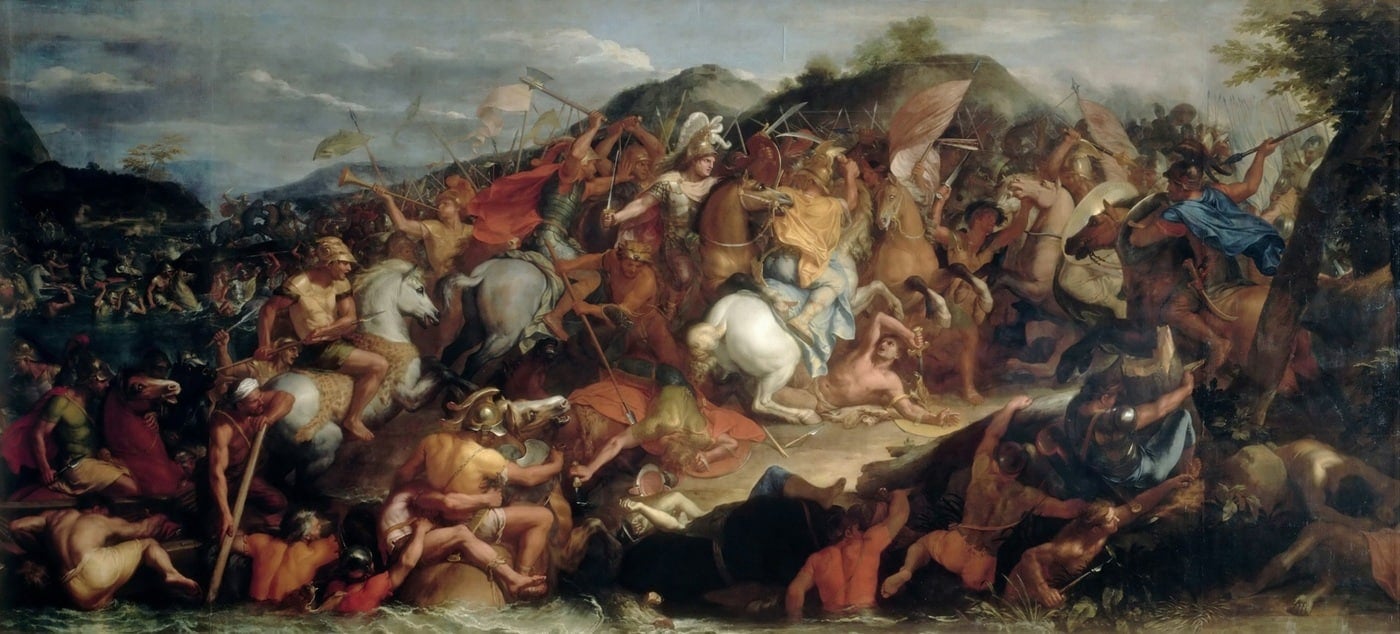
The location is one of the most iconic landmarks in military history, marking the definitive starting point of Alexander the Great’s triumph over the Persian Empire. Public Domain
The Turkish Ministry of Culture and Tourism has officially declared the Granicus Battlefield—where Alexander the Great secured his first major victory against the Persian Empire—a “protected historical and archaeological site.”
According to a ministry announcement and statements shared on social media by Culture and Tourism Minister Mehmet Nuri Ersoy, the decision was based on recent archaeological discoveries and scientific studies in the Biga district of Çanakkale (Dardanelles).
Following extensive field surveys, scientific data evaluation, and the analysis of ancient sources linked to the Battle of the Granicus, the Çanakkale Regional Council for the Conservation of Cultural Property determined that the area meets all criteria for designation as an archaeological site.
The ministry highlighted the location as one of the most iconic landmarks in military history, marking the definitive starting point of Alexander the Great’s triumph over the Persian Empire.
Battle of the Granicus: “A Turning Point in World History”
In a social media post, Minister Mehmet Nuri Ersoy stated:
“We have officially placed the grounds of a battle that reshaped world history under state protection. The Granicus Battlefield, where Alexander the Great achieved his first major victory against the Persians and paved his way into Asia, has now been designated a ‘historical site.’ Located in Biga, Çanakkale, this unique landmark is officially protected in light of archaeological finds and rigorous scientific research. We believe this crucial step will significantly contribute to historical scholarship, boost cultural tourism, and enrich our country’s cultural routes.”
The Battle of Granicus
The Biga River, historically known as the Granicus River, near the site of the Battle of Granicus fought in 334 BC. Credit: Kizildeniz/CC BY-SA 4.0
The Battle of the Granicus, fought in May 334 BC near modern-day Biga in northwestern Turkey, was Alexander the Great’s dramatic opening salvo against the Persian Empire. Having recently crossed the Hellespont into Asia Minor with roughly 32,000 infantry and 5,100 cavalry, the 21-year-old Macedonian king confronted a combined force of local Persian satraps (governors) and highly capable Greek mercenaries.
The Persians, positioned defensively along the steep, muddy eastern banks of the Granicus River, hoped to neutralize Alexander’s aggressive tactical style by forcing him to fight from a disadvantageous position in the water. Rejecting the cautious advice of his veteran general Parmenion to delay the attack, Alexander ordered an immediate, highly risky amphibious assault in broad daylight.
The engagement quickly devolved into a chaotic, brutal melee within the riverbed and up the muddy slopes. Alexander personally led the elite Companion Cavalry from the right wing, instantly becoming a prime target due to his conspicuous, brightly plumed helmet.
The fighting was so fierce that Alexander was nearly killed; a Persian noble shattered his helmet with a battleaxe, and just as another was about to deliver a fatal blow, his captain Cleitus the Black severed the attacker’s arm, saving the young king’s life.
Once the formidable Macedonian phalanx (infantry formation) crossed the river to support the cavalry, the Persian battle lines shattered. The victory was absolute: the Persian leadership was decimated, the surviving Greek mercenaries were ruthlessly executed or enslaved, and the psychological myth of Persian invincibility was shattered, effectively throwing open the gates of Asia Minor to Alexander’s conquering army.
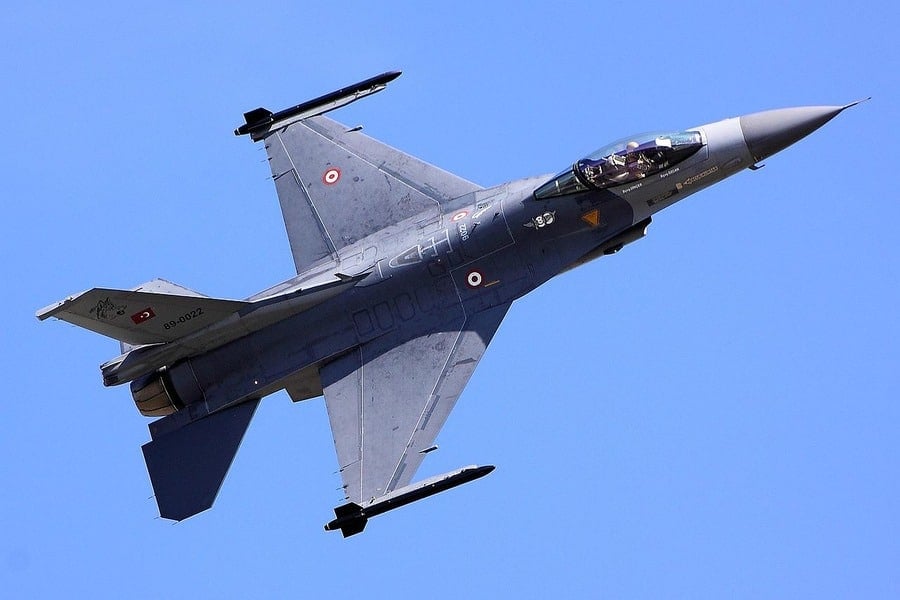
Two Turkish F-16 fighter jets tracked the official state aircraft of the European ministers from a distance. Credit: Wikimedia Commons, Tim Felce, CC BY SA 2
Turkey denied that its jets harassed the military aircraft carrying Greek National Defense Minister Nikos Dendias and his French and Dutch counterparts to Cyprus.
Earlier, it was reported that the “control tower” of the illegal Tymbou Airport in occupied Cyprus attempted to jam the aircrafts’ communications system. Furthermore, according to Philenews, two Turkish F-16 fighter jets scrambled from Tymbou, tracking the official state aircraft of the European ministers from a distance as they headed toward Cyprus.
A statement from the Turkish Presidency said that “claims in certain news media and social media accounts” about such harassment on Sunday and about Turkish warplanes violating Greek airspace were “completely false.”
The statement said that four of the six aircraft heading from Greece to Cyprus “breached the airspace” of Turkish-occupied northern Cyprus, and as a result two Turkish F-16 fighters took off from the ethnically divided island’s north “as a precaution.”
It said the F-16s did not enter Cypriot airspace and “there was no harassment” of the four aircraft.
The incident took place just hours before France and Cyprus were set to sign a Status of Forces Agreement (SOFA) on Monday, which will allow Paris to station military forces on the island.
France and Cyprus to sign military deployment agreement
The agreement will be signed in Nicosia by French Defense Minister Catherine Vautrin and her Cypriot counterpart, Vassilis Palmas. Both ministers are scheduled to attend an informal meeting of the EU Foreign Affairs Council (Defense) on the same day.
The Turkish Cypriot side condemned the agreement as “null, void, and legally invalid.” They expressed concerns that the deal could alter the balance of power on the island, disregard Turkish Cypriot rights, and escalate regional tensions. They further argued that the Republic of Cyprus lacks the authority to sign such an agreement on behalf of the entire island.
India is expanding ties with Greece, Cyprus, Armenia, and Israel to counter Turkey’s growing regional influence and its partnership with Pakistan. By strengthening defense cooperation and strategic partnerships, New Delhi is increasing its footprint in the Middle East and Eastern Mediterranean. As a result, the India–Turkey rivalry has the potential to develop into a new […]
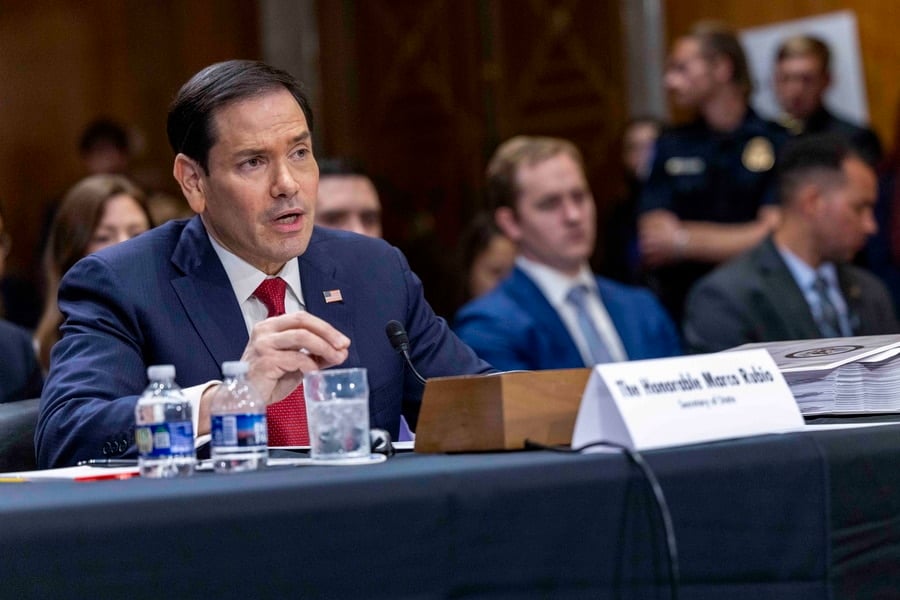
Secretary of State Marco Rubio says Turkey’s return to the F-35 program is blocked by US law over Ankara’s S-400 purchase. Credit: Shawn Thew / EPA via AMNA
US Secretary of State Marco Rubio said the Trump administration currently lacks the legal authority to restore Turkey to the F-35 fighter jet program, citing statutory restrictions linked to Ankara’s acquisition of Russia’s S-400 air defense system.
Rubio made the remarks during a House Foreign Affairs Committee hearing after Representative Dina Titus questioned him about recent comments by US Ambassador to Turkey Tom Barrack. Barrack had suggested that Washington should allow Turkey back into the F-35 program. Titus said that position appeared to conflict with existing US law and long-standing American policy.
Titus asked whether Turkey could receive advanced US fighter jets, including F-35s, under the current legal framework.
Rubio says Turkey’s F-35 return is blocked by law
Rubio said Turkey had originally participated in the F-35 program before Washington removed Ankara over its purchase of the Russian-made S-400 missile defense system.
“The reason why they can’t get them is because they purchased the S-400 system from the Russians,” Rubio said.
Turkey’s acquisition of the S-400 has remained a major source of tension in US-Turkey defense relations. Washington argues that the Russian system conflicts with NATO defense architecture and could create security risks for the F-35 platform.
Rubio points to NDAA restrictions
Titus noted that Turkey still possesses the S-400 system and remains subject to mandatory sanctions. Rubio acknowledged the point, saying existing US law controls the issue and limits the administration’s discretion.
Rubio said the administration currently lacks the authority to make such a decision because US law restricts the matter, including provisions of the National Defense Authorization Act.
His remarks underscored that any potential change in Turkey’s access to the F-35 program would require action on legal restrictions imposed by Congress. Those restrictions stem from Ankara’s S-400 acquisition and broader US sanctions policy toward major defense transactions with Russia.
Ongoing Turkish-Greek contradictions periodically remind one of the internal disagreements within the NATO bloc, which could escalate into a new hotspot of tension in Europe. France’s choice in favor of a military alliance with Greece has caused concern in Türkiye. France and Greece’s “Famous Alliance” In 2021, France and Greece signed a strategic partnership and […]
Amidst growing global disorder and a lack of central power, the Kazan Forum’s increasing significance reflects the rise of Russia’s diplomatic outreach. Kazan Forum as an Emerging Eurasian Interface The Kazan Forum has emerged as a reconfiguration of economic imagination, connectivity, and power across the Eurasian region. The XVII International Economic Forum “Russia-Islamic World: Kazan […]

 Login
Login